


Matthew Trueblood
-
Posts
2,481 -
Joined
-
Last visited
-
Days Won
2
Content Type
Profiles
Joomla Posts 1
Chicago Cubs Videos
Chicago Cubs Free Agent & Trade Rumors, Notes, & Tidbits
2026 Chicago Cubs Top Prospects Ranking
News
2023 Chicago Cubs Draft Picks
Guides & Resources
2024 Chicago Cubs Draft Picks
The Chicago Cubs Players Project
2025 Chicago Cubs Draft Pick Tracker
2026 Chicago Cubs Draft Tracker: Picks & Bonuses
Blogs
Events
Forums
Store
Gallery
Everything posted by Matthew Trueblood
-
Ian Happ is Playing Defense Like the Ball is Alive and Hates Him
Matthew Trueblood posted an article in Cubs
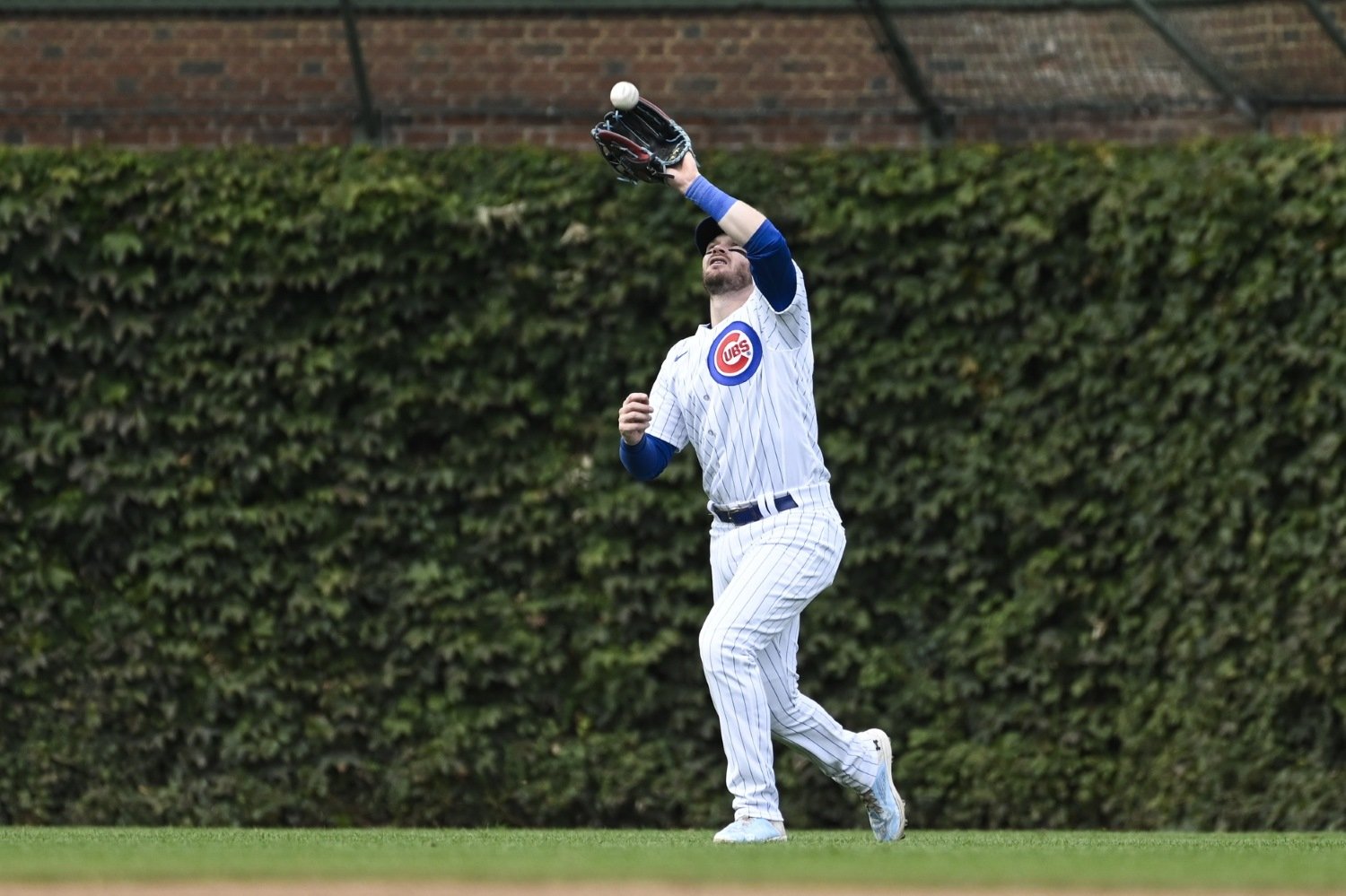 Remarkably, I do think the numbers (Defensive Runs Saved, from Sports Info Solutions, says Ian Happ is 3 runs better than an average left fielder; Defensive Runs Prevented, from Baseball Prospectus, has him 6.5 runs to the good) are telling us the truth. Somehow, someway, Ian Happ is getting more outs than he's costing the Cubs. His arm has been in fine form this year. Despite not throwing unusually hard, he's been efficient, because he's gotten rid of the ball exceptionally quickly on a few plays and has been deadly accurate. He's not letting everything fall in, either. Happ has been an average left fielder this year, with a bit of added value because teams keep testing his arm. That's a fact. This next bit is not quite a fact, but I defy anyone to tell me they honestly feel differently: Watching Happ in left field this year has been painful. If you're a Harry Potter fan, Happ's reaction to fly balls (and even a fair number of grounders and line drives that reach him on a hop or two) probably looks familiar. If not, consult the above, but you can still get the rough idea without watching. Happ isn't slower this year, and he isn't battling some highly technical mechanical flaw in his jumps or anything. The man is in a wrestling match with the baseball almost every time, even while it's still in the air. His legs don't look right. He lurches at the last second. About twice a week, I briefly think he's about to pull a Gregory Polanco. About once a week, he actually does. Happ has had to slide for balls he shouldn't have had to slide for, including when cutting off hits in the gap. On the Cubs' final home stand of the year this past week, he developed an extremely weird habit of not only deferring to the center fielder on balls hit to left-center field, but turning away from the ball entirely, as if suddenly very interested in the ivy or the goings-on in the Cubs bullpen. He and Pete Crow-Armstrong nearly collided on a ball toward the gap in the ninth inning Sunday, and while it was perfectly catchable for either party and there was ultimately no trouble, it looked wrong. None of this is a criticism of Happ. On the contrary, he's done incredibly well to remain at least average at his position, given the severe, mysterious affliction with which he's battling. At the end of a long season in which he's played all but three games and has already come to the plate 668 times, it's possible he's just dead tired. It's possible that the visual training he's so famous for doing to make himself a better hitter has created some unforeseen issue with the different ballistic tracking required to chase fly balls. It's possible Happ is playing through an injury of some kind. Whatever the case, that he's out there every day and hasn't cost the Cubs more dearly in left field is to be lauded, not derided. Still, the team should consider some alternatives. As hard as Happ is playing, he has hurt the team in multiple recent losses with bad defensive play. If they trust Christopher Morel in left field at all, letting him patrol that area might make sense, with Happ switching to the DH spot Morel often occupies in the lineup. Happ has been terrific at the plate this year, in ways that are being too much overlooked. In 27 more plate appearances than he had last year, Happ has the same number of strikeouts (149), 40 more walks (98 vs. 58), and only four fewer extra-base hits, with two more home runs. He's posted an .864 OPS over the last four weeks, with the team's playoff hopes in the balance every day. He deserves to be in the lineup every day. He just might need a little time off from left field. It's either that, or they're going to have to give him a second glove to wrestle more of these midair bad hops into submission.
 -
For three years now, the Cubs have handed thankless, unlovable jobs to Patrick Wisdom. In return, he's given them gratitude, love, and a smile that seems to be powering the team into its final, most rigorous trial. Image courtesy of © Matt Marton-USA TODAY Sports There have been as many moments when the game seemed to tell Patrick Wisdom he wasn't wanted as there have been when the 2023 Cubs seemed dead and ready for burial. Wisdom wasn't drafted out of high school, though some part of that was because he was committed strongly to Saint Mary's. He was a compensatory first-round pick by the Cardinals in 2018, but five years later, he still hadn't reached the majors, and he was right on the cliff toward which the professional baseball world pushes you--the one from which you're forced to leap, either to catch the ledge above and climb into The Show or to fall down into the abyssal scrap heap. He made the leap, but it was a close thing. The Cardinals traded him after 2018 for another afterthought minor leaguer. The Rangers cut him loose after 2019 as a minor-league free agent. The Mariners signed him a few weeks later, but he never squeezed onto their active roster during the pandemic season. They released him in mid-August 2020, and the Cubs scooped him up, but his brief stint with that (technically) division-winning team--a couple at-bats, starting three years ago Monday, in front of empty stadiums that made the game so much less fun--had to be a bit unfulfilling. For its next trick, the game reinforced Wisdom's utter unwantedness by having the Cubs make him a free agent again that fall, only to have him find no takers and come back on a minor-league deal in January 2021. The man was coming up on 30 years old, and he was clearly slated to start his season in Iowa. When he did get the call, in late May, it was Nico Hoerner's place on the roster he took (Hoerner was hurt and placed on the injured list), but quickly, it became clear that his role would be come closer to being the replacement for Kris Bryant. While Bryant moved around the diamond (a week at first base because of Anthony Rizzo's balky back, stops in all three outfield spots as Ian Happ and Jason Heyward struggled), Wisdom slid into the third base slot vacated by him and the (also injured) David Bote. In July 2021, Bryant started five games at third base, six in left field, six in right, and one in center. Wisdom started 13 times at third that month, but not in the final three games. For those, he moved to first base, to fill in for the departed Rizzo. In a sense, although eventually in tandem with Frank Schwindel, Wisdom was asked to replace both Bryant and Rizzo in the Cubs lineup. He wasn't even a young, exciting alternative. Neither was Schwindel. The Cubs gave him a miserable job to do--and he did it gorgeously. Both Wisdom and Schwindel hammered away that summer, somehow winning the affections of some severely disaffected Cubs fans. He came back in 2022, and was asked to be an offensive anchor for the team, a role that so hilariously outstripped his ability that it seems cruel in hindsight. Of his 534 plate appearances, 198 came as either the third or the fourth hitter in the batting order. He kept his OPS+ north of 100, somehow, despite playing through a hand injury for a chunk of that time. He was holding on to his opportunity to play in the big leagues, but what was being asked of him was beyond his ken. This year might be the meanest trick yet. The Cubs needed Wisdom's astonishingly hot start to surge out to their 11-6 record in mid-April, and to stay afloat through the rest of that month. Once he went cold, though, he took the brunt of the fans' frustration, which was really over the fact that the team had done so little to accumulate the depth a contender should have at the corner infield positions. Then, exactly as the team got hot, David Ross finally did bench him. That's not entirely a coincidence, of course. Wisdom isn't a good defender, despite plenty of hard work at both infield corners and in the outfield. He batted .108/.175/.230 in 80 plate appearances from May 15 through the All-Star break, and although there's an injured list stint (and some time spent playing hurt) in there, that's a genuinely ghastly, costly batting line. It wasn't unfair to observe that Wisdom wasn't helping the team, or to call for reinforcement precisely at his spot, which is what the Cubs achieved when they first worked Nick Madrigal in as a defensive ace and then traded for Jeimer Candelario at the deadline. It wasn't unfair of Ross to start using Wisdom very sparsely, which is what he's done ever since then. It was an awfully thankless job, though. When Wisdom did get the call, he was hitting for a team that has been trying to climb out of a hole deeper than any Cubs team has dug out of before, and he was playing ground balls with everyone scrutinizing him very closely. The stakes were high, and Wisdom had to contend not only with the pressure and the difficulty of succeeding in MLB in the first place, but with the challenges of doing so without any kind of regular game action. Since July 20 (the last game in which he was written in as even a semi-regular in the lineup, before the team's recent injury crisis), Wisdom has gone three or more full games without getting in on five different occasions. Take the final three days of August and the first 10 of September, and you have almost a fortnight in which Wisdom had four plate appearances. Since July 21, the Cubs have played 60 games, and Wisdom has come to bat 53 times. Yet, he has five home runs and a slugging average of .571 in that span. He came up in the sixth inning of a crucial game Sunday afternoon, with the Cubs trailing by one and the wind blowing in, and he smashed the ball through that wind so fiercely that the ball was long gone right off the bat. It was the game-winning hit that secured a sweep of the Rockies and gave them greater control of their own destiny entering the final week of this campaign. Wisdom has been on the rail of the dugout at every moment of his long stretches of inactivity. He's been such an eager concelebrant in big moments and such an unbothered worker in the face of a quiet demotion that he seems to command the respect of his teammates in a way that refutes any fan's inclination to disdain him. He's 32 years old. He's a journeyman who barely caught the ledge when he was forced to leap to the big leagues, and he might never again be a regular in MLB. Yet, he just hit his 75th home run with the Chicago Cubs. That's as many as Henry Rodriguez hit during his time with the team. Wisdom's next Cubs homer (if there is one) could tie him with Moises Alou on the career leaderboard--or it could not count toward a pursuit of Alou, because it could come in the playoffs. Rodriguez signed for $11 million over three years when he joined the Cubs, 25 years ago. Alou came along a few years later, at $27 million over three years. Wisdom, who might well be non-tendered this winter, has made about $2 million in total, at a time when the average salary in MLB is more than twice that per year. It's not unfair. It's just thankless. That's baseball, sometimes. That's why Sunday was so wonderful, even beyond the concrete benefits to the Cubs' playoff chances. That moment brought wonderful catharsis for Wisdom, and for the guys in that dugout who seem to genuinely love him. That the team still seems to have that irreducible resiliency at its core is a credit to Ross, to be sure. So is the fact that his tactical deployment of Wisdom has yielded such good production. The fact that Wisdom has maintained a great attitude and been a positive clubhouse and dugout presence all along, though, is a credit to Wisdom himself. Without often being rewarded for it by a demanding and unforgiving game, he keeps bringing joy and dedication to his work. Whatever his numbers or his baseline skills, he's been an important part of the Cubs getting this far this year. As the team stares down a tough slate of opponents for the final week and a thin margin for error, Wisdom has delivered his signature moment, but he's probably not done helping them rebound from difficulty and continue battling for one another. View full article
-
Patrick Wisdom and the Final Trial of the 2023 Chicago Cubs
Matthew Trueblood posted an article in Cubs
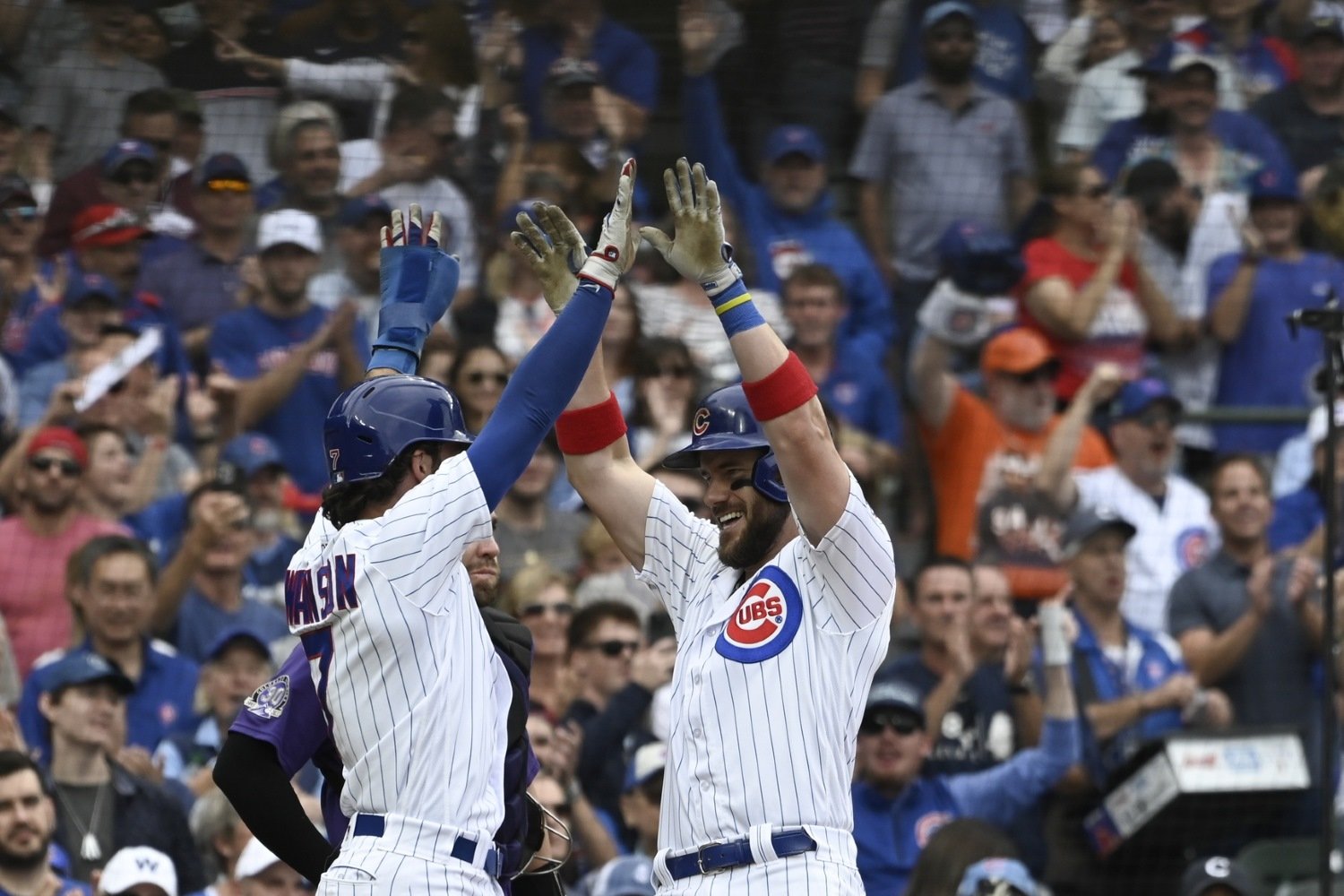 There have been as many moments when the game seemed to tell Patrick Wisdom he wasn't wanted as there have been when the 2023 Cubs seemed dead and ready for burial. Wisdom wasn't drafted out of high school, though some part of that was because he was committed strongly to Saint Mary's. He was a compensatory first-round pick by the Cardinals in 2018, but five years later, he still hadn't reached the majors, and he was right on the cliff toward which the professional baseball world pushes you--the one from which you're forced to leap, either to catch the ledge above and climb into The Show or to fall down into the abyssal scrap heap. He made the leap, but it was a close thing. The Cardinals traded him after 2018 for another afterthought minor leaguer. The Rangers cut him loose after 2019 as a minor-league free agent. The Mariners signed him a few weeks later, but he never squeezed onto their active roster during the pandemic season. They released him in mid-August 2020, and the Cubs scooped him up, but his brief stint with that (technically) division-winning team--a couple at-bats, starting three years ago Monday, in front of empty stadiums that made the game so much less fun--had to be a bit unfulfilling. For its next trick, the game reinforced Wisdom's utter unwantedness by having the Cubs make him a free agent again that fall, only to have him find no takers and come back on a minor-league deal in January 2021. The man was coming up on 30 years old, and he was clearly slated to start his season in Iowa. When he did get the call, in late May, it was Nico Hoerner's place on the roster he took (Hoerner was hurt and placed on the injured list), but quickly, it became clear that his role would be come closer to being the replacement for Kris Bryant. While Bryant moved around the diamond (a week at first base because of Anthony Rizzo's balky back, stops in all three outfield spots as Ian Happ and Jason Heyward struggled), Wisdom slid into the third base slot vacated by him and the (also injured) David Bote. In July 2021, Bryant started five games at third base, six in left field, six in right, and one in center. Wisdom started 13 times at third that month, but not in the final three games. For those, he moved to first base, to fill in for the departed Rizzo. In a sense, although eventually in tandem with Frank Schwindel, Wisdom was asked to replace both Bryant and Rizzo in the Cubs lineup. He wasn't even a young, exciting alternative. Neither was Schwindel. The Cubs gave him a miserable job to do--and he did it gorgeously. Both Wisdom and Schwindel hammered away that summer, somehow winning the affections of some severely disaffected Cubs fans. He came back in 2022, and was asked to be an offensive anchor for the team, a role that so hilariously outstripped his ability that it seems cruel in hindsight. Of his 534 plate appearances, 198 came as either the third or the fourth hitter in the batting order. He kept his OPS+ north of 100, somehow, despite playing through a hand injury for a chunk of that time. He was holding on to his opportunity to play in the big leagues, but what was being asked of him was beyond his ken. This year might be the meanest trick yet. The Cubs needed Wisdom's astonishingly hot start to surge out to their 11-6 record in mid-April, and to stay afloat through the rest of that month. Once he went cold, though, he took the brunt of the fans' frustration, which was really over the fact that the team had done so little to accumulate the depth a contender should have at the corner infield positions. Then, exactly as the team got hot, David Ross finally did bench him. That's not entirely a coincidence, of course. Wisdom isn't a good defender, despite plenty of hard work at both infield corners and in the outfield. He batted .108/.175/.230 in 80 plate appearances from May 15 through the All-Star break, and although there's an injured list stint (and some time spent playing hurt) in there, that's a genuinely ghastly, costly batting line. It wasn't unfair to observe that Wisdom wasn't helping the team, or to call for reinforcement precisely at his spot, which is what the Cubs achieved when they first worked Nick Madrigal in as a defensive ace and then traded for Jeimer Candelario at the deadline. It wasn't unfair of Ross to start using Wisdom very sparsely, which is what he's done ever since then. It was an awfully thankless job, though. When Wisdom did get the call, he was hitting for a team that has been trying to climb out of a hole deeper than any Cubs team has dug out of before, and he was playing ground balls with everyone scrutinizing him very closely. The stakes were high, and Wisdom had to contend not only with the pressure and the difficulty of succeeding in MLB in the first place, but with the challenges of doing so without any kind of regular game action. Since July 20 (the last game in which he was written in as even a semi-regular in the lineup, before the team's recent injury crisis), Wisdom has gone three or more full games without getting in on five different occasions. Take the final three days of August and the first 10 of September, and you have almost a fortnight in which Wisdom had four plate appearances. Since July 21, the Cubs have played 60 games, and Wisdom has come to bat 53 times. Yet, he has five home runs and a slugging average of .571 in that span. He came up in the sixth inning of a crucial game Sunday afternoon, with the Cubs trailing by one and the wind blowing in, and he smashed the ball through that wind so fiercely that the ball was long gone right off the bat. It was the game-winning hit that secured a sweep of the Rockies and gave them greater control of their own destiny entering the final week of this campaign. Wisdom has been on the rail of the dugout at every moment of his long stretches of inactivity. He's been such an eager concelebrant in big moments and such an unbothered worker in the face of a quiet demotion that he seems to command the respect of his teammates in a way that refutes any fan's inclination to disdain him. He's 32 years old. He's a journeyman who barely caught the ledge when he was forced to leap to the big leagues, and he might never again be a regular in MLB. Yet, he just hit his 75th home run with the Chicago Cubs. That's as many as Henry Rodriguez hit during his time with the team. Wisdom's next Cubs homer (if there is one) could tie him with Moises Alou on the career leaderboard--or it could not count toward a pursuit of Alou, because it could come in the playoffs. Rodriguez signed for $11 million over three years when he joined the Cubs, 25 years ago. Alou came along a few years later, at $27 million over three years. Wisdom, who might well be non-tendered this winter, has made about $2 million in total, at a time when the average salary in MLB is more than twice that per year. It's not unfair. It's just thankless. That's baseball, sometimes. That's why Sunday was so wonderful, even beyond the concrete benefits to the Cubs' playoff chances. That moment brought wonderful catharsis for Wisdom, and for the guys in that dugout who seem to genuinely love him. That the team still seems to have that irreducible resiliency at its core is a credit to Ross, to be sure. So is the fact that his tactical deployment of Wisdom has yielded such good production. The fact that Wisdom has maintained a great attitude and been a positive clubhouse and dugout presence all along, though, is a credit to Wisdom himself. Without often being rewarded for it by a demanding and unforgiving game, he keeps bringing joy and dedication to his work. Whatever his numbers or his baseline skills, he's been an important part of the Cubs getting this far this year. As the team stares down a tough slate of opponents for the final week and a thin margin for error, Wisdom has delivered his signature moment, but he's probably not done helping them rebound from difficulty and continue battling for one another.
 -
I think Snell is closer to being the heavy favorite than is Strider. It could come down to the final couple starts for each. I do tend to agree, though, in that I imagine it would take something very special for Steele to put himself back in the center of the conversation. These last two starts have thwarted him.
-
He'll still have options next year, too. A guy with speed and defensive value and on-base skills, who can also be sent to the minors when needed? That's a terrific little role player.
-
The chess board is rearranged. The endgame is here, and the Cubs are in a losing position, It's time to take some chances, and force some change. Image courtesy of © David Banks-USA TODAY Sports By no means were the bats the primary reason why the Cubs just dropped a series to the lowly Pirates. The Cubs' pitching staff is running out of steam, and their ace let a game get away from him at the worst possible time. Still, they have missed too many opportunities to score--to come from behind, or to build bigger leads. It's been a long period of struggle, at the end of a very volatile season for the offense. To give his team the best possible chance to escape their current doldrums, David Ross should give his lineup one final shake--one last zap from the defibrillator paddles. Here's the lineup that ought to start every game the rest of the way, regardless of the handedness of the opposing pitcher. Nico Hoerner - 2B Cody Bellinger - 1B Seiya Suzuki - RF Christopher Morel - DH Ian Happ - LF Dansby Swanson - SS Yan Gomes - C Miles Mastrobuoni - 3B Pete Crow-Armstrong - CF Let's break that all down a bit. Firstly, it's past time for Hoerner to reclaim the leadoff spot he (rightfully) lost a few months ago. Since the All-Star break, he's batting .307/.385/.410, in 287 plate appearances. He's drawn 25 walks, been hit by eight pitches, stolen 21 bases in 25 tries, and continued to play relentless, high-level baseball. In the fug of negativity that has thickened the air in Cubdom lately, Hoerner's brilliant and thrilling second half isn't getting nearly enough attention. I don't hold with those who think this season will be defined, if it ends the way it's trending, by a September collapse. If they do miss the playoffs, count on me to run a piece here listing a dozen games they should (not merely could) have won, but most of them came in the first half. This remains the only Cubs team ever to fall 10 games below .500 and then reach 10 games over .500 at any point. Their season will be defined by that resilience and that tenacity, and Hoerner is the exemplar of that. If there's an indelible image from Thursday night's game that should be regarded as a microcosm of this Cubs season, it came in the bottom of the first inning. Hoerner smashed a double off the wall in the left-field corner, but the way he steamed all the way into and even around second base, it was clear he was thinking about the possibility that Bryan Reynolds would misplay the ball as it hit the basket, the bricks, or the ivy in Wrigley's unusually deep corner. He was ready to take third if the slightest hiccup occurred down there. This Cubs team's identity is right there: Hoerner, in an ultimately doomed effort, running hard and taking absolutely nothing for granted. He's the tone-setter the team needs at the top of the lineup the rest of the way. Batting Bellinger second is what every other team in baseball would have done by now. The best aggregate slash line for MLB teams this season by batting order position doesn't belong to the third hitter or the cleanup man. It's the second place, where the league is hitting .264/.338/.449. The Cubs are 26th in the league slugging average from the two hole, at .388. In what little time is left to them, they need to get their best hitters the most plate appearances, and right now, Hoerner and Bellinger are two of their best three hitters. The other one is Suzuki, who should bat third instead of second only because of some handedness considerations we'll discuss shortly. For now, suffice it to say that he's batting .336/.390/.639 since being restored to the lineup after a brief sojourn on the bench, on Aug. 2. Even on an 0-5 Thursday night, he had batted balls at 92, 93, 101, and 101 miles per hour, and struck out looking on a tough call in the ninth inning. He should be guaranteed a first-inning plate appearance every day the rest of the way. Giving Morel the responsibility of hitting cleanup is a leap of faith. So be it. In anyone's list of the five biggest home runs of this season for the Cubs, Morel has two. He's cranked 35 total homers in 537 plate appearances this year, between Triple A and MLB. He's hit 40 of them, and 80 total extra-base hits, in 828 career plate appearances in MLB. His .308 OBP would look out of place in the heart of most batting orders, and there might be times when what the team really needs is the cleanup hitter to get on base to start an inning. In that case, they could easily pinch-hit Mike Tauchman for Morel. It's Morel for whom the odds favor some power production, though, and it's the right time to take that gamble. Batting the right-handed Suzuki and Morel back-to-back is important, too, because that's how the Cubs can cushion Ian Happ and protect him from left-handed relievers a bit. Happ needs that. Too many teams have brought on lefties this year specifically to get at Bellinger and Happ in a three-batter sequence, or Tauchman, Bellinger, and Happ in a four-batter one. By separating Happ from other lefty batters with two lefty-mashing righties on each side, Ross could foreclose that option for opposing skippers. At this stage of the season, you could make a case for batting Gomes ahead of Swanson, but we'll save that for an even wilder dream post. For now, it's enough to suggest that the team needs to slide Swanson further down, as he continues to skid toward the finish of his first season on the North Side. He continues to try to pull the ball too much, especially in key situations, and he's not adjusting the way he needs to adjust in order to escape the slump. Gomes will need some rest, of course, but Miguel Amaya can bat in the same place in the lineup with no huge change in expected production. It's just the shape of that production that would shift somewhat. At the bottom of the batting order, the emphasis should be on defense. Look at the best teams in baseball. The Braves put Michael Harris II and Orlando Arcia at the bottom of the order every day. Those guys can still hit, but they're the center fielder and shortstop, respectively. They play not because of their offensive prowess, but because they're excellent fielders. The Cubs' lineup isn't as strong at the top as Atlanta's, but this reconfiguration would nudge them back in that direction, and as such, they can still afford--indeed, they need--players who get to play because they help the team get outs in the field. Mastrobuoni's mistake in the ninth inning Thursday night was inexcusable, but overall, he's the best defender they have for that spot on the active roster. Ditto for Crow-Armstrong in center field. Whenever a lefty enters for the other team, or whenever the Cubs need a big hit from the eight hole, pinch-hitting Patrick Wisdom for Mastrobuoni would be a no-brainer. Ditto for Tauchman at the expense of Crow-Armstrong. To begin each game, though, those guys should be out there providing the best possible support to a weary pitching staff. This isn't a panacea. This is a small change when big ones would be preferable. There remain bigger conversations to be had, before the end of the season. If the Cubs remain as committed to salvaging this as Ross claimed they would be Thursday night, though, this lineup change would be a great place to begin demonstrating it. View full article
-
Here's the Lineup the Cubs Should Use in All Nine Remaining Games
Matthew Trueblood posted an article in Cubs
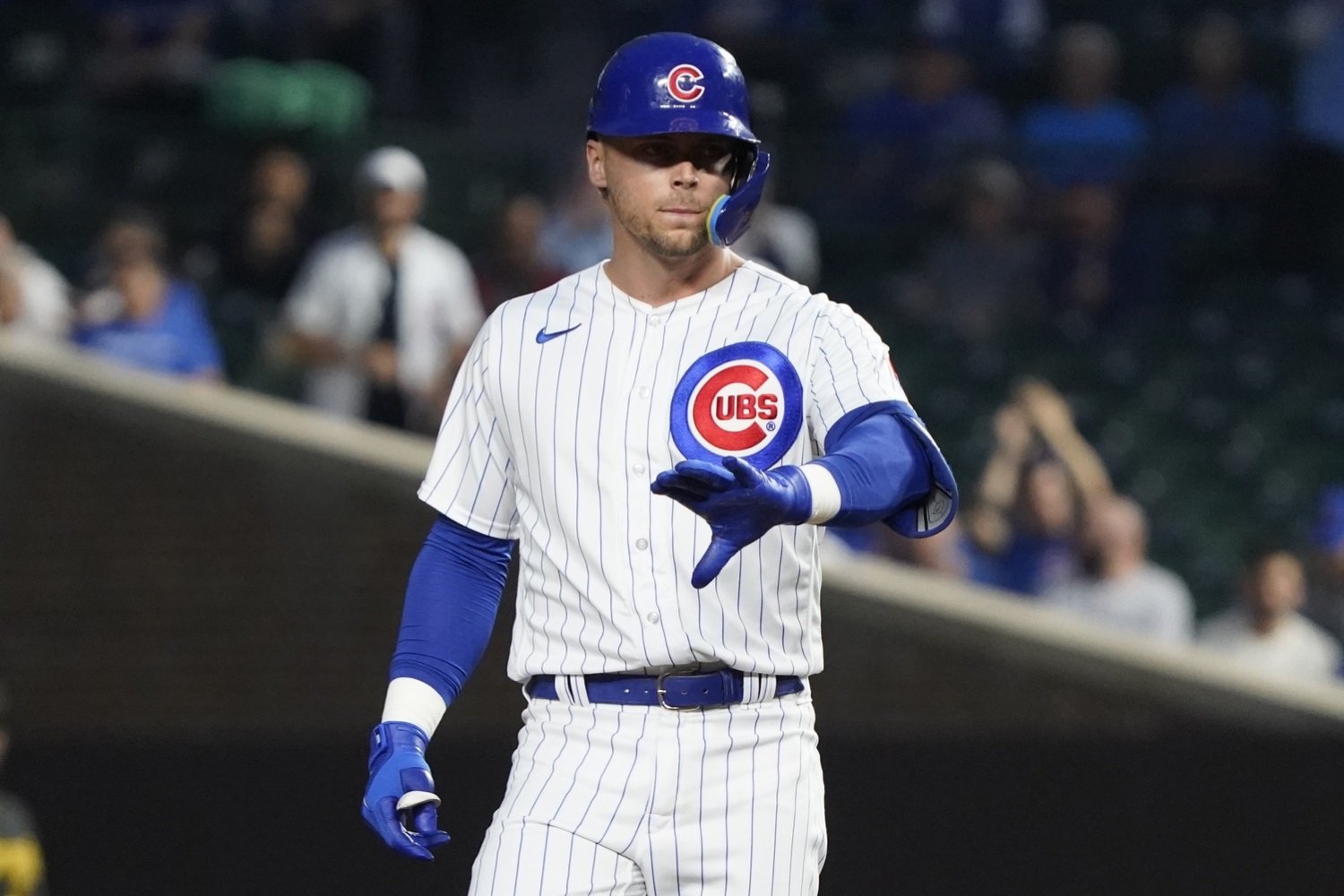 By no means were the bats the primary reason why the Cubs just dropped a series to the lowly Pirates. The Cubs' pitching staff is running out of steam, and their ace let a game get away from him at the worst possible time. Still, they have missed too many opportunities to score--to come from behind, or to build bigger leads. It's been a long period of struggle, at the end of a very volatile season for the offense. To give his team the best possible chance to escape their current doldrums, David Ross should give his lineup one final shake--one last zap from the defibrillator paddles. Here's the lineup that ought to start every game the rest of the way, regardless of the handedness of the opposing pitcher. Nico Hoerner - 2B Cody Bellinger - 1B Seiya Suzuki - RF Christopher Morel - DH Ian Happ - LF Dansby Swanson - SS Yan Gomes - C Miles Mastrobuoni - 3B Pete Crow-Armstrong - CF Let's break that all down a bit. Firstly, it's past time for Hoerner to reclaim the leadoff spot he (rightfully) lost a few months ago. Since the All-Star break, he's batting .307/.385/.410, in 287 plate appearances. He's drawn 25 walks, been hit by eight pitches, stolen 21 bases in 25 tries, and continued to play relentless, high-level baseball. In the fug of negativity that has thickened the air in Cubdom lately, Hoerner's brilliant and thrilling second half isn't getting nearly enough attention. I don't hold with those who think this season will be defined, if it ends the way it's trending, by a September collapse. If they do miss the playoffs, count on me to run a piece here listing a dozen games they should (not merely could) have won, but most of them came in the first half. This remains the only Cubs team ever to fall 10 games below .500 and then reach 10 games over .500 at any point. Their season will be defined by that resilience and that tenacity, and Hoerner is the exemplar of that. If there's an indelible image from Thursday night's game that should be regarded as a microcosm of this Cubs season, it came in the bottom of the first inning. Hoerner smashed a double off the wall in the left-field corner, but the way he steamed all the way into and even around second base, it was clear he was thinking about the possibility that Bryan Reynolds would misplay the ball as it hit the basket, the bricks, or the ivy in Wrigley's unusually deep corner. He was ready to take third if the slightest hiccup occurred down there. This Cubs team's identity is right there: Hoerner, in an ultimately doomed effort, running hard and taking absolutely nothing for granted. He's the tone-setter the team needs at the top of the lineup the rest of the way. Batting Bellinger second is what every other team in baseball would have done by now. The best aggregate slash line for MLB teams this season by batting order position doesn't belong to the third hitter or the cleanup man. It's the second place, where the league is hitting .264/.338/.449. The Cubs are 26th in the league slugging average from the two hole, at .388. In what little time is left to them, they need to get their best hitters the most plate appearances, and right now, Hoerner and Bellinger are two of their best three hitters. The other one is Suzuki, who should bat third instead of second only because of some handedness considerations we'll discuss shortly. For now, suffice it to say that he's batting .336/.390/.639 since being restored to the lineup after a brief sojourn on the bench, on Aug. 2. Even on an 0-5 Thursday night, he had batted balls at 92, 93, 101, and 101 miles per hour, and struck out looking on a tough call in the ninth inning. He should be guaranteed a first-inning plate appearance every day the rest of the way. Giving Morel the responsibility of hitting cleanup is a leap of faith. So be it. In anyone's list of the five biggest home runs of this season for the Cubs, Morel has two. He's cranked 35 total homers in 537 plate appearances this year, between Triple A and MLB. He's hit 40 of them, and 80 total extra-base hits, in 828 career plate appearances in MLB. His .308 OBP would look out of place in the heart of most batting orders, and there might be times when what the team really needs is the cleanup hitter to get on base to start an inning. In that case, they could easily pinch-hit Mike Tauchman for Morel. It's Morel for whom the odds favor some power production, though, and it's the right time to take that gamble. Batting the right-handed Suzuki and Morel back-to-back is important, too, because that's how the Cubs can cushion Ian Happ and protect him from left-handed relievers a bit. Happ needs that. Too many teams have brought on lefties this year specifically to get at Bellinger and Happ in a three-batter sequence, or Tauchman, Bellinger, and Happ in a four-batter one. By separating Happ from other lefty batters with two lefty-mashing righties on each side, Ross could foreclose that option for opposing skippers. At this stage of the season, you could make a case for batting Gomes ahead of Swanson, but we'll save that for an even wilder dream post. For now, it's enough to suggest that the team needs to slide Swanson further down, as he continues to skid toward the finish of his first season on the North Side. He continues to try to pull the ball too much, especially in key situations, and he's not adjusting the way he needs to adjust in order to escape the slump. Gomes will need some rest, of course, but Miguel Amaya can bat in the same place in the lineup with no huge change in expected production. It's just the shape of that production that would shift somewhat. At the bottom of the batting order, the emphasis should be on defense. Look at the best teams in baseball. The Braves put Michael Harris II and Orlando Arcia at the bottom of the order every day. Those guys can still hit, but they're the center fielder and shortstop, respectively. They play not because of their offensive prowess, but because they're excellent fielders. The Cubs' lineup isn't as strong at the top as Atlanta's, but this reconfiguration would nudge them back in that direction, and as such, they can still afford--indeed, they need--players who get to play because they help the team get outs in the field. Mastrobuoni's mistake in the ninth inning Thursday night was inexcusable, but overall, he's the best defender they have for that spot on the active roster. Ditto for Crow-Armstrong in center field. Whenever a lefty enters for the other team, or whenever the Cubs need a big hit from the eight hole, pinch-hitting Patrick Wisdom for Mastrobuoni would be a no-brainer. Ditto for Tauchman at the expense of Crow-Armstrong. To begin each game, though, those guys should be out there providing the best possible support to a weary pitching staff. This isn't a panacea. This is a small change when big ones would be preferable. There remain bigger conversations to be had, before the end of the season. If the Cubs remain as committed to salvaging this as Ross claimed they would be Thursday night, though, this lineup change would be a great place to begin demonstrating it.
 -
Tom, man, I dig the optimism, because of course there does remain some meaningful chance that they fix this and make the playoffs. But if you think people have just been overreacting endlessly in both directions all year, I think a couple of things must be true: 1. You can’t have been actually watching this team that closely. As we’ve established in the past, you and I are the same age. We’ve seen the same number of baseball seasons. This team has not been normal. Their variance, their inconsistency, is at a far right edge of the scale. 2. You’re treating a very, very divided and multifarious “fan base” as a monolith. You’ve made a lot of remarks about the mood of the fan base, or Cubs Twitter or whatever, and I don’t find that there’s anything like the hive mind you perceive. The above is one take, and I thought a pretty well-articulated one by Brandon, in a sea of differing ones. I really think you’re oversimplifying perceptions and smoothing over realities too much.
- 22 replies
-
- 3
-

-
- david ross
- jed hoyer
- (and 2 more)
-
The Cubs' budding ace prides himself on some similarities to former southpaw Chicago star Jon Lester. When things go wrong, though, he pitches more like another relatively recent Cubs hurler--and it's a problem. Image courtesy of © Matt Marton-USA TODAY Sports Physically, Justin Steele looks and pitches a lot like a young Jon Lester. He doesn't have as deep a repertoire as Lester had, but he uses the same glove-side movement to get in on right-handed batters and generate weak contact, while overwhelming lefties with the same stuff, running away from them. He showed all of that in the first three innings of Wednesday night's game, as he sliced through the Pirates lineup with great stuff and ample confidence. Sometimes, though, things go wrong. That's how baseball works. For myriad reasons, it's impossible to avoid running into trouble, and once that trouble comes, whether a pitcher succeeds or fails depends less on their sheer stuff or even their command than on their ability to meet the mental challenge of that moment. In two starts in a row, Steele has failed to manage those kinds of moments, and it's cost the Cubs dearly. Marquee Sports Network color commentator Jim Deshaies notices the problem, but he either misreads it or (more likely) slightly mischaracterizes it as he relays it to the viewers, to soften what could otherwise be viewed as fairly sharp criticism. Here's what happened Wednesday night, and what Steele did wrong. First, a couple of runners reached base. Steele tried to open the inning with a get-over fastball to Ke'Bryan Hayes, but Hayes stroked it cleanly into right field for a single. There's no harm in that attempt, and little lost by its failure. The problem is that Steele started kicking himself a little bit, right then. After a long battle with the pesky Connor Joe, he got a ball tapped gently into the dirt, bouncing lazily into the grass up the third-base line. Alas, that turned out to be an infield hit, and Steele (though he wisely held the ball, rather than fire down to first and compound his trouble) grew more frustrated. This time, he could justifiably have been mad at the baseball gods for that cruel little trick, or he could (less justifiably) be mad at himself for not having pounced on the ball quicker and made a play on Joe. Either way, though, up to that point, Steele was fine. He was in danger, but not desperate straits. He'd attacked Joe well. He's not getting his cutter in on the hands of righties as well lately, but he still hummed one in at 94 miles per hour to Joe during the sequence, and he threw a good slider that Joe just spoiled on the pitch before the excuse-me single. He still had his full physical toolbox available to him. Unfortunately, in moments like these, Steele isn't yet a Lester-caliber mental competitor. Though the outward signs and symptoms are radically different, when adversity strikes, he's much more like Carlos Zambrano, who let innings just like this one escalate far too often in his otherwise brilliant career. Zambrano lost the mental game by exploding, or bubbling and boiling but just barely managing not to explode. He was the stomping, snorting kind of rage monster. Steele is a different but equally ineffective kind. What Deshaies is seeing (and probably what he's saying, as a former pitcher, but in a way no one will confuse with picking on a player) is that Steele disconnects from the game when he's cornered. Once that Joe nothing-ball turned into a hit, and once a (maybe catchable, for a center fielder who started more shallow and/or played the position more aggressively than Mike Tauchman does) medium-strength line drive fell in to deepen his trouble, Steele disengaged. He grew distant. Deshaies talks about it as if he's gassed or potentially injured, but the real issue is (if anything) worse: he's trying desperately not to care. Lester was incredible at stopping bleeding just like that fourth inning. He didn't always do so. In a 15-year career, you have bad nights, both physically and mentally. Lester's win rate was sensational, though. It's why, in addition to a very decorated regular-season track record, he was one of the best postseason pitchers ever. Steele has been pitching playoff games the last four starts. In the first two, he was so good--so amped at the start, and so buttressed by success as the games progressed--that he never really met adversity. In the last two, he's looked very good at times, but he's failed the test of the tough moment. The word for how Steele looks on the mound, in these moments, is depressed. Depression, after all, is rage turned inward. He's not sublimating his rage, when he hits a rough patch. He's just stuffing it down deep and turning it on himself. There's a broad-spectrum nobility to that. There's less toxic masculinity in it than in exploding, the way Zambrano used to do. There just aren't any more wins in it. You could always tell when Lester was frustrated--or even furious, with himself or a defender who made a key mistake or the umpire. What set him apart, though, was that he stayed extremely engaged at those moments. He became a much more disciplined version of Zambrano. Because he didn't let his anger take over and dysregulate him, Lester could actually feed off of it. Anger, like joy or excitement, is energizing. It supplies adrenaline. Rage, especially when given the controls, is enervating. You can't flip a switch and make your feelings disappear. You can elect to flip one and not feel those feelings, but that only shuts everything down. Steele's stuff flattened out and his command went to pieces, and it wasn't because he's at a particular innings count or because there's anything wrong with his arm. It was because denying the reality of his anger took the zip out of his fastball, and because he was so distracted by the effort he was putting into containing himself that he couldn't focus on execution. Wisely, David Ross got Steele out of there, because he wasn't going to stem the tide of Pirates hits soon enough. These, after all, are playoff games. He went to a parade of relievers on single-inning engagements, at that point, but too many of them blew up. The Cubs offense's efforts to climb back into the game were thwarted by the pitching's incessant digging, putting them deeper in the hole. Once they had to pull their ace nine outs into the contest, though, some of that was bound to happen. Even so, this illustrates another reason why starting Javier Assad instead of Jameson Taillon Tuesday night was peculiar. If Taillon had started, Assad would probably have been available in relief Wednesday--including having the ability to work multiple innings. He would have stood a much better chance of settling things down than a series of one-inning guys working from behind had. If they get three or four extra outs along the way without giving up three runs (as Jose Cuas did right after Steele left, and as Mark Leiter, Jr. did later), they might well win that game. As we noted earlier this week, it's possible that Taillon is dealing with a nagging injury, rendering their apparent decision to use Assad instead much less proactive that it might seem. That wouldn't be good news, but it would explain the choice. Since we don't yet have evidence of that, though, we're left to wonder whether the team would have been better served by having Assad available to pitch a couple of bridge innings behind Steele, once the latter cracked in the face of the pressure applied by the Pirates. There will be many persistent, unpleasant questions like those in the months ahead, if the Cubs don't hold onto a playoff spot for another 10 days. View full article
-
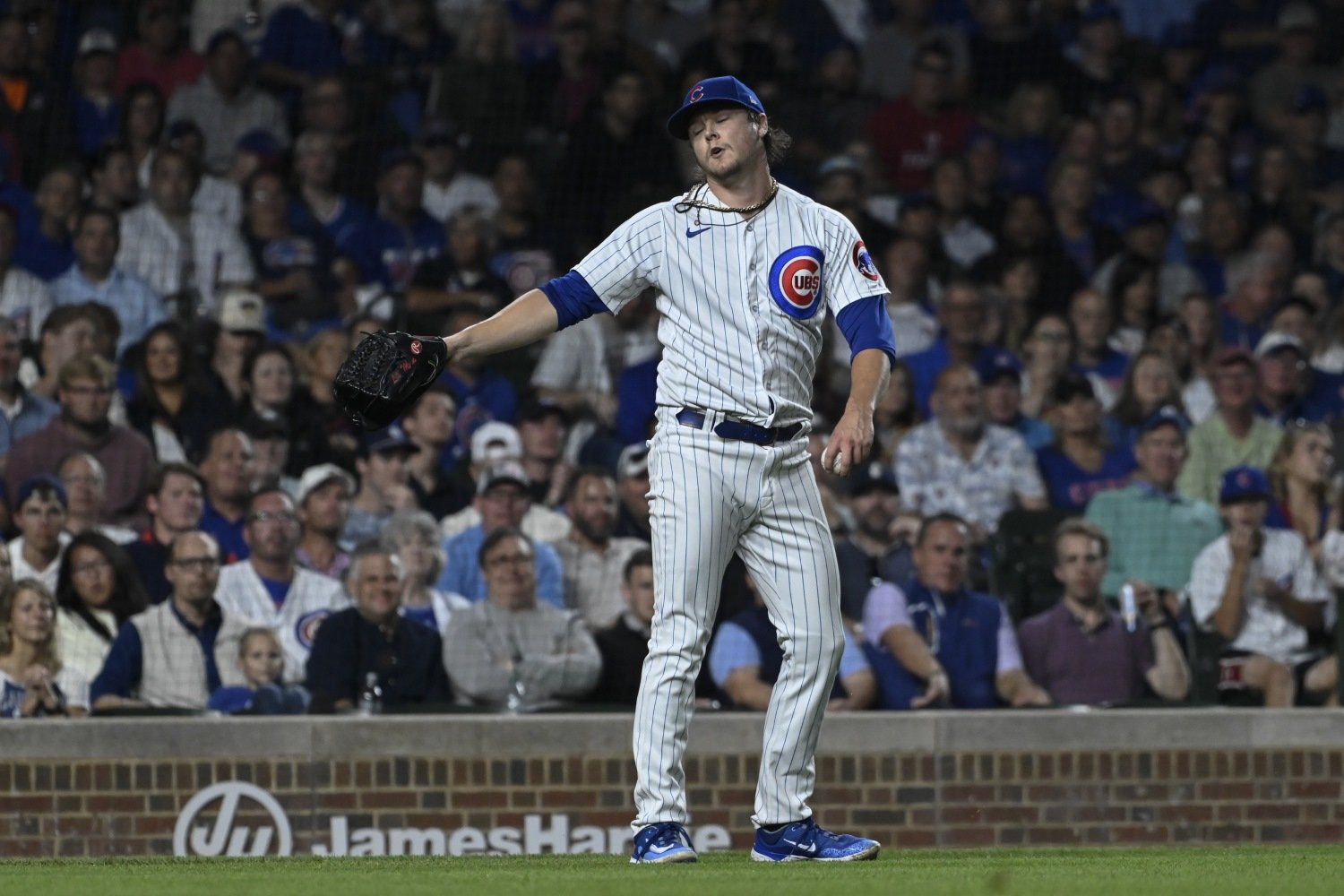 Physically, Justin Steele looks and pitches a lot like a young Jon Lester. He doesn't have as deep a repertoire as Lester had, but he uses the same glove-side movement to get in on right-handed batters and generate weak contact, while overwhelming lefties with the same stuff, running away from them. He showed all of that in the first three innings of Wednesday night's game, as he sliced through the Pirates lineup with great stuff and ample confidence. Sometimes, though, things go wrong. That's how baseball works. For myriad reasons, it's impossible to avoid running into trouble, and once that trouble comes, whether a pitcher succeeds or fails depends less on their sheer stuff or even their command than on their ability to meet the mental challenge of that moment. In two starts in a row, Steele has failed to manage those kinds of moments, and it's cost the Cubs dearly. Marquee Sports Network color commentator Jim Deshaies notices the problem, but he either misreads it or (more likely) slightly mischaracterizes it as he relays it to the viewers, to soften what could otherwise be viewed as fairly sharp criticism. Here's what happened Wednesday night, and what Steele did wrong. First, a couple of runners reached base. Steele tried to open the inning with a get-over fastball to Ke'Bryan Hayes, but Hayes stroked it cleanly into right field for a single. There's no harm in that attempt, and little lost by its failure. The problem is that Steele started kicking himself a little bit, right then. After a long battle with the pesky Connor Joe, he got a ball tapped gently into the dirt, bouncing lazily into the grass up the third-base line. Alas, that turned out to be an infield hit, and Steele (though he wisely held the ball, rather than fire down to first and compound his trouble) grew more frustrated. This time, he could justifiably have been mad at the baseball gods for that cruel little trick, or he could (less justifiably) be mad at himself for not having pounced on the ball quicker and made a play on Joe. Either way, though, up to that point, Steele was fine. He was in danger, but not desperate straits. He'd attacked Joe well. He's not getting his cutter in on the hands of righties as well lately, but he still hummed one in at 94 miles per hour to Joe during the sequence, and he threw a good slider that Joe just spoiled on the pitch before the excuse-me single. He still had his full physical toolbox available to him. Unfortunately, in moments like these, Steele isn't yet a Lester-caliber mental competitor. Though the outward signs and symptoms are radically different, when adversity strikes, he's much more like Carlos Zambrano, who let innings just like this one escalate far too often in his otherwise brilliant career. Zambrano lost the mental game by exploding, or bubbling and boiling but just barely managing not to explode. He was the stomping, snorting kind of rage monster. Steele is a different but equally ineffective kind. What Deshaies is seeing (and probably what he's saying, as a former pitcher, but in a way no one will confuse with picking on a player) is that Steele disconnects from the game when he's cornered. Once that Joe nothing-ball turned into a hit, and once a (maybe catchable, for a center fielder who started more shallow and/or played the position more aggressively than Mike Tauchman does) medium-strength line drive fell in to deepen his trouble, Steele disengaged. He grew distant. Deshaies talks about it as if he's gassed or potentially injured, but the real issue is (if anything) worse: he's trying desperately not to care. Lester was incredible at stopping bleeding just like that fourth inning. He didn't always do so. In a 15-year career, you have bad nights, both physically and mentally. Lester's win rate was sensational, though. It's why, in addition to a very decorated regular-season track record, he was one of the best postseason pitchers ever. Steele has been pitching playoff games the last four starts. In the first two, he was so good--so amped at the start, and so buttressed by success as the games progressed--that he never really met adversity. In the last two, he's looked very good at times, but he's failed the test of the tough moment. The word for how Steele looks on the mound, in these moments, is depressed. Depression, after all, is rage turned inward. He's not sublimating his rage, when he hits a rough patch. He's just stuffing it down deep and turning it on himself. There's a broad-spectrum nobility to that. There's less toxic masculinity in it than in exploding, the way Zambrano used to do. There just aren't any more wins in it. You could always tell when Lester was frustrated--or even furious, with himself or a defender who made a key mistake or the umpire. What set him apart, though, was that he stayed extremely engaged at those moments. He became a much more disciplined version of Zambrano. Because he didn't let his anger take over and dysregulate him, Lester could actually feed off of it. Anger, like joy or excitement, is energizing. It supplies adrenaline. Rage, especially when given the controls, is enervating. You can't flip a switch and make your feelings disappear. You can elect to flip one and not feel those feelings, but that only shuts everything down. Steele's stuff flattened out and his command went to pieces, and it wasn't because he's at a particular innings count or because there's anything wrong with his arm. It was because denying the reality of his anger took the zip out of his fastball, and because he was so distracted by the effort he was putting into containing himself that he couldn't focus on execution. Wisely, David Ross got Steele out of there, because he wasn't going to stem the tide of Pirates hits soon enough. These, after all, are playoff games. He went to a parade of relievers on single-inning engagements, at that point, but too many of them blew up. The Cubs offense's efforts to climb back into the game were thwarted by the pitching's incessant digging, putting them deeper in the hole. Once they had to pull their ace nine outs into the contest, though, some of that was bound to happen. Even so, this illustrates another reason why starting Javier Assad instead of Jameson Taillon Tuesday night was peculiar. If Taillon had started, Assad would probably have been available in relief Wednesday--including having the ability to work multiple innings. He would have stood a much better chance of settling things down than a series of one-inning guys working from behind had. If they get three or four extra outs along the way without giving up three runs (as Jose Cuas did right after Steele left, and as Mark Leiter, Jr. did later), they might well win that game. As we noted earlier this week, it's possible that Taillon is dealing with a nagging injury, rendering their apparent decision to use Assad instead much less proactive that it might seem. That wouldn't be good news, but it would explain the choice. Since we don't yet have evidence of that, though, we're left to wonder whether the team would have been better served by having Assad available to pitch a couple of bridge innings behind Steele, once the latter cracked in the face of the pressure applied by the Pirates. There will be many persistent, unpleasant questions like those in the months ahead, if the Cubs don't hold onto a playoff spot for another 10 days.
 -
Worn down by a tough stretch of their schedule and trying too hard to force their way out of a collective slump, the Cubs spent the last week and a half swinging far too much. On Monday night, that changed. Can they sustain their renewed commitment to patience? Image courtesy of © David Banks-USA TODAY Sports When this team has done well this season, it has very often been because they took tough pitches, fouled off others, and made opposing pitching staffs work themselves thin. Only the Brewers have seen more pitches per plate appearance this year than have the Cubs, and even that is a new development. This offense has about average power. To be more than average, they need to draw walks and work deep counts, the better to gain access to the worst hurlers on the other guys' roster. That hasn't been happening for the bulk of this month. Here are the Cubs' swing rates, as a team, by month for 2023: April: 45.2 May: 45.9 June: 46.8 July: 46.5 August: 46.7 September: 47.8 You can trace a similar trend by isolating pitches outside the strike zone, too. There, the team has gone from chasing 26.4 percent of would-be balls in April to 29 percent for September. This is a broad, sweeping way to look at what is really a series of granular adjustments, of course, because each player is an individual, and their approaches might need to vary based on how they're being pitched or how well they're actually swinging, but it tells us something true. The Cubs' plate discipline, overall, has deteriorated near the end of this season. On Monday night, it was restored, at least briefly. The team swung at just 43.5 percent of the 163 pitches thrown by four Pirates pitchers. The game was less of a laugher than the final score implied, and it offers relatively little solace after a 10-game stretch in which the team lost so much ground in the Wild Card and NL Central races, but it was an important step in the right direction. After two off days in five, and with the home crowd cheering them on, the team seemed more relaxed. Facing a parade of inexperienced and overmatched Pirates hurlers helped. They'll get none of that kind of assistance over the next two days, though. In Mitch Keller, the team will face one of the pitchers who started to expose the cracks in their offensive foundation, just as they were forming a few weeks ago. It was Keller who pitched eight dominant innings in the only game in which the Pirates have beaten the Cubs this season, and that night, they were way too aggressive with him. Keller does throw plenty of strikes, but the Cubs need to adjust and go up there with a more concertedly patient approach this time around. They might be hitting from behind in the count at times, but they can't allow Derek Shelton to go straight from Keller to David Bednar and beat them 2-1 again. It sounds like an excuse, but the grind of the long season really does systematically erode plate discipline. When a team has played as many taut and important games as the Cubs have lately, and when they don't get many days off, that effect can be magnified. In this particular sense, certainly, David Ross's new tack of sticking to a set of trusted position players and letting the rest wilt on the bench has been problematic. I was in favor of that approach as of a few weeks ago, and it looks like a much worse course than it did at that time, thanks to injuries to Jeimer Candelario and Nick Madrigal. Still, many of the guys Ross has so stubbornly played every day are necessary to any hopes the Cubs have of reaching and succeeding in October, and many of them (especially Nico Hoerner and Dansby Swanson) have been clear about their desire to play every inning they can play. It's hard to fault the manager, exactly, for not having headed off this problem, since he's not armed with an especially deep roster in the first place. One way or another, the change demonstrated Monday needs to be locked in and sustained for the balance of the regular season. That's much, much easier said than done, and the coaching staff will need to get creative about reinforcing what just happened, without overreacting to it. The Cubs' playoff hopes ride, to some extent, on Ross and his lieutenants successfully striking that balance. View full article
-
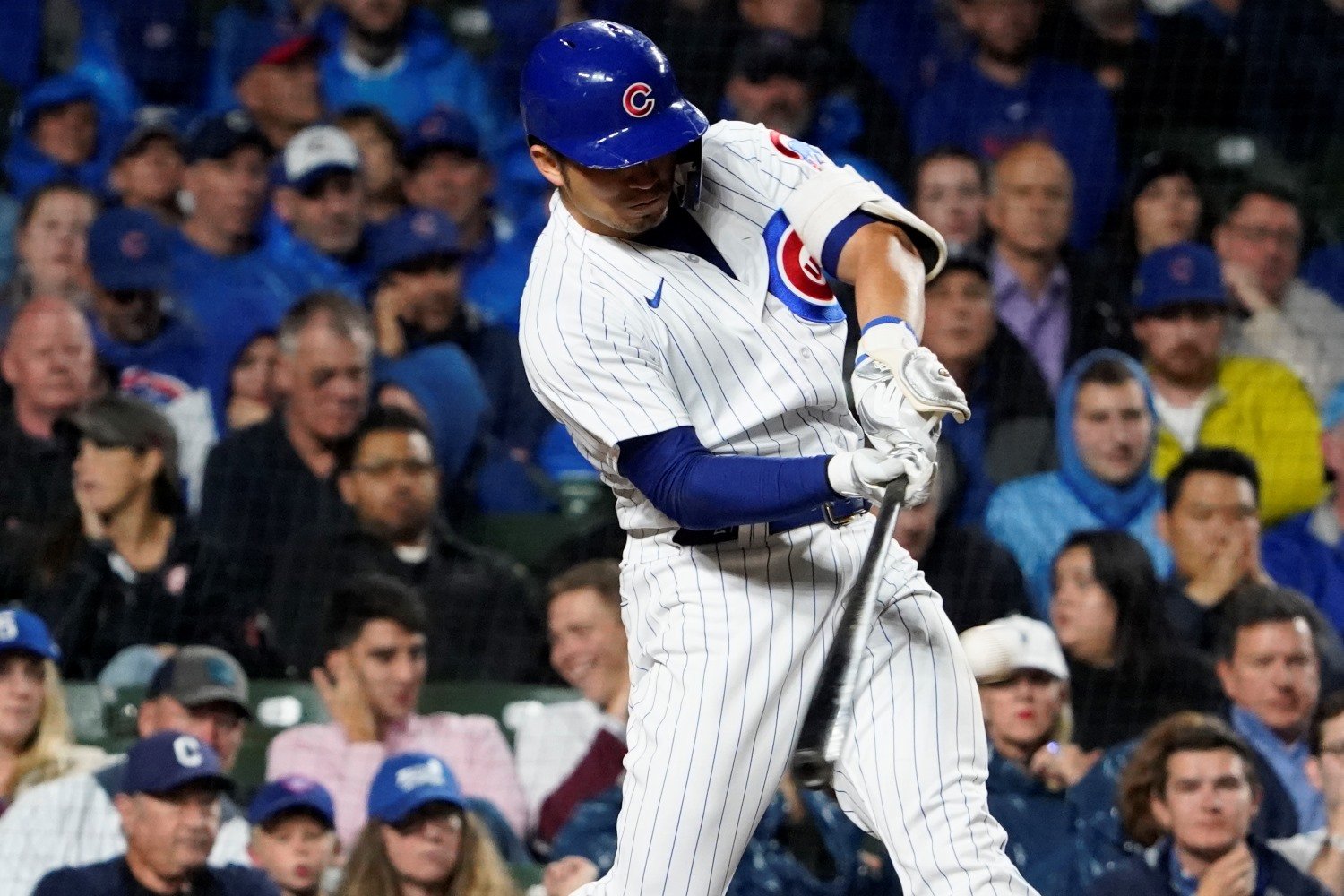 When this team has done well this season, it has very often been because they took tough pitches, fouled off others, and made opposing pitching staffs work themselves thin. Only the Brewers have seen more pitches per plate appearance this year than have the Cubs, and even that is a new development. This offense has about average power. To be more than average, they need to draw walks and work deep counts, the better to gain access to the worst hurlers on the other guys' roster. That hasn't been happening for the bulk of this month. Here are the Cubs' swing rates, as a team, by month for 2023: April: 45.2 May: 45.9 June: 46.8 July: 46.5 August: 46.7 September: 47.8 You can trace a similar trend by isolating pitches outside the strike zone, too. There, the team has gone from chasing 26.4 percent of would-be balls in April to 29 percent for September. This is a broad, sweeping way to look at what is really a series of granular adjustments, of course, because each player is an individual, and their approaches might need to vary based on how they're being pitched or how well they're actually swinging, but it tells us something true. The Cubs' plate discipline, overall, has deteriorated near the end of this season. On Monday night, it was restored, at least briefly. The team swung at just 43.5 percent of the 163 pitches thrown by four Pirates pitchers. The game was less of a laugher than the final score implied, and it offers relatively little solace after a 10-game stretch in which the team lost so much ground in the Wild Card and NL Central races, but it was an important step in the right direction. After two off days in five, and with the home crowd cheering them on, the team seemed more relaxed. Facing a parade of inexperienced and overmatched Pirates hurlers helped. They'll get none of that kind of assistance over the next two days, though. In Mitch Keller, the team will face one of the pitchers who started to expose the cracks in their offensive foundation, just as they were forming a few weeks ago. It was Keller who pitched eight dominant innings in the only game in which the Pirates have beaten the Cubs this season, and that night, they were way too aggressive with him. Keller does throw plenty of strikes, but the Cubs need to adjust and go up there with a more concertedly patient approach this time around. They might be hitting from behind in the count at times, but they can't allow Derek Shelton to go straight from Keller to David Bednar and beat them 2-1 again. It sounds like an excuse, but the grind of the long season really does systematically erode plate discipline. When a team has played as many taut and important games as the Cubs have lately, and when they don't get many days off, that effect can be magnified. In this particular sense, certainly, David Ross's new tack of sticking to a set of trusted position players and letting the rest wilt on the bench has been problematic. I was in favor of that approach as of a few weeks ago, and it looks like a much worse course than it did at that time, thanks to injuries to Jeimer Candelario and Nick Madrigal. Still, many of the guys Ross has so stubbornly played every day are necessary to any hopes the Cubs have of reaching and succeeding in October, and many of them (especially Nico Hoerner and Dansby Swanson) have been clear about their desire to play every inning they can play. It's hard to fault the manager, exactly, for not having headed off this problem, since he's not armed with an especially deep roster in the first place. One way or another, the change demonstrated Monday needs to be locked in and sustained for the balance of the regular season. That's much, much easier said than done, and the coaching staff will need to get creative about reinforcing what just happened, without overreacting to it. The Cubs' playoff hopes ride, to some extent, on Ross and his lieutenants successfully striking that balance.
 -
Though the Cubs were idle Monday, they did announce their probable starters for the upcoming series at Wrigley Field, against the Pirates. To a careful observer, there was a surprising development nestled in there. Image courtesy of © Rick Osentoski-USA TODAY Sports The off day Monday was the team's second in five days, and it made it possible for them to shorten their starting rotation to four for a turn without burning anyone out. To no one's shock, Justin Steele and Kyle Hendricks will start Wednesday and Thursday, setting them up to start next Tuesday and Wednesday, respectively, and keeping Steele available to take the ball on the final day of the season against the Brewers, if the Cubs' postseason hopes ride on that game. Much more surprising, though, was the identity of Tuesday's starter. That will be Javier Assad, which means that the guy being passed over is Jameson Taillon. Presumably, Taillon will still be available to pitch Saturday against the Rockies, when the Cubs next need their fifth starter, but the way things have been going, even that doesn't feel certain. If Taillon is dealing with an injury of some kind, the team will really have to go into scramble mode to make it to the end of this grind of a season. A bullpen day featuring Marcus Stroman, Drew Smyly, and Hayden Wesneski could cover the open start, but it would thin out the bullpen for the game surrounding it on the calendar. We could see one more stint for untrusted utility reliever Michael Rucker, in that event. Instead, let's assume (for the moment) that Taillon is healthy, and that this choice is based on the team's concept of the best way to win enough down the stretch to claim a Wild Card spot. In that case, Taillon should be available in relief for part of this Pirates series--which would mean four-fifths of the Opening Day starting rotation being thus assigned during that time. That's wild, and it's a nice way to widen the lens and be reminded how improbable it is that they got this far. More importantly, though, it's an odd statement about the team's estimation of the talent levels of either Assad and Taillon or their supporting cast. Over the last two starts, Assad has been battered fairly brutally. He weaved in and out of traffic against the Diamondbacks on September 7, and finished with a respectable three runs in 5 1/3 innings, but the ball was screaming off the Arizona bats that day. Assad didn't register a strikeout. He was extraordinarily lucky not to give up more damage or be knocked out sooner. Five days later, against the Rockies, he walked four batters and gave up more solid contact, and didn't make it out of the fourth inning. Meanwhile, Taillon is (if anything) heating up. He was awesome in his start against Arizona on September 8, and although he cracked and let the game slide away from him in the fifth inning at Coors, he made it through five frames and continued to show comfort with a pitch mix that is becoming his new norm. If Taillon is available for it, I'd have much sooner had him start Tuesday than Assad, especially because he'd now line up (instead) to face the Rockies over the weekend, making consecutive starts against the same lineup. For that reason, I tend to suspect that there's a lurking injury concern with the man in the first year of a four-year, $68-million contract. That would be on trend for this team, given the last fortnight, and it would be a huge blow to the team's dwindling chances of postseason glory. If Taillon is healthy, that's wonderful news--but it also makes this decision questionable. That, too, would be unhappily in line with the way things have gone downhill lately, and it would invite a lot of second-guessing if Assad doesn't pitch well Tuesday night. There's one more potential explanation, too. It might be that, given the recent struggles of their offense and even the creeping concern with their defense, the team thinks Assad (who's a bit more likely to stay off the barrels of opponents' bats and give you six or seven innings of one-run ball, if you think you've fixed what's happened over the last few starts) just reflects a better balance of risk and reward than Taillon. That calculus has to take into account environment and externalities, rather than just present true talent, so it's a more defensible position. Again, though, that wouldn't speak well of the team's hopes to recover from this stretch of miserable play. One way or another, this decision seems to augur ill. Hopefully, that's just the fatalism that seizes all of us when a team slumps like this right as the days get shorter fastest. The pregame gaggle with David Ross and the huge game tonight will tell us. View full article
-
Why Are the Cubs Skipping Jameson Taillon Instead of Javier Assad?
Matthew Trueblood posted an article in Cubs
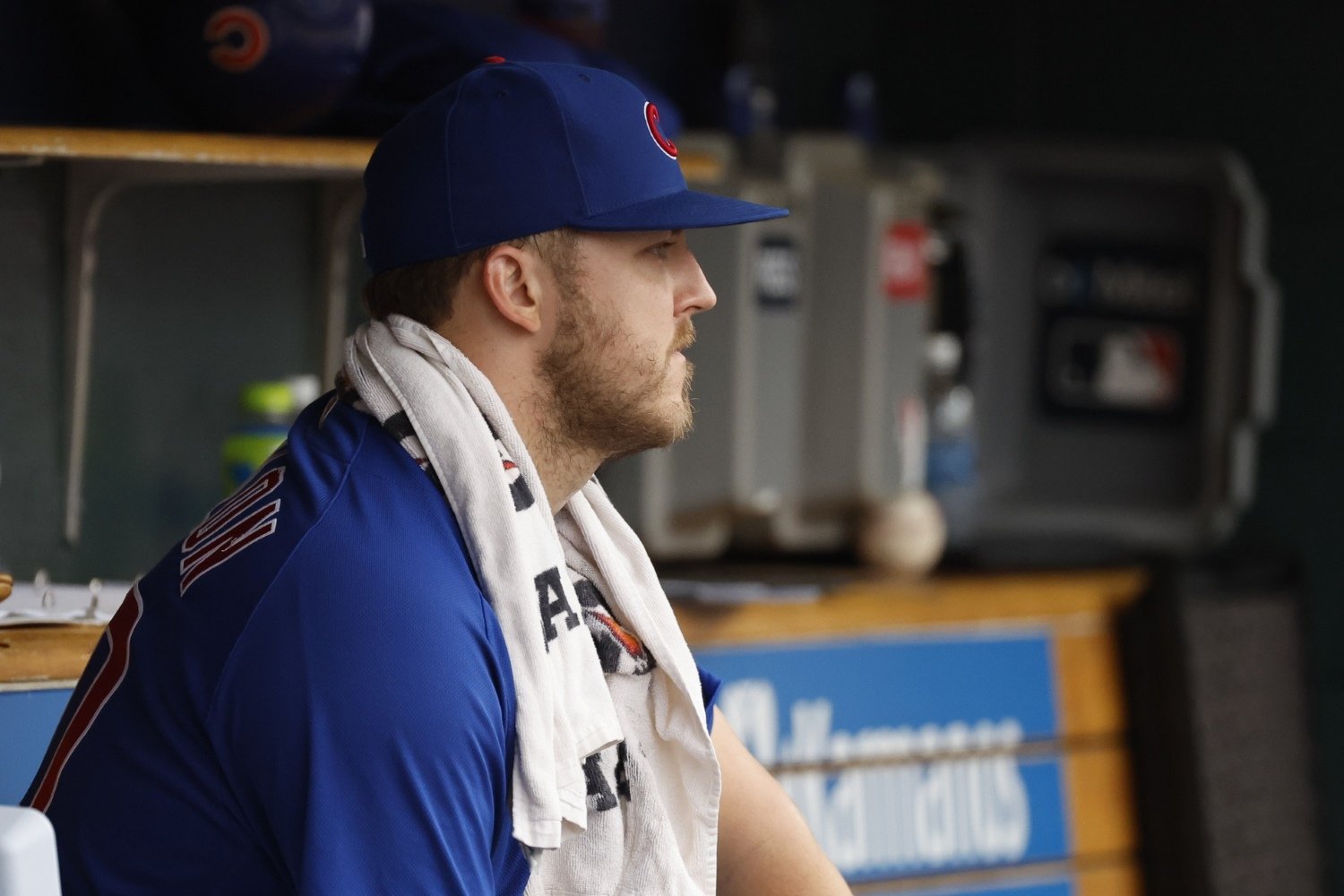 The off day Monday was the team's second in five days, and it made it possible for them to shorten their starting rotation to four for a turn without burning anyone out. To no one's shock, Justin Steele and Kyle Hendricks will start Wednesday and Thursday, setting them up to start next Tuesday and Wednesday, respectively, and keeping Steele available to take the ball on the final day of the season against the Brewers, if the Cubs' postseason hopes ride on that game. Much more surprising, though, was the identity of Tuesday's starter. That will be Javier Assad, which means that the guy being passed over is Jameson Taillon. Presumably, Taillon will still be available to pitch Saturday against the Rockies, when the Cubs next need their fifth starter, but the way things have been going, even that doesn't feel certain. If Taillon is dealing with an injury of some kind, the team will really have to go into scramble mode to make it to the end of this grind of a season. A bullpen day featuring Marcus Stroman, Drew Smyly, and Hayden Wesneski could cover the open start, but it would thin out the bullpen for the game surrounding it on the calendar. We could see one more stint for untrusted utility reliever Michael Rucker, in that event. Instead, let's assume (for the moment) that Taillon is healthy, and that this choice is based on the team's concept of the best way to win enough down the stretch to claim a Wild Card spot. In that case, Taillon should be available in relief for part of this Pirates series--which would mean four-fifths of the Opening Day starting rotation being thus assigned during that time. That's wild, and it's a nice way to widen the lens and be reminded how improbable it is that they got this far. More importantly, though, it's an odd statement about the team's estimation of the talent levels of either Assad and Taillon or their supporting cast. Over the last two starts, Assad has been battered fairly brutally. He weaved in and out of traffic against the Diamondbacks on September 7, and finished with a respectable three runs in 5 1/3 innings, but the ball was screaming off the Arizona bats that day. Assad didn't register a strikeout. He was extraordinarily lucky not to give up more damage or be knocked out sooner. Five days later, against the Rockies, he walked four batters and gave up more solid contact, and didn't make it out of the fourth inning. Meanwhile, Taillon is (if anything) heating up. He was awesome in his start against Arizona on September 8, and although he cracked and let the game slide away from him in the fifth inning at Coors, he made it through five frames and continued to show comfort with a pitch mix that is becoming his new norm. If Taillon is available for it, I'd have much sooner had him start Tuesday than Assad, especially because he'd now line up (instead) to face the Rockies over the weekend, making consecutive starts against the same lineup. For that reason, I tend to suspect that there's a lurking injury concern with the man in the first year of a four-year, $68-million contract. That would be on trend for this team, given the last fortnight, and it would be a huge blow to the team's dwindling chances of postseason glory. If Taillon is healthy, that's wonderful news--but it also makes this decision questionable. That, too, would be unhappily in line with the way things have gone downhill lately, and it would invite a lot of second-guessing if Assad doesn't pitch well Tuesday night. There's one more potential explanation, too. It might be that, given the recent struggles of their offense and even the creeping concern with their defense, the team thinks Assad (who's a bit more likely to stay off the barrels of opponents' bats and give you six or seven innings of one-run ball, if you think you've fixed what's happened over the last few starts) just reflects a better balance of risk and reward than Taillon. That calculus has to take into account environment and externalities, rather than just present true talent, so it's a more defensible position. Again, though, that wouldn't speak well of the team's hopes to recover from this stretch of miserable play. One way or another, this decision seems to augur ill. Hopefully, that's just the fatalism that seizes all of us when a team slumps like this right as the days get shorter fastest. The pregame gaggle with David Ross and the huge game tonight will tell us.
 -
In yet another gut punch of a loss Sunday night, the Cubs' offense continued to deftly avoid the big hit like it was their ex at a mutual friend's Labor Day cookout. One member of the team has positively bolted the party every time the clutch hit even feels nearby, though, and it's a major bummer. Image courtesy of © Ron Chenoy-USA TODAY Sports No one wants to feel badly about Dansby Swanson's first year with the Cubs. He's been awesome. He's been delightful. His defensive play at shortstop is even better than advertised, and his leadership is surely one reason why the team even reached September in position to play meaningful games. He's one of the unqualified success stories of this season. If we're going to properly diagnose this team's inability to come up with the hits they need to win close games, though, we have to talk about this: Swanson has been dreadful in important at-bats, all year. Swanson has come to the plate 81 times in Late and Close situations this year, according to Baseball Reference. (That means it was at least the seventh inning, and the tying run was at least on deck, or else the Cubs led by no more than one.) He's batted .151/.235/.192 in those situations, without a home run. He's hitting .235/.309/.378 in 110 high-leverage plate appearances. He owns a .640 OPS in innings 7-9, and he's 0-for-7 with a walk in extra innings. He's got a .660 OPS against relievers, overall. It's not fair to Swanson to pull out these numbers and blame him for the Cubs' undoing, here. After all, that might not even be what this is. It might merely be the last trial of the insanely resilient, impossibly impossible 2023 Cubs. They might roar back, lock up a Wild Card berth, and even make a run into the postseason. Nor is it likely that this says anything permanent about him as a clutch hitter. The samples here are quite small. They could change with one mighty hot streak to close the season, and if he had such a clutch heater, it would probably be the thing that put the Cubs over the top and into the playoffs. Nonetheless, these numbers (and the much more visceral reality they describe) are an important part of the story of this season, at this point. Swanson is, by far, the player on the roster in whom the team has the most invested. He wasn't brought in to anchor the offense, and his overall production has been adequate, but if we don't at least acknowledge his futility in crucial at-bats, we'll end up placing blame somewhere else--and it's likely to be somewhere even more unfair, because it will be less rooted in objective truth. Cody Bellinger hit into a devastating double play in the third inning Sunday night, but Bellinger has been the engine of the team's offense. He owns a 2.8 Win Probability Added (WPA) for the year. His at-bats have, on balance, added that many wins to the Cubs' ledger, relative to an exactly average theoretical outcome for each of them. That leads the Cubs by a wide margin. Swanson doesn't quite take up the rear in that statistical category, but it's fair to say that he keeps dubious company. Three Cubs hitters have hurt the team's Win Probability more than Swanson (-0.6) this year: Trey Mancini, Miguel Amaya, and Tucker Barnhart. Amaya's offensive struggles down the stretch have been very unfortunate, but he's a rookie playing infrequently, trying to manage the responsibilities of being a backup catcher for a contending team with a thinning pitching staff. You know what happened to Mancini and Barnhart. I can recommend adjustments, mentally and physically. Swanson pulls off the ball too often when he comes up in important situations. Trying to pull the ball and play the hero, ironically, he thwarts that very objective. I covered that aspect of things in the piece I wrote 10 days ago about Swanson's struggles. It runs deeper than just getting pull-happy, though. Swanson also seems overly aggressive, in general. He has a .631 OPS in plate appearances in which he swings at the first pitch, which is 28 percent worse than the league does when they do so, on average. When he takes the first pitch, his OPS is .812--21 percent better than average. Yet, he swings at 33.5 percent of first pitches, which is solidly higher than the league average. He needs to take a more patient tack. Even if he falls behind on called strikes, he might get a better look and a better idea of how to square up the next pitch. The payoff of early-count swinging for him this season has been miserable, so he needs to adjust. Neither of those changes are as easy to make as they are to prescribe, though, and even if he made them, he might be no better off. A lot of this is bad luck, or at least bad luck frosting on a cake made of imperfect process. There's no easy five here, and there's no value in vilifying the man who every Cubs fans hopes has another half-decade of fruitful time in Wrigleyville ahead of him. It just has to be out there. The Cubs keep losing, and inarguably, this is a significant reason why. View full article
-
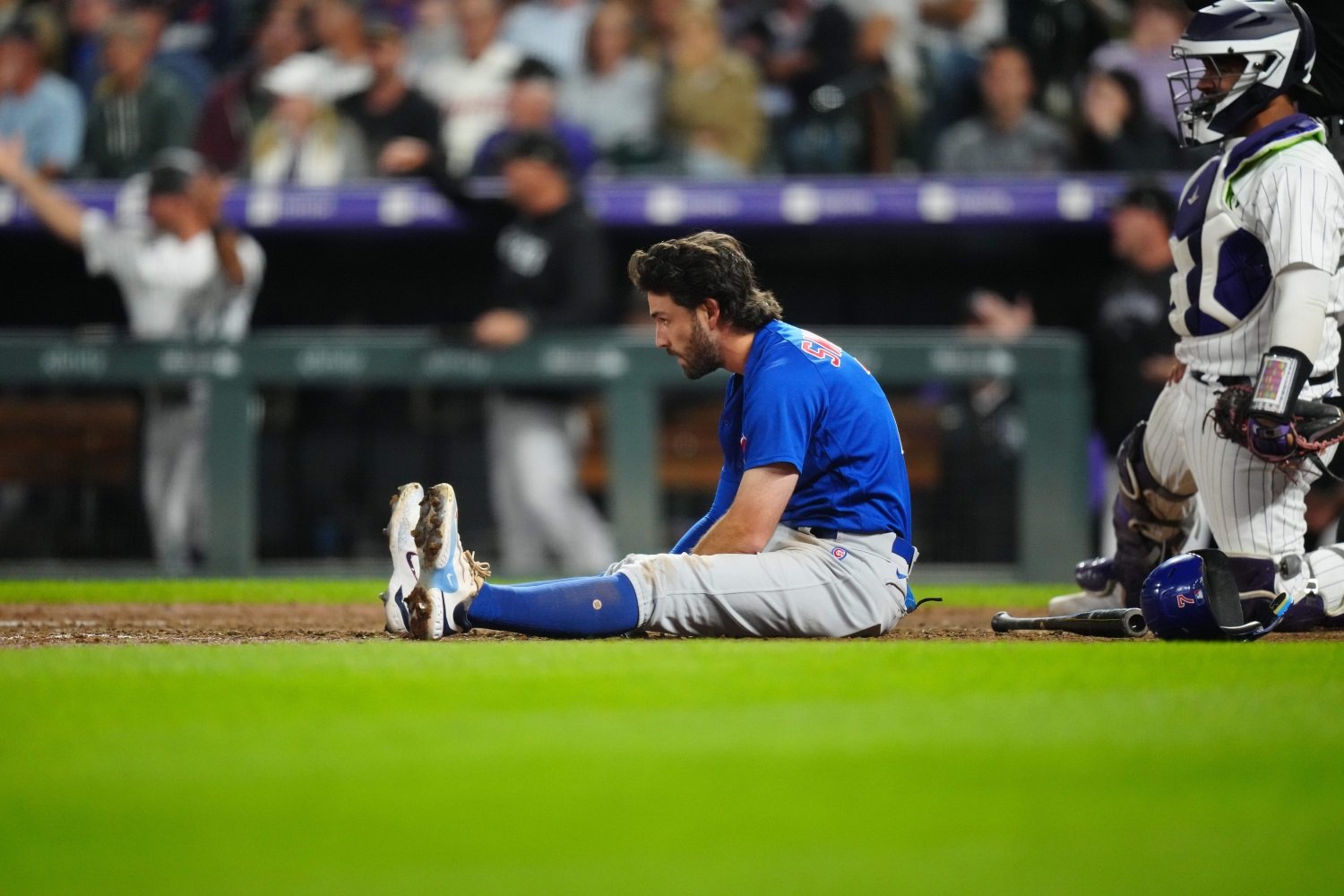 No one wants to feel badly about Dansby Swanson's first year with the Cubs. He's been awesome. He's been delightful. His defensive play at shortstop is even better than advertised, and his leadership is surely one reason why the team even reached September in position to play meaningful games. He's one of the unqualified success stories of this season. If we're going to properly diagnose this team's inability to come up with the hits they need to win close games, though, we have to talk about this: Swanson has been dreadful in important at-bats, all year. Swanson has come to the plate 81 times in Late and Close situations this year, according to Baseball Reference. (That means it was at least the seventh inning, and the tying run was at least on deck, or else the Cubs led by no more than one.) He's batted .151/.235/.192 in those situations, without a home run. He's hitting .235/.309/.378 in 110 high-leverage plate appearances. He owns a .640 OPS in innings 7-9, and he's 0-for-7 with a walk in extra innings. He's got a .660 OPS against relievers, overall. It's not fair to Swanson to pull out these numbers and blame him for the Cubs' undoing, here. After all, that might not even be what this is. It might merely be the last trial of the insanely resilient, impossibly impossible 2023 Cubs. They might roar back, lock up a Wild Card berth, and even make a run into the postseason. Nor is it likely that this says anything permanent about him as a clutch hitter. The samples here are quite small. They could change with one mighty hot streak to close the season, and if he had such a clutch heater, it would probably be the thing that put the Cubs over the top and into the playoffs. Nonetheless, these numbers (and the much more visceral reality they describe) are an important part of the story of this season, at this point. Swanson is, by far, the player on the roster in whom the team has the most invested. He wasn't brought in to anchor the offense, and his overall production has been adequate, but if we don't at least acknowledge his futility in crucial at-bats, we'll end up placing blame somewhere else--and it's likely to be somewhere even more unfair, because it will be less rooted in objective truth. Cody Bellinger hit into a devastating double play in the third inning Sunday night, but Bellinger has been the engine of the team's offense. He owns a 2.8 Win Probability Added (WPA) for the year. His at-bats have, on balance, added that many wins to the Cubs' ledger, relative to an exactly average theoretical outcome for each of them. That leads the Cubs by a wide margin. Swanson doesn't quite take up the rear in that statistical category, but it's fair to say that he keeps dubious company. Three Cubs hitters have hurt the team's Win Probability more than Swanson (-0.6) this year: Trey Mancini, Miguel Amaya, and Tucker Barnhart. Amaya's offensive struggles down the stretch have been very unfortunate, but he's a rookie playing infrequently, trying to manage the responsibilities of being a backup catcher for a contending team with a thinning pitching staff. You know what happened to Mancini and Barnhart. I can recommend adjustments, mentally and physically. Swanson pulls off the ball too often when he comes up in important situations. Trying to pull the ball and play the hero, ironically, he thwarts that very objective. I covered that aspect of things in the piece I wrote 10 days ago about Swanson's struggles. It runs deeper than just getting pull-happy, though. Swanson also seems overly aggressive, in general. He has a .631 OPS in plate appearances in which he swings at the first pitch, which is 28 percent worse than the league does when they do so, on average. When he takes the first pitch, his OPS is .812--21 percent better than average. Yet, he swings at 33.5 percent of first pitches, which is solidly higher than the league average. He needs to take a more patient tack. Even if he falls behind on called strikes, he might get a better look and a better idea of how to square up the next pitch. The payoff of early-count swinging for him this season has been miserable, so he needs to adjust. Neither of those changes are as easy to make as they are to prescribe, though, and even if he made them, he might be no better off. A lot of this is bad luck, or at least bad luck frosting on a cake made of imperfect process. There's no easy five here, and there's no value in vilifying the man who every Cubs fans hopes has another half-decade of fruitful time in Wrigleyville ahead of him. It just has to be out there. The Cubs keep losing, and inarguably, this is a significant reason why.
 -
Look at the featured picture for this post. There's over 3,000 games of MLB experience in it. There are four very tired legs (for different reasons), and two very good players doing their desperate best to win a crucial ball game. It's a sad photo, for Cubs fans, but there's a lot of pride there. Image courtesy of © Joe Camporeale-USA TODAY Sports Evan Longoria will have to stick around somewhere for one more season, if he wants to eclipse 2,000 regular-season games in the big leagues. Saturday night was his 1,983rd, but he's been a part-time player for the last three years, and he entered this contest only late, as a pinch-hitter. He hasn't appeared in even 100 games since 2019, before the pandemic hit. He was, a few moments before Gabriel Moreno stroked a single to right field, seen taking his lead off second base, still kicking his legs and flexing his feet the way men of a certain age do when they need to summon their best speed but know they have a few muscles left to wake up. Yan Gomes has been around almost as long as Longoria, but was never an everyday player. (Longoria was one for, more or less, a decade.) He was playing his 1,074th career game, and 106th this year. As of last night, he's now played in more games and taken more plate appearances in 2023 than he had in any season since 2018. He'd caught all 13 innings of this seesaw game. He couldn't have kicked his legs even the way Longoria was doing, if he tried. Baseball, as it often does, saw these two old men (as the game sees anyone in their mid-30s) at its diamond's two magnetic poles and decided to bring them together. The ball was hit hard enough by Moreno to create a chance for a play at the plate, but Seiya Suzuki's throw was to the wrong side of home plate. Longoria, with all the speed that has allowed him to steal zero bases since the start of 2022, hurtled toward Gomes. Gomes collected the ball and dove across the dish. His play was as good as it could have been. It was, Cubs fans have to fear right now, like the performance of his whole team that night, and down the stretch of this harsh season: his honest best, but not good enough. Longoria got his hand in. The Buddhists say that the source of all suffering is desire. They weren't alone in discovering this, but they have a knack for putting things clearly. The Stoics knew the same thing. The idea that we suffer primarily because we have the capacity and the tendency to want things has nestled at the center of many literary works over the years. Alexandre Dumas put these words under the pen of his protagonist in The Count of Monte Cristo: Why did Saturday night's loss hurt so badly, four and a half numbing hours after the game began? It wasn't the Cody Bellinger would-be home run that sailed just foul. It wasn't the uncalled hit by pitch that changed one of the Cubs' extra-inning rallies (another bit of Bellinger misfortune). It wasn't the fact that Hayden Wesneski almost had the game won, only to take a line drive off his upper back that then fell into no-man's land on the infield. It wasn't even the maddening inability of the Cubs offense to find its gear and to cash in opportunities over this last fortnight, a stretch that now represents a life-or-death crisis to their resilient, contending team. No, it was the fact that the team has come this far. It was the fact that this team, which seems to have survived so much and come together so much and maybe (if you believe in this sort of thing, and if you're a little naive about baseball's inescapable cruelty) even earned so much, has led us all to want something. They've made a playoff berth (and briefly, though no longer, even a division title) seem possible. They've altered the states with which we're comparing their present one, and in the comparison lies suffering. A Buddhist Cubs fan might think to nickname Moreno "Desire." It seems like everywhere the Cubs have turned when they've needed an out or a base over the last 10 games, they've found Moreno instead. He's thrown out runners from behind the plate, and he's piled up hit after damaging hit in the batter's box. That he was the one to land the winning punch in the halfhearted slugfest at the end Saturday night only seems fitting. That William Contreras had a game-changing home run Friday night for the Brewers, as they all but sealed the division crown, underscores something that lurks at the edge of one's consciousness with Moreno, too: Both of those guys changed teams this winter. Both were had at trade prices the Cubs could have afforded. Gomes has been great, but he's running out of old man magic, and the other half of the catching position has been lousy all year. It’s hard not to watch Longoria beat him to the plate and reflect that the Diamondbacks only needed Longoria for a moment at the end of this game, whereas the Cubs badly needed Gomes all the way through it. The Diamondbacks’ rookies are better than the Cubs’. The Diamondbacks’ deadline additions are better than the Cubs’. That’s why, even though the Cubs’ core might be stronger and better than the Diamondbacks’, Arizona keeps winning these games. Again, though, we're just comparing one state to another, there. It's in the desire that the suffering lies. Still, for all the bad juju and the bad vibes and the scary standings screenshots, it's not over. The Cubs have 13 games left, and at this moment, they remain in playoff position. It's down to a half-game lead on two teams against whom they do not hold the tiebreaker, and one full game on another one, but they do cling to their position. This is already the most resilient team in Cubs history, for my money. Alas, they look like they've run out of magic--and really, out of energy. With Michael Fulmer returning to the injured list Saturday, his season seems surely over. The Cubs are scrambling to cover innings. Three-fifths of their Opening Day rotation (Marcus Stroman, Drew Smyly, and Hayden Wesneski) appeared in relief last night. They can't find the clutch hit, or the clutch out. They don't seem utterly overmatched. They're not falling apart quite the same way the 2001 Cubs or the 2018 Cubs or the 2004 Cubs did. This is a collapse with its own character. They're just slightly tired, and a hair too thin, and they're also relentlessly unlucky. Yet, it can all still change. There's a vital corollary to the Dumas quotation above. The next sentence the Count wrote to his dear friend, who had known such pain and loss in his life, was this: "He who has felt the deepest grief is best able to experience supreme happiness." After Sunday, the Cubs don't have to see Gabriel Moreno anymore. They have one last home stand, and then a road trip against two teams who shouldn't have much for which to play. If there's one thing they've surely earned this year, it's the benefit of the doubt, while any hope remains. View full article
-
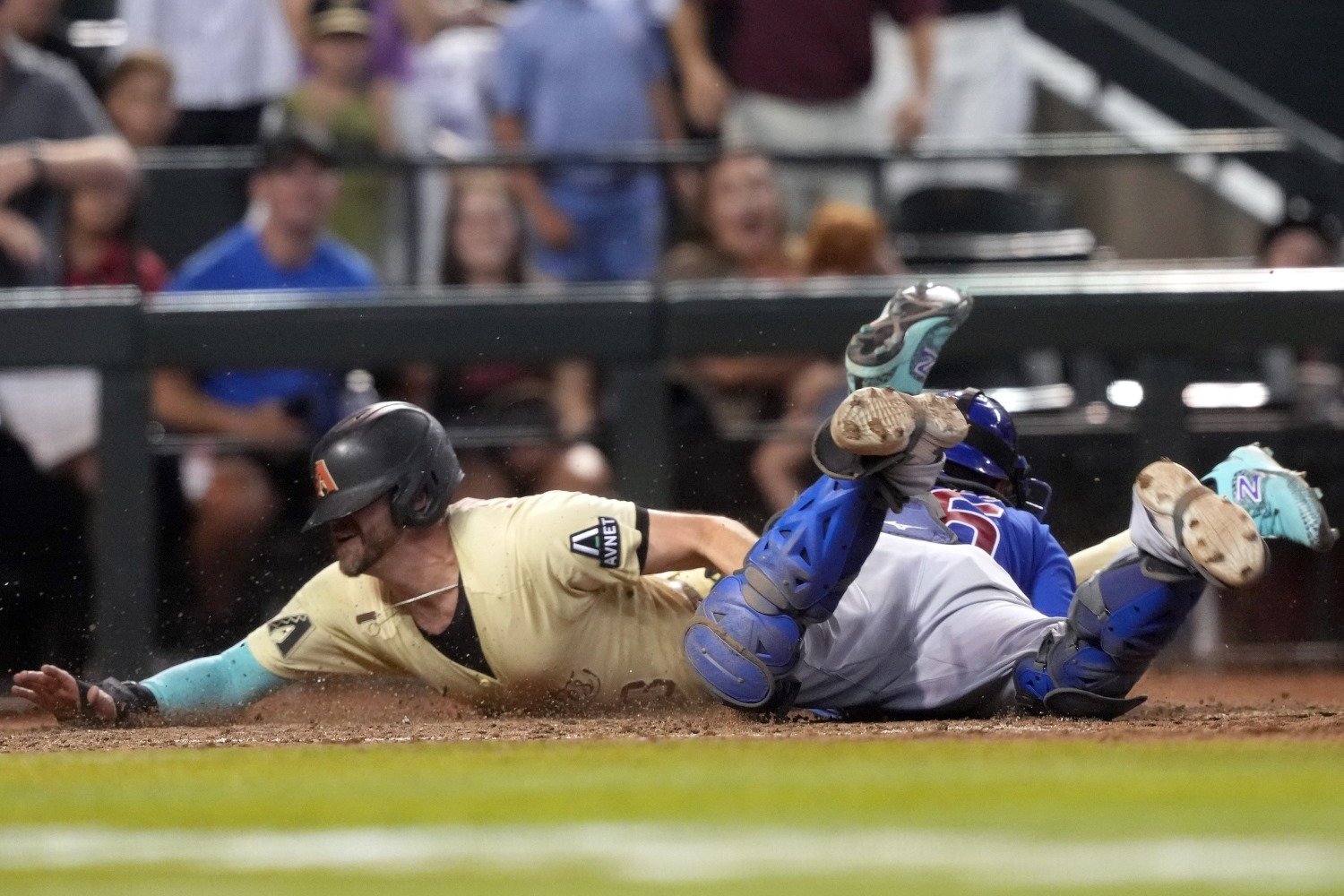 Evan Longoria will have to stick around somewhere for one more season, if he wants to eclipse 2,000 regular-season games in the big leagues. Saturday night was his 1,983rd, but he's been a part-time player for the last three years, and he entered this contest only late, as a pinch-hitter. He hasn't appeared in even 100 games since 2019, before the pandemic hit. He was, a few moments before Gabriel Moreno stroked a single to right field, seen taking his lead off second base, still kicking his legs and flexing his feet the way men of a certain age do when they need to summon their best speed but know they have a few muscles left to wake up. Yan Gomes has been around almost as long as Longoria, but was never an everyday player. (Longoria was one for, more or less, a decade.) He was playing his 1,074th career game, and 106th this year. As of last night, he's now played in more games and taken more plate appearances in 2023 than he had in any season since 2018. He'd caught all 13 innings of this seesaw game. He couldn't have kicked his legs even the way Longoria was doing, if he tried. Baseball, as it often does, saw these two old men (as the game sees anyone in their mid-30s) at its diamond's two magnetic poles and decided to bring them together. The ball was hit hard enough by Moreno to create a chance for a play at the plate, but Seiya Suzuki's throw was to the wrong side of home plate. Longoria, with all the speed that has allowed him to steal zero bases since the start of 2022, hurtled toward Gomes. Gomes collected the ball and dove across the dish. His play was as good as it could have been. It was, Cubs fans have to fear right now, like the performance of his whole team that night, and down the stretch of this harsh season: his honest best, but not good enough. Longoria got his hand in. The Buddhists say that the source of all suffering is desire. They weren't alone in discovering this, but they have a knack for putting things clearly. The Stoics knew the same thing. The idea that we suffer primarily because we have the capacity and the tendency to want things has nestled at the center of many literary works over the years. Alexandre Dumas put these words under the pen of his protagonist in The Count of Monte Cristo: Why did Saturday night's loss hurt so badly, four and a half numbing hours after the game began? It wasn't the Cody Bellinger would-be home run that sailed just foul. It wasn't the uncalled hit by pitch that changed one of the Cubs' extra-inning rallies (another bit of Bellinger misfortune). It wasn't the fact that Hayden Wesneski almost had the game won, only to take a line drive off his upper back that then fell into no-man's land on the infield. It wasn't even the maddening inability of the Cubs offense to find its gear and to cash in opportunities over this last fortnight, a stretch that now represents a life-or-death crisis to their resilient, contending team. No, it was the fact that the team has come this far. It was the fact that this team, which seems to have survived so much and come together so much and maybe (if you believe in this sort of thing, and if you're a little naive about baseball's inescapable cruelty) even earned so much, has led us all to want something. They've made a playoff berth (and briefly, though no longer, even a division title) seem possible. They've altered the states with which we're comparing their present one, and in the comparison lies suffering. A Buddhist Cubs fan might think to nickname Moreno "Desire." It seems like everywhere the Cubs have turned when they've needed an out or a base over the last 10 games, they've found Moreno instead. He's thrown out runners from behind the plate, and he's piled up hit after damaging hit in the batter's box. That he was the one to land the winning punch in the halfhearted slugfest at the end Saturday night only seems fitting. That William Contreras had a game-changing home run Friday night for the Brewers, as they all but sealed the division crown, underscores something that lurks at the edge of one's consciousness with Moreno, too: Both of those guys changed teams this winter. Both were had at trade prices the Cubs could have afforded. Gomes has been great, but he's running out of old man magic, and the other half of the catching position has been lousy all year. It’s hard not to watch Longoria beat him to the plate and reflect that the Diamondbacks only needed Longoria for a moment at the end of this game, whereas the Cubs badly needed Gomes all the way through it. The Diamondbacks’ rookies are better than the Cubs’. The Diamondbacks’ deadline additions are better than the Cubs’. That’s why, even though the Cubs’ core might be stronger and better than the Diamondbacks’, Arizona keeps winning these games. Again, though, we're just comparing one state to another, there. It's in the desire that the suffering lies. Still, for all the bad juju and the bad vibes and the scary standings screenshots, it's not over. The Cubs have 13 games left, and at this moment, they remain in playoff position. It's down to a half-game lead on two teams against whom they do not hold the tiebreaker, and one full game on another one, but they do cling to their position. This is already the most resilient team in Cubs history, for my money. Alas, they look like they've run out of magic--and really, out of energy. With Michael Fulmer returning to the injured list Saturday, his season seems surely over. The Cubs are scrambling to cover innings. Three-fifths of their Opening Day rotation (Marcus Stroman, Drew Smyly, and Hayden Wesneski) appeared in relief last night. They can't find the clutch hit, or the clutch out. They don't seem utterly overmatched. They're not falling apart quite the same way the 2001 Cubs or the 2018 Cubs or the 2004 Cubs did. This is a collapse with its own character. They're just slightly tired, and a hair too thin, and they're also relentlessly unlucky. Yet, it can all still change. There's a vital corollary to the Dumas quotation above. The next sentence the Count wrote to his dear friend, who had known such pain and loss in his life, was this: "He who has felt the deepest grief is best able to experience supreme happiness." After Sunday, the Cubs don't have to see Gabriel Moreno anymore. They have one last home stand, and then a road trip against two teams who shouldn't have much for which to play. If there's one thing they've surely earned this year, it's the benefit of the doubt, while any hope remains.
 -
The Cubs' would-be Cy Young contender pitched four gorgeous, scoreless innings in the biggest game of the team's season Friday night. It's just that he also pitched two other, snakebitten ones. Image courtesy of © Rick Scuteri-USA TODAY Sports It's mid-September, and every MLB player is tired. Justin Steele, 28, is not unusually tired. He's not folding under the pressure of this pennant race or cracking under a workload he's never borne in a single professional season before. Steele pitched six innings against the Diamondbacks Friday and averaged higher velocities on each of his two key pitches than the numbers he's posted for the season. His slider wasn't quite as sharp as usual, and that turned out to be a fatal shortcoming, but those nights happen, as surely as do the great days when everything's working and 12 Giants shrink to ants as they trudge back to the dugout, bats in hands. A pair of three-run home runs felled the Cubs, both off of Steele. One came in the first inning, and one in the sixth. One came off the fairly thunderous bat of Lourdes Gurriel, Jr. The other came off pesky lefty speedster Alek Thomas. There should be important differences between the two, and there are a couple. There should be some narrative that we can weave--some tale of woe and incompetence, or at least of noble but doomed struggle against mounting weariness--but there really isn't. As best I can surmise, no one is at fault for these. They just happened. The other guys live in nice houses, too. I was frustrated with the first home run. It felt like a lapse from Steele and Yan Gomes, after a two-out walk to Christian Walker on which Steele's cutter wouldn't obey him and missed on every side of the strike zone, four times in a row. The first-pitch slider to Gurriel seemed like a get-me-over, when what he needed was to shrug off the rough walk and rediscover the feel for that cutting heater. It really, wasn't a bad pitch, though. That's a little higher than you'd like the slider to be, and it hummed in at 84 miles per hour, so it was a bit firmer than usual for Steele. A little bit of the burbling frustration and (perhaps) nervousness of that moment leaked into it. Still, it's not a pitch that begs to be hammered. Gurriel seemed to be sitting all over it. That was the real problem. Maybe, based on the fact that Steele had missed so badly with four straight heaters, Gurriel knew to switch up his approach in the moment. Based on the information Steele had on him, though, it was a fair guess that he would do well by starting him with the breaking stuff. Gurriel had seen 31 first-pitch breaking balls from lefties this year before that pitch, swung at only eight of them, and come up with zero hits. Nor was Steele falling into some predictable pattern. Only 42 percent of his first pitches to righty batters with runners on this year have been sliders. Gurriel does find most of his over-the-fence power against southpaws on the softer stuff, but in that situation, it was the single Steele and Gomes really wanted to avoid. Gurriel hammers fastballs off lefties, low on trajectory but high on exit velocity, so they went with the pitch that had a chance to buy them a strike and open things up. They got burned. If Gurriel guessed right because of the previous at-bat or the knowledge that they'd want not to let him line a single off a fastball, then he earned that homer. The shortest answer, though, is that that was a tough matchup, and Steele caught a bad break. The Thomas homer deserves a bit more of a raised eyebrow, perhaps. It, too, came with two outs, and right after a maddeningly perfect opposite-field single by Gabriel Moreno, on a fine pitch. Tommy Hottovy had come to the mound to reset things, but Steele still looked upset afterward. This time, he made a genuine mistake, and Thomas punished it, relatively underpowered though he is. Was it a mistake to try for a slider on the outside corner, though, or did Steele just miss, near the end of a cursed outing in a hard final month of a long season? Again, it looks like the latter. Thomas has a bit of a slider-speed bat, so you can always make the case for hammering away at him with the heat, but Steele doesn't have even average heat in the first place. Overpowering guys, at least speed-wise, is not his game. On the outer edge of the plate, that pitch probably gets the ground ball Steele was seeking, and ends the inning, keeping the Cubs in the game going into the final act of the drama. It was two first-pitch sliders--no gathering drama, no at-bat in which a cue or a call was missed or in which Steele gave in, however begrudgingly. The Diamondbacks seemed to sit on his slider in his last start against them, and got virtually nothing from it. They seemed to sit on it again Friday night, and this time, they were rewarded. They whiffed on six of their 15 swings, but all of those swings were exceptionally aggressive. This isn't how almost anyone thinks of baseball luck. Luck is the bad bounce, the bad call, the untimely gust of wind or the rainout when your ace is scheduled and everyone's bat is hot. Luck is a blooper landing between three good defenders, not a 411-foot home run. Yet, sometimes, luck is absolutely that last thing. If it's true that an eighth of an inch on the bat can be the difference between four bags and a pop-up, Steele was an eighth of an inch from getting out of two jams. The Diamondbacks' runs are not in any sense unearned; they were won by great swings. Still, all the numbers and the matchups say Steele could have gotten away with it. Maybe he even should have. He just didn't. Every now and then--and especially, perhaps, when you're a team that got so hot in the summer that it was possible to almost forget how bad you were in the chilly spring--the baseball gods flick your ear with a fair-and-square thumping, instead of leaving any way for you to squirm out of the responsibility. Steele made mistakes. Not all mistakes were punished, but these were, and now he's out a Cy Young shot, and his team is suddenly under threat in the playoff hunt. The Cubs got consolation, at the end of the game. Marcus Stroman's return from the injured list was not exactly triumphant, given the score, but he looked terrific. If he's a force the rest of the way, the thinness of the relief corps will feel less dire. The team cracked three home runs in the ninth inning to tighten a loose game and force Paul Sewald into the game. Maybe that will pay off in the final two contests of the series, which they now need to win badly. Still, that kind of succor is hollow at this time of year. Every win is precious, and every loss is sawtoothed. Steele got unlucky. That's the bone-rattling truth of it. You can get beaten at just the wrong times, halfway by accident, and it can be curtains for that night, when the team needed the win so badly you all tasted the adrenaline in the backs of your mouths the moment that first home flew out of the park. Keep calm, and win the weekend. That's the attitude the team needs. Alas, it's not as simple as saying it. Bad luck, like a threatened snake, can strike twice. The Cubs have to play better, and they have to get luckier, and they're running out of time to get both of those forms of relief. View full article
-
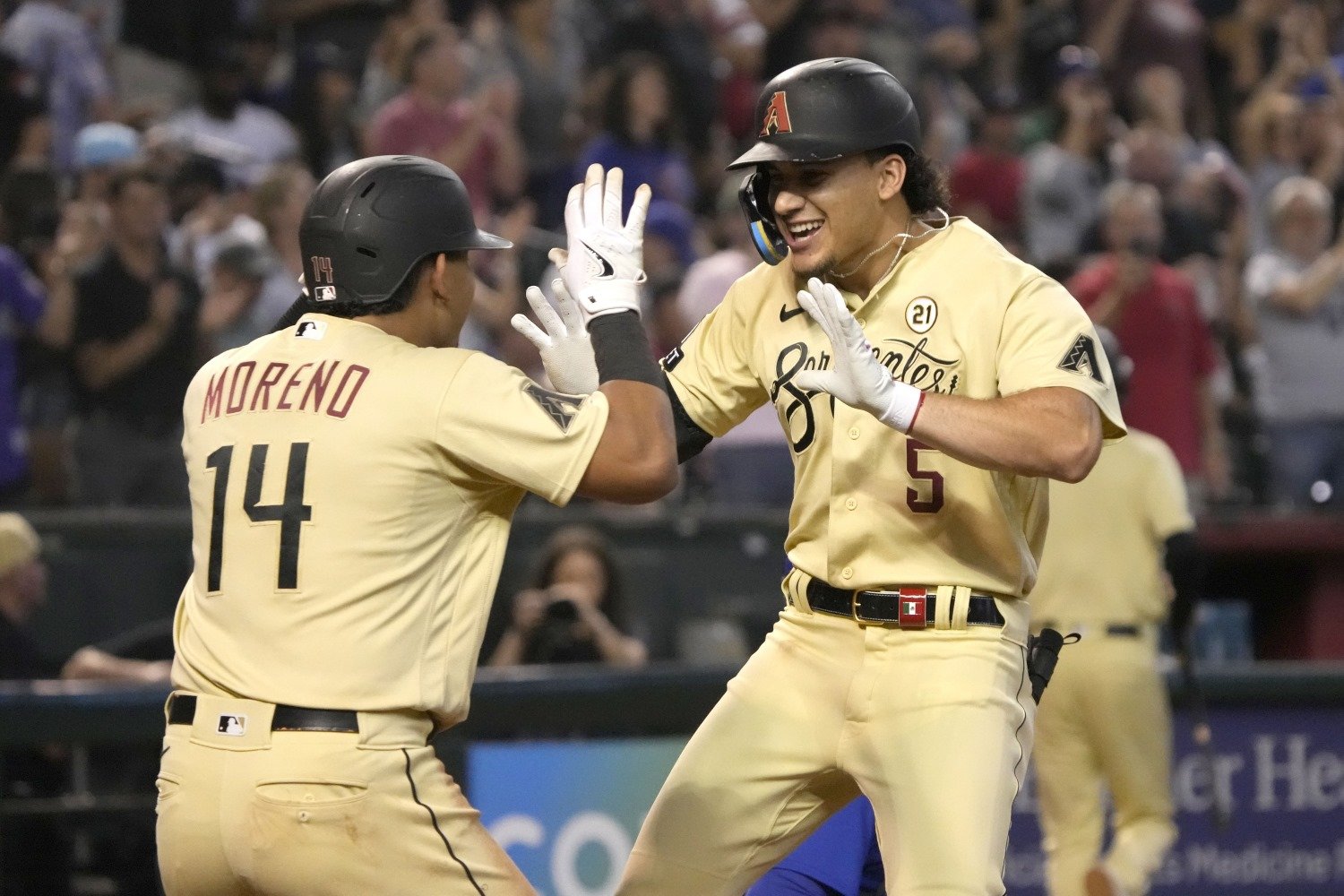 It's mid-September, and every MLB player is tired. Justin Steele, 28, is not unusually tired. He's not folding under the pressure of this pennant race or cracking under a workload he's never borne in a single professional season before. Steele pitched six innings against the Diamondbacks Friday and averaged higher velocities on each of his two key pitches than the numbers he's posted for the season. His slider wasn't quite as sharp as usual, and that turned out to be a fatal shortcoming, but those nights happen, as surely as do the great days when everything's working and 12 Giants shrink to ants as they trudge back to the dugout, bats in hands. A pair of three-run home runs felled the Cubs, both off of Steele. One came in the first inning, and one in the sixth. One came off the fairly thunderous bat of Lourdes Gurriel, Jr. The other came off pesky lefty speedster Alek Thomas. There should be important differences between the two, and there are a couple. There should be some narrative that we can weave--some tale of woe and incompetence, or at least of noble but doomed struggle against mounting weariness--but there really isn't. As best I can surmise, no one is at fault for these. They just happened. The other guys live in nice houses, too. I was frustrated with the first home run. It felt like a lapse from Steele and Yan Gomes, after a two-out walk to Christian Walker on which Steele's cutter wouldn't obey him and missed on every side of the strike zone, four times in a row. The first-pitch slider to Gurriel seemed like a get-me-over, when what he needed was to shrug off the rough walk and rediscover the feel for that cutting heater. It really, wasn't a bad pitch, though. That's a little higher than you'd like the slider to be, and it hummed in at 84 miles per hour, so it was a bit firmer than usual for Steele. A little bit of the burbling frustration and (perhaps) nervousness of that moment leaked into it. Still, it's not a pitch that begs to be hammered. Gurriel seemed to be sitting all over it. That was the real problem. Maybe, based on the fact that Steele had missed so badly with four straight heaters, Gurriel knew to switch up his approach in the moment. Based on the information Steele had on him, though, it was a fair guess that he would do well by starting him with the breaking stuff. Gurriel had seen 31 first-pitch breaking balls from lefties this year before that pitch, swung at only eight of them, and come up with zero hits. Nor was Steele falling into some predictable pattern. Only 42 percent of his first pitches to righty batters with runners on this year have been sliders. Gurriel does find most of his over-the-fence power against southpaws on the softer stuff, but in that situation, it was the single Steele and Gomes really wanted to avoid. Gurriel hammers fastballs off lefties, low on trajectory but high on exit velocity, so they went with the pitch that had a chance to buy them a strike and open things up. They got burned. If Gurriel guessed right because of the previous at-bat or the knowledge that they'd want not to let him line a single off a fastball, then he earned that homer. The shortest answer, though, is that that was a tough matchup, and Steele caught a bad break. The Thomas homer deserves a bit more of a raised eyebrow, perhaps. It, too, came with two outs, and right after a maddeningly perfect opposite-field single by Gabriel Moreno, on a fine pitch. Tommy Hottovy had come to the mound to reset things, but Steele still looked upset afterward. This time, he made a genuine mistake, and Thomas punished it, relatively underpowered though he is. Was it a mistake to try for a slider on the outside corner, though, or did Steele just miss, near the end of a cursed outing in a hard final month of a long season? Again, it looks like the latter. Thomas has a bit of a slider-speed bat, so you can always make the case for hammering away at him with the heat, but Steele doesn't have even average heat in the first place. Overpowering guys, at least speed-wise, is not his game. On the outer edge of the plate, that pitch probably gets the ground ball Steele was seeking, and ends the inning, keeping the Cubs in the game going into the final act of the drama. It was two first-pitch sliders--no gathering drama, no at-bat in which a cue or a call was missed or in which Steele gave in, however begrudgingly. The Diamondbacks seemed to sit on his slider in his last start against them, and got virtually nothing from it. They seemed to sit on it again Friday night, and this time, they were rewarded. They whiffed on six of their 15 swings, but all of those swings were exceptionally aggressive. This isn't how almost anyone thinks of baseball luck. Luck is the bad bounce, the bad call, the untimely gust of wind or the rainout when your ace is scheduled and everyone's bat is hot. Luck is a blooper landing between three good defenders, not a 411-foot home run. Yet, sometimes, luck is absolutely that last thing. If it's true that an eighth of an inch on the bat can be the difference between four bags and a pop-up, Steele was an eighth of an inch from getting out of two jams. The Diamondbacks' runs are not in any sense unearned; they were won by great swings. Still, all the numbers and the matchups say Steele could have gotten away with it. Maybe he even should have. He just didn't. Every now and then--and especially, perhaps, when you're a team that got so hot in the summer that it was possible to almost forget how bad you were in the chilly spring--the baseball gods flick your ear with a fair-and-square thumping, instead of leaving any way for you to squirm out of the responsibility. Steele made mistakes. Not all mistakes were punished, but these were, and now he's out a Cy Young shot, and his team is suddenly under threat in the playoff hunt. The Cubs got consolation, at the end of the game. Marcus Stroman's return from the injured list was not exactly triumphant, given the score, but he looked terrific. If he's a force the rest of the way, the thinness of the relief corps will feel less dire. The team cracked three home runs in the ninth inning to tighten a loose game and force Paul Sewald into the game. Maybe that will pay off in the final two contests of the series, which they now need to win badly. Still, that kind of succor is hollow at this time of year. Every win is precious, and every loss is sawtoothed. Steele got unlucky. That's the bone-rattling truth of it. You can get beaten at just the wrong times, halfway by accident, and it can be curtains for that night, when the team needed the win so badly you all tasted the adrenaline in the backs of your mouths the moment that first home flew out of the park. Keep calm, and win the weekend. That's the attitude the team needs. Alas, it's not as simple as saying it. Bad luck, like a threatened snake, can strike twice. The Cubs have to play better, and they have to get luckier, and they're running out of time to get both of those forms of relief.
 -
There are only 15 games left in the 2023 Chicago Cubs' regular-season schedule. They'll need to win 10 or more to take the NL Central, and at least eight to comfortably make the playoffs. Aligning their starting rotation will be key. Image courtesy of © Ron Chenoy-USA TODAY Sports It feels as though injuries are threatening the depth of the Chicago roster almost everywhere, with Adbert Alzolay and Jeimer Candelario hitting the injured list this week. At the moment, though, the team has established a certain level of stability in their starting rotation. This weekend, they'll send Justin Steele, Kyle Hendricks, and Jordan Wicks to the mound for three games against the Diamondbacks. If they reach the Wild Card Series, in a perfect world, they would start those three guys again, in that order. Between this series and that theoretical one, though, there lurks a lot of important and high-stakes baseball. Three off days jammed into the final two and a half weeks makes things much simpler, because the team can afford to do exactly what the moment seems to demand: skip Javier Assad for one turn and delay his next start until next weekend, against the Rockies. Because of the day off on Monday, Steele can come back on regular rest after just three games, next Wednesday. That gives the team the choice to skip either Assad or Jameson Taillon, who would be the starters for the first two games of that series against the Pirates at Wrigley Field if the rotation were uninterrupted. It's important to skip one of them, because that sets up Steele to pitch the following Tuesday in Atlanta, with an eye toward having him available for a potential Game 162 start on the final Sunday of the season in Milwaukee. Much-maligned though he's been all year, Taillon has pitched better lately. He frequently gets unlucky, and doesn't seem to respond well to those instances of adversity, mentally. However, he still gives the team a chance to win almost every time he takes the mound, and his outing last Friday against Arizona showed what can happen when that bad break never happens. By contrast, Assad has given up a scary amount of hard contact in each of his last two starts, and while he competed impressively and worked out of trouble several times across those two contests, he ultimately came apart in Colorado. If he's just giving up sharply-hit balls, the team's elite defense has a chance to absorb the damage, but his control abandoned him this week. A break (during which he could still be available for an inning or two in relief) seems in order. If Taillon starts next Tuesday and Steele goes Wednesday, it would line up Hendricks to make his final start at Wrigley Field for 2023 on Thursday evening against Pittsburgh. Then, Assad could slide back into the rotation on Friday, giving Wicks an extra day before he comes back Saturday. Taillon would go Sunday, and the following week, it would be Steele, Hendricks, and Wicks in Atlanta, with Assad, Taillon, and Steele lined up for the showdown in Milwaukee. If that last bit sounds unappealing, remember two things. Firstly, the Wild Card Series runs Tuesday through Thursday, right after the end of the season. That means that whoever goes Friday could be available no sooner than Game 2, and Saturday's starter would have to wait until a potential Game 3. The Cubs could flip Assad and Wicks and have the latter lead off the set against the Brewers on that Friday, to set the tone for the series, but it's possible that the Cubs will be staring at a potential Wild Card Series in the same venue, against the same team. Keeping the Brewers from getting a look at Wicks before the playoffs, if feasible, would be desirable, and anyway, the Cubs have to win their series in Atlanta in order to have a chance to catch Milwaukee. They might as well use their most reliable starters in that tough environment. It might sound presumptuous to worry about hiding a pitcher for the playoffs or lining things up this far in advance, but again, the schedule brings the team both reprieve and constraints. They can get one of Steele or Hendricks four starts the rest of the way, but not both, unless they send each of them out once on short rest--which, for multiple very good reasons, they will not do. Two straight Mondays off means that Steele can't come back Monday after pitching next Wednesday, and thus, Hendricks can't pitch on the final Tuesday without displacing Steele. That doesn't mean the Cubs won't get creative with the rotation. Marcus Stroman isn't slated to return in a traditional starting role, but it seems like he's gearing up to be ready for more than a single inning of work in a game. As the schedule unfolds, the front office will gain information about the team's place in the standings. They could, for any of a few reasons, elect to add a bullpen day into this schedule somewhere, led by Stroman, Hayden Wesneski, or Michael Fulmer--or by Ben Brown, if the hard-throwing prospect can smooth out the control issues he's had in his turns as a reliever while working back from a lat injury in Triple-A Iowa. Still, the path forward looks fairly straightforward. The Cubs need wins, and their essential starters are in place. More than any miraculous arrangement or deployment of them, they need good execution from them. If they get it, they'll have at least three extra starts to map out two weeks from now. View full article
-
- 3
-
-
- justin steele
- kyle hendricks
- (and 3 more)
-
Let's Look at the Cubs' Rotation Options the Rest of the Way
Matthew Trueblood posted an article in Cubs
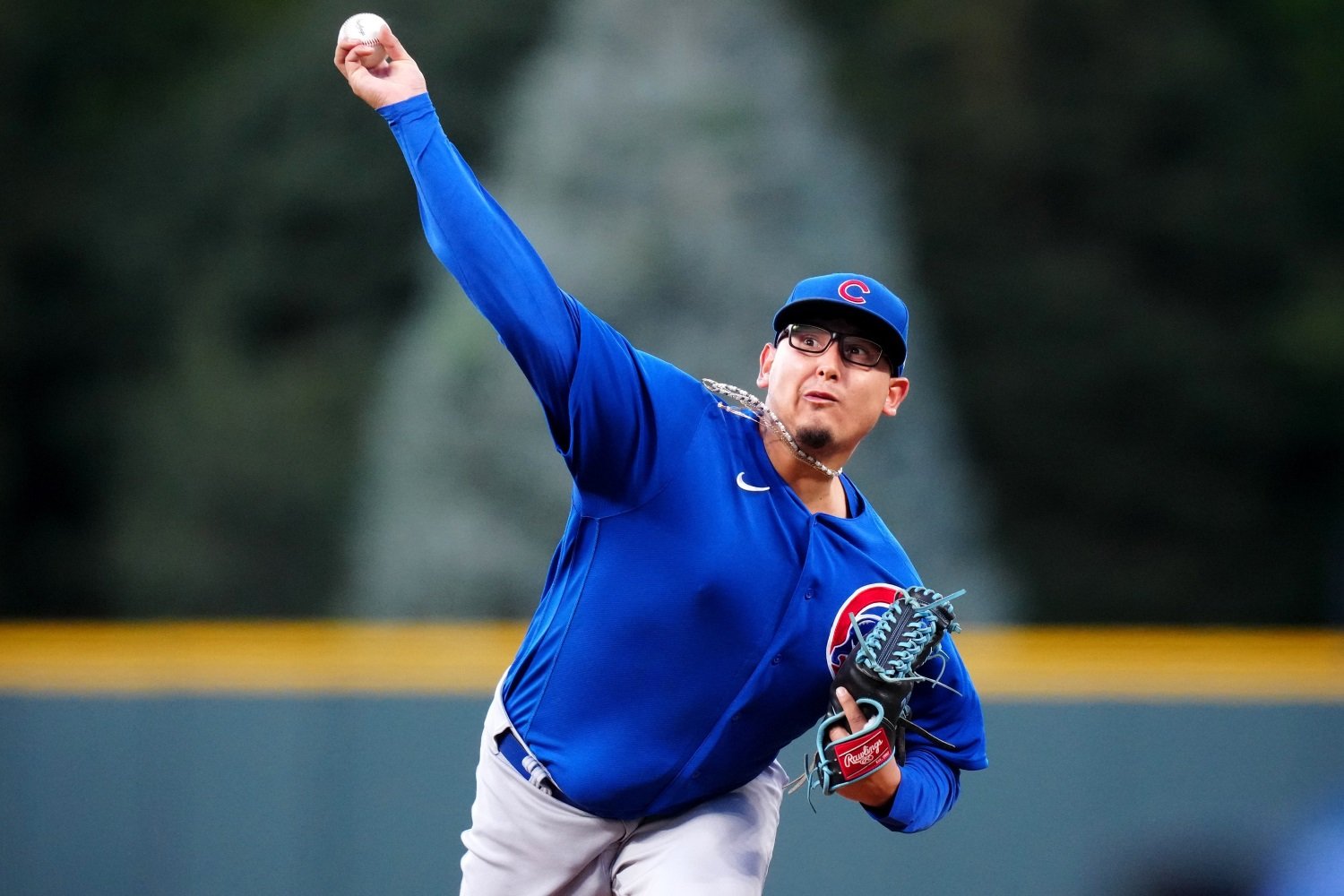 It feels as though injuries are threatening the depth of the Chicago roster almost everywhere, with Adbert Alzolay and Jeimer Candelario hitting the injured list this week. At the moment, though, the team has established a certain level of stability in their starting rotation. This weekend, they'll send Justin Steele, Kyle Hendricks, and Jordan Wicks to the mound for three games against the Diamondbacks. If they reach the Wild Card Series, in a perfect world, they would start those three guys again, in that order. Between this series and that theoretical one, though, there lurks a lot of important and high-stakes baseball. Three off days jammed into the final two and a half weeks makes things much simpler, because the team can afford to do exactly what the moment seems to demand: skip Javier Assad for one turn and delay his next start until next weekend, against the Rockies. Because of the day off on Monday, Steele can come back on regular rest after just three games, next Wednesday. That gives the team the choice to skip either Assad or Jameson Taillon, who would be the starters for the first two games of that series against the Pirates at Wrigley Field if the rotation were uninterrupted. It's important to skip one of them, because that sets up Steele to pitch the following Tuesday in Atlanta, with an eye toward having him available for a potential Game 162 start on the final Sunday of the season in Milwaukee. Much-maligned though he's been all year, Taillon has pitched better lately. He frequently gets unlucky, and doesn't seem to respond well to those instances of adversity, mentally. However, he still gives the team a chance to win almost every time he takes the mound, and his outing last Friday against Arizona showed what can happen when that bad break never happens. By contrast, Assad has given up a scary amount of hard contact in each of his last two starts, and while he competed impressively and worked out of trouble several times across those two contests, he ultimately came apart in Colorado. If he's just giving up sharply-hit balls, the team's elite defense has a chance to absorb the damage, but his control abandoned him this week. A break (during which he could still be available for an inning or two in relief) seems in order. If Taillon starts next Tuesday and Steele goes Wednesday, it would line up Hendricks to make his final start at Wrigley Field for 2023 on Thursday evening against Pittsburgh. Then, Assad could slide back into the rotation on Friday, giving Wicks an extra day before he comes back Saturday. Taillon would go Sunday, and the following week, it would be Steele, Hendricks, and Wicks in Atlanta, with Assad, Taillon, and Steele lined up for the showdown in Milwaukee. If that last bit sounds unappealing, remember two things. Firstly, the Wild Card Series runs Tuesday through Thursday, right after the end of the season. That means that whoever goes Friday could be available no sooner than Game 2, and Saturday's starter would have to wait until a potential Game 3. The Cubs could flip Assad and Wicks and have the latter lead off the set against the Brewers on that Friday, to set the tone for the series, but it's possible that the Cubs will be staring at a potential Wild Card Series in the same venue, against the same team. Keeping the Brewers from getting a look at Wicks before the playoffs, if feasible, would be desirable, and anyway, the Cubs have to win their series in Atlanta in order to have a chance to catch Milwaukee. They might as well use their most reliable starters in that tough environment. It might sound presumptuous to worry about hiding a pitcher for the playoffs or lining things up this far in advance, but again, the schedule brings the team both reprieve and constraints. They can get one of Steele or Hendricks four starts the rest of the way, but not both, unless they send each of them out once on short rest--which, for multiple very good reasons, they will not do. Two straight Mondays off means that Steele can't come back Monday after pitching next Wednesday, and thus, Hendricks can't pitch on the final Tuesday without displacing Steele. That doesn't mean the Cubs won't get creative with the rotation. Marcus Stroman isn't slated to return in a traditional starting role, but it seems like he's gearing up to be ready for more than a single inning of work in a game. As the schedule unfolds, the front office will gain information about the team's place in the standings. They could, for any of a few reasons, elect to add a bullpen day into this schedule somewhere, led by Stroman, Hayden Wesneski, or Michael Fulmer--or by Ben Brown, if the hard-throwing prospect can smooth out the control issues he's had in his turns as a reliever while working back from a lat injury in Triple-A Iowa. Still, the path forward looks fairly straightforward. The Cubs need wins, and their essential starters are in place. More than any miraculous arrangement or deployment of them, they need good execution from them. If they get it, they'll have at least three extra starts to map out two weeks from now.
 -
For the first six weeks of this season, the Cubs leaned on their most veteran southpaw as one of the dependable starters in their rotation. For the final (ahem) six, they might ask him to prop up their bullpen with an overhauled attack. Image courtesy of © Isaiah J. Downing-USA TODAY Sports After a hot start to the season, the wheels came off for the starting version of Drew Smyly. His stuff was not nearly intense enough to get outs, once he lost the perfect command he seemed to have over most of his first 10 starts. By August, he was being shelled so severely that there was no justification left for him to be in the rotation. Belatedly, the Cubs brought up Jordan Wicks, added him to the starting group, and relegated Smyly to the bullpen. There, however, the old lefty has found rejuvenation. On Monday night, Smyly got five huge outs and took the win in the Cubs' comeback victory over the Rockies. That makes 10 2/3 innings for him since he moved to relief in mid-August (working around the foolish attempt to restore him to the rotation in Detroit later that month). In those outings, Smyly has only allowed nine hits and issued three walks, and he has 15 strikeouts. The formula is familiar, because so, too, is this transition. Smyly went from the rotation to the bullpen for the 2021 Braves, as well. That year, he made the move in September, and finished the season with 11 innings of relief work and a 1.64 ERA. Then, he worked out of their bullpen in the playoffs, too. The surface-level numbers were much uglier, but he worked 7 1/3 frames and very slightly added to their Win Probability in the games in which he appeared. Using him to soak up innings also kept Atlanta's arms fresh enough to let them complete their run to a World Series title. Back, then, Smyly went from throwing his fastball and curveball in rough parity as a starter to using his curve 60 percent of the time as a reliever. Lo, he's doing that again this year. In 2021, though, Smyly was tired, and (perhaps) not fully healthy. Thus, his fastball sat at roughly 91 miles per hour even after his move to the pen. This year, there's something else going on. That velocity spike is huge. A guy with a fastball that sits 94 and touches 95 and a curveball that sits in the low 80s is a much more intense, difficult matchup for opposing hitters. It's a game-changer. This version of Smyly doesn't need to be a mop-up man or to fill a long-relief role of any kind. Plainly, because he's been a starter and because he's already done it several times in the last month, he can get more than three outs at a time, but this Drew Smyly is a high-leverage arm. This Drew Smyly eases the pain of losing Adbert Alzolay. This version of him makes the Cubs' relief depth downright exciting, for the balance of the season and into October. Smyly might still need more rest between appearances than a typical reliever. David Ross will have to be careful to give it to him. Monday night was a perfect demonstration, though, of the fact that Smyly can shift and save a game in his reliever incarnation. The Cubs have created one last unexpected relief arm (albeit one who everyone already knew had that potential), and it couldn't have happened at a better time. View full article
-
Say Hello to Drew Smyly, Relief Ace and Curveball Monster
Matthew Trueblood posted an article in Cubs
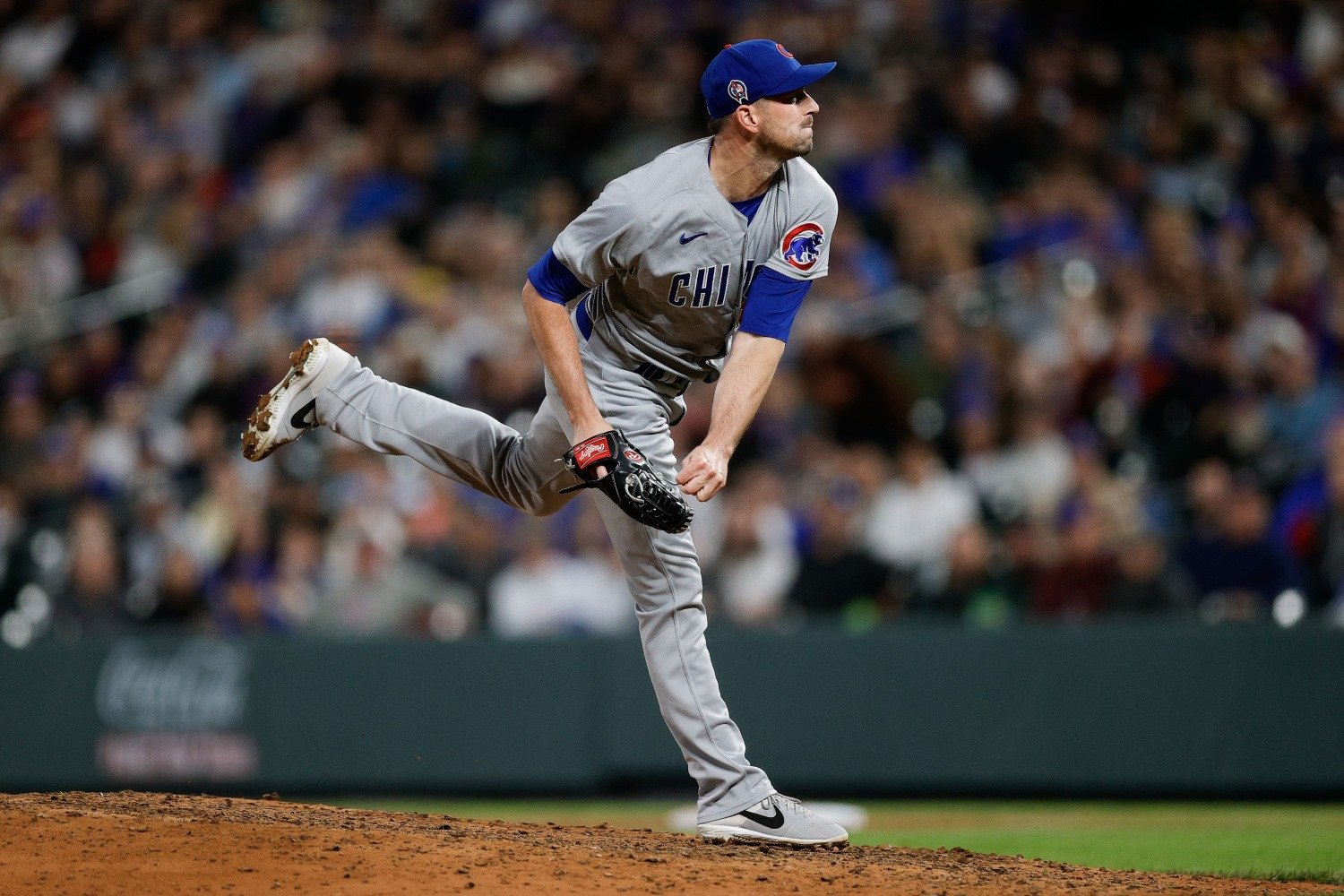 After a hot start to the season, the wheels came off for the starting version of Drew Smyly. His stuff was not nearly intense enough to get outs, once he lost the perfect command he seemed to have over most of his first 10 starts. By August, he was being shelled so severely that there was no justification left for him to be in the rotation. Belatedly, the Cubs brought up Jordan Wicks, added him to the starting group, and relegated Smyly to the bullpen. There, however, the old lefty has found rejuvenation. On Monday night, Smyly got five huge outs and took the win in the Cubs' comeback victory over the Rockies. That makes 10 2/3 innings for him since he moved to relief in mid-August (working around the foolish attempt to restore him to the rotation in Detroit later that month). In those outings, Smyly has only allowed nine hits and issued three walks, and he has 15 strikeouts. The formula is familiar, because so, too, is this transition. Smyly went from the rotation to the bullpen for the 2021 Braves, as well. That year, he made the move in September, and finished the season with 11 innings of relief work and a 1.64 ERA. Then, he worked out of their bullpen in the playoffs, too. The surface-level numbers were much uglier, but he worked 7 1/3 frames and very slightly added to their Win Probability in the games in which he appeared. Using him to soak up innings also kept Atlanta's arms fresh enough to let them complete their run to a World Series title. Back, then, Smyly went from throwing his fastball and curveball in rough parity as a starter to using his curve 60 percent of the time as a reliever. Lo, he's doing that again this year. In 2021, though, Smyly was tired, and (perhaps) not fully healthy. Thus, his fastball sat at roughly 91 miles per hour even after his move to the pen. This year, there's something else going on. That velocity spike is huge. A guy with a fastball that sits 94 and touches 95 and a curveball that sits in the low 80s is a much more intense, difficult matchup for opposing hitters. It's a game-changer. This version of Smyly doesn't need to be a mop-up man or to fill a long-relief role of any kind. Plainly, because he's been a starter and because he's already done it several times in the last month, he can get more than three outs at a time, but this Drew Smyly is a high-leverage arm. This Drew Smyly eases the pain of losing Adbert Alzolay. This version of him makes the Cubs' relief depth downright exciting, for the balance of the season and into October. Smyly might still need more rest between appearances than a typical reliever. David Ross will have to be careful to give it to him. Monday night was a perfect demonstration, though, of the fact that Smyly can shift and save a game in his reliever incarnation. The Cubs have created one last unexpected relief arm (albeit one who everyone already knew had that potential), and it couldn't have happened at a better time.
 -
Mhm. And absolutely every such petition is granted, and absolutely every team can find a player to use as that injured guy for replacement.
