


Matthew Trueblood
-
Posts
2,481 -
Joined
-
Last visited
-
Days Won
2
Content Type
Profiles
Joomla Posts 1
Chicago Cubs Videos
Chicago Cubs Free Agent & Trade Rumors, Notes, & Tidbits
2026 Chicago Cubs Top Prospects Ranking
News
2023 Chicago Cubs Draft Picks
Guides & Resources
2024 Chicago Cubs Draft Picks
The Chicago Cubs Players Project
2025 Chicago Cubs Draft Pick Tracker
2026 Chicago Cubs Draft Tracker: Picks & Bonuses
Blogs
Events
Forums
Store
Gallery
Everything posted by Matthew Trueblood
-
There's the Budget, and Then There's the Budget With Shohei Ohtani
Matthew Trueblood posted an article in Cubs
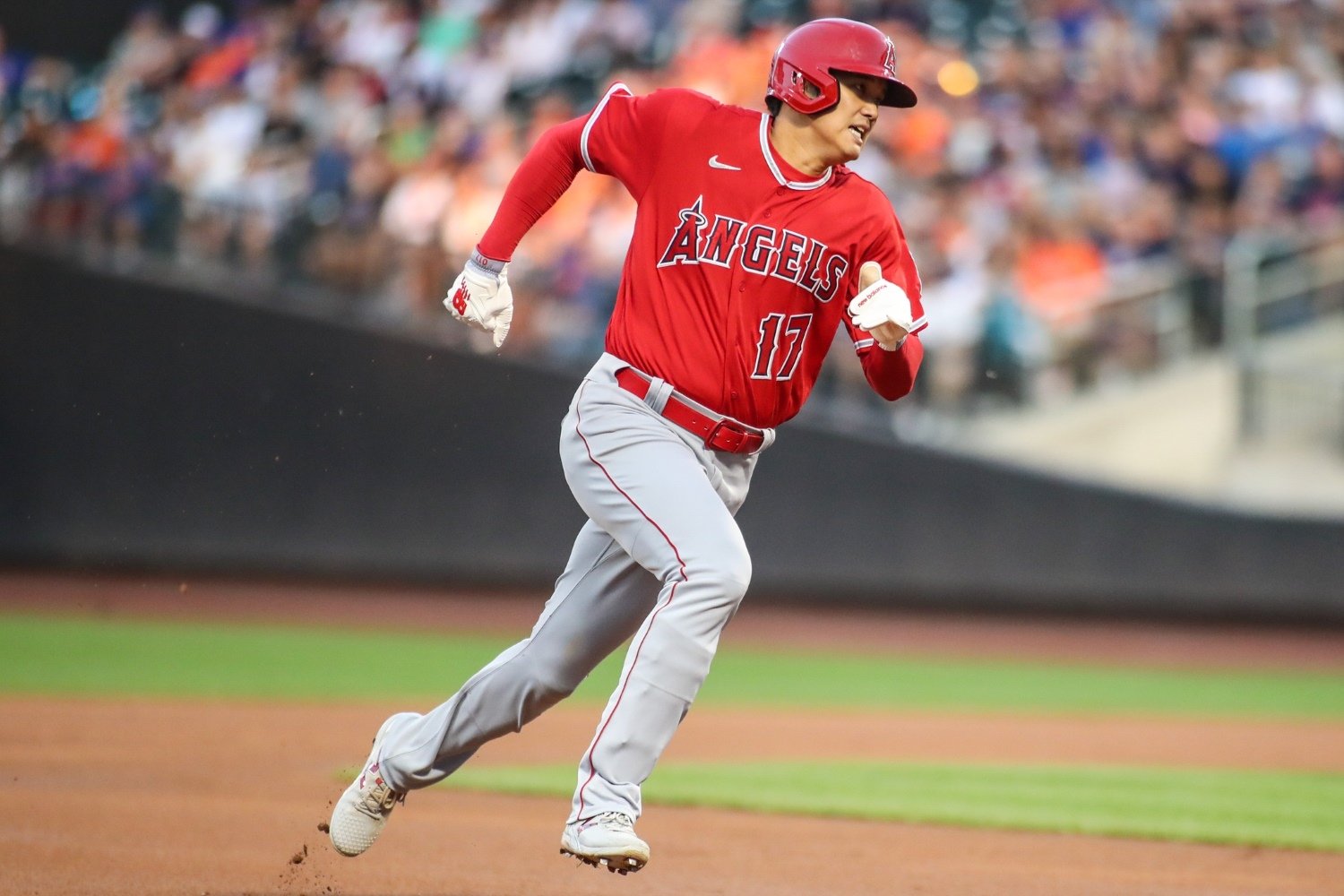 It sounds outlandish, but this weekend, 670 The Score baseball insider Bruce Levine reported that the Angels' internal estimate of the annual revenue Shohei Ohtani generated for them was $100 million. I can't confirm that figure, but everyone to whom I have spoken puts the number between $70 million and $90 million. Having Ohtani not only raises the national profile of any team, but instantly creates huge marketing and advertisement opportunities in Japan. There's a feature-length documentary about the man on ESPN+ and (outside the US) Disney+ right now. This is not a normal free agent. Given all that, this shouldn't surprise you, but it's an important thing to know: For many teams, there are two budgets for 2024 right now. There's one number the front office knows they need to stick to, and then there's another one, anywhere from $20 million to $40 million higher, that they need to stick to if they sign Ohtani. Entering the offseason, the Cubs know they're likely to exceed the first threshold of the competitive-balance tax rules in 2024. To stay below the second threshold, though, they would need to spend no more than $257 million. That's probably their de facto cap. If they sign Ohtani, that changes. The new ceiling is the third threshold, at $277 million. Beyond that, the penalties get especially draconian, so it's unlikely that signing Ohtani would earn Jed Hoyer and Carter Hawkins any more wiggle room than that, but they would be given the flexibility to go all the way to the third threshold if they reeled in the biggest fish to hit open water since Alex Rodríguez. Part of that is the knowledge (held by all parties) that Ohtani has massive leverage, and that he will want to see evidence of a team's willingness and ability to field a consistent contender before signing. Another part, though, is the simple math described above. Realistically, he has no chance to get more than $55 million per year, and a relatively small chance to get even $50 million per year. That would just break baseball's salary scale too badly. If he's worth (taking a moving average from uncertain sources) $80 million per year, then merely having him on board is worth over $20 million each season. Again, there are legitimate concerns here. The Rickettses might be willing to spend that way on an Ohtani-led team in the short term, but spuriously claim major losses and snap the purse shut in a few years if things don't go perfectly. Either way, Ohtani is a massive investment, and even for a team spending $300 million per year, a $50-million player is as big a problem if he's hurt or ineffective as he is a boon if he's playing as advertised. The threat that he'll be permanently diminished as a pitcher by this second elbow surgery is real. So is the danger that he'll age quickly at the plate, given all the extra energy he's put into the two-way project over the last half-decade. On balance, though, those are gambles well worth taking. The bonus any team gets by being the ones to take it almost offsets all the downside, anyway.
 -
It's Thanksgiving Week, and the big-name free agents are finally starting to find homes. Let's wrap up our ranking of the top 50 fits for the Cubs, specifically, in MLB free agency. Image courtesy of © Rhona Wise-USA TODAY Sports For those who haven't read the first four posts in this series, you can catch up (and read some brief remarks on my approach to this exercise, including how it differs from a global, standard-issue ranking of free agents) by perusing them now. Nos. 41-50 Nos. 31-40 Nos. 21-30 Nos. 11-20 Now, however, it's time to dive in and round out this countdown. 10. Josh Hader, LHP Spending big money on a closer in free agency? That's the argument against it, in a nutshell. The argument for it is equally simple and clear, though: Hader is an exceptionally good left-handed reliever. He'd be the Cubs' best closer since either Carlos Marmol or Lee Smith, depending more on how much agita Marmol gave you than on anything having to do with Hader himself. As he embarks on his 30s, we can expect another crisis or two--another enforced change in approach or stuff, akin to the one he had to go through in 2022. That's happened to Aroldis Chapman, Kenley Jansen, Craig Kimbrel, and every other elite reliever this side of Mariano Rivera, and it's likely to happen to Hader again, too. Yet, he's already survived one of those crises, which plenty of relief aces don't manage to do. He still has incredible carry on that fastball and the little brother of Randy Johnson's slider. Last year, opponents struck out 36.8 percent of the time against him. He issues more walks than you'd like, but his ability to miss bats and manage contact sets him apart from all but the best handful of relievers of this generation. One more drawback bears mention, because it's an important caveat to my recommendation here: Hader has not pitched even 60 innings in any regular season since the pandemic began. In fact, he's averaging just under 55 frames per year since 2021. In this day and age, it's not unusual for closers to be used lightly and carefully, but this is extreme. Edwin Díaz, to pick one superficially similar stud, had 62 innings in each of the last two seasons in which he pitched. The difference sounds small, but if there are five or eight fewer games a year in which Hader is available relative to other top closers, that has to matter. For that reason, I expect Hader to have an unexpectedly hard time matching Díaz's contract from last winter. I think the qualifying offer and the lack of flexibility or volume in his track record will limit his market, perhaps to something as manageable as four years and $76 million. In that range, he makes plenty of sense. If he does get something north of $100 million on a five-year deal, it won't be with the Cubs, and I will lose no sleep. It's only if his price tag gets the markdown I'm forecasting that I advocate reuniting Frankenstein and his monster. 9. Sonny Gray, RHP Imagine, for a moment, a right-handed Justin Steele, only with six pitches instead of two. That's what Gray has grown into over the last two seasons, with summering in the northern climes of Minnesota. His fastball has become extreme in its cut, at the expense of some of its former ride. He milled and polished a sweeper, to go with the high-spin curveball that used to be his calling card. Blending veteran intellect and hard experience with great raw stuff and hard data, Gray had his best year to date at age 34. The qualifying offer hanging off several of the guys at this level does pose a complication. The Cubs won't want to lose a draft pick unless absolutely necessary, and Gray is right on the line where you catch yourself asking whether the necessity is absolute. His athleticism and his arsenal allow him to throw strikes consistently and manage contact well, but Gray lacks the transformational whiff power that the team should be trying to add to its starting rotation this winter. He can still be a huge boon, but he's probably only a fit if he ends up signing a three-year deal. 8. Matt Chapman, 3B 'Gilding the lily' is meant as a derisive expression. You can't improve upon the glory and beauty of nature by brushing it with gold. There's an argument to be made that the gorgeous, seemingly organic defensive wizardry of last year's Cubs infield can't be improved upon by throwing a nine-figure financial commitment at it. After all, the middle of that infield is already gilded: Dansby Swanson and Nico Hoerner both hauled in Gold Glove awards this year. On the other hand, consider: Chapman, one of the best defensive third basemen of this generation, could complete a long-term defensive phalanx as strong as any in recent memory. Nick Madrigal has gorgeous defensive metrics last year, and the eye test more or less matched that, but Chapman is on another level. He doesn't have any of the athletic limitations that apply to Madrigal. He doesn't have any of the limitations that apply to most third basemen, it seems. He's a fast, strong-armed, feline outs machine at third base. Moreover, unlike Madrigal, he brings a well-balanced offensive profile. Chapman has been wildly inconsistent at bat, and his chief asset (plus power) deserted him for much of 2023. With strong exit velocities and a non-catastrophic whiff rate, though, it's a good bet that he'll remain an above-average contributor for most of the life of whatever deal he signs this winter. That will probably be five or six years, which is a bit daunting, but Chapman would lengthen the lineup and give this team built on the premise of elite defense a truly, well, elite defense. That's awfully valuable. 7. Aaron Nola, RHP We needn't spend too much time on Nola, since he became the first high-end free agent off the board Sunday morning. The amount for which he re-signed with the Phillies ($172 million, over seven years) is right around what was projected, representing no great bargain or major overpay. He'd have been a strong addition to the Cubs' rotation, but if they're going to spend that much, they should do it on one of the guys in the top five on this list, instead, giving them greater upside. His return to Philadelphia is no great miss, in that sense. 6. Jordan Montgomery, LHP Everything about Montgomery--his mechanics, his arsenal, his stuff--looks normal, but nothing is. He's a big guy with a clean-looking over-the-top delivery, but his primary fastball--at least since the start of 2022, and especially this past season--is a sinker with a ton of arm-side movement. His changeup was the pitch that really came along as a weapon in 2023, but peculiarly, that was mostly because he traded in so many four-seamers for sinkers. Of the 49 southpaws who threw at least 200 changeups in 2023, only three utilized seam-shifted wake effects so well that the pitch rose, relative to what its spin implied that it would do. Austin Gomber and Ryan Yarbrough aren't similar to Montgomery at all in arm slot, though. They have lower slots. The way Montgomery throws, it's odd to see the change sort of float, and hitters can't quite adjust to it. That's always been true. His changeup has been missing bats for a few years. The thing that made the effect more complete, though, was leaning away from the four-seamer and into the sinker, because Montgomery's sinker actually sinks more than his change. The relative effect of the two pitches, then, is even more extreme than the interaction between spin and movement for the change would imply on its own. It's the curveball that gets everyone talking with Montgomery, though, and that's not without cause. Few pitchers manipulate the hook as well as he does. He's been chaining curves together and moving them around the strike zone since he was a rookie with the Yankees, years ago. The curve, too, defies batters who think they've spotted its spin, because it tumbles more (kind of like a changeup, ironically) and moves less horizontally than its spin axis promises that it will. Coming from that slot and situated in the arsenal he's created, the curve is a versatile and nasty weapon. After Montgomery's run to the World Series title with the Rangers, none of this is a secret. He's going to sign a huge deal somewhere this winter. The Cubs are an organization that facilitates much of the above especially well, though, and he suits their needs this winter gorgeously. It makes some sense for the Cubs to be the ones who make that splash. 5. Shota Imanaga, LHP There will be so much attention paid to two other ballplayers from Japan this winter that Imanaga is almost certain to end up underrated and underpaid. Last winter, Kodai Senga signed a five-year deal worth $75 million to come over from NPB, and he immediately garnered not only strong Rookie of the Year support, but an All-Star nod and some down-ballot Cy Young Award votes. Imanaga is left-handed, and he's a bit smaller (worryingly smaller, if you're inclined toward injury anxiety) than Senga, but he has every chance to be at least as good. Even more than Senga, too, Imanaga is fascinating and fun to watch. He has a high-energy delivery, with a high arm slot and a lot of moving parts. He starts on the far first-base side of the rubber, which is smart, because his four-seam fastball (a pitch that, if anything, cuts a little more than a typical one) is the pitch that needs the most room to move to his arm side. That's a radically unusual trait. Imanaga utilizes a splitter heavily, but the pitch actually cuts, rather than fades, relative to his four-seamer. You never see that. He also has a good slider, which is his primary non-fastball offering against lefties. No matter what type of hitter he's facing, Imanaga can change eye levels as well as any pitcher on Earth. His fastball has more rising action than that of any big-league pitcher had last season. Forcing hitters to try to get on top of that kind of pitch makes them helpless against the splitter and slider, and his curve represents yet another huge vertical variation. Not everything he's been throwing in NPB will translate perfectly and work in the same way in MLB, but Imanaga has all the makings of a high-strikeout, low-walk top-of-the-rotation starter. That's where he departs sharply from Senga; he will fill up the strike zone. Unless he ends up receiving seven-year offers or someone wants to give him $25 million per year over six, Imanaga should be a priority for the Cubs. He could be their ace for the next few years, and it wouldn't take a 90th-percentile outcome. 4. Blake Snell, LHP I don't think the Cubs have any greater need than for a front-of-the-rotation starter this winter. Yet, I'm ranking a defending Cy Young Award winner who had won the prize another time in the past fourth on this list. That's the furthest I'm willing to go in my protest of Snell's style, which includes a bizarre amount of nibbling and strikeout fixation from a pitcher with good enough stuff to go straight after hitters. Snell's command genuinely isn't great, but he doesn't need to walk hitters at anywhere near the clip at which he's done so throughout his career. He just tries to make every pitch perfect, and it's maddening. When he's good, it's also mercilessly effective. You don't win two Cy Young Awards with a bad approach. You can win them and still have an annoying approach, though. Annoyance isn't a good enough reason for me not to support the team signing Snell. He's just not my preferred pick for them, because he's going to make a massive amount of money and he does struggle to work deep into games. If a pitcher is going to cost you $200 million, you should be able to send them to the mound with a reasonable expectation of six or seven innings most of the time. That's not an archaic notion, no matter how many dweeby hyper-modern analysts decry it. Snell doesn't do that, and his approach leads to a piling-up of pitches that smells like arm trouble to me. Nonetheless, on sheer talent and accomplishment, he gets a place in the final four here. 3. Cody Bellinger, 1B/CF In one of the more polarizing free agencies I can remember, Bellinger has been projected for everywhere from $144 million to $264 million, on deals between six and 12 years in length. I think he'll fall right around $200 million, and if I'm being honest, that kind of investment would make me tremendously uneasy. Bellinger is fun. He has good power, and that power plays up because everything is hit in the air and most of what he hits in the air is pulled. I trust that skill to age well, and it should assuage some of the concerns people have developed based on oversimplified looks at batted-ball data. I also loved, from both an aesthetic and a value perspective, watching Bellinger emulate Mark Grace so often in 2023. With two strikes, he not only modulated the aggressiveness of his swing, but altered his entire physical sequence. He did the old, ungainly but beautiful Grace thing, letting his legs lock out and leaning forward at the waist to scoop and flick the ball into the outfield. All that said, if things work out the way the Cubs hope they will, Pete Crow-Armstrong will be their long-term center fielder, starting almost immediately. Ian Happ and Seiya Suzuki are already locked in at the outfield corners. Bellinger would be almost exclusively a first baseman, and once you wrap your head around that, the urgency and seriousness of skepticism about his offense come into focus. By 75th-percentile exit velocity (the best mark for assessing power rigorously using that data set), Bellinger was 271st of the 328 batters who had at least 250 plate appearances this year--right between Zach McKinstry and Paul DeJong on that leaderboard. To reinvest in him at the required level, the Cubs would have to believe fervently in the staying power of those adjustments and those emergency hacks. 2. Shohei Ohtani, DH/RHP No issues with exit velocity, at any percentile, here. The only thing you're surprised at is finding him here, instead of one spot higher. He's one of the best hitters in baseball, and one of the best athletes of the 21st century. When he returns to the mound, he'll instantly return to enjoying default MVP status. It will take a player having a historic season and a bunch of writers getting much too excited about it to unseat a full-strength Ohtani from his rightful MVP perch, so if you can just survive one year in which he's merely the best DH in baseball, you can look forward to a few more years of having the best overall player, without a close rival. Obviously, it's not that simple. Even regular pitchers face some real risk of permanent degradation or further injury once they undergo a second elbow surgery. Ohtani's latest wasn't a full-fledged revision of his previous Tommy John operation, but it's still major, as indicated by the fact that he won't return to the mound before 2025. Once you reach that point with a player who also hits every day and whose stuff is so intense, it's inescapable: there is some chance Ohtani will not ever be the same pitcher he's been for the last three years. Whether he does manage that unfettered recovery or not, though, Ohtani is the most valuable baseball player--off the field, to say nothing of his unprecedented on-field contributions--of this century. Signing him would make signing other free agents easier, for multiple reasons. Signing him would alter the identity of the franchise. All of that would happen even before he emerges from his latest chrysalis. 1. Yoshinobu Yamamoto, RHP How can anyone be a better fit for a team like the Cubs than a superhero in cleats, like Ohtani? It certainly takes a rare beast. That's what Yamamoto is. Having just turned 25 in August, Yamamoto has already pummeled and demoralized NPB hitters for years. He's struck out 587 batters and walked 110 of them since the start of 2021. Opponents have scored just over 1.70 runs per nine innings against him over those three seasons--not 1.70 earned runs, but 1.70 runs total. Stateside hitters will score more than that. The level of competition in NPB is closer to that of MLB than many people want to believe, but at the bottom end, NPB has many more players who can be exploited and dominated by its best talents than does MLB. Still, Yamamoto is not one of those guys about whom anyone needs to worry, in terms of success overseas translating to the majors. He's diminutive, like Imanaga and Gray, but he sits at 95 miles per hour and can touch 97 or 98. He has multiple plus secondary offerings, in his curveball and splitter, and all the requisite feel to modulate or expand that repertoire is there. Yamamoto will shatter the previous record for money committed to a player joining MLB for the first time. Aces do not become available at this young an age, and the small worries of his not having faced such uniformly strong competition and having thrown a lot of pitches this young will only be enough to keep him south of Gerrit Cole money. He's going to get a deal lasting 10-12 years, paying $200-300 million. That's an extraordinary investment. If the Cubs can sell Yamamoto on Chicago and their plan for the future, they should gladly do it. There you have it. That's a long post, to end a long series, but we've now kicked around my top 50 free-agent fits for the Cubs. Who did I miss? Who's far too low? Who's a little too high? Let's keep the stove warm while Jed Hoyer and Carter Hawkins prepare to cook. View full article
- 10 replies
-
- 1
-

-
- shohei ohtani
- yoshinobu yamamoto
- (and 5 more)
-
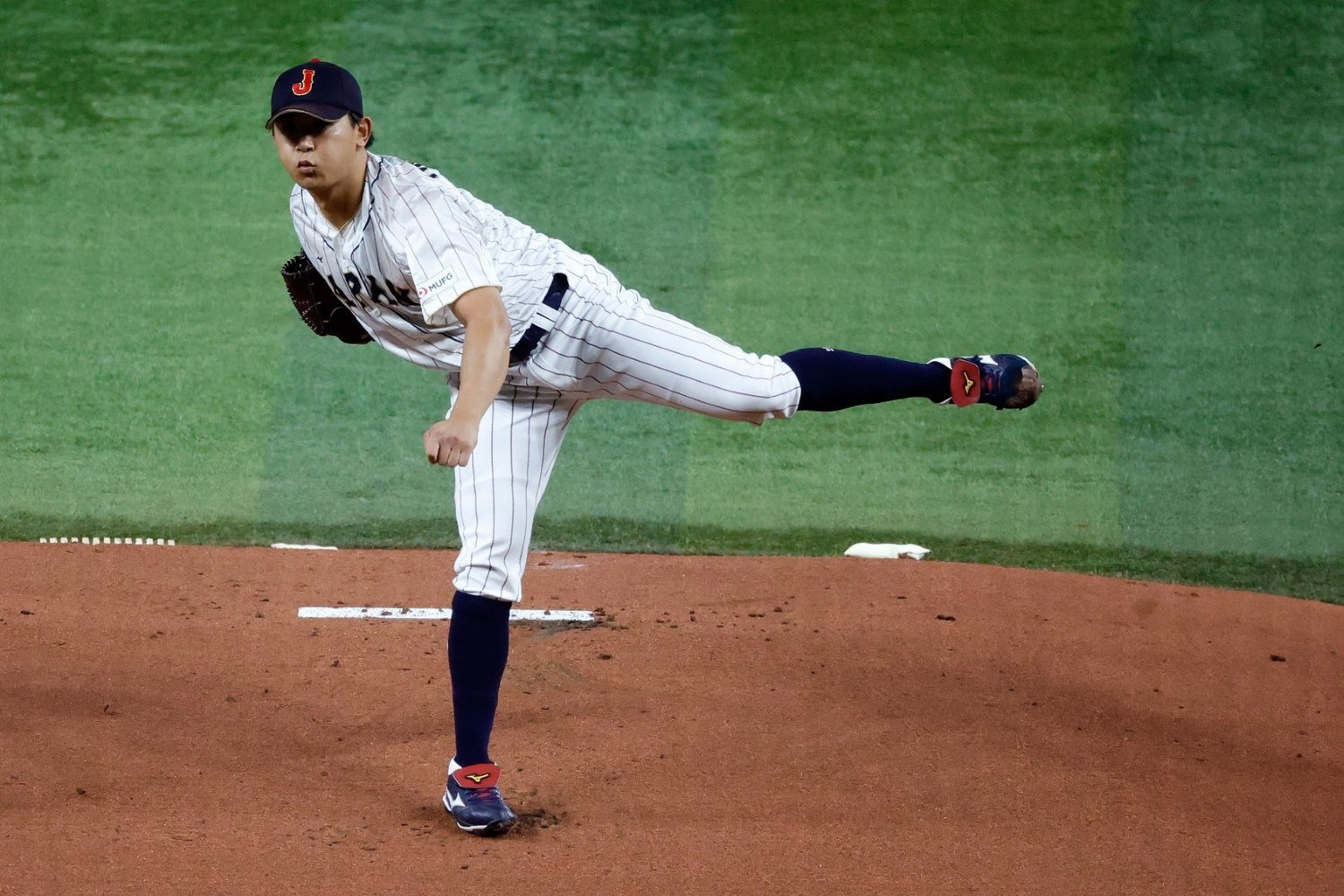 For those who haven't read the first four posts in this series, you can catch up (and read some brief remarks on my approach to this exercise, including how it differs from a global, standard-issue ranking of free agents) by perusing them now. Nos. 41-50 Nos. 31-40 Nos. 21-30 Nos. 11-20 Now, however, it's time to dive in and round out this countdown. 10. Josh Hader, LHP Spending big money on a closer in free agency? That's the argument against it, in a nutshell. The argument for it is equally simple and clear, though: Hader is an exceptionally good left-handed reliever. He'd be the Cubs' best closer since either Carlos Marmol or Lee Smith, depending more on how much agita Marmol gave you than on anything having to do with Hader himself. As he embarks on his 30s, we can expect another crisis or two--another enforced change in approach or stuff, akin to the one he had to go through in 2022. That's happened to Aroldis Chapman, Kenley Jansen, Craig Kimbrel, and every other elite reliever this side of Mariano Rivera, and it's likely to happen to Hader again, too. Yet, he's already survived one of those crises, which plenty of relief aces don't manage to do. He still has incredible carry on that fastball and the little brother of Randy Johnson's slider. Last year, opponents struck out 36.8 percent of the time against him. He issues more walks than you'd like, but his ability to miss bats and manage contact sets him apart from all but the best handful of relievers of this generation. One more drawback bears mention, because it's an important caveat to my recommendation here: Hader has not pitched even 60 innings in any regular season since the pandemic began. In fact, he's averaging just under 55 frames per year since 2021. In this day and age, it's not unusual for closers to be used lightly and carefully, but this is extreme. Edwin Díaz, to pick one superficially similar stud, had 62 innings in each of the last two seasons in which he pitched. The difference sounds small, but if there are five or eight fewer games a year in which Hader is available relative to other top closers, that has to matter. For that reason, I expect Hader to have an unexpectedly hard time matching Díaz's contract from last winter. I think the qualifying offer and the lack of flexibility or volume in his track record will limit his market, perhaps to something as manageable as four years and $76 million. In that range, he makes plenty of sense. If he does get something north of $100 million on a five-year deal, it won't be with the Cubs, and I will lose no sleep. It's only if his price tag gets the markdown I'm forecasting that I advocate reuniting Frankenstein and his monster. 9. Sonny Gray, RHP Imagine, for a moment, a right-handed Justin Steele, only with six pitches instead of two. That's what Gray has grown into over the last two seasons, with summering in the northern climes of Minnesota. His fastball has become extreme in its cut, at the expense of some of its former ride. He milled and polished a sweeper, to go with the high-spin curveball that used to be his calling card. Blending veteran intellect and hard experience with great raw stuff and hard data, Gray had his best year to date at age 34. The qualifying offer hanging off several of the guys at this level does pose a complication. The Cubs won't want to lose a draft pick unless absolutely necessary, and Gray is right on the line where you catch yourself asking whether the necessity is absolute. His athleticism and his arsenal allow him to throw strikes consistently and manage contact well, but Gray lacks the transformational whiff power that the team should be trying to add to its starting rotation this winter. He can still be a huge boon, but he's probably only a fit if he ends up signing a three-year deal. 8. Matt Chapman, 3B 'Gilding the lily' is meant as a derisive expression. You can't improve upon the glory and beauty of nature by brushing it with gold. There's an argument to be made that the gorgeous, seemingly organic defensive wizardry of last year's Cubs infield can't be improved upon by throwing a nine-figure financial commitment at it. After all, the middle of that infield is already gilded: Dansby Swanson and Nico Hoerner both hauled in Gold Glove awards this year. On the other hand, consider: Chapman, one of the best defensive third basemen of this generation, could complete a long-term defensive phalanx as strong as any in recent memory. Nick Madrigal has gorgeous defensive metrics last year, and the eye test more or less matched that, but Chapman is on another level. He doesn't have any of the athletic limitations that apply to Madrigal. He doesn't have any of the limitations that apply to most third basemen, it seems. He's a fast, strong-armed, feline outs machine at third base. Moreover, unlike Madrigal, he brings a well-balanced offensive profile. Chapman has been wildly inconsistent at bat, and his chief asset (plus power) deserted him for much of 2023. With strong exit velocities and a non-catastrophic whiff rate, though, it's a good bet that he'll remain an above-average contributor for most of the life of whatever deal he signs this winter. That will probably be five or six years, which is a bit daunting, but Chapman would lengthen the lineup and give this team built on the premise of elite defense a truly, well, elite defense. That's awfully valuable. 7. Aaron Nola, RHP We needn't spend too much time on Nola, since he became the first high-end free agent off the board Sunday morning. The amount for which he re-signed with the Phillies ($172 million, over seven years) is right around what was projected, representing no great bargain or major overpay. He'd have been a strong addition to the Cubs' rotation, but if they're going to spend that much, they should do it on one of the guys in the top five on this list, instead, giving them greater upside. His return to Philadelphia is no great miss, in that sense. 6. Jordan Montgomery, LHP Everything about Montgomery--his mechanics, his arsenal, his stuff--looks normal, but nothing is. He's a big guy with a clean-looking over-the-top delivery, but his primary fastball--at least since the start of 2022, and especially this past season--is a sinker with a ton of arm-side movement. His changeup was the pitch that really came along as a weapon in 2023, but peculiarly, that was mostly because he traded in so many four-seamers for sinkers. Of the 49 southpaws who threw at least 200 changeups in 2023, only three utilized seam-shifted wake effects so well that the pitch rose, relative to what its spin implied that it would do. Austin Gomber and Ryan Yarbrough aren't similar to Montgomery at all in arm slot, though. They have lower slots. The way Montgomery throws, it's odd to see the change sort of float, and hitters can't quite adjust to it. That's always been true. His changeup has been missing bats for a few years. The thing that made the effect more complete, though, was leaning away from the four-seamer and into the sinker, because Montgomery's sinker actually sinks more than his change. The relative effect of the two pitches, then, is even more extreme than the interaction between spin and movement for the change would imply on its own. It's the curveball that gets everyone talking with Montgomery, though, and that's not without cause. Few pitchers manipulate the hook as well as he does. He's been chaining curves together and moving them around the strike zone since he was a rookie with the Yankees, years ago. The curve, too, defies batters who think they've spotted its spin, because it tumbles more (kind of like a changeup, ironically) and moves less horizontally than its spin axis promises that it will. Coming from that slot and situated in the arsenal he's created, the curve is a versatile and nasty weapon. After Montgomery's run to the World Series title with the Rangers, none of this is a secret. He's going to sign a huge deal somewhere this winter. The Cubs are an organization that facilitates much of the above especially well, though, and he suits their needs this winter gorgeously. It makes some sense for the Cubs to be the ones who make that splash. 5. Shota Imanaga, LHP There will be so much attention paid to two other ballplayers from Japan this winter that Imanaga is almost certain to end up underrated and underpaid. Last winter, Kodai Senga signed a five-year deal worth $75 million to come over from NPB, and he immediately garnered not only strong Rookie of the Year support, but an All-Star nod and some down-ballot Cy Young Award votes. Imanaga is left-handed, and he's a bit smaller (worryingly smaller, if you're inclined toward injury anxiety) than Senga, but he has every chance to be at least as good. Even more than Senga, too, Imanaga is fascinating and fun to watch. He has a high-energy delivery, with a high arm slot and a lot of moving parts. He starts on the far first-base side of the rubber, which is smart, because his four-seam fastball (a pitch that, if anything, cuts a little more than a typical one) is the pitch that needs the most room to move to his arm side. That's a radically unusual trait. Imanaga utilizes a splitter heavily, but the pitch actually cuts, rather than fades, relative to his four-seamer. You never see that. He also has a good slider, which is his primary non-fastball offering against lefties. No matter what type of hitter he's facing, Imanaga can change eye levels as well as any pitcher on Earth. His fastball has more rising action than that of any big-league pitcher had last season. Forcing hitters to try to get on top of that kind of pitch makes them helpless against the splitter and slider, and his curve represents yet another huge vertical variation. Not everything he's been throwing in NPB will translate perfectly and work in the same way in MLB, but Imanaga has all the makings of a high-strikeout, low-walk top-of-the-rotation starter. That's where he departs sharply from Senga; he will fill up the strike zone. Unless he ends up receiving seven-year offers or someone wants to give him $25 million per year over six, Imanaga should be a priority for the Cubs. He could be their ace for the next few years, and it wouldn't take a 90th-percentile outcome. 4. Blake Snell, LHP I don't think the Cubs have any greater need than for a front-of-the-rotation starter this winter. Yet, I'm ranking a defending Cy Young Award winner who had won the prize another time in the past fourth on this list. That's the furthest I'm willing to go in my protest of Snell's style, which includes a bizarre amount of nibbling and strikeout fixation from a pitcher with good enough stuff to go straight after hitters. Snell's command genuinely isn't great, but he doesn't need to walk hitters at anywhere near the clip at which he's done so throughout his career. He just tries to make every pitch perfect, and it's maddening. When he's good, it's also mercilessly effective. You don't win two Cy Young Awards with a bad approach. You can win them and still have an annoying approach, though. Annoyance isn't a good enough reason for me not to support the team signing Snell. He's just not my preferred pick for them, because he's going to make a massive amount of money and he does struggle to work deep into games. If a pitcher is going to cost you $200 million, you should be able to send them to the mound with a reasonable expectation of six or seven innings most of the time. That's not an archaic notion, no matter how many dweeby hyper-modern analysts decry it. Snell doesn't do that, and his approach leads to a piling-up of pitches that smells like arm trouble to me. Nonetheless, on sheer talent and accomplishment, he gets a place in the final four here. 3. Cody Bellinger, 1B/CF In one of the more polarizing free agencies I can remember, Bellinger has been projected for everywhere from $144 million to $264 million, on deals between six and 12 years in length. I think he'll fall right around $200 million, and if I'm being honest, that kind of investment would make me tremendously uneasy. Bellinger is fun. He has good power, and that power plays up because everything is hit in the air and most of what he hits in the air is pulled. I trust that skill to age well, and it should assuage some of the concerns people have developed based on oversimplified looks at batted-ball data. I also loved, from both an aesthetic and a value perspective, watching Bellinger emulate Mark Grace so often in 2023. With two strikes, he not only modulated the aggressiveness of his swing, but altered his entire physical sequence. He did the old, ungainly but beautiful Grace thing, letting his legs lock out and leaning forward at the waist to scoop and flick the ball into the outfield. All that said, if things work out the way the Cubs hope they will, Pete Crow-Armstrong will be their long-term center fielder, starting almost immediately. Ian Happ and Seiya Suzuki are already locked in at the outfield corners. Bellinger would be almost exclusively a first baseman, and once you wrap your head around that, the urgency and seriousness of skepticism about his offense come into focus. By 75th-percentile exit velocity (the best mark for assessing power rigorously using that data set), Bellinger was 271st of the 328 batters who had at least 250 plate appearances this year--right between Zach McKinstry and Paul DeJong on that leaderboard. To reinvest in him at the required level, the Cubs would have to believe fervently in the staying power of those adjustments and those emergency hacks. 2. Shohei Ohtani, DH/RHP No issues with exit velocity, at any percentile, here. The only thing you're surprised at is finding him here, instead of one spot higher. He's one of the best hitters in baseball, and one of the best athletes of the 21st century. When he returns to the mound, he'll instantly return to enjoying default MVP status. It will take a player having a historic season and a bunch of writers getting much too excited about it to unseat a full-strength Ohtani from his rightful MVP perch, so if you can just survive one year in which he's merely the best DH in baseball, you can look forward to a few more years of having the best overall player, without a close rival. Obviously, it's not that simple. Even regular pitchers face some real risk of permanent degradation or further injury once they undergo a second elbow surgery. Ohtani's latest wasn't a full-fledged revision of his previous Tommy John operation, but it's still major, as indicated by the fact that he won't return to the mound before 2025. Once you reach that point with a player who also hits every day and whose stuff is so intense, it's inescapable: there is some chance Ohtani will not ever be the same pitcher he's been for the last three years. Whether he does manage that unfettered recovery or not, though, Ohtani is the most valuable baseball player--off the field, to say nothing of his unprecedented on-field contributions--of this century. Signing him would make signing other free agents easier, for multiple reasons. Signing him would alter the identity of the franchise. All of that would happen even before he emerges from his latest chrysalis. 1. Yoshinobu Yamamoto, RHP How can anyone be a better fit for a team like the Cubs than a superhero in cleats, like Ohtani? It certainly takes a rare beast. That's what Yamamoto is. Having just turned 25 in August, Yamamoto has already pummeled and demoralized NPB hitters for years. He's struck out 587 batters and walked 110 of them since the start of 2021. Opponents have scored just over 1.70 runs per nine innings against him over those three seasons--not 1.70 earned runs, but 1.70 runs total. Stateside hitters will score more than that. The level of competition in NPB is closer to that of MLB than many people want to believe, but at the bottom end, NPB has many more players who can be exploited and dominated by its best talents than does MLB. Still, Yamamoto is not one of those guys about whom anyone needs to worry, in terms of success overseas translating to the majors. He's diminutive, like Imanaga and Gray, but he sits at 95 miles per hour and can touch 97 or 98. He has multiple plus secondary offerings, in his curveball and splitter, and all the requisite feel to modulate or expand that repertoire is there. Yamamoto will shatter the previous record for money committed to a player joining MLB for the first time. Aces do not become available at this young an age, and the small worries of his not having faced such uniformly strong competition and having thrown a lot of pitches this young will only be enough to keep him south of Gerrit Cole money. He's going to get a deal lasting 10-12 years, paying $200-300 million. That's an extraordinary investment. If the Cubs can sell Yamamoto on Chicago and their plan for the future, they should gladly do it. There you have it. That's a long post, to end a long series, but we've now kicked around my top 50 free-agent fits for the Cubs. Who did I miss? Who's far too low? Who's a little too high? Let's keep the stove warm while Jed Hoyer and Carter Hawkins prepare to cook.
 -
Today, we continue our countdown of the top 50 fits for the Chicago Cubs in MLB free agency this offseason. This isn't a ranking of pure talent or projected production; it's specific to the Cubs. Even so, we're getting into the range where most of the names are big ones. Image courtesy of © Ed Szczepanski-USA TODAY Sports For those who haven't caught the three previous posts in this series, feel free to go back and peruse them. There are many, many players who could help the Cubs on the market this winter. Nos. 41-50 Nos. 31-40 Nos. 21-30 Without further ado, though, let's jump into the next 10 names on my (highly subjective) list. 20. Michael Brantley, DH/LF This name might catch a few people by surprise, this high on the countdown. Don't be fooled, though: Brantley is going to bring great value somewhere. A severe shoulder injury ended his 2022 season prematurely, and he didn't make it back until late in 2023. Between the regular season and the playoffs, he only came to bat 89 times this year. Even so, he made a huge impact on the Astros. At age 37, he remains a joy to watch at bat, with as smooth a line-drive swing and as superb a command of the strike zone as any hitter in baseball. He's actually a fine defender in left, on a limited basis, so he could help Ian Happ stay fresh. He's also one of the great leaders and clubhouse presences in the game. The Cubs should be all over him. 19. Wade Miley, LHP Again, this one will seem unsexy, but every teammate of Miley talks about the positive impact he has just by being around. In his lone season with the Cubs, he was hampered by injuries, and he clearly pitches through pain almost every time he takes the mound. Yet, he had a 3.14 ERA in 23 starts last season with the Brewers. His underlying stats don't support that number, and he's only getting older, but there's a certain alchemy in the partnership of Miley and Craig Counsell. On a reasonable, short-term deal laden with incentives, the Cubs should have interest in reuniting the two again. 18. Yariel Rodriguez, RHP There are some who envision Rodríguez as a starter, but the smart money is on the Cuban-cum-Japanese import working in short relief. Even so, he can be a massively valuable weapon. Though not hulking or capable of throwing triple-digit heat, Rodríguez is nasty. He'll turn 27 in March, and comes over to the States after a few years as one of the dominant relief pitchers in NPB. He dazzled in the World Baseball Classic this spring, then sat out the Japanese season to set himself up optimally for this chance to cross the pond. Though it's just treated as a four-seamer in most reports, Rodríguez throws what is really a 95-mile-per-hour cutter, and pairs it with a nasty two-plane slider. In Japan and in the WBC, he used a splitter with crazy armside run as his third pitch, but he might mill all of this into a slightly different repertoire as he comes Stateside. The stuff and the feel for it all is so good, though, that it should be easy to trust and invest in him even without knowing quite what he's going to evolve into. 17. Justin Turner, DH/1B/3B If Rodríguez is uniquely enigmatic for such a high-profile free agent, Turner is the epitome of transparency and predictability. He's been metronomically solid at the plate over the last decade. You no longer want him playing the field with any regularity, but his bat would be a welcome addition to the middle of the lineup and a stupendous fit for Wrigley Field. Turner is also a recent Roberto Clemente Award winner and a beloved teammate everywhere he's been. He'd add to the solid group the team already has in terms of leadership and experience with big moments. 16. Robert Stephenson, RHP Stephenson is a former top prospect, but he flopped as a starter and was a fairly forgettable journeyman reliever until the middle of 2023. That's when the Rays got him, gave him a cutter, and transformed him into a whiff monster with closer upside. The cutter is a perfect gyro-spin headwrecker of a pitch, and everything else he does works much better thanks to its implementation. He's already had his breakout. This wouldn't be the kind of bargain-bin project signing the Cubs love for the bullpen. It could, however, be the kind of high-impact relief help that unlocks the full potential value of having Counsell on the top step of the dugout. 15. Seth Lugo, RHP Back at the dawn of the Statcast Era, Lugo became one of the first pitchers famed for the high spin rate on his breaking ball. He retains that feel for spin, although it never did translate into genuine stardom. For a long time, he was primarily a reliever, but after a season as a successful full-time starter for the Padres, he hits the market looking to find the team willing to bet on his stuff in a bigger way than they have until now. That rough sketch might give you frissons of Tyler Chatwood, but there's more to like and less to fear here. Lugo also tweaked his changeup in 2023 (as many Padres did), making it a more vertical offering that plays off his fastball better, and he got many more whiffs from it in the bargain. He's not the top-of-the-rotation arm that should be the Cubs' priority, but he's exactly the kind of average-plus back-end stabilizer they also need to find. 14. Mitch Garver, C/DH I wrote about what makes Garver so appealing earlier this offseason, so I'll be brief this time around. Suffice it to say that, even in a post-David Ross world in which the Cubs are much less likely to carry three catchers at once, Garver would be a solid complement to Yan Gomes and/or Miguel Amaya. He'd also add an element of patient, lethal right-handed power that the lineup still needs. 13. Rhys Hoskins, 1B/DH Sometimes the narrative connections between a recent move and another potential one are so obvious and lovely that rehearsing them becomes tiresome. If Hoskins signs with the Cubs, we're all going to be sick of hearing his name connected to Cody Bellinger even before spring training begins. Last spring, Hoskins tore his ACL in Grapefruit League play, cutting short his Phillies career in tragic fashion. That injury and the one suffered by Bryce Harper the previous season--the one that forced Harper to first base, first on an interim and now on a permanent basis--are the reasons why Hoskins is available this winter on what could be a similar basis to Bellinger: no qualifying offer attached, no long-term commitment, just an opportunity for a team to get big production and one for a player to rebuild and prove their value before a full-fledged plunge into free agency a year later. Hoskins is streaky, but his hot streaks are more than enough to offset his cold snaps. His plate discipline steers his strikeout rate higher than his actual hit tool requires, but it also ensures that he draws plenty of walks and retains some value even when he's not quite connecting with his power. It's hard to project how he'll bounce back from a serious injury, but before it, he was a fine defender at first base, too. 12. J.D. Martinez, DH I was a loud advocate for the Cubs to sign Martinez last winter, instead of settling for Trey Mancini. They get another shot at him, now, with one more All-Star game on Martinez's resume but one more year on his odometer. He's probably in line to command a two-year deal this time around, after slugging .572 for the Dodgers, but that's fine. His power is awesome and adaptable. Even as he traded more walks for it and struck out at a slightly scary rate in 2023, he reminded everyone that great sluggers find ways to balance and manage those tradeoffs. Eventually, he will decline sharply, but it's not especially likely to happen in 2024, and embracing the risk that it will in 2025 or 2026 might be the avenue to acquiring him at a manageable annual salary. 11. Eduardo Rodriguez, LHP He's the least of the true top-of-the-rotation options, in my opinion, but Rodríguez is a legitimate one. The Tigers and Rodríguez weren't good for each other, and the opt-out in his contract felt like a blessing for both sides. He's likely to try to replicate the five-year commitment he got when he hit the market after 2021, but he might find that difficult. His surface-level numbers aren't overly impressive, and he doesn't have one elite pitch or the velocity that makes every modern executive a little more comfortable ponying up for a hurler. What he does have is unusual command of multiple pitches. He can locate his cutter on both sides of the plate with equal aplomb. He throws his sinker glove-side, for the most part, which is a weird habit that both speaks to his feel and hints at an opportunity to better utilize his arsenal. Tommy Hottovy would do some cool things with Rodríguez, if he came in with an open mind. Whether that's a plausible pairing depends a little on Rodríguez's attitude and a lot on how high his price tag gets on the open market. Which of these guys are favored targets for you? Who do I have too high on the list? Chime in now, before the signings start rolling in fast. View full article
-
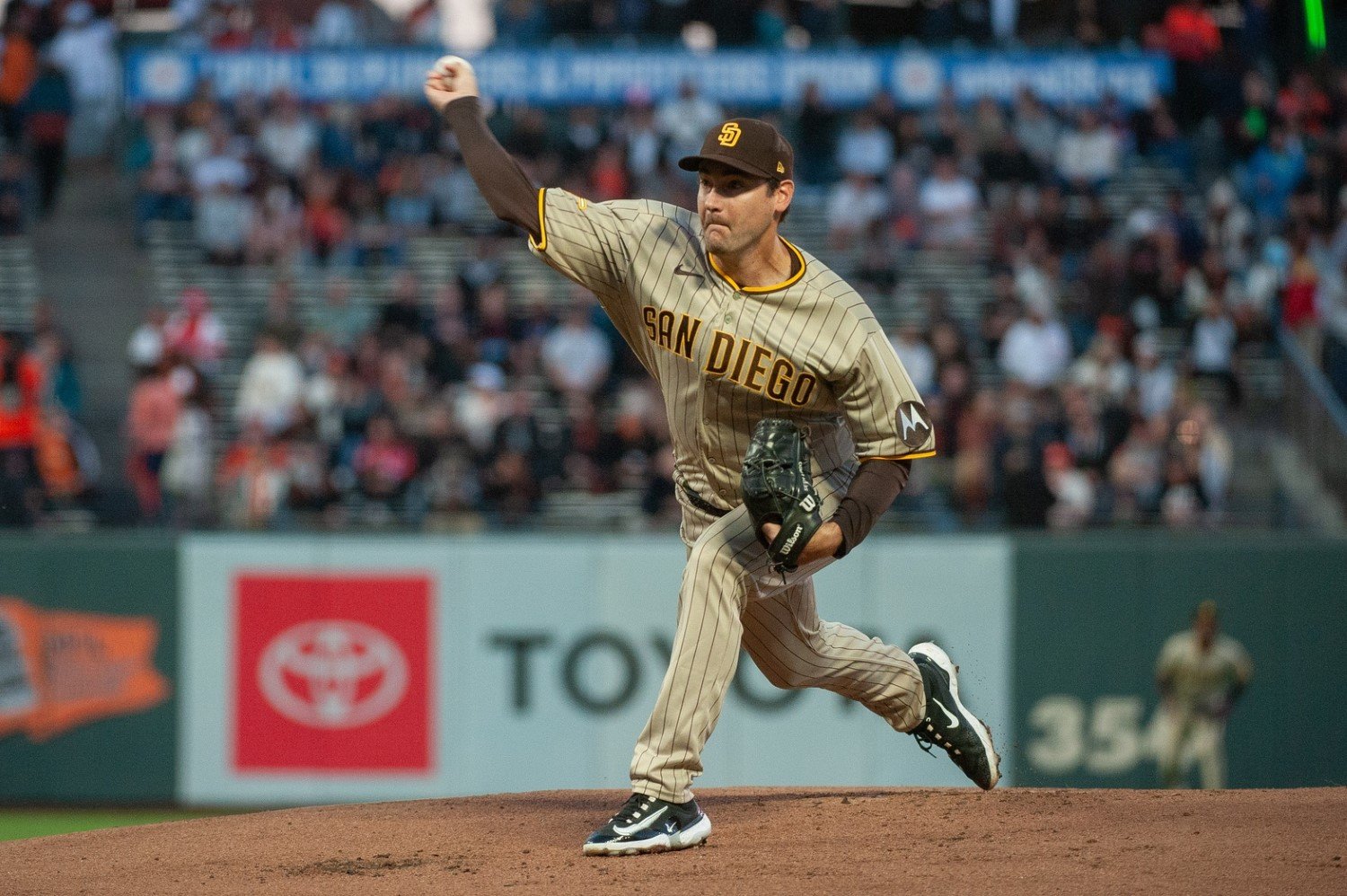 For those who haven't caught the three previous posts in this series, feel free to go back and peruse them. There are many, many players who could help the Cubs on the market this winter. Nos. 41-50 Nos. 31-40 Nos. 21-30 Without further ado, though, let's jump into the next 10 names on my (highly subjective) list. 20. Michael Brantley, DH/LF This name might catch a few people by surprise, this high on the countdown. Don't be fooled, though: Brantley is going to bring great value somewhere. A severe shoulder injury ended his 2022 season prematurely, and he didn't make it back until late in 2023. Between the regular season and the playoffs, he only came to bat 89 times this year. Even so, he made a huge impact on the Astros. At age 37, he remains a joy to watch at bat, with as smooth a line-drive swing and as superb a command of the strike zone as any hitter in baseball. He's actually a fine defender in left, on a limited basis, so he could help Ian Happ stay fresh. He's also one of the great leaders and clubhouse presences in the game. The Cubs should be all over him. 19. Wade Miley, LHP Again, this one will seem unsexy, but every teammate of Miley talks about the positive impact he has just by being around. In his lone season with the Cubs, he was hampered by injuries, and he clearly pitches through pain almost every time he takes the mound. Yet, he had a 3.14 ERA in 23 starts last season with the Brewers. His underlying stats don't support that number, and he's only getting older, but there's a certain alchemy in the partnership of Miley and Craig Counsell. On a reasonable, short-term deal laden with incentives, the Cubs should have interest in reuniting the two again. 18. Yariel Rodriguez, RHP There are some who envision Rodríguez as a starter, but the smart money is on the Cuban-cum-Japanese import working in short relief. Even so, he can be a massively valuable weapon. Though not hulking or capable of throwing triple-digit heat, Rodríguez is nasty. He'll turn 27 in March, and comes over to the States after a few years as one of the dominant relief pitchers in NPB. He dazzled in the World Baseball Classic this spring, then sat out the Japanese season to set himself up optimally for this chance to cross the pond. Though it's just treated as a four-seamer in most reports, Rodríguez throws what is really a 95-mile-per-hour cutter, and pairs it with a nasty two-plane slider. In Japan and in the WBC, he used a splitter with crazy armside run as his third pitch, but he might mill all of this into a slightly different repertoire as he comes Stateside. The stuff and the feel for it all is so good, though, that it should be easy to trust and invest in him even without knowing quite what he's going to evolve into. 17. Justin Turner, DH/1B/3B If Rodríguez is uniquely enigmatic for such a high-profile free agent, Turner is the epitome of transparency and predictability. He's been metronomically solid at the plate over the last decade. You no longer want him playing the field with any regularity, but his bat would be a welcome addition to the middle of the lineup and a stupendous fit for Wrigley Field. Turner is also a recent Roberto Clemente Award winner and a beloved teammate everywhere he's been. He'd add to the solid group the team already has in terms of leadership and experience with big moments. 16. Robert Stephenson, RHP Stephenson is a former top prospect, but he flopped as a starter and was a fairly forgettable journeyman reliever until the middle of 2023. That's when the Rays got him, gave him a cutter, and transformed him into a whiff monster with closer upside. The cutter is a perfect gyro-spin headwrecker of a pitch, and everything else he does works much better thanks to its implementation. He's already had his breakout. This wouldn't be the kind of bargain-bin project signing the Cubs love for the bullpen. It could, however, be the kind of high-impact relief help that unlocks the full potential value of having Counsell on the top step of the dugout. 15. Seth Lugo, RHP Back at the dawn of the Statcast Era, Lugo became one of the first pitchers famed for the high spin rate on his breaking ball. He retains that feel for spin, although it never did translate into genuine stardom. For a long time, he was primarily a reliever, but after a season as a successful full-time starter for the Padres, he hits the market looking to find the team willing to bet on his stuff in a bigger way than they have until now. That rough sketch might give you frissons of Tyler Chatwood, but there's more to like and less to fear here. Lugo also tweaked his changeup in 2023 (as many Padres did), making it a more vertical offering that plays off his fastball better, and he got many more whiffs from it in the bargain. He's not the top-of-the-rotation arm that should be the Cubs' priority, but he's exactly the kind of average-plus back-end stabilizer they also need to find. 14. Mitch Garver, C/DH I wrote about what makes Garver so appealing earlier this offseason, so I'll be brief this time around. Suffice it to say that, even in a post-David Ross world in which the Cubs are much less likely to carry three catchers at once, Garver would be a solid complement to Yan Gomes and/or Miguel Amaya. He'd also add an element of patient, lethal right-handed power that the lineup still needs. 13. Rhys Hoskins, 1B/DH Sometimes the narrative connections between a recent move and another potential one are so obvious and lovely that rehearsing them becomes tiresome. If Hoskins signs with the Cubs, we're all going to be sick of hearing his name connected to Cody Bellinger even before spring training begins. Last spring, Hoskins tore his ACL in Grapefruit League play, cutting short his Phillies career in tragic fashion. That injury and the one suffered by Bryce Harper the previous season--the one that forced Harper to first base, first on an interim and now on a permanent basis--are the reasons why Hoskins is available this winter on what could be a similar basis to Bellinger: no qualifying offer attached, no long-term commitment, just an opportunity for a team to get big production and one for a player to rebuild and prove their value before a full-fledged plunge into free agency a year later. Hoskins is streaky, but his hot streaks are more than enough to offset his cold snaps. His plate discipline steers his strikeout rate higher than his actual hit tool requires, but it also ensures that he draws plenty of walks and retains some value even when he's not quite connecting with his power. It's hard to project how he'll bounce back from a serious injury, but before it, he was a fine defender at first base, too. 12. J.D. Martinez, DH I was a loud advocate for the Cubs to sign Martinez last winter, instead of settling for Trey Mancini. They get another shot at him, now, with one more All-Star game on Martinez's resume but one more year on his odometer. He's probably in line to command a two-year deal this time around, after slugging .572 for the Dodgers, but that's fine. His power is awesome and adaptable. Even as he traded more walks for it and struck out at a slightly scary rate in 2023, he reminded everyone that great sluggers find ways to balance and manage those tradeoffs. Eventually, he will decline sharply, but it's not especially likely to happen in 2024, and embracing the risk that it will in 2025 or 2026 might be the avenue to acquiring him at a manageable annual salary. 11. Eduardo Rodriguez, LHP He's the least of the true top-of-the-rotation options, in my opinion, but Rodríguez is a legitimate one. The Tigers and Rodríguez weren't good for each other, and the opt-out in his contract felt like a blessing for both sides. He's likely to try to replicate the five-year commitment he got when he hit the market after 2021, but he might find that difficult. His surface-level numbers aren't overly impressive, and he doesn't have one elite pitch or the velocity that makes every modern executive a little more comfortable ponying up for a hurler. What he does have is unusual command of multiple pitches. He can locate his cutter on both sides of the plate with equal aplomb. He throws his sinker glove-side, for the most part, which is a weird habit that both speaks to his feel and hints at an opportunity to better utilize his arsenal. Tommy Hottovy would do some cool things with Rodríguez, if he came in with an open mind. Whether that's a plausible pairing depends a little on Rodríguez's attitude and a lot on how high his price tag gets on the open market. Which of these guys are favored targets for you? Who do I have too high on the list? Chime in now, before the signings start rolling in fast.
 -
The Cubs filled their 40-man roster to bursting earlier this week. That made it inevitable that they would cut a few players loose at the deadline to tender contracts to players under club control today, and they did just that--but they also held onto some notable names. It's disappointing to say goodbye to those three hurlers. Roberts was such a feel-good story at the beginning of 2022, but he never seemed likely to work back into the team's plans once his elbow trouble started. Heuer was such an important part of the Craig Kimbrel trade with the White Sox in 2021, but he's suffered multiple enormous injuries since, so he, too, was an obvious candidate for this treatment. Hughes is the one who most makes one feel the violent vagaries of this game. Coming into 2023, he was rightly viewed as one of the team's high-leverage relief options, after he burst onto the scene in 2022 with a slider that sliced through opposing hitters. It always feels especially cruel when a pitcher is derailed by a non-arm injury, but Hughes's knee trouble was so persistent and intractable that he went from promising to unwanted in barely six months. Cutting these three nicely balances the scales, after the team added Michael Arias, Porter Hodge, and Bailey Horn to their roster Tuesday. Those guys aren't positioned to immediately take up significant big-league roles for the team, but with a new manager who is famous for the construction and deployment of dominant bullpens made of unheralded arms, the team is choosing to maximize new blood and turn over a few names on the edges of the roster. This is also a reflection of the depth of their farm system. Without the risk that Arias, Hodge, and/or Horn could have been taken in next month's Rule 5 Draft, they wouldn't have been added to the roster, and the team might have chosen to try to weather the injury storms with at least one of Roberts, Heuer, and Hughes. Releasing those three creates room on the 40-man roster for potential additions via trade or free agency, but the team could have created even more of that. They affirmed some level of faith in guys like Nick Madrigal and Mike Tauchman by bringing them back, and showed what we could have guessed: that Wisdom is wanted, but was the closest of the position players to their cut line. Signing deals ahead of the tender deadline signals that a team was unwilling to keep the player unless they could find that common ground, so by striking this agreement, Wisdom and the Cubs stayed committed to one another, but the Cubs avoided the uncertainty of going through the arbitration process with a guy who has clubbed 76 home runs since the start of 2021. This ends a week of important but essentially procedural moves. The offseason is off to a fairly slow start, throughout MLB. As we head into the holiday week, we'll see more significant moves start to take place, and the Cubs now have a bit more clarity and a bit more flexibility with which to act. View full article
-
Cubs Sign Patrick Wisdom on Their Terms, Non-Tender Three Relievers
Matthew Trueblood posted an article in Cubs
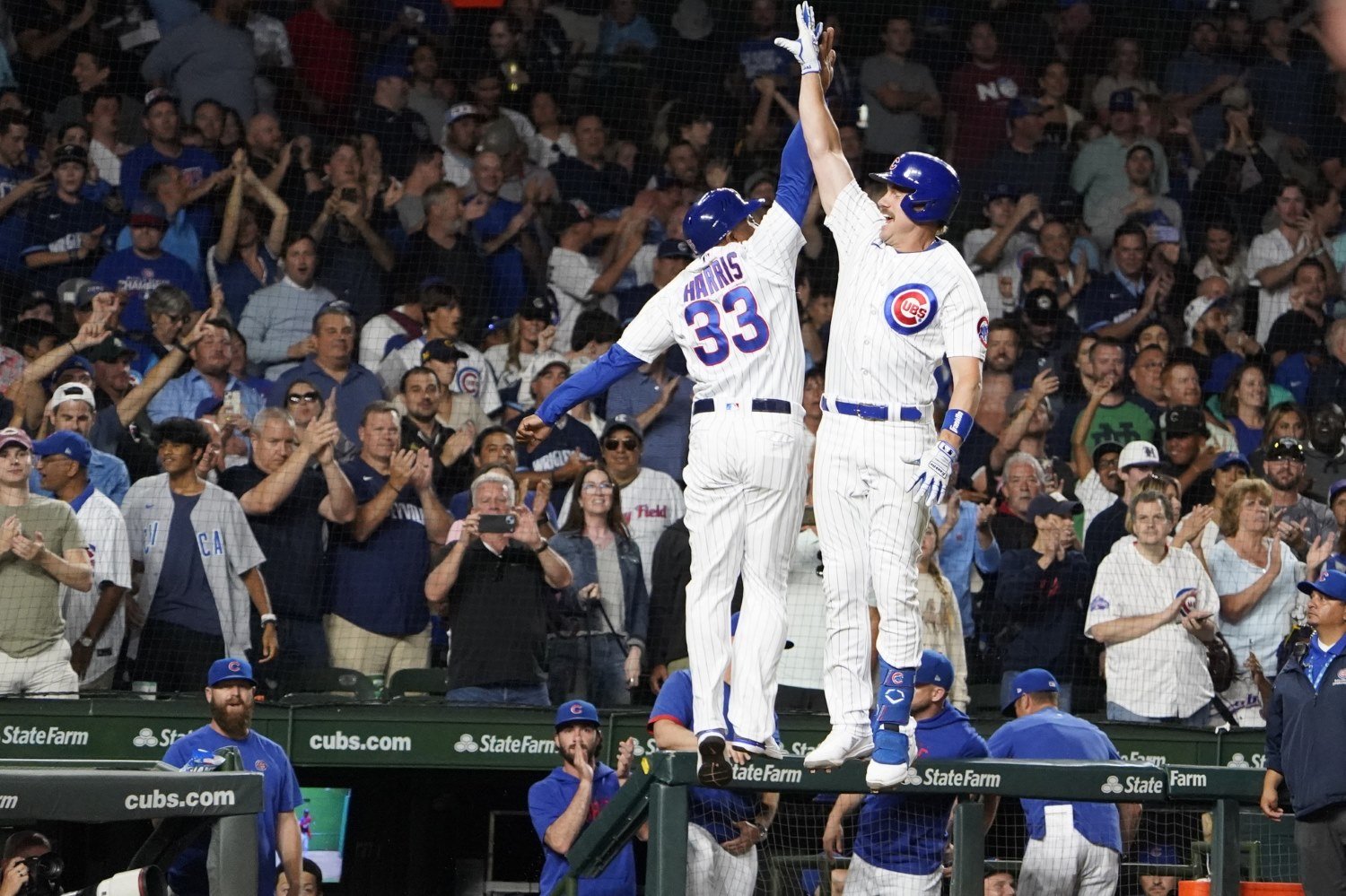 Entering Friday, it felt as though there was a fair chance that the Cubs would non-tender Patrick Wisdom. They have a crowded infield picture for 2024 and Wisdom was eligible for arbitration for the first time, with a bunch of home runs at his back. Instead, they brought him back, and they immediately gained cost certainty. It's disappointing to say goodbye to those three hurlers. Roberts was such a feel-good story at the beginning of 2022, but he never seemed likely to work back into the team's plans once his elbow trouble started. Heuer was such an important part of the Craig Kimbrel trade with the White Sox in 2021, but he's suffered multiple enormous injuries since, so he, too, was an obvious candidate for this treatment. Hughes is the one who most makes one feel the violent vagaries of this game. Coming into 2023, he was rightly viewed as one of the team's high-leverage relief options, after he burst onto the scene in 2022 with a slider that sliced through opposing hitters. It always feels especially cruel when a pitcher is derailed by a non-arm injury, but Hughes's knee trouble was so persistent and intractable that he went from promising to unwanted in barely six months. Cutting these three nicely balances the scales, after the team added Michael Arias, Porter Hodge, and Bailey Horn to their roster Tuesday. Those guys aren't positioned to immediately take up significant big-league roles for the team, but with a new manager who is famous for the construction and deployment of dominant bullpens made of unheralded arms, the team is choosing to maximize new blood and turn over a few names on the edges of the roster. This is also a reflection of the depth of their farm system. Without the risk that Arias, Hodge, and/or Horn could have been taken in next month's Rule 5 Draft, they wouldn't have been added to the roster, and the team might have chosen to try to weather the injury storms with at least one of Roberts, Heuer, and Hughes. Releasing those three creates room on the 40-man roster for potential additions via trade or free agency, but the team could have created even more of that. They affirmed some level of faith in guys like Nick Madrigal and Mike Tauchman by bringing them back, and showed what we could have guessed: that Wisdom is wanted, but was the closest of the position players to their cut line. Signing deals ahead of the tender deadline signals that a team was unwilling to keep the player unless they could find that common ground, so by striking this agreement, Wisdom and the Cubs stayed committed to one another, but the Cubs avoided the uncertainty of going through the arbitration process with a guy who has clubbed 76 home runs since the start of 2021. This ends a week of important but essentially procedural moves. The offseason is off to a fairly slow start, throughout MLB. As we head into the holiday week, we'll see more significant moves start to take place, and the Cubs now have a bit more clarity and a bit more flexibility with which to act.
 -
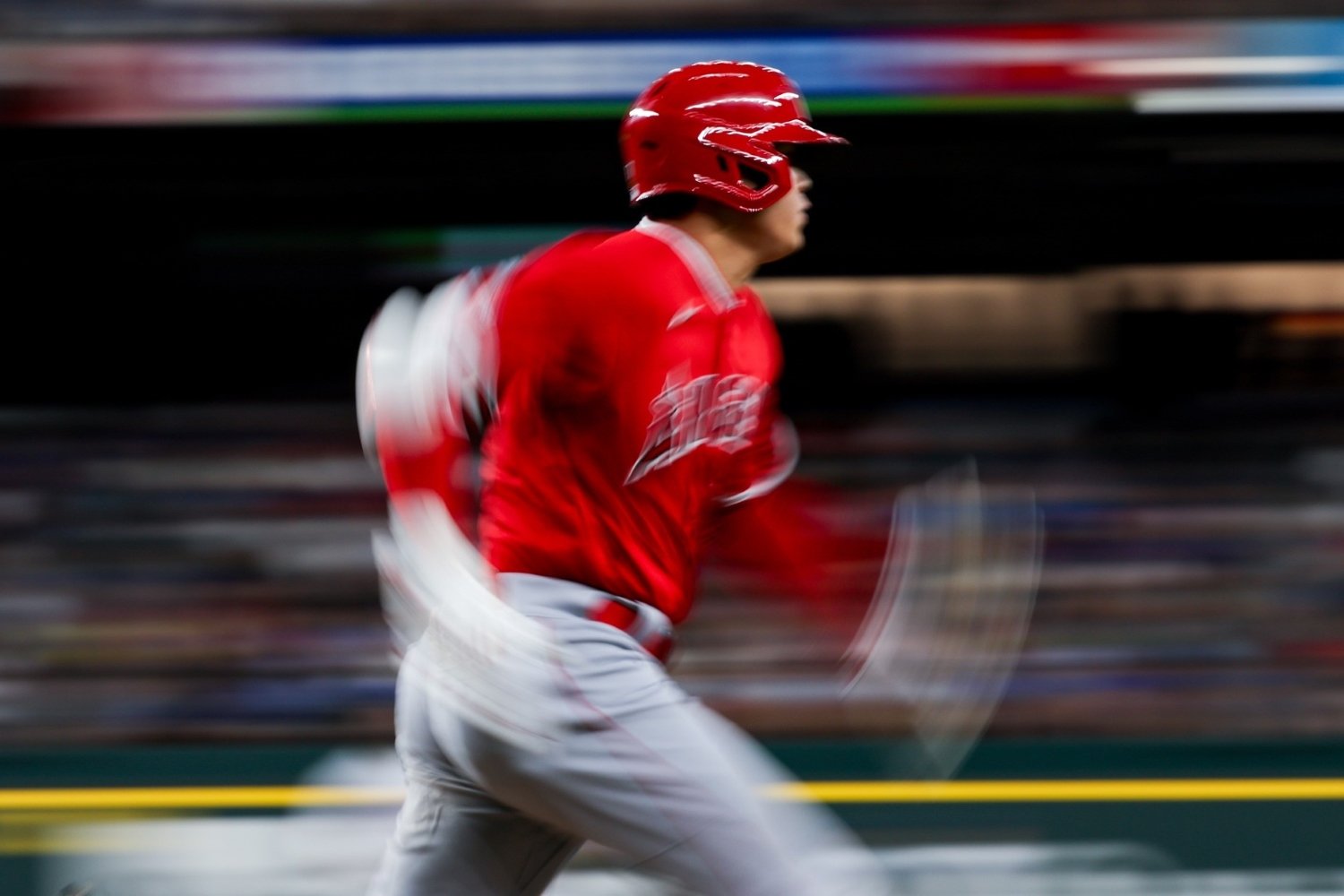 Jesse Rogers dropped an article this morning loaded with a lot of juicy rumors, including a repeated, seemingly thematic return to Shohei Ohtani as the focal point of the Cubs' offseason. That's awfully juicy, in itself, but Rogers also mentions that the Cubs are much less likely to retain Cody Bellinger than to sign Ohtani. That sentence, with the embedded implication that they have some measurable, significant chance to sign Ohtani at all, is exciting, but it's also newsworthy for the implication that Bellinger and Scott Boras are more likely to find their payday elsewhere--an idea on which Rogers then expands quite a bit. Already, there's more smoke than I might have expected there to be around the Cubs and Ohtani. That doesn't mean we should sound the fire alarms yet. No one is saying they're the favorites for him. It's just becoming clear how much they will try, and that their offseason could very well turn on their pursuit of him. Other notes in here, by the way, address Pete Alonso's potential availability (with Christopher Morel as a centerpiece going the other way; that seems improbable to me, but it's compelling) and the notion of a Cubs-Brewers trade involving Corbin Burnes (whoa). It's a fun little digest of rumors for a Thursday morning. Photo credit: © Kevin Jairaj-USA TODAY Sports
 -
Jesse Rogers dropped an article this morning loaded with a lot of juicy rumors, including a repeated, seemingly thematic return to Shohei Ohtani as the focal point of the Cubs' offseason. That's awfully juicy, in itself, but Rogers also mentions that the Cubs are much less likely to retain Cody Bellinger than to sign Ohtani. That sentence, with the embedded implication that they have some measurable, significant chance to sign Ohtani at all, is exciting, but it's also newsworthy for the implication that Bellinger and Scott Boras are more likely to find their payday elsewhere--an idea on which Rogers then expands quite a bit. Already, there's more smoke than I might have expected there to be around the Cubs and Ohtani. That doesn't mean we should sound the fire alarms yet. No one is saying they're the favorites for him. It's just becoming clear how much they will try, and that their offseason could very well turn on their pursuit of him. Other notes in here, by the way, address Pete Alonso's potential availability (with Christopher Morel as a centerpiece going the other way; that seems improbable to me, but it's compelling) and the notion of a Cubs-Brewers trade involving Corbin Burnes (whoa). It's a fun little digest of rumors for a Thursday morning. Photo credit: © Kevin Jairaj-USA TODAY Sports View full rumor
-
 For more information on the specific nature of this exercise (and how it differs from, say, rankings of all free agents via MLB Trade Rumors or other news outlets), and to catch up on the names already bandied about, check out the first two pieces in this series. Once you've done so, you're ready to read up on the next 10 players I'm rolling out. Nos. 41-50 Nos. 31-40 30. Tommy Pham, LF/DH Pham can hit. He's always been able to hit. Denied any kind of regular playing time until a relatively advanced age, he's gotten old on us now, but he can still hit. After a deadline trade from the disappointing Mets to the floundering Diamondbacks, he gave that team some newfound competitive juice and helped them surge back into the playoff picture and deep into October. He's respected throughout the game for his fire and for his plate discipline, and few players work harder. Here's the thing, though: he's crazy. Tommy Pham is crazy, and that makes bringing him into any clubhouse a bit of a risk. Whether the Cubs are comfortable with that risk will probably depend as much on their faith in Craig Counsell's stabilizing influence and on their background work on the guy as on their feelings of needing another right-handed bat for their outfield and DH mix. 29. Brent Suter, LHP Reunite Counsell with one of his most unlikely former relief aces. Then, stand back and watch the magic happen. Suter is as soft-tossing as it comes, especially for a reliever, but no one in baseball better neutralizes power on contact, and his changeup misses bats as well as any flamethrower's wicked slider. Suter would fill an obvious need for both bulk and a southpaw in the pen, and he's one of the brightest, most conscientious people in baseball. No player has been a more vocal activist in the area of global climate change, and while that's not necessarily a reason to sign a free agent, it's a reason to feel even better about it if they sign. 28. Jorge Soler, DH/OF Soler's initial tenure with the Cubs was more full of promise than of production, and he's hardly become a bastion of consistency since being traded for Wade Davis seven years ago. Yet, he's just the kind of thunderous middle-of-the-order bat the Cubs need, and he just opted out of his deal with the Marlins. If Soler could stomach the cold of Chicago in spring this time around, and if he can be had at a price that reflects the risk that he'll get hurt, he's well worth bringing back. It's not unfair to think of him, at this point, as Giancarlo Stanton redux. Stanton stayed healthy more often, but when he is healthy, Soler hits for similarly terrifying power, draws walks at a similarly impressive rate, and affects the game even from the on-deck circle in the same way. 27. Hector Neris, RHP As Matt Ostrowski recently wrote, bringing in Counsell is a good reason to invest in the bullpen, not an excuse to avoid doing so. Neris doesn't throw as hard as he once did, and he tends to issue too many free passes, but he's a swing-and-miss stud, thanks to a nasty splitter and an improved ability to elevate the four-seamer in order to set it up. Thanks to that splitter, Neris tends to sport fairly neutral platoon splits. He'd be an upgrade over Mark Leiter, Jr. in the same role, pushing Leiter down the depth chart and giving the team some reasonably-priced bullpen coverage. 26. Nick Martinez, RHP It's not quite kin to Neris's splitter, but Martinez has a nasty changeup of his own. He fits his into a pitch mix about five weapons deep, and uses all those offerings in fairly even shares, even when working in multi-inning relief. He was an extremely versatile, valuable weapon for the Padres over the last two seasons. Pitchers who are comfortable working in relief and as starters (and who can move freely between the two roles without deterioration) have some special value that goes beyond their raw numbers, just as a position player who is willing and able to move around the diamond defensively or provide good at-bats off the bench has. Martinez is likely to seek out a place where he can open the season as a full-fledged starter, and the Cubs might not be able to offer him that guarantee, but he'd ben a great utility pitcher for Counsell's staff. 25. Jeimer Candelario, 3B/1B In a recent podcast appearance, Bruce Levine of 670 The Score mentioned that the Cubs haven't been in touch with Cnadelario's agent since the end of the seasons, and that he senses that Candelario's representation feels disrespected or deprioritized because of that. I mention that only to say this: don't put too much stock into tidbits like these. The factual premise of a report like this is nearly always true, but very often, some inference or conclusion drawn therefrom swallows up that premise, and those inferences and conclusions are often spurious. I can confirm that the Cubs and Candelario have not had direct contact since the end of the season. I wouldn't assign any deeper meaning to that, though, than to observe that the team does not have Candelario at the very top of either their third-base or their first-base options list this winter. Surely, you already knew that. It doesn't mean that the switch-hitting, fine-fielding two-time Cub might not rise to the top of one of those options lists in a month. I don't think Candelario is off the team's radar permanently, or that his agent would spurn any renewed advances. It's just not the ideal scenario for either side, at this point. Candelario wants to find someone who sees him as a star. The Cubs want a star. It's possible that neither of them will get exactly what they want, and in that case, they could reunite happily and salubriously. 24. Michael Wacha, RHP Like his Padres teammate Martinez, Wacha threw his changeup more than any other pitch in his repertoire last year. That was even true against righties, which seems crazy, but it worked for both hurlers. In Wacha's case, it's certainly not a big surprise. He's always had an excellent cambio, with both fade and tumble. As he surpasses a decade of big-league service, he needs that pitch more all the time, but his velocity hasn't fallen off badly, or anything. The Cubs would be extremely comfortable working with an arsenal like his, and while there's little reason to think they could unlock another level from him, there's also none to believe that he'll collapse on the spot. His ERAs the last two years have markedly outstripped his expected numbers, which is why the Padres found no takers in trade and had to simply decline his two-year, $32-million option. He could make a very similar amount on the open market, though, and that would be a fine price for the Cubs. 23. Brandon Belt, 1B You have to see Belt through the lens of what he does well, rather than what he does poorly. He's a great, incredibly patient left-handed power hitter. And that's all. He's not going to suddenly unlock the ability to hit for average. He's not going to become a Fielding Bible Award-caliber first baseman again at age 36. None of that is necessary, though. Even as a DH who only occasionally dusts off his first baseman's mitt, and even if he's so assiduously protected from left-handed pitchers that he doesn't qualify for the batting title, Belt can have huge value. Because he hits everything in the air, he won't see his power disappear overnight. Because he even hits his ground balls at notably high launch angles (for grounders), he belongs to the class of hitters who benefited (and will continue to benefit) from the elimination of the shift. He would be a stellar addition to the middle of the order against right-handed pitchers. 22. Jack Flaherty, RHP During the brief window in which he pitched to Cy Young-caliber results, it felt like Flaherty was more than the sum of his parts--like he was finding some improbable and slightly unsustainable ways to converge his pitches and skills into a higher level of overall performance. Perhaps, then, he's never going to be an ace again. On the other hand, as his career has come unglued in the past few years, he's been just as plainly less than the sum of his parts. He's a great athlete with a feel for spin and good control (though, especially on his fastball, insufficient command), and yet, there have been long stretches during which opposing hitters have positively pummeled him. If he's been humbled at all by his recent misfortune, he's now one of the game's best possible reclamation projects. He doesn't need a new pitch, even. He just needs to radically reimagine and change the way he uses the ones he already has. The Cubs aren't baseball's leaders at that kind of optimization, but they're average at it, and average would be good enough to get plenty of value out of Flahety on a short- or medium-term deal. 21. Teoscar Hernandez, RF/DH Multiple outlets project Hernandez to sign a four-year deal worth $80 million. That's probably more than the Cubs would pay for him. It's probably more than they should pay, too. Hernandez would have to squeeze into their plans in a slightly awkward way. He'd be the regular DH, but rotating into each corner outfield spot at times to spell Ian Happ and Seiya Suzuki. That's not an unusual arrangement in the modern game, but having three guys with annual salaries around $20 million doing it is living dangerously, and perhaps not living well enough to justify the peril. Should Hernandez's market not materialize to that extent, though, he quickly becomes interesting. He's a good athlete, with speed and a rocket arm. He hammers the ball with regularity, though it comes with plenty of strikeouts. He would provide an exciting and dangerous wrinkle to the middle of the batting order. It's just a matter of whether the price is right. Who jumps out to you as a good fit, from this list? Who am I a dope for including? Let's continue to kick around ideas for the Cubs to make news on the hot stove.
 -
We've already covered 20 players I think would be good fits for the Cubs (on various-sized deals, and in various ways) in MLB free agency this year. Now, we're into the top 30 on this team-specific ranking. Image courtesy of © Nathan Ray Seebeck-USA TODAY Sports For more information on the specific nature of this exercise (and how it differs from, say, rankings of all free agents via MLB Trade Rumors or other news outlets), and to catch up on the names already bandied about, check out the first two pieces in this series. Once you've done so, you're ready to read up on the next 10 players I'm rolling out. Nos. 41-50 Nos. 31-40 30. Tommy Pham, LF/DH Pham can hit. He's always been able to hit. Denied any kind of regular playing time until a relatively advanced age, he's gotten old on us now, but he can still hit. After a deadline trade from the disappointing Mets to the floundering Diamondbacks, he gave that team some newfound competitive juice and helped them surge back into the playoff picture and deep into October. He's respected throughout the game for his fire and for his plate discipline, and few players work harder. Here's the thing, though: he's crazy. Tommy Pham is crazy, and that makes bringing him into any clubhouse a bit of a risk. Whether the Cubs are comfortable with that risk will probably depend as much on their faith in Craig Counsell's stabilizing influence and on their background work on the guy as on their feelings of needing another right-handed bat for their outfield and DH mix. 29. Brent Suter, LHP Reunite Counsell with one of his most unlikely former relief aces. Then, stand back and watch the magic happen. Suter is as soft-tossing as it comes, especially for a reliever, but no one in baseball better neutralizes power on contact, and his changeup misses bats as well as any flamethrower's wicked slider. Suter would fill an obvious need for both bulk and a southpaw in the pen, and he's one of the brightest, most conscientious people in baseball. No player has been a more vocal activist in the area of global climate change, and while that's not necessarily a reason to sign a free agent, it's a reason to feel even better about it if they sign. 28. Jorge Soler, DH/OF Soler's initial tenure with the Cubs was more full of promise than of production, and he's hardly become a bastion of consistency since being traded for Wade Davis seven years ago. Yet, he's just the kind of thunderous middle-of-the-order bat the Cubs need, and he just opted out of his deal with the Marlins. If Soler could stomach the cold of Chicago in spring this time around, and if he can be had at a price that reflects the risk that he'll get hurt, he's well worth bringing back. It's not unfair to think of him, at this point, as Giancarlo Stanton redux. Stanton stayed healthy more often, but when he is healthy, Soler hits for similarly terrifying power, draws walks at a similarly impressive rate, and affects the game even from the on-deck circle in the same way. 27. Hector Neris, RHP As Matt Ostrowski recently wrote, bringing in Counsell is a good reason to invest in the bullpen, not an excuse to avoid doing so. Neris doesn't throw as hard as he once did, and he tends to issue too many free passes, but he's a swing-and-miss stud, thanks to a nasty splitter and an improved ability to elevate the four-seamer in order to set it up. Thanks to that splitter, Neris tends to sport fairly neutral platoon splits. He'd be an upgrade over Mark Leiter, Jr. in the same role, pushing Leiter down the depth chart and giving the team some reasonably-priced bullpen coverage. 26. Nick Martinez, RHP It's not quite kin to Neris's splitter, but Martinez has a nasty changeup of his own. He fits his into a pitch mix about five weapons deep, and uses all those offerings in fairly even shares, even when working in multi-inning relief. He was an extremely versatile, valuable weapon for the Padres over the last two seasons. Pitchers who are comfortable working in relief and as starters (and who can move freely between the two roles without deterioration) have some special value that goes beyond their raw numbers, just as a position player who is willing and able to move around the diamond defensively or provide good at-bats off the bench has. Martinez is likely to seek out a place where he can open the season as a full-fledged starter, and the Cubs might not be able to offer him that guarantee, but he'd ben a great utility pitcher for Counsell's staff. 25. Jeimer Candelario, 3B/1B In a recent podcast appearance, Bruce Levine of 670 The Score mentioned that the Cubs haven't been in touch with Cnadelario's agent since the end of the seasons, and that he senses that Candelario's representation feels disrespected or deprioritized because of that. I mention that only to say this: don't put too much stock into tidbits like these. The factual premise of a report like this is nearly always true, but very often, some inference or conclusion drawn therefrom swallows up that premise, and those inferences and conclusions are often spurious. I can confirm that the Cubs and Candelario have not had direct contact since the end of the season. I wouldn't assign any deeper meaning to that, though, than to observe that the team does not have Candelario at the very top of either their third-base or their first-base options list this winter. Surely, you already knew that. It doesn't mean that the switch-hitting, fine-fielding two-time Cub might not rise to the top of one of those options lists in a month. I don't think Candelario is off the team's radar permanently, or that his agent would spurn any renewed advances. It's just not the ideal scenario for either side, at this point. Candelario wants to find someone who sees him as a star. The Cubs want a star. It's possible that neither of them will get exactly what they want, and in that case, they could reunite happily and salubriously. 24. Michael Wacha, RHP Like his Padres teammate Martinez, Wacha threw his changeup more than any other pitch in his repertoire last year. That was even true against righties, which seems crazy, but it worked for both hurlers. In Wacha's case, it's certainly not a big surprise. He's always had an excellent cambio, with both fade and tumble. As he surpasses a decade of big-league service, he needs that pitch more all the time, but his velocity hasn't fallen off badly, or anything. The Cubs would be extremely comfortable working with an arsenal like his, and while there's little reason to think they could unlock another level from him, there's also none to believe that he'll collapse on the spot. His ERAs the last two years have markedly outstripped his expected numbers, which is why the Padres found no takers in trade and had to simply decline his two-year, $32-million option. He could make a very similar amount on the open market, though, and that would be a fine price for the Cubs. 23. Brandon Belt, 1B You have to see Belt through the lens of what he does well, rather than what he does poorly. He's a great, incredibly patient left-handed power hitter. And that's all. He's not going to suddenly unlock the ability to hit for average. He's not going to become a Fielding Bible Award-caliber first baseman again at age 36. None of that is necessary, though. Even as a DH who only occasionally dusts off his first baseman's mitt, and even if he's so assiduously protected from left-handed pitchers that he doesn't qualify for the batting title, Belt can have huge value. Because he hits everything in the air, he won't see his power disappear overnight. Because he even hits his ground balls at notably high launch angles (for grounders), he belongs to the class of hitters who benefited (and will continue to benefit) from the elimination of the shift. He would be a stellar addition to the middle of the order against right-handed pitchers. 22. Jack Flaherty, RHP During the brief window in which he pitched to Cy Young-caliber results, it felt like Flaherty was more than the sum of his parts--like he was finding some improbable and slightly unsustainable ways to converge his pitches and skills into a higher level of overall performance. Perhaps, then, he's never going to be an ace again. On the other hand, as his career has come unglued in the past few years, he's been just as plainly less than the sum of his parts. He's a great athlete with a feel for spin and good control (though, especially on his fastball, insufficient command), and yet, there have been long stretches during which opposing hitters have positively pummeled him. If he's been humbled at all by his recent misfortune, he's now one of the game's best possible reclamation projects. He doesn't need a new pitch, even. He just needs to radically reimagine and change the way he uses the ones he already has. The Cubs aren't baseball's leaders at that kind of optimization, but they're average at it, and average would be good enough to get plenty of value out of Flahety on a short- or medium-term deal. 21. Teoscar Hernandez, RF/DH Multiple outlets project Hernandez to sign a four-year deal worth $80 million. That's probably more than the Cubs would pay for him. It's probably more than they should pay, too. Hernandez would have to squeeze into their plans in a slightly awkward way. He'd be the regular DH, but rotating into each corner outfield spot at times to spell Ian Happ and Seiya Suzuki. That's not an unusual arrangement in the modern game, but having three guys with annual salaries around $20 million doing it is living dangerously, and perhaps not living well enough to justify the peril. Should Hernandez's market not materialize to that extent, though, he quickly becomes interesting. He's a good athlete, with speed and a rocket arm. He hammers the ball with regularity, though it comes with plenty of strikeouts. He would provide an exciting and dangerous wrinkle to the middle of the batting order. It's just a matter of whether the price is right. Who jumps out to you as a good fit, from this list? Who am I a dope for including? Let's continue to kick around ideas for the Cubs to make news on the hot stove. View full article
-
 I'm attempting a unique (but, I think, a valuable) balancing act with this exercise. Ranking free agents from a global, league-wider perspective smooths too many important places where there's real friction preventing a given player from fitting what a team needs. Focusing on what the Cubs need and how they'll look to allocate resources this winter brings the hot stove into much clearer focus for us. You can check out the players I ranked 41-50 in this narrow way here. Now, here come the next 10. 40. Carlos Santana, 1B/DH Sooner or later, Santana will give way and surrender to Father Time. He's put up an exceptional fight against him so far, though. For a decade and a half, now, he's put up superb walk totals and hit enough home runs to be a competent first baseman. He's also one of the better defenders in the league at that position, even as he creeps up on 40 years of age. A switch-hitter, he'd be a nice, versatile piece in the lower portion of the heart of a Cubs lineup that ends up featuring a big bat other than Cody Bellinger. The team probably will and should aim higher, but Santana is the kind of backup plan who wouldn't feel deflating, if something else fell through. 39. Emilio Pagan, RHP An exemplar of the unpredictability of relief pitching, Pagan has been a star-caliber set-up man for long stretches during his career, but he's also been borderline unusable over long periods. Home runs are his biggest bugaboo, but on occasion, he also issues too many walks, the same way the man who saw Death in Baghdad and fled to Samarra only found Death waiting for him there. When he's right, though, Pagan is nasty. His cutter is the kind of pitch the Cubs' pitching brain trust would love to redeploy, and from which they would expect big results. 38. Kevin Pillar, OF As a starter, he's slightly underwhelming, now that he's lost a step in the outfield and is no longer a plus center fielder. He can still patrol that spot on a part-time basis, though, and the relatively small center fields of the NL Central would be a great fit for him in that regard. Offensively, he's a right-handed hitter who hammers lefty pitching. That would make him a nice little platoon partner to Pete Crow-Armstrong and Mike Tauchman, to whatever extent each of them end up claiming playing time in center field in 2024, but Pillar would gain a little extra value by being able to spell Ian Happ (a switch-hitter who will never be good against lefties), as well. 37. Erick Fedde, RHP The former Nationals first-round pick is coming back to the States after a year in the Korean Baseball Organization, with an overhauled repertoire and some very impressive results to recommend him. He heavily featured a new sweeper overseas in 2023, and learned to pitch with that as the anchor of his repertoire, rather than being overly fastball-forward. He's no Kyle Hendricks, but he doesn't throw hard, so his comfort with more evenly mixing four or five pitches could be the key to whatever success he finds as he returns to MLB. As a relatively low-cost upside play for the back end of the rotation, he could be a great bargain. This fit is probably a contingent one, though, in that the Cubs would only need or want him at his likely asking price if they were to trade a depth starter like Javier Assad in a move to bring in a high-impact bat. 36. Joe Kelly, RHP On the cusp of his age-36 season, Kelly still feels like an extraordinarily volatile pitcher--like no one in the game has really figured him out yet. That includes hitters. He had the highest strikeout rate of his career in 2023. It didn't render irrelevant his persistent control problems, but Kelly is a pretty solid and occasionally overpowering middle reliever. He won't be healthy all season, but he won't come at a huge cost, and come September or October, his triple-digit heat is a weapon against any caliber of hitter. It was interesting to see him make a committed switch from the curveball to the slider as his principal breaking pitch this season. 35. Sean Manaea, LHP It was a mild surprise to see Manaea opt out of a deal that would have paid him $12 million to pitch for the Giants in 2024. The sensible inference is that he wants multi-year security, and while giving it to him sounds a bit overexuberant at first blush, there are reasons to consider it plausible. A Northwest Indiana product, he'd be coming closer to home than his pro career has ever brought him before, and he's shown an ability to be effective in a swingman role. As the Cubs try to guarantee sufficient depth in both the rotation and the bullpen, he seems like a candidate to kill two birds with one hulking stone. 34. Reynaldo Lopez, RHP It's not clear whether anyone is allowed to sign Lopez without also signing Lucas Giolito, who has moved with him each time either has changed organizations during their professional careers. With or without his hip attachment, however, Lopez is an exciting potential addition to the bullpen. He has an electric fastball-slider combination, and while it's not so different from those of Julian Merryweather or Adbert Alzolay as to feel like an entirely different thing, it would be great to add another player of that type to the relief corps--to hedge against injury or regression by either of those two, and to replace the good innings Michael Fulmer gave the Cubs in 2023. Lopez will probably command a multi-year deal at a non-negligible salary, but whether that's a hurdle depends on where else the Cubs are able or willing to spend money. 33. Adam Duvall, OF If Patrick Wisdom were fractionally more consistent at the plate, he'd match Duvall's offense. Don't hold your breath on that happening, though. Instead, the Cubs could move on from Wisdom this winter. He's a candidate to be traded or non-tendered by the end of Friday, when the team has to tender contracts to players for 2024. Wisdom just isn't a great fit for the roster at this point. Duvall would fill the offensive role Wisdom occupies, but he's an above-average defensive outfielder, which makes a world of difference here. He even acquits himself well in center field. He might sign a two-year deal worth $15 million or more, but he'd be a terrific depth piece for the positional corps in that price range. 32. Kenta Maeda, RHP The Cubs need more raw stuff in their rotation, and more swing-and-miss. Alas, those aren't the areas of great strength for Maeda, at this stage of his career. The ex-Dodgers and Twins starter underwent Tommy John surgery in 2021, and is down to a sub-91 miles per hour average velocity on his heater. His slider isn't the filthy pitch it used to be, now that his fastball is down a tick. He still has a nasty splitter, good command, and a whole lot of savvy, though. On the right deal, he could be a very good fourth starter for a team reinforced from the front end of the rotation by one of the premium free agents available. 31. Jordan Hicks, RHP Few hurlers anywhere in the game throw harder than Hicks. His ability to translate pure velocity into whiffs and outs has been less consistent, but in 2023, he posted the highest strikeout rate of his career. Featuring a sinker instead of a four-seamer, he keeps the ball on the ground as well as any reliever in the game, and he reshaped his slider into more of a sweeper this past season. He also started making use of a four-seam fastball, for the first time. There's a lot with which to work, though to earn the right to do that work, the Cubs would probably have to commit to Hicks for three years at an annual salary near $10 million. Are any of these appealing options for you? Weigh in, and come back later this week to see who comes in higher on the list of good fits for the Cubs this offseason.
 -
As the offseason takes full effect, we'll soon see significant player movement begin. It's a good time to continue our countdown of the 50 best fits for the Cubs in free agency. Image courtesy of © Ken Blaze-USA TODAY Sports I'm attempting a unique (but, I think, a valuable) balancing act with this exercise. Ranking free agents from a global, league-wider perspective smooths too many important places where there's real friction preventing a given player from fitting what a team needs. Focusing on what the Cubs need and how they'll look to allocate resources this winter brings the hot stove into much clearer focus for us. You can check out the players I ranked 41-50 in this narrow way here. Now, here come the next 10. 40. Carlos Santana, 1B/DH Sooner or later, Santana will give way and surrender to Father Time. He's put up an exceptional fight against him so far, though. For a decade and a half, now, he's put up superb walk totals and hit enough home runs to be a competent first baseman. He's also one of the better defenders in the league at that position, even as he creeps up on 40 years of age. A switch-hitter, he'd be a nice, versatile piece in the lower portion of the heart of a Cubs lineup that ends up featuring a big bat other than Cody Bellinger. The team probably will and should aim higher, but Santana is the kind of backup plan who wouldn't feel deflating, if something else fell through. 39. Emilio Pagan, RHP An exemplar of the unpredictability of relief pitching, Pagan has been a star-caliber set-up man for long stretches during his career, but he's also been borderline unusable over long periods. Home runs are his biggest bugaboo, but on occasion, he also issues too many walks, the same way the man who saw Death in Baghdad and fled to Samarra only found Death waiting for him there. When he's right, though, Pagan is nasty. His cutter is the kind of pitch the Cubs' pitching brain trust would love to redeploy, and from which they would expect big results. 38. Kevin Pillar, OF As a starter, he's slightly underwhelming, now that he's lost a step in the outfield and is no longer a plus center fielder. He can still patrol that spot on a part-time basis, though, and the relatively small center fields of the NL Central would be a great fit for him in that regard. Offensively, he's a right-handed hitter who hammers lefty pitching. That would make him a nice little platoon partner to Pete Crow-Armstrong and Mike Tauchman, to whatever extent each of them end up claiming playing time in center field in 2024, but Pillar would gain a little extra value by being able to spell Ian Happ (a switch-hitter who will never be good against lefties), as well. 37. Erick Fedde, RHP The former Nationals first-round pick is coming back to the States after a year in the Korean Baseball Organization, with an overhauled repertoire and some very impressive results to recommend him. He heavily featured a new sweeper overseas in 2023, and learned to pitch with that as the anchor of his repertoire, rather than being overly fastball-forward. He's no Kyle Hendricks, but he doesn't throw hard, so his comfort with more evenly mixing four or five pitches could be the key to whatever success he finds as he returns to MLB. As a relatively low-cost upside play for the back end of the rotation, he could be a great bargain. This fit is probably a contingent one, though, in that the Cubs would only need or want him at his likely asking price if they were to trade a depth starter like Javier Assad in a move to bring in a high-impact bat. 36. Joe Kelly, RHP On the cusp of his age-36 season, Kelly still feels like an extraordinarily volatile pitcher--like no one in the game has really figured him out yet. That includes hitters. He had the highest strikeout rate of his career in 2023. It didn't render irrelevant his persistent control problems, but Kelly is a pretty solid and occasionally overpowering middle reliever. He won't be healthy all season, but he won't come at a huge cost, and come September or October, his triple-digit heat is a weapon against any caliber of hitter. It was interesting to see him make a committed switch from the curveball to the slider as his principal breaking pitch this season. 35. Sean Manaea, LHP It was a mild surprise to see Manaea opt out of a deal that would have paid him $12 million to pitch for the Giants in 2024. The sensible inference is that he wants multi-year security, and while giving it to him sounds a bit overexuberant at first blush, there are reasons to consider it plausible. A Northwest Indiana product, he'd be coming closer to home than his pro career has ever brought him before, and he's shown an ability to be effective in a swingman role. As the Cubs try to guarantee sufficient depth in both the rotation and the bullpen, he seems like a candidate to kill two birds with one hulking stone. 34. Reynaldo Lopez, RHP It's not clear whether anyone is allowed to sign Lopez without also signing Lucas Giolito, who has moved with him each time either has changed organizations during their professional careers. With or without his hip attachment, however, Lopez is an exciting potential addition to the bullpen. He has an electric fastball-slider combination, and while it's not so different from those of Julian Merryweather or Adbert Alzolay as to feel like an entirely different thing, it would be great to add another player of that type to the relief corps--to hedge against injury or regression by either of those two, and to replace the good innings Michael Fulmer gave the Cubs in 2023. Lopez will probably command a multi-year deal at a non-negligible salary, but whether that's a hurdle depends on where else the Cubs are able or willing to spend money. 33. Adam Duvall, OF If Patrick Wisdom were fractionally more consistent at the plate, he'd match Duvall's offense. Don't hold your breath on that happening, though. Instead, the Cubs could move on from Wisdom this winter. He's a candidate to be traded or non-tendered by the end of Friday, when the team has to tender contracts to players for 2024. Wisdom just isn't a great fit for the roster at this point. Duvall would fill the offensive role Wisdom occupies, but he's an above-average defensive outfielder, which makes a world of difference here. He even acquits himself well in center field. He might sign a two-year deal worth $15 million or more, but he'd be a terrific depth piece for the positional corps in that price range. 32. Kenta Maeda, RHP The Cubs need more raw stuff in their rotation, and more swing-and-miss. Alas, those aren't the areas of great strength for Maeda, at this stage of his career. The ex-Dodgers and Twins starter underwent Tommy John surgery in 2021, and is down to a sub-91 miles per hour average velocity on his heater. His slider isn't the filthy pitch it used to be, now that his fastball is down a tick. He still has a nasty splitter, good command, and a whole lot of savvy, though. On the right deal, he could be a very good fourth starter for a team reinforced from the front end of the rotation by one of the premium free agents available. 31. Jordan Hicks, RHP Few hurlers anywhere in the game throw harder than Hicks. His ability to translate pure velocity into whiffs and outs has been less consistent, but in 2023, he posted the highest strikeout rate of his career. Featuring a sinker instead of a four-seamer, he keeps the ball on the ground as well as any reliever in the game, and he reshaped his slider into more of a sweeper this past season. He also started making use of a four-seam fastball, for the first time. There's a lot with which to work, though to earn the right to do that work, the Cubs would probably have to commit to Hicks for three years at an annual salary near $10 million. Are any of these appealing options for you? Weigh in, and come back later this week to see who comes in higher on the list of good fits for the Cubs this offseason. View full article
-
Monday is the deadline for teams to add players to their 40-man roster in order to protect them from next month's Rule 5 Draft. The Cubs have a few open roster spots, but whether to spend all of them (and if so, on which prospects) is always an interesting question. Image courtesy of © MATT CASHORE / USA TODAY NETWORK Unlike last winter, this fall finds the Cubs without any elite prospects in obvious need of protection from MLB's secondary mechanism for ensuring player freedom. They already allowed Yonathan Perlaza to leave the organization as a minor-league free agent, and added Luis Vazquez to the 40-man to prevent the same. They still have three vacancies on the reserve list, if they want to use them, but once a player is added for this purpose, they can't be removed from the roster through the usual mechanisms of waivers and outright assignment for a certain period. For that reason (and because the team might prefer external additions who stand to make a greater impact on the team), the Cubs might elect to leave themselves an open spot or two on the 40-man even on the other side of this deadline. This day also tends to generate player movement throughout the sport, as teams try to clear the requisite space on their rosters for key additions or trade fringy guys they would have left unprotected to teams who will then slot them into their own 40-man. Let's take a look at the guys who give the Cubs some real reason to pause and consider their options today. Pablo Aliendo, C It's a little bit difficult to take seriously anyone who strikes out 30 percent of the time even in Double A, but Aliendo did so at an appropriate age (22) and with some power and patience to offset the whiffs. He's also a credible (though far from exciting) defensive catcher. In general, teams don't love to carry an extra catcher on the 40-man unless they would feel comfortable calling them up for an extended stay with the parent club. The dilemma the Cubs face, then, is whether they can find that kind of trust in Aliendo. He's not in a terribly different spot from the one Miguel Amaya was in a year ago, but he doesn't have quite the same defensive chops, and that might prove to be a separator. Chase Strumpf, IF It feels like the decision to add Vazquez foreclosed the possibility of doing the same with Strumpf (or Jake Slaughter, his less defensively sound facsimile), but we'll see how things unfold. At the end of this week lurks the deadline for non-tendering arbitration-eligible players, and at that point, the Cubs could theoretically move on from one or both of Nick Madrigal and Patrick Wisdom. If they plan to do so, then there might be a place for Strumpf, after all. He's not quite viable at shortstop, but he profiles as an above-average defender at second or third base. His power is legitimate, and he takes his walks. Again, though, we're talking about a minor-league strikeout rate that makes you worry whether Wisdom's big-league rate might not be the floor for Strumpf's. Ezeqeuiel Pagan, OF A left-handed hitter with bat-to-ball skills and a modicum of plate discipline can usually progress at least to the upper levels of the minors as a legitimate potential big-leaguer. At that point, the question becomes whether they can deliver sufficient power or defensive value to get them over the hump. We don't yet have that answer where Pagan is concerned; he's only gotten a small taste of Double-A competition. He's probably an underpowered corner outfielder, and even if he does end up bridging the gaps and becoming MLB-worthy, it feels unlikely that he'd be taken in this year's draft. Under their current circumstances, the Cubs figure to take that chance and see what happens. Kohl Franklin, RHP Last year, the Cubs added Ryan Jensen to the 40-man at this time, surprising some fans and analysts. Their hope was that they had finally helped a formerly struggling first-round pick unlock something, and that he would materialize quickly as a big-league reliever. It didn't happen, and it's very unlikely that the same gambit would work any better with Franklin. The team would be better off taking their chances by leaving him unprotected, especially since they need to be aiming to make big external upgrades on the pitching staff and will need roster room for them, anyway. Michael Arias, RHP This case is much more nuanced. Arias signed as a shortstop out of the Dominican Republic in 2018. After one year in the Dominican Summer League and one onset of a global pandemic, the Blue Jays released him in May 2020, and the Cubs signed him as a conversion project. Given that fraught trajectory, his ugly walk rates in both levels of A ball the last two years don't seem so bad. The stuff is really good, and his small frame might not scare off a team who would be drafting him for a quick move to the bullpen. It's still a tough call, but adding Arias feels like the right move, if the team can identify other places on the roster to create space if and when they need to add a star via trade or free agency. A Handful of Relievers The above are the main names to watch today, but a few relief-only arms could also be in the mix, depending on what the Cubs' internal analysis and evaluations on them look like. They include Eduarniel Nunez, who has a truly filthy fastball-curveball combo but no clue where it's going; Bailey Horn, a lefty with two above-average breaking balls but insufficient fastball command; and the quartet of Cayne Ueckert, Cam Sanders, Ben Leeper, and Max Bain, who all have good fastballs and good sliders but big flaws in either their health or their control. Of those six, one is going to be a good big-league reliever, and one is going to be a modestly useful one. The other four will float around and come to nothing. If the Cubs have conviction on which is the winning ticket in that batch, they might play it, but the good odds are that all six are left unshielded. Again, there are other avenues through which this deadline can yield a little bit of interest and movement, but the Cubs seem unlikely to make any big or surprising moves this year, based on their situation and the status of their most valuable prospects. Who would you protect? What names not rattled off here have your attention? Are there trade partners on whom you'll keep tabs today? Let's get nerdy. View full article
-
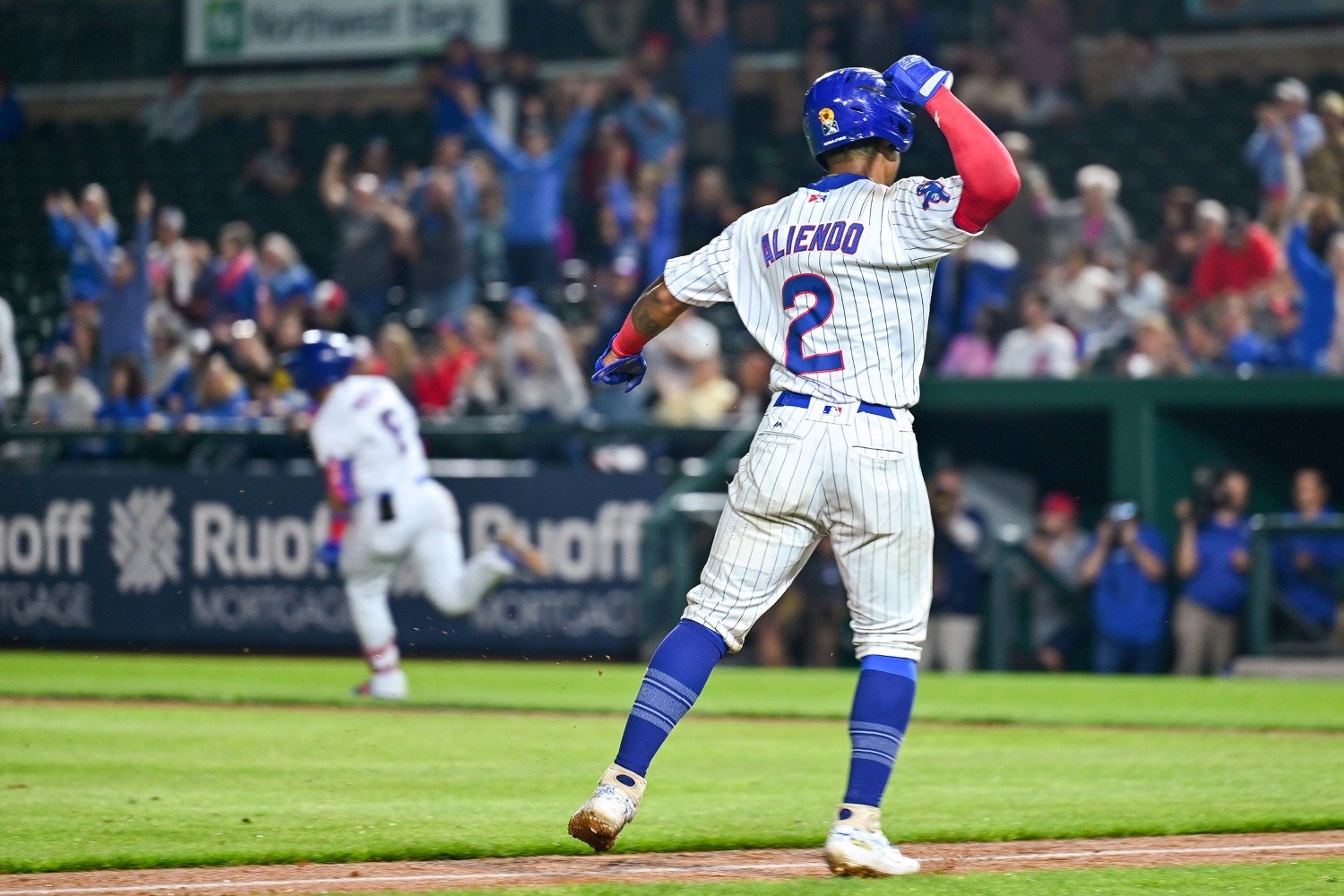 Unlike last winter, this fall finds the Cubs without any elite prospects in obvious need of protection from MLB's secondary mechanism for ensuring player freedom. They already allowed Yonathan Perlaza to leave the organization as a minor-league free agent, and added Luis Vazquez to the 40-man to prevent the same. They still have three vacancies on the reserve list, if they want to use them, but once a player is added for this purpose, they can't be removed from the roster through the usual mechanisms of waivers and outright assignment for a certain period. For that reason (and because the team might prefer external additions who stand to make a greater impact on the team), the Cubs might elect to leave themselves an open spot or two on the 40-man even on the other side of this deadline. This day also tends to generate player movement throughout the sport, as teams try to clear the requisite space on their rosters for key additions or trade fringy guys they would have left unprotected to teams who will then slot them into their own 40-man. Let's take a look at the guys who give the Cubs some real reason to pause and consider their options today. Pablo Aliendo, C It's a little bit difficult to take seriously anyone who strikes out 30 percent of the time even in Double A, but Aliendo did so at an appropriate age (22) and with some power and patience to offset the whiffs. He's also a credible (though far from exciting) defensive catcher. In general, teams don't love to carry an extra catcher on the 40-man unless they would feel comfortable calling them up for an extended stay with the parent club. The dilemma the Cubs face, then, is whether they can find that kind of trust in Aliendo. He's not in a terribly different spot from the one Miguel Amaya was in a year ago, but he doesn't have quite the same defensive chops, and that might prove to be a separator. Chase Strumpf, IF It feels like the decision to add Vazquez foreclosed the possibility of doing the same with Strumpf (or Jake Slaughter, his less defensively sound facsimile), but we'll see how things unfold. At the end of this week lurks the deadline for non-tendering arbitration-eligible players, and at that point, the Cubs could theoretically move on from one or both of Nick Madrigal and Patrick Wisdom. If they plan to do so, then there might be a place for Strumpf, after all. He's not quite viable at shortstop, but he profiles as an above-average defender at second or third base. His power is legitimate, and he takes his walks. Again, though, we're talking about a minor-league strikeout rate that makes you worry whether Wisdom's big-league rate might not be the floor for Strumpf's. Ezeqeuiel Pagan, OF A left-handed hitter with bat-to-ball skills and a modicum of plate discipline can usually progress at least to the upper levels of the minors as a legitimate potential big-leaguer. At that point, the question becomes whether they can deliver sufficient power or defensive value to get them over the hump. We don't yet have that answer where Pagan is concerned; he's only gotten a small taste of Double-A competition. He's probably an underpowered corner outfielder, and even if he does end up bridging the gaps and becoming MLB-worthy, it feels unlikely that he'd be taken in this year's draft. Under their current circumstances, the Cubs figure to take that chance and see what happens. Kohl Franklin, RHP Last year, the Cubs added Ryan Jensen to the 40-man at this time, surprising some fans and analysts. Their hope was that they had finally helped a formerly struggling first-round pick unlock something, and that he would materialize quickly as a big-league reliever. It didn't happen, and it's very unlikely that the same gambit would work any better with Franklin. The team would be better off taking their chances by leaving him unprotected, especially since they need to be aiming to make big external upgrades on the pitching staff and will need roster room for them, anyway. Michael Arias, RHP This case is much more nuanced. Arias signed as a shortstop out of the Dominican Republic in 2018. After one year in the Dominican Summer League and one onset of a global pandemic, the Blue Jays released him in May 2020, and the Cubs signed him as a conversion project. Given that fraught trajectory, his ugly walk rates in both levels of A ball the last two years don't seem so bad. The stuff is really good, and his small frame might not scare off a team who would be drafting him for a quick move to the bullpen. It's still a tough call, but adding Arias feels like the right move, if the team can identify other places on the roster to create space if and when they need to add a star via trade or free agency. A Handful of Relievers The above are the main names to watch today, but a few relief-only arms could also be in the mix, depending on what the Cubs' internal analysis and evaluations on them look like. They include Eduarniel Nunez, who has a truly filthy fastball-curveball combo but no clue where it's going; Bailey Horn, a lefty with two above-average breaking balls but insufficient fastball command; and the quartet of Cayne Ueckert, Cam Sanders, Ben Leeper, and Max Bain, who all have good fastballs and good sliders but big flaws in either their health or their control. Of those six, one is going to be a good big-league reliever, and one is going to be a modestly useful one. The other four will float around and come to nothing. If the Cubs have conviction on which is the winning ticket in that batch, they might play it, but the good odds are that all six are left unshielded. Again, there are other avenues through which this deadline can yield a little bit of interest and movement, but the Cubs seem unlikely to make any big or surprising moves this year, based on their situation and the status of their most valuable prospects. Who would you protect? What names not rattled off here have your attention? Are there trade partners on whom you'll keep tabs today? Let's get nerdy.
 -
Lefties did torch him last year, when there were multiple things wrong for him, but he found a changeup that worked in 2020 and 2021 and erased that big split issue. It's crept back the last couple of years for unrelated reasons; I bet the Cubs would think they could straighten out at least that element of his problems.
-
While MLB free agency has been over for a solid week, little player movement has happened yet. There will be moves this week, but as we await the big ones, let's count down the 50 best fits for the Cubs among the many free agents available. Image courtesy of © David Kohl-USA TODAY Sports Firstly, I had better clarify what this list will be. I'm not endeavoring, as several national sites do, to rank every free agent by talent or projected production over the life of a given contract. I'm also not ranking the players the Cubs are most likely to sign. This list (entirely my own; don't blame anyone else for my rankings) lives somewhere between those theoretical pieces. It's a ranking of the guys I think the Cubs would do best to sign this winter. My process, then, includes the ability of the player, but also their likely price tag, the Cubs' needs, and the team's likely payroll constraints (now and in the future), among other factors. It's not definitive; it's a conversation starter, and a way to draw some lines around otherwise vague or confused thoughts about the market. Without further ado, let's count down the bottom 10 guys who made my list. (To make the list at all, of course, I have to think the Cubs would somehow profit by signing a player. There are good free agents who won't appear here because they don't fit the Cubs' needs at all. There are also a few fringy ones who will be unexpectedly high. This is highly specific to the Cubs, and to my perceptions of them.) 50. Andrew McCutchen, DH/LF The way McCutchen's 2023 ended--with an injury in the midst of a lost season--is too undignified to be the final sentence in the beautiful story of his career. It feels unlikely that he'll play anywhere other than Pittsburgh, to whom he returned years after having been traded away, but the Cubs should at least call. Perhaps the long-time lefty masher would have interest in a reunion with Craig Counsell, who managed him in 2022. 49. Donovan Solano, 1B/3B/DH What do you get when you cross Patrick Wisdom with Nick Madrigal? It's basically Solano. He's short, stocky, strong, yet he doesn't hit for real power, because most of his hard contact is on the ground or on a lower trajectory in the air. Yet, he also doesn't strike out much. He's a competent defensive first baseman, and you can use him at second or third in a pinch. Just don't expect him to add actual value with his glove. His nickname is Donnie Barrels. He gets hits. That has plenty of value, in some scenarios, for the 2024 Cubs. It would come at a low cost, probably right around what Wisdom would make in arbitration. Whether it's worth the transaction costs to make an upgrade of sorts depends much on what else the team does. 48. Wandy Peralta, LHP After Brandon Hughes fell apart (mostly for health reasons) in 2023, the Cubs were left without a reliable lefty in the bullpen. Peralta is that kind of lefty. He walks too many batters, and he finished the season on the injured list with a triceps strain, but he has good stuff and has racked up good results with the Yankees over the last three seasons. He shouldn't cost an arm and a leg, and adding an established lefty to the pen would lessen any pressure on Drew Smyly to be the guy he was down the stretch. It might even facilitate the Cubs trading Smyly, either to clear his salary from their books or to give him a chance to start that he wouldn't get here. 47. Matt Moore, LHP The several reasons we enumerated for the Cubs to be interested in Moore at the trade deadline hold just as true as he hits free agency. For that matter, you can apply much of the Peralta talk above to Moore, with little in need of adjustment. He's not an overpowering or thrilling option, but he stands an excellent chance to be a steady lefty set-up man, and he's unlikely to cost more than $6 million. As Matt Ostrowski recently wrote, the Cubs ought to invest a bit more in their bullpen, in support of their new skipper. 46. Joey Votto, 1B/DH Look, it's not especially likely that Votto wants to come to the Cubs, and there are first basemen available whom the Cubs should want more than Votto. That's why he's so far down on this list. To leave him off it entirely, however, I would have to believe that the Cubs have secured the cold corner and/or DH very well for 2024, or that Votto can no longer bang, even when healthy. I do not believe either of those things. He could fill a couple of needs and be a welcome source of leadership for the 2024 Cubs, at a relatively cheap price. 45. Harrison Bader, CF Not far removed from being the Cardinals' center fielder of the future, and even more recently considered a hometown hero with the Yankees, Bader ended 2023 about as unwanted as a guy can get: shuffled off to Cincinnati via waivers, then demoted there, too. His bat lost its potency, and that has always been the question with him. He's a good candidate to bring in as a flier, though, because he can play such sparkling outfield defense and would be a good platoon partner to Mike Tauchman, Ian Happ, or both, if he could iron out the injury and approach problems that have stunted his offensive progress. 44. Dylan Floro, RHP If it weren't for the high baseline we set in our minds for relief pitcher fungibility, we'd all be shocked at the fact that the Cubs ever let Floro go at all. He's as quintessentially Cub as a right-handed middle reliever can be. His arsenal, his recent usage, and his price tag all thread a nice little needle, now, of seeming to jibe with both the Cubs' recent track record for reliever targets and Counsell's preferred style of bullpen management. If anything, I could have steered Floro higher. 43. Hunter Renfroe, RF/DH The big bat that netted the Brewers something in trade for Renfroe at this time last year came up small in Anaheim, and Renfroe, too, made little of his chance to have a late impact on the NL playoff race. Still, he has obvious power, is a fine defender in either corner outfield spot, and has a sufficiently well-rounded offensive skill set that you can dream on him as a platoon guy at DH, too. He's likely to be available on a pretty cheap one-year deal; the Cubs might just need to move some other fringe pieces around to make room for him. 42. Rich Hill, LHP As Hill's career winds toward a close, it would be cool to see him circle back to the team with whom he began his journey. At last check, he was pondering a model whereby he would take extra rest over the offseason, manage his buildup carefully, and join a team close to midseason. That could certainly work for the Cubs, whose pitching plan looks more like a quilt than a seamless creation, anyway. 41. Yuki Matsui, LHP Japan's best reliever is coming to the United States in 2024, and it'll be very interesting to see what kind of contract he can command. He has a four-pitch mix despite being a pretty standard-issue closer, with the fastball bumping the mid-90s, an eviscerating splitter and two distinct breaking balls. Since the start of 2021, his RA9 (runs allowed per nine; think ERA, but even "unearned" runs count) is just over 1.60. His resume is dazzling. The catch? He's lilliputian. Listed at 5-foot-8, he looks (if anything) a bit smaller. For now, though, his stuff and command make up for it, and he could be a lethal weapon in a Counsell-led bullpen. What do you think of these guys as potential Cubs targets? Let's fire up some free agency talk, and come back tomorrow to see the next 10 names on my list. View full article
-
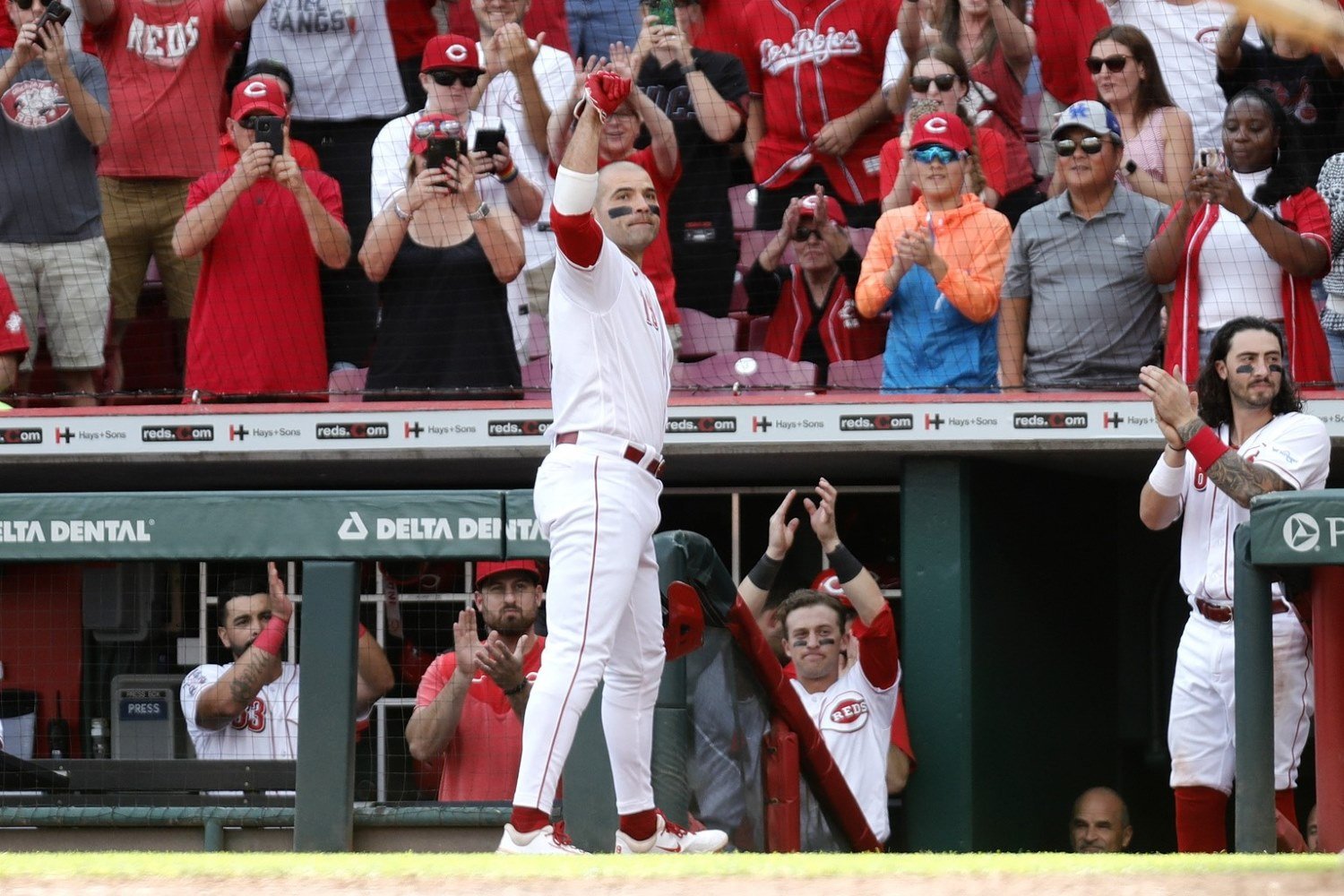 Firstly, I had better clarify what this list will be. I'm not endeavoring, as several national sites do, to rank every free agent by talent or projected production over the life of a given contract. I'm also not ranking the players the Cubs are most likely to sign. This list (entirely my own; don't blame anyone else for my rankings) lives somewhere between those theoretical pieces. It's a ranking of the guys I think the Cubs would do best to sign this winter. My process, then, includes the ability of the player, but also their likely price tag, the Cubs' needs, and the team's likely payroll constraints (now and in the future), among other factors. It's not definitive; it's a conversation starter, and a way to draw some lines around otherwise vague or confused thoughts about the market. Without further ado, let's count down the bottom 10 guys who made my list. (To make the list at all, of course, I have to think the Cubs would somehow profit by signing a player. There are good free agents who won't appear here because they don't fit the Cubs' needs at all. There are also a few fringy ones who will be unexpectedly high. This is highly specific to the Cubs, and to my perceptions of them.) 50. Andrew McCutchen, DH/LF The way McCutchen's 2023 ended--with an injury in the midst of a lost season--is too undignified to be the final sentence in the beautiful story of his career. It feels unlikely that he'll play anywhere other than Pittsburgh, to whom he returned years after having been traded away, but the Cubs should at least call. Perhaps the long-time lefty masher would have interest in a reunion with Craig Counsell, who managed him in 2022. 49. Donovan Solano, 1B/3B/DH What do you get when you cross Patrick Wisdom with Nick Madrigal? It's basically Solano. He's short, stocky, strong, yet he doesn't hit for real power, because most of his hard contact is on the ground or on a lower trajectory in the air. Yet, he also doesn't strike out much. He's a competent defensive first baseman, and you can use him at second or third in a pinch. Just don't expect him to add actual value with his glove. His nickname is Donnie Barrels. He gets hits. That has plenty of value, in some scenarios, for the 2024 Cubs. It would come at a low cost, probably right around what Wisdom would make in arbitration. Whether it's worth the transaction costs to make an upgrade of sorts depends much on what else the team does. 48. Wandy Peralta, LHP After Brandon Hughes fell apart (mostly for health reasons) in 2023, the Cubs were left without a reliable lefty in the bullpen. Peralta is that kind of lefty. He walks too many batters, and he finished the season on the injured list with a triceps strain, but he has good stuff and has racked up good results with the Yankees over the last three seasons. He shouldn't cost an arm and a leg, and adding an established lefty to the pen would lessen any pressure on Drew Smyly to be the guy he was down the stretch. It might even facilitate the Cubs trading Smyly, either to clear his salary from their books or to give him a chance to start that he wouldn't get here. 47. Matt Moore, LHP The several reasons we enumerated for the Cubs to be interested in Moore at the trade deadline hold just as true as he hits free agency. For that matter, you can apply much of the Peralta talk above to Moore, with little in need of adjustment. He's not an overpowering or thrilling option, but he stands an excellent chance to be a steady lefty set-up man, and he's unlikely to cost more than $6 million. As Matt Ostrowski recently wrote, the Cubs ought to invest a bit more in their bullpen, in support of their new skipper. 46. Joey Votto, 1B/DH Look, it's not especially likely that Votto wants to come to the Cubs, and there are first basemen available whom the Cubs should want more than Votto. That's why he's so far down on this list. To leave him off it entirely, however, I would have to believe that the Cubs have secured the cold corner and/or DH very well for 2024, or that Votto can no longer bang, even when healthy. I do not believe either of those things. He could fill a couple of needs and be a welcome source of leadership for the 2024 Cubs, at a relatively cheap price. 45. Harrison Bader, CF Not far removed from being the Cardinals' center fielder of the future, and even more recently considered a hometown hero with the Yankees, Bader ended 2023 about as unwanted as a guy can get: shuffled off to Cincinnati via waivers, then demoted there, too. His bat lost its potency, and that has always been the question with him. He's a good candidate to bring in as a flier, though, because he can play such sparkling outfield defense and would be a good platoon partner to Mike Tauchman, Ian Happ, or both, if he could iron out the injury and approach problems that have stunted his offensive progress. 44. Dylan Floro, RHP If it weren't for the high baseline we set in our minds for relief pitcher fungibility, we'd all be shocked at the fact that the Cubs ever let Floro go at all. He's as quintessentially Cub as a right-handed middle reliever can be. His arsenal, his recent usage, and his price tag all thread a nice little needle, now, of seeming to jibe with both the Cubs' recent track record for reliever targets and Counsell's preferred style of bullpen management. If anything, I could have steered Floro higher. 43. Hunter Renfroe, RF/DH The big bat that netted the Brewers something in trade for Renfroe at this time last year came up small in Anaheim, and Renfroe, too, made little of his chance to have a late impact on the NL playoff race. Still, he has obvious power, is a fine defender in either corner outfield spot, and has a sufficiently well-rounded offensive skill set that you can dream on him as a platoon guy at DH, too. He's likely to be available on a pretty cheap one-year deal; the Cubs might just need to move some other fringe pieces around to make room for him. 42. Rich Hill, LHP As Hill's career winds toward a close, it would be cool to see him circle back to the team with whom he began his journey. At last check, he was pondering a model whereby he would take extra rest over the offseason, manage his buildup carefully, and join a team close to midseason. That could certainly work for the Cubs, whose pitching plan looks more like a quilt than a seamless creation, anyway. 41. Yuki Matsui, LHP Japan's best reliever is coming to the United States in 2024, and it'll be very interesting to see what kind of contract he can command. He has a four-pitch mix despite being a pretty standard-issue closer, with the fastball bumping the mid-90s, an eviscerating splitter and two distinct breaking balls. Since the start of 2021, his RA9 (runs allowed per nine; think ERA, but even "unearned" runs count) is just over 1.60. His resume is dazzling. The catch? He's lilliputian. Listed at 5-foot-8, he looks (if anything) a bit smaller. For now, though, his stuff and command make up for it, and he could be a lethal weapon in a Counsell-led bullpen. What do you think of these guys as potential Cubs targets? Let's fire up some free agency talk, and come back tomorrow to see the next 10 names on my list.
 -
In the latest episode of This is Not a Rebuild. we dug into the early storylines around what looks to be a momentous offseason ahead for the Cubs. Image courtesy of Matt Trueblood via Spotify for Podcasters We recorded this episode of This is Not a Rebuild on Sunday night, well before the world (including the four of us) knew that Craig Counsell would be the first big arrival of the winter. As such, our conversations centered mostly on the contract options exercised and declined, and on the multiple dimensions of change enacted on the Cubs' hot stove plans when Marcus Stroman opted out of the final year of his deal. Beyond that, we kicked around a few of the top names on the free-agent and trade markets. There's ample Juan Soto talk in here, as well as some further discussion of Cody Bellinger and the complicated question of how hard the Cubs should try to bring him back. So far, these conversations remain somewhat abstract. There's a wide universe of potential individual acquisitions, but it feels most important that we pinpoint what specific things the team needs (and doesn't need). Counsell's arrival will immediately sharpen the lens and give us greater insight into those needs, but there's still room to debate them. Do the Cubs need one big bat, or two? How much can they afford to eschew long-term commitments and focus on making the team better for 2024, alone? Who will be within their price range on the free-agent starting pitching market, and how much will they invest in the bullpen? These are all topics for this and future podcast episodes, but we can also discuss them here, in text form. Let us know what you think, and throw out questions or comments for future episodes. View full article
-
 We recorded this episode of This is Not a Rebuild on Sunday night, well before the world (including the four of us) knew that Craig Counsell would be the first big arrival of the winter. As such, our conversations centered mostly on the contract options exercised and declined, and on the multiple dimensions of change enacted on the Cubs' hot stove plans when Marcus Stroman opted out of the final year of his deal. Beyond that, we kicked around a few of the top names on the free-agent and trade markets. There's ample Juan Soto talk in here, as well as some further discussion of Cody Bellinger and the complicated question of how hard the Cubs should try to bring him back. So far, these conversations remain somewhat abstract. There's a wide universe of potential individual acquisitions, but it feels most important that we pinpoint what specific things the team needs (and doesn't need). Counsell's arrival will immediately sharpen the lens and give us greater insight into those needs, but there's still room to debate them. Do the Cubs need one big bat, or two? How much can they afford to eschew long-term commitments and focus on making the team better for 2024, alone? Who will be within their price range on the free-agent starting pitching market, and how much will they invest in the bullpen? These are all topics for this and future podcast episodes, but we can also discuss them here, in text form. Let us know what you think, and throw out questions or comments for future episodes.
 -
Stealing the long-time, highly successful manager of a division rival is unavoidably exciting, but the news shockwave the Cubs created Monday had another layer to it, too. This deal was wholly proactive. The team already had a skipper, and they pushed him aside. Here's why they did it. Image courtesy of © Michael McLoone-USA TODAY Sports I don't think the Cubs viewed David Ross as a problem. Never take an organization's public remarks, especially about something like personnel status, at face value, but when both Jed Hoyer and Tom Ricketts voiced support for Ross at the end of the regular season, I think they were both being truthful. That's an important note with which to lead off, here, because (as I've made clear several times before) I don't agree, but knowing it is important when evaluating the choice the team just made. If the Brewers and Cubs had swapped managers before 2023, the Chicago Cubs would have won the NL Central this past season. That sounds like a grandiose statement, given the nine-game edge Milwaukee held by the end of the year, but this was an exceptional season. The Brewers, with a sturdy bullpen and plenty of good luck but also with Counsell ensconced in the dugout, won one-run games at a remarkable clip. By contrast, the Cubs struggled mightily in close games. Those are the contests where a manager can make the most visible difference, and in them, the Brewers had a huge advantage over the Cubs. Of course, most of the impact a manager makes is much less visible. There are games that end up being decided by six or seven runs, but which a manager could have steered back toward being close with different moves early. There are also considerations that go far beyond sheer game management, to the maintenance of clubhouse culture and the careful calibration of daily intensity necessary to play consistent baseball as a team. Counsell excels in that regard, too. His teams snap out of slumps more quickly than most, and they sustain hot streaks better than most. Ross's tenure as manager, meanwhile, was marred by long periods during which his teams played sloppy and uninspired baseball. As good as Ross was at being the same guy every day over the latter part of his playing career, he wasn't able to transmit that capacity to his teams from the manager's office. He also failed to adequately manage the grind of the long season. At times, the Cubs would look tired, for days at a time, as though they badly needed not just a day off, but an entire weekend. That's normal. It's only human. Alas, MLB is a game that has to be played by abnormal, almost superhuman athletes who find the energy to bring tenacity and focus to the diamond every day. Self-imposed payroll constraints kept the Brewers from making major outside additions for most of the time Counsell spent at the helm. There were notable exceptions, but the rule was that the team thrived or floundered on the strength of its young players, either homegrown or acquired at a low ebb in value. Counsell proved to be adept at that vital skill: he empowers and develops young players well. He does it without being exceptionally enthusiastic about those youngsters; he takes a terse and value-focused tone. Ultimately, though, he brings them along successfully. The same can't be said for Ross, whose inability to smoothly integrate some of the rookies the front office gave him as tools throughout 2023 contributed to the team's failure to make the playoffs. Managers have to make dozens of complicated, multilayered decisions every week. They need to think in paragraphs and pages, not simple sentences. Ross never demonstrated the ability to keep all those plates spinning at once. Counsell has done so masterfully, often at the Cubs' expense, for almost a decade. Even though the Cubs believed in Ross enough to retain him a month ago, they felt this was a big enough upgrade to pay the transaction cost of firing a manager, as well as the actual monetary cost. For all the above reasons, it was the right decision. I jumped on the Wrigleyville Nation podcast to talk about this huge news, as well as the other early offseason happenings in Cubdom. Check it out: What specific things do you hope Counsell will do better than Ross? What concerns do you have about him? Let's get into the nitty-gritty on the new man in charge. View full article
-
So, What Exactly Makes Craig Counsell So Much Better Than David Ross?
Matthew Trueblood posted an article in Cubs
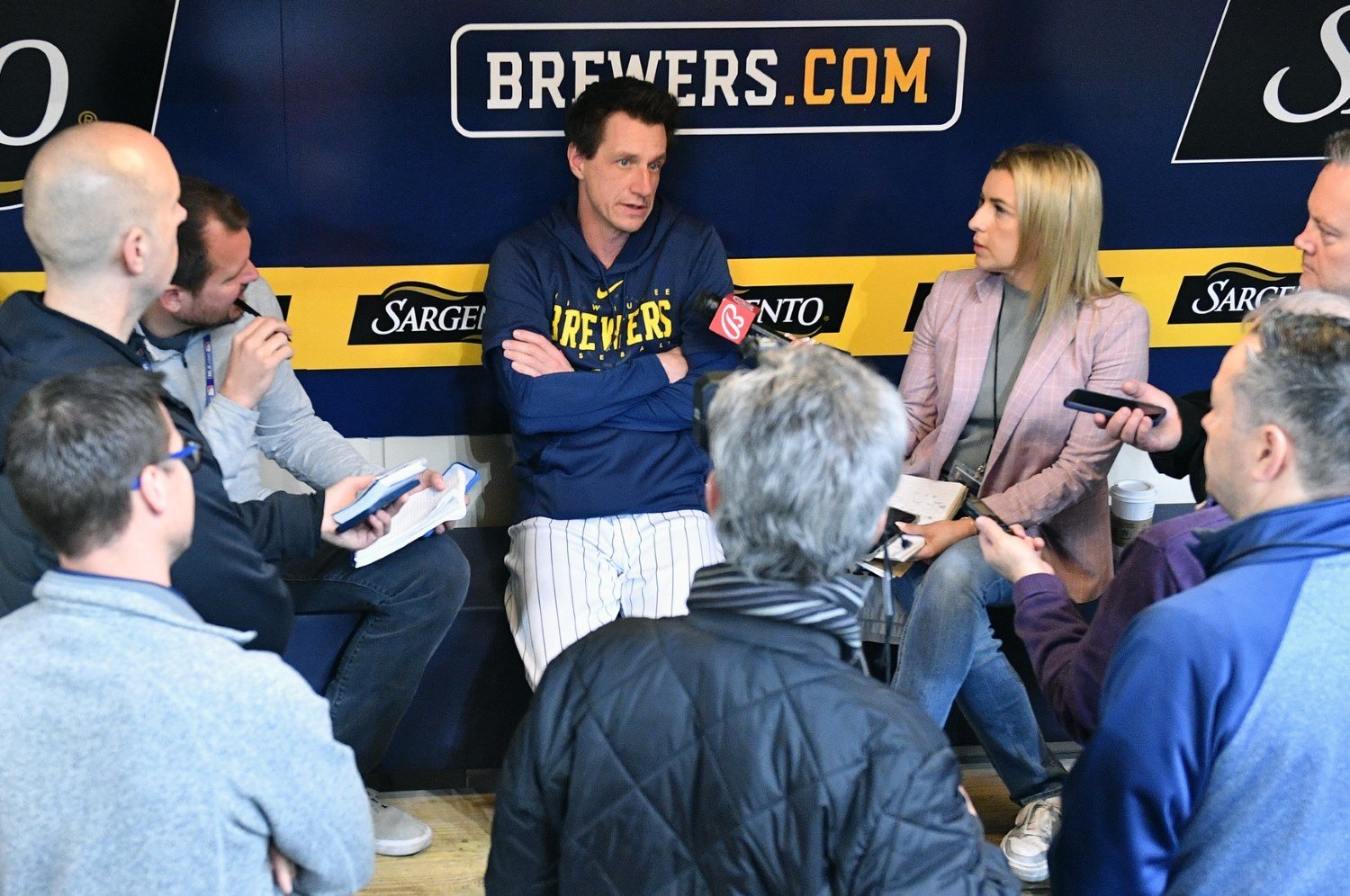 I don't think the Cubs viewed David Ross as a problem. Never take an organization's public remarks, especially about something like personnel status, at face value, but when both Jed Hoyer and Tom Ricketts voiced support for Ross at the end of the regular season, I think they were both being truthful. That's an important note with which to lead off, here, because (as I've made clear several times before) I don't agree, but knowing it is important when evaluating the choice the team just made. If the Brewers and Cubs had swapped managers before 2023, the Chicago Cubs would have won the NL Central this past season. That sounds like a grandiose statement, given the nine-game edge Milwaukee held by the end of the year, but this was an exceptional season. The Brewers, with a sturdy bullpen and plenty of good luck but also with Counsell ensconced in the dugout, won one-run games at a remarkable clip. By contrast, the Cubs struggled mightily in close games. Those are the contests where a manager can make the most visible difference, and in them, the Brewers had a huge advantage over the Cubs. Of course, most of the impact a manager makes is much less visible. There are games that end up being decided by six or seven runs, but which a manager could have steered back toward being close with different moves early. There are also considerations that go far beyond sheer game management, to the maintenance of clubhouse culture and the careful calibration of daily intensity necessary to play consistent baseball as a team. Counsell excels in that regard, too. His teams snap out of slumps more quickly than most, and they sustain hot streaks better than most. Ross's tenure as manager, meanwhile, was marred by long periods during which his teams played sloppy and uninspired baseball. As good as Ross was at being the same guy every day over the latter part of his playing career, he wasn't able to transmit that capacity to his teams from the manager's office. He also failed to adequately manage the grind of the long season. At times, the Cubs would look tired, for days at a time, as though they badly needed not just a day off, but an entire weekend. That's normal. It's only human. Alas, MLB is a game that has to be played by abnormal, almost superhuman athletes who find the energy to bring tenacity and focus to the diamond every day. Self-imposed payroll constraints kept the Brewers from making major outside additions for most of the time Counsell spent at the helm. There were notable exceptions, but the rule was that the team thrived or floundered on the strength of its young players, either homegrown or acquired at a low ebb in value. Counsell proved to be adept at that vital skill: he empowers and develops young players well. He does it without being exceptionally enthusiastic about those youngsters; he takes a terse and value-focused tone. Ultimately, though, he brings them along successfully. The same can't be said for Ross, whose inability to smoothly integrate some of the rookies the front office gave him as tools throughout 2023 contributed to the team's failure to make the playoffs. Managers have to make dozens of complicated, multilayered decisions every week. They need to think in paragraphs and pages, not simple sentences. Ross never demonstrated the ability to keep all those plates spinning at once. Counsell has done so masterfully, often at the Cubs' expense, for almost a decade. Even though the Cubs believed in Ross enough to retain him a month ago, they felt this was a big enough upgrade to pay the transaction cost of firing a manager, as well as the actual monetary cost. For all the above reasons, it was the right decision. I jumped on the Wrigleyville Nation podcast to talk about this huge news, as well as the other early offseason happenings in Cubdom. Check it out: What specific things do you hope Counsell will do better than Ross? What concerns do you have about him? Let's get into the nitty-gritty on the new man in charge.
 -
In a shocking move, the Cubs have swooped in to steal the best manager in baseball from their fiercest division rival. Let's talk Craig Counsell. What moves does this make you hope to see? How many wins better did the Cubs just get, instantly? Can't wait to talk about it more. View full article
- 43 replies
-
- 1
-
-
- craig counsell
- david ross
- (and 1 more)
-
HOLY HORSEFEATHERS: Cubs Hire Craig Counsell as New Manager
Matthew Trueblood posted an article in Cubs
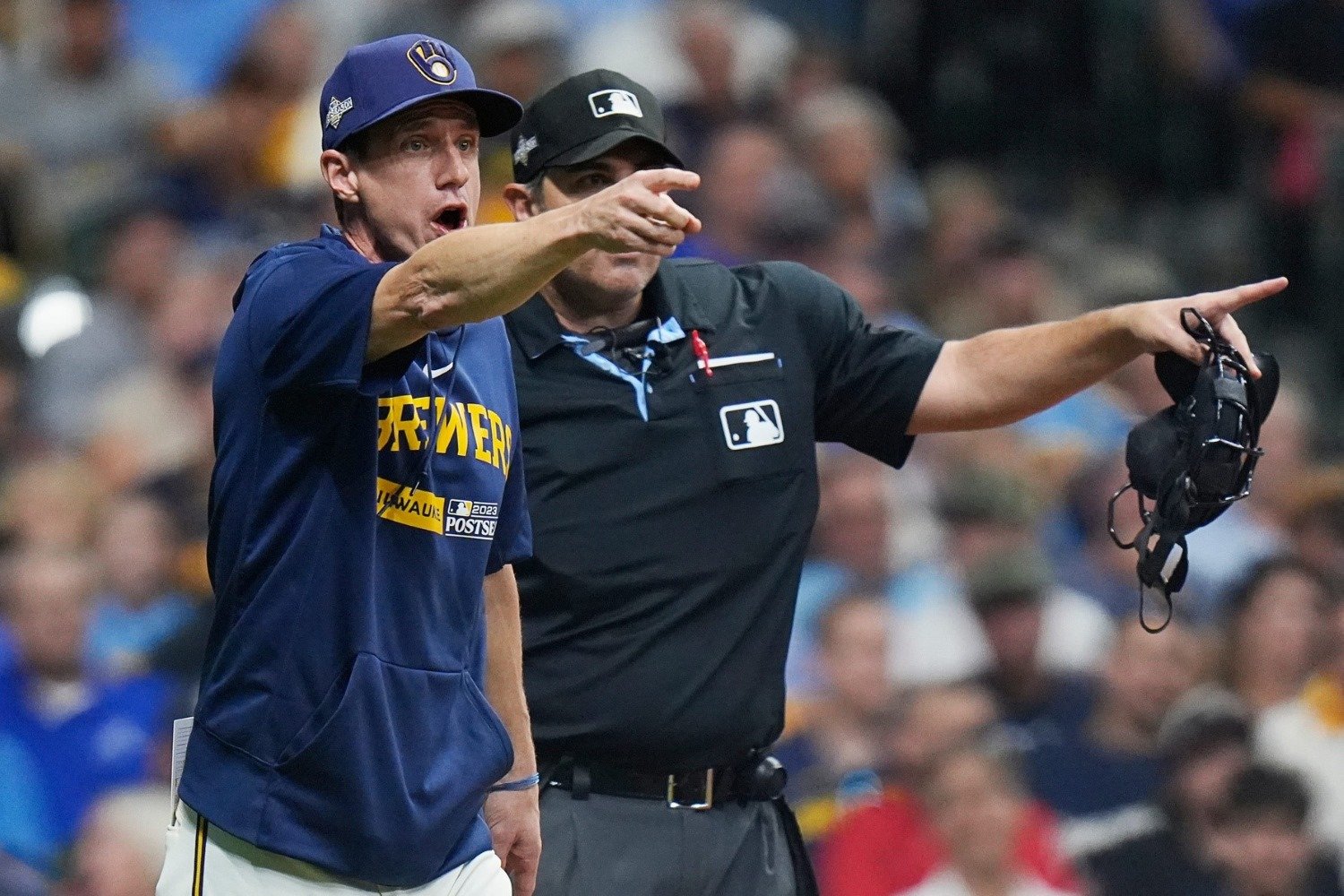 Jed Hoyer has, somehow, outdone and upstaged his longtime partner and mentor, Theo Epstein. When Craig Counsell became a managerial free agent last week, Hoyer quietly went to work, and he has now pulled off a managerial coup as big (in a vacuum) as the Cubs landing Joe Maddon nine years ago. Instead of plucking him from the Rays (by way of an RV park in Florida), though, Hoyer took Counsell from the Milwaukee Brewers. This is an enormous move, because the gulf in managerial nous between Counsell and David Ross is as wide as that between Maddon and Rick Renteria was. Year after year, the Brewers have overperformed their run differentials and their raw talent levels under Counsell. He's guided them to impressively strong finishes, and he manages the in-game decisions better than any other active skipper. Even without making material improvements to the roster itself (which are and should still be expected), this change makes the Cubs significantly better. They're now the favorites to win the NL Central in 2024, and with the right moves, they should be taken seriously as World Series contenders. Admittedly, as was the case with Renteria, this is a somewhat cruel denouement for Ross. As we've discussed several times on this site in the last eight months, though, Ross just wasn't ever going to be the guy who got this team back over the hump. He's a great baseball person and an asset to a big-league organization, but not a good manager. Counsell is, arguably, the very best manager in baseball. This changes everything. Ken Rosenthal reports that Counsell will make more than $40 million on a five-year guaranteed contract. That's an unprecedented combination of lucrative and lengthy, but it's exactly what we should have expected, based on the fact that the Cubs are actively displacing a low-grade franchise icon in order to land him and that he had the opportunity to sell his services to the highest bidders. What moves does this make you hope to see? How many wins better did the Cubs just get, instantly? Can't wait to talk about it more.
 -
The first two decisions the Cubs got to make this winter turned out to be no-brainers. Now, they can turn toward what needs to be a busy offseason, just as free agency officially gets underway. Image courtesy of © Wendell Cruz-USA TODAY Sports After Marcus Stroman opted out of his deal Saturday, the Cubs had an easy call on Kyle Hendricks's $16-million club option Sunday. It's still possible for the team to sign him to an extension that would lower his annual average salary and make it easier for the team to stay below whichever threshold of the competitive-balance tax they deem important, but that's no longer necessary, thanks to the $23.7 million the team saves thanks to Stroman leaving town. The Cubs also picked up a $6-million option on Yan Gomes Sunday, securing the services of the man who projects to be their starting catcher again in 2024. That decision was even easier than the Hendricks one, and didn't depend on Stroman, but it underscores the fact that the team is already gaining some clarity on the offseason ahead. In Hendricks, they lock up a third veteran starter, along with Justin Steele and Jameson Taillon. Add Jordan Wicks, Javier Assad, Hayden Wesneski, Ben Brown, and Cade Horton to that mix, and there's ample depth in the team's projected rotation. They now have more money to spend, and the fact that what they need is a genuine top-of-the-rotation arm is nearly inarguable. Gomes's return, too, further settles a fairly settled group. He joins Nico Hoerner, Dansby Swanson, Ian Happ, and Seiya Suzuki as fully locked-in members of the 2024 lineup. That still leaves four spots open, but both outfield corners and both middle-infield positions (plus catcher) are set. It's clear that the team needs two more good hitters, at least. It's clear at what positions those players need to show up: center field, the infield corners, and designated hitter. Gomes also acts as a stabilizing force and a buttress for the pitching staff, which figures to be more in transition this winter than the lineup. During the long, slow decline that followed the 2016 championship run, the Cubs' biggest problem was an inability to gain clarity on what they needed to do. Their core was too versatile, in one way of looking at it. They had too many good options, combined with too strict a mandate to win now. It compromised Joe Maddon and the rest of the coaching staff in their efforts to develop talent at the big-league level, and it made it harder for the front office to build the best possible team from one season to the next. Those were good problems to have, compared to a shortfall of talent, which is why the 2017-20 Cubs were all better (by winning percentage) than the 2023 team. However, this team now has a foundation on which to build, and they know what they need and how to execute the plan in a way they didn't half a decade ago. Bringing back Hendricks and Gomes helps set the stage for an offseason that will reshape this roster for the long term, and it highlights the good position they're in to do that well. It's important, now, that ownership invest heavily and the front office act aggressively over the next few months. View full article
