


Matthew Trueblood
-
Posts
2,481 -
Joined
-
Last visited
-
Days Won
2
Content Type
Profiles
Joomla Posts 1
Chicago Cubs Videos
Chicago Cubs Free Agent & Trade Rumors, Notes, & Tidbits
2026 Chicago Cubs Top Prospects Ranking
News
2023 Chicago Cubs Draft Picks
Guides & Resources
2024 Chicago Cubs Draft Picks
The Chicago Cubs Players Project
2025 Chicago Cubs Draft Pick Tracker
2026 Chicago Cubs Draft Tracker: Picks & Bonuses
Blogs
Events
Forums
Store
Gallery
Everything posted by Matthew Trueblood
-
The Cubs suddenly can't stop adding players to their 40-man roster. This time, it's a sweeper monster of a relief pitcher, with two remaining years of team control. That's not unexpected, given the value Busch and Almonte can deliver, but it sure does underscore the stakes of this move. Ferris is a tremendous prospect, but far from the big leagues, and the Cubs will get considerable value from Busch in both the short and the long term. This comes far short of being a finishing move for the Cubs' offseason, but it pushes it forward in a big and important way. Busch's left-handed bat balances and deepens the batting order, and Almonte's upside as a strikeout guy in middle relief does the same for the bullpen. To get both without giving up a player who would help any time even in the next two seasons is a coup, even if the upside of Hope and Ferris is huge. Let's crank up the conversation. How do you feel about this move? What would your Opening Day lineup look like from here, and which move do you expect next? View full article
-
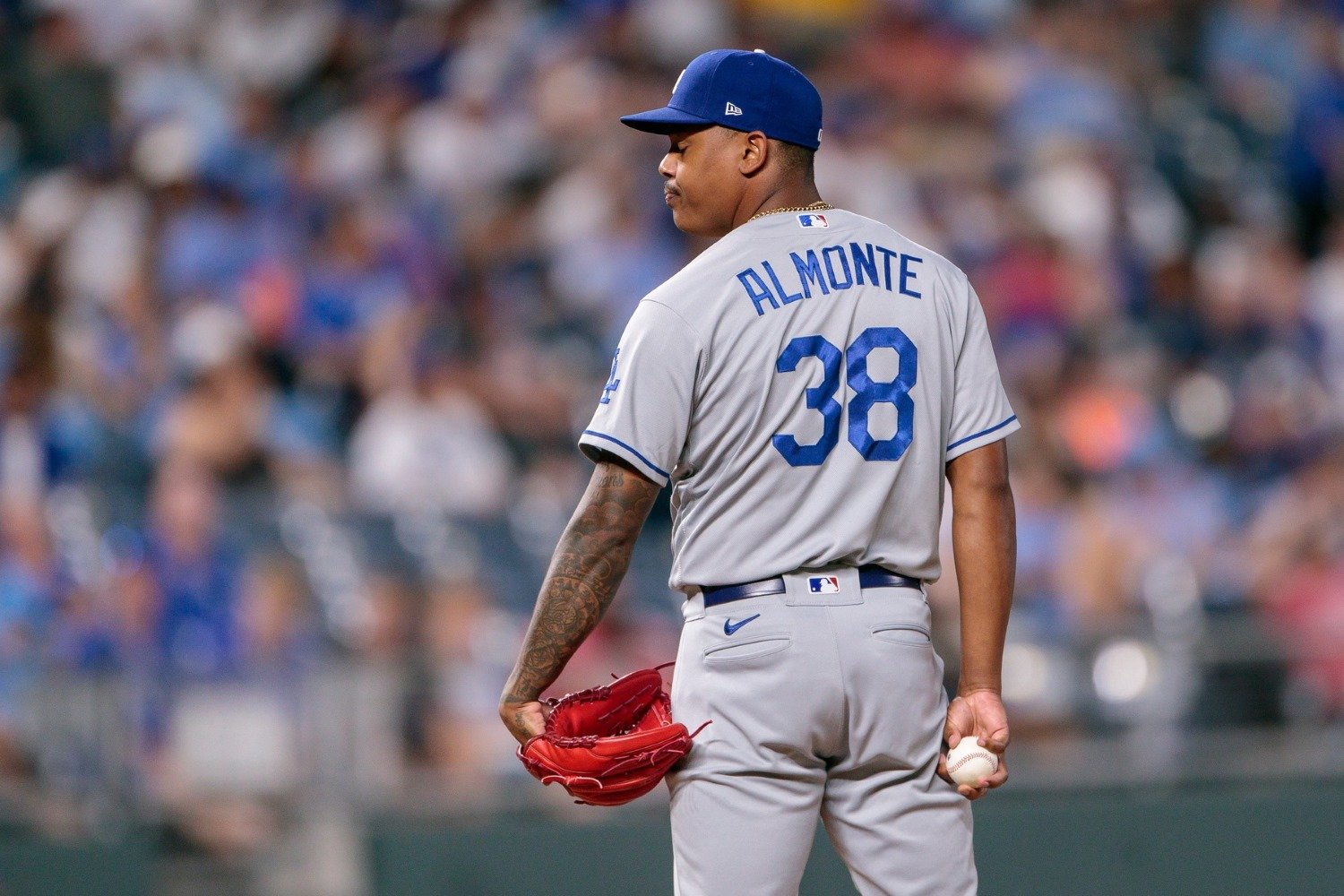 The Cubs are set to acquire right-handed reliever Yency Almonte from the Dodgers. First on the news was Juan Toribio, a veteran Dodgers writer. That's not unexpected, given the value Busch and Almonte can deliver, but it sure does underscore the stakes of this move. Ferris is a tremendous prospect, but far from the big leagues, and the Cubs will get considerable value from Busch in both the short and the long term. This comes far short of being a finishing move for the Cubs' offseason, but it pushes it forward in a big and important way. Busch's left-handed bat balances and deepens the batting order, and Almonte's upside as a strikeout guy in middle relief does the same for the bullpen. To get both without giving up a player who would help any time even in the next two seasons is a coup, even if the upside of Hope and Ferris is huge. Let's crank up the conversation. How do you feel about this move? What would your Opening Day lineup look like from here, and which move do you expect next?
 -
The Cubs have made a major addition to their 2024 roster, but there are serious questions about the health of the player they're bringing in—enough of them to compel the two sides to cobble together a complicated contract. In short, the deal reflects the real concerns teams had about Imanaga as they got more information about his shoulder (which was operated on in late 2020) and the prognosis for long-term durability there. There's an important distinction to be drawn, there, between those concerns about long-term commitments and the idea that Imanaga is damaged goods. Just last winter, we saw this play out on a much larger and more familiar scale. Multiple teams flinched at the finish line of deals with Carlos Correa because of a plate in his lower leg that they believed could hobble him in his 30s. Correa ended up with a deal that included multiple team options and guaranteed him only $200 million, as opposed to the $350 million and $315 million the Giants and Mets, respectively, had first put on the table. The concern there wasn't present inability to perform, though. If it had been, Correa would have ended up signing for far, far less money. Rather, the sticking point with both scuttled deals was disagreement about how much a team should discount a player from the value they would otherwise have because of a projected health issue. Longer ago but, perhaps, more directly comparably, the Dodgers signed Kenta Maeda to an eight-year deal when he came over from Japan prior to 2016. Because of concerns about his elbow, Maeda only got $3 million in guaranteed salary for each season of that deal, but he could earn more than $10 million more each year if he stayed fully healthy and in the starting rotation. The contract only guaranteed him $25 million, but he made roughly $52.7 million over its span, even with the pandemic season forcing everyone to take prorated shares of their official salaries and despite Tommy John surgery robbing him of his entire 2022 campaign. Maeda pitched just over 866 innings over the life of the deal, but when he was on the mound, he was very, very good. Imanaga's situation falls somewhere between those two cases on the spectrum. His asking price wasn't knocked down as much as Maeda's was, although one team never in the center of the reported mix for him felt so emboldened by the collective unease within the last week that they waded in with a one-year offer attached only to a vesting option, and they were not immediately rebuffed. However, while Correa's issue only shortened his deal from 13 years to six, the 30-year-old Imanaga will end up with just two years of guaranteed money. After that, this deal will include options for both parties, and it could incorporate some incentives, too. If his shoulder were in pristine condition, Imanaga would have successfully commanded a nine-figure deal, given the current market for starting pitchers with upside. There are legitimate concerns about how his approach will translate to MLB, but the team can work with him to make his repertoire work just fine Stateside. Far more intractable are worries about his arm holding up, but again, that doesn't mean that it's currently in tatters. This is where the gap between our knowledge of MLB and NPB pitchers becomes important. Were Imanaga already in MLB when he underwent his surgery three years ago, we would all have a clearer understanding of the exact nature of that injury, and it would surprise no one that the fact of that injury affected his market. On the other hand, Carlos Rodon had shoulder surgery in 2019, and he signed for $162 million last winter. We can confidently say, then, that Imanaga's health record diminished his market, and that that has left the Cubs with a somewhat complex contract and an uncertain asset in the person of their new No. 2 starter. Nonetheless, he's an exciting addition, and this deal appears to limit risk for the team while allowing the player to preserve some upside in his own right. Do you expect the Cubs to pursue another starter after signing Imanaga? Let's discuss that, and other questions that leap to mind in the wake of the team's first substantial move of the winter. View full article
-
Shota Imanaga Cubs Deal Will Include Club Options, Opt-Outs, Incentives
Matthew Trueblood posted an article in Cubs
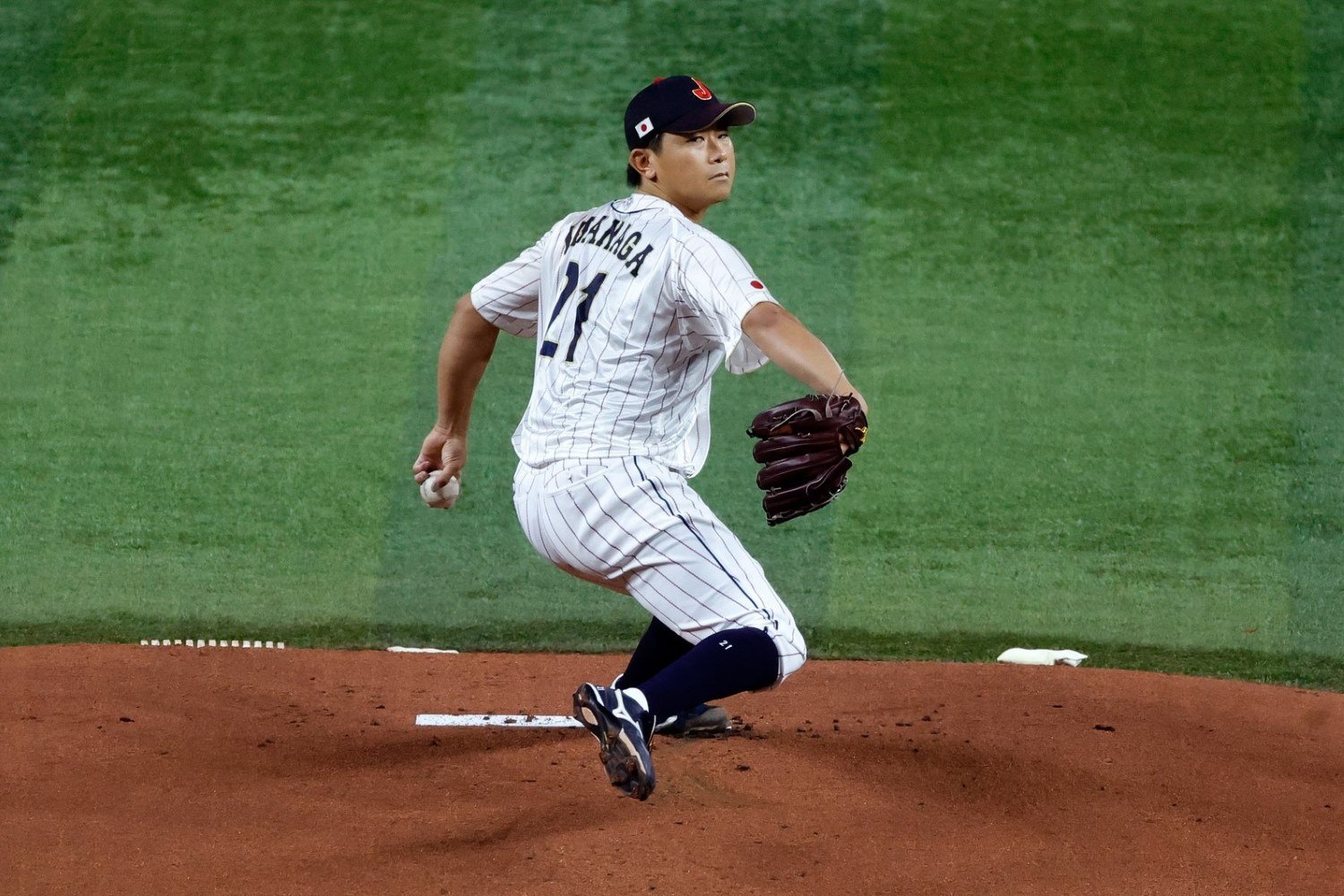 Late Tuesday night, Jon Heyman tweeted a sketch of the details on the deal between the Cubs and left-handed starter Shota Imanaga, which is still not official but should become so Wednesday. In short, the deal reflects the real concerns teams had about Imanaga as they got more information about his shoulder (which was operated on in late 2020) and the prognosis for long-term durability there. There's an important distinction to be drawn, there, between those concerns about long-term commitments and the idea that Imanaga is damaged goods. Just last winter, we saw this play out on a much larger and more familiar scale. Multiple teams flinched at the finish line of deals with Carlos Correa because of a plate in his lower leg that they believed could hobble him in his 30s. Correa ended up with a deal that included multiple team options and guaranteed him only $200 million, as opposed to the $350 million and $315 million the Giants and Mets, respectively, had first put on the table. The concern there wasn't present inability to perform, though. If it had been, Correa would have ended up signing for far, far less money. Rather, the sticking point with both scuttled deals was disagreement about how much a team should discount a player from the value they would otherwise have because of a projected health issue. Longer ago but, perhaps, more directly comparably, the Dodgers signed Kenta Maeda to an eight-year deal when he came over from Japan prior to 2016. Because of concerns about his elbow, Maeda only got $3 million in guaranteed salary for each season of that deal, but he could earn more than $10 million more each year if he stayed fully healthy and in the starting rotation. The contract only guaranteed him $25 million, but he made roughly $52.7 million over its span, even with the pandemic season forcing everyone to take prorated shares of their official salaries and despite Tommy John surgery robbing him of his entire 2022 campaign. Maeda pitched just over 866 innings over the life of the deal, but when he was on the mound, he was very, very good. Imanaga's situation falls somewhere between those two cases on the spectrum. His asking price wasn't knocked down as much as Maeda's was, although one team never in the center of the reported mix for him felt so emboldened by the collective unease within the last week that they waded in with a one-year offer attached only to a vesting option, and they were not immediately rebuffed. However, while Correa's issue only shortened his deal from 13 years to six, the 30-year-old Imanaga will end up with just two years of guaranteed money. After that, this deal will include options for both parties, and it could incorporate some incentives, too. If his shoulder were in pristine condition, Imanaga would have successfully commanded a nine-figure deal, given the current market for starting pitchers with upside. There are legitimate concerns about how his approach will translate to MLB, but the team can work with him to make his repertoire work just fine Stateside. Far more intractable are worries about his arm holding up, but again, that doesn't mean that it's currently in tatters. This is where the gap between our knowledge of MLB and NPB pitchers becomes important. Were Imanaga already in MLB when he underwent his surgery three years ago, we would all have a clearer understanding of the exact nature of that injury, and it would surprise no one that the fact of that injury affected his market. On the other hand, Carlos Rodon had shoulder surgery in 2019, and he signed for $162 million last winter. We can confidently say, then, that Imanaga's health record diminished his market, and that that has left the Cubs with a somewhat complex contract and an uncertain asset in the person of their new No. 2 starter. Nonetheless, he's an exciting addition, and this deal appears to limit risk for the team while allowing the player to preserve some upside in his own right. Do you expect the Cubs to pursue another starter after signing Imanaga? Let's discuss that, and other questions that leap to mind in the wake of the team's first substantial move of the winter.
 -
Jed Hoyer's long winter's nap is over. He's up, and the team now has another left-handed starter to pair with their incumbent ace atop the rotation. Image courtesy of © Sam Navarro-USA TODAY Sports Shortly before the end of his posting window, Shota Imanaga has agreed to a deal to join the Cubs and help lead their rotation. Imanaga, 30, is not big or hard-throwing by modern standards, but he has good strikeout stuff and has been one of the best pitchers in Nippon Professional Baseball for the last half-decade. USA Today's Bob Nightengale reported it first. This is a great way for the team to escape their winter doldrums. Imanaga is not a perfect pitcher. He'll run into some trouble with home runs, and he'll need to tweak his approach to adapt to MLB hitters and their superior power. There are also some lingering whispers about his shoulder, which kept his price tag south of the nine-figure megadeal he and his representation envisioned when the posting period began. Still, he's a terrific second starter in the short term, alongside Justin Steele and (the Cubs will hope) half a step ahead of Jameson Taillon and Kyle Hendricks, among others. We've broken it down a bit in the past, but let's pause to use some TruMedia tools to examine his arsenal in greater depth. Imanaga has a high-spin, high-riding fastball and a splitter on which he kills spin gorgeously, and which doesn't involve much of a change in spin axis. It can be devastating. As most Japanese starters do, Imanaga also maintains a deep arsenal beyond the fastball-splitter pairing. He merely tinkers with a sinker and cutter, but he has both a sweepy slider and a curveball, which let him change speeds, eye levels, and looks to continue racking up whiffs when hitters try to sit on the heat and the splitter. Without question, he'll be a fly-ball pitcher, and that could lead to some inflated home-run totals as he comes Stateside. Health is the other major question mark. He's come in just shy of 160 innings in each of the last two seasons, and now there's a tangible reason to believe that his arm might need ongoing maintenance. Still, he's a material upgrade for a rotation that badly needed one, and gives the Cubs more options (just as he removes some of Cubs fans' agita) for the balance of the offseason. For now, maintain a soupçon of caution. The deal won't be official until a physical scheduled for tomorrow, and there are some concerns in that realm that could still nullify the arrangement. The Cubs have already done some due diligence on that front, though, and it's unlikely that the final examination will result in a derailment. UPDATE: Jon Morosi says the deal will have an AAV in the $15-million range. That tracks, especially given the late changes in his market, but underscores the potential upside of this deal. If Imanaga is even a steady fourth starter in the vein of (pre-2023) Taillon, he's well worth $15 million per year, and this deal will not stretch to five guaranteed years. If his stuff plays the way the Cubs hope, he's a bargain, and crucially, the deal only costs them cash. The posting fee doesn't count against their competitive-balance tax payroll calculation, and they don't lose a draft pick. These are ancillary but important reasons why the fit here is so good. How does this move work for you, as a first strike of the offseason? Are you excited about Imanaga, or worried about how his game will translate to MLB? View full article
-
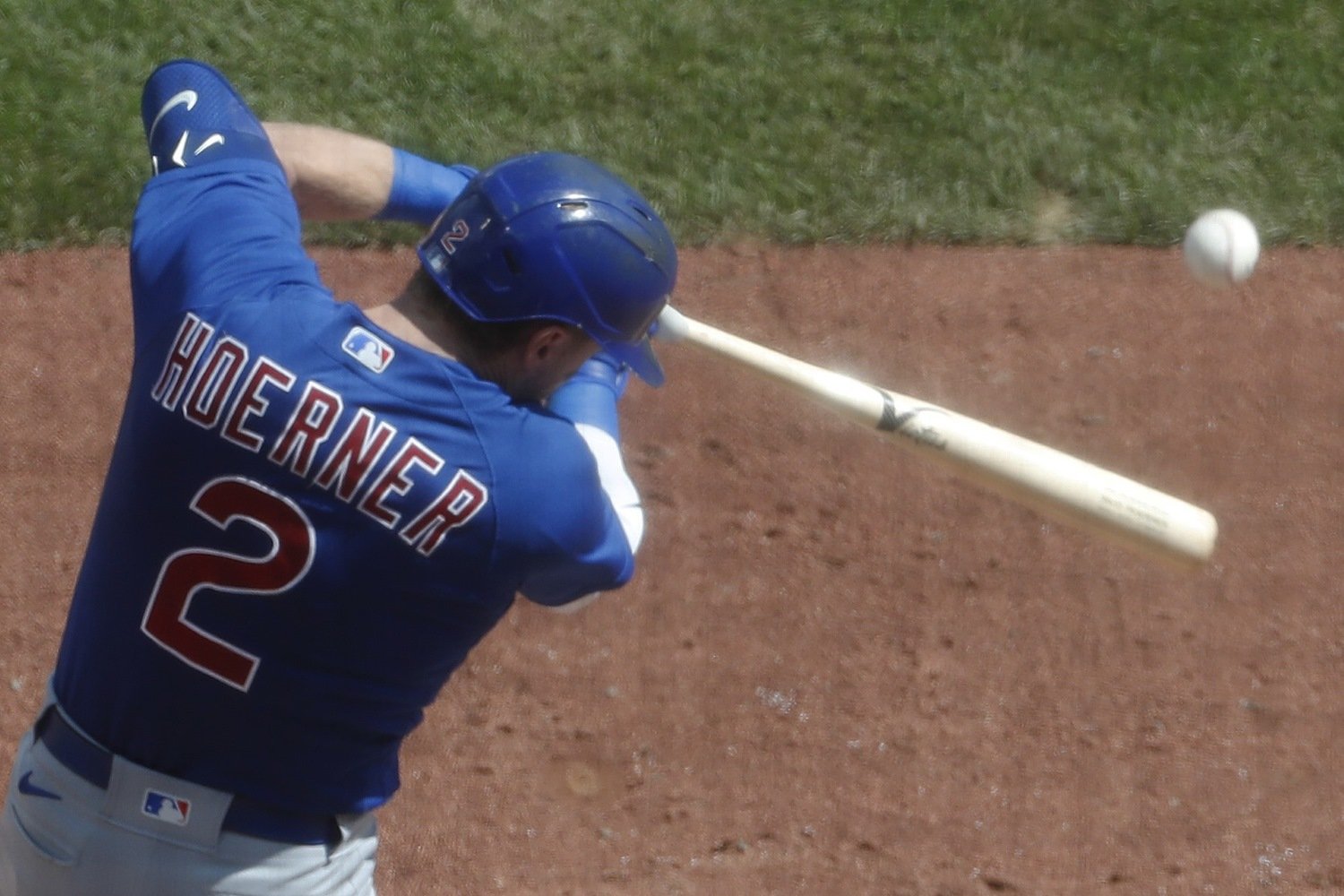 There was nothing quiet, exactly, about Nico Hoerner's breakout campaign in 2023. He stole 43 bases and played sparkling defense at second base, racking up highlights along the way. Because of the shape of his batting profile, though, it can be easy to gloss over the value he delivers with that part of his game. After his second-half surge and in light of the granular data we can now glean about his performance, Hoerner belongs at the top of the lineup for 2024--and he'll be a difference-maker in that slot. Even speed and aggressiveness as great as Hoerner's don't count for much if a player can't get on base or hit for real power, and through the middle of last season, Hoerner just wasn't doing enough of either. In fact, through the All-Star break last year, he was hitting just .271/.321/.376 for his career, and .275/.330/.382 for his career. That's adequate. That keeps you in the lineup, if you're fast and play great defense at a fairly important position, but it just doesn't make a lineup better. It doesn't actively put runs on the board, even paired with that speed and aggressiveness. After the All-Star break, though, Hoerner was sensational. He batted .297/.377/.391 in the second half. A .377 OBP guy, in a league that averages a .325 mark, has ample value. Part of the improvement was thanks to a better batting average on balls in play, and as you can see, there was no sudden power jump. The BABIP was more of a modest increase than a spike, though, and it wasn't the result of mere luck. He had his approach better organized down the stretch. Here's a TruMedia heat map of Hoerner's exit velocity on batted balls, by pitch location, split between the two halves. Hoerner generated more hard contact in the first half, by going and getting the ball up and away from him. He was very good at shooting that pitch to right field. It had a low ceiling of isolated value, because Hoerner doesn't hit for the kind of power that leads to extra-base hits when stroking the ball the other way, even in his hot zones. In the second half, he focused more on crushing pitches in the middle of the zone, but that came at the price of some of those unique hits to the right side. Here's the telling thing, though. Keep that heat map for exit velo in mind, and consult this map of his swing rate by location for the two halves. Most hitters generate a lot of value by swinging at the ball down and in. That's a power hot spot for most guys. It's a place where you can do major damage, if you have a typical swing. Hoerner doesn't have one, though. As the first set of charts will attest, he's good at hitting the high pitch. He's not going to hit it hard enough to make it worth trying to lift it very much, but that's ok on pitches up in (or even above) the zone. His swing is geared for contact, not dingers. With his swing plane, he doesn't cover the pitch down and in all that well, but that's ok. He wised up in the second half and swung at that pitch less often. Instead, he raised his sights and hit more line drives. His Hard Hit rate and average launch angle were up in the second half, fueling his BABIP uptick. On top of a more complete and nuanced approach, Hoerner has one trait that makes me believe he can sustain what we saw late in 2023: no one hits the league's toughest fastballs better, or at least more often. Some 366 hitters saw at least 100 fastballs with a vertical approach angle (VAA) of -4.5 degrees or higher in 2023. A flat VAA is one of the top things on every pitching coach's wish list lately. It signals deceptiveness, and that hop that makes it so hard to square up a really good heater. On average, hitters whiffed 33.2 percent of the time against those flat-VAA fastballs. Hoerner, by contrast, whiffed on just 5.2 percent of his swings against them. That was not only the lowest miss rate in baseball, but a full 1.8 percentage points better than Travis Jankowski, second-best. Luis Arraez was third, at 7.8 percent. Overall, Hoerner takes what is a very blue heat map for most hitters and splashes it with red. Hoerner is a viciously tough out. He neutralizes the best, trendiest fastballs in baseball. He might never find more than 10-homer power, and he doesn't even have elite doubles power, but he's going to hit for average for at least the rest of his prime. Now that he's tightened his approach, he's also started walking more, and that, too, should continue. Pencil Hoerner into the leadoff spot for the next two or three years, and start your mental work on the Cubs lineup with No. 2. Are you buying Hoerner as a dangerous leadoff man? Does that temper your desperation for another addition to the Cubs lineup? Let's discuss.
 -
The Cubs need at least one bat to bolster their lineup for 2024, and ideally, it would be someone who hits for power. Because of that, though, there's real risk of overlooking the upside of their current lineup, including a locked-in leadoff hitter extraordinaire. Image courtesy of © Charles LeClaire-USA TODAY Sports There was nothing quiet, exactly, about Nico Hoerner's breakout campaign in 2023. He stole 43 bases and played sparkling defense at second base, racking up highlights along the way. Because of the shape of his batting profile, though, it can be easy to gloss over the value he delivers with that part of his game. After his second-half surge and in light of the granular data we can now glean about his performance, Hoerner belongs at the top of the lineup for 2024--and he'll be a difference-maker in that slot. Even speed and aggressiveness as great as Hoerner's don't count for much if a player can't get on base or hit for real power, and through the middle of last season, Hoerner just wasn't doing enough of either. In fact, through the All-Star break last year, he was hitting just .271/.321/.376 for his career, and .275/.330/.382 for his career. That's adequate. That keeps you in the lineup, if you're fast and play great defense at a fairly important position, but it just doesn't make a lineup better. It doesn't actively put runs on the board, even paired with that speed and aggressiveness. After the All-Star break, though, Hoerner was sensational. He batted .297/.377/.391 in the second half. A .377 OBP guy, in a league that averages a .325 mark, has ample value. Part of the improvement was thanks to a better batting average on balls in play, and as you can see, there was no sudden power jump. The BABIP was more of a modest increase than a spike, though, and it wasn't the result of mere luck. He had his approach better organized down the stretch. Here's a TruMedia heat map of Hoerner's exit velocity on batted balls, by pitch location, split between the two halves. Hoerner generated more hard contact in the first half, by going and getting the ball up and away from him. He was very good at shooting that pitch to right field. It had a low ceiling of isolated value, because Hoerner doesn't hit for the kind of power that leads to extra-base hits when stroking the ball the other way, even in his hot zones. In the second half, he focused more on crushing pitches in the middle of the zone, but that came at the price of some of those unique hits to the right side. Here's the telling thing, though. Keep that heat map for exit velo in mind, and consult this map of his swing rate by location for the two halves. Most hitters generate a lot of value by swinging at the ball down and in. That's a power hot spot for most guys. It's a place where you can do major damage, if you have a typical swing. Hoerner doesn't have one, though. As the first set of charts will attest, he's good at hitting the high pitch. He's not going to hit it hard enough to make it worth trying to lift it very much, but that's ok on pitches up in (or even above) the zone. His swing is geared for contact, not dingers. With his swing plane, he doesn't cover the pitch down and in all that well, but that's ok. He wised up in the second half and swung at that pitch less often. Instead, he raised his sights and hit more line drives. His Hard Hit rate and average launch angle were up in the second half, fueling his BABIP uptick. On top of a more complete and nuanced approach, Hoerner has one trait that makes me believe he can sustain what we saw late in 2023: no one hits the league's toughest fastballs better, or at least more often. Some 366 hitters saw at least 100 fastballs with a vertical approach angle (VAA) of -4.5 degrees or higher in 2023. A flat VAA is one of the top things on every pitching coach's wish list lately. It signals deceptiveness, and that hop that makes it so hard to square up a really good heater. On average, hitters whiffed 33.2 percent of the time against those flat-VAA fastballs. Hoerner, by contrast, whiffed on just 5.2 percent of his swings against them. That was not only the lowest miss rate in baseball, but a full 1.8 percentage points better than Travis Jankowski, second-best. Luis Arraez was third, at 7.8 percent. Overall, Hoerner takes what is a very blue heat map for most hitters and splashes it with red. Hoerner is a viciously tough out. He neutralizes the best, trendiest fastballs in baseball. He might never find more than 10-homer power, and he doesn't even have elite doubles power, but he's going to hit for average for at least the rest of his prime. Now that he's tightened his approach, he's also started walking more, and that, too, should continue. Pencil Hoerner into the leadoff spot for the next two or three years, and start your mental work on the Cubs lineup with No. 2. Are you buying Hoerner as a dangerous leadoff man? Does that temper your desperation for another addition to the Cubs lineup? Let's discuss. View full article
-
I love the splitter in general, so I'd lean this way, too. But I'm not sure it's a good fit for Wesneski's mode of movement--or at least, that the arsenal he'd be leaning into by choosing that tweak over a change of slider shape is the one that best suits him. It'll be interesting to see which way they go.
-
Should Hayden Wesneski Trade in His Sweeper for a Gyro Slider?
Matthew Trueblood posted an article in Cubs
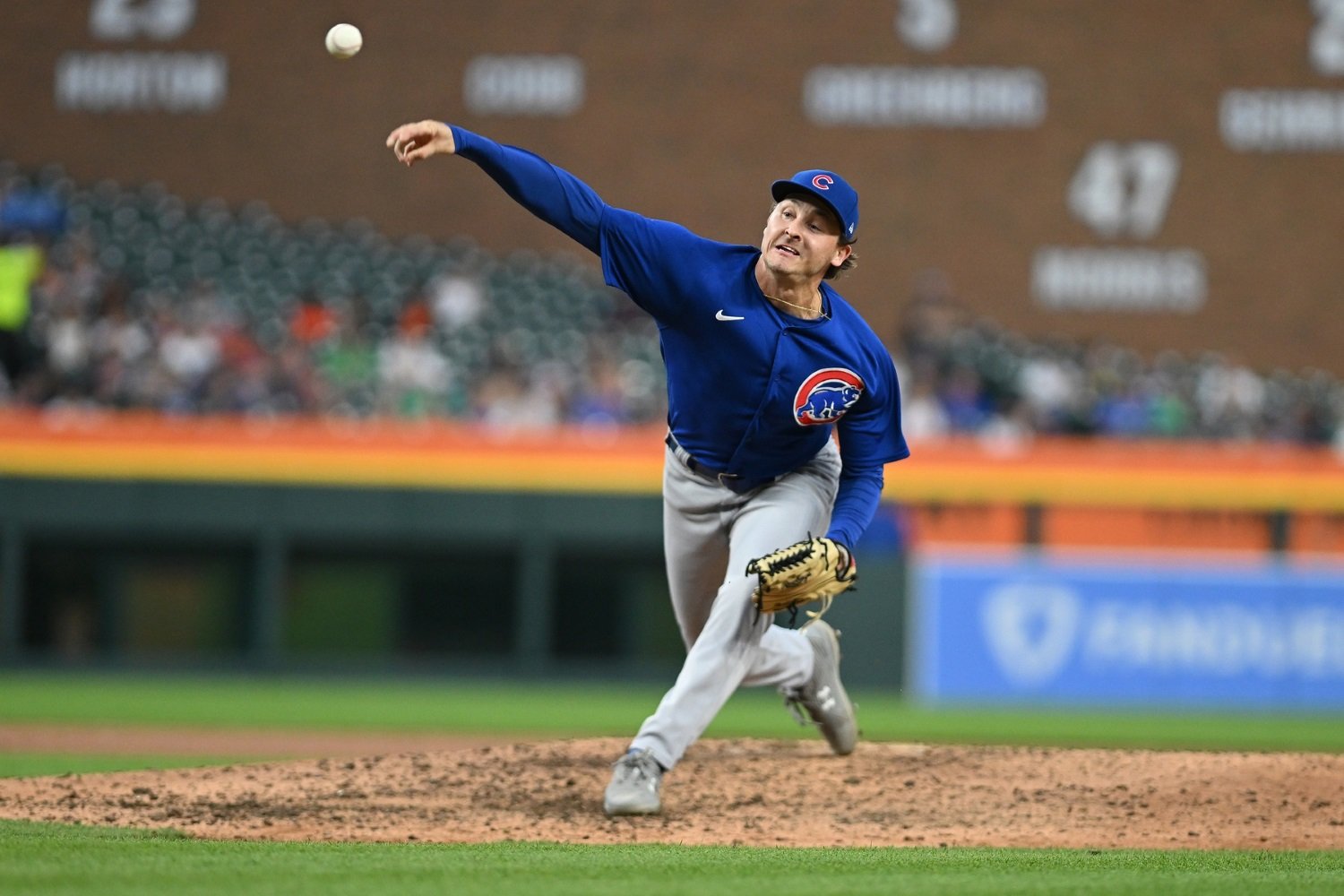 Last week at Baseball Prospectus, the excellent Mario Delgado Genzor wrote an insightful piece about the art and science of pitching. Specifically, he broke down something he calls the Pronator's Triangle, and discussed how pitchers' wired-in physical movement preferences might inform the construction and effectiveness of their arsenals. It's a really good article. If you're a BP subscriber, make sure to check it out. As I read Mario's work, I thought instantly about Hayden Wesneski. Even in a season that saw Keegan Thompson's career go completely off the rails, no pitcher on the Cubs roster was more disappointing than Wesneski in 2023. He had looked like a potential mid-rotation starter in his brief audition in 2022, but that didn't translate to success in a full-fledged opportunity to join the rotation when the team broke camp last spring. Instead, he quickly had to be demoted back to Triple-A Iowa. He spent the rest of the season yo-yoing between the minors and the majors, often working as a long reliever or swingman, and only found even a semblance of a groove after moving into short relief in September. Going into the season, we knew there would be challenges ahead. As I wrote last spring, Wesneski had a significant hurdle to clear when he joined the organization. He had a deep pitch mix, but he also had a bifurcated release point. In other words, he released some of his pitches from one arm slot, and others from another. That kind of split makes it easier for hitters to eliminate certain offerings as possibilities right out of the hand, and it can have implications for both durability and command, to boot. Wesneski tried to reconcile his arm slots, but it didn't stick. He still throws his four-seamer and cutter from one angle, and his sinker, sweeping slider, and changeup from another. That's a problem--one that helps explain why lefties hit .298/.369/.617 against him in 2023. It essentially disqualifies him as a starter in the big leagues, and limits his utility even out of the bullpen. With a problem that can be so large-scale and multi-systemic, though, that leaves a huge, scary question: What's the solution? You almost have to choose between rebuilding his entire delivery and rebuilding his entire pitch mix, and if you do the former, you might end up having to do the latter, anyway. Enter Delgado Genzor, with his delightfully clear communication of a nuanced pitching subject. The Pronator's Triangle describes the relationship between the plot points when you chart a pitcher's horizontal and vertical movement against one another, if they belong to the class of pitchers who tend to pronate through release of the ball. ('Pronation,' for the uninitiated, is what your high-school pitching coach probably called, 'turning it over.' It's not always a true turn of the arm or hand to tilt the palm toward a same-handed batter's box, but it is, at least, staying through the inside of the ball at release.) When we talk about pronation, we're most often talking about sinkers and changeups, but some guys do have perfectly useful four-seamers despite a tendency toward pronation. As Delgado Genzor also wrote, guys with a preference for pronation (as opposed to supination, which is the motion around the outside of the ball we usually associate with cutters, sliders, and curveballs) can still have very effective breaking balls. These are almost always 'gyro' sliders, in the modern parlance. They don't have a lot of sweep; they turn like a cement truck and drop mostly due to gravity. Here's an example of a Pronator's Triangle, cribbed straight from the article. It's the movement profiles by pitch category for Luis Castillo, who was at the center of the piece overall. Notice that, technically speaking, Castillo's breaking stuff doesn't have much spin-induced movement. It only 'moves' due to gravity, as the gyro spin slows down its progress toward the plate and doesn't produce the same resistance to that force as backspin of any form would. Compare that chart to Wesneski's movement plot (by pitch type, not category, because I think we'll gain more clarity this way in his case.) It's pretty simple. Wesneski's sweeper stretches the Pronator's Triangle beyond its breaking point. That sweeper works best off his four-seamer, in terms of movement, but his four-seamer comes from a different slot, so the deception is gone. His changeup also works better off the four-seamer than off the sinker, because he doesn't generate enough run on the change to differentiate it from that sinker. Again, though, that would only be true if movement were the only relevant variable. Instead, we have to account for the fact that the four-seamer comes from a different release point than the change, too. That leaves us with a couple of divergent paths ahead for Wesneski. One option is to focus on the four-seamer and the cutter, and try to learn a splitter to go with it. That would be a three-pitch mix good enough to work against both righties and lefties, if he could command it sufficiently and stay healthy along the way. The alternative would be sticking with the sinker and the changeup, leaning more into pronation from that slot to engender better movement on the change, and trading in the sweeper for a gyro slider. Wesneski had such a pitch early in 2023. He utilized one earlier in his pro career, too, but the Yankees prefer to give pitchers like him a sweeper as they near the majors. When he was throwing the gyro slider in the spring, though, Wesneski released it from that four-seamer and cutter slot, not the slot from which he throws his pronator stuff. If either of these avenues promised surefire success, the Cubs and Wesneski already would have plunged down it at full speed. Instead, all the data tells us there are boulders in either path for the righthander. He might not be able to find three pitches he can command (and which have the right kind of movement profile to neutralize hitters) from either slot. He might never find the thing that unlocks what seems like significant upside. After watching a lot of Wesneski for the last year, though, I would feel much more confident trying the second path. That means scrapping the sweeper, and re-training Wesneski to throw the gyro slider from a lower slot. It means changing the way he attacks the strike zone, and probably where he sets up on the mound. It means making the four-seamer a tertiary weapon and some hard work in finding feel for a circle change. That's a lot of possible pitfalls, and it's not to mention the biggest lift involved: getting Wesneski to buy in on leaving behind the pitch that made him low-grade famous, and which has netted him the best grades since before he even debuted in MLB--that sweeper. For those reasons, the team might go the other way. Learning a splitter and raising the slot on the sweeper is probably easier than doing what I just listed. Either road is worth exploring. Motor preference theory (pronation vs. supination) is not a perfect or complete one. Still, laying it out this way helps us see that continuing to try everything Wesneski tried throughout 2023 is a non-starter. One way or another, he needs to make big, big changes. This is just a paradigm to help us see which ones are possible.
 -
As the Cubs ponder ways to make external upgrades to the pitching staff, let's look at one important young pitcher already on the team who might have another level of performance within reach. Image courtesy of © Lon Horwedel-USA TODAY Sports Last week at Baseball Prospectus, the excellent Mario Delgado Genzor wrote an insightful piece about the art and science of pitching. Specifically, he broke down something he calls the Pronator's Triangle, and discussed how pitchers' wired-in physical movement preferences might inform the construction and effectiveness of their arsenals. It's a really good article. If you're a BP subscriber, make sure to check it out. As I read Mario's work, I thought instantly about Hayden Wesneski. Even in a season that saw Keegan Thompson's career go completely off the rails, no pitcher on the Cubs roster was more disappointing than Wesneski in 2023. He had looked like a potential mid-rotation starter in his brief audition in 2022, but that didn't translate to success in a full-fledged opportunity to join the rotation when the team broke camp last spring. Instead, he quickly had to be demoted back to Triple-A Iowa. He spent the rest of the season yo-yoing between the minors and the majors, often working as a long reliever or swingman, and only found even a semblance of a groove after moving into short relief in September. Going into the season, we knew there would be challenges ahead. As I wrote last spring, Wesneski had a significant hurdle to clear when he joined the organization. He had a deep pitch mix, but he also had a bifurcated release point. In other words, he released some of his pitches from one arm slot, and others from another. That kind of split makes it easier for hitters to eliminate certain offerings as possibilities right out of the hand, and it can have implications for both durability and command, to boot. Wesneski tried to reconcile his arm slots, but it didn't stick. He still throws his four-seamer and cutter from one angle, and his sinker, sweeping slider, and changeup from another. That's a problem--one that helps explain why lefties hit .298/.369/.617 against him in 2023. It essentially disqualifies him as a starter in the big leagues, and limits his utility even out of the bullpen. With a problem that can be so large-scale and multi-systemic, though, that leaves a huge, scary question: What's the solution? You almost have to choose between rebuilding his entire delivery and rebuilding his entire pitch mix, and if you do the former, you might end up having to do the latter, anyway. Enter Delgado Genzor, with his delightfully clear communication of a nuanced pitching subject. The Pronator's Triangle describes the relationship between the plot points when you chart a pitcher's horizontal and vertical movement against one another, if they belong to the class of pitchers who tend to pronate through release of the ball. ('Pronation,' for the uninitiated, is what your high-school pitching coach probably called, 'turning it over.' It's not always a true turn of the arm or hand to tilt the palm toward a same-handed batter's box, but it is, at least, staying through the inside of the ball at release.) When we talk about pronation, we're most often talking about sinkers and changeups, but some guys do have perfectly useful four-seamers despite a tendency toward pronation. As Delgado Genzor also wrote, guys with a preference for pronation (as opposed to supination, which is the motion around the outside of the ball we usually associate with cutters, sliders, and curveballs) can still have very effective breaking balls. These are almost always 'gyro' sliders, in the modern parlance. They don't have a lot of sweep; they turn like a cement truck and drop mostly due to gravity. Here's an example of a Pronator's Triangle, cribbed straight from the article. It's the movement profiles by pitch category for Luis Castillo, who was at the center of the piece overall. Notice that, technically speaking, Castillo's breaking stuff doesn't have much spin-induced movement. It only 'moves' due to gravity, as the gyro spin slows down its progress toward the plate and doesn't produce the same resistance to that force as backspin of any form would. Compare that chart to Wesneski's movement plot (by pitch type, not category, because I think we'll gain more clarity this way in his case.) It's pretty simple. Wesneski's sweeper stretches the Pronator's Triangle beyond its breaking point. That sweeper works best off his four-seamer, in terms of movement, but his four-seamer comes from a different slot, so the deception is gone. His changeup also works better off the four-seamer than off the sinker, because he doesn't generate enough run on the change to differentiate it from that sinker. Again, though, that would only be true if movement were the only relevant variable. Instead, we have to account for the fact that the four-seamer comes from a different release point than the change, too. That leaves us with a couple of divergent paths ahead for Wesneski. One option is to focus on the four-seamer and the cutter, and try to learn a splitter to go with it. That would be a three-pitch mix good enough to work against both righties and lefties, if he could command it sufficiently and stay healthy along the way. The alternative would be sticking with the sinker and the changeup, leaning more into pronation from that slot to engender better movement on the change, and trading in the sweeper for a gyro slider. Wesneski had such a pitch early in 2023. He utilized one earlier in his pro career, too, but the Yankees prefer to give pitchers like him a sweeper as they near the majors. When he was throwing the gyro slider in the spring, though, Wesneski released it from that four-seamer and cutter slot, not the slot from which he throws his pronator stuff. If either of these avenues promised surefire success, the Cubs and Wesneski already would have plunged down it at full speed. Instead, all the data tells us there are boulders in either path for the righthander. He might not be able to find three pitches he can command (and which have the right kind of movement profile to neutralize hitters) from either slot. He might never find the thing that unlocks what seems like significant upside. After watching a lot of Wesneski for the last year, though, I would feel much more confident trying the second path. That means scrapping the sweeper, and re-training Wesneski to throw the gyro slider from a lower slot. It means changing the way he attacks the strike zone, and probably where he sets up on the mound. It means making the four-seamer a tertiary weapon and some hard work in finding feel for a circle change. That's a lot of possible pitfalls, and it's not to mention the biggest lift involved: getting Wesneski to buy in on leaving behind the pitch that made him low-grade famous, and which has netted him the best grades since before he even debuted in MLB--that sweeper. For those reasons, the team might go the other way. Learning a splitter and raising the slot on the sweeper is probably easier than doing what I just listed. Either road is worth exploring. Motor preference theory (pronation vs. supination) is not a perfect or complete one. Still, laying it out this way helps us see that continuing to try everything Wesneski tried throughout 2023 is a non-starter. One way or another, he needs to make big, big changes. This is just a paradigm to help us see which ones are possible. View full article
-
 Have you ever looked at the leaderboard for career double plays turned by outfielders? I have. I do it probably once a month, not because it changes that much, but because it hasn't changed since I first stumbled upon it, and it probably never will again. I circle back to it because there's something to learn about baseball, I think, from looking at it over and over. Above the actual lists on such pages, Baseball Reference puts photos of the 24 players atop the board. Here's that array for career double plays by outfielders (mostly, of course, plays on which the fielder caught the ball and threw out a runner either trying to advance or scrambling back to the base on which they started, but this also includes the fistful of unassisted double plays turned by, say, Tris Speaker). Yes, that's Speaker right at the top of the list, with 38 more than the guy in second place—who, yes, is Ty Cobb. The point, though, is all of that black-and-white. This leaderboard is one of my favorite ways to meditate on the greatness of Willie Mays, because you could add another half-dozen pictures to this list and he'd still be the only one whose photo stands out. The next picture that wouldn't look like 23 of these look would be that of Jesse Barfield, who's tied for 34th place on the list. After him, the next would be Richie Ashburn and Ken Griffey, Jr., tied for 53rd. Mays turned 60 double plays in his career. Barfield turned 49. Ashburn and Griffey turned 43. I return to it, too, though, because whenever I read about baseball games (and about the growth of the sport in general) in the first half of the 20th century, what jumps out to me is how much of what was celebrated then would be denigrated—what has, in fact, been run out of the game altogether—now. At the dawn of the 20th century, when people talked about what was great about baseball, they emphasized daring, physicality, and tenacity. Looking back, it's easy to dismiss that as puffery or propaganda, but when you come across a leaderboard like this, you realize that it wasn't. The game was really once played in a way that demanded and rewarded the widely articulated American virtues of the time. In an American era defined by Teddy Roosevelt and his worldview, baseball emerged as the national pastime by trying hard to engender the same attitudes and actions Roosevelt himself would—although, ironically, Roosevelt himself disliked the game. It wasn't just about unapologetic violence, either, like Cobb's sharpened spikes and beanballs that actually knocked out batters who looked too comfortable in the box. There was a culture of aggressiveness on the bases. In a game relatively light on home runs, teams tried to create runs by relentlessly pushing their luck, and running into outs on the bases was part of the bargain. Everyone was fine with that. I don't long for most of that. Even at the time, Cobb's misanthropy was a point of criticism. Nowadays, we cringe whenever a pitch plunks a batter above the belt, even though they wear helmets made of materials that were nonexistent when Frank Chance was out there letting his merely hatted head take the brunt of pitches in order to gain 90 feet of progress. Takeout slides and other forms of brinksmanship didn't build character; they just showed a disregard for other people. However, I do think something was lost when people stopped foolishly pushing the envelope on the bases. Underneath some of the mythmaking and morality that dominated conversations about the game 120 years ago laid something real. Baseball can be instructive, and it can be edifying. I don't think it manages that, though, when we treat it like a video game. This isn't a critique of modern analytics. As that photo array above reminds us, the change has come slowly over many decades, not all at once since the dawn of the internet age. In fact, here are the average number of outs made on the bases per team in select seasons, going as far back as reliable everyday data on this can take us. Season Outs on Bases per Team 1953 79 1963 74 1973 72 1983 69 1993 67 2003 57 2013 53 2023 45 No, what I'm talking about is a change that happened because home runs became more frequent, and because teams started to realize there might be more value in stringing together hits and avoiding outs than in pushing the limits. Remember when you would get the latest version of a video game and set about trying to beat it? You'd be systematic about it. You'd learn from each mistake. If turning left got you killed, the next time you tried the level, you'd turn right. Through trial and error, you felt your way to the ruthless efficiency that finally resulted in solving the whole game. Eventually, you'd just come down the court in Double Dribble and hoist that corner 3, because you'd found a glitch and now you had the game by the short hairs. Long before sabermetrics, baseball teams started learning from their mistakes and stopped running wild. It's a sound strategical choice. I'm just not convinced it's good for the game, as we want the game to be. Sport, which is either a sibling or a cousin of the arts, is most valuable when it imitates life. Video games don't imitate life at all. Life isn't a closed system, and it doesn't repeat itself. You can't just learn from one experience and apply the lesson (unthinkingly, without modification) to the next similar experience. There will be important, even crucial differences between the new experience and the one from which you're trying to learn. To imitate life and not a video game, then, baseball needs what no video game can ever have: unpredictable irrationality. Sometimes, we need players to make what have to be called bad decisions, out of an overweaning eagerness to press an advantage or out of desperation to make up for a mistake. We need guys who give in to a certain arrogant instinct and guys who simply lose focus. Those aren't good things to have happen, but because they happen all the time in real life, they should happen in baseball, too, so we can better feel connected to (and better learn from) the game. These things happen in baseball, even now, because the game is played by people, not computers. As teams try harder to program and educate their players with each passing year, though, we just aren't seeing enough of those instances. Baseball isn't without random error and the unpredictability and excitement that come with it, but it's gotten too close to being without it. We need more screw-ups. Obviously, though, it always feels miserable when it's your team making the mistakes. The Cubs ran into a bunch of bad outs on the bases in September, often out of those same couple of motives I named above. That made their collapse especially maddening. It wasn't good for Cubs fans. Still, maybe it was good for baseball, insofar as baseball is meant to be good for us. No one will voluntarily start making outs on the bases just to make the game more reflective of human nature. That's why rules and physical changes (especially the pitch timer and the bigger bases) we've seen implemented lately are extra valuable. More random errors happen in football and basketball than in baseball, because there's a ticking clock (two of them, really) in each sport to force action and limit preparation for that action. The pitch timer brings that to baseball. It limits the ability of everyone involved, including baserunners and fielders, to think all the way through each pitch before it happens and receive instructions from the dugout. There might still be more ways to encourage irrationality on the field, but for now, it's worth waiting to see how these rules continue to reintroduce some chaos into the contest. The changes didn't increase outs on the bases in 2023, but they did engender more aggressiveness, in addition to a faster pace. Hopefully, those trends continue in 2024.
 -
Not all efficiency is desirable. Sometimes, if you want a sport to feel substantial and valuable, there needs to be human error—and lots of it. Image courtesy of © Ron Chenoy-USA TODAY Sports Have you ever looked at the leaderboard for career double plays turned by outfielders? I have. I do it probably once a month, not because it changes that much, but because it hasn't changed since I first stumbled upon it, and it probably never will again. I circle back to it because there's something to learn about baseball, I think, from looking at it over and over. Above the actual lists on such pages, Baseball Reference puts photos of the 24 players atop the board. Here's that array for career double plays by outfielders (mostly, of course, plays on which the fielder caught the ball and threw out a runner either trying to advance or scrambling back to the base on which they started, but this also includes the fistful of unassisted double plays turned by, say, Tris Speaker). Yes, that's Speaker right at the top of the list, with 38 more than the guy in second place—who, yes, is Ty Cobb. The point, though, is all of that black-and-white. This leaderboard is one of my favorite ways to meditate on the greatness of Willie Mays, because you could add another half-dozen pictures to this list and he'd still be the only one whose photo stands out. The next picture that wouldn't look like 23 of these look would be that of Jesse Barfield, who's tied for 34th place on the list. After him, the next would be Richie Ashburn and Ken Griffey, Jr., tied for 53rd. Mays turned 60 double plays in his career. Barfield turned 49. Ashburn and Griffey turned 43. I return to it, too, though, because whenever I read about baseball games (and about the growth of the sport in general) in the first half of the 20th century, what jumps out to me is how much of what was celebrated then would be denigrated—what has, in fact, been run out of the game altogether—now. At the dawn of the 20th century, when people talked about what was great about baseball, they emphasized daring, physicality, and tenacity. Looking back, it's easy to dismiss that as puffery or propaganda, but when you come across a leaderboard like this, you realize that it wasn't. The game was really once played in a way that demanded and rewarded the widely articulated American virtues of the time. In an American era defined by Teddy Roosevelt and his worldview, baseball emerged as the national pastime by trying hard to engender the same attitudes and actions Roosevelt himself would—although, ironically, Roosevelt himself disliked the game. It wasn't just about unapologetic violence, either, like Cobb's sharpened spikes and beanballs that actually knocked out batters who looked too comfortable in the box. There was a culture of aggressiveness on the bases. In a game relatively light on home runs, teams tried to create runs by relentlessly pushing their luck, and running into outs on the bases was part of the bargain. Everyone was fine with that. I don't long for most of that. Even at the time, Cobb's misanthropy was a point of criticism. Nowadays, we cringe whenever a pitch plunks a batter above the belt, even though they wear helmets made of materials that were nonexistent when Frank Chance was out there letting his merely hatted head take the brunt of pitches in order to gain 90 feet of progress. Takeout slides and other forms of brinksmanship didn't build character; they just showed a disregard for other people. However, I do think something was lost when people stopped foolishly pushing the envelope on the bases. Underneath some of the mythmaking and morality that dominated conversations about the game 120 years ago laid something real. Baseball can be instructive, and it can be edifying. I don't think it manages that, though, when we treat it like a video game. This isn't a critique of modern analytics. As that photo array above reminds us, the change has come slowly over many decades, not all at once since the dawn of the internet age. In fact, here are the average number of outs made on the bases per team in select seasons, going as far back as reliable everyday data on this can take us. Season Outs on Bases per Team 1953 79 1963 74 1973 72 1983 69 1993 67 2003 57 2013 53 2023 45 No, what I'm talking about is a change that happened because home runs became more frequent, and because teams started to realize there might be more value in stringing together hits and avoiding outs than in pushing the limits. Remember when you would get the latest version of a video game and set about trying to beat it? You'd be systematic about it. You'd learn from each mistake. If turning left got you killed, the next time you tried the level, you'd turn right. Through trial and error, you felt your way to the ruthless efficiency that finally resulted in solving the whole game. Eventually, you'd just come down the court in Double Dribble and hoist that corner 3, because you'd found a glitch and now you had the game by the short hairs. Long before sabermetrics, baseball teams started learning from their mistakes and stopped running wild. It's a sound strategical choice. I'm just not convinced it's good for the game, as we want the game to be. Sport, which is either a sibling or a cousin of the arts, is most valuable when it imitates life. Video games don't imitate life at all. Life isn't a closed system, and it doesn't repeat itself. You can't just learn from one experience and apply the lesson (unthinkingly, without modification) to the next similar experience. There will be important, even crucial differences between the new experience and the one from which you're trying to learn. To imitate life and not a video game, then, baseball needs what no video game can ever have: unpredictable irrationality. Sometimes, we need players to make what have to be called bad decisions, out of an overweaning eagerness to press an advantage or out of desperation to make up for a mistake. We need guys who give in to a certain arrogant instinct and guys who simply lose focus. Those aren't good things to have happen, but because they happen all the time in real life, they should happen in baseball, too, so we can better feel connected to (and better learn from) the game. These things happen in baseball, even now, because the game is played by people, not computers. As teams try harder to program and educate their players with each passing year, though, we just aren't seeing enough of those instances. Baseball isn't without random error and the unpredictability and excitement that come with it, but it's gotten too close to being without it. We need more screw-ups. Obviously, though, it always feels miserable when it's your team making the mistakes. The Cubs ran into a bunch of bad outs on the bases in September, often out of those same couple of motives I named above. That made their collapse especially maddening. It wasn't good for Cubs fans. Still, maybe it was good for baseball, insofar as baseball is meant to be good for us. No one will voluntarily start making outs on the bases just to make the game more reflective of human nature. That's why rules and physical changes (especially the pitch timer and the bigger bases) we've seen implemented lately are extra valuable. More random errors happen in football and basketball than in baseball, because there's a ticking clock (two of them, really) in each sport to force action and limit preparation for that action. The pitch timer brings that to baseball. It limits the ability of everyone involved, including baserunners and fielders, to think all the way through each pitch before it happens and receive instructions from the dugout. There might still be more ways to encourage irrationality on the field, but for now, it's worth waiting to see how these rules continue to reintroduce some chaos into the contest. The changes didn't increase outs on the bases in 2023, but they did engender more aggressiveness, in addition to a faster pace. Hopefully, those trends continue in 2024. View full article
-
Shota Imanaga is the Most Intriguing Remaining Free Agent for the Cubs
Matthew Trueblood posted an article in Cubs
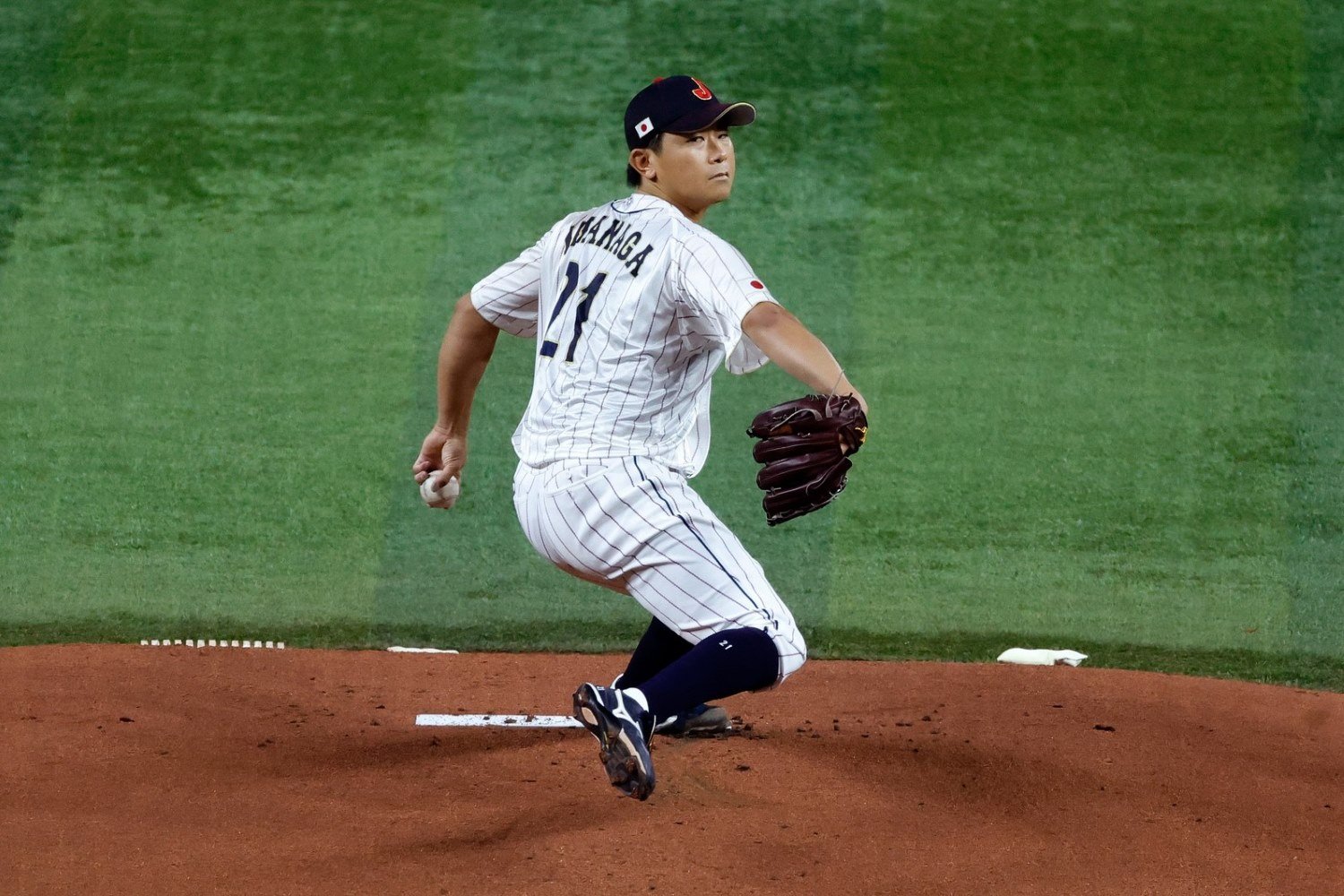 While he won't sign for anywhere near as much money as the Dodgers recently gave Yoshinobu Yamamoto, Shota Imanaga is an exciting talent in his own right. No pitcher who appeared in last year's World Baseball Classic showed better raw stuff than Imanaga. His fastball was cranked up into the mid-90s, and spinning at the top of the zone with movement that no other hurler on Earth can match. He missed bats with his splitter, slider, and curveball. That international success was an affirmation of the impressive numbers he put up in NPB competition for the few years before that, and he further proved his excellence by having his best campaign to date in NPB last season. That said, the stuff Imanaga showed in shorter bursts and with the adrenaline of a postseason atmosphere in the WBC shouldn't be expected to translate perfectly to MLB. His average fastball velocity last year in NPB was more like 92 miles per hour than 94, where he was sitting in the WBC. That difference matters, obviously. So does the fact that, given Imanaga's stuff profile, his greatest vulnerability is to the home run. If that was true in NPB, it will certainly be so in MLB, and that could limit his upside. Still, we're talking about special stuff. Imanaga led NPB in strikeout rate in 2023, and that was with a more fastball-forward mix than we should expect to see him use in MLB. Even without average-plus velocity, he's going to have success and miss bats with his fastball, because the thing takes off like a jet at the top of the zone. Last year, 360 pitchers threw at least 200 four-seamers in MLB. Only one (Baltimore closer Felix Bautista) got more rising action on his fastball than did Imanaga at the WBC. We shouldn't expect Imanaga to sustain quite that much carry over a full MLB season, but he'd certainly land somewhere in the top five percent of all hurlers in this regard. The top 25 players on the aforementioned list of 360 got whiffs on an average of 23.7 percent of opponents' swings against the fastball. That's solidly north of 21.3 percent, the median mark for the league. In other words, carry on the fastball means whiffs, and Imanaga has carry, so he will get whiffs. The question will be whether he can accustom himself to pitching more carefully, to account for the fact that MLB hitters have more power and can punish even slight mistakes more thunderously than NPB hitters typically do. That means going to the fastball less often in traditional fastball counts, and showing sufficient command of his four or five other pitches to throw them for strikes on the edges of the zone. For Cubs fans who long for more swing-and-miss out of the starting rotation, Imanaga holds obvious appeal. He's likely to get a nine-figure deal, but he could be well worth that. He's going to rack up strikeouts, and he was tremendous at limiting walks in NPB. He'll have to give up a little of that zone-pounding mentality in order to adapt to MLB, but that might only let him strike out hitters more effectively. If he's a high-strikeout, low-walk, low-BABIP, high-home run rate guy, that's the sketch of an effective pitcher. It could take a broad range of specific forms, with the value he provides varying widely. A handful of similar hurlers to consider (from least to most exciting) include Drew Smyly, Kenta Maeda, Michael Pineda, Masahiro Tanaka, and Kevin Gausman. There's legitimate frontline starting upside, and if he can stay healthy on an MLB rotation schedule, the floor is relatively high. Imanaga has never made more than 25 starts or thrown more than 170 innings in a single season. In one reading, that's discouraging, because he certainly doesn't profile as a workhorse, the way a team might prefer a pitcher to if they're going to commit more than $20 million per year for five years. Given his size (5-foot-10, 176 pounds), that wouldn't be a fair expectation, anyway. In another reading, though, that means that the odometer on his arm is much less daunting than those of some other pitchers just entering their 30s. He might hold up unexpectedly well, just because he hasn't been asked to shoulder heavy workloads during his 20s. How much would you pay for Imanaga? Is he atop your list of remaining free-agent targets for the Cubs?
 -
There's only one week left in the posting window for the second-best Japanese starting pitcher coming to MLB this winter, and the Cubs remain in the mix for him. Let's take a deeper dive. Image courtesy of © Rhona Wise-USA TODAY Sports While he won't sign for anywhere near as much money as the Dodgers recently gave Yoshinobu Yamamoto, Shota Imanaga is an exciting talent in his own right. No pitcher who appeared in last year's World Baseball Classic showed better raw stuff than Imanaga. His fastball was cranked up into the mid-90s, and spinning at the top of the zone with movement that no other hurler on Earth can match. He missed bats with his splitter, slider, and curveball. That international success was an affirmation of the impressive numbers he put up in NPB competition for the few years before that, and he further proved his excellence by having his best campaign to date in NPB last season. That said, the stuff Imanaga showed in shorter bursts and with the adrenaline of a postseason atmosphere in the WBC shouldn't be expected to translate perfectly to MLB. His average fastball velocity last year in NPB was more like 92 miles per hour than 94, where he was sitting in the WBC. That difference matters, obviously. So does the fact that, given Imanaga's stuff profile, his greatest vulnerability is to the home run. If that was true in NPB, it will certainly be so in MLB, and that could limit his upside. Still, we're talking about special stuff. Imanaga led NPB in strikeout rate in 2023, and that was with a more fastball-forward mix than we should expect to see him use in MLB. Even without average-plus velocity, he's going to have success and miss bats with his fastball, because the thing takes off like a jet at the top of the zone. Last year, 360 pitchers threw at least 200 four-seamers in MLB. Only one (Baltimore closer Felix Bautista) got more rising action on his fastball than did Imanaga at the WBC. We shouldn't expect Imanaga to sustain quite that much carry over a full MLB season, but he'd certainly land somewhere in the top five percent of all hurlers in this regard. The top 25 players on the aforementioned list of 360 got whiffs on an average of 23.7 percent of opponents' swings against the fastball. That's solidly north of 21.3 percent, the median mark for the league. In other words, carry on the fastball means whiffs, and Imanaga has carry, so he will get whiffs. The question will be whether he can accustom himself to pitching more carefully, to account for the fact that MLB hitters have more power and can punish even slight mistakes more thunderously than NPB hitters typically do. That means going to the fastball less often in traditional fastball counts, and showing sufficient command of his four or five other pitches to throw them for strikes on the edges of the zone. For Cubs fans who long for more swing-and-miss out of the starting rotation, Imanaga holds obvious appeal. He's likely to get a nine-figure deal, but he could be well worth that. He's going to rack up strikeouts, and he was tremendous at limiting walks in NPB. He'll have to give up a little of that zone-pounding mentality in order to adapt to MLB, but that might only let him strike out hitters more effectively. If he's a high-strikeout, low-walk, low-BABIP, high-home run rate guy, that's the sketch of an effective pitcher. It could take a broad range of specific forms, with the value he provides varying widely. A handful of similar hurlers to consider (from least to most exciting) include Drew Smyly, Kenta Maeda, Michael Pineda, Masahiro Tanaka, and Kevin Gausman. There's legitimate frontline starting upside, and if he can stay healthy on an MLB rotation schedule, the floor is relatively high. Imanaga has never made more than 25 starts or thrown more than 170 innings in a single season. In one reading, that's discouraging, because he certainly doesn't profile as a workhorse, the way a team might prefer a pitcher to if they're going to commit more than $20 million per year for five years. Given his size (5-foot-10, 176 pounds), that wouldn't be a fair expectation, anyway. In another reading, though, that means that the odometer on his arm is much less daunting than those of some other pitchers just entering their 30s. He might hold up unexpectedly well, just because he hasn't been asked to shoulder heavy workloads during his 20s. How much would you pay for Imanaga? Is he atop your list of remaining free-agent targets for the Cubs? View full article
-
Recently, we ventured deep into the wilderness of imagination, to try to understand why waiting into January doesn't dent the asking price of Scott Boras's top free agents. There is a huge-name free agent hurler out there, though, whom Boras doesn't represent. Image courtesy of © Charles LeClaire-USA TODAY Sports It's not as though Josh Hader is represented by some hayseed lawyer out of the same rural slice of southern Maryland from which he himself hails. He's signed up with CAA Sports, the second- or third-largest agency for MLB players. It's just that, be it CAA or Wasserman or Octagon or anyone else, every agency other than the Boras Corporation loses some leverage as the calendar flips to January. It's not weird that that happens to everyone. It's only weird that Boras manages to be (almost) immune to that effect. When Hader hit the market in November, all the buzz was about his desire to top the record contract to which the Mets signed Edwin Diaz last winter. Díaz got the most money ever guaranteed to a relief pitcher, when he inked a five-year, $102-million deal in Nov. 2022. Here's the thing, though: Díaz was never a realistic goal at which to aim. Hader's platform season in 2023 wasn't as good as Díaz's 2022 was. Díaz is a mere two and a half weeks older than Hader, which means he was a full year younger when he signed his deal. Most importantly, though, Díaz was signing a deal at the Buy It Now price. Steve Cohen, the Mets' wildly aggressive and mega-rich owner, wanted to keep his beloved closer and the trumpets that became such a sensation alongside him at Citi Field in 2022, and he didn't care about shelling out several million more dollars than other teams would have given Díaz. Once Hader actually hit free agency (rather than being brought back by an overeager incumbent, which was never on the table in his case), $100 million was essentially off the table. Two months have passed since then, and while this winter's market for player talent has moved much slower than other recent ones, that much time depresses the asking price and shifts leverage away from a player and toward whatever teams have interest in him. At this point, I don't think it's at all certain that Hader will get a five-year deal. If he does, it'll come in at the same $16-million annual average value for which Kenley Jansen has been working for almost a decade. If he wants to eclipse that number and get closer to $20 million in AAV, he'll have to settle for a four-year term. We're starting to get into the realm, then, at which Jed Hoyer's ears perk up. Hoyer might not want to spend massive money on a reliever, but he's opportunistic when he senses good value. Much could depend on Craig Counsell, here. If Counsell gives the green light on Hader's makeup and clubhouse presence (which, by the end of his time in Milwaukee, were widely praised), then a four- or five-year deal worth a total of $80 million probably makes sense. A Cubs bullpen with Hader would be such a different animal than the current hodgepodge that it's hard to express it in simple terms. He's a very traditional closer who expects to be used pretty lightly, and that should and will restrict his value a bit. It's why he's not going to get Díaz money. On the other hand, slotting him into a low-maintenance, high-octane role shutting down games with ruthless efficiency in the ninth inning would free Counsell up to make more creative, versatile use of all the other arms already in the mix for Chicago. Adbert Alzolay is a good-not-great relief ace. As the second-best arm in a bullpen with an elite closer, he goes from fun to downright sterling. Stack Mark Leiter, Jr. and Julian Merryweather in with Alzolay, and you've got an impressive corps of setup men, plus the ability to rest them more often. As is true of signing an ace starter, bringing in an ace reliever pushes everyone else on the depth chart down one space, thereby making them all a bit more valuable. Hader comes with plenty of red flags. He has already gone through one or two miniature crises, as almost every great closer does during their careers, and while it's encouraging that he seems to have adjusted and moved past them, those rough patches leave us with vivid insight into his particular mortality as a great reliever. Despite careful usage and the lightest total innings load for which any closer can reasonably hope, Hader's fastball velocity dipped in 2023, and his slider velocity keeps climbing. Diminished velocity separation makes it harder to miss bats with either offering, especially when the arsenal is relatively limited. Hader has seen his release point creep upward, such that he's not creating quite as extreme a horizontal or vertical angle for hitters as he used to, and while doing that has maintained a steady vertical movement differential between his two crucial offerings, it's come at the cost of some horizontal movement gap. Changes like these can seem trivial for a starter with a deeper arsenal, or for any pitcher in his mid-20s. For a two-pitch reliever who turns 30 in April, they beget some genuine concern. That said, the man struck out 36.8 percent of opposing batters in 2023, and that was his worst mark since he was a rookie. It's a video-game number. He's become more walk-prone as he's adapted and (inevitably, because every reliever does almost as soon as they drive off the lot of their Triple-A apartment building) declined, but he's also become an adroit avoider of home runs. His stuff overpowers hitters and induces extremely weak contact. During his tenure in Atlanta, Hader only gave up home runs to 1.3 percent of opposing batters. That's less than half the league's rate. If the Cubs can get Hader for what I think they can now get Hader for, they ought to be interested. The fact that he rejected a qualifying offer and will cost whichever team signs him at least one draft pick does make him slightly less appealing, but then again, maybe you add that to the list of reasons why his leverage is evaporating. If he could be had for $75 million, so much the better. The Cubs would still need to do much more to finish a successful offseason, but as Hader waits, his value sinks. Hoyer will, eventually, smell blood in the water. What do you make of Hader's unique career and stalled free agency? At what price would he appeal to you? Let us know. View full article
-
Is Josh Hader's Market Falling Into Jed Hoyer's Sweet Spot?
Matthew Trueblood posted an article in Cubs
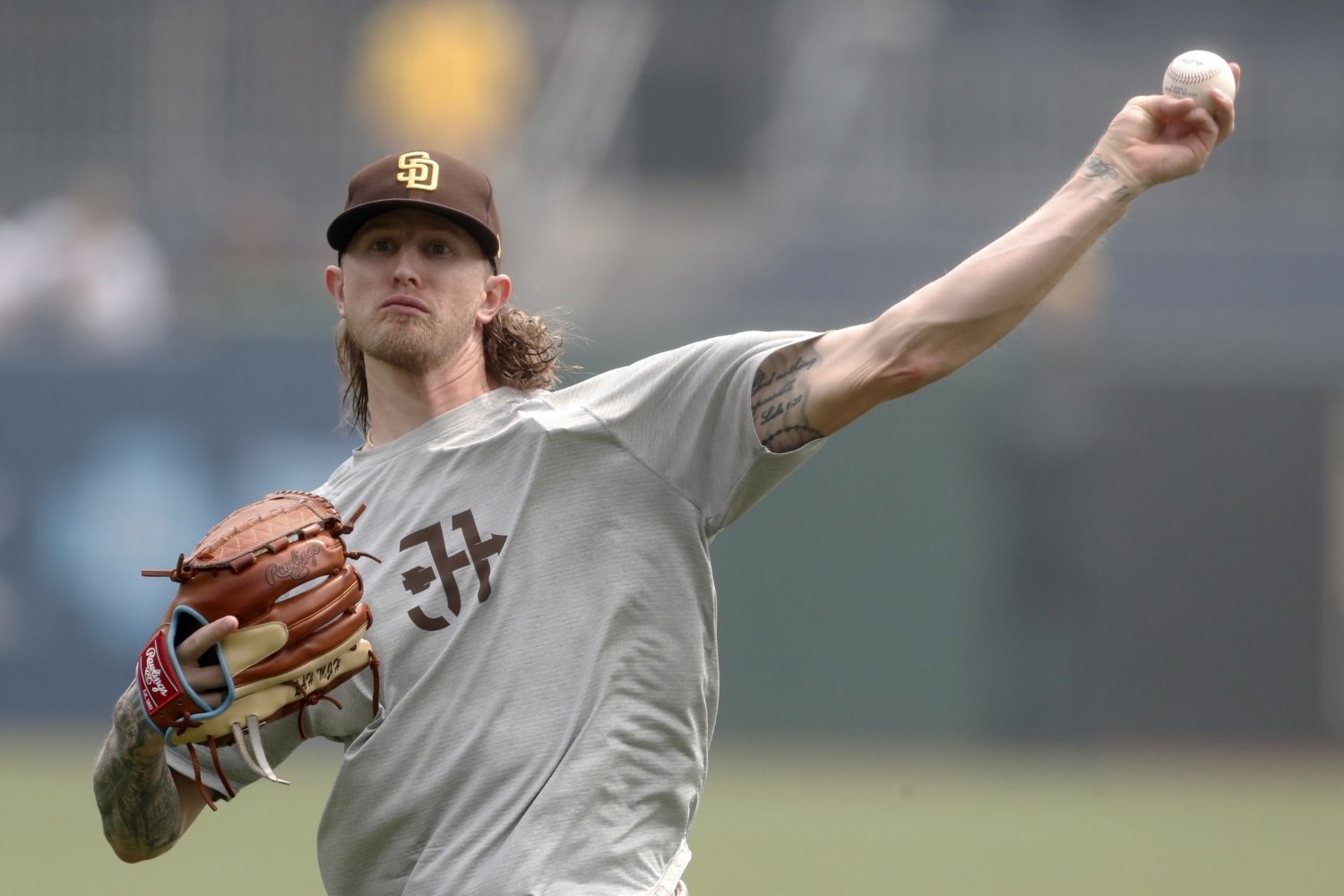 It's not as though Josh Hader is represented by some hayseed lawyer out of the same rural slice of southern Maryland from which he himself hails. He's signed up with CAA Sports, the second- or third-largest agency for MLB players. It's just that, be it CAA or Wasserman or Octagon or anyone else, every agency other than the Boras Corporation loses some leverage as the calendar flips to January. It's not weird that that happens to everyone. It's only weird that Boras manages to be (almost) immune to that effect. When Hader hit the market in November, all the buzz was about his desire to top the record contract to which the Mets signed Edwin Diaz last winter. Díaz got the most money ever guaranteed to a relief pitcher, when he inked a five-year, $102-million deal in Nov. 2022. Here's the thing, though: Díaz was never a realistic goal at which to aim. Hader's platform season in 2023 wasn't as good as Díaz's 2022 was. Díaz is a mere two and a half weeks older than Hader, which means he was a full year younger when he signed his deal. Most importantly, though, Díaz was signing a deal at the Buy It Now price. Steve Cohen, the Mets' wildly aggressive and mega-rich owner, wanted to keep his beloved closer and the trumpets that became such a sensation alongside him at Citi Field in 2022, and he didn't care about shelling out several million more dollars than other teams would have given Díaz. Once Hader actually hit free agency (rather than being brought back by an overeager incumbent, which was never on the table in his case), $100 million was essentially off the table. Two months have passed since then, and while this winter's market for player talent has moved much slower than other recent ones, that much time depresses the asking price and shifts leverage away from a player and toward whatever teams have interest in him. At this point, I don't think it's at all certain that Hader will get a five-year deal. If he does, it'll come in at the same $16-million annual average value for which Kenley Jansen has been working for almost a decade. If he wants to eclipse that number and get closer to $20 million in AAV, he'll have to settle for a four-year term. We're starting to get into the realm, then, at which Jed Hoyer's ears perk up. Hoyer might not want to spend massive money on a reliever, but he's opportunistic when he senses good value. Much could depend on Craig Counsell, here. If Counsell gives the green light on Hader's makeup and clubhouse presence (which, by the end of his time in Milwaukee, were widely praised), then a four- or five-year deal worth a total of $80 million probably makes sense. A Cubs bullpen with Hader would be such a different animal than the current hodgepodge that it's hard to express it in simple terms. He's a very traditional closer who expects to be used pretty lightly, and that should and will restrict his value a bit. It's why he's not going to get Díaz money. On the other hand, slotting him into a low-maintenance, high-octane role shutting down games with ruthless efficiency in the ninth inning would free Counsell up to make more creative, versatile use of all the other arms already in the mix for Chicago. Adbert Alzolay is a good-not-great relief ace. As the second-best arm in a bullpen with an elite closer, he goes from fun to downright sterling. Stack Mark Leiter, Jr. and Julian Merryweather in with Alzolay, and you've got an impressive corps of setup men, plus the ability to rest them more often. As is true of signing an ace starter, bringing in an ace reliever pushes everyone else on the depth chart down one space, thereby making them all a bit more valuable. Hader comes with plenty of red flags. He has already gone through one or two miniature crises, as almost every great closer does during their careers, and while it's encouraging that he seems to have adjusted and moved past them, those rough patches leave us with vivid insight into his particular mortality as a great reliever. Despite careful usage and the lightest total innings load for which any closer can reasonably hope, Hader's fastball velocity dipped in 2023, and his slider velocity keeps climbing. Diminished velocity separation makes it harder to miss bats with either offering, especially when the arsenal is relatively limited. Hader has seen his release point creep upward, such that he's not creating quite as extreme a horizontal or vertical angle for hitters as he used to, and while doing that has maintained a steady vertical movement differential between his two crucial offerings, it's come at the cost of some horizontal movement gap. Changes like these can seem trivial for a starter with a deeper arsenal, or for any pitcher in his mid-20s. For a two-pitch reliever who turns 30 in April, they beget some genuine concern. That said, the man struck out 36.8 percent of opposing batters in 2023, and that was his worst mark since he was a rookie. It's a video-game number. He's become more walk-prone as he's adapted and (inevitably, because every reliever does almost as soon as they drive off the lot of their Triple-A apartment building) declined, but he's also become an adroit avoider of home runs. His stuff overpowers hitters and induces extremely weak contact. During his tenure in Atlanta, Hader only gave up home runs to 1.3 percent of opposing batters. That's less than half the league's rate. If the Cubs can get Hader for what I think they can now get Hader for, they ought to be interested. The fact that he rejected a qualifying offer and will cost whichever team signs him at least one draft pick does make him slightly less appealing, but then again, maybe you add that to the list of reasons why his leverage is evaporating. If he could be had for $75 million, so much the better. The Cubs would still need to do much more to finish a successful offseason, but as Hader waits, his value sinks. Hoyer will, eventually, smell blood in the water. What do you make of Hader's unique career and stalled free agency? At what price would he appeal to you? Let us know.
 -
Cubs Sign Free-Agent Reliever Colten Brewer and His New Slider
Matthew Trueblood posted an article in Cubs
 It won't have anyone crossing Josh Hader or Robert Stephenson off their wish lists, and it's not even likely to be a big-league deal, but the Cubs have inked right-handed reliever Colten Brewer for 2024. Breaking the news on New Year's Eve: Brewer himself. In parts of five big-league seasons, Brewer has fewer than 100 innings pitched, and he spend the second half of last season overseas. Still, it's an interesting pickup, and a good fit for the Cubs' pitching predilections. Brewer throws a hard cutter, very much his primary fastball, rather than acting as a type of breaking ball. With that pitch sitting in the mid-90s and a curveball that can be nasty when he has command of it, he's not only broadly appealing, but exactly the kind of pitcher the Cubs like to target. If they could sign nothing but guys with unusual cut on their fastballs and a breaking pitch that paired well with it vertically, they would do so. Still, it's tempting to dismiss this move as mere filler. Brewer is over 30, has only rarely filled a regular role in a big-league bullpen, and is almost certainly signing a non-guaranteed, minor-league deal with an invite to big-league spring training. That doesn't move the needle, even by the low standards of relief pitcher signings. There's a little more meat on the bone than you might think, though. As you'd expect of a guy whose repertoire is mostly cutter-curveball, Brewer has historically had reverse platoon splits, across all levels of professional baseball. Righties had a higher OPS against him every year from 2018 through 2022, and it was often by a wide margin. When he's gotten hit hard or had major control problems, the trouble has mostly come against fellow righties. In 2023, though, right-handed batters were considerably worse than left-handed ones against Brewer. This data is only for the very limited time he got Stateside, and the samples are minute, but in 61 plate appearances, righties struck out 21 times, drew just four walks, and had an anemic .514 OPS against him. That could be random noice, but the strikeout rate suggests that there's something real there, and pitch data fills in the gaps. This season, Brewer finally found a slider with more lateral tilt and greater velocity separation from his cutter. Here's the year-by-year chart of his velocity by pitch type. He also got more horizontal movement and more depth on the pitch, relative to that cutter that stands in for a more typical pitcher's four-seam fastball or sinker. You can call it a sweeper, or not, but it was a different and more effective pitch than the previous sliders he'd tried. Brewer had spent spring training with the Rays, but the Yankees scooped him up just after Opening Day, and they excel at helping pitchers engineer just this type of slider transformation. Brewer got so comfortable with his newly redesigned slider that it took over for his curve as the primary breaking ball in his attack. There's still little chance that Brewer will emerge as more than a middle reliever, and given the Cubs' current bullpen options, he's no lock to so much as take the mound for the team in 2024. Still, considering the terrific success he had in Japan and the material changes he made this season, it's a nice little pickup. Presumably, the Cubs like the upside in his new breaking ball, and we know how nicely what he was already doing pairs with the Cubs' organizationl approach. What do you think of Brewer? Is there anything here? Would you rather have him or, say, Jose Cuas at the bottom of the bullpen depth chart in 2024? Speak your piece below.
 -
In a minor move they hope will bolster their organizational bullpen depth, the Cubs have signed an erstwhile Red Sox reliever who spent time in both the Rays and Yankees organizations in 2023, before going to Japan to play for the Hanshin Tigers. Image courtesy of © David Richard-USA TODAY Sports It won't have anyone crossing Josh Hader or Robert Stephenson off their wish lists, and it's not even likely to be a big-league deal, but the Cubs have inked right-handed reliever Colten Brewer for 2024. Breaking the news on New Year's Eve: Brewer himself. In parts of five big-league seasons, Brewer has fewer than 100 innings pitched, and he spend the second half of last season overseas. Still, it's an interesting pickup, and a good fit for the Cubs' pitching predilections. Brewer throws a hard cutter, very much his primary fastball, rather than acting as a type of breaking ball. With that pitch sitting in the mid-90s and a curveball that can be nasty when he has command of it, he's not only broadly appealing, but exactly the kind of pitcher the Cubs like to target. If they could sign nothing but guys with unusual cut on their fastballs and a breaking pitch that paired well with it vertically, they would do so. Still, it's tempting to dismiss this move as mere filler. Brewer is over 30, has only rarely filled a regular role in a big-league bullpen, and is almost certainly signing a non-guaranteed, minor-league deal with an invite to big-league spring training. That doesn't move the needle, even by the low standards of relief pitcher signings. There's a little more meat on the bone than you might think, though. As you'd expect of a guy whose repertoire is mostly cutter-curveball, Brewer has historically had reverse platoon splits, across all levels of professional baseball. Righties had a higher OPS against him every year from 2018 through 2022, and it was often by a wide margin. When he's gotten hit hard or had major control problems, the trouble has mostly come against fellow righties. In 2023, though, right-handed batters were considerably worse than left-handed ones against Brewer. This data is only for the very limited time he got Stateside, and the samples are minute, but in 61 plate appearances, righties struck out 21 times, drew just four walks, and had an anemic .514 OPS against him. That could be random noice, but the strikeout rate suggests that there's something real there, and pitch data fills in the gaps. This season, Brewer finally found a slider with more lateral tilt and greater velocity separation from his cutter. Here's the year-by-year chart of his velocity by pitch type. He also got more horizontal movement and more depth on the pitch, relative to that cutter that stands in for a more typical pitcher's four-seam fastball or sinker. You can call it a sweeper, or not, but it was a different and more effective pitch than the previous sliders he'd tried. Brewer had spent spring training with the Rays, but the Yankees scooped him up just after Opening Day, and they excel at helping pitchers engineer just this type of slider transformation. Brewer got so comfortable with his newly redesigned slider that it took over for his curve as the primary breaking ball in his attack. There's still little chance that Brewer will emerge as more than a middle reliever, and given the Cubs' current bullpen options, he's no lock to so much as take the mound for the team in 2024. Still, considering the terrific success he had in Japan and the material changes he made this season, it's a nice little pickup. Presumably, the Cubs like the upside in his new breaking ball, and we know how nicely what he was already doing pairs with the Cubs' organizationl approach. What do you think of Brewer? Is there anything here? Would you rather have him or, say, Jose Cuas at the bottom of the bullpen depth chart in 2024? Speak your piece below. View full article
-
And I think Boras is thinking exactly the opposite: that a very long-term deal is in order. So, I'm with you. The Darvish deal, especially. That was insane. At least Machado is still in his prime, and had the opt-out to force their hand a bit. Still trying to figure out what he was thinking with Darvish.
-
This is right about where I'd land, too. I don't share Jed's automatic aversion to long deals, and to me, the batted-ball data has been overblown. But what I DO think is important and worrisome is that Bellinger just isn't a center fielder anymore. He was below-average out there last year, for me. He could still be solid in a corner, but the Cubs don't need him there. I think he's pretty much a first baseman, and for a first baseman, the offense isn't exceptional, even if you believe (as I generally do) that his real production last year is sustainable and that Statcast isn't destiny. I would just let him go, because I absolutely believe Boras gets a deal for him that outstrips what the Cubs would be willing to sufficiently support. But we'll see.
-
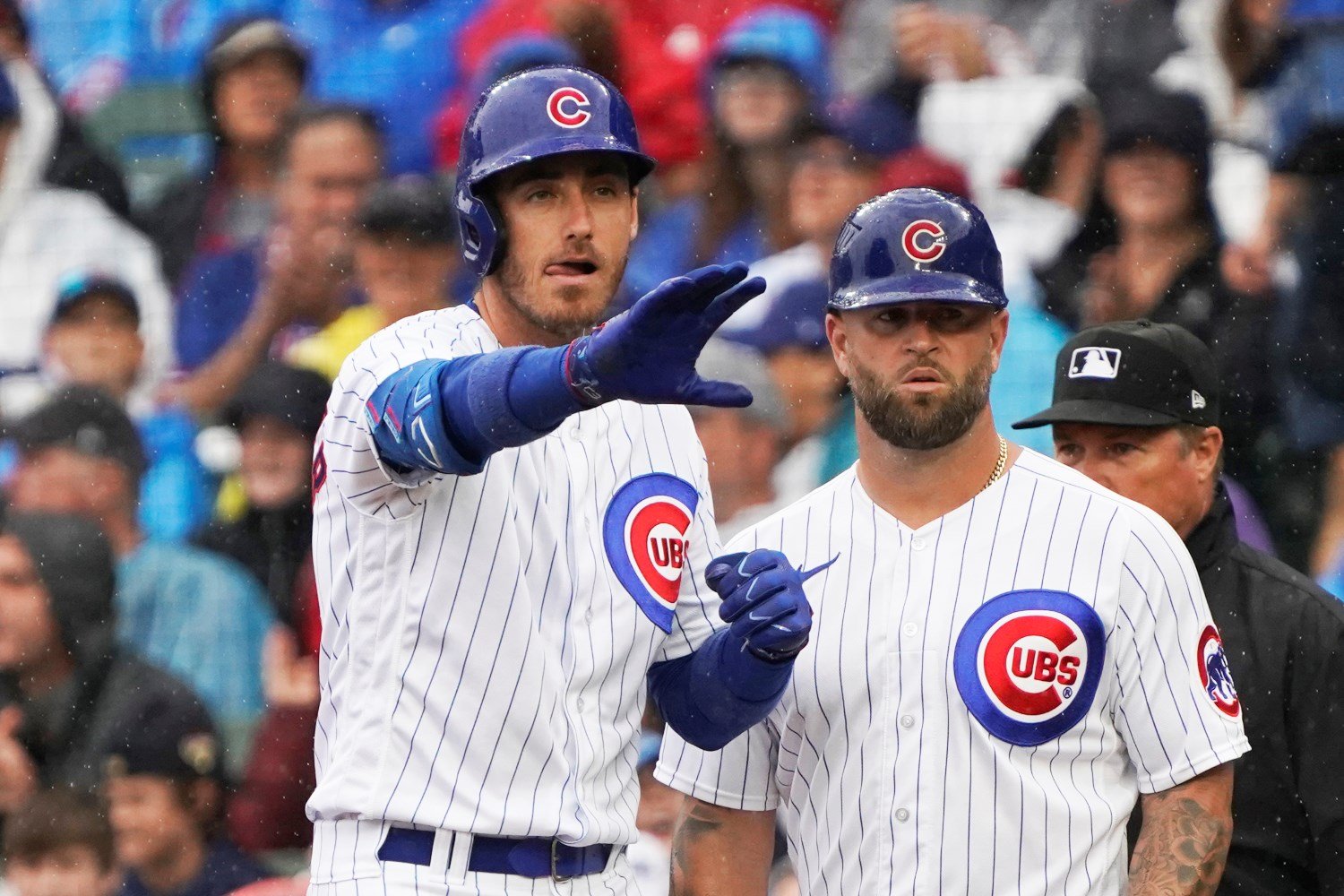 "Hi, Jed, it's Scott," Scott says, because apparently it's 1997 and you don't have his number saved on a digital screen that lights up before you answer the phone. "Cody Bellinger is really excited about the possibility of coming back to Chicago, but we have some other interest, some other offers, and I want to give you options based on the other deals out there." Look, are those other interested teams and juicy offers real? Who knows? If you did--if anyone did--Boras wouldn't be worth half a billion dollars just on the commissions he's raked in by pushing dozens of guys' net worth well into nine figures, in their own right. What Boras knows is what you, Jed Hoyer, know: the clock is ticking, The big names are coming off the board. The 2024 Cubs aren't any good right now, and while there are many ways you could bolster the roster between now and Opening Day, many of those avenues run right through Boras. You can't dodge him or defer this showdown any longer. You ask him what he's thinking. "Well, like I said, Cody's interested in being a Cub for years to come, so we want to discuss a couple of different structures that would make him pass up what the Mari---sorry, coughed there, what some other people we've talked to have offered," Boras says. Yeah, right. The Mariners aren't offering Bellinger what Boras wants for him. Ugh. Or are they? See, this is why he wins. God, why can't Octagon peel someone away from this guy now and then? You love the Octagon guys. They're easy. "We could make Cody a Cub for seven years for $196 million," Boras continues. "But I'm sympathetic to your position around the luxury tax, and I want to help you out there. We really feel excited about a potential structure where Cody and the Cubs make a long-term commitment to each other, for $220 million over 10 years." Oh. Oh, ok. See, that's not so bad. Look, you're not going to do either of those deals. But you knew this was going to be the range, when he eventually got real with you about numbers. Two years ago, he got Kris Bryant $182 million over seven years. That was from the Rockies, who massively outbid the rest of the league, and it's gone horrifically since then, but those aren't the kinds of facts you or anyone else can get Boras to acknowledge. He simply worms out of that trap, every time. No, what Boras is going to say is that the market has only inflated a bit since the Bryant deal, and that Bellinger is younger and more athletic than Bryant was back then. He's going to say Bellinger's injuries were more acute and less likely to affect his future than Bryant's were. He's only half-right, but he's going to turn that into 55 percent and win the staredown if you force one, so you have to meet him halfway. That seven-year, $182-million mark is his absolute floor for Bellinger, and he's very confident that he's going to come in higher than that. You like seven-year deals, so right away, that's where you gravitate. You're no A.J. Preller. Actually, Merrill got you an Obvious Shirt for Christmas that literally says, "NOT A.J. PRELLER," because you tell her so often what a fiend that guy is. You're not some desperate overbidder, trying to keep the competitive-balance tax number on a deal down so that you can sign another deal just like this next winter. Scott would love that, wouldn't he? He expects you to fork over this much to his clients every offseason. He doesn't think you know it, but he keeps making back-channel overtures to the Ricketts family, because he knows they're the ones who will crack and give in to him. On the other hand, this alternative structure doesn't just save you a couple million dollars. Depending on how Scott is willing to structure it, you could realize a full $6 million in annual average value savings, which means more actual dollars to spend as well as more flexibility around the tax thresholds with which you expect to flirt in the next several seasons. Paying Bellinger $28 million per year, given the likelihood that he's confined to first base for you within a year or two and the somewhat tepid batted-ball data underlying his power production from 2023, makes you pretty uneasy. This is no Dansby Swanson situation, where modest offensive production is no great worry. Cranking that salary all the way down to $22 million annually would line him right up with Ian Happ. That's not superstar money. In fact, you're a little surprised Boras is even interested at that price. He usually wants to lengthen a deal like this only if he keeps the AAV essentially intact. You decide to confer with your top baseball people, plus Carter Hawkins, for appearances' sake, and get back to him. Big mistake. Huge. Two days later, you re-connect with Boras, and the predictable has happened. "Hey, Jed," Scott says half-apologetically. "Our situation did change a little bit, here. A giant offer just came in." (Who does this guy think he's talking to? Leave the pun work on the little stool at the Winter Meetings, man.) "Cody was awfully impressed by the pitch we heard yesterday, and we need to adjust some of the terms we discussed." You almost hang up on the spot. This series of phone calls could be texts. It's not like you hadn't been doing this dance for a month, anyway. You were set on trying to talk him down from $196 million and getting Bellinger locked in at $185 million over seven years, with an option for 2031 that would push the deal to $200 million and give Boras his vanity number. This, you can just tell, is going to completely bork that plan. "We'd still be open to putting Cody back in your lineup for a long time, but we need to start our discussions at $203 million. We can do that over seven years, or we can make it $231 million over 11." Yeah. Well, naturally. After all, he's got the Mariners and the Giants in the frame, and he'll let Jon Heyman and whoever else wants to jump into the mix keep the Blue Jays alive as a possibility. The Angels are a possibility. He'll find a mystery team if he needs one. These numbers are pretty much as low as they're going to go. While everyone else's asking prices inexorably (if incrementally) fall as the winter wears on, Boras manages to hold his steady. Who cares if the rumors of $250 million or $300 million were always just anchors to drag the public discussion (and, by the relentless, irrational current of these things, the non-public parameters of negotiations) in his direction? Now, after he's successfully killed some time and let the market narrow your options for him, he's managed to work him way pretty close to those figures, and you lack the leverage to pull him back under the magic number of $200 million. He's really inviting you to pull the trigger on that bigger deal, though, with the new terms. Now, the shorter version of the deal results in a $29-million AAV for Bellinger, and the longer one is only $21 million. You hate to give him the satisfaction, but it's hard to swallow that big an extra payout per year just to avoid those last few years. God, are you going to have to confine the Preller t-shirt to around-the-house use? No. No, you've got your principles, and it's time to fight back a bit. Your leverage is thin, but it's not imaginary. You play your ace in the hole: Seven years, $189 million, but you'll offer Bellinger both a no-trade clause and a pair of opt-outs, after the second and fourth years of the contract. That would allow Bellinger to hit free agency again at 30 or 32, if he so chose. You're envisioning: $21 million in 2024 $27 million in 2025 $31 million each in 2026-28 $27 million in 2029 $21 million in 2030 That would mean passing up $141 million over five years if Bellinger opted out the first time, or $79 million over three years if he did so the second time. It's a lot of flexibility for him, and it really takes some of the fun out of this for you, but this structure would force him to think hard about walking away even if the next two years go well. Two years after that, he'd be a lot more incentivized to walk away, but by then, you figure that wouldn't be the worst thing. Plus, you could always circle back into the bidding if that happened. By then, you'd be in the habit of each other, right? Boras has read the text you sent with the rough terms, and he's got you on hold, but you're going to hear back soon. It's time to do your own pause-and-reflect. Let's you and I step out of our Jed Hoyer skinsuits, now. Let's do some thinking of our very own. That bit of hacky semi-fiction laid bare the basics of the pas de deux going on between Hoyer and Boras right now. Boras really is going to demand at least $182 million over seven seasons from any team interested in Bellinger. His case for Bellinger being more desirable than Bryant is imperfect, but it's going to hold up. Maybe even that is too rich for you. On Saturday, Bruce Levine said on 670 The Score that he envisioned the Cubs offering Bellinger only five or six years, at anywhere from $27 million to $30 million per year. They can dream, anyway, and they can draw their line there if they want. Bellinger will just end up on the Giants, or the Mariners, or the Angels, or the Blue Jays, or somewhere even more unexpected. You can opt to disdain and ignore price tags in the range I described here. But they are real. So, let's run down the deals I proposed in this exercise. 7 years, $196-203 million 10 years, $220 million 11 years, $231 million 7 years, $182-189 million, but with multiple opt-outs Are any of those deals interesting to you? Would you trade the extra few years of money that could be bad, or even dead, in order to keep AAV down and give the Cubs greater flexibility during the first few years of a Bellinger deal? Or would you want to keep the term and the dollars committed to a minimum, even if it meant yielding some of the upside of Bellinger's remaining prime seasons back to the player and his agent? That's the most interesting discussion left around his free agency, so jump in and help us have it.
 -
Say you're Jed Hoyer. For the next few minutes, make yourself Jed Hoyer, and pretend you're negotiating with Scott Boras. It's time to make a deal (or not) to bring back the best player on the 2023 Cubs. Image courtesy of © David Banks-USA TODAY Sports "Hi, Jed, it's Scott," Scott says, because apparently it's 1997 and you don't have his number saved on a digital screen that lights up before you answer the phone. "Cody Bellinger is really excited about the possibility of coming back to Chicago, but we have some other interest, some other offers, and I want to give you options based on the other deals out there." Look, are those other interested teams and juicy offers real? Who knows? If you did--if anyone did--Boras wouldn't be worth half a billion dollars just on the commissions he's raked in by pushing dozens of guys' net worth well into nine figures, in their own right. What Boras knows is what you, Jed Hoyer, know: the clock is ticking, The big names are coming off the board. The 2024 Cubs aren't any good right now, and while there are many ways you could bolster the roster between now and Opening Day, many of those avenues run right through Boras. You can't dodge him or defer this showdown any longer. You ask him what he's thinking. "Well, like I said, Cody's interested in being a Cub for years to come, so we want to discuss a couple of different structures that would make him pass up what the Mari---sorry, coughed there, what some other people we've talked to have offered," Boras says. Yeah, right. The Mariners aren't offering Bellinger what Boras wants for him. Ugh. Or are they? See, this is why he wins. God, why can't Octagon peel someone away from this guy now and then? You love the Octagon guys. They're easy. "We could make Cody a Cub for seven years for $196 million," Boras continues. "But I'm sympathetic to your position around the luxury tax, and I want to help you out there. We really feel excited about a potential structure where Cody and the Cubs make a long-term commitment to each other, for $220 million over 10 years." Oh. Oh, ok. See, that's not so bad. Look, you're not going to do either of those deals. But you knew this was going to be the range, when he eventually got real with you about numbers. Two years ago, he got Kris Bryant $182 million over seven years. That was from the Rockies, who massively outbid the rest of the league, and it's gone horrifically since then, but those aren't the kinds of facts you or anyone else can get Boras to acknowledge. He simply worms out of that trap, every time. No, what Boras is going to say is that the market has only inflated a bit since the Bryant deal, and that Bellinger is younger and more athletic than Bryant was back then. He's going to say Bellinger's injuries were more acute and less likely to affect his future than Bryant's were. He's only half-right, but he's going to turn that into 55 percent and win the staredown if you force one, so you have to meet him halfway. That seven-year, $182-million mark is his absolute floor for Bellinger, and he's very confident that he's going to come in higher than that. You like seven-year deals, so right away, that's where you gravitate. You're no A.J. Preller. Actually, Merrill got you an Obvious Shirt for Christmas that literally says, "NOT A.J. PRELLER," because you tell her so often what a fiend that guy is. You're not some desperate overbidder, trying to keep the competitive-balance tax number on a deal down so that you can sign another deal just like this next winter. Scott would love that, wouldn't he? He expects you to fork over this much to his clients every offseason. He doesn't think you know it, but he keeps making back-channel overtures to the Ricketts family, because he knows they're the ones who will crack and give in to him. On the other hand, this alternative structure doesn't just save you a couple million dollars. Depending on how Scott is willing to structure it, you could realize a full $6 million in annual average value savings, which means more actual dollars to spend as well as more flexibility around the tax thresholds with which you expect to flirt in the next several seasons. Paying Bellinger $28 million per year, given the likelihood that he's confined to first base for you within a year or two and the somewhat tepid batted-ball data underlying his power production from 2023, makes you pretty uneasy. This is no Dansby Swanson situation, where modest offensive production is no great worry. Cranking that salary all the way down to $22 million annually would line him right up with Ian Happ. That's not superstar money. In fact, you're a little surprised Boras is even interested at that price. He usually wants to lengthen a deal like this only if he keeps the AAV essentially intact. You decide to confer with your top baseball people, plus Carter Hawkins, for appearances' sake, and get back to him. Big mistake. Huge. Two days later, you re-connect with Boras, and the predictable has happened. "Hey, Jed," Scott says half-apologetically. "Our situation did change a little bit, here. A giant offer just came in." (Who does this guy think he's talking to? Leave the pun work on the little stool at the Winter Meetings, man.) "Cody was awfully impressed by the pitch we heard yesterday, and we need to adjust some of the terms we discussed." You almost hang up on the spot. This series of phone calls could be texts. It's not like you hadn't been doing this dance for a month, anyway. You were set on trying to talk him down from $196 million and getting Bellinger locked in at $185 million over seven years, with an option for 2031 that would push the deal to $200 million and give Boras his vanity number. This, you can just tell, is going to completely bork that plan. "We'd still be open to putting Cody back in your lineup for a long time, but we need to start our discussions at $203 million. We can do that over seven years, or we can make it $231 million over 11." Yeah. Well, naturally. After all, he's got the Mariners and the Giants in the frame, and he'll let Jon Heyman and whoever else wants to jump into the mix keep the Blue Jays alive as a possibility. The Angels are a possibility. He'll find a mystery team if he needs one. These numbers are pretty much as low as they're going to go. While everyone else's asking prices inexorably (if incrementally) fall as the winter wears on, Boras manages to hold his steady. Who cares if the rumors of $250 million or $300 million were always just anchors to drag the public discussion (and, by the relentless, irrational current of these things, the non-public parameters of negotiations) in his direction? Now, after he's successfully killed some time and let the market narrow your options for him, he's managed to work him way pretty close to those figures, and you lack the leverage to pull him back under the magic number of $200 million. He's really inviting you to pull the trigger on that bigger deal, though, with the new terms. Now, the shorter version of the deal results in a $29-million AAV for Bellinger, and the longer one is only $21 million. You hate to give him the satisfaction, but it's hard to swallow that big an extra payout per year just to avoid those last few years. God, are you going to have to confine the Preller t-shirt to around-the-house use? No. No, you've got your principles, and it's time to fight back a bit. Your leverage is thin, but it's not imaginary. You play your ace in the hole: Seven years, $189 million, but you'll offer Bellinger both a no-trade clause and a pair of opt-outs, after the second and fourth years of the contract. That would allow Bellinger to hit free agency again at 30 or 32, if he so chose. You're envisioning: $21 million in 2024 $27 million in 2025 $31 million each in 2026-28 $27 million in 2029 $21 million in 2030 That would mean passing up $141 million over five years if Bellinger opted out the first time, or $79 million over three years if he did so the second time. It's a lot of flexibility for him, and it really takes some of the fun out of this for you, but this structure would force him to think hard about walking away even if the next two years go well. Two years after that, he'd be a lot more incentivized to walk away, but by then, you figure that wouldn't be the worst thing. Plus, you could always circle back into the bidding if that happened. By then, you'd be in the habit of each other, right? Boras has read the text you sent with the rough terms, and he's got you on hold, but you're going to hear back soon. It's time to do your own pause-and-reflect. Let's you and I step out of our Jed Hoyer skinsuits, now. Let's do some thinking of our very own. That bit of hacky semi-fiction laid bare the basics of the pas de deux going on between Hoyer and Boras right now. Boras really is going to demand at least $182 million over seven seasons from any team interested in Bellinger. His case for Bellinger being more desirable than Bryant is imperfect, but it's going to hold up. Maybe even that is too rich for you. On Saturday, Bruce Levine said on 670 The Score that he envisioned the Cubs offering Bellinger only five or six years, at anywhere from $27 million to $30 million per year. They can dream, anyway, and they can draw their line there if they want. Bellinger will just end up on the Giants, or the Mariners, or the Angels, or the Blue Jays, or somewhere even more unexpected. You can opt to disdain and ignore price tags in the range I described here. But they are real. So, let's run down the deals I proposed in this exercise. 7 years, $196-203 million 10 years, $220 million 11 years, $231 million 7 years, $182-189 million, but with multiple opt-outs Are any of those deals interesting to you? Would you trade the extra few years of money that could be bad, or even dead, in order to keep AAV down and give the Cubs greater flexibility during the first few years of a Bellinger deal? Or would you want to keep the term and the dollars committed to a minimum, even if it meant yielding some of the upside of Bellinger's remaining prime seasons back to the player and his agent? That's the most interesting discussion left around his free agency, so jump in and help us have it. View full article
-
I like that thinking. I didn't want to strain credulity with an overly complicated proposal, but some multi-piece move involving Wicks or Brown does seem plausible (if remote) to me, too.
- 9 replies
-
- 1
-

-
- anthony santander
- javier assad
- (and 1 more)
-
Right now, all eyes are on the Cubs' starting rotation. As the New Year draws near, they have yet to address a glaring need there. They have another glaring need, though, and there's one player who seems a perfect fit for it. Image courtesy of © Tommy Gilligan | 2023 Oct 7 Every winter, a handful of trades happen without having ever been on anyone's radar. In early 2015, the Cubs traded for Dexter Fowler, surrendering Luis Valbuena and Dan Straily in the exchange, and it came almost out of nowhere. Yet, it was the move that completed and lent synergy to that offseason, and to the 2015 Cubs as a whole. Fowler was only under team control for one year, but getting his on-base skills atop the batting order catalyzed the team in a way that would have had a lasting impact, even if he hadn't come back unexpectedly in 2016. That trade made sense for both the Cubs and the Houston Astros, and a sagacious baseball person could have predicted it, if their attention had been directed that way. At the time, though, it just wasn't at the forefront of anyone's mind. The deal almost perfectly coincided with the Nationals and Max Scherzer agreeing to a record-breaking free-agent deal. There had already been a flurry of moves that winter, including Ben Zobrist being traded to Oakland, and there were a few notable free agents left on the board. Many people were thinking about the upstart Cubs and Astros, but few were cognizant of the way they lined up in a trade. I think we have a similar situation on our hands, as 2024 dawns, with the Cubs and the Baltimore Orioles. Chicago has yet to do a blessed thing to address their roster needs for the coming season, but we well know that they won't remain so inactive during January. On the contrary, they figure to be in on several of the top remaining free agents--the names who have consumed so many fans' whole attention this winter, like Shota Imanaga, Jordan Montgomery, Cody Bellinger, and Matt Chapman. If they successfully address their rotation via free agency, though, they might do well to turn around and spin off some of their depth in that area to shore up another area of need via trade. The Orioles need starting pitching, badly. They, too, have watched the winter market play out more or less without them, having only signed Craig Kimbrel to stop the gap left behind by an injury to Felix Bautista. They have Kyle Bradish, who was a Cy Young contender (in a weak crop of them) in 2023, and they have Grayson Rodriguez, but they're shy on good options beyond those two. What they do have in abundance, though, are bats--including at least one who might be too close to departing for nothing for their comfort. Anthony Santander does a whole lot of things well. The 29-year-old venezolano is a switch-hitter with power and plate discipline, and he's been quietly sturdy from both sides of the plate for the last two seasons. Anthony Santander, Splits by Pitcher Handedness, 2022-23 Split PA AVG OBP SLG BB% K% v RHP 955 0.241 0.307 0.453 7 19.5 v LHP 348 0.272 0.359 0.495 12.1 25.3 The raw numbers against righties might seem underwhelming, but that's in the AL East, with deep center fields almost across the board and an unreachable opposite-field power alley at home in Baltimore. It's also the kind of line that goes from merely solid out of a typical hitter to downright delightful out of one who (be it by virtue of being a switch-hitter or for some other skillset-related reason) mashes against the other handedness of pitcher. Even without accounting for the latter, his wRC+ (where 100 is average and higher is better) against righties is 113, and against lefties, it's 142. Overall, Santander has 65 doubles and 61 home runs since the start of 2022. He's been about 20 percent better than an average big-league hitter. He's matchup-proof and ballpark-proof, because he doesn't strike out terribly often and hits the ball in the air hard enough and often enough to accumulate extra-base hits despite suboptimal conditions for power. He's a below-average runner and (though you can find defensive metrics to suggest the opposite) a below-average corner outfielder. Last season, Santander spent almost 50 games at designated hitter for the Orioles, and that's where he would fit best with the Cubs, too. He could certainly rotate with Ian Happ and Seiya Suzuki, keeping all three fresher by diminishing the time any need to spend in the outfield without taking their bats out of the lineup. He's played some first base in Baltimore, and could expand into that role with the Cubs, but he only truly adds value with what he does in the batter's box. Nonetheless, the value he would add--especially to the Cubs--would be tremendous. Whereas Happ is a switch-hitter who scuffles against lefties, Santander is one who pummels them. He brings the kind of power that the team needs to push Dansby Swanson down to the right place for him in the batting order. A Cubs lineup with Santander (even absent any other additions) could go: Nico Hoerner - 2B Ian Happ - LF Anthony Santander - 1B Seiya Suzuki - RF Christopher Morel - DH Dansby Swanson - SS Patrick Wisdom - 3B Yan Gomes - C Pete Crow-Armstrong - CF Thst's not a lineup without problems. It is, however, a lineup with speed, power, on-base skills, and strong defense up the middle, which is what Jed Hoyer has been trying to build for a few years now, with (generously) mixed results. Santander is only under team control for the coming season. MLB Trade Rumors projects him to earn upward of $12.5 million via arbitration in his fourth tour of that circuit. The Orioles love Santander as a clubhouse presence and lineup stabilizer, but they don't exactly need him the way the Cubs do, and they could use both the trade haul he should command and the money trading him would free up for other expenditures. That's how these two teams become an interesting fit. At the moment, the Cubs have a shortage of starting pitchers, not a surfeit. They might have enough arms, but they don't have good enough ones. That could change in a few days, though, as the markets for Imanaga and others shift into high gear. Already, we've seen Lucas Giolito come off the board this week. Spending via free agency to round out the rotation would leave the Cubs in a position of sufficient strength to consider trading one of their supplemental starters, even if that guy were under long-term team control. Javier Assad and Hayden Wesneski are the names that jump right into the conversation, here. Each has five years of club control left, and while both are more swingmen than potential aces, each has also demonstrated real upside, in both a starting and a relief role. It might take a small, lower-level prospect kicker to get a deal centered around Santander and one of those arms done, but even if so, it could make a lot of sense for the Cubs. With Justin Steele, Jameson Taillon, Kyle Hendricks, Jordan Wicks, Ben Brown, Cade Horton, and others in the mix, they can afford to jettison Assad or Wesneski to fill a need. Alternatively, maybe the Orioles would take interest in Drew Smyly, a serviceable veteran swingman in his own right. He's only under team control for 2024, and would represent almost no cost savings, so the Cubs would have to part with a pretty good prospect to even out the talent imbalance between Santander and Smyly, but if the famously far-looking Orioles front office is interested in slightly improving their roster balance in the short term while stockpiling more talent for the future, that framework could make some sense. One way or another, I will have an eye on Santander until spring training starts. While his name is almost nowhere in trade rumors and the O's disclaimed a desire to move him early this offseason, the fit between those two clubs and the value he could deliver to the Cubs are both too good to ignore. If a surprise trade is going to bolster the 2024 team, this just might be the one. What do you think of Santander as a trade target for the Cubs? Would you part with Assad or Wesneski and more to get a deal done? Sound off in the comments. View full article
