Matthew Trueblood
-
Posts
2,426 -
Joined
-
Last visited
-
Days Won
2
Content Type
Profiles
Joomla Posts 1
Chicago Cubs Videos
Chicago Cubs Free Agent & Trade Rumors, Notes, & Tidbits
2026 Chicago Cubs Top Prospects Ranking
News
2023 Chicago Cubs Draft Picks
Guides & Resources
2024 Chicago Cubs Draft Picks
The Chicago Cubs Players Project
2025 Chicago Cubs Draft Pick Tracker
2026 Chicago Cubs Draft Tracker: Picks & Bonuses
Blogs
Events
Forums
Store
Gallery
Everything posted by Matthew Trueblood
-
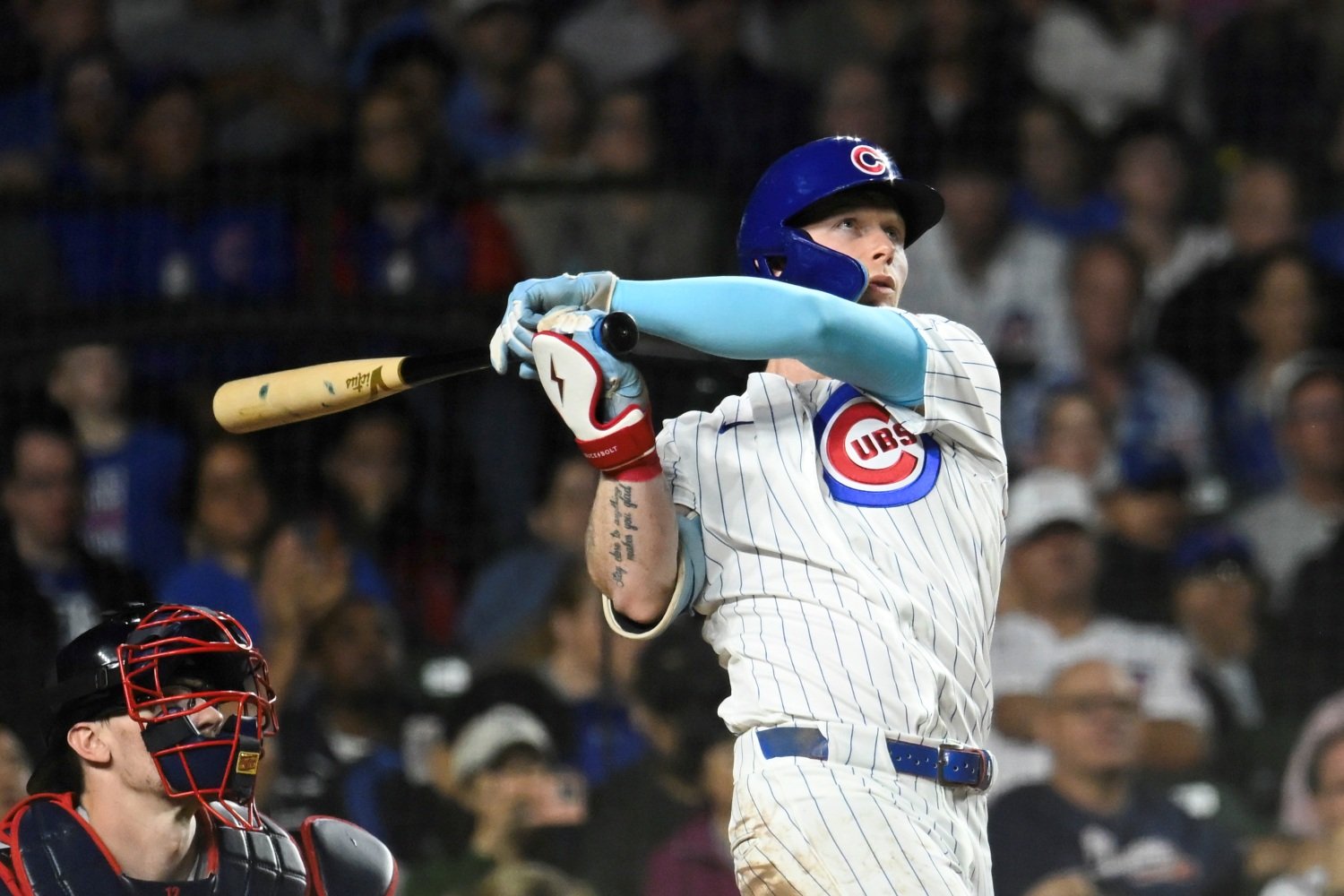 The first remit of the big-league batter is to be on time for the fastball. It's the bare minimum for any player hoping to stick around in the majors. It's necessary, but not sufficient, because there are plenty of guys who can do it. The real challenges are to do it without giving up your power by shortening your swing too much; to define 'on time' in a way that produces batted balls with real value; and to do it while still covering slower pitches, like sliders, curveballs and changeups. The name of the game is conviction; you have to swing with confidence to hit the ball with authority. Get overconfident, though, and all you've done is make yourself vulnerable to constantly being fooled. It's this balance that Pete Crow-Armstrong has struck with ferocious perfection over the last four months. In fact, he's been moving steadily toward that perfect balance not only since the middle of 2024, but even since the 2026 All-Star break. He's a unique case to study in this regard, because he forces us to answer an interesting question: Where the hell did the erraticism of his batting profile go, exactly? Real improvement is possible, of course. We live in the Golden Age of player development. Teams, independent facilities, and players themselves have gotten far better at adjusting and leveling up than they used to be. Still, there's a version of science's law of conservation of mass that applies to baseball, too. To borrow from a different discipline, there's no such thing as a free adjustment. Everything requires a tradeoff. When we're talking about hitters, that usually means trading contact for power (or vice-versa); being more patient but striking out more because you end up in deeper counts; or pulling the ball less often so as to wait longer and make better swing decisions. Add more tilt to your swing so that you can handle breaking stuff better and use the opposite field more, and you might be susceptible to the high fastball. Flatten it to cover the heater, and you're likely to hit more grounders and more pop-ups. How, then, is what Crow-Armstrong is doing possible? Consider this comparison of his last three seasons, and it's hard to see where he's traded anything for this massive change in production. Yes, he's striking out more, but it's a tiny bit more. That really doesn't count as a tradeoff—not when your walk rate has moved three times as much as your strikeout rate, and there's so much more production on balls in play, to boot. He's lost a tiny bit of speed and arm strength, as virtually every player does even throughout their early 20s, but we're not seeing him become materially less lithe in order to build the strength and generate the power we've seen from him. The Squared-Up% line is the only other one in which he's not currently at his best. At first, that looks like a small, even negligible difference, too. In fact, though, that's where he's made the hidden, vital tradeoff that has unlocked this version of him. Let's talk about how. First, you need to know what Squared-Up% is. It's simpler than it will sound, at first, so hang with me. To determine whether a ball is Squared-Up, by Statcast's reckoning: Collect the swing speed, the pitch velocity and the exit velocity for any given batted ball. Using a physics equation we laypeople don't need to memorize, find the maximum exit velocity that was possible on that pitch, given the swing speed and the pitch velocity. Divide the actual exit velocity by the maximum possible one. Then, to get to their Squared-Up%, take the number of batted balls on which the steps above return a result over 80%, and divide it by the player's total number of batted balls. That's not quite arbitrary, but it's a line they settled on; another way to report the same number would be to stop after the three steps above and take the average result on all their batted balls as the player's Squared-Up rate. There are pluses and minuses to each; it's hard to create a perfect version of this stat. For reference, here's a chart showing Crow-Armstrong's Squared-Up rate (over rolling 100-plate appearance windows) in that second way, throughout his career. It tells the same story: he's squaring it up a bit less this season than in the past. Ok, so that's what this number is. Why is it such a key to understanding Crow-Armstrong? Because it reveals what he's done to go from a hacktastic, erratic slugger to a more lethal one, even though it demonstrates less precision on his part. In the past, Crow-Armstrong was swinging under a bit more control—not in terms of whether he swung, unfortunately, but in terms of where and how he did so. He has slightly above-average feel to hit, and early in his career, his approach was geared toward using it. He wanted to pull and lift the ball, but he wanted to do it by being accurate with the barrel. Over the offseason, Crow-Armstrong and the Cubs decided to sacrifice that restraint for more bat speed. That's been the key to his season, and it's why his Squared-Up rate both betrays the underlying tradeoff he made and, in the grand scheme, doesn't matter very much. If you swing the bat 70.6 MPH on average, you need to square it up fairly well to hit for power. If you swing it 72.7 MPH, you have a bigger margin for error, but you're not yet at the point where you can do much damage without hitting it on the screws. If you swing it 75.0 MPH, though—and, at this point, Crow-Armstrong is really swinging it even faster than that most of the time—you've reached the point where your mishit balls still pose a threat. Since the All-Star break, Crow-Armstrong has put 13 balls in play on swings that were 81 MPH or faster. That's as many such swings as he connected on in his entire career before that. His bat speed is through the roof, and specifically, his bat speed on swings that result in balls in play has risen sharply. That means that he can miss the sweet spot a little bit and still hit it hard and far. Don't get me wrong. Any hitter is still going to find most of their value on batted balls on the swings that connect cleanly with the ball, resulting in Squared-Up contact by the Statcast definition. Crow-Armstrong just doesn't rely as much on that as most elite sluggers do. Here's a comparison of the timing profiles on hard-hit balls for the best offensive weapon of each of the last three seasons: 2024 Shohei Ohtani, 2025 Aaron Judge, and this year's version of Crow-Armstrong. Notice that, compared to the other two super-sluggers, Crow-Armstrong is exactly on time (the center panel) more often on his hard-hit balls, but more likely to hit it in toward the handle (left panel). Exit velocity is controlled most strongly by that left-hand image; getting the ball in the center of the barrel (rather than off the end of the bat or on the label) is the surest way to produce hard contact. But that's less true for Crow-Armstrong than for most hitters. He needs to be on time, but not as much on barrel. Balls hit either direction from the center of the barrel by more than about one baseball (2.9 inches) are rarely going to register as Squared-Up. But if you hit that ball with the bat square to it, and if you're on plane with it and/or working uphill at contact, and if you swing the bat 80 MPH as you do so, you don't have to produce Squared-Up contact to hit a screaming double, or even a homer. So, we circle back to what I said at the very beginning of this piece: a hitter's remit is to be on time for the fastball. That part is even truer of Crow-Armstrong than of most players, even though other general rules about a hitter's process don't seem to apply to him. That's exactly what Crow-Armstrong has done this season. Here's his set of swing timing visuals for each of the last three seasons, on four-seamers and sinkers only. Unsurprisingly, we see him being much more consistently on time this season, and late less often. The tradeoff here is that he's getting the ball in on the label much more often. We've already talked about this a bit. It's what he had to sacrifice to get on time by swinging faster, without being too early on the breaking stuff. Speaking of which, here's the same set of visuals for breaking pitches. He's early on spin as often as ever, but notice how he's moved into the sweet spot more often in terms of centering those pitches on his barrel. He probably wouldn't put it quite this way, but his swing is now designed to attack the fastball with brute force, worrying about colliding with it at speed but not about being precise with the barrel—while, because it works out given the locations and shapes of the respective pitches most of the time and because of the arc of his swing, he's getting more value on breaking pitches by getting from that inefficient contact point to an efficient one. This takes great pitch-recognition skills. It takes a hitter with above-average feel, which was always lurking in his skill set before, underutilized. It also takes a flexible approach, because once you show opponents that you can do all of this, they're going to adjust to you, too. Thus, even within the season, Crow-Armstrong is learning to time hurlers up slightly differently, to combat the different ways he's being pitched. Here are the same visuals as above, returning to fastballs, but this time, the breakdown is month by month throughout this season, rather than season by season. August marks a departure from what he did in the season up to that point. Crow-Armstrong moved slightly back toward letting himself be late on the fastball—not quite to actually being late, as he too often was in the past, but toward it. By letting the heater travel that tiny bit more and clipping the bottom half of it a bit more (right-hand panel), he was putting himself in a less exploitable position against softer stuff. These kinds of tweaks have kept him from being solved throughout what first looked like an incredible hot streak. Now, instead, it looks like a durable Hall of Fame breakthrough. Back in mid-May (just before he implemented the set of adjustments that lit the fuse on his rocket to superstardom), I wrote about the way Crow-Armstrong's newfound bat speed was actually getting in the way of being productive. That was because he hadn't learned to time pitches up right, given how much faster he was moving the bat; he was early too much. That was leading to lots of ground balls and lazy fly balls. To capitalize on swinging with such abandon, he needed to be on time more consistently. Even in noting the deficiencies, though, I said the following: What needed to happen was not more collision efficiency in Crow-Armstrong's swing, exactly, but better timing. His bat speed boost had rendered him capable of hitting it hard even when he didn't line everything up perfectly, and his unique directionality profile—the orientation toward pulling and lifting that made him an unexpected slugger even last year—meant that that hard contact was often going to be in the air, headed to the part of the park it would have a chance to leave. He just had to be on time, in order for that to happen. Shortly after that, Crow-Armstrong moved closer to the plate, altered his setup in the box, and—thanks to those changes, which forced his lower half to move differently as he loaded up for each hack—found his way to being on time. The rest is, without hyperbole, history. Moving closer to the plate exposed Crow-Armstrong to a little more risk of catching the ball up toward the handle from the sweet spot, of course, but as long as he was on time, that didn't matter too much. What's happened, ultimately, is that his much-improved swing decisions—a trend that started early this season, after he flipped the turbo switch on the swing but before the setup and timing changes—and his bat speed increase allowed him to make a 1-for-2 trade. He gave up efficiency of contact, for both more contact (especially more of it in the air and to the pull side) and more bat speed. Only a player with a perfect confluence of enormous talent, tenacity, intelligence and a great support system could pull this off. Crow-Armstrong owes much to his teammates and coaches, but in evolving this way—in avoiding a compensatory slump of any real length as he's been adjusted to and tested in new ways by opponents—he's showed the depth of his genius and his desire, as well as his ability. This is the most impressive season by any baseball player in at least 60 years, not only because of the physical prowess on display, but because the player who's achieving it had to be so diligent, obsessive and adaptable to do so.
 -
Image courtesy of Matt Marton-Imagn Images The first remit of the big-league batter is to be on time for the fastball. It's the bare minimum for any player hoping to stick around in the majors. It's necessary, but not sufficient, because there are plenty of guys who can do it. The real challenges are to do it without giving up your power by shortening your swing too much; to define 'on time' in a way that produces batted balls with real value; and to do it while still covering slower pitches, like sliders, curveballs and changeups. The name of the game is conviction; you have to swing with confidence to hit the ball with authority. Get overconfident, though, and all you've done is make yourself vulnerable to constantly being fooled. It's this balance that Pete Crow-Armstrong has struck with ferocious perfection over the last four months. In fact, he's been moving steadily toward that perfect balance not only since the middle of 2024, but even since the 2026 All-Star break. He's a unique case to study in this regard, because he forces us to answer an interesting question: Where the hell did the erraticism of his batting profile go, exactly? Real improvement is possible, of course. We live in the Golden Age of player development. Teams, independent facilities, and players themselves have gotten far better at adjusting and leveling up than they used to be. Still, there's a version of science's law of conservation of mass that applies to baseball, too. To borrow from a different discipline, there's no such thing as a free adjustment. Everything requires a tradeoff. When we're talking about hitters, that usually means trading contact for power (or vice-versa); being more patient but striking out more because you end up in deeper counts; or pulling the ball less often so as to wait longer and make better swing decisions. Add more tilt to your swing so that you can handle breaking stuff better and use the opposite field more, and you might be susceptible to the high fastball. Flatten it to cover the heater, and you're likely to hit more grounders and more pop-ups. How, then, is what Crow-Armstrong is doing possible? Consider this comparison of his last three seasons, and it's hard to see where he's traded anything for this massive change in production. Yes, he's striking out more, but it's a tiny bit more. That really doesn't count as a tradeoff—not when your walk rate has moved three times as much as your strikeout rate, and there's so much more production on balls in play, to boot. He's lost a tiny bit of speed and arm strength, as virtually every player does even throughout their early 20s, but we're not seeing him become materially less lithe in order to build the strength and generate the power we've seen from him. The Squared-Up% line is the only other one in which he's not currently at his best. At first, that looks like a small, even negligible difference, too. In fact, though, that's where he's made the hidden, vital tradeoff that has unlocked this version of him. Let's talk about how. First, you need to know what Squared-Up% is. It's simpler than it will sound, at first, so hang with me. To determine whether a ball is Squared-Up, by Statcast's reckoning: Collect the swing speed, the pitch velocity and the exit velocity for any given batted ball. Using a physics equation we laypeople don't need to memorize, find the maximum exit velocity that was possible on that pitch, given the swing speed and the pitch velocity. Divide the actual exit velocity by the maximum possible one. Then, to get to their Squared-Up%, take the number of batted balls on which the steps above return a result over 80%, and divide it by the player's total number of batted balls. That's not quite arbitrary, but it's a line they settled on; another way to report the same number would be to stop after the three steps above and take the average result on all their batted balls as the player's Squared-Up rate. There are pluses and minuses to each; it's hard to create a perfect version of this stat. For reference, here's a chart showing Crow-Armstrong's Squared-Up rate (over rolling 100-plate appearance windows) in that second way, throughout his career. It tells the same story: he's squaring it up a bit less this season than in the past. Ok, so that's what this number is. Why is it such a key to understanding Crow-Armstrong? Because it reveals what he's done to go from a hacktastic, erratic slugger to a more lethal one, even though it demonstrates less precision on his part. In the past, Crow-Armstrong was swinging under a bit more control—not in terms of whether he swung, unfortunately, but in terms of where and how he did so. He has slightly above-average feel to hit, and early in his career, his approach was geared toward using it. He wanted to pull and lift the ball, but he wanted to do it by being accurate with the barrel. Over the offseason, Crow-Armstrong and the Cubs decided to sacrifice that restraint for more bat speed. That's been the key to his season, and it's why his Squared-Up rate both betrays the underlying tradeoff he made and, in the grand scheme, doesn't matter very much. If you swing the bat 70.6 MPH on average, you need to square it up fairly well to hit for power. If you swing it 72.7 MPH, you have a bigger margin for error, but you're not yet at the point where you can do much damage without hitting it on the screws. If you swing it 75.0 MPH, though—and, at this point, Crow-Armstrong is really swinging it even faster than that most of the time—you've reached the point where your mishit balls still pose a threat. Since the All-Star break, Crow-Armstrong has put 13 balls in play on swings that were 81 MPH or faster. That's as many such swings as he connected on in his entire career before that. His bat speed is through the roof, and specifically, his bat speed on swings that result in balls in play has risen sharply. That means that he can miss the sweet spot a little bit and still hit it hard and far. Don't get me wrong. Any hitter is still going to find most of their value on batted balls on the swings that connect cleanly with the ball, resulting in Squared-Up contact by the Statcast definition. Crow-Armstrong just doesn't rely as much on that as most elite sluggers do. Here's a comparison of the timing profiles on hard-hit balls for the best offensive weapon of each of the last three seasons: 2024 Shohei Ohtani, 2025 Aaron Judge, and this year's version of Crow-Armstrong. Notice that, compared to the other two super-sluggers, Crow-Armstrong is exactly on time (the center panel) more often on his hard-hit balls, but more likely to hit it in toward the handle (left panel). Exit velocity is controlled most strongly by that left-hand image; getting the ball in the center of the barrel (rather than off the end of the bat or on the label) is the surest way to produce hard contact. But that's less true for Crow-Armstrong than for most hitters. He needs to be on time, but not as much on barrel. Balls hit either direction from the center of the barrel by more than about one baseball (2.9 inches) are rarely going to register as Squared-Up. But if you hit that ball with the bat square to it, and if you're on plane with it and/or working uphill at contact, and if you swing the bat 80 MPH as you do so, you don't have to produce Squared-Up contact to hit a screaming double, or even a homer. So, we circle back to what I said at the very beginning of this piece: a hitter's remit is to be on time for the fastball. That part is even truer of Crow-Armstrong than of most players, even though other general rules about a hitter's process don't seem to apply to him. That's exactly what Crow-Armstrong has done this season. Here's his set of swing timing visuals for each of the last three seasons, on four-seamers and sinkers only. Unsurprisingly, we see him being much more consistently on time this season, and late less often. The tradeoff here is that he's getting the ball in on the label much more often. We've already talked about this a bit. It's what he had to sacrifice to get on time by swinging faster, without being too early on the breaking stuff. Speaking of which, here's the same set of visuals for breaking pitches. He's early on spin as often as ever, but notice how he's moved into the sweet spot more often in terms of centering those pitches on his barrel. He probably wouldn't put it quite this way, but his swing is now designed to attack the fastball with brute force, worrying about colliding with it at speed but not about being precise with the barrel—while, because it works out given the locations and shapes of the respective pitches most of the time and because of the arc of his swing, he's getting more value on breaking pitches by getting from that inefficient contact point to an efficient one. This takes great pitch-recognition skills. It takes a hitter with above-average feel, which was always lurking in his skill set before, underutilized. It also takes a flexible approach, because once you show opponents that you can do all of this, they're going to adjust to you, too. Thus, even within the season, Crow-Armstrong is learning to time hurlers up slightly differently, to combat the different ways he's being pitched. Here are the same visuals as above, returning to fastballs, but this time, the breakdown is month by month throughout this season, rather than season by season. August marks a departure from what he did in the season up to that point. Crow-Armstrong moved slightly back toward letting himself be late on the fastball—not quite to actually being late, as he too often was in the past, but toward it. By letting the heater travel that tiny bit more and clipping the bottom half of it a bit more (right-hand panel), he was putting himself in a less exploitable position against softer stuff. These kinds of tweaks have kept him from being solved throughout what first looked like an incredible hot streak. Now, instead, it looks like a durable Hall of Fame breakthrough. Back in mid-May (just before he implemented the set of adjustments that lit the fuse on his rocket to superstardom), I wrote about the way Crow-Armstrong's newfound bat speed was actually getting in the way of being productive. That was because he hadn't learned to time pitches up right, given how much faster he was moving the bat; he was early too much. That was leading to lots of ground balls and lazy fly balls. To capitalize on swinging with such abandon, he needed to be on time more consistently. Even in noting the deficiencies, though, I said the following: What needed to happen was not more collision efficiency in Crow-Armstrong's swing, exactly, but better timing. His bat speed boost had rendered him capable of hitting it hard even when he didn't line everything up perfectly, and his unique directionality profile—the orientation toward pulling and lifting that made him an unexpected slugger even last year—meant that that hard contact was often going to be in the air, headed to the part of the park it would have a chance to leave. He just had to be on time, in order for that to happen. Shortly after that, Crow-Armstrong moved closer to the plate, altered his setup in the box, and—thanks to those changes, which forced his lower half to move differently as he loaded up for each hack—found his way to being on time. The rest is, without hyperbole, history. Moving closer to the plate exposed Crow-Armstrong to a little more risk of catching the ball up toward the handle from the sweet spot, of course, but as long as he was on time, that didn't matter too much. What's happened, ultimately, is that his much-improved swing decisions—a trend that started early this season, after he flipped the turbo switch on the swing but before the setup and timing changes—and his bat speed increase allowed him to make a 1-for-2 trade. He gave up efficiency of contact, for both more contact (especially more of it in the air and to the pull side) and more bat speed. Only a player with a perfect confluence of enormous talent, tenacity, intelligence and a great support system could pull this off. Crow-Armstrong owes much to his teammates and coaches, but in evolving this way—in avoiding a compensatory slump of any real length as he's been adjusted to and tested in new ways by opponents—he's showed the depth of his genius and his desire, as well as his ability. This is the most impressive season by any baseball player in at least 60 years, not only because of the physical prowess on display, but because the player who's achieving it had to be so diligent, obsessive and adaptable to do so. View full article
-
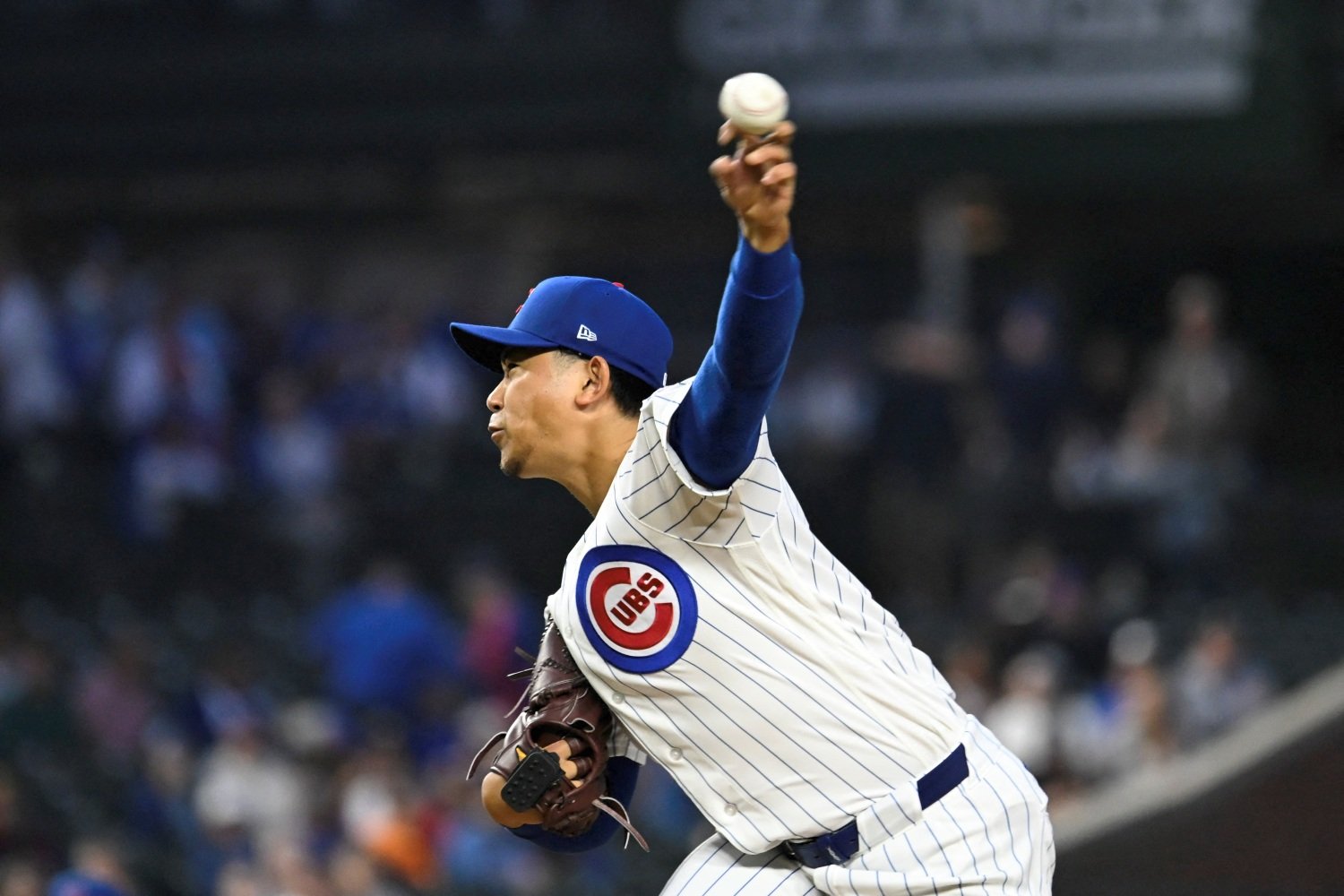 The watchword of this season, for hitters throughout the league, is conviction. As pitchers find new ways to make life in the batter's box hell via velocity and movement, batters need to find ways to get off their 'A' swing consistently; it's their only hope. To do that, they're working harder than ever to get a sense of what's coming—to study pitchers, anticipate their sequences, pick up on tells, and attack as if they'd been tipped off. It's a survival plan that relies on good intelligence. Often, what they're picking up on must actually be seen by a teammate or a base coach, who then relays it. As we've discussed, the Cubs are one of the best teams in the league at this; it's fueled their success at the plate. In the third inning of Wednesday night's game, though, we saw the flip side of Chicago's operation in this arena. Shota Imanaga fanned the fearsome Ronald Acuña Jr. to begin the frame, but Acuña took some extremely healthy cuts in the at-bat, especially against Imanaga's fastball. He also laid off a couple of splitters in a way that might have worried the Cubs; it was noticeable even for outsiders. The team has a counterespionage plan in place at all times. When the other team is picking something up and relaying it to batters, the Cubs don't attempt to enforce the unwritten rules and shame or intimidate the opponent into not doing so—as the Cardinals tried to do to the Brewers earlier this year, and as the Diamondbacks tried to do to the Cubs more recently, among other examples. Instead, any of the team's key leaders and decision-makers (a group that includes Craig Counsell and his coaching staff, but also veteran players, led by the incredibly sharp-eyed Alex Bregman) will initiate a conversation about how to thwart the other side's detection efforts. In this case, someone saw something from one of the visitors' base coaches, and a mound visit was commenced. Imanaga was tipping, and they needed to address it. Later in the game, Marquee play-by-play man Boog Sciambi and analyst Jim Deshaies highlighted that Imanaga had changed his ritualistic pre-pitch movement pattern. He'd begun turning away from the batter in an exaggerated way as he reached into the glove to grip the ball before each pitch. That movement was big and unmissable. Before making the switch to include it between innings, though, Imanaga also made a subtler adjustment within the third inning. There are multiple ways to fix a tell on the mound. He went with the Band-Aid at first, then got the problem properly treated between frames. The issue came when Imanaga reached into his glove to grip the ball. Setting up in the stretch (with his body facing first base), Imanaga starts with his left hand dangling at his hip. Once he settles on a pitch selection, he brings his hands together right in front of his belt, then brings them up to his chest. That sequence contained a slight giveaway early in his outing Wednesday night. When he was preparing to throw the splitter, he tensed his arms a bit more as he brought the hands together, and the pause at the belt was slightly longer. When he was throwing his fastball or sweeper, that pause wasn't there. Later in the game, to make it especially hard for players or coaches from the near-Atlantans to get a reliable read, Imanaga went to the more exaggerated set of moves shown above. That also reminded him, physically, not to fall into the pattern the team had identified. In the at-bats just after the mound visit from Tommy Hottovy, though, he had a more improvised fix, He just paused the same way on everything. He became almost imperceptibly more deliberate, and the extra movement opposing players or coaches were noticing with the splitter became indistinguishable from what he was doing otherwise. Remember Ryan Dempster's career as a starter? He turned the corner for the Cubs in 2008 when he realized that he was flaring his glove open in a noticeable way when he gripped his own splitter. To foil hitters trying to pick up on that, he began a ritual of wiggling his glove back and forth in a big, noisy way to begin his windup, regardless of what pitch he was throwing. It worked like a charm. But as Dempster acknowledged, the flutter was more than was really required. If he felt confident that he could always flare the glove the same way without doing that, he could just as easily have simply done that—something fans at home wouldn't even have seen, but which would have had the same result. Imanaga made an ad hoc tweak in that third inning, and then went a bit bigger later in the appearance. Whether he'll continue the shoulder turn in his future outings will be interesting to watch, but either way, we gained some insight Wednesday into how opponents try to pick up what's coming from him—and about how quickly and productively the Cubs are capable of responding.
 -
Image courtesy of Matt Marton-Imagn Images The watchword of this season, for hitters throughout the league, is conviction. As pitchers find new ways to make life in the batter's box hell via velocity and movement, batters need to find ways to get off their 'A' swing consistently; it's their only hope. To do that, they're working harder than ever to get a sense of what's coming—to study pitchers, anticipate their sequences, pick up on tells, and attack as if they'd been tipped off. It's a survival plan that relies on good intelligence. Often, what they're picking up on must actually be seen by a teammate or a base coach, who then relays it. As we've discussed, the Cubs are one of the best teams in the league at this; it's fueled their success at the plate. In the third inning of Wednesday night's game, though, we saw the flip side of Chicago's operation in this arena. Shota Imanaga fanned the fearsome Ronald Acuña Jr. to begin the frame, but Acuña took some extremely healthy cuts in the at-bat, especially against Imanaga's fastball. He also laid off a couple of splitters in a way that might have worried the Cubs; it was noticeable even for outsiders. The team has a counterespionage plan in place at all times. When the other team is picking something up and relaying it to batters, the Cubs don't attempt to enforce the unwritten rules and shame or intimidate the opponent into not doing so—as the Cardinals tried to do to the Brewers earlier this year, and as the Diamondbacks tried to do to the Cubs more recently, among other examples. Instead, any of the team's key leaders and decision-makers (a group that includes Craig Counsell and his coaching staff, but also veteran players, led by the incredibly sharp-eyed Alex Bregman) will initiate a conversation about how to thwart the other side's detection efforts. In this case, someone saw something from one of the visitors' base coaches, and a mound visit was commenced. Imanaga was tipping, and they needed to address it. Later in the game, Marquee play-by-play man Boog Sciambi and analyst Jim Deshaies highlighted that Imanaga had changed his ritualistic pre-pitch movement pattern. He'd begun turning away from the batter in an exaggerated way as he reached into the glove to grip the ball before each pitch. That movement was big and unmissable. Before making the switch to include it between innings, though, Imanaga also made a subtler adjustment within the third inning. There are multiple ways to fix a tell on the mound. He went with the Band-Aid at first, then got the problem properly treated between frames. The issue came when Imanaga reached into his glove to grip the ball. Setting up in the stretch (with his body facing first base), Imanaga starts with his left hand dangling at his hip. Once he settles on a pitch selection, he brings his hands together right in front of his belt, then brings them up to his chest. That sequence contained a slight giveaway early in his outing Wednesday night. When he was preparing to throw the splitter, he tensed his arms a bit more as he brought the hands together, and the pause at the belt was slightly longer. When he was throwing his fastball or sweeper, that pause wasn't there. Later in the game, to make it especially hard for players or coaches from the near-Atlantans to get a reliable read, Imanaga went to the more exaggerated set of moves shown above. That also reminded him, physically, not to fall into the pattern the team had identified. In the at-bats just after the mound visit from Tommy Hottovy, though, he had a more improvised fix, He just paused the same way on everything. He became almost imperceptibly more deliberate, and the extra movement opposing players or coaches were noticing with the splitter became indistinguishable from what he was doing otherwise. Remember Ryan Dempster's career as a starter? He turned the corner for the Cubs in 2008 when he realized that he was flaring his glove open in a noticeable way when he gripped his own splitter. To foil hitters trying to pick up on that, he began a ritual of wiggling his glove back and forth in a big, noisy way to begin his windup, regardless of what pitch he was throwing. It worked like a charm. But as Dempster acknowledged, the flutter was more than was really required. If he felt confident that he could always flare the glove the same way without doing that, he could just as easily have simply done that—something fans at home wouldn't even have seen, but which would have had the same result. Imanaga made an ad hoc tweak in that third inning, and then went a bit bigger later in the appearance. Whether he'll continue the shoulder turn in his future outings will be interesting to watch, but either way, we gained some insight Wednesday into how opponents try to pick up what's coming from him—and about how quickly and productively the Cubs are capable of responding. View full article
-
Image courtesy of Vincent Carchietta-Imagn Images Edward Cabrera came to the Cubs with some well-known warts. His injury history is long and frightening, and there were lurking concerns about his elbow even entering last offseason. He also has shaky control, and neither his four-seam fastball nor his sinker has ever maintained a shape that allowed the heater to lead his arsenal. Instead, he's always had to lean on his changeup and curveball, which is part of why he's always had issues with walks. By trading top prospect Owen Caissie to land Cabrera, the Cubs made a forceful statement of their belief in themselves. They were betting on their pitching infrastructure, in which they take considerable (though not always earned) pride, to both keep Cabrera healthy and foster the development that saw him turn the corner in 2025. Caissie has hardly been a superstar in his rookie season with Miami, but nonetheless, it feels like the Cubs lost their gamble. They needed the Cabrera who pitched like a strong mid-rotation starter last year and showed the potential to be a true frontliner. Instead, recurring blister problems and a severe hamstring strain have limited Cabrera 78 1/3 innings—and he's been disastrously bad when he has been on the mound. Several things are happening at once within Cabrera's game. It's hard to tell which are products of the team's tinkering, and which are the result of Cabrera scrambling to fix what has repeatedly gone wrong or of him trying to protect himself from injuries. Whatever the causes, though, the following things have changed: He's throwing a bit less hard; his four-seamer has averaged 96.3 MPH, down from 97 in 2025. His four-seamer and changeup have become more prominent; he's reduced his usage of both of his breaking balls. Both breaking pitches, when he does throw them, are firmer and move less than they did last year. His arm slot, which he significantly lowered in 2025 en route to his best campaign, has gotten even lower; and As a result, his four-seamer has gotten more similar to his sinker, with more arm-side run but less carry. The sinker, meanwhile, has changed hardly at all. These changes haven't worked, but you already knew that. It's interesting, too, to note that it was never likely to work, according to pitch-modeling data. Cabrera's PitchingBot, Stuff+ and StuffPro have each gotten worse, on a pitch-by-pitch basis and in the grades for his overall arsenal. That he's missing fewer bats and still running right into barrels is no surprise. If these degradations had been mitigated by compensatory improvements in command and durability, it would be easy to understand and accept the changes. As it is, there's been no such tradeoff. Cabrera has just gotten worse at almost everything under the Cubs' stewardship. He's the highest-profile, highest-ceiling pitching acquisition the team has made since Marcus Stroman, and so far, he's a total bust. At this point, there's little hope for Cabrera helping the Cubs in 2026. He throws hard, but that's the only nice thing you can say about him without lying, and it's not enough—not nearly enough—to make up for all of the things he does poorly right now. The team will almost certainly change pitching coaches and shake some things up this winter; being this lousy has to cost someone their job. Cabrera is under team control through 2028, as long as the Cubs are willing to pay him escalating salaries via the arbitration process. It's too early to give up on him in any long-term sense. However long they play this fall, though, the team will have to look elsewhere for help on the mound—which is a glaring indictment of their front office and coaching staff, no matter how you slice it. View full article
-
Nothing the Cubs Have Tried with Edward Cabrera Has Worked
Matthew Trueblood posted an article in Cubs
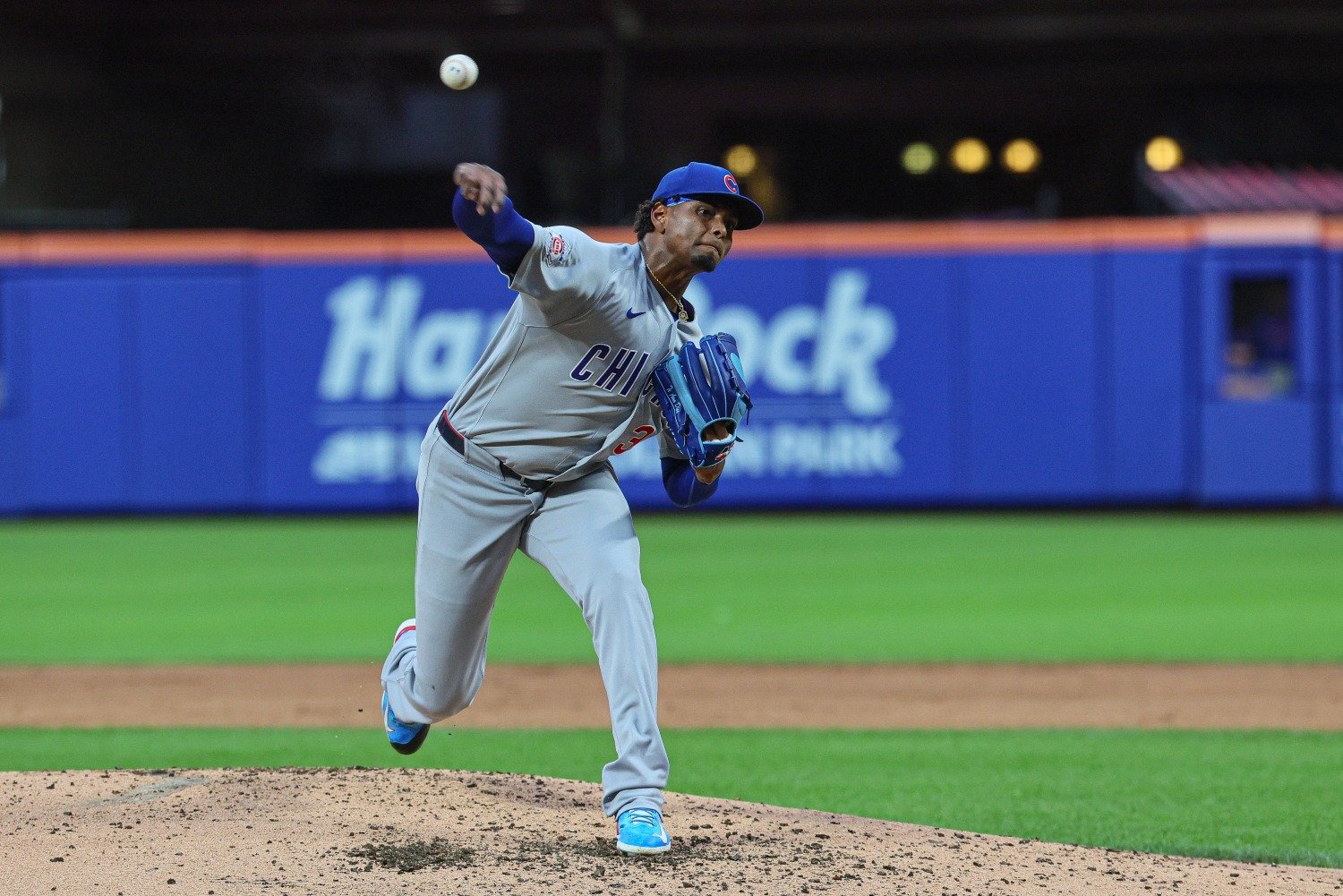 Edward Cabrera came to the Cubs with some well-known warts. His injury history is long and frightening, and there were lurking concerns about his elbow even entering last offseason. He also has shaky control, and neither his four-seam fastball nor his sinker has ever maintained a shape that allowed the heater to lead his arsenal. Instead, he's always had to lean on his changeup and curveball, which is part of why he's always had issues with walks. By trading top prospect Owen Caissie to land Cabrera, the Cubs made a forceful statement of their belief in themselves. They were betting on their pitching infrastructure, in which they take considerable (though not always earned) pride, to both keep Cabrera healthy and foster the development that saw him turn the corner in 2025. Caissie has hardly been a superstar in his rookie season with Miami, but nonetheless, it feels like the Cubs lost their gamble. They needed the Cabrera who pitched like a strong mid-rotation starter last year and showed the potential to be a true frontliner. Instead, recurring blister problems and a severe hamstring strain have limited Cabrera 78 1/3 innings—and he's been disastrously bad when he has been on the mound. Several things are happening at once within Cabrera's game. It's hard to tell which are products of the team's tinkering, and which are the result of Cabrera scrambling to fix what has repeatedly gone wrong or of him trying to protect himself from injuries. Whatever the causes, though, the following things have changed: He's throwing a bit less hard; his four-seamer has averaged 96.3 MPH, down from 97 in 2025. His four-seamer and changeup have become more prominent; he's reduced his usage of both of his breaking balls. Both breaking pitches, when he does throw them, are firmer and move less than they did last year. His arm slot, which he significantly lowered in 2025 en route to his best campaign, has gotten even lower; and As a result, his four-seamer has gotten more similar to his sinker, with more arm-side run but less carry. The sinker, meanwhile, has changed hardly at all. These changes haven't worked, but you already knew that. It's interesting, too, to note that it was never likely to work, according to pitch-modeling data. Cabrera's PitchingBot, Stuff+ and StuffPro have each gotten worse, on a pitch-by-pitch basis and in the grades for his overall arsenal. That he's missing fewer bats and still running right into barrels is no surprise. If these degradations had been mitigated by compensatory improvements in command and durability, it would be easy to understand and accept the changes. As it is, there's been no such tradeoff. Cabrera has just gotten worse at almost everything under the Cubs' stewardship. He's the highest-profile, highest-ceiling pitching acquisition the team has made since Marcus Stroman, and so far, he's a total bust. At this point, there's little hope for Cabrera helping the Cubs in 2026. He throws hard, but that's the only nice thing you can say about him without lying, and it's not enough—not nearly enough—to make up for all of the things he does poorly right now. The team will almost certainly change pitching coaches and shake some things up this winter; being this lousy has to cost someone their job. Cabrera is under team control through 2028, as long as the Cubs are willing to pay him escalating salaries via the arbitration process. It's too early to give up on him in any long-term sense. However long they play this fall, though, the team will have to look elsewhere for help on the mound—which is a glaring indictment of their front office and coaching staff, no matter how you slice it.
 -
Can Pete Crow-Armstrong Resist the Temptation to Try to Save the Cubs?
Matthew Trueblood posted an article in Cubs
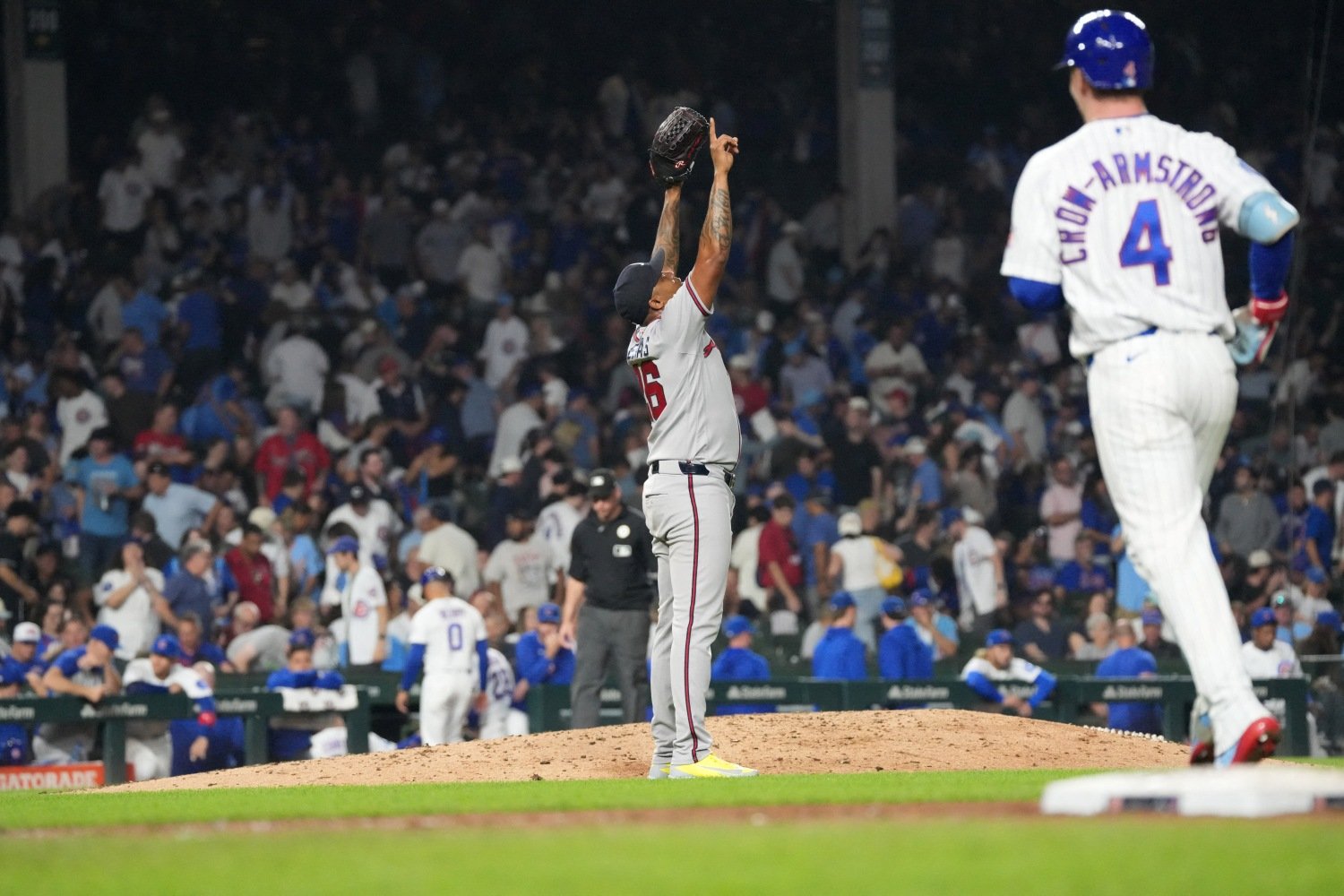 The 2026 Cubs would be a sub-.500 team without Pete Crow-Armstrong. He's been worth 67 runs relative to an average player, according to Baseball Reference: 41 as a batter, 10 as a runner, and 16 in the field. If you prefer Statcast's valuations, those numbers are 47, 7 and 27, respectively. Either way, the story is the same. If you insist on the value of clutchness and situational hitting, nothing changes, because Crow-Armstrong has been extremely clutch this year. His Win Probability Added (WPA) at the plate is a league-best 5.2; he also leads the majors with a 3.5% Championship WPA. He's been even better in big moments than in low- and medium-leverage spots. The Cubs are 84-68. Take Crow-Armstrong away, and they're no better than 76-76—and really, they're probably worse. That's a heavy burden for any player to bear—let alone a 24-year-old whose intensity is just barely under control at all times, anyway. Crow-Armstrong's desire to win is pumped from his heart out to his fingertips with every beat, moving faster than his blood, crackling like electricity. It feels slightly but significantly different than even last season, when Crow-Armstrong was obviously and fiercely competitive but seemed to be motivated as much by proving himself and being great as by winning itself. This season, he's been so livid and disconsolate when the team is losing and so delirious when the team is winning that there's no mistaking the fuel for his fire. He wants this. He's made his first huge payday; he's all but assured of the MVP award; and he's quieted the doubters, if not the haters. What he wants, now, is for his team to rise to his level. A few of them have, of course—or, at least, they've tried. Seiya Suzuki and Alex Bregman are having marvelous seasons, and the shape of their production suggests that they're receiving as much inspiration and intel from their younger teammate as he's getting from them. On the whole, though, this remains a bad team with an all-time great player papering over its flaws, and although Crow-Armstrong would be loath to characterize it that way, it's becoming clear that he knows just how badly the club needs him to be great every day. Unfortunately (but also unsurprisingly), that has led Crow-Armstrong back into some old, bad habits. The grind of the season erodes players' plate discipline, anyway, but Crow-Armstrong is back in swing mode, in a way that feels much more like him trying to put the team on his back in every plate appearance than like him getting tired or going up there without a plan. One way or another, he's currently swinging as much as he did in 2025—something that hadn't been true at any point since the first few weeks of the season. As you can also see, swinging so much has only dragged down Crow-Armstrong's production, despite plenty of continued hard contact and some home runs. For about 100 days, he morphed into a marvelously consistent and balanced offensive weapon, as well as a dynamic one. Right now, he's dangerous—but he's also gettable. This isn't about playing for stats. If Crow-Armstrong were thinking selfishly, he'd be swinging less often, trying to work a few walks and go steal the three bases left between him and the 40/40 club. No, he's swinging like crazy again because he can sense his team sliding toward the danger zone where they might even miss the playoffs—or, more likely, end up as the second or third Wild Card entrant and have to play the Wild Card Series on the road. He's trying to save the day. He's trying to be a superhero, and no player this side of Shohei Ohtani and Aaron Judge has been more up to that task at any time in the last decade. Alas, baseball games aren't won by superheroes. They have to be won with depth, teamwork, and the slow accretion of good plays. Crow-Armstrong is keenly aware that his team can't produce that kind of win as consistently as it needs to right now. That's why he's trying to win games by himself. Unless they put up a basketball hoop behind second base, though, that's not an option that will be available most of the time. Crow-Armstrong has to rediscover his patience at the plate, and hope (if not quite trust; that would be too generous) that his teammates round into form in time to support his historic brilliance the way it deserves.
 -
Image courtesy of David Banks-Imagn Images The 2026 Cubs would be a sub-.500 team without Pete Crow-Armstrong. He's been worth 67 runs relative to an average player, according to Baseball Reference: 41 as a batter, 10 as a runner, and 16 in the field. If you prefer Statcast's valuations, those numbers are 47, 7 and 27, respectively. Either way, the story is the same. If you insist on the value of clutchness and situational hitting, nothing changes, because Crow-Armstrong has been extremely clutch this year. His Win Probability Added (WPA) at the plate is a league-best 5.2; he also leads the majors with a 3.5% Championship WPA. He's been even better in big moments than in low- and medium-leverage spots. The Cubs are 84-68. Take Crow-Armstrong away, and they're no better than 76-76—and really, they're probably worse. That's a heavy burden for any player to bear—let alone a 24-year-old whose intensity is just barely under control at all times, anyway. Crow-Armstrong's desire to win is pumped from his heart out to his fingertips with every beat, moving faster than his blood, crackling like electricity. It feels slightly but significantly different than even last season, when Crow-Armstrong was obviously and fiercely competitive but seemed to be motivated as much by proving himself and being great as by winning itself. This season, he's been so livid and disconsolate when the team is losing and so delirious when the team is winning that there's no mistaking the fuel for his fire. He wants this. He's made his first huge payday; he's all but assured of the MVP award; and he's quieted the doubters, if not the haters. What he wants, now, is for his team to rise to his level. A few of them have, of course—or, at least, they've tried. Seiya Suzuki and Alex Bregman are having marvelous seasons, and the shape of their production suggests that they're receiving as much inspiration and intel from their younger teammate as he's getting from them. On the whole, though, this remains a bad team with an all-time great player papering over its flaws, and although Crow-Armstrong would be loath to characterize it that way, it's becoming clear that he knows just how badly the club needs him to be great every day. Unfortunately (but also unsurprisingly), that has led Crow-Armstrong back into some old, bad habits. The grind of the season erodes players' plate discipline, anyway, but Crow-Armstrong is back in swing mode, in a way that feels much more like him trying to put the team on his back in every plate appearance than like him getting tired or going up there without a plan. One way or another, he's currently swinging as much as he did in 2025—something that hadn't been true at any point since the first few weeks of the season. As you can also see, swinging so much has only dragged down Crow-Armstrong's production, despite plenty of continued hard contact and some home runs. For about 100 days, he morphed into a marvelously consistent and balanced offensive weapon, as well as a dynamic one. Right now, he's dangerous—but he's also gettable. This isn't about playing for stats. If Crow-Armstrong were thinking selfishly, he'd be swinging less often, trying to work a few walks and go steal the three bases left between him and the 40/40 club. No, he's swinging like crazy again because he can sense his team sliding toward the danger zone where they might even miss the playoffs—or, more likely, end up as the second or third Wild Card entrant and have to play the Wild Card Series on the road. He's trying to save the day. He's trying to be a superhero, and no player this side of Shohei Ohtani and Aaron Judge has been more up to that task at any time in the last decade. Alas, baseball games aren't won by superheroes. They have to be won with depth, teamwork, and the slow accretion of good plays. Crow-Armstrong is keenly aware that his team can't produce that kind of win as consistently as it needs to right now. That's why he's trying to win games by himself. Unless they put up a basketball hoop behind second base, though, that's not an option that will be available most of the time. Crow-Armstrong has to rediscover his patience at the plate, and hope (if not quite trust; that would be too generous) that his teammates round into form in time to support his historic brilliance the way it deserves. View full article
-
Image courtesy of David Banks-Imagn Images Kevin Gausman was cruising. He was mowing down the visitors from the suburbs of Atlanta efficiently and impressively. Through five innings, he enjoyed a 3-0 lead, and his command of both his fastball and his splitter looked good. Unfortunately, like all his colleagues on this year's Chicago pitching staff, he never has as much margin for error as one might think or wish. On an 0-1 pitch with one out in the sixth, Drake Baldwin hit a sharp one-hopper through the right side for a single. Early counts have been a problem for Gausman this year. He's been ambushed much more often than is usual for him, because he's too often in the meaty part of the zone while rushing to get ahead—and because he can be a bit predictable. He'd gotten a swinging strike near the top of the zone on a fastball for strike one; Baldwin knew to sit on a splitter. The splitter Gausman threw was in the zone, and it was hit hard. It was just a bases-empty single. That shouldn't be a big deal, especially in a three-run game. It was, though, because any opposing batter who reaches even first base (hell, even one in the batter's box) is in scoring position against Cubs pitchers. No team has given up more homers than Chicago's 227—not the A's (226), who play in a minor-league park; not the Rockies (208). who play on the moon; not the nationals (204) or Reds (201). The reason for that vulnerability is a little different with each Cubs pitcher, but the vulnerability itself is a common thread tying far too many of them together. In Gausman's case, the other problem—especially early in counts, but not solely then—is that he's too often left his fastball on the inner edge against righties this year. In the past, he was good at targeting the glove-side, outer third of the zone, where it both allowed less damage and set up his splitter better. After giving up the single to Baldwin, he left a 1-1 heater to Ronald Acuña Jr. middle-in, and he paid the predictable price. Suddenly, Chicago led only 3-2. The veteran workhorse wouldn't even escape the sixth, after having been so untouchable through five; Daniel Palencia cleaned up his mess to get the Cubs back to the bats. The Cubs ran face-first into a wall after an early barrage against Martín Pérez, though. They scored once in the second and twice in the fourth, and then everything dried up. Thus, when Jacob Webb took over for the top of the seventh, the margin was still razor-thin—much too thin, it turned out. Webb's bugaboo is less subtle and more familiar: he's hung far too many changeups lately. The four-pitch leadoff walk he issued to Austin Riley was uncharacteristic, but when he fell behind Ozzie Albies 2-1 and then left a changeup thigh-high, everything felt (excruciatingly) right again. Some fans, surely, had wished Edward Cabrera would get the chance that went (instead) to Webb. Craig Counsell turned to Cabrera for the eighth and ninth, to let everyone see why that wasn't a good idea, either. Cabrera's confidence is every bit as shattered as Webb's. The Cubs screwed up his onboarding and development badly in the first year after trading a top prospect for him, and he will need the offseason to get right—if he can be reclaimed, at all. He gave up a line-drive single in the top of the ninth, allowed a stolen base, moved the runner to third via a wild pitch, and then gave up a back-breaking home run on yet another meatball, this time to Baldwin. The Cubs probably didn't have a comeback in them Tuesday night, anyway, but that put the nail in their coffin. On any night on which Pete Crow-Armstrong doesn't light up the game with his brilliance, the Cubs are depressingly mediocre. They need to fire pitching coach Tommy Hottovy, who has overseen too many failures of development and optimization to be retained. That's one of several steps between here and a solution for 2027, though. It offers nothing for 2026. To get where they hope to go—to do enough in October to make this season feel like a success—the Cubs need to find some way to stop giving up two-run homers. Unfortunately, right now, that looks unlikely. Hitting lots of home runs is not the only way to win in the playoffs, but giving up lots of them is the surest way to go home early. This team has run out of pitchers who can keep the ball in the ballpark; the results are as painful as they are predictable. View full article
-
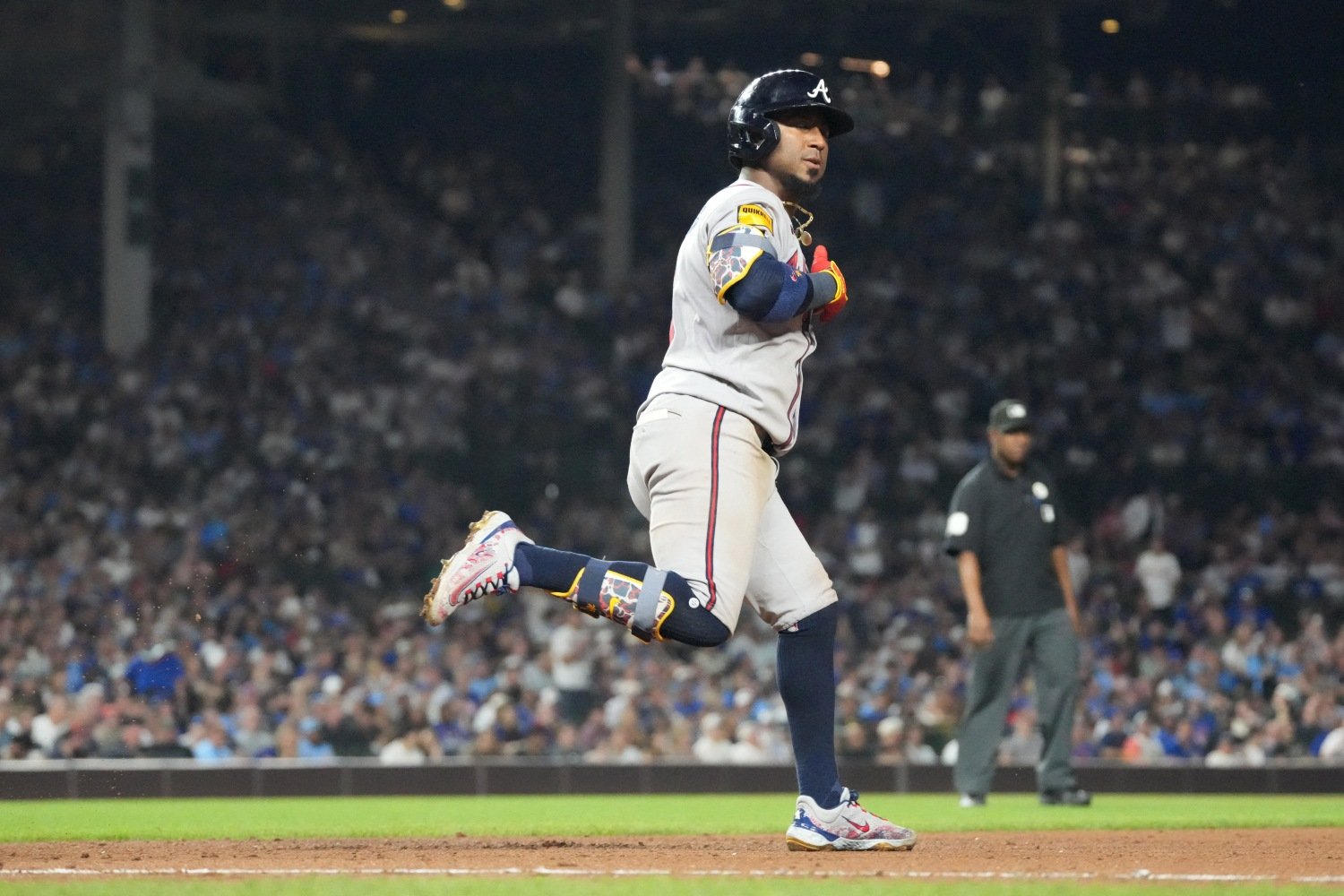 Kevin Gausman was cruising. He was mowing down the visitors from the suburbs of Atlanta efficiently and impressively. Through five innings, he enjoyed a 3-0 lead, and his command of both his fastball and his splitter looked good. Unfortunately, like all his colleagues on this year's Chicago pitching staff, he never has as much margin for error as one might think or wish. On an 0-1 pitch with one out in the sixth, Drake Baldwin hit a sharp one-hopper through the right side for a single. Early counts have been a problem for Gausman this year. He's been ambushed much more often than is usual for him, because he's too often in the meaty part of the zone while rushing to get ahead—and because he can be a bit predictable. He'd gotten a swinging strike near the top of the zone on a fastball for strike one; Baldwin knew to sit on a splitter. The splitter Gausman threw was in the zone, and it was hit hard. It was just a bases-empty single. That shouldn't be a big deal, especially in a three-run game. It was, though, because any opposing batter who reaches even first base (hell, even one in the batter's box) is in scoring position against Cubs pitchers. No team has given up more homers than Chicago's 227—not the A's (226), who play in a minor-league park; not the Rockies (208). who play on the moon; not the nationals (204) or Reds (201). The reason for that vulnerability is a little different with each Cubs pitcher, but the vulnerability itself is a common thread tying far too many of them together. In Gausman's case, the other problem—especially early in counts, but not solely then—is that he's too often left his fastball on the inner edge against righties this year. In the past, he was good at targeting the glove-side, outer third of the zone, where it both allowed less damage and set up his splitter better. After giving up the single to Baldwin, he left a 1-1 heater to Ronald Acuña Jr. middle-in, and he paid the predictable price. Suddenly, Chicago led only 3-2. The veteran workhorse wouldn't even escape the sixth, after having been so untouchable through five; Daniel Palencia cleaned up his mess to get the Cubs back to the bats. The Cubs ran face-first into a wall after an early barrage against Martín Pérez, though. They scored once in the second and twice in the fourth, and then everything dried up. Thus, when Jacob Webb took over for the top of the seventh, the margin was still razor-thin—much too thin, it turned out. Webb's bugaboo is less subtle and more familiar: he's hung far too many changeups lately. The four-pitch leadoff walk he issued to Austin Riley was uncharacteristic, but when he fell behind Ozzie Albies 2-1 and then left a changeup thigh-high, everything felt (excruciatingly) right again. Some fans, surely, had wished Edward Cabrera would get the chance that went (instead) to Webb. Craig Counsell turned to Cabrera for the eighth and ninth, to let everyone see why that wasn't a good idea, either. Cabrera's confidence is every bit as shattered as Webb's. The Cubs screwed up his onboarding and development badly in the first year after trading a top prospect for him, and he will need the offseason to get right—if he can be reclaimed, at all. He gave up a line-drive single in the top of the ninth, allowed a stolen base, moved the runner to third via a wild pitch, and then gave up a back-breaking home run on yet another meatball, this time to Baldwin. The Cubs probably didn't have a comeback in them Tuesday night, anyway, but that put the nail in their coffin. On any night on which Pete Crow-Armstrong doesn't light up the game with his brilliance, the Cubs are depressingly mediocre. They need to fire pitching coach Tommy Hottovy, who has overseen too many failures of development and optimization to be retained. That's one of several steps between here and a solution for 2027, though. It offers nothing for 2026. To get where they hope to go—to do enough in October to make this season feel like a success—the Cubs need to find some way to stop giving up two-run homers. Unfortunately, right now, that looks unlikely. Hitting lots of home runs is not the only way to win in the playoffs, but giving up lots of them is the surest way to go home early. This team has run out of pitchers who can keep the ball in the ballpark; the results are as painful as they are predictable.
 -
Since May 22, PCA is slugging .668. Over half his hits in that span (66 of 123) have gone for extra bases. You don't construct the bottom of your lineup to avoid base-clogging in front of a guy doing that; your offense is fueled by his power, not his speed. The steals are just gravy from him. I think the stronger case would be for sliding him down to second in the order, where he might hit behind someone faster *and* not be guaranteed to come up with the bases empty the first time he bats in each game. If Nico Hoerner were hitting better, overall, they might have tried that. But as it is, you're not going to risk transferring one PA in a game from PCA to Nico, who's hitting for zero power and hasn't drawn enough walks to sustain a solid OBP. Don't make the perfect the enemy of the good; the lineup is essentially optimized right now.
-
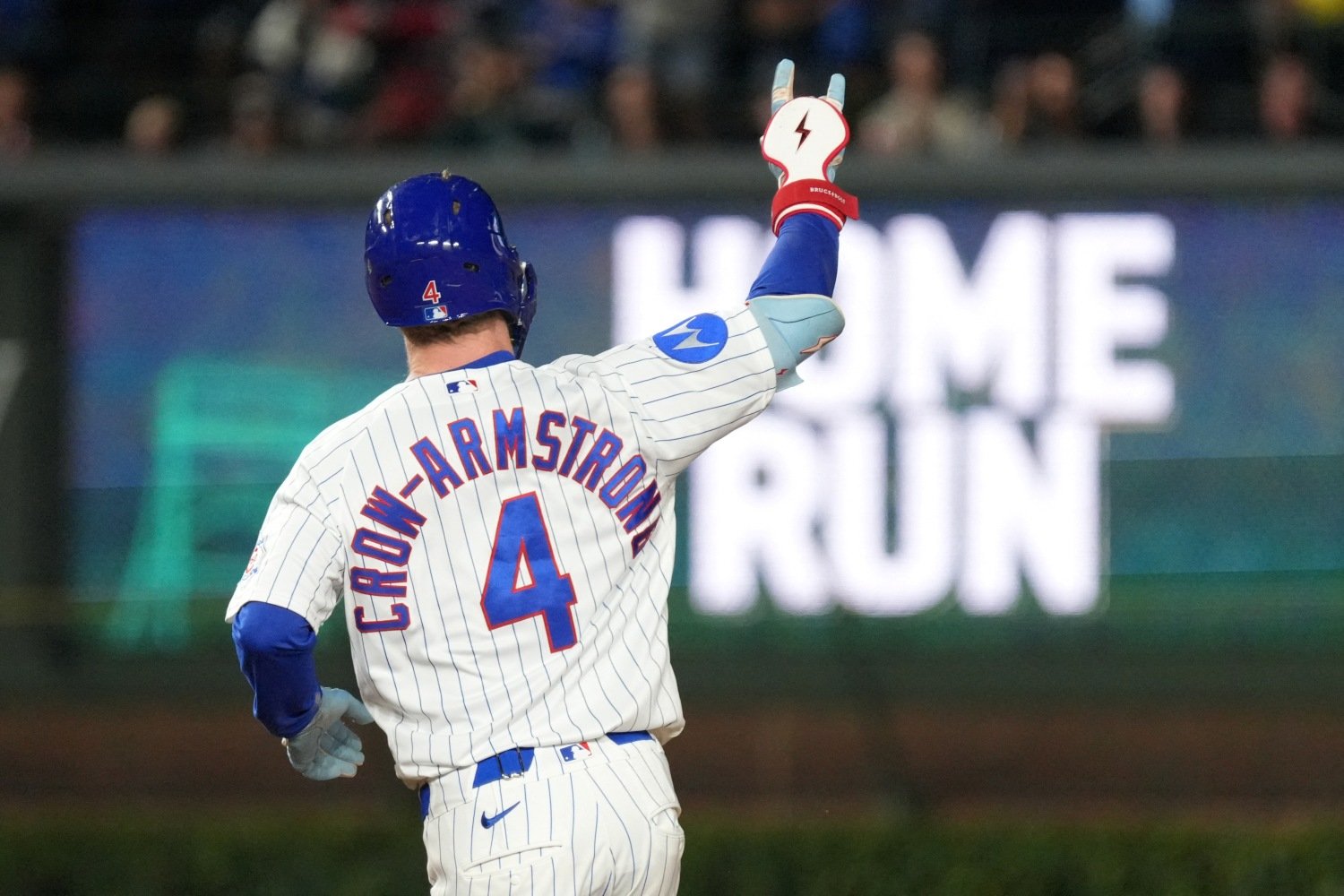 Pete Crow-Armstrong tied Billy Williams for the most home runs by a left-handed Cubs batter in a season Monday night, when he cracked his 42nd long ball of the campaign in a win over the visitors from Atlanta. That was Crow-Armstrong's third of four hits on the night. He had a two-run double, that two-run bomb, and a pair of sharp singles. He also stole a base, his 37th, as he races toward 40/40 status. That game was the 19th this season in which Crow-Armstrong has produced at least two full runs of added value at the plate himself, according to Baseball Reference's run expectancy based on the 24 base-out states (RE24). Since 2015, the only players with 20 or more such games are: Aaron Judge, 2024 Shohei Ohtani, 2024 J.D. Martinez, 2018 Paul Goldschmidt, 2022 Vladimir Guerrero Jr., 2021 Unsurprisingly, the Cubs won, 7-3. They're 17-2 in the games Crow-Armstrong has taken over offensively this year, and haven't lost such a contest since June 20. That's just one way to express what everyone with two eyes and a brain geared toward baseball knows: the Cubs' superstar center fielder is the league's most valuable player. Thanks to what was their third win in four games, the Cubs have leveled off after their latest rough patch. There's still uncertainty about whether they'll be able to host the Wild Card Series, but they've all but assured themselves of at least making the postseason. Unequivocally, though, they'd be destined for early flights home if not for Crow-Armstrong. His added value on both offense and defense has been the difference between this team and a forgettable 80-win outfit. Singllehandedly, he's made them a playoff team this season. That raises a fascinating question: has he already earned every dollar of his six-year contract extension, before it technically begins? The deal Crow-Armstrong and the Cubs signed on March 25 is worth $115 million over six seasons, but it doesn't actually kick in until 2027. Crow-Armstrong did receive a $5-million signing bonus, but his salary won't spike until next year, when he makes $10 million for the first of three straight seasons. He's then due $20 million in 2030 and $30 million in each of 2031 and 2032. All things considered, he's been worth $115 million to the Cubs this year, alone. On the field, he's produced so much value that the team will make the playoffs, which is worth at least $25 million to this franchise on its own. Being good enough to get there also means more tickets sold, this year and next, at regular-season games. Add the enormous marketability of Crow-Armstrong and the merchandise sales he's driving, and you're well over halfway to $115 million in value added this year. (Remember, his actual salary for 2026 is under $800,000.) Had he not signed this deal, Crow-Armstrong would be arbitration-eligible as a Super Two player this fall. He'd probably have broken the previous salary record of $11.5 million for first-year arbitration-eligible players, and that would have put him on a path to earning as much as $90 million over the four remaining years of his team control. As it is, his contract will pay him $50 million over those years. His salaries for 2031 and 2032—the two free-agent years the Cubs bought out in the deal—can rise based on MVP voting, but not this year's. He doesn't get any escalators based on winning this year's award; he only receives them if he wins or places highly for another one. Though obviously team-friendly, Crow-Armstrong's contract didn't look entirely risk-free when he signed it. It certainly didn't look like one of the steals of the century, wherein teams capture tons of surplus value on similar deals for players who haven't yet broken out. Less than six months later, though, the deal has entirely paid for itself. If Crow-Armstrong has a few more games wherein he wills the team to a win singlehandedly in him, that will be even more apparent come late October.
 -
Image courtesy of David Banks-Imagn Images Pete Crow-Armstrong tied Billy Williams for the most home runs by a left-handed Cubs batter in a season Monday night, when he cracked his 42nd long ball of the campaign in a win over the visitors from Atlanta. That was Crow-Armstrong's third of four hits on the night. He had a two-run double, that two-run bomb, and a pair of sharp singles. He also stole a base, his 37th, as he races toward 40/40 status. That game was the 19th this season in which Crow-Armstrong has produced at least two full runs of added value at the plate himself, according to Baseball Reference's run expectancy based on the 24 base-out states (RE24). Since 2015, the only players with 20 or more such games are: Aaron Judge, 2024 Shohei Ohtani, 2024 J.D. Martinez, 2018 Paul Goldschmidt, 2022 Vladimir Guerrero Jr., 2021 Unsurprisingly, the Cubs won, 7-3. They're 17-2 in the games Crow-Armstrong has taken over offensively this year, and haven't lost such a contest since June 20. That's just one way to express what everyone with two eyes and a brain geared toward baseball knows: the Cubs' superstar center fielder is the league's most valuable player. Thanks to what was their third win in four games, the Cubs have leveled off after their latest rough patch. There's still uncertainty about whether they'll be able to host the Wild Card Series, but they've all but assured themselves of at least making the postseason. Unequivocally, though, they'd be destined for early flights home if not for Crow-Armstrong. His added value on both offense and defense has been the difference between this team and a forgettable 80-win outfit. Singllehandedly, he's made them a playoff team this season. That raises a fascinating question: has he already earned every dollar of his six-year contract extension, before it technically begins? The deal Crow-Armstrong and the Cubs signed on March 25 is worth $115 million over six seasons, but it doesn't actually kick in until 2027. Crow-Armstrong did receive a $5-million signing bonus, but his salary won't spike until next year, when he makes $10 million for the first of three straight seasons. He's then due $20 million in 2030 and $30 million in each of 2031 and 2032. All things considered, he's been worth $115 million to the Cubs this year, alone. On the field, he's produced so much value that the team will make the playoffs, which is worth at least $25 million to this franchise on its own. Being good enough to get there also means more tickets sold, this year and next, at regular-season games. Add the enormous marketability of Crow-Armstrong and the merchandise sales he's driving, and you're well over halfway to $115 million in value added this year. (Remember, his actual salary for 2026 is under $800,000.) Had he not signed this deal, Crow-Armstrong would be arbitration-eligible as a Super Two player this fall. He'd probably have broken the previous salary record of $11.5 million for first-year arbitration-eligible players, and that would have put him on a path to earning as much as $90 million over the four remaining years of his team control. As it is, his contract will pay him $50 million over those years. His salaries for 2031 and 2032—the two free-agent years the Cubs bought out in the deal—can rise based on MVP voting, but not this year's. He doesn't get any escalators based on winning this year's award; he only receives them if he wins or places highly for another one. Though obviously team-friendly, Crow-Armstrong's contract didn't look entirely risk-free when he signed it. It certainly didn't look like one of the steals of the century, wherein teams capture tons of surplus value on similar deals for players who haven't yet broken out. Less than six months later, though, the deal has entirely paid for itself. If Crow-Armstrong has a few more games wherein he wills the team to a win singlehandedly in him, that will be even more apparent come late October. View full article
-
A certain amount of proactivity is important, but if you swing at the first pitch a lot, you rapidly reduce your chances of drawing walks and getting on base at a high rate. It's a tradeoff, to be sure. FWIW, Suzuki is batting .272/.314/.440 for his career when he swings at the first pitch of a plate appearance. When he takes it, he's a .268/.357/.479 hitter. I think you might be making the perfect the enemy of the good here. Suzuki can't, in my opinion, be the anchor of a playoff-caliber lineup. But he's a very good third-best hitter for a team to have. And I think his approach is well-calibrated to his strengths and weaknesses as a hitter.
-
Image courtesy of Matt Marton-Imagn Images The batted-ball data says Seiya Suzuki should be having a worse season. He's down almost 3 miles per hour in average exit velocity. He's hitting the ball on the ground more often, and he's hitting it hard less often. He still takes excellent at-bats—his walk rate is up to a very strong 13.2%, with a career-high 77 total free passes, and his strikeout rate is very slightly down—but if he were doing everything the same (and if luck were treating him exactly as it has for the previous few years), we'd expect to see much less production from Suzuki this year than in 2024 or 2025. If you're reading this, though, you probably already know that that's not how things are actually going. Suzuki is hitting a tremendous .269/.369/.477, right in line with his output in 2023 and 2024 and a tick better than his more power-focused 2025 numbers. Baseball Prospectus's DRC+, which estimates a players deserved contribution based on production and process, has him at 122 this year (where 100 is average and higher is better); that's the best mark of his career. That advanced metric, then, doesn't think he's merely gotten lucky. According to Baseball Savant (powered by Statcast), however, his expected weighted on-base average (xwOBA) is just .341, the lowest he's posted since 2022 and a far cry from his .369 actual wOBA. Which is it, then? Has he gotten lucky when he's put the ball in play, or made material changes to produce similar results despite worse contact quality? There are multiple ways to answer that, and even if you pin down one of those answers, it can be a bit double-edged. Still, let's dig into one. Opponents have struggled to defend Suzuki more than any other hitter in baseball, according to Baseball Savant. He's gotten 8 runs of value from fielders not getting to balls as well as they do against average batters. He has a .324 BABIP this year, which is virtually identical to his .328 career mark, but remember, he's hit the ball less hard (and hit it hard less often) this year than in the past, so these two data points fit together neatly. Despite less impressive contact, Suzuki is enjoying very similar results, because fielders aren't getting to the balls he hits and converting them into outs as well as defensive metrics would expect. In the past, we would call this a pretty straightforward case of a player getting lucky. Bloop singles are the very emblem of good luck at the plate, and without a doubt, Suzuki has more of those this year. OTdETlZfWGw0TUFRPT1fQVZWU1VBSlFWZ1FBQVZGVVVBQUhWUUFFQUFCUVYxSUFBd01HQVZZRkJGRUFBZ1VI.mp4 Ah, but not all bloop singles are created equal. Some of them are pure luck, but most of them contain at least some amount of earned value. You made contact, rather than whiffing. Maybe you've also demonstrated sufficient power or directional hitting ability to have forced the defense to position itself in a way that made them less likely to catch the ball you hit. And maybe you also have a swing that's hard to read, or which produces some batted balls that are much harder to catch than they appear. Though Suzuki isn't whiffing less often on a per-swing basis than in the past, he is striking out less often than in the past, so he gets a little bit of credit for hits like the one above, based on that. Fouling the ball off more often and chasing outside the zone slightly less often (along with a bit more proactivity early in counts) has produced more balls in play, and even mishit balls in play have more expected value than whiffs. Mishit balls are exactly what's happening more for Suzuki this year, too. Importantly, he hasn't lost any bat speed. Instead, he's just squaring the ball up less well and less often. Here's a comparison of his 2024, 2025 and 2026 seasons via the FanGraphs Squared Up Explorer tool. This charts the efficiency of his contact (the percentage of the possible exit velocity produced by a given swing, given the speed of the swing and of the incoming pitch) against the launch angle of his batted balls. The bubble sizes show the frequency of balls fitting that pairing of efficiency and launch. The pink highlighted band shows the ideal range for launch angle if one wants to hit a home run. When Suzuki first entered the league, he was one of the best hitters in baseball at producing exit velocity and squaring the ball up. You can see how far outside the black curve showing the league average Suzuki's curves arced for 2024 (in blue) and 2025 (in yellow) sit. In 2024, however, his best contact came on low line drives. (That was also true in 2022 and 2023; we just don't have complete data for those years.) Last season, Suzuki focused a bit more on elevating with his most squared-up swings, which is how he topped 30 home runs for the first time since coming to the United States. That cost him a bit of contact efficiency, but it increased his production efficiency. This year, however, his squared-up rate is way, way down. His bat speed is almost identical to what it was in the past, but he's hitting it less hard because he's hitting it less squarely. His best contact is back to coming on low liners, and he's hitting a lot of his fly balls extremely inefficiently. For the most part, that's bad news. Sometimes, though, that tendency yields unexpected value for the batter, and it's not all about luck. Suzuki's bat speed being intact means he can still split a gap with the best of them when he connects cleanly, so defenses have to respect his power and play deep against him in the outfield. Thus, when he hits balls like the one above, they're more likely to fall in than they would be for other players, based purely on where defenders begin the play. Even after one accounts for where the fielders were, though, there's an effect left over: it's hard to react accurately to a full swing from an established slugger that produces an otherwise harmless little flare or fly. MTZOV3JfV0ZRVkV3dEdEUT09X0JWQUVWVndNQlZBQVdsTUZWQUFIQkZjRUFGaFVVQUlBQkFRQ0JBTUdDQUJTQndWVA==.mp4 It's one thing when a player gets under a ball like this. That ball will carry another 25 feet or so and be an easy catch for the center fielder. What seems to be throwing off defenders, this season, is that on many of the swings on which he's underneath the ball like this, Suzuki is also missing the center of the barrel. In this case, as you can see if you freeze the video when he makes contact, the ball is well off the barrel, toward the handle. His swing wouldn't tell you he was jammed, but the result in terms of where on the bat he met the ball is the same as if he had been. You've probably heard outfielders say this before: it's hard to read a full swing that produces less than a full-strength hit. Again, then, Suzuki is making some of his own luck. That's because his swing has changed, in a subtle but essential way. Suzuki has more tilt in his swing this year. On average, as he's about to make contact, his barrel is slightly more downhill from his hands than in the past. That's helpful, because it tends to produce more solid contact—but it can also generate more foul balls when your timing isn't quite right, rather than a pop-up or a whiff. It even occasionally yields a hit on a ball that seems to have no business being one, because that tilt allows one to fillet the ball the other way. TDY1V09fWGw0TUFRPT1fQVFaWkFsRUdVZ2NBWEFNREJRQUhWVklBQUZnQkFWTUFWMUFEQWxBR0FnUlFCQVZY.mp4 As part of that swing change, though, Suzuki has also oriented himself to lifting and pulling the ball even more than he did last year. That's a mild surprise, right? Way back at the beginning of this, we observed that he's actually hitting a few more grounders this season. He's not getting more balls in the air, and his pull/spray profile hasn't changed, but the orientation of his bat as it moves through the zone has. His average attack angle is steeper; his average attack direction has turned toward the pull field. Take a look at his timing profile on swings that produce balls in play this year, compared to the last two. Two key things stand out (although, again, they're subtle). Suzuki's timing (in terms of the horizontal orientation of the barrel at contact, expressed here in the middle panel) tends more toward being early this year. That goes hand-in-hand with the greater pull orientation we just talked about. What we're really seeing is that he still mostly tries to meet the ball squarely, but sometimes gets around the ball quite a bit. That's not because he's swinging early more often than in 2025, per se; it's because he's putting more of the balls on which he's early in play. He's hitting more balls that are classified as having tied him up (the left-hand panel). The differences look very small in these visuals, but they're a bit bigger than they appear. More often, this season, Suzuki is hitting ball somewhere other than the center of his barrel, and that variable controls exit velocity more than the other timing elements in these data, so it makes sense that he's seen a decline in exit velocity this year. Specifically, he's getting it slightly up toward the handle more, as we saw in the clip above. What if we isolate balls in play on which Suzuki was classified as being early, by this reckoning? Here's the same set of charts with that filter in place. Ah! Suzuki is more likely to have barreled up the ball when he's early this year: not over or under it even by a little, not as likely to hit it off the end of the bat as in the past. This is firm evidence of what was implied (but not confirmed) by the simple attack angle and attack direction data: Suzuki's geared himself to pull the ball this year, more than ever. Disaggregating his batted-ball data down to buckets based on both directionality and trajectory tells the story pretty clearly. Suzuki's exit velocity on ground balls up the middle is way down this year; it's down almost as much on grounders the other way. He's found no value by hitting those grounders back through the box, but interestingly, he's had a ton of success with so-called "back-side grounders". He's shot several grounders through that side of the infield this season, in addition to the liners over first basemen's heads. You have to feel for defenses. Here's Suzuki's infield slice chart—where he hit his grounders—in 2025: Here's the same for 2026: Even more than in the past, he's an extreme pull hitter on the ground. You have to shade your infielders that way, too, because unlike on other grounders, Suzuki's exit velocity on pulled grounders is right in line with the last two years—and he's not hitting them down as sharply. Instead, he's hitting more one-hop rockets that require some bunching on the left side and the second baseman to curl toward the base to cover the middle of the diamond. That leaves the right side wide-open. The pattern is the same with line drives. Suzuki is hitting them (almost) as hard as ever when he pulls them, and they're even lower, top-spin liners, harder to defend. To center and right, however, he's hitting his liners much less hard than in the past. That should hurt him, but in reality, he's finding tons of value on those batted balls, because defenses can't populate the areas of the field where those balls go. TUFYOTNfVjBZQUhRPT1fQUFJQVUxUlJCd1lBRFFNRlVRQUhWQUFEQUFBTlVRSUFCZ1FCQlZaV0FnRUhVMUFI.mp4 On fly balls, little has changed for him, really. All his lost exit velocity is on grounders and liners, and a bit on opposite-field flies. The slightly altered orientation of his swing means that when he pulls fly balls or hits them to center, they usually still have as much juice as they used to. When they don't, he's benefiting from the fact that they usually do, as we saw on those high fly-ball singles against the Nationals and Mariners. There are a few more instances in which Suzuki has cut down his swing to go the other way. Here, you can see his bat speed histograms for 2025 and 2026 layered over each other. The 2026 bars are green; the 2025 ones are blue. Where the green bars are higher, then, he's swinging more in that bat-speed band than he did last season. As you can see, despite being capable of swinging just as hard as ever, Suzuki has more swings below 70 MPH this year, by a noticeable margin. That's where some of those singles the other way and to center come from, too. All told, it's been a deeply impressive season for Suzuki, who has quietly been excellent and would be more loudly celebrated if not for the superb campaigns of Pete Crow-Armstrong and Alex Bregman. Heading into his mid-30s, the slugger looks as physically capable as ever, but smarter, too—enough so that, even as he stands on the edge of what is usually a bat-speed cliff, he might have found ways to thrive for years to come. If he's getting lucky, he's doing a very good job of covering it. This looks more like a player making their own luck, through wile and guile as well as tremendous talent. View full article
-
 The batted-ball data says Seiya Suzuki should be having a worse season. He's down almost 3 miles per hour in average exit velocity. He's hitting the ball on the ground more often, and he's hitting it hard less often. He still takes excellent at-bats—his walk rate is up to a very strong 13.2%, with a career-high 77 total free passes, and his strikeout rate is very slightly down—but if he were doing everything the same (and if luck were treating him exactly as it has for the previous few years), we'd expect to see much less production from Suzuki this year than in 2024 or 2025. If you're reading this, though, you probably already know that that's not how things are actually going. Suzuki is hitting a tremendous .269/.369/.477, right in line with his output in 2023 and 2024 and a tick better than his more power-focused 2025 numbers. Baseball Prospectus's DRC+, which estimates a players deserved contribution based on production and process, has him at 122 this year (where 100 is average and higher is better); that's the best mark of his career. That advanced metric, then, doesn't think he's merely gotten lucky. According to Baseball Savant (powered by Statcast), however, his expected weighted on-base average (xwOBA) is just .341, the lowest he's posted since 2022 and a far cry from his .369 actual wOBA. Which is it, then? Has he gotten lucky when he's put the ball in play, or made material changes to produce similar results despite worse contact quality? There are multiple ways to answer that, and even if you pin down one of those answers, it can be a bit double-edged. Still, let's dig into one. Opponents have struggled to defend Suzuki more than any other hitter in baseball, according to Baseball Savant. He's gotten 8 runs of value from fielders not getting to balls as well as they do against average batters. He has a .324 BABIP this year, which is virtually identical to his .328 career mark, but remember, he's hit the ball less hard (and hit it hard less often) this year than in the past, so these two data points fit together neatly. Despite less impressive contact, Suzuki is enjoying very similar results, because fielders aren't getting to the balls he hits and converting them into outs as well as defensive metrics would expect. In the past, we would call this a pretty straightforward case of a player getting lucky. Bloop singles are the very emblem of good luck at the plate, and without a doubt, Suzuki has more of those this year. OTdETlZfWGw0TUFRPT1fQVZWU1VBSlFWZ1FBQVZGVVVBQUhWUUFFQUFCUVYxSUFBd01HQVZZRkJGRUFBZ1VI.mp4 Ah, but not all bloop singles are created equal. Some of them are pure luck, but most of them contain at least some amount of earned value. You made contact, rather than whiffing. Maybe you've also demonstrated sufficient power or directional hitting ability to have forced the defense to position itself in a way that made them less likely to catch the ball you hit. And maybe you also have a swing that's hard to read, or which produces some batted balls that are much harder to catch than they appear. Though Suzuki isn't whiffing less often on a per-swing basis than in the past, he is striking out less often than in the past, so he gets a little bit of credit for hits like the one above, based on that. Fouling the ball off more often and chasing outside the zone slightly less often (along with a bit more proactivity early in counts) has produced more balls in play, and even mishit balls in play have more expected value than whiffs. Mishit balls are exactly what's happening more for Suzuki this year, too. Importantly, he hasn't lost any bat speed. Instead, he's just squaring the ball up less well and less often. Here's a comparison of his 2024, 2025 and 2026 seasons via the FanGraphs Squared Up Explorer tool. This charts the efficiency of his contact (the percentage of the possible exit velocity produced by a given swing, given the speed of the swing and of the incoming pitch) against the launch angle of his batted balls. The bubble sizes show the frequency of balls fitting that pairing of efficiency and launch. The pink highlighted band shows the ideal range for launch angle if one wants to hit a home run. When Suzuki first entered the league, he was one of the best hitters in baseball at producing exit velocity and squaring the ball up. You can see how far outside the black curve showing the league average Suzuki's curves arced for 2024 (in blue) and 2025 (in yellow) sit. In 2024, however, his best contact came on low line drives. (That was also true in 2022 and 2023; we just don't have complete data for those years.) Last season, Suzuki focused a bit more on elevating with his most squared-up swings, which is how he topped 30 home runs for the first time since coming to the United States. That cost him a bit of contact efficiency, but it increased his production efficiency. This year, however, his squared-up rate is way, way down. His bat speed is almost identical to what it was in the past, but he's hitting it less hard because he's hitting it less squarely. His best contact is back to coming on low liners, and he's hitting a lot of his fly balls extremely inefficiently. For the most part, that's bad news. Sometimes, though, that tendency yields unexpected value for the batter, and it's not all about luck. Suzuki's bat speed being intact means he can still split a gap with the best of them when he connects cleanly, so defenses have to respect his power and play deep against him in the outfield. Thus, when he hits balls like the one above, they're more likely to fall in than they would be for other players, based purely on where defenders begin the play. Even after one accounts for where the fielders were, though, there's an effect left over: it's hard to react accurately to a full swing from an established slugger that produces an otherwise harmless little flare or fly. MTZOV3JfV0ZRVkV3dEdEUT09X0JWQUVWVndNQlZBQVdsTUZWQUFIQkZjRUFGaFVVQUlBQkFRQ0JBTUdDQUJTQndWVA==.mp4 It's one thing when a player gets under a ball like this. That ball will carry another 25 feet or so and be an easy catch for the center fielder. What seems to be throwing off defenders, this season, is that on many of the swings on which he's underneath the ball like this, Suzuki is also missing the center of the barrel. In this case, as you can see if you freeze the video when he makes contact, the ball is well off the barrel, toward the handle. His swing wouldn't tell you he was jammed, but the result in terms of where on the bat he met the ball is the same as if he had been. You've probably heard outfielders say this before: it's hard to read a full swing that produces less than a full-strength hit. Again, then, Suzuki is making some of his own luck. That's because his swing has changed, in a subtle but essential way. Suzuki has more tilt in his swing this year. On average, as he's about to make contact, his barrel is slightly more downhill from his hands than in the past. That's helpful, because it tends to produce more solid contact—but it can also generate more foul balls when your timing isn't quite right, rather than a pop-up or a whiff. It even occasionally yields a hit on a ball that seems to have no business being one, because that tilt allows one to fillet the ball the other way. TDY1V09fWGw0TUFRPT1fQVFaWkFsRUdVZ2NBWEFNREJRQUhWVklBQUZnQkFWTUFWMUFEQWxBR0FnUlFCQVZY.mp4 As part of that swing change, though, Suzuki has also oriented himself to lifting and pulling the ball even more than he did last year. That's a mild surprise, right? Way back at the beginning of this, we observed that he's actually hitting a few more grounders this season. He's not getting more balls in the air, and his pull/spray profile hasn't changed, but the orientation of his bat as it moves through the zone has. His average attack angle is steeper; his average attack direction has turned toward the pull field. Take a look at his timing profile on swings that produce balls in play this year, compared to the last two. Two key things stand out (although, again, they're subtle). Suzuki's timing (in terms of the horizontal orientation of the barrel at contact, expressed here in the middle panel) tends more toward being early this year. That goes hand-in-hand with the greater pull orientation we just talked about. What we're really seeing is that he still mostly tries to meet the ball squarely, but sometimes gets around the ball quite a bit. That's not because he's swinging early more often than in 2025, per se; it's because he's putting more of the balls on which he's early in play. He's hitting more balls that are classified as having tied him up (the left-hand panel). The differences look very small in these visuals, but they're a bit bigger than they appear. More often, this season, Suzuki is hitting ball somewhere other than the center of his barrel, and that variable controls exit velocity more than the other timing elements in these data, so it makes sense that he's seen a decline in exit velocity this year. Specifically, he's getting it slightly up toward the handle more, as we saw in the clip above. What if we isolate balls in play on which Suzuki was classified as being early, by this reckoning? Here's the same set of charts with that filter in place. Ah! Suzuki is more likely to have barreled up the ball when he's early this year: not over or under it even by a little, not as likely to hit it off the end of the bat as in the past. This is firm evidence of what was implied (but not confirmed) by the simple attack angle and attack direction data: Suzuki's geared himself to pull the ball this year, more than ever. Disaggregating his batted-ball data down to buckets based on both directionality and trajectory tells the story pretty clearly. Suzuki's exit velocity on ground balls up the middle is way down this year; it's down almost as much on grounders the other way. He's found no value by hitting those grounders back through the box, but interestingly, he's had a ton of success with so-called "back-side grounders". He's shot several grounders through that side of the infield this season, in addition to the liners over first basemen's heads. You have to feel for defenses. Here's Suzuki's infield slice chart—where he hit his grounders—in 2025: Here's the same for 2026: Even more than in the past, he's an extreme pull hitter on the ground. You have to shade your infielders that way, too, because unlike on other grounders, Suzuki's exit velocity on pulled grounders is right in line with the last two years—and he's not hitting them down as sharply. Instead, he's hitting more one-hop rockets that require some bunching on the left side and the second baseman to curl toward the base to cover the middle of the diamond. That leaves the right side wide-open. The pattern is the same with line drives. Suzuki is hitting them (almost) as hard as ever when he pulls them, and they're even lower, top-spin liners, harder to defend. To center and right, however, he's hitting his liners much less hard than in the past. That should hurt him, but in reality, he's finding tons of value on those batted balls, because defenses can't populate the areas of the field where those balls go. TUFYOTNfVjBZQUhRPT1fQUFJQVUxUlJCd1lBRFFNRlVRQUhWQUFEQUFBTlVRSUFCZ1FCQlZaV0FnRUhVMUFI.mp4 On fly balls, little has changed for him, really. All his lost exit velocity is on grounders and liners, and a bit on opposite-field flies. The slightly altered orientation of his swing means that when he pulls fly balls or hits them to center, they usually still have as much juice as they used to. When they don't, he's benefiting from the fact that they usually do, as we saw on those high fly-ball singles against the Nationals and Mariners. There are a few more instances in which Suzuki has cut down his swing to go the other way. Here, you can see his bat speed histograms for 2025 and 2026 layered over each other. The 2026 bars are green; the 2025 ones are blue. Where the green bars are higher, then, he's swinging more in that bat-speed band than he did last season. As you can see, despite being capable of swinging just as hard as ever, Suzuki has more swings below 70 MPH this year, by a noticeable margin. That's where some of those singles the other way and to center come from, too. All told, it's been a deeply impressive season for Suzuki, who has quietly been excellent and would be more loudly celebrated if not for the superb campaigns of Pete Crow-Armstrong and Alex Bregman. Heading into his mid-30s, the slugger looks as physically capable as ever, but smarter, too—enough so that, even as he stands on the edge of what is usually a bat-speed cliff, he might have found ways to thrive for years to come. If he's getting lucky, he's doing a very good job of covering it. This looks more like a player making their own luck, through wile and guile as well as tremendous talent.
 -
 The Cubs needed a close win like Saturday's desperately, but they were trending toward yet another close loss, instead. The bullpen hadn't cracked, this time; it was the Dansby Swanson-less defense (a Nico Hoerner error opened the door for the Pirates in the top of the sixth) and a terribly timed hanger from Clay Holmes. How it happened mattered little, though. It was 3-2 Pittsburgh, and Chicago needed to flip that score somehow. Pedro Ramírez got the rally started. He led off the bottom of the eighth with a line-drive double, on the latest beautiful piece of hitting from the rookie. Tyrone Taylor flied out, though, and Pete Crow-Armstrong struck out looking. Suddenly, after having the tying run in scoring position with nobody out, the Cubs needed a hit to push it home. Or did they? Alex Bregman was hit by a pitch. Seiya Suzuki pinch-hit for Michael Busch against the left-handed Gregory Soto and drew a walk. The bases were loaded. Due next, however, was Ian Happ, whose helplessness against left-handed pitchers this season has been a source of constant trouble for the team. Craig Counsell pulled the trigger on a second straight pinch-hit move, calling upon Matt Shaw. It was the right move, but hardly an inspiring one. Shaw stepped in batting a solid .237/.324/.428 on the season, but without a truly big hit all season. Since returning from the injured list in late August, he was batting .182, with a home run off position player Andrew Vaughn last week but little evidence that he can handle real pitchers. The ensuing plate appearance turned out to be, by far, Shaw's biggest single contribution to the team all season. According to Baseball Reference's Win Probability Added, the RBI walk he drew to tie the game increased the Cubs' chances of winning by 0.269. He's only had one other at-bat that produced a WPA over .200—a sixth-inning go-ahead triple against the Rockies in mid-June, on a ball I'm still not sure was correctly ruled fair. N3l6akdfWGw0TUFRPT1fQXdWVkFBRlFVd1FBV1FFS1Z3QUhBRlFFQUZrRlZGY0FWZ2NGQUFVREJWQlJDVk1B.mp4 A five-pitch walk is an unsexy signature plate appearance in a season; Shaw is a very unsexy player right now. He was called up too soon last March, to a team that hadn't adequately addressed their lineup depth after trading Cody Bellinger and failing in their first effort to land Alex Bregman. He's been a mess ever since, trying to manage multiple changes to his stance, mechanics and timing at the plate and getting comfortable at new defensive positions along the way. A certain amount of talent is obvious when you watch Shaw play. He's made some unexpectedly good plays in the outfield last year, after becoming a plus defender at third on the fly last year. He's fast. He had a short but intriguing power binge last summer. On the whole, though, he's a mess of a player: still very much a project, two full seasons into his big-league career. What the Cubs needed in that moment, though, was a player who would make the right swing decisions and come through. Against the erratic Soto, that meant being patient. It also meant not letting him lure Shaw out of the zone with his good breaking ball. The stern test came on a 1-1 pitch, when Soto successfully executed a back-foot slider. ZzZ3TWFfWGw0TUFRPT1fVUFKVlZBQUdWVlFBWFFZR1V3QUhCUWNEQUZnRUJnUUFDZ0JSQjFGVFZRUUJBRk5V.mp4 Shaw's biggest play of the year was not swinging at that pitch—though he almost did. That, interestingly, is characteristic. Early last month, Daine Medlock of Sports Info Solutions published a study of checked-swing behavior among batters, using proprietary data kept by SIS on checked swings. At that time, Shaw ranked second in the majors in the frequency with which he started his swing, but checked it, doing so on 6.9% of all pitches he saw. Only Cleveland's Daniel Schneemann did it more often. Medlock's study is worth your time; the findings are nuanced but compelling. In short, batters broadly tend to produce checked swings (whether they're successful at holding up or not) more often if: They're aggressive within the strike zone They're disciplined when it comes to pitches outside the zone They don't make much contact on their out-of-zone swings That makes sense. For most players, even takes are active moments. A big-league batter will rarely see a pitch on which they don't get their lower half and their hands started. If the hitting supercomputers that are their eyes and brains think the pitch will be in their hitting zone, they use those preliminary movements to generate a full swing. If they quickly perceive that it's not what they're looking for, they hit the kill switch and stop their momentum. A checked swing (successful or otherwise) is, of course, what happens when something in between those two options happens. Two things produce them: A hitter with a lot of early movement in their swing—what batters call the "load"; and Late recognition of a pitch type, spin direction or speed difference that takes them from wanting to swing to not wanting to. Those two things are related, of course. While a good swing needs early momentum (and some players need bigger movements than others to produce a competitive hack), big moves tend to make it harder to recognize a pitch early. One way or another, though, the hitter who starts a swing by letting their bat get out from behind their body but stops it before following through has been at least slightly fooled. Hitters who are patient within the zone will do this rarely; they're later in pulling the trigger than others. They don't let the hands really get moving until they're pretty sure they have their pitch, and thus, when they do, they're likely to swing all the way through. For the opposite reasons, the same is true of guys who often chase outside the zone. Those are hitters who cut it loose without making especially precise calculations of pitch location; they're hungry. They're swinging to produce damage, and that means swinging with such conviction that a checked swing is almost impossible, and not worth attempting. If checked swings are mainly the demesne of guys who swing a lot within the zone and little outside it, then it shouldn't surprise us much to learn that they don't make much contact on out-of-zone swings, either. You check your swing when you think a pitch isn't a strike because you realize that, if that's true, you're not very likely to touch it. What's peculiar is, Shaw really doesn't fit these descriptors. His in-zone swing rate is lower than the league average; his out-of-zone swing rate is higher. He makes contact on more of his out-of-zone swings than most hitters, not fewer. That he shows up so near the top of the leaderboard, then, tells us there's something to his game (and to the nature of checked swings) that defies simple pairings of variables. As I've already said, part of that unexplained departure is the fact that Shaw is still searching for comfort and an identity in the big-league batter's box. The study found (unsurprisingly, if you think about the rest of the work) that checked swings have a negative correlation with overall offensive value. Good hitters check their swings less often; bad hitters check it more often. Shaw's raw numbers this year look fine, but he's still not a good hitter, by any means. However, on the biggest pitch he's seen this year, the skill the moment needed was the ability to check a swing and earn an advantage in the count. Shaw did it. From here, his development needs to take him in a direction where he can win games in more convincing ways, and where checked swings are less prominent parts of his approach. For one game, though, he made the most of the tendency and came up huge.
 -
Image courtesy of Denis Poroy-Imagn Images The Cubs needed a close win like Saturday's desperately, but they were trending toward yet another close loss, instead. The bullpen hadn't cracked, this time; it was the Dansby Swanson-less defense (a Nico Hoerner error opened the door for the Pirates in the top of the sixth) and a terribly timed hanger from Clay Holmes. How it happened mattered little, though. It was 3-2 Pittsburgh, and Chicago needed to flip that score somehow. Pedro Ramírez got the rally started. He led off the bottom of the eighth with a line-drive double, on the latest beautiful piece of hitting from the rookie. Tyrone Taylor flied out, though, and Pete Crow-Armstrong struck out looking. Suddenly, after having the tying run in scoring position with nobody out, the Cubs needed a hit to push it home. Or did they? Alex Bregman was hit by a pitch. Seiya Suzuki pinch-hit for Michael Busch against the left-handed Gregory Soto and drew a walk. The bases were loaded. Due next, however, was Ian Happ, whose helplessness against left-handed pitchers this season has been a source of constant trouble for the team. Craig Counsell pulled the trigger on a second straight pinch-hit move, calling upon Matt Shaw. It was the right move, but hardly an inspiring one. Shaw stepped in batting a solid .237/.324/.428 on the season, but without a truly big hit all season. Since returning from the injured list in late August, he was batting .182, with a home run off position player Andrew Vaughn last week but little evidence that he can handle real pitchers. The ensuing plate appearance turned out to be, by far, Shaw's biggest single contribution to the team all season. According to Baseball Reference's Win Probability Added, the RBI walk he drew to tie the game increased the Cubs' chances of winning by 0.269. He's only had one other at-bat that produced a WPA over .200—a sixth-inning go-ahead triple against the Rockies in mid-June, on a ball I'm still not sure was correctly ruled fair. N3l6akdfWGw0TUFRPT1fQXdWVkFBRlFVd1FBV1FFS1Z3QUhBRlFFQUZrRlZGY0FWZ2NGQUFVREJWQlJDVk1B.mp4 A five-pitch walk is an unsexy signature plate appearance in a season; Shaw is a very unsexy player right now. He was called up too soon last March, to a team that hadn't adequately addressed their lineup depth after trading Cody Bellinger and failing in their first effort to land Alex Bregman. He's been a mess ever since, trying to manage multiple changes to his stance, mechanics and timing at the plate and getting comfortable at new defensive positions along the way. A certain amount of talent is obvious when you watch Shaw play. He's made some unexpectedly good plays in the outfield last year, after becoming a plus defender at third on the fly last year. He's fast. He had a short but intriguing power binge last summer. On the whole, though, he's a mess of a player: still very much a project, two full seasons into his big-league career. What the Cubs needed in that moment, though, was a player who would make the right swing decisions and come through. Against the erratic Soto, that meant being patient. It also meant not letting him lure Shaw out of the zone with his good breaking ball. The stern test came on a 1-1 pitch, when Soto successfully executed a back-foot slider. ZzZ3TWFfWGw0TUFRPT1fVUFKVlZBQUdWVlFBWFFZR1V3QUhCUWNEQUZnRUJnUUFDZ0JSQjFGVFZRUUJBRk5V.mp4 Shaw's biggest play of the year was not swinging at that pitch—though he almost did. That, interestingly, is characteristic. Early last month, Daine Medlock of Sports Info Solutions published a study of checked-swing behavior among batters, using proprietary data kept by SIS on checked swings. At that time, Shaw ranked second in the majors in the frequency with which he started his swing, but checked it, doing so on 6.9% of all pitches he saw. Only Cleveland's Daniel Schneemann did it more often. Medlock's study is worth your time; the findings are nuanced but compelling. In short, batters broadly tend to produce checked swings (whether they're successful at holding up or not) more often if: They're aggressive within the strike zone They're disciplined when it comes to pitches outside the zone They don't make much contact on their out-of-zone swings That makes sense. For most players, even takes are active moments. A big-league batter will rarely see a pitch on which they don't get their lower half and their hands started. If the hitting supercomputers that are their eyes and brains think the pitch will be in their hitting zone, they use those preliminary movements to generate a full swing. If they quickly perceive that it's not what they're looking for, they hit the kill switch and stop their momentum. A checked swing (successful or otherwise) is, of course, what happens when something in between those two options happens. Two things produce them: A hitter with a lot of early movement in their swing—what batters call the "load"; and Late recognition of a pitch type, spin direction or speed difference that takes them from wanting to swing to not wanting to. Those two things are related, of course. While a good swing needs early momentum (and some players need bigger movements than others to produce a competitive hack), big moves tend to make it harder to recognize a pitch early. One way or another, though, the hitter who starts a swing by letting their bat get out from behind their body but stops it before following through has been at least slightly fooled. Hitters who are patient within the zone will do this rarely; they're later in pulling the trigger than others. They don't let the hands really get moving until they're pretty sure they have their pitch, and thus, when they do, they're likely to swing all the way through. For the opposite reasons, the same is true of guys who often chase outside the zone. Those are hitters who cut it loose without making especially precise calculations of pitch location; they're hungry. They're swinging to produce damage, and that means swinging with such conviction that a checked swing is almost impossible, and not worth attempting. If checked swings are mainly the demesne of guys who swing a lot within the zone and little outside it, then it shouldn't surprise us much to learn that they don't make much contact on out-of-zone swings, either. You check your swing when you think a pitch isn't a strike because you realize that, if that's true, you're not very likely to touch it. What's peculiar is, Shaw really doesn't fit these descriptors. His in-zone swing rate is lower than the league average; his out-of-zone swing rate is higher. He makes contact on more of his out-of-zone swings than most hitters, not fewer. That he shows up so near the top of the leaderboard, then, tells us there's something to his game (and to the nature of checked swings) that defies simple pairings of variables. As I've already said, part of that unexplained departure is the fact that Shaw is still searching for comfort and an identity in the big-league batter's box. The study found (unsurprisingly, if you think about the rest of the work) that checked swings have a negative correlation with overall offensive value. Good hitters check their swings less often; bad hitters check it more often. Shaw's raw numbers this year look fine, but he's still not a good hitter, by any means. However, on the biggest pitch he's seen this year, the skill the moment needed was the ability to check a swing and earn an advantage in the count. Shaw did it. From here, his development needs to take him in a direction where he can win games in more convincing ways, and where checked swings are less prominent parts of his approach. For one game, though, he made the most of the tendency and came up huge. View full article
-
Image courtesy of Patrick Gorski-Imagn Images The Cubs' pitching staff is a tire fire. Despite working in front of one of the league's best defenses, they've allowed 4.9 runs per game since the trade deadline. Shave off their five-game winning streak immediately after the deadline, and it's 5.1 runs per game in the last 30. Every year, this team finds and reclaims a few impressive arms—but not this time. The closest thing to a feel-good story on this year's staff is Ryan Rolison. Even moderately effective hurlers are in short supply. This isn't a problem that cropped up at the deadline. It's been true all year. However, there's one Cubs starter who's been pitching quite well. Three of his last four have been quality starts, and he has a 3.30 ERA in his last eight. He's given them the length they need, averaging over 5 1/3 innings per game over those eight starts. There's just one problem: the team voluntarily demoted him from the rotation. Those eight starts spanned from June 20 to August 2. Since that date—since the deadline that brought Clay Holmes and Kevin Gausman to the Cubs and overhauled the team's starting staff—Colin Rea has thrown just 15 1/3 innings, almost all of them in low-leverage relief. He has a 3.52 ERA over that span, which means he has a 3.36 mark in 59 frames since the midpoint of June. The team, however, believed they needed to shove him roughly aside as part of their August shakeup. There was some reason for that belief. I've written about this before, going back to Rea's time in Milwaukee but even last August. Rea, historically, runs out of steam at the ends of seasons, unless his workload is carefully managed. He'd also struggled mightily earlier in the summer, before finding his footing nicely in the second half of June and throughout July. You don't want to go into the postseason with Colin Rea as a top-three starter in your rotation. It wasn't even unreasonable for Chicago to want to get Rea out of their rotation altogether. Still, it's now clear that deprioritizing him as much as they did was a mistake. Specifically, Craig Counsell failed to make real and valuable use of Rea after taking him out of the rotation. Rea started on August 2. It made sense that his first appearance in relief didn't come until August 8, but then, he didn't pitch again until August 15. He threw just one inning on August 21, and didn't pitch again until August 29. He's pitched a hair more frequently since then, but only in mop-up spots. Meanwhile, almost everyone who has sponged up the innings taken away from Rea has sucked. Aaron Civale has been excellent; Javier Assad has been almost as good. Holmes has posted an ERA (3.51) almost identical to Rea's (3.52), so if you think of him as having taken Rea's job in the rotation, it's been a wash. Every other starter, though, has been much worse: David Peterson: 4.45 Matthew Boyd: 4.98 Shota Imanaga: 5.02 Kevin Gausman: 5.31 Those numbers look bad, but they're nothing, really, compared to the ERAs of Caleb Thielbar, Ryan Zeferjahn, Jacob Webb and Daniel Palencia. Those four have all gotten high-leverage relief chances at the expense of Rea, and their ERAs are all over 6.00 in this span. Rea's raw stuff won't blow you away. The Cubs were justified in trying to upgrade from him in the rotation, and his arsenal doesn't play up in relief quite the way some other hurlers' might. On balance, though, Rea is now a symbol of the Cubs' pitching failures—not because he's 10 years too old and throws 3 MPH too slow to be impressive, but because he was having success, and is still having success, and the team mothballed him, only to replace him with hurlers who have performed much worse. Rea can't be a true savior for the staff, but he should move back into a meaningful role. Finding the right one for him is the job of Counsell and Tommy Hottovy, but handcuffing Rea to Peterson or Imanaga might make sense. He could work in long relief, without working in low leverage. He could get the team over the finish line and into the playoffs, and he might even have a rightful role in the postseason pitching plan, too. That's not a great reflection on the state of the Cubs' pitching group, but their choice to lift Rea from a job he was performing adequately and their failure to get similar production from more talented hurlers in the several weeks since is an even worse one. View full article
-
 The Cubs' pitching staff is a tire fire. Despite working in front of one of the league's best defenses, they've allowed 4.9 runs per game since the trade deadline. Shave off their five-game winning streak immediately after the deadline, and it's 5.1 runs per game in the last 30. Every year, this team finds and reclaims a few impressive arms—but not this time. The closest thing to a feel-good story on this year's staff is Ryan Rolison. Even moderately effective hurlers are in short supply. This isn't a problem that cropped up at the deadline. It's been true all year. However, there's one Cubs starter who's been pitching quite well. Three of his last four have been quality starts, and he has a 3.30 ERA in his last eight. He's given them the length they need, averaging over 5 1/3 innings per game over those eight starts. There's just one problem: the team voluntarily demoted him from the rotation. Those eight starts spanned from June 20 to August 2. Since that date—since the deadline that brought Clay Holmes and Kevin Gausman to the Cubs and overhauled the team's starting staff—Colin Rea has thrown just 15 1/3 innings, almost all of them in low-leverage relief. He has a 3.52 ERA over that span, which means he has a 3.36 mark in 59 frames since the midpoint of June. The team, however, believed they needed to shove him roughly aside as part of their August shakeup. There was some reason for that belief. I've written about this before, going back to Rea's time in Milwaukee but even last August. Rea, historically, runs out of steam at the ends of seasons, unless his workload is carefully managed. He'd also struggled mightily earlier in the summer, before finding his footing nicely in the second half of June and throughout July. You don't want to go into the postseason with Colin Rea as a top-three starter in your rotation. It wasn't even unreasonable for Chicago to want to get Rea out of their rotation altogether. Still, it's now clear that deprioritizing him as much as they did was a mistake. Specifically, Craig Counsell failed to make real and valuable use of Rea after taking him out of the rotation. Rea started on August 2. It made sense that his first appearance in relief didn't come until August 8, but then, he didn't pitch again until August 15. He threw just one inning on August 21, and didn't pitch again until August 29. He's pitched a hair more frequently since then, but only in mop-up spots. Meanwhile, almost everyone who has sponged up the innings taken away from Rea has sucked. Aaron Civale has been excellent; Javier Assad has been almost as good. Holmes has posted an ERA (3.51) almost identical to Rea's (3.52), so if you think of him as having taken Rea's job in the rotation, it's been a wash. Every other starter, though, has been much worse: David Peterson: 4.45 Matthew Boyd: 4.98 Shota Imanaga: 5.02 Kevin Gausman: 5.31 Those numbers look bad, but they're nothing, really, compared to the ERAs of Caleb Thielbar, Ryan Zeferjahn, Jacob Webb and Daniel Palencia. Those four have all gotten high-leverage relief chances at the expense of Rea, and their ERAs are all over 6.00 in this span. Rea's raw stuff won't blow you away. The Cubs were justified in trying to upgrade from him in the rotation, and his arsenal doesn't play up in relief quite the way some other hurlers' might. On balance, though, Rea is now a symbol of the Cubs' pitching failures—not because he's 10 years too old and throws 3 MPH too slow to be impressive, but because he was having success, and is still having success, and the team mothballed him, only to replace him with hurlers who have performed much worse. Rea can't be a true savior for the staff, but he should move back into a meaningful role. Finding the right one for him is the job of Counsell and Tommy Hottovy, but handcuffing Rea to Peterson or Imanaga might make sense. He could work in long relief, without working in low leverage. He could get the team over the finish line and into the playoffs, and he might even have a rightful role in the postseason pitching plan, too. That's not a great reflection on the state of the Cubs' pitching group, but their choice to lift Rea from a job he was performing adequately and their failure to get similar production from more talented hurlers in the several weeks since is an even worse one.
 -
Image courtesy of Matt Marton-Imagn Images It has always been Ernie Banks, Ron Santo and Billy Williams. That's always the order in which fans rattled off the triad of franchise greats who made the Cubs what they are. Banks's media savvy and showmanship, as much as his back-to-back MVP seasons and 512 home runs, made him Mr. Cub. He had rhymes; he had good looks; he was eager to please. Santo had his own flair, with the high-leaping heel click celebration to close Cubs wins in the memorable summer of 1969. He rejected one trade to the White Sox, and always felt miserable about having accepted a second. He came back later to broadcast Cubs games for well over a decade. His ferocious love of the Cubs, his broadcasting style, his charitable work and his own battle with Type 1 diabetes made him feel as much like part of the family as like part of the team. The two of them, without trying to, took up practically all of the oxygen available for the intergenerational celebration of franchise legends. They were so lovable that it would have taken an extraordinary feat of open-heartedness for the fan base to fully include and concelebrate Williams. It never quite happened. That's not to suggest that Williams was ever forgotten. He got a statue outside Wrigley Field, just like Santo and Banks. His number was retired. He was as actually present as either of the others, spending over a decade as a coach in uniform before transitioning into multiple roles for the team in the front office and as an ambassador over the last quarter-century. If you were born in the second half of the 1980s, you saw Williams more than you saw either of the others. As a hitting coach and a base coach, he molded later generations of the team, right there before your eyes. In a way, that might have worked against him. Santo's work as the color commentator on Cubs radio felt like a glamor gig for him, even if he performed it unglamorously. Banks spent some time as a coach, but much less than Williams. He sold cars and endorsed lots of products. He felt hugely famous. If Williams was so great, why was he still in uniform 25 or 30 years after his fellow franchise greats ceased to be? The reason was simple, though, and it should probably have counted for more than it did, all along: Williams loves baseball. While a player, he set the National League record by playing in 1,117 consecutive games. That workmanlike approach—that willingness and ability to go out there and do his job on the endless parade of hot summer afternoons at Wrigley—made him feel a bit less like a superhero than the others, when perhaps it should have made him seem more so. The story of his life is a brilliance so subtle that it too often went not quite unnoticed, but underestimated. Case in point: Williams, whom Bob Gibson called the toughest hitter he faced over his own Hall of Fame career, spent over 50 years as the only Cubs lefty batter ever to hit 40 home runs in a season. He hit 42 in 1970, when he also hit .322, led the league in runs scored and finished second in MVP voting. But plenty of fans were unaware of that fun fact until this weekend, when Pete Crow-Armstrong became the second player in team history to accomplish the feat. Crow-Armstrong now has 41 homers, and will surely surpass Williams before the season's over. Until now, Williams has unequivocally been the greatest outfielder in Cubs history, despite Sammy Sosa's better peak production. Crow-Armstrong might knock him off that perch, too. In between his playing career and this usurpation by Crow-Armstrong, Williams has been overshadowed not only by Banks and Santo, but by another generation of stars—players he himself coached, like Ryne Sandberg and Sammy Sosa. Again, there was never risk he would be truly forgotten, but he might have been lost in the shuffle in a sad way, if not for one thing: he just keeps going. Santo died in late 2010. Banks followed in early 2015. Neither lived to see the Cubs win a championship; Williams did. Neither got to stand on the field and be saluted for their years and years of hard work to make that title happen; Williams did. Williams has seen Wrigley Field transformed. He's seen the identity of the team utterly changed. Sadly, Sandberg died too young, too. Sosa was estranged from the organization for 20 years. Fergie Jenkins and Andre Dawson are true greats of the game, but they never felt like they belonged wholly to the Cubs, the way Williams does—though Jenkins did coach in uniform for a while himself, and though Dawson will gladly tell you that his time with the Cubs was the best of his career. Rick Sutcliffe and Kerry Wood do feel like they're true-blue Cubs, despite having played elsewhere, but neither is that caliber of all-time great that makes that feeling of mutual dedication especially rewarding. Bit by bit, Williams has become the lion of this organization. He's now 88 years old, but he's lived to see the ascent of Crow-Armstrong, who will be the next player to join the team's pantheon and spearhead the fourth or fifth generation of stars since Williams matriculated to the majors in virtual lockstep with Santo at the end of the 1950s. He grew up with Willie McCovey and, alongside McCovey and others, accepted the mantle as Major League Baseball's second generation of Black stars. Unlike McCovey, Henry Aaron, Willie Mays, Gibson and so many others, he's still here. Here's hoping that Williams is enjoying watching Crow-Armstrong, who does things with all the swagger of Banks, Santo or Sosa and not much like Williams, but who represents the progress of an organization to which Williams has belonged (with only brief interruptions) for 70 years. Williams is a Hall of Famer. He batted .296 in his Cubs career and hit 392 home runs for them. There should be no risk of overlooking him, but as Crow-Armstrong takes his place in the firmament of Cubs superstars, it's a good time to celebrate the player next to whom his star seems to be rising closest. Even now, it would be remarkable if Crow-Armstrong ended up as beloved and as enmeshed with the team as Williams is. That's a testament to how much Williams has meant to this franchise, and for how long. View full article
-
 It has always been Ernie Banks, Ron Santo and Billy Williams. That's always the order in which fans rattled off the triad of franchise greats who made the Cubs what they are. Banks's media savvy and showmanship, as much as his back-to-back MVP seasons and 512 home runs, made him Mr. Cub. He had rhymes; he had good looks; he was eager to please. Santo had his own flair, with the high-leaping heel click celebration to close Cubs wins in the memorable summer of 1969. He rejected one trade to the White Sox, and always felt miserable about having accepted a second. He came back later to broadcast Cubs games for well over a decade. His ferocious love of the Cubs, his broadcasting style, his charitable work and his own battle with Type 1 diabetes made him feel as much like part of the family as like part of the team. The two of them, without trying to, took up practically all of the oxygen available for the intergenerational celebration of franchise legends. They were so lovable that it would have taken an extraordinary feat of open-heartedness for the fan base to fully include and concelebrate Williams. It never quite happened. That's not to suggest that Williams was ever forgotten. He got a statue outside Wrigley Field, just like Santo and Banks. His number was retired. He was as actually present as either of the others, spending over a decade as a coach in uniform before transitioning into multiple roles for the team in the front office and as an ambassador over the last quarter-century. If you were born in the second half of the 1980s, you saw Williams more than you saw either of the others. As a hitting coach and a base coach, he molded later generations of the team, right there before your eyes. In a way, that might have worked against him. Santo's work as the color commentator on Cubs radio felt like a glamor gig for him, even if he performed it unglamorously. Banks spent some time as a coach, but much less than Williams. He sold cars and endorsed lots of products. He felt hugely famous. If Williams was so great, why was he still in uniform 25 or 30 years after his fellow franchise greats ceased to be? The reason was simple, though, and it should probably have counted for more than it did, all along: Williams loves baseball. While a player, he set the National League record by playing in 1,117 consecutive games. That workmanlike approach—that willingness and ability to go out there and do his job on the endless parade of hot summer afternoons at Wrigley—made him feel a bit less like a superhero than the others, when perhaps it should have made him seem more so. The story of his life is a brilliance so subtle that it too often went not quite unnoticed, but underestimated. Case in point: Williams, whom Bob Gibson called the toughest hitter he faced over his own Hall of Fame career, spent over 50 years as the only Cubs lefty batter ever to hit 40 home runs in a season. He hit 42 in 1970, when he also hit .322, led the league in runs scored and finished second in MVP voting. But plenty of fans were unaware of that fun fact until this weekend, when Pete Crow-Armstrong became the second player in team history to accomplish the feat. Crow-Armstrong now has 41 homers, and will surely surpass Williams before the season's over. Until now, Williams has unequivocally been the greatest outfielder in Cubs history, despite Sammy Sosa's better peak production. Crow-Armstrong might knock him off that perch, too. In between his playing career and this usurpation by Crow-Armstrong, Williams has been overshadowed not only by Banks and Santo, but by another generation of stars—players he himself coached, like Ryne Sandberg and Sammy Sosa. Again, there was never risk he would be truly forgotten, but he might have been lost in the shuffle in a sad way, if not for one thing: he just keeps going. Santo died in late 2010. Banks followed in early 2015. Neither lived to see the Cubs win a championship; Williams did. Neither got to stand on the field and be saluted for their years and years of hard work to make that title happen; Williams did. Williams has seen Wrigley Field transformed. He's seen the identity of the team utterly changed. Sadly, Sandberg died too young, too. Sosa was estranged from the organization for 20 years. Fergie Jenkins and Andre Dawson are true greats of the game, but they never felt like they belonged wholly to the Cubs, the way Williams does—though Jenkins did coach in uniform for a while himself, and though Dawson will gladly tell you that his time with the Cubs was the best of his career. Rick Sutcliffe and Kerry Wood do feel like they're true-blue Cubs, despite having played elsewhere, but neither is that caliber of all-time great that makes that feeling of mutual dedication especially rewarding. Bit by bit, Williams has become the lion of this organization. He's now 88 years old, but he's lived to see the ascent of Crow-Armstrong, who will be the next player to join the team's pantheon and spearhead the fourth or fifth generation of stars since Williams matriculated to the majors in virtual lockstep with Santo at the end of the 1950s. He grew up with Willie McCovey and, alongside McCovey and others, accepted the mantle as Major League Baseball's second generation of Black stars. Unlike McCovey, Henry Aaron, Willie Mays, Gibson and so many others, he's still here. Here's hoping that Williams is enjoying watching Crow-Armstrong, who does things with all the swagger of Banks, Santo or Sosa and not much like Williams, but who represents the progress of an organization to which Williams has belonged (with only brief interruptions) for 70 years. Williams is a Hall of Famer. He batted .296 in his Cubs career and hit 392 home runs for them. There should be no risk of overlooking him, but as Crow-Armstrong takes his place in the firmament of Cubs superstars, it's a good time to celebrate the player next to whom his star seems to be rising closest. Even now, it would be remarkable if Crow-Armstrong ended up as beloved and as enmeshed with the team as Williams is. That's a testament to how much Williams has meant to this franchise, and for how long.
 -
Craig Counsell's Mystifying Monday Screwup Continues a Troubling Trend
Matthew Trueblood posted an article in Cubs
 There's really no excuse for it. You can make one, but you're just going to tie yourself into knots and sound silly. Blame can be shifted to the offense, who didn't do enough to win the average game, but this wasn't an average game—and it was very much a playoff-like game, the likes of which the Cubs need to be practicing winning. Craig Counsell can offer rationalizations for his choice to let Matthew Boyd start the eighth inning Monday afternoon, but even he must not believe them. He simply failed at his job, at a pivotal moment. Boyd and the Cubs held a 2-1 lead in the middle of the eighth inning of their Labor Day tilt with the division-leading Brewers. It was a taut and exciting game, thanks to a boisterous holiday crowd and all the emotions tied up in every encounter between these neighboring teams since Counsell defected from Milwaukee to Chicago. The eighth, ninth and top spots in the Brewers lineup were due, and Boyd had thrown 87 pitches. Ryan Zeferjahn was ready in the Chicago bullpen. Counsell, however, has managed like he's terrified of his own instincts when facing the Brewers over the last two seasons, and he made another mistake born of that hesitation. Despite Boyd preparing to face Garrett Mitchell and Joey Ortiz for the third time and try to get an out in the eighth for the first time all year, Counsell left him in, eschewing (for the moment) Zeferjahn. That's not who Counsell is, as a manager. He's dealt with a shaky bullpen all season, and Zeferjahn is as suspect as anyone the team has relied on in high-leverage situations during that time, but he's also pitched well lately. He would have offered a vastly different look than Boyd to Mitchell and Ortiz (or, if it came to that, pinch-hitter Jake Bauers), who had already seen the tiring veteran southpaw twice. This is simple stuff. No version of Counsell that existed before he came to Chicago—and, really, no version of him who has ever managed against any team other than the Brewers—sends out his starter to pitch in that situation, but when facing his former team and his former mentor, Counsell hasn't been himself. It was a fatal error. Boyd knew he couldn't sneak a fastball past Mitchell, and didn't try, but after getting ahead 1-2, he couldn't land either his changeup or his slider anywhere near the zone. He issued a leadoff walk that conveyed the emptiness of the tank as much in the way it happened as in the fact of it. Counsell stuck with him, though, to face Ortiz. After touching 94 early in the outing and sitting 92-93 through the middle innings, he dipped to 90.4 on one fastball to the Brewers' No. 9 hitter—and even then, he wasn't able to hit the zone with it. Ortiz did the hurler a small favor by fouling off two 2-2 pitches that weren't strikes, but when Boyd then hung a curveball in the zone, the quick-twitch righty batter laced it into the corner for a double. Finally, Counsell made his move. It was too late, and far too little. Put in no position to succeed, Zeferjahn failed. He started Jackson Chourio with two fine sinkers to get ahead 0-2, but his sweeper wasn't competitive. When forced to come back over the plate with a fastball, he threw one just above the top of the zone, but it was another sinker—that's his new M.O., even if it's not conducive to missing bats (as he needed to do in that crucial situation)—and Chourio got on top of it with ease. The inning unraveled from there, with Jacob Webb unable to do any more to stop the bleeding than Zeferjahn had done. It's easy to dismiss Counsell's role in the meltdown, given that Zeferjahn was the clear choice to pitch in Boyd's stead to begin the inning and that he didn't get the job done, but context is everything. Had he entered with a clean inning and Mitchell been his man, there's a good chance Zeferjahn would have gotten that out. He might have then had to face Bauers—that pinch-hit opportunity was probably what scared Counsell out of going right to his reliever—but that matchup would have been preferable to asking Boyd to slog through a third showdown with Ortiz. The times-through-the-order penalty is Sabermetrics 101, and Counsell demonstrated a comprehensive understanding of it when he managed Milwaukee. The situation screamed for Zeferjahn to start the frame. Had he done so, even if he'd gotten to Chourio with one on and one out, he would have had far more options for getting him out than he had under the circumstances in which he actually entered: tying run on third, go-ahead run on second, no outs, no margin for error. All of that is to say nothing of the mismanagement of personalities and emotions. Zeferjahn needed the clear mind and the confidence of getting the ball with the bases empty, or at least with some space between his back and the wall. His manager denied him that. He also let down his de facto ace, by forgetting that the only thing separating a pitcher who's cruising from one who's bruised is time. Counsell is not, by and large, a bad manager. However, he's been ruthlessly beaten by Pat Murphy in every important game the two have played against one another over the last three seasons, and Monday ensured what was already obvious to everyone: the Brewers will cruise to a fourth straight NL Central title. Meanwhile, the Cubs fell back behind the Phillies in the scramble for the right to host the Wild Card Series. It was a huge loss, on a day when Boyd was masterful and Pete Crow-Armstrong was sensational, with two stolen bases and a home run in a game the team would lose 4-3. You can't pay top dollar for a manager, firing a skipper under contract for the express purpose of making the upgrade, and watch him flop this way. Together, Counsell and Hoyer continue to disappoint Cubs fans who believe the team's aspiration should be to return to the World Series. For that matter, they disappoint others, too—the ones who notice that the only one of the original 16 big-league teams not to enjoy a decade of dominance in their league or division since the integration of the game is the one who dominates the league's third-biggest market. Monday was a sad reminder that, while Crow-Armstrong has made this season a joyous one at many turns, ownership's satisfaction with padding their pockets and slouching toward October every year remains unshaken. Hoyer is in no danger of losing his job. Neither is Counsell. But neither has done enough to make the Second City's first team more than a second-class citizen in their own division. Hoyer continues to be outdone by Matt Arnold. Counsell continues to be outfoxed by Murphy. And Milwaukee continues to make Chicago look like, well, Milwaukee. David has felled Goliath so many times that the story has worn as smooth as the stones in his sling.
 -
Image courtesy of Benny Sieu-Imagn Images There's really no excuse for it. You can make one, but you're just going to tie yourself into knots and sound silly. Blame can be shifted to the offense, who didn't do enough to win the average game, but this wasn't an average game—and it was very much a playoff-like game, the likes of which the Cubs need to be practicing winning. Craig Counsell can offer rationalizations for his choice to let Matthew Boyd start the eighth inning Monday afternoon, but even he must not believe them. He simply failed at his job, at a pivotal moment. Boyd and the Cubs held a 2-1 lead in the middle of the eighth inning of their Labor Day tilt with the division-leading Brewers. It was a taut and exciting game, thanks to a boisterous holiday crowd and all the emotions tied up in every encounter between these neighboring teams since Counsell defected from Milwaukee to Chicago. The eighth, ninth and top spots in the Brewers lineup were due, and Boyd had thrown 87 pitches. Ryan Zeferjahn was ready in the Chicago bullpen. Counsell, however, has managed like he's terrified of his own instincts when facing the Brewers over the last two seasons, and he made another mistake born of that hesitation. Despite Boyd preparing to face Garrett Mitchell and Joey Ortiz for the third time and try to get an out in the eighth for the first time all year, Counsell left him in, eschewing (for the moment) Zeferjahn. That's not who Counsell is, as a manager. He's dealt with a shaky bullpen all season, and Zeferjahn is as suspect as anyone the team has relied on in high-leverage situations during that time, but he's also pitched well lately. He would have offered a vastly different look than Boyd to Mitchell and Ortiz (or, if it came to that, pinch-hitter Jake Bauers), who had already seen the tiring veteran southpaw twice. This is simple stuff. No version of Counsell that existed before he came to Chicago—and, really, no version of him who has ever managed against any team other than the Brewers—sends out his starter to pitch in that situation, but when facing his former team and his former mentor, Counsell hasn't been himself. It was a fatal error. Boyd knew he couldn't sneak a fastball past Mitchell, and didn't try, but after getting ahead 1-2, he couldn't land either his changeup or his slider anywhere near the zone. He issued a leadoff walk that conveyed the emptiness of the tank as much in the way it happened as in the fact of it. Counsell stuck with him, though, to face Ortiz. After touching 94 early in the outing and sitting 92-93 through the middle innings, he dipped to 90.4 on one fastball to the Brewers' No. 9 hitter—and even then, he wasn't able to hit the zone with it. Ortiz did the hurler a small favor by fouling off two 2-2 pitches that weren't strikes, but when Boyd then hung a curveball in the zone, the quick-twitch righty batter laced it into the corner for a double. Finally, Counsell made his move. It was too late, and far too little. Put in no position to succeed, Zeferjahn failed. He started Jackson Chourio with two fine sinkers to get ahead 0-2, but his sweeper wasn't competitive. When forced to come back over the plate with a fastball, he threw one just above the top of the zone, but it was another sinker—that's his new M.O., even if it's not conducive to missing bats (as he needed to do in that crucial situation)—and Chourio got on top of it with ease. The inning unraveled from there, with Jacob Webb unable to do any more to stop the bleeding than Zeferjahn had done. It's easy to dismiss Counsell's role in the meltdown, given that Zeferjahn was the clear choice to pitch in Boyd's stead to begin the inning and that he didn't get the job done, but context is everything. Had he entered with a clean inning and Mitchell been his man, there's a good chance Zeferjahn would have gotten that out. He might have then had to face Bauers—that pinch-hit opportunity was probably what scared Counsell out of going right to his reliever—but that matchup would have been preferable to asking Boyd to slog through a third showdown with Ortiz. The times-through-the-order penalty is Sabermetrics 101, and Counsell demonstrated a comprehensive understanding of it when he managed Milwaukee. The situation screamed for Zeferjahn to start the frame. Had he done so, even if he'd gotten to Chourio with one on and one out, he would have had far more options for getting him out than he had under the circumstances in which he actually entered: tying run on third, go-ahead run on second, no outs, no margin for error. All of that is to say nothing of the mismanagement of personalities and emotions. Zeferjahn needed the clear mind and the confidence of getting the ball with the bases empty, or at least with some space between his back and the wall. His manager denied him that. He also let down his de facto ace, by forgetting that the only thing separating a pitcher who's cruising from one who's bruised is time. Counsell is not, by and large, a bad manager. However, he's been ruthlessly beaten by Pat Murphy in every important game the two have played against one another over the last three seasons, and Monday ensured what was already obvious to everyone: the Brewers will cruise to a fourth straight NL Central title. Meanwhile, the Cubs fell back behind the Phillies in the scramble for the right to host the Wild Card Series. It was a huge loss, on a day when Boyd was masterful and Pete Crow-Armstrong was sensational, with two stolen bases and a home run in a game the team would lose 4-3. You can't pay top dollar for a manager, firing a skipper under contract for the express purpose of making the upgrade, and watch him flop this way. Together, Counsell and Hoyer continue to disappoint Cubs fans who believe the team's aspiration should be to return to the World Series. For that matter, they disappoint others, too—the ones who notice that the only one of the original 16 big-league teams not to enjoy a decade of dominance in their league or division since the integration of the game is the one who dominates the league's third-biggest market. Monday was a sad reminder that, while Crow-Armstrong has made this season a joyous one at many turns, ownership's satisfaction with padding their pockets and slouching toward October every year remains unshaken. Hoyer is in no danger of losing his job. Neither is Counsell. But neither has done enough to make the Second City's first team more than a second-class citizen in their own division. Hoyer continues to be outdone by Matt Arnold. Counsell continues to be outfoxed by Murphy. And Milwaukee continues to make Chicago look like, well, Milwaukee. David has felled Goliath so many times that the story has worn as smooth as the stones in his sling. View full article
-
Image courtesy of Jim Rassol-Imagn Images For about 15 years, there's been a player development revolution underway in the major leagues. Independent facilities have brought new ideas to bear on the game. New and ever-improving technology has given teams and players different ways to experiment with changes to movements or approaches, and better, faster feedback on what works. A more open-minded approach to skill acquisition and better communication on the part of teams have made for more success stories in unlikely places. Lots of players who would never have found their way from promise to production in the past have done so. In this new era, some of the arcs that carry a player from lost to found are familiar, coherent and satisfying. They've become the most common, because then tend to be simplest. This One Weird Trick Unlocked [Player Name] should, by now, be a recognizable pattern for you. Some players needed to catch the ball farther out front to produce the power that was always lurking in their swing. Some hurlers needed a new grip to get to the breaking ball that would make them a star; others just needed to start throwing the breaking ball they had a whole lot more often. When there's just one thing standing between a talented player and greatness, the story of them discovering what that one thing is and removing the obstacle is tidy and rewarding. For a lot of players, though, there's more than one thing in their way, and in those cases, the stories of their ascent are much messier. It sometimes looks like they've gotten to the end of their tale of metamorphosis, but then a major setback forces them to begin it anew. There are layers that lay atop one another unevenly; there are trend arrows pointing in opposite directions. Obviously, the stories where only one big thing needed to change have better odds of ending happily. The more things you need to change, the greater the chances that you never quite get where you're hoping to go. Ryan Zeferjahn is not a One Weird Trick guy. The Cubs had to know that, even when they acquired him in the midst of a stretch where he looked like he'd found his one weird trick. Zeferjahn has always had an electric arm and a good enough breaking ball to make a dominant back-end relief future possible, and a couple of months before he was dealt to Chicago, he moved over on the rubber a bit, which seemed to help him attack the zone more consistently with his two main pitches: the four-seamer and the sweeper. On the strength of that adjustment, Zeferjahn took off. Over his final 22 appearances in an Angels uniform, he threw 24 innings, struck out 43 of the 96 batters he faced and posted a 1.13 ERA. That was what prompted the Cubs to surrender Moisés Ballesteros and Mason McGwire—a fairly significant haul—to land Zeferjahn and his long-term team control on deadline day. There had been a real turn for the better, even if it was clear there was still work to do. In the first few weeks of his Cubs tenure, however, Zeferjahn struggled. As has often been the case during his career, he battled wildness, and sometimes (when he finally found the plate) the ball would straighten out on him and get hit hard. He'd given up 10 hits in those last 22 games with Anaheim; he allowed 13 in his first 11 with Chicago. His strikeout rate also cratered; he only fanned 10 of the 47 batters he faced through his rocky outing on September 1 against the Brewers. In a follow-up appearance later in the Brewers series and on Saturday against the Marlins, however, Zeferjahn returned to form—perhaps just momentarily, or perhaps more enduringly. He only fanned two of the nine batters he faced during those two assignments, but he got eight outs and allowed zero hits. He induced some ground balls. Both appearances came in high-leverage situations, so he not only pitched well, but did so under pressure. That's happening for two reasons, and the reasons are related. Together, they comprise the next step of his evolution into the caliber of reliever the Cubs now need him to be—the one he's capable of being, but has rarely been so far in his big-league career. He's not a One Weird Trick guy, because he's always dealt with more than one big deficiency. The first deficiency has always been control; he walks too many batters. The second has always been fastball shape. At first glance, Zeferjahn doesn't look like a guy who should have a fastball shape problem. He throws the kind of four-seamer the Cubs adore: a cut-ride offering. That means that it cuts more than a batter expects, based on its speed and release point and his arm angle, but also has more carry or ride than a batter expects. Teams use various models to estimate by how much a pitcher's movement on any given pitch deviates from what the hitter's eye anticipates, but to use one public-facing calculation via Alex Chamberlain's invaluable Pitch Leaderboard, Zeferjahn's four-seamer cuts a whopping 4.6 inches more than expected. It only has about 1.1 inches more carry than expected, though, which is where you can start to sense the problem. When Zeferjahn worked from the first-base side of the rubber, the angle he offered batters did make it hard for them to handle the heater with that slight but meaningful amount of unexpected rising action. Working from there, though, he struggled to throw strikes, not only with that fastball but (especially) with his sweeper—and not only to throw strikes, but to put the ball close enough to the plate to tempt batters to chase non-strikes. Once he moved to the middle of the rubber, Zeferjahn ran into a different problem: the fastball started running into the center of barrels. It doesn't hop over those barrels, and from the center of the rubber, it doesn't run off of them, either. Once he stops posing a challenge to a batter with the horizontal angle he creates, it quickly becomes clear how little deception he has on that heater. The Cubs' answer to that dual problem has been, itself, a dual affair. First, they've steadily lowered his arm angle, via better posture and extension. To see what I mean, compare these shots of him at release on two pitches at Wrigley Field—one as a visiting Angels player in early April, and one this week against the Brewers. If you're not a total pitching dork, the differences here are subtle—perhaps so much so that you can miss them altogether. Let's try it this way. I've added a horizontal line through the middle of Zeferjahn's torso; a straight line from the MLB logo on the back of his jersey's collar to the corresponding one on the back of his pants; and the best approximate curve I could create using each of his shoulders and his hand as nodes. As you can see: Zeferjahn is leaning slightly more to the left in the left-hand image. This is what pitching mechanics gurus call spine tilt. In general, less tilt is good; it means less wasted movement. On the right, his spine has moved more from extension to flexion (that forward lean; yes, it's confusing that flexion is the opposite of extension when talking about body movments but greater flexion means more extension when reading a Baseball Savant page; deal with it). He's over his front leg a bit more now. His arm angle is lower. Part of the difference comes from that slight decrease in spine tilt, such that his body is more upright and his shoulders more level. Not all of it comes from that, though. Zeferjahn has made a real change to the way his arm works. The result is a lower release point and (assuming no change in movement, which isn't a safe assumption, but we'll get to that in a minute) more deception. Throw a fastball with exactly the same vertical movement from the delivery on the right as from the delivery on the left, and the one on the right will be more likely to induce a weak fly ball or a whiff. You don't have to trust your eyes or my illustrations on this; the data shows it. Specifically, Zeferjahn's arm angle is significantly down in his three appearances this month. Throwing from a lower angle isn't a cure-all, though. If it were, everyone would do it, and even those pleasing One Weird Trick stories would wear smooth. For one thing, that adjustment almost always does produce a change in your movement profile; throwing from a lower angle means you're likely to introduce a bit more sidespin and a bit less backspin. More importantly, though, it can have big implications for your command. In Zeferjahn's case, the lower slot doesn't appear to gel well with his four-seamer in terms of execution, even though he hasn't lost carry since adjusting his slot. Thus, the player and team have also made another adjustment. Zeferjahn only threw 10 pitches against the Brewers Thursday, but four of them were sinkers, and only one was a four-seamer. Against the Marlins on Saturday, he threw 19 pitches, including 12 sinkers and just three four-seamers. Zeferjahn has always had a sinker, but suddenly, it's at the heart of his arsenal. It's just two appearances, but there's some evidence that he's unlocked his next suite of weird tricks: a different delivery and a different primary fastball. All short relievers see volatility in their performance, and it's unreasonable to expect Zeferjahn to be the exception. His profile only heaps extra volatility onto the mound of it most relievers bring. He didn't have a single epiphany. His story is far from over, and it's much more confusing and convoluted than those of guys who have that quasi-magical breakthrough. At the moment, the Cubs and their new power arm have happened upon something that works; that doesn't mean it will continue to work. Because they have control of Zeferjahn for the balance of the decade, Chicago can (in one sense) afford to ride the wave with him. This process is iterative for them, and for him. He made one change; it worked for a while. That change ceased to work, and the one he introduced to get back on track didn't immediately work, either. Now, a third change that complements the second seems to have him in the groove again. Unfortunately, it's not even hard to foresee the trouble he might run into with this new profile. His sinker runs about 15 inches to the arm side. His sweeper goes about 15 inches the other way. Even working from the middle of the rubber, it takes very good command to make such a wide east-west separation work when pitching to a plate only 17 inches wide. Will Zeferjahn's latest changes be the right ones to unlock some consistency for him? Maybe. If not, there's still ample hope. Zeferjahn could keep the sinker but go back to a tighter slider to complement it. He could slide back to the first-base side of the rubber, while keeping the new primary heater and the improved mechanics. The more powerful posture of his new mechanics has added a tick to his fastballs. If he can sustain that, he could even go back to the four-seamer and do better than we saw him do last month, because elite velocity provides a margin for error that isn't present even one tier below that register. There's time for experimentation and for exploration. Development continues well past a player's debut, these days. In another way, though, the Cubs can't afford a wobble or a series of trials fraught with errors. In a very real sense, they need results, and they need them now. Zeferjahn isn't just a long-term investment. He's the closest thing this club has to a playoff-caliber relief ace. When he pitches the way he's capable of pitching, the Cubs can win close games like Thursday's and Saturday's. When he pitches poorly (or doesn't even inspire enough confidence for Craig Counsell to turn to him), the Cubs' bullpen is insufficient to that task. The Cubs are racing the clock, but it's not purely about being as fast as possible. The team doesn't need to optimize Zeferjahn as soon as possible. They just need him to be on the high side of what seem to be (for now, at least) unavoidable oscillations in value at the moment when they need him most, which will come in about three and a half weeks. It's like timing a space shuttle launch or a flyby. The planets have to align. That's asking a lot, but it befits Zeferjahn's journey to this point. That journey hasn't been a straight line; it's always required getting some things lined up. The Cubs' postseason fortunes are just one more thing that has to be timed just right to make the most of Zeferjahn's talent. View full article