


Matthew Trueblood
-
Posts
2,477 -
Joined
-
Last visited
-
Days Won
2
Content Type
Profiles
Joomla Posts 1
Chicago Cubs Videos
Chicago Cubs Free Agent & Trade Rumors, Notes, & Tidbits
2026 Chicago Cubs Top Prospects Ranking
News
2023 Chicago Cubs Draft Picks
Guides & Resources
2024 Chicago Cubs Draft Picks
The Chicago Cubs Players Project
2025 Chicago Cubs Draft Pick Tracker
2026 Chicago Cubs Draft Tracker: Picks & Bonuses
Blogs
Events
Forums
Store
Gallery
Everything posted by Matthew Trueblood
-
Image courtesy of Patrick Gorski-Imagn Images The three division races in the National League feel as though they're over. The Dodgers will win the NL West; they face no serious competition for their crown. The Brewers have put a comfortable cushion between themselves and the Cubs in the Central, with 6 games in the standings and an edge in the race to claim the head-to-head tiebreaker. The team from Atlanta's most concrete-crusted inner-ring suburb has only three games on the Phillies, after a surge by the second-place Phils, but it still feels like the current leaders will win each sub-pennant. That, in a way, puts the Cubs in an ad hoc division race of a different kind for the final five weeks. To host the Wild Card Series again this year, Chicago needs to hold off the Phillies, over whom they enjoy a de facto 2.5-game lead. It's only 2.0 games on the standings table, but the Cubs also have the tiebreaker sewn up between the teams. They're another two games ahead of San Diego, and two more ahead of Arizona. Though the Marlins and Cardinals are at least clinging to the periphery, it feels like four teams are vying for three spots—and, with three strong division champions in the league, you really don't want to have either the second or the third Wild Card berth, any more than you want to miss the playoffs altogether. The Cubs should view claiming the top Wild Card spot as a miniature division title to chase, because doing so would mean hosting whoever finishes second for a best-of-three series at Wrigley Field. Right now, by FanGraphs's estimation, they have a narrow lead in that race, in terms of projections. It's lovely to have that edge, however small, and the team can further stretch it by winning even once in Arizona this week. They swept the Diamondbacks when they visited Wrigley early this season, so a lone victory would mean the Cubs own the tiebreaker in all relevant cases. As you can see, though, the gap isn't wide. The team's margin for error hasn't swelled the way they might have hoped it would. In fact, Chicago is merely back to the same projected wins total they first reached on May 7, after a long dip in between. They shot up to 92 and 93 projected victories for a few short days at the beginning of this month, for a simple reason: their trade deadline. Adding Kevin Gausman, Clay Holmes, Ryan Zeferjahn, Braxton Garrett and Tyrone Taylor—basically, adding Gausman and Holmes, alone—boosted their projections nicely, because those players all addressed key needs for the team. Unfortunately, since then, the team has realized mixed results. Zeferjahn is struggling to adjust to life in his new environs. In the first six games started by Gausman and Holmes, meanwhile, the team is an underwhelming 3-3. The two have each shown flashes of what the team felt they were trading for, but neither has demonstrated consistent front-line stuff or delivered the hoped-for volume. That needs to change in the desert. The Cubs need to put together at least one more nice winning streak to reach their destination for the season and host another playoff series on the North Side. That means getting more out of Gausman and Holmes, and figuring out how to get Zeferjahn past the mental block he appears to have hit since coming to town. It doesn't have to mean winning the series against Arizona, though that should be the goal. It does, however, need to mean solid outings and as few setbacks as possible for each of their deadline pickups. Whatever urgency they already felt on that score, it must have risen Sunday, when Shota Imanaga looked frighteningly like the version of himself who proved unpitchable by the end of the 2025 season. If that start was just a blip, the Cubs can survive it, but if Imanaga is trending downward again, the team will need the boost of Gausman and Holmes pitching to their pedigrees considerably more. Technically, their advantage in projected standings is already smaller than the one they have in the real standings. They need to widen that gap, or start convincing the projections they're for real, with their games against the Diamondbacks and the lowly Reds this week. Gausman and Holmes stand at the center of that need, but it goes deeper, too. Making the playoffs is no longer the primary objective. At this point, they can almost take that for granted. They need to bear down and plan on winning the first Wild Card seed. That will take some doing, and it has to begin with getting what the numbers expect out of players for whom they gave up a bounty of young talent early this month. View full article
-
Cubs Pitchers Need to Turn Projection into Production, Starting Now
Matthew Trueblood posted an article in Cubs
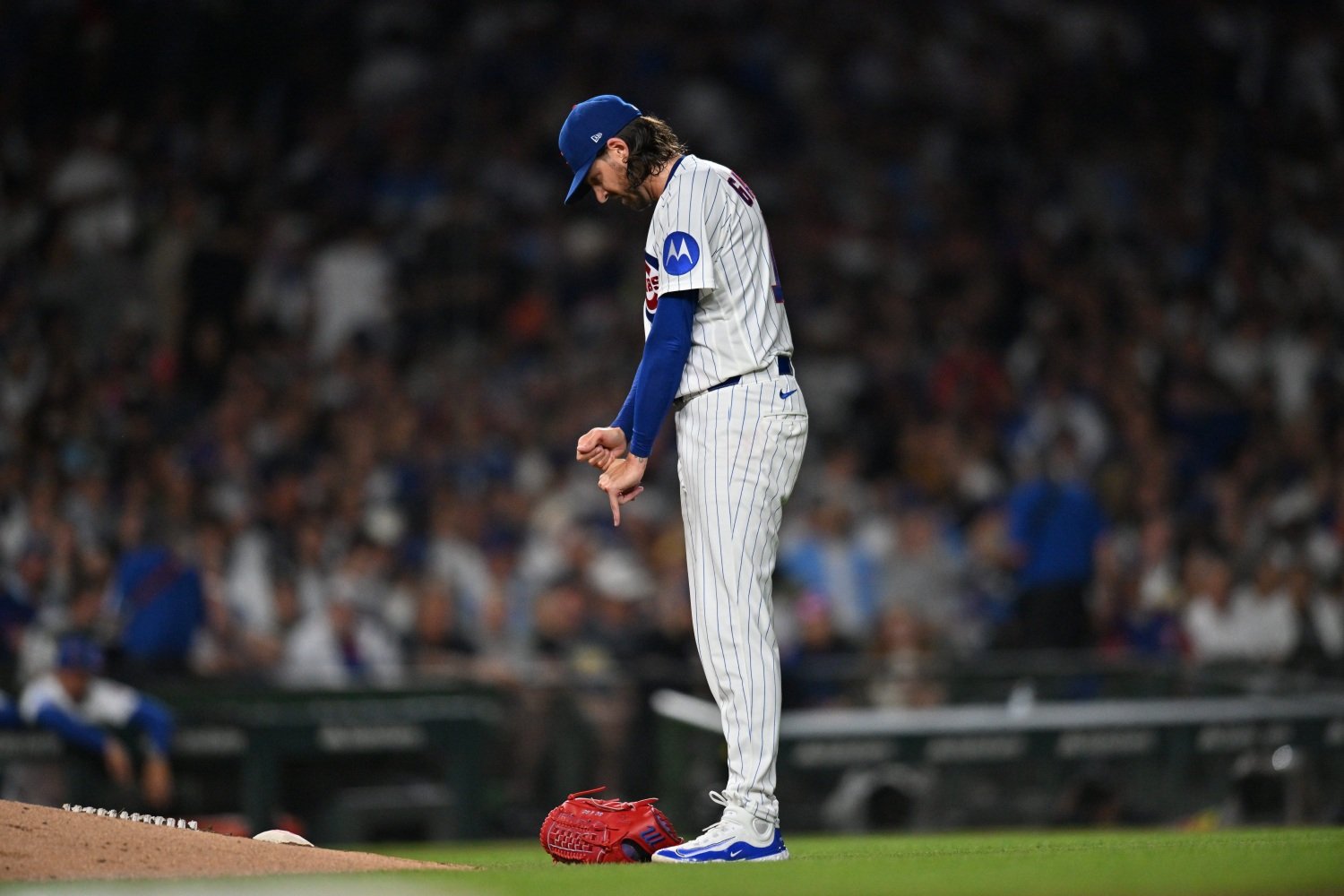 The three division races in the National League feel as though they're over. The Dodgers will win the NL West; they face no serious competition for their crown. The Brewers have put a comfortable cushion between themselves and the Cubs in the Central, with 6 games in the standings and an edge in the race to claim the head-to-head tiebreaker. The team from Atlanta's most concrete-crusted inner-ring suburb has only three games on the Phillies, after a surge by the second-place Phils, but it still feels like the current leaders will win each sub-pennant. That, in a way, puts the Cubs in an ad hoc division race of a different kind for the final five weeks. To host the Wild Card Series again this year, Chicago needs to hold off the Phillies, over whom they enjoy a de facto 2.5-game lead. It's only 2.0 games on the standings table, but the Cubs also have the tiebreaker sewn up between the teams. They're another two games ahead of San Diego, and two more ahead of Arizona. Though the Marlins and Cardinals are at least clinging to the periphery, it feels like four teams are vying for three spots—and, with three strong division champions in the league, you really don't want to have either the second or the third Wild Card berth, any more than you want to miss the playoffs altogether. The Cubs should view claiming the top Wild Card spot as a miniature division title to chase, because doing so would mean hosting whoever finishes second for a best-of-three series at Wrigley Field. Right now, by FanGraphs's estimation, they have a narrow lead in that race, in terms of projections. It's lovely to have that edge, however small, and the team can further stretch it by winning even once in Arizona this week. They swept the Diamondbacks when they visited Wrigley early this season, so a lone victory would mean the Cubs own the tiebreaker in all relevant cases. As you can see, though, the gap isn't wide. The team's margin for error hasn't swelled the way they might have hoped it would. In fact, Chicago is merely back to the same projected wins total they first reached on May 7, after a long dip in between. They shot up to 92 and 93 projected victories for a few short days at the beginning of this month, for a simple reason: their trade deadline. Adding Kevin Gausman, Clay Holmes, Ryan Zeferjahn, Braxton Garrett and Tyrone Taylor—basically, adding Gausman and Holmes, alone—boosted their projections nicely, because those players all addressed key needs for the team. Unfortunately, since then, the team has realized mixed results. Zeferjahn is struggling to adjust to life in his new environs. In the first six games started by Gausman and Holmes, meanwhile, the team is an underwhelming 3-3. The two have each shown flashes of what the team felt they were trading for, but neither has demonstrated consistent front-line stuff or delivered the hoped-for volume. That needs to change in the desert. The Cubs need to put together at least one more nice winning streak to reach their destination for the season and host another playoff series on the North Side. That means getting more out of Gausman and Holmes, and figuring out how to get Zeferjahn past the mental block he appears to have hit since coming to town. It doesn't have to mean winning the series against Arizona, though that should be the goal. It does, however, need to mean solid outings and as few setbacks as possible for each of their deadline pickups. Whatever urgency they already felt on that score, it must have risen Sunday, when Shota Imanaga looked frighteningly like the version of himself who proved unpitchable by the end of the 2025 season. If that start was just a blip, the Cubs can survive it, but if Imanaga is trending downward again, the team will need the boost of Gausman and Holmes pitching to their pedigrees considerably more. Technically, their advantage in projected standings is already smaller than the one they have in the real standings. They need to widen that gap, or start convincing the projections they're for real, with their games against the Diamondbacks and the lowly Reds this week. Gausman and Holmes stand at the center of that need, but it goes deeper, too. Making the playoffs is no longer the primary objective. At this point, they can almost take that for granted. They need to bear down and plan on winning the first Wild Card seed. That will take some doing, and it has to begin with getting what the numbers expect out of players for whom they gave up a bounty of young talent early this month.
 -
Image courtesy of Joe Nicholson-Imagn Images Sometimes, even things that happen to you aren't about you. That's one of life's most important truths, especially in an increasingly interconnected world, but it's also one of the hardest truths to accept. To even say it aloud sounds to obvious that lamenting it makes one sound petulant, but observing the excruciating reality doesn't make you a whiner. When it becomes clear that your role in the world is merely to be someone else's foil, plaything or punching bag, it's not irrational to feel wounded, or even furious. A mature, equanimous response is still required, but you're not crazy for feeling a boiling distemper in your gut at those moments. For the last few years, the Cubs have been secondary characters in the story of the NL Central. They've gone from pale and forgettable challengers to more robust ones, but there comes a point every summer where it becomes clear that the story belongs to the Brewers—that they were the ones with the depth and the stakes and the blessings of good luck to win the division, and that the Cubs were only there to make the story more interesting. Last season, they were hale enough to make one last, unexpected reappearance after the battle had been all but won, pushing the Brewers to the brink in the NLDS, but they were defeated, because the Brewers were better and were always ready for that final showdown, while the Cubs weren't. That's true again this year, at least in part. The Cubs made a valiant charge through July and into August, stringing together wins and savoring the superstar turn of Pete Crow-Armstrong, but it wasn't enough to catch Milwaukee. They never got closer than three games back of Pat Murphy's crew, who weren't as hot as the Cubs were during those weeks but didn't truly falter long enough to open the door for Chicago. After heartbreaking losses in the first two games in Seattle and two corresponding Brewers wins over the team from just outside Atlanta, Craig Counsell is suddenly seven games behind his mentor-turned-sidekick-turned-master again. The division is lost. Worse, the second of the weekend's defeats came on one of those days when you find out you're in someone else's story, too, even if it's a short story instead of the epic novel that is a full season. Less than a week after the game in which Pete Crow-Armstrong hit bookend homers and seemed to take over the contest with the White Sox in a way no other player could, Randy Arozarena did it right in Crow-Armstrong's face—and even one-upped him. Arozarena's homer-robbing catch ensured that the Mariners could keep the game close until the final inning, when Jacob Webb finally stumbled in a more meaningful way. Then Arozarena, whose leadoff homer had given Seattle its first run and whose hustle on an infield single had set up their only other tally until the ninth, hit the walkoff homer to seal his total victory, right over Crow-Armstrong's head. It was a gut punch of a loss, and an unwelcome reminder that not even greatness can protect you from sometimes being outclassed. Crow-Armstrong made the White Sox scenery in a play all about him; then Arozarena did the same thing to Crow-Armstrong's Cubs. The fury that rises in you when you feel like a mouse in the paw of a cat merely playing with its food before eating it isn't unearned. It won't do to rage about it; the mouse can't summon some reserve of strength it had simply forgotten about and overpower the cat. It won't do to ignore it, either. Sometimes, the horrible truth is that you're about to be eaten. No reaction is even required of you, but the more wise and measured your reaction, the better you'll come out in the end—be that merely because you preserved some dignity, or because there might be a twist neither you nor the cat has foreseen yet. Cubs fans should take plenty of solace from the last two days, and from their general recent trend. David Peterson pitched exceptionally well Saturday, and continues to look primed for an October start. Webb's implosion was unfortunate, but overdue, too. He's been so good for so long that a bad game was bound to happen to him; maybe Arozarena will turn out to have been merely a needed setback to properly tell the tale of Webb's transformation from forgettable middle reliever to October relief ace. Meanwhile, Alex Bregman has gotten scorching-hot, in the way the Cubs always knew he could and in a way that should position him (and the team) well for October. The bullpen is a glaring weakness for this team, but this weekend brought the news that Ben Brown and Justin Steele could return in time to help that pen in the postseason, along with Daniel Palencia (already back in the mix), Hoby Milner and Shelby Miller. If the club has to rely on Trent Thornton at all or on Webb to be perfect in October, they've already lost. If they can turn Thornton and Aaron Civale into (say) Brown and Steele, their margin for error should grow. The world we live in is not, of course, a prewritten story. The Cubs, like every team and like each of us as people, are actually writing their ever-changing story, day by day. The Brewers' lead in the Central is probably insurmountable, and if the two teams meet in the playoffs, the odds will favor the Crew. Ownership of the story can always change, but right now, this year remains more about Milwaukee than about Chicago. But while that anger at not being the best (or the most favored by Lady Luck) might linger, Cubs fans should begin to feel a sense of hope. Not all stories end with happy-ever-after for the protagonists, and some secondary characters end up with a well-earned happy ending of their own. The 2026 Cubs are better than any version since the 2017 team, and even a series of setbacks like this weekend's doesn't mean they're doomed to another disappointing denouement. A World Series title is extremely unlikely, but this club is still working its way toward what should be a satisfying place. View full article
-
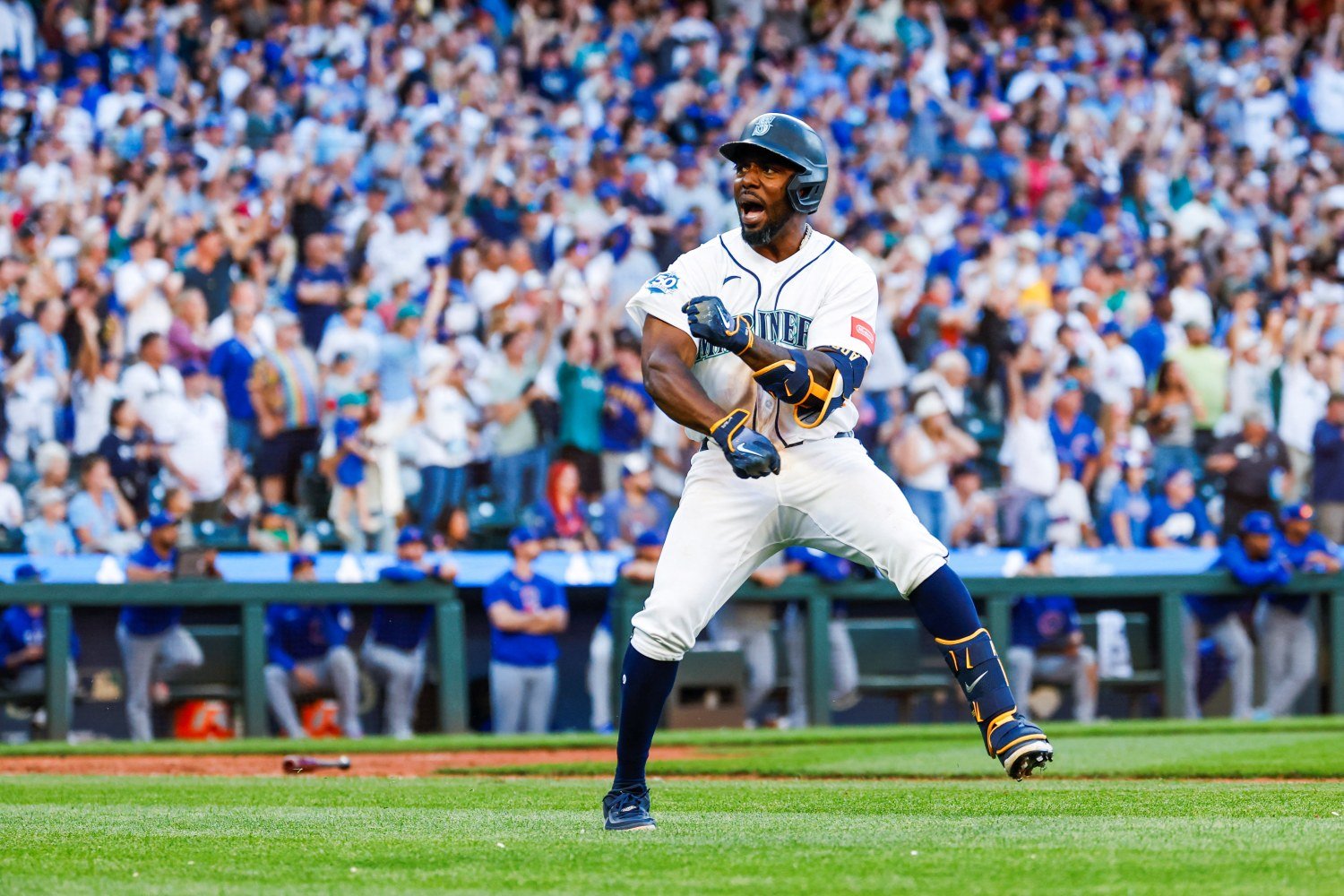 Sometimes, even things that happen to you aren't about you. That's one of life's most important truths, especially in an increasingly interconnected world, but it's also one of the hardest truths to accept. To even say it aloud sounds to obvious that lamenting it makes one sound petulant, but observing the excruciating reality doesn't make you a whiner. When it becomes clear that your role in the world is merely to be someone else's foil, plaything or punching bag, it's not irrational to feel wounded, or even furious. A mature, equanimous response is still required, but you're not crazy for feeling a boiling distemper in your gut at those moments. For the last few years, the Cubs have been secondary characters in the story of the NL Central. They've gone from pale and forgettable challengers to more robust ones, but there comes a point every summer where it becomes clear that the story belongs to the Brewers—that they were the ones with the depth and the stakes and the blessings of good luck to win the division, and that the Cubs were only there to make the story more interesting. Last season, they were hale enough to make one last, unexpected reappearance after the battle had been all but won, pushing the Brewers to the brink in the NLDS, but they were defeated, because the Brewers were better and were always ready for that final showdown, while the Cubs weren't. That's true again this year, at least in part. The Cubs made a valiant charge through July and into August, stringing together wins and savoring the superstar turn of Pete Crow-Armstrong, but it wasn't enough to catch Milwaukee. They never got closer than three games back of Pat Murphy's crew, who weren't as hot as the Cubs were during those weeks but didn't truly falter long enough to open the door for Chicago. After heartbreaking losses in the first two games in Seattle and two corresponding Brewers wins over the team from just outside Atlanta, Craig Counsell is suddenly seven games behind his mentor-turned-sidekick-turned-master again. The division is lost. Worse, the second of the weekend's defeats came on one of those days when you find out you're in someone else's story, too, even if it's a short story instead of the epic novel that is a full season. Less than a week after the game in which Pete Crow-Armstrong hit bookend homers and seemed to take over the contest with the White Sox in a way no other player could, Randy Arozarena did it right in Crow-Armstrong's face—and even one-upped him. Arozarena's homer-robbing catch ensured that the Mariners could keep the game close until the final inning, when Jacob Webb finally stumbled in a more meaningful way. Then Arozarena, whose leadoff homer had given Seattle its first run and whose hustle on an infield single had set up their only other tally until the ninth, hit the walkoff homer to seal his total victory, right over Crow-Armstrong's head. It was a gut punch of a loss, and an unwelcome reminder that not even greatness can protect you from sometimes being outclassed. Crow-Armstrong made the White Sox scenery in a play all about him; then Arozarena did the same thing to Crow-Armstrong's Cubs. The fury that rises in you when you feel like a mouse in the paw of a cat merely playing with its food before eating it isn't unearned. It won't do to rage about it; the mouse can't summon some reserve of strength it had simply forgotten about and overpower the cat. It won't do to ignore it, either. Sometimes, the horrible truth is that you're about to be eaten. No reaction is even required of you, but the more wise and measured your reaction, the better you'll come out in the end—be that merely because you preserved some dignity, or because there might be a twist neither you nor the cat has foreseen yet. Cubs fans should take plenty of solace from the last two days, and from their general recent trend. David Peterson pitched exceptionally well Saturday, and continues to look primed for an October start. Webb's implosion was unfortunate, but overdue, too. He's been so good for so long that a bad game was bound to happen to him; maybe Arozarena will turn out to have been merely a needed setback to properly tell the tale of Webb's transformation from forgettable middle reliever to October relief ace. Meanwhile, Alex Bregman has gotten scorching-hot, in the way the Cubs always knew he could and in a way that should position him (and the team) well for October. The bullpen is a glaring weakness for this team, but this weekend brought the news that Ben Brown and Justin Steele could return in time to help that pen in the postseason, along with Daniel Palencia (already back in the mix), Hoby Milner and Shelby Miller. If the club has to rely on Trent Thornton at all or on Webb to be perfect in October, they've already lost. If they can turn Thornton and Aaron Civale into (say) Brown and Steele, their margin for error should grow. The world we live in is not, of course, a prewritten story. The Cubs, like every team and like each of us as people, are actually writing their ever-changing story, day by day. The Brewers' lead in the Central is probably insurmountable, and if the two teams meet in the playoffs, the odds will favor the Crew. Ownership of the story can always change, but right now, this year remains more about Milwaukee than about Chicago. But while that anger at not being the best (or the most favored by Lady Luck) might linger, Cubs fans should begin to feel a sense of hope. Not all stories end with happy-ever-after for the protagonists, and some secondary characters end up with a well-earned happy ending of their own. The 2026 Cubs are better than any version since the 2017 team, and even a series of setbacks like this weekend's doesn't mean they're doomed to another disappointing denouement. A World Series title is extremely unlikely, but this club is still working its way toward what should be a satisfying place.
 -
Image courtesy of USA TODAY Network via Reuters Connect This week, Statcast rolled out new data evaluating the way first basemen receive throws from their teammates elsewhere on the infield. No seasoned baseball fan needs to be told that a well-timed stretch or an adroit scoop can make the difference between safe and out, but this is the first advanced, robust, transparent public framework that has been put forward to assign credit (and blame) for the work first basemen do to maximize outs on close plays and/or imperfect throws. Michael Busch doesn't light up the new leaderboard for this metric, on Baseball Savant. The net effect of first-base receiving ranges from about 8 extra outs to about 8 lost chances for one, but Busch stands solidly in the middle: he has 0 Outs Above Average (OAA) based on receiving this season. In fact, last season, he had... 0 OAA based on receiving. He's average. That's not very interesting, is it? Were it as simple as that, it wouldn't be, but there's a lot more to sift through here—and, alas, a real cause for alarm as we look toward the stretch run. When the throw is on target, Busch is a plus first baseman. He's flexible and fluid when stretching toward a throw, and good at nabbing runners by a fraction of a step. He reads plays well and cuts the ball off as early as he can, without compromising his ability to reach the ball. WERaOFhfV0ZRVkV3dEdEUT09X1YxTlRYRk1BQndvQVdWUUFBd0FIQWdBRUFGa0RWVk1BVTEwTkFBZFhBQXBRQWdSUQ==.mp4 Most on-target throws are near-automatic outs, but some first basemen—especially those under 6 feet tall, like the 5-foot-11 Busch—struggle to secure the ones that are fringy, because they don't stretch as well or move as decisively into the ball as the play demands. Busch might not quite be a good enough athlete to play second or third base, as the Dodgers (and, not so long ago, some Cubs fans) once hoped, but he reacts to throws like an infielder; he's comfortable making plays by receiving throws. There are plenty of first basemen of whom that's not true. Bryce Harper, whom the Phillies moved back to the outfield after the trade deadline, rates worst in the league as a receiver at first base, thanks partially to plays like this one: he just doesn't attack the ball quite enough, and catches it a crucial handful of inches later than he could have. NXk5SzFfWGw0TUFRPT1fQVFnRUFWMEJBRlFBRGdFTEFnQUhBUUZlQUZnQkFnQUFWRjBEQ0ZkUUJsZFVVZ3RX.mp4 Making sure good throws become outs is the first and most important duty of a first baseman fielding those throws. It's like pitch-framing for catchers, where stealing strikes just off the edges matters less than ensuring that pitches that really are strikes are properly called so. It's a real and important credit to Busch that he does that part of the job well. However, height—or, more accurately, wingspan—is an important factor in being a good receiver, and it comes into play on almost all forms of throws that aren't on target. For the purposes of the metrics, "on target" means that the throw arrives between 1 and 7 feet high and is within 5 feet of the base. Otherwise, throws are classified as wide, high, low, scoops (throws that bounce more than 5 feet from the bag but less than 15 feet away) or bounces (throws that bounce more than 15 feet from the base, producing long hops rather than short ones and a different fielding challenge than a scoop). Busch is above-average (1.5 OAA) when the throw is on target, but he lags behind on low (-1.2) and wide (-1.4) ones. At first blush, it might seem counterintuitive that the relatively short Busch struggles with low throws, but in fact, being a few inches shorter than players like Freddie Freeman and Nick Kurtz can turn throws that those players catch ankle-high into vicious short-hop situations. Busch just can't reach the ball before it hits the dirt, whereas another first baseman might be able to do so. Here's one such play. WU9WZ2dfWGw0TUFRPT1fQlFJQVVWVURWd2NBWEFaV0JRQUhBUUZTQUFNTVVWWUFWbEpYQkZFTUNWZGRBd0JX.mp4 It should be less surprising that Busch struggles to convert outs on balls thrown more than 5 feet wide of the base. He really does react well and read throws early, which is why he actually rates as average on high throws, despite his height: he's superb at leaping to snare the ball and finding the base on the way down. YkJMNk9fWGw0TUFRPT1fQTFJSFVWY0ZWZ1VBRGxzS1VBQUhBQTlWQUZoVUJsQUFDbFVDQ1ZCVEJGQlJWZ0FE.mp4 Anticipation can't go as far when an infielder misses the mark laterally, though. Physics don't work for you in that situation, the way they do when you spear a ball above your head and only need to work with gravity to get back to the place from which you leapt. It's not Busch's fault that he isn't 6-foot-3, but that does create a real constraint on his range as a receiver. bmJ3S0RfWGw0TUFRPT1fQWxCWlVGTU1WMU1BV1ZSV1ZBQUhVMU5TQUFNR0JWSUFVVkVBQkFRR0JsRlFBVmND.mp4 The dynamics at play are engrossing. You can work around some of the problems posed by being an undersized first baseman, but you can't completely eliminate them. You can be a good receiver around the bag even at 5-foot-11, but that value will be confined mostly to throws that are on target. Whenever you have to deal with balls that stretch your coveage radius, you're going to feel your lack of size working against you. Here's where things get really fun. Why has Busch been so consistently neutral as a receiver, despite being in trouble whenever a throw is off the mark? Because he faces fewer of those challenging throws than any other full-time first baseman. This season, among the 29 players who've had at least 200 opportunities to catch throws at first (Busch has a league-high 552 of them), none has seen as high a percentage of their throws rated as On Target than Busch's 85%. You can give him a tiny share of the credit for that, because he gets to the base quickly and clearly has a good rapport with his fellow infielders, but mostly, that stat is a testament to the steady work of Alex Bregman, Nico Hoerner and—gulp—Dansby Swanson. Of the 552 tracked opportunities Busch has had this season, 469 throws were On Target. If he were working with the Orioles' infield instead, as Pete Alonso is, he could expect to have just 435 of those throws hit their mark. That's about a 40% increase in the number of throws on which Busch would have to make a tougher play, exposing his shortcoming (no pun intended) in terms of range in all directions. The Cubs infielders don't have very strong arms, but they're so accurate that they make up for that lack of sheer power—and the value of that precision is boosted by the fact that their first baseman isn't well-equipped to save them when a throw goes astray. You can see the problem here. Swanson is now sidelined, perhaps for the year, with a Grade 2 oblique strain. That means a heavy dose of Hoerner at shortstop, and Pedro Ramírez at second base. A handful of other infielders (James Triantos, Owen Miller, Gabriel Arias and Matt Shaw among them) will get chances, too. I looked this up, so I feel obligated to report it. Since the start of 2023, among players with at least 50 tracked throws from shortstop, Hoerner has the highest On Target%. He's thrown 61 balls from short to first, and 58 of them have counted as being on the mark. However, I would apply a huge caveat to that. Firstly, Hoerner's arm is so weak that it sometimes isn't enough for him to merely be accurate. Here's the most impressive throw he's made as a shortstop since the start of 2023. It's a fine play, on a ball that took him to his right and prompted a jump-throw, but it also came from straightaway shortstop, rather than truly from the hole; he was shading heavily up the middle before the ball was hit. This was in 2024. OGdHajdfWGw0TUFRPT1fVkFaVFZWQUdVbGNBQ3dBRFZnQUFDVk5RQUFOUlYxWUFBbFpXQWxKWEJBUlhBZ3BT.mp4 Every other competitive play he's made at short over the last three and a half seasons has been less impressive than that. He has a weak arm, and it shows up even when he has time to get behind the ball and fire it off a strong platform. He doesn't transfer his weight well to get his body behind his throws; his upper body stays behind his front leg. He also pronates (turning his thumb down and his palm outward) harder than most infielders at release on most throws, resulting in de facto changeups thrown across the diamond. Worse, when Hoerner throws on the move, his accuracy gets lousy in a hurry. This is true even at second, but when he's trying to throw on the run or across his body from shortstop, it gets especially ugly. Busch was able to spare Hoerner an error on the play above, but you wouldn't want to bet on him being able to do so consistently. If you've ever shaken hands with Hoerner, this problem won't surprise you. He has unusual hands, thick and muscular but small; his fingers are longer (relative to his palms) than most people's. Thence come his struggles throwing the ball hard, and thence come the accuracy issues whenever he has to rush his release. As Hoerner slides to the left side to take over in Swanson's absence, there will be more off-target throws to first from the Chicago infield. That's likely to be exacerbated by the installation of Ramírez at second; he's not as smooth a fielder or thrower as Hoerner at that spot. That's bad news for Busch, whose skill set so nicely suits the accuracy of the throws he was receiving from the up-the-middle combo of Swanson and Hoerner. The Cubs are going to leak outs pretty badly over the coming weeks. Their rejiggered infield won't get to as many balls. They won't convert the ones they get to into outs as reliably, and they won't finish double plays as often. Busch isn't the problem in this altered equation, but expect to see an extra ball or two get away or an extra runner or two beating out a single by an eyelash. Busch is a fine receiver, but he's not gifted enough to be an excellent one. He's been thriving on the privilege of having exceptionally accurate teammates; he's going to have to survive without that privilege for the balance of this regular season. View full article
-
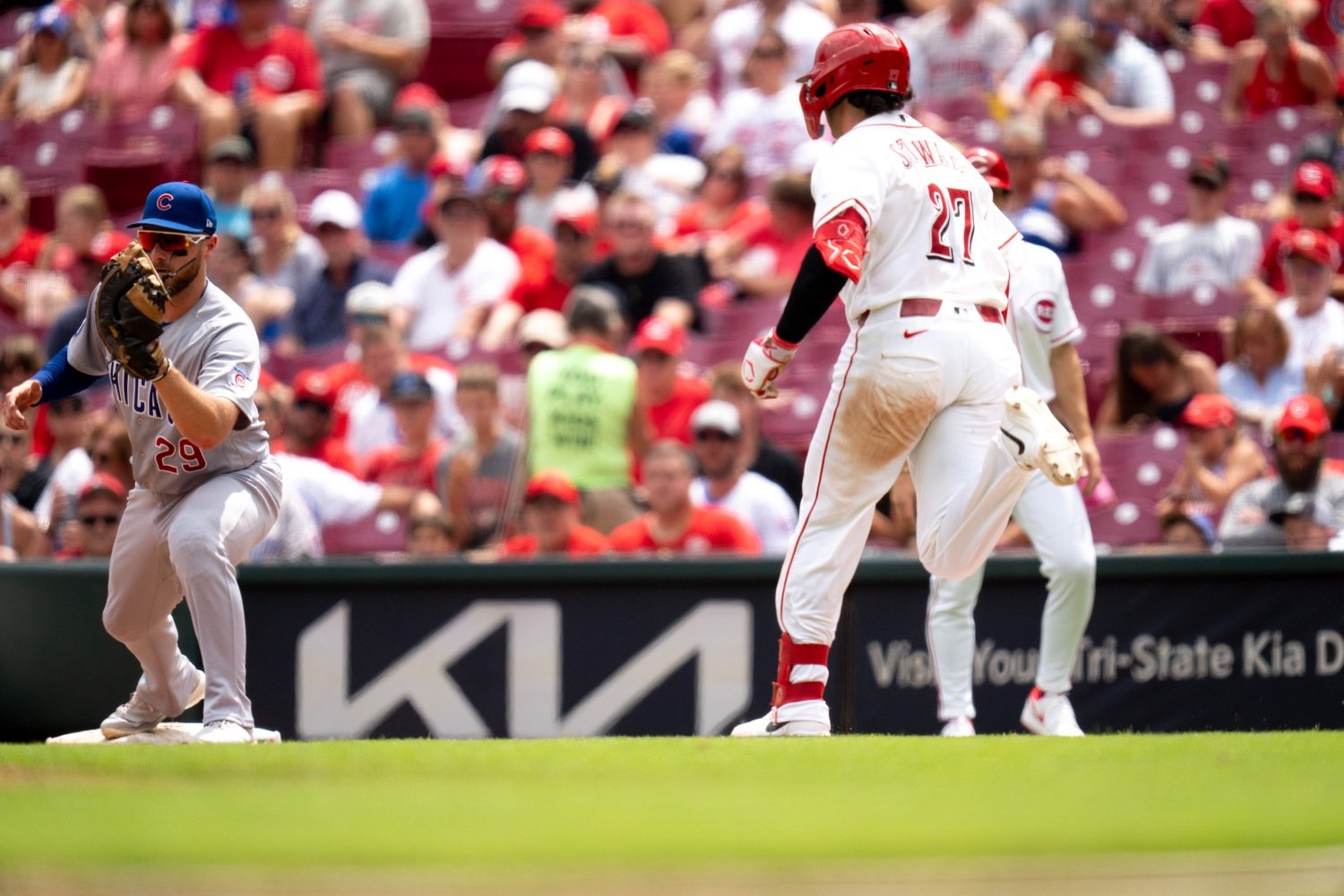 This week, Statcast rolled out new data evaluating the way first basemen receive throws from their teammates elsewhere on the infield. No seasoned baseball fan needs to be told that a well-timed stretch or an adroit scoop can make the difference between safe and out, but this is the first advanced, robust, transparent public framework that has been put forward to assign credit (and blame) for the work first basemen do to maximize outs on close plays and/or imperfect throws. Michael Busch doesn't light up the new leaderboard for this metric, on Baseball Savant. The net effect of first-base receiving ranges from about 8 extra outs to about 8 lost chances for one, but Busch stands solidly in the middle: he has 0 Outs Above Average (OAA) based on receiving this season. In fact, last season, he had... 0 OAA based on receiving. He's average. That's not very interesting, is it? Were it as simple as that, it wouldn't be, but there's a lot more to sift through here—and, alas, a real cause for alarm as we look toward the stretch run. When the throw is on target, Busch is a plus first baseman. He's flexible and fluid when stretching toward a throw, and good at nabbing runners by a fraction of a step. He reads plays well and cuts the ball off as early as he can, without compromising his ability to reach the ball. WERaOFhfV0ZRVkV3dEdEUT09X1YxTlRYRk1BQndvQVdWUUFBd0FIQWdBRUFGa0RWVk1BVTEwTkFBZFhBQXBRQWdSUQ==.mp4 Most on-target throws are near-automatic outs, but some first basemen—especially those under 6 feet tall, like the 5-foot-11 Busch—struggle to secure the ones that are fringy, because they don't stretch as well or move as decisively into the ball as the play demands. Busch might not quite be a good enough athlete to play second or third base, as the Dodgers (and, not so long ago, some Cubs fans) once hoped, but he reacts to throws like an infielder; he's comfortable making plays by receiving throws. There are plenty of first basemen of whom that's not true. Bryce Harper, whom the Phillies moved back to the outfield after the trade deadline, rates worst in the league as a receiver at first base, thanks partially to plays like this one: he just doesn't attack the ball quite enough, and catches it a crucial handful of inches later than he could have. NXk5SzFfWGw0TUFRPT1fQVFnRUFWMEJBRlFBRGdFTEFnQUhBUUZlQUZnQkFnQUFWRjBEQ0ZkUUJsZFVVZ3RX.mp4 Making sure good throws become outs is the first and most important duty of a first baseman fielding those throws. It's like pitch-framing for catchers, where stealing strikes just off the edges matters less than ensuring that pitches that really are strikes are properly called so. It's a real and important credit to Busch that he does that part of the job well. However, height—or, more accurately, wingspan—is an important factor in being a good receiver, and it comes into play on almost all forms of throws that aren't on target. For the purposes of the metrics, "on target" means that the throw arrives between 1 and 7 feet high and is within 5 feet of the base. Otherwise, throws are classified as wide, high, low, scoops (throws that bounce more than 5 feet from the bag but less than 15 feet away) or bounces (throws that bounce more than 15 feet from the base, producing long hops rather than short ones and a different fielding challenge than a scoop). Busch is above-average (1.5 OAA) when the throw is on target, but he lags behind on low (-1.2) and wide (-1.4) ones. At first blush, it might seem counterintuitive that the relatively short Busch struggles with low throws, but in fact, being a few inches shorter than players like Freddie Freeman and Nick Kurtz can turn throws that those players catch ankle-high into vicious short-hop situations. Busch just can't reach the ball before it hits the dirt, whereas another first baseman might be able to do so. Here's one such play. WU9WZ2dfWGw0TUFRPT1fQlFJQVVWVURWd2NBWEFaV0JRQUhBUUZTQUFNTVVWWUFWbEpYQkZFTUNWZGRBd0JX.mp4 It should be less surprising that Busch struggles to convert outs on balls thrown more than 5 feet wide of the base. He really does react well and read throws early, which is why he actually rates as average on high throws, despite his height: he's superb at leaping to snare the ball and finding the base on the way down. YkJMNk9fWGw0TUFRPT1fQTFJSFVWY0ZWZ1VBRGxzS1VBQUhBQTlWQUZoVUJsQUFDbFVDQ1ZCVEJGQlJWZ0FE.mp4 Anticipation can't go as far when an infielder misses the mark laterally, though. Physics don't work for you in that situation, the way they do when you spear a ball above your head and only need to work with gravity to get back to the place from which you leapt. It's not Busch's fault that he isn't 6-foot-3, but that does create a real constraint on his range as a receiver. bmJ3S0RfWGw0TUFRPT1fQWxCWlVGTU1WMU1BV1ZSV1ZBQUhVMU5TQUFNR0JWSUFVVkVBQkFRR0JsRlFBVmND.mp4 The dynamics at play are engrossing. You can work around some of the problems posed by being an undersized first baseman, but you can't completely eliminate them. You can be a good receiver around the bag even at 5-foot-11, but that value will be confined mostly to throws that are on target. Whenever you have to deal with balls that stretch your coveage radius, you're going to feel your lack of size working against you. Here's where things get really fun. Why has Busch been so consistently neutral as a receiver, despite being in trouble whenever a throw is off the mark? Because he faces fewer of those challenging throws than any other full-time first baseman. This season, among the 29 players who've had at least 200 opportunities to catch throws at first (Busch has a league-high 552 of them), none has seen as high a percentage of their throws rated as On Target than Busch's 85%. You can give him a tiny share of the credit for that, because he gets to the base quickly and clearly has a good rapport with his fellow infielders, but mostly, that stat is a testament to the steady work of Alex Bregman, Nico Hoerner and—gulp—Dansby Swanson. Of the 552 tracked opportunities Busch has had this season, 469 throws were On Target. If he were working with the Orioles' infield instead, as Pete Alonso is, he could expect to have just 435 of those throws hit their mark. That's about a 40% increase in the number of throws on which Busch would have to make a tougher play, exposing his shortcoming (no pun intended) in terms of range in all directions. The Cubs infielders don't have very strong arms, but they're so accurate that they make up for that lack of sheer power—and the value of that precision is boosted by the fact that their first baseman isn't well-equipped to save them when a throw goes astray. You can see the problem here. Swanson is now sidelined, perhaps for the year, with a Grade 2 oblique strain. That means a heavy dose of Hoerner at shortstop, and Pedro Ramírez at second base. A handful of other infielders (James Triantos, Owen Miller, Gabriel Arias and Matt Shaw among them) will get chances, too. I looked this up, so I feel obligated to report it. Since the start of 2023, among players with at least 50 tracked throws from shortstop, Hoerner has the highest On Target%. He's thrown 61 balls from short to first, and 58 of them have counted as being on the mark. However, I would apply a huge caveat to that. Firstly, Hoerner's arm is so weak that it sometimes isn't enough for him to merely be accurate. Here's the most impressive throw he's made as a shortstop since the start of 2023. It's a fine play, on a ball that took him to his right and prompted a jump-throw, but it also came from straightaway shortstop, rather than truly from the hole; he was shading heavily up the middle before the ball was hit. This was in 2024. OGdHajdfWGw0TUFRPT1fVkFaVFZWQUdVbGNBQ3dBRFZnQUFDVk5RQUFOUlYxWUFBbFpXQWxKWEJBUlhBZ3BT.mp4 Every other competitive play he's made at short over the last three and a half seasons has been less impressive than that. He has a weak arm, and it shows up even when he has time to get behind the ball and fire it off a strong platform. He doesn't transfer his weight well to get his body behind his throws; his upper body stays behind his front leg. He also pronates (turning his thumb down and his palm outward) harder than most infielders at release on most throws, resulting in de facto changeups thrown across the diamond. Worse, when Hoerner throws on the move, his accuracy gets lousy in a hurry. This is true even at second, but when he's trying to throw on the run or across his body from shortstop, it gets especially ugly. Busch was able to spare Hoerner an error on the play above, but you wouldn't want to bet on him being able to do so consistently. If you've ever shaken hands with Hoerner, this problem won't surprise you. He has unusual hands, thick and muscular but small; his fingers are longer (relative to his palms) than most people's. Thence come his struggles throwing the ball hard, and thence come the accuracy issues whenever he has to rush his release. As Hoerner slides to the left side to take over in Swanson's absence, there will be more off-target throws to first from the Chicago infield. That's likely to be exacerbated by the installation of Ramírez at second; he's not as smooth a fielder or thrower as Hoerner at that spot. That's bad news for Busch, whose skill set so nicely suits the accuracy of the throws he was receiving from the up-the-middle combo of Swanson and Hoerner. The Cubs are going to leak outs pretty badly over the coming weeks. Their rejiggered infield won't get to as many balls. They won't convert the ones they get to into outs as reliably, and they won't finish double plays as often. Busch isn't the problem in this altered equation, but expect to see an extra ball or two get away or an extra runner or two beating out a single by an eyelash. Busch is a fine receiver, but he's not gifted enough to be an excellent one. He's been thriving on the privilege of having exceptionally accurate teammates; he's going to have to survive without that privilege for the balance of this regular season.
 -
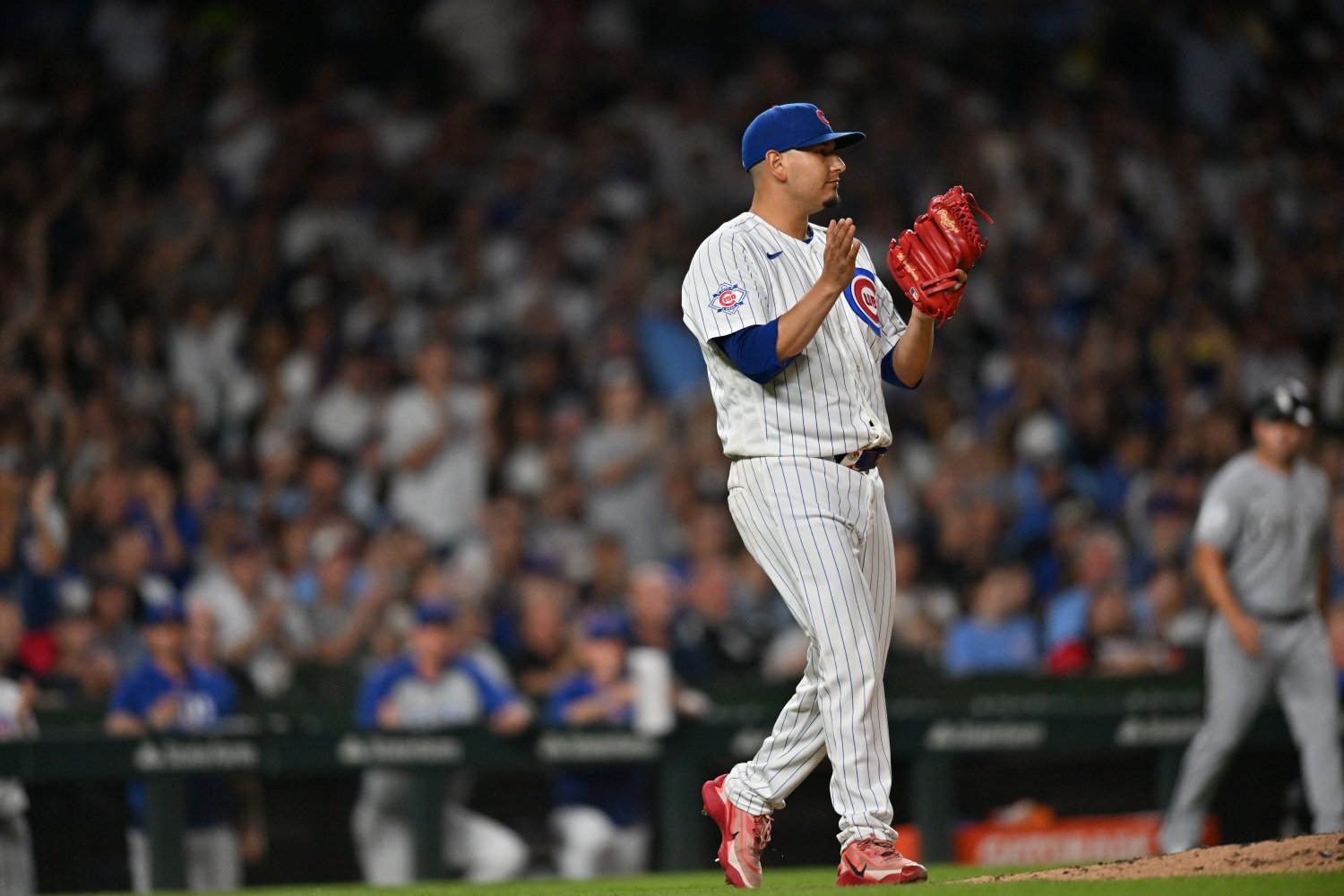 The previous Cub who went by 'Javy' also went by another name. Javier Báez cast gasp-inducing and delightful spells all over the diamond, from optical-illusion-quick tags around second base to now-you-see-it, now-you-don't slides on the bases. His nickname, 'El Mago', was a celebration of the way he seemed to want to entertain, as much as to win. Javier Assad is dabbling in darker magic. He casts some devastating spells over the game in his own right, but they feel a bit more worrisome. Like so many great stage acts, Báez titillated you with a wink and a smile. You knew the only real 'magic' was his genius. Assad is one of those street magicians whose act feels less sustainable and more enigmatic. He can't actually be communing with some force beyond our ken, or his... or can he? It raises the hairs on your arm. Sometimes, you wish he'd stop. This is magic that doesn't have a punchline. There's no moment of exhilaration, when he fools a hitter so badly that they fall over or blow a pitch by them at triple-digit velocity. He's not as physically entertaining as Báez. No, Assad's magic all shows up in the numbers, in all the ways you've been trained to believe are unsustainable. You've even been taught to mistrust and/or dislike pitchers who thrive this way. But you can't bring yourself to dislike Assad, can you? So, what does that say about you? Here are the black-magic numbers in question. Even before entering in a pinch on Tuesday night and firing three shutout innings against the White Sox, batters facing Assad had the following splits for his career. By outs in the inning: 0 Outs: .249/.326/.444 1 Out: .267/.333/.442 2 Outs: .206/.287/.307 By runners on base: Bases Empty: .260/.332/.447 Men On: .217/.295/.339 Runners in Scoring Position: .168/.247/.256 By Leverage Index: Low Leverage: .247/.326/.423 Medium Leverage: .256/.319/.421 High Leverage: .182/.280/.278 The samples involved aren't huge, of course, but nor are they tiny. Tuesday's was Assad's 100th career appearance, spangled across five seasons, and he's done all of this remarkably consistently throughout. He has a career ERA of 3.46; he has a 2026 ERA of 3.46. In Spanish, 'mago' is the name for a Báez-style magician—a showman and a dazzler. For those who seem to truly meddle with forces that ought not be meddled with, the better word is 'brujo'—a witch or sorcerer. That's what Assad is. You don't have to believe that his knack for escaping jams and coming up clutch is real, of course. In fact, it's extremely hard to buy into his profile in a far-seeing way, which is why the Cubs are always, always trying to replace him. He's only getting this latest shot to be on the roster because Edward Cabrera is hurt again. He only made an emergency appearance Tuesday night because Kevin Gausman's thumb cramped up in a strange and hideous sort of way, forcing an early departure. Statistically, it's unlikely that Assad keeps being this guy over a full career, and because modern teams run on what the stats tell them, it's unlikely that he even gets many more chances to have a full career. Assad's stuff ratings and his peripheral numbers (walks, strikeouts, hard-hit rates) all suggest the same thing as these splits, too: that there's regression ahead. He's not succeeding in a traditional way in terms of movement or velocity or missing bats, any more than in terms of when he succeeds and when he fails. He's allowed just a .272 career BABIP, and that number is .237 this year, but it's not at all easy to articulate how. He can't keep getting away with this. Right now, though, the Cubs are trying to catch the best team in baseball in their division, and strange setbacks keep afflicting many of their other pitching options. For now, there are much worse ways they could go than to place some trust in El Brujo. Nothing ever goes wrong when someone desperate for a particular outcome turns to black magic for help, right?
 -
Image courtesy of Patrick Gorski-Imagn Images The previous Cub who went by 'Javy' also went by another name. Javier Báez cast gasp-inducing and delightful spells all over the diamond, from optical-illusion-quick tags around second base to now-you-see-it, now-you-don't slides on the bases. His nickname, 'El Mago', was a celebration of the way he seemed to want to entertain, as much as to win. Javier Assad is dabbling in darker magic. He casts some devastating spells over the game in his own right, but they feel a bit more worrisome. Like so many great stage acts, Báez titillated you with a wink and a smile. You knew the only real 'magic' was his genius. Assad is one of those street magicians whose act feels less sustainable and more enigmatic. He can't actually be communing with some force beyond our ken, or his... or can he? It raises the hairs on your arm. Sometimes, you wish he'd stop. This is magic that doesn't have a punchline. There's no moment of exhilaration, when he fools a hitter so badly that they fall over or blow a pitch by them at triple-digit velocity. He's not as physically entertaining as Báez. No, Assad's magic all shows up in the numbers, in all the ways you've been trained to believe are unsustainable. You've even been taught to mistrust and/or dislike pitchers who thrive this way. But you can't bring yourself to dislike Assad, can you? So, what does that say about you? Here are the black-magic numbers in question. Even before entering in a pinch on Tuesday night and firing three shutout innings against the White Sox, batters facing Assad had the following splits for his career. By outs in the inning: 0 Outs: .249/.326/.444 1 Out: .267/.333/.442 2 Outs: .206/.287/.307 By runners on base: Bases Empty: .260/.332/.447 Men On: .217/.295/.339 Runners in Scoring Position: .168/.247/.256 By Leverage Index: Low Leverage: .247/.326/.423 Medium Leverage: .256/.319/.421 High Leverage: .182/.280/.278 The samples involved aren't huge, of course, but nor are they tiny. Tuesday's was Assad's 100th career appearance, spangled across five seasons, and he's done all of this remarkably consistently throughout. He has a career ERA of 3.46; he has a 2026 ERA of 3.46. In Spanish, 'mago' is the name for a Báez-style magician—a showman and a dazzler. For those who seem to truly meddle with forces that ought not be meddled with, the better word is 'brujo'—a witch or sorcerer. That's what Assad is. You don't have to believe that his knack for escaping jams and coming up clutch is real, of course. In fact, it's extremely hard to buy into his profile in a far-seeing way, which is why the Cubs are always, always trying to replace him. He's only getting this latest shot to be on the roster because Edward Cabrera is hurt again. He only made an emergency appearance Tuesday night because Kevin Gausman's thumb cramped up in a strange and hideous sort of way, forcing an early departure. Statistically, it's unlikely that Assad keeps being this guy over a full career, and because modern teams run on what the stats tell them, it's unlikely that he even gets many more chances to have a full career. Assad's stuff ratings and his peripheral numbers (walks, strikeouts, hard-hit rates) all suggest the same thing as these splits, too: that there's regression ahead. He's not succeeding in a traditional way in terms of movement or velocity or missing bats, any more than in terms of when he succeeds and when he fails. He's allowed just a .272 career BABIP, and that number is .237 this year, but it's not at all easy to articulate how. He can't keep getting away with this. Right now, though, the Cubs are trying to catch the best team in baseball in their division, and strange setbacks keep afflicting many of their other pitching options. For now, there are much worse ways they could go than to place some trust in El Brujo. Nothing ever goes wrong when someone desperate for a particular outcome turns to black magic for help, right? View full article
-
The Pete Crow-Armstrong Season
Matthew Trueblood replied to Matthew Trueblood's topic in North Side Baseball Front Page News
Thanks! What a performance he keeps putting on. -
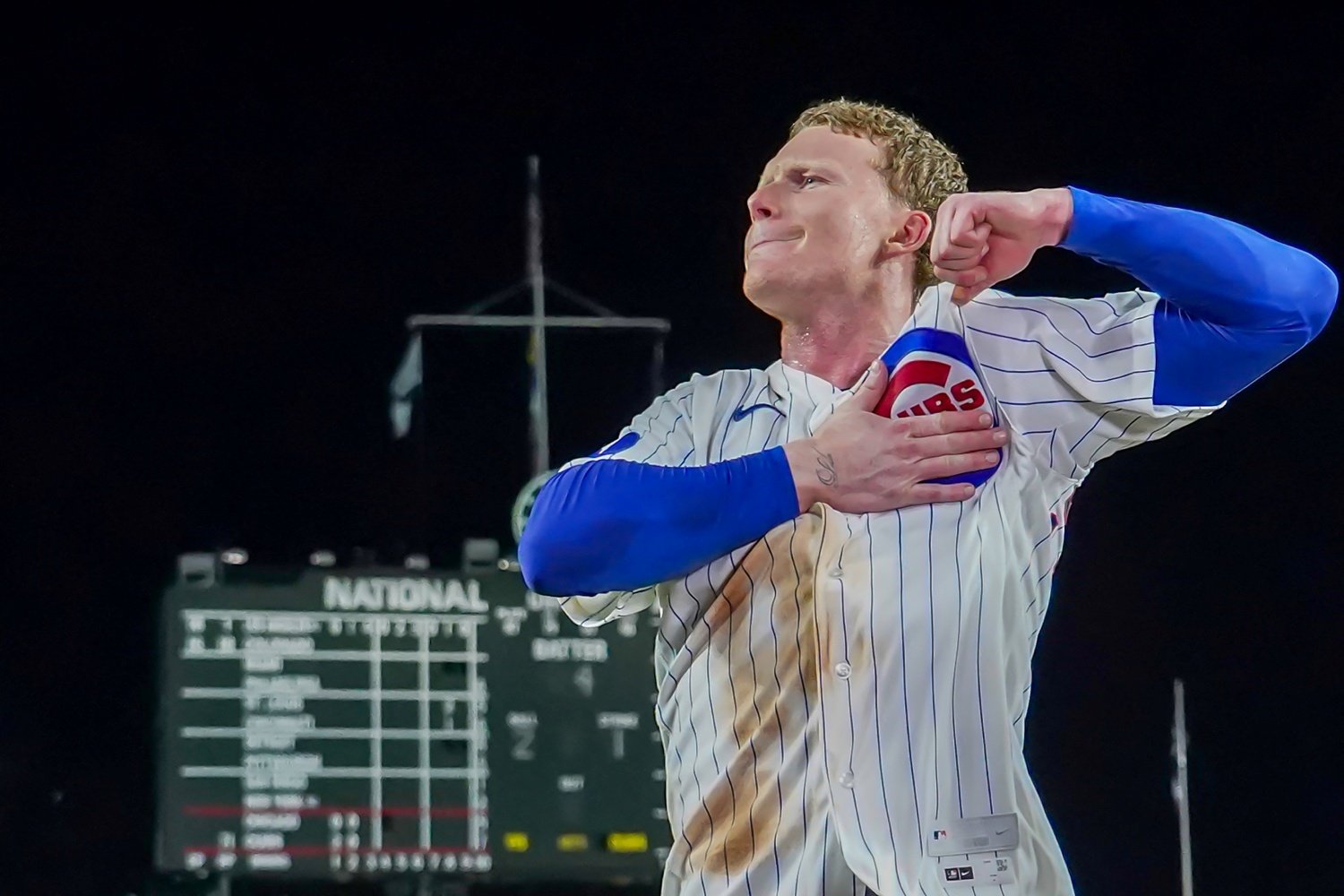 Chicagoans want to win, but they're not as ruthless about it as they think they are. Fans will ultimately line up behind strategies and styles that produce championships, but they respond to some of them much more readily than others. Winning is good. Winning with a seething intensity and a playing style that communicates your desperation to achieve that victory is Chicago sports nirvana. This is what made the Mike Ditka-led Bears so beloved, even after the team broke apart and some of the uglier truths about the culture of that team were exposed. It's what made Michael Jordan one of those rare global superstars just as fiercely beloved at home as abroad. The whole world fell in love with Jordan's smile and his acrobatics and the tongue hanging out as he soared through the air. Chicagoans fell in love with (arguably) the worst part of Jordan, but undeniably the defining part, too: his near-psychotic and unveiled hunger for wins. At their best, sports are art, and athletes communicate something true and emotional and important with their bodies. Jordan captured and acted out the insatiable desire to dominate that defined Chicago (and the United States as a whole) at the moment in time when he was at his best. People (and especially Chicagoans) responded to it. Not every great athlete brings that level of beautiful and apparent ferocity to their craft. When someone does, it elevates them, especially in the eyes of Chicago fans. When they don't, even if they play well, the connections between player and fan seem to burn less bright and flicker out sooner. Pete Crow-Armstrong is a spiritual descendant of Jordan. He plays an exhilarating brand of baseball, fueled by extraordinary talent and physical grace, but he also plays with an urgency that borders on frenzy. His reactions are authentic—he's not throwing his helmet after strikeouts or climbing walls on big opponent homers that sail 50 feet over his head just as eyewash—but they're exaggerated. He's like every other intense competitor in the game right now, only more so. For a long time, that held him back a bit. It showed up in his approach at the plate, making it virtually impossible for him to sustain a decent walk rate and often leading to mishit balls early in counts. It showed up in prolonged slumps born of him working too damn hard and looking like he was suffering perpetual heartburn when that work didn't translate into results. It showed up in him trying to do too much in the field on several plays, and in his inappropriate outburst toward a fan when the Cubs last played the White Sox. But man. When a player—a person—like that achieves just a tiny amount of added maturity and gains enough clarity to convert that intensity into consistency, there is nothing sport can offer to match it. Several times this season—in several big games—you've been able to see Crow-Armstrong furrow his brow and refuse to accept that his team might lose. He's learned the bounds of that mentality; he knows he can't will the team to victory every day. Because his inner fire won't let him accept any loss, though, he's also learned how best to give his team the chance to win even when they don't deserve to. There was that game against the A's in early June, when he was hit by a pitch to lead off the game, stole second, but was stranded on the bases. Later, he lost a ball in the sun and gave the visitors two runs, and suddenly, the Cubs were down 4-0. The very next half-inning, though, he hit a home run to open the scoring for the Cubs. In the bottom of the ninth, he capped a four-run rally with a two-out, walkoff single. Two days later, he hit two solo home runs—the second of them coming with two outs in the bottom of the ninth—to force extra innings in a 2-2 game, which the Cubs then won in the 10th. Earlier this month, he won a showdown with Shohei Ohtani by hitting two homers and a double in his first three plate appearances, one-upping Ohtani's own two-homer day. Days later, he had a single in the bottom of the ninth to set the stage for Alex Bregman's game-tying homer against the Blue Jays, then had another hit, advanced on a throw, stole third and scored on the ensuing error to walk off the game. Other games have offered more subtle moments of winning brilliance. Crow-Armstrong has learned that he can't always hit the home run to save the day. Sometimes, that's an option, and he expects to do it every time. When the opponents work around him or execute perfectly, though, he still finds ways to lengthen the game and give his team a better chance. Some of his walks over the last month, especially, have been of the kind the very best hitters have to accept at times, passing the baton and trusting a teammate. All of that churning progress toward greatness came to fruition Monday night, in (arguably) the most visible way yet. In a game the import of which was impossible to miss, Crow-Armstrong was in control throughout, and he refused to let the Cubs lose. They were playing their first full game without Dansby Swanson, and they were facing the crosstown rival White Sox, who lead the AL Central. August games don't get much bigger, especially given that the Cubs still hope to run down the Brewers in the NL Central. Crow-Armstrong emerged from a slump with a home run in Sunday's loss to the Cardinals, and (he would say later) had been putting in early batting-practice work to address an issue that plagued him early this season, too: hitting underneath the ball and pushing too many fly balls to left field. On the first pitch of the bottom of the first, he took a bite of the fruits of that labor with a home run down the right-field line. Seiya Suzuki went back-to-back with Crow-Armstrong, but then, the Cubs stopped scoring for a while. That was no fault of Crow-Armstrong, who singled in his second at-bat and stole second, but it's what happened. Meanwhile, the White Sox's formidable offense struck back, with two quick baserunners and a three-run homer in the top of the fourth. The Cubs responded by scratching out two runs in the fifth to take a 4-3 lead, but then disaster struck again in the top of the eighth. Ryan Zeferjahn issued a leadoff walk and then, with one out, surrendered a scoreboard-flipping home run to Andrew Benintendi, making it 5-4 White Sox. At that moment, it felt like the Cubs would lose, and it felt like a gut-punch loss that might send the team into a spiral, especially as they play without their sure-handed shortstop in the coming weeks. There was nothing Crow-Armstrong could do about that. The Sox scored five runs on four hits, and the two telling ones flew over the walls. He also couldn't will the team back to even in the bottom of the eighth, but the effort he made was exceptional. After two quick outs, Crow-Armstrong came up against White Sox reliever Trevor Richards and worked a 2-2 count. On a changeup off the outside edge, he flicked a gorgeous line-drive single to left-center—but, by getting out of the box well and using his speed, turned that single into a hustle double. He found something almost instantly on Jordan Hicks, who came in next for the Sox, and was relaying information to Suzuki from second base in the following at-bat, forcing the visitors to have a mound conference to clean things up. Suzuki struck out, though. Crow-Armstrong just couldn't seem to will his team to this particular win. Because he got that hit and lengthened that inning, though, the Sox had to have Hicks come back after sitting down for the top of the ninth. Two walks and a well-placed single allowed the Cubs to push across the tying tally. They left the bases loaded in that inning, and Crow-Armstrong in the on-deck circle—but that also meant he would lead off the bottom of the 10th. When Jacob Webb was able to strand the Manfred Man at second base in the top of that inning, the game felt over. Four pitches later, it was. TzA0cm9fWGw0TUFRPT1fQTFSVUFGTlFVZ3NBQ0FZR1ZnQUhCd0pTQUFNQlVnUUFVMWNNVVZJTkJ3VlVBRk5S.mp4 Crow-Armstrong can be a bit much. He can be vulgar and overbearing. He will accept looking petulant or foolish, at times, because he only really cares about winning and reserves the right to howl at the gods when he can't manufacture a win. Nonetheless, his craftsmanship and his quieter, more mature intensity have been apparent to everyone who's talked to him outside the diamond, ever since he came to the majors. He's learned to take some of the studiousness and precision that guide his pregame work into games, and to be a very specific kind of patient—enough so to earn opportunities to do great big things, but never so much so that even one such opportunity passes him by. He's found the sweet spot that Jordan found, too, where overweening tenacity can be lovable, because it feels like art—like a baring of one's soul that reflects that of the viewer and invites them to feel as deeply as the performer. It's become the best show in baseball, and Monday night was its best episode yet.
 -
Image courtesy of David Banks-Imagn Images Chicagoans want to win, but they're not as ruthless about it as they think they are. Fans will ultimately line up behind strategies and styles that produce championships, but they respond to some of them much more readily than others. Winning is good. Winning with a seething intensity and a playing style that communicates your desperation to achieve that victory is Chicago sports nirvana. This is what made the Mike Ditka-led Bears so beloved, even after the team broke apart and some of the uglier truths about the culture of that team were exposed. It's what made Michael Jordan one of those rare global superstars just as fiercely beloved at home as abroad. The whole world fell in love with Jordan's smile and his acrobatics and the tongue hanging out as he soared through the air. Chicagoans fell in love with (arguably) the worst part of Jordan, but undeniably the defining part, too: his near-psychotic and unveiled hunger for wins. At their best, sports are art, and athletes communicate something true and emotional and important with their bodies. Jordan captured and acted out the insatiable desire to dominate that defined Chicago (and the United States as a whole) at the moment in time when he was at his best. People (and especially Chicagoans) responded to it. Not every great athlete brings that level of beautiful and apparent ferocity to their craft. When someone does, it elevates them, especially in the eyes of Chicago fans. When they don't, even if they play well, the connections between player and fan seem to burn less bright and flicker out sooner. Pete Crow-Armstrong is a spiritual descendant of Jordan. He plays an exhilarating brand of baseball, fueled by extraordinary talent and physical grace, but he also plays with an urgency that borders on frenzy. His reactions are authentic—he's not throwing his helmet after strikeouts or climbing walls on big opponent homers that sail 50 feet over his head just as eyewash—but they're exaggerated. He's like every other intense competitor in the game right now, only more so. For a long time, that held him back a bit. It showed up in his approach at the plate, making it virtually impossible for him to sustain a decent walk rate and often leading to mishit balls early in counts. It showed up in prolonged slumps born of him working too damn hard and looking like he was suffering perpetual heartburn when that work didn't translate into results. It showed up in him trying to do too much in the field on several plays, and in his inappropriate outburst toward a fan when the Cubs last played the White Sox. But man. When a player—a person—like that achieves just a tiny amount of added maturity and gains enough clarity to convert that intensity into consistency, there is nothing sport can offer to match it. Several times this season—in several big games—you've been able to see Crow-Armstrong furrow his brow and refuse to accept that his team might lose. He's learned the bounds of that mentality; he knows he can't will the team to victory every day. Because his inner fire won't let him accept any loss, though, he's also learned how best to give his team the chance to win even when they don't deserve to. There was that game against the A's in early June, when he was hit by a pitch to lead off the game, stole second, but was stranded on the bases. Later, he lost a ball in the sun and gave the visitors two runs, and suddenly, the Cubs were down 4-0. The very next half-inning, though, he hit a home run to open the scoring for the Cubs. In the bottom of the ninth, he capped a four-run rally with a two-out, walkoff single. Two days later, he hit two solo home runs—the second of them coming with two outs in the bottom of the ninth—to force extra innings in a 2-2 game, which the Cubs then won in the 10th. Earlier this month, he won a showdown with Shohei Ohtani by hitting two homers and a double in his first three plate appearances, one-upping Ohtani's own two-homer day. Days later, he had a single in the bottom of the ninth to set the stage for Alex Bregman's game-tying homer against the Blue Jays, then had another hit, advanced on a throw, stole third and scored on the ensuing error to walk off the game. Other games have offered more subtle moments of winning brilliance. Crow-Armstrong has learned that he can't always hit the home run to save the day. Sometimes, that's an option, and he expects to do it every time. When the opponents work around him or execute perfectly, though, he still finds ways to lengthen the game and give his team a better chance. Some of his walks over the last month, especially, have been of the kind the very best hitters have to accept at times, passing the baton and trusting a teammate. All of that churning progress toward greatness came to fruition Monday night, in (arguably) the most visible way yet. In a game the import of which was impossible to miss, Crow-Armstrong was in control throughout, and he refused to let the Cubs lose. They were playing their first full game without Dansby Swanson, and they were facing the crosstown rival White Sox, who lead the AL Central. August games don't get much bigger, especially given that the Cubs still hope to run down the Brewers in the NL Central. Crow-Armstrong emerged from a slump with a home run in Sunday's loss to the Cardinals, and (he would say later) had been putting in early batting-practice work to address an issue that plagued him early this season, too: hitting underneath the ball and pushing too many fly balls to left field. On the first pitch of the bottom of the first, he took a bite of the fruits of that labor with a home run down the right-field line. Seiya Suzuki went back-to-back with Crow-Armstrong, but then, the Cubs stopped scoring for a while. That was no fault of Crow-Armstrong, who singled in his second at-bat and stole second, but it's what happened. Meanwhile, the White Sox's formidable offense struck back, with two quick baserunners and a three-run homer in the top of the fourth. The Cubs responded by scratching out two runs in the fifth to take a 4-3 lead, but then disaster struck again in the top of the eighth. Ryan Zeferjahn issued a leadoff walk and then, with one out, surrendered a scoreboard-flipping home run to Andrew Benintendi, making it 5-4 White Sox. At that moment, it felt like the Cubs would lose, and it felt like a gut-punch loss that might send the team into a spiral, especially as they play without their sure-handed shortstop in the coming weeks. There was nothing Crow-Armstrong could do about that. The Sox scored five runs on four hits, and the two telling ones flew over the walls. He also couldn't will the team back to even in the bottom of the eighth, but the effort he made was exceptional. After two quick outs, Crow-Armstrong came up against White Sox reliever Trevor Richards and worked a 2-2 count. On a changeup off the outside edge, he flicked a gorgeous line-drive single to left-center—but, by getting out of the box well and using his speed, turned that single into a hustle double. He found something almost instantly on Jordan Hicks, who came in next for the Sox, and was relaying information to Suzuki from second base in the following at-bat, forcing the visitors to have a mound conference to clean things up. Suzuki struck out, though. Crow-Armstrong just couldn't seem to will his team to this particular win. Because he got that hit and lengthened that inning, though, the Sox had to have Hicks come back after sitting down for the top of the ninth. Two walks and a well-placed single allowed the Cubs to push across the tying tally. They left the bases loaded in that inning, and Crow-Armstrong in the on-deck circle—but that also meant he would lead off the bottom of the 10th. When Jacob Webb was able to strand the Manfred Man at second base in the top of that inning, the game felt over. Four pitches later, it was. TzA0cm9fWGw0TUFRPT1fQTFSVUFGTlFVZ3NBQ0FZR1ZnQUhCd0pTQUFNQlVnUUFVMWNNVVZJTkJ3VlVBRk5S.mp4 Crow-Armstrong can be a bit much. He can be vulgar and overbearing. He will accept looking petulant or foolish, at times, because he only really cares about winning and reserves the right to howl at the gods when he can't manufacture a win. Nonetheless, his craftsmanship and his quieter, more mature intensity have been apparent to everyone who's talked to him outside the diamond, ever since he came to the majors. He's learned to take some of the studiousness and precision that guide his pregame work into games, and to be a very specific kind of patient—enough so to earn opportunities to do great big things, but never so much so that even one such opportunity passes him by. He's found the sweet spot that Jordan found, too, where overweening tenacity can be lovable, because it feels like art—like a baring of one's soul that reflects that of the viewer and invites them to feel as deeply as the performer. It's become the best show in baseball, and Monday night was its best episode yet. View full article
-
Maybe! There are big error bars. I would only caution that it could also be *too* kind to Ramírez; guys get exposed and run into trouble when they get this kind of late-season role expansion, all the time. There's a real risk he runs a very Swanson-like .700 OPS the rest of the way, with all the defensive downgrades already noted—even though you (and I, really) think he's more likely to be solidly average-plus at the plate.
-
Miguel Amaya Has Re-Emerged as an Equal Partner in Cubs' Catching Corps
Matthew Trueblood posted an article in Cubs
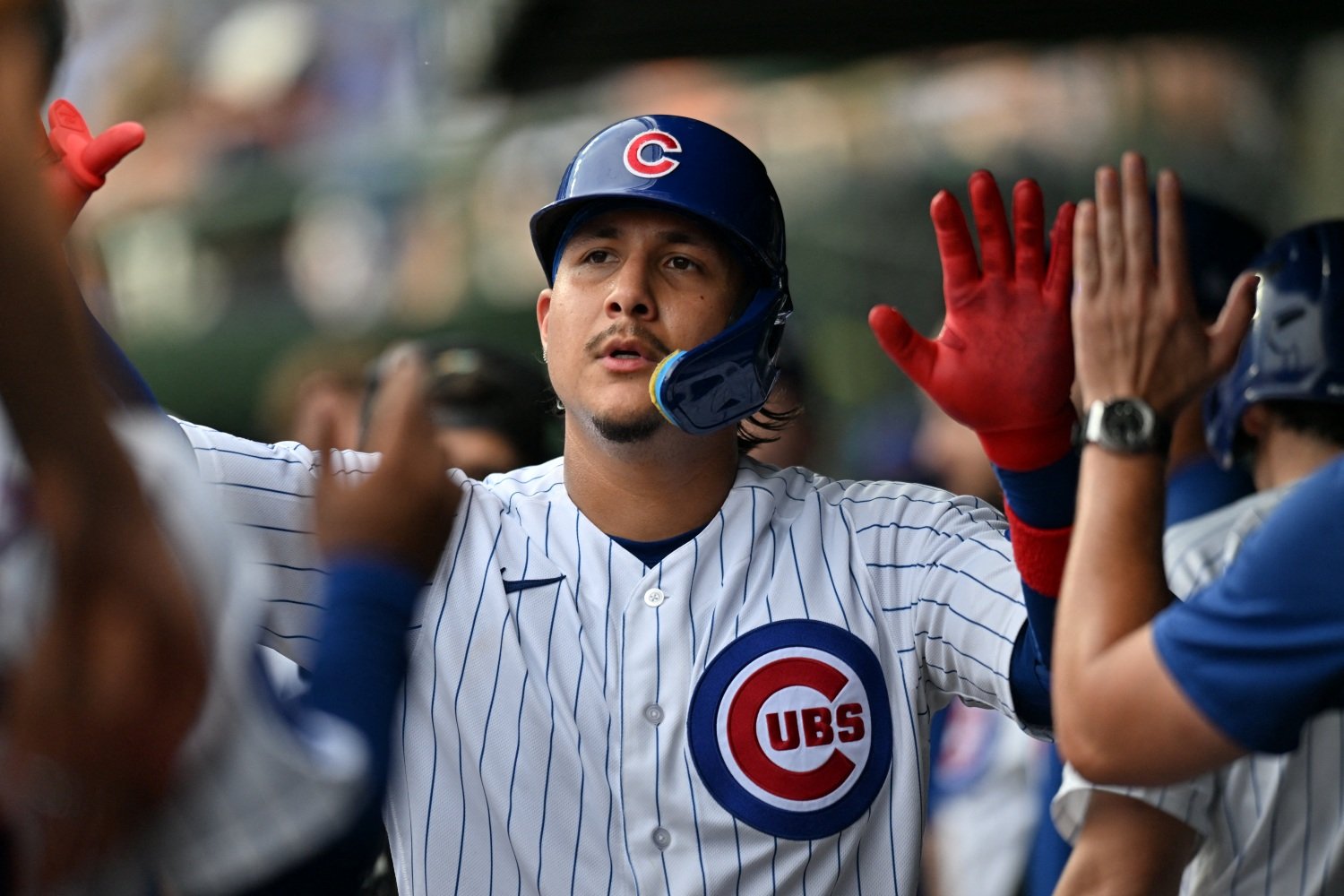 Over the weekend, Miguel Amaya started two consecutive games behind the plate. It was the first time he'd done that since late June, but it was also just the latest indication that the team is beginning to trust their younger backstop more—and that they realize they need to get Carson Kelly more rest. It's a shift with implications for both the present and the future behind the plate in Chicago. Since the start of July, Kelly has started 22 games, while Amaya has started the other 18. Before that, the playing time had not been nearly so evenly distributed, with Kelly starting 48, Amaya starting 32, and Moisés Ballesteros starting five games in the team's first 85. Of the last 22 games the team has played, Amaya and Kelly have divided the starts right down the middle. This was the initial plan, when the Cubs signed Kelly in December 2024. Like several other teams, they believe the best way to manage the exceptionally heavy on- and off-field workload of catchers is to divide playing time as evenly as possible between two solid options and to have a third person who can be sprinkled in to soak up some innings throughout the season. Because of Amaya's oblique strain last May, Kelly ended up having to start 71 of the team's last 110 games behind the plate, and that workload caught up to him down the stretch. Early this year, as Amaya's bat speed remained low and his production looked sluggish, Craig Counsell reluctantly ratcheted up Kelly's playing time again. Lately, however, Amaya's performance has trended in the right direction, just in time to shield the team from some difficulties for Kelly. His bat speed is up over his last six weeks of playing time or so: Amaya's swing also has more tilt than it did when he first came to the majors, allowing him to square the ball up consistently—and to all fields, as he demonstrated with an opposite-field home run during garbage time on Sunday. d2V3eFFfV0ZRVkV3dEdEUT09X1UxVlNBZ1VCQUZNQVcxSldYZ0FIQ1ZCV0FGZ0ZBQVVBQlFBTlVRcFJDQUpRQmd0WA==.mp4 Amaya's feel for the barrel has improved right along with his bat speed since the heat of summer began to gather in earnest. He's also been a solid defender this year, including doing a better job against the running game than Kelly. Put all of that together, and he's earned renewed trust and opportunity from Counsell. Since the All-Star break, he's batting .279/.326/.465, in 48 plate appearances. That should be good for the Cubs on multiple fronts. At 27 years old, Amaya is five years Kelly's junior. He's been in the mix forever, so often delayed by injuries and now out of minor-league options, but he's also under team control through the 2029 season. He'll be eligible for arbitration for the first time this winter, but is only in line for a modest raise there. Kelly, meanwhile, will become a free agent this fall, when either he or the team declines their side of a mutual option for 2027. That makes the re-emergence (and, for now, the good health) of Amaya a major development for the team's medium-term future. They were more comfortable moving Ballesteros at the trade deadline because Amaya had shown that he can handle a greater workload than in the past for the balance of this year. They felt comfortable prioritizing keeping Owen Ayers, whom they view as their catcher of the future, and are tentatively planning to partner Amaya with Ayers next season. They might re-sign Kelly, if he wants to return on favorable terms, but it's just as likely that they'll bring in a catcher on a split or minor-league deal and give Ayers and Amaya a chance to assert themselves as the new Amaya and Kelly. In the meantime, while Kelly is in a dip right now, playing Amaya more often during this difficult August grind should produce a fresher version of the veteran in September and October. Amaya has another handful of weeks to show that he deserves playing-time parity even in the looser schedule of the postseason, but whether he does so or not, his play over the last month-plus has already been huge for the team.
 -
Image courtesy of Patrick Gorski-Imagn Images Over the weekend, Miguel Amaya started two consecutive games behind the plate. It was the first time he'd done that since late June, but it was also just the latest indication that the team is beginning to trust their younger backstop more—and that they realize they need to get Carson Kelly more rest. It's a shift with implications for both the present and the future behind the plate in Chicago. Since the start of July, Kelly has started 22 games, while Amaya has started the other 18. Before that, the playing time had not been nearly so evenly distributed, with Kelly starting 48, Amaya starting 32, and Moisés Ballesteros starting five games in the team's first 85. Of the last 22 games the team has played, Amaya and Kelly have divided the starts right down the middle. This was the initial plan, when the Cubs signed Kelly in December 2024. Like several other teams, they believe the best way to manage the exceptionally heavy on- and off-field workload of catchers is to divide playing time as evenly as possible between two solid options and to have a third person who can be sprinkled in to soak up some innings throughout the season. Because of Amaya's oblique strain last May, Kelly ended up having to start 71 of the team's last 110 games behind the plate, and that workload caught up to him down the stretch. Early this year, as Amaya's bat speed remained low and his production looked sluggish, Craig Counsell reluctantly ratcheted up Kelly's playing time again. Lately, however, Amaya's performance has trended in the right direction, just in time to shield the team from some difficulties for Kelly. His bat speed is up over his last six weeks of playing time or so: Amaya's swing also has more tilt than it did when he first came to the majors, allowing him to square the ball up consistently—and to all fields, as he demonstrated with an opposite-field home run during garbage time on Sunday. d2V3eFFfV0ZRVkV3dEdEUT09X1UxVlNBZ1VCQUZNQVcxSldYZ0FIQ1ZCV0FGZ0ZBQVVBQlFBTlVRcFJDQUpRQmd0WA==.mp4 Amaya's feel for the barrel has improved right along with his bat speed since the heat of summer began to gather in earnest. He's also been a solid defender this year, including doing a better job against the running game than Kelly. Put all of that together, and he's earned renewed trust and opportunity from Counsell. Since the All-Star break, he's batting .279/.326/.465, in 48 plate appearances. That should be good for the Cubs on multiple fronts. At 27 years old, Amaya is five years Kelly's junior. He's been in the mix forever, so often delayed by injuries and now out of minor-league options, but he's also under team control through the 2029 season. He'll be eligible for arbitration for the first time this winter, but is only in line for a modest raise there. Kelly, meanwhile, will become a free agent this fall, when either he or the team declines their side of a mutual option for 2027. That makes the re-emergence (and, for now, the good health) of Amaya a major development for the team's medium-term future. They were more comfortable moving Ballesteros at the trade deadline because Amaya had shown that he can handle a greater workload than in the past for the balance of this year. They felt comfortable prioritizing keeping Owen Ayers, whom they view as their catcher of the future, and are tentatively planning to partner Amaya with Ayers next season. They might re-sign Kelly, if he wants to return on favorable terms, but it's just as likely that they'll bring in a catcher on a split or minor-league deal and give Ayers and Amaya a chance to assert themselves as the new Amaya and Kelly. In the meantime, while Kelly is in a dip right now, playing Amaya more often during this difficult August grind should produce a fresher version of the veteran in September and October. Amaya has another handful of weeks to show that he deserves playing-time parity even in the looser schedule of the postseason, but whether he does so or not, his play over the last month-plus has already been huge for the team. View full article
-
Image courtesy of Patrick Gorski-Imagn Images The Cubs can't go very far without Dansby Swanson, but it sure looks like they'll be without him for a while. After a swing in the bottom of the third inning of Sunday's loss to the Cardinals, Swanson immediately reacted with visible pain and frustration, and he walked off the field after only a very brief consultation with manager Craig Counsell and a team trainer. The Cubs announced that he'd left with discomfort in his left side. After the game, Counsell said that Swanson would go on the injured list with the issue and undergo imaging Monday to determine the severity of the injury. Because 'setback' can be construed as a worsening of a preexisting injury, I followed up with Bastian and with a team source; both indicated that there was no known issue with Swanson's side before this. That it's a new problem is hollow succor, though, if he's likely to miss several weeks either way. According to Bruce Levine of 670 The Score, Dansby Swanson told reporters after Sunday's game that he had never had a soft tissue injury during his professional career. That's not true, so either Swanson or Levine is badly mistaken. Swanson underwent sports hernia surgery just after the 2024 season, which addresses damage to soft tissue in the lower abdomen. Swanson might have meant that he hadn't previously missed time due to such an injury, and maybe he meant that declaration as an avowal that he won't be sidelined for long by this issue, either. For now, however, it's a huge blow to Chicago's hopes. That's because, although Swanson has been his inconsistent self at the plate this year, his value as a defender at shortstop is virtually unparalleled—especially in the context of the Cubs' lineup. Counsell indicated what any Cubs fan already knew Sunday: that Nico Hoerner will play shortstop in Swanson's absence, with Pedro Ramírez picking up extra playing time as something close to the everyday second baseman. Offensively, that's great news. On balance, Ramírez is at least as good a hitter as Swanson at this stage of each player's career. Defensively, though, it represents a massive downgrade—one the team will feel every time it takes the field in that configuration. Hoerner is an adept fielder, but he's not as fluid or as good at the quick exchange and release as is Swanson. In 2022, he was an adequate shortstop, but he was never destined to be excellent there. Having lost even half a step since then, he's now underqualified for the spot. Over a full season, Swanson is worth a good 15 runs more than Hoerner is as a shortstop, so if he misses (say) 30 games, the Cubs will lose about 3 runs. In fact, though, the effect will be larger. Ramírez is a fine but not superb second baseman; multiple scouts for other teams who evaluated him during trade season last month believe his best position is third. There's about a 12-run difference between the glovework of Hoerner at second and that of Ramírez over a full season, so dock the team another couple of runs on that basis. You'd better round it up to 3 runs and call it 6 between the two positions, because when a team gets weaker at two adjacent positions simultaneously, there's a slight but real exponent that should be applied to the effect. Six runs shouldn't make or break the Cubs the rest of the way, but it's likely to cost them a game somewhere along the way. Again, if you're a believer in what Ramírez has done over his first 140 plate appearances—and he's earned a bit of confidence, by now—then he can be worth an extra couple of runs with his bat, relative to Swanson, but he doesn't have the same upside Swanson offers when he goes on one of his famous power binges. So far, we've talked only about what will happen if Swanson misses a month but returns in time for the final few games of the regular season and is at full strength come October. That's a fair estimate, based on how much time hitters typically miss with oblique strains. However, as you can see in this graphic from Baseball Prospectus, there's about a 25% chance (the 20% represented in the monthly breakdown, scaled up slightly because it's already the middle of August and Swanson just suffered his injury) that this ends the shortstop's season. Whatever depth Ramírez might add to the lineup (at the cost of the dynamism Swanson brings), the team is worse without Swanson. In fact, it's hard to see the team going far in October if Swanson doesn't have time to recuperate, go on a rehab assignment, and return at the peak of his ability by the time that calendar page flips. That's a worry for later, though. In the short term, the Cubs have problems that extend beyond Swanson going down. Edward Cabrera made a return to the active roster and to the starting rotation Sunday, but it was anything but triumphant. The righty continued a disastrous season by giving up a long first-inning home run and then going to pieces in the fourth, partially because of a blister that emerged during that frame. The Cubs made a plan based on Cabrera being the pitcher they've expected and hoped he would be ever since they traded for him in January, optioning Javier Assad to Triple-A Iowa and provisionally shifting David Peterson to the bullpen. Now, that plan appears to be in doubt. It's a concern that extends beyond the adjustments that might be required, too, because it feels like another indictment of the team's ability to develop and optimize talented players after paying hefty sums to acquire them. Cabrera joins a pitching lineage that included Yu Darvish, Tyler Chatwood and Marcus Stroman, among others, but of course, the club also didn't realize quite as much value from Kyle Tucker as they'd hoped. Tucker cost them top prospect Cam Smith, and more. Cabrera cost them top prospect Owen Caissie, and more. The team can and should keep using prospect depth to bolster their big-league roster, but they can't afford to keep getting tepid returns on those huge investments. Losing three out of four won't plunge the Cubs into real jeopardy. They're going to make the playoffs; they still have a five-game lead over the other contenders for the top Wild Card berth. However, after the Brewers took three of four from the Dodgers in Los Angeles, Chicago is also five games behind the Crew in the NL Central. For a week or so, they seemed to be closing in on Milwaukee, and to have the depth to catch and pass them to claim the division crown and a first-round bye. Suddenly, that feels much less likely. Swanson and Cabrera had bad days; the Cubs had a bad weekend. Perhaps that's all it'll be. The White Sox come to Wrigley Field for three games this week, giving the North Siders a chance to quickly reassert themselves. Pete Crow-Armstrong hit a much-needed home run in an otherwise dreadful series finale; another hot streak from him would be the best-timed one yet. Until the response comes, though, Cubs fans will have to hold their breath a bit. Cabrera's season looks like a washout. Swanson's is in danger. The team's depth, in all departments, is a bit less robust than they might have hoped. The whole weekend went wrong, and the time to get right again is growing short. View full article
-
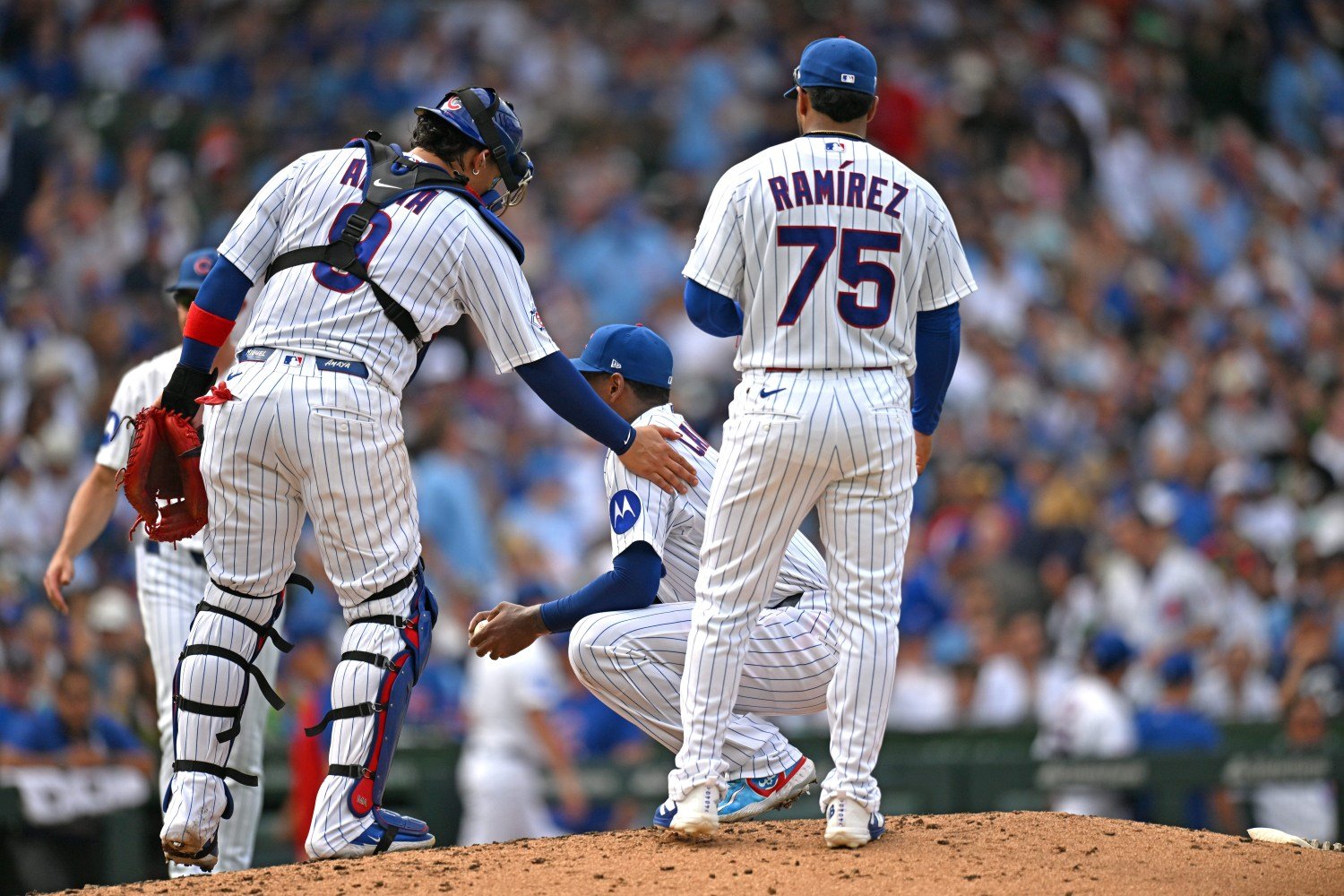 The Cubs can't go very far without Dansby Swanson, but it sure looks like they'll be without him for a while. After a swing in the bottom of the third inning of Sunday's loss to the Cardinals, Swanson immediately reacted with visible pain and frustration, and he walked off the field after only a very brief consultation with manager Craig Counsell and a team trainer. The Cubs announced that he'd left with discomfort in his left side. After the game, Counsell said that Swanson would go on the injured list with the issue and undergo imaging Monday to determine the severity of the injury. Because 'setback' can be construed as a worsening of a preexisting injury, I followed up with Bastian and with a team source; both indicated that there was no known issue with Swanson's side before this. That it's a new problem is hollow succor, though, if he's likely to miss several weeks either way. According to Bruce Levine of 670 The Score, Dansby Swanson told reporters after Sunday's game that he had never had a soft tissue injury during his professional career. That's not true, so either Swanson or Levine is badly mistaken. Swanson underwent sports hernia surgery just after the 2024 season, which addresses damage to soft tissue in the lower abdomen. Swanson might have meant that he hadn't previously missed time due to such an injury, and maybe he meant that declaration as an avowal that he won't be sidelined for long by this issue, either. For now, however, it's a huge blow to Chicago's hopes. That's because, although Swanson has been his inconsistent self at the plate this year, his value as a defender at shortstop is virtually unparalleled—especially in the context of the Cubs' lineup. Counsell indicated what any Cubs fan already knew Sunday: that Nico Hoerner will play shortstop in Swanson's absence, with Pedro Ramírez picking up extra playing time as something close to the everyday second baseman. Offensively, that's great news. On balance, Ramírez is at least as good a hitter as Swanson at this stage of each player's career. Defensively, though, it represents a massive downgrade—one the team will feel every time it takes the field in that configuration. Hoerner is an adept fielder, but he's not as fluid or as good at the quick exchange and release as is Swanson. In 2022, he was an adequate shortstop, but he was never destined to be excellent there. Having lost even half a step since then, he's now underqualified for the spot. Over a full season, Swanson is worth a good 15 runs more than Hoerner is as a shortstop, so if he misses (say) 30 games, the Cubs will lose about 3 runs. In fact, though, the effect will be larger. Ramírez is a fine but not superb second baseman; multiple scouts for other teams who evaluated him during trade season last month believe his best position is third. There's about a 12-run difference between the glovework of Hoerner at second and that of Ramírez over a full season, so dock the team another couple of runs on that basis. You'd better round it up to 3 runs and call it 6 between the two positions, because when a team gets weaker at two adjacent positions simultaneously, there's a slight but real exponent that should be applied to the effect. Six runs shouldn't make or break the Cubs the rest of the way, but it's likely to cost them a game somewhere along the way. Again, if you're a believer in what Ramírez has done over his first 140 plate appearances—and he's earned a bit of confidence, by now—then he can be worth an extra couple of runs with his bat, relative to Swanson, but he doesn't have the same upside Swanson offers when he goes on one of his famous power binges. So far, we've talked only about what will happen if Swanson misses a month but returns in time for the final few games of the regular season and is at full strength come October. That's a fair estimate, based on how much time hitters typically miss with oblique strains. However, as you can see in this graphic from Baseball Prospectus, there's about a 25% chance (the 20% represented in the monthly breakdown, scaled up slightly because it's already the middle of August and Swanson just suffered his injury) that this ends the shortstop's season. Whatever depth Ramírez might add to the lineup (at the cost of the dynamism Swanson brings), the team is worse without Swanson. In fact, it's hard to see the team going far in October if Swanson doesn't have time to recuperate, go on a rehab assignment, and return at the peak of his ability by the time that calendar page flips. That's a worry for later, though. In the short term, the Cubs have problems that extend beyond Swanson going down. Edward Cabrera made a return to the active roster and to the starting rotation Sunday, but it was anything but triumphant. The righty continued a disastrous season by giving up a long first-inning home run and then going to pieces in the fourth, partially because of a blister that emerged during that frame. The Cubs made a plan based on Cabrera being the pitcher they've expected and hoped he would be ever since they traded for him in January, optioning Javier Assad to Triple-A Iowa and provisionally shifting David Peterson to the bullpen. Now, that plan appears to be in doubt. It's a concern that extends beyond the adjustments that might be required, too, because it feels like another indictment of the team's ability to develop and optimize talented players after paying hefty sums to acquire them. Cabrera joins a pitching lineage that included Yu Darvish, Tyler Chatwood and Marcus Stroman, among others, but of course, the club also didn't realize quite as much value from Kyle Tucker as they'd hoped. Tucker cost them top prospect Cam Smith, and more. Cabrera cost them top prospect Owen Caissie, and more. The team can and should keep using prospect depth to bolster their big-league roster, but they can't afford to keep getting tepid returns on those huge investments. Losing three out of four won't plunge the Cubs into real jeopardy. They're going to make the playoffs; they still have a five-game lead over the other contenders for the top Wild Card berth. However, after the Brewers took three of four from the Dodgers in Los Angeles, Chicago is also five games behind the Crew in the NL Central. For a week or so, they seemed to be closing in on Milwaukee, and to have the depth to catch and pass them to claim the division crown and a first-round bye. Suddenly, that feels much less likely. Swanson and Cabrera had bad days; the Cubs had a bad weekend. Perhaps that's all it'll be. The White Sox come to Wrigley Field for three games this week, giving the North Siders a chance to quickly reassert themselves. Pete Crow-Armstrong hit a much-needed home run in an otherwise dreadful series finale; another hot streak from him would be the best-timed one yet. Until the response comes, though, Cubs fans will have to hold their breath a bit. Cabrera's season looks like a washout. Swanson's is in danger. The team's depth, in all departments, is a bit less robust than they might have hoped. The whole weekend went wrong, and the time to get right again is growing short.
 -
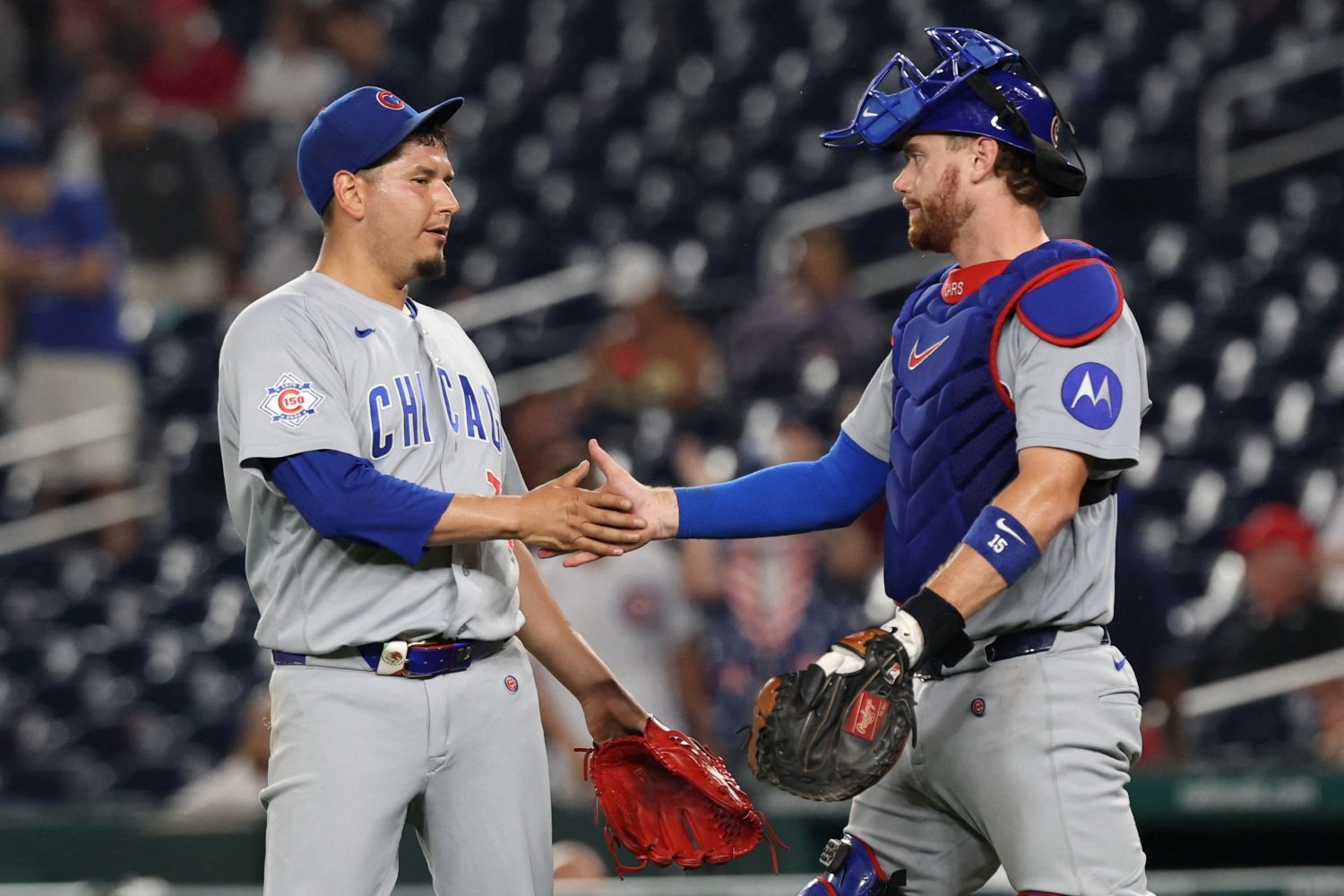 Edward Cabrera fired five no-hit innings for Double-A Knoxville Wednesday, and is no more than a fortnight from returning to the Cubs rotation. It's more likely that he comes back after just one more rehab appearance—and possible, even, that his next outing marks his return to the active big-league roster. He only threw 64 pitches against those minor-league batters Wednesday, but it might not take much more than that to fulfill his responsibilities each time through the rotation for the Cubs down the stretch. Thanks to the aggressiveness of the front office in late June and at the trade deadline, Chicago has found its way back to the place of exceptional starting pitching depth in which they felt they stood to begin the season. Your mileage may vary, but my own depth chart for healthy (or nearly healthy) starters for the team right now reads: Kevin Gausman Matthew Boyd Clay Holmes Shota Imanaga David Peterson Cabrera Colin Rea Javier Assad They started the season with a corps equally deep, but including several different names. Gausman, Holmes and Peterson were not yet in the organization. Cade Horton, Ben Brown and Jameson Taillon were in the mix instead, with the team holding out hope that they would also get starting contributions from Justin Steele. Six weeks ago or so, however, the team was down to Boyd, Imanaga, Rea and Assad, with Horton, Taillon, Brown and Cabrera all on the injured list. Piece by piece, returns from injury and trades have taken them from having to give Jordan Wicks a last chance to hack it in the bigs to once again feeling that their rotation overflows with talented arms, even though Taillon is now gone and Brown and Steele look likely only to pitch in relief (if at all). We saw how Craig Counsell will address this superabundance of starters over the course of his first week with all the new guys stepping into their roles. After four innings from Holmes in his Cubs debut Saturday, Counsell turned to Rea for the other four frames of a loss in Kansas City. On Wednesday night, Peterson went five innings, and Assad pitched the final four. Even without Cabrera back in the frame, Assad and Rea have been moved to the bullpen, but they're not switching to leveraged short relief. Rather, they're becoming long relievers—and, in some sense, that makes them piggyback starters. In the short run, of course, Counsell will still try to get length from the likes of Gausman, Boyd and Imanaga. Only Holmes, Peterson and Cabrera will be removed proactively, rather than based on their performance and the game context. But it's easy to see where this is going. As Chicago tries to catch the Brewers and win the NL Central—and, whether they succeed in that chase or not, as they prepare for the postseason—they're trending toward a piggyback rotation. Let's talk about why and how that works. Firstly, of course, a caveat: there's no guarantee whatsoever that the team will stay healthy enough to carry out a piggyback plan for their starters. As any fan who has followed the team all season knows perfectly well, eight pitchers can become four in a hurry. It's more likely to be five or six. What's fairly unlikely is that, over the final quarter of the regular season and when October comes, the Cubs really will have eight starting-capable pitchers to whom Counsell wants to turn for multiple innings in each outing. Let's assume, though, that they spend at least some time with all eight pitchers available to them. That could be the situation as soon as early next week. In such a case, there are three main reasons to deploy starters in tandems, as piggyback partners: Gaining matchup advantages. This one is obvious. If you use tandem starters of opposite handedness or who use very different arm angles, pitch shapes or release points, you can force opponents to choose between making early changes to their lineup (locking them in and making them more prone to matchup play at the end of the game) or losing an edge in the middle innings. Thwarting familiarity. Every modern manager is aware of the times-through-the-order penalty, but they have to weigh their desire to deny batters a third look at the starter against their need to keep the bullpen fresh. Piggyback starters make that less of a concern. Counsell, for instance, can take out one half of a starting tandem after 15 or 16 batters, as soon as the right matchup opportunity presents itself. Having a plan to use the second half of the tandem for the next 15 or 16 batters should get him close to the end of the game. Using a starter an opponent won't see again in a series as a major part of the relief solution for a game also means denying batters a look at one or more short-relief arms you'll deploy later. They not only don't see any hurler three times, but don't see a reliever twice in three or four days. Limiting and managing workloads. Holmes, for instance, is still working his way back to full strength after three months on the shelf with a broken leg. Cabrera is in a similar situation. Rea tends to wear down at the ends of seasons, despite his big frame and deep arsenal. Getting maximal value from certain pitchers means preventing them from piling up too many innings and being exposed to either injury or exhaustion. Right now, the Cubs are unlikely to use Rea, Assad, Peterson or Cabrera (the latter of whom would seem to be rivals for the final spot in the starting rotation if and when all eight arms are active again) as piggybacks for Boyd, Imanaga or Gausman. Those three starters need to soak up innings as Chicago tries to keep everyone fresh, at least until their bullpen gets healthier and rosters expand to allow a 14th active pitcher come September. How best to deploy a piggyback plan depends on your needs at any given time. When September comes, however, and especially in the playoffs, all eight of these guys will be candidates for some kind of tandem plan. Picking the right pairings is vital. So, how should the team do it? Which pitchers fit best together in what would be a fairly noval usage plan for a team trying to make a deep run into October? Boyd & Cabrera: Timing Nightmares In a perfect world, you'd always have one righty and one lefty in a tandem like this. Boyd and Cabrera check that box. They also offer another layer of difficulty, though. Boyd is no true soft-tosser; he can touch 95 MPH with his fastball. But he's elite at producing mistimed swings, because he leans so heavily on a changeup and breaking balls that feature big velocity differentials from even his more typical, low-90s heater. Cabrera, by contrast, throws exceptionally hard, and even his changeup relies more on movement than on velocity gap. He's power all the way. Boyd will leave you off-balance, and often early. Cabrera will look like he's throwing 105, compared to the southpaw. That's all exacerbated, for a batter, by the fact that each hurler throws from a relatively low slot, so there's about 5 feet of horizontal difference in their release points. Imanaga & Rea: Forcing Splits Again, one lefty and one righty. This time, there's no huge difference in velocity or timing tendencies, but the differences in style and delivery are enormous. One way two pitchers can frustrate hitters' timing in successive at-bats even if their raw velocities don't differ much is by having big differences in their extension at release. Hitters don't time their swings purely to numbers on the radar gun. They see a hurler's delivery and respond to it. A fastball that plays slightly faster than its unadjusted velocity because of plus extension can prime a hitter differently than one that plays down, and if the next pitcher they see has the opposite relationship between their velo and their extension, the effect is magnified. Imanaga, with his drop-and-drive delivery and short stature, has below-average extension; Rea is above average. Statcast sees a difference between their average arm angles, but hitters see an even bigger one, because of the ways their bodies actually move. Rea would also benefit tremendously from coming in to replace Imanaga, who is likely to prompt opponents to load their lineup with right-handed batters. Gausman & Holmes: Shapes and Angles With Imanaga and Rea, we talked about how tandem starters with different relationships between actual and perceived velocity can pose problems for batters, especially if their deliveries are extremely different from one another. What about two starters who look strikingly alike to batters, and who even pitch with the same hand, but whose pitch shapes are radically different from one another? Gausman and Holmes have very similar arm slots, just above the average three-quarters slot. Holmes works from the first-base side of the rubber; Gausman works from the middle. Their deliveries are similar enough to invite a hitter to see them the same way. However, Gausman gets much more extension toward the plate than Holmes does. He uses a high-rise fastball and a great splitter, but doesn't get much value from moving anything toward the glove side. Holmes has one of the heaviest sinkers in the sport, but everything else in his arsenal moves to the glove side. They're two pitchers whom hitters will want to see as similar, but whose stuff could not move more disparately. Peterson & Assad: Grounder Guys We're back to basics here. Peterson is a lefty; Assad is a righty. Peterson has elite release extension; Assad's is merely average. Peterson throws from a standard slot at 6-foor-6; Assad is a shorter, stockier guy who throws from a much higher angle. Neither is a guy you want opponents to see three times in a game, and neither will miss many bats, but they can both keep the ball on the ground and induce weak contact. That gets even easier if an opposing lineup has to hedge against playing matchups on Peterson because Assad is lurking, or if they don't hedge and Assad thus comes in to face a lineup chock-full of right-handed batters. Though Gausman, Boyd, Imanaga, Cabrera and Holmes have each looked like legitimate front-line starters in playoff series at some point in their careers, none enter the stretch run of 2026 as that kind of pitcher. The Cubs did add to their bullpen at the deadline, too, and they'll get some important reinforcement in the days ahead for that unit, but they still don't have an elite 'A' bullpen for a playoff club. Their best bet, for the final stretch of the regular season in which they'll try to secure a bye and keep people fresh at the same time and when the postseason begins, is not to treat any of their starters as traditional aces and hand the game over to multiple one-inning relievers. It's to piggyback their bevy of strong starters and shorten games in a new way. As they've already shown, they're thinking along these lines, too. It will be fascinating to see how often they piggyback their way to wins (or even use the strategy to cushion the blow of losses) in the weeks ahead.
 -
Image courtesy of Geoff Burke-Imagn Images Edward Cabrera fired five no-hit innings for Double-A Knoxville Wednesday, and is no more than a fortnight from returning to the Cubs rotation. It's more likely that he comes back after just one more rehab appearance—and possible, even, that his next outing marks his return to the active big-league roster. He only threw 64 pitches against those minor-league batters Wednesday, but it might not take much more than that to fulfill his responsibilities each time through the rotation for the Cubs down the stretch. Thanks to the aggressiveness of the front office in late June and at the trade deadline, Chicago has found its way back to the place of exceptional starting pitching depth in which they felt they stood to begin the season. Your mileage may vary, but my own depth chart for healthy (or nearly healthy) starters for the team right now reads: Kevin Gausman Matthew Boyd Clay Holmes Shota Imanaga David Peterson Cabrera Colin Rea Javier Assad They started the season with a corps equally deep, but including several different names. Gausman, Holmes and Peterson were not yet in the organization. Cade Horton, Ben Brown and Jameson Taillon were in the mix instead, with the team holding out hope that they would also get starting contributions from Justin Steele. Six weeks ago or so, however, the team was down to Boyd, Imanaga, Rea and Assad, with Horton, Taillon, Brown and Cabrera all on the injured list. Piece by piece, returns from injury and trades have taken them from having to give Jordan Wicks a last chance to hack it in the bigs to once again feeling that their rotation overflows with talented arms, even though Taillon is now gone and Brown and Steele look likely only to pitch in relief (if at all). We saw how Craig Counsell will address this superabundance of starters over the course of his first week with all the new guys stepping into their roles. After four innings from Holmes in his Cubs debut Saturday, Counsell turned to Rea for the other four frames of a loss in Kansas City. On Wednesday night, Peterson went five innings, and Assad pitched the final four. Even without Cabrera back in the frame, Assad and Rea have been moved to the bullpen, but they're not switching to leveraged short relief. Rather, they're becoming long relievers—and, in some sense, that makes them piggyback starters. In the short run, of course, Counsell will still try to get length from the likes of Gausman, Boyd and Imanaga. Only Holmes, Peterson and Cabrera will be removed proactively, rather than based on their performance and the game context. But it's easy to see where this is going. As Chicago tries to catch the Brewers and win the NL Central—and, whether they succeed in that chase or not, as they prepare for the postseason—they're trending toward a piggyback rotation. Let's talk about why and how that works. Firstly, of course, a caveat: there's no guarantee whatsoever that the team will stay healthy enough to carry out a piggyback plan for their starters. As any fan who has followed the team all season knows perfectly well, eight pitchers can become four in a hurry. It's more likely to be five or six. What's fairly unlikely is that, over the final quarter of the regular season and when October comes, the Cubs really will have eight starting-capable pitchers to whom Counsell wants to turn for multiple innings in each outing. Let's assume, though, that they spend at least some time with all eight pitchers available to them. That could be the situation as soon as early next week. In such a case, there are three main reasons to deploy starters in tandems, as piggyback partners: Gaining matchup advantages. This one is obvious. If you use tandem starters of opposite handedness or who use very different arm angles, pitch shapes or release points, you can force opponents to choose between making early changes to their lineup (locking them in and making them more prone to matchup play at the end of the game) or losing an edge in the middle innings. Thwarting familiarity. Every modern manager is aware of the times-through-the-order penalty, but they have to weigh their desire to deny batters a third look at the starter against their need to keep the bullpen fresh. Piggyback starters make that less of a concern. Counsell, for instance, can take out one half of a starting tandem after 15 or 16 batters, as soon as the right matchup opportunity presents itself. Having a plan to use the second half of the tandem for the next 15 or 16 batters should get him close to the end of the game. Using a starter an opponent won't see again in a series as a major part of the relief solution for a game also means denying batters a look at one or more short-relief arms you'll deploy later. They not only don't see any hurler three times, but don't see a reliever twice in three or four days. Limiting and managing workloads. Holmes, for instance, is still working his way back to full strength after three months on the shelf with a broken leg. Cabrera is in a similar situation. Rea tends to wear down at the ends of seasons, despite his big frame and deep arsenal. Getting maximal value from certain pitchers means preventing them from piling up too many innings and being exposed to either injury or exhaustion. Right now, the Cubs are unlikely to use Rea, Assad, Peterson or Cabrera (the latter of whom would seem to be rivals for the final spot in the starting rotation if and when all eight arms are active again) as piggybacks for Boyd, Imanaga or Gausman. Those three starters need to soak up innings as Chicago tries to keep everyone fresh, at least until their bullpen gets healthier and rosters expand to allow a 14th active pitcher come September. How best to deploy a piggyback plan depends on your needs at any given time. When September comes, however, and especially in the playoffs, all eight of these guys will be candidates for some kind of tandem plan. Picking the right pairings is vital. So, how should the team do it? Which pitchers fit best together in what would be a fairly noval usage plan for a team trying to make a deep run into October? Boyd & Cabrera: Timing Nightmares In a perfect world, you'd always have one righty and one lefty in a tandem like this. Boyd and Cabrera check that box. They also offer another layer of difficulty, though. Boyd is no true soft-tosser; he can touch 95 MPH with his fastball. But he's elite at producing mistimed swings, because he leans so heavily on a changeup and breaking balls that feature big velocity differentials from even his more typical, low-90s heater. Cabrera, by contrast, throws exceptionally hard, and even his changeup relies more on movement than on velocity gap. He's power all the way. Boyd will leave you off-balance, and often early. Cabrera will look like he's throwing 105, compared to the southpaw. That's all exacerbated, for a batter, by the fact that each hurler throws from a relatively low slot, so there's about 5 feet of horizontal difference in their release points. Imanaga & Rea: Forcing Splits Again, one lefty and one righty. This time, there's no huge difference in velocity or timing tendencies, but the differences in style and delivery are enormous. One way two pitchers can frustrate hitters' timing in successive at-bats even if their raw velocities don't differ much is by having big differences in their extension at release. Hitters don't time their swings purely to numbers on the radar gun. They see a hurler's delivery and respond to it. A fastball that plays slightly faster than its unadjusted velocity because of plus extension can prime a hitter differently than one that plays down, and if the next pitcher they see has the opposite relationship between their velo and their extension, the effect is magnified. Imanaga, with his drop-and-drive delivery and short stature, has below-average extension; Rea is above average. Statcast sees a difference between their average arm angles, but hitters see an even bigger one, because of the ways their bodies actually move. Rea would also benefit tremendously from coming in to replace Imanaga, who is likely to prompt opponents to load their lineup with right-handed batters. Gausman & Holmes: Shapes and Angles With Imanaga and Rea, we talked about how tandem starters with different relationships between actual and perceived velocity can pose problems for batters, especially if their deliveries are extremely different from one another. What about two starters who look strikingly alike to batters, and who even pitch with the same hand, but whose pitch shapes are radically different from one another? Gausman and Holmes have very similar arm slots, just above the average three-quarters slot. Holmes works from the first-base side of the rubber; Gausman works from the middle. Their deliveries are similar enough to invite a hitter to see them the same way. However, Gausman gets much more extension toward the plate than Holmes does. He uses a high-rise fastball and a great splitter, but doesn't get much value from moving anything toward the glove side. Holmes has one of the heaviest sinkers in the sport, but everything else in his arsenal moves to the glove side. They're two pitchers whom hitters will want to see as similar, but whose stuff could not move more disparately. Peterson & Assad: Grounder Guys We're back to basics here. Peterson is a lefty; Assad is a righty. Peterson has elite release extension; Assad's is merely average. Peterson throws from a standard slot at 6-foor-6; Assad is a shorter, stockier guy who throws from a much higher angle. Neither is a guy you want opponents to see three times in a game, and neither will miss many bats, but they can both keep the ball on the ground and induce weak contact. That gets even easier if an opposing lineup has to hedge against playing matchups on Peterson because Assad is lurking, or if they don't hedge and Assad thus comes in to face a lineup chock-full of right-handed batters. Though Gausman, Boyd, Imanaga, Cabrera and Holmes have each looked like legitimate front-line starters in playoff series at some point in their careers, none enter the stretch run of 2026 as that kind of pitcher. The Cubs did add to their bullpen at the deadline, too, and they'll get some important reinforcement in the days ahead for that unit, but they still don't have an elite 'A' bullpen for a playoff club. Their best bet, for the final stretch of the regular season in which they'll try to secure a bye and keep people fresh at the same time and when the postseason begins, is not to treat any of their starters as traditional aces and hand the game over to multiple one-inning relievers. It's to piggyback their bevy of strong starters and shorten games in a new way. As they've already shown, they're thinking along these lines, too. It will be fascinating to see how often they piggyback their way to wins (or even use the strategy to cushion the blow of losses) in the weeks ahead. View full article
-
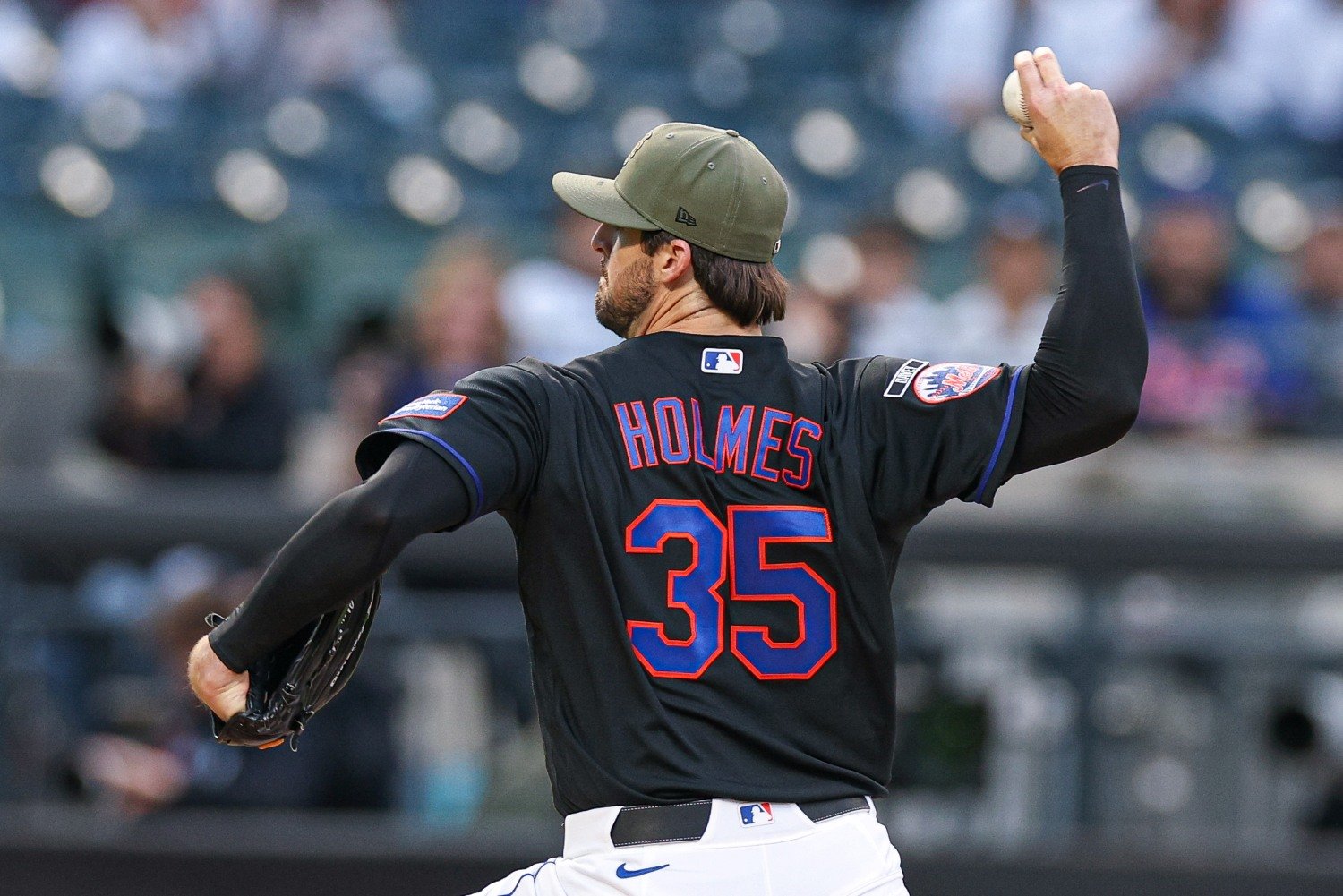 The Chicago Cubs see an opportunity to win now—like, right now, apparently. They've struck again as the MLB trade deadline rushes nearer, trading top infield prospect Jefferson Rojas to the New York Mets for starting pitcher Clay Holmes and outfielder Tyrone Taylor. Jon Heyman of the New York Post delivered the news. Holmes, 33, has a 2.39 ERA this season, but it’s come in just nine starts. He fractured his leg in May and is just now on the cusp of a return to the majors. He throws from a standard three-quarter arm slot, but has a sidearmer’s or submariner’s heavy sinker, which makes him deceptive as well as sheerly nasty. He does it with a unique combination of grip and supination, particularly unexpected based on his arm angle, and because of that ability to supinate, he also throws a plus sweeper and a funky changeup with depth but relative cut. He’s under contract for $13 million this season, so he’s owed about $4 million the rest of the way. He can also earn $12 million in 2027, but if he comes back and pitches well the rest of the way, he’ll almost certainly opt out, which the deal allows him to do. Taylor, 32, is also an impending free agent. He's a plus-plus athlete and great defender in either outfield corner. Bringing him in should mean more time at designated hitter for Seiya Suzuki, and it could mean less playing time against left-handed pitchers for Ian Happ. Taylor is batting .241/.290/.503 in what is the best season of his career to date; he's playing on a one-year, $3.8-million deal. He reunites with Craig Counsell, for whom he played parts of five seasons after being a second-round pick by the Brewers way back in 2012. For his career, he has fairly neutral platoon splits at the plate, but he has 11 extra-base hits in 77 plate appearances against southpaws in 2026. Rojas, 21, entered this season as the Cubs' top prospect, but had been surpassed by Josiah Hartshorn (and, depending on whom you ask, others) by the middle of summer. He's played fine for Double-A Knoxville, with a .799 OPS, but he's moved off shortstop and is unlikely ever to go back to that spot. As a third baseman, he'll face some pressure to hit that forces him to hit his 70th-percentile projection in order to be more than an average player. Swapping out Rojas for Holmes and Taylor sends a clear message: Chicago is all-in for this season. Whether they believe they can catch the Brewers and win the NL Central or merely plan to beat them (and the Dodgers) in the postseason, the front office has taken a big swing at this deadline. Holmes and Taylor each strengthen the team's depth in an important aspect, but they'll both be free agents in three months, no matter what. In trading a top prospect for them, Jed Hoyer is throwing down a gauntlet.
- 8 comments
-
- 1
-

-
- 2026 trade deadline
- clay holmes
- (and 2 more)
-
's the internet. You either die a sweetheart or live long enough to see yourself become the dickhead. I erred by rushing out the piece. Should have gone slower; the pace of rumors today messed me up. I'm pleased with our overall coverage and still perfectly happy to wear that one, if those two positions can be viewed as tenable at the same time.
- 8 replies
-
- 1
-

-
- 2026 trade deadline
- clay holmes
- (and 2 more)
-
Image courtesy of Vincent Carchietta-Imagn Images The Chicago Cubs see an opportunity to win now—like, right now, apparently. They've struck again as the MLB trade deadline rushes nearer, trading top infield prospect Jefferson Rojas to the New York Mets for starting pitcher Clay Holmes and outfielder Tyrone Taylor. Jon Heyman of the New York Post delivered the news. Holmes, 33, has a 2.39 ERA this season, but it’s come in just nine starts. He fractured his leg in May and is just now on the cusp of a return to the majors. He throws from a standard three-quarter arm slot, but has a sidearmer’s or submariner’s heavy sinker, which makes him deceptive as well as sheerly nasty. He does it with a unique combination of grip and supination, particularly unexpected based on his arm angle, and because of that ability to supinate, he also throws a plus sweeper and a funky changeup with depth but relative cut. He’s under contract for $13 million this season, so he’s owed about $4 million the rest of the way. He can also earn $12 million in 2027, but if he comes back and pitches well the rest of the way, he’ll almost certainly opt out, which the deal allows him to do. Taylor, 32, is also an impending free agent. He's a plus-plus athlete and great defender in either outfield corner. Bringing him in should mean more time at designated hitter for Seiya Suzuki, and it could mean less playing time against left-handed pitchers for Ian Happ. Taylor is batting .241/.290/.503 in what is the best season of his career to date; he's playing on a one-year, $3.8-million deal. He reunites with Craig Counsell, for whom he played parts of five seasons after being a second-round pick by the Brewers way back in 2012. For his career, he has fairly neutral platoon splits at the plate, but he has 11 extra-base hits in 77 plate appearances against southpaws in 2026. Rojas, 21, entered this season as the Cubs' top prospect, but had been surpassed by Josiah Hartshorn (and, depending on whom you ask, others) by the middle of summer. He's played fine for Double-A Knoxville, with a .799 OPS, but he's moved off shortstop and is unlikely ever to go back to that spot. As a third baseman, he'll face some pressure to hit that forces him to hit his 70th-percentile projection in order to be more than an average player. Swapping out Rojas for Holmes and Taylor sends a clear message: Chicago is all-in for this season. Whether they believe they can catch the Brewers and win the NL Central or merely plan to beat them (and the Dodgers) in the postseason, the front office has taken a big swing at this deadline. Holmes and Taylor each strengthen the team's depth in an important aspect, but they'll both be free agents in three months, no matter what. In trading a top prospect for them, Jed Hoyer is throwing down a gauntlet. View full article
-
Image courtesy of Sergio Estrada-Imagn Images Mere minutes after securing a controllable starter who's a bit of a project, the Cubs have snapped up a reliever to give them a more formidable bullpen for a push toward the playoffs, a source confirmed to North Side Baseball. Jeff Passan of ESPN broke the news on Twitter. Zeferjahn, who headlined my piece this morning about names to watch as the day unfolds, has a high-octane heater and bat-missing stuff across the board. He's been too wild to dominate the way his raw stuff would have otherwise allowed for most of his career, but he seemed to turn the corner recently, which brought him to the top of many teams' wish lists as they shopped for controllable relievers at the deadline. The Cubs expect to have Daniel Palencia resume his place at the back end of the bullpen soon, but Zeferjahn slots into their suite of high-leverage options right away. He, Jacob Webb and Palencia give the team three right-handed relievers who miss bats, and increases the depth of Craig Counsell's options box. In return for Zeferjahn, the Cubs will send catcher/designated hitter Moisés Ballesteros and pitching prospect Mason McGwire to the Halos, according to Jeff Fletcher of the Orange County Register. That will sound like too dear a price to some, but after Ballesteros proved himself unable to catch in the majors and struggled to adjust at the plate in his first prolonged exposure to big-league pitching, the team began to value him a bit less highly. Packaging Ballesteros and McGwire to snare a potentially elite reliever is risky but intriguing, and it underscores their desire not to give up Owen Ayers, a similar prospect to Ballesteros in some ways on whom the Angels repeatedly insisted when Chicago tried to obtain Detmers. Under team control through 2030, Zeferjahn has a chance to be the high-impact addition of this deadline for Chicago. All five of his pitches rate as better than average, some by huge margins, according to Baseball Prospectus's StuffPro. That arsenal, combined with his surge in effectiveness recently, is why Zeferjahn was an expensive acquisition. It's also how the Cubs could end up with the kind of high-powered relief corps that takes a team far in October. Giving up Ballesteros and McGwire stings a bit, but the Cubs believe they paid that price for access to a higher possible tier of achievement come the postseason. View full article
-
POWER ARM: Cubs Acquire Ryan Zeferjahn in Trade with Angels
Matthew Trueblood posted an article in Cubs
 Mere minutes after securing a controllable starter who's a bit of a project, the Cubs have snapped up a reliever to give them a more formidable bullpen for a push toward the playoffs, a source confirmed to North Side Baseball. Jeff Passan of ESPN broke the news on Twitter. Zeferjahn, who headlined my piece this morning about names to watch as the day unfolds, has a high-octane heater and bat-missing stuff across the board. He's been too wild to dominate the way his raw stuff would have otherwise allowed for most of his career, but he seemed to turn the corner recently, which brought him to the top of many teams' wish lists as they shopped for controllable relievers at the deadline. The Cubs expect to have Daniel Palencia resume his place at the back end of the bullpen soon, but Zeferjahn slots into their suite of high-leverage options right away. He, Jacob Webb and Palencia give the team three right-handed relievers who miss bats, and increases the depth of Craig Counsell's options box. In return for Zeferjahn, the Cubs will send catcher/designated hitter Moisés Ballesteros and pitching prospect Mason McGwire to the Halos, according to Jeff Fletcher of the Orange County Register. That will sound like too dear a price to some, but after Ballesteros proved himself unable to catch in the majors and struggled to adjust at the plate in his first prolonged exposure to big-league pitching, the team began to value him a bit less highly. Packaging Ballesteros and McGwire to snare a potentially elite reliever is risky but intriguing, and it underscores their desire not to give up Owen Ayers, a similar prospect to Ballesteros in some ways on whom the Angels repeatedly insisted when Chicago tried to obtain Detmers. Under team control through 2030, Zeferjahn has a chance to be the high-impact addition of this deadline for Chicago. All five of his pitches rate as better than average, some by huge margins, according to Baseball Prospectus's StuffPro. That arsenal, combined with his surge in effectiveness recently, is why Zeferjahn was an expensive acquisition. It's also how the Cubs could end up with the kind of high-powered relief corps that takes a team far in October. Giving up Ballesteros and McGwire stings a bit, but the Cubs believe they paid that price for access to a higher possible tier of achievement come the postseason.
 -
Image courtesy of Jonathan Dyer-Imagn Images EDITOR'S NOTE: The original version of this piece indicated that the Cubs were acquiring Angels left-hander Reid Detmers, based on my own reporting and that of Bleacher Nation Cubs reporter Michael Cerami. I won't speak for Cerami, but my own understanding is that both pitchers were in play for the team, but that the Cubs backed away from the Angels' demands on Detmers at the last moment and pivoted to Garrett, in whom they've been interested for some time, as we reported last week. My source had their wires crossed as to which pitcher was acquired, and I failed to follow up with sufficient thoroughness after Cerami's report broke. I apologize for the confusion. Without speaking for Cerami, I take responsibility for rushing the reporting on the deal.] The Cubs have been close to acquiring Braxton Garrett before. On Monday, ahead of the MLB trade deadline, they finally reeled in the fish. Jeff Passan of ESPN broke the news on Twitter. Garrett, 28, has spent most of this season in the minor leagues, battling to complete his rehab and to reestablish his foothold in the Miami rotation after undergoing Tommy John surgery in December 2024. His sinker is a ground-ball machine, and when he can fill up the zone with his five-pitch mix, he can be dominant. He's an upside play for Chicago, after they acquired Kevin Gausman Sunday night to co-lead their playoff rotation alongside Shota Imanaga and Matthew Boyd. Like Reid Detmers, whom the team considered heavily before pivoting based on the intransigence of the Angels regarding the return, Garrett is under team control through 2028. He can also be optioned to the minors, and might spend time at Triple-A Iowa before joining the team for the stretch run, a source briefed on the team's thinking said. As befits the seasons each pitcher is having, the Cubs are paying a much lower cost for Garrett than they would have had to pay for Detmers. Christine De Nicola of the Miami Herald was first with the names of Jonathon Long and Jace Beck, two lower-tier pieces in the thin Cubs farm system. Garrett is, in the Cubs' eyes, a buy-low version of Detmers. They were interested in Detmers even at a higher price, but not the one to which the Angels cleaved even at the endgame of negotiations. Chicago is expected to move on to a relief addition before the deadline. View full article
-
![More information about "BREAKING: Cubs Acquire Left-Handed Starter Braxton Garrett from Marlins [UPDATED]"](//northsidebaseball.s3.us-east-1.amazonaws.com/monthly_2026_08/BraxtonGarrettJonathanDyer-ImagnImages.JPG.70bb6fa9afc555892bf4d41fa3518ce3.JPG) EDITOR'S NOTE: The original version of this piece indicated that the Cubs were acquiring Angels left-hander Reid Detmers, based on my own reporting and that of Bleacher Nation Cubs reporter Michael Cerami. I won't speak for Cerami, but my own understanding is that both pitchers were in play for the team, but that the Cubs backed away from the Angels' demands on Detmers at the last moment and pivoted to Garrett, in whom they've been interested for some time, as we reported last week. My source had their wires crossed as to which pitcher was acquired, and I failed to follow up with sufficient thoroughness after Cerami's report broke. I apologize for the confusion. Without speaking for Cerami, I take responsibility for rushing the reporting on the deal.] The Cubs have been close to acquiring Braxton Garrett before. On Monday, ahead of the MLB trade deadline, they finally reeled in the fish. Jeff Passan of ESPN broke the news on Twitter. Garrett, 28, has spent most of this season in the minor leagues, battling to complete his rehab and to reestablish his foothold in the Miami rotation after undergoing Tommy John surgery in December 2024. His sinker is a ground-ball machine, and when he can fill up the zone with his five-pitch mix, he can be dominant. He's an upside play for Chicago, after they acquired Kevin Gausman Sunday night to co-lead their playoff rotation alongside Shota Imanaga and Matthew Boyd. Like Reid Detmers, whom the team considered heavily before pivoting based on the intransigence of the Angels regarding the return, Garrett is under team control through 2028. He can also be optioned to the minors, and might spend time at Triple-A Iowa before joining the team for the stretch run, a source briefed on the team's thinking said. As befits the seasons each pitcher is having, the Cubs are paying a much lower cost for Garrett than they would have had to pay for Detmers. Christine De Nicola of the Miami Herald was first with the names of Jonathon Long and Jace Beck, two lower-tier pieces in the thin Cubs farm system. Garrett is, in the Cubs' eyes, a buy-low version of Detmers. They were interested in Detmers even at a higher price, but not the one to which the Angels cleaved even at the endgame of negotiations. Chicago is expected to move on to a relief addition before the deadline.
EDITOR'S NOTE: The original version of this piece indicated that the Cubs were acquiring Angels left-hander Reid Detmers, based on my own reporting and that of Bleacher Nation Cubs reporter Michael Cerami. I won't speak for Cerami, but my own understanding is that both pitchers were in play for the team, but that the Cubs backed away from the Angels' demands on Detmers at the last moment and pivoted to Garrett, in whom they've been interested for some time, as we reported last week. My source had their wires crossed as to which pitcher was acquired, and I failed to follow up with sufficient thoroughness after Cerami's report broke. I apologize for the confusion. Without speaking for Cerami, I take responsibility for rushing the reporting on the deal.] The Cubs have been close to acquiring Braxton Garrett before. On Monday, ahead of the MLB trade deadline, they finally reeled in the fish. Jeff Passan of ESPN broke the news on Twitter. Garrett, 28, has spent most of this season in the minor leagues, battling to complete his rehab and to reestablish his foothold in the Miami rotation after undergoing Tommy John surgery in December 2024. His sinker is a ground-ball machine, and when he can fill up the zone with his five-pitch mix, he can be dominant. He's an upside play for Chicago, after they acquired Kevin Gausman Sunday night to co-lead their playoff rotation alongside Shota Imanaga and Matthew Boyd. Like Reid Detmers, whom the team considered heavily before pivoting based on the intransigence of the Angels regarding the return, Garrett is under team control through 2028. He can also be optioned to the minors, and might spend time at Triple-A Iowa before joining the team for the stretch run, a source briefed on the team's thinking said. As befits the seasons each pitcher is having, the Cubs are paying a much lower cost for Garrett than they would have had to pay for Detmers. Christine De Nicola of the Miami Herald was first with the names of Jonathon Long and Jace Beck, two lower-tier pieces in the thin Cubs farm system. Garrett is, in the Cubs' eyes, a buy-low version of Detmers. They were interested in Detmers even at a higher price, but not the one to which the Angels cleaved even at the endgame of negotiations. Chicago is expected to move on to a relief addition before the deadline.- 2 comments
-
- 1
-
-
- reid detmers
- 2026 trade deadline
- (and 1 more)
![More information about "BREAKING: Cubs Acquire Left-Handed Starter Braxton Garrett from Marlins [UPDATED]"](http://northsidebaseball.s3.us-east-1.amazonaws.com/monthly_2026_08/BraxtonGarrettJonathanDyer-ImagnImages.JPG.70bb6fa9afc555892bf4d41fa3518ce3.JPG)