


Matthew Trueblood
-
Posts
2,477 -
Joined
-
Last visited
-
Days Won
2
Content Type
Profiles
Joomla Posts 1
Chicago Cubs Videos
Chicago Cubs Free Agent & Trade Rumors, Notes, & Tidbits
2026 Chicago Cubs Top Prospects Ranking
News
2023 Chicago Cubs Draft Picks
Guides & Resources
2024 Chicago Cubs Draft Picks
The Chicago Cubs Players Project
2025 Chicago Cubs Draft Pick Tracker
2026 Chicago Cubs Draft Tracker: Picks & Bonuses
Blogs
Events
Forums
Store
Gallery
Everything posted by Matthew Trueblood
-
Image courtesy of © Matt Marton-Imagn Images It's slightly inflated, this hot streak. It's easy to get a little carried away about it. Dansby Swanson is raking lately, to be sure, but the competition and the weather have conspired to make him look superhuman, instead of merely superb. He's hit five home runs in the last two games, taking ample advantage of the wind gusting out and the heat making everything carry at Wrigley Field. The ball is exceptionally lively lately. Walker Buehler came to town primed for some brutal regression. Last week in New York, the Mets inexplicably left their star rookie and ace on the mound to collapse, and Swanson hit a home run off Nolan McLean that was center-cut and missing about 3 MPH from McLeaan's usual fastball velocity. The last homer he hit Wednesday, which left his bat at 92.5 MPH and came against an eephus-lobbing backup catcher, was downright fraudulent. He's racked up an extraordinary number of RBIs, thanks mostly to coming up with runners on base constantly for the last fortnight. All of that, though, to say this: Swanson is also genuinely on fire. He's as hot as he's ever been, and that's saying something. Here's a graph tracking his rolling 50-plate appearance weighted on-base average (wOBA) throughout his career: Every hitter experiences fluctuations in production over the course of a season. Not every hitter experiences ones that look like this. Swanson has always been capably of running extremely hot and cold, for a player with such an average-looking overall stat line. When he first joined the Cubs in 2023, he brielfy reduced the magnitude of his ups and downs, but by early last season, he was back to being what he will probably always be, despite his best efforts: wildly inconsistent. Given how sharply and widely he's swung between delightful and disastrous for his whole career, it's jarring to say this, but it's irreefutable: Swanson is on an unbelievable hot streak right now, even for him. By contrast, just a few weeks ago, he was mired in a sustained funk as bad as anything he'd experienced since he still played his home games near Atlanta, Ga. What's changed? Well, there are a lot of ways to answer that question. We could start by saying that it's a good idea to adjust his raw numbers to account for the Rockies, Blue Jays, Mets and Padres throwing a lot of bad pitchers at the Cubs, on very hitter-friendly days. The fact that he's never been "better" over a span like this before partly reflects the fact that this particular heater has coincided with some very favorable circumstances that are beyond his control. Maybe, then, the better way to look at what's changed is to study process, rather than results. These days, though, 'process' is a term that catches several variables. Even 20 years ago, talking about process was simple: Instead of reading the baseball card, you checked a player's BABIP and their walk rate, or their out-of-zone swing rate. In fact, what the heck? Let's do that. This is a chart of Swanson's rolling 15-game averages for weighted on-base average (wOBA), which is the same stat being tracked above and just describes overall production; out-of-zone swing rate; and the percentage of pitches he saw that were four-seam fastballs. It won't shock you to see how the three things interact. Swanson started the season in an aggressive mode, but got hot when he started forcing pitchers into the smaller zone created by the implementation of the ABS system. Pitchers' answer to that development was to stop throwing him fastballs, and he reacted so badly to that that they kept reducing heater usage, dragging him to Hell for weeks with one breaking ball after another. Several weeks ago, though, Swanson started reducing that chase rate. Success didn't come right away, so we can say with some confidence that that's now why he's now hammering the ball without mercy. On we go, then, to a different tier of process-centered analysis. Let's talk about bat speed, and feel for the barrel, and timing. Firstly (and I'll spare you the graph, this time, but it's true), Swanson is swinging faster lately. His average bat speed is up a little over 1.0 MPH since he started to get hot; he rarely swings this fast over any prolonged period. One narrative we might construct, then, would have him going in the tank at the end of April when he developed some hip/glute soreness that took him off the field for two days, and getting hot again when he started to feel healthy in mid-June. The thing is, he didn't lose bat speed right away when his production disappeared at the beginning of May. In fact, that number rose a bit early in his rough spell, and dipped when he started stabilizing his approach—before exploding around the middle of last month. Bat speed matters, and the turbo boost in Swanson's is one component of his recent surge. Like his improving plate discipline, though, it's not enough to explain why he's suddenly searing. Let's forge on. It's time to get nitty-gritty. As you might guess, in addition to swinging harder, Swanson is making more solid contact lately. Since June 15, he's batting .333/.371/.895; you can't do that just by swinging for the fences and catching a few friendly zephyrs. Swanson's Squared Up Percent (the percentage of the maximum possible exit velocity on a given swing, based on the speed of the incoming pitch and of the swing itself that a batter produces) has risen sharply lately, returning to and then eclipsing the level he was at before things fell apart for him for six weeks. That's not an explanation, though. That's a dressed-up tautology. "Hey, you know the hot streak this guy is on? Guess what? Since it started, he's making more solid contact!" That's not insight. Let's seek some. Statcast's new swing timing metrics hold the key to really, deeply understanding what has changed for Swanson. First, keep in mind the chart (a couple charts back, now; sorry) in which we saw the rolling fastball rate against him; it's risen again recently. Essentially, Swanson was lost in the woods for so long that pitchers stopped feeding him as steady a diet of slop and decided they could probably beat him by throwing their four-seamer over his infamously steep swing, as he tried to sit on and attack the softer, spinnier stuff that had become his daily diet. Both when they're doing that and when they do go to the secondary offerings, though, Swanson is ready for them lately. Here's our control group. These are the distributions in each of the key swing timing metrics Statcast tracks for Swanson's swings through the end of April. This data is still new to all of us, so let's walk through it a little. The lefthand image tells us how often Swanson centers the ball on the barrel, versus hitting it off the label (in on the hands) or out on the end of the bat. The center image tells us how often he was (more or less) on time, based on the angle of his bat relative to the path of the incoming pitch at the point of contact (or non-contact, as the case may be). The righthand image tells us how often Swanson lines up the ball on his barrel, vertically, versus swinging over or under the ball or hitting either the top or bottom third of it. As you can see, relative to an average right-handed batter, Swanson got the ball off the end of the bat considerably more often; was on time slightly more often; and missed both above and below the barrel slightly more often. That's consistent with the profile of Swanson you're familiar with. He has a swing that leaves him running out of bat for soft stuff fairly often and whiffing fairly often, but he's fairly good at getting through the hitting zone in rhythm, and the swing is geared to do damage when he does achieve accuracy with the barrel. All of that was working (for better and for worse) in March and April. From the beginning of May (just after that glute issue cropped up) to the middle of June, however, it worked only for worse. With all those extra breaking and offspeed pitches, hurlers got him out on (or beyond) the end of the bat even more. They had him early more often, taking away his ability to use the whole field. And notice the righthand image, here. That dip in the middle of the high range on the distribution is a sign that Swanson was always a little bit fooled, always a hair off in what he was trying to accomplish. He hit the outside and top half of the baseball a lot. He also hit the inside and bottom half of the ball a lot. Neither is the right way to produce solid contact, especially if you're catching it on the end of the bat. Now, here's what those distributions look like since June 15. He's early in a good way (a little early, that is; just enough to pull the ball instead of spraying it) more often lately. He's also back to lining it up well on the barrel. But the biggest difference lies in how often (and how well) he centers the ball on the barrel. Over the last two weeks and change, nearly 70% of Swanson's swings put the sweet spot of his bat on a path through the ball. He's not getting it off the end nearly as often. He was under 60% accurate that way during his megaslump. Getting more aggressive with his swing—a slightly longer stride and a slightly later but faster shift of his weight from the back left to the front—has gotten Swanson through the ball better. He's longer through the hitting zone, which is leaving more lumber on either side of the ball when he squares one up. That's why he's pulling it more and producing the long fly balls that can benefit so handsomely from the heat and the wind. Here's a middle-middle changeup on which Swanson just missed, from last month in St. Louis. OTdQOXdfV0ZRVkV3dEdEUT09X0FBTUNVQVlCQUZFQUFRZFRWZ0FIQkFSU0FGaFFCVklBQjF3QlVRUU5BRkFHQ1ZGWA==.mp4 Now, here's one on which he (emphatically) did not miss, from this week against the Padres. VndQeDZfWGw0TUFRPT1fQkFWUkJ3QUdCd29BQVZBQlZ3QUhBUU5SQUFNRVZnY0FCbEFNVWdaWENBQmRCVllD.mp4 The extra length on the stride is important; it lets him sink into the swing more and not get stuck having to manipulate the barrel as much with his hands. The extra bat speed (which comes from the more energetic move in his lower half) is important; it lets him wait longer and get off a swing that can benefit from the subconscious but incredible hand-eye coordination that makes him a big-leaguer. He's on time, but more importantly, he's on time with a barrel he was able to load up and fire accurately. The difference between those two swings tells us much about why he's been red-hot lately. That doesn't mean he'll stay hot, though. Swanson is simply an inconsistent player, because the bad swing above just isn't that great a departure from the good one, and it never has been. Being a great hitter in the majors is extremely difficult, and never more so than now, with the high baseline of talent and development for pitching league-wide. Small defects that can creep into your approach or your swing—flaws in your physical and mental routine that are virtually inevitable—can have big effects, and those effects are bigger on Swanson than on most players. To answer the question of why Swanson has swung from as cold as he's been in years to as hot as he's been, ever, though, we can go a step further than simply acknowledging that he's inconsistent. He's done something material and impressive to get the sweet spot on the ball more often. That small tweak has played up in a big way for him, because he's already good at being on time. Though he's 32 (and players are always fighting off age-related decline at that point), he's showing signs of being smarter and organizing his physical and mental game better than ever, to make up for any creeping athletic shortcomings. For however long that lasts, it's sensationally valuable, especially from one of the game's best defenders at shortstop. View full article
-
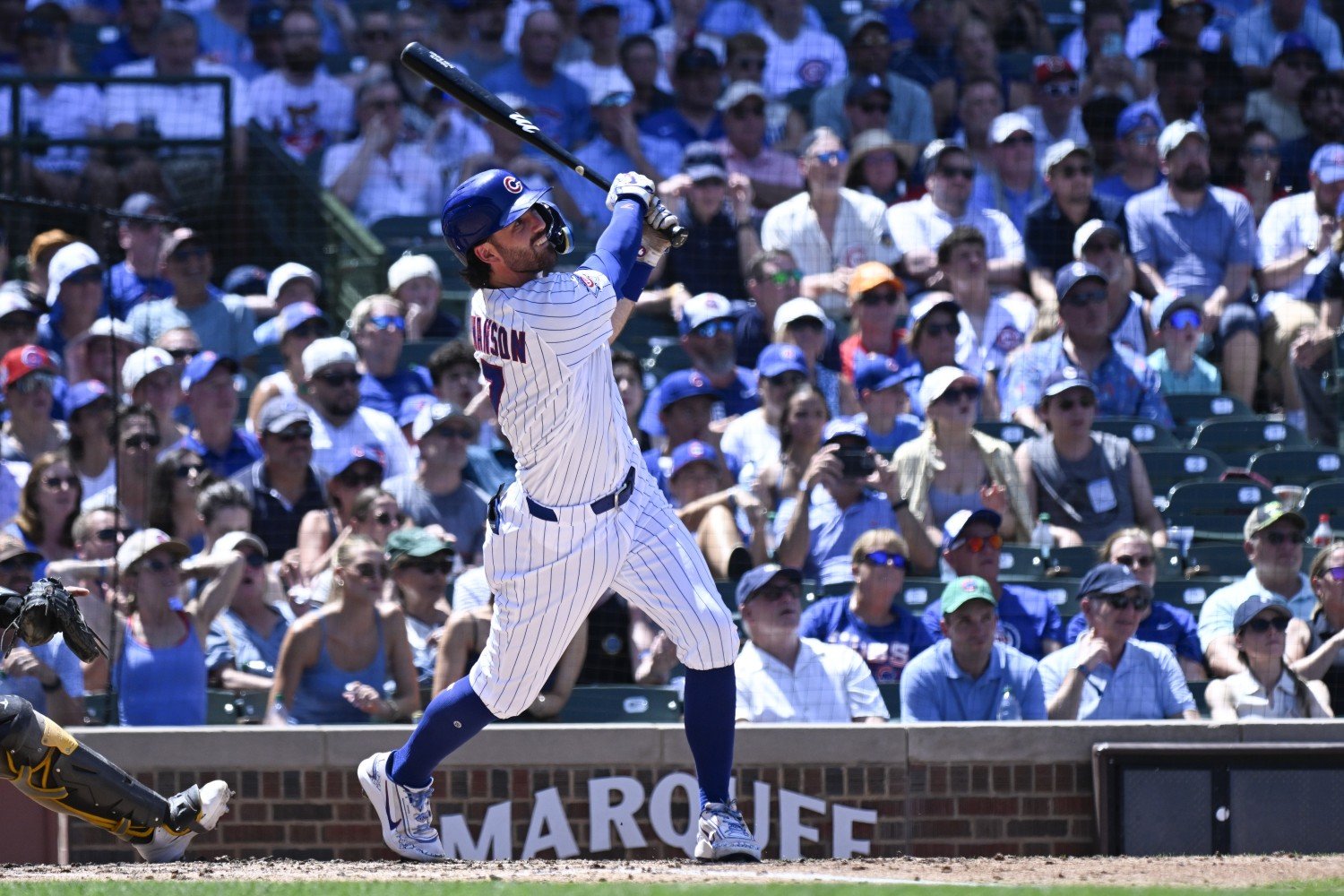 It's slightly inflated, this hot streak. It's easy to get a little carried away about it. Dansby Swanson is raking lately, to be sure, but the competition and the weather have conspired to make him look superhuman, instead of merely superb. He's hit five home runs in the last two games, taking ample advantage of the wind gusting out and the heat making everything carry at Wrigley Field. The ball is exceptionally lively lately. Walker Buehler came to town primed for some brutal regression. Last week in New York, the Mets inexplicably left their star rookie and ace on the mound to collapse, and Swanson hit a home run off Nolan McLean that was center-cut and missing about 3 MPH from McLeaan's usual fastball velocity. The last homer he hit Wednesday, which left his bat at 92.5 MPH and came against an eephus-lobbing backup catcher, was downright fraudulent. He's racked up an extraordinary number of RBIs, thanks mostly to coming up with runners on base constantly for the last fortnight. All of that, though, to say this: Swanson is also genuinely on fire. He's as hot as he's ever been, and that's saying something. Here's a graph tracking his rolling 50-plate appearance weighted on-base average (wOBA) throughout his career: Every hitter experiences fluctuations in production over the course of a season. Not every hitter experiences ones that look like this. Swanson has always been capably of running extremely hot and cold, for a player with such an average-looking overall stat line. When he first joined the Cubs in 2023, he brielfy reduced the magnitude of his ups and downs, but by early last season, he was back to being what he will probably always be, despite his best efforts: wildly inconsistent. Given how sharply and widely he's swung between delightful and disastrous for his whole career, it's jarring to say this, but it's irreefutable: Swanson is on an unbelievable hot streak right now, even for him. By contrast, just a few weeks ago, he was mired in a sustained funk as bad as anything he'd experienced since he still played his home games near Atlanta, Ga. What's changed? Well, there are a lot of ways to answer that question. We could start by saying that it's a good idea to adjust his raw numbers to account for the Rockies, Blue Jays, Mets and Padres throwing a lot of bad pitchers at the Cubs, on very hitter-friendly days. The fact that he's never been "better" over a span like this before partly reflects the fact that this particular heater has coincided with some very favorable circumstances that are beyond his control. Maybe, then, the better way to look at what's changed is to study process, rather than results. These days, though, 'process' is a term that catches several variables. Even 20 years ago, talking about process was simple: Instead of reading the baseball card, you checked a player's BABIP and their walk rate, or their out-of-zone swing rate. In fact, what the heck? Let's do that. This is a chart of Swanson's rolling 15-game averages for weighted on-base average (wOBA), which is the same stat being tracked above and just describes overall production; out-of-zone swing rate; and the percentage of pitches he saw that were four-seam fastballs. It won't shock you to see how the three things interact. Swanson started the season in an aggressive mode, but got hot when he started forcing pitchers into the smaller zone created by the implementation of the ABS system. Pitchers' answer to that development was to stop throwing him fastballs, and he reacted so badly to that that they kept reducing heater usage, dragging him to Hell for weeks with one breaking ball after another. Several weeks ago, though, Swanson started reducing that chase rate. Success didn't come right away, so we can say with some confidence that that's now why he's now hammering the ball without mercy. On we go, then, to a different tier of process-centered analysis. Let's talk about bat speed, and feel for the barrel, and timing. Firstly (and I'll spare you the graph, this time, but it's true), Swanson is swinging faster lately. His average bat speed is up a little over 1.0 MPH since he started to get hot; he rarely swings this fast over any prolonged period. One narrative we might construct, then, would have him going in the tank at the end of April when he developed some hip/glute soreness that took him off the field for two days, and getting hot again when he started to feel healthy in mid-June. The thing is, he didn't lose bat speed right away when his production disappeared at the beginning of May. In fact, that number rose a bit early in his rough spell, and dipped when he started stabilizing his approach—before exploding around the middle of last month. Bat speed matters, and the turbo boost in Swanson's is one component of his recent surge. Like his improving plate discipline, though, it's not enough to explain why he's suddenly searing. Let's forge on. It's time to get nitty-gritty. As you might guess, in addition to swinging harder, Swanson is making more solid contact lately. Since June 15, he's batting .333/.371/.895; you can't do that just by swinging for the fences and catching a few friendly zephyrs. Swanson's Squared Up Percent (the percentage of the maximum possible exit velocity on a given swing, based on the speed of the incoming pitch and of the swing itself that a batter produces) has risen sharply lately, returning to and then eclipsing the level he was at before things fell apart for him for six weeks. That's not an explanation, though. That's a dressed-up tautology. "Hey, you know the hot streak this guy is on? Guess what? Since it started, he's making more solid contact!" That's not insight. Let's seek some. Statcast's new swing timing metrics hold the key to really, deeply understanding what has changed for Swanson. First, keep in mind the chart (a couple charts back, now; sorry) in which we saw the rolling fastball rate against him; it's risen again recently. Essentially, Swanson was lost in the woods for so long that pitchers stopped feeding him as steady a diet of slop and decided they could probably beat him by throwing their four-seamer over his infamously steep swing, as he tried to sit on and attack the softer, spinnier stuff that had become his daily diet. Both when they're doing that and when they do go to the secondary offerings, though, Swanson is ready for them lately. Here's our control group. These are the distributions in each of the key swing timing metrics Statcast tracks for Swanson's swings through the end of April. This data is still new to all of us, so let's walk through it a little. The lefthand image tells us how often Swanson centers the ball on the barrel, versus hitting it off the label (in on the hands) or out on the end of the bat. The center image tells us how often he was (more or less) on time, based on the angle of his bat relative to the path of the incoming pitch at the point of contact (or non-contact, as the case may be). The righthand image tells us how often Swanson lines up the ball on his barrel, vertically, versus swinging over or under the ball or hitting either the top or bottom third of it. As you can see, relative to an average right-handed batter, Swanson got the ball off the end of the bat considerably more often; was on time slightly more often; and missed both above and below the barrel slightly more often. That's consistent with the profile of Swanson you're familiar with. He has a swing that leaves him running out of bat for soft stuff fairly often and whiffing fairly often, but he's fairly good at getting through the hitting zone in rhythm, and the swing is geared to do damage when he does achieve accuracy with the barrel. All of that was working (for better and for worse) in March and April. From the beginning of May (just after that glute issue cropped up) to the middle of June, however, it worked only for worse. With all those extra breaking and offspeed pitches, hurlers got him out on (or beyond) the end of the bat even more. They had him early more often, taking away his ability to use the whole field. And notice the righthand image, here. That dip in the middle of the high range on the distribution is a sign that Swanson was always a little bit fooled, always a hair off in what he was trying to accomplish. He hit the outside and top half of the baseball a lot. He also hit the inside and bottom half of the ball a lot. Neither is the right way to produce solid contact, especially if you're catching it on the end of the bat. Now, here's what those distributions look like since June 15. He's early in a good way (a little early, that is; just enough to pull the ball instead of spraying it) more often lately. He's also back to lining it up well on the barrel. But the biggest difference lies in how often (and how well) he centers the ball on the barrel. Over the last two weeks and change, nearly 70% of Swanson's swings put the sweet spot of his bat on a path through the ball. He's not getting it off the end nearly as often. He was under 60% accurate that way during his megaslump. Getting more aggressive with his swing—a slightly longer stride and a slightly later but faster shift of his weight from the back left to the front—has gotten Swanson through the ball better. He's longer through the hitting zone, which is leaving more lumber on either side of the ball when he squares one up. That's why he's pulling it more and producing the long fly balls that can benefit so handsomely from the heat and the wind. Here's a middle-middle changeup on which Swanson just missed, from last month in St. Louis. OTdQOXdfV0ZRVkV3dEdEUT09X0FBTUNVQVlCQUZFQUFRZFRWZ0FIQkFSU0FGaFFCVklBQjF3QlVRUU5BRkFHQ1ZGWA==.mp4 Now, here's one on which he (emphatically) did not miss, from this week against the Padres. VndQeDZfWGw0TUFRPT1fQkFWUkJ3QUdCd29BQVZBQlZ3QUhBUU5SQUFNRVZnY0FCbEFNVWdaWENBQmRCVllD.mp4 The extra length on the stride is important; it lets him sink into the swing more and not get stuck having to manipulate the barrel as much with his hands. The extra bat speed (which comes from the more energetic move in his lower half) is important; it lets him wait longer and get off a swing that can benefit from the subconscious but incredible hand-eye coordination that makes him a big-leaguer. He's on time, but more importantly, he's on time with a barrel he was able to load up and fire accurately. The difference between those two swings tells us much about why he's been red-hot lately. That doesn't mean he'll stay hot, though. Swanson is simply an inconsistent player, because the bad swing above just isn't that great a departure from the good one, and it never has been. Being a great hitter in the majors is extremely difficult, and never more so than now, with the high baseline of talent and development for pitching league-wide. Small defects that can creep into your approach or your swing—flaws in your physical and mental routine that are virtually inevitable—can have big effects, and those effects are bigger on Swanson than on most players. To answer the question of why Swanson has swung from as cold as he's been in years to as hot as he's been, ever, though, we can go a step further than simply acknowledging that he's inconsistent. He's done something material and impressive to get the sweet spot on the ball more often. That small tweak has played up in a big way for him, because he's already good at being on time. Though he's 32 (and players are always fighting off age-related decline at that point), he's showing signs of being smarter and organizing his physical and mental game better than ever, to make up for any creeping athletic shortcomings. For however long that lasts, it's sensationally valuable, especially from one of the game's best defenders at shortstop.
 -
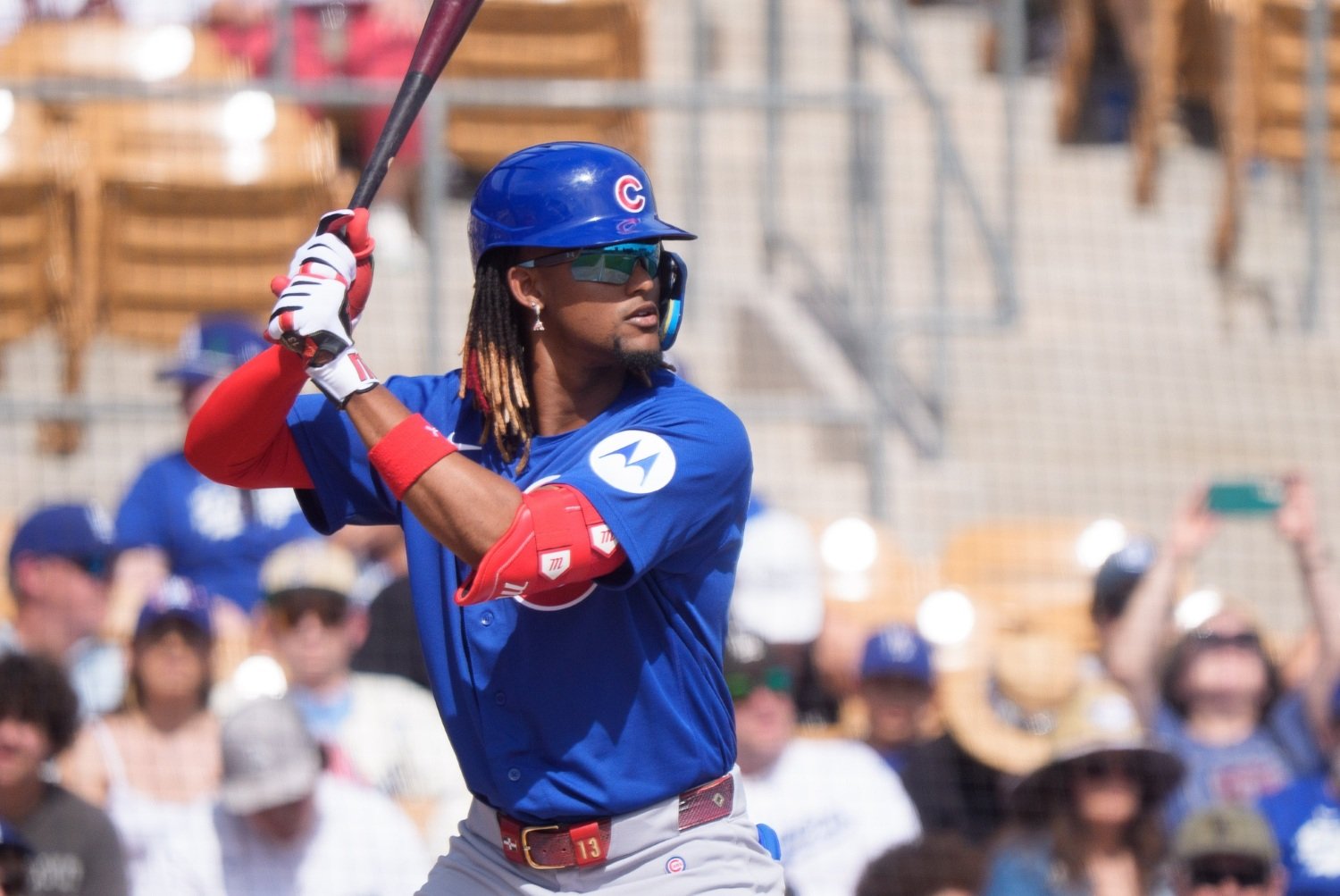 If you see Kevin Alcántara on the street today near Wrigley Field, be sure to congratulate him. Monday was his 50th day on an active big-league roster. After coming up at the tail end of 2024 and again for most of last September, Alcántara spent roughly a fortnight with the parent club in late May and early June. He was there to replace Matt Shaw, who had been placed on the injured list with a back strain. He was shuttled back to Triple-A Iowa, though, and it took another Shaw injury to get him back up for a fourth major-league stint. It's probably hard for Alcántara to tell he's a big-leaguer, though. He's gotten no real chance to show anything—either the magnitude of his talent nor the depth of his flaws—in his previous times as part of the team. He's stuck on 32 career plate appearances, which is about what Pete Crow-Armstrong collects each week. He's only played a complete game—neither coming on as some sort of sub nor being replaced mid-game—three times in the majors: September 25, 2024, in his MLB debut September 27, 2024 September 7, 2025 Neither the Cubs organization nor Craig Counsell has shown much faith in Alcántara. Yet, they do keep him around, and in a strange but real way, they need him. With Shaw shelved again and Michael Conforto circling the drain, they need a player who can play some corner outfield. With their offense running on Crow-Armstrong's increasingly well-rounded brilliance and a whole lot of luck and pluck around that, they need someone who can catch hold of a ball and hit it 425 feet now and then. Alcántara can be that guy. In the long run, I'm skeptical of Alcántara. In the short term, he needs to get a chance to help the team this time. After the Cubs put him in the cooler by calling him up for 16 days and 10 plate appearances starting May 23, it would have been understandable if he'd gone back to Iowa and struggled. Instead, he hit the ground running, with a 21-for-59 showing that included nine extra-base hits. He's up to 826 career plate appearances for the I-Cubs, with an OPS just under .860, all as a young and athletic player. His swing is long and whiff-prone; he needs to be shielded from bad matchups to have success in the big leagues right now. But he does still have the upside of a big-league regular, and right now, the Cubs don't have a strong alternative to him, at least against lefty starters. They'll see one of those Tuesday night, as the Padres send southpaw JP Sears to the mound. Alcántara needs to be in the lineup. One of Cubs fans' legitimate laments about David Ross was that he mistrusted young players too much and stunted their development, especially by leaving them to rot on the bench amid call-ups. Miguel Amaya and Crow-Armstrong felt that very pain in 2023. The hope was that Counsell would be better at bringing along homegrown guys, but while his tenure has seen Michael Busch and Crow-Armstrong establish themselves successfully (and he's done everything right with regard to Shaw), Owen Caissie, Moisés Ballesteros and Alcántara are each marks against him as a player development guy so far. That has to change in the coming days. Alcántara could be a decent trade chip this summer. He could be retained with an eye toward replacing Ian Happ and/or Seiya Suzuki, who are each impending free agents. Either way, though, this is the last season in which he can be optioned to the minors, so the Cubs (and all other parties with interest in Alcántara) need some hard information about what he can do. This is the opportunity to obtain that information. The Cubs need another guy who can hit the ball hard enough to split a gap or clear a fence, anyway. They need to swing for the fences, metaphorically, to survive their slew of pitching injuries and catalyze a scrappy but aging lineup. They might as well go with a guy who can swing for the fences, literally, and see what doubling his career plate appearance figure in about 10 days tells them.
 -
Image courtesy of © Allan Henry-Imagn Images If you see Kevin Alcántara on the street today near Wrigley Field, be sure to congratulate him. Monday was his 50th day on an active big-league roster. After coming up at the tail end of 2024 and again for most of last September, Alcántara spent roughly a fortnight with the parent club in late May and early June. He was there to replace Matt Shaw, who had been placed on the injured list with a back strain. He was shuttled back to Triple-A Iowa, though, and it took another Shaw injury to get him back up for a fourth major-league stint. It's probably hard for Alcántara to tell he's a big-leaguer, though. He's gotten no real chance to show anything—either the magnitude of his talent nor the depth of his flaws—in his previous times as part of the team. He's stuck on 32 career plate appearances, which is about what Pete Crow-Armstrong collects each week. He's only played a complete game—neither coming on as some sort of sub nor being replaced mid-game—three times in the majors: September 25, 2024, in his MLB debut September 27, 2024 September 7, 2025 Neither the Cubs organization nor Craig Counsell has shown much faith in Alcántara. Yet, they do keep him around, and in a strange but real way, they need him. With Shaw shelved again and Michael Conforto circling the drain, they need a player who can play some corner outfield. With their offense running on Crow-Armstrong's increasingly well-rounded brilliance and a whole lot of luck and pluck around that, they need someone who can catch hold of a ball and hit it 425 feet now and then. Alcántara can be that guy. In the long run, I'm skeptical of Alcántara. In the short term, he needs to get a chance to help the team this time. After the Cubs put him in the cooler by calling him up for 16 days and 10 plate appearances starting May 23, it would have been understandable if he'd gone back to Iowa and struggled. Instead, he hit the ground running, with a 21-for-59 showing that included nine extra-base hits. He's up to 826 career plate appearances for the I-Cubs, with an OPS just under .860, all as a young and athletic player. His swing is long and whiff-prone; he needs to be shielded from bad matchups to have success in the big leagues right now. But he does still have the upside of a big-league regular, and right now, the Cubs don't have a strong alternative to him, at least against lefty starters. They'll see one of those Tuesday night, as the Padres send southpaw JP Sears to the mound. Alcántara needs to be in the lineup. One of Cubs fans' legitimate laments about David Ross was that he mistrusted young players too much and stunted their development, especially by leaving them to rot on the bench amid call-ups. Miguel Amaya and Crow-Armstrong felt that very pain in 2023. The hope was that Counsell would be better at bringing along homegrown guys, but while his tenure has seen Michael Busch and Crow-Armstrong establish themselves successfully (and he's done everything right with regard to Shaw), Owen Caissie, Moisés Ballesteros and Alcántara are each marks against him as a player development guy so far. That has to change in the coming days. Alcántara could be a decent trade chip this summer. He could be retained with an eye toward replacing Ian Happ and/or Seiya Suzuki, who are each impending free agents. Either way, though, this is the last season in which he can be optioned to the minors, so the Cubs (and all other parties with interest in Alcántara) need some hard information about what he can do. This is the opportunity to obtain that information. The Cubs need another guy who can hit the ball hard enough to split a gap or clear a fence, anyway. They need to swing for the fences, metaphorically, to survive their slew of pitching injuries and catalyze a scrappy but aging lineup. They might as well go with a guy who can swing for the fences, literally, and see what doubling his career plate appearance figure in about 10 days tells them. View full article
-
Image courtesy of © Jeff Hanisch-Imagn Images Over halfway through the season, the regression monster hasn't yet caught up to Ryan Rolison. In fact, with Caleb Thielbar finally, sadly looking his age and Hoby Milner sidelined by an emergency appendectomy, there's not much doubt that Rolison is now the Cubs' top left-handed reliever. It's less fun to note this part, but with Daniel Palencia headlining tim times and a long list of injured righties, Rolison might even be their relief ace, without regard to handedness. The only other candidate is Jacob Webb, and if anything, Rolison has been more consistent. That's not to oversell him. Rolison's win probability added (WPA) over the 25 appearances since he came to the majors to stay in late April is -0.16. He hasn't been dominant, and he doesn't even have a save. His ERA is great, but his peripheral numbers are more like "good". He's allowed a pretty average 6 of 17 inherited runners to score. He's arguably the team's relief ace right now, not because he's great, but because the team is so far underwater in the bullpen. Still, this level of contribution is vital, especially for a team so awash in injuries and underperformance. Rolison started the season with Triple-A Iowa, even after a good spring. The Cubs picked him up over the winter, in no small part, because he's an optionable arm. He first came up on April 14, the first time the team was in scramble mode in the relief corps, but he stayed just that one day. He didn't come back until April 24. Since then, though, he's appeared 25 times and pitched 30 2/3 innings in the Cubs' 59 team games. Over a full season at this pace, he'd work 69 times and amass just under 85 innings. Craig Counsell has often been short on hurlers who are so much as available, let alone reliable; Rolison has been a rubber arm who doesn't give away games. He's markedly better than he was last season. Made to look much worse than he was by playing his home games in Colorado, Rolison had a 7.02 ERA in 2025, with little life on his fastball. He's up about 1.5 miles per hour on the four-seamer this year, with a more aggressive delivery in which he gets down the mound farther and draws more force from his landing leg. But more importantly, he's increased the induced vertical break on that heater by 3 inches, mostly because he's no longer pitching in the mountains. His curveball has more depth, too. To all of that, he's added a sweeper. The Cubs started talking to Rolison about incorporating that pitch back in the spring, but only stepwise as the season has progressed has he worked it into his attack within games. It's still his fourth-most used offering, but between that sweeper and the sinker that he's also mixed in more often of late, Rolison is moving east and west more than he has in the past. The variety of shapes he's now showing hitters is as wide as that of many starters, and because he's not seeing right-handed batters two or three times in a game, he can more than get by without a reliable changeup. It helps, of course, that it turns out that his new sweeper is the best swing-and-miss weapon in his arsenal. Tweak by tweak and sweeper by sweeper, Rolison has worked his way to striking out over a quarter of the batters he faces. He still walks too many opponents, but he can get off their barrels well with the two fastball looks, and his three breakers ensure that he gets the whiffs he needs. He's still not a playoff-caliber relief ace, but he's cemented himself as this year's Drew Pomeranz or Tyson Miller: a fine middle reliever who can be a bit more in a pinch, for a team very much in that kind of pinch. View full article
-
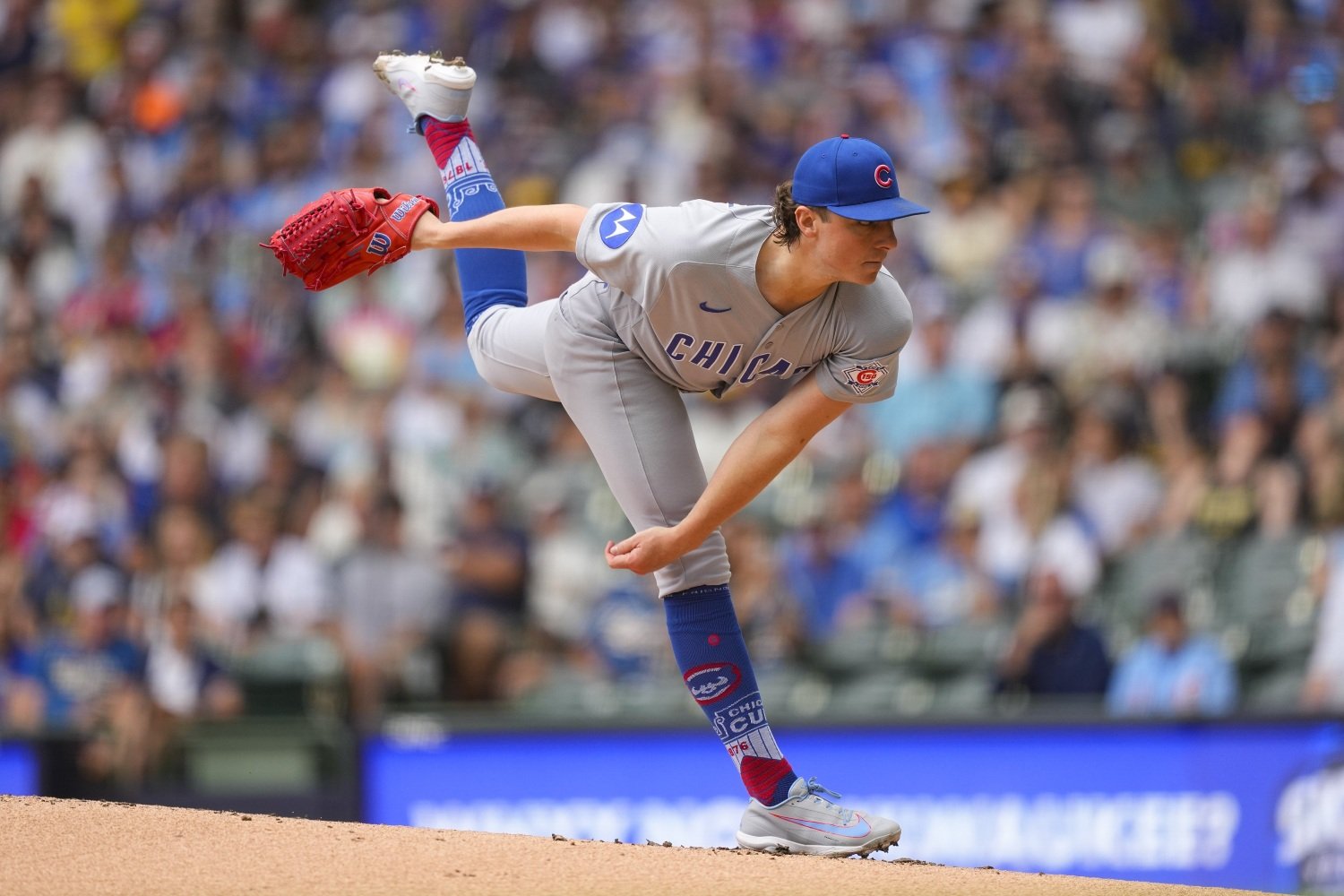 Over halfway through the season, the regression monster hasn't yet caught up to Ryan Rolison. In fact, with Caleb Thielbar finally, sadly looking his age and Hoby Milner sidelined by an emergency appendectomy, there's not much doubt that Rolison is now the Cubs' top left-handed reliever. It's less fun to note this part, but with Daniel Palencia headlining tim times and a long list of injured righties, Rolison might even be their relief ace, without regard to handedness. The only other candidate is Jacob Webb, and if anything, Rolison has been more consistent. That's not to oversell him. Rolison's win probability added (WPA) over the 25 appearances since he came to the majors to stay in late April is -0.16. He hasn't been dominant, and he doesn't even have a save. His ERA is great, but his peripheral numbers are more like "good". He's allowed a pretty average 6 of 17 inherited runners to score. He's arguably the team's relief ace right now, not because he's great, but because the team is so far underwater in the bullpen. Still, this level of contribution is vital, especially for a team so awash in injuries and underperformance. Rolison started the season with Triple-A Iowa, even after a good spring. The Cubs picked him up over the winter, in no small part, because he's an optionable arm. He first came up on April 14, the first time the team was in scramble mode in the relief corps, but he stayed just that one day. He didn't come back until April 24. Since then, though, he's appeared 25 times and pitched 30 2/3 innings in the Cubs' 59 team games. Over a full season at this pace, he'd work 69 times and amass just under 85 innings. Craig Counsell has often been short on hurlers who are so much as available, let alone reliable; Rolison has been a rubber arm who doesn't give away games. He's markedly better than he was last season. Made to look much worse than he was by playing his home games in Colorado, Rolison had a 7.02 ERA in 2025, with little life on his fastball. He's up about 1.5 miles per hour on the four-seamer this year, with a more aggressive delivery in which he gets down the mound farther and draws more force from his landing leg. But more importantly, he's increased the induced vertical break on that heater by 3 inches, mostly because he's no longer pitching in the mountains. His curveball has more depth, too. To all of that, he's added a sweeper. The Cubs started talking to Rolison about incorporating that pitch back in the spring, but only stepwise as the season has progressed has he worked it into his attack within games. It's still his fourth-most used offering, but between that sweeper and the sinker that he's also mixed in more often of late, Rolison is moving east and west more than he has in the past. The variety of shapes he's now showing hitters is as wide as that of many starters, and because he's not seeing right-handed batters two or three times in a game, he can more than get by without a reliable changeup. It helps, of course, that it turns out that his new sweeper is the best swing-and-miss weapon in his arsenal. Tweak by tweak and sweeper by sweeper, Rolison has worked his way to striking out over a quarter of the batters he faces. He still walks too many opponents, but he can get off their barrels well with the two fastball looks, and his three breakers ensure that he gets the whiffs he needs. He's still not a playoff-caliber relief ace, but he's cemented himself as this year's Drew Pomeranz or Tyson Miller: a fine middle reliever who can be a bit more in a pinch, for a team very much in that kind of pinch.
 -
Image courtesy of © Jeff Hanisch-Imagn Images In a strange way, the most telling plate appearance in the five-plus weeks since Pete Crow-Armstrong got molten-lava hot might have come Sunday afternoon, after the flow had raced down the mountain and begun to cool a bit. Brandon Woodruff struck out Crow-Armstrong in the first inning, but the next two times up, he was even more careful, and Crow-Armstrong drew two walks. In the third inning, Crow-Armstrong's swing decisions were dead solid perfect. In a six-pitch at-bat, Woddruff only hit the zone twice. Crow-Armstrong swung at both (changeups, fouled off) and took the four bad ones, including two very tempting offerings. The sixth inning at-bat was even better. Woodruff went with the four-seamer that had worked to start the game, but couldn't hit the zone with it. He tried a changeup, but missed low. Crow-Armstrong got ahead 3-0, but with one out and nobody on base in a game the Brewers led 1-0, he stayed patient and took two strikes on the outer half. Then, Woodruff—never one to give up a free base without good cause—stayed in the zone three straight times, but only made one mistake, with the third 3-2 pitch. Hitting as defensively as one must in such a deep count, Crow-Armstrong fouled that off, too. When Woodruff missed away with the ninth pitch, though, he laid off and drew another walk. Those were the 34th and 35th walks of the season for Crow-Armstrong, who only walked 53 total times in his first two-plus years in the majors. It's not just the walks that mark him as a different hitter. though. When he came to bat in the top of the eighth, he showed as much maturity as in either of his previous two trips. Facing the viciously difficult Abner Uribe, Crow-Armstrong did well to lay off a first-pitch sinker above the zone. It was called a strike, and he probably should have challenged it, but the Cubs have been conservative by design when it comes to batters challenging this season. At any rate, he made the right swing decision. Uribe lured him out of the zone on the next pitch, with a sinker that ran off the plate away, and Crow-Armstrong was down 0-2 in the most frustrating fashion. For any hitter, that sequence—bad call strike, chase out of the zone—threatens to destabilize the mental approach. It's easy to get on tilt in such situations. For Crow-Armstrong, that sequence has nearly always led to an easy out for the pitcher. He's struggled mightily with that mental battle throughout his career. But this time, he laid off a sinker up and away, and then watched a slider that plunged out of the bottom of the zone. On 2-2, Uribe sawed him off with a slider, catching Crow-Armstrong a hair early because he needed to stay ready for the sinker. It was a floater that bounced lazily out to the middle infield, and despite getting jammed, Crow-Armstrong got out of the box well. He almost beat it out for an infield hit. Yes, he was thrown out. No, he didn't play the hero, because the Brewers were careful not to let him do so. But that plate appearance was huge. It was tough, and professional, and it showed how Crow-Armstrong has improved both at staying in the fight and at covering multiple pitches within a pitcher's arsenal. From May 22 through June 25, Crow-Armstrong batted .376/.456/.760. In 147 trips to the plate, he had 22 extra-base hits, including 12 homers. It was a transcendent heater, the likes of which the Cubs haven't seen since Derrek Lee's near-MVP season of 2005. (Technically, Aramis Ramírez also had a hotter 31-game stretch in 2006, but like Lee, Moisés Alou and Sammy Sosa, all of whom have been similarly good over such stretches during this century, Ramírez played in a much more offense-friendly league than does Crow-Armstrong.) With any streak that incredible, though, you can feel the moment when it ends, and that happened over the weekend. Crow-Armstrong drew four walks (one intentional, in the 10th inning Sunday) but was hitless against the Brewers. He's not quite clicking on everything that comes within his happy zone, the way he was a week ago. What we saw Sunday, though, is that—not unlike that lava that hardens into rock after escaping the inferno—Crow-Armstrong has been reborn. He's not going to go back to the guy who batted .188/.237/.295 in August and September last year. His ceiling, as we now see, is as high as literally anyone in the sport; he is the only player in the last half-decade to demonstrate the ability to be as valuable as Shohei Ohtani. It's his floor that has really moved, though. He was, for a while there, capable of slumps as hideous as his streaks are thrilling. The new Crow-Armstrong simply can't be that bad. He's still going to have rough stretches, because he still borders on overly aggressive inside and outside the strike zone. He's morphed into a much more complete and dangerous hitter, though—even now that he's settling into a new normal, instead of doing backflips across a highwire, as he seemed to do for a month. View full article
-
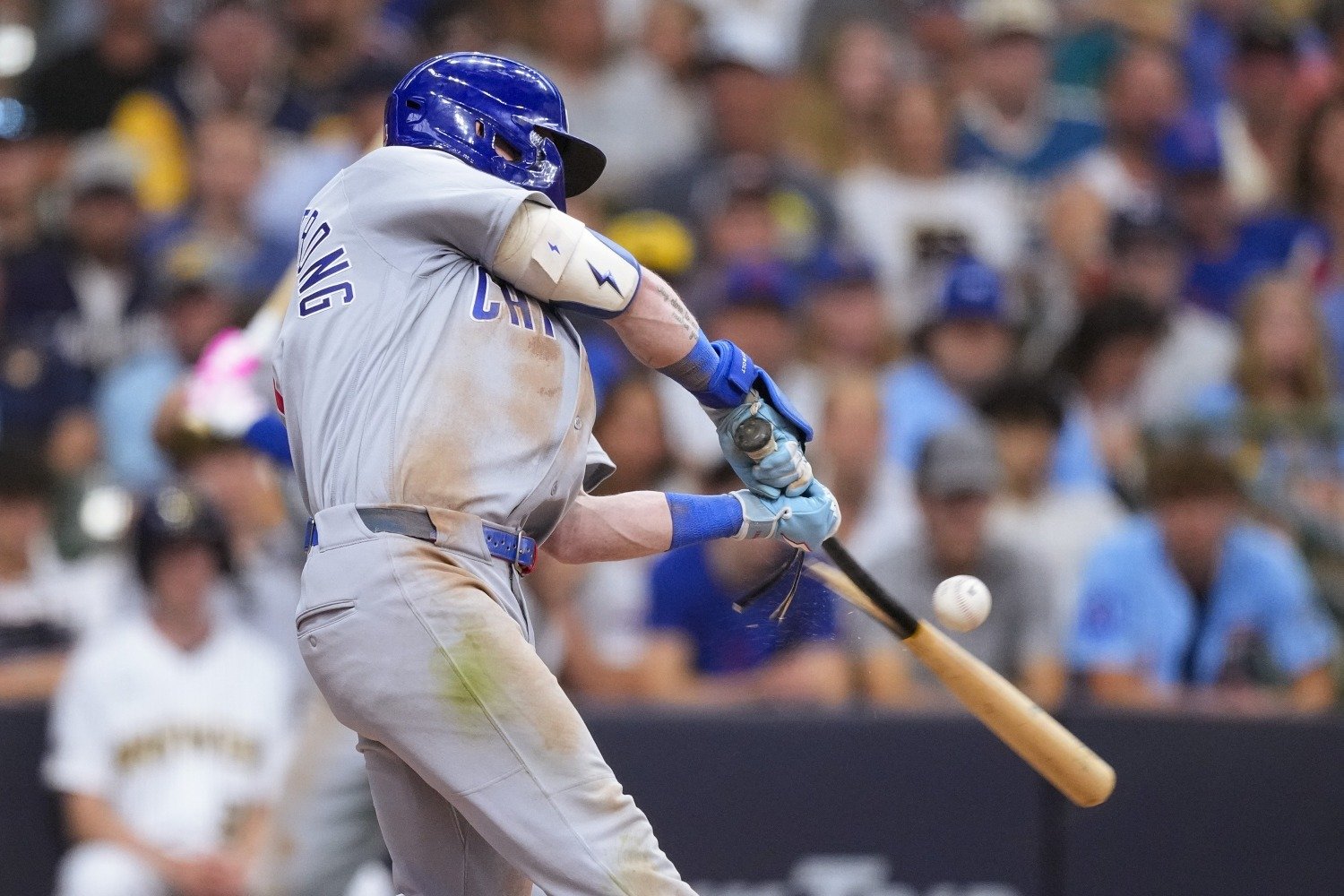 In a strange way, the most telling plate appearance in the five-plus weeks since Pete Crow-Armstrong got molten-lava hot might have come Sunday afternoon, after the flow had raced down the mountain and begun to cool a bit. Brandon Woodruff struck out Crow-Armstrong in the first inning, but the next two times up, he was even more careful, and Crow-Armstrong drew two walks. In the third inning, Crow-Armstrong's swing decisions were dead solid perfect. In a six-pitch at-bat, Woddruff only hit the zone twice. Crow-Armstrong swung at both (changeups, fouled off) and took the four bad ones, including two very tempting offerings. The sixth inning at-bat was even better. Woodruff went with the four-seamer that had worked to start the game, but couldn't hit the zone with it. He tried a changeup, but missed low. Crow-Armstrong got ahead 3-0, but with one out and nobody on base in a game the Brewers led 1-0, he stayed patient and took two strikes on the outer half. Then, Woodruff—never one to give up a free base without good cause—stayed in the zone three straight times, but only made one mistake, with the third 3-2 pitch. Hitting as defensively as one must in such a deep count, Crow-Armstrong fouled that off, too. When Woodruff missed away with the ninth pitch, though, he laid off and drew another walk. Those were the 34th and 35th walks of the season for Crow-Armstrong, who only walked 53 total times in his first two-plus years in the majors. It's not just the walks that mark him as a different hitter. though. When he came to bat in the top of the eighth, he showed as much maturity as in either of his previous two trips. Facing the viciously difficult Abner Uribe, Crow-Armstrong did well to lay off a first-pitch sinker above the zone. It was called a strike, and he probably should have challenged it, but the Cubs have been conservative by design when it comes to batters challenging this season. At any rate, he made the right swing decision. Uribe lured him out of the zone on the next pitch, with a sinker that ran off the plate away, and Crow-Armstrong was down 0-2 in the most frustrating fashion. For any hitter, that sequence—bad call strike, chase out of the zone—threatens to destabilize the mental approach. It's easy to get on tilt in such situations. For Crow-Armstrong, that sequence has nearly always led to an easy out for the pitcher. He's struggled mightily with that mental battle throughout his career. But this time, he laid off a sinker up and away, and then watched a slider that plunged out of the bottom of the zone. On 2-2, Uribe sawed him off with a slider, catching Crow-Armstrong a hair early because he needed to stay ready for the sinker. It was a floater that bounced lazily out to the middle infield, and despite getting jammed, Crow-Armstrong got out of the box well. He almost beat it out for an infield hit. Yes, he was thrown out. No, he didn't play the hero, because the Brewers were careful not to let him do so. But that plate appearance was huge. It was tough, and professional, and it showed how Crow-Armstrong has improved both at staying in the fight and at covering multiple pitches within a pitcher's arsenal. From May 22 through June 25, Crow-Armstrong batted .376/.456/.760. In 147 trips to the plate, he had 22 extra-base hits, including 12 homers. It was a transcendent heater, the likes of which the Cubs haven't seen since Derrek Lee's near-MVP season of 2005. (Technically, Aramis Ramírez also had a hotter 31-game stretch in 2006, but like Lee, Moisés Alou and Sammy Sosa, all of whom have been similarly good over such stretches during this century, Ramírez played in a much more offense-friendly league than does Crow-Armstrong.) With any streak that incredible, though, you can feel the moment when it ends, and that happened over the weekend. Crow-Armstrong drew four walks (one intentional, in the 10th inning Sunday) but was hitless against the Brewers. He's not quite clicking on everything that comes within his happy zone, the way he was a week ago. What we saw Sunday, though, is that—not unlike that lava that hardens into rock after escaping the inferno—Crow-Armstrong has been reborn. He's not going to go back to the guy who batted .188/.237/.295 in August and September last year. His ceiling, as we now see, is as high as literally anyone in the sport; he is the only player in the last half-decade to demonstrate the ability to be as valuable as Shohei Ohtani. It's his floor that has really moved, though. He was, for a while there, capable of slumps as hideous as his streaks are thrilling. The new Crow-Armstrong simply can't be that bad. He's still going to have rough stretches, because he still borders on overly aggressive inside and outside the strike zone. He's morphed into a much more complete and dangerous hitter, though—even now that he's settling into a new normal, instead of doing backflips across a highwire, as he seemed to do for a month.
 -
Image courtesy of © Kyle Ross-Imagn Images You don't have to squint to see David Peterson's appeal for the Chicago Cubs. Firstly, look at that pulse! You won't find it on the Savant sliders panel, but being a living, breathing pitcher who isn't injured is a tough box to check these days, it seems, and the Cubs found a guy who checks it. More seriously, though, Peterson is a lefty who throws 92 MPH; succeeds by missing barrels, not missing bats; and was available in a buy-low deal, despite the calendar not yet having flipped to July and most could-be trade partners still being focused on preparations for the draft. When Ben Brown and Edward Cabrera landed on the injured list simultaneously (with no imminent return looking likely for either), Jed Hoyer did what he had to do. That doesn't mean that Peterson was selected solely because of his availability, though, or even because of the natural cut on his four-seam fastball. Rather, the Cubs locked in on him because there are real reasons to believe he's better than the ugly 6.09 ERA he's posted in 16 appearances (only half of them starts) this year. First, let's talk about what's gone wrong. To do so, we can look at Statcast's new swing timing metrics, to spot the ways in which hitters are reacting differently to his stuff this year than last. Peterson's best pitch is his sinker, but that offering (his ticket to last year's All-Star roster) is getting pummeled in 2026. Against lefties, the problem seems to be a failure to bust them inside and get them to hit the top half of the pitch, as you can see most clearly in the righthand image below: Against righties, the problem is that Peterson hasn't been able to get batters looking up or in, thereby incuding contact off the end of the bat when he goes to the sinker. Instead, righties are centering that pitch up relentlessly. Peterson actually throws his four-seamer more than the sinker to righties, a sensible practice for any non-fireballing southpaw. This year, though, righties aren't fooled by that, either. He's actually getting in on the label with that cutting four-seamer a bit better than in the past, which could be good news. Unfortunately, paired with the batter being on time more consistently, rather than late, it's yielding good results for the batter, not for Peterson. When he's right, Peterson's slider is also a solid pitch, working across the plate to lefties and dipping below what a righty batter thinks they have lined up. This year, none of that is happening. A good left-on-left slider should have an opposing batter reaching, flailing, way early and over the top of the pitch. Peterson just isn't producing those swings nearly as well this season as he did when he had a small star turn last year. At this moment, it's fair to say that hitters have him figured out a bit. The Cubs can help him, though. For one thing, Peterson's slider is very much a gyro-style tight spinner, but it's taken on an unwelcome cement-mixer quality this season. He's throwing the pitch harder, but partially because of that, it's moving less. It has some dart to it, but it's lost depth. Here's the spin profile of his pitches for 2025, with the initial spin direction on the left and the actual movement direction on the right. Here's the same image for 2026: Peterson's slider feels much more like a cutter this year, and the result is a pitch that doesn't dominate lefties as well. If it looked a lot like the sinker and/or the four-seamer out of the hand, it could at least fool batters that way, but it does that (if anything) less well than a year ago. That seems like something a new pitching coach can help a pitcher restore in short order. A small mechanical fix might go a long way for Peterson. Even better, though, the Cubs have one of the league's best defenses to offer Peterson. He's had a below-average strikeout rate in each of the last three years, but he keeps the ball on the ground often and in the park nearly always. The Cubs saw, up close, just how bad the Mets' defense has been all season. The jump from that to the Cubs' phalanx should be very good for Peterson—and what's good for him will be good for the team. The upside on this acquisition is extremely low. Peterson will be a free agent this fall. He doesn't pound the zone the way you'd like to see a pitcher who doesn't strike batters out do so; that's part of his strategy to limit the damage done against his highly hittable stuff. He can't save the Cubs' season. If it's to be saved, that will be done by the team's offense and its defense. Peterson is a couple small adjustments from regaining the much better results he enjoyed last season, though. A restored slider would give him an edge in the fight to get batters off the barrel on his sinker. A bit of counseling from Tommy Hottovy should help him see a better way to utilize that cutting four-seamer in on righties. Mostly, Peterson needs to soak up innings. But the Cubs didn't grab him just to get those innings out of the way. They believe, rightly, that they can get him back into the shape of a credible backend starter, and that would check several boxes at once on the North Side. View full article
-
Why Chicago Cubs Targeted David Peterson to Patch Their Porous Rotation
Matthew Trueblood posted an article in Cubs
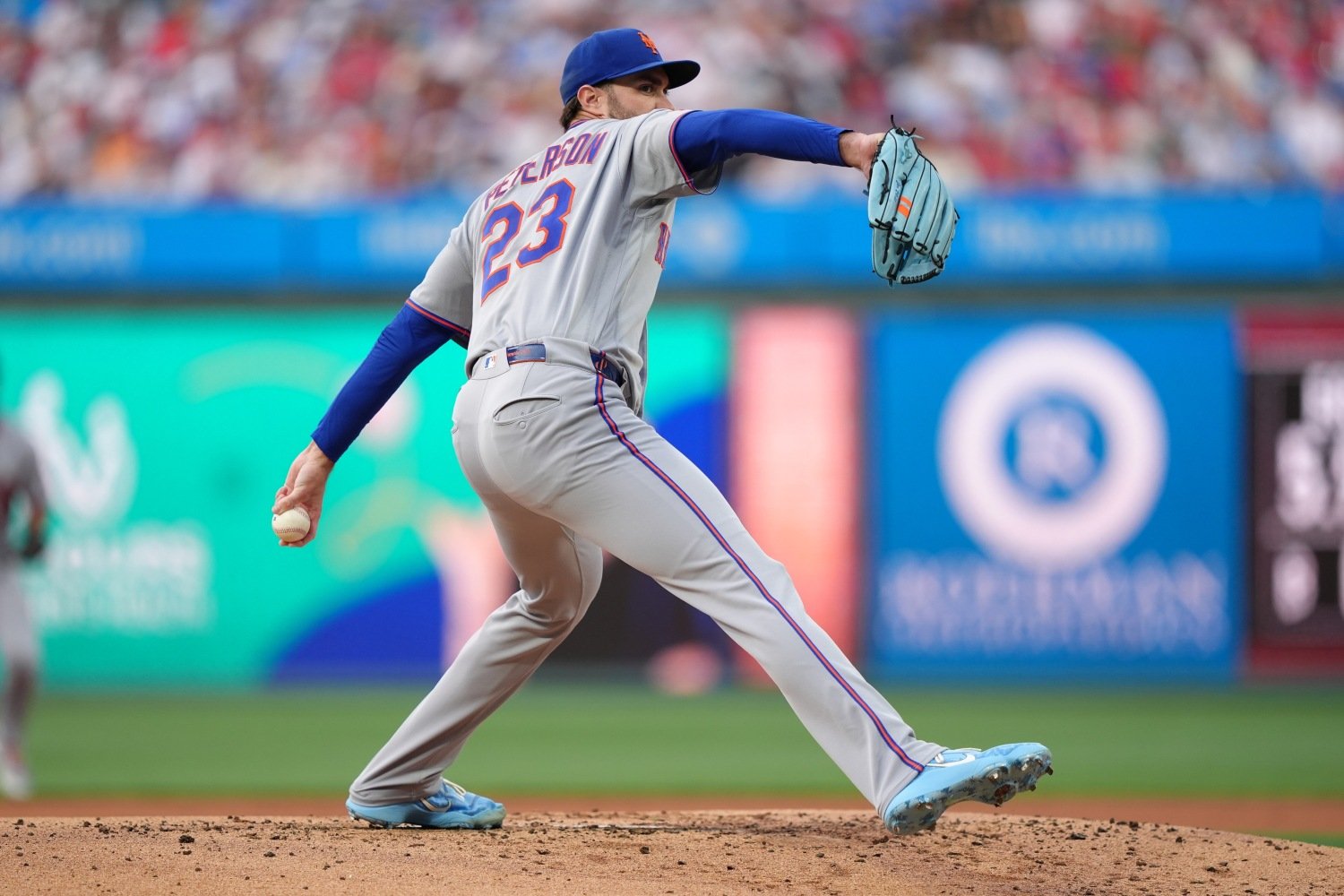 You don't have to squint to see David Peterson's appeal for the Chicago Cubs. Firstly, look at that pulse! You won't find it on the Savant sliders panel, but being a living, breathing pitcher who isn't injured is a tough box to check these days, it seems, and the Cubs found a guy who checks it. More seriously, though, Peterson is a lefty who throws 92 MPH; succeeds by missing barrels, not missing bats; and was available in a buy-low deal, despite the calendar not yet having flipped to July and most could-be trade partners still being focused on preparations for the draft. When Ben Brown and Edward Cabrera landed on the injured list simultaneously (with no imminent return looking likely for either), Jed Hoyer did what he had to do. That doesn't mean that Peterson was selected solely because of his availability, though, or even because of the natural cut on his four-seam fastball. Rather, the Cubs locked in on him because there are real reasons to believe he's better than the ugly 6.09 ERA he's posted in 16 appearances (only half of them starts) this year. First, let's talk about what's gone wrong. To do so, we can look at Statcast's new swing timing metrics, to spot the ways in which hitters are reacting differently to his stuff this year than last. Peterson's best pitch is his sinker, but that offering (his ticket to last year's All-Star roster) is getting pummeled in 2026. Against lefties, the problem seems to be a failure to bust them inside and get them to hit the top half of the pitch, as you can see most clearly in the righthand image below: Against righties, the problem is that Peterson hasn't been able to get batters looking up or in, thereby incuding contact off the end of the bat when he goes to the sinker. Instead, righties are centering that pitch up relentlessly. Peterson actually throws his four-seamer more than the sinker to righties, a sensible practice for any non-fireballing southpaw. This year, though, righties aren't fooled by that, either. He's actually getting in on the label with that cutting four-seamer a bit better than in the past, which could be good news. Unfortunately, paired with the batter being on time more consistently, rather than late, it's yielding good results for the batter, not for Peterson. When he's right, Peterson's slider is also a solid pitch, working across the plate to lefties and dipping below what a righty batter thinks they have lined up. This year, none of that is happening. A good left-on-left slider should have an opposing batter reaching, flailing, way early and over the top of the pitch. Peterson just isn't producing those swings nearly as well this season as he did when he had a small star turn last year. At this moment, it's fair to say that hitters have him figured out a bit. The Cubs can help him, though. For one thing, Peterson's slider is very much a gyro-style tight spinner, but it's taken on an unwelcome cement-mixer quality this season. He's throwing the pitch harder, but partially because of that, it's moving less. It has some dart to it, but it's lost depth. Here's the spin profile of his pitches for 2025, with the initial spin direction on the left and the actual movement direction on the right. Here's the same image for 2026: Peterson's slider feels much more like a cutter this year, and the result is a pitch that doesn't dominate lefties as well. If it looked a lot like the sinker and/or the four-seamer out of the hand, it could at least fool batters that way, but it does that (if anything) less well than a year ago. That seems like something a new pitching coach can help a pitcher restore in short order. A small mechanical fix might go a long way for Peterson. Even better, though, the Cubs have one of the league's best defenses to offer Peterson. He's had a below-average strikeout rate in each of the last three years, but he keeps the ball on the ground often and in the park nearly always. The Cubs saw, up close, just how bad the Mets' defense has been all season. The jump from that to the Cubs' phalanx should be very good for Peterson—and what's good for him will be good for the team. The upside on this acquisition is extremely low. Peterson will be a free agent this fall. He doesn't pound the zone the way you'd like to see a pitcher who doesn't strike batters out do so; that's part of his strategy to limit the damage done against his highly hittable stuff. He can't save the Cubs' season. If it's to be saved, that will be done by the team's offense and its defense. Peterson is a couple small adjustments from regaining the much better results he enjoyed last season, though. A restored slider would give him an edge in the fight to get batters off the barrel on his sinker. A bit of counseling from Tommy Hottovy should help him see a better way to utilize that cutting four-seamer in on righties. Mostly, Peterson needs to soak up innings. But the Cubs didn't grab him just to get those innings out of the way. They believe, rightly, that they can get him back into the shape of a credible backend starter, and that would check several boxes at once on the North Side.
 -
Image courtesy of © Kyle Ross-Imagn Images It's not about finding playoff-caliber starters right now. It's not about building a bridge to a long-term winner, either. The Cubs simply have games to play this weekend, and too few healthy starting pitchers to fill the slots on their schedule. Feeling around in the dark, they scooped up the first thing they could grab hold of, acquiring David Peterson from the Mets in a late-night trade Wednesday. Jeff Passan of ESPN was first with the news, on Twitter. A source with knowledge of the deal confirmed that the teams have agreed to terms. Peterson, 30, will be a free agent at season's end. He's running a hideous 6.09 ERA this season, in stark contrast with last year, when he made the National League All-Star team. However, below the surface, he's been almost the same guy in both years. In fact, per Baseball Prospectus, his DRA- for 2026 (90) is lower than the mark he put up last year (97). Nothing Peterson throws misses bats very well, so he runs a below-average strikeout rate. However, his best pitch is a worm-killer of a sinker, with which he induces lots of ground balls. He's a fine fit for the Cubs, who not only have a good defense to put behind him but badly need a hurler who can keep the ball in the park more often. With that inability to pile up strikeouts, Peterson will slide into the back end even of a atrociously depleted Cubs rotation, but he gives them stability and upside there. His fastball shapes fit the Cubs' predilections well. This deal could pave the way for the team to keep Peterson around relatively cheaply beyond this year, despite his impending free agency, and for now, it rescues them from needing to install the empty husk of Vince Velazquez in their rotation for any significant length of time. According to Will Sammon of The Athletic, minor-leaguer Cole Mathis will go to New York in the trade. Mathis, 22, was a second-round pick in 2024 and has put up good numbers this year at High-A South Bend. That it took until his second full year in pro ball to get out of Myrtle Beach after playing high-level college ball, however, says something about his long-term outlook. It's a small price to pay for Peterson, but because of his contract status and his struggles this year, Peterson was extremely available. For now, this stabilizes the Cubs rotation. View full article
-
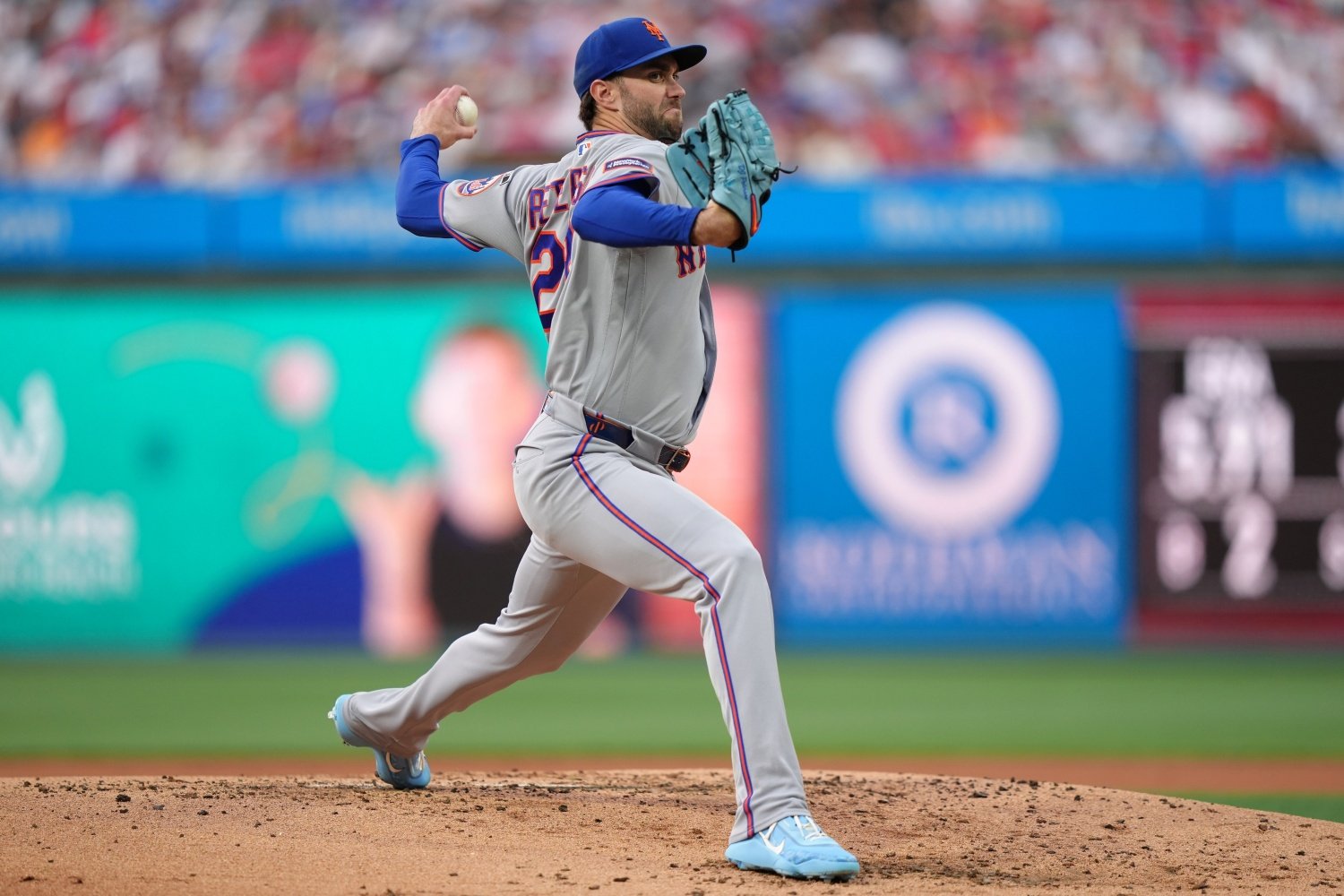 It's not about finding playoff-caliber starters right now. It's not about building a bridge to a long-term winner, either. The Cubs simply have games to play this weekend, and too few healthy starting pitchers to fill the slots on their schedule. Feeling around in the dark, they scooped up the first thing they could grab hold of, acquiring David Peterson from the Mets in a late-night trade Wednesday. Jeff Passan of ESPN was first with the news, on Twitter. A source with knowledge of the deal confirmed that the teams have agreed to terms. Peterson, 30, will be a free agent at season's end. He's running a hideous 6.09 ERA this season, in stark contrast with last year, when he made the National League All-Star team. However, below the surface, he's been almost the same guy in both years. In fact, per Baseball Prospectus, his DRA- for 2026 (90) is lower than the mark he put up last year (97). Nothing Peterson throws misses bats very well, so he runs a below-average strikeout rate. However, his best pitch is a worm-killer of a sinker, with which he induces lots of ground balls. He's a fine fit for the Cubs, who not only have a good defense to put behind him but badly need a hurler who can keep the ball in the park more often. With that inability to pile up strikeouts, Peterson will slide into the back end even of a atrociously depleted Cubs rotation, but he gives them stability and upside there. His fastball shapes fit the Cubs' predilections well. This deal could pave the way for the team to keep Peterson around relatively cheaply beyond this year, despite his impending free agency, and for now, it rescues them from needing to install the empty husk of Vince Velazquez in their rotation for any significant length of time. According to Will Sammon of The Athletic, minor-leaguer Cole Mathis will go to New York in the trade. Mathis, 22, was a second-round pick in 2024 and has put up good numbers this year at High-A South Bend. That it took until his second full year in pro ball to get out of Myrtle Beach after playing high-level college ball, however, says something about his long-term outlook. It's a small price to pay for Peterson, but because of his contract status and his struggles this year, Peterson was extremely available. For now, this stabilizes the Cubs rotation.
 -
Well, I don't think they're doing anything that puts their pitchers at greater than their baseline risk of injury, relative to the rest of the league. There are teams who push guys much closer to their redlines in the quest to make their stuff better. But you're absolutely right that they've acquired some guys with a high baseline injury risk, in cases like trading for Cabrera, spending money this winter on Hunter Harvey, and drafting and then centering their plans on Horton. Now, they assiduously avoided doing that very thing for a few years, and that didn't work, either. They were letting too many chances to acquire pitchers with better stuff pass them by, fearing injury, when the reality of the modern game is that injuries will come. I don't want to unduly criticize them for finally realizing that they needed to accept at least a portion of the risk every other team in the league is taking. To me, the greater problems are that they're reluctant to invest enough money to amass the kind of depth that would better fortify them against each individual injury, and that they're not scouting or developing well enough to have pitchers available to stop the gaps when a surge of injuries that not even more robust spending would have fixed does happen. When I talk about the injury gods, I'm definitely not actually ascribing things to luck or karma. But there is a huge element of luck in injury frequency these days, especially for pitchers. Some years, a lot of your guys are gonna get hurt. You can't reliably stop that. What you can do is be more ready for it than this team has been.
-
 Both Ben Brown and Edward Cabrera landed on the injured list Wednesday. Brown (ironically, the one Cubs hurler not plagued by the home-run ball and vulnerable to whiplash this year) has a neck strain; Cabrera has injuries to both his hamstring and his adductor. Brown could be back relatively soon, but then again, it could be months. Cabrera is almost certainly out until after the All-Star break. Neither is officially being shelved with a broken back, but that sound you heard was this pair of straws breaking the Cubs'. Though they began Wednesday's doubleheader in playoff position, the Cubs aren't making it to October. That much should be obvious by now. They're too diminished and depleted by injury, and too few of the hurlers currently on the IL have clear paths to returning to form this year. Of the handful of pitchers who have stayed relatively healthy, too few have any upside beyond what they're already doing, and too many have had major flaws exposed or appear to be pitching through some nagging trouble of their own. This team can't win anything important. They'll have to turn their eyes to next year. The last sentence should send shrieking alarms into life in your mind, though. That's a catastrophe. That's an unmitigated and massive failure that will haunt this team for years to come. The 2026 Cubs were built to compete for a pennant, and certainly to wrest the NL Central back from the Milwaukee Brewers. That's not happening, and the organization is not nearly ready to thrive in the wake of this misfire. They have a weak farm system. They have a poor track record for player development, and they've ceased to be good even at keeping pitchers relatively healthy, a strength about which they boasted a few years ago. Technically, the team does have several trade candidates they can move before the trade deadline on August 3. Seiya Suzuki, Ian Happ, Carson Kelly and Shota Imanaga headline that group. If Jameson Taillon can get healthy or if Caleb Thielbar, Phil Maton, Jacob Webb or Michael Conforto can show enough to convince suitors of their utility, they could be dealt, too. For the most part, though, this team is ossified. They intentionally invested in and committed to a long-term core of Dansby Swanson, Nico Hoerner, Pete Crow-Armstrong, Alex Bregman, Cade Horton, Justin Steele, Cabrera, and Daniel Palencia, with Matt Shaw, Moisés Ballesteros and Ben Brown as key supplementary pieces. Crow-Armstrong looks like the biggest star the Cubs have had since Sammy Sosa, and arguably the best all-around player they've ever had, at least while he's on this scintillating hot streak. The rest of that group, however, is proving either flawed or injury-prone, and because of what the club has already committed to each, they can't quickly shift gears and build around a different core, instead. They don't have the financial flexibility to do that via free agency; they don't have trade assets capable of bringing back that caliber of player; and they certainly don't have either the star power or the depth in their farm system to reload. In most articles like this one, this would be where I offer a creative solution or a radical possibility. I've done that a lot of times with a lot of different teams, over the years. I can't come up with anything this time. The Cubs have owners with only moderate interest in fielding a competitive team, who have hired and renewed their commitment to a front office with similarly tepid ambitions. That front office sells itself constantly to the media as a competent and nimble outfit, but the reality is that they're a below-average all-around team. They have above-average talent on the big-league roster, but only because they've concentrated almost all their resources there over the last three years. They've traded first-round picks, spent money to retain former first-round picks, and signed players to massive, long-term free-agent deals. They've swapped prospects for controllable players who could contribute immediately. They've done everything they can do to make themselves a winning major-league team right now, and 2026 was meant to be the high point in their competitive cycle. The results have been two 83-win teams, a 92-win one that lost the division and fell to their biggest rivals in October, and this unit, which will probably finish more like the 2023 and 2024 Cubs than like the 2025 ones. Meanwhile, the cupboard has been left bare in the minor leagues, and even the guys they hoped to convert into homegrown help have faltered badly. Jed Hoyer should never have gotten the extension he signed last July. That he did was the sign of an unearnedly content ownership group. The Cubs don't draft well, develop well, coach well or make smart enough transactions to make up for those glaring weaknesses. They don't have what they would need to turbo-charge a reload for next season, but this season is circling the drain, due as much to their lack of homegrown depth as to the bad injury luck they courted by leaning so hard on the likes of Horton and Cabrera. A decade after its greatest success, this franchise is right back where it's spent much more of the last 80 years: in a quagmire of its own making, and unlikely to rise from the muck any time soon.
- 4 comments
-
- 1
-

-
- edward cabrera
- ben brown
- (and 5 more)
-
Image courtesy of © Patrick Gorski-Imagn Images Both Ben Brown and Edward Cabrera landed on the injured list Wednesday. Brown (ironically, the one Cubs hurler not plagued by the home-run ball and vulnerable to whiplash this year) has a neck strain; Cabrera has injuries to both his hamstring and his adductor. Brown could be back relatively soon, but then again, it could be months. Cabrera is almost certainly out until after the All-Star break. Neither is officially being shelved with a broken back, but that sound you heard was this pair of straws breaking the Cubs'. Though they began Wednesday's doubleheader in playoff position, the Cubs aren't making it to October. That much should be obvious by now. They're too diminished and depleted by injury, and too few of the hurlers currently on the IL have clear paths to returning to form this year. Of the handful of pitchers who have stayed relatively healthy, too few have any upside beyond what they're already doing, and too many have had major flaws exposed or appear to be pitching through some nagging trouble of their own. This team can't win anything important. They'll have to turn their eyes to next year. The last sentence should send shrieking alarms into life in your mind, though. That's a catastrophe. That's an unmitigated and massive failure that will haunt this team for years to come. The 2026 Cubs were built to compete for a pennant, and certainly to wrest the NL Central back from the Milwaukee Brewers. That's not happening, and the organization is not nearly ready to thrive in the wake of this misfire. They have a weak farm system. They have a poor track record for player development, and they've ceased to be good even at keeping pitchers relatively healthy, a strength about which they boasted a few years ago. Technically, the team does have several trade candidates they can move before the trade deadline on August 3. Seiya Suzuki, Ian Happ, Carson Kelly and Shota Imanaga headline that group. If Jameson Taillon can get healthy or if Caleb Thielbar, Phil Maton, Jacob Webb or Michael Conforto can show enough to convince suitors of their utility, they could be dealt, too. For the most part, though, this team is ossified. They intentionally invested in and committed to a long-term core of Dansby Swanson, Nico Hoerner, Pete Crow-Armstrong, Alex Bregman, Cade Horton, Justin Steele, Cabrera, and Daniel Palencia, with Matt Shaw, Moisés Ballesteros and Ben Brown as key supplementary pieces. Crow-Armstrong looks like the biggest star the Cubs have had since Sammy Sosa, and arguably the best all-around player they've ever had, at least while he's on this scintillating hot streak. The rest of that group, however, is proving either flawed or injury-prone, and because of what the club has already committed to each, they can't quickly shift gears and build around a different core, instead. They don't have the financial flexibility to do that via free agency; they don't have trade assets capable of bringing back that caliber of player; and they certainly don't have either the star power or the depth in their farm system to reload. In most articles like this one, this would be where I offer a creative solution or a radical possibility. I've done that a lot of times with a lot of different teams, over the years. I can't come up with anything this time. The Cubs have owners with only moderate interest in fielding a competitive team, who have hired and renewed their commitment to a front office with similarly tepid ambitions. That front office sells itself constantly to the media as a competent and nimble outfit, but the reality is that they're a below-average all-around team. They have above-average talent on the big-league roster, but only because they've concentrated almost all their resources there over the last three years. They've traded first-round picks, spent money to retain former first-round picks, and signed players to massive, long-term free-agent deals. They've swapped prospects for controllable players who could contribute immediately. They've done everything they can do to make themselves a winning major-league team right now, and 2026 was meant to be the high point in their competitive cycle. The results have been two 83-win teams, a 92-win one that lost the division and fell to their biggest rivals in October, and this unit, which will probably finish more like the 2023 and 2024 Cubs than like the 2025 ones. Meanwhile, the cupboard has been left bare in the minor leagues, and even the guys they hoped to convert into homegrown help have faltered badly. Jed Hoyer should never have gotten the extension he signed last July. That he did was the sign of an unearnedly content ownership group. The Cubs don't draft well, develop well, coach well or make smart enough transactions to make up for those glaring weaknesses. They don't have what they would need to turbo-charge a reload for next season, but this season is circling the drain, due as much to their lack of homegrown depth as to the bad injury luck they courted by leaning so hard on the likes of Horton and Cabrera. A decade after its greatest success, this franchise is right back where it's spent much more of the last 80 years: in a quagmire of its own making, and unlikely to rise from the muck any time soon. View full article
-
Well, I'm not sure about that. Owen Caissie isn't exactly carving things up. I think Cabrera's failure to come as advertised clearly lands at Hoyer's feet, but also at Tommy Hottovy's, and of course at Cabrera's, himself. I do think there's a decent chance he turns this around. He just needs to make some pretty big changes, so it might take another stint on the IL or an offseason to see him get back to where he can dominate. The only way I'll end up as down on the trade itself as you are is if the elbow thing that ended his last start turns out to have been a lingering issue and gets worse from here—which, unfortunately, I could certainly imagine. That would explain some of what we've seen this year. It would also indict the team's judgment of injury risk; there were known issues around Cabrera when they got him.
-
Under Cubs' Stewardship, Edward Cabrera Has Simply Gotten Much Worse
Matthew Trueblood posted an article in Cubs
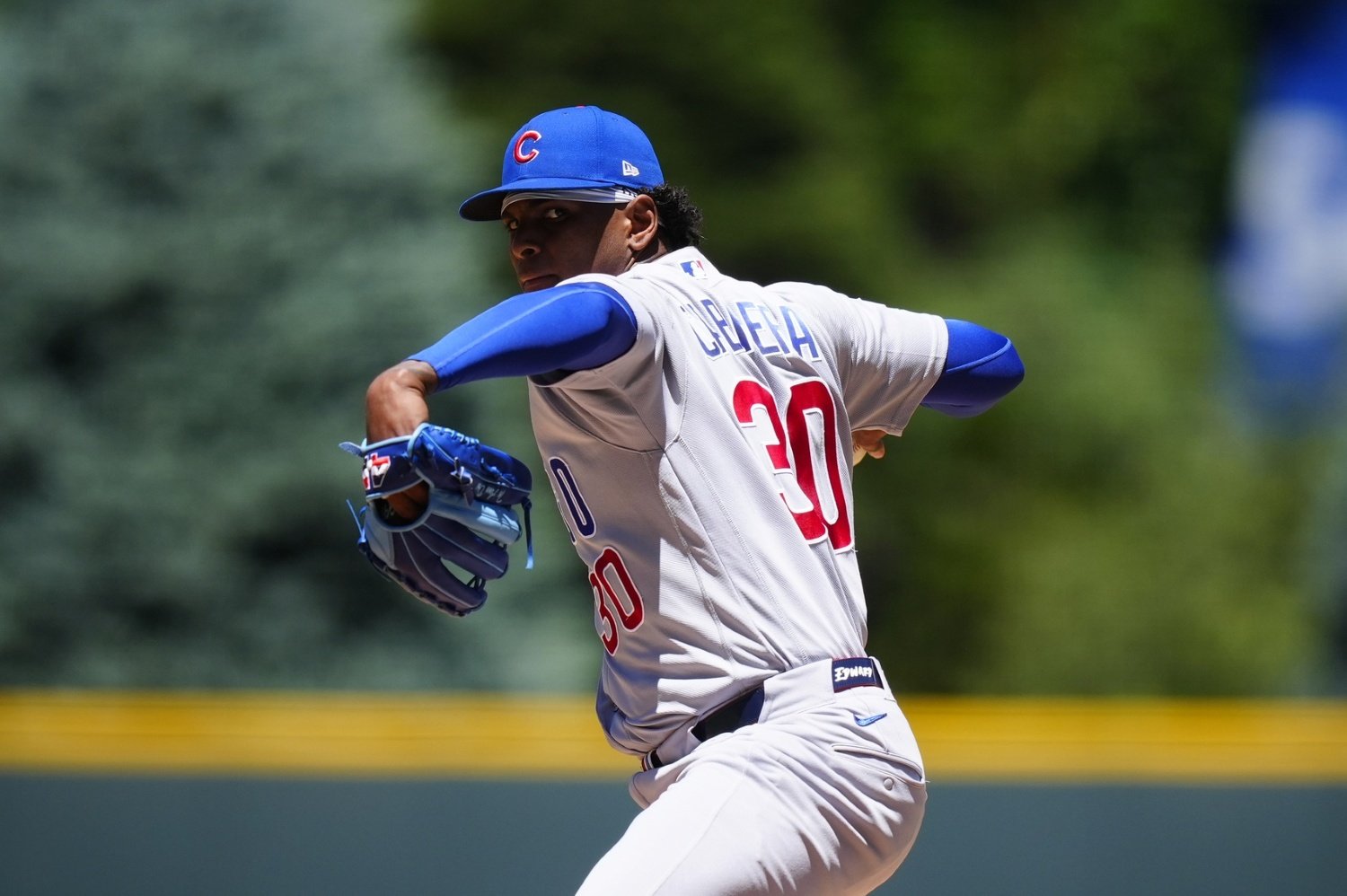 The good news, according to Baseball Prospectus's StuffPro metric, is that Edward Cabrera's slider hasn't gotten any worse this year. It's still a plus pitch, when he can locate it anywhere near the zone. In fact, that pitch should have more utility this year, in theory, because he's throwing from a lower arm angle and the top of the zone has been lopped off by the advent of the ABS system; his ability to use the slider to go from east to west is vital. The bad news, according not just to StuffPro but to Stuff+ and also your eyes and the surface-level numbers, too, is everything else. Cabrera's whole arsenal has gotten worse in his first season with the Cubs. Whether the team asked him to further lower his arm slot after he significantly lowered it last year or whether (as he said happened in 2025) it's just gotten lower as a result of his efforts to be more natural and athletic on the mound, the results have been calamitous. After 13 starts, Cabrera's ERA stands at 5.21. He's limiting walks better than he did in the past, keeping up the trend that seemed like the key to his breakout in 2025. However, his strikeout rate is way down, from 25.8% to 21.3%, and worse, he's giving up one home run for every 20 batters he faces. His Cubs debut was electric, and he worked a second straight scoreless outing after that, but since then, the ERA is 6.31. Even in that scoreless appearance against the Guardians, he walked five and struck out just four. The biggest problem seems to be that arm slot. Coming down a little last year was good, insofar as it loosened Cabrera up, kept him healthier and let him find the strike zone. Coming down more this year has been catastrophic, for two reasons: He can't find the zone as well anymore; and His key pitch shapes have become too similar. Last year, Cabrera's sinker was less a sinker than a running two-seamer, often thrown to the up-and-in quadrant against right-handed batters. It was a viciously difficult pitch to square up, at roughly 98 miles per hour with so much tailing action, but it also kept righty batters honest. If they sat on a changeup, they were likely to swing underneath the sinker, just as if it were a rising four-seam heater. At best, they might fight it off the handle of their bat and produce weak contact. Here's where his sinkers were located last season. When you lower your arm slot, you're likely to see any sinker become more of a true sinker, with depth. That can be a good thing, if you play the pitch mostly off a slider or a four-seamer. It produces more grounders and even more whiffs that way than if it's a two-seamer like last year's version of Cabrera threw. And sure enough, that's been the small but real change in movement for Cabrera this year. He's had a little more depth on the pitch, though it's still a two-seamer at heart. He's had a little less run on it. Playing as the partner to a changeup that's meant to be the centerpiece of an arsenal, though, that's nothing but bad news. Cabrera has never gotten many whiffs with the sinker, but he's all the way down to 6.8% whiffs on swings with it now. He can't get to that up-and-in spot with it; the pitch ends up down and in the zone much more often this year. When he tries to force the location where he lived with it last year, he mostly misses, for balls. But that's not Cabrera's biggest problem. The biggest problem is that signature changeup. Last year, opponents had a .226 weighted on-base average (wOBA) against that pitch. This year, it's .304. A good wOBA (for a batter) is something more like .350, so at a glance, that's not a disaster, but Cabrera has always had hittable fastballs, and he doesn't have good enough command of his curveball or slider to throw those all day. The changeup is his out pitch and his centerpiece. For such a nerve center of an offering, a .304 wOBA isn't good enough. Cabrera is missing with the change more often, not just in the sense that he's throwing fewer strikes with it, but in the sense that more of his strikes are mistakes. The lower slot isn't helping. Here's a good cambio he threw to Fernando Tatis Jr. last July. Nnk5V3ZfWGw0TUFRPT1fQmdOWkFRWU1WZ0VBRFFaVUJBQUhBZ2RYQUFNQVZsVUFVVkVEQmdwUkFnb0JVZ3BU.mp4 Here's him trying to pull a string on Luis Arraez this season. OHliUXZfWGw0TUFRPT1fQmdBRkFWTUJBQVFBVzFvRkJBQUhWRklDQUFNQ0JWUUFWRk1HQWxJRlZ3TUhVbFJS.mp4 The locations for which he was aiming aren't quite identical, but they're not as far apart as the two pitches' actual landing spots. The difference lies in his delivery. Last season, he was able to pronate better, getting inside and on top of the ball at release: This season, he's stuck behind the ball more. There's just no way to avoid that, with the lower arm slot, without totally changing the shape of the pitch and trading some depth for some run to the arm side. As small as the difference might look, the effect is big. Cabrera has been in the zone lass this year (partially because the zone itself is smaller), and when he is, it's more often a mistake with a lot of the plate. Hitters are swinging more often at his strikes and hitting it harder when they do. They're pulling it in the air much more often than they have in the past. He's just not the same uncomfortable at-bat he's been for most of his career. Unfortunately, much of this might be tough to fix this year. Some mechanical fix needs to be accomplished, and that's hard to do when one is also nursing a blister and/or a nebulous forearm issue. Things could always click back into place—maybe he just needs a different stride pattern, or to get past that blister problem and feel more conviction in his arsenal. Right now, though, he's a guy who has always depended on a changeup, whose changeup doesn't move much off his fastball when it's a strike. He's a guy who can still touch 100 MPH but is sitting a tick lower than in the past. He's a guy who's always needed the zone to flex for him, because his pitch shapes already limited his movement differentials, for whom the zone no longer flexes. It's been a brutal start to what the Cubs hope will be a multi-year partnership, and so far, Cabrera looks like the latest in a string of high-profile pitching acquisitions (going back to Yu Darvish and Tyler Chatwood) whom the Cubs have made worse, instead of better. Given what they surrendered to get him and how badly they need him right now, that's very, very bad news.
 -
Image courtesy of © Ron Chenoy-Imagn Images The good news, according to Baseball Prospectus's StuffPro metric, is that Edward Cabrera's slider hasn't gotten any worse this year. It's still a plus pitch, when he can locate it anywhere near the zone. In fact, that pitch should have more utility this year, in theory, because he's throwing from a lower arm angle and the top of the zone has been lopped off by the advent of the ABS system; his ability to use the slider to go from east to west is vital. The bad news, according not just to StuffPro but to Stuff+ and also your eyes and the surface-level numbers, too, is everything else. Cabrera's whole arsenal has gotten worse in his first season with the Cubs. Whether the team asked him to further lower his arm slot after he significantly lowered it last year or whether (as he said happened in 2025) it's just gotten lower as a result of his efforts to be more natural and athletic on the mound, the results have been calamitous. After 13 starts, Cabrera's ERA stands at 5.21. He's limiting walks better than he did in the past, keeping up the trend that seemed like the key to his breakout in 2025. However, his strikeout rate is way down, from 25.8% to 21.3%, and worse, he's giving up one home run for every 20 batters he faces. His Cubs debut was electric, and he worked a second straight scoreless outing after that, but since then, the ERA is 6.31. Even in that scoreless appearance against the Guardians, he walked five and struck out just four. The biggest problem seems to be that arm slot. Coming down a little last year was good, insofar as it loosened Cabrera up, kept him healthier and let him find the strike zone. Coming down more this year has been catastrophic, for two reasons: He can't find the zone as well anymore; and His key pitch shapes have become too similar. Last year, Cabrera's sinker was less a sinker than a running two-seamer, often thrown to the up-and-in quadrant against right-handed batters. It was a viciously difficult pitch to square up, at roughly 98 miles per hour with so much tailing action, but it also kept righty batters honest. If they sat on a changeup, they were likely to swing underneath the sinker, just as if it were a rising four-seam heater. At best, they might fight it off the handle of their bat and produce weak contact. Here's where his sinkers were located last season. When you lower your arm slot, you're likely to see any sinker become more of a true sinker, with depth. That can be a good thing, if you play the pitch mostly off a slider or a four-seamer. It produces more grounders and even more whiffs that way than if it's a two-seamer like last year's version of Cabrera threw. And sure enough, that's been the small but real change in movement for Cabrera this year. He's had a little more depth on the pitch, though it's still a two-seamer at heart. He's had a little less run on it. Playing as the partner to a changeup that's meant to be the centerpiece of an arsenal, though, that's nothing but bad news. Cabrera has never gotten many whiffs with the sinker, but he's all the way down to 6.8% whiffs on swings with it now. He can't get to that up-and-in spot with it; the pitch ends up down and in the zone much more often this year. When he tries to force the location where he lived with it last year, he mostly misses, for balls. But that's not Cabrera's biggest problem. The biggest problem is that signature changeup. Last year, opponents had a .226 weighted on-base average (wOBA) against that pitch. This year, it's .304. A good wOBA (for a batter) is something more like .350, so at a glance, that's not a disaster, but Cabrera has always had hittable fastballs, and he doesn't have good enough command of his curveball or slider to throw those all day. The changeup is his out pitch and his centerpiece. For such a nerve center of an offering, a .304 wOBA isn't good enough. Cabrera is missing with the change more often, not just in the sense that he's throwing fewer strikes with it, but in the sense that more of his strikes are mistakes. The lower slot isn't helping. Here's a good cambio he threw to Fernando Tatis Jr. last July. Nnk5V3ZfWGw0TUFRPT1fQmdOWkFRWU1WZ0VBRFFaVUJBQUhBZ2RYQUFNQVZsVUFVVkVEQmdwUkFnb0JVZ3BU.mp4 Here's him trying to pull a string on Luis Arraez this season. OHliUXZfWGw0TUFRPT1fQmdBRkFWTUJBQVFBVzFvRkJBQUhWRklDQUFNQ0JWUUFWRk1HQWxJRlZ3TUhVbFJS.mp4 The locations for which he was aiming aren't quite identical, but they're not as far apart as the two pitches' actual landing spots. The difference lies in his delivery. Last season, he was able to pronate better, getting inside and on top of the ball at release: This season, he's stuck behind the ball more. There's just no way to avoid that, with the lower arm slot, without totally changing the shape of the pitch and trading some depth for some run to the arm side. As small as the difference might look, the effect is big. Cabrera has been in the zone lass this year (partially because the zone itself is smaller), and when he is, it's more often a mistake with a lot of the plate. Hitters are swinging more often at his strikes and hitting it harder when they do. They're pulling it in the air much more often than they have in the past. He's just not the same uncomfortable at-bat he's been for most of his career. Unfortunately, much of this might be tough to fix this year. Some mechanical fix needs to be accomplished, and that's hard to do when one is also nursing a blister and/or a nebulous forearm issue. Things could always click back into place—maybe he just needs a different stride pattern, or to get past that blister problem and feel more conviction in his arsenal. Right now, though, he's a guy who has always depended on a changeup, whose changeup doesn't move much off his fastball when it's a strike. He's a guy who can still touch 100 MPH but is sitting a tick lower than in the past. He's a guy who's always needed the zone to flex for him, because his pitch shapes already limited his movement differentials, for whom the zone no longer flexes. It's been a brutal start to what the Cubs hope will be a multi-year partnership, and so far, Cabrera looks like the latest in a string of high-profile pitching acquisitions (going back to Yu Darvish and Tyler Chatwood) whom the Cubs have made worse, instead of better. Given what they surrendered to get him and how badly they need him right now, that's very, very bad news. View full article
-
Image courtesy of © Ron Chenoy-Imagn Images Check the top of Statcast's leaderboard for outfield arm value in 2026, and you'll see Pete Crow-Armstrong wrestling for first place with the Dodgers' Andy Pages. If you've watched either play over the last two seasons, that's no surprise. Pages has as much raw arm strength as anyone in the game. Crow-Armstrong can throw hard, too, but the real brilliance for him comes from the ground. He uses his speed well, to get under and behind fly balls for good throws and to close faster on hits than other outfielders. He not only gets to the ball quickly, but uses his quick feet to launch himself into his throws. I have sung this song before. More than once, actually. It's a joy to watch value that comes from an unexpected place in baseball. Crow-Armstrong's arm value comes from his feet; what a delight. It's not surprising, though. No, to find a surprising name on that leaderboard, you have to go just one spot lower. That's where Seiya Suzuki is. Though a couple of overly ambitious opposing runners have helped him accumulate value this year via very bad 'go' decisions, this isn't a fluke, either. One year after the team tried to move Suzuki into a full-time designated hitter role, he's not only made great strides in terms of range and catch rate, but is finding a lot of value in his arm, too. But the fun part is where that's coming from. Suzuki has always had a strong arm. In his five seasons since coming over from Nippon Professional Baseball, his average arm strength on competitive throws reads thus: 2022: 89.7 MPH 2023: 91.0 2024: 89.4 2025: 90.7 2026: 89.5 He doesn't have any Statcast-recorded throws over 97.6 MPH, but he's always shown the ability to get off strong throws in the tier just below elite. Statcast's arm strength metric is imperfect, but its estimate has put him in the top quintile of the league in each season he's played with the Cubs. However, that hasn't always translated to actual value. Before this season, Statcast estimated that Suzuki was worth -4 runs with his arm, despite throwing hard. Sometimes, arm value and range value overlap in ways that muddy measurements of both skills. The lowlight reel for Suzuki from 2022-25 includes plenty of plays on which a runner got an extra base because of his misread, or a ball he couldn't field cleanly, rather than because he didn't make a timely or accurate throw. But there were also some hard lessons for him to learn about the speed of the game in MLB, as opposed to NPB, with regard to both how hard batters hit the ball and how fast even relatively slow guys run. There were times when he seemed not to realize he had an opportunity to prevent an extra base, as on this longish fly ball that could have been a single: TVpyTVdfWGw0TUFRPT1fQkFOUVZRWUVWVkFBV1ZjREJ3QUFVMVZWQUFNRkFsRUFVVndFQWxjQlZBb0JBUUpW.mp4 At times—on that play and on some others—he held the ball too long, diagnosing the play more than the movement of runners and the position at which he reached the ball should have allowed. At other times, he got rid of the ball quickly, but did so purely to leave the rest of the play in the hands of (most often) Nico Hoerner. In effect, he sometimes threw to the wrong base or cutoff man, because he knew he needed to throw it in but wasn't quick enough in formulating the plan that would prevent a runner from going or produce an out. WGduUWtfWGw0TUFRPT1fQlZSUlhBQUVCUVlBV1ZkUlhnQUFDUUlDQUZoWFVsRUFWbEpUQWdKUUFnSlFCVk5X.mp4 What's changed, as you can see from the average throw velocities above, is not how hard Suzuki can fire the ball in from right field. Rather, it's how well he's understanding the play even as he's getting to the ball, and how sensationally fast he's getting rid of it once he fields it. Here's a play on which he absolutely would have allowed a double in past years. QXc3TlpfWGw0TUFRPT1fVUFZQVV3RUJVUVVBVzFKUkF3QUhCbGRSQUFBQUFRVUFWMUVCQ1FKVVV3TUdVbFJl.mp4 There was even one embarrassing occasion, back in 2024, when Gabriel Moreno hit a ball much like that one, and Suzuki first froze, then threw behind Moreno—who had time to anticipate that mistake and took second more on the throw than on the hit. Not here. Some right fielders stop this from being a double by fielding it on a flatter angle, cutting it off shallower in the corner. Others might not stop the runner from trying the advancement, but get them at second on a laser of a throw. Here, Suzuki played the angle that he's comfortable with, given his responsibility to stop anything from getting into the deep and quirky right-field corner at Wrigley Field, but knew he needed to get around the ball and fire it toward second as fast as possible. He's always had the physical tools to release the ball quickly with plenty on it; he hasn't always had the combination of familiarity and anticipation to actually do so. But he sure does now. That's not a one-off, either. All year, Suzuki has been getting to balls a bit more quickly, but getting throws off much more quickly. Sometimes, the opponents are stopping purely in response to how well he moves—a third-base coach throws up a late stop sign when he sees the ball leave Suzuki's hand so soon. WERaMVlfWGw0TUFRPT1fVndrSEFWUlhBRlFBREFZS1ZRQUhCMU5WQUZnQVZsRUFVMUJRQ0FFQUJnRlVCUXRV.mp4 At other times, it feels like the league is responding to a changing collective scouting report. This guy who used to struggle with quick releases and against whom you could once gamble a little bit is now a different beast. UUFLNzZfWGw0TUFRPT1fQkFKWVZsUlZVQWNBWEZjSEF3QUhCZ0ZSQUZrQ0FGVUFCbFlDQXdOVEJRcFZBd0lD.mp4 There's no public data on exchange time for outfielders, but if you've watched Suzuki this season and in the past, you can see the difference. He's unloading faster, with no loss of accuracy or speed. One by one, the elements that made him such a decorated and respected outfielder in Japan are coming into view for fans in the United States. Some of the credit goes to outfield instructor Quintin Berry, but Suzuki has clearly worked hard to be not only as physically adept as possible, but the smartest outfielder he can be, too. If Crow-Armstrong's arm value comes from his feet, Suzuki's comes, increasingly, from his eyes and his brain. He has the talent to fire a 95-MPH missile without a crow hop, but now, he also has the comfort with his position and the speed of the American game to actually get off that throw—consistently, exceptionally quickly, and to the right place. View full article
-
 Check the top of Statcast's leaderboard for outfield arm value in 2026, and you'll see Pete Crow-Armstrong wrestling for first place with the Dodgers' Andy Pages. If you've watched either play over the last two seasons, that's no surprise. Pages has as much raw arm strength as anyone in the game. Crow-Armstrong can throw hard, too, but the real brilliance for him comes from the ground. He uses his speed well, to get under and behind fly balls for good throws and to close faster on hits than other outfielders. He not only gets to the ball quickly, but uses his quick feet to launch himself into his throws. I have sung this song before. More than once, actually. It's a joy to watch value that comes from an unexpected place in baseball. Crow-Armstrong's arm value comes from his feet; what a delight. It's not surprising, though. No, to find a surprising name on that leaderboard, you have to go just one spot lower. That's where Seiya Suzuki is. Though a couple of overly ambitious opposing runners have helped him accumulate value this year via very bad 'go' decisions, this isn't a fluke, either. One year after the team tried to move Suzuki into a full-time designated hitter role, he's not only made great strides in terms of range and catch rate, but is finding a lot of value in his arm, too. But the fun part is where that's coming from. Suzuki has always had a strong arm. In his five seasons since coming over from Nippon Professional Baseball, his average arm strength on competitive throws reads thus: 2022: 89.7 MPH 2023: 91.0 2024: 89.4 2025: 90.7 2026: 89.5 He doesn't have any Statcast-recorded throws over 97.6 MPH, but he's always shown the ability to get off strong throws in the tier just below elite. Statcast's arm strength metric is imperfect, but its estimate has put him in the top quintile of the league in each season he's played with the Cubs. However, that hasn't always translated to actual value. Before this season, Statcast estimated that Suzuki was worth -4 runs with his arm, despite throwing hard. Sometimes, arm value and range value overlap in ways that muddy measurements of both skills. The lowlight reel for Suzuki from 2022-25 includes plenty of plays on which a runner got an extra base because of his misread, or a ball he couldn't field cleanly, rather than because he didn't make a timely or accurate throw. But there were also some hard lessons for him to learn about the speed of the game in MLB, as opposed to NPB, with regard to both how hard batters hit the ball and how fast even relatively slow guys run. There were times when he seemed not to realize he had an opportunity to prevent an extra base, as on this longish fly ball that could have been a single: TVpyTVdfWGw0TUFRPT1fQkFOUVZRWUVWVkFBV1ZjREJ3QUFVMVZWQUFNRkFsRUFVVndFQWxjQlZBb0JBUUpW.mp4 At times—on that play and on some others—he held the ball too long, diagnosing the play more than the movement of runners and the position at which he reached the ball should have allowed. At other times, he got rid of the ball quickly, but did so purely to leave the rest of the play in the hands of (most often) Nico Hoerner. In effect, he sometimes threw to the wrong base or cutoff man, because he knew he needed to throw it in but wasn't quick enough in formulating the plan that would prevent a runner from going or produce an out. WGduUWtfWGw0TUFRPT1fQlZSUlhBQUVCUVlBV1ZkUlhnQUFDUUlDQUZoWFVsRUFWbEpUQWdKUUFnSlFCVk5X.mp4 What's changed, as you can see from the average throw velocities above, is not how hard Suzuki can fire the ball in from right field. Rather, it's how well he's understanding the play even as he's getting to the ball, and how sensationally fast he's getting rid of it once he fields it. Here's a play on which he absolutely would have allowed a double in past years. QXc3TlpfWGw0TUFRPT1fVUFZQVV3RUJVUVVBVzFKUkF3QUhCbGRSQUFBQUFRVUFWMUVCQ1FKVVV3TUdVbFJl.mp4 There was even one embarrassing occasion, back in 2024, when Gabriel Moreno hit a ball much like that one, and Suzuki first froze, then threw behind Moreno—who had time to anticipate that mistake and took second more on the throw than on the hit. Not here. Some right fielders stop this from being a double by fielding it on a flatter angle, cutting it off shallower in the corner. Others might not stop the runner from trying the advancement, but get them at second on a laser of a throw. Here, Suzuki played the angle that he's comfortable with, given his responsibility to stop anything from getting into the deep and quirky right-field corner at Wrigley Field, but knew he needed to get around the ball and fire it toward second as fast as possible. He's always had the physical tools to release the ball quickly with plenty on it; he hasn't always had the combination of familiarity and anticipation to actually do so. But he sure does now. That's not a one-off, either. All year, Suzuki has been getting to balls a bit more quickly, but getting throws off much more quickly. Sometimes, the opponents are stopping purely in response to how well he moves—a third-base coach throws up a late stop sign when he sees the ball leave Suzuki's hand so soon. WERaMVlfWGw0TUFRPT1fVndrSEFWUlhBRlFBREFZS1ZRQUhCMU5WQUZnQVZsRUFVMUJRQ0FFQUJnRlVCUXRV.mp4 At other times, it feels like the league is responding to a changing collective scouting report. This guy who used to struggle with quick releases and against whom you could once gamble a little bit is now a different beast. UUFLNzZfWGw0TUFRPT1fQkFKWVZsUlZVQWNBWEZjSEF3QUhCZ0ZSQUZrQ0FGVUFCbFlDQXdOVEJRcFZBd0lD.mp4 There's no public data on exchange time for outfielders, but if you've watched Suzuki this season and in the past, you can see the difference. He's unloading faster, with no loss of accuracy or speed. One by one, the elements that made him such a decorated and respected outfielder in Japan are coming into view for fans in the United States. Some of the credit goes to outfield instructor Quintin Berry, but Suzuki has clearly worked hard to be not only as physically adept as possible, but the smartest outfielder he can be, too. If Crow-Armstrong's arm value comes from his feet, Suzuki's comes, increasingly, from his eyes and his brain. He has the talent to fire a 95-MPH missile without a crow hop, but now, he also has the comfort with his position and the speed of the American game to actually get off that throw—consistently, exceptionally quickly, and to the right place.
 -
Image courtesy of © David Banks-Imagn Images There's no more lethal offensive player in the majors right now than Pete Crow-Armstrong. He's not at all likely to stay this hot, and to maintain an edge in batting and baserunning brilliance over the likes of Shohei Ohtani and Bobby Witt Jr., but over the last four weeks, Crow-Armstrong has been raking at a historic rate. He homered in his third straight game Wednesday night—a batted ball that both affirmed how locked-in he is and reminded everyone that any good hot streak requires a bit of good luck. For those who didn't see it, here is the homer Crow-Armstrong hit in the bottom of the fourth inning. It's equal parts majestic and silly. ZU53MW9fWGw0TUFRPT1fQVFZQVVWUUZVUVVBQVZWVFVBQUhVZ1lBQUZrQVZRY0FCRkZRQTFaV1ZRSmRBbEVD.mp4 Believe it or not, this isn't the highest homer of Crow-Armstrong's career. Last April, he hit a pair of skyscrapers with launch angles similar to the 41° on this one during the same April road trip to the West Coast, and he added another in Detroit last June. However, as you can see, it's reasonable to debate whether he really even hit a homer this time. The ball sure appears to be foul, doesn't it? It's very close, and after a crew chief review and consultation with the league's replay center in New Jersey, the call stood. But I mean, it looks foul. We didn't get a great camera angle on it, or at least, not a steady enough one to see what really happened, but even Crow-Armstrong seemed surprised when he got to keep his dinger. First, let's talk about this looked so much like a foul ball, but really might have been fair. As you probably know, Wrigley Field has the deepest foul poles of any park in the majors, which is part of why this was in question—but which also might turn out to be why he got the call. According to Statcast, this only would have been a homer in 20 parks—not because it wasn't hit far enough, but because in the other 10, it would have twisted foul before reaching the pole. Statcast's flight tracking on batted balls like this is less precise than the league would like you to believe, but its story is (in brief) that the ball flew foul, but managed not to do so until after reaching the pole. Crow-Armstrong hit another ball on which that was the case earlier this year, in Tampa, but because the foul pole is much closer to home at Tropicana Field, that homer was uncontroversial. Ok, but Statcast's eyes aren't human ones, and you and I are sometimes smarter than it is. This one can't have been fair because it waited long enough before twisting foul, because it was foul before it got to the pole. If anything—there really is a chance this happened, but we can't prove it either way based on the video feeds we've seen—the ball was foul as it passed the front of the pole, but was coming back toward the field and kissed the back side of the pole on its way by. Here's the first frame (from the Marquee broadcast) in which the ball appears as it falls steeply from its great height, already quite close to the pole. That looks foul, but just to reassure you that it's not merely a camera-angle or still-frame confusion, here's another moment in its descent, wherein it's clearly getting closer to the pole, taking an unusual angle for a batted ball headed to either corner—but especially to a batter's pull field. Now, here's the moment that I would guess led both to the initial call and to its being upheld, though not confirmed outright. The ball pretty clearly hits the line on which the flags atop the pole are flown, and although I'm not sure whether those lines count as part of the pole, it also looks like it probably hits the pole itself, anyway. It's an extremely difficult call, because it's such an unusual batted ball. Either way, I don't think you can blame the umpires or the video center for what they decided. Few balls come down that steeply, right at the pole, like a tee shot on a Par 3. Even fewer start foul, then come back toward fair territory. Let's talk a little about how that happened. The wind was in Crow-Armstrong's favor here. At that very moment in the evening, a storm was brewing to the west, and the wind was gusting pretty impressively at times, from the south-southwest. That pushed this ball toward fair territory, and because Crow-Armstrong hit it so high and not overwhelmingly hard (under 100 MPH off the bat), the wind had lots of time to act on it. But the way Crow-Armstrong met the ball was also a factor. He caught this thing 53.6 inches—near four and a half feet!—in front of his center of mass. His attack direction (the horizontal angle of the barrel at the point of contact) was 21° toward his pull field. He flattened out his swing gorgeously to handle a sweeper that stayed up, but he still caught it off the end of the bat and got under it. If his bat speed weren't an eye-popping 85 MPH on the swing, the ball wouldn't have come anywhere near being fair, or a homer. Since he did clip it that way, though, Crow-Armstrong produced a ball that wasn't destined to hook, the way most pulled fly balls do. In fast, the combination of attack direction, attack angle, ball and bat speed and placement of ball on bat better mimicked a fly ball hit to center or left-center by the lefty batter; everything was just turned about 45° to the right. So, while it seems absurd, yes, this ball probably was fair—and while the elements helped, so did Crow-Armstrong's unique ability to produce huge bat speed and catch the ball well even when his timing is slightly off. Statcast's rendering of the ball's flight, by the way, shows it hitting the pole—though again, the precision of the data isn't good enough to call that conclusive, and anyway, the ball is not as wide as the tracer on this visual. Whatever help you think he got—from the umps, or from Zephyrus, or from a truly lousy pitch by Ryan Sullivan—Crow-Armstrong hit his third homer in as many nights, and now has 10 bombs (en route to a 1.203 OPS) since May 22, which we've identified as the start of his historic heater because of the changes he made then to his stance and setup. To wrap this conversation, let's look at the way those changes have affected his ability to be on time—and what happens when he isn't. As you surely remember, Crow-Armstrong was tremendous in the first half of 2025, but he slumped badly over the final two months. He also started this season sluggishly, despite his boost in bat speed. Unlike superficially similar hitters who go into similar slumps, though, Crow-Armstrong never did have a big strikeout binge in there. From August 1 through the end of last year, he only struck out 51 times in 200 plate appearances. That's more than you'd like, but it's not far from his baseline at all. Crow-Armstrong's problems, when he's had them, have been about getting himself out by swinging at bad pitches and hitting them weakly. As such, the best way to tell whether he's locked in is by how well he's timing and squaring up the balls he does put in play. Here are the numbers, drawn from Statcast's new swing timing metrics, on Crow-Armstrong being on time (as opposed to early or late) and centering the ball on the barrel of his bat (as opposed to finding the end or the label/handle), over four spans: the first half of last year, the second half, and before and after that May 21 off day we've talked about as his moment of turning it on this spring. Span On Time % Centered % 1st Half, 2025 83 78 2nd Half, 2025 76 81 2026 thru 5/20 83 74 2026 since 5/22 88 79 It's pretty straightforward, in that first column. Crow-Armstrong started to mishit a lot of balls late last year, because he was often early even when he put the ball in play. That's a problem. He got it fixed to begin this year, but has really turned it on since changing his setup in the box to make himself more selective and better able to adapt his swing to what he sees out of the hand. The second column tells a messier story. Where on the bat you hit the ball, horizontally, broadly controls how hard you hit it. Almost all hard contact comes when the ball is centered on the barrel. Pitchers get ground balls with sinkers not by making you hit the top of the ball, but by getting in on your handle. Guys whose fastballs are straight give up more power than those with some wiggle, because the ball tends to crawl just off the sweet spot. Yet, Crow-Armstrong was centering it on his barrel as often during his struggles late last season as he ever has. Why didn't he come up with better results? Well, firstly, we come back to the timing question. He was often early on the balls he did center, which meant that he sometimes hit the top of the ball: QndvTWJfWGw0TUFRPT1fVkFZQ1VnY01CMUFBQ1FRTFVnQUhBUU1IQUZnQlVsSUFDZ0FFQWdJTUNRUmRCd29F.mp4 But even when he stayed beneath it, he was often running out of barrel, and would hit it off the end of the lumber. WEQybDJfWGw0TUFRPT1fQkZNRUFnVlNBQWNBVzFOWFh3QUhWQTVUQUZoUVYxY0FBQUFGQ1FkUlVGWmRVUUpS.mp4 This comes back, in a strange little way, to last year's hot topic: the torpedo bat. Not everyone has the same sweet spot on the bat. When Crow-Armstrong is on, he will sometimes be tied up slightly, and have the ball run up his bat toward the label. Broadly speaking, the centered stat still tells us something useful about Crow-Armstrong's contact profile, but it's not telling us the same thing as the same number would tell us about another hitter. If Crow-Armstrong is centering it on the barrel more often than usual, he's probably doing so on balls that belong slightly up the barrel toward his hands, and he's probably wasting too many of his best swings by catching it off the end of the bat. But there's another key reason why he's been more productive this year, while centering the ball on the barrel less often. It's the other main variable in the equation for exit velocity. If the degree to which you center the ball on the barrel decides the "mass" in the force equation, then it should be obvious what else we need to look at: "acceleration," or bat speed. So let's do that previous table again. Span On Time % Centered % Bat Speed 1st Half, 2025 83 78 74.3 2nd Half, 2025 76 81 73.9 2026 thru 5/20 83 74 77.9 2026 since 5/22 88 79 76.3 Swinging much, much faster this year has allowed Crow-Armstrong to thrive even when he slightly mishits the ball, in terms of horizontal barrel location. He got way, way faster this year, and once he learned to rein that in just enough to also be on time, it didn't matter that much whether he found the very center of the barrel or not. Those already getting familiar with these numbers might wonder where the usual third column for them is. The way Statcast reports the data on whether hitters are over the ball, under it or lined up with it vertically, we can't get much out of looking at that for balls in play. Virtually all balls in play count as Lined Up, by Statcast's reckoning, so I left out a couple of 99% and 100% figures to ease our collective numerical digestion. However, teams and players can use this data differently, and in a way, so can we. Here are the timing distributions in all three dimensions for Crow-Armstrong's swings in the second half of 2025, and for all of 2026 to date. With Statcast's tolerances, the area described as Lined Up is 4 inches wide. That's wider than both a ball and the barrel of an actual bat. Naturally, then, anything you hit into the 90° wedge that is fair territory was probably met solidly enough to count as Lined Up. But that also means that there are more and less valuable ways to be Lined Up. I've drawn boxes to show that, late last year, Crow-Armstrong was slightly above the center of the ball slightly more often than he has been this year, even isolating the balls he lined up well enough to put in play. I've also shown how he's more often very slightly below the center of the ball this year. Thence come the hard fly balls and line drives. You can also spot some of the things we've already discussed in these plots. Crow-Armstrong is much less prone to be early on balls in play than he was last year, even though he was very early on the one Wednesday night. He's also living more in his sweet spot, just off the technical center of the barrel, whereas in the second half of last year, he was less likely to miss the barrel by a big margin but had a more diffuse distribution along the bat, because he just wasn't locked in and delivering his well-engineered pull-it-in-the-air stroke consistently. The winds of fortune are blowing Crow-Armstrong's way right now, but he's also making his own luck. This is as good as any Cubs hitter has looked over this long a period since before the pandemic, and yes, the echoes of Sammy Sosa's 1998 are only getting easier to spot. Wednesday's homer was just the latest reminder that Crow-Armstrong can do things on a diamond that no one else can do, right now. View full article
-
Pete Crow-Armstrong is So Locked In That Even the Gods Are Helping Him
Matthew Trueblood posted an article in Cubs
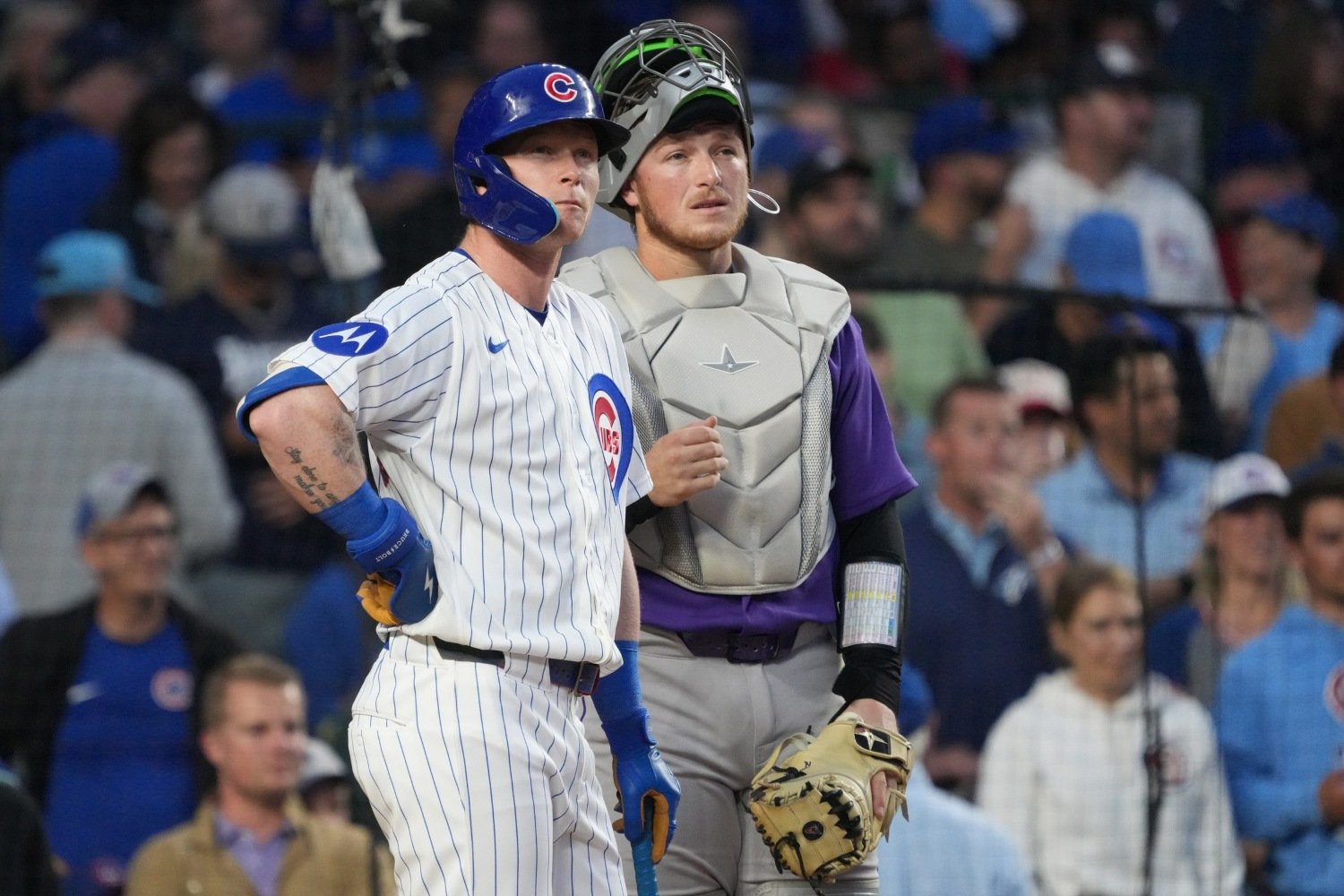 There's no more lethal offensive player in the majors right now than Pete Crow-Armstrong. He's not at all likely to stay this hot, and to maintain an edge in batting and baserunning brilliance over the likes of Shohei Ohtani and Bobby Witt Jr., but over the last four weeks, Crow-Armstrong has been raking at a historic rate. He homered in his third straight game Wednesday night—a batted ball that both affirmed how locked-in he is and reminded everyone that any good hot streak requires a bit of good luck. For those who didn't see it, here is the homer Crow-Armstrong hit in the bottom of the fourth inning. It's equal parts majestic and silly. ZU53MW9fWGw0TUFRPT1fQVFZQVVWUUZVUVVBQVZWVFVBQUhVZ1lBQUZrQVZRY0FCRkZRQTFaV1ZRSmRBbEVD.mp4 Believe it or not, this isn't the highest homer of Crow-Armstrong's career. Last April, he hit a pair of skyscrapers with launch angles similar to the 41° on this one during the same April road trip to the West Coast, and he added another in Detroit last June. However, as you can see, it's reasonable to debate whether he really even hit a homer this time. The ball sure appears to be foul, doesn't it? It's very close, and after a crew chief review and consultation with the league's replay center in New Jersey, the call stood. But I mean, it looks foul. We didn't get a great camera angle on it, or at least, not a steady enough one to see what really happened, but even Crow-Armstrong seemed surprised when he got to keep his dinger. First, let's talk about this looked so much like a foul ball, but really might have been fair. As you probably know, Wrigley Field has the deepest foul poles of any park in the majors, which is part of why this was in question—but which also might turn out to be why he got the call. According to Statcast, this only would have been a homer in 20 parks—not because it wasn't hit far enough, but because in the other 10, it would have twisted foul before reaching the pole. Statcast's flight tracking on batted balls like this is less precise than the league would like you to believe, but its story is (in brief) that the ball flew foul, but managed not to do so until after reaching the pole. Crow-Armstrong hit another ball on which that was the case earlier this year, in Tampa, but because the foul pole is much closer to home at Tropicana Field, that homer was uncontroversial. Ok, but Statcast's eyes aren't human ones, and you and I are sometimes smarter than it is. This one can't have been fair because it waited long enough before twisting foul, because it was foul before it got to the pole. If anything—there really is a chance this happened, but we can't prove it either way based on the video feeds we've seen—the ball was foul as it passed the front of the pole, but was coming back toward the field and kissed the back side of the pole on its way by. Here's the first frame (from the Marquee broadcast) in which the ball appears as it falls steeply from its great height, already quite close to the pole. That looks foul, but just to reassure you that it's not merely a camera-angle or still-frame confusion, here's another moment in its descent, wherein it's clearly getting closer to the pole, taking an unusual angle for a batted ball headed to either corner—but especially to a batter's pull field. Now, here's the moment that I would guess led both to the initial call and to its being upheld, though not confirmed outright. The ball pretty clearly hits the line on which the flags atop the pole are flown, and although I'm not sure whether those lines count as part of the pole, it also looks like it probably hits the pole itself, anyway. It's an extremely difficult call, because it's such an unusual batted ball. Either way, I don't think you can blame the umpires or the video center for what they decided. Few balls come down that steeply, right at the pole, like a tee shot on a Par 3. Even fewer start foul, then come back toward fair territory. Let's talk a little about how that happened. The wind was in Crow-Armstrong's favor here. At that very moment in the evening, a storm was brewing to the west, and the wind was gusting pretty impressively at times, from the south-southwest. That pushed this ball toward fair territory, and because Crow-Armstrong hit it so high and not overwhelmingly hard (under 100 MPH off the bat), the wind had lots of time to act on it. But the way Crow-Armstrong met the ball was also a factor. He caught this thing 53.6 inches—near four and a half feet!—in front of his center of mass. His attack direction (the horizontal angle of the barrel at the point of contact) was 21° toward his pull field. He flattened out his swing gorgeously to handle a sweeper that stayed up, but he still caught it off the end of the bat and got under it. If his bat speed weren't an eye-popping 85 MPH on the swing, the ball wouldn't have come anywhere near being fair, or a homer. Since he did clip it that way, though, Crow-Armstrong produced a ball that wasn't destined to hook, the way most pulled fly balls do. In fast, the combination of attack direction, attack angle, ball and bat speed and placement of ball on bat better mimicked a fly ball hit to center or left-center by the lefty batter; everything was just turned about 45° to the right. So, while it seems absurd, yes, this ball probably was fair—and while the elements helped, so did Crow-Armstrong's unique ability to produce huge bat speed and catch the ball well even when his timing is slightly off. Statcast's rendering of the ball's flight, by the way, shows it hitting the pole—though again, the precision of the data isn't good enough to call that conclusive, and anyway, the ball is not as wide as the tracer on this visual. Whatever help you think he got—from the umps, or from Zephyrus, or from a truly lousy pitch by Ryan Sullivan—Crow-Armstrong hit his third homer in as many nights, and now has 10 bombs (en route to a 1.203 OPS) since May 22, which we've identified as the start of his historic heater because of the changes he made then to his stance and setup. To wrap this conversation, let's look at the way those changes have affected his ability to be on time—and what happens when he isn't. As you surely remember, Crow-Armstrong was tremendous in the first half of 2025, but he slumped badly over the final two months. He also started this season sluggishly, despite his boost in bat speed. Unlike superficially similar hitters who go into similar slumps, though, Crow-Armstrong never did have a big strikeout binge in there. From August 1 through the end of last year, he only struck out 51 times in 200 plate appearances. That's more than you'd like, but it's not far from his baseline at all. Crow-Armstrong's problems, when he's had them, have been about getting himself out by swinging at bad pitches and hitting them weakly. As such, the best way to tell whether he's locked in is by how well he's timing and squaring up the balls he does put in play. Here are the numbers, drawn from Statcast's new swing timing metrics, on Crow-Armstrong being on time (as opposed to early or late) and centering the ball on the barrel of his bat (as opposed to finding the end or the label/handle), over four spans: the first half of last year, the second half, and before and after that May 21 off day we've talked about as his moment of turning it on this spring. Span On Time % Centered % 1st Half, 2025 83 78 2nd Half, 2025 76 81 2026 thru 5/20 83 74 2026 since 5/22 88 79 It's pretty straightforward, in that first column. Crow-Armstrong started to mishit a lot of balls late last year, because he was often early even when he put the ball in play. That's a problem. He got it fixed to begin this year, but has really turned it on since changing his setup in the box to make himself more selective and better able to adapt his swing to what he sees out of the hand. The second column tells a messier story. Where on the bat you hit the ball, horizontally, broadly controls how hard you hit it. Almost all hard contact comes when the ball is centered on the barrel. Pitchers get ground balls with sinkers not by making you hit the top of the ball, but by getting in on your handle. Guys whose fastballs are straight give up more power than those with some wiggle, because the ball tends to crawl just off the sweet spot. Yet, Crow-Armstrong was centering it on his barrel as often during his struggles late last season as he ever has. Why didn't he come up with better results? Well, firstly, we come back to the timing question. He was often early on the balls he did center, which meant that he sometimes hit the top of the ball: QndvTWJfWGw0TUFRPT1fVkFZQ1VnY01CMUFBQ1FRTFVnQUhBUU1IQUZnQlVsSUFDZ0FFQWdJTUNRUmRCd29F.mp4 But even when he stayed beneath it, he was often running out of barrel, and would hit it off the end of the lumber. WEQybDJfWGw0TUFRPT1fQkZNRUFnVlNBQWNBVzFOWFh3QUhWQTVUQUZoUVYxY0FBQUFGQ1FkUlVGWmRVUUpS.mp4 This comes back, in a strange little way, to last year's hot topic: the torpedo bat. Not everyone has the same sweet spot on the bat. When Crow-Armstrong is on, he will sometimes be tied up slightly, and have the ball run up his bat toward the label. Broadly speaking, the centered stat still tells us something useful about Crow-Armstrong's contact profile, but it's not telling us the same thing as the same number would tell us about another hitter. If Crow-Armstrong is centering it on the barrel more often than usual, he's probably doing so on balls that belong slightly up the barrel toward his hands, and he's probably wasting too many of his best swings by catching it off the end of the bat. But there's another key reason why he's been more productive this year, while centering the ball on the barrel less often. It's the other main variable in the equation for exit velocity. If the degree to which you center the ball on the barrel decides the "mass" in the force equation, then it should be obvious what else we need to look at: "acceleration," or bat speed. So let's do that previous table again. Span On Time % Centered % Bat Speed 1st Half, 2025 83 78 74.3 2nd Half, 2025 76 81 73.9 2026 thru 5/20 83 74 77.9 2026 since 5/22 88 79 76.3 Swinging much, much faster this year has allowed Crow-Armstrong to thrive even when he slightly mishits the ball, in terms of horizontal barrel location. He got way, way faster this year, and once he learned to rein that in just enough to also be on time, it didn't matter that much whether he found the very center of the barrel or not. Those already getting familiar with these numbers might wonder where the usual third column for them is. The way Statcast reports the data on whether hitters are over the ball, under it or lined up with it vertically, we can't get much out of looking at that for balls in play. Virtually all balls in play count as Lined Up, by Statcast's reckoning, so I left out a couple of 99% and 100% figures to ease our collective numerical digestion. However, teams and players can use this data differently, and in a way, so can we. Here are the timing distributions in all three dimensions for Crow-Armstrong's swings in the second half of 2025, and for all of 2026 to date. With Statcast's tolerances, the area described as Lined Up is 4 inches wide. That's wider than both a ball and the barrel of an actual bat. Naturally, then, anything you hit into the 90° wedge that is fair territory was probably met solidly enough to count as Lined Up. But that also means that there are more and less valuable ways to be Lined Up. I've drawn boxes to show that, late last year, Crow-Armstrong was slightly above the center of the ball slightly more often than he has been this year, even isolating the balls he lined up well enough to put in play. I've also shown how he's more often very slightly below the center of the ball this year. Thence come the hard fly balls and line drives. You can also spot some of the things we've already discussed in these plots. Crow-Armstrong is much less prone to be early on balls in play than he was last year, even though he was very early on the one Wednesday night. He's also living more in his sweet spot, just off the technical center of the barrel, whereas in the second half of last year, he was less likely to miss the barrel by a big margin but had a more diffuse distribution along the bat, because he just wasn't locked in and delivering his well-engineered pull-it-in-the-air stroke consistently. The winds of fortune are blowing Crow-Armstrong's way right now, but he's also making his own luck. This is as good as any Cubs hitter has looked over this long a period since before the pandemic, and yes, the echoes of Sammy Sosa's 1998 are only getting easier to spot. Wednesday's homer was just the latest reminder that Crow-Armstrong can do things on a diamond that no one else can do, right now.
 -
Image courtesy of © David Banks-Imagn Images In the long run, the Cubs need Dansby Swanson and Nico Hoerner to hit. They can't trade either player. They can't cut either player. They certainly can't permanently bench either player, having invested roughly $50 million a year in them for each of the next four seasons. Nor can they afford for Moisés Ballesteros not to pan out at the plate, after they effectively chose him over Owen Caissie when they traded the latter to Miami this winter. Swanson, Hoerner and Ballesteros are indispensable pieces of the team's present and future. That's one reality. Another, grimmer one is that: Swanson is batting .145/.228/.206 since the start of May; Hoerner is batting .190/.269/.231 since April 21, the day on which he hit his last home run; and Ballesteros is batting .128/.217/.170 in 106 plate appearances since the final days of April. Swanson is being eaten alive by a league force-feeding him breaking balls. Hoerner keeps hitting the ball squarely, in theory, but unproductively in practice. Ballesteros got squeezed a bit positionally amid the red-hot start of Michael Conforto, and has run into some major problems related to his bat path as the league has made their adjustments to him. The three have combined for over 450 plate appearances in these spans, and they're the most hideous black holes imaginable on the lineup card. The Cubs continue to try to develop Ballesteros into a catcher even while easing him into full-time duty as a hitter in the majors, which has probably contributed to his poor showing on offense. Unfortunately, because he's still not an adequate receiver at this point in his career, that makes him a net negative on both sides of the runs ledger. Swanson and Hoerner still have great defensive and positional value, but the team can't afford to keep running them both out everyday unless and until at least one of them gets right. That brings the conversation around to two players who have found their way into more games (and even the starting lineup, now and then) lately, and whom the Cubs also need to be developing, anyway: Matt Shaw, and Pedro Ramírez. Shaw has manned right field in three of the team's last four games, as Seiya Suzuki deals with a balky right knee. Ramírez has rotated in at both second and third base, with Alex Bregman getting some half-days-off as the designated hitter and Hoerner and Swanson getting turns on the bench to reset. As the Cubs' season spirals out of control, Shaw and Ramírez have been rare bright spots. Shaw has four hits, a walk and a base via being hit by a pitch since coming off the injured list earlier this month, in just 12 plate appearances. Ramírez has only made eight starts among the 15 games in which he's appeared and has only 38 plate appearances, but he's hitting a respectable .257/.316/.400. Shaw has come along faster than expected as a right fielder, although the back strain that shelved him for a few weeks will bear monitoring. Ramírez has been relentlessly impressive in the field and at the plate, never awing you with his tools but making the right play consistently and well. For the balance of June, the Cubs should be playing Shaw and Ramírez as much as anyone on the team, save Pete Crow-Armstrong and Ian Happ. Ramírez's combination of versatility and reliability means that Swanson, Hoerner and Bregman can be taken off the diamond on any given day without the team missing a beat defensively. He's also shown above-average bat speed and a good feel for contact, though he'll have to make a round of adjustments himself as the league learns not to throw him changeups. Shaw is consistenly under four-seam fastballs, but because Swanson is drawing a lot of sinkerballers who are throwing their heaters right under his bat, that creates a natural timeshare. Shaw can take plate appearances for which Swanson is ill-suited for a while, so the veteran can continue working on the needed tweaks. He can play second base, sliding Hoerner over to shortstop. He also offers the only real backup to Crow-Armstrong, Happ and Suzuki, now that Conforto is showing his decrepitude again. It wouldn't be fair to expect Shaw and Ramírez to be above-average players for the rest of this season. They're better off in smaller roles; neither profiles as a future star. But they're exactly the kind of sparky young players a team often needs when they struggle, and the Cubs should embrace the fact that they have them. Awkward though it might be at first, Swanson, Hoerner, Bregman and Ballesteros need to be told that their playing time will be curtailed while they work behind the scenes to get right; they've each had more than enough chances to work their way out of their current funks via everyday game reps. Shaw and Ramírez won't save Chicago's season, but for the highly-paid stars to do so, the youngsters will have to keep them afloat for a while first. View full article
-
 In the long run, the Cubs need Dansby Swanson and Nico Hoerner to hit. They can't trade either player. They can't cut either player. They certainly can't permanently bench either player, having invested roughly $50 million a year in them for each of the next four seasons. Nor can they afford for Moisés Ballesteros not to pan out at the plate, after they effectively chose him over Owen Caissie when they traded the latter to Miami this winter. Swanson, Hoerner and Ballesteros are indispensable pieces of the team's present and future. That's one reality. Another, grimmer one is that: Swanson is batting .145/.228/.206 since the start of May; Hoerner is batting .190/.269/.231 since April 21, the day on which he hit his last home run; and Ballesteros is batting .128/.217/.170 in 106 plate appearances since the final days of April. Swanson is being eaten alive by a league force-feeding him breaking balls. Hoerner keeps hitting the ball squarely, in theory, but unproductively in practice. Ballesteros got squeezed a bit positionally amid the red-hot start of Michael Conforto, and has run into some major problems related to his bat path as the league has made their adjustments to him. The three have combined for over 450 plate appearances in these spans, and they're the most hideous black holes imaginable on the lineup card. The Cubs continue to try to develop Ballesteros into a catcher even while easing him into full-time duty as a hitter in the majors, which has probably contributed to his poor showing on offense. Unfortunately, because he's still not an adequate receiver at this point in his career, that makes him a net negative on both sides of the runs ledger. Swanson and Hoerner still have great defensive and positional value, but the team can't afford to keep running them both out everyday unless and until at least one of them gets right. That brings the conversation around to two players who have found their way into more games (and even the starting lineup, now and then) lately, and whom the Cubs also need to be developing, anyway: Matt Shaw, and Pedro Ramírez. Shaw has manned right field in three of the team's last four games, as Seiya Suzuki deals with a balky right knee. Ramírez has rotated in at both second and third base, with Alex Bregman getting some half-days-off as the designated hitter and Hoerner and Swanson getting turns on the bench to reset. As the Cubs' season spirals out of control, Shaw and Ramírez have been rare bright spots. Shaw has four hits, a walk and a base via being hit by a pitch since coming off the injured list earlier this month, in just 12 plate appearances. Ramírez has only made eight starts among the 15 games in which he's appeared and has only 38 plate appearances, but he's hitting a respectable .257/.316/.400. Shaw has come along faster than expected as a right fielder, although the back strain that shelved him for a few weeks will bear monitoring. Ramírez has been relentlessly impressive in the field and at the plate, never awing you with his tools but making the right play consistently and well. For the balance of June, the Cubs should be playing Shaw and Ramírez as much as anyone on the team, save Pete Crow-Armstrong and Ian Happ. Ramírez's combination of versatility and reliability means that Swanson, Hoerner and Bregman can be taken off the diamond on any given day without the team missing a beat defensively. He's also shown above-average bat speed and a good feel for contact, though he'll have to make a round of adjustments himself as the league learns not to throw him changeups. Shaw is consistenly under four-seam fastballs, but because Swanson is drawing a lot of sinkerballers who are throwing their heaters right under his bat, that creates a natural timeshare. Shaw can take plate appearances for which Swanson is ill-suited for a while, so the veteran can continue working on the needed tweaks. He can play second base, sliding Hoerner over to shortstop. He also offers the only real backup to Crow-Armstrong, Happ and Suzuki, now that Conforto is showing his decrepitude again. It wouldn't be fair to expect Shaw and Ramírez to be above-average players for the rest of this season. They're better off in smaller roles; neither profiles as a future star. But they're exactly the kind of sparky young players a team often needs when they struggle, and the Cubs should embrace the fact that they have them. Awkward though it might be at first, Swanson, Hoerner, Bregman and Ballesteros need to be told that their playing time will be curtailed while they work behind the scenes to get right; they've each had more than enough chances to work their way out of their current funks via everyday game reps. Shaw and Ramírez won't save Chicago's season, but for the highly-paid stars to do so, the youngsters will have to keep them afloat for a while first.
- 3 comments
-
- 1
-
-
- pedro ramirez
- matt shaw
- (and 3 more)
-
All correct, I fear, and all why I was saying he shouldn't get an extension on his deal last year. Giving him one on the eve of the trade deadline was WILD.
- 9 replies
-
- 2
-
-
- daniel palencia
- edward cabrera
- (and 1 more)
