Matthew Trueblood
-
Posts
2,477 -
Joined
-
Last visited
-
Days Won
2
Content Type
Profiles
Joomla Posts 1
Chicago Cubs Videos
Chicago Cubs Free Agent & Trade Rumors, Notes, & Tidbits
2026 Chicago Cubs Top Prospects Ranking
News
2023 Chicago Cubs Draft Picks
Guides & Resources
2024 Chicago Cubs Draft Picks
The Chicago Cubs Players Project
2025 Chicago Cubs Draft Pick Tracker
2026 Chicago Cubs Draft Tracker: Picks & Bonuses
Blogs
Events
Forums
Store
Gallery
Everything posted by Matthew Trueblood
-
Image courtesy of Benny Sieu-Imagn Images There's really no excuse for it. You can make one, but you're just going to tie yourself into knots and sound silly. Blame can be shifted to the offense, who didn't do enough to win the average game, but this wasn't an average game—and it was very much a playoff-like game, the likes of which the Cubs need to be practicing winning. Craig Counsell can offer rationalizations for his choice to let Matthew Boyd start the eighth inning Monday afternoon, but even he must not believe them. He simply failed at his job, at a pivotal moment. Boyd and the Cubs held a 2-1 lead in the middle of the eighth inning of their Labor Day tilt with the division-leading Brewers. It was a taut and exciting game, thanks to a boisterous holiday crowd and all the emotions tied up in every encounter between these neighboring teams since Counsell defected from Milwaukee to Chicago. The eighth, ninth and top spots in the Brewers lineup were due, and Boyd had thrown 87 pitches. Ryan Zeferjahn was ready in the Chicago bullpen. Counsell, however, has managed like he's terrified of his own instincts when facing the Brewers over the last two seasons, and he made another mistake born of that hesitation. Despite Boyd preparing to face Garrett Mitchell and Joey Ortiz for the third time and try to get an out in the eighth for the first time all year, Counsell left him in, eschewing (for the moment) Zeferjahn. That's not who Counsell is, as a manager. He's dealt with a shaky bullpen all season, and Zeferjahn is as suspect as anyone the team has relied on in high-leverage situations during that time, but he's also pitched well lately. He would have offered a vastly different look than Boyd to Mitchell and Ortiz (or, if it came to that, pinch-hitter Jake Bauers), who had already seen the tiring veteran southpaw twice. This is simple stuff. No version of Counsell that existed before he came to Chicago—and, really, no version of him who has ever managed against any team other than the Brewers—sends out his starter to pitch in that situation, but when facing his former team and his former mentor, Counsell hasn't been himself. It was a fatal error. Boyd knew he couldn't sneak a fastball past Mitchell, and didn't try, but after getting ahead 1-2, he couldn't land either his changeup or his slider anywhere near the zone. He issued a leadoff walk that conveyed the emptiness of the tank as much in the way it happened as in the fact of it. Counsell stuck with him, though, to face Ortiz. After touching 94 early in the outing and sitting 92-93 through the middle innings, he dipped to 90.4 on one fastball to the Brewers' No. 9 hitter—and even then, he wasn't able to hit the zone with it. Ortiz did the hurler a small favor by fouling off two 2-2 pitches that weren't strikes, but when Boyd then hung a curveball in the zone, the quick-twitch righty batter laced it into the corner for a double. Finally, Counsell made his move. It was too late, and far too little. Put in no position to succeed, Zeferjahn failed. He started Jackson Chourio with two fine sinkers to get ahead 0-2, but his sweeper wasn't competitive. When forced to come back over the plate with a fastball, he threw one just above the top of the zone, but it was another sinker—that's his new M.O., even if it's not conducive to missing bats (as he needed to do in that crucial situation)—and Chourio got on top of it with ease. The inning unraveled from there, with Jacob Webb unable to do any more to stop the bleeding than Zeferjahn had done. It's easy to dismiss Counsell's role in the meltdown, given that Zeferjahn was the clear choice to pitch in Boyd's stead to begin the inning and that he didn't get the job done, but context is everything. Had he entered with a clean inning and Mitchell been his man, there's a good chance Zeferjahn would have gotten that out. He might have then had to face Bauers—that pinch-hit opportunity was probably what scared Counsell out of going right to his reliever—but that matchup would have been preferable to asking Boyd to slog through a third showdown with Ortiz. The times-through-the-order penalty is Sabermetrics 101, and Counsell demonstrated a comprehensive understanding of it when he managed Milwaukee. The situation screamed for Zeferjahn to start the frame. Had he done so, even if he'd gotten to Chourio with one on and one out, he would have had far more options for getting him out than he had under the circumstances in which he actually entered: tying run on third, go-ahead run on second, no outs, no margin for error. All of that is to say nothing of the mismanagement of personalities and emotions. Zeferjahn needed the clear mind and the confidence of getting the ball with the bases empty, or at least with some space between his back and the wall. His manager denied him that. He also let down his de facto ace, by forgetting that the only thing separating a pitcher who's cruising from one who's bruised is time. Counsell is not, by and large, a bad manager. However, he's been ruthlessly beaten by Pat Murphy in every important game the two have played against one another over the last three seasons, and Monday ensured what was already obvious to everyone: the Brewers will cruise to a fourth straight NL Central title. Meanwhile, the Cubs fell back behind the Phillies in the scramble for the right to host the Wild Card Series. It was a huge loss, on a day when Boyd was masterful and Pete Crow-Armstrong was sensational, with two stolen bases and a home run in a game the team would lose 4-3. You can't pay top dollar for a manager, firing a skipper under contract for the express purpose of making the upgrade, and watch him flop this way. Together, Counsell and Hoyer continue to disappoint Cubs fans who believe the team's aspiration should be to return to the World Series. For that matter, they disappoint others, too—the ones who notice that the only one of the original 16 big-league teams not to enjoy a decade of dominance in their league or division since the integration of the game is the one who dominates the league's third-biggest market. Monday was a sad reminder that, while Crow-Armstrong has made this season a joyous one at many turns, ownership's satisfaction with padding their pockets and slouching toward October every year remains unshaken. Hoyer is in no danger of losing his job. Neither is Counsell. But neither has done enough to make the Second City's first team more than a second-class citizen in their own division. Hoyer continues to be outdone by Matt Arnold. Counsell continues to be outfoxed by Murphy. And Milwaukee continues to make Chicago look like, well, Milwaukee. David has felled Goliath so many times that the story has worn as smooth as the stones in his sling. View full article
-
Image courtesy of Jim Rassol-Imagn Images For about 15 years, there's been a player development revolution underway in the major leagues. Independent facilities have brought new ideas to bear on the game. New and ever-improving technology has given teams and players different ways to experiment with changes to movements or approaches, and better, faster feedback on what works. A more open-minded approach to skill acquisition and better communication on the part of teams have made for more success stories in unlikely places. Lots of players who would never have found their way from promise to production in the past have done so. In this new era, some of the arcs that carry a player from lost to found are familiar, coherent and satisfying. They've become the most common, because then tend to be simplest. This One Weird Trick Unlocked [Player Name] should, by now, be a recognizable pattern for you. Some players needed to catch the ball farther out front to produce the power that was always lurking in their swing. Some hurlers needed a new grip to get to the breaking ball that would make them a star; others just needed to start throwing the breaking ball they had a whole lot more often. When there's just one thing standing between a talented player and greatness, the story of them discovering what that one thing is and removing the obstacle is tidy and rewarding. For a lot of players, though, there's more than one thing in their way, and in those cases, the stories of their ascent are much messier. It sometimes looks like they've gotten to the end of their tale of metamorphosis, but then a major setback forces them to begin it anew. There are layers that lay atop one another unevenly; there are trend arrows pointing in opposite directions. Obviously, the stories where only one big thing needed to change have better odds of ending happily. The more things you need to change, the greater the chances that you never quite get where you're hoping to go. Ryan Zeferjahn is not a One Weird Trick guy. The Cubs had to know that, even when they acquired him in the midst of a stretch where he looked like he'd found his one weird trick. Zeferjahn has always had an electric arm and a good enough breaking ball to make a dominant back-end relief future possible, and a couple of months before he was dealt to Chicago, he moved over on the rubber a bit, which seemed to help him attack the zone more consistently with his two main pitches: the four-seamer and the sweeper. On the strength of that adjustment, Zeferjahn took off. Over his final 22 appearances in an Angels uniform, he threw 24 innings, struck out 43 of the 96 batters he faced and posted a 1.13 ERA. That was what prompted the Cubs to surrender Moisés Ballesteros and Mason McGwire—a fairly significant haul—to land Zeferjahn and his long-term team control on deadline day. There had been a real turn for the better, even if it was clear there was still work to do. In the first few weeks of his Cubs tenure, however, Zeferjahn struggled. As has often been the case during his career, he battled wildness, and sometimes (when he finally found the plate) the ball would straighten out on him and get hit hard. He'd given up 10 hits in those last 22 games with Anaheim; he allowed 13 in his first 11 with Chicago. His strikeout rate also cratered; he only fanned 10 of the 47 batters he faced through his rocky outing on September 1 against the Brewers. In a follow-up appearance later in the Brewers series and on Saturday against the Marlins, however, Zeferjahn returned to form—perhaps just momentarily, or perhaps more enduringly. He only fanned two of the nine batters he faced during those two assignments, but he got eight outs and allowed zero hits. He induced some ground balls. Both appearances came in high-leverage situations, so he not only pitched well, but did so under pressure. That's happening for two reasons, and the reasons are related. Together, they comprise the next step of his evolution into the caliber of reliever the Cubs now need him to be—the one he's capable of being, but has rarely been so far in his big-league career. He's not a One Weird Trick guy, because he's always dealt with more than one big deficiency. The first deficiency has always been control; he walks too many batters. The second has always been fastball shape. At first glance, Zeferjahn doesn't look like a guy who should have a fastball shape problem. He throws the kind of four-seamer the Cubs adore: a cut-ride offering. That means that it cuts more than a batter expects, based on its speed and release point and his arm angle, but also has more carry or ride than a batter expects. Teams use various models to estimate by how much a pitcher's movement on any given pitch deviates from what the hitter's eye anticipates, but to use one public-facing calculation via Alex Chamberlain's invaluable Pitch Leaderboard, Zeferjahn's four-seamer cuts a whopping 4.6 inches more than expected. It only has about 1.1 inches more carry than expected, though, which is where you can start to sense the problem. When Zeferjahn worked from the first-base side of the rubber, the angle he offered batters did make it hard for them to handle the heater with that slight but meaningful amount of unexpected rising action. Working from there, though, he struggled to throw strikes, not only with that fastball but (especially) with his sweeper—and not only to throw strikes, but to put the ball close enough to the plate to tempt batters to chase non-strikes. Once he moved to the middle of the rubber, Zeferjahn ran into a different problem: the fastball started running into the center of barrels. It doesn't hop over those barrels, and from the center of the rubber, it doesn't run off of them, either. Once he stops posing a challenge to a batter with the horizontal angle he creates, it quickly becomes clear how little deception he has on that heater. The Cubs' answer to that dual problem has been, itself, a dual affair. First, they've steadily lowered his arm angle, via better posture and extension. To see what I mean, compare these shots of him at release on two pitches at Wrigley Field—one as a visiting Angels player in early April, and one this week against the Brewers. If you're not a total pitching dork, the differences here are subtle—perhaps so much so that you can miss them altogether. Let's try it this way. I've added a horizontal line through the middle of Zeferjahn's torso; a straight line from the MLB logo on the back of his jersey's collar to the corresponding one on the back of his pants; and the best approximate curve I could create using each of his shoulders and his hand as nodes. As you can see: Zeferjahn is leaning slightly more to the left in the left-hand image. This is what pitching mechanics gurus call spine tilt. In general, less tilt is good; it means less wasted movement. On the right, his spine has moved more from extension to flexion (that forward lean; yes, it's confusing that flexion is the opposite of extension when talking about body movments but greater flexion means more extension when reading a Baseball Savant page; deal with it). He's over his front leg a bit more now. His arm angle is lower. Part of the difference comes from that slight decrease in spine tilt, such that his body is more upright and his shoulders more level. Not all of it comes from that, though. Zeferjahn has made a real change to the way his arm works. The result is a lower release point and (assuming no change in movement, which isn't a safe assumption, but we'll get to that in a minute) more deception. Throw a fastball with exactly the same vertical movement from the delivery on the right as from the delivery on the left, and the one on the right will be more likely to induce a weak fly ball or a whiff. You don't have to trust your eyes or my illustrations on this; the data shows it. Specifically, Zeferjahn's arm angle is significantly down in his three appearances this month. Throwing from a lower angle isn't a cure-all, though. If it were, everyone would do it, and even those pleasing One Weird Trick stories would wear smooth. For one thing, that adjustment almost always does produce a change in your movement profile; throwing from a lower angle means you're likely to introduce a bit more sidespin and a bit less backspin. More importantly, though, it can have big implications for your command. In Zeferjahn's case, the lower slot doesn't appear to gel well with his four-seamer in terms of execution, even though he hasn't lost carry since adjusting his slot. Thus, the player and team have also made another adjustment. Zeferjahn only threw 10 pitches against the Brewers Thursday, but four of them were sinkers, and only one was a four-seamer. Against the Marlins on Saturday, he threw 19 pitches, including 12 sinkers and just three four-seamers. Zeferjahn has always had a sinker, but suddenly, it's at the heart of his arsenal. It's just two appearances, but there's some evidence that he's unlocked his next suite of weird tricks: a different delivery and a different primary fastball. All short relievers see volatility in their performance, and it's unreasonable to expect Zeferjahn to be the exception. His profile only heaps extra volatility onto the mound of it most relievers bring. He didn't have a single epiphany. His story is far from over, and it's much more confusing and convoluted than those of guys who have that quasi-magical breakthrough. At the moment, the Cubs and their new power arm have happened upon something that works; that doesn't mean it will continue to work. Because they have control of Zeferjahn for the balance of the decade, Chicago can (in one sense) afford to ride the wave with him. This process is iterative for them, and for him. He made one change; it worked for a while. That change ceased to work, and the one he introduced to get back on track didn't immediately work, either. Now, a third change that complements the second seems to have him in the groove again. Unfortunately, it's not even hard to foresee the trouble he might run into with this new profile. His sinker runs about 15 inches to the arm side. His sweeper goes about 15 inches the other way. Even working from the middle of the rubber, it takes very good command to make such a wide east-west separation work when pitching to a plate only 17 inches wide. Will Zeferjahn's latest changes be the right ones to unlock some consistency for him? Maybe. If not, there's still ample hope. Zeferjahn could keep the sinker but go back to a tighter slider to complement it. He could slide back to the first-base side of the rubber, while keeping the new primary heater and the improved mechanics. The more powerful posture of his new mechanics has added a tick to his fastballs. If he can sustain that, he could even go back to the four-seamer and do better than we saw him do last month, because elite velocity provides a margin for error that isn't present even one tier below that register. There's time for experimentation and for exploration. Development continues well past a player's debut, these days. In another way, though, the Cubs can't afford a wobble or a series of trials fraught with errors. In a very real sense, they need results, and they need them now. Zeferjahn isn't just a long-term investment. He's the closest thing this club has to a playoff-caliber relief ace. When he pitches the way he's capable of pitching, the Cubs can win close games like Thursday's and Saturday's. When he pitches poorly (or doesn't even inspire enough confidence for Craig Counsell to turn to him), the Cubs' bullpen is insufficient to that task. The Cubs are racing the clock, but it's not purely about being as fast as possible. The team doesn't need to optimize Zeferjahn as soon as possible. They just need him to be on the high side of what seem to be (for now, at least) unavoidable oscillations in value at the moment when they need him most, which will come in about three and a half weeks. It's like timing a space shuttle launch or a flyby. The planets have to align. That's asking a lot, but it befits Zeferjahn's journey to this point. That journey hasn't been a straight line; it's always required getting some things lined up. The Cubs' postseason fortunes are just one more thing that has to be timed just right to make the most of Zeferjahn's talent. View full article
-
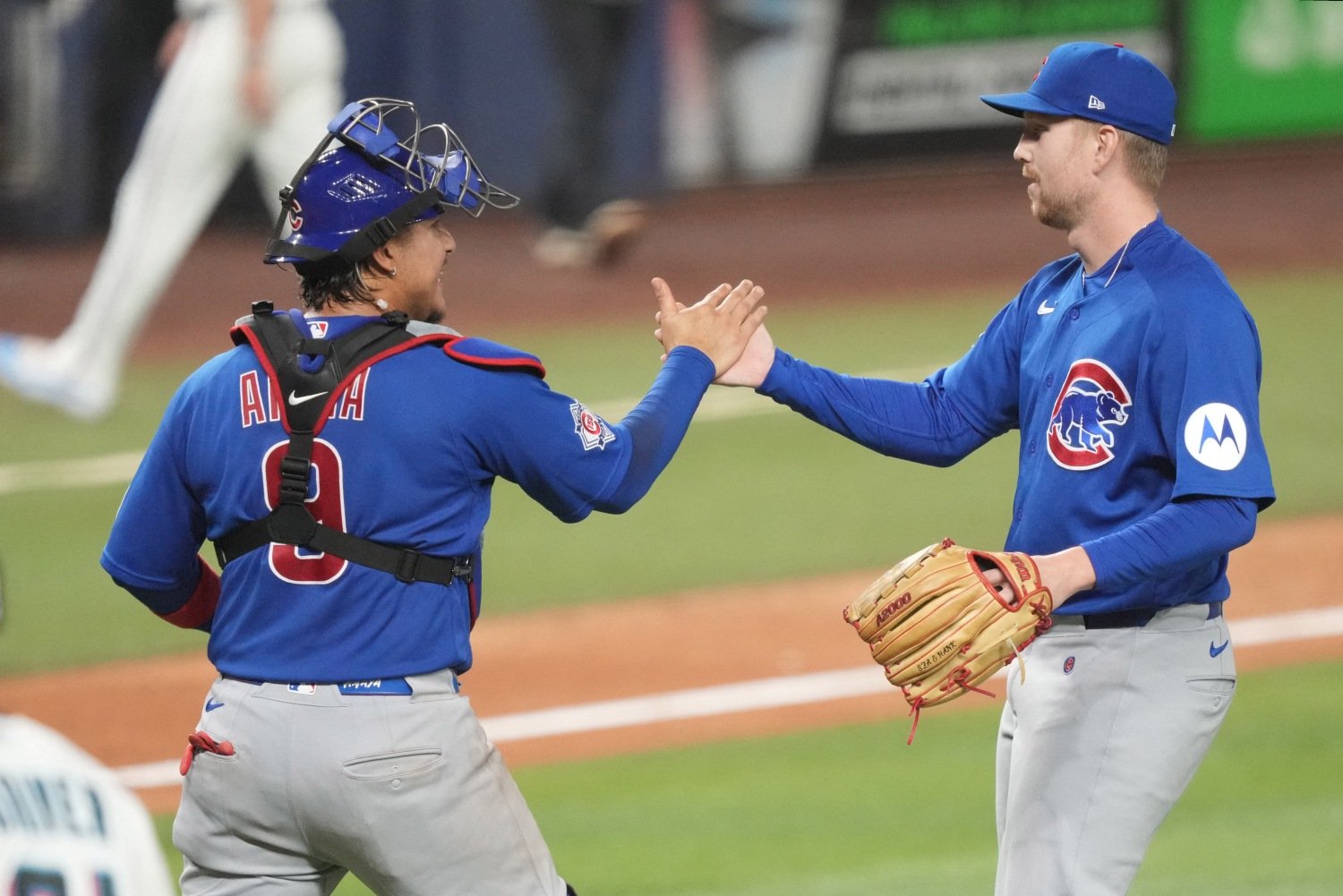 For about 15 years, there's been a player development revolution underway in the major leagues. Independent facilities have brought new ideas to bear on the game. New and ever-improving technology has given teams and players different ways to experiment with changes to movements or approaches, and better, faster feedback on what works. A more open-minded approach to skill acquisition and better communication on the part of teams have made for more success stories in unlikely places. Lots of players who would never have found their way from promise to production in the past have done so. In this new era, some of the arcs that carry a player from lost to found are familiar, coherent and satisfying. They've become the most common, because then tend to be simplest. This One Weird Trick Unlocked [Player Name] should, by now, be a recognizable pattern for you. Some players needed to catch the ball farther out front to produce the power that was always lurking in their swing. Some hurlers needed a new grip to get to the breaking ball that would make them a star; others just needed to start throwing the breaking ball they had a whole lot more often. When there's just one thing standing between a talented player and greatness, the story of them discovering what that one thing is and removing the obstacle is tidy and rewarding. For a lot of players, though, there's more than one thing in their way, and in those cases, the stories of their ascent are much messier. It sometimes looks like they've gotten to the end of their tale of metamorphosis, but then a major setback forces them to begin it anew. There are layers that lay atop one another unevenly; there are trend arrows pointing in opposite directions. Obviously, the stories where only one big thing needed to change have better odds of ending happily. The more things you need to change, the greater the chances that you never quite get where you're hoping to go. Ryan Zeferjahn is not a One Weird Trick guy. The Cubs had to know that, even when they acquired him in the midst of a stretch where he looked like he'd found his one weird trick. Zeferjahn has always had an electric arm and a good enough breaking ball to make a dominant back-end relief future possible, and a couple of months before he was dealt to Chicago, he moved over on the rubber a bit, which seemed to help him attack the zone more consistently with his two main pitches: the four-seamer and the sweeper. On the strength of that adjustment, Zeferjahn took off. Over his final 22 appearances in an Angels uniform, he threw 24 innings, struck out 43 of the 96 batters he faced and posted a 1.13 ERA. That was what prompted the Cubs to surrender Moisés Ballesteros and Mason McGwire—a fairly significant haul—to land Zeferjahn and his long-term team control on deadline day. There had been a real turn for the better, even if it was clear there was still work to do. In the first few weeks of his Cubs tenure, however, Zeferjahn struggled. As has often been the case during his career, he battled wildness, and sometimes (when he finally found the plate) the ball would straighten out on him and get hit hard. He'd given up 10 hits in those last 22 games with Anaheim; he allowed 13 in his first 11 with Chicago. His strikeout rate also cratered; he only fanned 10 of the 47 batters he faced through his rocky outing on September 1 against the Brewers. In a follow-up appearance later in the Brewers series and on Saturday against the Marlins, however, Zeferjahn returned to form—perhaps just momentarily, or perhaps more enduringly. He only fanned two of the nine batters he faced during those two assignments, but he got eight outs and allowed zero hits. He induced some ground balls. Both appearances came in high-leverage situations, so he not only pitched well, but did so under pressure. That's happening for two reasons, and the reasons are related. Together, they comprise the next step of his evolution into the caliber of reliever the Cubs now need him to be—the one he's capable of being, but has rarely been so far in his big-league career. He's not a One Weird Trick guy, because he's always dealt with more than one big deficiency. The first deficiency has always been control; he walks too many batters. The second has always been fastball shape. At first glance, Zeferjahn doesn't look like a guy who should have a fastball shape problem. He throws the kind of four-seamer the Cubs adore: a cut-ride offering. That means that it cuts more than a batter expects, based on its speed and release point and his arm angle, but also has more carry or ride than a batter expects. Teams use various models to estimate by how much a pitcher's movement on any given pitch deviates from what the hitter's eye anticipates, but to use one public-facing calculation via Alex Chamberlain's invaluable Pitch Leaderboard, Zeferjahn's four-seamer cuts a whopping 4.6 inches more than expected. It only has about 1.1 inches more carry than expected, though, which is where you can start to sense the problem. When Zeferjahn worked from the first-base side of the rubber, the angle he offered batters did make it hard for them to handle the heater with that slight but meaningful amount of unexpected rising action. Working from there, though, he struggled to throw strikes, not only with that fastball but (especially) with his sweeper—and not only to throw strikes, but to put the ball close enough to the plate to tempt batters to chase non-strikes. Once he moved to the middle of the rubber, Zeferjahn ran into a different problem: the fastball started running into the center of barrels. It doesn't hop over those barrels, and from the center of the rubber, it doesn't run off of them, either. Once he stops posing a challenge to a batter with the horizontal angle he creates, it quickly becomes clear how little deception he has on that heater. The Cubs' answer to that dual problem has been, itself, a dual affair. First, they've steadily lowered his arm angle, via better posture and extension. To see what I mean, compare these shots of him at release on two pitches at Wrigley Field—one as a visiting Angels player in early April, and one this week against the Brewers. If you're not a total pitching dork, the differences here are subtle—perhaps so much so that you can miss them altogether. Let's try it this way. I've added a horizontal line through the middle of Zeferjahn's torso; a straight line from the MLB logo on the back of his jersey's collar to the corresponding one on the back of his pants; and the best approximate curve I could create using each of his shoulders and his hand as nodes. As you can see: Zeferjahn is leaning slightly more to the left in the left-hand image. This is what pitching mechanics gurus call spine tilt. In general, less tilt is good; it means less wasted movement. On the right, his spine has moved more from extension to flexion (that forward lean; yes, it's confusing that flexion is the opposite of extension when talking about body movments but greater flexion means more extension when reading a Baseball Savant page; deal with it). He's over his front leg a bit more now. His arm angle is lower. Part of the difference comes from that slight decrease in spine tilt, such that his body is more upright and his shoulders more level. Not all of it comes from that, though. Zeferjahn has made a real change to the way his arm works. The result is a lower release point and (assuming no change in movement, which isn't a safe assumption, but we'll get to that in a minute) more deception. Throw a fastball with exactly the same vertical movement from the delivery on the right as from the delivery on the left, and the one on the right will be more likely to induce a weak fly ball or a whiff. You don't have to trust your eyes or my illustrations on this; the data shows it. Specifically, Zeferjahn's arm angle is significantly down in his three appearances this month. Throwing from a lower angle isn't a cure-all, though. If it were, everyone would do it, and even those pleasing One Weird Trick stories would wear smooth. For one thing, that adjustment almost always does produce a change in your movement profile; throwing from a lower angle means you're likely to introduce a bit more sidespin and a bit less backspin. More importantly, though, it can have big implications for your command. In Zeferjahn's case, the lower slot doesn't appear to gel well with his four-seamer in terms of execution, even though he hasn't lost carry since adjusting his slot. Thus, the player and team have also made another adjustment. Zeferjahn only threw 10 pitches against the Brewers Thursday, but four of them were sinkers, and only one was a four-seamer. Against the Marlins on Saturday, he threw 19 pitches, including 12 sinkers and just three four-seamers. Zeferjahn has always had a sinker, but suddenly, it's at the heart of his arsenal. It's just two appearances, but there's some evidence that he's unlocked his next suite of weird tricks: a different delivery and a different primary fastball. All short relievers see volatility in their performance, and it's unreasonable to expect Zeferjahn to be the exception. His profile only heaps extra volatility onto the mound of it most relievers bring. He didn't have a single epiphany. His story is far from over, and it's much more confusing and convoluted than those of guys who have that quasi-magical breakthrough. At the moment, the Cubs and their new power arm have happened upon something that works; that doesn't mean it will continue to work. Because they have control of Zeferjahn for the balance of the decade, Chicago can (in one sense) afford to ride the wave with him. This process is iterative for them, and for him. He made one change; it worked for a while. That change ceased to work, and the one he introduced to get back on track didn't immediately work, either. Now, a third change that complements the second seems to have him in the groove again. Unfortunately, it's not even hard to foresee the trouble he might run into with this new profile. His sinker runs about 15 inches to the arm side. His sweeper goes about 15 inches the other way. Even working from the middle of the rubber, it takes very good command to make such a wide east-west separation work when pitching to a plate only 17 inches wide. Will Zeferjahn's latest changes be the right ones to unlock some consistency for him? Maybe. If not, there's still ample hope. Zeferjahn could keep the sinker but go back to a tighter slider to complement it. He could slide back to the first-base side of the rubber, while keeping the new primary heater and the improved mechanics. The more powerful posture of his new mechanics has added a tick to his fastballs. If he can sustain that, he could even go back to the four-seamer and do better than we saw him do last month, because elite velocity provides a margin for error that isn't present even one tier below that register. There's time for experimentation and for exploration. Development continues well past a player's debut, these days. In another way, though, the Cubs can't afford a wobble or a series of trials fraught with errors. In a very real sense, they need results, and they need them now. Zeferjahn isn't just a long-term investment. He's the closest thing this club has to a playoff-caliber relief ace. When he pitches the way he's capable of pitching, the Cubs can win close games like Thursday's and Saturday's. When he pitches poorly (or doesn't even inspire enough confidence for Craig Counsell to turn to him), the Cubs' bullpen is insufficient to that task. The Cubs are racing the clock, but it's not purely about being as fast as possible. The team doesn't need to optimize Zeferjahn as soon as possible. They just need him to be on the high side of what seem to be (for now, at least) unavoidable oscillations in value at the moment when they need him most, which will come in about three and a half weeks. It's like timing a space shuttle launch or a flyby. The planets have to align. That's asking a lot, but it befits Zeferjahn's journey to this point. That journey hasn't been a straight line; it's always required getting some things lined up. The Cubs' postseason fortunes are just one more thing that has to be timed just right to make the most of Zeferjahn's talent.
 -
Image courtesy of Joe Nicholson-Imagn Images William Contreras didn't hit it correctly, but he hit it hard. In the top of the eighth inning Thursday night, Ryan Zeferjahn had gotten the first two outs easily, and he fired a 98-MPH sinker that ran in and down toward Contreras on the first pitch. Overeager, Contreras swung hard but (inevitably) topped the ball, hitting it almost straight down in front of his own left foot. It left his bat at over 90 MPH, but most of that energy went straight into the ground. However, in the unseasonable September heat and near the end of the game, the area around home plate was hard and bouncy. The ball shot 30 feet in the air and sailed down the third-base line. Nine times out of 10, that batted ball is foul, but something about the spin and the bounce kept this one fair. It didn't land until it was about 10 feet past the third-base bag, and when it did, it was still fair. It was the kind of oddball schtoinker that threatens to be the spark from which a wildfire rally starts. Fortunately for the Cubs, Alex Bregman was there. Bregman read the soaring bouncer perfectly, picking a short hop on the run and throwing almost immediately across the diamond to retire Contreras and end the inning. It looked like a good play; it was actually a great one. That's pretty much par for the course for Bregman this year. As I wrote two months ago, his defense has never been better, but the places and ways in which he's improved are so subtle that they're often missable. He doesn't look like the second-best defensive third baseman in the game every time he takes the field, but that's what he's been this season. He's mostly been good at third throughout his career, but somehow, at age 32, he's improving, instead of losing value with the leather. Dansby Swanson and Bregman communicate and cooperate brilliantly on the left side of the infield, but that's only part of the story. Bregman has learned to better utilize his tools on defense, too. He's playing a bit deeper and a half-step closer to the line this year than last season, and after two years of improving mostly on the strength of cleaning up plays to his right, he's now excelling by ranging well to his left. As the above attests, though, he can still get to and play balls on the line, too. Playing deeper is the real key to everything. It means he has more time to flag balls down and more momentum behind him when he goes from fielding the ball to throwing it. Speaking of throwing it, though, that's the most fun change to observe. A few years ago, Bregman has a good chance to field the ball above, but throwing out the runner is a lot more iffy. He's not a big guy; he still doesn't have even average raw arm strength. However, he's gotten a whole lot more accurate—including knowing when to put more oomph on one, and when bouncing the throw makes sense or doesn't. Beginning in 2024, Bregman cleaned up his throws to first. His on-target rate (the percentage of his throws that arrive within a five-foot fan around first base and between 1 and 7 feet above the ground) is a career-best 84.5% this season; he was in the mid-70s from 2021 through 2023. On plays like the one he made Thursday night, even if Bregman got the tricky footwork and pick right, past versions of him wouldn't have made life so easy for his first baseman; there's a good chance the runner would have ended up being safe. In the modern game, almost no one is better than ever at age 32. So far, though, it looks like Bregman might be the exception. His makeup is off the charts; that's always been part of the appeal. Watching him make plays like that one (amid one of the hottest streaks of his career at the plate, no less), however, it gets easier to remember that makeup isn't just about keeping the clubhouse a happy place. Bregman's focused, intelligent, obsessive work has made him worth 13 Defensive Runs Saved this year. That's as big a reason why the Cubs are a virtual lock to make the playoffs as the fact that he's broken out of his early offensive funk and become the third heat of the Chicago offense. He's winning games for the team in every way possible. View full article
-
Alex Bregman's Defense Has Been the Best Surprise of the Cubs' Season
Matthew Trueblood posted an article in Cubs
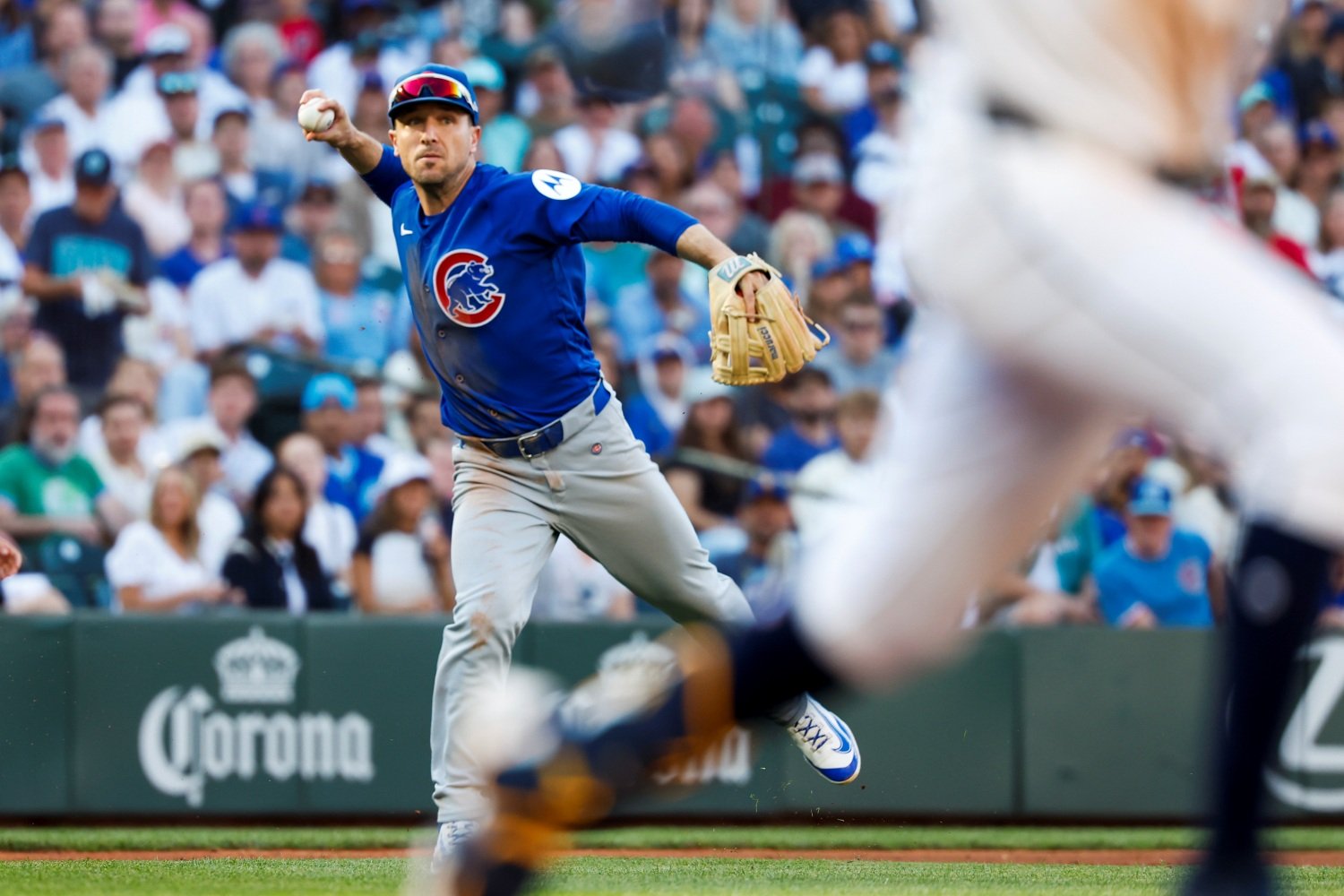 William Contreras didn't hit it correctly, but he hit it hard. In the top of the eighth inning Thursday night, Ryan Zeferjahn had gotten the first two outs easily, and he fired a 98-MPH sinker that ran in and down toward Contreras on the first pitch. Overeager, Contreras swung hard but (inevitably) topped the ball, hitting it almost straight down in front of his own left foot. It left his bat at over 90 MPH, but most of that energy went straight into the ground. However, in the unseasonable September heat and near the end of the game, the area around home plate was hard and bouncy. The ball shot 30 feet in the air and sailed down the third-base line. Nine times out of 10, that batted ball is foul, but something about the spin and the bounce kept this one fair. It didn't land until it was about 10 feet past the third-base bag, and when it did, it was still fair. It was the kind of oddball schtoinker that threatens to be the spark from which a wildfire rally starts. Fortunately for the Cubs, Alex Bregman was there. Bregman read the soaring bouncer perfectly, picking a short hop on the run and throwing almost immediately across the diamond to retire Contreras and end the inning. It looked like a good play; it was actually a great one. That's pretty much par for the course for Bregman this year. As I wrote two months ago, his defense has never been better, but the places and ways in which he's improved are so subtle that they're often missable. He doesn't look like the second-best defensive third baseman in the game every time he takes the field, but that's what he's been this season. He's mostly been good at third throughout his career, but somehow, at age 32, he's improving, instead of losing value with the leather. Dansby Swanson and Bregman communicate and cooperate brilliantly on the left side of the infield, but that's only part of the story. Bregman has learned to better utilize his tools on defense, too. He's playing a bit deeper and a half-step closer to the line this year than last season, and after two years of improving mostly on the strength of cleaning up plays to his right, he's now excelling by ranging well to his left. As the above attests, though, he can still get to and play balls on the line, too. Playing deeper is the real key to everything. It means he has more time to flag balls down and more momentum behind him when he goes from fielding the ball to throwing it. Speaking of throwing it, though, that's the most fun change to observe. A few years ago, Bregman has a good chance to field the ball above, but throwing out the runner is a lot more iffy. He's not a big guy; he still doesn't have even average raw arm strength. However, he's gotten a whole lot more accurate—including knowing when to put more oomph on one, and when bouncing the throw makes sense or doesn't. Beginning in 2024, Bregman cleaned up his throws to first. His on-target rate (the percentage of his throws that arrive within a five-foot fan around first base and between 1 and 7 feet above the ground) is a career-best 84.5% this season; he was in the mid-70s from 2021 through 2023. On plays like the one he made Thursday night, even if Bregman got the tricky footwork and pick right, past versions of him wouldn't have made life so easy for his first baseman; there's a good chance the runner would have ended up being safe. In the modern game, almost no one is better than ever at age 32. So far, though, it looks like Bregman might be the exception. His makeup is off the charts; that's always been part of the appeal. Watching him make plays like that one (amid one of the hottest streaks of his career at the plate, no less), however, it gets easier to remember that makeup isn't just about keeping the clubhouse a happy place. Bregman's focused, intelligent, obsessive work has made him worth 13 Defensive Runs Saved this year. That's as big a reason why the Cubs are a virtual lock to make the playoffs as the fact that he's broken out of his early offensive funk and become the third heat of the Chicago offense. He's winning games for the team in every way possible.
 -
Image courtesy of David Banks-Imagn Images Want to know how deep in Kyle Harrison's head the Cubs got, right away on Monday night? They changed his clothes. On a hot night at Wrigley Field, Harrison took the mound in the bottom of the first inning with a short-sleeved undershirt beneath his blue road jersey. It was appropriate attire for the evening. He worked up a sweat, too, not only giving up four first-inning runs but racking up an unseemly early pitch count. Harrison and the Brewers quickly realized something was wrong, though. As the young pitcher told the media after the game, the Cubs were so on him that he became convinced the batters knew what was coming. That wasn't pure paranoia; the Brewers dugout felt the same way. Here's Harrison giving up a first-inning home run to Tyrone Taylor. YVlkWG5fWGw0TUFRPT1fVWdOWEFnRldCRllBRGxaUVZ3QUhDUVpTQUFCUVZRQUFDd0VGVXdGUVV3QlhVbGND.mp4 Compare that to this clip of Alex Bregman taking him deep in the very next frame. YVlkWG5fWGw0TUFRPT1fQmxkWUJWQU5WRkFBWEFFSFZBQUhVbEFGQUFCV0JWTUFWZ2NHQ0ZaUUFnb0hDRkZV.mp4 The difference isn't some subtle thing you need a scout's eye or a jeweler's loop to spot; it's big and basic. On a hot night, for no reason having to do with the weather, Harrison put on long sleeves. That's a sure sign of a pitcher trying to cover something—to address what he believes is a telling movement or muscle. There are pitchers (Joe Ryan, of the Twins, is one) who won't pitch without long sleeves, no matter what. They believe their wrist position or the tension in their arm can be spotted and used against them, even if they're being careful. Harrison doesn't usually have that problem, though, and does not generally cleave to a strict dress code on the mound. He made this change because the team felt that the Cubs were spotting something that conveyed which of his two main pitches was coming—and not necessarily from the batter's box. Remember a week ago, when the Diamondbacks got angry with the Cubs over what they initially believed was illicit (or at least unwelcome) relaying of incoming pitch types from Quintin Berry to Cubs batters? It was against Arizona starter Merrill Kelly. Ultimately, Diamondbacks manager Torey Lovullo apologized to Craig Counsell for the kerfuffle; the team came to realize that what Berry was doing was within the rules and above-board. Plenty of teams throughout the league still don't like when a coach picks up something from their position on the field and relays it to the batters, but both the new rules (which compel each base coach to stay in their assigned box) and the evolving customs say that it's up to pitchers to do enough not to give away their stuff when they're on the mound. Harrison was quick to say that it's up to him to guard his own secrets better. That's important not only because it pays lip service to the ethos the league has adopted, but because the Brewers have already gotten into one imbroglio over this very issue this season—from the other side of it, against the Cardinals. Major League Baseball specified that base coaches must remain in their boxes beginning this season, after their tendency to wander far beyond those boundaries became a frequent topic of conversation in clubhouses and the subject of a couple of heated arguments in 2025. By going farther down the foul line, coaches were trying to get peeks into pitchers' gloves as they prepared to throw. If they could pick up some cue that told them what grip the pitcher was establishing, they could relay it to their batters, giving them a better chance to hit (or not chase) that offering. As it turns out, though, you don't have to see into someone's glove to spot something useful. Several times this season, the Cubs have come into a game knowing what to look for from the base coach's boxes. Against right-handed pitchers, the job of spotting the pre-scouted tell and tipping off hitters has gone to Berry. Against lefties like Harrison, the duty falls to Jose Javier, at first base. Either way, nothing illegal is happening. With careful video study, it's often possible to find something a coach can discern without leaving their box or even craning their neck. One doesn't always need to see the way a pitcher places their fingers on the laces to know what pitch they're preparing to throw. It can be as simple as slightly more tension in the forearm when a hurler grips their breaking ball, or the glove flaring against their torso a bit more when they go for the changeup. In Harrison's case, there's no smoking gun for us to see from the center-field camera, but the Cubs (along with all other teams) have access to more angles when watching video to prepare for a pitcher, and it's very possible that a subtle turn of the shoulder or higher placement of the glove on the jersey while establishing a grip gave Javier all the information he needed to help his batters out. Here's Harrison coming set on the two pitches on which Bregman homered against him Monday night. On the left, he's about to throw a fastball. On the right, he's about to throw his slurve. Can you see a difference? Maybe. Maybe not. And maybe you could have when he wasn't wearing long sleeves, but now you can't. It seems quite likely, though, that Javier was in position to spot something useful. This is yet another area in which Berry and Javier are delivering huge value to the Cubs. This is their second season as the base coaches for the team, but they each do so much more than whisper pop times or wave runners home. Javier came from the Yankees, who were one of the best immediate innovators in exploiting the rules changes that went into effect in 2023 to produce value as basestealers; he's brought that savvy to the Cubs. Berry is also a great baserunning instructor, but the bulk of his time is spent in coaching the team's outfielders. He's altered the way Pete Crow-Armstrong prepares pre-pitch, taking him from excellent to generational in center field. He's overhauled Seiya Suzuki's work in right field, turning him from unplayable to above-average. The Cubs lead the majors in Defensive Runs Saved (DRS) by outfielders, and they lead the majors in baserunning runs, according to Baseball Reference. Their base coaches have returned huge value on that front. They're also proving adept at the art of tip-spotting, with the input and assistance of—it's a fraught thing to talk about, but it's true, according to multiple sources—Bregman. Though his legacy in the game will always bear the slight discoloration of having been part of the Astros' sign-stealing scandal, Bregman has never let that slow him down in his pursuit of legal edges at the plate. He's a rabid and brilliant video scout, and he shares information freely and proactively. Bregman has helped the Cubs get the drop on multiple pitchers this season, producing value not only for himself but for the whole team. Whatever they can pick up by legal means, the Cubs will pick up, and Bregman is just one of several smart hitters whose games have been augmented by the work of their perspicacious coaches. On a separate occasion later in that series in Arizona, it was easy to see another vector of Berry's value; he kept Pete Crow-Armstrong in the game by taking over the situation as a field general when the umpires missed a balk with Crow-Armstrong on third base in the series finale in Phoenix. Massively popular in the clubhouse and increasingly comfortable as a leader, Berry could be a managerial candidate as soon as this fall. For now, though, he and Javier are providing an enormous return on the team's modest investment, producing concrete value via their exceptional instruction and sanctioned espionage. They've been hugely influential for a team that seems destined for a second straight playoff appearance, all for less money than the team is paying most of their forgettable relievers this year. View full article
-
The Cubs' Base Coaches Are Two of the Team's Most Lethal Weapons
Matthew Trueblood posted an article in Cubs
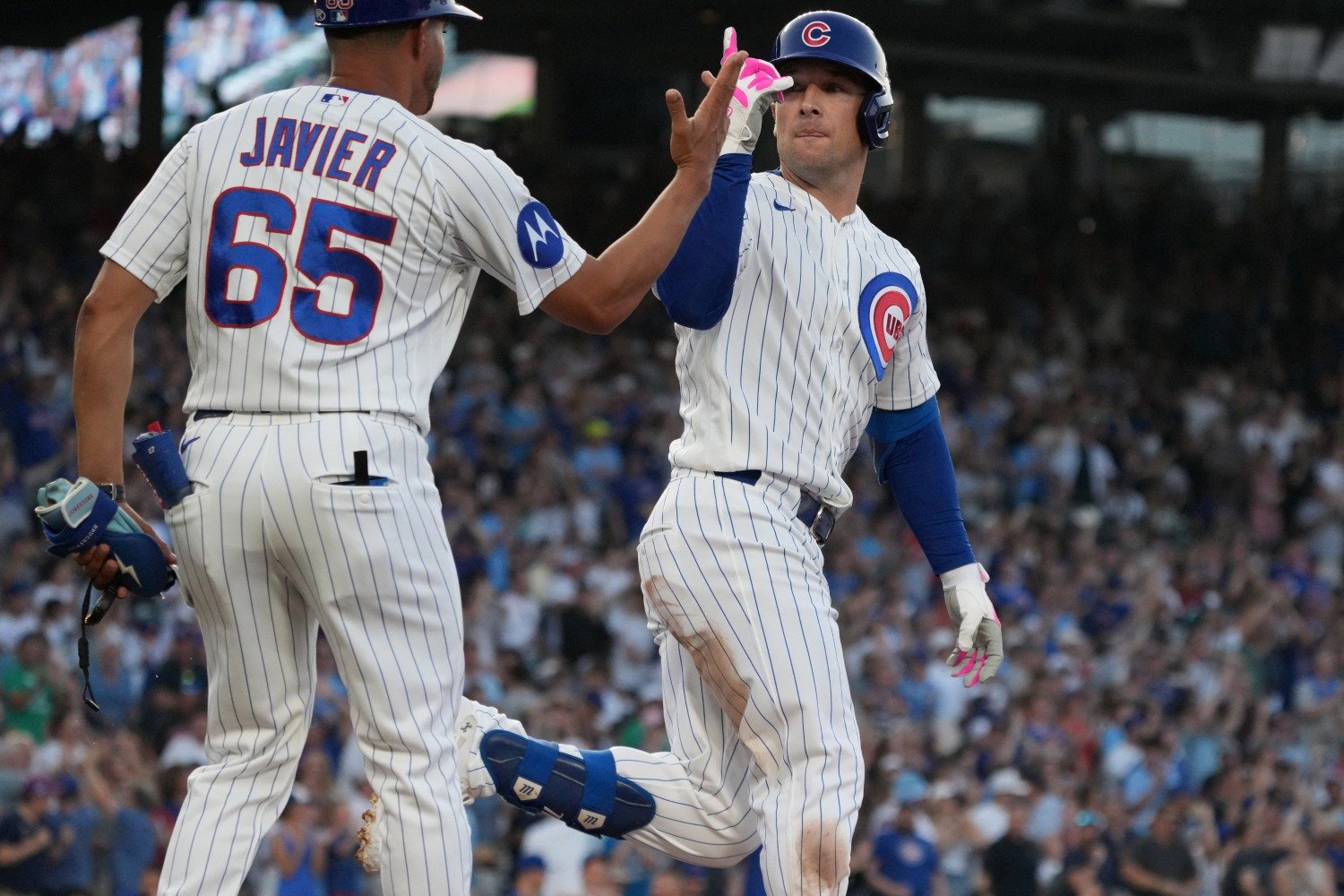 Want to know how deep in Kyle Harrison's head the Cubs got, right away on Monday night? They changed his clothes. On a hot night at Wrigley Field, Harrison took the mound in the bottom of the first inning with a short-sleeved undershirt beneath his blue road jersey. It was appropriate attire for the evening. He worked up a sweat, too, not only giving up four first-inning runs but racking up an unseemly early pitch count. Harrison and the Brewers quickly realized something was wrong, though. As the young pitcher told the media after the game, the Cubs were so on him that he became convinced the batters knew what was coming. That wasn't pure paranoia; the Brewers dugout felt the same way. Here's Harrison giving up a first-inning home run to Tyrone Taylor. YVlkWG5fWGw0TUFRPT1fVWdOWEFnRldCRllBRGxaUVZ3QUhDUVpTQUFCUVZRQUFDd0VGVXdGUVV3QlhVbGND.mp4 Compare that to this clip of Alex Bregman taking him deep in the very next frame. YVlkWG5fWGw0TUFRPT1fQmxkWUJWQU5WRkFBWEFFSFZBQUhVbEFGQUFCV0JWTUFWZ2NHQ0ZaUUFnb0hDRkZV.mp4 The difference isn't some subtle thing you need a scout's eye or a jeweler's loop to spot; it's big and basic. On a hot night, for no reason having to do with the weather, Harrison put on long sleeves. That's a sure sign of a pitcher trying to cover something—to address what he believes is a telling movement or muscle. There are pitchers (Joe Ryan, of the Twins, is one) who won't pitch without long sleeves, no matter what. They believe their wrist position or the tension in their arm can be spotted and used against them, even if they're being careful. Harrison doesn't usually have that problem, though, and does not generally cleave to a strict dress code on the mound. He made this change because the team felt that the Cubs were spotting something that conveyed which of his two main pitches was coming—and not necessarily from the batter's box. Remember a week ago, when the Diamondbacks got angry with the Cubs over what they initially believed was illicit (or at least unwelcome) relaying of incoming pitch types from Quintin Berry to Cubs batters? It was against Arizona starter Merrill Kelly. Ultimately, Diamondbacks manager Torey Lovullo apologized to Craig Counsell for the kerfuffle; the team came to realize that what Berry was doing was within the rules and above-board. Plenty of teams throughout the league still don't like when a coach picks up something from their position on the field and relays it to the batters, but both the new rules (which compel each base coach to stay in their assigned box) and the evolving customs say that it's up to pitchers to do enough not to give away their stuff when they're on the mound. Harrison was quick to say that it's up to him to guard his own secrets better. That's important not only because it pays lip service to the ethos the league has adopted, but because the Brewers have already gotten into one imbroglio over this very issue this season—from the other side of it, against the Cardinals. Major League Baseball specified that base coaches must remain in their boxes beginning this season, after their tendency to wander far beyond those boundaries became a frequent topic of conversation in clubhouses and the subject of a couple of heated arguments in 2025. By going farther down the foul line, coaches were trying to get peeks into pitchers' gloves as they prepared to throw. If they could pick up some cue that told them what grip the pitcher was establishing, they could relay it to their batters, giving them a better chance to hit (or not chase) that offering. As it turns out, though, you don't have to see into someone's glove to spot something useful. Several times this season, the Cubs have come into a game knowing what to look for from the base coach's boxes. Against right-handed pitchers, the job of spotting the pre-scouted tell and tipping off hitters has gone to Berry. Against lefties like Harrison, the duty falls to Jose Javier, at first base. Either way, nothing illegal is happening. With careful video study, it's often possible to find something a coach can discern without leaving their box or even craning their neck. One doesn't always need to see the way a pitcher places their fingers on the laces to know what pitch they're preparing to throw. It can be as simple as slightly more tension in the forearm when a hurler grips their breaking ball, or the glove flaring against their torso a bit more when they go for the changeup. In Harrison's case, there's no smoking gun for us to see from the center-field camera, but the Cubs (along with all other teams) have access to more angles when watching video to prepare for a pitcher, and it's very possible that a subtle turn of the shoulder or higher placement of the glove on the jersey while establishing a grip gave Javier all the information he needed to help his batters out. Here's Harrison coming set on the two pitches on which Bregman homered against him Monday night. On the left, he's about to throw a fastball. On the right, he's about to throw his slurve. Can you see a difference? Maybe. Maybe not. And maybe you could have when he wasn't wearing long sleeves, but now you can't. It seems quite likely, though, that Javier was in position to spot something useful. This is yet another area in which Berry and Javier are delivering huge value to the Cubs. This is their second season as the base coaches for the team, but they each do so much more than whisper pop times or wave runners home. Javier came from the Yankees, who were one of the best immediate innovators in exploiting the rules changes that went into effect in 2023 to produce value as basestealers; he's brought that savvy to the Cubs. Berry is also a great baserunning instructor, but the bulk of his time is spent in coaching the team's outfielders. He's altered the way Pete Crow-Armstrong prepares pre-pitch, taking him from excellent to generational in center field. He's overhauled Seiya Suzuki's work in right field, turning him from unplayable to above-average. The Cubs lead the majors in Defensive Runs Saved (DRS) by outfielders, and they lead the majors in baserunning runs, according to Baseball Reference. Their base coaches have returned huge value on that front. They're also proving adept at the art of tip-spotting, with the input and assistance of—it's a fraught thing to talk about, but it's true, according to multiple sources—Bregman. Though his legacy in the game will always bear the slight discoloration of having been part of the Astros' sign-stealing scandal, Bregman has never let that slow him down in his pursuit of legal edges at the plate. He's a rabid and brilliant video scout, and he shares information freely and proactively. Bregman has helped the Cubs get the drop on multiple pitchers this season, producing value not only for himself but for the whole team. Whatever they can pick up by legal means, the Cubs will pick up, and Bregman is just one of several smart hitters whose games have been augmented by the work of their perspicacious coaches. On a separate occasion later in that series in Arizona, it was easy to see another vector of Berry's value; he kept Pete Crow-Armstrong in the game by taking over the situation as a field general when the umpires missed a balk with Crow-Armstrong on third base in the series finale in Phoenix. Massively popular in the clubhouse and increasingly comfortable as a leader, Berry could be a managerial candidate as soon as this fall. For now, though, he and Javier are providing an enormous return on the team's modest investment, producing concrete value via their exceptional instruction and sanctioned espionage. They've been hugely influential for a team that seems destined for a second straight playoff appearance, all for less money than the team is paying most of their forgettable relievers this year.
 -
Image courtesy of Matt Marton-Imagn Images Cubs starter Clay Holmes shut the Brewers down in impressive fashion Monday night. For most of his outing Tuesday, Matthew Boyd followed suit. Both hurlers worked in and out of what little trouble they got into, thanks not only to good execution, but to the element of surprise. As we discussed yesterday, Holmes dominated with a cutter that could hardly have been a prominent part of the Brewers' scouting report. Boyd is a more settled, veteran hurler, but he still showed up Tuesday throwing a pitch he'd hardly previously used this year: his sinker. Entering Tuesday's start, Boyd had only thrown 12 sinkers all season. According to Statcast, he threw nine of them among his 97 pitches in this appearance. That might not be exactly right; it might be either higher or lower. Boyd's four-seamer registered an even lower induced vertical break (IVB) than his already-low seasonal average: 10 inches, rather than 12. He showed good command of his slider and curveball (though less so with his changeup), and tried to force Milwaukee batters to deal with a different set of angles and contrasting pitch shapes than they were likely to have prepared for. To get a sense of how different a set of looks he offered, here are the movement plots for his previous start against Arizona, and against the Brewers. For Boyd, that strategy was largely successful. He gave up just one run through his first five innings of work. The sixth began with a one-hop grounder toward the shortstop hole by Brice Turang, which Nico Hoerner was able to snare but on which he had no chance to get an out. The next pitch yielded a chopper by William Contreras that should have resulted in an out, but Matt Shaw failed to corral it and a could-be out turned into a double. After getting one more out, Boyd departed with a two-run lead, only to watch Daniel Palencia surrender that advantage. Boyd deserved a much better fate; throwing the Brewers a wrinkle was the right tactic. Palencia, however, is an example of that plan not working well at all. He's generally used his fastball two-thirds of the time or more over the last two seasons, but of the 12 pitches he threw during a disastrous outing Tuesday night, five were sliders. Ryan Zeferjahn took over in the seventh inning. He's used his fastball and sweeper in virtual parity this year, but on Tuesday night, 12 of his 17 pitches were sweepers. Every pitcher the Cubs have used during this series has, in some way, tried to be a different version of themselves than the Brewers were likely to expect. For relievers, it's harder to say with certainty how much of that change was planned, and how much was a response to what was working (or not). As I wrote recently, Palencia's recent struggles have much to do with his fastball losing its shape; that might be why he tried to lean on his slider. Either way, though, the Cubs clearly set out to confound the expectations of a Brewers team that shares much of their DNA in terms of coaching and analytical philosophy. For two of their starters, it's worked well. However, as Tuesday night unfolded, the Brewers demonstrated the limits of Chicago's strategic approach. View full article
-
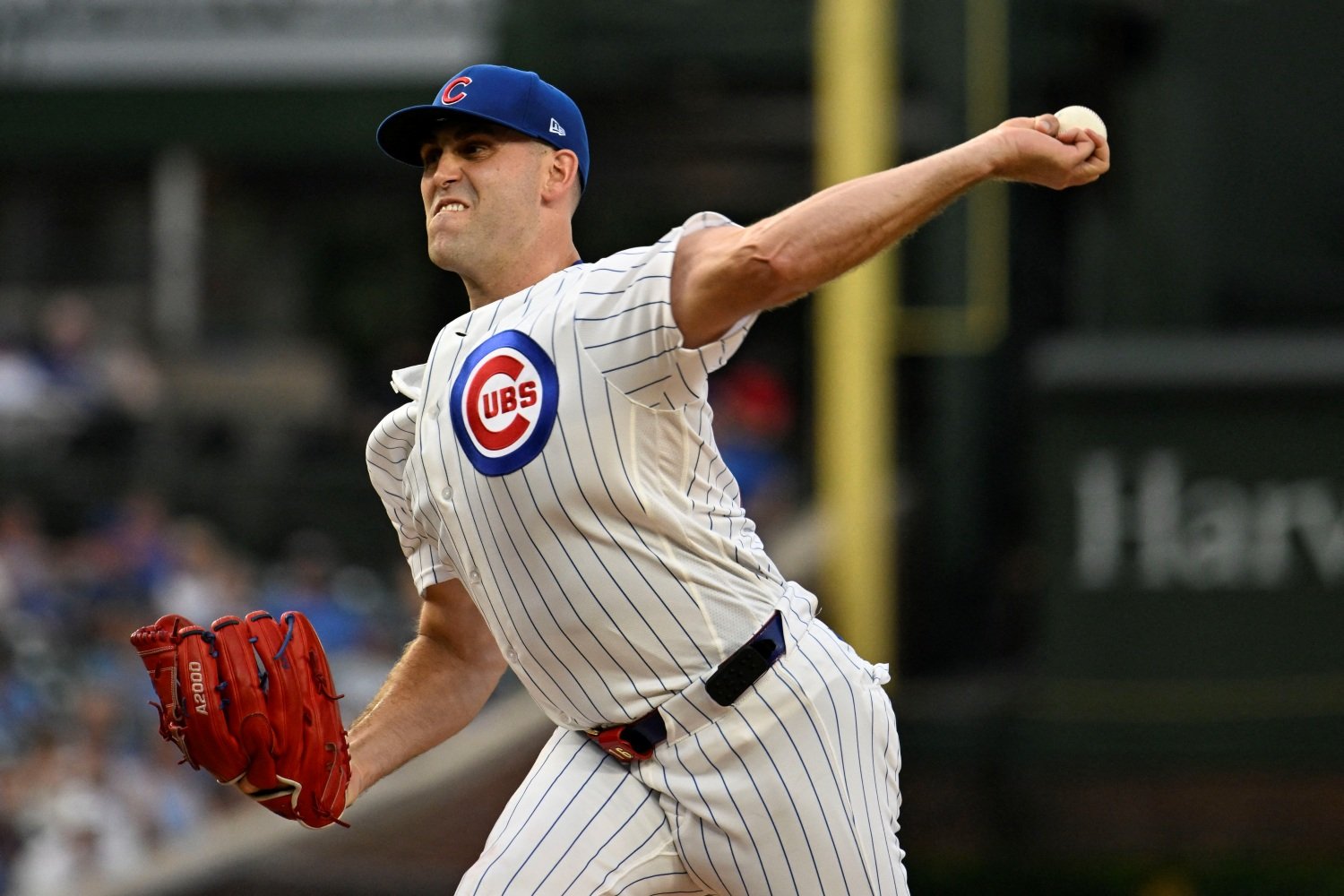 Cubs starter Clay Holmes shut the Brewers down in impressive fashion Monday night. For most of his outing Tuesday, Matthew Boyd followed suit. Both hurlers worked in and out of what little trouble they got into, thanks not only to good execution, but to the element of surprise. As we discussed yesterday, Holmes dominated with a cutter that could hardly have been a prominent part of the Brewers' scouting report. Boyd is a more settled, veteran hurler, but he still showed up Tuesday throwing a pitch he'd hardly previously used this year: his sinker. Entering Tuesday's start, Boyd had only thrown 12 sinkers all season. According to Statcast, he threw nine of them among his 97 pitches in this appearance. That might not be exactly right; it might be either higher or lower. Boyd's four-seamer registered an even lower induced vertical break (IVB) than his already-low seasonal average: 10 inches, rather than 12. He showed good command of his slider and curveball (though less so with his changeup), and tried to force Milwaukee batters to deal with a different set of angles and contrasting pitch shapes than they were likely to have prepared for. To get a sense of how different a set of looks he offered, here are the movement plots for his previous start against Arizona, and against the Brewers. For Boyd, that strategy was largely successful. He gave up just one run through his first five innings of work. The sixth began with a one-hop grounder toward the shortstop hole by Brice Turang, which Nico Hoerner was able to snare but on which he had no chance to get an out. The next pitch yielded a chopper by William Contreras that should have resulted in an out, but Matt Shaw failed to corral it and a could-be out turned into a double. After getting one more out, Boyd departed with a two-run lead, only to watch Daniel Palencia surrender that advantage. Boyd deserved a much better fate; throwing the Brewers a wrinkle was the right tactic. Palencia, however, is an example of that plan not working well at all. He's generally used his fastball two-thirds of the time or more over the last two seasons, but of the 12 pitches he threw during a disastrous outing Tuesday night, five were sliders. Ryan Zeferjahn took over in the seventh inning. He's used his fastball and sweeper in virtual parity this year, but on Tuesday night, 12 of his 17 pitches were sweepers. Every pitcher the Cubs have used during this series has, in some way, tried to be a different version of themselves than the Brewers were likely to expect. For relievers, it's harder to say with certainty how much of that change was planned, and how much was a response to what was working (or not). As I wrote recently, Palencia's recent struggles have much to do with his fastball losing its shape; that might be why he tried to lean on his slider. Either way, though, the Cubs clearly set out to confound the expectations of a Brewers team that shares much of their DNA in terms of coaching and analytical philosophy. For two of their starters, it's worked well. However, as Tuesday night unfolded, the Brewers demonstrated the limits of Chicago's strategic approach.
 -
Alex Bregman Has Returned to His Best Self By Making Great Use of Space
Matthew Trueblood posted an article in Cubs
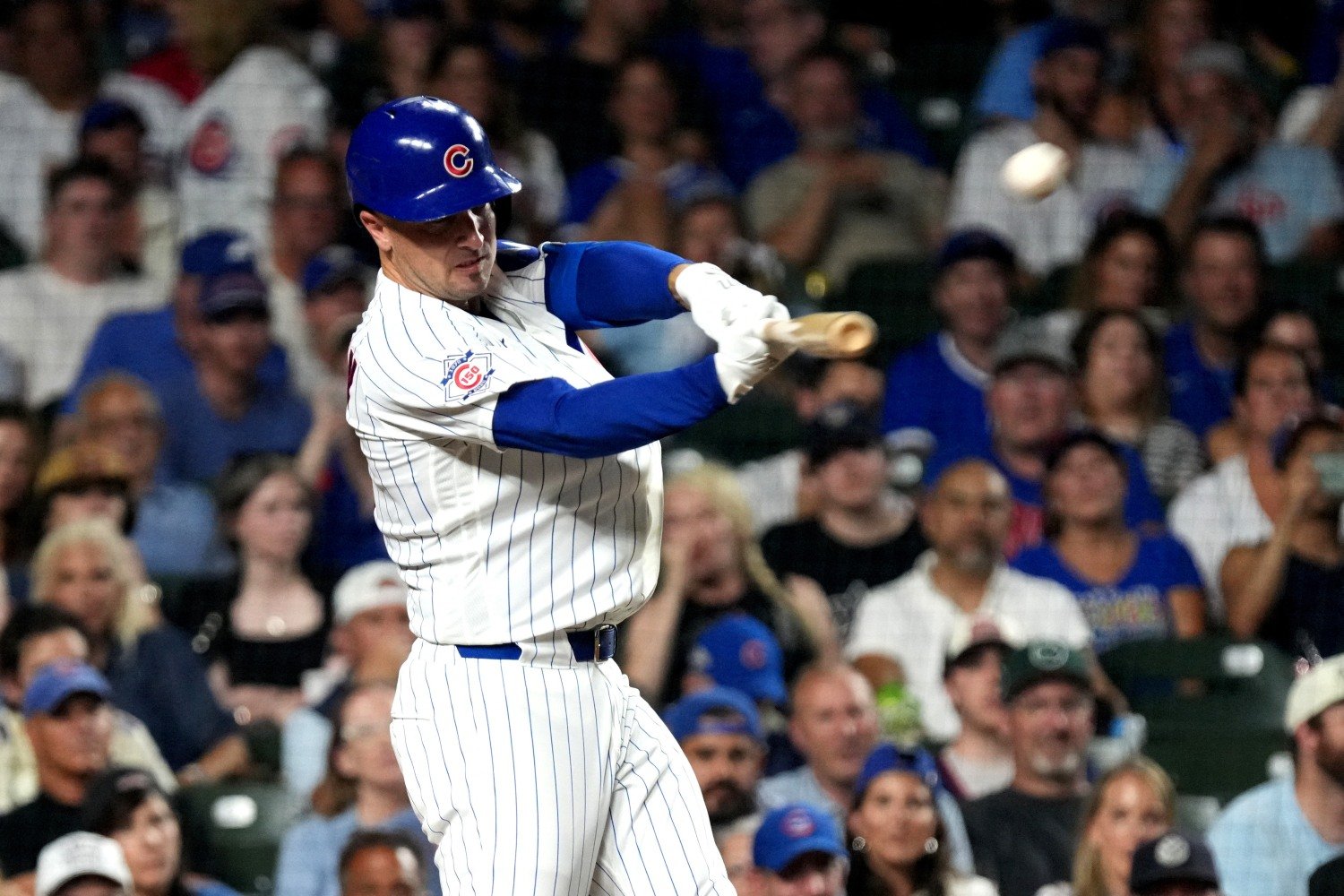 When the Cubs signed Alex Bregman this winter, they talked at length about the influence he would have. No player is more famous among fellow players for their savvy, generosity with advice and insight, or dedication to the game than is Bregman, and the combination of intelligence and leadership Bregman brings to the table was nearly as important to Chicago as the combination of on-base skills and power that jump out when one studies his stat page. For most of the first half, though, that influence was a bit too great a share of his value, for a simple reason: he wasn't hitting. Over the first 40% of the season (66 games), Bregman hit .243/.327/.342. In 297 plate appearances, he only hit five home runs. His bat speed was down. That on-base percentage is tolerable, and stood as a reminder of what a polished and smart hitter Bregman is, but it was fair to wonder whether he would never be the same. One of the risks of signing an aging player who never had elite bat speed or explosiveness is that they might be enduringly diminished; it seemed like Bregman might be just that kind of unfortunate case. There was an off day in early June, during which the Cubs traveled from Chicago to Denver to begin a road trip to face the Rockies and Giants. Using feedback he cultivated from the team's analytics and hitting departments, Bregman made an adjustment at that point, and his season began to turn. From June 10 through the All-Star break, he batted a much more healthy .234/.358/.402. Those still aren't the numbers a team envisions when they shell out $175 million over five years to bring a player in, but again, Bregman was also delivering value off the field—and he might have soaked some up, too. What happened, specifically, is that beginning in mid-June, Bregman has let the ball travel deeper into the hitting zone. Meanwhile, he's also moved slightly deeper in the batter's box. The combination of those two adjustments means that he's addressing the ball about three inches closer to the catcher than he was three months ago. That sounds like a very small change, but when you're making that extra bit of space, you're also making a bit of extra time. Here's what that looks like in the stance-and-stride visualizaions generated by Statcast. Through that day off in June, Bregman set up and moved thusly in the box. Since then, his average stance and stride starts deeper, and from a more closed setup. As you can also see, his average contact point has slid back to the front edge of home plate. That's an essential change for Bregman, for multiple reasons. It's paid off in a massive way, too, especially since the All-Star break. In 189 trips to the plate since the break, Bregman is batting .296/.365/.615; he's gone from suspect back to superstar. But why are those few inches of extra space (and the time they represent) so important? Firstly, it's because even as he's rediscovered his power, Bregman hasn't rediscovered his bat speed. Indeed, it's still trending downward. Bregman has never been a guy who got his power primarily from bat speed, of course. Hitters realize power via four vectors: Swing decisions - getting a pitch they can drive Bat speed - swinging fast enough to produce a high exit velocity Hit tool - the better you are at finding the center of the barrel with your swing, the less raw bat speed you need to hit it hard Directionality - being able to pull the ball without rolling over it (and, in general, being able to hit the ball well in the air to the pull field) matters a great deal. For Bregman, the other three elements have always been more important than bat speed. Still, when you lose a bit of that raw power, you have to make up for it somehow—not least because, when that bat speed goes, it can compromise the solidity and directionality of contact. For that matter, it can also ruin your swing decisions, because one solution to that degradation is to start your swing a bit earlier and sacrifice some of the time you have to recognize pitches and attack them. By sliding as far back in the box as possible, Bregman is giving himself as much time as he can to deliver the barrel to the ball. He's not actually swinging with a deeper contact point in mind, but that's the result, because of his more closed stance. That change of orientation means his bat has to travel very slightly farther to get to the same spot, so the result is a deeper contact point, without a difference in the orientation of his barrel to the flight of the ball when contact comes. The ball getting deeper before he hits it means Bregman can attack with a bit more confidence, knowing his best contact to the pull field won't go foul. Indeed, 20.5% of his swings through June 8 produced pulled foul balls. Since June 9, that number is down to 15.9%. Meanwhile, his attack direction on fair balls has swung toward the pull field. Changes to the way his lower half works have also helped all that happen, but Bregman first tapped into his power again by getting back to pulling and lifting the ball and making solid contact—and all of that began by closing his stance and moving very slightly deeper in the batter's box. After Bregman followed Pete Crow-Armstrong's five-homer weekend with a three-homer night of his own Monday, MLB Network posted an intriguing tweet comparing the two players' swings. They're right about the similarities there, and some of those similarities are new. Crow-Armstrong and Bregman have worked terrifically together this season, going all the way back to spring training. Crow-Armstrong owes some of the credit for his sudden corner-turn toward superstardom via better swing decisions to Bregman. In turn, Bregman might owe some of the credit for his mid-season change of fortunes to watching and learning from his younger teammate. They don't get to power in the same way at all. Crow-Armstrong has leveled up twice in the last two seasons, by drastically upgrading his bat speed and by improving his swing decisions, but his feel for the sweet spot of the barrel is still merely average. Bregman's is superb, but the bat speed is far from special—making him the opposite of a Crow-Armstrong-style slugger, even though their actual swings have begun to mirror one another. He still gets his value from swing decisions, solidity of contact, and that sense of how to pull and lift the ball. He's just used his own advice to a young teammate and the model of that teammate's success as a template for his own adjustments, to thwart the ravages of age and sustain success at an improbable stage of his career.
 -
Image courtesy of David Banks-Imagn Images When the Cubs signed Alex Bregman this winter, they talked at length about the influence he would have. No player is more famous among fellow players for their savvy, generosity with advice and insight, or dedication to the game than is Bregman, and the combination of intelligence and leadership Bregman brings to the table was nearly as important to Chicago as the combination of on-base skills and power that jump out when one studies his stat page. For most of the first half, though, that influence was a bit too great a share of his value, for a simple reason: he wasn't hitting. Over the first 40% of the season (66 games), Bregman hit .243/.327/.342. In 297 plate appearances, he only hit five home runs. His bat speed was down. That on-base percentage is tolerable, and stood as a reminder of what a polished and smart hitter Bregman is, but it was fair to wonder whether he would never be the same. One of the risks of signing an aging player who never had elite bat speed or explosiveness is that they might be enduringly diminished; it seemed like Bregman might be just that kind of unfortunate case. There was an off day in early June, during which the Cubs traveled from Chicago to Denver to begin a road trip to face the Rockies and Giants. Using feedback he cultivated from the team's analytics and hitting departments, Bregman made an adjustment at that point, and his season began to turn. From June 10 through the All-Star break, he batted a much more healthy .234/.358/.402. Those still aren't the numbers a team envisions when they shell out $175 million over five years to bring a player in, but again, Bregman was also delivering value off the field—and he might have soaked some up, too. What happened, specifically, is that beginning in mid-June, Bregman has let the ball travel deeper into the hitting zone. Meanwhile, he's also moved slightly deeper in the batter's box. The combination of those two adjustments means that he's addressing the ball about three inches closer to the catcher than he was three months ago. That sounds like a very small change, but when you're making that extra bit of space, you're also making a bit of extra time. Here's what that looks like in the stance-and-stride visualizaions generated by Statcast. Through that day off in June, Bregman set up and moved thusly in the box. Since then, his average stance and stride starts deeper, and from a more closed setup. As you can also see, his average contact point has slid back to the front edge of home plate. That's an essential change for Bregman, for multiple reasons. It's paid off in a massive way, too, especially since the All-Star break. In 189 trips to the plate since the break, Bregman is batting .296/.365/.615; he's gone from suspect back to superstar. But why are those few inches of extra space (and the time they represent) so important? Firstly, it's because even as he's rediscovered his power, Bregman hasn't rediscovered his bat speed. Indeed, it's still trending downward. Bregman has never been a guy who got his power primarily from bat speed, of course. Hitters realize power via four vectors: Swing decisions - getting a pitch they can drive Bat speed - swinging fast enough to produce a high exit velocity Hit tool - the better you are at finding the center of the barrel with your swing, the less raw bat speed you need to hit it hard Directionality - being able to pull the ball without rolling over it (and, in general, being able to hit the ball well in the air to the pull field) matters a great deal. For Bregman, the other three elements have always been more important than bat speed. Still, when you lose a bit of that raw power, you have to make up for it somehow—not least because, when that bat speed goes, it can compromise the solidity and directionality of contact. For that matter, it can also ruin your swing decisions, because one solution to that degradation is to start your swing a bit earlier and sacrifice some of the time you have to recognize pitches and attack them. By sliding as far back in the box as possible, Bregman is giving himself as much time as he can to deliver the barrel to the ball. He's not actually swinging with a deeper contact point in mind, but that's the result, because of his more closed stance. That change of orientation means his bat has to travel very slightly farther to get to the same spot, so the result is a deeper contact point, without a difference in the orientation of his barrel to the flight of the ball when contact comes. The ball getting deeper before he hits it means Bregman can attack with a bit more confidence, knowing his best contact to the pull field won't go foul. Indeed, 20.5% of his swings through June 8 produced pulled foul balls. Since June 9, that number is down to 15.9%. Meanwhile, his attack direction on fair balls has swung toward the pull field. Changes to the way his lower half works have also helped all that happen, but Bregman first tapped into his power again by getting back to pulling and lifting the ball and making solid contact—and all of that began by closing his stance and moving very slightly deeper in the batter's box. After Bregman followed Pete Crow-Armstrong's five-homer weekend with a three-homer night of his own Monday, MLB Network posted an intriguing tweet comparing the two players' swings. They're right about the similarities there, and some of those similarities are new. Crow-Armstrong and Bregman have worked terrifically together this season, going all the way back to spring training. Crow-Armstrong owes some of the credit for his sudden corner-turn toward superstardom via better swing decisions to Bregman. In turn, Bregman might owe some of the credit for his mid-season change of fortunes to watching and learning from his younger teammate. They don't get to power in the same way at all. Crow-Armstrong has leveled up twice in the last two seasons, by drastically upgrading his bat speed and by improving his swing decisions, but his feel for the sweet spot of the barrel is still merely average. Bregman's is superb, but the bat speed is far from special—making him the opposite of a Crow-Armstrong-style slugger, even though their actual swings have begun to mirror one another. He still gets his value from swing decisions, solidity of contact, and that sense of how to pull and lift the ball. He's just used his own advice to a young teammate and the model of that teammate's success as a template for his own adjustments, to thwart the ravages of age and sustain success at an improbable stage of his career. View full article
-
Image courtesy of Mark J. Rebilas-Imagn Images As much as any one pitch can define a starting pitcher in the modern game, the sinker defines Clay Holmes. He throws from a higher arm angle than most sinkerballers, but gets even heavier action on that pitch than most guys who throw it from low slots. It's as true a bowling-ball sinker as any in the game today, and it's made him a hugely successful hurler in multiple roles over the last half-decade. He's also become moderately famous, among players and baseball people, for the genius with which he manipulates the ball. Ben Brown, who learned much about his (very different) sinker while working out with Holmes over the winter, once said Holmes can do more things with the ball than anyone else he's ever seen. Holmes has a feel for spin and deception that few can match. Over his last two starts, though, he's gone to another level. On Monday night, that took the form of six shutout innings against one of the league's best offenses, as he held the Brewers to five hits and two walks while striking out eight. It wasn't the sinker that did the heavy lifting, though. Rather, Holmes dominated Milwaukee with a pitch he barely had when he arrived in Chicago early last month: the cutter. Although he naturally supinates (the direction of forearm turn that should make a cutter pretty easy to learn), Holmes didn't throw a cutter at all until 2025. He's an outlier in many ways, and the same unique way of releasing the ball that allows him to throw a heavy sinker from a four-seamer slot made the cutter feel both uncomfortable and unnecessary. As he transitioned from the bullpen to the rotation after signing with the New York Mets before 2025, however, Holmes wanted to deepen his arsenal, so he mixed in the cutter—not a lot; just enough to keep hitters guessing a little. It really just replaced his slider, which had become redundant once he developed his sweeper. It didn't become a significant part of his arsenal, though, because his sinker, sweeper and kick-change were good enough to obviate it. That remained true early this season. While with the Mets, he barely threw the cutter at all. But the Cubs, who had serious interest in Holmes when he was a free agent, felt that pitch would play for him, and as soon as he arrived via trade on August 3, they started the conversation. It didn't immediately become an important pitch for him, but he brought it along in bullpen sessions and found ways to sneak it in during games. Then, starting with his previous outing in Arizona, the pitch moved toward the center of the stage. Holmes's sinker is tough to hit, no matter what. If you're sitting on it, though, it can be fouled off somewhat consistently. It's also a tough pitch to command, and if hitters can reliably spot it, that can mean some hitter-friendly counts and walks, even though Holmes has good control, overall. As it turns out, the cutter is the cure to all of that. Against the Brewers, Holmes threw 22 cutters. William Contreras managed to flare one line-drive single. Otherwise, it was a boon for the veteran righty. He induced six whiffs on 12 swings against it, and got six called strikes on the 10 cutters at which Brewers batters didn't offer. He threw it as a strike-to-ball pitch, both running away from righties (he struck out Jackson Chourio with it twice) and to the back foot of lefties (goodbye, Christian Yelich). It remains to be seen whether Holmes will command this pitch this well on a regular basis; Monday night was an extraordinary (and, alas, probably rare) bit of mastery. But adding this to his repertoire makes him reliably better—and, specifically, less susceptible to the vagaries of variance. With the cutter playing this big a role in his arsenal, Holmes should be better able to navigate nights on which his sinker isn't behaving exactly as he'd like, and he also gains a higher ceiling. In fact, this version of Holmes—sinker, cutter, sweeper, changeup, the command and movement profiles being what they are—is the very thing the Cubs have longed for and lacked for most of the last two years: a true playoff-caliber ace. That has a chance to radically alter the team's outlook as they head into the postseason, of course. Cutter-added Holmes can keep you in a game even against Tarik Skubal or Jacob Misiorowski, even if he won't overpower opponents in quite the same way. The Cubs need to have real success in the playoffs this time around, and this development gives them a better chance to do so. However, it could also yield longer-term rewards. The team has always liked Holmes, and they told him so when he was a free agent. After this taste of the environment around the team and the immediate success of emphasizing the altered cutter, a contract extension that keeps Holmes around beyond his opt-out at the end of this season feels eminently possible. Chicago traded top infield prospect Jefferson Rojas for Holmes and Tyrone Taylor. That was a bold stroke, and something of an all-in gesture by the team. They lost that bet, in a sense, because they were surely making a play for the division title, and they're not going to win that. They'll have to win a Wild Card Series again, just to get to the meaty part of the postseason. However, if Holmes is as good as he's looked; if the relationship between the two sides continues to go so well; and if he sticks around past 2026, the trade to land him could look like another all-timer at the expense of the Mets. It could be the pivot point at which, finally, the Cubs caught a break and made the most of it. View full article
-
Clay Holmes's Cutter Might Change the Cubs Organization Forever
Matthew Trueblood posted an article in Cubs
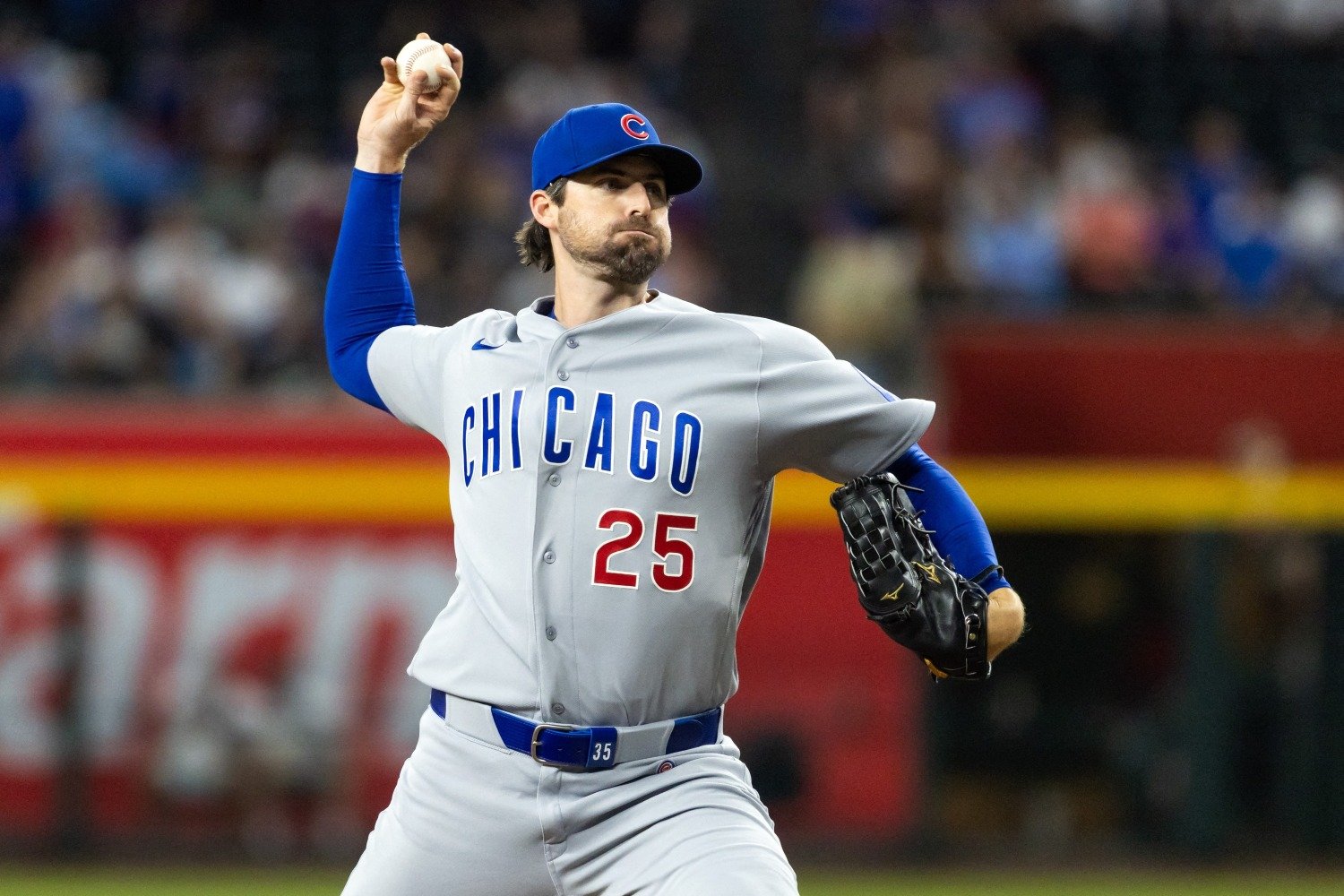 As much as any one pitch can define a starting pitcher in the modern game, the sinker defines Clay Holmes. He throws from a higher arm angle than most sinkerballers, but gets even heavier action on that pitch than most guys who throw it from low slots. It's as true a bowling-ball sinker as any in the game today, and it's made him a hugely successful hurler in multiple roles over the last half-decade. He's also become moderately famous, among players and baseball people, for the genius with which he manipulates the ball. Ben Brown, who learned much about his (very different) sinker while working out with Holmes over the winter, once said Holmes can do more things with the ball than anyone else he's ever seen. Holmes has a feel for spin and deception that few can match. Over his last two starts, though, he's gone to another level. On Monday night, that took the form of six shutout innings against one of the league's best offenses, as he held the Brewers to five hits and two walks while striking out eight. It wasn't the sinker that did the heavy lifting, though. Rather, Holmes dominated Milwaukee with a pitch he barely had when he arrived in Chicago early last month: the cutter. Although he naturally supinates (the direction of forearm turn that should make a cutter pretty easy to learn), Holmes didn't throw a cutter at all until 2025. He's an outlier in many ways, and the same unique way of releasing the ball that allows him to throw a heavy sinker from a four-seamer slot made the cutter feel both uncomfortable and unnecessary. As he transitioned from the bullpen to the rotation after signing with the New York Mets before 2025, however, Holmes wanted to deepen his arsenal, so he mixed in the cutter—not a lot; just enough to keep hitters guessing a little. It really just replaced his slider, which had become redundant once he developed his sweeper. It didn't become a significant part of his arsenal, though, because his sinker, sweeper and kick-change were good enough to obviate it. That remained true early this season. While with the Mets, he barely threw the cutter at all. But the Cubs, who had serious interest in Holmes when he was a free agent, felt that pitch would play for him, and as soon as he arrived via trade on August 3, they started the conversation. It didn't immediately become an important pitch for him, but he brought it along in bullpen sessions and found ways to sneak it in during games. Then, starting with his previous outing in Arizona, the pitch moved toward the center of the stage. Holmes's sinker is tough to hit, no matter what. If you're sitting on it, though, it can be fouled off somewhat consistently. It's also a tough pitch to command, and if hitters can reliably spot it, that can mean some hitter-friendly counts and walks, even though Holmes has good control, overall. As it turns out, the cutter is the cure to all of that. Against the Brewers, Holmes threw 22 cutters. William Contreras managed to flare one line-drive single. Otherwise, it was a boon for the veteran righty. He induced six whiffs on 12 swings against it, and got six called strikes on the 10 cutters at which Brewers batters didn't offer. He threw it as a strike-to-ball pitch, both running away from righties (he struck out Jackson Chourio with it twice) and to the back foot of lefties (goodbye, Christian Yelich). It remains to be seen whether Holmes will command this pitch this well on a regular basis; Monday night was an extraordinary (and, alas, probably rare) bit of mastery. But adding this to his repertoire makes him reliably better—and, specifically, less susceptible to the vagaries of variance. With the cutter playing this big a role in his arsenal, Holmes should be better able to navigate nights on which his sinker isn't behaving exactly as he'd like, and he also gains a higher ceiling. In fact, this version of Holmes—sinker, cutter, sweeper, changeup, the command and movement profiles being what they are—is the very thing the Cubs have longed for and lacked for most of the last two years: a true playoff-caliber ace. That has a chance to radically alter the team's outlook as they head into the postseason, of course. Cutter-added Holmes can keep you in a game even against Tarik Skubal or Jacob Misiorowski, even if he won't overpower opponents in quite the same way. The Cubs need to have real success in the playoffs this time around, and this development gives them a better chance to do so. However, it could also yield longer-term rewards. The team has always liked Holmes, and they told him so when he was a free agent. After this taste of the environment around the team and the immediate success of emphasizing the altered cutter, a contract extension that keeps Holmes around beyond his opt-out at the end of this season feels eminently possible. Chicago traded top infield prospect Jefferson Rojas for Holmes and Tyrone Taylor. That was a bold stroke, and something of an all-in gesture by the team. They lost that bet, in a sense, because they were surely making a play for the division title, and they're not going to win that. They'll have to win a Wild Card Series again, just to get to the meaty part of the postseason. However, if Holmes is as good as he's looked; if the relationship between the two sides continues to go so well; and if he sticks around past 2026, the trade to land him could look like another all-timer at the expense of the Mets. It could be the pivot point at which, finally, the Cubs caught a break and made the most of it.
 -
The Cubs' Playoff Odds Have Taken a Real Hit Since Mid-August
Matthew Trueblood posted an article in Cubs
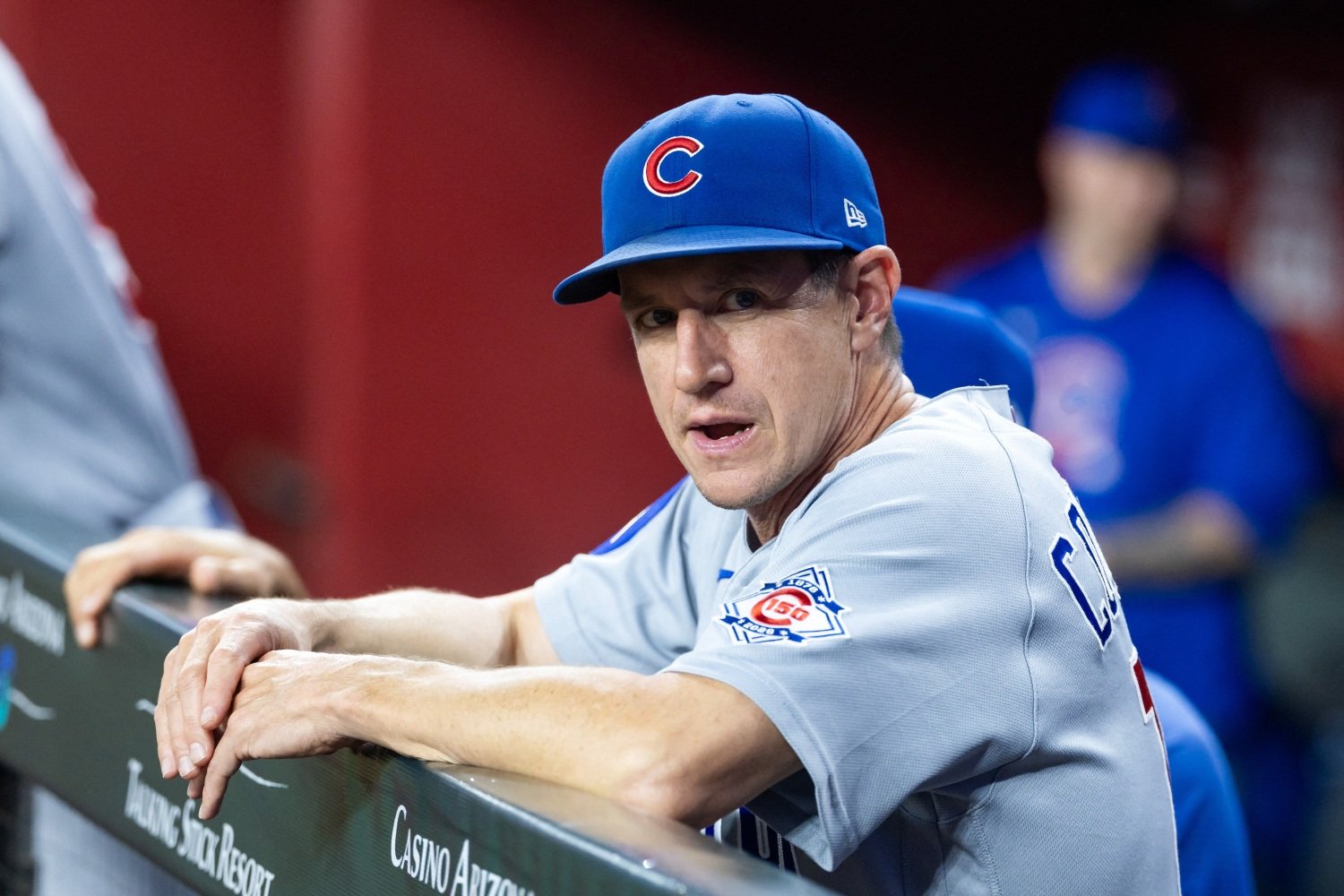 If the season ended today, the Cubs would host the Philadelphia Phillies in a best-of-three series at Wrigley Field for the right to play the Milwaukee Brewers in the National League Division Series. It's not the situation they'd hoped they might end up in when they made a series of big moves at the trade deadline, but all things considered, it would be a good outcome. It's also far from guaranteed to them. In fact, thanks to a 6-9 stretch in which they've lost series to three sub-.500 teams, they're only ahead of the Phillies via a tiebreaker, and they're considerably closer to falling out of the playoffs than to catching the Brewers and winning the NL Central. Playoff odds always have to be considered in context. There are some things a projection system doesn't adequately account for, so the odds assigned to a given team by a site like FanGraphs or Baseball Prospectus are never gospel. Furthermore, not every fan base should be looking at the same set of playoff odds to determine how it's reasonable to feel about their team and its chances. The Cubs are a good example. Here's a chart showing their chances of making the playoffs over the course of this season, via FanGraphs. After their roaring 27-12 start, the team reached an early high-water mark of 91.2% likely to make the postseason. That figure sagged all the way into the 30s at the nadir of their ensuing rough patch, but they've made steady progress since then. After their additions at the trade deadline, they shot up to the high 90s in percentage chance to make it to October, and they're still there. However, merely making the playoffs was never this team's goal, and a backdoor entry and early exit would be a disappointing outcome for their season. Let's consider, instead, their chances of making it at least to the NLDS, where they lost to Milwaukee last fall. How Likely Are the Cubs to Reach the Division Series? The team's best chances of getting back to where they ended last season still came way back in early May, when they were just under a 2-in-3 shot. Because the Brewers built a comfortable cushion in the division and never gave it back, even as the Cubs played much better from mid-June through mid-August, their odds of getting to the NLDS only rose into the low 60s. That was some comfort, at least. Thanks to the combination of their own struggles and the Brewers and Phillies getting hot lately, though, Chicago has dipped back to the wrong side of a coin flip to get to the Division Series—let alone to push to the NLCS or claim the pennant, as they'd surely hoped to be in position to do when they traded several prospects to upgrade the roster early this month. Can the Cubs Still Win the NL Central? It was always going to be different to meaningfully improve on a coin flip's chance to win the Wild Card Series, given the Phillies' ability to shorten the series with starters Zack Wheeler and Cristopher Sánchez and games with reliever Jhoan Duran. The surest way out of the Wild Card round is to win your division; the Cubs' chances of that have dwindled to nothing. That makes the final four weeks of the regular season an exercise in moving goalposts, without losing sight of the importance of putting the ball through them when the time comes. The Cubs can't win the division—not only mathematically, where the uphill climb is obvious, but because the Brewers are genuinely and significantly better than them. They can't afford to declare this season a failure, though, or even permit the possibility of that; too much has been invested in it. They should define success as a campaign in which they get back to the Division Series; that will mean winning another playoff series. Getting past the Brewers (or Dodgers, or the team from near Atlanta) can be viewed as a stretch goal, rather than as a must. Chicago has never run a payroll as high as the one they're running this year. They have several veteran players (Dansby Swanson and Alex Bregman foremost of them) who will never be better than they are right now, and who are under contract for significant sums for the rest of the decade. This winter brings massive roster uncertainty for them, and their farm system is weak. They pushed in a lot of chips on this season, and aren't in as strong a position as a large-market team emerging from a rebuild and enjoying a once-in-a-lifetime season from a superstar should be in, given that commitment. No matter. They just have to go defy the odds. It's time to win. If they don't, this fall should bring serious questions about the front office and its future.
 -
Image courtesy of Mark J. Rebilas-Imagn Images If the season ended today, the Cubs would host the Philadelphia Phillies in a best-of-three series at Wrigley Field for the right to play the Milwaukee Brewers in the National League Division Series. It's not the situation they'd hoped they might end up in when they made a series of big moves at the trade deadline, but all things considered, it would be a good outcome. It's also far from guaranteed to them. In fact, thanks to a 6-9 stretch in which they've lost series to three sub-.500 teams, they're only ahead of the Phillies via a tiebreaker, and they're considerably closer to falling out of the playoffs than to catching the Brewers and winning the NL Central. Playoff odds always have to be considered in context. There are some things a projection system doesn't adequately account for, so the odds assigned to a given team by a site like FanGraphs or Baseball Prospectus are never gospel. Furthermore, not every fan base should be looking at the same set of playoff odds to determine how it's reasonable to feel about their team and its chances. The Cubs are a good example. Here's a chart showing their chances of making the playoffs over the course of this season, via FanGraphs. After their roaring 27-12 start, the team reached an early high-water mark of 91.2% likely to make the postseason. That figure sagged all the way into the 30s at the nadir of their ensuing rough patch, but they've made steady progress since then. After their additions at the trade deadline, they shot up to the high 90s in percentage chance to make it to October, and they're still there. However, merely making the playoffs was never this team's goal, and a backdoor entry and early exit would be a disappointing outcome for their season. Let's consider, instead, their chances of making it at least to the NLDS, where they lost to Milwaukee last fall. How Likely Are the Cubs to Reach the Division Series? The team's best chances of getting back to where they ended last season still came way back in early May, when they were just under a 2-in-3 shot. Because the Brewers built a comfortable cushion in the division and never gave it back, even as the Cubs played much better from mid-June through mid-August, their odds of getting to the NLDS only rose into the low 60s. That was some comfort, at least. Thanks to the combination of their own struggles and the Brewers and Phillies getting hot lately, though, Chicago has dipped back to the wrong side of a coin flip to get to the Division Series—let alone to push to the NLCS or claim the pennant, as they'd surely hoped to be in position to do when they traded several prospects to upgrade the roster early this month. Can the Cubs Still Win the NL Central? It was always going to be different to meaningfully improve on a coin flip's chance to win the Wild Card Series, given the Phillies' ability to shorten the series with starters Zack Wheeler and Cristopher Sánchez and games with reliever Jhoan Duran. The surest way out of the Wild Card round is to win your division; the Cubs' chances of that have dwindled to nothing. That makes the final four weeks of the regular season an exercise in moving goalposts, without losing sight of the importance of putting the ball through them when the time comes. The Cubs can't win the division—not only mathematically, where the uphill climb is obvious, but because the Brewers are genuinely and significantly better than them. They can't afford to declare this season a failure, though, or even permit the possibility of that; too much has been invested in it. They should define success as a campaign in which they get back to the Division Series; that will mean winning another playoff series. Getting past the Brewers (or Dodgers, or the team from near Atlanta) can be viewed as a stretch goal, rather than as a must. Chicago has never run a payroll as high as the one they're running this year. They have several veteran players (Dansby Swanson and Alex Bregman foremost of them) who will never be better than they are right now, and who are under contract for significant sums for the rest of the decade. This winter brings massive roster uncertainty for them, and their farm system is weak. They pushed in a lot of chips on this season, and aren't in as strong a position as a large-market team emerging from a rebuild and enjoying a once-in-a-lifetime season from a superstar should be in, given that commitment. No matter. They just have to go defy the odds. It's time to win. If they don't, this fall should bring serious questions about the front office and its future. View full article
-
What Happened to Daniel Palencia, and Whether It's Fixable
Matthew Trueblood posted an article in Cubs
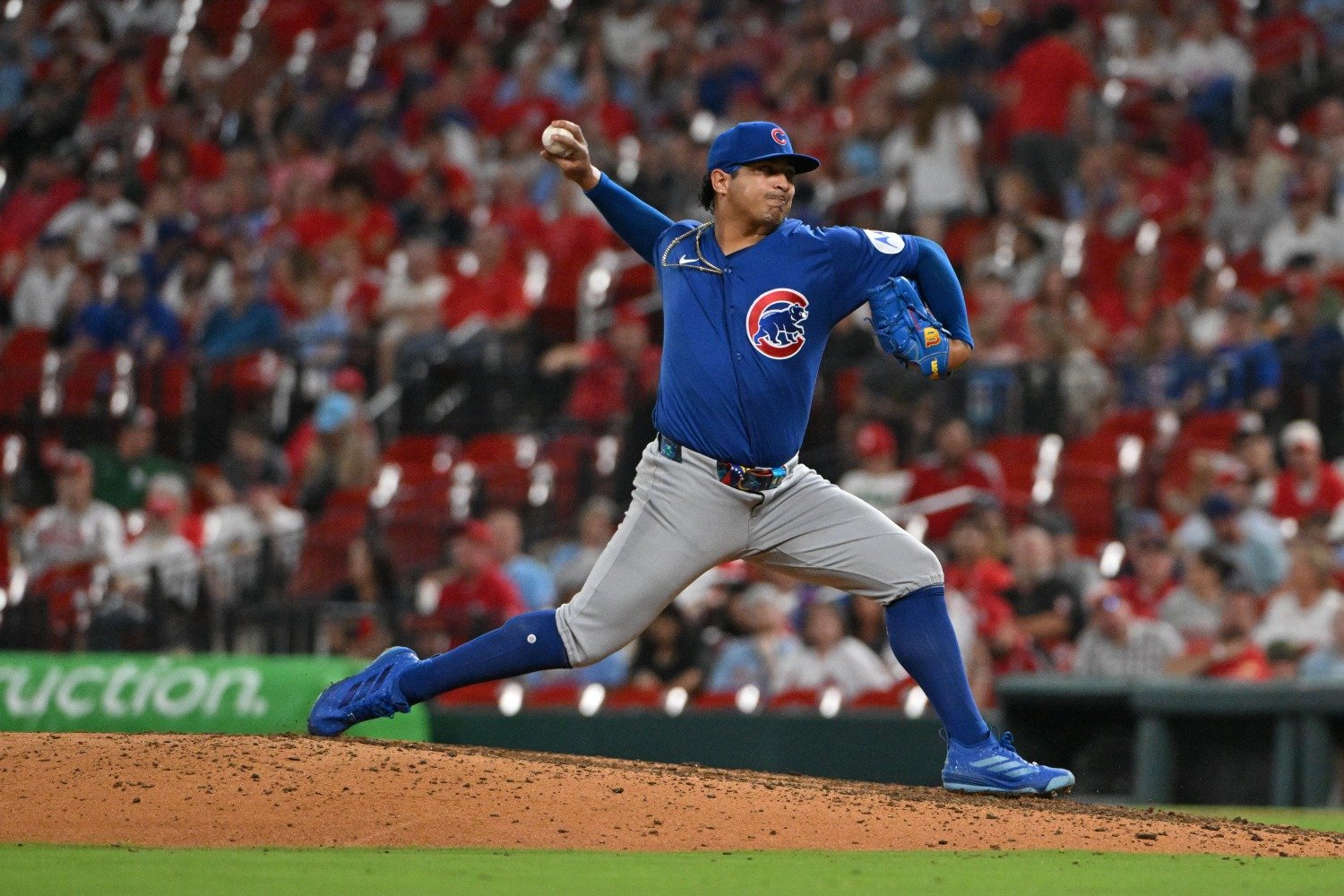 The biggest problem—the only problem, in one sense, but more on that in a bit—is that Daniel Palencia hasn't been healthy this year. Here we stand on the edge of September, and he's yet to crack 20 innings pitched. In a season that has seen winter investments in Phil Maton and Hunter Harvey go for naught and injuries to Cade Horton, Edward Cabrera and Ben Brown cannibalize the bullpen, the Cubs have needed their relief ace, and he hasn't been available for much of the campaign. If he still looked like himself when he was on the mound, though, we could have a different conversation. In fact, since he's now healthy(ish) again, we could have a downright sunny one. Unfortunately, that's not the way things are. Palencia has a 4.19 ERA this season, and a 1.40 WHIP. He's still struck out over 28% of opposing batters, and his walk rate is better than the league average again, but the results when opponents put the ball in play haven't been nearly as good as they were last year. You can call that bad luck; you can observe that he also had some "good luck" last season. But the truth is that luck has nothing (or very little; luck is always a factor in baseball, but it's usually overstated) to do with it. If you want to know what's wrong with Palencia, start right here. This is his average horizontal movement by pitch type for each season of his career. Last May, I wrote about Palencia's unique fastball shape, and how it worked in concert with his sheer velocity and high-energy delivery to flummox opposing batters. I dubbed that shape "run-ride", in contrast with the more often-discussed "cut-ride" heater. The Cubs usually seek and develop cut-ride fastballs, which are pitches with (depending on the hurler and on how you prefer to look at it) more glove-side movement than you'd expect given their induced vertical break or more vertical ride than you'd expect based on their cutting action. Palencia's fastball went from good to great last year when he achieved a flipped version of that. Based on his arm action and his vertical ride, you'd expect less arm-side run than the pitch actually showed—or, if you thought of the pitch as a two-seam runner and were expecting that movement, you'd be surprised by the hop on it. That shape is a bit less unorthodox than a cut-ride one, but most of the pitchers who throw run-ride heaters sit in the low or mid-90s. Palencia's unique formula was throwing exceptionally hard—that's always been his specialty—while also achieving that two-dimensional movement. As you can see in that chart, though, that magic is gone. Palencia's fastball still steams in at 99 MPH or so most of the time, though it's down a half-tick in average velocity and has particularly lost its top register. (The percentage of his heaters that hit 101.0 MPH was 14.8 last season; it's just 7.6 in 2026.) It still has good carry for a pitch thrown so hard. The horizontal movement, however, is gone; his heater has gotten arrow-straight. You can see the effect of that on pitches like the one on which he allowed a back-breaking home run to TJ Friedl on Friday. akR3UHhfWGw0TUFRPT1fQUFKV1V3Y0ZYZ29BRHdZQVZ3QUhVQThDQUZrQUJ3QUFBQUFDQkFKVEJRUlJVd2RV.mp4 Admittedly, one problem here is that this heater was only 97.6 MPH. For reasons we'll touch on shortly, Palencia really needs to operate up at 99-101 to be his superb self. But the bigger issue is that this pitch doesn't have that run toward the outside part of the plate. Even with Friedl swinging flat at the top of the zone, if this offering runs those extra 3-4 inches, it's a routine flyout. Right now, though, Palencia can't consistently produce that run, so pitches aren't getting off hitter's barrels as well as they did in the past. That doesn't show up solely in exit velocity (he's actually allowing less hard contact this season than last), but also in launch angle. Again, the horizontal movement difference on this particular pitch meant the difference between a line-drive homer (launch angle: 26°) and a high, lazy fly ball. This is one reason why Palencia is seeing hitters hit balls in the launch-angle sweet spot at a hugely increased rate this year, which has led to all that damage on balls in play. Hopefully, that sells you on the fact that Palencia needs that extra bit of run to make his fastball work the way it needs to. Now, let's talk about what's led to the loss of movement, so we can get a sense of how likely he is to get it back. For the first insight on that front, check out his arm angle by pitch type and month, throughout his career. Last season, Palencia kept his arm angle on the fastball just over 35°, pretty consistently. This year, it's up to 37°. That difference sounds infinitesimal, right? You can barely even see it on video. Here he is at release, last season and this season. This is a good lesson, though, in how small a thing it can be from which big things come. First, you need to know that Palencia is a pronator. That means that as he releases the ball, he slightly turns his forearm and hand outward. That's where that arm-side run comes from, for most pitchers. Therefore, that slight change in arm angle means Palencia's fingers are slightly more behind the ball as he release it; the pitch has slightly more backspin and slightly less freedom to run off the fingertips and off to the side, despite that turn of the arm. You can see this (although, again, we're talking about small margins) in Palencia's spin axis data. Here's a visualization of the spin and movement directions of his pitches in 2025. Here's the same one for 2026. The difference is almost imperceptible, but it's there, and it's wreaking havoc for Palencia, because he so badly needs those extra few inches of wiggle—especially with anything less than his A+ fastball. That's because he doesn't have a true out pitch other than the fastball; his slider has just never been an exceptionally good pitch. He's never found command or comfort with the splitter. He needs the fastball to work at peak effectiveness; it's not doing so. The slider is a separate but equally salient problem. Just when Palencia could have used a boost from that pitch, it's gotten worse this year, rather than better. He's been unable to find any lateral bite at all with it, and even the depth he achieved fairly often in 2025 is absent this year. That goes back, again, to the arm angle, and to Palencia's motor preference. He's not a guy who can "snap off" a slider in the traditional sense, with a late, powerful and deft inward turn of the wrist. He presets the slider grip and his wrist to produce the movement he wants. That works less well from a higher arm slot, though—and if he's releasing the ball later in his arm action. We've thoroughly diagnosed him, now. Palencia is extremely reliant on his fastball, and right now, that fastball isn't moving the way it needs to, because his arm angle is a touch too high. Ditto for his slider. Time to finally, truly attack the big issue: Can this be fixed? Can it be done quickly? To answer that, let's talk about his recent injury history, in the context of his impressively explosive delivery. Palencia is not a big guy. He's very, very powerfully built, but he's a gas can; the levers are short. All of bhis power has to come from the ground, and from the energy he can create within his frame. The fluidity of people like Chris Sale, Josh Hader or Jacob Misiorowski is not available to Palencia, if he wants to throw hard. He's adapted well to that; he's trained his body to generate enormous torque. For that reason, though, he's always been vulnerable to injuries involving the big muscles that do that power production. In both 2024 and 2025, he was sidelined by shoulder strains, but the shoulder is a big place. Specifically, Palencia was dealing with injuries to the muscles that can almost as easily be called the back as the shoulder—including the lat. Earlier this year, he suffered what was initially diagnosed as an oblique strain, which turned out to be another lat strain. Finally, this summer, the stress of the delivery traveled down the kinetic chain a bit, to his forearm. Palencia is trying to manage the stress that his delivery puts on his body. Unfortunately, some of it is unavoidable, and unfortunately, it's pretty clear that he's still not 100% able to push though and produce power the same way, even as he works through whatever's lingering there. In both pairs of screenshots above, there's a postu ral difference that's actually more evident than the relationship between hand and shoulder. That's Palencia trying to get down the mound more aggressively, getting more power from his legs to take some of the strain off his core and his arm. However, the higher arm slot is an inevitable product of that change to how the rest of his body is moving—and right now, as he protects that arm and tries to avoid blowing it out altogether, going back to moving the way he did in 2025 doesn't seem to be an option. I don't think Palencia is capable of returning to the level at which he pitched for much of 2025, at least until 2027. If he can get through the stretch run healthy and rest over the offseason, he might be in position to return next year at full strength, but it's just not possible without a few months off for the elbow and the forearm. That's bad news for the Cubs, and for Palencia, of course, but the baseball gods don't always give you the break you need. Track Palencia's horizontal fastball movement, vertical slider movement, arm angle, and fastball velocity, in that order. If they each trend in the right direction over the final few weeks of the season, he might be rounding into form just in time to dominate in October. Don't count on it, though. The Cubs will (probably) have to cling to leads as best they can with a patchwork bullpen the rest of the way. The only good news is that that's what they've done all season, anyway.
 -
Image courtesy of Jeff Le-Imagn Images The biggest problem—the only problem, in one sense, but more on that in a bit—is that Daniel Palencia hasn't been healthy this year. Here we stand on the edge of September, and he's yet to crack 20 innings pitched. In a season that has seen winter investments in Phil Maton and Hunter Harvey go for naught and injuries to Cade Horton, Edward Cabrera and Ben Brown cannibalize the bullpen, the Cubs have needed their relief ace, and he hasn't been available for much of the campaign. If he still looked like himself when he was on the mound, though, we could have a different conversation. In fact, since he's now healthy(ish) again, we could have a downright sunny one. Unfortunately, that's not the way things are. Palencia has a 4.19 ERA this season, and a 1.40 WHIP. He's still struck out over 28% of opposing batters, and his walk rate is better than the league average again, but the results when opponents put the ball in play haven't been nearly as good as they were last year. You can call that bad luck; you can observe that he also had some "good luck" last season. But the truth is that luck has nothing (or very little; luck is always a factor in baseball, but it's usually overstated) to do with it. If you want to know what's wrong with Palencia, start right here. This is his average horizontal movement by pitch type for each season of his career. Last May, I wrote about Palencia's unique fastball shape, and how it worked in concert with his sheer velocity and high-energy delivery to flummox opposing batters. I dubbed that shape "run-ride", in contrast with the more often-discussed "cut-ride" heater. The Cubs usually seek and develop cut-ride fastballs, which are pitches with (depending on the hurler and on how you prefer to look at it) more glove-side movement than you'd expect given their induced vertical break or more vertical ride than you'd expect based on their cutting action. Palencia's fastball went from good to great last year when he achieved a flipped version of that. Based on his arm action and his vertical ride, you'd expect less arm-side run than the pitch actually showed—or, if you thought of the pitch as a two-seam runner and were expecting that movement, you'd be surprised by the hop on it. That shape is a bit less unorthodox than a cut-ride one, but most of the pitchers who throw run-ride heaters sit in the low or mid-90s. Palencia's unique formula was throwing exceptionally hard—that's always been his specialty—while also achieving that two-dimensional movement. As you can see in that chart, though, that magic is gone. Palencia's fastball still steams in at 99 MPH or so most of the time, though it's down a half-tick in average velocity and has particularly lost its top register. (The percentage of his heaters that hit 101.0 MPH was 14.8 last season; it's just 7.6 in 2026.) It still has good carry for a pitch thrown so hard. The horizontal movement, however, is gone; his heater has gotten arrow-straight. You can see the effect of that on pitches like the one on which he allowed a back-breaking home run to TJ Friedl on Friday. akR3UHhfWGw0TUFRPT1fQUFKV1V3Y0ZYZ29BRHdZQVZ3QUhVQThDQUZrQUJ3QUFBQUFDQkFKVEJRUlJVd2RV.mp4 Admittedly, one problem here is that this heater was only 97.6 MPH. For reasons we'll touch on shortly, Palencia really needs to operate up at 99-101 to be his superb self. But the bigger issue is that this pitch doesn't have that run toward the outside part of the plate. Even with Friedl swinging flat at the top of the zone, if this offering runs those extra 3-4 inches, it's a routine flyout. Right now, though, Palencia can't consistently produce that run, so pitches aren't getting off hitter's barrels as well as they did in the past. That doesn't show up solely in exit velocity (he's actually allowing less hard contact this season than last), but also in launch angle. Again, the horizontal movement difference on this particular pitch meant the difference between a line-drive homer (launch angle: 26°) and a high, lazy fly ball. This is one reason why Palencia is seeing hitters hit balls in the launch-angle sweet spot at a hugely increased rate this year, which has led to all that damage on balls in play. Hopefully, that sells you on the fact that Palencia needs that extra bit of run to make his fastball work the way it needs to. Now, let's talk about what's led to the loss of movement, so we can get a sense of how likely he is to get it back. For the first insight on that front, check out his arm angle by pitch type and month, throughout his career. Last season, Palencia kept his arm angle on the fastball just over 35°, pretty consistently. This year, it's up to 37°. That difference sounds infinitesimal, right? You can barely even see it on video. Here he is at release, last season and this season. This is a good lesson, though, in how small a thing it can be from which big things come. First, you need to know that Palencia is a pronator. That means that as he releases the ball, he slightly turns his forearm and hand outward. That's where that arm-side run comes from, for most pitchers. Therefore, that slight change in arm angle means Palencia's fingers are slightly more behind the ball as he release it; the pitch has slightly more backspin and slightly less freedom to run off the fingertips and off to the side, despite that turn of the arm. You can see this (although, again, we're talking about small margins) in Palencia's spin axis data. Here's a visualization of the spin and movement directions of his pitches in 2025. Here's the same one for 2026. The difference is almost imperceptible, but it's there, and it's wreaking havoc for Palencia, because he so badly needs those extra few inches of wiggle—especially with anything less than his A+ fastball. That's because he doesn't have a true out pitch other than the fastball; his slider has just never been an exceptionally good pitch. He's never found command or comfort with the splitter. He needs the fastball to work at peak effectiveness; it's not doing so. The slider is a separate but equally salient problem. Just when Palencia could have used a boost from that pitch, it's gotten worse this year, rather than better. He's been unable to find any lateral bite at all with it, and even the depth he achieved fairly often in 2025 is absent this year. That goes back, again, to the arm angle, and to Palencia's motor preference. He's not a guy who can "snap off" a slider in the traditional sense, with a late, powerful and deft inward turn of the wrist. He presets the slider grip and his wrist to produce the movement he wants. That works less well from a higher arm slot, though—and if he's releasing the ball later in his arm action. We've thoroughly diagnosed him, now. Palencia is extremely reliant on his fastball, and right now, that fastball isn't moving the way it needs to, because his arm angle is a touch too high. Ditto for his slider. Time to finally, truly attack the big issue: Can this be fixed? Can it be done quickly? To answer that, let's talk about his recent injury history, in the context of his impressively explosive delivery. Palencia is not a big guy. He's very, very powerfully built, but he's a gas can; the levers are short. All of bhis power has to come from the ground, and from the energy he can create within his frame. The fluidity of people like Chris Sale, Josh Hader or Jacob Misiorowski is not available to Palencia, if he wants to throw hard. He's adapted well to that; he's trained his body to generate enormous torque. For that reason, though, he's always been vulnerable to injuries involving the big muscles that do that power production. In both 2024 and 2025, he was sidelined by shoulder strains, but the shoulder is a big place. Specifically, Palencia was dealing with injuries to the muscles that can almost as easily be called the back as the shoulder—including the lat. Earlier this year, he suffered what was initially diagnosed as an oblique strain, which turned out to be another lat strain. Finally, this summer, the stress of the delivery traveled down the kinetic chain a bit, to his forearm. Palencia is trying to manage the stress that his delivery puts on his body. Unfortunately, some of it is unavoidable, and unfortunately, it's pretty clear that he's still not 100% able to push though and produce power the same way, even as he works through whatever's lingering there. In both pairs of screenshots above, there's a postu ral difference that's actually more evident than the relationship between hand and shoulder. That's Palencia trying to get down the mound more aggressively, getting more power from his legs to take some of the strain off his core and his arm. However, the higher arm slot is an inevitable product of that change to how the rest of his body is moving—and right now, as he protects that arm and tries to avoid blowing it out altogether, going back to moving the way he did in 2025 doesn't seem to be an option. I don't think Palencia is capable of returning to the level at which he pitched for much of 2025, at least until 2027. If he can get through the stretch run healthy and rest over the offseason, he might be in position to return next year at full strength, but it's just not possible without a few months off for the elbow and the forearm. That's bad news for the Cubs, and for Palencia, of course, but the baseball gods don't always give you the break you need. Track Palencia's horizontal fastball movement, vertical slider movement, arm angle, and fastball velocity, in that order. If they each trend in the right direction over the final few weeks of the season, he might be rounding into form just in time to dominate in October. Don't count on it, though. The Cubs will (probably) have to cling to leads as best they can with a patchwork bullpen the rest of the way. The only good news is that that's what they've done all season, anyway. View full article
-
Image courtesy of Mark J. Rebilas-Imagn Images The cruel thing about expectations is that you have to earn them, and then you have to live up to them—and then, once you live up and even exceed them, they just rise, and it's even harder to meet them from then on. Athletes make brilliant plays and put up great statistics, and maybe they time it just right and that makes them rich and famous and beloved, but even if it does, it also makes them an object of scrutiny. And it means dealing with lots of ever-rising expectations. Pete Crow-Armstrong is having a season for the ages. He should win the National League MVP Award, unless something unforeseen happens between now and the end of the campaign. He's matured extraordinarily quickly at the plate, and the cut-to-the-bone intensity of the way he's competed all season is irresistible. He's an elite slugger who also runs the bases like it's his last day on Earth. He's carried a thoroughly average team to a comfortable playoff position as the calendar flips to September. And, of course, he's the best center fielder in the game, defensively. Right? Look: he's certainly not bad. Crow-Armstrong is, in fact, above-average out there, even this month, according to Statcast. He's been worth 2 runs in center in August, if you believe Fielding Run Value, and since that's the only publicly available defensive metric that allows us to split it out by month, you kind of have to believe it, right? Crow-Armstrong is a plus center fielder; that's not in question. However, he was worth 7 runs in March and April, and 7 more in May. He had a bit of a sag in June (I felt that one, too, but thought it best to see if the blip was just that), but he saved 6 runs in July, too. In those months—the first third of the season, essentially, and then July, especially after the All-Star break—he was clearly the best defender in the game. He ran down everything. His body control was exquisite. His arm, which got some of its potency from the genius of his footwork, was a weapon. There just didn't seem to be any undefended grass for the opponents to find in center field; that's an empowering feeling for a pitching staff. It's not quite true lately. This is normal; I'm not excoriating or castigating Crow-Armstrong. The grind takes its toll on everyone; you can't opt out of getting tired by seeming to be the human incarnation of Red Bull. Then, too, there's the fact that Crow-Armstrong has plainly worked hard to keep good weight on his frame this season, so he can maintain the exceptional bat speed that has made him such a fearsome slugger. You pay a price for that, too, when you previously moved like Hermes in cleats and cut through the wind like a blade. He's a sturdier guy than he was even a year ago, which means he's a tiny bit slower and less lithe—and maybe, when it's been almost three weeks since the team's last day off and your legs are heavy, more than a tiny bit. Hopefully, though, you've also noticed this, because it's not just some artifact of the numbers. Here's a single hit by Kyle Tucker when the Dodgers were in town at the start of this month that didn't have to fall in. M3k2MTFfWGw0TUFRPT1fRGxBRFhBRURVQWNBWFZ0V1ZRQUhCbFJTQUFOVVZGRUFVQU5UVVZZRlZBTUVDQVpR (1).mp4 Any center fielder will tell you that the hardest ball to read is the line drive coming right at you. In a tied game and with no outs in the inning, Crow-Armstrong might have been thinking at least half-consciously about not taking undue risks. He also excels mostly when going to his left or his right; he's never been the most daring center fielder in the league when coming in straight in on the dive. However, he's made catches on balls just like this before—including earlier this year, against the Dodgers, in Los Angeles. Playing this one safe is the kind of tiny, subtle sign that a player is either conserving some energy or not quite as razor-sharp as is required to be an elite defender in this increasingly fast game. This one is a more straightforward example of Crow-Armstrong not making a play he would normally make. d2V3eFFfV0ZRVkV3dEdEUT09X1ZBbFVVd1pWQUZNQUR3TUtVZ0FIQnc4RkFGbFRXbGdBVjF3QlZnWlRVd01EQWxSVA==.mp4 See the way he leans forward, and the stomping deceleration as he approaches this ball while it falls? That's not the mark of a below-average fielder. It's extremely normal. This is how just about everyone plays this ball. The thing is, go back in time a few months, and it's not how Crow-Armstrong plays it. His unique brilliance laid in the fact that on balls just like that one, he would glide through the ball without slowing down at all. He showed a once-in-a-generation feel for running through the catch point, or even sliding or diving through it with as little lost speed as physics would allow. The guy who almost makes this very important play, but doesn't quite get there? He's not letting the team down, or anything, but he's not saving the day, the way Crow-Armstrong usually does. This happened the very next day. TzA0cm9fWGw0TUFRPT1fVUFaVUJRVUNWZ3NBV1ZzQ0F3QUhBUWRWQUZrQldnSUFCQVJVQTFBSENGVmNBQVZl.mp4 This was even more catchable. Situationally, though, it demanded a bit more caution, and Crow-Armstrong was more cautious, all right. He didn't even rush onto the short hop, as he did the day before. He made a calculated decision to pull up and wait on this ball. That wasn't necessarily the wrong choice; it kept the runner who began the play on first base from reaching third. He made the safe play. In May, though, that ball is caught. It might be that Crow-Armstrong is actually slower lately, either in responding to the ball off the bat or in that fateful final step or two in pursuit of the ball. It might be that he's choosing to play the percentages, to avoid some of the ugly errors that befell him even while he was making such incredible plays earlier this year. I think the most likely explanation is different, though. I think Crow-Armstrong is preserving himself a bit. I would guess that's subconscious, because he seems utterly incapable of throttling back on purpose; he just burns too hot. But this is common—almost universal. When young players who have traditionally been high-motor defensive stars blossom into elite offensive producers, they usually become more conservative, less valuable defenders. This is true in other sports, too, but it's especially true in baseball. Teams not only don't mind this, but often encourage it. The better you hit, the more conversations about your defense start to center on reducing mileage on your legs or avoiding that fateful rollover wrist sprain. Playing great defense requires putting your body at risk, especially at high-value defensive positions. Teams like when their star sluggers do a tiny bit less of all that. Baseball—life itself, I guess, but especially baseball—is about tradeoffs. Many of those tradeoffs are unavoidable, even if we wish they weren't or can't quite articulate why they are. To spare some energy; to avoid those nagging injuries; and to find extra time for BP, a player often gives up a bit of pregame defensive work or pulls up on a fly ball they almost could have caught. It's normal. It's fine. It might even be crucial. It's sad, though, to me. The exhilaration of the completeness of Crow-Armstrong is a bit deflated by this turn. No matter how clear-eyed you are about those tradeoffs we mentioned and about the reasonable limits of all-around superstardom, be honest: a little piece of you wants Crow-Armstrong to keep being the best defender you've ever seen and to go steal 50 bases, in addition to hitting the way he's been hitting since late May. That, it turns out, might not be possible. Willie Mays used to play so much and so hard and put so much of himself into all facets of his breathtakingly gorgeous game that he would end up in the hospital for a day or two, a time or two a year, due to exhaustion. No one wants to see Crow-Armstrong push himself quite to that extreme, and the fury of his competitiveness makes that feel like a real risk sometimes. It's ok that he's currently taking just enough weight off the gas pedal to keep the car under control. We'll all just have to hope that he can put the pedal back down when the games matter most, and that the part of his game that initially made him stand out hasn't been permanently diminished by his transformation into an equally excellent hitter. View full article
-
Pete Crow-Armstrong Hasn't Been an Elite Defender Lately
Matthew Trueblood posted an article in Cubs
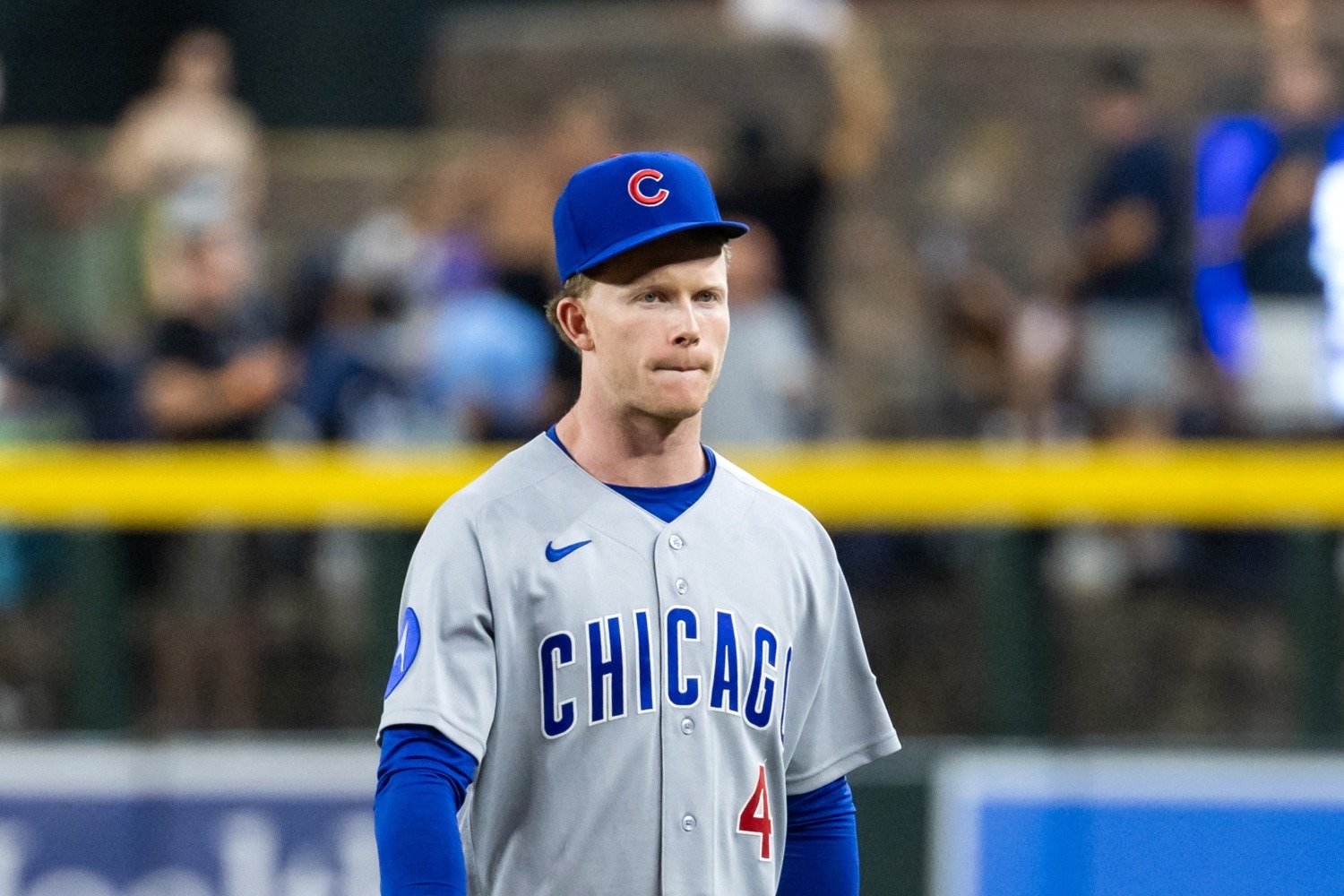 The cruel thing about expectations is that you have to earn them, and then you have to live up to them—and then, once you live up and even exceed them, they just rise, and it's even harder to meet them from then on. Athletes make brilliant plays and put up great statistics, and maybe they time it just right and that makes them rich and famous and beloved, but even if it does, it also makes them an object of scrutiny. And it means dealing with lots of ever-rising expectations. Pete Crow-Armstrong is having a season for the ages. He should win the National League MVP Award, unless something unforeseen happens between now and the end of the campaign. He's matured extraordinarily quickly at the plate, and the cut-to-the-bone intensity of the way he's competed all season is irresistible. He's an elite slugger who also runs the bases like it's his last day on Earth. He's carried a thoroughly average team to a comfortable playoff position as the calendar flips to September. And, of course, he's the best center fielder in the game, defensively. Right? Look: he's certainly not bad. Crow-Armstrong is, in fact, above-average out there, even this month, according to Statcast. He's been worth 2 runs in center in August, if you believe Fielding Run Value, and since that's the only publicly available defensive metric that allows us to split it out by month, you kind of have to believe it, right? Crow-Armstrong is a plus center fielder; that's not in question. However, he was worth 7 runs in March and April, and 7 more in May. He had a bit of a sag in June (I felt that one, too, but thought it best to see if the blip was just that), but he saved 6 runs in July, too. In those months—the first third of the season, essentially, and then July, especially after the All-Star break—he was clearly the best defender in the game. He ran down everything. His body control was exquisite. His arm, which got some of its potency from the genius of his footwork, was a weapon. There just didn't seem to be any undefended grass for the opponents to find in center field; that's an empowering feeling for a pitching staff. It's not quite true lately. This is normal; I'm not excoriating or castigating Crow-Armstrong. The grind takes its toll on everyone; you can't opt out of getting tired by seeming to be the human incarnation of Red Bull. Then, too, there's the fact that Crow-Armstrong has plainly worked hard to keep good weight on his frame this season, so he can maintain the exceptional bat speed that has made him such a fearsome slugger. You pay a price for that, too, when you previously moved like Hermes in cleats and cut through the wind like a blade. He's a sturdier guy than he was even a year ago, which means he's a tiny bit slower and less lithe—and maybe, when it's been almost three weeks since the team's last day off and your legs are heavy, more than a tiny bit. Hopefully, though, you've also noticed this, because it's not just some artifact of the numbers. Here's a single hit by Kyle Tucker when the Dodgers were in town at the start of this month that didn't have to fall in. M3k2MTFfWGw0TUFRPT1fRGxBRFhBRURVQWNBWFZ0V1ZRQUhCbFJTQUFOVVZGRUFVQU5UVVZZRlZBTUVDQVpR (1).mp4 Any center fielder will tell you that the hardest ball to read is the line drive coming right at you. In a tied game and with no outs in the inning, Crow-Armstrong might have been thinking at least half-consciously about not taking undue risks. He also excels mostly when going to his left or his right; he's never been the most daring center fielder in the league when coming in straight in on the dive. However, he's made catches on balls just like this before—including earlier this year, against the Dodgers, in Los Angeles. Playing this one safe is the kind of tiny, subtle sign that a player is either conserving some energy or not quite as razor-sharp as is required to be an elite defender in this increasingly fast game. This one is a more straightforward example of Crow-Armstrong not making a play he would normally make. d2V3eFFfV0ZRVkV3dEdEUT09X1ZBbFVVd1pWQUZNQUR3TUtVZ0FIQnc4RkFGbFRXbGdBVjF3QlZnWlRVd01EQWxSVA==.mp4 See the way he leans forward, and the stomping deceleration as he approaches this ball while it falls? That's not the mark of a below-average fielder. It's extremely normal. This is how just about everyone plays this ball. The thing is, go back in time a few months, and it's not how Crow-Armstrong plays it. His unique brilliance laid in the fact that on balls just like that one, he would glide through the ball without slowing down at all. He showed a once-in-a-generation feel for running through the catch point, or even sliding or diving through it with as little lost speed as physics would allow. The guy who almost makes this very important play, but doesn't quite get there? He's not letting the team down, or anything, but he's not saving the day, the way Crow-Armstrong usually does. This happened the very next day. TzA0cm9fWGw0TUFRPT1fVUFaVUJRVUNWZ3NBV1ZzQ0F3QUhBUWRWQUZrQldnSUFCQVJVQTFBSENGVmNBQVZl.mp4 This was even more catchable. Situationally, though, it demanded a bit more caution, and Crow-Armstrong was more cautious, all right. He didn't even rush onto the short hop, as he did the day before. He made a calculated decision to pull up and wait on this ball. That wasn't necessarily the wrong choice; it kept the runner who began the play on first base from reaching third. He made the safe play. In May, though, that ball is caught. It might be that Crow-Armstrong is actually slower lately, either in responding to the ball off the bat or in that fateful final step or two in pursuit of the ball. It might be that he's choosing to play the percentages, to avoid some of the ugly errors that befell him even while he was making such incredible plays earlier this year. I think the most likely explanation is different, though. I think Crow-Armstrong is preserving himself a bit. I would guess that's subconscious, because he seems utterly incapable of throttling back on purpose; he just burns too hot. But this is common—almost universal. When young players who have traditionally been high-motor defensive stars blossom into elite offensive producers, they usually become more conservative, less valuable defenders. This is true in other sports, too, but it's especially true in baseball. Teams not only don't mind this, but often encourage it. The better you hit, the more conversations about your defense start to center on reducing mileage on your legs or avoiding that fateful rollover wrist sprain. Playing great defense requires putting your body at risk, especially at high-value defensive positions. Teams like when their star sluggers do a tiny bit less of all that. Baseball—life itself, I guess, but especially baseball—is about tradeoffs. Many of those tradeoffs are unavoidable, even if we wish they weren't or can't quite articulate why they are. To spare some energy; to avoid those nagging injuries; and to find extra time for BP, a player often gives up a bit of pregame defensive work or pulls up on a fly ball they almost could have caught. It's normal. It's fine. It might even be crucial. It's sad, though, to me. The exhilaration of the completeness of Crow-Armstrong is a bit deflated by this turn. No matter how clear-eyed you are about those tradeoffs we mentioned and about the reasonable limits of all-around superstardom, be honest: a little piece of you wants Crow-Armstrong to keep being the best defender you've ever seen and to go steal 50 bases, in addition to hitting the way he's been hitting since late May. That, it turns out, might not be possible. Willie Mays used to play so much and so hard and put so much of himself into all facets of his breathtakingly gorgeous game that he would end up in the hospital for a day or two, a time or two a year, due to exhaustion. No one wants to see Crow-Armstrong push himself quite to that extreme, and the fury of his competitiveness makes that feel like a real risk sometimes. It's ok that he's currently taking just enough weight off the gas pedal to keep the car under control. We'll all just have to hope that he can put the pedal back down when the games matter most, and that the part of his game that initially made him stand out hasn't been permanently diminished by his transformation into an equally excellent hitter.
 -
Image courtesy of Mark J. Rebilas-Imagn Images Calling the Cubs' loss Tuesday night in Arizona a gut punch would be inaccurate. A gut punch is a single, sudden blow to which you left yourself open, but which required the opponent to spot the vulnerability instantly and attack without hesitation or error. What happened to Chicago was more like losing your cap on a windy day; missing a chance to seize it before it spins away; and then plunging down a roadside embankment chasing the damn thing because you weren't watching where you were going. Let's review the carnage. Clay Holmes did everything the team could have asked of him. A sudden ace with a chance to pitch at the front end of Chicago's postseason rotation, Holmes was stellar, spinning seven scoreless innings against a Diamondbacks lineup that lacks some of its dynamism right now amid the ongoing Ketel Marte drama. Meanwhile, Ian Happ paid off a great at-bat with a three-run homer, and the team even tacked on an early insurance run. It looked like smooth sailing. To ensure it stayed that way, Holmes got some defensive help from newly-minted second baseman Pedro Ramírez. After seven innings, the Cubs not only enjoyed a comfortable lead, but hadn't been scored upon since early Sunday. They'd scored 30 runs since then, the first time they've put up that many runs between opponent tallies since 1969. It was all looking easy. That was the trap. It's never easy. In the bottom of the eighth, the Cubs found that out the hard way. Daniel Palencia's efforts to get back into a groove since coming off the injured list have been erratic, in costly ways, and this was no exception. After one quick out, he hit a batter, then walked a batter. He struck out the dangerous Corbin Carroll, and he had a 2-2 count on Gabriel Moreno; he was almost out of the jam. Then came that gust of horrible wind: a check-swing grounder by Moreno that somehow stayed fair up the first-base line. It eluded Michael Busch and trickled down the line, allowing one run to score and resulting in two more in scoring position. A Geraldo Perdomo single plated both runners, and Craig Counsell had to lift Palencia in favor of closer Jacob Webb. Four-out saves are a tall order for Webb. His improvements this season have been real, and he's a legitimate high-leverage arm, but he's not a top-tier relief ace. That means he's going to fail sometimes. To minimize the number of times those failures happen, it's important to avoid asking too much of him too often. To minimize the impact of the times when he does fail, it's important to have a decent-sized margin for error as often as possible. Lately, the Cubs are asking a lot of Webb, and doing so when the margin for error is minimal. Flawed Catch and Tag Cost Cubs Chance to End Game on Stolen Base Attempt Thus, even after he got the team out of the eighth with a 4-3 lead intact, Webb had a gauntlet to run, and this time, you knew it wouldn't be easy. With one out in the bottom of the ninth, he walked Tim Tawa. With two outs and pinch-hitter Ryan Waldschmidt at the plate, pinch-runner Jose Fernandez took off for second base, and that moment came when the Cubs could have spared themselves the loss of that cap to the win, before it even lifted off their head. Webb did a reasonably good job holding Fernandez. Miguel Amaya got off a good (though certainly not a great) throw, and there was a chance—or maybe just a ghost of a chance—to get Fernandez. The play was close enough that, even after the initial safe call, the Cubs elected to go to replay, because if the out had been converted, it would have ended the game. It was a very quick review; the call was confirmed. But we don't have to focus on the fact that Fernandez was safe; let's examine how close he came to being out, and whether he should have been. Amaya's throws to second on steal attempts have largely been quite accurate this year. He rates as average in terms of pure arm strength, the rapidity of his exchange and release, and that accuracy, but he makes lots of throws that feel even more accurate than the metrics reflect. He belongs to the class of catchers who generally see their throws tail into the runner, in a good way. Here's an example: SzRCeWxfWGw0TUFRPT1fQVZkWUJWY0hYbGNBV1FZR1Z3QUhVRkJmQUFNRVZGVUFDMVVEQ1ZFR1VBTURCZ1VE.mp4 There are other times when Amaya seems to be throwing a bit wide of the bag to the third-base side, only for the ball to run back over the base almost perfectly, like this: Uk85UjNfWGw0TUFRPT1fVjFJQ0FGRU1VRkFBWEFNQUJRQUhBUTVSQUFNR1dsRUFVMVlGVlFFSEIxRlZVVk5X.mp4 Unfortunately, the throw he made Tuesday night wasn't quite like either of those. It stayed true, and it stayed on the third-base side of second. Here's where Ramírez was (and Fernandez, the incoming runner, too) when the ball arrived: At this point, Fernandez is only a few feet from the base, and getting all the way from where Ramírez catches it to the runner's arm or shoulder before their hand reaches the base is no easy task. At this point, there was no chance of getting an out on the play. However, even a beat sooner, there was a chance to do so. Understanding how that chance slipped away offers some insight into the nature of this kind of play. Here's where everyone relevant was when the Diamondbacks broadcast first cut from the center-field camera to the one high and behind home plate. That looks innnocuous, but there's a morsel to comment on even here. Ramírez is in this habit, when playing second: he curls to the shortstop side of the bag, then gets out in front of it. That's how Dansby Swanson receives throws on plays like this one, but it's not how you typically see a second baseman do so. Most of them prefer to achieve that same position right at the front edge of the bag via the right side of the keystone. Here's Nico Hoerner on the play against the Pirates that we looked at earlier: This initially seems like a detail so small as not to matter, or at least to be rightfully subject to the comfort and whims of each inidividual, but how you address the base can change how the whole play works. Broadly speaking, the sooner you get to that spot right in front of the base, the less hurried all of your actions thereafter will be. Which side you arrive on will also color the way you prepare your body for the quick-twitch movements required to convert a caught-stealing opportunity, and what type of movement you (subconsciously) choose when that situation presents itself. Here's a key moment in the flight of this particular throw. Ramírez established his initial position, but now, he's reacting to the throw itself. The rest of this play is an improvisation, based on past reps that bear at least some resemblance; this is the last moment when he'd really deciding how to play the ball. By now, it's clear that Amaya's arm angle was a hair higher than usual, and that this ball is going to end up wide of the bag on the third-base side. In a way, that works out nicely for Ramírez, who showed up on that side of it, anyway. Now, though, he has to react and move quickly, to get into position for when the ball arrives. Here's the fateful step he chooses to do that. Just before this, Ramírez had taken a step that put his left foot about a foot in front of second base. That was a bit too aggressive, but it got him into position to stick that right foot out farther, building potential energy within his frame. It also gave him something firm to put his weight on, so he could edit that first step with the left foot. Had he turned his hips a bit more toward first base at that moment and pulled the left leg through, he could have moved toward the near-default of Swanson, an expert on these plays. He could have dropped into the one-knee tagging stance Swanson adopts on virtually every such play. (Yes, that stance can still work even when a throw looks like Tuesday night's did, a bit to the third-base side of the optimal spot.) Instead, though, Ramírez's rebalancing step with the left foot just went backward. He achieved a wider base and a powerful position for the turn-and-dive tag, but his hips got locked into place. From the reverse angle, you can see (as he's about to receive the ball) that he wasn't in a stable position where he could shift and turn off that left leg, either. By the time the ball got to him, Ramírez was pretty off-balance. He needed some of that lean, because he was a long way from getting his tag to its mark and was running out of time, but some of the awkwardness in his position really was just that. He ended up reaching for the ball, snaring it a bit sooner than was necessary, and his tag couldn't reach Fernandez in time. This might sound overwrought, but a throw-and-catch to nail a would-be baserunner really is a rapport play. Amaya and Ramírez, unfortunately, have almost no established on-field rapport. That matters on multiple levels. Catchers get used to throwing with certain defenders' moves and positions in mind. Infielders, on the other end, move in response to and in anticipation of a catcher's typical throws. Greater trust between catcher and middle infielder allows those infielders to let the ball travel more, which nearly always produces an earlier tag arrival than going and snatching the ball. Swanson is special as a receiver of these throws, too. His absence is heavily felt, on plays like this just as on balls hit in the hole or when it's time to turn a double play. But as is true in other areas, moving Hoerner over to stop the gap also leads to a downstream downgrade. Hoerner not only has much more experience working with Amaya, but is a lighter-footed athlete around the base than Ramírez is. Here (on the same play we studied above), look how he creates a moment in which both of his feet are off the ground just before the ball arrives, maximizing his opportunity to contort himself where needed to cover a big space with a lightning-fast tag move. Less explosive and less polished, Ramírez just isn't the whiz that Swanson and Hoerner are, and on the fateful play Tuesday night, those disadvantages were compounded by the fact that he and Amaya have worked together very little on throws like these. Swanson and Hoerner each could have gotten an out on that play, ending the game. Ramírez couldn't make that difficult play, so the game continued. Jacob Webb's Sudden Home Run Problem Dooms Cubs That just leaves falling down a hill, from our earlier metaphor. That's just what Webb did next. He hung a 2-1 slider in the thick of the zone to Waldschmidt, who launched a two-run, walkoff homer. It was the third time the team has been walked off in their last five gaesm, and the second time it came on a homer against Webb. The righty didn't have great feel for his fastball or for his signature changeup, so he went to the slider he's taken pride in this year—the one he believes has made him less predictable and harder to hit for right-handed batters. He just didn't execute it. It's always the little things that add up to something big and insurmountable. It's never just bad luck. It's bad luck, compounded by a slight deficiency in a skill you barely notice most of the time, and then seasoned with a combination of a bad mistake and an opportunistic foe. The Cubs found a uniquely excruciating way to lose Tuesday night, with a few small mistakes made worse by circumstances and sequencing. That's not easy to shake off, no matter what, but coming on the heels of two other games that slipped away in similarly miserable ways makes it exponentially worse. All the team can do is come back Wednesday and try to secure a series win, hoping they gained at least a little experience, rapport and wisdom from their failures. View full article
-
In a Heartbreak Triple-Whammy, Cubs Lose a Game They Should Have Won
Matthew Trueblood posted an article in Cubs
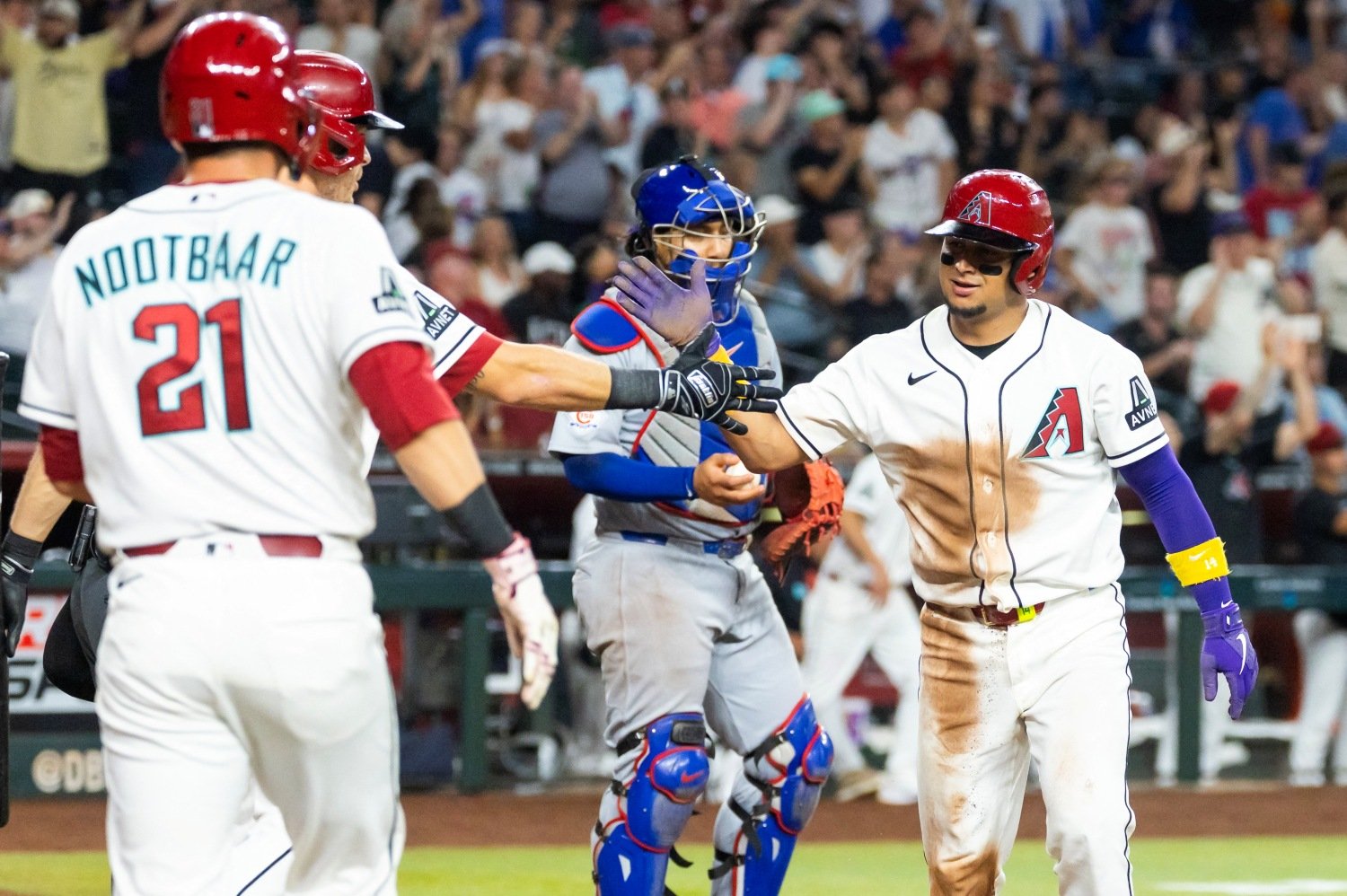 Calling the Cubs' loss Tuesday night in Arizona a gut punch would be inaccurate. A gut punch is a single, sudden blow to which you left yourself open, but which required the opponent to spot the vulnerability instantly and attack without hesitation or error. What happened to Chicago was more like losing your cap on a windy day; missing a chance to seize it before it spins away; and then plunging down a roadside embankment chasing the damn thing because you weren't watching where you were going. Let's review the carnage. Clay Holmes did everything the team could have asked of him. A sudden ace with a chance to pitch at the front end of Chicago's postseason rotation, Holmes was stellar, spinning seven scoreless innings against a Diamondbacks lineup that lacks some of its dynamism right now amid the ongoing Ketel Marte drama. Meanwhile, Ian Happ paid off a great at-bat with a three-run homer, and the team even tacked on an early insurance run. It looked like smooth sailing. To ensure it stayed that way, Holmes got some defensive help from newly-minted second baseman Pedro Ramírez. After seven innings, the Cubs not only enjoyed a comfortable lead, but hadn't been scored upon since early Sunday. They'd scored 30 runs since then, the first time they've put up that many runs between opponent tallies since 1969. It was all looking easy. That was the trap. It's never easy. In the bottom of the eighth, the Cubs found that out the hard way. Daniel Palencia's efforts to get back into a groove since coming off the injured list have been erratic, in costly ways, and this was no exception. After one quick out, he hit a batter, then walked a batter. He struck out the dangerous Corbin Carroll, and he had a 2-2 count on Gabriel Moreno; he was almost out of the jam. Then came that gust of horrible wind: a check-swing grounder by Moreno that somehow stayed fair up the first-base line. It eluded Michael Busch and trickled down the line, allowing one run to score and resulting in two more in scoring position. A Geraldo Perdomo single plated both runners, and Craig Counsell had to lift Palencia in favor of closer Jacob Webb. Four-out saves are a tall order for Webb. His improvements this season have been real, and he's a legitimate high-leverage arm, but he's not a top-tier relief ace. That means he's going to fail sometimes. To minimize the number of times those failures happen, it's important to avoid asking too much of him too often. To minimize the impact of the times when he does fail, it's important to have a decent-sized margin for error as often as possible. Lately, the Cubs are asking a lot of Webb, and doing so when the margin for error is minimal. Flawed Catch and Tag Cost Cubs Chance to End Game on Stolen Base Attempt Thus, even after he got the team out of the eighth with a 4-3 lead intact, Webb had a gauntlet to run, and this time, you knew it wouldn't be easy. With one out in the bottom of the ninth, he walked Tim Tawa. With two outs and pinch-hitter Ryan Waldschmidt at the plate, pinch-runner Jose Fernandez took off for second base, and that moment came when the Cubs could have spared themselves the loss of that cap to the win, before it even lifted off their head. Webb did a reasonably good job holding Fernandez. Miguel Amaya got off a good (though certainly not a great) throw, and there was a chance—or maybe just a ghost of a chance—to get Fernandez. The play was close enough that, even after the initial safe call, the Cubs elected to go to replay, because if the out had been converted, it would have ended the game. It was a very quick review; the call was confirmed. But we don't have to focus on the fact that Fernandez was safe; let's examine how close he came to being out, and whether he should have been. Amaya's throws to second on steal attempts have largely been quite accurate this year. He rates as average in terms of pure arm strength, the rapidity of his exchange and release, and that accuracy, but he makes lots of throws that feel even more accurate than the metrics reflect. He belongs to the class of catchers who generally see their throws tail into the runner, in a good way. Here's an example: SzRCeWxfWGw0TUFRPT1fQVZkWUJWY0hYbGNBV1FZR1Z3QUhVRkJmQUFNRVZGVUFDMVVEQ1ZFR1VBTURCZ1VE.mp4 There are other times when Amaya seems to be throwing a bit wide of the bag to the third-base side, only for the ball to run back over the base almost perfectly, like this: Uk85UjNfWGw0TUFRPT1fVjFJQ0FGRU1VRkFBWEFNQUJRQUhBUTVSQUFNR1dsRUFVMVlGVlFFSEIxRlZVVk5X.mp4 Unfortunately, the throw he made Tuesday night wasn't quite like either of those. It stayed true, and it stayed on the third-base side of second. Here's where Ramírez was (and Fernandez, the incoming runner, too) when the ball arrived: At this point, Fernandez is only a few feet from the base, and getting all the way from where Ramírez catches it to the runner's arm or shoulder before their hand reaches the base is no easy task. At this point, there was no chance of getting an out on the play. However, even a beat sooner, there was a chance to do so. Understanding how that chance slipped away offers some insight into the nature of this kind of play. Here's where everyone relevant was when the Diamondbacks broadcast first cut from the center-field camera to the one high and behind home plate. That looks innnocuous, but there's a morsel to comment on even here. Ramírez is in this habit, when playing second: he curls to the shortstop side of the bag, then gets out in front of it. That's how Dansby Swanson receives throws on plays like this one, but it's not how you typically see a second baseman do so. Most of them prefer to achieve that same position right at the front edge of the bag via the right side of the keystone. Here's Nico Hoerner on the play against the Pirates that we looked at earlier: This initially seems like a detail so small as not to matter, or at least to be rightfully subject to the comfort and whims of each inidividual, but how you address the base can change how the whole play works. Broadly speaking, the sooner you get to that spot right in front of the base, the less hurried all of your actions thereafter will be. Which side you arrive on will also color the way you prepare your body for the quick-twitch movements required to convert a caught-stealing opportunity, and what type of movement you (subconsciously) choose when that situation presents itself. Here's a key moment in the flight of this particular throw. Ramírez established his initial position, but now, he's reacting to the throw itself. The rest of this play is an improvisation, based on past reps that bear at least some resemblance; this is the last moment when he'd really deciding how to play the ball. By now, it's clear that Amaya's arm angle was a hair higher than usual, and that this ball is going to end up wide of the bag on the third-base side. In a way, that works out nicely for Ramírez, who showed up on that side of it, anyway. Now, though, he has to react and move quickly, to get into position for when the ball arrives. Here's the fateful step he chooses to do that. Just before this, Ramírez had taken a step that put his left foot about a foot in front of second base. That was a bit too aggressive, but it got him into position to stick that right foot out farther, building potential energy within his frame. It also gave him something firm to put his weight on, so he could edit that first step with the left foot. Had he turned his hips a bit more toward first base at that moment and pulled the left leg through, he could have moved toward the near-default of Swanson, an expert on these plays. He could have dropped into the one-knee tagging stance Swanson adopts on virtually every such play. (Yes, that stance can still work even when a throw looks like Tuesday night's did, a bit to the third-base side of the optimal spot.) Instead, though, Ramírez's rebalancing step with the left foot just went backward. He achieved a wider base and a powerful position for the turn-and-dive tag, but his hips got locked into place. From the reverse angle, you can see (as he's about to receive the ball) that he wasn't in a stable position where he could shift and turn off that left leg, either. By the time the ball got to him, Ramírez was pretty off-balance. He needed some of that lean, because he was a long way from getting his tag to its mark and was running out of time, but some of the awkwardness in his position really was just that. He ended up reaching for the ball, snaring it a bit sooner than was necessary, and his tag couldn't reach Fernandez in time. This might sound overwrought, but a throw-and-catch to nail a would-be baserunner really is a rapport play. Amaya and Ramírez, unfortunately, have almost no established on-field rapport. That matters on multiple levels. Catchers get used to throwing with certain defenders' moves and positions in mind. Infielders, on the other end, move in response to and in anticipation of a catcher's typical throws. Greater trust between catcher and middle infielder allows those infielders to let the ball travel more, which nearly always produces an earlier tag arrival than going and snatching the ball. Swanson is special as a receiver of these throws, too. His absence is heavily felt, on plays like this just as on balls hit in the hole or when it's time to turn a double play. But as is true in other areas, moving Hoerner over to stop the gap also leads to a downstream downgrade. Hoerner not only has much more experience working with Amaya, but is a lighter-footed athlete around the base than Ramírez is. Here (on the same play we studied above), look how he creates a moment in which both of his feet are off the ground just before the ball arrives, maximizing his opportunity to contort himself where needed to cover a big space with a lightning-fast tag move. Less explosive and less polished, Ramírez just isn't the whiz that Swanson and Hoerner are, and on the fateful play Tuesday night, those disadvantages were compounded by the fact that he and Amaya have worked together very little on throws like these. Swanson and Hoerner each could have gotten an out on that play, ending the game. Ramírez couldn't make that difficult play, so the game continued. Jacob Webb's Sudden Home Run Problem Dooms Cubs That just leaves falling down a hill, from our earlier metaphor. That's just what Webb did next. He hung a 2-1 slider in the thick of the zone to Waldschmidt, who launched a two-run, walkoff homer. It was the third time the team has been walked off in their last five gaesm, and the second time it came on a homer against Webb. The righty didn't have great feel for his fastball or for his signature changeup, so he went to the slider he's taken pride in this year—the one he believes has made him less predictable and harder to hit for right-handed batters. He just didn't execute it. It's always the little things that add up to something big and insurmountable. It's never just bad luck. It's bad luck, compounded by a slight deficiency in a skill you barely notice most of the time, and then seasoned with a combination of a bad mistake and an opportunistic foe. The Cubs found a uniquely excruciating way to lose Tuesday night, with a few small mistakes made worse by circumstances and sequencing. That's not easy to shake off, no matter what, but coming on the heels of two other games that slipped away in similarly miserable ways makes it exponentially worse. All the team can do is come back Wednesday and try to secure a series win, hoping they gained at least a little experience, rapport and wisdom from their failures.
-
- 1
-

-
- pedro ramirez
- daniel palencia
- (and 1 more)
-
 At some point in every baseball career, it's time to reckon with Father Time. You've been playing a child's game for a lavish living for years, now, and in so doing, you've racked up a heavy debt to the arbiter of aging and entropy. He'll let you run up a tab for a while, unremarked-upon, but you both know the bill must eventually be paid. If you try to escape him, he'll take out your knees. (Actually, he'll do that either way, but work with me.) If you ignore his collection calls, you're liable to embarrass yourself. It's best to set up a payment plan, so there are fewer surprises on both sides. For a hitter, that means giving up a bit of the bat speed that made you an elite prospect in this game; a bit of the selectivity that made you an elite player once you reached the highest level of competition on Earth; or both. You give back when Time only loaned you, and you learn to live by your wits—to succeed using what talent remains with you and what you've learned over all these years doing the hardest thing to do in team sports. It's Michael Conforto's time, already. Yes, it's too early. Yes, he's only 33 years old. Yes, I'm 37, so I feel hopelessly old writing this, and maybe you feel hopelessly old reading it. But that's the game now. Everyone throws 100 and everyone has a fourth pitch (a fourth! Like 10 minutes ago, they didn't all even have three!). Being 33 means it's time to start paying back Father Time for once having let you defy the laws of physics by, you know, hitting those pitches 400-plus feet, without major tradeoffs. Really, of course, Conforto started his repayment last year, when he hit a measly .199/.305/.333 for the Dodgers and practically fell out of the league. He's always been a good and fairly balanced hitter, but last year—despite still having pretty darn good bat speed and showing excellent plate discipline, in terms of swinging at strikes but laying off non-strikes—he became a fairly one-dimensional one, and a bad one. Try explaining this, then: Conforto has given up 1.3 MPH of bat speed this season, plunging from markedly above-average to barely so. He's swinging at more pitches outside the zone than he did last year, and whiffing more often than he did last year. But he's also hitting .232/.326/.473. He is, once again, a robust left-handed bat, and he's come up with a bunch of huge hits for the Cubs. That only works if you're very, very smart—very willing to adapt, and to change your plan to achieve what's required of you. Let's talk about how Conforto, specifically, has achieved it. Changes like this are built from the ground up, at least metaphorically. They start when you dig in in the box, and they accelerate with every preparatory breath and movement and they really accelerate once you start your load and unleash your swing. So, first, we need to look into what Conforto's looking for. Even several months ago, that was impossible, but now, it's not. Earlier this season, Statcast released new swing timing data, which lends us insight into how a hitter is timing and aiming their swing. How Conforto is timing and aiming his has changed this year. One way we can see what a hitter is planning at the plate is by seeing how often they're late on the fastball. Conforto has been late on heaters markedly less often this season than he was last year. That means he's sitting on that velocity band. Relatedly, he's also centering the ball on his barrel better, and specifically getting tied up less often. The ball doesn't run in onto the label of his bat as much as it did in the past. Note, though, that Conforto has also been underneath fastballs more this year than last. That's the unmistakable evidence of Father Time getting his installments. You can time yourself to the heater and swing with conviction, but when you lose that little bit of bat speed, you end up underneath the ball even when you're ostensibly on time. All of that is ok, because here's the thing: timing himself to pull the fastball isn't only about hitting the fastball. Conforto's been early more often against breaking stuff, which is just what you'd expect. But there are two mitigating factors that ameliorate the problems he should be experiencing because of that earliness. First, he's not always sitting on the fastball. As we just saw, he's never late on the heater. Occasionally, though, he knows to hunt a breaking pitch, so there's a bifurcation between the swings on which he's fooled on the breaking ball and the ones on which he guessed right. It's a more pronounced bifurcation than in the past, and it's allowed him to be more productive. The second mitigating factor is that Conforto's swing is on plane with the breaking ball more consistently this year. He's actually whiffing more on those pitches than he did in 2025, but until you get to two strikes, a whiff is just a strike. Last season, Conforto was often rolling over breaking stuff and making contact with it, but only weakly, and on the ground. This year, as you can see in the right-hand image above, he's swinging over the top of breaking pitches much less often, and clipping the bottom half of the ball much more frequently. All of that is good news. It's easy to see that Conforto is hitting the ball in the air more this year (65.9% of his batted balls, up from 58.0%) and that he's pulling it more (46.4%, up from 38.0%). From that information, you'd assume he's pulling it in the air more often, specifically, and you'd be very right (29.7% of his batted balls, nearly doubling last year's 16.0%). But to understand how he's achieved that, we have to know the above. We also have to know the below. Conforto's swing hasn't dramatically changed this year. In fact, the movements are all virtually identical to what they were a year ago, except that he's that little bit less explosive and less aggressive in throwing his weight into the swing. Mostly, the changes in where the ball is going and on what trajectory all come from timing his swing differently. To understand that, check out the first moment at which his swing began to work uphill through the ball in each season. There's very, very little difference to observe—just that his toros stays back slightly better and his arms are slightly more extended this season. Now, here's where his swing finished at contact in each season. Despite the lower bat speed, as you can see, his arms are more extended this season; his bat is working slightly more steeply uphill; and his barrel is oriented toward the pull field. These are composite images across pitch types, so we know there's more nuance than meets the eye, but Conforto is going and getting the ball this season. Locking in more often for the fastball means catching that pitch out front more, and when he gets a breaking or offspeed pitch, he'll usually pull that, too. Compared to last season, his swing is a bit flatter, especially late in its arc, and that works in his favor; it keeps his barrel lined up with pitches that would have dipped underneath it last year. Mechanically, not much is different. Even the alterations in body position at key points in the swing have to do mostly with timing. But timing, in hitting, is everything, and timing is a trick you can learn while borrowing those great gifts from Father Time, so that you can keep tinkering with it even as you're forced to pay him back. Conforto's contact point has moved more than four inches farther in front of his body, as a result of changes in what he's looking for and how he times his swing. Swinging slower but catching the ball farther out front constitutes a pretty complete reinvention for a hitter. It's a testament to Conforto's talent and to his work ethic that he's made this one work, using almost nothing but experience and an understanding of timing honed by an entire lifetime in the batter's box. The Cubs, who would be far worse off without his fits-and-starts heroics, have to be delighted with the way he's repaid their investment, too.
 -
Image courtesy of Joe Nicholson-Imagn Images At some point in every baseball career, it's time to reckon with Father Time. You've been playing a child's game for a lavish living for years, now, and in so doing, you've racked up a heavy debt to the arbiter of aging and entropy. He'll let you run up a tab for a while, unremarked-upon, but you both know the bill must eventually be paid. If you try to escape him, he'll take out your knees. (Actually, he'll do that either way, but work with me.) If you ignore his collection calls, you're liable to embarrass yourself. It's best to set up a payment plan, so there are fewer surprises on both sides. For a hitter, that means giving up a bit of the bat speed that made you an elite prospect in this game; a bit of the selectivity that made you an elite player once you reached the highest level of competition on Earth; or both. You give back when Time only loaned you, and you learn to live by your wits—to succeed using what talent remains with you and what you've learned over all these years doing the hardest thing to do in team sports. It's Michael Conforto's time, already. Yes, it's too early. Yes, he's only 33 years old. Yes, I'm 37, so I feel hopelessly old writing this, and maybe you feel hopelessly old reading it. But that's the game now. Everyone throws 100 and everyone has a fourth pitch (a fourth! Like 10 minutes ago, they didn't all even have three!). Being 33 means it's time to start paying back Father Time for once having let you defy the laws of physics by, you know, hitting those pitches 400-plus feet, without major tradeoffs. Really, of course, Conforto started his repayment last year, when he hit a measly .199/.305/.333 for the Dodgers and practically fell out of the league. He's always been a good and fairly balanced hitter, but last year—despite still having pretty darn good bat speed and showing excellent plate discipline, in terms of swinging at strikes but laying off non-strikes—he became a fairly one-dimensional one, and a bad one. Try explaining this, then: Conforto has given up 1.3 MPH of bat speed this season, plunging from markedly above-average to barely so. He's swinging at more pitches outside the zone than he did last year, and whiffing more often than he did last year. But he's also hitting .232/.326/.473. He is, once again, a robust left-handed bat, and he's come up with a bunch of huge hits for the Cubs. That only works if you're very, very smart—very willing to adapt, and to change your plan to achieve what's required of you. Let's talk about how Conforto, specifically, has achieved it. Changes like this are built from the ground up, at least metaphorically. They start when you dig in in the box, and they accelerate with every preparatory breath and movement and they really accelerate once you start your load and unleash your swing. So, first, we need to look into what Conforto's looking for. Even several months ago, that was impossible, but now, it's not. Earlier this season, Statcast released new swing timing data, which lends us insight into how a hitter is timing and aiming their swing. How Conforto is timing and aiming his has changed this year. One way we can see what a hitter is planning at the plate is by seeing how often they're late on the fastball. Conforto has been late on heaters markedly less often this season than he was last year. That means he's sitting on that velocity band. Relatedly, he's also centering the ball on his barrel better, and specifically getting tied up less often. The ball doesn't run in onto the label of his bat as much as it did in the past. Note, though, that Conforto has also been underneath fastballs more this year than last. That's the unmistakable evidence of Father Time getting his installments. You can time yourself to the heater and swing with conviction, but when you lose that little bit of bat speed, you end up underneath the ball even when you're ostensibly on time. All of that is ok, because here's the thing: timing himself to pull the fastball isn't only about hitting the fastball. Conforto's been early more often against breaking stuff, which is just what you'd expect. But there are two mitigating factors that ameliorate the problems he should be experiencing because of that earliness. First, he's not always sitting on the fastball. As we just saw, he's never late on the heater. Occasionally, though, he knows to hunt a breaking pitch, so there's a bifurcation between the swings on which he's fooled on the breaking ball and the ones on which he guessed right. It's a more pronounced bifurcation than in the past, and it's allowed him to be more productive. The second mitigating factor is that Conforto's swing is on plane with the breaking ball more consistently this year. He's actually whiffing more on those pitches than he did in 2025, but until you get to two strikes, a whiff is just a strike. Last season, Conforto was often rolling over breaking stuff and making contact with it, but only weakly, and on the ground. This year, as you can see in the right-hand image above, he's swinging over the top of breaking pitches much less often, and clipping the bottom half of the ball much more frequently. All of that is good news. It's easy to see that Conforto is hitting the ball in the air more this year (65.9% of his batted balls, up from 58.0%) and that he's pulling it more (46.4%, up from 38.0%). From that information, you'd assume he's pulling it in the air more often, specifically, and you'd be very right (29.7% of his batted balls, nearly doubling last year's 16.0%). But to understand how he's achieved that, we have to know the above. We also have to know the below. Conforto's swing hasn't dramatically changed this year. In fact, the movements are all virtually identical to what they were a year ago, except that he's that little bit less explosive and less aggressive in throwing his weight into the swing. Mostly, the changes in where the ball is going and on what trajectory all come from timing his swing differently. To understand that, check out the first moment at which his swing began to work uphill through the ball in each season. There's very, very little difference to observe—just that his toros stays back slightly better and his arms are slightly more extended this season. Now, here's where his swing finished at contact in each season. Despite the lower bat speed, as you can see, his arms are more extended this season; his bat is working slightly more steeply uphill; and his barrel is oriented toward the pull field. These are composite images across pitch types, so we know there's more nuance than meets the eye, but Conforto is going and getting the ball this season. Locking in more often for the fastball means catching that pitch out front more, and when he gets a breaking or offspeed pitch, he'll usually pull that, too. Compared to last season, his swing is a bit flatter, especially late in its arc, and that works in his favor; it keeps his barrel lined up with pitches that would have dipped underneath it last year. Mechanically, not much is different. Even the alterations in body position at key points in the swing have to do mostly with timing. But timing, in hitting, is everything, and timing is a trick you can learn while borrowing those great gifts from Father Time, so that you can keep tinkering with it even as you're forced to pay him back. Conforto's contact point has moved more than four inches farther in front of his body, as a result of changes in what he's looking for and how he times his swing. Swinging slower but catching the ball farther out front constitutes a pretty complete reinvention for a hitter. It's a testament to Conforto's talent and to his work ethic that he's made this one work, using almost nothing but experience and an understanding of timing honed by an entire lifetime in the batter's box. The Cubs, who would be far worse off without his fits-and-starts heroics, have to be delighted with the way he's repaid their investment, too. View full article
-
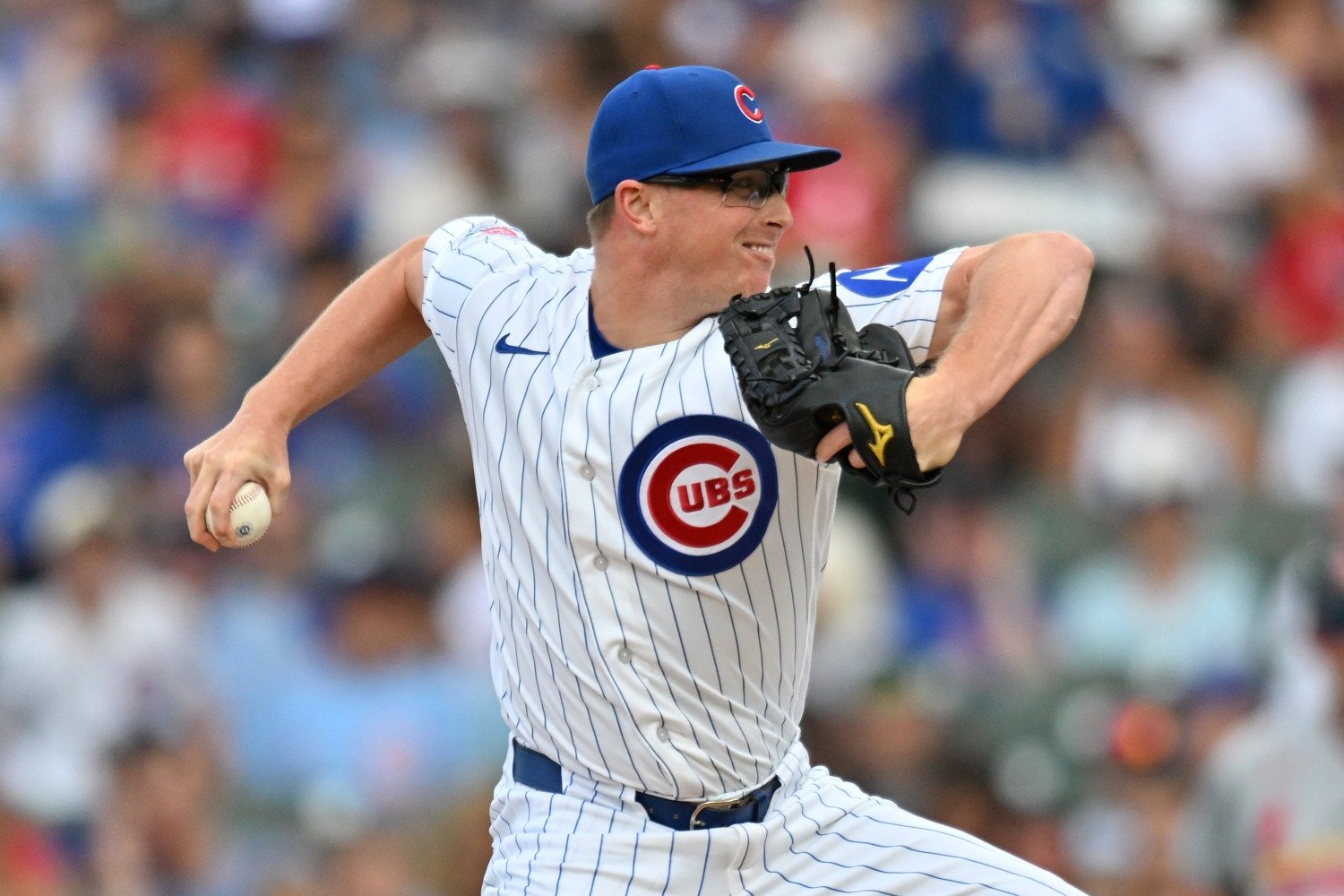 The Cubs have a stealth relief ace. Trent Thornton has a 2.38 ERA in 40 appearances. He's saved three games, despite only being called upon for that duty in emergencies. He has a 1.3 Win Probability Added, so even adjusting for leverage and situation, he's been solidly above-average. This season, only two Cubs pitchers (Ben Brown and Javier Assad) have a higher WPA than Thornton's. The Cubs also have a ghastly liability. One of their most important middle relievers is unable to avoid running into barrels, walks almost 10% of opposing batters, and has fanned only 14.9% of them. He doesn't miss bats; he doesn't fill up the strike zone. When opponents get the ball in the air, they usually hit it hard, so he's vulnerable to homers. He's only given up four of them this season, but that number could easily be twice as high. A bunch of fly balls have come down just on the right side of deep fences. bGJ3WldfWGw0TUFRPT1fQXdaVFVRVUNYZ01BRDFNRFZBQUhVdzRIQUFCUUFsVUFBRkVHQ1FjQ1VBSUFWUUFD.mp4 Which player is real: the stud or the dud? It's hard to tell for sure. Thornton doesn't throw so many strikes that he should be able to get away with the ball being in play as often as he does. Yet, there's something real in the way he's doing it—just enough to give one pause before casting him aside as an option for a team bound for the postseason. Here's Thornton's spin profile by pitch type this season. The left-hand array shows the spin direction of the ball out of his hand; those are the directions the batter expects the ball to move based on the way Thornton releases the ball. The right-hand graphic, however, shows the actual direction of movement. Most pitchers get at least a little unexpected movement on one of their pitches, utilizing seam effects to change the way air moves over the ball. Hardly anyone gets such significant differences on so many offerings, though. Most of Thornton's pitches achieve what's called spin mirroring, where if the hitter reads the spin axis, they'll be unable to tell whether he's throwing a fastball (his sinker and four-seamer spin almost identically out of the hand) or a breaking ball (his curve and sweeper spin similarly, too, and almost precisely the opposite direction of the fastballs). The curve moves mostly as you'd expect, but the hitter can't fully commit to it, because of that spin mirroring. The sweeper, though, has much more lift and glove-side movement than the spin direction would imply. Thornton's four-seamer is similarly faithful to its spin direction: it's a cut-ride offering. His sinker, however, runs more to the arm side than the hitter would expect. His cutter, meanwhile, mostly has backspin out of his hand, but veers to the glove side. Because Thornton neither throws especially hard nor achieves exceptional movement, he doesn't rack up many swings and misses, and that does mean running into barrels sometimes. It's not quite right to say that it's hard to square him up. It's more correct, in a strange way, to say that it's easy to mishit him. He can, when he executes and the hitter isn't in a position to outguess him, induce a lot of low-value contact, even if that's not precisely soft contact. He runs a high ground ball rate, by crawling out to the end of opponents' bats and up the handle. He gets a fair number of fly balls that are well-struck, but which die on or around the warning track. That's not the profile you'd sketch for a high-value, high-leverage October relief arm. I have Thornton high on the list of arms the Cubs should try to replace, as some of their currently injured relievers get healthy in the coming weeks. So far, though, he's been quite effective, and it's not all smoke and mirrors—or, more correctly, it's mostly smoke and mirrors, but not necessarily the kind that lose all effect once they're spotted.
 -
Image courtesy of Patrick Gorski-Imagn Images The Cubs have a stealth relief ace. Trent Thornton has a 2.38 ERA in 40 appearances. He's saved three games, despite only being called upon for that duty in emergencies. He has a 1.3 Win Probability Added, so even adjusting for leverage and situation, he's been solidly above-average. This season, only two Cubs pitchers (Ben Brown and Javier Assad) have a higher WPA than Thornton's. The Cubs also have a ghastly liability. One of their most important middle relievers is unable to avoid running into barrels, walks almost 10% of opposing batters, and has fanned only 14.9% of them. He doesn't miss bats; he doesn't fill up the strike zone. When opponents get the ball in the air, they usually hit it hard, so he's vulnerable to homers. He's only given up four of them this season, but that number could easily be twice as high. A bunch of fly balls have come down just on the right side of deep fences. bGJ3WldfWGw0TUFRPT1fQXdaVFVRVUNYZ01BRDFNRFZBQUhVdzRIQUFCUUFsVUFBRkVHQ1FjQ1VBSUFWUUFD.mp4 Which player is real: the stud or the dud? It's hard to tell for sure. Thornton doesn't throw so many strikes that he should be able to get away with the ball being in play as often as he does. Yet, there's something real in the way he's doing it—just enough to give one pause before casting him aside as an option for a team bound for the postseason. Here's Thornton's spin profile by pitch type this season. The left-hand array shows the spin direction of the ball out of his hand; those are the directions the batter expects the ball to move based on the way Thornton releases the ball. The right-hand graphic, however, shows the actual direction of movement. Most pitchers get at least a little unexpected movement on one of their pitches, utilizing seam effects to change the way air moves over the ball. Hardly anyone gets such significant differences on so many offerings, though. Most of Thornton's pitches achieve what's called spin mirroring, where if the hitter reads the spin axis, they'll be unable to tell whether he's throwing a fastball (his sinker and four-seamer spin almost identically out of the hand) or a breaking ball (his curve and sweeper spin similarly, too, and almost precisely the opposite direction of the fastballs). The curve moves mostly as you'd expect, but the hitter can't fully commit to it, because of that spin mirroring. The sweeper, though, has much more lift and glove-side movement than the spin direction would imply. Thornton's four-seamer is similarly faithful to its spin direction: it's a cut-ride offering. His sinker, however, runs more to the arm side than the hitter would expect. His cutter, meanwhile, mostly has backspin out of his hand, but veers to the glove side. Because Thornton neither throws especially hard nor achieves exceptional movement, he doesn't rack up many swings and misses, and that does mean running into barrels sometimes. It's not quite right to say that it's hard to square him up. It's more correct, in a strange way, to say that it's easy to mishit him. He can, when he executes and the hitter isn't in a position to outguess him, induce a lot of low-value contact, even if that's not precisely soft contact. He runs a high ground ball rate, by crawling out to the end of opponents' bats and up the handle. He gets a fair number of fly balls that are well-struck, but which die on or around the warning track. That's not the profile you'd sketch for a high-value, high-leverage October relief arm. I have Thornton high on the list of arms the Cubs should try to replace, as some of their currently injured relievers get healthy in the coming weeks. So far, though, he's been quite effective, and it's not all smoke and mirrors—or, more correctly, it's mostly smoke and mirrors, but not necessarily the kind that lose all effect once they're spotted. View full article