


Matthew Trueblood
-
Posts
2,477 -
Joined
-
Last visited
-
Days Won
2
Content Type
Profiles
Joomla Posts 1
Chicago Cubs Videos
Chicago Cubs Free Agent & Trade Rumors, Notes, & Tidbits
2026 Chicago Cubs Top Prospects Ranking
News
2023 Chicago Cubs Draft Picks
Guides & Resources
2024 Chicago Cubs Draft Picks
The Chicago Cubs Players Project
2025 Chicago Cubs Draft Pick Tracker
2026 Chicago Cubs Draft Tracker: Picks & Bonuses
Blogs
Events
Forums
Store
Gallery
Everything posted by Matthew Trueblood
-
I think that's 80% right. I do think we need to keep in mind that he's 32, with a skill set I don't think will age very well. I mean, you heard me, above: I think it's an easy call to make the QO. But I'd certainly be wary of a long-term deal with him, and I think you're probably *slightly* overselling the difficulty of doing better than 2027 Ian Happ? But the reality that it won't be that easy to do better than *2026* Ian Happ (or, certainly, 2022-25 Ian Happ) is probably the most important one to wrestle with.
- 27 replies
-
- 1
-

-
- ian happ
- seiya suzuki
- (and 1 more)
-
Image courtesy of Katie Stratman-Imagn Images You can't have a season as good as Pete Crow-Armstrong's 2026 without getting a bit lucky. In Crow-Armstrong's case, that wasn't primarily about finding grass and running an unduly high BABIP. It was about getting some unexpected relief via the uncertainty of opponents. Only two batters in the league had more expected runs go unclaimed when opponents failed to challenge incorrect called balls against them than did Crow-Armstrong. Milwaukee's Brice Turang saw opponents miss 42 chances to challenge pitches that should have been called strikes; the Dodgers' Freddie Freeman got away with the same number. Crow-Armstrong, however, got a whopping 45 extra called balls because opposing pitchers and catchers failed to challenge when he took tough pitches that were actually in the zone. Turang's and Freeman's opponent misses were, on average, a little more valuable to them, so Turang got 6.9 runs of value from not having strikes called, while Freeman snuck in at 6.8—just ahead of Crow-Armstrong's 6.7. Only those two got more value from catchers not tapping their helmets; only Carson Benge (48) and Steven Kwan (49) had a larger number of total pitches that should have been called strikes but weren't, on which opponents didn't challenge. Most of the guys who lived in that range with Crow-Armstrong had something in common: extreme patience at the plate. Kwan swung at barely 51% of the pitches he saw even in the zone this year, and chased just under 20% of those outside the zone. Taking so often at the edges creates the conditions for more called balls than the average batter. Benge and Turang swung at around 64% of the in-zone pitches they saw, with fairly low chase rates. Two other hitters near the top of the unconverted overturn leaderboard, James Wood and Geraldo Perdomo, got there because they swung at around 56% of pitches in the zone. As you know, Crow-Armstrong isn't like that. In 2025, he swung at over 81% of the strikes he saw. Even this year, as he made a radical shift toward patience in the box, that number was over 68%, and his lowest monthly mark (in July) was 65.2%. He's aggressive within the zone, which makes finding him at the top of this leaderboard surprising. The only player like him, in that regard, is Freeman, who has made a career out of telling balls from strikes as well as anyone. Every single season, he swings at over 70% of the in-zone pitches he sees, but he keeps his chase rate down. That's earned him some calls over the years, and in the first year of ABS, opponents proved reluctant to challenge him even when that happened. What's surprising is that Crow-Armstrong, whose reputation is as a free swinger and who only moderated (rather than truly upended) that approach in 2026, would land right next to Freeman and a slew of patient hitters. Some of it is good strike-zone judgment, to be sure. Crow-Armstrong did improve on that score this year, though his in-zone swing rate actually dropped a fair bit more than his chase rate did. He understood, right away, that the smaller zone played into his hands. He locked in more on the pitches he wanted to attack, and he laid off more offerings even if he knew there was a chance they would be called strikes, knowing that doing so was necessary in order to fully cover the pitches he could drive. He was also good at pressing for his rights when a call went against him. As we saw in Wild Card Series Game 2, that sometimes showed up as hyperaggressiveness, but Crow-Armstrong left few (just 18) "bad" called strikes as strikes. He came out way ahead, by being proactive and having opponents prove too conservative when calls broke in his favor. That last part isn't a skill, though. Crow-Armstrong owes the value he got from catchers not flipping his incorrect balls into strikes not to his own savvy, but to manager Craig Counsell, and to his teammates. When I listed the other hitters who shared this trait with Crow-Armstrong, did you notice the other common thread between them? They all bat at the top of the order (or very near it). When Crow-Armstrong would come up in the first inning of each game, teams would be naturally conservative with challenges. There's hardly ever cause to risk burning one of your challenges in the first two or three at-bats of a game; you have to be incredibly certain to trigger a review. That meant that if a pitcher got squeezed in Crow-Armstrong's first plate appearance each day, it was likely to go uncorrected. Often, by the time Crow-Armstrong would come up again (especially, say, for the third time), the other team would be down a challenge. Maybe one of their hitters burned one, but Crow-Armstrong's much more patient teammates get part of the credit, too. Michael Busch chased only 25% of the pitches he saw outside the zone this year. Alex Bregman's rate was even lower: 23%. Ian Happ was patient, too. No hitter in baseball prompted more failed ABS challenges by opponents than Busch, at 17. Bregman tied for sixth, at 15. Happ lured opponents into 10 bad challenges. Nico Hoerner got nine (as did Crow-Armstrong). Dansby Swanson got eight. Seiya Suzuki got seven. Hitting at the top of the lineup is a huge advantage in terms of the utility you derive from ABS, especially for an aggressive hitter. It might feel too early to challenge a borderline strike in your first at-bat or two, but you don't take all that many of those, anyway. Meanwhile, your opponents feel the same squeamishness about challenging a called ball your first trips through, and by your third, fourth and fifth turns, they might have to be more careful, because they're already down a challenge. This "gamification" of the zone is a frustrating part of ABS for many fans, but for what it's worth, most sports have some analog of this type of situation. A soccer player on a yellow card has to be more judicious about their tackles. A basketball player in foul trouble has to tread lightly, too. When players or teams are more conservative because they might suffer a steeper penalty for a second "offense"—returning to our actual topic, a failed challenge—it's not really a sign of a poorly designed system. It's just how sports work. However, if might be worth discussing a change whereby, instead of two challenges per team per game, each player only gets the right to lose one. That would force catchers to be more careful, and it would take many hitters (on teams who turned most of the ABS privileges over to their backstops) off the leash a bit. On the other hand, it shouldn't prompt a huge rise in actual challenges, because all players would know they had only one miss available. You'd even see pitchers be allowed to challenge by their clubs, at that point. In the meantime, Crow-Armstrong profited handsomely from his teammates forcing bad challenges in between his turns. Fifteen of the 45 pitches that could have been strikes but weren't corrected came when the opposing team was down to one challenge left, and those didn't all come in the eighth or ninth innings. Sometimes, they came in the fifth, or even the third—stages of the game when, absent the knowledge that they'd already lost their buffer, opponents probably would have begun to feel comfortable challenging him. Not all of the benefits of this phenomenon arrogate to Crow-Armstrong and his fellow leadoff hitters. He enjoyed lots of added value because teams eschewed chances to challenge, but only twice this year did Crow-Armstrong take a called ball in the zone at a juncture where the other team couldn't challenge, because they'd run out. Busch, however, took eight such pitches, because by the time the lineup came back to him a fourth time, that second challenge was often gone. The effects are greatest for leadoff hitters, though. Here's the percentage of takes on pitches inside the zone that were called balls (and not fixed) when the defense had a right to challenge, by batting order position: 7.6% 6.8% 6.5% 6.7% 6.4% 6.5% 6.6% 6.6% 6.4% It's a small consideration, but a real one. It bolstered Crow-Armstrong during his supernal season. The league always adjusts, though. Expect him to be assailed a bit more with challenges next year, even if he maintains exactly the same plate discipline he showed this season. One way or another, he'll feel the sting of regression in this area, because he'll either chase more pitches, get fewer generous calls, or watch more of those lucky calls reversed. This is the nature of being awesome; people will start hunting ways to slow you down. View full article
-
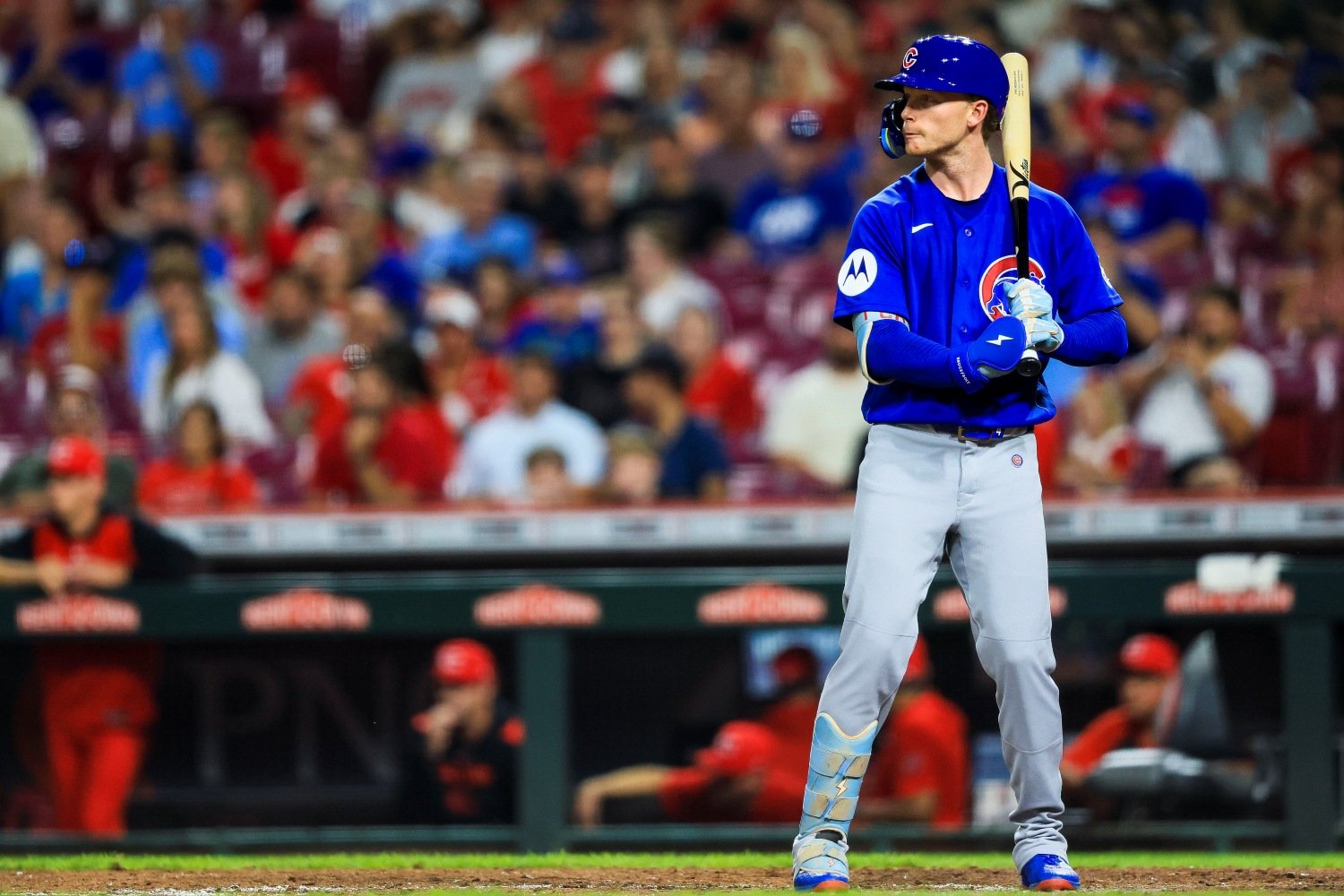 You can't have a season as good as Pete Crow-Armstrong's 2026 without getting a bit lucky. In Crow-Armstrong's case, that wasn't primarily about finding grass and running an unduly high BABIP. It was about getting some unexpected relief via the uncertainty of opponents. Only two batters in the league had more expected runs go unclaimed when opponents failed to challenge incorrect called balls against them than did Crow-Armstrong. Milwaukee's Brice Turang saw opponents miss 42 chances to challenge pitches that should have been called strikes; the Dodgers' Freddie Freeman got away with the same number. Crow-Armstrong, however, got a whopping 45 extra called balls because opposing pitchers and catchers failed to challenge when he took tough pitches that were actually in the zone. Turang's and Freeman's opponent misses were, on average, a little more valuable to them, so Turang got 6.9 runs of value from not having strikes called, while Freeman snuck in at 6.8—just ahead of Crow-Armstrong's 6.7. Only those two got more value from catchers not tapping their helmets; only Carson Benge (48) and Steven Kwan (49) had a larger number of total pitches that should have been called strikes but weren't, on which opponents didn't challenge. Most of the guys who lived in that range with Crow-Armstrong had something in common: extreme patience at the plate. Kwan swung at barely 51% of the pitches he saw even in the zone this year, and chased just under 20% of those outside the zone. Taking so often at the edges creates the conditions for more called balls than the average batter. Benge and Turang swung at around 64% of the in-zone pitches they saw, with fairly low chase rates. Two other hitters near the top of the unconverted overturn leaderboard, James Wood and Geraldo Perdomo, got there because they swung at around 56% of pitches in the zone. As you know, Crow-Armstrong isn't like that. In 2025, he swung at over 81% of the strikes he saw. Even this year, as he made a radical shift toward patience in the box, that number was over 68%, and his lowest monthly mark (in July) was 65.2%. He's aggressive within the zone, which makes finding him at the top of this leaderboard surprising. The only player like him, in that regard, is Freeman, who has made a career out of telling balls from strikes as well as anyone. Every single season, he swings at over 70% of the in-zone pitches he sees, but he keeps his chase rate down. That's earned him some calls over the years, and in the first year of ABS, opponents proved reluctant to challenge him even when that happened. What's surprising is that Crow-Armstrong, whose reputation is as a free swinger and who only moderated (rather than truly upended) that approach in 2026, would land right next to Freeman and a slew of patient hitters. Some of it is good strike-zone judgment, to be sure. Crow-Armstrong did improve on that score this year, though his in-zone swing rate actually dropped a fair bit more than his chase rate did. He understood, right away, that the smaller zone played into his hands. He locked in more on the pitches he wanted to attack, and he laid off more offerings even if he knew there was a chance they would be called strikes, knowing that doing so was necessary in order to fully cover the pitches he could drive. He was also good at pressing for his rights when a call went against him. As we saw in Wild Card Series Game 2, that sometimes showed up as hyperaggressiveness, but Crow-Armstrong left few (just 18) "bad" called strikes as strikes. He came out way ahead, by being proactive and having opponents prove too conservative when calls broke in his favor. That last part isn't a skill, though. Crow-Armstrong owes the value he got from catchers not flipping his incorrect balls into strikes not to his own savvy, but to manager Craig Counsell, and to his teammates. When I listed the other hitters who shared this trait with Crow-Armstrong, did you notice the other common thread between them? They all bat at the top of the order (or very near it). When Crow-Armstrong would come up in the first inning of each game, teams would be naturally conservative with challenges. There's hardly ever cause to risk burning one of your challenges in the first two or three at-bats of a game; you have to be incredibly certain to trigger a review. That meant that if a pitcher got squeezed in Crow-Armstrong's first plate appearance each day, it was likely to go uncorrected. Often, by the time Crow-Armstrong would come up again (especially, say, for the third time), the other team would be down a challenge. Maybe one of their hitters burned one, but Crow-Armstrong's much more patient teammates get part of the credit, too. Michael Busch chased only 25% of the pitches he saw outside the zone this year. Alex Bregman's rate was even lower: 23%. Ian Happ was patient, too. No hitter in baseball prompted more failed ABS challenges by opponents than Busch, at 17. Bregman tied for sixth, at 15. Happ lured opponents into 10 bad challenges. Nico Hoerner got nine (as did Crow-Armstrong). Dansby Swanson got eight. Seiya Suzuki got seven. Hitting at the top of the lineup is a huge advantage in terms of the utility you derive from ABS, especially for an aggressive hitter. It might feel too early to challenge a borderline strike in your first at-bat or two, but you don't take all that many of those, anyway. Meanwhile, your opponents feel the same squeamishness about challenging a called ball your first trips through, and by your third, fourth and fifth turns, they might have to be more careful, because they're already down a challenge. This "gamification" of the zone is a frustrating part of ABS for many fans, but for what it's worth, most sports have some analog of this type of situation. A soccer player on a yellow card has to be more judicious about their tackles. A basketball player in foul trouble has to tread lightly, too. When players or teams are more conservative because they might suffer a steeper penalty for a second "offense"—returning to our actual topic, a failed challenge—it's not really a sign of a poorly designed system. It's just how sports work. However, if might be worth discussing a change whereby, instead of two challenges per team per game, each player only gets the right to lose one. That would force catchers to be more careful, and it would take many hitters (on teams who turned most of the ABS privileges over to their backstops) off the leash a bit. On the other hand, it shouldn't prompt a huge rise in actual challenges, because all players would know they had only one miss available. You'd even see pitchers be allowed to challenge by their clubs, at that point. In the meantime, Crow-Armstrong profited handsomely from his teammates forcing bad challenges in between his turns. Fifteen of the 45 pitches that could have been strikes but weren't corrected came when the opposing team was down to one challenge left, and those didn't all come in the eighth or ninth innings. Sometimes, they came in the fifth, or even the third—stages of the game when, absent the knowledge that they'd already lost their buffer, opponents probably would have begun to feel comfortable challenging him. Not all of the benefits of this phenomenon arrogate to Crow-Armstrong and his fellow leadoff hitters. He enjoyed lots of added value because teams eschewed chances to challenge, but only twice this year did Crow-Armstrong take a called ball in the zone at a juncture where the other team couldn't challenge, because they'd run out. Busch, however, took eight such pitches, because by the time the lineup came back to him a fourth time, that second challenge was often gone. The effects are greatest for leadoff hitters, though. Here's the percentage of takes on pitches inside the zone that were called balls (and not fixed) when the defense had a right to challenge, by batting order position: 7.6% 6.8% 6.5% 6.7% 6.4% 6.5% 6.6% 6.6% 6.4% It's a small consideration, but a real one. It bolstered Crow-Armstrong during his supernal season. The league always adjusts, though. Expect him to be assailed a bit more with challenges next year, even if he maintains exactly the same plate discipline he showed this season. One way or another, he'll feel the sting of regression in this area, because he'll either chase more pitches, get fewer generous calls, or watch more of those lucky calls reversed. This is the nature of being awesome; people will start hunting ways to slow you down.
 -
Image courtesy of Ron Chenoy-Imagn Images Next month, as the offseason ramps up (before, in all likelihood, ramping right back down at the end of November), the Cubs will have to make a large number of decisions in a short time. We've already talked about their decision points on qualifying offers and on their existing contract options. Now, let's weigh their choices with regard to each of the 11 players who enter the offseason as arbitration-eligible, making their salaries uncertain (but relatively predictable) for 2027. The best approach here is probably to sort everyone into buckets. There are three things you can do (barring a trade) with a player due for a raise via arbitration in the forthcoming season: non-tender them (making them a free agent), tender them a contract (pushing down the path toward a one-year deal), or extend them (locking in their salary for multiple seasons, to gain cost certainty and/or longer team control). The team has at least one candidate for each of these paths this fall. Cubs Non-Tender Candidates Two players are almost no-brainer non-tenders for the Cubs. They picked up Gabriel Arias as emergency infield depth after Dansby Swanson strained his oblique in August, but that made them just the latest franchise to which Arias has bounced via waivers. He's been so available because he's been unproductive, and has now exhausted his minor-league options. He's a bench player on any team with serious aspirations to contend, and though he plays good enough defense all the way around the infield, he's never found a way to turn good bat speed into consistent pop, and his approach is ragged. He's in line to make roughly $1.3 million in 2027 if tendered a contract, according to MLB Trade Rumors's projections. That's not much, but 'not much' is also what he's worth. He can't be sent to the minors without being exposed to the other 29 teams. It's not worth using a roster spot on him all winter. Almost all of that also applies to Ethan Roberts, even though Roberts (unlike Arias) has been part of the Cubs organization for years. He's never showed the ability to stay healthy or to get many outs even when he is, and he's now out of options. His ability to spin the ball and create glove-side movement has bought him time with the Cubs, who love that profile. MLB Trade Rumors only projects him to earn $800,000 via arbitration, so he's essentially a league-minimum guy, even as he hits the phase of his career at which he's supposed to start gaining earning power. In theory, as with Arias, there are three years of team control left here. Roberts just isn't good, though, and if he can't be shuttled to the minors when needed, he's not worth keeping around. Easy One-Year Sign-Ups Most arbitration-eligible players don't inspire particularly interesting action. You just tender them a deal, agree on terms, and move on. That's what the Cubs will hope to do with the majority of their class this year. Michael Busch and Miguel Amaya are arbitration-eligible for the first time this year. Each is older than your average player with just three-plus years of service time, so the team doesn't stand to gain great value from considering a longer-term arrangement with either of them. Nor did either have a good enough year to merit that kind of heavy investment. Each easily clears the bar for keeping them around, though, given the affordable salaries ($1.7 million for Amaya; $5.4 million for Busch) MLBTR projects for each. (For what it's worth, I think Busch will come in under that number, one way or another.) The same is all true, in fact, of reliever Ryan Rolison, whom MLBTR thinks will earn $1.1 million in his first trip through arbitration. Keeping those three requires no difficult decision; the front office will gladly pay what each is likely to get via the system they're moving through. None of the three firmed up long-term jobs with the team this season, but all three did enough to ensure that they'll be asked back in 2027. Pitchers to Roll the Dice On Four inexpensive pitchers who still have multiple seasons of club control left are candidates for very low-wattage multi-year deals, if the team is particularly excited about any of their futures. Daniel Palencia and Ben Brown will both qualify for arbitration as Super Two players, meaning they can begin to get raises despite being just shy of three years of service. They're under team control through 2030, but they'll start getting seven-figure salaries (albeit just barely: $1.2 million for Palencia, $1.3 million for Brown, according to MLBTR) in 2027. The upside on both hurlers is obvious. Brown has flashed the ability to pitch at the front end of the team's rotation. There are major injury red flags in his file, but if the Cubs want to avoid seeing his salary spike as he moves through arbitration (should he get past the neck issue that has plagued him the last two years), they might seek an extension with him. These tend to be just two-year pacts, with the second year often being a club option. They're just ways, again, to keep arbitration costs down. Those can escalate quickly, especially for guys who achieve Super Two status and go through it four times, rather than three. Much of the same applies to Palencia. There's a bit less cause for deep concern about his health than with Brown, but the ceiling is also lower, since he's purely a reliever. On the other hand, closers' salaries rise disproportionately via arbitration, because that system still rewards the accumulation of saves. If the Cubs view Palencia as a closer candidate again in 2027, they would do well to lock him up for two or three years (at a cheap price, with an option in the mix) and eschew multiple trips through arbitration. In so doing, they'd give Palencia more guaranteed money than signing him for one year would require, but get their value from cost certainty and a flatter increase in his salary from 2027 to the subsequent years than is otherwise likely. Javier Assad signed a deal like this last offseason. He made $1.8 million in 2026, as a Super Two guy in his own right, but the Cubs also got a $3.3-million option for 2027 in the deal. Since MLBTR is projecting just $2.3 million in earnings for him in 2027, Chicago will probably decline that option, but they might re-up with Assad on another deal that gives him some guaranteed money and preserves their upside by capping what he can earn in 2028. Assad can still be optioned to the minors next year, and might actually spend part of the year in Iowa yet again, if the team is sufficiently aggressive over the winter. Either way, though, he'll be valuable depth, and adding a second year to a deal with him makes sense. In the least-heralded trade they made on deadline day, the team also snagged lefty starter Braxton Garrett, from Miami. Garrett still has two more years of team control remaining, though he used his last minor-league option this year. Next season, he'll be roster-locked, but the Cubs like him, so they're very likely to at least tender him a contract. He's only set to make $1.6 million in 2027, but since he'll have to be on the big-league roster all season, his salary could shoot up quite a bit in his final year of eligibility in 2028. To dodge that risk, the team could look to sign him to a two-year deal. Unfortunately, they didn't gain enough information about him down the stretch to consider a longer-term deal that actually extends their team control. The Very Uncomfortable Calls There's no realistic chance that the Cubs non-tender Edward Cabrera, and almost none that they do so with Justin Steele. After trading a top prospect to acquire Cabrera over the winter, they're invested in him, and he still has two seasons of club control left. Steele, a beloved part of the organization for over 12 years, only has one year of club control left, but parting with him before using it would be painful for all parties. That said, Cabrera's 2026 campaign was a nightmare, and the reclamation project the team will have to accomplish to get value from him next year is daunting. He's set to make $4.8 million or so via arbitration, by MLBTR's reckoning, so it won't be a cheap remodel, either. To make their predicament a bit less painful, the team might try to strike a two-year deal with Cabrera, capping what he can earn in his final year of arbitration eligibility in 2028. There's no way they can commit to him long-term, but they also can't cut the cord on one of the few arms in their organization who has good enough raw stuff to consistently get out big-league hitters. They'll just have to hope they can get him to actually do so next season. Steele is a different case. Given the setbacks that prevented him from getting back to the big leagues the year after his April 2025 Tommy John surgery, his $6.8-million projected salary is like a baby albatross. His stuff didn't look good at all in his late-season rehab starts for Triple-A Iowa. He's not guaranteed to be a big-league-caliber starter in 2027, let alone one a team can confidently pay almost $7 million. The path forward for player and team is most likely to involve a multi-year deal. Steele can give up some earning power for 2027 by agreeing to a lower salary (maybe $5 million or so; maybe less), while preserving a high ceiling via incentives. Meanwhile, the Cubs would either guarantee a second year or offer Steele a club option for 2028 at a high salary, with a substantial buyout. If structured correctly, a deal whereby Steele could earn even more than his projected salary next year and then become a free agent could still be favorable to the Cubs. They can't afford to just hand him the same amount he made in 2026, though, knowing there's at least some chance that he becomes dead money again. This arbitration class isn't especially expensive. That's good news, in a way, for a team with hefty obligations to multiple veteran position players and a desperate need to add pitching via free agency and/or trade. In a much more important sense, though, it's very bad news. The Cubs would be happy to be paying $10-15 million more to this group than they'll end up paying. That would mean that Brown, Steele and/or Palencia stayed healthy; that Busch built upon his breakout 2025; and that Amaya and/or Cabrera took the steps forward the team hoped for from them. Instead, they'll get a good deal on several of these players for 2027, but only because almost all of them underachieved. View full article
-
How Cubs Should Handle Their 11 Arbitration-Eligible Players This Fall
Matthew Trueblood posted an article in Cubs
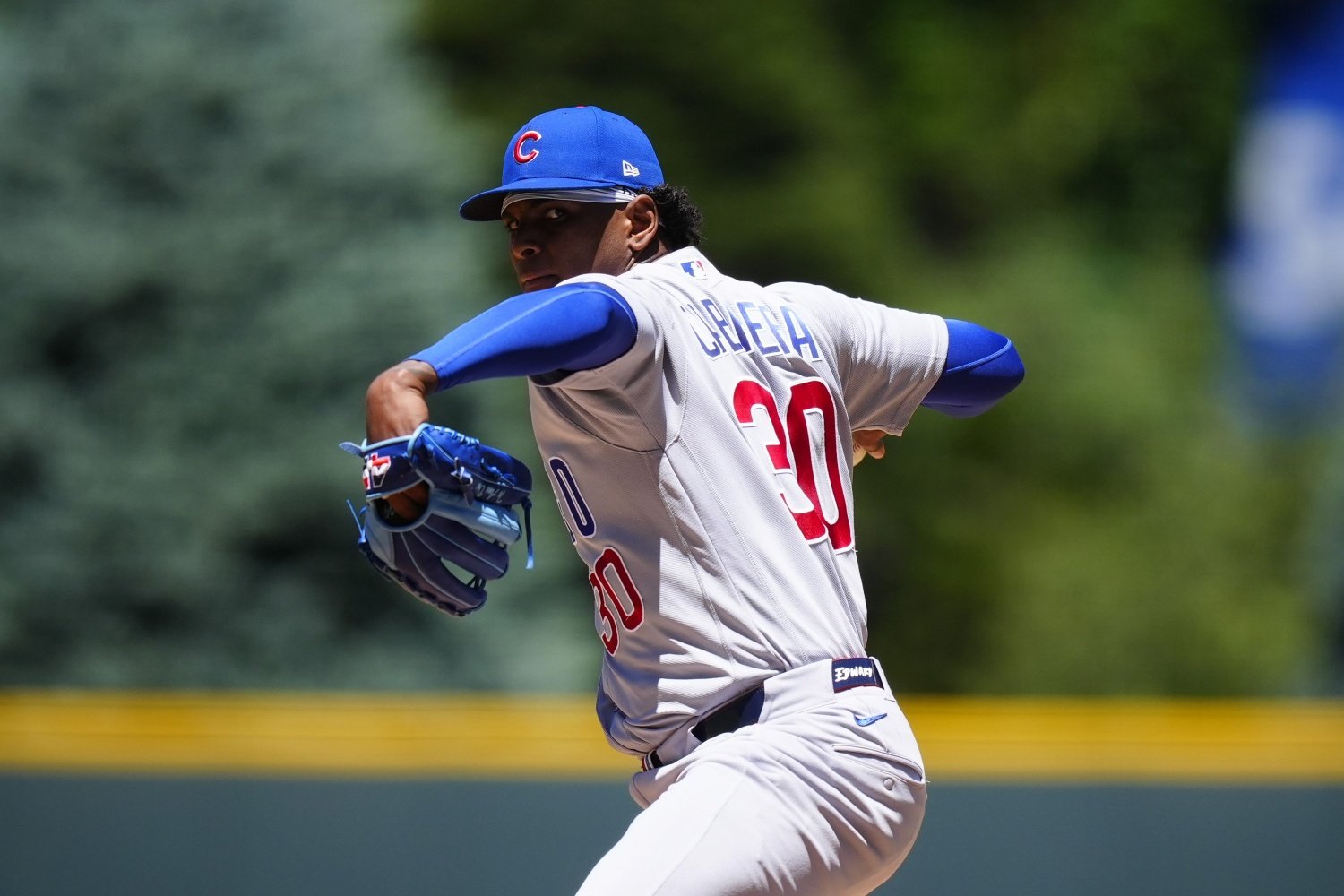 Next month, as the offseason ramps up (before, in all likelihood, ramping right back down at the end of November), the Cubs will have to make a large number of decisions in a short time. We've already talked about their decision points on qualifying offers and on their existing contract options. Now, let's weigh their choices with regard to each of the 11 players who enter the offseason as arbitration-eligible, making their salaries uncertain (but relatively predictable) for 2027. The best approach here is probably to sort everyone into buckets. There are three things you can do (barring a trade) with a player due for a raise via arbitration in the forthcoming season: non-tender them (making them a free agent), tender them a contract (pushing down the path toward a one-year deal), or extend them (locking in their salary for multiple seasons, to gain cost certainty and/or longer team control). The team has at least one candidate for each of these paths this fall. Cubs Non-Tender Candidates Two players are almost no-brainer non-tenders for the Cubs. They picked up Gabriel Arias as emergency infield depth after Dansby Swanson strained his oblique in August, but that made them just the latest franchise to which Arias has bounced via waivers. He's been so available because he's been unproductive, and has now exhausted his minor-league options. He's a bench player on any team with serious aspirations to contend, and though he plays good enough defense all the way around the infield, he's never found a way to turn good bat speed into consistent pop, and his approach is ragged. He's in line to make roughly $1.3 million in 2027 if tendered a contract, according to MLB Trade Rumors's projections. That's not much, but 'not much' is also what he's worth. He can't be sent to the minors without being exposed to the other 29 teams. It's not worth using a roster spot on him all winter. Almost all of that also applies to Ethan Roberts, even though Roberts (unlike Arias) has been part of the Cubs organization for years. He's never showed the ability to stay healthy or to get many outs even when he is, and he's now out of options. His ability to spin the ball and create glove-side movement has bought him time with the Cubs, who love that profile. MLB Trade Rumors only projects him to earn $800,000 via arbitration, so he's essentially a league-minimum guy, even as he hits the phase of his career at which he's supposed to start gaining earning power. In theory, as with Arias, there are three years of team control left here. Roberts just isn't good, though, and if he can't be shuttled to the minors when needed, he's not worth keeping around. Easy One-Year Sign-Ups Most arbitration-eligible players don't inspire particularly interesting action. You just tender them a deal, agree on terms, and move on. That's what the Cubs will hope to do with the majority of their class this year. Michael Busch and Miguel Amaya are arbitration-eligible for the first time this year. Each is older than your average player with just three-plus years of service time, so the team doesn't stand to gain great value from considering a longer-term arrangement with either of them. Nor did either have a good enough year to merit that kind of heavy investment. Each easily clears the bar for keeping them around, though, given the affordable salaries ($1.7 million for Amaya; $5.4 million for Busch) MLBTR projects for each. (For what it's worth, I think Busch will come in under that number, one way or another.) The same is all true, in fact, of reliever Ryan Rolison, whom MLBTR thinks will earn $1.1 million in his first trip through arbitration. Keeping those three requires no difficult decision; the front office will gladly pay what each is likely to get via the system they're moving through. None of the three firmed up long-term jobs with the team this season, but all three did enough to ensure that they'll be asked back in 2027. Pitchers to Roll the Dice On Four inexpensive pitchers who still have multiple seasons of club control left are candidates for very low-wattage multi-year deals, if the team is particularly excited about any of their futures. Daniel Palencia and Ben Brown will both qualify for arbitration as Super Two players, meaning they can begin to get raises despite being just shy of three years of service. They're under team control through 2030, but they'll start getting seven-figure salaries (albeit just barely: $1.2 million for Palencia, $1.3 million for Brown, according to MLBTR) in 2027. The upside on both hurlers is obvious. Brown has flashed the ability to pitch at the front end of the team's rotation. There are major injury red flags in his file, but if the Cubs want to avoid seeing his salary spike as he moves through arbitration (should he get past the neck issue that has plagued him the last two years), they might seek an extension with him. These tend to be just two-year pacts, with the second year often being a club option. They're just ways, again, to keep arbitration costs down. Those can escalate quickly, especially for guys who achieve Super Two status and go through it four times, rather than three. Much of the same applies to Palencia. There's a bit less cause for deep concern about his health than with Brown, but the ceiling is also lower, since he's purely a reliever. On the other hand, closers' salaries rise disproportionately via arbitration, because that system still rewards the accumulation of saves. If the Cubs view Palencia as a closer candidate again in 2027, they would do well to lock him up for two or three years (at a cheap price, with an option in the mix) and eschew multiple trips through arbitration. In so doing, they'd give Palencia more guaranteed money than signing him for one year would require, but get their value from cost certainty and a flatter increase in his salary from 2027 to the subsequent years than is otherwise likely. Javier Assad signed a deal like this last offseason. He made $1.8 million in 2026, as a Super Two guy in his own right, but the Cubs also got a $3.3-million option for 2027 in the deal. Since MLBTR is projecting just $2.3 million in earnings for him in 2027, Chicago will probably decline that option, but they might re-up with Assad on another deal that gives him some guaranteed money and preserves their upside by capping what he can earn in 2028. Assad can still be optioned to the minors next year, and might actually spend part of the year in Iowa yet again, if the team is sufficiently aggressive over the winter. Either way, though, he'll be valuable depth, and adding a second year to a deal with him makes sense. In the least-heralded trade they made on deadline day, the team also snagged lefty starter Braxton Garrett, from Miami. Garrett still has two more years of team control remaining, though he used his last minor-league option this year. Next season, he'll be roster-locked, but the Cubs like him, so they're very likely to at least tender him a contract. He's only set to make $1.6 million in 2027, but since he'll have to be on the big-league roster all season, his salary could shoot up quite a bit in his final year of eligibility in 2028. To dodge that risk, the team could look to sign him to a two-year deal. Unfortunately, they didn't gain enough information about him down the stretch to consider a longer-term deal that actually extends their team control. The Very Uncomfortable Calls There's no realistic chance that the Cubs non-tender Edward Cabrera, and almost none that they do so with Justin Steele. After trading a top prospect to acquire Cabrera over the winter, they're invested in him, and he still has two seasons of club control left. Steele, a beloved part of the organization for over 12 years, only has one year of club control left, but parting with him before using it would be painful for all parties. That said, Cabrera's 2026 campaign was a nightmare, and the reclamation project the team will have to accomplish to get value from him next year is daunting. He's set to make $4.8 million or so via arbitration, by MLBTR's reckoning, so it won't be a cheap remodel, either. To make their predicament a bit less painful, the team might try to strike a two-year deal with Cabrera, capping what he can earn in his final year of arbitration eligibility in 2028. There's no way they can commit to him long-term, but they also can't cut the cord on one of the few arms in their organization who has good enough raw stuff to consistently get out big-league hitters. They'll just have to hope they can get him to actually do so next season. Steele is a different case. Given the setbacks that prevented him from getting back to the big leagues the year after his April 2025 Tommy John surgery, his $6.8-million projected salary is like a baby albatross. His stuff didn't look good at all in his late-season rehab starts for Triple-A Iowa. He's not guaranteed to be a big-league-caliber starter in 2027, let alone one a team can confidently pay almost $7 million. The path forward for player and team is most likely to involve a multi-year deal. Steele can give up some earning power for 2027 by agreeing to a lower salary (maybe $5 million or so; maybe less), while preserving a high ceiling via incentives. Meanwhile, the Cubs would either guarantee a second year or offer Steele a club option for 2028 at a high salary, with a substantial buyout. If structured correctly, a deal whereby Steele could earn even more than his projected salary next year and then become a free agent could still be favorable to the Cubs. They can't afford to just hand him the same amount he made in 2026, though, knowing there's at least some chance that he becomes dead money again. This arbitration class isn't especially expensive. That's good news, in a way, for a team with hefty obligations to multiple veteran position players and a desperate need to add pitching via free agency and/or trade. In a much more important sense, though, it's very bad news. The Cubs would be happy to be paying $10-15 million more to this group than they'll end up paying. That would mean that Brown, Steele and/or Palencia stayed healthy; that Busch built upon his breakout 2025; and that Amaya and/or Cabrera took the steps forward the team hoped for from them. Instead, they'll get a good deal on several of these players for 2027, but only because almost all of them underachieved.
 -
Fair enough. Just be ready, then. You know how little Hoyer likes to make long-term commitments to pitchers. They might let Boyd go, then end up paying a QO-level price to a pitcher who's *extremely* similar, for two years instead of one, all because he won't want to do a five-year deal for the tier of available arm better than that.
-
I think that's a fair raw valuation. Are you willing to risk paying a premium to avoid a longer-term commitment, though, while also knowing there's an upside to the gamble if the player turns down the offer? I think that's the real question. It's not all about ensuring you never pay more than a player is "worth," you know?
-
Image courtesy of Geoff Burke-Imagn Images The most important decision that will be made about a Cubs player's contract option for 2027 won't be made by the Cubs. Clay Holmes, whom the team acquired on August 3 from the Mets, can elect to receive a $12-million salary next season, or to hit free agency for the second time. The Cubs have no say in the matter, and Holmes is overwhelmingly likely to decline his option. In fact, if he accepts it, that will feel like a red flag about his health or his hopes for next year. The team also holds three club options, though, and there are four more deals that include mutual options for next year. Mutual options are as much financial tricks as real contract years, because both sides must exercise them in order for the option to be activated. That hardly ever happens, and (spoiler) it won't happen with any of these deals, either. To run through them in an organized way, let's rank these options in terms of the difficulty of the Cubs' decision about them, from easiest to most difficult. 1. Matthew Boyd Boyd's contract paid him $10 million in 2025 and $17 million in 2026, including his signing bonus. The 2027 option attached to the end of it is worth $15 million, but it's only a $13-million decision for the team. If either side declines the option, Boyd receives a $2-million buyout. Even at $15 million, a one-year commitment to Boyd is a no-brainer. At $13 million, he'd be a steal. All of that means that he'll turn down his half of the option and become a free agent, but from the Cubs' side, exercising it should take almost no thought at all. 2. Carson Kelly This is the same thing, at the other end of the battery. Kelly's contract paid him $5 million each of the last two years, but he'd make $7.5 million in 2027 if the mutual option were exercised. There's a $1.5-million buyout in this one, so the difference for the Cubs is only $6 million. As with Boyd, this is an easy call. Kelly is an aging catcher, but he's worth at least $6 million per year on a two-year deal. For one season, that price would be a colossal bargain. The Cubs won't be so lucky; Kelly will become a free agent. 3. Caleb Thielbar These aren't all clear-cut in the same direction. Unfortunately, Thielbar looks to have reached the end of his improbably great career. He's nearly 40 years old, and there were too many days this season when it looked like it. His stuff isn't entirely gone, but it's become inconsistent and unreliable. A mutual option in the deal the Cubs and Thielbar signed last winter would pay him $6 million for 2027; he's not worth that money. The Cubs will turn down their half of the option and pay Thielbar $500,000 as a buyout. Then, they'll have to find other relief options. 4. Javier Assad Declining Assad's option is also relatively easy, but the reason is purely logistical. When the team and the player avoided arbitration last offseason, the Cubs negotiated a $3.3-million club option for 2027. They'll turn that down, but Assad won't become a free agent, as a result; he'll just be dumped back into the arbitration system. He's not in position to garner a big raise from the $1.8 million he made in 2026, because (thanks to repeatedly being optioned to the minors) he didn't get to a new service-time threshold. He earned too little service time to go from a 3+ to a 4+ guy, so he's still three years from free agency. The system is being deeply unfair to Assad. He'll turn 30 next July, and he's pitched 425 innings in the majors over parts of five seasons. Yet, he won't be a free agent until at least the end of the 2029 season, unless the Cubs non-tender him between now and then. That's unlikely to happen this winter. For one more year, he's an optionable swingman. He'll probably make about $2.3 million along the way, instead of the $3.3 million he'd receive if the Cubs exercised their option. 5. Jacob Webb We're still in the realm of the relatively easy. Webb's one-year contract for 2026 contains a club option for 2027, worth $2.5 million. Even after Webb had a brutal finish to the year, he's clearly worth that much. Assuming the Cubs are more successful in reinforcing their bullpen next season, Webb should slide back into a middle-relief role. As that kind of guy, rather than a de facto relief ace, he's well worth keeping around. He was a positive presence in the clubhouse, too, which makes the decision easier on roster spots like this one. 6. Hunter Harvey Yes, believe it or not, there's something to think about here. Harvey barely pitched in 2026, with trouble in both his triceps and his shoulder. He's due $8 million if both sides exercise the mutual option for 2027, with a $1-million buyout if either side declines it. Presumably, Harvey will trigger his side of the option. He's not in a position to make more than that on the open market. Before the Cubs decline their half, though, they have to consider upside. Harvey does have the kind of arm the team has needed more of for several years. When healthy, he throws harder and strikes out more batters than almost anyone else in the Cubs organization. His health is so unreliable that the team should still turn down the option, unless they intend to spend huge money this winter to address their pitching shortfalls. If they do plan to get as ambitious as they should, though, they might be right to roll the dice on Harvey for $7 million in net spending. 7. Colin Rea There's no question that this is the toughest call. It's a club option, so if the Cubs want Rea back in 2027, he'll be back. For that to happen, they have to be willing to pay him $7.5 million. That's the salary on his option. Even if they turn that option down, they'll owe Rea $1 million, so it's a $6.5-million decision. At that number, he's pretty fairly priced. He's a great organizational soldier, willing and able to pitch in multiple roles. He's been durable and resilient, and his career (like Thielbar's) has stretched longer and been more fruitful than anyone would have expected half a decade ago. He's not clearly worth $6.5 million, but nor would he clearly impede the team's roster-building at that salary. Keeping him around makes sense. However, the team might decide that they need the roster spot and the extra scratch more than what Rea brings to the table. View full article
-
Ranking the Cubs' Contract Option Decisions, from Easiest to Toughest
Matthew Trueblood posted an article in Cubs
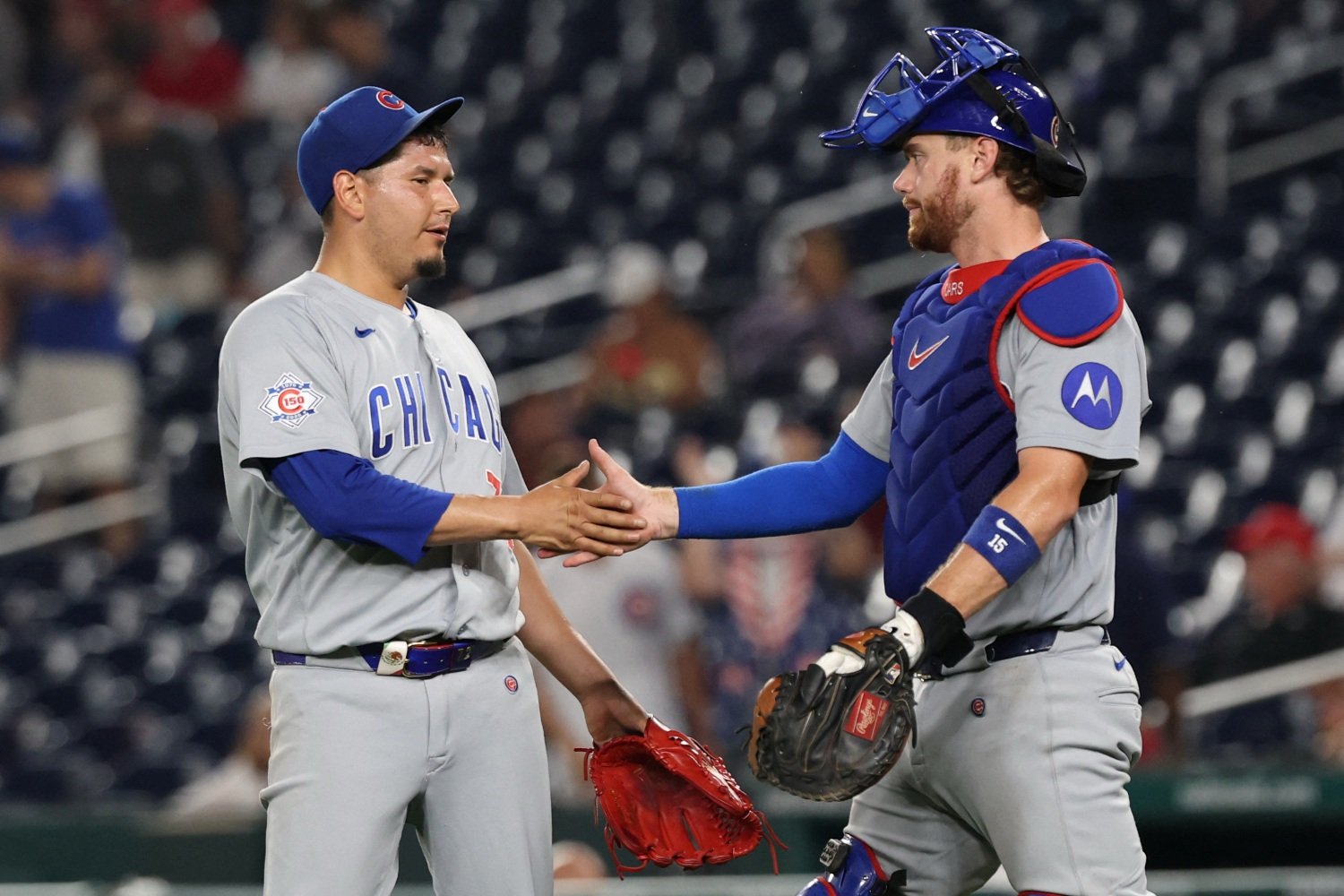 The most important decision that will be made about a Cubs player's contract option for 2027 won't be made by the Cubs. Clay Holmes, whom the team acquired on August 3 from the Mets, can elect to receive a $12-million salary next season, or to hit free agency for the second time. The Cubs have no say in the matter, and Holmes is overwhelmingly likely to decline his option. In fact, if he accepts it, that will feel like a red flag about his health or his hopes for next year. The team also holds three club options, though, and there are four more deals that include mutual options for next year. Mutual options are as much financial tricks as real contract years, because both sides must exercise them in order for the option to be activated. That hardly ever happens, and (spoiler) it won't happen with any of these deals, either. To run through them in an organized way, let's rank these options in terms of the difficulty of the Cubs' decision about them, from easiest to most difficult. 1. Matthew Boyd Boyd's contract paid him $10 million in 2025 and $17 million in 2026, including his signing bonus. The 2027 option attached to the end of it is worth $15 million, but it's only a $13-million decision for the team. If either side declines the option, Boyd receives a $2-million buyout. Even at $15 million, a one-year commitment to Boyd is a no-brainer. At $13 million, he'd be a steal. All of that means that he'll turn down his half of the option and become a free agent, but from the Cubs' side, exercising it should take almost no thought at all. 2. Carson Kelly This is the same thing, at the other end of the battery. Kelly's contract paid him $5 million each of the last two years, but he'd make $7.5 million in 2027 if the mutual option were exercised. There's a $1.5-million buyout in this one, so the difference for the Cubs is only $6 million. As with Boyd, this is an easy call. Kelly is an aging catcher, but he's worth at least $6 million per year on a two-year deal. For one season, that price would be a colossal bargain. The Cubs won't be so lucky; Kelly will become a free agent. 3. Caleb Thielbar These aren't all clear-cut in the same direction. Unfortunately, Thielbar looks to have reached the end of his improbably great career. He's nearly 40 years old, and there were too many days this season when it looked like it. His stuff isn't entirely gone, but it's become inconsistent and unreliable. A mutual option in the deal the Cubs and Thielbar signed last winter would pay him $6 million for 2027; he's not worth that money. The Cubs will turn down their half of the option and pay Thielbar $500,000 as a buyout. Then, they'll have to find other relief options. 4. Javier Assad Declining Assad's option is also relatively easy, but the reason is purely logistical. When the team and the player avoided arbitration last offseason, the Cubs negotiated a $3.3-million club option for 2027. They'll turn that down, but Assad won't become a free agent, as a result; he'll just be dumped back into the arbitration system. He's not in position to garner a big raise from the $1.8 million he made in 2026, because (thanks to repeatedly being optioned to the minors) he didn't get to a new service-time threshold. He earned too little service time to go from a 3+ to a 4+ guy, so he's still three years from free agency. The system is being deeply unfair to Assad. He'll turn 30 next July, and he's pitched 425 innings in the majors over parts of five seasons. Yet, he won't be a free agent until at least the end of the 2029 season, unless the Cubs non-tender him between now and then. That's unlikely to happen this winter. For one more year, he's an optionable swingman. He'll probably make about $2.3 million along the way, instead of the $3.3 million he'd receive if the Cubs exercised their option. 5. Jacob Webb We're still in the realm of the relatively easy. Webb's one-year contract for 2026 contains a club option for 2027, worth $2.5 million. Even after Webb had a brutal finish to the year, he's clearly worth that much. Assuming the Cubs are more successful in reinforcing their bullpen next season, Webb should slide back into a middle-relief role. As that kind of guy, rather than a de facto relief ace, he's well worth keeping around. He was a positive presence in the clubhouse, too, which makes the decision easier on roster spots like this one. 6. Hunter Harvey Yes, believe it or not, there's something to think about here. Harvey barely pitched in 2026, with trouble in both his triceps and his shoulder. He's due $8 million if both sides exercise the mutual option for 2027, with a $1-million buyout if either side declines it. Presumably, Harvey will trigger his side of the option. He's not in a position to make more than that on the open market. Before the Cubs decline their half, though, they have to consider upside. Harvey does have the kind of arm the team has needed more of for several years. When healthy, he throws harder and strikes out more batters than almost anyone else in the Cubs organization. His health is so unreliable that the team should still turn down the option, unless they intend to spend huge money this winter to address their pitching shortfalls. If they do plan to get as ambitious as they should, though, they might be right to roll the dice on Harvey for $7 million in net spending. 7. Colin Rea There's no question that this is the toughest call. It's a club option, so if the Cubs want Rea back in 2027, he'll be back. For that to happen, they have to be willing to pay him $7.5 million. That's the salary on his option. Even if they turn that option down, they'll owe Rea $1 million, so it's a $6.5-million decision. At that number, he's pretty fairly priced. He's a great organizational soldier, willing and able to pitch in multiple roles. He's been durable and resilient, and his career (like Thielbar's) has stretched longer and been more fruitful than anyone would have expected half a decade ago. He's not clearly worth $6.5 million, but nor would he clearly impede the team's roster-building at that salary. Keeping him around makes sense. However, the team might decide that they need the roster spot and the extra scratch more than what Rea brings to the table.
 -
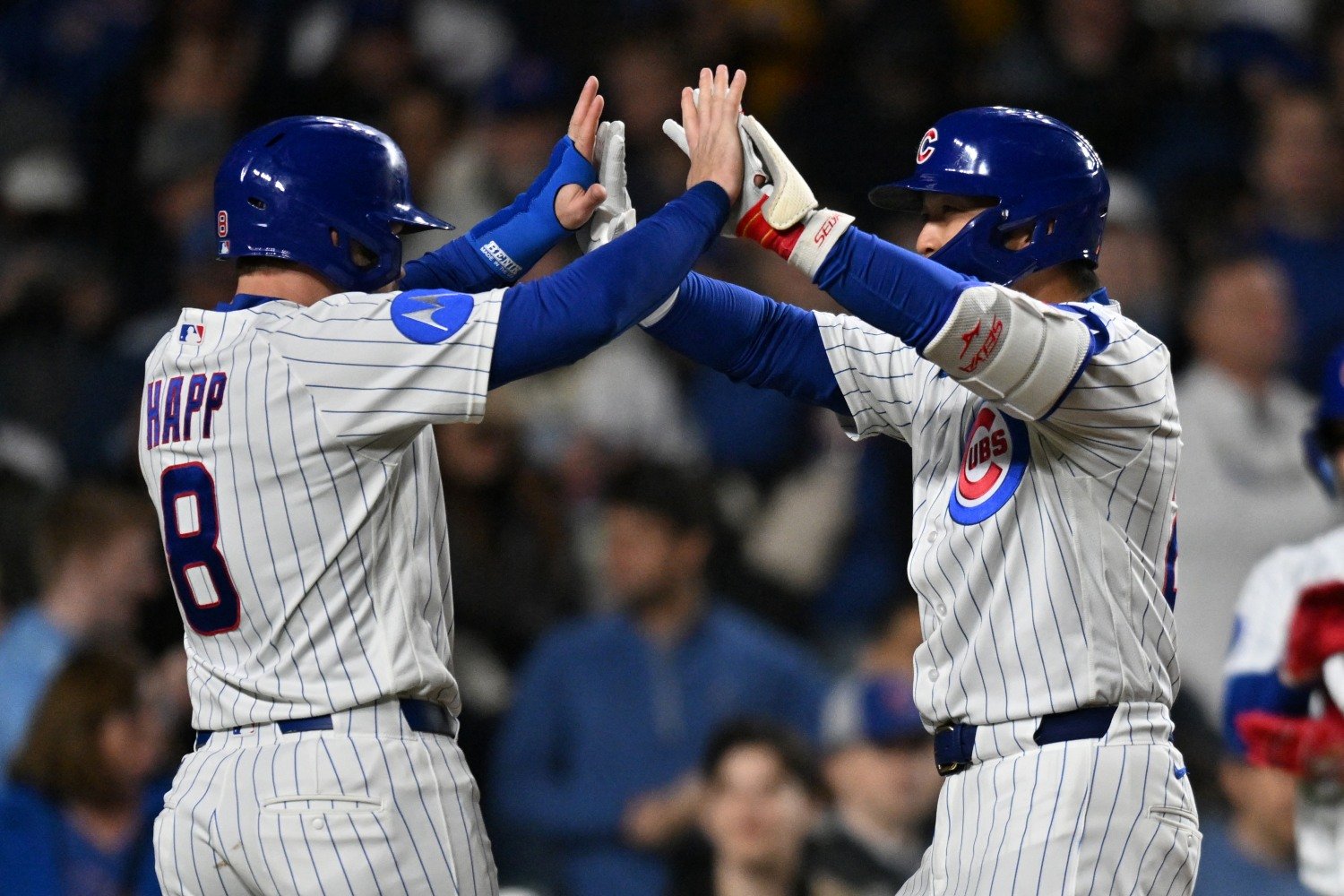 It might not seem so at first, but the Cubs have a pretty straightforward decision on Ian Happ. After parts of 10 seasons with the club, Happ is due to hit free agency at the end of the World Series. Technically, that'll be the first time he's ever had the right to choose his employer for the following season. When Happ and the Cubs were last on the verge of this decision, in early 2023, Happ signed a three-year contract worth $61 million. That meant that he never became a free agent, and that the Cubs never extended him a qualifying offer. Thus, once the Series is over and he officially becomes a free agent, the team can still do so. They have to do it. At first blush, that seems overly simplistic, and maybe even downright wrong. Happ had a rough 2026. He batted .218/.323/.412, and after June 1, those numbers were .210/.311/.375. He's 32 years old. That player is not worth $23.1 million, which is what the qualifying offer will pay players who accept it next year. As we all know, though, there's a lot more to the player and the situation than that. Happ is a good defensive outfielder, even if he increasingly gets that value from his arm and has fringe-average range. He still hit well against right-handed pitchers (.241/.358/.458 for the season, .231/.338/.420 after June 1). He's a beloved part of the clubhouse fabric and the community, and the team and the player went through the difficult but necessary process of his role being reduced already this season. If he comes back in 2027, there won't be the same feeling of obligation to bat him near the top of the order or play him every day as there was in 2026. Only if the team is ready to spend big this winter (and beyond) can they afford to pay $23 million for a glorified platoon bat, even if he comes with added value as a leader and a fan ambassador. As we've already discussed this week, though, the Cubs need to be ready to spend big, anyway. They can and should take the risk that comes with extending the qualifying offer, because here's the other thing: Happ might turn down the offer, anyway. This year's free-agent class is barren; Happ is one of the better outfielders who'll be available on it. He's not in any position to get another three-year deal on the high side of $20 million per year, but if he were unencumbered by the QO, he could certainly find a three-year deal for more like $45 million, or a two-year pact around $38 million. Even if the Cubs hang the QO on him and dampen his market, he might prefer to look for a multi-year landing spot where the rest of his career can unfold. If he does, the team can collect a draft pick when he signs elsewhere—though, since they were luxury-tax payers this year, that pick will be relatively late, after the fourth round. That extra pick is, of course, not a great reward for taking the gamble on paying a player $23 million and only offering him 450-500 plate appearances—not on its own, anyway. Again, there's non-performance value attached to Happ, but there's another consideration that makes the risk worth it for the Cubs this fall, too. They have two more candidates for the same offer, and when you extend multiple QOs that are declined, the benefits of each are incrementally greater than those of one by itself. Seiya Suzuki is the no-brainer of the class, for Chicago. They would love to have him back for $23 million next year. That won't happen; he'll decline the offer without a second thought. After the best season of his American tenure, Suzuki is in line for at least a three-year deal, with at least a $20-million AAV, even accounting for the drag on his market once the Cubs give him a QO. The team should consider re-signing him, but for now, imagine a scenario in which they're outbid. In that case, Suzuki would net them one of those top-150 picks, which means a slightly larger bonus pool for their draft class. Then there's Matthew Boyd. As with Happ, this might be an unappealing idea at first, but pitching is enormously expensive, and the Cubs have to replace a whole lot of outgoing pitchers this winter. The two-year deal between the two parties that expires next month includes a mutual option worth $15 million, which is really a $13-million decision, because he'll be paid a $2-million buyout if it's declined. The Cubs will enthusiastically exercise their side of that option, but Boyd will decline his. At that point, the Cubs have the right to extend him a QO; he's never gotten one before. Boyd will turn 36 over the winter. He's somewhat likely to accept a QO, if the team offers him one. Still, it's an easy call to do it. He pitched better this year than Shota Imanaga did in 2025, after which the Cubs gave Imanaga a QO. He'd be an expensive fourth starter, and that's very much what the team needs to strive to make him on the 2027 club, but it'll be exceptionally difficult to find a starter as good as Boyd on the market for less money, especially on a one-year deal. A short-term deal should be particularly attractive to the Cubs, too, because next year, they won't get a full season from Cade Horton, and new top pitching prospect Cade Townsend won't ascend to the majors. By 2028, if this is going to go where the team desperately wants it all to go, it'll be because Horton and Townsend are in place atop the rotation. It would be nice to lock in a veteran starter for next season without committing significant dollars to that guy beyond 2027; Boyd offers a perfect opportunity. The Cubs are guaranteed to see one player turn down a QO this fall, in Suzuki, and they're very likely to receive a draft pick (along with about $450,000 to spend) when he signs elsewhere. They're unlikely to sign anyone with a QO attached to them; their top free-agent targets should be hurlers (like Tarik Skubal and Freddy Peralta) who were traded during the season and are thus ineligible to receive one. This is an opportunity for a team with a weak farm system and a desperate need to reload it to snatch up to $1.3 million in extra spending power by handing out three QOs and having each declined. Even if Happ and Boyd each take their deals, the team will have some options. That would only represent a total of about $10 million more spent on those two players than they spent in 2026, and while it's arguable that neither is worthy of a raise, most of the ways they might replace either come with both even higher cost increases and as much or more risk. Again, all of this hinges on the team being ready to spend north of $300 million in 2027, and to keep their payroll at that level for the foreseeable future. It's fair to doubt that the Ricketts family will authorize that. If they don't, though, the whole conversation about next year's Cubs is moot; the team is not positioned to win without huge spending. They might as well both demonstrate their understanding of that fact and take steps to ameliorate it for future seasons, by giving Happ, Boyd and Suzuki all the chance to come back on expensive but reasonable one-year deals—or leave the team some residual value as they head out the door.
 -
Image courtesy of Patrick Gorski-Imagn Images It might not seem so at first, but the Cubs have a pretty straightforward decision on Ian Happ. After parts of 10 seasons with the club, Happ is due to hit free agency at the end of the World Series. Technically, that'll be the first time he's ever had the right to choose his employer for the following season. When Happ and the Cubs were last on the verge of this decision, in early 2023, Happ signed a three-year contract worth $61 million. That meant that he never became a free agent, and that the Cubs never extended him a qualifying offer. Thus, once the Series is over and he officially becomes a free agent, the team can still do so. They have to do it. At first blush, that seems overly simplistic, and maybe even downright wrong. Happ had a rough 2026. He batted .218/.323/.412, and after June 1, those numbers were .210/.311/.375. He's 32 years old. That player is not worth $23.1 million, which is what the qualifying offer will pay players who accept it next year. As we all know, though, there's a lot more to the player and the situation than that. Happ is a good defensive outfielder, even if he increasingly gets that value from his arm and has fringe-average range. He still hit well against right-handed pitchers (.241/.358/.458 for the season, .231/.338/.420 after June 1). He's a beloved part of the clubhouse fabric and the community, and the team and the player went through the difficult but necessary process of his role being reduced already this season. If he comes back in 2027, there won't be the same feeling of obligation to bat him near the top of the order or play him every day as there was in 2026. Only if the team is ready to spend big this winter (and beyond) can they afford to pay $23 million for a glorified platoon bat, even if he comes with added value as a leader and a fan ambassador. As we've already discussed this week, though, the Cubs need to be ready to spend big, anyway. They can and should take the risk that comes with extending the qualifying offer, because here's the other thing: Happ might turn down the offer, anyway. This year's free-agent class is barren; Happ is one of the better outfielders who'll be available on it. He's not in any position to get another three-year deal on the high side of $20 million per year, but if he were unencumbered by the QO, he could certainly find a three-year deal for more like $45 million, or a two-year pact around $38 million. Even if the Cubs hang the QO on him and dampen his market, he might prefer to look for a multi-year landing spot where the rest of his career can unfold. If he does, the team can collect a draft pick when he signs elsewhere—though, since they were luxury-tax payers this year, that pick will be relatively late, after the fourth round. That extra pick is, of course, not a great reward for taking the gamble on paying a player $23 million and only offering him 450-500 plate appearances—not on its own, anyway. Again, there's non-performance value attached to Happ, but there's another consideration that makes the risk worth it for the Cubs this fall, too. They have two more candidates for the same offer, and when you extend multiple QOs that are declined, the benefits of each are incrementally greater than those of one by itself. Seiya Suzuki is the no-brainer of the class, for Chicago. They would love to have him back for $23 million next year. That won't happen; he'll decline the offer without a second thought. After the best season of his American tenure, Suzuki is in line for at least a three-year deal, with at least a $20-million AAV, even accounting for the drag on his market once the Cubs give him a QO. The team should consider re-signing him, but for now, imagine a scenario in which they're outbid. In that case, Suzuki would net them one of those top-150 picks, which means a slightly larger bonus pool for their draft class. Then there's Matthew Boyd. As with Happ, this might be an unappealing idea at first, but pitching is enormously expensive, and the Cubs have to replace a whole lot of outgoing pitchers this winter. The two-year deal between the two parties that expires next month includes a mutual option worth $15 million, which is really a $13-million decision, because he'll be paid a $2-million buyout if it's declined. The Cubs will enthusiastically exercise their side of that option, but Boyd will decline his. At that point, the Cubs have the right to extend him a QO; he's never gotten one before. Boyd will turn 36 over the winter. He's somewhat likely to accept a QO, if the team offers him one. Still, it's an easy call to do it. He pitched better this year than Shota Imanaga did in 2025, after which the Cubs gave Imanaga a QO. He'd be an expensive fourth starter, and that's very much what the team needs to strive to make him on the 2027 club, but it'll be exceptionally difficult to find a starter as good as Boyd on the market for less money, especially on a one-year deal. A short-term deal should be particularly attractive to the Cubs, too, because next year, they won't get a full season from Cade Horton, and new top pitching prospect Cade Townsend won't ascend to the majors. By 2028, if this is going to go where the team desperately wants it all to go, it'll be because Horton and Townsend are in place atop the rotation. It would be nice to lock in a veteran starter for next season without committing significant dollars to that guy beyond 2027; Boyd offers a perfect opportunity. The Cubs are guaranteed to see one player turn down a QO this fall, in Suzuki, and they're very likely to receive a draft pick (along with about $450,000 to spend) when he signs elsewhere. They're unlikely to sign anyone with a QO attached to them; their top free-agent targets should be hurlers (like Tarik Skubal and Freddy Peralta) who were traded during the season and are thus ineligible to receive one. This is an opportunity for a team with a weak farm system and a desperate need to reload it to snatch up to $1.3 million in extra spending power by handing out three QOs and having each declined. Even if Happ and Boyd each take their deals, the team will have some options. That would only represent a total of about $10 million more spent on those two players than they spent in 2026, and while it's arguable that neither is worthy of a raise, most of the ways they might replace either come with both even higher cost increases and as much or more risk. Again, all of this hinges on the team being ready to spend north of $300 million in 2027, and to keep their payroll at that level for the foreseeable future. It's fair to doubt that the Ricketts family will authorize that. If they don't, though, the whole conversation about next year's Cubs is moot; the team is not positioned to win without huge spending. They might as well both demonstrate their understanding of that fact and take steps to ameliorate it for future seasons, by giving Happ, Boyd and Suzuki all the chance to come back on expensive but reasonable one-year deals—or leave the team some residual value as they head out the door. View full article
-
 By the standards of their proudly second-tier billionaire owners, the Cubs spent lavishly in 2026. They not only splurged over the winter on Alex Bregman and a bevy of smaller signings, but took on over $15 million during the season in trades to bolster their roster. According to Cot's Contracts, their final estimated payroll for competitive-balance tax (CBT) purposes was $268 million, nearly $30 million more than they've ever spent before. In raw dollars, they spent just under $250 million, but that's still far more than they've spent before. Inflation in the market demands that a big-market team keep its payroll rising this way, but the Cubs haven't always done so; it's worth noting their commitment to this year's team. Unfortunately, commitment in one season doesn't earn you extra credit the following year. The Cubs can't get cheaper in 2027 and hope to replicate their 89-win campaign this year. In fact, they can't even maintain this new franchise high in spending and hold out a reasonable hope in that vein. No, the magic number for next year's team is one that might turn Tom Ricketts's hair white: $300 million. The team doesn't need to actually spend $300 million on the roster next year—which is a good thing, because there's absolutely no chance that Ricketts will do so. Again, this year, they spent around $248 million on the 40-man roster. The difference between that figure and the $268 million for CBT purposes is a flat rate paid by all teams to fund player pensions and benefits, plus the difference between what players actually received and the annual average value (AAV) of their contracts, after considering deferrals and other financial quirks. It's that CBT number that will have to exceed $300 million if the Cubs hope to contend next year—but that probably means driving actual spending past $265 million. Let's talk about why, and why the Rickettses should be willing to do it. Firstly, four of the Cubs' most important players will be significantly more expensive next season. Pete Crow-Armstrong's six-year, $115-million contract kicks in in 2027. It only pays him $10 million—a bargain, for a player who will be the reigning NL MVP when he takes the field on Opening Day. That's already a big bump from this year, though. His base salary for 2026 was under $1 million. He got a $5-million signing bonus as part of his new deal, and he'll get such a huge windfall from the league's pre-arbitration bonus pool that he'll end up earning eight figures for on-field work this year, but the Cubs will have paid only a small fraction of that in salary. Next year, he not only actually costs $10 million, but will carry a CBT tax hit of just over $19 million. Nico Hoerner's new deal begins, too, and bumps him from a real salary of $14.5 million (counting a signing bonus payment he received in June) to $25.5 million. His CBT hit rises from about $11.7 million to about $22.8 million. Alex Bregman's CBT number is unchanged, but his deal deferred $10 million of his annual $35-million salary in 2026; it only defers $5 million in 2027. Finally, Michael Busch is arbitration-elgible for the first time this fall, and MLB Trade Rumors projects him for a whopping $5.4-million payday. On those four guys, alone, the Cubs are in line to owe about $25 million more than they paid in 2026, and their CBT number will rise by more like $33 million. Without making any upgrades or replacing anyone heading out the door, and without accounting for several smaller pay bumps, they're going to see that much of an increase in costs. Let's pause a moment. You might be thinking that this exercise is a waste, because the collective bargaining agreement (CBA) expires on December 1, and the sport is expected to enter a prolonged offseason work stoppage. The owners are expected to push for a salary cap that could radically reshape the rule set of the sport and the financial balance between teams. Admittedly, the lockout is a virtual certainty, and a cap is at least a possibility. However, I'm on record with this already, and I'll renew my asseverations here: There will be a 162-game MLB season in 2027. There won't be a salary cap. Not that much will change, really, except that significant time will be wasted as the sides bicker. That could turn out to be wrong, but based on conversations with people within the game; others within broader labor circles; and some sources with key corporate partners of the league, I continue to think the risk of lost games and the likelihood of a meaningful change from the present system are both being overblown. There'll be a lockout; it'll be annoying. But it's unlikely to produce any change that truly shapes how rosters are built, and we should assume that the basic guidelines of the last half-decade will apply to the next one. Ok, enough about that. Assuming a quasi-stasis in the rules, we can get back to figuring out how (and how much) the Cubs need to spend money this winter to get better. Bregman, Hoerner, Busch and Crow-Armstrong are probably not going anywhere, and they're probably going to be quite good in 2027, as a group. They'll be more expensive, though, which poses a problem, because the team has to replace three outgoing position players, too. Ian Happ and Seiya Suzuki got all the headlines down the stretch; their free agencies have loomed as storylines for over a year. Each made $19 million in 2026, and their CBT numbers were right in that range. That means the team should be able to comfortably spend $38 million to replace them, but (beyond those two players themselves, and Mariners star Randy Arozarena) the outfield market is frightfully thin this winter—and, of course, they don't really have $38 million to spend, unless they're willing to increase their payroll. Some of what went to Happ and Suzuki in 2026 is earmarked for the quartet we just talked about in 2027. He got far less attention, but Carson Kelly is also an impending free agent—and that's a significant issue for the Cubs. The two-year deal Kelly signed with Chicago before the 2025 season only earned him $5.5 million per annum, even after he met both tiers of his playing-time bonus clauses in both campaigns. The contract includes a $7.5-million mutual option, but really, that's only worth $6 million, since Kelly gets a $1.5-million buyout when he turns down his side of it. That's precisely what he'll do, and when he does, he'll become the second- or third-best catcher on this winter's (again, thin) market. Even if the Cubs bring him back, they should expect to pay at least as much as they did the last two years, and they'd be paying it to a 32-year-old at a position where almost everyone ages poorly. Miguel Amaya, not much younger than Kelly but with much less service time, is only projected to earn $1.7 million via arbitration—but that's more than double what he made in 2026. To avoid getting worse behind the plate in 2027 (which they can ill afford to do), the Cubs will have to spend more money on that spot, too. Then, there's the pitching staff. Shota Imanaga, Matthew Boyd, Kevin Gausman and David Peterson are all free agents-to-be, no questions asked or strings attached. The Cubs could tender Boyd a qualifying offer, and if anything, there's a stronger argument for doing so with him than there was for offering Imanaga the same tender last fall. Bring him back on a one-year deal worth roughly $23.1 million, though, and you've just raised Boyd's actual salary by over $6 million and his CBT number by $8.6 million, relative to 2026. Given his age, there's very little chance Boyd is better next year, so the Cubs would be paying that premium just to feel reasonably good about holding their ground. Barring giving Boyd a QO, the team will watch a huge amount of pitching salary slough off in early November. Boyd made $17 million, with a $14.5-million CBT hit. Imanaga got $22.025 million on last year's QO. Gausman and Peterson essentially replaced Jameson Taillon; you can think about Taillon's $18 million as rolling off the books. Clay Holmes will turn down his player option, so a guy on whom the team spent about $4 million is also leaving. Hunter Harvey is unlikely to return. The Cubs will decline their side of a mutual option with Caleb Thielbar. They're freeing up something like $70 million in pitchers who won't be back. This time, there's no immediate salary bubble rising to take away their spending room. Justin Steele and Edward Cabrera are expected to get only very small raises next year. Deadline acquisition Braxton Garrett will get less than $2 million via arbitration. Ryan Zeferjahn isn't even arbitration-eligible yet. Daniel Palencia and Ben Brown are, but their injuries and inconsistency mean neither is expected to crack $2 million in 2027 earnings, either. Ryan Rolison and Javier Assad remain affordable. Cade Horton is pre-arbitration. The problem is that, of all those guys, the only remotely trustworthy arms for next year are Palencia, Zeferjahn, Rolison and Assad, and even they come with question marks. Cabrera, Steele, Horton and Brown carry major upside. They're capable of much better 2027 campaigns, mostly by simply getting and staying healthy. Then again, there are real reasons for deep concern about each, and there's almost no chance of any of them giving you (say) 160 strong innings. At the very least, you have to build a pitching staff with the idea that they're good for fewer than 400 good innings as a group. The challenge the Cubs face is building almost a whole playoff-caliber pitching staff, from scratch, because they had one of the worst staffs in baseball this year and are likely to see their best pitchers either leave or spend much of next year on the injured list. It's hard to overstate how expensive the endeavor they face is. Though it's miles outside Jed Hoyer's comfort zone (let alone Ricketts's), they need to seriously consider signing Tarik Skubal to a megadeal—but that wouldn't solve their problems. What they really need is an offseason akin to the one they had under Theo Epstein and Hoyer in 2014-15, when they both signed Jon Lester and brought back Jason Hammel—only they need to go even further. Skubal, Trevor Rogers, Sonny Gray, Michael King, Tyler Mahle and Freddy Peralta headline a reasonably deep corps of free-agent starters. David Bednar and Adrian Morejon are the headliners on the relief market. The Cubs really need to consider signing three of those players, even if they retain one of Boyd, Holmes or Peterson through some type of re-up. That would be phenomenally expensive, though. Unlike in the 2014-15 offseason (or in 2015-16, when they signed Jason Heyward but also bolstered their rotation with John Lackey), they don't have a terrific young, inexpensive core to facilitate that kind of maneuver. They'd simply have to crash through the doors and into the high-roller room where the Yankees, Dodgers, Phillies and Mets play. Failing a massive winter spending spree (in a winter wherein that might be difficult), Chicago will have to get creative, in a way that seems beyond Hoyer's ability. They'd need to seriously consider trading Busch and signing a more reliable bat for first base, while scooping up some young pitching. They'd need to consider selling high on hype machine Josiah Hartshorn (a good idea, but probably a non-starter) to land a premium trade target. They'd need to make a whole lot out of a farm system that comes to not-very-much. No, the Cubs have to go spend $300 million (at least in CBT terms) to win in 2027. That feels unlikely, but if they don't do it, a deep run next October feels even more far-fetched.
 -
Image courtesy of David Banks-Imagn Images By the standards of their proudly second-tier billionaire owners, the Cubs spent lavishly in 2026. They not only splurged over the winter on Alex Bregman and a bevy of smaller signings, but took on over $15 million during the season in trades to bolster their roster. According to Cot's Contracts, their final estimated payroll for competitive-balance tax (CBT) purposes was $268 million, nearly $30 million more than they've ever spent before. In raw dollars, they spent just under $250 million, but that's still far more than they've spent before. Inflation in the market demands that a big-market team keep its payroll rising this way, but the Cubs haven't always done so; it's worth noting their commitment to this year's team. Unfortunately, commitment in one season doesn't earn you extra credit the following year. The Cubs can't get cheaper in 2027 and hope to replicate their 89-win campaign this year. In fact, they can't even maintain this new franchise high in spending and hold out a reasonable hope in that vein. No, the magic number for next year's team is one that might turn Tom Ricketts's hair white: $300 million. The team doesn't need to actually spend $300 million on the roster next year—which is a good thing, because there's absolutely no chance that Ricketts will do so. Again, this year, they spent around $248 million on the 40-man roster. The difference between that figure and the $268 million for CBT purposes is a flat rate paid by all teams to fund player pensions and benefits, plus the difference between what players actually received and the annual average value (AAV) of their contracts, after considering deferrals and other financial quirks. It's that CBT number that will have to exceed $300 million if the Cubs hope to contend next year—but that probably means driving actual spending past $265 million. Let's talk about why, and why the Rickettses should be willing to do it. Firstly, four of the Cubs' most important players will be significantly more expensive next season. Pete Crow-Armstrong's six-year, $115-million contract kicks in in 2027. It only pays him $10 million—a bargain, for a player who will be the reigning NL MVP when he takes the field on Opening Day. That's already a big bump from this year, though. His base salary for 2026 was under $1 million. He got a $5-million signing bonus as part of his new deal, and he'll get such a huge windfall from the league's pre-arbitration bonus pool that he'll end up earning eight figures for on-field work this year, but the Cubs will have paid only a small fraction of that in salary. Next year, he not only actually costs $10 million, but will carry a CBT tax hit of just over $19 million. Nico Hoerner's new deal begins, too, and bumps him from a real salary of $14.5 million (counting a signing bonus payment he received in June) to $25.5 million. His CBT hit rises from about $11.7 million to about $22.8 million. Alex Bregman's CBT number is unchanged, but his deal deferred $10 million of his annual $35-million salary in 2026; it only defers $5 million in 2027. Finally, Michael Busch is arbitration-elgible for the first time this fall, and MLB Trade Rumors projects him for a whopping $5.4-million payday. On those four guys, alone, the Cubs are in line to owe about $25 million more than they paid in 2026, and their CBT number will rise by more like $33 million. Without making any upgrades or replacing anyone heading out the door, and without accounting for several smaller pay bumps, they're going to see that much of an increase in costs. Let's pause a moment. You might be thinking that this exercise is a waste, because the collective bargaining agreement (CBA) expires on December 1, and the sport is expected to enter a prolonged offseason work stoppage. The owners are expected to push for a salary cap that could radically reshape the rule set of the sport and the financial balance between teams. Admittedly, the lockout is a virtual certainty, and a cap is at least a possibility. However, I'm on record with this already, and I'll renew my asseverations here: There will be a 162-game MLB season in 2027. There won't be a salary cap. Not that much will change, really, except that significant time will be wasted as the sides bicker. That could turn out to be wrong, but based on conversations with people within the game; others within broader labor circles; and some sources with key corporate partners of the league, I continue to think the risk of lost games and the likelihood of a meaningful change from the present system are both being overblown. There'll be a lockout; it'll be annoying. But it's unlikely to produce any change that truly shapes how rosters are built, and we should assume that the basic guidelines of the last half-decade will apply to the next one. Ok, enough about that. Assuming a quasi-stasis in the rules, we can get back to figuring out how (and how much) the Cubs need to spend money this winter to get better. Bregman, Hoerner, Busch and Crow-Armstrong are probably not going anywhere, and they're probably going to be quite good in 2027, as a group. They'll be more expensive, though, which poses a problem, because the team has to replace three outgoing position players, too. Ian Happ and Seiya Suzuki got all the headlines down the stretch; their free agencies have loomed as storylines for over a year. Each made $19 million in 2026, and their CBT numbers were right in that range. That means the team should be able to comfortably spend $38 million to replace them, but (beyond those two players themselves, and Mariners star Randy Arozarena) the outfield market is frightfully thin this winter—and, of course, they don't really have $38 million to spend, unless they're willing to increase their payroll. Some of what went to Happ and Suzuki in 2026 is earmarked for the quartet we just talked about in 2027. He got far less attention, but Carson Kelly is also an impending free agent—and that's a significant issue for the Cubs. The two-year deal Kelly signed with Chicago before the 2025 season only earned him $5.5 million per annum, even after he met both tiers of his playing-time bonus clauses in both campaigns. The contract includes a $7.5-million mutual option, but really, that's only worth $6 million, since Kelly gets a $1.5-million buyout when he turns down his side of it. That's precisely what he'll do, and when he does, he'll become the second- or third-best catcher on this winter's (again, thin) market. Even if the Cubs bring him back, they should expect to pay at least as much as they did the last two years, and they'd be paying it to a 32-year-old at a position where almost everyone ages poorly. Miguel Amaya, not much younger than Kelly but with much less service time, is only projected to earn $1.7 million via arbitration—but that's more than double what he made in 2026. To avoid getting worse behind the plate in 2027 (which they can ill afford to do), the Cubs will have to spend more money on that spot, too. Then, there's the pitching staff. Shota Imanaga, Matthew Boyd, Kevin Gausman and David Peterson are all free agents-to-be, no questions asked or strings attached. The Cubs could tender Boyd a qualifying offer, and if anything, there's a stronger argument for doing so with him than there was for offering Imanaga the same tender last fall. Bring him back on a one-year deal worth roughly $23.1 million, though, and you've just raised Boyd's actual salary by over $6 million and his CBT number by $8.6 million, relative to 2026. Given his age, there's very little chance Boyd is better next year, so the Cubs would be paying that premium just to feel reasonably good about holding their ground. Barring giving Boyd a QO, the team will watch a huge amount of pitching salary slough off in early November. Boyd made $17 million, with a $14.5-million CBT hit. Imanaga got $22.025 million on last year's QO. Gausman and Peterson essentially replaced Jameson Taillon; you can think about Taillon's $18 million as rolling off the books. Clay Holmes will turn down his player option, so a guy on whom the team spent about $4 million is also leaving. Hunter Harvey is unlikely to return. The Cubs will decline their side of a mutual option with Caleb Thielbar. They're freeing up something like $70 million in pitchers who won't be back. This time, there's no immediate salary bubble rising to take away their spending room. Justin Steele and Edward Cabrera are expected to get only very small raises next year. Deadline acquisition Braxton Garrett will get less than $2 million via arbitration. Ryan Zeferjahn isn't even arbitration-eligible yet. Daniel Palencia and Ben Brown are, but their injuries and inconsistency mean neither is expected to crack $2 million in 2027 earnings, either. Ryan Rolison and Javier Assad remain affordable. Cade Horton is pre-arbitration. The problem is that, of all those guys, the only remotely trustworthy arms for next year are Palencia, Zeferjahn, Rolison and Assad, and even they come with question marks. Cabrera, Steele, Horton and Brown carry major upside. They're capable of much better 2027 campaigns, mostly by simply getting and staying healthy. Then again, there are real reasons for deep concern about each, and there's almost no chance of any of them giving you (say) 160 strong innings. At the very least, you have to build a pitching staff with the idea that they're good for fewer than 400 good innings as a group. The challenge the Cubs face is building almost a whole playoff-caliber pitching staff, from scratch, because they had one of the worst staffs in baseball this year and are likely to see their best pitchers either leave or spend much of next year on the injured list. It's hard to overstate how expensive the endeavor they face is. Though it's miles outside Jed Hoyer's comfort zone (let alone Ricketts's), they need to seriously consider signing Tarik Skubal to a megadeal—but that wouldn't solve their problems. What they really need is an offseason akin to the one they had under Theo Epstein and Hoyer in 2014-15, when they both signed Jon Lester and brought back Jason Hammel—only they need to go even further. Skubal, Trevor Rogers, Sonny Gray, Michael King, Tyler Mahle and Freddy Peralta headline a reasonably deep corps of free-agent starters. David Bednar and Adrian Morejon are the headliners on the relief market. The Cubs really need to consider signing three of those players, even if they retain one of Boyd, Holmes or Peterson through some type of re-up. That would be phenomenally expensive, though. Unlike in the 2014-15 offseason (or in 2015-16, when they signed Jason Heyward but also bolstered their rotation with John Lackey), they don't have a terrific young, inexpensive core to facilitate that kind of maneuver. They'd simply have to crash through the doors and into the high-roller room where the Yankees, Dodgers, Phillies and Mets play. Failing a massive winter spending spree (in a winter wherein that might be difficult), Chicago will have to get creative, in a way that seems beyond Hoyer's ability. They'd need to seriously consider trading Busch and signing a more reliable bat for first base, while scooping up some young pitching. They'd need to consider selling high on hype machine Josiah Hartshorn (a good idea, but probably a non-starter) to land a premium trade target. They'd need to make a whole lot out of a farm system that comes to not-very-much. No, the Cubs have to go spend $300 million (at least in CBT terms) to win in 2027. That feels unlikely, but if they don't do it, a deep run next October feels even more far-fetched. View full article
-
Yeah that felt like trolling from @Paul7. I'm ready to believe it wasn't! But man, show us some strong evidence to back up that claim, I guess. I would not say he's excelled, by any means.
-
Image courtesy of Kamil Krzaczynski-Imagn Images It's every human's greatest (if, at times, subconscious or unwanted) wish to be understood—to have others really see us as we see ourselves and grasp what we believe gives life its meaning. The great danger of being a parent lies in either being too successful at imprinting your understanding of the world on your child (thereby passing down to them your biases, your shortcomings and your ossifications of thought, and making a clone of yourself, which will become an ill-adjusted being in a world very different from your own), or in feeling an eternal frustration that grows from the inability to communicate to someone so close that essential self-understanding that must be communicated to bring happiness. I have always feared the former, more than the latter. I don't want my kids to be too much like me; I try to teach them mostly by pointing out my own mistakes and demanding that they avoid repeating them. Sometimes, though, that internal truth breaks containment, even when we don't want it to. In ways big and small, conscious and utterly accidental, we bare our souls to one another and a certain transference happens, whether we like it or not. In early August 2018, a YouTube user uploaded this highlight video of Javier Báez's season to that point. I loved it. Absent-mindedly, because my 5-year-old liked baseball and wanted something to watch, I showed it to him, too. It was one of those moments. My son has never been the same; that video rewired his personality. Since then, he's been not only a rabid baseball fan, but a tenacious player—and on and off the diamond, this is the energy he seems to bring to life. It's a relief, in one way, because that's not the energy I bring to life, so he's certainly carving his own identity, but I lose some sleep over the possibility that I've turned him into a demon as obsessed with excellence and domination and creativity as Báez was in his best season, with (surely) less talent to give it all the proper outlets. When the Cubs traded Báez a few years later, I was sad, and my son was even sadder. Of course, the playstyle on that tape was never going to age especially well, and Báez's more-bad-than-good years since have eased the pain of knowing the Cubs dealt him away, but the joy and ferocity of his game (at its best) was still absent from Cubdom, and the loss was felt, however inevitable I might have known it to be. Right away, though, my son latched onto Pete Crow-Armstrong. The same sizzling intensity bends the light all around Crow-Armstrong, making him shimmer and raising the temperature (for good and ill) every time he's on the field. I was a bit slower to take the same depth of enjoyment from his game, because some of the rough edges around the game felt less endearing in Crow-Armstrong's case than in Báez's. Once I saw him reinvent himself at the plate (for the first time, way back in mid-2024), however, I was on board. He was adaptable, after all. He was intelligent, after all. He might even be more talented than Báez, and capable of applying that talent a bit more judiciously to his game. That, of course, is what we've seen over the last two years. It was fun when Crow-Armstrong took off like a shot in 2025 and surpassed 20 homers and 20 steals before the All-Star break, but you could sense the recoil coming, and sure enough, he had a miserable final two months at the plate. The real breakout—the moment he went from a lovable star with two-way value to a generational guy—finally came this spring, as he adjusted to the bat speed he'd added over the offseason and altered his approach. That's when Crow-Armstrong became a player as winning-focused, clutch, and electrifying as Báez had been, although in a different way. The internet has changed (read: worsened) over the last eight years, and no good analog for that Báez highlight reel is easy to find for Crow-Armstrong. Because everyone is desperately trying to monetize YouTube traffic for themselves, and because viewing hours determine monetization rates and pull in the money, you can watch four-minute highlights from MLB's official channel that include just one at-bat and the ensuing home-run trot, or 25-minute compilations of plays made by simply stringing together the full versions of original 30-second clips, but you won't find sleek, well-produced highlight videos as readily. So be it. I want to offer just one brief set of clips that illustrate the point, as a way of celebrating and remembering the magical season that just came to an end. There's a big, grandiose way to do this, and maybe we'll do it another time. Today, we're doing the cozy minimalist version. Yes, there were a couple of months early this year when Crow-Armstrong played arguably the best defense in center field that the game has ever seen. Yes, there was a month in which he had an OPS of 1.249. Yes, there was one week in which he almost single-handedly won the Cubs four games, and yes, there were individual games scattered throughout the calendar in which he took the spotlight in ways we've hardly seen before. But I just want to talk about one game, in which he started the day 0-for-3 and the Cubs were slouching toward a 2-0 loss. The date was August 6, which was supposed to be an off day. Because rain had postponed the team's series finale against the Blue Jays in June, though, Toronto had come back to town on a mutual blank space in the teams' schedules. It could have been a really tough moment in the team's season, but instead, they were riding high. Crow-Armstrong had won them a game against the Yankees over the weekend, and he'd just won them one the previous night against the Dodgers, showing Shohei Ohtani who was boss in the last moment at which anyone wondered which of the two would be the MVP of the National League. It was a day game after a night game, though, and Crow-Armstrong went 0-for-3 through the first seven innings, with a strikeout. David Peterson pitched well, but gave up one run in the first, and the Jays tacked on a second tally in the seventh. Their near-automatic closer Louis Varland came on to save the game in the bottom of the ninth, with the cushion of that late run making things much less stressful. Crow-Armstrong wasn't even the tying run, when he led off the inning. Varland went right after his superstar opponent, getting ahead 0-2. Then, Crow-Armstrong slammed into one. This was not one of his most vicious swings. It doesn't look like a case of cutting down with two strikes, but it was that, a little bit. He made sure he would connect solidly, rather than swinging for the fences (as he did for much of the year). The ball half-split the gap, too, and he probably could have had second on the play. Not playing for stats, though, he held at first, knowing his run meant too little to risk an attempt to advance. That set up Alex Bregman's dramatic, game-tying two-run homer, which sent the game to extra innings. The Cubs should probably have won in 10 innings, but it went to 11. They held Toronto scoreless in the top half of each frame, so when Crow-Armstrong stepped in to lead off the bottom of the 11th, Carson Kelly stood at second base, carrying the winning run. He had a tough assignment, taking on lefty Brendon Little, and Little tried to leverage his platoon advantage. He also tried not to give Crow-Armstrong any chance to win the game for the Cubs—so much so that he threw him neither a fastball nor a strike the entire at-bat. Every past version of Crow-Armstrong gets himself out in that situation, probably via strikeout. This version, though, showed a well-considered blend of intelligence and aggressiveness. He wasn't going to passively accept a walk. He felt he had a chance to win the game for the team. Nor, however, would he unduly expand his zone and leave Kelly at second with one down. He took two balls and fouled off a few two-strike offerings. Finally, on a 2-2 curveball that didn't dip quite low enough, he hit it right back through the box for a single. It could, even, have been the game-winner. As it happened, though, Kelly shouldn't even have tried to score. He didn't get a clean enough break from second, and Myles Straw (who has a strong arm and charged the ball perfectly) got off too good a throw. The slow-footed Cubs catcher should have held at third, where a whole lot of possible things might have brought him home to walk it off. Instead, he ran into a pivotal first out. Crow-Armstrong hadn't been anticipating a celebration or thinking too conservatively, though. The throw came through to the plate and thwarted Kelly, but when it did so, Crow-Armstrong advanced to second. Thus, the winning run was right back in scoring position—and now, it was a guy who was utterly determined to score it. Few runners try to steal third with a lefty in the batter's box. Pitchouts are vanishingly rare in the modern game, but catchers have a clear lane to make a short throw when a lefty is at bat. All year, the league only attempted 70 steals of third from the seventh inning on. At that moment, in early August, the Cubs had only attempted one such steal all season. Here it is: TDY1VnFfV0ZRVkV3dEdEUT09X1VnUllYRkJRQndBQUQxc0JWZ0FIVkFGUUFBTUZVbFVBQTFKV1ZRVUdWVllFVkFSZQ==.mp4 Yep, it was Crow-Armstrong, and it came when the situation demanded it—putting him at third with less than two outs, when he carried the tying run in the final inning of the game. In that contest, the Cubs stranded him there and lost; they let Crow-Armstrong down a lot this year. But he hadn't been afraid then, and he wouldn't be afraid this time, either. This time, things broke just right for Chicago. Crow-Armstrong had the base stolen, anyway, but then the ball trickled away. It didn't even go that far; this was no airmailed ball into the left-field corner. It was enough, though. As soon as it began to roll away, Crow-Armstrong was off toward the plate. He had willed his team to a fourth straight win. It looked like the Summer of PCA might never end. Baseball doesn't always reward such courage, even when paired with great talent. But the game is at its best when someone has the temerity and the instincts to get a delicate thing like that right. In fact, life is at its best in moments like that, when someone takes a bold chance in the service of both themselves and others and it pays off. The magic of Crow-Armstrong, this year, was distilled as gorgeously in that moment as in any other play he made—in the field, at bat, or on the bases. It felt a whole lot like when Báez scintillated with the same clutchness and fire and unstoppable talent, eight years ago. I hadn't even initially thought of this, but now that I have, I feel compelled to include it. There was another moment akin to this one, in a way, from earlier in my baseball season—way earlier, back on May 20. It wasn't Crow-Armstrong making this particular play, but I had a better seat for it. I know I don't want my children's personalities to be as closely wired to sports as mine was when I was their age. I don't know whether I want them to view Crow-Armstrong (whom I have found thoughtful, sharp and generous in my few interactions with him, and whom most people say means well even off the field) as a role model, except in the limited context of the game. However, what Crow-Armstrong has tapped into over the last three seasons in Chicago is the same vein of positive intensity that Báez brought years ago, and the legacy of that kind of intensity—of that level of care put into one's work, with a fierce joy held right at the surface and a focus on how what you're doing serves those around you—is a profoundly positive one. It runs deeper than wins and losses, and it extends even beyond a bitter playoff disappointment. The Summer of PCA will, in some ways, never end, even if there aren't great music videos out there of his highlight-reel plays. Sports fans are edified by consuming this kind of baseball. The benefits might even spill beyond the foul lines. View full article
-
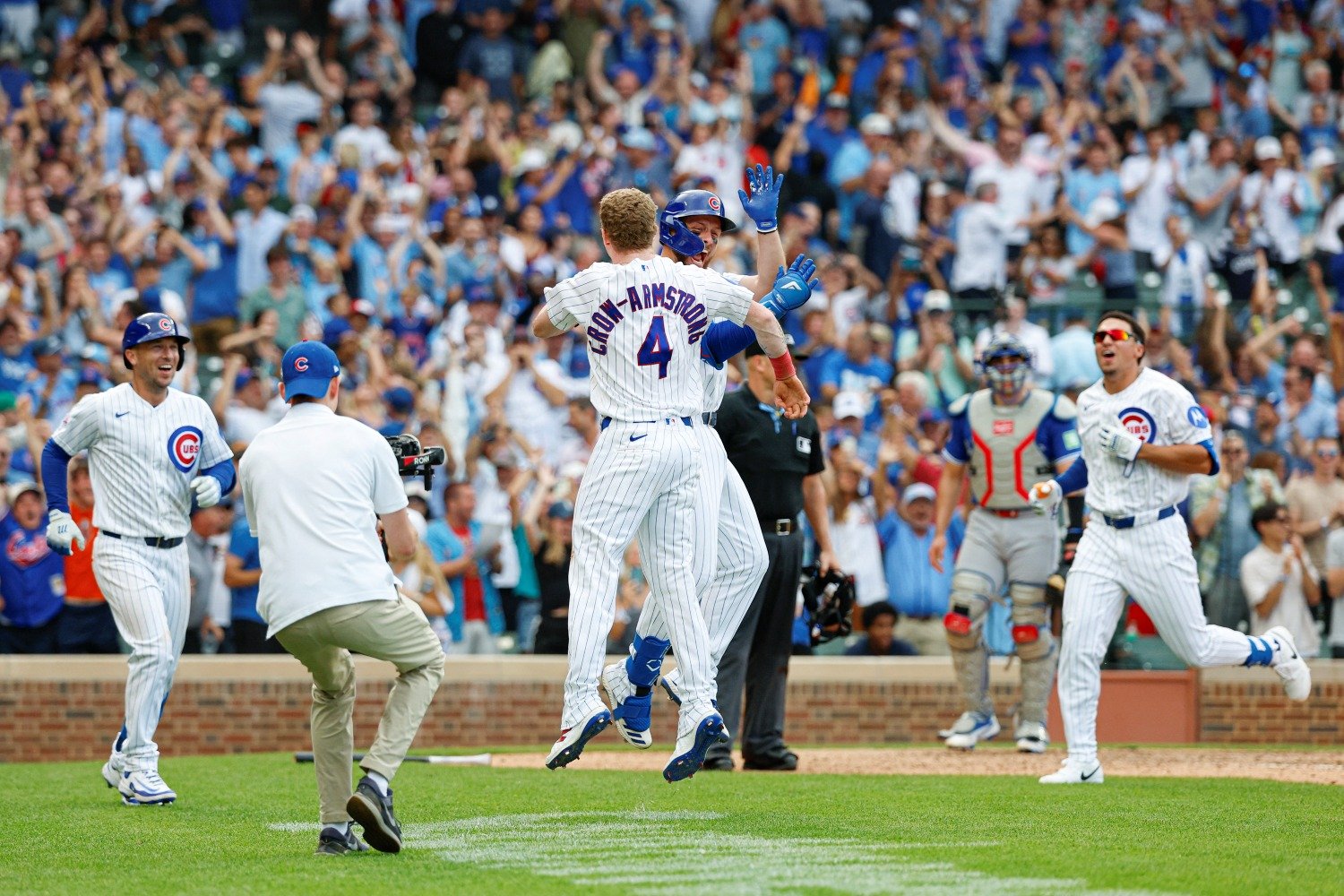 It's every human's greatest (if, at times, subconscious or unwanted) wish to be understood—to have others really see us as we see ourselves and grasp what we believe gives life its meaning. The great danger of being a parent lies in either being too successful at imprinting your understanding of the world on your child (thereby passing down to them your biases, your shortcomings and your ossifications of thought, and making a clone of yourself, which will become an ill-adjusted being in a world very different from your own), or in feeling an eternal frustration that grows from the inability to communicate to someone so close that essential self-understanding that must be communicated to bring happiness. I have always feared the former, more than the latter. I don't want my kids to be too much like me; I try to teach them mostly by pointing out my own mistakes and demanding that they avoid repeating them. Sometimes, though, that internal truth breaks containment, even when we don't want it to. In ways big and small, conscious and utterly accidental, we bare our souls to one another and a certain transference happens, whether we like it or not. In early August 2018, a YouTube user uploaded this highlight video of Javier Báez's season to that point. I loved it. Absent-mindedly, because my 5-year-old liked baseball and wanted something to watch, I showed it to him, too. It was one of those moments. My son has never been the same; that video rewired his personality. Since then, he's been not only a rabid baseball fan, but a tenacious player—and on and off the diamond, this is the energy he seems to bring to life. It's a relief, in one way, because that's not the energy I bring to life, so he's certainly carving his own identity, but I lose some sleep over the possibility that I've turned him into a demon as obsessed with excellence and domination and creativity as Báez was in his best season, with (surely) less talent to give it all the proper outlets. When the Cubs traded Báez a few years later, I was sad, and my son was even sadder. Of course, the playstyle on that tape was never going to age especially well, and Báez's more-bad-than-good years since have eased the pain of knowing the Cubs dealt him away, but the joy and ferocity of his game (at its best) was still absent from Cubdom, and the loss was felt, however inevitable I might have known it to be. Right away, though, my son latched onto Pete Crow-Armstrong. The same sizzling intensity bends the light all around Crow-Armstrong, making him shimmer and raising the temperature (for good and ill) every time he's on the field. I was a bit slower to take the same depth of enjoyment from his game, because some of the rough edges around the game felt less endearing in Crow-Armstrong's case than in Báez's. Once I saw him reinvent himself at the plate (for the first time, way back in mid-2024), however, I was on board. He was adaptable, after all. He was intelligent, after all. He might even be more talented than Báez, and capable of applying that talent a bit more judiciously to his game. That, of course, is what we've seen over the last two years. It was fun when Crow-Armstrong took off like a shot in 2025 and surpassed 20 homers and 20 steals before the All-Star break, but you could sense the recoil coming, and sure enough, he had a miserable final two months at the plate. The real breakout—the moment he went from a lovable star with two-way value to a generational guy—finally came this spring, as he adjusted to the bat speed he'd added over the offseason and altered his approach. That's when Crow-Armstrong became a player as winning-focused, clutch, and electrifying as Báez had been, although in a different way. The internet has changed (read: worsened) over the last eight years, and no good analog for that Báez highlight reel is easy to find for Crow-Armstrong. Because everyone is desperately trying to monetize YouTube traffic for themselves, and because viewing hours determine monetization rates and pull in the money, you can watch four-minute highlights from MLB's official channel that include just one at-bat and the ensuing home-run trot, or 25-minute compilations of plays made by simply stringing together the full versions of original 30-second clips, but you won't find sleek, well-produced highlight videos as readily. So be it. I want to offer just one brief set of clips that illustrate the point, as a way of celebrating and remembering the magical season that just came to an end. There's a big, grandiose way to do this, and maybe we'll do it another time. Today, we're doing the cozy minimalist version. Yes, there were a couple of months early this year when Crow-Armstrong played arguably the best defense in center field that the game has ever seen. Yes, there was a month in which he had an OPS of 1.249. Yes, there was one week in which he almost single-handedly won the Cubs four games, and yes, there were individual games scattered throughout the calendar in which he took the spotlight in ways we've hardly seen before. But I just want to talk about one game, in which he started the day 0-for-3 and the Cubs were slouching toward a 2-0 loss. The date was August 6, which was supposed to be an off day. Because rain had postponed the team's series finale against the Blue Jays in June, though, Toronto had come back to town on a mutual blank space in the teams' schedules. It could have been a really tough moment in the team's season, but instead, they were riding high. Crow-Armstrong had won them a game against the Yankees over the weekend, and he'd just won them one the previous night against the Dodgers, showing Shohei Ohtani who was boss in the last moment at which anyone wondered which of the two would be the MVP of the National League. It was a day game after a night game, though, and Crow-Armstrong went 0-for-3 through the first seven innings, with a strikeout. David Peterson pitched well, but gave up one run in the first, and the Jays tacked on a second tally in the seventh. Their near-automatic closer Louis Varland came on to save the game in the bottom of the ninth, with the cushion of that late run making things much less stressful. Crow-Armstrong wasn't even the tying run, when he led off the inning. Varland went right after his superstar opponent, getting ahead 0-2. Then, Crow-Armstrong slammed into one. This was not one of his most vicious swings. It doesn't look like a case of cutting down with two strikes, but it was that, a little bit. He made sure he would connect solidly, rather than swinging for the fences (as he did for much of the year). The ball half-split the gap, too, and he probably could have had second on the play. Not playing for stats, though, he held at first, knowing his run meant too little to risk an attempt to advance. That set up Alex Bregman's dramatic, game-tying two-run homer, which sent the game to extra innings. The Cubs should probably have won in 10 innings, but it went to 11. They held Toronto scoreless in the top half of each frame, so when Crow-Armstrong stepped in to lead off the bottom of the 11th, Carson Kelly stood at second base, carrying the winning run. He had a tough assignment, taking on lefty Brendon Little, and Little tried to leverage his platoon advantage. He also tried not to give Crow-Armstrong any chance to win the game for the Cubs—so much so that he threw him neither a fastball nor a strike the entire at-bat. Every past version of Crow-Armstrong gets himself out in that situation, probably via strikeout. This version, though, showed a well-considered blend of intelligence and aggressiveness. He wasn't going to passively accept a walk. He felt he had a chance to win the game for the team. Nor, however, would he unduly expand his zone and leave Kelly at second with one down. He took two balls and fouled off a few two-strike offerings. Finally, on a 2-2 curveball that didn't dip quite low enough, he hit it right back through the box for a single. It could, even, have been the game-winner. As it happened, though, Kelly shouldn't even have tried to score. He didn't get a clean enough break from second, and Myles Straw (who has a strong arm and charged the ball perfectly) got off too good a throw. The slow-footed Cubs catcher should have held at third, where a whole lot of possible things might have brought him home to walk it off. Instead, he ran into a pivotal first out. Crow-Armstrong hadn't been anticipating a celebration or thinking too conservatively, though. The throw came through to the plate and thwarted Kelly, but when it did so, Crow-Armstrong advanced to second. Thus, the winning run was right back in scoring position—and now, it was a guy who was utterly determined to score it. Few runners try to steal third with a lefty in the batter's box. Pitchouts are vanishingly rare in the modern game, but catchers have a clear lane to make a short throw when a lefty is at bat. All year, the league only attempted 70 steals of third from the seventh inning on. At that moment, in early August, the Cubs had only attempted one such steal all season. Here it is: TDY1VnFfV0ZRVkV3dEdEUT09X1VnUllYRkJRQndBQUQxc0JWZ0FIVkFGUUFBTUZVbFVBQTFKV1ZRVUdWVllFVkFSZQ==.mp4 Yep, it was Crow-Armstrong, and it came when the situation demanded it—putting him at third with less than two outs, when he carried the tying run in the final inning of the game. In that contest, the Cubs stranded him there and lost; they let Crow-Armstrong down a lot this year. But he hadn't been afraid then, and he wouldn't be afraid this time, either. This time, things broke just right for Chicago. Crow-Armstrong had the base stolen, anyway, but then the ball trickled away. It didn't even go that far; this was no airmailed ball into the left-field corner. It was enough, though. As soon as it began to roll away, Crow-Armstrong was off toward the plate. He had willed his team to a fourth straight win. It looked like the Summer of PCA might never end. Baseball doesn't always reward such courage, even when paired with great talent. But the game is at its best when someone has the temerity and the instincts to get a delicate thing like that right. In fact, life is at its best in moments like that, when someone takes a bold chance in the service of both themselves and others and it pays off. The magic of Crow-Armstrong, this year, was distilled as gorgeously in that moment as in any other play he made—in the field, at bat, or on the bases. It felt a whole lot like when Báez scintillated with the same clutchness and fire and unstoppable talent, eight years ago. I hadn't even initially thought of this, but now that I have, I feel compelled to include it. There was another moment akin to this one, in a way, from earlier in my baseball season—way earlier, back on May 20. It wasn't Crow-Armstrong making this particular play, but I had a better seat for it. I know I don't want my children's personalities to be as closely wired to sports as mine was when I was their age. I don't know whether I want them to view Crow-Armstrong (whom I have found thoughtful, sharp and generous in my few interactions with him, and whom most people say means well even off the field) as a role model, except in the limited context of the game. However, what Crow-Armstrong has tapped into over the last three seasons in Chicago is the same vein of positive intensity that Báez brought years ago, and the legacy of that kind of intensity—of that level of care put into one's work, with a fierce joy held right at the surface and a focus on how what you're doing serves those around you—is a profoundly positive one. It runs deeper than wins and losses, and it extends even beyond a bitter playoff disappointment. The Summer of PCA will, in some ways, never end, even if there aren't great music videos out there of his highlight-reel plays. Sports fans are edified by consuming this kind of baseball. The benefits might even spill beyond the foul lines.
 -
You're wasting at least your own time, here, and I fear others', too. Surely, you've noticed that I'm calling for big changes to an org I don't think is anywhere near where it needs to be, but your spin on that is missing all kinds of needed nuance and context. A teardown is not an option, and wouldn't be wise, anyway. They have to find a way to push forward within a window that's still open. That's the only reasonable and realistic choice. It's just that I'm not sure they'll succeed in doing so.
-
That happens to almost every team, at some point. For some teams, it's in Game 76. For some, it's in the NLCS, like when the Brewers couldn't handle the Dodgers at all last year. Whether that's different from being overmatched (that sure is the word that kept coming to me, watching the Cubs in this series and watching the Brewers against LA last October) is semantic, y'know? But yeah, it's the kind of thing you can't guard against very well. There was even a stretch there where the 2016 Cubs "stopped hitting". What saved them, apart from having better depth in their lineup and having gotten to a longer series before that happened so they had time to get right, was that they had good enough pitching to keep things close and the pressure on their opponent. Not so with this team. The scope of the pitching overhaul this team needs to undergo is... intimidating. Worrisome. I dunno.
- 24 replies
-
- 1
-
-
- nico hoerner
- kevin gausman
- (and 2 more)
-
I would *guess* Tommy Hottovy is out the door by the end of this month, if not the end of this week. We'll see. Alcantara and Shaw don't have the trade value to get you an SP you really want. They won't (and, I believe, shouldn't) double-down on Conforto and Taylor; I don't think those two are gonna be anywhere near as good next year as they were this year. Arozarena's one interesting target, for sure. Wouldn't you rather keep Suzuki, though? I'd take Seiya over Randy, on the deals I suspect each is likely to sign. Anyway, I like the aggressive mindset. No question that getting Cabrera right has to be a top priority. We'll dig more into what comes next, soon.
-
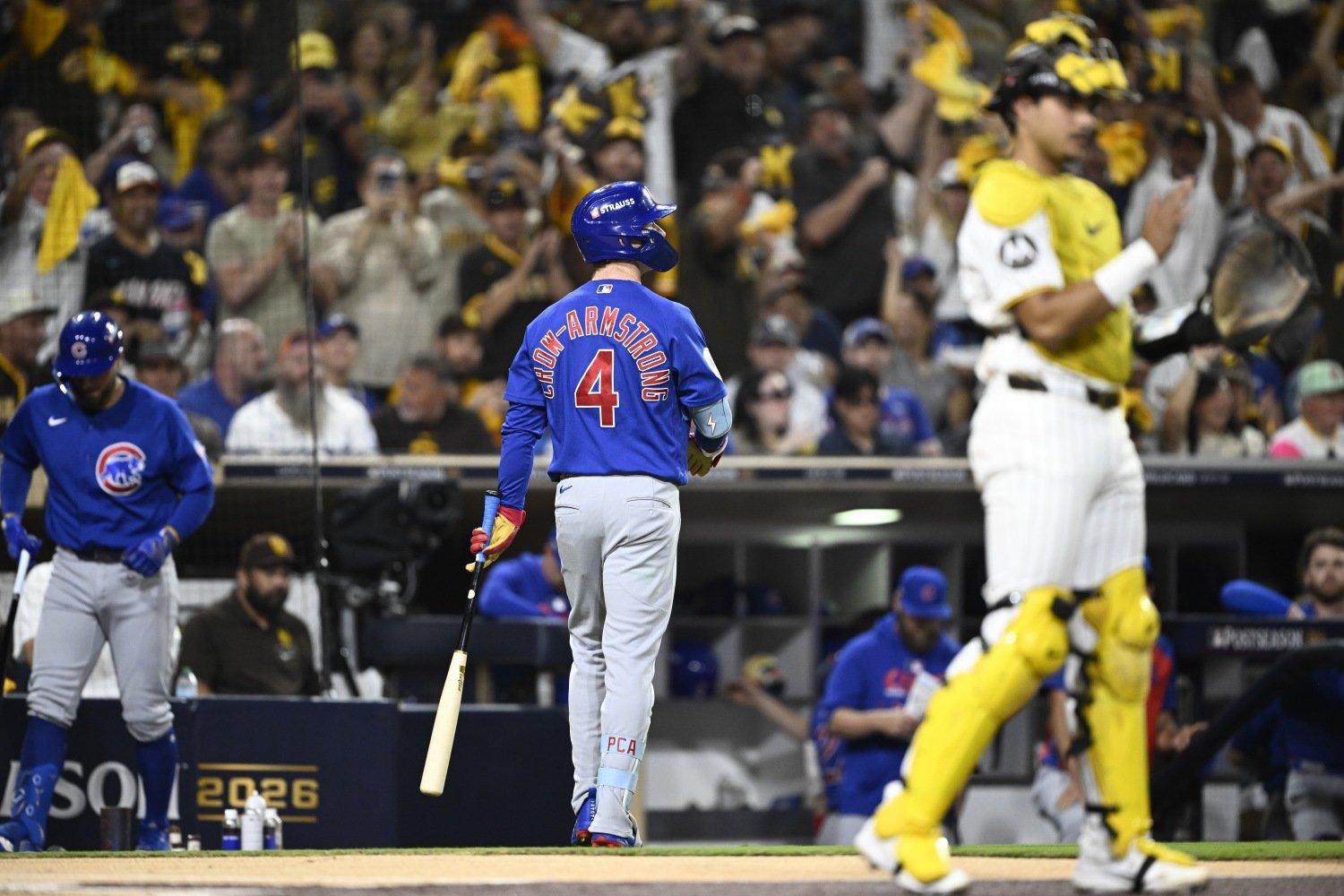 Pete Crow-Armstrong got his chance. It wasn't just an opportunity to set the tone right off the bat, or a 1-in-100 shot at robbing a home run as he flung himself against the wall. In the top of the third inning of Wednesday night's Game 2 in the National League Wild Card Series, Crow-Armstrong stepped to the plate against a struggling Nick Pivetta, with the tying runs on base. The San Diego Padres led 2-0, but one swing by Crow-Armstrong could have flipped the scoreboard. At the very least, a single would have moved that tying tally into scoring position, and it probably would have truly dislodged a snowball, sending it racing down the hill and giving the Cubs a chance to crush the Padres with a sudden avalanche of runs. Instead, Crow-Armstrong popped out almost directly to the second-base bag. That was the moment when the final rush of air left the lungs of the wounded creature that was the 2026 Cubs. Its valiant fight was over—lost. For the soon-to-be-named National League MVP, it was anything but a fitting ending to a season almost overflowing with heroics. As impressive as the stats are, the fun facts about Crow-Armstrong's power and speed have felt a bit empty, because they didn't properly capture how great he was when it mattered most. Crow-Armstrong led the league in Championship Win Probability Added this year, because he was clutch within games and late in the vicious fight for Wild Card positioning, as well as being great in a day-to-day, consistent way. Cruelly, though, baseball doesn't pretend to be its full-season self once the playoffs begin. In the six-team playoff format, you're lucky if your superstar gets even one real chance to tilt a game and save your season. Crow-Armstrong got a handful of half-chances, and that one legitimate one. He came up empty every time. In the two-game series, he went 0-for-7, and he didn't make solid contact at all. His lone triumph was a walk, and he did immediately apply pressure thereafter by stealing second base, but that came to nothing. For the whole series, the Cubs' efforts practically did so; they were outscored 12-1. Of course, Crow-Armstrong isn't primarily to blame for the loss. Even in that pivotal inning that saw a golden opportunity slip away, he was not the most egregious culprit. That heavy weight falls across the shoulders of Dansby Swanson, who was ahead in the count 3-1 on Pivetta with nobody out and those two runners already aboard, then chased two straight pitches outside the zone to strike out. Swanson went 0-for-6 in the series and damaged multiple rallies with bad at-bats. The only run the team scored in either game came in the frame right after Swanson, Crow-Armstrong and Alex Bregman wasted their golden chance. After a single and a walk with one out, Nico Hoerner bounced a single into center field to score Seiya Suzuki, halving the Cubs' deficit. But Hoerner was merely making up for his own costly miscue. In the bottom of the second, he lost track of himself as he raced into place to receive a throw from Carson Kelly on a steal attempt by Jackson Merrill. The ball beat Merrill and was on target, but Hoerner had come too far in front of the keystone and snared the ball too soon. Had he been better-positioned and let the ball travel more, Merrill would have been out. Instead, he was safe, and the Padres scored two runs in the inning. One of the two should have been avoided. Little things like that went wrong for the team all series. Crow-Armstrong didn't catch a homer he could possibly, maybe have stolen from Fernando Tatis Jr. in Game 1. Swanson couldn't handle a throw later in that game, and his teammates reacted too slowly behind him, leading to a steal of second that became a run for San Diego. David Peterson didn't cover first quickly enough to get an out the team should have had on a grounder later in Game 2. Crow-Armstrong squandered one of the team's two ABS challenges with a bad appeal in the first at-bat of the contest, and Kelly lost the other in the bottom of the third. None of that ultimately mattered that much, though. Hoerner's misplay was costly. So were the bad at-bats by Swanson, Crow-Armstrong and Bregman in the third. The game was well and truly decided when, after some characteristically nervous managing by Craig Counsell brought Daniel Palencia into the game in the bottom of the fourth, Palencia threw a fastball right into Gavin Sheets's wheelhouse and watched a long home run turn a 2-1 divot into a 4-1 hole. All series, the Cubs were outplayed—outhit, by a fresher Padres team that carried over their excellent slugging numbers from the final month of the regular season, and outfielded, too, but especially outpitched. Michael King and Pivetta were both impressive (in different ways), but the Padres bullpen also showed its depth and its raw stuff throughout the set. The strikeout and walk numbers weren't as imbalanced as one might guess, but Padres batters had six of the seven hardest-hit balls in Game 1 and eight of the nine hardest-hit balls in Game 2. They hit four home runs in the series; the Cubs didn't hit a ball more than 353 feet. San Diego's hurlers produced some late swings and some early ones, and despite the Cubs' arguably superior offensive talent, the far superior pitching of the Padres prevented them from doing damage. The Cubs' weak pitching staff couldn't do the same to the home side's sluggers. The unceremonious exit (their playoff-branded gear alludes to October, but they didn't actually make it out of September) is a gut punch for the Cubs, organizationally. It brings Crow-Armstrong's glorious season to an end that will sit in his craw all winter, the same way his poor and often embarrassing showing against the Brewers in last year's NLDS did. It marks the official termination of the season that might have marked the team's best hope for a deep playoff run for a while. Swanson, who will turn 33 before the team reconvenes for spring training, batted .212/.281/.385 from May 1 onward, and he lost significant time due to a soft-tissue injury (an oblique strain) for the first time in his career. Bregman turns 33 next March, too, and while he had a marvelous season and his partnership with Swanson on the left side of the infield was a joy to behold, the actuarial tables say those two players will be markedly worse next year than they were in 2026. They're very much part of the team's core, though, for four more seasons. Though considerably younger (he'll be 30 next spring), Hoerner was also much worse than those two this season. Ditto for Michael Busch, the only infielder not on a long-term deal. Counsell pinch-hit for Busch against lefty Adrian Morejon in the late innings of Game 2, which was the right call, but it felt jarring. Busch got a whopping 710 plate appearances in 2026. The percentage of his at-bats that came against right-handed hurlers dropped from 84% to 71%. He was an everyday, all-game player, but that didn't work: he slugged .393 at a position from which teams need to get power. That Counsell pulled him when there was no more slack left to offer felt like an admission that this was never the plan, and that it can't be, going forward. Had Tyler Austin stayed healthy, this season might have been different and better for Busch, even with less playing time. Having seen his warts (and knowing he'll be 29 years old next year, with below-average bat speed already), though, the Cubs must now decide whether to try for a platoon arrangement again in 2027—or try to find an outright upgrade. That's just one (and not even one of the biggest) of a huge number of tough decisions that amount to a massive amount of uncertainty for the team, as they look toward a winter that will be uncertain for nearly everyone. For a moment, forget about the questions that will swirl around negotiations for a new Collective Bargaining Agreement, and about the lockout that seems sure to swallow most of the winter once the current deal expires on December 1. This team has bigger fish to fry. Is Busch the answer at first base? He almost has to be, because moving that spot into even a top-10 list of priorities would be tough. Gausman started Game 2. Peterson provided some bridge relief work, and although he didn't enter the fray, Clay Holmes warmed up in the bottom of the eighth, just in case. All three of those hurlers are ticketed for free agency at the end of the World Series. So are Matthew Boyd and Shota Imanaga—the entirety, in other words, of the team's extant rotation at the end of the year. Most of that corps will depart, though it wouldn't be a huge surprise to see Boyd or Holmes return on a new deal. Beyond any arms from that group who return, the team will try to backfill with some internal options who were unavailable down the stretch. They remain cautiously optimistic about Justin Steele's progression toward a 2027 return and about Ben Brown being able to pitch without pain in his neck by the spring. Edward Cabrera should have a normal offseason, and Cade Horton might be able to return to the rotation by the middle of next year. Then again, Steele was supposed to be back already; he's now missed almost two full seasons in the wake of his second elbow reconstruction. The same fate is very much in play for Horton, so the team can't afford to treat him as a sure thing. Nor did Steele actually show well enough in any competitive minor-league action to inspire confidence heading into the winter. Brown's prognosis is unclear, as neither he nor the team has yet gotten a good answer about how to ensure that the stress reactions he's suffered in his neck won't recur. Cabrera is, at this moment, nothing so much as a symbol of the team's inability to help pitchers. Braxton Garrett is in the mix, but again, the less he's counted upon when building the offseason plan, the better. If anything, the corner outfield spots are even more uncertain. Ian Happ and Suzuki are both free agents-to-be, and though the team has at least some interest in a reunion with one or the other, there's no guarantee of that. Neither Matt Shaw nor Pedro Ramírez profiles very well as a full-time corner outfielder, and the lightning that was Michael Conforto's season is unlikely to strike twice. (Conforto is a free agent, too, of course.) Kevin Alcántara hasn't gotten any real chance to prove that he can hit big-league pitching, and in fact, he's only intermittently showed that he can hit Triple-A hurlers, but he's out of options next spring and will have to be on the big-league roster if he's in the organization at all. Kelly is an impending free agent, himself. Even if you're a big Owen Ayers believer, you can't plan to simply install him as a semi-regular behind the plate next Opening Day. The Cubs will have to add a catcher. Since their bullpen investments of this year mostly went bust, they'll have to spend more on relievers, too—though they did mitigate that need a bit by trading for Ryan Zeferjahn. Re-signing and/or replacing all of the talent sloughing off this roster will be hugely expensive. The Cubs don't have great alternatives, though, given the state of their farm system. Their margin for error next year is thinner than it would have been if they'd been less aggressive at the deadline, too, as Brett Bateman (outfield), Moisés Ballesteros (DH) and Jefferson Rojas (infield) all could have been reinforcements for the roster if they hadn't been dealt away. The front office recognized the importance of capitalizing on the year they were getting from Crow-Armstrong and on the last prime-adjacent years of Bregman, Swanson, Happ, Suzuki and more. They pushed in their chips. After Wednesday night, it sure feels like they lost the hand, but playing it was the brave (and perhaps the only) thing to do. A core remains. They should have better injury luck next year, though it won't be as rosy as some will try to tell you it might be. This season should (and probably will) force a reckoning with the team's failures to create a robust pitching pipeline that suits the modern game. They also found their superstar this year. Crow-Armstrong's season deserves (and will get) greater encomiums than the rush of the final week and the thud of this series have allowed; it was a delightful thing. But Crow-Armstrong will (if for no other reason than because it's the only direction he can go) get worse in 2027. He missed his own chances to extend this magical season, and his team was never up to catching him when he fell back to the pack. Indeed, without him, they would have been eliminated a week before the end of the regular season. As they look toward 2027, the Cubs have to be real with themselves. Almost everywhere, they failed in 2026. Crow-Armstrong saved a bad season, but he ran out of steam at the end of the race, thanks to having carried the entire franchise on his back for most of the course. Somehow, they have to support him better next year, and this week's pulverization by a team with a much deeper group of dynamic contributors was a reminder that doing so will require an uncharacteristically dramatic organizational transformation. It's ok to be worried about whether they can pull that off; they probably can't.
- 24 comments
-
- 1
-
-
- nico hoerner
- kevin gausman
- (and 2 more)
-
Image courtesy of Denis Poroy-Imagn Images Pete Crow-Armstrong got his chance. It wasn't just an opportunity to set the tone right off the bat, or a 1-in-100 shot at robbing a home run as he flung himself against the wall. In the top of the third inning of Wednesday night's Game 2 in the National League Wild Card Series, Crow-Armstrong stepped to the plate against a struggling Nick Pivetta, with the tying runs on base. The San Diego Padres led 2-0, but one swing by Crow-Armstrong could have flipped the scoreboard. At the very least, a single would have moved that tying tally into scoring position, and it probably would have truly dislodged a snowball, sending it racing down the hill and giving the Cubs a chance to crush the Padres with a sudden avalanche of runs. Instead, Crow-Armstrong popped out almost directly to the second-base bag. That was the moment when the final rush of air left the lungs of the wounded creature that was the 2026 Cubs. Its valiant fight was over—lost. For the soon-to-be-named National League MVP, it was anything but a fitting ending to a season almost overflowing with heroics. As impressive as the stats are, the fun facts about Crow-Armstrong's power and speed have felt a bit empty, because they didn't properly capture how great he was when it mattered most. Crow-Armstrong led the league in Championship Win Probability Added this year, because he was clutch within games and late in the vicious fight for Wild Card positioning, as well as being great in a day-to-day, consistent way. Cruelly, though, baseball doesn't pretend to be its full-season self once the playoffs begin. In the six-team playoff format, you're lucky if your superstar gets even one real chance to tilt a game and save your season. Crow-Armstrong got a handful of half-chances, and that one legitimate one. He came up empty every time. In the two-game series, he went 0-for-7, and he didn't make solid contact at all. His lone triumph was a walk, and he did immediately apply pressure thereafter by stealing second base, but that came to nothing. For the whole series, the Cubs' efforts practically did so; they were outscored 12-1. Of course, Crow-Armstrong isn't primarily to blame for the loss. Even in that pivotal inning that saw a golden opportunity slip away, he was not the most egregious culprit. That heavy weight falls across the shoulders of Dansby Swanson, who was ahead in the count 3-1 on Pivetta with nobody out and those two runners already aboard, then chased two straight pitches outside the zone to strike out. Swanson went 0-for-6 in the series and damaged multiple rallies with bad at-bats. The only run the team scored in either game came in the frame right after Swanson, Crow-Armstrong and Alex Bregman wasted their golden chance. After a single and a walk with one out, Nico Hoerner bounced a single into center field to score Seiya Suzuki, halving the Cubs' deficit. But Hoerner was merely making up for his own costly miscue. In the bottom of the second, he lost track of himself as he raced into place to receive a throw from Carson Kelly on a steal attempt by Jackson Merrill. The ball beat Merrill and was on target, but Hoerner had come too far in front of the keystone and snared the ball too soon. Had he been better-positioned and let the ball travel more, Merrill would have been out. Instead, he was safe, and the Padres scored two runs in the inning. One of the two should have been avoided. Little things like that went wrong for the team all series. Crow-Armstrong didn't catch a homer he could possibly, maybe have stolen from Fernando Tatis Jr. in Game 1. Swanson couldn't handle a throw later in that game, and his teammates reacted too slowly behind him, leading to a steal of second that became a run for San Diego. David Peterson didn't cover first quickly enough to get an out the team should have had on a grounder later in Game 2. Crow-Armstrong squandered one of the team's two ABS challenges with a bad appeal in the first at-bat of the contest, and Kelly lost the other in the bottom of the third. None of that ultimately mattered that much, though. Hoerner's misplay was costly. So were the bad at-bats by Swanson, Crow-Armstrong and Bregman in the third. The game was well and truly decided when, after some characteristically nervous managing by Craig Counsell brought Daniel Palencia into the game in the bottom of the fourth, Palencia threw a fastball right into Gavin Sheets's wheelhouse and watched a long home run turn a 2-1 divot into a 4-1 hole. All series, the Cubs were outplayed—outhit, by a fresher Padres team that carried over their excellent slugging numbers from the final month of the regular season, and outfielded, too, but especially outpitched. Michael King and Pivetta were both impressive (in different ways), but the Padres bullpen also showed its depth and its raw stuff throughout the set. The strikeout and walk numbers weren't as imbalanced as one might guess, but Padres batters had six of the seven hardest-hit balls in Game 1 and eight of the nine hardest-hit balls in Game 2. They hit four home runs in the series; the Cubs didn't hit a ball more than 353 feet. San Diego's hurlers produced some late swings and some early ones, and despite the Cubs' arguably superior offensive talent, the far superior pitching of the Padres prevented them from doing damage. The Cubs' weak pitching staff couldn't do the same to the home side's sluggers. The unceremonious exit (their playoff-branded gear alludes to October, but they didn't actually make it out of September) is a gut punch for the Cubs, organizationally. It brings Crow-Armstrong's glorious season to an end that will sit in his craw all winter, the same way his poor and often embarrassing showing against the Brewers in last year's NLDS did. It marks the official termination of the season that might have marked the team's best hope for a deep playoff run for a while. Swanson, who will turn 33 before the team reconvenes for spring training, batted .212/.281/.385 from May 1 onward, and he lost significant time due to a soft-tissue injury (an oblique strain) for the first time in his career. Bregman turns 33 next March, too, and while he had a marvelous season and his partnership with Swanson on the left side of the infield was a joy to behold, the actuarial tables say those two players will be markedly worse next year than they were in 2026. They're very much part of the team's core, though, for four more seasons. Though considerably younger (he'll be 30 next spring), Hoerner was also much worse than those two this season. Ditto for Michael Busch, the only infielder not on a long-term deal. Counsell pinch-hit for Busch against lefty Adrian Morejon in the late innings of Game 2, which was the right call, but it felt jarring. Busch got a whopping 710 plate appearances in 2026. The percentage of his at-bats that came against right-handed hurlers dropped from 84% to 71%. He was an everyday, all-game player, but that didn't work: he slugged .393 at a position from which teams need to get power. That Counsell pulled him when there was no more slack left to offer felt like an admission that this was never the plan, and that it can't be, going forward. Had Tyler Austin stayed healthy, this season might have been different and better for Busch, even with less playing time. Having seen his warts (and knowing he'll be 29 years old next year, with below-average bat speed already), though, the Cubs must now decide whether to try for a platoon arrangement again in 2027—or try to find an outright upgrade. That's just one (and not even one of the biggest) of a huge number of tough decisions that amount to a massive amount of uncertainty for the team, as they look toward a winter that will be uncertain for nearly everyone. For a moment, forget about the questions that will swirl around negotiations for a new Collective Bargaining Agreement, and about the lockout that seems sure to swallow most of the winter once the current deal expires on December 1. This team has bigger fish to fry. Is Busch the answer at first base? He almost has to be, because moving that spot into even a top-10 list of priorities would be tough. Gausman started Game 2. Peterson provided some bridge relief work, and although he didn't enter the fray, Clay Holmes warmed up in the bottom of the eighth, just in case. All three of those hurlers are ticketed for free agency at the end of the World Series. So are Matthew Boyd and Shota Imanaga—the entirety, in other words, of the team's extant rotation at the end of the year. Most of that corps will depart, though it wouldn't be a huge surprise to see Boyd or Holmes return on a new deal. Beyond any arms from that group who return, the team will try to backfill with some internal options who were unavailable down the stretch. They remain cautiously optimistic about Justin Steele's progression toward a 2027 return and about Ben Brown being able to pitch without pain in his neck by the spring. Edward Cabrera should have a normal offseason, and Cade Horton might be able to return to the rotation by the middle of next year. Then again, Steele was supposed to be back already; he's now missed almost two full seasons in the wake of his second elbow reconstruction. The same fate is very much in play for Horton, so the team can't afford to treat him as a sure thing. Nor did Steele actually show well enough in any competitive minor-league action to inspire confidence heading into the winter. Brown's prognosis is unclear, as neither he nor the team has yet gotten a good answer about how to ensure that the stress reactions he's suffered in his neck won't recur. Cabrera is, at this moment, nothing so much as a symbol of the team's inability to help pitchers. Braxton Garrett is in the mix, but again, the less he's counted upon when building the offseason plan, the better. If anything, the corner outfield spots are even more uncertain. Ian Happ and Suzuki are both free agents-to-be, and though the team has at least some interest in a reunion with one or the other, there's no guarantee of that. Neither Matt Shaw nor Pedro Ramírez profiles very well as a full-time corner outfielder, and the lightning that was Michael Conforto's season is unlikely to strike twice. (Conforto is a free agent, too, of course.) Kevin Alcántara hasn't gotten any real chance to prove that he can hit big-league pitching, and in fact, he's only intermittently showed that he can hit Triple-A hurlers, but he's out of options next spring and will have to be on the big-league roster if he's in the organization at all. Kelly is an impending free agent, himself. Even if you're a big Owen Ayers believer, you can't plan to simply install him as a semi-regular behind the plate next Opening Day. The Cubs will have to add a catcher. Since their bullpen investments of this year mostly went bust, they'll have to spend more on relievers, too—though they did mitigate that need a bit by trading for Ryan Zeferjahn. Re-signing and/or replacing all of the talent sloughing off this roster will be hugely expensive. The Cubs don't have great alternatives, though, given the state of their farm system. Their margin for error next year is thinner than it would have been if they'd been less aggressive at the deadline, too, as Brett Bateman (outfield), Moisés Ballesteros (DH) and Jefferson Rojas (infield) all could have been reinforcements for the roster if they hadn't been dealt away. The front office recognized the importance of capitalizing on the year they were getting from Crow-Armstrong and on the last prime-adjacent years of Bregman, Swanson, Happ, Suzuki and more. They pushed in their chips. After Wednesday night, it sure feels like they lost the hand, but playing it was the brave (and perhaps the only) thing to do. A core remains. They should have better injury luck next year, though it won't be as rosy as some will try to tell you it might be. This season should (and probably will) force a reckoning with the team's failures to create a robust pitching pipeline that suits the modern game. They also found their superstar this year. Crow-Armstrong's season deserves (and will get) greater encomiums than the rush of the final week and the thud of this series have allowed; it was a delightful thing. But Crow-Armstrong will (if for no other reason than because it's the only direction he can go) get worse in 2027. He missed his own chances to extend this magical season, and his team was never up to catching him when he fell back to the pack. Indeed, without him, they would have been eliminated a week before the end of the regular season. As they look toward 2027, the Cubs have to be real with themselves. Almost everywhere, they failed in 2026. Crow-Armstrong saved a bad season, but he ran out of steam at the end of the race, thanks to having carried the entire franchise on his back for most of the course. Somehow, they have to support him better next year, and this week's pulverization by a team with a much deeper group of dynamic contributors was a reminder that doing so will require an uncharacteristically dramatic organizational transformation. It's ok to be worried about whether they can pull that off; they probably can't. View full article
- 24 replies
-
- 1
-

-
- nico hoerner
- kevin gausman
- (and 2 more)
-
Image courtesy of Denis Poroy-Imagn Images The good news is that, unlike almost anyone else in the sport, Alex Bregman can tell his Cubs teammates firsthand what it's like when a team comes back from a 1-0 deficit to win the best-of-three Wild Card Series. Entering Wednesday, that's only happened once, and Bregman was there. Unfortunately, it was last year, when the Yankees stormed back to take two straight games from Bregman's Red Sox and survive the Wild Card Series, with all the games played at Yankee Stadium. This situation isn't analogous to that one—at least, not in any way that flatters the Cubs. The 2025 Yankees were pretty clearly better than the Red Sox team they were hosting, with a five-game edge in both actual and Pythagorean record (an estimate of how many games each club should have won, based on their raw numbers of runs scored and allowed). They had home-field advantage, and they had a deep, hard-throwing pitching staff. They still barely eked out a win in Game 2, but once they did so, they were in great shape for Game 3. In one reading, though, the Cubs are just built in the opposite way. They had the best offense in baseball this season, by runs scored, so why isn't it possible that they'll bounce back from an 8-0 demolition at the hands of the Padres and win a slugfest or two, to make it out of San Diego alive? That's a rhetorical question, of course. It is possible. It just doesn't feel like it, after Game 1. It's becoming clear what a costly fumble the team committed by losing home-field advantage in this series amid a disappointing September. The Padres lit Petco Park like a powder keg in the postseason opener, and Chicago never recovered. Matthew Boyd's plan wasn't as bad as it looked; he just didn't make good enough pitches to beat a Padres team that had his number. Boyd likes to start his very slow changeup on the plate and let it fade away from righties, but the Padres were sitting on that pitch. If the pitch is well-located, that's not a problem, really. It doesn't earn a whiff, but it's likely to induce weak contact—something off the end of the bat, for a ground ball or a harmless fly. Boyd, though, made five mistakes with the change to righties, leaving it on the outer half but not far enough from the batter, and not low enough. Three of those mistakes went over the wall, accounting for three of the Padres' four early runs. If he'd been perfect otherwise, and if Craig Counsell hadn't nervously pulled him in favor of a bullpen that had no more answers, it still wouldn't have mattered. Tuesday was a night when the Cubs made many mistakes, from filling out the lineup card (leaving out Michael Conforto, who matched up better against Padres starter Michael King than anyone else on the roster) to not moving runners (Ian Happ) or making plays (Pete Crow-Armstrong, Carson Kelly) when they had rare chances to do so. It's not clear, though, that any of those mistakes really mattered. They were simply overmatched. King was on his game, and when he's on his game, he's on a level neither Boyd nor any other Cubs starter can match. His fastball was up from its usual 94 miles per hour to almost 96, and he had the ability to stretch the zone both horizontally and vertically. On a night when the Padres didn't even use their highest-octane, highest-leverage relievers, they still dominated Cubs batters with stuff Cubs pitchers couldn't match, and that not even Crow-Armstrong could hit. There were 46 pitches with an induced vertical break (rising action) of at least 15 inches; the Padres threw 31 of them. There were 37 pitches thrown with at least 17 inches (one home plate's worth) of horizontal break; the Padres threw 22 of them. There were 52 pitches that came in at 95 MPH or faster; the Padres threw 32 of them. King dominated. Even if Conforto had been in the lineup, or if Happ had gotten a runner over when he had a chance in the second inning, not much would have changed; it was just someone else's night. It didn't have to look as bad as it did. The Cubs kept giving up runs by getting sloppy, with free bases galore and a two-base error on a Fernando Tatis Jr. stolen base. The Padres were a better team, though, and they had a good game. Now, the Cubs will try to remember that they, too, can be that good a team, and try to have that good a game. Kevin Gausman gets the ball, but he probably won't pitch much deeper than Boyd did, even if he's effective. With the season on the line, Counsell will be proactive, and he won't go back to the likes of Javier Assad and Aaron Civale. Daniel Palencia, Ryan Zeferjahn and another member of the starting staff (like David Peterson) will almost surely make appearances. The truth is that the Cubs looked overmatched, and might actually be so. They can't throw as hard as the Padres, and throwing hard is more important than ever. They score runs mostly when Crow-Armstrong and Bregman produce them; the bottom half of the batting order has been weak for about two months now. Their vaunted defense cracked under pressure from their hosts. But, despite the grim history, a series this short can still flip in a hurry. There's time, yet, for Chicago to show the balance and dynamism that defined them at their best. It's a good thing every game only counts as one. Tuesday night felt like two or three different losses rolled into one. The Cubs aren't dead yet. They just have to play much better Wednesday night. View full article
-
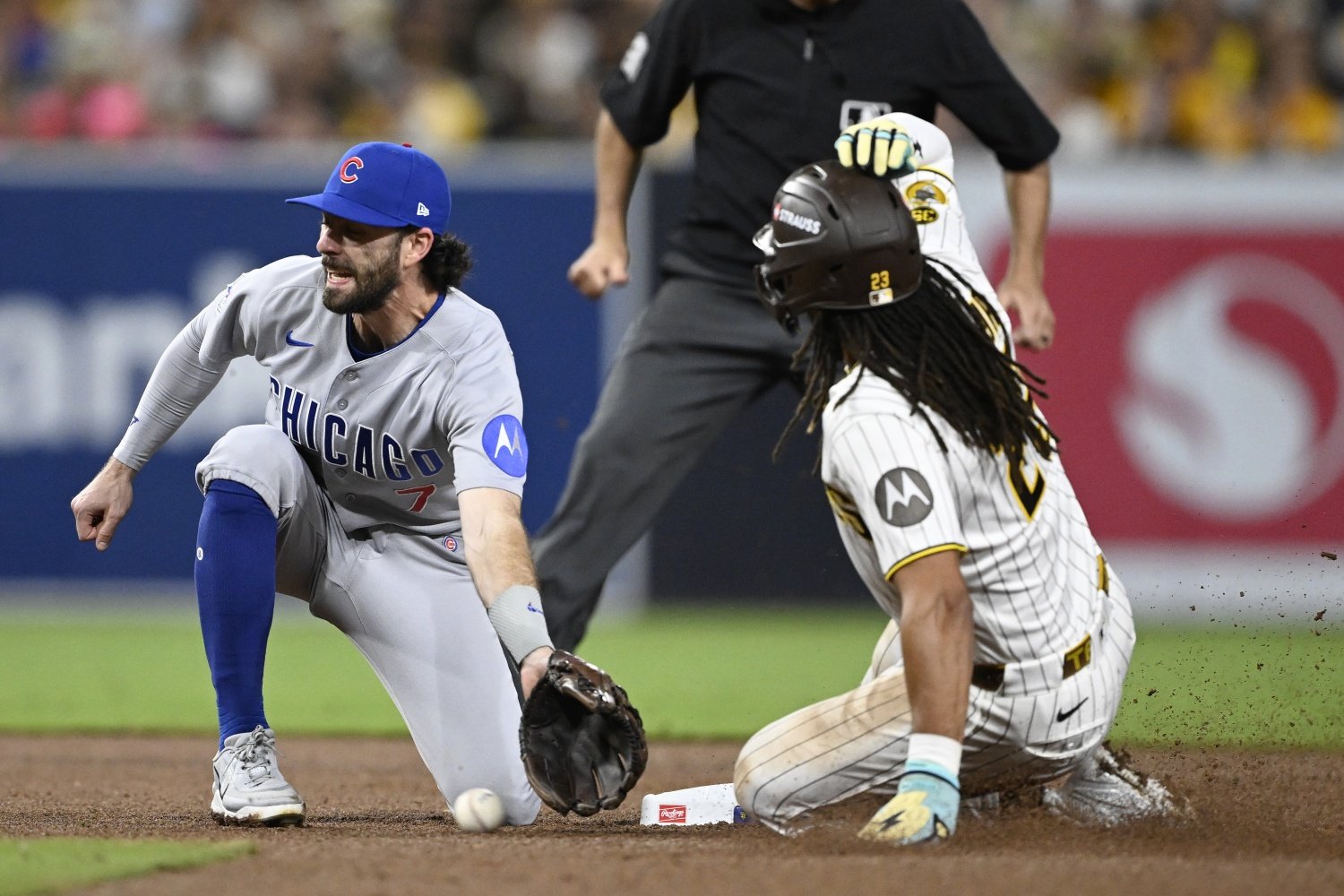 The good news is that, unlike almost anyone else in the sport, Alex Bregman can tell his Cubs teammates firsthand what it's like when a team comes back from a 1-0 deficit to win the best-of-three Wild Card Series. Entering Wednesday, that's only happened once, and Bregman was there. Unfortunately, it was last year, when the Yankees stormed back to take two straight games from Bregman's Red Sox and survive the Wild Card Series, with all the games played at Yankee Stadium. This situation isn't analogous to that one—at least, not in any way that flatters the Cubs. The 2025 Yankees were pretty clearly better than the Red Sox team they were hosting, with a five-game edge in both actual and Pythagorean record (an estimate of how many games each club should have won, based on their raw numbers of runs scored and allowed). They had home-field advantage, and they had a deep, hard-throwing pitching staff. They still barely eked out a win in Game 2, but once they did so, they were in great shape for Game 3. In one reading, though, the Cubs are just built in the opposite way. They had the best offense in baseball this season, by runs scored, so why isn't it possible that they'll bounce back from an 8-0 demolition at the hands of the Padres and win a slugfest or two, to make it out of San Diego alive? That's a rhetorical question, of course. It is possible. It just doesn't feel like it, after Game 1. It's becoming clear what a costly fumble the team committed by losing home-field advantage in this series amid a disappointing September. The Padres lit Petco Park like a powder keg in the postseason opener, and Chicago never recovered. Matthew Boyd's plan wasn't as bad as it looked; he just didn't make good enough pitches to beat a Padres team that had his number. Boyd likes to start his very slow changeup on the plate and let it fade away from righties, but the Padres were sitting on that pitch. If the pitch is well-located, that's not a problem, really. It doesn't earn a whiff, but it's likely to induce weak contact—something off the end of the bat, for a ground ball or a harmless fly. Boyd, though, made five mistakes with the change to righties, leaving it on the outer half but not far enough from the batter, and not low enough. Three of those mistakes went over the wall, accounting for three of the Padres' four early runs. If he'd been perfect otherwise, and if Craig Counsell hadn't nervously pulled him in favor of a bullpen that had no more answers, it still wouldn't have mattered. Tuesday was a night when the Cubs made many mistakes, from filling out the lineup card (leaving out Michael Conforto, who matched up better against Padres starter Michael King than anyone else on the roster) to not moving runners (Ian Happ) or making plays (Pete Crow-Armstrong, Carson Kelly) when they had rare chances to do so. It's not clear, though, that any of those mistakes really mattered. They were simply overmatched. King was on his game, and when he's on his game, he's on a level neither Boyd nor any other Cubs starter can match. His fastball was up from its usual 94 miles per hour to almost 96, and he had the ability to stretch the zone both horizontally and vertically. On a night when the Padres didn't even use their highest-octane, highest-leverage relievers, they still dominated Cubs batters with stuff Cubs pitchers couldn't match, and that not even Crow-Armstrong could hit. There were 46 pitches with an induced vertical break (rising action) of at least 15 inches; the Padres threw 31 of them. There were 37 pitches thrown with at least 17 inches (one home plate's worth) of horizontal break; the Padres threw 22 of them. There were 52 pitches that came in at 95 MPH or faster; the Padres threw 32 of them. King dominated. Even if Conforto had been in the lineup, or if Happ had gotten a runner over when he had a chance in the second inning, not much would have changed; it was just someone else's night. It didn't have to look as bad as it did. The Cubs kept giving up runs by getting sloppy, with free bases galore and a two-base error on a Fernando Tatis Jr. stolen base. The Padres were a better team, though, and they had a good game. Now, the Cubs will try to remember that they, too, can be that good a team, and try to have that good a game. Kevin Gausman gets the ball, but he probably won't pitch much deeper than Boyd did, even if he's effective. With the season on the line, Counsell will be proactive, and he won't go back to the likes of Javier Assad and Aaron Civale. Daniel Palencia, Ryan Zeferjahn and another member of the starting staff (like David Peterson) will almost surely make appearances. The truth is that the Cubs looked overmatched, and might actually be so. They can't throw as hard as the Padres, and throwing hard is more important than ever. They score runs mostly when Crow-Armstrong and Bregman produce them; the bottom half of the batting order has been weak for about two months now. Their vaunted defense cracked under pressure from their hosts. But, despite the grim history, a series this short can still flip in a hurry. There's time, yet, for Chicago to show the balance and dynamism that defined them at their best. It's a good thing every game only counts as one. Tuesday night felt like two or three different losses rolled into one. The Cubs aren't dead yet. They just have to play much better Wednesday night.
 -
Image courtesy of Matt Marton-Imagn Images Maybe, if Kevin Gausman had been fully healthy and there were no questions surrounding him, you could have made a case for him to start Game 1 of the Cubs' Wild Card Series in San Diego this week. When Gausman sprawled to make a tag in his final regular-season start and ended up with a balky left shoulder, though, the writing was on the wall—and it probably should have been, anyway. Matthew Boyd was the right choice, and when Gausman suffered even a minor malady, the veteran lefty became the only choice. Boyd made two starts against the Padres this year. One came at Petco Park, in April, and it went poorly, but much of the trouble was caused by circumstances we're unlikely to see repeated Tuesday night. Boyd himself made a bad first-inning ABS challenge, and in the middle innings, catcher Moisés Ballesteros (yep) made another. Ballesteros struggled as a receiver all day, and being out of challenges for half the day ultimately cost the Cubs that game. Boyd also gave up key hits to Jackson Merrill and Ty France, against whom he'll have to execute much better Tuesday night, but he pitched better than his final line: 4 innings, 8 hits, 5 runs, 2 walks, 4 strikeouts. By the time he faced San Diego again at Wrigley Field during a scorching midsummer series, Boyd was finally getting untracked. He emerged, around then, as the Cubs' ace, and there have only been rare moments since in which anyone else seized that title. That day, Boyd gave up another 8 hits over 5 innings, but San Diego only scored 3 runs, thanks to two homers. One of those only left the park because, that day, everything was leaving the park. It was hot, and the wind was blowing out, and the teams combined for nine dingers. Even some of the hits on balls that stayed in the park didn't need to be; the Cubs' exceptional defense cracked a bit in the heat and with the ball jumping off bats the way it was. That series came at a weather and ball-liveliness nexus that won't be repeated this week. The ball was flying very well, with reduced drag, for a stretch in the middle of the season, but it's been much more like the early season at the end. It'll be pleasant in San Diego Tuesday night, but not hot, by any means. That should give Boyd some margin for error. He won't have to be quite as fine as he would have needed to be to hold the Padres down better than he did at the end of June, and anyway, replicating those results would be fine; the Cubs will need to win starts in which they get five innings of three-run ball in order to go anywhere this postseason. Boyd has pitched better of late than any other Cubs starter (save, arguably, David Peterson), but there's another reason why he was the obvious choice for this outing. The Padres' one weakness, even during their hot September, is that you can put them in the rocking chair a bit, particularly as a lefty. San Diego led the majors in OPS for the final month of the regular season. They're dangerous, and as Boyd learned right away on Opening Day this year, sometimes, hitters like these can guess right against him often enough to ruin his day. On the whole, though, the Padres' lineup is the kind you expect Boyd to thrive against. He should be able to induce them to swing early, earning some weak contact off the end of the bat and some whiffs. It's a tall order he faces. The hottest offense in the game awaits him, and the Cubs need length from him. The ABS-influenced smaller strike zone is unfriendly to pitchers who thrive on finesse, as Boyd does. The matchup is right, though, and throughout his two-year tenure in Chicago, Boyd has been as reliable as any pitcher on the team. He just has to execute; that's what playoff basebal is nearly always about. View full article
-
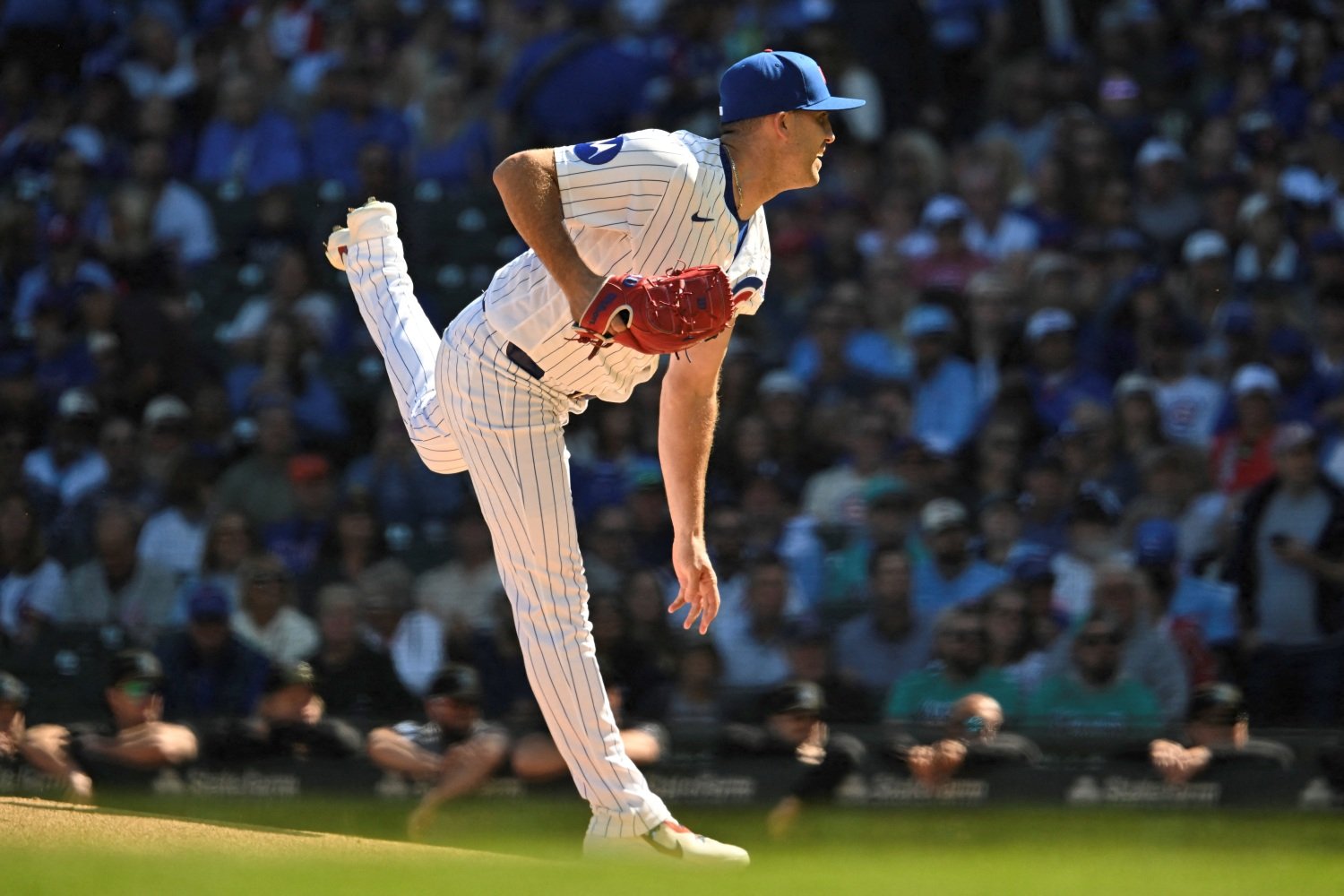 Maybe, if Kevin Gausman had been fully healthy and there were no questions surrounding him, you could have made a case for him to start Game 1 of the Cubs' Wild Card Series in San Diego this week. When Gausman sprawled to make a tag in his final regular-season start and ended up with a balky left shoulder, though, the writing was on the wall—and it probably should have been, anyway. Matthew Boyd was the right choice, and when Gausman suffered even a minor malady, the veteran lefty became the only choice. Boyd made two starts against the Padres this year. One came at Petco Park, in April, and it went poorly, but much of the trouble was caused by circumstances we're unlikely to see repeated Tuesday night. Boyd himself made a bad first-inning ABS challenge, and in the middle innings, catcher Moisés Ballesteros (yep) made another. Ballesteros struggled as a receiver all day, and being out of challenges for half the day ultimately cost the Cubs that game. Boyd also gave up key hits to Jackson Merrill and Ty France, against whom he'll have to execute much better Tuesday night, but he pitched better than his final line: 4 innings, 8 hits, 5 runs, 2 walks, 4 strikeouts. By the time he faced San Diego again at Wrigley Field during a scorching midsummer series, Boyd was finally getting untracked. He emerged, around then, as the Cubs' ace, and there have only been rare moments since in which anyone else seized that title. That day, Boyd gave up another 8 hits over 5 innings, but San Diego only scored 3 runs, thanks to two homers. One of those only left the park because, that day, everything was leaving the park. It was hot, and the wind was blowing out, and the teams combined for nine dingers. Even some of the hits on balls that stayed in the park didn't need to be; the Cubs' exceptional defense cracked a bit in the heat and with the ball jumping off bats the way it was. That series came at a weather and ball-liveliness nexus that won't be repeated this week. The ball was flying very well, with reduced drag, for a stretch in the middle of the season, but it's been much more like the early season at the end. It'll be pleasant in San Diego Tuesday night, but not hot, by any means. That should give Boyd some margin for error. He won't have to be quite as fine as he would have needed to be to hold the Padres down better than he did at the end of June, and anyway, replicating those results would be fine; the Cubs will need to win starts in which they get five innings of three-run ball in order to go anywhere this postseason. Boyd has pitched better of late than any other Cubs starter (save, arguably, David Peterson), but there's another reason why he was the obvious choice for this outing. The Padres' one weakness, even during their hot September, is that you can put them in the rocking chair a bit, particularly as a lefty. San Diego led the majors in OPS for the final month of the regular season. They're dangerous, and as Boyd learned right away on Opening Day this year, sometimes, hitters like these can guess right against him often enough to ruin his day. On the whole, though, the Padres' lineup is the kind you expect Boyd to thrive against. He should be able to induce them to swing early, earning some weak contact off the end of the bat and some whiffs. It's a tall order he faces. The hottest offense in the game awaits him, and the Cubs need length from him. The ABS-influenced smaller strike zone is unfriendly to pitchers who thrive on finesse, as Boyd does. The matchup is right, though, and throughout his two-year tenure in Chicago, Boyd has been as reliable as any pitcher on the team. He just has to execute; that's what playoff basebal is nearly always about.
