


Matthew Trueblood
-
Posts
2,488 -
Joined
-
Last visited
-
Days Won
2
2 Followers


Matthew Trueblood's Achievements






-
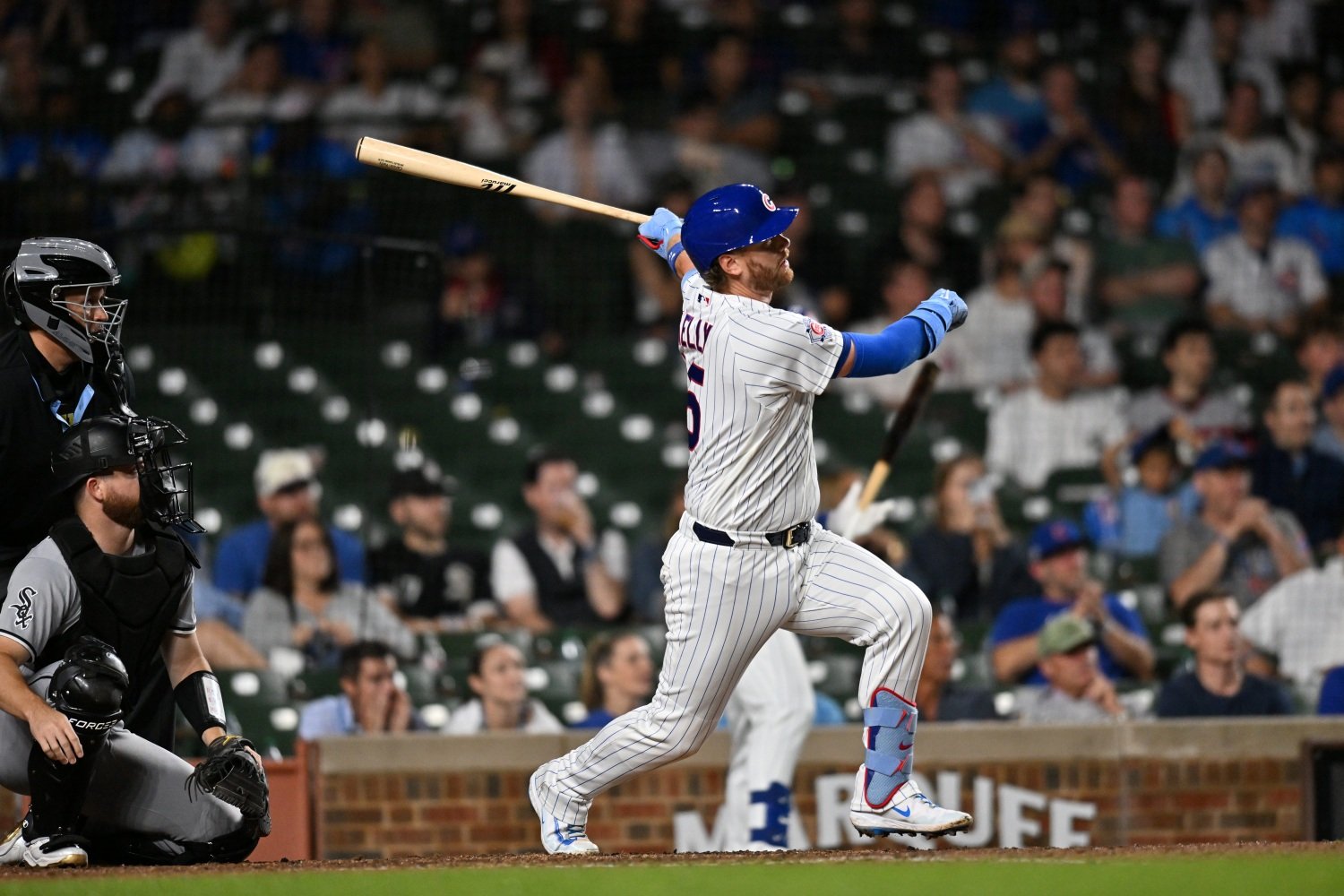 Catcher is a position fraught with uncertainty for the Cubs this offseason. Carson Kelly's contract contains a mutual option for 2027, but Kelly is in position to earn more than the $6 million in new money that triggering that option would give him, so he'll turn down his side thereof and become a free agent. The Cubs would be interested in having Kelly back at that price, but once they face the specter of paying market value for him (in all likelihood, a two-year deal worth at least $15 million), they're likely to quail a bit. However, they can't plunge forward without replacing Kelly, who's been a stalwart backstop for them over the last two seasons. Miguel Amaya's 2026 season was fine, but no more than that, and it's fairly clear that his body will never allow him to be a first-division regular at the most demanding position on the diamond. He played only about 40% of the time in 2026, and even then, he struggled to produce any meaningful pop. He's a solid defender, but he needs to be kept in the role he had this season; making him the true starter would mean accepting a downgrade at the spot. The natural alternative is close at hand, though. Top prospect Owen Ayers, who caught huge helium as he climbed from the bottom of the minor-league ladder to the top this year. After spending all of 2025 with Low-A Myrtle Beach, Ayers took just a fortnight to solve the Midwest League this spring, and was promoted that quickly to Double-A Knoxville. By late July, he'd forced the team's hand, and he got another bump, to Triple-A Iowa. For the year, he batted .289/.403/.526, with 25 home runs in 538 plate appearances. That produced lots of excitement among those who follow Cubs prospects closely. Ayers even broke into some national top-100 prospect lists. Count me as a skeptic. It was a distortionary season for hitter evaluation throughout the minors. Batters put up huge numbers at all levels below the majors. Ayers rode that wave, but that means that his numbers need some air taken out of them. He also saw a major degradation in his performance when he went from Knoxville to Des Moines, which doesn't feel like a coincidence: they use the big-league ball at Triple-A. High-A South Bend: 151 DRC+, 224 wRC+, 1.156 SLGCON Double-A Knoxville: 145 DRC+, 165 wRC+, .845 SLGCON Triple-A Iowa: 99 DRC+, 92 wRC+, .481 SLGCON If Ayers were a 22-year-old making a rapid but on-time ascent through the minors, those splits would be no great cause for concern. He wasn't. The 2024 19th-round pick turned 25 in June. He only became age-appropriate for a prospect when he reached Iowa, where he looked lost at the plate. Reports on Ayers's defense behind the plate are mixed. He draws good reviews for athleticism and for his throwing arm, but he's not a finished product as a receiver. Again, that's no problem if a player is 22 or 23 years old, but it's much more of a concern if they're still unrefined as a defender at the most important defensive position as they pass the halfway point of their 20s. The Cubs shouldn't plan on having Ayers play a major role early in 2027. My own opinion is that they should have traded him at the deadline, when his value was higher than it is now—and perhaps higher than it will ever be again. It's fine to keep him around, and even hold out considerable hope for him as (if nothing else) a replacement for Amaya in 2028, but to be as good at the catcher spot as they were in 2026, they need to find this year's version of the player they signed ahead of the 2025 season, on an affordable two-year deal. Bad news: no such catcher is available this winter. Kelly was a unique opportunity, in that he became a free agent younger than most catchers do; he had just turned 30 in July 2024. He had also just completed a season in which he significantly reduced his strikeout rate, not by trading power for contact, but by getting more aggressive within the strike zone and avoiding two-strike counts better. He was, at that moment, a clear plus on defense, although he was a bit worse late in his Cubs tenure. The Cubs would, ideally, replace him with a player who'll be 30 or younger for at least half of 2027; saw their key performance indicators move in the right direction in 2026; and is clearly big league-caliber defensively, if not actively helpful on the run prevention side. That guy's just not out there this winter. Projects aplenty are available. Ryan Jeffers is young enough to fit the mold, and he's an even better hitter than Kelly. There are two problems with him: He's a subpar defensive catcher; and Unlike Kelly, he's highly valued by the market and clearly the best catcher available in free agency. He'll make something like five times what Kelly got two years ago, over a longer term. He might even get a qualifying offer from the Minnesota Twins. Tyler Stephenson is closer to being the same situation. He had a rough enough 2026 to keep his asking price from ballooning alongside that of Jeffers. He did trim his strikeout rate this season, and though he's extremely messy as a defender, the pieces of a good catcher are there. He's a more reasonable target, with real upside if he can get to just a bit more of his power. The team would have to place major trust in its catching department to help him along defensively, though. Every other free-agent catcher with any meaningful track record is at least Kelly's age. Buying into a catcher at that age—including Kelly itself—is never a good idea; those players decline too rapidly. Two or three more interesting players might hit free agency after being non-tendered next month, and trades are always an option, but the reality is that the Cubs will have a hard time maintaining what they got from their catchers in 2026. In an array of imperfect options, signing Stephenson might be the most appealing, if his price tag doesn't get unexpectedly unmanageable. Retaining Kelly or promoting Ayers might turn out to be solid alternatives, not because they actually figure to be good next year, but because they might be the smartest and/or easiest ways to make the best of a bad situation. Ideally, the Cubs would find the surprising but legitimate good solution in the midst of the dreck. They got very lucky that Kelly was available when he was, though, and they're not getting that lucky again this time.
 -
Image courtesy of Patrick Gorski-Imagn Images Catcher is a position fraught with uncertainty for the Cubs this offseason. Carson Kelly's contract contains a mutual option for 2027, but Kelly is in position to earn more than the $6 million in new money that triggering that option would give him, so he'll turn down his side thereof and become a free agent. The Cubs would be interested in having Kelly back at that price, but once they face the specter of paying market value for him (in all likelihood, a two-year deal worth at least $15 million), they're likely to quail a bit. However, they can't plunge forward without replacing Kelly, who's been a stalwart backstop for them over the last two seasons. Miguel Amaya's 2026 season was fine, but no more than that, and it's fairly clear that his body will never allow him to be a first-division regular at the most demanding position on the diamond. He played only about 40% of the time in 2026, and even then, he struggled to produce any meaningful pop. He's a solid defender, but he needs to be kept in the role he had this season; making him the true starter would mean accepting a downgrade at the spot. The natural alternative is close at hand, though. Top prospect Owen Ayers, who caught huge helium as he climbed from the bottom of the minor-league ladder to the top this year. After spending all of 2025 with Low-A Myrtle Beach, Ayers took just a fortnight to solve the Midwest League this spring, and was promoted that quickly to Double-A Knoxville. By late July, he'd forced the team's hand, and he got another bump, to Triple-A Iowa. For the year, he batted .289/.403/.526, with 25 home runs in 538 plate appearances. That produced lots of excitement among those who follow Cubs prospects closely. Ayers even broke into some national top-100 prospect lists. Count me as a skeptic. It was a distortionary season for hitter evaluation throughout the minors. Batters put up huge numbers at all levels below the majors. Ayers rode that wave, but that means that his numbers need some air taken out of them. He also saw a major degradation in his performance when he went from Knoxville to Des Moines, which doesn't feel like a coincidence: they use the big-league ball at Triple-A. High-A South Bend: 151 DRC+, 224 wRC+, 1.156 SLGCON Double-A Knoxville: 145 DRC+, 165 wRC+, .845 SLGCON Triple-A Iowa: 99 DRC+, 92 wRC+, .481 SLGCON If Ayers were a 22-year-old making a rapid but on-time ascent through the minors, those splits would be no great cause for concern. He wasn't. The 2024 19th-round pick turned 25 in June. He only became age-appropriate for a prospect when he reached Iowa, where he looked lost at the plate. Reports on Ayers's defense behind the plate are mixed. He draws good reviews for athleticism and for his throwing arm, but he's not a finished product as a receiver. Again, that's no problem if a player is 22 or 23 years old, but it's much more of a concern if they're still unrefined as a defender at the most important defensive position as they pass the halfway point of their 20s. The Cubs shouldn't plan on having Ayers play a major role early in 2027. My own opinion is that they should have traded him at the deadline, when his value was higher than it is now—and perhaps higher than it will ever be again. It's fine to keep him around, and even hold out considerable hope for him as (if nothing else) a replacement for Amaya in 2028, but to be as good at the catcher spot as they were in 2026, they need to find this year's version of the player they signed ahead of the 2025 season, on an affordable two-year deal. Bad news: no such catcher is available this winter. Kelly was a unique opportunity, in that he became a free agent younger than most catchers do; he had just turned 30 in July 2024. He had also just completed a season in which he significantly reduced his strikeout rate, not by trading power for contact, but by getting more aggressive within the strike zone and avoiding two-strike counts better. He was, at that moment, a clear plus on defense, although he was a bit worse late in his Cubs tenure. The Cubs would, ideally, replace him with a player who'll be 30 or younger for at least half of 2027; saw their key performance indicators move in the right direction in 2026; and is clearly big league-caliber defensively, if not actively helpful on the run prevention side. That guy's just not out there this winter. Projects aplenty are available. Ryan Jeffers is young enough to fit the mold, and he's an even better hitter than Kelly. There are two problems with him: He's a subpar defensive catcher; and Unlike Kelly, he's highly valued by the market and clearly the best catcher available in free agency. He'll make something like five times what Kelly got two years ago, over a longer term. He might even get a qualifying offer from the Minnesota Twins. Tyler Stephenson is closer to being the same situation. He had a rough enough 2026 to keep his asking price from ballooning alongside that of Jeffers. He did trim his strikeout rate this season, and though he's extremely messy as a defender, the pieces of a good catcher are there. He's a more reasonable target, with real upside if he can get to just a bit more of his power. The team would have to place major trust in its catching department to help him along defensively, though. Every other free-agent catcher with any meaningful track record is at least Kelly's age. Buying into a catcher at that age—including Kelly itself—is never a good idea; those players decline too rapidly. Two or three more interesting players might hit free agency after being non-tendered next month, and trades are always an option, but the reality is that the Cubs will have a hard time maintaining what they got from their catchers in 2026. In an array of imperfect options, signing Stephenson might be the most appealing, if his price tag doesn't get unexpectedly unmanageable. Retaining Kelly or promoting Ayers might turn out to be solid alternatives, not because they actually figure to be good next year, but because they might be the smartest and/or easiest ways to make the best of a bad situation. Ideally, the Cubs would find the surprising but legitimate good solution in the midst of the dreck. They got very lucky that Kelly was available when he was, though, and they're not getting that lucky again this time. View full article
-
Exactly. Best case for Horton is, like, the All-Star break. Steele is a total mystery right now; the stuff was down even late this year in Iowa, 17 months post-op. Brown faces huge huge huge viability questions. I don't think that neck thing is ever fully going away.
-
I should have written that more completely/clearly. IMO, they fixed him, but not right away, and the numbers are distorted by the time it took them to get him turned around. He *had* lost velo on his fastball, then got it back. Started elevating it again, too. Regained feel for his sweeper. Stuff and mechanics both improved significantly beginning in late August.
-
I don't think going for a cheaper alternative is a good thing; they should make a huge offer for Skubal! But if (and, really, when, I think) he signs elsewhere, yes, I'm in on King. He wasn't in this piece just because I focused on guys whose teams made the LCS round. I think Gausman is cooked, or cooked-adjacent. Peterson and Holmes each make some kind of sense, but to know which I would want to see return, I need to know which way the Cubs lean when (imo: inevitably) they fire some people and shake up the pitching department, y'know?
-
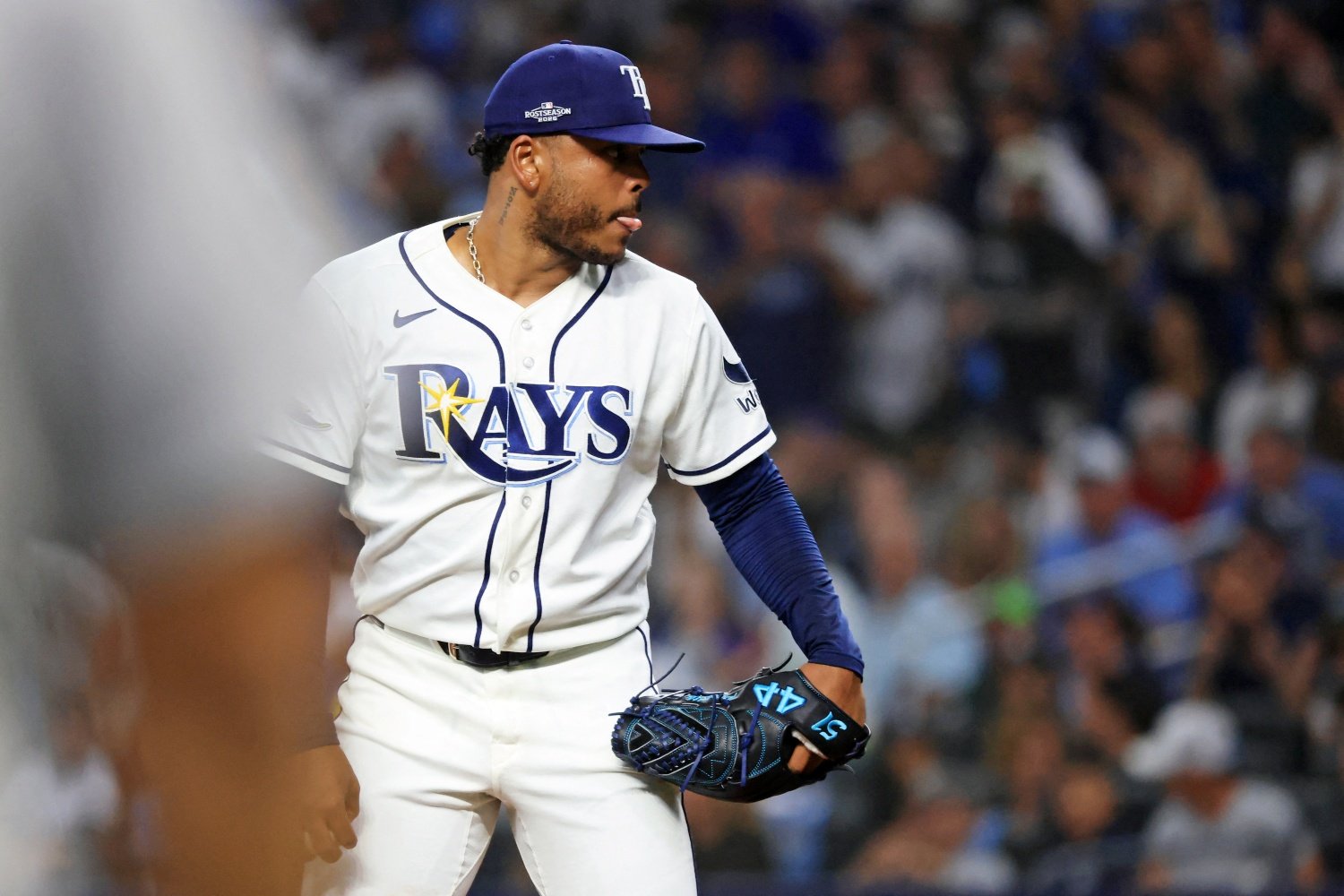 After a disappointing end to a roller-coaster season, the Cubs head into the offseason with lots of money to spend. Arguably, they have needs even deeper than their pockets, but there's no question that they'll have deep pockets. In veterans Ian Happ, Seiya Suzuki, Jameson Taillon, Shota Imanaga, Matthew Boyd and Carson Kelly, they have over $100 million from their Opening Day roster coming off the books, even before accounting for smaller expiring deals and the money they picked up (only to put back down) by acquiring rental players at the trade deadline. That should make Jed Hoyer's front office an aggressive mover over the month-and-a-half between now and the nigh-inevitable lockout. They've already had almost a fortnight to scout and evaluate some of the players on whom they might splurge next month. Here are five intriguing potential targets who are still playing meaningful games, even as the postseason has whittled away all but the four best teams in the sport. Jake Bauers, 1B/OF, Brewers After enjoying a partial breakout in 2025, Bauers overhauled his offseason regimen and came into this season with better functional strength—and with an altered stance, and with a deeper contact point. The sum of those seemingly small changes was anything but small, as Bauers hit .266/.389/.484, setting career highs in almost everything. His 26 homers paced the division-champion Brewers, and he hung in well against left-handed pitchers in his first real chance to be an everyday player since before the pandemic. Though he just turned 31, Bauers is more athletic than the average first baseman, and has even spent substantial time in the outfield as recently as this year. He would fit the Cubs in four important ways: He's temperamentally perfect for their clubhouse. He's excellent with the Brewers in that regard, and would fit seamlessly with Dansby Swanson, Nico Hoerner, Alex Bregman and Pete Crow-Armstrong. His power and patience would give the team the reliable lefty slug they missed for much of 2026. He has elite bat speed. Unlike Michael Busch, he doesn't need everything to go right on a given swing to produce a hard-hit ball, or even a homer. Speaking of Busch, Bauers (who is only about two years his senior) would give the Cubs insurance against another disappointing season by their cost-controlled first baseman. He would enter the season mainly as the designated hitter, but could easily step into the first-base job if Busch's struggles carry over. While DH might be his primary position on the 2027 Cubs, in addition to first base, Bauers would be a fine part-time left fielder. He's not a great defender out there, but neither is anyone else the team is likely to find. As a one-year patch while the team hopes for Ethan Conrad or Josiah Hartshorn to further progress and take over a job in 2028, Bauers wouldn't be half-bad. Improbable though it would have seemed even a year ago, Bauers is almost certain to get a multi-year deal with an eight-figure annual salary. That's not as intimidating as it sounds, though, given the modern player marketplace. Watch him closely as the Brewers take on the Dodgers; he does a lot of things well. Foster Griffin, LHP, Guardians Can I interest you in another 31-year-old journeyman who suddenly became a hot commodity this year? Griffin spent multiple years pitching in Japan, before coming back to the United States this season on a one-year deal with the Nationals. Last winter, teams had interest in him mostly as a reliever, but he proved himself as a remade starter in 2026. At the trade deadline, the Guardians scooped him up. On the surface, Griffin looks like exactly the kind of pitcher of whom the Cubs need fewer, not more. He throws just 92 miles per hour with his four-seamer, on average, and even that oversells him as a power guy: he leans more on a cutter that's more like 89. He has eight pitches, and he throws the kitchen sink at righty batters. It sounds a bit like a generic junkballer. It's not, though. He's more than that. In his start against the White Sox in the ALDS, Griffin was pulled after just 2 2/3 innings, but he racked up seven strikeouts. He's so tough on lefties that he sees fairly few of them, but his sweeper is a bat-misser against them. Against righties, he can use his cutter and two flavors of changeup to mess with timing and induce weak contact, and he gets enough whiffs and throws enough strikes to win. Griffin will get a multi-year deal somewhere this winter, but it won't be for huge money. He's a younger and healthier spin on, for instance, Boyd, which makes him an interesting secondary starting pitching target. Freddy Peralta, RHP, Rays You don't need as much of a primer on Peralta. He was a burr in the Cubs' saddle for a long time while with the Brewers, but his few months as a Met were less than fruitful. It looked like his chances to score a big free-agent payday were slipping away, but after the Rays acquired him just ahead of the trade deadline, they fixed him. Peralta finished with a 3.25 ERA in 10 starts for Tampa, and carried over his success in a start against the Yankees in the ALDS. Without the qualifying offer attached, Peralta becomes a tremendous fit for the Cubs. His durability and athleticism are appealing; so is his ebullience off the field. He and Craig Counsell have a great relationship. The front office has liked Peralta from (not-so-)afar for a long time; this winter could be the chance for the two sides to finally get together. Tarik Skubal, LHP, Dodgers It's just not Hoyer's style. It'll be enormously expensive, and if the Dodgers do manage a threepeat, it might be enormously difficult just to talk him out of leaving Hollywood. The Cubs should try, anyway. Skubal is the best starting pitcher who has been or will be available without the qualifying offer attached to him for some time. Since the Cubs were luxury-tax payers this season, they face a stiffer penalty than in the past if they sign a player who does have the QO on them. The decision shouldn't really come down to such things, anyway, but if it did, that would be another reason to go hard for Skubal, rather than settling for (say) Orioles southpaw Trevor Rogers. It's time for the Cubs to break more of their self-imposed rules. Skubal should be their white whale this winter. Even in a loss in Game 1 of the NLCS, it was easy to see why. Alex Vesia, LHP, Dodgers Speaking of pitchers who appeared for the visitors as they lost to the Brewers in the NLCS opener, Vesia was superb. In fact, he's been subtly excellent almost his entire career, with a 2.87 ERA in 372 career appearances. He was even better (2.64 ERA) this season, on the surface, though he struggled with walks and got a bit lucky to maintain such pretty surface-level numbers. Vesia has the missing ingredient for the Cubs' pen, to be sure. He boasts a career strikeout rate over 32%. Put him alongside intriguing but not yet proven options Ryan Rolison and Riley Martin, and the Cubs would have a formidable lefty trio in relief. It's a small potential move, but it could be an important one. Vesia is almost guaranteed to pitch again before the NLCS is over, so the team isn't quite out of chances to see how he can neutralize lefty bats, just yet.
 -
Image courtesy of Kim Klement Neitzel-Imagn Images After a disappointing end to a roller-coaster season, the Cubs head into the offseason with lots of money to spend. Arguably, they have needs even deeper than their pockets, but there's no question that they'll have deep pockets. In veterans Ian Happ, Seiya Suzuki, Jameson Taillon, Shota Imanaga, Matthew Boyd and Carson Kelly, they have over $100 million from their Opening Day roster coming off the books, even before accounting for smaller expiring deals and the money they picked up (only to put back down) by acquiring rental players at the trade deadline. That should make Jed Hoyer's front office an aggressive mover over the month-and-a-half between now and the nigh-inevitable lockout. They've already had almost a fortnight to scout and evaluate some of the players on whom they might splurge next month. Here are five intriguing potential targets who are still playing meaningful games, even as the postseason has whittled away all but the four best teams in the sport. Jake Bauers, 1B/OF, Brewers After enjoying a partial breakout in 2025, Bauers overhauled his offseason regimen and came into this season with better functional strength—and with an altered stance, and with a deeper contact point. The sum of those seemingly small changes was anything but small, as Bauers hit .266/.389/.484, setting career highs in almost everything. His 26 homers paced the division-champion Brewers, and he hung in well against left-handed pitchers in his first real chance to be an everyday player since before the pandemic. Though he just turned 31, Bauers is more athletic than the average first baseman, and has even spent substantial time in the outfield as recently as this year. He would fit the Cubs in four important ways: He's temperamentally perfect for their clubhouse. He's excellent with the Brewers in that regard, and would fit seamlessly with Dansby Swanson, Nico Hoerner, Alex Bregman and Pete Crow-Armstrong. His power and patience would give the team the reliable lefty slug they missed for much of 2026. He has elite bat speed. Unlike Michael Busch, he doesn't need everything to go right on a given swing to produce a hard-hit ball, or even a homer. Speaking of Busch, Bauers (who is only about two years his senior) would give the Cubs insurance against another disappointing season by their cost-controlled first baseman. He would enter the season mainly as the designated hitter, but could easily step into the first-base job if Busch's struggles carry over. While DH might be his primary position on the 2027 Cubs, in addition to first base, Bauers would be a fine part-time left fielder. He's not a great defender out there, but neither is anyone else the team is likely to find. As a one-year patch while the team hopes for Ethan Conrad or Josiah Hartshorn to further progress and take over a job in 2028, Bauers wouldn't be half-bad. Improbable though it would have seemed even a year ago, Bauers is almost certain to get a multi-year deal with an eight-figure annual salary. That's not as intimidating as it sounds, though, given the modern player marketplace. Watch him closely as the Brewers take on the Dodgers; he does a lot of things well. Foster Griffin, LHP, Guardians Can I interest you in another 31-year-old journeyman who suddenly became a hot commodity this year? Griffin spent multiple years pitching in Japan, before coming back to the United States this season on a one-year deal with the Nationals. Last winter, teams had interest in him mostly as a reliever, but he proved himself as a remade starter in 2026. At the trade deadline, the Guardians scooped him up. On the surface, Griffin looks like exactly the kind of pitcher of whom the Cubs need fewer, not more. He throws just 92 miles per hour with his four-seamer, on average, and even that oversells him as a power guy: he leans more on a cutter that's more like 89. He has eight pitches, and he throws the kitchen sink at righty batters. It sounds a bit like a generic junkballer. It's not, though. He's more than that. In his start against the White Sox in the ALDS, Griffin was pulled after just 2 2/3 innings, but he racked up seven strikeouts. He's so tough on lefties that he sees fairly few of them, but his sweeper is a bat-misser against them. Against righties, he can use his cutter and two flavors of changeup to mess with timing and induce weak contact, and he gets enough whiffs and throws enough strikes to win. Griffin will get a multi-year deal somewhere this winter, but it won't be for huge money. He's a younger and healthier spin on, for instance, Boyd, which makes him an interesting secondary starting pitching target. Freddy Peralta, RHP, Rays You don't need as much of a primer on Peralta. He was a burr in the Cubs' saddle for a long time while with the Brewers, but his few months as a Met were less than fruitful. It looked like his chances to score a big free-agent payday were slipping away, but after the Rays acquired him just ahead of the trade deadline, they fixed him. Peralta finished with a 3.25 ERA in 10 starts for Tampa, and carried over his success in a start against the Yankees in the ALDS. Without the qualifying offer attached, Peralta becomes a tremendous fit for the Cubs. His durability and athleticism are appealing; so is his ebullience off the field. He and Craig Counsell have a great relationship. The front office has liked Peralta from (not-so-)afar for a long time; this winter could be the chance for the two sides to finally get together. Tarik Skubal, LHP, Dodgers It's just not Hoyer's style. It'll be enormously expensive, and if the Dodgers do manage a threepeat, it might be enormously difficult just to talk him out of leaving Hollywood. The Cubs should try, anyway. Skubal is the best starting pitcher who has been or will be available without the qualifying offer attached to him for some time. Since the Cubs were luxury-tax payers this season, they face a stiffer penalty than in the past if they sign a player who does have the QO on them. The decision shouldn't really come down to such things, anyway, but if it did, that would be another reason to go hard for Skubal, rather than settling for (say) Orioles southpaw Trevor Rogers. It's time for the Cubs to break more of their self-imposed rules. Skubal should be their white whale this winter. Even in a loss in Game 1 of the NLCS, it was easy to see why. Alex Vesia, LHP, Dodgers Speaking of pitchers who appeared for the visitors as they lost to the Brewers in the NLCS opener, Vesia was superb. In fact, he's been subtly excellent almost his entire career, with a 2.87 ERA in 372 career appearances. He was even better (2.64 ERA) this season, on the surface, though he struggled with walks and got a bit lucky to maintain such pretty surface-level numbers. Vesia has the missing ingredient for the Cubs' pen, to be sure. He boasts a career strikeout rate over 32%. Put him alongside intriguing but not yet proven options Ryan Rolison and Riley Martin, and the Cubs would have a formidable lefty trio in relief. It's a small potential move, but it could be an important one. Vesia is almost guaranteed to pitch again before the NLCS is over, so the team isn't quite out of chances to see how he can neutralize lefty bats, just yet. View full article
-
Image courtesy of Geoff Burke-Imagn Images Because the Cubs were so bad at pitching in general this season, their bullpen came in for disproportionate criticism. Their starters often provided little margin for error, and their relief corps wasn't deep or healthy enough to come through when they were needed most. The pen really did lose the Cubs some games in 2026, but it felt like it lost them several more, to many fans; too much was asked of them. Jed Hoyer admitted a "failure" of bullpen construction in 2026, which was not vapid self-effacement. He did fail. The pen wasn't good enough. In truth, though, it should have been much better. Within a fortnight of the beginning of the season, two key cogs in the pen he had built were pulled out of that mix and dragooned back into the rotation, in Colin Rea and Ben Brown. Injuries upstream caused problems, but so did injuries to the core of that pen, itself. Daniel Palencia's World Baseball Classic ramp-up created a challenge for him as he tried to throttle down and then return to full strength, which increased the risk of the injuries that eventually hit him. Phil Maton had had chronic knee trouble dating back two seasons, but signed a two-year deal for significant money with the Cubs—then essentially lost the season to that very knee problem. Hunter Harvey had a balky elbow, because that's what Hunter Harvey does. All three of the quasi-relief aces Hoyer had arranged at the back end of his theoretical pen were, by the beginning of May, clearly not going to be that kind of anchor for that unit. Each problem was foreseeable, so Hoyer must absorb the blame for them—and for the decline of the aged Caleb Thielbar. However, he also got unlucky. The number of injuries that hit the rotation snatched away the safety net he'd attempted to build behind that top tier of arms, and even one of the most promising stopgap slingers (southpaw Riley Martin) went down almost as soon as he came up. From the beginning of the season to the end, though, Hoyer did find a couple of good ways to improve the bullpen, both for 2026 and with an eye toward 2027. He patched the rotation enough over the summer to get Rea and Javier Assad back to working out of the pen at times. Low-dollar signing Jacob Webb emerged as a solid (though overworked) arm, and waiver-wire pickup Ryan Rolison proved he belongs in the majors. Most importantly, Hoyer made a rare, significant investment in a controllable reliever at the deadline, picking up Ryan Zeferjahn from the Angels at a steep prospect price. It was a bit of a flip from the Scott Effross deal in which Hoyer took some pride in 2022; he gave up a controllable big-leaguer with a much higher ceiling for a player he believed would help immediately and has significant upside of his own. What Hoyer hoped that group would become never did materialize. Down the stretch, the club tried to get Brown, Justin Steele, Shelby Miller and Martin ready fast enough to tack them onto the roster, but went 0-for-4. Meanwhile, Webb turned into a pumpkin, and Palencia and Zeferjahn were inconsistent, for different but similar reasons. However, it wasn't the pen that sank the season. The team fell apart at the finish line because of poor starting pitching, and never held a lead the bullpen might have even attempted to protect in the crucial final games of the regular campaign or the Wild Card Series against San Diego. Indeed, at the end of the team's year, there were only two important silver linings to celebrate: Pete Crow-Armstrong's maturation into arguably the best player in baseball; and The beginnings of a good bullpen coming into focus. There are two major vectors of variance that make building a bullpen difficult. One is performance. Samples are small and the margin for error (whenever you're using an important arm) is tight, and relievers are all failed starters, so most of the time, their performance will be somehow volatile. They might battle command issues or need to have their very best stuff to be effective, but whatever form it takes, a reliever who's good one year might be quite bad the next. The other major vector is health. Because of those things, the Cubs are far from guaranteed to have a good set of relievers heading into 2027. They have to make an addition or two to the mix. That's all they really need, though, because there's enough talent on hand to expect at least the guts of a strong pen in 2027. Rolison, Palencia and Zeferjahn remain under long-term team control, and will cost almost nothing next year. Miller should be a full go in 2027, and even in his rehab stints in Iowa, he looked very good. In fact, his fastball has never been firmer, and his slider-splitter combination was nasty. Martin ended the year healthy. Maton had surgery in September to address his nagging knee problem, which puts him in position to have a healthy year. It's unlikely, for different reasons, that Brown or erstwhile top prospect Jaxon Wiggins ever stick in the majors as starters. They should become part of the relief picture next spring, too, though each might initially stay stretched out in case they're needed for a bulkier role. The Cubs have an affordable club option on Webb, too. You need at least a dozen arms you believe in to feel good about a bullpen mix going into a season, and this team is not there. Nor, however, are they as far away as they seemed for much of 2026. The starting rotation needs major renovation. Hoyer and company should sign multiple starters they can envision as front-line options, in addition to scouring the market for trade opportunities and pouncing on chances to add young, live arms. When it comes to the pen, though, the needs are much more limited. The in-house candidates are stronger than they look, coming off a season in which they were disproportionately diminished by injuries. Palencia, Zeferjahn, Rolison, Miller, Webb, Martin and Maton are a solid base upon which to build. They should be better and healthier, as a group, next year. That's a good thing, since the Cubs need to focus on other, bigger needs. View full article
-
The Cubs Have Most of the Pieces of a Good 2027 Bullpen On Hand
Matthew Trueblood posted an article in Cubs
.JPG.0d3db6771eebd8c383af770716423f4c.JPG) Because the Cubs were so bad at pitching in general this season, their bullpen came in for disproportionate criticism. Their starters often provided little margin for error, and their relief corps wasn't deep or healthy enough to come through when they were needed most. The pen really did lose the Cubs some games in 2026, but it felt like it lost them several more, to many fans; too much was asked of them. Jed Hoyer admitted a "failure" of bullpen construction in 2026, which was not vapid self-effacement. He did fail. The pen wasn't good enough. In truth, though, it should have been much better. Within a fortnight of the beginning of the season, two key cogs in the pen he had built were pulled out of that mix and dragooned back into the rotation, in Colin Rea and Ben Brown. Injuries upstream caused problems, but so did injuries to the core of that pen, itself. Daniel Palencia's World Baseball Classic ramp-up created a challenge for him as he tried to throttle down and then return to full strength, which increased the risk of the injuries that eventually hit him. Phil Maton had had chronic knee trouble dating back two seasons, but signed a two-year deal for significant money with the Cubs—then essentially lost the season to that very knee problem. Hunter Harvey had a balky elbow, because that's what Hunter Harvey does. All three of the quasi-relief aces Hoyer had arranged at the back end of his theoretical pen were, by the beginning of May, clearly not going to be that kind of anchor for that unit. Each problem was foreseeable, so Hoyer must absorb the blame for them—and for the decline of the aged Caleb Thielbar. However, he also got unlucky. The number of injuries that hit the rotation snatched away the safety net he'd attempted to build behind that top tier of arms, and even one of the most promising stopgap slingers (southpaw Riley Martin) went down almost as soon as he came up. From the beginning of the season to the end, though, Hoyer did find a couple of good ways to improve the bullpen, both for 2026 and with an eye toward 2027. He patched the rotation enough over the summer to get Rea and Javier Assad back to working out of the pen at times. Low-dollar signing Jacob Webb emerged as a solid (though overworked) arm, and waiver-wire pickup Ryan Rolison proved he belongs in the majors. Most importantly, Hoyer made a rare, significant investment in a controllable reliever at the deadline, picking up Ryan Zeferjahn from the Angels at a steep prospect price. It was a bit of a flip from the Scott Effross deal in which Hoyer took some pride in 2022; he gave up a controllable big-leaguer with a much higher ceiling for a player he believed would help immediately and has significant upside of his own. What Hoyer hoped that group would become never did materialize. Down the stretch, the club tried to get Brown, Justin Steele, Shelby Miller and Martin ready fast enough to tack them onto the roster, but went 0-for-4. Meanwhile, Webb turned into a pumpkin, and Palencia and Zeferjahn were inconsistent, for different but similar reasons. However, it wasn't the pen that sank the season. The team fell apart at the finish line because of poor starting pitching, and never held a lead the bullpen might have even attempted to protect in the crucial final games of the regular campaign or the Wild Card Series against San Diego. Indeed, at the end of the team's year, there were only two important silver linings to celebrate: Pete Crow-Armstrong's maturation into arguably the best player in baseball; and The beginnings of a good bullpen coming into focus. There are two major vectors of variance that make building a bullpen difficult. One is performance. Samples are small and the margin for error (whenever you're using an important arm) is tight, and relievers are all failed starters, so most of the time, their performance will be somehow volatile. They might battle command issues or need to have their very best stuff to be effective, but whatever form it takes, a reliever who's good one year might be quite bad the next. The other major vector is health. Because of those things, the Cubs are far from guaranteed to have a good set of relievers heading into 2027. They have to make an addition or two to the mix. That's all they really need, though, because there's enough talent on hand to expect at least the guts of a strong pen in 2027. Rolison, Palencia and Zeferjahn remain under long-term team control, and will cost almost nothing next year. Miller should be a full go in 2027, and even in his rehab stints in Iowa, he looked very good. In fact, his fastball has never been firmer, and his slider-splitter combination was nasty. Martin ended the year healthy. Maton had surgery in September to address his nagging knee problem, which puts him in position to have a healthy year. It's unlikely, for different reasons, that Brown or erstwhile top prospect Jaxon Wiggins ever stick in the majors as starters. They should become part of the relief picture next spring, too, though each might initially stay stretched out in case they're needed for a bulkier role. The Cubs have an affordable club option on Webb, too. You need at least a dozen arms you believe in to feel good about a bullpen mix going into a season, and this team is not there. Nor, however, are they as far away as they seemed for much of 2026. The starting rotation needs major renovation. Hoyer and company should sign multiple starters they can envision as front-line options, in addition to scouring the market for trade opportunities and pouncing on chances to add young, live arms. When it comes to the pen, though, the needs are much more limited. The in-house candidates are stronger than they look, coming off a season in which they were disproportionately diminished by injuries. Palencia, Zeferjahn, Rolison, Miller, Webb, Martin and Maton are a solid base upon which to build. They should be better and healthier, as a group, next year. That's a good thing, since the Cubs need to focus on other, bigger needs.
Because the Cubs were so bad at pitching in general this season, their bullpen came in for disproportionate criticism. Their starters often provided little margin for error, and their relief corps wasn't deep or healthy enough to come through when they were needed most. The pen really did lose the Cubs some games in 2026, but it felt like it lost them several more, to many fans; too much was asked of them. Jed Hoyer admitted a "failure" of bullpen construction in 2026, which was not vapid self-effacement. He did fail. The pen wasn't good enough. In truth, though, it should have been much better. Within a fortnight of the beginning of the season, two key cogs in the pen he had built were pulled out of that mix and dragooned back into the rotation, in Colin Rea and Ben Brown. Injuries upstream caused problems, but so did injuries to the core of that pen, itself. Daniel Palencia's World Baseball Classic ramp-up created a challenge for him as he tried to throttle down and then return to full strength, which increased the risk of the injuries that eventually hit him. Phil Maton had had chronic knee trouble dating back two seasons, but signed a two-year deal for significant money with the Cubs—then essentially lost the season to that very knee problem. Hunter Harvey had a balky elbow, because that's what Hunter Harvey does. All three of the quasi-relief aces Hoyer had arranged at the back end of his theoretical pen were, by the beginning of May, clearly not going to be that kind of anchor for that unit. Each problem was foreseeable, so Hoyer must absorb the blame for them—and for the decline of the aged Caleb Thielbar. However, he also got unlucky. The number of injuries that hit the rotation snatched away the safety net he'd attempted to build behind that top tier of arms, and even one of the most promising stopgap slingers (southpaw Riley Martin) went down almost as soon as he came up. From the beginning of the season to the end, though, Hoyer did find a couple of good ways to improve the bullpen, both for 2026 and with an eye toward 2027. He patched the rotation enough over the summer to get Rea and Javier Assad back to working out of the pen at times. Low-dollar signing Jacob Webb emerged as a solid (though overworked) arm, and waiver-wire pickup Ryan Rolison proved he belongs in the majors. Most importantly, Hoyer made a rare, significant investment in a controllable reliever at the deadline, picking up Ryan Zeferjahn from the Angels at a steep prospect price. It was a bit of a flip from the Scott Effross deal in which Hoyer took some pride in 2022; he gave up a controllable big-leaguer with a much higher ceiling for a player he believed would help immediately and has significant upside of his own. What Hoyer hoped that group would become never did materialize. Down the stretch, the club tried to get Brown, Justin Steele, Shelby Miller and Martin ready fast enough to tack them onto the roster, but went 0-for-4. Meanwhile, Webb turned into a pumpkin, and Palencia and Zeferjahn were inconsistent, for different but similar reasons. However, it wasn't the pen that sank the season. The team fell apart at the finish line because of poor starting pitching, and never held a lead the bullpen might have even attempted to protect in the crucial final games of the regular campaign or the Wild Card Series against San Diego. Indeed, at the end of the team's year, there were only two important silver linings to celebrate: Pete Crow-Armstrong's maturation into arguably the best player in baseball; and The beginnings of a good bullpen coming into focus. There are two major vectors of variance that make building a bullpen difficult. One is performance. Samples are small and the margin for error (whenever you're using an important arm) is tight, and relievers are all failed starters, so most of the time, their performance will be somehow volatile. They might battle command issues or need to have their very best stuff to be effective, but whatever form it takes, a reliever who's good one year might be quite bad the next. The other major vector is health. Because of those things, the Cubs are far from guaranteed to have a good set of relievers heading into 2027. They have to make an addition or two to the mix. That's all they really need, though, because there's enough talent on hand to expect at least the guts of a strong pen in 2027. Rolison, Palencia and Zeferjahn remain under long-term team control, and will cost almost nothing next year. Miller should be a full go in 2027, and even in his rehab stints in Iowa, he looked very good. In fact, his fastball has never been firmer, and his slider-splitter combination was nasty. Martin ended the year healthy. Maton had surgery in September to address his nagging knee problem, which puts him in position to have a healthy year. It's unlikely, for different reasons, that Brown or erstwhile top prospect Jaxon Wiggins ever stick in the majors as starters. They should become part of the relief picture next spring, too, though each might initially stay stretched out in case they're needed for a bulkier role. The Cubs have an affordable club option on Webb, too. You need at least a dozen arms you believe in to feel good about a bullpen mix going into a season, and this team is not there. Nor, however, are they as far away as they seemed for much of 2026. The starting rotation needs major renovation. Hoyer and company should sign multiple starters they can envision as front-line options, in addition to scouring the market for trade opportunities and pouncing on chances to add young, live arms. When it comes to the pen, though, the needs are much more limited. The in-house candidates are stronger than they look, coming off a season in which they were disproportionately diminished by injuries. Palencia, Zeferjahn, Rolison, Miller, Webb, Martin and Maton are a solid base upon which to build. They should be better and healthier, as a group, next year. That's a good thing, since the Cubs need to focus on other, bigger needs. -
Matt Shaw, Pedro Ramírez and the Cubs' Shaky 2027 Outfield Plans
Matthew Trueblood posted an article in Cubs
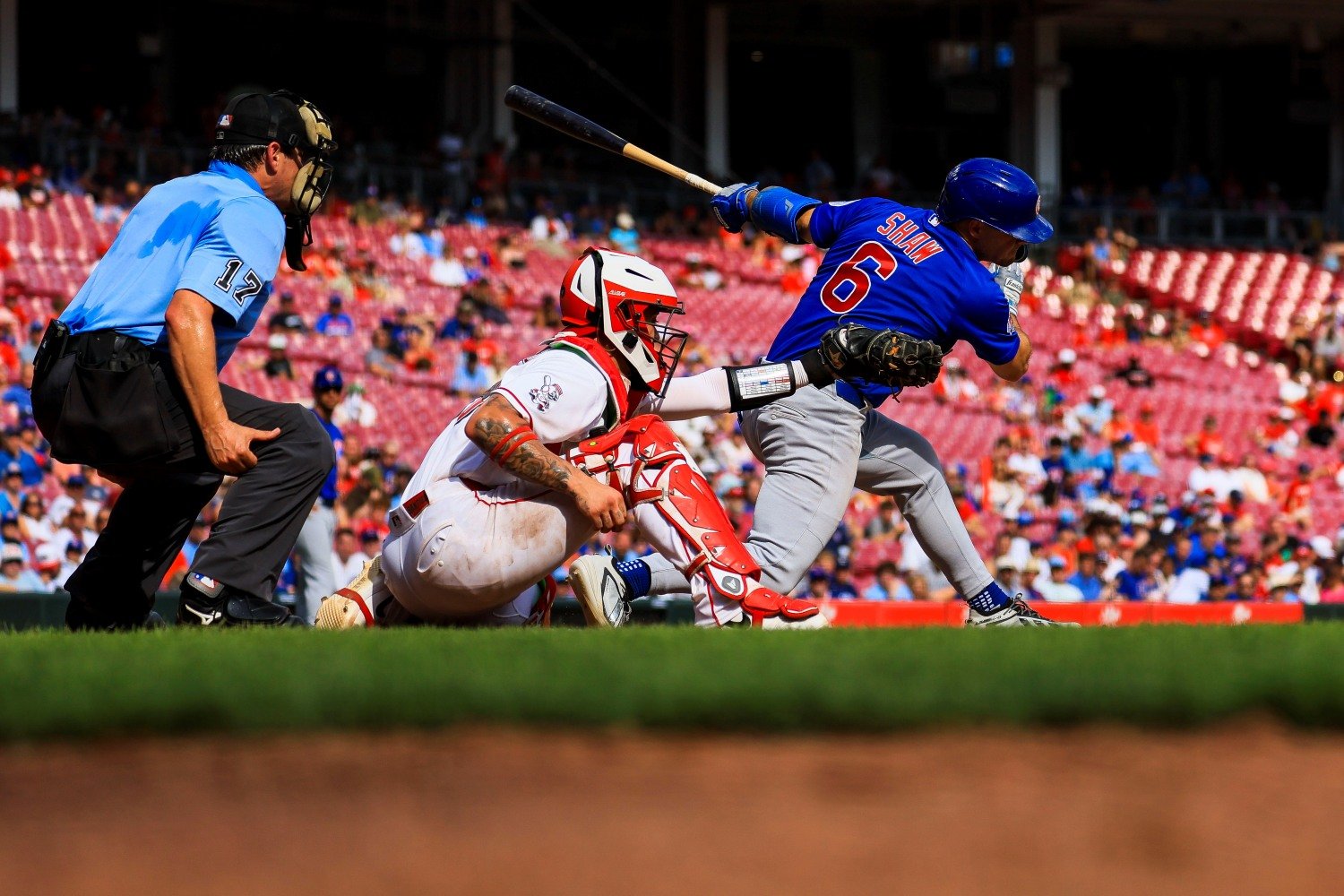 Most of the Cubs' offseason spending this winter will have to go toward remaking their pitching staff. They need to sign multiple starting pitchers and fix their mess of a bullpen. They can't afford, in other words, to splurge on their outfield, even as they reckon with the likely departures of Seiya Suzuki and Ian Happ. They'll have to spend enough to address one of the corner outfield vacancies (even if it be by re-signing one of those incumbents), but they can't go outside the organization to fill both. One of Pedro Ramírez and Matt Shaw almost has to become a regular corner outfielder next year, or else they'll need to platoon. That's not an exciting proposition, though. Neither player has yet showed the degree of overall offensive competence you want from a corner outfielder. Each has at least some chance to be a plus defender out there, but to realize it, the team would have to sacrifice the value either can provide via versatility. The upside of the duo is real, but tapping into it will require some careful evaluation. Let's weigh the options by examining the two. A Mess of a Player: Matt Shaw's Approach and Swing Problems In 202 plate appearances in 2026, Shaw hit .237/.327/.410. He walked a little over 10% of the time and his strikeout rate was a healthy 17%, but overall, that production was the result of good luck. Shaw mostly hit the ball to the big part of the field. He didn't hit it hard very often. He hit a couple of wall-scraping home runs and a couple of doubles that fell in when they shouldn't have. He got some infield hits that resulted primarily from dumb luck. The process underlying his results was poor. To wit, in 2026, only one hitter in the league took a lower percentage of their swings on balls in the middle of the zone, vertically, than did Shaw: Javier Báez. It's jarring to lay the name of any player walking as much as Shaw did side-by-side with Báez's, but that's where he fell. Shaw got lucky to walk that much, of course. He swung less often at pitches inside the zone than an average batter does (60%, against a league average of 67%) and more often at ones outside the zone than an average batter does (32.5%, against an average just under 29%). But beyond swinging at the wrong pitches, he erred by not knowing what pitch he was even looking for. Shaw has a greater capacity for manipulating his bat path than a typical hitter. His average tilt on low pitches was about 16° steeper than on high ones, a disparity greater than all but four other hitters: Luis Arraez, Gavin Sheets, Jake Mangum and Marcell Ozuna. Just on the other side of Shaw on that leaderboard are Ildemaro Vargas, Ernie Clement, Ryan O'Hearn and Andrew Benintendi. As those names suggest, that maneuverability of the bat is a sign of a good hit tool. The raw tool goes for naught, though, if not accompanied by good swing decisions. If the Cubs are to trust Shaw with full-time duty, they'll need to see him make better ones. Having that bendable swing means one can better cover the zone from high to low, so Shaw doesn't need to approach his at-bats like (say) Alex Bregman. The Cubs' veteran third baseman (and Shaw's usurper at the hot corner) took 71% of his swings this year at pitches in that middle vertical segment, better than all but three other hitters in the league. Bregman has average flexibility in his swing tilt and (like Shaw) maintains his bat speed better than an average hitter when he has to change his tilt for a low or high pitch, but he stays locked in on that most productive band. Shaw can be more flexible, but he must be more selective than he was this year, or he'll never make the most of his talent. Too Flat? The Outlier Swing of Pedro Ramírez There's nothing (or at least, much less) wrong with Ramírez's swing decisions. He chases about as often as Shaw, but is much more aggressive within the zone. He put up almost identical numbers to Shaw's this season, despite being a year younger; not having played in the majors the previous season; and getting very sporadic playing time. All of that speaks in his favor. So does the fact that he stayed healthy this year, while Shaw was unable to do so. On the other hand, there are reasons to worry about Ramírez's swing, especially from the left side—the swing he'll need to use at least 70% of the time to be a regular in the bigs. Only two left-handed batters (Ildemaro Vargas, again, and backup Padres infielder Sung-Mun Song) had flatter swings than Ramírez this season. Not all flat swings are bad, but swings with more tilt give a player a wider range of pitches and timing signatures on which they can succeed. Ramírez catches the ball much farther in front of his body than do Vargas or Song, too. That part is good. Flat swings work best when a batter gets the ball out front, centering it up. Over time, though, swings that flat tend to produce too many balls that aren't centered. Ramírez hit too many high, harmless fly balls and too many grounders, especially from the left side. There's more to like about Ramírez's development in 2026 than about Shaw's, offensively. His shortcomings are at least as pronounced as Shaw's right now, though. Barring a swing change, Ramírez will struggle to produce at the level the Cubs should want from a left or right fielder for the foreseeable future. About the Leather Say Shaw cleans up his approach a bit, and say Ramírez's swing can be adjusted slightly. In that case, they would form a strong timeshare at the plate, with Shaw taking slightly more than the usual short side of a platoon. The question of their overall value, then, would come down to the defense. So, in turn, does the question of which one deserves more time, if a platoon isn't on the cards. Shaw is faster. He adjusted tolerably well to right field, but between his injuries and the improvement of Suzuki as a defender, he ended up playing very little there. Ramírez, however, played almost exclusively on the infield in the majors, and even his minor-league career has been spent on the dirt. He runs well, for a stocky infielder, but he has no experience to speak of in either left or right field. Neither player is likely to be more than average in the outfield next year. In the long run, that could change, but the team needs to see at least one of them thrive with the bat in order to determine whether that wait is worth it. Kevin Alcántara is still around, for now, but he'll be out of options next spring, and he's been given no runway from which to gather developmental momentum and lift off. It's not at all clear that the Cubs were wrong to deny him that playing time. In 935 plate appearances over parts of three seasons at Triple-A Iowa, he's been fairly static. He walks about 12% of the time and he's slugged .482, but that league inflates power numbers, so the latter is not impressive. The former comes at the cost of a strikeout rate pushing 30%. He's toolsy, but Alcántara might never make enough contact (or lift the ball enough) to play productively in the bigs. He's much more likely to play above-average defense in a corner than either Shaw or Ramírez, but the bat can't be trusted. To build a good enough lineup in 2027, the Cubs have to spend some money for an outfield bat. They also have to achieve an overdue homegrown improvement, though. If they can't, their offense and defense will backslide, and whatever pitching upgrades they manage will have to work overtime to offset the degradation.
 -
Image courtesy of Katie Stratman-Imagn Images Most of the Cubs' offseason spending this winter will have to go toward remaking their pitching staff. They need to sign multiple starting pitchers and fix their mess of a bullpen. They can't afford, in other words, to splurge on their outfield, even as they reckon with the likely departures of Seiya Suzuki and Ian Happ. They'll have to spend enough to address one of the corner outfield vacancies (even if it be by re-signing one of those incumbents), but they can't go outside the organization to fill both. One of Pedro Ramírez and Matt Shaw almost has to become a regular corner outfielder next year, or else they'll need to platoon. That's not an exciting proposition, though. Neither player has yet showed the degree of overall offensive competence you want from a corner outfielder. Each has at least some chance to be a plus defender out there, but to realize it, the team would have to sacrifice the value either can provide via versatility. The upside of the duo is real, but tapping into it will require some careful evaluation. Let's weigh the options by examining the two. A Mess of a Player: Matt Shaw's Approach and Swing Problems In 202 plate appearances in 2026, Shaw hit .237/.327/.410. He walked a little over 10% of the time and his strikeout rate was a healthy 17%, but overall, that production was the result of good luck. Shaw mostly hit the ball to the big part of the field. He didn't hit it hard very often. He hit a couple of wall-scraping home runs and a couple of doubles that fell in when they shouldn't have. He got some infield hits that resulted primarily from dumb luck. The process underlying his results was poor. To wit, in 2026, only one hitter in the league took a lower percentage of their swings on balls in the middle of the zone, vertically, than did Shaw: Javier Báez. It's jarring to lay the name of any player walking as much as Shaw did side-by-side with Báez's, but that's where he fell. Shaw got lucky to walk that much, of course. He swung less often at pitches inside the zone than an average batter does (60%, against a league average of 67%) and more often at ones outside the zone than an average batter does (32.5%, against an average just under 29%). But beyond swinging at the wrong pitches, he erred by not knowing what pitch he was even looking for. Shaw has a greater capacity for manipulating his bat path than a typical hitter. His average tilt on low pitches was about 16° steeper than on high ones, a disparity greater than all but four other hitters: Luis Arraez, Gavin Sheets, Jake Mangum and Marcell Ozuna. Just on the other side of Shaw on that leaderboard are Ildemaro Vargas, Ernie Clement, Ryan O'Hearn and Andrew Benintendi. As those names suggest, that maneuverability of the bat is a sign of a good hit tool. The raw tool goes for naught, though, if not accompanied by good swing decisions. If the Cubs are to trust Shaw with full-time duty, they'll need to see him make better ones. Having that bendable swing means one can better cover the zone from high to low, so Shaw doesn't need to approach his at-bats like (say) Alex Bregman. The Cubs' veteran third baseman (and Shaw's usurper at the hot corner) took 71% of his swings this year at pitches in that middle vertical segment, better than all but three other hitters in the league. Bregman has average flexibility in his swing tilt and (like Shaw) maintains his bat speed better than an average hitter when he has to change his tilt for a low or high pitch, but he stays locked in on that most productive band. Shaw can be more flexible, but he must be more selective than he was this year, or he'll never make the most of his talent. Too Flat? The Outlier Swing of Pedro Ramírez There's nothing (or at least, much less) wrong with Ramírez's swing decisions. He chases about as often as Shaw, but is much more aggressive within the zone. He put up almost identical numbers to Shaw's this season, despite being a year younger; not having played in the majors the previous season; and getting very sporadic playing time. All of that speaks in his favor. So does the fact that he stayed healthy this year, while Shaw was unable to do so. On the other hand, there are reasons to worry about Ramírez's swing, especially from the left side—the swing he'll need to use at least 70% of the time to be a regular in the bigs. Only two left-handed batters (Ildemaro Vargas, again, and backup Padres infielder Sung-Mun Song) had flatter swings than Ramírez this season. Not all flat swings are bad, but swings with more tilt give a player a wider range of pitches and timing signatures on which they can succeed. Ramírez catches the ball much farther in front of his body than do Vargas or Song, too. That part is good. Flat swings work best when a batter gets the ball out front, centering it up. Over time, though, swings that flat tend to produce too many balls that aren't centered. Ramírez hit too many high, harmless fly balls and too many grounders, especially from the left side. There's more to like about Ramírez's development in 2026 than about Shaw's, offensively. His shortcomings are at least as pronounced as Shaw's right now, though. Barring a swing change, Ramírez will struggle to produce at the level the Cubs should want from a left or right fielder for the foreseeable future. About the Leather Say Shaw cleans up his approach a bit, and say Ramírez's swing can be adjusted slightly. In that case, they would form a strong timeshare at the plate, with Shaw taking slightly more than the usual short side of a platoon. The question of their overall value, then, would come down to the defense. So, in turn, does the question of which one deserves more time, if a platoon isn't on the cards. Shaw is faster. He adjusted tolerably well to right field, but between his injuries and the improvement of Suzuki as a defender, he ended up playing very little there. Ramírez, however, played almost exclusively on the infield in the majors, and even his minor-league career has been spent on the dirt. He runs well, for a stocky infielder, but he has no experience to speak of in either left or right field. Neither player is likely to be more than average in the outfield next year. In the long run, that could change, but the team needs to see at least one of them thrive with the bat in order to determine whether that wait is worth it. Kevin Alcántara is still around, for now, but he'll be out of options next spring, and he's been given no runway from which to gather developmental momentum and lift off. It's not at all clear that the Cubs were wrong to deny him that playing time. In 935 plate appearances over parts of three seasons at Triple-A Iowa, he's been fairly static. He walks about 12% of the time and he's slugged .482, but that league inflates power numbers, so the latter is not impressive. The former comes at the cost of a strikeout rate pushing 30%. He's toolsy, but Alcántara might never make enough contact (or lift the ball enough) to play productively in the bigs. He's much more likely to play above-average defense in a corner than either Shaw or Ramírez, but the bat can't be trusted. To build a good enough lineup in 2027, the Cubs have to spend some money for an outfield bat. They also have to achieve an overdue homegrown improvement, though. If they can't, their offense and defense will backslide, and whatever pitching upgrades they manage will have to work overtime to offset the degradation. View full article
-
I think that's 80% right. I do think we need to keep in mind that he's 32, with a skill set I don't think will age very well. I mean, you heard me, above: I think it's an easy call to make the QO. But I'd certainly be wary of a long-term deal with him, and I think you're probably *slightly* overselling the difficulty of doing better than 2027 Ian Happ? But the reality that it won't be that easy to do better than *2026* Ian Happ (or, certainly, 2022-25 Ian Happ) is probably the most important one to wrestle with.
- 27 replies
-
- 1
-

-
- ian happ
- seiya suzuki
- (and 1 more)
-
Image courtesy of Katie Stratman-Imagn Images You can't have a season as good as Pete Crow-Armstrong's 2026 without getting a bit lucky. In Crow-Armstrong's case, that wasn't primarily about finding grass and running an unduly high BABIP. It was about getting some unexpected relief via the uncertainty of opponents. Only two batters in the league had more expected runs go unclaimed when opponents failed to challenge incorrect called balls against them than did Crow-Armstrong. Milwaukee's Brice Turang saw opponents miss 42 chances to challenge pitches that should have been called strikes; the Dodgers' Freddie Freeman got away with the same number. Crow-Armstrong, however, got a whopping 45 extra called balls because opposing pitchers and catchers failed to challenge when he took tough pitches that were actually in the zone. Turang's and Freeman's opponent misses were, on average, a little more valuable to them, so Turang got 6.9 runs of value from not having strikes called, while Freeman snuck in at 6.8—just ahead of Crow-Armstrong's 6.7. Only those two got more value from catchers not tapping their helmets; only Carson Benge (48) and Steven Kwan (49) had a larger number of total pitches that should have been called strikes but weren't, on which opponents didn't challenge. Most of the guys who lived in that range with Crow-Armstrong had something in common: extreme patience at the plate. Kwan swung at barely 51% of the pitches he saw even in the zone this year, and chased just under 20% of those outside the zone. Taking so often at the edges creates the conditions for more called balls than the average batter. Benge and Turang swung at around 64% of the in-zone pitches they saw, with fairly low chase rates. Two other hitters near the top of the unconverted overturn leaderboard, James Wood and Geraldo Perdomo, got there because they swung at around 56% of pitches in the zone. As you know, Crow-Armstrong isn't like that. In 2025, he swung at over 81% of the strikes he saw. Even this year, as he made a radical shift toward patience in the box, that number was over 68%, and his lowest monthly mark (in July) was 65.2%. He's aggressive within the zone, which makes finding him at the top of this leaderboard surprising. The only player like him, in that regard, is Freeman, who has made a career out of telling balls from strikes as well as anyone. Every single season, he swings at over 70% of the in-zone pitches he sees, but he keeps his chase rate down. That's earned him some calls over the years, and in the first year of ABS, opponents proved reluctant to challenge him even when that happened. What's surprising is that Crow-Armstrong, whose reputation is as a free swinger and who only moderated (rather than truly upended) that approach in 2026, would land right next to Freeman and a slew of patient hitters. Some of it is good strike-zone judgment, to be sure. Crow-Armstrong did improve on that score this year, though his in-zone swing rate actually dropped a fair bit more than his chase rate did. He understood, right away, that the smaller zone played into his hands. He locked in more on the pitches he wanted to attack, and he laid off more offerings even if he knew there was a chance they would be called strikes, knowing that doing so was necessary in order to fully cover the pitches he could drive. He was also good at pressing for his rights when a call went against him. As we saw in Wild Card Series Game 2, that sometimes showed up as hyperaggressiveness, but Crow-Armstrong left few (just 18) "bad" called strikes as strikes. He came out way ahead, by being proactive and having opponents prove too conservative when calls broke in his favor. That last part isn't a skill, though. Crow-Armstrong owes the value he got from catchers not flipping his incorrect balls into strikes not to his own savvy, but to manager Craig Counsell, and to his teammates. When I listed the other hitters who shared this trait with Crow-Armstrong, did you notice the other common thread between them? They all bat at the top of the order (or very near it). When Crow-Armstrong would come up in the first inning of each game, teams would be naturally conservative with challenges. There's hardly ever cause to risk burning one of your challenges in the first two or three at-bats of a game; you have to be incredibly certain to trigger a review. That meant that if a pitcher got squeezed in Crow-Armstrong's first plate appearance each day, it was likely to go uncorrected. Often, by the time Crow-Armstrong would come up again (especially, say, for the third time), the other team would be down a challenge. Maybe one of their hitters burned one, but Crow-Armstrong's much more patient teammates get part of the credit, too. Michael Busch chased only 25% of the pitches he saw outside the zone this year. Alex Bregman's rate was even lower: 23%. Ian Happ was patient, too. No hitter in baseball prompted more failed ABS challenges by opponents than Busch, at 17. Bregman tied for sixth, at 15. Happ lured opponents into 10 bad challenges. Nico Hoerner got nine (as did Crow-Armstrong). Dansby Swanson got eight. Seiya Suzuki got seven. Hitting at the top of the lineup is a huge advantage in terms of the utility you derive from ABS, especially for an aggressive hitter. It might feel too early to challenge a borderline strike in your first at-bat or two, but you don't take all that many of those, anyway. Meanwhile, your opponents feel the same squeamishness about challenging a called ball your first trips through, and by your third, fourth and fifth turns, they might have to be more careful, because they're already down a challenge. This "gamification" of the zone is a frustrating part of ABS for many fans, but for what it's worth, most sports have some analog of this type of situation. A soccer player on a yellow card has to be more judicious about their tackles. A basketball player in foul trouble has to tread lightly, too. When players or teams are more conservative because they might suffer a steeper penalty for a second "offense"—returning to our actual topic, a failed challenge—it's not really a sign of a poorly designed system. It's just how sports work. However, if might be worth discussing a change whereby, instead of two challenges per team per game, each player only gets the right to lose one. That would force catchers to be more careful, and it would take many hitters (on teams who turned most of the ABS privileges over to their backstops) off the leash a bit. On the other hand, it shouldn't prompt a huge rise in actual challenges, because all players would know they had only one miss available. You'd even see pitchers be allowed to challenge by their clubs, at that point. In the meantime, Crow-Armstrong profited handsomely from his teammates forcing bad challenges in between his turns. Fifteen of the 45 pitches that could have been strikes but weren't corrected came when the opposing team was down to one challenge left, and those didn't all come in the eighth or ninth innings. Sometimes, they came in the fifth, or even the third—stages of the game when, absent the knowledge that they'd already lost their buffer, opponents probably would have begun to feel comfortable challenging him. Not all of the benefits of this phenomenon arrogate to Crow-Armstrong and his fellow leadoff hitters. He enjoyed lots of added value because teams eschewed chances to challenge, but only twice this year did Crow-Armstrong take a called ball in the zone at a juncture where the other team couldn't challenge, because they'd run out. Busch, however, took eight such pitches, because by the time the lineup came back to him a fourth time, that second challenge was often gone. The effects are greatest for leadoff hitters, though. Here's the percentage of takes on pitches inside the zone that were called balls (and not fixed) when the defense had a right to challenge, by batting order position: 7.6% 6.8% 6.5% 6.7% 6.4% 6.5% 6.6% 6.6% 6.4% It's a small consideration, but a real one. It bolstered Crow-Armstrong during his supernal season. The league always adjusts, though. Expect him to be assailed a bit more with challenges next year, even if he maintains exactly the same plate discipline he showed this season. One way or another, he'll feel the sting of regression in this area, because he'll either chase more pitches, get fewer generous calls, or watch more of those lucky calls reversed. This is the nature of being awesome; people will start hunting ways to slow you down. View full article
-
 You can't have a season as good as Pete Crow-Armstrong's 2026 without getting a bit lucky. In Crow-Armstrong's case, that wasn't primarily about finding grass and running an unduly high BABIP. It was about getting some unexpected relief via the uncertainty of opponents. Only two batters in the league had more expected runs go unclaimed when opponents failed to challenge incorrect called balls against them than did Crow-Armstrong. Milwaukee's Brice Turang saw opponents miss 42 chances to challenge pitches that should have been called strikes; the Dodgers' Freddie Freeman got away with the same number. Crow-Armstrong, however, got a whopping 45 extra called balls because opposing pitchers and catchers failed to challenge when he took tough pitches that were actually in the zone. Turang's and Freeman's opponent misses were, on average, a little more valuable to them, so Turang got 6.9 runs of value from not having strikes called, while Freeman snuck in at 6.8—just ahead of Crow-Armstrong's 6.7. Only those two got more value from catchers not tapping their helmets; only Carson Benge (48) and Steven Kwan (49) had a larger number of total pitches that should have been called strikes but weren't, on which opponents didn't challenge. Most of the guys who lived in that range with Crow-Armstrong had something in common: extreme patience at the plate. Kwan swung at barely 51% of the pitches he saw even in the zone this year, and chased just under 20% of those outside the zone. Taking so often at the edges creates the conditions for more called balls than the average batter. Benge and Turang swung at around 64% of the in-zone pitches they saw, with fairly low chase rates. Two other hitters near the top of the unconverted overturn leaderboard, James Wood and Geraldo Perdomo, got there because they swung at around 56% of pitches in the zone. As you know, Crow-Armstrong isn't like that. In 2025, he swung at over 81% of the strikes he saw. Even this year, as he made a radical shift toward patience in the box, that number was over 68%, and his lowest monthly mark (in July) was 65.2%. He's aggressive within the zone, which makes finding him at the top of this leaderboard surprising. The only player like him, in that regard, is Freeman, who has made a career out of telling balls from strikes as well as anyone. Every single season, he swings at over 70% of the in-zone pitches he sees, but he keeps his chase rate down. That's earned him some calls over the years, and in the first year of ABS, opponents proved reluctant to challenge him even when that happened. What's surprising is that Crow-Armstrong, whose reputation is as a free swinger and who only moderated (rather than truly upended) that approach in 2026, would land right next to Freeman and a slew of patient hitters. Some of it is good strike-zone judgment, to be sure. Crow-Armstrong did improve on that score this year, though his in-zone swing rate actually dropped a fair bit more than his chase rate did. He understood, right away, that the smaller zone played into his hands. He locked in more on the pitches he wanted to attack, and he laid off more offerings even if he knew there was a chance they would be called strikes, knowing that doing so was necessary in order to fully cover the pitches he could drive. He was also good at pressing for his rights when a call went against him. As we saw in Wild Card Series Game 2, that sometimes showed up as hyperaggressiveness, but Crow-Armstrong left few (just 18) "bad" called strikes as strikes. He came out way ahead, by being proactive and having opponents prove too conservative when calls broke in his favor. That last part isn't a skill, though. Crow-Armstrong owes the value he got from catchers not flipping his incorrect balls into strikes not to his own savvy, but to manager Craig Counsell, and to his teammates. When I listed the other hitters who shared this trait with Crow-Armstrong, did you notice the other common thread between them? They all bat at the top of the order (or very near it). When Crow-Armstrong would come up in the first inning of each game, teams would be naturally conservative with challenges. There's hardly ever cause to risk burning one of your challenges in the first two or three at-bats of a game; you have to be incredibly certain to trigger a review. That meant that if a pitcher got squeezed in Crow-Armstrong's first plate appearance each day, it was likely to go uncorrected. Often, by the time Crow-Armstrong would come up again (especially, say, for the third time), the other team would be down a challenge. Maybe one of their hitters burned one, but Crow-Armstrong's much more patient teammates get part of the credit, too. Michael Busch chased only 25% of the pitches he saw outside the zone this year. Alex Bregman's rate was even lower: 23%. Ian Happ was patient, too. No hitter in baseball prompted more failed ABS challenges by opponents than Busch, at 17. Bregman tied for sixth, at 15. Happ lured opponents into 10 bad challenges. Nico Hoerner got nine (as did Crow-Armstrong). Dansby Swanson got eight. Seiya Suzuki got seven. Hitting at the top of the lineup is a huge advantage in terms of the utility you derive from ABS, especially for an aggressive hitter. It might feel too early to challenge a borderline strike in your first at-bat or two, but you don't take all that many of those, anyway. Meanwhile, your opponents feel the same squeamishness about challenging a called ball your first trips through, and by your third, fourth and fifth turns, they might have to be more careful, because they're already down a challenge. This "gamification" of the zone is a frustrating part of ABS for many fans, but for what it's worth, most sports have some analog of this type of situation. A soccer player on a yellow card has to be more judicious about their tackles. A basketball player in foul trouble has to tread lightly, too. When players or teams are more conservative because they might suffer a steeper penalty for a second "offense"—returning to our actual topic, a failed challenge—it's not really a sign of a poorly designed system. It's just how sports work. However, if might be worth discussing a change whereby, instead of two challenges per team per game, each player only gets the right to lose one. That would force catchers to be more careful, and it would take many hitters (on teams who turned most of the ABS privileges over to their backstops) off the leash a bit. On the other hand, it shouldn't prompt a huge rise in actual challenges, because all players would know they had only one miss available. You'd even see pitchers be allowed to challenge by their clubs, at that point. In the meantime, Crow-Armstrong profited handsomely from his teammates forcing bad challenges in between his turns. Fifteen of the 45 pitches that could have been strikes but weren't corrected came when the opposing team was down to one challenge left, and those didn't all come in the eighth or ninth innings. Sometimes, they came in the fifth, or even the third—stages of the game when, absent the knowledge that they'd already lost their buffer, opponents probably would have begun to feel comfortable challenging him. Not all of the benefits of this phenomenon arrogate to Crow-Armstrong and his fellow leadoff hitters. He enjoyed lots of added value because teams eschewed chances to challenge, but only twice this year did Crow-Armstrong take a called ball in the zone at a juncture where the other team couldn't challenge, because they'd run out. Busch, however, took eight such pitches, because by the time the lineup came back to him a fourth time, that second challenge was often gone. The effects are greatest for leadoff hitters, though. Here's the percentage of takes on pitches inside the zone that were called balls (and not fixed) when the defense had a right to challenge, by batting order position: 7.6% 6.8% 6.5% 6.7% 6.4% 6.5% 6.6% 6.6% 6.4% It's a small consideration, but a real one. It bolstered Crow-Armstrong during his supernal season. The league always adjusts, though. Expect him to be assailed a bit more with challenges next year, even if he maintains exactly the same plate discipline he showed this season. One way or another, he'll feel the sting of regression in this area, because he'll either chase more pitches, get fewer generous calls, or watch more of those lucky calls reversed. This is the nature of being awesome; people will start hunting ways to slow you down.
 -
Image courtesy of Ron Chenoy-Imagn Images Next month, as the offseason ramps up (before, in all likelihood, ramping right back down at the end of November), the Cubs will have to make a large number of decisions in a short time. We've already talked about their decision points on qualifying offers and on their existing contract options. Now, let's weigh their choices with regard to each of the 11 players who enter the offseason as arbitration-eligible, making their salaries uncertain (but relatively predictable) for 2027. The best approach here is probably to sort everyone into buckets. There are three things you can do (barring a trade) with a player due for a raise via arbitration in the forthcoming season: non-tender them (making them a free agent), tender them a contract (pushing down the path toward a one-year deal), or extend them (locking in their salary for multiple seasons, to gain cost certainty and/or longer team control). The team has at least one candidate for each of these paths this fall. Cubs Non-Tender Candidates Two players are almost no-brainer non-tenders for the Cubs. They picked up Gabriel Arias as emergency infield depth after Dansby Swanson strained his oblique in August, but that made them just the latest franchise to which Arias has bounced via waivers. He's been so available because he's been unproductive, and has now exhausted his minor-league options. He's a bench player on any team with serious aspirations to contend, and though he plays good enough defense all the way around the infield, he's never found a way to turn good bat speed into consistent pop, and his approach is ragged. He's in line to make roughly $1.3 million in 2027 if tendered a contract, according to MLB Trade Rumors's projections. That's not much, but 'not much' is also what he's worth. He can't be sent to the minors without being exposed to the other 29 teams. It's not worth using a roster spot on him all winter. Almost all of that also applies to Ethan Roberts, even though Roberts (unlike Arias) has been part of the Cubs organization for years. He's never showed the ability to stay healthy or to get many outs even when he is, and he's now out of options. His ability to spin the ball and create glove-side movement has bought him time with the Cubs, who love that profile. MLB Trade Rumors only projects him to earn $800,000 via arbitration, so he's essentially a league-minimum guy, even as he hits the phase of his career at which he's supposed to start gaining earning power. In theory, as with Arias, there are three years of team control left here. Roberts just isn't good, though, and if he can't be shuttled to the minors when needed, he's not worth keeping around. Easy One-Year Sign-Ups Most arbitration-eligible players don't inspire particularly interesting action. You just tender them a deal, agree on terms, and move on. That's what the Cubs will hope to do with the majority of their class this year. Michael Busch and Miguel Amaya are arbitration-eligible for the first time this year. Each is older than your average player with just three-plus years of service time, so the team doesn't stand to gain great value from considering a longer-term arrangement with either of them. Nor did either have a good enough year to merit that kind of heavy investment. Each easily clears the bar for keeping them around, though, given the affordable salaries ($1.7 million for Amaya; $5.4 million for Busch) MLBTR projects for each. (For what it's worth, I think Busch will come in under that number, one way or another.) The same is all true, in fact, of reliever Ryan Rolison, whom MLBTR thinks will earn $1.1 million in his first trip through arbitration. Keeping those three requires no difficult decision; the front office will gladly pay what each is likely to get via the system they're moving through. None of the three firmed up long-term jobs with the team this season, but all three did enough to ensure that they'll be asked back in 2027. Pitchers to Roll the Dice On Four inexpensive pitchers who still have multiple seasons of club control left are candidates for very low-wattage multi-year deals, if the team is particularly excited about any of their futures. Daniel Palencia and Ben Brown will both qualify for arbitration as Super Two players, meaning they can begin to get raises despite being just shy of three years of service. They're under team control through 2030, but they'll start getting seven-figure salaries (albeit just barely: $1.2 million for Palencia, $1.3 million for Brown, according to MLBTR) in 2027. The upside on both hurlers is obvious. Brown has flashed the ability to pitch at the front end of the team's rotation. There are major injury red flags in his file, but if the Cubs want to avoid seeing his salary spike as he moves through arbitration (should he get past the neck issue that has plagued him the last two years), they might seek an extension with him. These tend to be just two-year pacts, with the second year often being a club option. They're just ways, again, to keep arbitration costs down. Those can escalate quickly, especially for guys who achieve Super Two status and go through it four times, rather than three. Much of the same applies to Palencia. There's a bit less cause for deep concern about his health than with Brown, but the ceiling is also lower, since he's purely a reliever. On the other hand, closers' salaries rise disproportionately via arbitration, because that system still rewards the accumulation of saves. If the Cubs view Palencia as a closer candidate again in 2027, they would do well to lock him up for two or three years (at a cheap price, with an option in the mix) and eschew multiple trips through arbitration. In so doing, they'd give Palencia more guaranteed money than signing him for one year would require, but get their value from cost certainty and a flatter increase in his salary from 2027 to the subsequent years than is otherwise likely. Javier Assad signed a deal like this last offseason. He made $1.8 million in 2026, as a Super Two guy in his own right, but the Cubs also got a $3.3-million option for 2027 in the deal. Since MLBTR is projecting just $2.3 million in earnings for him in 2027, Chicago will probably decline that option, but they might re-up with Assad on another deal that gives him some guaranteed money and preserves their upside by capping what he can earn in 2028. Assad can still be optioned to the minors next year, and might actually spend part of the year in Iowa yet again, if the team is sufficiently aggressive over the winter. Either way, though, he'll be valuable depth, and adding a second year to a deal with him makes sense. In the least-heralded trade they made on deadline day, the team also snagged lefty starter Braxton Garrett, from Miami. Garrett still has two more years of team control remaining, though he used his last minor-league option this year. Next season, he'll be roster-locked, but the Cubs like him, so they're very likely to at least tender him a contract. He's only set to make $1.6 million in 2027, but since he'll have to be on the big-league roster all season, his salary could shoot up quite a bit in his final year of eligibility in 2028. To dodge that risk, the team could look to sign him to a two-year deal. Unfortunately, they didn't gain enough information about him down the stretch to consider a longer-term deal that actually extends their team control. The Very Uncomfortable Calls There's no realistic chance that the Cubs non-tender Edward Cabrera, and almost none that they do so with Justin Steele. After trading a top prospect to acquire Cabrera over the winter, they're invested in him, and he still has two seasons of club control left. Steele, a beloved part of the organization for over 12 years, only has one year of club control left, but parting with him before using it would be painful for all parties. That said, Cabrera's 2026 campaign was a nightmare, and the reclamation project the team will have to accomplish to get value from him next year is daunting. He's set to make $4.8 million or so via arbitration, by MLBTR's reckoning, so it won't be a cheap remodel, either. To make their predicament a bit less painful, the team might try to strike a two-year deal with Cabrera, capping what he can earn in his final year of arbitration eligibility in 2028. There's no way they can commit to him long-term, but they also can't cut the cord on one of the few arms in their organization who has good enough raw stuff to consistently get out big-league hitters. They'll just have to hope they can get him to actually do so next season. Steele is a different case. Given the setbacks that prevented him from getting back to the big leagues the year after his April 2025 Tommy John surgery, his $6.8-million projected salary is like a baby albatross. His stuff didn't look good at all in his late-season rehab starts for Triple-A Iowa. He's not guaranteed to be a big-league-caliber starter in 2027, let alone one a team can confidently pay almost $7 million. The path forward for player and team is most likely to involve a multi-year deal. Steele can give up some earning power for 2027 by agreeing to a lower salary (maybe $5 million or so; maybe less), while preserving a high ceiling via incentives. Meanwhile, the Cubs would either guarantee a second year or offer Steele a club option for 2028 at a high salary, with a substantial buyout. If structured correctly, a deal whereby Steele could earn even more than his projected salary next year and then become a free agent could still be favorable to the Cubs. They can't afford to just hand him the same amount he made in 2026, though, knowing there's at least some chance that he becomes dead money again. This arbitration class isn't especially expensive. That's good news, in a way, for a team with hefty obligations to multiple veteran position players and a desperate need to add pitching via free agency and/or trade. In a much more important sense, though, it's very bad news. The Cubs would be happy to be paying $10-15 million more to this group than they'll end up paying. That would mean that Brown, Steele and/or Palencia stayed healthy; that Busch built upon his breakout 2025; and that Amaya and/or Cabrera took the steps forward the team hoped for from them. Instead, they'll get a good deal on several of these players for 2027, but only because almost all of them underachieved. View full article
.JPG.0d3db6771eebd8c383af770716423f4c.JPG)
