


Matthew Trueblood
-
Posts
2,477 -
Joined
-
Last visited
-
Days Won
2
Content Type
Profiles
Joomla Posts 1
Chicago Cubs Videos
Chicago Cubs Free Agent & Trade Rumors, Notes, & Tidbits
2026 Chicago Cubs Top Prospects Ranking
News
2023 Chicago Cubs Draft Picks
Guides & Resources
2024 Chicago Cubs Draft Picks
The Chicago Cubs Players Project
2025 Chicago Cubs Draft Pick Tracker
2026 Chicago Cubs Draft Tracker: Picks & Bonuses
Blogs
Events
Forums
Store
Gallery
Everything posted by Matthew Trueblood
-
Theo left the organization six years ago. I don't think we get anywhere worth going by giving Jed a pass for not succeeding at something because Theo didn't leave him an easy road to the destination. He's had TIME, man.
-
Image courtesy of Aaron Doster-Imagn Images The 2026 Cubs' regular season ended Sunday, with a game that didn't matter. Before they took the field—before any of them got out of bed this morning—they were locked into a matchup with the Padres at Petco Park in San Diego, for a Wild Card Series that will determine whether the team gets to play any more games in front of the crowd at Wrigley Field or not. There was nothing at stake, in other words—nothing but what John Updike called "the tissue-thin difference between a thing done well and a thing done ill". Nonetheless, there he was at the top of lineup card: Pete Crow-Armstrong - CF That made 162 games played for Crow-Armstrong. It made 158 games (and 157 starts) in center field. When Crow-Armstrong stepped into the box for the first pitch of the game, it was his 726th plate appearance of the year. This is just the 16th time a Cubs player has played at least 162 games in a year, and Crow-Armstrong became just the seventh different guy to do it, joining Ernie Banks, Starlin Castro, Juan Pierre, Ron Santo, Sammy Sosa, and Billy Williams. He finished the day in ninth all-time for plate appearances in a season by a Cub, bested only by Pierre in 2006, Don Kessinger in 1969, Billy Williams in 1966, and five guys who played in the inflated offensive environs of the 1930s. Hardly anyone plays this much anymore, especially at the demanding defensive spots. The only other player to appear in at least 157 games at an up-the-middle defensive spot this year, entering Sunday, was Ozzie Albies. Crow-Armstrong plays a high-intensity, high-energy brand of baseball. He's constantly in demand; he pays a charisma tax in the clubhouse. To do that every day, with pressure slowly accumulating as his team failed to follow his lead during his four-month assault on the record books, is incredible. It's also not free. You have to pay the piper for all those innings, all those swings, all that pregame work and all that emoting. Yet, to his immense credit, Crow-Armstrong has made it all work. He's been human this month—after posting an OPS over 1.000 in three straight months, he batted .266/.352/.553 in September—but he's still found ways to win games for the team. He's battled. The grind of the season tends to erode plate discipline, but Crow-Armstrong took some of his most patient at-bats of the year during the team's doubleheader Friday in Boston, even in the shadow of their playoff clinch Thursday. It tends to make the legs heavy, but Crow-Armstrong has kept stealing bases and taking the extra base whenever possible, willing his team to help him create runs. It tends to sap bat speed, but he's kept hitting for power. His bat speed hasn't diminished, and his slugging average has only modestly done so. In fact, he's swinging as fast as ever. So, how can we even tell he's tired? Well, for one thing: ZU53S29fVjBZQUhRPT1fVlFnRFYxSURVQXNBV1ZvS0J3QUhCd0lGQUZrQVVWSUFCbFJRVmdVTlZ3UUFWbEJS.mp4 The outcome isn't the point here. Crow-Armstrong pops the ball up relatively frequently even when he's going right, and he's had some success even with this high a leg kick. But, you noticed that kick, right? It hasn't looked like that all year. It hasn't even looked like it all summer. Here's what one swing in August (a more productive one) looked like: WU9WamdfWGw0TUFRPT1fQmxOWUFGMENVMVFBV3dZS1VBQUhVQVpSQUFNQ1ZsZ0FWbFFOVlF0WEJBUlVBd1JT.mp4 That, in turn, was bigger than on this swing from early June: eHl3MkJfWGw0TUFRPT1fQlFOWVVRQUNBQUFBQVFGVFV3QUhVZ1ZlQUZnRVVRQUFVVklEVTFWUkIxQmNVd0FE.mp4 It's not as though his swing usually looks exactly the same at all times. Crow-Armstrong is always tinkering, especially in his lower half. Still, his move has gotten extreme lately, and not just on occasion; it's happening almost every time he takes a cut. It's not some change he's made to cover a particular pitch better or to achieve a better line to the ball. It's how he's still finding the same bat speed, as his body feels the grind of the season. A big leg kick usually means a long stride, and indeed, Crow-Armstrong's stride is a couple inches longer this month than it was in August. It's actually shorter than it was in June, though. A long stride means something different when you're fresh, though, and when you're achieving it with a lower leg kick. That tends to mean you're fluidly flying forward at contact; it means you can be in rhythm even when you're not quite on time. It allows you to swing fast and get around on the ball, without being early. Right now, as he uses that huge kick to keep his bat speed where it's been all year despite creeping fatigue, Crow-Armstrong is ending up a bit early, because he has to decide whether to cut loose and swing a bit earlier than he did in June (or even August). Given that he's deciding earlier, Crow-Armstrong is making relatively good swing decisions. That's allowed him to keep drawing walks, even as he clearly feels an urgency to attack and to produce runs himself. He's not whiffing as much as, for instance, he was in July, when he was still operating primarily with the smaller leg kick and got a little bit too all-or-nothing in his approach. However, as the year's progressed, Crow-Armstrong has steadily—inexorably, even as most of his other stats have fluctuated significantly—tended more and more to get around the ball and hook it. That means he's a bit early most of the time. It can be early in a good way (producing all those pulled fly balls into the bleachers), but it can also be early in a bad way. Either way, his barrel is facing right field more than ever when he gets to the contact point. Ok, we have a player who's wearing down slightly (through no fault of his own; it's admirable that he's not wearing down more) and who has made a major mechanical adjustment to counteract that. That change means earlier swing decisions, so he's often overcommitted and has his barrel oriented toward right field. Where, then, would we expect to see the loss of efficiency? Why was Crow-Armstrong's OPS down to just over .900 in September, instead of over 1.000? If you remember the article in which I broke down the benefits and costs of his newfound bat speed even before Crow-Armstrong broke out in late May, you already know the answer. We've come full-circle. It turns out that that pop-up we looked at above actually did matter, in and of itself. It's the inability to consistently line the ball up and hit it in the launch-angle sweet spot that has eluded Crow-Armstrong at times over the last handful of weeks. That, in turn, is because his bat is so often turning off toward right field by the time the ball actually gets to him—the same way he was leaking value with his vicious swing in April and May. He's markedly better now than he was then, but you can see: he's moved back in that direction. This version of Crow-Armstrong remains dangerous. He's smarter and more well-rounded than he was 140 days ago, in ways that counterbalance whatever efficiency he's given up to maintain his bat speed this deep into such a high-workload season. He's clearly learned a lot from last season, when he hit the same wall and didn't have good ways to solve the problems that tiredness posed. He's a superstar, even if he's not operating at 100%, and hopefully, playing just one plate appearance worth of baseball over a three-day span will have him feeling refreshed come Tuesday night in San Diego. He's done an unbelievable number of impressive things this year. Adjusting in big ways to make up for the little attritions of each mile in a 162-game marathon is just the latest one. View full article
-
Pete Crow-Armstrong is Tired. Can He Keep Being Great, Anyway?
Matthew Trueblood posted an article in Cubs
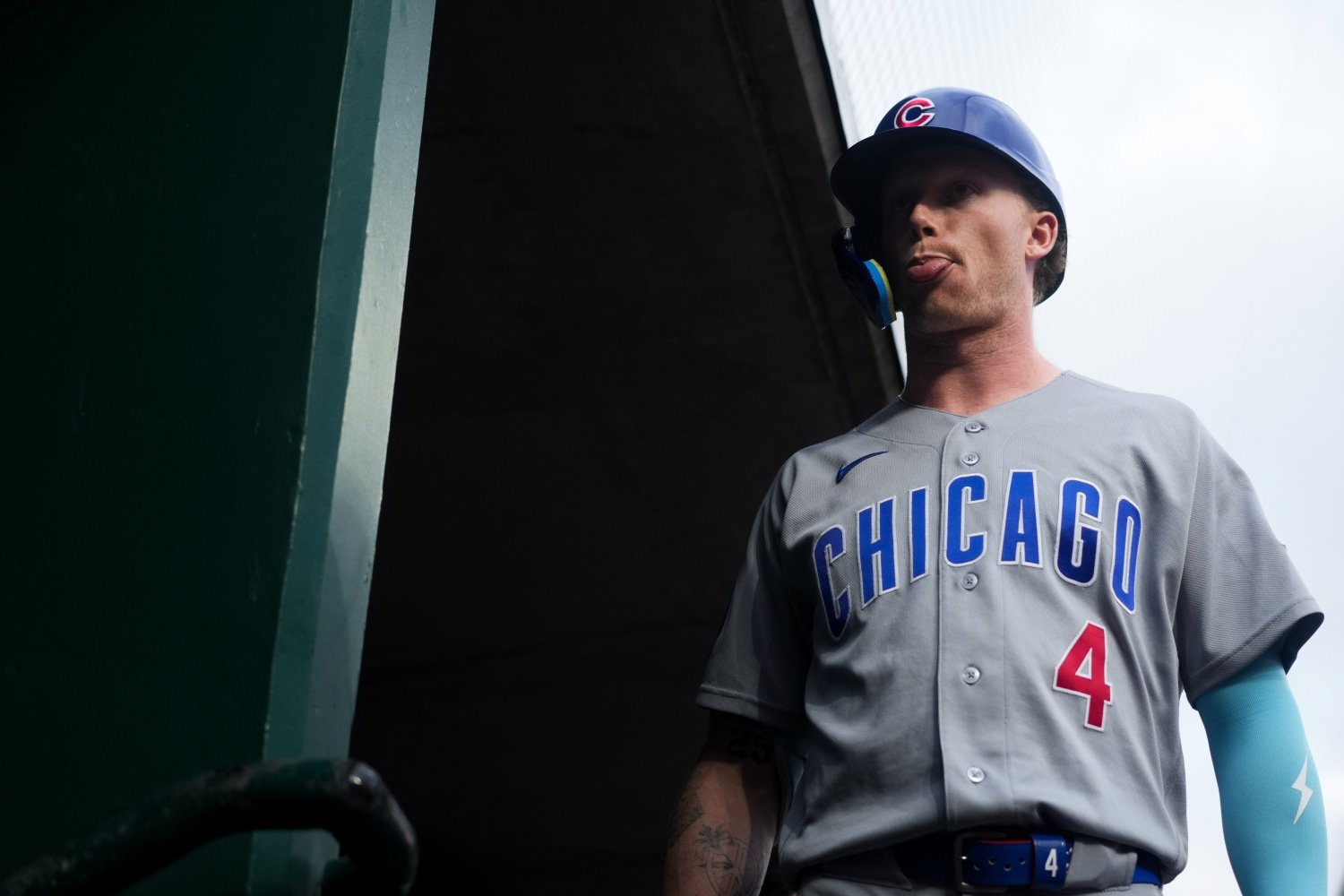 The 2026 Cubs' regular season ended Sunday, with a game that didn't matter. Before they took the field—before any of them got out of bed this morning—they were locked into a matchup with the Padres at Petco Park in San Diego, for a Wild Card Series that will determine whether the team gets to play any more games in front of the crowd at Wrigley Field or not. There was nothing at stake, in other words—nothing but what John Updike called "the tissue-thin difference between a thing done well and a thing done ill". Nonetheless, there he was at the top of lineup card: Pete Crow-Armstrong - CF That made 162 games played for Crow-Armstrong. It made 158 games (and 157 starts) in center field. When Crow-Armstrong stepped into the box for the first pitch of the game, it was his 726th plate appearance of the year. This is just the 16th time a Cubs player has played at least 162 games in a year, and Crow-Armstrong became just the seventh different guy to do it, joining Ernie Banks, Starlin Castro, Juan Pierre, Ron Santo, Sammy Sosa, and Billy Williams. He finished the day in ninth all-time for plate appearances in a season by a Cub, bested only by Pierre in 2006, Don Kessinger in 1969, Billy Williams in 1966, and five guys who played in the inflated offensive environs of the 1930s. Hardly anyone plays this much anymore, especially at the demanding defensive spots. The only other player to appear in at least 157 games at an up-the-middle defensive spot this year, entering Sunday, was Ozzie Albies. Crow-Armstrong plays a high-intensity, high-energy brand of baseball. He's constantly in demand; he pays a charisma tax in the clubhouse. To do that every day, with pressure slowly accumulating as his team failed to follow his lead during his four-month assault on the record books, is incredible. It's also not free. You have to pay the piper for all those innings, all those swings, all that pregame work and all that emoting. Yet, to his immense credit, Crow-Armstrong has made it all work. He's been human this month—after posting an OPS over 1.000 in three straight months, he batted .266/.352/.553 in September—but he's still found ways to win games for the team. He's battled. The grind of the season tends to erode plate discipline, but Crow-Armstrong took some of his most patient at-bats of the year during the team's doubleheader Friday in Boston, even in the shadow of their playoff clinch Thursday. It tends to make the legs heavy, but Crow-Armstrong has kept stealing bases and taking the extra base whenever possible, willing his team to help him create runs. It tends to sap bat speed, but he's kept hitting for power. His bat speed hasn't diminished, and his slugging average has only modestly done so. In fact, he's swinging as fast as ever. So, how can we even tell he's tired? Well, for one thing: ZU53S29fVjBZQUhRPT1fVlFnRFYxSURVQXNBV1ZvS0J3QUhCd0lGQUZrQVVWSUFCbFJRVmdVTlZ3UUFWbEJS.mp4 The outcome isn't the point here. Crow-Armstrong pops the ball up relatively frequently even when he's going right, and he's had some success even with this high a leg kick. But, you noticed that kick, right? It hasn't looked like that all year. It hasn't even looked like it all summer. Here's what one swing in August (a more productive one) looked like: WU9WamdfWGw0TUFRPT1fQmxOWUFGMENVMVFBV3dZS1VBQUhVQVpSQUFNQ1ZsZ0FWbFFOVlF0WEJBUlVBd1JT.mp4 That, in turn, was bigger than on this swing from early June: eHl3MkJfWGw0TUFRPT1fQlFOWVVRQUNBQUFBQVFGVFV3QUhVZ1ZlQUZnRVVRQUFVVklEVTFWUkIxQmNVd0FE.mp4 It's not as though his swing usually looks exactly the same at all times. Crow-Armstrong is always tinkering, especially in his lower half. Still, his move has gotten extreme lately, and not just on occasion; it's happening almost every time he takes a cut. It's not some change he's made to cover a particular pitch better or to achieve a better line to the ball. It's how he's still finding the same bat speed, as his body feels the grind of the season. A big leg kick usually means a long stride, and indeed, Crow-Armstrong's stride is a couple inches longer this month than it was in August. It's actually shorter than it was in June, though. A long stride means something different when you're fresh, though, and when you're achieving it with a lower leg kick. That tends to mean you're fluidly flying forward at contact; it means you can be in rhythm even when you're not quite on time. It allows you to swing fast and get around on the ball, without being early. Right now, as he uses that huge kick to keep his bat speed where it's been all year despite creeping fatigue, Crow-Armstrong is ending up a bit early, because he has to decide whether to cut loose and swing a bit earlier than he did in June (or even August). Given that he's deciding earlier, Crow-Armstrong is making relatively good swing decisions. That's allowed him to keep drawing walks, even as he clearly feels an urgency to attack and to produce runs himself. He's not whiffing as much as, for instance, he was in July, when he was still operating primarily with the smaller leg kick and got a little bit too all-or-nothing in his approach. However, as the year's progressed, Crow-Armstrong has steadily—inexorably, even as most of his other stats have fluctuated significantly—tended more and more to get around the ball and hook it. That means he's a bit early most of the time. It can be early in a good way (producing all those pulled fly balls into the bleachers), but it can also be early in a bad way. Either way, his barrel is facing right field more than ever when he gets to the contact point. Ok, we have a player who's wearing down slightly (through no fault of his own; it's admirable that he's not wearing down more) and who has made a major mechanical adjustment to counteract that. That change means earlier swing decisions, so he's often overcommitted and has his barrel oriented toward right field. Where, then, would we expect to see the loss of efficiency? Why was Crow-Armstrong's OPS down to just over .900 in September, instead of over 1.000? If you remember the article in which I broke down the benefits and costs of his newfound bat speed even before Crow-Armstrong broke out in late May, you already know the answer. We've come full-circle. It turns out that that pop-up we looked at above actually did matter, in and of itself. It's the inability to consistently line the ball up and hit it in the launch-angle sweet spot that has eluded Crow-Armstrong at times over the last handful of weeks. That, in turn, is because his bat is so often turning off toward right field by the time the ball actually gets to him—the same way he was leaking value with his vicious swing in April and May. He's markedly better now than he was then, but you can see: he's moved back in that direction. This version of Crow-Armstrong remains dangerous. He's smarter and more well-rounded than he was 140 days ago, in ways that counterbalance whatever efficiency he's given up to maintain his bat speed this deep into such a high-workload season. He's clearly learned a lot from last season, when he hit the same wall and didn't have good ways to solve the problems that tiredness posed. He's a superstar, even if he's not operating at 100%, and hopefully, playing just one plate appearance worth of baseball over a three-day span will have him feeling refreshed come Tuesday night in San Diego. He's done an unbelievable number of impressive things this year. Adjusting in big ways to make up for the little attritions of each mile in a 162-game marathon is just the latest one.
 -
A lot of those names kinda cut both ways, Jason. They defy a neat summing-up right now, but forced to, I would put it this way: right now, pitching acquisition and dev in the Cubs organization is chaotic. The philosophies of Zombro and Hottovy overlap, but imperfectly, and some of the places where they diverge have become places where the team makes big mistakes, be it in acquisition or development. I will say that I think the theory behind Zombro is wayyy ahead of the praxis, right now. He's delivered relatively little so far. Other orgs still view the Cubs as average or worse in terms of process. I'm guessing Hottovy will be fired after this season. I think that's probably warranted. At that point, though, they're gonna be pretty much all-in on Zombro, and there are a lot of people around the game who are skeptical of that direction. So far, the better evidence is on the side of the skeptics, but I like Zombro's style and approach and it'll be interesting to see if they can make it work. On balance, it IS fair to say that the team is behind—that they're doing badly on the pitching side, whoever and whatever you blame. That's almost obvious, and inarguable: they're dead last in pitching this year and the farm is bereft, too.
-
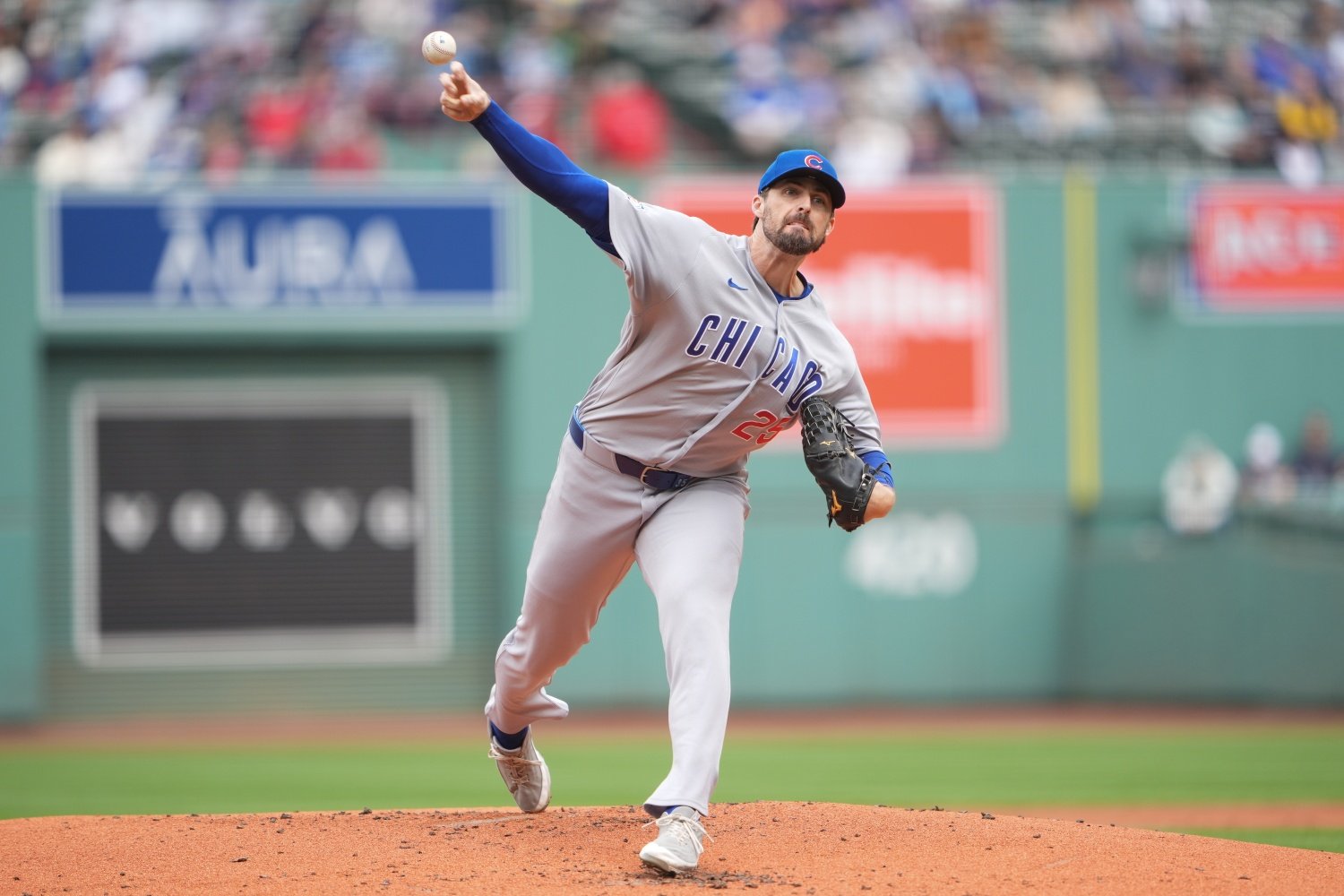 Clay Holmes has had some bright moments since coming to the Cubs. In a four-start stretch in August, he allowed just one run in 25 innings pitched, racking up outs with ruthless efficiency by keeping it in the park and in front of the team's excellent defense. He didn't strike out many, even in that hot streak, but he also didn't walk many, and he seemed almost home run-proof. No Cubs starter has been better over a similar stretch this year. That memory is pleasant, but it's distant, now. In four starts this month, Holmes has faced the same number of batters (93) that he faced in those previous four, but he's walked 15, instead of 7. He's given up two home runs and struck out just 15. His 8.24 ERA looks bad, but the reality of the situation is worse. He's also allowed two unearned runs, meaning that opponents are scoring more than a run for every three outs Holmes gets. He's utterly lost, at the worst possible time. Plainly, walks are a huge part of the problem. Walking one of every six batters you see is a recipe for disaster. But that's not all that's wrong, at this point. Holmes also isn't missing bats. He's not suddenly giving up tons of hard contact, but between the walks and a few more singles, he's always dealing with traffic. That makes whatever barrels he does run into more damaging. All of this could be happening as a product of dumb luck, really. It's not, though. Holmes has been a different pitcher since joining the Cubs than he was with the Mets, before getting hurt in May and being sidelined until just after the deadline. He's a different guy than he was in 2025, the first year of his transition from reliever to starter. The changes might be the Cubs' doing, or they might be Holmes's own ideas, or they might be him adjusting to and working around lingering issues from the broken leg that shelved him. Whatever the reasons, though, the effects of those changes have been catastrophic. First, there's the arm angle thing. Holmes's sinker is a remarkably heavy pitch, but the thing that's always made it especially deceptive is his high arm slot. Most sinkerballers throw from a lower arm angle than guys who rely on four-seam fastballs. Among hurlers who have thrown at least 250 sinkers in either of the last two seasons, the median arm angle on that pitch is just under 34°. Holmes's 43° angle last season put him in the 81st percentile for sinker arm angle, and that sample includes plenty of guys whose "sinkers" are really run-over-sink two-seamers. This year, though, his arm angle on sinkers is 38.5°. That's only in the 63rd percentile in the aforementioned sample. He's not throwing from an angle as unusual as the one he used to use for the pitch, so it's not stumping hitters as badly as it used to. And that change happened not over the offseason, but between when he last pitched for New York and when he took the bump for Chicago. The lower angle is a problem for the sinker, itself, but there are other problems afoot. Consider the changes in his pitch movement profile, too. Here's what that looked like in 2025: Here's the 2026 version of that same visual: What's changed? The biggest thing is this: Holmes's arsenal no longer has the same vertical disparities and differentials as it had a year ago. He's added a curveball that has considerable depth, but he doesn't have a true cutter anymore—the pitch still thus labeled is really his slider, with the same speed and depth as the one he threw last year—and he's all but abandoned the four-seamer. If the curve worked off the rest of the arsenal in the traditional way, that might not be as big a problem as it's actually been. Instead, Holmes only throws that pitch one way, really. He tries to land it on the outside edge to lefties, backdooring them. That's a neat trick, and he's shown better command of that pitch to that spot than most pitchers can achieve. But it's a standalone offering in that niche. It's not interacting with the rest of his stuff much at all, let alone setting up a vertical stretching of the zone that engenders whiffs. Thus, nothing's working. His four-seamer's getting hit. His cutter's getting hit. And his sinker isn't doing as well as it would need to be, to offset those issues. Not all of Holmes's walks are happening because he's truly wild. In fact, he's having some good battles with hitters lately. Two of the three walks he issued in his last start of the regular season, against the Red Sox, were eight-pitch plate appearances. Those become walks, instead, because Holmes can't get past hitters' lumber. They foul things off until he misses, and then they punish that miss if it's in the zone and they accept a walk if it's not. The Cubs talked to Holmes about changes they hoped to implement for him, before putting him on the mound in their uniform for the first time. Whether his performance over the last two months is purely a result of their influence or something done of his own volition, the results have been mixed. Lately, in fact, they've been lousy. This version of Holmes isn't good enough to merit a start in the Wild Card Series. Arguably, he shouldn't even be in the rotation if the team makes it to longer series beyond that one. He should be confined to shorter bursts and used in select matchups. Ideally, of course, the Cubs would be able to put the ball in his hand with the season on the line. That's why they gave up top prospect Jefferson Rojas to acquire him. Unfortunately, wishing doesn't make it so. Holmes is not himself right now. Some of that might be the Cubs' fault, or it might just be bum luck—a case of a bad outcome despite a good process. Either way, though, the team needs to reckon with reality. If they don't, Holmes might get shelled again, at a moment when that failure costs the club its chance to advance.
 -
Image courtesy of Gregory Fisher-Imagn Images Clay Holmes has had some bright moments since coming to the Cubs. In a four-start stretch in August, he allowed just one run in 25 innings pitched, racking up outs with ruthless efficiency by keeping it in the park and in front of the team's excellent defense. He didn't strike out many, even in that hot streak, but he also didn't walk many, and he seemed almost home run-proof. No Cubs starter has been better over a similar stretch this year. That memory is pleasant, but it's distant, now. In four starts this month, Holmes has faced the same number of batters (93) that he faced in those previous four, but he's walked 15, instead of 7. He's given up two home runs and struck out just 15. His 8.24 ERA looks bad, but the reality of the situation is worse. He's also allowed two unearned runs, meaning that opponents are scoring more than a run for every three outs Holmes gets. He's utterly lost, at the worst possible time. Plainly, walks are a huge part of the problem. Walking one of every six batters you see is a recipe for disaster. But that's not all that's wrong, at this point. Holmes also isn't missing bats. He's not suddenly giving up tons of hard contact, but between the walks and a few more singles, he's always dealing with traffic. That makes whatever barrels he does run into more damaging. All of this could be happening as a product of dumb luck, really. It's not, though. Holmes has been a different pitcher since joining the Cubs than he was with the Mets, before getting hurt in May and being sidelined until just after the deadline. He's a different guy than he was in 2025, the first year of his transition from reliever to starter. The changes might be the Cubs' doing, or they might be Holmes's own ideas, or they might be him adjusting to and working around lingering issues from the broken leg that shelved him. Whatever the reasons, though, the effects of those changes have been catastrophic. First, there's the arm angle thing. Holmes's sinker is a remarkably heavy pitch, but the thing that's always made it especially deceptive is his high arm slot. Most sinkerballers throw from a lower arm angle than guys who rely on four-seam fastballs. Among hurlers who have thrown at least 250 sinkers in either of the last two seasons, the median arm angle on that pitch is just under 34°. Holmes's 43° angle last season put him in the 81st percentile for sinker arm angle, and that sample includes plenty of guys whose "sinkers" are really run-over-sink two-seamers. This year, though, his arm angle on sinkers is 38.5°. That's only in the 63rd percentile in the aforementioned sample. He's not throwing from an angle as unusual as the one he used to use for the pitch, so it's not stumping hitters as badly as it used to. And that change happened not over the offseason, but between when he last pitched for New York and when he took the bump for Chicago. The lower angle is a problem for the sinker, itself, but there are other problems afoot. Consider the changes in his pitch movement profile, too. Here's what that looked like in 2025: Here's the 2026 version of that same visual: What's changed? The biggest thing is this: Holmes's arsenal no longer has the same vertical disparities and differentials as it had a year ago. He's added a curveball that has considerable depth, but he doesn't have a true cutter anymore—the pitch still thus labeled is really his slider, with the same speed and depth as the one he threw last year—and he's all but abandoned the four-seamer. If the curve worked off the rest of the arsenal in the traditional way, that might not be as big a problem as it's actually been. Instead, Holmes only throws that pitch one way, really. He tries to land it on the outside edge to lefties, backdooring them. That's a neat trick, and he's shown better command of that pitch to that spot than most pitchers can achieve. But it's a standalone offering in that niche. It's not interacting with the rest of his stuff much at all, let alone setting up a vertical stretching of the zone that engenders whiffs. Thus, nothing's working. His four-seamer's getting hit. His cutter's getting hit. And his sinker isn't doing as well as it would need to be, to offset those issues. Not all of Holmes's walks are happening because he's truly wild. In fact, he's having some good battles with hitters lately. Two of the three walks he issued in his last start of the regular season, against the Red Sox, were eight-pitch plate appearances. Those become walks, instead, because Holmes can't get past hitters' lumber. They foul things off until he misses, and then they punish that miss if it's in the zone and they accept a walk if it's not. The Cubs talked to Holmes about changes they hoped to implement for him, before putting him on the mound in their uniform for the first time. Whether his performance over the last two months is purely a result of their influence or something done of his own volition, the results have been mixed. Lately, in fact, they've been lousy. This version of Holmes isn't good enough to merit a start in the Wild Card Series. Arguably, he shouldn't even be in the rotation if the team makes it to longer series beyond that one. He should be confined to shorter bursts and used in select matchups. Ideally, of course, the Cubs would be able to put the ball in his hand with the season on the line. That's why they gave up top prospect Jefferson Rojas to acquire him. Unfortunately, wishing doesn't make it so. Holmes is not himself right now. Some of that might be the Cubs' fault, or it might just be bum luck—a case of a bad outcome despite a good process. Either way, though, the team needs to reckon with reality. If they don't, Holmes might get shelled again, at a moment when that failure costs the club its chance to advance. View full article
-
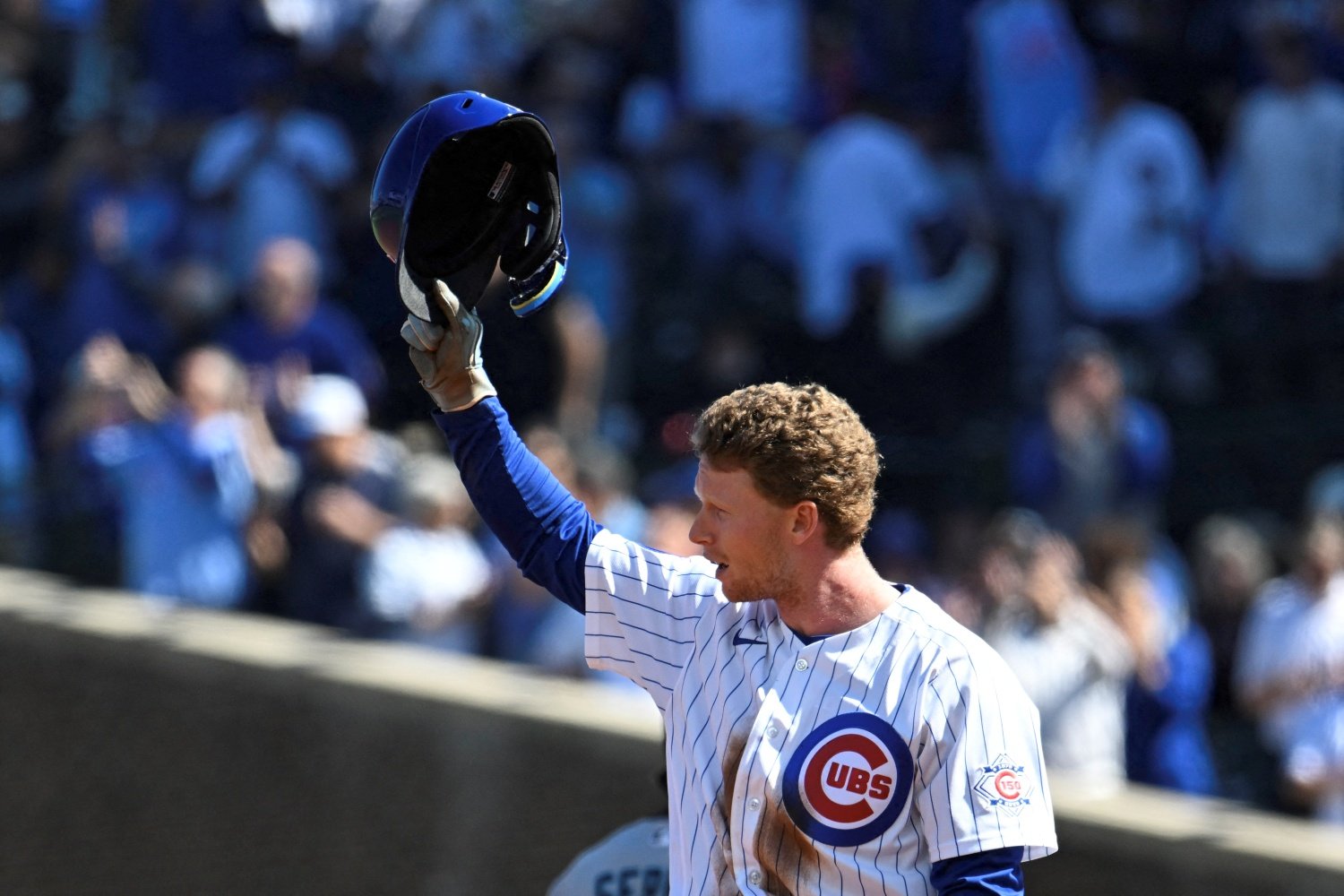 If the Wrigley Field crowd had had its way, the game might have stopped for a while. Speeches could have been given. The commissioner could have strode onto the field, while a microphone was hastily placed behind home plate. A ceremony could have been performed. Certainly, a long video of highlights and tributes would have met no great resistance. Pete Crow-Armstrong, however, just tried to keep it together. "Don't cry on the baseball field—not that that's not ok," Crow-Armstrong said after the game, when asked what was going through his mind at second base, "but that's emotional stuff. I mean, I've gotten so much love, and I'm so lucky for that, and it's something I'm grateful for every day." Crow-Armstrong had just stolen his 40th base of the season, putting him in the illustrious 40/40 club. It was the chance the fans needed to finally hit him with the waves of adulation that had been lapping at the shore for weeks—to crash over him with their admiration and gratitude for what has been the greatest individual season in Cubs history. There's something a bit tawdry and small, really, about 40/40. Power and speed in the same package was once quite rare, and indeed, speed was not applied on the field the way it is now until roughly the mid-1950s. Now, though, the best athletes on the diamond are often capable of both hitting for power and stealing bases. José Canseco opened the 40/40 club in 1988, generating a certain amount of awe, but (while relatively few players have followed him through the door he busted open) power-speed combos are much more common now. Statistically, the club evokes a blend of thunder and lightning, but it sketches them roughly. The two achievements are monumentally imbalanced. Every home run is worth about four times as much as a stolen base. Counting up these two particular events is also a bit unsatisfying, unless you grew up with the numbers on the back of an old-fashioned baseball card. Doubles and triples matter; walks matter; taking extra bases on non-steals matter. When you hear that someone has accomplished 40/40, there's a suggestion of well-roundedness that extends beyond power and speed, but that suggestion has often been deception. Canseco was a meathead who played like one, hurting his team with poor defense and bad baserunning decisions. Alfonso Soriano drew so few walks that power was almost his whole game offensively, and he, too, was a lousy defender. Still, it was an occasion. It was like a birthday party, when we half-arbitrarily find an excuse to celebrate someone for no real reason other than that we love and are thankful for them. Crow-Armstrong's achievement, if it had only been 40 homers and 40 steals, would have meant something, but not something huge. The season he's had, though, merited something more than applause in response to each individual moment of mastery. He's been much too heroic not to stop and marvel. The full 40/40 club is, as you've heard a dozen times by now, Canseco, Alfonso Soriano, Barry Bonds, Álex Rodríguez, Ronald Acuña Jr., Shohei Ohtani, and Crow-Armstrong. That company is illustrious, but we can do even better. According to Baseball Reference, Crow-Armstrong is also a member of the 40/15/10 club: 40 or more runs above average at the plate; 15 or more runs above average as a fielder; and 10 or more runs above average via baserunning and double-play avoidance. That club has only two other members: Rickey Henderson, in 1980, and Mike Trout, in 2012. If you want to confine yourself to stats based on raw outcomes without adjustments or interpretations, we can still do better than merely counting homers and steals. Crow-Armstrong has 355 total bases and has drawn 82 walks. The only players with 350 or more total bases, 75 or more walks and 30 or more steals in a season are Crow-Armstrong, Ohtani, Acuña, Vladimir Guerrero, Larry Walker, Henry Aaron and Willie Mays. The only 40/40 club members who were caught stealing fewer than 10 times the year they achieved their status were Bonds and Ohtani; Crow-Armstrong has only been caught seven times. It's important that we link Crow-Armstrong's season to these names—Mays, Bonds, Trout and Ohtani, especially. That conveys how great his campaign has been in an honest way. We have another 10 years to find out whether he can actually be as good as those guys, but this year has been as good as those guys' best. That, in itself, is remarkable. However, it's not what the fans were really cheering for. Rather, what has made Crow-Armstrong's summer so special is all the resonances that supersede the national attention and the historic accolades for Chicagoans: the ones that tie him inextricably to this city and its pride in its sports history. Obviously, no Cubs player had ever before gone 40/40, but just as importantly, only one player in the annals of the franchise had ever stolen 40 and hit 40 homers in any season, even if it be two separate ones: Ryne Sandberg, whose death (too young) last July is still a visible scar on the hearts of Cubs fans. Billy Williams (happily, still with us) was the only left-handed hitter ever to hit 40 homers in a season for the team. Crow-Armstrong's baserunning regularly elicits comparisons to Javier Báez. His sonic boom of a gear shift in late May and throughout June evoked Sammy Sosa, who later showed up for the team's celebration of its 150th anniversary and prophesized about the three-homer game Crow-Armstrong produced that very day. Crow-Armstrong has knitted himself into the fabric of the franchise by weaving his own legacy as warp across the weft of the team's greatest and most beloved stars. It hasn't all happened this year, but it all came together this year. He filled a hole, too. A team that has had a franchise shortstop (Ernie Banks), a franchise second baseman (Sandberg), a franchise third baseman (Ron Santo), a franchise first baseman (Mark Grace, Anthony Rizzo, take your pick), a franchise left fielder (Williams) and a franchise right fielder (Sosa) has never had a truly great center fielder. That has finally changed. In the same way he seems to be stretching across and enmeshing himself within team history, he's doing the same with the wider Chicago sports landscape. His friendship with Caleb Williams has been exhaustively documented, but when Williams, Matas Buzelis, Caleb Wilson and more showed up to sit in the front row behind the Cubs dugout one night late in the summer, the point was driven home. Crow-Armstrong is part of a wave of talent that gives an underachieving sports town new hope for shaking off that label. Of course, when you talk about Chicago sports icons, there's really only one name. That one didn't come into direct contact with Crow-Armstrong's this year, and maybe it never will. The comparisons are going to become unavoidable soon enough, though. Crow-Armstrong isn't the next Sosa, or the next Báez, or the next Sandberg. He's not just Caleb Williams or Conor Bedard. Though he comes in (so far, anyway) a much more grounded, cuddly outer wrapping, Crow-Armstrong is a hurricane of talent and ambition as strong as Michael Jordan—the only athlete about whom that can be said who has stepped foot in the city since Jordan left it. That's what fans respond to so forcefully, even if most of them don't realize it. They're not explicitly looking to recapitulate the 1990s Bulls, because we do not live our lives solely in reference to our pasts, but then again, our pasts are never really past, are they? They don't actively want another Jordan, whose toxicity toward teammates would never fly now and was irresponsible even then. They don't expect six championships from Crow-Armstrong, because that would be utterly unreasonable; it's not how baseball works, or how the 21st century works. But that's what Crow-Armstrong is. What fans love is not only his talent, but the drive they can see on his face, and the way he seems to sizzle with the need to win. He's not without swagger, but while outsiders might misconstrue his attitude as selfish or self-aggrandizing, Cubs fans know better. What they see—what objective viewers can see, too, as long as they don't bring too much of their own baggage to the viewing party—is that Crow-Armstrong's every move and thought is oriented toward winning. He argues vehemently with umpires, but only on behalf of his team—never when the stakes are only his own statistics. He hustles unreservedly. He slams his bat and fires his helmet when things are going badly, but it's all born of the eagerness he feels to deliver on the fans' demands or to save his shaky team from itself. He doesn't, for instance, rack up garbage-time steals. Of his 40 thefts this year, only nine came in low-leverage situations; that's 22.5%. In the modern game (especially since the rules changes that bolstered the running game in 2023), the percentage of steals that come in unimportant moments has risen. Crow-Armstrong, though, has just those nine steals and has only been caught once when it didn't matter much. Even most of the technically low-leverage steals came as the back half of a first-and-third play, or in the third inning, when things were far from decided. He's no stat padder, and yet, look how good his stats are. The Cubs will win a World Series with Crow-Armstrong, someday. It probably won't be this year, but it will happen. That that feels so certain is not just a reflection of his talent, the way a Bears fan might say that Williams's talent at a position with so much power makes an eventual Super Bowl win feel likely. It's more. It's the way Crow-Armstrong carries himself. It's the maturity it has taken for him to handle his exploding fame relatively well, and to listen to teammates and get better because of his interactions with them. It's the sagacity of his thoughts on the game itself—on his craft. He's as detail-oriented and hard-working as Jordan, but a better teammate. He's a winner. He's also, of course, going to be here a while. That's the final thing that went through the crowd, as they applauded so long and loud in that moment after Crow-Armstrong's landmark steal. As warm as the memories of the 2016 team will always be for most fans, those players all left. The only ones to sign contract extensions after joining the organization were Rizzo and Kyle Hendricks. The only one to sign a long-term deal after the title itself was Hendricks. It's easier for players to move on, these days, and if many fans couldn't imagine Kris Bryant ever wearing another uniform after he was the centerpiece of that championship drought-breaking team, they're wiser and sadder now. Crow-Armstrong is the cure for that sadness, without dimming the wisdom. He's extremely proud to be a Cub. He's going to be a Cub for a long time. And he's finishing the greatest season ever put together by a Cub. His willingness to belong to the team and the city has made the city desperate to show him how much they also feel they belong to him. Sports or not, in 2026, it's even harder to find that kind of mutual devotion than it is to find 40 homers and 40 steals on one baseball card.
 -
Image courtesy of Matt Marton-Imagn Images If the Wrigley Field crowd had had its way, the game might have stopped for a while. Speeches could have been given. The commissioner could have strode onto the field, while a microphone was hastily placed behind home plate. A ceremony could have been performed. Certainly, a long video of highlights and tributes would have met no great resistance. Pete Crow-Armstrong, however, just tried to keep it together. "Don't cry on the baseball field—not that that's not ok," Crow-Armstrong said after the game, when asked what was going through his mind at second base, "but that's emotional stuff. I mean, I've gotten so much love, and I'm so lucky for that, and it's something I'm grateful for every day." Crow-Armstrong had just stolen his 40th base of the season, putting him in the illustrious 40/40 club. It was the chance the fans needed to finally hit him with the waves of adulation that had been lapping at the shore for weeks—to crash over him with their admiration and gratitude for what has been the greatest individual season in Cubs history. There's something a bit tawdry and small, really, about 40/40. Power and speed in the same package was once quite rare, and indeed, speed was not applied on the field the way it is now until roughly the mid-1950s. Now, though, the best athletes on the diamond are often capable of both hitting for power and stealing bases. José Canseco opened the 40/40 club in 1988, generating a certain amount of awe, but (while relatively few players have followed him through the door he busted open) power-speed combos are much more common now. Statistically, the club evokes a blend of thunder and lightning, but it sketches them roughly. The two achievements are monumentally imbalanced. Every home run is worth about four times as much as a stolen base. Counting up these two particular events is also a bit unsatisfying, unless you grew up with the numbers on the back of an old-fashioned baseball card. Doubles and triples matter; walks matter; taking extra bases on non-steals matter. When you hear that someone has accomplished 40/40, there's a suggestion of well-roundedness that extends beyond power and speed, but that suggestion has often been deception. Canseco was a meathead who played like one, hurting his team with poor defense and bad baserunning decisions. Alfonso Soriano drew so few walks that power was almost his whole game offensively, and he, too, was a lousy defender. Still, it was an occasion. It was like a birthday party, when we half-arbitrarily find an excuse to celebrate someone for no real reason other than that we love and are thankful for them. Crow-Armstrong's achievement, if it had only been 40 homers and 40 steals, would have meant something, but not something huge. The season he's had, though, merited something more than applause in response to each individual moment of mastery. He's been much too heroic not to stop and marvel. The full 40/40 club is, as you've heard a dozen times by now, Canseco, Alfonso Soriano, Barry Bonds, Álex Rodríguez, Ronald Acuña Jr., Shohei Ohtani, and Crow-Armstrong. That company is illustrious, but we can do even better. According to Baseball Reference, Crow-Armstrong is also a member of the 40/15/10 club: 40 or more runs above average at the plate; 15 or more runs above average as a fielder; and 10 or more runs above average via baserunning and double-play avoidance. That club has only two other members: Rickey Henderson, in 1980, and Mike Trout, in 2012. If you want to confine yourself to stats based on raw outcomes without adjustments or interpretations, we can still do better than merely counting homers and steals. Crow-Armstrong has 355 total bases and has drawn 82 walks. The only players with 350 or more total bases, 75 or more walks and 30 or more steals in a season are Crow-Armstrong, Ohtani, Acuña, Vladimir Guerrero, Larry Walker, Henry Aaron and Willie Mays. The only 40/40 club members who were caught stealing fewer than 10 times the year they achieved their status were Bonds and Ohtani; Crow-Armstrong has only been caught seven times. It's important that we link Crow-Armstrong's season to these names—Mays, Bonds, Trout and Ohtani, especially. That conveys how great his campaign has been in an honest way. We have another 10 years to find out whether he can actually be as good as those guys, but this year has been as good as those guys' best. That, in itself, is remarkable. However, it's not what the fans were really cheering for. Rather, what has made Crow-Armstrong's summer so special is all the resonances that supersede the national attention and the historic accolades for Chicagoans: the ones that tie him inextricably to this city and its pride in its sports history. Obviously, no Cubs player had ever before gone 40/40, but just as importantly, only one player in the annals of the franchise had ever stolen 40 and hit 40 homers in any season, even if it be two separate ones: Ryne Sandberg, whose death (too young) last July is still a visible scar on the hearts of Cubs fans. Billy Williams (happily, still with us) was the only left-handed hitter ever to hit 40 homers in a season for the team. Crow-Armstrong's baserunning regularly elicits comparisons to Javier Báez. His sonic boom of a gear shift in late May and throughout June evoked Sammy Sosa, who later showed up for the team's celebration of its 150th anniversary and prophesized about the three-homer game Crow-Armstrong produced that very day. Crow-Armstrong has knitted himself into the fabric of the franchise by weaving his own legacy as warp across the weft of the team's greatest and most beloved stars. It hasn't all happened this year, but it all came together this year. He filled a hole, too. A team that has had a franchise shortstop (Ernie Banks), a franchise second baseman (Sandberg), a franchise third baseman (Ron Santo), a franchise first baseman (Mark Grace, Anthony Rizzo, take your pick), a franchise left fielder (Williams) and a franchise right fielder (Sosa) has never had a truly great center fielder. That has finally changed. In the same way he seems to be stretching across and enmeshing himself within team history, he's doing the same with the wider Chicago sports landscape. His friendship with Caleb Williams has been exhaustively documented, but when Williams, Matas Buzelis, Caleb Wilson and more showed up to sit in the front row behind the Cubs dugout one night late in the summer, the point was driven home. Crow-Armstrong is part of a wave of talent that gives an underachieving sports town new hope for shaking off that label. Of course, when you talk about Chicago sports icons, there's really only one name. That one didn't come into direct contact with Crow-Armstrong's this year, and maybe it never will. The comparisons are going to become unavoidable soon enough, though. Crow-Armstrong isn't the next Sosa, or the next Báez, or the next Sandberg. He's not just Caleb Williams or Conor Bedard. Though he comes in (so far, anyway) a much more grounded, cuddly outer wrapping, Crow-Armstrong is a hurricane of talent and ambition as strong as Michael Jordan—the only athlete about whom that can be said who has stepped foot in the city since Jordan left it. That's what fans respond to so forcefully, even if most of them don't realize it. They're not explicitly looking to recapitulate the 1990s Bulls, because we do not live our lives solely in reference to our pasts, but then again, our pasts are never really past, are they? They don't actively want another Jordan, whose toxicity toward teammates would never fly now and was irresponsible even then. They don't expect six championships from Crow-Armstrong, because that would be utterly unreasonable; it's not how baseball works, or how the 21st century works. But that's what Crow-Armstrong is. What fans love is not only his talent, but the drive they can see on his face, and the way he seems to sizzle with the need to win. He's not without swagger, but while outsiders might misconstrue his attitude as selfish or self-aggrandizing, Cubs fans know better. What they see—what objective viewers can see, too, as long as they don't bring too much of their own baggage to the viewing party—is that Crow-Armstrong's every move and thought is oriented toward winning. He argues vehemently with umpires, but only on behalf of his team—never when the stakes are only his own statistics. He hustles unreservedly. He slams his bat and fires his helmet when things are going badly, but it's all born of the eagerness he feels to deliver on the fans' demands or to save his shaky team from itself. He doesn't, for instance, rack up garbage-time steals. Of his 40 thefts this year, only nine came in low-leverage situations; that's 22.5%. In the modern game (especially since the rules changes that bolstered the running game in 2023), the percentage of steals that come in unimportant moments has risen. Crow-Armstrong, though, has just those nine steals and has only been caught once when it didn't matter much. Even most of the technically low-leverage steals came as the back half of a first-and-third play, or in the third inning, when things were far from decided. He's no stat padder, and yet, look how good his stats are. The Cubs will win a World Series with Crow-Armstrong, someday. It probably won't be this year, but it will happen. That that feels so certain is not just a reflection of his talent, the way a Bears fan might say that Williams's talent at a position with so much power makes an eventual Super Bowl win feel likely. It's more. It's the way Crow-Armstrong carries himself. It's the maturity it has taken for him to handle his exploding fame relatively well, and to listen to teammates and get better because of his interactions with them. It's the sagacity of his thoughts on the game itself—on his craft. He's as detail-oriented and hard-working as Jordan, but a better teammate. He's a winner. He's also, of course, going to be here a while. That's the final thing that went through the crowd, as they applauded so long and loud in that moment after Crow-Armstrong's landmark steal. As warm as the memories of the 2016 team will always be for most fans, those players all left. The only ones to sign contract extensions after joining the organization were Rizzo and Kyle Hendricks. The only one to sign a long-term deal after the title itself was Hendricks. It's easier for players to move on, these days, and if many fans couldn't imagine Kris Bryant ever wearing another uniform after he was the centerpiece of that championship drought-breaking team, they're wiser and sadder now. Crow-Armstrong is the cure for that sadness, without dimming the wisdom. He's extremely proud to be a Cub. He's going to be a Cub for a long time. And he's finishing the greatest season ever put together by a Cub. His willingness to belong to the team and the city has made the city desperate to show him how much they also feel they belong to him. Sports or not, in 2026, it's even harder to find that kind of mutual devotion than it is to find 40 homers and 40 steals on one baseball card. View full article
-
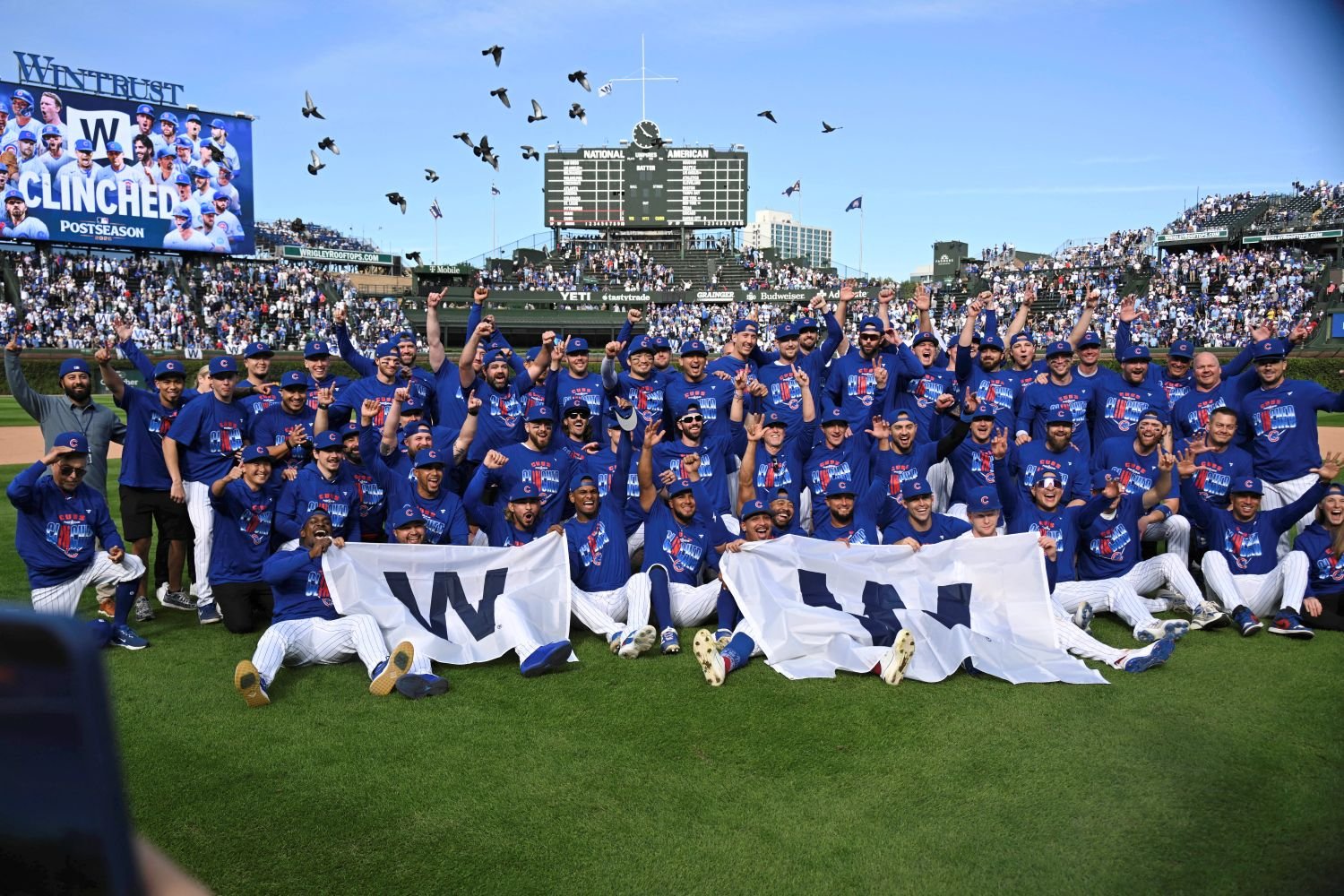 All season, there has been a sense of urgency hanging over the Chicago Cubs. They need to win this year. They need to achieve as much as they can, and make the most of this chance, because the future is highly uncertain. However this year ended, it seemed, there were no guarantees of 2027 (or 2028, or 2029) being better. It took longer than anyone hoped, but in their final home game of the season, the team clinched a playoff berth. They might still have to play on the road in the Wild Card Series. They might not be back in front of the Wrigley Field faithful until next spring. But they will play past Game 162. That was the first and most important box they had to check on the season's to-do list. Ian Happ, who debuted 112 months ago and has played more games in a Cubs uniform than all but 19 other people in the franchise's history (more, for instance, than Frank Chance or Shawon Dunston), hit a sixth-inning triple and came home with the go-ahead run, putting the team up by a 2-1 score that would become the final. The day started with Happ and the fans in the left-field bleachers engaging in an endearing annual ritual, wherein Happ throws a ball with money wrapped around it into the stands to buy beer for as many fans as the bills will cover—and, this time, the fans threw back a ball signed by several of the regulars, thanking the outfielder for his years of dedication to the team. It ended with Happ fighting back tears on the field, as fans showered affection on a team that has survived enormous adversity to get this far. Before Happ's minor heroics, Seiya Suzuki launched a key, game-tying solo home run in the fifth. Like Happ, Suzuki will be a free agent this fall. His five-year contract has been a big win for the Cubs, despite his early, costly miscues in the field and a number of injuries that have interrupted his tenure. Though the relationship between the player and the fans is not as strong, Suzuki has been a productive player and a welcome presence in the organization, and it was only fitting that he would strike a telling blow in a vital game before the home schedule concluded. Two runs is paltry run support, but Matthew Boyd made it stand up. The veteran lefty fired seven innings of one-run ball, using his typical array of big speed changes to induce early and (mostly) harmless contact from a Marlins lineup that gave the Cubs headaches all week. Boyd, too, will be a free agent after the end of the World Series. This is just his second season with the Cubs, but he's one of the most universally liked players in baseball and has knitted himself into the fabric of both the clubhouse and the community even in a relatively short time. Boyd, Happ and Suzuki aren't the only Cubs who probably won't be here next year. The front office has some heavy lifting to do over the fall and winter, and if an offseason work stoppage disrupts their roster building, their job will only get harder. That lurking reality has cast a shadow over this entire season. It's made things stressful for the team and for fans, even if many of them couldn't have articulated the reason. That cloud lightened a bit at the beginning of the season, with the contract extensions signed by both Pete Crow-Armstrong and Nico Hoerner. Crow-Armstrong was under team control for several more seasons anyway, of course, but locking him in gave the fan base a bracing infusion of confidence and excitement about the future. Hoerner was an impending free agent until signing his deal, but will now be a Cub for six more seasons. Still, the team has a huge cadre of players who will be free agents this November. It includes virtually their entire starting rotation and about half their bullpen, plus both starting corner outfielders (Happ and Suzuki) and their starting catcher (Carson Kelly). That Happ, Suzuki, Kelly, Shota Imanaga, Boyd, trade acquisitions Kevin Gausman, Clay Holmes, Tyrone Taylor and surprise contributors Jacob Webb and Michael Conforto will be back next season ranges from unlikely to unthinkable. Chicago is fully committed to a core of Crow-Armstrong, Hoerner, Michael Busch, Dansby Swanson and Alex Bregman, but the last two of those are each heading into their mid-30s. That leaves a lot of questions to be answered. It means that as much as half of this roster might have just played for the last time in the Cubs' home whites. If so, at least they gave themselves a proper sendoff. In a rare twist for a Jed Hoyer-built team, the two most prominent long-term fixtures on the team in Thursday's win were relievers. Daniel Palencia and Ryan Zeferjahn are essential to any postseason run the team hopes to make this year, but they're also under club control through the end of the decade, and the hope is that each will have a better season or two between now and when they hit free agency. The best development of the last week for the team (an uneven one, overall) has been Palencia and Zeferjahn seeming to round into form. The outline of a solid October relief corps is coming into focus. Then, of course, there was Crow-Armstrong. He wasn't actually involved in the decisive actions of Thursday's game, except in that he charged and threw (off-line; he still overcooks those sometimes, because no one is quite perfect) toward home on the single that plated Miami's only run. He was still very much in the center of the narrative, though, and he literally seized center stage in the bottom of the first inning. After drawing a leadoff walk, he stole second base on the first pitch by Marlins righty Tyler Phillips. It was his 40th steal of the year, putting him (at last; fans have breathlessly tracked his pursuit of the milestone for weeks) into the vaunted 40/40 club. Seizing their own moment, the fans gave Crow-Armstrong a long, rousing standing ovation, with him in the very center of the diamond, doffing his helmet lovingly but rather reservedly, then tapping the Cubs logo on his chest, then trying to clamp down on his emotions and waiiting for the game to resume. That moment did nothing to decide the game. It was an impressive bit of baserunning nous by Crow-Armstrong, who clearly had a sense of what to look for when Phillips was working out of the stretch and got a huge jump without even waiting out a pitch. He topped himself immediately afterward with a half-delayed tag-up on a flyout to left-center field, using fake-casual body language to bait Miami center fielder Jakob Marsee into a lazy throw and then taking third base. But ultimately, Boyd, Happ, Suzuki and Hoerner (who drove in Happ with a line-drive single to left) were the heroes of the day. Still, Crow-Armstrong's will be the indelible image and moment from it. Nothing could be more apropos. The 2026 Cubs will be remembered for and defined by Crow-Armstrong, whose season has been transcendent. He's been dominant, in ways both big and small. He's been a sensation. They'll go as far (or fall as far short) as the rest of the team can take them, though. Crow-Armstrong's brilliance is the only reason they're going to the playoffs; the rest of the team has played much like the Diamondbacks squad they eliminated with the win. One player can't carry a team all the way to a championship, though. The Cubs will have to hope that there are a few more days like Thursday ahead, along with a few more where Crow-Armstrong does take over and win a game on his own. In the bright and jangly moments after the final out Thursday, it felt possible.
 -
Image courtesy of Matt Marton-Imagn Images All season, there has been a sense of urgency hanging over the Chicago Cubs. They need to win this year. They need to achieve as much as they can, and make the most of this chance, because the future is highly uncertain. However this year ended, it seemed, there were no guarantees of 2027 (or 2028, or 2029) being better. It took longer than anyone hoped, but in their final home game of the season, the team clinched a playoff berth. They might still have to play on the road in the Wild Card Series. They might not be back in front of the Wrigley Field faithful until next spring. But they will play past Game 162. That was the first and most important box they had to check on the season's to-do list. Ian Happ, who debuted 112 months ago and has played more games in a Cubs uniform than all but 19 other people in the franchise's history (more, for instance, than Frank Chance or Shawon Dunston), hit a sixth-inning triple and came home with the go-ahead run, putting the team up by a 2-1 score that would become the final. The day started with Happ and the fans in the left-field bleachers engaging in an endearing annual ritual, wherein Happ throws a ball with money wrapped around it into the stands to buy beer for as many fans as the bills will cover—and, this time, the fans threw back a ball signed by several of the regulars, thanking the outfielder for his years of dedication to the team. It ended with Happ fighting back tears on the field, as fans showered affection on a team that has survived enormous adversity to get this far. Before Happ's minor heroics, Seiya Suzuki launched a key, game-tying solo home run in the fifth. Like Happ, Suzuki will be a free agent this fall. His five-year contract has been a big win for the Cubs, despite his early, costly miscues in the field and a number of injuries that have interrupted his tenure. Though the relationship between the player and the fans is not as strong, Suzuki has been a productive player and a welcome presence in the organization, and it was only fitting that he would strike a telling blow in a vital game before the home schedule concluded. Two runs is paltry run support, but Matthew Boyd made it stand up. The veteran lefty fired seven innings of one-run ball, using his typical array of big speed changes to induce early and (mostly) harmless contact from a Marlins lineup that gave the Cubs headaches all week. Boyd, too, will be a free agent after the end of the World Series. This is just his second season with the Cubs, but he's one of the most universally liked players in baseball and has knitted himself into the fabric of both the clubhouse and the community even in a relatively short time. Boyd, Happ and Suzuki aren't the only Cubs who probably won't be here next year. The front office has some heavy lifting to do over the fall and winter, and if an offseason work stoppage disrupts their roster building, their job will only get harder. That lurking reality has cast a shadow over this entire season. It's made things stressful for the team and for fans, even if many of them couldn't have articulated the reason. That cloud lightened a bit at the beginning of the season, with the contract extensions signed by both Pete Crow-Armstrong and Nico Hoerner. Crow-Armstrong was under team control for several more seasons anyway, of course, but locking him in gave the fan base a bracing infusion of confidence and excitement about the future. Hoerner was an impending free agent until signing his deal, but will now be a Cub for six more seasons. Still, the team has a huge cadre of players who will be free agents this November. It includes virtually their entire starting rotation and about half their bullpen, plus both starting corner outfielders (Happ and Suzuki) and their starting catcher (Carson Kelly). That Happ, Suzuki, Kelly, Shota Imanaga, Boyd, trade acquisitions Kevin Gausman, Clay Holmes, Tyrone Taylor and surprise contributors Jacob Webb and Michael Conforto will be back next season ranges from unlikely to unthinkable. Chicago is fully committed to a core of Crow-Armstrong, Hoerner, Michael Busch, Dansby Swanson and Alex Bregman, but the last two of those are each heading into their mid-30s. That leaves a lot of questions to be answered. It means that as much as half of this roster might have just played for the last time in the Cubs' home whites. If so, at least they gave themselves a proper sendoff. In a rare twist for a Jed Hoyer-built team, the two most prominent long-term fixtures on the team in Thursday's win were relievers. Daniel Palencia and Ryan Zeferjahn are essential to any postseason run the team hopes to make this year, but they're also under club control through the end of the decade, and the hope is that each will have a better season or two between now and when they hit free agency. The best development of the last week for the team (an uneven one, overall) has been Palencia and Zeferjahn seeming to round into form. The outline of a solid October relief corps is coming into focus. Then, of course, there was Crow-Armstrong. He wasn't actually involved in the decisive actions of Thursday's game, except in that he charged and threw (off-line; he still overcooks those sometimes, because no one is quite perfect) toward home on the single that plated Miami's only run. He was still very much in the center of the narrative, though, and he literally seized center stage in the bottom of the first inning. After drawing a leadoff walk, he stole second base on the first pitch by Marlins righty Tyler Phillips. It was his 40th steal of the year, putting him (at last; fans have breathlessly tracked his pursuit of the milestone for weeks) into the vaunted 40/40 club. Seizing their own moment, the fans gave Crow-Armstrong a long, rousing standing ovation, with him in the very center of the diamond, doffing his helmet lovingly but rather reservedly, then tapping the Cubs logo on his chest, then trying to clamp down on his emotions and waiiting for the game to resume. That moment did nothing to decide the game. It was an impressive bit of baserunning nous by Crow-Armstrong, who clearly had a sense of what to look for when Phillips was working out of the stretch and got a huge jump without even waiting out a pitch. He topped himself immediately afterward with a half-delayed tag-up on a flyout to left-center field, using fake-casual body language to bait Miami center fielder Jakob Marsee into a lazy throw and then taking third base. But ultimately, Boyd, Happ, Suzuki and Hoerner (who drove in Happ with a line-drive single to left) were the heroes of the day. Still, Crow-Armstrong's will be the indelible image and moment from it. Nothing could be more apropos. The 2026 Cubs will be remembered for and defined by Crow-Armstrong, whose season has been transcendent. He's been dominant, in ways both big and small. He's been a sensation. They'll go as far (or fall as far short) as the rest of the team can take them, though. Crow-Armstrong's brilliance is the only reason they're going to the playoffs; the rest of the team has played much like the Diamondbacks squad they eliminated with the win. One player can't carry a team all the way to a championship, though. The Cubs will have to hope that there are a few more days like Thursday ahead, along with a few more where Crow-Armstrong does take over and win a game on his own. In the bright and jangly moments after the final out Thursday, it felt possible. View full article
-
I love a creative idea, but this is a truly atrocious one, man. I just demonstrated that he's been bad. Actively bad. Hitting nothing but singles and not taking his walks. You can't risk taking a PA away from Suzuki or (should he return) Bregman in a given game and giving it to this guy. That's malpractice.
-
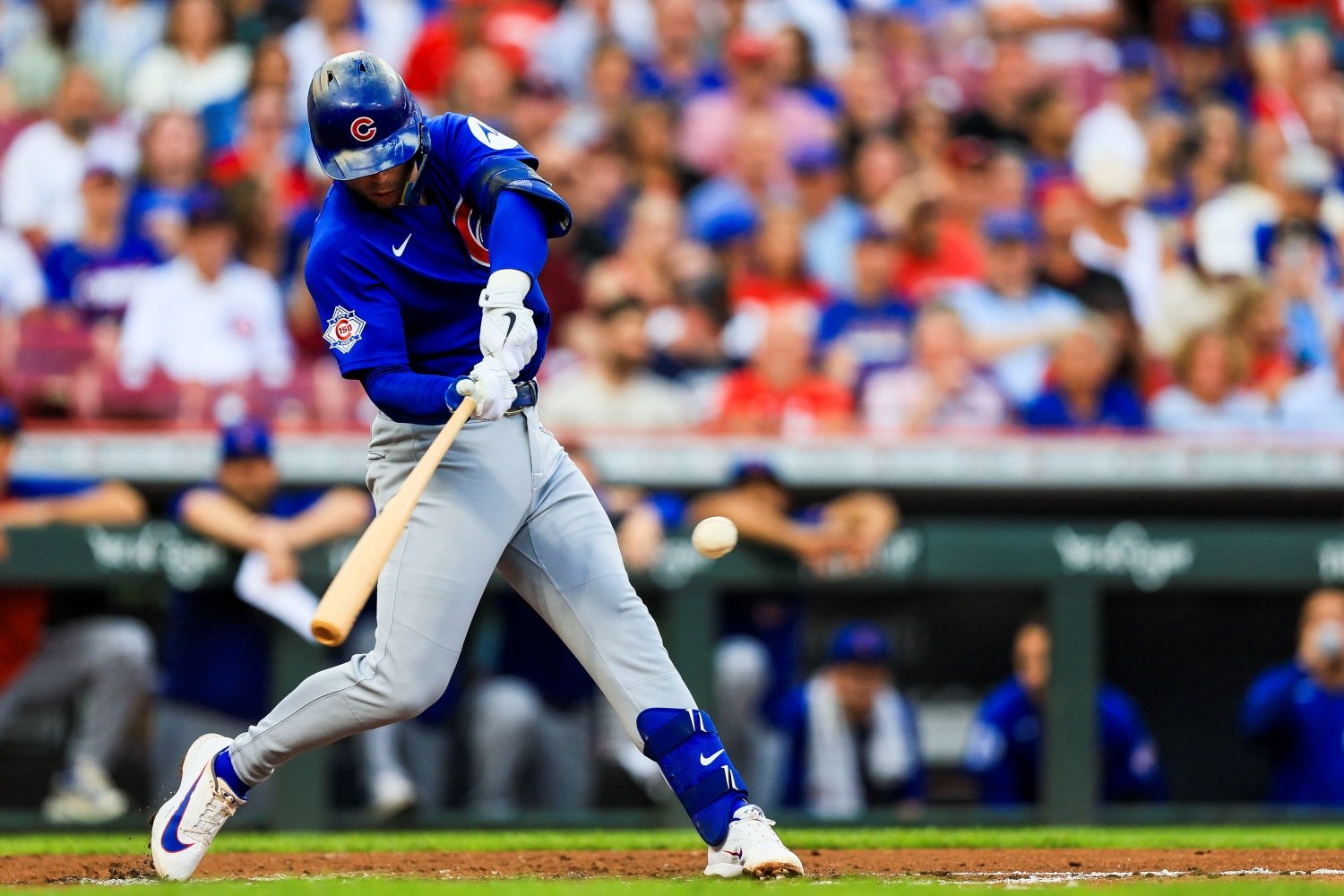 It was, relatively speaking, easy to hit an empty .300 in the late 1990s. Everyone could hit .280. Your extra hit a week wasn't worth much, unless you also added some extra-base hits and some walks. It's a lot harder to hit an empty .300 these days, but here's Nico Hoerner, doing it. In a league that's hitting .244, a batter with a batting average of .313—and that's what Hoerner is hitting, since the All-Star break, .313—is almost unavoidably contributing value. Hell, the league's aggregate OBP is only .318. Hit .313, and you're practically there. You're also almost guaranteed to slug at least .400, which is the league's average rate this year. Aha. Alas. 'Almost'. That's the most dangerous word in all of English. Hoerner has been so undisciplined and so light on thump over the last two-plus months that he's missing out on that almost sure thing. His batting line for the second half of the season is .313/.341/.396. In 255 plate appearances, he's managed only 11 extra-base hits and 7 walks. Technically, his line is above-average, but Hoerner just isn't doing enough to actually move the Cubs toward wins. Case in point: the bottom of the fourth inning Wednesday night. With a runner on third and one out, Hoerner only needed to put the ball in play to break the scoreless tie. He strikes out less than 10% of the time. That should have been a gimme run. Marlins starter Ryan Gusto, perhaps aware he was in big trouble, promptly fell behind 3-0, at which point the run was practically hovering over the plate, just waiting to land. Instead: Taking a 3-0 fastball at the top of the zone is often a fine idea, but when you're a singles-only hitter who specializes in line drives and when there's a run waiting at third and all you need to do is hit it to the outfield, that's a pitch you should swing at. It was ok, though. One bad swing decision won't cost you a game very often. Swing at a 3-1 sinker way in off the plate, though, and we're no longer talking about one bad swing decision. Hoerner whiffed on that offering, and suddenly, Gusto was back in the fight. Two bad swing decisions will sometimes cost you a game, especially when they come on back-to-back pitches in an important situation. But man, the 3-2 freeze-up on a four-seamer at the knees, that was the real punch in the gut. It might not be a great pitch to hit, but you have to (at least) foul it off. If you're a hitter like Hoerner, who won't add value by knocking one over the fence, and if you're in a spot where drawing a walk isn't especially helpful, you have to at least foul it off. Kyle Stowers beat the Cubs again. He's been an enormous pain for them ever since joining the Marlins, with six homers in 43 career plate appearances against them. He beat them singlehandedly one day last May, a 3-1 Marlins victory in which he hit two homers and a triple. He beat them with a home run that made their lives harder and led to the game going to extra innings Tuesday. He beat them with a two-run homer on a night when the Cubs could hardly get a ball to the warning track Wednesday. Power wins games, sometimes. Hoerner has an uphill battle to be as valuable a hitter as Stowers, because he lacks power. Lately, he also lacks the refined approach that let him run a .377 OBP in the second half of 2023 and a .365 in the second half of 2025. When Hoerner stepped to the plate in the bottom of the fourth Wednesday, though, he had a chance to win a game without power. He didn't even need to bolster that empty batting average, in that particular at-bat. His skill set demands that Hoerner come through in situations like that. If he can't, he needs to get back to drawing walks and finding gaps or the corners. Otherwise, the Cubs (who need Hoerner pretty badly, just now) will go home early—not Sunday, in all likelihood, but before next weekend.
 -
Image courtesy of Katie Stratman-Imagn Images It was, relatively speaking, easy to hit an empty .300 in the late 1990s. Everyone could hit .280. Your extra hit a week wasn't worth much, unless you also added some extra-base hits and some walks. It's a lot harder to hit an empty .300 these days, but here's Nico Hoerner, doing it. In a league that's hitting .244, a batter with a batting average of .313—and that's what Hoerner is hitting, since the All-Star break, .313—is almost unavoidably contributing value. Hell, the league's aggregate OBP is only .318. Hit .313, and you're practically there. You're also almost guaranteed to slug at least .400, which is the league's average rate this year. Aha. Alas. 'Almost'. That's the most dangerous word in all of English. Hoerner has been so undisciplined and so light on thump over the last two-plus months that he's missing out on that almost sure thing. His batting line for the second half of the season is .313/.341/.396. In 255 plate appearances, he's managed only 11 extra-base hits and 7 walks. Technically, his line is above-average, but Hoerner just isn't doing enough to actually move the Cubs toward wins. Case in point: the bottom of the fourth inning Wednesday night. With a runner on third and one out, Hoerner only needed to put the ball in play to break the scoreless tie. He strikes out less than 10% of the time. That should have been a gimme run. Marlins starter Ryan Gusto, perhaps aware he was in big trouble, promptly fell behind 3-0, at which point the run was practically hovering over the plate, just waiting to land. Instead: Taking a 3-0 fastball at the top of the zone is often a fine idea, but when you're a singles-only hitter who specializes in line drives and when there's a run waiting at third and all you need to do is hit it to the outfield, that's a pitch you should swing at. It was ok, though. One bad swing decision won't cost you a game very often. Swing at a 3-1 sinker way in off the plate, though, and we're no longer talking about one bad swing decision. Hoerner whiffed on that offering, and suddenly, Gusto was back in the fight. Two bad swing decisions will sometimes cost you a game, especially when they come on back-to-back pitches in an important situation. But man, the 3-2 freeze-up on a four-seamer at the knees, that was the real punch in the gut. It might not be a great pitch to hit, but you have to (at least) foul it off. If you're a hitter like Hoerner, who won't add value by knocking one over the fence, and if you're in a spot where drawing a walk isn't especially helpful, you have to at least foul it off. Kyle Stowers beat the Cubs again. He's been an enormous pain for them ever since joining the Marlins, with six homers in 43 career plate appearances against them. He beat them singlehandedly one day last May, a 3-1 Marlins victory in which he hit two homers and a triple. He beat them with a home run that made their lives harder and led to the game going to extra innings Tuesday. He beat them with a two-run homer on a night when the Cubs could hardly get a ball to the warning track Wednesday. Power wins games, sometimes. Hoerner has an uphill battle to be as valuable a hitter as Stowers, because he lacks power. Lately, he also lacks the refined approach that let him run a .377 OBP in the second half of 2023 and a .365 in the second half of 2025. When Hoerner stepped to the plate in the bottom of the fourth Wednesday, though, he had a chance to win a game without power. He didn't even need to bolster that empty batting average, in that particular at-bat. His skill set demands that Hoerner come through in situations like that. If he can't, he needs to get back to drawing walks and finding gaps or the corners. Otherwise, the Cubs (who need Hoerner pretty badly, just now) will go home early—not Sunday, in all likelihood, but before next weekend. View full article
-
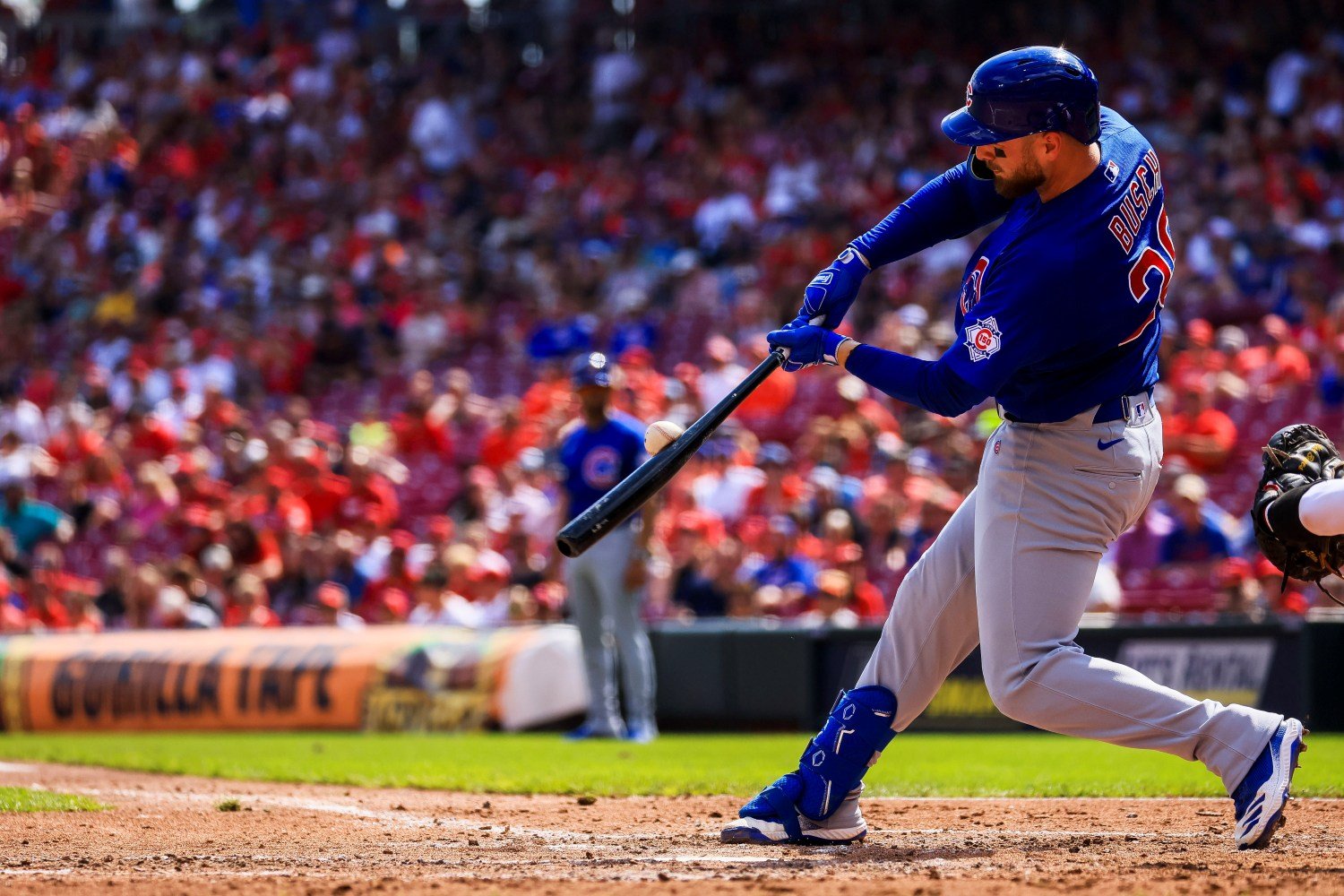 If you read this site, you're probably a lot like me. You might have grown up watching Steve Stone do color commentary on Cubs TV broadcasts, or you might have been slightly too young or too old for that, but you've probably at least seen him call a few games. (He's still a Chicago baseball fixture, after all.) Be it Stone or one of his many contemporaries and kindred spirits, though, some commentator has surely said it on a game you've watched: When a guy has a closed stance, he wants you to pitch him inside. He's inviting it. When a guy has an open stance, he's hunting the ball away. Maybe, like me, you first heard that when you were a kid, and it didn't make sense right away. After all, that guy with the closed stance, his front foot is in the way of him getting to that inside offering. The one with the open stance is awfully far from the outside third of the plate, isn't he? The answer to the not-even-a-riddle, of course, is that how a player stands often betrays something about how they move once they get going. Open stance dudes tend to stride into the ball—to dive out over the plate, to phrase it in extremes. Guys with closed stances are trying to start in a position that keeps them on the incoming pitch, because they know they're going to open up on it quite a bit when they get moving. Michael Busch has an essentially neutral stance; he's not giving anything away. For much of this season, though, he's been very slightly closed. It was a conscious adjustment he made early in the year, to avoid pulling off the ball and finding the end of his bat. It didn't work, though. Busch doesn't naturally open up very much on the ball. Being even a tiny bit closed has just cut him off. For most of the season, his best contact has gone to center field, where it more often gets caught than clears the fence. Worse, to generate power, he's mostly needed to wait for pitchers to make mistakes on the inner half—to force him to turn on the ball properly, as it were. This is why, entering Wednesday, Busch is still very much in danger of finishing the season with a sub-.400 slugging average, despite 20 home runs and what will probably be 50-plus extra-base hits. Only 11 players in baseball history have cleared those counting-stat thresholds with such a measy overall slugging average. (Joe Carter did it twice.) Maybe he's poised to escape that infamy, though. Since the off day between the Cubs' Labor Day weekday series against the Brewers and their game at home on September 11, Busch is batting .303/.455/.515, with two home runs and a double. The secret: a small but important change to his stance and stride, which has resulted in his best swings taking the ball to his pull field in the air again. Here's a 2-0 fastball he got from the Blue Jays' Dylan Cease in early August. It was on the outer half, but very hittable. Busch wasted it. bmJ3S0RfWGw0TUFRPT1fQndnSFVGTlNCQUlBQVFBREF3QUhVd0JSQUZsVVZWWUFVUVpXQ0FFR0NRZFVDUUFD.mp4 Now, here's a similar pitch (in a 2-1 count) Busch did not waste, from just after he made his suite of small changes. QXc3UFpfWGw0TUFRPT1fQVFSU0JRVUFWUVFBV1FjS1h3QUhWd0pWQUZrQlcxSUFBUVpXVWdVRkJsSlVBUXRT.mp4 To highlight the differences between his stances, strides and swings on these two pitches, let's look at a few key frames. Here are four moments in the delivery from Cease: the last frame before Busch picks up his front foot; the moment Cease releases the ball; the moment Busch's front foot re-engages the ground; and the point of contact. Compare and contrast that with the same four moments in the pitch on which he homered. It's almost imperceptible, but look closely. Busch's back leg is a bit more bent in his setup now. He's slightly more open. That lets him see the ball better early and maintain batter balance during his stride, which gets him through the ball more fluidly. This swing looks a lot like Busch did for much of last season; he'd just lost the feel for it. Minuscule changes like this are easy to overlook, but for a player who was never missing being great by very much, they've made a big difference. Busch is red-hot right now, just when the Cubs most need him. He's clicking, much as he was when he hit a clutch home run in last year's Wild Card Series and helped the team advance beyond that round. A shift in results this big from a change so small is unavoidably fragile. Busch might not stay this locked-in for long. As you can see, he's had plenty of ups and downs already in 2026. He seems to have made an adjustment I would have prescribed for him months ago, though, which is encouraging. There's at least some chance that Busch is back in the groove that eluded him for much of this year, and that he'll be the caliber of hitter the Cubs have needed him to be all season, right when they need him most.
 -
Image courtesy of Katie Stratman-Imagn Images If you read this site, you're probably a lot like me. You might have grown up watching Steve Stone do color commentary on Cubs TV broadcasts, or you might have been slightly too young or too old for that, but you've probably at least seen him call a few games. (He's still a Chicago baseball fixture, after all.) Be it Stone or one of his many contemporaries and kindred spirits, though, some commentator has surely said it on a game you've watched: When a guy has a closed stance, he wants you to pitch him inside. He's inviting it. When a guy has an open stance, he's hunting the ball away. Maybe, like me, you first heard that when you were a kid, and it didn't make sense right away. After all, that guy with the closed stance, his front foot is in the way of him getting to that inside offering. The one with the open stance is awfully far from the outside third of the plate, isn't he? The answer to the not-even-a-riddle, of course, is that how a player stands often betrays something about how they move once they get going. Open stance dudes tend to stride into the ball—to dive out over the plate, to phrase it in extremes. Guys with closed stances are trying to start in a position that keeps them on the incoming pitch, because they know they're going to open up on it quite a bit when they get moving. Michael Busch has an essentially neutral stance; he's not giving anything away. For much of this season, though, he's been very slightly closed. It was a conscious adjustment he made early in the year, to avoid pulling off the ball and finding the end of his bat. It didn't work, though. Busch doesn't naturally open up very much on the ball. Being even a tiny bit closed has just cut him off. For most of the season, his best contact has gone to center field, where it more often gets caught than clears the fence. Worse, to generate power, he's mostly needed to wait for pitchers to make mistakes on the inner half—to force him to turn on the ball properly, as it were. This is why, entering Wednesday, Busch is still very much in danger of finishing the season with a sub-.400 slugging average, despite 20 home runs and what will probably be 50-plus extra-base hits. Only 11 players in baseball history have cleared those counting-stat thresholds with such a measy overall slugging average. (Joe Carter did it twice.) Maybe he's poised to escape that infamy, though. Since the off day between the Cubs' Labor Day weekday series against the Brewers and their game at home on September 11, Busch is batting .303/.455/.515, with two home runs and a double. The secret: a small but important change to his stance and stride, which has resulted in his best swings taking the ball to his pull field in the air again. Here's a 2-0 fastball he got from the Blue Jays' Dylan Cease in early August. It was on the outer half, but very hittable. Busch wasted it. bmJ3S0RfWGw0TUFRPT1fQndnSFVGTlNCQUlBQVFBREF3QUhVd0JSQUZsVVZWWUFVUVpXQ0FFR0NRZFVDUUFD.mp4 Now, here's a similar pitch (in a 2-1 count) Busch did not waste, from just after he made his suite of small changes. QXc3UFpfWGw0TUFRPT1fQVFSU0JRVUFWUVFBV1FjS1h3QUhWd0pWQUZrQlcxSUFBUVpXVWdVRkJsSlVBUXRT.mp4 To highlight the differences between his stances, strides and swings on these two pitches, let's look at a few key frames. Here are four moments in the delivery from Cease: the last frame before Busch picks up his front foot; the moment Cease releases the ball; the moment Busch's front foot re-engages the ground; and the point of contact. Compare and contrast that with the same four moments in the pitch on which he homered. It's almost imperceptible, but look closely. Busch's back leg is a bit more bent in his setup now. He's slightly more open. That lets him see the ball better early and maintain batter balance during his stride, which gets him through the ball more fluidly. This swing looks a lot like Busch did for much of last season; he'd just lost the feel for it. Minuscule changes like this are easy to overlook, but for a player who was never missing being great by very much, they've made a big difference. Busch is red-hot right now, just when the Cubs most need him. He's clicking, much as he was when he hit a clutch home run in last year's Wild Card Series and helped the team advance beyond that round. A shift in results this big from a change so small is unavoidably fragile. Busch might not stay this locked-in for long. As you can see, he's had plenty of ups and downs already in 2026. He seems to have made an adjustment I would have prescribed for him months ago, though, which is encouraging. There's at least some chance that Busch is back in the groove that eluded him for much of this year, and that he'll be the caliber of hitter the Cubs have needed him to be all season, right when they need him most. View full article
-
After In-Season Pitch Mix Overhaul, Ryan Rolison is a Whole New Dude
Matthew Trueblood posted an article in Cubs
 He didn't have the luxury of the inning being over, so when Ryan Rolison knew his own assignment was complete Tuesday night, he had to confine himself to roaring triumphantly into his glove and stomping back to the grass behind the mound. That's a bit less satisfying than going all the way to the dugout that way and having the fans at the same fever pitch as you, but it'll do. Rolison faced five batters bridging the ninth and 10th innings of Chicago's 8-2 loss to the Miami, shutting things down after coming in with one out in the ninth and fanning both hitters he saw with the Manfred Man in place in extras. It was a heroic effort. All year, Rolison has been an under-the-radar hero in this bullpen. Stepping into the role filled by Drew Pomeranz in 2025, he's been eerily similar to Pomeranz in effectiveness. Pomeranz had a better ERA (2.17) than Rolison's (2.90) and he missed more bats, but Rolison has a higher Win Probability Added (WPA), at 0.92, than Pomeranz had (0.65). He's also pitched more for the team than Pomeranz did for last year's. Part of the story of Rolison's success is that his fastballs are averaging 95 miles per hour, up a full two ticks from his 2025 heat. His arm angle is up a little bit, and he's getting more carry on his four-seamer, though some of that is just that he no longer pitches half his games in Colorado. As important as the '95' in that first sentence of the paragraph, though, is the 's' after 'fastball'. That's new—and it's not the only new thing going on in his arsenal, either. Last season with the Rockies, Rolison was a fastball-curveball guy, with a four-seam heater that cut but didn't ride much. (Really, it was as much a cutter as a four-seamer.) It was a very north-south look. Even his slider was just a shorter, tighter version of that curve. That approach produced miserable results, though again, Rolison was pitching in Colorado. Bad things happen to pitchers there, and even worse things happened before this year, when a more competent front office came in to run things. Rolison wasn't in a good environment in which to succeed, and he wasn't getting good advice. When the Cubs acquired him, they immediately got him throwing harder. They also got him back to using a wider mix of pitches, hearkening to his time as a starting pitching prospect. The transformation wasn't complete when the season began, though. There were things the Cubs asked Rolison to try even in Arizona that didn't fully take root until the middle of this season, and one that's only becoming real now, in the final days of the regular campaign. Let's take a tour of the changes. Rolison Introduces a Sweeper—Then Goes Wild With It Last year, Rolison leaned mostly on his curveball as a secondary offering, especially to righties. Against lefties, he used his slider more, but the slider was little more than an abbreviation of the curve: same spin profile, same movement direction off the fastball, just faster and shorter. That's still, basically, true. However, the slider isn't really the breaking ball worth talking about anymore. As the season has progressed, Rolison has leaned more and more on a new sweeper, at the expense of the traditional slider. Here's his month-by-month pitch usage against lefty batters: The slider was his main breaking ball against same-handed hitters as recently as May. It's now a memory. The sweeper has come in, and it's a much more effective pitch, missing bats at roughly twice the rate its predecessor did. As you can see, though, it's not the only major recent change. He's a Sinker Guy Now Mid-stream, after trying but failing to find a usage pattern and a set of locations where his cutting four-seamer could avoid barrels sufficiently, Rolison has changed tack. He's still very much a natural supinator, but he and the Cubs have found a sinker that works for him. Above, you can see the way his usage of that pitch has obviated his four-seamer against lefties; that's somewhat common among lefty relievers. More surprisingly, the sinker is also stealing the four-seamer's fastball share against righties: Rolison works from a much higher arm slot than most sinkerballers will, but that's not unusual for the Cubs. The same is true of recent acquisitions David Peterson and Clay Holmes. Unlike those two, Rolison doesn't have much heavy action on the sinker; it's better described as a running two-seamer. But that just makes him kin to Ben Brown, who tapped into that same pitch with great success before getting hurt earlier this year. Suddenly, there's a whole lot more east-west to Rolison's pitch mix. He can attack both sides of the plate, and as he gets more comfortable commanding that supinator's sinker, he's also able to fool batters exceptionally well based on his spin and the resulting movement—which doesn't correlate all that closely to the spin direction out of his hand. Rolison has become an unlikely master of seam-shifted wake, with the sinker and sweeper, in particular, taking off to the arm and glove side (respectively) in ways the hitter can't anticipate by reading the spin axis. That hasn't turned him into a true relief ace. Rolison still doesn't miss many bats—especially against righties. The curve remains his best breaking ball against those hitters, and it didn't get the same velocity bump as his fastball this year. That's made it a bit easier to spot and hold off on, for batters, than it would be if it were a bit firmer. See the way he's started mixing in his sweeper even to righties, lately? That's because the sweeper, at 85 MPH, is every bit as hard as his shorter slider was last season. When he can set it up and locate it well (down and in, preferably breaking just out of the zone in the direction of the back foot), that pitch can work even to opposite-handed batters. It might eventually usurp the curve. For now, though, no more changes are needed. Rolison's new approach has him inducing more weak contact, and when Craig Counsell can deploy him according to plan, he has swing-and-miss stuff, too. He came up huge Tuesday night, even if his teammates didn't. It's been a breakout year for the southpaw, and he's become the unquestioned No. 1 lefty in Counsell's bullpen for October. It's a whole different pitch mix than he had a few months ago, which makes him a whole different pitcher. He might even be a good enough one to make a difference for a pitching-starved team come next week.
 -
Image courtesy of Matt Marton-Imagn Images He didn't have the luxury of the inning being over, so when Ryan Rolison knew his own assignment was complete Tuesday night, he had to confine himself to roaring triumphantly into his glove and stomping back to the grass behind the mound. That's a bit less satisfying than going all the way to the dugout that way and having the fans at the same fever pitch as you, but it'll do. Rolison faced five batters bridging the ninth and 10th innings of Chicago's 8-2 loss to the Miami, shutting things down after coming in with one out in the ninth and fanning both hitters he saw with the Manfred Man in place in extras. It was a heroic effort. All year, Rolison has been an under-the-radar hero in this bullpen. Stepping into the role filled by Drew Pomeranz in 2025, he's been eerily similar to Pomeranz in effectiveness. Pomeranz had a better ERA (2.17) than Rolison's (2.90) and he missed more bats, but Rolison has a higher Win Probability Added (WPA), at 0.92, than Pomeranz had (0.65). He's also pitched more for the team than Pomeranz did for last year's. Part of the story of Rolison's success is that his fastballs are averaging 95 miles per hour, up a full two ticks from his 2025 heat. His arm angle is up a little bit, and he's getting more carry on his four-seamer, though some of that is just that he no longer pitches half his games in Colorado. As important as the '95' in that first sentence of the paragraph, though, is the 's' after 'fastball'. That's new—and it's not the only new thing going on in his arsenal, either. Last season with the Rockies, Rolison was a fastball-curveball guy, with a four-seam heater that cut but didn't ride much. (Really, it was as much a cutter as a four-seamer.) It was a very north-south look. Even his slider was just a shorter, tighter version of that curve. That approach produced miserable results, though again, Rolison was pitching in Colorado. Bad things happen to pitchers there, and even worse things happened before this year, when a more competent front office came in to run things. Rolison wasn't in a good environment in which to succeed, and he wasn't getting good advice. When the Cubs acquired him, they immediately got him throwing harder. They also got him back to using a wider mix of pitches, hearkening to his time as a starting pitching prospect. The transformation wasn't complete when the season began, though. There were things the Cubs asked Rolison to try even in Arizona that didn't fully take root until the middle of this season, and one that's only becoming real now, in the final days of the regular campaign. Let's take a tour of the changes. Rolison Introduces a Sweeper—Then Goes Wild With It Last year, Rolison leaned mostly on his curveball as a secondary offering, especially to righties. Against lefties, he used his slider more, but the slider was little more than an abbreviation of the curve: same spin profile, same movement direction off the fastball, just faster and shorter. That's still, basically, true. However, the slider isn't really the breaking ball worth talking about anymore. As the season has progressed, Rolison has leaned more and more on a new sweeper, at the expense of the traditional slider. Here's his month-by-month pitch usage against lefty batters: The slider was his main breaking ball against same-handed hitters as recently as May. It's now a memory. The sweeper has come in, and it's a much more effective pitch, missing bats at roughly twice the rate its predecessor did. As you can see, though, it's not the only major recent change. He's a Sinker Guy Now Mid-stream, after trying but failing to find a usage pattern and a set of locations where his cutting four-seamer could avoid barrels sufficiently, Rolison has changed tack. He's still very much a natural supinator, but he and the Cubs have found a sinker that works for him. Above, you can see the way his usage of that pitch has obviated his four-seamer against lefties; that's somewhat common among lefty relievers. More surprisingly, the sinker is also stealing the four-seamer's fastball share against righties: Rolison works from a much higher arm slot than most sinkerballers will, but that's not unusual for the Cubs. The same is true of recent acquisitions David Peterson and Clay Holmes. Unlike those two, Rolison doesn't have much heavy action on the sinker; it's better described as a running two-seamer. But that just makes him kin to Ben Brown, who tapped into that same pitch with great success before getting hurt earlier this year. Suddenly, there's a whole lot more east-west to Rolison's pitch mix. He can attack both sides of the plate, and as he gets more comfortable commanding that supinator's sinker, he's also able to fool batters exceptionally well based on his spin and the resulting movement—which doesn't correlate all that closely to the spin direction out of his hand. Rolison has become an unlikely master of seam-shifted wake, with the sinker and sweeper, in particular, taking off to the arm and glove side (respectively) in ways the hitter can't anticipate by reading the spin axis. That hasn't turned him into a true relief ace. Rolison still doesn't miss many bats—especially against righties. The curve remains his best breaking ball against those hitters, and it didn't get the same velocity bump as his fastball this year. That's made it a bit easier to spot and hold off on, for batters, than it would be if it were a bit firmer. See the way he's started mixing in his sweeper even to righties, lately? That's because the sweeper, at 85 MPH, is every bit as hard as his shorter slider was last season. When he can set it up and locate it well (down and in, preferably breaking just out of the zone in the direction of the back foot), that pitch can work even to opposite-handed batters. It might eventually usurp the curve. For now, though, no more changes are needed. Rolison's new approach has him inducing more weak contact, and when Craig Counsell can deploy him according to plan, he has swing-and-miss stuff, too. He came up huge Tuesday night, even if his teammates didn't. It's been a breakout year for the southpaw, and he's become the unquestioned No. 1 lefty in Counsell's bullpen for October. It's a whole different pitch mix than he had a few months ago, which makes him a whole different pitcher. He might even be a good enough one to make a difference for a pitching-starved team come next week. View full article
-
That's an important correction; thank you. I will quibble with the contention that they don't have competent bunters. They have two of them, in my opinion: PCA and Miguel Amaya. In fact, as someone pointed out to me on Bluesky earlier this morning, you can make a damn strong case that Amaya should have been sent up to bunt instead of Shaw in that moment last night.
-
"To Counsell's credit, the fact that we didn't see any real reaction to that sequence doesn't mean there wasn't one. According to a source with knowledge of it, "there was a conversation" with Shaw in the wake of those failures against the Brewers. He had started that night; he didn't start another game for a week. None of that amounted to a benching, because he wasn't a regular part of the lineup or an important piece off the bench at the time, but it did reflect a real dampening of Counsell's trust in him." But the measures they took didn't produce a result. That's still a failure.
-
Image courtesy of Katie Stratman-Imagn Images Before we talk much about this, let's watch a few things together. This is one of those times when emotions are high and no one's going to be happy about anything that's said. At such times, it's more important than ever to show, rather than tell. We're going to watch a sequence unfold, with Matt Shaw at the plate; runners on first and second; nobody out; and the score tied in the latest stages of a crucial game. Not the latest one, though. No, let's go back to September 8, in Milwaukee. The Cubs had lost a devastating game the previous day against the Brewers, but there they were in the top of the ninth, with a chance to turn the tide of the series and pull themselves out of what had been a flat and costly few weeks of shakiness. Brewers closer Trevor Megill was on the mound, and because Shaw is a bad bet to get a hit against the likes of Megill (who boasts good control, and was therefore unlikely to walk his unthreatening opponent), Craig Counsell asked Shaw to lay down a sacrifice bunt. Here's the first pitch of the sequence. akR3T1dfWGw0TUFRPT1fQmdCUlVGZFdVUVlBV2xNQVVBQUhCdzhFQUFCUkFnTUFBd2NGQkZJR1V3SlNVbEZT.mp4 That's not good baseball. It's forgivable—any hitter might, on a given offering, fear that they're at risk of popping up the bunt, or simply misidentify a fastball as a breaking ball—but it's not good. Shaw took a strike in a very buntable location; he pulled back a bunt that probably would have been successful. Again, though, it's just one pitch. Here's the next one. akR3T1dfWGw0TUFRPT1fVXdFRlVRSUdCUUVBQ1FNRUF3QUhWQVpRQUFCV1YxTUFWZ0FBVTFWWFZ3c0JCRkVF.mp4 Hideous. Not only did Shaw try to bunt the most classically understood "tough pitch to bunt" (a high, rising fastball) and go above the zone to do it, but his mechanics were atrocious. This is a major failure of fundamentals. No one is calling for a return to the frequency with which the league laid down bunts in the bad old days of the 1980s, but hitters like Shaw—who has zero clutch hits all season—need to at least be ready to try one when called upon. He looked like a player who has always been the star of his teams and was never asked to bunt, and who therefore never bothered to learn. In the modern culture of the sport, it's understandable that he was never tasked with giving himself up. In no culture of sport is not learning such a simple finer point acceptable. Third pitch, with the bunt sign now begrudgingly lifted: akR3T1dfWGw0TUFRPT1fRDFSWFYxd0hCd01BQ1ZOV0J3QUhWQVlDQUZsVFYxSUFCbElFQmxGUVZ3SlFWUVJU.mp4 Shaw's love affair with the shoulders-high fastball is a problem for his career writ large, but it's especially galling to give in to the temptation of it on the very next pitch after twice failing the instruction to put down a bunt. It shows poor strike-zone judgment, and if you were in an ungenerous mood (as, admittedly, many Cubs fans always are when it comes to Shaw, for reasons that have little to do with his actual performance), you could read it as selfish. It wasn't clearly selfish, but it hinted at that. And selfishness turned out to be right around the corner. akR3T1dfWGw0TUFRPT1fRHdOVVZBRUZVbE1BQ0FjQlZ3QUhWUVVBQUZrTlV3QUFBd1lOQTFZQkFWSURBUVJU.mp4 That's embarrassing, for Shaw and for the team. That's bad baseball from nose to toes, and it looks like a player who didn't put their all into the self-effacing task assigned to them, then tried way too hard once they had the at-bat back and were offered a chance to achieve their own glory. I'm not sure that's what really happened. Another way to read the whole at-bat—a simpler one that still links together all four pitches, logically—is that Shaw was not seeing Megill well at all. He might have just felt like a 10-year-old facing their college-aged brother on spring break; that's very much how he and Megill match up physically. In a way, Shaw was bailed out that night. Michael Conforto drew a walk, and Carson Kelly cracked a go-ahead two-run double that should have given the team a desperately-needed win. Alas, they gave the game away on a two-out, two-run, game-tying homer by Jackson Chourio in the bottom of the ninth, and then they lost in in extra frames. But in all that activity, Jacob Webb (and Seiya Suzuki, who made an out on the bases in the 10th) were fitted for goat horns, and it got easier to forget about this ugly sequence from Shaw. Maybe too easy, especially for Shaw. In he stepped in the bottom of the 10th inning Tuesday night, with a chance to put the Cubs right on the doorstep of clinching a second straight playoff berth. It required only that he avoid making the worst kind of mistake a player (or person) can: one he'd made already. Not offering at a ball outside the zone is no sin, even when you've been asked to give yourself up. Shaw probably could have gotten this one down, but the pitch being away from him meant there was a real risk of pushing it right to the first baseman, imperiling the lead runner. No problem here; good take. This is another no-fault take, and even in real time, it was fair to wonder whether bunting was still the right call. On average, a team who has runners on first and second with nobody out will go on to score at least one run in an inning 65% of the time. Put the runners on second and third with one out, and that number rises to 70%. That's why even statheads are in support of this bunting situation. Still, no one would have been calling for (or even ok with) a bunt from Pete Crow-Armstrong or Seiya Suzuki in this spot. Well, the league is hitting .263/.509/.458 in all plate appearances that reach a 2-0 count this year. Shaw is a career .239/.535/.435 after 2-0. Give him a 2-0 head start, and Shaw is a better hitter than either of those teammates starting from scratch. After Michael Busch drew a walk to lead off the inning, in particular, this start to the at-bat strongly suggested that right-hander Jack Ralston was out of touch with the zone. Maybe giving him an out, at that point, would just be charity, even if it also put the winning run 90 feet away. You can make a perfectly solid case for taking off the bunt sign. That the Cubs didn't is on Counsell. Shaw, however, is responsible for executing what his superiors tell him to do. If Shaw worked on bunting at all over the last fortnight, it doesn't show, does it? This, like that first one back in Milwaukee, was a very buntable pitch, and he didn't even come close to getting it down. If he had his manager's mentor for a manager, he'd have been told this was piss-poor; Pat Murphy slaps that cliche on plays that rankle him by showing a lack of refinement or awareness. It's just one strike, though. Botched. Badly botched, again. Shaw made the same mistake he made against Megill in Milwaukee, following a high pitch right up to chin height. He got what he deserved: the bottom half of the ball and a quiet, head-down jog back to the dugout. That's unacceptable. It's unacceptable when it happens in one big game; it's inexplicable and inexcusable when it happens in a second one less than two weeks later. The Cubs should have come down on Shaw like a ton of bricks after the first screw-up. They should have assigned him extra bunting practice, too, until there was no risk of this same thing costing them a game. To Counsell's credit, the fact that we didn't see any real reaction to that sequence doesn't mean there wasn't one. According to a source with knowledge of it, "there was a conversation" with Shaw in the wake of those failures against the Brewers. He had started that night; he didn't start another game for a week. None of that amounted to a benching, because he wasn't a regular part of the lineup or an important piece off the bench at the time, but it did reflect a real dampening of Counsell's trust in him. There's no surer way to feel the gap between who you are and who you want to be, though, than to look over at someone you think of as being like you and see them doing what you can't. The Brewers had a crisis just like this late last month. Cooper Pratt failed to get down a bunt in the same situation, in a very similar sequence. He didn't get the bunt down on his first try: TzA0OW9fWGw0TUFRPT1fVUFJRFVGVlNCMU1BWFZaUVZRQUhWMVZUQUZsV1dsY0FDZ1FDQXdJRUNRb0dCVkZV.mp4 And he didn't even deign to make the second attempt, on a buntable pitch. TzA0OW9fWGw0TUFRPT1fVUZkWUFsMVhCVkVBWGdOVFZnQUhWRkpSQUFBTlZGWUFBVllDQkFjREFBUmNDQXRU.mp4 Three pitches later, Pratt tapped back to the mound and into a fielder's choice, losing the chance to advance the runners. Later in that same game, he also got a slightly late start out of the batter's box after being jammed on a pop-up down the right-field line. When Pratt got back to the dugout, multiple veteran Brewers players (led by Jake Bauers and Christian Yelich) got in his ear about the dual failures. Murphy took Pratt out of the game at the end of the half-inning. It was only a three-inning benching, but it was the third or fourth time he had sent a message that way this year. In Milwaukee, situational baseball is practiced even early in games, so a young player messing up in that situation can't immediately cost the club a game. If there is a mistake, though, the team is as proactive as it gets with that player. They're not making a show of embarrassing youngsters, but they're not assiduously hiding it when those players face the gentle justice of being benched for playing the wrong way, either. The standards of execution and excellence, under Murphy, are non-negotiable. They will be met before a player takes the field for the team. If they cease to be met, the player will be removed. Between and before games, the coaches reinforce this. Down in the minors, they reinforce this. When Andrew Vaughn was traded to the Crew after several frustrating years with the White Sox, the difference between his old club and his new one was made clear as soon as he arrived at Triple-A Nashville. The team told him, bluntly, that he would never play for them if he didn't make better swing decisions. He made the changes required to merit playing time, and has batted .306/.384/.466 in his Brewers tenure. Since his three-inning exile, Pratt has batted .314/.367/.400. That's made it unnecessary for Murphy to call for many bunts, but when asked to do so, Pratt has gotten it down. He got down a squeeze bunt in Cincinnati on September 6, scoring a run and opening the door for a big inning after a bad throw broke the play open. He got down another one the next day to set up an early RBI single by teammate Garrett Mitchell. That was the day before Shaw's first mess-up; the run Pratt helped manufacture came at the expense of the Cubs. This is no celebration of bunting. Getting a bunt down only very rarely decides a game in the majors, these days, and that's for the best. When the time comes to execute one, though, the players whom the team asks to do so have to be capable of it. If they show themselves incapable, they have to be trained and re-trained until that changes, or they have to be demoted. Nor is it an indictment, per se, of the Cubs' coaching staff. It's certainly an indictment of Shaw, whose game sometimes seems to be made entirely of rough edges. The organization rushed him to the majors last season after failing to replace Isaac Paredes at third base, and it shows. Still, he's responsible for his own development, especially now that he's in the bigs, and he's not meeting the standard the team should be setting or practicing well enough to avoid repeating mistakes. Such problems are common on many teams in the league, but they're not common in Milwaukee. Tuesday night's excruciating loss offered a neat distillation of why the Cubs keep losing division races to a team with half their payroll. Somehow, they have to break the cycle of repeated and rhyming miscues and achieve genuine growth, which means real change. They have to better enforce standards. At least they don't have to look far to see how it's done. [Note: a previous version of this article misidentified the pitch Shaw bunted foul Tuesday night as a fastball. It was actually a splitter. Thanks to reader @Jeff Alson for the correction.] View full article
-
 Before we talk much about this, let's watch a few things together. This is one of those times when emotions are high and no one's going to be happy about anything that's said. At such times, it's more important than ever to show, rather than tell. We're going to watch a sequence unfold, with Matt Shaw at the plate; runners on first and second; nobody out; and the score tied in the latest stages of a crucial game. Not the latest one, though. No, let's go back to September 8, in Milwaukee. The Cubs had lost a devastating game the previous day against the Brewers, but there they were in the top of the ninth, with a chance to turn the tide of the series and pull themselves out of what had been a flat and costly few weeks of shakiness. Brewers closer Trevor Megill was on the mound, and because Shaw is a bad bet to get a hit against the likes of Megill (who boasts good control, and was therefore unlikely to walk his unthreatening opponent), Craig Counsell asked Shaw to lay down a sacrifice bunt. Here's the first pitch of the sequence. akR3T1dfWGw0TUFRPT1fQmdCUlVGZFdVUVlBV2xNQVVBQUhCdzhFQUFCUkFnTUFBd2NGQkZJR1V3SlNVbEZT.mp4 That's not good baseball. It's forgivable—any hitter might, on a given offering, fear that they're at risk of popping up the bunt, or simply misidentify a fastball as a breaking ball—but it's not good. Shaw took a strike in a very buntable location; he pulled back a bunt that probably would have been successful. Again, though, it's just one pitch. Here's the next one. akR3T1dfWGw0TUFRPT1fVXdFRlVRSUdCUUVBQ1FNRUF3QUhWQVpRQUFCV1YxTUFWZ0FBVTFWWFZ3c0JCRkVF.mp4 Hideous. Not only did Shaw try to bunt the most classically understood "tough pitch to bunt" (a high, rising fastball) and go above the zone to do it, but his mechanics were atrocious. This is a major failure of fundamentals. No one is calling for a return to the frequency with which the league laid down bunts in the bad old days of the 1980s, but hitters like Shaw—who has zero clutch hits all season—need to at least be ready to try one when called upon. He looked like a player who has always been the star of his teams and was never asked to bunt, and who therefore never bothered to learn. In the modern culture of the sport, it's understandable that he was never tasked with giving himself up. In no culture of sport is not learning such a simple finer point acceptable. Third pitch, with the bunt sign now begrudgingly lifted: akR3T1dfWGw0TUFRPT1fRDFSWFYxd0hCd01BQ1ZOV0J3QUhWQVlDQUZsVFYxSUFCbElFQmxGUVZ3SlFWUVJU.mp4 Shaw's love affair with the shoulders-high fastball is a problem for his career writ large, but it's especially galling to give in to the temptation of it on the very next pitch after twice failing the instruction to put down a bunt. It shows poor strike-zone judgment, and if you were in an ungenerous mood (as, admittedly, many Cubs fans always are when it comes to Shaw, for reasons that have little to do with his actual performance), you could read it as selfish. It wasn't clearly selfish, but it hinted at that. And selfishness turned out to be right around the corner. akR3T1dfWGw0TUFRPT1fRHdOVVZBRUZVbE1BQ0FjQlZ3QUhWUVVBQUZrTlV3QUFBd1lOQTFZQkFWSURBUVJU.mp4 That's embarrassing, for Shaw and for the team. That's bad baseball from nose to toes, and it looks like a player who didn't put their all into the self-effacing task assigned to them, then tried way too hard once they had the at-bat back and were offered a chance to achieve their own glory. I'm not sure that's what really happened. Another way to read the whole at-bat—a simpler one that still links together all four pitches, logically—is that Shaw was not seeing Megill well at all. He might have just felt like a 10-year-old facing their college-aged brother on spring break; that's very much how he and Megill match up physically. In a way, Shaw was bailed out that night. Michael Conforto drew a walk, and Carson Kelly cracked a go-ahead two-run double that should have given the team a desperately-needed win. Alas, they gave the game away on a two-out, two-run, game-tying homer by Jackson Chourio in the bottom of the ninth, and then they lost in in extra frames. But in all that activity, Jacob Webb (and Seiya Suzuki, who made an out on the bases in the 10th) were fitted for goat horns, and it got easier to forget about this ugly sequence from Shaw. Maybe too easy, especially for Shaw. In he stepped in the bottom of the 10th inning Tuesday night, with a chance to put the Cubs right on the doorstep of clinching a second straight playoff berth. It required only that he avoid making the worst kind of mistake a player (or person) can: one he'd made already. Not offering at a ball outside the zone is no sin, even when you've been asked to give yourself up. Shaw probably could have gotten this one down, but the pitch being away from him meant there was a real risk of pushing it right to the first baseman, imperiling the lead runner. No problem here; good take. This is another no-fault take, and even in real time, it was fair to wonder whether bunting was still the right call. On average, a team who has runners on first and second with nobody out will go on to score at least one run in an inning 65% of the time. Put the runners on second and third with one out, and that number rises to 70%. That's why even statheads are in support of this bunting situation. Still, no one would have been calling for (or even ok with) a bunt from Pete Crow-Armstrong or Seiya Suzuki in this spot. Well, the league is hitting .263/.509/.458 in all plate appearances that reach a 2-0 count this year. Shaw is a career .239/.535/.435 after 2-0. Give him a 2-0 head start, and Shaw is a better hitter than either of those teammates starting from scratch. After Michael Busch drew a walk to lead off the inning, in particular, this start to the at-bat strongly suggested that right-hander Jack Ralston was out of touch with the zone. Maybe giving him an out, at that point, would just be charity, even if it also put the winning run 90 feet away. You can make a perfectly solid case for taking off the bunt sign. That the Cubs didn't is on Counsell. Shaw, however, is responsible for executing what his superiors tell him to do. If Shaw worked on bunting at all over the last fortnight, it doesn't show, does it? This, like that first one back in Milwaukee, was a very buntable pitch, and he didn't even come close to getting it down. If he had his manager's mentor for a manager, he'd have been told this was piss-poor; Pat Murphy slaps that cliche on plays that rankle him by showing a lack of refinement or awareness. It's just one strike, though. Botched. Badly botched, again. Shaw made the same mistake he made against Megill in Milwaukee, following a high pitch right up to chin height. He got what he deserved: the bottom half of the ball and a quiet, head-down jog back to the dugout. That's unacceptable. It's unacceptable when it happens in one big game; it's inexplicable and inexcusable when it happens in a second one less than two weeks later. The Cubs should have come down on Shaw like a ton of bricks after the first screw-up. They should have assigned him extra bunting practice, too, until there was no risk of this same thing costing them a game. To Counsell's credit, the fact that we didn't see any real reaction to that sequence doesn't mean there wasn't one. According to a source with knowledge of it, "there was a conversation" with Shaw in the wake of those failures against the Brewers. He had started that night; he didn't start another game for a week. None of that amounted to a benching, because he wasn't a regular part of the lineup or an important piece off the bench at the time, but it did reflect a real dampening of Counsell's trust in him. There's no surer way to feel the gap between who you are and who you want to be, though, than to look over at someone you think of as being like you and see them doing what you can't. The Brewers had a crisis just like this late last month. Cooper Pratt failed to get down a bunt in the same situation, in a very similar sequence. He didn't get the bunt down on his first try: TzA0OW9fWGw0TUFRPT1fVUFJRFVGVlNCMU1BWFZaUVZRQUhWMVZUQUZsV1dsY0FDZ1FDQXdJRUNRb0dCVkZV.mp4 And he didn't even deign to make the second attempt, on a buntable pitch. TzA0OW9fWGw0TUFRPT1fVUZkWUFsMVhCVkVBWGdOVFZnQUhWRkpSQUFBTlZGWUFBVllDQkFjREFBUmNDQXRU.mp4 Three pitches later, Pratt tapped back to the mound and into a fielder's choice, losing the chance to advance the runners. Later in that same game, he also got a slightly late start out of the batter's box after being jammed on a pop-up down the right-field line. When Pratt got back to the dugout, multiple veteran Brewers players (led by Jake Bauers and Christian Yelich) got in his ear about the dual failures. Murphy took Pratt out of the game at the end of the half-inning. It was only a three-inning benching, but it was the third or fourth time he had sent a message that way this year. In Milwaukee, situational baseball is practiced even early in games, so a young player messing up in that situation can't immediately cost the club a game. If there is a mistake, though, the team is as proactive as it gets with that player. They're not making a show of embarrassing youngsters, but they're not assiduously hiding it when those players face the gentle justice of being benched for playing the wrong way, either. The standards of execution and excellence, under Murphy, are non-negotiable. They will be met before a player takes the field for the team. If they cease to be met, the player will be removed. Between and before games, the coaches reinforce this. Down in the minors, they reinforce this. When Andrew Vaughn was traded to the Crew after several frustrating years with the White Sox, the difference between his old club and his new one was made clear as soon as he arrived at Triple-A Nashville. The team told him, bluntly, that he would never play for them if he didn't make better swing decisions. He made the changes required to merit playing time, and has batted .306/.384/.466 in his Brewers tenure. Since his three-inning exile, Pratt has batted .314/.367/.400. That's made it unnecessary for Murphy to call for many bunts, but when asked to do so, Pratt has gotten it down. He got down a squeeze bunt in Cincinnati on September 6, scoring a run and opening the door for a big inning after a bad throw broke the play open. He got down another one the next day to set up an early RBI single by teammate Garrett Mitchell. That was the day before Shaw's first mess-up; the run Pratt helped manufacture came at the expense of the Cubs. This is no celebration of bunting. Getting a bunt down only very rarely decides a game in the majors, these days, and that's for the best. When the time comes to execute one, though, the players whom the team asks to do so have to be capable of it. If they show themselves incapable, they have to be trained and re-trained until that changes, or they have to be demoted. Nor is it an indictment, per se, of the Cubs' coaching staff. It's certainly an indictment of Shaw, whose game sometimes seems to be made entirely of rough edges. The organization rushed him to the majors last season after failing to replace Isaac Paredes at third base, and it shows. Still, he's responsible for his own development, especially now that he's in the bigs, and he's not meeting the standard the team should be setting or practicing well enough to avoid repeating mistakes. Such problems are common on many teams in the league, but they're not common in Milwaukee. Tuesday night's excruciating loss offered a neat distillation of why the Cubs keep losing division races to a team with half their payroll. Somehow, they have to break the cycle of repeated and rhyming miscues and achieve genuine growth, which means real change. They have to better enforce standards. At least they don't have to look far to see how it's done. [Note: a previous version of this article misidentified the pitch Shaw bunted foul Tuesday night as a fastball. It was actually a splitter. Thanks to reader @Jeff Alson for the correction.]
 -
Image courtesy of Matt Marton-Imagn Images You might have seen the news, over the weekend, that veteran Cubs starter Justin Steele fired two shutout innings Friday for the Triple-A Iowa Cubs, striking out five in the process. It was the fourth official appearance of Steele's rehab assignment with Iowa, and the last one. It's time for Steele to rejoin the Cubs, if he's to continue pitching competitively this year, and the Cubs could sorely use a lively arm in the bullpen—especially one who's such a great competitor; who throws left-handed; and who has proved they can get out both lefties and righties in the majors. It's my sad duty to give you the straight dope: Steele is still very much diminished. If he's not permanently broken, he's at least out of commission, and more service will be needed to get him back online. Even in that latest outing (by far his best for Iowa), Steele was only sitting around 90 miles per hour with his fastball. At his best, from 2022-24, Steele sat 92 and touched 96; this is a tangible loss of velocity for a pitcher who didn't have it to spare. The lost velocity on Steele's slider matters, too, for its implications about his ability to miss bats against big-league hitters. The hard cutter that is his primary fastball has also picked up a troubling tendency to cut even more than it used to; that's going to make it less deceptive. Again, we all know Steele to be a great competitor and a skilled athlete. However, he's never had an especially deep arsenal, and the two pitches he's always leaned on are now markedly worse. To succeed in the majors with his present stuff, he'd have to be razor-sharp in terms of locations. Even as he sliced through a Triple-A lineup Sunday, though, Steele didn't show the ability to do that. The truth is that what little success he's had in the minors this fall needs to be chalked up to pitching in the minors; he's nowhere near a big-league-caliber pitcher right now. This is bad news on every possible level. If you were holding out hope that Steele would return to save the 2026 bullpen and become a playoff hero, you're out of luck. It gets worse still, though. He's almost 18 months removed from Tommy John surgery—his second. If this is the best he can muster even in a short stint, after that much time, it's very likely that Steele will be unable to help the 2027 Cubs. The team would have to pay him almost $7 million to keep him via arbitration this fall. They could strike a deal with him instead, bringing him back on an incentive-laden deal with a low base salary, but there's a real chance that Steele will depart the Cubs organization for good before Thanksgiving. It's just a confluence of the realities of his injury and the business of the game; he's a year from free agency and positioned to earn more money than he's likely to be worth. The team has showed their willingness to be frank and ruthless in such situations, even while being grateful for their pitchers' work. This is just a slightly higher-profile version of the sequence that saw Adbert Alzolay leave the organization two years ago. All of that sucks. It leaves only one small way for everyone involved to benefit. Steele should be called up to join the team at some point during the final home series against the Marlins. After the Cubs clinch a playoff berth (likely to happen Tuesday), Steele should get a chance to pitch once more in the majors for the team that drafted him, and to which he has belonged for 12 years. He can't give them a bullpen boost next month, and he can't be counted upon as a starter for 2027. Many fans aren't even thinking about that yet, and hopefully, Steele himself hasn't acceded to that way of thinking, either. It's all true, though. Looming on the horizon is the probable end of his tenure with the Cubs. The vibes around the Cubs are shaky right now. Alex Bregman's serious facial injury casts a pall even over the imminent clinch of a playoff spot. Barring a miraculous run from a few key guys, the pitching staff is too thin for the team to go win a World Series, and everyone knows it. And Steele, like Ben Brown and Cade Horton, has only an uncertain future in the game, not long after being an All-Star. It would do everyone some good—Steele, the fans, and the team itself—if Steele could climb the mound at Wrigley, hear the fans' raucous ovation, and check the box of making it back to the bigs after his second major elbow surgery. It sounds terribly small, and maybe it is, but it's the only way Steele will be able to help the club this fall—this and, perhaps, some roaring and cheering from the railing of the dugout next month, having at least nominally reclaimed his right to be there. View full article
-
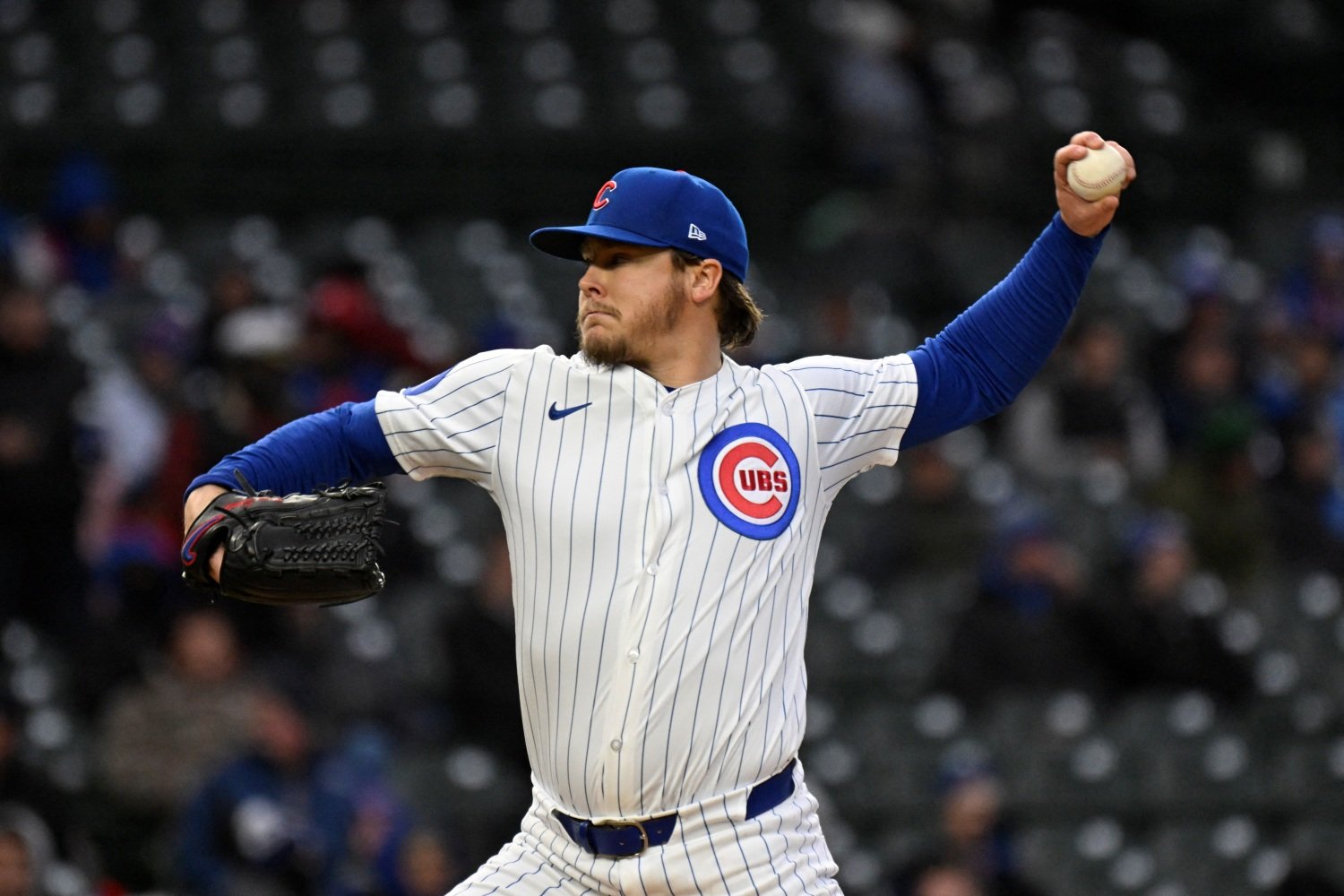 You might have seen the news, over the weekend, that veteran Cubs starter Justin Steele fired two shutout innings Friday for the Triple-A Iowa Cubs, striking out five in the process. It was the fourth official appearance of Steele's rehab assignment with Iowa, and the last one. It's time for Steele to rejoin the Cubs, if he's to continue pitching competitively this year, and the Cubs could sorely use a lively arm in the bullpen—especially one who's such a great competitor; who throws left-handed; and who has proved they can get out both lefties and righties in the majors. It's my sad duty to give you the straight dope: Steele is still very much diminished. If he's not permanently broken, he's at least out of commission, and more service will be needed to get him back online. Even in that latest outing (by far his best for Iowa), Steele was only sitting around 90 miles per hour with his fastball. At his best, from 2022-24, Steele sat 92 and touched 96; this is a tangible loss of velocity for a pitcher who didn't have it to spare. The lost velocity on Steele's slider matters, too, for its implications about his ability to miss bats against big-league hitters. The hard cutter that is his primary fastball has also picked up a troubling tendency to cut even more than it used to; that's going to make it less deceptive. Again, we all know Steele to be a great competitor and a skilled athlete. However, he's never had an especially deep arsenal, and the two pitches he's always leaned on are now markedly worse. To succeed in the majors with his present stuff, he'd have to be razor-sharp in terms of locations. Even as he sliced through a Triple-A lineup Sunday, though, Steele didn't show the ability to do that. The truth is that what little success he's had in the minors this fall needs to be chalked up to pitching in the minors; he's nowhere near a big-league-caliber pitcher right now. This is bad news on every possible level. If you were holding out hope that Steele would return to save the 2026 bullpen and become a playoff hero, you're out of luck. It gets worse still, though. He's almost 18 months removed from Tommy John surgery—his second. If this is the best he can muster even in a short stint, after that much time, it's very likely that Steele will be unable to help the 2027 Cubs. The team would have to pay him almost $7 million to keep him via arbitration this fall. They could strike a deal with him instead, bringing him back on an incentive-laden deal with a low base salary, but there's a real chance that Steele will depart the Cubs organization for good before Thanksgiving. It's just a confluence of the realities of his injury and the business of the game; he's a year from free agency and positioned to earn more money than he's likely to be worth. The team has showed their willingness to be frank and ruthless in such situations, even while being grateful for their pitchers' work. This is just a slightly higher-profile version of the sequence that saw Adbert Alzolay leave the organization two years ago. All of that sucks. It leaves only one small way for everyone involved to benefit. Steele should be called up to join the team at some point during the final home series against the Marlins. After the Cubs clinch a playoff berth (likely to happen Tuesday), Steele should get a chance to pitch once more in the majors for the team that drafted him, and to which he has belonged for 12 years. He can't give them a bullpen boost next month, and he can't be counted upon as a starter for 2027. Many fans aren't even thinking about that yet, and hopefully, Steele himself hasn't acceded to that way of thinking, either. It's all true, though. Looming on the horizon is the probable end of his tenure with the Cubs. The vibes around the Cubs are shaky right now. Alex Bregman's serious facial injury casts a pall even over the imminent clinch of a playoff spot. Barring a miraculous run from a few key guys, the pitching staff is too thin for the team to go win a World Series, and everyone knows it. And Steele, like Ben Brown and Cade Horton, has only an uncertain future in the game, not long after being an All-Star. It would do everyone some good—Steele, the fans, and the team itself—if Steele could climb the mound at Wrigley, hear the fans' raucous ovation, and check the box of making it back to the bigs after his second major elbow surgery. It sounds terribly small, and maybe it is, but it's the only way Steele will be able to help the club this fall—this and, perhaps, some roaring and cheering from the railing of the dugout next month, having at least nominally reclaimed his right to be there.
 -
 It's never going to look as good as a good day for Kevin Gausman, Clay Holmes, Matthew Boyd or Shota Imanaga. The dominance of which those guys are capable is not quite within David Peterson's reach. He misses more bats than most ground-ball guys, but in the end, he's still a ground-ball guy. If you can be a ground-ball guy who also minimizes walks, you can still be an elite starter, but that's never been Peterson. He's capable of good, but not of great. He misses too few bats for that, given that he'll still put runners on base and isn't completely immune to hard contact. The numbers don't lie, though. Over the last three starts, Peterson has been quite good. He fired six innings of one-run ball against the Reds Sunday, earning the Cubs a series win with his second straight quality start. He fanned seven and walked just one, after striking out another seven (and walking three) in six frames of equally strong work against the visitors from the Atlanta suburbs last week at Wrigley Field. Before that, he'd allowed just one run in a second straight start against the Brewers, at Uecker Field in Milwaukee. Craig Counsell was proactive with him that day, getting him out of the game after just 4 2/3 innings, but Peterson did his job: avoid damage and keep the team in the game. That will be the remit of whoever pitches Game 1 of the Wild Card Series for the Cubs next Tuesday. be it at Wrigley or in San Diego, Philadelphia or the shadows of the highway northwest of Atlanta. As surprising as this state of affairs is, Peterson is building a case to be that guy. Consider this table showing the performances of Cubs hurlers with 30 or more innings since July 4: Name K% BB% K-BB% BABIP LOB% ERA- FIP- xFIP- Aaron Civale 23.3% 8.3% 15.0% .250 83.8% 34 67 92 David Peterson 22.3% 10.6% 11.7% .282 83.3% 70 96 86 Clay Holmes 16.3% 11.4% 4.9% .240 65.6% 104 99 95 Shota Imanaga 25.1% 4.9% 20.2% .283 91.5% 75 105 88 Kevin Gausman 26.6% 5.3% 21.3% .297 70.7% 122 107 75 Matthew Boyd 16.1% 7.8% 8.3% .246 74.8% 89 111 110 Javier Assad 17.9% 8.0% 9.9% .268 91.5% 60 114 98 Colin Rea 17.5% 7.1% 10.4% .246 78.9% 93 117 107 Now, there are some lies nestled in here. Don't fall too in love with Peterson's adjusted ERA (ERA-, where 100 is average and lower is better), lest you miss the fact that he's stranded five of every six runners who reaches base over this span. As you can see, Gausman is at the opposite end of the spectrum. Gausman has been better at striking out batters and at filling up the strike zone, as has Imanaga. Because only Imanaga has had the combination of guttiness and good luck to leave most of the runners who get on against him out there, though, only Imanaga has had the superficial sheen of a frontline starter. Peterson is striking out a healthy number of hitters, which is more than Boyd or Holmes can say. However, he's also walking more batters than you'd like. The question is how willing you are to trust that Peterson can persistently outperform his FIP, by stranding runners (or eliminating them via the double play) and by keeping the ball in the park. That last bit is the key, though. What separates Peterson from everyone else on this list? He avoids giving up home runs—at least when he's going well. He's only allowed nine homers since coming to the Cubs; seven in his last 13 starts; and four in his last nine. Because he keeps the ball on the ground, he can frustrate power hitters who depend on hitting it in the air to generate value. The rest of this starting rotation candidate pool can't say that. If Gausman, Boyd and Imanaga come through their final starts looking healthy and pitching the way they each have of late, they're the most likely hurlers to be tabbed for starts in the Wild Card Series. In reality, though, Peterson might be as deserving of the chance as any of those three. That's not great news for the Cubs' starting staff. A World Series contender needs two starters who are clearly superior to Peterson, which is two more than the Cubs have. If they want to press deep into October, though, they might be well-advised to give the ball to a starter they acquired only in an emergency and have never really looked at as more than a back-end guy.
 -
Image courtesy of Katie Stratman-Imagn Images It's never going to look as good as a good day for Kevin Gausman, Clay Holmes, Matthew Boyd or Shota Imanaga. The dominance of which those guys are capable is not quite within David Peterson's reach. He misses more bats than most ground-ball guys, but in the end, he's still a ground-ball guy. If you can be a ground-ball guy who also minimizes walks, you can still be an elite starter, but that's never been Peterson. He's capable of good, but not of great. He misses too few bats for that, given that he'll still put runners on base and isn't completely immune to hard contact. The numbers don't lie, though. Over the last three starts, Peterson has been quite good. He fired six innings of one-run ball against the Reds Sunday, earning the Cubs a series win with his second straight quality start. He fanned seven and walked just one, after striking out another seven (and walking three) in six frames of equally strong work against the visitors from the Atlanta suburbs last week at Wrigley Field. Before that, he'd allowed just one run in a second straight start against the Brewers, at Uecker Field in Milwaukee. Craig Counsell was proactive with him that day, getting him out of the game after just 4 2/3 innings, but Peterson did his job: avoid damage and keep the team in the game. That will be the remit of whoever pitches Game 1 of the Wild Card Series for the Cubs next Tuesday. be it at Wrigley or in San Diego, Philadelphia or the shadows of the highway northwest of Atlanta. As surprising as this state of affairs is, Peterson is building a case to be that guy. Consider this table showing the performances of Cubs hurlers with 30 or more innings since July 4: Name K% BB% K-BB% BABIP LOB% ERA- FIP- xFIP- Aaron Civale 23.3% 8.3% 15.0% .250 83.8% 34 67 92 David Peterson 22.3% 10.6% 11.7% .282 83.3% 70 96 86 Clay Holmes 16.3% 11.4% 4.9% .240 65.6% 104 99 95 Shota Imanaga 25.1% 4.9% 20.2% .283 91.5% 75 105 88 Kevin Gausman 26.6% 5.3% 21.3% .297 70.7% 122 107 75 Matthew Boyd 16.1% 7.8% 8.3% .246 74.8% 89 111 110 Javier Assad 17.9% 8.0% 9.9% .268 91.5% 60 114 98 Colin Rea 17.5% 7.1% 10.4% .246 78.9% 93 117 107 Now, there are some lies nestled in here. Don't fall too in love with Peterson's adjusted ERA (ERA-, where 100 is average and lower is better), lest you miss the fact that he's stranded five of every six runners who reaches base over this span. As you can see, Gausman is at the opposite end of the spectrum. Gausman has been better at striking out batters and at filling up the strike zone, as has Imanaga. Because only Imanaga has had the combination of guttiness and good luck to leave most of the runners who get on against him out there, though, only Imanaga has had the superficial sheen of a frontline starter. Peterson is striking out a healthy number of hitters, which is more than Boyd or Holmes can say. However, he's also walking more batters than you'd like. The question is how willing you are to trust that Peterson can persistently outperform his FIP, by stranding runners (or eliminating them via the double play) and by keeping the ball in the park. That last bit is the key, though. What separates Peterson from everyone else on this list? He avoids giving up home runs—at least when he's going well. He's only allowed nine homers since coming to the Cubs; seven in his last 13 starts; and four in his last nine. Because he keeps the ball on the ground, he can frustrate power hitters who depend on hitting it in the air to generate value. The rest of this starting rotation candidate pool can't say that. If Gausman, Boyd and Imanaga come through their final starts looking healthy and pitching the way they each have of late, they're the most likely hurlers to be tabbed for starts in the Wild Card Series. In reality, though, Peterson might be as deserving of the chance as any of those three. That's not great news for the Cubs' starting staff. A World Series contender needs two starters who are clearly superior to Peterson, which is two more than the Cubs have. If they want to press deep into October, though, they might be well-advised to give the ball to a starter they acquired only in an emergency and have never really looked at as more than a back-end guy. View full article
