


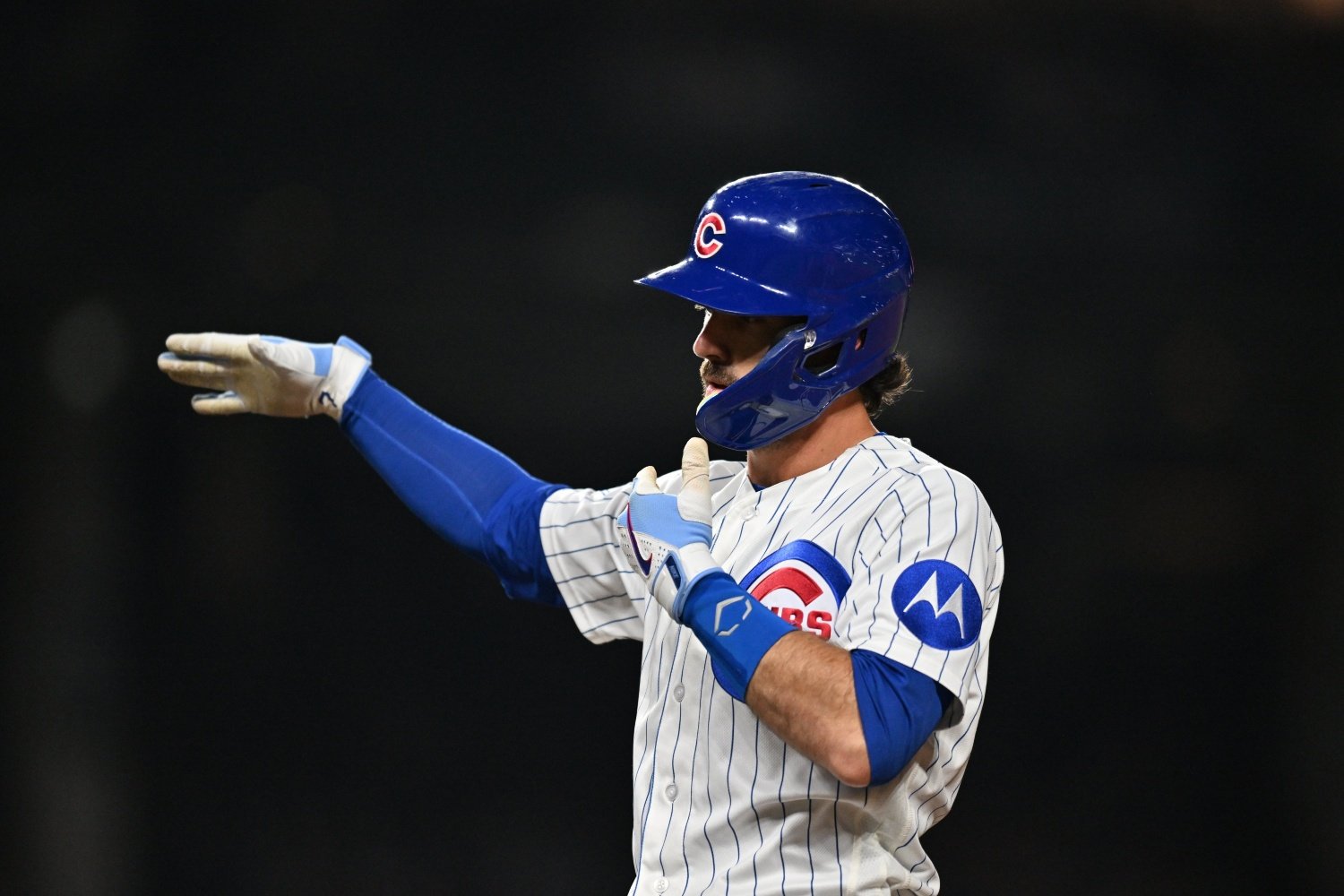
Cubs Video
Dansby Swanson went 0-for-4 Tuesday night. The box score says he was 0-for-3 with a walk, but we're not counting at-bats here. Four times, Swanson unequivocally should have challenged called strikes against him. Four times, he accepted the call, instead, hurting his team in the name of either avoiding the risk of losing a challenge or demonstrating a resiliency that proved less valuable than flipping a strike to a ball.
Swanson did reach on an error in the bottom of the second inning, the only time he came up in a relatively unimportant situation all night. Obviously, he got pretty lucky to reach base that time, when Jeimer Candelario made a bad throw on a routine ground ball to third base. He'd already made his set of possible outcomes worse, though, by not challenging a pitch that was clearly off the outside corner in a 2-0 count.
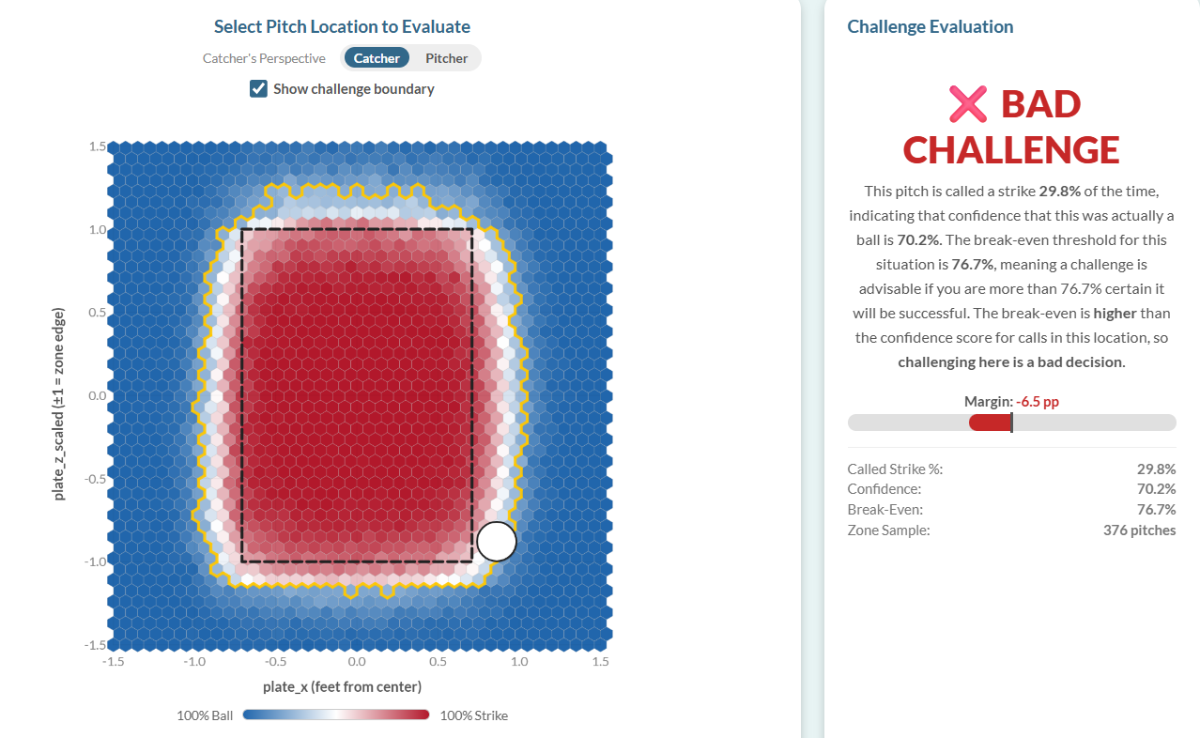
To be fair, that was a spot where you'd need to be quite sure in order to lodge a well-founded challenge. According to Oyster Analytics's Challenge Dashboard, the break-even confidence rate in issuing a challenge so early in the game with some cushion in the count and no one on base is over 75%. Swanson should have been roughly that sure, but technically speaking, the location of the pitch called a strike against him didn't give him a great chance to be, and José Soriano was pretty nasty in the early going. Let's forgive him this one.
In the bottom of the fourth, Swanson came to bat in a much more pivotal spot. The game remained scoreless, thanks to cold air, a stiff in-blowing wind, and Soriano's electric stuff. Ian Happ was on second base, though, so although there were two outs, Swanson had a chance to break the tie with a single. In a 2-2 count, he took a pitch right on the lower outside edge, which was called a strike to end the inning. In fairness to Soriano, it was stellar execution.
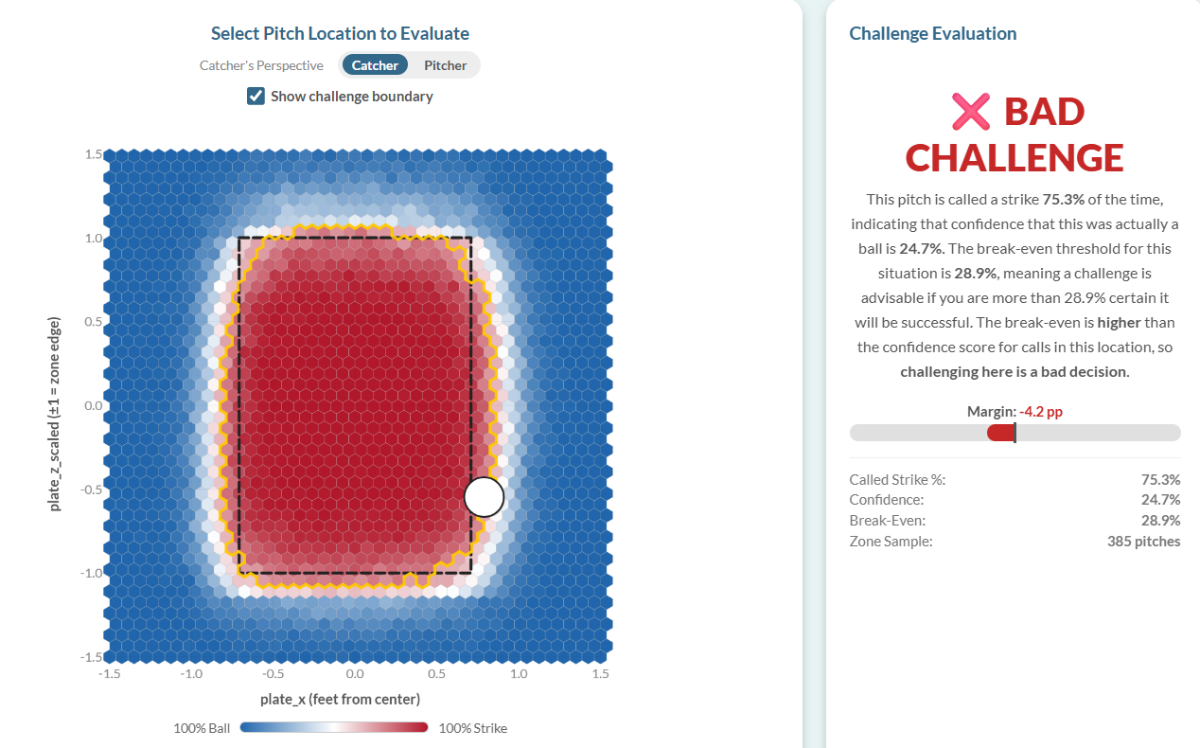
As you can see, Oyster Analytics rates this as another near-coin flip for Swanson, but in a very different way. Whereas he would have needed to be 75% confident to be justified in challenging in the second inning, this time, the break-even line was south of 30%. Based on the location, Swanson could hardly have been more sure than that, but in this case, he should have issued the challenge, anyway. (In reading the evaluation panel at the right in these images from Oyster, you have to remember that the would-be challenger's confidence will vary somewhat from what they can estimate.) Given the margin of error in confidence for Swanson and the tenor of the game to that point—the latter of which the model doesn't address, so we're not adjusting for Soriano being on his game or runs being at a premium—it was a good challenge opportunity.
Swanson was up again in the seventh inning with a runner on, though it was Hoerner at first base and there was only one out. Much had changed, by then. The Cubs had fallen behind 2-0, and they'd lost one of their two challenges, so the break-even rates were much affected. On 1-1, though, he took a pitch well above the zone, which was called a strike.
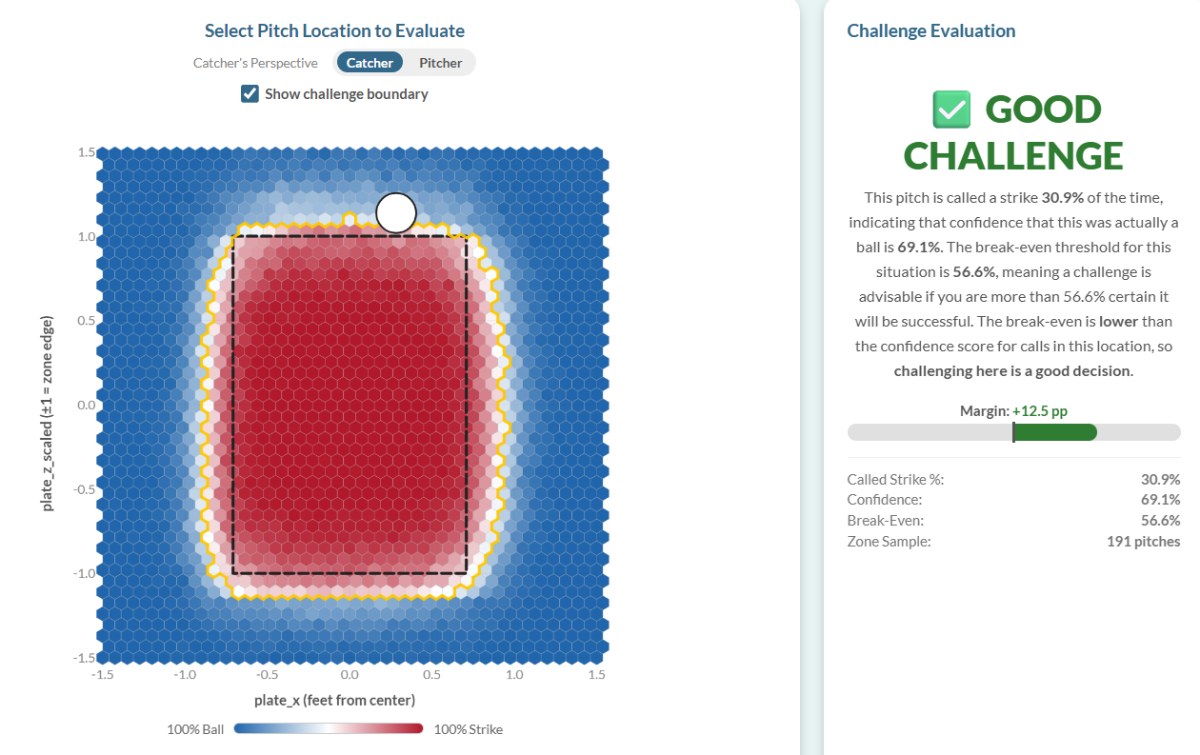
As any Cubs fan old enough to remember the nuggets of wisdom supplied by Steve Stone knows, 1-1 is a pivotal count. Swanson fell behind 1-2, when he should have been ahead 2-1. He had to be a bit better than a coin flip to challenge, but he should have been quite sure of this one. The top and bottom of the zone probably still feel a bit less certain than the lateral edges, even for batters themselves, but Swanson had a chance to gain count leverage at a moment when he represented the tying run. He let that chance go by, and ultimately struck out.
In the bottom of the ninth, Swanson came up once more, as the Cubs' last chance. They had only three strikes left to their name, so although Swanson batted with the bases empty and the team needed a baserunner to get any semblance of a rally started, he should have had a hair trigger on called strikes around the edges. Instead, on 1-0, he let one of his team's three remaining strikes be stolen from him. This time, the Oyster model gives him no quarter whatsoever. This was the most glaring of a series of examples of his passivity Tuesday night. He was lucky that a wild Jordan Romano walked him, anyway, giving the team at least an extra breath of a chance.
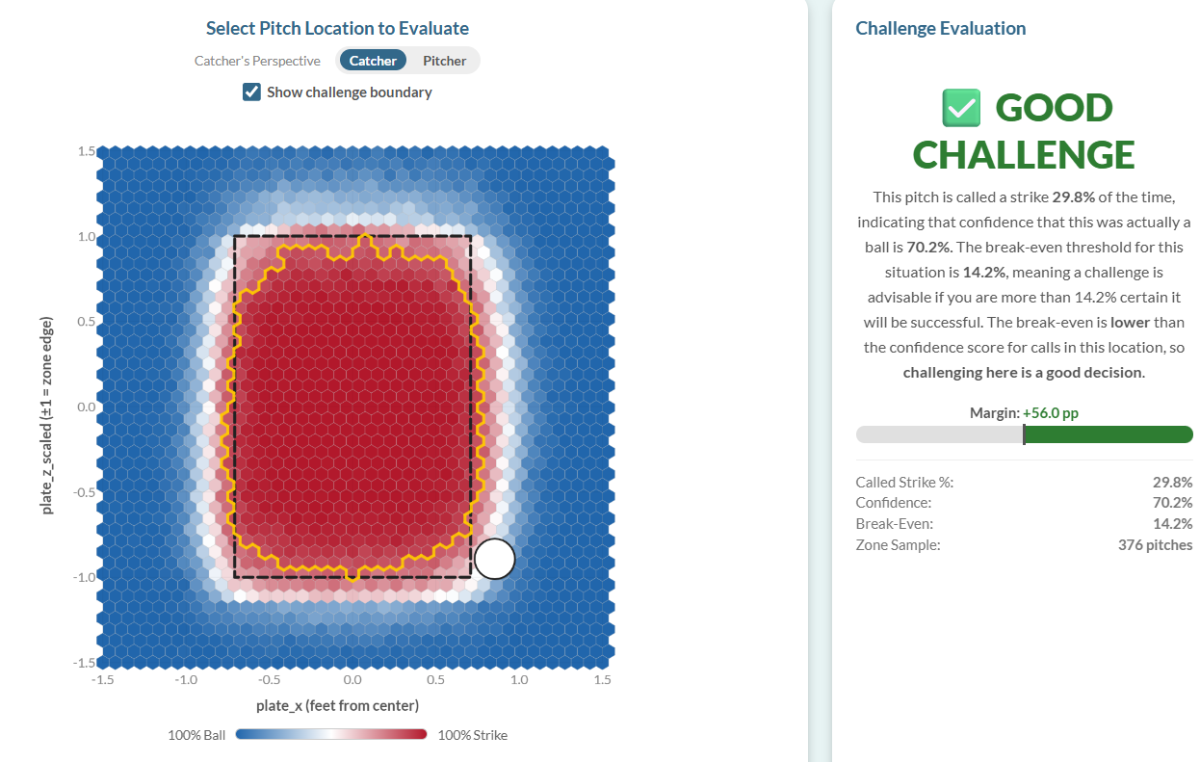
Even if a couple of these were borderline calls, according to the math, the broader narrative matters. Swanson needs to be more proactive about ABS challenges. He had chances to give his team better scoring opportunities Tuesday night, and he missed them. It wasn't the difference between winning and losing; it's no more of a problem than some of his teammates' poor swings. The biggest individual mistake in losing them the game was Pete Crow-Armstrong failing to catch or corral Candelario's double in the top of the sixth; that's a bigger-magnitude play than almost any ABS challenge will be. These cases are more along the lines of a poor swing decision or bad location on a key pitch. Still, they can be decisive, and it's hard to refute the fact that Swanson cost his team expected offensive value in Tuesday's loss.
Swanso didn't help himself all night. He didn't force Angels pitchers into the zone against him; he chased several pitches below the zone. He could have done a bit more to force their hand when he did lay off pitches at the edges, though.

Though its novelty exceeds its sheer impact, ABS is a new place where teams can either accrue value or leak it. So far, the Cubs aren't using the system well. Only the Royals have challenged a lower percentage of called strikes against them than have Cubs batters. That needs to change, as Swanson's experience Tuesday illustrated.
Do you approve of the job Craig Counsell is doing as Cubs manager?

Follow North Side Baseball For Chicago Cubs News & Analysis



-
 1
1


Recommended Comments
Create an account or sign in to comment
You need to be a member in order to leave a comment
Create an account
Sign up for a new account in our community. It's easy!
Register a new accountSign in
Already have an account? Sign in here.
Sign In Now