


Cubs Video
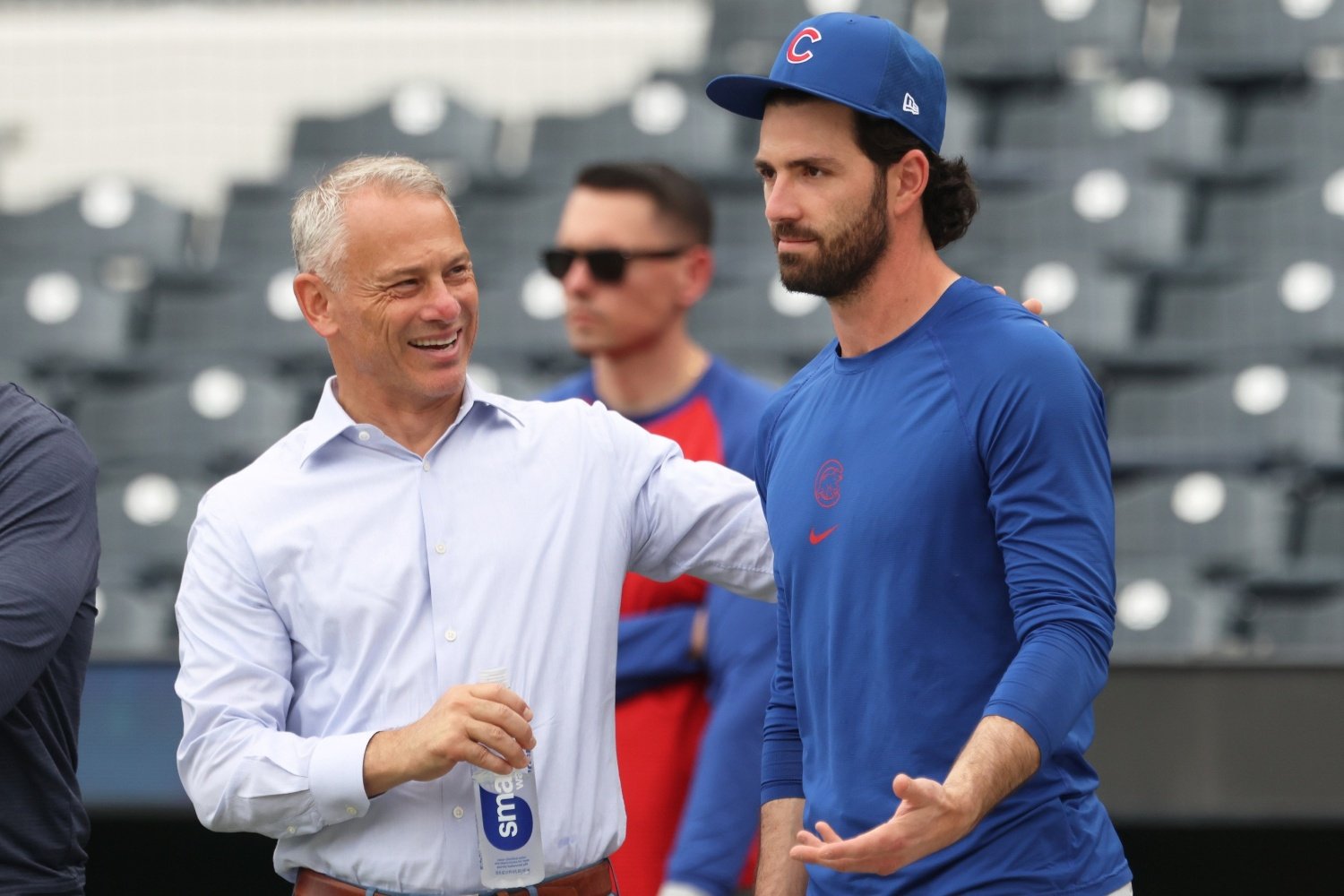
The Cubs are broken, and the system that they have relied on is the cause. For years, the team has sought to contend by eliminating risk. This year, the pendulum has swung to safety too much, and the IVY model cannot save it.
Since the glory days of 10 years ago (or, rather, since five years before that; the transformation was well underway by the year they finally won the World Series), the Cubs have gradually drifted toward a modeling scouting system rather than old-school, boots-on-the-ground scouting. Sadahev Sharma and Patrick Mooney's article from the Athletic in 2024 will get you up to speed on this if you haven't been already. It's time for the Cubs to update their process by going in a more traditional direction—not as a way to turn back, but as a means of moving forward.
Jed Hoyer has built a roster with a high floor. By design, the team has eschewed high-dollar contracts to the top talents in the game, seeking to raise the ceiling by first raising the floor. The issue comes when players age: much like the belly of an aging man, the floor drops with age. Skilled scouting in person would identify certain things that the models wouldn't be able to identify. All contracts are placed through a risk filter; any valuation deemed too risky by the computers leads the team to walk away from a could-be deal.
Models are, of course, important. Every organization uses them for aging curves, swing path, contact profiles, and spin rate. But the Cubs increasingly look like a team wedded to their process, to the exclusion of the human elements of roster construction, development and communication. The roster was designed to not collapse. It is, ironically, doing so because of the roster design.
The Cubs are filled with reliable veterans with a solid track record. But there is a hidden regression in older players that models can't always predict. As players age, they can go from "good" to "declining" quickly, and from there, it's not far to see "Ryan Pressly" in their player comparison. Nobody can project what a player will look like when their skills begin to decline perfectly.
In-person scouts can see things that models miss: guessing on pitches, confidence in abilities, recovery from injury, adaptability to environments, and dealing with failure over a long season. It's hard to measure until they happen, and, as we saw last year with Pressly, once it happens it's sometimes too late. Pressly was brought in to be the steady closer. Scouting could have seen some of his decline coming ahead of time. Really, the Cubs did see it, but they let their evaluation systems sell them on trading for him, anyway.
Intangibles cannot be measured by analytical models, either. Star players, regardless of their personality type, help a clubhouse. Pressure on lesser players is alleviated when players like Aaron Judge, Kyle Schwarber, and Bobby Witt, Jr. shoulder the lion's share of it. This team, though, the pressure seems to be felt by every player equally.
When the offense is purring, great things (like 10-game winning streaks) can happen. But year after year, Jed Hoyer's approach leads to steep cliffs of run production—ones that spiral into a vortex of futility for weeks. Players all feel the pressure on themselves to break the team out of its funk, which makes sense because one weak link can destroy the chain. These are the human moments that in-person scouting can help figure out.
This team, built largely to raise their floor, was not built to sustain any regression further than what could be projected. When Cade Horton was injured, there was no way to replace what he would have provided. Dansby Swanson and Alex Bregman are locked in for years. If their decline this year is real, this will age quite poorly. No model engine will churn out a prediction that Ian Happ and Seiya Suzuki go a fortnight without coming up with a big hit, but we just saw that happen.
The Cubs invested heavily in their process, and they believe it's the best approach. Unfortunately, they have been overconfident in the models and underestimated the human side of baseball. The Brewers, for example, have a robust scouting system to validate their models. The Rays and Dodgers, noted for their intelligence, function similarly. Models are great for spitting out data and recommendations; how a player fits in the clubhouse and roster is where scouts are needed.
The Cubs are a team built to accumulate WAR, not wins. They need to strike a better balance in their team-building approach going forward. Winning the division in PECOTA doesn't mean anything when the Brewers continually outclass the Cubs. In this season, one where the team was expected to contend for a World Series, the team has no model-based answer for what they need to do. As humans, they have to show it on the field.





Recommended Comments
There are no comments to display.
Create an account or sign in to comment
You need to be a member in order to leave a comment
Create an account
Sign up for a new account in our community. It's easy!
Register a new accountSign in
Already have an account? Sign in here.
Sign In Now