Matthew Trueblood
-
Posts
2,481 -
Joined
-
Last visited
-
Days Won
2
Content Type
Profiles
Joomla Posts 1
Chicago Cubs Videos
Chicago Cubs Free Agent & Trade Rumors, Notes, & Tidbits
2026 Chicago Cubs Top Prospects Ranking
News
2023 Chicago Cubs Draft Picks
Guides & Resources
2024 Chicago Cubs Draft Picks
The Chicago Cubs Players Project
2025 Chicago Cubs Draft Pick Tracker
2026 Chicago Cubs Draft Tracker: Picks & Bonuses
Blogs
Events
Forums
Store
Gallery
Everything posted by Matthew Trueblood
-
With spring training on the horizon, many Cubs pitchers and catchers are already congregating in Arizona. One hurler, in particular, should be hard at work already, because he needs to make a few changes in order to have a successful 2024. Image courtesy of © Allan Henry-USA TODAY Sports We'll have a full preview of the battle for the fifth spot in the Cubs' starting rotation later this week, but for today, let's talk about Jordan Wicks, and only Jordan Wicks. Almost a month ago, our Jason Ross broke down the shift in the way Wicks attacked hitters that took place when he matriculated to the majors last September. It was a good look, focused especially on the location of the young southpaw's fastballs, and it's worth a revisit. Let's turn our attention in another direction, though. Is Wicks throwing too many fastballs altogether? And more broadly, does he need to streamline his arsenal to tap into his potential as a mid-rotation starter? Last year, Wicks made 14 starts after his promotion to Triple-A Iowa, evenly dividing them between that level and MLB. In those outings, he threw a total of 1,117 pitches. Of those, 583 (52.2%) were either four-seamers or sinkers, with roughly a 60/40 split in favor of the four-seamer. His four-seamer sat at 92 miles per hour on average (with a 93.4-MPH 90th-percentile reading), and his sinker was a tick lower (91, and 92.4 for the 90th percentile). By Stuff+, both Wicks's fastballs graded out south of 80 (where 100 is average and higher is better). Based on the pitches' movement, velocity, and release points, they're considerably worse than the league average. That's probably a bit too unkind an assessment. Factor in location, and his four-seamer is nearly average. The sinker still lags, at a 90 Pitching+ mark, though. For years, the league trended away from sinkers. It was a phenomenon I covered closely at Baseball Prospectus. At the heart of the issue was the fact that the pitch doesn't set up any other offering very well, save perhaps a cutter (if a pitcher has exceptional command of both pitches, and is thus able to locate each on either side of home plate) or a slider (against same-handed batters). The pitch is making a comeback in MLB very recently, but in a limited and focused role. Increasingly, hurlers only throw sinkers when they have the platoon advantage, because that's when the pitch is truly helpful. Wicks, however, is a left-handed starting pitcher. Seventy-three lefties made at least five starts last year, and they faced a total of 27,875 batters. Of those, just 5,413 (19.4%, for those not gifted at quick mental long division) batted left-handed. For a lefty starter, roughly four of every five pitches thrown will be to a righty hitter. Given that information, it doesn't make much sense for Wicks to hold onto his sinker, except to the extent that he needs it to set up his other offerings. Here's his movement chart, by pitch type, from the pitcher's perspective. That chart is a bit of a mess. Wicks threw six different pitches in 2023, but some of them overlapped pretty significantly in terms of movement (and often, thus, of location). Of course, no pitcher uses their arsenal the same way regardless of handedness. Wicks threw his four-seamer or change roughly two-thirds of the time against righties, and divvied up the rest between the sinker (about 16 percent of the time), the cutter, and the curveball (roughly 9 percent each). Against lefties, though, his sinker led the way, and he was pretty much just sinker-fastball-slider; his usage of each of the other three pitches was minimal. The sinker is around, then, because it drives Wicks's approach against lefties. Is it genuinely necessary, though? If only a fifth of opposing batters will be lefties, is the sinker valuable enough to keep around, given the fact that its value against righties is minimal and that it might compromise the command and execution of his other weapons? Based on what Wicks did in 2023, yes, it was probably necessary to have the sinker sinkin'. As the scatter pattern of those green dots above shows, Wicks's command of the slider is a bit shaky, so far. Long-term, though, that pitch has potential. It had a 105 Stuff+ last year, so if he could start spotting it better, it would take off. What's the key to controlling the slider better? It's getting rid of the curveball. Consider the spin rate and tilt of his pitches last season. He's not throwing a slider that's materially different from the curve. It's more like they're two variants on the same breaking ball. We can see this even better by examining the difference between the direction of the spin he imparts on release and the tilt of the actual break on the ball as it flies toward the plate. We can not only see, here, that the curve and slider move differently based mostly on the orientation of the seams, but that the sinker and changeup are really just different-speed versions of the same pitch. They come out of the hand with very similar spin; they actually run more to the arm side and have heavier action than that spin tells the hitter. These are two sets of pitches that, while engineered for opposite sets of opponents (the sinker and the slider for lefties, the change and the curve for righties) do pretty much the same things. We can see, too, that the cutter is not one of those especially slider-like ones; it's mostly a pitch that plays off the sinker. If Wicks isn't going to see many left-handed batters anyway, the sinker just interferes with things. His fastball already has some cut-ride action, so he really doesn't need the cutter for righties. Therefore, he doesn't need the sinker to set it up. He should scrap that pitch, and get used to commanding the four-seamer all over the zone. If he can't do that, nothing else is going to matter. Last year, he showed plenty of ability to work toward the glove side with that four-seamer, anyway. On the other hand, keeping the slider makes sense. If he's going to scrap the sinker, he needs a pitch that works off the fastball to attack the few lefties he will see. Just as importantly, though, the slider can work fine against righties. He just needs to become adept at backfooting it. That battle is more mental than physical, since that's where a lefty wants to throw their slider most naturally. There's merely a hurdle to clear when you're throwing it close to an opposing hitter, and risking a free base. Wicks is famously mentally tough, and he has Justin Steele on whom to rely for advice in this very specific, very familiar regard. He should be fine. Here, with the pitches colored by velocity instead of type (because velocity differential matters a lot when you're trying to fool batters and get whiffs), is Wicks's muddled 2023 arsenal. Now, here's the same chart, with the pitches tagged as sinkers, cutters, and curves taken out, leaving only the four-seamer, changeup, and slider. To really bring the 2024 approach I'm recommending into focus, you need to tighten and enlarge that righthand cluster, where the sliders are. He'll be able to manipulate and modulate that pitch, as this spray pattern shows, but he'll eventually command it much more neatly. There are fewer fastballs in this mix, by a wide margin. There are more changeups to righties, and a few more sliders. There are a lot more sliders to lefties, and probably a few more changeups: get them looking away, let that pitch sink under their hands. This isn't the set of changes someone would advocate in the pursuit of turning Wicks into an ace. He would need four pitches for that, and it's probably plausible for him to hold onto either the cutter or the curveball, albeit with a few tweaks. Realistically, though, Wicks probably isn't ace-caliber, and that's ok. With many savvy teammates, good coaches, his own superb athleticism and a poise that shined through in his brief stint with the team last fall, Wicks should be able to contribute as an average or better starter for the team for much of 2024. He just needs to get some of the stuff that doesn't match his role, his velocity band, or his motor preferences out of the way, so he can do more with the things that make him a top prospect within the organization. What are your hopes for Wicks in 2024? How would you tweak his game in order to ensure he can stick as a valuable starting pitcher? Let's discuss his rookie season more in the comments. View full article
-
The Two Places Where Cubs Have Greatest Need, According to FanGraphs
Matthew Trueblood posted an article in Cubs
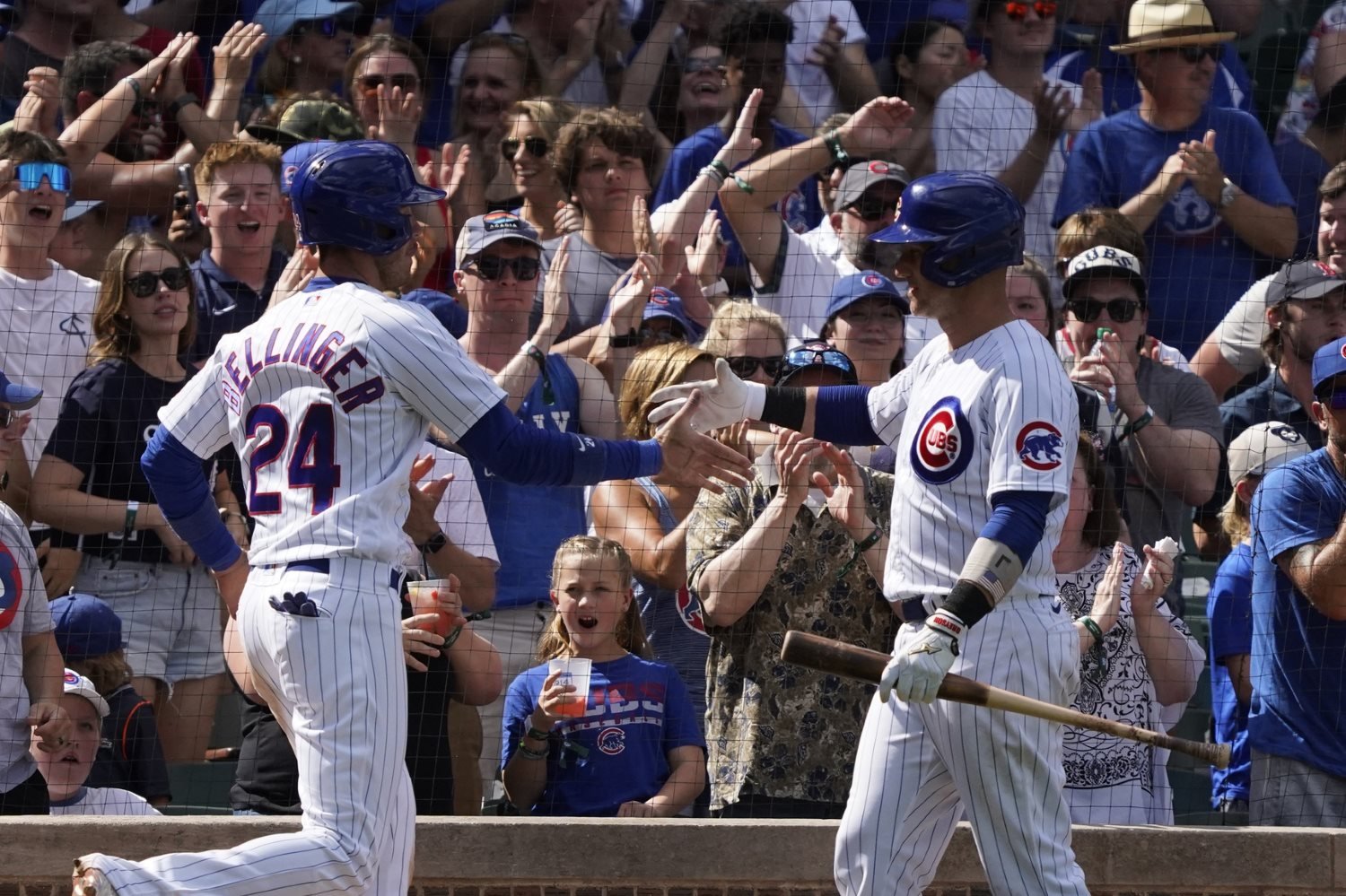 As you would probably guess, the Cubs rank very well at second base, shortstop, and left field, according to FanGraphs's Depth Charts projections. They're fifth at second and in left, powered by Nico Hoerner and Ian Happ, respecitvely, and they're seventh at shortstop, thanks to Dansby Swanson. Given that the overall projections have them mired around .500, though, you can probably also guess that there are a couple of major weaknesses pulling against the value of that trio of positions. Though it's a source of constant stress for many fans, third base isn't among those problems, per se. The Cubs rank in the middle of the pack at the hot corner, in the starting rotation and the bullpen, and in right field, where Seiya Suzuki keeps them just north of the median. The only two positions where the team is firmly in the bottom quartile of the league are catcher and first base. The latter is no surprise, and it merely reinforces the widely-held desire to see Cody Bellinger come back to the Cubs as a free agent. While the Cubs seem to have acquired Michael Busch with the idea of playing him at the position, and while they clearly believe in him as a long-term answer, these projections are lukewarm on him. The site forecasts a .244/.327/.431 line for Busch, which is a respectable line, but the Cubs would not have paid the price they did for him in trade if they didn't feel confident that he'll run an OBP north of .340. Busch also only projects for 308 plate appearances. Another 245 PAs at the spot go to Patrick Wisdom, in this projection, and Wisdom is forecasted for .207/.293/.433, a much less appealing return on the investment of playing time. Last month, I wrote about reasons to believe Busch can play every day, but it's clear that FanGraphs is not yet expecting that. This same projection system pegs Bellinger for a .259/.322/.438 line, so he would be some measure of an upgrade. Obviously, fans who want Bellinger back expect a much better line than that, and so must the Cubs, if they're to give him the kind of deal he's sought all winter. Even taking the projection at face value, though, and baking in Bellinger's superior defense at first, he'd solidify the position and bring them up from 25th to about 15th in projected value. The question is whether the team wants to disenfranchise Busch that way, or whether their new acquisition can find sufficient playing time at first when Bellinger goes back to center field; at third base, where he's a rough but theoretically viable fit; and at designated hitter, without eating too much into Christopher Morel's playing time there. Less expected, for some, is the fact that the Cubs rank 24th in projected WAR at catcher. Yan Gomes is the primary starter there, with 378 plate appearances at a .248/.294/.385 clip projected. The big problem the Cubs face (be it real or imagined by these projections) is that Gomes is projected for the majority of the playing time despite being projected to be worse than Miguel Amaya. The younger Cubs catcher carries a .226/.324/.382 line, which might still be underwhelming, but those 30 points of OBP matter quite a bit. So, too, does defense, and while Gomes's handling of pitchers has garnered enthusiastic and unanimous acclaim throughout his career, he's no longer good at either pitch framing or controlling the running game. Amaya projects to play better on both sides of the ledger, but also less. Neither signing Bellinger nor playing Amaya more at Gomes's expense would turn the Cubs into NL Central favorites, let alone threats to the Dodgers (at least in these projections). However, the team already has a few very strong strengths, so if they can shore up their relatively few weaknesses, they would figure to at least match the 83 wins they managed last season. That's a reasonable goal, but it hinges on further action by the front office. Would you play Busch or Amaya more than these projections assume, or trust veterans like Bellinger and Gomes to deliver more value than the numbers can capture? Let's weigh the options anew with these new data in mind.
 -
The FanGraphs Depth Charts pages can provide a handy snapshot of a team's position-by-position makeup. For the Cubs, right now, it indicates two dire areas of weakness. Image courtesy of © David Banks-USA TODAY Sports As you would probably guess, the Cubs rank very well at second base, shortstop, and left field, according to FanGraphs's Depth Charts projections. They're fifth at second and in left, powered by Nico Hoerner and Ian Happ, respecitvely, and they're seventh at shortstop, thanks to Dansby Swanson. Given that the overall projections have them mired around .500, though, you can probably also guess that there are a couple of major weaknesses pulling against the value of that trio of positions. Though it's a source of constant stress for many fans, third base isn't among those problems, per se. The Cubs rank in the middle of the pack at the hot corner, in the starting rotation and the bullpen, and in right field, where Seiya Suzuki keeps them just north of the median. The only two positions where the team is firmly in the bottom quartile of the league are catcher and first base. The latter is no surprise, and it merely reinforces the widely-held desire to see Cody Bellinger come back to the Cubs as a free agent. While the Cubs seem to have acquired Michael Busch with the idea of playing him at the position, and while they clearly believe in him as a long-term answer, these projections are lukewarm on him. The site forecasts a .244/.327/.431 line for Busch, which is a respectable line, but the Cubs would not have paid the price they did for him in trade if they didn't feel confident that he'll run an OBP north of .340. Busch also only projects for 308 plate appearances. Another 245 PAs at the spot go to Patrick Wisdom, in this projection, and Wisdom is forecasted for .207/.293/.433, a much less appealing return on the investment of playing time. Last month, I wrote about reasons to believe Busch can play every day, but it's clear that FanGraphs is not yet expecting that. This same projection system pegs Bellinger for a .259/.322/.438 line, so he would be some measure of an upgrade. Obviously, fans who want Bellinger back expect a much better line than that, and so must the Cubs, if they're to give him the kind of deal he's sought all winter. Even taking the projection at face value, though, and baking in Bellinger's superior defense at first, he'd solidify the position and bring them up from 25th to about 15th in projected value. The question is whether the team wants to disenfranchise Busch that way, or whether their new acquisition can find sufficient playing time at first when Bellinger goes back to center field; at third base, where he's a rough but theoretically viable fit; and at designated hitter, without eating too much into Christopher Morel's playing time there. Less expected, for some, is the fact that the Cubs rank 24th in projected WAR at catcher. Yan Gomes is the primary starter there, with 378 plate appearances at a .248/.294/.385 clip projected. The big problem the Cubs face (be it real or imagined by these projections) is that Gomes is projected for the majority of the playing time despite being projected to be worse than Miguel Amaya. The younger Cubs catcher carries a .226/.324/.382 line, which might still be underwhelming, but those 30 points of OBP matter quite a bit. So, too, does defense, and while Gomes's handling of pitchers has garnered enthusiastic and unanimous acclaim throughout his career, he's no longer good at either pitch framing or controlling the running game. Amaya projects to play better on both sides of the ledger, but also less. Neither signing Bellinger nor playing Amaya more at Gomes's expense would turn the Cubs into NL Central favorites, let alone threats to the Dodgers (at least in these projections). However, the team already has a few very strong strengths, so if they can shore up their relatively few weaknesses, they would figure to at least match the 83 wins they managed last season. That's a reasonable goal, but it hinges on further action by the front office. Would you play Busch or Amaya more than these projections assume, or trust veterans like Bellinger and Gomes to deliver more value than the numbers can capture? Let's weigh the options anew with these new data in mind. View full article
-
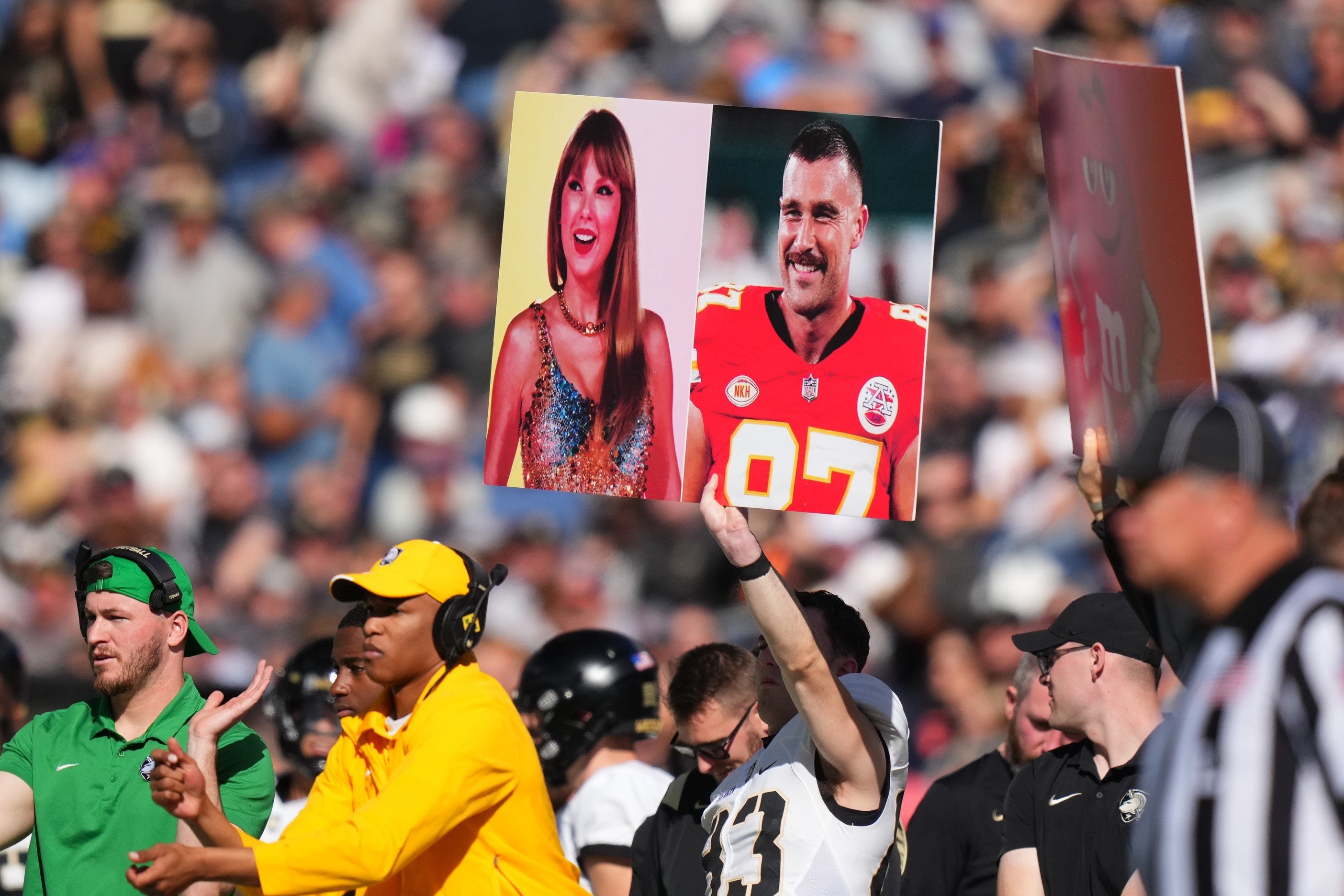 For weeks, now, the world has been fascinated by Taylor Swift and Travis Kelce. It has become one of the most potent cultural phenomena of the 21st century, equal parts joyous crossover craze and utterly insane political firestorm. It's captured attention in a way baseball hasn't done in at least 20 years, and many people who care deeply about baseball have paused to reflect on why our better, more beautiful game can't emulate this alchemy. I know why, and I promise to tell you the reason a paragraph or two from now. First, though, it's vital that I tell you what it isn't. Many theories have been advanced, and we need to swat them all away. So: No, the reason why baseball can't have a Moment like this is not that it lacks a showcase event as popular as the Super Bowl, and no, it's not because the league is just plain less popular than the NFL. No, it's not because Rob Manfred and the league's central office do an insufficient job of marketing the game's stars, or because individuals can have a bigger impact on team success in the NFL (and therefore become bigger stars on sheer merit) than in MLB. No, it's not because the baseball season is long, which makes it an unpleasant grind for wives and girlfriends of players to show up to every game, and no, it's not because football games are all televised almost nationally, on free, over-the-air TV, whereas baseball is sparingly broadcast on such a wide platform. It's not because it's incrementally harder for fans to find the game or because Swifties would be less willing to sit through something like six times as many contests to catch glimpses of their idol and share vicariously in her beau's victories and defeats. No, finally, it is not because Kelce moonlights as a podcaster on YouTube, or because of the charisma he and his brother Jason bring to the equation. In fact, that's the perfect place to pivot to what really explains baseball's inability to capture lightning in a bottle this way, because it's important to note that the Kelce brothers seem like genuinely good, reasonably compelling people, so I don't want this to sound rude. I want to make clear that they both seem to be as worthy of praise and fandom as your average star in either the NFL or MLB, and probably even a bit more so. Here's the thing: that doesn't matter. Nothing about either Kelce, or about the NFL, or about Patrick Mahomes or about Manfred or about ESPN or NBC or FOX News, matters in this equation at all. In the kindest possible way, let me say this plainly: Travis Kelce brings nothing to the table here. Taylor Swift is as famous, right now, as any human being has been since the year 2000. The only people in human history who have rivaled her level of global fame at this very moment are Elvis Presley, the Beatles, Michael Jackson, and Michael Jordan, and all of those entities existed in the sweet spot for this particular thing: the period after the invention of TV and the proliferation of air travel, in the middle of the 20th century, but before the internet permanently sent our interests and loyalties splintering into increasingly disparate channels at the turn of the 21st. What Swift is achieving right now is a miracle, in defiance of the turning gears of the world. She's turned back time. If this doesn't seem self-evident, now that I've laid it out this way, consider the widely noted ratings spike for the Grammys in Kansas City earlier this month. Kelce was not at the Grammys. Everyone knew he wasn't going to be there. It was announced in advance. He was not important to that night at all; Chiefs fans still tuned in at a hugely increased rate. Taylor Swift is making new football fans by showing up to football games. She's also drawing in new gawkers for her own pursuits, but whereas lots of the new people tuning in to watch football are doing so to see Swift, the new people listening to Swift's music and attuning to her solo public appearances aren't doing so to see Kelce, at all. Their relationship might be extremely healthy, or not. We have no way of knowing that. What I do know is that, when it comes to the flow of cultural influence and power, the NFL is irrelevant here. So is Kelce. Why can't MLB have a Taylor Swift-type phenomenon? Because Taylor Swift is the only important variable in the equation, and she's taken, for the moment. I'm not taking a position on that, by the way. I'm always a bit skeptical of massive fame and a bit disinterested in feeding it, but Swift is a brilliant artist, and much of her success is well-earned. There are layers of privilege involved here, and they ought to be explored and thought through carefully, but they don't bear upon the question of why baseball hasn't caught lightning in a bottle this way. It absolutely could have. In an alternate universe, noted Swiftie Anthony Rizzo could have ended up traveling this same path, and if he had, Yankees games would have become worldwide foci of attention this past season. This cultural crossover is really just a cultural takeover. For many, it's impossible to conceive of an interaction in which the NFL and one of its brightest stars is unimportant, so I've heard almost no one put it this way, but it's the truth. Neither baseball nor anyone within it could do anything for the cultural impact of Taylor Swift, but neither did Travis Kelce. The secret to achieving this kind of surge in popularity is to latch onto the most famous person alive right when they reach that apotheosis and hold on tightly.
 -
It's Super Bowl Sunday, and the eyes of the world will be on the game played in Las Vegas this evening. Somehow, that's even more true than ever before, because of the romance between Taylor Swift and Travis Kelce. Baseball has never seen something like this. Here's why. Image courtesy of © Ron Chenoy-USA TODAY Sports For weeks, now, the world has been fascinated by Taylor Swift and Travis Kelce. It has become one of the most potent cultural phenomena of the 21st century, equal parts joyous crossover craze and utterly insane political firestorm. It's captured attention in a way baseball hasn't done in at least 20 years, and many people who care deeply about baseball have paused to reflect on why our better, more beautiful game can't emulate this alchemy. I know why, and I promise to tell you the reason a paragraph or two from now. First, though, it's vital that I tell you what it isn't. Many theories have been advanced, and we need to swat them all away. So: No, the reason why baseball can't have a Moment like this is not that it lacks a showcase event as popular as the Super Bowl, and no, it's not because the league is just plain less popular than the NFL. No, it's not because Rob Manfred and the league's central office do an insufficient job of marketing the game's stars, or because individuals can have a bigger impact on team success in the NFL (and therefore become bigger stars on sheer merit) than in MLB. No, it's not because the baseball season is long, which makes it an unpleasant grind for wives and girlfriends of players to show up to every game, and no, it's not because football games are all televised almost nationally, on free, over-the-air TV, whereas baseball is sparingly broadcast on such a wide platform. It's not because it's incrementally harder for fans to find the game or because Swifties would be less willing to sit through something like six times as many contests to catch glimpses of their idol and share vicariously in her beau's victories and defeats. No, finally, it is not because Kelce moonlights as a podcaster on YouTube, or because of the charisma he and his brother Jason bring to the equation. In fact, that's the perfect place to pivot to what really explains baseball's inability to capture lightning in a bottle this way, because it's important to note that the Kelce brothers seem like genuinely good, reasonably compelling people, so I don't want this to sound rude. I want to make clear that they both seem to be as worthy of praise and fandom as your average star in either the NFL or MLB, and probably even a bit more so. Here's the thing: that doesn't matter. Nothing about either Kelce, or about the NFL, or about Patrick Mahomes or about Manfred or about ESPN or NBC or FOX News, matters in this equation at all. In the kindest possible way, let me say this plainly: Travis Kelce brings nothing to the table here. Taylor Swift is as famous, right now, as any human being has been since the year 2000. The only people in human history who have rivaled her level of global fame at this very moment are Elvis Presley, the Beatles, Michael Jackson, and Michael Jordan, and all of those entities existed in the sweet spot for this particular thing: the period after the invention of TV and the proliferation of air travel, in the middle of the 20th century, but before the internet permanently sent our interests and loyalties splintering into increasingly disparate channels at the turn of the 21st. What Swift is achieving right now is a miracle, in defiance of the turning gears of the world. She's turned back time. If this doesn't seem self-evident, now that I've laid it out this way, consider the widely noted ratings spike for the Grammys in Kansas City earlier this month. Kelce was not at the Grammys. Everyone knew he wasn't going to be there. It was announced in advance. He was not important to that night at all; Chiefs fans still tuned in at a hugely increased rate. Taylor Swift is making new football fans by showing up to football games. She's also drawing in new gawkers for her own pursuits, but whereas lots of the new people tuning in to watch football are doing so to see Swift, the new people listening to Swift's music and attuning to her solo public appearances aren't doing so to see Kelce, at all. Their relationship might be extremely healthy, or not. We have no way of knowing that. What I do know is that, when it comes to the flow of cultural influence and power, the NFL is irrelevant here. So is Kelce. Why can't MLB have a Taylor Swift-type phenomenon? Because Taylor Swift is the only important variable in the equation, and she's taken, for the moment. I'm not taking a position on that, by the way. I'm always a bit skeptical of massive fame and a bit disinterested in feeding it, but Swift is a brilliant artist, and much of her success is well-earned. There are layers of privilege involved here, and they ought to be explored and thought through carefully, but they don't bear upon the question of why baseball hasn't caught lightning in a bottle this way. It absolutely could have. In an alternate universe, noted Swiftie Anthony Rizzo could have ended up traveling this same path, and if he had, Yankees games would have become worldwide foci of attention this past season. This cultural crossover is really just a cultural takeover. For many, it's impossible to conceive of an interaction in which the NFL and one of its brightest stars is unimportant, so I've heard almost no one put it this way, but it's the truth. Neither baseball nor anyone within it could do anything for the cultural impact of Taylor Swift, but neither did Travis Kelce. The secret to achieving this kind of surge in popularity is to latch onto the most famous person alive right when they reach that apotheosis and hold on tightly. View full article
-
 The Cubs are short on middle-of-the-order bats. The only credible, relatively certain one they have right now is Seiya Suzuki, and even that statement hinges on one buying heavily into two very good months at the plate to close 2023. They're arguably one dominant relief arm and one front-of-the-rotation starter short, too. Yet, they have a superabundance of flawed corner infielders. They have a plethora of strong fifth starter types. They're awash in usable but not quite can't-miss outfielders. That doesn't make them unique, in MLB, but they're better off in these ways than most other teams in the league. While the team tries to win its protracted standoff with Cody Bellinger (by way of Scott Boras), Mike Tauchman, Alexander Canario, and Pete Crow-Armstrong wait in limbo. If the team did sign Bellinger, they might not jettison even Canario from the roster in the process, but then the squeeze would be on for one of Matt Mervis, Patrick Wisdom, and Nick Madrigal. It's less clear just how interested the Cubs are in the two marquee starting pitchers still available in free agency, Blake Snell and Jordan Montgomery. I did, however, make the case for each of them being a good fit on Thursday. If the Cubs signed either, what would become of their mélange of relatively exciting back-end starter options? At present, the projected rotation consists of Justin Steele, Shota Imanaga, Kyle Hendricks, and Jameson Taillon, with a real humdinger of a battle brewing between Drew Smyly, Hayden Wesneski, Javier Assad, Jordan Wicks, Ben Brown, and Cade Horton for the final slot. Add one of these star slingers instead, and all of the lesser lights are stuck waiting for injuries and working either in relief or in Iowa. Canario. Tauchman. Mervis. Wisdom. Madrigal. Smyly, Wesneski, Assad, Brown. Christopher Morel isn't even fully immune to the forces we're pondering here. At some point, the Cubs are going to add to this roster. If it's only Bellinger whom they add, that will still foreclose the likely paths to robust opportunity for a couple of players. If it's Bellinger and more, a handful of guys end up blcoked, redundant, or too expensive. Perhaps part of Jed Hoyer's desire to wait out the key free agents (and any potential trade partners) is a desire to make sure he knows what he's doing with his surpluses once he addresses his deficits. This is an important question, because managing the edges of the 40-man roster (and especially giving young players the runway requisite to show what they can do, or not do) has not been a strength of Hoyer's regime. Talent, like any treat you can think of left out in the sun, melts. As you reshape and upgrade your roster each year, some of the existing talent loses its structural integrity and reshapes itself simultaneously. Good player development can slow down that process, until you can get the talent more firmly sculpted and back in a secure place again, but that's not a foolproof endeavor. Sometimes, an executive has to help that maintenance process by trading away talented players before they lose both their on-field and their trade value, and end up leaving the organization in messy or merely unhelpful ways. Proactivity has been in too-short supply for most of Hoyer's time at the head of baseball operations. He broke out of that at the 2021 trade deadline, which might go down as one of the more important moments in team history, but it shouldn't have gotten that far. He broke out of it for one isolated move, when the team acquired Michael Busch from the Dodgers last month. In order to sustain better efficiency and win the little battles at the margins that underpin his approach, though, Hoyer needs to take a few more risks, and that includes making the odd swap that strains one part of the roster, because it eases a glut or a logjam at another node. Sometime between now and Opening Day (and ideally, between now and Wednesday), Hoyer needs to get proactive. There are slightly risky, slightly awkward, ultimately helpful moves out there to be made. It's time for the Cubs to start making them again, before they leak value by getting virtually nothing in return for some talented players they never got a chance to properly evaluate. What creative low-level moves would you like to see the Cubs make this spring? How can they best handle some of the looming roster crunch, if and when they spend appropriately to improve the team? Let's discuss that in the comment section.
 -
On Wednesday, pitchers and catchers officially report for spring training. The Cubs' roster is incomplete; we know that much. What we don't know is how they'll address the places in which that roster is bloated, rather than emaciated. Image courtesy of © Mark J. Rebilas-USA TODAY Sports The Cubs are short on middle-of-the-order bats. The only credible, relatively certain one they have right now is Seiya Suzuki, and even that statement hinges on one buying heavily into two very good months at the plate to close 2023. They're arguably one dominant relief arm and one front-of-the-rotation starter short, too. Yet, they have a superabundance of flawed corner infielders. They have a plethora of strong fifth starter types. They're awash in usable but not quite can't-miss outfielders. That doesn't make them unique, in MLB, but they're better off in these ways than most other teams in the league. While the team tries to win its protracted standoff with Cody Bellinger (by way of Scott Boras), Mike Tauchman, Alexander Canario, and Pete Crow-Armstrong wait in limbo. If the team did sign Bellinger, they might not jettison even Canario from the roster in the process, but then the squeeze would be on for one of Matt Mervis, Patrick Wisdom, and Nick Madrigal. It's less clear just how interested the Cubs are in the two marquee starting pitchers still available in free agency, Blake Snell and Jordan Montgomery. I did, however, make the case for each of them being a good fit on Thursday. If the Cubs signed either, what would become of their mélange of relatively exciting back-end starter options? At present, the projected rotation consists of Justin Steele, Shota Imanaga, Kyle Hendricks, and Jameson Taillon, with a real humdinger of a battle brewing between Drew Smyly, Hayden Wesneski, Javier Assad, Jordan Wicks, Ben Brown, and Cade Horton for the final slot. Add one of these star slingers instead, and all of the lesser lights are stuck waiting for injuries and working either in relief or in Iowa. Canario. Tauchman. Mervis. Wisdom. Madrigal. Smyly, Wesneski, Assad, Brown. Christopher Morel isn't even fully immune to the forces we're pondering here. At some point, the Cubs are going to add to this roster. If it's only Bellinger whom they add, that will still foreclose the likely paths to robust opportunity for a couple of players. If it's Bellinger and more, a handful of guys end up blcoked, redundant, or too expensive. Perhaps part of Jed Hoyer's desire to wait out the key free agents (and any potential trade partners) is a desire to make sure he knows what he's doing with his surpluses once he addresses his deficits. This is an important question, because managing the edges of the 40-man roster (and especially giving young players the runway requisite to show what they can do, or not do) has not been a strength of Hoyer's regime. Talent, like any treat you can think of left out in the sun, melts. As you reshape and upgrade your roster each year, some of the existing talent loses its structural integrity and reshapes itself simultaneously. Good player development can slow down that process, until you can get the talent more firmly sculpted and back in a secure place again, but that's not a foolproof endeavor. Sometimes, an executive has to help that maintenance process by trading away talented players before they lose both their on-field and their trade value, and end up leaving the organization in messy or merely unhelpful ways. Proactivity has been in too-short supply for most of Hoyer's time at the head of baseball operations. He broke out of that at the 2021 trade deadline, which might go down as one of the more important moments in team history, but it shouldn't have gotten that far. He broke out of it for one isolated move, when the team acquired Michael Busch from the Dodgers last month. In order to sustain better efficiency and win the little battles at the margins that underpin his approach, though, Hoyer needs to take a few more risks, and that includes making the odd swap that strains one part of the roster, because it eases a glut or a logjam at another node. Sometime between now and Opening Day (and ideally, between now and Wednesday), Hoyer needs to get proactive. There are slightly risky, slightly awkward, ultimately helpful moves out there to be made. It's time for the Cubs to start making them again, before they leak value by getting virtually nothing in return for some talented players they never got a chance to properly evaluate. What creative low-level moves would you like to see the Cubs make this spring? How can they best handle some of the looming roster crunch, if and when they spend appropriately to improve the team? Let's discuss that in the comment section. View full article
-
Ranking the Four Scott Boras Guys as Cubs Free-Agent Fits
Matthew Trueblood posted an article in Cubs
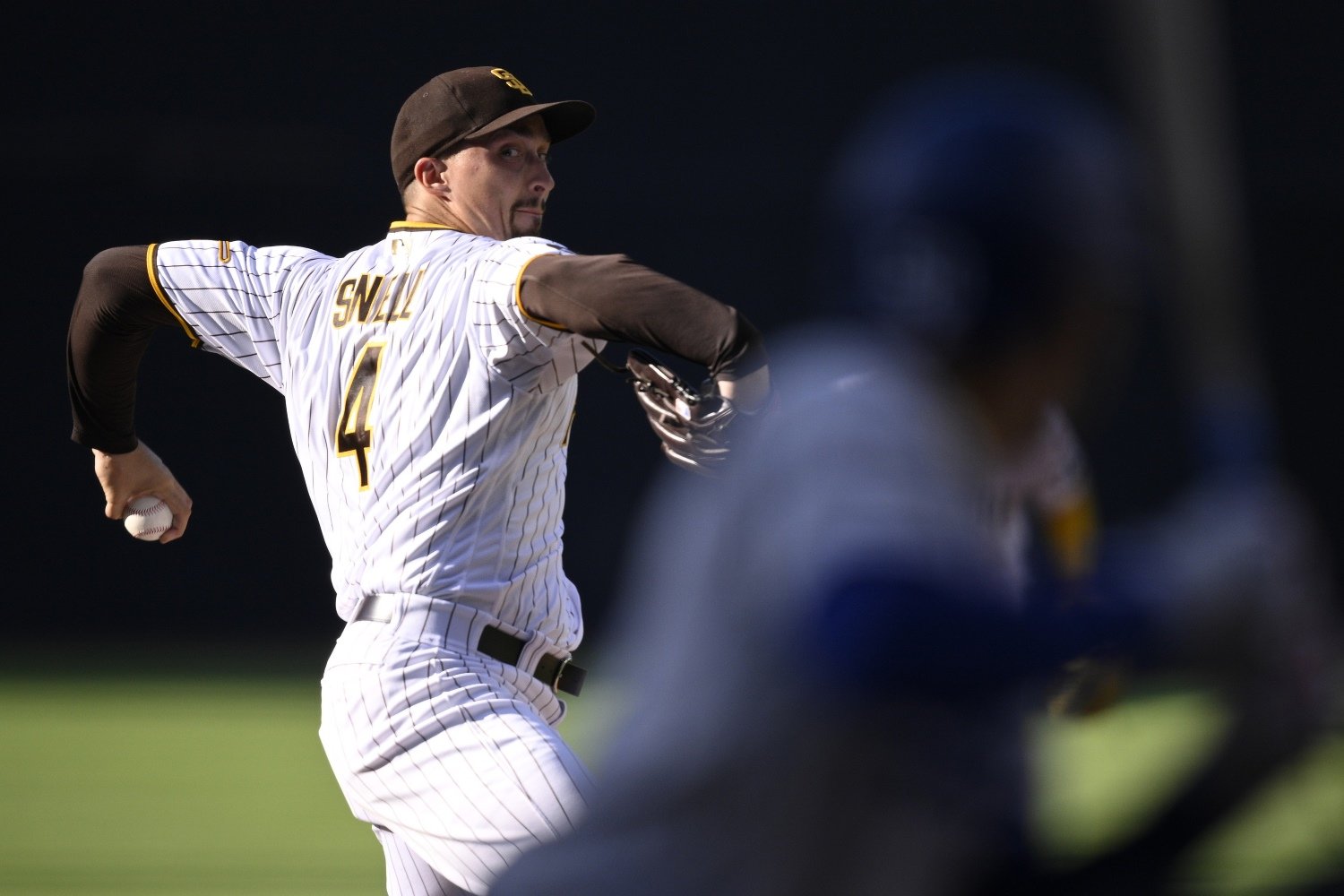 Obviously, the focus for most Cubs fans over the last couple of months has been Cody Bellinger. It's Bellinger both the organization and the fan base know best, and Bellinger has been viewed as both the most likely and the best fit of this quartet. Two months ago, that was almost unquestionable, but a few things have changed. Let's update our preference list, shall we? 1. Blake Snell At the beginning of this winter, Snell and the Cubs didn't seem like a good or likely fit. He was in position to demand well in excess of $200 million, after winning his second Cy Young Award in the last six years this past season. He has tremendous stuff, and his command might be underrated, but his approach makes him both frustrating to watch and hard to project. Moreover, he's not exactly a paragon of durability. Those two Cy Young campaigns are the only two in his career in which he's reached even 130 innings. Yeah, we're past all that now. While Boras's style is to set a price and wait for the market to meet it, the probability of any team meeting his original one for Snell has plummeted. Snell's more likely to get a deal akin to that of Aaron Nola (seven years, $172 million) than to approach the Stephen Strasburg contract (seven years, $245 million) of several winters ago. With the Cubs having already reinforced the rotation with Shota Imanaga, they can afford to risk a few missed starts in order to land a true ace. 2. Jordan Montgomery It's much less clear in which direction Montgomery's asking price has drifted as the hot stove has burned itself through. He entered the marketplace well south of Snell and Nola in terms of earning power, but because his chief strength (excellent durability, with the capacity to pitch 180-200 innings per year and take the ball every time his spot in the rotation) is the weakness of so many others in today's pitching landscape, Montgomery might only be getting more valuable as spring training draws near. For reasons we discussed way back in December, though, he holds all kinds of appeal for the Cubs. This organization likes strike-throwers. They like guys who command the ball to both sides of the plate, and they even (anachronistically, almost) like a good curveball in a starter, rather than the increasingly popular sliders and sweepers that dominate the league. Add Montgomery to this rotation, and the innings the Cubs are projected to get from that unit rise significantly--as does the overall upside of the group. Signing Montgomery would also free up some trade capital for the team. 3. Matt Chapman The argument against Chapman is simple: He's not an elite hitter, and signing him would cost a bunch of money and a draft pick. He'd make both Nick Madrigal and Patrick Wisdom strictly bench players, and rob the team of any real opportunity to get something in exchange for them if they decide to move on from them. He's not quite redundant, but he doesn't solve the lineup's remaining problems all that nicely. He'd block the position for Matt Shaw, for whom that's the clearest path to playing time with the parent club right now. The argument for him is even neater, though: He's an elite defender. He's as good as Madrigal with the glove at the hot corner, and he's a much better hitter than Madrigal, even if he'd still hit sixth or seventh in an ideally constructed contender's lineup. He's no longer likely to get $150 million or so. A shorter-term deal is a very real option. Chapman would complete an infield defense that would Hoover up ground balls as well as any in the league, and he'd lengthen the lineup, although without solving the larger problem that the team's top hitters aren't imposing enough. 4. Cody Bellinger Putting Bellinger this low feels wrong, but there's a reason why he's still a free agent. In fact, there are several, but let's focus on one: the Cubs have refused to pay Boras's asking price for him. Resisting those demands got much easier for Jed Hoyer when he traded for Michael Busch last month. With Busch in the mix, the urgency to bring back Bellinger--the need for that left-handed bat, the need for a first baseman--diminished significantly. It wasn't a leverage play. Busch is a great addition in his own right, without regard to Bellinger. It did still increase the Cubs' leverage, though, and it makes bringing in Bellinger less critical. The other thing here is that, at this stage, Bellinger might not be the big investment the Cubs prefer to make in the lineup for the long term. Signing him makes it harder for Pete Crow-Armstrong, Alexander Canario, and Kevin Alcántara to carve out their roles (immediate or otherwise) in the outfield, or else it crimps and distorts the playing time allocations for Busch and Christopher Morel, since it seems the organization doesn't trust either guy at third base. It also forecloses the possibility of signing either Juan Soto or Pete Alonso next winter. Perhaps the notion of the Cubs doing that sounds laughable, anyway, given Hoyer's reluctance to pay up the way those stars require when they hit free agency, but Bellinger's long-term home is first base. The corner outfield spots are spoken for in the short term. Make Bellinger a Cub for the next six years (or more) and you can cross the top two names on next winter's market off right away. It's a part of the cost that has to be considered. Crazy though it might sound, there's a chance the Cubs could sign two of these players. In that case, though, it would almost certainly be Montgomery and Chapman. Montgomery is the only one of the four without a qualifying offer attached to him--the only one who wouldn't cost the team a draft pick. Chapman would, but if the team signed both Montgomery and Chapman but let Bellinger go elsewhere, they'd only lose a tiny bit of draft capital, because Bellinger would net them a pick just a round later than the one they'd lose for Chapman. Meanwhile, the team would get a lot better. They'd probably emerge as favorites in the NL Central, after all. All four of these guys are appealing. Ranking Bellinger fourth doesn't mean he's not worth trying to sign anymore. Since the Busch deal, though, he's become less of a priority, and some alternatives have surpassed him in terms of desirability. The endgame of this offseason is upon us. Soon, the Cubs (and these four free agents, plus a bunch of others) need to make their decisions and their moves. There are still plenty of talented players available, but their availability is as much an indictment of the Cubs front office as it is a salve for the frustration of fans. It's time to make the big moves on which the team has waited as long as possible. How do you rank these four remaining star free agents? Who would you want, if the team were to sign two of the four?
 -
On a Chicago radio appearance Wednesday, ESPN's Jeff Passan predicted that the Cubs will sign "one of the four Boras guys" who remain atop the free-agent market and dominate the headlines of this dwindling offseason. Which one should it be? Image courtesy of © Orlando Ramirez-USA TODAY Sports Obviously, the focus for most Cubs fans over the last couple of months has been Cody Bellinger. It's Bellinger both the organization and the fan base know best, and Bellinger has been viewed as both the most likely and the best fit of this quartet. Two months ago, that was almost unquestionable, but a few things have changed. Let's update our preference list, shall we? 1. Blake Snell At the beginning of this winter, Snell and the Cubs didn't seem like a good or likely fit. He was in position to demand well in excess of $200 million, after winning his second Cy Young Award in the last six years this past season. He has tremendous stuff, and his command might be underrated, but his approach makes him both frustrating to watch and hard to project. Moreover, he's not exactly a paragon of durability. Those two Cy Young campaigns are the only two in his career in which he's reached even 130 innings. Yeah, we're past all that now. While Boras's style is to set a price and wait for the market to meet it, the probability of any team meeting his original one for Snell has plummeted. Snell's more likely to get a deal akin to that of Aaron Nola (seven years, $172 million) than to approach the Stephen Strasburg contract (seven years, $245 million) of several winters ago. With the Cubs having already reinforced the rotation with Shota Imanaga, they can afford to risk a few missed starts in order to land a true ace. 2. Jordan Montgomery It's much less clear in which direction Montgomery's asking price has drifted as the hot stove has burned itself through. He entered the marketplace well south of Snell and Nola in terms of earning power, but because his chief strength (excellent durability, with the capacity to pitch 180-200 innings per year and take the ball every time his spot in the rotation) is the weakness of so many others in today's pitching landscape, Montgomery might only be getting more valuable as spring training draws near. For reasons we discussed way back in December, though, he holds all kinds of appeal for the Cubs. This organization likes strike-throwers. They like guys who command the ball to both sides of the plate, and they even (anachronistically, almost) like a good curveball in a starter, rather than the increasingly popular sliders and sweepers that dominate the league. Add Montgomery to this rotation, and the innings the Cubs are projected to get from that unit rise significantly--as does the overall upside of the group. Signing Montgomery would also free up some trade capital for the team. 3. Matt Chapman The argument against Chapman is simple: He's not an elite hitter, and signing him would cost a bunch of money and a draft pick. He'd make both Nick Madrigal and Patrick Wisdom strictly bench players, and rob the team of any real opportunity to get something in exchange for them if they decide to move on from them. He's not quite redundant, but he doesn't solve the lineup's remaining problems all that nicely. He'd block the position for Matt Shaw, for whom that's the clearest path to playing time with the parent club right now. The argument for him is even neater, though: He's an elite defender. He's as good as Madrigal with the glove at the hot corner, and he's a much better hitter than Madrigal, even if he'd still hit sixth or seventh in an ideally constructed contender's lineup. He's no longer likely to get $150 million or so. A shorter-term deal is a very real option. Chapman would complete an infield defense that would Hoover up ground balls as well as any in the league, and he'd lengthen the lineup, although without solving the larger problem that the team's top hitters aren't imposing enough. 4. Cody Bellinger Putting Bellinger this low feels wrong, but there's a reason why he's still a free agent. In fact, there are several, but let's focus on one: the Cubs have refused to pay Boras's asking price for him. Resisting those demands got much easier for Jed Hoyer when he traded for Michael Busch last month. With Busch in the mix, the urgency to bring back Bellinger--the need for that left-handed bat, the need for a first baseman--diminished significantly. It wasn't a leverage play. Busch is a great addition in his own right, without regard to Bellinger. It did still increase the Cubs' leverage, though, and it makes bringing in Bellinger less critical. The other thing here is that, at this stage, Bellinger might not be the big investment the Cubs prefer to make in the lineup for the long term. Signing him makes it harder for Pete Crow-Armstrong, Alexander Canario, and Kevin Alcántara to carve out their roles (immediate or otherwise) in the outfield, or else it crimps and distorts the playing time allocations for Busch and Christopher Morel, since it seems the organization doesn't trust either guy at third base. It also forecloses the possibility of signing either Juan Soto or Pete Alonso next winter. Perhaps the notion of the Cubs doing that sounds laughable, anyway, given Hoyer's reluctance to pay up the way those stars require when they hit free agency, but Bellinger's long-term home is first base. The corner outfield spots are spoken for in the short term. Make Bellinger a Cub for the next six years (or more) and you can cross the top two names on next winter's market off right away. It's a part of the cost that has to be considered. Crazy though it might sound, there's a chance the Cubs could sign two of these players. In that case, though, it would almost certainly be Montgomery and Chapman. Montgomery is the only one of the four without a qualifying offer attached to him--the only one who wouldn't cost the team a draft pick. Chapman would, but if the team signed both Montgomery and Chapman but let Bellinger go elsewhere, they'd only lose a tiny bit of draft capital, because Bellinger would net them a pick just a round later than the one they'd lose for Chapman. Meanwhile, the team would get a lot better. They'd probably emerge as favorites in the NL Central, after all. All four of these guys are appealing. Ranking Bellinger fourth doesn't mean he's not worth trying to sign anymore. Since the Busch deal, though, he's become less of a priority, and some alternatives have surpassed him in terms of desirability. The endgame of this offseason is upon us. Soon, the Cubs (and these four free agents, plus a bunch of others) need to make their decisions and their moves. There are still plenty of talented players available, but their availability is as much an indictment of the Cubs front office as it is a salve for the frustration of fans. It's time to make the big moves on which the team has waited as long as possible. How do you rank these four remaining star free agents? Who would you want, if the team were to sign two of the four? View full article
-
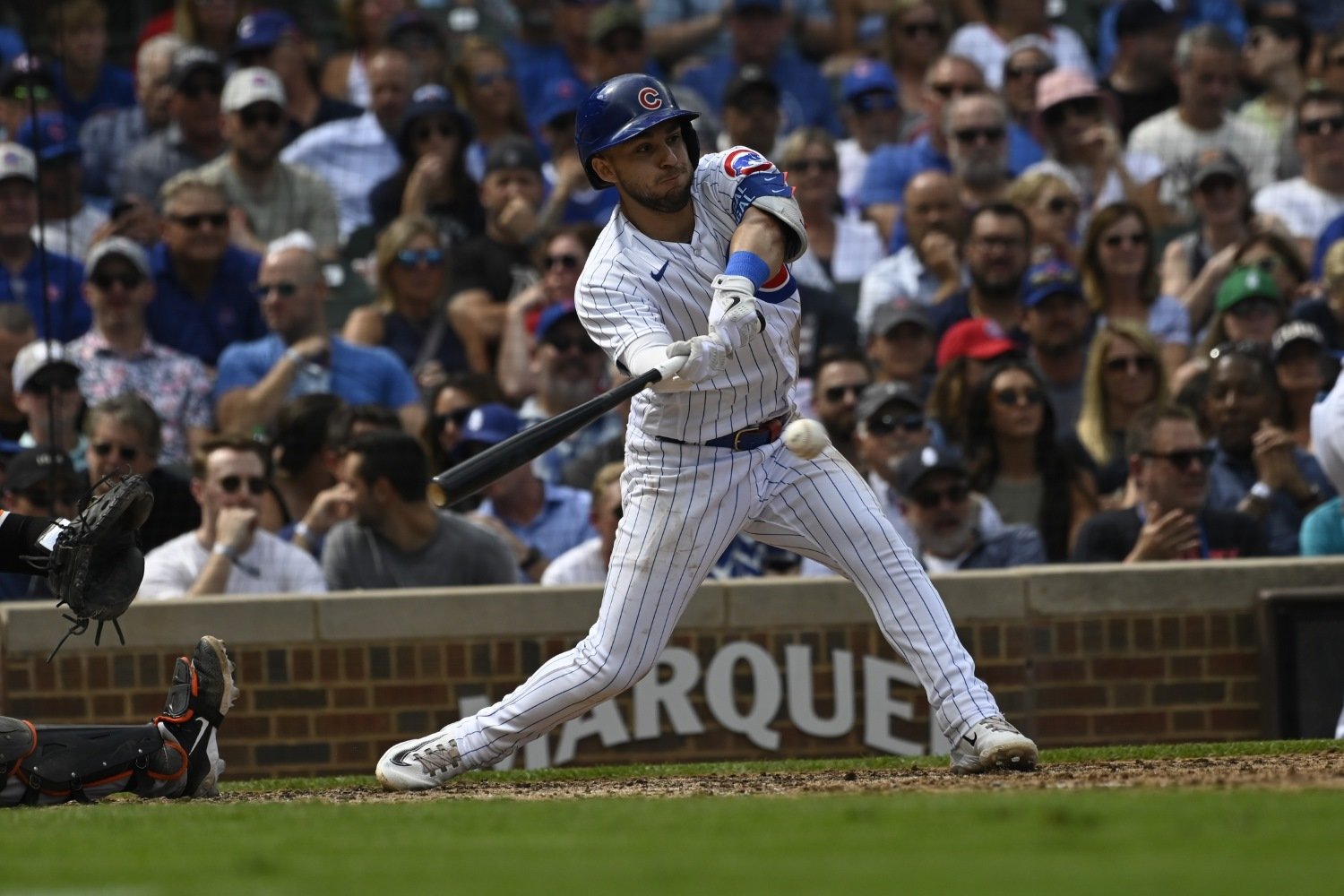 To those who have closely watched the evolution of baseball over the last quarter-century, it was immediately clear that Nick Madrigal and Nico Hoerner couldn't last long in a lineup together, at least for a team with aspirations of winning enough games to reach the postseason. Even as Hoerner made impressive defensive strides at shortstop in 2022, it was hard to deny that his long-term defensive home was at either second or third base. Meanwhile, the lilliputian Madrigal seemed like a locked-in second baseman. Positionally, there was a looming logjam, turned from a potentiality to an urgent reality when Dansby Swanson agreed to join the Cubs last winter. Because Jed Hoyer refuses to make a trade simply out of need and will find a way to hold onto a player until given what he thinks the player is worth or absolutely forced to let him go, Madrigal was still around in 2023, despite Swanson's arrival and Hoerner's fairly clear assertion of superiority in the battle to slide to second. The tiny contact specialist took reps at third base all spring, which seemed like a bit of a stunt, but he more than held up to his limited trial at the hot corner during the regular season. In fact, he was one of the best defensive third basemen in baseball. Even so, he didn't find any legitimate power. Nor did Hoerner, who stayed healthier and earned more consistent run than Madrigal and collected 688 plate appearances. Between the two of them, they went to bat almost 1,000 times, managed 43 doubles, legged out five triples, and only muscled up for 11 home runs. That's fairly crazy, in the modern game. Ever since the double-punch of two expansions in a half-decade and the crest of the performance-enhancing drugs problem coincided to alter the way fans consume baseball and its numbers, and ever since sabermetrics has gained a deeper foothold and begun pushing the game toward greater efficiency, power has become an indispensable, non-negotiable part of the package for good hitters. In fact, you can go all the way back to the integration of MLB in 1947, and you still see a pretty inexorable trend. Here's a chart showing the number of qualifying hitters with fewer than 15 home runs but at least an average OPS+ per team, for each season since Jackie Robinson began the process of legitimizing the National League. Not only has the trend been steadily (though imperfectly) downward, but we've seen some historically low figures over the last few years. In 2019, only three hitters were above-average at the plate despite having fewer than 15 homers: Kevin Newman, Wilson Ramos, and Kolten Wong. This past season, only six players cleared that bar: Luis Arráez, Mark Canha, Thairo Estrada, Steven Kwan, Lars Nootbaar, and Alex Verdugo. Those are easily the lowest figures in any full season. There was a brief time back in the late 1950s and early 1960s when it was almost as non-optional to hit for power in order to be productive, but even that wasn't quite this extreme. Obviously, the main driver of that trend is the steady rise in baseline strikeout rate throughout the league. In a league like that of 1952, wherein the average batter struck out under 11 percent of the time and the most whiff-prone regular (Eddie Mathews) was still south of 20 percent, it was much easier to hit for a productive average and get on base at a fine clip without clearing the wall. Now, that baseline rate has more than doubled, and hitters have to get to more power to make up for that. Madrigal and Hoerner are exceptions to the rule, in some sense. Maybe that counts for something. Hoerner struck out only 12.1 percent of the time in 2023, and Madrigal was way down at 8.2 percent. That makes them much more credible batters than most guys who have such a glaring lack of pop. Still, it sets a hard, low ceiling on their productivity. To wit, despite his great contact skills, Madrigal batted just .263/.311/.353, for a 79 OPS+, and Hoerner (even in what felt like a breakout campaign in which he fully made good on the promise he flashed in 2022) only had a 99 OPS+, himself. He's not even one of the six guys who cobbled together an above-average line without good power. That's why it just wasn't ever going to work, not for the long term. Madrigal could be a fine little backup guy, but as a regular, he paired with Hoerner to give the team too much in the way of competitive but non-dynamic offense. We can wish it weren't so, but we live in a world beyond that of José Cruz or Buddy Bell. The productive, actively valuable 10-15 homer guy is a dying breed, and no team can afford to rely on two in the same lineup, unless they have undimmed superstars packing the heart of their batting order. Instead of that, the Cubs have Ian Happ, who only managed a couple more home runs last year than would have allowed him to be on the lists above. They can't win with Madrigal in the lineup every day, not because of Madrigal's shortcomings, but because they already have their quota of underpowered players in an overpowered offensive environment. Yes, this is yet another in a long line of posts throughout the internet over the last year or more imploring the Cubs to trade Madrigal. I don't agree with what I consider a fairly facile set of criticisms of Madrigal's defense at third that have popped up on Twitter recently. There's been an intimation that somehow, because he plays more shallow and relies on a different playing style than Matt Chapman, Madrigal's brilliance with the glove last year is somehow fake or invalid. It's not that way. The up-the-middle positions are the demesnes of rangy, fluid athletes, making plays in space. The corners are a geographical proposition. It's perfectly acceptable, and very much the right choice for Madrigal, to play shallow and try to cut down the amount of range one needs, using exceptional quickness and the angles of the game. Some of history's great third basemen have done just that for over a decade. I also don't want to automatically disqualify Madrigal because he lacks power at the plate. The narrow aesthetic tastes of too many modern fans notwithstanding, there is something delightful about Madrigal's skill set. I want there to be more Dave Cash types and more Eric Young Sr. types, not fewer. Nor is he as bad as many believe. Surprisingly (but tellingly), PECOTA forecasts a 107 DRC+ (where 100 is average and higher is better) for Madrigal in 2024. Not striking out still has some value. However, he's not ready to accept a backup role, and that's the only one in which the Cubs can presently afford to carry him. Instead of risking falling into using him as a redundant piece of the near-everyday lineup, the team should find a trade partner for Madrigal and then make some alternative plans at third base. How would you prefer the Cubs handle third base this spring? If not Madrigal, who should get the bulk of the playing time there? Let's discuss it further, including kicking around the remaining outside options.
 -
The moment the Cubs consummated their 2021 trade with the White Sox--the one that sent Craig Kimbrel to the South Side and netted the Cubs two big-leaugers under long-term team control--a countdown clock started ticking. It's coming right up on 0:00 now. Image courtesy of © Matt Marton-USA TODAY Sports To those who have closely watched the evolution of baseball over the last quarter-century, it was immediately clear that Nick Madrigal and Nico Hoerner couldn't last long in a lineup together, at least for a team with aspirations of winning enough games to reach the postseason. Even as Hoerner made impressive defensive strides at shortstop in 2022, it was hard to deny that his long-term defensive home was at either second or third base. Meanwhile, the lilliputian Madrigal seemed like a locked-in second baseman. Positionally, there was a looming logjam, turned from a potentiality to an urgent reality when Dansby Swanson agreed to join the Cubs last winter. Because Jed Hoyer refuses to make a trade simply out of need and will find a way to hold onto a player until given what he thinks the player is worth or absolutely forced to let him go, Madrigal was still around in 2023, despite Swanson's arrival and Hoerner's fairly clear assertion of superiority in the battle to slide to second. The tiny contact specialist took reps at third base all spring, which seemed like a bit of a stunt, but he more than held up to his limited trial at the hot corner during the regular season. In fact, he was one of the best defensive third basemen in baseball. Even so, he didn't find any legitimate power. Nor did Hoerner, who stayed healthier and earned more consistent run than Madrigal and collected 688 plate appearances. Between the two of them, they went to bat almost 1,000 times, managed 43 doubles, legged out five triples, and only muscled up for 11 home runs. That's fairly crazy, in the modern game. Ever since the double-punch of two expansions in a half-decade and the crest of the performance-enhancing drugs problem coincided to alter the way fans consume baseball and its numbers, and ever since sabermetrics has gained a deeper foothold and begun pushing the game toward greater efficiency, power has become an indispensable, non-negotiable part of the package for good hitters. In fact, you can go all the way back to the integration of MLB in 1947, and you still see a pretty inexorable trend. Here's a chart showing the number of qualifying hitters with fewer than 15 home runs but at least an average OPS+ per team, for each season since Jackie Robinson began the process of legitimizing the National League. Not only has the trend been steadily (though imperfectly) downward, but we've seen some historically low figures over the last few years. In 2019, only three hitters were above-average at the plate despite having fewer than 15 homers: Kevin Newman, Wilson Ramos, and Kolten Wong. This past season, only six players cleared that bar: Luis Arráez, Mark Canha, Thairo Estrada, Steven Kwan, Lars Nootbaar, and Alex Verdugo. Those are easily the lowest figures in any full season. There was a brief time back in the late 1950s and early 1960s when it was almost as non-optional to hit for power in order to be productive, but even that wasn't quite this extreme. Obviously, the main driver of that trend is the steady rise in baseline strikeout rate throughout the league. In a league like that of 1952, wherein the average batter struck out under 11 percent of the time and the most whiff-prone regular (Eddie Mathews) was still south of 20 percent, it was much easier to hit for a productive average and get on base at a fine clip without clearing the wall. Now, that baseline rate has more than doubled, and hitters have to get to more power to make up for that. Madrigal and Hoerner are exceptions to the rule, in some sense. Maybe that counts for something. Hoerner struck out only 12.1 percent of the time in 2023, and Madrigal was way down at 8.2 percent. That makes them much more credible batters than most guys who have such a glaring lack of pop. Still, it sets a hard, low ceiling on their productivity. To wit, despite his great contact skills, Madrigal batted just .263/.311/.353, for a 79 OPS+, and Hoerner (even in what felt like a breakout campaign in which he fully made good on the promise he flashed in 2022) only had a 99 OPS+, himself. He's not even one of the six guys who cobbled together an above-average line without good power. That's why it just wasn't ever going to work, not for the long term. Madrigal could be a fine little backup guy, but as a regular, he paired with Hoerner to give the team too much in the way of competitive but non-dynamic offense. We can wish it weren't so, but we live in a world beyond that of José Cruz or Buddy Bell. The productive, actively valuable 10-15 homer guy is a dying breed, and no team can afford to rely on two in the same lineup, unless they have undimmed superstars packing the heart of their batting order. Instead of that, the Cubs have Ian Happ, who only managed a couple more home runs last year than would have allowed him to be on the lists above. They can't win with Madrigal in the lineup every day, not because of Madrigal's shortcomings, but because they already have their quota of underpowered players in an overpowered offensive environment. Yes, this is yet another in a long line of posts throughout the internet over the last year or more imploring the Cubs to trade Madrigal. I don't agree with what I consider a fairly facile set of criticisms of Madrigal's defense at third that have popped up on Twitter recently. There's been an intimation that somehow, because he plays more shallow and relies on a different playing style than Matt Chapman, Madrigal's brilliance with the glove last year is somehow fake or invalid. It's not that way. The up-the-middle positions are the demesnes of rangy, fluid athletes, making plays in space. The corners are a geographical proposition. It's perfectly acceptable, and very much the right choice for Madrigal, to play shallow and try to cut down the amount of range one needs, using exceptional quickness and the angles of the game. Some of history's great third basemen have done just that for over a decade. I also don't want to automatically disqualify Madrigal because he lacks power at the plate. The narrow aesthetic tastes of too many modern fans notwithstanding, there is something delightful about Madrigal's skill set. I want there to be more Dave Cash types and more Eric Young Sr. types, not fewer. Nor is he as bad as many believe. Surprisingly (but tellingly), PECOTA forecasts a 107 DRC+ (where 100 is average and higher is better) for Madrigal in 2024. Not striking out still has some value. However, he's not ready to accept a backup role, and that's the only one in which the Cubs can presently afford to carry him. Instead of risking falling into using him as a redundant piece of the near-everyday lineup, the team should find a trade partner for Madrigal and then make some alternative plans at third base. How would you prefer the Cubs handle third base this spring? If not Madrigal, who should get the bulk of the playing time there? Let's discuss it further, including kicking around the remaining outside options. View full article
-
 In their comfy, customary Monday night recording, Matt Trueblood, DJ Fochs, Tom Nurse, and Todd Trueblood get together for the latest episode of This is Not a Rebuild. We digest and process the news of Bobby Witt Jr. signing an 11-year deal with the Royals, break down the impact on the NL Central of Corbin Burnes being traded from the Brewers to the Orioles, and loudly tap our feet. We're all waiting, Jed. Do something. Dooo something. In the absence of further moves, though, the gang does also try to parse the new projections up at Baseball Prospectus and elsewhere, which don't look kindly on the Cubs. They distinguish between such projection systems and the betting markets, which label the Cubs as favorites to win the NL Central in the probabilistic expectation that they'll sign one or more of the top remaining free agents. After closing out Cubs talk with some spitballing about the potential forms improving the roster from here might take, the pod closes with a bit or errata (not erotica; we deeply regret the error) and some local basketball talk. Which locality? You'll have to listen to find out! Here's the full audio of the pod, via Spotify: And here it is on Apple Podcasts: Cody Bellinger can't stay a free agent forever... can he? You'll hear our answer to that within, too. Enjoy.
 -
As projection systems begin trying to predict the season ahead, the Cubs absiolutely refuse to endear themselves to any of them. We kvetch about that at some length. Image courtesy of Matt Trueblood via Spotify for Podcasters In their comfy, customary Monday night recording, Matt Trueblood, DJ Fochs, Tom Nurse, and Todd Trueblood get together for the latest episode of This is Not a Rebuild. We digest and process the news of Bobby Witt Jr. signing an 11-year deal with the Royals, break down the impact on the NL Central of Corbin Burnes being traded from the Brewers to the Orioles, and loudly tap our feet. We're all waiting, Jed. Do something. Dooo something. In the absence of further moves, though, the gang does also try to parse the new projections up at Baseball Prospectus and elsewhere, which don't look kindly on the Cubs. They distinguish between such projection systems and the betting markets, which label the Cubs as favorites to win the NL Central in the probabilistic expectation that they'll sign one or more of the top remaining free agents. After closing out Cubs talk with some spitballing about the potential forms improving the roster from here might take, the pod closes with a bit or errata (not erotica; we deeply regret the error) and some local basketball talk. Which locality? You'll have to listen to find out! Here's the full audio of the pod, via Spotify: And here it is on Apple Podcasts: Cody Bellinger can't stay a free agent forever... can he? You'll hear our answer to that within, too. Enjoy. View full article
-
Baseball Prospectus, PECOTA Project Cubs A Distant Second in NL Central
Matthew Trueblood posted an article in Cubs
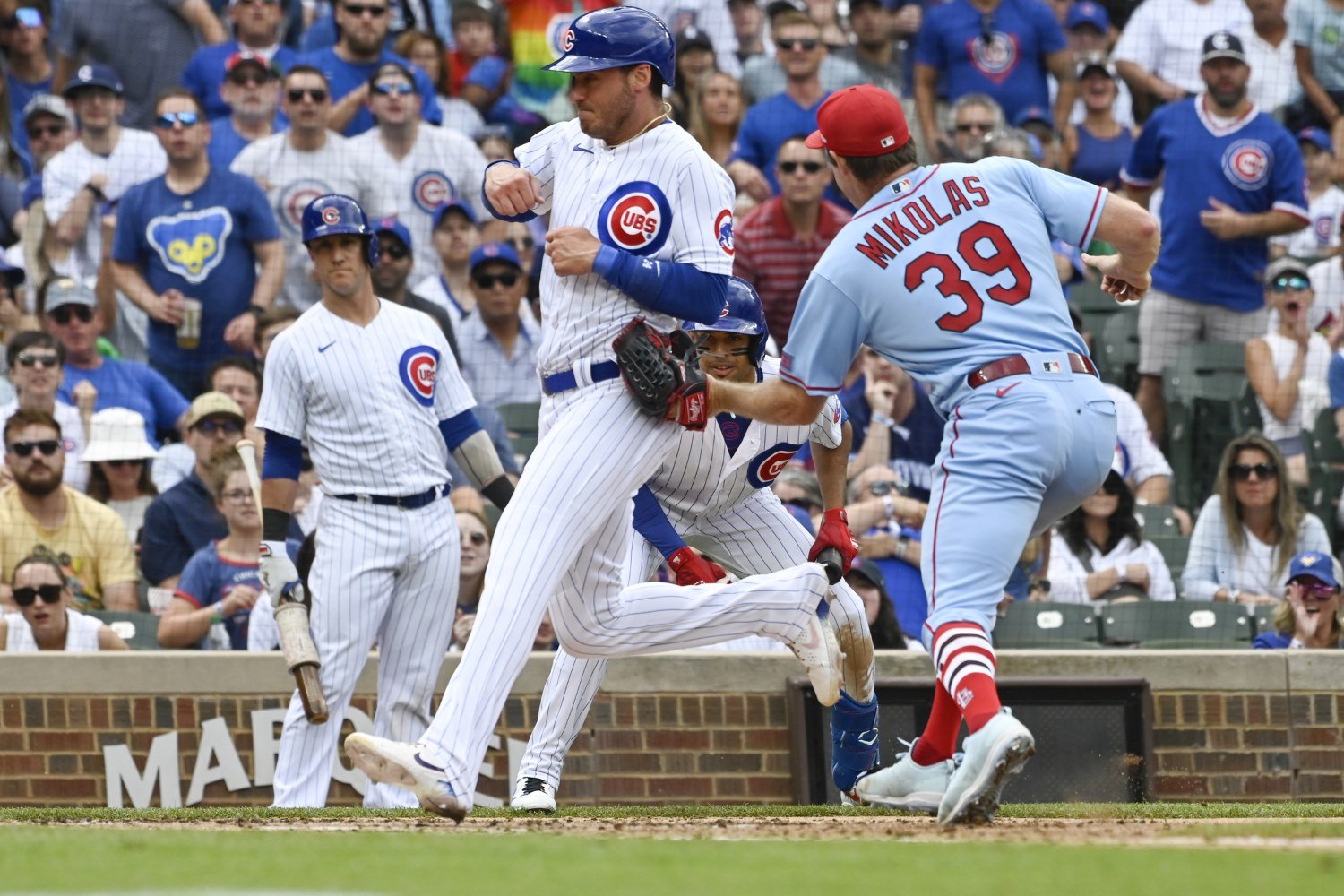 In the first PECOTA-projected standings for the coming season, the Cubs sit five full games back of the division-leading St. Louis Cardinals. Betting markets have held up Chicago as favorites in the relatively weak NL Central for most of the winter, but crucially, those lines bake in a certain set of weighted expectations for the balance of the offseason. In other words, all the bettors pushing the odds in the Cubs' favor throughout this process have been assuming that Jed Hoyer and company will improve the team, even from here. Pure projection systems like PECOTA make no such guesses. The players not yet signed are simply value floating in the abyss, and teams get the records their current rosters support, based on projected performance. At the moment, despite their lousy 2023, the Cardinals impress that system the most. That makes sense, too. While the Cards have traded a couple small pieces (remember the Tyler O'Neill deal?) this winter, they've spent most of it making modest additions to a starting rotation that was their greatest weakness last year. They are the most complete team in the division. PECOTA forecasts 85.2 wins for them, and just 80 for the second-place Cubs. In one sense, that's generous, because the system does (at least) see the current Cubs as the head of the class of losing teams in a losing division. The Brewers and Reds are each projected for 78 wins, and the Pirates are all the way down at 73. The Shota Imanaga and Héctor Neris signings and the Michael Busch and Yency Almonte trades have moved the needle at least that much, although maybe we should say, instead, that the Corbin Burnes trade did so. The Brewers were projected as clear leaders for second place before they gave up Burnes. At any rate, what the system doesn't yet see from the Cubs is that same level of completeness--that marriage of depth and excellence that make a playoff-caliber team. Yes, signing Cody Bellinger would help with that. Bellinger is projected for a 101 DRC+ (where 100 is league-average and higher is better), which certainly sounds underwhelming coming off a season in which that number was 112, but he still has 2.6 projected WARP, and his bat would be a notable upgrade from Pete Crow-Armstrong, who is projected for just an 87 DRC+. That only makes up a portion of the gap between the Cubs and Cards, though, so barring multiple significant moves, the system thinks the Cardinals are better. That needn't shatter the hopes of any fans, on its own. The Cardinals feel like the kind of team you'd build to win a game that was only a projection system. They're old, and they have established stars with long track records of success. That's the kind of player projection systems tend to overrate, so it's possible St. Louis won't really improve on their woeful 2023 as much as PECOTA thinks. The Cubs, meanwhile, are leaning on players (late-blooming ace Justin Steele, NPB import Shota Imanaga, rookies Busch and Jordan Wicks, and more) on whom a projection system might hedge, to a greater degree than are the Cardinals. Projections aren't destiny; they're just data. On the other hand, we should regard it as telling that the Cardinals not only have an advantage on the Cubs, but lead them by a handful of games. That's how an inherently conservative framework like a projection system tells you that there's a yawning gap between two teams. Despite listing them second, the system only gives Chicago a 20.2-percent chance to win the Central. It's possible for the Cubs to outplay the Cardinals this season, but without at least one or two upgrades for the roster, it won't be likely. Happily, it's not too late to make those upgrades. In addition to Bellinger, the market contains the likes of Matt Chapman, Brandon Belt and J.D. Martinez, all of whom could be good fits at the right price. It contains. too, a handful of interesting or helpful pitchers. That's good, because PECOTA regards run prevention as the greater problem for the team. The Cubs are projected to allow 57 more runs than the Brewers and 33 more than the Cardinals. These standings are an open and earnest invitation to the Cubs to get more aggressive, because they need to get better to position themselves against St. Louis and they already have an edge on each of the other teams who could try to unseat the Cardinals. There will be other projection system rollouts this month, and the systems will all be updated accordingly when roster moves happen. At the moment, though, the Cubs aren't good enough to go any further than they did in 2023.
 -
Baseball Prospectus has rolled out the first complete version of their PECOTA projections for 2024, and they don't shine a kind light on the Cubs, pending further additions. Image courtesy of © Matt Marton-USA TODAY Sports In the first PECOTA-projected standings for the coming season, the Cubs sit five full games back of the division-leading St. Louis Cardinals. Betting markets have held up Chicago as favorites in the relatively weak NL Central for most of the winter, but crucially, those lines bake in a certain set of weighted expectations for the balance of the offseason. In other words, all the bettors pushing the odds in the Cubs' favor throughout this process have been assuming that Jed Hoyer and company will improve the team, even from here. Pure projection systems like PECOTA make no such guesses. The players not yet signed are simply value floating in the abyss, and teams get the records their current rosters support, based on projected performance. At the moment, despite their lousy 2023, the Cardinals impress that system the most. That makes sense, too. While the Cards have traded a couple small pieces (remember the Tyler O'Neill deal?) this winter, they've spent most of it making modest additions to a starting rotation that was their greatest weakness last year. They are the most complete team in the division. PECOTA forecasts 85.2 wins for them, and just 80 for the second-place Cubs. In one sense, that's generous, because the system does (at least) see the current Cubs as the head of the class of losing teams in a losing division. The Brewers and Reds are each projected for 78 wins, and the Pirates are all the way down at 73. The Shota Imanaga and Héctor Neris signings and the Michael Busch and Yency Almonte trades have moved the needle at least that much, although maybe we should say, instead, that the Corbin Burnes trade did so. The Brewers were projected as clear leaders for second place before they gave up Burnes. At any rate, what the system doesn't yet see from the Cubs is that same level of completeness--that marriage of depth and excellence that make a playoff-caliber team. Yes, signing Cody Bellinger would help with that. Bellinger is projected for a 101 DRC+ (where 100 is league-average and higher is better), which certainly sounds underwhelming coming off a season in which that number was 112, but he still has 2.6 projected WARP, and his bat would be a notable upgrade from Pete Crow-Armstrong, who is projected for just an 87 DRC+. That only makes up a portion of the gap between the Cubs and Cards, though, so barring multiple significant moves, the system thinks the Cardinals are better. That needn't shatter the hopes of any fans, on its own. The Cardinals feel like the kind of team you'd build to win a game that was only a projection system. They're old, and they have established stars with long track records of success. That's the kind of player projection systems tend to overrate, so it's possible St. Louis won't really improve on their woeful 2023 as much as PECOTA thinks. The Cubs, meanwhile, are leaning on players (late-blooming ace Justin Steele, NPB import Shota Imanaga, rookies Busch and Jordan Wicks, and more) on whom a projection system might hedge, to a greater degree than are the Cardinals. Projections aren't destiny; they're just data. On the other hand, we should regard it as telling that the Cardinals not only have an advantage on the Cubs, but lead them by a handful of games. That's how an inherently conservative framework like a projection system tells you that there's a yawning gap between two teams. Despite listing them second, the system only gives Chicago a 20.2-percent chance to win the Central. It's possible for the Cubs to outplay the Cardinals this season, but without at least one or two upgrades for the roster, it won't be likely. Happily, it's not too late to make those upgrades. In addition to Bellinger, the market contains the likes of Matt Chapman, Brandon Belt and J.D. Martinez, all of whom could be good fits at the right price. It contains. too, a handful of interesting or helpful pitchers. That's good, because PECOTA regards run prevention as the greater problem for the team. The Cubs are projected to allow 57 more runs than the Brewers and 33 more than the Cardinals. These standings are an open and earnest invitation to the Cubs to get more aggressive, because they need to get better to position themselves against St. Louis and they already have an edge on each of the other teams who could try to unseat the Cardinals. There will be other projection system rollouts this month, and the systems will all be updated accordingly when roster moves happen. At the moment, though, the Cubs aren't good enough to go any further than they did in 2023. View full article
-
Carl Edwards Jr. Comes Back as a Whole Different Pitcher
Matthew Trueblood posted an article in Cubs
 You remember Carl Edwards Jr. as the guy with the high-riding mid-90s fastball and the sizzling overhand curveball. That version of him--the guy who had a strikeout rate north of 33 percent from 2015-18, who also limited hard contact, and whose only weaknesses were occasional wildness and a slight shortfall in durability--is gone for good. Now, after a perambulation of professional baseball that has taken him through five other big-league teams and the Triple-A affiliates of all five, he's back, but only part of the fastball and curveball came with him. If he's going to win a place in the Cubs bullpen, he'll need to do it with the new tricks he's added to his bag. Though he did it before the term reached the level of popularity and wide comprehension it now enjoys, Edwards was one of the great modern practitioners of the cut-ride fastball. His four-seamer was occasionally called a cutter, especially on broadcasts, even though its vertical movement would have made it an outlier in that category as much as its lack of arm-side run makes it so among four-seam heaters. Working from the middle to the first-base side of the rubber, Edwards hammered away at hitters with that fastball and his big hook, which could surpass 3,000 rpm in spin rate and snapped nastily off the high plane of his heat when he was controlling it well. Just about everything he threw seemed to move to his glove side, away from fellow righties in the box. I've decided to use 2017 as a reference season, because it was Edwards's most complete and best in a Cubs uniform. Here's what his pitch movement looked like at that time. The movement differential on those pitches made them impossible to hit. The only challenge was to throw them with command on any kind of consistent basis, and eventually, it did prove to be a challenge he wasn't up to. With his impossibly slender frame and all the humping up and whipping involved in his delivery back then, he just couldn't repeat his delivery well enough to execute either of his primary pitches consistently. Nor, over time, could he hold up and sustain the intensity of that stuff, in terms of either velocity or spin. He fizzled badly for the Cubs in late 2018 and in 2019, and it took a while for him to find a foothold after they set him adrift in the middle of that season. Here's what Edwards's arsenal looked like in 2017, from behind the plate. Again, everything was targeted to one side of the plate, and he basically aimed high with the fastball and low with the curve, with varying levels of success. It was just that simple, approach-wise, though. Edwards would finish his fastball pretty far out in front of the rubber, despite that very over-the-top delivery, because he left his long legs carry him reasonably far down the mound. On the curve, though, he would make a more conscious effort to stay back and wrap his hand around the ball through release, so his release point was higher, with less extension toward the plate. It's no headline story when a reliever with two impressive pitches buckles under the weight of his unimpressive control and a body not built for the gig. This is only a story because, improbably, Edwards sank into the sands of time, then came back up, a much less dominant but more varied hurler with a new angle and a viable skill set. He pitched 94 innings with the Nationals over the last two seasons, with a 3.07 ERA. The strikeout rate is way down, and he still issues too many walks, but Edwards is a usable reliever again. He was only available on a minor-league deal because of the injuries that limited that innings total so much. How has he done it? Let's revisit each of the charts we examined above for 2017, but update them to 2023. Here is how Edwards's pitches each moved last year. Hey, we've got a new member in the club! That purple blob way off to the last of where the blue and red of the fastball and curve sit in their same stark contrast is a new changeup, which Edwards forged during the years he spent scrapping just to remain in affiliated baseball. The guy who so naturally spins the bejesus out of the ball that his fastball sometimes hummed into a cutter by accident still gets that kind of movement on the fastball, and the curve has a slight glove-side flare to it, but he figured out how to pronate and get a changeup to fade well off the line of that heater. Opponents had a .188 average and zero extra-base hits against Edwards's changeup in 2023. They whiffed on over 32 percent of their swings against it. He had tons of success with the offering, one that would have felt completely foreign in his arsenal a few years before. He also found more consistent success with the fastball and curve, though, and it wasn't because of an element of surprise. Rather, as you can see above, he slightly improved his command of both ptiches, and all three came to set one another up better than they had in the past. The latter thing happened because Edwards also moved across the rubber. He now pitches from the third-base side, where he can aim his glove-side offerings at the outer half to a righty and keep them on the plate better if he misses slightly. The change also steepens the horizontal angle he creates for opposing hitters. In fact, last year, only the Astros' Phil Maton had a higher Horizontal Approach Angle Above Average than Edwards's on a four-seamer. That's why, even as he's lost 1.5 miles per hour on everything and a couple inches of ride on the fastball, Edwards still limits hard contact well. Nothing about his primary location targets for the two old pitches has changed much. Edwards has just used that move on the rubber to create more dramatic angles with it, and the changeup (along with that slide; he couldn't have thrown an effective version of this change from the side of the mound he used to stand on) to pitch away from left-handed batters. He'll always count as thin, but Edwards has inevitably filled out a little, and between that and a bit less of the loose, extraordinary arm speed he used to have, he's found an ability to repeat his delivery better. Maybe moving along the rubber has done so, too; it helps him align and lock into certain cues in the rotation of his body and the twisting of the kinetic chain all the way through release. He's getting more extension and has ratcheted his release point even higher. Health will be a massive variable for Edwards this spring. Don't write him into the bullpen in anything but light pencil, just yet. If he does show the ability to bear up under a big-league workload again, though, Edwards has a better chance than many might have assumed to crack the roster. Lefties hammered him last year, but righties had a .484 OPS against him, the best mark of his career. He's evolved and survived, altered what he throws and how and from where, and the numbers say he's found a new, successful formula. Where do you slot Edwards as a candidate for one of the few ostensibly available spots in the Cubs' relief corps? Are you excited to have him back this season, for either real or purely nostalgic reasons? Weigh in below. Research assistance provided by TruMedia.
 -
The most familiar of the Cubs' non-roster invitees in the bullpen is, paradoxically, not at all the pitcher you remember. He's still essentially himself, but an incredible number of things have changed. Image courtesy of © Scott Taetsch-USA TODAY Sports You remember Carl Edwards Jr. as the guy with the high-riding mid-90s fastball and the sizzling overhand curveball. That version of him--the guy who had a strikeout rate north of 33 percent from 2015-18, who also limited hard contact, and whose only weaknesses were occasional wildness and a slight shortfall in durability--is gone for good. Now, after a perambulation of professional baseball that has taken him through five other big-league teams and the Triple-A affiliates of all five, he's back, but only part of the fastball and curveball came with him. If he's going to win a place in the Cubs bullpen, he'll need to do it with the new tricks he's added to his bag. Though he did it before the term reached the level of popularity and wide comprehension it now enjoys, Edwards was one of the great modern practitioners of the cut-ride fastball. His four-seamer was occasionally called a cutter, especially on broadcasts, even though its vertical movement would have made it an outlier in that category as much as its lack of arm-side run makes it so among four-seam heaters. Working from the middle to the first-base side of the rubber, Edwards hammered away at hitters with that fastball and his big hook, which could surpass 3,000 rpm in spin rate and snapped nastily off the high plane of his heat when he was controlling it well. Just about everything he threw seemed to move to his glove side, away from fellow righties in the box. I've decided to use 2017 as a reference season, because it was Edwards's most complete and best in a Cubs uniform. Here's what his pitch movement looked like at that time. The movement differential on those pitches made them impossible to hit. The only challenge was to throw them with command on any kind of consistent basis, and eventually, it did prove to be a challenge he wasn't up to. With his impossibly slender frame and all the humping up and whipping involved in his delivery back then, he just couldn't repeat his delivery well enough to execute either of his primary pitches consistently. Nor, over time, could he hold up and sustain the intensity of that stuff, in terms of either velocity or spin. He fizzled badly for the Cubs in late 2018 and in 2019, and it took a while for him to find a foothold after they set him adrift in the middle of that season. Here's what Edwards's arsenal looked like in 2017, from behind the plate. Again, everything was targeted to one side of the plate, and he basically aimed high with the fastball and low with the curve, with varying levels of success. It was just that simple, approach-wise, though. Edwards would finish his fastball pretty far out in front of the rubber, despite that very over-the-top delivery, because he left his long legs carry him reasonably far down the mound. On the curve, though, he would make a more conscious effort to stay back and wrap his hand around the ball through release, so his release point was higher, with less extension toward the plate. It's no headline story when a reliever with two impressive pitches buckles under the weight of his unimpressive control and a body not built for the gig. This is only a story because, improbably, Edwards sank into the sands of time, then came back up, a much less dominant but more varied hurler with a new angle and a viable skill set. He pitched 94 innings with the Nationals over the last two seasons, with a 3.07 ERA. The strikeout rate is way down, and he still issues too many walks, but Edwards is a usable reliever again. He was only available on a minor-league deal because of the injuries that limited that innings total so much. How has he done it? Let's revisit each of the charts we examined above for 2017, but update them to 2023. Here is how Edwards's pitches each moved last year. Hey, we've got a new member in the club! That purple blob way off to the last of where the blue and red of the fastball and curve sit in their same stark contrast is a new changeup, which Edwards forged during the years he spent scrapping just to remain in affiliated baseball. The guy who so naturally spins the bejesus out of the ball that his fastball sometimes hummed into a cutter by accident still gets that kind of movement on the fastball, and the curve has a slight glove-side flare to it, but he figured out how to pronate and get a changeup to fade well off the line of that heater. Opponents had a .188 average and zero extra-base hits against Edwards's changeup in 2023. They whiffed on over 32 percent of their swings against it. He had tons of success with the offering, one that would have felt completely foreign in his arsenal a few years before. He also found more consistent success with the fastball and curve, though, and it wasn't because of an element of surprise. Rather, as you can see above, he slightly improved his command of both ptiches, and all three came to set one another up better than they had in the past. The latter thing happened because Edwards also moved across the rubber. He now pitches from the third-base side, where he can aim his glove-side offerings at the outer half to a righty and keep them on the plate better if he misses slightly. The change also steepens the horizontal angle he creates for opposing hitters. In fact, last year, only the Astros' Phil Maton had a higher Horizontal Approach Angle Above Average than Edwards's on a four-seamer. That's why, even as he's lost 1.5 miles per hour on everything and a couple inches of ride on the fastball, Edwards still limits hard contact well. Nothing about his primary location targets for the two old pitches has changed much. Edwards has just used that move on the rubber to create more dramatic angles with it, and the changeup (along with that slide; he couldn't have thrown an effective version of this change from the side of the mound he used to stand on) to pitch away from left-handed batters. He'll always count as thin, but Edwards has inevitably filled out a little, and between that and a bit less of the loose, extraordinary arm speed he used to have, he's found an ability to repeat his delivery better. Maybe moving along the rubber has done so, too; it helps him align and lock into certain cues in the rotation of his body and the twisting of the kinetic chain all the way through release. He's getting more extension and has ratcheted his release point even higher. Health will be a massive variable for Edwards this spring. Don't write him into the bullpen in anything but light pencil, just yet. If he does show the ability to bear up under a big-league workload again, though, Edwards has a better chance than many might have assumed to crack the roster. Lefties hammered him last year, but righties had a .484 OPS against him, the best mark of his career. He's evolved and survived, altered what he throws and how and from where, and the numbers say he's found a new, successful formula. Where do you slot Edwards as a candidate for one of the few ostensibly available spots in the Cubs' relief corps? Are you excited to have him back this season, for either real or purely nostalgic reasons? Weigh in below. Research assistance provided by TruMedia. View full article
-
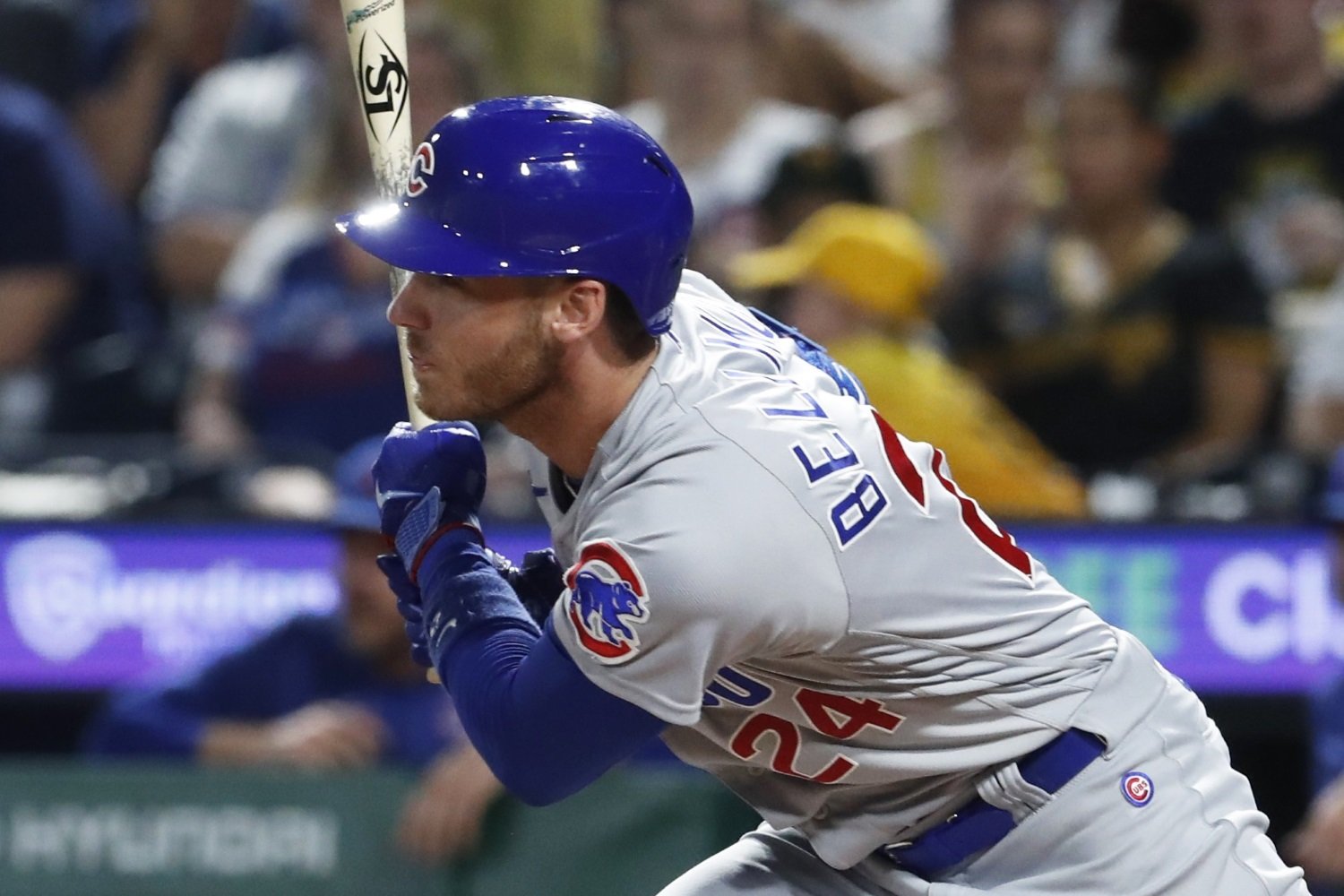 When he first came up, Cody Bellinger could both hit for power and make contact at a fairly high rate. From 2017 through 2020, he posted a 21.5% strikeout rate (lower than the league average for that span) and a .274 isolated power number, well above the league average. That's a rare and special combination, and it made Bellinger a rare and special hitter. During this period, he won the 2017 NL Rookie of the Year Award; MVPs of both the 2018 NLCS and the 2019 National League; and a World Series ring, which he helped make possible by hitting .243/.378/.595 combined in the NLDS and NLCS in 2020. We all know what happened next. Bellinger had such an atrocious 2021 and 2022 that the Dodgers cut him loose after the latter campaign. During that span, his ISO crashed down to .162, and his strikeout rate spiked to 27.1 percent. These numbers obviously don't tell the whole story, even if they gesture toward the series of injuries that hampered Bellinger over those years, but they give us the spine of something. In 2023, with the Cubs, Bellinger batted .307/.356/.525, and while neither his batted-ball data nor his ISO was quite as impressive as at his early-20s peak. his strikeout rate was better than ever. He fanned only 87 times in 556 plate appearances, which comes out to 15.7 percent. In his career before 2023, he'd had an average strikeout rate of 23.2 percent, so in 556 trips to the plate, you'd expect him to punch out 129 times. Compared to his career norms, he trimmed 42 strikeouts from his expected figure. (If you'd like to factor in the fact that he walked less often, too, and thus actually put 64 more balls in play than expected, you're at your leisure. We're only focused on how many fewer strikeouts he generated than was expected, be it by walking, hitting, or desperately tossing the bat backward to create catcher interference.) That 42 number matters, because back in early 2022, Bill James did a very quick-and-dirty study for his website, BillJamesOnline. Until late last year, James ran that site for many years (with fluctuating levels of help and collaboration) and churned out a largely unsung second act's worth of good sabermetrica, after getting very famous for his first act's worth of (mostly offline) material. Anyway, at the prompting of a reader, James sat down and studied how hitters (like Matt Olson, who had effected a huge drop in strikeout rate in 2021, relative to his first few seasons in the big leagues) follow up after they drastically reduce strikeouts from an established career level. James found 126 hitters who had a season in which they struck out at least 35 fewer times than would have been expected, based on their career strikeout rates. That's one of the lovely James hallmarks, using a raw number of expected strikeouts conserved, rather than leaning on rates. It hearkens to his early days of exploring this realm, when rates were essentially unavailable and (given the state of home computer technology at the time) unforgivably laborious to calculate en masse. James worked in very simple mathematical terms, often because he had no choice, and he got so used to it that even in 2022, he was still speaking a simpler and more direct numerical language than the one we've embraced online these days, even though he understood and used those more Excel-friendly tools as needed. It didn't just elucidate his study; it also strengthened it. Hitters with greater volume in a given season had a greater chance to cut away the requisite number of expected strikeouts than those with less playing time. Of those 126 hitters, James found, 116 had a lower strikeout rate after that season than they had had in their careers prior to the punchout plunge. The study took the actual season of that huge change out of the equation, in other words, and still found a lasting effect on the player's strikeout avoidance skills. James admitted a certain measure of awe in that rate of "success," or staying power, north of 90 percent. I share it. That's a stunning finding. So, going forward, we should expect Bellinger to hold onto a substantial portion of his newfound contact skills. He might not--in fact, he probably will not--run a 15.7-percent rate going forward, but he's likely to come in south of his 23.2-percent norm. He's a guy who makes contact at an above-average rate, now. That's real, and it should stick around for him, even over the life of a long-term free-agent deal. Maybe we can also draw some intrigue from the pattern Olson followed, after James performed that study. Prior to 2021, Olson had fanned in 26.1 percent of his plate appearances in the big leagues, and he was a tremendous slugger, with a .254 ISO. In that 2021 campaign, he brought the strikeout rate down to 16.8 percent, but in the two seasons played since then (and since the study that offseason), he's bounced back toward his previous norm: 23.8 percent. That's still a non-negligible improvement upon his previous rate, though, and here's the thing: Olson's ISO in those two seasons with Atlanta has soared to .279. I doubt that Bellinger will get all the power that made him the league's MVP half a decade ago back. I doubt he'll remain one of the dozen best contact hitters in the game. Given James's quick study and its extremely convincing results, though, it's reasonable to believe that Bellinger will still be a good contact hitter for several more years. This is far short of being the kind of thing that justifies paying a player $200 million, but it should slightly bolster your belief in Bellinger. It's a good time to share it, too, because James recently shared on Twitter that he had a stroke. He's a complicated figure, as firebrands all eventually become, but after shuttering his site last year and with his 75th birthday happening this year, we're running out of chances to celebrate James's foundational importance to the sport and its close observation. How much store do you set by Bellinger's improved contact rate last year? Do these data make you any more confident about the staying power of his array of recent adjustments? Check out the study here for more information.
 -
The key to Cody Bellinger's 2023 resurgence was a profound change in approach, which yielded a huge decrease in his strikeout rate. One essential question around his free agency has been: Is that sustainable? Image courtesy of © Charles LeClaire-USA TODAY Sports When he first came up, Cody Bellinger could both hit for power and make contact at a fairly high rate. From 2017 through 2020, he posted a 21.5% strikeout rate (lower than the league average for that span) and a .274 isolated power number, well above the league average. That's a rare and special combination, and it made Bellinger a rare and special hitter. During this period, he won the 2017 NL Rookie of the Year Award; MVPs of both the 2018 NLCS and the 2019 National League; and a World Series ring, which he helped make possible by hitting .243/.378/.595 combined in the NLDS and NLCS in 2020. We all know what happened next. Bellinger had such an atrocious 2021 and 2022 that the Dodgers cut him loose after the latter campaign. During that span, his ISO crashed down to .162, and his strikeout rate spiked to 27.1 percent. These numbers obviously don't tell the whole story, even if they gesture toward the series of injuries that hampered Bellinger over those years, but they give us the spine of something. In 2023, with the Cubs, Bellinger batted .307/.356/.525, and while neither his batted-ball data nor his ISO was quite as impressive as at his early-20s peak. his strikeout rate was better than ever. He fanned only 87 times in 556 plate appearances, which comes out to 15.7 percent. In his career before 2023, he'd had an average strikeout rate of 23.2 percent, so in 556 trips to the plate, you'd expect him to punch out 129 times. Compared to his career norms, he trimmed 42 strikeouts from his expected figure. (If you'd like to factor in the fact that he walked less often, too, and thus actually put 64 more balls in play than expected, you're at your leisure. We're only focused on how many fewer strikeouts he generated than was expected, be it by walking, hitting, or desperately tossing the bat backward to create catcher interference.) That 42 number matters, because back in early 2022, Bill James did a very quick-and-dirty study for his website, BillJamesOnline. Until late last year, James ran that site for many years (with fluctuating levels of help and collaboration) and churned out a largely unsung second act's worth of good sabermetrica, after getting very famous for his first act's worth of (mostly offline) material. Anyway, at the prompting of a reader, James sat down and studied how hitters (like Matt Olson, who had effected a huge drop in strikeout rate in 2021, relative to his first few seasons in the big leagues) follow up after they drastically reduce strikeouts from an established career level. James found 126 hitters who had a season in which they struck out at least 35 fewer times than would have been expected, based on their career strikeout rates. That's one of the lovely James hallmarks, using a raw number of expected strikeouts conserved, rather than leaning on rates. It hearkens to his early days of exploring this realm, when rates were essentially unavailable and (given the state of home computer technology at the time) unforgivably laborious to calculate en masse. James worked in very simple mathematical terms, often because he had no choice, and he got so used to it that even in 2022, he was still speaking a simpler and more direct numerical language than the one we've embraced online these days, even though he understood and used those more Excel-friendly tools as needed. It didn't just elucidate his study; it also strengthened it. Hitters with greater volume in a given season had a greater chance to cut away the requisite number of expected strikeouts than those with less playing time. Of those 126 hitters, James found, 116 had a lower strikeout rate after that season than they had had in their careers prior to the punchout plunge. The study took the actual season of that huge change out of the equation, in other words, and still found a lasting effect on the player's strikeout avoidance skills. James admitted a certain measure of awe in that rate of "success," or staying power, north of 90 percent. I share it. That's a stunning finding. So, going forward, we should expect Bellinger to hold onto a substantial portion of his newfound contact skills. He might not--in fact, he probably will not--run a 15.7-percent rate going forward, but he's likely to come in south of his 23.2-percent norm. He's a guy who makes contact at an above-average rate, now. That's real, and it should stick around for him, even over the life of a long-term free-agent deal. Maybe we can also draw some intrigue from the pattern Olson followed, after James performed that study. Prior to 2021, Olson had fanned in 26.1 percent of his plate appearances in the big leagues, and he was a tremendous slugger, with a .254 ISO. In that 2021 campaign, he brought the strikeout rate down to 16.8 percent, but in the two seasons played since then (and since the study that offseason), he's bounced back toward his previous norm: 23.8 percent. That's still a non-negligible improvement upon his previous rate, though, and here's the thing: Olson's ISO in those two seasons with Atlanta has soared to .279. I doubt that Bellinger will get all the power that made him the league's MVP half a decade ago back. I doubt he'll remain one of the dozen best contact hitters in the game. Given James's quick study and its extremely convincing results, though, it's reasonable to believe that Bellinger will still be a good contact hitter for several more years. This is far short of being the kind of thing that justifies paying a player $200 million, but it should slightly bolster your belief in Bellinger. It's a good time to share it, too, because James recently shared on Twitter that he had a stroke. He's a complicated figure, as firebrands all eventually become, but after shuttering his site last year and with his 75th birthday happening this year, we're running out of chances to celebrate James's foundational importance to the sport and its close observation. How much store do you set by Bellinger's improved contact rate last year? Do these data make you any more confident about the staying power of his array of recent adjustments? Check out the study here for more information. View full article
-
3 Free Agents the Cubs Could Target, Beyond the Big Names
Matthew Trueblood posted an article in Cubs
 The Cubs have a mild roster crunch, but they're not short on money to spend. While the likes of Cody Bellinger and Matt Chapman ponder their choices, Chicago could decide to plug a few smaller holes (or reinforce a few sag points) and bolster the clubhouse. Eddie Rosario, OF Everyone's assumption has been that Jed Hoyer's comments last month about the team's focus on adding bats who can handle right-handed pitchers were merely coded references to Bellinger. For a moment, though, let's take him at his word--firstly, by taking seriously the 's' at the end of 'bats' in his remark. If the team would like to add another batter who hits righties even on top of Bellinger (or Chapman), Rosario is the kind of under-the-radar name who might fit. In 2023, the free-swinging outfielder hit .258/.305/.457 against northpaws. That was with Atlanta, and whatever they had going on, it's probably not terribly wise to assume it will come with him to a new destination. Rosario is an underrated and established hitter, though. Go all the way back to 2019, and his line against righties is pretty much the same: .255/.298/.467. You have to protect him from lefties, and he's not a plus in the field, but nor is he unplayable in the corner spots. At 32 and with a good personality to inject into a clubhouse, Rosario has a bunch of value as a complementary player on a low-dollar, one-year deal. If the Cubs could be more confident that Pete Crow-Armstrong is going to man center field all year, they could more easily move on from Mike Tauchman. As it is, they need him as a contributor, and it's a bit tough to fit both him and Rosario on the roster. In all likelihood, Rosario would take the spot of one of Miles Mastrobuoni, Nick Madrigal, or Patrick Wisdom. Thus, in a sense, this is most plausible if the team signs Chapman, rather than Bellinger. In either case, though, he could have tactical value. Keeping Ian Happ and Seiya Suzuki fresh will be important in 2024, and shielding Christopher Morel from righties against whom he matches up badly is imperative. Brandon Crawford You'd sign Rosario partially for the vibes, but partially, too, for the juice in his bat. You'd sign Crawford mostly for the vibes, because he's one of the more respected players in baseball, but you'd also sign him for his glove. This would be a much simpler substitution, roster-wise: signing Crawford would come at the direct expense of Mastrobuoni. He'd become the backup middle infielder, an occasional third baseman against right-handed starters, and a late-game defensive sub, as well as a leader who would mesh gorgeously into an intense, winning-focused clubhouse. Crawford is at an age where retirement is an inevitable talking point, and his offensive numbers the last two years have only forced that conversation to get louder. However, teams have shown some interest this winter, and Crawford is reportedly open to moving to second or third base. To find a job just about anywhere in MLB, at this point, he'll need to be ok not only with changing positions, but with changing roles. If he does prefer that to retirement, though, the Cubs should stay on his agent's call sheet. Jake Odorizzi Though only 34 years old, Odorizzi was out of baseball last season. He's looking to make a comeback, though, and he's the type of short-outing starter (with the option to swing into relief work and be valuable there, too) with whom Craig Counsell has had great success in the past. His four-seamer no longer has quite the elite ride it once did, but Odorizzi learned to pitch with some wiggle later in his career, and his splitter remains a great weapon. It might not even take a guaranteed roster spot to lure Odorizzi, who's a Midwestern boy and very much enjoyed his stop in Minnesota a few years ago. On a minor-league deal that pays north of $2 million if he makes the roster, and/or one that gives him an opt-out in the middle of March should he not find a clear path to the big leagues with the Cubs before then, he could make a lot of sense for the Cubs. Hoyer and Carter Hawkins have admirably addressed the overall pitching depth, but one more compelling name in the mix would boost everyone's confidence a bit. What do you think of these three names? Can the Cubs keep shopping while they wait to hear more about their top targets? Who else would be on your list?
 -
There's little the Cubs can do to force the hand of Scott Boras, so another week might drift by as we all fret the decisions of his top-tier clients. Jed Hoyer and company could add a few low-level pieces while they wait, though. Image courtesy of © Robert Edwards-USA TODAY Sports The Cubs have a mild roster crunch, but they're not short on money to spend. While the likes of Cody Bellinger and Matt Chapman ponder their choices, Chicago could decide to plug a few smaller holes (or reinforce a few sag points) and bolster the clubhouse. Eddie Rosario, OF Everyone's assumption has been that Jed Hoyer's comments last month about the team's focus on adding bats who can handle right-handed pitchers were merely coded references to Bellinger. For a moment, though, let's take him at his word--firstly, by taking seriously the 's' at the end of 'bats' in his remark. If the team would like to add another batter who hits righties even on top of Bellinger (or Chapman), Rosario is the kind of under-the-radar name who might fit. In 2023, the free-swinging outfielder hit .258/.305/.457 against northpaws. That was with Atlanta, and whatever they had going on, it's probably not terribly wise to assume it will come with him to a new destination. Rosario is an underrated and established hitter, though. Go all the way back to 2019, and his line against righties is pretty much the same: .255/.298/.467. You have to protect him from lefties, and he's not a plus in the field, but nor is he unplayable in the corner spots. At 32 and with a good personality to inject into a clubhouse, Rosario has a bunch of value as a complementary player on a low-dollar, one-year deal. If the Cubs could be more confident that Pete Crow-Armstrong is going to man center field all year, they could more easily move on from Mike Tauchman. As it is, they need him as a contributor, and it's a bit tough to fit both him and Rosario on the roster. In all likelihood, Rosario would take the spot of one of Miles Mastrobuoni, Nick Madrigal, or Patrick Wisdom. Thus, in a sense, this is most plausible if the team signs Chapman, rather than Bellinger. In either case, though, he could have tactical value. Keeping Ian Happ and Seiya Suzuki fresh will be important in 2024, and shielding Christopher Morel from righties against whom he matches up badly is imperative. Brandon Crawford You'd sign Rosario partially for the vibes, but partially, too, for the juice in his bat. You'd sign Crawford mostly for the vibes, because he's one of the more respected players in baseball, but you'd also sign him for his glove. This would be a much simpler substitution, roster-wise: signing Crawford would come at the direct expense of Mastrobuoni. He'd become the backup middle infielder, an occasional third baseman against right-handed starters, and a late-game defensive sub, as well as a leader who would mesh gorgeously into an intense, winning-focused clubhouse. Crawford is at an age where retirement is an inevitable talking point, and his offensive numbers the last two years have only forced that conversation to get louder. However, teams have shown some interest this winter, and Crawford is reportedly open to moving to second or third base. To find a job just about anywhere in MLB, at this point, he'll need to be ok not only with changing positions, but with changing roles. If he does prefer that to retirement, though, the Cubs should stay on his agent's call sheet. Jake Odorizzi Though only 34 years old, Odorizzi was out of baseball last season. He's looking to make a comeback, though, and he's the type of short-outing starter (with the option to swing into relief work and be valuable there, too) with whom Craig Counsell has had great success in the past. His four-seamer no longer has quite the elite ride it once did, but Odorizzi learned to pitch with some wiggle later in his career, and his splitter remains a great weapon. It might not even take a guaranteed roster spot to lure Odorizzi, who's a Midwestern boy and very much enjoyed his stop in Minnesota a few years ago. On a minor-league deal that pays north of $2 million if he makes the roster, and/or one that gives him an opt-out in the middle of March should he not find a clear path to the big leagues with the Cubs before then, he could make a lot of sense for the Cubs. Hoyer and Carter Hawkins have admirably addressed the overall pitching depth, but one more compelling name in the mix would boost everyone's confidence a bit. What do you think of these three names? Can the Cubs keep shopping while they wait to hear more about their top targets? Who else would be on your list? View full article
-
Yup. I can't remember what my moment of revelation on those lines was, but a few years ago. I tried to tell people at the time of the Taillon signing that if that deal was predicated on him continuing to be a mid-rotation guy with a balanced skill set, it was fine, but that if it was predicated on him going into the Pitch Lab and coming out some kind of Darvish clone, it was bad. Haha. And certainly I wouldn't give Smyly even one more dollar today than before I dug into all this. I find these kinds of dives interesting just because of what they can teach us about pitching, plus what I said to @Irrelevant Dude: He wants and intends to start, so let's make sure we know what him succeeding in that endeavor would look like. TYLER CHATWOOD! That was my "pitch design isn't a panacea" moment. Lol. And it was a painful one.
-
Heh. That's fair; it's a big bite. I will say, unless he's traded, Smyly is going to come to camp looking to fight and scrap for the chance to start. We might as well acquaint ourselves with the things that would have to happen for that to pan out.
-
 It came as no great surprise when Drew Smyly opted into the second year of the deal to which he and the Cubs agreed in late 2022. He had a rough and bizarre 2023, with a tremendous first couple of months in the starting rotation and a fierce finish in short relief sandwiching a long period of struggle. Overall, he had a 5.00 ERA for the season, and there were several signs that he was unfit for a starting role. After a couple months of pleading from fans, the team made the move, and he did thrive with better velocity and nastier raw stuff in the bullpen during September. Justin Steele, Shota Imanaga, Jameson Taillon, and Kyle Hendricks are locked into the rotation for 2024, and for most fans, the focal players for the fifth spot are youngsters Jordan Wicks, Javier Assad, and Hayden Wesneski. If (because of injuries or failure by any of the above) the Cubs were forced to reach even farther down their depth chart, many folks would find prospects Ben Brown or Cade Horton more satisfying and intriguing than Smyly. In the minds of Cubdom, he's been permanently re-categorized as a reliever. Some pitchers do embrace that kind of lane change, but Smyly has never been content to do so. Last season wasn't the first time he was shuttled to relief by a team who determined that he couldn't help them as a starter, where his fastball sits in the low 90s and he's not much of a strikeout artist. He's always sought out chances to return to starting, though, including by signing with the Cubs prior to 2022. This winter, he went to Driveline, to try to save another starting opportunity that seems to be slipping away. Let's take a look at a small snippet of a session in which he worked on pitch design there, which the famed training academy shared on Twitter. If he brings these new toys to camp, he deserves a serious look in the rotation, even if it means sending Wicks back to Iowa for a bit or trading away someone like Assad or Wesneski. Those guys could help the Cubs get better in other areas, and Smyly (while unlikely to have much trade value, given his salary and last year's numbers) might be a diamond in the rough, for the third or fourth time in his career. What do you think, pitching people? Is it too crazy to dream on a restored Smyly as a starter in 2024? Is there hope for the splutter? Research support provided by TruMedia.
 -
In recent days, the Cubs have taken a couple concrete steps to upgrade their bullpen, especially in its ability to get out left-handed batters. What could that mean for their most expensive reliever, who began last year as a starter and wants to be one again? If he brings these new toys to camp, he deserves a serious look in the rotation, even if it means sending Wicks back to Iowa for a bit or trading away someone like Assad or Wesneski. Those guys could help the Cubs get better in other areas, and Smyly (while unlikely to have much trade value, given his salary and last year's numbers) might be a diamond in the rough, for the third or fourth time in his career. What do you think, pitching people? Is it too crazy to dream on a restored Smyly as a starter in 2024? Is there hope for the splutter? Research support provided by TruMedia. View full article