Matthew Trueblood
-
Posts
2,481 -
Joined
-
Last visited
-
Days Won
2
Content Type
Profiles
Joomla Posts 1
Chicago Cubs Videos
Chicago Cubs Free Agent & Trade Rumors, Notes, & Tidbits
2026 Chicago Cubs Top Prospects Ranking
News
2023 Chicago Cubs Draft Picks
Guides & Resources
2024 Chicago Cubs Draft Picks
The Chicago Cubs Players Project
2025 Chicago Cubs Draft Pick Tracker
2026 Chicago Cubs Draft Tracker: Picks & Bonuses
Blogs
Events
Forums
Store
Gallery
Everything posted by Matthew Trueblood
-
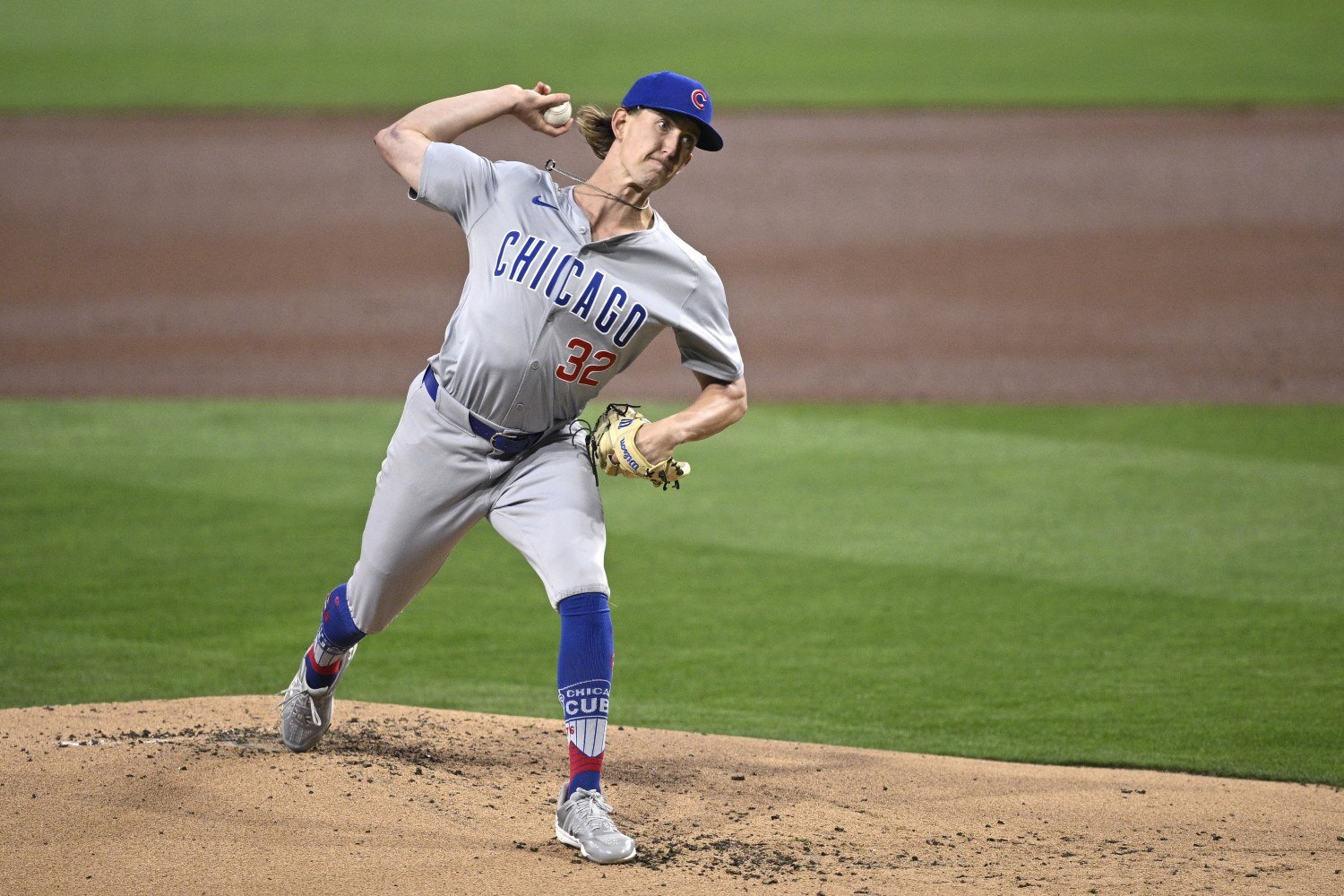 It's unlikely we'll see Ben Brown pitch even five or six innings in his nominal start Thursday afternoon against the visitors from Atlanta. He's been working out of the bullpen, where his combination of power and arsenal limitations seemed to be pointing toward a late-inning, short-burst role for him in the second half of the season. He's still stretched out enough to give the team three frames or so in the finale of their home series, but he's the tip of the spear in what will be something akin to a bullpen game. Brown is taking the spot of new multi-inning relief option Kyle Hendricks, though, so we might surmise that Hendricks will be available in that capacity as soon as Thursday, or else throughout the weekend series the team will then play in St. Louis. Though they couldn't be much more different in terms of sheer stuff and stage of their careers, Brown and Hendricks are working in corresponding, almost interchangeable roles, and have been throughout the season. They're part of a growing gallimaufry of options behind entrenched starters Shota Imanaga, Justin Steele, Jameson Taillon, and Javier Assad. Hayden Wesneski is also in that mix, although he looks primed for a long run as a relief-only weapon, given both the team's needs in that area and their plethora of options in the rotation. So, in different but not opposite ways, are both Jordan Wicks and Drew Smyly, out on rehab assignments that could put them back on the active roster within a week. Wicks is the most likely to claim the rotation spot Hendricks is yielding on a full-time basis, but Brown and even Smyly could have something to say about that. If Steele can get the rust shaken off and settle in as a consistently above-average starter again, the front four in the Cubs rotation looks stable for a while. That gives Craig Counsell an extraordinary amount of flexibility with his bullpen, even if some of that flexibility will be where a manager might prefer the rigidity of surefire, single-inning relief aces. We don't have to look far into the future to see a pitching staff that has Imanaga, Steele, Taillon, Assad, and Wicks starting, with Héctor Neris and Mark Leiter Jr. anchoring the back end of the bullpen. Trade acquisition Tyson Miller fills another place in the pen, presumably on a semi-permanent basis. That leaves five more roster spots for the pitching staff, and they could almost all be filled by guys who have recent track records as starters and the ability to go more than one inning whenever needed--but none of whom have a track record of getting high-leverage outs in a big-league bullpen. That group would include Wesneski, Brown, Hendricks, and Smyly. In that scenario, the team wouldn't need to lean on any of Luke Little, Daniel Palencia, Porter Hodge, or José Cuas. They could just use whichever of the group (all of whom are optionable) was fresh and performing well, for a while. Soon, they surely hope, one of Julian Merryweather, Yency Almonte, or Adbert Alzolay will be healthy enough to return, but while they wait, this mix of long relievers and a revolving cast of short middle relievers would be workable. Whenever any of those three (Almonte and Merryweather feel closer, at the moment, but it's hard to predict the progress each might make) do return, the Cubs probably won't want to be locked in with four long relievers, though. That could mean optioning Wesneski or Brown, but those two have the higher ceilings and better matches of stuff to role for relief work. In short, as soon as one of their high-leverage short relievers returns, it gets difficult to carry Hendricks and Smyly. By now, you might have heard the whispers on Cubs Twitter. Hendricks will reach 10 years of big-league service this season--specifically, on June 26. The Cubs owe an extraordinary and wonderful debt to Hendricks, and cutting him before that milestone feels unfathomable, if not unconscionable. At the moment, though, the smart money says he has only that long to linger on the active roster. In the next five weeks, he needs to show something significant, or he'll be designated for assignment at the end of next month. If you're looking for a date when we might see Cade Horton join the parent club, that's also the timeframe to consider. Not only would waiting until Hendricks comes off the 40-man roster make it easier to add Horton, but pushing his debut back that far would prevent him from becoming arbitration-eligible for the 2027 season. To me, that shouldn't matter, but as a cherry on top of other reasons for waiting to call him up, it works. Injuries could (and probably will) further disrupt these so-called plans. As things stand, though, the Cubs are getting healthy again, after an early stage of the season during which they didn't have enough available arms to make any truly interesting choices between them. That's changing, and it's an exciting development. Hopefully, it also means they get materially better, with players like Brown, Wicks, Wesneski, and Horton claiming roles they'll fill not just for the balance of 2024, but for years to come--and shutting down opposing offenses more efficiently in the process.
 -
With Kyle Hendricks demoted to the Chicago Cubs' bullpen for the foreseeable future, Ben Brown gets what figures to be an abbreviated spot start Thursday against Atlanta. It's a moment that emblemizes the team's sudden surfeit of multi-inning arms, which might only get richer soon. Image courtesy of © Orlando Ramirez-USA TODAY Sports It's unlikely we'll see Ben Brown pitch even five or six innings in his nominal start Thursday afternoon against the visitors from Atlanta. He's been working out of the bullpen, where his combination of power and arsenal limitations seemed to be pointing toward a late-inning, short-burst role for him in the second half of the season. He's still stretched out enough to give the team three frames or so in the finale of their home series, but he's the tip of the spear in what will be something akin to a bullpen game. Brown is taking the spot of new multi-inning relief option Kyle Hendricks, though, so we might surmise that Hendricks will be available in that capacity as soon as Thursday, or else throughout the weekend series the team will then play in St. Louis. Though they couldn't be much more different in terms of sheer stuff and stage of their careers, Brown and Hendricks are working in corresponding, almost interchangeable roles, and have been throughout the season. They're part of a growing gallimaufry of options behind entrenched starters Shota Imanaga, Justin Steele, Jameson Taillon, and Javier Assad. Hayden Wesneski is also in that mix, although he looks primed for a long run as a relief-only weapon, given both the team's needs in that area and their plethora of options in the rotation. So, in different but not opposite ways, are both Jordan Wicks and Drew Smyly, out on rehab assignments that could put them back on the active roster within a week. Wicks is the most likely to claim the rotation spot Hendricks is yielding on a full-time basis, but Brown and even Smyly could have something to say about that. If Steele can get the rust shaken off and settle in as a consistently above-average starter again, the front four in the Cubs rotation looks stable for a while. That gives Craig Counsell an extraordinary amount of flexibility with his bullpen, even if some of that flexibility will be where a manager might prefer the rigidity of surefire, single-inning relief aces. We don't have to look far into the future to see a pitching staff that has Imanaga, Steele, Taillon, Assad, and Wicks starting, with Héctor Neris and Mark Leiter Jr. anchoring the back end of the bullpen. Trade acquisition Tyson Miller fills another place in the pen, presumably on a semi-permanent basis. That leaves five more roster spots for the pitching staff, and they could almost all be filled by guys who have recent track records as starters and the ability to go more than one inning whenever needed--but none of whom have a track record of getting high-leverage outs in a big-league bullpen. That group would include Wesneski, Brown, Hendricks, and Smyly. In that scenario, the team wouldn't need to lean on any of Luke Little, Daniel Palencia, Porter Hodge, or José Cuas. They could just use whichever of the group (all of whom are optionable) was fresh and performing well, for a while. Soon, they surely hope, one of Julian Merryweather, Yency Almonte, or Adbert Alzolay will be healthy enough to return, but while they wait, this mix of long relievers and a revolving cast of short middle relievers would be workable. Whenever any of those three (Almonte and Merryweather feel closer, at the moment, but it's hard to predict the progress each might make) do return, the Cubs probably won't want to be locked in with four long relievers, though. That could mean optioning Wesneski or Brown, but those two have the higher ceilings and better matches of stuff to role for relief work. In short, as soon as one of their high-leverage short relievers returns, it gets difficult to carry Hendricks and Smyly. By now, you might have heard the whispers on Cubs Twitter. Hendricks will reach 10 years of big-league service this season--specifically, on June 26. The Cubs owe an extraordinary and wonderful debt to Hendricks, and cutting him before that milestone feels unfathomable, if not unconscionable. At the moment, though, the smart money says he has only that long to linger on the active roster. In the next five weeks, he needs to show something significant, or he'll be designated for assignment at the end of next month. If you're looking for a date when we might see Cade Horton join the parent club, that's also the timeframe to consider. Not only would waiting until Hendricks comes off the 40-man roster make it easier to add Horton, but pushing his debut back that far would prevent him from becoming arbitration-eligible for the 2027 season. To me, that shouldn't matter, but as a cherry on top of other reasons for waiting to call him up, it works. Injuries could (and probably will) further disrupt these so-called plans. As things stand, though, the Cubs are getting healthy again, after an early stage of the season during which they didn't have enough available arms to make any truly interesting choices between them. That's changing, and it's an exciting development. Hopefully, it also means they get materially better, with players like Brown, Wicks, Wesneski, and Horton claiming roles they'll fill not just for the balance of 2024, but for years to come--and shutting down opposing offenses more efficiently in the process. View full article
-
 Luis Vázquez was not called up to deliver an injection of offense for the Cubs. He's a glove-first shortstop, and he's unlikely to make many starts for the team. He got the call, even as the team reinstated Dansby Swanson from the injured list, because the last few days were a maddening affirmation of the frustratingly persistent reality of the Cubs' infield defense: it hasn't been good enough. With both Swanson and Nico Hoerner sidelined by leg injuries for the last week, Craig Counsell was forced to use both Miles Mastrobuoni and Nick Madrigal as starting middle infielders, and they weren't equal to the challenge that posed to their admirable but limited talent. It's not just a Mastrobuoni and Madrigal problem, though. Even when Swanson and/or Hoerner have been on the field this year, the club's infield has been too porous. Christopher Morel and Michael Busch each have good athleticism for corner infielders, but they're inexperienced, mistake-prone, and ultimately just barely playable at their respective positions. Swanson and Hoerner were the best middle infield in baseball for most of last season, but they haven't looked like themselves this year, either. Add it all up, and the Cubs are 29th in MLB in Defensive Efficiency (DER, which is just outs divided by batted balls) on batted balls with a launch angle under 7 degrees this year. Within that broad and telling stat sit Morel's many mistakes, Mastrobuoni being too slow and too weak-armed for shortstop, and the team being the worst in baseball at converting ground balls in double play situations into actual double plays. They're not cutting it, and the team can't win unless they start getting much better glovework all the way around the horn. Getting Swanson (and, hopefully, Hoerner) back should help matters, and swapping Mastrobuoni out for Vázquez will, too. It's telling that the Cubs kept Madrigal, while demoting Mastrobuoni, because it hints at the possibility that they'll make more use of the diminutive defensive whiz at third base in the near future, with their starting middle infield restored and no further need for Madrigal at second base. He's a zero offensively, but he's hung onto a roster spot by doing sensational work at the hot corner since the team moved him there last spring. Vázquez is an offensive upgrade over Madrigal, although admittedly, it would be hard not to be. Last year, while he was underwhelming and unproductive basically all year, Madrigal did at least manage to fling a ball out to the deep part of left field. Here's his 2023 spray chart. That's hardly a budding power hitter, and because Madrigal's plate discipline isn't good enough, it's not even the picture of the Luis Arráez-type guy the Cubs hoped they could develop after acquiring him in 2021. It is, however, a theoretically viable spray chart, for a player who plays elite defense at a position in the middle of the defensive spectrum. Alas, that's not Madrigal anymore. Here's the same chart, but for 2024. Defenses have begun aligning themselves against Madrigal in ways that would be laughable--unthinkable, even--against pretty much any other hitter in the modern major leagues, including Arráez. He's losing what few hits his quality of contact should earn, because teams can place their fielders without fear of him burning them in any way. He's not quite a pitcher up there, because he does still make a lot of contact, but that's the only thing dividing him from the species of hitter legislated out of the game due to intractable incompetence. Vázquez is not a big bat. He's put up fine overall numbers in the high minors, but his skills aren't going to permit that to translate to MLB. He's unlikely ever to be an everyday player, at least on a good team. However, he's much, much more of a viable contributor than Madrigal. Here's his 2024 spray chart, for comparison. It's apples-to-oranges, because Madrigal has spent the whole season in MLB and the Vázquez has spent it in Triple-A, but the numbers tell us Vázquez is a vastly better hitter than Madrigal is. Stat Vázquez Madrigal Hard Hit % 38.3 19.1 Med LA % 30.3 29.4 90th %ile EV 102.7 98.1 Sweet Spot EV 90.9 86.7 wSSEV 81.1 78.9 So, while he's taking Mastrobuoni's roster spot, Vázquez will really take Madrigal's role--or he ought to. The question, then, is why the Cubs kept Madrigal around at all. His glove is valuable, but Vázquez could play third if needed, too. Two backup infielders who are both defense-first seem to constitute an unaffordable roster luxury for this competitive but incomplete Cubs team. In short, I doubt that the move is permanent, in any significant sense. With Brennen Davis hitting the way he is in Iowa, it's perfectly possible that he (or, should either of them make big strides, Alexander Canario or Owen Caissie) will come up at the expense of Madrigal within a few weeks. In the meantime, this move makes the most sense, because if Swanson or Hoerner need to DH at all while they continue to fully recover from their injuries, Vázquez is a preferable fill-in to Mastrobuoni. Meanwhile, now that Cody Bellinger is fully healthy and ready to play center field regularly again, Pete Crow-Armstrong became redundant, and even problematic. Having Bellinger in center most of the time again will allow the team to use Morel as the DH more often, if they so choose. Bellinger, Ian Happ, Seiya Suzuki, and Mike Tauchman are a sufficient outfield corps for now, with Patrick Wisdom able to moonlight in a corner if a need arises. You wouldn't want Wisdom as your fifth outfielder all season, but soon, that role will probably go to one of the minor leaguers named above. Crow-Armstrong might not ever be a first-division regular. He has a higher ceiling than Vázquez, but the high point on his bell curve of possible outcomes might fall closer to past Cubs outfield prospects-turned-journeyman fourth outfielders Corey Patterson and Félix Pie than to stardom. There's still time for him to push that curve to the right, but he needs to play every day to progress in that direction, and the big-league team can't give him those reps right now. On the surface, Monday's moves are mildly surprising. Given the Cubs' current situation, though, they make sense, and the confusion or tension they create could well be solved by another move or two within the next fortnight.
- 4 comments
-
- 1
-

-
- nick madrigal
- pete crow armstrong
- (and 3 more)
-
With one middle infielder returning from the injured list and another being called up from Triple-A Iowa for the first time, we knew there would be at least one infielder shoved off the 26-man roster. Surprisingly, though, there was only one. Image courtesy of © David Banks-USA TODAY Sports Luis Vázquez was not called up to deliver an injection of offense for the Cubs. He's a glove-first shortstop, and he's unlikely to make many starts for the team. He got the call, even as the team reinstated Dansby Swanson from the injured list, because the last few days were a maddening affirmation of the frustratingly persistent reality of the Cubs' infield defense: it hasn't been good enough. With both Swanson and Nico Hoerner sidelined by leg injuries for the last week, Craig Counsell was forced to use both Miles Mastrobuoni and Nick Madrigal as starting middle infielders, and they weren't equal to the challenge that posed to their admirable but limited talent. It's not just a Mastrobuoni and Madrigal problem, though. Even when Swanson and/or Hoerner have been on the field this year, the club's infield has been too porous. Christopher Morel and Michael Busch each have good athleticism for corner infielders, but they're inexperienced, mistake-prone, and ultimately just barely playable at their respective positions. Swanson and Hoerner were the best middle infield in baseball for most of last season, but they haven't looked like themselves this year, either. Add it all up, and the Cubs are 29th in MLB in Defensive Efficiency (DER, which is just outs divided by batted balls) on batted balls with a launch angle under 7 degrees this year. Within that broad and telling stat sit Morel's many mistakes, Mastrobuoni being too slow and too weak-armed for shortstop, and the team being the worst in baseball at converting ground balls in double play situations into actual double plays. They're not cutting it, and the team can't win unless they start getting much better glovework all the way around the horn. Getting Swanson (and, hopefully, Hoerner) back should help matters, and swapping Mastrobuoni out for Vázquez will, too. It's telling that the Cubs kept Madrigal, while demoting Mastrobuoni, because it hints at the possibility that they'll make more use of the diminutive defensive whiz at third base in the near future, with their starting middle infield restored and no further need for Madrigal at second base. He's a zero offensively, but he's hung onto a roster spot by doing sensational work at the hot corner since the team moved him there last spring. Vázquez is an offensive upgrade over Madrigal, although admittedly, it would be hard not to be. Last year, while he was underwhelming and unproductive basically all year, Madrigal did at least manage to fling a ball out to the deep part of left field. Here's his 2023 spray chart. That's hardly a budding power hitter, and because Madrigal's plate discipline isn't good enough, it's not even the picture of the Luis Arráez-type guy the Cubs hoped they could develop after acquiring him in 2021. It is, however, a theoretically viable spray chart, for a player who plays elite defense at a position in the middle of the defensive spectrum. Alas, that's not Madrigal anymore. Here's the same chart, but for 2024. Defenses have begun aligning themselves against Madrigal in ways that would be laughable--unthinkable, even--against pretty much any other hitter in the modern major leagues, including Arráez. He's losing what few hits his quality of contact should earn, because teams can place their fielders without fear of him burning them in any way. He's not quite a pitcher up there, because he does still make a lot of contact, but that's the only thing dividing him from the species of hitter legislated out of the game due to intractable incompetence. Vázquez is not a big bat. He's put up fine overall numbers in the high minors, but his skills aren't going to permit that to translate to MLB. He's unlikely ever to be an everyday player, at least on a good team. However, he's much, much more of a viable contributor than Madrigal. Here's his 2024 spray chart, for comparison. It's apples-to-oranges, because Madrigal has spent the whole season in MLB and the Vázquez has spent it in Triple-A, but the numbers tell us Vázquez is a vastly better hitter than Madrigal is. Stat Vázquez Madrigal Hard Hit % 38.3 19.1 Med LA % 30.3 29.4 90th %ile EV 102.7 98.1 Sweet Spot EV 90.9 86.7 wSSEV 81.1 78.9 So, while he's taking Mastrobuoni's roster spot, Vázquez will really take Madrigal's role--or he ought to. The question, then, is why the Cubs kept Madrigal around at all. His glove is valuable, but Vázquez could play third if needed, too. Two backup infielders who are both defense-first seem to constitute an unaffordable roster luxury for this competitive but incomplete Cubs team. In short, I doubt that the move is permanent, in any significant sense. With Brennen Davis hitting the way he is in Iowa, it's perfectly possible that he (or, should either of them make big strides, Alexander Canario or Owen Caissie) will come up at the expense of Madrigal within a few weeks. In the meantime, this move makes the most sense, because if Swanson or Hoerner need to DH at all while they continue to fully recover from their injuries, Vázquez is a preferable fill-in to Mastrobuoni. Meanwhile, now that Cody Bellinger is fully healthy and ready to play center field regularly again, Pete Crow-Armstrong became redundant, and even problematic. Having Bellinger in center most of the time again will allow the team to use Morel as the DH more often, if they so choose. Bellinger, Ian Happ, Seiya Suzuki, and Mike Tauchman are a sufficient outfield corps for now, with Patrick Wisdom able to moonlight in a corner if a need arises. You wouldn't want Wisdom as your fifth outfielder all season, but soon, that role will probably go to one of the minor leaguers named above. Crow-Armstrong might not ever be a first-division regular. He has a higher ceiling than Vázquez, but the high point on his bell curve of possible outcomes might fall closer to past Cubs outfield prospects-turned-journeyman fourth outfielders Corey Patterson and Félix Pie than to stardom. There's still time for him to push that curve to the right, but he needs to play every day to progress in that direction, and the big-league team can't give him those reps right now. On the surface, Monday's moves are mildly surprising. Given the Cubs' current situation, though, they make sense, and the confusion or tension they create could well be solved by another move or two within the next fortnight. View full article
-
The Chicago Cubs have faced mounting injury trouble all spring, and it's taken a heavy toll on their offense during a season already unfriendly to offense league-wide. Will a return to full strength this week be enough to turn things around? Image courtesy of © David Banks-USA TODAY Sports On any list of the Cubs' best hitters, Cody Bellinger, Seiya Suzuki, Dansby Swanson, and Nico Hoerner have to be in the top six. Depending on your evaluations of the inconsistent Ian Happ and Christopher Morel, maybe all four of those guys are in the top five at any given time. At any rate, they're essential, and being without each of them for stretches of the young season has made the Cubs offense a sputtering mess recently. The last time the Cubs had all four in their lineup was on Apr. 14, in their 15th contest of the season. Thereafter, Suzuki went on the shelf for what turned out to be just over four weeks. Ten days after that loss, Bellinger, too, was sidelined for a fortnight. He returned just in time to play one game (May 7) with both Hoerner and Swanson, before the latter hit the injured list. Suzuki returned May 11, and he, Hoerner and Bellinger managed to play together three times before Hoerner was removed from the lineup due to his balky hamstring. In the last five weeks, the team has had three of the four together only one-third of the time: 11 games, out of 33. Reportedly, that could change Tuesday. Both Suzuki and Bellinger are healthy, and both Swanson and Hoerner have a chance to return from their injuries this week. That would be a welcome development, because this team has not functioned well at all in the absence of more than one of these four. With three or four of them in the lineup, they're 15-10 this year. With two or fewer of them, they're 11-12, after Sunday's 3-2 loss to the Pirates. In general, the team's scoring has trended downward since the first week of the season, and injuries are the main culprit. They especially cratered during Bellinger's absence, but whatever recovery they effected once he came back fizzled quickly as Swanson and Hoerner were hampered by their respective leg trouble. Even at full strength, this is far from an elite offense. A hot Morel and Michael Busch, plus a healthy Bellinger, Swanson, Hoerner, Happ, and Suzuki does make for that good a lineup, but that's a lot for which to ask. It's much better to hope merely for good health, with the understanding that Morel and Busch will continue to have hot and cold stretches, based on their offensive profiles. We shouldn't overlook the confluence of these injuries and a brutal stretch of tough pitching as a contributor to the team's offensive struggles. Over the last two weeks, the average fastball the Cubs have seen has been 95.5 miles per hour, which is not only the highest in MLB, but 0.8 MPH higher than the team who has seen the second-hottest heat. It's not just difficult to hit fastballs that hard; it's also harder to handle breaking and offspeed pitches when trying to cover them. The team's collective weighted on-base average (wOBA) on non-fastballs is .245 since May 6, 22nd in MLB. Through May 5, that same number was .274, good for 12th in the league. Over that two-week span, alone, the Cubs have seen Paul Skenes (twice), Jared Jones (twice), Chris Sale, Yu Darvish, Dylan Cease, Reynaldo López, and Mitch Keller. They were a depleted team facing a gauntlet of great starters. That's why they've only scored 3.4 runs per game over that span, including three times being shut out. The bad news is that that stretch of fierce competition isn't quite over. Atlanta comes to town for three more games this week, even as the Cubs lineup becomes whole again. The good news (apart from those impending and much-needed returns to play) is that after that, things open up quite a bit. The Cubs have series against the Brewers in Milwaukee at the end of this month and next, but those are the only two times they'll face a truly formidable pitching staff between the Atlanta series and one against the Phillies in the first week of July. In there are two series apiece against the Reds, Giants, and Cardinals, and encounters with the Mets, White Sox, and Rays. All of those teams lack the kind of elite arms the Cubs have seen recently, and all but the Rays also lack quality depth. By no means will the wins come easily from here. Still, some relief is right around the corner, and help is on the way. The Cubs' season will come down, in no small part, to staying healthier than they have over the first two months of the campaign. Great teams don't need to rely on that kind of luck the way this one does, but bad teams don't even have a chance if they do stay healthy, as this one clearly does. Starting Tuesday, we'll start to get a clearer sense of what this team is capable of than we've had for the last six weeks. View full article
-
The Cubs Lineup Has Been Decimated By Injuries, But That's Not All
Matthew Trueblood posted an article in Cubs
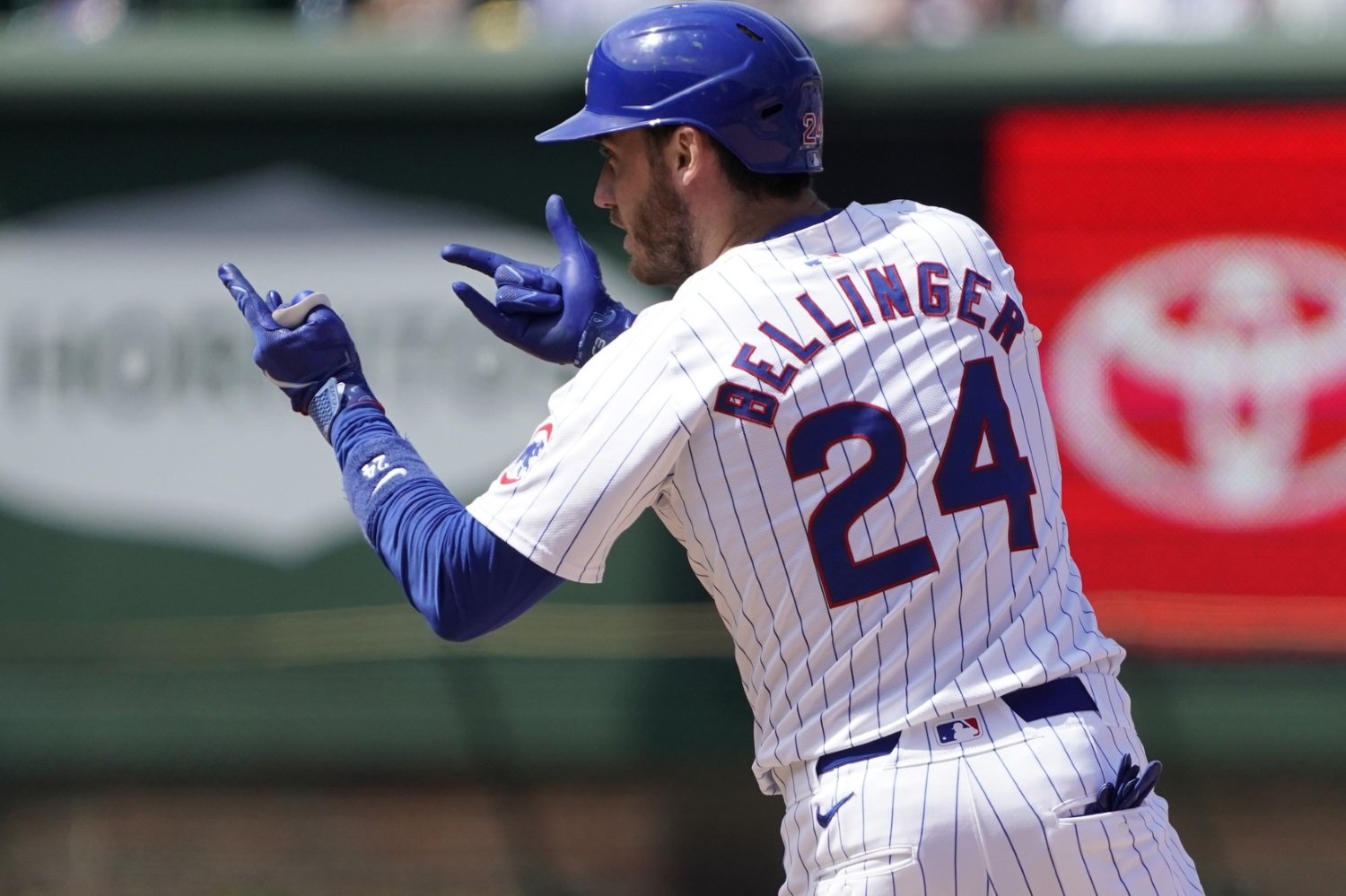 On any list of the Cubs' best hitters, Cody Bellinger, Seiya Suzuki, Dansby Swanson, and Nico Hoerner have to be in the top six. Depending on your evaluations of the inconsistent Ian Happ and Christopher Morel, maybe all four of those guys are in the top five at any given time. At any rate, they're essential, and being without each of them for stretches of the young season has made the Cubs offense a sputtering mess recently. The last time the Cubs had all four in their lineup was on Apr. 14, in their 15th contest of the season. Thereafter, Suzuki went on the shelf for what turned out to be just over four weeks. Ten days after that loss, Bellinger, too, was sidelined for a fortnight. He returned just in time to play one game (May 7) with both Hoerner and Swanson, before the latter hit the injured list. Suzuki returned May 11, and he, Hoerner and Bellinger managed to play together three times before Hoerner was removed from the lineup due to his balky hamstring. In the last five weeks, the team has had three of the four together only one-third of the time: 11 games, out of 33. Reportedly, that could change Tuesday. Both Suzuki and Bellinger are healthy, and both Swanson and Hoerner have a chance to return from their injuries this week. That would be a welcome development, because this team has not functioned well at all in the absence of more than one of these four. With three or four of them in the lineup, they're 15-10 this year. With two or fewer of them, they're 11-12, after Sunday's 3-2 loss to the Pirates. In general, the team's scoring has trended downward since the first week of the season, and injuries are the main culprit. They especially cratered during Bellinger's absence, but whatever recovery they effected once he came back fizzled quickly as Swanson and Hoerner were hampered by their respective leg trouble. Even at full strength, this is far from an elite offense. A hot Morel and Michael Busch, plus a healthy Bellinger, Swanson, Hoerner, Happ, and Suzuki does make for that good a lineup, but that's a lot for which to ask. It's much better to hope merely for good health, with the understanding that Morel and Busch will continue to have hot and cold stretches, based on their offensive profiles. We shouldn't overlook the confluence of these injuries and a brutal stretch of tough pitching as a contributor to the team's offensive struggles. Over the last two weeks, the average fastball the Cubs have seen has been 95.5 miles per hour, which is not only the highest in MLB, but 0.8 MPH higher than the team who has seen the second-hottest heat. It's not just difficult to hit fastballs that hard; it's also harder to handle breaking and offspeed pitches when trying to cover them. The team's collective weighted on-base average (wOBA) on non-fastballs is .245 since May 6, 22nd in MLB. Through May 5, that same number was .274, good for 12th in the league. Over that two-week span, alone, the Cubs have seen Paul Skenes (twice), Jared Jones (twice), Chris Sale, Yu Darvish, Dylan Cease, Reynaldo López, and Mitch Keller. They were a depleted team facing a gauntlet of great starters. That's why they've only scored 3.4 runs per game over that span, including three times being shut out. The bad news is that that stretch of fierce competition isn't quite over. Atlanta comes to town for three more games this week, even as the Cubs lineup becomes whole again. The good news (apart from those impending and much-needed returns to play) is that after that, things open up quite a bit. The Cubs have series against the Brewers in Milwaukee at the end of this month and next, but those are the only two times they'll face a truly formidable pitching staff between the Atlanta series and one against the Phillies in the first week of July. In there are two series apiece against the Reds, Giants, and Cardinals, and encounters with the Mets, White Sox, and Rays. All of those teams lack the kind of elite arms the Cubs have seen recently, and all but the Rays also lack quality depth. By no means will the wins come easily from here. Still, some relief is right around the corner, and help is on the way. The Cubs' season will come down, in no small part, to staying healthier than they have over the first two months of the campaign. Great teams don't need to rely on that kind of luck the way this one does, but bad teams don't even have a chance if they do stay healthy, as this one clearly does. Starting Tuesday, we'll start to get a clearer sense of what this team is capable of than we've had for the last six weeks.
- 3 comments
-
- 1
-
-
- dansby swanson
- nico hoerner
- (and 2 more)
-
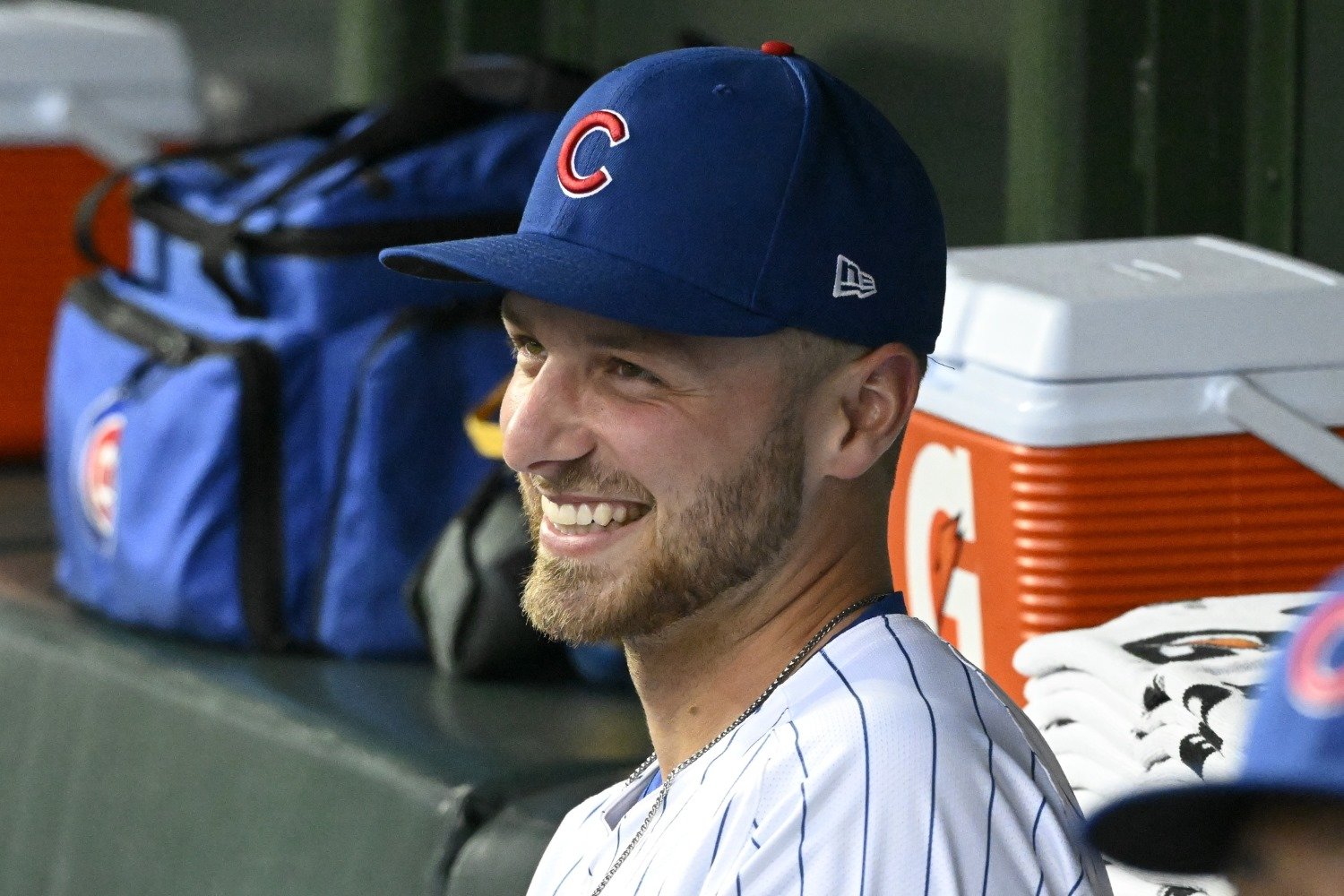 Earlier this week, I saw a couple of comments in our forums espousing uncertainty about how Michael Busch is really doing. On Thursday, @CubinNY started a thread with the simple and startling title: Is Michael Busch cutting it at first? There's more of this sentiment out there than I would have guessed, because for me (unlike for NY), he is passing the eye test, despite some bad mistakes in the field and some obviously rough edges at bat. I remain very high on Busch, and was surprised that NY closed with the question, "How much time does he get?" I wouldn't have even guessed a clock was ticking, but it's pretty clear that multiple folks are thinking along those lines, and since his game does seem to tend toward extremes so far, I think this is a really good question to try to tackle in a robust and exhaustive way. Let's try it. Firstly, there are the surface-level numbers, which tell the story of a fairly useful (though not star-caliber) hitter. Busch is batting .254/.323/.472, with a strikeout rate just shy of 35% but a walk rate north of 9%, too. (These numbers were entering Friday, but they've changed little. Busch hung in as well as any of the Cubs against Paul Skenes Friday, then appeared only as a pinch-hitter Saturday.) That strikeout rate is unnerving, because sustaining those overall numbers with that kind of punchout rate is impossible, but there are some exciting things to note here. Obviously, he had that streak of five straight games with a home run, and he also clobbered a clutch homer against the Padres last week. When he's running hot, he's a well-rounded hitting machine, and not just because he can clear the fences. Busch has eight doubles and a triple, in addition to his seven homers. He's capable of being a complete slugger. The league has just picked apart some of his weaknesses, making his numbers ugly as he adjusts. It's a mile from being the only (or even the best) way to evaluate him, but maybe one way we can gain insight on where Busch stands is by digging into the new bat-tracking data released from Statcast this week. Firstly, we need to understand Busch's big limitation: he doesn't have good bat speed. For a starting first baseman, this is a bad place to start. Busch needs to generate average-plus power to be a long-term part of the solution for the Cubs, and swing speed and power (as one would intuit) go hand-in-hand. It's not easy to generate consistent power with a sluggish swing, and Busch has one. That does show up when you watch him, too, doesn't it? It's part of why he was getting beaten so badly, for a stretch, with fastballs at the top of the zone. He has to fight an uphill battle from below-average bat speed to reach above-average power. But bat speed isn't everything. How has Busch even cracked seven homers (let alone hit some of them so impressively, and split gaps with a good number of hard line drives, too) without average or better bat speed? One of the other measurements released by Statcast was squared-up percentage--the share of batted balls on which the hitter met the ball squarely enough to generate at least 80 percent of the possible exit velocity, given their bat speed and the speed of the incoming pitch. Kyle Bland of Pitcher List created an app that lets us go even deeper, and see the specific squared-up percentage (the actual per-swing percentage of possible exit velocity achieved) on a swing-by-swing basis. Busch is stellar when it comes to squaring up the ball. His seasonal squared-up rate is above the 90th percentile for the league, and when he's hot, he's as good at squaring it up as anyone in baseball. That makes up for a bat-speed deficit, and then some. Swing speed matters, but if you just clip the top or bottom of the ball, a good amount of bat speed can be wasted. One way to be a good power hitter is just to get a bigger piece of the ball most of the time than other hitters, even if they swing faster than you. What's interesting, though, is that Busch is having such severe strikeout problems, despite squaring the ball up with such regularity. There's a strong negative correlation (about -0.6) between squared-up rate and whiff rate, which is to be expected. Guys who get the fat part of the ball most of the time don't usually also whiff a lot, because between squaring it up and whiffing should be a good number of mishits. It hasn't been that way for Busch, perhaps because there are gaps in his swing that can still be exploited. The bat-tracking data also includes a measurement of the length of swings, based on the total three-dimensional distance traveled by the tip of the bat. It's a noisy measurement, but mapping it by pitch location does help us understand some things. There are two places where Busch's swing is longer than the average for that zone: low and in, and up and away. That's not a problem down and over the middle or inner part of the plate. On the contrary, it means he's catching that ball out front, and squaring it up a lot, even for a relatively hitter-friendly segment of the zone. Up and away, though, length kills you. A long swing can't get to a high fastball, unless you really cheat toward that pitch, get started early, and open yourself up to more trouble if it's any other offering or in any other location. Whiffing often despite the ability to square the ball up exceptionally well at other times is part of the penalty you pay for guessing up there, in order to cover holes in the swing. Dansby Swanson, Nelson Velázquez, and Elly De La Cruz are among the other hitters like Busch in this regard, and Cubs fans will recognize all of those as aggressive, smart "guess" hitters who occasionally look bad but can do real damage on contact. I talk often about players with "grooved" swings--those who will tag anything in a certain selection of spots, based on their swing path, but don't seem able to manipulate and modulate their bat path to reach pitches in other spots. A low contact rate against a high squared-up percentage is what I'd expect to see from a player with a grooved swing. It's also what I'd expect to see from a young hitter still learning how to cover the zone against big-league stuff, despite having the requisite skills to be more well-rounded. I think that's where Busch is, along with (to name one) Baltimore's Jordan Westburg. Defensively, of course, the edges are even rougher. He's had some bad defensive misplays and errors, and few impressive plays to balance things on the other side. I do think he'll be a rangy first baseman, making some plays you don't expect coming in on the ball or going to his right, and I think more experience will allow him to clean things up enough that the balls clanking off his glove (for instance) will be less of an issue. Right now, though, the growing pains there are more painful than the ones at the plate. I doubt this is the next Anthony Rizzo, but I think the Cubs are comfortable giving him all of this year and next to smooth some things out, and I wouldn't be surprised if he's a solid hitter in the middle of their order for the next half-decade. Though I don't think either thing is right on the horizon, I would bet that Busch is closer to becoming an extension candidate for the Cubs than to losing his job. It'll be interesting to see him continue making adjustments as he goes through his first full season in the big leagues.
 -
The Chicago Cubs made a big commitment this winter, to a player they hope will be their first baseman of the future. There's a lot of noise mingled with signal so far, so let's try to pin down where things stand for him. Image courtesy of © Matt Marton-USA TODAY Sports Earlier this week, I saw a couple of comments in our forums espousing uncertainty about how Michael Busch is really doing. On Thursday, @CubinNY started a thread with the simple and startling title: Is Michael Busch cutting it at first? There's more of this sentiment out there than I would have guessed, because for me (unlike for NY), he is passing the eye test, despite some bad mistakes in the field and some obviously rough edges at bat. I remain very high on Busch, and was surprised that NY closed with the question, "How much time does he get?" I wouldn't have even guessed a clock was ticking, but it's pretty clear that multiple folks are thinking along those lines, and since his game does seem to tend toward extremes so far, I think this is a really good question to try to tackle in a robust and exhaustive way. Let's try it. Firstly, there are the surface-level numbers, which tell the story of a fairly useful (though not star-caliber) hitter. Busch is batting .254/.323/.472, with a strikeout rate just shy of 35% but a walk rate north of 9%, too. (These numbers were entering Friday, but they've changed little. Busch hung in as well as any of the Cubs against Paul Skenes Friday, then appeared only as a pinch-hitter Saturday.) That strikeout rate is unnerving, because sustaining those overall numbers with that kind of punchout rate is impossible, but there are some exciting things to note here. Obviously, he had that streak of five straight games with a home run, and he also clobbered a clutch homer against the Padres last week. When he's running hot, he's a well-rounded hitting machine, and not just because he can clear the fences. Busch has eight doubles and a triple, in addition to his seven homers. He's capable of being a complete slugger. The league has just picked apart some of his weaknesses, making his numbers ugly as he adjusts. It's a mile from being the only (or even the best) way to evaluate him, but maybe one way we can gain insight on where Busch stands is by digging into the new bat-tracking data released from Statcast this week. Firstly, we need to understand Busch's big limitation: he doesn't have good bat speed. For a starting first baseman, this is a bad place to start. Busch needs to generate average-plus power to be a long-term part of the solution for the Cubs, and swing speed and power (as one would intuit) go hand-in-hand. It's not easy to generate consistent power with a sluggish swing, and Busch has one. That does show up when you watch him, too, doesn't it? It's part of why he was getting beaten so badly, for a stretch, with fastballs at the top of the zone. He has to fight an uphill battle from below-average bat speed to reach above-average power. But bat speed isn't everything. How has Busch even cracked seven homers (let alone hit some of them so impressively, and split gaps with a good number of hard line drives, too) without average or better bat speed? One of the other measurements released by Statcast was squared-up percentage--the share of batted balls on which the hitter met the ball squarely enough to generate at least 80 percent of the possible exit velocity, given their bat speed and the speed of the incoming pitch. Kyle Bland of Pitcher List created an app that lets us go even deeper, and see the specific squared-up percentage (the actual per-swing percentage of possible exit velocity achieved) on a swing-by-swing basis. Busch is stellar when it comes to squaring up the ball. His seasonal squared-up rate is above the 90th percentile for the league, and when he's hot, he's as good at squaring it up as anyone in baseball. That makes up for a bat-speed deficit, and then some. Swing speed matters, but if you just clip the top or bottom of the ball, a good amount of bat speed can be wasted. One way to be a good power hitter is just to get a bigger piece of the ball most of the time than other hitters, even if they swing faster than you. What's interesting, though, is that Busch is having such severe strikeout problems, despite squaring the ball up with such regularity. There's a strong negative correlation (about -0.6) between squared-up rate and whiff rate, which is to be expected. Guys who get the fat part of the ball most of the time don't usually also whiff a lot, because between squaring it up and whiffing should be a good number of mishits. It hasn't been that way for Busch, perhaps because there are gaps in his swing that can still be exploited. The bat-tracking data also includes a measurement of the length of swings, based on the total three-dimensional distance traveled by the tip of the bat. It's a noisy measurement, but mapping it by pitch location does help us understand some things. There are two places where Busch's swing is longer than the average for that zone: low and in, and up and away. That's not a problem down and over the middle or inner part of the plate. On the contrary, it means he's catching that ball out front, and squaring it up a lot, even for a relatively hitter-friendly segment of the zone. Up and away, though, length kills you. A long swing can't get to a high fastball, unless you really cheat toward that pitch, get started early, and open yourself up to more trouble if it's any other offering or in any other location. Whiffing often despite the ability to square the ball up exceptionally well at other times is part of the penalty you pay for guessing up there, in order to cover holes in the swing. Dansby Swanson, Nelson Velázquez, and Elly De La Cruz are among the other hitters like Busch in this regard, and Cubs fans will recognize all of those as aggressive, smart "guess" hitters who occasionally look bad but can do real damage on contact. I talk often about players with "grooved" swings--those who will tag anything in a certain selection of spots, based on their swing path, but don't seem able to manipulate and modulate their bat path to reach pitches in other spots. A low contact rate against a high squared-up percentage is what I'd expect to see from a player with a grooved swing. It's also what I'd expect to see from a young hitter still learning how to cover the zone against big-league stuff, despite having the requisite skills to be more well-rounded. I think that's where Busch is, along with (to name one) Baltimore's Jordan Westburg. Defensively, of course, the edges are even rougher. He's had some bad defensive misplays and errors, and few impressive plays to balance things on the other side. I do think he'll be a rangy first baseman, making some plays you don't expect coming in on the ball or going to his right, and I think more experience will allow him to clean things up enough that the balls clanking off his glove (for instance) will be less of an issue. Right now, though, the growing pains there are more painful than the ones at the plate. I doubt this is the next Anthony Rizzo, but I think the Cubs are comfortable giving him all of this year and next to smooth some things out, and I wouldn't be surprised if he's a solid hitter in the middle of their order for the next half-decade. Though I don't think either thing is right on the horizon, I would bet that Busch is closer to becoming an extension candidate for the Cubs than to losing his job. It'll be interesting to see him continue making adjustments as he goes through his first full season in the big leagues. View full article
-
The Chicago Cubs' stocky Mexican righthander is now 195 innings, 50 total appearances, and 27 starts into his MLB career, with a 2.67 ERA. It's time we all reckon with our doubts about him. Image courtesy of © Ron Chenoy-USA TODAY Sports In technology, there's a commonly used term for what's happened to pitching analysis since the dawn of the PITCHf/x Era in 2008: lock-in. It's what happens when a particular technological framework becomes so much the default that it becomes impractical (and eventually, unthinkable) to make a meaningful change. The QWERTY keyboard has you locked in. So does the standard file system for saving documents and photos on the computer. Lock-in is a common phenomenon, in some ways, and it's not always bad. Sometimes, though, lock-in blinds us to the opportunities that exist to reach something better. We've all gotten locked into the pitch-tracking model of pitcher evaluation, to such an extent that algorithmic and machine-learning tools have been called upon to boil pitches and pitchers down to single numbers, which are then treated as nearly definitive in conversations about those pitches and pitchers. It's a good example of how we can quickly become overly reliant on technology in certain settings, and Javier Assad is one good reminder of its flaws. Assad doesn't throw especially hard. He doesn't have any individual pitch that overwhelms hitters, impresses Stuff+ and other models, or generates a hilariously high number of ground balls. Even zooming out and looking at his overall numbers, he doesn't do the things (strike out more than a quarter of opposing batters, walk fewer than an average pitcher, etc.) that we expect above-average big-league starters to do. We're locked in on the concepts of velocity, movement, spin rate, Stuff+, FIP, and so on. Assad doesn't excel in any of those aspects, so we tend strongly to doubt the staying power of whatever success he finds. I'm not making an accusation; I'm making an admission. I do this, too, in no small measure. It's time for that to change, even if there's some chance I'll be burned by the pivot in another month or so. Assad made his 50th career appearance Wednesday night in Atlanta, with six scoreless innings to bring his ERA down to a baffling 1.49. His career mark is now 2.67, and vexingly, it's even lower (2.47) as a starter than it is in relief. That's with both a strikeout and a walk rate on the wrong side of the MLB average, and even in this sparkling start to the 2024 campaign, he's only crept up to 21.6% strikeouts and down to 7.7% walks. He's one of just 19 pitchers in the Wild Card Era to post an ERA under 3.00 over his first 50 career outings (among those with 150 or more innings in those games, clearing out short relievers), and he's far from the high end of that list. Query Results Table Rk Player Team ERA IP 1 Tony Gonsolin LAD 2.37 224.0 2 José Fernández MIA 2.47 305.2 3 Tanner Roark WSN 2.56 260.1 4 Matt Harvey NYM 2.61 331.0 5 Alek Manoah TOR 2.65 302.1 6 Jacob deGrom NYM 2.66 321.1 7 Javier Assad CHC 2.67 195.1 8 Mark Prior CHC 2.69 334.0 9 Shane McClanahan TBR 2.71 275.2 10 Sonny Gray OAK 2.87 319.1 11 Noah Syndergaard NYM 2.89 305.0 12 Joel Piñeiro SEA 2.89 214.2 13 Michael Wacha STL 2.90 273.0 14 Jeremy Hellickson TBR 2.95 295.2 15 Stephen Strasburg WSN 2.96 282.2 Rk Player Team ERA IP 16 Matt Morris STL 2.97 330.2 17 Hideo Nomo LAD 2.97 348.0 18 Julio Teheran ATL 2.98 302.1 19 Jaime García STL 2.99 256.0 Provided by Stathead.com: Found with Stathead. See Full Results. Generated 5/16/2024. How is he doing this? It would defeat the point I made above for me to come to you with some overly technical, analytical explanation. That said, we can look briefly at a few things, more for the way they depart from the modern norms of pitching success than for the ways they fit them. First, Assad has a deep arsenal. He's a true six-pitch pitcher, willing to use four different offerings pretty frequently against righties and five different ones against lefties. He throws the kitchen sink at hitters, which hardly anyone does anymore (and, thus, which hitters are less able to adjust to than they could 20 years ago). Second, Assad's stuff has a wide range of movement profiles, and he forces opponents to cover the whole plate and the whole vertical zone. That's hard to do, and most hitters get frustrated by it. Again, too, there's a platoon dynamic at play. He trusts different pitches to do different things against lefties and righties, and shapes them in pleasingly subtle, meaningful ways based on situation, familiarity, and swing path. Finally, and importantly, because of the above, Assad gets hitters out of the aggressive, damage-focused, pull-happy approach so common in today's game. He puts them on the defensive. When Statcast rolled out bat-tracking data earlier this week, it showed that Assad gets some of the slower swings in the league from his opponents, and that's because of his extreme unpredictability. His soft stuff also plays some part in taking the juice out of hitters' bats. They very rarely pull fly balls and long line drives against him, and as nervous as a middling ground-ball rate can be for those of us raised in a league full of strikeout artists and ground-ball guys, the opposite-field fly ball is another relatively safe way to get a lot of outs. That list of great career starts above tells the story here. Assad is not yet guaranteed to be any kind of ace. He's certainly more directly comparable to Tanner Roark than to José Fernández. Still, he's on the list, which is far more than I ever expected from him, and the fact that his success is difficult to explain in a 21st-century pitching paradigm doesn't invalidate it. Even Roark had his best career season in 2016, after exiting that first 50 games window. Don't expect Javier Assad to regress too much, just because he doesn't throw 98 or rival Tyler Glasnow for sheer dominance. View full article
-
How Long Can Javier Assad Be This Good and This Underestimated?
Matthew Trueblood posted an article in Cubs
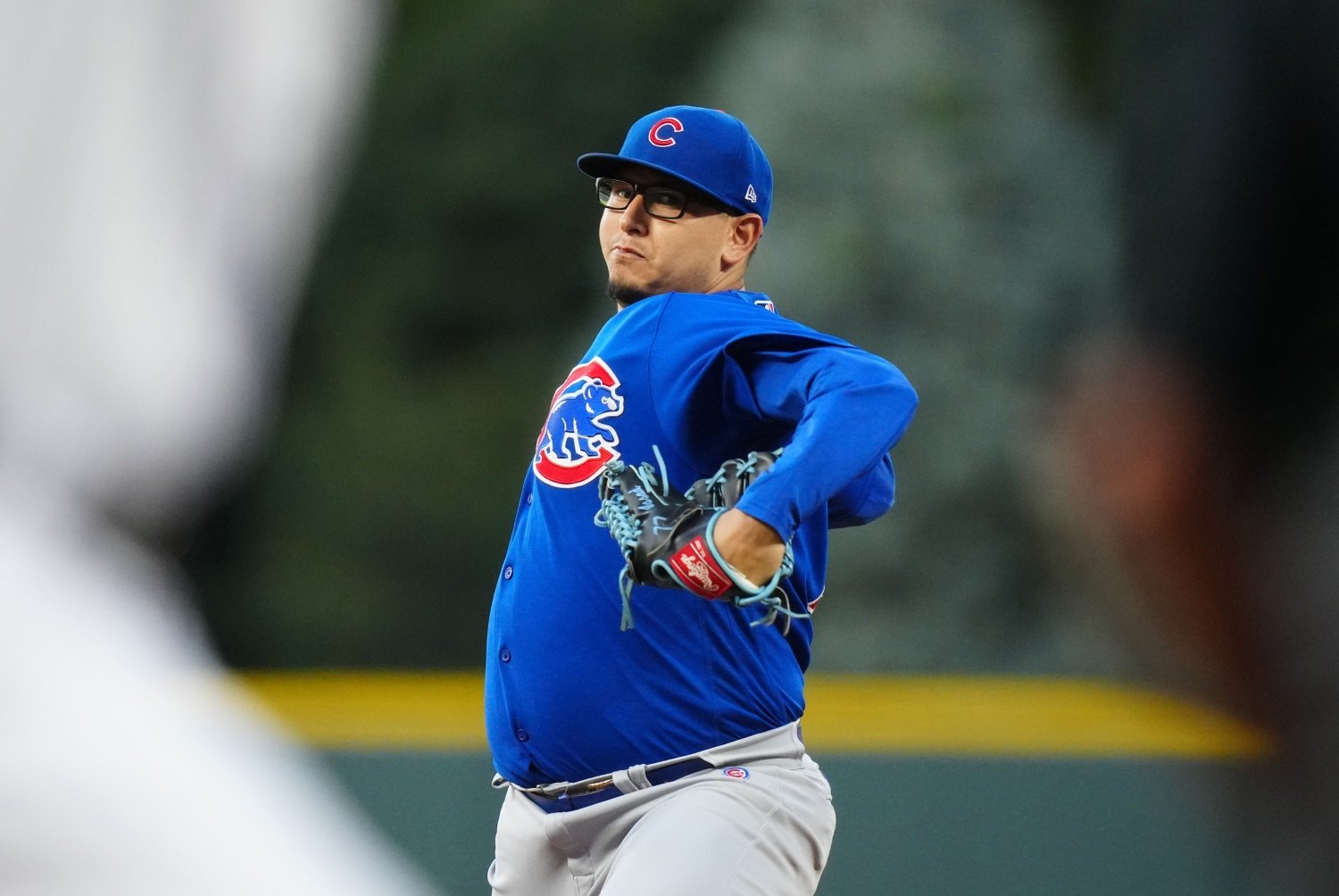 In technology, there's a commonly used term for what's happened to pitching analysis since the dawn of the PITCHf/x Era in 2008: lock-in. It's what happens when a particular technological framework becomes so much the default that it becomes impractical (and eventually, unthinkable) to make a meaningful change. The QWERTY keyboard has you locked in. So does the standard file system for saving documents and photos on the computer. Lock-in is a common phenomenon, in some ways, and it's not always bad. Sometimes, though, lock-in blinds us to the opportunities that exist to reach something better. We've all gotten locked into the pitch-tracking model of pitcher evaluation, to such an extent that algorithmic and machine-learning tools have been called upon to boil pitches and pitchers down to single numbers, which are then treated as nearly definitive in conversations about those pitches and pitchers. It's a good example of how we can quickly become overly reliant on technology in certain settings, and Javier Assad is one good reminder of its flaws. Assad doesn't throw especially hard. He doesn't have any individual pitch that overwhelms hitters, impresses Stuff+ and other models, or generates a hilariously high number of ground balls. Even zooming out and looking at his overall numbers, he doesn't do the things (strike out more than a quarter of opposing batters, walk fewer than an average pitcher, etc.) that we expect above-average big-league starters to do. We're locked in on the concepts of velocity, movement, spin rate, Stuff+, FIP, and so on. Assad doesn't excel in any of those aspects, so we tend strongly to doubt the staying power of whatever success he finds. I'm not making an accusation; I'm making an admission. I do this, too, in no small measure. It's time for that to change, even if there's some chance I'll be burned by the pivot in another month or so. Assad made his 50th career appearance Wednesday night in Atlanta, with six scoreless innings to bring his ERA down to a baffling 1.49. His career mark is now 2.67, and vexingly, it's even lower (2.47) as a starter than it is in relief. That's with both a strikeout and a walk rate on the wrong side of the MLB average, and even in this sparkling start to the 2024 campaign, he's only crept up to 21.6% strikeouts and down to 7.7% walks. He's one of just 19 pitchers in the Wild Card Era to post an ERA under 3.00 over his first 50 career outings (among those with 150 or more innings in those games, clearing out short relievers), and he's far from the high end of that list. Query Results Table Rk Player Team ERA IP 1 Tony Gonsolin LAD 2.37 224.0 2 José Fernández MIA 2.47 305.2 3 Tanner Roark WSN 2.56 260.1 4 Matt Harvey NYM 2.61 331.0 5 Alek Manoah TOR 2.65 302.1 6 Jacob deGrom NYM 2.66 321.1 7 Javier Assad CHC 2.67 195.1 8 Mark Prior CHC 2.69 334.0 9 Shane McClanahan TBR 2.71 275.2 10 Sonny Gray OAK 2.87 319.1 11 Noah Syndergaard NYM 2.89 305.0 12 Joel Piñeiro SEA 2.89 214.2 13 Michael Wacha STL 2.90 273.0 14 Jeremy Hellickson TBR 2.95 295.2 15 Stephen Strasburg WSN 2.96 282.2 Rk Player Team ERA IP 16 Matt Morris STL 2.97 330.2 17 Hideo Nomo LAD 2.97 348.0 18 Julio Teheran ATL 2.98 302.1 19 Jaime García STL 2.99 256.0 Provided by Stathead.com: Found with Stathead. See Full Results. Generated 5/16/2024. How is he doing this? It would defeat the point I made above for me to come to you with some overly technical, analytical explanation. That said, we can look briefly at a few things, more for the way they depart from the modern norms of pitching success than for the ways they fit them. First, Assad has a deep arsenal. He's a true six-pitch pitcher, willing to use four different offerings pretty frequently against righties and five different ones against lefties. He throws the kitchen sink at hitters, which hardly anyone does anymore (and, thus, which hitters are less able to adjust to than they could 20 years ago). Second, Assad's stuff has a wide range of movement profiles, and he forces opponents to cover the whole plate and the whole vertical zone. That's hard to do, and most hitters get frustrated by it. Again, too, there's a platoon dynamic at play. He trusts different pitches to do different things against lefties and righties, and shapes them in pleasingly subtle, meaningful ways based on situation, familiarity, and swing path. Finally, and importantly, because of the above, Assad gets hitters out of the aggressive, damage-focused, pull-happy approach so common in today's game. He puts them on the defensive. When Statcast rolled out bat-tracking data earlier this week, it showed that Assad gets some of the slower swings in the league from his opponents, and that's because of his extreme unpredictability. His soft stuff also plays some part in taking the juice out of hitters' bats. They very rarely pull fly balls and long line drives against him, and as nervous as a middling ground-ball rate can be for those of us raised in a league full of strikeout artists and ground-ball guys, the opposite-field fly ball is another relatively safe way to get a lot of outs. That list of great career starts above tells the story here. Assad is not yet guaranteed to be any kind of ace. He's certainly more directly comparable to Tanner Roark than to José Fernández. Still, he's on the list, which is far more than I ever expected from him, and the fact that his success is difficult to explain in a 21st-century pitching paradigm doesn't invalidate it. Even Roark had his best career season in 2016, after exiting that first 50 games window. Don't expect Javier Assad to regress too much, just because he doesn't throw 98 or rival Tyler Glasnow for sheer dominance.
 -
The Chicago Cubs have had to thrust their young catcher into a truly primary role a bit sooner than they expected or preferred. So far, he's responded by pressing at the plate, but plenty of promise remains. Image courtesy of © David Banks-USA TODAY Sports After an uneven but interesting rookie season in 2023, Miguel Amaya came to camp this spring and quickly emerged as the better option to start often behind the plate for the Cubs. Amaya's development has been slowed and distorted by injuries, but he's flashed impressive tools throughout his professional career, and even while he was being half-wasted by a manager reluctant to trust young players, he carried that over into his first MLB action. Defensively, Amaya has been respectable since becoming the team's de facto starter at catcher. He's struggled mightily in his efforts to control the running game, but his framing numbers have been strong, and he's learning quickly when it comes to calling games and coaxing pitchers through difficult sequences. Offensively, however, Amaya isn't producing at anywhere near his potential level, and it's been a conspicuous problem for a Cubs offense often down one or two of its best hitters over the first seven weeks. On the season, Amaya's numbers are hideous: .195/.261/.280. If Yan Gomes weren't running an OBP (.213) 13 points worse than John Smoltz's, the Cubs would have had to demote their would-be catcher of the future, before he could even become the catcher of the present. He has to be much, much better than this, or he'll join the very long but utterly forgotten list of catchers of the past. There's hope that he can avoid that, but he has to make some big adjustments. Amaya's fundamental offensive skills aren't bad. He swings and misses slightly more often than an average hitter, but only slightly. He hits the ball hard enough to produce good power, though he doesn't elevate it as consistently as the team hopes he eventually will. With the new bat-tracking data that came out Sunday at Baseball Savant, we gained some unexpected insight: Amaya not only has average-plus bat speed, but pairs that with a short swing length. In other words, his bat takes a more compact and direct path to the ball than one would expect, given the speed at which he swings. That combination of traits is valuable, because if Amaya can lock in on a location and deliver his bat to that spot accurately, he can be a bit early and still catch the ball on the fat part of the bat. That's what happened on his home run in Seattle last month. cmVZdjVfWGw0TUFRPT1fVWxOV0FWUlZWUW9BRFFFRFV3QUFBUTREQUZoUUFBVUFBVndEQmxBQUNRQlhWZ0Zm.mp4 Alternatively, because the combination of good bat speed and a short swing leads to a short time from starting one's swing to the (real or theoretical) contact point and solid acceleration through contact, he can be a little bit late and still drive the ball, as he did on a scalded single against the Brewers earlier this month. WVFZOTlfWGw0TUFRPT1fRDFWWlZ3QlhYd01BQ2xFQVhnQUFDQUFFQUZnQkJRTUFVRlFNQlFFSFVBRUhBd1ZV.mp4 Pitcher List's Kyle Bland created an app for scraping and visualizing some of the new bat-tracking data, and it includes two numbers not reported by Statcast, but easily derived from the data the new metrics do report: time to contact point (from start of swing) and acceleration at the moment of contact (the rate of change in speed, rather than raw speed). These are valuable ways to discern which hitters can quickly get to the ball, even if they're mostly determined by swing speed and swing length. Of the 312 hitters with at least 100 measured swings so far in 2024, Amaya has the 18th-shortest swing time. He also has the 36th-highest acceleration. He's near-elite in this regard, and when he connects cleanly on tough pitches like that 97-MPH sinker from Elvis Peguero, it's not hard to see the value in that--or the offensive upside it gives him. Alas, right now, that upside is going to waste, for the simplest, oldest reason why any young hitter in professional baseball fails. Amaya is swinging at everything. Pitchers are being aggressive with him, since he hits at the bottom of the order and has enough of a penchant to whiff to make it worth the risks that come with being aggressive in the zone. Perhaps thrown off by that approach, or perhaps out of an overweening desire to help his team achieve more explosiveness and consistency, Amaya is just getting way too eager. His swing rate is up from 46.3% in 2023 to 56.3%, and his chase rate on pitches outside the zone is up from a perfectly healthy 28.1% to a calamitous 39.1%. A swing time as short as Amaya's gives him about 10 milliseconds longer to make a swing decision than the average hitter has. In the flight of an MLB pitch, that's an eternity. He's not using the extra time to make good decisions, though. He's actually whiffing on a lower share of swings than he did last year, and his strikeout rate is down. So is his walk rate, though, and more importantly, because he's being so injudicious with a swing that can so readily reach so many pitches, he's mishitting the ball more often than a hitter with his gifts should. If he can reorganize his strike zone and develop a better approach, Amaya can pretty easily add .200 to his OPS. The tools are all here, from a sufficient feel for contact to the bat speed and efficiency to generate good power. If he can't find a plan that allows him to key in on pitches and square them up more often, though, the team will continue to have an untenable blemish at the bottom of their batting order throughout the season. View full article
-
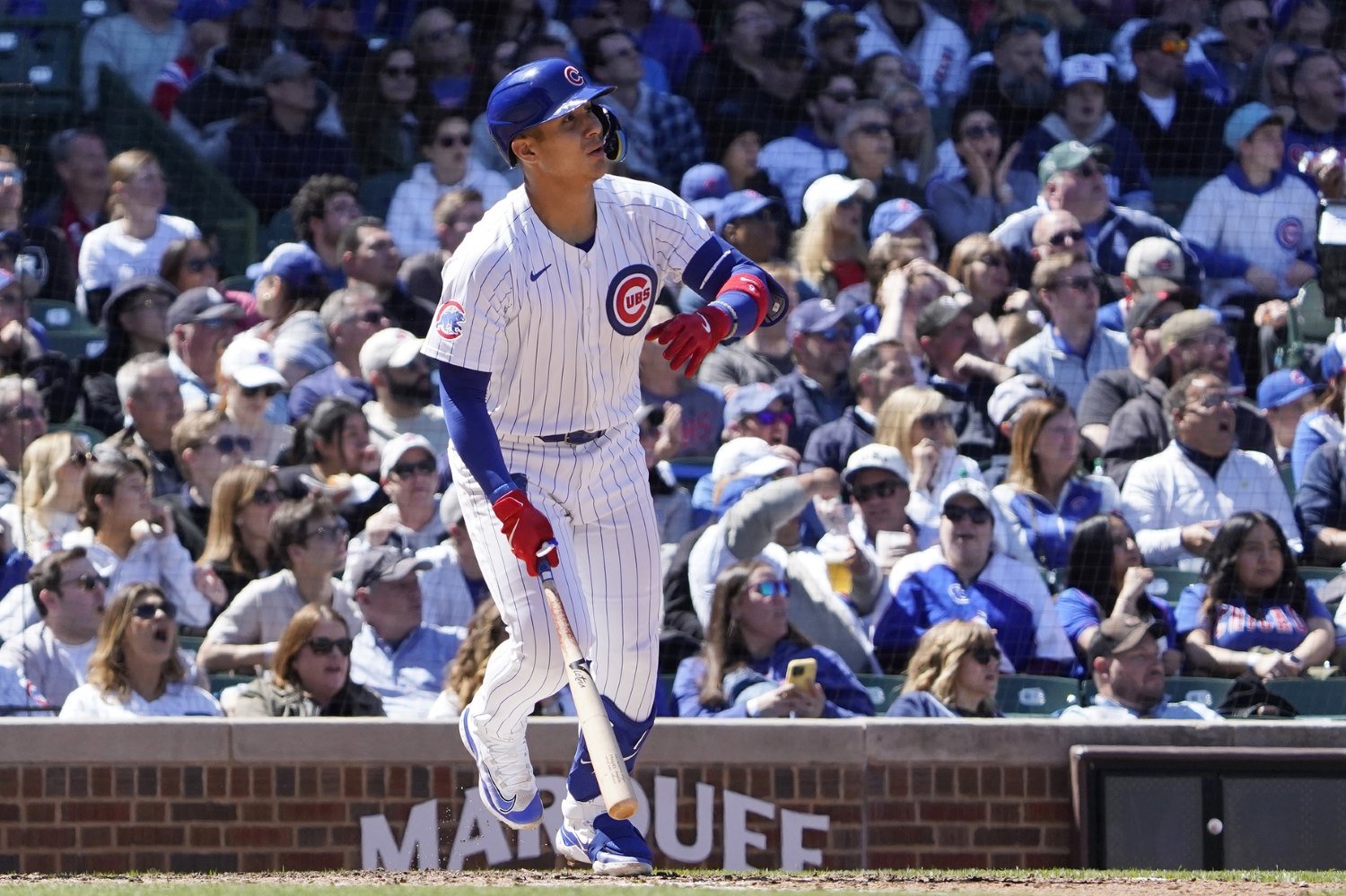 After an uneven but interesting rookie season in 2023, Miguel Amaya came to camp this spring and quickly emerged as the better option to start often behind the plate for the Cubs. Amaya's development has been slowed and distorted by injuries, but he's flashed impressive tools throughout his professional career, and even while he was being half-wasted by a manager reluctant to trust young players, he carried that over into his first MLB action. Defensively, Amaya has been respectable since becoming the team's de facto starter at catcher. He's struggled mightily in his efforts to control the running game, but his framing numbers have been strong, and he's learning quickly when it comes to calling games and coaxing pitchers through difficult sequences. Offensively, however, Amaya isn't producing at anywhere near his potential level, and it's been a conspicuous problem for a Cubs offense often down one or two of its best hitters over the first seven weeks. On the season, Amaya's numbers are hideous: .195/.261/.280. If Yan Gomes weren't running an OBP (.213) 13 points worse than John Smoltz's, the Cubs would have had to demote their would-be catcher of the future, before he could even become the catcher of the present. He has to be much, much better than this, or he'll join the very long but utterly forgotten list of catchers of the past. There's hope that he can avoid that, but he has to make some big adjustments. Amaya's fundamental offensive skills aren't bad. He swings and misses slightly more often than an average hitter, but only slightly. He hits the ball hard enough to produce good power, though he doesn't elevate it as consistently as the team hopes he eventually will. With the new bat-tracking data that came out Sunday at Baseball Savant, we gained some unexpected insight: Amaya not only has average-plus bat speed, but pairs that with a short swing length. In other words, his bat takes a more compact and direct path to the ball than one would expect, given the speed at which he swings. That combination of traits is valuable, because if Amaya can lock in on a location and deliver his bat to that spot accurately, he can be a bit early and still catch the ball on the fat part of the bat. That's what happened on his home run in Seattle last month. cmVZdjVfWGw0TUFRPT1fVWxOV0FWUlZWUW9BRFFFRFV3QUFBUTREQUZoUUFBVUFBVndEQmxBQUNRQlhWZ0Zm.mp4 Alternatively, because the combination of good bat speed and a short swing leads to a short time from starting one's swing to the (real or theoretical) contact point and solid acceleration through contact, he can be a little bit late and still drive the ball, as he did on a scalded single against the Brewers earlier this month. WVFZOTlfWGw0TUFRPT1fRDFWWlZ3QlhYd01BQ2xFQVhnQUFDQUFFQUZnQkJRTUFVRlFNQlFFSFVBRUhBd1ZV.mp4 Pitcher List's Kyle Bland created an app for scraping and visualizing some of the new bat-tracking data, and it includes two numbers not reported by Statcast, but easily derived from the data the new metrics do report: time to contact point (from start of swing) and acceleration at the moment of contact (the rate of change in speed, rather than raw speed). These are valuable ways to discern which hitters can quickly get to the ball, even if they're mostly determined by swing speed and swing length. Of the 312 hitters with at least 100 measured swings so far in 2024, Amaya has the 18th-shortest swing time. He also has the 36th-highest acceleration. He's near-elite in this regard, and when he connects cleanly on tough pitches like that 97-MPH sinker from Elvis Peguero, it's not hard to see the value in that--or the offensive upside it gives him. Alas, right now, that upside is going to waste, for the simplest, oldest reason why any young hitter in professional baseball fails. Amaya is swinging at everything. Pitchers are being aggressive with him, since he hits at the bottom of the order and has enough of a penchant to whiff to make it worth the risks that come with being aggressive in the zone. Perhaps thrown off by that approach, or perhaps out of an overweening desire to help his team achieve more explosiveness and consistency, Amaya is just getting way too eager. His swing rate is up from 46.3% in 2023 to 56.3%, and his chase rate on pitches outside the zone is up from a perfectly healthy 28.1% to a calamitous 39.1%. A swing time as short as Amaya's gives him about 10 milliseconds longer to make a swing decision than the average hitter has. In the flight of an MLB pitch, that's an eternity. He's not using the extra time to make good decisions, though. He's actually whiffing on a lower share of swings than he did last year, and his strikeout rate is down. So is his walk rate, though, and more importantly, because he's being so injudicious with a swing that can so readily reach so many pitches, he's mishitting the ball more often than a hitter with his gifts should. If he can reorganize his strike zone and develop a better approach, Amaya can pretty easily add .200 to his OPS. The tools are all here, from a sufficient feel for contact to the bat speed and efficiency to generate good power. If he can't find a plan that allows him to key in on pitches and square them up more often, though, the team will continue to have an untenable blemish at the bottom of their batting order throughout the season.
 -
Eight years after drafting him and three years after waiving him as an almost-spent pitching prospect who couldn't get over the hump, the Chicago Cubs are bringing back righty Tyson Miler to bolster their depleted bullpen. For Seattle, it's much-needed reinforcement for a positional corps struggling to support one of the league's best pitching staffs, even if Slaughter is only a fringe prospect at this stage of his career. For the Cubs, it's a healthy arm for a bullpen with far too many injured ones, and Miller comes with one of the truly bizarre sliders in all of baseball--a pitch that has allowed him to post strong numbers this year, but which couldn't save him from the axe with the deeper, healthier Mariners pitching staff. You can think of Miller as a softer-tossing version of José Cuas or of Almonte, but he has better command than either, he creates just as crazy an angle for hitters as does Cuas, and his slider might be the most unusual pitch in the big leagues. It doesn't have any vertical depth--either relative to his fastball, or in absolute terms. In fact, it rises (or appears to rise) more than any other slider or sweeper in MLB, save those of submariners Adam Cimber and Tyler Rogers. Those guys' sliders go up because their fastballs go down. They throw their breaking stuff in the low- to mid-70s. Miller's is a fairly traditional slider, at over 80 miles per hour on average. It just keeps moving left, from his perspective, instead of sinking at all. Cuas is just one example of many of the fact that the Cubs like pitchers who create difficulty for hitters because of their extreme release points. Miller is that kind of guy. He not only throws from a sidearm slot and gets way over to the third-base side of the rubber, the way Cuas does, but has exceptional release extension--over 7 feet, on average. That combination is exceedingly rare, and makes him an exceedingly uncomfortable at-bat, especially (but not exclusively) for right-handed batters. Now, there's still value in throwing hard, and Miller really doesn't. He sits 89-92 with his four-seamer, although it does boast a very flat vertical approach angle (VAA) because of the low release point he achieves. He was fungible for Seattle for a reason, just as Cuas was for the woeful Royals last summer. Even so, Miller is more than a standard-issue DFA-and-trade guy. That's reflected in the stature of Slaughter, a more respectable depth piece than is usually exchanged when a team has given up leverage in negotiations by designating a player for assignment. The Cubs won some very small version of a bidding war here, and you can understand why. It's nice that Miller will now get to continue his career where it began, when he was a fourth-round pick in the Cubs' thinned-out 2016 Draft class. He debuted for the team in 2020, before beginning a long tour of the fringes of big-league rosters the following June. Back then, he was throwing from a three-quarter arm slot, and he could not do this. elo5S3ZfWGw0TUFRPT1fVUFVRlVsSlNVbEFBQ2dGWFVnQUFCUThDQUZrRkJ3QUFWMVpVQ0FBQ1VGZFJDRlpT.mp4 In fact, it's only this spring that Miller has really figured out how to make the ball swerve so evenly, without creating two-plane movement that might increase whiffs on swings but begets fewer of them. He's had a lot of success this young season, thanks to the change of breaking ball shape and stripping down his arsenal to its essentials. Miller won't emerge as the team's relief ace. He's out of options, and could easily be on another 40-man roster before the end of the season. For now, though, he's a familiar (and yet new and tantalizing) brace for a failing structure. The Cubs needed a better version of Cuas to stabilize their middle-relief corps for at least a month or two. Miller looks up to that task, with some chance of being a half-step better than that tepid recommendation. View full article
-
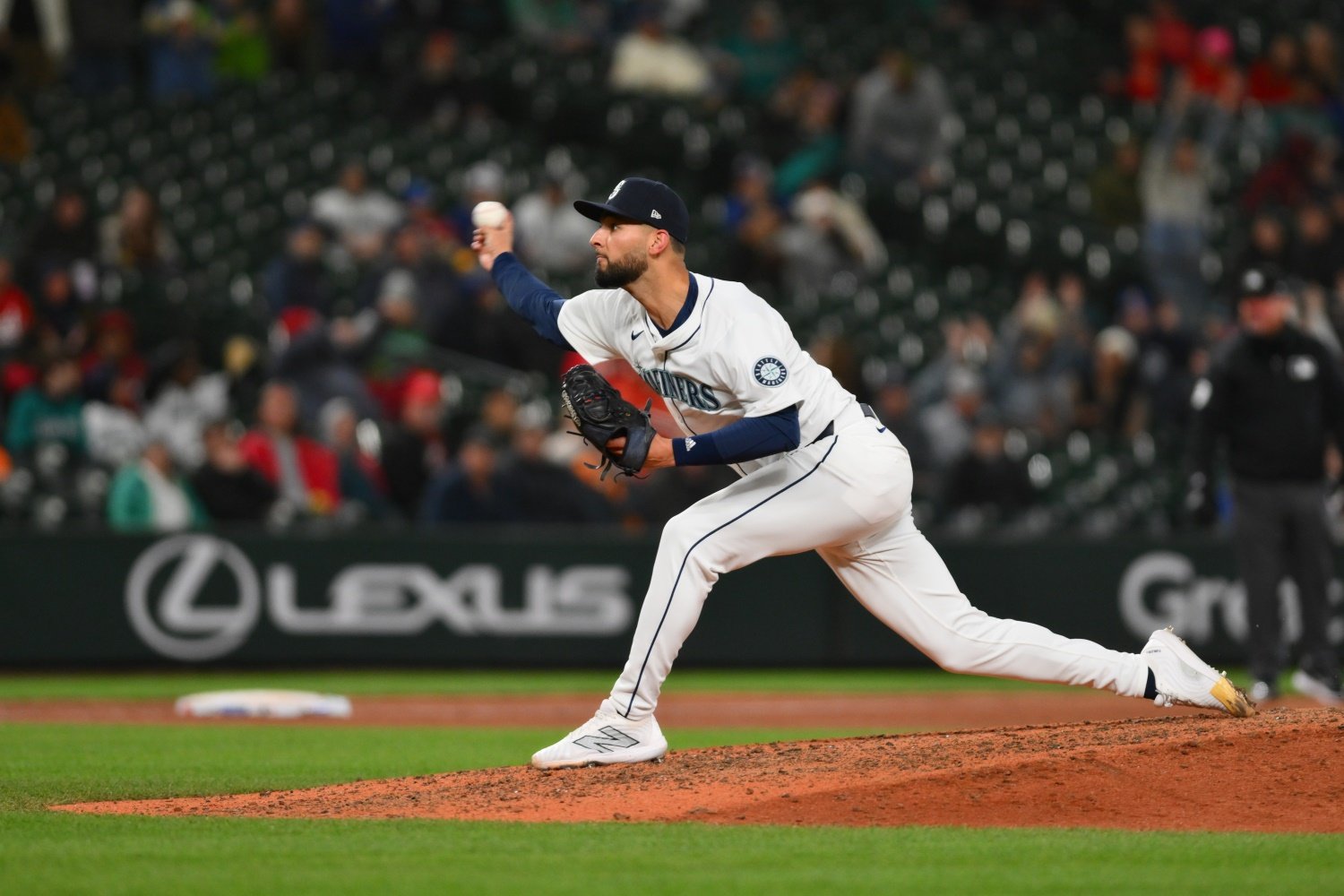 It's a smallish move, given that Tyson Miller was designated for assignment by the Seattle Mariners just days ago, but the Cubs have scooped up an old friend with a new and very interesting trick in his bag. They'll hope to turn him into the next Yency Almonte, only with (perhaps) an even more intriguing outlier of a breaking ball. In exchange, the team gives up interesting but ultimately blocked infielder Jake Slaughter, who has been intermittently productive and powerful at the highest levels of the minors in recent seasons. For Seattle, it's much-needed reinforcement for a positional corps struggling to support one of the league's best pitching staffs, even if Slaughter is only a fringe prospect at this stage of his career. For the Cubs, it's a healthy arm for a bullpen with far too many injured ones, and Miller comes with one of the truly bizarre sliders in all of baseball--a pitch that has allowed him to post strong numbers this year, but which couldn't save him from the axe with the deeper, healthier Mariners pitching staff. You can think of Miller as a softer-tossing version of José Cuas or of Almonte, but he has better command than either, he creates just as crazy an angle for hitters as does Cuas, and his slider might be the most unusual pitch in the big leagues. It doesn't have any vertical depth--either relative to his fastball, or in absolute terms. In fact, it rises (or appears to rise) more than any other slider or sweeper in MLB, save those of submariners Adam Cimber and Tyler Rogers. Those guys' sliders go up because their fastballs go down. They throw their breaking stuff in the low- to mid-70s. Miller's is a fairly traditional slider, at over 80 miles per hour on average. It just keeps moving left, from his perspective, instead of sinking at all. Cuas is just one example of many of the fact that the Cubs like pitchers who create difficulty for hitters because of their extreme release points. Miller is that kind of guy. He not only throws from a sidearm slot and gets way over to the third-base side of the rubber, the way Cuas does, but has exceptional release extension--over 7 feet, on average. That combination is exceedingly rare, and makes him an exceedingly uncomfortable at-bat, especially (but not exclusively) for right-handed batters. Now, there's still value in throwing hard, and Miller really doesn't. He sits 89-92 with his four-seamer, although it does boast a very flat vertical approach angle (VAA) because of the low release point he achieves. He was fungible for Seattle for a reason, just as Cuas was for the woeful Royals last summer. Even so, Miller is more than a standard-issue DFA-and-trade guy. That's reflected in the stature of Slaughter, a more respectable depth piece than is usually exchanged when a team has given up leverage in negotiations by designating a player for assignment. The Cubs won some very small version of a bidding war here, and you can understand why. It's nice that Miller will now get to continue his career where it began, when he was a fourth-round pick in the Cubs' thinned-out 2016 Draft class. He debuted for the team in 2020, before beginning a long tour of the fringes of big-league rosters the following June. Back then, he was throwing from a three-quarter arm slot, and he could not do this. elo5S3ZfWGw0TUFRPT1fVUFVRlVsSlNVbEFBQ2dGWFVnQUFCUThDQUZrRkJ3QUFWMVpVQ0FBQ1VGZFJDRlpT.mp4 In fact, it's only this spring that Miller has really figured out how to make the ball swerve so evenly, without creating two-plane movement that might increase whiffs on swings but begets fewer of them. He's had a lot of success this young season, thanks to the change of breaking ball shape and stripping down his arsenal to its essentials. Miller won't emerge as the team's relief ace. He's out of options, and could easily be on another 40-man roster before the end of the season. For now, though, he's a familiar (and yet new and tantalizing) brace for a failing structure. The Cubs needed a better version of Cuas to stabilize their middle-relief corps for at least a month or two. Miller looks up to that task, with some chance of being a half-step better than that tepid recommendation.
 -
Staying Ahead of the Adjustment Curve, with Shota Imanaga
Matthew Trueblood posted an article in Cubs
 Everyone you know wants to talk about Shota Imanaga. Every baseball writer you've ever heard of (and maybe one or two you haven't) has jumped in to try to explain and celebrate the greatness of Imanaga's first six weeks in MLB. I can't even judge them for it, because I have been doing the same thing for months--since before he even debuted, and then right after he did so, too. The last week or so has seen a scramble to get to the bottom of Imanaga's greatness. An MLB.com piece by the excellent David Adler dug into the characteristics that allow Imanaga's fastball to play up, relative to his velocity. (That was a theme of the above-linked piece from right here at North Side Baseball, in January, too.) Adler's piece also touched upon the uniqueness of Imanaga's splitter, which I wrote about for Baseball Prospectus in early April, and that pitch was the central focus of Meghan Montemurro's deep dive at the Chicago Tribune late last week, as well. Taking a bit more of a holistic tack, the insightful Kyle Kishimoto covered Imanaga's sterling work so far for FanGraphs, within which he cited the extremely detailed, novel take of Michael Rosen (at the Pitch Plots Substack) earlier in the week. Utilizing release angles on a pitch-by-pitch basis and breaking down Imanaga's mechanics in exquisite detail, Rosen discussed Imanaga's seemingly exceptional command and the way he manages to attack the top of the zone so consistently despite a low release point and arm slot. Somehow, after all of that, I still think there are a couple of interesting things we can say, by way of updating our understanding of Imanaga as he takes the mound for the eighth time. Let's say them, shall we? First of all, as beguiling and unique as both Imanaga's fastball and his splitter are, they will quickly see a decline in their efficacy if hitters start to feel confident of which one they're about to get. In his first couple of starts, Imanaga was very fastball-heavy, either still looking for the feel on his signature splitter or trying to establish command and consistency with the new, top-of-zone focus the Cubs have instilled in him on the fastball. Since then, though, he's steadily increased his splitter usage, making himself much less predictable for opposing hitters. That very unpredictability has helped his stuff play up, even as the league has gotten more data on him and should be figuring him out. His splitter has earned more whiffs with increased usage, in defiance of the principle of diminishing returns. Very soon, I think, there will need to be more than two pitches in this mixture, to make the recipe keep tasting as good as it has thus far. Technically, of course, there already are. Imanaga has tinkered with a sinker, and he's fairly comfortable with both a sweeper and a curveball--though neither has been especially effective so far. Eventually, Imanaga probably needs one of those pitches (the sweeper is, perhaps, the best candidate) to take a step forward, but for now, he's getting by because hitters have less hope of guessing right on pitch type with each passing appearance. The locations of those two pitches complement each other so perfectly, too, that's it's viciously hard for hitters to accurately distinguish them. Given the release angles and mechanics discussed so completely in Rosen's piece, the directions in which Imanaga's fastball and splitter diverge from one another inscrutably. From a wide angle on the first-base side of the rubber, he steers the ball across the plate with remarkable consistency, attacking the upper, glove-side quadrant. I've said this often before, but it's funny how much it messes with hitters when a pitcher is comfortable pounding that section of the zone. It's a huge part of what makes Jacob deGrom so good, when he's healthy. Obviously, deGrom's velocity is also a key characteristic, and one Imanaga lacks, but as we've discussed before, Imanaga has plenty of other elite traits on his heater: spin, vertical movement, and a flat approach angle. deGrom has an exceptional slider, which breaks along the vertical line that fastball traces and bites a bit to the glove side. Obviously, Imanaga's splitter goes the opposite way, laterally, but the gist is the same. The consistency of Imanaga's locations on those two pitches is cruel. For righty batters, especially, it looks like the fastball is coming in at the letters, over the middle or slightly inside on them, but just as often, it's the splitter, diving to about shin-high on the outer third of the plate. Soon, opposing managers will try to counter that by running more lefty batters at him, but that could make his sweeper a more effective weapon. Let's take one last look at the splitter, though, through the lens of the new bat-tracking data released to the public via Baseball Savant on Sunday. As soon as that data hit the site, nerds everywhere (including at least four of the authors mentioned above, if you count me) were all over it, looking for interesting nuggets. Here's one I unearthed. The new metrics don't just include swing speed. The site now also lists swing length for each hack a hitter takes, measuring the distance traveled in three-dimensional space by the tip of the bat from the beginning of the swing through the (real or theoretical, depending on whether the swing resulted in contact or not) point of contact. As you would guess, longer swings tend to be faster swings, but they're also more prone to whiffs. Quickly, though, I realized that that's not true in equal measure for all pitch types. On fastballs, the average length of a swing that makes contact scarcely varies from that of swings that result in whiffs. On breaking balls and offspeed pitches, though, swing length matters a lot. Largely because it becomes a proxy for messing with a hitter's timing, manipulating swing length is a good way for a hurler to reliably induce whiffs on non-fastballs. Pitch Type Group In Play Swing Length Whiff Swing Length Hard 7.1 7.1 Breaking 7.5 8.1 Offspeed 7.6 8.3 This is the definition of getting a hitter out in front of a pitch that (with a velocity difference from the fastball that is a key variable in getting whiffs) is designed to do precisely that. A hitter goes to make contact in a given spot, but they're fooled, and their bat is a half-foot farther in front of home plate (and probably in the wrong place in another dimension or two) than they anticipated. Imanaga, unsurprisingly, has been very good at inducing unwantedly long swings on his splitters. I've highlighted a few other Cubs here as points of interest and reference, but the long and short of it is simple: Imanaga gets whiffs on the splitter because he's better at getting hitters' bats out of position with it than most pitchers are on their offspeed offerings. No team Imanaga has faced yet has posed the kind of threat to him that the Atlanta club can. Monday night could be his first tough outing of the year. The more we see (and read, and think) of him, though, the less plausible it seems that anything short of an injury can truly sidetrack the Cubs' imported ace.
 -
The Chicago Cubs' rookie ace takes the mound for the team's series opener Monday night in Atlanta. He's still the league's ERA leader, but to remain dominant, he has to keep making changes. How? Image courtesy of © Kamil Krzaczynski-USA TODAY Sports Everyone you know wants to talk about Shota Imanaga. Every baseball writer you've ever heard of (and maybe one or two you haven't) has jumped in to try to explain and celebrate the greatness of Imanaga's first six weeks in MLB. I can't even judge them for it, because I have been doing the same thing for months--since before he even debuted, and then right after he did so, too. The last week or so has seen a scramble to get to the bottom of Imanaga's greatness. An MLB.com piece by the excellent David Adler dug into the characteristics that allow Imanaga's fastball to play up, relative to his velocity. (That was a theme of the above-linked piece from right here at North Side Baseball, in January, too.) Adler's piece also touched upon the uniqueness of Imanaga's splitter, which I wrote about for Baseball Prospectus in early April, and that pitch was the central focus of Meghan Montemurro's deep dive at the Chicago Tribune late last week, as well. Taking a bit more of a holistic tack, the insightful Kyle Kishimoto covered Imanaga's sterling work so far for FanGraphs, within which he cited the extremely detailed, novel take of Michael Rosen (at the Pitch Plots Substack) earlier in the week. Utilizing release angles on a pitch-by-pitch basis and breaking down Imanaga's mechanics in exquisite detail, Rosen discussed Imanaga's seemingly exceptional command and the way he manages to attack the top of the zone so consistently despite a low release point and arm slot. Somehow, after all of that, I still think there are a couple of interesting things we can say, by way of updating our understanding of Imanaga as he takes the mound for the eighth time. Let's say them, shall we? First of all, as beguiling and unique as both Imanaga's fastball and his splitter are, they will quickly see a decline in their efficacy if hitters start to feel confident of which one they're about to get. In his first couple of starts, Imanaga was very fastball-heavy, either still looking for the feel on his signature splitter or trying to establish command and consistency with the new, top-of-zone focus the Cubs have instilled in him on the fastball. Since then, though, he's steadily increased his splitter usage, making himself much less predictable for opposing hitters. That very unpredictability has helped his stuff play up, even as the league has gotten more data on him and should be figuring him out. His splitter has earned more whiffs with increased usage, in defiance of the principle of diminishing returns. Very soon, I think, there will need to be more than two pitches in this mixture, to make the recipe keep tasting as good as it has thus far. Technically, of course, there already are. Imanaga has tinkered with a sinker, and he's fairly comfortable with both a sweeper and a curveball--though neither has been especially effective so far. Eventually, Imanaga probably needs one of those pitches (the sweeper is, perhaps, the best candidate) to take a step forward, but for now, he's getting by because hitters have less hope of guessing right on pitch type with each passing appearance. The locations of those two pitches complement each other so perfectly, too, that's it's viciously hard for hitters to accurately distinguish them. Given the release angles and mechanics discussed so completely in Rosen's piece, the directions in which Imanaga's fastball and splitter diverge from one another inscrutably. From a wide angle on the first-base side of the rubber, he steers the ball across the plate with remarkable consistency, attacking the upper, glove-side quadrant. I've said this often before, but it's funny how much it messes with hitters when a pitcher is comfortable pounding that section of the zone. It's a huge part of what makes Jacob deGrom so good, when he's healthy. Obviously, deGrom's velocity is also a key characteristic, and one Imanaga lacks, but as we've discussed before, Imanaga has plenty of other elite traits on his heater: spin, vertical movement, and a flat approach angle. deGrom has an exceptional slider, which breaks along the vertical line that fastball traces and bites a bit to the glove side. Obviously, Imanaga's splitter goes the opposite way, laterally, but the gist is the same. The consistency of Imanaga's locations on those two pitches is cruel. For righty batters, especially, it looks like the fastball is coming in at the letters, over the middle or slightly inside on them, but just as often, it's the splitter, diving to about shin-high on the outer third of the plate. Soon, opposing managers will try to counter that by running more lefty batters at him, but that could make his sweeper a more effective weapon. Let's take one last look at the splitter, though, through the lens of the new bat-tracking data released to the public via Baseball Savant on Sunday. As soon as that data hit the site, nerds everywhere (including at least four of the authors mentioned above, if you count me) were all over it, looking for interesting nuggets. Here's one I unearthed. The new metrics don't just include swing speed. The site now also lists swing length for each hack a hitter takes, measuring the distance traveled in three-dimensional space by the tip of the bat from the beginning of the swing through the (real or theoretical, depending on whether the swing resulted in contact or not) point of contact. As you would guess, longer swings tend to be faster swings, but they're also more prone to whiffs. Quickly, though, I realized that that's not true in equal measure for all pitch types. On fastballs, the average length of a swing that makes contact scarcely varies from that of swings that result in whiffs. On breaking balls and offspeed pitches, though, swing length matters a lot. Largely because it becomes a proxy for messing with a hitter's timing, manipulating swing length is a good way for a hurler to reliably induce whiffs on non-fastballs. Pitch Type Group In Play Swing Length Whiff Swing Length Hard 7.1 7.1 Breaking 7.5 8.1 Offspeed 7.6 8.3 This is the definition of getting a hitter out in front of a pitch that (with a velocity difference from the fastball that is a key variable in getting whiffs) is designed to do precisely that. A hitter goes to make contact in a given spot, but they're fooled, and their bat is a half-foot farther in front of home plate (and probably in the wrong place in another dimension or two) than they anticipated. Imanaga, unsurprisingly, has been very good at inducing unwantedly long swings on his splitters. I've highlighted a few other Cubs here as points of interest and reference, but the long and short of it is simple: Imanaga gets whiffs on the splitter because he's better at getting hitters' bats out of position with it than most pitchers are on their offspeed offerings. No team Imanaga has faced yet has posed the kind of threat to him that the Atlanta club can. Monday night could be his first tough outing of the year. The more we see (and read, and think) of him, though, the less plausible it seems that anything short of an injury can truly sidetrack the Cubs' imported ace. View full article
-
I *am* with you on that part; I think I wrote as much when he came up. My thing (and here's where *I'm* probably on an island, but so it goes) is that I'm not sure development is ever coming. I hated the approach he was taking in Iowa, just swinging at everything when it seemed like he needed to be working on exactly the opposite. And he looks overmatched a LOT at this level, and the approach sucks. I increasingly view him as living somewhere at the intersection of Corey Patterson, Brett Jackson, and Félix Pie. He's probably got a few years as a second-division regular in him, but I'm not buying him as a long-term answer at this stage. So I could see keeping him and trusting that whatever improvements he's still capable of can just as easily be made in a defense-forward part-time role, which is where I'd be aiming to settle him anyway.
-
I don't *WHOLLY* buy this, but it's worth noting that a lot of baseball people say AAA is worse than it's been in a long time right now. I'm not sure it's serving a strong developmental purpose for players at PCA's phase. Personally, I like the idea of batting him ninth, never giving him a third PA in a game unless it be in very low leverage, but getting his defense for at least the first six or seven innings most days. (I know that's not how most people think about substitutions, taking *out* your defensive stud late, but I have long felt that was an unexplored place to find value. More balls in play early in games, before the strikeout dudes in the bullpen come in. Plus you can keep more options open for the moment in the 5th-8th when his spot is due, see what kind of hitter (righty? lefty? power? contact?) the situation demands, and you haven't burned anyone.
-
I don't think that's happening. I won't say it *couldn't*, and I'm divided on whether it *should*, but I doubt it will. Happ wants to be in there, and what he's dealing with (lingering hamstring issue) is not serious enough to push him out, in his own opinion. That matters, here.
-
The Chicago Cubs' off day Thursday is their first since Apr. 22, and their last until May 19. They faced the ferocious heat of Dylan Cease and Robert Suárez against the Padres Wednesday, which is doubly difficult during such a long stretch with so few days off. Here's the thing: it's about to get worse. Image courtesy of © Kamil Krzaczynski-USA TODAY Sports On Wednesday, the Pittsburgh Pirates announced that Paul Skenes (the No. 1 overall pick in last year's MLB Draft and the best pitching prospect in baseball) will make his debut for them on Saturday. They didn't announce the corollary, but any simple reader of the schedule can see it: Skenes is almost certain to make his second career start against the Cubs, too, the following week. If the Pirates use a six-man rotation in the short term (which seems likely, given their current group and the caution with which they've handled their top young arms), the Cubs will also see flamethrowing rookie starter Jared Jones twice in the next 10 days. Late in games against Pittsburgh, they'll see Aroldis Chapman and David Bednar. In between series against the Bucs, they'll take on Atlanta, and over the next fortnight, they could well see Chris Sale twice, too. That's after catching Dylan Cease for a second time this season on Wednesday. We've already discussed the fact that the Cubs are right in the middle of the toughest stretch on their entire season's schedule. The way the pitching matchups have fallen, especially around so few days off, has magnified that. It's not a figment of your imagination or an overreliance on anecdote we're talking about, either. Cubs hitters have seen the hardest average fastballs of any team in baseball this season, at 94.9 miles per hour. They're trying to overcome seeing better velocity than anyone else, but that's very hard to do when your lineup isn't at full strength, and harder still when the schedule has been so grueling. This can't excuse losing (or even eking out 2-1 wins) in all of the upcoming contests against overpowering aces. If the Cubs want to demonstrate that they're a playoff-caliber team, worth being taken seriously, they need to do so by putting together competitive at-bats and scoring some runs even against opposing aces. If they can't do that, anyone who has been feeling especially bullish on this first-place team should revise their estimates of their potential downward. While Cease pitched well Wednesday, the Cubs failed, too. A good team having a good day puts up a better fight than the one Chicago mounted, even when a good pitcher is going well. It's hard (and often wrongheaded) to evaluate a lineup during a stretch of so few days off and so many formidable opponents, but the Cubs have put themselves in this position. They could have (and absolutely should have) spent anywhere from $25 million to $50 million more this winter to improve their offense and their pitching depth. If they had, they would have two more wins than they have now, and the stakes of the stretch just ahead would be lower--not just because a little bit higher a percentage of the wins needed to reach October would be in the bank, but because everyone could be more confident that the team is good enough to get that far. As things stand, this is a team that entered the season with well-founded projections of a record right around .500. They've won games at a better clip than that so far, but some unsustainable performances are propping up the record, and some of the biggest questions about this team have yet to be answered in any encouraging degree. The Cubs have a tough draw here. It would be maximally fair to this roster to keep expectations low for the rest of the month, and to hope they can catch fire when the schedule softens up slightly in late May and June. The schedule doesn't soften as much as it used to, though, especially when it comes to fastball velocity, and this team isn't good enough to casually accept a prolonged period of mediocre play. The team will have to savor and make the most of its off day. Starting tomorrow, the job remains difficult, but there are no excuses for not getting it done--other than the undesirable one that they just aren't good enough. View full article
- 1 reply
-
- 1
-
-
- jared jones
- dylan cease
- (and 1 more)
-
Make It a Long, Slow Day Off: Cubs Resume Hard, Fast Schedule Friday
Matthew Trueblood posted an article in Cubs
 On Wednesday, the Pittsburgh Pirates announced that Paul Skenes (the No. 1 overall pick in last year's MLB Draft and the best pitching prospect in baseball) will make his debut for them on Saturday. They didn't announce the corollary, but any simple reader of the schedule can see it: Skenes is almost certain to make his second career start against the Cubs, too, the following week. If the Pirates use a six-man rotation in the short term (which seems likely, given their current group and the caution with which they've handled their top young arms), the Cubs will also see flamethrowing rookie starter Jared Jones twice in the next 10 days. Late in games against Pittsburgh, they'll see Aroldis Chapman and David Bednar. In between series against the Bucs, they'll take on Atlanta, and over the next fortnight, they could well see Chris Sale twice, too. That's after catching Dylan Cease for a second time this season on Wednesday. We've already discussed the fact that the Cubs are right in the middle of the toughest stretch on their entire season's schedule. The way the pitching matchups have fallen, especially around so few days off, has magnified that. It's not a figment of your imagination or an overreliance on anecdote we're talking about, either. Cubs hitters have seen the hardest average fastballs of any team in baseball this season, at 94.9 miles per hour. They're trying to overcome seeing better velocity than anyone else, but that's very hard to do when your lineup isn't at full strength, and harder still when the schedule has been so grueling. This can't excuse losing (or even eking out 2-1 wins) in all of the upcoming contests against overpowering aces. If the Cubs want to demonstrate that they're a playoff-caliber team, worth being taken seriously, they need to do so by putting together competitive at-bats and scoring some runs even against opposing aces. If they can't do that, anyone who has been feeling especially bullish on this first-place team should revise their estimates of their potential downward. While Cease pitched well Wednesday, the Cubs failed, too. A good team having a good day puts up a better fight than the one Chicago mounted, even when a good pitcher is going well. It's hard (and often wrongheaded) to evaluate a lineup during a stretch of so few days off and so many formidable opponents, but the Cubs have put themselves in this position. They could have (and absolutely should have) spent anywhere from $25 million to $50 million more this winter to improve their offense and their pitching depth. If they had, they would have two more wins than they have now, and the stakes of the stretch just ahead would be lower--not just because a little bit higher a percentage of the wins needed to reach October would be in the bank, but because everyone could be more confident that the team is good enough to get that far. As things stand, this is a team that entered the season with well-founded projections of a record right around .500. They've won games at a better clip than that so far, but some unsustainable performances are propping up the record, and some of the biggest questions about this team have yet to be answered in any encouraging degree. The Cubs have a tough draw here. It would be maximally fair to this roster to keep expectations low for the rest of the month, and to hope they can catch fire when the schedule softens up slightly in late May and June. The schedule doesn't soften as much as it used to, though, especially when it comes to fastball velocity, and this team isn't good enough to casually accept a prolonged period of mediocre play. The team will have to savor and make the most of its off day. Starting tomorrow, the job remains difficult, but there are no excuses for not getting it done--other than the undesirable one that they just aren't good enough.
 -
 It has been an uncomfortable, sometimes infuriating few weeks for the Cubs' rookie first baseman. After an early stretch during which the league didn't quite know what to do with Michael Busch, and during which he was able to play hero for a first-place team to which he's a newcomer, he fell into a perfectly ordinary rookie slump. He had big adjustments to make, and the best pitchers in the world were making it hard for him to execute them. Painfully, though, that slump came just when his team needed him most, with their two best hitters briefly shelved by injuries. Let's go back in time a bit. When the Cubs came home from their nine-game West Coast road trip, Busch was on top of the world. In his first 70 plate appearances for his new team, he had batted .317/.400/.667, and his streak of five straight games with a home run helped the club eke out a winning record on a difficult swing through San Diego, Seattle, and Arizona. To that point, he had nine walks and nine extra-base hits. That much good stuff will make even 19 strikeouts in 70 trips to the plate seem insignificant. For as long as one can sustain such impressive power and plate discipline, those strikeouts are insignificant. Unsurprisingly, though, the good times couldn't last forever. After a scheduled travel day and a rainout, the Cubs resumed their season against the Marlins on Apr. 20. Busch had two hits in the nightcap of that doubleheader, but in that game, a telling trouble spot got exposed, and the league worked it ruthlessly over the ensuing fortnight. Even counting those two knocks, from Apr. 20 through Monday, Busch batted .190/.210/.276, in 62 plate appearances. He struck out 25 times, walked just once, and only scratched out four extra-base hits. He didn't hit a home run over those 16 games. Here's where the trouble began, on the night of Apr. 20. QnZ6a3JfWGw0TUFRPT1fVlZSV1ZnRUhWd0lBREZwVFVBQUFCd1ZWQUZnRlZnY0FWd0FCQVFKWEExVldCd3Rl.mp4 That's a pretty innocuous pitch, really. Rookie pitcher Roddery Muñoz probably didn't even mean to do it, but he missed high and arm side and threw a good backdoor cutter. It locked up Busch for a called strikeout. These things happen. As it turned out, though, that was the key that started to unlock the mystery of Busch for MLB pitchers. Busch, like a good number of modern left-handed hitters, had a hole in his swing up and away--especially on good fastballs. The Astros came into town right after the Marlins left, and they hammered Busch with pitches in that quadrant, with great success. Busch tried to adjust, and it's not as though he whiffed on it every time, but he couldn't get ahead of or on top of the high heat on the outer half. dk1BWGFfWGw0TUFRPT1fVWxSWUIxMEhWd0lBREZwV1V3QUFDQUpRQUZnR1UxRUFCVllCVlZCWENBSUJWVlJW.mp4 Word spreads quickly in MLB. Not every team even uses advance scouts anymore, but most do, and Busch's vulnerability was easy to spot, be it by a live scout or a simple check of the data that all teams have and use. When the Astros series was over and the Cubs headed to Boston, the Red Sox had the same treatment waiting for Busch. eFoxeGpfWGw0TUFRPT1fVXdoWEFsSUdWd1lBWFZkV1hnQUFVd0VBQUFNRkFGY0FVRllFVTFBRkJWVlJDUVpU.mp4 Busch tried moving his sightlines up and out, to find that pitch, but he still got fooled. As many hitters do when the league finds a weakness and begins exploiting it, he tried laying off those offerings, too, when he began to despair of connecting with them. As all hitters who try that do, though, he soon found out that big-league pitchers locate too well to allow any success based purely on not swinging in such a wide swath of the zone. Failing for the first time in his young career and feeling mounting pressure, Busch began to press. One key factor in his early success had been a steadfast refusal to expand and chase, but his resolve broke down and the strikeouts piled up. UVd4WVhfWGw0TUFRPT1fVkZWV1hWWlZWbEVBRGdRS1ZRQUFCQUlGQUFBR0FRTUFVVllCQmdwVVZ3cFNBd1VE.mp4 Pitchers don't stop attacking a hitter in a particular way until what they're trying stops working, and throwing him high, outside stuff (especially fastballs) kept working. They kept throwing it. He kept spiraling. Here's the thing: Busch's swing was never disqualifyingly flawed. He didn't need to make some massive mechanical overhaul. That doesn't mean no mechanical tweak was necessary, but it wasn't anything major. Busch is a really good hitter, with the bat speed and the smart hands to adjust to and hit just about anything. For a long time, he was just missing conviction. To hit the high fastball, you have to decide to sit on it. When you do, if you're sufficiently talented, you can get around on it and barrel it up. Poor Enyel De Los Santos. He located his only pitch to Busch perfectly, according to the scouting report. He just didn't get the important update: Busch, be it in some semi-permanent fashion or just for one at-bat in the rain, found conviction. He was sitting on the high, outside fastball. This isn't the end of a story. Busch might not have fully solved his problem with that pitch, and even if he did, there will soon be another round of difficult adjustments due. It is, however, the end of a slump. That swing is the kind that gives a hitter the confidence that abandons them when they're getting beaten in the same place over and over. Pitchers will have to move on, at least for a bit. And in the meantime, Busch secured the most exciting win of the season to date.
 -
Timing is everything. At a juncture in the season when the Chicago Cubs needed relief from a building narrative about blowing late leads; at a moment when Tuesday night's game desperately needed a quick resolution; and at the critical point in the flight of a conspicuously placed fastball, Michael Busch's timing was perfect. This isn't the end of a story. Busch might not have fully solved his problem with that pitch, and even if he did, there will soon be another round of difficult adjustments due. It is, however, the end of a slump. That swing is the kind that gives a hitter the confidence that abandons them when they're getting beaten in the same place over and over. Pitchers will have to move on, at least for a bit. And in the meantime, Busch secured the most exciting win of the season to date. View full article
-
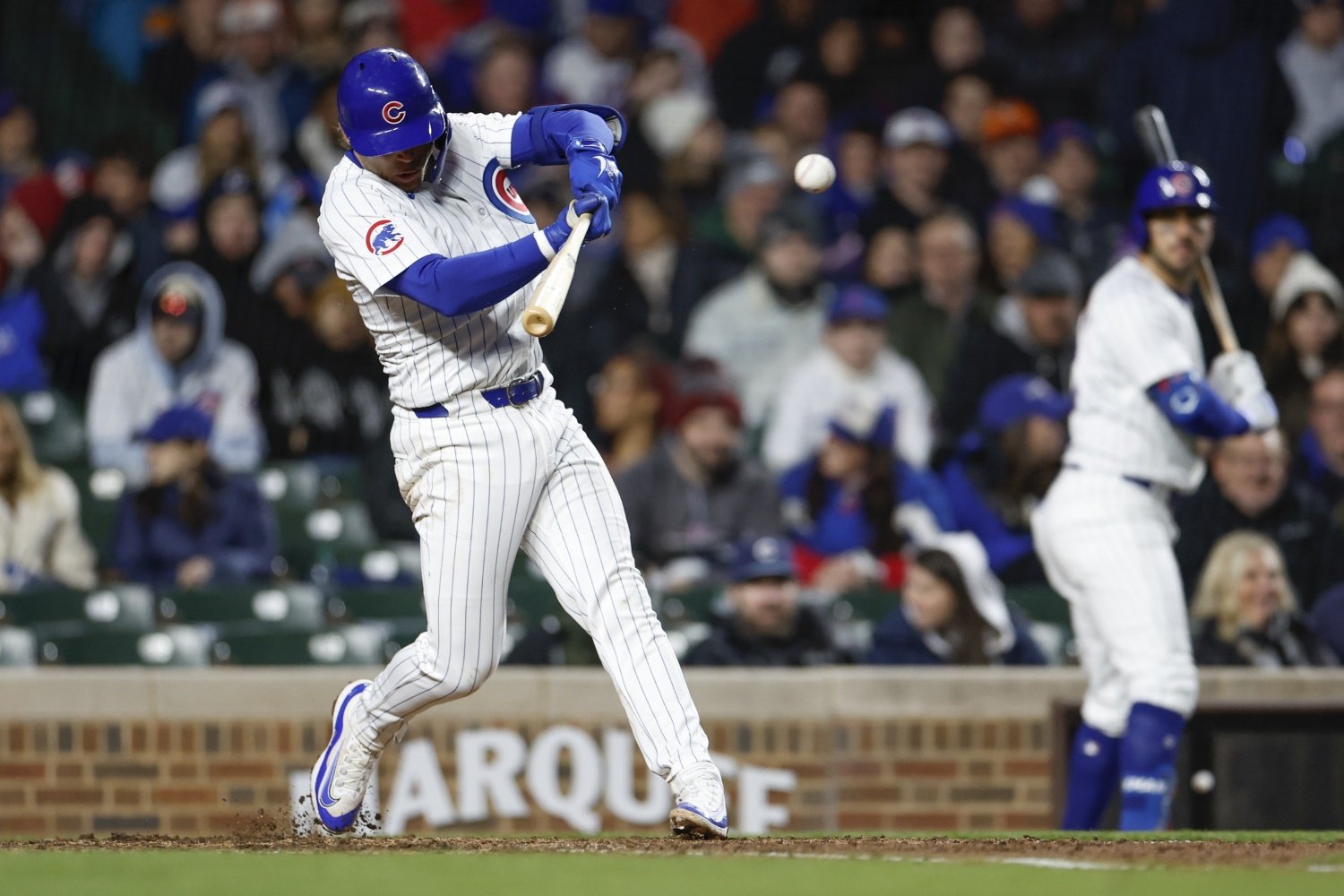 It's no secret that Nico Hoerner has been a hit-over-power, speed-over-power, defense-over-power guy during his Cubs tenure. He's only managed 23 home runs in 1,736 career plate appearances, and if we're honest, that overstates the extent of the power he's displayed. Fourteen of those 23 homers (and 61 of his 109 total extra-base hits) have come at home, and anecdotally, when he does clear the wall, it tends to be narrowly, on warm days and/or ones on which the wind is blowing out. A brief discussion between Laurence Holmes, Dan Bernstein, Matt Spiegel, and Danny Parkins centered on whether that could eventually change. Hoerner is sturdily built, and every so often, he takes a huge, aggressive swing that suggests he's trying to tap into more power. As the hosts noted, "more power" doesn't have to mean 20 home runs a year. Hoerner's swing seems more geared toward splitting gaps, and with his speed, merely doing that with moderate consistency seems like it should net him 40 doubles and triples a year. Alas, he only had 27 such hits in 2022, and 31 in 2023. So, is there more to be unlocked here? Unfortunately, I strongly suspect that the answer is no. It's not just that Hoerner seems to prefer taking aim at the opposite field, or that he hits the ball on the ground somewhat more often than even doubles hitters usually do. It's also that, given how hard he's capable of hitting the ball, the league has sealed off its defensive weaknesses to hitters like him. First, consider that Hoerner's 90th-percentile exit velocity this year is 101.2 miles per hour. Of the 283 hitters who have come to the plate at least 70 times this year, that ranks 238th. There are a number of good hitters down in his area of that leaderboard, but there aren't any power hitters there. That's before even accounting for the fact that Hoerner puts it on the ground fairly often. Other guys in his range in terms of 90th-percentile EV include Mauricio Dubón, Ceddanne Rafaela, Gsvin Lux, and Brice Turang. What Hoerner does do well is hit line drives, and because he puts the ball in play so often, he can produce a huge quantity of them. Right now, he's averaging a launch angle just over 3 degrees on balls hit more than 95 miles per hour, which is a problem, but let's imagine that he can fix it. Even if he started hitting a large number of hard (85-100 MPH) line drives (launch angle 10-18 degrees), which he sort of already does, I'm not sure how well he would be rewarded for it. Why? Because we live in the Age of the Long Single. Here are swarm charts showing actual and expected results by qualifying batters on batted balls matching the criteria above, back in 2016. I've highlighted three players with skill sets loosely correlating to Hoerner's, just to illustrate the potential value of the ability to hit firm, low liners and run a little bit. Dustin Pedroia, José Ramírez, and Ian Kinsler all shared Hoerner's blend of speed and line-drive mentality, with great hand-eye coordination keeping their strikeout rates low. They plugged a lot of gaps and reaped a lot of doubles from their efforts. That was back when teams were still learning the macro-level lessons to which Statcast data eventually gave them great insight. Nowadays, replicating those results is very difficult. Here's the same swarm chart for 2023 and 2024, as one oversized season, with Hoerner and another pair of comparable hitters highlighted. Studying this, you might be tempted to note the large discrepancy between Hoerner's expected and actual averages on those batted balls, and to count him as unlucky. He's also getting fewer extra-base hits, even as a share of all hits, than his batted-ball data on these liners suggests. Alas, it's not luck. It's a combination of the league's evolution and Hoerner's inability to subvert it. As those lessons from Statcast seeped into the water supply for teams, they adjusted their outfield positioning. Even the shallowest center fielders of 2024 play, on average, about as deep as the average center fielders of 2015 and 2016. The same things are happening in the corners. It's not quite a no-doubles approach, but teams have moved all their outfielders back (all else equal), with the idea of cutting off more would-be gappers and holding hitters to long singles. Let's imagine, now, that Hoerner not only gets the ball off the ground more often, but also hits it a bit harder. Moving the sample of batted balls we're looking at from 85-100 MPH out to 90-105, here's the distribution of outcomes on low line drives since 2015, league-wide. Defensively, the league isn't maximizing the out rates on those batted balls. They are, however, holding batters to singles on them better every year. This, remember, is basically the outer edge of Hoerner's reachable range. Even if he stretched and found more pop, he'd be moving out into a range within which extra-base hits are less common all the time. His speed should allow Hoerner to force the issue and stretch the odd would-be single into a double, but it doesn't always work that way, because his lack of long fly-ball power allows teams to play him in such a way as to cut those line drives off sooner than they might against a batter like Christopher Morel. The league plays deeper than they would have a decade ago, even against a hitter like Hoerner, but they don't have to play as deep against Hoerner as against a true power threat, so they can still get to the ball within range of a strong throw to second base most of the time. It's not impossible for Hoerner to evolve into a hitter with more power. I suspect, however, that it's functionally impossible for him to evolve into as good a hitter as he already is, with more power. Right now, his highest-quality contact--by far--comes to dead center and right-center. That's a result of how his swing works, and a lot of the great things about his profile (his contact skills and plate discipline, especially) are tied in with that manner of things. For as long as it remains true, Hoerner isn't going to rack up extra-base hits, because teams will have a fairly easy time holding him to singles based on the way he hits the ball and his tendency to hit it best to the big part of the park. A change in approach that draws more of his best contact around toward left field would alter the balance of things. It would probably also mean more strikeouts, fewer walks, and little overall improvement. Though his body and his existing platform of skills makes it tantalizing to dream on his upside, the reality is that the current version of Hoerner is two things: a very good hitter, and probably the best one he'll ever be. The Cubs need a bit more from their lineup, but they should expect and endeavor to find their upgrades elsewhere.
 -
During a transition segment on the radio home of the Chicago Cubs Monday afternoon, a few hosts had a good conversation about the team's second baseman and his power potential. The big question at issue: Can he find a way to hit for more power? Image courtesy of © Kamil Krzaczynski-USA TODAY Sports It's no secret that Nico Hoerner has been a hit-over-power, speed-over-power, defense-over-power guy during his Cubs tenure. He's only managed 23 home runs in 1,736 career plate appearances, and if we're honest, that overstates the extent of the power he's displayed. Fourteen of those 23 homers (and 61 of his 109 total extra-base hits) have come at home, and anecdotally, when he does clear the wall, it tends to be narrowly, on warm days and/or ones on which the wind is blowing out. A brief discussion between Laurence Holmes, Dan Bernstein, Matt Spiegel, and Danny Parkins centered on whether that could eventually change. Hoerner is sturdily built, and every so often, he takes a huge, aggressive swing that suggests he's trying to tap into more power. As the hosts noted, "more power" doesn't have to mean 20 home runs a year. Hoerner's swing seems more geared toward splitting gaps, and with his speed, merely doing that with moderate consistency seems like it should net him 40 doubles and triples a year. Alas, he only had 27 such hits in 2022, and 31 in 2023. So, is there more to be unlocked here? Unfortunately, I strongly suspect that the answer is no. It's not just that Hoerner seems to prefer taking aim at the opposite field, or that he hits the ball on the ground somewhat more often than even doubles hitters usually do. It's also that, given how hard he's capable of hitting the ball, the league has sealed off its defensive weaknesses to hitters like him. First, consider that Hoerner's 90th-percentile exit velocity this year is 101.2 miles per hour. Of the 283 hitters who have come to the plate at least 70 times this year, that ranks 238th. There are a number of good hitters down in his area of that leaderboard, but there aren't any power hitters there. That's before even accounting for the fact that Hoerner puts it on the ground fairly often. Other guys in his range in terms of 90th-percentile EV include Mauricio Dubón, Ceddanne Rafaela, Gsvin Lux, and Brice Turang. What Hoerner does do well is hit line drives, and because he puts the ball in play so often, he can produce a huge quantity of them. Right now, he's averaging a launch angle just over 3 degrees on balls hit more than 95 miles per hour, which is a problem, but let's imagine that he can fix it. Even if he started hitting a large number of hard (85-100 MPH) line drives (launch angle 10-18 degrees), which he sort of already does, I'm not sure how well he would be rewarded for it. Why? Because we live in the Age of the Long Single. Here are swarm charts showing actual and expected results by qualifying batters on batted balls matching the criteria above, back in 2016. I've highlighted three players with skill sets loosely correlating to Hoerner's, just to illustrate the potential value of the ability to hit firm, low liners and run a little bit. Dustin Pedroia, José Ramírez, and Ian Kinsler all shared Hoerner's blend of speed and line-drive mentality, with great hand-eye coordination keeping their strikeout rates low. They plugged a lot of gaps and reaped a lot of doubles from their efforts. That was back when teams were still learning the macro-level lessons to which Statcast data eventually gave them great insight. Nowadays, replicating those results is very difficult. Here's the same swarm chart for 2023 and 2024, as one oversized season, with Hoerner and another pair of comparable hitters highlighted. Studying this, you might be tempted to note the large discrepancy between Hoerner's expected and actual averages on those batted balls, and to count him as unlucky. He's also getting fewer extra-base hits, even as a share of all hits, than his batted-ball data on these liners suggests. Alas, it's not luck. It's a combination of the league's evolution and Hoerner's inability to subvert it. As those lessons from Statcast seeped into the water supply for teams, they adjusted their outfield positioning. Even the shallowest center fielders of 2024 play, on average, about as deep as the average center fielders of 2015 and 2016. The same things are happening in the corners. It's not quite a no-doubles approach, but teams have moved all their outfielders back (all else equal), with the idea of cutting off more would-be gappers and holding hitters to long singles. Let's imagine, now, that Hoerner not only gets the ball off the ground more often, but also hits it a bit harder. Moving the sample of batted balls we're looking at from 85-100 MPH out to 90-105, here's the distribution of outcomes on low line drives since 2015, league-wide. Defensively, the league isn't maximizing the out rates on those batted balls. They are, however, holding batters to singles on them better every year. This, remember, is basically the outer edge of Hoerner's reachable range. Even if he stretched and found more pop, he'd be moving out into a range within which extra-base hits are less common all the time. His speed should allow Hoerner to force the issue and stretch the odd would-be single into a double, but it doesn't always work that way, because his lack of long fly-ball power allows teams to play him in such a way as to cut those line drives off sooner than they might against a batter like Christopher Morel. The league plays deeper than they would have a decade ago, even against a hitter like Hoerner, but they don't have to play as deep against Hoerner as against a true power threat, so they can still get to the ball within range of a strong throw to second base most of the time. It's not impossible for Hoerner to evolve into a hitter with more power. I suspect, however, that it's functionally impossible for him to evolve into as good a hitter as he already is, with more power. Right now, his highest-quality contact--by far--comes to dead center and right-center. That's a result of how his swing works, and a lot of the great things about his profile (his contact skills and plate discipline, especially) are tied in with that manner of things. For as long as it remains true, Hoerner isn't going to rack up extra-base hits, because teams will have a fairly easy time holding him to singles based on the way he hits the ball and his tendency to hit it best to the big part of the park. A change in approach that draws more of his best contact around toward left field would alter the balance of things. It would probably also mean more strikeouts, fewer walks, and little overall improvement. Though his body and his existing platform of skills makes it tantalizing to dream on his upside, the reality is that the current version of Hoerner is two things: a very good hitter, and probably the best one he'll ever be. The Cubs need a bit more from their lineup, but they should expect and endeavor to find their upgrades elsewhere. View full article