Matthew Trueblood
-
Posts
2,481 -
Joined
-
Last visited
-
Days Won
2
Content Type
Profiles
Joomla Posts 1
Chicago Cubs Videos
Chicago Cubs Free Agent & Trade Rumors, Notes, & Tidbits
2026 Chicago Cubs Top Prospects Ranking
News
2023 Chicago Cubs Draft Picks
Guides & Resources
2024 Chicago Cubs Draft Picks
The Chicago Cubs Players Project
2025 Chicago Cubs Draft Pick Tracker
2026 Chicago Cubs Draft Tracker: Picks & Bonuses
Blogs
Events
Forums
Store
Gallery
Everything posted by Matthew Trueblood
-
How Unlucky Has Christopher Morel Been? Going to the Tape, Pt. 2
Matthew Trueblood posted an article in Cubs
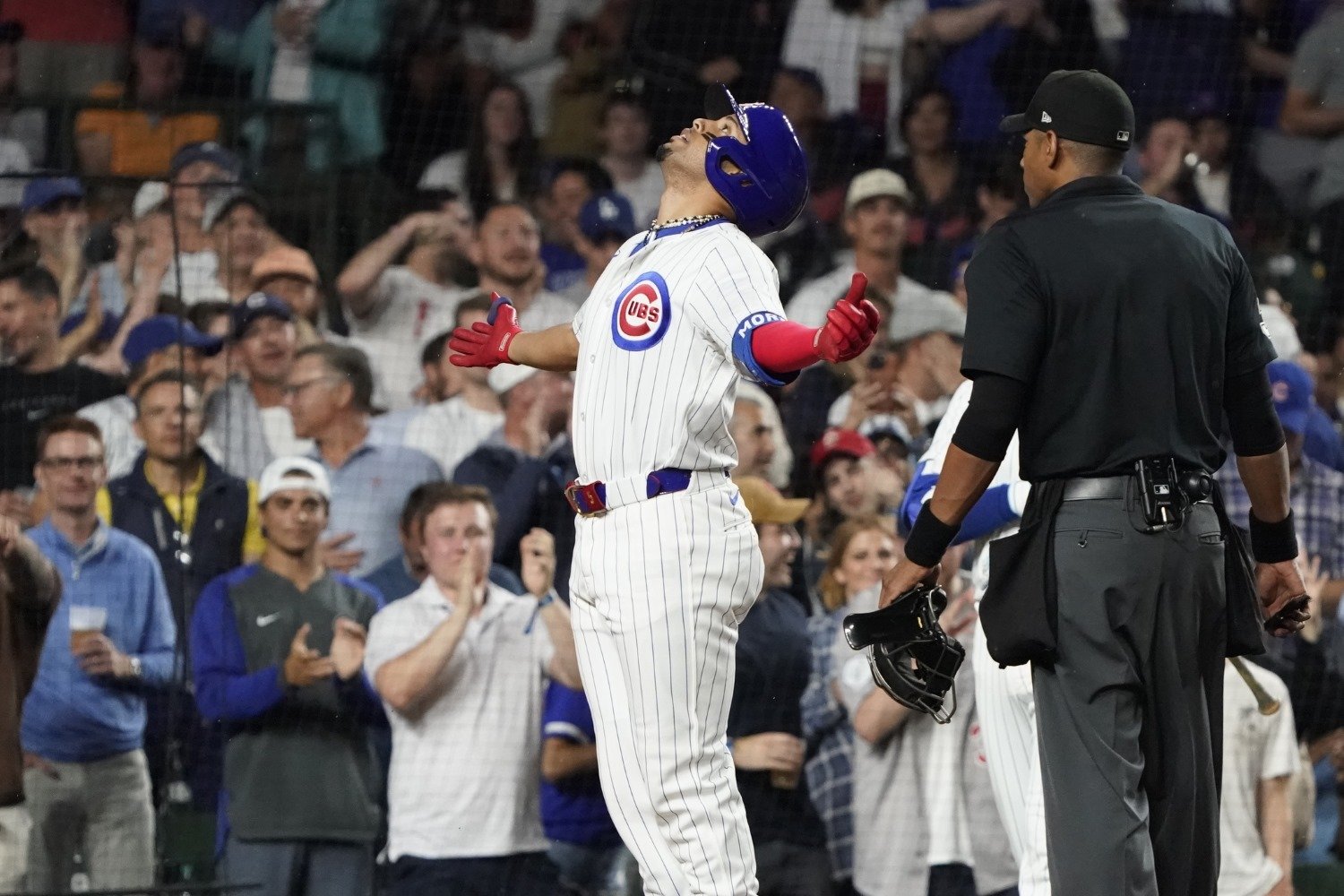 Yesterday, I wrote at length about Christopher Morel, and the fact that he shows up as one of the most unlucky hitters in baseball this year. Specifically, I broke down seven of the outs on which the models that drive those labels say he suffered the worst misfortune, looking for patterns and meaning. Today, let's finish that walkthrough and draw some broader conclusions (though not carve any in stone). Let's pick up right where we left off. We last found Morel at the end of April in New York. Here he is back in Chicago in early May, with the Brewers in town. Morel 8.mp4 If you read last night's piece, you've already seen a pattern develop, and this continues it. Morel chased a pitch way off the plate inside. Many hitters would whiff on it. Few of those who make contact on it would keep it fair, and fewer still would keep it fair while making solid contact. This could easily have been a double down into the left-field corner. Again, we see Morel being an extraordinarily talented hitter. Again, though, it feels like the bad luck factor should take a backseat to the question of whether he should be swinging at that pitch at all, and that when we do weigh the impact of the bad luck, we should ask ourselves whether any other outcome was really possible, given the pitch location and the nature of Morel's swing. Ok, next, from the following series against the Padres. Morel 9.mp4 This one really is brutal. That's 99 on the inner edge, and Morel gets the barrel to it while staying through the ball well enough to take it to right-center field. It's an impressive swing. It's also another case where you have to ask: Was any other outcome actually possible? In the comment section of Part 1 of this two-part series, site member @We Got The Whole 9astutely observed that most of the Cubs' alleged bad luck seems to come when they hit to the middle of the diamond, and asked whether that's true, in more than an anecdotal sense. Naturally, it is. This is, in no small part, because expected outcome models for batted balls don't take spray angle into account. That sounds like a massive failure of the models, but there are some sound reasons to exclude that input. For one thing, it's often hard for a hitter to manipulate the direction of the ball, more than influencing it through their tendency to either pull the ball or hit it the other way. For another, once you start accounting for direction, you have to account for the positions of fielders before the ball is hit, at which point you're not only measuring the hitter's ability to hit. Still, it's a major factor. Balls hit equally hard and on the same launch angle might be 50 feet over the wall if hit to straightaway right or left field, at some parks, but die on the track if hit to center field. Morel crushed this ball, and on one of those high-school fields with uniform fence distances all the way around, he'd have had an easy homer. That's not big-league ball. The fact that Robert Suarez was able to hit his spot with a fastball just shy of 100 MPH on the inside corner made it almost impossible for Morel to pull the ball, at least with the authority with which he hit this ball back up the middle. Some credit there has to go to Suarez, and we have to acknowledge that while Morel did well, he didn't exactly get unlucky. He got beaten, despite a great swing. Against pitchers as good and in ballparks as big as the big leagues have, that's going to happen. On to the next one. Morel 10.mp4 Here's where things get crazy. This ball left Morel's bat at just 81.2 miles per hour, with a launch angle of 29 degrees. That's not exactly blistered, and it ended up looking like a lazy fly ball. Why was it tagged as a ball with a good chance of being a hit? Because most balls hit that hard, on that trajectory, fly 20 or more feet fewer than that one did. With the wind blowing out to left, this one settled into the glove roughly 304 feet from home plate; the average for balls hit like that this year is 283. Often, outfielders have to run a bit farther to get to balls hit like this one was, and (as was the case here) they sometimes have to do so after initially seeing a hitter with power take a healthy swing. This was good hitting by Morel. It was a mistake breaking ball up in the zone, in a situation when lifting the ball and making contact were imperative. He didn't get off his hardest swing on it, and that meant an out, but there was good process here, and it's fair to say that he did get some bad luck. With a generally less favorable wind at his back, he might have ended up with a game-changing double instead of a sacrifice fly. Morel 11.mp4 Finally! We've found one. This is just plain bad luck. Baseball is a game of millimeters, played on nearly three acres of land. Morel hit this 105 miles per hour, at a 34-degree launch angle, and he ever-so-slightly pulled it. Obviously, to get the payoff on a day when the wind was swirling and sideways, he needed to lean on it a hair more or get it a hair more toward left field, but this was a pitch out over the plate, and he put a superb swing on it. I'm happy to call this one pure, unadulterated bad luck. Morel 12.mp4 This clip is a perfect distillation of the reasons why so many teams now emphasize pulling fly balls to an extreme degree. There's just so much frustration to be found for anyone shy of elite, monstrous humans when they try to find their power in the opposite-field gap, especially in the modern game. Morel did everything right here. On a fastball away, he aggressively drove through the ball, slicing a 108.5-MPH drive at a launch angle of 17 degrees. Yet, he never seemed to have much chance of getting a hit, once it left his bat. This is another easy catch for the outfielder, even though it shows up as a should-be hit. File this one away. We'll discuss it further in a bit. Morel 13.mp4 After that streak of bad-luck outs on balls inside, now we're seeing some where he went and got a pitch solidly on the outer part, but the defense was ready for him. The shift is banned, but it's still a shaded-infield league, and this line drive (while well-hit enough to be a clean single much of the time) wasn't crunched hard enough to get past a second baseman positioned almost behind the bag even before the pitch was thrown. As with some of the early non-hits we saw, the upside of this one was a single, and it doesn't feel like cruelty from the fates that he was retired, but it certainly could have been a knock. Ok, let's recall the most painful of these examples. Ugh. It's hard to imagine a clearer demonstration of how hard being a great hitter in MLB is than this. The team, fans, and analysts have all rightly commended Morel for being more under control this year, especially in deep counts and with runners on base, which was the situation here. He still gets off a great swing against a fine pitch on the outer edge, and crushes it 405 feet to dead center field. But, there's that admonition against hitting it a long way in the air to center instead of to left, again. This time, it's because you have to clear the wall by more than you used to (in most places and with most center fielders), because the defense will take back your homers if you let them. But could Morel really have hit this any better, without being the lunging, strikeout-prone, pitchable hitter he was for too many long stretches the last two years? It's hard to imagine how. Last video: Morel 15.mp4 We've come full circle. This is much how his first couple bad breaks of the year looked. He hits it sharply, and again, this is a "high" ground ball, which has some expected utility. Still, it's a ground ball to the pull side. Defenses are ready for those, and it's hard to chalk them up as bad luck when they get gobbled up--especially when hit right at a defender, more or less. It's time to synthesize some of what we've seen here. I think I'd sum it up thusly: Don't set too much store by expected batted-ball stats, period. Don't expect Morel to get better just because he's due to do so, because I don't think he is. That said, do expect Morel to improve, if he continues to evolve and learns to lay off or adjust his swing a bit more on the ball in and off the plate. He has a unique swing. He gets the barrel way out in front, the same way great sluggers like Nolan Arenado do, but Arenado has learned to consistently elevate and pull the ball. He's similar to Willy Adames, whom he loves and respects, but like Adames, he can end up with deep funks and ugly OBPs when he doesn't have his approach perfectly tuned. Given the current bat path he uses, Morel will continue to hit into bad "luck" on a lot of pitches inside. We can see some of the reasons, but not all of them, absent more data on batted-ball spin and attack angle (which might well become public in the next year or two). He has to cover the whole plate, because his whiff rate will always be too high for him to simply cut it in half and work back from deep counts without running up his strikeout rate. Morel will do better, though, if he either tweaks that swing path or gets more selective on pitches that run off the plate inside. Changing his visual cues or mindset might also help him get around and pull the ball more sharply when it's on the outer third, too, and that's a vital component of whatever changes he'll continue to undertake. A few more of his well-struck fly balls have to go to left and left-center, rather than to center and right-center. We've seen evidence of him doing all of that over the last week or two, which has helped him come out of his latest slump and approach the production the team needs from him. That has to continue, but the signs point in exciting directions. Morel might not have gotten as unlucky as some stats say, but he's also not a finished product--and a breakout might be around the corner, if more because of an evolving process than because of a simple course correction in outcomes.
 -
After mashing his 11th home run Tuesday night, Christopher Morel is on pace to approach 30 for the Cubs this season. His overall numbers remain insufficient to his role as their cleanup hitter, though, so let's finish digging into the idea that he's been grossly unlucky. Ugh. It's hard to imagine a clearer demonstration of how hard being a great hitter in MLB is than this. The team, fans, and analysts have all rightly commended Morel for being more under control this year, especially in deep counts and with runners on base, which was the situation here. He still gets off a great swing against a fine pitch on the outer edge, and crushes it 405 feet to dead center field. But, there's that admonition against hitting it a long way in the air to center instead of to left, again. This time, it's because you have to clear the wall by more than you used to (in most places and with most center fielders), because the defense will take back your homers if you let them. But could Morel really have hit this any better, without being the lunging, strikeout-prone, pitchable hitter he was for too many long stretches the last two years? It's hard to imagine how. Last video: Morel 15.mp4 We've come full circle. This is much how his first couple bad breaks of the year looked. He hits it sharply, and again, this is a "high" ground ball, which has some expected utility. Still, it's a ground ball to the pull side. Defenses are ready for those, and it's hard to chalk them up as bad luck when they get gobbled up--especially when hit right at a defender, more or less. It's time to synthesize some of what we've seen here. I think I'd sum it up thusly: Don't set too much store by expected batted-ball stats, period. Don't expect Morel to get better just because he's due to do so, because I don't think he is. That said, do expect Morel to improve, if he continues to evolve and learns to lay off or adjust his swing a bit more on the ball in and off the plate. He has a unique swing. He gets the barrel way out in front, the same way great sluggers like Nolan Arenado do, but Arenado has learned to consistently elevate and pull the ball. He's similar to Willy Adames, whom he loves and respects, but like Adames, he can end up with deep funks and ugly OBPs when he doesn't have his approach perfectly tuned. Given the current bat path he uses, Morel will continue to hit into bad "luck" on a lot of pitches inside. We can see some of the reasons, but not all of them, absent more data on batted-ball spin and attack angle (which might well become public in the next year or two). He has to cover the whole plate, because his whiff rate will always be too high for him to simply cut it in half and work back from deep counts without running up his strikeout rate. Morel will do better, though, if he either tweaks that swing path or gets more selective on pitches that run off the plate inside. Changing his visual cues or mindset might also help him get around and pull the ball more sharply when it's on the outer third, too, and that's a vital component of whatever changes he'll continue to undertake. A few more of his well-struck fly balls have to go to left and left-center, rather than to center and right-center. We've seen evidence of him doing all of that over the last week or two, which has helped him come out of his latest slump and approach the production the team needs from him. That has to continue, but the signs point in exciting directions. Morel might not have gotten as unlucky as some stats say, but he's also not a finished product--and a breakout might be around the corner, if more because of an evolving process than because of a simple course correction in outcomes. View full article
-
How Unlucky Has Christopher Morel Been? Going to the Tape, Pt. 1
Matthew Trueblood posted an article in Cubs
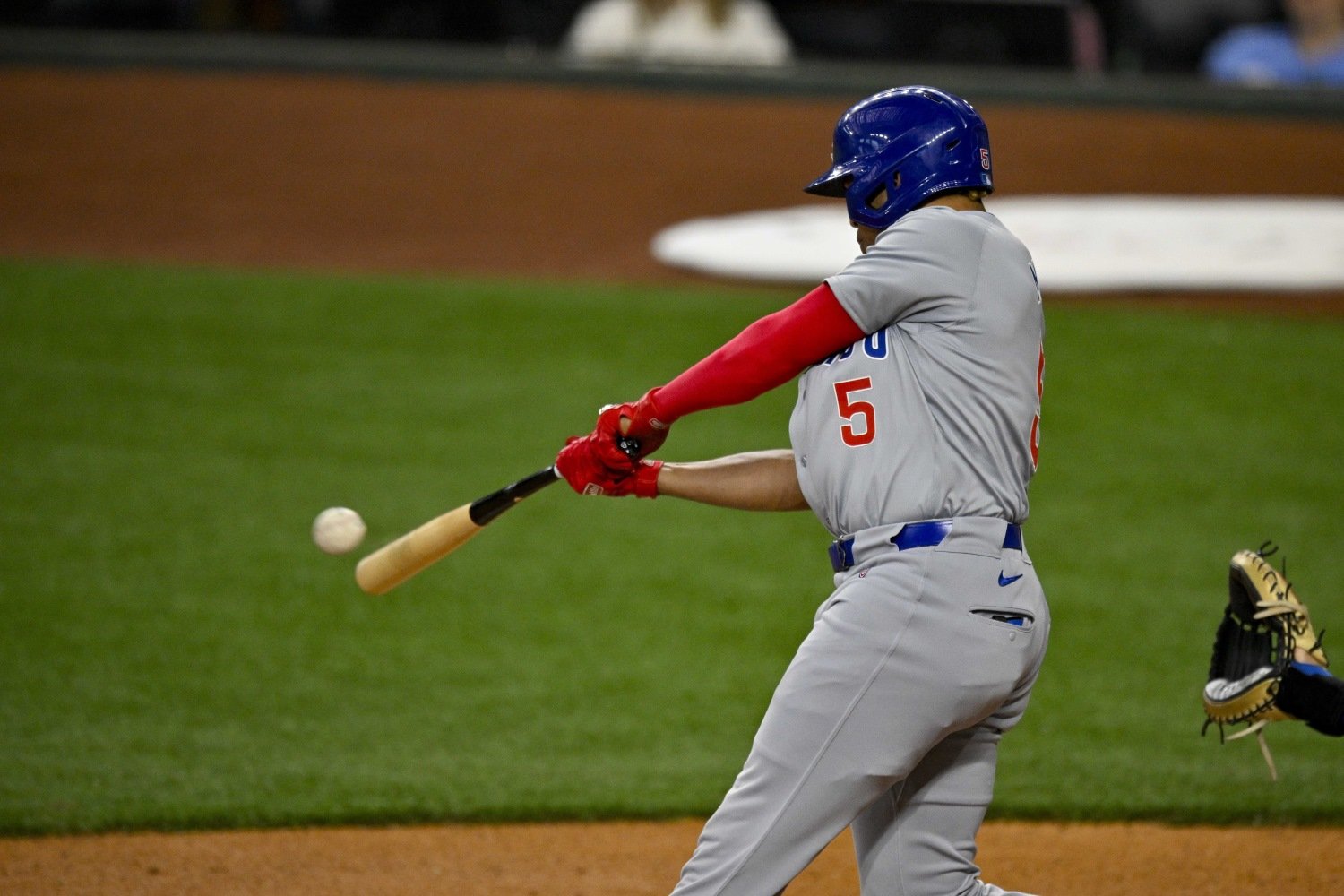 Almost everywhere you turn in the midst of conversations of everything going wrong for the Cubs right now, you hear the name Christopher Morel. His defense at third base has been genuinely problematic this year, and the decision to install him as the regular at that position looks pretty bad, but he's made some improvements since Opening Day, so the agreed-upon course for the moment there is patience. As Morel's offensive struggles pertain to the team's overall difficulty in consistently scoring runs, though, the conversation is even more complex. Seasoned baseball viewers have seen a more disciplined, controlled Morel in the batter's box this year. Without a doubt, he's taking better, smarter at-bats. He jumps at the ball much less often than was the case a year ago, and he did so less then than one year earlier. Statheads will note not only his elite raw swing speed, according to new bat-tracking data available via Statcast, but the numbers that show he's been very unlucky this season--in essence, that more of his batted balls should have gone for hits than have actually done so, based on their exit velocity and launch angle. Yet, some fans also cast a more skeptical eye on Morel, and on those who would hype his burgeoning skills despite his ugly overall numbers. They point out, firstly, that he remains one of the streakiest hitters you'll ever see. Even while looking more competitive than he did during a hideous slump last summer, Morel has already gone through a funk in which he not only didn't produce hits or get on base, but rarely even put the ball in play. He goes dormant for longer periods than you would like to see a cleanup hitter do, and for those disinclined to accept broad-brush numbers in making a granular assessment, the expected batted-ball data fails the sniff test. Let's meet in the middle, and engage with Morel's very strange season to date on the simplest terms possible. He's tied for 15th in MLB this year, with 15 outs on batted balls that had an expected weighted on-base average (xwOBA) of .500 or higher when they left his bat. What if we just watched them all, to try and digest what they're telling us and hone our projections of Morel's future production? We'll start at the very beginning. Here's one from the very first weekend of the season, in Texas. Morel 1.mp4 Mm. Ok. Before we talk about that one at all, here's another, from the Cubs' opening series at home, against the Rockies. Morel 2.mp4 Ok, these aren''t that impressive so far, are they? Each is hit at more than 95 miles per hour, but they're just grounders to third base. The expected outcomes model is catching something real, in that they're well-struck and (this is a subtle but important factor) are what we might classify as "high" ground balls. They come more or less straight off Morel's bat, before gravity goes to work on them, rather than being hit downward and bouncing within 30 or 40 feet of the plate. I did research on this going back almost half a decade, and it's a real consideration. Higher grounders, as you'd guess, have a better chance to get through or force defensive mistakes than do choppers. Still, neither of these had any chance to be more than a single, and it doesn't even feel that unjust that they went for outs instead. Let's take a look at the next time he was cheated, in San Diego a week later. Morel 3.mp4 Line drive this time, but similar story. Morel hit that hard, but he didn't blister it or lift it much. It could have been a single. Despite the expected batted-ball data, it doesn't feel like it should have been one, exactly, and it wasn't splitting any gaps. The next day, he hit one considerably better, with some air beneath it. Morel 4.mp4 This, at last, is the kind of batted ball we're really thinking of when we say Morel has been unlucky, right? It jumped off his bat at 108 miles per hour, with some loft on it. It went to the biggest part of the park, in a setting (April in San Diego) that isn't terribly conducive to getting extra carry on the ball, but there's not much more you can ask of a hitter than to hit the ball that way. Maybe we'll come back to this one for further discussion later, but hitting the ball that hard and on a high line is surely a sign of a good (or at least gifted) hitter. Later in that road trip, as Morel settled into what would be a long and ugly slump, he nearly had a slump-preempter. Morel 5.mp4 Again, the expected metrics are being a little bit friendly, right? The probability of this ball (hit only 94 miles per hour) being any kind of hit is tiny. The thing is, if it's a hit at all, it's gonna be a home run. And look, it almost was one! Hitting long, high fly balls to the pull field is the single more valuable thing a hitter can do, before we bake in the costs (usually, a lot of extra strikeouts) of an approach centered around hitting them. Morel did that here. He wasn't rewarded. Gosh, that West Coast trip was long. The day after the above, in Arizona: Morel 6.mp4 To me, this is one of the most tricky and telling batted balls we'll study in this sequence. Morel got way out on (and a bit around) a ball off the plate inside, and he kept it fair, hit it squarely, elevated it at 106 miles per hour. If the ball is 20 feet to either the left or the right, it's a sure double, and if it's even 10 feet in either of those directions, it's a very tough play for the left fielder. At the same time, look at that swing. Was there any version of it where he could have hit that ball either 20 feet to the left or to the right? To me, it looks like he either could have yanked it foul or hit a much less potent strike to another part of the field. This was a good pitch, and Morel put a freakishly good swing on it, but that might not quite mean that he deserved any more than he got out of that swing. The thing about Morel slumps is, he gets going so badly that he doesn't even have bad luck. That lineout in Arizona came on Apr. 15. Over the next fortnight, he went 7-43 with 13 strikeouts and zero home runs. He only managed two doubles, and his OPS was barely over .500. He didn't have another hard-luck out, by our measurements, until Apr. 29. Morel 7.mp4 See, and that's not the kind of hard luck we've been hunting either. Morel got jammed badly. He still showed good bat speed and muscled a looping, hopeful liner toward right-center, and balls hit that softly but with that kind of loft very often drop into the grass beyond the reach of the infielder. When you think of bad luck, though, this isn't what it looks like. For today, we'll pause this revue here. Tomorrow, we'll tour the other eight instances in which Morel got jobbed, according to the expected numbers. At this halfway point, though, it's worth making a few observations: Some guys seem to hit screaming line-drive outs that look much more like the bad luck we picture when we say the words. Seiya Suzuki is a good example. Morel runs into misfortune at a different angle, figuratively and literally. Almost all of these came on inside pitches. That's something to watch, especially given the way Morel's swing works. He loves to get his arms extended. Maybe we need to give a bit more credit to pitchers when they successfully jam the very jammable Morel, and maybe Morel needs to cut down his swing rate on those offerings on the inner edge--and beyond it. Morel is a pivotal part of the Cubs' medium-term organizational plan, one way or another. This is an important topic to understand as best we can, so it's worth another round of conversation and breakdowns tomorrow.
 -
It's early June, and the Chicago Cubs' everyday cleanup hitter is hitting .195/.307/.371. Under normal circumstances, this would be a daily topic of anguished, even livid conversation. This seems to be a different case, though, because of who the player is and how he's come by this stat line. Let's dig deeper on it. Image courtesy of © Jerome Miron-USA TODAY Sports Almost everywhere you turn in the midst of conversations of everything going wrong for the Cubs right now, you hear the name Christopher Morel. His defense at third base has been genuinely problematic this year, and the decision to install him as the regular at that position looks pretty bad, but he's made some improvements since Opening Day, so the agreed-upon course for the moment there is patience. As Morel's offensive struggles pertain to the team's overall difficulty in consistently scoring runs, though, the conversation is even more complex. Seasoned baseball viewers have seen a more disciplined, controlled Morel in the batter's box this year. Without a doubt, he's taking better, smarter at-bats. He jumps at the ball much less often than was the case a year ago, and he did so less then than one year earlier. Statheads will note not only his elite raw swing speed, according to new bat-tracking data available via Statcast, but the numbers that show he's been very unlucky this season--in essence, that more of his batted balls should have gone for hits than have actually done so, based on their exit velocity and launch angle. Yet, some fans also cast a more skeptical eye on Morel, and on those who would hype his burgeoning skills despite his ugly overall numbers. They point out, firstly, that he remains one of the streakiest hitters you'll ever see. Even while looking more competitive than he did during a hideous slump last summer, Morel has already gone through a funk in which he not only didn't produce hits or get on base, but rarely even put the ball in play. He goes dormant for longer periods than you would like to see a cleanup hitter do, and for those disinclined to accept broad-brush numbers in making a granular assessment, the expected batted-ball data fails the sniff test. Let's meet in the middle, and engage with Morel's very strange season to date on the simplest terms possible. He's tied for 15th in MLB this year, with 15 outs on batted balls that had an expected weighted on-base average (xwOBA) of .500 or higher when they left his bat. What if we just watched them all, to try and digest what they're telling us and hone our projections of Morel's future production? We'll start at the very beginning. Here's one from the very first weekend of the season, in Texas. Morel 1.mp4 Mm. Ok. Before we talk about that one at all, here's another, from the Cubs' opening series at home, against the Rockies. Morel 2.mp4 Ok, these aren''t that impressive so far, are they? Each is hit at more than 95 miles per hour, but they're just grounders to third base. The expected outcomes model is catching something real, in that they're well-struck and (this is a subtle but important factor) are what we might classify as "high" ground balls. They come more or less straight off Morel's bat, before gravity goes to work on them, rather than being hit downward and bouncing within 30 or 40 feet of the plate. I did research on this going back almost half a decade, and it's a real consideration. Higher grounders, as you'd guess, have a better chance to get through or force defensive mistakes than do choppers. Still, neither of these had any chance to be more than a single, and it doesn't even feel that unjust that they went for outs instead. Let's take a look at the next time he was cheated, in San Diego a week later. Morel 3.mp4 Line drive this time, but similar story. Morel hit that hard, but he didn't blister it or lift it much. It could have been a single. Despite the expected batted-ball data, it doesn't feel like it should have been one, exactly, and it wasn't splitting any gaps. The next day, he hit one considerably better, with some air beneath it. Morel 4.mp4 This, at last, is the kind of batted ball we're really thinking of when we say Morel has been unlucky, right? It jumped off his bat at 108 miles per hour, with some loft on it. It went to the biggest part of the park, in a setting (April in San Diego) that isn't terribly conducive to getting extra carry on the ball, but there's not much more you can ask of a hitter than to hit the ball that way. Maybe we'll come back to this one for further discussion later, but hitting the ball that hard and on a high line is surely a sign of a good (or at least gifted) hitter. Later in that road trip, as Morel settled into what would be a long and ugly slump, he nearly had a slump-preempter. Morel 5.mp4 Again, the expected metrics are being a little bit friendly, right? The probability of this ball (hit only 94 miles per hour) being any kind of hit is tiny. The thing is, if it's a hit at all, it's gonna be a home run. And look, it almost was one! Hitting long, high fly balls to the pull field is the single more valuable thing a hitter can do, before we bake in the costs (usually, a lot of extra strikeouts) of an approach centered around hitting them. Morel did that here. He wasn't rewarded. Gosh, that West Coast trip was long. The day after the above, in Arizona: Morel 6.mp4 To me, this is one of the most tricky and telling batted balls we'll study in this sequence. Morel got way out on (and a bit around) a ball off the plate inside, and he kept it fair, hit it squarely, elevated it at 106 miles per hour. If the ball is 20 feet to either the left or the right, it's a sure double, and if it's even 10 feet in either of those directions, it's a very tough play for the left fielder. At the same time, look at that swing. Was there any version of it where he could have hit that ball either 20 feet to the left or to the right? To me, it looks like he either could have yanked it foul or hit a much less potent strike to another part of the field. This was a good pitch, and Morel put a freakishly good swing on it, but that might not quite mean that he deserved any more than he got out of that swing. The thing about Morel slumps is, he gets going so badly that he doesn't even have bad luck. That lineout in Arizona came on Apr. 15. Over the next fortnight, he went 7-43 with 13 strikeouts and zero home runs. He only managed two doubles, and his OPS was barely over .500. He didn't have another hard-luck out, by our measurements, until Apr. 29. Morel 7.mp4 See, and that's not the kind of hard luck we've been hunting either. Morel got jammed badly. He still showed good bat speed and muscled a looping, hopeful liner toward right-center, and balls hit that softly but with that kind of loft very often drop into the grass beyond the reach of the infielder. When you think of bad luck, though, this isn't what it looks like. For today, we'll pause this revue here. Tomorrow, we'll tour the other eight instances in which Morel got jobbed, according to the expected numbers. At this halfway point, though, it's worth making a few observations: Some guys seem to hit screaming line-drive outs that look much more like the bad luck we picture when we say the words. Seiya Suzuki is a good example. Morel runs into misfortune at a different angle, figuratively and literally. Almost all of these came on inside pitches. That's something to watch, especially given the way Morel's swing works. He loves to get his arms extended. Maybe we need to give a bit more credit to pitchers when they successfully jam the very jammable Morel, and maybe Morel needs to cut down his swing rate on those offerings on the inner edge--and beyond it. Morel is a pivotal part of the Cubs' medium-term organizational plan, one way or another. This is an important topic to understand as best we can, so it's worth another round of conversation and breakdowns tomorrow. View full article
-
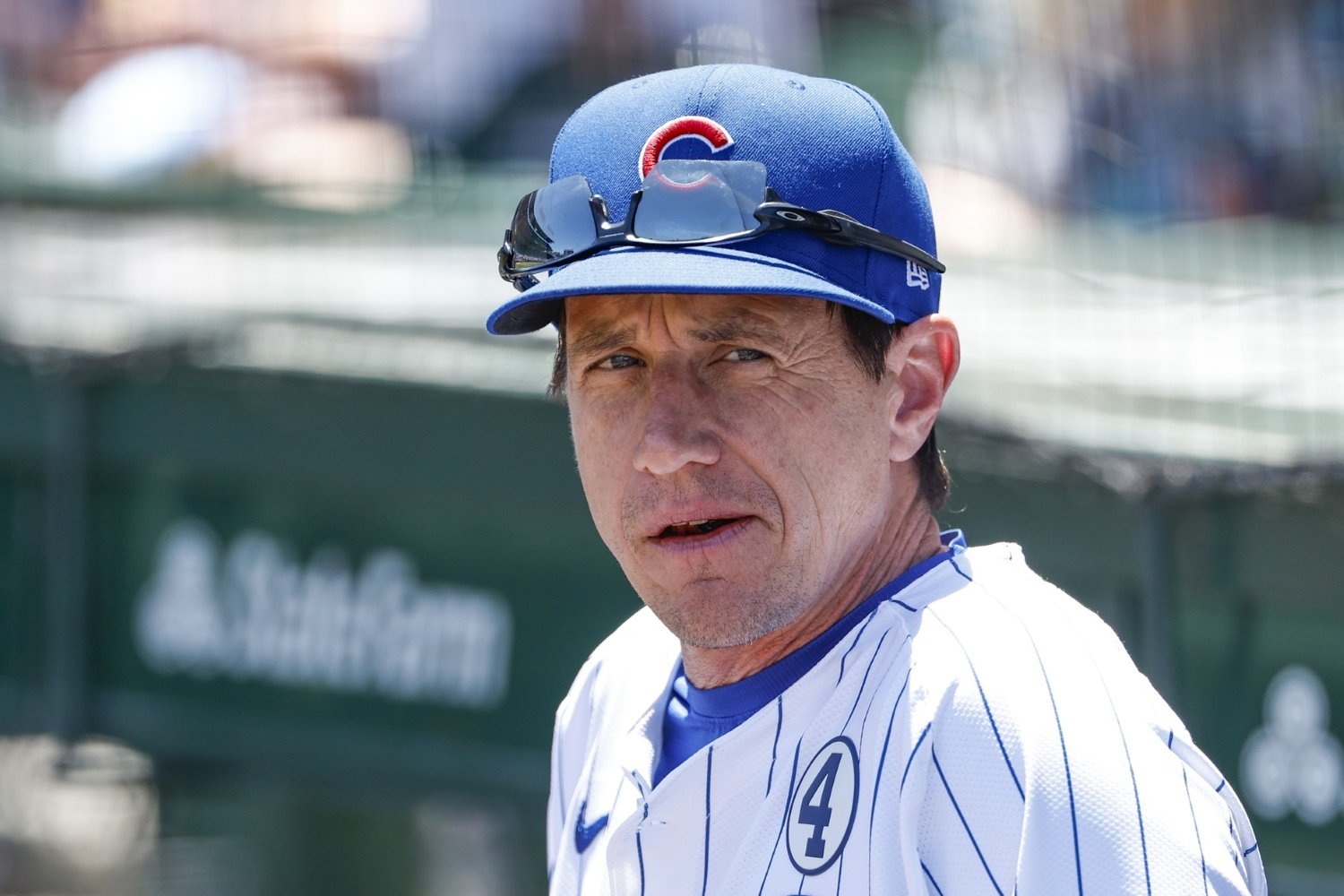 Like player aging curves, naturally, managerial aging curves are imperfect descriptions of individual performance. There are guys who peak early and guys who bloom late, on the field and on the top step of the dugout. In general, though, great managers were and are younger than you might realize. There's a plasticity to your thinking and a willingness to change around age 40 that dissipates as you enter and travel through your 50s. It's also much easier to relate to players (most of whom are between 22 and 32) when you're roughly 42 than when you're 52, and easier then than when you're 62. Craig Counsell will turn 54 this August. He has a youthful look that is only possible, at this age, in 2024, but that's his age. That's notable, because: Sparky Anderson took over the Cincinnati Reds at age 36. He had his last 90-win season, with the Detroit Tigers, at age 53, in 1987. Earl Weaver took over the Baltimore Orioles at age 37. He retired after the 1982 season, at 51. He made a brief return later in the decade, but without success. Counsell is entering an age range in which managers tend to struggle, in the middle of their 50s. The best and most successful managers (other than Counsell himself) of the last two decades--A.J. Hinch, Alex Cora, Dave Roberts, Brian Snitker, Terry Francona, Bruce Bochy, and Dusty Baker--all are either younger than Counsell or considerably older. Again, aging curves don't even apply smoothly to players, for whom physical changes during one's peak seasons have huge and obvious ramifications. At the moment, it looks like anyone who bet against Aaron Judge aging well after his historic 2022 season just because he was already past 30 were wrong to do so. Justin Verlander is still going strong in his 40s. Even more plainly, manager aging curves are going to be noisy, especially because we live in an era of better physical health and more continual intergenerational interaction than those of, for instance, Anderson and Weaver. The Cubs found their World Series-winning manager when he was already past 60. The last three World Series-winning skippers have been 65, 73, and 68 years old, respectively. However, when a manager who has had success in the past begins running into more adversity with teams as he enters his mid-50s, we have to pay some extra attention to it--just as we would if an All-Star shortstop's production cratered just as they hit 30. It's possible that both parties recover, and that their difficult stretch proves to be just that, but it's harder to dismiss as inconsequential at 30 (for a player) or 53 (for a manager) than at 25 or 40, respectively. That makes this a very uncomfortable moment for the Cubs. While he had a tricky gauntlet to run and still managed (no pun intended) to pull out an NL Central title in 2023, that final season in Milwaukee was arguably his worst at the helm of the Brewers--not in terms of achievement, but in the way he handled the clubhouse and pulled levers within games. That was the season after he had failed to hold the team together in the wake of the Brewers trading Josh Hader in uly 2022. At the time, I was inclined to write off those issues as the result of an uncomfortable relationship between ownership, the front office, and the field staff, largely beyond his control. David Stearns left the Brewers to run the New York Mets at the end of last season, but before that, he'd stepped back into semi-resignation, after the team prevented him from making that very move to New York a year sooner. It was an awkward situation, especially in the shadow of the Hader trade, and the contentiousness that arose between the team and ace Corbin Burnes last spring exacerbated things--again, in a way not within Counsell's influence. Now, however, there's more to consider. As was true last year in Milwaukee, Counsell has been given a deeply imperfect roster and asked to turn it into a playoff team in Chicago--but this time, we can assume that he had as much influence over the construction of that roster as any manager in baseball. The ink on his record-setting contract is barely dry. He was vocal all winter about the way he expected things to work. He was in a position to succeed. Yet, two months in, Counsell is failing--outright, this time, instead of on some vague level rooted in very high expectations. The Cubs are below .500, and they've lost 14 of their last 19. Not since late 2015, after the Brewers had fallen far out of the race, has a Counsell-led team gone 5-14 over any stretch of 19 games. His trademark was the exceptionally strong finish, which he effected in 2018, 2019, and 2023 in breathtaking ways, but the secret ingredient to that success was an exceptional ability to avert long stretches of lousy play early. Counsell's teams would enter September within striking distance and then get hot, and the rest became history. Again, though, none of those teams ever lost 14 of 19. On Friday, Counsell used Patrick Wisdom (defensibly) as a pinch-hitter for Mike Tauchman, against a left-handed Reds reliever. At the end of the game, though, he then used Nick Madrigal as a pinch-hitter for Wisdom, with the tying run at first base and the winning one in the batter's box. He justified that choice after the game by noting that Wisdom faced a bad matchup in Reds closer Alexis Díaz. That's not untrue; it's just irrelevant. Madrigal also faced a bad matchup in Díaz, in that Díaz is an MLB-caliber right-handed pitcher. Wisdom could, by some happy accident, have run into a walkoff home run. The most likely outcome was a strikeout, but that would have been just fine. It would have brought Seiya Suzuki to the plate with Michael Busch still anchored at first as the tying run. If Suzuki had hit the same line drive into the corner that he hit when he actually came to the plate, Busch might very well have scored. Madrigal, of course, didn't score. He didn't come especially close to doing so, because he's a much worse and slower baserunner than Busch is. That Madrigal even got the privilege of being thrown out on that would-be huge hit, though, is a product mostly of good luck and bad Reds defense. Had they not flubbed a potential double play, Suzuki would have been up representing the tying run, with two outs, instead of as the winning one. Madrigal nearly grounded into a double play, which felt about as likely as a Wisdom strikeout, and his chances of coming up with a hit against Díaz were virtually nil. Putting Madrigal in for Wisdom there was a shockingly bad managerial decision--the kind we might have expected from David Ross, on occasion, but that Counsell was supposed to avoid assiduously. It's emblematic of a much bigger problem, too, which is that the manager doesn't seem to have figured out how to use this roster at all. He might still be an upgrade on Ross, but he might also be a skipper in decline. Worse, we can't even categorize this as "early" decline, exactly. Managers run into ruts around this stage of their careers, unless they're all-time greats and/or are equipped with excellent talent. The Cubs gambled on the idea that Counsell is an all-time great, with the deal to which they signed him, and they might yet turn out to be correct. They certainly didn't equip him with elite talent, though, and that might result in a setback they can't afford.
 -
Absolutely no one thinks about managerial aging curves in MLB. The very notion of one seems almost nonsensical. The thing is, it might be a thing--and that might mean trouble for the Chicago Cubs. Image courtesy of © Kamil Krzaczynski-USA TODAY Sports Like player aging curves, naturally, managerial aging curves are imperfect descriptions of individual performance. There are guys who peak early and guys who bloom late, on the field and on the top step of the dugout. In general, though, great managers were and are younger than you might realize. There's a plasticity to your thinking and a willingness to change around age 40 that dissipates as you enter and travel through your 50s. It's also much easier to relate to players (most of whom are between 22 and 32) when you're roughly 42 than when you're 52, and easier then than when you're 62. Craig Counsell will turn 54 this August. He has a youthful look that is only possible, at this age, in 2024, but that's his age. That's notable, because: Sparky Anderson took over the Cincinnati Reds at age 36. He had his last 90-win season, with the Detroit Tigers, at age 53, in 1987. Earl Weaver took over the Baltimore Orioles at age 37. He retired after the 1982 season, at 51. He made a brief return later in the decade, but without success. Counsell is entering an age range in which managers tend to struggle, in the middle of their 50s. The best and most successful managers (other than Counsell himself) of the last two decades--A.J. Hinch, Alex Cora, Dave Roberts, Brian Snitker, Terry Francona, Bruce Bochy, and Dusty Baker--all are either younger than Counsell or considerably older. Again, aging curves don't even apply smoothly to players, for whom physical changes during one's peak seasons have huge and obvious ramifications. At the moment, it looks like anyone who bet against Aaron Judge aging well after his historic 2022 season just because he was already past 30 were wrong to do so. Justin Verlander is still going strong in his 40s. Even more plainly, manager aging curves are going to be noisy, especially because we live in an era of better physical health and more continual intergenerational interaction than those of, for instance, Anderson and Weaver. The Cubs found their World Series-winning manager when he was already past 60. The last three World Series-winning skippers have been 65, 73, and 68 years old, respectively. However, when a manager who has had success in the past begins running into more adversity with teams as he enters his mid-50s, we have to pay some extra attention to it--just as we would if an All-Star shortstop's production cratered just as they hit 30. It's possible that both parties recover, and that their difficult stretch proves to be just that, but it's harder to dismiss as inconsequential at 30 (for a player) or 53 (for a manager) than at 25 or 40, respectively. That makes this a very uncomfortable moment for the Cubs. While he had a tricky gauntlet to run and still managed (no pun intended) to pull out an NL Central title in 2023, that final season in Milwaukee was arguably his worst at the helm of the Brewers--not in terms of achievement, but in the way he handled the clubhouse and pulled levers within games. That was the season after he had failed to hold the team together in the wake of the Brewers trading Josh Hader in uly 2022. At the time, I was inclined to write off those issues as the result of an uncomfortable relationship between ownership, the front office, and the field staff, largely beyond his control. David Stearns left the Brewers to run the New York Mets at the end of last season, but before that, he'd stepped back into semi-resignation, after the team prevented him from making that very move to New York a year sooner. It was an awkward situation, especially in the shadow of the Hader trade, and the contentiousness that arose between the team and ace Corbin Burnes last spring exacerbated things--again, in a way not within Counsell's influence. Now, however, there's more to consider. As was true last year in Milwaukee, Counsell has been given a deeply imperfect roster and asked to turn it into a playoff team in Chicago--but this time, we can assume that he had as much influence over the construction of that roster as any manager in baseball. The ink on his record-setting contract is barely dry. He was vocal all winter about the way he expected things to work. He was in a position to succeed. Yet, two months in, Counsell is failing--outright, this time, instead of on some vague level rooted in very high expectations. The Cubs are below .500, and they've lost 14 of their last 19. Not since late 2015, after the Brewers had fallen far out of the race, has a Counsell-led team gone 5-14 over any stretch of 19 games. His trademark was the exceptionally strong finish, which he effected in 2018, 2019, and 2023 in breathtaking ways, but the secret ingredient to that success was an exceptional ability to avert long stretches of lousy play early. Counsell's teams would enter September within striking distance and then get hot, and the rest became history. Again, though, none of those teams ever lost 14 of 19. On Friday, Counsell used Patrick Wisdom (defensibly) as a pinch-hitter for Mike Tauchman, against a left-handed Reds reliever. At the end of the game, though, he then used Nick Madrigal as a pinch-hitter for Wisdom, with the tying run at first base and the winning one in the batter's box. He justified that choice after the game by noting that Wisdom faced a bad matchup in Reds closer Alexis Díaz. That's not untrue; it's just irrelevant. Madrigal also faced a bad matchup in Díaz, in that Díaz is an MLB-caliber right-handed pitcher. Wisdom could, by some happy accident, have run into a walkoff home run. The most likely outcome was a strikeout, but that would have been just fine. It would have brought Seiya Suzuki to the plate with Michael Busch still anchored at first as the tying run. If Suzuki had hit the same line drive into the corner that he hit when he actually came to the plate, Busch might very well have scored. Madrigal, of course, didn't score. He didn't come especially close to doing so, because he's a much worse and slower baserunner than Busch is. That Madrigal even got the privilege of being thrown out on that would-be huge hit, though, is a product mostly of good luck and bad Reds defense. Had they not flubbed a potential double play, Suzuki would have been up representing the tying run, with two outs, instead of as the winning one. Madrigal nearly grounded into a double play, which felt about as likely as a Wisdom strikeout, and his chances of coming up with a hit against Díaz were virtually nil. Putting Madrigal in for Wisdom there was a shockingly bad managerial decision--the kind we might have expected from David Ross, on occasion, but that Counsell was supposed to avoid assiduously. It's emblematic of a much bigger problem, too, which is that the manager doesn't seem to have figured out how to use this roster at all. He might still be an upgrade on Ross, but he might also be a skipper in decline. Worse, we can't even categorize this as "early" decline, exactly. Managers run into ruts around this stage of their careers, unless they're all-time greats and/or are equipped with excellent talent. The Cubs gambled on the idea that Counsell is an all-time great, with the deal to which they signed him, and they might yet turn out to be correct. They certainly didn't equip him with elite talent, though, and that might result in a setback they can't afford. View full article
-
For a year or so, now, it has been clear that the Chicago Cubs badly wanted to avoid bringing David Bote back to their big-league roster. After a woeful May in which they exhausted other options, though, Bote is once again shedding the 'Iowa' script above his uniform's Cubs logo. Image courtesy of © Allan Henry-USA TODAY Sports Nick Madrigal heads back to Iowa in exchange for Bote, with Adbert Alzolay hitting the 60-day injured list to accommodate the reinstatement of Bote to the 40-man roster. It's a move that signals, in no small measure, a defeat for the Cubs front office, because they fought hard to make one of Madrigal, Miles Mastrobuoni, Matt Mervis, Alexander Canario, or Garrett Cooper stick to that roster spot, instead. Nothing worked, and now they're going back to Bote, which they desperately did not want to do. Presumably, Bote will become the de facto backup third baseman and second baseman, taking Madrigal's place in that role and keeping Patrick Wisdom's just about the same as it was. He's not the defender Madrigal is, but Bote has a chance to have some kind of positive offensive impact, and he won't embarrass himself when asked to man the hot corner or the keystone. If Madrigal were a successful version of his own profile, he'd be a better bench player than Bote. Ditto for Mastrobuoni. After months of failures from each, though, the Cubs have finally buckled and turned to an old friend to rescue them from the unrealized potential of his two younger teammates. You can make a case for the way the Cubs have handled Bote since outrighting him off the 40-man roster in November 2022. Once they did that, bringing him back came with risks. Gone is the luxury-tax loophole that kept Red Sox outfielder Rusney Castillo stranded in Triple-A for years after he busted as a big-leaguer, but even without that incentive to keep Bote stashed, the team had to think about what would happen if and when they did recall him. Firstly, barring a 60-day injured list placement, bringing Bote back had to mean losing another player, or passing up the opportunity to acquire one. That's a hurdle to bringing up any player who isn't on the 40-man roster, but it's a smaller one for teams when the player in question is a top prospect (or any young player) whom they hope will be part of the team for another half-decade or more. It's a trickier thing when it's someone like Bote, on the wrong side of 30 and with little time left on his contract. Perhaps more importantly, the team also knows they could lose Bote altogether if they bring him back and then need to outright him again--hardly a difficult scenario to imagine, given the way his last couple of seasons in the big leagues panned out. One thing front offices desperately try to avoid is having a player who couldn't succeed for them thrive elsewhere, on their dime. Bote is guaranteed $5.5 million this year, and that was one reason why he didn't get a call last season, even as he hit fairly well and the team went through a similar churn of options to round out their infield mix. This season, since this is the last year of the deal and we're already in June, it's less of a concern. That helped him finally get the call. Furthermore, though, they clearly just did not believe in Bote, and after his last couple years of big-league performance, that's understandable. Yet, he did hit .259/.356/.476 since the start of 2023, with a very playable strikeout rate and a great walk rate. In addition to concerns about the gap in talent and opponent quality between Triple-A and the majors, we might note the specific issue of the technology-driven, minuscule Triple-A strike zone, which would tend to juice the numbers for a player like Bote--especially with regard to those walks. His swing was always a grooved one, too, which meant that a smaller zone made it easier for him to cover everything a pitcher could really throw at him. He didn't post elite batted-ball data, especially for a player of his age and previous experience. He still hits a good number of pop-ups and ground balls. He does hit it fairly hard, though, and at this point, the combination of his ability to do that and his defensive versatility made it impossible to justify continuing to try to make Madrigal work instead of him. Whether Bote can recapture the magic he had in 2018 remains to be seen, but it certainly seems unlikely. Happily, this time around, he's a purely complementary piece, and he's spent the last year-plus in Iowa, becoming a better leader and getting comfortable with his non-priority place in the organizational hierarchy. He's as well-positioned to succeed now as ever, even if success will be defined in a smaller way than in the past. View full article
-
Cubs Finally Reach Literally David Bote Levels of Roster Desperation
Matthew Trueblood posted an article in Cubs
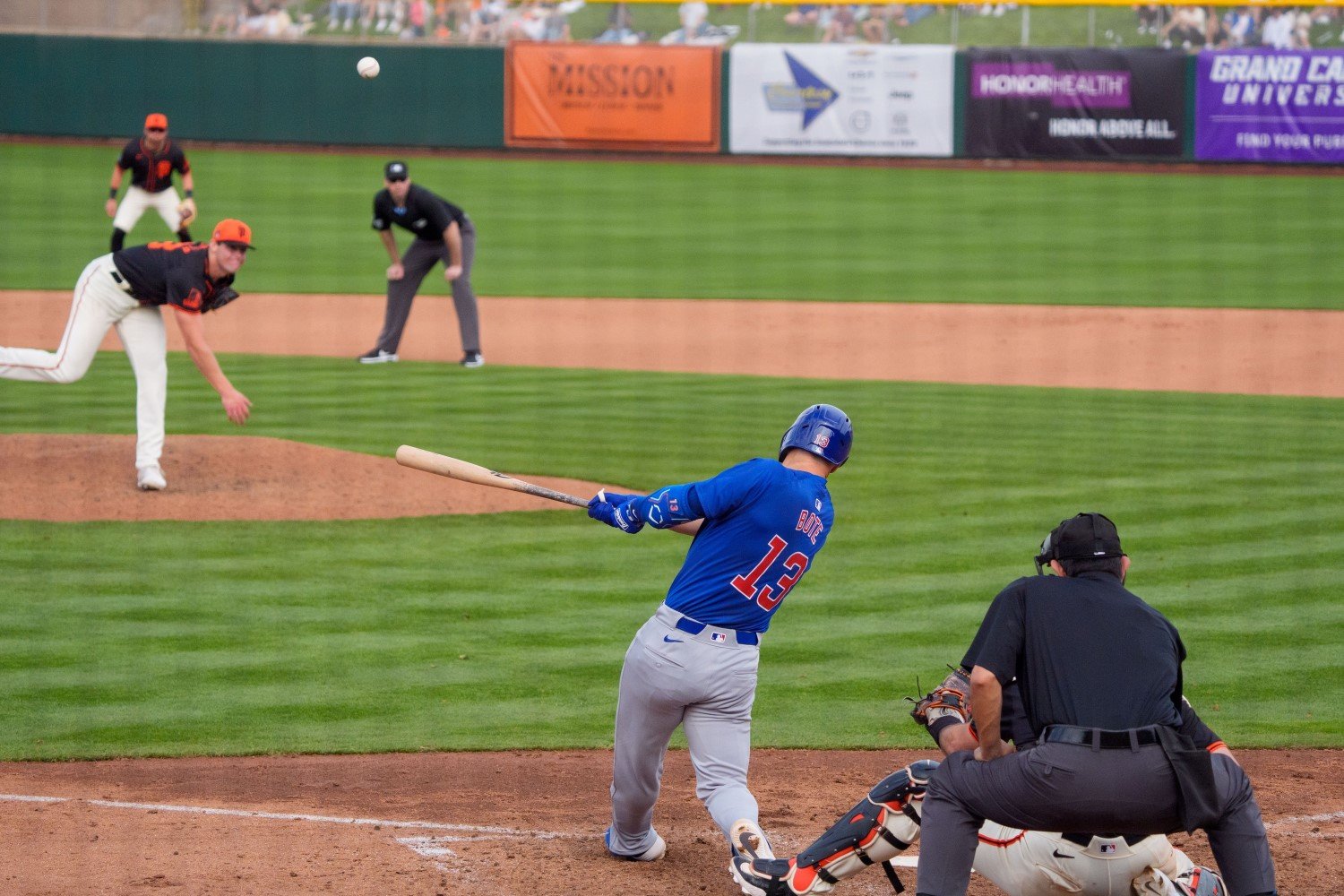 Nick Madrigal heads back to Iowa in exchange for Bote, with Adbert Alzolay hitting the 60-day injured list to accommodate the reinstatement of Bote to the 40-man roster. It's a move that signals, in no small measure, a defeat for the Cubs front office, because they fought hard to make one of Madrigal, Miles Mastrobuoni, Matt Mervis, Alexander Canario, or Garrett Cooper stick to that roster spot, instead. Nothing worked, and now they're going back to Bote, which they desperately did not want to do. Presumably, Bote will become the de facto backup third baseman and second baseman, taking Madrigal's place in that role and keeping Patrick Wisdom's just about the same as it was. He's not the defender Madrigal is, but Bote has a chance to have some kind of positive offensive impact, and he won't embarrass himself when asked to man the hot corner or the keystone. If Madrigal were a successful version of his own profile, he'd be a better bench player than Bote. Ditto for Mastrobuoni. After months of failures from each, though, the Cubs have finally buckled and turned to an old friend to rescue them from the unrealized potential of his two younger teammates. You can make a case for the way the Cubs have handled Bote since outrighting him off the 40-man roster in November 2022. Once they did that, bringing him back came with risks. Gone is the luxury-tax loophole that kept Red Sox outfielder Rusney Castillo stranded in Triple-A for years after he busted as a big-leaguer, but even without that incentive to keep Bote stashed, the team had to think about what would happen if and when they did recall him. Firstly, barring a 60-day injured list placement, bringing Bote back had to mean losing another player, or passing up the opportunity to acquire one. That's a hurdle to bringing up any player who isn't on the 40-man roster, but it's a smaller one for teams when the player in question is a top prospect (or any young player) whom they hope will be part of the team for another half-decade or more. It's a trickier thing when it's someone like Bote, on the wrong side of 30 and with little time left on his contract. Perhaps more importantly, the team also knows they could lose Bote altogether if they bring him back and then need to outright him again--hardly a difficult scenario to imagine, given the way his last couple of seasons in the big leagues panned out. One thing front offices desperately try to avoid is having a player who couldn't succeed for them thrive elsewhere, on their dime. Bote is guaranteed $5.5 million this year, and that was one reason why he didn't get a call last season, even as he hit fairly well and the team went through a similar churn of options to round out their infield mix. This season, since this is the last year of the deal and we're already in June, it's less of a concern. That helped him finally get the call. Furthermore, though, they clearly just did not believe in Bote, and after his last couple years of big-league performance, that's understandable. Yet, he did hit .259/.356/.476 since the start of 2023, with a very playable strikeout rate and a great walk rate. In addition to concerns about the gap in talent and opponent quality between Triple-A and the majors, we might note the specific issue of the technology-driven, minuscule Triple-A strike zone, which would tend to juice the numbers for a player like Bote--especially with regard to those walks. His swing was always a grooved one, too, which meant that a smaller zone made it easier for him to cover everything a pitcher could really throw at him. He didn't post elite batted-ball data, especially for a player of his age and previous experience. He still hits a good number of pop-ups and ground balls. He does hit it fairly hard, though, and at this point, the combination of his ability to do that and his defensive versatility made it impossible to justify continuing to try to make Madrigal work instead of him. Whether Bote can recapture the magic he had in 2018 remains to be seen, but it certainly seems unlikely. Happily, this time around, he's a purely complementary piece, and he's spent the last year-plus in Iowa, becoming a better leader and getting comfortable with his non-priority place in the organizational hierarchy. He's as well-positioned to succeed now as ever, even if success will be defined in a smaller way than in the past.
-
- 1
-

-
- david bote
- nick madrigal
- (and 3 more)
-
Can We Prove That Jameson Taillon Has Trouble Stopping the Bleeding?
Matthew Trueblood posted an article in Cubs
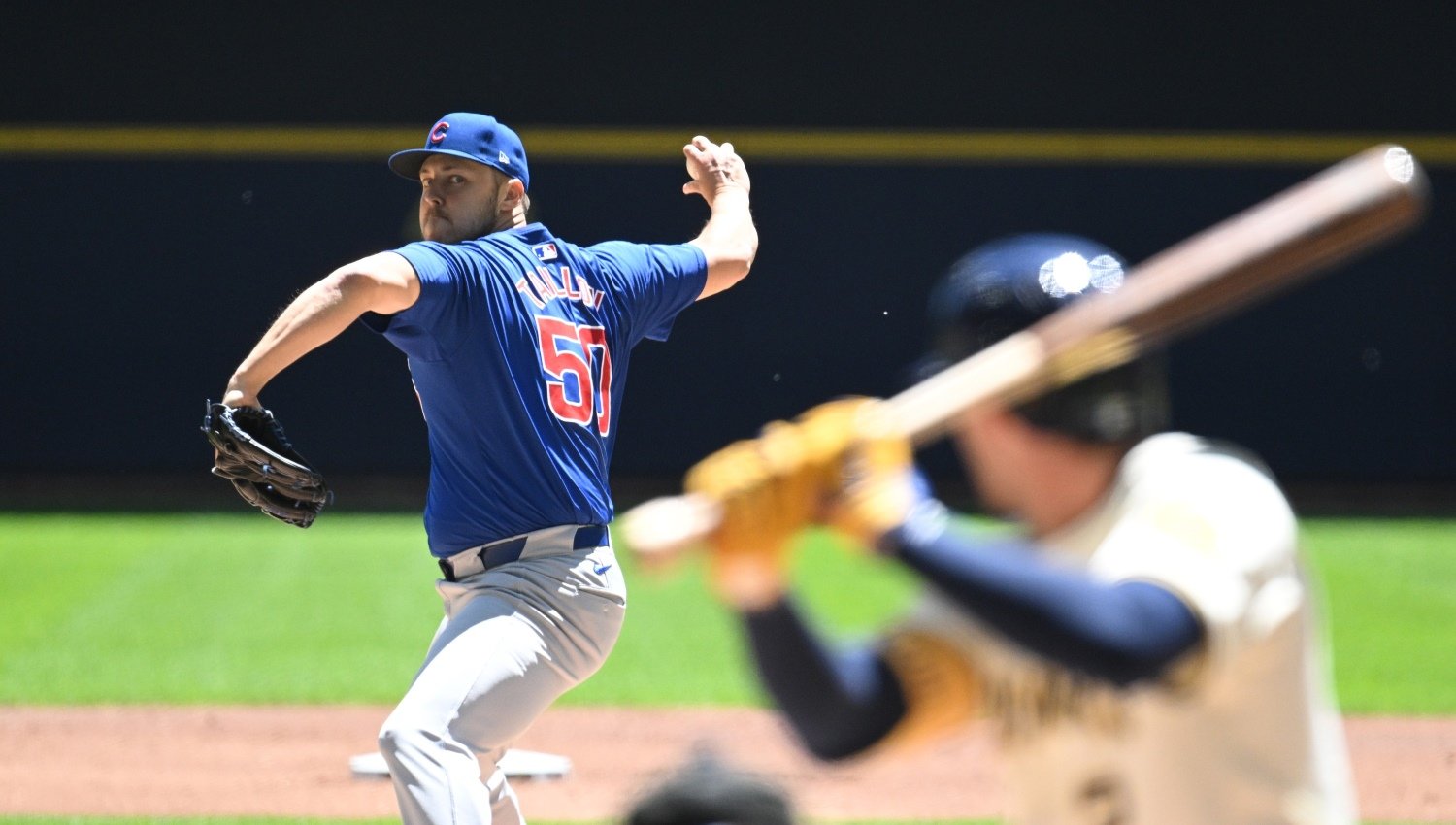 It's a hard thing to pin down and quantify, but anyone who has watched baseball for a long time can tell you: getting out of tough innings and minimizing damage is a real and invaluable skill for a pitcher. Bearing down and retiring a hitter with two on and two out is obviously important, but the way that moment changes a game goes beyond the run that goes up on the scoreboard if the batter gets a single. It cascades through the rest of the game, one way or another. Cubs fans know this well. Hall of Fame play-by-play man Pat Hughes is always quick to explicitly identify early turning points in games, and usually, those are two-out situations with runners on base. That might sound facile, and Hughes sometimes leans too far into the bit, but there's a real and more subtle reality to that phenomenon than we grok, sometimes. No Cubs hurler better embodies the concept than Jameson Taillon, and unfortunately, he's an example of the danger of not being good in those moments. Isolating high-leverage or men-on-base situations can muddy and confuse the issue, when we talk about how a pitcher manages either a game or an inning. Let's try a new method. Before I introduce it, though, walk through Taillon's Thursday start with me. Here's how it went, inning by inning: First Inning: Walk, double play, strikeout. 3 batters, 3 outs. Second Inning: Double, groundout, sacrifice fly, single, double, single, strikeout. 7 batters faced, 3 runs home. Third Inning: Flyout, popout, single, flyout. 4 batters, 3 outs. Fourth Inning: Strikeout, single, flyout, flyout. 4 batters, 3 outs. Fifth Inning: Groundout, lineout, groundout. 3 batters, 3 outs. Sixth Inning: Strikeout, groundout, flyout. 3 batters, 3 outs. Taillon came so, so close to a downright dominant outing. In fact, if you examine that chain of events in the second inning, you can see that he had a clean slate with one run in and two outs, before surrendering three straight hits and two more tallies. It was still a quality start, but... well, the scoreboard tells the story. It wasn't enough to win, and it so easily could have been. And the turning point, perhaps, wasn't one Hughes would have spotted. It was that first single after clearing the bases on the sac fly in the second. That's because, if Taillon can't hold you to a short inning in which he's in control all along, you can quickly unravel him a bit. I divided all completed innings by starting pitchers (in other words, ones in which the manager didn't remove them in favor of a reliever) since the start of 2023 into three categories: Quick Innings: 3 or 4 batters faced. If you only allow one baserunner, most of the time, you're not giving up a run. You can't, by definition, give up a crooked number. Maybe they got you for a solo homer, but it's 2024. Solo homers happen. An inning where you face only four batters is a successful one. Medium Innings: 5 or 6 batters faced. A lot can happen in those extra three batters, if you get to six within a frame, but you can still theoretically get through such an inning without allowing a run. Somewhat often, you're holding the opposing offense to one, and you were able to stop the bleeding there. You got the team back into the dugout, and you probably have a chance to pitch another inning, if it's not already the sixth or seventh. Long Innings: 7 or more batters faced. These are the killers. We all know them. We all feel a pitcher's pain when they happen. Often, a defensive lapse contributes to them. Maybe it's just bad BABIP luck. One way or another, the inning stretches out. It feels like you'll never escape. The only secret lies in not letting things get this far. No one's perfect, of course, but some guys only have a few innings like this all year. Others seem to have one every other start. Most innings are Quick Innings, of course--especially since we're removing innings in which the skipper yanks the starter. There are some five-, six-, and nine-batter innings we're throwing out, because we don't know when (or if) the hurler was ever going to earn his way back to the dugout the right way. We're also throwing out some of those times when a manager sends his starter out with a short leash and pulls them after one runner reaches base, but it doesn't even out, and anyway, we're selecting for the pitchers trusted enough to be given starts here. They wouldn't be big-league starters if a majority of their innings involved multiple runners reaching base. Some 118 pitchers have made 25 or more starts since the start of 2023. As you'd expect, there's a strong relationship between overall pitcher quality and the distribution of Quick, Medium, and Long innings. Tarik Skubal, Bobby Miller, Max Fried, Sandy Alcántara, and Gerrit Cole have the highest Quick Inning percentages in baseball, each coming in over 77 percent. Rich Hill, Tylor Megill, Ryne Nelson, Patrick Corbin, and Josiah Gray have the fewest Quick frames, all south of 63%. However, there's also variation from a perfect mapping of talent onto inning length distributions--enough to make things interesting. When looking this up, I hypothesized (as implied above) that Taillon would rank fairly highly in Quick and Long innings, and low in Medium ones. Sure enough, here are all the pitchers with at least a 71% Quick innings share, and at least a 6.5% Long innings share, with their breakdowns across all three categories: Pitcher Quick % Medium % Long % Reid Detmers 71.7 19.7 8.6 Jack Flaherty 71.3 21 7.7 Bryce Miller 76.1 16.4 7.5 Alex Cobb 72.1 20.4 7.5 Pablo López 72 20.7 7.3 Spencer Strider 75.7 17.5 6.9 Freddy Peralta 75.6 17.6 6.8 Jameson Taillon 74.2 19.2 6.6 As you can see, Taillon is barely sneaking into this club in terms of Long Inning%, but he's more than qualified based on Quick%. Of the aforementioned 118 guys, he ranks 27th in Quick innings, 27th in Long innings, and 109th in Medium ones. The above is a list of excellent pitchers--especially if we focus on the ones (Miller, Strider, Peralta) who are truly on Taillon's level in terms of being able to mow down opponents in clean innings. As Twins fans can tell you about López and Brewers fans will say about Peralta, though, it's also a list of frustrating pitchers. They tantalize. They clearly have the ability to be aces, but often, they fall short of that goal, and it's because of their inability to get out of tough innings expeditiously. Yes, luck and defense contribute to the ability to do those things, but so does the ability to avoid throwing the ball down the middle in spots when opposing hitters might be particularly disposed toward aggressiveness at the plate. So, too, does the mental toughness to shake off a bad break or a costly bobble. Taillon has to get better in those aspects, or he'll continue be a pedestrian mid-rotation starter, despite the capacity to be something better and more valuable to the playoff-hopeful Cubs.
 -
The Chicago Cubs were unable to escape with even a series split in Milwaukee Thursday. Starter Jameson Taillon pitched six strong innings, but in the one frame in which he struggled, he allowed three runs. It's a pattern for the Cubs righty. Image courtesy of © Michael McLoone-USA TODAY Sports It's a hard thing to pin down and quantify, but anyone who has watched baseball for a long time can tell you: getting out of tough innings and minimizing damage is a real and invaluable skill for a pitcher. Bearing down and retiring a hitter with two on and two out is obviously important, but the way that moment changes a game goes beyond the run that goes up on the scoreboard if the batter gets a single. It cascades through the rest of the game, one way or another. Cubs fans know this well. Hall of Fame play-by-play man Pat Hughes is always quick to explicitly identify early turning points in games, and usually, those are two-out situations with runners on base. That might sound facile, and Hughes sometimes leans too far into the bit, but there's a real and more subtle reality to that phenomenon than we grok, sometimes. No Cubs hurler better embodies the concept than Jameson Taillon, and unfortunately, he's an example of the danger of not being good in those moments. Isolating high-leverage or men-on-base situations can muddy and confuse the issue, when we talk about how a pitcher manages either a game or an inning. Let's try a new method. Before I introduce it, though, walk through Taillon's Thursday start with me. Here's how it went, inning by inning: First Inning: Walk, double play, strikeout. 3 batters, 3 outs. Second Inning: Double, groundout, sacrifice fly, single, double, single, strikeout. 7 batters faced, 3 runs home. Third Inning: Flyout, popout, single, flyout. 4 batters, 3 outs. Fourth Inning: Strikeout, single, flyout, flyout. 4 batters, 3 outs. Fifth Inning: Groundout, lineout, groundout. 3 batters, 3 outs. Sixth Inning: Strikeout, groundout, flyout. 3 batters, 3 outs. Taillon came so, so close to a downright dominant outing. In fact, if you examine that chain of events in the second inning, you can see that he had a clean slate with one run in and two outs, before surrendering three straight hits and two more tallies. It was still a quality start, but... well, the scoreboard tells the story. It wasn't enough to win, and it so easily could have been. And the turning point, perhaps, wasn't one Hughes would have spotted. It was that first single after clearing the bases on the sac fly in the second. That's because, if Taillon can't hold you to a short inning in which he's in control all along, you can quickly unravel him a bit. I divided all completed innings by starting pitchers (in other words, ones in which the manager didn't remove them in favor of a reliever) since the start of 2023 into three categories: Quick Innings: 3 or 4 batters faced. If you only allow one baserunner, most of the time, you're not giving up a run. You can't, by definition, give up a crooked number. Maybe they got you for a solo homer, but it's 2024. Solo homers happen. An inning where you face only four batters is a successful one. Medium Innings: 5 or 6 batters faced. A lot can happen in those extra three batters, if you get to six within a frame, but you can still theoretically get through such an inning without allowing a run. Somewhat often, you're holding the opposing offense to one, and you were able to stop the bleeding there. You got the team back into the dugout, and you probably have a chance to pitch another inning, if it's not already the sixth or seventh. Long Innings: 7 or more batters faced. These are the killers. We all know them. We all feel a pitcher's pain when they happen. Often, a defensive lapse contributes to them. Maybe it's just bad BABIP luck. One way or another, the inning stretches out. It feels like you'll never escape. The only secret lies in not letting things get this far. No one's perfect, of course, but some guys only have a few innings like this all year. Others seem to have one every other start. Most innings are Quick Innings, of course--especially since we're removing innings in which the skipper yanks the starter. There are some five-, six-, and nine-batter innings we're throwing out, because we don't know when (or if) the hurler was ever going to earn his way back to the dugout the right way. We're also throwing out some of those times when a manager sends his starter out with a short leash and pulls them after one runner reaches base, but it doesn't even out, and anyway, we're selecting for the pitchers trusted enough to be given starts here. They wouldn't be big-league starters if a majority of their innings involved multiple runners reaching base. Some 118 pitchers have made 25 or more starts since the start of 2023. As you'd expect, there's a strong relationship between overall pitcher quality and the distribution of Quick, Medium, and Long innings. Tarik Skubal, Bobby Miller, Max Fried, Sandy Alcántara, and Gerrit Cole have the highest Quick Inning percentages in baseball, each coming in over 77 percent. Rich Hill, Tylor Megill, Ryne Nelson, Patrick Corbin, and Josiah Gray have the fewest Quick frames, all south of 63%. However, there's also variation from a perfect mapping of talent onto inning length distributions--enough to make things interesting. When looking this up, I hypothesized (as implied above) that Taillon would rank fairly highly in Quick and Long innings, and low in Medium ones. Sure enough, here are all the pitchers with at least a 71% Quick innings share, and at least a 6.5% Long innings share, with their breakdowns across all three categories: Pitcher Quick % Medium % Long % Reid Detmers 71.7 19.7 8.6 Jack Flaherty 71.3 21 7.7 Bryce Miller 76.1 16.4 7.5 Alex Cobb 72.1 20.4 7.5 Pablo López 72 20.7 7.3 Spencer Strider 75.7 17.5 6.9 Freddy Peralta 75.6 17.6 6.8 Jameson Taillon 74.2 19.2 6.6 As you can see, Taillon is barely sneaking into this club in terms of Long Inning%, but he's more than qualified based on Quick%. Of the aforementioned 118 guys, he ranks 27th in Quick innings, 27th in Long innings, and 109th in Medium ones. The above is a list of excellent pitchers--especially if we focus on the ones (Miller, Strider, Peralta) who are truly on Taillon's level in terms of being able to mow down opponents in clean innings. As Twins fans can tell you about López and Brewers fans will say about Peralta, though, it's also a list of frustrating pitchers. They tantalize. They clearly have the ability to be aces, but often, they fall short of that goal, and it's because of their inability to get out of tough innings expeditiously. Yes, luck and defense contribute to the ability to do those things, but so does the ability to avoid throwing the ball down the middle in spots when opposing hitters might be particularly disposed toward aggressiveness at the plate. So, too, does the mental toughness to shake off a bad break or a costly bobble. Taillon has to get better in those aspects, or he'll continue be a pedestrian mid-rotation starter, despite the capacity to be something better and more valuable to the playoff-hopeful Cubs. View full article
-
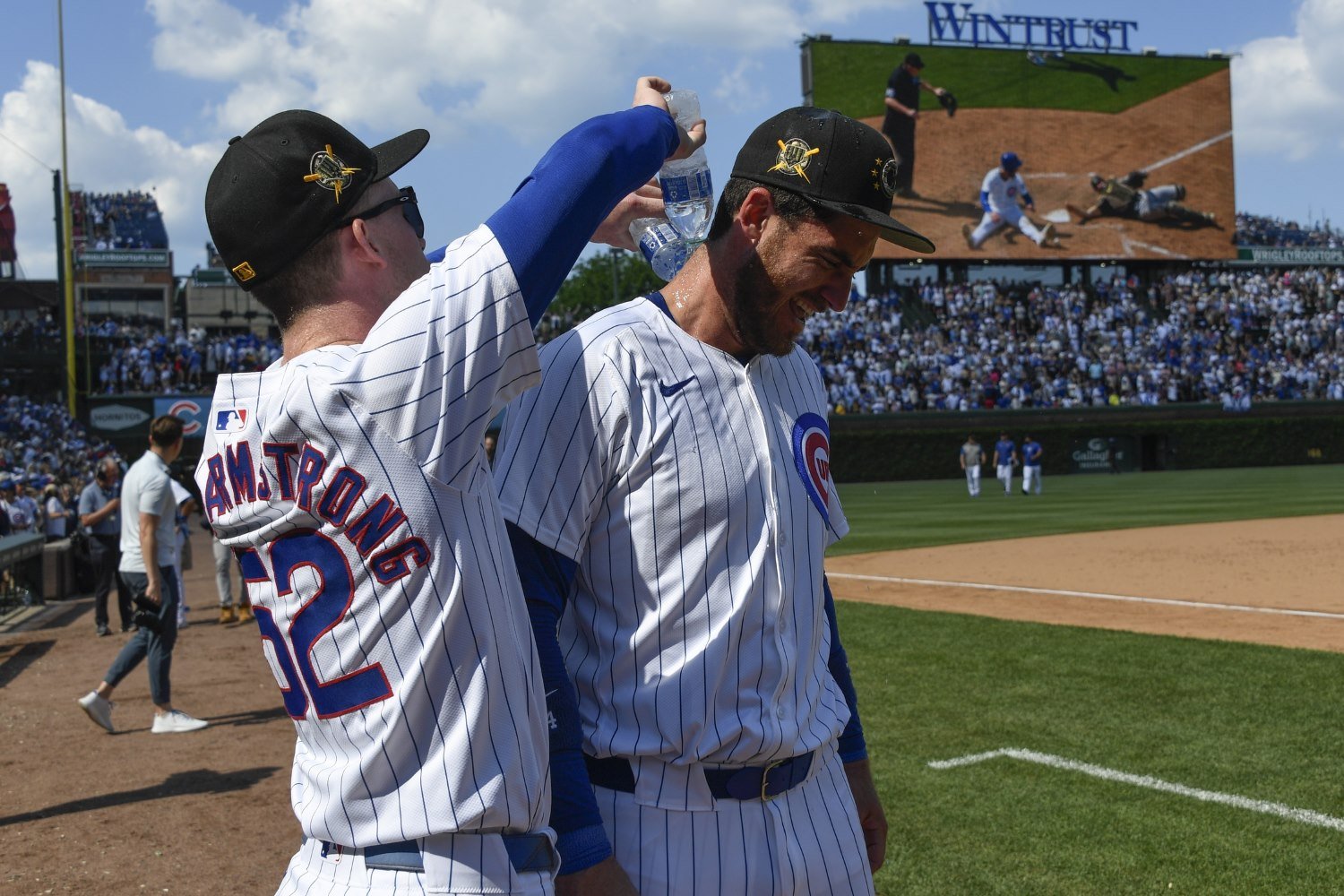 It made sense to send Pete Crow-Armstrong back to Triple-A Iowa when Dansby Swanson came off the injured list a week and a half ago. It was a debatable choice, perhaps, but there was a logical, consistent argument to be made in favor of it. The Cubs clearly felt it was necessary, but after Crow-Armstrong went to Iowa and attacked minor-league pitchers like he was furious about something, they realized they had made the wrong call. On Thursday, they attempted to remediate the mistake. Surprisingly, perhaps, Crow-Armstrong returns to the big-league roster at the expense of Luis Vázquez, who got only extremely limited opportunities to demonstrate his ability to help the team during his cup of MLB coffee. Nick Madrigal survives yet again, like a cockroach ducking even a livid kitchen manager, though the stomping shoes and the snapped towels seem to come closer to their target every time. It's not at all surprising, however, that the swap is outfielder-for-infielder. We've just gotten some startling clarity on the plan for this roster over the coming weeks, and it's going to mean some major changes in roles throughout the team's positional corps. Cody Bellinger has started 35 times in center field this year. He's made just five starts as the DH, one in right field, and one at first base. Looking ahead, those ratios will change dramatically. This time around, Crow-Armstrong has to be the everyday center fielder against right-handed pitchers. Bellinger might start sometimes out there when the Cubs face left-handed starters, but he's just become a semi-fixture at DH. He can spell Michael Busch against some lefties, too, but he's not going to be needed in the outfield much at all. For the next month, at least, expect him to start about half the time at DH, a quarter of the time at first, and once in every 10 games or so in center. Busch will feel a slight squeeze on his playing time, then, unless and until he shows more consistency at the plate, but there's no reason for him to lose playing time against right-handed pitchers. Rather, he'll go to the bench against lefties, with Bellinger taking over his spot and Patrick Wisdom assuming DH duties. In all likelihood, we're seeing the simultaneous (though not necessarily permanent; much depends on how each hits and fields in the next few weeks) commitment to two young position players at individual spots, with Crow-Armstrong and Christopher Morel playing center and third base almost every day. Madrigal's role shrinks by the day, with Bellinger needing to DH almost all the time and Morel's bat being deemed indispensable for the time being. Wisdom's role is compressed, too, but there's still room for him against almost any lefty, be it at first base or DH. What's most interesting is the set of ramifications this move creates for the corner outfield positions. Mike Tauchman is leading off and playing right field Thursday. It's his 26th start at that position, but most of those came during Seiya Suzuki's stint on the injured list. He's made nine starts at DH, but with Crow-Armstrong coming back, Bellinger will make it harder to slot Tauchman in there. This is the 14th straight time that Tauchman has batted leadoff when the Cubs have faced right-handed starters, and before that, he'd batted second in 15 straight games against righties. The message is pretty clear: Craig Counsell (rightly, given the way things have gone so far) regards Tauchman as a vital part of the lineup. That means trouble, if you're Suzuki or Happ. It means that one of the two will sit in favor of Tauchman on a semi-regular basis, until they demonstrate that they deserve to play more than he does. It's a radical reality, given that Tauchman is a career journeyman over 30 years old and that both Happ and Suzuki have eight-figure salary commitments for the rest of this year and each of the next two, but it's the most logical reading of the team's latest sequence of decisions. That playing their three most talented young hitters--Morel, Busch, and Crow-Armstrong--enough to let them develop optimally means putting some measure of playing-time pinch on three guys (Bellinger, Happ, and Suzuki) on whom they're spending nearly $70 million this year is a minor indictment of the team's roster construction. Their appetite for the complex balancing of egos, skill sets, and matchup opportunities, however, is an affirmation of the fact that they have a better, more trustworthy manager on the top step this year. Counsell faces an unenviable task. Morel is far too inconsistent to be a cleanup hitter on a good team, but that's the role he's been pressed into, because the team lacks a superior alternative. Throttling the playing time of guys like Suzuki and Happ is difficult and frustrating, but it has to be done, because neither has performed like an adequate everyday corner outfielder whom the team needs to have in the heart of the batting order. Working around the offensive ineptitude and disappointingly average defense of Dansby Swanson and Nico Hoerner means making those other difficult decisions, and hoping one of the two comes out of their funk soon. If the Cubs didn't have unenviable tasks on their to-do list, they wouldn't have needed to hire the best and most expensive manager in baseball. He's about to earn his money, or not, in a crucial and fascinating stretch of the season.
 -
Abashed and sheepish, the reeling Chicago Cubs made a startling (if implicit) admission Thursday: They were wrong to send down their top prospect. In recalling him, they've pivoted in a significant way toward their future, with the hope that it'll also bolster them in the present. Image courtesy of © Matt Marton-USA TODAY Sports It made sense to send Pete Crow-Armstrong back to Triple-A Iowa when Dansby Swanson came off the injured list a week and a half ago. It was a debatable choice, perhaps, but there was a logical, consistent argument to be made in favor of it. The Cubs clearly felt it was necessary, but after Crow-Armstrong went to Iowa and attacked minor-league pitchers like he was furious about something, they realized they had made the wrong call. On Thursday, they attempted to remediate the mistake. Surprisingly, perhaps, Crow-Armstrong returns to the big-league roster at the expense of Luis Vázquez, who got only extremely limited opportunities to demonstrate his ability to help the team during his cup of MLB coffee. Nick Madrigal survives yet again, like a cockroach ducking even a livid kitchen manager, though the stomping shoes and the snapped towels seem to come closer to their target every time. It's not at all surprising, however, that the swap is outfielder-for-infielder. We've just gotten some startling clarity on the plan for this roster over the coming weeks, and it's going to mean some major changes in roles throughout the team's positional corps. Cody Bellinger has started 35 times in center field this year. He's made just five starts as the DH, one in right field, and one at first base. Looking ahead, those ratios will change dramatically. This time around, Crow-Armstrong has to be the everyday center fielder against right-handed pitchers. Bellinger might start sometimes out there when the Cubs face left-handed starters, but he's just become a semi-fixture at DH. He can spell Michael Busch against some lefties, too, but he's not going to be needed in the outfield much at all. For the next month, at least, expect him to start about half the time at DH, a quarter of the time at first, and once in every 10 games or so in center. Busch will feel a slight squeeze on his playing time, then, unless and until he shows more consistency at the plate, but there's no reason for him to lose playing time against right-handed pitchers. Rather, he'll go to the bench against lefties, with Bellinger taking over his spot and Patrick Wisdom assuming DH duties. In all likelihood, we're seeing the simultaneous (though not necessarily permanent; much depends on how each hits and fields in the next few weeks) commitment to two young position players at individual spots, with Crow-Armstrong and Christopher Morel playing center and third base almost every day. Madrigal's role shrinks by the day, with Bellinger needing to DH almost all the time and Morel's bat being deemed indispensable for the time being. Wisdom's role is compressed, too, but there's still room for him against almost any lefty, be it at first base or DH. What's most interesting is the set of ramifications this move creates for the corner outfield positions. Mike Tauchman is leading off and playing right field Thursday. It's his 26th start at that position, but most of those came during Seiya Suzuki's stint on the injured list. He's made nine starts at DH, but with Crow-Armstrong coming back, Bellinger will make it harder to slot Tauchman in there. This is the 14th straight time that Tauchman has batted leadoff when the Cubs have faced right-handed starters, and before that, he'd batted second in 15 straight games against righties. The message is pretty clear: Craig Counsell (rightly, given the way things have gone so far) regards Tauchman as a vital part of the lineup. That means trouble, if you're Suzuki or Happ. It means that one of the two will sit in favor of Tauchman on a semi-regular basis, until they demonstrate that they deserve to play more than he does. It's a radical reality, given that Tauchman is a career journeyman over 30 years old and that both Happ and Suzuki have eight-figure salary commitments for the rest of this year and each of the next two, but it's the most logical reading of the team's latest sequence of decisions. That playing their three most talented young hitters--Morel, Busch, and Crow-Armstrong--enough to let them develop optimally means putting some measure of playing-time pinch on three guys (Bellinger, Happ, and Suzuki) on whom they're spending nearly $70 million this year is a minor indictment of the team's roster construction. Their appetite for the complex balancing of egos, skill sets, and matchup opportunities, however, is an affirmation of the fact that they have a better, more trustworthy manager on the top step this year. Counsell faces an unenviable task. Morel is far too inconsistent to be a cleanup hitter on a good team, but that's the role he's been pressed into, because the team lacks a superior alternative. Throttling the playing time of guys like Suzuki and Happ is difficult and frustrating, but it has to be done, because neither has performed like an adequate everyday corner outfielder whom the team needs to have in the heart of the batting order. Working around the offensive ineptitude and disappointingly average defense of Dansby Swanson and Nico Hoerner means making those other difficult decisions, and hoping one of the two comes out of their funk soon. If the Cubs didn't have unenviable tasks on their to-do list, they wouldn't have needed to hire the best and most expensive manager in baseball. He's about to earn his money, or not, in a crucial and fascinating stretch of the season. View full article
-
I agree, though I don't think Happ or Swanson foreclose the possibility of building a 95-win team, even in the short term. What they do is make it more expensive, because you're paying $45 million to a couple of two- or three-win players. Alas: under this combination of front office and ownership group, making something more expensive IS a lot like eliminating it as a possibility. They refuse to spend $270 million a year on payroll. Well, ok. But you either have to get a lot better at player development and more proactive in the trade market, like the Brewers, or you have to come off that position and open the wallet. Because you can't un-spend the $45 million on Happ and Swanson, or the $17 million on Taillon, for that matter. If you're gonna pony up for average players, you have to either also pony up for superstars, or develop one yourself. Feels like they're far from doing either lately.
-
I love the firsthand account. But you'll be fascinated to see, if you watch the video back: Cey actually was barely involved! A good half-dozen Cubs personnel were out there arguing for much of the long thing, but Cey hung out in the dugout, looking pretty placid. Bowa certainly lost it at some point. Zimmer did. Frey did. But Cey only yelled at Rippley after the fact, when he had to go back up there, lined out, and returned to the dugout. He paced down to the end and hurled some expletives toward third base, but he wouldn't even make a top-5 list of guys who really exploded during the process. Haha.
-
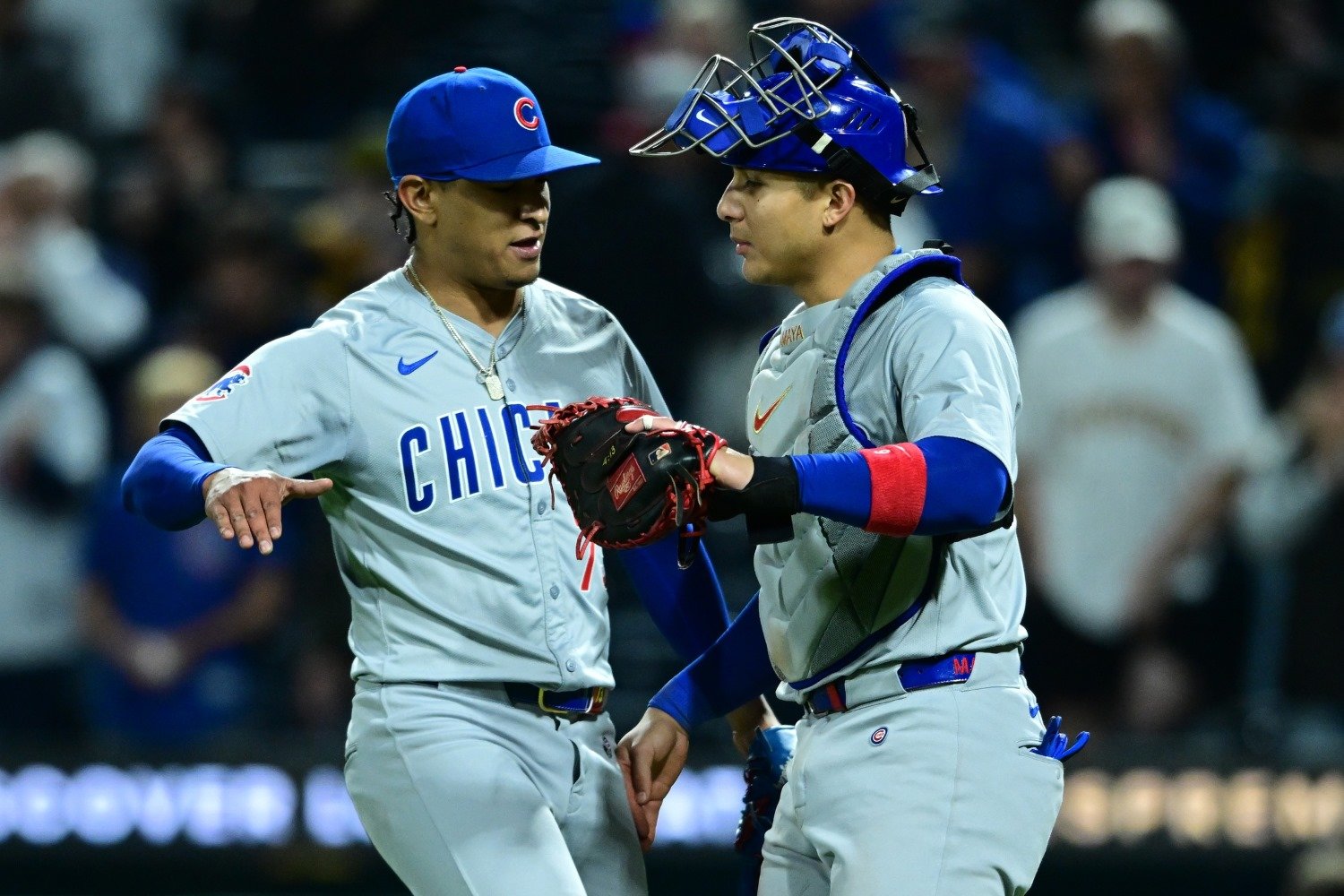 The Cubs are one of the most fastball-forward pitching staffs in baseball. That's been true for a while now, as the game tends toward the bends and sweeps of breaking balls and toward elite velocity. Sometimes to their benefit, and sometimes to their detriment, the Cubs have resisted that patterned evolution, preferring what can only be called an old-school approach--even as they embrace new-school ways to optimize pitcher development and performance. Pitch selection is, of course, only partially the result of organizational prerogatives. It's also about what a pitcher actually throws, and is comfortable throwing in a particular situation. Organizations decide which pitchers to acquire, and what pitches to try to foster for them, and they provide gameplans and guidance based on scouting reports on the opposing team. At some point, though, the choice about which pitches to throw gets made by the men on the field, and specifically, it's often made by the catcher. Some teams take such a firm hand in their gameplanning (and the execution thereof) that their catchers call more or less the same game, controlling for the pitcher and the opponent. In the Cubs' case, however, there's an interesting divergence. Yan Gomes isn't exactly starting every at-bat with the slider, but he's much more normal in his mix between fastball and breakers than is the team's younger, more frequent backstop, Miguel Amaya. There's a natural distortion here, stemming from the fact that many of the Cubs' pitchers have an offspeed pitch (rather than a breaking ball) as their chief non-fastball offering. Shota Imanaga, Kyle Hendricks, Mark Leiter Jr., and Héctor Neris all lean on changeups or splitters for the same things most pitchers use breaking balls to do, so it makes sense that the Cubs' catchers would receive fewer breaking balls than anyone else in the league. The daylight between the two, however, indicates a real (if smallish) difference in the way they approach at-bats and utilize pitchers' arsenals. Ben Brown's fastball was sizzling Tuesday night. Even against a Brewers offense that does great work against top-end velocity, he was overpowering, and Amaya made a pretty simple decision: they would ride that pitch all night. Brown threw 25 fastballs and nine curves the first time through the Milwaukee order. He threw 24 heaters and 11 curves the second time through. Only the third time did he shift to an even 12-12 mix of the two pitches, before leaving the game after 93 pitches in seven frames. The pattern was similar (though exaggerated in its deployment) to the one he used against the Mets back at the beginning of the month, before his sojourn in the bullpen. The strategy Amaya and Brown were deploying was the same as the one Gomes and Brown used then: keep the curveball in mind but out of sight, for the most part, the first two times. That way, the third time, the secondary pitch can have a greater effect when it gets ratcheted up. Tellingly, though, Amaya was even more extreme in his execution of that plan than Amaya was. Again, they won't call radically different games, especially when working with pitchers like Brown, who have fairly limited arsenals. Yet, one or two calls that differ can both explain the difference between the two statistically--and matter a great deal. There's not a clearly right and wrong approach, between the two, but there are different implications to the choices they make, even if each of those choices feels small. Getting a strikeout one pitch sooner, rather than having to deal with a foul ball and then exposing the opposing batter to the curve earlier than you wanted. Giving up a key hit because you went to the well with the heater one time too many. Each set of marginal choices comes with different potential costs and benefits, and Amaya and Gomes weigh those costs and benefits differently. To speak generally, I think Amaya needs to call non-fastballs more often, including and especially breaking balls from pitchers who have good ones. If and when Cade Horton joins this team, he needs to be using his slider fairly frequently, for instance. Right now, the young backstop is doing a fine job of handling a pitching staff that is thriving, but he's pushing toward an extreme in catcher approach that comes with some unwelcome risks--like the fastball that catches too much of the zone in a hitter's count and gets swatted over the wall.
 -
Ben Brown spun seven no-hit innings Tuesday night in Milwaukee, with 10 strikeouts. His fastball and his sharp curve were both at their best, but he threw the fastball about two-thirds of the time. Why? For part of the answer, look behind the plate. Image courtesy of © David Dermer-USA TODAY Sports The Cubs are one of the most fastball-forward pitching staffs in baseball. That's been true for a while now, as the game tends toward the bends and sweeps of breaking balls and toward elite velocity. Sometimes to their benefit, and sometimes to their detriment, the Cubs have resisted that patterned evolution, preferring what can only be called an old-school approach--even as they embrace new-school ways to optimize pitcher development and performance. Pitch selection is, of course, only partially the result of organizational prerogatives. It's also about what a pitcher actually throws, and is comfortable throwing in a particular situation. Organizations decide which pitchers to acquire, and what pitches to try to foster for them, and they provide gameplans and guidance based on scouting reports on the opposing team. At some point, though, the choice about which pitches to throw gets made by the men on the field, and specifically, it's often made by the catcher. Some teams take such a firm hand in their gameplanning (and the execution thereof) that their catchers call more or less the same game, controlling for the pitcher and the opponent. In the Cubs' case, however, there's an interesting divergence. Yan Gomes isn't exactly starting every at-bat with the slider, but he's much more normal in his mix between fastball and breakers than is the team's younger, more frequent backstop, Miguel Amaya. There's a natural distortion here, stemming from the fact that many of the Cubs' pitchers have an offspeed pitch (rather than a breaking ball) as their chief non-fastball offering. Shota Imanaga, Kyle Hendricks, Mark Leiter Jr., and Héctor Neris all lean on changeups or splitters for the same things most pitchers use breaking balls to do, so it makes sense that the Cubs' catchers would receive fewer breaking balls than anyone else in the league. The daylight between the two, however, indicates a real (if smallish) difference in the way they approach at-bats and utilize pitchers' arsenals. Ben Brown's fastball was sizzling Tuesday night. Even against a Brewers offense that does great work against top-end velocity, he was overpowering, and Amaya made a pretty simple decision: they would ride that pitch all night. Brown threw 25 fastballs and nine curves the first time through the Milwaukee order. He threw 24 heaters and 11 curves the second time through. Only the third time did he shift to an even 12-12 mix of the two pitches, before leaving the game after 93 pitches in seven frames. The pattern was similar (though exaggerated in its deployment) to the one he used against the Mets back at the beginning of the month, before his sojourn in the bullpen. The strategy Amaya and Brown were deploying was the same as the one Gomes and Brown used then: keep the curveball in mind but out of sight, for the most part, the first two times. That way, the third time, the secondary pitch can have a greater effect when it gets ratcheted up. Tellingly, though, Amaya was even more extreme in his execution of that plan than Amaya was. Again, they won't call radically different games, especially when working with pitchers like Brown, who have fairly limited arsenals. Yet, one or two calls that differ can both explain the difference between the two statistically--and matter a great deal. There's not a clearly right and wrong approach, between the two, but there are different implications to the choices they make, even if each of those choices feels small. Getting a strikeout one pitch sooner, rather than having to deal with a foul ball and then exposing the opposing batter to the curve earlier than you wanted. Giving up a key hit because you went to the well with the heater one time too many. Each set of marginal choices comes with different potential costs and benefits, and Amaya and Gomes weigh those costs and benefits differently. To speak generally, I think Amaya needs to call non-fastballs more often, including and especially breaking balls from pitchers who have good ones. If and when Cade Horton joins this team, he needs to be using his slider fairly frequently, for instance. Right now, the young backstop is doing a fine job of handling a pitching staff that is thriving, but he's pushing toward an extreme in catcher approach that comes with some unwelcome risks--like the fastball that catches too much of the zone in a hitter's count and gets swatted over the wall. View full article
-
Mistakes are slip-ups. When you make a mistake, you understood what you were trying to do, and the context in which you were trying to do it. You just flubbed it. Errors, on the other hand, are (by definition) about misunderstanding or being ignorant of something. They're distinct things. But sometimes, alas, something is both things at once. Image courtesy of © Benny Sieu-USA TODAY Sports The Chicago Cubs signed Dansby Swanson for seven years and $177 million prior to the 2023 season. By that time, they had already watched Xander Bogaerts, Carlos Correa, and Trea Turner sign elsewhere, all for at least $100 million more than that. They targeted and courted Swanson, both because of his superb, fundamentally sound defense, and because they believed there was more in the tank for him at bat. While everyone understood that he wouldn't be as dynamic a player as the other elite shortstops in that free-agent class, the hope was that he was equal to them as a leader, a defender, and a brace for an overall contender. It looks like they were wrong about Swanson, but more importantly, it looks like they were in the wrong mindset altogether when they chose to focus on him. Swanson turned 30 in February, and his defense--the linchpin of the argument for his value being commensurate with his salary, even in a vacuum--has taken a marked step back since roughly Aug. 1 of last year. He committed multiple key errors down the stretch last season, and that trend has continued this year, but just as telling are the tough plays he's only almost made over that span. We can also use Aug. 1 as a dividing line when it comes to Swanson's bat. Since that date, in 399 plate appearances, Swanson is hitting .212/.288/.369. Even if he were playing elite defense at short, that would be underwhelming, but since he isn't, it's downright damaging. This team is reliant on Swanson, and he's not giving them anywhere near what they need. To get hurt by Swanson, right now, you have to make a glaring and easily avoidable mistake: throw him something on the inner half, above the thigh. Swanson had 405 plate appearances through the end of last July, so if we take his 2023 season to that point and compare it to his performance in August, September, and the first two months of this year, we have his Cubs tenure cut almost perfectly in half. He's gotten just slightly worse in terms of strikeout and walk rates in the second timeframe, and his overall average exit velocity and launch angles look similar. However, through the end of last July, his exit velocity on batted balls between 10 and 35 degrees off the bat was 96.7 miles per hour. Since then, it's 93.4. He's lost the ability to drive the ball in the launch-angle band where hits happen, and as a result, both his power and his BABIP have cratered. To be sure, what Swanson is giving the Cubs is preferable to what Javier Báez is giving the Tigers right now. He's been bad at the plate, but not nearly as bad as Báez, or as the Cubs' own catching corps. It's more underachievement than outright disaster, taken at face value. When you widen the lens, though, you see the greater problem. The Cubs signed Swanson instead of one of the shortstops whom everyone knew would provide greater offensive punch. The only premise that made that a viable strategy was that they would surround him with better hitters than other teams would surround their more dangerous two-way shortstops with. Then, the team simply failed to do that. We know they had various levels of interest in high-end hitters over this past winter, but they didn't act boldly enough to land any of them. Instead, they came into this season leaning on the hope of a repeat performance from Cody Bellinger; linear, positive development from Nico Hoerner, Christopher Morel, and Ian Happ; and nailing the instruction and matriculation of one or more rookie bats. Either that, or they needed Swanson to be a whole lot better at the plate than he was during the most important months of their 2023 season. Even if he were consistently hitting like the player he was early last year, the team wouldn't be a good offense. They'd just be less bad. He hasn't been, and it was never fair to expect him to be. It's more fair to wonder why his defense is suddenly more average than awesome, and again, it looks like the franchise might have been overconfident in their assessment of his potential to age well at the most demanding defensive position outside of catcher, but that problem pales in comparison to the fact that they need Swanson to hit like a good team's fifth or sixth hitter, when he's only rarely demonstrated the ability to do that at any point in his career. The Cubs organization believes, persistently, that it can turn straw into gold when it comes to hitters. There is absolutely no empirical support for that self-belief. Paying Swanson what they did only made sense as part of a broader plan to spend a whole lot of money in 2024, and throughout the second half of this decade. It now looks like they never had such a plan. Given that seeming reality, signing Swanson was a mistake, but also a grievous error. They set themselves and their $177-million man up for failure, and unless they're about to hire the Dodgers' hitting infrastructure away or pay very handsomely for the likes of Juan Soto and/or Pete Alonso this winter, failure is going to continue to come their way. View full article
-
The Dansby Swanson Contract Looks Like Both a Mistake and an Error
Matthew Trueblood posted an article in Cubs
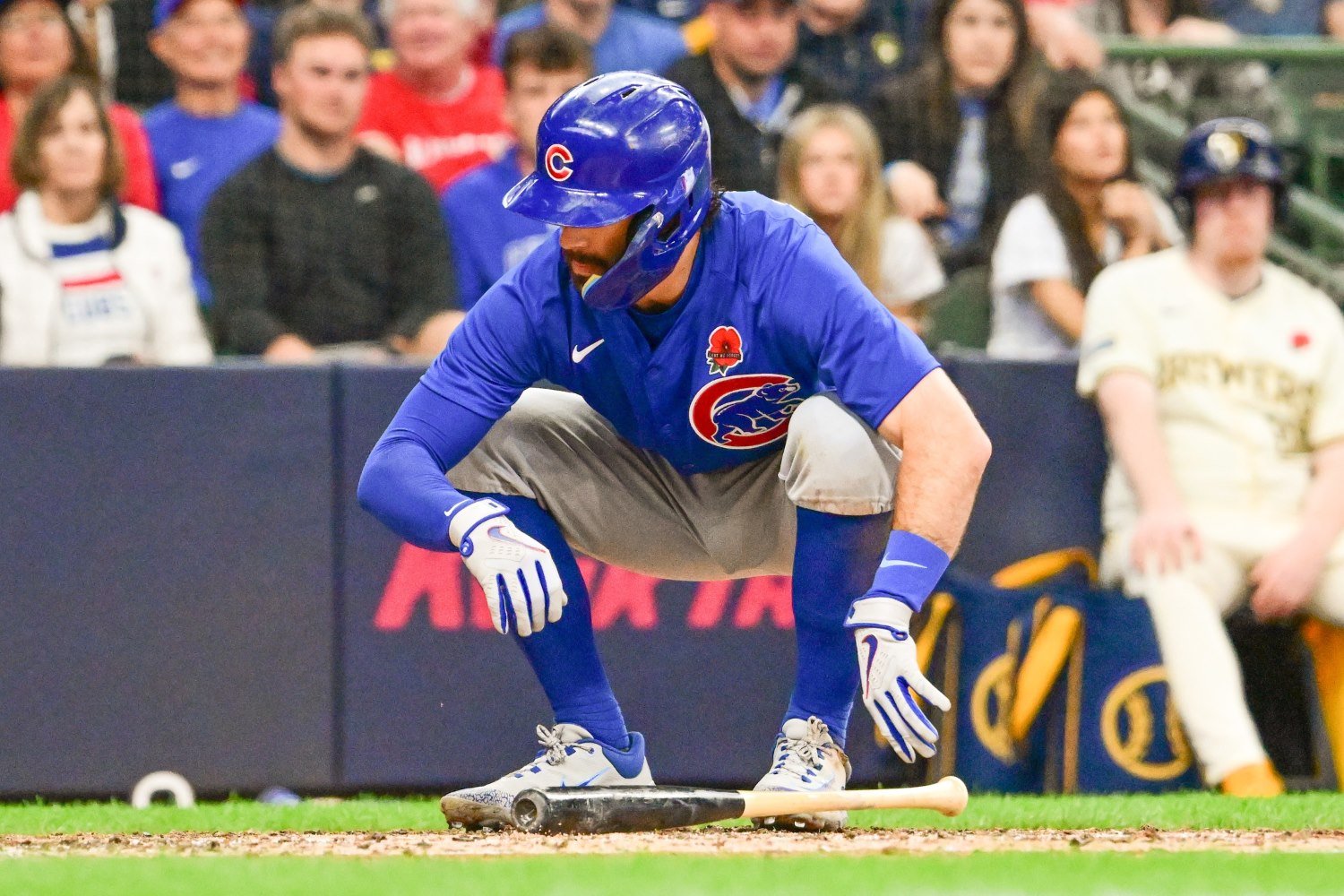 The Chicago Cubs signed Dansby Swanson for seven years and $177 million prior to the 2023 season. By that time, they had already watched Xander Bogaerts, Carlos Correa, and Trea Turner sign elsewhere, all for at least $100 million more than that. They targeted and courted Swanson, both because of his superb, fundamentally sound defense, and because they believed there was more in the tank for him at bat. While everyone understood that he wouldn't be as dynamic a player as the other elite shortstops in that free-agent class, the hope was that he was equal to them as a leader, a defender, and a brace for an overall contender. It looks like they were wrong about Swanson, but more importantly, it looks like they were in the wrong mindset altogether when they chose to focus on him. Swanson turned 30 in February, and his defense--the linchpin of the argument for his value being commensurate with his salary, even in a vacuum--has taken a marked step back since roughly Aug. 1 of last year. He committed multiple key errors down the stretch last season, and that trend has continued this year, but just as telling are the tough plays he's only almost made over that span. We can also use Aug. 1 as a dividing line when it comes to Swanson's bat. Since that date, in 399 plate appearances, Swanson is hitting .212/.288/.369. Even if he were playing elite defense at short, that would be underwhelming, but since he isn't, it's downright damaging. This team is reliant on Swanson, and he's not giving them anywhere near what they need. To get hurt by Swanson, right now, you have to make a glaring and easily avoidable mistake: throw him something on the inner half, above the thigh. Swanson had 405 plate appearances through the end of last July, so if we take his 2023 season to that point and compare it to his performance in August, September, and the first two months of this year, we have his Cubs tenure cut almost perfectly in half. He's gotten just slightly worse in terms of strikeout and walk rates in the second timeframe, and his overall average exit velocity and launch angles look similar. However, through the end of last July, his exit velocity on batted balls between 10 and 35 degrees off the bat was 96.7 miles per hour. Since then, it's 93.4. He's lost the ability to drive the ball in the launch-angle band where hits happen, and as a result, both his power and his BABIP have cratered. To be sure, what Swanson is giving the Cubs is preferable to what Javier Báez is giving the Tigers right now. He's been bad at the plate, but not nearly as bad as Báez, or as the Cubs' own catching corps. It's more underachievement than outright disaster, taken at face value. When you widen the lens, though, you see the greater problem. The Cubs signed Swanson instead of one of the shortstops whom everyone knew would provide greater offensive punch. The only premise that made that a viable strategy was that they would surround him with better hitters than other teams would surround their more dangerous two-way shortstops with. Then, the team simply failed to do that. We know they had various levels of interest in high-end hitters over this past winter, but they didn't act boldly enough to land any of them. Instead, they came into this season leaning on the hope of a repeat performance from Cody Bellinger; linear, positive development from Nico Hoerner, Christopher Morel, and Ian Happ; and nailing the instruction and matriculation of one or more rookie bats. Either that, or they needed Swanson to be a whole lot better at the plate than he was during the most important months of their 2023 season. Even if he were consistently hitting like the player he was early last year, the team wouldn't be a good offense. They'd just be less bad. He hasn't been, and it was never fair to expect him to be. It's more fair to wonder why his defense is suddenly more average than awesome, and again, it looks like the franchise might have been overconfident in their assessment of his potential to age well at the most demanding defensive position outside of catcher, but that problem pales in comparison to the fact that they need Swanson to hit like a good team's fifth or sixth hitter, when he's only rarely demonstrated the ability to do that at any point in his career. The Cubs organization believes, persistently, that it can turn straw into gold when it comes to hitters. There is absolutely no empirical support for that self-belief. Paying Swanson what they did only made sense as part of a broader plan to spend a whole lot of money in 2024, and throughout the second half of this decade. It now looks like they never had such a plan. Given that seeming reality, signing Swanson was a mistake, but also a grievous error. They set themselves and their $177-million man up for failure, and unless they're about to hire the Dodgers' hitting infrastructure away or pay very handsomely for the likes of Juan Soto and/or Pete Alonso this winter, failure is going to continue to come their way.
 -
It makes for a very sad origin story for the Pedro kerfuffle. Seeing him charge a pitcher 20 years BEFORE Pedro, but AFTER we all first saw him charge Pedro, it makes the choice to do so even weirder!
-
Happy 40th Anniversary to the Craziest Argument in Baseball History
Matthew Trueblood posted an article in Cubs
 There's no adequate way for me to fully render, in words, what happened at Wrigley Field on May 27, 1984. We're going to discuss some key highlights, but for both the benefit of your understanding and the sheer entertainment, you should watch the video in full. Fair warning, though: this video is over half an hour long. In fact, half an hour is almost exactly the length of time that passed between pitches that day, in the bottom of the second inning. I'm not aware of another case in which, absent an act of God, two teams had to wait that long between pitches being thrown in a big-league game, and if we're being honest, there was no need for it to be anywhere near that long between offerings in this case, either. It just got away from them--from the umpires, then from the Reds, then from the Cubs, and then from everyone. For reasons beyond my understanding, YouTube restricts the video based on the age of users, so you'll have to go watch it on the site, rather than right here on the page. It's a holiday, though. You have time. Go check it out. If I can borrow from Bill Hader's timeless character on Saturday Night Live: this video has everything. I have watched (estimating here) 7,000 hours of baseball in my life, but I've never seen anything like it. Maybe that doesn't quite capture my meaning, though. I also haven't seen anything loosely similar to it. I haven't seen anything to which it would make any sense to compare this sequence of events. For those of you without 33-plus minutes to spare, here's the extremely short version: With two runners on base Ron Cey hit a long fly ball down the left-field line. It was foul, and foul by a pretty wide margin, really. However, rookie umpire Scott Rippley called the ball fair, sparking vehement arguments from several members of the Cincinnati Reds--most notably, pitcher Mario Soto. Cey had not even finished rounding the bases before Reds players, in their gray pullover jerseys with massive lettering across the back, were encircling Rippley and holding each other back from physically attacking him. A conference between the umpires ensued. With the input and wisdom of home plate umpire Paul Runge and crew chief Bob Engel, Rippley was overruled, and the ball was correctly called foul. The Cubs, indignant, more or less stormed the field. This is where this goes from standard-issue pre-replay baseball argument to something stranger and way more fun. There were, at any given time, between five and seven members of the Cubs organization arguing with the clustered four-umpire crew, and this lasted for well over 15 minutes. That deep into the argument--ages and ages by any reasonable baseball argument standard--the Reds lost it, and Don Zimmer got fully involved, and things took a turn for the downright wacky. Soto charged the umpires as they conferred, and seeing that, Zimmer raced over to try to prevent an attack. Either confused about Zimmer's intentions or just grabbing the first thing he collided with after trying to corral his own pitcher, Reds catcher Brad Gulden took down Zimmer, and a full-fledged brawl quickly got underway. Richie Hebner started absolutely throwing bodies around, enraged by the semi-accidental tackle of one of his coaches who was just trying to play peacemaker. Miraculously, though, that brawl broke the previously unbreakable tension, and the game resumed pretty quickly afterward. Hilariously, both the Cubs and the Reds played the game under protest, even though there was absolutely no reasonable grounds for either team to do so. That reads crazy, but it was crazier than it reads. First of all, as TV viewers, we had a very different experience than we would have if anything remotely akin to this happened in 2024. The camera operator following the flight of Cey's fly ball on the initial play messed it up badly, keeping the foul pole as (more or less) the left edge of their shot until the very last second, so while it was hard to pick out the ball at all given the video quality of the time, the vibe of the shot was: home run. Secondly, and relatedly, Harry Caray immediately got every single thing about the play as wrong as possible, in the funniest possible way. He relied on Rippley's call as the play unfolded, clearly having lost the ball himself somewhere down the line. Trying to use the monitor in the booth to clarify things on second and third looks, he only got more confused (thanks to our friend the fair/foul framer). He believed, at first, that perhaps the ball had glanced off the foul pole, because of the very sudden leftward pan at the end of the tracking shot. Even once Steve Stone sold him on the fact that the ball had been foul, though, he embarked on an intransigent, legalistic argument about whether the other umpires should be able to vacate and replace the call of their colleague, who was closest to the play. One of the things that makes 1984 so hallowed in Cubs lore is the fact that that summer brought the chemistry and the friendly but very real creative tension between Harry and Steve along so well. This is a wonderful instance to study, for those too young to remember the interplay between the two at their best. Forget the broadcast for a moment, though. You've just never seen a baseball play argued this way. The Reds swarmed Rippley to argue the initial call; there were as many as five of them clustered around him in the moments before he called in his cohort to help. The Cubs, not to be outdone (and in fact, seemingly, determined to outdo), responded with a full-fledged diplomatic delegation when the call was overturned. For whatever reason, the umpires didn't disband their convocation after making the change in call--or at least first resolving to. They stayed in a knot by third base, which allowed the Cubs to send waves of friends of the court forward with all the best legal baseball ideas of the moment. This is a fun way to play "Remember Some Guys," in addition to being bizarre and hilarious. Here are the personnel who spent significant time milling around with the four umpires during this interminable negotiation: Manager Jim Frey (that's normal) Third-base coach Don Zimmer (sure, makes sense, he was on top of the play) Coach John Vukovich (well, fine) Coach Ruben Amaro (it's getting to be a lot now, right?) On-deck batter Larry Bowa (getting in his training for a contumacious managerial career) Richie Hebner (who had no role in the action and no reason to be in the thick of this; here's where it's getting wacky to me) Mel Hall, who had been on first base when the ball was hit Notice, first, the lack of the name Ron Cey on that list. He went straight to the dugout and camped out there, waiting for the resolution. I guess if I had a half-dozen people pressing my case against just four arbiters, I might do the same thing. ZImmer is the real star here, though. He was already a man of towering temper and boiling blood pressure, and he just lost it in this debate. As Vukovich went about a long series of calm, earnest, seemingly cerebral entreaties, Zimmer stomped around the circle shouting invectives toward the center--and occasionally, when a space opened up that would admit him, charging right through the center to get right in the face of the umpire opposite him. It didn't even seem to matter much which one, though he was certainly angriest with Rippley. He was so ardent, though, that he had to stop, put his hands on his knees, and regain his breath multiple times, before then taking another run at them. It's actually pretty understandable, as you watch it, that this eventually boiled over into a brawl between the teams. It was, as much as anything, because the umpires were unable to control and close the case, and thus, both sides got so fidgety and annoyed that they wanted to beat up the umps. Unable to do so, they made a tacit agreement to just cut loose on one another instead. Two final notes neatly capture the insanity of this moment. First, even after Stone rather concisely rejected Harry's proposal that the Cubs play the game under protest (because there were absolutely no grounds for protest there), both teams did manage to file one. Vukovich and Frey belonged in a courtroom drama for that. They clearly spent a lot of time just arguing to get that doomed protest on the books. The Reds, who ended up really without a grievance, seem to have glommed on just because it felt like a dangerous situation in which to decline to be party to the process. Second, a couple of innings after the trouble, the fan who caught that very foul ball came up to the booth to meet Harry and Steve, and Harry put him on the microphone for a moment to retell his story. The young man asked Harry if he would sign the baseball he'd caught, and Harry agreed. With a chuchle, he informed the viewers that he had written on the ball: "Fair or fowl? with a 'W'." He thought that was pretty funny. Here's the thing: the only strange element that could have intruded on that impossible series of events but didn't was a bird. The pun he made referred to absolutely nothing. It wasn't at all funny, but after that odyssey, everyone laughed, anyway. That day was baseball at its most ludicrous, and closing the story with an utter non sequitur felt delightfully fitting.
 -
Monday is Memorial Day, but it also happens to be the 40th anniversary of one of the most bonkers moments in Chicago Cubs history. Let's talk about the Foul Ball Incident. Image courtesy of YouTube There's no adequate way for me to fully render, in words, what happened at Wrigley Field on May 27, 1984. We're going to discuss some key highlights, but for both the benefit of your understanding and the sheer entertainment, you should watch the video in full. Fair warning, though: this video is over half an hour long. In fact, half an hour is almost exactly the length of time that passed between pitches that day, in the bottom of the second inning. I'm not aware of another case in which, absent an act of God, two teams had to wait that long between pitches being thrown in a big-league game, and if we're being honest, there was no need for it to be anywhere near that long between offerings in this case, either. It just got away from them--from the umpires, then from the Reds, then from the Cubs, and then from everyone. For reasons beyond my understanding, YouTube restricts the video based on the age of users, so you'll have to go watch it on the site, rather than right here on the page. It's a holiday, though. You have time. Go check it out. If I can borrow from Bill Hader's timeless character on Saturday Night Live: this video has everything. I have watched (estimating here) 7,000 hours of baseball in my life, but I've never seen anything like it. Maybe that doesn't quite capture my meaning, though. I also haven't seen anything loosely similar to it. I haven't seen anything to which it would make any sense to compare this sequence of events. For those of you without 33-plus minutes to spare, here's the extremely short version: With two runners on base Ron Cey hit a long fly ball down the left-field line. It was foul, and foul by a pretty wide margin, really. However, rookie umpire Scott Rippley called the ball fair, sparking vehement arguments from several members of the Cincinnati Reds--most notably, pitcher Mario Soto. Cey had not even finished rounding the bases before Reds players, in their gray pullover jerseys with massive lettering across the back, were encircling Rippley and holding each other back from physically attacking him. A conference between the umpires ensued. With the input and wisdom of home plate umpire Paul Runge and crew chief Bob Engel, Rippley was overruled, and the ball was correctly called foul. The Cubs, indignant, more or less stormed the field. This is where this goes from standard-issue pre-replay baseball argument to something stranger and way more fun. There were, at any given time, between five and seven members of the Cubs organization arguing with the clustered four-umpire crew, and this lasted for well over 15 minutes. That deep into the argument--ages and ages by any reasonable baseball argument standard--the Reds lost it, and Don Zimmer got fully involved, and things took a turn for the downright wacky. Soto charged the umpires as they conferred, and seeing that, Zimmer raced over to try to prevent an attack. Either confused about Zimmer's intentions or just grabbing the first thing he collided with after trying to corral his own pitcher, Reds catcher Brad Gulden took down Zimmer, and a full-fledged brawl quickly got underway. Richie Hebner started absolutely throwing bodies around, enraged by the semi-accidental tackle of one of his coaches who was just trying to play peacemaker. Miraculously, though, that brawl broke the previously unbreakable tension, and the game resumed pretty quickly afterward. Hilariously, both the Cubs and the Reds played the game under protest, even though there was absolutely no reasonable grounds for either team to do so. That reads crazy, but it was crazier than it reads. First of all, as TV viewers, we had a very different experience than we would have if anything remotely akin to this happened in 2024. The camera operator following the flight of Cey's fly ball on the initial play messed it up badly, keeping the foul pole as (more or less) the left edge of their shot until the very last second, so while it was hard to pick out the ball at all given the video quality of the time, the vibe of the shot was: home run. Secondly, and relatedly, Harry Caray immediately got every single thing about the play as wrong as possible, in the funniest possible way. He relied on Rippley's call as the play unfolded, clearly having lost the ball himself somewhere down the line. Trying to use the monitor in the booth to clarify things on second and third looks, he only got more confused (thanks to our friend the fair/foul framer). He believed, at first, that perhaps the ball had glanced off the foul pole, because of the very sudden leftward pan at the end of the tracking shot. Even once Steve Stone sold him on the fact that the ball had been foul, though, he embarked on an intransigent, legalistic argument about whether the other umpires should be able to vacate and replace the call of their colleague, who was closest to the play. One of the things that makes 1984 so hallowed in Cubs lore is the fact that that summer brought the chemistry and the friendly but very real creative tension between Harry and Steve along so well. This is a wonderful instance to study, for those too young to remember the interplay between the two at their best. Forget the broadcast for a moment, though. You've just never seen a baseball play argued this way. The Reds swarmed Rippley to argue the initial call; there were as many as five of them clustered around him in the moments before he called in his cohort to help. The Cubs, not to be outdone (and in fact, seemingly, determined to outdo), responded with a full-fledged diplomatic delegation when the call was overturned. For whatever reason, the umpires didn't disband their convocation after making the change in call--or at least first resolving to. They stayed in a knot by third base, which allowed the Cubs to send waves of friends of the court forward with all the best legal baseball ideas of the moment. This is a fun way to play "Remember Some Guys," in addition to being bizarre and hilarious. Here are the personnel who spent significant time milling around with the four umpires during this interminable negotiation: Manager Jim Frey (that's normal) Third-base coach Don Zimmer (sure, makes sense, he was on top of the play) Coach John Vukovich (well, fine) Coach Ruben Amaro (it's getting to be a lot now, right?) On-deck batter Larry Bowa (getting in his training for a contumacious managerial career) Richie Hebner (who had no role in the action and no reason to be in the thick of this; here's where it's getting wacky to me) Mel Hall, who had been on first base when the ball was hit Notice, first, the lack of the name Ron Cey on that list. He went straight to the dugout and camped out there, waiting for the resolution. I guess if I had a half-dozen people pressing my case against just four arbiters, I might do the same thing. ZImmer is the real star here, though. He was already a man of towering temper and boiling blood pressure, and he just lost it in this debate. As Vukovich went about a long series of calm, earnest, seemingly cerebral entreaties, Zimmer stomped around the circle shouting invectives toward the center--and occasionally, when a space opened up that would admit him, charging right through the center to get right in the face of the umpire opposite him. It didn't even seem to matter much which one, though he was certainly angriest with Rippley. He was so ardent, though, that he had to stop, put his hands on his knees, and regain his breath multiple times, before then taking another run at them. It's actually pretty understandable, as you watch it, that this eventually boiled over into a brawl between the teams. It was, as much as anything, because the umpires were unable to control and close the case, and thus, both sides got so fidgety and annoyed that they wanted to beat up the umps. Unable to do so, they made a tacit agreement to just cut loose on one another instead. Two final notes neatly capture the insanity of this moment. First, even after Stone rather concisely rejected Harry's proposal that the Cubs play the game under protest (because there were absolutely no grounds for protest there), both teams did manage to file one. Vukovich and Frey belonged in a courtroom drama for that. They clearly spent a lot of time just arguing to get that doomed protest on the books. The Reds, who ended up really without a grievance, seem to have glommed on just because it felt like a dangerous situation in which to decline to be party to the process. Second, a couple of innings after the trouble, the fan who caught that very foul ball came up to the booth to meet Harry and Steve, and Harry put him on the microphone for a moment to retell his story. The young man asked Harry if he would sign the baseball he'd caught, and Harry agreed. With a chuchle, he informed the viewers that he had written on the ball: "Fair or fowl? with a 'W'." He thought that was pretty funny. Here's the thing: the only strange element that could have intruded on that impossible series of events but didn't was a bird. The pun he made referred to absolutely nothing. It wasn't at all funny, but after that odyssey, everyone laughed, anyway. That day was baseball at its most ludicrous, and closing the story with an utter non sequitur felt delightfully fitting. View full article
-
 When the Chicago Cubs ruled the National League at the dawn of the 20th century, it was thanks (in some part) to their famous infield, immortalized in the florid language of a New York sports editor: Joe Tinker, Johnny Evers, and Frank Chance. As we now know, they didn't turn double plays at an exceptional rate for the time, but the ones they did manage seemed to so thwart Giants rallies that the annoyed author declared their names "the saddest of possible words". At that time, rallies depended heavily on stringing together singles and walks, so the double play could be a killer; it pushed you all the way back to Square One. In the 110 years since, the progress of the game has made the twin killing a bit less of a death knell for an offensive irruption, as power has blossomed. Still, it's a huge play every time the defense makes it, even if many of them don't involve highlight-worthy dives or slides. As the ball got livelier, hitters became more dangerous and parks got smaller, the pitcher increasingly needed the double play as an escape rope, and infielders became incredibly adept at turning them--even as baserunners became increasingly ruthless in their efforts to prevent them, until the norms of the game (and then a rules change) put an end to that. Now, though, the double play is disappearing. It's happening slowly, so maybe you haven't even noticed it yet, but it's happening. More strikeouts and more home runs, of course, mean fewer balls in play, and as the launch angle revolution spreads its roots ever deeper into the soil of the game, more and more of the balls in play that do happen are fly balls. The thing is, it's not just ground balls diminishing in frequency driving this. Even when teams do induce grounders, infields aren't turning them into double plays at the same rate as they used to. The trend line isn't perfectly clear or especially steep, but it's there. Here, we're treating conversion rate as the percentage of fieldable ground balls hit in double-play situations that turn into actual double plays. Infielders just aren't as adroit on the pivot (or aren't strong-armed enough, or aren't positioned well enough) when the chance to turn two presents itself. In the first 13 years of the 30-team era, there were fewer than 3,700 double plays turned league-wide just once: 2001, when the total was 3,653. In 2007, we peaked at 3,983 double plays, and you'd have been perfectly sane to predict that the league would eventually see 4,000 of them in a single campaign. Forget about that. In the last five full seasons (2018-23), the highest number of ground-ball double plays was 2023's 3,466. Fewer runners reach first base. Fewer grounders are hit while runners are there, especially before two outs have been recorded. And teams struggle to turn those grounders into double plays, even when the chance comes. On a per-team-game basis, the only seasons since 1900 in which fewer double plays were turned than so far in 2024 were 1940, 1941, 1944, and 1968. Now, here's the wildest thing: In a league that has forgotten the art of the double play, and with a middle infield in which they've invested over $200 million on the promise of excellent defense, the Cubs are the absolute worst team in baseball at turning double plays. The. Worst. The Minnesota Twins have technically turned fewer twin killings. You know why? It's because the Twins walk the fewest batters in baseball and allow opponents an OBP about 10 points lower than the Cubs', and thus, that they have had 309 plate appearances where it was possible to draw a ground-ball double play, to the Cubs' 393. No team in baseball has a worse conversion rate, whether we count fieldable ground balls in such situations or just divide double plays by plate appearances in which one could happen. Part of the problem, of course, is that the team has been without Dansby Swanson and Nico Hoerner for significant stretches of the young season, and that they've replaced them with the weak-armed, undersized, generally underqualified Miles Mastrobuoni and Nick Madrigal. That's only part of the problem, though, because the thing about paying a premium for the gloves of Swanson and Hoerner is that they certainly didn't pay that premium for their arms. While both players excel at the quickness of feet and hands required to get single outs on lots of balls, both also have below-average arms for their position--both based on scouting looks and if you consult Statcast data. Hoerner's hardest tracked throws are relatively hard, considering the low average he's posted, but they've come on relays from outfielders toward third base or home plate. In other words, Hoerner is only throwing at an average or better speed when he has to hump up to throw it a long way. That's not a great sign, because it speaks to another problem when trying to turn the double play: Hoerner is powerful but not fast on the exchange from glove to hand. He's not cutting loose those relays (from the outfield or from the left side of the infield, in pursuit of the double play) as quickly as you want him to. Most strong-armed infielders can create as much velocity from deep in the hole at their position as on outfield relays. Not so for Hoerner. Swanson is an even more glaring problem, considering the importance of throwing arm at his spot and the difficulty he would have in being worth his lucrative contract if he could no longer play there. The Cubs knew Swanson didn't have a top-end arm when they signed him for $177 million over seven years two winters ago. They did so on the premise that his quickness, smoothness, and internal clock would keep him a plus shortstop for at least the first half of the deal. That might still be true, but to be sure, this deficiency has contributed to his inability to turn double plays at an acceptable rate so far. Double play chances can go by the boards for many reasons. In the modern game, there's an increasing tendency for grounders to be total mishits for the batter, which often means they're slower and hit more directly downward than in the past. That, in turn, makes turning a double play very difficult. It's what broadcasters will call a "slow-developing" play, where to get to the ball soon enough to turn two, a fielder would have to charge so hard as to be completely out of position to start that sequence by the time they collected it. That said, this ball has to be two. Swanson has to play shallower or take an inward angle to collect the ball, or else Christopher Morel has to show better range to his left and snare it, starting a turn with his momentum going toward second. Haniger Beats Out FC.mp4 In their respective Defensive Runs Saved breakdowns, Swanson's GDP Runs Saved (-1) and Morel's Plays Saved to his left (-5) are the worst single markers. The above is a good example of why. Here's another non-double play against the Cubs. This one is more about the things beyond the team's control, but it's not exclusively that. Wong Beats Out FC.mp4 This was a trickler, and Swanson would have been in brutal position for a flip to second if he had charged it any harder. At the same time, they had the catcher running, which is how they made the play close--and if Hoerner were quicker with the transfer and fire, they could have had him. Not coincidentally, Hoerner, too, has a -1 GDP Runs figure on his Defensive Runs Saved readout. One more, to underscore the point. Chourio Beats Out FC.mp4 Jackson Chourio helps illustrate one of the other growing difficulties in turning double plays, these days: Even though it's less emphasized than in the past, the average speed of a big-league player is greater now than in the past. That means that the clock ticks down faster now than 15 years ago, and faster then than 15 years before that. Swanson, here, has to adjust his own internal clock more to match that. He didn't charge this ball with the requisite urgency, which left Hoerner no chance of turning two. A more aggressive shortstop probably picks that up at sufficient speed to step on the base themselves and fire to first with their momentum going that way, and they probably get the out. Alas, this is the final thing we should mention, as we wind down this topic for now: Fielders are trained to think more conservatively in the modern game. The ones up the middle of the diamond (especially at shortstop and second base) are also selected with a heavier emphasis on offense than in the past, at the expense of some of their defensive chops. It's not that being a good hitter makes it harder to be a good infielder, per se, but that the league is prioritizing bigger, more powerful guys even up the middle. Even when that bigness and power doesn't come at the direct, absolute cost of some quickness, it interferes with the litheness required to turn a double play. We live, more and more, in the age of hitters trying to take four bases at once and defenses happily settling for one out at a time. The aesthetics of that shift in style vary from one situation to the next, but the implications of it are real. For the Cubs, who don't rack up strikeouts or keep hitters off the bases at an elite level, it would be nice if they could turn this around and start collecting outs in bunches. Alas, they don't currently have the tools for that job. At least they're not (entirely) alone.
 -
The twin killing. The pitcher's best friend. The rally-killer. Though multiple generations of fans came to take the double play for granted, it was the first mark of a great defense doing exceptional things on a baseball diamond--of peak team performance in the field. Now, that majestic creature has become an endangered species. Image courtesy of © David Banks-USA TODAY Sports When the Chicago Cubs ruled the National League at the dawn of the 20th century, it was thanks (in some part) to their famous infield, immortalized in the florid language of a New York sports editor: Joe Tinker, Johnny Evers, and Frank Chance. As we now know, they didn't turn double plays at an exceptional rate for the time, but the ones they did manage seemed to so thwart Giants rallies that the annoyed author declared their names "the saddest of possible words". At that time, rallies depended heavily on stringing together singles and walks, so the double play could be a killer; it pushed you all the way back to Square One. In the 110 years since, the progress of the game has made the twin killing a bit less of a death knell for an offensive irruption, as power has blossomed. Still, it's a huge play every time the defense makes it, even if many of them don't involve highlight-worthy dives or slides. As the ball got livelier, hitters became more dangerous and parks got smaller, the pitcher increasingly needed the double play as an escape rope, and infielders became incredibly adept at turning them--even as baserunners became increasingly ruthless in their efforts to prevent them, until the norms of the game (and then a rules change) put an end to that. Now, though, the double play is disappearing. It's happening slowly, so maybe you haven't even noticed it yet, but it's happening. More strikeouts and more home runs, of course, mean fewer balls in play, and as the launch angle revolution spreads its roots ever deeper into the soil of the game, more and more of the balls in play that do happen are fly balls. The thing is, it's not just ground balls diminishing in frequency driving this. Even when teams do induce grounders, infields aren't turning them into double plays at the same rate as they used to. The trend line isn't perfectly clear or especially steep, but it's there. Here, we're treating conversion rate as the percentage of fieldable ground balls hit in double-play situations that turn into actual double plays. Infielders just aren't as adroit on the pivot (or aren't strong-armed enough, or aren't positioned well enough) when the chance to turn two presents itself. In the first 13 years of the 30-team era, there were fewer than 3,700 double plays turned league-wide just once: 2001, when the total was 3,653. In 2007, we peaked at 3,983 double plays, and you'd have been perfectly sane to predict that the league would eventually see 4,000 of them in a single campaign. Forget about that. In the last five full seasons (2018-23), the highest number of ground-ball double plays was 2023's 3,466. Fewer runners reach first base. Fewer grounders are hit while runners are there, especially before two outs have been recorded. And teams struggle to turn those grounders into double plays, even when the chance comes. On a per-team-game basis, the only seasons since 1900 in which fewer double plays were turned than so far in 2024 were 1940, 1941, 1944, and 1968. Now, here's the wildest thing: In a league that has forgotten the art of the double play, and with a middle infield in which they've invested over $200 million on the promise of excellent defense, the Cubs are the absolute worst team in baseball at turning double plays. The. Worst. The Minnesota Twins have technically turned fewer twin killings. You know why? It's because the Twins walk the fewest batters in baseball and allow opponents an OBP about 10 points lower than the Cubs', and thus, that they have had 309 plate appearances where it was possible to draw a ground-ball double play, to the Cubs' 393. No team in baseball has a worse conversion rate, whether we count fieldable ground balls in such situations or just divide double plays by plate appearances in which one could happen. Part of the problem, of course, is that the team has been without Dansby Swanson and Nico Hoerner for significant stretches of the young season, and that they've replaced them with the weak-armed, undersized, generally underqualified Miles Mastrobuoni and Nick Madrigal. That's only part of the problem, though, because the thing about paying a premium for the gloves of Swanson and Hoerner is that they certainly didn't pay that premium for their arms. While both players excel at the quickness of feet and hands required to get single outs on lots of balls, both also have below-average arms for their position--both based on scouting looks and if you consult Statcast data. Hoerner's hardest tracked throws are relatively hard, considering the low average he's posted, but they've come on relays from outfielders toward third base or home plate. In other words, Hoerner is only throwing at an average or better speed when he has to hump up to throw it a long way. That's not a great sign, because it speaks to another problem when trying to turn the double play: Hoerner is powerful but not fast on the exchange from glove to hand. He's not cutting loose those relays (from the outfield or from the left side of the infield, in pursuit of the double play) as quickly as you want him to. Most strong-armed infielders can create as much velocity from deep in the hole at their position as on outfield relays. Not so for Hoerner. Swanson is an even more glaring problem, considering the importance of throwing arm at his spot and the difficulty he would have in being worth his lucrative contract if he could no longer play there. The Cubs knew Swanson didn't have a top-end arm when they signed him for $177 million over seven years two winters ago. They did so on the premise that his quickness, smoothness, and internal clock would keep him a plus shortstop for at least the first half of the deal. That might still be true, but to be sure, this deficiency has contributed to his inability to turn double plays at an acceptable rate so far. Double play chances can go by the boards for many reasons. In the modern game, there's an increasing tendency for grounders to be total mishits for the batter, which often means they're slower and hit more directly downward than in the past. That, in turn, makes turning a double play very difficult. It's what broadcasters will call a "slow-developing" play, where to get to the ball soon enough to turn two, a fielder would have to charge so hard as to be completely out of position to start that sequence by the time they collected it. That said, this ball has to be two. Swanson has to play shallower or take an inward angle to collect the ball, or else Christopher Morel has to show better range to his left and snare it, starting a turn with his momentum going toward second. Haniger Beats Out FC.mp4 In their respective Defensive Runs Saved breakdowns, Swanson's GDP Runs Saved (-1) and Morel's Plays Saved to his left (-5) are the worst single markers. The above is a good example of why. Here's another non-double play against the Cubs. This one is more about the things beyond the team's control, but it's not exclusively that. Wong Beats Out FC.mp4 This was a trickler, and Swanson would have been in brutal position for a flip to second if he had charged it any harder. At the same time, they had the catcher running, which is how they made the play close--and if Hoerner were quicker with the transfer and fire, they could have had him. Not coincidentally, Hoerner, too, has a -1 GDP Runs figure on his Defensive Runs Saved readout. One more, to underscore the point. Chourio Beats Out FC.mp4 Jackson Chourio helps illustrate one of the other growing difficulties in turning double plays, these days: Even though it's less emphasized than in the past, the average speed of a big-league player is greater now than in the past. That means that the clock ticks down faster now than 15 years ago, and faster then than 15 years before that. Swanson, here, has to adjust his own internal clock more to match that. He didn't charge this ball with the requisite urgency, which left Hoerner no chance of turning two. A more aggressive shortstop probably picks that up at sufficient speed to step on the base themselves and fire to first with their momentum going that way, and they probably get the out. Alas, this is the final thing we should mention, as we wind down this topic for now: Fielders are trained to think more conservatively in the modern game. The ones up the middle of the diamond (especially at shortstop and second base) are also selected with a heavier emphasis on offense than in the past, at the expense of some of their defensive chops. It's not that being a good hitter makes it harder to be a good infielder, per se, but that the league is prioritizing bigger, more powerful guys even up the middle. Even when that bigness and power doesn't come at the direct, absolute cost of some quickness, it interferes with the litheness required to turn a double play. We live, more and more, in the age of hitters trying to take four bases at once and defenses happily settling for one out at a time. The aesthetics of that shift in style vary from one situation to the next, but the implications of it are real. For the Cubs, who don't rack up strikeouts or keep hitters off the bases at an elite level, it would be nice if they could turn this around and start collecting outs in bunches. Alas, they don't currently have the tools for that job. At least they're not (entirely) alone. View full article
-
 Generally speaking, when we talk about pitch framing (that is, the value gained and lost by either team because of influences that distort the umpire's judgment of the strike zone), we think about three actors: the pitcher, the catcher, and the umpire himself. Catchers, research has taught us, can have a huge effect on the game by being good at presenting pitches near the edges of the strike zone. Naturally, they can do that better if their pitcher hits their spot, or comes near enough to doing so that the catcher doesn't have to lean, stab, or slide across the plate to receive the ball. Then, there's the ump. How susceptible to manipulation, either visual or political, are they? How good are they at calling balls and strikes in the first place? Without a doubt, framing is real, and it's important. However, there's a key player in the drama of every pop in the mitt that we tend to overlook: the hitter. It's rarely said out loud, and too often ignored by those who criticize framing as almost cheating because of the deception component involved, but the hitter has the (semi-literal) hammer in all framing situations. Every called ball or strike by the umpire is, in part, the result of the batter's choice: he didn't swing. By deciding whether or not to swing at any given pitch, the hitter decides whether or not the catcher and umpire even get to be involved in the outcome of that offering. There are also other, smaller ways a hitter can shape their zone--from where and how they stand in the box, to their body language as the pitch arrives, to reputation. The catcher is more important, on balance, but hitters have a say in the process. They get to make their own strike zone. In a piece earlier this month at Brewer Fanatic, I showed that this is (at least in some measure) a real and durable skill, and tried to illustrate some of the ways that might work and why. Unlike the Brewers (who signed hitter-framing stud Rhys Hoskins this winter), the Cubs don't have an individual player who has enjoyed a benefit of multiple runs via framing effects this year. However, as a team, no one benefits from calls more than the Cubs do. Of the nine Cubs with 100 or more plate appearances so far this year, only one has a net negative count-sensitive framing runs above average: Michael Busch. By contrast, Mike Tauchman, Christopher Morel, and Ian Happ have each gained more than a run from framing, and between them, it's over 4.0. The team has a total Framing RAA of 8.4. Paradoxically, this might hit you as bad news. Rarely does any fan base want to hear that their team has actually benefited most from calls made by officials. It has the ring of being told that their successes are somehow unearned, or that their failures are even greater than we already imagine. Remember, though, that this isn't exactly a fluke thing. Part of it is smart hitting, and a keen eye at the plate. It comes up far short of being a primary driver, but how often a batter swings at close pitches (those with between a 20 and an 80 percent chance of being called a strike, based on location and count) does correlate with the value they earn based on calls. Some guys cover the edges of the zone well; others are especially good at laying off the balls just off the black. Doing those things makes it more likely that called pitches will go your way. Again, the effect isn't strong or determinitive, but it's there. TruMedia, whose database we're using to lay out this information, also tracks the number of pitches that went in the wrong direction when it wasn't even all that close. Marquee viewers will recognize these as the pitches Boog Sciambi and Jim Deshaies refer to as "egregious". The Cubs' top seven hitters--Tauchman, Morel, Happ, Cody Bellinger, Seiya Suzuki, Nico Hoerner and Dansby Swanson--have combined for 43 called balls on pitches that were at least 75 percent likely to be called a strike, and just 20 called strikes on pitches that were at least 75 percent likely to be called a ball. That ratio is phenomenal, to whatever extent it's about their skills. Let's take a look at a few of these, to bring the concept to life. Remember the huge grand slam Ian Happ hit during that crazy game in Arizona in April? Well, on the first pitch of that plate appearance... Happ Benefits Before GS.mp4 As you hear Boog begin to say at the end of that clip, the fact that Tucker Barnhart had to reach across the plate badly hurt his chances of getting a called strike on that pitch. Given the magnitude of the miss, the call doesn't feel especially egregious, and 0-0 pitches that get called wrong rarely draw much notice. The difference between 0-1 and 1-0 is huge, though, and in this case, that pitch began a sequence that ended with what could have been a decisive swing of the bat. Happ might not have been taking all the way there, but I don't think he took that pitch because he thought it was a ball, either. He took it because he was locked in on a particular combination of pitch and location, and what he got didn't match it. That's a good reason not to swing 0-0, and we should give a slice of the credit for the resulting ball to Happ, for not being jumpy and for knowing what he was really looking for in a crucial situation. At the same time, we can agree that most of the responsibility for the call here goes to the pitcher and the umpire, with Happ and Barnhart playing real but secondary roles. Happ got another favorable call on a first pitch in a big spot, at the beginning of this month against the Brewers. Happ Gets Ahead 1-0.mp4 We'd have to parse the contributions to this call differently, right? Happ does seem to think this one's inside, and it's very close, either way. Bryan Hudson certainly hit his spot this time, and William Contreras (who has done well framing the inside corner against righties this year) did an imperfect but adequate job of presenting the ball. The ump just missed this one, despite being right on top of the call. It's on the black, but this should have been called a strike. No big kudos to Happ here, but the value accrues, anyway. Let's turn our attention to Tauchman, who has derived a lot of value from this skill since the start of last year--3.4 runs, with almost half that amount coming already this year. Tauchman will protect with two strikes, but he's diligent about not chasing along the edges (or even hitting a pitcher-friendly pitch) early in the count, or when he's ahead. Tauchman Benefits from Patience.mp4 This game can be ruthless, and right there, it was ruthless to Jared Jones. That ball is comfortably within the strike zone, but it's in a very tough quadrant for the umpire to call. It's meant to get a hitter who's looking for a fastball they can drive jumping at the ball, whiffing or mishitting it. He ran into a problem there, because Tauchman is a smart, patient hitter, and he stays within himself even in leveraged counts. Again, there's plenty of other accounting to do, but Tauchman earned his call. How about a couple of Christopher Morel calls, as we all carefully watch and mentally track his evolving approach? Here's a high breaking ball from Bailey Falter that went his way, just last weekend. Morel Benefits on High Curve.mp4 These are the types of calls that stand out more in people's minds. That should have been strike three, and instead, Morel got to a full count. It wasn't anywhere near the pitch Falter meant to execute, and Morel saw both the fact that it was a curve and that it wasn't going to be down in his sweet spot right away. Still, by rights, it should have been a strike. We can divvy up the credit and blame pretty evenly here, with Morel and the catcher doing their jobs well but Falter and the umpire doing theirs poorly. Had Falter done his better, Morel might have done something totally different, but the ump had the last job in the line, and had he done his, Morel still would have been out, despite a good non-swing decision. Here's another pitch with some notable similarites--but also some key differences. Morel Spins Away on Strike.mp4 It's a testament to the better organization and understanding of his approach that Morel has exhibited this season that he knew Yoshinobu Yamamoto would try a curve, and thus, that anything heading inside on him was a bad mistake worthy of dodging. Still, Yamamoto's pitch had enough bite to come back and find the zone despite the misfire, and it was pretty well-framed. Should Morel get credit for being (in one way) right inside his opponent's head, even when behind in the count? Or should we fault him for being badly fooled on a ball that ended up a should-be strike? It's probably some of both, so while the full value of that ball goes toward his 1.2 runs of framing value (offset, of course, by the odd bad called strike, but still in the equation), we probably wouldn't ascribe the full responsibility for it to him in a more advanced hitter framing model. In 2022, the Cubs lost 8 runs at the plate based on calls. In 2023, they swung that all the way across to a positive 8 runs. This year, they're on pace to triple that, or thereabouts. Will that happen? Probably not. Some of their luck will even out. Some of their guys' approaches will get out of whack, and they'll be punished for it. The mix of pitching they face will be different. A lot can swing this back toward zero, or just stall them out and prevent them from accruing more value based on calls. For now, though, it's been a helpful part of their offense--worth nearly a full win on its own. We can both credit Craig Counsell, the team's battery of hitting coaches, and the hitters themselves, and acknowledge that some of that realized value is just a little bit of help from the men in blue. Count that as part of their good fortune in still being above .500, amid a turbulent start to the season. They'll need to be better going forward, in case some of their umpire luck (or bias) turns for the worse even as they get healthy.
 -
Is this a fluke or a skill? Will it regress, or will they continue to enjoy this edge? Yes. To all of it. Image courtesy of © Charles LeClaire-USA TODAY Sports Generally speaking, when we talk about pitch framing (that is, the value gained and lost by either team because of influences that distort the umpire's judgment of the strike zone), we think about three actors: the pitcher, the catcher, and the umpire himself. Catchers, research has taught us, can have a huge effect on the game by being good at presenting pitches near the edges of the strike zone. Naturally, they can do that better if their pitcher hits their spot, or comes near enough to doing so that the catcher doesn't have to lean, stab, or slide across the plate to receive the ball. Then, there's the ump. How susceptible to manipulation, either visual or political, are they? How good are they at calling balls and strikes in the first place? Without a doubt, framing is real, and it's important. However, there's a key player in the drama of every pop in the mitt that we tend to overlook: the hitter. It's rarely said out loud, and too often ignored by those who criticize framing as almost cheating because of the deception component involved, but the hitter has the (semi-literal) hammer in all framing situations. Every called ball or strike by the umpire is, in part, the result of the batter's choice: he didn't swing. By deciding whether or not to swing at any given pitch, the hitter decides whether or not the catcher and umpire even get to be involved in the outcome of that offering. There are also other, smaller ways a hitter can shape their zone--from where and how they stand in the box, to their body language as the pitch arrives, to reputation. The catcher is more important, on balance, but hitters have a say in the process. They get to make their own strike zone. In a piece earlier this month at Brewer Fanatic, I showed that this is (at least in some measure) a real and durable skill, and tried to illustrate some of the ways that might work and why. Unlike the Brewers (who signed hitter-framing stud Rhys Hoskins this winter), the Cubs don't have an individual player who has enjoyed a benefit of multiple runs via framing effects this year. However, as a team, no one benefits from calls more than the Cubs do. Of the nine Cubs with 100 or more plate appearances so far this year, only one has a net negative count-sensitive framing runs above average: Michael Busch. By contrast, Mike Tauchman, Christopher Morel, and Ian Happ have each gained more than a run from framing, and between them, it's over 4.0. The team has a total Framing RAA of 8.4. Paradoxically, this might hit you as bad news. Rarely does any fan base want to hear that their team has actually benefited most from calls made by officials. It has the ring of being told that their successes are somehow unearned, or that their failures are even greater than we already imagine. Remember, though, that this isn't exactly a fluke thing. Part of it is smart hitting, and a keen eye at the plate. It comes up far short of being a primary driver, but how often a batter swings at close pitches (those with between a 20 and an 80 percent chance of being called a strike, based on location and count) does correlate with the value they earn based on calls. Some guys cover the edges of the zone well; others are especially good at laying off the balls just off the black. Doing those things makes it more likely that called pitches will go your way. Again, the effect isn't strong or determinitive, but it's there. TruMedia, whose database we're using to lay out this information, also tracks the number of pitches that went in the wrong direction when it wasn't even all that close. Marquee viewers will recognize these as the pitches Boog Sciambi and Jim Deshaies refer to as "egregious". The Cubs' top seven hitters--Tauchman, Morel, Happ, Cody Bellinger, Seiya Suzuki, Nico Hoerner and Dansby Swanson--have combined for 43 called balls on pitches that were at least 75 percent likely to be called a strike, and just 20 called strikes on pitches that were at least 75 percent likely to be called a ball. That ratio is phenomenal, to whatever extent it's about their skills. Let's take a look at a few of these, to bring the concept to life. Remember the huge grand slam Ian Happ hit during that crazy game in Arizona in April? Well, on the first pitch of that plate appearance... Happ Benefits Before GS.mp4 As you hear Boog begin to say at the end of that clip, the fact that Tucker Barnhart had to reach across the plate badly hurt his chances of getting a called strike on that pitch. Given the magnitude of the miss, the call doesn't feel especially egregious, and 0-0 pitches that get called wrong rarely draw much notice. The difference between 0-1 and 1-0 is huge, though, and in this case, that pitch began a sequence that ended with what could have been a decisive swing of the bat. Happ might not have been taking all the way there, but I don't think he took that pitch because he thought it was a ball, either. He took it because he was locked in on a particular combination of pitch and location, and what he got didn't match it. That's a good reason not to swing 0-0, and we should give a slice of the credit for the resulting ball to Happ, for not being jumpy and for knowing what he was really looking for in a crucial situation. At the same time, we can agree that most of the responsibility for the call here goes to the pitcher and the umpire, with Happ and Barnhart playing real but secondary roles. Happ got another favorable call on a first pitch in a big spot, at the beginning of this month against the Brewers. Happ Gets Ahead 1-0.mp4 We'd have to parse the contributions to this call differently, right? Happ does seem to think this one's inside, and it's very close, either way. Bryan Hudson certainly hit his spot this time, and William Contreras (who has done well framing the inside corner against righties this year) did an imperfect but adequate job of presenting the ball. The ump just missed this one, despite being right on top of the call. It's on the black, but this should have been called a strike. No big kudos to Happ here, but the value accrues, anyway. Let's turn our attention to Tauchman, who has derived a lot of value from this skill since the start of last year--3.4 runs, with almost half that amount coming already this year. Tauchman will protect with two strikes, but he's diligent about not chasing along the edges (or even hitting a pitcher-friendly pitch) early in the count, or when he's ahead. Tauchman Benefits from Patience.mp4 This game can be ruthless, and right there, it was ruthless to Jared Jones. That ball is comfortably within the strike zone, but it's in a very tough quadrant for the umpire to call. It's meant to get a hitter who's looking for a fastball they can drive jumping at the ball, whiffing or mishitting it. He ran into a problem there, because Tauchman is a smart, patient hitter, and he stays within himself even in leveraged counts. Again, there's plenty of other accounting to do, but Tauchman earned his call. How about a couple of Christopher Morel calls, as we all carefully watch and mentally track his evolving approach? Here's a high breaking ball from Bailey Falter that went his way, just last weekend. Morel Benefits on High Curve.mp4 These are the types of calls that stand out more in people's minds. That should have been strike three, and instead, Morel got to a full count. It wasn't anywhere near the pitch Falter meant to execute, and Morel saw both the fact that it was a curve and that it wasn't going to be down in his sweet spot right away. Still, by rights, it should have been a strike. We can divvy up the credit and blame pretty evenly here, with Morel and the catcher doing their jobs well but Falter and the umpire doing theirs poorly. Had Falter done his better, Morel might have done something totally different, but the ump had the last job in the line, and had he done his, Morel still would have been out, despite a good non-swing decision. Here's another pitch with some notable similarites--but also some key differences. Morel Spins Away on Strike.mp4 It's a testament to the better organization and understanding of his approach that Morel has exhibited this season that he knew Yoshinobu Yamamoto would try a curve, and thus, that anything heading inside on him was a bad mistake worthy of dodging. Still, Yamamoto's pitch had enough bite to come back and find the zone despite the misfire, and it was pretty well-framed. Should Morel get credit for being (in one way) right inside his opponent's head, even when behind in the count? Or should we fault him for being badly fooled on a ball that ended up a should-be strike? It's probably some of both, so while the full value of that ball goes toward his 1.2 runs of framing value (offset, of course, by the odd bad called strike, but still in the equation), we probably wouldn't ascribe the full responsibility for it to him in a more advanced hitter framing model. In 2022, the Cubs lost 8 runs at the plate based on calls. In 2023, they swung that all the way across to a positive 8 runs. This year, they're on pace to triple that, or thereabouts. Will that happen? Probably not. Some of their luck will even out. Some of their guys' approaches will get out of whack, and they'll be punished for it. The mix of pitching they face will be different. A lot can swing this back toward zero, or just stall them out and prevent them from accruing more value based on calls. For now, though, it's been a helpful part of their offense--worth nearly a full win on its own. We can both credit Craig Counsell, the team's battery of hitting coaches, and the hitters themselves, and acknowledge that some of that realized value is just a little bit of help from the men in blue. Count that as part of their good fortune in still being above .500, amid a turbulent start to the season. They'll need to be better going forward, in case some of their umpire luck (or bias) turns for the worse even as they get healthy. View full article