


Matthew Trueblood
-
Posts
2,481 -
Joined
-
Last visited
-
Days Won
2
Content Type
Profiles
Joomla Posts 1
Chicago Cubs Videos
Chicago Cubs Free Agent & Trade Rumors, Notes, & Tidbits
2026 Chicago Cubs Top Prospects Ranking
News
2023 Chicago Cubs Draft Picks
Guides & Resources
2024 Chicago Cubs Draft Picks
The Chicago Cubs Players Project
2025 Chicago Cubs Draft Pick Tracker
2026 Chicago Cubs Draft Tracker: Picks & Bonuses
Blogs
Events
Forums
Store
Gallery
Everything posted by Matthew Trueblood
-
This weekend, the Cubs lost two games to the Cardinals when would-be game-changing home runs fell just short. On Monday night, a lazy fly ball carried out to give the Giants a win over the Cubs late. It's a hot, windy week at Wrigley Field, and we all know what that means. Or do we? Image courtesy of © Kamil Krzaczynski-USA TODAY Sports Making sense and use of weather data about baseball games is difficult. No publicly available sources give the temperature, humidity, wind speed, and wind direction for each pitch and batted ball. Instead, we have to try to use large samples of data to smooth out the fact that, within a given game, the temperature might change 15 degrees, and the wind might gust and die or swirl and reverse course. All of the data points within such a game will have the same weather data attached to them. Still, we do have (relatively) comprehensive data going back to 2004, and that gives us a large enough sample to do some of that analysis. When it comes to Wrigley Field and its (historically) highly weather-dependent influence on the run environment, that's an especially good sample for study, because roughly halfway through that period, the renovation happened. That's when the outfield walls and the bleachers were torn down and rebuilt, and when huge video boards increased the height and breadth of enclosing features above those bleachers. Since that happened, many observers believe, there have been some changes to the way the park plays, and to how the wind affects that. Let's not trust the wisdom of crowds on this one. There's too much noise competing with the signal. Instead, we can turn to the data, so let's do so. I've broken down all games into pre-renovation (2004-14) and post-renovation (2015-24), and created five wind designations for the games: Hard In: Blowing in at least 7 MPH Soft In: Blowing in, less than 7 MPH Crosswind and Calm Soft Out: Blowing out, less than 7 MPH Hard Out: Blowing out, at least 7 MPH Based on those dividing lines, here's how Wrigley Field has played: Pre- Post Wind Speed, Dir. AVG OBP SLG HR/FB Wind Speed, Dir. AVG OBP SLG HR/FB Hard In .246 .317 .374 9.3% Hard In .234 .315 .366 13.0% Soft In .252 .323 .400 11.4% Soft In .238 .317 .382 14.8% Calm or Crosswind .255 .325 .408 12.0% Calm or Crosswind .239 .317 .391 17.2% Soft Out .265 .332 .456 16.3% Soft Out .253 .320 .445 21.7% Hard Out .283 .348 .503 18.0% Hard Out .264 .335 .478 23.4% The trick here isn't in finding or presenting the data; it's in the many-layered interpretation of it. Overall, you might be tempted to note, offense is down at Wrigley in the last decade. Comparing these two decade-long data sets is treacherous, though, because within each, there have been changes in the league's overall run environment. From 2004-08, the league was very much still in the late stages of the double-expansion era, still juiced up a little, and runs still scored in bunches. Then, from roughly 2012-14, there was a deep valley for offense. The two stretches partially cancel out, but it's hard to strip those changes out of the numbers above. It's hard, too, because of how much has changed about the ways in which teams score runs over that 20-year period. At a glance, we would say that it's clearly easier to hit homers at Wrigley now, but that's not about Wrigley, per se. It's about, in equal measure, a game that has moved toward emphasizing power more with each passing year, and about the ball being very, very aerodynamic from 2016-19. In 2007, 11.2% of fly balls league-wide left the park. In 2017, that number was 17.7%. It's not Wrigley making more fly balls leave Wrigley; it's the hitters and the ball. So, strip that away, and the best we can do is compare the relationships between each row of that table, on the left side and on the right. Doing that, I would boil down the above to the following conclusion: power is a bit less elastic, less based on the wind, than it was before the renovation. The theories about the boards blocking some wind blowing in, but also stopping and creating eddies in the wind when it's blowing out, hold up. The effect is small, but yes, Wrigley's a little bit less of a wind-altered park than it used to be. While we're here, let's take a look at the same table, but using temperature instead of wind as the variable. Pre- Post- Temperature (deg. F) AVG OBP SLG HR/FB Temperature (deg. F) AVG OBP SLG HR/FB Under 60 .246 .322 .378 9.9% Under 60 .232 .317 .366 13.1% 60-70 .254 .322 .404 11.9% 60-70 .237 .314 .378 14.8% 70-80 .262 .328 .432 13.6% 70-80 .241 .316 .400 17.5% 80+ .273 .340 .466 15.8% 80+ .259 .329 .456 22.8% This data interests me more. Over the last decade, Wrigley has played more like a bandbox when the peak of summer has come. Looking at the pre-renovation numbers, you can make a strong argument that offense was more responsive to temperature than to wind. Looking at the post-renovation ones, you can say that the effects of temperature seem to be muted, now, until we hit the 80s--but then it's more dramatic than ever. The game is evolving away from being very responsive to weather effects. Strikeout rates and walk rates change little when the wind shifts or the mercury rises. From 2004-14, the average strikeout rate in games at Wrigley was around 19.5%. Since 2015, it's been around 23%. Walks are pretty much flat, but perhaps a tick higher, too. That difference makes the impact of weather smaller, and washes it out a bit. We can still say, I think, that some things have changed. Wind changes things less than it used to at Wrigley. Temperature does, too, except when it gets really hot--at which point, it has a bigger effect than ever. That's all only when contact is made, though, and the fact that the game involves less contact than it used to matters more than any of this. There are still crazy days at the park, when things like this happen. Happ Cheapie.mp4 Such games are much less common than they used to be, though. They're less common than they were in 2017, when Happ hit this dinger, and they were less common then than a decade before. Part of that is due to the changes in the architecture of the park and the surrounding city, but a greater part is due to the undercurrents of the game's evolution. Wrigley is less distinct and less fickle than it used to be, but that's true of all the other parks old enough not to smell like fresh paint and taxpayer dollars, too. View full article
-
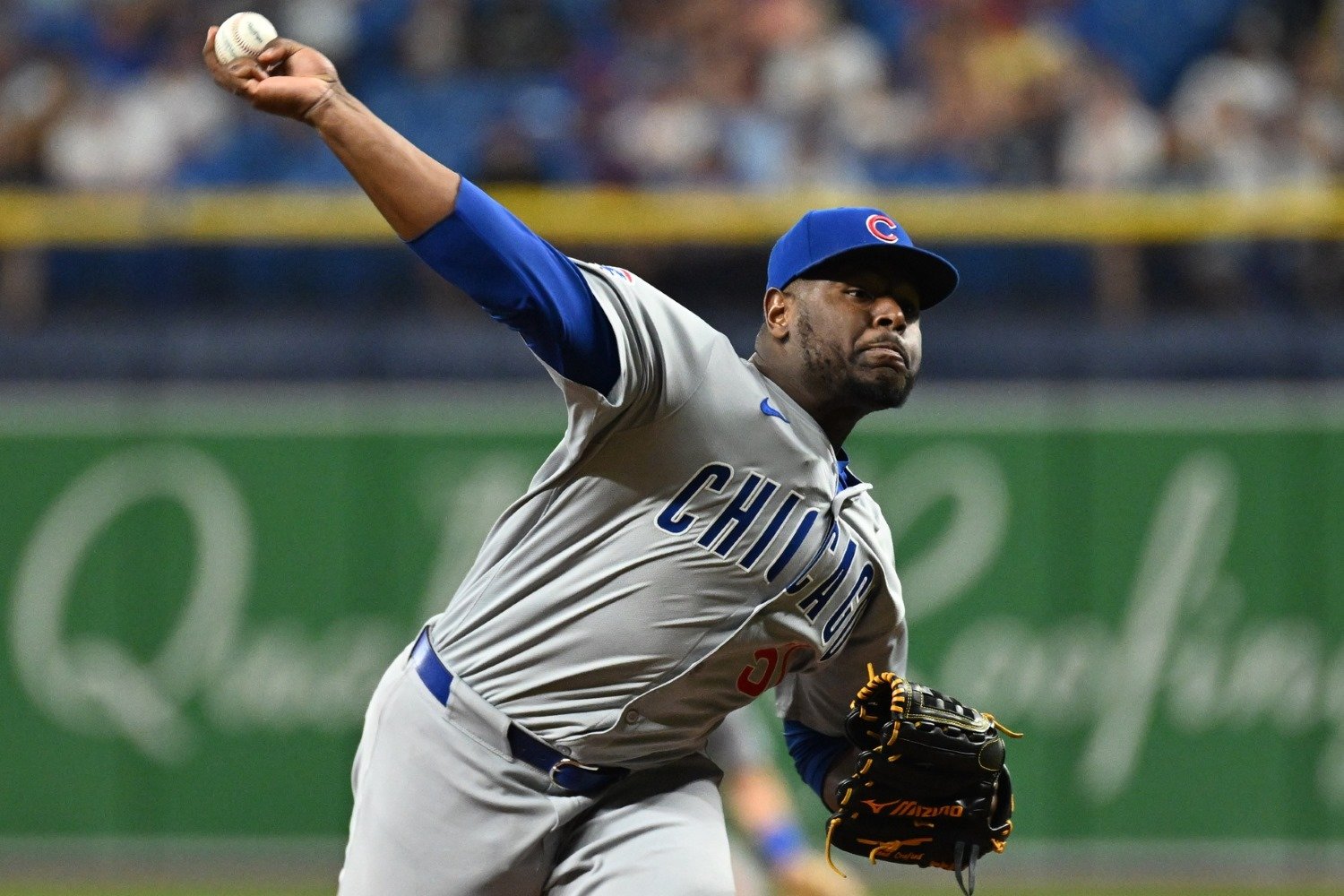 Here's the paradox of the 2024 Chicago Cubs: They have made it absolutely clear that the rebuild they didn't want to label that way is very much a rebuild, and that it's far from over. Yet, they have a roster theoretically pointed toward short-term contention; a long-term commitment to a new manager being paid more than anyone else has ever been paid for that job; and an executive who might not survive an admission of defeat and attempt at a reset. Messes don't come much uglier than that, because it means that even as the path forward becomes almost obvious, there are major obstacles to the embrace of that path for the organization. The other big problem is that it's June 18. We're a bit over six weeks away from the trade deadline, and that's when the big moves will be made, in one direction or the other. For myriad reasons, this team both will not and should not take major action now, in terms of pulling the trigger on trades to either give up on this season or try to rescue it. For fans, that adds a layer of frustration, because everyone can see the things going wrong, and while some rational part of the brain might understand that it's not yet time for certain types of action, that's exactly what they crave. If Jed Hoyer and Craig Counsell aren't doing something concrete and significant, fans feel like they don't see or care about the problems at hand, even though that's obviously not the case. Hoyer and Counsell can continue to be patient, overall, because they need to be. There are also a handful of things they should do right away, though. Here's a list. Install Pete Crow-Armstrong as the everyday center fielder, batting sixth against right-handed pitchers and ninth against lefties. With rare exceptions for sheer physical workload maintenance, Crow-Armstrong should play every day for the Cubs the rest of this season. After Mike Tauchman suffered what sure looks like a strained groin Monday night against the Giants, the team has a gap in its outfield plan, anyway, but more importantly, the team needs to spend the balance of this campaign figuring out what it has in Crow-Armstrong. I'm on record: I think he's Corey Patterson in a slightly updated wrapper. I think he's valuable in the field and on the bases, but that his bat will be persistently unplayable, and that he'll ultimately settle in as a very nice fourth outfielder. He can have a long career, but I don't expect it to be a high-impact one. I could very well be wrong, though. Either way, the Cubs need to get a firm handle on Crow-Armstrong's future this year, so they can make plans for the future with more confidence heading into the offseason. Without giving him plate appearances his bat doesn't merit, they need to maximize his playing time, in order to maximize the information available to them when they make their next set of big decisions. They can pull the plug on him if he still has a 54 OPS+ in two months, but if he's capable even of pushing that number up to 80, they need to find that out. Use Michael Busch as the new leadoff man against right-handed pitchers; slide Christopher Morel down to fifth. By no reasonable standard is Morel a solid second or fourth hitter right now. Yes, we're all aware of the narratives created by his approach improvements and his seemingly promising batted-ball data, but there's a much more important reality at hand. Seventy-three games into the Cubs' season, Morel is batting .196/.301/.373. His 13 homers obscure the fact that he's not even producing power on par with what he'd previously flashed, or with what the Cubs clearly expected from him: he only has four doubles and a triple to his name this year. Meanwhile, Busch is hitting a tidy .255/.350/.450, with more extra-base hits than Morel has and plenty of walks. He's a well-rounded slugger, and with Tauchman down, he should assume the duty of getting the most at-bats on the team with righty pitchers on the mound. Again, this is a fact-finding mission. Maybe Busch can spark the team and save the season, but it's more likely that he'll go through another set of slumps and streaks over the second half and settle in with numbers slightly less impressive than the ones he has right now. That's ok. The Cubs should want every bit of good data they can grab on him as they sketch out the next good version of the team. With Busch at the top, Seiya Suzuki should bat second, followed by Cody Bellinger and Ian Happ. Morel, unless and until he can actually start creating value with the bat, needs to be shoved down the lineup card. Place Nico Hoerner on the injured list with his fractured hand, and use Morel at second base in his absence. The experiment whereby the team tried to make a third baseman out of Morel has been an abject failure. It's not just errors; he's piling up plays not made, or made too imperfectly. He cost the Cubs at least two outs Monday night alone, without committing an error. The only spot on the diamond at which Morel has ever looked like a credible big-league defender is second base. He could probably be a playable corner outfielder, too, but those spots are spoken-for. Morel should be slotted back in at second for a while. That's a viable option right now, because Hoerner needs a break, anyway. Since the hamstring injury that lingered with him for a week in mid-May, Hoerner has 85 plate appearances. He's hitting .195/.271/.221, with two extra-base hits (both doubles). He never has consistently generated power, and he probably never will, but Hoerner has been bad in a broad-spectrum way for a month now. It won't help anything for him to try to play through this hand thing uninterrupted, because it's been a very long time since he helped anything even before it happened. Since May 21, 201 batters have at least 70 plate appearances. By weighted sweet-spot exit velocity (wSSEV), a metric I developed to identify the skill of both hitting the ball within a valuable launch-angle band with consistency and hitting it hard when one does, Hoerner ranks 200th, ahead of only struggling Brewers outfielder Sal Frelick. Hoerner needs to be away for a while. David Bote and Patrick Wisdom can man the hot corner for a few weeks, while Morel gets a chance to play a position at which he's more likely to be viable. If either gets hot, they could be trade candidates next month. If not, at least the team will find out whether Morel can cut it as a fifth-hitting second baseman, and maybe Hoerner can be a more representative version of himself after an extended rest and recovery period. Install Tyson Miller as the closer, and keep Héctor Neris far from the end of games. What a dreadful mess this bullpen is. Given the injuries they've suffered, it's not quite a surprise, but it's hard to remember a worse relief corps in Cubs history. It's not just the overall struggle, but the lack of even one pitcher who makes you feel really good when they trot in to take the game mound. Mark Leiter Jr. pitches like a relief ace, right up until it actually matters. Neris is more in the range of congestive failure than of an ordinary heart attack, at this point. Miller is the best of an almost unimaginably weak set of options to work as the relief ace, but this move isn't even really about winning games. It's purely about stopping Neris from reaching 60 appearances and/or 45 games finished. If either of those happen, and if he's healthy at the end of the season, the $9-million club option for 2025 on his contract becomes a player option instead. That would be especially self-defeating, and as slimy as it might feel, the Cubs need to be actively working to avoid it. If nothing else, they can release him later in the season, but giving Miller the high-leverage work that has been going to Neris would be another way to forestall him hitting his thresholds. Sign Tomas Nido, and designate Yan Gomes for assignment. Contending teams hate making changes to their catching corps once the season begins. Luckily for the Cubs, they don't belong to that class right now, and can afford--in fact, are required--to experiment. Nido, 30, was released by the Mets Monday, so he will only make the league-minimum salary with whichever team scoops him up. He's not a good hitter, by any standard other than the one Cubs catchers have set this year, but he's downright dangerous on that scale. He's also a better thrower behind the plate than either Gomes or Miguel Amaya, against whom the league has run so much and with such impunity all year. Cutting Gomes would be a blow to team morale, given his role in the clubhouse and value as a supporter of the pitching preparation system, but the losses piling up on this team are a greater and more important blow to that morale. Nido is a small-time addition, but he's exactly what the Cubs need and lack behind the plate. None of these things will save the Cubs' season. They'll either do that themselves (by playing much better), or not at all. The moves would make clear the standard the team needs to have for acceptable play, though, and they would give the team important edges as they plan for a better, more legitimate winner in 2025 and beyond.
- 5 comments
-
- 1
-

-
- nico hoerner
- michael busch
- (and 4 more)
-
The Chicago Cubs are in crisis. They have a deficient roster and need to pivot toward long-term planning, but might not have the right top decision-maker to engage in that task right now. Let's talk about the concrete, short-term steps they should take, anyway. Image courtesy of © Jonathan Dyer-USA TODAY Sports Here's the paradox of the 2024 Chicago Cubs: They have made it absolutely clear that the rebuild they didn't want to label that way is very much a rebuild, and that it's far from over. Yet, they have a roster theoretically pointed toward short-term contention; a long-term commitment to a new manager being paid more than anyone else has ever been paid for that job; and an executive who might not survive an admission of defeat and attempt at a reset. Messes don't come much uglier than that, because it means that even as the path forward becomes almost obvious, there are major obstacles to the embrace of that path for the organization. The other big problem is that it's June 18. We're a bit over six weeks away from the trade deadline, and that's when the big moves will be made, in one direction or the other. For myriad reasons, this team both will not and should not take major action now, in terms of pulling the trigger on trades to either give up on this season or try to rescue it. For fans, that adds a layer of frustration, because everyone can see the things going wrong, and while some rational part of the brain might understand that it's not yet time for certain types of action, that's exactly what they crave. If Jed Hoyer and Craig Counsell aren't doing something concrete and significant, fans feel like they don't see or care about the problems at hand, even though that's obviously not the case. Hoyer and Counsell can continue to be patient, overall, because they need to be. There are also a handful of things they should do right away, though. Here's a list. Install Pete Crow-Armstrong as the everyday center fielder, batting sixth against right-handed pitchers and ninth against lefties. With rare exceptions for sheer physical workload maintenance, Crow-Armstrong should play every day for the Cubs the rest of this season. After Mike Tauchman suffered what sure looks like a strained groin Monday night against the Giants, the team has a gap in its outfield plan, anyway, but more importantly, the team needs to spend the balance of this campaign figuring out what it has in Crow-Armstrong. I'm on record: I think he's Corey Patterson in a slightly updated wrapper. I think he's valuable in the field and on the bases, but that his bat will be persistently unplayable, and that he'll ultimately settle in as a very nice fourth outfielder. He can have a long career, but I don't expect it to be a high-impact one. I could very well be wrong, though. Either way, the Cubs need to get a firm handle on Crow-Armstrong's future this year, so they can make plans for the future with more confidence heading into the offseason. Without giving him plate appearances his bat doesn't merit, they need to maximize his playing time, in order to maximize the information available to them when they make their next set of big decisions. They can pull the plug on him if he still has a 54 OPS+ in two months, but if he's capable even of pushing that number up to 80, they need to find that out. Use Michael Busch as the new leadoff man against right-handed pitchers; slide Christopher Morel down to fifth. By no reasonable standard is Morel a solid second or fourth hitter right now. Yes, we're all aware of the narratives created by his approach improvements and his seemingly promising batted-ball data, but there's a much more important reality at hand. Seventy-three games into the Cubs' season, Morel is batting .196/.301/.373. His 13 homers obscure the fact that he's not even producing power on par with what he'd previously flashed, or with what the Cubs clearly expected from him: he only has four doubles and a triple to his name this year. Meanwhile, Busch is hitting a tidy .255/.350/.450, with more extra-base hits than Morel has and plenty of walks. He's a well-rounded slugger, and with Tauchman down, he should assume the duty of getting the most at-bats on the team with righty pitchers on the mound. Again, this is a fact-finding mission. Maybe Busch can spark the team and save the season, but it's more likely that he'll go through another set of slumps and streaks over the second half and settle in with numbers slightly less impressive than the ones he has right now. That's ok. The Cubs should want every bit of good data they can grab on him as they sketch out the next good version of the team. With Busch at the top, Seiya Suzuki should bat second, followed by Cody Bellinger and Ian Happ. Morel, unless and until he can actually start creating value with the bat, needs to be shoved down the lineup card. Place Nico Hoerner on the injured list with his fractured hand, and use Morel at second base in his absence. The experiment whereby the team tried to make a third baseman out of Morel has been an abject failure. It's not just errors; he's piling up plays not made, or made too imperfectly. He cost the Cubs at least two outs Monday night alone, without committing an error. The only spot on the diamond at which Morel has ever looked like a credible big-league defender is second base. He could probably be a playable corner outfielder, too, but those spots are spoken-for. Morel should be slotted back in at second for a while. That's a viable option right now, because Hoerner needs a break, anyway. Since the hamstring injury that lingered with him for a week in mid-May, Hoerner has 85 plate appearances. He's hitting .195/.271/.221, with two extra-base hits (both doubles). He never has consistently generated power, and he probably never will, but Hoerner has been bad in a broad-spectrum way for a month now. It won't help anything for him to try to play through this hand thing uninterrupted, because it's been a very long time since he helped anything even before it happened. Since May 21, 201 batters have at least 70 plate appearances. By weighted sweet-spot exit velocity (wSSEV), a metric I developed to identify the skill of both hitting the ball within a valuable launch-angle band with consistency and hitting it hard when one does, Hoerner ranks 200th, ahead of only struggling Brewers outfielder Sal Frelick. Hoerner needs to be away for a while. David Bote and Patrick Wisdom can man the hot corner for a few weeks, while Morel gets a chance to play a position at which he's more likely to be viable. If either gets hot, they could be trade candidates next month. If not, at least the team will find out whether Morel can cut it as a fifth-hitting second baseman, and maybe Hoerner can be a more representative version of himself after an extended rest and recovery period. Install Tyson Miller as the closer, and keep Héctor Neris far from the end of games. What a dreadful mess this bullpen is. Given the injuries they've suffered, it's not quite a surprise, but it's hard to remember a worse relief corps in Cubs history. It's not just the overall struggle, but the lack of even one pitcher who makes you feel really good when they trot in to take the game mound. Mark Leiter Jr. pitches like a relief ace, right up until it actually matters. Neris is more in the range of congestive failure than of an ordinary heart attack, at this point. Miller is the best of an almost unimaginably weak set of options to work as the relief ace, but this move isn't even really about winning games. It's purely about stopping Neris from reaching 60 appearances and/or 45 games finished. If either of those happen, and if he's healthy at the end of the season, the $9-million club option for 2025 on his contract becomes a player option instead. That would be especially self-defeating, and as slimy as it might feel, the Cubs need to be actively working to avoid it. If nothing else, they can release him later in the season, but giving Miller the high-leverage work that has been going to Neris would be another way to forestall him hitting his thresholds. Sign Tomas Nido, and designate Yan Gomes for assignment. Contending teams hate making changes to their catching corps once the season begins. Luckily for the Cubs, they don't belong to that class right now, and can afford--in fact, are required--to experiment. Nido, 30, was released by the Mets Monday, so he will only make the league-minimum salary with whichever team scoops him up. He's not a good hitter, by any standard other than the one Cubs catchers have set this year, but he's downright dangerous on that scale. He's also a better thrower behind the plate than either Gomes or Miguel Amaya, against whom the league has run so much and with such impunity all year. Cutting Gomes would be a blow to team morale, given his role in the clubhouse and value as a supporter of the pitching preparation system, but the losses piling up on this team are a greater and more important blow to that morale. Nido is a small-time addition, but he's exactly what the Cubs need and lack behind the plate. None of these things will save the Cubs' season. They'll either do that themselves (by playing much better), or not at all. The moves would make clear the standard the team needs to have for acceptable play, though, and they would give the team important edges as they plan for a better, more legitimate winner in 2025 and beyond. View full article
-
Yeah, it does. Statcast, hit us with some neck-length leaderboards.
-
That must have been before the top half of his head grew in. I mean it's an impressive neck, but it has so much to stabilize, it just looks necessary.
-
The Cubs Are the Face of an Alarming New Injury Trend in MLB
Matthew Trueblood posted an article in Cubs
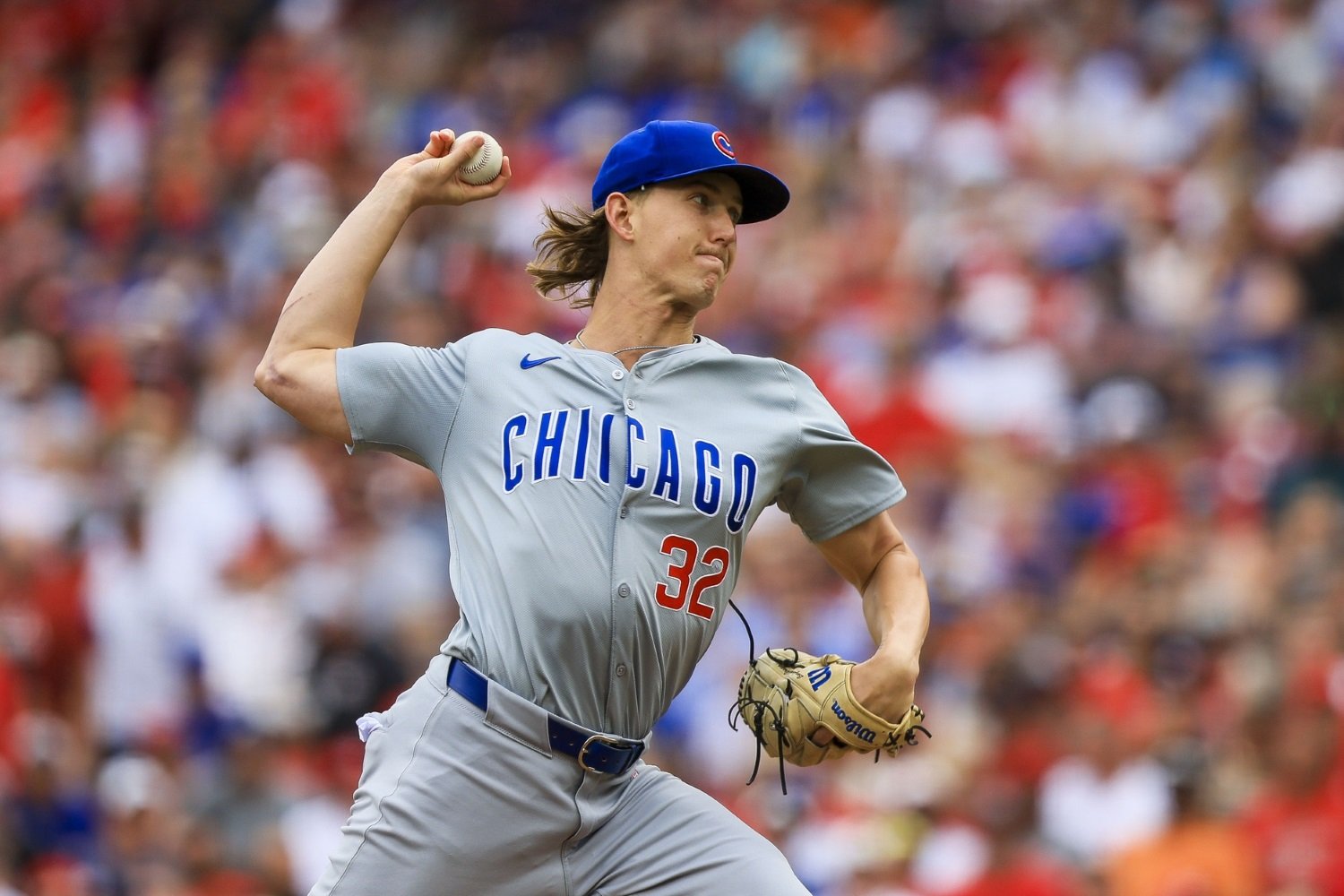 It'll be a while before we get a chance to see Ben Brown continue his exciting rookie season. Shelved last week with what was dubbed a left neck strain, Brown has now been diagnosed with a stress reaction in that area. In essence, a stress reaction is the larval stage of a stress fracture. The Cubs' medical and training staff will have to work closely with Brown to give time for his neck to rest and recover, but there will also need to be a change in the way or the amount that he throws, or he's going to suffer stress fractures in that area, which would cost him the rest of this season. To understand why this is so ominous (especially as we take a look at the broader team and league context for it), we should start by getting some things clear about stress fractures. Here's an important passage from the abstract of a detailed paper on these injuries, housed at the National Institute of Health's National Library of Medicine: That's 'ulna' as in 'ulnar collateral ligament,' which is why baseball fans have been familiar with the concept of a stress reaction in the elbow for a long time. It's usually an early signal of failure of the UCL, which necessitates Tommy John surgery. The bone doesn't quite break, but it starts to show its inability to bear the force being exerted upon it. As the above says, runners and jumpers see these more often, because that repetitive force is totally unavoidable when your chosen sport involves those fights against friction and gravity. Note, too, the mention of "increased volume or intensity" of workload. That's certainly been the case for Brown this year, as he was thrust into a large and demanding role for the Cubs. Still, for the strain of that increase to show up in the neck instead of the elbow is highly unusual. Or, we might need to say, it was highly unusual. Baseball Prospectus has one of the most valuable and powerful tools on the entire baseball internet: a suite of injury database tools that allows us to break down the frequency and severity of various types of injuries, to various body parts, within seasons and across them. Using those tools, I can tell you this: In 2016 and 2017, there was one pitcher each season who missed time due to a stress fracture or stress reaction in their back, shoulder, ribcage, or neck--specifically, in the spine or the scapula, as opposed to the humerus or the ulna (the bones of the arm itself). There wasn't another such player until 2021, and then, again, only one. Injuries by Body Part Through N Days of Season, 2019-24, MLB In 2022, there were six pitchers placed on the injured list with such maladies. In 2023, there were three. Already, in 2024, there have been five of them--and two are Cubs. Brown is the latest, but early in the season, Julian Merryweather also hit the injured list with stress fractures in his ribs. Merryweather last pitched on Apr. 5, and just got back onto a bullpen mound late last week, as he tries to work his way back to readiness. That Brown and Merryweather belong to a burgeoning class of hurlers losing time to these types of injuries suggests that there's more afoot than a sudden change in workload. That certainly doesn't help--last year, Brewers closer Devin Williams pitched through persistent back pain late in the season, as he bore a heavy workload for the hard-charging Crew, and he was diagnosed with stress fractures in his upper back during spring training. It can't be the whole explanation, though, because most pitchers (including Brown) are being handled very carefully, league-wide, but injuries like these are on the rise. Maybe it's something mechanical. Let's take a quick look at a fastball Brown threw way back in his MLB debut, on Mar. 30. Ben Brown Head Whack.mp4 There's something in here, but it might not be what you think. From this very straight-on rear camera angle, we can see how Brown jerks his head to the side to accommodate his arm path as he delivers. That's somewhat common. Pitchers call it "head whack," and if it were fatal to the bones of the neck, Max Scherzer wouldn't be two decades into his professional career. It looks like the kind of movement that would eventually be bad for your neck, and it might even be bad for your neck, but it's not the main reason Brown has come up with this issue. If it were, perhaps the issue would be unique to him. Watch the clip again, though, and keep in mind that this camera is situated quite high and very far behind Brown. That makes it hard to tell how far the tall, lanky Brown extends down the mound. As I've discussed before, though, he does have superb extension, and that's despite a high three-quarters slot that typically doesn't correlate with that trait. Subtly, the big hurler takes a long stride, he gets some extra momentum and release distance from staying in hyperextension (that backward lean or bend of the back that precedes the forward snap of the torso) and then launching at the last moment into flexion (a forward bend at the waist, where any good pitcher should end up as they finish a delivery). Williams does this, too. So does Merryweather. Every pitcher in the big leagues goes from some degree of hyperextension of the spine when their foot lands to some degree of flexion at release, but these three are good examples of guys doing it at a high, near-extreme level. Not coincidentally, perhaps, Williams has some of the best release extension (it's confusing, I know, to term that so similarly to hyperextension, which is a different idea here, but that's what the stat has come to be called) in MLB. Throwing hard, with such great extension and that suddenness of transition in spine position, makes for a violent delivery. Whereas Scherzer (the platonic ideal of the head-whacking hurler) has a low slot, both Brown and Merryweather have high three-quarter slots that compel them to push the force they're applying to the ball through the top of their torso, rather than releasing it like a whip through their arms. To survive in MLB, you have to throw hard. To throw hard, you have to find a lot of force somewhere and channel it through the ball at the moment of release. Pitchers are desperate, these days, for ways to create that force with more of their body than just their arm, because that's how they might hope to avoid elbow surgery. In that quest, though, more and more of them are simply finding that the force required to throw that hard is exceeding what other structures in their bodies can bear. Here's another important tidbit on stress fractures in the back, from the website of the Hospital for Special Surgery. "These stress fractures in the back are most often seen in adolescent athletes such as gymnasts, where there is a great deal of extension and landing with an arched back." Now, to be clear, the injuries described on that page are not exactly what Brown and Merryweather are dealing with. They are quite similar to Williams's injury, which has cost him the whole season so far and figures to keep him out until at least the All-Star break, but they're distinct from those the two Cubs relievers are battling. That doesn't mean they're unrelated, or that the above isn't vital information. Landing with an arched back in the course of a highly forceful movement is dangerous. It's also an awesome way to throw hard, without having to maximize arm speed and maximally imperil the UCL. Pitchers have been trying more and more ways to streamline their mechanics, increase their functional strength, and recruit new muscles and body parts to create great velocity. Some of them are successfully avoiding snapping their ligaments like rubber bands, but instead, they're wracking themselves--pushing central parts of their own skeletons right to their failure points. They're doing some gymnastic movements, at anywhere from 180 to 250 pounds. This, to me, is the latest argument for a serious, global push to disincentivize velocity, somehow. Without some change that allows pitchers to quit the rat race, there will continue to be great facilities like Driveline Baseball and Tread Athletics and the Texas Baseball Ranch, all teaching pitchers multiple means of generating huge linear and rotational force with their bodies, all helping them make millions--and all steering them toward new and unexpected frontiers of injury that disrupt seasons and careers; affect their lives after those careers end; make it increasingly difficult to evluate and build a roster, for front offices and public analysts; and alienate fans who can't count on seeing familiar faces on the rubber the way they once could. If pitching is becoming backbreaking work, in a literal sense, someone ought to step in and demand that a major change be made. Otherwise, in a decade, we won't be talking about a handful of pitchers with injuries like these. We'll be reading spreadsheets full of them, like we are now with elbow surgery patients.
 -
Over the weekend, Craig Counsell revealed that one of the Cubs' most important young pitchers will miss considerable time, as the injury with which he's dealing is more severe than first believed. It's also, while rare, part of a trend that should concern baseball fans everywhere. Image courtesy of © Katie Stratman-USA TODAY Sports It'll be a while before we get a chance to see Ben Brown continue his exciting rookie season. Shelved last week with what was dubbed a left neck strain, Brown has now been diagnosed with a stress reaction in that area. In essence, a stress reaction is the larval stage of a stress fracture. The Cubs' medical and training staff will have to work closely with Brown to give time for his neck to rest and recover, but there will also need to be a change in the way or the amount that he throws, or he's going to suffer stress fractures in that area, which would cost him the rest of this season. To understand why this is so ominous (especially as we take a look at the broader team and league context for it), we should start by getting some things clear about stress fractures. Here's an important passage from the abstract of a detailed paper on these injuries, housed at the National Institute of Health's National Library of Medicine: That's 'ulna' as in 'ulnar collateral ligament,' which is why baseball fans have been familiar with the concept of a stress reaction in the elbow for a long time. It's usually an early signal of failure of the UCL, which necessitates Tommy John surgery. The bone doesn't quite break, but it starts to show its inability to bear the force being exerted upon it. As the above says, runners and jumpers see these more often, because that repetitive force is totally unavoidable when your chosen sport involves those fights against friction and gravity. Note, too, the mention of "increased volume or intensity" of workload. That's certainly been the case for Brown this year, as he was thrust into a large and demanding role for the Cubs. Still, for the strain of that increase to show up in the neck instead of the elbow is highly unusual. Or, we might need to say, it was highly unusual. Baseball Prospectus has one of the most valuable and powerful tools on the entire baseball internet: a suite of injury database tools that allows us to break down the frequency and severity of various types of injuries, to various body parts, within seasons and across them. Using those tools, I can tell you this: In 2016 and 2017, there was one pitcher each season who missed time due to a stress fracture or stress reaction in their back, shoulder, ribcage, or neck--specifically, in the spine or the scapula, as opposed to the humerus or the ulna (the bones of the arm itself). There wasn't another such player until 2021, and then, again, only one. Injuries by Body Part Through N Days of Season, 2019-24, MLB In 2022, there were six pitchers placed on the injured list with such maladies. In 2023, there were three. Already, in 2024, there have been five of them--and two are Cubs. Brown is the latest, but early in the season, Julian Merryweather also hit the injured list with stress fractures in his ribs. Merryweather last pitched on Apr. 5, and just got back onto a bullpen mound late last week, as he tries to work his way back to readiness. That Brown and Merryweather belong to a burgeoning class of hurlers losing time to these types of injuries suggests that there's more afoot than a sudden change in workload. That certainly doesn't help--last year, Brewers closer Devin Williams pitched through persistent back pain late in the season, as he bore a heavy workload for the hard-charging Crew, and he was diagnosed with stress fractures in his upper back during spring training. It can't be the whole explanation, though, because most pitchers (including Brown) are being handled very carefully, league-wide, but injuries like these are on the rise. Maybe it's something mechanical. Let's take a quick look at a fastball Brown threw way back in his MLB debut, on Mar. 30. Ben Brown Head Whack.mp4 There's something in here, but it might not be what you think. From this very straight-on rear camera angle, we can see how Brown jerks his head to the side to accommodate his arm path as he delivers. That's somewhat common. Pitchers call it "head whack," and if it were fatal to the bones of the neck, Max Scherzer wouldn't be two decades into his professional career. It looks like the kind of movement that would eventually be bad for your neck, and it might even be bad for your neck, but it's not the main reason Brown has come up with this issue. If it were, perhaps the issue would be unique to him. Watch the clip again, though, and keep in mind that this camera is situated quite high and very far behind Brown. That makes it hard to tell how far the tall, lanky Brown extends down the mound. As I've discussed before, though, he does have superb extension, and that's despite a high three-quarters slot that typically doesn't correlate with that trait. Subtly, the big hurler takes a long stride, he gets some extra momentum and release distance from staying in hyperextension (that backward lean or bend of the back that precedes the forward snap of the torso) and then launching at the last moment into flexion (a forward bend at the waist, where any good pitcher should end up as they finish a delivery). Williams does this, too. So does Merryweather. Every pitcher in the big leagues goes from some degree of hyperextension of the spine when their foot lands to some degree of flexion at release, but these three are good examples of guys doing it at a high, near-extreme level. Not coincidentally, perhaps, Williams has some of the best release extension (it's confusing, I know, to term that so similarly to hyperextension, which is a different idea here, but that's what the stat has come to be called) in MLB. Throwing hard, with such great extension and that suddenness of transition in spine position, makes for a violent delivery. Whereas Scherzer (the platonic ideal of the head-whacking hurler) has a low slot, both Brown and Merryweather have high three-quarter slots that compel them to push the force they're applying to the ball through the top of their torso, rather than releasing it like a whip through their arms. To survive in MLB, you have to throw hard. To throw hard, you have to find a lot of force somewhere and channel it through the ball at the moment of release. Pitchers are desperate, these days, for ways to create that force with more of their body than just their arm, because that's how they might hope to avoid elbow surgery. In that quest, though, more and more of them are simply finding that the force required to throw that hard is exceeding what other structures in their bodies can bear. Here's another important tidbit on stress fractures in the back, from the website of the Hospital for Special Surgery. "These stress fractures in the back are most often seen in adolescent athletes such as gymnasts, where there is a great deal of extension and landing with an arched back." Now, to be clear, the injuries described on that page are not exactly what Brown and Merryweather are dealing with. They are quite similar to Williams's injury, which has cost him the whole season so far and figures to keep him out until at least the All-Star break, but they're distinct from those the two Cubs relievers are battling. That doesn't mean they're unrelated, or that the above isn't vital information. Landing with an arched back in the course of a highly forceful movement is dangerous. It's also an awesome way to throw hard, without having to maximize arm speed and maximally imperil the UCL. Pitchers have been trying more and more ways to streamline their mechanics, increase their functional strength, and recruit new muscles and body parts to create great velocity. Some of them are successfully avoiding snapping their ligaments like rubber bands, but instead, they're wracking themselves--pushing central parts of their own skeletons right to their failure points. They're doing some gymnastic movements, at anywhere from 180 to 250 pounds. This, to me, is the latest argument for a serious, global push to disincentivize velocity, somehow. Without some change that allows pitchers to quit the rat race, there will continue to be great facilities like Driveline Baseball and Tread Athletics and the Texas Baseball Ranch, all teaching pitchers multiple means of generating huge linear and rotational force with their bodies, all helping them make millions--and all steering them toward new and unexpected frontiers of injury that disrupt seasons and careers; affect their lives after those careers end; make it increasingly difficult to evluate and build a roster, for front offices and public analysts; and alienate fans who can't count on seeing familiar faces on the rubber the way they once could. If pitching is becoming backbreaking work, in a literal sense, someone ought to step in and demand that a major change be made. Otherwise, in a decade, we won't be talking about a handful of pitchers with injuries like these. We'll be reading spreadsheets full of them, like we are now with elbow surgery patients. View full article
-
 When you try to trace a path from where the Cubs are now to the 2024 postseason, you run into two related but distinct problems. Firstly, the team's record isn't very good. Their loss Friday against the Cardinals dropped them to 33-37 through 70 games, and they face a substantial deficit in the NL Central. Secondly, though (and probably more importantly, in the eyes and minds of fans), they have played very poorly over the last seven weeks. After an 18-12 start, they went 15-25 to reach that Friday low point. Take either of those things on their own--a sub-.500 overall record through 70 games, and a truly lousy stretch of 40 games somewhere in the season--and you can overcome them. The 2019 Nationals were 32-38 at one point. The 2021 Atlanta club was 33-37. There have been about two dozen division-winning teams who lost at least 25 of 40 games at some point, over the 55 years in which divisions have existed, including the 2003 Cubs. If we're even one tiny fraction more generous in drawing comparisons, we can note that Craig Counsell's own 2023 Brewers were 16-24 in a 40-game span from the very beginning of May through mid-June, which couldn't be much more similar to the Cubs' current jag. Put the two things together, though, and the path to a campaign the Cubs would call successful (based on expectations entering this season) gets narrow in a hurry. In the Wild Card Era (since 1995), 155 teams have started somewhere between 32-38 and 34-36, through 70 contests. Of those, though, only 35 got there in roughly similar fashion to the Cubs, with a winning record through their first 30 games and then a tumble to the wrong side of .500 in the ensuing 40. Of those 35 comparable teams, in these terms: 16 of 35 had winning records over their final 92 games 9 of 35 got to 85 or more total wins 15 of 35, like these Cubs, went 16-24 or worse in that stretch from team game No. 31 to No. 70; and Of those 15, only one team--the 2008 Dodgers, who snuck into the playoffs at 84-78--even got to 80 wins. In other words, based on recent history, starting hot and then going this cold for this long spells major trouble. It implies a pretty small chance of recovering and finishing the campaign as a winning team. The confluence of health, talent, and luck required to be a good team over 162 games usually eludes teams who get this deep into a season in step with the Cubs, to this point. This might be obvious, or not, but let's be clear about it: These data do not condemn the Cubs. Every team season is unique, in some small way. Picking out these endpoints (not selectively, to distort things, but arbitrarily, to make the data clean enough to analyze) gives us a sample size that seems significant, but it isn't necessarily so. No one has come back from as brutal a sag through games 31-70 and ended up winning 85 or more games in the last 30 years or more, but that doesn't mean the Cubs won't, for sure. On the other hand, it underscores the issue here. Even during that 18-12 start, there were games the Cubs let get away, in frustrating fashion. The mess the bullpen made in San Diego is the most stark example, but helpfully, they left another indelible memory later in that road trip, in Arizona. If the Cubs start 20-10, as perhaps they should have, this stretch doesn't pull them back into the data set drawn from here, because they're 35-35 even after this lull. They didn't, which means their margin for error the rest of the way is quite small. Many people disagree with me about this, but I view the Brewers as a legitimately good team, with staying power. Despite their own considerable pitching injury concerns, I think they'll wend their way from their current 41-29 record to a final one of at least 87-75, which would mean going .500 the rest of the way. Of the 35 teams in the small study above, only seven got to that number (actually, six, but I'm giving the 1995 Mariners some extra wins to account for the truncated schedule that year). Those 79-66 Mariners, of course, had three Hall of Famers at their peaks, in Randy Johnson, Edgar Martínez, and Ken Griffey Jr. Griffey missed half of the season with an injury, which contributed to their lousy record through 70 games. The 88-74 1997 Dodgers got truly monster years from Mike Piazza and Raul Mondesi, and enjoyed a healthy, workhorse starting rotation. Six pitchers combined to make 156 of their 162 starts, and starters pitched 1,014 innings for them. The 89-73 2008 Mets had three players with good Hall of Fame cases--David Wright, Carlos Beltrán, and Johan Santana--playing at their very best, with each producing at least 6.9 bWAR. You probably remember the 88-74 2008 Brewers, but in case you don't, three names: CC Sabathia, Ryan Braun, Prince Fielder. The 87-75 2009 Marlins were much more forgettable, but Hanley Ramírez and Josh Johnson each had the best seasons of their dazzling, too-short peaks that year. Even in the shadow of another wondrous outing by Shota Imanaga Saturday, it's hard to make the case that the Cubs have any player on the level of the 13 guys name-checked above, save perhaps Mondesi. (That was a very fortuitously timed career year, for Mondesi. He signed a contract that made him one of the 10 highest-paid players in baseball that winter, and then literally never produced even half as much bWAR in a season again.) These were teams powered to their impressive recoveries by true superstars; the Cubs don't have a superstar. Let's look, though, at the last two teams to rebalance themselves and end up as winning teams after starting with such a surge-and-swoon maneuver. They are the 2012 Oakland Athletics, and the 2021 Seattle Mariners. The 2012 A's are famous, in one very nerdy corner of the baseball internet. They're a team who believed in and evinced team chemistry so much that they seemingly willed themselves to a 60-32 finish after a 34-36 start. Powered by extraordinary part-time contributions from mid-June arrivals Brandon Moss and Chris Carter, they ran down the two-time defending AL pennant winners from Texas, beating them on the final day of the regular season to claim the division title. That team also had an edge on the rest of the league. Batted-ball stats were in their nascency, even inside many teams' offices, and the A's were the first team through the breach in the fly-ball revolution. They got a massive advantage that way, and their mixing and matching and clubhouse magic took care of the rest. They were also insanely balanced and deep on the pitching side, though, with 12 different pitchers who had at least 35 innings pitched (and as many as 181) and an ERA under 3.50. Let's not waste our time on the 2021 Mariners, an irreproducible burp of a team who went 90-72 while being outscored by 51 runs, thanks partially to winning 10 of their last 13 after being virtually eliminated. The A's are the only real model the Cubs can follow. Do the Cubs have leaders and great clubhouse guys like those A's teams did? There's some evidence of that. Dansby Swanson, Ian Happ, and Nico Hoerner were selected as the backbone of this team partially for their personalities and their leadership. They all wanted Cody Bellinger back because of his fit within the clubhouse, and it's hard to deny the similarities between Mike Tauchman and guys like Jonny Gomes and Brandon Inge, who drew such rave reviews for their impact off the field. Specifically, pitcher Brandon McCarthy and other members of the 2012 A's mentioned the way Gomes and Inge invited and set at ease young or incoming players, making them feel valued, at-home, and important. That group of leaders created a culture under which unproven players thrived and improved, and it powered them to many close wins and unexpected positive contributions. The hope, certainly, would be that the Cubs are getting the same thing from Swanson, Happ, Hoerner, and others, when it comes to players like Pete Crow-Armstrong and Michael Busch, but also ones like Tyson Miller, Porter Hodge, and more. The incumbents have to consistently work to uplift and empower their less established (but equally important) teammates. Maybe that interpersonal genius will congeal into a ball of light in the center of the team's clubhouse and bring them together this summer. As silly as it sounds to put it that way, baseball chemistry can be just that beguiling and delightfully unpredictable. There are some of the ingredients here that were present in Oakland in 2012. Maybe they just need the right catalyst to start a chain reaction. The troubling truth, though, is that the Cubs are missing the other half of Oakland's winning recipe. They don't have the mixture of good health and good depth that the A's had that summer, on the pitching side--or at least, we don't yet have any indication that they do. Nor do they seem to have the drop on the league, the way that team did. There's nowhere in either the run production or the run prevention ledgers where the Cubs seem to have some clever accounting tricks at work, the likes of which might turn them into a juggernaut this summer. Again, while the past is prologue in baseball, it's usually an enigmatic and incomplete one. The 2024 Cubs get to write the rest of their own story, even though the one they've authored so far is discouraging, and even though history is not exactly on their side. This team might get big performances from a couple of linchpin players in the second half, but there are no salvific superstars here. The key things to watch for, in the coming weeks, are a coming-together by this team that changes the way they relate to one another and the way they play as a unit--and then some glimpse of a greater genius behind the scenes than we've been able to see so far.
 -
The 2024 Chicago Cubs started hot. Now, though, more than half their season has been spent ice-cold. What does that tell us about the essential character and quality of this team, and what comes next? When you try to trace a path from where the Cubs are now to the 2024 postseason, you run into two related but distinct problems. Firstly, the team's record isn't very good. Their loss Friday against the Cardinals dropped them to 33-37 through 70 games, and they face a substantial deficit in the NL Central. Secondly, though (and probably more importantly, in the eyes and minds of fans), they have played very poorly over the last seven weeks. After an 18-12 start, they went 15-25 to reach that Friday low point. Take either of those things on their own--a sub-.500 overall record through 70 games, and a truly lousy stretch of 40 games somewhere in the season--and you can overcome them. The 2019 Nationals were 32-38 at one point. The 2021 Atlanta club was 33-37. There have been about two dozen division-winning teams who lost at least 25 of 40 games at some point, over the 55 years in which divisions have existed, including the 2003 Cubs. If we're even one tiny fraction more generous in drawing comparisons, we can note that Craig Counsell's own 2023 Brewers were 16-24 in a 40-game span from the very beginning of May through mid-June, which couldn't be much more similar to the Cubs' current jag. Put the two things together, though, and the path to a campaign the Cubs would call successful (based on expectations entering this season) gets narrow in a hurry. In the Wild Card Era (since 1995), 155 teams have started somewhere between 32-38 and 34-36, through 70 contests. Of those, though, only 35 got there in roughly similar fashion to the Cubs, with a winning record through their first 30 games and then a tumble to the wrong side of .500 in the ensuing 40. Of those 35 comparable teams, in these terms: 16 of 35 had winning records over their final 92 games 9 of 35 got to 85 or more total wins 15 of 35, like these Cubs, went 16-24 or worse in that stretch from team game No. 31 to No. 70; and Of those 15, only one team--the 2008 Dodgers, who snuck into the playoffs at 84-78--even got to 80 wins. In other words, based on recent history, starting hot and then going this cold for this long spells major trouble. It implies a pretty small chance of recovering and finishing the campaign as a winning team. The confluence of health, talent, and luck required to be a good team over 162 games usually eludes teams who get this deep into a season in step with the Cubs, to this point. This might be obvious, or not, but let's be clear about it: These data do not condemn the Cubs. Every team season is unique, in some small way. Picking out these endpoints (not selectively, to distort things, but arbitrarily, to make the data clean enough to analyze) gives us a sample size that seems significant, but it isn't necessarily so. No one has come back from as brutal a sag through games 31-70 and ended up winning 85 or more games in the last 30 years or more, but that doesn't mean the Cubs won't, for sure. On the other hand, it underscores the issue here. Even during that 18-12 start, there were games the Cubs let get away, in frustrating fashion. The mess the bullpen made in San Diego is the most stark example, but helpfully, they left another indelible memory later in that road trip, in Arizona. If the Cubs start 20-10, as perhaps they should have, this stretch doesn't pull them back into the data set drawn from here, because they're 35-35 even after this lull. They didn't, which means their margin for error the rest of the way is quite small. Many people disagree with me about this, but I view the Brewers as a legitimately good team, with staying power. Despite their own considerable pitching injury concerns, I think they'll wend their way from their current 41-29 record to a final one of at least 87-75, which would mean going .500 the rest of the way. Of the 35 teams in the small study above, only seven got to that number (actually, six, but I'm giving the 1995 Mariners some extra wins to account for the truncated schedule that year). Those 79-66 Mariners, of course, had three Hall of Famers at their peaks, in Randy Johnson, Edgar Martínez, and Ken Griffey Jr. Griffey missed half of the season with an injury, which contributed to their lousy record through 70 games. The 88-74 1997 Dodgers got truly monster years from Mike Piazza and Raul Mondesi, and enjoyed a healthy, workhorse starting rotation. Six pitchers combined to make 156 of their 162 starts, and starters pitched 1,014 innings for them. The 89-73 2008 Mets had three players with good Hall of Fame cases--David Wright, Carlos Beltrán, and Johan Santana--playing at their very best, with each producing at least 6.9 bWAR. You probably remember the 88-74 2008 Brewers, but in case you don't, three names: CC Sabathia, Ryan Braun, Prince Fielder. The 87-75 2009 Marlins were much more forgettable, but Hanley Ramírez and Josh Johnson each had the best seasons of their dazzling, too-short peaks that year. Even in the shadow of another wondrous outing by Shota Imanaga Saturday, it's hard to make the case that the Cubs have any player on the level of the 13 guys name-checked above, save perhaps Mondesi. (That was a very fortuitously timed career year, for Mondesi. He signed a contract that made him one of the 10 highest-paid players in baseball that winter, and then literally never produced even half as much bWAR in a season again.) These were teams powered to their impressive recoveries by true superstars; the Cubs don't have a superstar. Let's look, though, at the last two teams to rebalance themselves and end up as winning teams after starting with such a surge-and-swoon maneuver. They are the 2012 Oakland Athletics, and the 2021 Seattle Mariners. The 2012 A's are famous, in one very nerdy corner of the baseball internet. They're a team who believed in and evinced team chemistry so much that they seemingly willed themselves to a 60-32 finish after a 34-36 start. Powered by extraordinary part-time contributions from mid-June arrivals Brandon Moss and Chris Carter, they ran down the two-time defending AL pennant winners from Texas, beating them on the final day of the regular season to claim the division title. That team also had an edge on the rest of the league. Batted-ball stats were in their nascency, even inside many teams' offices, and the A's were the first team through the breach in the fly-ball revolution. They got a massive advantage that way, and their mixing and matching and clubhouse magic took care of the rest. They were also insanely balanced and deep on the pitching side, though, with 12 different pitchers who had at least 35 innings pitched (and as many as 181) and an ERA under 3.50. Let's not waste our time on the 2021 Mariners, an irreproducible burp of a team who went 90-72 while being outscored by 51 runs, thanks partially to winning 10 of their last 13 after being virtually eliminated. The A's are the only real model the Cubs can follow. Do the Cubs have leaders and great clubhouse guys like those A's teams did? There's some evidence of that. Dansby Swanson, Ian Happ, and Nico Hoerner were selected as the backbone of this team partially for their personalities and their leadership. They all wanted Cody Bellinger back because of his fit within the clubhouse, and it's hard to deny the similarities between Mike Tauchman and guys like Jonny Gomes and Brandon Inge, who drew such rave reviews for their impact off the field. Specifically, pitcher Brandon McCarthy and other members of the 2012 A's mentioned the way Gomes and Inge invited and set at ease young or incoming players, making them feel valued, at-home, and important. That group of leaders created a culture under which unproven players thrived and improved, and it powered them to many close wins and unexpected positive contributions. The hope, certainly, would be that the Cubs are getting the same thing from Swanson, Happ, Hoerner, and others, when it comes to players like Pete Crow-Armstrong and Michael Busch, but also ones like Tyson Miller, Porter Hodge, and more. The incumbents have to consistently work to uplift and empower their less established (but equally important) teammates. Maybe that interpersonal genius will congeal into a ball of light in the center of the team's clubhouse and bring them together this summer. As silly as it sounds to put it that way, baseball chemistry can be just that beguiling and delightfully unpredictable. There are some of the ingredients here that were present in Oakland in 2012. Maybe they just need the right catalyst to start a chain reaction. The troubling truth, though, is that the Cubs are missing the other half of Oakland's winning recipe. They don't have the mixture of good health and good depth that the A's had that summer, on the pitching side--or at least, we don't yet have any indication that they do. Nor do they seem to have the drop on the league, the way that team did. There's nowhere in either the run production or the run prevention ledgers where the Cubs seem to have some clever accounting tricks at work, the likes of which might turn them into a juggernaut this summer. Again, while the past is prologue in baseball, it's usually an enigmatic and incomplete one. The 2024 Cubs get to write the rest of their own story, even though the one they've authored so far is discouraging, and even though history is not exactly on their side. This team might get big performances from a couple of linchpin players in the second half, but there are no salvific superstars here. The key things to watch for, in the coming weeks, are a coming-together by this team that changes the way they relate to one another and the way they play as a unit--and then some glimpse of a greater genius behind the scenes than we've been able to see so far. View full article
-
If the 2024 Chicago Cubs Were a Person, They'd Be 2013 Edwin Jackson
Matthew Trueblood posted an article in Cubs
 It's unkind to both parties, but the 2024 Cubs powerfully evoke former Cubs righthander Edwin Jackson, circa 2013. That was the first season of Jackson's four-year contract with the team, signed after the first season of the Theo Epstein-led rebuild as (they hoped and believed) a relatively high-floor innings eater. It went sideways right away. Jackson didn't break; he didn't undergo surgery and miss an entire season. He didn't crater and run an ERA north of 6.00, either. (That came in 2014.) No, in 2013, Jackson took every turn in the rotation, and he struck out 135 batters against 59 walks, in 175 innings. His 4.98 ERA was ugly, but his 3.79 FIP suggested that there was some bad luck involved. He was clearly a below-average pitcher, but he wasn't a trainwreck. He was, if possible, something worse: bad and boring. That's how the 2024 Cubs feel, 69 games into the 162. They're a talented team, coming off a season in which they won 83 games and had underlying statistics that implied they could have been even better. There are positive signs, including not only the remarkable Shota Imanaga but the progress the team is making in terms of pitching development, as evidenced by the campaigns Ben Brown, Jordan Wicks, and others have had. On the whole, though, they're stubbornly below-average, and it's hard to figure out how that will soon change. Their series loss in Tampa Bay this week laid bare the problems at hand. The Cubs showed power, speed, and starting pitching prowess, but they couldn't consistently put together threats and score runs, and they couldn't get through 27 outs of shutdown, shutout baseball. Thus, though they played as well as they have in some time against a team suffering from issues similar to theirs, they lost two out of three. Since their 17-9 start, they are 16-27, and in the last five weeks, the only series they won was the two-gamer against the White Sox last week. Rock bottom is miles away. So is the promised land. This team is very much in the middle, but it's not at all a happy medium. As was true with Jackson over a decade ago, this team is maddening, because it's clear that they could be better than this but equally clear that they don't know how to get to good from here. They're just good enough to lose a lot of close games, and not good enough to win any significant number of more typical, three- or four-run contests. The Cubs are: 24th in batter strikeout rate, fourth in walk rate, 23rd in ISO, and 20th in BABIP, settling them at 22nd in team wOBA 13th in starter strikeout rate, and eighth in starter walk rate, contributing to a ninth-place standing in starter opponent wOBA Eighth in reliever strikeout rate, but 25th in reliever walk rate, contributing to their landing at 23rd in reliever opponent wOBA 24th in Defensive Runs Saved If you cast about enough, you can find ways in which the team is extreme--mostly in bad ways. Earlier this week, we talked about their ghastly inability to control the opposing running game; nothing has changed since. They're also 28th in MLB in fastball velocity in late-game, high-leverage situations; they remain a little behind the league in that regard. Mostly, though, they come in 20th and 23rd in a lot of places, and it cancels out (and then some) the places where they come in ninth or seventh. There are elements of a better team here, but when you look at the big picture, it's hard to make the case that they're something other than what their record says they are. There are too many things they're not only not good at, but not even average at, and there are no important things they do best out of any team in baseball. Jackson was just starting a four-year deal, and the team was locked in with him when things got much worse in 2014. This front office, the top decision-maker within which was part of the group bringing in Jackson back then, needs to think hard about how they can avoid being cornered the same way they were with Jackson. Nominally, the team is committed to the likes of Seiya Suzuki, Ian Happ, Nico Hoerner, Dansby Swanson, and Jameson Taillon for multiple seasons beyond this one. Maybe they need to explore ways out of their investment in this particular core, since it's clearly not a good enough one to win the way they should expect to. Maybe they need to be open to trading Justin Steele next month, while his value is sky-high and they have a chance to get star-caliber talent in return for him. Taking any kind of seller's stance heading into trade season would be grossly disappointing, but at the moment, 'grossly disappointing' is following this team around, anyway.
 -
It's Flag Day, and the Chicago Cubs welcome the St. Louis Cardinals to Wrigley Field for the first time in 2024. When they take the field, the flags waving above the center-field scoreboard will tell the story: this is a team flapping blandly and ineffectually in the breeze. Image courtesy of © Nathan Ray Seebeck-USA TODAY Sports It's unkind to both parties, but the 2024 Cubs powerfully evoke former Cubs righthander Edwin Jackson, circa 2013. That was the first season of Jackson's four-year contract with the team, signed after the first season of the Theo Epstein-led rebuild as (they hoped and believed) a relatively high-floor innings eater. It went sideways right away. Jackson didn't break; he didn't undergo surgery and miss an entire season. He didn't crater and run an ERA north of 6.00, either. (That came in 2014.) No, in 2013, Jackson took every turn in the rotation, and he struck out 135 batters against 59 walks, in 175 innings. His 4.98 ERA was ugly, but his 3.79 FIP suggested that there was some bad luck involved. He was clearly a below-average pitcher, but he wasn't a trainwreck. He was, if possible, something worse: bad and boring. That's how the 2024 Cubs feel, 69 games into the 162. They're a talented team, coming off a season in which they won 83 games and had underlying statistics that implied they could have been even better. There are positive signs, including not only the remarkable Shota Imanaga but the progress the team is making in terms of pitching development, as evidenced by the campaigns Ben Brown, Jordan Wicks, and others have had. On the whole, though, they're stubbornly below-average, and it's hard to figure out how that will soon change. Their series loss in Tampa Bay this week laid bare the problems at hand. The Cubs showed power, speed, and starting pitching prowess, but they couldn't consistently put together threats and score runs, and they couldn't get through 27 outs of shutdown, shutout baseball. Thus, though they played as well as they have in some time against a team suffering from issues similar to theirs, they lost two out of three. Since their 17-9 start, they are 16-27, and in the last five weeks, the only series they won was the two-gamer against the White Sox last week. Rock bottom is miles away. So is the promised land. This team is very much in the middle, but it's not at all a happy medium. As was true with Jackson over a decade ago, this team is maddening, because it's clear that they could be better than this but equally clear that they don't know how to get to good from here. They're just good enough to lose a lot of close games, and not good enough to win any significant number of more typical, three- or four-run contests. The Cubs are: 24th in batter strikeout rate, fourth in walk rate, 23rd in ISO, and 20th in BABIP, settling them at 22nd in team wOBA 13th in starter strikeout rate, and eighth in starter walk rate, contributing to a ninth-place standing in starter opponent wOBA Eighth in reliever strikeout rate, but 25th in reliever walk rate, contributing to their landing at 23rd in reliever opponent wOBA 24th in Defensive Runs Saved If you cast about enough, you can find ways in which the team is extreme--mostly in bad ways. Earlier this week, we talked about their ghastly inability to control the opposing running game; nothing has changed since. They're also 28th in MLB in fastball velocity in late-game, high-leverage situations; they remain a little behind the league in that regard. Mostly, though, they come in 20th and 23rd in a lot of places, and it cancels out (and then some) the places where they come in ninth or seventh. There are elements of a better team here, but when you look at the big picture, it's hard to make the case that they're something other than what their record says they are. There are too many things they're not only not good at, but not even average at, and there are no important things they do best out of any team in baseball. Jackson was just starting a four-year deal, and the team was locked in with him when things got much worse in 2014. This front office, the top decision-maker within which was part of the group bringing in Jackson back then, needs to think hard about how they can avoid being cornered the same way they were with Jackson. Nominally, the team is committed to the likes of Seiya Suzuki, Ian Happ, Nico Hoerner, Dansby Swanson, and Jameson Taillon for multiple seasons beyond this one. Maybe they need to explore ways out of their investment in this particular core, since it's clearly not a good enough one to win the way they should expect to. Maybe they need to be open to trading Justin Steele next month, while his value is sky-high and they have a chance to get star-caliber talent in return for him. Taking any kind of seller's stance heading into trade season would be grossly disappointing, but at the moment, 'grossly disappointing' is following this team around, anyway. View full article
-
 The Cody Bellinger renaissance last season was rooted deeply in his altered two-strike approach. He drastically reduced his strikeout rate by putting his focus on getting the ball into play when the count reached two strikes. That adjustment begot a highly successful season, and history said he was likely to retain at least some of that improvement. On the other hand, Bellinger made much lower-quality contact in 2023 than in his best seasons with the Dodgers, which is why he encountered a cold reception when he hit free agency and started shopping his services to the highest bidder. Teams didn't trust that he would continue to produce such impressive results, while not hitting the ball especially hard (or even hitting it hard especially often). A couple of times over the offseason, Secretary of Cubs Twitter Agriculture and special North Side Baseball contributor Tommy Meyers mentioned his belief that Bellinger would need to adjust again in 2024, and specifically, that he could sustain his 2023 excellence by getting more aggressive early in counts, rather than waiting to protect only with two strikes against him. Early this season, Bellinger was a fine hitter, but he didn't show much interest in fulfilling Full Count Tommy's glorious vision of a future with fewer full counts. He continued to take a highly selective approach early in counts and switch into a more aggressive (or, read another way, defensive) mode when pitchers put his back to the wall. It's not that Bellinger was just up there trying to work walks until he got to two strikes, but he only swung at a small pool of pitches: those he thought he could pull in the air, up and in. Arguably, though, he was too focused on that, and ended up underneath the ball too often, rather than hitting it hard on a line. Cody Bellinger, Through May 31 Split Lo/Med/Hi Hit% Swing% Promising Cont. % Hard Hit% Sweet Spot% 0 & 1 Strikes 23/19/58 45 17 38 28 2 Strikes 25/40/35 74 26 26 37 It's not quite fair to suggest that this approach wasn't working. When the calendars flipped to June, Bellinger was hitting .260/.323/.458. Given the overall offensive environment in MLB so far in 2024, that was pretty good, and that goes double when you account for the fact that Bellinger had to miss time in the middle of that stretch with fractures in his ribcage. What was working reasonably well for Bellinger, though, wasn't good enough for the Cubs, whose floundering offense needed a go-to guy. Some time in late May, Bellinger recognized that, and he flipped a switch. He's not passive in any way right now. He's decided to don the cape and be this team's superhero, if he possibly can. There are pitches Bellinger showed very little willingness to attack over the first two months, when he still had strikes to play with, that he's now swinging viciously at. He's in playmaker mode. You can see it not only in the fact that he's swinging hard and doing it early in at-bats, but in how he comports himself once the ball leaves the bat. Bellinger Leadoff Double.mp4 These changes mean setting his sights in different parts of the zone, based on situation and the opposing pitcher's stuff, and covering the zone more completely. It's working nicely for him, over the first fortnight of this month. Cody Bellinger, June 2024 Split Lo/Med/Hi Hit% Swing% Promising Cont. % Hard Hit% Sweet Spot% 0 & 1 Strikes 18/35/47 49 24 41 35 2 Strikes 27/46/27 71 27 40 47 It wasn't until the count reached two strikes that Bellinger cashed in for a game-winning home run Wednesday night, but he's had good luck getting much more aggressive in other big situations recently. Bellinger Attacking on 2-0.mp4 Now, there's an obvious but important caveat to consider: Bellinger's aggressiveness borders on counterproductive at times. He's been bizarrely consistent if you break his performance for the season down by month, but it's a patina of consistency that you can see right through with some close inspection. What's really happening is a rapid, unpredictable, partially inscrutable evolution, whereby Bellinger is trying to become more of what he knows his team needs him to be: a proactive slugger. He's hitting very differently, by getting after the ball early in counts and seeking more damage, even if that's costing him some of the balanced aspects that defined him last year. Month PA AVG OBP SLG K% BB% Hard-Hit% Sweet Spot% Mar./Apr, 97 0.226 0.32 0.44 16 11 37 33 May 98 0.29 0.327 0.473 16 5 30 30 June 43 0.3 0.326 0.45 21 2 41 41 By gearing up for a wider variety of pitches and locations with zero or one strike on him, Bellinger has seen his overall swing rate skyrocket, and he's more vulnerable to a good changeup than he is when he's in a more patient mindset. Bellinger Fooled on CH.mp4 This is still not the more wonderful version of Bellinger @FullCountTommy predicted we might see, but he's closing ground. If Bellinger can now adjust a bit more, to keep the newfound aggressiveness and better zone coverage without suddenly striking out a lot or something, he might have another second half akin to the one that made him the team's MVP last year. At the very least, he's materially changing, trying to get better by finding the hittable pitches early in at-bats.
 -
You can see it in the way he's playing, but you can also see it in numbers, for proof. With the Chicago Cubs struggling to produce runs and their season in some early peril, their big free-agent prize is doing his utmost to put the team on his back. Early this season, Bellinger was a fine hitter, but he didn't show much interest in fulfilling Full Count Tommy's glorious vision of a future with fewer full counts. He continued to take a highly selective approach early in counts and switch into a more aggressive (or, read another way, defensive) mode when pitchers put his back to the wall. It's not that Bellinger was just up there trying to work walks until he got to two strikes, but he only swung at a small pool of pitches: those he thought he could pull in the air, up and in. Arguably, though, he was too focused on that, and ended up underneath the ball too often, rather than hitting it hard on a line. Cody Bellinger, Through May 31 Split Lo/Med/Hi Hit% Swing% Promising Cont. % Hard Hit% Sweet Spot% 0 & 1 Strikes 23/19/58 45 17 38 28 2 Strikes 25/40/35 74 26 26 37 It's not quite fair to suggest that this approach wasn't working. When the calendars flipped to June, Bellinger was hitting .260/.323/.458. Given the overall offensive environment in MLB so far in 2024, that was pretty good, and that goes double when you account for the fact that Bellinger had to miss time in the middle of that stretch with fractures in his ribcage. What was working reasonably well for Bellinger, though, wasn't good enough for the Cubs, whose floundering offense needed a go-to guy. Some time in late May, Bellinger recognized that, and he flipped a switch. He's not passive in any way right now. He's decided to don the cape and be this team's superhero, if he possibly can. There are pitches Bellinger showed very little willingness to attack over the first two months, when he still had strikes to play with, that he's now swinging viciously at. He's in playmaker mode. You can see it not only in the fact that he's swinging hard and doing it early in at-bats, but in how he comports himself once the ball leaves the bat. Bellinger Leadoff Double.mp4 These changes mean setting his sights in different parts of the zone, based on situation and the opposing pitcher's stuff, and covering the zone more completely. It's working nicely for him, over the first fortnight of this month. Cody Bellinger, June 2024 Split Lo/Med/Hi Hit% Swing% Promising Cont. % Hard Hit% Sweet Spot% 0 & 1 Strikes 18/35/47 49 24 41 35 2 Strikes 27/46/27 71 27 40 47 It wasn't until the count reached two strikes that Bellinger cashed in for a game-winning home run Wednesday night, but he's had good luck getting much more aggressive in other big situations recently. Bellinger Attacking on 2-0.mp4 Now, there's an obvious but important caveat to consider: Bellinger's aggressiveness borders on counterproductive at times. He's been bizarrely consistent if you break his performance for the season down by month, but it's a patina of consistency that you can see right through with some close inspection. What's really happening is a rapid, unpredictable, partially inscrutable evolution, whereby Bellinger is trying to become more of what he knows his team needs him to be: a proactive slugger. He's hitting very differently, by getting after the ball early in counts and seeking more damage, even if that's costing him some of the balanced aspects that defined him last year. Month PA AVG OBP SLG K% BB% Hard-Hit% Sweet Spot% Mar./Apr, 97 0.226 0.32 0.44 16 11 37 33 May 98 0.29 0.327 0.473 16 5 30 30 June 43 0.3 0.326 0.45 21 2 41 41 By gearing up for a wider variety of pitches and locations with zero or one strike on him, Bellinger has seen his overall swing rate skyrocket, and he's more vulnerable to a good changeup than he is when he's in a more patient mindset. Bellinger Fooled on CH.mp4 This is still not the more wonderful version of Bellinger @FullCountTommy predicted we might see, but he's closing ground. If Bellinger can now adjust a bit more, to keep the newfound aggressiveness and better zone coverage without suddenly striking out a lot or something, he might have another second half akin to the one that made him the team's MVP last year. At the very least, he's materially changing, trying to get better by finding the hittable pitches early in at-bats. View full article
-
 For the third time in four years, the Cubs have their fans painted into a corner. As was true in 2021 and 2023, this team entered this season with some measure of expectation and hope, and with relatively high stakes. As a result, the team has done its best to stay in "buyer" mode as trade-deadline season approaches, and fans are casting about for season-saving external solutions. This week, that means Vladimir Guerrero Jr. and Pete Alonso. Here's the thing: the Cubs are a 32-34 team. That's the exact same record the Blue Jays have. Yet, in the minds of rumor-mongers, the idea here is that the Cubs are buyers and the Jays are sellers. Although the NL Central is eminently more winnable than the AL East, that idea stands right on the precipice of absurdity. Guerrero is not a free agent until after 2025. The Blue Jays face no more pressure to trade him than the Cubs should feel to trade Cody Bellinger. The Cubs have better playoff odds than do the Jays, according to FanGraphs, but it's a difference of degree (and relatively small degree), not a difference of kind. Using PECOTA from Baseball Prospectus, the two are in a virtual dead heat in terms of playoff odds. This is becoming an annual rite. Until the collapse that forced them to sell in 2021, the Cubs were treated like surefire buyers. That made sense at the time; it was the last gasp of the team's championship core. Still, even before they plunged into a losing streak that would have doomed anyone, that team felt like a paper tiger. Rumors that they would expend further resources to reinforce the group just felt out of place. Last season was an even more stark example. As late as July 20 or so, the Cubs were much more in a position to sell than to buy at the deadline, but rumors still focused on moves that would involve bringing in star-caliber players from teams who had better records than the Cubs did. This isn't hard to explain or understand. It's more fun to dream on acquiring stars and making splashes than on moves designed to improve a team's depth or ones that involve trading away short-term talent to build for the future. Still, it's emblematic of a strange problem that seems to plague Cubdom right now, from the ownership suite out to the bleacher seats. There's a bizarre sense among many people within the Cubs sphere that top-tier talent should always flow to the Cubs, no matter what the standings say or what other teams might be trying to do. During the offseason, this is slightly more plausible, although too many fans assume that other teams balanced on the line between going for it and rebuilding will happily slide to the latter side to accommodate the Cubs. As I've said several times, the Cubs should absolutely be more proactive in the trade market, and spend much more money in free agency. With a season underway, though, the team is much more locked in. They can continue to seek external improvements, but only the incumbent options playing better can heal what ails the Cubs in any meaningful measure. More importantly, it's ludicrous to keep hoping that teams exactly as good (or bad, as the case may be) will spontaneously decide that the Cubs should get their best players--or that the Cubs, absent evidence that they're going to turn the corner, should be interested in paying what it would cost to get a player like Guerrero. You have to earn the right to be a big trade-deadline buyer. That means either having a hot start and proving yourself one of the best teams in the league, or coming into the season as a clear and complete favorite in your division or league. The Cubs haven't done either of those things in any season since 2019. Right now, it's not even clear that Guerrero (whose defensive value is nil and who has hit too many ground balls this year to access the raw power still evident in his game) would give this team that much of a boost. He has some of the same flaws and vulnerabilities that have made Seiya Suzuki and Ian Happ so frustratingly inconsistent during their time as linchpins of the Cubs lineup, and bringing him in would not only cost a huge amount of controllable talent, but muddy the playing time picture for Michael Busch, Bellinger, and others. Jed Hoyer's group can and should have internal discussions about any talented player who might be available. The Blue Jays are no more likely to talk to them about Guerrero than they are to talk to them about Bellinger, though, and if the Cubs or their fans don't like that, there's a simple (though not easy) solution: the front office needs to build a much better roster, and then that roster has to play better. Until then, it'll feel pretty silly when rumors like these pop up.
- 3 comments
-
- 1
-
-
- vladimir guerrero jr
- michael busch
- (and 1 more)
-
The hot rumor of this week is that the Chicago Cubs might try to acquire the cover athlete for this year's edition of MLB: The Show. It's the kind of notion that inevitably gets fans excited, but it also has a familiar ring of ridiculousness. Image courtesy of © Cary Edmondson-USA TODAY Sports For the third time in four years, the Cubs have their fans painted into a corner. As was true in 2021 and 2023, this team entered this season with some measure of expectation and hope, and with relatively high stakes. As a result, the team has done its best to stay in "buyer" mode as trade-deadline season approaches, and fans are casting about for season-saving external solutions. This week, that means Vladimir Guerrero Jr. and Pete Alonso. Here's the thing: the Cubs are a 32-34 team. That's the exact same record the Blue Jays have. Yet, in the minds of rumor-mongers, the idea here is that the Cubs are buyers and the Jays are sellers. Although the NL Central is eminently more winnable than the AL East, that idea stands right on the precipice of absurdity. Guerrero is not a free agent until after 2025. The Blue Jays face no more pressure to trade him than the Cubs should feel to trade Cody Bellinger. The Cubs have better playoff odds than do the Jays, according to FanGraphs, but it's a difference of degree (and relatively small degree), not a difference of kind. Using PECOTA from Baseball Prospectus, the two are in a virtual dead heat in terms of playoff odds. This is becoming an annual rite. Until the collapse that forced them to sell in 2021, the Cubs were treated like surefire buyers. That made sense at the time; it was the last gasp of the team's championship core. Still, even before they plunged into a losing streak that would have doomed anyone, that team felt like a paper tiger. Rumors that they would expend further resources to reinforce the group just felt out of place. Last season was an even more stark example. As late as July 20 or so, the Cubs were much more in a position to sell than to buy at the deadline, but rumors still focused on moves that would involve bringing in star-caliber players from teams who had better records than the Cubs did. This isn't hard to explain or understand. It's more fun to dream on acquiring stars and making splashes than on moves designed to improve a team's depth or ones that involve trading away short-term talent to build for the future. Still, it's emblematic of a strange problem that seems to plague Cubdom right now, from the ownership suite out to the bleacher seats. There's a bizarre sense among many people within the Cubs sphere that top-tier talent should always flow to the Cubs, no matter what the standings say or what other teams might be trying to do. During the offseason, this is slightly more plausible, although too many fans assume that other teams balanced on the line between going for it and rebuilding will happily slide to the latter side to accommodate the Cubs. As I've said several times, the Cubs should absolutely be more proactive in the trade market, and spend much more money in free agency. With a season underway, though, the team is much more locked in. They can continue to seek external improvements, but only the incumbent options playing better can heal what ails the Cubs in any meaningful measure. More importantly, it's ludicrous to keep hoping that teams exactly as good (or bad, as the case may be) will spontaneously decide that the Cubs should get their best players--or that the Cubs, absent evidence that they're going to turn the corner, should be interested in paying what it would cost to get a player like Guerrero. You have to earn the right to be a big trade-deadline buyer. That means either having a hot start and proving yourself one of the best teams in the league, or coming into the season as a clear and complete favorite in your division or league. The Cubs haven't done either of those things in any season since 2019. Right now, it's not even clear that Guerrero (whose defensive value is nil and who has hit too many ground balls this year to access the raw power still evident in his game) would give this team that much of a boost. He has some of the same flaws and vulnerabilities that have made Seiya Suzuki and Ian Happ so frustratingly inconsistent during their time as linchpins of the Cubs lineup, and bringing him in would not only cost a huge amount of controllable talent, but muddy the playing time picture for Michael Busch, Bellinger, and others. Jed Hoyer's group can and should have internal discussions about any talented player who might be available. The Blue Jays are no more likely to talk to them about Guerrero than they are to talk to them about Bellinger, though, and if the Cubs or their fans don't like that, there's a simple (though not easy) solution: the front office needs to build a much better roster, and then that roster has to play better. Until then, it'll feel pretty silly when rumors like these pop up. View full article
-
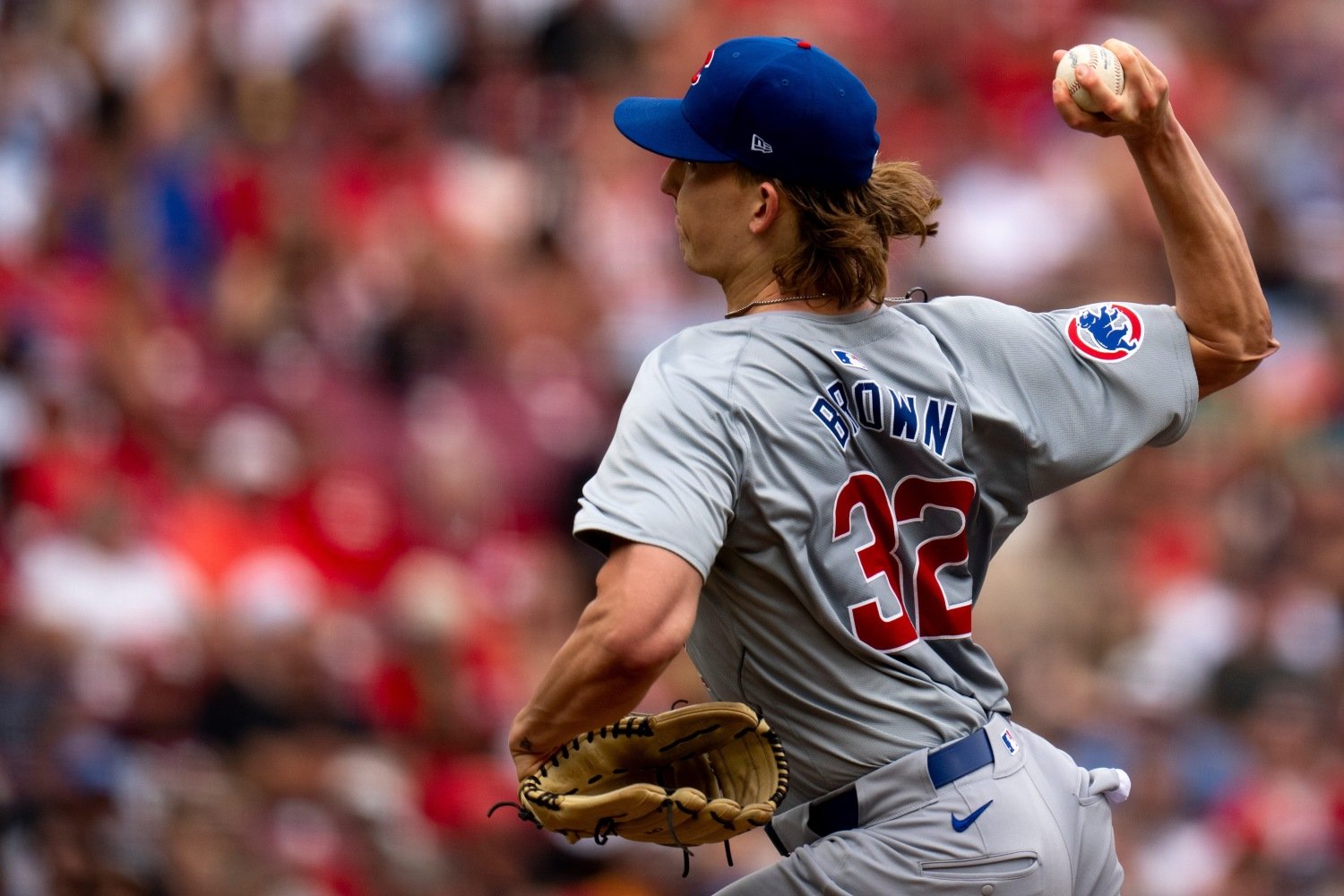 It's not shocking that Ben Brown has struck out nearly 29 percent of the batters he's faced in his first ride of the senior circuit. Although he only has two pitches on which he can consistently rely, they're two devastating offerings: a fastball that sits 96-97 and touches 99 miles per hour, and a power curveball that looks just like that heater to overwhelmed hitters. Much more surprising, though, is the fact that Brown is throwing strikes enough to rack up those strikeouts, and to keep runners from piling up on the bases. His walk rate is 8.8%, which is a hair worse than the league average, but it's felt more like a matter of feeling, testing, and trying to induce chases on close pitches than like a young hurler who ever loses contact with the zone. Because he doesn't have a third pitch with which to change lanes and force hitters to become more defensive, Brown has to try to prey on their aggressiveness. That's led to a few walks, but those walks are almost salubrious; they're necessary to threading the needle and getting strikeouts without giving up hard contact. For a pitcher with stuff as intense as Brown's (but also a spotty track record of strike-throwing in the minors, as Brown has), even average control is immensely valuable. He's thrown 84.6% of his pitches within 18 inches of the center of the strike zone, which constitutes a competitive pitch. That's almost exactly the league-average mark for pitchers who have faced at least 100 batters. He's throwing 90.4% of his fastballs in competitive locations, a full percentage point better than the league's average for four-seamers. Without a doubt, the Cubs and their young pitcher each deserve credit for that. Brown has had to work hard to get his control and command to this point, given the velocity with which he attacks on both pitches, his injury history, and the fact that control didn't come easily to him. As recently as last season, Brown looked too wild to merit a call-up to the big leagues. After being promoted to Double-A upon the Cubs trading for him in mid-2022, Brown walked 9.3% of opposing batters at that level between the second half of that year and the early part of 2023. When he went to Triple-A Iowa last summer, he walked a ghastly 16.2% of opponents. That was the key moment, though, because it was in Iowa that he was subjected to an automated strike zone--and forced to learn to drop the ball on the head of a pin. The Triple-A strike zone is shaped by technology, with two different modes of umpire assistance in force at different times during the weekly cycle of games. The computers believe umpires have been far too generous over the years. The zone at the highest level of the minors is minuscule; the global walk rate is 11.4% this year. Last season, it was an even more unseemly 12.0%. Those zones are, overall, bad for development, and they make for bad baseball. They're a superb reminder that we're not especially close to being ready to have robots call strikes for the best hitters and pitchers in the world. However, there's one redeeming caveat at play: Triple-A has become a crucible in which pitchers have to withstand severe heat and pressure, and the ones who survive it and matriculate to the majors have unusually good control by the time they come up. As you would guess, historically, rookies have been a bit more scattershot than the average pitcher when they arrive in the majors. These are guys who were in the minors, until now, for a reason, and for many of them, that reason is a dearth of control. They're trying to adjust, they're trying to handle the mental challenge of pitching in the big leagues for the first time, and they're working against a lack of reputation-driven help from umpires. In general, they throw fewer strikes, and have more bad misses than more experienced hurlers. Balls and strikes came under the direct influence of the machines in Triple-A at the start of 2023. Since then, we've seen a sharp change in the ability of rookies to throw strikes. Zone Rate and Competitive Pitch Location %, MLB Rookies, 2015-24 Season Zone % Comp Loc % 2015 48.7 83.5 2016 48.8 83.8 2017 49.9 84.6 2018 49.3 83.8 2019 47.9 82.9 2021 49.3 83.3 2022 48.9 83.3 2023 50.2 84 2024 51.1 84.7 Since the advent of the very strict computerized zones, rookies have had to wriggle through an unforgiving bottleneck to reach the majors. The only ones who do so are those who prove at least able to bite at the edges of the zone--and ideally, to consistently pound it with quality strikes. Brown is impressive, but he's not special. Right now, he's just another of several examples of pitchers who had to pass a more rigorous test to reach the majors than they had until last season. Again, overall, these non-human zones are bad for the game. Hitters matter, too, and if you're wondering why guys like Matt Mervis can put up such gaudy numbers in Triple-A but fall flat upon coming up to the big leagues, look no further than this very thing. Nor is having to fill up the zone or risk a great many walks the best way to develop many pitchers. Brown belongs to the class of those who have benefited greatly from this change, though. He just needed the control to tap into the ferocity of his stuff, and with each solid (and occasionally dominant) start he makes for the Cubs, we should all be reminded that his ruthless robot trainers helped mold him into this caliber of hurler.
 -
It's frightening to imagine where the Chicago Cubs' starting rotation would be, if not for their slender right-handed rookie starter. His stuff has always been good, but it's been impressive to see him throw so many strikes in his first bite at the big-league apple. He's far from alone in that regard, though. Image courtesy of © Albert Cesare/The Enquirer / USA TODAY NETWORK It's not shocking that Ben Brown has struck out nearly 29 percent of the batters he's faced in his first ride of the senior circuit. Although he only has two pitches on which he can consistently rely, they're two devastating offerings: a fastball that sits 96-97 and touches 99 miles per hour, and a power curveball that looks just like that heater to overwhelmed hitters. Much more surprising, though, is the fact that Brown is throwing strikes enough to rack up those strikeouts, and to keep runners from piling up on the bases. His walk rate is 8.8%, which is a hair worse than the league average, but it's felt more like a matter of feeling, testing, and trying to induce chases on close pitches than like a young hurler who ever loses contact with the zone. Because he doesn't have a third pitch with which to change lanes and force hitters to become more defensive, Brown has to try to prey on their aggressiveness. That's led to a few walks, but those walks are almost salubrious; they're necessary to threading the needle and getting strikeouts without giving up hard contact. For a pitcher with stuff as intense as Brown's (but also a spotty track record of strike-throwing in the minors, as Brown has), even average control is immensely valuable. He's thrown 84.6% of his pitches within 18 inches of the center of the strike zone, which constitutes a competitive pitch. That's almost exactly the league-average mark for pitchers who have faced at least 100 batters. He's throwing 90.4% of his fastballs in competitive locations, a full percentage point better than the league's average for four-seamers. Without a doubt, the Cubs and their young pitcher each deserve credit for that. Brown has had to work hard to get his control and command to this point, given the velocity with which he attacks on both pitches, his injury history, and the fact that control didn't come easily to him. As recently as last season, Brown looked too wild to merit a call-up to the big leagues. After being promoted to Double-A upon the Cubs trading for him in mid-2022, Brown walked 9.3% of opposing batters at that level between the second half of that year and the early part of 2023. When he went to Triple-A Iowa last summer, he walked a ghastly 16.2% of opponents. That was the key moment, though, because it was in Iowa that he was subjected to an automated strike zone--and forced to learn to drop the ball on the head of a pin. The Triple-A strike zone is shaped by technology, with two different modes of umpire assistance in force at different times during the weekly cycle of games. The computers believe umpires have been far too generous over the years. The zone at the highest level of the minors is minuscule; the global walk rate is 11.4% this year. Last season, it was an even more unseemly 12.0%. Those zones are, overall, bad for development, and they make for bad baseball. They're a superb reminder that we're not especially close to being ready to have robots call strikes for the best hitters and pitchers in the world. However, there's one redeeming caveat at play: Triple-A has become a crucible in which pitchers have to withstand severe heat and pressure, and the ones who survive it and matriculate to the majors have unusually good control by the time they come up. As you would guess, historically, rookies have been a bit more scattershot than the average pitcher when they arrive in the majors. These are guys who were in the minors, until now, for a reason, and for many of them, that reason is a dearth of control. They're trying to adjust, they're trying to handle the mental challenge of pitching in the big leagues for the first time, and they're working against a lack of reputation-driven help from umpires. In general, they throw fewer strikes, and have more bad misses than more experienced hurlers. Balls and strikes came under the direct influence of the machines in Triple-A at the start of 2023. Since then, we've seen a sharp change in the ability of rookies to throw strikes. Zone Rate and Competitive Pitch Location %, MLB Rookies, 2015-24 Season Zone % Comp Loc % 2015 48.7 83.5 2016 48.8 83.8 2017 49.9 84.6 2018 49.3 83.8 2019 47.9 82.9 2021 49.3 83.3 2022 48.9 83.3 2023 50.2 84 2024 51.1 84.7 Since the advent of the very strict computerized zones, rookies have had to wriggle through an unforgiving bottleneck to reach the majors. The only ones who do so are those who prove at least able to bite at the edges of the zone--and ideally, to consistently pound it with quality strikes. Brown is impressive, but he's not special. Right now, he's just another of several examples of pitchers who had to pass a more rigorous test to reach the majors than they had until last season. Again, overall, these non-human zones are bad for the game. Hitters matter, too, and if you're wondering why guys like Matt Mervis can put up such gaudy numbers in Triple-A but fall flat upon coming up to the big leagues, look no further than this very thing. Nor is having to fill up the zone or risk a great many walks the best way to develop many pitchers. Brown belongs to the class of those who have benefited greatly from this change, though. He just needed the control to tap into the ferocity of his stuff, and with each solid (and occasionally dominant) start he makes for the Cubs, we should all be reminded that his ruthless robot trainers helped mold him into this caliber of hurler. View full article
-
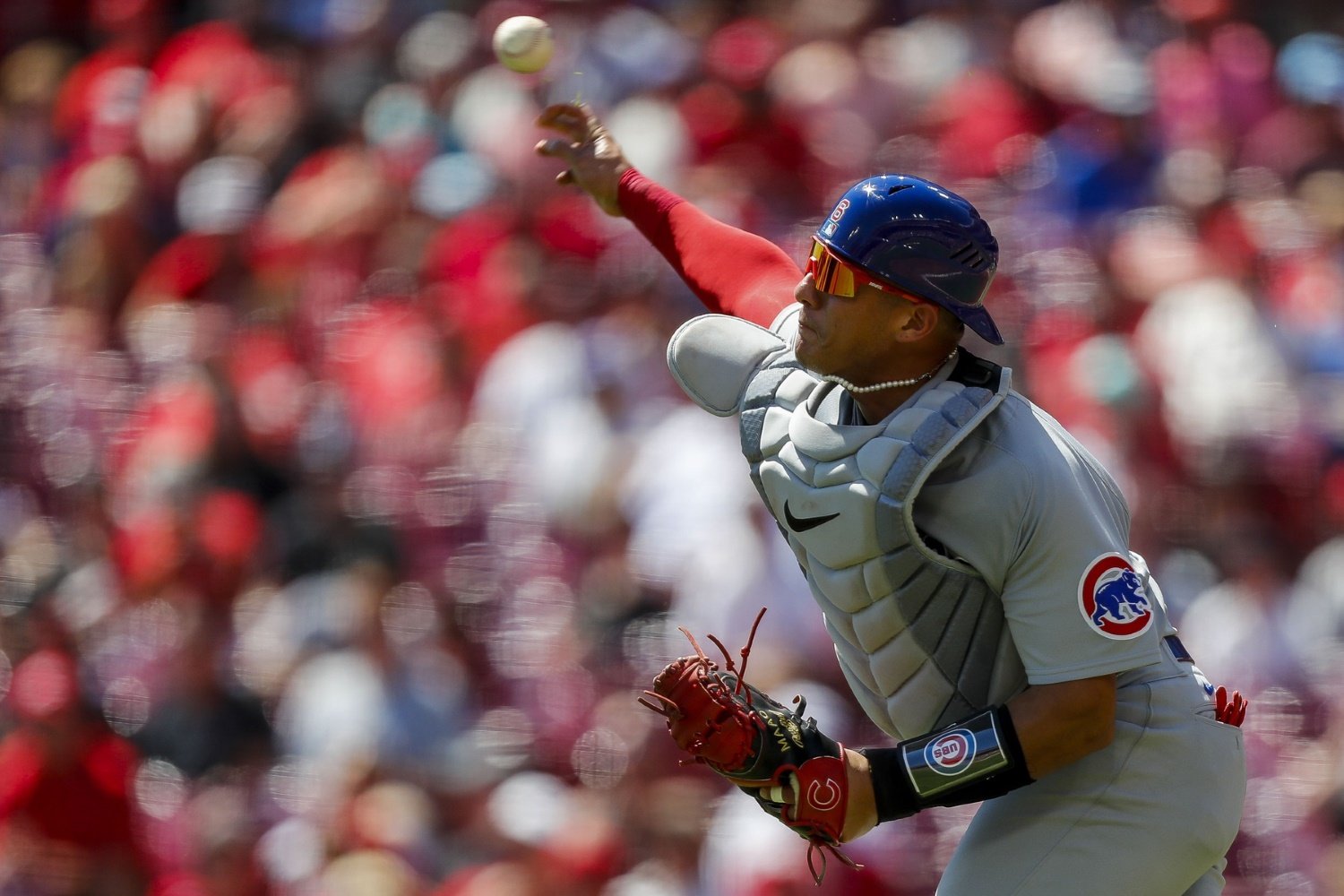 Four teams have surrendered more stolen bases than the Cubs have this season. That's the good news here. No team has caught fewer would-be base stealers than the Cubs have, and the Cubs possess the worst caught-stealing rate of any team in big-league baseball. Moreover, they've allowed 29 wild pitches and passed balls, a total exceeded by only three other teams. Add in their two balks, and they've given up 90 extra feet 87 times this year. That's not even the bad news, though. The bad news is that, of the eight times the Cubs have caught runners stealing this year, five of them were actually pickoffs. When a runner tries to advance or ends up in a rundown instead of simply being thrown out retreating to a base, the play is scored as a caught stealing, in addition to a pickoff. Miguel Amaya and Yan Gomes have only actually thrown out three of the 59 runners who have taken off against them this year. The dates of those outs were Apr. 8, Apr. 15, and May 6. Since that last date, the Cubs have played 30 games, and opponents have 31 steals. There's nothing more the pitchers can do for these two. They lead MLB in pickoffs, although that's made a bit easier by the fact that every team they see is itching and leaping to run. In addition to those five pickoffs that were also scored caught stealing, the team has seven straight pickoffs, the most in baseball. They're trying to slow runners down, but they're constrained by the new rules that took effect at the start of last season. Right at this moment, though, there's also little the front office can do--or at least that they should do. A trade for a stronger-armed catcher is certainly in order, but few teams are out of the race at this point in the season, and fewer still want to trade a catcher with this skill set, given the increasing importance of the running game throughout the league. Nor has this team done anywhere near enough to justify an expenditure of significant future value to get better in the short term. Right now, the Cubs shouldn't be thinking like buyers. Instead, they need to do some in-house problem-solving. Their options are extremely limited, but the winning one should be obvious: it's time to start pitching out. If the Cubs do that, they'll be pretty much on an island. The pitchout is dead; some stubborn nurse just refuses to unplug its life support. Right now, the league is on pace for around 40 pitchouts this year. That's 40 or so, in total, for all 30 teams. They might hit 50, which would mark a third straight season of increase, but it would also mean a seventh straight season with fewer than 100 pitchouts attempted across MLB. As recently as a decade ago, there had never been a campaign in which fewer than 300 were attempted. The above only goes back to 2008, which makes the trend look less stark and shocking than it actually is. The data is a bit less clean for the 20 years from the dawn of the pitch-by-pitch tracking era in 1988 through the arrival of PITCHf/x, but there were around 1,000 pitchouts league-wide in some of those campaigns. Obviously, there are good reasons for this. The stolen base became much less prevalent in the 1990s and 2000s than it had been in the 1970s and 1980s, and it got even less prevalent in the 2010s than in the 1990s and 2000s. Fewer dangerous runners means less need to throw an intentional ball in order to thwart them; that's one reason for the dwindling number of pitchouts. Another is that they don't work all that well. Sam Miller showed that managers don't guess right often enough, and that catchers don't get their man often enough, to justify pitchouts, back in 2013. Two years later, Ben Lindbergh documented the trend and quantified the gains most teams realize in caught-stealing rate when they pitch out, ending up at the same conclusion. It doesn't really surprise me, and probably doesn't surprise you, that the new rules and the attendant rise in stolen bases haven't begotten more than a few extra pitchouts. Sabermetric orthodoxy sets hard, just like the much less closely interrogated conventional wisdom that preceded it. Without those new rules, the tactic might have died out altogether within a few more years. The pitchout makes the sacrifice bunt look downright popular. Time to change that. The Cubs' catching corps, under the present rules, breaks all the normal math that makes pitchouts bad ideas. They've caught a whopping 5% of basestealers this year, and none in the last five weeks, with runners going more than once a game. The numerical framework that killed the pitchout assumed a normal distribution of caught-stealing percentage centered around 25-30%. The worst teams in baseball rarely dipped below 20%, which is closer to the average in 2024. Most teams saw opponents attempt a steal maybe four times a week, but not six or seven. In Lindbergh's piece from almost a decade ago, he found that catchers take about 0.1 seconds off their pop time when the team pitches out, and that they catch runners at about twice the normal rate (it was 52% in his sample) because of it. He also gave a "guess right" rate of 19%, from the manager's side. In other words, 19 percent of pitchouts coincided with steal attempts. Miller, though, also found that the more a team pitched out, the more they tended to be right about when to do so. Then, too, we can assume that the Cubs would be right more than 19 percent of the time, because runners are going against them so often. Let's bring the expected out rate on pitchouts that are also steal attempts all the way down to 40%, because Amaya and Gomes are below-average throwers. Given that number, a 20% correct guess rate would yield outs on 8% of all their pitchouts. If they do it 50 times the rest of the year, they'll only catch four runners. They'll throw 40 extra balls for no reason at all, and fail to stop six runners, despite the pitchout. That doesn't sound like an awesome set of tradeoffs. Turning a strike into a ball is worth about 0.1 runs to the offense. Of the 50 extra balls thrown, 18 probably would have been balls anyway, Still, that means that throwing 50 pitchouts would cost the Cubs 3.2 runs, based just on the impact they would have on the count. Based on the relative values of steals (around 0.19 runs) and outs via caught stealing (around -0.44 runs), Amaya and Gomes would thus have to catch four more runners than expected in that sample of 10, or the Cubs would have to guess right more than 20 percent of the time. The thing is, that's all perfectly plausible. If Gomes and Amaya did throw out four of 10 runners with the pitchout on, that would be four more than we should expect them to throw out without one, based on the progress of this season. If they throw out five of 10, then they've definitely exceeded their expected success rate by enough to justify the pitchout, because their expected success rate on stopping runners is in the mid-single digits, if it's not zero. Again, too, the team might guess right more like 25 percent of the time, at least until runners get wise to the tactic and stop going so often. More than the math, though, there's psychology and common sense here. The Cubs are enduring too many long innings, too many stressful situations for their pitchers, and too many helpless moments for their defenders in the field. Too many walks, singles, and fielder's choices are turning into doubles. They don't strike out enough batters to live that way. They need runners who reach base to remain potential outs via force play, rather than immediately transforming into imminent scoring threats. The team needs to assert itself against the running game. The pitchout is an imperfect, almost defunct way to do it, but it's what they have left in the options box.
 -
By now, it's clear to everyone watching closely that the 2024 Chicago Cubs will be defined by the tip of the balance on a thousand or so little things. Unfortunately, they're the very worst team in baseball at managing one of the biggest little things. Image courtesy of © Katie Stratman-USA TODAY Sports Four teams have surrendered more stolen bases than the Cubs have this season. That's the good news here. No team has caught fewer would-be base stealers than the Cubs have, and the Cubs possess the worst caught-stealing rate of any team in big-league baseball. Moreover, they've allowed 29 wild pitches and passed balls, a total exceeded by only three other teams. Add in their two balks, and they've given up 90 extra feet 87 times this year. That's not even the bad news, though. The bad news is that, of the eight times the Cubs have caught runners stealing this year, five of them were actually pickoffs. When a runner tries to advance or ends up in a rundown instead of simply being thrown out retreating to a base, the play is scored as a caught stealing, in addition to a pickoff. Miguel Amaya and Yan Gomes have only actually thrown out three of the 59 runners who have taken off against them this year. The dates of those outs were Apr. 8, Apr. 15, and May 6. Since that last date, the Cubs have played 30 games, and opponents have 31 steals. There's nothing more the pitchers can do for these two. They lead MLB in pickoffs, although that's made a bit easier by the fact that every team they see is itching and leaping to run. In addition to those five pickoffs that were also scored caught stealing, the team has seven straight pickoffs, the most in baseball. They're trying to slow runners down, but they're constrained by the new rules that took effect at the start of last season. Right at this moment, though, there's also little the front office can do--or at least that they should do. A trade for a stronger-armed catcher is certainly in order, but few teams are out of the race at this point in the season, and fewer still want to trade a catcher with this skill set, given the increasing importance of the running game throughout the league. Nor has this team done anywhere near enough to justify an expenditure of significant future value to get better in the short term. Right now, the Cubs shouldn't be thinking like buyers. Instead, they need to do some in-house problem-solving. Their options are extremely limited, but the winning one should be obvious: it's time to start pitching out. If the Cubs do that, they'll be pretty much on an island. The pitchout is dead; some stubborn nurse just refuses to unplug its life support. Right now, the league is on pace for around 40 pitchouts this year. That's 40 or so, in total, for all 30 teams. They might hit 50, which would mark a third straight season of increase, but it would also mean a seventh straight season with fewer than 100 pitchouts attempted across MLB. As recently as a decade ago, there had never been a campaign in which fewer than 300 were attempted. The above only goes back to 2008, which makes the trend look less stark and shocking than it actually is. The data is a bit less clean for the 20 years from the dawn of the pitch-by-pitch tracking era in 1988 through the arrival of PITCHf/x, but there were around 1,000 pitchouts league-wide in some of those campaigns. Obviously, there are good reasons for this. The stolen base became much less prevalent in the 1990s and 2000s than it had been in the 1970s and 1980s, and it got even less prevalent in the 2010s than in the 1990s and 2000s. Fewer dangerous runners means less need to throw an intentional ball in order to thwart them; that's one reason for the dwindling number of pitchouts. Another is that they don't work all that well. Sam Miller showed that managers don't guess right often enough, and that catchers don't get their man often enough, to justify pitchouts, back in 2013. Two years later, Ben Lindbergh documented the trend and quantified the gains most teams realize in caught-stealing rate when they pitch out, ending up at the same conclusion. It doesn't really surprise me, and probably doesn't surprise you, that the new rules and the attendant rise in stolen bases haven't begotten more than a few extra pitchouts. Sabermetric orthodoxy sets hard, just like the much less closely interrogated conventional wisdom that preceded it. Without those new rules, the tactic might have died out altogether within a few more years. The pitchout makes the sacrifice bunt look downright popular. Time to change that. The Cubs' catching corps, under the present rules, breaks all the normal math that makes pitchouts bad ideas. They've caught a whopping 5% of basestealers this year, and none in the last five weeks, with runners going more than once a game. The numerical framework that killed the pitchout assumed a normal distribution of caught-stealing percentage centered around 25-30%. The worst teams in baseball rarely dipped below 20%, which is closer to the average in 2024. Most teams saw opponents attempt a steal maybe four times a week, but not six or seven. In Lindbergh's piece from almost a decade ago, he found that catchers take about 0.1 seconds off their pop time when the team pitches out, and that they catch runners at about twice the normal rate (it was 52% in his sample) because of it. He also gave a "guess right" rate of 19%, from the manager's side. In other words, 19 percent of pitchouts coincided with steal attempts. Miller, though, also found that the more a team pitched out, the more they tended to be right about when to do so. Then, too, we can assume that the Cubs would be right more than 19 percent of the time, because runners are going against them so often. Let's bring the expected out rate on pitchouts that are also steal attempts all the way down to 40%, because Amaya and Gomes are below-average throwers. Given that number, a 20% correct guess rate would yield outs on 8% of all their pitchouts. If they do it 50 times the rest of the year, they'll only catch four runners. They'll throw 40 extra balls for no reason at all, and fail to stop six runners, despite the pitchout. That doesn't sound like an awesome set of tradeoffs. Turning a strike into a ball is worth about 0.1 runs to the offense. Of the 50 extra balls thrown, 18 probably would have been balls anyway, Still, that means that throwing 50 pitchouts would cost the Cubs 3.2 runs, based just on the impact they would have on the count. Based on the relative values of steals (around 0.19 runs) and outs via caught stealing (around -0.44 runs), Amaya and Gomes would thus have to catch four more runners than expected in that sample of 10, or the Cubs would have to guess right more than 20 percent of the time. The thing is, that's all perfectly plausible. If Gomes and Amaya did throw out four of 10 runners with the pitchout on, that would be four more than we should expect them to throw out without one, based on the progress of this season. If they throw out five of 10, then they've definitely exceeded their expected success rate by enough to justify the pitchout, because their expected success rate on stopping runners is in the mid-single digits, if it's not zero. Again, too, the team might guess right more like 25 percent of the time, at least until runners get wise to the tactic and stop going so often. More than the math, though, there's psychology and common sense here. The Cubs are enduring too many long innings, too many stressful situations for their pitchers, and too many helpless moments for their defenders in the field. Too many walks, singles, and fielder's choices are turning into doubles. They don't strike out enough batters to live that way. They need runners who reach base to remain potential outs via force play, rather than immediately transforming into imminent scoring threats. The team needs to assert itself against the running game. The pitchout is an imperfect, almost defunct way to do it, but it's what they have left in the options box. View full article
-
Never Quite In Sync, Cubs Risk a Season Lost Before It Can Be Found
Matthew Trueblood posted an article in Cubs
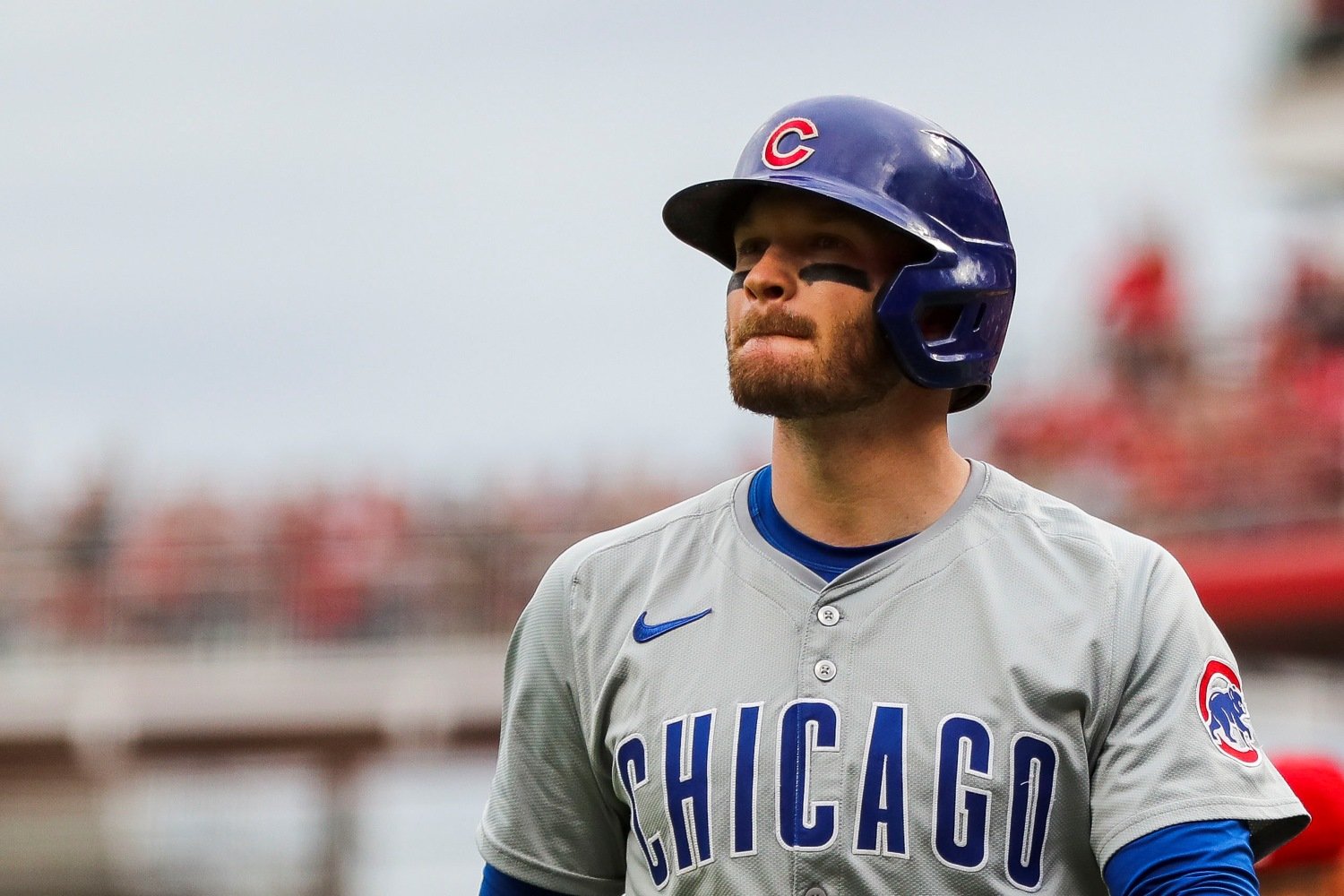 It hasn't been a matter of winning blowouts and losing nail-biters--although, to be fair, it also hasn't been the other way around. Sixty-five games into the long grind of 162, the Chicago Cubs are at the bottom of the NL Central standings, and they've been outscored by 16 runs. They're below .500, and based on the runs they've scored and allowed, that's where they belong. Most preseason projections had them a bit better than this, and many pundits projected them to be a little bit better even than those projections. There are some track records and some contracts and some tantalizing tools here, all saying that this team could be even better than the 83-win season they had last year. Not least among the evidence, of course, is that their runs ledger from last year said they should have won more than 83 games, anyway. Alas, nothing is quite working in sync for them this year. When the offense has been able to push runs across relatively consistently, the pitching has faltered. When the pitching has hit its sweet spot (both healthy and competent), it's been the offense's turn to scuffle. The result is a lot of close games, but not enough wins. All else equal, it would be slightly preferable to have things go the other way. More blowout wins would mean a greater ability to moderate the workloads of key relievers and injury-prone position players, and that might mean hanging tougher when both the offense and the run-prevention unit go out of phase at once. Running hot and cold as a team leads to better outcomes than doing so as individual units, moving separately. That said, the real problem here is growing more obvious to everyone watching the Cubs closely, with each passing day: neither phase is quite good enough, and as a team, they're vulnerable to brutal stretches of play like the one they hit about a month ago. To avoid being that way, they'd need to do one simple but very difficult thing: be better, in one phase or the other. This is where their unexpectedly deficient defense looms large, along with the pitching injuries that have depleted both their rotation and their bullpen for much of the season. As the offensive production has ebbed and flowed, the pitching's inability to hover around average during their toughest stretches has cost them some of the close wins they could otherwise have eked out. That was the story early in the season, even as the offense played very well and kept them well above .500, and it's been the story recently, as the offense has come out of what was a month-long fug of ineptitude. Given a more competent Kyle Hendricks, a steadier Héctor Neris, or a healthy season for any of Justin Steele, Adbert Alzolay, and Julian Merryweather, the Cubs would have more wins right now. They might well on the right side of .500, and right on the heels of the Brewers. That's not how things have actually gone, though. Nor have the position players been especially healthy, and nor have the up-the-middle defenders around whom the team was theoretically built played according to preseason expectations or the team's needs. With all that happening, it shouldn't surprise us much that they're where they are. The fault, however, is not in the team's stars--or, in another sense of the word, it is. The front office, with its conservative approach to spending (especially on high-priced star players), exposed itself to the risk of this kind of frustrating underachievement. The Ricketts family, with its reluctance to spend the $250-300 million that should be their annual payroll budget, forced the front office to think like a more constrained club (think the Brewers or the Rays), knowing they aren't really set up to match those types of teams in terms of proactivity and ingenuity. Eventually, the team might get into a groove, with both the hitters and the pitchers healthy and hot at the same time for a long time. That happened last summer, albeit only at the last possible moment to avoid a July sell-off, and it lasted until mid-September, giving them a good chance to win 90 games and claim the NL Central--though ultimately, they squandered that chance. Unless and until they do get synced up that way, though, they'll remain maddeningly below-average. It's a product of bad luck, but that bad luck is a residue of bad design.
 -
The Chicago Cubs have the record they deserve. They might be a better team than this, but as the games pile up, their identity increasingly lives on the standings page. Image courtesy of © Katie Stratman-USA TODAY Sports It hasn't been a matter of winning blowouts and losing nail-biters--although, to be fair, it also hasn't been the other way around. Sixty-five games into the long grind of 162, the Chicago Cubs are at the bottom of the NL Central standings, and they've been outscored by 16 runs. They're below .500, and based on the runs they've scored and allowed, that's where they belong. Most preseason projections had them a bit better than this, and many pundits projected them to be a little bit better even than those projections. There are some track records and some contracts and some tantalizing tools here, all saying that this team could be even better than the 83-win season they had last year. Not least among the evidence, of course, is that their runs ledger from last year said they should have won more than 83 games, anyway. Alas, nothing is quite working in sync for them this year. When the offense has been able to push runs across relatively consistently, the pitching has faltered. When the pitching has hit its sweet spot (both healthy and competent), it's been the offense's turn to scuffle. The result is a lot of close games, but not enough wins. All else equal, it would be slightly preferable to have things go the other way. More blowout wins would mean a greater ability to moderate the workloads of key relievers and injury-prone position players, and that might mean hanging tougher when both the offense and the run-prevention unit go out of phase at once. Running hot and cold as a team leads to better outcomes than doing so as individual units, moving separately. That said, the real problem here is growing more obvious to everyone watching the Cubs closely, with each passing day: neither phase is quite good enough, and as a team, they're vulnerable to brutal stretches of play like the one they hit about a month ago. To avoid being that way, they'd need to do one simple but very difficult thing: be better, in one phase or the other. This is where their unexpectedly deficient defense looms large, along with the pitching injuries that have depleted both their rotation and their bullpen for much of the season. As the offensive production has ebbed and flowed, the pitching's inability to hover around average during their toughest stretches has cost them some of the close wins they could otherwise have eked out. That was the story early in the season, even as the offense played very well and kept them well above .500, and it's been the story recently, as the offense has come out of what was a month-long fug of ineptitude. Given a more competent Kyle Hendricks, a steadier Héctor Neris, or a healthy season for any of Justin Steele, Adbert Alzolay, and Julian Merryweather, the Cubs would have more wins right now. They might well on the right side of .500, and right on the heels of the Brewers. That's not how things have actually gone, though. Nor have the position players been especially healthy, and nor have the up-the-middle defenders around whom the team was theoretically built played according to preseason expectations or the team's needs. With all that happening, it shouldn't surprise us much that they're where they are. The fault, however, is not in the team's stars--or, in another sense of the word, it is. The front office, with its conservative approach to spending (especially on high-priced star players), exposed itself to the risk of this kind of frustrating underachievement. The Ricketts family, with its reluctance to spend the $250-300 million that should be their annual payroll budget, forced the front office to think like a more constrained club (think the Brewers or the Rays), knowing they aren't really set up to match those types of teams in terms of proactivity and ingenuity. Eventually, the team might get into a groove, with both the hitters and the pitchers healthy and hot at the same time for a long time. That happened last summer, albeit only at the last possible moment to avoid a July sell-off, and it lasted until mid-September, giving them a good chance to win 90 games and claim the NL Central--though ultimately, they squandered that chance. Unless and until they do get synced up that way, though, they'll remain maddeningly below-average. It's a product of bad luck, but that bad luck is a residue of bad design. View full article
-
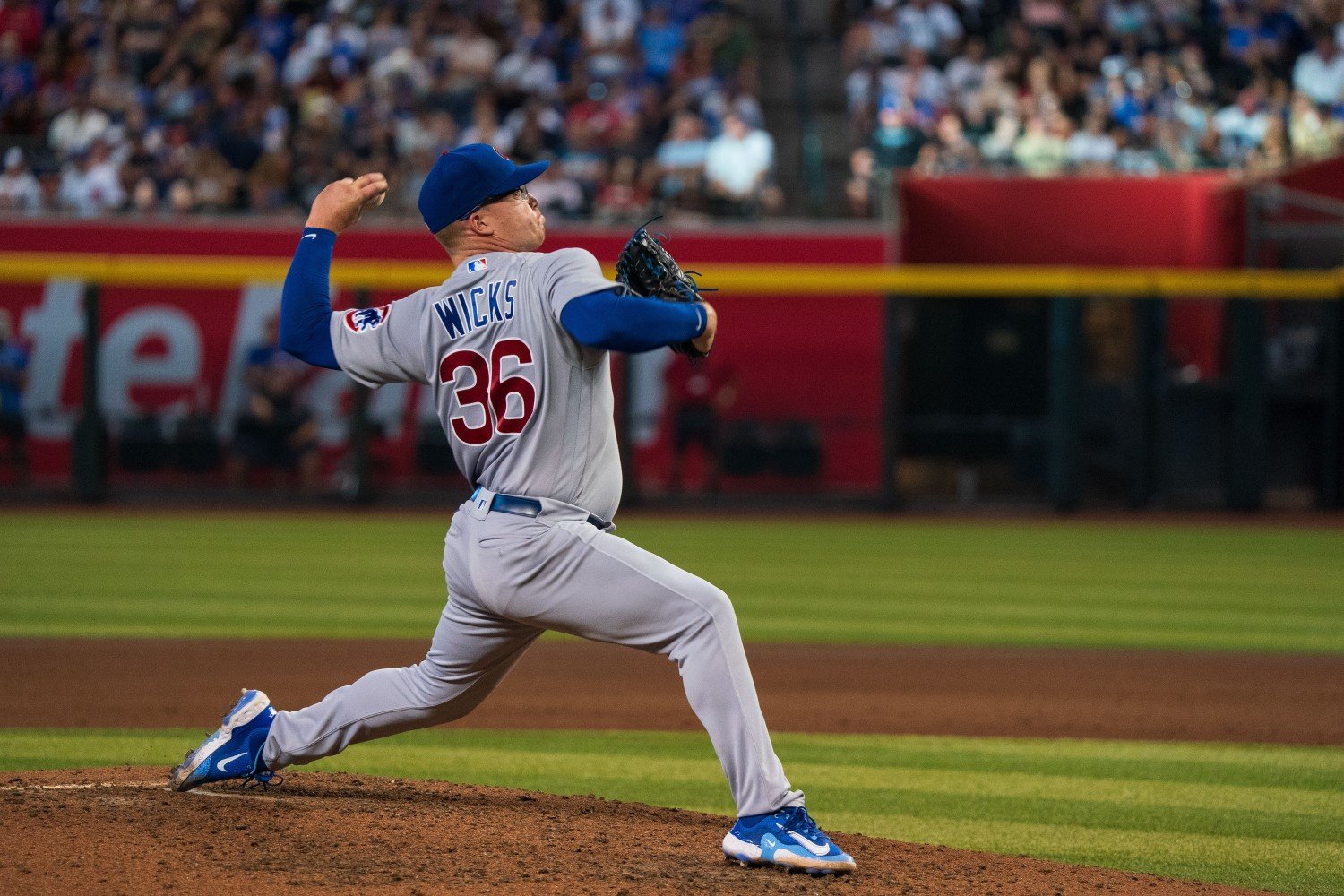 When last Jordan Wicks appeared on a big-league mound for the Cubs, the rotation was so incomplete that it was unfathomable that they would not need him as a starter any time soon. Kyle Hendricks's struggles were becoming more obvious by the day. Justin Steele was not yet back from his hamstring strain, and Jameson Taillon was still ramping up. The Cubs were scrambling. In the final 10 days of April, alone, they used seven different starters. Paradoxically, though, it was that version of the Cubs that played exceptionally well and sprang out to a 17-9 start. Since then, they're 14-23, even as the rotation has finally found some better health and stability. The reasons for that have been on display over the last week, as Shota Imanaga and Javier Assad have each been bitten by the regression bug; Taillon has continued to fail at the crucial task of stemming the tide when opponents start a rally within a given inning; and Steele searches for the next step in his evolution after a peculiar ace-caliber 2023. For weeks, the Cubs struggled to score, and the thin leads handed off by the rotation to an often-shaky bullpen always seemed to disappear, irretrievably. Now, the offense has revved up its engine, but the starters are unable to deliver larger leads (or often any lead at all), and the bullpen is struggling as much as ever. Thursday night in Cincinnati, Assad got hit a bit, and when Craig Counsell was forced to turn to Luke Little and Porter Hodge in high-leverage situations, they both failed to keep the lid on the game. Kyle Hendricks, still admirably trying it, couldn't even keep the game close when he was brought in to try and clean up Hodge's mess. Though they're now making a habit of calling up impressive-looking, hard-throwing homegrown relievers, the Cubs still haven't had much success developing them into actually useful pitchers. Jeremiah Estrada is having a marvelous season, but only after having been waived by Chicago and picked up by the Padres. Meanwhile, Keegan Thompson remains in the wilderness. Daniel Palencia and Adbert Alzolay both got sidetracked by injuries early on this year, but Palencia's inconsistency and unreliability pre-date the flareup that now has him shelved. Hodge and Little look like the latest in a parade of talented throwers who aren't going to translate that into skilled, productive pitching--at least in the short term, and perhaps not until they're wearing another uniform in a few years. That's what makes Wicks so important. He's on the cusp of a return, be it this weekend or after one more rehab appearance with Triple-A Iowa. Based on his performance before landing on the injured list, there are reasons for both optimism and caution. Yes, he's throwing harder and has a revised arsenal this year, but he wasn't actually piling up outs or keeping opponents off the board all that effectively before he got hurt. Given that fact, maybe it makes the most sense to insert him right into the bullpen. He could be a direct replacement for Little, in the short term, able to give the team more length when needed and certainly more capable of getting people out, for however long he's asked to do so. Having an actual lefty for medium-leverage situations--one more trustworthy than Drew Smyly and Little--would take some pressure off Mark Leiter Jr., who's been overworked and overexposed again this year. One could make an equally compelling case, of course, for unplugging Assad and plugging him back in, via a bullpen reset. The portly starboard slinger has run into some issues lately, and given his stuff, that's not a huge surprise. At the same time, Assad is a competitor and a command artist, and he's likely to get back on track soon. It might just make sense to let him slide into relief and pare down his arsenal for a few weeks, before bringing him back to the rotation when next a slot opens up. The most logical, obvious move, though, is to move Brown into high-leverage relief and set Wicks up as the fifth starter for the long term. Brown is a risk as a back-end reliever; he's going to give up home runs. He's also racked up strikeouts at an awesome rate early in his big-league career, though, and given the combination of his fastball velocity and the unique traits of his curveball, that doesn't figure to abate any time soon. Sliding him into the pen--with the mandate being that he keep exploring ways of locating and mixing his two great pitches to minimize the risk of giving up power--is the natural move. He could finish this season as the team's closer, and even in the meantime, the fit of skill sets and roles that would result from Wicks being the fifth starter and Brown taking Hodge's place in the bullpen is too good to ignore. None of this needs to be permanent. As we've previously reported here, Hendricks will reach 10 years of MLB service on June 26, at which point the Cubs can release him without interfering with his chance to claim full MLB pension and other benefits for the rest of his life. Given the way things have gone for him this year, that seems almost certain to happen, so another place in the staff will open. For the next two or three weeks, though, Wicks will be an important part of the team's plan, as they try to work around two highly-paid low-leverage long men they can't trust; a rotation full of players doing daily battle with the regression monster; and a deficient back end of the pen. They have to survive this tough stretch to advance into July as a serious contender, and Wicks might be the help they need to do so.
 -
Another game got away from the Chicago Cubs in Cincinnati Thursday. As the team tries to find some momentum on the strength of better health and an offense hitting its stride, they badly need one more solid arm--anywhere on the daily depth chart. Image courtesy of © Allan Henry-USA TODAY Sports When last Jordan Wicks appeared on a big-league mound for the Cubs, the rotation was so incomplete that it was unfathomable that they would not need him as a starter any time soon. Kyle Hendricks's struggles were becoming more obvious by the day. Justin Steele was not yet back from his hamstring strain, and Jameson Taillon was still ramping up. The Cubs were scrambling. In the final 10 days of April, alone, they used seven different starters. Paradoxically, though, it was that version of the Cubs that played exceptionally well and sprang out to a 17-9 start. Since then, they're 14-23, even as the rotation has finally found some better health and stability. The reasons for that have been on display over the last week, as Shota Imanaga and Javier Assad have each been bitten by the regression bug; Taillon has continued to fail at the crucial task of stemming the tide when opponents start a rally within a given inning; and Steele searches for the next step in his evolution after a peculiar ace-caliber 2023. For weeks, the Cubs struggled to score, and the thin leads handed off by the rotation to an often-shaky bullpen always seemed to disappear, irretrievably. Now, the offense has revved up its engine, but the starters are unable to deliver larger leads (or often any lead at all), and the bullpen is struggling as much as ever. Thursday night in Cincinnati, Assad got hit a bit, and when Craig Counsell was forced to turn to Luke Little and Porter Hodge in high-leverage situations, they both failed to keep the lid on the game. Kyle Hendricks, still admirably trying it, couldn't even keep the game close when he was brought in to try and clean up Hodge's mess. Though they're now making a habit of calling up impressive-looking, hard-throwing homegrown relievers, the Cubs still haven't had much success developing them into actually useful pitchers. Jeremiah Estrada is having a marvelous season, but only after having been waived by Chicago and picked up by the Padres. Meanwhile, Keegan Thompson remains in the wilderness. Daniel Palencia and Adbert Alzolay both got sidetracked by injuries early on this year, but Palencia's inconsistency and unreliability pre-date the flareup that now has him shelved. Hodge and Little look like the latest in a parade of talented throwers who aren't going to translate that into skilled, productive pitching--at least in the short term, and perhaps not until they're wearing another uniform in a few years. That's what makes Wicks so important. He's on the cusp of a return, be it this weekend or after one more rehab appearance with Triple-A Iowa. Based on his performance before landing on the injured list, there are reasons for both optimism and caution. Yes, he's throwing harder and has a revised arsenal this year, but he wasn't actually piling up outs or keeping opponents off the board all that effectively before he got hurt. Given that fact, maybe it makes the most sense to insert him right into the bullpen. He could be a direct replacement for Little, in the short term, able to give the team more length when needed and certainly more capable of getting people out, for however long he's asked to do so. Having an actual lefty for medium-leverage situations--one more trustworthy than Drew Smyly and Little--would take some pressure off Mark Leiter Jr., who's been overworked and overexposed again this year. One could make an equally compelling case, of course, for unplugging Assad and plugging him back in, via a bullpen reset. The portly starboard slinger has run into some issues lately, and given his stuff, that's not a huge surprise. At the same time, Assad is a competitor and a command artist, and he's likely to get back on track soon. It might just make sense to let him slide into relief and pare down his arsenal for a few weeks, before bringing him back to the rotation when next a slot opens up. The most logical, obvious move, though, is to move Brown into high-leverage relief and set Wicks up as the fifth starter for the long term. Brown is a risk as a back-end reliever; he's going to give up home runs. He's also racked up strikeouts at an awesome rate early in his big-league career, though, and given the combination of his fastball velocity and the unique traits of his curveball, that doesn't figure to abate any time soon. Sliding him into the pen--with the mandate being that he keep exploring ways of locating and mixing his two great pitches to minimize the risk of giving up power--is the natural move. He could finish this season as the team's closer, and even in the meantime, the fit of skill sets and roles that would result from Wicks being the fifth starter and Brown taking Hodge's place in the bullpen is too good to ignore. None of this needs to be permanent. As we've previously reported here, Hendricks will reach 10 years of MLB service on June 26, at which point the Cubs can release him without interfering with his chance to claim full MLB pension and other benefits for the rest of his life. Given the way things have gone for him this year, that seems almost certain to happen, so another place in the staff will open. For the next two or three weeks, though, Wicks will be an important part of the team's plan, as they try to work around two highly-paid low-leverage long men they can't trust; a rotation full of players doing daily battle with the regression monster; and a deficient back end of the pen. They have to survive this tough stretch to advance into July as a serious contender, and Wicks might be the help they need to do so. View full article
-
How Mike Tauchman's Approach Flexes to Meet Every Moment
Matthew Trueblood posted an article in Cubs
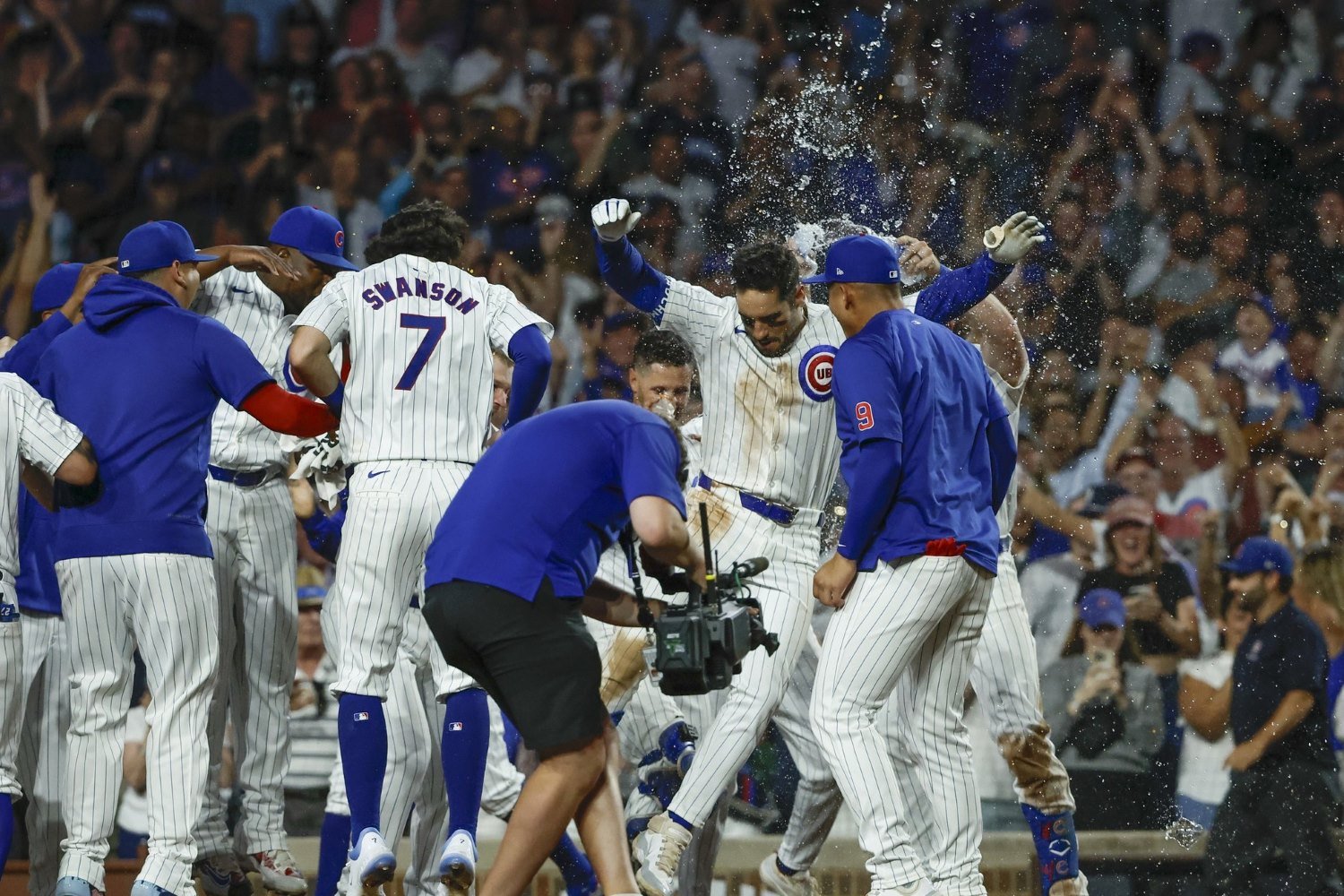 It was just cute, at first. It was a nice little story. Mike Tauchman was a nice little complementary piece on a scrappy Cubs team, and he was from Palatine, Ill., so there was a nice little zing of extra emotion attached to him finding success with the club. He gave the media the saccharine storyline denied them when the Trey Mancini signing fell flat. Tauchman's arrival (and the way he quickly assumed a meaningful role) took some of the sting out of the Cody Bellinger injury last May and June. As that season progressed, though, Tauchman became unexpectedly indispensable. His availability and his broad-spectrum competence allowed the Cubs to use Bellinger at first base for much of the second half. He came up with huge at-bats throughout the month of July: a two-run, game-tying, ninth-inning double in Milwaukee; a homer and two RBI doubles in a night game against the Nationals at Wrigley Field; a leadoff single and a bases-loaded walk in the fifth-inning rally on the South Side a week later that sealed the Cubs front office's decision to buy instead of selling. Then, there was that magical catch to save and win a game in St. Louis. Tauchman lacks significant power, which puts a ceiling on his potential production and shrinks his margin for error. When he's not getting on base at an exceptional rate, his utility becomes fringy. He's now 619 plate appearances into his Cubs career, though, and he owns a .366 OBP. Even better, when the stakes get higher, he gets better. When you think of Tauchman, you think of patience and pitch recognition, and with good reason. He excels at fighting off tough pitches, and at discerning balls and strikes. This season, throughout MLB, there have been 12 plate appearances leading off a game in which the batter forced the starting pitcher to throw five different pitch types--to empty their arsenal one plate appearance into the game. Two of them were Tauchman, at the end of last month, against Miles Mikolas of the Cardinals and Colin Rea of the Brewers. He grinds his way through every trip, giving his teammates extra looks at a pitcher, wearing that pitcher down, and increasing his own chances of reaching base. To that end, Tauchman transforms as a hitter when the count reaches two strikes. Before that point, he covers the whole strike zone, but he doesn't get aggressive, at all. His swing rate is 41.7%, and he only chases 17.2% of pitches outside the strike zone. With two strikes, though, Tauchman goes into protect mode. He chases 32% of pitches outside the zone, and swings at 61.5% of all offerings, refusing to give away an at-bat by taking a third strike unless he's completely fooled. That's most of the time, anyway. In low- and medium-leverage situations, with fewer than two strikes, Tauchman swings just 40.4% of the time. In high-leverage situations, in the same counts, that number shoots up to 53.8%. In fact, overall, Tauchman becomes a different hitter (though, remarkably, no more prone to expanding his zone) when the stakes get high. Leverage Swing % Chase % High 54.6 19 Medium 47.9 20.2 Low 47.8 24.8 The ferocious energy that bursts out of him when he comes up clutch--the outbursts we saw when he stole that home run last July, or when he homered to tie the game late on Sunday Night Baseball in Boston earlier this year--stays well under control. It's there, though, and it subtly transforms him. You can get away with pitches to him in relatively unimportant situations that he will punish violently if it's time to cut it loose. Tauch to Tie.mp4 In his paean to Ted Williams in the wake of Williams's last game at Fenway Park, author John Updike wrote this: "Insofar as the clutch hitter is not a sportswriter's myth, he is a vulgarity, like a writer who writes only for money." Tauchman is hitting .476/.520/.762 in high-leverage situations this year. Is he, then, a vulgarity? No. What Updike said carried real merit, and echoes through the six-plus decades since for that reason. It overlooked something about the interaction between human nature and the gut-wrenching difficulty of hitting big-league pitching, though. Tauchman couldn't sustain the approach he uses to get on base so frequently and grind down opponents so effectively if he were even this small fraction more aggressive all the time. He might have a harder time staying healthy, since his swing gets a bit more violent in those situations. He might also just not be able to consistently barrel the ball with the same precision, owing not to a character defect, but to the fact that adrenaline naturally heightens a person's concentration and sharpens their vision. Tauch Off.mp4 If the balance of this season goes the way the Cubs hope it will, Tauchman won't finish the campaign as their top WAR guy. In a perfect world, he probably wouldn't start against most left-handed pitchers. Still, he's indispensable--still, again, and for the foreseeable future. Craig Counsell surprised some by revealing, late in spring training, that he had told Tauchman not to sweat about his roster spot when the outfielder showed up in mid-February. By now, it should be obvious why he did that. Tauchman adapts and excels by knowing and managing situations, and he's right at the center of what the Cubs want to do this year.
 -
He's not just the Chicago Cubs' WAR leader, at this point. He's an outright leader. He's not just a valuable role player; he's their MVP. Mike Tauchman was the reason the Cubs stayed afloat so long in 2023, and in 2024, he's been their heartbeat. Image courtesy of © Kamil Krzaczynski-USA TODAY Sports It was just cute, at first. It was a nice little story. Mike Tauchman was a nice little complementary piece on a scrappy Cubs team, and he was from Palatine, Ill., so there was a nice little zing of extra emotion attached to him finding success with the club. He gave the media the saccharine storyline denied them when the Trey Mancini signing fell flat. Tauchman's arrival (and the way he quickly assumed a meaningful role) took some of the sting out of the Cody Bellinger injury last May and June. As that season progressed, though, Tauchman became unexpectedly indispensable. His availability and his broad-spectrum competence allowed the Cubs to use Bellinger at first base for much of the second half. He came up with huge at-bats throughout the month of July: a two-run, game-tying, ninth-inning double in Milwaukee; a homer and two RBI doubles in a night game against the Nationals at Wrigley Field; a leadoff single and a bases-loaded walk in the fifth-inning rally on the South Side a week later that sealed the Cubs front office's decision to buy instead of selling. Then, there was that magical catch to save and win a game in St. Louis. Tauchman lacks significant power, which puts a ceiling on his potential production and shrinks his margin for error. When he's not getting on base at an exceptional rate, his utility becomes fringy. He's now 619 plate appearances into his Cubs career, though, and he owns a .366 OBP. Even better, when the stakes get higher, he gets better. When you think of Tauchman, you think of patience and pitch recognition, and with good reason. He excels at fighting off tough pitches, and at discerning balls and strikes. This season, throughout MLB, there have been 12 plate appearances leading off a game in which the batter forced the starting pitcher to throw five different pitch types--to empty their arsenal one plate appearance into the game. Two of them were Tauchman, at the end of last month, against Miles Mikolas of the Cardinals and Colin Rea of the Brewers. He grinds his way through every trip, giving his teammates extra looks at a pitcher, wearing that pitcher down, and increasing his own chances of reaching base. To that end, Tauchman transforms as a hitter when the count reaches two strikes. Before that point, he covers the whole strike zone, but he doesn't get aggressive, at all. His swing rate is 41.7%, and he only chases 17.2% of pitches outside the strike zone. With two strikes, though, Tauchman goes into protect mode. He chases 32% of pitches outside the zone, and swings at 61.5% of all offerings, refusing to give away an at-bat by taking a third strike unless he's completely fooled. That's most of the time, anyway. In low- and medium-leverage situations, with fewer than two strikes, Tauchman swings just 40.4% of the time. In high-leverage situations, in the same counts, that number shoots up to 53.8%. In fact, overall, Tauchman becomes a different hitter (though, remarkably, no more prone to expanding his zone) when the stakes get high. Leverage Swing % Chase % High 54.6 19 Medium 47.9 20.2 Low 47.8 24.8 The ferocious energy that bursts out of him when he comes up clutch--the outbursts we saw when he stole that home run last July, or when he homered to tie the game late on Sunday Night Baseball in Boston earlier this year--stays well under control. It's there, though, and it subtly transforms him. You can get away with pitches to him in relatively unimportant situations that he will punish violently if it's time to cut it loose. Tauch to Tie.mp4 In his paean to Ted Williams in the wake of Williams's last game at Fenway Park, author John Updike wrote this: "Insofar as the clutch hitter is not a sportswriter's myth, he is a vulgarity, like a writer who writes only for money." Tauchman is hitting .476/.520/.762 in high-leverage situations this year. Is he, then, a vulgarity? No. What Updike said carried real merit, and echoes through the six-plus decades since for that reason. It overlooked something about the interaction between human nature and the gut-wrenching difficulty of hitting big-league pitching, though. Tauchman couldn't sustain the approach he uses to get on base so frequently and grind down opponents so effectively if he were even this small fraction more aggressive all the time. He might have a harder time staying healthy, since his swing gets a bit more violent in those situations. He might also just not be able to consistently barrel the ball with the same precision, owing not to a character defect, but to the fact that adrenaline naturally heightens a person's concentration and sharpens their vision. Tauch Off.mp4 If the balance of this season goes the way the Cubs hope it will, Tauchman won't finish the campaign as their top WAR guy. In a perfect world, he probably wouldn't start against most left-handed pitchers. Still, he's indispensable--still, again, and for the foreseeable future. Craig Counsell surprised some by revealing, late in spring training, that he had told Tauchman not to sweat about his roster spot when the outfielder showed up in mid-February. By now, it should be obvious why he did that. Tauchman adapts and excels by knowing and managing situations, and he's right at the center of what the Cubs want to do this year. View full article
