Matthew Trueblood
-
Posts
2,481 -
Joined
-
Last visited
-
Days Won
2
Content Type
Profiles
Joomla Posts 1
Chicago Cubs Videos
Chicago Cubs Free Agent & Trade Rumors, Notes, & Tidbits
2026 Chicago Cubs Top Prospects Ranking
News
2023 Chicago Cubs Draft Picks
Guides & Resources
2024 Chicago Cubs Draft Picks
The Chicago Cubs Players Project
2025 Chicago Cubs Draft Pick Tracker
2026 Chicago Cubs Draft Tracker: Picks & Bonuses
Blogs
Events
Forums
Store
Gallery
Everything posted by Matthew Trueblood
-
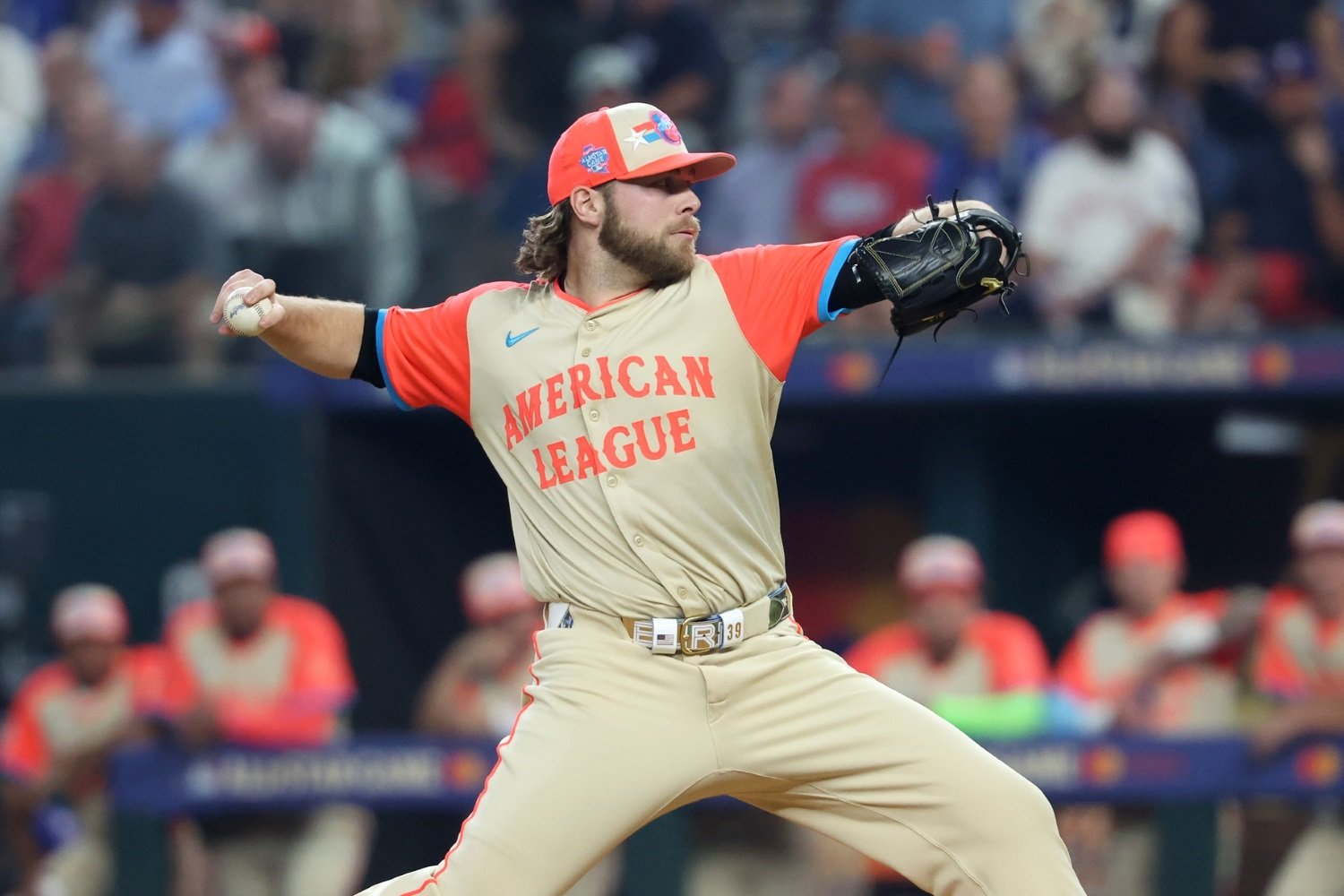 Though some fans overlook it because of the success Justin Steele, Shota Imanaga, and Jameson Taillon have had this year, the Cubs do have a glaring, imminent need in the starting rotation going into 2025. Those three veterans aren't guaranteed to maintain their good health, and after a season in which Javier Assad, Hayden Wesneski, Caleb Kilian, Jordan Wicks, Ben Brown, and Cade Horton have all missed time with significant injuries, it would take a unique level of arrogance to assume they'll come back next season and deliver a high volume of high-quality work in the big-league rotation. All that, plus, Kyle Hendricks is leaving. Thus, it makes a world of sense that the Cubs would consider a pursuit of Corbin Burnes, who will hit free agency at the end of this season with as strong a résumé as any domestic starting pitcher has brought into that process since Gerrit Cole in 2019. The 2021 NL Cy Young Award winner was traded to the Orioles this winter, but has been close to the same pitcher this year that he'd been over the previous three. His strikeout rate is down slightly, but so is his walk rate, and he remains one of the best pitchers in baseball at inducing weak contact. Burnes is tied for sixth in MLB in innings pitched this year, tracking toward his third straight with at least 190 frames, and he's seventh in WARP among pitchers, according to Baseball Prospectus. He's only going to turn 30 this winter; he's just nine months older than Justin Steele. Of course, there's also a connection between Burnes and the Cubs already, because until this year, his only big-league manager was Craig Counsell. The problem with a Burnes signing is that it would be massively expensive, taking up a huge amount of payroll space for a team that also has huge needs outside its starting rotation. Hence, signing him would have to be just one move in a complicated and very bold series of them. The Cubs need to get ahold of an impact player at one of the few positions they don't already have locked down for the medium-term future, in order to upgrade a below-average offense that hasn't proved capable of keeping them in the race this season. They also need to move on from some bad money and freshen their books, particularly if they intend to take on a line item as hefty as a Burnes deal. The team's farm system is strong, albeit without either the every-level depth or the top-end star power that marks the very best groups in baseball. They have the firepower to, for instance, put together an appealing trade package for Angels catcher Logan O'Hoppe, whom they've prized for years. They might elect to keep Matt Shaw, whose introduction to Triple-A Iowa has been encouraging, and slot him into their everyday lineup right away. If they do so, though, they need to create space for Shaw, and they need to clear money both to accommodate Burnes and to prepare themselves for potential extensions with Shaw, a new arrival like O'Hoppe, and/or Isaac Paredes. Specifically, that could mean trading Nico Hoerner. It could mean trading Taillon. In just the right circumstances, it could mean trading Steele, although it's unlikely that a trade package worth the attendant risks for the Cubs would materialize during the winter. If that trade were going to happen, it would have happened last month, when desperate contenders and the lackluster Cubs were in simpler positions for trading. One way or another, though, signing Burnes would need to come with a bevy of other transactions, aimed at making the Cubs a better team around and beyond their starting staff. That makes such a signing unlikely, but we knew that. Even if Levine is right that Burnes will be a focal point for the team going into the winter, we know that Jed Hoyer doesn't like to allocate his resources the way he would need to in order to make a Burnes addition work. We also know that the Cubs are likely to surpass the luxury-tax threshold this winter, putting up small but meaningful roadblocks to signing any player with a qualifying offer attached to them. In all likelihood, the Cubs will need to be more creative and accept more risk in the process of upgrading their rotation this winter. Burnes sure is an appealingly unsubtle potential solution to their problems, though.
 -
On Monday, a report by Bruce Levine of 670 The Score made the rounds, stirring Cubs fans to dream about the team signing one of the game's top pitchers this winter. Does it really make sense, though? Image courtesy of © Kevin Jairaj-USA TODAY Sports Though some fans overlook it because of the success Justin Steele, Shota Imanaga, and Jameson Taillon have had this year, the Cubs do have a glaring, imminent need in the starting rotation going into 2025. Those three veterans aren't guaranteed to maintain their good health, and after a season in which Javier Assad, Hayden Wesneski, Caleb Kilian, Jordan Wicks, Ben Brown, and Cade Horton have all missed time with significant injuries, it would take a unique level of arrogance to assume they'll come back next season and deliver a high volume of high-quality work in the big-league rotation. All that, plus, Kyle Hendricks is leaving. Thus, it makes a world of sense that the Cubs would consider a pursuit of Corbin Burnes, who will hit free agency at the end of this season with as strong a résumé as any domestic starting pitcher has brought into that process since Gerrit Cole in 2019. The 2021 NL Cy Young Award winner was traded to the Orioles this winter, but has been close to the same pitcher this year that he'd been over the previous three. His strikeout rate is down slightly, but so is his walk rate, and he remains one of the best pitchers in baseball at inducing weak contact. Burnes is tied for sixth in MLB in innings pitched this year, tracking toward his third straight with at least 190 frames, and he's seventh in WARP among pitchers, according to Baseball Prospectus. He's only going to turn 30 this winter; he's just nine months older than Justin Steele. Of course, there's also a connection between Burnes and the Cubs already, because until this year, his only big-league manager was Craig Counsell. The problem with a Burnes signing is that it would be massively expensive, taking up a huge amount of payroll space for a team that also has huge needs outside its starting rotation. Hence, signing him would have to be just one move in a complicated and very bold series of them. The Cubs need to get ahold of an impact player at one of the few positions they don't already have locked down for the medium-term future, in order to upgrade a below-average offense that hasn't proved capable of keeping them in the race this season. They also need to move on from some bad money and freshen their books, particularly if they intend to take on a line item as hefty as a Burnes deal. The team's farm system is strong, albeit without either the every-level depth or the top-end star power that marks the very best groups in baseball. They have the firepower to, for instance, put together an appealing trade package for Angels catcher Logan O'Hoppe, whom they've prized for years. They might elect to keep Matt Shaw, whose introduction to Triple-A Iowa has been encouraging, and slot him into their everyday lineup right away. If they do so, though, they need to create space for Shaw, and they need to clear money both to accommodate Burnes and to prepare themselves for potential extensions with Shaw, a new arrival like O'Hoppe, and/or Isaac Paredes. Specifically, that could mean trading Nico Hoerner. It could mean trading Taillon. In just the right circumstances, it could mean trading Steele, although it's unlikely that a trade package worth the attendant risks for the Cubs would materialize during the winter. If that trade were going to happen, it would have happened last month, when desperate contenders and the lackluster Cubs were in simpler positions for trading. One way or another, though, signing Burnes would need to come with a bevy of other transactions, aimed at making the Cubs a better team around and beyond their starting staff. That makes such a signing unlikely, but we knew that. Even if Levine is right that Burnes will be a focal point for the team going into the winter, we know that Jed Hoyer doesn't like to allocate his resources the way he would need to in order to make a Burnes addition work. We also know that the Cubs are likely to surpass the luxury-tax threshold this winter, putting up small but meaningful roadblocks to signing any player with a qualifying offer attached to them. In all likelihood, the Cubs will need to be more creative and accept more risk in the process of upgrading their rotation this winter. Burnes sure is an appealingly unsubtle potential solution to their problems, though. View full article
-
Chicago's most dangerous hitter is also one of their most disciplined. Are umpires behind the plate denying him the full value of that skill? To many Cubs fans' eyes, it's not a question of if umpires are unfair to Seiya Suzuki, but one of why. Watching him pile up 38 called strikeouts (12th-most in MLB, trailing mostly players with 100 or so more plate appearances) and seeing a lot of 1-0 counts go to 1-1 when it looked like they could have gone to 2-0, those watchers have come to the reasonable conclusion that Suzuki is getting a raw deal. He's become a poster child, in some quarters, for the need to implement a technology-assisted strike zone, on the theory that he's a better hitter than the skills or dispositions of MLB umps have allowed him to demonstrate. That conclusion is reasonable, based on watching games and on how our fallible human brains work, but is it supported by objective data? When you break down Suzuki's taken pitches, do the numbers show the same magnitude and direction of impact that Cubs fans perceive? It's a little bit more complicated. Firstly, we have to acknowledge a crucial fact that is often underdiscussed in this type of debate. Suzuki swings very infrequently, overall. He's excellent at not expanding his strike zone, with a chase rate in the 94th percentile among hitters who have seen at least 1,200 pitches this season, but he's in the 10th percentile for swing rate on pitches within the zone, too. The difference between his in- and out-of-zone swing rates is actually a hair below average. By being so selective, he exposes himself to more potential called strikes on the edges of the zone. Still, overall, there has been a slight bias against Suzuki. Its effect has been vanishingly small. According to count-sensitive framing runs above average (FCRAA), Suzuki has lost just 0.11 runs to bad calls this season, though that's a net total. Few hitters have gotten as many unfriendly calls, like this one: A Very Bad Call on Seiya.mp4 Suzuki has been the victim of 28 called strikes rated as clear balls, with no higher than a 25% chance of being called a strike in a neutral setting. Only Corbin Carroll and Randy Arozarena have suffered more such calls, with Isaac Paredes tied with Suzuki at 28. On the other hand, none of those three have gotten as many called balls on pitches rated as clear strikes, with at least a 75% probability of being called, as Suzuki has. In fact, only Aaron Judge and Jonathan India have gotten more of those friendly calls than Suzuki, on pitches like this: Another Friendly Call on Seiya.mp4 Here's where things really get interesting. Obviously, Suzuki forces umpires to make more close calls than almost any other hitter in the league. He's gaining a lot of value on some borderline pitches, and losing a lot of value on others, and much of it washes out. Fans see all of these pitches, when they watch games, but they tend to give Suzuki credit for close takes when the call goes his way, yet blame the umpires when the call goes against him. That's natural; it's a blend of various patterns in the way our brains work. Still, it's distortionary. Some substantial share of the perceived unfairness to Suzuki by umpires is really just the way fans experience randomness--as a cruel and biased force, rather than a chaotic but essentially fair one. That would be true, at least, except that there is a pattern to the errors umpires make on Suzuki--or, more plausibly, an error in the way we're capturing their calls. Here's how Suzuki's Strike Looking Above Average rate looks, based on the location of the pitch: Maddening though it is for many fans, the top and bottom of the strike zone are essentially subjective. The horizontal zone is bounded by the edges of home plate, and when a pitch is off the plate, it has to be counted as a ball. The vertical zone, though, only has theoretically solid boundaries. How a hitter stands in the box partially determines where those boundaries are set, and even then, we're asking the umpire to judge the location of the ball with respect to those boundaries, without very good visual markers to set it. Thanks to choices made by production trucks throughout MLB, the white box dominates the way we watch the game. A more accurate version of it also delineates balls from strikes in models like the one rating Suzuki's zone as basically neutral. It helps that such models treat pitches near the edges probabilistically--i.e., that a pitch called a strike in a location where it would be one just half the time only counts as an extra half a strike against Suzuki for the purposes of evaluating how he's officiated--but those models still assume that all pitches at a given vertical location to a hitter of a given height have the same chance of being called a strike. Pretty clearly, that's not true. Here's a very typical called strike against Suzuki, that (according to the modeled zone, with its firm but subjective bounds) ought not to have been: Another Bad Call on Seiya.mp4 Certainly, based on how he's reacted to them throughout his career, Suzuki doesn't think that should be a strike. The model doesn't think so, either. When you see where it's caught, though, does it really look extreme or egregious--except in that it's above the magic white box? Meanwhile, here's a pitch that wasn't called a strike, but clearly should have been, based on the model. A Friendly Call on Seiya.mp4 This pitch wasn't well-framed, which can always be another confounding factor, but it does clearly nip the bottom edge of the box. At the same time, it doesn't feel like an egregious miss, does it? If you cut the zone in half vertically, the numbers for Suzuki leap flying off the page. In the upper half of the zone (roughly speaking, anything above the belt), Suzuki has had 34.8 extra strikes called against him this season. That's the highest number among the 208 batters who have seen at least 500 pitches in those locations this season. His -5.3 FCRAA in the upper half of the zone is also the league's outlier; umps have taken 5.3 runs from him at the top edge. In the bottom half of the zone, though, the men in blue have given Suzuki 5.2 runs, which is the highest figure of the 294 batters with at least 500 pitches seen below the belt. They've given him, on balance, 25.2 extra balls in those locations. It all nearly comes out in the wash. To that observation, add this one: Suzuki swings considerably more at pitches up in the zone. His overall swing rate is higher, 45.1% to 36.6%. So is his swing rate on pitches with between a 20% and an 80% chance to be called a strike, based on framing models, 53.6% to 34.3%. The logical conclusion from all these observations is not that Suzuki is being robbed, or that he's being too passive. It's just that we need to stop treating the strike zone you see on TV for him as accurate. For whatever reason, based on how he stands in the box, how he swings, or some other inscrutable factors, umpires clearly perceive his zone to have higher bottom and top edges than the computers have dialed in. Suzuki agrees. Look at his swing rates by location, or just a heat map of his swing rate, and you see a hitter who thinks of some pitches just above the zone as within his eager reach, and some within it at the bottom edge as unworthy of him. If the umpires and Suzuki agree, when it comes to the vertical bounds of the zone, arbitrary computerized zones shouldn't intrude on the arrangement. Pitchers can't really exploit this, because if they aim for that bottom edge of the zone that Suzuki disdains, umpires won't call it. If they aim for the top of the zone, they might steal a strike now and then, but Suzuki is also waiting to pounce on a mistake in that region. The horizontal zone has to be called objectively; we have a good way to define it. But with a few exceptions, Suzuki's horizontal zone has been called fairly, throughout his career. It's the high and low pitches that have yielded consternation, and the appearance of unfairness. That consternation is unnecessary, and the appearance of unfairness is deceiving. The Suzuki strike zone is a good reminder that technology isn't ready to call balls and strikes especially well, in one dimension, and that doing so isn't a matter of simply drawing an imaginary line at two fixed vertical positions for a player based on their height. The game is more beautiful and more complicated than that. View full article
-
Do Umpires Call an Unfair Strike Zone on Cubs Slugger Seiya Suzuki?
Matthew Trueblood posted an article in Cubs
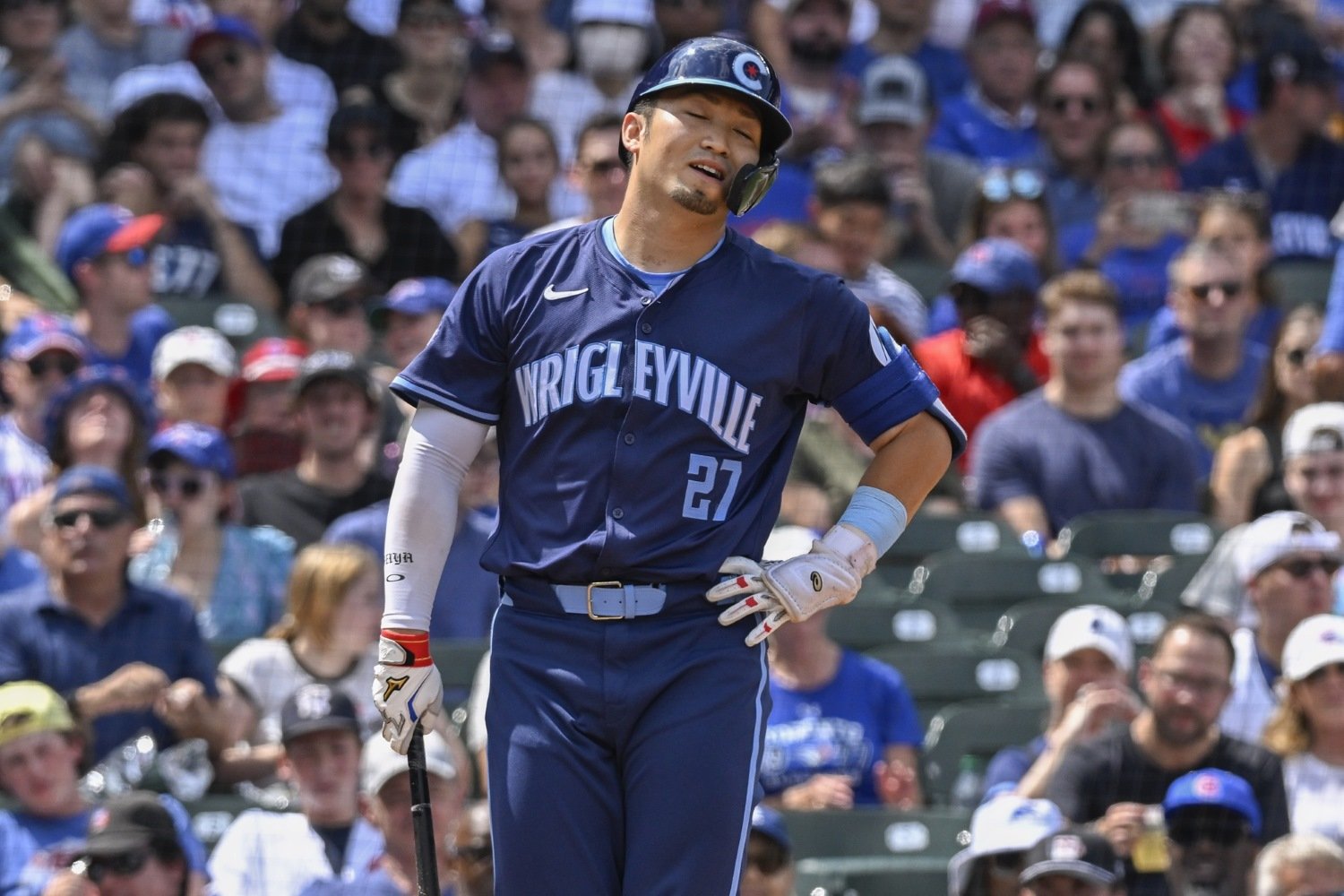 To many Cubs fans' eyes, it's not a question of if umpires are unfair to Seiya Suzuki, but one of why. Watching him pile up 38 called strikeouts (12th-most in MLB, trailing mostly players with 100 or so more plate appearances) and seeing a lot of 1-0 counts go to 1-1 when it looked like they could have gone to 2-0, those watchers have come to the reasonable conclusion that Suzuki is getting a raw deal. He's become a poster child, in some quarters, for the need to implement a technology-assisted strike zone, on the theory that he's a better hitter than the skills or dispositions of MLB umps have allowed him to demonstrate. That conclusion is reasonable, based on watching games and on how our fallible human brains work, but is it supported by objective data? When you break down Suzuki's taken pitches, do the numbers show the same magnitude and direction of impact that Cubs fans perceive? It's a little bit more complicated. Firstly, we have to acknowledge a crucial fact that is often underdiscussed in this type of debate. Suzuki swings very infrequently, overall. He's excellent at not expanding his strike zone, with a chase rate in the 94th percentile among hitters who have seen at least 1,200 pitches this season, but he's in the 10th percentile for swing rate on pitches within the zone, too. The difference between his in- and out-of-zone swing rates is actually a hair below average. By being so selective, he exposes himself to more potential called strikes on the edges of the zone. Still, overall, there has been a slight bias against Suzuki. Its effect has been vanishingly small. According to count-sensitive framing runs above average (FCRAA), Suzuki has lost just 0.11 runs to bad calls this season, though that's a net total. Few hitters have gotten as many unfriendly calls, like this one: A Very Bad Call on Seiya.mp4 Suzuki has been the victim of 28 called strikes rated as clear balls, with no higher than a 25% chance of being called a strike in a neutral setting. Only Corbin Carroll and Randy Arozarena have suffered more such calls, with Isaac Paredes tied with Suzuki at 28. On the other hand, none of those three have gotten as many called balls on pitches rated as clear strikes, with at least a 75% probability of being called, as Suzuki has. In fact, only Aaron Judge and Jonathan India have gotten more of those friendly calls than Suzuki, on pitches like this: Another Friendly Call on Seiya.mp4 Here's where things really get interesting. Obviously, Suzuki forces umpires to make more close calls than almost any other hitter in the league. He's gaining a lot of value on some borderline pitches, and losing a lot of value on others, and much of it washes out. Fans see all of these pitches, when they watch games, but they tend to give Suzuki credit for close takes when the call goes his way, yet blame the umpires when the call goes against him. That's natural; it's a blend of various patterns in the way our brains work. Still, it's distortionary. Some substantial share of the perceived unfairness to Suzuki by umpires is really just the way fans experience randomness--as a cruel and biased force, rather than a chaotic but essentially fair one. That would be true, at least, except that there is a pattern to the errors umpires make on Suzuki--or, more plausibly, an error in the way we're capturing their calls. Here's how Suzuki's Strike Looking Above Average rate looks, based on the location of the pitch: Maddening though it is for many fans, the top and bottom of the strike zone are essentially subjective. The horizontal zone is bounded by the edges of home plate, and when a pitch is off the plate, it has to be counted as a ball. The vertical zone, though, only has theoretically solid boundaries. How a hitter stands in the box partially determines where those boundaries are set, and even then, we're asking the umpire to judge the location of the ball with respect to those boundaries, without very good visual markers to set it. Thanks to choices made by production trucks throughout MLB, the white box dominates the way we watch the game. A more accurate version of it also delineates balls from strikes in models like the one rating Suzuki's zone as basically neutral. It helps that such models treat pitches near the edges probabilistically--i.e., that a pitch called a strike in a location where it would be one just half the time only counts as an extra half a strike against Suzuki for the purposes of evaluating how he's officiated--but those models still assume that all pitches at a given vertical location to a hitter of a given height have the same chance of being called a strike. Pretty clearly, that's not true. Here's a very typical called strike against Suzuki, that (according to the modeled zone, with its firm but subjective bounds) ought not to have been: Another Bad Call on Seiya.mp4 Certainly, based on how he's reacted to them throughout his career, Suzuki doesn't think that should be a strike. The model doesn't think so, either. When you see where it's caught, though, does it really look extreme or egregious--except in that it's above the magic white box? Meanwhile, here's a pitch that wasn't called a strike, but clearly should have been, based on the model. A Friendly Call on Seiya.mp4 This pitch wasn't well-framed, which can always be another confounding factor, but it does clearly nip the bottom edge of the box. At the same time, it doesn't feel like an egregious miss, does it? If you cut the zone in half vertically, the numbers for Suzuki leap flying off the page. In the upper half of the zone (roughly speaking, anything above the belt), Suzuki has had 34.8 extra strikes called against him this season. That's the highest number among the 208 batters who have seen at least 500 pitches in those locations this season. His -5.3 FCRAA in the upper half of the zone is also the league's outlier; umps have taken 5.3 runs from him at the top edge. In the bottom half of the zone, though, the men in blue have given Suzuki 5.2 runs, which is the highest figure of the 294 batters with at least 500 pitches seen below the belt. They've given him, on balance, 25.2 extra balls in those locations. It all nearly comes out in the wash. To that observation, add this one: Suzuki swings considerably more at pitches up in the zone. His overall swing rate is higher, 45.1% to 36.6%. So is his swing rate on pitches with between a 20% and an 80% chance to be called a strike, based on framing models, 53.6% to 34.3%. The logical conclusion from all these observations is not that Suzuki is being robbed, or that he's being too passive. It's just that we need to stop treating the strike zone you see on TV for him as accurate. For whatever reason, based on how he stands in the box, how he swings, or some other inscrutable factors, umpires clearly perceive his zone to have higher bottom and top edges than the computers have dialed in. Suzuki agrees. Look at his swing rates by location, or just a heat map of his swing rate, and you see a hitter who thinks of some pitches just above the zone as within his eager reach, and some within it at the bottom edge as unworthy of him. If the umpires and Suzuki agree, when it comes to the vertical bounds of the zone, arbitrary computerized zones shouldn't intrude on the arrangement. Pitchers can't really exploit this, because if they aim for that bottom edge of the zone that Suzuki disdains, umpires won't call it. If they aim for the top of the zone, they might steal a strike now and then, but Suzuki is also waiting to pounce on a mistake in that region. The horizontal zone has to be called objectively; we have a good way to define it. But with a few exceptions, Suzuki's horizontal zone has been called fairly, throughout his career. It's the high and low pitches that have yielded consternation, and the appearance of unfairness. That consternation is unnecessary, and the appearance of unfairness is deceiving. The Suzuki strike zone is a good reminder that technology isn't ready to call balls and strikes especially well, in one dimension, and that doing so isn't a matter of simply drawing an imaginary line at two fixed vertical positions for a player based on their height. The game is more beautiful and more complicated than that.
 -
 One of the many frustrations of Cubs fans this winter was the team's apparent unwillingness to spend beyond the $237 million first threshold for the competitive-balance tax. By stopping shy of that threshold, it seemed, the team was foreclosing options for itself, and missing out on chances to add impact players. Those concerns have been justified by the way this season has played out. To the further chagrin of many, then, though, Hoyer said Thursday that the team will exceed that threshold after all. "As far as this year, we sort of looked at it at the end of February, we were likely to be under the tax, but once we decided to sign Bellinger, on what I thought was a fantastic deal for the Cubs to bring back Cody, knowing that when we did that, that was very likely to trigger us being over the tax, Tom and Crane were certainly in favor of that, given what it meant for the club," Hoyer said. "So the expectation is certainly that we'll probably go over this year, and the reality is that that's always been a discussion. There's never been any real desire to stay under every year, it's been like, 'Let's make those decisions on a year-to-year basis.' The expectation is that we'll be over this year, and that's really because the decision was made to invest in Cody." There's a lot to unpack there. Until now, the belief among most Cubs fans (supported by the good work done by Jon Becker at FanGraphs and by Jeff Euston at Cot's Contracts, powered by Baseball Prospectus) had been that the team was going to be under the threshold this year. It was always understood to be close, especially given some of the bonuses and incentives that are imperfectly reported by various sources, but no one outside the Cubs organization had been operating under the assumption that the team was going to be a luxury tax payor this year. Let's separate this into things that matter, and things that don't. Assuming the Cubs are willing and able to exceed the tax threshold again in 2025 (which Hoyer and Crane Kenney each implied they would be), one thing that doesn't matter is the repeat offender tax escalation. The Cubs' tax bill for this year, if indeed there is one, will be very small, and the step up from a 20% tax to 30% as a second-time payor next season isn't worth anyone worrying about too much. Exceeding the tax for a third straight year would bump that rate to 50%, which is more meaningful, but the smart bet is that the Cubs are eying an organic reset in 2026. That's the first season after the ends of the contracts on which team is paying Ian Happ, Seiya Suzuki, and Jameson Taillon nearly $60 million, in total, and they've worked hard over the last two years to build a farm system they believe will replace those players more than adequately from within, at minimal cost. On the other hand, a change in the penalties the team would pay for signing a player attached to a qualifying offer would matter, if only at the margins. As a ballpark figure, signing a guy who received a QO would cost the Cubs about $950,000 more in spending power for amateur talent in 2025 after exceeding the tax in 2024. They'd give up an extra draft pick (a fifth-rounder, in all likelihood, with a value around $450,000 toward their total bonus pool allotment) and lose $1 million in international free-agent spending space, rather than $500,000 if they were non-payors. That would be felt in a significant way, for a farm system whose best talent is already clumping at the upper levels and which is viewed as thin in the lower reaches. Would it be enough to change their decision-making about signing such a player? In this particular winter, it could, though only on certain guys. After the year Michael Busch has had and in the wake of the Isaac Paredes acquisition, neither Pete Alonso nor Alex Bregman were going to be options for the Cubs, anyway. It's overwhelmingly unlikely, given the way Hoyer works, that they will be in on Juan Soto or Corbin Burnes, but if they are, the heavier penalties for signing them won't get in the way. The two fringe cases where it might come into play are Anthony Santander and Max Fried. Santander, the Orioles' switch-hitting slugger, could hit the market having clubbed 45 homers in his walk year. He'd be a thunderous addition to the lineup, though a tricky fit, depending on how the team sees some of its young players and on whether Cody Bellinger opts in or out this fall. Fried is a high-upside but injury-prone southpaw starter, and while he'd be a great addition to the Cubs' rotation mix next year, he'd also be a risky one. Setting themselves up to lose significantly more potential talent to sign guys like this would be a strategic error, and the fact that the Cubs are over the tax does seem to indicate that they'll shy away from Santander or Fried this winter. The big things that matter, though, aren't the things that lie ahead. These comments from Hoyer reveal much about what he thought this team was, and why, and about his approach to team-building. None of it is good. Firstly, it's pretty clear from these remarks that Hoyer viewed the Bellinger deal as the capstone on a championship contender. That's preposterous, as was clear even going into this season and as the progress of the campaign has confirmed. Bellinger is a fine player, and the team should have tried more proactively to sign him instead of waiting so long, but they shouldn't have been thinking of him as a player who could finish off their roster. If nothing else, they might have more carefully considered the fact that he had a great season for them in 2023, and they still weren't even a playoff team. Secondly, Bellinger's free agency and the team's mindset about re-signing him vis-a-vis the tax threshold reveal a problematic priority being placed on marginal value, rather than absolute value. Signing Shota Imanaga and trading for Busch and Yency Almonte were strong moves. So was bringing in Héctor Neris. They all seemed of a piece with bringing back Bellinger and staying under the tax, though. If Hoyer and the organization were really spending all that time thinking about re-signing Bellinger even if it meant going over the threshold, they should have simply gone over the threshold--and not just signed Bellinger, but also inked Blake Snell, Jordan Montgomery, or Matt Chapman. Retaining Bellinger wasn't going to be the difference-maker for the 2024 Cubs. If they were willing to exceed the tax threshold to bring him back, they should have made sure to exceed it by much more, thereby adding more high-end talent and better depth to a roster that has been exposed on both fronts at times this year. That they waffled all winter with moves seemingly aimed at staying below the tax, then signed Bellinger even though it meant paying it, suggests that Hoyer was far, far too optimistic about the team he had built. We already had some intimations of that. Now, it seems like an unavoidable conclusion. Hopefully, the team and their president have learned from that. If the Cubs want to win in 2025, they need to go into this winter thinking bigger, both in terms of budgeting and in terms of talent. They can't come back next year with the same group, still thinking it's a team worth paying luxury taxes for.
 -
In an interview on 670 The Score Thursday afternoon, the Cubs' president of baseball operations said the team will surpass the competitive-balance tax threshold in this year's failed attempt at contending. That's not as big a deal as it sounds like, yet it reveals more about Hoyer than it seems to. Image courtesy of © Katie Stratman-USA TODAY Sports One of the many frustrations of Cubs fans this winter was the team's apparent unwillingness to spend beyond the $237 million first threshold for the competitive-balance tax. By stopping shy of that threshold, it seemed, the team was foreclosing options for itself, and missing out on chances to add impact players. Those concerns have been justified by the way this season has played out. To the further chagrin of many, then, though, Hoyer said Thursday that the team will exceed that threshold after all. "As far as this year, we sort of looked at it at the end of February, we were likely to be under the tax, but once we decided to sign Bellinger, on what I thought was a fantastic deal for the Cubs to bring back Cody, knowing that when we did that, that was very likely to trigger us being over the tax, Tom and Crane were certainly in favor of that, given what it meant for the club," Hoyer said. "So the expectation is certainly that we'll probably go over this year, and the reality is that that's always been a discussion. There's never been any real desire to stay under every year, it's been like, 'Let's make those decisions on a year-to-year basis.' The expectation is that we'll be over this year, and that's really because the decision was made to invest in Cody." There's a lot to unpack there. Until now, the belief among most Cubs fans (supported by the good work done by Jon Becker at FanGraphs and by Jeff Euston at Cot's Contracts, powered by Baseball Prospectus) had been that the team was going to be under the threshold this year. It was always understood to be close, especially given some of the bonuses and incentives that are imperfectly reported by various sources, but no one outside the Cubs organization had been operating under the assumption that the team was going to be a luxury tax payor this year. Let's separate this into things that matter, and things that don't. Assuming the Cubs are willing and able to exceed the tax threshold again in 2025 (which Hoyer and Crane Kenney each implied they would be), one thing that doesn't matter is the repeat offender tax escalation. The Cubs' tax bill for this year, if indeed there is one, will be very small, and the step up from a 20% tax to 30% as a second-time payor next season isn't worth anyone worrying about too much. Exceeding the tax for a third straight year would bump that rate to 50%, which is more meaningful, but the smart bet is that the Cubs are eying an organic reset in 2026. That's the first season after the ends of the contracts on which team is paying Ian Happ, Seiya Suzuki, and Jameson Taillon nearly $60 million, in total, and they've worked hard over the last two years to build a farm system they believe will replace those players more than adequately from within, at minimal cost. On the other hand, a change in the penalties the team would pay for signing a player attached to a qualifying offer would matter, if only at the margins. As a ballpark figure, signing a guy who received a QO would cost the Cubs about $950,000 more in spending power for amateur talent in 2025 after exceeding the tax in 2024. They'd give up an extra draft pick (a fifth-rounder, in all likelihood, with a value around $450,000 toward their total bonus pool allotment) and lose $1 million in international free-agent spending space, rather than $500,000 if they were non-payors. That would be felt in a significant way, for a farm system whose best talent is already clumping at the upper levels and which is viewed as thin in the lower reaches. Would it be enough to change their decision-making about signing such a player? In this particular winter, it could, though only on certain guys. After the year Michael Busch has had and in the wake of the Isaac Paredes acquisition, neither Pete Alonso nor Alex Bregman were going to be options for the Cubs, anyway. It's overwhelmingly unlikely, given the way Hoyer works, that they will be in on Juan Soto or Corbin Burnes, but if they are, the heavier penalties for signing them won't get in the way. The two fringe cases where it might come into play are Anthony Santander and Max Fried. Santander, the Orioles' switch-hitting slugger, could hit the market having clubbed 45 homers in his walk year. He'd be a thunderous addition to the lineup, though a tricky fit, depending on how the team sees some of its young players and on whether Cody Bellinger opts in or out this fall. Fried is a high-upside but injury-prone southpaw starter, and while he'd be a great addition to the Cubs' rotation mix next year, he'd also be a risky one. Setting themselves up to lose significantly more potential talent to sign guys like this would be a strategic error, and the fact that the Cubs are over the tax does seem to indicate that they'll shy away from Santander or Fried this winter. The big things that matter, though, aren't the things that lie ahead. These comments from Hoyer reveal much about what he thought this team was, and why, and about his approach to team-building. None of it is good. Firstly, it's pretty clear from these remarks that Hoyer viewed the Bellinger deal as the capstone on a championship contender. That's preposterous, as was clear even going into this season and as the progress of the campaign has confirmed. Bellinger is a fine player, and the team should have tried more proactively to sign him instead of waiting so long, but they shouldn't have been thinking of him as a player who could finish off their roster. If nothing else, they might have more carefully considered the fact that he had a great season for them in 2023, and they still weren't even a playoff team. Secondly, Bellinger's free agency and the team's mindset about re-signing him vis-a-vis the tax threshold reveal a problematic priority being placed on marginal value, rather than absolute value. Signing Shota Imanaga and trading for Busch and Yency Almonte were strong moves. So was bringing in Héctor Neris. They all seemed of a piece with bringing back Bellinger and staying under the tax, though. If Hoyer and the organization were really spending all that time thinking about re-signing Bellinger even if it meant going over the threshold, they should have simply gone over the threshold--and not just signed Bellinger, but also inked Blake Snell, Jordan Montgomery, or Matt Chapman. Retaining Bellinger wasn't going to be the difference-maker for the 2024 Cubs. If they were willing to exceed the tax threshold to bring him back, they should have made sure to exceed it by much more, thereby adding more high-end talent and better depth to a roster that has been exposed on both fronts at times this year. That they waffled all winter with moves seemingly aimed at staying below the tax, then signed Bellinger even though it meant paying it, suggests that Hoyer was far, far too optimistic about the team he had built. We already had some intimations of that. Now, it seems like an unavoidable conclusion. Hopefully, the team and their president have learned from that. If the Cubs want to win in 2025, they need to go into this winter thinking bigger, both in terms of budgeting and in terms of talent. They can't come back next year with the same group, still thinking it's a team worth paying luxury taxes for. View full article
-
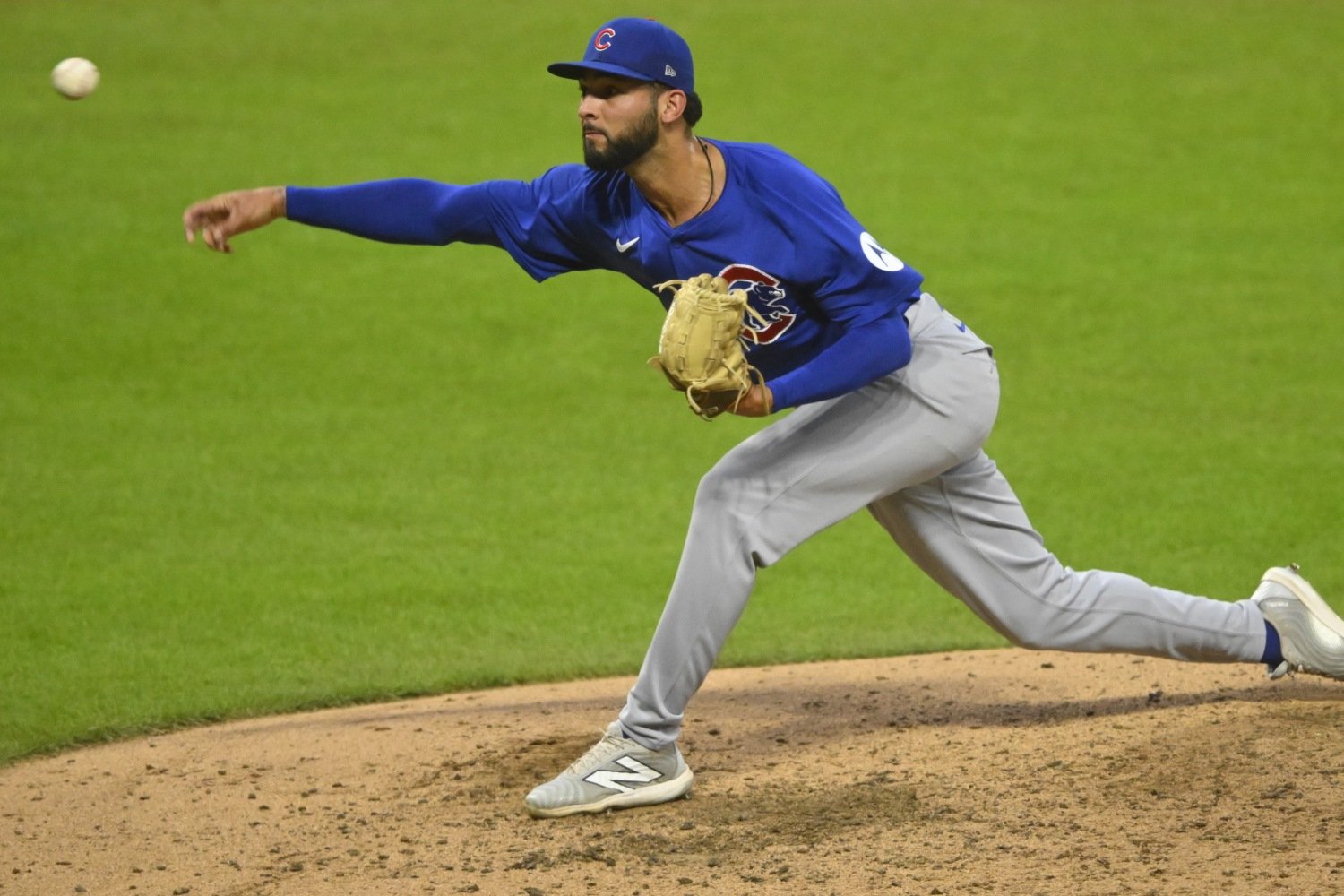 When the Cubs traded a minor-league power hitter with only a dubious future in the organization for a righty with an extreme release point and a flat VAA on their fastball, you could be forgiven for thinking they were just trying to turn off the José Cuas trade and turn it back on again. Chicago loves pitchers with unique combinations of release point and fastball shape, which is why they targeted Cuas last summer and Shota Imanaga this winter. It's also what led them to give up Jake Slaughter for Tyson Miller this spring, and whether they were consciously reprising the Cuas deal or not, it's worked, for exactly the reason why the Cuas move failed: command. Miller, an ex-Cubs farmhand who pitched in the Rangers, Dodgers, Brewers, Mets, and Mariners organizations after leaving the team a few years ago, is almost a match for Cuas's extremity of release point and arm angle. Like Cuas, Miller boasts a fastball with a flat vertical approach angle, which is highly valuable--in theory. In practice, though, that's only true if you can locate it, and if you have a secondary pitch that can fool hitters out of the hand to keep them off it. Pitchers who pair great rising action on their heater and elite velocity with that approach angle don't need to do much else well, but that's not remotely the case for Miller or Cuas, each of whom averages less than 92 miles per hour on their heater. Throwing from such a wide angle narrows the plate for the pitcher, so it's almost impossible to throw even an average number of pitches in the zone from there. The trick is to have a merely below-average zone rate, rather than a borderline catastrophic one. Unfortunately, Cuas never learned that. In 36 appearances for the Cubs, he walked 12.1% of opposing batters, and only learned to hit the arm side of the plate, where hitters didn't experience as steep a horizontal approach angle. Miller, by contrast, has solved the riddle. He's become so adept at working all the way across to the other side of the zone that most of his misses are there, but he's both minimized walks and managed contact fairly well, all by forcing hitters to handle balls veering steeply as they enter the hitting zone. Normally, a pitcher who only sits around 90 miles per hour with the fastball can't afford to throw the ball in the middle of the plate as much as Miller does. Being in the heart of the zone and right around it so often has resulted in fewer whiffs than Cuas was getting and in a fairly pedestrian strikeout rate, but Miller's topline results as a member of the Cubs bullpen have been stupendous. He's gotten hit, at times, because those pitches run right into the bat paths of some hitters. He's only given up three home runs, though, and the dearth of walks has made those few extra-base hits much less costly than the ones Cuas gave up during his time in Chicago. It's hard to overstate what a knee-buckling experience it must be for a righty to stand in the box against Miller. Tyson Punchout.mp4 What the Cubs hoped they could teach Cuas to do, Miller really can do. Firstly, his sweeper has a crazy amount of ride to it. Not for nothing did our Davy Andrews call it the "sweepiest sweeper in baseball" a month ago. His four-seamer's lack of ride from his low arm angle works in his favor, because the sweeper looks a lot like the four-seamer out of the hand--a lot like it. Much of that is thanks to the way he throws his fastball. He treats his four-seamer almost like a cutter, so his horizontal release angle on that pitch is steep. Of 375 qualifying right-handed pitchers, Miller has the 12th-steepest gloveside release angle on the four-seamer. Cuas is first, and others like them (that is, guys who throw from low slots or far toward third base) populate the top of the list, but whereas the rest of that fraternity all have above-average arm-side run on their heat, Miller's has more cutting action. To the hitter, then, Miller's fastball already behaves like a cutter. It comes out of his hand at a steep angle, but instead of spinning back toward a right-handed hitter, it carries toward the outside corner. That makes the times when the ball has extra swerve and ends up being a sweeper especially cruel. Miller releases both pitches with the same initial angle of movement better than any of the other 93 righties who have thrown at least 50 four-seamers and 50 sweepers this year in MLB. If you can pick up the spin, despite the funky release point, there's a giveaway to be found, because the two pitches do not have mirrored spin at all. But, trickily, recognizing the pitch is only part of the battle. Seam-shifted wake doesn't do with Miller's fastball what it does with most low-slot pitchers'. The fastball actually carries a bit more than it looks like it will (recall that flat VAA), in addition to behaving like a cutter. The sweeper, meanwhile, also checks up and holds its line a bit more than it looks like it will. When they each get to the plate, the horizontal approach angles of the four-seamer and sweeper are reasonably different, but the vertical ones are identical--or so nearly so that they might as well be. This cocktail of things is why Miller can throw strikes, but Cuas couldn't. It's why Miller gets a lot of called strikes and a lot of chases with his sweeper, but Cuas couldn't. It's why Miller has been able to induce weak contact and a lot of lazy fly balls, but Cuas couldn't. At a quick glance, they appear similar, in several important ways. Dig deeper, though, and the equally important differences stand out in sharper relief--which, by the way, is what Miller has given his old and new team. There's more, too. Miller has added a sinker for righties and a curveball for lefties since joining the Cubs, taking pitches that were previously lurking almost unused and finding their utility as he learns to make the most of the things that make him unique. Primarily, though, he's been so good--a 1.42 ERA and a 0.79 WHIP--because his fastball and his sweeper are each unique, and the way they interact makes them even harder to handle than they would be on their own. Under team control for years, yet, Miller is the single pitcher you can most confidently write into the Cubs' 2025 bullpen plans. He'll be there, and he'll play a vital role. Others will probably be more important, but Miller has already done enough to secure a place, as long as he can stay healthy. He's one of the least comfortable at-bats in baseball, and his success makes both his own acquisition and that of Cuas worthwhile.
 -
Twice in a span of just over nine months, the Cubs acquired a side-arming, late-blooming right-handed reliever with a tantalizing combination of fastball shape and breaking ball possibilities. The first move didn't pan out. The second one has done so gorgeously. Image courtesy of © David Richard-USA TODAY Sports When the Cubs traded a minor-league power hitter with only a dubious future in the organization for a righty with an extreme release point and a flat VAA on their fastball, you could be forgiven for thinking they were just trying to turn off the José Cuas trade and turn it back on again. Chicago loves pitchers with unique combinations of release point and fastball shape, which is why they targeted Cuas last summer and Shota Imanaga this winter. It's also what led them to give up Jake Slaughter for Tyson Miller this spring, and whether they were consciously reprising the Cuas deal or not, it's worked, for exactly the reason why the Cuas move failed: command. Miller, an ex-Cubs farmhand who pitched in the Rangers, Dodgers, Brewers, Mets, and Mariners organizations after leaving the team a few years ago, is almost a match for Cuas's extremity of release point and arm angle. Like Cuas, Miller boasts a fastball with a flat vertical approach angle, which is highly valuable--in theory. In practice, though, that's only true if you can locate it, and if you have a secondary pitch that can fool hitters out of the hand to keep them off it. Pitchers who pair great rising action on their heater and elite velocity with that approach angle don't need to do much else well, but that's not remotely the case for Miller or Cuas, each of whom averages less than 92 miles per hour on their heater. Throwing from such a wide angle narrows the plate for the pitcher, so it's almost impossible to throw even an average number of pitches in the zone from there. The trick is to have a merely below-average zone rate, rather than a borderline catastrophic one. Unfortunately, Cuas never learned that. In 36 appearances for the Cubs, he walked 12.1% of opposing batters, and only learned to hit the arm side of the plate, where hitters didn't experience as steep a horizontal approach angle. Miller, by contrast, has solved the riddle. He's become so adept at working all the way across to the other side of the zone that most of his misses are there, but he's both minimized walks and managed contact fairly well, all by forcing hitters to handle balls veering steeply as they enter the hitting zone. Normally, a pitcher who only sits around 90 miles per hour with the fastball can't afford to throw the ball in the middle of the plate as much as Miller does. Being in the heart of the zone and right around it so often has resulted in fewer whiffs than Cuas was getting and in a fairly pedestrian strikeout rate, but Miller's topline results as a member of the Cubs bullpen have been stupendous. He's gotten hit, at times, because those pitches run right into the bat paths of some hitters. He's only given up three home runs, though, and the dearth of walks has made those few extra-base hits much less costly than the ones Cuas gave up during his time in Chicago. It's hard to overstate what a knee-buckling experience it must be for a righty to stand in the box against Miller. Tyson Punchout.mp4 What the Cubs hoped they could teach Cuas to do, Miller really can do. Firstly, his sweeper has a crazy amount of ride to it. Not for nothing did our Davy Andrews call it the "sweepiest sweeper in baseball" a month ago. His four-seamer's lack of ride from his low arm angle works in his favor, because the sweeper looks a lot like the four-seamer out of the hand--a lot like it. Much of that is thanks to the way he throws his fastball. He treats his four-seamer almost like a cutter, so his horizontal release angle on that pitch is steep. Of 375 qualifying right-handed pitchers, Miller has the 12th-steepest gloveside release angle on the four-seamer. Cuas is first, and others like them (that is, guys who throw from low slots or far toward third base) populate the top of the list, but whereas the rest of that fraternity all have above-average arm-side run on their heat, Miller's has more cutting action. To the hitter, then, Miller's fastball already behaves like a cutter. It comes out of his hand at a steep angle, but instead of spinning back toward a right-handed hitter, it carries toward the outside corner. That makes the times when the ball has extra swerve and ends up being a sweeper especially cruel. Miller releases both pitches with the same initial angle of movement better than any of the other 93 righties who have thrown at least 50 four-seamers and 50 sweepers this year in MLB. If you can pick up the spin, despite the funky release point, there's a giveaway to be found, because the two pitches do not have mirrored spin at all. But, trickily, recognizing the pitch is only part of the battle. Seam-shifted wake doesn't do with Miller's fastball what it does with most low-slot pitchers'. The fastball actually carries a bit more than it looks like it will (recall that flat VAA), in addition to behaving like a cutter. The sweeper, meanwhile, also checks up and holds its line a bit more than it looks like it will. When they each get to the plate, the horizontal approach angles of the four-seamer and sweeper are reasonably different, but the vertical ones are identical--or so nearly so that they might as well be. This cocktail of things is why Miller can throw strikes, but Cuas couldn't. It's why Miller gets a lot of called strikes and a lot of chases with his sweeper, but Cuas couldn't. It's why Miller has been able to induce weak contact and a lot of lazy fly balls, but Cuas couldn't. At a quick glance, they appear similar, in several important ways. Dig deeper, though, and the equally important differences stand out in sharper relief--which, by the way, is what Miller has given his old and new team. There's more, too. Miller has added a sinker for righties and a curveball for lefties since joining the Cubs, taking pitches that were previously lurking almost unused and finding their utility as he learns to make the most of the things that make him unique. Primarily, though, he's been so good--a 1.42 ERA and a 0.79 WHIP--because his fastball and his sweeper are each unique, and the way they interact makes them even harder to handle than they would be on their own. Under team control for years, yet, Miller is the single pitcher you can most confidently write into the Cubs' 2025 bullpen plans. He'll be there, and he'll play a vital role. Others will probably be more important, but Miller has already done enough to secure a place, as long as he can stay healthy. He's one of the least comfortable at-bats in baseball, and his success makes both his own acquisition and that of Cuas worthwhile. View full article
-
The first step the Cubs took upon acquiring the fireballer was to change where he throws from. It changes a lot of other things about his game. Image courtesy of © Katie Stratman-USA TODAY Sports Since acquiring Nate Pearson in their first move of July, the Cubs have used him relatively sparingly. He pitched in each of the first two games of this week's series against the Guardians, but that was after a full week off. In his first fortnight in the organization, he only pitched three times. That's because the Cubs had some ideas about how to solve the command issues that have plagued him during his career, and while it's too early to draw wild conclusions, there are some encouraging results in that area. Here's a pitch Pearson threw in June, when the Blue Jays visited the Guardians. Nate 2.mp4 Here's one he threw this week, in the same ballpark and from the same outfield camera angle. Nate 3.mp4 I bet you can spot it right away, but in case you missed it: look for the outer edge of the left-handed batter's box. In the first video, as he sets, Pearson's body obscures that area. In the second, he's wide of it. The Cubs moved Pearson about a foot across the rubber, toward first base. He's not throwing from a new arm slot, and the mechanical tweaks they've made are minor, but they changed where he throws from. Let's explore what this means for Pearson's pitch mix, its utility, and his future. For these purposes, we'll stick to showing his four-seamer and slider, as I did above. Pearson has only thrown two sinkers as a Cub, and they were both in his first appearance for them. It would seem that the team doesn't want him to even worry about that pitch, which is a wise choice. They've also downshifted the usage of his curveball, although it's harder to say for sure that that change will have staying power in such a small sample. To be sure, the slider is his better breaking ball, so we can hone in on how it plays, especially off his four-seamer. The first impact of this change in mound position we can easily identify is that Pearson is hitting the zone more with his fastball. That's an important and welcome change. He was only throwing the heater in the zone about 51% of the time with Toronto this year, but with the Cubs, it's just under 60%. That's a dramatic difference, and it explains why he's yet to walk a batter in a Cubs uniform. Why does it work that way? Principally, when you change where a pitcher throws from, you force him to make a change to his release angle. We can now measure this angle, which is just the deviation from a straight forward line that the ball shows right out of the pitcher's hand. Is it going left or right? Up or down? Command comes from being able to consistently execute a release angle with a given pitch. Deception and swing-and-miss come from making those angles invisible or inscrutable to hitters. Here are Pearson's horizontal and vertical release angles on all his fastballs and sliders, with the Blue Jays and with the Cubs. As you can see, there's a tighter distribution of release angles on the left, though time might spread them out. What's more notable is the less drastic average release angle, especially horizontally, and especially on the fastball. From his new place on the rubber, Pearson can throw the fastball fairly straight, letting his velocity, movement, and a very flat vertical approach angle keep the pitch not only close enough to the zone to induce a swing, but lively enough to avoid getting hit hard. Speaking of that vertical approach angle, though, it's a key feature of Pearson's fastball, which would have relatively unimpressive raw movement without that factored in. We had better make sure he's not losing that ability to have the pitch ride and stay on a flat plane through the zone, because of this change. Here are his horizontal and vertical approach angles, which are the same as release angles but at the moment the ball is entering the zone, rather than at the moment the hurler cuts it loose. Here, we see a huge difference--a bigger one, even, than that in release angle. Pearson the Cub doesn't have his slider wiggling sideways as much when it reaches the zone, but achieves a clearer separation in the approach angles of the fastball and the slider, vertically. In other words, while they're tough to distinguish out of the hand and there's not much lateral angle change to give them away, a hitter will get two very different pitches, vertically, as the ball reaches them. A couple of outliers from his first two appearances even disguise the change Pearson has made since joining the Cubs. Here's the same approach angle chart, for his last three outings only. His fastball still holds its plane into the zone--as well as ever, in fact. The slider is just a vicious, vertical snarl down off it, and he's still throwing these two offerings at about 98 and 88 miles per hour, respectively. Pearson hasn't yet piled up huge strikeout totals with this altered setup and series of looks, but there's good reason to hope that that's coming. No relief pitching acquisition is guaranteed to be any kind of success. This pickup was very much a variation on last year's Jose Cuas trade, which came to nothing. Pearson has great raw velocity, a nasty slider, and some tantalizing secondary characteristics to his stuff, though. He's under team control two more seasons. And the Cubs clearly had an idea to make an immediate change, which could raise his ceiling for that remaining term of club control. It might never come to fruition, but Pearson has a real chance to emerge as a dominant reliever--not just a fine middle reliever, but a relief ace, like last year's version of Julian Merryweather. He'll be an important Cub to watch for the balance of this season. View full article
-
Nate Pearson is in a New Place, and He's Also in a New Place
Matthew Trueblood posted an article in Cubs
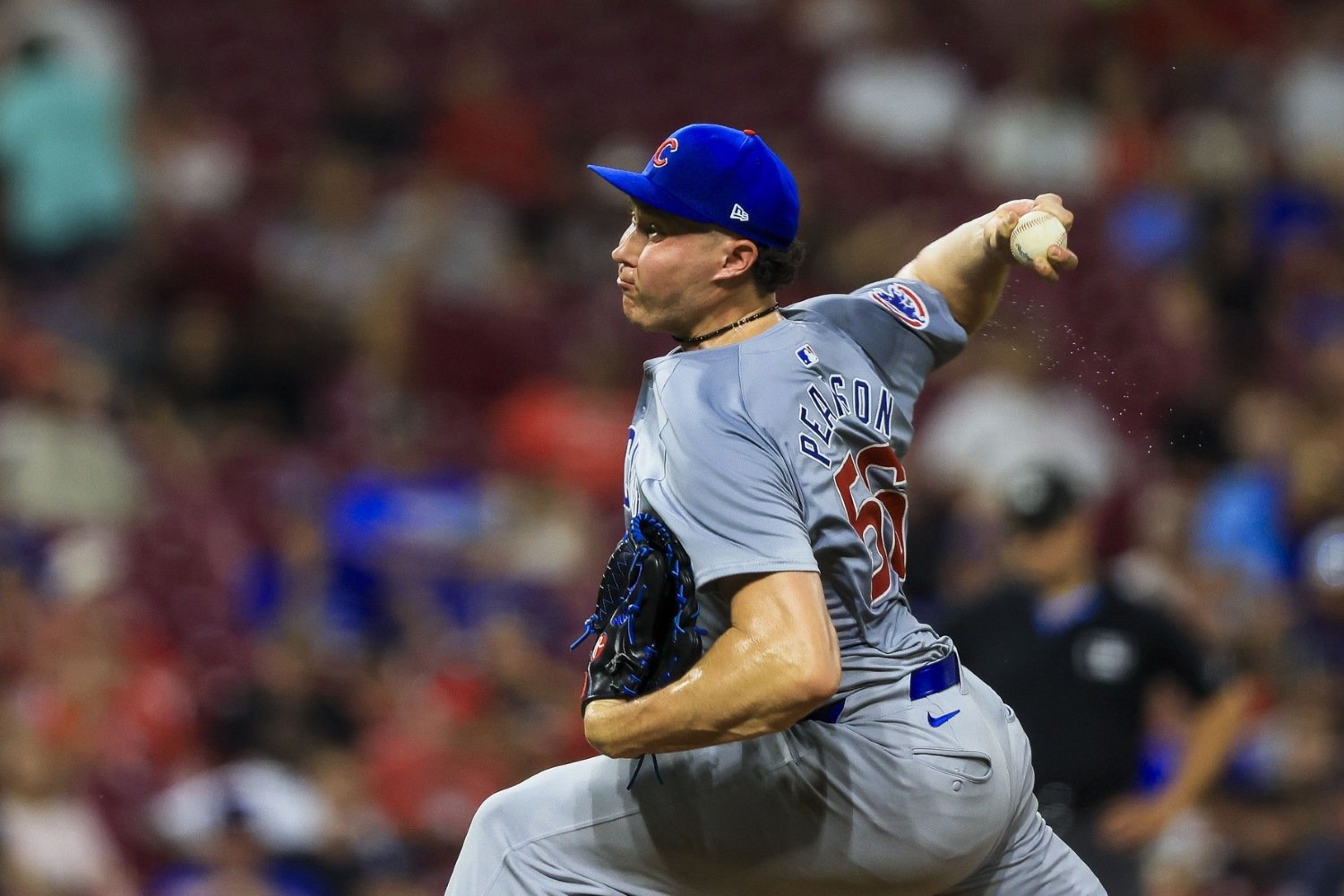 Since acquiring Nate Pearson in their first move of July, the Cubs have used him relatively sparingly. He pitched in each of the first two games of this week's series against the Guardians, but that was after a full week off. In his first fortnight in the organization, he only pitched three times. That's because the Cubs had some ideas about how to solve the command issues that have plagued him during his career, and while it's too early to draw wild conclusions, there are some encouraging results in that area. Here's a pitch Pearson threw in June, when the Blue Jays visited the Guardians. Nate 2.mp4 Here's one he threw this week, in the same ballpark and from the same outfield camera angle. Nate 3.mp4 I bet you can spot it right away, but in case you missed it: look for the outer edge of the left-handed batter's box. In the first video, as he sets, Pearson's body obscures that area. In the second, he's wide of it. The Cubs moved Pearson about a foot across the rubber, toward first base. He's not throwing from a new arm slot, and the mechanical tweaks they've made are minor, but they changed where he throws from. Let's explore what this means for Pearson's pitch mix, its utility, and his future. For these purposes, we'll stick to showing his four-seamer and slider, as I did above. Pearson has only thrown two sinkers as a Cub, and they were both in his first appearance for them. It would seem that the team doesn't want him to even worry about that pitch, which is a wise choice. They've also downshifted the usage of his curveball, although it's harder to say for sure that that change will have staying power in such a small sample. To be sure, the slider is his better breaking ball, so we can hone in on how it plays, especially off his four-seamer. The first impact of this change in mound position we can easily identify is that Pearson is hitting the zone more with his fastball. That's an important and welcome change. He was only throwing the heater in the zone about 51% of the time with Toronto this year, but with the Cubs, it's just under 60%. That's a dramatic difference, and it explains why he's yet to walk a batter in a Cubs uniform. Why does it work that way? Principally, when you change where a pitcher throws from, you force him to make a change to his release angle. We can now measure this angle, which is just the deviation from a straight forward line that the ball shows right out of the pitcher's hand. Is it going left or right? Up or down? Command comes from being able to consistently execute a release angle with a given pitch. Deception and swing-and-miss come from making those angles invisible or inscrutable to hitters. Here are Pearson's horizontal and vertical release angles on all his fastballs and sliders, with the Blue Jays and with the Cubs. As you can see, there's a tighter distribution of release angles on the left, though time might spread them out. What's more notable is the less drastic average release angle, especially horizontally, and especially on the fastball. From his new place on the rubber, Pearson can throw the fastball fairly straight, letting his velocity, movement, and a very flat vertical approach angle keep the pitch not only close enough to the zone to induce a swing, but lively enough to avoid getting hit hard. Speaking of that vertical approach angle, though, it's a key feature of Pearson's fastball, which would have relatively unimpressive raw movement without that factored in. We had better make sure he's not losing that ability to have the pitch ride and stay on a flat plane through the zone, because of this change. Here are his horizontal and vertical approach angles, which are the same as release angles but at the moment the ball is entering the zone, rather than at the moment the hurler cuts it loose. Here, we see a huge difference--a bigger one, even, than that in release angle. Pearson the Cub doesn't have his slider wiggling sideways as much when it reaches the zone, but achieves a clearer separation in the approach angles of the fastball and the slider, vertically. In other words, while they're tough to distinguish out of the hand and there's not much lateral angle change to give them away, a hitter will get two very different pitches, vertically, as the ball reaches them. A couple of outliers from his first two appearances even disguise the change Pearson has made since joining the Cubs. Here's the same approach angle chart, for his last three outings only. His fastball still holds its plane into the zone--as well as ever, in fact. The slider is just a vicious, vertical snarl down off it, and he's still throwing these two offerings at about 98 and 88 miles per hour, respectively. Pearson hasn't yet piled up huge strikeout totals with this altered setup and series of looks, but there's good reason to hope that that's coming. No relief pitching acquisition is guaranteed to be any kind of success. This pickup was very much a variation on last year's Jose Cuas trade, which came to nothing. Pearson has great raw velocity, a nasty slider, and some tantalizing secondary characteristics to his stuff, though. He's under team control two more seasons. And the Cubs clearly had an idea to make an immediate change, which could raise his ceiling for that remaining term of club control. It might never come to fruition, but Pearson has a real chance to emerge as a dominant reliever--not just a fine middle reliever, but a relief ace, like last year's version of Julian Merryweather. He'll be an important Cub to watch for the balance of this season.
 -
Kyle Hendricks and the Cubs Are in an Awkward Position Right Now
Matthew Trueblood posted an article in Cubs
 There was enough of a Kyle Hendricks rebound, last month, to justify keeping him around as the team floundered and trudged toward what had a chance to be a deadline sell-off. Hendricks was clearly the worst of the team's healthy starters at the time, but he deserves the organization's respect and loyalty, and there was no urgent need to move on from him; the team appeared not to be a contender. Over the last few weeks, though, the team has found its gear. Jed Hoyer did trade reliever Mark Leiter Jr. at the deadline, but he also acquired Nate Pearson and made a major upgrade from Christopher Morel to Isaac Paredes at third base. They're still below .500, but only by a single game, and their weak remaining schedule makes it at least remotely plausible that they could reach the postseason, after all. That puts Hoyer, Craig Counsell, and Hendricks in a bit of an awkward position. The team still doesn't have a surplus of healthy starters, but with a whole bunch of off days in this stretch of their calendar--they were off Thursday and Sunday, will be off again this Thursday and next Monday, and will have three straight Thursdays off heading into mid-September--they don't necessarily need to use all five of their arms each time through the rotation. This week, the team is skipping Hendricks's turn while they're in Cleveland, though it seems unlikely they'll move him fully to the bullpen. He could start this weekend against Toronto at Wrigley Field, ensuring that Shota Imanaga (who starts Monday night in Cleveland) won't have to work on four days' rest in order to stay in rotation. He could come back Sunday, if Hendricks pitches Friday or Saturday. In the big picture, though, it's increasingly clear that the Cubs don't want to entrust a start that might help determine their playoff fortunes in Hendricks. Jordan Wicks is on a rehab assignment in Iowa. The team recently signed Adrian Houser to fill in as depth at Triple-A, too. Sadly, it feels like the watch has to be resumed. Hendricks isn't yet in imminent danger of losing his roster spot, but every appearance will be a kind of audition the rest of the way. For as long as the team remains on the fringes of playoff contention, Hendricks will be under constant evaluation, and the organization will be looking for ways to improve upon his spot at the back end of the starting rotation. If the Cubs are to make the playoffs from here, they need to maximize their chances in every game. They know the chances of that are small, though, and won't want to risk the health of Justin Steele, Imanaga, or Jameson Taillon with very aggressive usage. Hendricks has value not only as a leader of the team and institutional memory of its fading glory, but as a source of potentially vital innings, even if they be steady but unspectacular. At the same time, the closer they get to contention, the more they'll feel pressure to try something else in his rotation spot. It's an uncomfortable paradox, and an unfortunately apropos microcosm of their season. Maybe, for both parties, there's still a chance to change the tenor of that season.
 -
The Cubs' longest-tenured player last pitched on Aug. 5, and is not one of the team's probable starters this week in Cleveland. It's hard to forecast what's next for him, in a complex pitching picture for the resurgent Cubs. Image courtesy of © Denny Medley-USA TODAY Sports There was enough of a Kyle Hendricks rebound, last month, to justify keeping him around as the team floundered and trudged toward what had a chance to be a deadline sell-off. Hendricks was clearly the worst of the team's healthy starters at the time, but he deserves the organization's respect and loyalty, and there was no urgent need to move on from him; the team appeared not to be a contender. Over the last few weeks, though, the team has found its gear. Jed Hoyer did trade reliever Mark Leiter Jr. at the deadline, but he also acquired Nate Pearson and made a major upgrade from Christopher Morel to Isaac Paredes at third base. They're still below .500, but only by a single game, and their weak remaining schedule makes it at least remotely plausible that they could reach the postseason, after all. That puts Hoyer, Craig Counsell, and Hendricks in a bit of an awkward position. The team still doesn't have a surplus of healthy starters, but with a whole bunch of off days in this stretch of their calendar--they were off Thursday and Sunday, will be off again this Thursday and next Monday, and will have three straight Thursdays off heading into mid-September--they don't necessarily need to use all five of their arms each time through the rotation. This week, the team is skipping Hendricks's turn while they're in Cleveland, though it seems unlikely they'll move him fully to the bullpen. He could start this weekend against Toronto at Wrigley Field, ensuring that Shota Imanaga (who starts Monday night in Cleveland) won't have to work on four days' rest in order to stay in rotation. He could come back Sunday, if Hendricks pitches Friday or Saturday. In the big picture, though, it's increasingly clear that the Cubs don't want to entrust a start that might help determine their playoff fortunes in Hendricks. Jordan Wicks is on a rehab assignment in Iowa. The team recently signed Adrian Houser to fill in as depth at Triple-A, too. Sadly, it feels like the watch has to be resumed. Hendricks isn't yet in imminent danger of losing his roster spot, but every appearance will be a kind of audition the rest of the way. For as long as the team remains on the fringes of playoff contention, Hendricks will be under constant evaluation, and the organization will be looking for ways to improve upon his spot at the back end of the starting rotation. If the Cubs are to make the playoffs from here, they need to maximize their chances in every game. They know the chances of that are small, though, and won't want to risk the health of Justin Steele, Imanaga, or Jameson Taillon with very aggressive usage. Hendricks has value not only as a leader of the team and institutional memory of its fading glory, but as a source of potentially vital innings, even if they be steady but unspectacular. At the same time, the closer they get to contention, the more they'll feel pressure to try something else in his rotation spot. It's an uncomfortable paradox, and an unfortunately apropos microcosm of their season. Maybe, for both parties, there's still a chance to change the tenor of that season. View full article
-
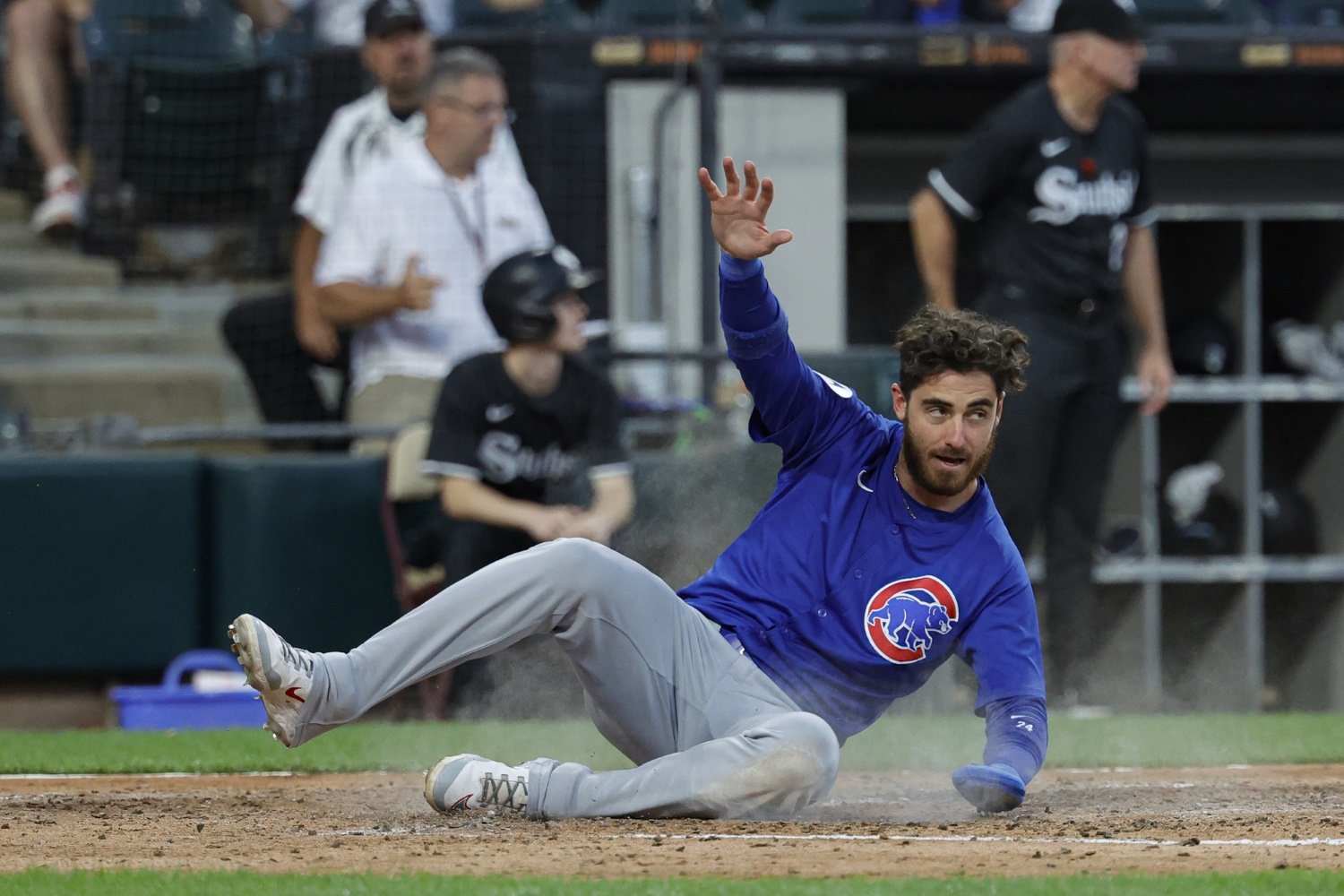 When the old heads say that games in April count just as much as ones in September, this is the kind of moment they're anticipating. The Cubs made an impressive trade in the late stages of July, to close a month in which they asserted themselves as a better team than they'd looked like in May or June. They've started August impressively, too, and after being 39-48 on Jul. 3, they're now within a game of .500. There are two distinct problems. The first is that, having lost contact with the division-leading Brewers and still lagging even the third Wild Card spot by three games, they have a narrower path to the postseason than a team with some chance of winning its division. Thus, their very soft remaining schedule is a prerequisite for any sort of dream of a playoff berth, rather than a nice bonus that they could afford to live without. The second problem is that, during their long stretch of poor play earlier this season, the team lost their season series to Atlanta, the Reds, the Padres, the Mets, the Cardinals, the Pirates, the Padres, and the Giants. They split their season set with the Diamondbacks, but Arizona looks almost certain to win a higher percentage of their intradivisional games than the Cubs do, which would give them that edge, too. Thus, the Cubs have to be better than all but two of those, and can't afford to be tied with whoever's third. Taken together, those things mean that the Cubs need to go 28-15 the rest of the way. They need 87 wins to reach the postseason, and that's a tall order. They have a lot of theoretically easy series left, but they also have three-game engagements with the Guardians, Yankees, Dodgers, and Phillies. If they split those 12 contests (which seems sufficiently optimistic), they'd need to go 22-9 in their other games to get to 87. It's nice that this team is finally putting some pieces together. It's encouraging, especially because some of the engines of the recent run of success (most notably Pete Crow-Armstrong and Miguel Amaya) are players who figure to be important to the organization's future, one way or another. It's too early to get especially excited, because the damage done by the team's play from the end of April until nearly the All-Star break can't be easily wiped away. One healthy way to experience the rest of the season might be to break it into two chunks. Starting Monday night in Cleveland, the Cubs play 21 games in which the only truly tough team will be the first one they face--the AL Central-best Guardians. If they go 14-7 or 15-6 in that stretch, they leave themselves a legitimate chance to win a Wild Card spot. Their home series against the Yankees the weekend after Labor Day will mark the turn into the home stretch, and if they get there in good shape, they'll be able to afford to go 4-5 against New York, Philadelphia, and Los Angeles, although even then, they'll need to be phenomenal (10-3) in the other series left on their slate. If they go 13-8 or worse in these next 21, the light at the end of the tunnel becomes a pinprick, or winks out altogether. Not having head-to-head games against many of the teams they're chasing means the Cubs will have to hope for help, and to avoid being reliant on that, they have to play like a 100-win team the rest of the way. It's fair, though, to be happy just to have this glimmer of hope, about six weeks after it looked like the season was over.
 -
Unsurprisingly, it's beneficial to slot the players with the least defensive responsibility highest in your batting order. Image courtesy of © Kamil Krzaczynski-USA TODAY Sports There's meant to be some division of labor in baseball. Sure, you want the two-way stars, and you want dynamic players who help score or prevent runs in multiple ways, but a great team is built around the idea that everyone has something to contribute--and ideally, that means not putting too great an onus on any one player, or two. In other words, while high-volume offensive creators who also play premium defensive positions (Bobby Witt Jr., Gunnar Henderson, Adley Rutschman, Jarren Duran, and so on) are exceptionally valuable, there's an inherent tinge of inefficiency to that kind of value concentration. In a world with more perfectly aligned resources, batting orders would roughly resemble the defensive spectrum introduced by Bill James nearly half a century ago. You'd lead off with your DH, your catcher would bat ninth, and the stepdown from one defensive position to the next would be smooth. Your first baseman would bat second, your left fielder third, your shortstop eighth. Obviously, that's just a vague hypothetical possibility. Players are too different from one another to, with any seriousness, try to map such a rigid and simple formula onto lineups. What you can do, more fairly, is loosely state the efficiency of a lineup based on how well it fits these principles. Do the hitters who play the corner infield and outfield spots and DH merit placement in the top five places in the order? Do the up-the-middle defenders play well enough in the field to stay in the lineup despite less-than-terrifying bats? Here's how the Cubs have lined up, almost every game since the trade deadline: Ian Happ - LF Michael Busch - 1B Seiya Suzuki - RF Cody Bellinger - DH Isaac Paredes - 3B Nico Hoerner - 2B Dansby Swanson - SS Pete Crow-Armstrong - CF Miguel Amaya - C That's pretty good. It's reflective of the fact that Jed Hoyer has had a vision for this roster, all along. That doesn't mean the plan is flawless, or even all that good. Hoyer falls victim to the planning fallacy and ends up shorthanded or one star shy, time and time again. For the second year in a row, though, we're getting a prolonged stretch in which it's easy to see the thought process involved in building the team. This is the lineup Hoyer hoped would come together, with Paredes as the perfect replacement for Christopher Morel, settling down a few slots in both the offensive and defensive lineups at once. To wit: over the last 30 days, the Cubs have gotten more plate appearances by the five most offense-focused positions in the top five spots in the order than any other team, at 451. They've gotten more by the four defense-oriented positions in the sixth through ninth spots than any other team, at 306. They're as optimally aligned as anyone. They're a well-rounded team. Second, in both of these aspects, goes to the Cleveland Guardians, whom the Cubs will play at Progressive Field for three games this week. It's not as though the tumblers falling into place has turned this team into a juggernaut. They're 5th in MLB in runs per game since the trade deadline, at 5.6, but they're 22nd over that aforementioned 30-day window. Nor would we be noticing or commending them for their resurgence, if not for the offensive production from the guys the team explicitly expects the least from: the .763 OPS from those up-the-middle guys in the bottom half of the order the last month is around .030 higher than that being put up by the so-called sluggers hitting in front of them. Sometimes, baseball is that fluky. Not every hot streak means you've solved the game; not every cold streak means things are broken. Still, there's something real here. For one thing, this kind of lineup build is not solely about run creation. The implication of this kind of lineup is that they also prevent runs well, by playing strong defense. That's precisely what the Cubs have done lately. Opponents reach base on balls in play (be it via hit or error) less often against the Cubs than against all but five other teams, since the deadline passed. For another thing, there will be a leveling out and a balance found between the overachieving hitters whose main jobs are defense and the guys who are being paid big bucks to pile up big hits. Even when Amaya, Crow-Armstrong, and Swanson come back to Earth, it should be balanced out by steadily rising production from Happ, Suzuki, and Paredes. The Cubs have a lineup that shows off its careful assemblage. The next seven weeks will be about finding out how much tensile strength that construction has. View full article
-
Better Allocation, Better Alignment, Better Outcomes for Cubs
Matthew Trueblood posted an article in Cubs
 There's meant to be some division of labor in baseball. Sure, you want the two-way stars, and you want dynamic players who help score or prevent runs in multiple ways, but a great team is built around the idea that everyone has something to contribute--and ideally, that means not putting too great an onus on any one player, or two. In other words, while high-volume offensive creators who also play premium defensive positions (Bobby Witt Jr., Gunnar Henderson, Adley Rutschman, Jarren Duran, and so on) are exceptionally valuable, there's an inherent tinge of inefficiency to that kind of value concentration. In a world with more perfectly aligned resources, batting orders would roughly resemble the defensive spectrum introduced by Bill James nearly half a century ago. You'd lead off with your DH, your catcher would bat ninth, and the stepdown from one defensive position to the next would be smooth. Your first baseman would bat second, your left fielder third, your shortstop eighth. Obviously, that's just a vague hypothetical possibility. Players are too different from one another to, with any seriousness, try to map such a rigid and simple formula onto lineups. What you can do, more fairly, is loosely state the efficiency of a lineup based on how well it fits these principles. Do the hitters who play the corner infield and outfield spots and DH merit placement in the top five places in the order? Do the up-the-middle defenders play well enough in the field to stay in the lineup despite less-than-terrifying bats? Here's how the Cubs have lined up, almost every game since the trade deadline: Ian Happ - LF Michael Busch - 1B Seiya Suzuki - RF Cody Bellinger - DH Isaac Paredes - 3B Nico Hoerner - 2B Dansby Swanson - SS Pete Crow-Armstrong - CF Miguel Amaya - C That's pretty good. It's reflective of the fact that Jed Hoyer has had a vision for this roster, all along. That doesn't mean the plan is flawless, or even all that good. Hoyer falls victim to the planning fallacy and ends up shorthanded or one star shy, time and time again. For the second year in a row, though, we're getting a prolonged stretch in which it's easy to see the thought process involved in building the team. This is the lineup Hoyer hoped would come together, with Paredes as the perfect replacement for Christopher Morel, settling down a few slots in both the offensive and defensive lineups at once. To wit: over the last 30 days, the Cubs have gotten more plate appearances by the five most offense-focused positions in the top five spots in the order than any other team, at 451. They've gotten more by the four defense-oriented positions in the sixth through ninth spots than any other team, at 306. They're as optimally aligned as anyone. They're a well-rounded team. Second, in both of these aspects, goes to the Cleveland Guardians, whom the Cubs will play at Progressive Field for three games this week. It's not as though the tumblers falling into place has turned this team into a juggernaut. They're 5th in MLB in runs per game since the trade deadline, at 5.6, but they're 22nd over that aforementioned 30-day window. Nor would we be noticing or commending them for their resurgence, if not for the offensive production from the guys the team explicitly expects the least from: the .763 OPS from those up-the-middle guys in the bottom half of the order the last month is around .030 higher than that being put up by the so-called sluggers hitting in front of them. Sometimes, baseball is that fluky. Not every hot streak means you've solved the game; not every cold streak means things are broken. Still, there's something real here. For one thing, this kind of lineup build is not solely about run creation. The implication of this kind of lineup is that they also prevent runs well, by playing strong defense. That's precisely what the Cubs have done lately. Opponents reach base on balls in play (be it via hit or error) less often against the Cubs than against all but five other teams, since the deadline passed. For another thing, there will be a leveling out and a balance found between the overachieving hitters whose main jobs are defense and the guys who are being paid big bucks to pile up big hits. Even when Amaya, Crow-Armstrong, and Swanson come back to Earth, it should be balanced out by steadily rising production from Happ, Suzuki, and Paredes. The Cubs have a lineup that shows off its careful assemblage. The next seven weeks will be about finding out how much tensile strength that construction has.
 -
Since breaking out of a prolonged offensive fugue on the Fourth of July, the Cubs are 20-12. They have an easier schedule than most over the balance of the season. Can they really climb out of the hole they dug over the first three months of the season? Image courtesy of © Kamil Krzaczynski-USA TODAY Sports When the old heads say that games in April count just as much as ones in September, this is the kind of moment they're anticipating. The Cubs made an impressive trade in the late stages of July, to close a month in which they asserted themselves as a better team than they'd looked like in May or June. They've started August impressively, too, and after being 39-48 on Jul. 3, they're now within a game of .500. There are two distinct problems. The first is that, having lost contact with the division-leading Brewers and still lagging even the third Wild Card spot by three games, they have a narrower path to the postseason than a team with some chance of winning its division. Thus, their very soft remaining schedule is a prerequisite for any sort of dream of a playoff berth, rather than a nice bonus that they could afford to live without. The second problem is that, during their long stretch of poor play earlier this season, the team lost their season series to Atlanta, the Reds, the Padres, the Mets, the Cardinals, the Pirates, the Padres, and the Giants. They split their season set with the Diamondbacks, but Arizona looks almost certain to win a higher percentage of their intradivisional games than the Cubs do, which would give them that edge, too. Thus, the Cubs have to be better than all but two of those, and can't afford to be tied with whoever's third. Taken together, those things mean that the Cubs need to go 28-15 the rest of the way. They need 87 wins to reach the postseason, and that's a tall order. They have a lot of theoretically easy series left, but they also have three-game engagements with the Guardians, Yankees, Dodgers, and Phillies. If they split those 12 contests (which seems sufficiently optimistic), they'd need to go 22-9 in their other games to get to 87. It's nice that this team is finally putting some pieces together. It's encouraging, especially because some of the engines of the recent run of success (most notably Pete Crow-Armstrong and Miguel Amaya) are players who figure to be important to the organization's future, one way or another. It's too early to get especially excited, because the damage done by the team's play from the end of April until nearly the All-Star break can't be easily wiped away. One healthy way to experience the rest of the season might be to break it into two chunks. Starting Monday night in Cleveland, the Cubs play 21 games in which the only truly tough team will be the first one they face--the AL Central-best Guardians. If they go 14-7 or 15-6 in that stretch, they leave themselves a legitimate chance to win a Wild Card spot. Their home series against the Yankees the weekend after Labor Day will mark the turn into the home stretch, and if they get there in good shape, they'll be able to afford to go 4-5 against New York, Philadelphia, and Los Angeles, although even then, they'll need to be phenomenal (10-3) in the other series left on their slate. If they go 13-8 or worse in these next 21, the light at the end of the tunnel becomes a pinprick, or winks out altogether. Not having head-to-head games against many of the teams they're chasing means the Cubs will have to hope for help, and to avoid being reliant on that, they have to play like a 100-win team the rest of the way. It's fair, though, to be happy just to have this glimmer of hope, about six weeks after it looked like the season was over. View full article
-
It's a pretty simple one, too: stop relying so damn much on the video room. Image courtesy of © Denny Medley-USA TODAY Sports In the bottom of the ninth inning of the Cubs' 3-1 win Saturday night, things got off to a chaotic start. Two different fans jumped from the stands onto the playing field during the break between the top and bottom of the frame, requiring security to remove them, and one managed to add injury to their own insult to the game, slowing that process down. Then, when the game resumed, White Sox batter Brooks Baldwin hit a tricky chopper to Michael Busch at first base. The angle of the grounder required Busch to range to his right to snare it, and the medium speed of it made beating Baldwin to the base impossible. However, Héctor Neris hustled over, and Busch made a well-timed, strong throw that led him right to the bag. Alas, Neris dropped the ball--but then, in an impressive recovery, seized the ball barehanded on a high bounce, while dragging his toe to hold the base in stride. First-base umpire Larry Vanover, understandably, called Baldwin safe. In real time, it was nearly impossible to anticipate and see that Neris would recover the way he did. On slow-motion replays, though, it was breahtakingly close, and it probably (though we're talking a 52% chance, maybe, not a 95% one) would have been overturned by a challenge. Alas, the Cubs didn't make one. They were caught trying to discern whether there was a good enough chance of that overturn or not, and when they asked for the review, they did so too late. That's inexcusable, but it's also sadly common. The Cubs aren't alone in this regard, but it's peculiar that it's become a problem at all. It's all born of an overly rigid process. For whatever reason, even knowing the rules that place a firm time limit on the decision to challenge, several teams cleave to a paradigm whereby every close play is subject to the same steps: Hold action with a gesture from the manager to the umps. Put a coach on the phone with the video room. Wait, wait, wait, until the video room staffer renders a decision. While perfectly sound as a general mode of operation, that system doesn't have sufficient flexibility. Late in games, or when an especially high-leverage play is under consideration, teams need to think less and act more. Waiting for the video room to make a call on a close and unusual play like the Busch-Neris one Saturday night makes no sense at all. Nothing material is lost if the play isn't overturned. The gain if it is, however, is huge. Counsell has won 14 of 24 challenges this year, but the denominator in that equation for success rate is more important than the numerator. No one wants a manager who blindly challenges everything, even when there's no hope. That's just creating needless delays, in a game newly committed to a crisp pace. When it's a close call whether or not to challenge and it's either past the midpoint of the game or a situation with above-average leverage in terms of win probability, though, teams should be much more aggressive about this, and much less dedicated to waiting out the video room. Having a fixed process is comforting, but it's also often self-defeating. Only 12 teams have made fewer challenges than the Cubs this year. Call it a coincidence if you wish, but the two teams who have issued the most are the Phillies and Guardians, who boast two of the three best records in baseball. Philadelphia's Rob Thomson has won a league-best 24 of those, and while Stephen Vogt has only won half of his total challenges, that still comes to 18 of them. By being half again as aggressive as Craig Counsell and company, the Guardians staff has earned four extra calls this year. Most of the complaints of paralysis by analysis in baseball are misplaced. This one isn't. The Cubs, and several other teams, should demand replay reviews more often, and with less deliberation--if only a little bit more and less, respectively. View full article
-
 In the bottom of the ninth inning of the Cubs' 3-1 win Saturday night, things got off to a chaotic start. Two different fans jumped from the stands onto the playing field during the break between the top and bottom of the frame, requiring security to remove them, and one managed to add injury to their own insult to the game, slowing that process down. Then, when the game resumed, White Sox batter Brooks Baldwin hit a tricky chopper to Michael Busch at first base. The angle of the grounder required Busch to range to his right to snare it, and the medium speed of it made beating Baldwin to the base impossible. However, Héctor Neris hustled over, and Busch made a well-timed, strong throw that led him right to the bag. Alas, Neris dropped the ball--but then, in an impressive recovery, seized the ball barehanded on a high bounce, while dragging his toe to hold the base in stride. First-base umpire Larry Vanover, understandably, called Baldwin safe. In real time, it was nearly impossible to anticipate and see that Neris would recover the way he did. On slow-motion replays, though, it was breahtakingly close, and it probably (though we're talking a 52% chance, maybe, not a 95% one) would have been overturned by a challenge. Alas, the Cubs didn't make one. They were caught trying to discern whether there was a good enough chance of that overturn or not, and when they asked for the review, they did so too late. That's inexcusable, but it's also sadly common. The Cubs aren't alone in this regard, but it's peculiar that it's become a problem at all. It's all born of an overly rigid process. For whatever reason, even knowing the rules that place a firm time limit on the decision to challenge, several teams cleave to a paradigm whereby every close play is subject to the same steps: Hold action with a gesture from the manager to the umps. Put a coach on the phone with the video room. Wait, wait, wait, until the video room staffer renders a decision. While perfectly sound as a general mode of operation, that system doesn't have sufficient flexibility. Late in games, or when an especially high-leverage play is under consideration, teams need to think less and act more. Waiting for the video room to make a call on a close and unusual play like the Busch-Neris one Saturday night makes no sense at all. Nothing material is lost if the play isn't overturned. The gain if it is, however, is huge. Counsell has won 14 of 24 challenges this year, but the denominator in that equation for success rate is more important than the numerator. No one wants a manager who blindly challenges everything, even when there's no hope. That's just creating needless delays, in a game newly committed to a crisp pace. When it's a close call whether or not to challenge and it's either past the midpoint of the game or a situation with above-average leverage in terms of win probability, though, teams should be much more aggressive about this, and much less dedicated to waiting out the video room. Having a fixed process is comforting, but it's also often self-defeating. Only 12 teams have made fewer challenges than the Cubs this year. Call it a coincidence if you wish, but the two teams who have issued the most are the Phillies and Guardians, who boast two of the three best records in baseball. Philadelphia's Rob Thomson has won a league-best 24 of those, and while Stephen Vogt has only won half of his total challenges, that still comes to 18 of them. By being half again as aggressive as Craig Counsell and company, the Guardians staff has earned four extra calls this year. Most of the complaints of paralysis by analysis in baseball are misplaced. This one isn't. The Cubs, and several other teams, should demand replay reviews more often, and with less deliberation--if only a little bit more and less, respectively.
 -
A hurler who came up to the big leagues with Craig Counsell is back under his aegis, and it's working like a charm--thanks to greater comfort and a couple of obvious tweaks. Image courtesy of Nick Wass In a rubber match against one of his former teams Wednesday afternoon, Jorge López had the latest of several great outings for the Cubs. His two scoreless innings included two strikeouts, and he earned the win, since starter Javier Assad had left too early to claim it. That showing brought López's ERA in a Cubs uniform down to 0.54, in 16 2/3 innings. After almost two years of being thoroughly lost, the peripatetic López finds himself at home in the Cubs' rebooted relief corps. When the Orioles permanently moved López to short relief in 2022, he took to the role and exploded onto the scene, netting Baltimore a great prospect haul in a July trade to Minnesota. Thereafter, though, he collapsed again. With the Twins, then the Marlins, then the Orioles again, and this spring with the Mets, López struggled with mental health (even spending a stint on the injured list while with the Twins for that express reason) and with the physical aspects of pitching, including the simplest task of the pitcher: throwing strikes. López is, by all accounts, a genial and deeply well-meaning person. He has so often battled with the pressure and stress of this job, though, that he was running out of chances in MLB when he arrived in the Cubs organization. He was cut by the Mets after an ugly incident in which he erupted in frustration after a bad outing, including hurling his glove into the stands. His problems with New York (and in previous stops) were not by any means confined to psychology. There were real alignment, pitch mix, and command problems that needed to be addressed, and with the Cubs, in a reunion with the first manager he had in MLB, López has made those changes. Prior to this season, even, López made the first of a few needed changes. By sliding toward first base in his setup on the rubber, he created more room for his arsenal and augmented his ability to land a fairly varied pitch mix in the strike zone. He's a different pitcher when he can hit the plate with all his offerings than when he's struggling to get the ball to one edge or the other; that's true of most hurlers. With the Mets, though, it didn't pay off, because López was trying to be too much like a starting pitcher, even working in short relief. He threw both his four-seamer and his sinker to both lefties and righties, and he balanced his secondary offerings fairly evenly. That works for some pitchers even in bullpen roles, but López's command isn't good enough to put him in that fraternity of the flexible. Besides, his stuff is good enough to dominate hitters with just two or three pitches, as long as he picks the right ones for a given matchup. When the Cubs got ahold of him, López changed his approach, much for the better. Combine the changes in pitch mix with those in alignment on the mound, and López is locating much better since joining the Cubs, to both lefties and righties. To the former, that means more elevated fastballs, especially thanks to the increased reliance on his four-seamer, at the expense of the sinker. He's also getting inside on those lefties a bit more often, which has helped him prevent the hard contact that plagued him at some previous stops. To righties, meanwhile, it's meant stretching the zone laterally, with sinkers in and sliders down and away. He's still not completely overwhelming or overpowering hitters. López's strikeout rate as a Cub is barely over 20%, though he has cut his walk rate a bit. He's thriving mostly with a better capacity for limiting damage on contact, and sustaining that in relief is always tricky. For now, though, the Cubs have found a gem, and it's a feel-good story for both López and his new, old skipper. He's set to be a free agent this winter, but given the circumstances of his arrival and the degree of his success, it wouldn't be surprising to see the two sides work out a deal to keep him on the North Side for 2025. He seems comfortable here, and that's no small thing, for him or for the team. View full article
-
With Some Simple Fixes, Cubs Have Found Something Great in Jorge López
Matthew Trueblood posted an article in Cubs
 In a rubber match against one of his former teams Wednesday afternoon, Jorge López had the latest of several great outings for the Cubs. His two scoreless innings included two strikeouts, and he earned the win, since starter Javier Assad had left too early to claim it. That showing brought López's ERA in a Cubs uniform down to 0.54, in 16 2/3 innings. After almost two years of being thoroughly lost, the peripatetic López finds himself at home in the Cubs' rebooted relief corps. When the Orioles permanently moved López to short relief in 2022, he took to the role and exploded onto the scene, netting Baltimore a great prospect haul in a July trade to Minnesota. Thereafter, though, he collapsed again. With the Twins, then the Marlins, then the Orioles again, and this spring with the Mets, López struggled with mental health (even spending a stint on the injured list while with the Twins for that express reason) and with the physical aspects of pitching, including the simplest task of the pitcher: throwing strikes. López is, by all accounts, a genial and deeply well-meaning person. He has so often battled with the pressure and stress of this job, though, that he was running out of chances in MLB when he arrived in the Cubs organization. He was cut by the Mets after an ugly incident in which he erupted in frustration after a bad outing, including hurling his glove into the stands. His problems with New York (and in previous stops) were not by any means confined to psychology. There were real alignment, pitch mix, and command problems that needed to be addressed, and with the Cubs, in a reunion with the first manager he had in MLB, López has made those changes. Prior to this season, even, López made the first of a few needed changes. By sliding toward first base in his setup on the rubber, he created more room for his arsenal and augmented his ability to land a fairly varied pitch mix in the strike zone. He's a different pitcher when he can hit the plate with all his offerings than when he's struggling to get the ball to one edge or the other; that's true of most hurlers. With the Mets, though, it didn't pay off, because López was trying to be too much like a starting pitcher, even working in short relief. He threw both his four-seamer and his sinker to both lefties and righties, and he balanced his secondary offerings fairly evenly. That works for some pitchers even in bullpen roles, but López's command isn't good enough to put him in that fraternity of the flexible. Besides, his stuff is good enough to dominate hitters with just two or three pitches, as long as he picks the right ones for a given matchup. When the Cubs got ahold of him, López changed his approach, much for the better. Combine the changes in pitch mix with those in alignment on the mound, and López is locating much better since joining the Cubs, to both lefties and righties. To the former, that means more elevated fastballs, especially thanks to the increased reliance on his four-seamer, at the expense of the sinker. He's also getting inside on those lefties a bit more often, which has helped him prevent the hard contact that plagued him at some previous stops. To righties, meanwhile, it's meant stretching the zone laterally, with sinkers in and sliders down and away. He's still not completely overwhelming or overpowering hitters. López's strikeout rate as a Cub is barely over 20%, though he has cut his walk rate a bit. He's thriving mostly with a better capacity for limiting damage on contact, and sustaining that in relief is always tricky. For now, though, the Cubs have found a gem, and it's a feel-good story for both López and his new, old skipper. He's set to be a free agent this winter, but given the circumstances of his arrival and the degree of his success, it wouldn't be surprising to see the two sides work out a deal to keep him on the North Side for 2025. He seems comfortable here, and that's no small thing, for him or for the team.
 -
The sturdily built second baseman has spent too much of this season trying to evolve into some next-level version of himself, with more power. That's not happening, and he needs to let it go. Image courtesy of © Kamil Krzaczynski-USA TODAY Sports At his best, Nico Hoerner is an old-fashioned sparkplug. He can hit .300, with plenty of walks to push the on-base percentage associated with that average toward .380. He can steal bases and wreak havoc for opponents. Be it from the top of the order or as a rally-starter in the bottom half of it, Hoerner can be a dynamic offensive weapon. We know all this for sure, because he did it just last year, going .297/.377/.391 and stealing 23 bases after the 2023 All-Star break. This season, Hoerner has not been at his best. For the season, he's hitting .256/.325/.343, with 27 extra-base hits and 20 steals in 461 plate appearances. He's just not the player who keyed the team's offensive resurgence in the second half last year; the team has had to work around his subpar contributions. When you look at the essential numbers that inform most hitter evaluations, though, it's hard to see what's missing from Hoerner's game. To be more fair to Hoerner, let's compare his performance this year to all of last year, rather than focusing on a stretch that might have been at the outer edge of his capacity. Seasons PA BA OBP SLG ISO K% BB% BABIP ExitVel LaunchAng Hit95+% Chase% Miss% WOBA 2023 688 .283 .346 .383 .100 12.1% 7.1% .312 86.4 10.4 33.3% 30.2% 12.5% .322 2024 465 .254 .325 .341 .086 10.8% 7.3% .279 85.9 9.6 28.9% 31.8% 12.2% .297 You can pick nits here. Hoerner is hitting the ball slightly less hard, and he's expanding his zone slightly more often. In broad strokes, though, this is the same hitter. He's sustained one of the lowest strikeout rates in baseball. Almost the whole difference between last year and this year is in his worse BABIP, and as you can see, it's not like he was clobbering the ball before and is now just hitting dribblers. What's missing, leading to a deeply damaging sag in his outcomes on balls in play? In short: he's trying to pull the outside pitch way too much. Last year, Hoerner batted .312 and slugged .392 on pitches on the outer half of the plate. Especially in that second half, he was sensational at simply shooting the ball--sometimes on the ground, sometimes on a line toward the gap--to right field, often on pitches his opponents thought were just setting him up for later in the at-bat. This season, those numbers are .240 and .272, respectively. He's making more contact on pitches away from him, but having far, far less success. One problem that creeps into Hoerner's game often is the quest for power. Nico Hoerner will never successfully hit for power; it's not in him. Frequently, though, feeling pressure to produce even more than he does in his most successful forms, he tries to generate that punch, and it's always bad for him. In this case, it's meant trying to get around the ball and drive it to left field, even when it's on the outer part of the plate. Here's his binned spray chart for pitches on the outer half (or off the plate away) for each of the last two seasons. It paints a clear picture. Trying to pull and drive the outside pitch has Hoerner rolling over the ball more, so he's hitting more ground balls. He is successfully putting more of those batted balls to the outfield in left and center, but with his limited raw power, there's not much value in that. He was much harder to defend when he could attack right field, from the gap all the way to the foul line, more consistently. Hoerner has to get back to thinking opposite field when pitchers work him away. He also has to get back to being aggressive on the bases. Last season, Hoerner attempted a steal in 13.7% of his opportunities, and in the second half, that number was 15.4%. This season, he's at just 9.8%, despite going 20-for-22 and only having been caught on two pickoffs in April. Like Pete Crow-Armstrong, it seems possible that he just can't be thrown out, on a traditional steal attempt. He should be pushing the envelope more than he is. So much of this--so much of life, really--comes down to honest self-knowledge and self-understanding. Hoerner can be a powerful offensive force, but he has to stop trying to do it the same way Seiya Suzuki does. He's a singles hitter, but one with tremendous speed. He can have the same impact as a doubles hitter, and put up even gaudier numbers in the process. If he regains that concept of himself, he could steal another 20 bases over the next seven weeks, not least because he would be on base more. If he doesn't make that change, he'll continue to struggle, and the Cubs will have to head into the winter seriously contemplating a move that would send Hoerner elsewhere to make room for a needed offensive upgrade. View full article
-
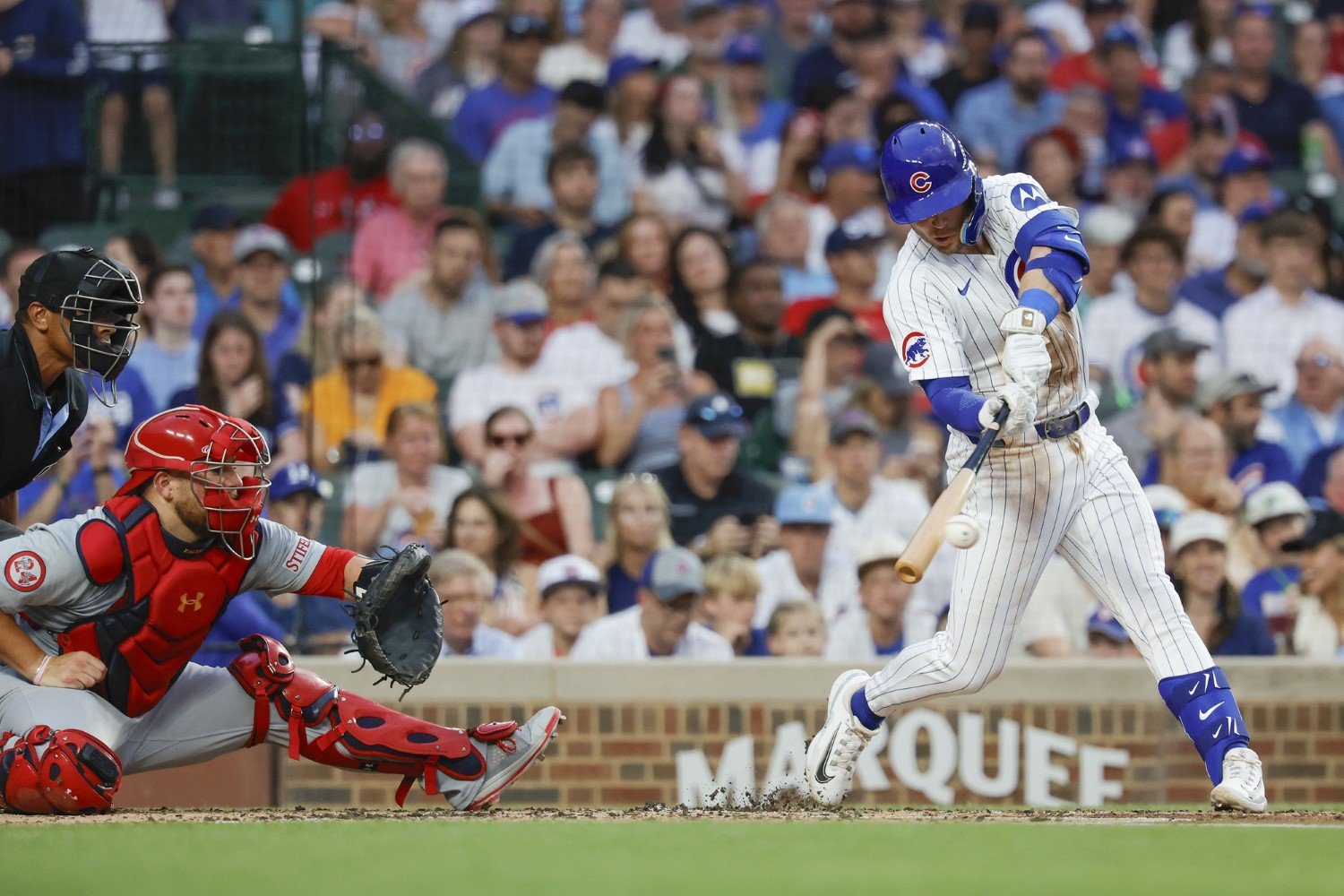 At his best, Nico Hoerner is an old-fashioned sparkplug. He can hit .300, with plenty of walks to push the on-base percentage associated with that average toward .380. He can steal bases and wreak havoc for opponents. Be it from the top of the order or as a rally-starter in the bottom half of it, Hoerner can be a dynamic offensive weapon. We know all this for sure, because he did it just last year, going .297/.377/.391 and stealing 23 bases after the 2023 All-Star break. This season, Hoerner has not been at his best. For the season, he's hitting .256/.325/.343, with 27 extra-base hits and 20 steals in 461 plate appearances. He's just not the player who keyed the team's offensive resurgence in the second half last year; the team has had to work around his subpar contributions. When you look at the essential numbers that inform most hitter evaluations, though, it's hard to see what's missing from Hoerner's game. To be more fair to Hoerner, let's compare his performance this year to all of last year, rather than focusing on a stretch that might have been at the outer edge of his capacity. Seasons PA BA OBP SLG ISO K% BB% BABIP ExitVel LaunchAng Hit95+% Chase% Miss% WOBA 2023 688 .283 .346 .383 .100 12.1% 7.1% .312 86.4 10.4 33.3% 30.2% 12.5% .322 2024 465 .254 .325 .341 .086 10.8% 7.3% .279 85.9 9.6 28.9% 31.8% 12.2% .297 You can pick nits here. Hoerner is hitting the ball slightly less hard, and he's expanding his zone slightly more often. In broad strokes, though, this is the same hitter. He's sustained one of the lowest strikeout rates in baseball. Almost the whole difference between last year and this year is in his worse BABIP, and as you can see, it's not like he was clobbering the ball before and is now just hitting dribblers. What's missing, leading to a deeply damaging sag in his outcomes on balls in play? In short: he's trying to pull the outside pitch way too much. Last year, Hoerner batted .312 and slugged .392 on pitches on the outer half of the plate. Especially in that second half, he was sensational at simply shooting the ball--sometimes on the ground, sometimes on a line toward the gap--to right field, often on pitches his opponents thought were just setting him up for later in the at-bat. This season, those numbers are .240 and .272, respectively. He's making more contact on pitches away from him, but having far, far less success. One problem that creeps into Hoerner's game often is the quest for power. Nico Hoerner will never successfully hit for power; it's not in him. Frequently, though, feeling pressure to produce even more than he does in his most successful forms, he tries to generate that punch, and it's always bad for him. In this case, it's meant trying to get around the ball and drive it to left field, even when it's on the outer part of the plate. Here's his binned spray chart for pitches on the outer half (or off the plate away) for each of the last two seasons. It paints a clear picture. Trying to pull and drive the outside pitch has Hoerner rolling over the ball more, so he's hitting more ground balls. He is successfully putting more of those batted balls to the outfield in left and center, but with his limited raw power, there's not much value in that. He was much harder to defend when he could attack right field, from the gap all the way to the foul line, more consistently. Hoerner has to get back to thinking opposite field when pitchers work him away. He also has to get back to being aggressive on the bases. Last season, Hoerner attempted a steal in 13.7% of his opportunities, and in the second half, that number was 15.4%. This season, he's at just 9.8%, despite going 20-for-22 and only having been caught on two pickoffs in April. Like Pete Crow-Armstrong, it seems possible that he just can't be thrown out, on a traditional steal attempt. He should be pushing the envelope more than he is. So much of this--so much of life, really--comes down to honest self-knowledge and self-understanding. Hoerner can be a powerful offensive force, but he has to stop trying to do it the same way Seiya Suzuki does. He's a singles hitter, but one with tremendous speed. He can have the same impact as a doubles hitter, and put up even gaudier numbers in the process. If he regains that concept of himself, he could steal another 20 bases over the next seven weeks, not least because he would be on base more. If he doesn't make that change, he'll continue to struggle, and the Cubs will have to head into the winter seriously contemplating a move that would send Hoerner elsewhere to make room for a needed offensive upgrade.
 -
What do we owe to each other? Sometimes, we're helpless to change the big, bad things of the world, but when we take as much from a place as baseball fans have taken from Venezuela, part of what we owe in return is our attention and our effort. Image courtesy of © David Banks-USA TODAY Sports There is an unfortunate tendency, in the United States, to think about much of the rest of the world as less cultured or civilized. That assumption is racist and xenophobic, and it's also objectively wrong. To wit: don't assume, merely because nothing material is being done about it, that there's massive ambiguity or confusion about what happened in Venezuela's recent national elections. On Jul. 28, millions of voters went to the polls in that nation, and its robust computerized voting tabulation system yielded reasonably clear results. President Nicolas Maduro lost, according to the best data that has made it out into the international public sphere, by a wide margin. Opposition challenger Edmundo González Urrutia won, and should be president right now. Instead, Gonzalez and his party are under a new investigation, instigated by Maduro's top prosecutor. The government has upended the will of the Venezuelan people and declared Maduro the winner, wielding fake or manipulated election results as a cudgel. Mass protests are underway, but the government is powerful and ruthless, and the international community (whether stretched too thin by the ongoing conflicts in Ukraine and the Middle East, or unwilling to engage in any infringement on national sovereignty, even in what seems like an egregious breach of that privilege) has not mustered any meaningful intervention. At what must be the most difficult moment of his young life, Cubs reliever Adbert Alzolay is speaking up. In a series of tweets over the last several days, he's drawing attention back to this issue over and over, even as he braces for career-threatening Tommy John surgery. Please notice that the above is in English. Alzolay tweeted and retweeted multiple things about the election and the ensuing unrest in the days before that post, but on Monday, he turned his message toward his English-speaking followers. Nor was it only that one post. We know, of course, that athletes are not politicians, and that many of them carry deeply confused or flawed political opinions. Like the rest of us, they are prone to statements that might be too strong, or self-interested. What Alzolay is trying to tell his (predominantly) American followers, though, is worth hearing and passing on, not as an endorsement of González or of any particular political ideology, but because it boils down to a simple truth: wrong was done here. This isn't right, and attention needs to be paid. The wrong won't be righted unless and until the world tunes in. The Carter Center issued a strong statement about the elections, back on Jul. 30. Do not, under any circumstances, take Alzolay's word for what happened, but do know that the international diplomatic and human rights advocacy community backs him up on it. We can not change the outcome of the Venezuelan elections. Paradoxically, though, it is our duty as baseball fans to try. It is our duty, as fans of Alzolay and Willson Contreras, of Luis Arráez and Ronald Acuña Jr., of Johan Santana and Dave Concepcion, to repay what we have gotten from Venezuela, by caring about the people who still live there (or who are fleeing, sometimes for their lives) in the same way we have chosen to care about the few who have come into our lives through this channel of entertainment. Call or email your Congressional representative. Talk to others about this developing crisis. And keep listening, to Alzolay and others who speak up about it. View full article
-
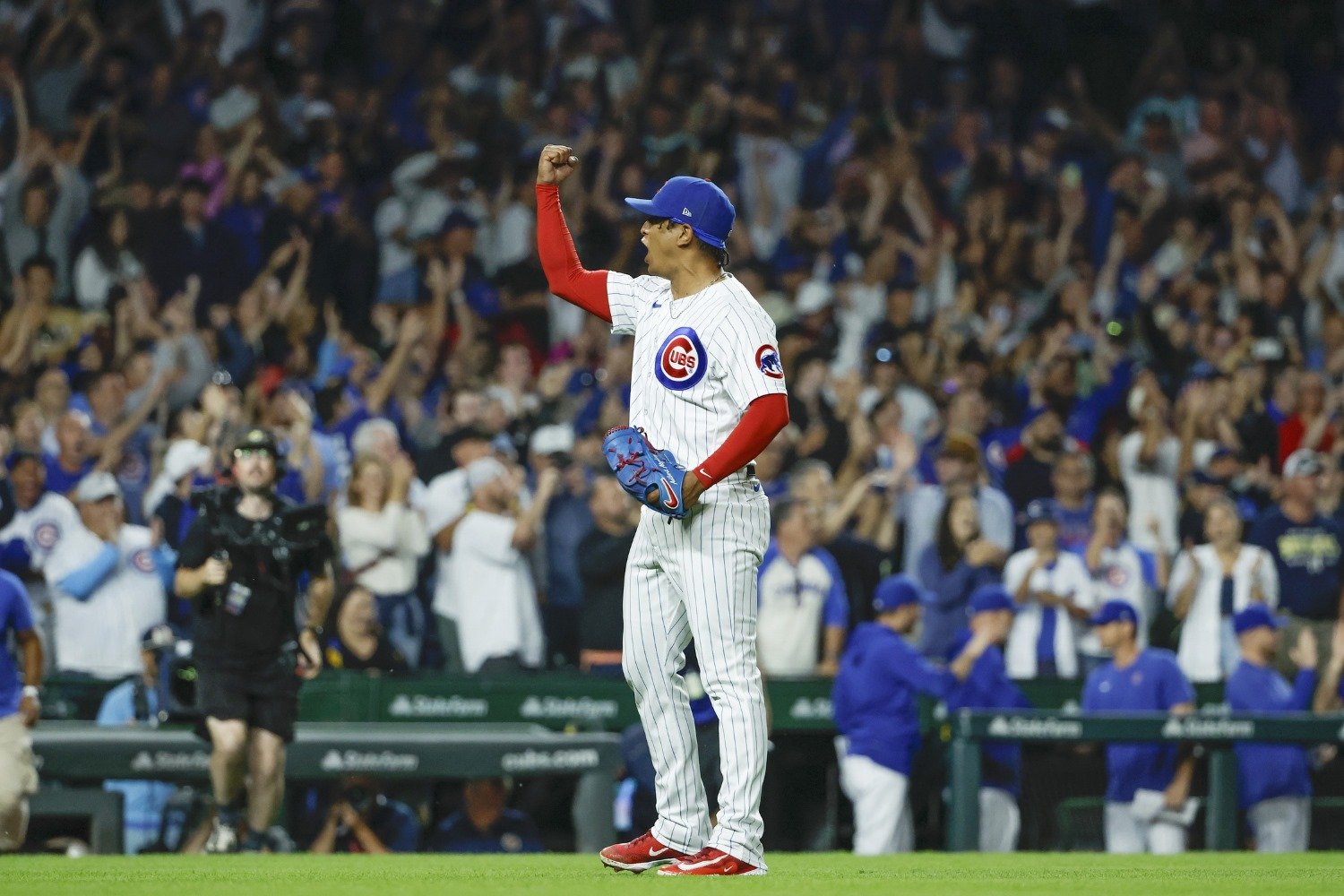 There is an unfortunate tendency, in the United States, to think about much of the rest of the world as less cultured or civilized. That assumption is racist and xenophobic, and it's also objectively wrong. To wit: don't assume, merely because nothing material is being done about it, that there's massive ambiguity or confusion about what happened in Venezuela's recent national elections. On Jul. 28, millions of voters went to the polls in that nation, and its robust computerized voting tabulation system yielded reasonably clear results. President Nicolas Maduro lost, according to the best data that has made it out into the international public sphere, by a wide margin. Opposition challenger Edmundo González Urrutia won, and should be president right now. Instead, Gonzalez and his party are under a new investigation, instigated by Maduro's top prosecutor. The government has upended the will of the Venezuelan people and declared Maduro the winner, wielding fake or manipulated election results as a cudgel. Mass protests are underway, but the government is powerful and ruthless, and the international community (whether stretched too thin by the ongoing conflicts in Ukraine and the Middle East, or unwilling to engage in any infringement on national sovereignty, even in what seems like an egregious breach of that privilege) has not mustered any meaningful intervention. At what must be the most difficult moment of his young life, Cubs reliever Adbert Alzolay is speaking up. In a series of tweets over the last several days, he's drawing attention back to this issue over and over, even as he braces for career-threatening Tommy John surgery. Please notice that the above is in English. Alzolay tweeted and retweeted multiple things about the election and the ensuing unrest in the days before that post, but on Monday, he turned his message toward his English-speaking followers. Nor was it only that one post. We know, of course, that athletes are not politicians, and that many of them carry deeply confused or flawed political opinions. Like the rest of us, they are prone to statements that might be too strong, or self-interested. What Alzolay is trying to tell his (predominantly) American followers, though, is worth hearing and passing on, not as an endorsement of González or of any particular political ideology, but because it boils down to a simple truth: wrong was done here. This isn't right, and attention needs to be paid. The wrong won't be righted unless and until the world tunes in. The Carter Center issued a strong statement about the elections, back on Jul. 30. Do not, under any circumstances, take Alzolay's word for what happened, but do know that the international diplomatic and human rights advocacy community backs him up on it. We can not change the outcome of the Venezuelan elections. Paradoxically, though, it is our duty as baseball fans to try. It is our duty, as fans of Alzolay and Willson Contreras, of Luis Arráez and Ronald Acuña Jr., of Johan Santana and Dave Concepcion, to repay what we have gotten from Venezuela, by caring about the people who still live there (or who are fleeing, sometimes for their lives) in the same way we have chosen to care about the few who have come into our lives through this channel of entertainment. Call or email your Congressional representative. Talk to others about this developing crisis. And keep listening, to Alzolay and others who speak up about it.
 -
The Cubs Need the Dansby Swanson Resurgence to Be Real. Is It?
Matthew Trueblood posted an article in Cubs
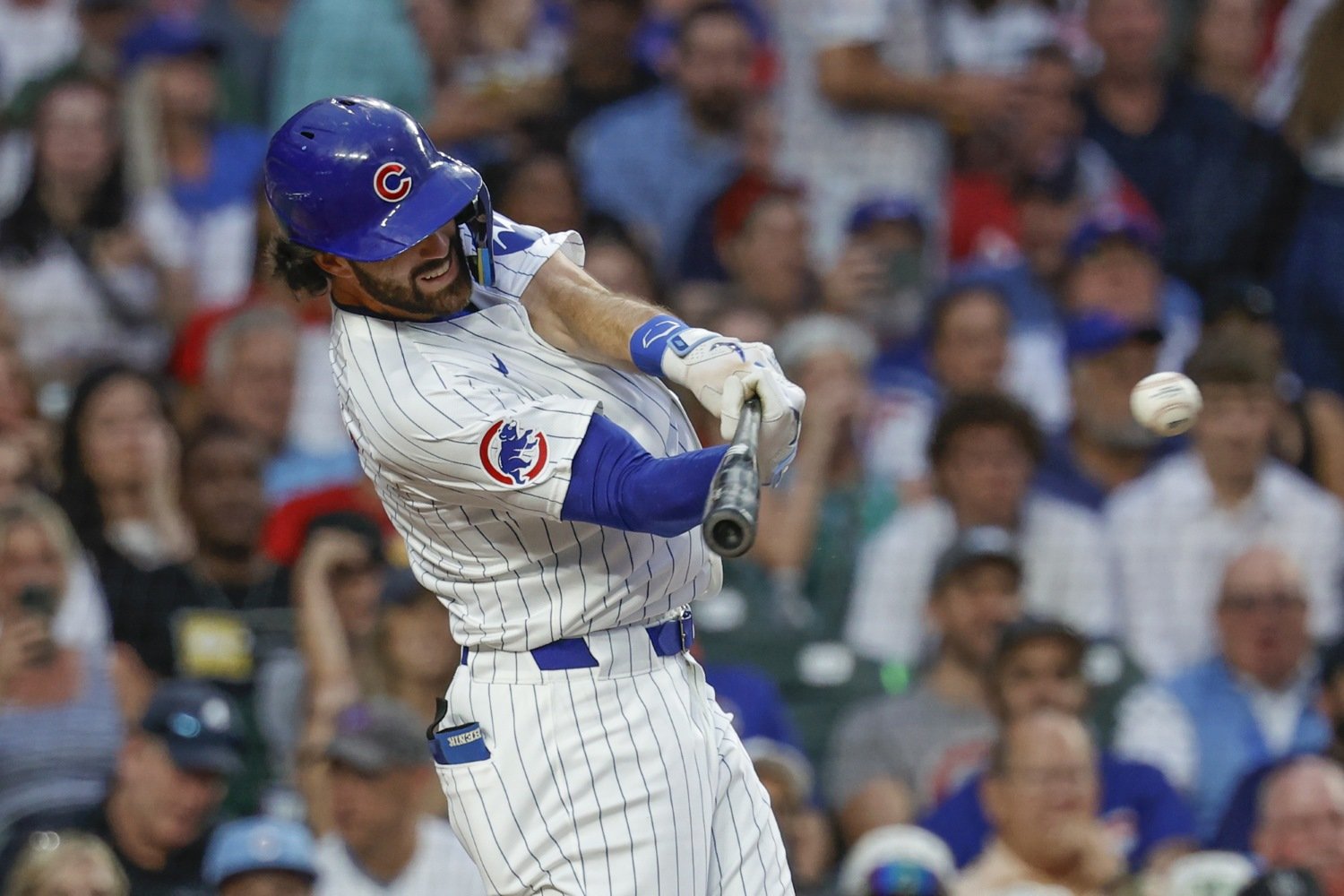 For nearly a year, Dansby Swanson's bat looked dead. From Aug. 1, 2023 through the recess for the All-Star break last month, Swanson batted .212/.286/.368. In 570 plate appearances, he struck out 26 percent of the time, walked 8.8 percent of the time, and hit 18 home runs. It was a very long stretch of futility for a player who turned 30 right in the middle of that stretch, over the offseason. There were no guarantees he would ever be especially useful at the plate again. That could still turn out to be true. We're only 69 plate appearances into the second half of this season, and there's all kinds of noise in the data. However, it sure looks like Swanson got healthy, inspired, or otherwise fueled up over the four-day break last month. He's a whole different hitter since the start of baseball's unofficial second half. He's hitting .317/.391/.400 over this span. His walk rate is up to 11.6%, and his strikeout rate is down to 20.3%. He hasn't yet homered, but hits are everywhere for Swanson over the last three weeks. In the first half, he hit far too many ground balls, and also too many high pop flies. The trouble spots in the graphic above are the big gray bars just south of 0 degrees of launch angle, which mean he was hitting a lot medium-speed, routine ground balls; and the pale salmon bar just above 30 degrees, which means he was hitting a lot of fly balls that were almost threatening, but not quite. Here's the same chart for the admittedly tiny sample he's accumulated since the break. Those easy grounders are almost nonexistent, lately. His high liners and low fly balls are better-struck. And see that cluster of deep blue, way below the equator in terms of launch angle? It's not how you'd want to try making a living, but those slowly hit balls straight into the ground are often viciously difficult to convert into outs. Swanson has four infield hits on such balls already in the second half, and sometimes, the difference between a strikeout and even this ostensibly unpromising contact can be night and day. Dansby Chop.mp4 Indeed, Swanson has made far more contact since the break, and part of that is being willing to adapt his swing and his approach, rather than try to blast away on every swing. Mostly, though, the promise lies in the fact that Swanson seems to have figured out how to time up his upper and lower halves better. Consider two 0-1 sliders, 11 months apart, both thrown to Swanson at Great American Ballpark in Cincinnati. Last September, he pulled off the ball, got it off the end of his bat, and flied out lazily. This is typical of a lot of his contact over the final two months of that season, and throughout the first half of 2024. Not So Good Last Year.mp4 Now, here's how he looked at the tail end of this July. Same pitch, different swing, very different result. Dansby Drive.mp4 Swanson waits a bit longer to transfer his weight in his lower half, and is more balanced when he does so. Meanwhile, his hands stay closer to his body much longer, and then he fires. This is a swing that can adapt much better to various pitch types and locations. It doesn't lend the hitter as high a maximum possible exit velocity, but that's fine. Here, let's isolate the crucial moment, for easy comparison. Each of these stills are when the ball is about 10 feet from home plate. The image on the left is a hitter who's worried about being on time, so he's cheating everywhere. The front hip is leaking open more, and he's on his front foot. The hands are way out there, trying to get extended--but really, just trying not to get jammed, should the pitch be a sinker inside. The one on the right is a hitter who's trusting his bat speed. He's actually going to contact the ball just as far out in front as the one on the left; he's just going to be far more under control as the barrel accelerates. Swanson probably isn't totally fixed, just yet. This change to his timing and posture is positive, but it won't turn him into a superstar. However, it's the change he's been needing to make for months, and it could well mark the turning of a corner. Swanson still has the physical tools to be a .750 OPS guy. The challenge is being consistent enough, in both pitch selection and these finer points of the movements of hitting, to translate that ability into production. For a long time, Swanson was unable to meet that challenge, and the Cubs' offense is one (uninspiring) thing when he's thus mired. When he's doing what he's doing lately, though, that offense is an entirely different thing, and the Cubs are an entirely different team. The team desperately needs its star shortstop to keep those hands close and quick.