


Matthew Trueblood
-
Posts
2,481 -
Joined
-
Last visited
-
Days Won
2
Content Type
Profiles
Joomla Posts 1
Chicago Cubs Videos
Chicago Cubs Free Agent & Trade Rumors, Notes, & Tidbits
2026 Chicago Cubs Top Prospects Ranking
News
2023 Chicago Cubs Draft Picks
Guides & Resources
2024 Chicago Cubs Draft Picks
The Chicago Cubs Players Project
2025 Chicago Cubs Draft Pick Tracker
2026 Chicago Cubs Draft Tracker: Picks & Bonuses
Blogs
Events
Forums
Store
Gallery
Everything posted by Matthew Trueblood
-
The latest twist in this World Series, already as loaded with drama as such an entity can be so early in the proceedings, is that the wounded superstar intends to play through a daunting injury. And that's not even the biggest headline, at the moment. Image courtesy of © Jayne Kamin-Oncea-Imagn Images All year, Aaron Judge was one of the best hitters in baseball on low pitches. No tall hitter gets very far if they don't learn to guard the bottom rail of their strike zone, because to pitchers accustomed to facing guys six inches shorter, it's pretty easy to target that segment. Judge long ago learned to cover that area, but because his swing is all about staying compact and getting up through the ball he still doesn't like to swing there. During the regular season, Judge swung at just 32.8% of pitches in the lower third of the zone and below, one of the lowest rates in baseball. He only chased a bit over 17% of the low pitches he saw outside the zone, eighth-best of the 282 batters who saw at least 500 low pitches on the year. He doesn't have a persistent problem with low stuff, even tight, low breaking stuff. That set of pitches isn't kryptonite; it's limestone. You can find it everywhere, and no hitter for whom that was a weakness could possibly be Superman, as Judge has been for the last three years. Nor, in these playoffs, has he totally broken and started fishing wildly on those offerings. It's tempting to feel like he has, based both on his overall failure to produce throughout the postseason and on the narratives pushed by certain commentators broadcasting the World Series, but in fact, he's chasing at just a 25.9% rate this month on those low offerings outside the zone. It's never good to chase more, but it's natural to get slightly anxious. The more important problem is not pitch recognition or plate discipline, but the fact that Judge's timing is out of whack. He whiffed on 27% of lower-third pitches inside the zone during the regular season, but that number is 48.3% in the postseason. That is the crisis number, and it's hard to solve the problems that spring from it. Though John Smoltz labored in an effort to prove Judge "in-between" during Game 2 analytical interludes, the facts defy him. Judge has not seen a spike in in-zone whiffs or a degradation in batted-ball quality on hard stuff, even at above-average velocities, during the postseason. He's just hunting fastballs too aggressively, given that he's not getting them. In the regular season, four-seamers and sinkers made up 43.5% of the pitches he saw. This month, it's been 37.3%. The share of pitches he's seen that are breaking balls is up from a regular-season share of 32% to over 38%. The Yankees' captain wants to be his teammates' hero, and he's begging every pitch to be a fastball. He's gearing up and starting early, wanting the fastball. He keeps getting wrinkles, and he looks terrible on them right now. If he succeeds in Games 3 and beyond, it will be by relaxing into his at-bat more, willing to be late on the fastball and secure in the knowledge that his swing is fast enough to do damage even if he truly is late. More often, since it's October and he's clearly sped-up, trying to be slow will put him right on time, and he'll be able to handle the slider again. That ability is still in there. The problem with all of this analysis, though, is the yawning gap between the ease of identifying the issues and the ease of solving them. Again, this is all about feelings. It's about compensating for whatever extra sense of fatigue he's feeling, amid the absolutely scorching internal fire of wanting to finish off this championship run. It's about managing the moment, not the mechanics. It's about dealing with the rising brain pain of these struggles, and finding enough calm within it to get back in touch with his talent. Where Judge bats for the Yankees will be a hot-button topic, unless and until he breaks out of this. Aaron Boone has taken criticism already for not sliding him down at the expense of Giancarlo Stanton, wild though that might sound, but it's fair to note that Boone has lived a charmed life just to get this far into the postseason. He hasn't managed especially well; he's gotten especially lucky. View full article
-
It's not just a question of their ages and arsenals. It's also about which resources you're willing to spend, and when. Image courtesy of © Orlando Ramirez-Imagn Images Sometime in the next 10 days, free agency will officially open, and Blake Snell will opt out of his contract with the San Francisco Giants. Snell, 32 in December, hit the open market on the heels of his second Cy Young-winning season last fall, but he languished seemingly unwanted until the endgame of the offseason, when he signed a flexible deal with San Francisco. He has a player option for $30 million for 2025, but will surely forgo that payday to try again for a much better one This time, he won't be tethered to draft pick compensation for any signing team, and although he struggled through both a truncated ramp-up and multiple injuries, he turned in 104 innings of good ball. Only one hurler in the league bested his strikeout rate of 34.7%, and no one who threw at least 100 frames as a starter held opposing batters to a lower weighted on-base average (wOBA) than the .241 Snell inflicted. He was, pitch for pitch, the best starting pitcher in baseball, for the second season in a row, even better than Tarik Skubal or Paul Skenes. Meanwhile, closer to home, the White Sox will not-so-quietly go about shopping Garrett Crochet. He was available at the right price even this summer. During this hot stove season, he will almost surely be moved, as the worst team in baseball history looks to lean further into its rebuild and scale back its payroll. Crochet's track record makes a hilarious, almost ludicrous juxtaposition with that of Snell. Never a big-league starter until this year, Crochet followed an extremely cautious, strict plan to make 32 starts for the moribund Sox, pitching only 146 innings in that process. Nonetheless, he fanned 209 batters, or 35.1% of those he faced. Because he was brought so rapidly to the majors after being drafted and accrued so much service time while shelved with various injuries, Crochet is already just two years away from hitting free agency. He'll get a substantial raise via arbitration this winter, and is in the market for a more lastingly lucrative multi-year extension. Since he won't even turn 26 until June, that could be a terrific investment—but the facts of his injury history and lack of experience as a starter are tough pills to swallow, given how much he will cost to acquire. The two southpaws, Snell and Crochet, struck out hitters at higher rates than any other big-league starters last year. They're formidable, ace-caliber starters, although Snell's nibbling style and high walk rate is a drawback, and so is Crochet's lack of establishment in the role. Although the names Corbin Burnes (23.1% 2024 strikeout rate) and Max Fried (23.2%) have come up much more often in this preheating period for the hot stove, the Cubs should at least take an active interest in Snell and Crochet, whose ability to miss bats makes them transformative in a way that neither of the more commonly rumored Cubs targets would be. The question is: Which one? Crochet is the more readily appealing, not only because he's younger and would leave the team much more money to spend in the short run, but because he was able to rack up his strikeouts while going right after hitters and maintaining a low walk rate. The Cubs can make up for some of the innings gap that will probably persist between Snell and Crochet, too, because they have fair rotation depth already and would be able to further supplement that corps with a durable back-end starter after adding Crochet. The downside is the fact that he would cost the team at least two of their most highly-prized prospects. It's likely that the White Sox would demand one of Matt Shaw and Owen Caissie, plus one of the team's top pitching prospects, Cade Horton, Brandon Birdsell, or Ben Brown. In order to give up so much, the Cubs could try to make the trade contingent on an extension with Crochet, as the Dodgers did with Tyler Glasnow last winter, but Glasnow (another tall, oft-injured strikeout maven who was nearing free agency without having proved he could withstand a full season as a starter) is a good example of how that can backfire. He's not available to the Dodgers right now, and might never demonstrate the durability required of a top-tier starter. Snell, on the other hand, might get $200 million on a deal lasting six years. That sounds much too rich, but the similarly qualified and considerably older Jacob deGrom got a gaudy five-year, $185-million deal from the Rangers two winters ago. Now that Snell has spent another year proving he can rack up whiffs in a new place, and without the qualifying offer interfering with his market, he could score big. On balance, it's Snell who makes more sense, especially if the widespread concerns about regional TV revenues dampen his market. It feels like prying Crochet loose from intracity rivals would be too difficult and artificially costly. Either hurler would be a welcome new weapon for a starting rotation that needs more swing-and-miss in 2025, though. The Cubs need to be ready to spend big to acquire top-end talent, in whatever form of currency is required, and the pitching staff might need a true star even worse than the lineup. They're lucky to have a wide array of ways to make high-impact moves this winter, on either front. View full article
-
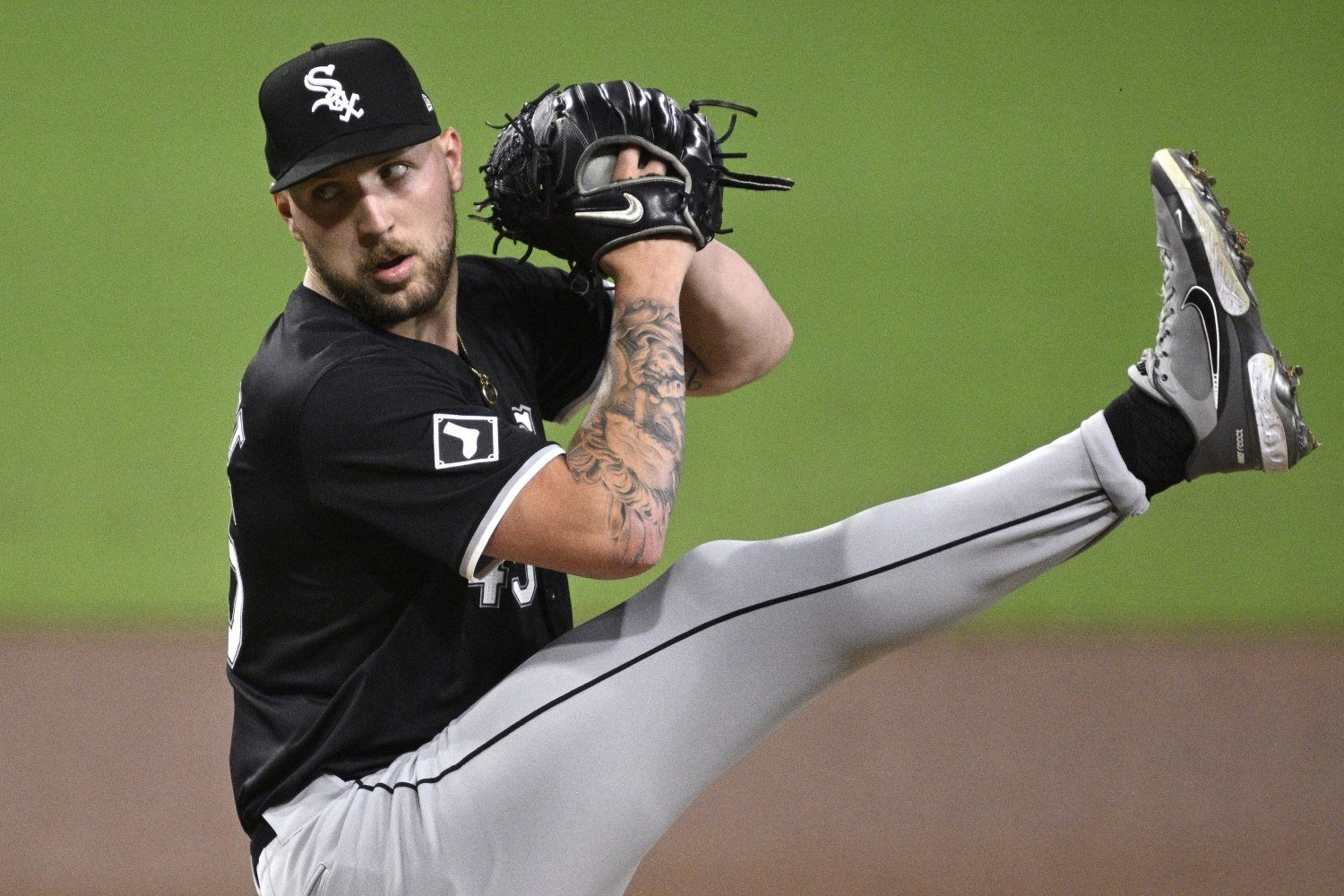 Sometime in the next 10 days, free agency will officially open, and Blake Snell will opt out of his contract with the San Francisco Giants. Snell, 32 in December, hit the open market on the heels of his second Cy Young-winning season last fall, but he languished seemingly unwanted until the endgame of the offseason, when he signed a flexible deal with San Francisco. He has a player option for $30 million for 2025, but will surely forgo that payday to try again for a much better one This time, he won't be tethered to draft pick compensation for any signing team, and although he struggled through both a truncated ramp-up and multiple injuries, he turned in 104 innings of good ball. Only one hurler in the league bested his strikeout rate of 34.7%, and no one who threw at least 100 frames as a starter held opposing batters to a lower weighted on-base average (wOBA) than the .241 Snell inflicted. He was, pitch for pitch, the best starting pitcher in baseball, for the second season in a row, even better than Tarik Skubal or Paul Skenes. Meanwhile, closer to home, the White Sox will not-so-quietly go about shopping Garrett Crochet. He was available at the right price even this summer. During this hot stove season, he will almost surely be moved, as the worst team in baseball history looks to lean further into its rebuild and scale back its payroll. Crochet's track record makes a hilarious, almost ludicrous juxtaposition with that of Snell. Never a big-league starter until this year, Crochet followed an extremely cautious, strict plan to make 32 starts for the moribund Sox, pitching only 146 innings in that process. Nonetheless, he fanned 209 batters, or 35.1% of those he faced. Because he was brought so rapidly to the majors after being drafted and accrued so much service time while shelved with various injuries, Crochet is already just two years away from hitting free agency. He'll get a substantial raise via arbitration this winter, and is in the market for a more lastingly lucrative multi-year extension. Since he won't even turn 26 until June, that could be a terrific investment—but the facts of his injury history and lack of experience as a starter are tough pills to swallow, given how much he will cost to acquire. The two southpaws, Snell and Crochet, struck out hitters at higher rates than any other big-league starters last year. They're formidable, ace-caliber starters, although Snell's nibbling style and high walk rate is a drawback, and so is Crochet's lack of establishment in the role. Although the names Corbin Burnes (23.1% 2024 strikeout rate) and Max Fried (23.2%) have come up much more often in this preheating period for the hot stove, the Cubs should at least take an active interest in Snell and Crochet, whose ability to miss bats makes them transformative in a way that neither of the more commonly rumored Cubs targets would be. The question is: Which one? Crochet is the more readily appealing, not only because he's younger and would leave the team much more money to spend in the short run, but because he was able to rack up his strikeouts while going right after hitters and maintaining a low walk rate. The Cubs can make up for some of the innings gap that will probably persist between Snell and Crochet, too, because they have fair rotation depth already and would be able to further supplement that corps with a durable back-end starter after adding Crochet. The downside is the fact that he would cost the team at least two of their most highly-prized prospects. It's likely that the White Sox would demand one of Matt Shaw and Owen Caissie, plus one of the team's top pitching prospects, Cade Horton, Brandon Birdsell, or Ben Brown. In order to give up so much, the Cubs could try to make the trade contingent on an extension with Crochet, as the Dodgers did with Tyler Glasnow last winter, but Glasnow (another tall, oft-injured strikeout maven who was nearing free agency without having proved he could withstand a full season as a starter) is a good example of how that can backfire. He's not available to the Dodgers right now, and might never demonstrate the durability required of a top-tier starter. Snell, on the other hand, might get $200 million on a deal lasting six years. That sounds much too rich, but the similarly qualified and considerably older Jacob deGrom got a gaudy five-year, $185-million deal from the Rangers two winters ago. Now that Snell has spent another year proving he can rack up whiffs in a new place, and without the qualifying offer interfering with his market, he could score big. On balance, it's Snell who makes more sense, especially if the widespread concerns about regional TV revenues dampen his market. It feels like prying Crochet loose from intracity rivals would be too difficult and artificially costly. Either hurler would be a welcome new weapon for a starting rotation that needs more swing-and-miss in 2025, though. The Cubs need to be ready to spend big to acquire top-end talent, in whatever form of currency is required, and the pitching staff might need a true star even worse than the lineup. They're lucky to have a wide array of ways to make high-impact moves this winter, on either front.
 -
As we hit the three-week mark of the Arizona Fall League season, let’s recap some of the trends we’ve seen from the Chicago Cubs contingent spending their October (and part of November) in Mesa. Image courtesy of © Austin Hough / South Bend Trobune / USA TODAY NETWORK On the position side, Moises Ballesteros has continued to flash much of what made him such an enticing prospect throughout 2024. He’s shown the power, utilizing his work behind the plate to key his development as a hitter. Jonathon Long has showcased the power bat that is one of his hallmarks. Ben Cowles has demonstrated a keen approach, but has struggled to produce hits consistently. Up on the bump, it’s been more of a mixed bag. So much of what we saw in Week 3 makes plenty of sense. Ballesteros started the week off with an 0-for-5 dud of a performance on Tuesday. But he came back out on Wednesday and went 2-for-4 with a double and homer, his third of each during the fall slate. He added three more hits (including his fourth homer) on Friday to round out the week. He’s now at a .391/.431/.717 line for the fall, with just seven strikeouts against four walks. Suffice to say, his AFL stint has been just about everything we could have hoped for. Long and Cowles also maintained much of what we’ve seen from them for the Solar Sox. The former knocked in a pair of runs with a hit on Wednesday before slugging his third home run of the fall on Thursday. He drove in another run with a hit on Friday. He’s hitting .317 across 46 plate appearances, with his 13 RBIs pacing Mesa thus far. Cowles was 1-for-7 between Tuesday and Wednesday, before recording three hits in a 14-run Solar Sox outburst on Friday. It’s been uneven, but he has his batting average up to .244 and is maintaining a .354 OBP through 48 trips to the plate, despite a slow start. Cubs pitchers were spread quite a bit throughout the week. Vince Reilly kicked off the week for the North Side delegation, as he threw two shutout innings in Tuesday’s loss to Surprise, with a strikeout, walk, and hit recorded throughout. The next day, Mesa turned to Grant Kipp, who turned in a lovely start. He threw three innings and struck out five in what was perhaps the biggest highlight from Chicago pitching for the week—especially given how much of a struggle the end of it turned out to be. Kipp only sits 92-93 MPH and will turn 25 years old next month, but he does have an interesting pair of breaking balls and stands 6-foot-6. It would make a lot of sense to move him to the bullpen next year and see if he can take a forward leap. Friday was a busy one that saw three Cub arms take the mound, including a start from Luis Rujano. Rujano struggled across his two innings, with three strikeouts, three walks, two hits, and a pair of runs mixed in a busy couple of innings. Shane Marshall appeared later in that game, with a scoreless inning in the midst of a difficult fall season. That appearance dropped his ERA in the AFL to… 20.25. Sam Thoresen appeared in the ninth inning of what was, at that point, a blowout against Peoria. Five walks, a hit, and four unearned runs later, it was a 14-10 Mesa win that required a late save from Athletics prospect Wander Guante. Reilly bookended the week with another inning (and a save) against Glendale on Saturday, despite three walks in his single inning of work. So this week for the Mesa Solar Sox, as it relates to the Cubs, was much like the first two. Some really nice stuff from the hitters and an extremely mixed bag of outings from the arms. After a day off on Sunday, the Sox will head back out to Surprise ahead of an actual full week of games. View full article
-
The Dodgers have a commanding lead in the World Series—except, they now face the prospect of a cross-country trip into the toughest place for visitors to play postseason baseball, their pitching is wearing thin, and the best player in baseball might be gone from the top of their lineup. Image courtesy of © Jayne Kamin-Oncea-USA TODAY Sports You can't unring a bell, because there's no way to reverse sound waves. Waves are waves and they make sounds, and there's no backward and forward to them, except in cases where we expect a highly organized set of sounds. You can tell if I say this sentence backward to you, but you won't hear a difference if a bell rings backward. Most importantly, too, you can put all the atoms that make up the air right back where they were, but it won't change the fact that the vibrations passed through them. That's how baseball works, too. Carlos Rodón didn't pitch all that badly, for most of his outing. He retired eight of the first 10 batters he faced, and the last two, and he was lifted early as much because the World Series is a high-stakes environment requiring special measures as because damage seemed imminent again. The problem: in between his strong start and those solid couple of batters to finish, he allowed a double, two home runs, and another double. The Dodgers, who are just lethal this way, rang the bell loud and hard. Basketball doesn't really have an analog for this, but the other major team sports all do. Within any game, there will be strongest and weakest stretches for you, and that's fine; it's unavoidable. The quality of your opponent determines your margin for error, though, and if your worst stretch is a little too sloppy and your opponent is really good, the rest of it might not matter. Football games can slip irretrievably away because of one bad turnover that the opponent turns into points. Even more akin to baseball is soccer, where the scoring baseline is low enough that a lapse of just a few minutes can render 85 minutes of hard fight and sound plans meaningless. Yoshinobu Yamamoto never had that prolonged slip. He gave up a solo home run to Juan Soto, just as Rodón did to Tommy Edman, but he never had another bad stretch on which the Yankees could capitalize. Blake Treinen nearly did, but New York's inferior lineup depth denied them the ability to seize their opportunity the way Los Angeles had. There's a better metaphor for the unrung bell that we have to talk about, though, because if this Series makes it back to Dodger Stadium from here, one big reason will be a play that didn't involve Rodón or Yamamoto or Treinen. View full article
-
.png.d02f9d2e07401e432bc2d6c1c83786d4.png) You can't unring a bell, because there's no way to reverse sound waves. Waves are waves and they make sounds, and there's no backward and forward to them, except in cases where we expect a highly organized set of sounds. You can tell if I say this sentence backward to you, but you won't hear a difference if a bell rings backward. Most importantly, too, you can put all the atoms that make up the air right back where they were, but it won't change the fact that the vibrations passed through them. That's how baseball works, too. Carlos Rodón didn't pitch all that badly, for most of his outing. He retired eight of the first 10 batters he faced, and the last two, and he was lifted early as much because the World Series is a high-stakes environment requiring special measures as because damage seemed imminent again. The problem: in between his strong start and those solid couple of batters to finish, he allowed a double, two home runs, and another double. The Dodgers, who are just lethal this way, rang the bell loud and hard. Basketball doesn't really have an analog for this, but the other major team sports all do. Within any game, there will be strongest and weakest stretches for you, and that's fine; it's unavoidable. The quality of your opponent determines your margin for error, though, and if your worst stretch is a little too sloppy and your opponent is really good, the rest of it might not matter. Football games can slip irretrievably away because of one bad turnover that the opponent turns into points. Even more akin to baseball is soccer, where the scoring baseline is low enough that a lapse of just a few minutes can render 85 minutes of hard fight and sound plans meaningless. Yoshinobu Yamamoto never had that prolonged slip. He gave up a solo home run to Juan Soto, just as Rodón did to Tommy Edman, but he never had another bad stretch on which the Yankees could capitalize. Blake Treinen nearly did, but New York's inferior lineup depth denied them the ability to seize their opportunity the way Los Angeles had. There's a better metaphor for the unrung bell that we have to talk about, though, because if this Series makes it back to Dodger Stadium from here, one big reason will be a play that didn't involve Rodón or Yamamoto or Treinen.
You can't unring a bell, because there's no way to reverse sound waves. Waves are waves and they make sounds, and there's no backward and forward to them, except in cases where we expect a highly organized set of sounds. You can tell if I say this sentence backward to you, but you won't hear a difference if a bell rings backward. Most importantly, too, you can put all the atoms that make up the air right back where they were, but it won't change the fact that the vibrations passed through them. That's how baseball works, too. Carlos Rodón didn't pitch all that badly, for most of his outing. He retired eight of the first 10 batters he faced, and the last two, and he was lifted early as much because the World Series is a high-stakes environment requiring special measures as because damage seemed imminent again. The problem: in between his strong start and those solid couple of batters to finish, he allowed a double, two home runs, and another double. The Dodgers, who are just lethal this way, rang the bell loud and hard. Basketball doesn't really have an analog for this, but the other major team sports all do. Within any game, there will be strongest and weakest stretches for you, and that's fine; it's unavoidable. The quality of your opponent determines your margin for error, though, and if your worst stretch is a little too sloppy and your opponent is really good, the rest of it might not matter. Football games can slip irretrievably away because of one bad turnover that the opponent turns into points. Even more akin to baseball is soccer, where the scoring baseline is low enough that a lapse of just a few minutes can render 85 minutes of hard fight and sound plans meaningless. Yoshinobu Yamamoto never had that prolonged slip. He gave up a solo home run to Juan Soto, just as Rodón did to Tommy Edman, but he never had another bad stretch on which the Yankees could capitalize. Blake Treinen nearly did, but New York's inferior lineup depth denied them the ability to seize their opportunity the way Los Angeles had. There's a better metaphor for the unrung bell that we have to talk about, though, because if this Series makes it back to Dodger Stadium from here, one big reason will be a play that didn't involve Rodón or Yamamoto or Treinen. -
"That means one of James Triantos, Moisés Ballesteros, Kevin Alcántara, or Owen Caissie on the offensive side, ***OR*** one of Cade Horton and Brandon Birdsell on the pitching side." New emphasis but no change in the text.
-
Friday night, we all got to watch something that hadn't happened since 1988. We also got to watch something that hadn't happened since 1960. And honestly, it amounts to something that hasn't happened, period. Image courtesy of © Sage Osentoski-Imagn Images When Game 1 of the 2024 World Series began, there had been 20 home runs in the history of the Fall Classic that took a team from behind to ahead, in the sixth inning or later. There have been more go-ahead home runs than that, of course, but it's easy to forget just how many of them came with the score already tied. Often, in those moments, you already knew something was up. Those dingers hit like sudden, breathtaking forward sprints, from a standing start: they brought the blood up to your cheeks, and they got that tingle of adrenaline racing out to your fingertips. But was there drama, there? Was the rising action sufficient to give the moment the perfect mixture of expectation and desperation—of fear, and hope, and then (depending on your perspective) the violent confounding or confirmation of either? No, I like my go-ahead homers to be single-stroke come-from-behind jobs. To make them happen, there has to have been some preamble. After all, there's a runner on base. Besides, while a tie game can be tense and taut, the ragged, feral energy of a close but non-tied game is something different, brighter, sharper, more dangerous, and more fun. In those moments, a home run hits less like a sudden sprint and more like a masterfully blocked twist in a dramatic story. Twists that good are earned and difficult and therefore rare, which is why we'd only seen 20 of them when Friday's game started. Now we've seen 22. View full article
-
The Earned Drama and the Hero Shot: World Series Game 1
Matthew Trueblood posted an article in Caretakers
.png.d80de225ceb49523e970b183c64e46ef.png) When Game 1 of the 2024 World Series began, there had been 20 home runs in the history of the Fall Classic that took a team from behind to ahead, in the sixth inning or later. There have been more go-ahead home runs than that, of course, but it's easy to forget just how many of them came with the score already tied. Often, in those moments, you already knew something was up. Those dingers hit like sudden, breathtaking forward sprints, from a standing start: they brought the blood up to your cheeks, and they got that tingle of adrenaline racing out to your fingertips. But was there drama, there? Was the rising action sufficient to give the moment the perfect mixture of expectation and desperation—of fear, and hope, and then (depending on your perspective) the violent confounding or confirmation of either? No, I like my go-ahead homers to be single-stroke come-from-behind jobs. To make them happen, there has to have been some preamble. After all, there's a runner on base. Besides, while a tie game can be tense and taut, the ragged, feral energy of a close but non-tied game is something different, brighter, sharper, more dangerous, and more fun. In those moments, a home run hits less like a sudden sprint and more like a masterfully blocked twist in a dramatic story. Twists that good are earned and difficult and therefore rare, which is why we'd only seen 20 of them when Friday's game started. Now we've seen 22.
When Game 1 of the 2024 World Series began, there had been 20 home runs in the history of the Fall Classic that took a team from behind to ahead, in the sixth inning or later. There have been more go-ahead home runs than that, of course, but it's easy to forget just how many of them came with the score already tied. Often, in those moments, you already knew something was up. Those dingers hit like sudden, breathtaking forward sprints, from a standing start: they brought the blood up to your cheeks, and they got that tingle of adrenaline racing out to your fingertips. But was there drama, there? Was the rising action sufficient to give the moment the perfect mixture of expectation and desperation—of fear, and hope, and then (depending on your perspective) the violent confounding or confirmation of either? No, I like my go-ahead homers to be single-stroke come-from-behind jobs. To make them happen, there has to have been some preamble. After all, there's a runner on base. Besides, while a tie game can be tense and taut, the ragged, feral energy of a close but non-tied game is something different, brighter, sharper, more dangerous, and more fun. In those moments, a home run hits less like a sudden sprint and more like a masterfully blocked twist in a dramatic story. Twists that good are earned and difficult and therefore rare, which is why we'd only seen 20 of them when Friday's game started. Now we've seen 22. -
For this particular Fall Classic, the Midwest truly will be flyover country, as the Yankees and Dodgers pull the attention of the baseball world back and forth across the breadth of the continent. For fans who can set aside their provincialism and the bitterness of their own seasons' ends, though, it's going to be a whale of a matchup. Image courtesy of © Jayne Kamin-Oncea-Imagn Images Why does it affront so many fans when big-market teams succeed? That question is rhetorical, but not sneering, because once you think about it a bit, the reason is both obvious and reasonable: it makes us all feel small. Every baseball fan holds equal worth, and no team's worth and value depends solely on the size of their fan base, let alone some special merit that stretches past numbers. That's the truth, and it's fair and it's just, but the sharp-edged threat and snarl of it is this: there are more Yankees fans than there are Twins fans. There are more Dodgers fans than there are Twins fans. They aren't smarter, or more passionate, or more special, and neither the league nor its broadcast partners nor mainstream media intends to treat those fans as more valuable than Twins, Brewers, Cubs, or any other kinds of fans. But there are way, way more of them, and that raises the stakes of the whole affair when something like this World Series matchup happens. The league has a greater opportunity, and has a fiduciary duty—as much to Twins and Brewers and Cubs fans as to Yankees and Dodgers fans—to seize it. Their broadcast partners have a larger audience and the ability to justify more resources allocated toward serving it. The commentary media has a chance, especially in our polarized and friction-fueled social media world, to stir up some pride and some bile. They're all going to act accordingly, and it's hard to blame them—er, actually, it's very easy, fun, and wildly popular to blame them. But it's probably also wrong. Coverage of a series like Yankees-Dodgers tends to savor of triumphalism, which our Midwestern eyes tend to code as coastal elitism. In truth, though, it's just writers and marketers and TV producers working with what they have. We might fairly argue for a system that works harder to evenly distribute revenue throughout the league, but even if such a system went into effect today, it wou;dn't erase the last 125 years. Over that century and change, Yankee and Dodger triumphs pepper the landscape, and Yankees and Dodgers legends people the pages. Why is this Series exciting? Because these two teams are meeting in this context for the 12th time, more than anyone else has done it. When the Twins made the World Series, there were plenty of paeans to the value of Minnesotan baseball and its specific virtues. It's just been so long since the team made it that we tend to misremember those blandishments as smaller than the compliments paid to these teams. Certainly, when the Cubs were in the Series in 2016, a huge deal was made of it. Now, it's the Yankees' and Dodgers' turn. Have I convinced you to care about this fight between two evil corporate supervillains? If so, I hope you'll read on, especially if you're not yet a Caretaker. You can become one for just $6 on our monthly plan, which will get you my coverage throughout the Series and our Offseason Handbook right after it. After that, you can decide whether to stick around and continue enjoying the benefits of our premium content, along with extra perks. If not, hey, sign up anyway! Maybe I can sell you on it before the games run out. View full article
-
Yankees vs. Dodgers: Previewing the 2024 World Series
Matthew Trueblood posted an article in Caretakers
.png.344d7975fb297d919f306527c1c3e540.png) Why does it affront so many fans when big-market teams succeed? That question is rhetorical, but not sneering, because once you think about it a bit, the reason is both obvious and reasonable: it makes us all feel small. Every baseball fan holds equal worth, and no team's worth and value depends solely on the size of their fan base, let alone some special merit that stretches past numbers. That's the truth, and it's fair and it's just, but the sharp-edged threat and snarl of it is this: there are more Yankees fans than there are Twins fans. There are more Dodgers fans than there are Twins fans. They aren't smarter, or more passionate, or more special, and neither the league nor its broadcast partners nor mainstream media intends to treat those fans as more valuable than Twins, Brewers, Cubs, or any other kinds of fans. But there are way, way more of them, and that raises the stakes of the whole affair when something like this World Series matchup happens. The league has a greater opportunity, and has a fiduciary duty—as much to Twins and Brewers and Cubs fans as to Yankees and Dodgers fans—to seize it. Their broadcast partners have a larger audience and the ability to justify more resources allocated toward serving it. The commentary media has a chance, especially in our polarized and friction-fueled social media world, to stir up some pride and some bile. They're all going to act accordingly, and it's hard to blame them—er, actually, it's very easy, fun, and wildly popular to blame them. But it's probably also wrong. Coverage of a series like Yankees-Dodgers tends to savor of triumphalism, which our Midwestern eyes tend to code as coastal elitism. In truth, though, it's just writers and marketers and TV producers working with what they have. We might fairly argue for a system that works harder to evenly distribute revenue throughout the league, but even if such a system went into effect today, it wou;dn't erase the last 125 years. Over that century and change, Yankee and Dodger triumphs pepper the landscape, and Yankees and Dodgers legends people the pages. Why is this Series exciting? Because these two teams are meeting in this context for the 12th time, more than anyone else has done it. When the Twins made the World Series, there were plenty of paeans to the value of Minnesotan baseball and its specific virtues. It's just been so long since the team made it that we tend to misremember those blandishments as smaller than the compliments paid to these teams. Certainly, when the Cubs were in the Series in 2016, a huge deal was made of it. Now, it's the Yankees' and Dodgers' turn. Have I convinced you to care about this fight between two evil corporate supervillains? If so, I hope you'll read on, especially if you're not yet a Caretaker. You can become one for just $6 on our monthly plan, which will get you my coverage throughout the Series and our Offseason Handbook right after it. After that, you can decide whether to stick around and continue enjoying the benefits of our premium content, along with extra perks. If not, hey, sign up anyway! Maybe I can sell you on it before the games run out.
Why does it affront so many fans when big-market teams succeed? That question is rhetorical, but not sneering, because once you think about it a bit, the reason is both obvious and reasonable: it makes us all feel small. Every baseball fan holds equal worth, and no team's worth and value depends solely on the size of their fan base, let alone some special merit that stretches past numbers. That's the truth, and it's fair and it's just, but the sharp-edged threat and snarl of it is this: there are more Yankees fans than there are Twins fans. There are more Dodgers fans than there are Twins fans. They aren't smarter, or more passionate, or more special, and neither the league nor its broadcast partners nor mainstream media intends to treat those fans as more valuable than Twins, Brewers, Cubs, or any other kinds of fans. But there are way, way more of them, and that raises the stakes of the whole affair when something like this World Series matchup happens. The league has a greater opportunity, and has a fiduciary duty—as much to Twins and Brewers and Cubs fans as to Yankees and Dodgers fans—to seize it. Their broadcast partners have a larger audience and the ability to justify more resources allocated toward serving it. The commentary media has a chance, especially in our polarized and friction-fueled social media world, to stir up some pride and some bile. They're all going to act accordingly, and it's hard to blame them—er, actually, it's very easy, fun, and wildly popular to blame them. But it's probably also wrong. Coverage of a series like Yankees-Dodgers tends to savor of triumphalism, which our Midwestern eyes tend to code as coastal elitism. In truth, though, it's just writers and marketers and TV producers working with what they have. We might fairly argue for a system that works harder to evenly distribute revenue throughout the league, but even if such a system went into effect today, it wou;dn't erase the last 125 years. Over that century and change, Yankee and Dodger triumphs pepper the landscape, and Yankees and Dodgers legends people the pages. Why is this Series exciting? Because these two teams are meeting in this context for the 12th time, more than anyone else has done it. When the Twins made the World Series, there were plenty of paeans to the value of Minnesotan baseball and its specific virtues. It's just been so long since the team made it that we tend to misremember those blandishments as smaller than the compliments paid to these teams. Certainly, when the Cubs were in the Series in 2016, a huge deal was made of it. Now, it's the Yankees' and Dodgers' turn. Have I convinced you to care about this fight between two evil corporate supervillains? If so, I hope you'll read on, especially if you're not yet a Caretaker. You can become one for just $6 on our monthly plan, which will get you my coverage throughout the Series and our Offseason Handbook right after it. After that, you can decide whether to stick around and continue enjoying the benefits of our premium content, along with extra perks. If not, hey, sign up anyway! Maybe I can sell you on it before the games run out. -
We've all been operating a little too confidently when it comes to the Cubs' status as a luxury-tax payer for 2024—unless you feel a whole lot of confidence about what the team's star outfielder is about to do. Image courtesy of © Kyle Ross-Imagn Images Whether or not the Cubs went over the first competitive-balance tax threshold by spending more than $237 million in annual average value salaries and benefits for 2024 matters. It matters quite a bit, for multiple reasons. Firstly, if they did go over that threshold, they did it by a very small amount, and that signals extraordinary incompetence. Jed Hoyer's comments on 670 The Score in August signaling that he expected the team to be tax payers was shocking to many fans, because the way Hoyer couched it, that had been a foregone conclusion for him ever since he chose to sign Cody Bellinger to the one-year deal (with two player options) to which those parties agreed in late February. If that were true, though, why didn't the team spend much more aggressively than that? Even after the Bellinger deal, there were good free agents available, and some good players were traded right in the shadow of Opening Day—partially because teams needed to move their salaries. In simplest terms, no team should ever spend just beyond a tax threshold. The way to do it is to spend right up to such a threshold, assembling as much talent as possible without crossing into a new bracket and suffering more severe penalties. Furthermore, it was obvious to a great many outside observers that the Cubs were not a complete championship contender after re-signing Bellinger. If Hoyer knew that, too, why wasn't he looking for a way to spend another $10 million after bringing back Bellinger? If he didn't, it's a discouraging statement about his perspicacity as an executive. After a close study of the invaluable resource that is Cot's Contracts, however, I think we need to have a slightly more nuanced conversation—because all may not be as it seems.; That site is powered by Baseball Prospectus (where, full disclosure, I am also a contributor), and specifically by Jeff Euston. After looking hard at the Cubs' salary breakdown for 2024, I emailed Euston with some follow-ups. Here's the thing: according to Cot's, the Cubs are only $277,157 over the line. That's based not on the specific salaries each player was paid in 2024, but on their contracts' annual average values, plus various dues and benefits that were negotiated as part of the tax threshold calculation when the union and the league hammered out this system over the course of multiple collective bargaining agreements. Crucially, though, Euston (and all the other people trying to do similar work at competing outlets) has to estimate some of the more nebulous expenses involved there. Could it be that the Cubs aren't actually over that line, despite what Hoyer said in August? In short: yes. "The Cubs could come in within a million or two of the threshold in either direction," Euston wrote in an email. "Inevitably there are things that are not public--credits, cash involved in trades, undisclosed bonuses, etc. I was convinced the Angels would exceed the threshold in 2023 and pay the tax, and somehow they came in under. I parsed the figures for every transaction of their season, and I'm still not sure how they did it. So I'm resigned to the uncertainty, providing the best possible projections I can, then adjusting as I get more information." That matches the attitude, approach, and knowledge level of the others doing the same work in public, and (difficult as this might be to believe) even some people whose job is to track this stuff for big-league teams. Every team has a down-to-the-dollar idea of their own tax situation, but even that reality can change a bit in various unexpected, last-second ways—and many teams are no more certain of their opponents' situations than we are. Wait, then, though. If the Cubs might come in under the tax after all—which would make much more sense than exceeding it by what works out to a rounding error for an organization this big—why did Hoyer come anywhere near saying the opposite this summer? It all comes back to Bellinger. Recall that, weeks after that now-infamous appearance on The Score, he opened his postseason press conference by talking as though Bellinger opting out of his deal was almost a foregone conclusion. Despite the outfielder's injury-marred, good-not-great season and the richness of the $50 million left on his deal over two more years, Hoyer seems very much convinced that the ex-MVP will test the market and try to capture a longer-term deal. Other sources are speculating the same outcome. If that does happen, most of the above is moot, because Bellinger's tax number changes by an amount that dwarfs the current margins around the threshold. While the player still holds his options, the contract is calculated based on the total amount guaranteed, divided by the number of years the player can choose to stick around if they wish. Thus, Bellinger's tax number is $26.7 million right now. If he opts out, after earning $27.5 million this year, he gets a $2.5-million buyout on his way out the door. His tax number for 2024 thus surges up to $30 million, and we're no longer near the line. Based on the information we have, I feel fairly confident in saying this: the Cubs know a little more than we do, and if Bellinger opts in, they'll stay under the tax threshold for 2024. However, they also expect him to opt out—and they're fine with that. My reading of the situation is that Hoyer is fine with being a tax-paying team this year, if it means having $30 million more to allocate as he sees fit this winter. He would rather have that flexibility than be under the line and have Bellinger back in a crowded offensive mix still needing an upgrade, and he expects things to break that way. I want to reiterate that I think it matters whether or not they're over the line, and I still think Hoyer mangled the decision set that led to this circumstance with regard to building next year's team and the hurdles he'll face along the way. If Bellinger does opt out, the Cubs will have money to spend, but I don't trust that they'll spend as much of it as they should, either way. Moreover, Hoyer accepted a situation in which if he signs a top-tier free agent with a qualifying offer attached to them, it will cost the Cubs materially more—some of it paid in non-renewable resources, i.e. a draft pick and some bonus allotments for spending on international free agents—than it would have cost them if they'd stayed under the line. Those penalties matter, even though the trifling sums the team figures to pay in taxes to the league don't. It would be fine to embrace those added costs if they'd been a baked-in sacrifice en route to building a juggernaut this past season, but the Cubs didn't come anywhere near doing that. Again: if Bellinger's deal really did commit the team to going over that line, they should have been several million dollars more aggressive about improving their roster after signing him. We'll see how things play out in the days and weeks ahead. I still believe Bellinger would do best for himself by opting in, and if he does, we'll have to listen carefully and see whether Hoyer changes his tune about the team's tax status. The league will also make official announcements about taxpayer status in November, terminating this mystery. If Bellinger does opt out, then the mystery won't even materialize—but we'll still be left with haunting questions, like why Hoyer thought the 83-win team he turned into another 83-win team was going to be so much better, and why ownership believes he can turn this 83-win team into something better in 2025. View full article
-
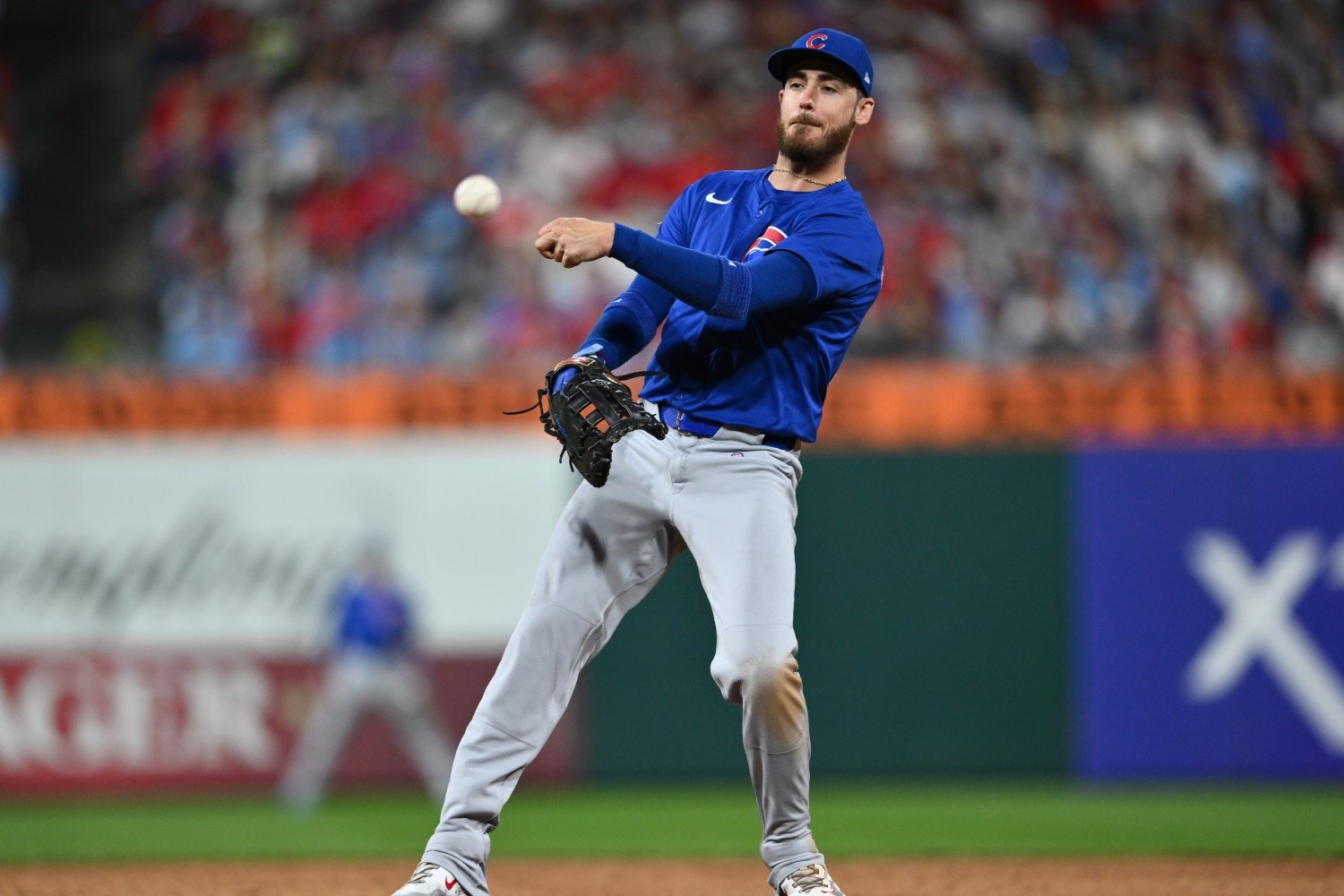 Whether or not the Cubs went over the first competitive-balance tax threshold by spending more than $237 million in annual average value salaries and benefits for 2024 matters. It matters quite a bit, for multiple reasons. Firstly, if they did go over that threshold, they did it by a very small amount, and that signals extraordinary incompetence. Jed Hoyer's comments on 670 The Score in August signaling that he expected the team to be tax payers was shocking to many fans, because the way Hoyer couched it, that had been a foregone conclusion for him ever since he chose to sign Cody Bellinger to the one-year deal (with two player options) to which those parties agreed in late February. If that were true, though, why didn't the team spend much more aggressively than that? Even after the Bellinger deal, there were good free agents available, and some good players were traded right in the shadow of Opening Day—partially because teams needed to move their salaries. In simplest terms, no team should ever spend just beyond a tax threshold. The way to do it is to spend right up to such a threshold, assembling as much talent as possible without crossing into a new bracket and suffering more severe penalties. Furthermore, it was obvious to a great many outside observers that the Cubs were not a complete championship contender after re-signing Bellinger. If Hoyer knew that, too, why wasn't he looking for a way to spend another $10 million after bringing back Bellinger? If he didn't, it's a discouraging statement about his perspicacity as an executive. After a close study of the invaluable resource that is Cot's Contracts, however, I think we need to have a slightly more nuanced conversation—because all may not be as it seems.; That site is powered by Baseball Prospectus (where, full disclosure, I am also a contributor), and specifically by Jeff Euston. After looking hard at the Cubs' salary breakdown for 2024, I emailed Euston with some follow-ups. Here's the thing: according to Cot's, the Cubs are only $277,157 over the line. That's based not on the specific salaries each player was paid in 2024, but on their contracts' annual average values, plus various dues and benefits that were negotiated as part of the tax threshold calculation when the union and the league hammered out this system over the course of multiple collective bargaining agreements. Crucially, though, Euston (and all the other people trying to do similar work at competing outlets) has to estimate some of the more nebulous expenses involved there. Could it be that the Cubs aren't actually over that line, despite what Hoyer said in August? In short: yes. "The Cubs could come in within a million or two of the threshold in either direction," Euston wrote in an email. "Inevitably there are things that are not public--credits, cash involved in trades, undisclosed bonuses, etc. I was convinced the Angels would exceed the threshold in 2023 and pay the tax, and somehow they came in under. I parsed the figures for every transaction of their season, and I'm still not sure how they did it. So I'm resigned to the uncertainty, providing the best possible projections I can, then adjusting as I get more information." That matches the attitude, approach, and knowledge level of the others doing the same work in public, and (difficult as this might be to believe) even some people whose job is to track this stuff for big-league teams. Every team has a down-to-the-dollar idea of their own tax situation, but even that reality can change a bit in various unexpected, last-second ways—and many teams are no more certain of their opponents' situations than we are. Wait, then, though. If the Cubs might come in under the tax after all—which would make much more sense than exceeding it by what works out to a rounding error for an organization this big—why did Hoyer come anywhere near saying the opposite this summer? It all comes back to Bellinger. Recall that, weeks after that now-infamous appearance on The Score, he opened his postseason press conference by talking as though Bellinger opting out of his deal was almost a foregone conclusion. Despite the outfielder's injury-marred, good-not-great season and the richness of the $50 million left on his deal over two more years, Hoyer seems very much convinced that the ex-MVP will test the market and try to capture a longer-term deal. Other sources are speculating the same outcome. If that does happen, most of the above is moot, because Bellinger's tax number changes by an amount that dwarfs the current margins around the threshold. While the player still holds his options, the contract is calculated based on the total amount guaranteed, divided by the number of years the player can choose to stick around if they wish. Thus, Bellinger's tax number is $26.7 million right now. If he opts out, after earning $27.5 million this year, he gets a $2.5-million buyout on his way out the door. His tax number for 2024 thus surges up to $30 million, and we're no longer near the line. Based on the information we have, I feel fairly confident in saying this: the Cubs know a little more than we do, and if Bellinger opts in, they'll stay under the tax threshold for 2024. However, they also expect him to opt out—and they're fine with that. My reading of the situation is that Hoyer is fine with being a tax-paying team this year, if it means having $30 million more to allocate as he sees fit this winter. He would rather have that flexibility than be under the line and have Bellinger back in a crowded offensive mix still needing an upgrade, and he expects things to break that way. I want to reiterate that I think it matters whether or not they're over the line, and I still think Hoyer mangled the decision set that led to this circumstance with regard to building next year's team and the hurdles he'll face along the way. If Bellinger does opt out, the Cubs will have money to spend, but I don't trust that they'll spend as much of it as they should, either way. Moreover, Hoyer accepted a situation in which if he signs a top-tier free agent with a qualifying offer attached to them, it will cost the Cubs materially more—some of it paid in non-renewable resources, i.e. a draft pick and some bonus allotments for spending on international free agents—than it would have cost them if they'd stayed under the line. Those penalties matter, even though the trifling sums the team figures to pay in taxes to the league don't. It would be fine to embrace those added costs if they'd been a baked-in sacrifice en route to building a juggernaut this past season, but the Cubs didn't come anywhere near doing that. Again: if Bellinger's deal really did commit the team to going over that line, they should have been several million dollars more aggressive about improving their roster after signing him. We'll see how things play out in the days and weeks ahead. I still believe Bellinger would do best for himself by opting in, and if he does, we'll have to listen carefully and see whether Hoyer changes his tune about the team's tax status. The league will also make official announcements about taxpayer status in November, terminating this mystery. If Bellinger does opt out, then the mystery won't even materialize—but we'll still be left with haunting questions, like why Hoyer thought the 83-win team he turned into another 83-win team was going to be so much better, and why ownership believes he can turn this 83-win team into something better in 2025.
 -
Add the 2023 World Series champions to the growing list of teams whose budgets are shrinking—and add another big name to the list of big bats the Chicago Cubs might try to bring in this winter. Image courtesy of © Jerome Miron-Imagn Images It's a bloodbath. That's the best way to describe the financial landscape for many MLB teams heading into this offseason. The owners are crying poor more ardently than they have in a long time, and while those cries are still hollow and false, they stand on a firmer foundation of fact than in the past. Simply put, the collapse of the local broadcast rights model has genuinely constricted the flow of revenue for most MLB teams, including the Cubs. However, it's hitting the teams who were tied to Bally Sports Network hardest, as that now-renamed family of channels was taken into bankruptcy by their parent company. Although the Rangers are still one of the richer and safer teams in the league, overall, they've been luxury tax payers for both 2023 and 2024, and their top priority this winter is avoiding the same fate in 2025. That, to be clear, is a foolish and self-defeating top priority for a big-market team, but it's a very real phenomenon. The Rangers intend to cut payroll and duck back under the tax threshold this winter. That will require offloading some bad contracts and/or making some very tough choices, because the team is locked into huge expenditures on (among other, lesser players) Corey Seager, Marcus Semien, and Jacob deGrom, so they expect to get creative. One way they could shed some salary and get some young talent at the same time: talk to the Cubs about trading outfielder Adolis García. The story in which Rangers beat writer Evan Grant explained the team's intentions specifically noted that they won't be looking to move García, but let's consider some essential facts: In Wyatt Langford, Evan Carter, and Leody Taveras, the team has three perfectly credible outfielders under cost control. Taveras is getting a bit more expensive via arbitration and has a low offensive ceiling, but the defensive greatness of this group is valuable, and Carter and Langford each profile best as corner outfielders—leaving limited room for García, unless he's performing at his best. García certainly didn't perform at his best last year. He was the breakout star of the 2023 postseason, but in 2024, he struggled to match the power and the plate discipline gains he made the previous season. From a 2023 regular-season line of .245/.328/.508, he plunged to an ugly .224/.284/.400 line. He'll turn 32 next March, and is due $9.25 million on the second half of a two-year deal to which he and the team agreed in February. At the time, it looked like a way for the team to keep his salary from exploding in arbitration in 2025, but now it looks almost like an overpay. Even though the deal the two parties signed only covers 2024 and 2025, García is still under team control for 2026, too. That would be the final year of his arbitration eligibility, and it would probably get even more expensive, so the team might do well to avoid heading into next winter with the prospect of a $20-million award hanging over them. The Rangers would rather trade Jon Gray, who has one year and $13 million left on the four-year deal to which they signed him prior to 2022. They would, surely, rather trade Tyler Mahle, on whom they rolled the dice while he was recovering from Tommy John surgery but who went back on the injured list shortly after a late-summer debut with the team and who is due over $16 million for 2025. Neither of those deals has any surplus value, though. In fact, if they wanted to shed Mahle's salary, they would have to attach a young player with some value to him and get almost nothing in return. That type of deal had a brief moment of popularity, especially where the Dodgers were concerned, a few years ago, but teams don't really like doing them. The Cubs, however, are in the market for both a front-end and a back-end starter this winter, and they should be willing to spend big. They could take both García and either Mahle or Gray, and still be willing to send back significant talent. This would be a minor blockbuster, and is only plausible if Cody Bellinger opts out. If he does, though, the Cubs could bring in a good defensive right fielder with the kind of titanic power their lineup has lacked since Kris Bryant, Javier Báez and Kyle Schwarber were at their peaks, pad the back end of their rotation with a too-expensive but usable veteran starter, and still have money to spend for an ace-caliber hurler like Corbin Burnes or Max Fried. To get García and, say, Mahle, the Cubs would surely have to give up one of their top-tier prospects, close to the big leagues. That means one of James Triantos, Moisés Ballesteros, Kevin Alcántara, or Owen Caissie on the offensive side, or one of Cade Horton and Brandon Birdsell on the pitching side. They might also need to throw in a player who already has a foothold in the big leagues, like Alexander Canario, Hayden Wesneski, or Keegan Thompson. If they could find a fit, though, García could make the cost worth it and then some. That's because, despite the massive decline in outcomes, he really wasn't as bad as he looked—and is still one of the most dangerous right-handed sluggers in the game. Here are his essential numbers for the last three seasons. Seasons PA Chase% ZSw-Chase InZoneWhiff% PHiA/SW 100+/Sw LandAng LaunchAng LowHit% MedHit% HighHit% Hit95+% Well Hit LA Sweet Spot EV BABIP Barrel% xWOBA wOBA wSSEV_AB 2022 657 37.0% 36.5% 26.5% 4.1% 10.1% -4.5 13.3 32.2% 34.6% 32.7% 47.8% 13.2 96.1 .309 24.0% .327 .324 91.6 2023 632 29.3% 42.0% 23.5% 4.1% 11.2% -3.1 15.7 30.1% 29.5% 40.4% 49.7% 16.4 96.5 .280 25.6% .365 .354 91.7 2024 637 33.3% 41.4% 24.9% 2.8% 9.2% -0.4 15 31.1% 30.3% 38.4% 48.3% 14.2 96.8 .273 23.8% .301 .294 90.4 To summarize the above: García did hit the ball slightly less hard and pull it less often in 2024, but only slightly. He regressed from the gains he made in controlling the zone and making contact in 2023, but not all the way back to the very rough-edged approach he had in 2022. He still elevates the ball and generates ample power. He is, in short, a still-lethal righty slugger who merely had a down year. His weighted sweet-spot exit velocity, a robust measurement and predictor of production, was down, but it still nestled right between Willy Adames and Teoscar Hernández on the 2024 leaderboard. Those two players will combine to make about $250 million this winter, so if the Cubs have to give up a young player to acquire García at a much lower cost and avoid a new, expensive long-term commitment, they should be open to it. A deal like this is unlikely, in that all specific trade ideas are unlikely to come from the broad universe of possibility down to the hard Earth of eventuality, but it's very plausible. The Cubs need to spend aggressively and aim for high-end power potential in their lineup, while bolstering their rotation at both ends. The Rangers need to get less expensive and more flexible, without selling off a viable chance to compete in 2025. The two clubs can meet each other's needs in a variety of possible ways. View full article
-
Cubs Could Target Adolis García in Trade as Texas Rangers Cut Payroll
Matthew Trueblood posted an article in Cubs
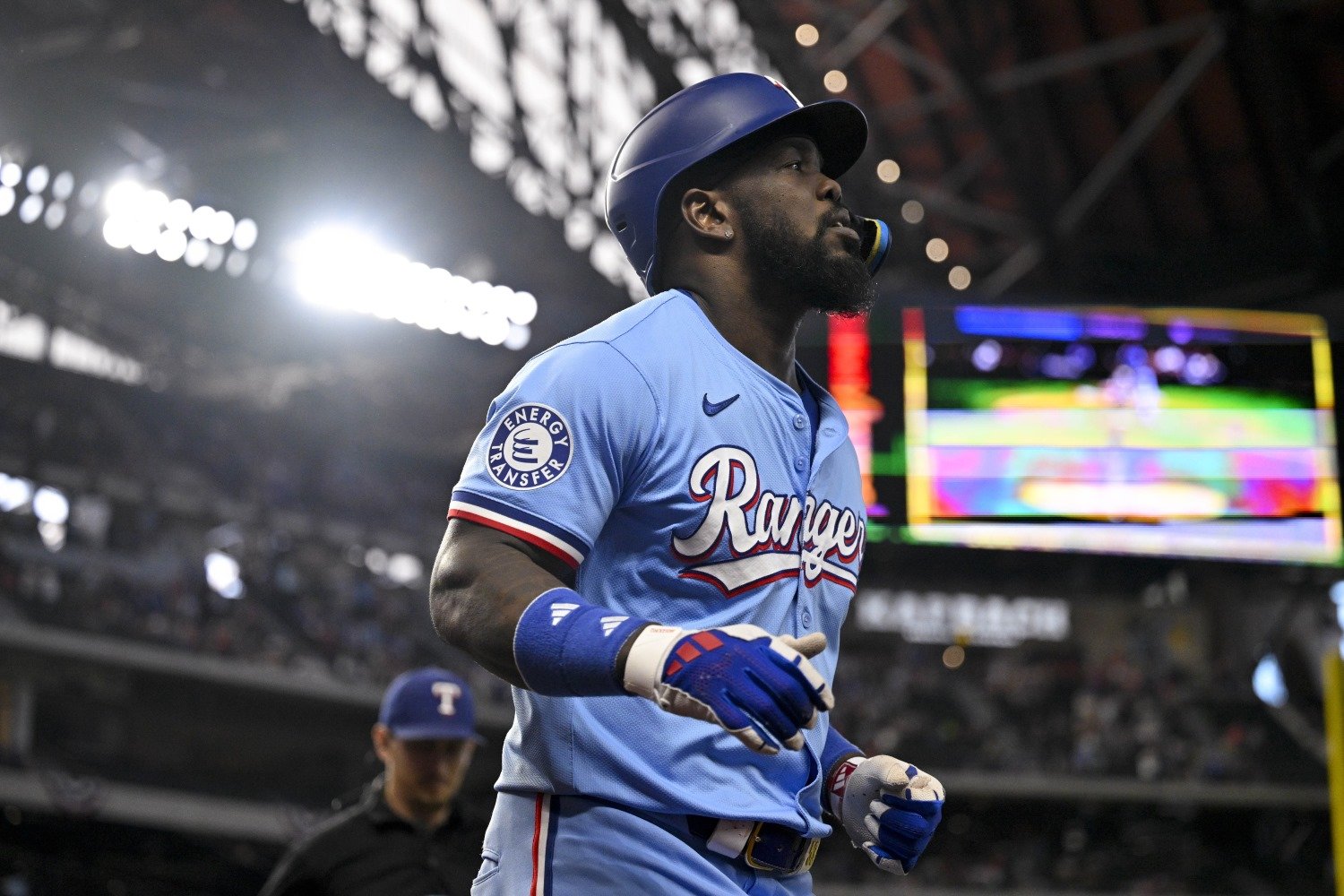 It's a bloodbath. That's the best way to describe the financial landscape for many MLB teams heading into this offseason. The owners are crying poor more ardently than they have in a long time, and while those cries are still hollow and false, they stand on a firmer foundation of fact than in the past. Simply put, the collapse of the local broadcast rights model has genuinely constricted the flow of revenue for most MLB teams, including the Cubs. However, it's hitting the teams who were tied to Bally Sports Network hardest, as that now-renamed family of channels was taken into bankruptcy by their parent company. Although the Rangers are still one of the richer and safer teams in the league, overall, they've been luxury tax payers for both 2023 and 2024, and their top priority this winter is avoiding the same fate in 2025. That, to be clear, is a foolish and self-defeating top priority for a big-market team, but it's a very real phenomenon. The Rangers intend to cut payroll and duck back under the tax threshold this winter. That will require offloading some bad contracts and/or making some very tough choices, because the team is locked into huge expenditures on (among other, lesser players) Corey Seager, Marcus Semien, and Jacob deGrom, so they expect to get creative. One way they could shed some salary and get some young talent at the same time: talk to the Cubs about trading outfielder Adolis García. The story in which Rangers beat writer Evan Grant explained the team's intentions specifically noted that they won't be looking to move García, but let's consider some essential facts: In Wyatt Langford, Evan Carter, and Leody Taveras, the team has three perfectly credible outfielders under cost control. Taveras is getting a bit more expensive via arbitration and has a low offensive ceiling, but the defensive greatness of this group is valuable, and Carter and Langford each profile best as corner outfielders—leaving limited room for García, unless he's performing at his best. García certainly didn't perform at his best last year. He was the breakout star of the 2023 postseason, but in 2024, he struggled to match the power and the plate discipline gains he made the previous season. From a 2023 regular-season line of .245/.328/.508, he plunged to an ugly .224/.284/.400 line. He'll turn 32 next March, and is due $9.25 million on the second half of a two-year deal to which he and the team agreed in February. At the time, it looked like a way for the team to keep his salary from exploding in arbitration in 2025, but now it looks almost like an overpay. Even though the deal the two parties signed only covers 2024 and 2025, García is still under team control for 2026, too. That would be the final year of his arbitration eligibility, and it would probably get even more expensive, so the team might do well to avoid heading into next winter with the prospect of a $20-million award hanging over them. The Rangers would rather trade Jon Gray, who has one year and $13 million left on the four-year deal to which they signed him prior to 2022. They would, surely, rather trade Tyler Mahle, on whom they rolled the dice while he was recovering from Tommy John surgery but who went back on the injured list shortly after a late-summer debut with the team and who is due over $16 million for 2025. Neither of those deals has any surplus value, though. In fact, if they wanted to shed Mahle's salary, they would have to attach a young player with some value to him and get almost nothing in return. That type of deal had a brief moment of popularity, especially where the Dodgers were concerned, a few years ago, but teams don't really like doing them. The Cubs, however, are in the market for both a front-end and a back-end starter this winter, and they should be willing to spend big. They could take both García and either Mahle or Gray, and still be willing to send back significant talent. This would be a minor blockbuster, and is only plausible if Cody Bellinger opts out. If he does, though, the Cubs could bring in a good defensive right fielder with the kind of titanic power their lineup has lacked since Kris Bryant, Javier Báez and Kyle Schwarber were at their peaks, pad the back end of their rotation with a too-expensive but usable veteran starter, and still have money to spend for an ace-caliber hurler like Corbin Burnes or Max Fried. To get García and, say, Mahle, the Cubs would surely have to give up one of their top-tier prospects, close to the big leagues. That means one of James Triantos, Moisés Ballesteros, Kevin Alcántara, or Owen Caissie on the offensive side, or one of Cade Horton and Brandon Birdsell on the pitching side. They might also need to throw in a player who already has a foothold in the big leagues, like Alexander Canario, Hayden Wesneski, or Keegan Thompson. If they could find a fit, though, García could make the cost worth it and then some. That's because, despite the massive decline in outcomes, he really wasn't as bad as he looked—and is still one of the most dangerous right-handed sluggers in the game. Here are his essential numbers for the last three seasons. Seasons PA Chase% ZSw-Chase InZoneWhiff% PHiA/SW 100+/Sw LandAng LaunchAng LowHit% MedHit% HighHit% Hit95+% Well Hit LA Sweet Spot EV BABIP Barrel% xWOBA wOBA wSSEV_AB 2022 657 37.0% 36.5% 26.5% 4.1% 10.1% -4.5 13.3 32.2% 34.6% 32.7% 47.8% 13.2 96.1 .309 24.0% .327 .324 91.6 2023 632 29.3% 42.0% 23.5% 4.1% 11.2% -3.1 15.7 30.1% 29.5% 40.4% 49.7% 16.4 96.5 .280 25.6% .365 .354 91.7 2024 637 33.3% 41.4% 24.9% 2.8% 9.2% -0.4 15 31.1% 30.3% 38.4% 48.3% 14.2 96.8 .273 23.8% .301 .294 90.4 To summarize the above: García did hit the ball slightly less hard and pull it less often in 2024, but only slightly. He regressed from the gains he made in controlling the zone and making contact in 2023, but not all the way back to the very rough-edged approach he had in 2022. He still elevates the ball and generates ample power. He is, in short, a still-lethal righty slugger who merely had a down year. His weighted sweet-spot exit velocity, a robust measurement and predictor of production, was down, but it still nestled right between Willy Adames and Teoscar Hernández on the 2024 leaderboard. Those two players will combine to make about $250 million this winter, so if the Cubs have to give up a young player to acquire García at a much lower cost and avoid a new, expensive long-term commitment, they should be open to it. A deal like this is unlikely, in that all specific trade ideas are unlikely to come from the broad universe of possibility down to the hard Earth of eventuality, but it's very plausible. The Cubs need to spend aggressively and aim for high-end power potential in their lineup, while bolstering their rotation at both ends. The Rangers need to get less expensive and more flexible, without selling off a viable chance to compete in 2025. The two clubs can meet each other's needs in a variety of possible ways.
 -
There will be an opening for the Cubs to snatch up a stud starter for a one-year engagement. All they have to do is be willing to relinquish some control. Image courtesy of © Denis Poroy-Imagn Images Most Cubs fans are acutely aware of the twists and turns of Dylan Cease's career. The former Cubs farmhand went to the White Sox organization in the José Quintana trade in 2017, and his successes and failures have been newsworthy on both sides of town ever since. In March, the White Sox dealt Cease to San Diego, where he enjoyed a fourth straight season with at least 32 starts and a third striaght with at least 177 innings pitched, leading the Padres to the NLDS. Cease has emerged as one of the league's best workhorses, even if that term feels oddly applied to someone who has never reached 200 innings pitched in a season. Even as he established himself in his new home, though, he was threatened for the status of staff ace by fellow trade acquisition Michael King. After coming over as part of the return for Juan Soto, King pitched 174 innings with a 2.95 ERA, striking out nearly 28% of opposing batters along the way. That Cease and King were so good is great news for the Padres and their fans. Alas, it's unlikely that both are back with the team in 2025. Even after Joe Musgrove underwent Tommy John surgery this month (deepening their need for rotation help next season), A.J. Preller will shop one of Cease and King, while trying to extend the other. Both players are headed into their final season of arbitration eligibility and will be free agents at the end of next season, barring an extension, and with the Padres still trying to adjust to shifting economic realities both within and around the team, neither extending both nor letting them walk via free agency is a palatable option. For the Cubs, either Cease or King would slot in atop their rotation. While Cease has sketchy control at times, he made some material improvements in his first year outside the talent drain that is the White Sox organization. King's deep pitch mix—four-seamer and sinker; slider and sweeper; changeup—is nasty. Each is a good bet to make 30 starts or more and soak up innings each time it's their turn. The indispensable arbitration salary projections at MLB Trade Rumors pegs Cease for a salary of $13.7 million in his walk year, while King is expected to get $7.9 million. Stylistically, each pitcher operates at an extreme. Cease is an overhand thrower for whom everything works vertically and toward the glove side. His fastball has unexpected cut and ride, based on his arm angle, because of the way his delivery works. When the Padres got ahold of Cease, they worked with him to deepen his arsenal, not by forcing him to work anything to the arm side, but by adding a sweeper to his fastball-slider-curve mix. He now has three distinct breaking ball shapes, and his sweeper is one of the weirdest pitches in baseball for an opposing hitter. Almost without exception, sweepers have less downward movement than this, but also sweep more to the arm side than this. It's something close to a typical pitcher's power curveball. Because of Cease's high arm slot and the purely vertical orientation of his movement on the other three pitches, though, the sweeper really seems to change lanes, even though it hardly does so. This was a neat way to unlock Cease further, and figures to be an innovation to which he holds on even if his stay in San Diego is short. King, too, made a significant change to his pitch mix upon coming to San Diego. Whereas Cease works so much up and down, King has always been more of a true three-quarter thrower and east-west worker. His four-seamer doesn't have unexpected carry at all, though it does stay out of the dead zone by cutting in a way the hitter doesn't anticipate. His sinker, by contrast, is a very heavy pitch that also has more run to the arm side than one would guess. The lack of raw vertical hop on King's fastball might tempt you to doubt its utility, but because he pounds the top of the zone—over 53% of his heaters were in the upper third or above this year—from a fairly low release point, it plays up. His key tweak, coming over from the sweeper-crazed Yankees, was the addition of a bullet-spin, tighter and much firmer slider. Of these two, King is the much better fit for what the Cubs like in pitchers. His release point, movement patterns, and approach are more in like with the way they do things. Since he's also so much cheaper, he would seem to be the natural choice. On the other hand, though, and just as importantly: Clearing the expected payroll associated with Cease would do much more to give the Padres flexibility, which would make the Padres more eager to part with him. It would cost much more to acquire King, for a pitcher who is only likely to be a little bit better. Meanwhile, Cease would be a more jarring change of pace for opponents (relative to other Cubs starters) than would King. Since he throws the way he does and has had to slowly build out a breaking ball-laden arsenal that suits his mechanics, he might also be able to help Ben Brown reach his full potential, if Brown can stay healthy. Because King would be more expensive to acquire, the Cubs should only do that if they think they can get a reasonable extension done with him, circumventing the free-agent market to leverage control over a late-blooming starter and sign a deal akin to the one the Dodgers gave to Tyler Glasnow as part of their trade for him last winter. If that's not an option, they should deal for Cease, instead. Who might be involved in such a deal? There's no need to get overly specific, since the Cubs have a deep farm system and there are many ways to skin a cat. It's worth noting, though, that Javier Assad won't even be arbitration-eligible this winter. With four years of team control left, could he anchor a trade package for one of the San Diego aces? He'd be a good candidate for the kind of developmental work the Padres love to do, but there's obviously a lower ceiling on him than on guys like Cease and King. As we kept noting, the Cubs have a lot of paths to the major improvements they need to make this winter. This is just one of those possible avenues, but since it would be a way to leverage their financial edge over a smaller-market (though still big-spending) team and get a better deal than they might find in free agency, it's worth serious consideration. Cease or King could both be frontline starters for this team, with transformative impact—especially if acquiring them were paired with the addition of a lower-wattage but steady veteran, like Tomoyuki Sugano. Depth is good, and depth as a complement to excellence is even better. View full article
-
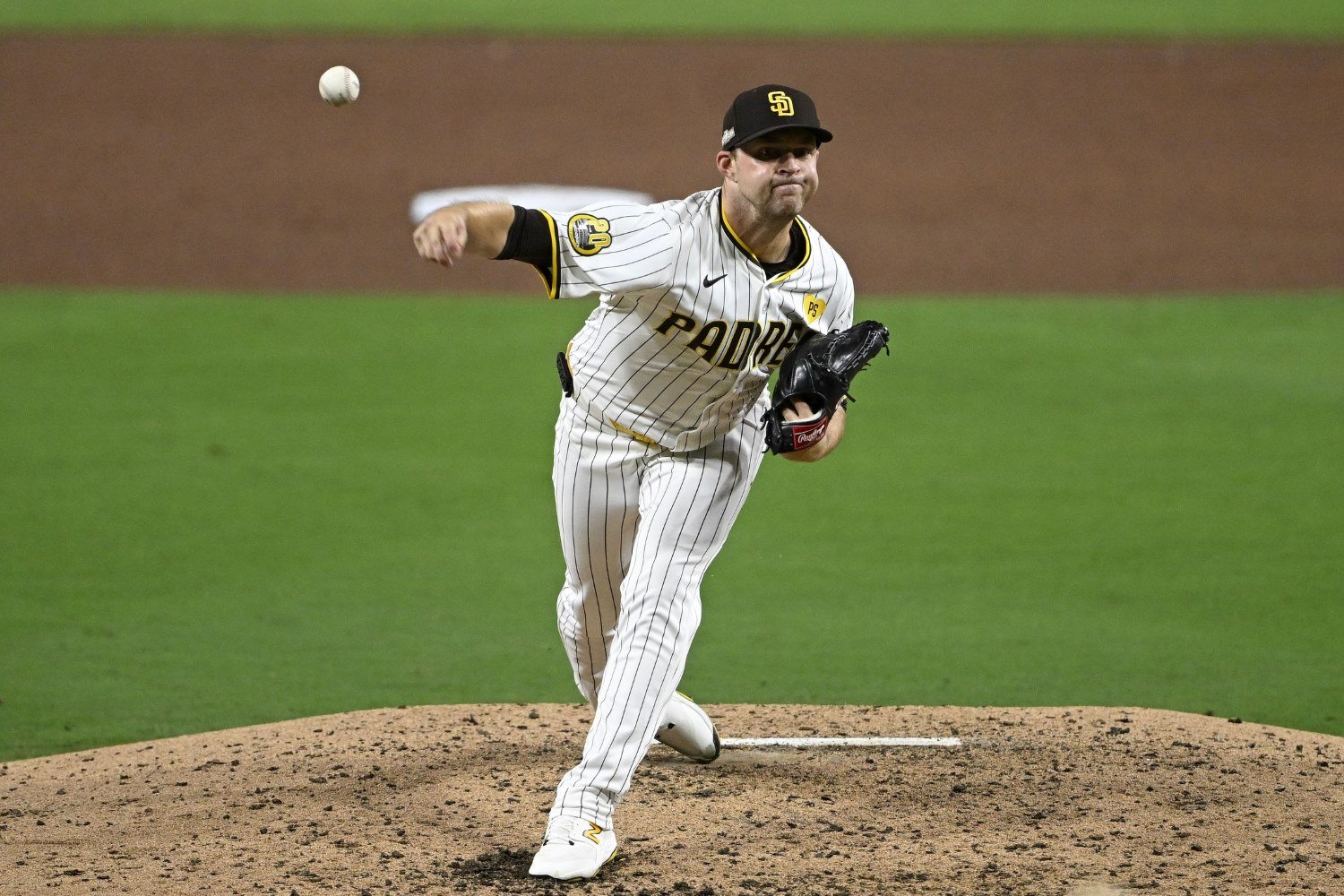 Most Cubs fans are acutely aware of the twists and turns of Dylan Cease's career. The former Cubs farmhand went to the White Sox organization in the José Quintana trade in 2017, and his successes and failures have been newsworthy on both sides of town ever since. In March, the White Sox dealt Cease to San Diego, where he enjoyed a fourth straight season with at least 32 starts and a third striaght with at least 177 innings pitched, leading the Padres to the NLDS. Cease has emerged as one of the league's best workhorses, even if that term feels oddly applied to someone who has never reached 200 innings pitched in a season. Even as he established himself in his new home, though, he was threatened for the status of staff ace by fellow trade acquisition Michael King. After coming over as part of the return for Juan Soto, King pitched 174 innings with a 2.95 ERA, striking out nearly 28% of opposing batters along the way. That Cease and King were so good is great news for the Padres and their fans. Alas, it's unlikely that both are back with the team in 2025. Even after Joe Musgrove underwent Tommy John surgery this month (deepening their need for rotation help next season), A.J. Preller will shop one of Cease and King, while trying to extend the other. Both players are headed into their final season of arbitration eligibility and will be free agents at the end of next season, barring an extension, and with the Padres still trying to adjust to shifting economic realities both within and around the team, neither extending both nor letting them walk via free agency is a palatable option. For the Cubs, either Cease or King would slot in atop their rotation. While Cease has sketchy control at times, he made some material improvements in his first year outside the talent drain that is the White Sox organization. King's deep pitch mix—four-seamer and sinker; slider and sweeper; changeup—is nasty. Each is a good bet to make 30 starts or more and soak up innings each time it's their turn. The indispensable arbitration salary projections at MLB Trade Rumors pegs Cease for a salary of $13.7 million in his walk year, while King is expected to get $7.9 million. Stylistically, each pitcher operates at an extreme. Cease is an overhand thrower for whom everything works vertically and toward the glove side. His fastball has unexpected cut and ride, based on his arm angle, because of the way his delivery works. When the Padres got ahold of Cease, they worked with him to deepen his arsenal, not by forcing him to work anything to the arm side, but by adding a sweeper to his fastball-slider-curve mix. He now has three distinct breaking ball shapes, and his sweeper is one of the weirdest pitches in baseball for an opposing hitter. Almost without exception, sweepers have less downward movement than this, but also sweep more to the arm side than this. It's something close to a typical pitcher's power curveball. Because of Cease's high arm slot and the purely vertical orientation of his movement on the other three pitches, though, the sweeper really seems to change lanes, even though it hardly does so. This was a neat way to unlock Cease further, and figures to be an innovation to which he holds on even if his stay in San Diego is short. King, too, made a significant change to his pitch mix upon coming to San Diego. Whereas Cease works so much up and down, King has always been more of a true three-quarter thrower and east-west worker. His four-seamer doesn't have unexpected carry at all, though it does stay out of the dead zone by cutting in a way the hitter doesn't anticipate. His sinker, by contrast, is a very heavy pitch that also has more run to the arm side than one would guess. The lack of raw vertical hop on King's fastball might tempt you to doubt its utility, but because he pounds the top of the zone—over 53% of his heaters were in the upper third or above this year—from a fairly low release point, it plays up. His key tweak, coming over from the sweeper-crazed Yankees, was the addition of a bullet-spin, tighter and much firmer slider. Of these two, King is the much better fit for what the Cubs like in pitchers. His release point, movement patterns, and approach are more in like with the way they do things. Since he's also so much cheaper, he would seem to be the natural choice. On the other hand, though, and just as importantly: Clearing the expected payroll associated with Cease would do much more to give the Padres flexibility, which would make the Padres more eager to part with him. It would cost much more to acquire King, for a pitcher who is only likely to be a little bit better. Meanwhile, Cease would be a more jarring change of pace for opponents (relative to other Cubs starters) than would King. Since he throws the way he does and has had to slowly build out a breaking ball-laden arsenal that suits his mechanics, he might also be able to help Ben Brown reach his full potential, if Brown can stay healthy. Because King would be more expensive to acquire, the Cubs should only do that if they think they can get a reasonable extension done with him, circumventing the free-agent market to leverage control over a late-blooming starter and sign a deal akin to the one the Dodgers gave to Tyler Glasnow as part of their trade for him last winter. If that's not an option, they should deal for Cease, instead. Who might be involved in such a deal? There's no need to get overly specific, since the Cubs have a deep farm system and there are many ways to skin a cat. It's worth noting, though, that Javier Assad won't even be arbitration-eligible this winter. With four years of team control left, could he anchor a trade package for one of the San Diego aces? He'd be a good candidate for the kind of developmental work the Padres love to do, but there's obviously a lower ceiling on him than on guys like Cease and King. As we kept noting, the Cubs have a lot of paths to the major improvements they need to make this winter. This is just one of those possible avenues, but since it would be a way to leverage their financial edge over a smaller-market (though still big-spending) team and get a better deal than they might find in free agency, it's worth serious consideration. Cease or King could both be frontline starters for this team, with transformative impact—especially if acquiring them were paired with the addition of a lower-wattage but steady veteran, like Tomoyuki Sugano. Depth is good, and depth as a complement to excellence is even better.
 -
Over the last three winters, the Cubs have twice made big investments in veteran stars from Nippon Professional Baseball. They'll have another chance to do so this fall, although for less money and with less upside. Image courtesy of © Kelvin Kuo-Imagn Images In an offseason that looks to be relatively rich with starting pitchers available in free agency, there will be less attention on aging Japanese righthander Tomoyuki Sugano than there might have been if he had come over two or three years ago. However, Sugano, 35, is likely to sign with an MLB team this year, after a decade and change as one of the top starters in NPB. Since he's waited so long to cross the Pacific Ocean this way, he will be free of the posting system and clear to sign with a team for nothing more than cash. Twitter user @bouno05, a top-flight Japanese sabermetrician, created an app that allows visitors to easily view summaries of pitchers' skill sets and specific data about their arsenals, using NPB data. It's a marvelous resource, and the only Japanese you need to decipher to use it is the name of the player in kanji characters. The rest is in English, although (blame George Washington) you'll still have to do a small step of translation to use it comfortably: all the velocity readings given are in kilometers per hour. This is a tremendous tool for us American fans hoping for insight on Japanese hurlers who might come over to the United States, for multiple reasons. Firstly, it's much easier to grasp how a pitcher's stuff might transfer between these two different leagues by studying their stuff directly, rather than going on imprecise scouting reports, video narrated in a language we don't understand, and surface-level stats compiled against very different hitters than the ones these guys will encounter Stateside. (In general, we should make a broader effort to learn Japanese and Spanish; those are as much the languages of baseball as English is. For now, though, my Spanish lags far behind my English, and my Japanese is much worse even than my Spanish, so it's immensely helpful to have a resource that meets me much more than halfway.) Secondly, though, it's instructive in the way it lets us see the changes a pitcher who has already come over from NPB to MLB made upon doing so. For instance, here's Shota Imanaga's readout from the app for his time in NPB in 2023: This dataset counts Imanaga's formidable splitter as a changeup, but otherwise, this is easy to read and understand—and it tells us some unexpected things about Imanaga, vis-a-vis his rookie campaign with the Cubs. When he started facing American hitters, Imanaga lived basically as a two-pitch pitcher for a long time, but this shows that he varied his pitch mix considerably more than that in NPB, as he began to do later in his first season with the Cubs. Imanaga threw his splitter much less against lefties in his last season in Japan than he did in 2024 for the Cubs. It's not surprising, per se, that he would use such an unusual offering more often against a new and unfamiliar set of opponents, but it affirms the feeling you got when watching: that he was adapting a great deal as he went, and that that was the source of both some of his struggles and much of his success. Having Imanaga's pitch mix details from Japan as a template (with a year of MLB data to help us contextualize and translate that information) makes it easier to evaluate Sugano, even though the latter is four years older than Imanaga was when he made his change of league and even though he throws right-handed. Here's Sugano's 2024 data. A bunch of things stand out right away. Sugano's fastball averages around 92 miles per hour, which is underwhelming, and it's pretty clear that it doesn't have the same special characteristics as Imanaga's—at least not the way he threw it this year. His Stuff+ grades are a bit less impressive than Imanaga's, on balance, because those grades compare pitchers only to their NPB cohort. As currently constituted, Sugano's fastball is far below an MLB standard, and the worry would be that it would be hit very, very hard. Look at all his other offerings, though. He's likely to streamline his arsenal a bit for each handedness of hitter as he moves to a new set of opponents, just as Imanaga did, and he has a wide selection of weapons from which to choose. Note, too, those little heat maps showing location on his stuff. These explain goergously how Sugano managed to walk 16 and allow only six home runs in 156 innings this year. Can he repeat that against MLB hitters? No. But his command is so good that he can almost certainly outpitch his raw stuff grades. Whichever team signs Sugano will also feel out the 35-year-old on some late-career changes of approach that could help his arsenal play up. Look at where he threw his fastballs to right-handed batters last year. It sets up his cutter and slider there nicely, but it's no wonder he gets bad Stuff+ returns and low whiff rates when trying to do the old 1990s thing, dotting the outside corner at the knees as many times as possible. If he's amenable to it, some MLB club will have him start pitching to the upper third of the zone with that heater, and his strikeout rate will tick up, even if he gives up a few homers in the process. Imanaga's success is just the latest in a string of veteran Japanese hurlers doing very well upon coming to the States, and it's proof that the control-over-power hurler can port their success to this side of the ocean. Sugano doesn't profile as an ace, and he figures to be in line for a shorter deal than the ones signed by Imanaga and Kodai Senga in recent years, but he has real upside as an undervalued mid-rotation starter. He looks, in fast, a lot like Javier Assad with an extra grade of command. That's a very, very good pitcher. With Seiya Suzuki and Imanaga already in the fold, the Cubs have another incentive to seriously consider signing Sugano, as long as his price tag remains reasonable. They won't surpass the Dodgers as the MLB team of the moment in Japan, but there's no reason they can't firmly and semi-permanently establish themselves as the secondary club of Japanese MLB fans across that country. If Imanaga and Sugano could start opposite Yoshinobu Yamamoto and Shohei Ohtani when the Cubs and Dodgers open next season in Tokyo, it could take what will already be an incredible moment for the league and its international fan base to a new level. In a perfect world, the Cubs might add two starters this winter: one who would slot in at or near the front of their rotation, and one who could slide into the back end. Sugano profiles better as the latter, but signing him might also make it easier to acquire the former. We can talk more about why that might be later this week. For now, the important takeaway is that specific data on Sugano's stuff paints a picture of him as a very good command artist, albeit without as clear a niche in MLB as Imanaga had. If he can adjust as well as Imanaga did this season, he could be hugely valuable—and a rare bargain. View full article
-
How Aggressively Should Cubs Pursue NPB Starter Tomoyuki Sugano?
Matthew Trueblood posted an article in Cubs
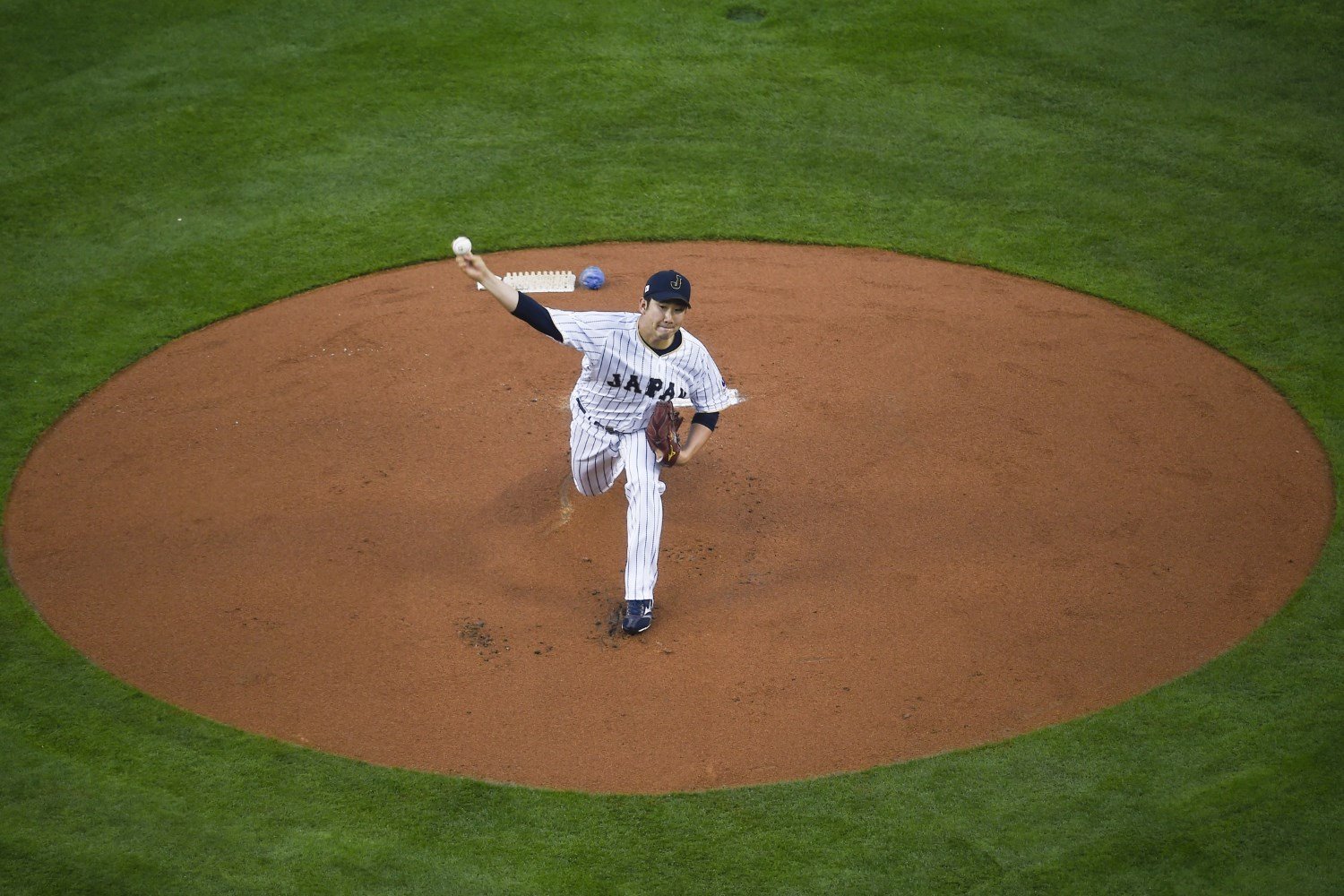 In an offseason that looks to be relatively rich with starting pitchers available in free agency, there will be less attention on aging Japanese righthander Tomoyuki Sugano than there might have been if he had come over two or three years ago. However, Sugano, 35, is likely to sign with an MLB team this year, after a decade and change as one of the top starters in NPB. Since he's waited so long to cross the Pacific Ocean this way, he will be free of the posting system and clear to sign with a team for nothing more than cash. Twitter user @bouno05, a top-flight Japanese sabermetrician, created an app that allows visitors to easily view summaries of pitchers' skill sets and specific data about their arsenals, using NPB data. It's a marvelous resource, and the only Japanese you need to decipher to use it is the name of the player in kanji characters. The rest is in English, although (blame George Washington) you'll still have to do a small step of translation to use it comfortably: all the velocity readings given are in kilometers per hour. This is a tremendous tool for us American fans hoping for insight on Japanese hurlers who might come over to the United States, for multiple reasons. Firstly, it's much easier to grasp how a pitcher's stuff might transfer between these two different leagues by studying their stuff directly, rather than going on imprecise scouting reports, video narrated in a language we don't understand, and surface-level stats compiled against very different hitters than the ones these guys will encounter Stateside. (In general, we should make a broader effort to learn Japanese and Spanish; those are as much the languages of baseball as English is. For now, though, my Spanish lags far behind my English, and my Japanese is much worse even than my Spanish, so it's immensely helpful to have a resource that meets me much more than halfway.) Secondly, though, it's instructive in the way it lets us see the changes a pitcher who has already come over from NPB to MLB made upon doing so. For instance, here's Shota Imanaga's readout from the app for his time in NPB in 2023: This dataset counts Imanaga's formidable splitter as a changeup, but otherwise, this is easy to read and understand—and it tells us some unexpected things about Imanaga, vis-a-vis his rookie campaign with the Cubs. When he started facing American hitters, Imanaga lived basically as a two-pitch pitcher for a long time, but this shows that he varied his pitch mix considerably more than that in NPB, as he began to do later in his first season with the Cubs. Imanaga threw his splitter much less against lefties in his last season in Japan than he did in 2024 for the Cubs. It's not surprising, per se, that he would use such an unusual offering more often against a new and unfamiliar set of opponents, but it affirms the feeling you got when watching: that he was adapting a great deal as he went, and that that was the source of both some of his struggles and much of his success. Having Imanaga's pitch mix details from Japan as a template (with a year of MLB data to help us contextualize and translate that information) makes it easier to evaluate Sugano, even though the latter is four years older than Imanaga was when he made his change of league and even though he throws right-handed. Here's Sugano's 2024 data. A bunch of things stand out right away. Sugano's fastball averages around 92 miles per hour, which is underwhelming, and it's pretty clear that it doesn't have the same special characteristics as Imanaga's—at least not the way he threw it this year. His Stuff+ grades are a bit less impressive than Imanaga's, on balance, because those grades compare pitchers only to their NPB cohort. As currently constituted, Sugano's fastball is far below an MLB standard, and the worry would be that it would be hit very, very hard. Look at all his other offerings, though. He's likely to streamline his arsenal a bit for each handedness of hitter as he moves to a new set of opponents, just as Imanaga did, and he has a wide selection of weapons from which to choose. Note, too, those little heat maps showing location on his stuff. These explain goergously how Sugano managed to walk 16 and allow only six home runs in 156 innings this year. Can he repeat that against MLB hitters? No. But his command is so good that he can almost certainly outpitch his raw stuff grades. Whichever team signs Sugano will also feel out the 35-year-old on some late-career changes of approach that could help his arsenal play up. Look at where he threw his fastballs to right-handed batters last year. It sets up his cutter and slider there nicely, but it's no wonder he gets bad Stuff+ returns and low whiff rates when trying to do the old 1990s thing, dotting the outside corner at the knees as many times as possible. If he's amenable to it, some MLB club will have him start pitching to the upper third of the zone with that heater, and his strikeout rate will tick up, even if he gives up a few homers in the process. Imanaga's success is just the latest in a string of veteran Japanese hurlers doing very well upon coming to the States, and it's proof that the control-over-power hurler can port their success to this side of the ocean. Sugano doesn't profile as an ace, and he figures to be in line for a shorter deal than the ones signed by Imanaga and Kodai Senga in recent years, but he has real upside as an undervalued mid-rotation starter. He looks, in fast, a lot like Javier Assad with an extra grade of command. That's a very, very good pitcher. With Seiya Suzuki and Imanaga already in the fold, the Cubs have another incentive to seriously consider signing Sugano, as long as his price tag remains reasonable. They won't surpass the Dodgers as the MLB team of the moment in Japan, but there's no reason they can't firmly and semi-permanently establish themselves as the secondary club of Japanese MLB fans across that country. If Imanaga and Sugano could start opposite Yoshinobu Yamamoto and Shohei Ohtani when the Cubs and Dodgers open next season in Tokyo, it could take what will already be an incredible moment for the league and its international fan base to a new level. In a perfect world, the Cubs might add two starters this winter: one who would slot in at or near the front of their rotation, and one who could slide into the back end. Sugano profiles better as the latter, but signing him might also make it easier to acquire the former. We can talk more about why that might be later this week. For now, the important takeaway is that specific data on Sugano's stuff paints a picture of him as a very good command artist, albeit without as clear a niche in MLB as Imanaga had. If he can adjust as well as Imanaga did this season, he could be hugely valuable—and a rare bargain.
 -
We all watched, in mixtures of horror and ecstasy, as elite closers folded under the accumulate workloads of their long seasons this October. As the Cubs try to get into that circumstance next year, they need to build a bullpen immune to that problem. Image courtesy of © Bob Kupbens-Imagn Images There are 162 games in a regular MLB season. As the playoffs expand, it has become possible for a team to play as many as 22 gmaes in the postseason. Add in the bloated but certainly necessary spring training schedule, and teams have to play more than 200 games to get from one end of a championship year to the other. It's a daunting proposition, especially in an era that has seen starting pitchers take on ever-smaller shares of the workload. Simply giving those innings back to the rotation is impractical, because of the stady rise in injury rates throughout the league over the last two decades. Going to a six-man rotation is a modification worth consideration, but as the schedule has been slightly lengthened to add more days off, it's become less necessary to consider that relatively extreme stratagem. Besides, in addition to needing to find six competent starters at a time when many teams in the league are scrambling to find four or five, that plan doesn't guarantee health. It's possible to end up needing to dip into your seventh, eighth, and ninth starters even when starting with six and pacing everyone carefully, and that usually means shorter starts—negating the hypothetical advantage conferred by giving everyone more rest. To make six starters work as a means of lightening the bullpen's load, you have to get an extra inning per start from each of those guys, and that notion directly contravenes the modern paradigm of the starter: get them out of there before undue damage can be done. Avoid having them face the opposing lineup a third time, at almost all costs. The only way to get through a season with an intact pitching staff capable of dominating enough to achieve the postseason, and then of maintaining their success throughout it, is to pursue unprecedented levels of depth. That's the lesson we should take from the teams who had success in this year's postseason, even as we survey the wreckage of the Mets and Guardians and note the thinness of the remaining staffs for the Yankees and Dodgers. New York already had Gerrit Cole and Nester Cortes (and remained very focused on a high-volume internal pipeline) when they went out and signed Carlos Rodón and Marcus Stroman as depth options in successive offseasons. They amassed lots of bullpen depth, often trading for and stockpiling pitchers who tended to get hurt, but who could be counted on for good innings whenever healthy. The Dodgers have gone the same route, and perhaps at an even greater extreme. They re-signed Clayton Kershaw, traded for Tyler Glasnow (and then extended him on a lavish deal), and signed Yoshinobu Yamamoto last winter, but they also signed James Paxton to a one-year deal, knowing full well it might create a logjam for their bevy of talented younger arms. When none of those hurlers could stay healthy and contribute much into the second half, the team traded for Jack Flaherty. In the meantime, they assiduously added veteran relievers, squeezing them in unapologetically: Daniel Hudson, Evan Phillips, Blake Treinen, Joe Kelly, and more. They targeted fireballer Michael Kopech as a midseason pickup, even though they knew he would be a bit of a project at the back end of the pen. That's the approach the Cubs need to take into the coming winter. They have Shota Imanaga, Justin Steele, Jameson Taillon, Javier Assad, and Jordan Wicks penciled in as starters for next year, with Brandon Birdsell and Cade Horton in the wings. Since neither Birdsell nor Horton has to be added to the 40-man roster yet, though, they have some flexibility to add starters at the big-league level, knowing they'll be able to use the injured list to make room for promotions next spring and summer if needed. Thus, Jed Hoyer should be plotting an addition along the lines of Rodón, Yamamoto, or Glasnow—someone in the Corbin Burnes-Max Fried bracket of free agency, or on a similar tier in trades—and one like Paxton, with some upside but enough question marks attached to keep their price tag reasonable and short-term. That's just on the starting side of things. When it comes to relievers, there's even heavier lifting to do, because the Cubs should be thinking creatively and trying something new. We've seen rotations of teams' best starting pitchers for six or seven decades now, but never has a team undertaken a serious, dedicated rotation of its relief aces. Few teams in any given season even have the reliever depth to consider that. If the Guardians had used Emmanuel Clasé, Cade Smith, and Hunter Gaddis on a three-day rotation all year, each of them would have thrown about 15 fewer innings over 15 or 20 fewer appearances. Given the relative weakness of Cleveland's lineup and starting rotation, they might not have won the AL Central under that usage pattern; they needed to lean on those three and on Tim Herrin in an extraordinarily heavy way. Once they got to the playoffs, though, that caught up to them. Gaddis and Clasé, especially, took their lumps, and it was the reason why a team good enough to win the pennant fell short. Part of it is a trickle-down effect from their understaffed starting rotation, but part of it is that their formula for winning fell apart under the pressure of the playoffs, due both to the better competition and the workloads that wore them down as the season progressed past its usual finish line. What if Porter Hodge and two other top-flight Cubs relievers worked on a three-day rotation in 2025? They'd pitch something like 55 or 60 regular-season innings, leaving more to be covered by second-tier relievers than most teams prefer. Working that way would probably augment their effectiveness, though. One of the principal difficulties of being a relief pitcher is the absence of routine or predictability. For a subset of Cubs relievers, that hurdle would be cleared under this system. Right now, the roster doesn't have a clear lieutenant to Hodge for the role. To pursue this course, the team would need to sign at least one stud reliever in free agency, which is often a fraught, risky thing. Hoyer has never preferred to operate that way, and he'd be stepping out of character by signing Tanner Scott or Jeff Hoffman to high-dollar deals. Trading for Clasé, Mason Miller, or some other elite, team-controlled relief ace would be fascinating, but no less expensive, except monetarily. One way or another, to do this, the Cubs would need to get a Scott-caliber pitcher to work in rotation with Hodge. The third rotated relief ace could emerge during spring training, though, from a large group of pitchers with obvious upside but less consistent track records. Tyson Miller pitched like that type of guy for most of 2024. If he can sustain it, he could earn a spot in the relief rotation for 2025. Nate Pearson and Luke Little have that kind of upside, but haven't yet demonstrated their durability or consistency to the required level. That could change in a hurry. Below that group is a much richer, wilder set of wild cards. Hayden Wesneski should be past any dreams of starting and ready to commit to the bullpen; he has a chance to be great there. Julian Merryweather's stuff absolutely cratered after his injury last year, but if he makes it through the winter on the 40-man, he should get a chance to show whether it has recovered next spring. Daniel Palencia, Jack Neely, and Gavin Hollowell all have plenty of upside to be worth keeping around. Those last three share a vital edge over others, too, because the Cubs will have to add a bunch of players via free agency, trades, and the protection process ahead of the Rule 5 Draft this winter, and that will cause a roster crunch—first on the 40-man, then on the active roster within the season. Palencia, Neely, Hollowell, Pearson, Little, and Hodge are all optionable, meaning they could be sent to the minors when needed next season. Whether the team uses five starters or six, if they do employ a three-man relief ace rotation, they'll need to be able to option pitchers fairly often, which means having more guys with that kind of flexibility. A relief ace rotation is wildly unorthodox, and it will draw fire the same way the Red Sox's 2003 closer by committee experiment did—that is, it will be torched in the media, if the team isn't great. In order to try something so unusual, they need the rest of the roster to be rock-solid. That's why their projects of upgrading the rotation and the lineup will be so important. If they can give themselves the breathing room to try it, though, a relief rotation might be the creative solution so many teams have needed for years, but never found. Using a relief ace rotation throughout the regular season wouldn't preclude Craig Counsell from ratcheting up the usage of his best hurlers if and when the team made the postseason. It would just keep them fresher when they got there. It would also eliminate the reliever familiarity effect, which has become headline news this fall and last, in any regular-season series shorter than four games, and maybe even soften it in the postseason. Massive depth. That has to be the goal of every team looking to win anything important in baseball's new, extremely long season. The Dodgers, Yankees, and Mets have it, though they each acquired it at huge cost. The Cubs will have to spend a lot of money and trade from their positional depth on the farm to get there, but they should be trying to build up that same level of depth. It should be an ambitious, massive project, and they should already be hard at work on its planning stages. View full article
-
How to Build a 200-Game Bullpen, Starring the 2025 Chicago Cubs
Matthew Trueblood posted an article in Cubs
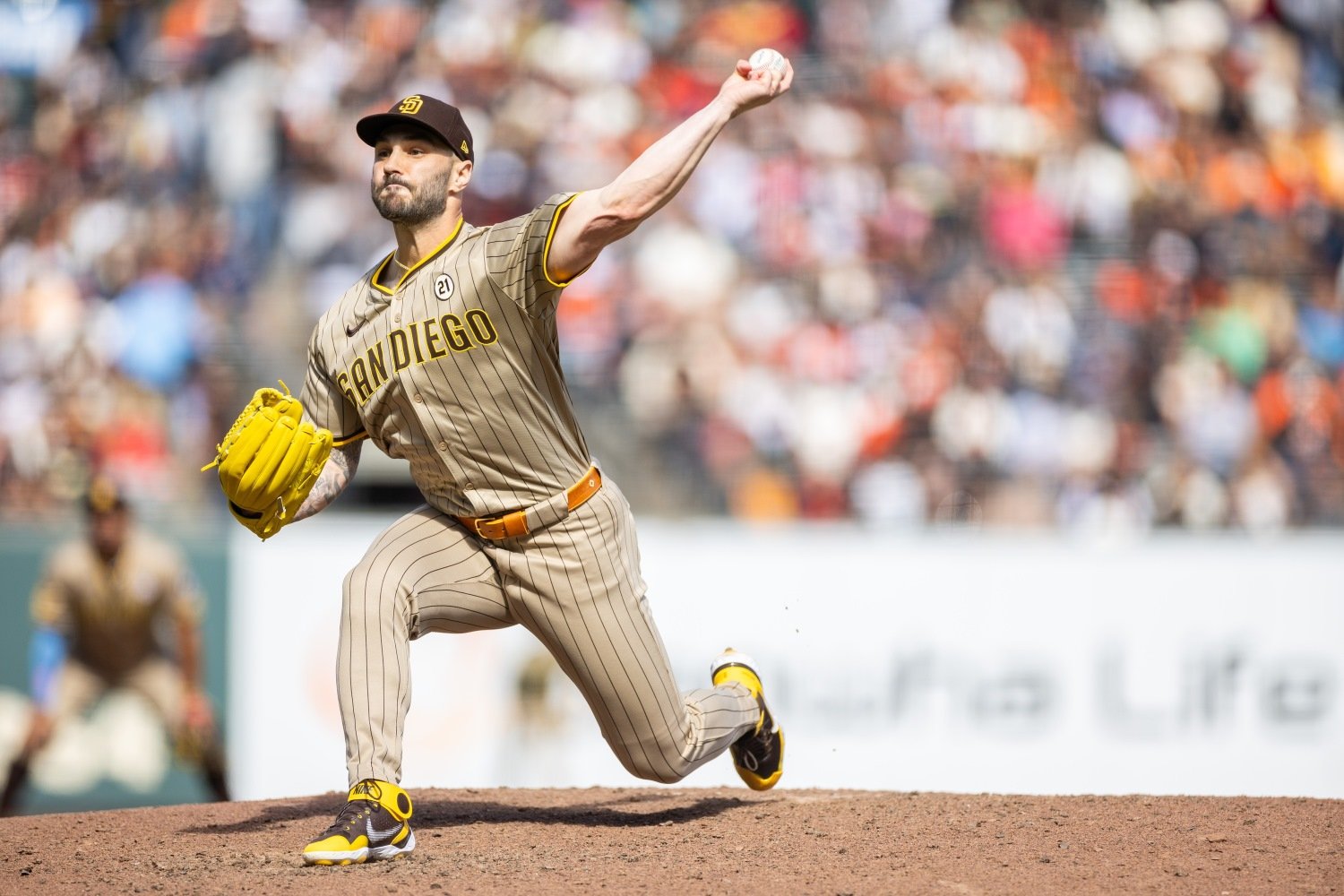 There are 162 games in a regular MLB season. As the playoffs expand, it has become possible for a team to play as many as 22 gmaes in the postseason. Add in the bloated but certainly necessary spring training schedule, and teams have to play more than 200 games to get from one end of a championship year to the other. It's a daunting proposition, especially in an era that has seen starting pitchers take on ever-smaller shares of the workload. Simply giving those innings back to the rotation is impractical, because of the stady rise in injury rates throughout the league over the last two decades. Going to a six-man rotation is a modification worth consideration, but as the schedule has been slightly lengthened to add more days off, it's become less necessary to consider that relatively extreme stratagem. Besides, in addition to needing to find six competent starters at a time when many teams in the league are scrambling to find four or five, that plan doesn't guarantee health. It's possible to end up needing to dip into your seventh, eighth, and ninth starters even when starting with six and pacing everyone carefully, and that usually means shorter starts—negating the hypothetical advantage conferred by giving everyone more rest. To make six starters work as a means of lightening the bullpen's load, you have to get an extra inning per start from each of those guys, and that notion directly contravenes the modern paradigm of the starter: get them out of there before undue damage can be done. Avoid having them face the opposing lineup a third time, at almost all costs. The only way to get through a season with an intact pitching staff capable of dominating enough to achieve the postseason, and then of maintaining their success throughout it, is to pursue unprecedented levels of depth. That's the lesson we should take from the teams who had success in this year's postseason, even as we survey the wreckage of the Mets and Guardians and note the thinness of the remaining staffs for the Yankees and Dodgers. New York already had Gerrit Cole and Nester Cortes (and remained very focused on a high-volume internal pipeline) when they went out and signed Carlos Rodón and Marcus Stroman as depth options in successive offseasons. They amassed lots of bullpen depth, often trading for and stockpiling pitchers who tended to get hurt, but who could be counted on for good innings whenever healthy. The Dodgers have gone the same route, and perhaps at an even greater extreme. They re-signed Clayton Kershaw, traded for Tyler Glasnow (and then extended him on a lavish deal), and signed Yoshinobu Yamamoto last winter, but they also signed James Paxton to a one-year deal, knowing full well it might create a logjam for their bevy of talented younger arms. When none of those hurlers could stay healthy and contribute much into the second half, the team traded for Jack Flaherty. In the meantime, they assiduously added veteran relievers, squeezing them in unapologetically: Daniel Hudson, Evan Phillips, Blake Treinen, Joe Kelly, and more. They targeted fireballer Michael Kopech as a midseason pickup, even though they knew he would be a bit of a project at the back end of the pen. That's the approach the Cubs need to take into the coming winter. They have Shota Imanaga, Justin Steele, Jameson Taillon, Javier Assad, and Jordan Wicks penciled in as starters for next year, with Brandon Birdsell and Cade Horton in the wings. Since neither Birdsell nor Horton has to be added to the 40-man roster yet, though, they have some flexibility to add starters at the big-league level, knowing they'll be able to use the injured list to make room for promotions next spring and summer if needed. Thus, Jed Hoyer should be plotting an addition along the lines of Rodón, Yamamoto, or Glasnow—someone in the Corbin Burnes-Max Fried bracket of free agency, or on a similar tier in trades—and one like Paxton, with some upside but enough question marks attached to keep their price tag reasonable and short-term. That's just on the starting side of things. When it comes to relievers, there's even heavier lifting to do, because the Cubs should be thinking creatively and trying something new. We've seen rotations of teams' best starting pitchers for six or seven decades now, but never has a team undertaken a serious, dedicated rotation of its relief aces. Few teams in any given season even have the reliever depth to consider that. If the Guardians had used Emmanuel Clasé, Cade Smith, and Hunter Gaddis on a three-day rotation all year, each of them would have thrown about 15 fewer innings over 15 or 20 fewer appearances. Given the relative weakness of Cleveland's lineup and starting rotation, they might not have won the AL Central under that usage pattern; they needed to lean on those three and on Tim Herrin in an extraordinarily heavy way. Once they got to the playoffs, though, that caught up to them. Gaddis and Clasé, especially, took their lumps, and it was the reason why a team good enough to win the pennant fell short. Part of it is a trickle-down effect from their understaffed starting rotation, but part of it is that their formula for winning fell apart under the pressure of the playoffs, due both to the better competition and the workloads that wore them down as the season progressed past its usual finish line. What if Porter Hodge and two other top-flight Cubs relievers worked on a three-day rotation in 2025? They'd pitch something like 55 or 60 regular-season innings, leaving more to be covered by second-tier relievers than most teams prefer. Working that way would probably augment their effectiveness, though. One of the principal difficulties of being a relief pitcher is the absence of routine or predictability. For a subset of Cubs relievers, that hurdle would be cleared under this system. Right now, the roster doesn't have a clear lieutenant to Hodge for the role. To pursue this course, the team would need to sign at least one stud reliever in free agency, which is often a fraught, risky thing. Hoyer has never preferred to operate that way, and he'd be stepping out of character by signing Tanner Scott or Jeff Hoffman to high-dollar deals. Trading for Clasé, Mason Miller, or some other elite, team-controlled relief ace would be fascinating, but no less expensive, except monetarily. One way or another, to do this, the Cubs would need to get a Scott-caliber pitcher to work in rotation with Hodge. The third rotated relief ace could emerge during spring training, though, from a large group of pitchers with obvious upside but less consistent track records. Tyson Miller pitched like that type of guy for most of 2024. If he can sustain it, he could earn a spot in the relief rotation for 2025. Nate Pearson and Luke Little have that kind of upside, but haven't yet demonstrated their durability or consistency to the required level. That could change in a hurry. Below that group is a much richer, wilder set of wild cards. Hayden Wesneski should be past any dreams of starting and ready to commit to the bullpen; he has a chance to be great there. Julian Merryweather's stuff absolutely cratered after his injury last year, but if he makes it through the winter on the 40-man, he should get a chance to show whether it has recovered next spring. Daniel Palencia, Jack Neely, and Gavin Hollowell all have plenty of upside to be worth keeping around. Those last three share a vital edge over others, too, because the Cubs will have to add a bunch of players via free agency, trades, and the protection process ahead of the Rule 5 Draft this winter, and that will cause a roster crunch—first on the 40-man, then on the active roster within the season. Palencia, Neely, Hollowell, Pearson, Little, and Hodge are all optionable, meaning they could be sent to the minors when needed next season. Whether the team uses five starters or six, if they do employ a three-man relief ace rotation, they'll need to be able to option pitchers fairly often, which means having more guys with that kind of flexibility. A relief ace rotation is wildly unorthodox, and it will draw fire the same way the Red Sox's 2003 closer by committee experiment did—that is, it will be torched in the media, if the team isn't great. In order to try something so unusual, they need the rest of the roster to be rock-solid. That's why their projects of upgrading the rotation and the lineup will be so important. If they can give themselves the breathing room to try it, though, a relief rotation might be the creative solution so many teams have needed for years, but never found. Using a relief ace rotation throughout the regular season wouldn't preclude Craig Counsell from ratcheting up the usage of his best hurlers if and when the team made the postseason. It would just keep them fresher when they got there. It would also eliminate the reliever familiarity effect, which has become headline news this fall and last, in any regular-season series shorter than four games, and maybe even soften it in the postseason. Massive depth. That has to be the goal of every team looking to win anything important in baseball's new, extremely long season. The Dodgers, Yankees, and Mets have it, though they each acquired it at huge cost. The Cubs will have to spend a lot of money and trade from their positional depth on the farm to get there, but they should be trying to build up that same level of depth. It should be an ambitious, massive project, and they should already be hard at work on its planning stages.
 -
As Chicago sets out to build a better full-season bullpen for 2025, they have a plethora of free-agent options before them. Plunging a hand into that bargain bin is a risk, though, so it's best to cast a discerning eye over the selection first. Image courtesy of © Brad Penner-Imagn Images As happens almost every year, the Cubs found their way to an effective mix of relief arms in the second half in 2024. By then, though, that unit had cost the team several games, and they were unable to make up the gap down the stretch. Next season, they'll try to carry a deeper, more stable bullpen from Opening Day through the end of the regular season--and on into October. That means amassing ample depth, which (in turn) means signing at least one or two highly qualified free agents this winter. Last winter, though, the team tried to do that very thing, and they failed. Trade acquisition Yency Almonte was thwarted by injury trouble, but free-agent signee Héctor Neris stayed healthy--only to fail miserably. He was a longtime big-leaguer with a fine track record, but the wheels came off for him almost at the moment he donned a Cubs uniform. For that matter, there were red flags even in 2023, when Neris's velocity and bat-missing abilities began to erode. As the Cubs look to bolster their relief corps in the same way this winter, they have to be more successful, which means being a bit more careful and a bit more willing to spend. There are several tiers of potentially valuable relievers on the market, and we'll explore them all over the next few weeks, but for now, let's zero in on some pitchers somewhat similar to Neris--but who stand apart from him in important ways. There are two truly vital skills to being a consistently successful reliever. They're very hard to find together, because the hurlers who possess them tend either not to make it to free agency; to be successful starters who never move to the pen; or both. However, at the very least, you want to seek out pitchers who do both at an average level. The skills are: Filling up the strike zone, rather than nibbling constantly or missing wildly and thus putting runners on base at an untenable rate; and Missing bats within the zone, so as not to be overly reliant on getting batters to expand the zone. These are far from the only important skills, of course, but a pitcher who can both consistently throw strikes and induce whiffs when they do has a big leg up on being effective even in high-leverage situations. Ideally, such a pitcher should also throw hard, because that both augments their ability to miss bats in the zone and makes it harder for hitters to square them up and hit for power. Here's a plot of all pitchers who faced at least 250 batters as relievers last year, on the axes of these two core competencies. I've highlighted some notable free-agent relievers who will hit the market a few days after the end of the World Series. It's far from being the full list of such pitchers, but this selection helps us visualize who's good at what, within the set. We won't talk about all of them today, though. In fact, let's hone in on the top left quadrant of the chart, which isn't quite where pitchers want to be. These are the guys who miss more bats than most of their cohort in the zone, but throw fewer strikes than most other arms. This is where Neris lived in 2023, but his numbers slumped badly even in the second half of that campaign, and he was a right-handed hurler who average just 93 miles per hour with his fastball. Neris's defining characteristic, from an arsenal perspective, is his splitter. It's the pitch with which he tries to keep hitters off his underwhelming fastball and so-so slider. It's also why he sometimes has walk problems, especially when he's not throwing his hardest: the pitch is rarely in the zone. Not coincidentally, the five pitchers we'll tackle right now also have great changeups or splitters. That's the pitch type that gets its greatest relative share of utility from deception, and therefore from being outside the zone. Well-executed changeups and splitters often aren't strikes. The name of the game for pitchers who rely on it is inducing chase with that pitch, and getting enough velocity or movement differential to generate whiffs when they do. As compensation for the risk of extra walks that comes from not filling up the zone, these pitchers offer some special utility: most of them have small platoon splits, or are significantly better against opposite-handed batters. That's part of what appealed to the Cubs about Neris, and it makes a team tougher on opposing offenses by giving the manager more ways to create advantageous matchups late in the game. So, let's take a closer look at the five guys with exceptional changeups or splitters who are hitting the market soon and could be sound targets for Jed Hoyer and company. Tommy Kahnle, RHP How good is Kahnle's changeup? He's thrown it 46 times in a row, and 81 times out of his last 85 pitches. Of the 116 pitches he's thrown in the postseason for the Yankees, 104 have been changeups. That shouldn't work, but he hasn't allowed a run all month. In this cadre of plausible targets, he is by far the most prone to wildness. However, when he does throw fastballs, they sit 94 and touch 97. He can sneak a slider past hitters who try to sit on his fastball and change. And taking all swings, rather than just those in the zone, he gets a higher whiff rate than anyone else on this list. Kahnle is 35 years old, and the walk rate has to give buyers some pause, but he's a remarkable pitcher who has carved out a long career already--and he might have the highest ceiling in this group. José Leclerc, RHP His numbers weren't especially pretty this year, and walks are an issue for Leclerc, too. However, when he's on, he's even nastier than Kahnle, thanks to a fastball that plays better at the top of the zone and a livelier set of alternative offerings. He became famous a few years ago for throwing the slambio, a hybrid of the slider and changeup that uses a high spin rate but an unreliable axis of movement. His change is more about run to the arm side than about massive depth, so it misses fewer bats than Kahnle's, but it's also capable of inducing a lot of weak contact on the ground. Crucially, Leclerc is also going to turn 31 this December. In a market awash in superannuated relievers, his relative youth will increase demand for him, but the Cubs should join the queue. He's a hard thrower with multiple ways to attack hitters of either handedness. Matt Moore, LHP Lefties need a good changeup worse than righties, on average, but most lefties who come up with a really good one stick as starters. Moore did so for a while, but he's now been a successful reliever for two seasons--and an unexpectedly, disastrously unsuccessful one for one, this season with the Angels. Moore has made plenty of money in a long career, and he's now in his late 30s. A forearm strain ended his season in August, and he might not want the labor and the risk of trying to come back from this latest setback, If he does, though, the Cubs should be one of the suitors. Most hurlers have either a lateral or a vertical change, but Moore's is a two-plane pitch, both fading and diving relative to his 93-MPH fastball from the left side. That makes it versatile and highly effective, when he's healthy enough to make the rest of his mix work. He's well worth what should be a flier, as opposed to the substantial price tags attached to pitchers like Kahnle. Ryne Stanek, RHP One thing the Cubs have consistently lacked in recent years is a reliable bully--a pitcher who can come in and threaten 100 miles per hour, without feeling like every outing is a tightrope walk. When they have tried to emphasize velocity, they've often done so by handing the ball to players who had no idea where it was going, or no idea how to throw anything other than straight heaters--guys like Daniel Palencia, Dillon Maples, and so on. Julian Merryweather was a briefly dominant exception, but his velocity didn't come back after his injury early in 2024. Stanek is heading into his mid-30s, but he still throws 98 miles per hour, touching higher. He also has a devastating splitter, and a slider with tight spin and significant depth. He misses bats with both of those offerings, and can do so with his heater when hitters try to sit on either offspeed pitch. He also throws more strikes than any of the other pitchers we're evaluating today. Despite some uneven surface-level numbers, he has the makings of a level-raising middle reliever. His career and 2024 playoff numbers both attest to his appetite for big moments. Kirby Yates, RHP Pushing 40 and the softest right-handed tosser on this list, Yates should be the least exciting of these options. Instead, he might be the most enticing. A late bloomer who made it back from a Tommy John surgery that begat some unexpected complications, Yates has now put in more than a decade in the big leagues, but he's only pitched a little over 400 career innings. It shouldn't be a compelling profile, but again, it is. He just keeps throwing a fastball that only comes in around 93 miles per hour, with a nasty splitter that could not come out of a more perfectly matched release point. It has about seven miles per hour of separation from the heater, and as much as a foot and a half of extra vertical depth, but both pitches come from the same slot and hold the same line, horizontally. It's viciously difficult to tell one pitch from the other, and hitters have been failing his stern test for years. For reasons we'll get into in another post, I think it's a near-imperative that the Cubs sign two solid, trustworthy, high-end relievers this winter. These are five candidates for the secondary signing in that set. Their profiles verge on being too similar to Neris's for comfort, but they're better than Neris was when the Cubs inked him, and some of them will be considerably cheaper than he was, leaving the team with more resources to allocate elsewhere. They all throw good enough offspeed pitches to permit Craig Counsell flexible usage. Somewhere in this group is a pitcher who can help Hoyer make good on his pledge to reconsider his method of bullpen-building. View full article
-
- 1
-

-
- ryne stanek
- jose leclerc
- (and 3 more)
-
Cubs Free-Agent Reliever Targets: 5 Strong Changeup Specialists
Matthew Trueblood posted an article in Cubs
 As happens almost every year, the Cubs found their way to an effective mix of relief arms in the second half in 2024. By then, though, that unit had cost the team several games, and they were unable to make up the gap down the stretch. Next season, they'll try to carry a deeper, more stable bullpen from Opening Day through the end of the regular season--and on into October. That means amassing ample depth, which (in turn) means signing at least one or two highly qualified free agents this winter. Last winter, though, the team tried to do that very thing, and they failed. Trade acquisition Yency Almonte was thwarted by injury trouble, but free-agent signee Héctor Neris stayed healthy--only to fail miserably. He was a longtime big-leaguer with a fine track record, but the wheels came off for him almost at the moment he donned a Cubs uniform. For that matter, there were red flags even in 2023, when Neris's velocity and bat-missing abilities began to erode. As the Cubs look to bolster their relief corps in the same way this winter, they have to be more successful, which means being a bit more careful and a bit more willing to spend. There are several tiers of potentially valuable relievers on the market, and we'll explore them all over the next few weeks, but for now, let's zero in on some pitchers somewhat similar to Neris--but who stand apart from him in important ways. There are two truly vital skills to being a consistently successful reliever. They're very hard to find together, because the hurlers who possess them tend either not to make it to free agency; to be successful starters who never move to the pen; or both. However, at the very least, you want to seek out pitchers who do both at an average level. The skills are: Filling up the strike zone, rather than nibbling constantly or missing wildly and thus putting runners on base at an untenable rate; and Missing bats within the zone, so as not to be overly reliant on getting batters to expand the zone. These are far from the only important skills, of course, but a pitcher who can both consistently throw strikes and induce whiffs when they do has a big leg up on being effective even in high-leverage situations. Ideally, such a pitcher should also throw hard, because that both augments their ability to miss bats in the zone and makes it harder for hitters to square them up and hit for power. Here's a plot of all pitchers who faced at least 250 batters as relievers last year, on the axes of these two core competencies. I've highlighted some notable free-agent relievers who will hit the market a few days after the end of the World Series. It's far from being the full list of such pitchers, but this selection helps us visualize who's good at what, within the set. We won't talk about all of them today, though. In fact, let's hone in on the top left quadrant of the chart, which isn't quite where pitchers want to be. These are the guys who miss more bats than most of their cohort in the zone, but throw fewer strikes than most other arms. This is where Neris lived in 2023, but his numbers slumped badly even in the second half of that campaign, and he was a right-handed hurler who average just 93 miles per hour with his fastball. Neris's defining characteristic, from an arsenal perspective, is his splitter. It's the pitch with which he tries to keep hitters off his underwhelming fastball and so-so slider. It's also why he sometimes has walk problems, especially when he's not throwing his hardest: the pitch is rarely in the zone. Not coincidentally, the five pitchers we'll tackle right now also have great changeups or splitters. That's the pitch type that gets its greatest relative share of utility from deception, and therefore from being outside the zone. Well-executed changeups and splitters often aren't strikes. The name of the game for pitchers who rely on it is inducing chase with that pitch, and getting enough velocity or movement differential to generate whiffs when they do. As compensation for the risk of extra walks that comes from not filling up the zone, these pitchers offer some special utility: most of them have small platoon splits, or are significantly better against opposite-handed batters. That's part of what appealed to the Cubs about Neris, and it makes a team tougher on opposing offenses by giving the manager more ways to create advantageous matchups late in the game. So, let's take a closer look at the five guys with exceptional changeups or splitters who are hitting the market soon and could be sound targets for Jed Hoyer and company. Tommy Kahnle, RHP How good is Kahnle's changeup? He's thrown it 46 times in a row, and 81 times out of his last 85 pitches. Of the 116 pitches he's thrown in the postseason for the Yankees, 104 have been changeups. That shouldn't work, but he hasn't allowed a run all month. In this cadre of plausible targets, he is by far the most prone to wildness. However, when he does throw fastballs, they sit 94 and touch 97. He can sneak a slider past hitters who try to sit on his fastball and change. And taking all swings, rather than just those in the zone, he gets a higher whiff rate than anyone else on this list. Kahnle is 35 years old, and the walk rate has to give buyers some pause, but he's a remarkable pitcher who has carved out a long career already--and he might have the highest ceiling in this group. José Leclerc, RHP His numbers weren't especially pretty this year, and walks are an issue for Leclerc, too. However, when he's on, he's even nastier than Kahnle, thanks to a fastball that plays better at the top of the zone and a livelier set of alternative offerings. He became famous a few years ago for throwing the slambio, a hybrid of the slider and changeup that uses a high spin rate but an unreliable axis of movement. His change is more about run to the arm side than about massive depth, so it misses fewer bats than Kahnle's, but it's also capable of inducing a lot of weak contact on the ground. Crucially, Leclerc is also going to turn 31 this December. In a market awash in superannuated relievers, his relative youth will increase demand for him, but the Cubs should join the queue. He's a hard thrower with multiple ways to attack hitters of either handedness. Matt Moore, LHP Lefties need a good changeup worse than righties, on average, but most lefties who come up with a really good one stick as starters. Moore did so for a while, but he's now been a successful reliever for two seasons--and an unexpectedly, disastrously unsuccessful one for one, this season with the Angels. Moore has made plenty of money in a long career, and he's now in his late 30s. A forearm strain ended his season in August, and he might not want the labor and the risk of trying to come back from this latest setback, If he does, though, the Cubs should be one of the suitors. Most hurlers have either a lateral or a vertical change, but Moore's is a two-plane pitch, both fading and diving relative to his 93-MPH fastball from the left side. That makes it versatile and highly effective, when he's healthy enough to make the rest of his mix work. He's well worth what should be a flier, as opposed to the substantial price tags attached to pitchers like Kahnle. Ryne Stanek, RHP One thing the Cubs have consistently lacked in recent years is a reliable bully--a pitcher who can come in and threaten 100 miles per hour, without feeling like every outing is a tightrope walk. When they have tried to emphasize velocity, they've often done so by handing the ball to players who had no idea where it was going, or no idea how to throw anything other than straight heaters--guys like Daniel Palencia, Dillon Maples, and so on. Julian Merryweather was a briefly dominant exception, but his velocity didn't come back after his injury early in 2024. Stanek is heading into his mid-30s, but he still throws 98 miles per hour, touching higher. He also has a devastating splitter, and a slider with tight spin and significant depth. He misses bats with both of those offerings, and can do so with his heater when hitters try to sit on either offspeed pitch. He also throws more strikes than any of the other pitchers we're evaluating today. Despite some uneven surface-level numbers, he has the makings of a level-raising middle reliever. His career and 2024 playoff numbers both attest to his appetite for big moments. Kirby Yates, RHP Pushing 40 and the softest right-handed tosser on this list, Yates should be the least exciting of these options. Instead, he might be the most enticing. A late bloomer who made it back from a Tommy John surgery that begat some unexpected complications, Yates has now put in more than a decade in the big leagues, but he's only pitched a little over 400 career innings. It shouldn't be a compelling profile, but again, it is. He just keeps throwing a fastball that only comes in around 93 miles per hour, with a nasty splitter that could not come out of a more perfectly matched release point. It has about seven miles per hour of separation from the heater, and as much as a foot and a half of extra vertical depth, but both pitches come from the same slot and hold the same line, horizontally. It's viciously difficult to tell one pitch from the other, and hitters have been failing his stern test for years. For reasons we'll get into in another post, I think it's a near-imperative that the Cubs sign two solid, trustworthy, high-end relievers this winter. These are five candidates for the secondary signing in that set. Their profiles verge on being too similar to Neris's for comfort, but they're better than Neris was when the Cubs inked him, and some of them will be considerably cheaper than he was, leaving the team with more resources to allocate elsewhere. They all throw good enough offspeed pitches to permit Craig Counsell flexible usage. Somewhere in this group is a pitcher who can help Hoyer make good on his pledge to reconsider his method of bullpen-building.
 -
And don't say Juan Soto. Image courtesy of © Benny Sieu-Imagn Images While the Cubs' offense might already be better than it looks based on raw numbers from 2024, everyone acknowledges the need for the team to get better and deeper for 2025. In a perfect world, the team would seriously and persistently vie for the services of Juan Soto, the generational, definitive hitter of the upcoming free-agent class. If it wasn't already gallingly apparent, his transcendent impact on a lineup shone through clearly in Game 5 of the American League Championship Series Friday night Saturday night, when he hit the game-winning three-run home run in the 10th inning of the Yankees' taut battle with the Guardians. In reality, though, the Cubs aren't going to sign Soto. Doing so would not match Jed Hoyer's well-established approach to free agency or Tom Ricketts's equally obvious budgetary vision, and the two New York teams are plainly ready to pony up for Soto. Cross him off your list. However, there will still be lots of intriguing free agents available this winter, and the team does have money to spend. One way to figure out which available hitters might be good fits is to look at two statistics that sketch their needs in profile. The first is zone swing rate minus chase rate (ZSw-Chase), which reflects the difference between a player's in- and out-of-zone swing rate. Few skills are more valuable than the ability to tell a ball from a strike, but it's especially helpful to be able to defend the zone against the latter, without going fishing for the former. This is already something the Cubs prioritize; they were fifth in MLB in ZSw-Chase last year, trailing the Dodgers, Rangers, Braves, and Mariners. Another key indicator, however, is the propensity to hit for pwoer, and especially to give yourself a chance to hit for power. To measure this, we can look at the percentage of swings that ended in hard-hit air balls (line drives and fly balls) to a batter's pull field (PHiA/Sw). The Cubs don't do this one well enough. They were just 20th in that skill last season, and as you can see, that not only left a gap between the other disciplined teams like them, but left them far from the most successful slugging offenses in baseball: the Diamondbacks, Orioles, and Yankees. It's great to be good at controlling the strike zone, but if you can't make opponents pay by driving the ball when they make a mistake, it becomes much less valuable. The Cubs need to climb the above chart vertically next year. Ideally, they'd do so without sliding to the left much. So, let's focus on free agents who do both of these things well. Only 21 hitters had both ZSw-Chase and PHiA/Sw values among the best quartile of the league last season. The bad news is that a bunch of them--Shohei Ohtani, Aaron Judge, Corey Seager, Fernando Tatis, Jr., Francisco Lindor, Ketel Marte, Ozzie Albies, Marcus Semien--are already signed to contracts that tether them to their teams for many more years. New York's Austin Wells doesn't have a long-term deal, but he's under team control for several seasons and isn't likely to be available. A few guys (Andrew Benintendi, MJ Melendez, Dylan Moore, Jake Bauers) make this list, but have such dubious other credentials that prying them away from their current teams might not be worth the trouble. Marcell Ozuna is on the list, but he's Marcell Ozuna, and is therefore not worth the trouble. A few more (Brandon Lowe, about whom I wrote yesterday, and two more whom we'll discuss in another post later this week) could be better trade targets, and one guy would be a really great target--except it's Michael Busch, whom the Cubs already have. That leaves three players, inhabiting the same neighborhood as so many of the stars listed above, who are free agents at the end of the World Series. Here they are, along with some thoughts about how they would fit with the Cubs. Willy Adames, IF It's been virtually undiscussed, but Adames is a fascinating potential target for a Cubs team whom so many fans specifically want to see add power. He hit 32 home runs and drove in 112 for the Brewers in his walk year, and while the temptation is to view that as a career year, the reality is that Adames has always had huge power for a middle infielder. He's averaged 28 homers and 31 doubles per season over the last four, with a .210 isolated power (ISO) mark. His selectivity has gotten markedly better over the last two seasons, too, and would fit in gorgeously with the Cubs. Positionally, of course, the fit is tougher, but Adames's defense took a big step backward at shortstop last year. Even in the short term, he's better cast as a third or second baseman, where he would be brilliant and more able to establish himself in a lasting way. Historically, it's a good bet that the best deal a shortstop will be offered in free agency will come from someone who views them as a shortstop. That might be changing, though. Carlos Correa nearly signed a deal to become the Mets' third baseman two winters ago. Marcus Semien signed on as a second baseman when he and Corey Seager landed with the Rangers in the same winter the previous year. Regular shortstops over age 30 are becoming almost unheard-of, and that trend figures to continue as the game leans ever more toward youth and athleticism. The Cubs could elect to be the high bidders on Adames, on a deal similar to the one to which they signed Dansby Swanson two winters ago, and move him to second base, anyway. He'd be an even better defender at that spot than Nico Hoerner, and a considerably better hitter with a skill set better matched to the team's needs. Max Kepler, RF This possibility hinges quite a bit on whether Cody Bellinger opts out of his deal after the conclusion of the World Series, because Kepler has no secondary position and Bellinger would slot in as the right fielder if he elects to stick around. Should Bellinger elect to test the waters again, though, Kepler would be one relatively modestly priced way for the team to replace him and seek some upside. Over a decade in Minnesota, Kepler established a reputation for frustratingly underachieving his expected batted-ball numbers and his talent, but when healthy, he can rake. The big hole in Adames's offensive game is the same as the one in most of the hitters who fit this group but aren't superstars: he whiffs a lot, even within the zone. Not Kepler. In fact, there is no glaring weakness in Kepler's offensive game, other than a certain propensity to hit some of his sharpest balls on the ground to the right side. Staying healthy has been an issue, and he's only had end-to-end strong seasons in 2019 and 2023, but Kepler could be a very good change-of-scenery candidate. He's also a marvelous defender in right field, and would complete arguably baseball's best defensive outfield on a deal that would leave the team plenty of money to attack their needs on the bench and the pitching staff. Ramón Laureano, OF We've gone in alphabetical order here, but as it happens, we've also stepped neatly down by tiers. Adames would be a high-dollar, winter-defining addition. Kepler would be a complementary move, but a meaningful one, and he'd come in expecting to play nearly every day. Laureano is not even a lock to become a free agent; he's just a near-lock to be non-tendered by Atlanta. He's been a toolsy, fascinating player throughout his career, but the stocky, strong-armed right-handed slugger has had three below-average seasons at the plate in the last five. MLB Trade Rumors projects him to make $6.1 million via arbitration, and given the fact that Atlanta also dealt for the hefty contract of Jorge Soler this summer, they're unlikely to retain him at that price. Laureano has never had even 500 plate appearances in a season, though part of the reason for that is the pandemic, and another part is a suspension for using PEDs in 2021. He'd come in to serve as a sometimes-DH and right fielder, spelling and platooning with players like Ian Happ and Owen Caissie, or even Bellinger. He thrived in his brief time with the Braves, though, proving the staying power of his impressive power when it's focused by a smart approach at the plate. The Cubs should enter this offseason looking to add more than one new bat, just as they should be looking to add more than one new arm. None of these three players would be exciting as the top move of the winter, but in various versions of the winter, each could fit the team's needs and capacities. They all bring a combination of selective aggressiveness and power to the table, and that makes them worth examining as targets for the Cubs when free agency opens and ramps up over the coming weeks. View full article
-
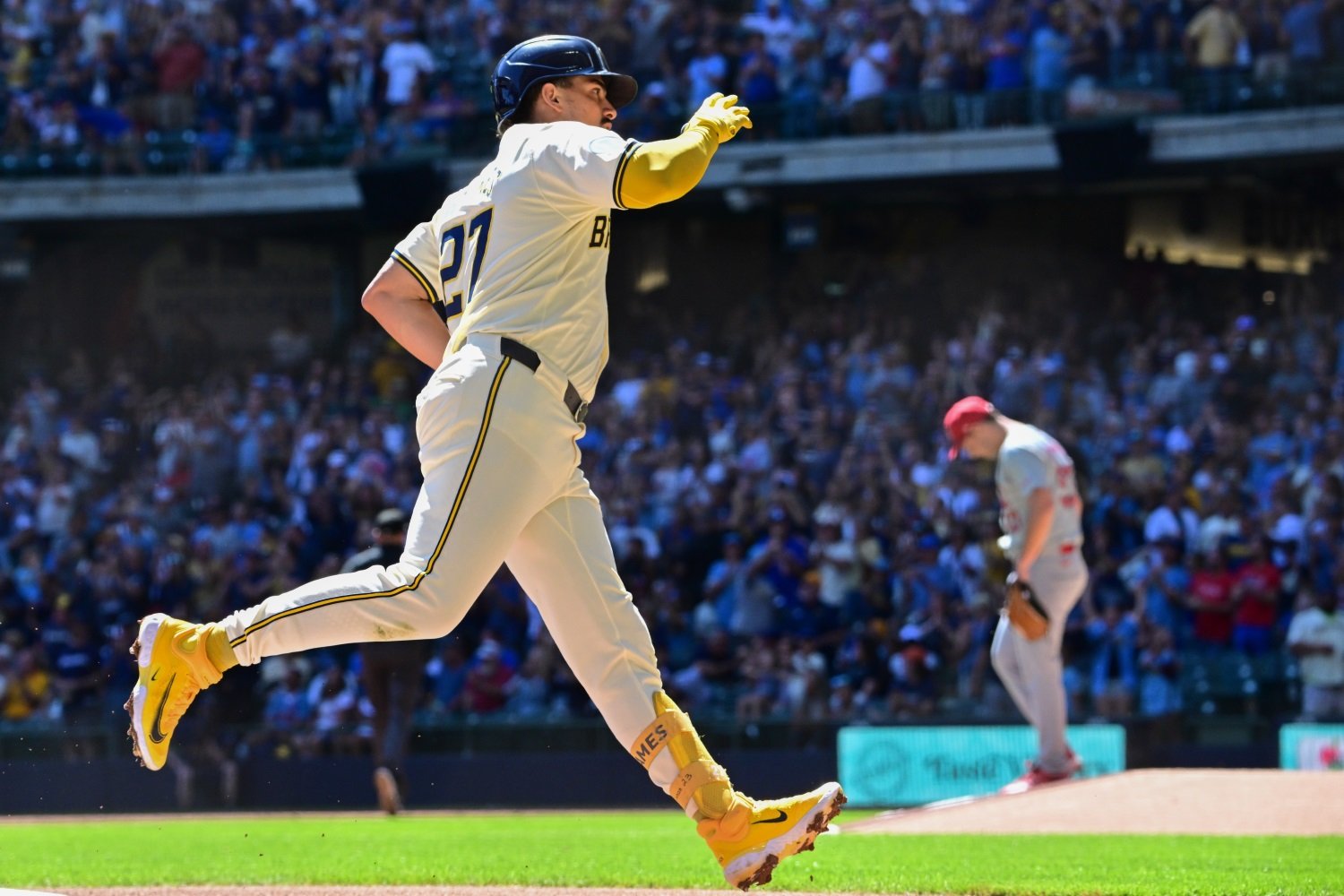 While the Cubs' offense might already be better than it looks based on raw numbers from 2024, everyone acknowledges the need for the team to get better and deeper for 2025. In a perfect world, the team would seriously and persistently vie for the services of Juan Soto, the generational, definitive hitter of the upcoming free-agent class. If it wasn't already gallingly apparent, his transcendent impact on a lineup shone through clearly in Game 5 of the American League Championship Series Friday night Saturday night, when he hit the game-winning three-run home run in the 10th inning of the Yankees' taut battle with the Guardians. In reality, though, the Cubs aren't going to sign Soto. Doing so would not match Jed Hoyer's well-established approach to free agency or Tom Ricketts's equally obvious budgetary vision, and the two New York teams are plainly ready to pony up for Soto. Cross him off your list. However, there will still be lots of intriguing free agents available this winter, and the team does have money to spend. One way to figure out which available hitters might be good fits is to look at two statistics that sketch their needs in profile. The first is zone swing rate minus chase rate (ZSw-Chase), which reflects the difference between a player's in- and out-of-zone swing rate. Few skills are more valuable than the ability to tell a ball from a strike, but it's especially helpful to be able to defend the zone against the latter, without going fishing for the former. This is already something the Cubs prioritize; they were fifth in MLB in ZSw-Chase last year, trailing the Dodgers, Rangers, Braves, and Mariners. Another key indicator, however, is the propensity to hit for pwoer, and especially to give yourself a chance to hit for power. To measure this, we can look at the percentage of swings that ended in hard-hit air balls (line drives and fly balls) to a batter's pull field (PHiA/Sw). The Cubs don't do this one well enough. They were just 20th in that skill last season, and as you can see, that not only left a gap between the other disciplined teams like them, but left them far from the most successful slugging offenses in baseball: the Diamondbacks, Orioles, and Yankees. It's great to be good at controlling the strike zone, but if you can't make opponents pay by driving the ball when they make a mistake, it becomes much less valuable. The Cubs need to climb the above chart vertically next year. Ideally, they'd do so without sliding to the left much. So, let's focus on free agents who do both of these things well. Only 21 hitters had both ZSw-Chase and PHiA/Sw values among the best quartile of the league last season. The bad news is that a bunch of them--Shohei Ohtani, Aaron Judge, Corey Seager, Fernando Tatis, Jr., Francisco Lindor, Ketel Marte, Ozzie Albies, Marcus Semien--are already signed to contracts that tether them to their teams for many more years. New York's Austin Wells doesn't have a long-term deal, but he's under team control for several seasons and isn't likely to be available. A few guys (Andrew Benintendi, MJ Melendez, Dylan Moore, Jake Bauers) make this list, but have such dubious other credentials that prying them away from their current teams might not be worth the trouble. Marcell Ozuna is on the list, but he's Marcell Ozuna, and is therefore not worth the trouble. A few more (Brandon Lowe, about whom I wrote yesterday, and two more whom we'll discuss in another post later this week) could be better trade targets, and one guy would be a really great target--except it's Michael Busch, whom the Cubs already have. That leaves three players, inhabiting the same neighborhood as so many of the stars listed above, who are free agents at the end of the World Series. Here they are, along with some thoughts about how they would fit with the Cubs. Willy Adames, IF It's been virtually undiscussed, but Adames is a fascinating potential target for a Cubs team whom so many fans specifically want to see add power. He hit 32 home runs and drove in 112 for the Brewers in his walk year, and while the temptation is to view that as a career year, the reality is that Adames has always had huge power for a middle infielder. He's averaged 28 homers and 31 doubles per season over the last four, with a .210 isolated power (ISO) mark. His selectivity has gotten markedly better over the last two seasons, too, and would fit in gorgeously with the Cubs. Positionally, of course, the fit is tougher, but Adames's defense took a big step backward at shortstop last year. Even in the short term, he's better cast as a third or second baseman, where he would be brilliant and more able to establish himself in a lasting way. Historically, it's a good bet that the best deal a shortstop will be offered in free agency will come from someone who views them as a shortstop. That might be changing, though. Carlos Correa nearly signed a deal to become the Mets' third baseman two winters ago. Marcus Semien signed on as a second baseman when he and Corey Seager landed with the Rangers in the same winter the previous year. Regular shortstops over age 30 are becoming almost unheard-of, and that trend figures to continue as the game leans ever more toward youth and athleticism. The Cubs could elect to be the high bidders on Adames, on a deal similar to the one to which they signed Dansby Swanson two winters ago, and move him to second base, anyway. He'd be an even better defender at that spot than Nico Hoerner, and a considerably better hitter with a skill set better matched to the team's needs. Max Kepler, RF This possibility hinges quite a bit on whether Cody Bellinger opts out of his deal after the conclusion of the World Series, because Kepler has no secondary position and Bellinger would slot in as the right fielder if he elects to stick around. Should Bellinger elect to test the waters again, though, Kepler would be one relatively modestly priced way for the team to replace him and seek some upside. Over a decade in Minnesota, Kepler established a reputation for frustratingly underachieving his expected batted-ball numbers and his talent, but when healthy, he can rake. The big hole in Adames's offensive game is the same as the one in most of the hitters who fit this group but aren't superstars: he whiffs a lot, even within the zone. Not Kepler. In fact, there is no glaring weakness in Kepler's offensive game, other than a certain propensity to hit some of his sharpest balls on the ground to the right side. Staying healthy has been an issue, and he's only had end-to-end strong seasons in 2019 and 2023, but Kepler could be a very good change-of-scenery candidate. He's also a marvelous defender in right field, and would complete arguably baseball's best defensive outfield on a deal that would leave the team plenty of money to attack their needs on the bench and the pitching staff. Ramón Laureano, OF We've gone in alphabetical order here, but as it happens, we've also stepped neatly down by tiers. Adames would be a high-dollar, winter-defining addition. Kepler would be a complementary move, but a meaningful one, and he'd come in expecting to play nearly every day. Laureano is not even a lock to become a free agent; he's just a near-lock to be non-tendered by Atlanta. He's been a toolsy, fascinating player throughout his career, but the stocky, strong-armed right-handed slugger has had three below-average seasons at the plate in the last five. MLB Trade Rumors projects him to make $6.1 million via arbitration, and given the fact that Atlanta also dealt for the hefty contract of Jorge Soler this summer, they're unlikely to retain him at that price. Laureano has never had even 500 plate appearances in a season, though part of the reason for that is the pandemic, and another part is a suspension for using PEDs in 2021. He'd come in to serve as a sometimes-DH and right fielder, spelling and platooning with players like Ian Happ and Owen Caissie, or even Bellinger. He thrived in his brief time with the Braves, though, proving the staying power of his impressive power when it's focused by a smart approach at the plate. The Cubs should enter this offseason looking to add more than one new bat, just as they should be looking to add more than one new arm. None of these three players would be exciting as the top move of the winter, but in various versions of the winter, each could fit the team's needs and capacities. They all bring a combination of selective aggressiveness and power to the table, and that makes them worth examining as targets for the Cubs when free agency opens and ramps up over the coming weeks.
.png.d02f9d2e07401e432bc2d6c1c83786d4.png)
.png.d80de225ceb49523e970b183c64e46ef.png)
.png.344d7975fb297d919f306527c1c3e540.png)
