Matthew Trueblood
-
Posts
2,481 -
Joined
-
Last visited
-
Days Won
2
Content Type
Profiles
Joomla Posts 1
Chicago Cubs Videos
Chicago Cubs Free Agent & Trade Rumors, Notes, & Tidbits
2026 Chicago Cubs Top Prospects Ranking
News
2023 Chicago Cubs Draft Picks
Guides & Resources
2024 Chicago Cubs Draft Picks
The Chicago Cubs Players Project
2025 Chicago Cubs Draft Pick Tracker
2026 Chicago Cubs Draft Tracker: Picks & Bonuses
Blogs
Events
Forums
Store
Gallery
Everything posted by Matthew Trueblood
-
Missed opportunities have seen the last few grains slide through the Cubs' playoff hourglass over the last three series. Now, they're forced into a corner of desperate hoping and nervous scoreboard watching. Image courtesy of © Kiyoshi Mio-Imagn Images As of Thursday morning, the Cubs have a 3.8% chance of reaching the playoffs, according to Baseball Prospectus and its PECOTA projection system. If that sounds too optimistic, it's because it almost certainly is, but that's what the model says. The Cubs haven't quite seized their moment lately, with a bad series loss to the Pirates last week and a game that slipped away from them at Dodger Stadium Wednesday night, but their competition has been kind enough to falter, too, keeping some theoretical possibility alive. Funnily enough, that 3.8% mark is almost identical to the chances that the Cubs will sneak into the MLB Draft Lottery and pick within the top six picks in 2025. They're currently the team with the second-best record, among those who stand to be left out of the playoffs--the 17th-worst in baseball. According to the odds the league uses for its lottery, the team slotted to pick 17th in theory has a 94.6% chance of picking in exactly that position, and a 2.1% chance of picking 18th. The rest of their probability is scattered among those top six picks, since they could be selected for any of them via the lottery. In practice, the Cubs' chances of being in the lottery are a little higher than the numbers suggest, because the White Sox and A's are both ineligible to pick inside the lottery next year--but the effect of those disqualifications on the Cubs' hopes, given their position, is quite small. So, each of these two things are possible, and about equally so. It's close to 25-to-1 that the Cubs make the playoffs, and close to the same number that they get to pick higher than they have since 2014 in next year's first round. That's it, though. If neither of those longshots comes in, the Cubs will have muddled through another season of being stuck in the middle, without substantial change or progress and without a high pick to try to ameliorate that next summer. The reality of their lousy odds and high stakes is starting to get more stark. The team is unlikely to move on from their group of baseball decision-makers this fall, but without that turnover, from where will the changes they really need come? If they do make the playoffs, that would go a short but meaningful distance toward validating Jed Hoyer's project as the architect of the team. If they do eventually win the lottery, at this year's Winter Meetings in early December, it would give them a chance to make a sudden and unexpected infusion of high-end talent. In all the most likely cases, though, they head into the winter with another not-good-enough season behind them, facing the formidable task of dramatically upgrading a roster that was built around the idea that it was good enough without such an overhaul. To believe the team can turn the corner without the confidence and revenue infusion of a playoff berth or the talent boon of a lottery pick, you have to believe this front office is ready to change the way they do business. They've already shown a shrewd eye for talent, with recent draft picks and sound trades and signings, but that's not enough. They have to show an appetite for big-picture, grand-scale upgrades, and a greater mixture of flexibility and urgency than they've shown over the nearly half-decade of Hoyer's administration. For now, the cards are still coming down. Maybe the team will hit the big flush they've been drawing to, on the fourth or fifth card. It's much more likely, though, that they're about to walk away from the table with empty hands and pockets again. They had better bring a wholly different, more robust strategy to next year's main event. View full article
-
The Cubs' young southpaw has had a frustrating, injury-marred season, but between stints on the shelf, we've been able to glimpse an evolution--some of it purely aimed at thriving, and some aimed at surviving. Image courtesy of © Rafael Suanes-Imagn Images In what was supposed to be his first full MLB season, Jordan Wicks will barely scrape away his own rookie eligibility. At most, he might throw 60 innings in the majors, and he'll finish with no more than 12 starts, not counting rehab appearances. Yet, it's been an intriguing campaign, rather than a purely miserable one. He burst onto the scene this spring with an altered pitch mix and a few ticks of unexpected new velocity, clearly intent on being more of a typical modern starter, missing more bats and taking care of business himself. Then, reality happened. Let's take a look at the seasons within Wicks's season, to get a better sense of the likely shape of the seasons ahead for him. Exploring and Abandoning the Sweeper Wicks caught just about everyone's eye with a spring debut: a slider with such a horizontal shape to it that it was much more sweeper than pure slider. It was a kind of variant on his curveball, first tinkered with late in 2022, and it was a surprising addition to Wicks's arsenal, for a simple reason: he's usually a guy who favors pronation. When the Cubs selected Wicks out of Kansas State University three summers ago, his calling card was his changeup. Of his two fastballs, the sinker is the more natural one out of the hand. As I wrote about recently, the Cubs like to play with and force flexibility in motor preference, but this project is not specific to them. Because it's more about grip manipulation than maximizing supinated spin, sweepers can be friendly to a natural pronator--depending on how they're thrown, and depending on the player in question. We can't say with any certainty that these are linked, but the fact is that Wicks went down late in April with a forearm issue. Since then, the sweeper has been gone. He throws a gyro slider, now, rather than that sweepy one. Cutting It Loose, and Tightening Up The other big news about Wicks early on was how hard he was throwing. For a pitcher who sat just over 91 miles per hour and only rarely bumped it up near 95 last season, there was suddenly quite a bit more in the tank. Wicks showed the ability to sit close upon 95 and touch even higher, and he clearly intended to use that increased velocity to bully hitters. We all understand the limitations of pitchers with below-average fastball velocity. Once you can regularly find the mid-90s, though, many things unfold. Wicks leaned away from the sinker and into his four-seamer, more than ever, trying to miss bats at the top of the zone and set hitters up for even more whiffs with breaking and offspeed stuff down low. A more imposing combination of speed and shape were, he seemed to believe, his path to frontline starter status. Maybe that would have turned out to be true, but instead of getting to find out, we found another kind of limit. Wicks went down with an oblique strain in June, and since he's come back, his velocity is not the same. On this chart, the farther out a datum is on the set of rings, the harder the pitch was thrown. Wicks pitched at the top of his potential velocity range until his body couldn't bear it anymore. Now, he'll have to get by in his new life as a starter with the ability to manage contact, but not necessarily the capacity to strike hitters out at an above-average rate. Finding the Right Mix Both the new things Wicks tried and the reformation of his profile around a more familiar set of pitch shapes have required him to rebalance his pitch mix. We've seen him change the way he attacks hitters and weighs his options during his three stints with the big-league team this year. The changeup is the near-constant, because that, again, has always been Wicks's signature pitch. He knows in which situations he wants to use it, and how to do so. Around it, though, everything is shifting. As you can see, the four-seamer is still driving the fastball ship, but his sinker is back in a place of prominence after being deemphasized at midseason. Now that he's using the more comfortable gyro slider, he's going to that pitch more often. Note, too, the broader inclusion of the cutter, which is as much a harder variant of his gyro slider as the sweeper was a harder variant of his curve. This is probably the best version of Wicks. That it hasn't yet yielded especially impressive results is ok. Given his style, he's going to need to learn better command (where that term applies more to execution of each pitch, including consistently achieving the right movement shape, than hyper-specific location) and good sequencing. As he does, he can tap into more overall value. Next season, the Cubs will hope to get more than 100 strong innings from Wicks. He's done plenty this year to suggest that he's capable of that--even if it's all been broken up, and come with some unexpected changes of tack and style. A strong finish in this final handful of outings would go a long way toward boosting everyone's confidence, as Wicks seeks that next, never truly final, form. View full article
-
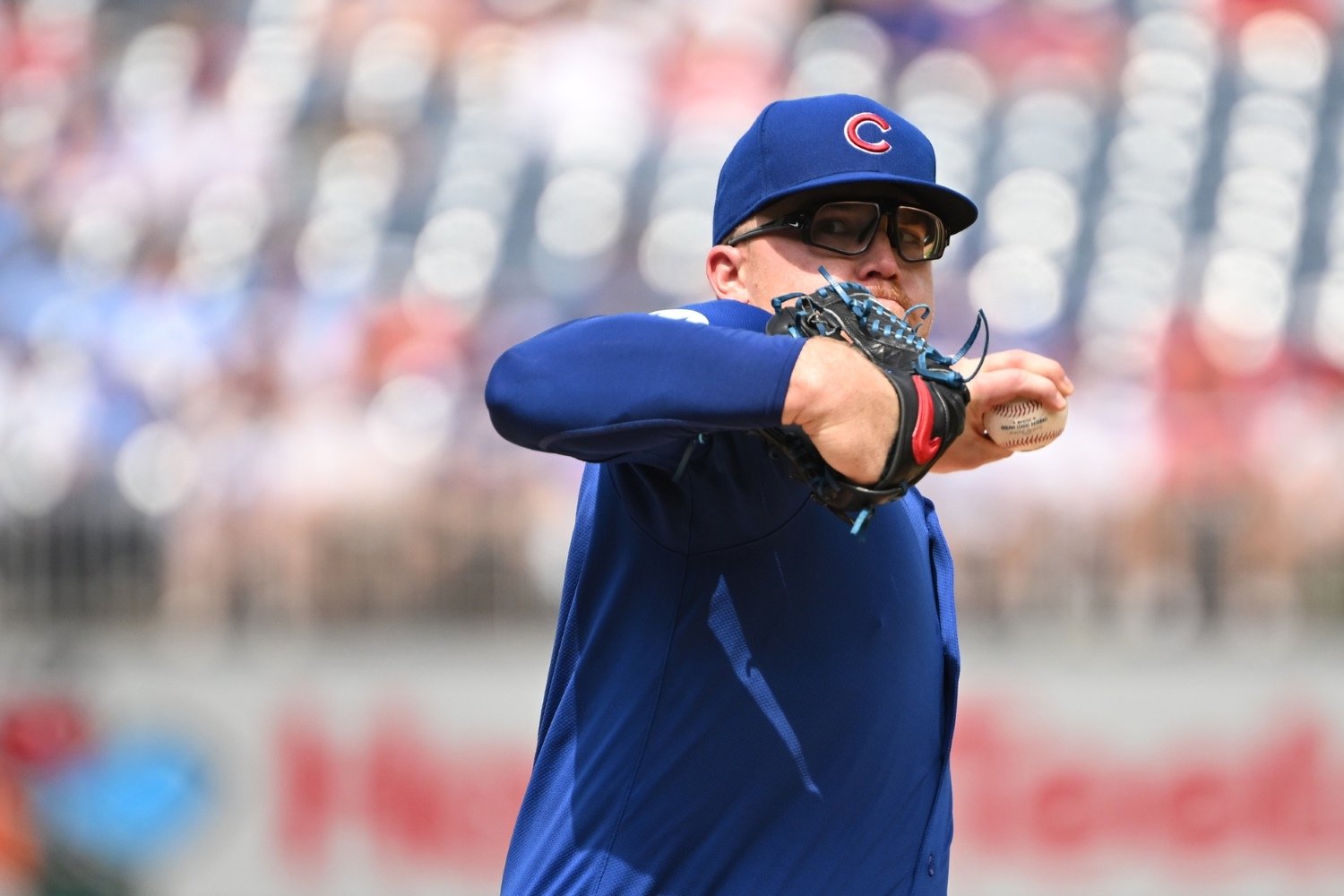 In what was supposed to be his first full MLB season, Jordan Wicks will barely scrape away his own rookie eligibility. At most, he might throw 60 innings in the majors, and he'll finish with no more than 12 starts, not counting rehab appearances. Yet, it's been an intriguing campaign, rather than a purely miserable one. He burst onto the scene this spring with an altered pitch mix and a few ticks of unexpected new velocity, clearly intent on being more of a typical modern starter, missing more bats and taking care of business himself. Then, reality happened. Let's take a look at the seasons within Wicks's season, to get a better sense of the likely shape of the seasons ahead for him. Exploring and Abandoning the Sweeper Wicks caught just about everyone's eye with a spring debut: a slider with such a horizontal shape to it that it was much more sweeper than pure slider. It was a kind of variant on his curveball, first tinkered with late in 2022, and it was a surprising addition to Wicks's arsenal, for a simple reason: he's usually a guy who favors pronation. When the Cubs selected Wicks out of Kansas State University three summers ago, his calling card was his changeup. Of his two fastballs, the sinker is the more natural one out of the hand. As I wrote about recently, the Cubs like to play with and force flexibility in motor preference, but this project is not specific to them. Because it's more about grip manipulation than maximizing supinated spin, sweepers can be friendly to a natural pronator--depending on how they're thrown, and depending on the player in question. We can't say with any certainty that these are linked, but the fact is that Wicks went down late in April with a forearm issue. Since then, the sweeper has been gone. He throws a gyro slider, now, rather than that sweepy one. Cutting It Loose, and Tightening Up The other big news about Wicks early on was how hard he was throwing. For a pitcher who sat just over 91 miles per hour and only rarely bumped it up near 95 last season, there was suddenly quite a bit more in the tank. Wicks showed the ability to sit close upon 95 and touch even higher, and he clearly intended to use that increased velocity to bully hitters. We all understand the limitations of pitchers with below-average fastball velocity. Once you can regularly find the mid-90s, though, many things unfold. Wicks leaned away from the sinker and into his four-seamer, more than ever, trying to miss bats at the top of the zone and set hitters up for even more whiffs with breaking and offspeed stuff down low. A more imposing combination of speed and shape were, he seemed to believe, his path to frontline starter status. Maybe that would have turned out to be true, but instead of getting to find out, we found another kind of limit. Wicks went down with an oblique strain in June, and since he's come back, his velocity is not the same. On this chart, the farther out a datum is on the set of rings, the harder the pitch was thrown. Wicks pitched at the top of his potential velocity range until his body couldn't bear it anymore. Now, he'll have to get by in his new life as a starter with the ability to manage contact, but not necessarily the capacity to strike hitters out at an above-average rate. Finding the Right Mix Both the new things Wicks tried and the reformation of his profile around a more familiar set of pitch shapes have required him to rebalance his pitch mix. We've seen him change the way he attacks hitters and weighs his options during his three stints with the big-league team this year. The changeup is the near-constant, because that, again, has always been Wicks's signature pitch. He knows in which situations he wants to use it, and how to do so. Around it, though, everything is shifting. As you can see, the four-seamer is still driving the fastball ship, but his sinker is back in a place of prominence after being deemphasized at midseason. Now that he's using the more comfortable gyro slider, he's going to that pitch more often. Note, too, the broader inclusion of the cutter, which is as much a harder variant of his gyro slider as the sweeper was a harder variant of his curve. This is probably the best version of Wicks. That it hasn't yet yielded especially impressive results is ok. Given his style, he's going to need to learn better command (where that term applies more to execution of each pitch, including consistently achieving the right movement shape, than hyper-specific location) and good sequencing. As he does, he can tap into more overall value. Next season, the Cubs will hope to get more than 100 strong innings from Wicks. He's done plenty this year to suggest that he's capable of that--even if it's all been broken up, and come with some unexpected changes of tack and style. A strong finish in this final handful of outings would go a long way toward boosting everyone's confidence, as Wicks seeks that next, never truly final, form.
 -
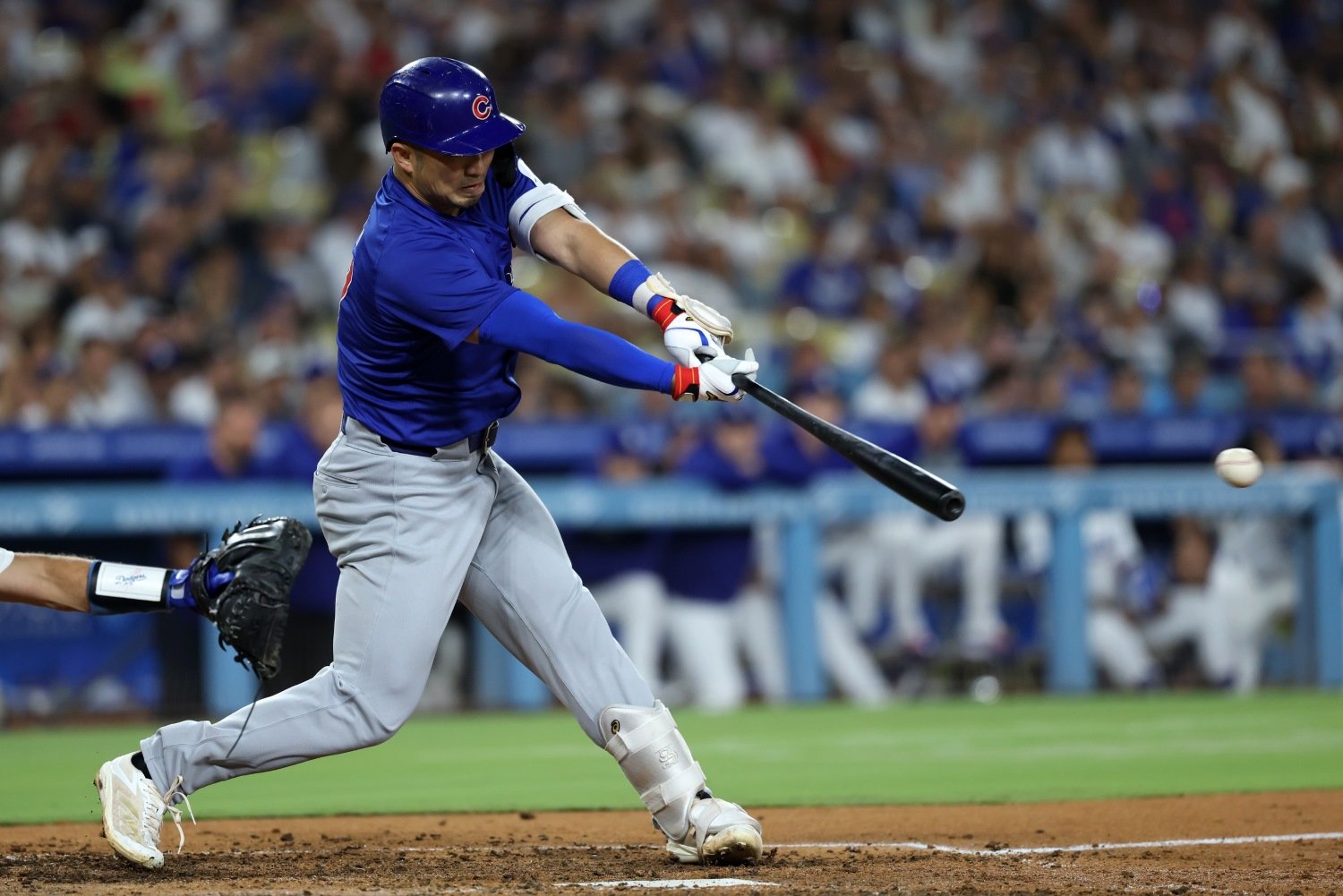 Everything about Seiya Suzuki's approach is geared toward getting pitches on the inner half of the plate and blasting them to his pull side. That's a fairly standard modern big-league hitting philosophy, but its effectiveness varies widely, based especially on whether and how well a hitter can respond when pitchers start adjusting to that intention. Even as he's come into his own in the majors, Suzuki hasn't hit pitches on the outer third of the plate and beyond it well, and that incomplete coverage of the zone has made it hard for him to translate his extraordinary offensive skills into extraordinary offensive value. For his career, Suzuki is just a .217/.305/.312 batter on pitches at least on the outer lane of the plate to him. Most hitters don't handle outside pitches well, of course. They do their best work on the stuff down the middle, and generate most of their thump on balls inside. Still, Suzuki has been rough, and when you glance at the raw data, it looks worse than ever this season. He's hitting just .202/.279/.283 in plate appearances that end with a pitch away. Dig a little deeper, though, and you can see signs of Suzuki digging deep to find ways to attack the outside pitch better. As his MLB career has progressed, he's both rolled over on the ball less often and found ways to pull it more consistently. It's good, when you're a hitter with plus power, to pull the ball, even if the pitch is on the outer part of the plate. However, Suzuki has sometimes had an unfortunate--even devastating--tendency to roll over that pitch and hit sharp but harmless ground balls on it. It's encouraging, then, to see hits like the two he delivered late on Tuesday night. Both were hit at fairly low trajectories, but whether you classify them as ground balls or line drives, each had an exit velocity over 100 miles per hour and a launch angle of 6 degrees or higher. Even nominal grounders, when hit at launch angles above 5 degrees and with some juice behind them, are almost always hits. Suzuki has tapped into something more sustainable on the outer third lately, even if the results are slow to reflect the value of that change. Here are his month-by-month average exit velocities and launch angles for pitches on the outer third, for the last two seasons. This reflects a concerted and successful change this year, which is nice. Notice, too, though, that this month boasts a considerably lower average launch angle than some other recent ones. Does that mean Suzuki is falling back into the habit of rolling over on the ball? No. In fact, I think the insight we're tapping into here is that for hitters like Suzuki whose power is mostly on elevated stuff over the inner half, you don't want to see them trying to hit fly balls on the pitch away--let alone succeeding in doing so. It probably waters down their command of the inner half of the plate, and their barrel speed and accuracy when they get those meatballs. It probably also means a lot of quasi-encouraging fly outs that really shouldn't encourage us. In the era of Statcast data and expected slugging averages rendered in neat Baseball Savant sliders, this kind of swing looks good, to seasoned fans and to data sets. Seiya 2.mp4 I don't believe that we should actually take much solace from those. Suzuki still only has two home runs on balls over the outer third or beyond this year, and he owes one of them to the Allegheny River, for forcing the Pirates to build a very close (though high) fence down the right-field line at PNC Park. It's ok to try to drive the ball when it's out away from you, even as an inner-third, take-and-rake slugger, but the ideal version of it might be a swing more like this one. Seiya 3.mp4 If he's focused on being early enough to get the bat head out and drive that outside pitch on a flat trajectory like this, he can more consistently collect actual hits than if he's trying to extend his more leveraged power swing an extra few inches to cover the corner. Just as importantly, though, I think it also leaves him more room to adjust and be the dangerous hitter the Cubs need him to be if a pitcher comes in on him, when he was looking away. For right-handed batters who want to dominate the inner half of the plate, it's not enough to go up there with that preference fixed in the foremind and be stubborn about it. There are too many good right-handed pitchers in MLB, all eager to pick ruthlessly at the holes they find in such an approach. You can't look for the pitch you want and adjust to the one you don't want. As paradoxical as it sounds, you have to start by covering the pitch you don't want, then let the pitch you do prefer still work for you when you get it. It's a tricky mental puzzle to complete, which is why relatively few right-handed batters (especially those whose formative amateur and professional years were spent in the Americas) have such an inside-oriented approach. For those who do, though, seeing that reverse angle on the craft of hitting is essential. Suzuki might be starting to get there. Given how good he's been for most healthy portions of his career to date, that's tantalizing. If he can come back next year with a consistent and coherent plan for covering the outer edge while still punishing pitchers who come inside on him, he'll become an even more dangerous version of the hitter we've seen over the last season and a half. That would be a huge development for the Cubs lineup.
 -
The two late hits he delivered Tuesday night were excellent examples of a subtle but important approach change by the Cubs' designated hitter, enacted coming into this year but only accelerated late in its run. Image courtesy of © Kiyoshi Mio-Imagn Images Everything about Seiya Suzuki's approach is geared toward getting pitches on the inner half of the plate and blasting them to his pull side. That's a fairly standard modern big-league hitting philosophy, but its effectiveness varies widely, based especially on whether and how well a hitter can respond when pitchers start adjusting to that intention. Even as he's come into his own in the majors, Suzuki hasn't hit pitches on the outer third of the plate and beyond it well, and that incomplete coverage of the zone has made it hard for him to translate his extraordinary offensive skills into extraordinary offensive value. For his career, Suzuki is just a .217/.305/.312 batter on pitches at least on the outer lane of the plate to him. Most hitters don't handle outside pitches well, of course. They do their best work on the stuff down the middle, and generate most of their thump on balls inside. Still, Suzuki has been rough, and when you glance at the raw data, it looks worse than ever this season. He's hitting just .202/.279/.283 in plate appearances that end with a pitch away. Dig a little deeper, though, and you can see signs of Suzuki digging deep to find ways to attack the outside pitch better. As his MLB career has progressed, he's both rolled over on the ball less often and found ways to pull it more consistently. It's good, when you're a hitter with plus power, to pull the ball, even if the pitch is on the outer part of the plate. However, Suzuki has sometimes had an unfortunate--even devastating--tendency to roll over that pitch and hit sharp but harmless ground balls on it. It's encouraging, then, to see hits like the two he delivered late on Tuesday night. Both were hit at fairly low trajectories, but whether you classify them as ground balls or line drives, each had an exit velocity over 100 miles per hour and a launch angle of 6 degrees or higher. Even nominal grounders, when hit at launch angles above 5 degrees and with some juice behind them, are almost always hits. Suzuki has tapped into something more sustainable on the outer third lately, even if the results are slow to reflect the value of that change. Here are his month-by-month average exit velocities and launch angles for pitches on the outer third, for the last two seasons. This reflects a concerted and successful change this year, which is nice. Notice, too, though, that this month boasts a considerably lower average launch angle than some other recent ones. Does that mean Suzuki is falling back into the habit of rolling over on the ball? No. In fact, I think the insight we're tapping into here is that for hitters like Suzuki whose power is mostly on elevated stuff over the inner half, you don't want to see them trying to hit fly balls on the pitch away--let alone succeeding in doing so. It probably waters down their command of the inner half of the plate, and their barrel speed and accuracy when they get those meatballs. It probably also means a lot of quasi-encouraging fly outs that really shouldn't encourage us. In the era of Statcast data and expected slugging averages rendered in neat Baseball Savant sliders, this kind of swing looks good, to seasoned fans and to data sets. Seiya 2.mp4 I don't believe that we should actually take much solace from those. Suzuki still only has two home runs on balls over the outer third or beyond this year, and he owes one of them to the Allegheny River, for forcing the Pirates to build a very close (though high) fence down the right-field line at PNC Park. It's ok to try to drive the ball when it's out away from you, even as an inner-third, take-and-rake slugger, but the ideal version of it might be a swing more like this one. Seiya 3.mp4 If he's focused on being early enough to get the bat head out and drive that outside pitch on a flat trajectory like this, he can more consistently collect actual hits than if he's trying to extend his more leveraged power swing an extra few inches to cover the corner. Just as importantly, though, I think it also leaves him more room to adjust and be the dangerous hitter the Cubs need him to be if a pitcher comes in on him, when he was looking away. For right-handed batters who want to dominate the inner half of the plate, it's not enough to go up there with that preference fixed in the foremind and be stubborn about it. There are too many good right-handed pitchers in MLB, all eager to pick ruthlessly at the holes they find in such an approach. You can't look for the pitch you want and adjust to the one you don't want. As paradoxical as it sounds, you have to start by covering the pitch you don't want, then let the pitch you do prefer still work for you when you get it. It's a tricky mental puzzle to complete, which is why relatively few right-handed batters (especially those whose formative amateur and professional years were spent in the Americas) have such an inside-oriented approach. For those who do, though, seeing that reverse angle on the craft of hitting is essential. Suzuki might be starting to get there. Given how good he's been for most healthy portions of his career to date, that's tantalizing. If he can come back next year with a consistent and coherent plan for covering the outer edge while still punishing pitchers who come inside on him, he'll become an even more dangerous version of the hitter we've seen over the last season and a half. That would be a huge development for the Cubs lineup. View full article
-
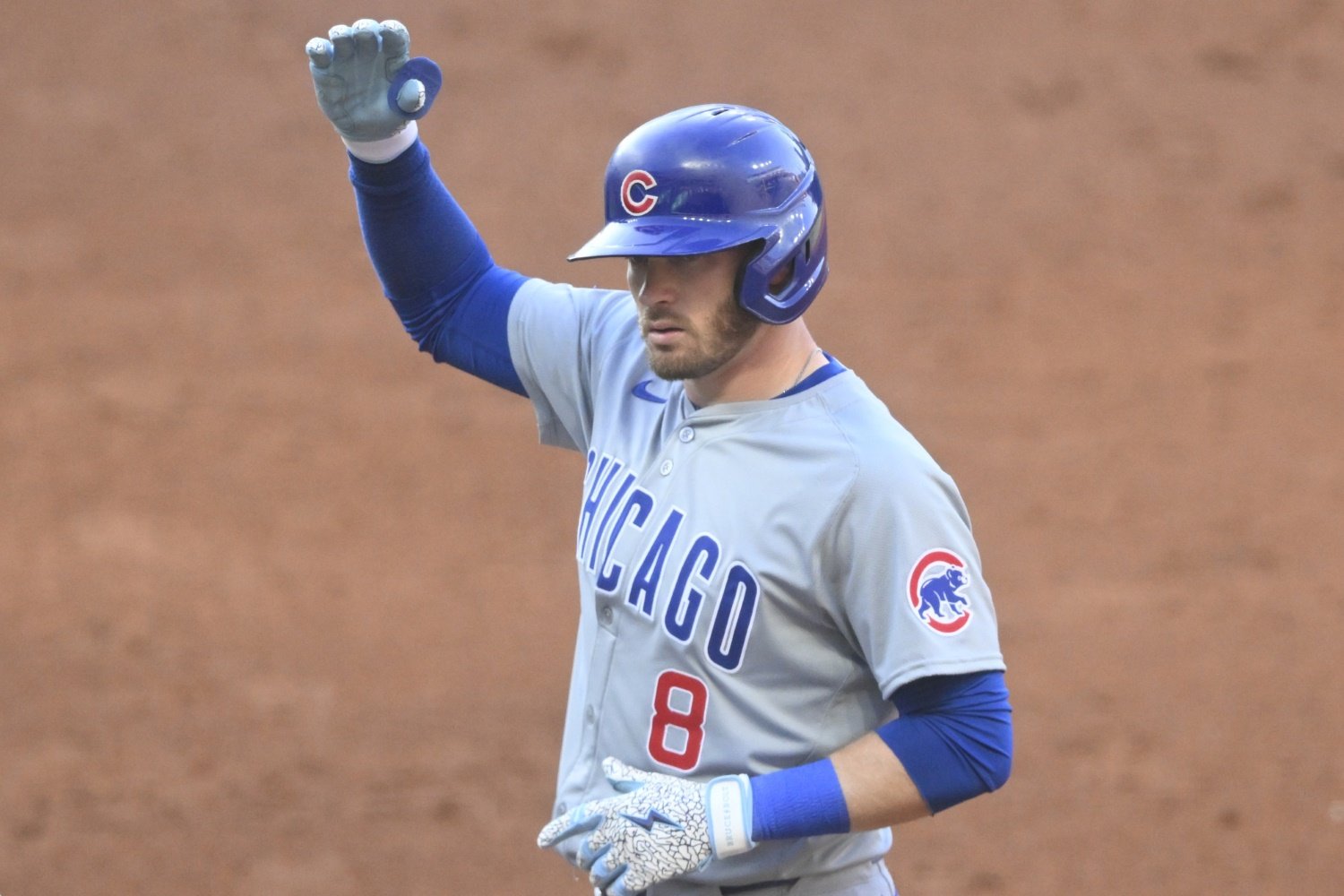 He's gone through many iterations and adjustments over his near-decade with the Cubs, and for Ian Happ, almost any adjustments have to happen twice. As he well understands, being a switch-hitter is a bit like being two different hitters altogether. So much has to be different in the way you attack the difficult task of being a productive hitter, based on whether you're batting left-handed or right-handed in that particular plate appearance. Over time, we've seen Happ gradually transform from a take-and-rake hitter with surprisingly high-end power but too many whiffs to a more complete and well-rounded one--although one without that ability to smash the ball to smithereens and go on hot streaks that make him one of the best hitters in baseball. He's traded some upside to dramatically raise his floor, and it's generally been a good tradeoff for him. It's a bit more complicated, though, when you break things down based on the handedness of the opposing pitcher (and, therefore, the side from which he's hitting in a given plate appearance). When Happ began reinventing himself in the middle of 2021 and emerged in 2022 as a solid but much more contact-focused one, that transition proved much easier for the left-hitting version of him. His left-handed swing has some natural lift and better raw bat speed. His right-handed swing has never been quite as sweet, and when he rebuilt his game to put the ball in play more, he ended up hitting it on the ground far too often from the right side. His approach is also a little more uneven against southpaws. He has a harder time organizing and enforcing his own strike zone. He's a bit less capable of covering the whole plate and defending it. The ball doesn't jump off his bat the same way it does from the left side. To a very real extent, though, that's changing. He's rediscovering some power this year. Seven of his home runs this season have come from the right side--the most he's hit off lefties in MLB in any season. He's both hitting it harder when he lifts it, and lifting it more when he hits it hard. That's a good combination. You can see his fight to make these improvements in the way he's modified his right-handed swing over time. Here he is in 2021, near the end of a season in which he came to grips with the need to make more contact and sacrifice some power to better tap into his on-base skills. Happ RH 1.mp4 That's a jerky, disconnected swing, and it results in lousy contact. He did put the ball in play, but the real value of that batted ball was not much different from if he had whiffed. It's hard to maintain the fluidity and the violence required to hit for power from your less-frequent side, and in that video, you can see why. Here's a clip from about a year ago, when Happ had come quite a way in his evolution as a right-handed batter. He'd become materially smoother, and he was looking to use the whole field from that side. We could call it progress. Happ did improve last year as a right-handed batter, as he overhauled his approach, returning to a more patient posture after a 2022 dedicated to slapping the ball around the diamond in swing mode. Happ RH 2.mp4 Now, here he is this year. Of course, the video is selected to portray the changes he's made in a maximal way, but notice just how much violence there is here. That requires connection and intention. Happ is tearing into the ball against lefties this year. His increased home run total from the right side isn't a coincidence. Happ RH 3.mp4 If you go all the way back with Happ, though, this swing might look a bit familiar. It's quite a bit more damage-oriented than the right-handed swings he's deployed the last few years... but it looks an awful lot like this. Happ RH 4.mp4 That home run is from all the way back in 2018. See, Happ is getting to his righty power this year, by basically swinging for the fences the way he did when he first came into the league--but only from that side of the dish. He's given back his improved contact rates against lefties to start pummeling their mistakes, and it's basically worked. You wouldn't want to make a habit of whiffing on just over 30% of swings, as Happ is against lefties this year, but you can make up for it if you run into a ball and blast a home run in 5.3% of your plate appearances. From the left side, Happ remains that balanced, new guy. He's not giving up on making more contact than he used to; that free-spirited trade of whiffs for power nearly ran him out of the league once. In anywhere from 20 to 30 percent of his trips to the plate, though--all the ones where he sees a lefty pitcher--he's ok with setting that aside and giving a nod to his old self. This year, that's worked out nicely for the Cubs, and for Happ. With him and his complicated switch-hitting profile, you never know whether that means it has major staying power.
 -
The Cubs' left fielder is a switch-hitter who's constantly evolving, and his latest change from the right side of the dish is into a version of himself we've certainly seen before. Image courtesy of © David Richard-Imagn Images He's gone through many iterations and adjustments over his near-decade with the Cubs, and for Ian Happ, almost any adjustments have to happen twice. As he well understands, being a switch-hitter is a bit like being two different hitters altogether. So much has to be different in the way you attack the difficult task of being a productive hitter, based on whether you're batting left-handed or right-handed in that particular plate appearance. Over time, we've seen Happ gradually transform from a take-and-rake hitter with surprisingly high-end power but too many whiffs to a more complete and well-rounded one--although one without that ability to smash the ball to smithereens and go on hot streaks that make him one of the best hitters in baseball. He's traded some upside to dramatically raise his floor, and it's generally been a good tradeoff for him. It's a bit more complicated, though, when you break things down based on the handedness of the opposing pitcher (and, therefore, the side from which he's hitting in a given plate appearance). When Happ began reinventing himself in the middle of 2021 and emerged in 2022 as a solid but much more contact-focused one, that transition proved much easier for the left-hitting version of him. His left-handed swing has some natural lift and better raw bat speed. His right-handed swing has never been quite as sweet, and when he rebuilt his game to put the ball in play more, he ended up hitting it on the ground far too often from the right side. His approach is also a little more uneven against southpaws. He has a harder time organizing and enforcing his own strike zone. He's a bit less capable of covering the whole plate and defending it. The ball doesn't jump off his bat the same way it does from the left side. To a very real extent, though, that's changing. He's rediscovering some power this year. Seven of his home runs this season have come from the right side--the most he's hit off lefties in MLB in any season. He's both hitting it harder when he lifts it, and lifting it more when he hits it hard. That's a good combination. You can see his fight to make these improvements in the way he's modified his right-handed swing over time. Here he is in 2021, near the end of a season in which he came to grips with the need to make more contact and sacrifice some power to better tap into his on-base skills. Happ RH 1.mp4 That's a jerky, disconnected swing, and it results in lousy contact. He did put the ball in play, but the real value of that batted ball was not much different from if he had whiffed. It's hard to maintain the fluidity and the violence required to hit for power from your less-frequent side, and in that video, you can see why. Here's a clip from about a year ago, when Happ had come quite a way in his evolution as a right-handed batter. He'd become materially smoother, and he was looking to use the whole field from that side. We could call it progress. Happ did improve last year as a right-handed batter, as he overhauled his approach, returning to a more patient posture after a 2022 dedicated to slapping the ball around the diamond in swing mode. Happ RH 2.mp4 Now, here he is this year. Of course, the video is selected to portray the changes he's made in a maximal way, but notice just how much violence there is here. That requires connection and intention. Happ is tearing into the ball against lefties this year. His increased home run total from the right side isn't a coincidence. Happ RH 3.mp4 If you go all the way back with Happ, though, this swing might look a bit familiar. It's quite a bit more damage-oriented than the right-handed swings he's deployed the last few years... but it looks an awful lot like this. Happ RH 4.mp4 That home run is from all the way back in 2018. See, Happ is getting to his righty power this year, by basically swinging for the fences the way he did when he first came into the league--but only from that side of the dish. He's given back his improved contact rates against lefties to start pummeling their mistakes, and it's basically worked. You wouldn't want to make a habit of whiffing on just over 30% of swings, as Happ is against lefties this year, but you can make up for it if you run into a ball and blast a home run in 5.3% of your plate appearances. From the left side, Happ remains that balanced, new guy. He's not giving up on making more contact than he used to; that free-spirited trade of whiffs for power nearly ran him out of the league once. In anywhere from 20 to 30 percent of his trips to the plate, though--all the ones where he sees a lefty pitcher--he's ok with setting that aside and giving a nod to his old self. This year, that's worked out nicely for the Cubs, and for Happ. With him and his complicated switch-hitting profile, you never know whether that means it has major staying power. View full article
-
Sometimes, you sit down to rededicate yourself to something, and you realize it was probably better letting it slip away, after all. Image courtesy of © Kamil Krzaczynski-Imagn Images Someone pointed out to me, a few weeks ago, that I use wins above replacement (WAR) and its cousin, WARP, less often than most writers with whom they typically think of me as a kindred spirit. I was a little bit surprised, and a little bit alarmed. WAR is one of the fundamental concepts of much online baseball writing, and I hadn't noticed that I was neglecting it. It took me another week of writing to notice and confirm that that was true. The next step I tried to take, going into the following week, was mapping out how I might get back to making greater use of the framework for audiences. The more I tried to do so, though, the less enthusiasm I felt for it. In fact, at this point, I've come to the opposite conclusion. I don't think WAR is helpful or useful--or at least, I think it misleads as much as it informs, and I'm done using it, even to whatever limited extent I had been in previous months or years. I don't want to sound retrograde, or atavistic. Early in the era of WAR, some old-school writers hit back against the framework based on things like the existence of competing WARs, with differing fundamental assumptions and widely disparate numbers for the same players. Some rebuked it for the inexactitude of a replacement level, itself. I don't completely disagree with those arguments, but they're not my reason for leaving WAR behind, and I don't think they're especially problematic, really. Rather, I have a couple of other issues. WAR values have become blunt instruments, not for loosely estimating player value, but for ending conversations by assigning false certainty to player valuations. Runs, not wins, are the directly measurable contributions to a team made by individual players. Wins are fashioned from the interactions of players, managers, moments, and opponents, and players' contributions translate only very messily into wins. Counting runs produced and prevented is a far superior way to express player value than doing the same thing, then milling those runs into theoretical wins and roughening the estimate without showing the increased error. For my money, replacement levels aren't the right baseline to which to anchor player value, after all. The old heads were right about that, but for the wrong reasons. They were trying to cling to raw numbers, like pitcher wins, home runs, and RBIs; that was analytically untenable. WAR sought to anchor the world to the baseline of a replacement-level player, which is convenient for teams and from the perspective of management vis-a-vis labor, but what we need to anchor ourselves to, instead, is the league average. When you compare a player's batting, baserunning, and fielding to an average player's, you find out how many runs they really contribute to the project of reaching the postseason for a team. Taking the extra step of adding what amounts to padding--credit applied to a player relative to the replacement level, on the unexamined assumption that they were better than the possible replacements actually available to their team--valorizes below-average players and dampens the apparent value of above-average ones. The existing WAR metrics are too rigid; they adapt only too slowly, and thus sometimes retroactively. That doesn't make them useful to me in telling the story of a player or their value for readers. This season, first basemen are hitting at a historically lousy rate, relative to the rest of the league. In theory, according to WAR's underpinnings, that should make the offensive contributions of especially good first basemen especially valuable, and it should make the struggles of some of those players a bit less damaging than they seem. Alas, the first "should" there is only hypothetical, because the positional adjustment that is one key aspect of WAR doesn't flex the way you might think or like, at least in all cases. The second "should", meanwhile, is just an assumption I don't really agree with. There seems to me a logical inconsistency in the places where the various flavors of WAR do and don't elect to depart from observed reality--or, perhaps, in how they adjust it. This is most readily apparent in pitching WAR, which ranges from being rooted in runs allowed and only lightly bumped along the spectrum based on park factors and defensive support to being rooted almost solely in strikeouts, walks, and home run rates. But it's really everywhere within the framework. I don't like the opacity of the process, even though it's not left intentionally opaque by any of the sources who provide it and even though they're not opaque to me, personally. I think these layers of assumptions and adjustments, baked in neatly en route to a single-number estimate which fans then treat as something real and concrete and non-negotiable, end up doing more harm than good--even though most of them are immensely valuable, if kept separate and noticed along the way. I would rather continue to break down player performance using more telling indices, with either greater predictive or greater descriptive power, than try to speak the language of WAR again. Finding that I'm out of practice in that tongue turned out to be liberating. What WAR is trying to do, and it's admirable enough in a certain way, is to shrink the complexity and the difficulty of player evaluation and roster construction, until those abstract tasks become apparently concrete and easy to grasp. Unfortunately, as most attempts at such radical simplification do, it fails. I would rather live here, in the discomfort of uncertainty and abstraction, than seize upon the cozy but false sense of surety WAR offers. I'd rather continue to help interested readers learn more about players and how they come together to win games than invite them to continue conforming to a constructed reality I feel does a poor job of capturing the one on the field. View full article
-
Why I Won't Use WAR or WARP in Baseball Articles, Ever Again
Matthew Trueblood posted an article in Cubs
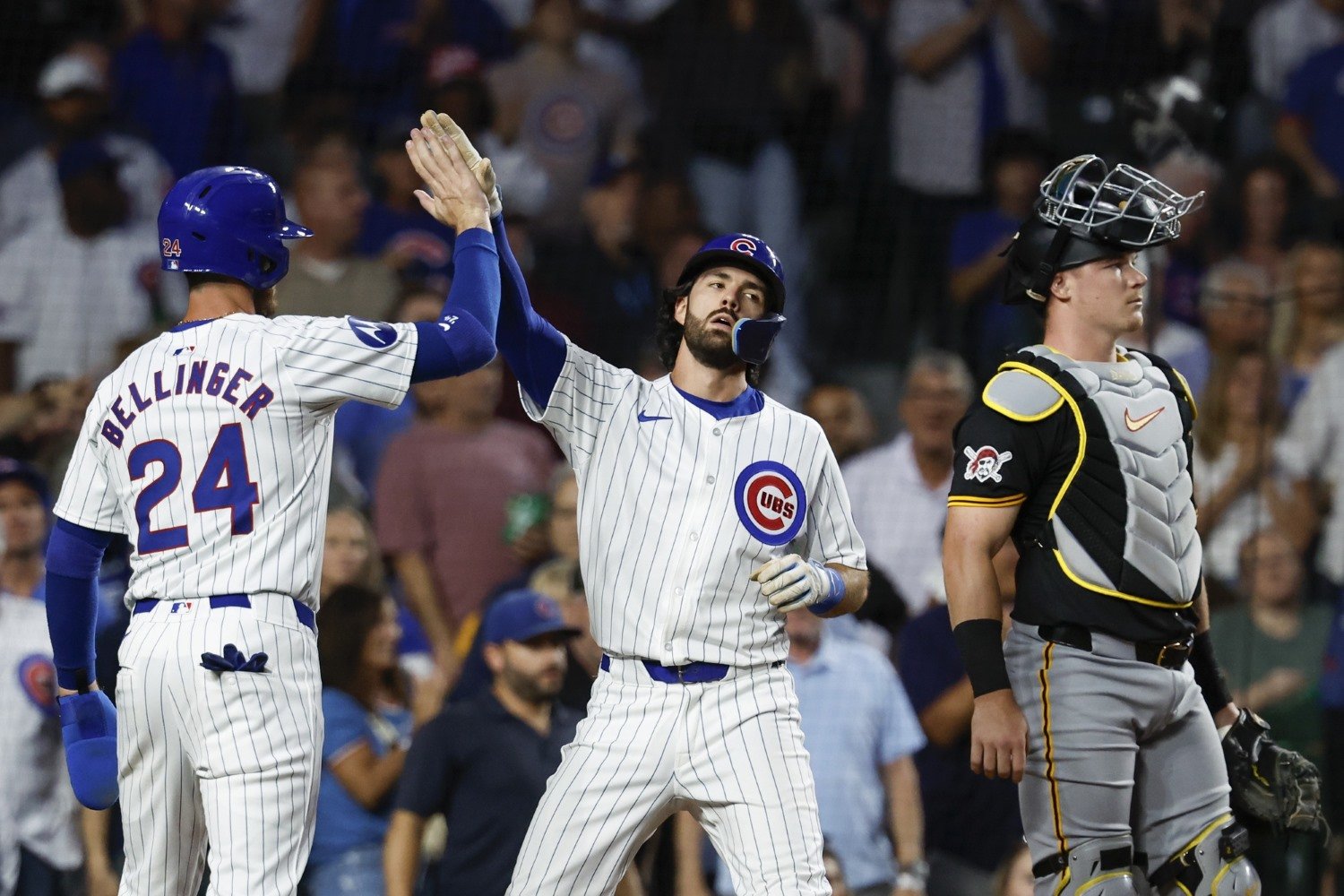 Someone pointed out to me, a few weeks ago, that I use wins above replacement (WAR) and its cousin, WARP, less often than most writers with whom they typically think of me as a kindred spirit. I was a little bit surprised, and a little bit alarmed. WAR is one of the fundamental concepts of much online baseball writing, and I hadn't noticed that I was neglecting it. It took me another week of writing to notice and confirm that that was true. The next step I tried to take, going into the following week, was mapping out how I might get back to making greater use of the framework for audiences. The more I tried to do so, though, the less enthusiasm I felt for it. In fact, at this point, I've come to the opposite conclusion. I don't think WAR is helpful or useful--or at least, I think it misleads as much as it informs, and I'm done using it, even to whatever limited extent I had been in previous months or years. I don't want to sound retrograde, or atavistic. Early in the era of WAR, some old-school writers hit back against the framework based on things like the existence of competing WARs, with differing fundamental assumptions and widely disparate numbers for the same players. Some rebuked it for the inexactitude of a replacement level, itself. I don't completely disagree with those arguments, but they're not my reason for leaving WAR behind, and I don't think they're especially problematic, really. Rather, I have a couple of other issues. WAR values have become blunt instruments, not for loosely estimating player value, but for ending conversations by assigning false certainty to player valuations. Runs, not wins, are the directly measurable contributions to a team made by individual players. Wins are fashioned from the interactions of players, managers, moments, and opponents, and players' contributions translate only very messily into wins. Counting runs produced and prevented is a far superior way to express player value than doing the same thing, then milling those runs into theoretical wins and roughening the estimate without showing the increased error. For my money, replacement levels aren't the right baseline to which to anchor player value, after all. The old heads were right about that, but for the wrong reasons. They were trying to cling to raw numbers, like pitcher wins, home runs, and RBIs; that was analytically untenable. WAR sought to anchor the world to the baseline of a replacement-level player, which is convenient for teams and from the perspective of management vis-a-vis labor, but what we need to anchor ourselves to, instead, is the league average. When you compare a player's batting, baserunning, and fielding to an average player's, you find out how many runs they really contribute to the project of reaching the postseason for a team. Taking the extra step of adding what amounts to padding--credit applied to a player relative to the replacement level, on the unexamined assumption that they were better than the possible replacements actually available to their team--valorizes below-average players and dampens the apparent value of above-average ones. The existing WAR metrics are too rigid; they adapt only too slowly, and thus sometimes retroactively. That doesn't make them useful to me in telling the story of a player or their value for readers. This season, first basemen are hitting at a historically lousy rate, relative to the rest of the league. In theory, according to WAR's underpinnings, that should make the offensive contributions of especially good first basemen especially valuable, and it should make the struggles of some of those players a bit less damaging than they seem. Alas, the first "should" there is only hypothetical, because the positional adjustment that is one key aspect of WAR doesn't flex the way you might think or like, at least in all cases. The second "should", meanwhile, is just an assumption I don't really agree with. There seems to me a logical inconsistency in the places where the various flavors of WAR do and don't elect to depart from observed reality--or, perhaps, in how they adjust it. This is most readily apparent in pitching WAR, which ranges from being rooted in runs allowed and only lightly bumped along the spectrum based on park factors and defensive support to being rooted almost solely in strikeouts, walks, and home run rates. But it's really everywhere within the framework. I don't like the opacity of the process, even though it's not left intentionally opaque by any of the sources who provide it and even though they're not opaque to me, personally. I think these layers of assumptions and adjustments, baked in neatly en route to a single-number estimate which fans then treat as something real and concrete and non-negotiable, end up doing more harm than good--even though most of them are immensely valuable, if kept separate and noticed along the way. I would rather continue to break down player performance using more telling indices, with either greater predictive or greater descriptive power, than try to speak the language of WAR again. Finding that I'm out of practice in that tongue turned out to be liberating. What WAR is trying to do, and it's admirable enough in a certain way, is to shrink the complexity and the difficulty of player evaluation and roster construction, until those abstract tasks become apparently concrete and easy to grasp. Unfortunately, as most attempts at such radical simplification do, it fails. I would rather live here, in the discomfort of uncertainty and abstraction, than seize upon the cozy but false sense of surety WAR offers. I'd rather continue to help interested readers learn more about players and how they come together to win games than invite them to continue conforming to a constructed reality I feel does a poor job of capturing the one on the field.
 -
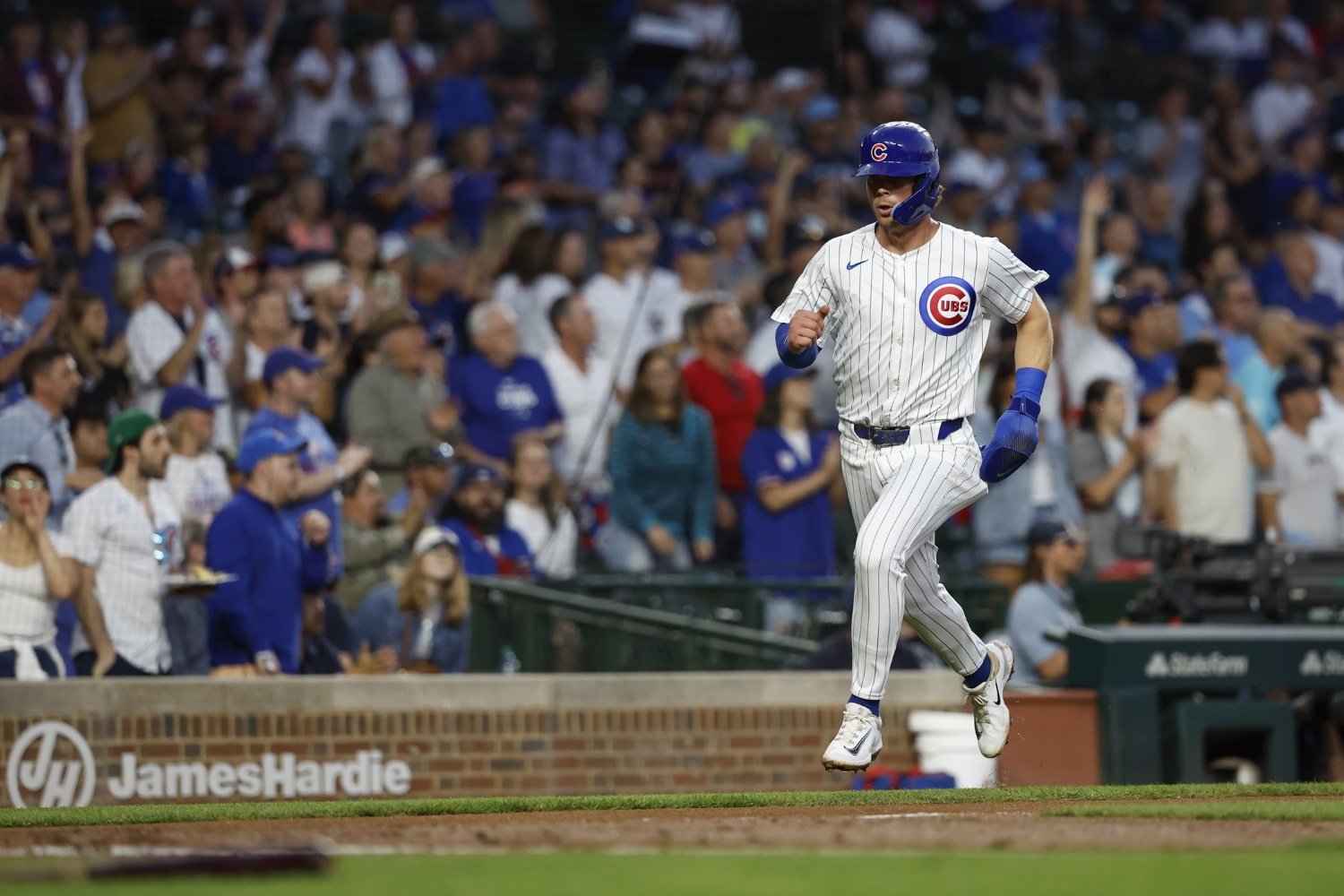 There will be money to spend this winter, and a few players are sloughing naturally off the Cubs' books and roster roll. To get from where they are to where they really want to be, though, the team doesn't need a few more capable contributors; they need over a dozen. The Brewers are not a bad analog for the Cubs, and they're about to cruise to an NL Central title. The massive difference in the standings between the two this year hasn't come from Milwaukee having a superior set of core contributors, per se, but from the fact that of the 50 or so players around whom a team must plan a modern season, the Crew have a clear edge over the Cubs at 15 or 20 spots--most of them in the middle and lower parts of the respective roster hierarchies. Fixing that means getting aggressive, as soon as this season ends. The Cubs can't afford to be affectionate, patient, or indulgent. They need to be ruthless this fall. There are a small handful of players who will become free agents at the end of this campaign, including Kyle Hendricks, Jorge López and Drew Smyly, but there are also a whole lot of players with team control remaining whom they need to jettison. Let's take a tour. Marginal Veterans with Role Player Ceilings Patrick Wisdom has been a good Cub, all things considered. He's a pleasant clubhouse presence, and when he's in position to get regular playing time, he can get hot and run off barrages of home runs that give him real value. Durability and defensive utility have eluded him the last two seasons, though, and as the Cubs have shrunk his role, they've also found that he can't thrive as an occasional pinch-hitter. He has to be non-tendered in November. The same goes for Mike Tauchman, who has much more value in a part-time role but is older than Wisdom and starting to show his limitations. With only passable defense even in the outfield corners and no power left in his bat, Tauchman needs to be non-tendered, to open some roster room for a needed upgrade in the position-player mix. Of Julian Merryweather and Yency Almonte, the team probably needs to keep just one, and send out the other. Each can be dominant at their best, but each has a long track record of getting hurt or proving inconsistent, sometimes because of nagging physical issues not quite bad enough to shelve them. Letting both take up roster room all winter would be negligent, given the magnitude of change needed. Christian Bethancourt is a fine catch-and-throw backup backstop, but keeping him and offering him arbitration this winter would be malpractice. The Cubs need to be planning an attempt to acquire a higher-end catcher, pushing Miguel Amaya toward the role Bethancourt currently plays for the team. Young Players Who Are Never Going to Be Anything for the Cubs Much though it chagrins so many Cubs fans that he never got sustained playing time in the big leagues, Alexander Canario was denied that opportunity for a simple reason: he can't hit big-league pitching. The swing is too long, too grooved, and too inflexible. He's in the way. It's sad that it's come to this, but the Cubs can't wait around any longer to see if Brennen Davis magically stays healthy and demonstrates MLB-caliber skills over a prolonged sample next year--two things he's never really done before. Hopefully, there's still a chance out there somewhere for Davis. The Cubs shouldn't be in the business of trying to make it be with them. Matt Mervis was a great story for a bit, and with a bit better luck and some better adjustments, he might have blossomed into a credible big-leaguer--even if stardom was never on the cards. Instead, he's simply out of the picture for the Cubs. With Michael Busch in place and Cody Bellinger overwhelmingly likely to opt in at the end of the year and come back, there's no need for a third left-hitting first baseman on the 40-man roster. There could still be room for Mervis if he were ever likely to figure out big-league pitching, but he isn't. For a long, long time, the names Keegan Thompson, Ethan Roberts, and Caleb Kilian have carried varying levels of cachet with Cubs fans. There was some reason to believe in each of them, at certain times, but now is the time to stop believing in any of them. The team needs to produce better options than each from within, and they need to move on from each, to maximize their potential pitching depth. Obvious Jetsam Presumably, only the injury he suffered while in Iowa has even kept Nick Madrigal in the organization this long. He should be cut this fall, sad though it is that that experiment didn't work. You can sort of make the case that the Miles Mastrobuoni experiment did work, in that he cost virtually nothing to acquire; gave them inconsistent but nonzero value with his defense and speed; and was alaways flexible. Now, it's time to refresh that roster spot and try to do much, much better for the same role. Picked up for various flavors of free in recent months, Trey WIngenter, Shawn Armstrong and Colten Brewer all could theoretically be kept this winter. In practice, the team should probably spend the final few weeks evaluating each as best they can (If Brewer suffers a disadvantage because he's hurt, so be it; remember, he broke his hand in a tantrum) and then waive two of them at the first opportunity. Nico Hoerner Only one player gets his own category, and it's Nico Hoerner. He's not a bad player, but he is not currently a good one, either. Unlike some of the other players tethered to big contracts on the team, he's not tied down by a no-trade clause, and he's not producing at a level that makes you wary of losing him. The Cubs need to bring a lot of good players to camp in 2025, including putting some into uncomfortable spring competitions. Getting Hoerner out of the way would open up second base as one potential fallback position for one or more losers in those battles. His trade value might be limited, but it's not zero. None of these players need to be designated for assignment on the spot, or anything. Some are tradable, and others only need to go when certain offseason deadlines come. This winter needs to find the Cubs aggressively rearranging their roster, though, and that means cutting hard--to make room for free agents, and for trade arrivals stemming from the consolidation of their farm depth into MLB value, and for additions from within the organization both during the winter and entering next season. Nearly half their 40-man needs to change. Can Jed Hoyer do that?
 -
This season fell by the wayside, as the Cubs proved not to have the depth of quality in the top or middle sections of their roster to keep pace with other NL playoff contenders. To fix that for 2025, a fairly staggering roster overhaul is necessary. Image courtesy of © Kamil Krzaczynski-Imagn Images There will be money to spend this winter, and a few players are sloughing naturally off the Cubs' books and roster roll. To get from where they are to where they really want to be, though, the team doesn't need a few more capable contributors; they need over a dozen. The Brewers are not a bad analog for the Cubs, and they're about to cruise to an NL Central title. The massive difference in the standings between the two this year hasn't come from Milwaukee having a superior set of core contributors, per se, but from the fact that of the 50 or so players around whom a team must plan a modern season, the Crew have a clear edge over the Cubs at 15 or 20 spots--most of them in the middle and lower parts of the respective roster hierarchies. Fixing that means getting aggressive, as soon as this season ends. The Cubs can't afford to be affectionate, patient, or indulgent. They need to be ruthless this fall. There are a small handful of players who will become free agents at the end of this campaign, including Kyle Hendricks, Jorge López and Drew Smyly, but there are also a whole lot of players with team control remaining whom they need to jettison. Let's take a tour. Marginal Veterans with Role Player Ceilings Patrick Wisdom has been a good Cub, all things considered. He's a pleasant clubhouse presence, and when he's in position to get regular playing time, he can get hot and run off barrages of home runs that give him real value. Durability and defensive utility have eluded him the last two seasons, though, and as the Cubs have shrunk his role, they've also found that he can't thrive as an occasional pinch-hitter. He has to be non-tendered in November. The same goes for Mike Tauchman, who has much more value in a part-time role but is older than Wisdom and starting to show his limitations. With only passable defense even in the outfield corners and no power left in his bat, Tauchman needs to be non-tendered, to open some roster room for a needed upgrade in the position-player mix. Of Julian Merryweather and Yency Almonte, the team probably needs to keep just one, and send out the other. Each can be dominant at their best, but each has a long track record of getting hurt or proving inconsistent, sometimes because of nagging physical issues not quite bad enough to shelve them. Letting both take up roster room all winter would be negligent, given the magnitude of change needed. Christian Bethancourt is a fine catch-and-throw backup backstop, but keeping him and offering him arbitration this winter would be malpractice. The Cubs need to be planning an attempt to acquire a higher-end catcher, pushing Miguel Amaya toward the role Bethancourt currently plays for the team. Young Players Who Are Never Going to Be Anything for the Cubs Much though it chagrins so many Cubs fans that he never got sustained playing time in the big leagues, Alexander Canario was denied that opportunity for a simple reason: he can't hit big-league pitching. The swing is too long, too grooved, and too inflexible. He's in the way. It's sad that it's come to this, but the Cubs can't wait around any longer to see if Brennen Davis magically stays healthy and demonstrates MLB-caliber skills over a prolonged sample next year--two things he's never really done before. Hopefully, there's still a chance out there somewhere for Davis. The Cubs shouldn't be in the business of trying to make it be with them. Matt Mervis was a great story for a bit, and with a bit better luck and some better adjustments, he might have blossomed into a credible big-leaguer--even if stardom was never on the cards. Instead, he's simply out of the picture for the Cubs. With Michael Busch in place and Cody Bellinger overwhelmingly likely to opt in at the end of the year and come back, there's no need for a third left-hitting first baseman on the 40-man roster. There could still be room for Mervis if he were ever likely to figure out big-league pitching, but he isn't. For a long, long time, the names Keegan Thompson, Ethan Roberts, and Caleb Kilian have carried varying levels of cachet with Cubs fans. There was some reason to believe in each of them, at certain times, but now is the time to stop believing in any of them. The team needs to produce better options than each from within, and they need to move on from each, to maximize their potential pitching depth. Obvious Jetsam Presumably, only the injury he suffered while in Iowa has even kept Nick Madrigal in the organization this long. He should be cut this fall, sad though it is that that experiment didn't work. You can sort of make the case that the Miles Mastrobuoni experiment did work, in that he cost virtually nothing to acquire; gave them inconsistent but nonzero value with his defense and speed; and was alaways flexible. Now, it's time to refresh that roster spot and try to do much, much better for the same role. Picked up for various flavors of free in recent months, Trey WIngenter, Shawn Armstrong and Colten Brewer all could theoretically be kept this winter. In practice, the team should probably spend the final few weeks evaluating each as best they can (If Brewer suffers a disadvantage because he's hurt, so be it; remember, he broke his hand in a tantrum) and then waive two of them at the first opportunity. Nico Hoerner Only one player gets his own category, and it's Nico Hoerner. He's not a bad player, but he is not currently a good one, either. Unlike some of the other players tethered to big contracts on the team, he's not tied down by a no-trade clause, and he's not producing at a level that makes you wary of losing him. The Cubs need to bring a lot of good players to camp in 2025, including putting some into uncomfortable spring competitions. Getting Hoerner out of the way would open up second base as one potential fallback position for one or more losers in those battles. His trade value might be limited, but it's not zero. None of these players need to be designated for assignment on the spot, or anything. Some are tradable, and others only need to go when certain offseason deadlines come. This winter needs to find the Cubs aggressively rearranging their roster, though, and that means cutting hard--to make room for free agents, and for trade arrivals stemming from the consolidation of their farm depth into MLB value, and for additions from within the organization both during the winter and entering next season. Nearly half their 40-man needs to change. Can Jed Hoyer do that? View full article
-
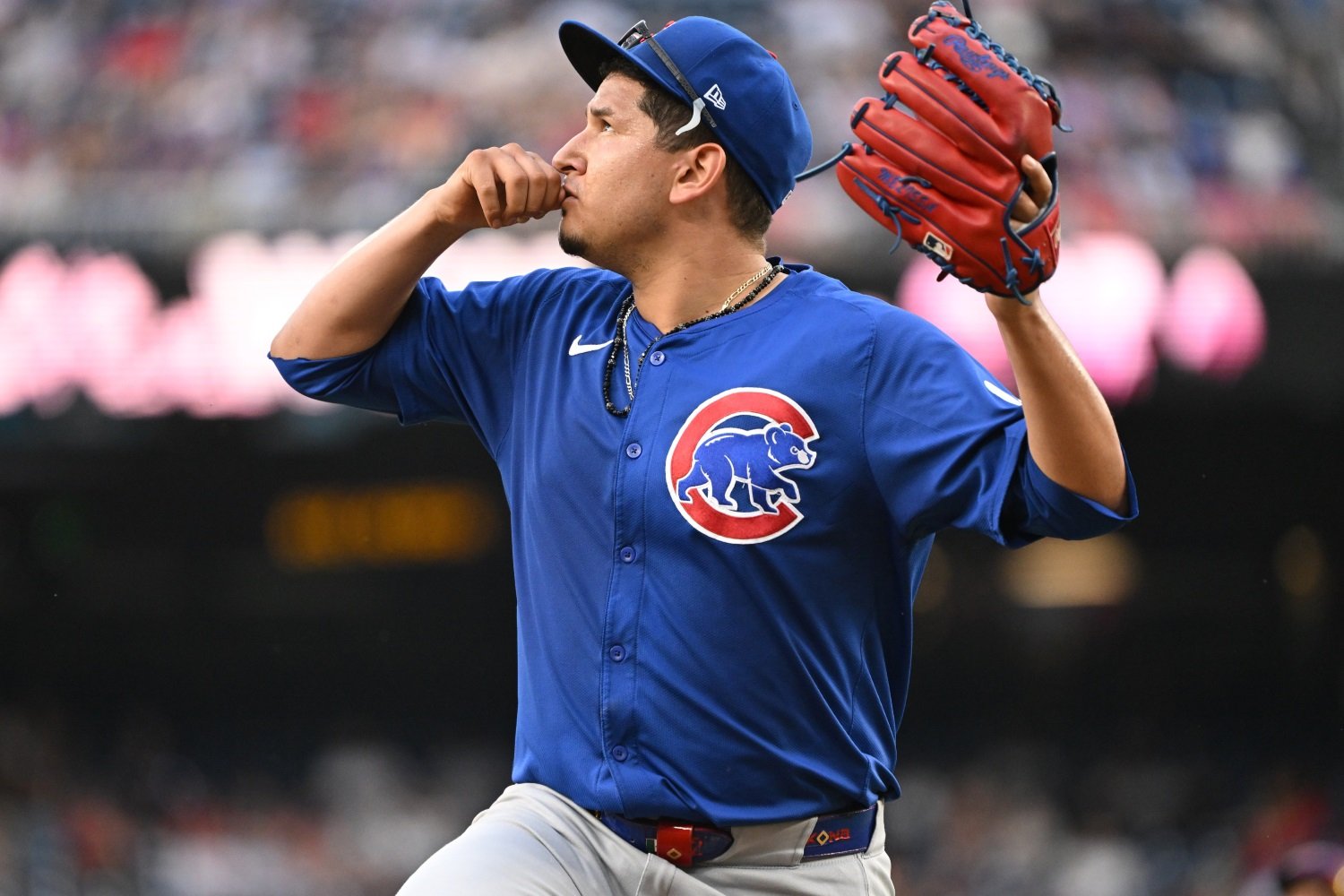 We live in much too strikeout- and walk-obsessed a world for Javier Assad to be a star. He's only fanned 19.6% of the batters he's faced this year, and he's walked 9.9% of them. Those numbers are both markedly worse than the league average. In strikeout rate minus walk rate (an increasingly popular oversimplification of the task of pitching), Assad ranks 110th of the 127 pitchers who have thrown at least 90 innings this year. He's gotten all 26 turns he's been healthy enough to take in the Cubs rotation this year, but part of that is just a product of other players getting hurt--from Jameson Taillon and Justin Steele to Ben Brown and top prospect Cade Horton. Last year, by contrast, only 10 of Assad's 32 appearances were starts. It took until this spring for the team to figure out that they should even stick with him as a starter, and had they been less afflicted with injuries, they might not have even given him an unfettered start then. Make no mistake, though: Assad is a legitimate, valuable fourth starter on a good team, or a third-best one on a more stretched unit. His numbers look unsustainable to the saber-trained casual observer, but three partial seasons into his big-league career, he's shown a number of ways to outperform those peripheral stats on an ongoing basis. How? In short, you could say that Assad is the embodiment of the effectively wild hurler--although in a way that defies stereotypes. When we think of that term, we tend to envision Nolan Ryan, and similar pitchers with so much power on their fastball that they couldn't reliably throw the ball over the plate. Hitters also couldn't figure out where or when to expect the ball, though, so their ample walks and hit batters didn't cost them much. In the modern game, it's hard to be that kind of effectively wild. To be sure, Assad isn't. He sits mostly in the low 90s with his fastball, though he certainly can touch higher. Rather, he's just an assiduous junkballer non pareil. He doesn't give in, and he doesn't throw anything over the middle unless he feels confident that the opponent is unprepared for it. He works the edges of the zone, and hitters are happy to wait him out, too. Of all pitchers with 60 or more innings pitched this year, Assad ranks second-lowest in opponent swing rate. Yet, when hitters do swing, they're not really squaring Assad up--at least not often enough to make up for the number of called strikes they're taking. They only swing at 42.2% of his pitches, but 35.3% of their takes go for strikes looking. The only other pitchers with opponent swing rates under 43.9% and above-average called strike rates are relievers Dylan Floro and David Robertson. Then, they swing, and hitters foul the ball off at a high rate, racking up even more strikes for Assad. Because he misses so few bats, Assad doesn't convert many of these called strikes or fouls into strikeouts. He does, however, take advantage of hitters' defensiveness once they get behind in the count. He also ratchets up the hitter's frustration. This is the third year in a row in which Assad is running an ERA just over 3.00 in MLB, albeit in samples of various sizes and in varying roles. Just as importantly, though, his ERA is telling a true tale about his run prevention. Teammates Steele and Shota Imanaga make instructive comparison points. Assad's unearned run average (UERA) is well below average, and has been throughout his career. Steele's is well above average, and has been throughout his career. Imanaga, too, has given up a lot of unearned runs in his first Stateside campaign. Obviously, the two things are not equal in their impact or predictive value, but if you just add them together and take run average per nine innings, Assad has been one of the 15 best pitchers in baseball this year. Again, his lack of a typical modern skill set makes everyone prone to doubting him. Assad's FIP is about 1.5 runs worse than his ERA, and many people dismiss him as a swingman or a nice-to-have extra arm, expecting him to come back to that level. Yet, he persistently avoids that. On Saturday, he handled the imposing stars in the Yankees lineup ably, without so much as a blink. It was the kind of start in which some fans keep waiting to see him implode... but he never does. Four starters who have made at least 15 starts this year have yet to have one in which they allow five runs in the first four innings. Assad has done it, but only once in his 26 starts, making him the fifth-least combustible starter in the game. Now, the chart above also serves as a reminder of one of the two reasons why Assad isn't a No. 1 or No. 2 starter, even if every bit of the hit and run prevention he does with runners on base and his other magic holds up: He doesn't dominate. There aren't days when Assad takes his team out of the game, but there also aren't many in which he takes control of the whole proceeding, getting at least 16 outs and allowing two or fewer runs. Yet, as the season has unfolded, Assad has earned more of his manager's trust, and begun working deeper into games. One reason is that, as it turns out, hitters don't gain very much from seeing Assad a second or third time. He's one of the best hurlers in the game, in fact, at getting outs with the same efficacy as the lineup card turns over. It's really a combination of stuff, command (occasionally at the expense of control; he emphasizes execution over location) and deception that hitters can't cope with. The depth of Assad's arsenal makes him hard to outguess, and his delivery has just enough unpredictability to it to mess with timing. It's why hitters don't swing as much as they should against him, and why they're still figuring him out the third time they see him. Then, he throws even more wrinkles at them. For most of the season, Assad started on the right side of the pitching rubber, from the pitcher's perspective--closer to third base. Assad 5.mp4 In his last five starts, though, he's slid all the way over to the other side, giving hitters a new look and himself a new angle with which to attack the zone. Assad 6.mp4 He's never going to run a FIP as good as his career ERA to date. His ERA, itself, might swell a bit if he's a full-time starter next year. As unorthodox as he is, though, Assad is a delightful throwback, and a very valuable arm for the Cubs. He's the kind of pitcher you can win with, as long as he's not an indispensable part of the starting plan. We should get, then, to the other reason why he can't be a frontline starter--and no, it's not the lack of a 26% strikeout rate. Rather, it's the same thing that holds Justin Steele back from the same status. The most important ability in pitching is availability. Assad has had to miss time two years in a row with a balky forearm. He has ways to sustain this seemingly improbable success across a full season of starting work, little though some might be inclined to buy into it. What he doesn't have is the durability to do it over 160 or 180 innings. Instead, he looks likely to consistently contribute 120-140 strong frames. That's helpful, and the Cubs should happily pencil him into their 2025 starting rotation, alongside Steele. However, they also have to figure out how they'll find a player capable of the same or better performances across an extra 50 innings. That's a tall order, and an expensive one to fill, but the team can take some solace in knowing that Assad's presence will compound the value of any ace-level newcomer, just as Steele's and Imanaga's do.
 -
Though he can't be a frontline hurler for a team with serious October aspirations, the Cubs' most unconventional starter is finishing his third big-league season with style, and he's carving himself a place in next year's rotation. Image courtesy of © Rafael Suanes-Imagn Images We live in much too strikeout- and walk-obsessed a world for Javier Assad to be a star. He's only fanned 19.6% of the batters he's faced this year, and he's walked 9.9% of them. Those numbers are both markedly worse than the league average. In strikeout rate minus walk rate (an increasingly popular oversimplification of the task of pitching), Assad ranks 110th of the 127 pitchers who have thrown at least 90 innings this year. He's gotten all 26 turns he's been healthy enough to take in the Cubs rotation this year, but part of that is just a product of other players getting hurt--from Jameson Taillon and Justin Steele to Ben Brown and top prospect Cade Horton. Last year, by contrast, only 10 of Assad's 32 appearances were starts. It took until this spring for the team to figure out that they should even stick with him as a starter, and had they been less afflicted with injuries, they might not have even given him an unfettered start then. Make no mistake, though: Assad is a legitimate, valuable fourth starter on a good team, or a third-best one on a more stretched unit. His numbers look unsustainable to the saber-trained casual observer, but three partial seasons into his big-league career, he's shown a number of ways to outperform those peripheral stats on an ongoing basis. How? In short, you could say that Assad is the embodiment of the effectively wild hurler--although in a way that defies stereotypes. When we think of that term, we tend to envision Nolan Ryan, and similar pitchers with so much power on their fastball that they couldn't reliably throw the ball over the plate. Hitters also couldn't figure out where or when to expect the ball, though, so their ample walks and hit batters didn't cost them much. In the modern game, it's hard to be that kind of effectively wild. To be sure, Assad isn't. He sits mostly in the low 90s with his fastball, though he certainly can touch higher. Rather, he's just an assiduous junkballer non pareil. He doesn't give in, and he doesn't throw anything over the middle unless he feels confident that the opponent is unprepared for it. He works the edges of the zone, and hitters are happy to wait him out, too. Of all pitchers with 60 or more innings pitched this year, Assad ranks second-lowest in opponent swing rate. Yet, when hitters do swing, they're not really squaring Assad up--at least not often enough to make up for the number of called strikes they're taking. They only swing at 42.2% of his pitches, but 35.3% of their takes go for strikes looking. The only other pitchers with opponent swing rates under 43.9% and above-average called strike rates are relievers Dylan Floro and David Robertson. Then, they swing, and hitters foul the ball off at a high rate, racking up even more strikes for Assad. Because he misses so few bats, Assad doesn't convert many of these called strikes or fouls into strikeouts. He does, however, take advantage of hitters' defensiveness once they get behind in the count. He also ratchets up the hitter's frustration. This is the third year in a row in which Assad is running an ERA just over 3.00 in MLB, albeit in samples of various sizes and in varying roles. Just as importantly, though, his ERA is telling a true tale about his run prevention. Teammates Steele and Shota Imanaga make instructive comparison points. Assad's unearned run average (UERA) is well below average, and has been throughout his career. Steele's is well above average, and has been throughout his career. Imanaga, too, has given up a lot of unearned runs in his first Stateside campaign. Obviously, the two things are not equal in their impact or predictive value, but if you just add them together and take run average per nine innings, Assad has been one of the 15 best pitchers in baseball this year. Again, his lack of a typical modern skill set makes everyone prone to doubting him. Assad's FIP is about 1.5 runs worse than his ERA, and many people dismiss him as a swingman or a nice-to-have extra arm, expecting him to come back to that level. Yet, he persistently avoids that. On Saturday, he handled the imposing stars in the Yankees lineup ably, without so much as a blink. It was the kind of start in which some fans keep waiting to see him implode... but he never does. Four starters who have made at least 15 starts this year have yet to have one in which they allow five runs in the first four innings. Assad has done it, but only once in his 26 starts, making him the fifth-least combustible starter in the game. Now, the chart above also serves as a reminder of one of the two reasons why Assad isn't a No. 1 or No. 2 starter, even if every bit of the hit and run prevention he does with runners on base and his other magic holds up: He doesn't dominate. There aren't days when Assad takes his team out of the game, but there also aren't many in which he takes control of the whole proceeding, getting at least 16 outs and allowing two or fewer runs. Yet, as the season has unfolded, Assad has earned more of his manager's trust, and begun working deeper into games. One reason is that, as it turns out, hitters don't gain very much from seeing Assad a second or third time. He's one of the best hurlers in the game, in fact, at getting outs with the same efficacy as the lineup card turns over. It's really a combination of stuff, command (occasionally at the expense of control; he emphasizes execution over location) and deception that hitters can't cope with. The depth of Assad's arsenal makes him hard to outguess, and his delivery has just enough unpredictability to it to mess with timing. It's why hitters don't swing as much as they should against him, and why they're still figuring him out the third time they see him. Then, he throws even more wrinkles at them. For most of the season, Assad started on the right side of the pitching rubber, from the pitcher's perspective--closer to third base. Assad 5.mp4 In his last five starts, though, he's slid all the way over to the other side, giving hitters a new look and himself a new angle with which to attack the zone. Assad 6.mp4 He's never going to run a FIP as good as his career ERA to date. His ERA, itself, might swell a bit if he's a full-time starter next year. As unorthodox as he is, though, Assad is a delightful throwback, and a very valuable arm for the Cubs. He's the kind of pitcher you can win with, as long as he's not an indispensable part of the starting plan. We should get, then, to the other reason why he can't be a frontline starter--and no, it's not the lack of a 26% strikeout rate. Rather, it's the same thing that holds Justin Steele back from the same status. The most important ability in pitching is availability. Assad has had to miss time two years in a row with a balky forearm. He has ways to sustain this seemingly improbable success across a full season of starting work, little though some might be inclined to buy into it. What he doesn't have is the durability to do it over 160 or 180 innings. Instead, he looks likely to consistently contribute 120-140 strong frames. That's helpful, and the Cubs should happily pencil him into their 2025 starting rotation, alongside Steele. However, they also have to figure out how they'll find a player capable of the same or better performances across an extra 50 innings. That's a tall order, and an expensive one to fill, but the team can take some solace in knowing that Assad's presence will compound the value of any ace-level newcomer, just as Steele's and Imanaga's do. View full article
-
 If you're the type to buy in heavily on second-half trends for one season when predicting the next, you might be somewhat down on Michael Busch right now. In his first full big-league season, Busch has had a tough run since the All-Star break, batting .206/.296/.348 in 152 plate appearances. Splits like those are dangerous, though, because they suggest a causal relationship and a staying power that rarely exist. That goes double for a rookie. Busch has gone through multiple phases of adjustment this season. First, he had to learn to hold something back for the breaking ball, to cut down on an unsustainably high strikeout rate in the spring. Next, it was patching the hole in his swing against fastballs at the top of the zone. Now, it's about getting the ball off the ground more and consistently creating high-value contact. Busch has dramatically reduced his whiff rate against breaking pitches over the last two months. His strikeout rate has continued to trend downward, and he's maintained a low chase rate. He's whiffing and getting beaten with weak contact a bit more often against high-velocity fastballs, but only a bit more often. For a guy struggling through the second half of a first campaign against the best pitchers in the world, his bad stretches haven't even been that bad. In his worst month so far, a .233/.303/.389 August, Busch also had his highest hard-hit rate, at 43.9%. He just needs to get more of that hard contact off the ground, and get a little bit more lucky. Meanwhile, his defense has been sensational--and more than at any other time in baseball's last 100 years, defense is a significant part of the value equation for first basemen. This season, first sackers are only hitting .246/.319/.413, good for a 105 OPS+. They're being outhit by shortstops. Multiple managers have made mention this year of a trend they perceive at work in the game, which they hope and expect to continue, toward defenses that include better athletes at the traditionally offense-first positions. With shifts outlawed and the game's baseline athleticism rising, that makes sense. With hitting a more difficult and athletically demanding endeavor than ever, it makes even more. Being the big, lumbering first baseman or corner outfielder isn't an advantage at the plate anymore, and so, the league is looking for less big, lumbering people at those positions. Busch is a perfect fit for this new world. A solid but slender 6-foot-1, he's spent this season proving he can hit at well beyond the level typical of the league's first basemen, and he's also been one of the best fielders in the league at the spot. Only Matt Olson has more Defensive Runs Saved. There was a brutal early learning curve, but since about mid-May, Busch has been the best defender of the cold corner in MLB. He's been 11 runs better than average on balls to his right, toward the hole between first and second base, easily the league's best. This weekend, the Yankees come to town, which gives Cubs fans a chance to celebrate their first reunion with Anthony Rizzo since he was dealt in 2021. Rizzo was as good as any first baseman in the league in his best Cubs seasons, and replacing him was difficult--but the job is now done, at least in the medium term. Busch looks like a three- to five-year solution at first base, a winning player who can provide value on both sides of the runs ledger. It takes a little bit of the bitterness out of the bittersweet moment that is Rizzo's return.
 -
The season has been long for the Cubs' rookie first baseman. The last two months have seen some difficult adjustments. Yet, everything in his profile tells us there's a star here. Image courtesy of © Patrick Gorski-Imagn Images If you're the type to buy in heavily on second-half trends for one season when predicting the next, you might be somewhat down on Michael Busch right now. In his first full big-league season, Busch has had a tough run since the All-Star break, batting .206/.296/.348 in 152 plate appearances. Splits like those are dangerous, though, because they suggest a causal relationship and a staying power that rarely exist. That goes double for a rookie. Busch has gone through multiple phases of adjustment this season. First, he had to learn to hold something back for the breaking ball, to cut down on an unsustainably high strikeout rate in the spring. Next, it was patching the hole in his swing against fastballs at the top of the zone. Now, it's about getting the ball off the ground more and consistently creating high-value contact. Busch has dramatically reduced his whiff rate against breaking pitches over the last two months. His strikeout rate has continued to trend downward, and he's maintained a low chase rate. He's whiffing and getting beaten with weak contact a bit more often against high-velocity fastballs, but only a bit more often. For a guy struggling through the second half of a first campaign against the best pitchers in the world, his bad stretches haven't even been that bad. In his worst month so far, a .233/.303/.389 August, Busch also had his highest hard-hit rate, at 43.9%. He just needs to get more of that hard contact off the ground, and get a little bit more lucky. Meanwhile, his defense has been sensational--and more than at any other time in baseball's last 100 years, defense is a significant part of the value equation for first basemen. This season, first sackers are only hitting .246/.319/.413, good for a 105 OPS+. They're being outhit by shortstops. Multiple managers have made mention this year of a trend they perceive at work in the game, which they hope and expect to continue, toward defenses that include better athletes at the traditionally offense-first positions. With shifts outlawed and the game's baseline athleticism rising, that makes sense. With hitting a more difficult and athletically demanding endeavor than ever, it makes even more. Being the big, lumbering first baseman or corner outfielder isn't an advantage at the plate anymore, and so, the league is looking for less big, lumbering people at those positions. Busch is a perfect fit for this new world. A solid but slender 6-foot-1, he's spent this season proving he can hit at well beyond the level typical of the league's first basemen, and he's also been one of the best fielders in the league at the spot. Only Matt Olson has more Defensive Runs Saved. There was a brutal early learning curve, but since about mid-May, Busch has been the best defender of the cold corner in MLB. He's been 11 runs better than average on balls to his right, toward the hole between first and second base, easily the league's best. This weekend, the Yankees come to town, which gives Cubs fans a chance to celebrate their first reunion with Anthony Rizzo since he was dealt in 2021. Rizzo was as good as any first baseman in the league in his best Cubs seasons, and replacing him was difficult--but the job is now done, at least in the medium term. Busch looks like a three- to five-year solution at first base, a winning player who can provide value on both sides of the runs ledger. It takes a little bit of the bitterness out of the bittersweet moment that is Rizzo's return. View full article
-
The secret about no-hitters is that they were never the manly feats of strength crusty baseball writers told you they were. That world was phony and bigoted and never real. We all depend on each other. We succeed, or fail, by working together. Wednesday night, the Cubs succeeded together. Image courtesy of © Kamil Krzaczynski-Imagn Images It's bittersweet to see a pitcher pulled from a no-hitter. In a perfect world, where Tommy John surgery never had to be invented and where hurlers paid no price for the turn of the lineup card, we might never see it happen. Here in the real world, though, it's part of the game--and not a bad one. It's just how life is. So, after taking by far the longest leg in the relay, Shota Imanaga handed the baton to his bullpen for the final two innings Wednesday night. They sewed up a monumental achievement--one which can't belong to Imanaga, alone, but never should have, anyway. Outs aren't collected by lone wolves. Even a pitcher who plows through a lineup with strikeout after strikeout has to thank his coaches, and especially his catcher, for the support he got in that process: a pitch perfectly framed here, an unusual sequence the scouting report said would work there. Much mopre often, as on Wednesday night, it's not like that, anyway. The ball leaves the hurler's hand with plenty of life and terrific command, but it doesn't stop and disappear at home plate. It gets lined, grounded, and flied around the park, and if a team is working as one; if there's enough defensive talent behind the pitcher that night; and sometimes, if the official scorer can justify it, then a no-hitter grows out of it all. Had Isaac Paredes had a better night at third base, Imanaga might have gone another inning. Paredes committed three more errors, during a run in which his glovework at the hot corner has been a nightmare. Just as great defenses pick up the pitcher to preserve many a no-hitter, though, Imanaga picked up Paredes, over and over. He outwitted and overwhelmed the Pirates, and he continued his vital evolution as a big-league starter. For much of the season, Imanaga has been basically a two-pitch pitcher: four-seamer, splitter, four-seamer, splitter. It's a testament to the quality of those offerings that, more than a few times, he's looked this dominant in games using only that pairing. Increasingly, though, teams have come prepared for it, and they've made him pay for the elective shallowness of his arsenal. Lately, he's been adjusting. That was on full display Wednesday night. Imanaga threw a career-high eight sinkers, plus six changeups (a distinct pitch from his splitter and another relatively recent addition) and six sweepers, in addition to 42 fastballs and 33 splitters. Miguel Amaya deserves a healthy share of the credit for that, too. He coaxed Imanaga through a couple of jams, and got him dotting that sinker a couple of times for key strikes. It's a sign of Amaya's ongoing maturation behind the plate that he was able to catch his way to a no-hitter; that achievement belongs in equal share to the catcher, any time it happens. This might be the last great highlight of the Cubs' season. There is, too, still a minuscule but non-zero chance that it will be remembered as a galvanizing moment amid their late charge back into the playoff race. For tonight, none of that matters. Neither does Imanaga's departure from the contest. The game was a celebration and a triumph for a team that has done plenty of good things this year, especially in terms of run prevention. So far, the risky but fun acquisition of Nate Pearson has paid off gorgeously. Porter Hodge is having a rookie season to remember. It's wonderful that all three hurlers, and Amaya and some of the defenders, too, got to concelebrate this feat. They put themselves in the history books, where the purists can moan and derogate them but never erase them. It was a great night for Cubs baseball. View full article
-
 It's bittersweet to see a pitcher pulled from a no-hitter. In a perfect world, where Tommy John surgery never had to be invented and where hurlers paid no price for the turn of the lineup card, we might never see it happen. Here in the real world, though, it's part of the game--and not a bad one. It's just how life is. So, after taking by far the longest leg in the relay, Shota Imanaga handed the baton to his bullpen for the final two innings Wednesday night. They sewed up a monumental achievement--one which can't belong to Imanaga, alone, but never should have, anyway. Outs aren't collected by lone wolves. Even a pitcher who plows through a lineup with strikeout after strikeout has to thank his coaches, and especially his catcher, for the support he got in that process: a pitch perfectly framed here, an unusual sequence the scouting report said would work there. Much mopre often, as on Wednesday night, it's not like that, anyway. The ball leaves the hurler's hand with plenty of life and terrific command, but it doesn't stop and disappear at home plate. It gets lined, grounded, and flied around the park, and if a team is working as one; if there's enough defensive talent behind the pitcher that night; and sometimes, if the official scorer can justify it, then a no-hitter grows out of it all. Had Isaac Paredes had a better night at third base, Imanaga might have gone another inning. Paredes committed three more errors, during a run in which his glovework at the hot corner has been a nightmare. Just as great defenses pick up the pitcher to preserve many a no-hitter, though, Imanaga picked up Paredes, over and over. He outwitted and overwhelmed the Pirates, and he continued his vital evolution as a big-league starter. For much of the season, Imanaga has been basically a two-pitch pitcher: four-seamer, splitter, four-seamer, splitter. It's a testament to the quality of those offerings that, more than a few times, he's looked this dominant in games using only that pairing. Increasingly, though, teams have come prepared for it, and they've made him pay for the elective shallowness of his arsenal. Lately, he's been adjusting. That was on full display Wednesday night. Imanaga threw a career-high eight sinkers, plus six changeups (a distinct pitch from his splitter and another relatively recent addition) and six sweepers, in addition to 42 fastballs and 33 splitters. Miguel Amaya deserves a healthy share of the credit for that, too. He coaxed Imanaga through a couple of jams, and got him dotting that sinker a couple of times for key strikes. It's a sign of Amaya's ongoing maturation behind the plate that he was able to catch his way to a no-hitter; that achievement belongs in equal share to the catcher, any time it happens. This might be the last great highlight of the Cubs' season. There is, too, still a minuscule but non-zero chance that it will be remembered as a galvanizing moment amid their late charge back into the playoff race. For tonight, none of that matters. Neither does Imanaga's departure from the contest. The game was a celebration and a triumph for a team that has done plenty of good things this year, especially in terms of run prevention. So far, the risky but fun acquisition of Nate Pearson has paid off gorgeously. Porter Hodge is having a rookie season to remember. It's wonderful that all three hurlers, and Amaya and some of the defenders, too, got to concelebrate this feat. They put themselves in the history books, where the purists can moan and derogate them but never erase them. It was a great night for Cubs baseball.
 -
There's some real value in zigging where everyone else zags. When it comes to pitching, though, there's also real risk to consider. Image courtesy of © Lily Smith/The Register / USA TODAY NETWORK There might not be any organization in MLB who likes a cut-ride fastball more than the Cubs. That's so true that, even if you're a Cubs fan who isn't ordinarily inclined to a lot of granular nerdiness about the game, that turn of phrase--"cut-ride fastball"--is probably at least familiar. In short, it's the kind of fastball Justin Steele throws. In some cases, it can have good carry, like a typical four-seam fastball, but its defining and less variable characteristic is cutting action, relative to most four-seamers. A cut-ride fastball looks like a cutter to a hitter. It runs away from a same-handed batter, or in on the hands of an opposite-handed one, hard and with enough backspin to defy gravity more than the batter expects. Cut-ride fastballs can be excellent weak-contact generators. They can miss bats nearly as well as elite rising heaters, when well-located. The Cubs value them highly. You knew that, though. Here's something you might not know: at the top levels of the organization, at least, the team is assiduously attempting to give the same pitchers who throw those cut-ride heaters hard changeups with lots of armside run. In fact, no other team in the league is doing so anywhere near as aggressively as they are. Of the 843 pitchers who have thrown at least 50 fastballs (four-seamers and sinkers, for these purposes) and five changeups at the Triple-A and/or big-league levels this year, the one with the largest difference between the horizontal movement on his heaters and that on his changeup was Cade Horton. Horton is, of course, the Cubs' top pitching prospect, though he's been shut down for the year with a subscapularis strain. He came to them with a potentially devastating slider and a fastball shape they liked; they worked with him to create this hard, running changeup. It's not just Horton, though. Four of the six right-handed pitchers with the biggest gaps in horizontal movement between fastballs and changeup spent some time with the Iowa Cubs this year: Horton, Brandon Birdsell, Zac Leigh, and Carl Edwards Jr. That's to say nothing of Frankie Scalzo Jr., who ranks 22nd on that list; or Steele, who's fifth-highest on the list for left-handed pitchers. It's not necessarily the case that any of these guys are throwing changeups with crazy amounts of horizontal movement, on their own. It's just that, relative to their cut-ride fastball shapes, the changeup really changes lanes in an extreme way. You can see exactly why the Cubs are so dedicated to this project, too, when you glance at the hurlers' pitch break charts. Above was Horton's. Here's Birdsell's. Those two each have tight, angular breaking balls, designed to play off their natural fastballs. Scalzo and Leigh have a greater spread, with bigger breaking balls and bigger velocity differentials from the heater on them. Here's Scalzo: You can see some scant evidence of him trying to mix in a cutter to act as a bridge from his fastball to the breaking pitches, and in Leigh's plot, you can see an even more concerted effort to do the same: There's a theme, here. With all of these guys, the breaking balls are the natural secondaries. That makes sense, given the shape of their fastballs. They like to supinate, to use physiological jargon. They're most comfortable applying some spin and pressure to the outside of the ball at release. Their heaters and their breakers each come from a natural motion that moves the ball that direction--away from a same-handed batter. This is why Steele persists in calling his very cutterish fastball a four-seamer. It's his natural way of moving. Baseball people talk a lot, these days, about motor preference. A natural supinator will easily find feel for a breaking ball or two, and often, they'll have a cut-ride heater. A natural pronator will specialize in sinkers and changeups. The Cubs collect natural supinators. Each motor preference comes with problems that demand to be solved. For pronators, it's finding some version of a breaking ball that works. Remember the talk about the death ball during last year's postseason? That's one example of a version of the curveball that can work for a natural pronator. For supinators like the Cubs' collection of homegrown hurlers, though, the problem is getting something they can command on the outer half of the plate to opposite-handed batters. If you have anything less than peak Steele-caliber command of a cutting fastball, aiming it for the outside corner to an opposite-handed hitter is dangerous, because you're likely to miss right over the heart of the plate sometimes, with the ball moving right into the swing plane of the guy with the lumber. Breaking balls, as we all know, tend not to be as effective against opposite-handed batters--but that goes double for the kind that come most naturally to heavy supinators, because those breakers tend to have wide horizontal shapes, and it's vertical movement that best fools opposite-handed batters. The Cubs' answer to this has been to simply break motor preference, and get their supinating specialists to pronate hard on their changeups. Revisit the chart of all qualifying pitchers, above, to notice that all six of the hurlers highlighted have less of a velocity gap between their fastballs and their changeups than the average for the league. These are power changeups. They seem to have simply told these players to throw the hell out of the ball, albeit from a modified grip. They're trusting the fact that these guys' arms don't want to turn that way to slow them down through release, enough to create at least a modicum of velocity separation. The rest is just about having a pitch move the opposite of the direction that everything else does. It's an interesting experiment, and it's not without merit. Given the competence of each of these pitchers when it comes to fastball and breaking ball execution, they wouldn't even need to have exceptional command of their changeup in order to get value from it. Forcing opposite-handed batters to cover the whole plate, getting a good number of ground balls, and occasionally earning an extra strikeout along the way, each of these guys could benefit from having this pitch in their arsenal. However, there's noteworthy risk to the approach, too. and the team might be feeling the backlash of that risk right now. The only pitcher whose chart we haven't looked at, yet, among those named above who are still in the organization, is Steele. This chart looks subtly different than it did a year ago. In about 800 fewer pitches, Steele more than doubled the number of changeups he threw, from 28 to 66. Right now, though, Steele is unavailable, after elbow soreness scratched him from his latest start. That brings us full-circle, since Horton, too, had his season cut short. Sometimes, when you break motor preference, the body breaks back. It's not nearly time to say for certain that forcing running, power changeups into the arsenals of cut-ride fastball guys is leading to injuries on a patterned and persistent basis. The sample sizes here are much too small, and much too noisy. However, broadly speaking, there are reasons why other teams aren't developing pitchers with this massive gap in horizontal break, born of a supinator's fastball shape and a heavily pronated change. It's a valuable skill to add to a pitcher's résumé, but only if they can stay on the mound while doing it. A more common solution for the changeup problem in natural supinators is the splitter, which is on the rise throughout pro baseball, anyway. It comes with its own risks, in some cases, but a splitter doesn't necessarily break motor preference for a guy who favors cutting action on the heat. Commanding splitters can be difficult, though, and unlike high-run, power changeups, misplaced splitters often end up in the seats. The Cubs believe they can overcome the inherent risks of asking a pitcher whose arm naturally moves in one way to move in another, or at least that the benefits of doing so outweigh the risks. It's too early to tell whether they're right, but it's a fascinating position. View full article
-
 There might not be any organization in MLB who likes a cut-ride fastball more than the Cubs. That's so true that, even if you're a Cubs fan who isn't ordinarily inclined to a lot of granular nerdiness about the game, that turn of phrase--"cut-ride fastball"--is probably at least familiar. In short, it's the kind of fastball Justin Steele throws. In some cases, it can have good carry, like a typical four-seam fastball, but its defining and less variable characteristic is cutting action, relative to most four-seamers. A cut-ride fastball looks like a cutter to a hitter. It runs away from a same-handed batter, or in on the hands of an opposite-handed one, hard and with enough backspin to defy gravity more than the batter expects. Cut-ride fastballs can be excellent weak-contact generators. They can miss bats nearly as well as elite rising heaters, when well-located. The Cubs value them highly. You knew that, though. Here's something you might not know: at the top levels of the organization, at least, the team is assiduously attempting to give the same pitchers who throw those cut-ride heaters hard changeups with lots of armside run. In fact, no other team in the league is doing so anywhere near as aggressively as they are. Of the 843 pitchers who have thrown at least 50 fastballs (four-seamers and sinkers, for these purposes) and five changeups at the Triple-A and/or big-league levels this year, the one with the largest difference between the horizontal movement on his heaters and that on his changeup was Cade Horton. Horton is, of course, the Cubs' top pitching prospect, though he's been shut down for the year with a subscapularis strain. He came to them with a potentially devastating slider and a fastball shape they liked; they worked with him to create this hard, running changeup. It's not just Horton, though. Four of the six right-handed pitchers with the biggest gaps in horizontal movement between fastballs and changeup spent some time with the Iowa Cubs this year: Horton, Brandon Birdsell, Zac Leigh, and Carl Edwards Jr. That's to say nothing of Frankie Scalzo Jr., who ranks 22nd on that list; or Steele, who's fifth-highest on the list for left-handed pitchers. It's not necessarily the case that any of these guys are throwing changeups with crazy amounts of horizontal movement, on their own. It's just that, relative to their cut-ride fastball shapes, the changeup really changes lanes in an extreme way. You can see exactly why the Cubs are so dedicated to this project, too, when you glance at the hurlers' pitch break charts. Above was Horton's. Here's Birdsell's. Those two each have tight, angular breaking balls, designed to play off their natural fastballs. Scalzo and Leigh have a greater spread, with bigger breaking balls and bigger velocity differentials from the heater on them. Here's Scalzo: You can see some scant evidence of him trying to mix in a cutter to act as a bridge from his fastball to the breaking pitches, and in Leigh's plot, you can see an even more concerted effort to do the same: There's a theme, here. With all of these guys, the breaking balls are the natural secondaries. That makes sense, given the shape of their fastballs. They like to supinate, to use physiological jargon. They're most comfortable applying some spin and pressure to the outside of the ball at release. Their heaters and their breakers each come from a natural motion that moves the ball that direction--away from a same-handed batter. This is why Steele persists in calling his very cutterish fastball a four-seamer. It's his natural way of moving. Baseball people talk a lot, these days, about motor preference. A natural supinator will easily find feel for a breaking ball or two, and often, they'll have a cut-ride heater. A natural pronator will specialize in sinkers and changeups. The Cubs collect natural supinators. Each motor preference comes with problems that demand to be solved. For pronators, it's finding some version of a breaking ball that works. Remember the talk about the death ball during last year's postseason? That's one example of a version of the curveball that can work for a natural pronator. For supinators like the Cubs' collection of homegrown hurlers, though, the problem is getting something they can command on the outer half of the plate to opposite-handed batters. If you have anything less than peak Steele-caliber command of a cutting fastball, aiming it for the outside corner to an opposite-handed hitter is dangerous, because you're likely to miss right over the heart of the plate sometimes, with the ball moving right into the swing plane of the guy with the lumber. Breaking balls, as we all know, tend not to be as effective against opposite-handed batters--but that goes double for the kind that come most naturally to heavy supinators, because those breakers tend to have wide horizontal shapes, and it's vertical movement that best fools opposite-handed batters. The Cubs' answer to this has been to simply break motor preference, and get their supinating specialists to pronate hard on their changeups. Revisit the chart of all qualifying pitchers, above, to notice that all six of the hurlers highlighted have less of a velocity gap between their fastballs and their changeups than the average for the league. These are power changeups. They seem to have simply told these players to throw the hell out of the ball, albeit from a modified grip. They're trusting the fact that these guys' arms don't want to turn that way to slow them down through release, enough to create at least a modicum of velocity separation. The rest is just about having a pitch move the opposite of the direction that everything else does. It's an interesting experiment, and it's not without merit. Given the competence of each of these pitchers when it comes to fastball and breaking ball execution, they wouldn't even need to have exceptional command of their changeup in order to get value from it. Forcing opposite-handed batters to cover the whole plate, getting a good number of ground balls, and occasionally earning an extra strikeout along the way, each of these guys could benefit from having this pitch in their arsenal. However, there's noteworthy risk to the approach, too. and the team might be feeling the backlash of that risk right now. The only pitcher whose chart we haven't looked at, yet, among those named above who are still in the organization, is Steele. This chart looks subtly different than it did a year ago. In about 800 fewer pitches, Steele more than doubled the number of changeups he threw, from 28 to 66. Right now, though, Steele is unavailable, after elbow soreness scratched him from his latest start. That brings us full-circle, since Horton, too, had his season cut short. Sometimes, when you break motor preference, the body breaks back. It's not nearly time to say for certain that forcing running, power changeups into the arsenals of cut-ride fastball guys is leading to injuries on a patterned and persistent basis. The sample sizes here are much too small, and much too noisy. However, broadly speaking, there are reasons why other teams aren't developing pitchers with this massive gap in horizontal break, born of a supinator's fastball shape and a heavily pronated change. It's a valuable skill to add to a pitcher's résumé, but only if they can stay on the mound while doing it. A more common solution for the changeup problem in natural supinators is the splitter, which is on the rise throughout pro baseball, anyway. It comes with its own risks, in some cases, but a splitter doesn't necessarily break motor preference for a guy who favors cutting action on the heat. Commanding splitters can be difficult, though, and unlike high-run, power changeups, misplaced splitters often end up in the seats. The Cubs believe they can overcome the inherent risks of asking a pitcher whose arm naturally moves in one way to move in another, or at least that the benefits of doing so outweigh the risks. It's too early to tell whether they're right, but it's a fascinating position.
 -
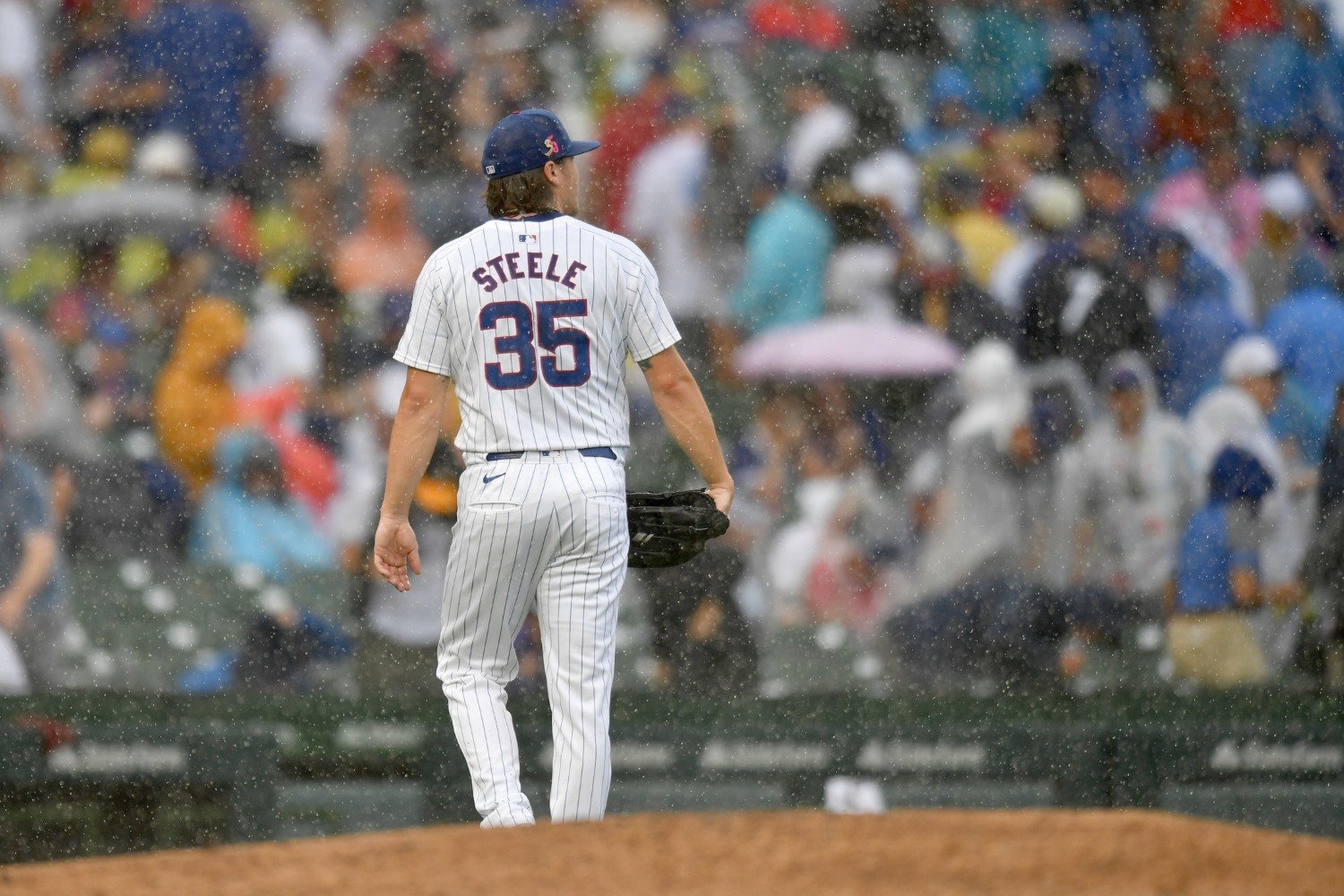 It was, arguably, the cruelest hour in three years or more for the Cubs. Ahead 3-0 on Jared Jones and the Pirates after seven scintillating frames from Jameson Taillon on Labor Day, most of the team watched helplessly as Jorge López--a terrific story, a symbol of the team's resurgence, and a linchpin of their bullpen--blew the lead in a matter of moments in the top of the eighth inning. The team couldn't struggle back to level this time, the way they did against the lousy Pittsburgh bullpen last week on the road, and they suffered a crucial loss that looked like it would be a fairly easy win. That one hurt, and badly, but it's the kind of thing you know is coming. You can foresee it, accept it, and survive it. The Cubs weren't going to be undefeated the rest of the season, and while they need absolutely every win they can get, it's easy to make the case that they outplayed Pittsburgh Monday night--that they're still playing a good enough brand of baseball to flush that frustrating defeat and get another winning streak going. Besides, López was due for a bit of regression, and he'd been sidelined for a few days recently by a nagging injury, so it shouldn't have shocked anyone to see him stumble, even amid a sterling second half. No, the knockout punch came after the game. Right at the end of his postgame media availability, Craig Counsell revealed that Justin Steele will be scratched from his scheduled start Tuesday night against Paul Skenes, with elbow soreness. In his place, Kyle Hendricks will start opposite Skenes, for the third time this year. The baseball gods love their little, cruel jokes. There's no silver lining on that cloud--or even the promise of a brighter morning ahead. The dropoff from Steele to Hendricks as a member of the rotation is massive. So is the lost opportunity to expand the rotation to include six pitchers at times the rest of the way, to keep the fading Shota Imanaga fresh. The team needs to finish something like 18-6 from here to make the playoffs. Without their ace, that's simply not possible. Maybe Steele will bounce right back and make a start later this week. Early indications seem to be that the team isn't overwhelmingly concerned about this. On the other hand, this is a pitcher who was shelved with a lower back strain for the final month of 2022; spent a minimum stint on the injured list last summer with an elbow/forearm issue; and ran out of steam at the end of last season anyway. It's time to wonder whether he'll ever make it to the end of a season with his legs under him and his arm securely attached in all the right places. We have no reason to believe that this injury portends offseason surgery, or anything that severe, but the reality of the moment is sufficiently bleak: Steele isn't a true workhorse. That has big implications even beyond 2024. It means the Cubs need to be more aggressive in the winter pitching market. It means they're further from being the kind of team they expected to be this season than it appears--a gap that was already considerable. This loss, much more than the one that ticked into the standings table after the game, spells big trouble and big changes ahead for the Cubs. In the short term, though, it just affirms what most of us knew all along: they don't have it in them, this year. This team will finish just outside the postseason, for the second year in a row. They'll finish with a winning record in the second half for the third year in a row. All that means is that, for the third year in a row, they'll pick somewhere in the low teens in next year's Draft. That is a massive organizational failure, even in a season in which some very encouraging successes have also been in evidence.
 -
At this time of year, an MLB season becomes a war of attrition. It's about staying healthy, and about how well (if at all) the guys who aren't healthy can play through stuff. The Cubs suffered a brutal combo punch on Labor Day, from one guy struggling to play through something and one who no longer could. Image courtesy of © Patrick Gorski-USA TODAY Sports It was, arguably, the cruelest hour in three years or more for the Cubs. Ahead 3-0 on Jared Jones and the Pirates after seven scintillating frames from Jameson Taillon on Labor Day, most of the team watched helplessly as Jorge López--a terrific story, a symbol of the team's resurgence, and a linchpin of their bullpen--blew the lead in a matter of moments in the top of the eighth inning. The team couldn't struggle back to level this time, the way they did against the lousy Pittsburgh bullpen last week on the road, and they suffered a crucial loss that looked like it would be a fairly easy win. That one hurt, and badly, but it's the kind of thing you know is coming. You can foresee it, accept it, and survive it. The Cubs weren't going to be undefeated the rest of the season, and while they need absolutely every win they can get, it's easy to make the case that they outplayed Pittsburgh Monday night--that they're still playing a good enough brand of baseball to flush that frustrating defeat and get another winning streak going. Besides, López was due for a bit of regression, and he'd been sidelined for a few days recently by a nagging injury, so it shouldn't have shocked anyone to see him stumble, even amid a sterling second half. No, the knockout punch came after the game. Right at the end of his postgame media availability, Craig Counsell revealed that Justin Steele will be scratched from his scheduled start Tuesday night against Paul Skenes, with elbow soreness. In his place, Kyle Hendricks will start opposite Skenes, for the third time this year. The baseball gods love their little, cruel jokes. There's no silver lining on that cloud--or even the promise of a brighter morning ahead. The dropoff from Steele to Hendricks as a member of the rotation is massive. So is the lost opportunity to expand the rotation to include six pitchers at times the rest of the way, to keep the fading Shota Imanaga fresh. The team needs to finish something like 18-6 from here to make the playoffs. Without their ace, that's simply not possible. Maybe Steele will bounce right back and make a start later this week. Early indications seem to be that the team isn't overwhelmingly concerned about this. On the other hand, this is a pitcher who was shelved with a lower back strain for the final month of 2022; spent a minimum stint on the injured list last summer with an elbow/forearm issue; and ran out of steam at the end of last season anyway. It's time to wonder whether he'll ever make it to the end of a season with his legs under him and his arm securely attached in all the right places. We have no reason to believe that this injury portends offseason surgery, or anything that severe, but the reality of the moment is sufficiently bleak: Steele isn't a true workhorse. That has big implications even beyond 2024. It means the Cubs need to be more aggressive in the winter pitching market. It means they're further from being the kind of team they expected to be this season than it appears--a gap that was already considerable. This loss, much more than the one that ticked into the standings table after the game, spells big trouble and big changes ahead for the Cubs. In the short term, though, it just affirms what most of us knew all along: they don't have it in them, this year. This team will finish just outside the postseason, for the second year in a row. They'll finish with a winning record in the second half for the third year in a row. All that means is that, for the third year in a row, they'll pick somewhere in the low teens in next year's Draft. That is a massive organizational failure, even in a season in which some very encouraging successes have also been in evidence. View full article
-
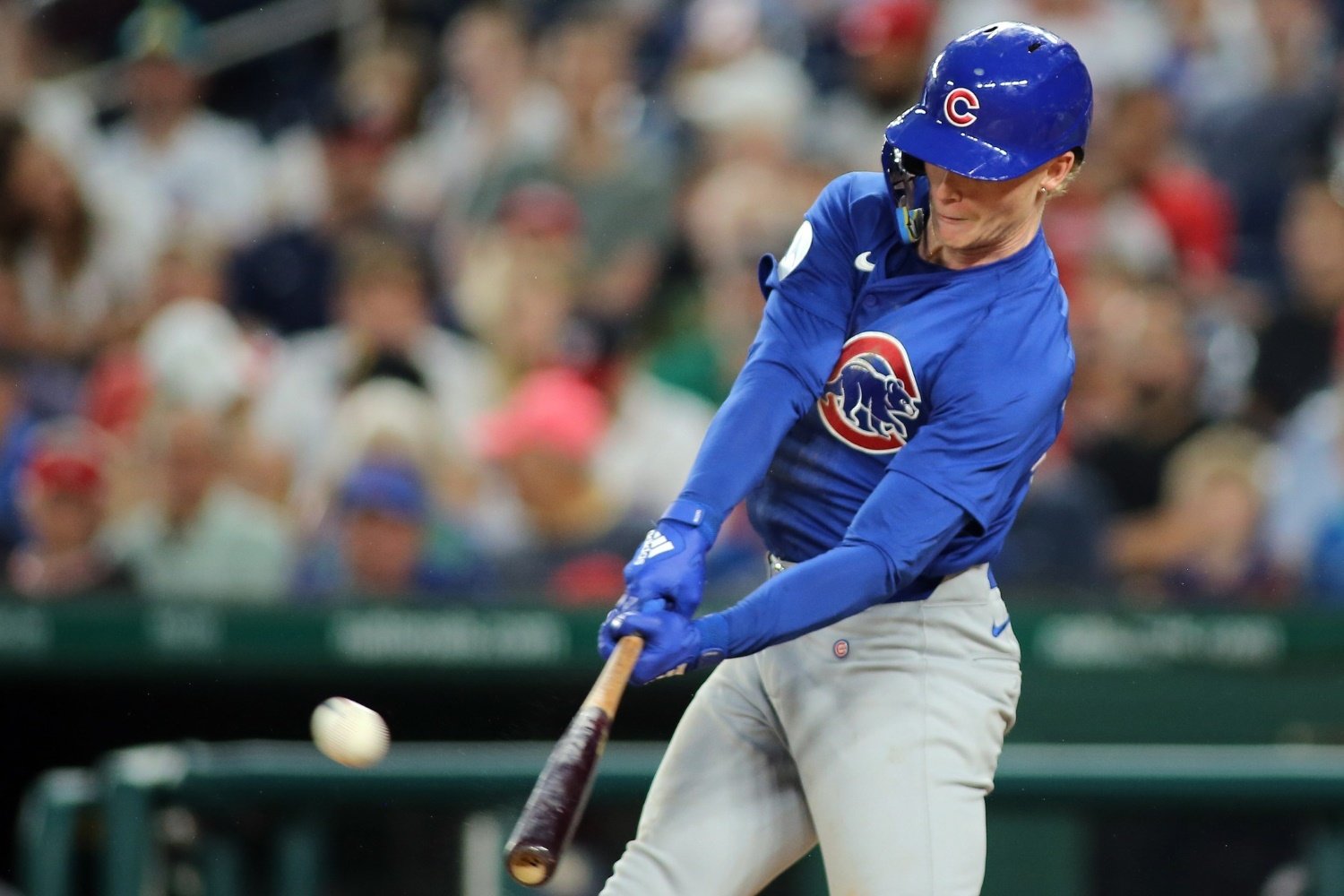 By now, the numbers might be familiar to you. Let's rehash them, though, because this turns out to be one of those times when selective endpoints are valuable tools, rather than red herrings. Through Jul. 26, Pete Crow-Armstrong was batting .180/.230/.292. For reference, in the years 2000 and 2001, Kerry Wood batted .216/.242/.261. From 1998 through 2001, then-Expos starter Javier Vázquez batted .235/.266/.281. There's an old tweet saying that the most vicious burn you can hurl at someone is, "Who is this clown?", because it not only calls the target a clown, but implies that they're not one of the better-known clowns. For his first 200 big-league trips to the plate, Crow-Armstrong not only hit like a pitcher, but hit like a fairly unremarkable offensive pitcher. The next day, everything changed. Rare--excruciatingly rare, almost unheard-of, and often only illusory--are cases in which everything changed for a hitter on one day, but it's hard to make any other case with Crow-Armstrong. Very visibly, that day, he went to a bigger, more rhythmic move with his lower half--a leg kick--in the load phase of his swing. Less obviously, but just as importantly, he debuted a slower but infinitely more controlled swing, with a much more on-plane bat path. New bat-tracking data made available to the public this spring via Statcast has allowed us, for the first time, to measure the efficiency of a player's swing. It's simple, though far from easy for us laypeople: given the observed speed of the incoming pitch and the player's bat, what is the maximum possible exit velocity, had the two met perfectly squarely? And what percentage of that theoretical maximum did the hitter achieve on a given swing? Here's a rolling chart showing the Squared Up% of Crow-Armstrong's swings, courtesy of Kyle Bland, a data whiz who works for PitcherList and ginned up a supremely useful app to digest bat-tracking data within a couple of days of the information becoming available. See if you can spot July 27. Again: baseball data just never tells you this neat a story. Transformations that radical do not happen that quickly. One day, Crow-Armstrong was limping along, struggling to square the ball up and create any real damage against big-league pitching. The next day, he began teeing off on almost everything. Since that day, Crow-Armstrong is hitting .330/.378/.551. He's become the heart and soul of the Cubs' offense, even as their everyday No. 8 hitter. In 121 plate appearances, he's only struck out 18 times, and he has 13 extra-base hits. Almost paradoxically, he started hitting it hard more often, hitting it harder on average, and reaching higher top-end exit velocities, all while both making more contact (which usually means accepting some weaker contact along the way) and swinging the bat slower. Wait, what? Yes. The above demonstrates the jump in Crow-Armstrong's contact efficiency. With this chart of his swing acceleration over time, we can see that that efficiency made up for a material sacrifice in terms of raw bat speed. Part of this is, simply, that Crow-Armstrong's adjustment both got more balls onto his barrel (rather than being mishits) and led to more contact, in general--as opposed to whiffs. During June and July, especially, his swing was very fast, but also steep and out of his careful controi. He had to guess at pitch type and location, fire, and hope to run into the ball. Even on hittable pitches, he often failed to do so. PCA Before.mp4 There's no question that adding a leg kick helped cue Crow-Armstrong to be more deliberate about seeing the ball. His swing now has phases and flow, and those things require a bit more reactivity, a bit more balance. It's why he's not missing hittable pitches much at all anymore, and why he can hit them with authority, even while lacking elite bat speed. PCA Now.mp4 Here, alas, is where I jerk the chain--just a little bit--to rein us all in. You didn't think this would be simplicity and sunshine beginning to end, did you? See, when he was going truly dreadfully, Crow-Armstrong's biggest problem was a lack of plate discipline so profound it could make Javier Báez (or Javy Vázquez, for that matter) blush. Crow-Armstrong chased almost half the pitches he saw outside the zone in June and July, trying to make things happen and to avoid falling behind in counts against pitchers whose polish, sequencing, and command he could not handle. Since making his mechanical change, he's also changed this--kind of. Here are his swing rates on pitches inside the zone, and beyond it, throughout the season. Seeing that blue line trending steadily downward will warm the cockles of any hitting coach's heart. That's pixelated job security, right there. That's a young hitter taking great instruction and screaming around a developmental corner at full speed. Only, look at the yellow line, too. That one is telling its own story. At his peak, in the first half of August when he was first starting to really feel his new superpower, Crow-Armstrong was swinging at fully 90% of the strikes he saw. I don't care if you're the secret grandchild of Ted Williams and Rod Carew: you can't sustain a high level of contact efficiency while swinging at over nine of every 10 pitches in the zone--let alone chasing barely a quarter of the time in the process. That bespeaks a hitter on a true, once-in-a-lifetime heater--but not one who has figured out the game in some semi-permanent way. Crow-Armstrong, in short, still needs to learn to swing less often, and this set of adjustments to his setup and swing hasn't much helped with that. I can buy that he's going to cut his chase rate into the 30s, rather than the mid-40s, and that's plenty valuable, but until he gets more selective across the board--even within the zone--there will be pitchers getting his report and nodding purposefully. At key moments, teams will start figuring out ways to retire Crow-Armstrong, by exploiting his hyper-aggressiveness. That does not, by any means, invalidate the huge changes he's made. They should continue to serve him well. The Cubs seem to have a credible big-league hitter on their hands, thanks to the way he's changed his usage of his. They just don't have a bona fide superstar, unless and until a very difficult--and, for many afflicted with such swing happiness, impossible--second layer of major changes is made.
 -
The Cubs' firecracker of a center fielder came up swinging fast and free, and missing everything. Now, he's figured out how to square up the ball--but a key tweak must come next. Image courtesy of © Daniel Kucin Jr.-USA TODAY Sports By now, the numbers might be familiar to you. Let's rehash them, though, because this turns out to be one of those times when selective endpoints are valuable tools, rather than red herrings. Through Jul. 26, Pete Crow-Armstrong was batting .180/.230/.292. For reference, in the years 2000 and 2001, Kerry Wood batted .216/.242/.261. From 1998 through 2001, then-Expos starter Javier Vázquez batted .235/.266/.281. There's an old tweet saying that the most vicious burn you can hurl at someone is, "Who is this clown?", because it not only calls the target a clown, but implies that they're not one of the better-known clowns. For his first 200 big-league trips to the plate, Crow-Armstrong not only hit like a pitcher, but hit like a fairly unremarkable offensive pitcher. The next day, everything changed. Rare--excruciatingly rare, almost unheard-of, and often only illusory--are cases in which everything changed for a hitter on one day, but it's hard to make any other case with Crow-Armstrong. Very visibly, that day, he went to a bigger, more rhythmic move with his lower half--a leg kick--in the load phase of his swing. Less obviously, but just as importantly, he debuted a slower but infinitely more controlled swing, with a much more on-plane bat path. New bat-tracking data made available to the public this spring via Statcast has allowed us, for the first time, to measure the efficiency of a player's swing. It's simple, though far from easy for us laypeople: given the observed speed of the incoming pitch and the player's bat, what is the maximum possible exit velocity, had the two met perfectly squarely? And what percentage of that theoretical maximum did the hitter achieve on a given swing? Here's a rolling chart showing the Squared Up% of Crow-Armstrong's swings, courtesy of Kyle Bland, a data whiz who works for PitcherList and ginned up a supremely useful app to digest bat-tracking data within a couple of days of the information becoming available. See if you can spot July 27. Again: baseball data just never tells you this neat a story. Transformations that radical do not happen that quickly. One day, Crow-Armstrong was limping along, struggling to square the ball up and create any real damage against big-league pitching. The next day, he began teeing off on almost everything. Since that day, Crow-Armstrong is hitting .330/.378/.551. He's become the heart and soul of the Cubs' offense, even as their everyday No. 8 hitter. In 121 plate appearances, he's only struck out 18 times, and he has 13 extra-base hits. Almost paradoxically, he started hitting it hard more often, hitting it harder on average, and reaching higher top-end exit velocities, all while both making more contact (which usually means accepting some weaker contact along the way) and swinging the bat slower. Wait, what? Yes. The above demonstrates the jump in Crow-Armstrong's contact efficiency. With this chart of his swing acceleration over time, we can see that that efficiency made up for a material sacrifice in terms of raw bat speed. Part of this is, simply, that Crow-Armstrong's adjustment both got more balls onto his barrel (rather than being mishits) and led to more contact, in general--as opposed to whiffs. During June and July, especially, his swing was very fast, but also steep and out of his careful controi. He had to guess at pitch type and location, fire, and hope to run into the ball. Even on hittable pitches, he often failed to do so. PCA Before.mp4 There's no question that adding a leg kick helped cue Crow-Armstrong to be more deliberate about seeing the ball. His swing now has phases and flow, and those things require a bit more reactivity, a bit more balance. It's why he's not missing hittable pitches much at all anymore, and why he can hit them with authority, even while lacking elite bat speed. PCA Now.mp4 Here, alas, is where I jerk the chain--just a little bit--to rein us all in. You didn't think this would be simplicity and sunshine beginning to end, did you? See, when he was going truly dreadfully, Crow-Armstrong's biggest problem was a lack of plate discipline so profound it could make Javier Báez (or Javy Vázquez, for that matter) blush. Crow-Armstrong chased almost half the pitches he saw outside the zone in June and July, trying to make things happen and to avoid falling behind in counts against pitchers whose polish, sequencing, and command he could not handle. Since making his mechanical change, he's also changed this--kind of. Here are his swing rates on pitches inside the zone, and beyond it, throughout the season. Seeing that blue line trending steadily downward will warm the cockles of any hitting coach's heart. That's pixelated job security, right there. That's a young hitter taking great instruction and screaming around a developmental corner at full speed. Only, look at the yellow line, too. That one is telling its own story. At his peak, in the first half of August when he was first starting to really feel his new superpower, Crow-Armstrong was swinging at fully 90% of the strikes he saw. I don't care if you're the secret grandchild of Ted Williams and Rod Carew: you can't sustain a high level of contact efficiency while swinging at over nine of every 10 pitches in the zone--let alone chasing barely a quarter of the time in the process. That bespeaks a hitter on a true, once-in-a-lifetime heater--but not one who has figured out the game in some semi-permanent way. Crow-Armstrong, in short, still needs to learn to swing less often, and this set of adjustments to his setup and swing hasn't much helped with that. I can buy that he's going to cut his chase rate into the 30s, rather than the mid-40s, and that's plenty valuable, but until he gets more selective across the board--even within the zone--there will be pitchers getting his report and nodding purposefully. At key moments, teams will start figuring out ways to retire Crow-Armstrong, by exploiting his hyper-aggressiveness. That does not, by any means, invalidate the huge changes he's made. They should continue to serve him well. The Cubs seem to have a credible big-league hitter on their hands, thanks to the way he's changed his usage of his. They just don't have a bona fide superstar, unless and until a very difficult--and, for many afflicted with such swing happiness, impossible--second layer of major changes is made. View full article
-
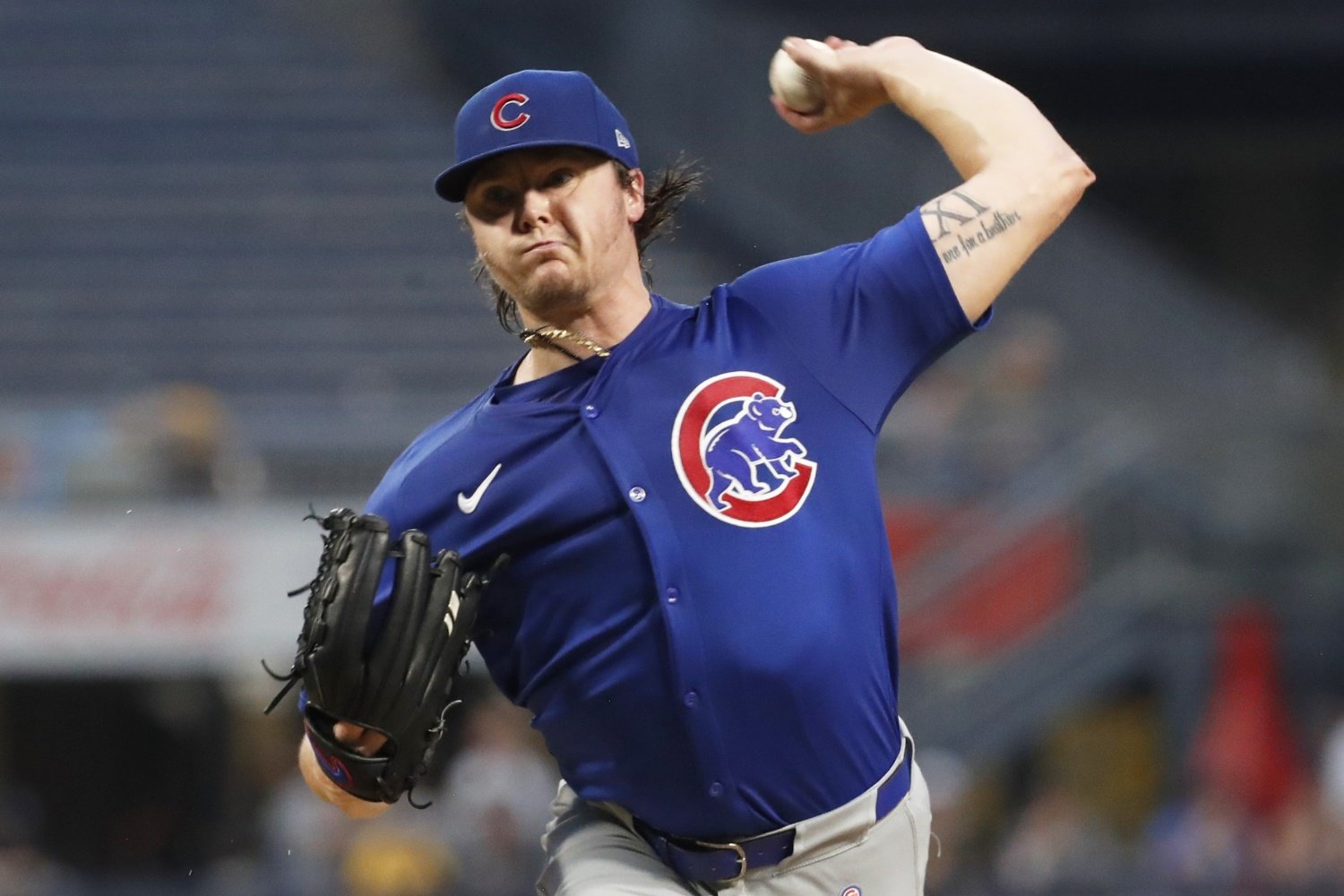 At long last, the 2024 Cubs have strung together some important wins, and when you glance at the scoreboard, they look impressive and earned. Over the last 30 days, in fact, no one else in MLB has as good a run differential as the North Siders'. That's the good news. The news of mixed valence is, of course, that they desperately needed to get this hot, if they wanted to revive and sustain any hope of reaching the postseason--and that they have to stay that way in order to get there. So here's the bad news: What they've done over the last two weeks is utterly unsustainable. Since Aug. 16, when they began a series against the Blue Jays that launched them into their current 12-3 heater, the Cubs are hitting .337/.430/.568 with runners in scoring position. That, itself, is far better than any team can keep up, but it's only the tip of the iceberg. Against five straight weak, sub-.500 opponents, the Cubs have taken advantage of a relentless parade of bad play by the other team. Errors have put them on the bases and helped them advance. They've even been bailed out on baserunning gaffes that should have resulted in outs. The Marlins, Pirates, and Nationals, especially, weren't ready to play serious baseball when the Cubs came to town in recent days. Miami traded as much of their roster as they possibly could in July. Pittsburgh and Washington are both showing the profound, problematic cracks in their depth, and their dreadful bullpens and defense almost forced the Cubs to win games this week. That doesn't diminish the value of the wins themselves. Though a team from a suburban county north of Atlanta holds the tiebreaker against them should both clubs end up with the same record, their losses to the Phillies this weekend reduced their edge over the Cubs in the standings to three games. Unbelievably, the Cubs are now within striking distance of a Wild Card berth. To claim it, though, they have to play much better over their final 25 games. They can't continue to count on getting a hit in a third of their at-bats when runners reach scoring position. They also can't continue getting middling starting pitching, as they have over these 15 contests. Cubs starters have a 4.12 ERA in that span, and while Kyle Hendricks's blowup in Pittsburgh is part of that problem, it can't explain away the team's strikeout rate (25th in MLB) or home-run rate (eighth-highest). Justin Steele, Shota Imanaga, Jameson Taillon, Javier Assad, Kyle Hendricks, and Jordan Wicks are capable of pitching better than that down the stretch, but they'll need to do so. The team is going to score many fewer runs from here on out than they have over their recent hot streak. They have to make up for that with better run prevention. Meanwhile, as Pete Crow-Armstrong and Miguel Amaya come back to Earth, the team is going to need to get more out of Cody Bellinger, MIchael Busch, and Isaac Paredes. Under Craig Counsell's able stewardship, the Cubs have shown more resilience, and frankly more sheer talent, than they evinced at any previous stage of this season. They have an outside shot at the postseason, which is better than they could say a fortnight ago. To convert their newfound possibility to reality, though, they have to maintain extraordinary focus and further improve upon their recent improvements. The Yankees, Dodgers, and Phillies won't give the team wins on a platter, the way their recent opponents have, and they can't afford to stop winning for a moment. This has been a fun bounceback, but it's not enough--unless they build upon it.
 -
All wins count, and at this time of year, no playoff hopeful (however remote their chances) will turn up their nose at one. As the Cubs return from a triumphant 8-1 road trip, though, they do so knowing they'll need to play much better to make their recent surge matter. Image courtesy of © Charles LeClaire-USA TODAY Sports At long last, the 2024 Cubs have strung together some important wins, and when you glance at the scoreboard, they look impressive and earned. Over the last 30 days, in fact, no one else in MLB has as good a run differential as the North Siders'. That's the good news. The news of mixed valence is, of course, that they desperately needed to get this hot, if they wanted to revive and sustain any hope of reaching the postseason--and that they have to stay that way in order to get there. So here's the bad news: What they've done over the last two weeks is utterly unsustainable. Since Aug. 16, when they began a series against the Blue Jays that launched them into their current 12-3 heater, the Cubs are hitting .337/.430/.568 with runners in scoring position. That, itself, is far better than any team can keep up, but it's only the tip of the iceberg. Against five straight weak, sub-.500 opponents, the Cubs have taken advantage of a relentless parade of bad play by the other team. Errors have put them on the bases and helped them advance. They've even been bailed out on baserunning gaffes that should have resulted in outs. The Marlins, Pirates, and Nationals, especially, weren't ready to play serious baseball when the Cubs came to town in recent days. Miami traded as much of their roster as they possibly could in July. Pittsburgh and Washington are both showing the profound, problematic cracks in their depth, and their dreadful bullpens and defense almost forced the Cubs to win games this week. That doesn't diminish the value of the wins themselves. Though a team from a suburban county north of Atlanta holds the tiebreaker against them should both clubs end up with the same record, their losses to the Phillies this weekend reduced their edge over the Cubs in the standings to three games. Unbelievably, the Cubs are now within striking distance of a Wild Card berth. To claim it, though, they have to play much better over their final 25 games. They can't continue to count on getting a hit in a third of their at-bats when runners reach scoring position. They also can't continue getting middling starting pitching, as they have over these 15 contests. Cubs starters have a 4.12 ERA in that span, and while Kyle Hendricks's blowup in Pittsburgh is part of that problem, it can't explain away the team's strikeout rate (25th in MLB) or home-run rate (eighth-highest). Justin Steele, Shota Imanaga, Jameson Taillon, Javier Assad, Kyle Hendricks, and Jordan Wicks are capable of pitching better than that down the stretch, but they'll need to do so. The team is going to score many fewer runs from here on out than they have over their recent hot streak. They have to make up for that with better run prevention. Meanwhile, as Pete Crow-Armstrong and Miguel Amaya come back to Earth, the team is going to need to get more out of Cody Bellinger, MIchael Busch, and Isaac Paredes. Under Craig Counsell's able stewardship, the Cubs have shown more resilience, and frankly more sheer talent, than they evinced at any previous stage of this season. They have an outside shot at the postseason, which is better than they could say a fortnight ago. To convert their newfound possibility to reality, though, they have to maintain extraordinary focus and further improve upon their recent improvements. The Yankees, Dodgers, and Phillies won't give the team wins on a platter, the way their recent opponents have, and they can't afford to stop winning for a moment. This has been a fun bounceback, but it's not enough--unless they build upon it. View full article