


Cubs Video
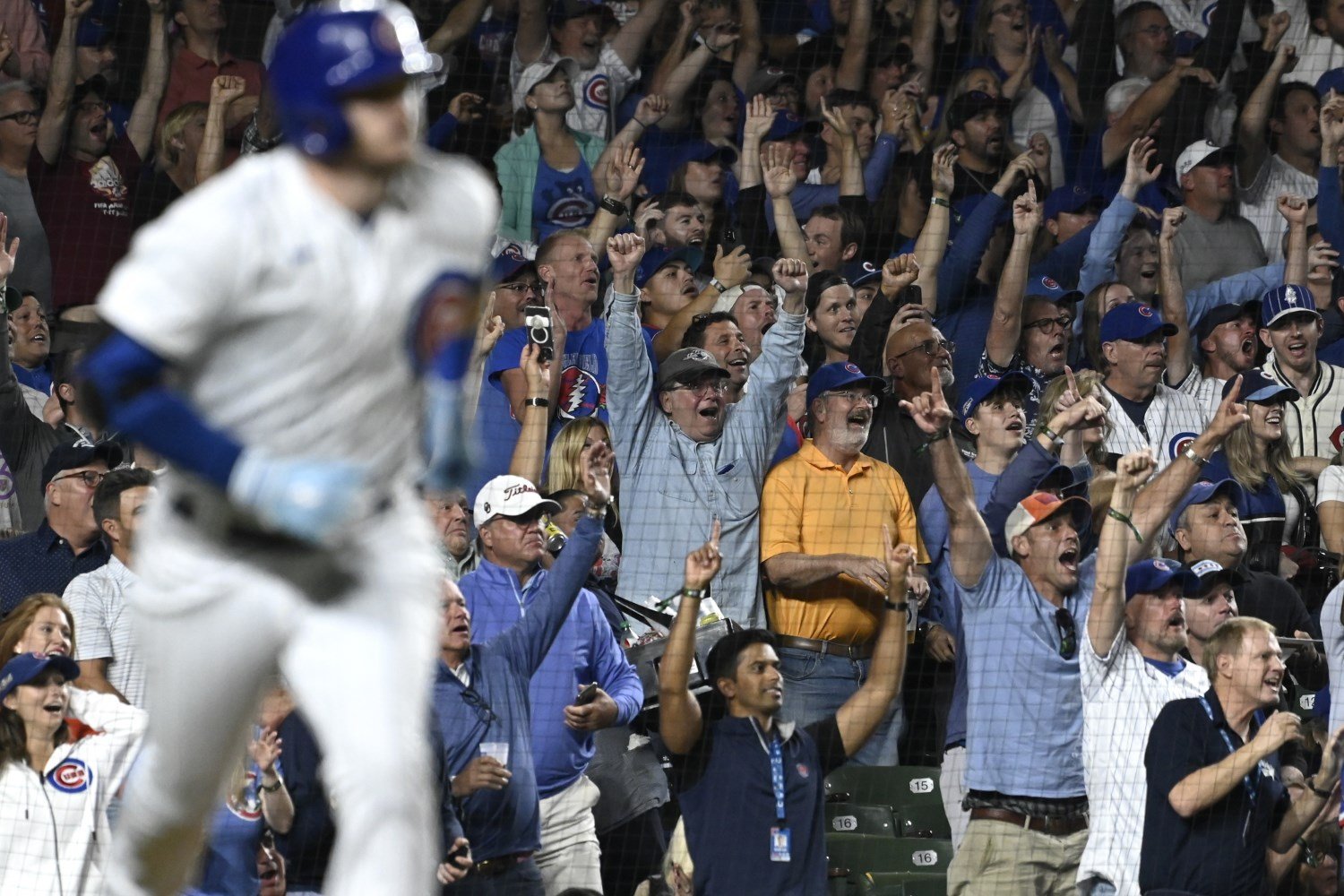
Of the 218 hitters who saw at least 1,500 pitches last year, Ian Happ was just south of average in the percentage of pitches seen in pitcher-friendly counts (0-1, 0-2, 1-2, and 2-2), at 36.7 percent. He's a patient and intelligent hitter, and he worked hard to get ahead, knowing the benefits of having the count in his favor. That helped him rack up 99 walks, easily a career-high total and second only to Juan Soto in the National League.
Importantly, though, Happ got to some of those walks by being a tougher out when he did fall behind--especially from the left side, when facing right-handed pitchers. The numbers tell a clear story.
Ian Happ, Behind in Count as LHH, 2021-23
| Seasons | Swing % | Contact % | Ball % | AVG | OBP | SLG | 95+ EV % |
| 2021-22 | 54.1 | 70.4 | 39.8 | 0.174 | 0.187 | 0.323 | 36.8 |
| 2023 | 48.3 | 75 | 44.1 | 0.238 | 0.248 | 0.393 | 39.4 |
Although it feels counterintuitive, it's often beneficial to be more patient when behind in the count. Pitchers start hunting the chase for a strikeout in those counts. They don't give you much to hit. Conventional wisdom tells hitters to protect the plate in these situations, but Happ found success by zeroing in more than ever on areas of the zone in which he could do damage, and letting others go. As that increased ball rate shows, he didn't just produce more when ending plate appearances behind in the count; he also got back into good counts more often by being more selective.

As this indicates, it wasn't about hunting any particular kind of pitch. Even when behind in the count, Happ was diligent about using his scouting reports. He sought specific pitches to hit against each pitcher he faced, knowing their tendencies and where a pitch he could handle might be. Until last year, he'd been in a more defensive mode in those counts, and the only damage he had done came when a pitcher made a genuine mistake.
You can see this not only in the heat maps of his raw production, but in the way he covered the zone. Without thinking primarily about protecting the plate, he still did so, because he knew where pitchers were likely to try to get him out within the zone.

This is a level of maturity and adaptability in the batter's box that eludes many hitters for their entire careers. It only came after several years of inconsistency and failure for Happ, but tellingly, perhaps, it also came after his first highly successful full season, in 2022. For a hitter with the right disposition, a year like Happ's 2022 isn't a platform on which to try to stand flat-footed and hold on as long as possible. It's a springboard.
Happ actually had a lower OPS+ in 2023 than in 2022, but things like the above help us see past the raw numbers. He was better last year than the year before, not worse. He's still very limited as a right-handed hitter, and should bat in the lower half of the order against lefty starters for this Cubs team. He did improve his approach from that side last year, too, but not to the extent that he was actually good.
Against righties, though, he's their rightful leadoff hitter. Happ's DRC+, which is Baseball Prospectus's flagship offensive metric and which goes a bit beyond the actual stat line (modeling the tradeoffs a hitter makes in terms of strikeout and walk rates, contact quality, etc.) to assess hitter value, climbed from 100 in 2022 to 111 in 2023. That was the best number he's posted in a season with more than 200 plate appearances. He should be expected to stay that productive (or more so) in 2024, because while he's no longer the scary power threat he was early in his career, he's a much, much more well-rounded hitter and a much tougher out than he was even a year or two ago.





Recommended Comments
There are no comments to display.
Create an account or sign in to comment
You need to be a member in order to leave a comment
Create an account
Sign up for a new account in our community. It's easy!
Register a new accountSign in
Already have an account? Sign in here.
Sign In Now