


Matthew Trueblood
-
Posts
2,481 -
Joined
-
Last visited
-
Days Won
2
Content Type
Profiles
Joomla Posts 1
Chicago Cubs Videos
Chicago Cubs Free Agent & Trade Rumors, Notes, & Tidbits
2026 Chicago Cubs Top Prospects Ranking
News
2023 Chicago Cubs Draft Picks
Guides & Resources
2024 Chicago Cubs Draft Picks
The Chicago Cubs Players Project
2025 Chicago Cubs Draft Pick Tracker
2026 Chicago Cubs Draft Tracker: Picks & Bonuses
Blogs
Events
Forums
Store
Gallery
Everything posted by Matthew Trueblood
-
.png.618aa1fa3eb286c35e5c0813f00789c4.png) At this week's General Manager Meetings, one of the hot topics was the possibility of a trade that would send one or more of the Chicago Cubs' bevy of solid position-player prospects to the Seattle Mariners, in exchange for one of the Mariners' very impressive collection of young starting pitchers under medium- to long-term team control. It was news on the order of dog bites rawhide thrown to them in the yard, rather even than dog bites man, because this is the most obvious potential trade fit in the league right now. The Cubs and Mariners are each trying to get back over the hump and into the playoffs, and each team has some very good things going for them. Each also faces some significant constraints, and the match of their respective surpluses and shortfalls does not require a baseball brain surgeon to spot. Fans have discussed the possibility of the two teams getting together on a major deal for a year or more, and nothing that has happened during that time has made the realization of that possibility any less likely. That doesn't mean it'll actually happen, though. When two teams find themselves in such an open-field confrontation, they tend to circle each other and look for exit strategies, so they don't end up feeling forced into something. Jerry Dipoto loves a trade, but Jed Hoyer is a very conservative deal-maker. The two think about the game pretty differently, but would have to find a place where the way they each value some of their key players intersects or overlaps. That's not as easy as it is to simply identify two teams as natural trade partners. Nonetheless, let's play this out a little bit. To really understand how realistic (and how desirable) a swap of a young Cubs hitter or two for a Mariners hurler is, we should get to know all parties involved a bit better. Specifically, we should arrive at a ranking—a pref list, to borrow the industry argot—of the five Seattle starters as Cubs targets, and maybe of the five or six Cubs prospects most likely to be involved in a deal, too.
At this week's General Manager Meetings, one of the hot topics was the possibility of a trade that would send one or more of the Chicago Cubs' bevy of solid position-player prospects to the Seattle Mariners, in exchange for one of the Mariners' very impressive collection of young starting pitchers under medium- to long-term team control. It was news on the order of dog bites rawhide thrown to them in the yard, rather even than dog bites man, because this is the most obvious potential trade fit in the league right now. The Cubs and Mariners are each trying to get back over the hump and into the playoffs, and each team has some very good things going for them. Each also faces some significant constraints, and the match of their respective surpluses and shortfalls does not require a baseball brain surgeon to spot. Fans have discussed the possibility of the two teams getting together on a major deal for a year or more, and nothing that has happened during that time has made the realization of that possibility any less likely. That doesn't mean it'll actually happen, though. When two teams find themselves in such an open-field confrontation, they tend to circle each other and look for exit strategies, so they don't end up feeling forced into something. Jerry Dipoto loves a trade, but Jed Hoyer is a very conservative deal-maker. The two think about the game pretty differently, but would have to find a place where the way they each value some of their key players intersects or overlaps. That's not as easy as it is to simply identify two teams as natural trade partners. Nonetheless, let's play this out a little bit. To really understand how realistic (and how desirable) a swap of a young Cubs hitter or two for a Mariners hurler is, we should get to know all parties involved a bit better. Specifically, we should arrive at a ranking—a pref list, to borrow the industry argot—of the five Seattle starters as Cubs targets, and maybe of the five or six Cubs prospects most likely to be involved in a deal, too. -
The Cubs want a frontline starting pitcher, and they don't want to spend frontline starting pitcher money. The Seattle Mariners want a better offense, but they need to cut payroll. Let's make a deal! Image courtesy of © Steven Bisig-Imagn Images At this week's General Manager Meetings, one of the hot topics was the possibility of a trade that would send one or more of the Chicago Cubs' bevy of solid position-player prospects to the Seattle Mariners, in exchange for one of the Mariners' very impressive collection of young starting pitchers under medium- to long-term team control. It was news on the order of dog bites rawhide thrown to them in the yard, rather even than dog bites man, because this is the most obvious potential trade fit in the league right now. The Cubs and Mariners are each trying to get back over the hump and into the playoffs, and each team has some very good things going for them. Each also faces some significant constraints, and the match of their respective surpluses and shortfalls does not require a baseball brain surgeon to spot. Fans have discussed the possibility of the two teams getting together on a major deal for a year or more, and nothing that has happened during that time has made the realization of that possibility any less likely. That doesn't mean it'll actually happen, though. When two teams find themselves in such an open-field confrontation, they tend to circle each other and look for exit strategies, so they don't end up feeling forced into something. Jerry Dipoto loves a trade, but Jed Hoyer is a very conservative deal-maker. The two think about the game pretty differently, but would have to find a place where the way they each value some of their key players intersects or overlaps. That's not as easy as it is to simply identify two teams as natural trade partners. Nonetheless, let's play this out a little bit. To really understand how realistic (and how desirable) a swap of a young Cubs hitter or two for a Mariners hurler is, we should get to know all parties involved a bit better. Specifically, we should arrive at a ranking—a pref list, to borrow the industry argot—of the five Seattle starters as Cubs targets, and maybe of the five or six Cubs prospects most likely to be involved in a deal, too. View full article
-
If the reports about these two sluggers being willing to move off their longstanding infield positions are accurate, it changes the landscape for the Cubs in free agency—and it should change their strategy, too. Image courtesy of © Thomas Shea-Imagn Images In separate reports coming from the General Managers Meetings in San Antonio this week, both Willy Adames and Alex Bregman expressed a willingness to move off the positions that have defined their careers to this point. In a piece at The Athletic by Katie Woo and Will Sammon: And directly from Bregman's agent, Scott Boras, in a piece by USA Today's Bob Nightengale: Obviously, each of these comes with a caveat for the Cubs. In Adames's case, it's that preference to stay at short, and the obvious follow-up questions, given the wording Sammon and Woo chose: What counts as a strong offer? Does Adames consider the Cubs to be in a position to win? It's hard to imagine that Adames will get anything short of $150 million over six years, and his market could go even higher than Dansby Swanson's, depending on how the winter unfolds. He probably wouldn't relish playing alongside Swanson for both less money per year and fewer years, given his track record, so the Cubs would probably have to either pay him $26 million per season or go to seven years to bring him in as a second baseman. The latter feels a bit too desperate, but giving Adames $160 million over six years isn't unthinkable, by any means. It's pretty much the deal Javier Báez got, and although Adames had a backslide as a defender in 2024 and doesn't profile at short for long the way Báez did, he's a much more well-rounded hitter, likely to age considerably better. As to the second question, I don't think the Cubs would have an especially tough sell job. Drop Adames's 25-homer power into the heart of their lineup, probably batting between Cody Bellinger and Michael Busch, and the team would be pretty potent. Adames would also be a superb defender at the keystone, maintaining the team's stout infield phalanx. Crucially, too, he loved Craig Counsell during their time together in Milwaukee, and Counsell knows the value Adames would bring as a leader with the perfect mix of a fierce desire to win and a friendly, consistent disposition. Swanson gets a lot of plaudits for his off-field value, and perhaps they're deserved. One thing is for sure: Adames blows even Swanson out of the water when it comes to uplifting teammates and engaging in the day-to-day work of winning. For Bregman, the caveat is that all the talk around him seems to lead back to the Astros. As I wrote earlier this week, the Astros face a slight crunch, and their GM is on the record saying they "might need to get creative" with payroll; that doesn't sound like a man ready to drop $130 million into the lap of a 31-year-old. Maybe Dana Brown meant only that he's so focused on bringing back Bregman that he knows he'll have to make creative, even painful cuts elsewhere. At any rate, though, Bregman and the Astros continue to consider a reunion. If one doesn't happen, though, Bregman should be a Cub. He finished sixth in voting for the distinguished Fielding Bible Award at third base this year, and continues to get better at defending the line there. In profile and person, though, he's not really built for the position. His arm strength is far below average for the hot corner, though it would be more than adequate at second. The reason he can't throw as hard as many other third basemen is pretty simple: he's smaller than they are. His strongest throws on record nearly all involve a sharply hit ball and a careful buildup of momentum into a full-body throw across the diamond, too. He would benefit hugely from getting to use his feet and his quick hands a bit more and his raw arm strength a bit less. Were it not for José Altuve, he almost certainly would have stayed at second when he came up to the majors. If he's no longer teammates with a Hall of Famer at that spot, he should claim it. In that piece from early this week, I proposed trading Isaac Paredes to Houston to make way for Bregman. If that's not even necessary, though, bringing in the All-Star makes even more sense. Nor is it obviously necessary that the team trade Nico Hoerner to facilitate bringing in either Bregman or Adames. Having Hoerner as a backup and rotational piece in support of all three of Paredes, Swanson and the newcomer could be especially valuable. It would be a better way to utilize his too-light bat, his speed, and his glove than playing him every day at second base and batting him high in the order, as the team has so often done over the last few seasons. Hoerner might balk at that, of course, and if he did, the team could simply trade him, but Bregman and Adames are each so much better—as players, in a vacuum, but especially as fits for the Cubs' needs—that if either is open to playing second base for Chicago, they need to be willing to deprioritize Hoerner to make it happen, even at substantial financial cost. View full article
-
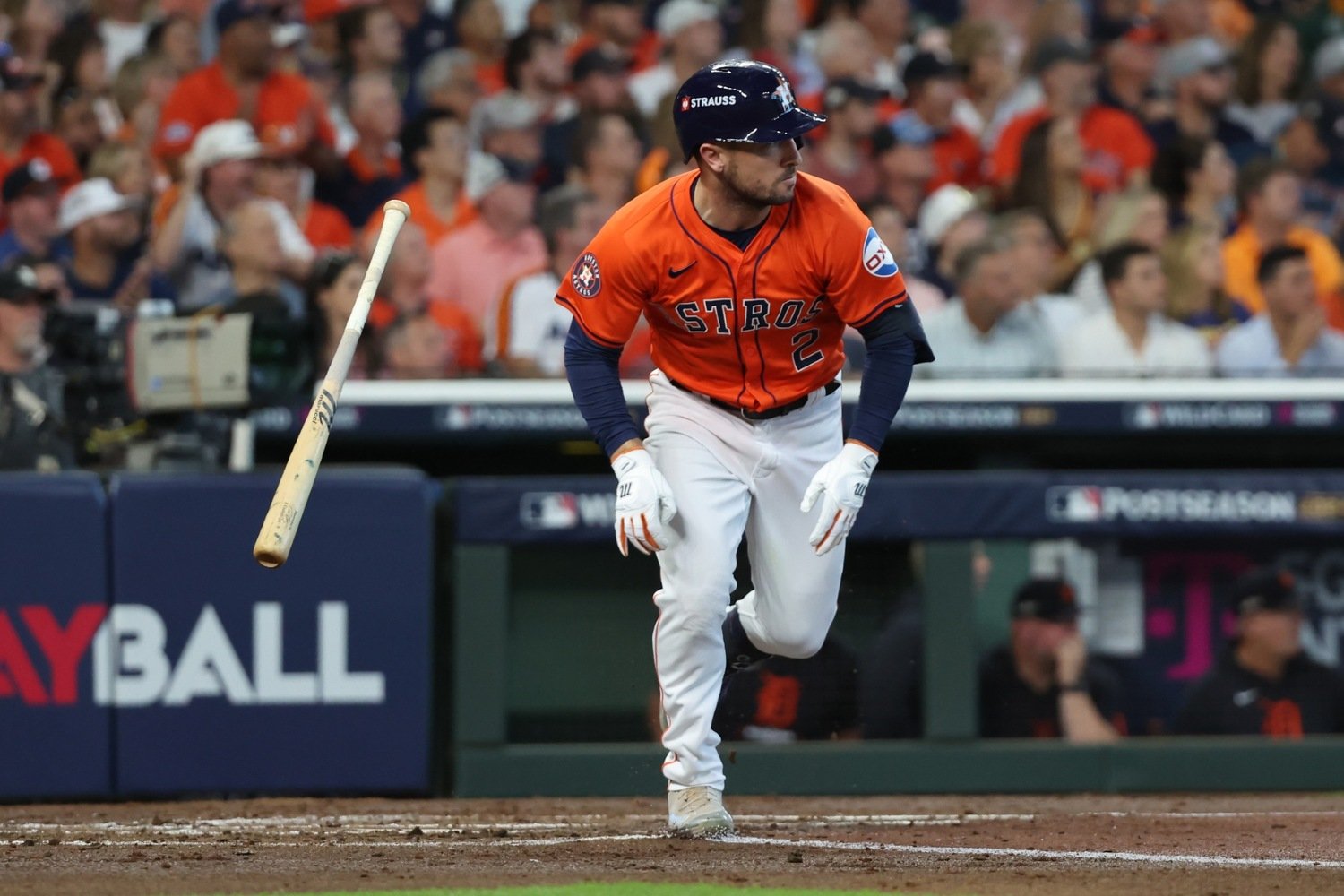 In separate reports coming from the General Managers Meetings in San Antonio this week, both Willy Adames and Alex Bregman expressed a willingness to move off the positions that have defined their careers to this point. In a piece at The Athletic by Katie Woo and Will Sammon: And directly from Bregman's agent, Scott Boras, in a piece by USA Today's Bob Nightengale: Obviously, each of these comes with a caveat for the Cubs. In Adames's case, it's that preference to stay at short, and the obvious follow-up questions, given the wording Sammon and Woo chose: What counts as a strong offer? Does Adames consider the Cubs to be in a position to win? It's hard to imagine that Adames will get anything short of $150 million over six years, and his market could go even higher than Dansby Swanson's, depending on how the winter unfolds. He probably wouldn't relish playing alongside Swanson for both less money per year and fewer years, given his track record, so the Cubs would probably have to either pay him $26 million per season or go to seven years to bring him in as a second baseman. The latter feels a bit too desperate, but giving Adames $160 million over six years isn't unthinkable, by any means. It's pretty much the deal Javier Báez got, and although Adames had a backslide as a defender in 2024 and doesn't profile at short for long the way Báez did, he's a much more well-rounded hitter, likely to age considerably better. As to the second question, I don't think the Cubs would have an especially tough sell job. Drop Adames's 25-homer power into the heart of their lineup, probably batting between Cody Bellinger and Michael Busch, and the team would be pretty potent. Adames would also be a superb defender at the keystone, maintaining the team's stout infield phalanx. Crucially, too, he loved Craig Counsell during their time together in Milwaukee, and Counsell knows the value Adames would bring as a leader with the perfect mix of a fierce desire to win and a friendly, consistent disposition. Swanson gets a lot of plaudits for his off-field value, and perhaps they're deserved. One thing is for sure: Adames blows even Swanson out of the water when it comes to uplifting teammates and engaging in the day-to-day work of winning. For Bregman, the caveat is that all the talk around him seems to lead back to the Astros. As I wrote earlier this week, the Astros face a slight crunch, and their GM is on the record saying they "might need to get creative" with payroll; that doesn't sound like a man ready to drop $130 million into the lap of a 31-year-old. Maybe Dana Brown meant only that he's so focused on bringing back Bregman that he knows he'll have to make creative, even painful cuts elsewhere. At any rate, though, Bregman and the Astros continue to consider a reunion. If one doesn't happen, though, Bregman should be a Cub. He finished sixth in voting for the distinguished Fielding Bible Award at third base this year, and continues to get better at defending the line there. In profile and person, though, he's not really built for the position. His arm strength is far below average for the hot corner, though it would be more than adequate at second. The reason he can't throw as hard as many other third basemen is pretty simple: he's smaller than they are. His strongest throws on record nearly all involve a sharply hit ball and a careful buildup of momentum into a full-body throw across the diamond, too. He would benefit hugely from getting to use his feet and his quick hands a bit more and his raw arm strength a bit less. Were it not for José Altuve, he almost certainly would have stayed at second when he came up to the majors. If he's no longer teammates with a Hall of Famer at that spot, he should claim it. In that piece from early this week, I proposed trading Isaac Paredes to Houston to make way for Bregman. If that's not even necessary, though, bringing in the All-Star makes even more sense. Nor is it obviously necessary that the team trade Nico Hoerner to facilitate bringing in either Bregman or Adames. Having Hoerner as a backup and rotational piece in support of all three of Paredes, Swanson and the newcomer could be especially valuable. It would be a better way to utilize his too-light bat, his speed, and his glove than playing him every day at second base and batting him high in the order, as the team has so often done over the last few seasons. Hoerner might balk at that, of course, and if he did, the team could simply trade him, but Bregman and Adames are each so much better—as players, in a vacuum, but especially as fits for the Cubs' needs—that if either is open to playing second base for Chicago, they need to be willing to deprioritize Hoerner to make it happen, even at substantial financial cost.
 -
The Chicago Cubs are a team in need of ceiling, flexibility, and a bit of extra room at the margins. It could be the perfect time to pounce on an opportunity to upgrade in a bench spot, clear playing time for prospects if needed, and save a small amount of scratch for spending elsewhere. Image courtesy of © Mark J. Rebilas-Imagn Images Just after the end of the MLB season, players who ended the season off the 40-man roster and who have been in pro baseball for at least six years can elect free agency. We saw the Cubs go through this process on Monday, when they allowed several players to become free agents, although they subsequently re-signed a handful of them, too. This happens every November, and almost every November, a couple of players who reach free agency through these means end up surfacing with big-league clubs and having solid seasons or careers. The Brewers got Blake Perkins this way late in 2022, for instance. Based on process-oriented and batted-ball data from Triple-A, I see two players who might be especially worthy of targeting for teams this fall. Each is a left-handed batter and outfielder in the second half of his 20s, and each was briefly considered to have genuine upside very early in their pro careers. None of that has materialized for them yet, but the signs they each showed at Triple-A this year should have the Cubs considering them as alternatives to Mike Tauchman, whom they got off the scrapheap in Jan. 2023 but who is now in line to make over $2 million via arbitration and (at 35 years old) almost certainly has his best baseball behind him. Carlos Cortes, Released by Mets Marginally famous when first drafted because he would play the infield as a right-handed thrower and the outfield as a left-handed one, Cortes quickly faded into relative obscurity. It's probably a bit too generous to blame the lost minor-league season in 2020 for his inability to turn the corner as a prospect, but in examining his progress through the system, that does feel like the moment when he had an opportunity to take a leap forward. Instead, he's plodded up the ladder, showing insufficient hands to stick on the field (so long, right-handed throwing) and insufficient speed to play center field. At just 5-foot-7, he cuts a very unlikely figure for the big leagues, especially for someone who won't have speed in their game, so he's dropped below the radar. Over the past two seasons, though, he's shown real promise with the Mets' Triple-A affiliate in Syracuse. In 2024, he batted a seemingly forgettable .246/.330/.456, but that came with 16 home runs in just 321 plate appearances. More telling than those numbers, anyway, are some of the ones under the hood for the 27-year-old. PA Swing% Chase% ZSw-Chase InZoneWhiff% PHiA/SW 100+/Sw LandAng LaunchAng LowHit% MedHit% HighHit% 321 44.0% 23.9% 43.1% 16.8% 4.8% 9.6% 8.4 15.8 29.0% 33.5% 36.6% ExitVel 10thExitVel 90thExitVel Hit95+% Well Hit LA Sweet Spot EV BABIP Barrel% FBDst xWOBA wOBA SAEV 90.9 76.6 104.7 39.2% 15.7 93.9 .255 17.6% 319.4 .317 .338 91.5 You need not know what each and every one of these numbers means to get a sense of the player they're describing. Cortes makes good swing decisions; hits the ball fairly hard; elevates and pulls it often enough to get to his power; and doesn't get beaten in the strike zone much. It's unlikely he'd hit for the same type of over-the-fence power in the majors, but both his average launch angle on well-hit balls and his average exit velocity on balls in the launch-angle sweet spot top the MLB average. His inability to play center field would hurt his utility to many organizations, but the Cubs have Pete Crow-Armstrong, Cody Bellinger, and Kevin Alcántara around. They can afford to swap out Tauchman for a player like Cortes, if they believe in his bat. The data says they should, and he's more substantial than his vitals might suggest. Cal Mitchell, Releaed by Padres It's a shame this second stop for the former top Pirates prospect didn't work out. Mitchell is a San DIego native, and he hit very well in El Paso. The Padres just happened to get a shocking rookie breakout from Jackson Merrill and an unexpected star turn from Jurickson Profar, obviating any long-term experiments or even injury stopgaps that might have allowed the local kid to make good. Mitchell is still just 25, though he'll turn 26 during spring training. On the way up the Pittsburgh chain, the knock on him was a lack of power, which came partially from the very thing that drew so many scouts to him when he was still a teenager: his sweet swing. As good as Mitchell looked up there, he too often hit his best balls on low trajectories, and he couldn't cover the top third of the strike zone. His strikeout rates got gory, and he never got the ball off the ground enough to tap into the power suggested by his 220-pound frame. After he crashed out of the Pirates system last fall and signed a minor-league deal with San Diego, though, he made some adjustments. Here, rather than give all the numbers I conveyed for Cortes in a single table, we're going to look at each of the two lines as distinct tables, with second rows, so we can compare his 2023 and 2024 showings. Seasons PA Swing% Chase% ZSw-Chase InZoneWhiff% PHiA/SW 100+/Sw LandAng LaunchAng LowHit% MedHit% HighHit% 2023 316 45.1% 27.8% 35.4% 19.3% 4.7% 9.8% 11.3 10.5 33.0% 37.2% 29.3% 2024 469 44.6% 21.8% 45.8% 18.6% 5.3% 7.4% 7.7 13.4 27.0% 40.8% 32.0% Seasons PA ExitVel 10thExitVel 90thExitVel Hit95+% Well Hit LA Sweet Spot EV BABIP Barrel% FBDst xWOBA wOBA SAEV 2023 316 90.6 73.6 104.2 44.7% 12 93.8 .354 22.6% 314 .303 .326 89 2024 469 89.6 70.6 102.9 42.5% 17.4 94.3 .307 24.8% 332.9 .352 .371 93.6 Mitchell made a crucial change just by deciding not to chase above the zone in 2024, and it paid off in spades. His strikeout rate plunged from nearly 30% to barely over 20%, and his walk rate rose from 9.2% to 11.7%. That tweak made a world of difference and unlocked some relatively low-friction improvements in his contact profile. As you can see, he actually lost a bit of raw exit velocity, but he hit his line drives and fly balls harder and got more lift. Generating more air balls allowed him to stroke 22 home runs in under 500 plate appearances. It is, again, unlikely he would carry that home-run rate into the bigger parks and less thin air of MLB, but he profiles like a higher-upside version of Rafael Ortega, whom the Cubs got a bunch of good work from in 2021 and 2022, as they plunged into this rebuild. Whereas Cortes handles lefties fairly well, Mitchell probably shouldn't ever see one, but if the Cubs are as aggressive as they should be in the market for one more big right-handed bat, that won't be a problem. Mitchell could slot into the roster spot currently reserved for Tauchman at a lower price, with six years of team control left and still very much in his prime. He can also be optioned to the minors for one more season. If the Cubs can sell either of these players—but especially Mitchell—on coming aboard, it could pay off handsomely for them in 2025 and beyond. View full article
-
- 1
-

-
- mike tauchman
- cal mitchell
- (and 1 more)
-
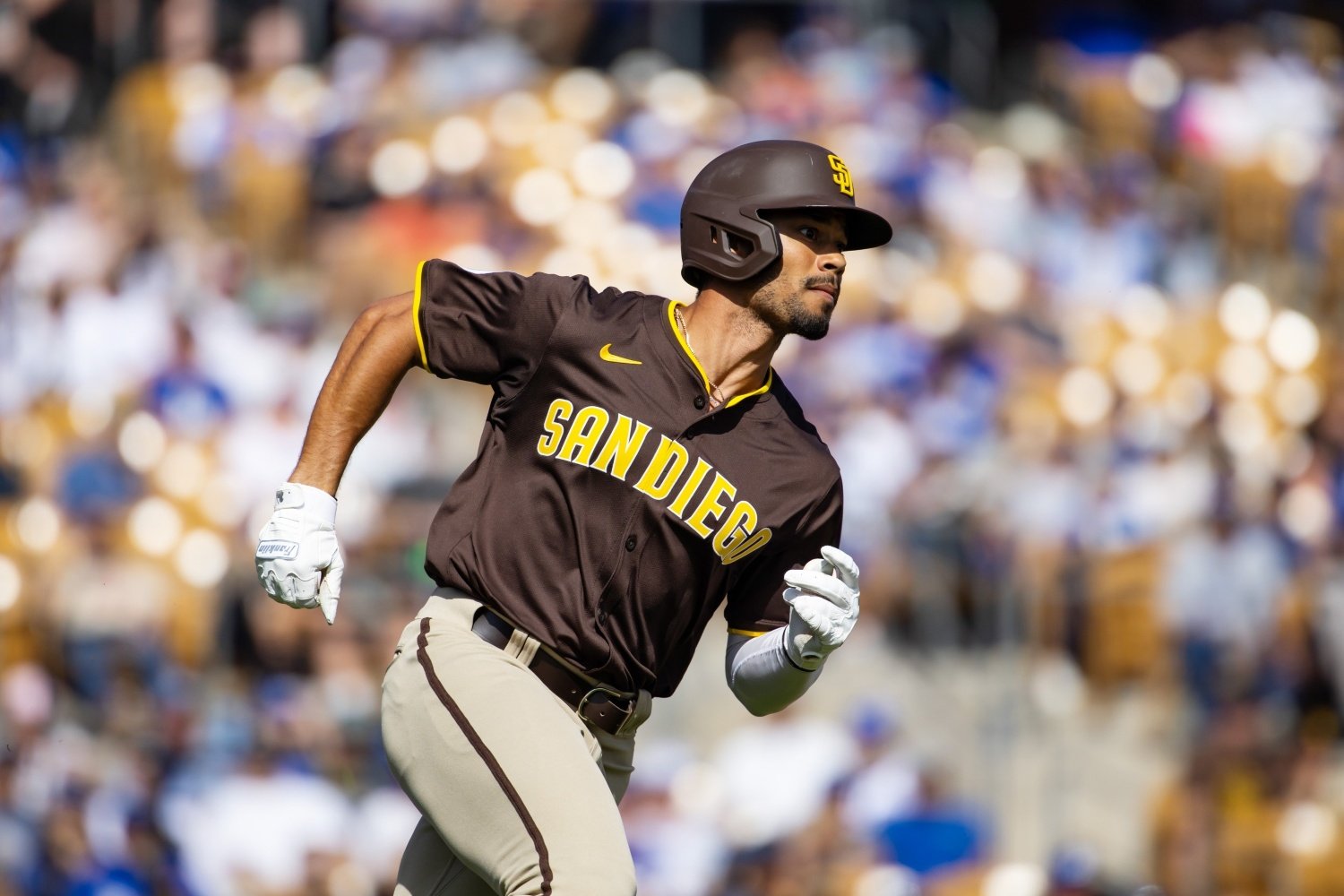 Just after the end of the MLB season, players who ended the season off the 40-man roster and who have been in pro baseball for at least six years can elect free agency. We saw the Cubs go through this process on Monday, when they allowed several players to become free agents, although they subsequently re-signed a handful of them, too. This happens every November, and almost every November, a couple of players who reach free agency through these means end up surfacing with big-league clubs and having solid seasons or careers. The Brewers got Blake Perkins this way late in 2022, for instance. Based on process-oriented and batted-ball data from Triple-A, I see two players who might be especially worthy of targeting for teams this fall. Each is a left-handed batter and outfielder in the second half of his 20s, and each was briefly considered to have genuine upside very early in their pro careers. None of that has materialized for them yet, but the signs they each showed at Triple-A this year should have the Cubs considering them as alternatives to Mike Tauchman, whom they got off the scrapheap in Jan. 2023 but who is now in line to make over $2 million via arbitration and (at 35 years old) almost certainly has his best baseball behind him. Carlos Cortes, Released by Mets Marginally famous when first drafted because he would play the infield as a right-handed thrower and the outfield as a left-handed one, Cortes quickly faded into relative obscurity. It's probably a bit too generous to blame the lost minor-league season in 2020 for his inability to turn the corner as a prospect, but in examining his progress through the system, that does feel like the moment when he had an opportunity to take a leap forward. Instead, he's plodded up the ladder, showing insufficient hands to stick on the field (so long, right-handed throwing) and insufficient speed to play center field. At just 5-foot-7, he cuts a very unlikely figure for the big leagues, especially for someone who won't have speed in their game, so he's dropped below the radar. Over the past two seasons, though, he's shown real promise with the Mets' Triple-A affiliate in Syracuse. In 2024, he batted a seemingly forgettable .246/.330/.456, but that came with 16 home runs in just 321 plate appearances. More telling than those numbers, anyway, are some of the ones under the hood for the 27-year-old. PA Swing% Chase% ZSw-Chase InZoneWhiff% PHiA/SW 100+/Sw LandAng LaunchAng LowHit% MedHit% HighHit% 321 44.0% 23.9% 43.1% 16.8% 4.8% 9.6% 8.4 15.8 29.0% 33.5% 36.6% ExitVel 10thExitVel 90thExitVel Hit95+% Well Hit LA Sweet Spot EV BABIP Barrel% FBDst xWOBA wOBA SAEV 90.9 76.6 104.7 39.2% 15.7 93.9 .255 17.6% 319.4 .317 .338 91.5 You need not know what each and every one of these numbers means to get a sense of the player they're describing. Cortes makes good swing decisions; hits the ball fairly hard; elevates and pulls it often enough to get to his power; and doesn't get beaten in the strike zone much. It's unlikely he'd hit for the same type of over-the-fence power in the majors, but both his average launch angle on well-hit balls and his average exit velocity on balls in the launch-angle sweet spot top the MLB average. His inability to play center field would hurt his utility to many organizations, but the Cubs have Pete Crow-Armstrong, Cody Bellinger, and Kevin Alcántara around. They can afford to swap out Tauchman for a player like Cortes, if they believe in his bat. The data says they should, and he's more substantial than his vitals might suggest. Cal Mitchell, Releaed by Padres It's a shame this second stop for the former top Pirates prospect didn't work out. Mitchell is a San DIego native, and he hit very well in El Paso. The Padres just happened to get a shocking rookie breakout from Jackson Merrill and an unexpected star turn from Jurickson Profar, obviating any long-term experiments or even injury stopgaps that might have allowed the local kid to make good. Mitchell is still just 25, though he'll turn 26 during spring training. On the way up the Pittsburgh chain, the knock on him was a lack of power, which came partially from the very thing that drew so many scouts to him when he was still a teenager: his sweet swing. As good as Mitchell looked up there, he too often hit his best balls on low trajectories, and he couldn't cover the top third of the strike zone. His strikeout rates got gory, and he never got the ball off the ground enough to tap into the power suggested by his 220-pound frame. After he crashed out of the Pirates system last fall and signed a minor-league deal with San Diego, though, he made some adjustments. Here, rather than give all the numbers I conveyed for Cortes in a single table, we're going to look at each of the two lines as distinct tables, with second rows, so we can compare his 2023 and 2024 showings. Seasons PA Swing% Chase% ZSw-Chase InZoneWhiff% PHiA/SW 100+/Sw LandAng LaunchAng LowHit% MedHit% HighHit% 2023 316 45.1% 27.8% 35.4% 19.3% 4.7% 9.8% 11.3 10.5 33.0% 37.2% 29.3% 2024 469 44.6% 21.8% 45.8% 18.6% 5.3% 7.4% 7.7 13.4 27.0% 40.8% 32.0% Seasons PA ExitVel 10thExitVel 90thExitVel Hit95+% Well Hit LA Sweet Spot EV BABIP Barrel% FBDst xWOBA wOBA SAEV 2023 316 90.6 73.6 104.2 44.7% 12 93.8 .354 22.6% 314 .303 .326 89 2024 469 89.6 70.6 102.9 42.5% 17.4 94.3 .307 24.8% 332.9 .352 .371 93.6 Mitchell made a crucial change just by deciding not to chase above the zone in 2024, and it paid off in spades. His strikeout rate plunged from nearly 30% to barely over 20%, and his walk rate rose from 9.2% to 11.7%. That tweak made a world of difference and unlocked some relatively low-friction improvements in his contact profile. As you can see, he actually lost a bit of raw exit velocity, but he hit his line drives and fly balls harder and got more lift. Generating more air balls allowed him to stroke 22 home runs in under 500 plate appearances. It is, again, unlikely he would carry that home-run rate into the bigger parks and less thin air of MLB, but he profiles like a higher-upside version of Rafael Ortega, whom the Cubs got a bunch of good work from in 2021 and 2022, as they plunged into this rebuild. Whereas Cortes handles lefties fairly well, Mitchell probably shouldn't ever see one, but if the Cubs are as aggressive as they should be in the market for one more big right-handed bat, that won't be a problem. Mitchell could slot into the roster spot currently reserved for Tauchman at a lower price, with six years of team control left and still very much in his prime. He can also be optioned to the minors for one more season. If the Cubs can sell either of these players—but especially Mitchell—on coming aboard, it could pay off handsomely for them in 2025 and beyond.
 -
How do you tell the difference between a much-needed outside perspective and out-of-town stupid? Image courtesy of © David Banks-Imagn Images Over the last few months, even those of us who were formerly big believers in the need to trade Ian Happ or Seiya Suzuki to vault the Chicago Cubs forward have come to our senses. Suzuki's lack of durability and defensive value remain daunting, in certain ways, but he stayed healthy enough to show how good he can be down the stretch in 2024—including demonstrating a highly valuable capacity for hitting like himself when assigned full-time DH duties. Many hitters buckle and degrade in that role, and the fact that Suzuki didn't was almost as important a positive indicator as the fact that he stayed in the lineup for the final few months. Meanwhile, Happ overcame a slow start to put up a season that is becoming very typical, but no less impressive from repetition. He's an increasingly well-rounded, balanced hitter who added the consistent ability to drive the ball from the right side to his game this year. He's also a very good defender, albeit at one of the easiest positions on the field. Most importantly, with some public reporting and a pinch of private digging, it's become clear that neither Suzuki nor Happ is especially inclined to waive the no-trade clauses wired into their respective contracts. They have some measure of self-determination, and neither player is excited by the prospect of leaving. The Cubs might just have to move bravely down the narrow path they've left themselves, rather than trying to hack out a new, wider one. The idea of trading Suzuki or Happ was never about their insufficiency, per se, but about the team's unfortunate lack of other easy paths to improvement. With Dansby Swanson locked in at shortstop, Nico Hoerner at second, and an array of young players in whom the team is trying hard to find a homegrown star, there just aren't a lot of obvious alternatives to such a trade, if you start from the premise that the team needs a superstar. Cody Bellinger opting back into his deal only seems to have brought that circumstance into sharper focus. Still, I had largely let the notion drop. However, two podcasts full of thoughtful baseball people worth your respectful attention—Hittin' Season, a Phillies podcast that has been around in various incarnations for over a decade; and Five and Dive, the flagship of the Baseball Prospectus podcast network—have specifically mentioned Happ as a trade target or candidate over the last few weeks. It's that time of year. We all look around the league and pine after players on certain teams, or idly imagine others being moved from their current one to create a more interesting or aesthetically pleasing alignment of talent, but we're often misinformed about teams outside our own sphere. Much though I want it to, a Taylor Ward trade is unlikely to materialize this winter. Maybe those podcasters are off the mark, and I am about Ward, too. Then again, though: We all sometimes get overconfident when working with seemingly valuable but incomplete information. Yes, Happ and Suzuki have no-trade clauses, and yes, they both seem happy with the team. Happ, in particular, seems eager to stay put. Might we be misreading that, though? Or might Happ be more flexible than we think—easier to induce than he seems? I'm not suggesting that any of the people who discussed it in public forums recently have inside information or have better reason to think that's true than we do. But sometimes, we get so used to a familiar idea that we start to think of each day that passes as another datum to prove it. That's not really how such things work. If others see the inherent logic of a Happ trade or imagine making a pitch that might convince him to waive his no-trade clause, maybe we should take that more seriously than is our impulse. If he were to be amenable to a trade, it wouldn't automatically become advisable, at this stage. It would have to be part of a coordinated double-move, because the last thing the Cubs would want would be to trade him, then find themselves unable to sign someone clearly better. The idea of moving him would be to acquire either a similar player at a position of more pressing need—maybe a swap of Happ for Seattle's Luis Castillo?—or young talent that could then feed and fuel the team's existing pipeline, but it would have to plainly facilitate either the signing of a marquee starting pitcher or the arrival of a big bat with some indisputable leg up on Happ. There are only a few such hitters available, and since we can be pretty sure Juan Soto isn't coming to the North Side, it quickly starts to seem like there are zero. Again, as the hot stove earns its name, rumors will sometimes warm up without good reason, and we should be careful not to put undue stock into them. Still, there are versions of a Happ trade—one to the Phillies, for example, that might bring back one of their very good young starters, or something that netted the Cubs Garrett Crochet in a three-way deal—worth keeping an open mind to, and while the odds of it seem tiny, the logic of exploring it has not completely dissolved since the summer. View full article
-
Are We All Underestimating the Odds of an Ian Happ Trade This Winter?
Matthew Trueblood posted an article in Cubs
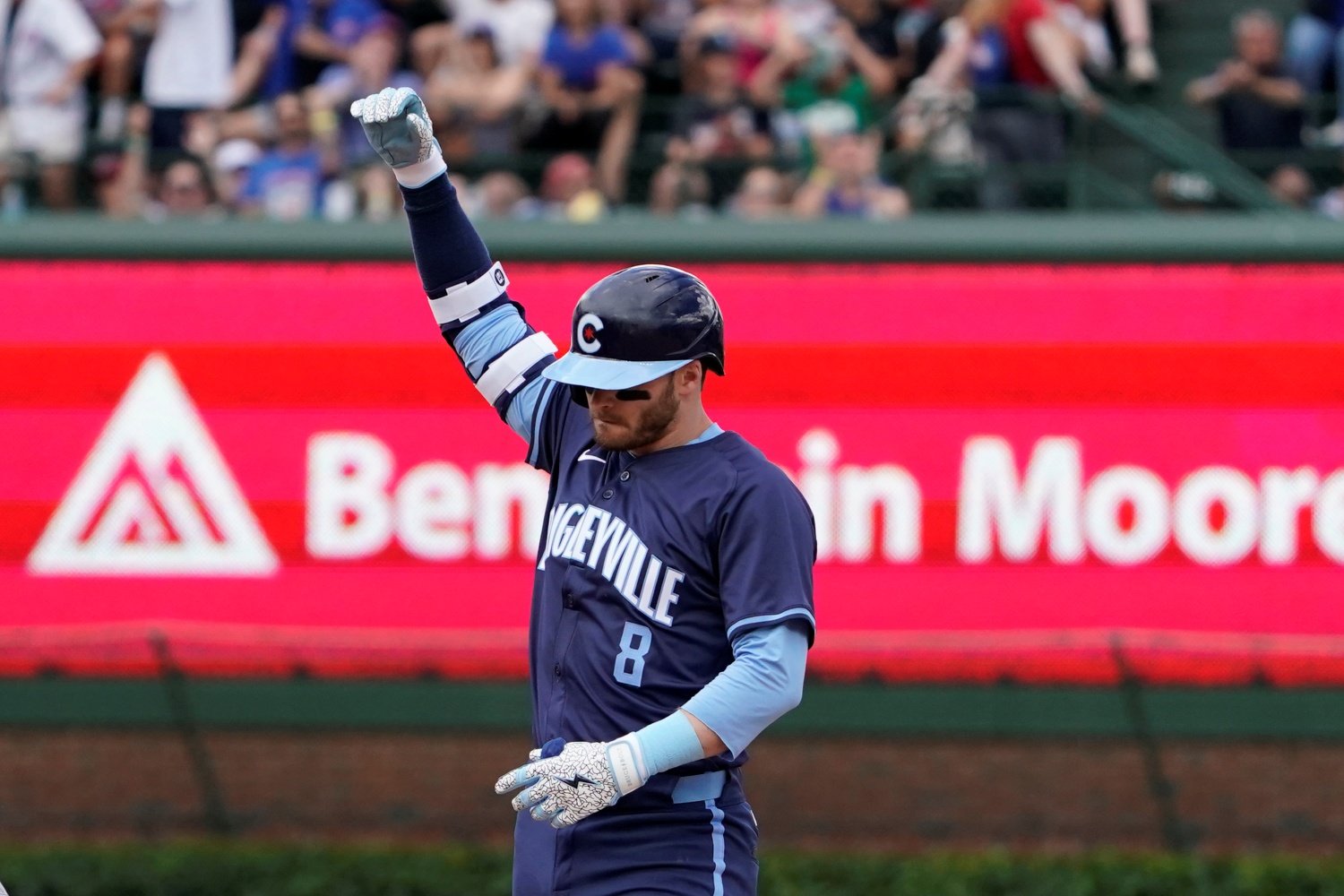 Over the last few months, even those of us who were formerly big believers in the need to trade Ian Happ or Seiya Suzuki to vault the Chicago Cubs forward have come to our senses. Suzuki's lack of durability and defensive value remain daunting, in certain ways, but he stayed healthy enough to show how good he can be down the stretch in 2024—including demonstrating a highly valuable capacity for hitting like himself when assigned full-time DH duties. Many hitters buckle and degrade in that role, and the fact that Suzuki didn't was almost as important a positive indicator as the fact that he stayed in the lineup for the final few months. Meanwhile, Happ overcame a slow start to put up a season that is becoming very typical, but no less impressive from repetition. He's an increasingly well-rounded, balanced hitter who added the consistent ability to drive the ball from the right side to his game this year. He's also a very good defender, albeit at one of the easiest positions on the field. Most importantly, with some public reporting and a pinch of private digging, it's become clear that neither Suzuki nor Happ is especially inclined to waive the no-trade clauses wired into their respective contracts. They have some measure of self-determination, and neither player is excited by the prospect of leaving. The Cubs might just have to move bravely down the narrow path they've left themselves, rather than trying to hack out a new, wider one. The idea of trading Suzuki or Happ was never about their insufficiency, per se, but about the team's unfortunate lack of other easy paths to improvement. With Dansby Swanson locked in at shortstop, Nico Hoerner at second, and an array of young players in whom the team is trying hard to find a homegrown star, there just aren't a lot of obvious alternatives to such a trade, if you start from the premise that the team needs a superstar. Cody Bellinger opting back into his deal only seems to have brought that circumstance into sharper focus. Still, I had largely let the notion drop. However, two podcasts full of thoughtful baseball people worth your respectful attention—Hittin' Season, a Phillies podcast that has been around in various incarnations for over a decade; and Five and Dive, the flagship of the Baseball Prospectus podcast network—have specifically mentioned Happ as a trade target or candidate over the last few weeks. It's that time of year. We all look around the league and pine after players on certain teams, or idly imagine others being moved from their current one to create a more interesting or aesthetically pleasing alignment of talent, but we're often misinformed about teams outside our own sphere. Much though I want it to, a Taylor Ward trade is unlikely to materialize this winter. Maybe those podcasters are off the mark, and I am about Ward, too. Then again, though: We all sometimes get overconfident when working with seemingly valuable but incomplete information. Yes, Happ and Suzuki have no-trade clauses, and yes, they both seem happy with the team. Happ, in particular, seems eager to stay put. Might we be misreading that, though? Or might Happ be more flexible than we think—easier to induce than he seems? I'm not suggesting that any of the people who discussed it in public forums recently have inside information or have better reason to think that's true than we do. But sometimes, we get so used to a familiar idea that we start to think of each day that passes as another datum to prove it. That's not really how such things work. If others see the inherent logic of a Happ trade or imagine making a pitch that might convince him to waive his no-trade clause, maybe we should take that more seriously than is our impulse. If he were to be amenable to a trade, it wouldn't automatically become advisable, at this stage. It would have to be part of a coordinated double-move, because the last thing the Cubs would want would be to trade him, then find themselves unable to sign someone clearly better. The idea of moving him would be to acquire either a similar player at a position of more pressing need—maybe a swap of Happ for Seattle's Luis Castillo?—or young talent that could then feed and fuel the team's existing pipeline, but it would have to plainly facilitate either the signing of a marquee starting pitcher or the arrival of a big bat with some indisputable leg up on Happ. There are only a few such hitters available, and since we can be pretty sure Juan Soto isn't coming to the North Side, it quickly starts to seem like there are zero. Again, as the hot stove earns its name, rumors will sometimes warm up without good reason, and we should be careful not to put undue stock into them. Still, there are versions of a Happ trade—one to the Phillies, for example, that might bring back one of their very good young starters, or something that netted the Cubs Garrett Crochet in a three-way deal—worth keeping an open mind to, and while the odds of it seem tiny, the logic of exploring it has not completely dissolved since the summer.
 -
Any time you possibly can, make trades with the Angels. Image courtesy of © Kiyoshi Mio-Imagn Images One of the first noteworthy, non-procedural moves of the fledgling MLB offseason was a trade between Atlanta and the Angels, the day after the World Series concluded. Jorge Soler, who can't stop being shipped across the country lately, landed in Orange County, with inconsistent starting pitcher Griffin Canning going the other way. Part of the motivation for the move was, plainly, financial, but it's also the first of what figure to be several trades by the Angels this winter, each focused on upgrading the team and making good on their promise to both increase the payroll and contend for an AL West title next season. Soler, according to GM Perry Minasian, will play some outfield for the Halos, which was a curious pronouncement. To whatever extent it's true, he'll be finding that time amid and around the expected starters, Mike Trout, Jo Adell, and Taylor Ward. The Angels also have some young outfielders they're likely to want to work in, and they've talked about easing Trout out of center field to help him remain a bit healthier. It feels as though, while they could use another outfielder (especially one who can play center field), they also just created a bit of a logjam for themselves. That works out, as far as I'm concerned, because the Angels have one outfielder who has long sat near the top of my preferred targets list, should the opportunity pop up. It might be time to pull the trigger on a deal for Ward. Soon to turn 31 years old and just two years from free agency, Taylor Ward is hardly a well-kept secret, for close baseball watchers. He's had an above-average OPS+ for each of the last four seasons, and hit 25 homers in over 660 plate appearances in 2024. Because the Angels are so relentlessly bad, though, and because he paled in comparison to Trout and Shohei Ohtani at the heights of their powers, it's been easy for him to fly somewhat beneath the radar. I don't even think the Angels properly understand what they have; that's why the Cubs should try to swoop in. Here's the thing: the Angels love swing speed. Part of the reason why they were willing to trade for Soler at the very outset of the offseason is their belief in swing speed. Here's where all their qualifying hitters fell last season, mapping swing speed against the percentage of their swings on which they made solid, squared-up contact: Some of their part-time players and guys who missed time because of injuries don't appear here, but would make it more obvious how much they prioritize this skill: Miguel Sanó, Trout, Mickey Moniak, Keston Hiura, Brandon Drury, Matt Thaiss, and others were specialists in swinging fast. Ward's great strength does not lie in generating a superabundance of bat speed, but in hitting the ball squarely on a consistent basis. In fact, when you weigh his power on balls hit in the air and the frequency of those batted balls, you find him ranked 13th of 365 batters who had at least 200 plate appearances last year—in what I'm calling Skills-Adjusted Exit Velocity. In short, this metric takes a player's average exit velocity on batted balls in power-friendly launch angle ranges and adjusts it for the percentage of a player's at-bats that end in a batted ball on that trajectory. Ward's company atop that leaderboard is exquisite. Yet, he didn't enjoy success as great as most of them. Here, I've highlighted Ward and the five other players who share not only his knack for the well-struck line drive but his blend of near-average in-zone contact rates and better-than-average plate discipline: To recap: Ward doesn't expand his zone much. When he swings within the zone, he doesn't have an especially high whiff rate. Most encouragingly, he makes a lot of hard contact, especially in high-value launch angle bands. So, why isn't he producing more real runs? Why isn't his dot on the plot above closer to those of Fernando Tatis Jr. or (very near Tatis) Freddie Freeman, Corey Seager, or Marcell Ozuna? It's because of the other key characteristic Ward shares with Bobby Witt Jr., Vladimir Guerrero Jr., Mookie Betts, Austin Riley, and Tatis: they all use the big part of the field. The bad news for Ward is, he uses it more than any of them—in any meaningful sense, too much. Ward just doesn't turn on the ball and lift it to his pull field the way most hitters like him now strive to do. His is a much more old-fashioned, gap-centric approach. He pulls the majority of his ground balls, as virtually every hitter does, but he hits most of his air balls to dead center or right-center. He's similar, in terms of the distribution of those batted balls, to Alec Bohm, Tommy Pham, Bryan De La Cruz, and (funnily enough) Miguel Amaya. Those are dangerous, dynamic hitters, in various ways. Pham is the easiest comp, in that he's similarly patient at the plate, but he doesn't generate high-quality contact as often as Ward does. Bohm does, but he's much more aggressive at the plate. That means an exceptional strikeout rate, but a very low walk rate, compared to Ward's. If he could pair that approach with a bit more of a pull tendency, he'd really take off at the plate. But really, the adjustment in approach is optional. Ward would gain substantially just by getting out of Angel Stadium and into Wrigley Field. When he does pull the ball in the air, it's often scalded. Here's one liner that skipped just in front of the warning track in Anaheim—but which would have been a homer at Wrigley, and nowhere else in MLB, according to Statcast. OGdZallfWGw0TUFRPT1fRGxKWVYxWUNCQUFBRFZzR1ZnQUFWQTlXQUZsUlZWZ0FDd1FHQUFWUVYxY0dCZ1pW.mp4 It's not especially hard to imagine Ward's .246/.323/.426 line from 2024 jumping right back up to the airy .281/.360/.473 he posted in 2022. He's that caliber of hitter, suffering from a mixture of a home park that doesn't suit his skills and a team environment that doesn't suit anyone, period. The Angels value some other things more highly, and might be willing to move Ward, who's set to make an estimated $9.2 million via arbitration. The question is how the Cubs should go about paying for him, and simultaneously making sure they have room for him in the lineup every day. Ward plays an acceptable left field, and could presumably play right, too. He has a strong arm and gets good jumps. Obviously, with Cody Bellinger back, the team doesn't strictly need another corner outfielder. Ward could work gorgeously in rotation, though, spelling Bellinger and Ian Happ against certain lefties, forcing Bellinger over to center against certain righties, and even giving Seiya Suzuki needed days off at DH. He did come up as a third baseman, but is terrible there. If he's to play on the dirt at all, it would need to be by way of working in spring to become an adequate first baseman. That seems well within Ward's capabilities, though. Trading for Ward wouldn't create undue problems, given how much he could bolster their lineup. The Cubs would still have to give the Angels something useful, though. Could that be Alexander Canario? He's out of options, but has six years of team control remaining, and Canario's swing speed is almost off the charts. It is, in fact, much akin to those of Soler and Adell. If not Canario, maybe the Cubs could offer the Angels Nico Hoerner (to give the perennially injury-plagued Halos infield more depth) and a young arm, plus a little cash to even things out. Since the start of 2022, Ward has a 119 wRC+, almost identical to those of Nolan Arenado, Will Smith, Justin Turner, and Xander Bogaerts. Give him a change of scenery and venue, and he could step up from there into the same production bracket as (for instance) Suzuki. He might not be the easiest positional fit, but it's worth exploring the possibility. The Angels are behind the curve right now, they don't value what Ward does well as much as they should, and the Cubs could have an opening. It's one worth seizing upon. View full article
-
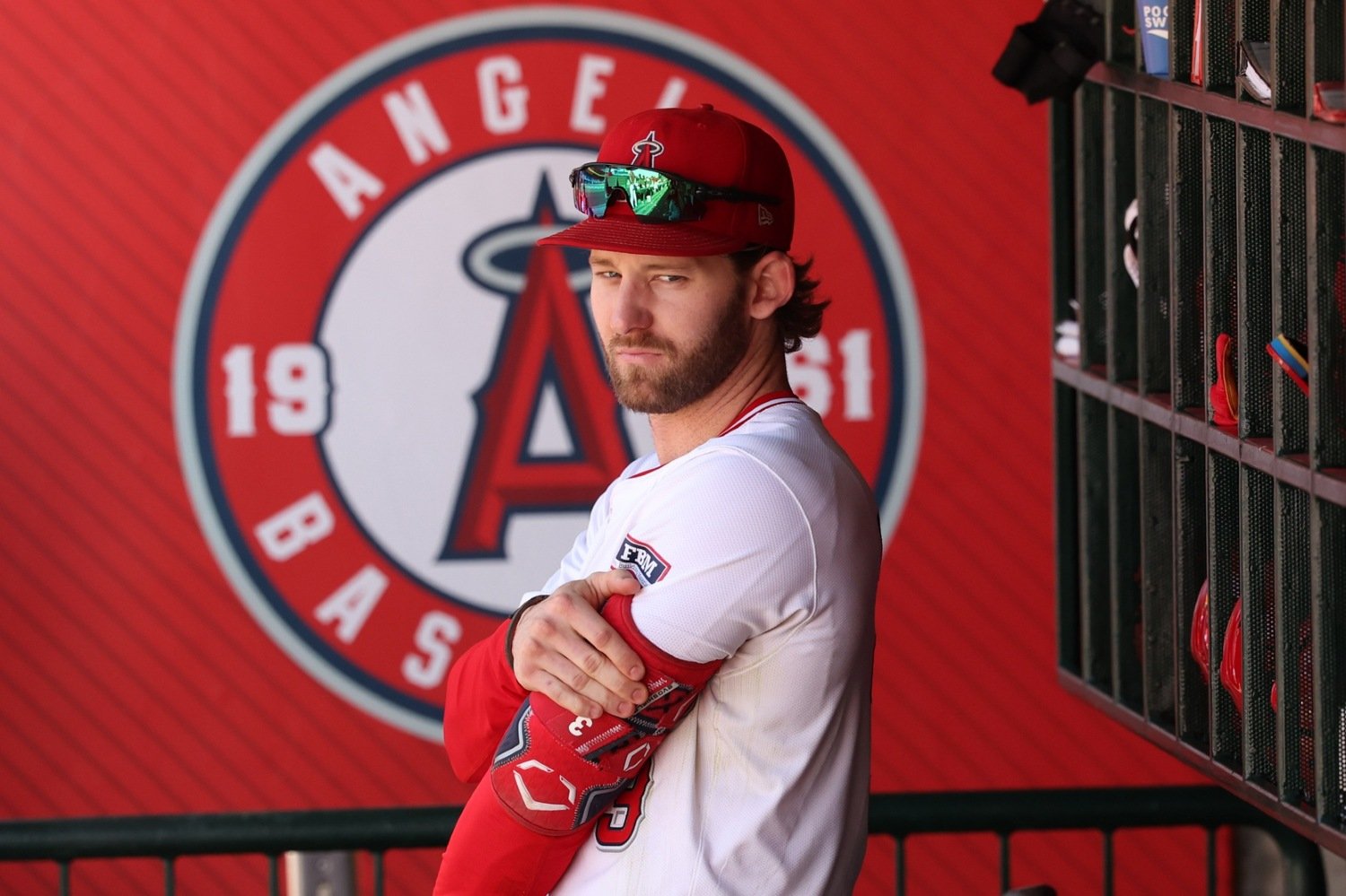 One of the first noteworthy, non-procedural moves of the fledgling MLB offseason was a trade between Atlanta and the Angels, the day after the World Series concluded. Jorge Soler, who can't stop being shipped across the country lately, landed in Orange County, with inconsistent starting pitcher Griffin Canning going the other way. Part of the motivation for the move was, plainly, financial, but it's also the first of what figure to be several trades by the Angels this winter, each focused on upgrading the team and making good on their promise to both increase the payroll and contend for an AL West title next season. Soler, according to GM Perry Minasian, will play some outfield for the Halos, which was a curious pronouncement. To whatever extent it's true, he'll be finding that time amid and around the expected starters, Mike Trout, Jo Adell, and Taylor Ward. The Angels also have some young outfielders they're likely to want to work in, and they've talked about easing Trout out of center field to help him remain a bit healthier. It feels as though, while they could use another outfielder (especially one who can play center field), they also just created a bit of a logjam for themselves. That works out, as far as I'm concerned, because the Angels have one outfielder who has long sat near the top of my preferred targets list, should the opportunity pop up. It might be time to pull the trigger on a deal for Ward. Soon to turn 31 years old and just two years from free agency, Taylor Ward is hardly a well-kept secret, for close baseball watchers. He's had an above-average OPS+ for each of the last four seasons, and hit 25 homers in over 660 plate appearances in 2024. Because the Angels are so relentlessly bad, though, and because he paled in comparison to Trout and Shohei Ohtani at the heights of their powers, it's been easy for him to fly somewhat beneath the radar. I don't even think the Angels properly understand what they have; that's why the Cubs should try to swoop in. Here's the thing: the Angels love swing speed. Part of the reason why they were willing to trade for Soler at the very outset of the offseason is their belief in swing speed. Here's where all their qualifying hitters fell last season, mapping swing speed against the percentage of their swings on which they made solid, squared-up contact: Some of their part-time players and guys who missed time because of injuries don't appear here, but would make it more obvious how much they prioritize this skill: Miguel Sanó, Trout, Mickey Moniak, Keston Hiura, Brandon Drury, Matt Thaiss, and others were specialists in swinging fast. Ward's great strength does not lie in generating a superabundance of bat speed, but in hitting the ball squarely on a consistent basis. In fact, when you weigh his power on balls hit in the air and the frequency of those batted balls, you find him ranked 13th of 365 batters who had at least 200 plate appearances last year—in what I'm calling Skills-Adjusted Exit Velocity. In short, this metric takes a player's average exit velocity on batted balls in power-friendly launch angle ranges and adjusts it for the percentage of a player's at-bats that end in a batted ball on that trajectory. Ward's company atop that leaderboard is exquisite. Yet, he didn't enjoy success as great as most of them. Here, I've highlighted Ward and the five other players who share not only his knack for the well-struck line drive but his blend of near-average in-zone contact rates and better-than-average plate discipline: To recap: Ward doesn't expand his zone much. When he swings within the zone, he doesn't have an especially high whiff rate. Most encouragingly, he makes a lot of hard contact, especially in high-value launch angle bands. So, why isn't he producing more real runs? Why isn't his dot on the plot above closer to those of Fernando Tatis Jr. or (very near Tatis) Freddie Freeman, Corey Seager, or Marcell Ozuna? It's because of the other key characteristic Ward shares with Bobby Witt Jr., Vladimir Guerrero Jr., Mookie Betts, Austin Riley, and Tatis: they all use the big part of the field. The bad news for Ward is, he uses it more than any of them—in any meaningful sense, too much. Ward just doesn't turn on the ball and lift it to his pull field the way most hitters like him now strive to do. His is a much more old-fashioned, gap-centric approach. He pulls the majority of his ground balls, as virtually every hitter does, but he hits most of his air balls to dead center or right-center. He's similar, in terms of the distribution of those batted balls, to Alec Bohm, Tommy Pham, Bryan De La Cruz, and (funnily enough) Miguel Amaya. Those are dangerous, dynamic hitters, in various ways. Pham is the easiest comp, in that he's similarly patient at the plate, but he doesn't generate high-quality contact as often as Ward does. Bohm does, but he's much more aggressive at the plate. That means an exceptional strikeout rate, but a very low walk rate, compared to Ward's. If he could pair that approach with a bit more of a pull tendency, he'd really take off at the plate. But really, the adjustment in approach is optional. Ward would gain substantially just by getting out of Angel Stadium and into Wrigley Field. When he does pull the ball in the air, it's often scalded. Here's one liner that skipped just in front of the warning track in Anaheim—but which would have been a homer at Wrigley, and nowhere else in MLB, according to Statcast. OGdZallfWGw0TUFRPT1fRGxKWVYxWUNCQUFBRFZzR1ZnQUFWQTlXQUZsUlZWZ0FDd1FHQUFWUVYxY0dCZ1pW.mp4 It's not especially hard to imagine Ward's .246/.323/.426 line from 2024 jumping right back up to the airy .281/.360/.473 he posted in 2022. He's that caliber of hitter, suffering from a mixture of a home park that doesn't suit his skills and a team environment that doesn't suit anyone, period. The Angels value some other things more highly, and might be willing to move Ward, who's set to make an estimated $9.2 million via arbitration. The question is how the Cubs should go about paying for him, and simultaneously making sure they have room for him in the lineup every day. Ward plays an acceptable left field, and could presumably play right, too. He has a strong arm and gets good jumps. Obviously, with Cody Bellinger back, the team doesn't strictly need another corner outfielder. Ward could work gorgeously in rotation, though, spelling Bellinger and Ian Happ against certain lefties, forcing Bellinger over to center against certain righties, and even giving Seiya Suzuki needed days off at DH. He did come up as a third baseman, but is terrible there. If he's to play on the dirt at all, it would need to be by way of working in spring to become an adequate first baseman. That seems well within Ward's capabilities, though. Trading for Ward wouldn't create undue problems, given how much he could bolster their lineup. The Cubs would still have to give the Angels something useful, though. Could that be Alexander Canario? He's out of options, but has six years of team control remaining, and Canario's swing speed is almost off the charts. It is, in fact, much akin to those of Soler and Adell. If not Canario, maybe the Cubs could offer the Angels Nico Hoerner (to give the perennially injury-plagued Halos infield more depth) and a young arm, plus a little cash to even things out. Since the start of 2022, Ward has a 119 wRC+, almost identical to those of Nolan Arenado, Will Smith, Justin Turner, and Xander Bogaerts. Give him a change of scenery and venue, and he could step up from there into the same production bracket as (for instance) Suzuki. He might not be the easiest positional fit, but it's worth exploring the possibility. The Angels are behind the curve right now, they don't value what Ward does well as much as they should, and the Cubs could have an opening. It's one worth seizing upon.
 -
In the second installment of our coverage of the 2024-25 Chicago Cubs offseason via our Offseason Handbook, we'll build out our understanding of Jed Hoyer and company's task ahead. We know what they have to spend; how should they spend it? Image courtesy of © David Butler II-Imagn Images Welcome to the 2025 Offseason Handbook! This year, we’re offering the format online only through our Caretakers program. The Offseason Handbook is a comprehensive look at what challenges the Twins face in the coming winter to field a competitive team in 2025. To become a Caretaker, visit this page. On top of receiving exclusive access to the Offseason Handbook, Caretakers also receive in-depth analysis from national writers you cannot find anywhere else. You will also receive exclusive access to events and an ad-free browsing option. In celebration of the Offseason Handbook’s release, we’re offering 20% off all Caretaker programs for the next week. Use the code HANDBOOK at checkout to receive 20% off your purchase! When a team finishes 83-79 in consecutive seasons, inertia and central tendencies are the most dangerous enemies. It's hard to articulate what separates the club from its hoped-for levels of success, because they're right there, within reach—yet, paradoxically, unreachable. There aren't glaring, easily mended weaknesses, or at least, there aren't many of them. Most of the teams who have such obvious shortcomings finish more like 73-89, or even 63-99. If you don't carefully and critically assess every aspect and layer of the team, though, you end up finishing 83-79 again. It's best to assume there are more weaknesses than the actual results suggest, because after all, what's been happening hasn't been working. That's Jed Hoyer's remit this November, December, January, and February. He has to build a new foundation around a core that is already locked in place. He needs to overhaul a roster that is extremely overhaul-resistant, which probably doesn't mean wrenching key pieces out of it by force. Rather, it's likely to mean assiduously improving at the margins, as Hoyer discussed at this week's GM Meetings in San Antonio, plus making a small but high-impact number of additions that merely push existing pieces of the roster into new roles or positions, rather than displacing them altogether. The 3 Big Needs for the 2025 Chicago Cubs Hoyer's job is not really solely about identifying needs, at this stage. It's also about prioritization. With Cody Bellinger opting back in for 2025 and the other high-price, high-profile pieces already in place, Hoyer will probably face some degree of resource pinch before he's done trying to build this team into a juggernaut. He has to know, and keep straight, which of his team's faults need to be addressed most strenuously and urgently. Let's simulate that process for him, because understanding it will also help us frame the team's behavior in coming weeks. A top-of-the-rotation starter. After a campaign in which we saw Justin Steele, Jameson Taillon, and Shota Imanaga post ERAs south of 3.30 and some encouraging performances by back-end guys like Javier Assad and Ben Brown, this might seem a counterintuitive top need. In reality, though, the pervasively pitcher-friendly conditions at Wrigley Field in 2024 made those hurlers look better than they really were, just as they made some Cubs hitters appear to have rougher seasons than they did. The team needs to shore up its run prevention at least as much as it needs to improve its ability to score, and that starts at the front of their rotation, where they didn't miss enough bats last year and have to keep the durability questions attached to Steele in mind as they look forward. A middle-of-the-order slugger. It's hard to say whether a team that thinks itself so close to being playoff-caliber having these as their top two needs going into an offseason is ludicrous, or perfectly sensible. On one hand, how close are you to competing with the behemoths of the league if you have neither a true ace nor a true lineup centerpiece? On the other, though, it's a testament to the Cubs' middle-tier depth that they've posted winning records in consecutive campaigns, without being carried by any kind of superstar. Most importantly, it does feel true. Imanaga and Steele are each great options as your second-best starter, but not as your best. Seiya Suzuki is a great hitter to have anchoring the lineup, but there has to be another player as good as he is or better, and right now, the Cubs don't have one. Stout, consistent, bat-missing relief ace. Though the 2024 Cubs continued their recent tradition of finding success almost from nowhere at midseason with a cobbled-together cast of relievers, much damage was done before they hit their stride. They have to be a bullpen capable of dominating all year this time around, and that means going outside the organization and spending some money to get better at the back end of the bullpen. Traditional closer or not, some new, elite or near-elite reliever needs to round out this roster. This winter's free-agent class is fairly strong in all three of these demographics. There will be no dearth of paths to the specific improvements the Cubs need to make. But which of the array of options are realistic, and which should the team pursue most ardently? View full article
-
.png.4b535b765a43c30c0d3493137cc6c317.png) Welcome to the 2025 Offseason Handbook! This year, we’re offering the format online only through our Caretakers program. The Offseason Handbook is a comprehensive look at what challenges the Twins face in the coming winter to field a competitive team in 2025. To become a Caretaker, visit this page. On top of receiving exclusive access to the Offseason Handbook, Caretakers also receive in-depth analysis from national writers you cannot find anywhere else. You will also receive exclusive access to events and an ad-free browsing option. In celebration of the Offseason Handbook’s release, we’re offering 20% off all Caretaker programs for the next week. Use the code HANDBOOK at checkout to receive 20% off your purchase! When a team finishes 83-79 in consecutive seasons, inertia and central tendencies are the most dangerous enemies. It's hard to articulate what separates the club from its hoped-for levels of success, because they're right there, within reach—yet, paradoxically, unreachable. There aren't glaring, easily mended weaknesses, or at least, there aren't many of them. Most of the teams who have such obvious shortcomings finish more like 73-89, or even 63-99. If you don't carefully and critically assess every aspect and layer of the team, though, you end up finishing 83-79 again. It's best to assume there are more weaknesses than the actual results suggest, because after all, what's been happening hasn't been working. That's Jed Hoyer's remit this November, December, January, and February. He has to build a new foundation around a core that is already locked in place. He needs to overhaul a roster that is extremely overhaul-resistant, which probably doesn't mean wrenching key pieces out of it by force. Rather, it's likely to mean assiduously improving at the margins, as Hoyer discussed at this week's GM Meetings in San Antonio, plus making a small but high-impact number of additions that merely push existing pieces of the roster into new roles or positions, rather than displacing them altogether. The 3 Big Needs for the 2025 Chicago Cubs Hoyer's job is not really solely about identifying needs, at this stage. It's also about prioritization. With Cody Bellinger opting back in for 2025 and the other high-price, high-profile pieces already in place, Hoyer will probably face some degree of resource pinch before he's done trying to build this team into a juggernaut. He has to know, and keep straight, which of his team's faults need to be addressed most strenuously and urgently. Let's simulate that process for him, because understanding it will also help us frame the team's behavior in coming weeks. A top-of-the-rotation starter. After a campaign in which we saw Justin Steele, Jameson Taillon, and Shota Imanaga post ERAs south of 3.30 and some encouraging performances by back-end guys like Javier Assad and Ben Brown, this might seem a counterintuitive top need. In reality, though, the pervasively pitcher-friendly conditions at Wrigley Field in 2024 made those hurlers look better than they really were, just as they made some Cubs hitters appear to have rougher seasons than they did. The team needs to shore up its run prevention at least as much as it needs to improve its ability to score, and that starts at the front of their rotation, where they didn't miss enough bats last year and have to keep the durability questions attached to Steele in mind as they look forward. A middle-of-the-order slugger. It's hard to say whether a team that thinks itself so close to being playoff-caliber having these as their top two needs going into an offseason is ludicrous, or perfectly sensible. On one hand, how close are you to competing with the behemoths of the league if you have neither a true ace nor a true lineup centerpiece? On the other, though, it's a testament to the Cubs' middle-tier depth that they've posted winning records in consecutive campaigns, without being carried by any kind of superstar. Most importantly, it does feel true. Imanaga and Steele are each great options as your second-best starter, but not as your best. Seiya Suzuki is a great hitter to have anchoring the lineup, but there has to be another player as good as he is or better, and right now, the Cubs don't have one. Stout, consistent, bat-missing relief ace. Though the 2024 Cubs continued their recent tradition of finding success almost from nowhere at midseason with a cobbled-together cast of relievers, much damage was done before they hit their stride. They have to be a bullpen capable of dominating all year this time around, and that means going outside the organization and spending some money to get better at the back end of the bullpen. Traditional closer or not, some new, elite or near-elite reliever needs to round out this roster. This winter's free-agent class is fairly strong in all three of these demographics. There will be no dearth of paths to the specific improvements the Cubs need to make. But which of the array of options are realistic, and which should the team pursue most ardently?
Welcome to the 2025 Offseason Handbook! This year, we’re offering the format online only through our Caretakers program. The Offseason Handbook is a comprehensive look at what challenges the Twins face in the coming winter to field a competitive team in 2025. To become a Caretaker, visit this page. On top of receiving exclusive access to the Offseason Handbook, Caretakers also receive in-depth analysis from national writers you cannot find anywhere else. You will also receive exclusive access to events and an ad-free browsing option. In celebration of the Offseason Handbook’s release, we’re offering 20% off all Caretaker programs for the next week. Use the code HANDBOOK at checkout to receive 20% off your purchase! When a team finishes 83-79 in consecutive seasons, inertia and central tendencies are the most dangerous enemies. It's hard to articulate what separates the club from its hoped-for levels of success, because they're right there, within reach—yet, paradoxically, unreachable. There aren't glaring, easily mended weaknesses, or at least, there aren't many of them. Most of the teams who have such obvious shortcomings finish more like 73-89, or even 63-99. If you don't carefully and critically assess every aspect and layer of the team, though, you end up finishing 83-79 again. It's best to assume there are more weaknesses than the actual results suggest, because after all, what's been happening hasn't been working. That's Jed Hoyer's remit this November, December, January, and February. He has to build a new foundation around a core that is already locked in place. He needs to overhaul a roster that is extremely overhaul-resistant, which probably doesn't mean wrenching key pieces out of it by force. Rather, it's likely to mean assiduously improving at the margins, as Hoyer discussed at this week's GM Meetings in San Antonio, plus making a small but high-impact number of additions that merely push existing pieces of the roster into new roles or positions, rather than displacing them altogether. The 3 Big Needs for the 2025 Chicago Cubs Hoyer's job is not really solely about identifying needs, at this stage. It's also about prioritization. With Cody Bellinger opting back in for 2025 and the other high-price, high-profile pieces already in place, Hoyer will probably face some degree of resource pinch before he's done trying to build this team into a juggernaut. He has to know, and keep straight, which of his team's faults need to be addressed most strenuously and urgently. Let's simulate that process for him, because understanding it will also help us frame the team's behavior in coming weeks. A top-of-the-rotation starter. After a campaign in which we saw Justin Steele, Jameson Taillon, and Shota Imanaga post ERAs south of 3.30 and some encouraging performances by back-end guys like Javier Assad and Ben Brown, this might seem a counterintuitive top need. In reality, though, the pervasively pitcher-friendly conditions at Wrigley Field in 2024 made those hurlers look better than they really were, just as they made some Cubs hitters appear to have rougher seasons than they did. The team needs to shore up its run prevention at least as much as it needs to improve its ability to score, and that starts at the front of their rotation, where they didn't miss enough bats last year and have to keep the durability questions attached to Steele in mind as they look forward. A middle-of-the-order slugger. It's hard to say whether a team that thinks itself so close to being playoff-caliber having these as their top two needs going into an offseason is ludicrous, or perfectly sensible. On one hand, how close are you to competing with the behemoths of the league if you have neither a true ace nor a true lineup centerpiece? On the other, though, it's a testament to the Cubs' middle-tier depth that they've posted winning records in consecutive campaigns, without being carried by any kind of superstar. Most importantly, it does feel true. Imanaga and Steele are each great options as your second-best starter, but not as your best. Seiya Suzuki is a great hitter to have anchoring the lineup, but there has to be another player as good as he is or better, and right now, the Cubs don't have one. Stout, consistent, bat-missing relief ace. Though the 2024 Cubs continued their recent tradition of finding success almost from nowhere at midseason with a cobbled-together cast of relievers, much damage was done before they hit their stride. They have to be a bullpen capable of dominating all year this time around, and that means going outside the organization and spending some money to get better at the back end of the bullpen. Traditional closer or not, some new, elite or near-elite reliever needs to round out this roster. This winter's free-agent class is fairly strong in all three of these demographics. There will be no dearth of paths to the specific improvements the Cubs need to make. But which of the array of options are realistic, and which should the team pursue most ardently? -
With Cody Bellinger back in the fold, most positions on the Chicago lineup card are spoken-for, and the team still needs an upgrade. That can change, though, if Jed Hoyer has the courage. Image courtesy of © Erik Williams-Imagn Images To best understand the conundrum the 2025 Cubs face, let's sketch their projected Opening Day lineup. With the team's incumbent right fielder locked back in after exercising his player option for next year, there aren't any low-friction ways to shake up this group, but this group is going to look awfully familiar. Ian Happ - LF Seiya Suzuki - DH Cody Bellinger - RF Isaac Paredes - 3B Michael Busch - 1B Dansby Swanson - SS Miguel Amaya - C Pete Crow-Armstrong - CF Nico Hoerner - 2B You can shuffle those players based on personal preferences with regard to lineup construction, or based on the handedness of the opposing starter and the hurler the Cubs are sending to the mound on a given day, but some version of the above took the field almost every day for the final six weeks of the 2024 season. They were better than they had been in May and June, when depleted by injuries, and they even flashed championship-caliber explosiveness—but it was clear, all along, that they were incomplete and insufficient. It was just a matter of by what degree. The top two players in this lineup are signed to deals that include no-trade clauses, and besides, they've been the two most consistently strong hitters on this team for the last two years. Trading either would be an odd way of going about the project of improving the offense. The sixth guy also has a no-trade provision, and is on a longer, more onerous contract. In between are three guys who are tough to move, for three different reasons, and below Swanson are three young players whom the team hopes will mature into invaluable pieces for them. So, who's the most removable of a set of settled starters? I would argue that the first out should be the last one in; that's Paredes. It's not a seniority thing or a matter of Paredes not playing well when he first arrived after the July trade that brought him to the team from Tampa Bay. It's just that he offers the best blend of movability and replaceability—even though getting that right will require threading a needle. Enough throat-clearing. I came here to propose a trade. Here it is. Let's dig into the concept: ASTROS GET: 3B ISAAC PAREDES CUBS GET: OF PEDRO LEÓN, RHP MIGUEL ULLOLA If you just said, "Who?!", you're probably not alone, but hear me out. In this deal, Chicago would send Paredes—the paragon of pull power, a man made for the Crawford Boxes if ever there was one—to the Astros, who specialize in training the one thing missing from Paredes's offensive profile: bat speed. Houston issued a qualifying offer to Alex Bregman Monday, but the chances of him accepting it are right in line with the chances that he'll receive a standing ovation at Dodger Stadium the next time his new team comes to town. Bregman could still re-sign with Houston on a lucrative long-term deal, and longtime teammate José Altuve has made a public plea that they do so. However, Houston GM Dana Brown has already said the team "might need to get creative" with payroll this year, and that's usually a euphemism for either cutting or working hard to get better without an increase. Certainly, it seems not to fit with a nine-figure expenditure on a player in his early 30s. Paredes, by contrast, would be a great example of creativity. Given his remaining team control, his relatively modest projected salary, and the fit of his core skill set to the Astros' home park, he could go right back to making All-Star teams upon arriving there, and the team could get right back to reaching the ALCS every year. Let's talk about why the move would make sense for the Cubs. First and foremost, in this scenario, the Cubs would be the ones to sign Bregman. He's perfect for them. His on-base skills and remaining power are exactly what the top end of their batting order needs. Although it would be just one substitution, this batting order makes so much more sense and induces so much less anxiety that it's well worth spending $25-30 million a year on Bregman, on its own. Happ - LF Bregman - 3B Bellinger - RF Suzuki - DH Busch - 1B Swanson - SS Amaya - C Crow-Armstrong - CF Hoerner - 2B In the medium-term future, I think Bregman could also slide over and play second base, accommodating the emergence of 2024 first-round pick Cam Smith at the hot corner, if it comes to that. In the short term, though, it's just an expensive but important upgrade at third base. Bregman is a handful of runs better as a batter than Paredes, even if you assume Paredes bounces back from his deep 2024 slump. He's also a better fielder, despite being older, and he's no worse on the bases than the plodding Paredes. The two players the Cubs would directly receive for Paredes also make the team better at the margins. León, whom the Dodgers signed three and a half years ago out of Cuba, is almost a perfect analog for Alexander Canario, but whereas Canario has had repeated injury issues and is out of options, León has consistently performed well in the top levels of the minors over the last two seasons and stayed very healthy—and he can still be optioned to the minors for the next two seasons. In practice, though, I think León would spend much of 2025 on the big-league roster. He'll turn 27 next May, and although his cup of coffee with Houston this year was a bitter one, he has big upside. How big? Well, of the players who had at least 25 tracked swings in the majors this year, Giancarlo Stanton had by far the highest percentage of his register at over 78 MPH. Second on the list, out of 532 qualifiers, was León. There is, as you would guess, a lot of swing-and-miss in León's game, but he accepts his walks at least as well as Canario does, and he's a better outfielder, too. Acquiring him would necessitate trading Canario, but that should have been on the Cubs' to-do list this winter, anyway. Canario belongs on a team with lower aspirations and a stark need for help in the outfield. León would be a much better fit for the Cubs, given their roster and their competitive timeline. Ullola, meanwhile, is very much a lottery ticket, and is probably available mostly because he has to be added to the 40-man roster this month in order not to be exposed to the Rule 5 Draft. He's a live-armed righty who has started throughout his ascent of the minor-league ladder, but who profiles as a reliever. His fastball has high-rise action and a very flat vertical approach angle (VAA), plus a bit of relative cut. He throws a sharp yet deep curveball and a hard slider, plus a changeup with depth. Walks will limit his upside slightly, but getting León and Ullola would neatly unwind the Christopher Morel and Hunter Bigge-for-Paredes trade, with some extra flexibility gained in the bargain. Trades that only make sense in conjunction with a huge free-agent expenditure are tough to project. This one is unlikely to come to fruition, for that very reason. However, if the Cubs can get Bregman engaged on a long-term deal, they should call the Astros with this framework right away. Swapping out Paredes for Bregman and upgrading from Canario and, say, Trey Wingenter to León and Ullola would be an excellent double-move by Hoyer and company. At the very least, this is the type of creativity the Cubs need to consider throughout this winter, as they try to get better from a position of relative roster stiffness. View full article
-
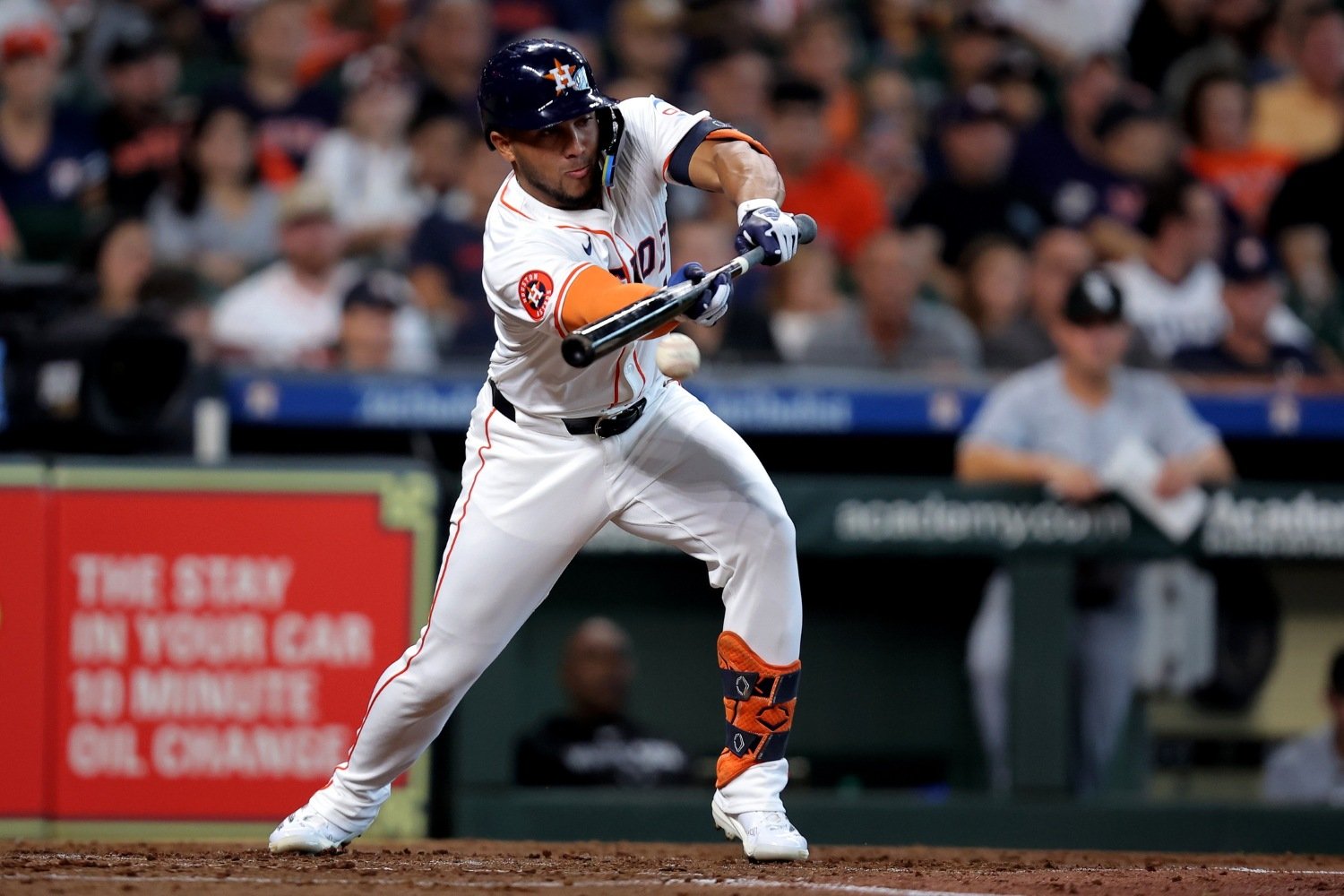 To best understand the conundrum the 2025 Cubs face, let's sketch their projected Opening Day lineup. With the team's incumbent right fielder locked back in after exercising his player option for next year, there aren't any low-friction ways to shake up this group, but this group is going to look awfully familiar. Ian Happ - LF Seiya Suzuki - DH Cody Bellinger - RF Isaac Paredes - 3B Michael Busch - 1B Dansby Swanson - SS Miguel Amaya - C Pete Crow-Armstrong - CF Nico Hoerner - 2B You can shuffle those players based on personal preferences with regard to lineup construction, or based on the handedness of the opposing starter and the hurler the Cubs are sending to the mound on a given day, but some version of the above took the field almost every day for the final six weeks of the 2024 season. They were better than they had been in May and June, when depleted by injuries, and they even flashed championship-caliber explosiveness—but it was clear, all along, that they were incomplete and insufficient. It was just a matter of by what degree. The top two players in this lineup are signed to deals that include no-trade clauses, and besides, they've been the two most consistently strong hitters on this team for the last two years. Trading either would be an odd way of going about the project of improving the offense. The sixth guy also has a no-trade provision, and is on a longer, more onerous contract. In between are three guys who are tough to move, for three different reasons, and below Swanson are three young players whom the team hopes will mature into invaluable pieces for them. So, who's the most removable of a set of settled starters? I would argue that the first out should be the last one in; that's Paredes. It's not a seniority thing or a matter of Paredes not playing well when he first arrived after the July trade that brought him to the team from Tampa Bay. It's just that he offers the best blend of movability and replaceability—even though getting that right will require threading a needle. Enough throat-clearing. I came here to propose a trade. Here it is. Let's dig into the concept: ASTROS GET: 3B ISAAC PAREDES CUBS GET: OF PEDRO LEÓN, RHP MIGUEL ULLOLA If you just said, "Who?!", you're probably not alone, but hear me out. In this deal, Chicago would send Paredes—the paragon of pull power, a man made for the Crawford Boxes if ever there was one—to the Astros, who specialize in training the one thing missing from Paredes's offensive profile: bat speed. Houston issued a qualifying offer to Alex Bregman Monday, but the chances of him accepting it are right in line with the chances that he'll receive a standing ovation at Dodger Stadium the next time his new team comes to town. Bregman could still re-sign with Houston on a lucrative long-term deal, and longtime teammate José Altuve has made a public plea that they do so. However, Houston GM Dana Brown has already said the team "might need to get creative" with payroll this year, and that's usually a euphemism for either cutting or working hard to get better without an increase. Certainly, it seems not to fit with a nine-figure expenditure on a player in his early 30s. Paredes, by contrast, would be a great example of creativity. Given his remaining team control, his relatively modest projected salary, and the fit of his core skill set to the Astros' home park, he could go right back to making All-Star teams upon arriving there, and the team could get right back to reaching the ALCS every year. Let's talk about why the move would make sense for the Cubs. First and foremost, in this scenario, the Cubs would be the ones to sign Bregman. He's perfect for them. His on-base skills and remaining power are exactly what the top end of their batting order needs. Although it would be just one substitution, this batting order makes so much more sense and induces so much less anxiety that it's well worth spending $25-30 million a year on Bregman, on its own. Happ - LF Bregman - 3B Bellinger - RF Suzuki - DH Busch - 1B Swanson - SS Amaya - C Crow-Armstrong - CF Hoerner - 2B In the medium-term future, I think Bregman could also slide over and play second base, accommodating the emergence of 2024 first-round pick Cam Smith at the hot corner, if it comes to that. In the short term, though, it's just an expensive but important upgrade at third base. Bregman is a handful of runs better as a batter than Paredes, even if you assume Paredes bounces back from his deep 2024 slump. He's also a better fielder, despite being older, and he's no worse on the bases than the plodding Paredes. The two players the Cubs would directly receive for Paredes also make the team better at the margins. León, whom the Dodgers signed three and a half years ago out of Cuba, is almost a perfect analog for Alexander Canario, but whereas Canario has had repeated injury issues and is out of options, León has consistently performed well in the top levels of the minors over the last two seasons and stayed very healthy—and he can still be optioned to the minors for the next two seasons. In practice, though, I think León would spend much of 2025 on the big-league roster. He'll turn 27 next May, and although his cup of coffee with Houston this year was a bitter one, he has big upside. How big? Well, of the players who had at least 25 tracked swings in the majors this year, Giancarlo Stanton had by far the highest percentage of his register at over 78 MPH. Second on the list, out of 532 qualifiers, was León. There is, as you would guess, a lot of swing-and-miss in León's game, but he accepts his walks at least as well as Canario does, and he's a better outfielder, too. Acquiring him would necessitate trading Canario, but that should have been on the Cubs' to-do list this winter, anyway. Canario belongs on a team with lower aspirations and a stark need for help in the outfield. León would be a much better fit for the Cubs, given their roster and their competitive timeline. Ullola, meanwhile, is very much a lottery ticket, and is probably available mostly because he has to be added to the 40-man roster this month in order not to be exposed to the Rule 5 Draft. He's a live-armed righty who has started throughout his ascent of the minor-league ladder, but who profiles as a reliever. His fastball has high-rise action and a very flat vertical approach angle (VAA), plus a bit of relative cut. He throws a sharp yet deep curveball and a hard slider, plus a changeup with depth. Walks will limit his upside slightly, but getting León and Ullola would neatly unwind the Christopher Morel and Hunter Bigge-for-Paredes trade, with some extra flexibility gained in the bargain. Trades that only make sense in conjunction with a huge free-agent expenditure are tough to project. This one is unlikely to come to fruition, for that very reason. However, if the Cubs can get Bregman engaged on a long-term deal, they should call the Astros with this framework right away. Swapping out Paredes for Bregman and upgrading from Canario and, say, Trey Wingenter to León and Ullola would be an excellent double-move by Hoyer and company. At the very least, this is the type of creativity the Cubs need to consider throughout this winter, as they try to get better from a position of relative roster stiffness.
 -
The deadline to exercise or decline contract options and to extend qualifying offers to pending free agents passed late Monday afternoon. In the wake of that deadline, three intriguing names became incrementally more appealing to the Cubs. Image courtesy of © Isaiah J. Downing-Imagn Images The fits aren't perfect; this will be a winter of imperfect fits. However, a pair of free-agent outfielders became marginally more plausible as Cubs targets Monday, when their teams elected not to extend qualifying offers that would have made them cost draft picks and international free-agent spending allotments, in addition to money. More importantly, perhaps, a player almost no one expected to be a free agent at all suddenly became one, at a key position of need for the team. Let's examine each case in turn. Travis d'Arnaud, C, Atlanta The Braves were widely expected to pick up their $8-million option on d'Arnaud, even though he's a catcher who will turn 36 this winter. d'Arnaud has been with the team for the last five seasons, and batted .238/.302/.436 in 341 plate appearances this season. He's been up-and-down over the past two years, missing some time with injuries and going through prolonged slumps. He doesn't hit right-handed pitchers well at this stage of his career. However, he's a highly respected backstop who still does an average job as a pitch-framer (99.8 SL+, a rate stat for called strikes relative to expectations based on location, where 100 is average) and controls the running game well. Opponents stole successfully in 80% of their attempts against d'Arnaud last year, but he posed enough of a threat that runners only took off in 6.1% of their chances, compared to 6.7% against the average semi-regular catcher. As a hitter, he's showing signs of slippage. He doesn't pull the ball in the air as much as he used to, and he gets beaten in the strike zone more than he used to. Still, he was basically the guy he's always been last year, good at not expanding the zone and at swinging aggressively within it. For a catcher who can take the short side of a rough timeshare, he's more than adequate, and $8 million was a very reasonable rate at which to keep him. If d'Arnaud does sign for less than that now that he's been cast into free agency, the Cubs have to take an active interest, even if he doesn't represent an especially tidy complement or a major upgrade over Miguel Amaya. Jurickson Profar, LF/DH, San Diego I can see why the Padres were hesitant—and ultimately unwilling—to offer Profar a qualifying offer. His track record as a genuinely good player is relatively short, and his defensive utility is very limited. He's heading into his mid-30s. Rolling $21 million and change worth of dice on his defiance of the typical aging curve feels like it would have been a bad bet. I also think, though, that Profar instantly becomes a compelling free agent for any team, now that he's not attached to draft-pick compensation. A switch-hitter, Profar has always been reasonably balanced at the plate. What's wildly impressive, though, is how he emerged as a much better player this year by getting better almost across the board. His approach held up perfectly, he made even more contact within the zone, and he started hitting the ball much, much harder, from each side of the plate. Seasons Batter Hand PA Swing% Chase% InZoneWhiff% PHiA/SW 100+/Sw Hit95+% 90thExitVel 2022 Lefty 461 45.8% 24.4% 14.7% 4.2% 7.5% 37.3% 102.4 2023 Lefty 374 48.3% 25.7% 14.4% 3.1% 5.6% 29.5% 101.5 2024 Lefty 493 46.1% 21.0% 12.9% 3.8% 9.1% 43.0% 104.9 2022 Righty 197 38.7% 21.8% 11.7% 2.8% 6.7% 28.4% 101.2 2023 Righty 147 44.4% 22.5% 7.7% 3.5% 7.3% 37.3% 102 2024 Righty 175 44.2% 24.1% 9.0% 3.6% 13.0% 47.8% 105.2 Note, especially, that 90th-percentile exit velocity. Profar found a way to unlock a new level of power at the top end of his range, without expanding his zone too much or whiffing more often. Regression could and will drag down on him a bit, as will age, but Profar looks like one of the more solid, well-rounded bets among free-agent bats. San Diego's squeamishness about a big payday for a non-superstar could allow the Cubs to lengthen their lineup at a fairly low cost. Profar would be the 10th guy, but he could play almost every day. Now that Cody Bellinger is back, he could sometimes slide over and take center field for Pete Crow-Armstrong against lefties, leaving right field open for Profar. Ian Happ could also sit occasionally against lefties, and Profar could spell both Seiya Suzuki and Bellinger just to keep them fresh and healthy, including against righties. Injury will inevitably afflict at least one of Bellinger, Suzuki, and Crow-Armstrong for some meaningful stretch next season, too, so Profar would step in as a highly qualified substitute over those periods. Tyler O'Neill, OF, Boston All this time, all O'Neill had to do was find a way to get the ball in the air to the pull field more often. That was it, and everyone knew it, but he got several years into his career before he found a way to consistently meet the mandate. Fenway Park is bad for some hitters. For some hitters, in engenders bad habits. For O'Neill, it engendered exactly the right habits, and lo, things turned out swimmingly. O'Neill batted .241/.336/.511, with 31 home runs in just 475 plate appearances. Pulling it helped, especially, as the share of his swings that resulted in hard pull-side contact in the air increased half again, from 3.4% to 5.2%, but most of all, he elevated more consistently—and reshaped his bat path to ensure that his best swings generated more loft, as opposed to maximizing bat speed without worrying about plane. It's possible O'Neill could find a bigger role elsewhere, but as a righty slugger, he can be a direct and easy sub for any of Crow-Armstrong, Bellinger, Happ, or Michael Busch, with Bellinger sliding in to take over first base if the team elects to sit their sophomore first baseman. It's good for the historically injury-prone O'Neill not to play every day, anyway, but he's also a highly capable defender, setting him somewhat apart from Profar and making it easier to fit him into a positional corps that projects to have Suzuki act as the DH most of the time next year. The utterly unexpected availability of d'Arnaud is interesting, but the Cubs also gain some leverage in the market from not having to ponder giving up a draft pick to sign either Profar or O'Neill. They might not fit nicely into a crowded positional picture, but these are two of the better second-tier sluggers on this winter's market, and they're going to be less expensive than expected in at least one regard. Chicago's front office should be proactive in exploring these opportunities. View full article
-
3 New Free-Agent Hitters Show Up on Cubs Offseason Radar
Matthew Trueblood posted an article in Cubs
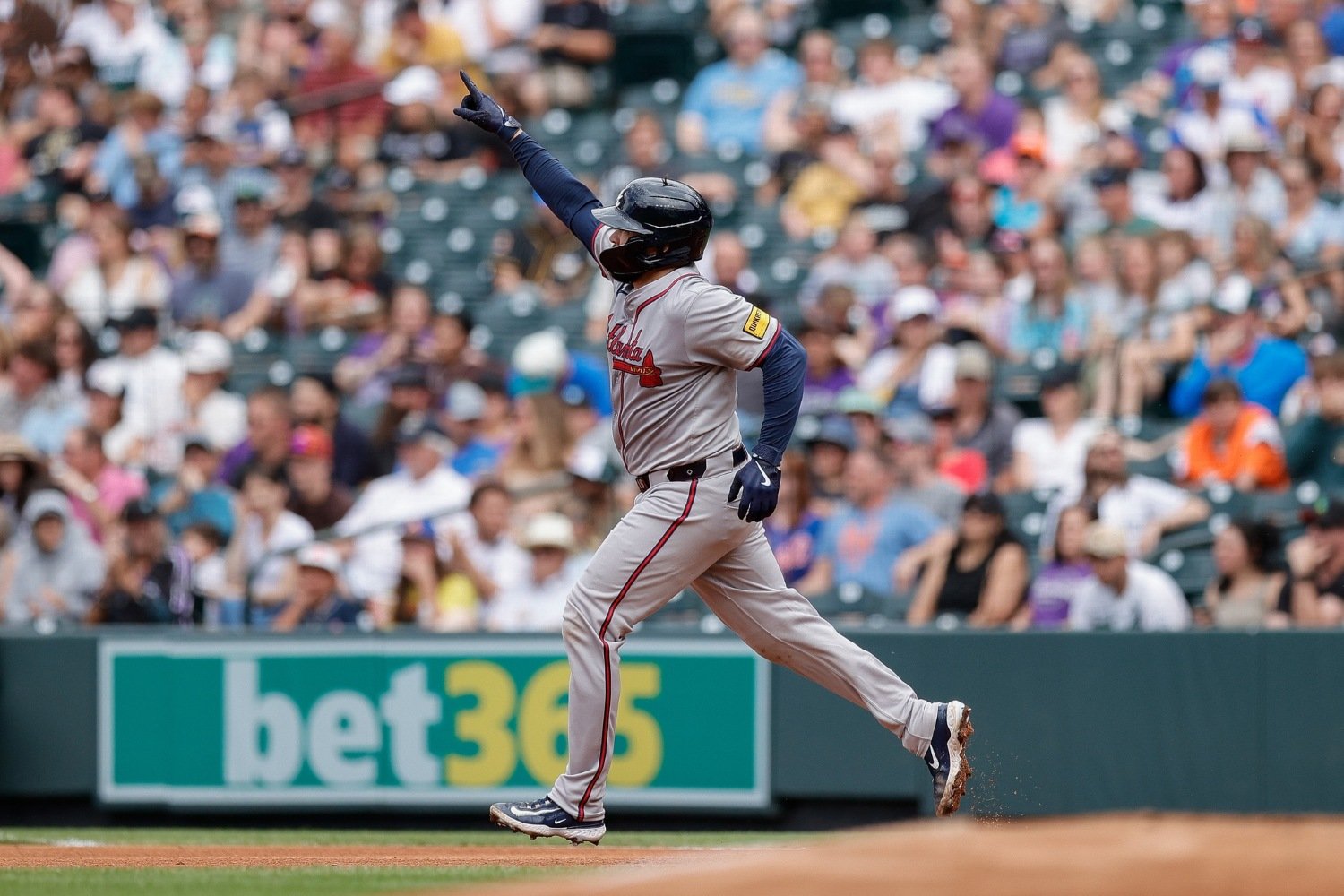 The fits aren't perfect; this will be a winter of imperfect fits. However, a pair of free-agent outfielders became marginally more plausible as Cubs targets Monday, when their teams elected not to extend qualifying offers that would have made them cost draft picks and international free-agent spending allotments, in addition to money. More importantly, perhaps, a player almost no one expected to be a free agent at all suddenly became one, at a key position of need for the team. Let's examine each case in turn. Travis d'Arnaud, C, Atlanta The Braves were widely expected to pick up their $8-million option on d'Arnaud, even though he's a catcher who will turn 36 this winter. d'Arnaud has been with the team for the last five seasons, and batted .238/.302/.436 in 341 plate appearances this season. He's been up-and-down over the past two years, missing some time with injuries and going through prolonged slumps. He doesn't hit right-handed pitchers well at this stage of his career. However, he's a highly respected backstop who still does an average job as a pitch-framer (99.8 SL+, a rate stat for called strikes relative to expectations based on location, where 100 is average) and controls the running game well. Opponents stole successfully in 80% of their attempts against d'Arnaud last year, but he posed enough of a threat that runners only took off in 6.1% of their chances, compared to 6.7% against the average semi-regular catcher. As a hitter, he's showing signs of slippage. He doesn't pull the ball in the air as much as he used to, and he gets beaten in the strike zone more than he used to. Still, he was basically the guy he's always been last year, good at not expanding the zone and at swinging aggressively within it. For a catcher who can take the short side of a rough timeshare, he's more than adequate, and $8 million was a very reasonable rate at which to keep him. If d'Arnaud does sign for less than that now that he's been cast into free agency, the Cubs have to take an active interest, even if he doesn't represent an especially tidy complement or a major upgrade over Miguel Amaya. Jurickson Profar, LF/DH, San Diego I can see why the Padres were hesitant—and ultimately unwilling—to offer Profar a qualifying offer. His track record as a genuinely good player is relatively short, and his defensive utility is very limited. He's heading into his mid-30s. Rolling $21 million and change worth of dice on his defiance of the typical aging curve feels like it would have been a bad bet. I also think, though, that Profar instantly becomes a compelling free agent for any team, now that he's not attached to draft-pick compensation. A switch-hitter, Profar has always been reasonably balanced at the plate. What's wildly impressive, though, is how he emerged as a much better player this year by getting better almost across the board. His approach held up perfectly, he made even more contact within the zone, and he started hitting the ball much, much harder, from each side of the plate. Seasons Batter Hand PA Swing% Chase% InZoneWhiff% PHiA/SW 100+/Sw Hit95+% 90thExitVel 2022 Lefty 461 45.8% 24.4% 14.7% 4.2% 7.5% 37.3% 102.4 2023 Lefty 374 48.3% 25.7% 14.4% 3.1% 5.6% 29.5% 101.5 2024 Lefty 493 46.1% 21.0% 12.9% 3.8% 9.1% 43.0% 104.9 2022 Righty 197 38.7% 21.8% 11.7% 2.8% 6.7% 28.4% 101.2 2023 Righty 147 44.4% 22.5% 7.7% 3.5% 7.3% 37.3% 102 2024 Righty 175 44.2% 24.1% 9.0% 3.6% 13.0% 47.8% 105.2 Note, especially, that 90th-percentile exit velocity. Profar found a way to unlock a new level of power at the top end of his range, without expanding his zone too much or whiffing more often. Regression could and will drag down on him a bit, as will age, but Profar looks like one of the more solid, well-rounded bets among free-agent bats. San Diego's squeamishness about a big payday for a non-superstar could allow the Cubs to lengthen their lineup at a fairly low cost. Profar would be the 10th guy, but he could play almost every day. Now that Cody Bellinger is back, he could sometimes slide over and take center field for Pete Crow-Armstrong against lefties, leaving right field open for Profar. Ian Happ could also sit occasionally against lefties, and Profar could spell both Seiya Suzuki and Bellinger just to keep them fresh and healthy, including against righties. Injury will inevitably afflict at least one of Bellinger, Suzuki, and Crow-Armstrong for some meaningful stretch next season, too, so Profar would step in as a highly qualified substitute over those periods. Tyler O'Neill, OF, Boston All this time, all O'Neill had to do was find a way to get the ball in the air to the pull field more often. That was it, and everyone knew it, but he got several years into his career before he found a way to consistently meet the mandate. Fenway Park is bad for some hitters. For some hitters, in engenders bad habits. For O'Neill, it engendered exactly the right habits, and lo, things turned out swimmingly. O'Neill batted .241/.336/.511, with 31 home runs in just 475 plate appearances. Pulling it helped, especially, as the share of his swings that resulted in hard pull-side contact in the air increased half again, from 3.4% to 5.2%, but most of all, he elevated more consistently—and reshaped his bat path to ensure that his best swings generated more loft, as opposed to maximizing bat speed without worrying about plane. It's possible O'Neill could find a bigger role elsewhere, but as a righty slugger, he can be a direct and easy sub for any of Crow-Armstrong, Bellinger, Happ, or Michael Busch, with Bellinger sliding in to take over first base if the team elects to sit their sophomore first baseman. It's good for the historically injury-prone O'Neill not to play every day, anyway, but he's also a highly capable defender, setting him somewhat apart from Profar and making it easier to fit him into a positional corps that projects to have Suzuki act as the DH most of the time next year. The utterly unexpected availability of d'Arnaud is interesting, but the Cubs also gain some leverage in the market from not having to ponder giving up a draft pick to sign either Profar or O'Neill. They might not fit nicely into a crowded positional picture, but these are two of the better second-tier sluggers on this winter's market, and they're going to be less expensive than expected in at least one regard. Chicago's front office should be proactive in exploring these opportunities.
 -
Welcome to the 2024-25 North Side Baseball Cubs Offseason Handbook! This special series of articles will be the most thorough laying of groundwork for the high-stakes winter ahead anywhere on the web; join us for a hard look at all the key questions facing the team. Image courtesy of © Rob Schumacher/The Republic / USA TODAY NETWORK Welcome to the 2025 Offseason Handbook! This year, we’re offering the format online only through our Caretakers program. The Offseason Handbook is a comprehensive look at what challenges and opportunities the Cubs face in the coming winter to field a competitive team in 2025. To become a Caretaker, visit this page. On top of receiving exclusive access to the Offseason Handbook, Caretakers also receive in-depth analysis from national writers you cannot find anywhere else. You will also receive exclusive access to events and an ad-free browsing option. In celebration of the Offseason Handbook’s release, we’re offering 20% off all Caretaker programs for the next week. Use the code HANDBOOK at checkout to receive 20% off your purchase! You can't say this team never surprises you—even if it's the players, as often as it is the key decision-makers. The Cubs' offseason began with a bang Saturday, when Cody Bellinger exercised his player option for 2025 and cemented himself as a part of the team's roster for next season, barring a trade. After a season marred by injury and not quite buffed to a shine by his performances between them, Bellinger was wise to assure himself of $30 million more, while preserving the right to collect another $20 million next winter even if there's no market for his services. Still, given the balance of reporting that came out over the past two months, the move comes as a mild surprise, and it upends some of the narratives fans and analysts had already begun to construct about what kind of offseason the team might have. As I wrote last week, it seems as though Bellinger's decision could dip the Cubs back under the competitive-balance tax threshold, long after the concrete set on the expectation that the team would be above that line. Whether they were above it in 2024 only has a small, marginal impact, though. The large, crucial question is whether the team intends to exceed that threshold in 2025—and, if so, by how much. That, rather than Bellinger's decision, figures to be the major determinant of the number of options the Cubs have this winter, and of which ones they ultimately pursue. One thing is clear: With Bellinger or without him, the team has some freedom to spend. A lot of money is sloughing off their books, and not much of the freed-up salary was attached to vital players. The team's core is largely intact, though it still needs a substantial upgrade, and their budget should be robust enough to permit any approach the team deems most advisable. Let's carefully assess what they do owe to various players under contract; their key financial dilemmas; and the roster math that will rule their winter and help determine their fate next spring and summer. View full article
-
 Welcome to the 2025 Offseason Handbook! This year, we’re offering the format online only through our Caretakers program. The Offseason Handbook is a comprehensive look at what challenges and opportunities the Cubs face in the coming winter to field a competitive team in 2025. To become a Caretaker, visit this page. On top of receiving exclusive access to the Offseason Handbook, Caretakers also receive in-depth analysis from national writers you cannot find anywhere else. You will also receive exclusive access to events and an ad-free browsing option. In celebration of the Offseason Handbook’s release, we’re offering 20% off all Caretaker programs for the next week. Use the code HANDBOOK at checkout to receive 20% off your purchase! You can't say this team never surprises you—even if it's the players, as often as it is the key decision-makers. The Cubs' offseason began with a bang Saturday, when Cody Bellinger exercised his player option for 2025 and cemented himself as a part of the team's roster for next season, barring a trade. After a season marred by injury and not quite buffed to a shine by his performances between them, Bellinger was wise to assure himself of $30 million more, while preserving the right to collect another $20 million next winter even if there's no market for his services. Still, given the balance of reporting that came out over the past two months, the move comes as a mild surprise, and it upends some of the narratives fans and analysts had already begun to construct about what kind of offseason the team might have. As I wrote last week, it seems as though Bellinger's decision could dip the Cubs back under the competitive-balance tax threshold, long after the concrete set on the expectation that the team would be above that line. Whether they were above it in 2024 only has a small, marginal impact, though. The large, crucial question is whether the team intends to exceed that threshold in 2025—and, if so, by how much. That, rather than Bellinger's decision, figures to be the major determinant of the number of options the Cubs have this winter, and of which ones they ultimately pursue. One thing is clear: With Bellinger or without him, the team has some freedom to spend. A lot of money is sloughing off their books, and not much of the freed-up salary was attached to vital players. The team's core is largely intact, though it still needs a substantial upgrade, and their budget should be robust enough to permit any approach the team deems most advisable. Let's carefully assess what they do owe to various players under contract; their key financial dilemmas; and the roster math that will rule their winter and help determine their fate next spring and summer.
 -
For as long as there have been World Series, there have been occasional complaints that they're sloppy. We should expect that. The crispest baseball of the season can't come at the end of a 200-game schedule, in varying climates and amid a media circus. But extraordinarily compelling baseball still can. Image courtesy of © Vincent Carchietta-Imagn Images A great World Series has to run six or seven games, and thus, sadly, the much-hyped 2024 Fall Classic fell short. A good one needn't be played at an exceptionally high level of tautness or neatness, though. Chaos is good. Chaos is the element thrown at the last moment into the mixture of great ingredients—talent, stakes, and setting—that make up good baseball in general, elevating it by testing the players contesting a series and forcing them to meet unexpected moments and challenges. Chaos creates vividity, and that's how you should truly judge a World Series: by its vividity, piquancy, and historical redolence. Those are the aspects of great baseball drama, and they were all present in the 2024 postseason, including the Series between the Dodgers and Yankees. There has to be rising action, and good rising action includes foreshadowing. We had that. There have to be visible, understandable protagonists, but there also have to be surprise heroes and goats. We had that. Finally, there have to be twists, but not twists so violent that the final outcome feels unearned. We got that, too. The Dodgers were the better baseball team, and they won this Series without even having to go back to Los Angeles for a second miniature set at home. It didn't have to be that way, though, and the path the team carved to their ultimate victory was as messy, as dramatic, and as fragile as good baseball always ought to be, even as they earned every drop of it. View full article
-
.png.fe11665388fab7a6bbba85138a5e1c9d.png) A great World Series has to run six or seven games, and thus, sadly, the much-hyped 2024 Fall Classic fell short. A good one needn't be played at an exceptionally high level of tautness or neatness, though. Chaos is good. Chaos is the element thrown at the last moment into the mixture of great ingredients—talent, stakes, and setting—that make up good baseball in general, elevating it by testing the players contesting a series and forcing them to meet unexpected moments and challenges. Chaos creates vividity, and that's how you should truly judge a World Series: by its vividity, piquancy, and historical redolence. Those are the aspects of great baseball drama, and they were all present in the 2024 postseason, including the Series between the Dodgers and Yankees. There has to be rising action, and good rising action includes foreshadowing. We had that. There have to be visible, understandable protagonists, but there also have to be surprise heroes and goats. We had that. Finally, there have to be twists, but not twists so violent that the final outcome feels unearned. We got that, too. The Dodgers were the better baseball team, and they won this Series without even having to go back to Los Angeles for a second miniature set at home. It didn't have to be that way, though, and the path the team carved to their ultimate victory was as messy, as dramatic, and as fragile as good baseball always ought to be, even as they earned every drop of it.
A great World Series has to run six or seven games, and thus, sadly, the much-hyped 2024 Fall Classic fell short. A good one needn't be played at an exceptionally high level of tautness or neatness, though. Chaos is good. Chaos is the element thrown at the last moment into the mixture of great ingredients—talent, stakes, and setting—that make up good baseball in general, elevating it by testing the players contesting a series and forcing them to meet unexpected moments and challenges. Chaos creates vividity, and that's how you should truly judge a World Series: by its vividity, piquancy, and historical redolence. Those are the aspects of great baseball drama, and they were all present in the 2024 postseason, including the Series between the Dodgers and Yankees. There has to be rising action, and good rising action includes foreshadowing. We had that. There have to be visible, understandable protagonists, but there also have to be surprise heroes and goats. We had that. Finally, there have to be twists, but not twists so violent that the final outcome feels unearned. We got that, too. The Dodgers were the better baseball team, and they won this Series without even having to go back to Los Angeles for a second miniature set at home. It didn't have to be that way, though, and the path the team carved to their ultimate victory was as messy, as dramatic, and as fragile as good baseball always ought to be, even as they earned every drop of it. -
After they worked together for half a decade in Milwaukee, Craig Counsell has successfully recruited a key coach to join him with the Cubs for 2025. His remit for this team is obvious. Image courtesy of © Michael McLoone-Imagn Images All season, the 2024 Milwaukee Brewers' identity lied in their superb defense and baserunning. They did other things well, and will do other things well in 2025, but terrific defense (including great positioning) and aggressiveness from fast players on the bases were key to everything the team did. Now, they'll have to try to match themselves without the member of the coaching staff who most directly shaped those aspects of their brilliance. Quintin Berry was an elite baserunner during his limited big-league career, including serving as the late-season pinch-running specialist for several playoff-hopeful teams. He stole 34 bases in 36 tries against big-league catchers, including going 5-for-5 in his two trips to the postseason. After retiring in Nov. 2018, he immediately joined the Brewers as a coach, and now, he'll reunite with Craig Counsell to reprise that role in Chicago. Berry's absence will be deeply felt in Milwaukee. As the first-base coach for the last four years, he was the voice in the ear of many highly successful running teams, and he showed an expert eye for positioning outfielders. That job is collaborative and begins in the front office, but Berry did an excellent job of implementing existing plans within games and making crucial adjustments. Famously, it was he who directed a last-second change to where Blake Perkins was setting up before a single on which Perkins threw out the tying run at the plate and secured a win, back in June. The Cubs have a burgeoning facsimile of the Brewers' well-rounded core, with good baserunners and strong outfield defenders whose games might be taken to another level under his tutelage. Pete Crow-Armstrong is already one of the better base thieves and center field gloves in MLB, and Berry could help him ascend farther toward both apexes. At the same time, the Brewers went to an even more visible, collaborative, group-focused model of coaching in their first campaign under Pat Murphy, and they likely feel some confidence about the systems they have in place—while remaining cognizant of the fact that Berry's influence helped shape and hone those systems. Young speed demon Brice Turang and the dazzling outfield corps of Jackson Chourio, Blake Perkins, and Sal Frelick will all miss Berry, but they've absorbed plenty of insights from him over the years, and might well be able to carry on their brilliant work under a different instructor now. This is a loss of some weight for the Brewers, but would appear to be an even bigger gain for the Cubs. They have plenty of rough edges to sand off in the outfield and on the bases. If Berry can coach up Seiya Suzuki sufficiently to get the aging veteran back into everyday duty in right field (rather than being confined to DH work, as he was for most of the second half), he'll make a huge difference for his new employer right off the bat: the Cubs could then pursue a high-end hitter with greater flexibility than they have now. More changes are coming to both coaching staffs, but with Thursday's unsurprising news comes a fresh reminder: Counsell and his new team are the primary short-term threats to the Brewers' supremacy over the NL Central, and there will be awkwardness and tension at times while these two teams remain thus poised. View full article
-
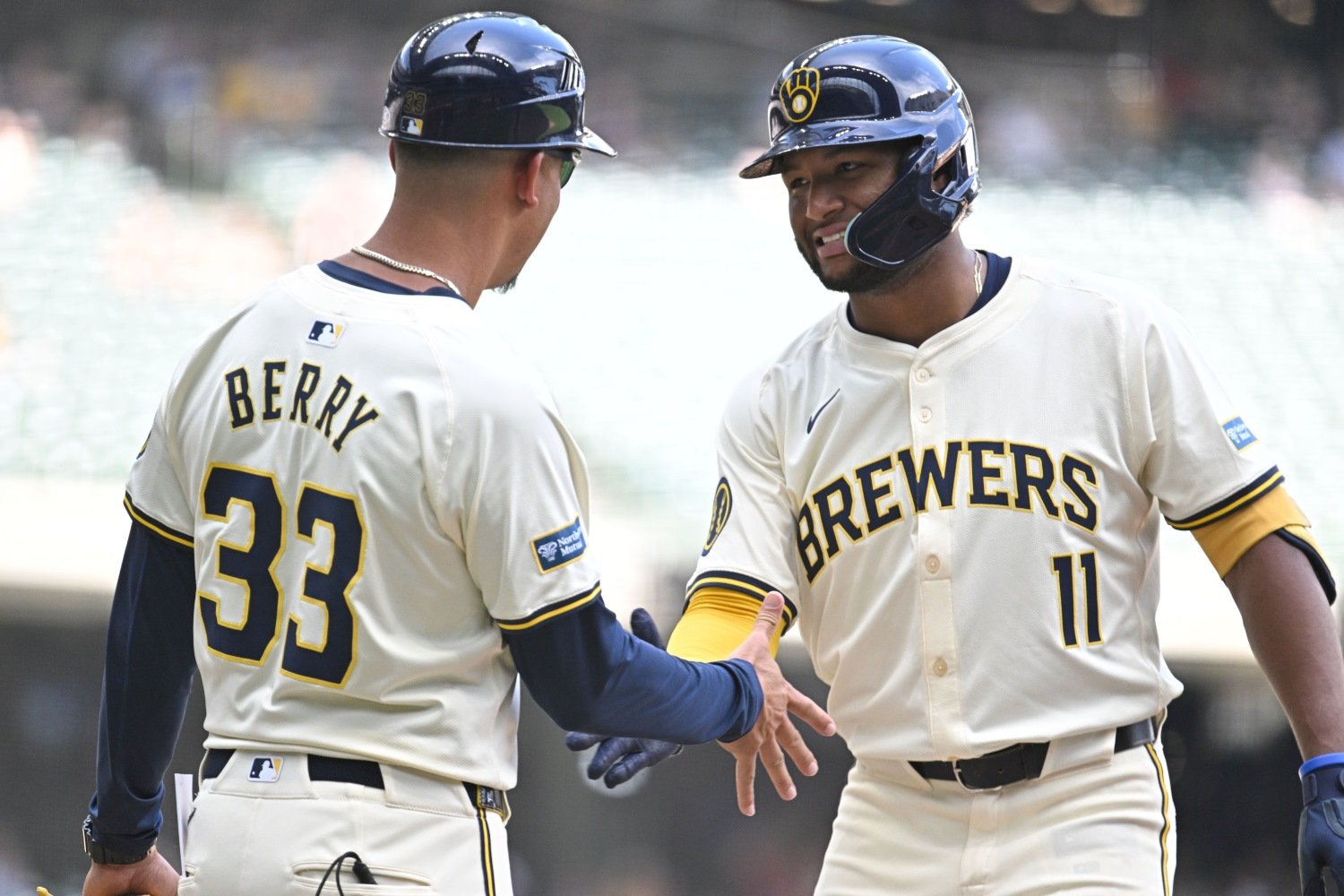 All season, the 2024 Milwaukee Brewers' identity lied in their superb defense and baserunning. They did other things well, and will do other things well in 2025, but terrific defense (including great positioning) and aggressiveness from fast players on the bases were key to everything the team did. Now, they'll have to try to match themselves without the member of the coaching staff who most directly shaped those aspects of their brilliance. Quintin Berry was an elite baserunner during his limited big-league career, including serving as the late-season pinch-running specialist for several playoff-hopeful teams. He stole 34 bases in 36 tries against big-league catchers, including going 5-for-5 in his two trips to the postseason. After retiring in Nov. 2018, he immediately joined the Brewers as a coach, and now, he'll reunite with Craig Counsell to reprise that role in Chicago. Berry's absence will be deeply felt in Milwaukee. As the first-base coach for the last four years, he was the voice in the ear of many highly successful running teams, and he showed an expert eye for positioning outfielders. That job is collaborative and begins in the front office, but Berry did an excellent job of implementing existing plans within games and making crucial adjustments. Famously, it was he who directed a last-second change to where Blake Perkins was setting up before a single on which Perkins threw out the tying run at the plate and secured a win, back in June. The Cubs have a burgeoning facsimile of the Brewers' well-rounded core, with good baserunners and strong outfield defenders whose games might be taken to another level under his tutelage. Pete Crow-Armstrong is already one of the better base thieves and center field gloves in MLB, and Berry could help him ascend farther toward both apexes. At the same time, the Brewers went to an even more visible, collaborative, group-focused model of coaching in their first campaign under Pat Murphy, and they likely feel some confidence about the systems they have in place—while remaining cognizant of the fact that Berry's influence helped shape and hone those systems. Young speed demon Brice Turang and the dazzling outfield corps of Jackson Chourio, Blake Perkins, and Sal Frelick will all miss Berry, but they've absorbed plenty of insights from him over the years, and might well be able to carry on their brilliant work under a different instructor now. This is a loss of some weight for the Brewers, but would appear to be an even bigger gain for the Cubs. They have plenty of rough edges to sand off in the outfield and on the bases. If Berry can coach up Seiya Suzuki sufficiently to get the aging veteran back into everyday duty in right field (rather than being confined to DH work, as he was for most of the second half), he'll make a huge difference for his new employer right off the bat: the Cubs could then pursue a high-end hitter with greater flexibility than they have now. More changes are coming to both coaching staffs, but with Thursday's unsurprising news comes a fresh reminder: Counsell and his new team are the primary short-term threats to the Brewers' supremacy over the NL Central, and there will be awkwardness and tension at times while these two teams remain thus poised.
 -
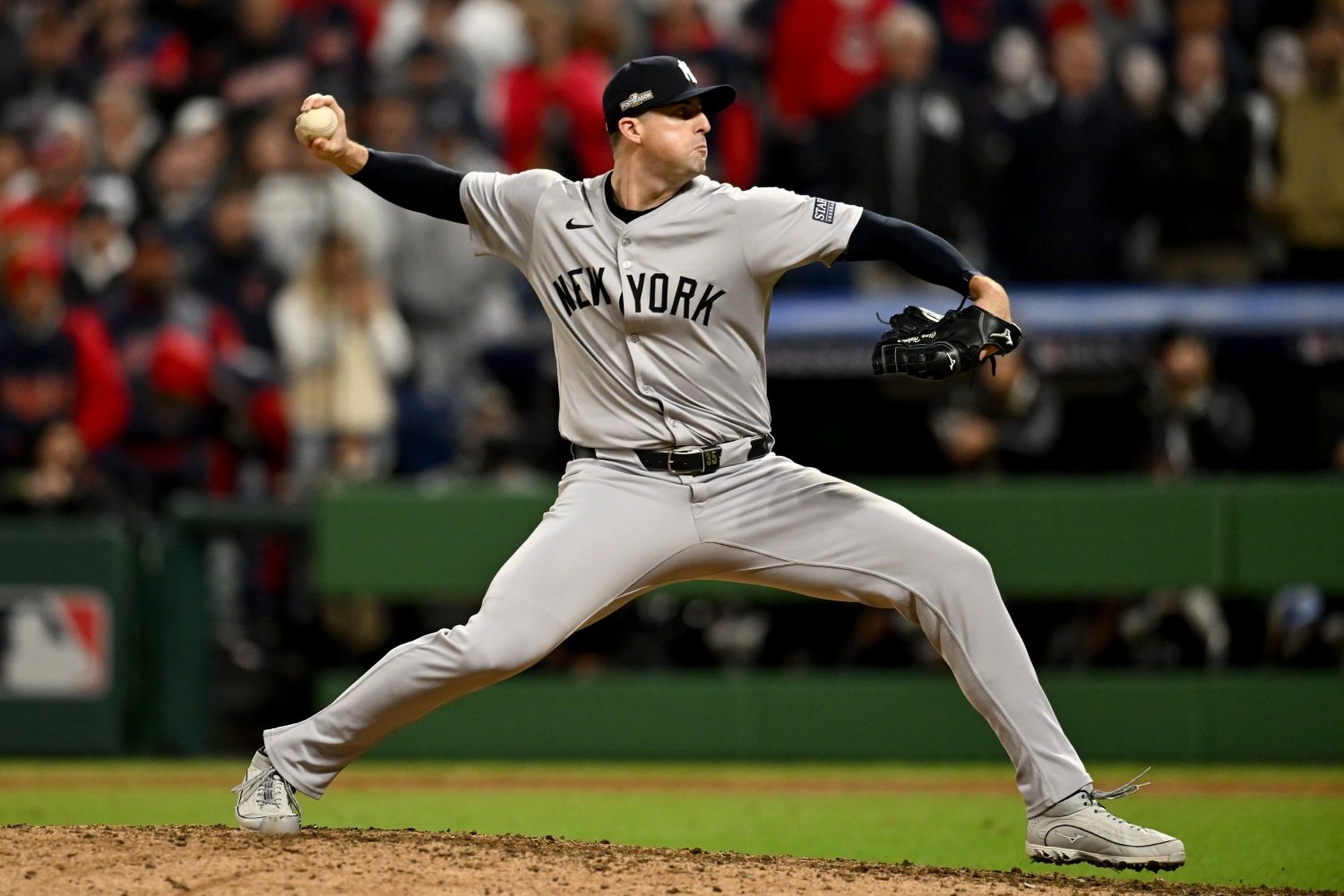 In a post earlier this month, I laid out the case that the two most valuable skills a relief pitcher can have are the ability to throw strikes and the ability to miss bats within the zone. We consulted this scatter plot of pitchers to find candidates for the 2025 Cubs bullpen, but embraced the idea of pursuing certain relievers who throw a below-average number of pitches in the zone, as long as they had good changeups that might stump opposing batters. Today, though, let's stay in the upper right quadrant of this chart. Specifically, there are three pitchers there who have shown the capacity to be elite right-handed, high-leverage relievers there, and each is likely to be looking for a multi-year deal. Clay Holmes, Yankees A bit of a late bloomer, Holmes struggled mightily during a tenure of a few years with the Pirates, but turned the corner quickly after the Yankees dealt for him in mid-2021. He ceded the closer's role to Luke Weaver late this season for New York, but he still has 74 saves to his name since the start of 2022. Over that same span, he has a manageable walk rate just over 8%, a strikeout rate approaching 26%, and a stellar ground-ball rate. He throws one of the heaviest sinkers in the league, along with a slider and a sweeper that make getting the ball in the air or over the wall against him exceptionally difficult. You can find pitchers whose sinkers technically sink more than Holmes's, but almost no one's appears to sink more or has as heavy an effect for hitters. That's because he throws from a fairly high, straight-on slot, but his ball moves like that of a low-three-quarters guy. Analyst Max Bay created an app that shows how a pitcher's fastball movement varies from what would ordinarily be implied by their arm slot, to identify pitchers whose heaters have deception or life—and those who live in the dreaded "dead zone," where hitters have an easy time reading and reacting to the heater, because it moves as expected. Holmes's sinker is very much the former. In the image above, note the box in the top left corner. Based on the way Holmes throws, Bay's model expects him to rely heavily on four-seamers, not cutters or sinkers. On the contrary, though, he's very much a sinkerballer. Bay's app also allows us to set the model's expectations differently, though, to simulate what a htter experiences even after they do their homework and come into an at-bat expecting the sinker. Not even making a mental adjustment to expect a sinker from a high-slot righty allows hitters to properly frame up the pitch, because it has so much downward plane. Thus, we see the elite ground-ball rate for Holmes. over 64% in every season with the Yankees and just under 70% in total since the start of 2022. Meanwhile, both his sweeper and his slider miss bats at a rate of at least 37% of swings, which is how Holmes also maintains a strong strikeout rate with a fastball that does not jump over bats. Best of all, perhaps, Holmes is only set to turn 32 next March. By the standards of this superannuated reliever class, he's fairly fresh, and might have three good years left in his arm. He'd cost a pretty penny, but should arguably be the Cubs' top offseason pitching target. Jeff Hoffman, Phillies Once a rumored Cubs target atop the first round of the 2014 Draft, Hoffman slid to the Blue Jays after Chicago took Kyle Schwarber instead. As a starter, things didn't work out, and he drifted to the Rockies, then the Reds. At long last, as a full-time reliever with the Phillies, he found success—and he's still only 31, a couple of months older than Holmes. He succeeds with a pitch mix that still feels suited to a starter, in some ways, though it's enlivened by the extra velocity he's found working in short bursts. He throws both a four-seamer and a sinker that average 96 miles per hour and touch 99, with the sinker only showing up in meaningful shares against righties. He's a slider monster against those right-handed opponents, with a hellacious mid-80s offering that he can manipulate to change shape and speed. Against lefties, it's the high-riding four-seamer, the slider, and a splitter for which he shows impressive feel. Hoffman fanned over 33% of opposing batters in 2023, and repeated the feat in 2024. This year, though, he also slashed his walk rate to 6%, taking a clear step up to dominant status. He's a very conventional relief ace of the modern game, and plenty of teams will want him, but the Cubs are always especially enamored of relievers with deeper arsenals than most of their fellows. Emilio Pagán, Reds Much less heralded and considerably less valuable than Holmes or Hoffman, Pagán nonetheless stands out on our chart of strike-throwing and bat-missing skills as more of an outlier than either. In three of the last four seasons, he's had an ERA over 4.40, and he missed a little over two months in the middle of this season. So, why might he eschew an $8-million payday and take a $250,000 buyout to hit the open market? Well, Pagán is not well-suited to Cincinnati, and he'd probably have much more value elsewhere—say, in one of the league's most homer-suppressing parks, like Wrigley Field. Pagán's great vulnerability is that tendency to give up long balls, because he's the opposite of Holmes; his fastball lives in the dead zone. That's the bad news about him. The good news matters, too, though. Pagán's heater does have good rising action, which allows him to miss some bats with it. Better still, his cutter and splitter induce plenty of whiffs, so he's run very good strikeout rates all along. He's also maintained better-than-average walk rates in each of the last two seasons, so his only major weakness is gopheritis. Set to turn 34 next May. Pagán doesn't have a long career left ahead of him, but he could easily find a two-year deal this winter. His numbers paint him as an unreliable middle reliever, and it's certainly important to use him when there's a bit more margin for error; he's the opposite of Holmes in that way too. Given how much less he'll cost and how much upside that three-pitch mix and familiarity with the zone give him, though, he could be a fine player on whom to roll the dice. The team just needs to ensure that they add more than one solid reliever before spring training begins in February.
 -
The Cubs should be planning to add multiple above-average big-league relievers to their roster this winter, including making some foray into free agency. Let's consider some new names who could be on their radar. Image courtesy of © Ken Blaze-Imagn Images In a post earlier this month, I laid out the case that the two most valuable skills a relief pitcher can have are the ability to throw strikes and the ability to miss bats within the zone. We consulted this scatter plot of pitchers to find candidates for the 2025 Cubs bullpen, but embraced the idea of pursuing certain relievers who throw a below-average number of pitches in the zone, as long as they had good changeups that might stump opposing batters. Today, though, let's stay in the upper right quadrant of this chart. Specifically, there are three pitchers there who have shown the capacity to be elite right-handed, high-leverage relievers there, and each is likely to be looking for a multi-year deal. Clay Holmes, Yankees A bit of a late bloomer, Holmes struggled mightily during a tenure of a few years with the Pirates, but turned the corner quickly after the Yankees dealt for him in mid-2021. He ceded the closer's role to Luke Weaver late this season for New York, but he still has 74 saves to his name since the start of 2022. Over that same span, he has a manageable walk rate just over 8%, a strikeout rate approaching 26%, and a stellar ground-ball rate. He throws one of the heaviest sinkers in the league, along with a slider and a sweeper that make getting the ball in the air or over the wall against him exceptionally difficult. You can find pitchers whose sinkers technically sink more than Holmes's, but almost no one's appears to sink more or has as heavy an effect for hitters. That's because he throws from a fairly high, straight-on slot, but his ball moves like that of a low-three-quarters guy. Analyst Max Bay created an app that shows how a pitcher's fastball movement varies from what would ordinarily be implied by their arm slot, to identify pitchers whose heaters have deception or life—and those who live in the dreaded "dead zone," where hitters have an easy time reading and reacting to the heater, because it moves as expected. Holmes's sinker is very much the former. In the image above, note the box in the top left corner. Based on the way Holmes throws, Bay's model expects him to rely heavily on four-seamers, not cutters or sinkers. On the contrary, though, he's very much a sinkerballer. Bay's app also allows us to set the model's expectations differently, though, to simulate what a htter experiences even after they do their homework and come into an at-bat expecting the sinker. Not even making a mental adjustment to expect a sinker from a high-slot righty allows hitters to properly frame up the pitch, because it has so much downward plane. Thus, we see the elite ground-ball rate for Holmes. over 64% in every season with the Yankees and just under 70% in total since the start of 2022. Meanwhile, both his sweeper and his slider miss bats at a rate of at least 37% of swings, which is how Holmes also maintains a strong strikeout rate with a fastball that does not jump over bats. Best of all, perhaps, Holmes is only set to turn 32 next March. By the standards of this superannuated reliever class, he's fairly fresh, and might have three good years left in his arm. He'd cost a pretty penny, but should arguably be the Cubs' top offseason pitching target. Jeff Hoffman, Phillies Once a rumored Cubs target atop the first round of the 2014 Draft, Hoffman slid to the Blue Jays after Chicago took Kyle Schwarber instead. As a starter, things didn't work out, and he drifted to the Rockies, then the Reds. At long last, as a full-time reliever with the Phillies, he found success—and he's still only 31, a couple of months older than Holmes. He succeeds with a pitch mix that still feels suited to a starter, in some ways, though it's enlivened by the extra velocity he's found working in short bursts. He throws both a four-seamer and a sinker that average 96 miles per hour and touch 99, with the sinker only showing up in meaningful shares against righties. He's a slider monster against those right-handed opponents, with a hellacious mid-80s offering that he can manipulate to change shape and speed. Against lefties, it's the high-riding four-seamer, the slider, and a splitter for which he shows impressive feel. Hoffman fanned over 33% of opposing batters in 2023, and repeated the feat in 2024. This year, though, he also slashed his walk rate to 6%, taking a clear step up to dominant status. He's a very conventional relief ace of the modern game, and plenty of teams will want him, but the Cubs are always especially enamored of relievers with deeper arsenals than most of their fellows. Emilio Pagán, Reds Much less heralded and considerably less valuable than Holmes or Hoffman, Pagán nonetheless stands out on our chart of strike-throwing and bat-missing skills as more of an outlier than either. In three of the last four seasons, he's had an ERA over 4.40, and he missed a little over two months in the middle of this season. So, why might he eschew an $8-million payday and take a $250,000 buyout to hit the open market? Well, Pagán is not well-suited to Cincinnati, and he'd probably have much more value elsewhere—say, in one of the league's most homer-suppressing parks, like Wrigley Field. Pagán's great vulnerability is that tendency to give up long balls, because he's the opposite of Holmes; his fastball lives in the dead zone. That's the bad news about him. The good news matters, too, though. Pagán's heater does have good rising action, which allows him to miss some bats with it. Better still, his cutter and splitter induce plenty of whiffs, so he's run very good strikeout rates all along. He's also maintained better-than-average walk rates in each of the last two seasons, so his only major weakness is gopheritis. Set to turn 34 next May. Pagán doesn't have a long career left ahead of him, but he could easily find a two-year deal this winter. His numbers paint him as an unreliable middle reliever, and it's certainly important to use him when there's a bit more margin for error; he's the opposite of Holmes in that way too. Given how much less he'll cost and how much upside that three-pitch mix and familiarity with the zone give him, though, he could be a fine player on whom to roll the dice. The team just needs to ensure that they add more than one solid reliever before spring training begins in February. View full article
-
.png.a11a6acff9a31063bb1cdefe54a4d068.png) All year, Aaron Judge was one of the best hitters in baseball on low pitches. No tall hitter gets very far if they don't learn to guard the bottom rail of their strike zone, because to pitchers accustomed to facing guys six inches shorter, it's pretty easy to target that segment. Judge long ago learned to cover that area, but because his swing is all about staying compact and getting up through the ball he still doesn't like to swing there. During the regular season, Judge swung at just 32.8% of pitches in the lower third of the zone and below, one of the lowest rates in baseball. He only chased a bit over 17% of the low pitches he saw outside the zone, eighth-best of the 282 batters who saw at least 500 low pitches on the year. He doesn't have a persistent problem with low stuff, even tight, low breaking stuff. That set of pitches isn't kryptonite; it's limestone. You can find it everywhere, and no hitter for whom that was a weakness could possibly be Superman, as Judge has been for the last three years. Nor, in these playoffs, has he totally broken and started fishing wildly on those offerings. It's tempting to feel like he has, based both on his overall failure to produce throughout the postseason and on the narratives pushed by certain commentators broadcasting the World Series, but in fact, he's chasing at just a 25.9% rate this month on those low offerings outside the zone. It's never good to chase more, but it's natural to get slightly anxious. The more important problem is not pitch recognition or plate discipline, but the fact that Judge's timing is out of whack. He whiffed on 27% of lower-third pitches inside the zone during the regular season, but that number is 48.3% in the postseason. That is the crisis number, and it's hard to solve the problems that spring from it. Though John Smoltz labored in an effort to prove Judge "in-between" during Game 2 analytical interludes, the facts defy him. Judge has not seen a spike in in-zone whiffs or a degradation in batted-ball quality on hard stuff, even at above-average velocities, during the postseason. He's just hunting fastballs too aggressively, given that he's not getting them. In the regular season, four-seamers and sinkers made up 43.5% of the pitches he saw. This month, it's been 37.3%. The share of pitches he's seen that are breaking balls is up from a regular-season share of 32% to over 38%. The Yankees' captain wants to be his teammates' hero, and he's begging every pitch to be a fastball. He's gearing up and starting early, wanting the fastball. He keeps getting wrinkles, and he looks terrible on them right now. If he succeeds in Games 3 and beyond, it will be by relaxing into his at-bat more, willing to be late on the fastball and secure in the knowledge that his swing is fast enough to do damage even if he truly is late. More often, since it's October and he's clearly sped-up, trying to be slow will put him right on time, and he'll be able to handle the slider again. That ability is still in there. The problem with all of this analysis, though, is the yawning gap between the ease of identifying the issues and the ease of solving them. Again, this is all about feelings. It's about compensating for whatever extra sense of fatigue he's feeling, amid the absolutely scorching internal fire of wanting to finish off this championship run. It's about managing the moment, not the mechanics. It's about dealing with the rising brain pain of these struggles, and finding enough calm within it to get back in touch with his talent. Where Judge bats for the Yankees will be a hot-button topic, unless and until he breaks out of this. Aaron Boone has taken criticism already for not sliding him down at the expense of Giancarlo Stanton, wild though that might sound, but it's fair to note that Boone has lived a charmed life just to get this far into the postseason. He hasn't managed especially well; he's gotten especially lucky.
All year, Aaron Judge was one of the best hitters in baseball on low pitches. No tall hitter gets very far if they don't learn to guard the bottom rail of their strike zone, because to pitchers accustomed to facing guys six inches shorter, it's pretty easy to target that segment. Judge long ago learned to cover that area, but because his swing is all about staying compact and getting up through the ball he still doesn't like to swing there. During the regular season, Judge swung at just 32.8% of pitches in the lower third of the zone and below, one of the lowest rates in baseball. He only chased a bit over 17% of the low pitches he saw outside the zone, eighth-best of the 282 batters who saw at least 500 low pitches on the year. He doesn't have a persistent problem with low stuff, even tight, low breaking stuff. That set of pitches isn't kryptonite; it's limestone. You can find it everywhere, and no hitter for whom that was a weakness could possibly be Superman, as Judge has been for the last three years. Nor, in these playoffs, has he totally broken and started fishing wildly on those offerings. It's tempting to feel like he has, based both on his overall failure to produce throughout the postseason and on the narratives pushed by certain commentators broadcasting the World Series, but in fact, he's chasing at just a 25.9% rate this month on those low offerings outside the zone. It's never good to chase more, but it's natural to get slightly anxious. The more important problem is not pitch recognition or plate discipline, but the fact that Judge's timing is out of whack. He whiffed on 27% of lower-third pitches inside the zone during the regular season, but that number is 48.3% in the postseason. That is the crisis number, and it's hard to solve the problems that spring from it. Though John Smoltz labored in an effort to prove Judge "in-between" during Game 2 analytical interludes, the facts defy him. Judge has not seen a spike in in-zone whiffs or a degradation in batted-ball quality on hard stuff, even at above-average velocities, during the postseason. He's just hunting fastballs too aggressively, given that he's not getting them. In the regular season, four-seamers and sinkers made up 43.5% of the pitches he saw. This month, it's been 37.3%. The share of pitches he's seen that are breaking balls is up from a regular-season share of 32% to over 38%. The Yankees' captain wants to be his teammates' hero, and he's begging every pitch to be a fastball. He's gearing up and starting early, wanting the fastball. He keeps getting wrinkles, and he looks terrible on them right now. If he succeeds in Games 3 and beyond, it will be by relaxing into his at-bat more, willing to be late on the fastball and secure in the knowledge that his swing is fast enough to do damage even if he truly is late. More often, since it's October and he's clearly sped-up, trying to be slow will put him right on time, and he'll be able to handle the slider again. That ability is still in there. The problem with all of this analysis, though, is the yawning gap between the ease of identifying the issues and the ease of solving them. Again, this is all about feelings. It's about compensating for whatever extra sense of fatigue he's feeling, amid the absolutely scorching internal fire of wanting to finish off this championship run. It's about managing the moment, not the mechanics. It's about dealing with the rising brain pain of these struggles, and finding enough calm within it to get back in touch with his talent. Where Judge bats for the Yankees will be a hot-button topic, unless and until he breaks out of this. Aaron Boone has taken criticism already for not sliding him down at the expense of Giancarlo Stanton, wild though that might sound, but it's fair to note that Boone has lived a charmed life just to get this far into the postseason. He hasn't managed especially well; he's gotten especially lucky.
.png.618aa1fa3eb286c35e5c0813f00789c4.png)
.png.4b535b765a43c30c0d3493137cc6c317.png)
.png.fe11665388fab7a6bbba85138a5e1c9d.png)
.png.a11a6acff9a31063bb1cdefe54a4d068.png)