


Matthew Trueblood
-
Posts
2,481 -
Joined
-
Last visited
-
Days Won
2
Content Type
Profiles
Joomla Posts 1
Chicago Cubs Videos
Chicago Cubs Free Agent & Trade Rumors, Notes, & Tidbits
2026 Chicago Cubs Top Prospects Ranking
News
2023 Chicago Cubs Draft Picks
Guides & Resources
2024 Chicago Cubs Draft Picks
The Chicago Cubs Players Project
2025 Chicago Cubs Draft Pick Tracker
2026 Chicago Cubs Draft Tracker: Picks & Bonuses
Blogs
Events
Forums
Store
Gallery
Everything posted by Matthew Trueblood
-
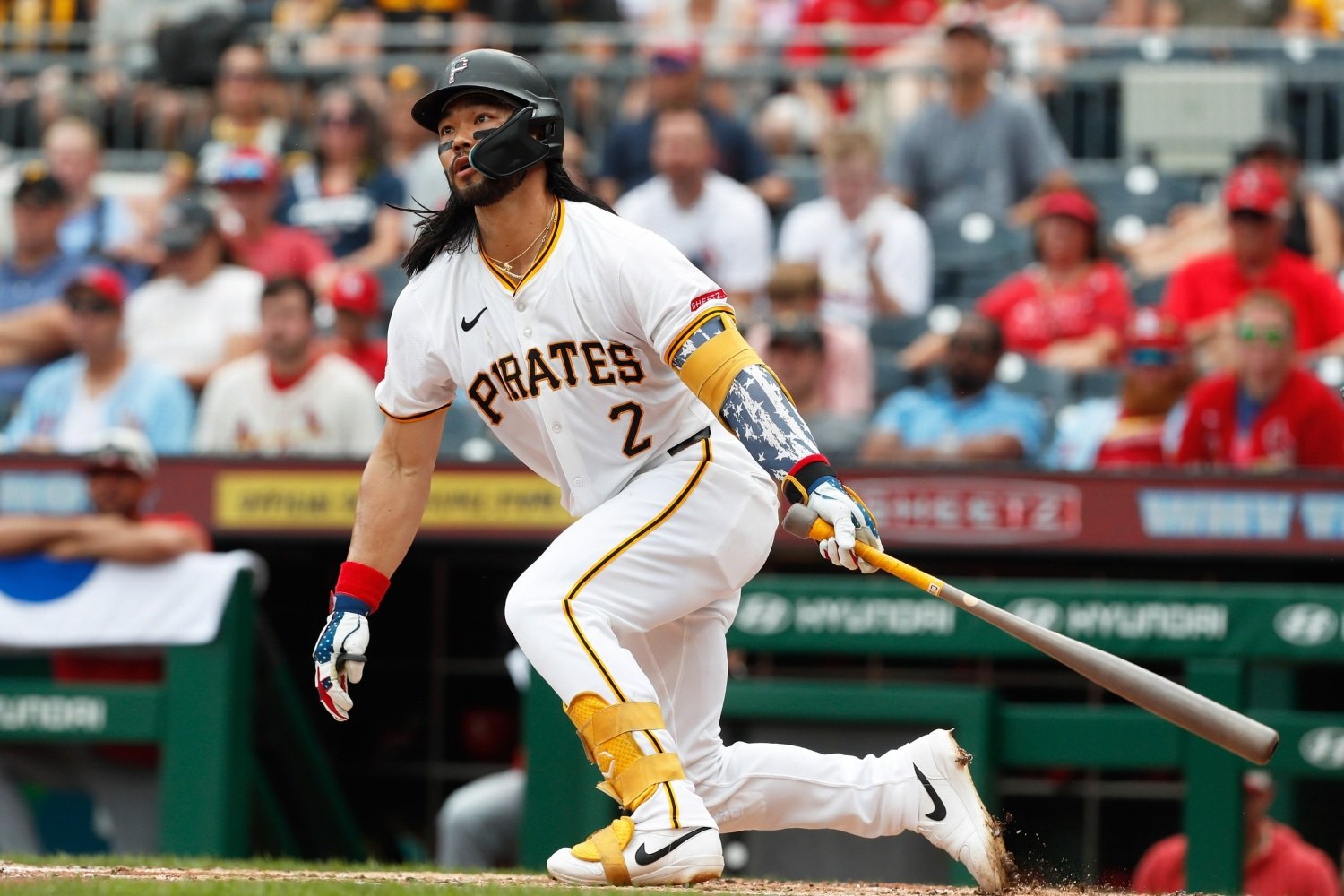 Michael Busch played 152 games in 2024, starting 135 of them. Quickly, the rookie proved he didn't need to be platooned at first base, and his impressive progress with the glove eventually led the team to eschew using Cody Bellinger there for any meaningful time. The Cubs are so confident about his future as both a hitter and a fielder that they felt no compunction about trading Bellinger earlier this month. Now that they've done so, though, they have to bring in a credible backup for Busch—ideally, a right-handed batter who can provide some matchup balance in addition to rest and injury replacement. There are a handful of viable players who fit that mold on the market right now, but two of them stand out. Connor Joe The ex-Pirates batsman played some first base, some DH, and some right field in 2024, which is a pretty fair reflection of how he's generally divided his time during a career spanning parts of six seasons. It was a mild surprise when the Pirates non-tendered him in November, because he was only projected to make around $3.2 million via arbitration, and he still had three years of team control remaining. Joe, 32, can hit, especially against left-handed pitchers. He boasts a career .254/.350/.415 line against them, with 70 walks, 10 times hit by pitches, 120 strikeouts and 14 home runs in 605 plate appearances. He doesn't hit the ball hard with especially high frequency, but he does lift it consistently, and the raw power is there: Joe swings a quick bat. Joe also makes contact at a below-average but tenable rate, and he takes a good, patient approach. Best of all, he's a plus defender at first, a bit like Busch in that he's not as big as the prototype at the spot but moves better than many of his more hulking counterparts. He's not capable of the same power displays as Patrick Wisdom, but he offers a steadier glove and a much more balanced set of offensive skills than Wisdom did. He's stretched in the kind of role he filled for the Pirates and Rockies over the last three years, as he's averaged 452 plate appearances per year. But if the Cubs could get him on a low-cost two-year deal and pencil him in for more like 250 well-chosen trips to the plate (mostly against lefties), Joe could be a superb addition. Mark Canha Set to turn 36 early in spring training, Canha is a major age risk. He's playable at first base, but not good there. He doesn't have the ability to generate meaningful power, because he neither gets the ball in the air with any regularity nor has a fast enough bat to do so. What Canha does offer, though, is more of that classic line-drive, medium-hard contact profile. He takes walks and is a good situational hitter. He has a long, successful track record in the majors. He would have been a better target for the team years ago, when he hit free agency and signed a lucrative deal with the Mets. He would be a better target if he were a bit more fluid around the bag on defense. Still, Canha is an enticing option. He'll get on base, whenever called upon, and he's one of the game's best off-field personalities: easy to talk to, outgoing without being overbearing, and curious without being distracted from his duty. The Cubs' bench has already seen a bit of an overhaul, but they might turn over one or two of their places on that bench yet again before Opening Day. To fill all their positional needs, they have to be willing to spend some money and shove aside a couple of contingency plans they had created. If they do so, though, they'll be rewarded with a position-player roster capable of really winning something—as long as they also further reinforce their pitching staff along the way.
 -
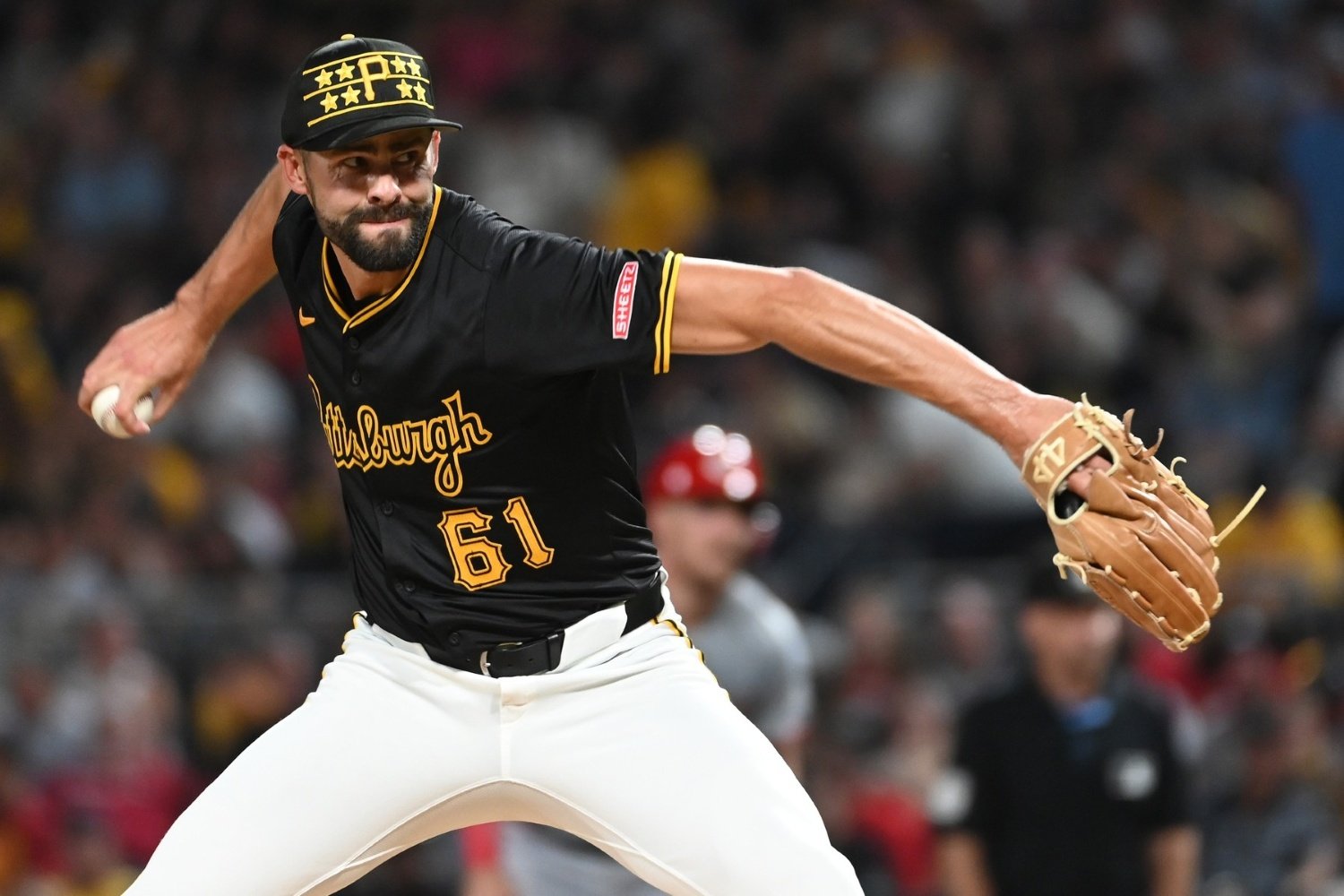 In our Caretakers-exclusive look at six minor-league free agents who could help the Cubs' pitching staff in 2025, I ranked the select half-dozen hurlers from most to least desirable. All six had things to recommend them, or else I wouldn't have profiled them, but I felt it was important to put them in a certain order, too. Of the six, Ben Heller ranked second on my list. Monday, the Cubs nabbed Heller on a minor-league deal. I won't share all the details here that Caretakers got to enjoy there, but to run down the rest of the six: Clay Helvey signed a minor-league deal with the Nationals two weeks ago. Jason Alexander signed with the Athletics in mid-November. Joe Record, Janson Junk, and Brad Keller remain free agents. I ranked Heller ahead of all except Helvey as a target for the Cubs, because he has terrific stuff that suits a lot of the things the Cubs like to do, anyway. Here's a portion of what I wrote about him in November: This signing doesn't affirmatively answer those health questions, because those things can always recur or flare back up as a hurler gets ready for the season. If he had been fully healthy throughout 2024, though, it's unlikely Heller would have been available in the first place. The stuff profile is good enough to make him a very strong medium-leverage relief option. Here's the pitch mix he used in 2024, in visual form: The cutter is very much on the slider end of the fastball-slider spectrum of cutters, so think of it more as a breaking ball and complement to the sinker and four-seamer than as a tertiary fastball look, but this is the kind of shape set the Cubs love from righty relievers. It's similar to those of Tyson Miller or Jorge López, the latter of whom is a free agent right now, so Heller could plausibly replace López in the 2025 mix, in a sense. You can bet that there's an opt-out date written into this deal, so the Cubs will have to decide to add Heller to their 40-man roster at some point, or let him pursue another opportunity. He's out of options, so whenever they do enfold him, he'll have to stay on the active roster unless or until they are ready to risk losing him. Still, this is a solid addition. As implied by the fact that I identified him earlier this offseason, I think he's a very strong fit for the group, and he helps make up for the loss of Hayden Wesneski and his potential bullpen contributions. If nothing comes of it, that's fine. Nothing much was ventured, since the deal doesn't cost the team a 40-man roster spot. If Heller is healthy and pitches the way he can, though, this will look like a tremendous investment.
 -
Way back in early November, we published our Offseason Handbook for the Cubs' 2024-25 hot stove campaign. Included was a piece recommending six minor-league free-agent pitchers the Cubs could scoop up as depth options. Monday, they signed one of those six. Image courtesy of © Philip G. Pavely-Imagn Images In our Caretakers-exclusive look at six minor-league free agents who could help the Cubs' pitching staff in 2025, I ranked the select half-dozen hurlers from most to least desirable. All six had things to recommend them, or else I wouldn't have profiled them, but I felt it was important to put them in a certain order, too. Of the six, Ben Heller ranked second on my list. Monday, the Cubs nabbed Heller on a minor-league deal. I won't share all the details here that Caretakers got to enjoy there, but to run down the rest of the six: Clay Helvey signed a minor-league deal with the Nationals two weeks ago. Jason Alexander signed with the Athletics in mid-November. Joe Record, Janson Junk, and Brad Keller remain free agents. I ranked Heller ahead of all except Helvey as a target for the Cubs, because he has terrific stuff that suits a lot of the things the Cubs like to do, anyway. Here's a portion of what I wrote about him in November: This signing doesn't affirmatively answer those health questions, because those things can always recur or flare back up as a hurler gets ready for the season. If he had been fully healthy throughout 2024, though, it's unlikely Heller would have been available in the first place. The stuff profile is good enough to make him a very strong medium-leverage relief option. Here's the pitch mix he used in 2024, in visual form: The cutter is very much on the slider end of the fastball-slider spectrum of cutters, so think of it more as a breaking ball and complement to the sinker and four-seamer than as a tertiary fastball look, but this is the kind of shape set the Cubs love from righty relievers. It's similar to those of Tyson Miller or Jorge López, the latter of whom is a free agent right now, so Heller could plausibly replace López in the 2025 mix, in a sense. You can bet that there's an opt-out date written into this deal, so the Cubs will have to decide to add Heller to their 40-man roster at some point, or let him pursue another opportunity. He's out of options, so whenever they do enfold him, he'll have to stay on the active roster unless or until they are ready to risk losing him. Still, this is a solid addition. As implied by the fact that I identified him earlier this offseason, I think he's a very strong fit for the group, and he helps make up for the loss of Hayden Wesneski and his potential bullpen contributions. If nothing comes of it, that's fine. Nothing much was ventured, since the deal doesn't cost the team a 40-man roster spot. If Heller is healthy and pitches the way he can, though, this will look like a tremendous investment. View full article
-
I won't refute the validity of either point. I do think each has a big "but" attached, though. 1. Do you mean a budget crunch for 2026? Because there's really not one for 2025. I would advise looking not at the CBT number (though they'll be careful not to exceed the CBT this year, for sure), but at the real dollars number, and by that token, they still have upwards of $40 million to spend to get to where I think they intend to settle. I think, based on your mention of Tucker, that you mean for 2026, so sure, that's a consideration, but I also think that if 2025 goes the way it needs to for Hoyer to stick around, they'll go a decent way into the tax—maybe even clear the second threshold, as you suggest—in 2026. They know lots of money comes off the books after that anyway (Happ, Suzuki, Taillon, Hoerner, Boyd deals all expire after that season), and spending money now on 2025-27 means they don't have to trade as much from their farm, so they'd be in better shape to replace some of those guys with cheaper internal options come Opening Day 2027 (sooner, of course, in some cases). 2. Yates is the only guy you mention who's on Scott's level, and then (of course) not even he is quite there. Jansen isn't cooked, exactly, but that would be very much a repeat of the Neris experiment. Martin and Robertson are fine, but the idea here is to sign someone who becomes your relief ace. Even when the Cubs signed those guys three years ago, it was to be complementary arms, not The Guy. I'm not saying for certain that I'm right about this, but my feeling is that they both SHOULD and WILL try to get a legitimate relief ace this time, rather than a veteran who can probably be solid in the seventh or eighth. That makes it Yates, Scott, or forget the whole thing and push all those resources toward the rotation and a 10th regular-type position player instead, IMO. So if Yates signs elsewhere....
-
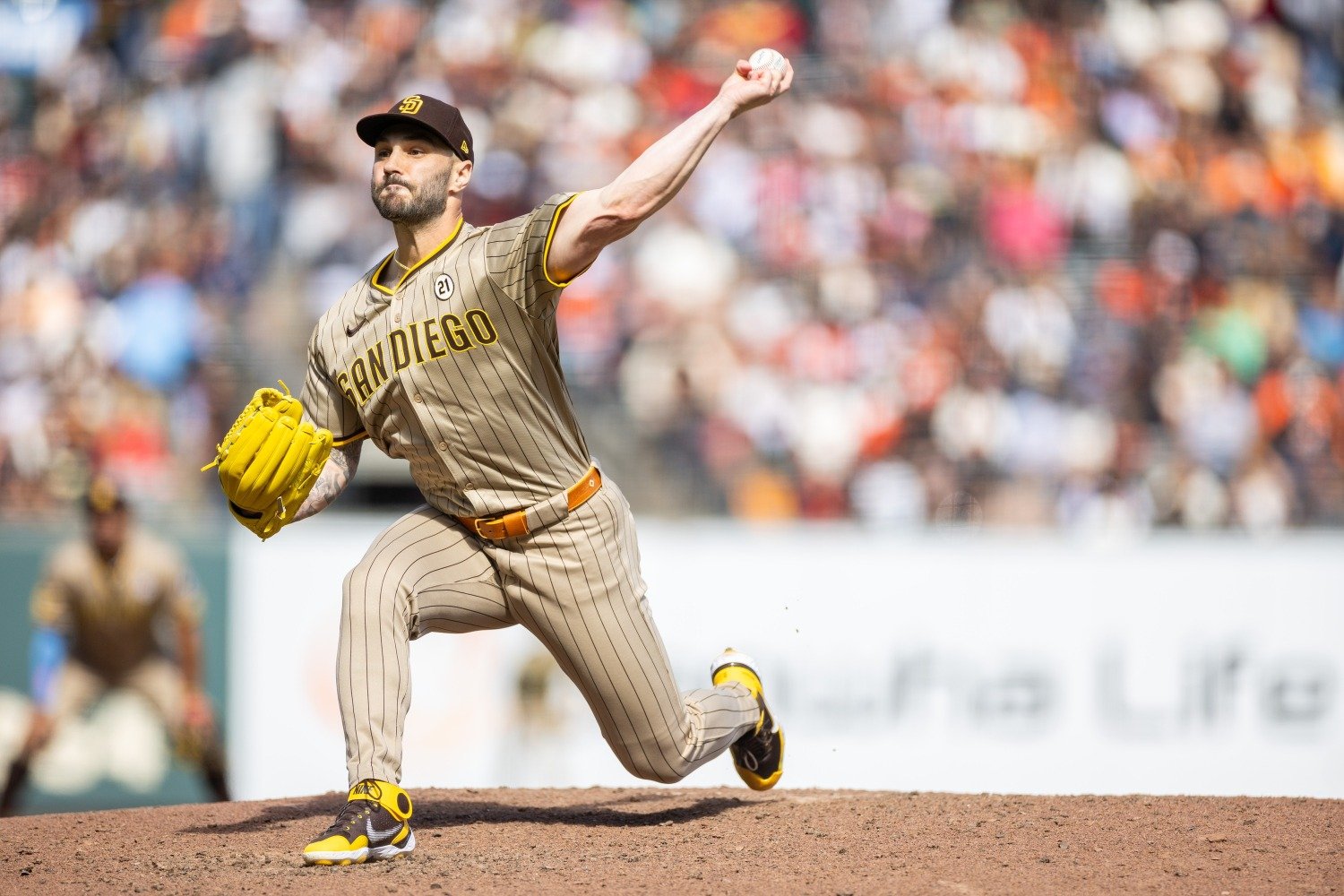 At his end-of-season press conference, Jed Hoyer admitted that the strategy he pursued to build a viable bullpen in 2024 was flawed and vowed that he would elect a different one this offseason. While he was right in his diagnosis, I was skeptical of the treatment he claimed to be prescribing. The only real alternative to entering each season with big questions in the bullpen is acquiring elite relievers who stand a bit clear of the natural volatility of that job, and Hoyer has never shown any indication of being willing to allocate his resources that way. It seemed like empty rhetoric. Nearly two months later, though, as I survey the offseason the Cubs have had thus far, I see a spot both in the depth chart and in the budget for just that kind of player. Just as Hoyer seems to have eased his own rules against paying a huge price to acquire a star player for just one season, he appears to have set the stage for a reliever addition that would break his rules about spending money and making long-term commitments in that segment of the roster. It's still possible the team will choose to pay whatever it takes to grab Kirby Yates on a one-year deal. Yates is reliably excellent, when healthy, and because he's in his late 30s already, he can be had on a short-term engagement. Increasingly, though, it seems like Tanner Scott would be a perfect fit for this roster. He'd cost something like $15 million per year on a three- or four-year deal, which is a hefty commitment. Here's why he might be worth it, anyway. Becoming a Strike Thrower It's easy to look at Scott's 12.2% walk rate from this season (and 12.6% career mark) and worry that he's too wild to be a relief ace. That's far more walks than an average hurler allows; it makes Héctor Neris's control look good. You usually don't want a closer walking that many guys. Many Cubs fans remember the Carlos Mármol experience, which could be thrilling—but not always in the right way. It's also a fragile way to thrive, in most cases. There are two reasons not to sweat this as much as you normally would. Firstly, while he still handed out a lot of walks in 2024, he made a meaningful change in 2023 that differentiates him from his prior self. Consider this graphic, showing Scott's pitching approach for 2022: Baseball Savant calls these "Plinko" charts, after the game on 'Price is Right', and I love them, because they have the two most valuable characteristics any information graphic can boast: information density, and easy readability. The thicker the line between any two counts above, the more often Scott threw a pitch that took him from one count to the other. The colored wheels show how he deployed his two-pitch mix in each count. As you can see, in 2022, Scott was a very wild slider monster. He was only slightly more likely to start a plate appearance 0-1 than 1-0, and about equally likely to go from 0-1 to 1-1 as to get ahead 0-2 after throwing that first strike. He was only slightly more likely to go from 1-1 to 1-2 than to go from there to 2-1. In short, the above is the picture of a pitcher without sufficient conviction in his fastball, and without the command of his slider to consistently get ahead in counts or avoid huge walk totals. Now, let's look at the same chart for 2023: The relative thicknesses of key lines here have all swung in positive directions. The first-pitch change is especially noticeable, but it's there for 0-1 and 1-1 pitches, too. I also invite you to see how much thicker the line leading to 0-2 is than the one from 0-2 to 1-2, and how that compares to the 2022 image. Scott was putting guys away much more efficiently once he got way ahead in 2023 than he had in 2022. You can also see him using the fastball more often, especially to get himself back in control on 1-0, 1-1 and 2-1 counts. The ability to recover from 2-1 to 2-2 consistently instead of falling behind 3-1 is immensely valuable, and he improved in that aspect from 2022 to 2023. Scott first put himself on the map as an elite reliever that season, by walking just 7.8% of opposing batters. Here's the 2024 chart: Though his walk rate was similar to his pre-2023 self, this is a clear way to see that he didn't really regress. He still got ahead of hitters consistently and recovered fairly well when he fell behind, and look at how much his pitch usage swung toward the fastball, in all but the deepest counts. This is a pitcher who's found something with one of their key offerings. We'll get to what that was in a moment. For now, suffice it to say that these breakdowns belie the raw walk rate and tell us Scott didn't forget what he learned about attacking hitters and avoiding free passes in 2023. The second reason why you needn't worry about the walk rate for the full season is simpler, but equally important: Scott walked almost 15% of opponents before being dealt from the Marlins to the Padres in July, but just 8.0% of them with San Diego. The charts above show us that he can still command the zone, and down the stretch, Scott did just that, even when looking at his walk rate. An Improving Heater As we saw above, the 2024 season saw Scott lean into more fastball usage, after he'd heavily relied on his slider (throwing it, sometimes, well over half the time) in the previous couple of seasons. There was a reason for that. Scott slightly but importantly lowered his arm slot back in 2022, which began to unlock the pitcher we've seen him become since then. The funky thing is that, whereas most pitchers see the ball run more to their arm side when they lower their slot, Scott has remained a cut-ride guy even after making that adjustment. For a short time, Max Bay was one of the brightest lights in the public pitching analysis sphere. It was a brief time, because he's been snapped up, a couple of times. He now works for the Dodgers. We still have a few of his publicly available resources to help us analyze players, though, so let's avail ourselves of one. Using his Dynamic Dead Zone app, we can visualize the way Scott's fastball moves relative to what hitters expect, based on his arm angle. Here's that chart for 2021: That's an impressive amount of cut, but as you can see, Scott's heater didn't rise much, relative to what hitters would have expected out his hand. Flash forward, now, to 2024: The slightly lower slot alters what the hitter expects to see, which is represented by the blue topographical map behind the circle representing Scott's actual movement. Whereas they would expect an average of about 16 inches of induced vertical break (IVB) and 7 inches of arm-side run with the old slot, they'd be looking for more like 15 inches of "vert" and 8 inches of run after the change. But as you can see, Scott is still achieving the same amount of relative cut—and he's found considerably more relative rising action. He made the change to his arm slot in 2022, but it took Scott a couple of years to figure out how best to fire his fastball from that position. He only averaged 15.6 inches of IVB in 2023, but that rose to 16.8 in 2024. Teams look for pitchers with flat vertical approach angles (VAA) on their fastball these days, and Scott's combination of a lower three-quarter slot and hard, rising heat yielded a stellar -4.1-degree VAA on the pitch in 2024. If a pitcher has movement like Scott's on a fastball that hums in at 97 miles per hour from the left side, they can bully hitters with it. Heck, Justin Steele has a fastball with a slightly more extreme shape but 5 MPH fewer on it, and he bullies hitters with it. Scott's honing of the heater has yielded a steadily decreasing hard-hit rate over the last two years, to the point where he's now elite at suppressing opponents' power, in addition to racking up strikeouts. Most two-pitch pitchers struggle to limit power, but Scott is a unicorn. His stuff is nasty enough to both rack up strikeouts and keep hitters on the defensive, even without a third offering. The evolution of his fastball shape is crucial to that unique ability. It's not the most important ingredient in his success, though, which brings us to the third reason why Hoyer might depart his comfort zone to lock down Scott at the back end of the pen. Pure Filth Scott's slider is one of the most versatile weapons in the game. Among 186 pitchers who threw at least 200 sliders in 2024, Scott ranked: 6th in ground-ball rate 53rd in whiff rate on swings 19th in called strike rate on takes Only four pitchers—Clay Holmes, Bryan Abreu, Chris Sale, and Jason Adam—got more whiffs on swings and more strikes on takes than did Scott. Holmes and Adam only used their sliders sparingly, anyway, and none of the four came close to matching Scott's ground ball rate when hitters put the slider in play. Only Elvis Peguero and Camilo Doval had him beat in both ground-ball rate and whiff rate, and neither came close to besting him in called strike rate. Scott's slider ranks 17th of 187 qualifying hurlers in Baseball Prospectus's StuffPro, and 10th in PitchPro, meaning the characteristics, counts, and locations of that pitch make it an elite offering. Pair it with a fastball that ranks 5th in StuffPro and 17th in PitchPro among 353 qualifiers, and you have one of the most potent mixes in the game. While relievers are inherently volatile and injuries can always cause big trouble, the 30-year-old Scott is as safe a bet to be a dominant closer as almost anyone in baseball, now that he's figured out how to deploy both the slider and the fastball to maximal effect. And One More Thing! There's one more reason to entertain this notion more seriously than you would treat a typical big-dollar closer deal under the Hoyer administration, and it reaches a bit beyond Scott himself. Look around the rest of the Cubs' prospective roster. They have three left-handed starters in their rotation already, and they might end up either acquiring a fourth or using Jordan Wicks in that role for stretches of 2025. When you run out three or four lefty starters every five or six days, you often end up facing lineups stocked with right-handed batters. That's great news for the Cubs' righty-loaded middle relief corps. Nate Pearson, Tyson Miller and Porter Hodge are currently the back end of the team's bullpen, and they're all not only righties, but the kinds of righties who especially dominate right-handed batters. For that very reason, though, teams are likely to run some left-handed pinch-hitters and substitutes into the game in the sixth, seventh, and eighth innings, to neutralize the matchup advantage the Cubs will claim by turning the ball over from Steele, Shota Imanaga and Matthew Boyd to the likes of Miller and Hodge. How can the Cubs counterpunch? In this particular team construction, it might make a special extra layer of sense to have a left-handed closer. Scott can handle batters from both sides of the plate, thanks to his fastball shape and the vertical orientation of his slider, but he's especially dastardly for lefty batters. He put on a show against Shohei Ohtani in the postseason, fanning him four times in the five-game NLDS between the Padres and Dodgers. If a team puts in a lefty who normally starts but was on the bench until the seventh, they'll get a small advantage over Pearson or Miller. Two innings later, though, that guy will be locked into his spot, and Scott will eat him alive. Lefties had a .587 OPS against him in 2023, and that number plummeted to .415 in 2024. Spending big money on Scott remains a risk, because relievers are always risks. The team still needs to substantially bolster their starting rotation, and fans will be understandably uneasy if they don't also add something to their bench mix before Opening Day. Giving Scott a multi-year deal with an eight-figure annual salary might make it harder to check one of their other empty boxes this winter, so it would have to be the right deal, and it might need to come once Hoyer and company know what else they want to do. He's a unique pitcher, though, and his value to this team would be immense. It might be enough to move Hoyer off one of his most firmly held positions on team-building, in an offseason that will determine his future with the team.
 -
The Cubs' chief decision-maker doesn't do big multi-year deals for relievers, even elite ones. Then again, he doesn't trade for superstars one year before they'll reach free agency, either. Image courtesy of © Bob Kupbens-Imagn Images At his end-of-season press conference, Jed Hoyer admitted that the strategy he pursued to build a viable bullpen in 2024 was flawed and vowed that he would elect a different one this offseason. While he was right in his diagnosis, I was skeptical of the treatment he claimed to be prescribing. The only real alternative to entering each season with big questions in the bullpen is acquiring elite relievers who stand a bit clear of the natural volatility of that job, and Hoyer has never shown any indication of being willing to allocate his resources that way. It seemed like empty rhetoric. Nearly two months later, though, as I survey the offseason the Cubs have had thus far, I see a spot both in the depth chart and in the budget for just that kind of player. Just as Hoyer seems to have eased his own rules against paying a huge price to acquire a star player for just one season, he appears to have set the stage for a reliever addition that would break his rules about spending money and making long-term commitments in that segment of the roster. It's still possible the team will choose to pay whatever it takes to grab Kirby Yates on a one-year deal. Yates is reliably excellent, when healthy, and because he's in his late 30s already, he can be had on a short-term engagement. Increasingly, though, it seems like Tanner Scott would be a perfect fit for this roster. He'd cost something like $15 million per year on a three- or four-year deal, which is a hefty commitment. Here's why he might be worth it, anyway. Becoming a Strike Thrower It's easy to look at Scott's 12.2% walk rate from this season (and 12.6% career mark) and worry that he's too wild to be a relief ace. That's far more walks than an average hurler allows; it makes Héctor Neris's control look good. You usually don't want a closer walking that many guys. Many Cubs fans remember the Carlos Mármol experience, which could be thrilling—but not always in the right way. It's also a fragile way to thrive, in most cases. There are two reasons not to sweat this as much as you normally would. Firstly, while he still handed out a lot of walks in 2024, he made a meaningful change in 2023 that differentiates him from his prior self. Consider this graphic, showing Scott's pitching approach for 2022: Baseball Savant calls these "Plinko" charts, after the game on 'Price is Right', and I love them, because they have the two most valuable characteristics any information graphic can boast: information density, and easy readability. The thicker the line between any two counts above, the more often Scott threw a pitch that took him from one count to the other. The colored wheels show how he deployed his two-pitch mix in each count. As you can see, in 2022, Scott was a very wild slider monster. He was only slightly more likely to start a plate appearance 0-1 than 1-0, and about equally likely to go from 0-1 to 1-1 as to get ahead 0-2 after throwing that first strike. He was only slightly more likely to go from 1-1 to 1-2 than to go from there to 2-1. In short, the above is the picture of a pitcher without sufficient conviction in his fastball, and without the command of his slider to consistently get ahead in counts or avoid huge walk totals. Now, let's look at the same chart for 2023: The relative thicknesses of key lines here have all swung in positive directions. The first-pitch change is especially noticeable, but it's there for 0-1 and 1-1 pitches, too. I also invite you to see how much thicker the line leading to 0-2 is than the one from 0-2 to 1-2, and how that compares to the 2022 image. Scott was putting guys away much more efficiently once he got way ahead in 2023 than he had in 2022. You can also see him using the fastball more often, especially to get himself back in control on 1-0, 1-1 and 2-1 counts. The ability to recover from 2-1 to 2-2 consistently instead of falling behind 3-1 is immensely valuable, and he improved in that aspect from 2022 to 2023. Scott first put himself on the map as an elite reliever that season, by walking just 7.8% of opposing batters. Here's the 2024 chart: Though his walk rate was similar to his pre-2023 self, this is a clear way to see that he didn't really regress. He still got ahead of hitters consistently and recovered fairly well when he fell behind, and look at how much his pitch usage swung toward the fastball, in all but the deepest counts. This is a pitcher who's found something with one of their key offerings. We'll get to what that was in a moment. For now, suffice it to say that these breakdowns belie the raw walk rate and tell us Scott didn't forget what he learned about attacking hitters and avoiding free passes in 2023. The second reason why you needn't worry about the walk rate for the full season is simpler, but equally important: Scott walked almost 15% of opponents before being dealt from the Marlins to the Padres in July, but just 8.0% of them with San Diego. The charts above show us that he can still command the zone, and down the stretch, Scott did just that, even when looking at his walk rate. An Improving Heater As we saw above, the 2024 season saw Scott lean into more fastball usage, after he'd heavily relied on his slider (throwing it, sometimes, well over half the time) in the previous couple of seasons. There was a reason for that. Scott slightly but importantly lowered his arm slot back in 2022, which began to unlock the pitcher we've seen him become since then. The funky thing is that, whereas most pitchers see the ball run more to their arm side when they lower their slot, Scott has remained a cut-ride guy even after making that adjustment. For a short time, Max Bay was one of the brightest lights in the public pitching analysis sphere. It was a brief time, because he's been snapped up, a couple of times. He now works for the Dodgers. We still have a few of his publicly available resources to help us analyze players, though, so let's avail ourselves of one. Using his Dynamic Dead Zone app, we can visualize the way Scott's fastball moves relative to what hitters expect, based on his arm angle. Here's that chart for 2021: That's an impressive amount of cut, but as you can see, Scott's heater didn't rise much, relative to what hitters would have expected out his hand. Flash forward, now, to 2024: The slightly lower slot alters what the hitter expects to see, which is represented by the blue topographical map behind the circle representing Scott's actual movement. Whereas they would expect an average of about 16 inches of induced vertical break (IVB) and 7 inches of arm-side run with the old slot, they'd be looking for more like 15 inches of "vert" and 8 inches of run after the change. But as you can see, Scott is still achieving the same amount of relative cut—and he's found considerably more relative rising action. He made the change to his arm slot in 2022, but it took Scott a couple of years to figure out how best to fire his fastball from that position. He only averaged 15.6 inches of IVB in 2023, but that rose to 16.8 in 2024. Teams look for pitchers with flat vertical approach angles (VAA) on their fastball these days, and Scott's combination of a lower three-quarter slot and hard, rising heat yielded a stellar -4.1-degree VAA on the pitch in 2024. If a pitcher has movement like Scott's on a fastball that hums in at 97 miles per hour from the left side, they can bully hitters with it. Heck, Justin Steele has a fastball with a slightly more extreme shape but 5 MPH fewer on it, and he bullies hitters with it. Scott's honing of the heater has yielded a steadily decreasing hard-hit rate over the last two years, to the point where he's now elite at suppressing opponents' power, in addition to racking up strikeouts. Most two-pitch pitchers struggle to limit power, but Scott is a unicorn. His stuff is nasty enough to both rack up strikeouts and keep hitters on the defensive, even without a third offering. The evolution of his fastball shape is crucial to that unique ability. It's not the most important ingredient in his success, though, which brings us to the third reason why Hoyer might depart his comfort zone to lock down Scott at the back end of the pen. Pure Filth Scott's slider is one of the most versatile weapons in the game. Among 186 pitchers who threw at least 200 sliders in 2024, Scott ranked: 6th in ground-ball rate 53rd in whiff rate on swings 19th in called strike rate on takes Only four pitchers—Clay Holmes, Bryan Abreu, Chris Sale, and Jason Adam—got more whiffs on swings and more strikes on takes than did Scott. Holmes and Adam only used their sliders sparingly, anyway, and none of the four came close to matching Scott's ground ball rate when hitters put the slider in play. Only Elvis Peguero and Camilo Doval had him beat in both ground-ball rate and whiff rate, and neither came close to besting him in called strike rate. Scott's slider ranks 17th of 187 qualifying hurlers in Baseball Prospectus's StuffPro, and 10th in PitchPro, meaning the characteristics, counts, and locations of that pitch make it an elite offering. Pair it with a fastball that ranks 5th in StuffPro and 17th in PitchPro among 353 qualifiers, and you have one of the most potent mixes in the game. While relievers are inherently volatile and injuries can always cause big trouble, the 30-year-old Scott is as safe a bet to be a dominant closer as almost anyone in baseball, now that he's figured out how to deploy both the slider and the fastball to maximal effect. And One More Thing! There's one more reason to entertain this notion more seriously than you would treat a typical big-dollar closer deal under the Hoyer administration, and it reaches a bit beyond Scott himself. Look around the rest of the Cubs' prospective roster. They have three left-handed starters in their rotation already, and they might end up either acquiring a fourth or using Jordan Wicks in that role for stretches of 2025. When you run out three or four lefty starters every five or six days, you often end up facing lineups stocked with right-handed batters. That's great news for the Cubs' righty-loaded middle relief corps. Nate Pearson, Tyson Miller and Porter Hodge are currently the back end of the team's bullpen, and they're all not only righties, but the kinds of righties who especially dominate right-handed batters. For that very reason, though, teams are likely to run some left-handed pinch-hitters and substitutes into the game in the sixth, seventh, and eighth innings, to neutralize the matchup advantage the Cubs will claim by turning the ball over from Steele, Shota Imanaga and Matthew Boyd to the likes of Miller and Hodge. How can the Cubs counterpunch? In this particular team construction, it might make a special extra layer of sense to have a left-handed closer. Scott can handle batters from both sides of the plate, thanks to his fastball shape and the vertical orientation of his slider, but he's especially dastardly for lefty batters. He put on a show against Shohei Ohtani in the postseason, fanning him four times in the five-game NLDS between the Padres and Dodgers. If a team puts in a lefty who normally starts but was on the bench until the seventh, they'll get a small advantage over Pearson or Miller. Two innings later, though, that guy will be locked into his spot, and Scott will eat him alive. Lefties had a .587 OPS against him in 2023, and that number plummeted to .415 in 2024. Spending big money on Scott remains a risk, because relievers are always risks. The team still needs to substantially bolster their starting rotation, and fans will be understandably uneasy if they don't also add something to their bench mix before Opening Day. Giving Scott a multi-year deal with an eight-figure annual salary might make it harder to check one of their other empty boxes this winter, so it would have to be the right deal, and it might need to come once Hoyer and company know what else they want to do. He's a unique pitcher, though, and his value to this team would be immense. It might be enough to move Hoyer off one of his most firmly held positions on team-building, in an offseason that will determine his future with the team. View full article
-
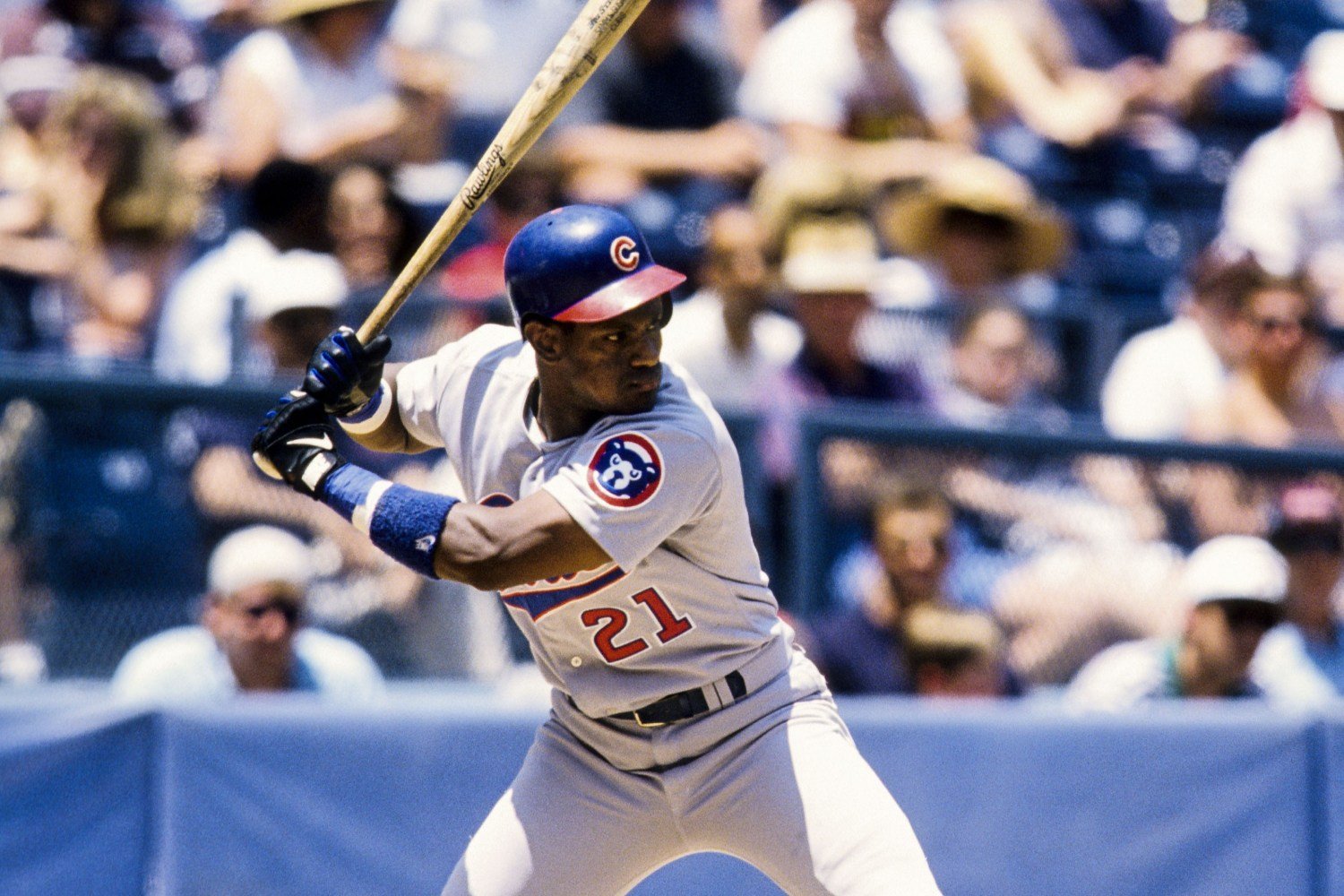 The 1996 Cubs season began with a lot of hope. They had established stars Mark Grace and Sammy Sosa, and there was a certain measure of excitement and perceived momentum attached to the return of team legend Ryne Sandberg. After retiring once and missing all of the 1995 season, Sandberg came back for 1996, and although no one was expecting him to return to the extraordinary heights he attained in his peak seasons, the club had missed him dearly, and getting him back created a buzz around the team. Early on, it looked like they might pay off those expectations, too. Their cleanup hitter and most dangerous slugger was Sosa, and if there had ever been anything to the specious charges that he was an accumulator of empty stats in meaningless games and moments, he bashed them over the head that spring. There was a walk-off home run in the 10th inning against the Reds on Apr. 17, his second of the game. Then there was another one on May 3 against the Mets. Two days later came the trifecta: another walk-off bomb to beat the Mets, this time in the 10th. That blast, too, was his second of the game. It was a remarkable string of huge homers, and that wasn't even the whole story. Sosa had a game-winning 10th-inning single in Los Angeles at the end of April, and a game-winning ninth-inning double in Atlanta in the third week of May. The team wasn't actually deep enough to be all that good, absent a true level jump from Sosa, and that showed up in between Sosa's heroics. After that third walkoff homer, they fell into a 5-16 May Malaise, even with Sosa delivering another win in that game in Atlanta. They then treaded water until July, with Sosa going through his then-customary streaks and slumps and no one else providing much of a spark when he struggled. Heading into the All-Star break, though, they found some momentum again, with a couple of wins heading into it to pull to 41-46. Sosa delivered the game-tying hit in a two-run ninth-inning comeback in the final contest of the first half, leading to a 13-inning victory. It was after the break, though, that Sosa really took over. That level jump I alluded to above happened. From the season's resumption on Jul. 11 through Aug. 20, Sosa batted .310/.371/.648, and swatted 13 home runs in 159 plate appearances. The Cubs went 21-16, fueled in large part by that breakout. This was the more balanced, lethal Sosa so many had waited for over the previous few years. He'd already been an All-Star, but this version of him was a very real MVP contender. He would probably have eclipsed 50 home runs that year, given the way he was hitting and the fact that he'd reached 40 by the third week in August. If he had, we would certainly remember his 1998 outburst less as a product of chemical enhancement and more as the natural outcome of a ferocious, highly accomplished home-run hitter getting to face expansion-emaciated pitching staffs. We'd also probably remember the 1996 Cubs as a lesser version of the 1998 team, because the way things were going, they had a real chance to win the weak NL Central. They were five games behind the leaders in a tight cluster on Aug. 20. That day, though, Tommy Hutton broke Sosa's wrist with a high and tight pitch, and the budding superstar was out for the year. The Cubs went 14-24 the rest of the way, including a heinous 3-15 within the Central. They finished 12 games out of first place, and while (from a wins above replacement lens) it's foolish to suggest that having Sosa could have made up that kind of gap, things didn't have to go anywhere near as badly as they did. Sosa was such a dynamic presence that his became an equally unsurvivable absence. The idea that Sosa was un-clutch was always silly. It's not as though there's a dearth of examples of him coming up with huge hits later in his career, either. When trying to really grasp what kind of player he was and the extent of his importance to the teams of which he was a part, though, it's that 1996 season—the way he carried them and kept them vaguely relevant early, and the way he exploded after the break and gave them a chance to compete until being taken off the field by a bad-luck injury—that best elucidates things. Sosa was a flawed player and teammate, but he was no creation of the juice, and he was no cancer in the clubhouse. He was an elite power hitter even before 1998, and but for an errant fastball amid the hottest streak of his career to that point, we might have comprehended that better.
 -
The most important year to properly understand the career of the Cubs' greatest slugger is one many Cubs fans have forgotten. It's understandable, but it's a shame, because once you remember it, everything about his career looks different. Image courtesy of © RVR Photos-Imagn Images The 1996 Cubs season began with a lot of hope. They had established stars Mark Grace and Sammy Sosa, and there was a certain measure of excitement and perceived momentum attached to the return of team legend Ryne Sandberg. After retiring once and missing all of the 1995 season, Sandberg came back for 1996, and although no one was expecting him to return to the extraordinary heights he attained in his peak seasons, the club had missed him dearly, and getting him back created a buzz around the team. Early on, it looked like they might pay off those expectations, too. Their cleanup hitter and most dangerous slugger was Sosa, and if there had ever been anything to the specious charges that he was an accumulator of empty stats in meaningless games and moments, he bashed them over the head that spring. There was a walk-off home run in the 10th inning against the Reds on Apr. 17, his second of the game. Then there was another one on May 3 against the Mets. Two days later came the trifecta: another walk-off bomb to beat the Mets, this time in the 10th. That blast, too, was his second of the game. It was a remarkable string of huge homers, and that wasn't even the whole story. Sosa had a game-winning 10th-inning single in Los Angeles at the end of April, and a game-winning ninth-inning double in Atlanta in the third week of May. The team wasn't actually deep enough to be all that good, absent a true level jump from Sosa, and that showed up in between Sosa's heroics. After that third walkoff homer, they fell into a 5-16 May Malaise, even with Sosa delivering another win in that game in Atlanta. They then treaded water until July, with Sosa going through his then-customary streaks and slumps and no one else providing much of a spark when he struggled. Heading into the All-Star break, though, they found some momentum again, with a couple of wins heading into it to pull to 41-46. Sosa delivered the game-tying hit in a two-run ninth-inning comeback in the final contest of the first half, leading to a 13-inning victory. It was after the break, though, that Sosa really took over. That level jump I alluded to above happened. From the season's resumption on Jul. 11 through Aug. 20, Sosa batted .310/.371/.648, and swatted 13 home runs in 159 plate appearances. The Cubs went 21-16, fueled in large part by that breakout. This was the more balanced, lethal Sosa so many had waited for over the previous few years. He'd already been an All-Star, but this version of him was a very real MVP contender. He would probably have eclipsed 50 home runs that year, given the way he was hitting and the fact that he'd reached 40 by the third week in August. If he had, we would certainly remember his 1998 outburst less as a product of chemical enhancement and more as the natural outcome of a ferocious, highly accomplished home-run hitter getting to face expansion-emaciated pitching staffs. We'd also probably remember the 1996 Cubs as a lesser version of the 1998 team, because the way things were going, they had a real chance to win the weak NL Central. They were five games behind the leaders in a tight cluster on Aug. 20. That day, though, Tommy Hutton broke Sosa's wrist with a high and tight pitch, and the budding superstar was out for the year. The Cubs went 14-24 the rest of the way, including a heinous 3-15 within the Central. They finished 12 games out of first place, and while (from a wins above replacement lens) it's foolish to suggest that having Sosa could have made up that kind of gap, things didn't have to go anywhere near as badly as they did. Sosa was such a dynamic presence that his became an equally unsurvivable absence. The idea that Sosa was un-clutch was always silly. It's not as though there's a dearth of examples of him coming up with huge hits later in his career, either. When trying to really grasp what kind of player he was and the extent of his importance to the teams of which he was a part, though, it's that 1996 season—the way he carried them and kept them vaguely relevant early, and the way he exploded after the break and gave them a chance to compete until being taken off the field by a bad-luck injury—that best elucidates things. Sosa was a flawed player and teammate, but he was no creation of the juice, and he was no cancer in the clubhouse. He was an elite power hitter even before 1998, and but for an errant fastball amid the hottest streak of his career to that point, we might have comprehended that better. View full article
-
Heh. Yeah, good deal both ways! But I have TERRIBLE news for Marlins fans who are dreaming of another Justin Bour situation here. I doubt there are even 500 plate appearances left in Mervis's MLB career. A little surprised he's not already en route to Korea or Japan.
-
It seemed inevitable that the briefly intriguing first base prospect would depart the organization this winter. Now, he's netted them a player who seems like a good fit for their thin bench. Image courtesy of © Lucas Boland-Imagn Images After non-tendering Mike Tauchman, Patrick Wisdom, and Nick Madrigal and trading Cody Bellinger and Isaac Paredes, the Cubs were left with a highly fluid bench—which is a nice way of saying that it was a bit of a mess. In one fell swoop Sunday, the team jettisoned a player who was overdue for an exit from their 40-man roster and acquired one who gives them a bit more positional clarity. By no means is Vidal Bruján a panacea for the Cubs bench. He's an out-of-options spare part who posted a .622 OPS in 2024 and doesn't hit the ball especially hard or run especially well. However, he brings a modicum of plate discipline and a wealth of positional versatility. He can play either middle infield position, third base, or anywhere in the outfield, which gives the team security they were missing in the event of injuries to Dansby Swanson or Pete Crow-Armstrong and a switch-hitting complement to Nico Hoerner and Matt Shaw. It's unlikely that both Bruján and Rule 5 draftee Gage Workman will make the roster. It's not even clear how Bruján and Miles Mastrobuoni would fit without being redundant. This is a small-scale move, then, and might come to virtually nothing at all. Since Matt Mervis was already an unneeded piece, though, the move incrementally improves the team's menu of options as they look toward spring training. Bruján's upside is still somewhat better than those of Mastrobuoni or Luis Vázquez, and he's much more likely to pan out as a usable backup infielder than are Vázquez or Workman. His experience in the outfield is especially important. As currently constructed, the Cubs would need to turn to Kevin Alcántara in the even of any meaningful injury to Crow-Armstrong. That overlooks Alexander Canario, but while the righty slugger does have plenty of experience in center field, he's not going to work there as more than an emergency stopgap in the big leagues. Bruján would give the team a better short-term option if Crow-Armstrong were to get banged up and need a few days off, though they'd still call up Alcántara if he ever needed a few weeks instead. Bruján swings a lot, but he makes pretty good swing decisions—that is, he swings a ton within the zone, but doesn't chase all that much. That suggests that he has offensive upside into which the Marlins were unable to help him tap, which is no surprise: that team might be the worst in baseball at developing hitters. He's not likely to blossom into a regular, but he does have the potential to get on base at a better clip than Mastrobuoni or Vázquez, because he makes contact more often. The Cubs must aim higher than this for any but the last position-player spot on their roster, but Mervis had no role to play at all in their future, so this is just a better way to spend a 40-man roster spot and a roll of the dice on a multi-talented player who might have suffered from the Marlins' woeful player development over the last two years. If the team does end up carrying both Bruján and either Mastrobuoni or Workman, it will mark a failure of creativity and resource allocation over the balance of this offseason, but it doesn't seem likely to come to that. View full article
-
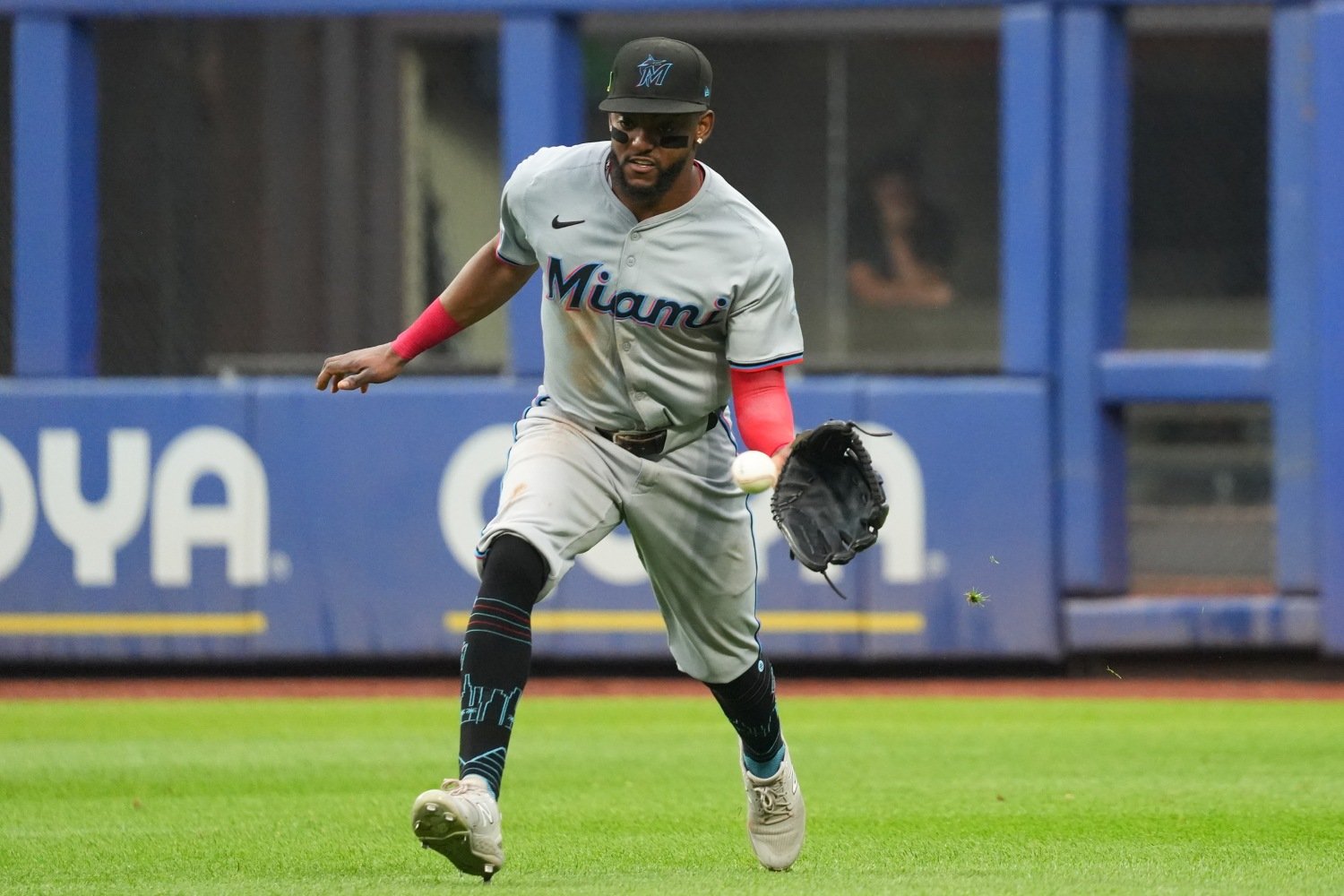 After non-tendering Mike Tauchman, Patrick Wisdom, and Nick Madrigal and trading Cody Bellinger and Isaac Paredes, the Cubs were left with a highly fluid bench—which is a nice way of saying that it was a bit of a mess. In one fell swoop Sunday, the team jettisoned a player who was overdue for an exit from their 40-man roster and acquired one who gives them a bit more positional clarity. By no means is Vidal Bruján a panacea for the Cubs bench. He's an out-of-options spare part who posted a .622 OPS in 2024 and doesn't hit the ball especially hard or run especially well. However, he brings a modicum of plate discipline and a wealth of positional versatility. He can play either middle infield position, third base, or anywhere in the outfield, which gives the team security they were missing in the event of injuries to Dansby Swanson or Pete Crow-Armstrong and a switch-hitting complement to Nico Hoerner and Matt Shaw. It's unlikely that both Bruján and Rule 5 draftee Gage Workman will make the roster. It's not even clear how Bruján and Miles Mastrobuoni would fit without being redundant. This is a small-scale move, then, and might come to virtually nothing at all. Since Matt Mervis was already an unneeded piece, though, the move incrementally improves the team's menu of options as they look toward spring training. Bruján's upside is still somewhat better than those of Mastrobuoni or Luis Vázquez, and he's much more likely to pan out as a usable backup infielder than are Vázquez or Workman. His experience in the outfield is especially important. As currently constructed, the Cubs would need to turn to Kevin Alcántara in the even of any meaningful injury to Crow-Armstrong. That overlooks Alexander Canario, but while the righty slugger does have plenty of experience in center field, he's not going to work there as more than an emergency stopgap in the big leagues. Bruján would give the team a better short-term option if Crow-Armstrong were to get banged up and need a few days off, though they'd still call up Alcántara if he ever needed a few weeks instead. Bruján swings a lot, but he makes pretty good swing decisions—that is, he swings a ton within the zone, but doesn't chase all that much. That suggests that he has offensive upside into which the Marlins were unable to help him tap, which is no surprise: that team might be the worst in baseball at developing hitters. He's not likely to blossom into a regular, but he does have the potential to get on base at a better clip than Mastrobuoni or Vázquez, because he makes contact more often. The Cubs must aim higher than this for any but the last position-player spot on their roster, but Mervis had no role to play at all in their future, so this is just a better way to spend a 40-man roster spot and a roll of the dice on a multi-talented player who might have suffered from the Marlins' woeful player development over the last two years. If the team does end up carrying both Bruján and either Mastrobuoni or Workman, it will mark a failure of creativity and resource allocation over the balance of this offseason, but it doesn't seem likely to come to that.
 -
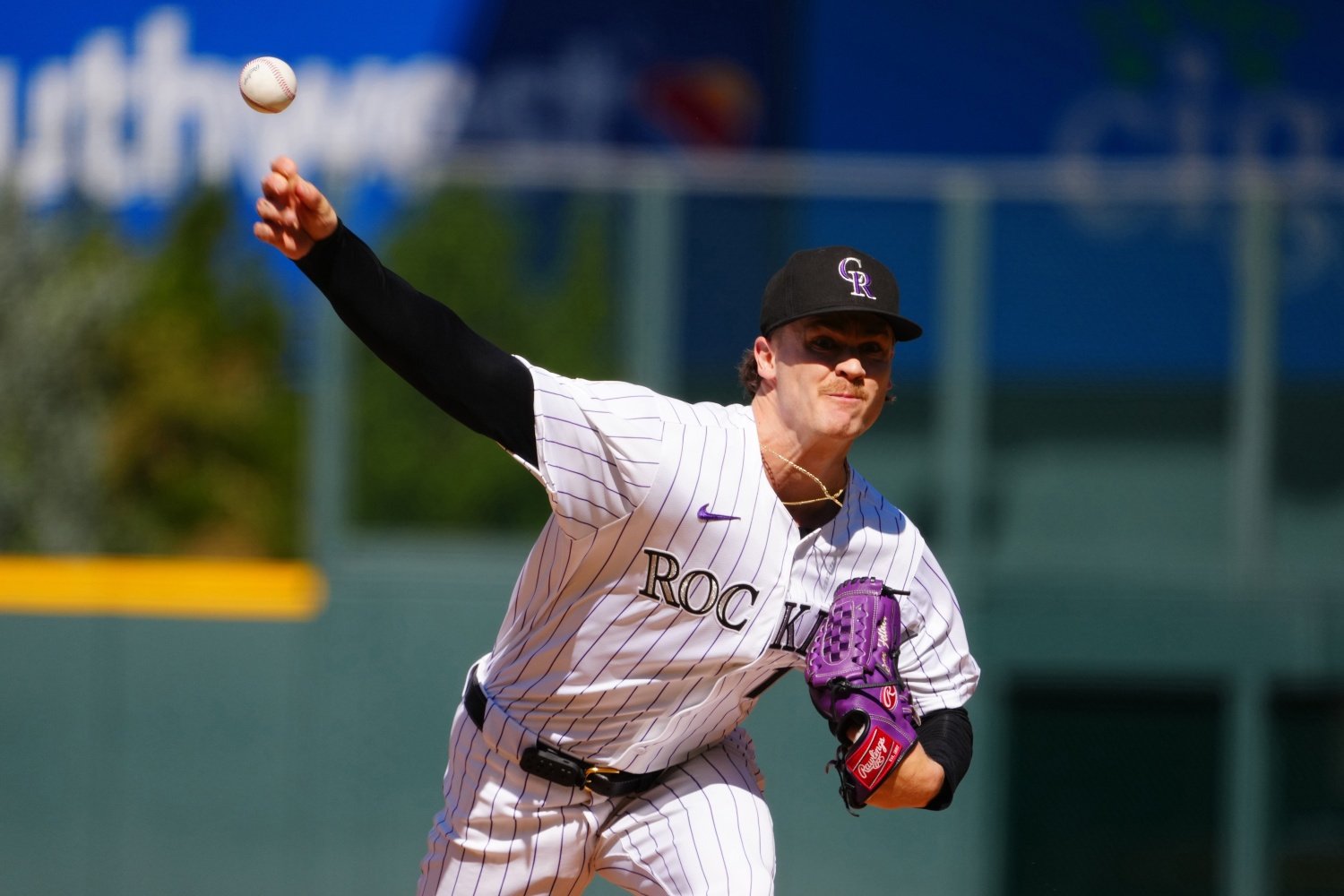 When I ran down a list of possible players the Cubs could target to bolster their starting rotation in the wake of a Jesús Luzardo trade falling apart last week, the name of Rockies righthander Ryan Feltner drew raised eyebrows. He's much, much less of a brand name than hurlers like Luis Castillo, Dylan Cease, Walker Buehler, Sean Manaea, Corbin Burnes, or Shane McClanahan, even if most fans understood already that some of those hurlers were crossed off the Cubs' wishlist for financial reasons. He didn't seem like a great fit with the rest of the group. Thus, I'm here to answer your implied question, with gusto: Yes, Ryan Feltner. Yes, really. The former fourth-round pick is eligible for arbitration this winter, the first of what will be four such seasons because he qualifies as a Super Two guy. He's not a hot name on the market, but he should be available, because the Rockies are more than one pitcher or four years from contending in the heated NL West. They are, to put it into terms that suit the season, the equivalent to the Bears in the NFC North: a disastrously mismanaged team with some talent (but not anywhere near enough of it), utterly unable to keep up with fierce competition in their division. They need to continue leaning into a rebuild. Feltner, 28, had a 4.49 ERA and an unimpressive 19.9% strikeout rate in 2024, which was his first full season in the Rockies rotation. Automatically, though, you have to give his stock a bit of helium, for each of several small reasons. First, of course, he calls Coors Field home, which can have all kinds of knock-on effects on pitcher development. Second, and related, he pitches for the Rockies, who are bad at pitcher development in ways that go beyond the impact of their park and its elevation. Third, what would have been his first full season in the majors was cut in half by a line drive off the bat of Nick Castellanos, which hit him in the head and fractured his skull, shelving him for three months in 2023. Those are the obvious things. The less obvious and even more important things are these: Feltner has a six-pitch mix and throws 95 miles per hour, with some natural cut on his four-seamer. His is precisely the kind of repertoire the Cubs like, and the sweeper he added in 2024 is the best weapon in his arsenal—which means that evaluations of him prior to its inclusion need to be discounted and we need to rapidly update our sense of who and what he is. In 2024 (almost 2025!), it's perfectly possible to evaluate how a pitcher's fundamental pitch characteristics are affected by a place like Coors Field—and we can see that, in Feltner's case, it's a real and dramatic impact. Baseball Prospectus has a suite of metrics for pitch-by-pitch evaluation, akin to the more prevalent Stuff+ you can find on FanGraphs. The BP flavor of the models doesn't just rate pitches and then scale the scores to 100, though. They express the expected run value of each pitch type, per 100 pitches thrown. There's StuffPro, which gives a per-100 run value to each pitch type based on release point, movement characteristics, handedness and count; and PitchPro, which does the same but includes location as an input. Negative numbers are good things, because that means the pitch should tend to prevent runs. Positive numbers are bad; they mean more runs on the board. Here are Feltner's StuffPro and PitchPro for each of his pitch types, at home and away, for 2024: Pitch Classification Home/Away Pitches PitchPro StuffPro CH away 189 0.1 -0.3 CU away 124 -0.5 -0.3 FA away 467 0.2 0.3 SI away 215 0.7 0.5 SL away 294 -0.6 -0.2 SW away 64 -2.1 -1.4 CH home 182 0.1 0 CU home 134 -0.2 -0.3 FA home 462 0.4 0.8 SI home 143 0.9 1.4 SL home 226 0.4 0.1 SW home 71 -0.8 -1.1 His slider is just a bit better than average on the road, but it's just on the wrong side of average at home. His two fastballs both play considerably better away from Coors Field, and his changeup and curve are incrementally better when he's not there, too. Weighting his StuffPro and PitchPro grades by pitch usage in each location, you can see how much more effective his arsenal is if he's not at Coors Field than if he is. Away Pit. 1353 Away PitchPro -0.081 Away StuffPro 0.005 Home Pit. 1218 Home PitchPro 0.278 Home StuffPro 0.389 On the basis of his pitches' actual, physical characteristics (and locations) alone, Feltner was about five runs worse at home than on the road in 2024. That's before accounting for the fact that contact is more damaging at Coors than elsewhere. It also doesn't account for the defense behind him, which was roughly average in 2024. In other words, bring Feltner to Wrigley Field in 2025 and put him in front of one of the league's best defenses, and he might be a good 12 runs better than he was in 2024—before accounting for any changes to his pitch mix or strides in pitch design the team could make, taking advantage of being better at pitcher development than the hapless Rockies. That 4.49 ERA comes down to 3.83 on that alone. The tweaks are easy, too. That sweeper that stands out as such a strong offering already showed up more as the season went along; the Cubs could easily double his usage of it. They could, very plausibly, redesign his changeup, which moves more like a splitter; they might well help him achieve more consistent depth on it. He could be a much better pitcher against lefty batters with a slight improvement to that change. Feltner would not be an especially easy acquisition. He would probably cost the Cubs one of Owen Caissie or James Triantos, as many assumed Luzardo would have, and they'd need to send Colorado an arm, too—maybe someone like Michael Arias or Caleb Kilian, but maybe someone as high-profile as Jordan Wicks. The opportunities Feltner presents are unique, though. Any similarly talented and accomplished pitcher with four years of team control left would be either totally unavailable, or considerably more expensive. Feltner's market value is dinged by his home park, and his practical trade value is limited by the fact that the Rockies probably don't quite realize what they have. It's a riskier move than acquiring someone like Castillo, but the price is much, much better, because the money he wouldn't cost could be put toward big splashes in free agency to close out this crucial offseason for the Cubs.
 -
A flurry of pre-holiday transactions has taken some options off the Cubs' menu of ways to spend their considerable payroll capacity this offseason. One hurler suffering serious Coors Field Syndrome could be the key to the team's response to that circumstance. When I ran down a list of possible players the Cubs could target to bolster their starting rotation in the wake of a Jesús Luzardo trade falling apart last week, the name of Rockies righthander Ryan Feltner drew raised eyebrows. He's much, much less of a brand name than hurlers like Luis Castillo, Dylan Cease, Walker Buehler, Sean Manaea, Corbin Burnes, or Shane McClanahan, even if most fans understood already that some of those hurlers were crossed off the Cubs' wishlist for financial reasons. He didn't seem like a great fit with the rest of the group. Thus, I'm here to answer your implied question, with gusto: Yes, Ryan Feltner. Yes, really. The former fourth-round pick is eligible for arbitration this winter, the first of what will be four such seasons because he qualifies as a Super Two guy. He's not a hot name on the market, but he should be available, because the Rockies are more than one pitcher or four years from contending in the heated NL West. They are, to put it into terms that suit the season, the equivalent to the Bears in the NFC North: a disastrously mismanaged team with some talent (but not anywhere near enough of it), utterly unable to keep up with fierce competition in their division. They need to continue leaning into a rebuild. Feltner, 28, had a 4.49 ERA and an unimpressive 19.9% strikeout rate in 2024, which was his first full season in the Rockies rotation. Automatically, though, you have to give his stock a bit of helium, for each of several small reasons. First, of course, he calls Coors Field home, which can have all kinds of knock-on effects on pitcher development. Second, and related, he pitches for the Rockies, who are bad at pitcher development in ways that go beyond the impact of their park and its elevation. Third, what would have been his first full season in the majors was cut in half by a line drive off the bat of Nick Castellanos, which hit him in the head and fractured his skull, shelving him for three months in 2023. Those are the obvious things. The less obvious and even more important things are these: Feltner has a six-pitch mix and throws 95 miles per hour, with some natural cut on his four-seamer. His is precisely the kind of repertoire the Cubs like, and the sweeper he added in 2024 is the best weapon in his arsenal—which means that evaluations of him prior to its inclusion need to be discounted and we need to rapidly update our sense of who and what he is. In 2024 (almost 2025!), it's perfectly possible to evaluate how a pitcher's fundamental pitch characteristics are affected by a place like Coors Field—and we can see that, in Feltner's case, it's a real and dramatic impact. Baseball Prospectus has a suite of metrics for pitch-by-pitch evaluation, akin to the more prevalent Stuff+ you can find on FanGraphs. The BP flavor of the models doesn't just rate pitches and then scale the scores to 100, though. They express the expected run value of each pitch type, per 100 pitches thrown. There's StuffPro, which gives a per-100 run value to each pitch type based on release point, movement characteristics, handedness and count; and PitchPro, which does the same but includes location as an input. Negative numbers are good things, because that means the pitch should tend to prevent runs. Positive numbers are bad; they mean more runs on the board. Here are Feltner's StuffPro and PitchPro for each of his pitch types, at home and away, for 2024: Pitch Classification Home/Away Pitches PitchPro StuffPro CH away 189 0.1 -0.3 CU away 124 -0.5 -0.3 FA away 467 0.2 0.3 SI away 215 0.7 0.5 SL away 294 -0.6 -0.2 SW away 64 -2.1 -1.4 CH home 182 0.1 0 CU home 134 -0.2 -0.3 FA home 462 0.4 0.8 SI home 143 0.9 1.4 SL home 226 0.4 0.1 SW home 71 -0.8 -1.1 His slider is just a bit better than average on the road, but it's just on the wrong side of average at home. His two fastballs both play considerably better away from Coors Field, and his changeup and curve are incrementally better when he's not there, too. Weighting his StuffPro and PitchPro grades by pitch usage in each location, you can see how much more effective his arsenal is if he's not at Coors Field than if he is. Away Pit. 1353 Away PitchPro -0.081 Away StuffPro 0.005 Home Pit. 1218 Home PitchPro 0.278 Home StuffPro 0.389 On the basis of his pitches' actual, physical characteristics (and locations) alone, Feltner was about five runs worse at home than on the road in 2024. That's before accounting for the fact that contact is more damaging at Coors than elsewhere. It also doesn't account for the defense behind him, which was roughly average in 2024. In other words, bring Feltner to Wrigley Field in 2025 and put him in front of one of the league's best defenses, and he might be a good 12 runs better than he was in 2024—before accounting for any changes to his pitch mix or strides in pitch design the team could make, taking advantage of being better at pitcher development than the hapless Rockies. That 4.49 ERA comes down to 3.83 on that alone. The tweaks are easy, too. That sweeper that stands out as such a strong offering already showed up more as the season went along; the Cubs could easily double his usage of it. They could, very plausibly, redesign his changeup, which moves more like a splitter; they might well help him achieve more consistent depth on it. He could be a much better pitcher against lefty batters with a slight improvement to that change. Feltner would not be an especially easy acquisition. He would probably cost the Cubs one of Owen Caissie or James Triantos, as many assumed Luzardo would have, and they'd need to send Colorado an arm, too—maybe someone like Michael Arias or Caleb Kilian, but maybe someone as high-profile as Jordan Wicks. The opportunities Feltner presents are unique, though. Any similarly talented and accomplished pitcher with four years of team control left would be either totally unavailable, or considerably more expensive. Feltner's market value is dinged by his home park, and his practical trade value is limited by the fact that the Rockies probably don't quite realize what they have. It's a riskier move than acquiring someone like Castillo, but the price is much, much better, because the money he wouldn't cost could be put toward big splashes in free agency to close out this crucial offseason for the Cubs. View full article
- 3 replies
-
- 1
-

-
- ryan feltner
- walker buehler
- (and 2 more)
-
Should Cubs Engage Rays on Shane McClanahan, or Shane Baz?
Matthew Trueblood posted an article in Cubs
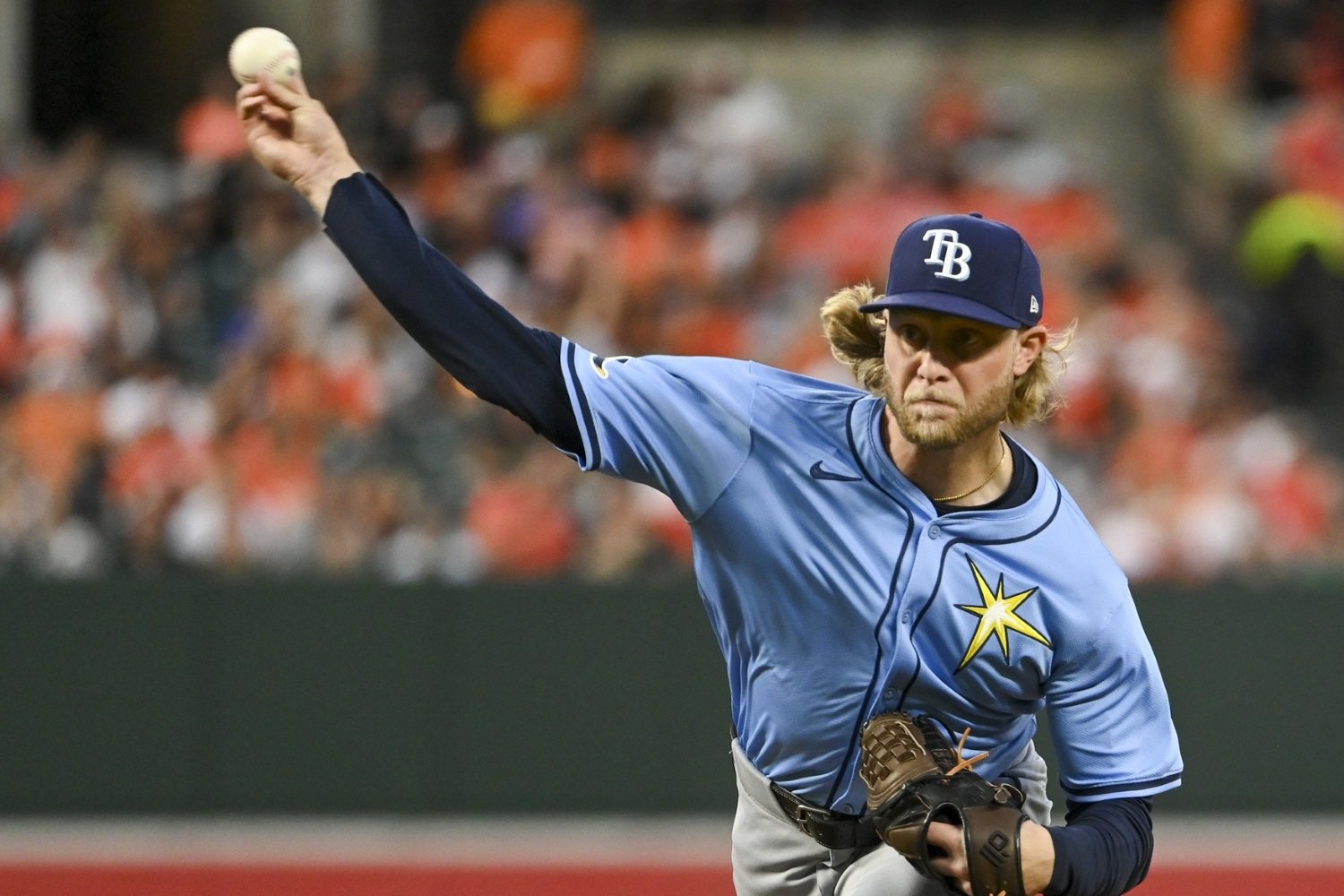 Coming into this offseason, the Rays knew they needed to clear some payroll, and that the most sensible way to do so would be by trading from their pitching surplus. They traded Jeffrey Springs to the Athletics in a package trade several days ago, but they might still need to reconfigure their roster a bit as they head into a long season (and perhaps more) at a substitute home away from Tropicana Field. That could line up perfectly with the Cubs' progression of moves this winter, because they remain in search of an upgrade to their starting rotation—and the Rays have two talented hurlers ready to make a little bit of serious money, whom they might therefore be willing to trade. It's a tale of two Shanes. Shane McClanahan is the more obvious target, because he's left-handed; we know how much the Cubs love to collect southpaws. He also has three years of team control remaining, and will make a manageable $3.6 million in 2025. That will be the second season of multi-year deal to which he and the Rays agreed last winter. He's also a legitimate top-of-the-rotation starter. He comes at hitters with four plus pitches. His fastball sits 97 and scrapes 100, and he has a slider, curveball, and changeup that play nicely off of it. He's made 74 career starts, with a 3.02 ERA, a 28.0% strikeout rate and a 7.1% walk rate. This is all good news. Here's the great big 'but': McClanahan underwent his second Tommy John surgery in August 2023. He hasn't pitched in the big leagues since then. McClanahan is as high-upside as Garrett Crochet, in whom the Cubs had interest before he landed in Boston, but he's also an even riskier bet than Jesús Luzardo, whom the team scrapped plans to acquire earlier this week. He wouldn't be available if there weren't major injury questions hanging here, but unless the Rays discount their asking price for him on that basis, it's hard to imagine a deal coming together. Shane Baz offers a lot of the same features, but some important differences, too. He's a right-hander, and his Tommy John surgery was back in 2022, so he came back and pitched well in the second half of 2024. He didn't miss as many bats as one might expect during that stint, but he's as well-rounded a pitcher as McClanahan. His fastball is one of the best in the league, averaging 96 miles per hour with more ride and run than one would expect, and he has terrific feel for spin to go with that. His changeup isn't as good as McClanahan's, but being a righty, he doesn't need that pitch as badly as McClanahan does. MLB Trade Rumors only projects Baz to make $1.9 million in 2025, so the urgency to make a trade doesn't have to be all that great on Tampa's side. However, he's also a Super Two player, so this will be the first of four trips through arbitration for him. Players who qualify for Super Two status get very expensive in the final two years of their team control; the Rays might prefer to move him while they have more leverage, and there's more team control to receive compensation for. Either of these guys would cost the Cubs a pair of top prospects and a strong complementary arm. It's not easy to give up so much talent, and the odds of such a trade feel fairly remote. Still, as the team explores their options and the offseason slowly moves forward (narrowing those options in the process), McClanahan and Baz have to be on their radar.
 -
In the Cubs' relentless search for a rotation upgrade, the final frontier might be Tampa Bay. Image courtesy of © Tommy Gilligan-Imagn Images Coming into this offseason, the Rays knew they needed to clear some payroll, and that the most sensible way to do so would be by trading from their pitching surplus. They traded Jeffrey Springs to the Athletics in a package trade several days ago, but they might still need to reconfigure their roster a bit as they head into a long season (and perhaps more) at a substitute home away from Tropicana Field. That could line up perfectly with the Cubs' progression of moves this winter, because they remain in search of an upgrade to their starting rotation—and the Rays have two talented hurlers ready to make a little bit of serious money, whom they might therefore be willing to trade. It's a tale of two Shanes. Shane McClanahan is the more obvious target, because he's left-handed; we know how much the Cubs love to collect southpaws. He also has three years of team control remaining, and will make a manageable $3.6 million in 2025. That will be the second season of multi-year deal to which he and the Rays agreed last winter. He's also a legitimate top-of-the-rotation starter. He comes at hitters with four plus pitches. His fastball sits 97 and scrapes 100, and he has a slider, curveball, and changeup that play nicely off of it. He's made 74 career starts, with a 3.02 ERA, a 28.0% strikeout rate and a 7.1% walk rate. This is all good news. Here's the great big 'but': McClanahan underwent his second Tommy John surgery in August 2023. He hasn't pitched in the big leagues since then. McClanahan is as high-upside as Garrett Crochet, in whom the Cubs had interest before he landed in Boston, but he's also an even riskier bet than Jesús Luzardo, whom the team scrapped plans to acquire earlier this week. He wouldn't be available if there weren't major injury questions hanging here, but unless the Rays discount their asking price for him on that basis, it's hard to imagine a deal coming together. Shane Baz offers a lot of the same features, but some important differences, too. He's a right-hander, and his Tommy John surgery was back in 2022, so he came back and pitched well in the second half of 2024. He didn't miss as many bats as one might expect during that stint, but he's as well-rounded a pitcher as McClanahan. His fastball is one of the best in the league, averaging 96 miles per hour with more ride and run than one would expect, and he has terrific feel for spin to go with that. His changeup isn't as good as McClanahan's, but being a righty, he doesn't need that pitch as badly as McClanahan does. MLB Trade Rumors only projects Baz to make $1.9 million in 2025, so the urgency to make a trade doesn't have to be all that great on Tampa's side. However, he's also a Super Two player, so this will be the first of four trips through arbitration for him. Players who qualify for Super Two status get very expensive in the final two years of their team control; the Rays might prefer to move him while they have more leverage, and there's more team control to receive compensation for. Either of these guys would cost the Cubs a pair of top prospects and a strong complementary arm. It's not easy to give up so much talent, and the odds of such a trade feel fairly remote. Still, as the team explores their options and the offseason slowly moves forward (narrowing those options in the process), McClanahan and Baz have to be on their radar. View full article
-
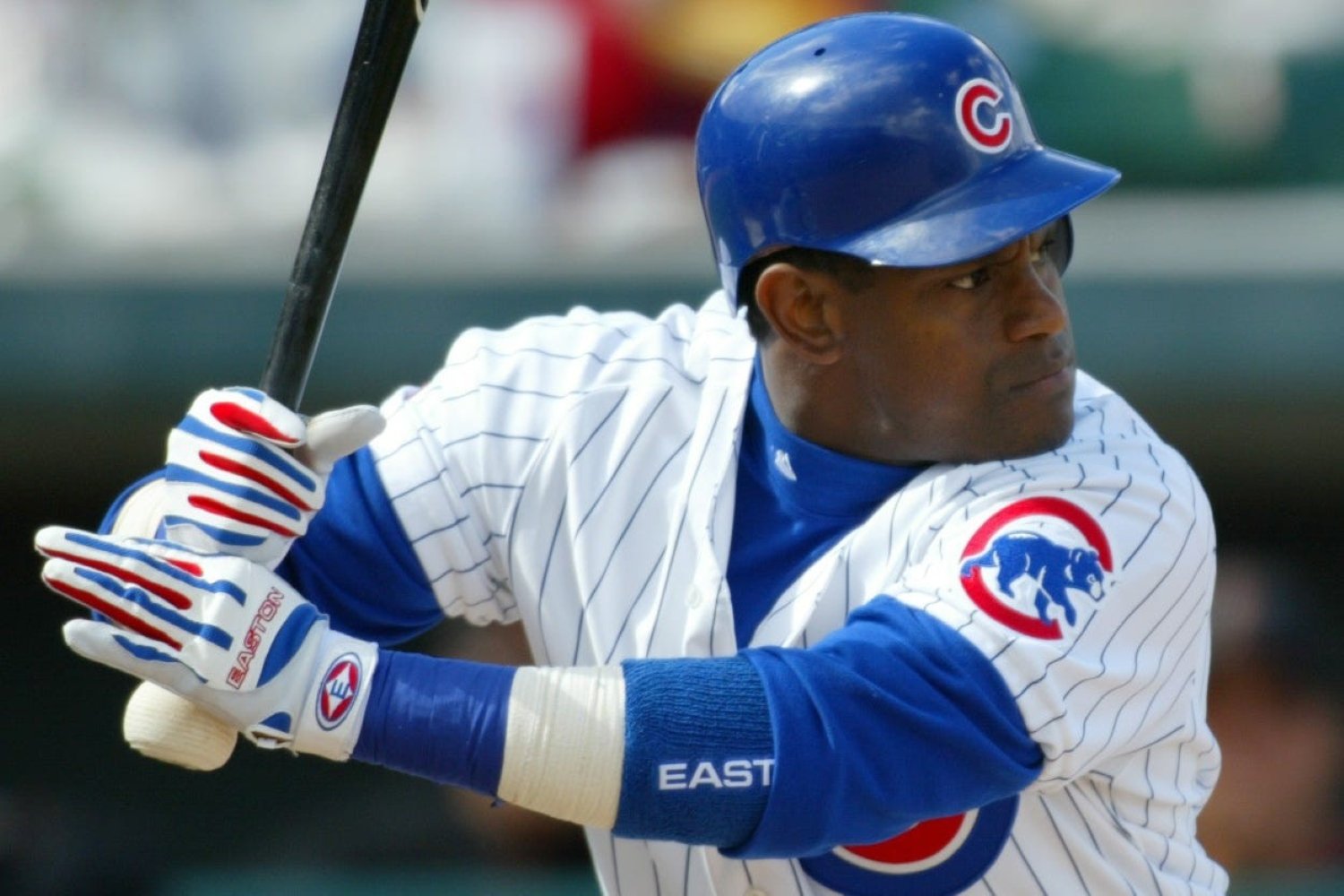 Out of the blue, on a cold Thursday afternoon in December, Sammy Sosa struck like a lightning bolt—just as he did on so many warmer, semi-soporific summer weekdays throughout the 1990s and 2000s. He issued a statement that, if Tom Ricketts can be bothered to keep his word to Cubs fans, will pave the way for his long-overdue return to a Cubs fan base that has missed his presence for the last 20 years. Jon Heyman reports via tweet that it is, indeed, Ricketts's intention to invite Sosa back for the Cubs Convention, and presumably, there will soon be a sunny summer weekend day on which Sosa's number can be retired and raised up one of Wrigley Field's foul poles. Look, this is a bittersweet moment. It's akin to a reunion between a parent and child who spent two decades at odds, not speaking over something that was water under the bridge all along—but which, because it so divided them, negatively affected both of them ever after. It's good to see them reconcile, but that very reconciliation also underscores the excruciating, unnecessary misery they carried for so long. Our lives are finite, precious, and plenty hard enough. To set aside long-simmering bitterness or resentment or estrangement is wonderful, but it's also an acknowledgment that a finite, precious, already-hard thing was made shorter and harder and sadder in avoidable fashion. Sosa published a full statement, perhaps not fully satisfactory or explicit in its admissions but earnest enough. It is, down to the last word, Sammy, who was always well-meaning but a bit self-shielding and self-aggrandizing. It focuses mostly on how badly he wanted to excel and the relationship he felt with fans, and that part rings true. For far, far too long, Sosa's career has been disrespected and diminished—treated as a creation of his unadmitted steroid use, when it was nothing of the sort. Sosa was phenomenally talented and a tenacious worker, and his late-blooming step from star to superstar did owe something to chemistry, but it also owed a great deal to psychology and to plain old sweat equity. He grinded. He broke down the approach that made him a three-time 30/30 man and did a whole set of new things, including becoming much more disciplined at the plate. He bulked up, thanks to things that were not taken purely to help him recover from injuries, and that buried the lithe and gifted defensive center fielder who slid over to right in the mid-1990s and showed off a stellar arm. In his steroid-era career phase, he was a bit one-dimensional; his speed and defense collapsed. Yet, he was a very good player before he turned that corner, and he was a truly great one—a transcendently awesome one—after he did so. Again, you're only hurting yourself if you tell yourself the lie that he achieved that greatness strictly thanks to steroids. Was he a good teammate? The only fair answer is "sometimes". Was he a selfish person? The most honest answer is "yes". Sosa also isn't without darker stains than steroid use; he was accused of domestic violence in 1990 and it rarely comes up in discussions of his legacy. That can and should, perhaps, come to the forefront now. For most of the last two decades, though, the national baseball media has treated Sosa as a fraud and a liar, and it's had nothing to do with anything except PEDs. Some fans and (most painfully) the team to which he gave so much of himself have done the same thing. By admitting his mistakes in this area and apologizing, Sosa is trying to clear the air. He's the one crossing the divide. He's meeting everyone more than halfway. His legacy is complicated. His dedication to the fans often felt real, but it was certainly self-serving, too. Ironically, his reunion with the team begins with them inviting him to the Convention, an event he got into the habit of skipping each year. He was beloved by fans, but he tended to love them back most when it was most valuable to him. Still, this is special. It's healing. The scars still exist, because the cuts were real and deep, but there's healing here. I was eight years old in 1997, when I became a baseball fan in earnest. My parents got us cable for the first time, and so I was able to find the Cubs from our home in Northeast Wisconsin for the first time. It was Sosa, naturally, who seized and ensorcelled him. He was everything a kid wants a ballplayer to be: powerful, fast, hard-throwing, full of hustle; smiley, showy, bubbly. There was the sprint to right, the salutes to the bleachers, the hop on home runs, the kisses and the water poured over his head in the dugout. There was so much more to him than there was to anyone else on the field—or at least, he was less reserved and more willing to throw everything about himself out there before us, his passion and his bravado and his talent, than anyone else on the field. For the next seven years, I was a Cubs fan, and a baseball fan, but I was also a Sammy Sosa fan. It was a separate and almost equally important thing. His charisma was as powerful as his swing. He might have put on a show, and he might have hidden away unpleasant things about himself, and he might have set Ryne Sandberg's teeth on edge, but he wasn't lying to us about loving the game fiercely. He wasn't lying about wanting to win and to succeed. That much oozed from him. This is a happy occasion. We can share memories like these again, and savor and sit with them, and a little bit of the veil of tears separating us from them has been lifted away. Hopefully, this is a moment when many fans across the country can revisit his career and realize that it wasn't somehow fake, that his success was less legitimate than that of Mark McGwire or Barry Bonds or Roger Clemens. Hopefully, it's a moment when Sosa can keep making amends, and we can see Mark Grace, Kerry Wood, and (the desperately sick) Sandberg and Sosa bury old hatchets. I went to my first game at Wrigley with my dad in September 1997. It was Sandberg's last game there. It was (though we didn't know it yet) Harry Caray's last day in the booth. It was the end of a disappointing season for Sosa, the one between his thriving power-speed phase and his Hulkamania homer extravaganza. That game, like every kid's first game, was pure magic to me. The Cubs won 11-3, and Sandberg got his waves and waves of applause, and I didn't even mind that Sammy went 0-for-5. After the game, my dad and I waited at the old, rickety chainlink fence outside player parking, where there's now a green field and a beer garden from which the Ricketts family makes millions off the legacy of Sosa. The crowd was thick, so my dad put me on his shoulders to try to get an autograph. Sandberg came out, and people went nuts for him. He was close to me, but I was a little half-hearted in my pleas. Then came Sammy. I damn near fell off my dad's neck, leaning and lunging and imploring—until that huge, strong hand reached up gently and took my ball, and signed it and handed it back. I would not be writing these words if that moment hadn't happened. I don't know how much this will really clear the air. I don't know if we can now pretend, in any way, that the last 20 years didn't happen—that Sosa, too, didn't become something of a victim, so ostracized and marginalized and saddened by it all that he went through some deep personal hurt, even if it was partially of his own making. But I'm glad that he'll be back inside the Friendly Confines someday, because that building might not be standing today if he hadn't been who he was, for all the years he was that way. Steroids or not, Sammy Sosa was a tremendous baseball player, and the way he played the game and filled up the game deserves to be fondly remembered.
 -
The most important player in Cubs history might finally be allowed to come home, after fessing up to some of his sins in a statement Thursday. Image courtesy of © Robert Hanashiro via Imagn Content Services, LLC Out of the blue, on a cold Thursday afternoon in December, Sammy Sosa struck like a lightning bolt—just as he did on so many warmer, semi-soporific summer weekdays throughout the 1990s and 2000s. He issued a statement that, if Tom Ricketts can be bothered to keep his word to Cubs fans, will pave the way for his long-overdue return to a Cubs fan base that has missed his presence for the last 20 years. Jon Heyman reports via tweet that it is, indeed, Ricketts's intention to invite Sosa back for the Cubs Convention, and presumably, there will soon be a sunny summer weekend day on which Sosa's number can be retired and raised up one of Wrigley Field's foul poles. Look, this is a bittersweet moment. It's akin to a reunion between a parent and child who spent two decades at odds, not speaking over something that was water under the bridge all along—but which, because it so divided them, negatively affected both of them ever after. It's good to see them reconcile, but that very reconciliation also underscores the excruciating, unnecessary misery they carried for so long. Our lives are finite, precious, and plenty hard enough. To set aside long-simmering bitterness or resentment or estrangement is wonderful, but it's also an acknowledgment that a finite, precious, already-hard thing was made shorter and harder and sadder in avoidable fashion. Sosa published a full statement, perhaps not fully satisfactory or explicit in its admissions but earnest enough. It is, down to the last word, Sammy, who was always well-meaning but a bit self-shielding and self-aggrandizing. It focuses mostly on how badly he wanted to excel and the relationship he felt with fans, and that part rings true. For far, far too long, Sosa's career has been disrespected and diminished—treated as a creation of his unadmitted steroid use, when it was nothing of the sort. Sosa was phenomenally talented and a tenacious worker, and his late-blooming step from star to superstar did owe something to chemistry, but it also owed a great deal to psychology and to plain old sweat equity. He grinded. He broke down the approach that made him a three-time 30/30 man and did a whole set of new things, including becoming much more disciplined at the plate. He bulked up, thanks to things that were not taken purely to help him recover from injuries, and that buried the lithe and gifted defensive center fielder who slid over to right in the mid-1990s and showed off a stellar arm. In his steroid-era career phase, he was a bit one-dimensional; his speed and defense collapsed. Yet, he was a very good player before he turned that corner, and he was a truly great one—a transcendently awesome one—after he did so. Again, you're only hurting yourself if you tell yourself the lie that he achieved that greatness strictly thanks to steroids. Was he a good teammate? The only fair answer is "sometimes". Was he a selfish person? The most honest answer is "yes". Sosa also isn't without darker stains than steroid use; he was accused of domestic violence in 1990 and it rarely comes up in discussions of his legacy. That can and should, perhaps, come to the forefront now. For most of the last two decades, though, the national baseball media has treated Sosa as a fraud and a liar, and it's had nothing to do with anything except PEDs. Some fans and (most painfully) the team to which he gave so much of himself have done the same thing. By admitting his mistakes in this area and apologizing, Sosa is trying to clear the air. He's the one crossing the divide. He's meeting everyone more than halfway. His legacy is complicated. His dedication to the fans often felt real, but it was certainly self-serving, too. Ironically, his reunion with the team begins with them inviting him to the Convention, an event he got into the habit of skipping each year. He was beloved by fans, but he tended to love them back most when it was most valuable to him. Still, this is special. It's healing. The scars still exist, because the cuts were real and deep, but there's healing here. I was eight years old in 1997, when I became a baseball fan in earnest. My parents got us cable for the first time, and so I was able to find the Cubs from our home in Northeast Wisconsin for the first time. It was Sosa, naturally, who seized and ensorcelled him. He was everything a kid wants a ballplayer to be: powerful, fast, hard-throwing, full of hustle; smiley, showy, bubbly. There was the sprint to right, the salutes to the bleachers, the hop on home runs, the kisses and the water poured over his head in the dugout. There was so much more to him than there was to anyone else on the field—or at least, he was less reserved and more willing to throw everything about himself out there before us, his passion and his bravado and his talent, than anyone else on the field. For the next seven years, I was a Cubs fan, and a baseball fan, but I was also a Sammy Sosa fan. It was a separate and almost equally important thing. His charisma was as powerful as his swing. He might have put on a show, and he might have hidden away unpleasant things about himself, and he might have set Ryne Sandberg's teeth on edge, but he wasn't lying to us about loving the game fiercely. He wasn't lying about wanting to win and to succeed. That much oozed from him. This is a happy occasion. We can share memories like these again, and savor and sit with them, and a little bit of the veil of tears separating us from them has been lifted away. Hopefully, this is a moment when many fans across the country can revisit his career and realize that it wasn't somehow fake, that his success was less legitimate than that of Mark McGwire or Barry Bonds or Roger Clemens. Hopefully, it's a moment when Sosa can keep making amends, and we can see Mark Grace, Kerry Wood, and (the desperately sick) Sandberg and Sosa bury old hatchets. I went to my first game at Wrigley with my dad in September 1997. It was Sandberg's last game there. It was (though we didn't know it yet) Harry Caray's last day in the booth. It was the end of a disappointing season for Sosa, the one between his thriving power-speed phase and his Hulkamania homer extravaganza. That game, like every kid's first game, was pure magic to me. The Cubs won 11-3, and Sandberg got his waves and waves of applause, and I didn't even mind that Sammy went 0-for-5. After the game, my dad and I waited at the old, rickety chainlink fence outside player parking, where there's now a green field and a beer garden from which the Ricketts family makes millions off the legacy of Sosa. The crowd was thick, so my dad put me on his shoulders to try to get an autograph. Sandberg came out, and people went nuts for him. He was close to me, but I was a little half-hearted in my pleas. Then came Sammy. I damn near fell off my dad's neck, leaning and lunging and imploring—until that huge, strong hand reached up gently and took my ball, and signed it and handed it back. I would not be writing these words if that moment hadn't happened. I don't know how much this will really clear the air. I don't know if we can now pretend, in any way, that the last 20 years didn't happen—that Sosa, too, didn't become something of a victim, so ostracized and marginalized and saddened by it all that he went through some deep personal hurt, even if it was partially of his own making. But I'm glad that he'll be back inside the Friendly Confines someday, because that building might not be standing today if he hadn't been who he was, for all the years he was that way. Steroids or not, Sammy Sosa was a tremendous baseball player, and the way he played the game and filled up the game deserves to be fondly remembered. View full article
-
I would've sworn I'd called him Minnesota Mike *to you*; I dunno. Haha.
-
Chicago got close to a deal for Miami's high-upside, high-risk southpaw, but the deal collapsed. Jed Hoyer knows he still needs to make a major upgrade to his starting rotation. Where will it come from? Image courtesy of © Steven Bisig-Imagn Images After multiple reports throughout the last week that the Cubs were pushing to complete a trade for Marlins lefty Jesús Luzardo, Chicago baseball insider Bruce Levine gave word Wednesday evening that that deal is dead. It's a frustrating ending to an intriguing line of inquiry, but there were some who disliked the idea of Luzardo as the frontline upgrade the Cubs rotation needed, anyway. Now, they'll have the opportunity to pivot and pursue different options, including some with considerably more certainty attached—though all of those would also be more expensive. With Luzardo off the board, the Mariners emerge as a likely trade partner again. Luis Castillo costs much more money than Luzardo would have, but he's under control one more season, and his stuff (though slightly diminished in 2024) is still very good. He throws 96, with a four-seamer, a sinker, a slider, and a changeup, and the Cubs' project after acquiring him would be to repair the sinker and the change, which went a little haywire for him this past season. Those are the pitches that rely on pronation at release, so they're related problems, and this issue was a bit of a sticking point for multiple Mariners hurlers recently; the Cubs might feel that it would be an easy fix to unwind it. Castillo is not clearly superior to Justin Steele and Shota Imanaga, but he's as good a bet for an average-or-better 170 innings as almost any pitcher in baseball. His contract would mitigate the acquisition cost somewhat, too, which is why we've heard his name more than those of controllable hurlers Logan Gilbert, George Kirby, Bryce Miller, and Bryan Woo. As I've already written, if the chance to get Miller arises, Hoyer should gleefully pay through the nose for him, but the other three names have all come up more often, and their prospect price tags in any deal feel a bit inflated. When it comes to Seattle, it's Castillo or bust. While we're eliminating options like Gilbert, Kirby, Miller, and Woo, we might as well also cross off some other oft-mentioned names. The Cubs are not and will not be in on Corbin Burnes, save in the wildly improbable case that he really does end up being interested in a short-term, high-AAV deal, rather than a megadeal elsewhere. They're not going to be in on Sean Manaea or Nick Pivetta, who received qualifying offers and aren't clear enough upgrades to consider giving up two draft picks and substantial amateur free-agent spending power for them. There have been loose connections between them and Dylan Cease, and some Padres fans even harbored a theory that the Cubs were looking to acquire Luzardo with an eye to flipping him for Cease. Cease is the best pitcher they have any chance to acquire, but he'd come at a major cost, and with both Cease and Kyle Tucker headed to free agency after 2025, you'd start to feel that this team was overcommitting to a single campaign, given that they still wouldn't be favorites in a playoff series against the Dodgers (or perhaps the Mets, Phillies, or Atlanta) even with Cease in the fold. Who else, then? It's time to think a bit creatively. The easier version would be to sign either Jack Flaherty or Walker Buehler, two free agents without qualifying offers attached to them and with enough upside to imagine them working at the front end of a rotation. Both pitchers will make handsome salaries, but Flaherty's would be more in line with Jameson Taillon than with Max Fried, and Buehler might be open to a one-year, prove-it deal. They'd be upgrades, on the same order as Luzardo, and they'd only cost money. There's still some risk that their markets end up more robust than the Cubs' comfort zone allows, though. On the trade market, there are some creative angles to play that get downright tantalizing—but which also come with lots of danger. The Pirates are, reportedly, open to trade discussions about either Mitch Keller (signed to a long-term, reasonable deal, but with a Taillon-like ceiling) or Jared Jones (with lots of remaining team control and a Sistine Chapel-style ceiling, but also with some injury risk attached). That seems a great fit, given that what Pittsburgh most needs is young, cost-controlled offensive juice, but would the two sides be comfortable striking such a high-stakes intradivisional trade? I can only note that they've talked about similar moves in the past, and that Hoyer and Ben Cherington know each other very well from their time together in Boston. Feel like rescuing a pitcher from Coors Field ruination? Ryan Feltner has four years of team control and a very interesting five-pitch mix, and Owen Caissie could do dazzling things in Colorado's thin air, but talking the Rockies into the reality that they're not contenders is always tricky. Feeling lucky and up for a challenge? The Twins are still very much trying to contend, but they have to cut some money from their payroll, and might be open to deals (with various structures) for Joe Ryan, Bailey Ober, or Pablo López. They might even let you pay handsomely for the right to undertake the project of moving Griffin Jax back to the rotation. The trick there is that the Cubs would have to find a package that helped the 2025 Twins compete, without hurting their own hopes. A deal centered around Minnesota native Michael Busch and either Ryan or Ober, with the Cubs then lurching back into the bidding for Pete Alonso or Christian Walker? It feels very improbable, but you could envision it. (I'm voting against this one, because if the team trades Busch after trading Cody Bellinger, a lot of you will yell at me. But it's interesting.) There's a reason why the Cubs tried hard to land Luzardo. The alternatives above all have exciting potential, but their cost or implausibility make them less desirable than the relatively straightforward Luzardo acquisition could have been. Medicals were the impetus for the non-transaction, sources said, but to be clear: that doesn't mean that Luzardo is secretly broken already. Nor does it mean a particular Cubs prospect was found to be hurt. Often, deals that fall apart at the medical review stage do so for probabilistic reasons, rather than absolute ones. When one side sees something they don't like on a medical report or a scan, they increase their internal estimate of that player's injury risk, and naturally, that leads to them asking for more or wanting to give up less. If the other team doesn't share their risk assessment on the basis of the new information, it can create a divide that becomes hard to bridge, but that doesn't mean anyone involved is guaranteed to hit the surgeon's slab within a month or anything. For that reason, it's still vaguely possible the two sides circle back to one another. It'd be a bad bet, though, so the Cubs have to turn now to energetic examinations of the options—likely and otherwise—outlined above. They could end up aiming lower in the rotation, and higher in the bullpen or in the final bat they add, instead, but of course, that would come with its own set of new complications and considerations. View full article
-
Where Cubs Can Pivot After Jesús Luzardo Trade Falls Apart
Matthew Trueblood posted an article in Cubs
 After multiple reports throughout the last week that the Cubs were pushing to complete a trade for Marlins lefty Jesús Luzardo, Chicago baseball insider Bruce Levine gave word Wednesday evening that that deal is dead. It's a frustrating ending to an intriguing line of inquiry, but there were some who disliked the idea of Luzardo as the frontline upgrade the Cubs rotation needed, anyway. Now, they'll have the opportunity to pivot and pursue different options, including some with considerably more certainty attached—though all of those would also be more expensive. With Luzardo off the board, the Mariners emerge as a likely trade partner again. Luis Castillo costs much more money than Luzardo would have, but he's under control one more season, and his stuff (though slightly diminished in 2024) is still very good. He throws 96, with a four-seamer, a sinker, a slider, and a changeup, and the Cubs' project after acquiring him would be to repair the sinker and the change, which went a little haywire for him this past season. Those are the pitches that rely on pronation at release, so they're related problems, and this issue was a bit of a sticking point for multiple Mariners hurlers recently; the Cubs might feel that it would be an easy fix to unwind it. Castillo is not clearly superior to Justin Steele and Shota Imanaga, but he's as good a bet for an average-or-better 170 innings as almost any pitcher in baseball. His contract would mitigate the acquisition cost somewhat, too, which is why we've heard his name more than those of controllable hurlers Logan Gilbert, George Kirby, Bryce Miller, and Bryan Woo. As I've already written, if the chance to get Miller arises, Hoyer should gleefully pay through the nose for him, but the other three names have all come up more often, and their prospect price tags in any deal feel a bit inflated. When it comes to Seattle, it's Castillo or bust. While we're eliminating options like Gilbert, Kirby, Miller, and Woo, we might as well also cross off some other oft-mentioned names. The Cubs are not and will not be in on Corbin Burnes, save in the wildly improbable case that he really does end up being interested in a short-term, high-AAV deal, rather than a megadeal elsewhere. They're not going to be in on Sean Manaea or Nick Pivetta, who received qualifying offers and aren't clear enough upgrades to consider giving up two draft picks and substantial amateur free-agent spending power for them. There have been loose connections between them and Dylan Cease, and some Padres fans even harbored a theory that the Cubs were looking to acquire Luzardo with an eye to flipping him for Cease. Cease is the best pitcher they have any chance to acquire, but he'd come at a major cost, and with both Cease and Kyle Tucker headed to free agency after 2025, you'd start to feel that this team was overcommitting to a single campaign, given that they still wouldn't be favorites in a playoff series against the Dodgers (or perhaps the Mets, Phillies, or Atlanta) even with Cease in the fold. Who else, then? It's time to think a bit creatively. The easier version would be to sign either Jack Flaherty or Walker Buehler, two free agents without qualifying offers attached to them and with enough upside to imagine them working at the front end of a rotation. Both pitchers will make handsome salaries, but Flaherty's would be more in line with Jameson Taillon than with Max Fried, and Buehler might be open to a one-year, prove-it deal. They'd be upgrades, on the same order as Luzardo, and they'd only cost money. There's still some risk that their markets end up more robust than the Cubs' comfort zone allows, though. On the trade market, there are some creative angles to play that get downright tantalizing—but which also come with lots of danger. The Pirates are, reportedly, open to trade discussions about either Mitch Keller (signed to a long-term, reasonable deal, but with a Taillon-like ceiling) or Jared Jones (with lots of remaining team control and a Sistine Chapel-style ceiling, but also with some injury risk attached). That seems a great fit, given that what Pittsburgh most needs is young, cost-controlled offensive juice, but would the two sides be comfortable striking such a high-stakes intradivisional trade? I can only note that they've talked about similar moves in the past, and that Hoyer and Ben Cherington know each other very well from their time together in Boston. Feel like rescuing a pitcher from Coors Field ruination? Ryan Feltner has four years of team control and a very interesting five-pitch mix, and Owen Caissie could do dazzling things in Colorado's thin air, but talking the Rockies into the reality that they're not contenders is always tricky. Feeling lucky and up for a challenge? The Twins are still very much trying to contend, but they have to cut some money from their payroll, and might be open to deals (with various structures) for Joe Ryan, Bailey Ober, or Pablo López. They might even let you pay handsomely for the right to undertake the project of moving Griffin Jax back to the rotation. The trick there is that the Cubs would have to find a package that helped the 2025 Twins compete, without hurting their own hopes. A deal centered around Minnesota native Michael Busch and either Ryan or Ober, with the Cubs then lurching back into the bidding for Pete Alonso or Christian Walker? It feels very improbable, but you could envision it. (I'm voting against this one, because if the team trades Busch after trading Cody Bellinger, a lot of you will yell at me. But it's interesting.) There's a reason why the Cubs tried hard to land Luzardo. The alternatives above all have exciting potential, but their cost or implausibility make them less desirable than the relatively straightforward Luzardo acquisition could have been. Medicals were the impetus for the non-transaction, sources said, but to be clear: that doesn't mean that Luzardo is secretly broken already. Nor does it mean a particular Cubs prospect was found to be hurt. Often, deals that fall apart at the medical review stage do so for probabilistic reasons, rather than absolute ones. When one side sees something they don't like on a medical report or a scan, they increase their internal estimate of that player's injury risk, and naturally, that leads to them asking for more or wanting to give up less. If the other team doesn't share their risk assessment on the basis of the new information, it can create a divide that becomes hard to bridge, but that doesn't mean anyone involved is guaranteed to hit the surgeon's slab within a month or anything. For that reason, it's still vaguely possible the two sides circle back to one another. It'd be a bad bet, though, so the Cubs have to turn now to energetic examinations of the options—likely and otherwise—outlined above. They could end up aiming lower in the rotation, and higher in the bullpen or in the final bat they add, instead, but of course, that would come with its own set of new complications and considerations.
 -
I beg of you: stop saying "if." That's happening. And while the Cubs should spend more money, not less, trading their fifth-best hitter was the right move either way. Image courtesy of © Charles LeClaire-Imagn Images Reaction to the Cubs trading Cody Bellinger to the Yankees Tuesday afternoon has been, on balance, pretty critical. While a significant share of fans have shrugged and acknowledged the inevitability of the move, another significant share—and, to my eye, a disproportionate number of takes from media outlets with all the necessary information at hand to know better—have loudly balked at it, especially by wielding the most cutting two-letter word English gives us: "if". As in: "I guess we'll see if they spend all this money they just saved," or "If they turn around and add another starting pitcher and bolster the bullpen, then ok. But otherwise..." That line of discussion is foolish, and I find that foolishness grating, because it's voluntary. The Cubs' salary situation is fairly transparent. After this trade, they have about $163 million on their books for 2025, in terms of real money they will pay to players, and their competitive-balance tax threshold number is around $180 million. As I've reported this fall, and as several other (frankly) more connected reporters have also suggested, the Cubs will spend around $220 million in real money this year. That's the real limiting number, though they also won't stack up that money in some strange, extreme fashion that leads to their stumbling over the $241-million tax line again. Jed Hoyer can and will spend a good $40 million from here to Opening Day. It might be slightly less, if the team can't find a good way to spend those dollars. It might be even more, if another opportunity as juicy as the chance to acquire Kyle Tucker presents itself. That it will be any less than $30 million is unthinkable, though, and the implication that the Bellinger trade is a pointless salary dump reflects a focus on money to the exclusion of really understanding ball, on the field and in the clubhouse. We should all be able to agree that the Ricketts family ought to spend more in annual payroll on the Cubs. As I've said several times, one of the perduring separators between the Dodgers, Mets, Yankees, and Phillies and the Cubs is the willingness of those clubs to spend upwards of $280 million per year on players, while the Cubs break into a cold sweat at the notion of going to $250 million. I don't rise in defense of the Bellinger deal by way of excusing ownership's unduly careful spending. However, in this case, it's important to realize how little is lost by saving some money on Bellinger before pivoting to multiple major reinforcements of the pitching staff. Firstly, Bellinger is just not that good a player at this point. That's unfortunate for the Cubs, and it means I was wrong, because I felt they should stop hemming and hawing and sign him to a longer-term deal last winter, coming off his impressive 2023. Although the deal he ultimately signed was player-friendly, they did dodge a bit of a bullet by not investing in him long-term. It looks like he's poised to resume some measure of decline, after his Chicago resurgence. It's true, though, and if we were to take his name and/or visage out of the equation, it would be easier to see it. Bellinger not only injured himself playing center field for a second year in a row (and third out of four) back in April, but rated as a below-average defender there for the season. He doesn't belong in center field at all, as he enters his 30s, and that's important. As a corner outfielder and/or first baseman, there's a lot more pressure on his bat to be incontrovertibly above-average, and it's not at all clear that he meets that standard at this point. Famously, Bellinger found all that offensive success in 2023 with batted-ball metrics that didn't quite support the results. He did, however, become excellent at avoiding strikeouts, and he still drew a fair number of walks. Combining those skills with the ability to lethally unload on mistakes in hitter-friendly counts made him a great all-around hitter, though the market still showed its skepticism when he hit free agency last winter. The bet on him for 2024 and beyond was rooted in the idea that he could remain that selectively aggressive, sustaining a very low strikeout rate while getting on base and generating ample power. The hope was that he would integrate his 2023 adjustments and end up bringing the hard-hit and barrel rates up, without having to give back all the new contact he found. Instead (while he did replicate those marvelous strikeout and walk rates), Bellinger's contact quality only eroded further in 2024. He lost the ability to hit the ball to center or left field with any authority, but he also pulled the ball less often than he had previously. He hit (incrementally) more ground balls. Statcast released swing speed data, which confirmed what the eye test was telling everyone, anyway: Bellinger's bat speed is below average. Again, he still adapted well, and he fought his way to a fine season. The ceiling of his profile sagged much, much lower, though, as both offensive and defensive limitations came into sharper focus. That's why he opted in last month, and it's why the Cubs were never going to get much in return for him, even if they had eaten more money. I would argue that they still should have done so, because I believe Will Warren is a better long-term pitching piece than Cody Poteet, but the difference between the two is as practically negligible as the difference between the $5 million they sent to the Yankees and the $10 million or more (all of which would have been loaded into the first year, in that case, rather than spread between 2025 and 2026) that the Yankees wanted them to kick in if it were Warren coming back. It's also a neat summation of why the team simply didn't need him. Bellinger posted a 111 DRC+ in 2024, according to Baseball Prospectus, which is respectable. It trailed the 120 of Seiya Suzuki and the 117 of Michael Busch, though, and those are the two incumbents who play the positions for which Bellinger is best suited at this point. Ian Happ tied Bellinger at 111, but Happ (despite striking out much more) projects to hold up better than Bellinger: he has above-average bat speed and far better contact quality, plus elite plate discipline. To that collection of corner outfielders, DH candidates and first basemen, the Cubs added Tucker (2024 DRC+: 141). It was time to get one player out of the way of the others in that group, and it was a no-brainer that it should be Bellinger. Trading Suzuki would have meant giving back too much of the upgrade represented by the Tucker acquisition. Sending out Happ (no-trade clause, deep roots with the organization, better defense and better offensive bedrock) was never a consideration. Nor was dealing Busch, who's still under team control for five years and was every bit the defender Bellinger is at first base by the end of his rookie season. Keeping Bellinger around just as a contingency and rotational player would have been uncomfortable and bizarre. Not even the Dodgers spend $30 million on spare parts. We all wanted to see a genuine shakeup that would give the Cubs' roster a massive infusion of talent and a more modern feel; this is what that looks like. This was the right baseball move. Again: don't stop pressing the Rickettses to spend more money. At the same time, don't waste breath or attention on the vague possibility that this was a salary dump motivated basically by profit margin. It was, rather, the right thing to do in the wake of the Tucker move, and it will facilitate big additions to the team's starting rotation and bullpen. They might add three more above-average pitchers under team control for multiple seasons before Opening Day, and that's expensive, and this move both clears the decks for those pursuits and eliminates a potential source of frustration or drama in the clubhouse, before it could develop. Only the billionaires win when we get distracted by squabbles about money, and as fans, we only lose when we get tunnel vision on the payroll. Sometimes, wonderfully, we get good chances not to be thus burdened, and we can talk about the baseball reasons for and ramifications of a trade, rather than allocating all our energy toward kvetching about the business side of the game. Let's not squander this one. View full article
-
 Reaction to the Cubs trading Cody Bellinger to the Yankees Tuesday afternoon has been, on balance, pretty critical. While a significant share of fans have shrugged and acknowledged the inevitability of the move, another significant share—and, to my eye, a disproportionate number of takes from media outlets with all the necessary information at hand to know better—have loudly balked at it, especially by wielding the most cutting two-letter word English gives us: "if". As in: "I guess we'll see if they spend all this money they just saved," or "If they turn around and add another starting pitcher and bolster the bullpen, then ok. But otherwise..." That line of discussion is foolish, and I find that foolishness grating, because it's voluntary. The Cubs' salary situation is fairly transparent. After this trade, they have about $163 million on their books for 2025, in terms of real money they will pay to players, and their competitive-balance tax threshold number is around $180 million. As I've reported this fall, and as several other (frankly) more connected reporters have also suggested, the Cubs will spend around $220 million in real money this year. That's the real limiting number, though they also won't stack up that money in some strange, extreme fashion that leads to their stumbling over the $241-million tax line again. Jed Hoyer can and will spend a good $40 million from here to Opening Day. It might be slightly less, if the team can't find a good way to spend those dollars. It might be even more, if another opportunity as juicy as the chance to acquire Kyle Tucker presents itself. That it will be any less than $30 million is unthinkable, though, and the implication that the Bellinger trade is a pointless salary dump reflects a focus on money to the exclusion of really understanding ball, on the field and in the clubhouse. We should all be able to agree that the Ricketts family ought to spend more in annual payroll on the Cubs. As I've said several times, one of the perduring separators between the Dodgers, Mets, Yankees, and Phillies and the Cubs is the willingness of those clubs to spend upwards of $280 million per year on players, while the Cubs break into a cold sweat at the notion of going to $250 million. I don't rise in defense of the Bellinger deal by way of excusing ownership's unduly careful spending. However, in this case, it's important to realize how little is lost by saving some money on Bellinger before pivoting to multiple major reinforcements of the pitching staff. Firstly, Bellinger is just not that good a player at this point. That's unfortunate for the Cubs, and it means I was wrong, because I felt they should stop hemming and hawing and sign him to a longer-term deal last winter, coming off his impressive 2023. Although the deal he ultimately signed was player-friendly, they did dodge a bit of a bullet by not investing in him long-term. It looks like he's poised to resume some measure of decline, after his Chicago resurgence. It's true, though, and if we were to take his name and/or visage out of the equation, it would be easier to see it. Bellinger not only injured himself playing center field for a second year in a row (and third out of four) back in April, but rated as a below-average defender there for the season. He doesn't belong in center field at all, as he enters his 30s, and that's important. As a corner outfielder and/or first baseman, there's a lot more pressure on his bat to be incontrovertibly above-average, and it's not at all clear that he meets that standard at this point. Famously, Bellinger found all that offensive success in 2023 with batted-ball metrics that didn't quite support the results. He did, however, become excellent at avoiding strikeouts, and he still drew a fair number of walks. Combining those skills with the ability to lethally unload on mistakes in hitter-friendly counts made him a great all-around hitter, though the market still showed its skepticism when he hit free agency last winter. The bet on him for 2024 and beyond was rooted in the idea that he could remain that selectively aggressive, sustaining a very low strikeout rate while getting on base and generating ample power. The hope was that he would integrate his 2023 adjustments and end up bringing the hard-hit and barrel rates up, without having to give back all the new contact he found. Instead (while he did replicate those marvelous strikeout and walk rates), Bellinger's contact quality only eroded further in 2024. He lost the ability to hit the ball to center or left field with any authority, but he also pulled the ball less often than he had previously. He hit (incrementally) more ground balls. Statcast released swing speed data, which confirmed what the eye test was telling everyone, anyway: Bellinger's bat speed is below average. Again, he still adapted well, and he fought his way to a fine season. The ceiling of his profile sagged much, much lower, though, as both offensive and defensive limitations came into sharper focus. That's why he opted in last month, and it's why the Cubs were never going to get much in return for him, even if they had eaten more money. I would argue that they still should have done so, because I believe Will Warren is a better long-term pitching piece than Cody Poteet, but the difference between the two is as practically negligible as the difference between the $5 million they sent to the Yankees and the $10 million or more (all of which would have been loaded into the first year, in that case, rather than spread between 2025 and 2026) that the Yankees wanted them to kick in if it were Warren coming back. It's also a neat summation of why the team simply didn't need him. Bellinger posted a 111 DRC+ in 2024, according to Baseball Prospectus, which is respectable. It trailed the 120 of Seiya Suzuki and the 117 of Michael Busch, though, and those are the two incumbents who play the positions for which Bellinger is best suited at this point. Ian Happ tied Bellinger at 111, but Happ (despite striking out much more) projects to hold up better than Bellinger: he has above-average bat speed and far better contact quality, plus elite plate discipline. To that collection of corner outfielders, DH candidates and first basemen, the Cubs added Tucker (2024 DRC+: 141). It was time to get one player out of the way of the others in that group, and it was a no-brainer that it should be Bellinger. Trading Suzuki would have meant giving back too much of the upgrade represented by the Tucker acquisition. Sending out Happ (no-trade clause, deep roots with the organization, better defense and better offensive bedrock) was never a consideration. Nor was dealing Busch, who's still under team control for five years and was every bit the defender Bellinger is at first base by the end of his rookie season. Keeping Bellinger around just as a contingency and rotational player would have been uncomfortable and bizarre. Not even the Dodgers spend $30 million on spare parts. We all wanted to see a genuine shakeup that would give the Cubs' roster a massive infusion of talent and a more modern feel; this is what that looks like. This was the right baseball move. Again: don't stop pressing the Rickettses to spend more money. At the same time, don't waste breath or attention on the vague possibility that this was a salary dump motivated basically by profit margin. It was, rather, the right thing to do in the wake of the Tucker move, and it will facilitate big additions to the team's starting rotation and bullpen. They might add three more above-average pitchers under team control for multiple seasons before Opening Day, and that's expensive, and this move both clears the decks for those pursuits and eliminates a potential source of frustration or drama in the clubhouse, before it could develop. Only the billionaires win when we get distracted by squabbles about money, and as fans, we only lose when we get tunnel vision on the payroll. Sometimes, wonderfully, we get good chances not to be thus burdened, and we can talk about the baseball reasons for and ramifications of a trade, rather than allocating all our energy toward kvetching about the business side of the game. Let's not squander this one.
 -
In a move necessary because of the Cubs' acquisition of Kyle Tucker from the Houston Astros, the team has dealt outfielder/first baseman Cody Bellinger to the New York Yankees. Image courtesy of © Kyle Ross-Imagn Images In order to add Kyle Tucker's projected arbitration salary (in excess of $15 million) and maintain the payroll flexibility they need to further supplement the roster thereafter, the Cubs needed to offload the hefty contract of Cody Bellinger. After acquiring Tucker Friday afternoon, the team sent Bellinger and cash to the New York Yankees, in exchange for right-handed swingman Cody Poteet. Poteet, 30, is an interesting pickup. He has four years of remaining team control and can still be optioned to the minors, which is welcome flexibility. He has five pitches, though his soft stuff—sweeper, curveball, changeup—is a little better than his four-seamer or sinker. He only throws about 93 miles per hour, and the slot and the movement are fairly vanilla. He doesn't strike out a lot of hitters. He's a fairly fungible arm, but a clearly usable one, and he can cover multiple innings—even as a three- or four-inning long man or spot starter. Poteet would probably be a more known quantity, if not for a string of brutal injuries. The second half of his 2021 season was pulverized by a knee issue. He underwent Tommy John surgery in mid-2022 and missed all of 2023, and in 2024, he spent about half the season on the shelf with a triceps strain. That's why the Cubs (like most teams would) now view him mostly as a reliever, rather than because he's unable to start from a skills perspective. It's also why he was available in this deal. He has real upside; he's just not reliably available. Sending out Bellinger is as much about accommodating the personnel as about money, but without question, it's about both. The team is very unlikely to spend up to the competitive balance tax threshold, according to multiple sources, which means that clearing a hefty chunk of the $30 million they owed Bellinger for 2025 was important if they were to make a big splash elsewhere on the roster. This move ensures that they'll have that flexibility. The team can now turn its attention back to free-agent targets like Kirby Yates and Kyle Finnegan, but they might not be done making significant trades, either. On Friday, the Cubs and Yankees were talking about starting pitching prospect Will Warren as compensation for Bellinger, but as the sides haggled, the Cubs became increasingly resistant to sending the amount of money the Yankees demanded to consummate that version of the deal. In the end, they'll send just $5 million to New York. Getting Poteet while clearing so much money from their books lets the Cubs pivot more flexibly toward their next set of acquisitions, including (but not limited to) another starting pitcher. Losing Bellinger's high-contact, occasionally powerful bat from the lineup will lightly sting, but the team was left-handed enough as it was, especially after bringing in Tucker—who is a marked upgrade from Bellinger. The real risk embraced in this trade is tied to Pete Crow-Armstrong, who is now operating without a net as he enters his first full, unfettered season as the team's center fielder. Non-tendering Mike Tauchman and trading Bellinger are clear messages about the faith the Cubs have in their young defensive whiz and his offensive upside, but right now, they also leave the team staring at a choice between Kevin Alcántara and Alexander Canario as the backup center fielders. In all likelihood, the team will try to land one more accomplished center fielder (albeit on the cheap), so they have some measure of insurance against regression or injury for Crow-Armstrong. Bellinger and the Cubs were largely good for each other; the rest of the club's roster-building just wasn't good enough to fully capitalize on what he brought to the table. He also struggled to stay healthy, twice running into outfield walls and ending up injured in the process of making good catches. He probably didn't belong in center field anymore, anyway, so when he opted back in after the season, this immediately popped onto the team's radar. Getting Poteet and significant salary relief for Bellinger is another win, especially because the Cubs have clearer utility for him than they had for Wesneski. It's a smaller, secondary trade in the shadow of a true blockbuster, but this one, too, has a chance to make the Cubs substantially better, by giving them more spending power this winter and bringing in a controllable arm who could become a fixture. View full article
-
 In order to add Kyle Tucker's projected arbitration salary (in excess of $15 million) and maintain the payroll flexibility they need to further supplement the roster thereafter, the Cubs needed to offload the hefty contract of Cody Bellinger. After acquiring Tucker Friday afternoon, the team sent Bellinger and cash to the New York Yankees, in exchange for right-handed swingman Cody Poteet. Poteet, 30, is an interesting pickup. He has four years of remaining team control and can still be optioned to the minors, which is welcome flexibility. He has five pitches, though his soft stuff—sweeper, curveball, changeup—is a little better than his four-seamer or sinker. He only throws about 93 miles per hour, and the slot and the movement are fairly vanilla. He doesn't strike out a lot of hitters. He's a fairly fungible arm, but a clearly usable one, and he can cover multiple innings—even as a three- or four-inning long man or spot starter. Poteet would probably be a more known quantity, if not for a string of brutal injuries. The second half of his 2021 season was pulverized by a knee issue. He underwent Tommy John surgery in mid-2022 and missed all of 2023, and in 2024, he spent about half the season on the shelf with a triceps strain. That's why the Cubs (like most teams would) now view him mostly as a reliever, rather than because he's unable to start from a skills perspective. It's also why he was available in this deal. He has real upside; he's just not reliably available. Sending out Bellinger is as much about accommodating the personnel as about money, but without question, it's about both. The team is very unlikely to spend up to the competitive balance tax threshold, according to multiple sources, which means that clearing a hefty chunk of the $30 million they owed Bellinger for 2025 was important if they were to make a big splash elsewhere on the roster. This move ensures that they'll have that flexibility. The team can now turn its attention back to free-agent targets like Kirby Yates and Kyle Finnegan, but they might not be done making significant trades, either. On Friday, the Cubs and Yankees were talking about starting pitching prospect Will Warren as compensation for Bellinger, but as the sides haggled, the Cubs became increasingly resistant to sending the amount of money the Yankees demanded to consummate that version of the deal. In the end, they'll send just $5 million to New York. Getting Poteet while clearing so much money from their books lets the Cubs pivot more flexibly toward their next set of acquisitions, including (but not limited to) another starting pitcher. Losing Bellinger's high-contact, occasionally powerful bat from the lineup will lightly sting, but the team was left-handed enough as it was, especially after bringing in Tucker—who is a marked upgrade from Bellinger. The real risk embraced in this trade is tied to Pete Crow-Armstrong, who is now operating without a net as he enters his first full, unfettered season as the team's center fielder. Non-tendering Mike Tauchman and trading Bellinger are clear messages about the faith the Cubs have in their young defensive whiz and his offensive upside, but right now, they also leave the team staring at a choice between Kevin Alcántara and Alexander Canario as the backup center fielders. In all likelihood, the team will try to land one more accomplished center fielder (albeit on the cheap), so they have some measure of insurance against regression or injury for Crow-Armstrong. Bellinger and the Cubs were largely good for each other; the rest of the club's roster-building just wasn't good enough to fully capitalize on what he brought to the table. He also struggled to stay healthy, twice running into outfield walls and ending up injured in the process of making good catches. He probably didn't belong in center field anymore, anyway, so when he opted back in after the season, this immediately popped onto the team's radar. Getting Poteet and significant salary relief for Bellinger is another win, especially because the Cubs have clearer utility for him than they had for Wesneski. It's a smaller, secondary trade in the shadow of a true blockbuster, but this one, too, has a chance to make the Cubs substantially better, by giving them more spending power this winter and bringing in a controllable arm who could become a fixture.
 -
The rumor mill has tied three high-leverage relievers to the Cubs as potential free-agent signees this offseason. Which one should the team prioritize as they round out their roster? Image courtesy of © Eric Hartline-Imagn Images It's hard to keep a firm hold of all the rumors that have floated around, in a winter in which rumors have been abundant. That's a nice change of pace, after a few years in which the hot stove was so cold and unlit that even scuttlebutt was in short supply, but it's still a bit overwhelming. Better (but more unwieldy) yet, the Cubs are deeply involved—not only in the rumors, but in honest-to-God activity. This winter, they've brought in Kyle Tucker, Eli Morgan and Matt Thaiss via trades; signed Matthew Boyd and Carson Kelly as free agents; and made a Rule 5 Draft selection for the first time since 2020. (Remember the Gray Fenter Endeavor?) More even than that, rumors are still swirling about what the team did next, and it seems clear that some action is imminent. Before Christmas, the Cubs will trade Cody Bellinger (probably to the Yankees; probably in exchange for right-handed pitcher Will Warren), and sometime this week, they might well finish a trade with the Miami Marlins to complete their rotation by acquiring Jesús Luzardo. Nor will they necessarily be done, even after those moves come to fruition (or not). The big remaining checklist box for the team, once those pieces find their place, will be adding a power arm at the back end of the bullpen. Right now, that unit is theoretically fine, with Porter Hodge, Tyson Miller, and Nate Pearson anchoring a group made deeper not only by the addition of Morgan, but by the likely relegation to relief duty of some other arm in the wake of Boyd and (perhaps) Luzardo joining the rotation. Between theory and praxis lies a dangerous chasm, though, and the Cubs know they need to be better-positioned to hold late leads right from Opening Day in 2025. Cobbling together a strong pen only on the other side of Memorial Day is a recipe for annual disappointment, as demonstrated in 2019, 2023 and 2024. Thus, we've heard rumors of the Cubs taking interest in a higher caliber of reliever than is their custom. Yes, they signed Héctor Neris in late January to be one of the anchors of the 2024 pen, but that was a case of overpaying an aging hurler in a mere gesture toward real improvement. This time around, the focus is on finding someone at least as good as Hodge—in other words, a new relief ace. Three names have dominated that discussion, so far. Each has something significant to recommend them, though there's also a reason that each is available at a non-prohibitive price. A close study of the options should help us alight on a best choice in the set. A.J. Minter, LHP In this middle-class shopping space, Minter is the top left-handed reliever available. The bad news is, he had an injury-disrupted 2024 season and underwent season-ending hip surgery in mid-August. The good news is this: Minter has a fastball that sits 95 and touches higher, with plenty of rise and that cut-ride shape the Cubs love so dearly. He pairs it with a cutter that has slider shape but hums in at 90 miles per hour fairly often, and a changeup with good two-plane movement off the heater. He can miss bats with both secondary offerings, and has had slight reverse splits over the last few years. In other words, while he'd be plenty effective against lefties (especially as a lefty at Wrigley Field), he's someone you can also call upon with confidence against many solid right-handed batters. There's a chance his market will be held up until the other side of the New Year, when he might be ready to demonstrate his good health for interested teams. If the price is right, though, Minter would be a great addition to a relief corps that features just one southpaw (Luke Little, who comes with his own questions about durability) at the moment. MLB Trade Rumors projected him for a two-year, $16-million deal at the start of the offseason. Kyle Finnegan, RHP Let's not spend an overlong time on Finnegan today. If you want the details on what makes him an intriguing target, I wrote about it last week. In brief: Finnegan throws very hard, and has experience as a closer. He's tended to give up way too much hard contact, because he has the unfortunate habit of throwing his main non-fastball (a splitter) in the meaty part of the zone, and because he doesn't yet trust an overhauled slider that could become a major weapon for him. If he signs with any team who recognizes the potential in that breaking ball, he could take off, and the Nationals could end up feeling foolish for having non-tendered him to save a little under $8 million. It's never a bad idea to go year-to-year with a reliever, but Finnegan is one arm who might make sense on a multi-year deal, if he's amenable to one at a decent price. He's probably viewing this as a blessing in disguise, in that he was able to reach free agency a year earlier than he otherwise would have. He's a late bloomer who turned 33 in September. Two years and $16 million, the projection for Minter, is probably his ceiling, and it's worth a look. Kirby Yates, RHP Though he's been through an injury ringer and will turn 38 years old next March, Yates is much in demand, because when he's on the mound, he's nasty. He was one of the sport's elite relievers in 2018 and 2019, then got hurt, then managed to come back and become one of the sport's elite relievers again in 2023 and 2024. He walks more batters now than he did then, but he's fanned 33.6% of the batters he's faced since the start of the 2023 season. He gets there with a fastball that only averages 93 miles per hour, too. The interaction of Yates's arm angle and his fastball shape allows him to miss bats with that heater, despite its pedestrian speed, and he also baffles hitters with a splitter that somehow has precisely the same horizontal movement as the fastball, but far more vertical depth. It doesn't make sense for his splitter to be able to do that, given the low slot, but there he is, doing it. Yates would cost roughly as much over one year as Minter or Finnegan would over two. Whereas those guys would be complementary options with only the upside of becoming the team's closer, though, Yates would be the unquestioned one from the moment he signs. As long as they succeed in moving Cody Bellinger, he's the best target. The money he would cost shouldn't stop the team from doing any of the other things they're realistically likely to do, anyway, and he'd be the highest-impact option. The Tucker trade was one signal that the organization is turning away from its obsession with depth and embracing the value of individuals who can transform a segment of the roster. Yates would be another, and a crucial one for the confidence of everyone from fans to the players themselves as a difficult fight for the playoffs looms before them. View full article
