


Cubs Video
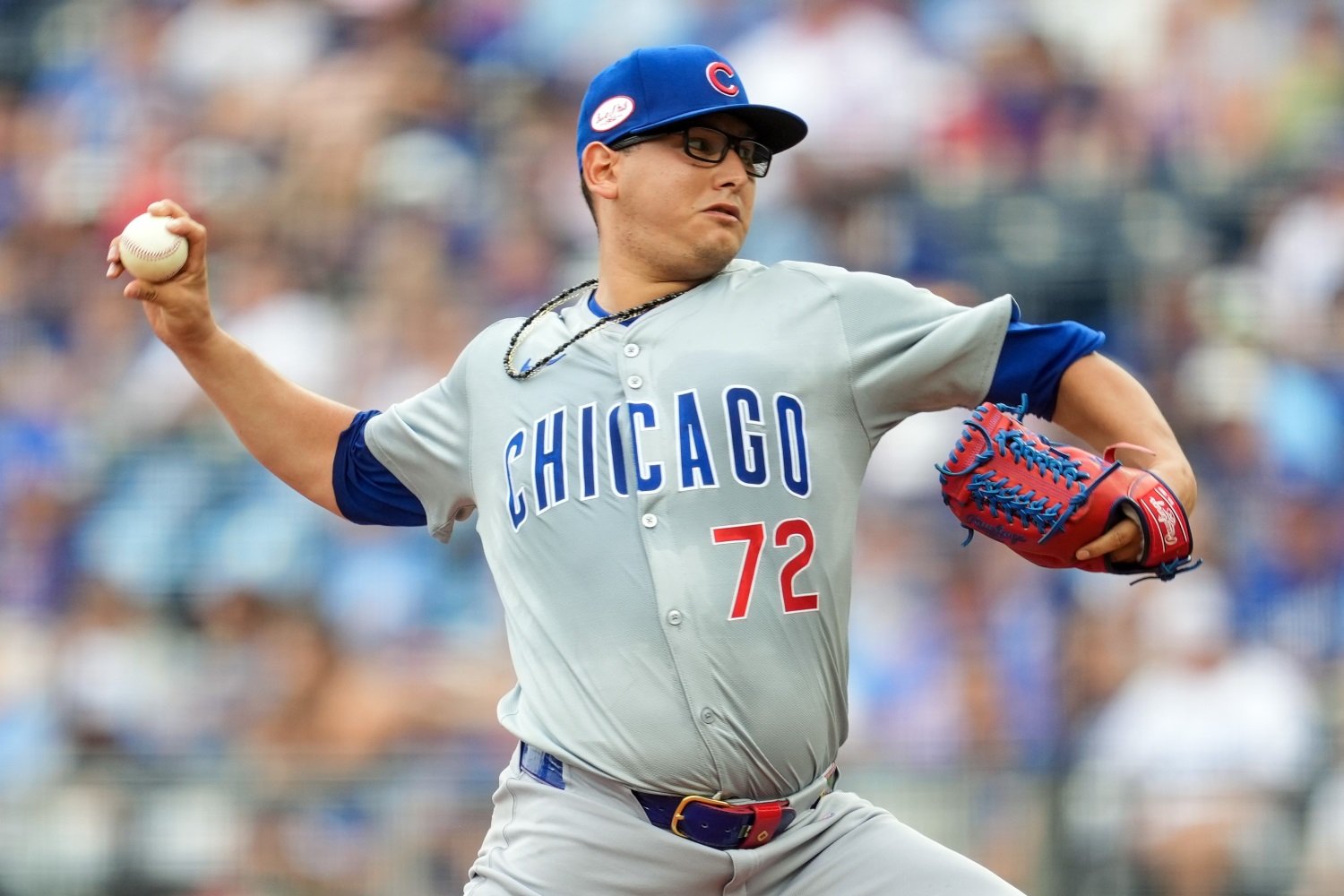
For reasons individual and collective, idiosyncratic and big-picture, there's almost no reason not to lengthen the starting rotation to six starting pitchers for the balance of the 2024 season. The Chicago Cubs are not going to the playoffs, and their focus needs to be on how to ensure that they do get there in 2025. Six starting slots, rather than five, will set them up best for the long term.
With no urgent competitive impetus to push Kyle Hendricks out the door, the team should keep him slotted into their rotation for the rest of the year. Given that Hendricks is aging and he no longer seems to be capable of consistently pitching to his former standards, though, it would be nice to give him extra rest for as long as the team continues to count on him. Just as importantly, to keep him without impeding the development of young pitchers (like top prospect Cade Horton and current injured-list inhabitants Jordan Wicks, Ben Brown, and Hayden Wesneski), the team needs to make sure a spot is opened up for one or more of those guys, even while keeping Hendricks in the fold.
By no means is it only Hendricks or the young arms not currently in the rotation who could benefit from a restructuring of the rotation, though. Shota Imanaga is still acclimating to MLB and its tighter schedule for starting pitchers. He hasn't thrown more than 159 innings in any season since the pandemic. He's already at 110 this season, and he'll turn 31 years old in September, so it makes sense to lengthen the rotation and let him ease his way up toward the same innings range. He can always try to push back up to 170 innings (the number he accumulated in 2019) and beyond next year, when the extra mileage should have much more value to the team.
Javier Assad has already thrown 95 innings this year, despite missing time with a flexor strain. Jameson Taillon is 32 years old and missed the start of the season with back trouble. Justin Steele is 29 and as important as any individual player on the team to its future success. All three will be better off throwing a few fewer innings (or at least making a couple fewer starts, with more rest in between; they might make up the innings by working deeper into games) the rest of the way, in terms of keeping them healthy and ready to pitch at their best next season. Drew Smyly's months spent in the bullpen and on the injured list have eliminated any risk that he would hit his innings pitched bonus thresholds, so it wouldn't cost the team any money to add him to the rotation down the stretch, if none of the young arms get healthy enough to join the five incumbents or if someone gets hurt.
The switch to six starters might also take some pressure off the bullpen, or make it easier to program and schedule reliever appearances. Greater regularity and routine in the pen will help the key arms in what the team hopes is its long-term bullpen stay healthy. There's only one thing a six-man rotation probably wouldn't do, and that's help the team win more games--but maybe that only makes it more appealing.
It's unpleasant to think about it this way, but the Cubs need to lose some games the rest of the way. It's ugly, but that's the state of affairs. The collective bargaining agreement gives the other four teams in the NL Central an extra draft pick every year. It punishes the Cubs more severely for signing free agents to whom qualifying offers have been extended, and it compensates the other four teams more robustly when they lose such players. It gives those teams more money to spend in international free agency than the Cubs get. It punishes teams (of which, in the Central, the Cubs are the only club ever likely to be one) who spend beyond the competitive-balance tax threshold, and then escalates those punishments if they stay above that threshold for multiple seasons.
Well, the Cubs need to surpass the threshold next season, and they probably will need to stay above it for a few years. They're about to go through a cycle in which, in the name of getting back to winning more games than they lose and making the playoffs on a regular basis, they will have to lean into the cruel fangs of the CBA. The Brewers, Reds, Cardinals, and Pirates are going to add a lot more amateur talent to their organizations from 2026 through 2028, at the very least, than the Cubs will. This year, while they're already flung low and the circumstances (not only their own record being lousy, but two of the teams with lousier ones being shut out of next year's Draft Lottery, by rule, in the Athletics and White Sox) are favorable for it, the Cubs need to pile up some losses and hope they land a pick in the top three or four in next year's Draft.
That can't mean actively tanking, of course. Even talking about there being motivation to tank feels cynical and sad. But after a trade deadline at which they didn't trade some valuable low-grade contributors who seemed like easy ones to move (Taillon, Mike Tauchman, etc.), they do have to find ways to make sure they don't pointlessly surge to an 80-win finish. That would be the worst-case scenario for this team. If they're picking 13th again next season, they've failed miserably, and they're going to struggle to sustain whatever success they can cobble together in the years ahead.
A six-man rotation will keep arms fresh and powder dry for next year, when the games will matter much more. It might cost the Cubs a win or two, but that's actually a good thing. It might even be urgently necessary.






Recommended Comments
Create an account or sign in to comment
You need to be a member in order to leave a comment
Create an account
Sign up for a new account in our community. It's easy!
Register a new accountSign in
Already have an account? Sign in here.
Sign In Now