


Matthew Trueblood
-
Posts
2,481 -
Joined
-
Last visited
-
Days Won
2
Content Type
Profiles
Joomla Posts 1
Chicago Cubs Videos
Chicago Cubs Free Agent & Trade Rumors, Notes, & Tidbits
2026 Chicago Cubs Top Prospects Ranking
News
2023 Chicago Cubs Draft Picks
Guides & Resources
2024 Chicago Cubs Draft Picks
The Chicago Cubs Players Project
2025 Chicago Cubs Draft Pick Tracker
2026 Chicago Cubs Draft Tracker: Picks & Bonuses
Blogs
Events
Forums
Store
Gallery
Everything posted by Matthew Trueblood
-
Starting pitching depth is never a bad thing, right? Wrong. And we're about to find out if this is one of those times. Image courtesy of © John Hefti-Imagn Images Let's start with the basics: the Cubs have agreed to a one-year, $5-million deal with Colin Rea, a veteran right-handed starter who has been both a recent member of the Cubs organization and a recent member of a Craig Counsell-managed starting rotation. The deal was reported by MLB Trade Rumors's Steve Adams. Rea, 34, had a solid 4.29 ERA in 167 2/3 innings pitched for the Brewers in 2024, and also pitched extensively for them in 2023, Counsell's final year with the team. He's a fine backend starter, who blossomed into a bit more for a prolonged stretch in early 2024. However, by the end of the season, he was out of Milwaukee's rotation and essentially out of their pitching plans for their playoff series against the Mets. Let's get this much out of the way: Rea is a great story, a great teammate, and a fine rubber arm for the back end of the rotation or a long relief role. He reinvented himself at Driveline, turning from a fringe big-leaguer and Triple-A journeyman into a hurler who missed few bats but also pounded the strike zone and managed not to give up undue amounts of power over about 300 innings for the 2023 and 2024 Brewers. His deep arsenal—six legitimate pitches, including three flavors of fastball and a solid sweeper—keeps hitters off-balance and generates a good amount of non-damaging (though not strictly weak) contact. Rea is, then, a fine addition to the very back end of a rotation group. He can touch 95 miles per hour, and he can take the ball pretty much any time you ask him to, and he can turn the lineup card over at least once without running into a brick wall. If Rea is your sixth or seventh option, you're not doing too badly. Ditto, of course, for Javier Assad. The problem is, right now, the Cubs have too much "not bad" and not enough "actually good" on their roster, including and especially on the pitching side. So, this move doesn't deserve instant criticism. It does, however, raise the pressure and sharpen the team's position. It now feels less likely that they can bring this offseason to a satisfactory close. The compensation fans can embrace, for now, is that the ways in which they still can do that might have just gotten more interesting. Rea cost $5 million for 2025, though since there's a club option for 2026 involved, some of that money might be slightly deferred, in the form of a buyout on that option. He's not going to stop them from signing anyone they really should be interested in, because they still have $40 million or so left to spend after adding him. Bringing in Rea also makes Assad (and Jordan Wicks, and Cade Horton, and Brandon Birdsell, and Caleb Kilian) more expendable. We know that the Cubs are still trying to upgrade this roster via trade. That could still happen in one of a few ways, including by dealing for San Diego's Dylan Cease. If parting with one of those younger starters helps secure Cease, and then Cease joins Shota Imanaga, Justin Steele, Jameson Taillon, Matthew Boyd and Rea in the team's starting mix, then this deal will have been worth it. That feels far-fetched, though. At this point, any starting rotation upgrade other than Roki Sasaki does, because Rea is an awfully expensive spare piece, and that's what he'd be if any starter other than Sasaki were added to this group. That doesn't mean they're out of good ways to spend their money and make their moves. They can and should still take an active interest not only in Tanner Scott or Jeff Hoffman, on the pitching side, but any of a handful of hitters to round out a slightly undermanned positional corps. I observed yesterday (when the team acquired righty Matt Festa and stuffed him onto a 40-man roster now fat with 24 pitchers) that it felt like the team still needed to make a big move that would realign their talent from here. That only feels truer after the signing of Rea, which will require them to designate another player for assignment and make room on the roster. If they do that, then having brought Rea in to stabilize the pitching staff with viable volume at a low price will look very wise. If they don't, this will mark the moment when they clearly began lowering their sights in an unacceptable way. View full article
-
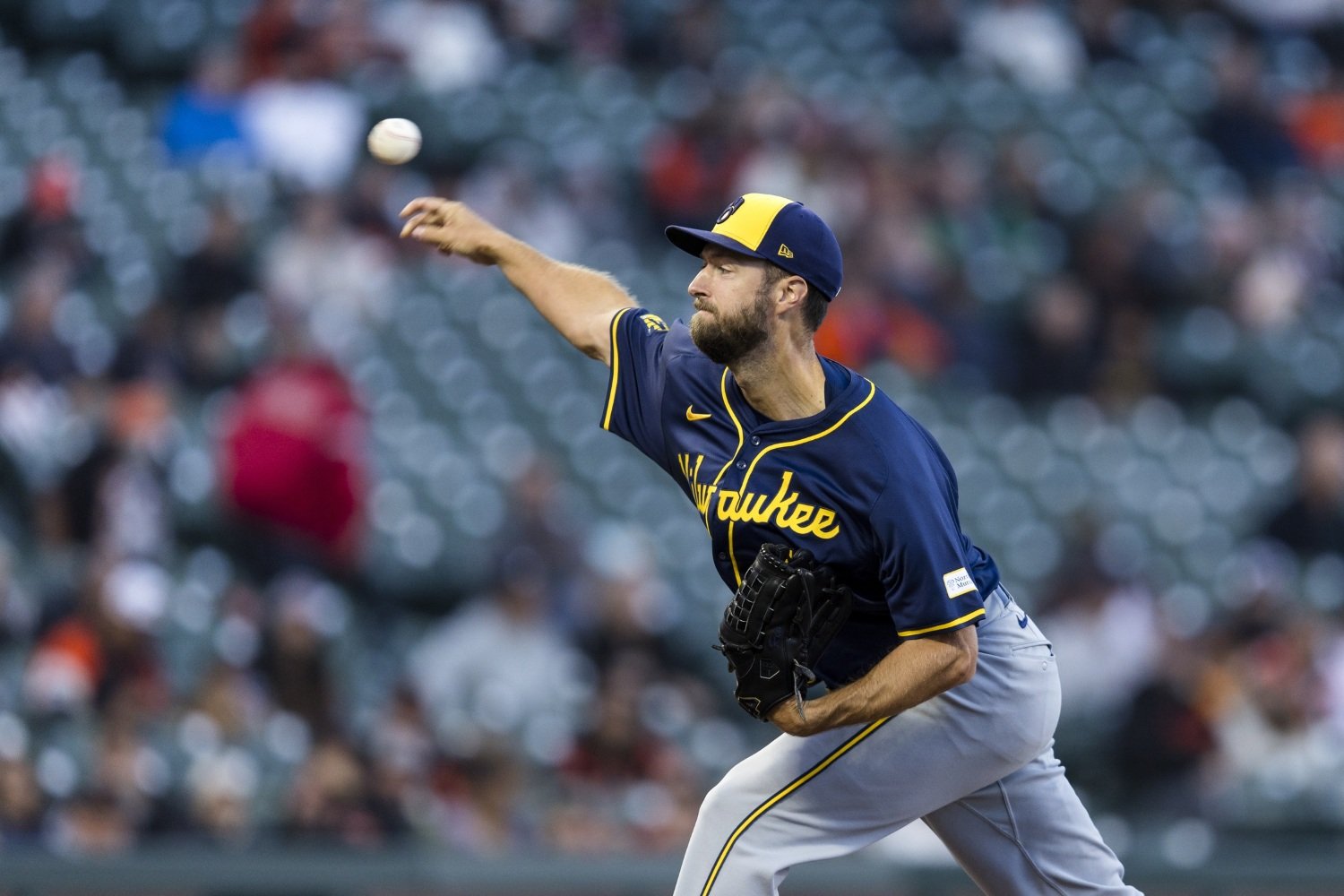 Let's start with the basics: the Cubs have agreed to a one-year, $5-million deal with Colin Rea, a veteran right-handed starter who has been both a recent member of the Cubs organization and a recent member of a Craig Counsell-managed starting rotation. The deal was reported by MLB Trade Rumors's Steve Adams. Rea, 34, had a solid 4.29 ERA in 167 2/3 innings pitched for the Brewers in 2024, and also pitched extensively for them in 2023, Counsell's final year with the team. He's a fine backend starter, who blossomed into a bit more for a prolonged stretch in early 2024. However, by the end of the season, he was out of Milwaukee's rotation and essentially out of their pitching plans for their playoff series against the Mets. Let's get this much out of the way: Rea is a great story, a great teammate, and a fine rubber arm for the back end of the rotation or a long relief role. He reinvented himself at Driveline, turning from a fringe big-leaguer and Triple-A journeyman into a hurler who missed few bats but also pounded the strike zone and managed not to give up undue amounts of power over about 300 innings for the 2023 and 2024 Brewers. His deep arsenal—six legitimate pitches, including three flavors of fastball and a solid sweeper—keeps hitters off-balance and generates a good amount of non-damaging (though not strictly weak) contact. Rea is, then, a fine addition to the very back end of a rotation group. He can touch 95 miles per hour, and he can take the ball pretty much any time you ask him to, and he can turn the lineup card over at least once without running into a brick wall. If Rea is your sixth or seventh option, you're not doing too badly. Ditto, of course, for Javier Assad. The problem is, right now, the Cubs have too much "not bad" and not enough "actually good" on their roster, including and especially on the pitching side. So, this move doesn't deserve instant criticism. It does, however, raise the pressure and sharpen the team's position. It now feels less likely that they can bring this offseason to a satisfactory close. The compensation fans can embrace, for now, is that the ways in which they still can do that might have just gotten more interesting. Rea cost $5 million for 2025, though since there's a club option for 2026 involved, some of that money might be slightly deferred, in the form of a buyout on that option. He's not going to stop them from signing anyone they really should be interested in, because they still have $40 million or so left to spend after adding him. Bringing in Rea also makes Assad (and Jordan Wicks, and Cade Horton, and Brandon Birdsell, and Caleb Kilian) more expendable. We know that the Cubs are still trying to upgrade this roster via trade. That could still happen in one of a few ways, including by dealing for San Diego's Dylan Cease. If parting with one of those younger starters helps secure Cease, and then Cease joins Shota Imanaga, Justin Steele, Jameson Taillon, Matthew Boyd and Rea in the team's starting mix, then this deal will have been worth it. That feels far-fetched, though. At this point, any starting rotation upgrade other than Roki Sasaki does, because Rea is an awfully expensive spare piece, and that's what he'd be if any starter other than Sasaki were added to this group. That doesn't mean they're out of good ways to spend their money and make their moves. They can and should still take an active interest not only in Tanner Scott or Jeff Hoffman, on the pitching side, but any of a handful of hitters to round out a slightly undermanned positional corps. I observed yesterday (when the team acquired righty Matt Festa and stuffed him onto a 40-man roster now fat with 24 pitchers) that it felt like the team still needed to make a big move that would realign their talent from here. That only feels truer after the signing of Rea, which will require them to designate another player for assignment and make room on the roster. If they do that, then having brought Rea in to stabilize the pitching staff with viable volume at a low price will look very wise. If they don't, this will mark the moment when they clearly began lowering their sights in an unacceptable way.
 -
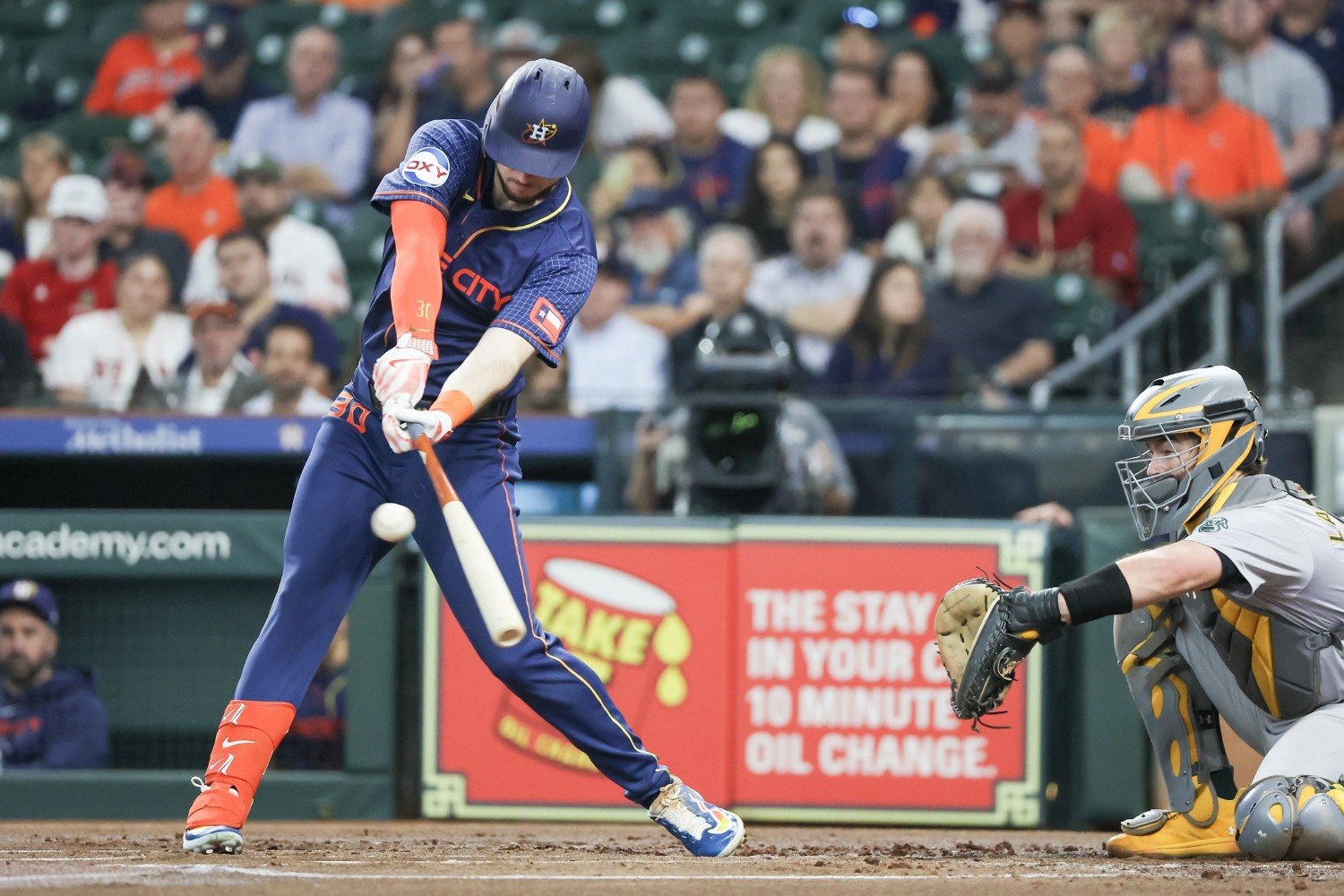 It's important that you understand this: Thursday's news was not important. The only thing that matters about the Cubs and Kyle Tucker filing proposed salaries of $15 million and $17.5 million, respectively, for Tucker in 2025 is that you grasp the pivotal fact that it doesn't matter. This is a non-story. This is a nothingburger. Please, please stop wasting your energy and attention on it. Some fans balked when Tucker was the only arbitration-eligible player with whom the Cubs didn't strike a pre-arbitration deal Thursday, making it more likely that the two sides end up going to a hearing to determine how much the team's superstar right fielder will be paid this year. They felt it was a bad look, or that it indicated a dearth of seriousness about keeping him beyond 2025 on the part of the Cubs, or that going to a hearing risks alienating him. More than a handful of people can be found lamenting it as the end of any hope that the Cubs will extend Tucker, or even re-sign him when he hits free agency at the end of next season. To all those fans, I offer this advice: Stop. Immediately forget about this, and (if it's safe to do so) go outside. This does not have any impact whatsoever, and you should not care about it in any way. The Cubs have never had a very good chance of extending Tucker, because he's a youngish impending free agent with a $500-million upside in free agency and the Cubs have still never paid even $200 million to lock up a player long-term. This development, however, is a purely procedural and banal piece of obligatory news, and it doesn't change their odds of securing Tucker at all, in either direction. For some teams and players, going to a hearing is a frustrating and, yes, enmity-inducing outcome. Those cases, though, involve players and teams who have been together for years, with all the mutual emotional and financial investment that comes with that—including, often, simmering mistrust, or outrage at what can seem like a betrayal. It's the role of the team to talk about why a player should earn the lower of two proposed salaries, during these hearings, which can wound players who have been brought up by that organization and thought they were doing everything asked of them. It's entirely different to go to arbitration with a player you just acquired. There aren't deep enough emotional roots for the plucking of an otherwise tender spot to hurt that much. This is, regrettably, a business, and for guys just joining a new club, arbitration is a very normal and fairly bloodless process. Tucker's not going to end up in a snit with the Cubs, even if a hearing takes place—which is still far from guaranteed. The gulf here is wide, but it means that the sides could find any of a handful of midpoints at which to meet. At the outset of the offseason, MLB Trade Rumors projected a $15.8-million salary for Tucker. He and his agents filed at $17.5 million, and the Cubs at $15 million, meaning the Cubs are much closer to the projected mark. It seems perfectly possible that Tucker would take, say, $16.2 million, just under the midpoint between the filing numbers but $400,000 more than his projection from a few months ago. Because $2.5 million would make such an unfathomable difference in all our lives, we sometimes imagine that a player might behave with as much gratitude and dedication in response to receiving that much money as we would. Many fans seem to think the Cubs should have just paid Tucker $17.5 million, in the hopes of buttering him up for an extension. I can't stress enough how much that isn't the real world of baseball players and their salaries. That concession would not be worth anything in terms of making Tucker want to stick around; he's playing for much bigger prizes. Even as a gesture, in the modern game, that kind of extra payout falls flat. If (as I know is true for many) you've pinned your hopes for the team's future on a Tucker extension, I do have bad news, which is a repetition of what I said at the top of this piece: it's unlikely that he signs one. It was never likely that the Cubs would ink him to that kind of deal, and it's not even very likely that they'll re-sign him when he becomes a free agent in November. Thursday's failure to agree on a salary for 2025, though, just doesn't matter at all in that context. It's simply something that happened. The acquisition of Matt Festa is a more valuable thing to think about at length—and since Festa himself might never appear in a Cubs uniform, that is saying something. The Cubs will still make Tucker an offer this winter. It's just not likely to be an adequate one. That's been the reality all along, and it's ok. The stakes are very high for 2025. Don't bother trying to reduce them by fantasizing about a 10-year Tucker deal. One could materialize; it's not out of the question. But it's not the reason why they made last month's trade, and it's not necessary that Tucker sign a long-term deal to justify that trade. The value of that move was the way it increased the team's viability for 2025, including the fact that it demonstrated Jed Hoyer's understanding of the need for just this kind of player. At whatever salary, he will take the field for the Cubs this season, and the important questions are about which other players the team finds to add to his supporting cast.
 -
Here's a hint: the answer starts with a 'z' and ends with an 'ero'. Image courtesy of © Thomas Shea-Imagn Images It's important that you understand this: Thursday's news was not important. The only thing that matters about the Cubs and Kyle Tucker filing proposed salaries of $15 million and $17.5 million, respectively, for Tucker in 2025 is that you grasp the pivotal fact that it doesn't matter. This is a non-story. This is a nothingburger. Please, please stop wasting your energy and attention on it. Some fans balked when Tucker was the only arbitration-eligible player with whom the Cubs didn't strike a pre-arbitration deal Thursday, making it more likely that the two sides end up going to a hearing to determine how much the team's superstar right fielder will be paid this year. They felt it was a bad look, or that it indicated a dearth of seriousness about keeping him beyond 2025 on the part of the Cubs, or that going to a hearing risks alienating him. More than a handful of people can be found lamenting it as the end of any hope that the Cubs will extend Tucker, or even re-sign him when he hits free agency at the end of next season. To all those fans, I offer this advice: Stop. Immediately forget about this, and (if it's safe to do so) go outside. This does not have any impact whatsoever, and you should not care about it in any way. The Cubs have never had a very good chance of extending Tucker, because he's a youngish impending free agent with a $500-million upside in free agency and the Cubs have still never paid even $200 million to lock up a player long-term. This development, however, is a purely procedural and banal piece of obligatory news, and it doesn't change their odds of securing Tucker at all, in either direction. For some teams and players, going to a hearing is a frustrating and, yes, enmity-inducing outcome. Those cases, though, involve players and teams who have been together for years, with all the mutual emotional and financial investment that comes with that—including, often, simmering mistrust, or outrage at what can seem like a betrayal. It's the role of the team to talk about why a player should earn the lower of two proposed salaries, during these hearings, which can wound players who have been brought up by that organization and thought they were doing everything asked of them. It's entirely different to go to arbitration with a player you just acquired. There aren't deep enough emotional roots for the plucking of an otherwise tender spot to hurt that much. This is, regrettably, a business, and for guys just joining a new club, arbitration is a very normal and fairly bloodless process. Tucker's not going to end up in a snit with the Cubs, even if a hearing takes place—which is still far from guaranteed. The gulf here is wide, but it means that the sides could find any of a handful of midpoints at which to meet. At the outset of the offseason, MLB Trade Rumors projected a $15.8-million salary for Tucker. He and his agents filed at $17.5 million, and the Cubs at $15 million, meaning the Cubs are much closer to the projected mark. It seems perfectly possible that Tucker would take, say, $16.2 million, just under the midpoint between the filing numbers but $400,000 more than his projection from a few months ago. Because $2.5 million would make such an unfathomable difference in all our lives, we sometimes imagine that a player might behave with as much gratitude and dedication in response to receiving that much money as we would. Many fans seem to think the Cubs should have just paid Tucker $17.5 million, in the hopes of buttering him up for an extension. I can't stress enough how much that isn't the real world of baseball players and their salaries. That concession would not be worth anything in terms of making Tucker want to stick around; he's playing for much bigger prizes. Even as a gesture, in the modern game, that kind of extra payout falls flat. If (as I know is true for many) you've pinned your hopes for the team's future on a Tucker extension, I do have bad news, which is a repetition of what I said at the top of this piece: it's unlikely that he signs one. It was never likely that the Cubs would ink him to that kind of deal, and it's not even very likely that they'll re-sign him when he becomes a free agent in November. Thursday's failure to agree on a salary for 2025, though, just doesn't matter at all in that context. It's simply something that happened. The acquisition of Matt Festa is a more valuable thing to think about at length—and since Festa himself might never appear in a Cubs uniform, that is saying something. The Cubs will still make Tucker an offer this winter. It's just not likely to be an adequate one. That's been the reality all along, and it's ok. The stakes are very high for 2025. Don't bother trying to reduce them by fantasizing about a 10-year Tucker deal. One could materialize; it's not out of the question. But it's not the reason why they made last month's trade, and it's not necessary that Tucker sign a long-term deal to justify that trade. The value of that move was the way it increased the team's viability for 2025, including the fact that it demonstrated Jed Hoyer's understanding of the need for just this kind of player. At whatever salary, he will take the field for the Cubs this season, and the important questions are about which other players the team finds to add to his supporting cast. View full article
-
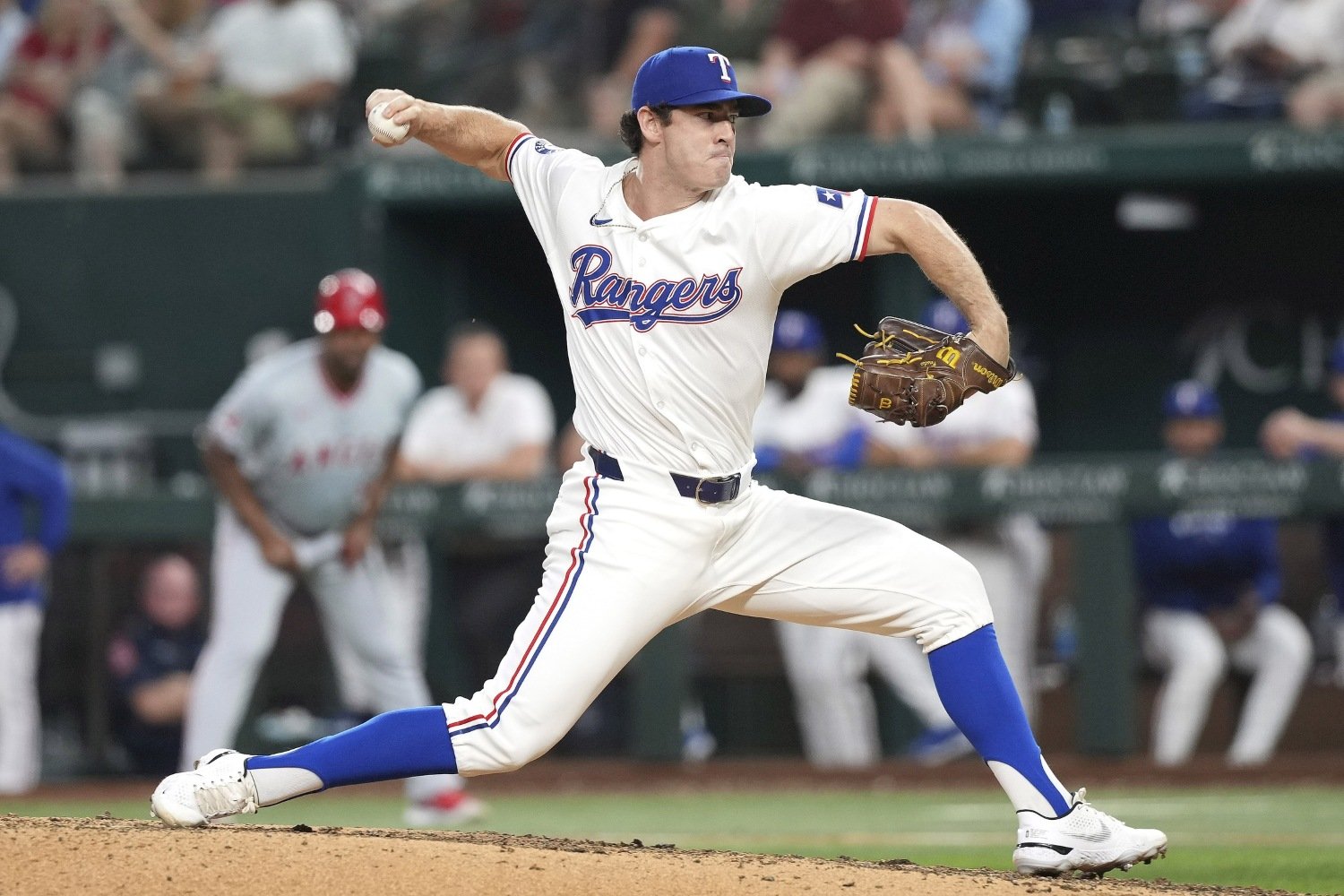 The Chicago Cubs sent cash to the Texas Rangers Thursday, in exchange for right-handed reliever Matt Festa. To facilitate Festa's addition to their already-full 40-man roster, the team designated utility man Miles Mastrobuoni for assignment. It's the end of an era, in one small, annoying way, as Mastrobuoni was part of a cadre of ultimately unhelpful but understandable bench gambles the Cubs tried out over the past three seasons, drawing disproportionate ire for their inability to buttress a too-thin lineup. It also poses new and intriguing questions about a bullpen competition that already felt topped up with fringy but interesting right-handed hurlers. Festa, 31, comes with four years of hypothetical team control, but he's both out of options and injury-prone. Even when he's been on the mound in the majors, his results have not been pretty. The Rangers had designated Festa for assignment to accommodate Chris Martin, whom they signed earlier this week. This is, in other words, a very small move. At the same time, you can see what the Cubs see in him. He is (and stop me when this sounds familiar) a low-slot guy without premium velocity, but with good cutting action on his four-seamer; a cutter; and a sweeper that can be devastating when he can command it well. In short, he's a dead ringer for the profile of Tyson Miller, whom the Cubs landed last May and who thrived for them thereafter. To be fair, though, Miller's previous big-league results were better than Festa's, even before the Cubs got hold of him. Depending on how you count a couple of compelling arms who could still be aiming for rotation roles, this move gives the Cubs anywhere from 14 to 17 people competing seriously for their eight bullpen spots. That's not counting anyone off the 40-man roster, like non-roster invitees Phil Bickford, Brooks Kriske, and Ben Heller—all of whom are actually more promising than a couple of guys who remain on the 40-man right now. In total, the team is carrying 24 pitchers and just 16 position players on their reserve list. That's not unheard of, during an offseason, but it means that some paring down and reshuffling remains to be done. In fact, since we know that the team also intends to sign or trade for at least one more high-profile, high-end pitcher in either the bullpen or the rotation, we can mentally tick one of the guys off the bottom of the current pecking order and still have made no progress toward balancing the roster the way they'll want to. Mastrobuoni's departure will not be mourned in any quarter, except perhaps by those who like to keep the 40-man roster balanced even in the winter. He became utterly redundant this winter, as the team brought aboard two utility men (Vidal Bruján and Gage Workman) with almost exactly the same balance of upside and flaws that make you doubt they'll ever reach it. Mastrobuoni joins Nick Madrigal, Patrick Wisdom, and Mike Tauchman among the exodus from the Cubs' bench, and it's increasingly clear to me that the team also intends to make at least a modestly impactful addition on the positional side of the roster sheet. That's good, and necessary. It feels like Craig Counsell has pushed for that for a while now, and it's happening. Festa probably won't be even the caliber of breakout bullpen booster that Miller was, but dealing for him makes sense, and Masdtrobuoni is a welcome bit of chaff-clearing. The Cubs continue to set the stage. Sooner or later, they just need to show us for whom they're doing so.
 -
On an offseason deadline day just barely important enough to stir some roster shuffling, the Cubs continued to amass relief depth, and reduced their number of bench options by one—for now. Image courtesy of © Jim Cowsert-Imagn Images The Chicago Cubs sent cash to the Texas Rangers Thursday, in exchange for right-handed reliever Matt Festa. To facilitate Festa's addition to their already-full 40-man roster, the team designated utility man Miles Mastrobuoni for assignment. It's the end of an era, in one small, annoying way, as Mastrobuoni was part of a cadre of ultimately unhelpful but understandable bench gambles the Cubs tried out over the past three seasons, drawing disproportionate ire for their inability to buttress a too-thin lineup. It also poses new and intriguing questions about a bullpen competition that already felt topped up with fringy but interesting right-handed hurlers. Festa, 31, comes with four years of hypothetical team control, but he's both out of options and injury-prone. Even when he's been on the mound in the majors, his results have not been pretty. The Rangers had designated Festa for assignment to accommodate Chris Martin, whom they signed earlier this week. This is, in other words, a very small move. At the same time, you can see what the Cubs see in him. He is (and stop me when this sounds familiar) a low-slot guy without premium velocity, but with good cutting action on his four-seamer; a cutter; and a sweeper that can be devastating when he can command it well. In short, he's a dead ringer for the profile of Tyson Miller, whom the Cubs landed last May and who thrived for them thereafter. To be fair, though, Miller's previous big-league results were better than Festa's, even before the Cubs got hold of him. Depending on how you count a couple of compelling arms who could still be aiming for rotation roles, this move gives the Cubs anywhere from 14 to 17 people competing seriously for their eight bullpen spots. That's not counting anyone off the 40-man roster, like non-roster invitees Phil Bickford, Brooks Kriske, and Ben Heller—all of whom are actually more promising than a couple of guys who remain on the 40-man right now. In total, the team is carrying 24 pitchers and just 16 position players on their reserve list. That's not unheard of, during an offseason, but it means that some paring down and reshuffling remains to be done. In fact, since we know that the team also intends to sign or trade for at least one more high-profile, high-end pitcher in either the bullpen or the rotation, we can mentally tick one of the guys off the bottom of the current pecking order and still have made no progress toward balancing the roster the way they'll want to. Mastrobuoni's departure will not be mourned in any quarter, except perhaps by those who like to keep the 40-man roster balanced even in the winter. He became utterly redundant this winter, as the team brought aboard two utility men (Vidal Bruján and Gage Workman) with almost exactly the same balance of upside and flaws that make you doubt they'll ever reach it. Mastrobuoni joins Nick Madrigal, Patrick Wisdom, and Mike Tauchman among the exodus from the Cubs' bench, and it's increasingly clear to me that the team also intends to make at least a modestly impactful addition on the positional side of the roster sheet. That's good, and necessary. It feels like Craig Counsell has pushed for that for a while now, and it's happening. Festa probably won't be even the caliber of breakout bullpen booster that Miller was, but dealing for him makes sense, and Masdtrobuoni is a welcome bit of chaff-clearing. The Cubs continue to set the stage. Sooner or later, they just need to show us for whom they're doing so. View full article
-
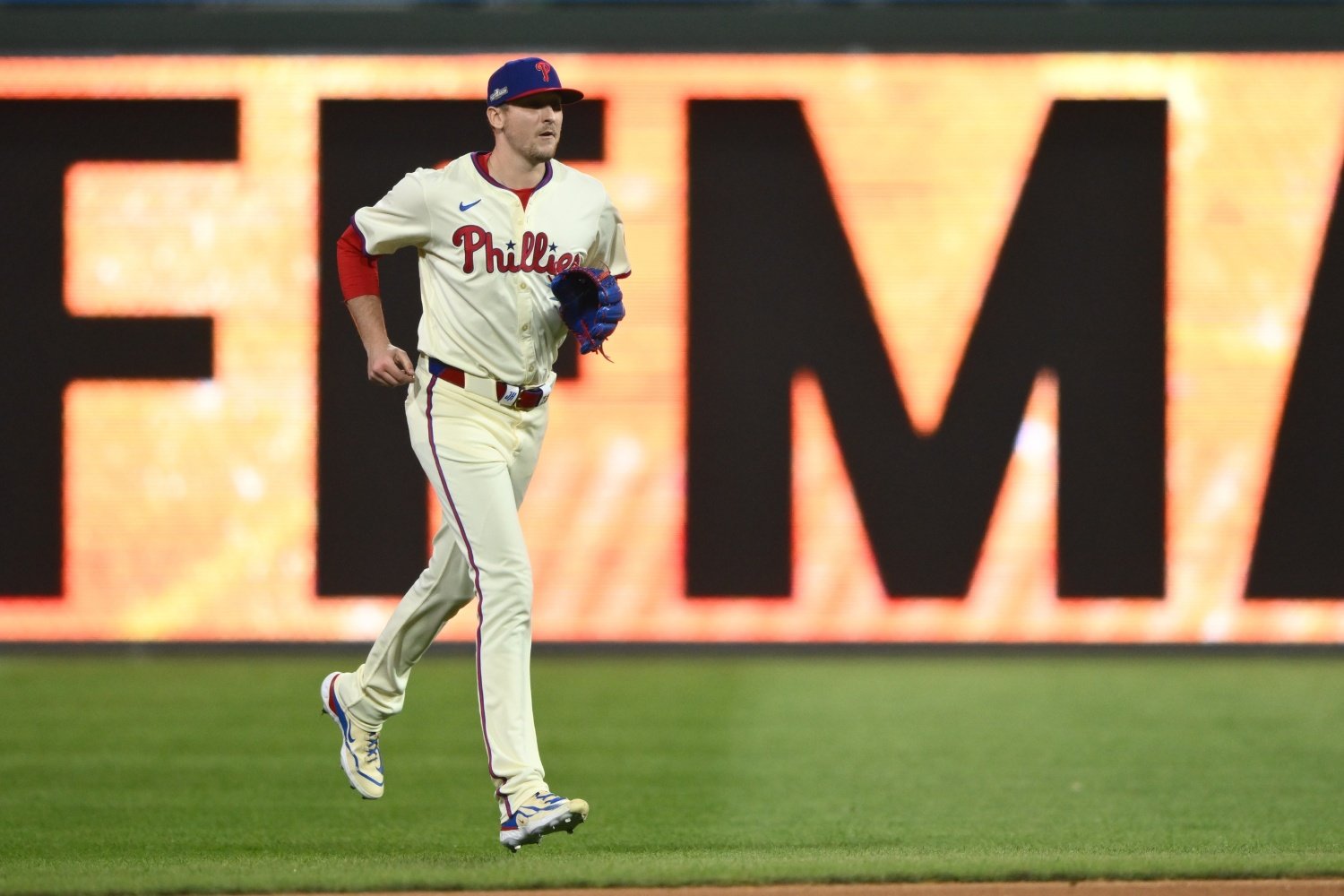 After the Cubs signed Caleb Thielbar on New Year's Eve, it seems safe to guess that they won't also pony up what could be $15 million or more per year on a four-year deal to land Tanner Scott. They needn't eliminate the idea of signing a lefty reliever altogether, but the gap between Scott and the rest of the market in terms of likely salary demands makes it harder to justify spending big on him if he's not the left-handed linchpin in a heavily right-handed bullpen. Now that the Cubs have both Luke Little and Thielbar in position to pitch out of the pen, Scott wouldn't be the same presence he might otherwise have been. Just one rung down the ladder of potential reliever targets, though, is a righty who still makes a world of sense for the team—and who might even be more than a plausible relief ace. Jeff Hoffman is rumored to be seeking a four-year deal, himself, but if he does sign one, it's likely to be something closer to Jordan Hicks's recent four-year, $44-million deal with the Giants. Alternatively, he might settle for three years and aim for the $38 million Clay Holmes made in his deal with the Mets earlier this winter. Why those two comparators? Because, like them, Hoffman is at least interested in signing not as the dominant reliever he's been over the last two seasons with the Phillies, but as a starting pitcher. The idea isn't without merit, because what Hoffman found early in 2023 doesn't seem to be purely a product of having moved permanently to the bullpen at that point. He's thrived as a reliever, to be sure, with a 33.4% strikeout rate, 7.4% walk rate, and 2.28 ERA over the last two seasons in Philadelphia. Opponents have batted just .180/.249/.295 against him. Some of that has to be chalked up to the change in role; he averaged 94.3 miles per hour late in his tenure as a starter and has sat around 97 with his fastball since the start of 2023. Importantly, though, he didn't see that increase in velocity right away in 2022, when he made his full-time move to relief while with the Reds. It came, instead, the following year, and so did an even bigger jump in velocity on his slider—from 81-82 miles per hour to 87-88. That slider change was the result of a grip change that finally unlocked the velocity he'd long sought for the pitch, a phenomenon ably broken down by Destiny Lugardo of Phillies Nation early in his transformation. Fixing the slider grip and throwing that pitch so much harder transformed Hoffman into an overpowering arm, and because he also added a sinker and mixes in a splitter against left-handed batters, he's essentially a four-pitch pitcher. Whether he'd be close to this good after a move back to the rotation is hard to guess. It probably depends on how much of the velocity gains (on both the fastball and the slider) he could bring back to the expanded role, and the timing and explanations of those increases make it impossible to know the answer. It would be a viable experiment, though, and in a worst-case scenario, he seems like a reliably excellent relief ace. We haven't talked much about the possibility that he'd do so for the Cubs, but it's a real one. The fact that he could give starting a try again makes him doubly appealing, and the Cubs' pitching depth gives them the flexibility to benefit whether he ends up in the rotation or the pen. Signing Hoffman would be the least complicated way (though the most fluid, and thus the muddiest, at first) to obviously upgrade the Cubs while they wait to find out whether they can secure the services of Roki Sasaki. It would also represent a second chance for the team and the player; they were interested in Hoffman (before electing to take Kyle Schwarber instead) at fourth overall in the 2014 MLB Draft. Slot Hoffman into the top spot on the Cubs' bullpen depth chart (or third in their rotation), and they emerge as clear favorites in the NL Central. He's the perfect missing ingredient for them, though still far from the only option to round out the roster. The fact that he's still unsigned signals that the market views him mostly as a reliever, not as a starter, and that his market is somewhere south of Crazytown. As the relief market gets ready to move, the Cubs should hone in on Hoffman.
 -
There's one more big move left for the Cubs pitching staff—or two, if they win the Roki Sasaki sweepstakes. The erstwhile Phillies relief ace might be the right target—though maybe not even as a relief ace. After the Cubs signed Caleb Thielbar on New Year's Eve, it seems safe to guess that they won't also pony up what could be $15 million or more per year on a four-year deal to land Tanner Scott. They needn't eliminate the idea of signing a lefty reliever altogether, but the gap between Scott and the rest of the market in terms of likely salary demands makes it harder to justify spending big on him if he's not the left-handed linchpin in a heavily right-handed bullpen. Now that the Cubs have both Luke Little and Thielbar in position to pitch out of the pen, Scott wouldn't be the same presence he might otherwise have been. Just one rung down the ladder of potential reliever targets, though, is a righty who still makes a world of sense for the team—and who might even be more than a plausible relief ace. Jeff Hoffman is rumored to be seeking a four-year deal, himself, but if he does sign one, it's likely to be something closer to Jordan Hicks's recent four-year, $44-million deal with the Giants. Alternatively, he might settle for three years and aim for the $38 million Clay Holmes made in his deal with the Mets earlier this winter. Why those two comparators? Because, like them, Hoffman is at least interested in signing not as the dominant reliever he's been over the last two seasons with the Phillies, but as a starting pitcher. The idea isn't without merit, because what Hoffman found early in 2023 doesn't seem to be purely a product of having moved permanently to the bullpen at that point. He's thrived as a reliever, to be sure, with a 33.4% strikeout rate, 7.4% walk rate, and 2.28 ERA over the last two seasons in Philadelphia. Opponents have batted just .180/.249/.295 against him. Some of that has to be chalked up to the change in role; he averaged 94.3 miles per hour late in his tenure as a starter and has sat around 97 with his fastball since the start of 2023. Importantly, though, he didn't see that increase in velocity right away in 2022, when he made his full-time move to relief while with the Reds. It came, instead, the following year, and so did an even bigger jump in velocity on his slider—from 81-82 miles per hour to 87-88. That slider change was the result of a grip change that finally unlocked the velocity he'd long sought for the pitch, a phenomenon ably broken down by Destiny Lugardo of Phillies Nation early in his transformation. Fixing the slider grip and throwing that pitch so much harder transformed Hoffman into an overpowering arm, and because he also added a sinker and mixes in a splitter against left-handed batters, he's essentially a four-pitch pitcher. Whether he'd be close to this good after a move back to the rotation is hard to guess. It probably depends on how much of the velocity gains (on both the fastball and the slider) he could bring back to the expanded role, and the timing and explanations of those increases make it impossible to know the answer. It would be a viable experiment, though, and in a worst-case scenario, he seems like a reliably excellent relief ace. We haven't talked much about the possibility that he'd do so for the Cubs, but it's a real one. The fact that he could give starting a try again makes him doubly appealing, and the Cubs' pitching depth gives them the flexibility to benefit whether he ends up in the rotation or the pen. Signing Hoffman would be the least complicated way (though the most fluid, and thus the muddiest, at first) to obviously upgrade the Cubs while they wait to find out whether they can secure the services of Roki Sasaki. It would also represent a second chance for the team and the player; they were interested in Hoffman (before electing to take Kyle Schwarber instead) at fourth overall in the 2014 MLB Draft. Slot Hoffman into the top spot on the Cubs' bullpen depth chart (or third in their rotation), and they emerge as clear favorites in the NL Central. He's the perfect missing ingredient for them, though still far from the only option to round out the roster. The fact that he's still unsigned signals that the market views him mostly as a reliever, not as a starter, and that his market is somewhere south of Crazytown. As the relief market gets ready to move, the Cubs should hone in on Hoffman. View full article
-
How Ian Happ Can Help Us All Understand Bat-Tracking Data Better
Matthew Trueblood posted an article in Cubs
.png.04ff7bb424f31a4fbe79a67ea6b5f416.png) A decade ago, we were living through the offseason between 2014 and 2015. Statcast data was not yet widely available, but it had been introduced. The system was implemented in select parks in the second half of 2014, and the league began to release (and attempt to contextualize) the incomplete but valuable data yielded by the new technology. At first, though, it took root only imperfectly. Many fans didn't fully understand the data, not because the numbers themselves were overly complicated, but because they couldn't place them in an easily comprehensible context. It's not enough to know that a batted ball was 106 miles per hour off the bat; we need to have a sense of whether or not that's good. Since then, the evolution and expansion of Statcast data has taken us into more genuinely complex territory. Even once you have the rough scale of spin rate on each pitch type, you have to understand the nuances involved in order to evaluate players using that information. Does their spin axis maximize the utility of the pitch? What constitutes maximizing utility, in the first place? For a given pitcher, is reducing total spin somewhat in order to better manipulate the direction of that spin an option? Could a change in the pitcher's grip beget a valuable increase (or, for changeups and some sinkers, decrease) in spin rate? And what kind of grip do they have anyway? A given center fielder might be doing very well going back on the ball, but are the numbers overstating that because of the nature of their home park—dimensions, wall heights and angles, and so on? For that matter, is he only impressing the system so much because he's playing too shallow to begin with, forcing himself to race back on balls another outfielder might collect easily? Suddenly, we're on context overload. If we try to smooth or ignore any of that context, we lose the value of the numbers themselves. Good, studious analysts can still extract great insights from the data to which we now enjoy access. In fact, they can bring the public better insights than ever. More is required of both the analyst and the reader, though, and new numbers are pouring forth for our consideration and education all the time. This year, the most momentous of those new data sets was swing speed. Bat speed has been understood as the key to power hitting almost since the dawn of the game. In fact, it now seems radical only in its self-evidence, but it's only fair to note that many hitters once prized the ability to swing a heavier bat (more mass to apply force) almost as much as the ability to swing fast. To whatever extent they were ever right, though, the steady (then sharp) increase in velocity from pitchers throughout the league has rendered that notion obsolete. The name of the game, in terms of generating power but also to make consistent enough contact to be productive at all, is now bat speed. It's not the whole story, but it's an important piece. Let's use the available bat-tracking data for one notable Cubs hitter to better grasp the whole concept, though, and to tease out both the context of the numbers and the key interactions at work. Ian Happ offers us a great way to study this, because as a switch-hitter, he offers two different sets of that data for us to study. Over several years, we've all seen Happ evolve and develop as a hitter, so we understand (more or less) who he is from each side of the plate. He's mostly been better from the left side, and there's a distinct stylistic difference: he's more patient as a lefty, more focused on lifting the ball. As a righty, he's often seemed to be fighting for his life. His career numbers from each side speak to that: vs. LHP (as RHB): .243/.316/.397, 28.5% K, 8.7% BB vs. RHP (as LHB): .249/.352/.469, 26.6% K, 13.1% BB You might expect to see Happ generating much better bat speed from the left side, then. That's where he not only connects more often, but generates much more power. For his career, he averages a 90.7-MPH exit velocity from the left side and an 87.4-MPH mark from the right. You'd expect to see a big gap in his swing speeds, even, and in a predictable direction. Welp. I'm hiding the ball a hair, here, because we only have swing speed data for 2024, and I reported to you at the end of September that Happ had taken an almost reckless, hard-hacking right-handed approach this year. It led to a better isolated power figure than he's posted against lefties (in any meaningful sample) since his rookie campaign in 2017, and to a career-best seven right-handed homers. A year or two ago, we probably really would have seen Happ swinging faster as a lefty than as a righty. Still, it's remarkable to see him swinging faster right-handed, even this year. As you can see by the tick marks at the bottom of the graphic above, both of Happ's swings are faster than the league's average one, so that's reassuring, in the first place. As we try to understand how he can swing faster but be considerably less powerful from the right side, though, we have to examine the other key variable measured by new bat-tracking data: how squarely you tend to make contact. Baseball Savant offers a metric they called Squared Up%, which is the percentage of swings on which a hitter realizes at least 80% of the maximum possible exit velocity, given their swing speed and the speed of the incoming pitch. That's a deeply flawed way to measure the skill we really want to assess, though, because it gives each swing a binary rating: squared-up, or not. Instead, to avail ourselves of a graduated measurement of the ability to square the ball up (one that can distinguish partial successes from total ones and set outcomes on a spectrum, the same way we do with swing speed or exit velocity), we should try to use a version of Squared Up% that rates each batted ball's squareness—that gives us that percentage of the optimal exit velocity achieved on every swing, rather than using a brightline test on each. Happily, Pitcher List analyst Kyle Bland created an app that does just that. When we examine the distribution of Squared Up% for all of Happ's swings from each side, we can learn some things. First, here is left-handed Happ. As you can see, Happ's Suqared Up% from the left side maps neatly to the league's average distribution. We should note, and take a moment to synthesize, the fact that that average distribution is somewhat bimodal—in other words, that it has two humps, two points where outcomes tend to cluster most. This is why Savant made the choice (although it's still one I dislike) to give Squared Up% as a simple test: it's meant to ask whether a given instance of contact comes from that bigger hump on the left (lower-quality contact) or the flatter one on the right (balls hit right on the barrel). From this, we can learn something broader about baseball at the highest level: that most swings do result in either a barreled ball or one that's mishit, with a surprisingly large share of the ones mishit falling into a similar bucket in terms of exit velocity efficiency. Pair a slightly above-average swing speed with this slightly better-than-average Squared Up% profile, and you can see why Happ generates such good power from the left side. He crushes the ball because he can swing fast without sacrificing what the Cubs have long called "barrel accuracy". Here's his right-handed profile. Aha! This explains just about everything. Happ swings faster right-handed, but he really gives up the ability to consistently meet the ball on the barrel by doing so. Fast swings make up for some of the inaccuracy. There were 423 batters who swung at least 200 times against left-handed pitchers in 2024. Happ ranked 361st in the percentage of those that passed Savant's Squared Up%, but because he ranked 126th in the percentage of his swings that were over 75 miles per hour, he still generated a good amount of hard contact against southpaws. It wasn't efficiently generated, but efficiency is not the goal. Hard contact is. Happ's improved results from the right side this year came from having an inefficient, ugly attack—but a dangerous one. By contrast, his left-handed approach blended slightly less raw violence and danger with a much more graceful and efficient address of the ball. There's another frontier lurking in this arena. Eventually, we'll get publicly available attack angle data for all swings, which will further inform this kind of analysis. That can be thought of as the third dimension, the third variable in this equation. It's already reflected by the Bland version of Squared Up%, though, if only implicitly. For now, we have enough depth of information to do some solid analysis of a player vital to the Cubs' 2025 hopes—and he helps elucidate the different ways we benefit from unfolding this data set to look at it from new angles.
A decade ago, we were living through the offseason between 2014 and 2015. Statcast data was not yet widely available, but it had been introduced. The system was implemented in select parks in the second half of 2014, and the league began to release (and attempt to contextualize) the incomplete but valuable data yielded by the new technology. At first, though, it took root only imperfectly. Many fans didn't fully understand the data, not because the numbers themselves were overly complicated, but because they couldn't place them in an easily comprehensible context. It's not enough to know that a batted ball was 106 miles per hour off the bat; we need to have a sense of whether or not that's good. Since then, the evolution and expansion of Statcast data has taken us into more genuinely complex territory. Even once you have the rough scale of spin rate on each pitch type, you have to understand the nuances involved in order to evaluate players using that information. Does their spin axis maximize the utility of the pitch? What constitutes maximizing utility, in the first place? For a given pitcher, is reducing total spin somewhat in order to better manipulate the direction of that spin an option? Could a change in the pitcher's grip beget a valuable increase (or, for changeups and some sinkers, decrease) in spin rate? And what kind of grip do they have anyway? A given center fielder might be doing very well going back on the ball, but are the numbers overstating that because of the nature of their home park—dimensions, wall heights and angles, and so on? For that matter, is he only impressing the system so much because he's playing too shallow to begin with, forcing himself to race back on balls another outfielder might collect easily? Suddenly, we're on context overload. If we try to smooth or ignore any of that context, we lose the value of the numbers themselves. Good, studious analysts can still extract great insights from the data to which we now enjoy access. In fact, they can bring the public better insights than ever. More is required of both the analyst and the reader, though, and new numbers are pouring forth for our consideration and education all the time. This year, the most momentous of those new data sets was swing speed. Bat speed has been understood as the key to power hitting almost since the dawn of the game. In fact, it now seems radical only in its self-evidence, but it's only fair to note that many hitters once prized the ability to swing a heavier bat (more mass to apply force) almost as much as the ability to swing fast. To whatever extent they were ever right, though, the steady (then sharp) increase in velocity from pitchers throughout the league has rendered that notion obsolete. The name of the game, in terms of generating power but also to make consistent enough contact to be productive at all, is now bat speed. It's not the whole story, but it's an important piece. Let's use the available bat-tracking data for one notable Cubs hitter to better grasp the whole concept, though, and to tease out both the context of the numbers and the key interactions at work. Ian Happ offers us a great way to study this, because as a switch-hitter, he offers two different sets of that data for us to study. Over several years, we've all seen Happ evolve and develop as a hitter, so we understand (more or less) who he is from each side of the plate. He's mostly been better from the left side, and there's a distinct stylistic difference: he's more patient as a lefty, more focused on lifting the ball. As a righty, he's often seemed to be fighting for his life. His career numbers from each side speak to that: vs. LHP (as RHB): .243/.316/.397, 28.5% K, 8.7% BB vs. RHP (as LHB): .249/.352/.469, 26.6% K, 13.1% BB You might expect to see Happ generating much better bat speed from the left side, then. That's where he not only connects more often, but generates much more power. For his career, he averages a 90.7-MPH exit velocity from the left side and an 87.4-MPH mark from the right. You'd expect to see a big gap in his swing speeds, even, and in a predictable direction. Welp. I'm hiding the ball a hair, here, because we only have swing speed data for 2024, and I reported to you at the end of September that Happ had taken an almost reckless, hard-hacking right-handed approach this year. It led to a better isolated power figure than he's posted against lefties (in any meaningful sample) since his rookie campaign in 2017, and to a career-best seven right-handed homers. A year or two ago, we probably really would have seen Happ swinging faster as a lefty than as a righty. Still, it's remarkable to see him swinging faster right-handed, even this year. As you can see by the tick marks at the bottom of the graphic above, both of Happ's swings are faster than the league's average one, so that's reassuring, in the first place. As we try to understand how he can swing faster but be considerably less powerful from the right side, though, we have to examine the other key variable measured by new bat-tracking data: how squarely you tend to make contact. Baseball Savant offers a metric they called Squared Up%, which is the percentage of swings on which a hitter realizes at least 80% of the maximum possible exit velocity, given their swing speed and the speed of the incoming pitch. That's a deeply flawed way to measure the skill we really want to assess, though, because it gives each swing a binary rating: squared-up, or not. Instead, to avail ourselves of a graduated measurement of the ability to square the ball up (one that can distinguish partial successes from total ones and set outcomes on a spectrum, the same way we do with swing speed or exit velocity), we should try to use a version of Squared Up% that rates each batted ball's squareness—that gives us that percentage of the optimal exit velocity achieved on every swing, rather than using a brightline test on each. Happily, Pitcher List analyst Kyle Bland created an app that does just that. When we examine the distribution of Squared Up% for all of Happ's swings from each side, we can learn some things. First, here is left-handed Happ. As you can see, Happ's Suqared Up% from the left side maps neatly to the league's average distribution. We should note, and take a moment to synthesize, the fact that that average distribution is somewhat bimodal—in other words, that it has two humps, two points where outcomes tend to cluster most. This is why Savant made the choice (although it's still one I dislike) to give Squared Up% as a simple test: it's meant to ask whether a given instance of contact comes from that bigger hump on the left (lower-quality contact) or the flatter one on the right (balls hit right on the barrel). From this, we can learn something broader about baseball at the highest level: that most swings do result in either a barreled ball or one that's mishit, with a surprisingly large share of the ones mishit falling into a similar bucket in terms of exit velocity efficiency. Pair a slightly above-average swing speed with this slightly better-than-average Squared Up% profile, and you can see why Happ generates such good power from the left side. He crushes the ball because he can swing fast without sacrificing what the Cubs have long called "barrel accuracy". Here's his right-handed profile. Aha! This explains just about everything. Happ swings faster right-handed, but he really gives up the ability to consistently meet the ball on the barrel by doing so. Fast swings make up for some of the inaccuracy. There were 423 batters who swung at least 200 times against left-handed pitchers in 2024. Happ ranked 361st in the percentage of those that passed Savant's Squared Up%, but because he ranked 126th in the percentage of his swings that were over 75 miles per hour, he still generated a good amount of hard contact against southpaws. It wasn't efficiently generated, but efficiency is not the goal. Hard contact is. Happ's improved results from the right side this year came from having an inefficient, ugly attack—but a dangerous one. By contrast, his left-handed approach blended slightly less raw violence and danger with a much more graceful and efficient address of the ball. There's another frontier lurking in this arena. Eventually, we'll get publicly available attack angle data for all swings, which will further inform this kind of analysis. That can be thought of as the third dimension, the third variable in this equation. It's already reflected by the Bland version of Squared Up%, though, if only implicitly. For now, we have enough depth of information to do some solid analysis of a player vital to the Cubs' 2025 hopes—and he helps elucidate the different ways we benefit from unfolding this data set to look at it from new angles. -
Other than by coming over to your house and explaining it himself, that is. Although he seems like a cool guy, feel free to ask him. Image courtesy of © Kamil Krzaczynski-Imagn Images A decade ago, we were living through the offseason between 2014 and 2015. Statcast data was not yet widely available, but it had been introduced. The system was implemented in select parks in the second half of 2014, and the league began to release (and attempt to contextualize) the incomplete but valuable data yielded by the new technology. At first, though, it took root only imperfectly. Many fans didn't fully understand the data, not because the numbers themselves were overly complicated, but because they couldn't place them in an easily comprehensible context. It's not enough to know that a batted ball was 106 miles per hour off the bat; we need to have a sense of whether or not that's good. Since then, the evolution and expansion of Statcast data has taken us into more genuinely complex territory. Even once you have the rough scale of spin rate on each pitch type, you have to understand the nuances involved in order to evaluate players using that information. Does their spin axis maximize the utility of the pitch? What constitutes maximizing utility, in the first place? For a given pitcher, is reducing total spin somewhat in order to better manipulate the direction of that spin an option? Could a change in the pitcher's grip beget a valuable increase (or, for changeups and some sinkers, decrease) in spin rate? And what kind of grip do they have anyway? A given center fielder might be doing very well going back on the ball, but are the numbers overstating that because of the nature of their home park—dimensions, wall heights and angles, and so on? For that matter, is he only impressing the system so much because he's playing too shallow to begin with, forcing himself to race back on balls another outfielder might collect easily? Suddenly, we're on context overload. If we try to smooth or ignore any of that context, we lose the value of the numbers themselves. Good, studious analysts can still extract great insights from the data to which we now enjoy access. In fact, they can bring the public better insights than ever. More is required of both the analyst and the reader, though, and new numbers are pouring forth for our consideration and education all the time. This year, the most momentous of those new data sets was swing speed. Bat speed has been understood as the key to power hitting almost since the dawn of the game. In fact, it now seems radical only in its self-evidence, but it's only fair to note that many hitters once prized the ability to swing a heavier bat (more mass to apply force) almost as much as the ability to swing fast. To whatever extent they were ever right, though, the steady (then sharp) increase in velocity from pitchers throughout the league has rendered that notion obsolete. The name of the game, in terms of generating power but also to make consistent enough contact to be productive at all, is now bat speed. It's not the whole story, but it's an important piece. Let's use the available bat-tracking data for one notable Cubs hitter to better grasp the whole concept, though, and to tease out both the context of the numbers and the key interactions at work. Ian Happ offers us a great way to study this, because as a switch-hitter, he offers two different sets of that data for us to study. Over several years, we've all seen Happ evolve and develop as a hitter, so we understand (more or less) who he is from each side of the plate. He's mostly been better from the left side, and there's a distinct stylistic difference: he's more patient as a lefty, more focused on lifting the ball. As a righty, he's often seemed to be fighting for his life. His career numbers from each side speak to that: vs. LHP (as RHB): .243/.316/.397, 28.5% K, 8.7% BB vs. RHP (as LHB): .249/.352/.469, 26.6% K, 13.1% BB You might expect to see Happ generating much better bat speed from the left side, then. That's where he not only connects more often, but generates much more power. For his career, he averages a 90.7-MPH exit velocity from the left side and an 87.4-MPH mark from the right. You'd expect to see a big gap in his swing speeds, even, and in a predictable direction. Welp. I'm hiding the ball a hair, here, because we only have swing speed data for 2024, and I reported to you at the end of September that Happ had taken an almost reckless, hard-hacking right-handed approach this year. It led to a better isolated power figure than he's posted against lefties (in any meaningful sample) since his rookie campaign in 2017, and to a career-best seven right-handed homers. A year or two ago, we probably really would have seen Happ swinging faster as a lefty than as a righty. Still, it's remarkable to see him swinging faster right-handed, even this year. As you can see by the tick marks at the bottom of the graphic above, both of Happ's swings are faster than the league's average one, so that's reassuring, in the first place. As we try to understand how he can swing faster but be considerably less powerful from the right side, though, we have to examine the other key variable measured by new bat-tracking data: how squarely you tend to make contact. Baseball Savant offers a metric they called Squared Up%, which is the percentage of swings on which a hitter realizes at least 80% of the maximum possible exit velocity, given their swing speed and the speed of the incoming pitch. That's a deeply flawed way to measure the skill we really want to assess, though, because it gives each swing a binary rating: squared-up, or not. Instead, to avail ourselves of a graduated measurement of the ability to square the ball up (one that can distinguish partial successes from total ones and set outcomes on a spectrum, the same way we do with swing speed or exit velocity), we should try to use a version of Squared Up% that rates each batted ball's squareness—that gives us that percentage of the optimal exit velocity achieved on every swing, rather than using a brightline test on each. Happily, Pitcher List analyst Kyle Bland created an app that does just that. When we examine the distribution of Squared Up% for all of Happ's swings from each side, we can learn some things. First, here is left-handed Happ. As you can see, Happ's Suqared Up% from the left side maps neatly to the league's average distribution. We should note, and take a moment to synthesize, the fact that that average distribution is somewhat bimodal—in other words, that it has two humps, two points where outcomes tend to cluster most. This is why Savant made the choice (although it's still one I dislike) to give Squared Up% as a simple test: it's meant to ask whether a given instance of contact comes from that bigger hump on the left (lower-quality contact) or the flatter one on the right (balls hit right on the barrel). From this, we can learn something broader about baseball at the highest level: that most swings do result in either a barreled ball or one that's mishit, with a surprisingly large share of the ones mishit falling into a similar bucket in terms of exit velocity efficiency. Pair a slightly above-average swing speed with this slightly better-than-average Squared Up% profile, and you can see why Happ generates such good power from the left side. He crushes the ball because he can swing fast without sacrificing what the Cubs have long called "barrel accuracy". Here's his right-handed profile. Aha! This explains just about everything. Happ swings faster right-handed, but he really gives up the ability to consistently meet the ball on the barrel by doing so. Fast swings make up for some of the inaccuracy. There were 423 batters who swung at least 200 times against left-handed pitchers in 2024. Happ ranked 361st in the percentage of those that passed Savant's Squared Up%, but because he ranked 126th in the percentage of his swings that were over 75 miles per hour, he still generated a good amount of hard contact against southpaws. It wasn't efficiently generated, but efficiency is not the goal. Hard contact is. Happ's improved results from the right side this year came from having an inefficient, ugly attack—but a dangerous one. By contrast, his left-handed approach blended slightly less raw violence and danger with a much more graceful and efficient address of the ball. There's another frontier lurking in this arena. Eventually, we'll get publicly available attack angle data for all swings, which will further inform this kind of analysis. That can be thought of as the third dimension, the third variable in this equation. It's already reflected by the Bland version of Squared Up%, though, if only implicitly. For now, we have enough depth of information to do some solid analysis of a player vital to the Cubs' 2025 hopes—and he helps elucidate the different ways we benefit from unfolding this data set to look at it from new angles. View full article
-
Image courtesy of © Jerome Miron-Imagn Images In their latest bid to add depth and upside to their bullpen mix, the Cubs signed right-handed pitcher Corbin Martin to a minor-league deal. The agreement includes an invitation to big-league spring training, where Martin will compete for a job in the bullpen for a Cubs team still piecing depth back together after an autumn exodus from their relief unit. Martin, 30, is perhaps best known as one of the key pieces of the trade that sent Zack Greinke from the Diamondbacks to the Astros in 2019. Major injuries have derailed a once-promising career, keeping him off the mound for all of 2020 and 2023 and for long stretches of 2021 and 2024. Fully converted to relief work, he reemerged as an intriguing arm in 2025, with a fastball that sat just over 95 miles per hour and had the cut-ride shape the Cubs love from pitchers of his ilk. To it, he adds a hard cutter and a sharp 12-to-6 curveball that dramatically improved after he changed his grip and the pitch's shape midseason. Previously, he'd thrown a pitch much more akin to a sweeper or slurve, but this version of the offering is better. The cutter sits 91-92 on the gun, so it's a firm pitch with little movement or velocity separation from the fastball. By leading with those two pitches, though, he sets up the curveball well. Despite ugly raw numbers, he put up a 94 DRA- at Triple-A Norfolk and in the majors for the Orioles in 2025. He comes with four years of team control, if things pan out especially well, but he does not have any minor-league options remaining, so if he makes the team, he'll need to stay on the active roster or the injured list or be exposed to waivers. As fliers like these go, Martin is a solid one. His velocity and shape on the three key pitches in his arsenal promise some better results on contact, and he can miss bats. The question will be whether he can throw enough strikes to ensure that that matters; walks have haunted him over the last two seasons. A healthy Martin showing a semblance of command could be a strong contributor to the Cubs' middle-relief corps. For now, this is just a bit of spaghetti to throw against the wall, but as was true of Brad Keller last winter, there's more than the usual amount of reason to admire the fit and hope that this piece sticks. View full article
-
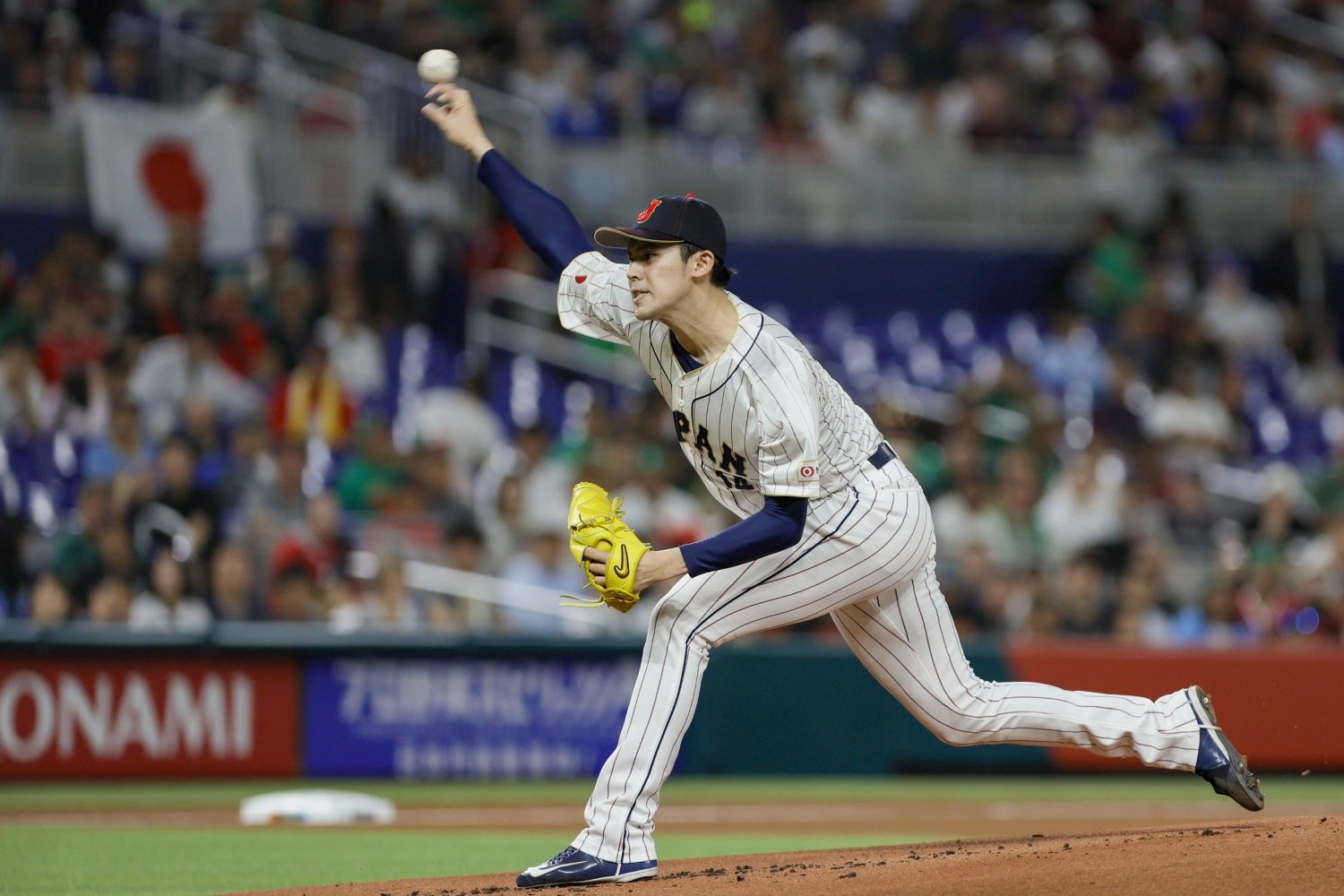 Although the new signing period for international amateur free agents begins in nine days, we could be as much as a fortnight from the resolution of Roki Sasaki's free agency. The famous 23-year-old Japanese righty is slowly paring down his options and considering further meetings with interested teams. According to the scant reports we have right now, the Cubs are very much still in the running, and because of the limitations on Sasaki's earning power (relative to his market value), there's no single player the team would be happier to land over the balance of this offseason. Nonetheless, don't be surprised if the Cubs make another move to bolster their starting rotation before Sasaki signs. To be sure, expect them to continue exploring the trade market, and to be engaged on key potential free-agent targets. We've heard them connected, recently, to infielders Josh Rojas (who signed with the White Sox instead) and Hyeseong Kim (who landed with the Dodgers), and more reports have them in the running for Yoán Moncada, the highly talented but injury-wrecked third baseman. Although Moncada and Alex Bregman really aren't in the same class of potential targets, there might be some truth to the idea that where he lands will hinge on what becomes of Bregman. However, none of the same dynamics apply to Sasaki. The Cubs will not yield in their pursuit of him until he signs, be it with them or elsewhere, but nor will that pursuit in any way slow down their pursuit of help on the infield, in the bullpen, or even at the front end of the starting rotation. In fact, of the half-dozen teams still seriously considering signing Sasaki, only one (the Padres) might see that endeavor remotely influence the pace at which they explore other options. There's a universal reason for that—one that explains why (for instance) Garrett Crochet and Jesús Luzardo have already been traded and why Corbin Burnes signed over the holidays, signifying the lack of any restraining influence on the market from Sasaki. It's almost obvious, but because many fans are unfamiliar with the rules governing this situation, it's worth making explicit here. It's this: Signing Sasaki doesn't affect the payroll of any of the teams who might sign him, or significantly reduce their need for starting pitching. Because he's chosen to be posted and to come to the United States at such a young age, Sasaki isn't eligible for a contract at all akin to those signed by other star Japanese imports in recent years, like Shota Imanaga, Seiya Suzuki, Masataka Yoshida, Kodai Senga, or Yoshinobu Yamamoto. He's subject to the spending caps that apply to amateur international free agents, which means not only that he'll make less than $15 million upfront and less than $1 million as a 2025 salary, but that whatever money a team might pay him will come from an allotment that would be spent either way. Small trades could allow a team to acquire more spending power, so they might give up far-off, lottery-ticket prospects for the right to spend an extra million or two, but every team tries to spend all the money the rules allow them to spend from this pool every year, anyway. In other words, it's incorrect even to say that Sasaki will cost teams around $10 million. In effect, he will cost them nothing, monetarily—not one cent. They would have spent all the money they'll spend on him, anyway. He'll have a huge impact on the overall IFA market, because whichever team signs him will have to renege on several (technically illicit) agreements with teenagers from the Dominican Republic, Venezuela and elsewhere, but he hasn't limited the temperature of the hot stove because no one will have to divert any resources to him that would otherwise have gone to their big-league payroll. Nor is Sasaki going to reduce the need for good starting pitching on whichever team signs him, at least for 2025. Remember, this is a 23-year-old, and unlike (say) Yamamoto, he's not noted for his durability or capacity to work deep in games. In NPB, he's never made more than 20 appearances or reached 130 innings in a season. Any team who signs him, if they have designs on contending this season, needs to plan on operating a six-man starting rotation. They need to bank on about 20 starts and 130 innings from him, and while those starts and innings figure to be very good ones, they won't be enough to make bypassing another strong starter advisable. Some teams in contention for him (the Dodgers, who have already signed Blake Snell and will get Shohei Ohtani back as a pitcher this year; the Red Sox, who have signed Walker Buehler and dealt for Crochet; the Rangers, who already brought back Nathan Eovaldi; the Yankees, who signed Max Fried) have already furnished themselves with five- or six-man staffs that make Sasaki a true luxury. The Cubs are among the contenders for him who still have work to do, and even if they get him, they also need more. The Cubs-specific reason why you won't find them waiting out his decision before making further moves is somewhat related to each of those broader reasons: they have a ton of money to spend, and won't lose any of that flexibility if they sign Sasaki; and they have too many needs to keep waiting on someone who only partially fills one of them. The team's current projected payroll is around $173 million; they'll add at least $40 million to that. Again, Sasaki's earnings aren't even part of that calculation. If they get him, they'll add $40 million in payroll aside from him—at least as long as they can find a way to spend that much fruitfully. They need to get a few wins better on the position-player side of the ledger, and a few wins better on the pitching side, and they have options—but those options are beginning to dwindle in number. If the Cubs don't make a major addition before Sasaki signs, it won't be for a lack of effort—and it will be a huge problem, because they'll further lose out on viable alternatives in their quest for improvement. This is not a case where everyone will hold their breath and see what happens with an elite talent before making other plans. Moves will be made over the next two weeks, and the Cubs need to be among the move-makers.
 -
Some high-impact free agents hold up the markets for other players until they sign. For multiple reasons, this isn't one of those cases. Image courtesy of © Sam Navarro-Imagn Images Although the new signing period for international amateur free agents begins in nine days, we could be as much as a fortnight from the resolution of Roki Sasaki's free agency. The famous 23-year-old Japanese righty is slowly paring down his options and considering further meetings with interested teams. According to the scant reports we have right now, the Cubs are very much still in the running, and because of the limitations on Sasaki's earning power (relative to his market value), there's no single player the team would be happier to land over the balance of this offseason. Nonetheless, don't be surprised if the Cubs make another move to bolster their starting rotation before Sasaki signs. To be sure, expect them to continue exploring the trade market, and to be engaged on key potential free-agent targets. We've heard them connected, recently, to infielders Josh Rojas (who signed with the White Sox instead) and Hyeseong Kim (who landed with the Dodgers), and more reports have them in the running for Yoán Moncada, the highly talented but injury-wrecked third baseman. Although Moncada and Alex Bregman really aren't in the same class of potential targets, there might be some truth to the idea that where he lands will hinge on what becomes of Bregman. However, none of the same dynamics apply to Sasaki. The Cubs will not yield in their pursuit of him until he signs, be it with them or elsewhere, but nor will that pursuit in any way slow down their pursuit of help on the infield, in the bullpen, or even at the front end of the starting rotation. In fact, of the half-dozen teams still seriously considering signing Sasaki, only one (the Padres) might see that endeavor remotely influence the pace at which they explore other options. There's a universal reason for that—one that explains why (for instance) Garrett Crochet and Jesús Luzardo have already been traded and why Corbin Burnes signed over the holidays, signifying the lack of any restraining influence on the market from Sasaki. It's almost obvious, but because many fans are unfamiliar with the rules governing this situation, it's worth making explicit here. It's this: Signing Sasaki doesn't affect the payroll of any of the teams who might sign him, or significantly reduce their need for starting pitching. Because he's chosen to be posted and to come to the United States at such a young age, Sasaki isn't eligible for a contract at all akin to those signed by other star Japanese imports in recent years, like Shota Imanaga, Seiya Suzuki, Masataka Yoshida, Kodai Senga, or Yoshinobu Yamamoto. He's subject to the spending caps that apply to amateur international free agents, which means not only that he'll make less than $15 million upfront and less than $1 million as a 2025 salary, but that whatever money a team might pay him will come from an allotment that would be spent either way. Small trades could allow a team to acquire more spending power, so they might give up far-off, lottery-ticket prospects for the right to spend an extra million or two, but every team tries to spend all the money the rules allow them to spend from this pool every year, anyway. In other words, it's incorrect even to say that Sasaki will cost teams around $10 million. In effect, he will cost them nothing, monetarily—not one cent. They would have spent all the money they'll spend on him, anyway. He'll have a huge impact on the overall IFA market, because whichever team signs him will have to renege on several (technically illicit) agreements with teenagers from the Dominican Republic, Venezuela and elsewhere, but he hasn't limited the temperature of the hot stove because no one will have to divert any resources to him that would otherwise have gone to their big-league payroll. Nor is Sasaki going to reduce the need for good starting pitching on whichever team signs him, at least for 2025. Remember, this is a 23-year-old, and unlike (say) Yamamoto, he's not noted for his durability or capacity to work deep in games. In NPB, he's never made more than 20 appearances or reached 130 innings in a season. Any team who signs him, if they have designs on contending this season, needs to plan on operating a six-man starting rotation. They need to bank on about 20 starts and 130 innings from him, and while those starts and innings figure to be very good ones, they won't be enough to make bypassing another strong starter advisable. Some teams in contention for him (the Dodgers, who have already signed Blake Snell and will get Shohei Ohtani back as a pitcher this year; the Red Sox, who have signed Walker Buehler and dealt for Crochet; the Rangers, who already brought back Nathan Eovaldi; the Yankees, who signed Max Fried) have already furnished themselves with five- or six-man staffs that make Sasaki a true luxury. The Cubs are among the contenders for him who still have work to do, and even if they get him, they also need more. The Cubs-specific reason why you won't find them waiting out his decision before making further moves is somewhat related to each of those broader reasons: they have a ton of money to spend, and won't lose any of that flexibility if they sign Sasaki; and they have too many needs to keep waiting on someone who only partially fills one of them. The team's current projected payroll is around $173 million; they'll add at least $40 million to that. Again, Sasaki's earnings aren't even part of that calculation. If they get him, they'll add $40 million in payroll aside from him—at least as long as they can find a way to spend that much fruitfully. They need to get a few wins better on the position-player side of the ledger, and a few wins better on the pitching side, and they have options—but those options are beginning to dwindle in number. If the Cubs don't make a major addition before Sasaki signs, it won't be for a lack of effort—and it will be a huge problem, because they'll further lose out on viable alternatives in their quest for improvement. This is not a case where everyone will hold their breath and see what happens with an elite talent before making other plans. Moves will be made over the next two weeks, and the Cubs need to be among the move-makers. View full article
- 1 reply
-
- 1
-

-
- roki sasaki
- dylan cease
- (and 1 more)
-
Today is Decision Day for Possible Cubs Target Hyeseong Kim
Matthew Trueblood posted an article in Cubs
 Ever since the Cubs traded Isaac Paredes as part of the Kyle Tucker trade, there has been some speculation that they would pivot toward a compensatory reinforcement of their infield. On Thursday, one of their rumored targets, Josh Rojas, signed a one-year deal with the White Sox instead, but Friday brings a decision point for another intriguing option: Korean infielder Hyeseong Kim. Not to be confused with countryman and former double-play partner Ha-Seong Kim, the younger man was posted earlier this offseason by the Kiwoom Heroes, and he has until this afternoon to sign with an MLB organization. If you need a refresher on who Kim is, you can find it here; he's been on our radar as a possible Cubs target all offseason. In short, he's an athletic infielder who bats left-handed, making him a similarly strong fit for the team's infield to the one Rojas would have been. His speed is an element Rojas didn't bring, and he seems to have superb plate discipline, but there might be an issue with the quality of his contact in the big leagues. Our best guess is that those concerns about whether he can generate any power against MLB pitching have slowed and deflated his market, but he should still be a viable big-league role player. Recall that the Cubs have invested heavily in a new baserunning and basestealing infrastructure this winter, by adding two coaches to the MLB staff and a new minor-league coordinator for that dimension of the game. Kim, who stole 30 bases in 36 tries last season and has averaged almost exactly those totals over the last seven years, could help them further expand their running game. At even a .340 OBP, he'd be in position to steal a bunch of bases, and his mark in the KBO for the last two years is .390. Again, there's likely to be a steep discount on those numbers based on his skill set and the way big-league teams will attack him, but Kim looks like a competent hitter whose legs can make him dangerous. He'd also be a complement and a hedge for Matt Shaw at third base. Other teams might offer Kim a clearer path to playing time, so the Cubs would probably have to make him a clearly superior financial offer to land him. He could be a great addition for them, though, thanks not only to his own versatility but to the way his presence on the roster would unlock more of their overall team flexibility. Signing Kim would reopen the option of trading Nico Hoerner to Seattle or San Diego, in the right deals, to land the team a top-flight starting pitcher. It would also make it easier to part with James Triantos in a trade. It seems unlikely that Kim will sign with the Cubs, simply because we haven't heard any inkling of that connection to this point. It does make sense, though, and his market has been strangely quiet in general. By the end of today, we'll see how things shake out. One way or another, one more option will be foreclosed. If the Cubs swoop in and sign Kim, though, they'll still have plenty of financial flexibility, and one of their remaining offseason checklist items will be complete.
 -
The KBO star second baseman must sign a deal by 4 PM Central, or stay in Korea and eschew this chance to join an MLB team. Image courtesy of © Mandi Wright-Imagn Images Ever since the Cubs traded Isaac Paredes as part of the Kyle Tucker trade, there has been some speculation that they would pivot toward a compensatory reinforcement of their infield. On Thursday, one of their rumored targets, Josh Rojas, signed a one-year deal with the White Sox instead, but Friday brings a decision point for another intriguing option: Korean infielder Hyeseong Kim. Not to be confused with countryman and former double-play partner Ha-Seong Kim, the younger man was posted earlier this offseason by the Kiwoom Heroes, and he has until this afternoon to sign with an MLB organization. If you need a refresher on who Kim is, you can find it here; he's been on our radar as a possible Cubs target all offseason. In short, he's an athletic infielder who bats left-handed, making him a similarly strong fit for the team's infield to the one Rojas would have been. His speed is an element Rojas didn't bring, and he seems to have superb plate discipline, but there might be an issue with the quality of his contact in the big leagues. Our best guess is that those concerns about whether he can generate any power against MLB pitching have slowed and deflated his market, but he should still be a viable big-league role player. Recall that the Cubs have invested heavily in a new baserunning and basestealing infrastructure this winter, by adding two coaches to the MLB staff and a new minor-league coordinator for that dimension of the game. Kim, who stole 30 bases in 36 tries last season and has averaged almost exactly those totals over the last seven years, could help them further expand their running game. At even a .340 OBP, he'd be in position to steal a bunch of bases, and his mark in the KBO for the last two years is .390. Again, there's likely to be a steep discount on those numbers based on his skill set and the way big-league teams will attack him, but Kim looks like a competent hitter whose legs can make him dangerous. He'd also be a complement and a hedge for Matt Shaw at third base. Other teams might offer Kim a clearer path to playing time, so the Cubs would probably have to make him a clearly superior financial offer to land him. He could be a great addition for them, though, thanks not only to his own versatility but to the way his presence on the roster would unlock more of their overall team flexibility. Signing Kim would reopen the option of trading Nico Hoerner to Seattle or San Diego, in the right deals, to land the team a top-flight starting pitcher. It would also make it easier to part with James Triantos in a trade. It seems unlikely that Kim will sign with the Cubs, simply because we haven't heard any inkling of that connection to this point. It does make sense, though, and his market has been strangely quiet in general. By the end of today, we'll see how things shake out. One way or another, one more option will be foreclosed. If the Cubs swoop in and sign Kim, though, they'll still have plenty of financial flexibility, and one of their remaining offseason checklist items will be complete. View full article
-
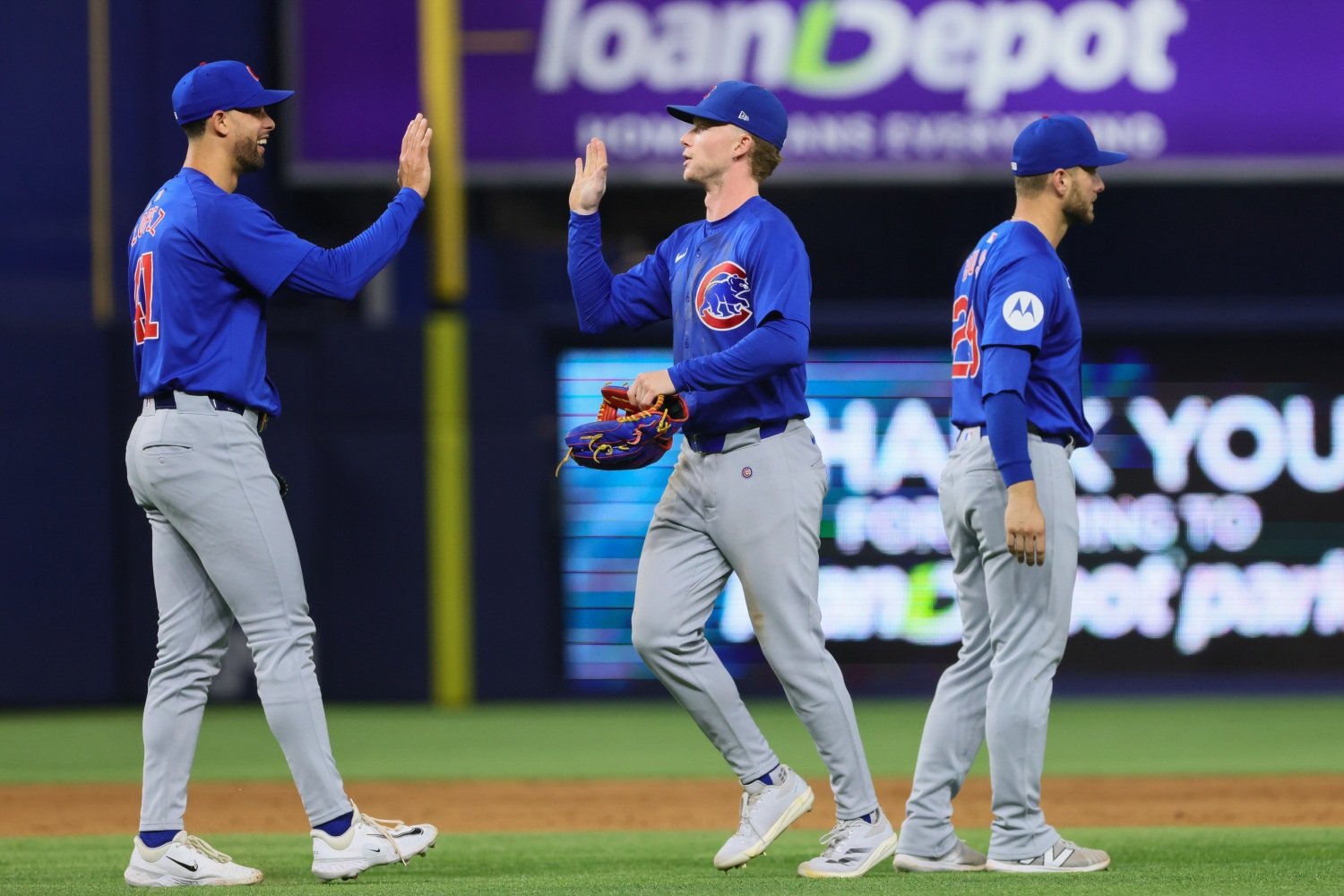 As the Cubs consider further upgrades to a bullpen already improved directly (a trade for Eli Morgan, this week's Caleb Thielbar signing) and indirectly (the Matthew Boyd signing, pushing more of their depth arms toward relief roles) this winter, it's worth pausing a bit to consider whether the answers to all their problems have been standing right in front of them—not all along, maybe, but at some point in the recent past. Seven notable free-agent relievers have had a stint with the Cubs already. Here they are, ranked from the one they'd be most helped by reuniting with to the ones they should resolutely avoid. 1. Jorge López, RHP - 2024 Cubs Made available after he essentially broke down and was cut by the Mets, López thrived in a four-month stint with the Cubs under Craig Counsell, his first big-league manager. He made some basic but pivotal changes and emerged as a high-leverage relief weapon, hampered only by a groin strain that cost him virtually all of September. López should be a very inexpensive but high-upside arm in free agency, and presumably, he'd be open to a return. 2. David Robertson, RHP - 2022 Cubs Though he'll turn 40 in April, Robertson is still going fairly strong. His cutter and curveball remain a potent combination, and he's been creative and crafty in staying ahead of Father Time over the last decade. There's always risk of being the team holding the bag when a pitcher this old finally breaks down, but Robertson is a compelling target. 3. Chris Martin, RHP - 2022 Cubs Only a year younger than Robertson and with significant durability concerns, Martin is nonetheless appealing. He's been consistently excellent when he's been on the mound for the last several years, and has slowly built a deep arsenal that belies his role and his age. He still slots nicely into high-leverage middle relief. 4. Andrew Chafin, LHP - 2020-21 Cubs With Thielbar on board, the need for a lefty like Chafin is greatly reduced. Thielbar joins a corps that already included Luke Little. However, Chafin remains a sturdy slider monster with excellent set-up value in a traditional bullpen structure. He would improve the team's depth, but the roster crunch might not be worth it. 5. Drew Smyly, LHP - 2022-24 Cubs The appeal of Smyly is less his matchup value—he has that unique arsenal and often runs reverse platoon splits, anyway—than his ability to give the team multiple innings in a game out of the pen. He's also a well-liked member of the clubhouse. If he came back, it would have to be on a minimal deal, but he could give the pitching staff a bit of length that's missing from their current bullpen depth chart. 6. Craig Kimbrel, RHP - 2019-21 Cubs Far, far past his prime, Kimbrel is probably going to land with a non-contender on a low-dollar deal this winter. It's hard to imagine almost any scenario in which the Cubs would want to bring him back for a second engagement, and that's for the best. This season promises to be a stern enough test of fans' nerves as it is. 7. Héctor Neris, RHP - 2024 Cubs I know. I'm just obligated to mention it, as part of the conceit of this piece. Did you happen to see how well he bounced back after returning to the Astros for the stretch run? Maybe there's a little left in the tank, after all. The Cubs don't have to be the ones to find out, though. Ideally, the team will aim higher than any of these guys as they strive to finish off a better bullpen than the one they brought into 2024. If they did end up bringing back López or Robertson, though, it might be enough to galvanize an already-talented collection of hurlers.
 -
Ooooh, sweet child of miiiiine. No, I'm kidding. Or am I? Image courtesy of © Sam Navarro-Imagn Images As the Cubs consider further upgrades to a bullpen already improved directly (a trade for Eli Morgan, this week's Caleb Thielbar signing) and indirectly (the Matthew Boyd signing, pushing more of their depth arms toward relief roles) this winter, it's worth pausing a bit to consider whether the answers to all their problems have been standing right in front of them—not all along, maybe, but at some point in the recent past. Seven notable free-agent relievers have had a stint with the Cubs already. Here they are, ranked from the one they'd be most helped by reuniting with to the ones they should resolutely avoid. 1. Jorge López, RHP - 2024 Cubs Made available after he essentially broke down and was cut by the Mets, López thrived in a four-month stint with the Cubs under Craig Counsell, his first big-league manager. He made some basic but pivotal changes and emerged as a high-leverage relief weapon, hampered only by a groin strain that cost him virtually all of September. López should be a very inexpensive but high-upside arm in free agency, and presumably, he'd be open to a return. 2. David Robertson, RHP - 2022 Cubs Though he'll turn 40 in April, Robertson is still going fairly strong. His cutter and curveball remain a potent combination, and he's been creative and crafty in staying ahead of Father Time over the last decade. There's always risk of being the team holding the bag when a pitcher this old finally breaks down, but Robertson is a compelling target. 3. Chris Martin, RHP - 2022 Cubs Only a year younger than Robertson and with significant durability concerns, Martin is nonetheless appealing. He's been consistently excellent when he's been on the mound for the last several years, and has slowly built a deep arsenal that belies his role and his age. He still slots nicely into high-leverage middle relief. 4. Andrew Chafin, LHP - 2020-21 Cubs With Thielbar on board, the need for a lefty like Chafin is greatly reduced. Thielbar joins a corps that already included Luke Little. However, Chafin remains a sturdy slider monster with excellent set-up value in a traditional bullpen structure. He would improve the team's depth, but the roster crunch might not be worth it. 5. Drew Smyly, LHP - 2022-24 Cubs The appeal of Smyly is less his matchup value—he has that unique arsenal and often runs reverse platoon splits, anyway—than his ability to give the team multiple innings in a game out of the pen. He's also a well-liked member of the clubhouse. If he came back, it would have to be on a minimal deal, but he could give the pitching staff a bit of length that's missing from their current bullpen depth chart. 6. Craig Kimbrel, RHP - 2019-21 Cubs Far, far past his prime, Kimbrel is probably going to land with a non-contender on a low-dollar deal this winter. It's hard to imagine almost any scenario in which the Cubs would want to bring him back for a second engagement, and that's for the best. This season promises to be a stern enough test of fans' nerves as it is. 7. Héctor Neris, RHP - 2024 Cubs I know. I'm just obligated to mention it, as part of the conceit of this piece. Did you happen to see how well he bounced back after returning to the Astros for the stretch run? Maybe there's a little left in the tank, after all. The Cubs don't have to be the ones to find out, though. Ideally, the team will aim higher than any of these guys as they strive to finish off a better bullpen than the one they brought into 2024. If they did end up bringing back López or Robertson, though, it might be enough to galvanize an already-talented collection of hurlers. View full article
-
I think Will meant that Sasaki makes a big difference in the overall vibe and valence of a Padres offseason, the way @TomtheBombadil keeps encouraging us all to remember that he does for the Cubs, too—rather than that signing him would radically change the rest of their plans. In their case, because they do have to move money and an SP happens to be the most obvious way they could do so, getting a high-quality SP at a low price would be especially helpful, perhaps, but I think it's more in a holistic, long-term sense than in a specific direction-influencing one for the immediate future.
-
The San Diego Padres are in a tough predicament. The Cubs are well-positioned to help them escape it, while also checking the last two boxes on their essential winter shopping list. Image courtesy of © Denis Poroy-Imagn Images Entering 2025, the Cubs have plenty of money. It feels almost like all they have is money. They're roughly $40 million shy of where they intend to be, payroll-wise, to open 2025, and the problem they face is that the number of good ways to spend that much money on the free-agent market is dwindling—although it was never their preference to dive deeply into that pool, anyway. This offseason has already seen the team acquire the linchpin bat they needed, in Kyle Tucker, and bolster both the starting rotation (Matthew Boyd) and the bullpen (Eli Morgan, Caleb Thielbar), all without trading any of their closest-to-the-majors prospects. They still need a relief ace and a frontline starting pitcher, though, and those things are grossly expensive in free agency—not only in terms of dollars, but in the number of years of guaranteed money key players are seeking. For weeks now, in ruminating on this dilemma, I've circled back to one team as the most promising way for Jed Hoyer and company to resolve this dilemma: the San Diego Padres. With help from perspicacious Padres skeeter Will Holder, I think I've finally pinned down the best way for these two teams to assist one another. The Padres, in short, are in a pickle. We knew that. After the death of owner Peter Seidler, the gravy train stopped (or at least slowed), but the franchise was already committed to several players on large, long-term contracts, and those obligations remain despite the team's reinstated spending constraints. While the Cubs face a stiff enough challenge (adding substantial talent without overpaying, in a market beginning to thin out), they have money to spend. Imagine if they were even further from done with their shopping, and had to cut costs, too. Will continued: The fit here is compelling, isn't it? The deal would look something like this: CUBS RECEIVE: RHP Dylan Cease RHP Robert Suarez PADRES RECEIVE: OF Owen Caissie RHP Ben Brown RHP Javier Assad or LHP Jordan Wicks This deal would make the Cubs about $24 million more expensive in 2025, and it would push in even more of the organization's chips on the success of this season. Cease will become a free agent after the campaign, one for which he'll be paid roughly $14 million in his final season of arbitration eligibility. The Cubs could try to sign him to an extension, of course, but as with Tucker, the chances of that feel slim. With another season similar to the one he just put up in San Diego, he'd be in line for an extremely lucrative free agency, probably topping $200 million in guaranteed money. Suarez, meanwhile, will make $10 million as a base salary, with incentives likely to push that figure to anywhere from $11-13 million if he serves as the primary closer—a likely outcome. After the season, he has a two-year, $16-million player option, so if he pitches well, he's likely to become a free agent, and if he gets hurt or goes off the rails, he's likely to be a long-term budget item with limited utility. That's the bad news. The good news in this deal would be that Cease and Suarez would make the Cubs clear-cut NL Central favorites and a fairly imposing playoff opponent even for the Mets, Dodgers, and Phillies. With Cease at the front of their rotation, the team shouldn't miss Brown and either Assad or Wicks much, with whichever of the latter two they keep waiting alongside Cade Horton and Brandon Birdsell to reinforce a rotation of Cease, Justin Steele, Shota Imanaga, Jameson Taillon, and Boyd. Suarez has a 2.89 career ERA, and while his strikeout rates don't sparkle, he's shown good command and he throws 100 miles per hour. His stuff should limit hard contact a bit better than it actually does, and the Cubs are good at helping relievers make that particular improvement. He'd slot in as their relief ace, pushing Porter Hodge, Tyson Miller, Nate Pearson and the rest of the team's relievers into roles for which they're better suited. Meanwhile, the Padres would shed all that money, nab their much-needed left fielder and collect long-term control of two solid arms, even if there's reliever risk attached to Brown and a lowish ceiling on Assad and Wicks. They'd gain the flexibility they need to round out an offseason that would keep them in the thick of playoff contention. It's not the absolute most they could get for Cease, but Suarez's contract—not just the high salary for one year, but the poisoned pill of that two-year option that makes it highly player-friendly—would be hard to move for value in its own trade. In this one, his inclusion would give the Padres the leverage to push for a low-level fourth piece, or to try to demand Kevin Alcántara instead of Caissie, if they're so inclined. It's unlikely that this exact trade comes to fruition, of course—as unlikely as pointing due south by gazing at the horizon, without the aid of a compass. That's how guessing at offseason moves goes. We're using the information we have to get ourselves pointed in the right direction, knowing full well that we can't be precise without more and better data. Right now, what I can say with confidence is that the Cubs have money to spend and need to find the best way to use it, and that the Padres have money to move and need to get a lot of value out of moving it. That makes the two teams good trade partners, even in the specific shape of the right transaction is hard for us to pin down. View full article
-
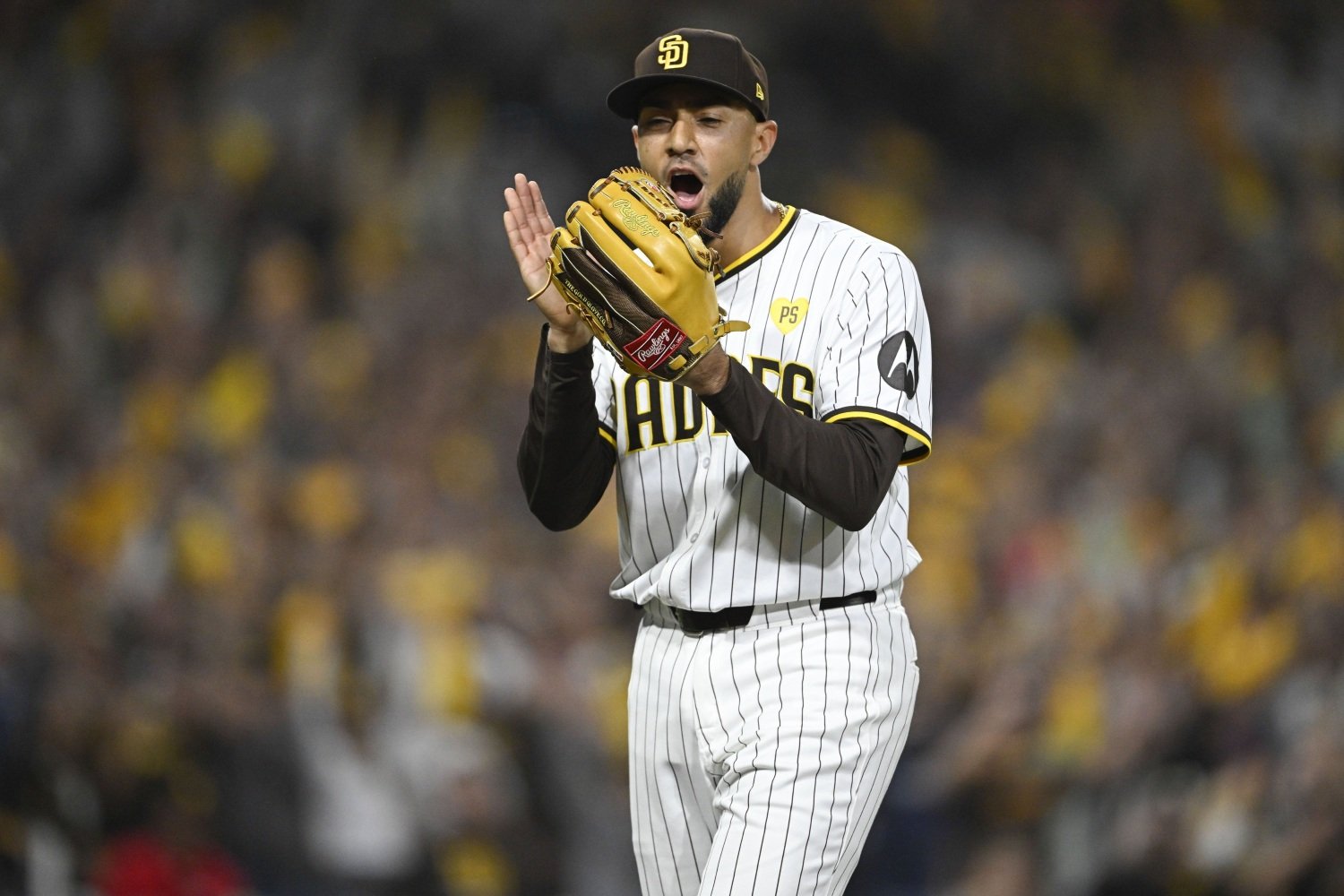 Entering 2025, the Cubs have plenty of money. It feels almost like all they have is money. They're roughly $40 million shy of where they intend to be, payroll-wise, to open 2025, and the problem they face is that the number of good ways to spend that much money on the free-agent market is dwindling—although it was never their preference to dive deeply into that pool, anyway. This offseason has already seen the team acquire the linchpin bat they needed, in Kyle Tucker, and bolster both the starting rotation (Matthew Boyd) and the bullpen (Eli Morgan, Caleb Thielbar), all without trading any of their closest-to-the-majors prospects. They still need a relief ace and a frontline starting pitcher, though, and those things are grossly expensive in free agency—not only in terms of dollars, but in the number of years of guaranteed money key players are seeking. For weeks now, in ruminating on this dilemma, I've circled back to one team as the most promising way for Jed Hoyer and company to resolve this dilemma: the San Diego Padres. With help from perspicacious Padres skeeter Will Holder, I think I've finally pinned down the best way for these two teams to assist one another. The Padres, in short, are in a pickle. We knew that. After the death of owner Peter Seidler, the gravy train stopped (or at least slowed), but the franchise was already committed to several players on large, long-term contracts, and those obligations remain despite the team's reinstated spending constraints. While the Cubs face a stiff enough challenge (adding substantial talent without overpaying, in a market beginning to thin out), they have money to spend. Imagine if they were even further from done with their shopping, and had to cut costs, too. Will continued: The fit here is compelling, isn't it? The deal would look something like this: CUBS RECEIVE: RHP Dylan Cease RHP Robert Suarez PADRES RECEIVE: OF Owen Caissie RHP Ben Brown RHP Javier Assad or LHP Jordan Wicks This deal would make the Cubs about $24 million more expensive in 2025, and it would push in even more of the organization's chips on the success of this season. Cease will become a free agent after the campaign, one for which he'll be paid roughly $14 million in his final season of arbitration eligibility. The Cubs could try to sign him to an extension, of course, but as with Tucker, the chances of that feel slim. With another season similar to the one he just put up in San Diego, he'd be in line for an extremely lucrative free agency, probably topping $200 million in guaranteed money. Suarez, meanwhile, will make $10 million as a base salary, with incentives likely to push that figure to anywhere from $11-13 million if he serves as the primary closer—a likely outcome. After the season, he has a two-year, $16-million player option, so if he pitches well, he's likely to become a free agent, and if he gets hurt or goes off the rails, he's likely to be a long-term budget item with limited utility. That's the bad news. The good news in this deal would be that Cease and Suarez would make the Cubs clear-cut NL Central favorites and a fairly imposing playoff opponent even for the Mets, Dodgers, and Phillies. With Cease at the front of their rotation, the team shouldn't miss Brown and either Assad or Wicks much, with whichever of the latter two they keep waiting alongside Cade Horton and Brandon Birdsell to reinforce a rotation of Cease, Justin Steele, Shota Imanaga, Jameson Taillon, and Boyd. Suarez has a 2.89 career ERA, and while his strikeout rates don't sparkle, he's shown good command and he throws 100 miles per hour. His stuff should limit hard contact a bit better than it actually does, and the Cubs are good at helping relievers make that particular improvement. He'd slot in as their relief ace, pushing Porter Hodge, Tyson Miller, Nate Pearson and the rest of the team's relievers into roles for which they're better suited. Meanwhile, the Padres would shed all that money, nab their much-needed left fielder and collect long-term control of two solid arms, even if there's reliever risk attached to Brown and a lowish ceiling on Assad and Wicks. They'd gain the flexibility they need to round out an offseason that would keep them in the thick of playoff contention. It's not the absolute most they could get for Cease, but Suarez's contract—not just the high salary for one year, but the poisoned pill of that two-year option that makes it highly player-friendly—would be hard to move for value in its own trade. In this one, his inclusion would give the Padres the leverage to push for a low-level fourth piece, or to try to demand Kevin Alcántara instead of Caissie, if they're so inclined. It's unlikely that this exact trade comes to fruition, of course—as unlikely as pointing due south by gazing at the horizon, without the aid of a compass. That's how guessing at offseason moves goes. We're using the information we have to get ourselves pointed in the right direction, knowing full well that we can't be precise without more and better data. Right now, what I can say with confidence is that the Cubs have money to spend and need to find the best way to use it, and that the Padres have money to move and need to get a lot of value out of moving it. That makes the two teams good trade partners, even in the specific shape of the right transaction is hard for us to pin down.
 -
In an underwhelming last-minute move, the Cubs gave themselves some stability—but arguably set themselves too low a ceiling—with a bullpen addition to close out 2024. Image courtesy of © Matt Blewett-Imagn Images It's not the kind of move fans were hoping for. It's not a move that charts any kind of new course in the Cubs' bullpen construction. The team announced a one-year, big-league deal with lefty reliever Caleb Thielbar on Tuesday afternoon, just ahead of the end of the year. The signing fortifies the team's middle relief corps, but only in a very modest way. Thielbar, who will turn 38 years old next month, has pitched in parts of eight big-league seasons over the last 12 years. Thielbar first made it to MLB with his hometown team, the Twins, after a sojourn in independent ball, in the middle of last decade. Then (after a fairly forgettable first turn in the bigs as a relatively soft tosser and mediocre middle reliever), he resurrected his career amid the COVID pandemic. He's been a much better, more modern and impressive reliever the second time around, sometimes earning high-leverage work as a lefty who can get out batters on either side of the plate. His highest average fastball velocity of any season in his career came this season, at age 37. That's the kind of career arc it's been, for a pitcher who first made his mark by having a famously, almost secretly high-spin slow curve. It was a cousin of Rich Hill's skyscraping overhand curve, back at a time when Statcast was just beginning to proliferate and spin rates seemed like magical keys to understanding everything. That didn't keep Thielbar in the big leagues all that long, though. What brought him back was hard work to become a harder thrower, to the point where his heater has sat around 93 miles per hour and gotten up to the higher side of 95 more than a few times over the last two years. He pairs that four-seamer with a sweeper and that curveball, and has run respectably even splits for most of this second act of his career. He posted an ugly 5.32 ERA in 2024, but that belies a much stronger performance on a fundamental level. He had to work through a miniature career crisis, as he scuffled badly early in the season and (as people will do) many mused about whether his fairytale career was nearing its unhappy ever-after. He slid across to the third-base side of the rubber at midseason, though, and several things clicked. Thielbar has evolved and survived several changes of style and shape of pitches in his career; this was just the latest. It's well-documented here, but much of the good stuff from Twins Daily author John Foley is behind a paywall, exclusive to our Twins Daily Caretakers. I can share this much of it for you, though: In short, Thielbar changed his alignment and made a slight modification to his mechanics, and it paid off handsomely. He health with injury problems in 2023 and 2024, and will probably be an occasional health question mark in 2025. That's how being an aging pitcher getting every ounce of power from a medium-sized body goes. Still, he strikes out more hitters than his fastball velocity might imply that he would, and when he's got his secondary offerings locked in, he also limits walks well. He's a superb complementary lefty, and we can safely assume he came fairly cheap. Both the curve and the sweeper can be plus offerings when he has them ranged correctly, and he mostly has. The sweeper, especially, can be devastating, even against righties, because it has fairly big, two-plane shape coming from a deceptive delivery. Thielbar's extension isn't elite, but he seems to fly down the mound at hitters, and it adds to the efficacy of both his breaking pitches. The fastball sits in the movement dead zone a bit, but I wouldn't be surprised if the Cubs address that by adding a cutter to his mix as a wrinkle. He's tinkered with one before, and is well-suited to it. The Cubs are a good environment in which to tease that particular adjustment out a bit more. This move will be good for clubhouse vibes and for playing matchups in middle relief. Thielbar has more upside than most pitchers of his age or with his track record; he just can't be your best or second-best reliever throughout a season. He's a great story, a Minnesota native who made good with the home team—twice. The only bad news here is that Thielbar does take up a 40-man roster spot, the only open one the Cubs had at the time of the signing. They can open up more spots in any number of ways, with several fungible players still clinging to the fringes of that reserve list. For instance, he's a marked improvement upon Rob Zastryzny, whatever good feelings spelling 'Zastryzny' right might bring because of his associations with the 2016 Cubs. Zastryzny is out of options, so he was no more flexible a piece than Thielbar, and Thielbar is demonstrably better. Again, you figure the money involved here is limited. This is the first time Thielbar has ever reached traditional free agency, thanks to his adventurous career arc, and he has never made more than the $3.2 million he pulled down via arbitration last year. Presumably, since the surface-level numbers weren't great and he's both old and lacking a top-flight fastball, he'll make around that figure for the 2025 Cubs. As such, the move is fine. It's uninspiring, but it will make the team's bullpen incrementally deeper and better, and doesn't foreclose any of the other moves we assume they're entertaining. It does, however, seem to crowd the bullpen a bit, and make it harder to envision the higher-end relief acquisition that still seems essential. View full article
-
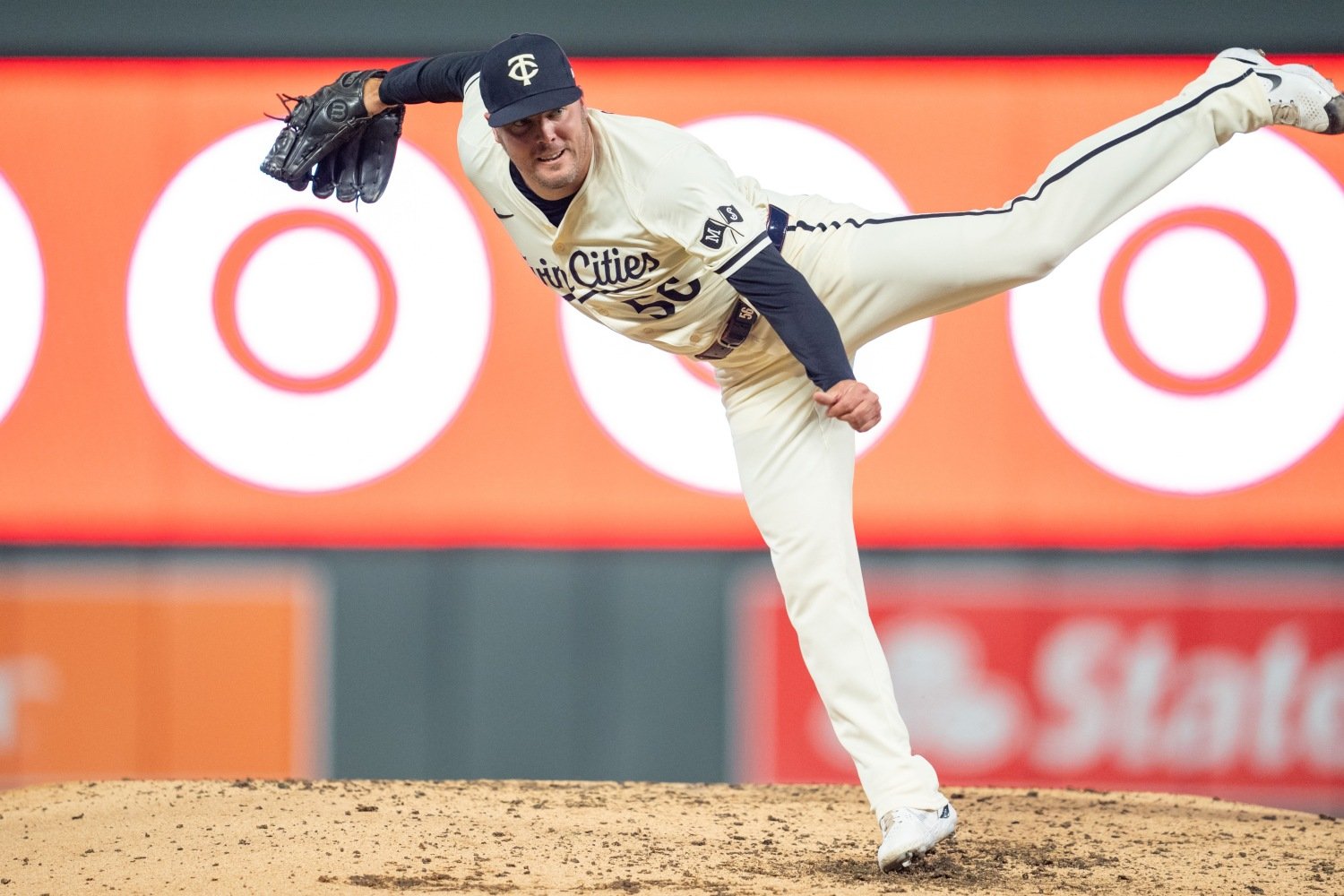 It's not the kind of move fans were hoping for. It's not a move that charts any kind of new course in the Cubs' bullpen construction. The team announced a one-year, big-league deal with lefty reliever Caleb Thielbar on Tuesday afternoon, just ahead of the end of the year. The signing fortifies the team's middle relief corps, but only in a very modest way. Thielbar, who will turn 38 years old next month, has pitched in parts of eight big-league seasons over the last 12 years. Thielbar first made it to MLB with his hometown team, the Twins, after a sojourn in independent ball, in the middle of last decade. Then (after a fairly forgettable first turn in the bigs as a relatively soft tosser and mediocre middle reliever), he resurrected his career amid the COVID pandemic. He's been a much better, more modern and impressive reliever the second time around, sometimes earning high-leverage work as a lefty who can get out batters on either side of the plate. His highest average fastball velocity of any season in his career came this season, at age 37. That's the kind of career arc it's been, for a pitcher who first made his mark by having a famously, almost secretly high-spin slow curve. It was a cousin of Rich Hill's skyscraping overhand curve, back at a time when Statcast was just beginning to proliferate and spin rates seemed like magical keys to understanding everything. That didn't keep Thielbar in the big leagues all that long, though. What brought him back was hard work to become a harder thrower, to the point where his heater has sat around 93 miles per hour and gotten up to the higher side of 95 more than a few times over the last two years. He pairs that four-seamer with a sweeper and that curveball, and has run respectably even splits for most of this second act of his career. He posted an ugly 5.32 ERA in 2024, but that belies a much stronger performance on a fundamental level. He had to work through a miniature career crisis, as he scuffled badly early in the season and (as people will do) many mused about whether his fairytale career was nearing its unhappy ever-after. He slid across to the third-base side of the rubber at midseason, though, and several things clicked. Thielbar has evolved and survived several changes of style and shape of pitches in his career; this was just the latest. It's well-documented here, but much of the good stuff from Twins Daily author John Foley is behind a paywall, exclusive to our Twins Daily Caretakers. I can share this much of it for you, though: In short, Thielbar changed his alignment and made a slight modification to his mechanics, and it paid off handsomely. He health with injury problems in 2023 and 2024, and will probably be an occasional health question mark in 2025. That's how being an aging pitcher getting every ounce of power from a medium-sized body goes. Still, he strikes out more hitters than his fastball velocity might imply that he would, and when he's got his secondary offerings locked in, he also limits walks well. He's a superb complementary lefty, and we can safely assume he came fairly cheap. Both the curve and the sweeper can be plus offerings when he has them ranged correctly, and he mostly has. The sweeper, especially, can be devastating, even against righties, because it has fairly big, two-plane shape coming from a deceptive delivery. Thielbar's extension isn't elite, but he seems to fly down the mound at hitters, and it adds to the efficacy of both his breaking pitches. The fastball sits in the movement dead zone a bit, but I wouldn't be surprised if the Cubs address that by adding a cutter to his mix as a wrinkle. He's tinkered with one before, and is well-suited to it. The Cubs are a good environment in which to tease that particular adjustment out a bit more. This move will be good for clubhouse vibes and for playing matchups in middle relief. Thielbar has more upside than most pitchers of his age or with his track record; he just can't be your best or second-best reliever throughout a season. He's a great story, a Minnesota native who made good with the home team—twice. The only bad news here is that Thielbar does take up a 40-man roster spot, the only open one the Cubs had at the time of the signing. They can open up more spots in any number of ways, with several fungible players still clinging to the fringes of that reserve list. For instance, he's a marked improvement upon Rob Zastryzny, whatever good feelings spelling 'Zastryzny' right might bring because of his associations with the 2016 Cubs. Zastryzny is out of options, so he was no more flexible a piece than Thielbar, and Thielbar is demonstrably better. Again, you figure the money involved here is limited. This is the first time Thielbar has ever reached traditional free agency, thanks to his adventurous career arc, and he has never made more than the $3.2 million he pulled down via arbitration last year. Presumably, since the surface-level numbers weren't great and he's both old and lacking a top-flight fastball, he'll make around that figure for the 2025 Cubs. As such, the move is fine. It's uninspiring, but it will make the team's bullpen incrementally deeper and better, and doesn't foreclose any of the other moves we assume they're entertaining. It does, however, seem to crowd the bullpen a bit, and make it harder to envision the higher-end relief acquisition that still seems essential.
 -
It's been a quiet four months since we first heard tell of this possible rule change. Let's try to go another four decades without hearing any more of it. Image courtesy of © Brett Davis-Imagn Images I should be clear, though: I don't think we'll be so lucky. Back in the latter part of the 2024 regular season, Whit Merrifield was hit in the head with a pitch, and went on a tirade after the game about what he considered the danger and irresponsibility of pitchers working up and in. Merrifield was part of 2024's MLB Competition Committee, which includes players (among other stakeholders) in discussions of potential rule changes, and he took his grievances there, too. He emerged from a meeting of the committee convinced that a new rule would take effect in 2025, carving out special penalties for hitting batters high or breaking their hands with fastballs inside. Various versions of this kicked around by Merrifield and others included immediate ejections, and (perhaps even more notably) fines in cases of non-ejections. Merrifield is unlikely to find it as easy to actually achieve rules changes as it was to get the other members of the committee to nod along with him, because pitchers are union members, too, and those fines would be a major sticking point. However, the very idea of these harsher punishments demand our attention, because with the new year will come increased discussion of these types of changes. Already, we know the league will experiment with automatic ball-and-strike calling in spring training. Will they also allow the hitter lobby to bully their way into taking the inner third of the plate away from pitchers? Here's hoping the answer is no. Merrifield was way out of line with this suggestion, and true baseball fans should scoff at and dismiss him. That's not to say that player safety shouldn't be paramount; it should. But the notion that unintentional high-and-tight pitches require a punishment in excess of the free base given to a plunked batter is preposterous. Across multiple interviews in his personal media tour, Merrifield pushed blame for plunkings onto pitchers and implied that it should be their sole responsibility to think about safety instead of efficacy when throwing an inside heater. He sounded very much like the pitchers who lamented the augmented enforcement of rules against foreign substances on the ball, a few years ago. Merrifield is used to doing things a certain way, and doesn't think he should have to change. He doesn't think hitters should have to adjust and adapt, or that they should have to have the risk of an errant pitch riding in on them in the back of their minds as they attempt to hit. He's hilariously wrong. The reason batters get a free base when they're hit is to discourage pitchers from throwing too close to them. It's a rule with as profound an impact as a 15-yard penalty in football. It's all about safety. That's the protection hitters get. The rest is their own responsibility, and if it's true that more of them are getting hit, they are every bit as much to blame as pitchers. Hitters crowd the plate more than ever, covering the entire zone with their 'A' swings. They adorn themselves with protective equipment the likes of which Willie Mays never would have imagined during his playing career, and then they expect to also be given deference when it comes to the inner edge of the plate. That—not rising bloodlust from pitchers—is why hit batters are happening more often than at any other time in the game's history. Not giving ground means wearing a bruise, now and then. Hitting is excruciatingly hard right now. Merrifield is an aging hitter, and not a very good one (by MLB standards) at this stage. His frustration is understandable, but to propose amendments to the rules that would materially hurt his fellow players and abdicate his and his fellow hitters' own duty to protect themselves and negotiate the fight for the strike zone is as reckless of him as throwing an inside fastball is of a pitcher with imperfect command. In the past, I've proposed ejecting pitchers who hit three batters in one game. I still think that makes sense. Ejecting anyone on a first plunking (absent external factors like a simmering feud between the teams), though, is a foolish idea, and it reflects an attitude on the part of hitters as derelict as the one pitchers took to sticky stuff over the years. In the new year, we'll hear more about this rule, but I hope we only hear that it was duly considered and then shoved into the back of a junk drawer, where it belongs. View full article
-
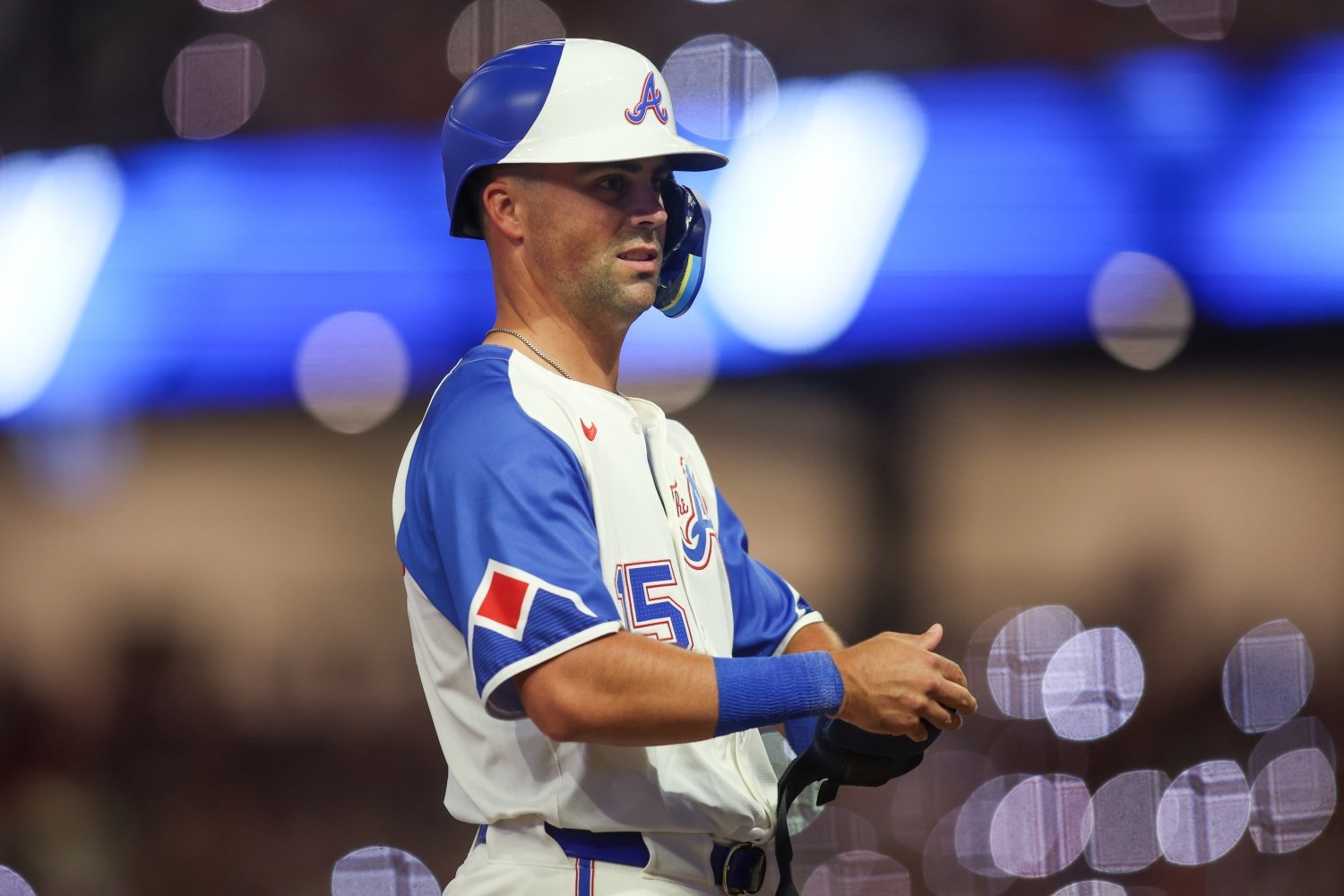 I should be clear, though: I don't think we'll be so lucky. Back in the latter part of the 2024 regular season, Whit Merrifield was hit in the head with a pitch, and went on a tirade after the game about what he considered the danger and irresponsibility of pitchers working up and in. Merrifield was part of 2024's MLB Competition Committee, which includes players (among other stakeholders) in discussions of potential rule changes, and he took his grievances there, too. He emerged from a meeting of the committee convinced that a new rule would take effect in 2025, carving out special penalties for hitting batters high or breaking their hands with fastballs inside. Various versions of this kicked around by Merrifield and others included immediate ejections, and (perhaps even more notably) fines in cases of non-ejections. Merrifield is unlikely to find it as easy to actually achieve rules changes as it was to get the other members of the committee to nod along with him, because pitchers are union members, too, and those fines would be a major sticking point. However, the very idea of these harsher punishments demand our attention, because with the new year will come increased discussion of these types of changes. Already, we know the league will experiment with automatic ball-and-strike calling in spring training. Will they also allow the hitter lobby to bully their way into taking the inner third of the plate away from pitchers? Here's hoping the answer is no. Merrifield was way out of line with this suggestion, and true baseball fans should scoff at and dismiss him. That's not to say that player safety shouldn't be paramount; it should. But the notion that unintentional high-and-tight pitches require a punishment in excess of the free base given to a plunked batter is preposterous. Across multiple interviews in his personal media tour, Merrifield pushed blame for plunkings onto pitchers and implied that it should be their sole responsibility to think about safety instead of efficacy when throwing an inside heater. He sounded very much like the pitchers who lamented the augmented enforcement of rules against foreign substances on the ball, a few years ago. Merrifield is used to doing things a certain way, and doesn't think he should have to change. He doesn't think hitters should have to adjust and adapt, or that they should have to have the risk of an errant pitch riding in on them in the back of their minds as they attempt to hit. He's hilariously wrong. The reason batters get a free base when they're hit is to discourage pitchers from throwing too close to them. It's a rule with as profound an impact as a 15-yard penalty in football. It's all about safety. That's the protection hitters get. The rest is their own responsibility, and if it's true that more of them are getting hit, they are every bit as much to blame as pitchers. Hitters crowd the plate more than ever, covering the entire zone with their 'A' swings. They adorn themselves with protective equipment the likes of which Willie Mays never would have imagined during his playing career, and then they expect to also be given deference when it comes to the inner edge of the plate. That—not rising bloodlust from pitchers—is why hit batters are happening more often than at any other time in the game's history. Not giving ground means wearing a bruise, now and then. Hitting is excruciatingly hard right now. Merrifield is an aging hitter, and not a very good one (by MLB standards) at this stage. His frustration is understandable, but to propose amendments to the rules that would materially hurt his fellow players and abdicate his and his fellow hitters' own duty to protect themselves and negotiate the fight for the strike zone is as reckless of him as throwing an inside fastball is of a pitcher with imperfect command. In the past, I've proposed ejecting pitchers who hit three batters in one game. I still think that makes sense. Ejecting anyone on a first plunking (absent external factors like a simmering feud between the teams), though, is a foolish idea, and it reflects an attitude on the part of hitters as derelict as the one pitchers took to sticky stuff over the years. In the new year, we'll hear more about this rule, but I hope we only hear that it was duly considered and then shoved into the back of a junk drawer, where it belongs.
 -
Jed Hoyer traded his would-be second option at first base as part of the multi-piece maneuver that gave the team its new superstar outfielder. Now, he has to bolster the bench with someone who can cover the cold corner in a pinch. Image courtesy of © Charles LeClaire-Imagn Images Michael Busch played 152 games in 2024, starting 135 of them. Quickly, the rookie proved he didn't need to be platooned at first base, and his impressive progress with the glove eventually led the team to eschew using Cody Bellinger there for any meaningful time. The Cubs are so confident about his future as both a hitter and a fielder that they felt no compunction about trading Bellinger earlier this month. Now that they've done so, though, they have to bring in a credible backup for Busch—ideally, a right-handed batter who can provide some matchup balance in addition to rest and injury replacement. There are a handful of viable players who fit that mold on the market right now, but two of them stand out. Connor Joe The ex-Pirates batsman played some first base, some DH, and some right field in 2024, which is a pretty fair reflection of how he's generally divided his time during a career spanning parts of six seasons. It was a mild surprise when the Pirates non-tendered him in November, because he was only projected to make around $3.2 million via arbitration, and he still had three years of team control remaining. Joe, 32, can hit, especially against left-handed pitchers. He boasts a career .254/.350/.415 line against them, with 70 walks, 10 times hit by pitches, 120 strikeouts and 14 home runs in 605 plate appearances. He doesn't hit the ball hard with especially high frequency, but he does lift it consistently, and the raw power is there: Joe swings a quick bat. Joe also makes contact at a below-average but tenable rate, and he takes a good, patient approach. Best of all, he's a plus defender at first, a bit like Busch in that he's not as big as the prototype at the spot but moves better than many of his more hulking counterparts. He's not capable of the same power displays as Patrick Wisdom, but he offers a steadier glove and a much more balanced set of offensive skills than Wisdom did. He's stretched in the kind of role he filled for the Pirates and Rockies over the last three years, as he's averaged 452 plate appearances per year. But if the Cubs could get him on a low-cost two-year deal and pencil him in for more like 250 well-chosen trips to the plate (mostly against lefties), Joe could be a superb addition. Mark Canha Set to turn 36 early in spring training, Canha is a major age risk. He's playable at first base, but not good there. He doesn't have the ability to generate meaningful power, because he neither gets the ball in the air with any regularity nor has a fast enough bat to do so. What Canha does offer, though, is more of that classic line-drive, medium-hard contact profile. He takes walks and is a good situational hitter. He has a long, successful track record in the majors. He would have been a better target for the team years ago, when he hit free agency and signed a lucrative deal with the Mets. He would be a better target if he were a bit more fluid around the bag on defense. Still, Canha is an enticing option. He'll get on base, whenever called upon, and he's one of the game's best off-field personalities: easy to talk to, outgoing without being overbearing, and curious without being distracted from his duty. The Cubs' bench has already seen a bit of an overhaul, but they might turn over one or two of their places on that bench yet again before Opening Day. To fill all their positional needs, they have to be willing to spend some money and shove aside a couple of contingency plans they had created. If they do so, though, they'll be rewarded with a position-player roster capable of really winning something—as long as they also further reinforce their pitching staff along the way. View full article
.png.04ff7bb424f31a4fbe79a67ea6b5f416.png)
