


Matthew Trueblood
-
Posts
2,481 -
Joined
-
Last visited
-
Days Won
2
Content Type
Profiles
Joomla Posts 1
Chicago Cubs Videos
Chicago Cubs Free Agent & Trade Rumors, Notes, & Tidbits
2026 Chicago Cubs Top Prospects Ranking
News
2023 Chicago Cubs Draft Picks
Guides & Resources
2024 Chicago Cubs Draft Picks
The Chicago Cubs Players Project
2025 Chicago Cubs Draft Pick Tracker
2026 Chicago Cubs Draft Tracker: Picks & Bonuses
Blogs
Events
Forums
Store
Gallery
Everything posted by Matthew Trueblood
-
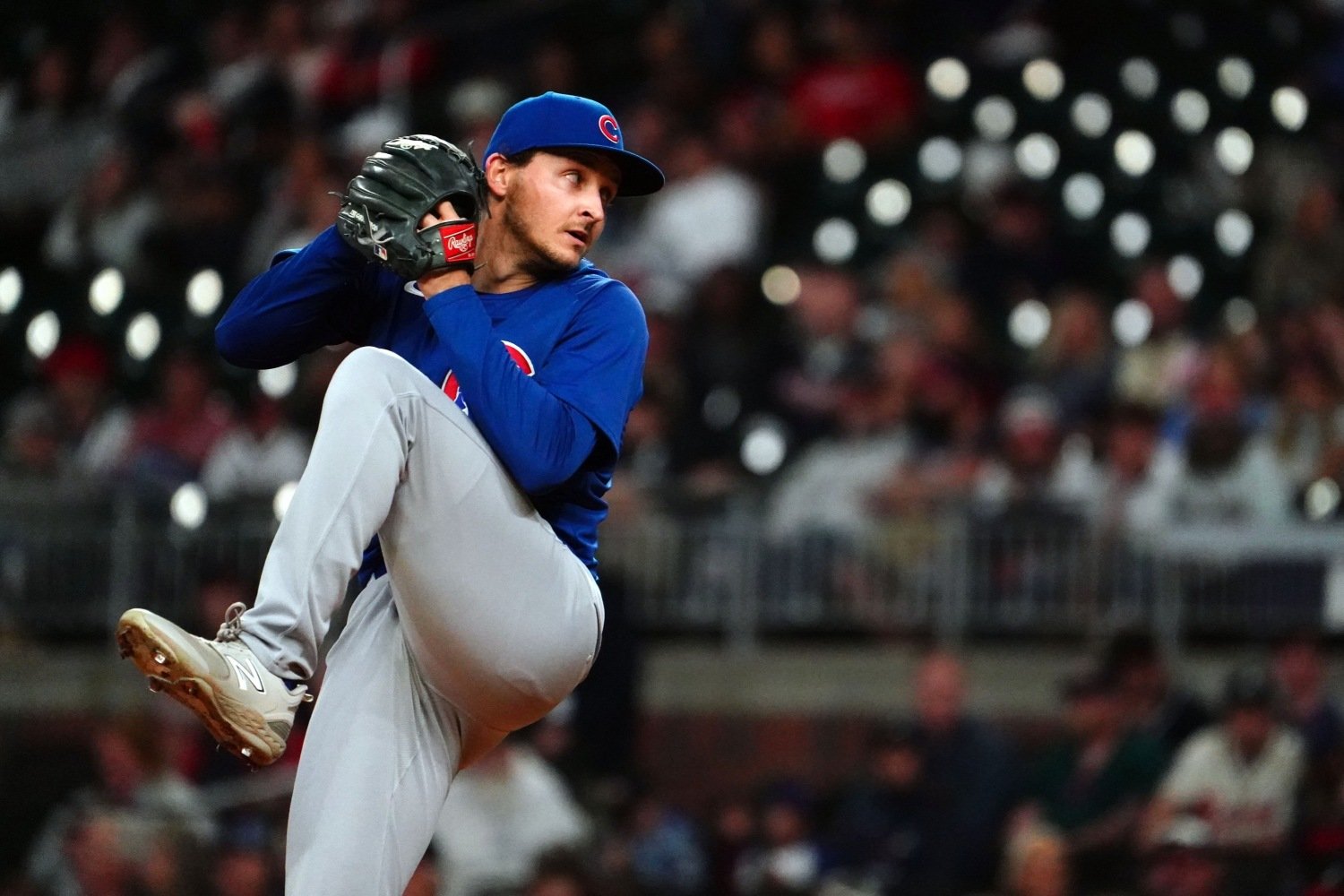 Though it was only Monday morning that Cubs fans woke up to concrete news about changes to the team's 2025 starting rotation, there was never much question that such a change was coming. Matthew Boyd slots neatly into (for now) the fourth spot in the team's projected starting staff, pushing everyone but Shota Imanaga, Justin Steele, and Jameson Taillon down a rung in the hierarchy. Someone was bound to be brought in to effect that shift, but now it's really happening. For Hayden Wesneski, that pulls the eventual resolution of many questions about the future a notch closer. It's been a tantalizing but difficult two and a half years in the Cubs organization for Wesneski, whom the team received in a trade for righty reliever Scott Effross at the 2022 trade deadline. He was initially viewed as a starting pitching prospect, but the auditions he got for that job (most notably in the first six weeks of 2023) didn't go well. He still might have upside as a big-league starter, but increasingly, it feels likely that one of these two outcomes will prevail: Wesneski makes a full-time, permanent move to short relief for the Cubs, where his stuff might play up and allow him to blossom into a dominant arm. Wesneski does figure it out as a starter... but it happens elsewhere. The Cubs trade him to a team in need of help in the rotation and with a bit more time to bring along a hurler still feeling for the command and polish required to succeed in long outings and face opposing lineups two or three times. Earlier this offseason, the team acquired right-handed reliever Eli Morgan from Cleveland, adding him to a mix that already included Porter Hodge, Tyson Miller, Nate Pearson, and other relievers with impressive but inconsistent track records. On the other hand, they non-tendered Adbert Alzolay, and have released hurlers Trey Wingenter and Yency Almonte. There's room for the good version of Wesneski in their projected bullpen, particularly because he can still be optioned to the minor leagues for one more season. Because his four-seam fastball is too straight and is constantly at risk of getting hit hard, he's struggled to both miss bats and limit power when forced to work through opposing lineups more than once. In relief, however, he can lean much harder on his plus sweeper. He has far better career chase, whiff, ground-ball, and strikeout rates in relief, and in 2024, he seemed to figure out the best way forward for himself in that role; he just wasn't actually called upon in it very often. Specifically, late in the campaign, Wesneski appeared to be getting behind his fastball better, leading to better carry, more velocity, and the ability to miss bats with it. He fanned nine of the 20 batters he faced in the big leagues in September, using mostly the recalibrated heat and that devastating sweeper. Wesneski Heat.mp4 While he does still fit into the team's plans if permanently shifted away from starting, Wesneski might serve them best as a trade piece. There are teams who might see him as a diamond in the rough, figuring they can fix his persistent release-point issues and help him find a fastball that isn't as easy for opponents to square up. Either way, the additions of Morgan and Boyd have forced the team closer to making a decision about Wesneski. If he's going to stay in the organization, he needs to come to spring training ready work in short bursts and avail himself of the 1-2 extra miles per hour he's generally found on his heater there. Otherwise, they should be shopping him, treating him as a valuable but secondary piece in a number of possible trade permutations to get their hands on much-needed upgrades for the lineup or at the higher echelons of their pitching hierarchies.
 -
There are plenty of players below the young righty on the team's 40-man roster, who can be cut to make room for their newest starting pitcher. Still, the arrival nudges them closer to the horns of a dilemma that has been lurking for a while. Though it was only Monday morning that Cubs fans woke up to concrete news about changes to the team's 2025 starting rotation, there was never much question that such a change was coming. Matthew Boyd slots neatly into (for now) the fourth spot in the team's projected starting staff, pushing everyone but Shota Imanaga, Justin Steele, and Jameson Taillon down a rung in the hierarchy. Someone was bound to be brought in to effect that shift, but now it's really happening. For Hayden Wesneski, that pulls the eventual resolution of many questions about the future a notch closer. It's been a tantalizing but difficult two and a half years in the Cubs organization for Wesneski, whom the team received in a trade for righty reliever Scott Effross at the 2022 trade deadline. He was initially viewed as a starting pitching prospect, but the auditions he got for that job (most notably in the first six weeks of 2023) didn't go well. He still might have upside as a big-league starter, but increasingly, it feels likely that one of these two outcomes will prevail: Wesneski makes a full-time, permanent move to short relief for the Cubs, where his stuff might play up and allow him to blossom into a dominant arm. Wesneski does figure it out as a starter... but it happens elsewhere. The Cubs trade him to a team in need of help in the rotation and with a bit more time to bring along a hurler still feeling for the command and polish required to succeed in long outings and face opposing lineups two or three times. Earlier this offseason, the team acquired right-handed reliever Eli Morgan from Cleveland, adding him to a mix that already included Porter Hodge, Tyson Miller, Nate Pearson, and other relievers with impressive but inconsistent track records. On the other hand, they non-tendered Adbert Alzolay, and have released hurlers Trey Wingenter and Yency Almonte. There's room for the good version of Wesneski in their projected bullpen, particularly because he can still be optioned to the minor leagues for one more season. Because his four-seam fastball is too straight and is constantly at risk of getting hit hard, he's struggled to both miss bats and limit power when forced to work through opposing lineups more than once. In relief, however, he can lean much harder on his plus sweeper. He has far better career chase, whiff, ground-ball, and strikeout rates in relief, and in 2024, he seemed to figure out the best way forward for himself in that role; he just wasn't actually called upon in it very often. Specifically, late in the campaign, Wesneski appeared to be getting behind his fastball better, leading to better carry, more velocity, and the ability to miss bats with it. He fanned nine of the 20 batters he faced in the big leagues in September, using mostly the recalibrated heat and that devastating sweeper. Wesneski Heat.mp4 While he does still fit into the team's plans if permanently shifted away from starting, Wesneski might serve them best as a trade piece. There are teams who might see him as a diamond in the rough, figuring they can fix his persistent release-point issues and help him find a fastball that isn't as easy for opponents to square up. Either way, the additions of Morgan and Boyd have forced the team closer to making a decision about Wesneski. If he's going to stay in the organization, he needs to come to spring training ready work in short bursts and avail himself of the 1-2 extra miles per hour he's generally found on his heater there. Otherwise, they should be shopping him, treating him as a valuable but secondary piece in a number of possible trade permutations to get their hands on much-needed upgrades for the lineup or at the higher echelons of their pitching hierarchies. View full article
-
Very MUCH non-Soto!
-
In a deal reported deep in the night, the Cubs have set a high floor for the back end of their rotation, with a pitcher who provides depth and gives them many more options for their next moves. Image courtesy of © Scott Galvin-Imagn Images The Chicago Cubs agreed to a two-year deal with veteran left-handed starting pitcher Matthew Boyd, Jon Heyman reported early Monday night. The oft-injured southpaw will earn $29 million over two seasons, and the deal appears to be neither front- nor backloaded. All offseason, I have said the team needed to add two starting pitchers: one at the front end of their rotation, and one at the back. This is the latter type of move, but a very strong version thereof. Boyd, who will turn 34 on Groundhog Day, made only eight regular-season starts in 2024, and has not pitched even 100 innings in any season since 2019—although that year, he threw a whopping 185, in his second straight campaign as a high-volume starter with the Tigers. Durability is not Boyd's strong suit, but that might just be a good thing. He was available at this price precisely because he can't be counted upon for a whole lot of work, but when he's on the mound, lately, he tends to be quite good. He carried a 2.72 ERA and struck out 27.7% of opposing hitters for Cleveland during the regular season in 2024, and carried that brilliance right into October. He's a move more in keeping with the strategies we see embraced by the teams we all ask the Cubs to more closely mimic: the Dodgers, Yankees, Mets, and Padres, who compile depth in an acknowledgment of the risk of injury but don't simply pay for reliable innings at a low level of quality. They'd rather have a good pitcher than a merely average one, even if it means paying a premium for a player who might spend a good chunk of the season on the injured list. To those who don't follow the American League closely, Boyd probably isn't much of a recognizable name, but he's had a long and occasionally very promising career. The last few years have been painfully injury-disrupted. He missed most of the second half of 2021 with arm discomfort the Tigers couldn't help him diagnose or resolve, at a time when that organization did virtually nothing right. Finally, in September, he was diagnosed with a torn flexor tendon, and underwent surgery to repair it. He wouldn't pitch again until the final month of 2022, after signing with the Mariners over his injury-shadowed winter. Then, in June 2023, he tore his UCL, requiring Tommy John surgery and shelving him until the second half of 2024. Thereafter, though, he reminded everyone of the two reasons why he's consistently been in demand all these years: He can really pitch, as a lefty with a funky slot and a good arsenal—which got markedly better in 2024; and He's one of the game's good guys, beloved in every clubhouse to which he has ever belonged. Boyd was an integral part of the Guardians rotation down the stretch, and then allowed just one run in 11 2/3 innings of work over three appearances in the postseason. Let's get into the nitty-gritty here, because it's pretty interesting stuff. Boyd, a Washington native who has long been a disciple of Driveline, is not a hard thrower, but he is a bat-misser, when he's right. He has a five-pitch mix: four-seamer, two-seamer, changeup, slider, curveball. The curve is sparingly used, and fairly new, but helpful. The four-seamer, slider, and change anchor the repertoire, and can mix in nasty ways. As you'd expect, against lefty batters, Boyd is slider-heavy and prefers to pair it with the sinker—though, in a wrinkle we know the Cubs like, he uses that sinker more like a true two-seamer, with more arm-side run than heavy action, often attacking the upper half of the zone with it to jam a lefty or set up another offering. Against righties, he's primarily a four-seamer and changeup guy, and the curveball comes into play more. For all our talk to date about how the Cubs like cut-ride fastballs, Boyd's is a pitch without a lot of vertical ride and with arm-side action, even from the four-seamer. It's probably best to think of him as a poor man's Sean Manaea for this offseason. Whereas Manaea would have cost the Cubs draft picks and is likely to get a three- or four-year deal worth more than $20 million per year, Boyd offers a much less durable (but similarly high-upside) low-slot, multi-pitch, veteran profile from the left side. TDZvdmJfV0ZRVkV3dEdEUT09X0FRY0VYRlVBVlZRQVd3UUZVUUFBVUFVRUFGaFJBRkFBQlFZQ0J3UUVVRkpSQmxaUg==.mp4 For what it's worth, too, getting such a lefty might have been high on the team's priority list, if they believe at all in the strange phenomenon of Wrigley Field playing very lefty pitcher-friendly of late. I broke down the data on that earlier this offseason, and it's worth considering when evaluating the addition of Boyd, as opposed to (say) Frankie Montas, who signed a similar but larger deal with the Mets earlier Sunday night. Boyd will not sate the appetites of virtually any Cubs fan right away, but he's a solid addition. He's a clearly better pitcher than Jordan Wicks, and gives the team a better matrix of possible outcomes if Ben Brown, Hayden Wesneski, Cade Horton, or Brandon Birdsell are unable either to stay healthy enough to have an impact or to succeed as starters. He also makes it more feasible to trade from the team's upper-level pitching depth, should they end up in a negotiation wherein their young offensive prospects aren't quite getting the deal done in the right way. If this is the only major addition the Cubs make to their pitching staff this winter, it's insufficient. That feels unlikely, though. They paid a small early-winter, buy-now premium to land a player who can replace the gravitas of Kyle Hendricks and Patrick Wisdom, brightening the clubhouse a bit; has proved the ability to get out even very good hitters, very recently; and might have been undervalued by the market because of the way his injuries have prevented him from stringing together successful outings over the last four seasons. It reads as a move designed to give them upside even while adding to the back end of the rotation. They still have ways to further strengthen the team by adding to the front end, or by turning their attention to building an elite bullpen. View full article
-
Cubs Sign Starting Pitcher Matthew Boyd to Two-Year Deal
Matthew Trueblood posted an article in Cubs
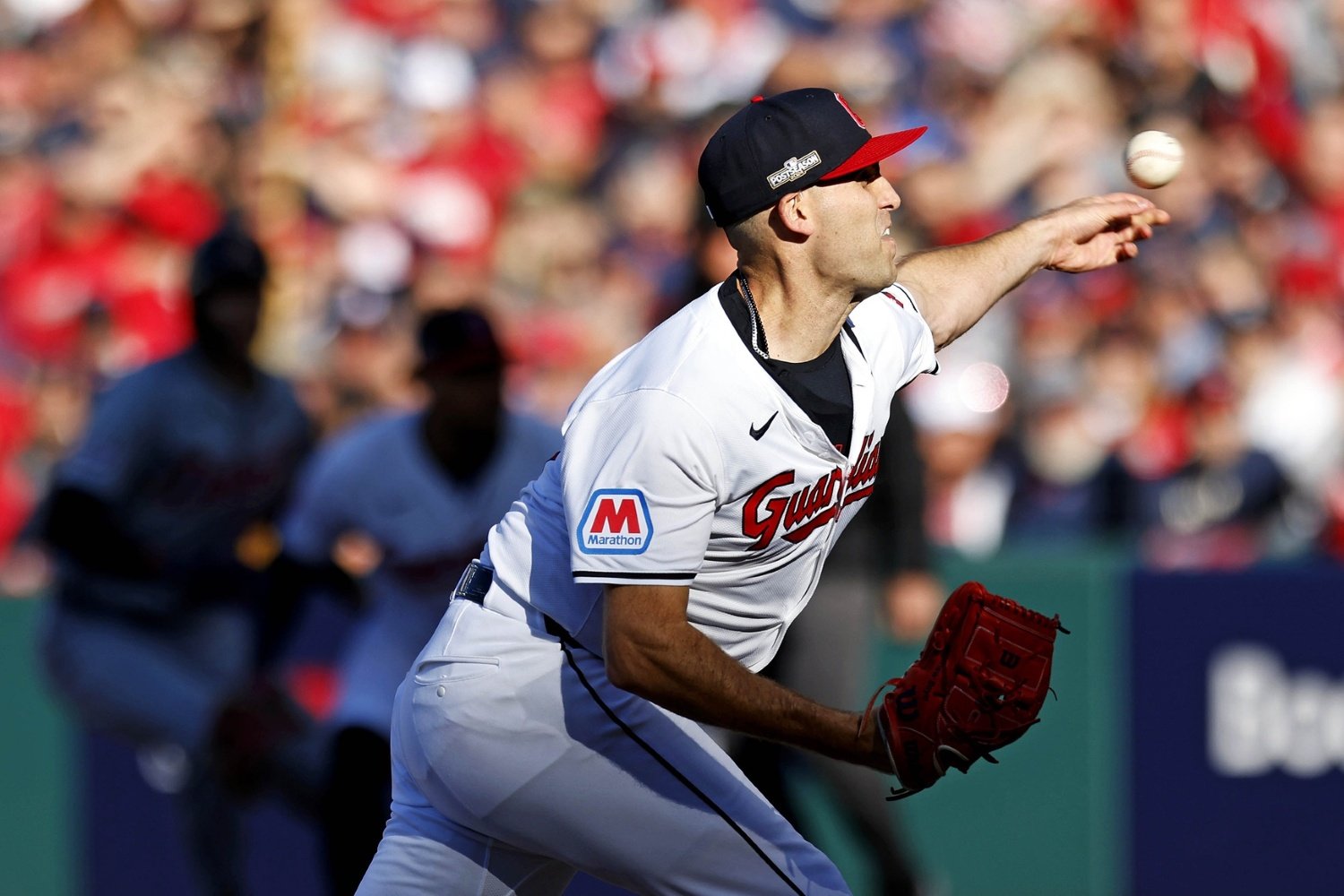 The Chicago Cubs agreed to a two-year deal with veteran left-handed starting pitcher Matthew Boyd, Jon Heyman reported early Monday night. The oft-injured southpaw will earn $29 million over two seasons, and the deal appears to be neither front- nor backloaded. All offseason, I have said the team needed to add two starting pitchers: one at the front end of their rotation, and one at the back. This is the latter type of move, but a very strong version thereof. Boyd, who will turn 34 on Groundhog Day, made only eight regular-season starts in 2024, and has not pitched even 100 innings in any season since 2019—although that year, he threw a whopping 185, in his second straight campaign as a high-volume starter with the Tigers. Durability is not Boyd's strong suit, but that might just be a good thing. He was available at this price precisely because he can't be counted upon for a whole lot of work, but when he's on the mound, lately, he tends to be quite good. He carried a 2.72 ERA and struck out 27.7% of opposing hitters for Cleveland during the regular season in 2024, and carried that brilliance right into October. He's a move more in keeping with the strategies we see embraced by the teams we all ask the Cubs to more closely mimic: the Dodgers, Yankees, Mets, and Padres, who compile depth in an acknowledgment of the risk of injury but don't simply pay for reliable innings at a low level of quality. They'd rather have a good pitcher than a merely average one, even if it means paying a premium for a player who might spend a good chunk of the season on the injured list. To those who don't follow the American League closely, Boyd probably isn't much of a recognizable name, but he's had a long and occasionally very promising career. The last few years have been painfully injury-disrupted. He missed most of the second half of 2021 with arm discomfort the Tigers couldn't help him diagnose or resolve, at a time when that organization did virtually nothing right. Finally, in September, he was diagnosed with a torn flexor tendon, and underwent surgery to repair it. He wouldn't pitch again until the final month of 2022, after signing with the Mariners over his injury-shadowed winter. Then, in June 2023, he tore his UCL, requiring Tommy John surgery and shelving him until the second half of 2024. Thereafter, though, he reminded everyone of the two reasons why he's consistently been in demand all these years: He can really pitch, as a lefty with a funky slot and a good arsenal—which got markedly better in 2024; and He's one of the game's good guys, beloved in every clubhouse to which he has ever belonged. Boyd was an integral part of the Guardians rotation down the stretch, and then allowed just one run in 11 2/3 innings of work over three appearances in the postseason. Let's get into the nitty-gritty here, because it's pretty interesting stuff. Boyd, a Washington native who has long been a disciple of Driveline, is not a hard thrower, but he is a bat-misser, when he's right. He has a five-pitch mix: four-seamer, two-seamer, changeup, slider, curveball. The curve is sparingly used, and fairly new, but helpful. The four-seamer, slider, and change anchor the repertoire, and can mix in nasty ways. As you'd expect, against lefty batters, Boyd is slider-heavy and prefers to pair it with the sinker—though, in a wrinkle we know the Cubs like, he uses that sinker more like a true two-seamer, with more arm-side run than heavy action, often attacking the upper half of the zone with it to jam a lefty or set up another offering. Against righties, he's primarily a four-seamer and changeup guy, and the curveball comes into play more. For all our talk to date about how the Cubs like cut-ride fastballs, Boyd's is a pitch without a lot of vertical ride and with arm-side action, even from the four-seamer. It's probably best to think of him as a poor man's Sean Manaea for this offseason. Whereas Manaea would have cost the Cubs draft picks and is likely to get a three- or four-year deal worth more than $20 million per year, Boyd offers a much less durable (but similarly high-upside) low-slot, multi-pitch, veteran profile from the left side. TDZvdmJfV0ZRVkV3dEdEUT09X0FRY0VYRlVBVlZRQVd3UUZVUUFBVUFVRUFGaFJBRkFBQlFZQ0J3UUVVRkpSQmxaUg==.mp4 For what it's worth, too, getting such a lefty might have been high on the team's priority list, if they believe at all in the strange phenomenon of Wrigley Field playing very lefty pitcher-friendly of late. I broke down the data on that earlier this offseason, and it's worth considering when evaluating the addition of Boyd, as opposed to (say) Frankie Montas, who signed a similar but larger deal with the Mets earlier Sunday night. Boyd will not sate the appetites of virtually any Cubs fan right away, but he's a solid addition. He's a clearly better pitcher than Jordan Wicks, and gives the team a better matrix of possible outcomes if Ben Brown, Hayden Wesneski, Cade Horton, or Brandon Birdsell are unable either to stay healthy enough to have an impact or to succeed as starters. He also makes it more feasible to trade from the team's upper-level pitching depth, should they end up in a negotiation wherein their young offensive prospects aren't quite getting the deal done in the right way. If this is the only major addition the Cubs make to their pitching staff this winter, it's insufficient. That feels unlikely, though. They paid a small early-winter, buy-now premium to land a player who can replace the gravitas of Kyle Hendricks and Patrick Wisdom, brightening the clubhouse a bit; has proved the ability to get out even very good hitters, very recently; and might have been undervalued by the market because of the way his injuries have prevented him from stringing together successful outings over the last four seasons. It reads as a move designed to give them upside even while adding to the back end of the rotation. They still have ways to further strengthen the team by adding to the front end, or by turning their attention to building an elite bullpen.
- 12 comments
-
- 1
-

-
- matthew boyd
- jordan wicks
- (and 1 more)
-
Deep into the holiday weekend, now, you should be sick to death of football. Watch an old baseball game with us. Image courtesy of YouTube Today, at long last, I want to talk about Mike Harkey. In the first two installments of this semi-unintentional trilogy, I focused on the quirks and quiddities of the Cubs' broadcasts back in the heyday of Harry Caray and Steve Stone, assisted by Arne Harris; and then on the Dodgers' nifty, doomed, fascinating little technological measure, captured in the game. Today, let's stick to ball, and specifically, mostly, to Mike Harkey. If you don't remember Harkey, you're forgiven. He only pitched 656 innings in the big leagues, scattered across nine seasons. About 420 of those were for the Cubs. He was quite good in 1990 (more on that shortly), quite bad in 1993, and quite injured between around around those years. The game I tuned in and watched, and am exhorting you to watch with me in remote, time-shiifted fashion, is this one, from May 23, 1990. Harkey, then 23, entered this game (he hoped) on the upswing. He'd been blasted over the first six starts he made that year, with a 6.23 ERA and .842 opponent OPS. Yet, he retained a rotation spot for the defending division champions, and not without reason. He had a big build and a lively arm, and when he was right, you could see how he might dominate even a good lineup. His previous time out, in Houston against the Astros, he had fired eight scoreless innings, scattering just 10 baserunners and bringing that ERA all the way down to 4.93. Even in that outing, he'd only struck out four, while facing a whopping 33 Houston batters and throwing 130 pitches. (Yes, 130. It really was 1990, you see, and even a 23-year-old was expected to pitch until the hitters started to tell the manager he was done.) (Gee, one wonders if that kind of thing is why Harkey was hurt so often.) For the season, the best of his career, Harkey would only end up striking out 12.9% of opposing hitters. Strikeouts were less common then, of course, but not so much less common that this was typical. The league fanned at a 15.1% clip in 1990. Harkey was a big, fairly hard-throwing pitch-to-contact guy, which is part of why he never did ascend beyond the heights he reached in that first full season in the majors. Nonetheless, Harkey looked good on this day. Steve Stone noted that he had demonstrated the ability to throw both his changeup and his curveball (from a low-three-quarters slot and with good velocity on it, I would say what he then dubbed a curve would go by the name of sweeper, now) for strikes against the Astros. He was doing the same thing early against the Dodgers, and when the Cubs gave him a thin lead (thanks to Dave Clark, who really could hit a righty, baby) in the third, he seized upon it. No Dodgers batter reached base in the third, fourth, or fifth innings. In the top of the sixth, there was some danger. Harkey got the leadoff man, opposing pitcher Tim Belcher (batting for himself in a 1-0 game in the sixth inning! It was not at all noteworthy then, but would be unthinkable by the final few years of DH-less baseball, 30 years later), but then gave up a double and a walk to the top two hitters in the lineup. This was his third time through, already. In some modern games, it would have been time to turn to the bullpen. Back then, though, no one even got warm. Harkey recovered gorgeously, including delivering a couple of nasty changeups to fan Kal Daniels and get out of the inning. It was the second time Harkey's change had retired Daniels on a whiff, and he'd grounded out to Mark Grace in between. Harkey seemed to have the Dodgers slugger in the rocking chair. The Cubs nearly blew it open in the sixth, with two runs generated partially by sloppy Dodgers defense. Harkey mowed down the Dodgers in the seventh and got the leadoff man again in the eighth, cruising, up 3-0. But up 3-0 with one out in the eighth never seems to be that kind to the Cubs, does it? A clean single by pinch-hitter Mickey Hatcher started the trouble. Then, Lenny Harris hit a dribbler down the third-base line. Luis Salazar overran it, going into foul territory, and he failed to even consider that as he reached back for the ball, he was reaching into fair territory again. He was, though, and while he might have had a play on Harris if he'd been in better position or been more aware of the call, he had none by the time all was said and done. Next, a slicing line drive fell just shy of a sliding Doug Dascenzo, putting the Dodgers on the board. It was a well-struck ball, as Hatcher's had been. In all likelihood, this was the hitters telling Don Zimmer they were catching up to Harkey. Still, it could have been caught, if Dascenzo were slightly better-positioned or a hair faster off the block. Harris's and Stan Javier's singles felt unfair, given the great day Harkey was having. He'd earned better. He recovered to get pinch-hitter Eddie Murray to tap back to the mound, though, and although the tying run was now in scoring position, the Cubs were also just one out from escaping the jam. Zimmer had, in my opinion, a difficult dilemma on his hands. He'd allowed Harkey to face Murray, even as Stone remarked on TV that it was time to go to warming southpaw Paul Assenmacher. Murray was a better left-handed hitter than a right-handed one, at that stage of his career, and Assenmacher would have a better chance of getting a double play from him. Harkey had won that battle, though. Should Zimmer let him try to win the war and get Daniels out a fourth time? He went to Assenmacher, and any modern manager would do the same. On regular rest, after throwing 130 pitches in Houston, Harkey was at 101. Daniels, though not much remembered now, was a formidable lefty slugger at the time. Gaining the platoon advantage and going to a fresh arm was a no-brainer. I can't shake the feeling, though, that Harkey had Daniels's number. He overwhelmed him through three at-bats. He just needed one more good changeup to get through the eighth. Surely, though, that's hindsight talking. Assenmacher gave up an opposite-field, three-run homer, to ruin the day. That's baseball, sometimes. Harkey had pitched brilliantly, but it was no easy call to leave him in even to face Murray. There was every risk that Daniels would have done the same thing to him, had Zimmer left him in. The game was defined by some sloppiness, between the Cubs' sixth-inning rally and the Dodgers' to come back. It ended that way, too. A walk and a single to lead off the bottom of the ninth gave the Cubs lots of hope. Those came against Dodgers pitcher—I swear, this is true—Mike Hartley, who gave way to (best we can do on a match) Don Aase, but Aase for Hartley worked out better, sadly, than had Assenmacher for Harkey. Joe Girardi botched a sacrifice bunt, allowing the Dodgers to get the lead runner, so instead of having the tying run a sac fly away and the winning run on second, the runners were still at first and second. A pinch-hitter named Curt Wilkerson struck out, and leadoff man Marvell Wynne recorded the final out. Ryne Sandberg stood in the on-deck circle. Alas. Despite the mistakes by each team, this was a fun game to watch. Despite Sandberg not having a big impact (he went 1-for-4 with an unimportant double), it was nice to be reminded of an unintentional competitive advantage the Cubs claimed back then, too. Sandberg batted second most days, which is (we now know) where a team's best hitter should go in the lineup. At the time, it was vanishingly rare for a player as good as he was to actually bat in that position. From 1984-90, the 1984 and 1990 Cubs were the fourth- and fifth-best teams in terms of OPS from the second spot in the order. The only clubs who beat them were two Red Sox iterations for whom Wade Boggs took that duty, and the 1985 Mariners, thanks to the one All-Star season of left fielder Phil Bradley. This concludes our three-part tour of one random game on YouTube. More such games will be recapped and rehashed later this winter, so don't feel too put-out about this one being a loss. If nothing else, we hope you had fun remembering some guys—and some broadcasters' habits, and some forerunners to modern controversies about the use of technology in baseball, too. Happy Thanksgiving. View full article
-
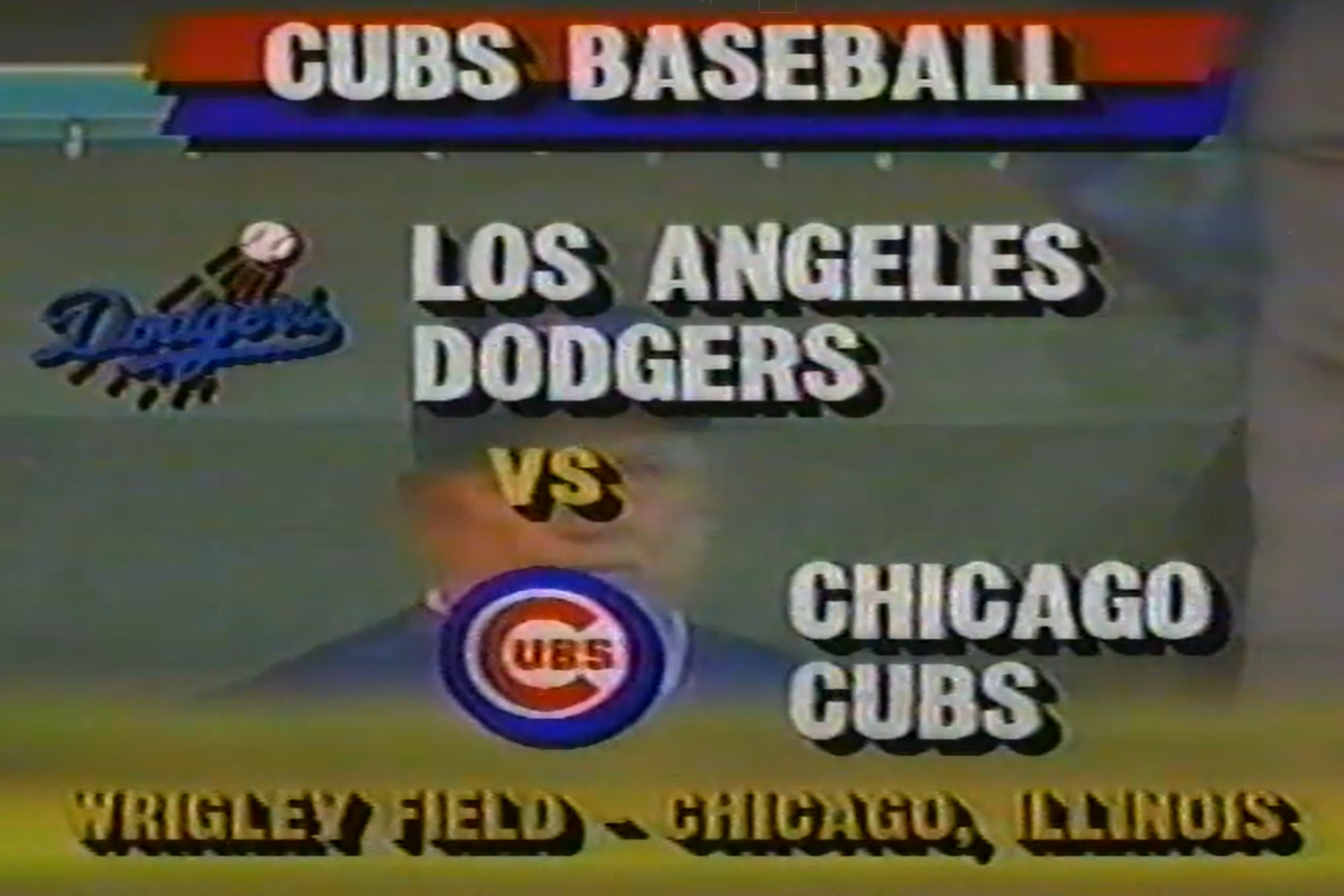 Today, at long last, I want to talk about Mike Harkey. In the first two installments of this semi-unintentional trilogy, I focused on the quirks and quiddities of the Cubs' broadcasts back in the heyday of Harry Caray and Steve Stone, assisted by Arne Harris; and then on the Dodgers' nifty, doomed, fascinating little technological measure, captured in the game. Today, let's stick to ball, and specifically, mostly, to Mike Harkey. If you don't remember Harkey, you're forgiven. He only pitched 656 innings in the big leagues, scattered across nine seasons. About 420 of those were for the Cubs. He was quite good in 1990 (more on that shortly), quite bad in 1993, and quite injured between around around those years. The game I tuned in and watched, and am exhorting you to watch with me in remote, time-shiifted fashion, is this one, from May 23, 1990. Harkey, then 23, entered this game (he hoped) on the upswing. He'd been blasted over the first six starts he made that year, with a 6.23 ERA and .842 opponent OPS. Yet, he retained a rotation spot for the defending division champions, and not without reason. He had a big build and a lively arm, and when he was right, you could see how he might dominate even a good lineup. His previous time out, in Houston against the Astros, he had fired eight scoreless innings, scattering just 10 baserunners and bringing that ERA all the way down to 4.93. Even in that outing, he'd only struck out four, while facing a whopping 33 Houston batters and throwing 130 pitches. (Yes, 130. It really was 1990, you see, and even a 23-year-old was expected to pitch until the hitters started to tell the manager he was done.) (Gee, one wonders if that kind of thing is why Harkey was hurt so often.) For the season, the best of his career, Harkey would only end up striking out 12.9% of opposing hitters. Strikeouts were less common then, of course, but not so much less common that this was typical. The league fanned at a 15.1% clip in 1990. Harkey was a big, fairly hard-throwing pitch-to-contact guy, which is part of why he never did ascend beyond the heights he reached in that first full season in the majors. Nonetheless, Harkey looked good on this day. Steve Stone noted that he had demonstrated the ability to throw both his changeup and his curveball (from a low-three-quarters slot and with good velocity on it, I would say what he then dubbed a curve would go by the name of sweeper, now) for strikes against the Astros. He was doing the same thing early against the Dodgers, and when the Cubs gave him a thin lead (thanks to Dave Clark, who really could hit a righty, baby) in the third, he seized upon it. No Dodgers batter reached base in the third, fourth, or fifth innings. In the top of the sixth, there was some danger. Harkey got the leadoff man, opposing pitcher Tim Belcher (batting for himself in a 1-0 game in the sixth inning! It was not at all noteworthy then, but would be unthinkable by the final few years of DH-less baseball, 30 years later), but then gave up a double and a walk to the top two hitters in the lineup. This was his third time through, already. In some modern games, it would have been time to turn to the bullpen. Back then, though, no one even got warm. Harkey recovered gorgeously, including delivering a couple of nasty changeups to fan Kal Daniels and get out of the inning. It was the second time Harkey's change had retired Daniels on a whiff, and he'd grounded out to Mark Grace in between. Harkey seemed to have the Dodgers slugger in the rocking chair. The Cubs nearly blew it open in the sixth, with two runs generated partially by sloppy Dodgers defense. Harkey mowed down the Dodgers in the seventh and got the leadoff man again in the eighth, cruising, up 3-0. But up 3-0 with one out in the eighth never seems to be that kind to the Cubs, does it? A clean single by pinch-hitter Mickey Hatcher started the trouble. Then, Lenny Harris hit a dribbler down the third-base line. Luis Salazar overran it, going into foul territory, and he failed to even consider that as he reached back for the ball, he was reaching into fair territory again. He was, though, and while he might have had a play on Harris if he'd been in better position or been more aware of the call, he had none by the time all was said and done. Next, a slicing line drive fell just shy of a sliding Doug Dascenzo, putting the Dodgers on the board. It was a well-struck ball, as Hatcher's had been. In all likelihood, this was the hitters telling Don Zimmer they were catching up to Harkey. Still, it could have been caught, if Dascenzo were slightly better-positioned or a hair faster off the block. Harris's and Stan Javier's singles felt unfair, given the great day Harkey was having. He'd earned better. He recovered to get pinch-hitter Eddie Murray to tap back to the mound, though, and although the tying run was now in scoring position, the Cubs were also just one out from escaping the jam. Zimmer had, in my opinion, a difficult dilemma on his hands. He'd allowed Harkey to face Murray, even as Stone remarked on TV that it was time to go to warming southpaw Paul Assenmacher. Murray was a better left-handed hitter than a right-handed one, at that stage of his career, and Assenmacher would have a better chance of getting a double play from him. Harkey had won that battle, though. Should Zimmer let him try to win the war and get Daniels out a fourth time? He went to Assenmacher, and any modern manager would do the same. On regular rest, after throwing 130 pitches in Houston, Harkey was at 101. Daniels, though not much remembered now, was a formidable lefty slugger at the time. Gaining the platoon advantage and going to a fresh arm was a no-brainer. I can't shake the feeling, though, that Harkey had Daniels's number. He overwhelmed him through three at-bats. He just needed one more good changeup to get through the eighth. Surely, though, that's hindsight talking. Assenmacher gave up an opposite-field, three-run homer, to ruin the day. That's baseball, sometimes. Harkey had pitched brilliantly, but it was no easy call to leave him in even to face Murray. There was every risk that Daniels would have done the same thing to him, had Zimmer left him in. The game was defined by some sloppiness, between the Cubs' sixth-inning rally and the Dodgers' to come back. It ended that way, too. A walk and a single to lead off the bottom of the ninth gave the Cubs lots of hope. Those came against Dodgers pitcher—I swear, this is true—Mike Hartley, who gave way to (best we can do on a match) Don Aase, but Aase for Hartley worked out better, sadly, than had Assenmacher for Harkey. Joe Girardi botched a sacrifice bunt, allowing the Dodgers to get the lead runner, so instead of having the tying run a sac fly away and the winning run on second, the runners were still at first and second. A pinch-hitter named Curt Wilkerson struck out, and leadoff man Marvell Wynne recorded the final out. Ryne Sandberg stood in the on-deck circle. Alas. Despite the mistakes by each team, this was a fun game to watch. Despite Sandberg not having a big impact (he went 1-for-4 with an unimportant double), it was nice to be reminded of an unintentional competitive advantage the Cubs claimed back then, too. Sandberg batted second most days, which is (we now know) where a team's best hitter should go in the lineup. At the time, it was vanishingly rare for a player as good as he was to actually bat in that position. From 1984-90, the 1984 and 1990 Cubs were the fourth- and fifth-best teams in terms of OPS from the second spot in the order. The only clubs who beat them were two Red Sox iterations for whom Wade Boggs took that duty, and the 1985 Mariners, thanks to the one All-Star season of left fielder Phil Bradley. This concludes our three-part tour of one random game on YouTube. More such games will be recapped and rehashed later this winter, so don't feel too put-out about this one being a loss. If nothing else, we hope you had fun remembering some guys—and some broadcasters' habits, and some forerunners to modern controversies about the use of technology in baseball, too. Happy Thanksgiving.
 -
.png.97c5cd399c5da74ff6acb3ee9ac62048.png) The funny thing about baseball is that every time a team tries something novel and interesting, they are lampooned for their ridiculousness, or else they instigate moral panic. Yet, everywhere you turn throughout the (more than) 150-year history of the game, there have been teams innovating, trying new things both legal and otherwise to gain small advantages within games or across seasons. This has become a more divisive and uncomfortable subject since the Astros were found to have cheated through the use of technology-assisted sign stealing, of course, but again, the Astros were just one in an unending line of teams both before and after them who were shopping for edges in ways they thought of as more creative than truly nefarious. Less well-remembered, but about equally recent, is a controversy between the Mets and Dodgers in 2016. Los Angeles asked permission to paint markers in the Citi Field outfield prior to a game that spring, but after it was determined that they were using electronic positioning devices—laser-based range finders, basically—to pinpoint the marks they wanted to put down for their outfielders, the league forbade them from doing it. What's notable, though, isn't that the measure was barred, but that it was something the Dodgers wanted to try at all. Teams are so precise and so focused on defensive positioning that they wanted to deploy high-tech means of ensuring they got it right, even though there are myriad ways—certain visual cues, the positioning cards all outfielders now seem to carry, coaches shouting and waving their arms—to do it without that rigamarole. They trust the technology, and they want to use it to increase the precision of their work. That's not anywhere close to new. What does it have to do with the game played on May 23, 1990, between the Cubs and Dodgers, though? I'm glad you (well, I, but kind of you) asked. In 1990, the league restricted the number of coaches teams could have in uniform and in the dugout during games. This was in response to a rising tide of teams employing more coaches than ever (hey, we've come full-circle, there). Back then, it was less because teams wanted to have three hitting coaches to implement highly individualized and evolving plans for each player than because they thought themselves engaged in a tense game of chess every day, against the opposing team and its manager. The coaches who clustered in the dugouts tended to be advisors on strategy and deliverers of signs, rather than instructors and biomechanists, but anyway, they were growing in number, and the league decided it was getting out of hand. Previously, six coaches had been explicitly allowed, and teams were often able to fudge it and get a seventh involved. The NL forced them to come back down to five for 1990. The Dodgers begrudgingly removed ex-catcher Joe Ferguson from their dugout staff. But the Dodgers didn't want to lose the value they were getting from having an extra set of eyes, so they (and a couple of other teams) simply pivoted to radio. Ferguson took up residence in the press box each day, and would radio down instructions on (among other things, probably) positioning defenders to Bill Russell, manager Tommy Lasorda's right-hand man. On May 23, 1990, it looked like this. Plainly, this is not a clandestine operation. You've gotta love the 1990 vibes of that headset. The league was aware of the process and allowed teams to use it—until barely a year later, when "reports of abuses" of the system were lodged by various opponents and the league banned radio communication in the dugout. The Dodgers were mad. "Football teams do it, why can't baseball teams do it?" Lasorda asked, rhetorically. He had a fair point—but maybe the motive for that protest was really that the team was finding too many edges, after all. It's funny how it's always the Dodgers, isn't it? Throughout baseball history, while the Dodgers might not originate a given innovation, they tend to be the ones most eager to adopt and expand it. They were, of course, the first organization to break the color line, which is sold to us in textbooks as a moral choice but which history suggests was much more about gaining a leg up. They were among the first teams to create a full-fledged farm system, an innovation Branch Rickey brought with him after creating the modern farm while working for the Cardinals. It was while in the employ of the Dodgers that Tommy John underwent and recovered from the surgery that now bears his name. Rickey made famous the Dodger Way, including little things like "coconut snatching"—a ham-fisted metaphor for finding opportunities to move players to new positions, especially sliding them up what we would later come to understand as the defensive spectrum—and physical training tools like string-frame strike zones and stride-correcting bands. I often lament that the Cubs have not taken a turn as the powerhouse of the National League for a decade—or even been consistent enough to post seven winning records in a stretch of 10 full seasons—since the 1930s. It's not a coincidence, unfortunately. There have been times when their ownership should have spent much more on the team, and opportunities were missed. More often, though, the Cubs got beat—they keep getting beat, even—because the Cardinals and Dodgers were better and earlier than them, at things like building a farm, integrating the roster, codifying player development, and seeking tools to stay ahead of the competition. That doofy-looking headset on Bill Russell is an imperfect metaphor for the problem, but it's one symbol of it, nonetheless. Here endeth Part 2 of our discussion of this one random game from nearly a quarter-century ago. Tune in tomorrow, when I actually talk about the players who played in this game (and how it went) for the first and only time!
The funny thing about baseball is that every time a team tries something novel and interesting, they are lampooned for their ridiculousness, or else they instigate moral panic. Yet, everywhere you turn throughout the (more than) 150-year history of the game, there have been teams innovating, trying new things both legal and otherwise to gain small advantages within games or across seasons. This has become a more divisive and uncomfortable subject since the Astros were found to have cheated through the use of technology-assisted sign stealing, of course, but again, the Astros were just one in an unending line of teams both before and after them who were shopping for edges in ways they thought of as more creative than truly nefarious. Less well-remembered, but about equally recent, is a controversy between the Mets and Dodgers in 2016. Los Angeles asked permission to paint markers in the Citi Field outfield prior to a game that spring, but after it was determined that they were using electronic positioning devices—laser-based range finders, basically—to pinpoint the marks they wanted to put down for their outfielders, the league forbade them from doing it. What's notable, though, isn't that the measure was barred, but that it was something the Dodgers wanted to try at all. Teams are so precise and so focused on defensive positioning that they wanted to deploy high-tech means of ensuring they got it right, even though there are myriad ways—certain visual cues, the positioning cards all outfielders now seem to carry, coaches shouting and waving their arms—to do it without that rigamarole. They trust the technology, and they want to use it to increase the precision of their work. That's not anywhere close to new. What does it have to do with the game played on May 23, 1990, between the Cubs and Dodgers, though? I'm glad you (well, I, but kind of you) asked. In 1990, the league restricted the number of coaches teams could have in uniform and in the dugout during games. This was in response to a rising tide of teams employing more coaches than ever (hey, we've come full-circle, there). Back then, it was less because teams wanted to have three hitting coaches to implement highly individualized and evolving plans for each player than because they thought themselves engaged in a tense game of chess every day, against the opposing team and its manager. The coaches who clustered in the dugouts tended to be advisors on strategy and deliverers of signs, rather than instructors and biomechanists, but anyway, they were growing in number, and the league decided it was getting out of hand. Previously, six coaches had been explicitly allowed, and teams were often able to fudge it and get a seventh involved. The NL forced them to come back down to five for 1990. The Dodgers begrudgingly removed ex-catcher Joe Ferguson from their dugout staff. But the Dodgers didn't want to lose the value they were getting from having an extra set of eyes, so they (and a couple of other teams) simply pivoted to radio. Ferguson took up residence in the press box each day, and would radio down instructions on (among other things, probably) positioning defenders to Bill Russell, manager Tommy Lasorda's right-hand man. On May 23, 1990, it looked like this. Plainly, this is not a clandestine operation. You've gotta love the 1990 vibes of that headset. The league was aware of the process and allowed teams to use it—until barely a year later, when "reports of abuses" of the system were lodged by various opponents and the league banned radio communication in the dugout. The Dodgers were mad. "Football teams do it, why can't baseball teams do it?" Lasorda asked, rhetorically. He had a fair point—but maybe the motive for that protest was really that the team was finding too many edges, after all. It's funny how it's always the Dodgers, isn't it? Throughout baseball history, while the Dodgers might not originate a given innovation, they tend to be the ones most eager to adopt and expand it. They were, of course, the first organization to break the color line, which is sold to us in textbooks as a moral choice but which history suggests was much more about gaining a leg up. They were among the first teams to create a full-fledged farm system, an innovation Branch Rickey brought with him after creating the modern farm while working for the Cardinals. It was while in the employ of the Dodgers that Tommy John underwent and recovered from the surgery that now bears his name. Rickey made famous the Dodger Way, including little things like "coconut snatching"—a ham-fisted metaphor for finding opportunities to move players to new positions, especially sliding them up what we would later come to understand as the defensive spectrum—and physical training tools like string-frame strike zones and stride-correcting bands. I often lament that the Cubs have not taken a turn as the powerhouse of the National League for a decade—or even been consistent enough to post seven winning records in a stretch of 10 full seasons—since the 1930s. It's not a coincidence, unfortunately. There have been times when their ownership should have spent much more on the team, and opportunities were missed. More often, though, the Cubs got beat—they keep getting beat, even—because the Cardinals and Dodgers were better and earlier than them, at things like building a farm, integrating the roster, codifying player development, and seeking tools to stay ahead of the competition. That doofy-looking headset on Bill Russell is an imperfect metaphor for the problem, but it's one symbol of it, nonetheless. Here endeth Part 2 of our discussion of this one random game from nearly a quarter-century ago. Tune in tomorrow, when I actually talk about the players who played in this game (and how it went) for the first and only time! -
Yesterday, we began a festival feast of old baseball by talking about the unique aspects (good and bad) of a 1990 Cubs broadcast. Today, let's tackle the game that was played that day, itself. Image courtesy of YouTube The funny thing about baseball is that every time a team tries something novel and interesting, they are lampooned for their ridiculousness, or else they instigate moral panic. Yet, everywhere you turn throughout the (more than) 150-year history of the game, there have been teams innovating, trying new things both legal and otherwise to gain small advantages within games or across seasons. This has become a more divisive and uncomfortable subject since the Astros were found to have cheated through the use of technology-assisted sign stealing, of course, but again, the Astros were just one in an unending line of teams both before and after them who were shopping for edges in ways they thought of as more creative than truly nefarious. Less well-remembered, but about equally recent, is a controversy between the Mets and Dodgers in 2016. Los Angeles asked permission to paint markers in the Citi Field outfield prior to a game that spring, but after it was determined that they were using electronic positioning devices—laser-based range finders, basically—to pinpoint the marks they wanted to put down for their outfielders, the league forbade them from doing it. What's notable, though, isn't that the measure was barred, but that it was something the Dodgers wanted to try at all. Teams are so precise and so focused on defensive positioning that they wanted to deploy high-tech means of ensuring they got it right, even though there are myriad ways—certain visual cues, the positioning cards all outfielders now seem to carry, coaches shouting and waving their arms—to do it without that rigamarole. They trust the technology, and they want to use it to increase the precision of their work. That's not anywhere close to new. What does it have to do with the game played on May 23, 1990, between the Cubs and Dodgers, though? I'm glad you (well, I, but kind of you) asked. In 1990, the league restricted the number of coaches teams could have in uniform and in the dugout during games. This was in response to a rising tide of teams employing more coaches than ever (hey, we've come full-circle, there). Back then, it was less because teams wanted to have three hitting coaches to implement highly individualized and evolving plans for each player than because they thought themselves engaged in a tense game of chess every day, against the opposing team and its manager. The coaches who clustered in the dugouts tended to be advisors on strategy and deliverers of signs, rather than instructors and biomechanists, but anyway, they were growing in number, and the league decided it was getting out of hand. Previously, six coaches had been explicitly allowed, and teams were often able to fudge it and get a seventh involved. The NL forced them to come back down to five for 1990. The Dodgers begrudgingly removed ex-catcher Joe Ferguson from their dugout staff. But the Dodgers didn't want to lose the value they were getting from having an extra set of eyes, so they (and a couple of other teams) simply pivoted to radio. Ferguson took up residence in the press box each day, and would radio down instructions on (among other things, probably) positioning defenders to Bill Russell, manager Tommy Lasorda's right-hand man. On May 23, 1990, it looked like this. Plainly, this is not a clandestine operation. You've gotta love the 1990 vibes of that headset. The league was aware of the process and allowed teams to use it—until barely a year later, when "reports of abuses" of the system were lodged by various opponents and the league banned radio communication in the dugout. The Dodgers were mad. "Football teams do it, why can't baseball teams do it?" Lasorda asked, rhetorically. He had a fair point—but maybe the motive for that protest was really that the team was finding too many edges, after all. It's funny how it's always the Dodgers, isn't it? Throughout baseball history, while the Dodgers might not originate a given innovation, they tend to be the ones most eager to adopt and expand it. They were, of course, the first organization to break the color line, which is sold to us in textbooks as a moral choice but which history suggests was much more about gaining a leg up. They were among the first teams to create a full-fledged farm system, an innovation Branch Rickey brought with him after creating the modern farm while working for the Cardinals. It was while in the employ of the Dodgers that Tommy John underwent and recovered from the surgery that now bears his name. Rickey made famous the Dodger Way, including little things like "coconut snatching"—a ham-fisted metaphor for finding opportunities to move players to new positions, especially sliding them up what we would later come to understand as the defensive spectrum—and physical training tools like string-frame strike zones and stride-correcting bands. I often lament that the Cubs have not taken a turn as the powerhouse of the National League for a decade—or even been consistent enough to post seven winning records in a stretch of 10 full seasons—since the 1930s. It's not a coincidence, unfortunately. There have been times when their ownership should have spent much more on the team, and opportunities were missed. More often, though, the Cubs got beat—they keep getting beat, even—because the Cardinals and Dodgers were better and earlier than them, at things like building a farm, integrating the roster, codifying player development, and seeking tools to stay ahead of the competition. That doofy-looking headset on Bill Russell is an imperfect metaphor for the problem, but it's one symbol of it, nonetheless. Here endeth Part 2 of our discussion of this one random game from nearly a quarter-century ago. Tune in tomorrow, when I actually talk about the players who played in this game (and how it went) for the first and only time! View full article
-
It's a holiday weekend. With the long desert of the offseason still stretched out before us, allow yourself an oasis and flip on a game from May 1990. The internet is, in some ways, a marvelous and joyous thing. Image courtesy of YouTube I refuse to be starved for baseball. It's healthy, sometimes, to deny oneself constant indulgence in vices, but I find my addictive love of the game too strong to stay away from it for long, now that the world wide web has made it possible to luxuriate in games anywhere from 10 to 45 years old almost on demand. When winter hits, we're not commanded to hibernate and make do only with the baseball we soaked up all summer. We have the option to treat summer as eternal and spin our way back in time, to some game we've never seen before, or had long forgotten. We can find all kinds of old baseball that is, nonetheless, new to us, and experience it the same way we might have if we were years older or hadn't had school that day. For this privilege, we have to thank (profusely) the myriad amateur archivists who post games by the dozens on YouTube. It's a treasure trove, and while a few accounts have been taken down over the years due to apparent copyright infringement, the league seems to have adopted a stance of benign neglect toward them lately. So, for instance, you can search for games from any team and any year, and you've got a fair shot of finding at least one full game they played that year. Today, let's enjoy what happens if you search "1990 Cubs". The game we'll review together is from May 23, 1990. Linked here is the detailed box score from that day on Baseball Reference. (Spoiler alert, obviously.) And here's the video itself: For nostalgic types, this is the superior form of the upload, because it includes (many of) the commercials. If you miss not only baseball (the game you got to watch just a few weeks or months ago) but the world of the 20th century, watching these games can really make you feel immersed in it—and the videos that keep the commercials from the original broadcast maximize that feeling of time travel. Not all of that is good, of course. Did you miss hearing Thom Brennaman call games? Probably not, but he takes the middle three innings of this one, alongside Steve Stone. Then again, if you're young enough not to remember (or perhaps even have heard of) the arrangement, this might give you a fun frisson of discovery: As late as the mid-1990s, Harry Caray would swap into the Cubs radio booth to do play-by-play for innings 4-6 each day. Stone would then broadcast with (most often) Brennaman, Josh Lewin, or Wayne Larrivee, until Caray returned for the final three frames. It wasn't a common setup even then, but it was certainly not unique, either. Nowadays, it would be a downright thorny legal issue. Anyway, Brennaman is here. So are some of the things we did well to leave in the century to which they belonged, like a midgame sequence in which Arne Harris lingers long on a shot of an attractive woman in the stands. Unlike so many similar shots over the years, this one doesn't involve an especially revealing or suggestive outfit. Yet, after Stone finishes a salient point about Mike Scioscia's evolving approach at the plate, Caray says, "Sorry, Steve, I didn't hear anything you said," followed by an unsavory chortle. "With me, Harry, it's baseball, baseball, baseball," Steve replies, but it doesn't quite save this moment from cringe territory. Harris, the famous producer of Cubs games on TV for so much of the formative period of the modern team, was infamous for these shots, but in this case, he also chose to work in artistic juxtaposition. After a brief cut back to game action, he delivered a shot of an adorable baby or toddler, as if to shame Caray for his ribaldry. Not only didn't it work, but Harry kept shooting: "Is that yours, Steve?" he teased, and Steve was forced to disclaim his paternity of a random child on national TV. It's undeniably funny, and a big part of why the Cubs' popularity soared during the superstation years. It's also a little unsettling, through modern eyes. Let's take a moment to celebrate Harris, though, for the much less objectionable innovation that made him and his broadcasts famous. Do you remember watching Cubs games prior to about 20 years ago and thinking every play—even relatively routine ones—was a little more exciting than in other places? Do you ever think that players used to run harder through the bag on ground balls than they do now? As ludicrous as those subjective impressions sound (and are, objectively speaking), they weren't totally in your head. They were created for you, by Harris. As nicely detailed by Zach Buchanan in this 2021 piece at The Athletic, TV producers of baseball games can make two different sets of choices when a ground ball is hit during a game. As a default setup, they pretty much all start with the center field camera, then flip to the view from high and behind home plate—a proxy for the vantage point of the broadcaster calling the play—when the ball is hit. The industry standard, going all the way back to the 1960s under NBC Sports producer Harry Coyle, was to stick to that second shot and follow the play to its conclusion, unless it were a ball in the gap or something, necessitating cuts to runners in various positions. On a grounder to second base, the camera follows the ball to the fielder, then patiently tracks along with the throw, over to first base. Harris didn't do things that way. He was famous for the 4-2-3 cut (named for the standard numbers assigned to the various camera positions involved), which starts the same way the Coyle version does. Once a player like Ryne Sandberg or Shawon Dunston collected a bouncer, though, Harris would cut to the camera positioned high alongside first base. The resulting shot would have the fielder throwing the ball downscreen, and right around the time it got to the glove of (in this case) Mark Grace, a runner would zip by in a blur. This style creates, perhaps, some artificial suspense, and those of us who watched hundreds of games produced by Harris learned to intuit based on the runner, the pace of the ball, and the cleanness of the play by the infielder whether they would be safe or out. For casual and new fans, though, and perhaps especially for kids, it was easy to mistake the extra cut and the more visible speed of the runner—they're streaking straight across your screen, in the Harris formula, instead of running deeper into the picture and off toward a corner as they do when viewed from high behind home—for extra action and more drama. It worked on plenty of double play tries, too, transforming even the out on the lead runner into a tense, visually captivating thing. The shots now often seen in slow motion on replays used to be how Harris would frame the play in real time. I began life as a baseball fan in 1997, so I only watched five seasons of Cubs baseball before Harris died at the end of the 2001 season. The broadcasts still tended to use his device until several years later, but now, they match the industry standard and stick to 4-2 on such plays. To some extent, Harris was also problem-solving, because in that much lower-definition era and without motion smoothing options like we have today, the extra cut kept him from having to show the throw across the diamond more or less as a confused blur, as some broadcasts did. These days, no one has to work around that hurdle, so the 4-2 makes the most sense. I still love the 4-2-3, though, even though I'm now aware of it and much less taken in by its attempt to create drama. I suspect the effective deployment of this subtly different capture of a play is part of why so many fans fell in love with a version of the game that was not actually materially more interesting or varied than the one played now—whatever old heads might tell you. For today, we end this here. This is part one, and it didn't even talk about the game itself! But when watching these old games, the game itself is just part of the fun anyway. Tomorrow, we will tackle the action of the contest. Come back and check it out. View full article
-
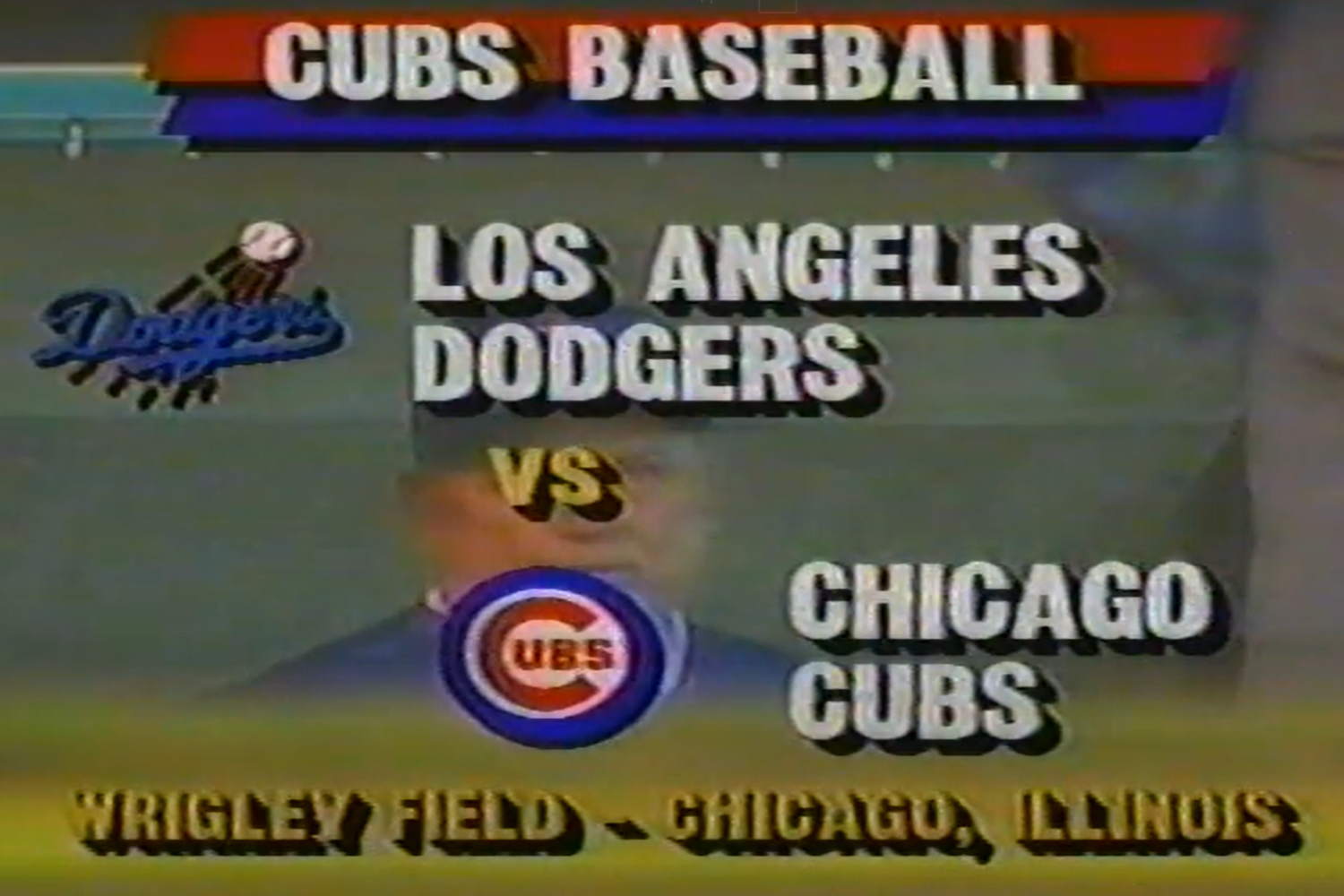 I refuse to be starved for baseball. It's healthy, sometimes, to deny oneself constant indulgence in vices, but I find my addictive love of the game too strong to stay away from it for long, now that the world wide web has made it possible to luxuriate in games anywhere from 10 to 45 years old almost on demand. When winter hits, we're not commanded to hibernate and make do only with the baseball we soaked up all summer. We have the option to treat summer as eternal and spin our way back in time, to some game we've never seen before, or had long forgotten. We can find all kinds of old baseball that is, nonetheless, new to us, and experience it the same way we might have if we were years older or hadn't had school that day. For this privilege, we have to thank (profusely) the myriad amateur archivists who post games by the dozens on YouTube. It's a treasure trove, and while a few accounts have been taken down over the years due to apparent copyright infringement, the league seems to have adopted a stance of benign neglect toward them lately. So, for instance, you can search for games from any team and any year, and you've got a fair shot of finding at least one full game they played that year. Today, let's enjoy what happens if you search "1990 Cubs". The game we'll review together is from May 23, 1990. Linked here is the detailed box score from that day on Baseball Reference. (Spoiler alert, obviously.) And here's the video itself: For nostalgic types, this is the superior form of the upload, because it includes (many of) the commercials. If you miss not only baseball (the game you got to watch just a few weeks or months ago) but the world of the 20th century, watching these games can really make you feel immersed in it—and the videos that keep the commercials from the original broadcast maximize that feeling of time travel. Not all of that is good, of course. Did you miss hearing Thom Brennaman call games? Probably not, but he takes the middle three innings of this one, alongside Steve Stone. Then again, if you're young enough not to remember (or perhaps even have heard of) the arrangement, this might give you a fun frisson of discovery: As late as the mid-1990s, Harry Caray would swap into the Cubs radio booth to do play-by-play for innings 4-6 each day. Stone would then broadcast with (most often) Brennaman, Josh Lewin, or Wayne Larrivee, until Caray returned for the final three frames. It wasn't a common setup even then, but it was certainly not unique, either. Nowadays, it would be a downright thorny legal issue. Anyway, Brennaman is here. So are some of the things we did well to leave in the century to which they belonged, like a midgame sequence in which Arne Harris lingers long on a shot of an attractive woman in the stands. Unlike so many similar shots over the years, this one doesn't involve an especially revealing or suggestive outfit. Yet, after Stone finishes a salient point about Mike Scioscia's evolving approach at the plate, Caray says, "Sorry, Steve, I didn't hear anything you said," followed by an unsavory chortle. "With me, Harry, it's baseball, baseball, baseball," Steve replies, but it doesn't quite save this moment from cringe territory. Harris, the famous producer of Cubs games on TV for so much of the formative period of the modern team, was infamous for these shots, but in this case, he also chose to work in artistic juxtaposition. After a brief cut back to game action, he delivered a shot of an adorable baby or toddler, as if to shame Caray for his ribaldry. Not only didn't it work, but Harry kept shooting: "Is that yours, Steve?" he teased, and Steve was forced to disclaim his paternity of a random child on national TV. It's undeniably funny, and a big part of why the Cubs' popularity soared during the superstation years. It's also a little unsettling, through modern eyes. Let's take a moment to celebrate Harris, though, for the much less objectionable innovation that made him and his broadcasts famous. Do you remember watching Cubs games prior to about 20 years ago and thinking every play—even relatively routine ones—was a little more exciting than in other places? Do you ever think that players used to run harder through the bag on ground balls than they do now? As ludicrous as those subjective impressions sound (and are, objectively speaking), they weren't totally in your head. They were created for you, by Harris. As nicely detailed by Zach Buchanan in this 2021 piece at The Athletic, TV producers of baseball games can make two different sets of choices when a ground ball is hit during a game. As a default setup, they pretty much all start with the center field camera, then flip to the view from high and behind home plate—a proxy for the vantage point of the broadcaster calling the play—when the ball is hit. The industry standard, going all the way back to the 1960s under NBC Sports producer Harry Coyle, was to stick to that second shot and follow the play to its conclusion, unless it were a ball in the gap or something, necessitating cuts to runners in various positions. On a grounder to second base, the camera follows the ball to the fielder, then patiently tracks along with the throw, over to first base. Harris didn't do things that way. He was famous for the 4-2-3 cut (named for the standard numbers assigned to the various camera positions involved), which starts the same way the Coyle version does. Once a player like Ryne Sandberg or Shawon Dunston collected a bouncer, though, Harris would cut to the camera positioned high alongside first base. The resulting shot would have the fielder throwing the ball downscreen, and right around the time it got to the glove of (in this case) Mark Grace, a runner would zip by in a blur. This style creates, perhaps, some artificial suspense, and those of us who watched hundreds of games produced by Harris learned to intuit based on the runner, the pace of the ball, and the cleanness of the play by the infielder whether they would be safe or out. For casual and new fans, though, and perhaps especially for kids, it was easy to mistake the extra cut and the more visible speed of the runner—they're streaking straight across your screen, in the Harris formula, instead of running deeper into the picture and off toward a corner as they do when viewed from high behind home—for extra action and more drama. It worked on plenty of double play tries, too, transforming even the out on the lead runner into a tense, visually captivating thing. The shots now often seen in slow motion on replays used to be how Harris would frame the play in real time. I began life as a baseball fan in 1997, so I only watched five seasons of Cubs baseball before Harris died at the end of the 2001 season. The broadcasts still tended to use his device until several years later, but now, they match the industry standard and stick to 4-2 on such plays. To some extent, Harris was also problem-solving, because in that much lower-definition era and without motion smoothing options like we have today, the extra cut kept him from having to show the throw across the diamond more or less as a confused blur, as some broadcasts did. These days, no one has to work around that hurdle, so the 4-2 makes the most sense. I still love the 4-2-3, though, even though I'm now aware of it and much less taken in by its attempt to create drama. I suspect the effective deployment of this subtly different capture of a play is part of why so many fans fell in love with a version of the game that was not actually materially more interesting or varied than the one played now—whatever old heads might tell you. For today, we end this here. This is part one, and it didn't even talk about the game itself! But when watching these old games, the game itself is just part of the fun anyway. Tomorrow, we will tackle the action of the contest. Come back and check it out.
 -
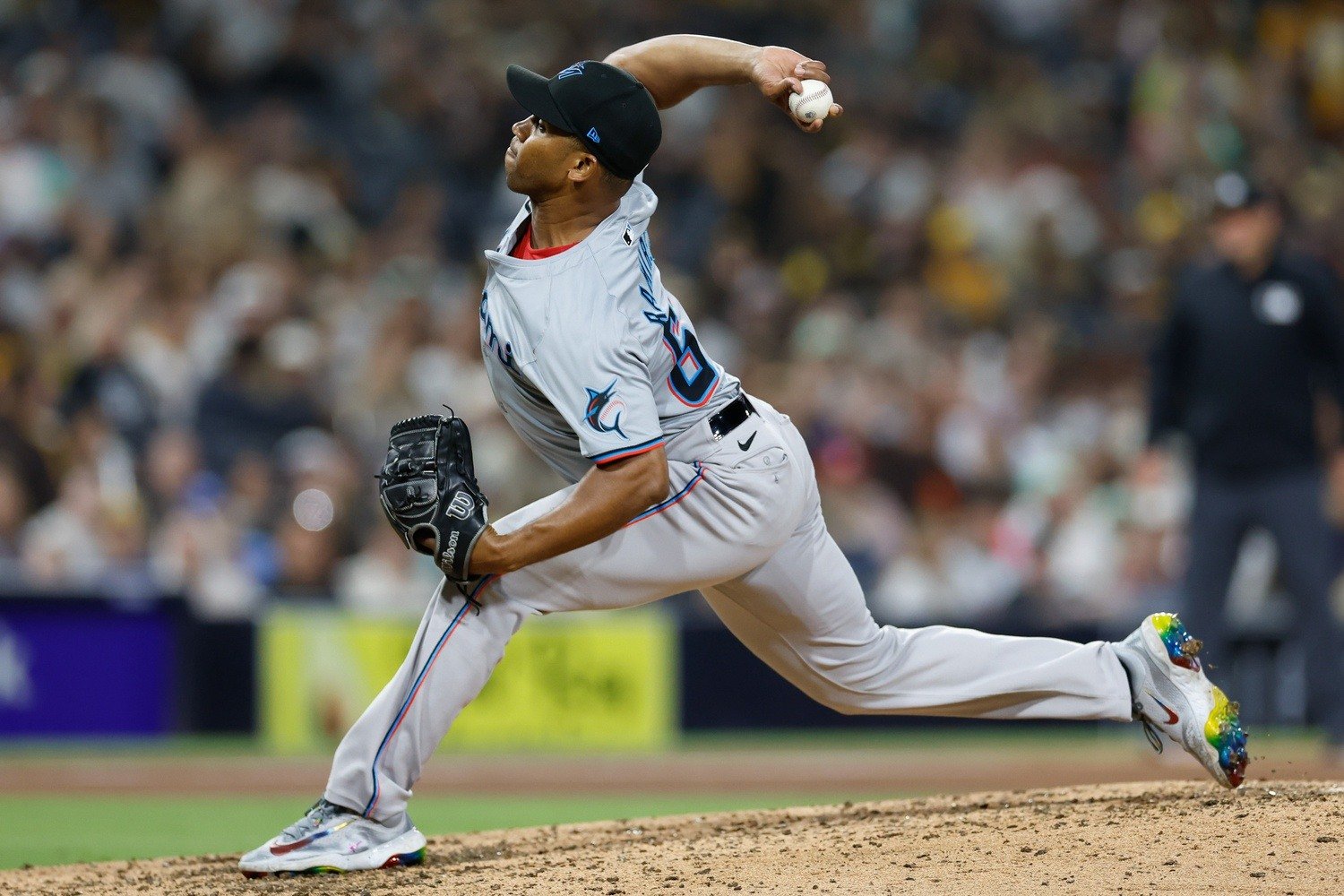 By all rights, Emmanuel Ramírez should be out of professional baseball. The game has told him he's not good enough—and even that it was functionally done with him—more times than most players can bear. Signed out of his native Dominican Republic back in 2012, Ramírez was released by the Padres at the end of the 2020 season. He then spent single seasons in the Atlanta and Yankees systems, cut loose again at the end of each. He became a minor-league free agent three times, and the third time, he ended up spending a year (2023) in the Mexican League. The Marlins liked what they saw there (and in last winter's Dominican Winter League) enough to bring him back into affiliated ball, and he finally made it to the big leagues for the first time, at age 29. After 15 ugly appearances with an ERA near 7.00, though, Miami waived him. The Blue Jays claimed him, but never brought him to the big leagues, and then they released him earlier this month. In nearly 900 professional innings, Ramírez has only gotten one taste of the majors, and the cup of coffee was a bitter one. His ERA isn't even good in the 101 innings he's pitched in parts of four seasons in Triple A. Quite simply, he's on the fringes of the MLB apparatus, over 30 years old and seemingly hanging on desperately to his last shot. He's back down in the Dominican, pitching winter ball again. That's not the résumé of a highly appealing free-agent target, but that's just what Ramírez ought to be, on a minor-league deal this winter. The gawky right-hander bears a passing resemblance to Carlos Marmol, but that's not why Marmol's former team should want him. He has redeveloped himself as a pitcher, and his stuff and his funky delivery are perfect fits for the Cubs. The mix is very simple, two pitches with a vague tertiary option. Ramírez throws a fastball that sits 94, with good cut-ride action. As I hope you've gleaned from me by now, the Cubs adore that fastball shape. It's what Porter Hodge, Justin Steele, and top prospects Cade Horton and Brandon Birdsell (among others) do, and the team targets it wherever they can find it. They also love a good splitter, and Ramírez has just that, too. It's almost the only pitch he throws as a complement to the heater. That splitter has variable movement, but the velocity gap it achieves from his fastball—10 miles per hour, on average—makes it a potential bat-misser even when it doesn't fall off the table as steeply as one might like. Most of the time, there's plenty of movement differential between the two pitches, too. For that reason, hitters whiffed on over 47% of their swings against the splitter last year, between Triple A and the majors. Ramírez's breaking ball is coded as a slider but really acts more like a curveball. It's not a very good pitch, and isn't of great use to him. Maybe the Cubs could help him firm it up into a truer slider, or a Death Ball-style curve, but the thrust of Ramírez's arsenal is the rising heater and the diving splitter. When it's right, it's plenty. E Ram Splitty.mp4 As you can see, Ramírez's splitter works just fine even against righties, thanks to an extreme overhand slot. That delivery is also where the backspin on his fastball comes from. He struck out 32.1% of the right-handed batters he saw last year; he can dominate them even at the highest levels of the game. The splitter pulls a string on them; his fastball is almost untouchable at the top of the zone. E Ram Heat.mp4 You've already seen his stats, though, and I'm telling you he'll be available on a minor-league deal. Why? Because lefties tend to bash his head in, especially by taking advantage of mistakes on his fastball. The slot Ramírez employs begets misses along a vertical line, rather than a horizontal one. He doesn't miss in when he's aiming away; he misses down when he's aiming up. That's always trouble. E Ram Dong.mp4 The difference in results against a pitcher's four-seam fastball based on vertical location tends to be fairly stark. For Ramírez, it's downright extreme. He just can't work effectively at the bottom edge of the zone with that pitch, so every miss has a chance of becoming very costly. Why should the Cube still be interested? Beyond the nice fit of the traits they seek (that fastball shape, for one) and the things they coach well (a sharper breaking ball from just this kind of pitch mix, for better results and platoon matchup insulation), there's one more thing: the Cubs don't have anyone else who throws like Ramírez. A great bullpen gives opposing teams an endlessly changing set of varied looks. The Cubs lean heavily toward lower arm slots; Ramírez would bring their only true overhand arm to the mix. By no means should Ramírez prevent the Cubs from landing anyone else this winter. He doesn't even need to take up a spot on their 40-man roster, initially. He has impressive enough stuff and is a good enough fit for the organization, though, to make him worthy of a close look as the team collects insurance policies to help make it through the long season ahead.
 -
We know the Cubs will try to add proven, high-quality pitchers this winter, even if it be at a high price. That does not need to come at the expense of adding interesting arms on minor-league deals, though, and one journeyman should garner special attention from them. Image courtesy of © David Frerker-Imagn Images By all rights, Emmanuel Ramírez should be out of professional baseball. The game has told him he's not good enough—and even that it was functionally done with him—more times than most players can bear. Signed out of his native Dominican Republic back in 2012, Ramírez was released by the Padres at the end of the 2020 season. He then spent single seasons in the Atlanta and Yankees systems, cut loose again at the end of each. He became a minor-league free agent three times, and the third time, he ended up spending a year (2023) in the Mexican League. The Marlins liked what they saw there (and in last winter's Dominican Winter League) enough to bring him back into affiliated ball, and he finally made it to the big leagues for the first time, at age 29. After 15 ugly appearances with an ERA near 7.00, though, Miami waived him. The Blue Jays claimed him, but never brought him to the big leagues, and then they released him earlier this month. In nearly 900 professional innings, Ramírez has only gotten one taste of the majors, and the cup of coffee was a bitter one. His ERA isn't even good in the 101 innings he's pitched in parts of four seasons in Triple A. Quite simply, he's on the fringes of the MLB apparatus, over 30 years old and seemingly hanging on desperately to his last shot. He's back down in the Dominican, pitching winter ball again. That's not the résumé of a highly appealing free-agent target, but that's just what Ramírez ought to be, on a minor-league deal this winter. The gawky right-hander bears a passing resemblance to Carlos Marmol, but that's not why Marmol's former team should want him. He has redeveloped himself as a pitcher, and his stuff and his funky delivery are perfect fits for the Cubs. The mix is very simple, two pitches with a vague tertiary option. Ramírez throws a fastball that sits 94, with good cut-ride action. As I hope you've gleaned from me by now, the Cubs adore that fastball shape. It's what Porter Hodge, Justin Steele, and top prospects Cade Horton and Brandon Birdsell (among others) do, and the team targets it wherever they can find it. They also love a good splitter, and Ramírez has just that, too. It's almost the only pitch he throws as a complement to the heater. That splitter has variable movement, but the velocity gap it achieves from his fastball—10 miles per hour, on average—makes it a potential bat-misser even when it doesn't fall off the table as steeply as one might like. Most of the time, there's plenty of movement differential between the two pitches, too. For that reason, hitters whiffed on over 47% of their swings against the splitter last year, between Triple A and the majors. Ramírez's breaking ball is coded as a slider but really acts more like a curveball. It's not a very good pitch, and isn't of great use to him. Maybe the Cubs could help him firm it up into a truer slider, or a Death Ball-style curve, but the thrust of Ramírez's arsenal is the rising heater and the diving splitter. When it's right, it's plenty. E Ram Splitty.mp4 As you can see, Ramírez's splitter works just fine even against righties, thanks to an extreme overhand slot. That delivery is also where the backspin on his fastball comes from. He struck out 32.1% of the right-handed batters he saw last year; he can dominate them even at the highest levels of the game. The splitter pulls a string on them; his fastball is almost untouchable at the top of the zone. E Ram Heat.mp4 You've already seen his stats, though, and I'm telling you he'll be available on a minor-league deal. Why? Because lefties tend to bash his head in, especially by taking advantage of mistakes on his fastball. The slot Ramírez employs begets misses along a vertical line, rather than a horizontal one. He doesn't miss in when he's aiming away; he misses down when he's aiming up. That's always trouble. E Ram Dong.mp4 The difference in results against a pitcher's four-seam fastball based on vertical location tends to be fairly stark. For Ramírez, it's downright extreme. He just can't work effectively at the bottom edge of the zone with that pitch, so every miss has a chance of becoming very costly. Why should the Cube still be interested? Beyond the nice fit of the traits they seek (that fastball shape, for one) and the things they coach well (a sharper breaking ball from just this kind of pitch mix, for better results and platoon matchup insulation), there's one more thing: the Cubs don't have anyone else who throws like Ramírez. A great bullpen gives opposing teams an endlessly changing set of varied looks. The Cubs lean heavily toward lower arm slots; Ramírez would bring their only true overhand arm to the mix. By no means should Ramírez prevent the Cubs from landing anyone else this winter. He doesn't even need to take up a spot on their 40-man roster, initially. He has impressive enough stuff and is a good enough fit for the organization, though, to make him worthy of a close look as the team collects insurance policies to help make it through the long season ahead. View full article
-
The Pitching Market is Moving. Will It Compel the Cubs to Move, Too?
Matthew Trueblood posted an article in Cubs
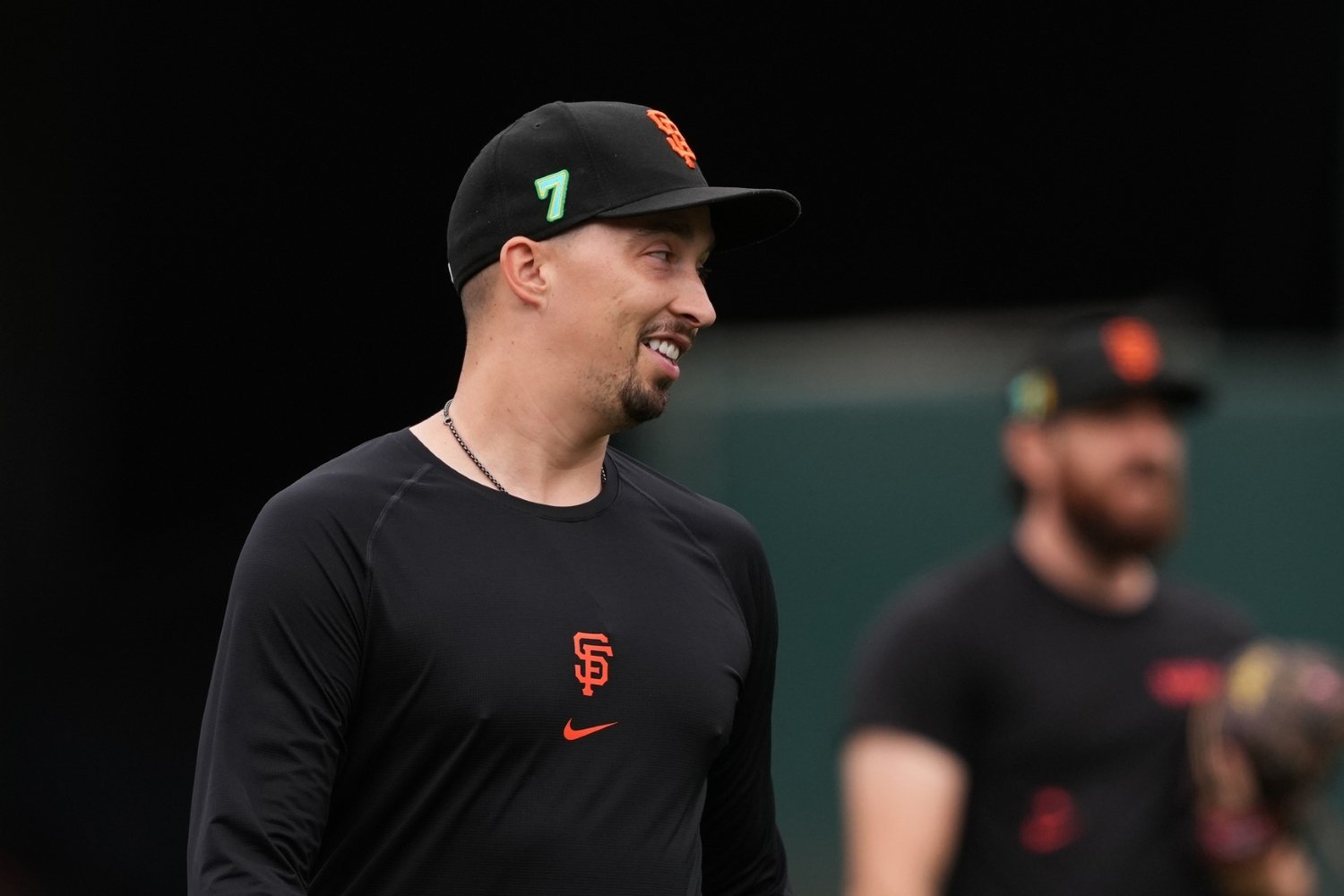 It's not quite December, when the hot stove tends to get up to full flame. Already, though, two top starting pitchers have found new homes. Neither is with the Cubs, though, and as some doors close, it becomes more urgent that Jed Hoyer and company position themselves for one of the viable remaining options. According to sources within the organization, the Cubs intend to slightly reduce payroll, which will constrain their pursuits of any high-end free agents or expensive trade targets—unless they can create new flexibility by trading away a player like Cody Bellinger, Nico Hoerner, or Jameson Taillon. Those pursuits don't seem to be optional, though. While Hoyer's public remarks have focused on improving at the margins, the message has been clear since late in the frustrating 2024 season: this team needs to get better to compete seriously in the National League, and they know it. Thus, if the team is going to pare its expenditures down from $225 million (or right around $240 million competitive-balance tax payroll) to the $215 million range (and about $230 million for CBT purposes), they will need to make a move that offloads Bellinger, Hoerner, or Taillon, thereby facilitating the major addition they envision. Blake Snell signed a five-year deal with the Dodgers late Tuesday night, at an annual average value of $36.4 million. That was right in line with the deal Tyler Glasnow starts in 2025, after Los Angeles traded for him last winter and signed him to an extension. It's akin to the rate Gerrit Cole, Jacob deGrom, and Zack Wheeler are all paid, too. That came just one day after Yusei Kikuchi got $63 million on a three-year contract with the Angels. It sure looks like the going rate for Corbin Burnes will be at that $36 million level or above, so count the Cubs out, no matter what. Snell was the next-best starter on the free-agent market, and a more attractive one for the Cubs, because (unlike Burnes) he would not have cost them a draft pick. If Burnes is to be crossed off, and Snell is taken, and Kikuchi, Nick Martinez, and Michael Wacha (the latter two of whom reupped with their previous teams already this month) are also off the board, is the path to a major pitching addition getting perilous? To be sure, Max Fried is the best individual target for the Cubs, anyway. They love the pitch mix he brings, and his track record is perfect for them. Other teams might lightly discount his success based on his lack of an elite strikeout rate, but the Cubs won't. Fried is just one option, though, and good fallback plans for him are already coming off the board. Jack Flaherty would be a strong and interesting fit with the team, but he'd also be a clearly lesser move than Fried—more like a Kikuchi than a Snell. This is shaping up to be a team-friendly market, but a faster-moving one than last year's. The Cubs might need to make a move sooner than they typically would. Trading Bellinger within the next week would allow them to head into December with more options available to them, and ensure that they aren't left out as the good targets come off the board. They might have to wait to move him until Juan Soto signs, though, because he could be a strong alternative for a team who falls short in that sweepstakes. Trading Hoerner could happen sooner, but because Bellinger is the higher-salary player with the trickier fit into the team's position-player mix, it makes sense to wait another few days. Soto's market seems to be moving relatively quickly. If he signs early next week, trading Bellinger could be checked off the team's to-do list by the start of the Winter Meetings. One way or another, though, the team has to be proactive. It will only make their job harder if they let more strong free agents sign elsewhere before getting serious about making their own moves. While the Ricketts family's refusal to spend the $50 million more per season that they should be spending to keep up with the Dodgers, Yankees, Phillies, and Mets will force Hoyer to make difficult decisions, it's time to start making them.
 -
We know the Cubs are in the market for a starting pitcher, to upgrade a rotation of uncertain quality and depth. After a monster deal Tuesday night, the Dodgers have swept one top target off the market, narrowing Chicago's options. Image courtesy of © Darren Yamashita-Imagn Images It's not quite December, when the hot stove tends to get up to full flame. Already, though, two top starting pitchers have found new homes. Neither is with the Cubs, though, and as some doors close, it becomes more urgent that Jed Hoyer and company position themselves for one of the viable remaining options. According to sources within the organization, the Cubs intend to slightly reduce payroll, which will constrain their pursuits of any high-end free agents or expensive trade targets—unless they can create new flexibility by trading away a player like Cody Bellinger, Nico Hoerner, or Jameson Taillon. Those pursuits don't seem to be optional, though. While Hoyer's public remarks have focused on improving at the margins, the message has been clear since late in the frustrating 2024 season: this team needs to get better to compete seriously in the National League, and they know it. Thus, if the team is going to pare its expenditures down from $225 million (or right around $240 million competitive-balance tax payroll) to the $215 million range (and about $230 million for CBT purposes), they will need to make a move that offloads Bellinger, Hoerner, or Taillon, thereby facilitating the major addition they envision. Blake Snell signed a five-year deal with the Dodgers late Tuesday night, at an annual average value of $36.4 million. That was right in line with the deal Tyler Glasnow starts in 2025, after Los Angeles traded for him last winter and signed him to an extension. It's akin to the rate Gerrit Cole, Jacob deGrom, and Zack Wheeler are all paid, too. That came just one day after Yusei Kikuchi got $63 million on a three-year contract with the Angels. It sure looks like the going rate for Corbin Burnes will be at that $36 million level or above, so count the Cubs out, no matter what. Snell was the next-best starter on the free-agent market, and a more attractive one for the Cubs, because (unlike Burnes) he would not have cost them a draft pick. If Burnes is to be crossed off, and Snell is taken, and Kikuchi, Nick Martinez, and Michael Wacha (the latter two of whom reupped with their previous teams already this month) are also off the board, is the path to a major pitching addition getting perilous? To be sure, Max Fried is the best individual target for the Cubs, anyway. They love the pitch mix he brings, and his track record is perfect for them. Other teams might lightly discount his success based on his lack of an elite strikeout rate, but the Cubs won't. Fried is just one option, though, and good fallback plans for him are already coming off the board. Jack Flaherty would be a strong and interesting fit with the team, but he'd also be a clearly lesser move than Fried—more like a Kikuchi than a Snell. This is shaping up to be a team-friendly market, but a faster-moving one than last year's. The Cubs might need to make a move sooner than they typically would. Trading Bellinger within the next week would allow them to head into December with more options available to them, and ensure that they aren't left out as the good targets come off the board. They might have to wait to move him until Juan Soto signs, though, because he could be a strong alternative for a team who falls short in that sweepstakes. Trading Hoerner could happen sooner, but because Bellinger is the higher-salary player with the trickier fit into the team's position-player mix, it makes sense to wait another few days. Soto's market seems to be moving relatively quickly. If he signs early next week, trading Bellinger could be checked off the team's to-do list by the start of the Winter Meetings. One way or another, though, the team has to be proactive. It will only make their job harder if they let more strong free agents sign elsewhere before getting serious about making their own moves. While the Ricketts family's refusal to spend the $50 million more per season that they should be spending to keep up with the Dodgers, Yankees, Phillies, and Mets will force Hoyer to make difficult decisions, it's time to start making them. View full article
-
The fire hydrant-shaped flamethrower was unpardonably inconsistent early last season, perhaps because he wasn't fully healthy. Late in the summer, though, something clicked. Image courtesy of © Charles LeClaire-Imagn Images It doesn't require a bunch of squinting and fancy explanation to identify Daniel Palencia as a potentially elite relief pitcher. He throws a fastball that sits on the high side of 98 miles per hour and ratchets all the way up past 102 when he gets really juiced up—and Palencia seems to be juiced up almost all the time. He also has a nasty slider and a splitter that bedevils hitters, when he can properly set it up and execute it. All the elements of one of the game's best high-leverage arms are present. Throughout his young big-league career, however, that relentless energy has tended to do Palencia more harm than good, because he's often so intense as to be somewhat out of control. That can't all be chalked up to mentality or emotions, of course. Struggling to throw strikes is an occupational hazard of throwing hard, just as injury risk is. Nonetheless, it's true: Palencia has been more exciting than honestly effective since coming to the big leagues in the middle of the 2023 season. He's made 47 appearances, with an ERA of 5.02. He's walked 13.8% of the batters he's faced. When you watched Palencia pitch early last season, it looked like he might never find the consistency of release point and movement to be a viable big-leaguer, despite the explosiveness of the stuff. In fact, if you looked closely and knew what a fully functional Palencia looks like, you could tell that the stuff wasn't even as explosive as it ought to have been. Palencia in May.mp4 That's a 99-mile-per-hour fastball, but it's also a bad pitch. Palencia's body is extraordinarily powerful and he generates incredible arm speed, but there's very little control over where the ball is going or how it moves, because he's cutting it loose from an angle and at a degree of arm extension where most of his major muscles can have only a vague effect. He threw it 99, but without either life or command. When Palencia is at his best, he throws with better hop on the ball than that—and it comes in harder than 99. Two stints on the injured list quickly affirmed what you could guess when watching him: Palencia's shoulder was not fully healthy. He struggled to maintain a release point and to keep his arm angle up where it works best, because of that functional deficiency. Across 18 appearances before his second absence, Palencia pitched 25 innings. He struck out 37 of the 116 batters he faced, but he also walked 18 of them, and he allowed 22 runs (20 of them earned), dividing that time between Chicago and Triple-A Iowa. Upon his return in late June, though, Palencia was finally fully healthy and able to move the way he does best. Once he had cleared that physical hurdle, his release point grew more consistent. Then, in mid-August, he made a further change to raise his arm angle, and that further tightened up his release point. This change is not about having moved over on the rubber. As you can see, Palencia's release point moved toward the center of the mound, but he was already working from the first-base side thereof before the change. The adjustment was purely about his delivery, and how he made his arm action slightly more compact. In the middle phase depicted above, from late June through Aug. 10, Palencia was markedly better than he had been while muddling through the shoulder fatigue early on. He had a 2.92 ERA in 11 appearances, all in Triple A. He struck out 19 of 56 opposing batters, and he didn't allow a home run. He really locked in thereafter, though. Once he firmed up a new arm slot, he finished with 14 outings in which he faced 69 batters, fanned 28, and didn't allow a homer, while holding opponents to a .573 OPS—all despite being jerked around a bit, called up twice and sent right back down. You can see changes in Palencia's movement along the same dividing lines. Splitters tend not to work well from low arm angles, and indeed, when Palencia raised his arm angle, he got more confident and effective in his deployment of the splitter. His fastball also gained rising action, and velocity. As a result, he missed more and more bats. Most importantly, once he found that release point, he was around the strike zone much more consistently than he had been before that. Season Segment Fastball Vel. Fastball IVB Fastball Whiff% CompLoc% I 97.9 15.2 30.6 79.8 II 99.2 15.8 32.3 76.8 III 99.7 16.4 38.5 82.4 (In this table, competitive locations are any within 18 inches of the center of the zone.) Here's what Palencia looked like in September, throwing 101 instead of 99, with hop at the top of the zone. Palencia in Sept..mp4 The change in arm angle is subtle, but it's there. Compare their arm positions at release in the two examples given here, and you can see it: Again, though, the difference is small enough that it could almost be random variation. No pitcher perfectly repeats their delivery every time, after all. Helpfully, thanks to Statcast, we can measure pitchers' arm angles directly on a pitch-to-pitch, outing-to-outing, and month-to-month basis. Doing so with Palencia tells the story pretty clearly. Those numbers are a bit of an abstraction, though. Here's a comparison of Palencia's arm angle to his Cubs teammates, in both his early-season stint in the majors and his late-season ones. From small things, in pitching, big things soon come. Palencia made a fairly small change, made possible by getting fully healthy after a spring marred by arm trouble. It paid off in a huge way, and now, it's fair to hope that a healthy Palencia can come back in 2025 and deliver dominant relief work throughout the season. To be sure, he has the strikeout stuff every team craves at the back of their bullpen. He might still walk more than an ideal reliever would, but he has the raw stuff to prevent hard contact in addition to racking up whiffs. His 2024 season was a half-disguised breakout, and Palencia is as valuable as any piece in the team's prospective relief corps heading into this offseason. View full article
-
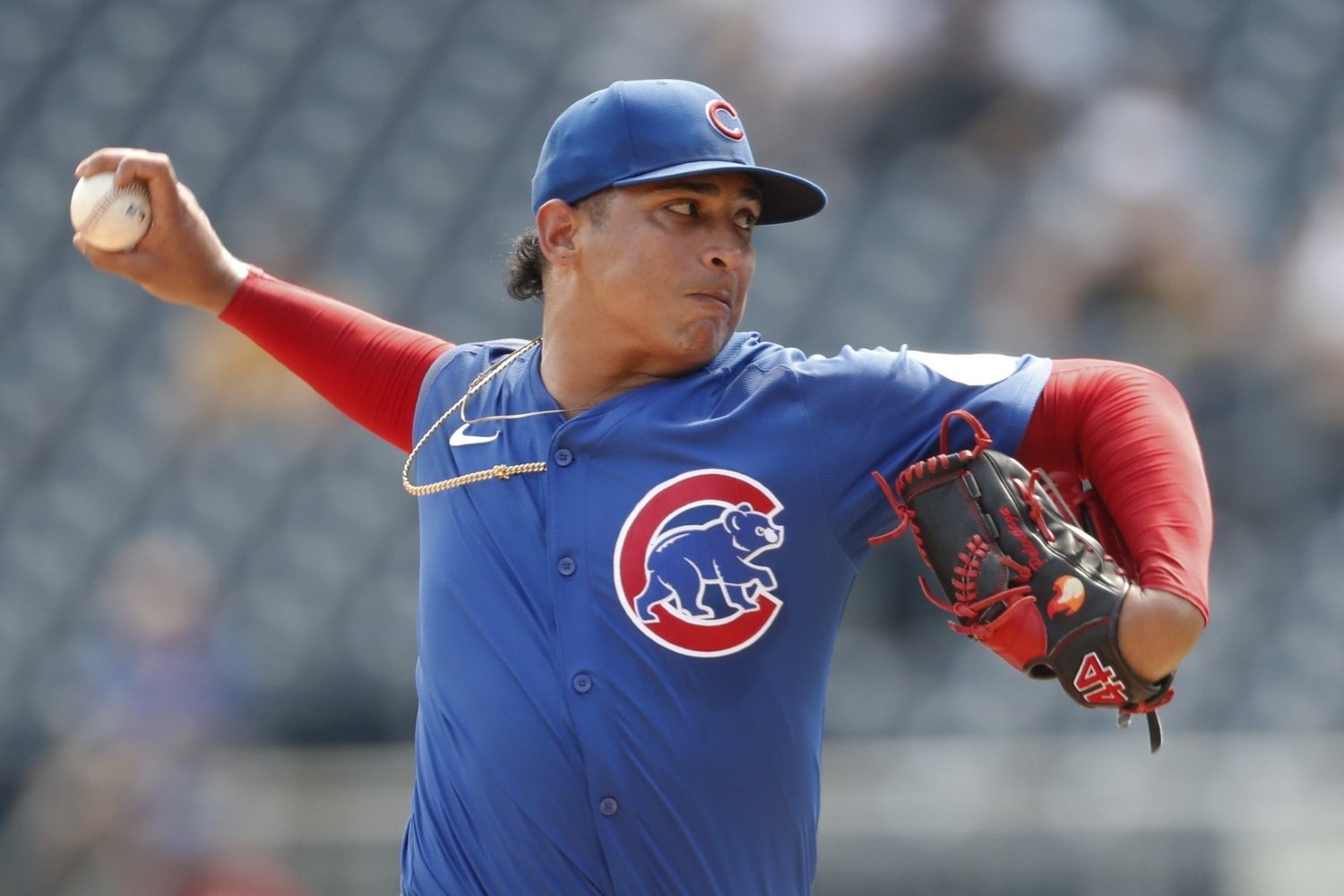 It doesn't require a bunch of squinting and fancy explanation to identify Daniel Palencia as a potentially elite relief pitcher. He throws a fastball that sits on the high side of 98 miles per hour and ratchets all the way up past 102 when he gets really juiced up—and Palencia seems to be juiced up almost all the time. He also has a nasty slider and a splitter that bedevils hitters, when he can properly set it up and execute it. All the elements of one of the game's best high-leverage arms are present. Throughout his young big-league career, however, that relentless energy has tended to do Palencia more harm than good, because he's often so intense as to be somewhat out of control. That can't all be chalked up to mentality or emotions, of course. Struggling to throw strikes is an occupational hazard of throwing hard, just as injury risk is. Nonetheless, it's true: Palencia has been more exciting than honestly effective since coming to the big leagues in the middle of the 2023 season. He's made 47 appearances, with an ERA of 5.02. He's walked 13.8% of the batters he's faced. When you watched Palencia pitch early last season, it looked like he might never find the consistency of release point and movement to be a viable big-leaguer, despite the explosiveness of the stuff. In fact, if you looked closely and knew what a fully functional Palencia looks like, you could tell that the stuff wasn't even as explosive as it ought to have been. Palencia in May.mp4 That's a 99-mile-per-hour fastball, but it's also a bad pitch. Palencia's body is extraordinarily powerful and he generates incredible arm speed, but there's very little control over where the ball is going or how it moves, because he's cutting it loose from an angle and at a degree of arm extension where most of his major muscles can have only a vague effect. He threw it 99, but without either life or command. When Palencia is at his best, he throws with better hop on the ball than that—and it comes in harder than 99. Two stints on the injured list quickly affirmed what you could guess when watching him: Palencia's shoulder was not fully healthy. He struggled to maintain a release point and to keep his arm angle up where it works best, because of that functional deficiency. Across 18 appearances before his second absence, Palencia pitched 25 innings. He struck out 37 of the 116 batters he faced, but he also walked 18 of them, and he allowed 22 runs (20 of them earned), dividing that time between Chicago and Triple-A Iowa. Upon his return in late June, though, Palencia was finally fully healthy and able to move the way he does best. Once he had cleared that physical hurdle, his release point grew more consistent. Then, in mid-August, he made a further change to raise his arm angle, and that further tightened up his release point. This change is not about having moved over on the rubber. As you can see, Palencia's release point moved toward the center of the mound, but he was already working from the first-base side thereof before the change. The adjustment was purely about his delivery, and how he made his arm action slightly more compact. In the middle phase depicted above, from late June through Aug. 10, Palencia was markedly better than he had been while muddling through the shoulder fatigue early on. He had a 2.92 ERA in 11 appearances, all in Triple A. He struck out 19 of 56 opposing batters, and he didn't allow a home run. He really locked in thereafter, though. Once he firmed up a new arm slot, he finished with 14 outings in which he faced 69 batters, fanned 28, and didn't allow a homer, while holding opponents to a .573 OPS—all despite being jerked around a bit, called up twice and sent right back down. You can see changes in Palencia's movement along the same dividing lines. Splitters tend not to work well from low arm angles, and indeed, when Palencia raised his arm angle, he got more confident and effective in his deployment of the splitter. His fastball also gained rising action, and velocity. As a result, he missed more and more bats. Most importantly, once he found that release point, he was around the strike zone much more consistently than he had been before that. Season Segment Fastball Vel. Fastball IVB Fastball Whiff% CompLoc% I 97.9 15.2 30.6 79.8 II 99.2 15.8 32.3 76.8 III 99.7 16.4 38.5 82.4 (In this table, competitive locations are any within 18 inches of the center of the zone.) Here's what Palencia looked like in September, throwing 101 instead of 99, with hop at the top of the zone. Palencia in Sept..mp4 The change in arm angle is subtle, but it's there. Compare their arm positions at release in the two examples given here, and you can see it: Again, though, the difference is small enough that it could almost be random variation. No pitcher perfectly repeats their delivery every time, after all. Helpfully, thanks to Statcast, we can measure pitchers' arm angles directly on a pitch-to-pitch, outing-to-outing, and month-to-month basis. Doing so with Palencia tells the story pretty clearly. Those numbers are a bit of an abstraction, though. Here's a comparison of Palencia's arm angle to his Cubs teammates, in both his early-season stint in the majors and his late-season ones. From small things, in pitching, big things soon come. Palencia made a fairly small change, made possible by getting fully healthy after a spring marred by arm trouble. It paid off in a huge way, and now, it's fair to hope that a healthy Palencia can come back in 2025 and deliver dominant relief work throughout the season. To be sure, he has the strikeout stuff every team craves at the back of their bullpen. He might still walk more than an ideal reliever would, but he has the raw stuff to prevent hard contact in addition to racking up whiffs. His 2024 season was a half-disguised breakout, and Palencia is as valuable as any piece in the team's prospective relief corps heading into this offseason.
 -
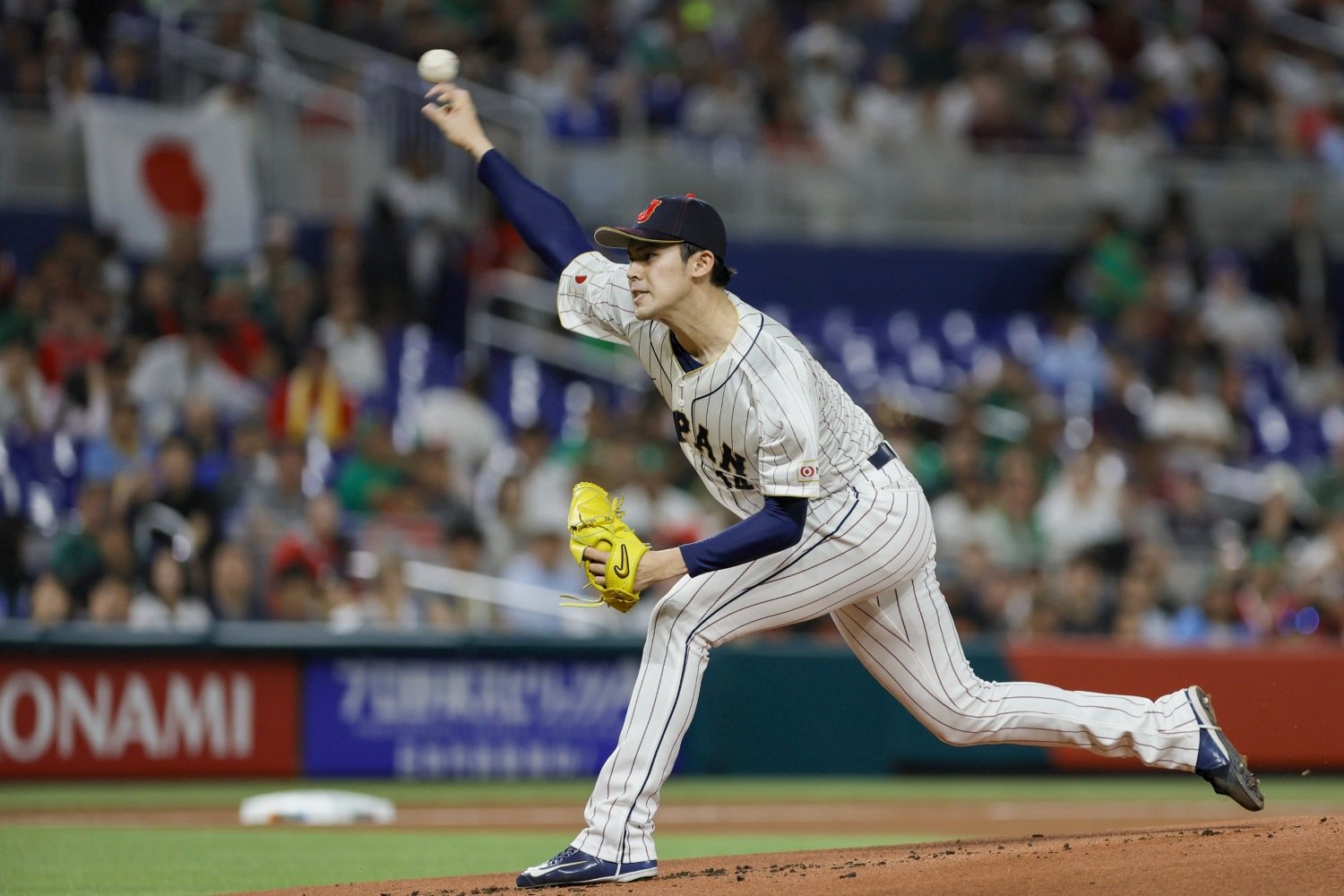 When it comes to running an MLB franchise, there are big moves, and there are small moves. The Roki Sasaki sweepstakes do not fall along the spectrum between one and the other. They are, instead, a degree of big not even captured by that word. Free-agent contests for top players are vital, because they decide the fate of hundreds of millions of dollars in team budgets and can often be the difference between 85 wins and 90. The thing about the Sasaki showdown, much like the one for Shohei Ohtani seven winters ago, is that it has just as good a chance to make the difference between 85 wins and 90—but it won't cost hundreds of millions of dollars. Instead, this is the rare potential deal in which the excess value in a transaction might be fairly expected to be in nine figures. After Rob Manfred said he expects Sasaki not to sign until the opening of the new international free-agent period Jan. 15, the auction for his services figures to be wide-open. Like many teams, the Cubs would only have been able to offer Sasaki a paltry amount to sign with them next month. However, they could (if they're willing to renege on some deals with teenagers from Latin America, distasteful though that would be) free up $5 million or so to offer him as a signing bonus in January. That's competitive with most of the rest of the league, and we know for sure that Sasaki isn't looking for the absolute top dollar, anyway. If he were, he would have waited another two years to make his migration, at which point he could have made an amount close to the $325 million Yoshinobu Yamamoto commanded as a more unfettered free agent last winter. So, Sasaki is likely to sign for somewhere south of $10 million, while the market rate for his services is acknowledged to be somewhere north of $200 million. Is it just me, or would it be ludicrous not to allocate massive resources of personnel, time and energy to the recruitment process? In fact, why have Jed Hoyer focused on anything else for whatever amount of time it takes for Sasaki to make his decision. If this were a position player, or even a traditional, domestic starter, that would be one thing. Again, you'd generally be paying a nine-figure price for this caliber of player. There'd also be a clear opportunity cost even to signing such a player. You'd be displacing someone by bringing them in. With Sasaki, however, that's simply not the case. He has touched as high as 103 miles per hour and routinely works in the upper 90s, with one of the best splitters in the world and a promising slider, but he's never eclipsed 130 innings of work in a professional season. His injury issues and his relative youth make it unthinkable that any team would bring him in and throw him into a five-man, five-day rotation schedule. In other words, either you win the bidding for Sasaki and operate a six-man rotation, or you lose, and nothing about the other steps you were taking to build your roster changes at all. One of the virtues of having a two-headed monster at the top of the baseball operations decision-making tree is the option of triggering this kind of extreme specialization, on a temporary basis. Carter Hawkins is the Cubs' GM, and while that title doesn't carry all the authority and prestige it once did (since the widespread advent of the president of baseball operations), it reflects a certain amount of belief in Hawkins's ability to find and execute transaction opportunities. It reflects a real degree of responsibility for roster-building. While Hoyer could (and obviously would) stay in the loop, there's just no reason why Hawkins couldn't be entrusted with the bulk of the non-Sasaki hot stove work for the two or three weeks Sasaki's free agency is likely to last. What could Hoyer do with the extra time and attention? First of all, presumably, making a strong pitch to Sasaki will be important. That means compiling compelling evidence of the organization's recent progress (which they believe is substantial) in terms of scouting and player development, and it would be great if it could be rendered faithfully into Japanese, so it wouldn't need to be conveyed to Sasaki primarily through a translator. Hoyer could and should hire a dedicated Japanese translator with experience working in baseball, work closely with them to create the best form of the presentation possible, and build a version thereof that could be delivered in a dynamic way in a meeting including both Sasaki and his English-speaking agent, Joel Wolfe. If, in the process of building that presentation, Hoyer also discovered that part of it rings hollow—if there is anything, based on what needs to be extensive background work, that he thinks Sasaki will want from his new club that the Cubs don't yet offer—then he should deploy resources to bringing the team up to snuff. That, too, could take a significant amount of time and energy. For these reasons, it would be best if that was Hoyer's only focus. It's only a chunk of one month. Hawkins needn't enter into any major deals without at least checking with Hoyer, and ownership would still sign off on anything huge. While Sasaki is a free agent, though, Hoyer should never be more than one call away from him, and the team should show its commitment to him by dedicating more of their manpower to him than any other team does. Sasaki is eschewing a larger payday because he craves something the United States can offer, which he didn't find in his time in NPB. He's proving that factors well beyond money matter immensely to him. The Cubs should meet him at that high level of purpose, and show him that they hold that alignment of priorities in high esteem.
 -
Let Jed cook... the Sasaki family dinner. If he's a good cook. Do we know whether he is? Image courtesy of © Sam Navarro-Imagn Images When it comes to running an MLB franchise, there are big moves, and there are small moves. The Roki Sasaki sweepstakes do not fall along the spectrum between one and the other. They are, instead, a degree of big not even captured by that word. Free-agent contests for top players are vital, because they decide the fate of hundreds of millions of dollars in team budgets and can often be the difference between 85 wins and 90. The thing about the Sasaki showdown, much like the one for Shohei Ohtani seven winters ago, is that it has just as good a chance to make the difference between 85 wins and 90—but it won't cost hundreds of millions of dollars. Instead, this is the rare potential deal in which the excess value in a transaction might be fairly expected to be in nine figures. After Rob Manfred said he expects Sasaki not to sign until the opening of the new international free-agent period Jan. 15, the auction for his services figures to be wide-open. Like many teams, the Cubs would only have been able to offer Sasaki a paltry amount to sign with them next month. However, they could (if they're willing to renege on some deals with teenagers from Latin America, distasteful though that would be) free up $5 million or so to offer him as a signing bonus in January. That's competitive with most of the rest of the league, and we know for sure that Sasaki isn't looking for the absolute top dollar, anyway. If he were, he would have waited another two years to make his migration, at which point he could have made an amount close to the $325 million Yoshinobu Yamamoto commanded as a more unfettered free agent last winter. So, Sasaki is likely to sign for somewhere south of $10 million, while the market rate for his services is acknowledged to be somewhere north of $200 million. Is it just me, or would it be ludicrous not to allocate massive resources of personnel, time and energy to the recruitment process? In fact, why have Jed Hoyer focused on anything else for whatever amount of time it takes for Sasaki to make his decision. If this were a position player, or even a traditional, domestic starter, that would be one thing. Again, you'd generally be paying a nine-figure price for this caliber of player. There'd also be a clear opportunity cost even to signing such a player. You'd be displacing someone by bringing them in. With Sasaki, however, that's simply not the case. He has touched as high as 103 miles per hour and routinely works in the upper 90s, with one of the best splitters in the world and a promising slider, but he's never eclipsed 130 innings of work in a professional season. His injury issues and his relative youth make it unthinkable that any team would bring him in and throw him into a five-man, five-day rotation schedule. In other words, either you win the bidding for Sasaki and operate a six-man rotation, or you lose, and nothing about the other steps you were taking to build your roster changes at all. One of the virtues of having a two-headed monster at the top of the baseball operations decision-making tree is the option of triggering this kind of extreme specialization, on a temporary basis. Carter Hawkins is the Cubs' GM, and while that title doesn't carry all the authority and prestige it once did (since the widespread advent of the president of baseball operations), it reflects a certain amount of belief in Hawkins's ability to find and execute transaction opportunities. It reflects a real degree of responsibility for roster-building. While Hoyer could (and obviously would) stay in the loop, there's just no reason why Hawkins couldn't be entrusted with the bulk of the non-Sasaki hot stove work for the two or three weeks Sasaki's free agency is likely to last. What could Hoyer do with the extra time and attention? First of all, presumably, making a strong pitch to Sasaki will be important. That means compiling compelling evidence of the organization's recent progress (which they believe is substantial) in terms of scouting and player development, and it would be great if it could be rendered faithfully into Japanese, so it wouldn't need to be conveyed to Sasaki primarily through a translator. Hoyer could and should hire a dedicated Japanese translator with experience working in baseball, work closely with them to create the best form of the presentation possible, and build a version thereof that could be delivered in a dynamic way in a meeting including both Sasaki and his English-speaking agent, Joel Wolfe. If, in the process of building that presentation, Hoyer also discovered that part of it rings hollow—if there is anything, based on what needs to be extensive background work, that he thinks Sasaki will want from his new club that the Cubs don't yet offer—then he should deploy resources to bringing the team up to snuff. That, too, could take a significant amount of time and energy. For these reasons, it would be best if that was Hoyer's only focus. It's only a chunk of one month. Hawkins needn't enter into any major deals without at least checking with Hoyer, and ownership would still sign off on anything huge. While Sasaki is a free agent, though, Hoyer should never be more than one call away from him, and the team should show its commitment to him by dedicating more of their manpower to him than any other team does. Sasaki is eschewing a larger payday because he craves something the United States can offer, which he didn't find in his time in NPB. He's proving that factors well beyond money matter immensely to him. The Cubs should meet him at that high level of purpose, and show him that they hold that alignment of priorities in high esteem. View full article
-
 Monday morning began with surprising news from Orange County, as the Angels agreed to a three-year deal worth $63 million with left-handed starter Yusei Kikuchi. It's their fifth notable move of the young offseason, already, after they traded for Jorge Soler immediately following the World Series and signed Travis d'Arnaud, Kevin Newman, and Kyle Hendricks earlier this month. Late in another lost season, the team let it be known that they intended to increase payroll and compete for the AL West crown in 2025. That seems a far-fetched goal, but with the Astros, Rangers and Mariners in varying stages of confusion and likely payroll reduction, it isn't quite impossible. In just a few weeks, the team has demonstrated (at least) that they were serious, and that they want to be better than they have been for the last several years. Without another, bigger, better move than any of these smallish ones, though, they won't be able to make good on those desires. At the moment, their hopes for actually contending next season rest far too much on miraculously healthy seasons from the dramatically injury-prone Mike Trout and Anthony Rendon, plus a smooth recovery and undiminished performance from the currently injured Zach Neto. They've also made themselves extremely right-handed across the outfield, with Trout, Taylor Ward, Soler, and Jo Adell figuring as the main options. Mickey Moniak was their main left-handed outfield bat last year, and is the closest thing in the bunch to a viable defensive center fielder, but he had an 81 OPS+ last season—and a .266 OBP that made him downright devastating when the team had a potential rally going. There's still significant room between the Angels' projected payroll for 2025 and the first threshold for the competitive-balance tax, though. The Cubs are, reportedly, at least passingly interested in trading Cody Bellinger, the better to allocate the $30 million they owe him this year to upgrades elsewhere on the roster. Is there a fit here? To some extent, this depends on whether the Angels are among the handful of teams who still view Bellinger as a viable center fielder. He's losing that status, in the eyes of many teams throughout the league, but few consider him totally untenable out there. If Los Angeles thought they could pencil him in even half the time there, giving Trout more days either in a corner or at DH, he'd have immense value for them. There is, just out of reach at the moment but starting to shimmer as a possibility on the horizon, an Angels lineup that could be pretty dangerous, with Bellinger as the left-handed counterweight to the aforementioned righties; Nolan Schanuel and Luis Rengifo as nice complementary bats; and a defensive alignment that actually makes some sense. Of course, in all likelihood, no Bellinger-for-prospects deal with the Angels would make any sense. To give him up, the Cubs would surely want to get either Logan O'Hoppe—the talented but (so far) inconsistent catcher whom they targeted in talks before the trade deadline—or Ward. If it be O'Hoppe, the Cubs would have to kick something else in along with Bellinger, but they might regard that as worthwhile, since that would represent a long-term solution at a position of need that is often hard to fill. If Ward were the target, it would probably be something closer to a straight-up swap, with the Cubs gaining about $20 million in new payroll flexibility (Ward is projected to make about $9 million via arbitration this winter) and the Angels getting Bellinger as a centerpiece of their lineup. Some money might be involved, but no big prospect would have to accompany Bellinger on the trip west. As I wrote last week, Bellinger won't be traded in a pure salary dump, unless it be because the team knows they have a big countervailing acquisition lined up. This would be a Bellinger trade that made the team (if not better) a bit better-constructed, though, while also giving them the added flexibility they're looking for. If the Angels are believers in Bellinger's glove and legs, there might be a perfect match here, now that the Halos are pot-committed in the poker game around the hot stove.
 -
After entering the winter claiming to be serious about winning in 2025, the Angels have backed that up with a series of moves pointing vaguely in that direction. Could the piece that brings it all together be the Cubs' high-priced slugger? Image courtesy of © Kiyoshi Mio-Imagn Images Monday morning began with surprising news from Orange County, as the Angels agreed to a three-year deal worth $63 million with left-handed starter Yusei Kikuchi. It's their fifth notable move of the young offseason, already, after they traded for Jorge Soler immediately following the World Series and signed Travis d'Arnaud, Kevin Newman, and Kyle Hendricks earlier this month. Late in another lost season, the team let it be known that they intended to increase payroll and compete for the AL West crown in 2025. That seems a far-fetched goal, but with the Astros, Rangers and Mariners in varying stages of confusion and likely payroll reduction, it isn't quite impossible. In just a few weeks, the team has demonstrated (at least) that they were serious, and that they want to be better than they have been for the last several years. Without another, bigger, better move than any of these smallish ones, though, they won't be able to make good on those desires. At the moment, their hopes for actually contending next season rest far too much on miraculously healthy seasons from the dramatically injury-prone Mike Trout and Anthony Rendon, plus a smooth recovery and undiminished performance from the currently injured Zach Neto. They've also made themselves extremely right-handed across the outfield, with Trout, Taylor Ward, Soler, and Jo Adell figuring as the main options. Mickey Moniak was their main left-handed outfield bat last year, and is the closest thing in the bunch to a viable defensive center fielder, but he had an 81 OPS+ last season—and a .266 OBP that made him downright devastating when the team had a potential rally going. There's still significant room between the Angels' projected payroll for 2025 and the first threshold for the competitive-balance tax, though. The Cubs are, reportedly, at least passingly interested in trading Cody Bellinger, the better to allocate the $30 million they owe him this year to upgrades elsewhere on the roster. Is there a fit here? To some extent, this depends on whether the Angels are among the handful of teams who still view Bellinger as a viable center fielder. He's losing that status, in the eyes of many teams throughout the league, but few consider him totally untenable out there. If Los Angeles thought they could pencil him in even half the time there, giving Trout more days either in a corner or at DH, he'd have immense value for them. There is, just out of reach at the moment but starting to shimmer as a possibility on the horizon, an Angels lineup that could be pretty dangerous, with Bellinger as the left-handed counterweight to the aforementioned righties; Nolan Schanuel and Luis Rengifo as nice complementary bats; and a defensive alignment that actually makes some sense. Of course, in all likelihood, no Bellinger-for-prospects deal with the Angels would make any sense. To give him up, the Cubs would surely want to get either Logan O'Hoppe—the talented but (so far) inconsistent catcher whom they targeted in talks before the trade deadline—or Ward. If it be O'Hoppe, the Cubs would have to kick something else in along with Bellinger, but they might regard that as worthwhile, since that would represent a long-term solution at a position of need that is often hard to fill. If Ward were the target, it would probably be something closer to a straight-up swap, with the Cubs gaining about $20 million in new payroll flexibility (Ward is projected to make about $9 million via arbitration this winter) and the Angels getting Bellinger as a centerpiece of their lineup. Some money might be involved, but no big prospect would have to accompany Bellinger on the trip west. As I wrote last week, Bellinger won't be traded in a pure salary dump, unless it be because the team knows they have a big countervailing acquisition lined up. This would be a Bellinger trade that made the team (if not better) a bit better-constructed, though, while also giving them the added flexibility they're looking for. If the Angels are believers in Bellinger's glove and legs, there might be a perfect match here, now that the Halos are pot-committed in the poker game around the hot stove. View full article
-
Chicago might not be done trying to upgrade behind the plate, but the player they've already acquired has unexplored upside—and they might prefer to create value through great coaching, rather than paying for raw talent. Image courtesy of © Jonathan Hui-Imagn Images In a perfect world, you'd certainly ask for more offense than Matt Thaiss promises, even from a backup catcher. He does offer a couple of redeeming qualities, but in most of the offensive essentials, he's below-average. Here are his percentiles among all hitters with at least 150 plate appearances in 2024, in various categories and skill measurements. PA Swing% Chase% ZSw-Chase InZoneWhiff% PHiA/SW 100+/Sw LandAng LaunchAng LowHit% MedHit% HighHit% 186 24.4% 86.8% 87.8% 0.2% 24.9% 35.7% 68.5% 52.1% 40.3% 19.8% 79.2% ExitVel 10thExitVel 90thExitVel Hit95+% Well Hit LA Sweet Spot EV BABIP Barrel% FBDst xWOBA wOBA SAEV 20.5% 10.8% 54.3% 56.5% 65.3% 54.3% 67.2% 47.4% 68.9% 21.3% 33.0% 22.7% Thaiss makes very good swing decisions, and his key power indicators—90th-percentile exit velocity, average launch angle on well-hit balls, and average exit velocity in high-value launch angle bands—are slightly better than average. Almost all of that positive stuff is undone, though, by his calamitous lack of feel for contact. If you isolate his work against righties, the strengths get even stronger—but he doesn't swing and miss any less often. It sets a fairly low ceiling on his offensive game, unless the Cubs can find a way to ameliorate it. Defensively, though, it's much easier to imagine a stark improvement. Last year, Thaiss was worth -4.6 runs as a pitch framer, according to Baseball Prospectus. In 2023, that figure was -2.5 runs, and it was -1.1 in very limited work in 2022. Thaiss, the college catcher whom the Angels converted immediately to first base after drafting him only to move him back to the battery three years later, has not been able to overcome the whiplash of that series of development choices. In truth, the Angels just aren't good enough at basic player development to recover from galaxy-brain player development errors like moving a catcher off the position, then back to it after multiple seasons away. The Cubs can be, though. There's some low-hanging fruit in terms of fixing Thaiss as a framer, which is really the difference between a version of him that's narrowly a viable part of the roster at all and one that makes you perfectly comfortable using him as a secondary backstop. Catching coach Mark Strittmatter and company had some success last season bringing along Miguel Amaya as a receiver, and the team just went out this fall and added venerable catching instructor Jerry Weinstein to the organization. Those two have every chance to turn Thaiss into an average catcher, in terms of framing. Here's how. First of all, and most simply, Thaiss catches off the wrong knee when setting up for a pitch on the third-base side of home plate. This is so seemingly basic—screamingly so—that it seems impossible that big-leaguers would get it wrong, but believe it or not, it happens often. Some instructors (wrongly) tell their pupils to pick the knee they're more comfortable putting down, regardless of pitch type or desired location. Some catchers are even capable of succeeding that way. Such cases are desperately rare, though, and the theory of comfort over position is ill-founded. Here's Thaiss catching a ball targeted for the third-base side of the plate this year. Thaiss - 3B edge rt kn up too far fwd.mp4 This is Thaiss's standard setup: left knee down, upper body leaning forward against the right leg. On this pitch, his hurler did him no favors, missing all the way across the plate, but Thaiss had no chance whatsoever to salvage the strike, because of his setup. Here's how the best framer in baseball, the Giants' Patrick Bailey, sets up and receives a pitch aimed for the third-base side of the plate. Bailey - 3B edge lt kn up uprt stc.mp4 Taylor Rogers hits his spot, which makes Bailey's job easier, but the pitch is high and out of the zone, by modern standards. Nonetheless, Bailey snags it and steers it down into the zone for the called strike with relative ease. He can do so because he's set up with the right knee down, making his left leg the edge of a frame he presents to the umpire. The ball comes right to the center of his frame, along the inner edge, but because he's in an upright posture rather than leaning way forward, he can subtly turn his right shoulder backward, making it look like he's reaching back to the heart of the plate for a pitch he's really only reaching forward to collect. Starting with a high mask and high chest also gives him the stability and the visual line to bring the mitt up high, catch the ball in the lower portion of it, and drive it downward, as though he had to do so to catch it. This is why Bailey was worth nearly 200 extra called strikes relative to what was expected this year. The way Bailey uses the left leg to set an edge and shape the zone is not the only reason why the proper way to catch on the third-base side of the plate is with that leg up and the right knee down. There's also a question of the glove action it allows you. When the left leg is up, the catcher can use it as a kind of fulcrum for the arm. Especially when catching a low pitch, you want to let the mitt hang loosely, then rotate slightly as one comes up through the ball at the catch point. That gives the impression of a smooth collection at a higher point, as opposed to any hint of stabbing down or dipping and lifting. Here's Thaiss trying to frame a low pitch, with the left knee down. Thaiss - 3B edge rt kn up floppy hand.mp4 There's a problem with his mitt action, for sure. Firstly, he sets the target too long, trying to help his pitcher see and lock in on a spot but cuing the umpire to look for the ball up, which made the ball down at the knees look lower than it was. Secondly, though, look at the way he drops his mitt. He shows the center-field camera the back of the hand, then strikes out at the ball. Here, by contrast, is Cleveland catcher Bo Naylor catching a low pitch, with the left knee up. Naylor - 3B edge lt kn up gets low for ch.mp4 As you can see, Naylor gets extremely low in his crouch, an advantage he had because he was asking for a low pitch, whereas Thaiss was looking for Griffin Canning to throw one high in the counterexample. However, Naylor's torso still stays upright. He gets the fluid motion of catching the ball off the corner at the knees by starting with his mitt down on the ground but the open side showing to the center-field camera. He coiled his arm to invite a smooth swing of his albow, out and up at once, with the glove naturally reorienting itself into the catching position. Good catchers execute this movement dozens of times per game. Thaiss struggles with it, because it's much easier to do with the right knee down, and he always has the left one down. Here, perhaps, is an even more stark example of that arm motion, from Detroit's Jake Rogers. The way he kicks his leg out to surround the ball and get low on the low pitch make it easy for him to steer the arm upward at a steep angle, while still looking natural. Rogers - 3B edge lt kn up hi to low kickout.mp4 Now, let's look at how Thaiss operates at the top of the zone. Thaiss - rt kn up lean fwd lo to hi mask too low.mp4 His mask and his shoulders start low—so low that he has to catch the ball above his own mask level. To catch it means blocking his own line of sight of the ball momentarily, which is why he's not able to catch it quietly and his mitt drifts away from the center of the zone before he can wrestle it toward it. Low to high just isn't effective, the same way high to low can be. It's easier to fool an umpire by sinking deeper into the crouch than by starting low in one and rising up at the hips and shoulders and head, especially because going high to low doesn't involve the same disruption of vision. Here's how the pros do it. Bailey: Bailey - 1B edge rt kn up uprt stc.mp4 And Naylor: Naylor - 1B edge rt kn up uprt stc.mp4 Bailey starts and stays so high that the ball never threatens the top of his mask. He has the elbow hinge we've talked about. He's using the other knee, on the other side of the plate, to set the edge the same way. Naylor is a little lower in his set than Bailey, a little more athletic and adaptable to a big miss, but he's still considerably higher than Thaiss. Watch his hips, his shoulders, and his head. Unlike Thaiss's, they all stay almost perfectly still, making it much easier to catch the ball quietly and make it look like it was in the zone all the way. As all of these comparisons imply, too, there's an issue with Thaiss's right foot that needs to be addressed: he's too stiff and locked into it. Thaiss - rt foot too stiff, no elbow hinge, lost btm edge.mp4 He's almost trapped on top of his right foot, like it's an uncomfortable stilt. Sifting through video of Thaiss, this problem is not uncommon. The knee down provides stability, but getting the most out of it requires a catcher to have good technique in the setting and the movement of the leg that isn't being kneeled on. That sometimes means the long leg kickout, to help get low. It sometimes means getting the foot planted outside the frame of the body, to set that edge and have a leverage point for all movements on the other side of the body. It sometimes means repositioning to a wider base just before the pitch is thrown to create a bigger zone and facilitate the turn of the right shoulder. Thaiss isn't executing any of those consistently, yet, and thus, he's not getting any of those benefits. All of these things are coachable, though. They're teachable movements. I chose three above-average framers to compare with Thaiss, which might feel like three members of a totally different species than him. In fact, though, these are three players very close to the same size as Thaiss, and none of them are notably more athletic than he is on the bases or at the plate. Their edges over him are in understanding the rudiments of catching, because the Angels don't seem to have effectively instructed him on any of them. In summary, look for the Cubs to do three things with Thaiss, mechanically, when they go to work with him this spring: Make which knee he puts down in his setup dependent on pitch type and location, as well as handedness of batter. Left knee down works better, in most cases for pitches high and/or on the first-base side of the plate, especially to right-handed batters. Right knee down, which Thaiss currently uses almost not at all, works better for most low pitches and all of them to the third-base edge of the plate. Encourage a more upright posture with the upper body. Let the mitt drop, but keep the elbow internally rotated, so the arm can smoothly swing up through the ball on low pitches and so that the mask stays above the ball on pitches at the top edge, permitting a quiet catch and centering. Redistribute weight and balance within the setup, so that whichever foot is up is more free to be repositioned and the whole body can move subtly to catch a pitch that's off-target, rather than having an anchor that forces an obvious, off-balance lean. These are the key principles, as it happens, that most often show up in the rebuilding of a catcher when they enter the Brewers system—whence came Craig Counsell, whose attention to detail definitely extends to this part of the game. Under Counsell, the Brewers turned William Contreras from a borderline DH to a fine and occasionally even plus receiver, using exactly the trio of changes described above. While the gap in teams' evaluative understanding of framing closed long ago, there's still a major difference between the good and bad teams when it comes to educating and developing good receivers. That's been especially true the last few years, as a new state of the art in framing has developed, more predicated on fluidity and dynamism than on being quiet as a mouse and solid as a rock, the way David Ross and the great framers of the last generation were. The Angels are on the wrong side of that divide. The Cubs were, too, until recently. They hope and believe that changed, when they hired Counsell and he (in turn) hired Strittmatter. Bringing in Weinstein, an octogenarian but one of the true gurus of the craft at the moment, has to have given them added confidence. If, as an organization, they can turn Thaiss (and/or Moises Ballesteros) into an above-average framer, both Strittmatter and Weinstein will have earned triple their salaries. While Thaiss has no star-caliber upside, making him an average-plus defensive catcher would turn his offensive profile from underwhelming to delightfully acceptable. He'd become a pitch-perfect complement to Amaya, for however long that was needed, and the team could even consider carrying three catchers once Ballesteros is ready, so that he could sometimes act as the DH while learning the game-planning rigors of catching in the majors on the job. Any team who has to pay free-agent prices or trade young talent for every fistful of extra runs they score or prevent is doomed. Scouting and player development are most often cited as ways to get teenagers into the organization and mill them into stars, but sometimes, good staff work is just finding a player with an aptitude for improvement and an easy path to doing so, and handing them to a gifted group of coaches and instructors. The Cubs won't stop looking to bolster the catcher spot, but by acquiring Thaiss at a cost so low it's virtually zero, they've given themselves room to profit from their own improving developmental infrastructure. If it pays off as neatly as it very well might, they'll have created some extra flexibility as they seek to fill other, more important gaps on the roster. View full article
- 2 replies
-
- 2
-
-
- matt thaiss
- jerry weinstein
- (and 1 more)
-
 In a perfect world, you'd certainly ask for more offense than Matt Thaiss promises, even from a backup catcher. He does offer a couple of redeeming qualities, but in most of the offensive essentials, he's below-average. Here are his percentiles among all hitters with at least 150 plate appearances in 2024, in various categories and skill measurements. PA Swing% Chase% ZSw-Chase InZoneWhiff% PHiA/SW 100+/Sw LandAng LaunchAng LowHit% MedHit% HighHit% 186 24.4% 86.8% 87.8% 0.2% 24.9% 35.7% 68.5% 52.1% 40.3% 19.8% 79.2% ExitVel 10thExitVel 90thExitVel Hit95+% Well Hit LA Sweet Spot EV BABIP Barrel% FBDst xWOBA wOBA SAEV 20.5% 10.8% 54.3% 56.5% 65.3% 54.3% 67.2% 47.4% 68.9% 21.3% 33.0% 22.7% Thaiss makes very good swing decisions, and his key power indicators—90th-percentile exit velocity, average launch angle on well-hit balls, and average exit velocity in high-value launch angle bands—are slightly better than average. Almost all of that positive stuff is undone, though, by his calamitous lack of feel for contact. If you isolate his work against righties, the strengths get even stronger—but he doesn't swing and miss any less often. It sets a fairly low ceiling on his offensive game, unless the Cubs can find a way to ameliorate it. Defensively, though, it's much easier to imagine a stark improvement. Last year, Thaiss was worth -4.6 runs as a pitch framer, according to Baseball Prospectus. In 2023, that figure was -2.5 runs, and it was -1.1 in very limited work in 2022. Thaiss, the college catcher whom the Angels converted immediately to first base after drafting him only to move him back to the battery three years later, has not been able to overcome the whiplash of that series of development choices. In truth, the Angels just aren't good enough at basic player development to recover from galaxy-brain player development errors like moving a catcher off the position, then back to it after multiple seasons away. The Cubs can be, though. There's some low-hanging fruit in terms of fixing Thaiss as a framer, which is really the difference between a version of him that's narrowly a viable part of the roster at all and one that makes you perfectly comfortable using him as a secondary backstop. Catching coach Mark Strittmatter and company had some success last season bringing along Miguel Amaya as a receiver, and the team just went out this fall and added venerable catching instructor Jerry Weinstein to the organization. Those two have every chance to turn Thaiss into an average catcher, in terms of framing. Here's how. First of all, and most simply, Thaiss catches off the wrong knee when setting up for a pitch on the third-base side of home plate. This is so seemingly basic—screamingly so—that it seems impossible that big-leaguers would get it wrong, but believe it or not, it happens often. Some instructors (wrongly) tell their pupils to pick the knee they're more comfortable putting down, regardless of pitch type or desired location. Some catchers are even capable of succeeding that way. Such cases are desperately rare, though, and the theory of comfort over position is ill-founded. Here's Thaiss catching a ball targeted for the third-base side of the plate this year. Thaiss - 3B edge rt kn up too far fwd.mp4 This is Thaiss's standard setup: left knee down, upper body leaning forward against the right leg. On this pitch, his hurler did him no favors, missing all the way across the plate, but Thaiss had no chance whatsoever to salvage the strike, because of his setup. Here's how the best framer in baseball, the Giants' Patrick Bailey, sets up and receives a pitch aimed for the third-base side of the plate. Bailey - 3B edge lt kn up uprt stc.mp4 Taylor Rogers hits his spot, which makes Bailey's job easier, but the pitch is high and out of the zone, by modern standards. Nonetheless, Bailey snags it and steers it down into the zone for the called strike with relative ease. He can do so because he's set up with the right knee down, making his left leg the edge of a frame he presents to the umpire. The ball comes right to the center of his frame, along the inner edge, but because he's in an upright posture rather than leaning way forward, he can subtly turn his right shoulder backward, making it look like he's reaching back to the heart of the plate for a pitch he's really only reaching forward to collect. Starting with a high mask and high chest also gives him the stability and the visual line to bring the mitt up high, catch the ball in the lower portion of it, and drive it downward, as though he had to do so to catch it. This is why Bailey was worth nearly 200 extra called strikes relative to what was expected this year. The way Bailey uses the left leg to set an edge and shape the zone is not the only reason why the proper way to catch on the third-base side of the plate is with that leg up and the right knee down. There's also a question of the glove action it allows you. When the left leg is up, the catcher can use it as a kind of fulcrum for the arm. Especially when catching a low pitch, you want to let the mitt hang loosely, then rotate slightly as one comes up through the ball at the catch point. That gives the impression of a smooth collection at a higher point, as opposed to any hint of stabbing down or dipping and lifting. Here's Thaiss trying to frame a low pitch, with the left knee down. Thaiss - 3B edge rt kn up floppy hand.mp4 There's a problem with his mitt action, for sure. Firstly, he sets the target too long, trying to help his pitcher see and lock in on a spot but cuing the umpire to look for the ball up, which made the ball down at the knees look lower than it was. Secondly, though, look at the way he drops his mitt. He shows the center-field camera the back of the hand, then strikes out at the ball. Here, by contrast, is Cleveland catcher Bo Naylor catching a low pitch, with the left knee up. Naylor - 3B edge lt kn up gets low for ch.mp4 As you can see, Naylor gets extremely low in his crouch, an advantage he had because he was asking for a low pitch, whereas Thaiss was looking for Griffin Canning to throw one high in the counterexample. However, Naylor's torso still stays upright. He gets the fluid motion of catching the ball off the corner at the knees by starting with his mitt down on the ground but the open side showing to the center-field camera. He coiled his arm to invite a smooth swing of his albow, out and up at once, with the glove naturally reorienting itself into the catching position. Good catchers execute this movement dozens of times per game. Thaiss struggles with it, because it's much easier to do with the right knee down, and he always has the left one down. Here, perhaps, is an even more stark example of that arm motion, from Detroit's Jake Rogers. The way he kicks his leg out to surround the ball and get low on the low pitch make it easy for him to steer the arm upward at a steep angle, while still looking natural. Rogers - 3B edge lt kn up hi to low kickout.mp4 Now, let's look at how Thaiss operates at the top of the zone. Thaiss - rt kn up lean fwd lo to hi mask too low.mp4 His mask and his shoulders start low—so low that he has to catch the ball above his own mask level. To catch it means blocking his own line of sight of the ball momentarily, which is why he's not able to catch it quietly and his mitt drifts away from the center of the zone before he can wrestle it toward it. Low to high just isn't effective, the same way high to low can be. It's easier to fool an umpire by sinking deeper into the crouch than by starting low in one and rising up at the hips and shoulders and head, especially because going high to low doesn't involve the same disruption of vision. Here's how the pros do it. Bailey: Bailey - 1B edge rt kn up uprt stc.mp4 And Naylor: Naylor - 1B edge rt kn up uprt stc.mp4 Bailey starts and stays so high that the ball never threatens the top of his mask. He has the elbow hinge we've talked about. He's using the other knee, on the other side of the plate, to set the edge the same way. Naylor is a little lower in his set than Bailey, a little more athletic and adaptable to a big miss, but he's still considerably higher than Thaiss. Watch his hips, his shoulders, and his head. Unlike Thaiss's, they all stay almost perfectly still, making it much easier to catch the ball quietly and make it look like it was in the zone all the way. As all of these comparisons imply, too, there's an issue with Thaiss's right foot that needs to be addressed: he's too stiff and locked into it. Thaiss - rt foot too stiff, no elbow hinge, lost btm edge.mp4 He's almost trapped on top of his right foot, like it's an uncomfortable stilt. Sifting through video of Thaiss, this problem is not uncommon. The knee down provides stability, but getting the most out of it requires a catcher to have good technique in the setting and the movement of the leg that isn't being kneeled on. That sometimes means the long leg kickout, to help get low. It sometimes means getting the foot planted outside the frame of the body, to set that edge and have a leverage point for all movements on the other side of the body. It sometimes means repositioning to a wider base just before the pitch is thrown to create a bigger zone and facilitate the turn of the right shoulder. Thaiss isn't executing any of those consistently, yet, and thus, he's not getting any of those benefits. All of these things are coachable, though. They're teachable movements. I chose three above-average framers to compare with Thaiss, which might feel like three members of a totally different species than him. In fact, though, these are three players very close to the same size as Thaiss, and none of them are notably more athletic than he is on the bases or at the plate. Their edges over him are in understanding the rudiments of catching, because the Angels don't seem to have effectively instructed him on any of them. In summary, look for the Cubs to do three things with Thaiss, mechanically, when they go to work with him this spring: Make which knee he puts down in his setup dependent on pitch type and location, as well as handedness of batter. Left knee down works better, in most cases for pitches high and/or on the first-base side of the plate, especially to right-handed batters. Right knee down, which Thaiss currently uses almost not at all, works better for most low pitches and all of them to the third-base edge of the plate. Encourage a more upright posture with the upper body. Let the mitt drop, but keep the elbow internally rotated, so the arm can smoothly swing up through the ball on low pitches and so that the mask stays above the ball on pitches at the top edge, permitting a quiet catch and centering. Redistribute weight and balance within the setup, so that whichever foot is up is more free to be repositioned and the whole body can move subtly to catch a pitch that's off-target, rather than having an anchor that forces an obvious, off-balance lean. These are the key principles, as it happens, that most often show up in the rebuilding of a catcher when they enter the Brewers system—whence came Craig Counsell, whose attention to detail definitely extends to this part of the game. Under Counsell, the Brewers turned William Contreras from a borderline DH to a fine and occasionally even plus receiver, using exactly the trio of changes described above. While the gap in teams' evaluative understanding of framing closed long ago, there's still a major difference between the good and bad teams when it comes to educating and developing good receivers. That's been especially true the last few years, as a new state of the art in framing has developed, more predicated on fluidity and dynamism than on being quiet as a mouse and solid as a rock, the way David Ross and the great framers of the last generation were. The Angels are on the wrong side of that divide. The Cubs were, too, until recently. They hope and believe that changed, when they hired Counsell and he (in turn) hired Strittmatter. Bringing in Weinstein, an octogenarian but one of the true gurus of the craft at the moment, has to have given them added confidence. If, as an organization, they can turn Thaiss (and/or Moises Ballesteros) into an above-average framer, both Strittmatter and Weinstein will have earned triple their salaries. While Thaiss has no star-caliber upside, making him an average-plus defensive catcher would turn his offensive profile from underwhelming to delightfully acceptable. He'd become a pitch-perfect complement to Amaya, for however long that was needed, and the team could even consider carrying three catchers once Ballesteros is ready, so that he could sometimes act as the DH while learning the game-planning rigors of catching in the majors on the job. Any team who has to pay free-agent prices or trade young talent for every fistful of extra runs they score or prevent is doomed. Scouting and player development are most often cited as ways to get teenagers into the organization and mill them into stars, but sometimes, good staff work is just finding a player with an aptitude for improvement and an easy path to doing so, and handing them to a gifted group of coaches and instructors. The Cubs won't stop looking to bolster the catcher spot, but by acquiring Thaiss at a cost so low it's virtually zero, they've given themselves room to profit from their own improving developmental infrastructure. If it pays off as neatly as it very well might, they'll have created some extra flexibility as they seek to fill other, more important gaps on the roster.
 -
 On Friday evening, the Cubs non-tendered Nick Madrigal and Mike Tauchman, bringing the total number of players previously on their 40-man roster jettisoned this week up to six. They agreed to terms with Julian Merryweather, Keegan Thompson, and Matt Thaiss, a pretty reliable indicator that those three were on the verge of being non-tendered as well; the team was willing to keep them only if they could lock in favorable terms. We don't yet have terms of Thompson's deal, but Merryweather signed for $1.225 million, a bit shy of public projections and a solid $300,000 lower than what he certainly could have ended up getting had the arbitration process played all the way out. Thaiss, who was projected for $1.3 million by MLB Trade Rumors but had just landed with the Cubs because he was designated for assignment by the Angels, understood his real position and agreed to a split contract. This is similar to what the Brewers did with Eric Haase last winter. Like Haase last year, Thaiss will make $1 million (or rather, the prorated share thereof) for whatever time he spends in the big leagues next year, but just a $400,000 rate for whatever time he spends in the minors. As we discussed when he was acquired Wednesday, he can't be optioned to the minors, but that doesn't mean he couldn't end up there. Last spring, Haase was designated for assignment just before Opening Day by Milwaukee, cleared waivers, and was outrighted to Triple A. He ended up coming up in July, and was a solid contributor for them in the final two months. If the Cubs do acquire a better catcher than Thaiss between now and mid-March, expect them to do the same thing with Thaiss. If not, he's a low-cost stopgap until they believe Moises Ballesteros is ready to handle the defensive duties of catching in the big leagues. The rest of the team's arbitration-eligible players were tendered contracts, meaning they'll remain under team control but that we don't yet know their salary for certain. The 40-man roster is now at 38, so the team has created a little bit (though probably not enough, yet) of room for external additions. The pruning of the roster is not finished, but the rest of it will be done on an as-needed basis. Here's a rough roster projection, if the season (alarmingly) started tomorrow. Catcher (2) Miguel Amaya Matt Thaiss Infield (6) Michael Busch Nico Hoerner Dansby Swanson Isaac Paredes Miles Mastrobuoni Luis Vazquez Outfield (5) Ian Happ Pete Crow-Armstrong Cody Bellinger Seiya Suzuki Alexander Canario Starting Pitchers (5) Shota Imanaga Justin Steele Jameson Taillon Javier Assad Jordan Wicks Relief Pitchers (8) Porter Hodge Tyson Miller Nate Pearson Julian Merryweather Keegan Thompson Eli Morgan Rob Zastryzny Caleb Kilian On 40-Man, Off Active Roster Owen Caissie Matt Mervis Kevin Alcántara Benjamin Cowles Hayden Wesneski Ben Brown Luke Little Daniel Palencia Jack Neely Gavin Hollowell Michael Arias Ethan Roberts This is how we have to list it, I think, because it keeps players (Canario, Merryweather, Thompson, Zastryzny, and Kilian) who are out of options hypothetically in the organization. In reality, I expect the team to make more additions this winter, forcing more changes, and while Roberts and Mervis could be among the first to go, I would also expect Zastryzny and Kilian to be high on a cut list. Canario likely has a modicum of trade value, though after Tauchman was culled from the herd, he becomes more plausible as a complementary outfield option. Much depends on the shape of their next set of moves. The infield mix listed above is obviously weak. One of Mastrobuoni and Vazquez will need to be in the minors for the team to enter 2025 with any serious intention of winning. A number of appealing infielders are available via free agency and trade, and a few (headlined by Mariners third baseman Josh Rojas, whom I highlighted as a target six weeks ago) joined the pool of available talent by being non-tendered Friday. The search for another catcher probably isn't over, with Thaiss signing that split deal. Last winter, the Brewers ended up signing Gary Sánchez. The Cubs need right-handed power, and Sánchez could be a fit for them, too. It's not the worst idea to closely mimic the Brewers, in some areas. We also anticipate additions to the starting rotation and bullpen from here, and as long as the team is smart about who goes when those newcomers join, this is shaping up to be a better, deeper team than it was last year. With Wisdom, Madrigal, and Tauchman all gone, you figure there will be at least one major external bat coming in. If the team follows through on their rumored interest in trading Cody Bellinger to facilitate other moves, even that would only cancel out. It sure looks like Jed Hoyer is creating space for guys like Caissie, Canario, Alcántara, Ballesteros, and Matt Shaw to have an impact in 2025. In that way, this roster is taking a shape vaguely reminiscent of 2015's. The upside is lower, at the moment, but the floor might also be higher. It's easy to forget, given how well it turned out, how wide the error bars were on possible outcomes for that team trying to emerge from a three-year rebuild. In 2014-15, the key additions were Jon Lester and Jason Hammel in free agency and Miguel Montero and Dexter Fowler in trades. That's almost exactly what the Cubs need now: two strong starters (or one and a strong reliever), and two well-rounded hitters, ideally with strong on-base skills. It wasn't an easy offseason to pull off back then, and it wouldn't be easy to do this winter, either. It's pretty clear what the team needs to do, though, and with so many of their fringy pieces either shoved out of the way or locked into clearer places in the budget, they now have some obvious ways forward.
- 1 comment
-
- 1
-
-
- eli morgan
- julian merryweather
- (and 5 more)
-
Thanks to the two minor trades in between two separate roster deadlines, the Cubs have changed a lot in the last week. Let's take a look at where they stand, and what is likely to come next. Image courtesy of © Charles LeClaire-Imagn Images On Friday evening, the Cubs non-tendered Nick Madrigal and Mike Tauchman, bringing the total number of players previously on their 40-man roster jettisoned this week up to six. They agreed to terms with Julian Merryweather, Keegan Thompson, and Matt Thaiss, a pretty reliable indicator that those three were on the verge of being non-tendered as well; the team was willing to keep them only if they could lock in favorable terms. We don't yet have terms of Thompson's deal, but Merryweather signed for $1.225 million, a bit shy of public projections and a solid $300,000 lower than what he certainly could have ended up getting had the arbitration process played all the way out. Thaiss, who was projected for $1.3 million by MLB Trade Rumors but had just landed with the Cubs because he was designated for assignment by the Angels, understood his real position and agreed to a split contract. This is similar to what the Brewers did with Eric Haase last winter. Like Haase last year, Thaiss will make $1 million (or rather, the prorated share thereof) for whatever time he spends in the big leagues next year, but just a $400,000 rate for whatever time he spends in the minors. As we discussed when he was acquired Wednesday, he can't be optioned to the minors, but that doesn't mean he couldn't end up there. Last spring, Haase was designated for assignment just before Opening Day by Milwaukee, cleared waivers, and was outrighted to Triple A. He ended up coming up in July, and was a solid contributor for them in the final two months. If the Cubs do acquire a better catcher than Thaiss between now and mid-March, expect them to do the same thing with Thaiss. If not, he's a low-cost stopgap until they believe Moises Ballesteros is ready to handle the defensive duties of catching in the big leagues. The rest of the team's arbitration-eligible players were tendered contracts, meaning they'll remain under team control but that we don't yet know their salary for certain. The 40-man roster is now at 38, so the team has created a little bit (though probably not enough, yet) of room for external additions. The pruning of the roster is not finished, but the rest of it will be done on an as-needed basis. Here's a rough roster projection, if the season (alarmingly) started tomorrow. Catcher (2) Miguel Amaya Matt Thaiss Infield (6) Michael Busch Nico Hoerner Dansby Swanson Isaac Paredes Miles Mastrobuoni Luis Vazquez Outfield (5) Ian Happ Pete Crow-Armstrong Cody Bellinger Seiya Suzuki Alexander Canario Starting Pitchers (5) Shota Imanaga Justin Steele Jameson Taillon Javier Assad Jordan Wicks Relief Pitchers (8) Porter Hodge Tyson Miller Nate Pearson Julian Merryweather Keegan Thompson Eli Morgan Rob Zastryzny Caleb Kilian On 40-Man, Off Active Roster Owen Caissie Matt Mervis Kevin Alcántara Benjamin Cowles Hayden Wesneski Ben Brown Luke Little Daniel Palencia Jack Neely Gavin Hollowell Michael Arias Ethan Roberts This is how we have to list it, I think, because it keeps players (Canario, Merryweather, Thompson, Zastryzny, and Kilian) who are out of options hypothetically in the organization. In reality, I expect the team to make more additions this winter, forcing more changes, and while Roberts and Mervis could be among the first to go, I would also expect Zastryzny and Kilian to be high on a cut list. Canario likely has a modicum of trade value, though after Tauchman was culled from the herd, he becomes more plausible as a complementary outfield option. Much depends on the shape of their next set of moves. The infield mix listed above is obviously weak. One of Mastrobuoni and Vazquez will need to be in the minors for the team to enter 2025 with any serious intention of winning. A number of appealing infielders are available via free agency and trade, and a few (headlined by Mariners third baseman Josh Rojas, whom I highlighted as a target six weeks ago) joined the pool of available talent by being non-tendered Friday. The search for another catcher probably isn't over, with Thaiss signing that split deal. Last winter, the Brewers ended up signing Gary Sánchez. The Cubs need right-handed power, and Sánchez could be a fit for them, too. It's not the worst idea to closely mimic the Brewers, in some areas. We also anticipate additions to the starting rotation and bullpen from here, and as long as the team is smart about who goes when those newcomers join, this is shaping up to be a better, deeper team than it was last year. With Wisdom, Madrigal, and Tauchman all gone, you figure there will be at least one major external bat coming in. If the team follows through on their rumored interest in trading Cody Bellinger to facilitate other moves, even that would only cancel out. It sure looks like Jed Hoyer is creating space for guys like Caissie, Canario, Alcántara, Ballesteros, and Matt Shaw to have an impact in 2025. In that way, this roster is taking a shape vaguely reminiscent of 2015's. The upside is lower, at the moment, but the floor might also be higher. It's easy to forget, given how well it turned out, how wide the error bars were on possible outcomes for that team trying to emerge from a three-year rebuild. In 2014-15, the key additions were Jon Lester and Jason Hammel in free agency and Miguel Montero and Dexter Fowler in trades. That's almost exactly what the Cubs need now: two strong starters (or one and a strong reliever), and two well-rounded hitters, ideally with strong on-base skills. It wasn't an easy offseason to pull off back then, and it wouldn't be easy to do this winter, either. It's pretty clear what the team needs to do, though, and with so many of their fringy pieces either shoved out of the way or locked into clearer places in the budget, they now have some obvious ways forward. View full article
.png.97c5cd399c5da74ff6acb3ee9ac62048.png)
