Matthew Trueblood
-
Posts
2,481 -
Joined
-
Last visited
-
Days Won
2
Content Type
Profiles
Joomla Posts 1
Chicago Cubs Videos
Chicago Cubs Free Agent & Trade Rumors, Notes, & Tidbits
2026 Chicago Cubs Top Prospects Ranking
News
2023 Chicago Cubs Draft Picks
Guides & Resources
2024 Chicago Cubs Draft Picks
The Chicago Cubs Players Project
2025 Chicago Cubs Draft Pick Tracker
2026 Chicago Cubs Draft Tracker: Picks & Bonuses
Blogs
Events
Forums
Store
Gallery
Everything posted by Matthew Trueblood
-
ESPN published its Sunday Night Baseball schedule for the first third of the season on Wednesday, and the Cubs show up twice on the docket. They'll visit the Dodgers on Apr. 13, and then host the Phillies under the Wrigley Field lights on Apr. 27. The Mets and Dodgers will, unsurprisingly, show up four times in this early phase of the season, as ESPN chases the ratings delivered by the likes of Juan Soto and Shohei Ohtani. The Padres and Phillies are each listed three times already, and the Cubs join the Yankees and the team from Cobb County in Georgia as clubs who will appear twice in this first segment of the season. The matchup with the Phillies is especially juicy. Depending on how the first month goes, that could well be a matchup that testa the early success of an upstart Cubs team against a team with three straight playoff appearances, and one whom they might be battling for Wild Card position by the end of the season. While I don't have ESPN, I love when the Cubs are on Sunday nights, as it affords an opportunity to tune in either to Pat Hughes or to Boog Sciambi (who calls those Sunday night games on ESPN Radio) and not to feel pressured to watch on TV. Baseball is still good on the radio, but the modern environment often tells us we missed something if we merely listened to a game. Here are two instances where I'll have no choice; I look forward to them.
-
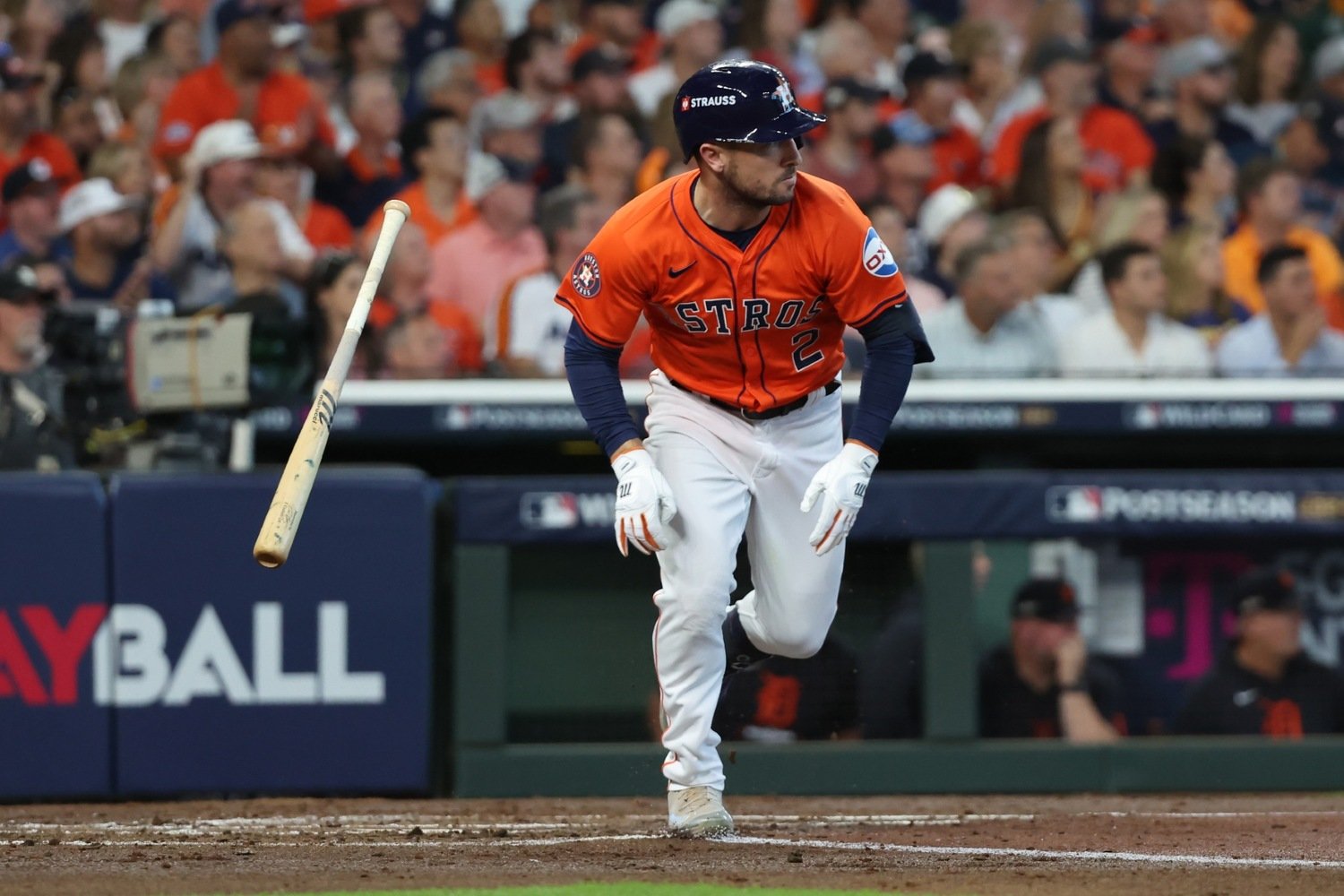 It is, on one level, incredibly simple. Don't overthink this. One of these potential lineups is much better than the other. Current Lineup # Lineup w/ Bregman Ian Happ 1 Ian Happ Seiya Suzuki 2 Seiya Suzuki Kyle Tucker 3 Kyle Tucker Dansby Swanson 4 Alex Bregman Michael Busch 5 Michael Busch Nico Hoerner 6 Dansby Swanson Matt Shaw 7 Matt Shaw Pete Crow-Armstrong 8 Pete Crow-Armstrong Miguel Amaya 9 Miguel Amaya If the Cubs were to sign Alex Bregman to a short-term, high-dollar deal, they'd achieve the formidable top half of the lineup they've been chasing for years, and they'd still have youth, athleticism, and defense throughout the team. Whatever concerns some might have about his tough first half in 2024, Bregman remains one of the most balanced hitters in baseball, capable of controlling the strike zone as well as anyone while still producing average-plus power. Even a fully healthy and functional Nico Hoerner is not as good a player as Bregman, and we don't know to what extent we can expect to see the fully healthy and functional Hoerner in 2025. Notably, though, this move would mean getting rid of Hoerner, which is a complication in and of itself. We've already discussed at length where the Cubs stand financially and why they might need to be careful as they go about spending the rest of their budget, so you already know the drill: if they sign Bregman, they're likely to trade Hoerner to make financial room for him. That wouldn't be because they can't afford both players, but rather, because they still fully intend to upgrade their pitching staff, and they can't afford Bregman, Hoerner and that missing, high-end arm on the budget the Ricketts family has imposed upon them. Even that is a slight oversimplification. Because of the positional fit, trading Hoerner is the most immediately obvious option, but the Cubs do have enough pitching depth to consider trading Jameson Taillon instead, then replacing him with a higher-octane arm using the money they free up. That's a lot of moving parts in a system that doesn't demand the changes, though. What about the possibility of trading Seiya Suzuki, after all? I'm not necessarily advocating this. Suzuki is almost as good a hitter as Bregman, and losing him would diminish the team's lineup, even after adding Kyle Tucker and Bregman. It's theoretically viable, though, if they can find the right trade partner. Moving Suzuki would resolve whatever tension exists over the fact that he's penciled in as the DH this year, and it would let the team rotate Bregman, Ian Happ, Tucker, and others through that DH spot, maintaining fluidity and positional flexibility. Hoerner and his defensive and baserunning value could stick around, and they would have much more functional infield depth. The paths to eventual playing time for Kevin Alcántara, James Triantos, Moises Ballesteros or Owen Caissie would open. Trading Suzuki to make room for Bregman would be a risky move. I'm reasonably confident that it would mark an upgrade, though, because of the options it would open up for the team. A lot of things have to fall right to make it make sense—Bregman actually being interested in joining the Cubs, on a palatable deal; a good destination being found for Suzuki; a right-priced pitcher being available to spend the budget space created by the Suzuki trade on—but it might be the way the team balances their desire to make way for their top position-player prospects with their desire to be a very good or great team in 2025, rather than a merely good one.
 -
The juicy rumor du jour came from Bruce Levine Tuesday evening. The Cubs are in touch with Scott Boras, and whenever that happens, things have a chance to get weird. Image courtesy of © Thomas Shea-Imagn Images It is, on one level, incredibly simple. Don't overthink this. One of these potential lineups is much better than the other. Current Lineup # Lineup w/ Bregman Ian Happ 1 Ian Happ Seiya Suzuki 2 Seiya Suzuki Kyle Tucker 3 Kyle Tucker Dansby Swanson 4 Alex Bregman Michael Busch 5 Michael Busch Nico Hoerner 6 Dansby Swanson Matt Shaw 7 Matt Shaw Pete Crow-Armstrong 8 Pete Crow-Armstrong Miguel Amaya 9 Miguel Amaya If the Cubs were to sign Alex Bregman to a short-term, high-dollar deal, they'd achieve the formidable top half of the lineup they've been chasing for years, and they'd still have youth, athleticism, and defense throughout the team. Whatever concerns some might have about his tough first half in 2024, Bregman remains one of the most balanced hitters in baseball, capable of controlling the strike zone as well as anyone while still producing average-plus power. Even a fully healthy and functional Nico Hoerner is not as good a player as Bregman, and we don't know to what extent we can expect to see the fully healthy and functional Hoerner in 2025. Notably, though, this move would mean getting rid of Hoerner, which is a complication in and of itself. We've already discussed at length where the Cubs stand financially and why they might need to be careful as they go about spending the rest of their budget, so you already know the drill: if they sign Bregman, they're likely to trade Hoerner to make financial room for him. That wouldn't be because they can't afford both players, but rather, because they still fully intend to upgrade their pitching staff, and they can't afford Bregman, Hoerner and that missing, high-end arm on the budget the Ricketts family has imposed upon them. Even that is a slight oversimplification. Because of the positional fit, trading Hoerner is the most immediately obvious option, but the Cubs do have enough pitching depth to consider trading Jameson Taillon instead, then replacing him with a higher-octane arm using the money they free up. That's a lot of moving parts in a system that doesn't demand the changes, though. What about the possibility of trading Seiya Suzuki, after all? I'm not necessarily advocating this. Suzuki is almost as good a hitter as Bregman, and losing him would diminish the team's lineup, even after adding Kyle Tucker and Bregman. It's theoretically viable, though, if they can find the right trade partner. Moving Suzuki would resolve whatever tension exists over the fact that he's penciled in as the DH this year, and it would let the team rotate Bregman, Ian Happ, Tucker, and others through that DH spot, maintaining fluidity and positional flexibility. Hoerner and his defensive and baserunning value could stick around, and they would have much more functional infield depth. The paths to eventual playing time for Kevin Alcántara, James Triantos, Moises Ballesteros or Owen Caissie would open. Trading Suzuki to make room for Bregman would be a risky move. I'm reasonably confident that it would mark an upgrade, though, because of the options it would open up for the team. A lot of things have to fall right to make it make sense—Bregman actually being interested in joining the Cubs, on a palatable deal; a good destination being found for Suzuki; a right-priced pitcher being available to spend the budget space created by the Suzuki trade on—but it might be the way the team balances their desire to make way for their top position-player prospects with their desire to be a very good or great team in 2025, rather than a merely good one. View full article
-
We've discussed this as a remote but fascinating possibility all winter. Now that it's mid-January, those vague possibilities are taking on more definite forms. Alex Bregman and the Chicago Cubs could end up turning to one another in a moment of need as the endgame of the offseason sets in, according to 670 The Score's Bruce Levine. The specific structure that Levine mentions is a three-year deal with opt-outs after each season, akin to the deals signed by Matt Chapman and Cody Bellinger last winter, and by Carlos Correa prior to the 2022 season. The Cubs aren't interested in a long-term Bregman commitment, Levine reported, but would be open to some version of this deal. They're just one of a handful of places where Bregman might land if he fully embraces the idea of such a contract, and there's still no guarantee that he will end up doing so, but you can start to see how this would work. Bregman could play second base very early in the season, with Nico Hoerner (perhaps) still recovering from his offseason forearm surgery. He and Matt Shaw would cover for Hoerner as needed, and the Cubs would also be relieved of their dependence on the risky proposition of handing the rookie Shaw a full-time gig right away. Bregman's skill set is well-rounded, and he'd fit gorgeously between Kyle Tucker and Michael Busch in the lineup. All that is easy to grasp. There are some complications, though. Doing this might require the team to move money from elsewhere on the roster, in order to make room for the expensive, high-ceiling pitching help they still need. Bregman is unlikely to sign for an AAV even as low as Bellinger's $26.7 million, so there would be wrinkles to smooth out even if this came to fruition. Nonetheless, it's an enticing option. View full rumor
-
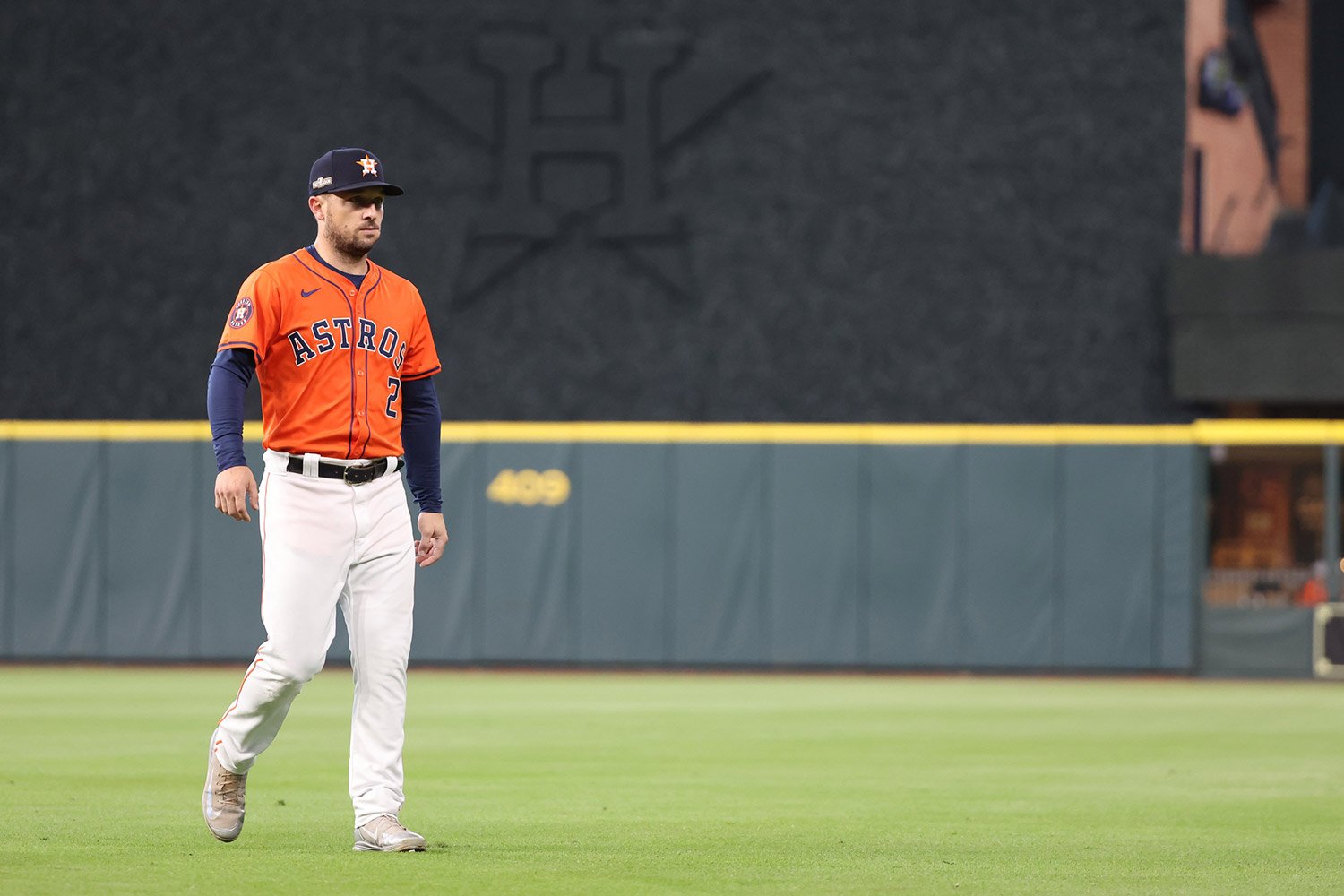 We've discussed this as a remote but fascinating possibility all winter. Now that it's mid-January, those vague possibilities are taking on more definite forms. Alex Bregman and the Chicago Cubs could end up turning to one another in a moment of need as the endgame of the offseason sets in, according to 670 The Score's Bruce Levine. The specific structure that Levine mentions is a three-year deal with opt-outs after each season, akin to the deals signed by Matt Chapman and Cody Bellinger last winter, and by Carlos Correa prior to the 2022 season. The Cubs aren't interested in a long-term Bregman commitment, Levine reported, but would be open to some version of this deal. They're just one of a handful of places where Bregman might land if he fully embraces the idea of such a contract, and there's still no guarantee that he will end up doing so, but you can start to see how this would work. Bregman could play second base very early in the season, with Nico Hoerner (perhaps) still recovering from his offseason forearm surgery. He and Matt Shaw would cover for Hoerner as needed, and the Cubs would also be relieved of their dependence on the risky proposition of handing the rookie Shaw a full-time gig right away. Bregman's skill set is well-rounded, and he'd fit gorgeously between Kyle Tucker and Michael Busch in the lineup. All that is easy to grasp. There are some complications, though. Doing this might require the team to move money from elsewhere on the roster, in order to make room for the expensive, high-ceiling pitching help they still need. Bregman is unlikely to sign for an AAV even as low as Bellinger's $26.7 million, so there would be wrinkles to smooth out even if this came to fruition. Nonetheless, it's an enticing option.
 -
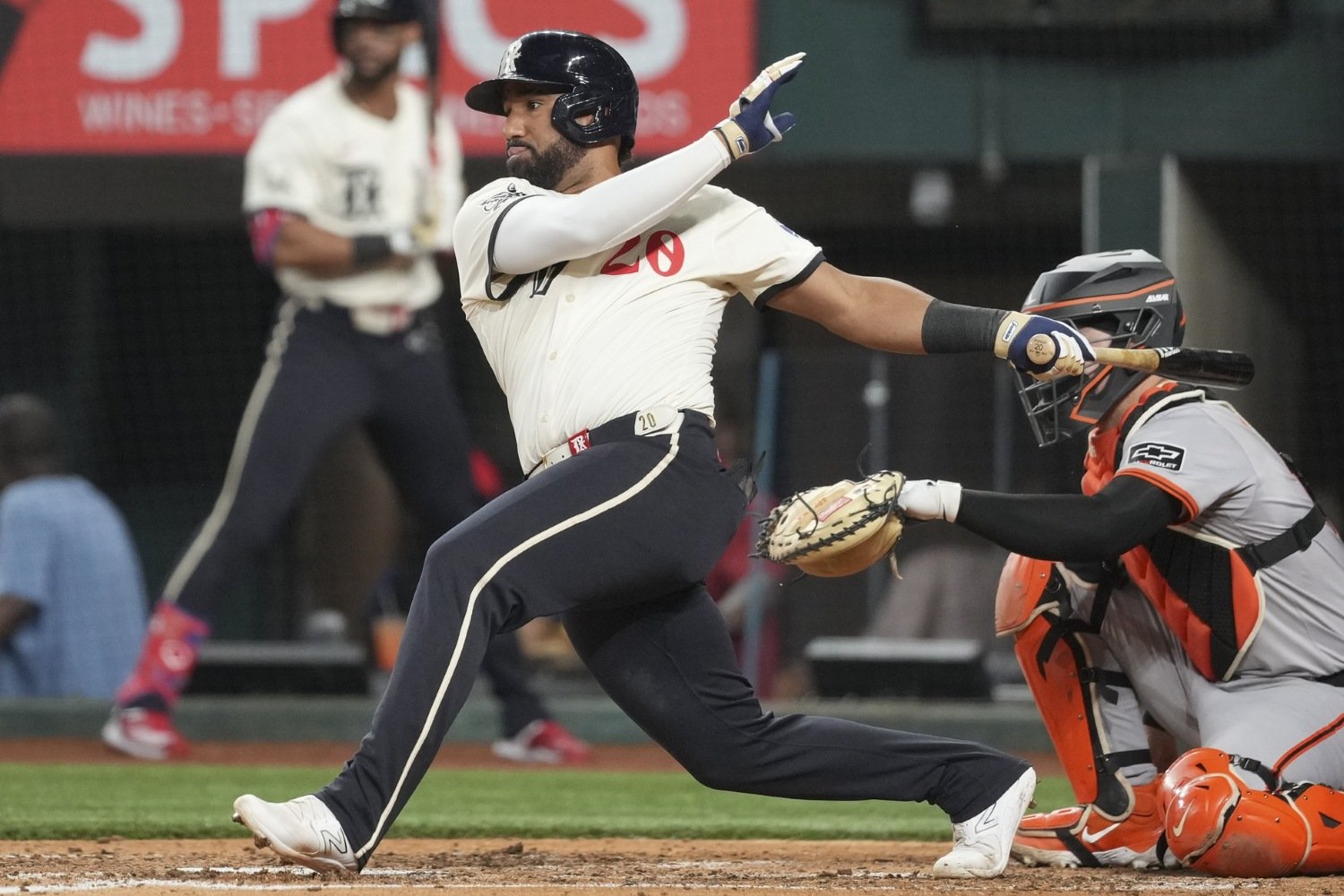 Two years ago, the Minnesota Twins caught a huge break. The then-backward Detroit Tigers non-tendered talented but frustrating utility man Willi Castro in November 2022, paving the way for Minnesota to swoop in and sign him to a minor-league deal. Castro, then 25, hit a messy .241/.284/.367 in 392 plate appearances for the 2022 Tigers, and that adjective isn't just a euphemism for 'bad'. Castro was obviously talented, with a plus arm, plus speed, average-plus defense at multiple positions, the ability to hit the ball over 111 miles per hour, and a feel for hitting it on a line. His approach, however, was a literal mess. He swung at everything, and it interfered with his talent so badly that the Tigers gave up on him. After signing him to a non-roster deal but squeezing him in quickly, the Twins immediately fixed that. They got him making much better swing decisions, and the results followed perfectly. For the last two seasons, Castro has been a high-volume, average-plus hitter, to go with his valuable legs and glovework. At first, Castro gave up some of his aggressiveness within the zone in order to avoid expanding it, but as you can see, he even reclaimed some of that in 2024. He's still chaotic, as a player, but he's no longer truly messy, and his numbers are downright pretty. One of the league's most versatile defenders, he's a perfect Cubs target, because he could be the injury stopgap for Nico Hoerner, the insurance policy for Matt Shaw, and a capable backup and rest provider for Pete Crow-Armstrong, all at once. As the offseason has progressed, an increasing number of denizens of the Cubs-loving internet have begun pining for Castro. Alas, the window to get him might have already closed. Initially reported to be fairly desperate to cut salary, the Twins now seem to be in a more comfortable situation. They could trade Castro, but it doesn't seem like they truly have to. Getting him would probably be annoyingly (and therefore prohibitively) expensive, un;ess he were enfolded in a larger trade that also included one of Pablo López, Griffin Jax, or Jhoan Durán—and at that point, we're really stretching toward fantasyland. Besides, Castro becomes a free agent this fall. That's no dealbreaker; it's fine if he merely rounds out the positional side of the roster for one season and then hits the market. However, it would be nice to find a player who could be acquired more cheaply than Castro—not to save money, though it would do that, too, but to avoid forking over the young talent Castro would cost—and who would be around longer than he will be. He's such a good fit, though. It would be hard to find someone else who checked the same boxes, right? Well, yes. But we found one anyway. Ezequiel Durán is almost exactly the same age Castro was two years ago. Castro turned 26 in April after signing with the Twins; Durán will turn 26 in May. He's coming off a season in which he hit a messy .246/.288/.321, but he, too, has shown the capacity to hit the ball very hard; is a plus runner and defender; and can play all over the diamond. Like Castro in 2022, his problem so far is a consistent track record of swinging way, way too much. That chase rate on pitches outside the zone, hovering around 40%, is one of the highest in the league, and sometimes, hitters simply can't fix that. In this case, though, it's hard to ignore the fact that Castro was having the same problem at the same stage of his career—and then almost instantly fixed it. The Rangers were not as foolhardy as the Tigers this fall; they didn't cut bait on Durán. Before you heap them with praise, though, know that it's really only because he's yet to hit arbitration eligibility. Durán has four years of team control remaining, and he can still be optioned to the minor leagues for one more year. The Rangers really don't need him, though. They have Marcus Semien and Corey Seager on the middle infield; Josh Jung and Josh Smith at third base, with Smith an exceptionally versatile utility option, to boot; and a full complement of dynamic starting outfielders, with the athletic Leody Taveras available to back up all three. They even have extra depth on the 40-man roster at the spots where Durán is most valuable. He's not in line for much playing time in Texas. Therefore, the Cubs should try to pull their own swoop, offering the Rangers a prospect or two or one of their bevy of depth arms to realign some things and snare Durán. Whether he'll ultimately turn out to be as adaptable and savvy as Castro or not is tough to forecast, but Durán's tools are extremely comparable, and he's a controllable player with youth and the suite of skills the Cubs need most. When you identify a player you'd like a team to trade for, it's often advisable to pivot away from them and find the guy most likely to become the next version of him, instead. This just might be one of those times.
 -
Much in need of a utility man with athleticism and upside, the Cubs have been linked with the cash-strapped Twins and their out-of-nowhere All-Star. For multiple reasons, though, they should turn their attention south instead. Image courtesy of © Jim Cowsert-Imagn Images Two years ago, the Minnesota Twins caught a huge break. The then-backward Detroit Tigers non-tendered talented but frustrating utility man Willi Castro in November 2022, paving the way for Minnesota to swoop in and sign him to a minor-league deal. Castro, then 25, hit a messy .241/.284/.367 in 392 plate appearances for the 2022 Tigers, and that adjective isn't just a euphemism for 'bad'. Castro was obviously talented, with a plus arm, plus speed, average-plus defense at multiple positions, the ability to hit the ball over 111 miles per hour, and a feel for hitting it on a line. His approach, however, was a literal mess. He swung at everything, and it interfered with his talent so badly that the Tigers gave up on him. After signing him to a non-roster deal but squeezing him in quickly, the Twins immediately fixed that. They got him making much better swing decisions, and the results followed perfectly. For the last two seasons, Castro has been a high-volume, average-plus hitter, to go with his valuable legs and glovework. At first, Castro gave up some of his aggressiveness within the zone in order to avoid expanding it, but as you can see, he even reclaimed some of that in 2024. He's still chaotic, as a player, but he's no longer truly messy, and his numbers are downright pretty. One of the league's most versatile defenders, he's a perfect Cubs target, because he could be the injury stopgap for Nico Hoerner, the insurance policy for Matt Shaw, and a capable backup and rest provider for Pete Crow-Armstrong, all at once. As the offseason has progressed, an increasing number of denizens of the Cubs-loving internet have begun pining for Castro. Alas, the window to get him might have already closed. Initially reported to be fairly desperate to cut salary, the Twins now seem to be in a more comfortable situation. They could trade Castro, but it doesn't seem like they truly have to. Getting him would probably be annoyingly (and therefore prohibitively) expensive, un;ess he were enfolded in a larger trade that also included one of Pablo López, Griffin Jax, or Jhoan Durán—and at that point, we're really stretching toward fantasyland. Besides, Castro becomes a free agent this fall. That's no dealbreaker; it's fine if he merely rounds out the positional side of the roster for one season and then hits the market. However, it would be nice to find a player who could be acquired more cheaply than Castro—not to save money, though it would do that, too, but to avoid forking over the young talent Castro would cost—and who would be around longer than he will be. He's such a good fit, though. It would be hard to find someone else who checked the same boxes, right? Well, yes. But we found one anyway. Ezequiel Durán is almost exactly the same age Castro was two years ago. Castro turned 26 in April after signing with the Twins; Durán will turn 26 in May. He's coming off a season in which he hit a messy .246/.288/.321, but he, too, has shown the capacity to hit the ball very hard; is a plus runner and defender; and can play all over the diamond. Like Castro in 2022, his problem so far is a consistent track record of swinging way, way too much. That chase rate on pitches outside the zone, hovering around 40%, is one of the highest in the league, and sometimes, hitters simply can't fix that. In this case, though, it's hard to ignore the fact that Castro was having the same problem at the same stage of his career—and then almost instantly fixed it. The Rangers were not as foolhardy as the Tigers this fall; they didn't cut bait on Durán. Before you heap them with praise, though, know that it's really only because he's yet to hit arbitration eligibility. Durán has four years of team control remaining, and he can still be optioned to the minor leagues for one more year. The Rangers really don't need him, though. They have Marcus Semien and Corey Seager on the middle infield; Josh Jung and Josh Smith at third base, with Smith an exceptionally versatile utility option, to boot; and a full complement of dynamic starting outfielders, with the athletic Leody Taveras available to back up all three. They even have extra depth on the 40-man roster at the spots where Durán is most valuable. He's not in line for much playing time in Texas. Therefore, the Cubs should try to pull their own swoop, offering the Rangers a prospect or two or one of their bevy of depth arms to realign some things and snare Durán. Whether he'll ultimately turn out to be as adaptable and savvy as Castro or not is tough to forecast, but Durán's tools are extremely comparable, and he's a controllable player with youth and the suite of skills the Cubs need most. When you identify a player you'd like a team to trade for, it's often advisable to pivot away from them and find the guy most likely to become the next version of him, instead. This just might be one of those times. View full article
-
Do you have a strong opinion on how his pitches should be classified? I keep circling back to that, and I suspect not even he is sure right now, because the shapes and speeds have changed so much since he entered the org. There's even a fairly legit case for classifying his fastball as a cutter, which I guess would push the harder breaker to slider and the other to curve..? It's weird.
-
PECOTA (111 DRA-, -0.1 WARP, 18.6% K, 34% GB) hates him, too, doesn't think he'll miss enough bats and that he'll give up too many fly balls. I think there's a case to be made that his pitch mix changes altered that even within this season, in a way the projections won't catch because of the noise created by older results info? But yeah. There's a chance I'm on an island here, or that me and Jason are, at least. Haha.
-
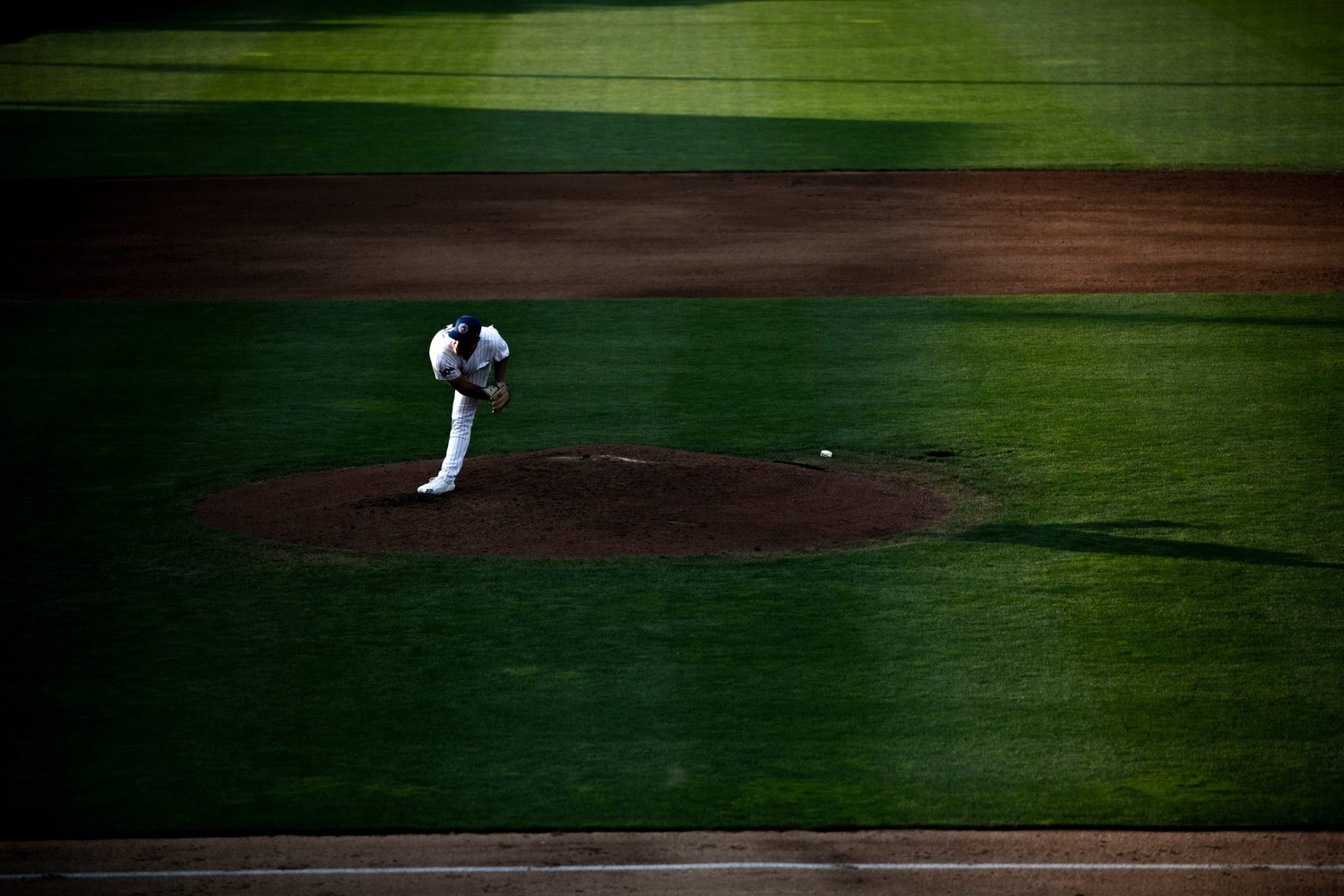 After being a fifth-round pick in 2022 out of Texas Tech, Brandon Birdsell didn't officially make his debut in the Chicago Cubs farm system until 2023. Since doing so, though, he's done nothing but affirm the team's faith in him, and as they've counseled him on some ways to rebuild and adjust his repertoire, he's added polish. Birdsell has made 50 professional starts and pitched 243 innings, with a 3.41 ERA and solid strikeout (22.8%) and walk (6.2%) rates. He made 18 starts for High-A South Bend, then 20 for Double-A Tennessee (spanning 2023-24), and he took the ball 12 times for Triple-A Iowa to finish 2024. Birdsell's best stats came in the highest league, despite the hitter-friendly strike zone and ballparks of the International League. He's showed flashes of brilliance, touching 97 miles per hour seven times and comfortably sitting 95 even as he set a new personal high for innings pitched in a season. The fastball has an unusual shape, one the Cubs have partially effected: Rather than focused on riding, rising action, it's more of a cut-ride pitch, boring in on left-handed batters more than they expect such a hard pitch to do. It's a right-handed answer to Justin Steele's similar (but slower) heater. Birdsell also has a cutterish slider and a hard curveball, with the former offering sitting in the upper 80s with good vertical separation from the fastball and the latter down in the low 80s, with even more depth. He even sprinkled in a changeup with good arm-side run while with Iowa, though he doesn't command that pitch especially well. Think of the above graphic as being from the batter's perspective. Birdsell pitches from a fairly vanilla three-quarters slot, but uses a modestly deceptive short-arm delivery, so that fastball can be remarkably tough to distinguish from the slider and curve (shown above as a cutter and slider; I disagree with Brooks Baseball about their classifications in this case). Birdsell isn't yet especially consistent with his vertical release point, but he doesn't give away any of his offerings by changing his arm action or release point noticeably for one of them. I'm not here to tell you that Birdsell will run a 2.50 ERA and strike out 10 batters per game, or anything. For one thing, I'm not yet sold on the big-league utility of the changeup, and without that, he might need another pitch or a change in the relationship between speed and movement on that hard slider/cutter. A bit of a sweeper would be a good way to attack righties, but lefties could vex him if he doesn't corral the change, unless he can locate the heater to all quadrants and maintain enough velocity not to get hit hard when he uses the outer half with that pitch to set up the bigger breaking ball. However, I think Birdsell has upside few have properly grasped, and is very close to realizing it. He could yet be trade bait this winter, but assuming he's still around, I wouldn't be at all surprised if he got the call to the Cubs before fellow 2022 Draft prize Cade Horton. Birdsell will turn 25 in March. He's built up naturally and nicely, in terms of workload, and he's already spent almost half a season in Triple A. I think he can be a mid-rotation starter almost right away—certainly by the second half of 2025, should injuries or poor performance force him to be called upon. Birdsell's viability should give the Cubs extra confidence about trading any of Javier Assad, Jordan Wicks, Ben Brown, or Horton, if the right trade option is out there. Other teams are unlikely to value Birdsell the same way the Cubs (presumably) do, since they've got him throwing a set of pitch shapes that they love and several other teams hate. At least 10 other pitchers at various levels of the Cubs organization get more attention, but I think Birdsell could be the surprise impact guy for the coming season.
 -
When we talk about what shapes the 2025 Cubs' starting rotation might take, there's one player we talk about far too infrequently. He should be higher on prospect lists already, and his stock could rise sharply this spring. Image courtesy of © Mattie Neretin / USA TODAY NETWORK After being a fifth-round pick in 2022 out of Texas Tech, Brandon Birdsell didn't officially make his debut in the Chicago Cubs farm system until 2023. Since doing so, though, he's done nothing but affirm the team's faith in him, and as they've counseled him on some ways to rebuild and adjust his repertoire, he's added polish. Birdsell has made 50 professional starts and pitched 243 innings, with a 3.41 ERA and solid strikeout (22.8%) and walk (6.2%) rates. He made 18 starts for High-A South Bend, then 20 for Double-A Tennessee (spanning 2023-24), and he took the ball 12 times for Triple-A Iowa to finish 2024. Birdsell's best stats came in the highest league, despite the hitter-friendly strike zone and ballparks of the International League. He's showed flashes of brilliance, touching 97 miles per hour seven times and comfortably sitting 95 even as he set a new personal high for innings pitched in a season. The fastball has an unusual shape, one the Cubs have partially effected: Rather than focused on riding, rising action, it's more of a cut-ride pitch, boring in on left-handed batters more than they expect such a hard pitch to do. It's a right-handed answer to Justin Steele's similar (but slower) heater. Birdsell also has a cutterish slider and a hard curveball, with the former offering sitting in the upper 80s with good vertical separation from the fastball and the latter down in the low 80s, with even more depth. He even sprinkled in a changeup with good arm-side run while with Iowa, though he doesn't command that pitch especially well. Think of the above graphic as being from the batter's perspective. Birdsell pitches from a fairly vanilla three-quarters slot, but uses a modestly deceptive short-arm delivery, so that fastball can be remarkably tough to distinguish from the slider and curve (shown above as a cutter and slider; I disagree with Brooks Baseball about their classifications in this case). Birdsell isn't yet especially consistent with his vertical release point, but he doesn't give away any of his offerings by changing his arm action or release point noticeably for one of them. I'm not here to tell you that Birdsell will run a 2.50 ERA and strike out 10 batters per game, or anything. For one thing, I'm not yet sold on the big-league utility of the changeup, and without that, he might need another pitch or a change in the relationship between speed and movement on that hard slider/cutter. A bit of a sweeper would be a good way to attack righties, but lefties could vex him if he doesn't corral the change, unless he can locate the heater to all quadrants and maintain enough velocity not to get hit hard when he uses the outer half with that pitch to set up the bigger breaking ball. However, I think Birdsell has upside few have properly grasped, and is very close to realizing it. He could yet be trade bait this winter, but assuming he's still around, I wouldn't be at all surprised if he got the call to the Cubs before fellow 2022 Draft prize Cade Horton. Birdsell will turn 25 in March. He's built up naturally and nicely, in terms of workload, and he's already spent almost half a season in Triple A. I think he can be a mid-rotation starter almost right away—certainly by the second half of 2025, should injuries or poor performance force him to be called upon. Birdsell's viability should give the Cubs extra confidence about trading any of Javier Assad, Jordan Wicks, Ben Brown, or Horton, if the right trade option is out there. Other teams are unlikely to value Birdsell the same way the Cubs (presumably) do, since they've got him throwing a set of pitch shapes that they love and several other teams hate. At least 10 other pitchers at various levels of the Cubs organization get more attention, but I think Birdsell could be the surprise impact guy for the coming season. View full article
-
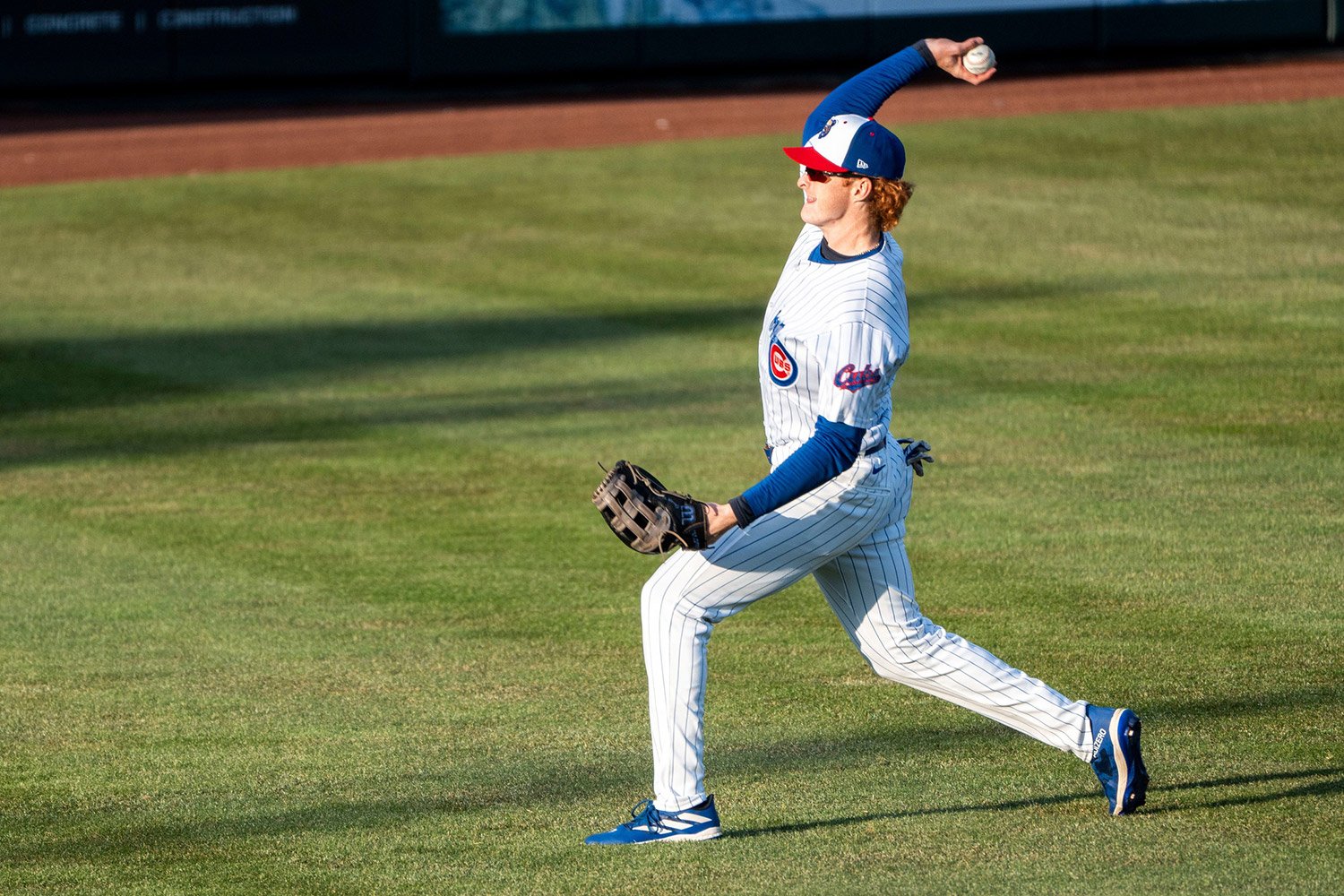 Tuesday brought the release of Baseball Prospectus's 2025 Top 101 Prospects, an annual source of intrigue for those who love tracking the progress of the farm system. This year's will both excite and frustrate some fans. The two highest-ranking prospects with Cubs ties here are Zyhir Hope (No. 8 ) and Cam Smith (No. 20), whom the team traded for Michael Busch and Kyle Tucker, respectively. Then again, BP is going to end up much higher on Hope (and a bit higher on Smith) than anyone else, and the good news begins thereafter. Matt Shaw comes in at No. 25, making him the highest-ranking prospect on this list to be penciled into the Cubs lineup for a coming season in recent memory. It's a good reminder that he's a legitimately excellent prospect and a solid choice for third base. After that, three Cubs cluster into the back quarter of the list: Moises Ballesteros, No. 73 Owen Caissie, No. 77 Cade Horton, No. 85 These guys are lower here than on some other lists you've likely seen recently, but the rankings feel fair. At the same time, they're obviously not gospel. FanGraphs's list of the top Cubs prospects lists Kevin Alcánatara second, behind only Shaw, which is a good reminder of the volatility and room for debate around all of these players. The Cubs don't have an elite farm system, but they sure do have a collection of intriguing players in the uppermost levels of the minors.
 -
Tuesday brought the release of Baseball Prospectus's 2025 Top 101 Prospects, an annual source of intrigue for those who love tracking the progress of the farm system. This year's will both excite and frustrate some fans. The two highest-ranking prospects with Cubs ties here are Zyhir Hope (No. 8 ) and Cam Smith (No. 20), whom the team traded for Michael Busch and Kyle Tucker, respectively. Then again, BP is going to end up much higher on Hope (and a bit higher on Smith) than anyone else, and the good news begins thereafter. Matt Shaw comes in at No. 25, making him the highest-ranking prospect on this list to be penciled into the Cubs lineup for a coming season in recent memory. It's a good reminder that he's a legitimately excellent prospect and a solid choice for third base. After that, three Cubs cluster into the back quarter of the list: Moises Ballesteros, No. 73 Owen Caissie, No. 77 Cade Horton, No. 85 These guys are lower here than on some other lists you've likely seen recently, but the rankings feel fair. At the same time, they're obviously not gospel. FanGraphs's list of the top Cubs prospects lists Kevin Alcánatara second, behind only Shaw, which is a good reminder of the volatility and room for debate around all of these players. The Cubs don't have an elite farm system, but they sure do have a collection of intriguing players in the uppermost levels of the minors. View full rumor
-
The crew here at North Side Baseball is always trying to serve you content, even beyond our written work. Here's a roundup of three recent podcasts on the state of the Cubs at this critical juncture of the winter. Image courtesy of Matt Trueblood via Spotify for Podcasters Firstly, late last week, three-fourths of the crew of the This is Not a Rebuild Cubs podcast convened to discuss the team's oddly eventful week, albeit at a frustratingly unclear moment in the progress of the hot stove season. It began as a rumination on the possibilities for how they can still upgrade the roster, and why the offseason in MLB works so differently from that of the NBA and NFL. After the random Cub of the week, though, it veered into a new direction: a lament about this organization's maddening failure to establish long-term competitiveness. When will it change?! On Sunday night, I also recorded an appearance with Paul "Crawly" Dzien for 670 The Score's "Fly the W" podcast. Crawly and I talked about the nuances of the team's payroll situation, why they haven't yet made that second big move this winter, and why I remain firm in my expectation that they will. The pull quote, though, is one of the last things I said: "If the team doesn't make another big move before Opening Day, then, yes, they have failed you, as Cubs fans." Finally, check out the latest episode of Bricks Behind the Ivy, from our very own @CandidCubs. This week, he brought on Brewer Fanatic writer Jake McKibbin, to study and dissect the ways the Cubs currently match up with the two-time defending champions from Milwaukee. It's a jam-packed episode. It's the deepest part of the winter, and we can sometimes get lost in the sauce when we sit and mull and type and read, all with our eyes alone. It's good to get some human voices involved in the conversation at this complex stage of things; digest one or two of these and keep yourself grounded and warm while you await that next big Cubs move. View full article
-
3 Podcast Episodes to Catch You Up on All Things Chicago Cubs Offseason
Matthew Trueblood posted an article in Cubs
 Firstly, late last week, three-fourths of the crew of the This is Not a Rebuild Cubs podcast convened to discuss the team's oddly eventful week, albeit at a frustratingly unclear moment in the progress of the hot stove season. It began as a rumination on the possibilities for how they can still upgrade the roster, and why the offseason in MLB works so differently from that of the NBA and NFL. After the random Cub of the week, though, it veered into a new direction: a lament about this organization's maddening failure to establish long-term competitiveness. When will it change?! On Sunday night, I also recorded an appearance with Paul "Crawly" Dzien for 670 The Score's "Fly the W" podcast. Crawly and I talked about the nuances of the team's payroll situation, why they haven't yet made that second big move this winter, and why I remain firm in my expectation that they will. The pull quote, though, is one of the last things I said: "If the team doesn't make another big move before Opening Day, then, yes, they have failed you, as Cubs fans." Finally, check out the latest episode of Bricks Behind the Ivy, from our very own @CandidCubs. This week, he brought on Brewer Fanatic writer Jake McKibbin, to study and dissect the ways the Cubs currently match up with the two-time defending champions from Milwaukee. It's a jam-packed episode. It's the deepest part of the winter, and we can sometimes get lost in the sauce when we sit and mull and type and read, all with our eyes alone. It's good to get some human voices involved in the conversation at this complex stage of things; digest one or two of these and keep yourself grounded and warm while you await that next big Cubs move.
- 2 comments
-
- 1
-

-
- this is not a rebuild
- fly the w
- (and 2 more)
-
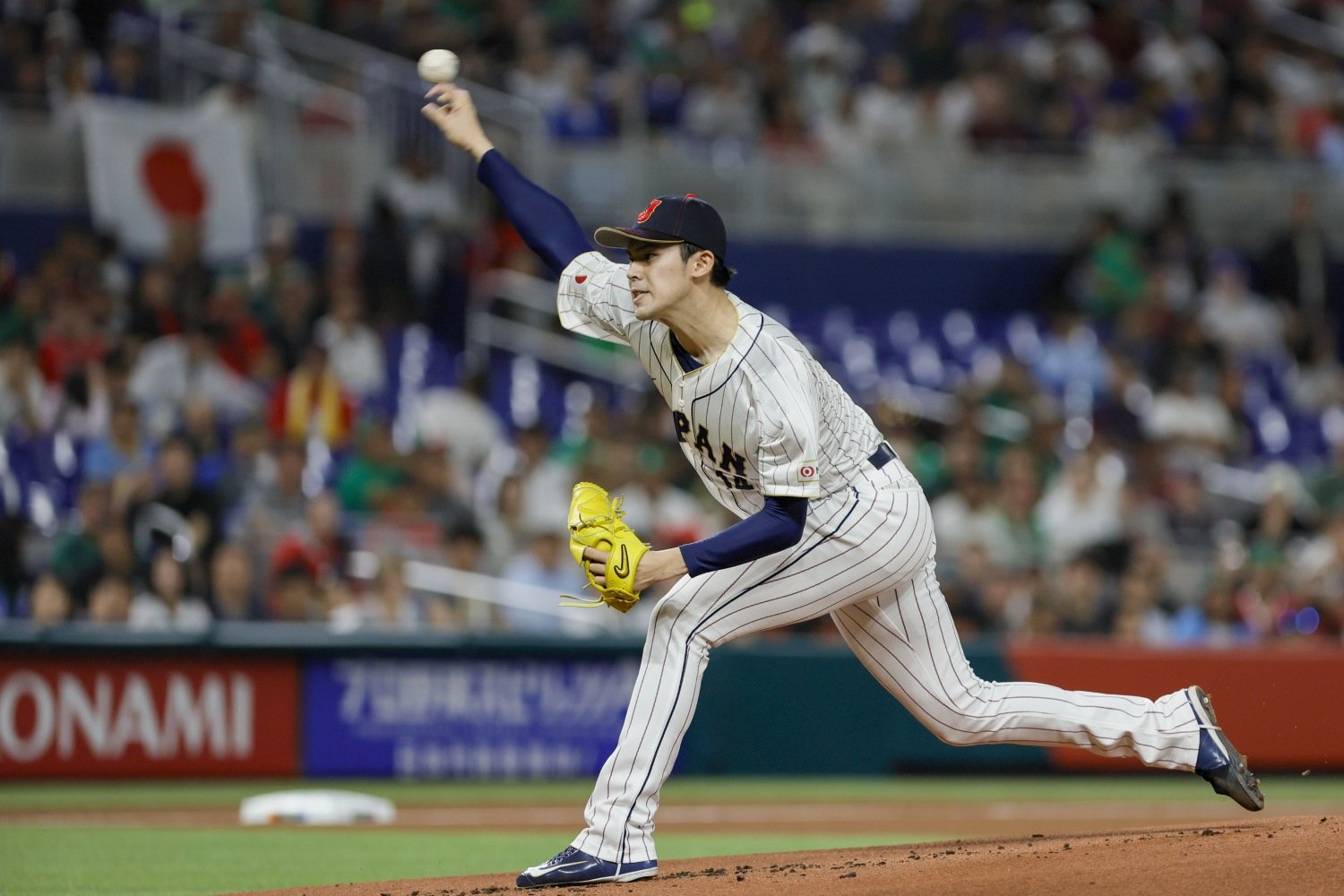 All along, we've known that it was a longshot that the Cubs would reel in Roki Sasaki. He's as hotly in demand as any free agent in baseball history, with his price artificially suppressed in a way that amplifies his value to whichever team signs him in a way disproportionate even to his immense talent. The Cubs hung around longer (although only by a few hours) than the Giants, Yankees, Mets, or Rangers, all of whom also found out Monday that they would not be signing Sasaki. It makes no real difference, though. Ultimately, they fell well short of successfully recruiting him. Now, the team's attention can turn fully to where some of it already had been. There are several remaining ways in which they can upgrade their pitching staff as much as Sasaki would have upgraded it, in the short term, but the costs of those options are all much higher. The only good news is that, to whatever extent they were reserving some of their energy in pursuit of those deals to chase Sasaki, they can now pivot more actively. That two of the three remaining contenders for Sasaki are in the National League underscores the pressure on the Cubs, here. They already trail the Dodgers, Padres, Phillies, Mets, and the team from suburban Atlanta in any credible projection for 2025, and one of those clubs is likely to land Sasaki as a booster to their roster. Then there are the Giants, Diamondbacks, upstart Nationals, and intradivisional threats from the Brewers, Reds, and maybe even Pirates. To separate themselves at all from that thicket and to push themselves into serious contention with the Big Five of the NL, the Cubs have to find those last couple of major improvements. Breaking them down in depth is tomorrow's work, though. For now, we have to settle in with the idea that another marquee target has eluded the Cubs, and that they remain a serious but flawed contender, with the number of ways they can achieve the needed step up shrinking daily. I've been more circumspect in my projections of how Sasaki would change things for 2025 than just about anyone else, and I stand by that, but it's clear that the organization wanted him badly, and they came up far short. Now, they can pursue players (Jack Flaherty? Tanner Scott? Kirby Yates? Alex Bregman? Ha-Seong Kim? Dylan Cease? Ryan Feltner? Ryan McMahon? Taylor Ward? Kyle Finnegan?) who might actually be better in 2025 than Sasaki, but the stakes of their efforts to acquire any of them have ratcheted up significantly.
 -
The news trickled out throughout Monday afternoon, and despite some confusion that lingered into the evening, the hammer eventually fell. The Cubs lost out to the Los Angeles Dodgers, San Diego Padres, and Toronto Blue Jays for the burgeoning ace righty. Image courtesy of © Sam Navarro-Imagn Images All along, we've known that it was a longshot that the Cubs would reel in Roki Sasaki. He's as hotly in demand as any free agent in baseball history, with his price artificially suppressed in a way that amplifies his value to whichever team signs him in a way disproportionate even to his immense talent. The Cubs hung around longer (although only by a few hours) than the Giants, Yankees, Mets, or Rangers, all of whom also found out Monday that they would not be signing Sasaki. It makes no real difference, though. Ultimately, they fell well short of successfully recruiting him. Now, the team's attention can turn fully to where some of it already had been. There are several remaining ways in which they can upgrade their pitching staff as much as Sasaki would have upgraded it, in the short term, but the costs of those options are all much higher. The only good news is that, to whatever extent they were reserving some of their energy in pursuit of those deals to chase Sasaki, they can now pivot more actively. That two of the three remaining contenders for Sasaki are in the National League underscores the pressure on the Cubs, here. They already trail the Dodgers, Padres, Phillies, Mets, and the team from suburban Atlanta in any credible projection for 2025, and one of those clubs is likely to land Sasaki as a booster to their roster. Then there are the Giants, Diamondbacks, upstart Nationals, and intradivisional threats from the Brewers, Reds, and maybe even Pirates. To separate themselves at all from that thicket and to push themselves into serious contention with the Big Five of the NL, the Cubs have to find those last couple of major improvements. Breaking them down in depth is tomorrow's work, though. For now, we have to settle in with the idea that another marquee target has eluded the Cubs, and that they remain a serious but flawed contender, with the number of ways they can achieve the needed step up shrinking daily. I've been more circumspect in my projections of how Sasaki would change things for 2025 than just about anyone else, and I stand by that, but it's clear that the organization wanted him badly, and they came up far short. Now, they can pursue players (Jack Flaherty? Tanner Scott? Kirby Yates? Alex Bregman? Ha-Seong Kim? Dylan Cease? Ryan Feltner? Ryan McMahon? Taylor Ward? Kyle Finnegan?) who might actually be better in 2025 than Sasaki, but the stakes of their efforts to acquire any of them have ratcheted up significantly. View full article
-
Other people can and do treat pitching that way, but I think you've read enough of my work to know I think they're wrong to do so. Volume matters, to me, and it matters to the Cubs—although I think the Cubs would *gleefully* bring him along slowly in this case, because of the special circumstances that are his stuff and his availability at this ludicrously low price. Not EVERYONE thinks of pitching as purely a per-pound exercise, although (for instance) the Dodgers certainly do, which makes him that much more appealing for them. It's also a much more viable plan if you're willing to spend $320-350 million per year, instead of $220-250 million per year. The Dodgers paid Glasnow and Yamamoto [how much?] for [how many?] innings in 2024, but it worked for them because they had enough other very expensive talent to make up for the shortfalls. You and I and everyone we know thinks the Rickettses should spend their $320-350 million a year, and if they did, I would (begrudgingly) talk a little less about getting meaningful numbers of innings from starting pitchers, but since you and I and everyone we know knows they won't do that, I insist that it does matter whether a dude can post, whether he can work six innings even every six days, etc.
-
Not saying he's not! He is, in fact, a generational free agent—but some of that does come from his market limitations. I know he's young, but he's been a pro for several years, and he's never topped 20 starts or reached 130 innings in a season. That's noteworthy. You can tell yourself a story about the odometer being low, but it's not due to careful handling; it's because he keeps getting hurt. That does matter, a great deal, even if it doesn't remotely diminish the fact that he should be sought-after by everyone whose advances he'll listen to.
-
The depth of the Cubs' rotation and bullpen have each improved substantially this offseason. Now, the question is whether it will be enough—and what shape their capstone might take. Image courtesy of © Jeff Hanisch-Imagn Images The Chicago Cubs made their signing of Colin Rea official on Monday, adding him to their already-full 40-man roster and designating righthander Michael Arias for assignment to accommodate him. The news of Rea's agreement to join the team's pitching mix broke on Friday, and we knew there would need to be a concomitant move. Arias makes plenty of sense, as he becomes the annual Guy The Cubs Added As An Upside Play When They Were Rule 5-Eligible, But Who Didn't Work Out At All. (We'll try to come up with a pithier title.) Arias came after Ryan Jensen, in a parade of hurlers on whose upside the team sells itself each November, but who never even gain a big-league foothold with the team. He was one of several candidates to get this treatment when the Rea deal was made official, along with players you forgot were on the roster at all, like Gavin Hollowell and Ethan Roberts; veterans floating through for what might just be offseason stays before returning to the waiver wire, Rob Zastryzny and Matt Festa; and projects on whom the team will have to cut bait fairly soon, Caleb Kilian and Keegan Thompson. There remains a slurry of mostly unhelpful (if, in various ways, still viable) pitching talent at the edges of the roster; cutting Arias neither hurts nor brings new clarity. Folding Rea into the crowded rotation picture and plucking one fungible arm out of the bullpen competition is a worthy move, though, and the latest in a series of moves this winter that (while feeling somewhat underwhelming, without one person who gives the rotation or the relief corps a new ace) clearly improve the team's pitching staff. It's probably helpful to think of it this way: Matthew Boyd has replaced Kyle Hendricks Colin Rea has replaced Drew Smyly Caleb Thielbar has replaced Mark Leiter Jr. Eli Morgan has replaced Héctor Neris Now, that doesn't quite summarize the real changes, because Morgan isn't penciled into as high-leverage a role as the one for which the Cubs signed Neris last winter, and Rea is a more viable starting option than was Smyly. Nor does it account for the loss of Jorge López, who gave the team high-quality relief work over the final two-thirds of 2024 but is now a member of the Washington Nationals. You can head off in the wrong direction, too, by assessing those upgrades without considering the fact that the team will head into the season expecting both Porter Hodge and Nate Pearson to contribute significantly to the bullpen, or that they have high hopes for Ben Brown, Cade Horton, and Brandon Birdsell. On the other hand, some of that has to overcome the regression we might fairly expect from Jameson Taillon and Shota Imanaga, after strong seasons fueled in part by some good luck and a friendly combination of weather conditions on most days at Wrigley Field, and the bullpen's improvements have to offset the loss of injured ex-closer Adbert Alzolay. If the rotation to open the season consists of Justin Steele, Imanaga, Taillon, Boyd, and Rea, is that group clearly better than last year's, which had three of the same five but Hendricks and Javier Assad or Jordan Wicks working in place of Boyd and Rea? Yes, it is, but not by very much. In fact, the bulk of this year's team's advantage over last year's would be in the form of having Assad, Wicks, Brown, Horton, and Birdsell waiting in the wings, a better and more reliable second line than they had entering 2024. If the Opening Day bullpen includes Hodge, Pearson, Tyson Miller, Thielbar, Morgan, Luke Little, Julian Merryweather, and Jack Neely, are they better than they were for the majority of 2024? Yes, but again, the superiority lies mostly in depth—they'd have the upside of that group, plus some of the spillover from the overloaded rotation competition and the optionable, versatile arms of Daniel Palencia and Cody Poteet. They're better, but not because of the first guys you name. That's an uncomfortable situation, especially since they'd likely end up losing a few of their solid depth charges (many of those listed already, plus non-roster invitees Ben Heller, Brooks Kriske, and Phil Bickford) in a roster crunch at the end of spring training. I keep coming back to the same thing, which I know many fans aren't ready or pleased to hear, because they are (deservedly) mistrustful of the Ricketts family's ownership. It's this: the Cubs' roster is crying out for a trade that consolidates multiple roster spots into one, exchanging depth for upside in the process. I have already written about this possibility, but look at the Padres, who need to clear a bunch of money from their payroll and only have 34 players on their 40-man roster right now. A trade of as many as four current 40-man roster guys—Owen Caissie, Assad, Wicks, and Rob Zastryzny, perhaps?—for Dylan Cease and Robert Suarez makes a world of sense. It would put a lot of chips into the center of the table on the single hand that is the 2025 season, but it would align the team's talent better, spending some of the money we know they still have to spend and giving both the rotation and the bullpen more certainty at the top of the depth chart. That's just one of several possible shapes a trade could take, but a trade does seem to be on the cards. At this moment, the Cubs' pitching staff is better than it was in 2024. Craig Counsell is more likely to have good options at key moments throughout games and throughout the season, and they're likely to prevent runs better (although, if the winds change at Wrigley, they could still allow more raw runs than they did in 2024). That said, this kind of improvement is fragile. It puts a major onus on the manager and comes with undue risk, because a string of injuries could bring the whole house of cards down. They can achieve a more stable, more obvious, and more exciting form of pitching upgrade. It's just about pulling the right levers, in the endgame of the offseason. View full article
-
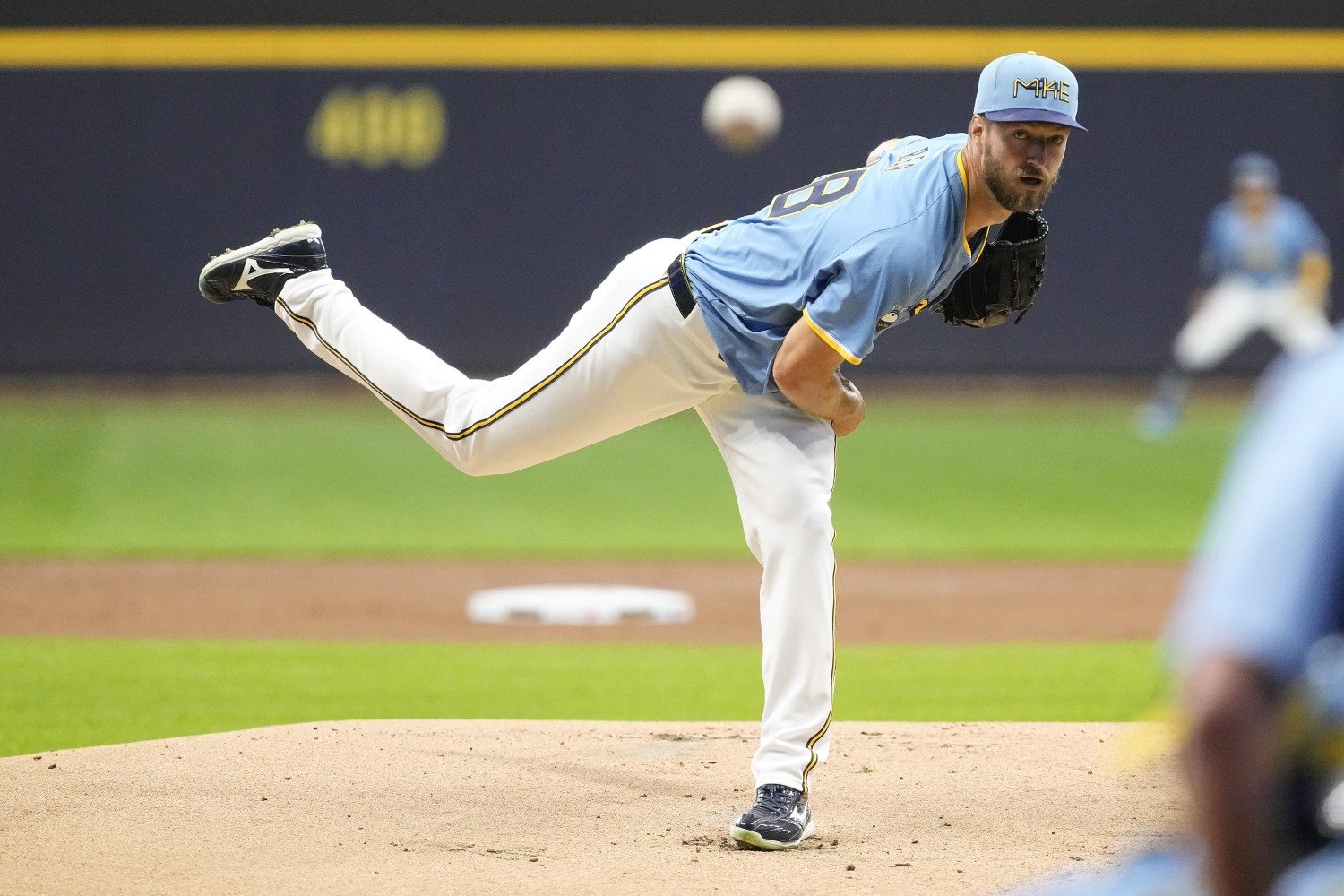 The Chicago Cubs made their signing of Colin Rea official on Monday, adding him to their already-full 40-man roster and designating righthander Michael Arias for assignment to accommodate him. The news of Rea's agreement to join the team's pitching mix broke on Friday, and we knew there would need to be a concomitant move. Arias makes plenty of sense, as he becomes the annual Guy The Cubs Added As An Upside Play When They Were Rule 5-Eligible, But Who Didn't Work Out At All. (We'll try to come up with a pithier title.) Arias came after Ryan Jensen, in a parade of hurlers on whose upside the team sells itself each November, but who never even gain a big-league foothold with the team. He was one of several candidates to get this treatment when the Rea deal was made official, along with players you forgot were on the roster at all, like Gavin Hollowell and Ethan Roberts; veterans floating through for what might just be offseason stays before returning to the waiver wire, Rob Zastryzny and Matt Festa; and projects on whom the team will have to cut bait fairly soon, Caleb Kilian and Keegan Thompson. There remains a slurry of mostly unhelpful (if, in various ways, still viable) pitching talent at the edges of the roster; cutting Arias neither hurts nor brings new clarity. Folding Rea into the crowded rotation picture and plucking one fungible arm out of the bullpen competition is a worthy move, though, and the latest in a series of moves this winter that (while feeling somewhat underwhelming, without one person who gives the rotation or the relief corps a new ace) clearly improve the team's pitching staff. It's probably helpful to think of it this way: Matthew Boyd has replaced Kyle Hendricks Colin Rea has replaced Drew Smyly Caleb Thielbar has replaced Mark Leiter Jr. Eli Morgan has replaced Héctor Neris Now, that doesn't quite summarize the real changes, because Morgan isn't penciled into as high-leverage a role as the one for which the Cubs signed Neris last winter, and Rea is a more viable starting option than was Smyly. Nor does it account for the loss of Jorge López, who gave the team high-quality relief work over the final two-thirds of 2024 but is now a member of the Washington Nationals. You can head off in the wrong direction, too, by assessing those upgrades without considering the fact that the team will head into the season expecting both Porter Hodge and Nate Pearson to contribute significantly to the bullpen, or that they have high hopes for Ben Brown, Cade Horton, and Brandon Birdsell. On the other hand, some of that has to overcome the regression we might fairly expect from Jameson Taillon and Shota Imanaga, after strong seasons fueled in part by some good luck and a friendly combination of weather conditions on most days at Wrigley Field, and the bullpen's improvements have to offset the loss of injured ex-closer Adbert Alzolay. If the rotation to open the season consists of Justin Steele, Imanaga, Taillon, Boyd, and Rea, is that group clearly better than last year's, which had three of the same five but Hendricks and Javier Assad or Jordan Wicks working in place of Boyd and Rea? Yes, it is, but not by very much. In fact, the bulk of this year's team's advantage over last year's would be in the form of having Assad, Wicks, Brown, Horton, and Birdsell waiting in the wings, a better and more reliable second line than they had entering 2024. If the Opening Day bullpen includes Hodge, Pearson, Tyson Miller, Thielbar, Morgan, Luke Little, Julian Merryweather, and Jack Neely, are they better than they were for the majority of 2024? Yes, but again, the superiority lies mostly in depth—they'd have the upside of that group, plus some of the spillover from the overloaded rotation competition and the optionable, versatile arms of Daniel Palencia and Cody Poteet. They're better, but not because of the first guys you name. That's an uncomfortable situation, especially since they'd likely end up losing a few of their solid depth charges (many of those listed already, plus non-roster invitees Ben Heller, Brooks Kriske, and Phil Bickford) in a roster crunch at the end of spring training. I keep coming back to the same thing, which I know many fans aren't ready or pleased to hear, because they are (deservedly) mistrustful of the Ricketts family's ownership. It's this: the Cubs' roster is crying out for a trade that consolidates multiple roster spots into one, exchanging depth for upside in the process. I have already written about this possibility, but look at the Padres, who need to clear a bunch of money from their payroll and only have 34 players on their 40-man roster right now. A trade of as many as four current 40-man roster guys—Owen Caissie, Assad, Wicks, and Rob Zastryzny, perhaps?—for Dylan Cease and Robert Suarez makes a world of sense. It would put a lot of chips into the center of the table on the single hand that is the 2025 season, but it would align the team's talent better, spending some of the money we know they still have to spend and giving both the rotation and the bullpen more certainty at the top of the depth chart. That's just one of several possible shapes a trade could take, but a trade does seem to be on the cards. At this moment, the Cubs' pitching staff is better than it was in 2024. Craig Counsell is more likely to have good options at key moments throughout games and throughout the season, and they're likely to prevent runs better (although, if the winds change at Wrigley, they could still allow more raw runs than they did in 2024). That said, this kind of improvement is fragile. It puts a major onus on the manager and comes with undue risk, because a string of injuries could bring the whole house of cards down. They can achieve a more stable, more obvious, and more exciting form of pitching upgrade. It's just about pulling the right levers, in the endgame of the offseason.
 -
The most coveted free agent remaining on the market will probably choose his new team this week. The Chicago Cubs have a concrete claim to be the right team for him; it's just a matter of whether or not he wanted to hear it. Image courtesy of © Sam Navarro-Imagn Images On Wednesday, teams can once again begin signing international amateur free agents for 2025. There will be dozens of millions of dollars handed out to dozens of Latin American teenagers, but this year, there will also be a handsome sum paid to one of the most sought-after free agents in recent memory. By next Monday, we might very well know which MLB team Roki Sasaki will play for over the balance of the 2020s. Sasaki has taken meetings with several teams and mulled his many options, and it's very nearly time to select the best one. When they met with Sasaki in Los Angeles last month, the Cubs surely made an impassioned case that they are that best option. It's not a ridiculous notion, either. In fact, it has deep roots in fact. I would not categorize the team as the favorites to land Sasaki, but don't read too much into the tea leaves and the half-sourced reporting that has tumbled unimpressively across Baseball Twitter for the past several days. Instead, let's talk about why the Cubs really might be as ready to help Sasaki as any team in baseball—if not more so. Firstly, of course, an existing support infrastructure for Japanese players and experience with helping them assimilate with the culture of the team and the country are valuable in this circumstance, and the Cubs have those things. They're far from alone in that aspect, but not that far from alone. The Yankees and Red Sox have done this, but not especially recently. The Padres have onboarded talented players from NPB, but no one with this kind of profile to them. The relevant comparators to the Cubs (who have brought over Seiya Suzuki and Shota Imanaga on this side of the COVID-19 pandemic) are really just the Dodgers and the Angels, and the latter is a generous grandfathering-in based on Shohei Ohtani. Neither Sasaki (who, after all, hasn't said much of anything for himself in the American press) nor his agent Joel Wolfe has indicated that not having these things in place already is disqualifying, but consider that a point in the Cubs' favor. The other (much more important) criterion Sasaki figures to consider, beyond things utterly outside teams' control (like geography, an advantage that keeps the Dodgers and Padres at the head of the pack), is in what ways the teams interested in him propose to help him blossom into the ace hurler he believes he can be—the one who can make $300 million or more when he hits free agency in six years, to make up for the money he won't get as part of this initial deal. The Cubs can be that team, and they can prove it. Consider this data on Sasaki for 2024, taken from the superb NPB Pitch Profiler app. Translate those kilometers per hour into miles per hour, and you have a pitcher with a fastball that sits around 97 miles per hour; a devastating splitter, north of 88 MPH; and an 83.6-MPH slider that is almost equally excellent. More important than those pitches and their outcomes, though, are where he throws them. Consult those heat maps, thumbnail sketches though they might be. Against righties, Sasaki hammered away at the glove-side edge of the plate, working hitters away. Against lefties, though, he focused heavily on the opposite edge. The idea was the same: keep the ball away. He was pitching away from power, even in a league with less overall power than one finds in an MLB lineup. While he did throw those heaters all over the zone to each type of hitter, he was dedicated in his assault on one edge for each. Notice, too, the way he keeps his splitter south of the zone, almost all the time. He really worked that pitch down to the shins of batters, from each side; it wasn't thrown for strikes at all. He won by inducing chases on that pitch. For that matter, you can see that he threw his slider low and away from righties, diving out of the zone at the corner, but tended to throw the slider to lefties as a backdoor offering. Compare the above to this image, which represents Shota Imanaga's approach to NPB hitters in 2023, before he came over to the Cubs. Ovviously, Imanaga and Sasaki are not the same guy. When you look at the locations of certain offerings, though, similarities stand out. Unlike Sasaki, Imanaga had a strong preference for one side of the plate with his fastball in his last year in Japan, wearing out the third-base side of home plate against both righties (it was the inside edge to them) and lefties (to whom it was the outside edge). He threw the pitch a bit higher to righties, trying to crowd it in on their hands, but aimed low and away from lefties, just as Sasaki did to righties. See, too, how much he focused his splitter (labeled above as a changeup) along that line just below the zone. Now, look at where Imanaga threw his fastballs against righties in 2024, Stateside: And where he threw the same offerings against lefties: And where he threw his changeups and splitters, to righties: You can't pitch the same way in MLB that you do in NPB. The strike zone is different; the ball is different; the fielders behind you are different; the ballparks are different; the opposing hitters are different. If you dedicate yourself to aiming at the edge of the plate with fastballs over and over, you're going to end up giving up hard contact, because MLB hitters can cover the whole plate fairly well. If you can't elevate the fastball consistently, you won't miss enough bats with it to do what you want. If you can't throw even your diving splitter for strikes now and then, you won't get the chases you need, and you'll walk too many batters. That's a far cry from suggesting that Japanese hurlers can't come to MLB and dominate; we know that much by now. However, even a pitcher who has had tremendous success in NPB and boasts multiple killer offerings in terms of velocity, movement and release point often has to learn to locate differently when they come to MLB. They have to pitch with a different mindset. That's a hard thing to do; the Cubs just proved they can help a hurler do it well. Sasaki has bigger question marks attached to him than most fans or media seem to grasp. Most of them are associated with health, and no team is systematically good at preventing pitcher injuries. The Cubs' track record is unremarkable in that area. So is everyone else's. If they can convince Sasaki that they'll provide a conducive environment to stay healthy, though, they have a firm footing to claim that they can also help him be the best he can be when he takes the ball. Now, they just have to see whether they've made that case well enough to land a pitcher who represents a once-in-a-generation opportunity, and turn him into a real, live once-in-a-generation pitcher. View full article
-
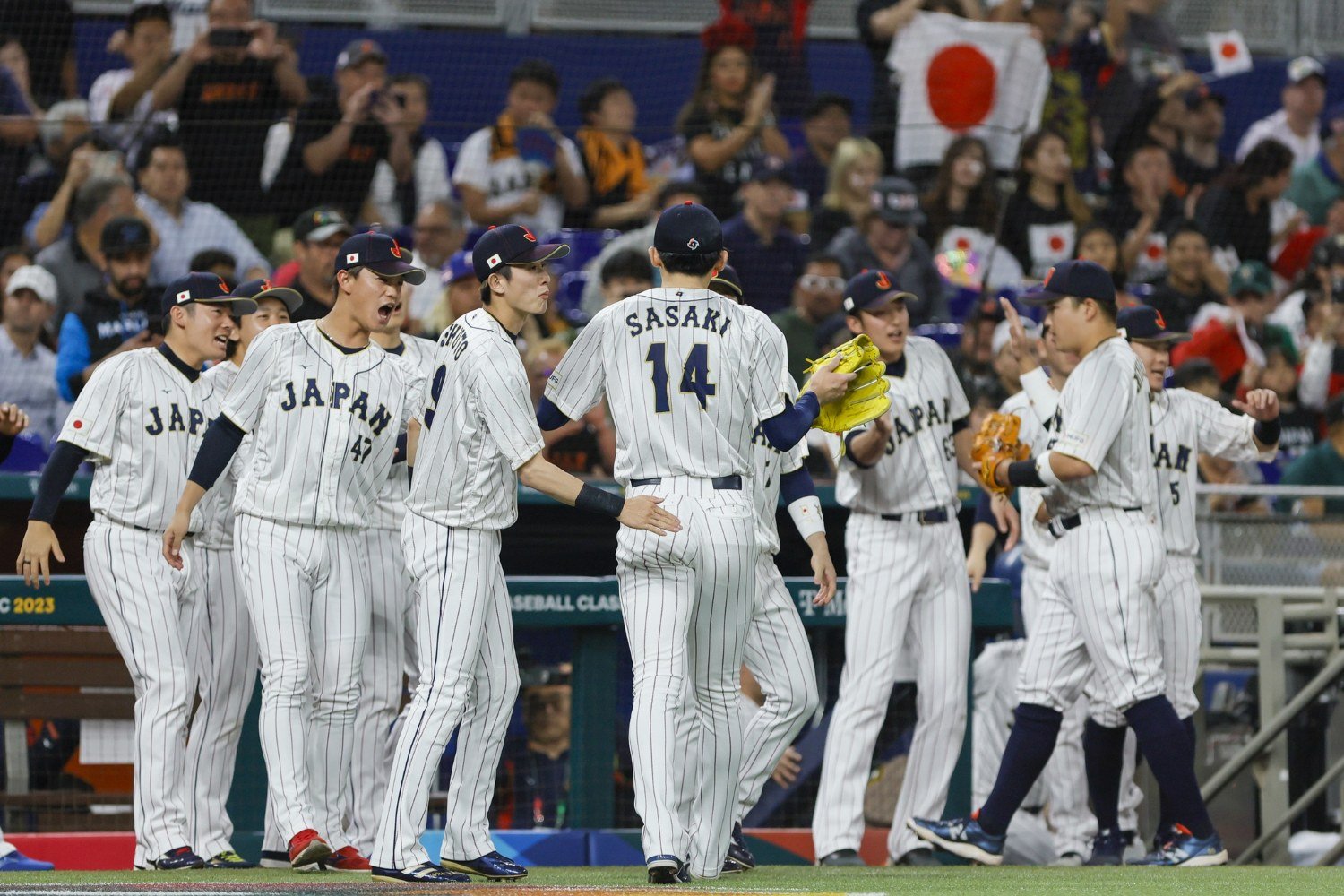 On Wednesday, teams can once again begin signing international amateur free agents for 2025. There will be dozens of millions of dollars handed out to dozens of Latin American teenagers, but this year, there will also be a handsome sum paid to one of the most sought-after free agents in recent memory. By next Monday, we might very well know which MLB team Roki Sasaki will play for over the balance of the 2020s. Sasaki has taken meetings with several teams and mulled his many options, and it's very nearly time to select the best one. When they met with Sasaki in Los Angeles last month, the Cubs surely made an impassioned case that they are that best option. It's not a ridiculous notion, either. In fact, it has deep roots in fact. I would not categorize the team as the favorites to land Sasaki, but don't read too much into the tea leaves and the half-sourced reporting that has tumbled unimpressively across Baseball Twitter for the past several days. Instead, let's talk about why the Cubs really might be as ready to help Sasaki as any team in baseball—if not more so. Firstly, of course, an existing support infrastructure for Japanese players and experience with helping them assimilate with the culture of the team and the country are valuable in this circumstance, and the Cubs have those things. They're far from alone in that aspect, but not that far from alone. The Yankees and Red Sox have done this, but not especially recently. The Padres have onboarded talented players from NPB, but no one with this kind of profile to them. The relevant comparators to the Cubs (who have brought over Seiya Suzuki and Shota Imanaga on this side of the COVID-19 pandemic) are really just the Dodgers and the Angels, and the latter is a generous grandfathering-in based on Shohei Ohtani. Neither Sasaki (who, after all, hasn't said much of anything for himself in the American press) nor his agent Joel Wolfe has indicated that not having these things in place already is disqualifying, but consider that a point in the Cubs' favor. The other (much more important) criterion Sasaki figures to consider, beyond things utterly outside teams' control (like geography, an advantage that keeps the Dodgers and Padres at the head of the pack), is in what ways the teams interested in him propose to help him blossom into the ace hurler he believes he can be—the one who can make $300 million or more when he hits free agency in six years, to make up for the money he won't get as part of this initial deal. The Cubs can be that team, and they can prove it. Consider this data on Sasaki for 2024, taken from the superb NPB Pitch Profiler app. Translate those kilometers per hour into miles per hour, and you have a pitcher with a fastball that sits around 97 miles per hour; a devastating splitter, north of 88 MPH; and an 83.6-MPH slider that is almost equally excellent. More important than those pitches and their outcomes, though, are where he throws them. Consult those heat maps, thumbnail sketches though they might be. Against righties, Sasaki hammered away at the glove-side edge of the plate, working hitters away. Against lefties, though, he focused heavily on the opposite edge. The idea was the same: keep the ball away. He was pitching away from power, even in a league with less overall power than one finds in an MLB lineup. While he did throw those heaters all over the zone to each type of hitter, he was dedicated in his assault on one edge for each. Notice, too, the way he keeps his splitter south of the zone, almost all the time. He really worked that pitch down to the shins of batters, from each side; it wasn't thrown for strikes at all. He won by inducing chases on that pitch. For that matter, you can see that he threw his slider low and away from righties, diving out of the zone at the corner, but tended to throw the slider to lefties as a backdoor offering. Compare the above to this image, which represents Shota Imanaga's approach to NPB hitters in 2023, before he came over to the Cubs. Ovviously, Imanaga and Sasaki are not the same guy. When you look at the locations of certain offerings, though, similarities stand out. Unlike Sasaki, Imanaga had a strong preference for one side of the plate with his fastball in his last year in Japan, wearing out the third-base side of home plate against both righties (it was the inside edge to them) and lefties (to whom it was the outside edge). He threw the pitch a bit higher to righties, trying to crowd it in on their hands, but aimed low and away from lefties, just as Sasaki did to righties. See, too, how much he focused his splitter (labeled above as a changeup) along that line just below the zone. Now, look at where Imanaga threw his fastballs against righties in 2024, Stateside: And where he threw the same offerings against lefties: And where he threw his changeups and splitters, to righties: You can't pitch the same way in MLB that you do in NPB. The strike zone is different; the ball is different; the fielders behind you are different; the ballparks are different; the opposing hitters are different. If you dedicate yourself to aiming at the edge of the plate with fastballs over and over, you're going to end up giving up hard contact, because MLB hitters can cover the whole plate fairly well. If you can't elevate the fastball consistently, you won't miss enough bats with it to do what you want. If you can't throw even your diving splitter for strikes now and then, you won't get the chases you need, and you'll walk too many batters. That's a far cry from suggesting that Japanese hurlers can't come to MLB and dominate; we know that much by now. However, even a pitcher who has had tremendous success in NPB and boasts multiple killer offerings in terms of velocity, movement and release point often has to learn to locate differently when they come to MLB. They have to pitch with a different mindset. That's a hard thing to do; the Cubs just proved they can help a hurler do it well. Sasaki has bigger question marks attached to him than most fans or media seem to grasp. Most of them are associated with health, and no team is systematically good at preventing pitcher injuries. The Cubs' track record is unremarkable in that area. So is everyone else's. If they can convince Sasaki that they'll provide a conducive environment to stay healthy, though, they have a firm footing to claim that they can also help him be the best he can be when he takes the ball. Now, they just have to see whether they've made that case well enough to land a pitcher who represents a once-in-a-generation opportunity, and turn him into a real, live once-in-a-generation pitcher.
 -
 Signing Colin Rea to a one-year deal worth $5 million Friday brought the Chicago Cubs' projected 40-man roster payroll for 2025 to roughly $178.3 million, according to Cot's Contracts. That figure bakes in all their agreements with arbitration-eligible players, the small amounts (less than $1 million apiece) they'll pay to pre-arbitration players, and an estimate of Kyle Tucker's salary ($16.25 million, the midpoint between the figures submitted by Tucker and the Cubs on Thursday). It's a very modest sum, 13th among MLB teams at the moment and lagging the figures for (most notably) NL Wild Card rivals like the Arizona Diamondbacks and San Francisco Giants. Their competitive-balance tax number is nominally higher, at $196.4 million, but that actually comes in lower (14th) in the league rankings, as the Red Sox ($171.4 million in 40-man spending for 2025, $209.2 million by the CBT's reckoning) leapfrog them. That reflects the fact that, while the Cubs have a cluster of veterans under medium-length deals with high annual average values, they have almost no one on the books beyond 2026, and their multiyear deals are (with the exception of Matthew Boyd's) not backloaded. Shota Imanaga's contract contains a three-year club option that will weigh their books down somewhat and raise his annual average value starting in 2026, assuming they exercise it this coming fall, but that won't bear on their 2025 figure. So, the Cubs have about $36.7 million to spend if they want to settle in around $215 million in actual 40-man roster payroll for 2025. That sounds like a lot, because it is. However, if they spent all of that money over the next month or so, they'd come up to $233.1 million in their CBT figure—and perhaps higher than that, since any multiyear deal might push money off into seasons beyond 2025 without giving them a break from the tax burden. That would be cutting it close, since the team stumbled over the line this past season, didn't meet their ownership-imposed revenue targets, and seem extremely committed to staying below the CBT threshold of $241 million for 2025. I will give just one paragraph to this disclaimer: Obviously, they should spend way more money than that, and the Ricketts family should be ashamed of itself for its insufficient investment in the team. However, for the purposes of this piece, I want to talk about why they might make certain budgetary choices, and that conversation settles most productively into a valley where we accept the reality of the situation. The Cubs aren't going past $241 million in CBT spending this year, and the very most they would be willing to spend on the payroll (even if it didn't carry them past that line) is $225 million. So we're going to work from that premise. Jed Hoyer always likes to leave himself in-season wiggle room, and among his various pet policies, that's perhaps the most understandable. The Cubs won't want to come especially close to the line, since various incentives and escalators could then get them into real trouble, and they will want to be able to add $10 million within the season if needed. Therefore, we're safer to say that they can add $30 million to their payroll from here, bringing that raw number up just shy of $210 million and the CBT number to $226 million or so. That's within the realm of possibility, and even within the smaller realm that is their budget. Now, let's talk about why you're hearing some rumors that they might have even less to spend than that—but why you might be happier with that state of affairs than you think, when you consult your own feelings in six weeks or so. To go back to the Red Sox as a counterexample to the Cubs: Why is the gap between what they'll actually spend in 2025 and their CBT figure close to $40 million, while the Cubs' is just $16 million? It's because of the long-term, team-friendly deals to which they recently signed the likes of Ceddanne Rafaela (eight years, $50 million) and Bryan Bello (six years, $55 million). As such pre-arbitration deals always are, those contracts are backloaded, so those two will make only about $4 million in 2025—but they go on the books at a combined salary over $15 million, for CBT purposes, because the AAV is all that matters for that calculation. Even Rafael Devers costs more in CBT terms ($29.1 million) than in real money ($27.5 million) in 2025, because later in his 11-year deal, he'll pull in $31 million per season. Long-term deals tend to widen the gap between real payroll and CBT payroll, especially when signed by players who are far from free agency; that's just how such deals are structured. The Cubs have less leverage over their plausible pre-arbitration and arbitration-eligible extension candidates—Pete Crow-Armstrong, Justin Steele, Miguel Amaya, Michael Busch, Matt Shaw, Kevin Alcántara, even Javier Assad—than the Red Sox had over Rafaela and Bello, and none of those individuals seems overwhelmingly likely to sign a long-term deal this winter. As a group, though, you would probably take the over on 0.5 such deals this spring, and any deal signed would involve raising the CBT salary of the player in question, even though it would probably change the amount they earn in 2025 very little. Then, of course, there is Tucker. A long-term deal with him (while still a longshot) has to be held open as an option for the Cubs throughout the balance of the offseason, and should one materialize, they need flexibility. When the Red Sox signed Devers to his extension (in January of 2023, but kicking in 2024), they elected not to attach the deal to his final season of arbitration eligibility. That gave them extra CBT wiggle room for 2023; they stayed below the line that year but would have been over it if his AAV were raised by including 2023 in the long-term contract. Chicago could go the same route if they strike a deal with Tucker, but they might prefer not to. Giving Tucker an extra couple million for 2025 as part of a long-term deal could help get said deal done, and since they have wiggle room in both real and CBT payroll right now, they might also like the long-term CBT benefits of doing things that way. For instance: If Tucker and the Cubs agree at $16.2 million for 2025 and sign a separate 12-year, $400-million deal thereafter, he'd count against their CBT payroll for $33.3 million per year starting in 2026. If they boost his salary to $18 million for 2025 as part of what becomes a 13-year, $418-million deal, his CBT salary would come down to $32.1 million. That's a small difference, to be sure, but it exists, and it's just one of what could be several possible structures, some of them more extreme and involving bigger savings in various ways. It's also just one way in which the lurking possibility of a deal with Tucker could make the team a bit less eager to spend to the limits of their budget in the coming weeks. The other way is this: Even if the two sides strike a deal that doesn't attach itself to the short-term one they arrive at (be it via arbitration hearing or negotiation) for 2025, that deal figures to include a signing bonus. To use the Red Sox as an example one more time, when they signed Devers in 2023, they paid $5 million of his $20-million bonus right away, even though the deal didn't technically begin until 2024. So, while it might not show up either in a tabulation of 40-man spending for 2025 or the CBT number, a long-term Tucker contract would probably include increasing upfront costs by anywhere from $2 million to $10 million. As is true with Steele, Crow-Armstrong, and the others, the odds of a Tucker extension are relatively long. However, as they try to round out a roster they have already concretely upgraded this winter, the Cubs have to factor in the very real possibility of at least one such deal taking place while they're in Arizona. That is almost certainly why there are rumblings about the team spending less than the amounts we might have expected a few months ago. They've explored a lot of avenues this winter, but the things that have actually panned out so far—adding Boyd and Rea for bullpen depth; dealing for Eli Morgan and signing Caleb Thielbar to deepen the bullpen; and signing Carson Kelly to hedge against Amaya's risk as a primary catcher—have steered them into a particular place where spending the largest amount possible is no longer the goal. This doesn't mean fans shouldn't expect them to spend significantly more money before Opening Day, or that they shouldn't be angry if that spending doesn't materialize. The spending will happen, though, and when it does, we should keep in mind that their reasons for being cautious or not breaking the bank might be better than we're immediately inclined to believe. There's also a sense of unresolved trade potential here, which further colors whatever choices the team might make about spending. Even after the Tucker trade, the Cubs were involved in several rumors about key additions that would have come via trade, and with moderate financial investments. They still seem to have a roster crying out for a trade that realigns their talent, and that, too, could give them the roster they should be trying to build without (in all likelihood) pushing their budget to its very limit. We won't be able to fully evaluate this offseason until it's over. The Rea deal did seem a strange step, but there's another important move or two left for them, and even if their total spending from here does turn out to be less than we'd have preferred or imagined, it's important to understand the perfectly acceptable reasons why that might be so—in addition to the frustrating ones.
 -
After their latest move to bolster the pitching depth of the big-league team, the Cubs still have a middle-of-the-road projected payroll and a lot of money to spend. But they might not spend every dime in their budget this year, for reasons fans would actually like. Image courtesy of © David Banks-Imagn Images Signing Colin Rea to a one-year deal worth $5 million Friday brought the Chicago Cubs' projected 40-man roster payroll for 2025 to roughly $178.3 million, according to Cot's Contracts. That figure bakes in all their agreements with arbitration-eligible players, the small amounts (less than $1 million apiece) they'll pay to pre-arbitration players, and an estimate of Kyle Tucker's salary ($16.25 million, the midpoint between the figures submitted by Tucker and the Cubs on Thursday). It's a very modest sum, 13th among MLB teams at the moment and lagging the figures for (most notably) NL Wild Card rivals like the Arizona Diamondbacks and San Francisco Giants. Their competitive-balance tax number is nominally higher, at $196.4 million, but that actually comes in lower (14th) in the league rankings, as the Red Sox ($171.4 million in 40-man spending for 2025, $209.2 million by the CBT's reckoning) leapfrog them. That reflects the fact that, while the Cubs have a cluster of veterans under medium-length deals with high annual average values, they have almost no one on the books beyond 2026, and their multiyear deals are (with the exception of Matthew Boyd's) not backloaded. Shota Imanaga's contract contains a three-year club option that will weigh their books down somewhat and raise his annual average value starting in 2026, assuming they exercise it this coming fall, but that won't bear on their 2025 figure. So, the Cubs have about $36.7 million to spend if they want to settle in around $215 million in actual 40-man roster payroll for 2025. That sounds like a lot, because it is. However, if they spent all of that money over the next month or so, they'd come up to $233.1 million in their CBT figure—and perhaps higher than that, since any multiyear deal might push money off into seasons beyond 2025 without giving them a break from the tax burden. That would be cutting it close, since the team stumbled over the line this past season, didn't meet their ownership-imposed revenue targets, and seem extremely committed to staying below the CBT threshold of $241 million for 2025. I will give just one paragraph to this disclaimer: Obviously, they should spend way more money than that, and the Ricketts family should be ashamed of itself for its insufficient investment in the team. However, for the purposes of this piece, I want to talk about why they might make certain budgetary choices, and that conversation settles most productively into a valley where we accept the reality of the situation. The Cubs aren't going past $241 million in CBT spending this year, and the very most they would be willing to spend on the payroll (even if it didn't carry them past that line) is $225 million. So we're going to work from that premise. Jed Hoyer always likes to leave himself in-season wiggle room, and among his various pet policies, that's perhaps the most understandable. The Cubs won't want to come especially close to the line, since various incentives and escalators could then get them into real trouble, and they will want to be able to add $10 million within the season if needed. Therefore, we're safer to say that they can add $30 million to their payroll from here, bringing that raw number up just shy of $210 million and the CBT number to $226 million or so. That's within the realm of possibility, and even within the smaller realm that is their budget. Now, let's talk about why you're hearing some rumors that they might have even less to spend than that—but why you might be happier with that state of affairs than you think, when you consult your own feelings in six weeks or so. To go back to the Red Sox as a counterexample to the Cubs: Why is the gap between what they'll actually spend in 2025 and their CBT figure close to $40 million, while the Cubs' is just $16 million? It's because of the long-term, team-friendly deals to which they recently signed the likes of Ceddanne Rafaela (eight years, $50 million) and Bryan Bello (six years, $55 million). As such pre-arbitration deals always are, those contracts are backloaded, so those two will make only about $4 million in 2025—but they go on the books at a combined salary over $15 million, for CBT purposes, because the AAV is all that matters for that calculation. Even Rafael Devers costs more in CBT terms ($29.1 million) than in real money ($27.5 million) in 2025, because later in his 11-year deal, he'll pull in $31 million per season. Long-term deals tend to widen the gap between real payroll and CBT payroll, especially when signed by players who are far from free agency; that's just how such deals are structured. The Cubs have less leverage over their plausible pre-arbitration and arbitration-eligible extension candidates—Pete Crow-Armstrong, Justin Steele, Miguel Amaya, Michael Busch, Matt Shaw, Kevin Alcántara, even Javier Assad—than the Red Sox had over Rafaela and Bello, and none of those individuals seems overwhelmingly likely to sign a long-term deal this winter. As a group, though, you would probably take the over on 0.5 such deals this spring, and any deal signed would involve raising the CBT salary of the player in question, even though it would probably change the amount they earn in 2025 very little. Then, of course, there is Tucker. A long-term deal with him (while still a longshot) has to be held open as an option for the Cubs throughout the balance of the offseason, and should one materialize, they need flexibility. When the Red Sox signed Devers to his extension (in January of 2023, but kicking in 2024), they elected not to attach the deal to his final season of arbitration eligibility. That gave them extra CBT wiggle room for 2023; they stayed below the line that year but would have been over it if his AAV were raised by including 2023 in the long-term contract. Chicago could go the same route if they strike a deal with Tucker, but they might prefer not to. Giving Tucker an extra couple million for 2025 as part of a long-term deal could help get said deal done, and since they have wiggle room in both real and CBT payroll right now, they might also like the long-term CBT benefits of doing things that way. For instance: If Tucker and the Cubs agree at $16.2 million for 2025 and sign a separate 12-year, $400-million deal thereafter, he'd count against their CBT payroll for $33.3 million per year starting in 2026. If they boost his salary to $18 million for 2025 as part of what becomes a 13-year, $418-million deal, his CBT salary would come down to $32.1 million. That's a small difference, to be sure, but it exists, and it's just one of what could be several possible structures, some of them more extreme and involving bigger savings in various ways. It's also just one way in which the lurking possibility of a deal with Tucker could make the team a bit less eager to spend to the limits of their budget in the coming weeks. The other way is this: Even if the two sides strike a deal that doesn't attach itself to the short-term one they arrive at (be it via arbitration hearing or negotiation) for 2025, that deal figures to include a signing bonus. To use the Red Sox as an example one more time, when they signed Devers in 2023, they paid $5 million of his $20-million bonus right away, even though the deal didn't technically begin until 2024. So, while it might not show up either in a tabulation of 40-man spending for 2025 or the CBT number, a long-term Tucker contract would probably include increasing upfront costs by anywhere from $2 million to $10 million. As is true with Steele, Crow-Armstrong, and the others, the odds of a Tucker extension are relatively long. However, as they try to round out a roster they have already concretely upgraded this winter, the Cubs have to factor in the very real possibility of at least one such deal taking place while they're in Arizona. That is almost certainly why there are rumblings about the team spending less than the amounts we might have expected a few months ago. They've explored a lot of avenues this winter, but the things that have actually panned out so far—adding Boyd and Rea for bullpen depth; dealing for Eli Morgan and signing Caleb Thielbar to deepen the bullpen; and signing Carson Kelly to hedge against Amaya's risk as a primary catcher—have steered them into a particular place where spending the largest amount possible is no longer the goal. This doesn't mean fans shouldn't expect them to spend significantly more money before Opening Day, or that they shouldn't be angry if that spending doesn't materialize. The spending will happen, though, and when it does, we should keep in mind that their reasons for being cautious or not breaking the bank might be better than we're immediately inclined to believe. There's also a sense of unresolved trade potential here, which further colors whatever choices the team might make about spending. Even after the Tucker trade, the Cubs were involved in several rumors about key additions that would have come via trade, and with moderate financial investments. They still seem to have a roster crying out for a trade that realigns their talent, and that, too, could give them the roster they should be trying to build without (in all likelihood) pushing their budget to its very limit. We won't be able to fully evaluate this offseason until it's over. The Rea deal did seem a strange step, but there's another important move or two left for them, and even if their total spending from here does turn out to be less than we'd have preferred or imagined, it's important to understand the perfectly acceptable reasons why that might be so—in addition to the frustrating ones. View full article