


Cubs Video
One of the many frustrations of Cubs fans this winter was the team's apparent unwillingness to spend beyond the $237 million first threshold for the competitive-balance tax. By stopping shy of that threshold, it seemed, the team was foreclosing options for itself, and missing out on chances to add impact players. Those concerns have been justified by the way this season has played out. To the further chagrin of many, then, though, Hoyer said Thursday that the team will exceed that threshold after all.
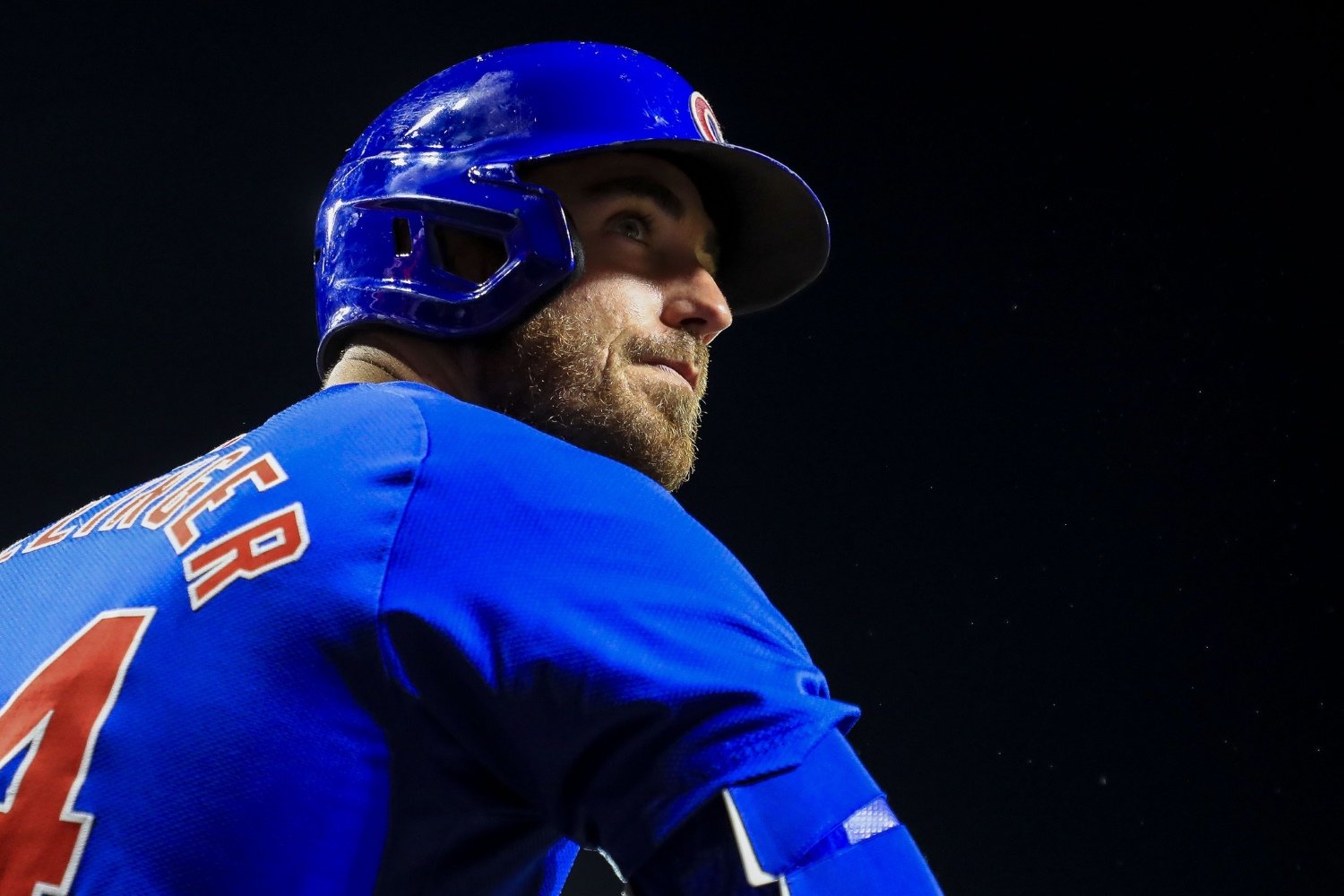
"As far as this year, we sort of looked at it at the end of February, we were likely to be under the tax, but once we decided to sign Bellinger, on what I thought was a fantastic deal for the Cubs to bring back Cody, knowing that when we did that, that was very likely to trigger us being over the tax, Tom and Crane were certainly in favor of that, given what it meant for the club," Hoyer said. "So the expectation is certainly that we'll probably go over this year, and the reality is that that's always been a discussion. There's never been any real desire to stay under every year, it's been like, 'Let's make those decisions on a year-to-year basis.' The expectation is that we'll be over this year, and that's really because the decision was made to invest in Cody."
There's a lot to unpack there. Until now, the belief among most Cubs fans (supported by the good work done by Jon Becker at FanGraphs and by Jeff Euston at Cot's Contracts, powered by Baseball Prospectus) had been that the team was going to be under the threshold this year. It was always understood to be close, especially given some of the bonuses and incentives that are imperfectly reported by various sources, but no one outside the Cubs organization had been operating under the assumption that the team was going to be a luxury tax payor this year.
Let's separate this into things that matter, and things that don't. Assuming the Cubs are willing and able to exceed the tax threshold again in 2025 (which Hoyer and Crane Kenney each implied they would be), one thing that doesn't matter is the repeat offender tax escalation. The Cubs' tax bill for this year, if indeed there is one, will be very small, and the step up from a 20% tax to 30% as a second-time payor next season isn't worth anyone worrying about too much. Exceeding the tax for a third straight year would bump that rate to 50%, which is more meaningful, but the smart bet is that the Cubs are eying an organic reset in 2026. That's the first season after the ends of the contracts on which team is paying Ian Happ, Seiya Suzuki, and Jameson Taillon nearly $60 million, in total, and they've worked hard over the last two years to build a farm system they believe will replace those players more than adequately from within, at minimal cost.
On the other hand, a change in the penalties the team would pay for signing a player attached to a qualifying offer would matter, if only at the margins. As a ballpark figure, signing a guy who received a QO would cost the Cubs about $950,000 more in spending power for amateur talent in 2025 after exceeding the tax in 2024. They'd give up an extra draft pick (a fifth-rounder, in all likelihood, with a value around $450,000 toward their total bonus pool allotment) and lose $1 million in international free-agent spending space, rather than $500,000 if they were non-payors. That would be felt in a significant way, for a farm system whose best talent is already clumping at the upper levels and which is viewed as thin in the lower reaches.
Would it be enough to change their decision-making about signing such a player? In this particular winter, it could, though only on certain guys. After the year Michael Busch has had and in the wake of the Isaac Paredes acquisition, neither Pete Alonso nor Alex Bregman were going to be options for the Cubs, anyway. It's overwhelmingly unlikely, given the way Hoyer works, that they will be in on Juan Soto or Corbin Burnes, but if they are, the heavier penalties for signing them won't get in the way.
The two fringe cases where it might come into play are Anthony Santander and Max Fried. Santander, the Orioles' switch-hitting slugger, could hit the market having clubbed 45 homers in his walk year. He'd be a thunderous addition to the lineup, though a tricky fit, depending on how the team sees some of its young players and on whether Cody Bellinger opts in or out this fall. Fried is a high-upside but injury-prone southpaw starter, and while he'd be a great addition to the Cubs' rotation mix next year, he'd also be a risky one. Setting themselves up to lose significantly more potential talent to sign guys like this would be a strategic error, and the fact that the Cubs are over the tax does seem to indicate that they'll shy away from Santander or Fried this winter.
The big things that matter, though, aren't the things that lie ahead. These comments from Hoyer reveal much about what he thought this team was, and why, and about his approach to team-building. None of it is good.
Firstly, it's pretty clear from these remarks that Hoyer viewed the Bellinger deal as the capstone on a championship contender. That's preposterous, as was clear even going into this season and as the progress of the campaign has confirmed. Bellinger is a fine player, and the team should have tried more proactively to sign him instead of waiting so long, but they shouldn't have been thinking of him as a player who could finish off their roster. If nothing else, they might have more carefully considered the fact that he had a great season for them in 2023, and they still weren't even a playoff team.
Secondly, Bellinger's free agency and the team's mindset about re-signing him vis-a-vis the tax threshold reveal a problematic priority being placed on marginal value, rather than absolute value. Signing Shota Imanaga and trading for Busch and Yency Almonte were strong moves. So was bringing in Héctor Neris. They all seemed of a piece with bringing back Bellinger and staying under the tax, though. If Hoyer and the organization were really spending all that time thinking about re-signing Bellinger even if it meant going over the threshold, they should have simply gone over the threshold--and not just signed Bellinger, but also inked Blake Snell, Jordan Montgomery, or Matt Chapman.
Retaining Bellinger wasn't going to be the difference-maker for the 2024 Cubs. If they were willing to exceed the tax threshold to bring him back, they should have made sure to exceed it by much more, thereby adding more high-end talent and better depth to a roster that has been exposed on both fronts at times this year. That they waffled all winter with moves seemingly aimed at staying below the tax, then signed Bellinger even though it meant paying it, suggests that Hoyer was far, far too optimistic about the team he had built.
We already had some intimations of that. Now, it seems like an unavoidable conclusion. Hopefully, the team and their president have learned from that. If the Cubs want to win in 2025, they need to go into this winter thinking bigger, both in terms of budgeting and in terms of talent. They can't come back next year with the same group, still thinking it's a team worth paying luxury taxes for.





Recommended Comments
Create an account or sign in to comment
You need to be a member in order to leave a comment
Create an account
Sign up for a new account in our community. It's easy!
Register a new accountSign in
Already have an account? Sign in here.
Sign In Now