


Matthew Trueblood
-
Posts
2,479 -
Joined
-
Last visited
-
Days Won
2
Content Type
Profiles
Joomla Posts 1
Chicago Cubs Videos
Chicago Cubs Free Agent & Trade Rumors, Notes, & Tidbits
2026 Chicago Cubs Top Prospects Ranking
News
2023 Chicago Cubs Draft Picks
Guides & Resources
2024 Chicago Cubs Draft Picks
The Chicago Cubs Players Project
2025 Chicago Cubs Draft Pick Tracker
2026 Chicago Cubs Draft Tracker: Picks & Bonuses
Blogs
Events
Forums
Store
Gallery
Everything posted by Matthew Trueblood
-
The burly veteran righthander came to camp on a minor-league deal, but he has looked like an unquestionably big-league arm in his first two Cactus League appearances. Image courtesy of © Mark J. Rebilas-Imagn Images If you were disposed to skepticism, you might not have bought into the velocity readings Brad Keller put up in his first appearance of spring training, last week against the Dodgers in Glendale, Ariz. He sat at 96 miles per hour and touched 98 in a five-out appearance, which represented a bump of more than 2 mph from his average in 2024. Even knowing that he'd spent a chunk of his offseason at training and development hub Maven Baseball Lab, that was such a surge that it seemed a bit incredible. In his second outing, though, Keller did more or less the exact same thing, so now, we need to have a different conversation. He was perfect in two innings against the Padres, with one strikeout, but the most noteworthy thing was that his fastball stayed right at that same level. Two Statcast systems in a row can't be wrong. Keller is really, truly throwing harder five months shy of his 30th birthday than he ever has before: I broke things down by month, just to be sure, but Keller's velocity so far in spring camp would be the highest of any period even that long in his career, let alone a season. Since he was clearly active this winter learning how to generate this velocity, it's a safe bet that: He'll gain less velocity than other pitchers might in the time between late February and late March, let alone between February and June; and He'll either run out of steam altogether long before October, or need to be shelved for a while on the injured list, in what the modern argot terms a "de-load" phase. It's not yet popular to think that way, but we're right around the corner from it. The baseball season has stretched until it lasts from Valentine's Day to Halloween, and with the Cubs going to Tokyo to open the regular season in mid-March this year, they're getting an even earlier start than most. That means that all teams—and especially the Cubs—need to keep in mind the almost inevitable need for a shift change in their pitching staff sometime during the summer, even as they amass enough depth to be strong over the first two months of the season. Last year, they missed the playoffs largely because they got the former right, but had already fallen too far behind because of their failure to do the latter. Keller has an opt-out at the end of spring training, a team source confirmed, so if he doesn't make the team, the Cubs will lose him to free agency. They shouldn't let that happen. As I wrote back in November when I tabbed Keller as a good target for the team on this kind of deal, Keller has the unique, cutterish fastball shape the Cubs prize; that's why Brooks Baseball now codes his heater as a cutter. At 93 or 94, that pitch works reasonably well, given good location. At 96, he's throwing something very much like Porter Hodge's fastball; it's an overpowering offering. Keller already had a solid slider, and it will only play up when it's humming in at 87-88 mph, as it has so far this spring. His sinker has generally been hit hard, but the extra couple of ticks help it, too. His profile levels up with this bump, in a way not every pitcher's can. Keller should be penciled in as the long man for the Cubs' bullpen to start the season. Javier Assad is virtually sure to start the campaign on the injured list with an oblique strain, even though he seems to have come through it without much disruption. That's fine. Ben Brown, Cody Poteet, and other candidates for similar roles can all start the season at Triple-A Iowa without missing a beat. So far, Brown's velocity is down a tick from where he was last year, anyway. Again, that's only to be expected; he's coming back from an injury. Since not rostering Keller would mean losing him, though, and since there's so little to lose by managing and restricting usage for younger pitchers early on, it's a no-brainer. The hard-throwing version of Keller still doesn't have a Hodge-like breaking pitch to set everything off, but he can throw strikes and limit opponents' quality of contact more than well enough to give the Cubs great work through the cold, pitcher-friendly early segment of the season at Wrigley Field. He's not destined to be part of this team if they make a run in the postseason, but (despite and because of that) he should be in their plans for Opening Day. It's the logical way to piece together a good pitching staff for the whole of an overlong season. View full article
-
The veteran fourth starter is healthy and hoping to enter this season with a full head of steam. His first Cactus League outing was an eye-opening one, for those watching his Statcast readout. Image courtesy of © Rick Scuteri-Imagn Images In two scoreless innings of work Monday in Arizona, Matthew Boyd struck out two and sat just over 92 miles per hour with his fastball, which is what that pitch averaged in 2024. It was an excellent first outing in that regard for Boyd, 34, who signed a two-year deal in the fall worth $29 million. Even more interesting than the early heat on that four-seamer, though, was a change to the pitch that has been Boyd's signature for much of his career—perhaps in response to the fact that it wasn't his best weapon last year. Here's a visualization of Boyd's pitch movement in a fairly typical start from 2024, on Sept. 6 against the Dodgers. As is his wont, Boyd utilized a four-seamer with average ride but more armside run than most such offerings; a diving changeup, including a variant with a bit of relative cut to it; and a big, roundhouse kind of slider, not quite a sweeper (it has too much depth for that), but not at all a hard, gyro-style offering. It averaged just under 80 mph last season, making an ample contrast with the low-90s heat because of the huge difference in the movement of the two pitches. Boyd was very good that day, and he had a strong season overall. He even carried over that excellence into October. When he took the mound against the Padres in Peoria, Ariz. on Monday, though, things looked different. Without a noticeable change in arm angle (the caveat here being that spring training camera angles are a nightmare), Boyd found a touch more ride on his four-seamer, and his curveball became a huge, bending thing that figures to really lock up opposing batters. By far the easiest difference to spot, however, is that slider. This version is an almost perfect gyro slider. Not pictured is the velocity difference: Boyd sat north of 83 miles per hour with the slider Monday. The old version of Boyd's slider was working just fine. He did reduce his usage of it against righties last season, though, favoring his changeup instead. That change will still be a vital part of his repertoire, but with this version of the slider in the mix, he could theoretically attack righties more aggressively with four different pitches. Now, let's not get carried away. Boyd threw exactly four of these Monday. It's possible (though highly unlikely) that he simply couldn't find the usual depth and sweep of his bigger, slower slider. It's possible (and much, much more likely) that he was tinkering with something he might never bring into a game that counts. Monday was an interesting glimpse of another club he could add to his bag, though. A version of Boyd who could throw that slider and his usual one, for instance, might be especially lethal—if it could be done without the pitches blending together and getting worse, which is always a tough tightrope to walk. Little though they sometimes mean, early indicators of possible changes to a player's skill set or approach are one of the most interesting aspects of spring training. Boyd showed a willingness to try something new Monday, and it might turn out to be an important development for him down the road. If it turns out to be something he's especially committed to, it will be doubly fascinating, since it would represent a wholesale change to a pitch that has facilitated a highly accomplished career. View full article
-
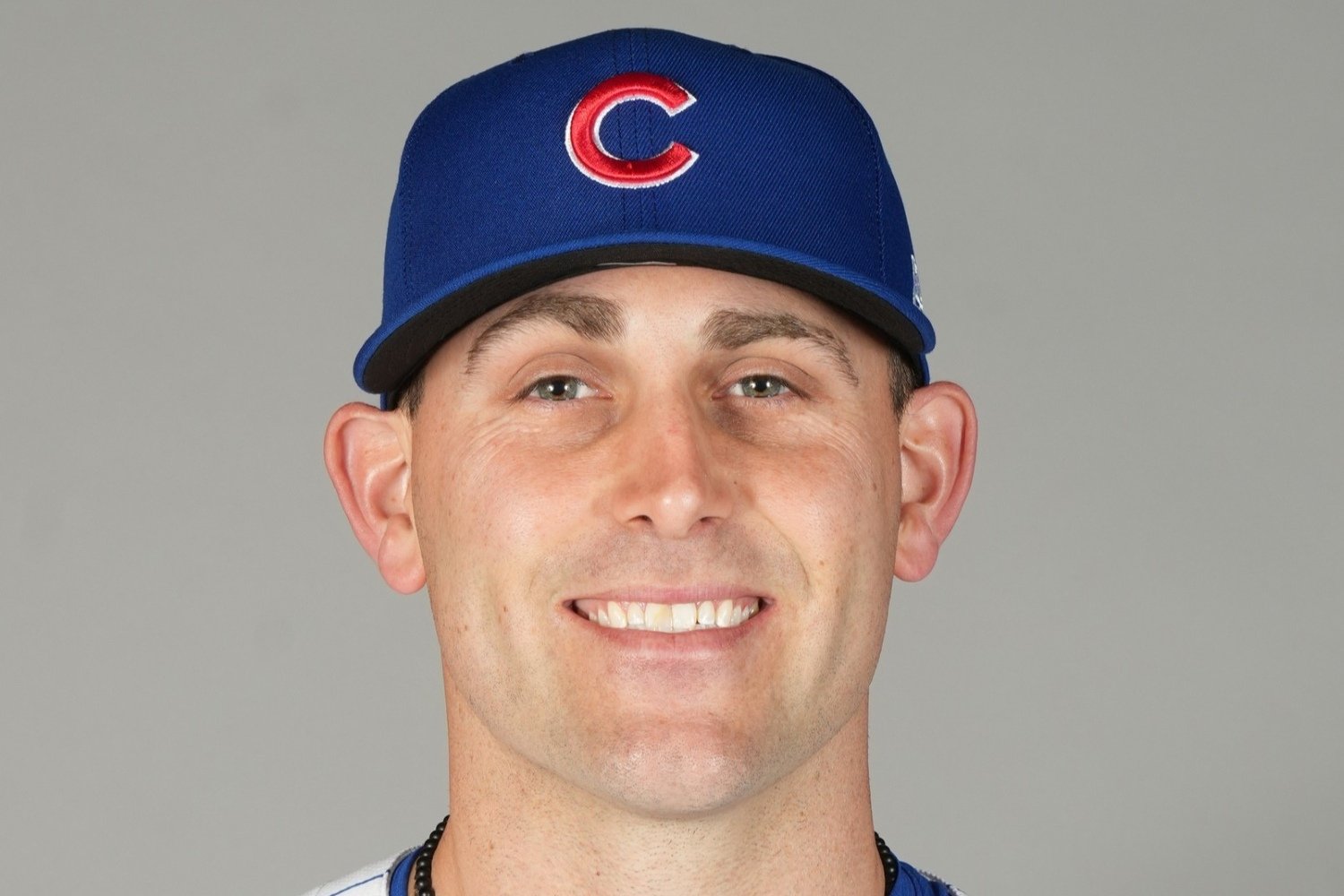 In two scoreless innings of work Monday in Arizona, Matthew Boyd struck out two and sat just over 92 miles per hour with his fastball, which is what that pitch averaged in 2024. It was an excellent first outing in that regard for Boyd, 34, who signed a two-year deal in the fall worth $29 million. Even more interesting than the early heat on that four-seamer, though, was a change to the pitch that has been Boyd's signature for much of his career—perhaps in response to the fact that it wasn't his best weapon last year. Here's a visualization of Boyd's pitch movement in a fairly typical start from 2024, on Sept. 6 against the Dodgers. As is his wont, Boyd utilized a four-seamer with average ride but more armside run than most such offerings; a diving changeup, including a variant with a bit of relative cut to it; and a big, roundhouse kind of slider, not quite a sweeper (it has too much depth for that), but not at all a hard, gyro-style offering. It averaged just under 80 mph last season, making an ample contrast with the low-90s heat because of the huge difference in the movement of the two pitches. Boyd was very good that day, and he had a strong season overall. He even carried over that excellence into October. When he took the mound against the Padres in Peoria, Ariz. on Monday, though, things looked different. Without a noticeable change in arm angle (the caveat here being that spring training camera angles are a nightmare), Boyd found a touch more ride on his four-seamer, and his curveball became a huge, bending thing that figures to really lock up opposing batters. By far the easiest difference to spot, however, is that slider. This version is an almost perfect gyro slider. Not pictured is the velocity difference: Boyd sat north of 83 miles per hour with the slider Monday. The old version of Boyd's slider was working just fine. He did reduce his usage of it against righties last season, though, favoring his changeup instead. That change will still be a vital part of his repertoire, but with this version of the slider in the mix, he could theoretically attack righties more aggressively with four different pitches. Now, let's not get carried away. Boyd threw exactly four of these Monday. It's possible (though highly unlikely) that he simply couldn't find the usual depth and sweep of his bigger, slower slider. It's possible (and much, much more likely) that he was tinkering with something he might never bring into a game that counts. Monday was an interesting glimpse of another club he could add to his bag, though. A version of Boyd who could throw that slider and his usual one, for instance, might be especially lethal—if it could be done without the pitches blending together and getting worse, which is always a tough tightrope to walk. Little though they sometimes mean, early indicators of possible changes to a player's skill set or approach are one of the most interesting aspects of spring training. Boyd showed a willingness to try something new Monday, and it might turn out to be an important development for him down the road. If it turns out to be something he's especially committed to, it will be doubly fascinating, since it would represent a wholesale change to a pitch that has facilitated a highly accomplished career.
 -
The Cubs' superstar outfielder is in line for a huge payday after this season. But is it as huge as has been casually claimed? Image courtesy of © Troy Taormina-Imagn Images When Juan Soto signed an eye-popping 15-year, $765-million contract with the New York Mets in December, it seemed to confirm what many had already begun to assume about salaries at the top end of the free-agent market in MLB: that there's almost no ceiling, and that a superstar's floor is quickly pushing toward $400 million. It altered all the conversations around players set to hit free agency at anywhere near that talent level, including Kyle Tucker, who will hit that market this fall. The sheer mass of that deal—the gravity of it, as an anchor in negotiations around players like these—is enormous. Length is one thing, but Soto got $51 million per year, which becomes a new touchstone for stars trying to achieve the highest salary possible. In an information environment already a bit polluted by confusion around Shohei Ohtani's heavily deferred 10-year deal from last winter, the Soto payday fell like a boulder into a pond. Now that the ripples have smoothed, though, we can see that the entry of that boulder has not fundamentally changed the pond, and the degree to which it raised the water level is so small as to be imperceptible—unless you're hunting for it, hungry-eyed, in which case you're likely to see even what isn't there. In the run-up to Soto's free agency, there was plenty of talk about what makes him so exceptional, and why he got this much money, but too many people failed to take it all to heart. Here's the thing: Juan Soto is not worth $51 million per year for the next 15 years. That's true however you read it: He's not worth a total of $765 million; and He's not going to be worth a steady $51 million annually over the life of the deal. That's not at all to denigrate Soto, but it's important to understand it. What happened was this: An elite free agent at a uniquely young age hit the market at precisely the right moment. He's the best free agent of his age since Alex Rodriguez—better and more consistent than Bryce Harper, even if he hasn't won an MVP the way Harper did before getting to the market. He was coming off a season with one of the three richest teams in baseball, having just helped them to their first World Series in 15 years—which they didn't even win, leaving ownership hungry for more. He also stepped right into the gaze of the richest team in the league, funded by an extraordinarily wealthy owner in the same market. Those were the ingredients for an irrational bidding war, and that's exactly what developed. So, even more than most desirable free agents, Soto got more than his sterling performance record and age really dictated. Whereas a superstar with a robust market in a good winter might typically expect to get one extra year and $3 million more per year than is rational, Soto got, perhaps, three extra years and $6 million more per year. Instead of getting something like $50 million as a superstar premium over the life of a deal, he got anywhere from $150 million to $250 million. That was, yes, because of the market dynamics named there, but let's also tackle the age thing. Soto won't be overpaid at the front end of this deal. In fact, he'll be underpaid. Given his projected production (since he's unlikely to even start to decline until Year 4 of this deal); the Mets' market and its potential; and the novelty of a star joining a team for the long haul, selling jerseys and season tickets left and right, Soto will be worth a solid $100 million per year to his new club from 2025 through 2027. That's how astronomically valuable getting a guy like this at 26 (instead of, say, 29) is. Soto will lose value starting somewhere between 2028 and 2030, but over the very long life of this deal, so will the dollar. Inflation comes into play all the time in these conversations, not just when there are technically deferrals in a deal. If you think of the even structure of the deal as a gentle deferral, then, and of Soto's first three years as being worth $300 million by themselves, it makes sense to think of his market value from age 29 on as 12 years, $450 million. That's only $37.5 million per year. That's the right place to start talking about Kyle Tucker's market value for 2026 and beyond. If he has a very strong season this year (I roughed out one in which he hits .285/.377/.529 in a full season of plate appearances, with 30 homers), he'll hit the market with a career .277/.355/.519 career slash line. That's tremendous, but it's certainly not on par with Soto, Harper, or Prince Fielder, the only other hitters of this caliber to hit free agency before 30 since 2010. He's a balanced lefty slugger and a better defender than Soto, but we saw him slow down significantly over his final two years with Houston; he doesn't project to be a valuable fielder even over the first half of whatever new deal he signs next winter. We suffer from a lack of direct comps for Tucker, because players generally like him (Ryan Braun, Andrew McCutchen, Giancarlo Stanton, Christian Yelich, Ronald Acuña Jr., Mookie Betts) have tended to sign extensions, usually long before they could have become free agents. He's as good as most of those guys, unless you focus on one of those players' very best seasons and acknowledge that no campaign from Tucker can match it, but they all took at least a little less (and all but Betts and Yelich took considerably less) than they were worth to avoid the risks associated with going all the way to free agency. The guys roughly like him who did go to free agency were so much younger that they can't be compared to him, because those three years of age gap make an enormous difference and they're also (if only marginally) better than Tucker. It will sound shockingly low, because of Soto's and Ohtani's deals, but I expect the net present value of the deal Tucker signs to cover 2026 and beyond to be under $400 million. Ten years and $380 million is a good benchmark. If he goes elsewhere, he'll probably get some deferrals and the vanity of a deal worth more than $400 million. If he stays with the Cubs, it will be right around that number. The bad news for the Cubs is that there's probably no discount available. This is one place where I'm compelled to accuse the players of being a little bit irrational. Lately, superstars (and even stars, just pretending at super) don't seem to be mentally accounting for the risk of waiting and going all the way to market properly. We saw that most vividly with the Pete Alonso situation this winter, but Anthony Rizzo and Kris Bryant were in the same boat several years ago. Neither maximized their career earnings, precisely because they assumed the best way to do so was to go to free agency (in Rizzo's case, at the end of an initial extension, but it comes to the same thing) and they were very wrong. No numbers have emerged, yet, from the negotiations between Vladimir Guerrero Jr. and the Blue Jays, and he's a bit more within his rights to roll the dice, since he's going to be another exceptionally young free agent, but I suspect he, too, erred by not taking the deal. I doubt Tucker would sign for 10 years and $380 million (or even a bit more, to bring the total commitment from the Cubs for 2025-2035 up to $400 million) today, but he probably should. Only a truly transcendent season would push him into the stratosphere some are already imagining him to be in, and a bad or injury-marred one could cost him $75 million or so. If the Cubs don't make the offer, they'll never know, and they probably won't make the offer. Should they do so, though, Tucker should take the money. His ceiling and his floor are both lower than they seem, because despite the warm afterglow of that Soto deal, the market is not going to get as rabid about Tucker—especially now that Guerrero looks likely to be there with him. View full article
-
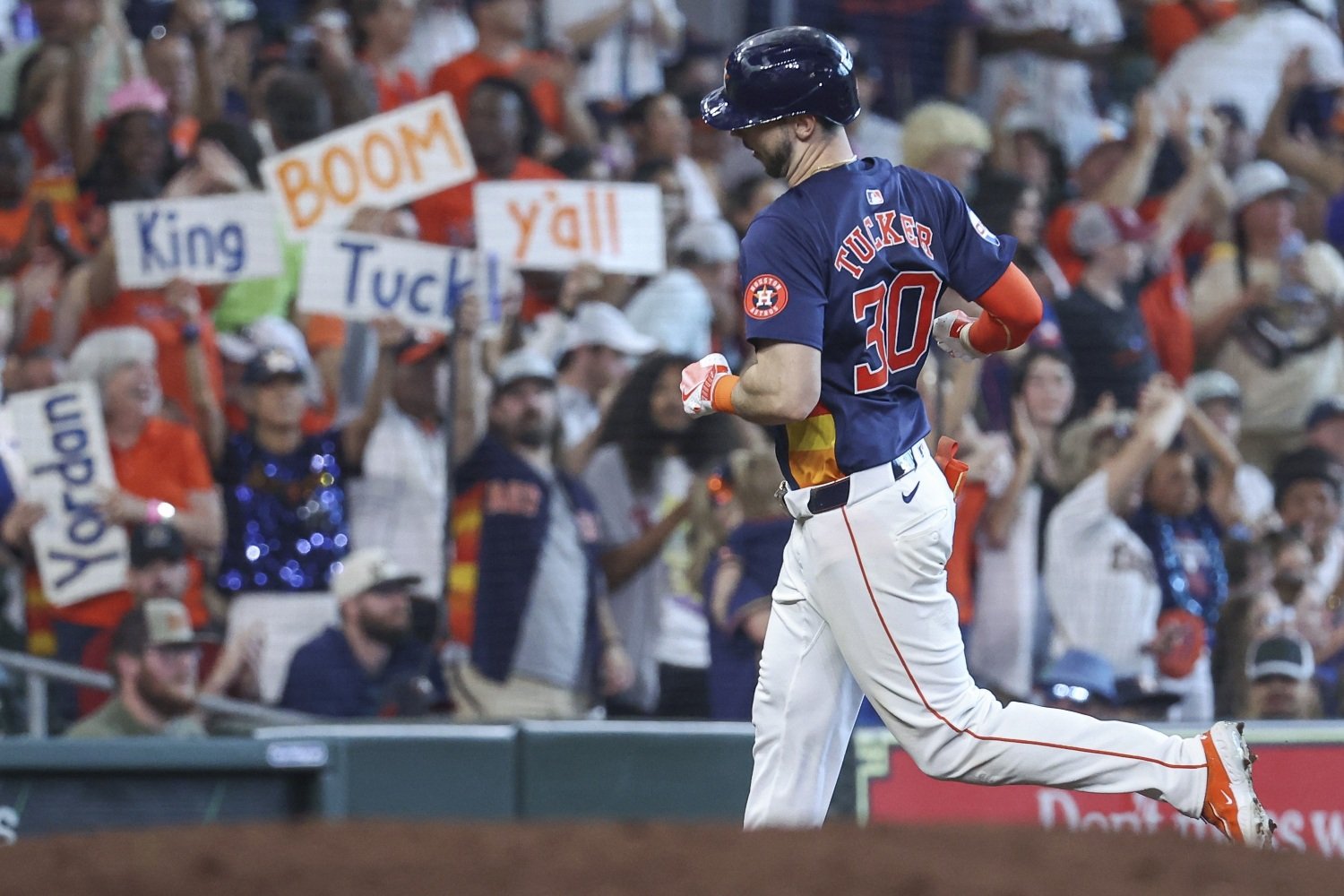 When Juan Soto signed an eye-popping 15-year, $765-million contract with the New York Mets in December, it seemed to confirm what many had already begun to assume about salaries at the top end of the free-agent market in MLB: that there's almost no ceiling, and that a superstar's floor is quickly pushing toward $400 million. It altered all the conversations around players set to hit free agency at anywhere near that talent level, including Kyle Tucker, who will hit that market this fall. The sheer mass of that deal—the gravity of it, as an anchor in negotiations around players like these—is enormous. Length is one thing, but Soto got $51 million per year, which becomes a new touchstone for stars trying to achieve the highest salary possible. In an information environment already a bit polluted by confusion around Shohei Ohtani's heavily deferred 10-year deal from last winter, the Soto payday fell like a boulder into a pond. Now that the ripples have smoothed, though, we can see that the entry of that boulder has not fundamentally changed the pond, and the degree to which it raised the water level is so small as to be imperceptible—unless you're hunting for it, hungry-eyed, in which case you're likely to see even what isn't there. In the run-up to Soto's free agency, there was plenty of talk about what makes him so exceptional, and why he got this much money, but too many people failed to take it all to heart. Here's the thing: Juan Soto is not worth $51 million per year for the next 15 years. That's true however you read it: He's not worth a total of $765 million; and He's not going to be worth a steady $51 million annually over the life of the deal. That's not at all to denigrate Soto, but it's important to understand it. What happened was this: An elite free agent at a uniquely young age hit the market at precisely the right moment. He's the best free agent of his age since Alex Rodriguez—better and more consistent than Bryce Harper, even if he hasn't won an MVP the way Harper did before getting to the market. He was coming off a season with one of the three richest teams in baseball, having just helped them to their first World Series in 15 years—which they didn't even win, leaving ownership hungry for more. He also stepped right into the gaze of the richest team in the league, funded by an extraordinarily wealthy owner in the same market. Those were the ingredients for an irrational bidding war, and that's exactly what developed. So, even more than most desirable free agents, Soto got more than his sterling performance record and age really dictated. Whereas a superstar with a robust market in a good winter might typically expect to get one extra year and $3 million more per year than is rational, Soto got, perhaps, three extra years and $6 million more per year. Instead of getting something like $50 million as a superstar premium over the life of a deal, he got anywhere from $150 million to $250 million. That was, yes, because of the market dynamics named there, but let's also tackle the age thing. Soto won't be overpaid at the front end of this deal. In fact, he'll be underpaid. Given his projected production (since he's unlikely to even start to decline until Year 4 of this deal); the Mets' market and its potential; and the novelty of a star joining a team for the long haul, selling jerseys and season tickets left and right, Soto will be worth a solid $100 million per year to his new club from 2025 through 2027. That's how astronomically valuable getting a guy like this at 26 (instead of, say, 29) is. Soto will lose value starting somewhere between 2028 and 2030, but over the very long life of this deal, so will the dollar. Inflation comes into play all the time in these conversations, not just when there are technically deferrals in a deal. If you think of the even structure of the deal as a gentle deferral, then, and of Soto's first three years as being worth $300 million by themselves, it makes sense to think of his market value from age 29 on as 12 years, $450 million. That's only $37.5 million per year. That's the right place to start talking about Kyle Tucker's market value for 2026 and beyond. If he has a very strong season this year (I roughed out one in which he hits .285/.377/.529 in a full season of plate appearances, with 30 homers), he'll hit the market with a career .277/.355/.519 career slash line. That's tremendous, but it's certainly not on par with Soto, Harper, or Prince Fielder, the only other hitters of this caliber to hit free agency before 30 since 2010. He's a balanced lefty slugger and a better defender than Soto, but we saw him slow down significantly over his final two years with Houston; he doesn't project to be a valuable fielder even over the first half of whatever new deal he signs next winter. We suffer from a lack of direct comps for Tucker, because players generally like him (Ryan Braun, Andrew McCutchen, Giancarlo Stanton, Christian Yelich, Ronald Acuña Jr., Mookie Betts) have tended to sign extensions, usually long before they could have become free agents. He's as good as most of those guys, unless you focus on one of those players' very best seasons and acknowledge that no campaign from Tucker can match it, but they all took at least a little less (and all but Betts and Yelich took considerably less) than they were worth to avoid the risks associated with going all the way to free agency. The guys roughly like him who did go to free agency were so much younger that they can't be compared to him, because those three years of age gap make an enormous difference and they're also (if only marginally) better than Tucker. It will sound shockingly low, because of Soto's and Ohtani's deals, but I expect the net present value of the deal Tucker signs to cover 2026 and beyond to be under $400 million. Ten years and $380 million is a good benchmark. If he goes elsewhere, he'll probably get some deferrals and the vanity of a deal worth more than $400 million. If he stays with the Cubs, it will be right around that number. The bad news for the Cubs is that there's probably no discount available. This is one place where I'm compelled to accuse the players of being a little bit irrational. Lately, superstars (and even stars, just pretending at super) don't seem to be mentally accounting for the risk of waiting and going all the way to market properly. We saw that most vividly with the Pete Alonso situation this winter, but Anthony Rizzo and Kris Bryant were in the same boat several years ago. Neither maximized their career earnings, precisely because they assumed the best way to do so was to go to free agency (in Rizzo's case, at the end of an initial extension, but it comes to the same thing) and they were very wrong. No numbers have emerged, yet, from the negotiations between Vladimir Guerrero Jr. and the Blue Jays, and he's a bit more within his rights to roll the dice, since he's going to be another exceptionally young free agent, but I suspect he, too, erred by not taking the deal. I doubt Tucker would sign for 10 years and $380 million (or even a bit more, to bring the total commitment from the Cubs for 2025-2035 up to $400 million) today, but he probably should. Only a truly transcendent season would push him into the stratosphere some are already imagining him to be in, and a bad or injury-marred one could cost him $75 million or so. If the Cubs don't make the offer, they'll never know, and they probably won't make the offer. Should they do so, though, Tucker should take the money. His ceiling and his floor are both lower than they seem, because despite the warm afterglow of that Soto deal, the market is not going to get as rabid about Tucker—especially now that Guerrero looks likely to be there with him.
 -
The Cubs signed two speedy, light-hitting outfielders to minor-league deals late this week, and brought them to big-league camp. They cushion the blow of some rough recent injury news, but can they do any more than that? Image courtesy of © Tommy Gilligan-Imagn Images The Cubs signed outfielders Greg Allen and Travis Jankowski to minor-league deals Friday, and both players are reporting to big-league camp. Both are 30-something guys with very little power and ample speed. Jankowski, who will turn 34 in June, hit an appalling .200/.266/.242 in 2024 and became a non-entity for the not-so-defending champion Rangers. For his career, however, he's a more palatable .236/.319/.305 hitter, getting most of his value from good outfield defense and baserunning. Every two or three years, he's been a useful hitter with a plus OBP, even if it still comes with virtually no power. Allen, who will turn 32 in March, didn't even play in the majors last year. He's batted .231/.300/.340 for his career, in less than half as much playing time as Jankowski has scraped together, but other than that bit more power and less plate discipline, he's largely the same player. Both guys have lots of baserunning utility. Jankowski has 30 steals and has been caught just twice since the start of 2023, while Allen has 43 swipes in 47 tries—but with almost all of those coming in the minors. The two might look vaguely like candidates to back up Pete Crow-Armstrong in center field, but in fact, they've each spent most of their big-league time the last few years in corner spots (most often left). Neither has any real value in that spot in the majors, except as emergency backups. Surely, the reasons why each of them were willing to sign with the Cubs had to do with the lack of an obvious backup to Crow-Armstrong out there, but the reasons why the Cubs wanted them seem a bit less encouraging. Outfielder Owen Caissie will be shut down for a little while yet, as he deals with a groin strain. After Caissie underwent core surgery last October, his trade value was dinged all offseason, constraining the Cubs at times as they sought trade avenues to upgrade their prospective 2025 roster. If the opt-outs in Jankowski and Allen's deals aren't too early for it, they probably figure to start in the outfield in Iowa this spring, trying to establish position and be ready should the team need a replacement for multiple outfielders at once. Short of that, it's unlikely that either player makes it to the Cubs, because even early in camp, Kevin Alcánatara is making big waves. He's likely to be the team's de facto backup center fielder, though he, too, will begin the season in Iowa. The team's goal might be to develop him patiently, so perhaps an early injury and solid performance from one of the veterans could prompt them to call upon them instead of Alcántara. By midseason, though, they'll be hoping that Alcántara is forcing his way to the bigs, and only a spate of injuries figures to be capable of vaulting Jankowski or Allen to the big leagues at that point. There's nothing wrong with depth moves like these. They're bad news, because at least one of the two would be in some other camp right now if Caissie were healthy—just as Chris Flexen would be elsewhere if Brandon Birdsell weren't dealing with a shoulder problem. Once injuries like those crop up, a team has to deal with them, and the Cubs are working hard to keep some viable options in play, should they be left suddenly without one of their key contributors. Their dedication to depth this winter continues into the spring. View full article
-
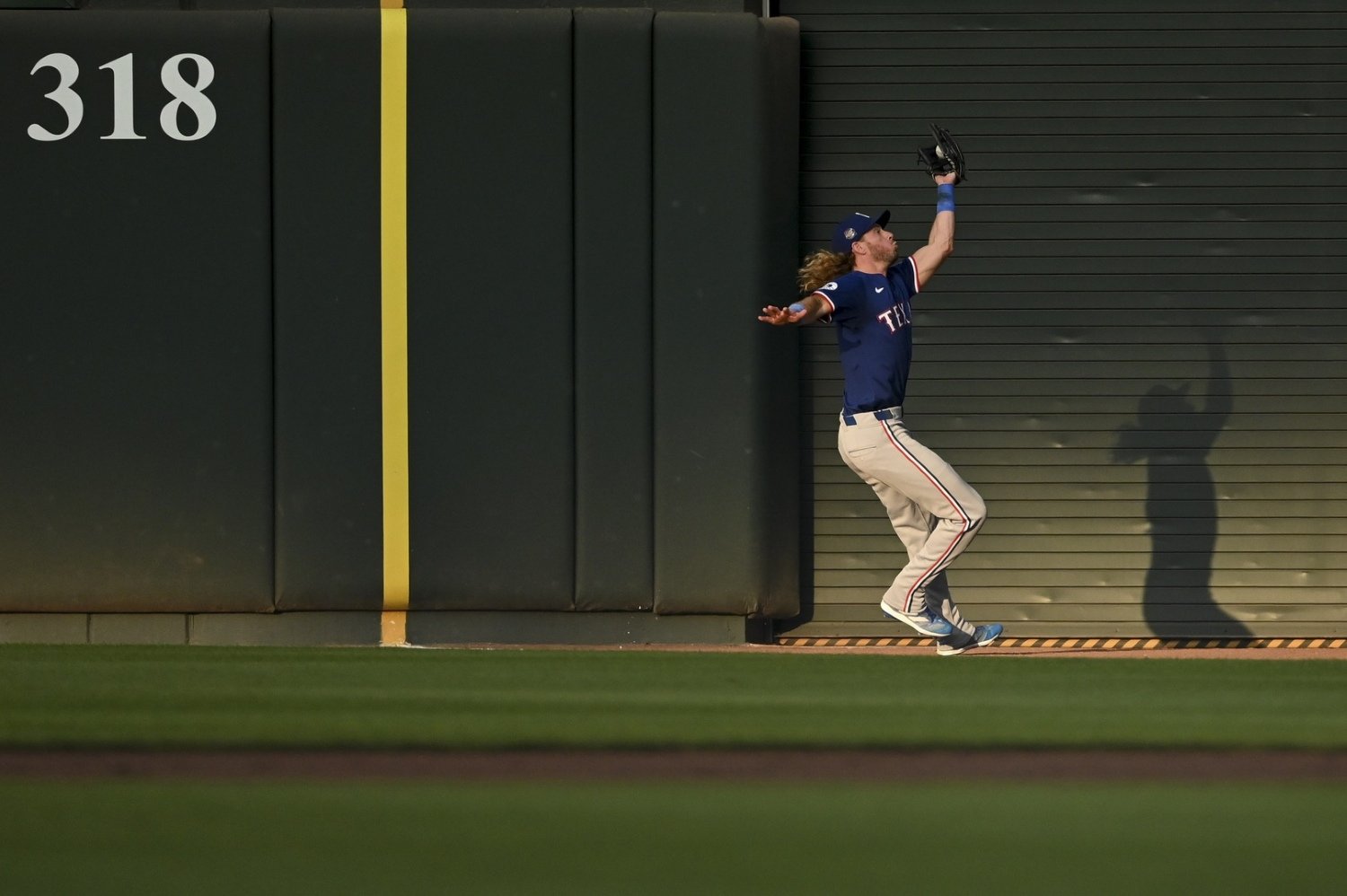 The Cubs signed outfielders Greg Allen and Travis Jankowski to minor-league deals Friday, and both players are reporting to big-league camp. Both are 30-something guys with very little power and ample speed. Jankowski, who will turn 34 in June, hit an appalling .200/.266/.242 in 2024 and became a non-entity for the not-so-defending champion Rangers. For his career, however, he's a more palatable .236/.319/.305 hitter, getting most of his value from good outfield defense and baserunning. Every two or three years, he's been a useful hitter with a plus OBP, even if it still comes with virtually no power. Allen, who will turn 32 in March, didn't even play in the majors last year. He's batted .231/.300/.340 for his career, in less than half as much playing time as Jankowski has scraped together, but other than that bit more power and less plate discipline, he's largely the same player. Both guys have lots of baserunning utility. Jankowski has 30 steals and has been caught just twice since the start of 2023, while Allen has 43 swipes in 47 tries—but with almost all of those coming in the minors. The two might look vaguely like candidates to back up Pete Crow-Armstrong in center field, but in fact, they've each spent most of their big-league time the last few years in corner spots (most often left). Neither has any real value in that spot in the majors, except as emergency backups. Surely, the reasons why each of them were willing to sign with the Cubs had to do with the lack of an obvious backup to Crow-Armstrong out there, but the reasons why the Cubs wanted them seem a bit less encouraging. Outfielder Owen Caissie will be shut down for a little while yet, as he deals with a groin strain. After Caissie underwent core surgery last October, his trade value was dinged all offseason, constraining the Cubs at times as they sought trade avenues to upgrade their prospective 2025 roster. If the opt-outs in Jankowski and Allen's deals aren't too early for it, they probably figure to start in the outfield in Iowa this spring, trying to establish position and be ready should the team need a replacement for multiple outfielders at once. Short of that, it's unlikely that either player makes it to the Cubs, because even early in camp, Kevin Alcánatara is making big waves. He's likely to be the team's de facto backup center fielder, though he, too, will begin the season in Iowa. The team's goal might be to develop him patiently, so perhaps an early injury and solid performance from one of the veterans could prompt them to call upon them instead of Alcántara. By midseason, though, they'll be hoping that Alcántara is forcing his way to the bigs, and only a spate of injuries figures to be capable of vaulting Jankowski or Allen to the big leagues at that point. There's nothing wrong with depth moves like these. They're bad news, because at least one of the two would be in some other camp right now if Caissie were healthy—just as Chris Flexen would be elsewhere if Brandon Birdsell weren't dealing with a shoulder problem. Once injuries like those crop up, a team has to deal with them, and the Cubs are working hard to keep some viable options in play, should they be left suddenly without one of their key contributors. Their dedication to depth this winter continues into the spring.
 -
The 2025 season will be the second baseman's last chance to prove he can be consistent and healthy enough to factor into the long-term plans for the Cubs. Is he up to it? Image courtesy of © David Banks-Imagn Images If you only look at his forearms, it's easy to dream on Nico Hoerner taking a big step forward in the power department as he enters his mid-20s; it just requires a change of approach. If you look only at his swing speeds and exit velocities, it's impossible to imagine him ever tapping into more than a modicum of pop. The truth, surely, is somewhere in the middle. If you only watched Hoerner play defense in 2023, when his one-year slide over to shortstop was scrapped in deference to the arrival of free agent Dansby Swanson and he could unleash the athleticism he'd carefully built up to make playing short possible on the easier duty of playing second base, he looks like a long-term asset based on his glovework, alone. He was everywhere. If you only watched him play in 2024, when a forearm problem exacerbated what was already a slightly problematic weak arm, he looks like a player without a true defensive home—solid at second, but limited; fine if he moved to left field, but the bat wouldn't play; good at third base, maybe, but in a Nick Madrigal kind of way. The truth is somewhere in the middle. You could forgive Hoerner if he feels a bit stuck in the middle with the Cubs right now, and you could forgive the Cubs (and their fans) if they feel a similar sort of frustration. After that 2022 breakout campaign, so much looked possible. Hoerner moved to shortstop to replace Javier Báez, and admirably held his own; hit 10 home runs in 517 plate appearances; maintained a superb strikeout rate; and stole bases very efficiently. He was an exciting young player, and the extension he signed in Mar. 2023 gave fans hope that he would blossom into a genuine star under cost control—if only for the medium term, rather than for another decade. Instead, the last two seasons have been uneven. They feel like steps sideways, rather than forward. Hoerner has still made contact at an elite rate, and he's increased his walk rate incrementally. Instead of growing into a bit more power, though, that part of his game has regressed, and he's used the opposite field a bit less well, to boot. He's been an average overall hitter, which can still be hugely valuable if one adds tons of value on the bases and in the field—but after racking up 22 steals in his final 65 games of 2023, he stole just 31 all season in 2024. His second-half OBP in 2023 was pushing .380, but in 2024, there was no similarly hot stretch, and his final number was .335. Meanwhile, his defense was solid, but the spark of spectacularity that he showed with the leather in 2023 was gone. This year, Hoerner has to pick some lanes and thrive within them. He's making $11.5 million in 2025 and $12 million in 2026, for his ages-28 and 29 seasons. He won't still be young on the other side of these seasons, when he heads for free agency. He needs to realize his potential—if he hasn't already done so—right now. This is his last chance to remain in the Cubs' plans, even for the final year of his deal. The best version of Hoerner is the guy we've already seen, in the second half of 2023 and the middle of 2022. It's a selectively aggressive, high-contact, high-OBP profile, even if that means willingly trading what little power he can access. He traded away that power in 2024, alright, as his Damage rate on batted balls (the percentage of batted balls that had an exit velocity, launch angle and hit direction likely to lead to an extra-base hit) fell from the league's 10th percentile in both 2022 and 2023 to the 4th percentile in 2024. Unfortunately, he didn't get selective aggression in the exchange; he didn't create more hard contact to the opposite field or draw more walks. His SEAGER (Selective Aggression Engagement Rate) score fell from the 37th and 42nd percentiles in the league the previous two seasons to the 15th in 2024, so he didn't have even a prolonged stretch where he was that .300 hitter with a strong walk rate to boost it. He has to change that this season, if he wants to take a step toward stardom. He has to convert more of his count management to walks, and/or sit on certain pitch types and locations and create more line drives to all fields, so he can get on base at a .370 clip. Otherwise, he won't be in very high demand this winter. Now, here's the twist: whether he takes that step forward or not, the Cubs are going to trade him next offseason. Why? Mainly, it's because of Swanson. With five years and $139 million left on his deal, there's no turning back on the team's commitment to him, but Swanson will be 31 this year. Actuarially, in the modern game, it's very unlikely that he sticks at shortstop beyond this year. In 2024, for the first time in modern history, no player in the league played even 120 games at short at age 31 or older. Swanson will stick at the spot for 2025, but we saw him begin to deteriorate in the field even in 2024. His greatest limitation has always been arm strength, so the natural place for him to move is second base. In all likelihood, come 2026, Swanson will have crossed the keystone, and the Cubs will either have Jefferson Rojas ready; slide Matt Shaw over from third to short; or go shopping for an alternative. No matter which it is, Hoerner is likely to be shipped out, to replenish the farm system; bolster the pitching staff; save money; and/or create space for Swanson, Shaw, Rojas, and/or James Triantos, depending on how this season unfolds. This season is Hoerner's last stand. He needs to have a big campaign. If he does, he might get a lot of reps at the top of the batting order, and he might catalyze the Cubs' run back to the playoffs. He might earn himself a lot of money in the process. What he probably won't do, either way, is earn a long-term place in the Cubs' plans. View full article
-
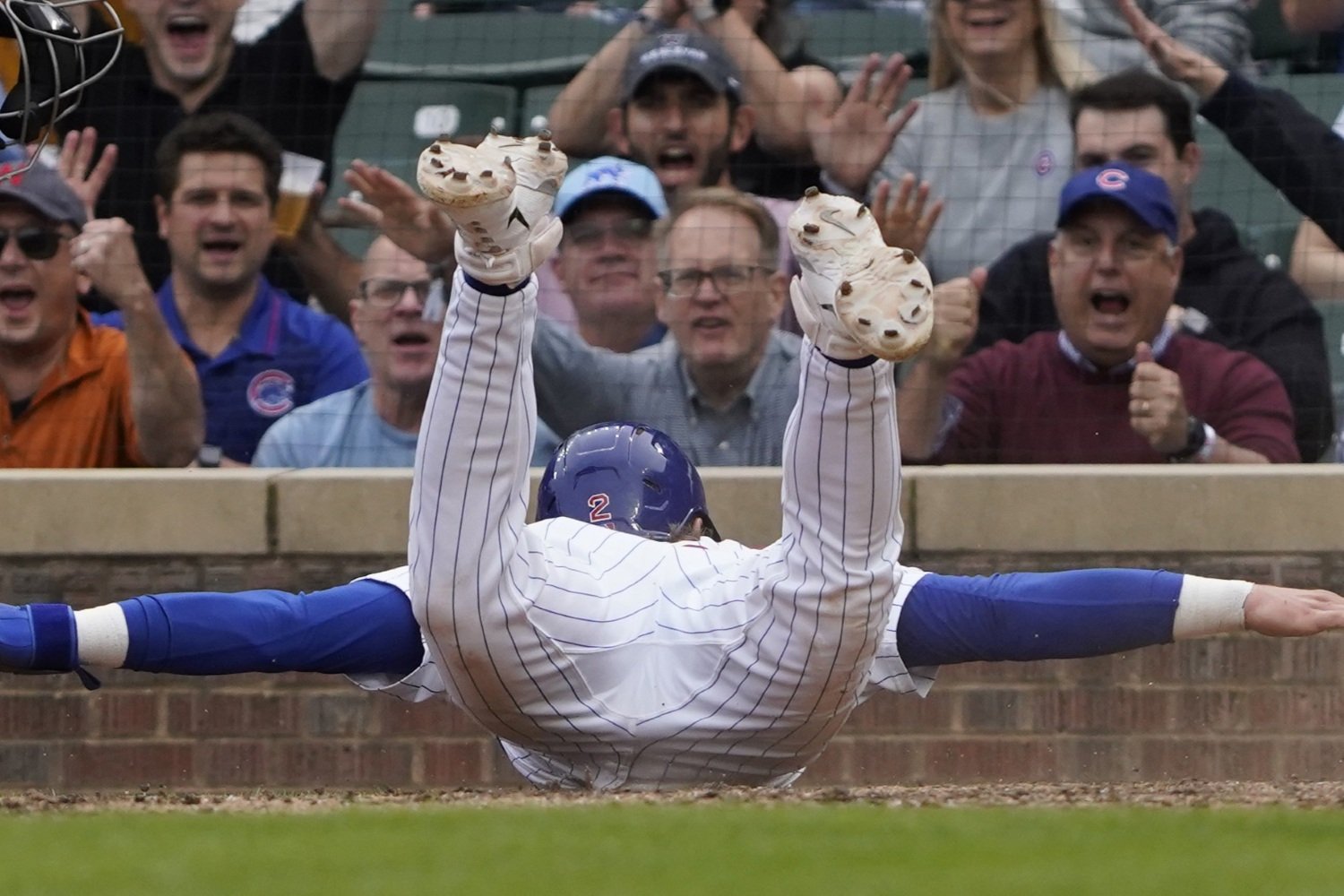 If you only look at his forearms, it's easy to dream on Nico Hoerner taking a big step forward in the power department as he enters his mid-20s; it just requires a change of approach. If you look only at his swing speeds and exit velocities, it's impossible to imagine him ever tapping into more than a modicum of pop. The truth, surely, is somewhere in the middle. If you only watched Hoerner play defense in 2023, when his one-year slide over to shortstop was scrapped in deference to the arrival of free agent Dansby Swanson and he could unleash the athleticism he'd carefully built up to make playing short possible on the easier duty of playing second base, he looks like a long-term asset based on his glovework, alone. He was everywhere. If you only watched him play in 2024, when a forearm problem exacerbated what was already a slightly problematic weak arm, he looks like a player without a true defensive home—solid at second, but limited; fine if he moved to left field, but the bat wouldn't play; good at third base, maybe, but in a Nick Madrigal kind of way. The truth is somewhere in the middle. You could forgive Hoerner if he feels a bit stuck in the middle with the Cubs right now, and you could forgive the Cubs (and their fans) if they feel a similar sort of frustration. After that 2022 breakout campaign, so much looked possible. Hoerner moved to shortstop to replace Javier Báez, and admirably held his own; hit 10 home runs in 517 plate appearances; maintained a superb strikeout rate; and stole bases very efficiently. He was an exciting young player, and the extension he signed in Mar. 2023 gave fans hope that he would blossom into a genuine star under cost control—if only for the medium term, rather than for another decade. Instead, the last two seasons have been uneven. They feel like steps sideways, rather than forward. Hoerner has still made contact at an elite rate, and he's increased his walk rate incrementally. Instead of growing into a bit more power, though, that part of his game has regressed, and he's used the opposite field a bit less well, to boot. He's been an average overall hitter, which can still be hugely valuable if one adds tons of value on the bases and in the field—but after racking up 22 steals in his final 65 games of 2023, he stole just 31 all season in 2024. His second-half OBP in 2023 was pushing .380, but in 2024, there was no similarly hot stretch, and his final number was .335. Meanwhile, his defense was solid, but the spark of spectacularity that he showed with the leather in 2023 was gone. This year, Hoerner has to pick some lanes and thrive within them. He's making $11.5 million in 2025 and $12 million in 2026, for his ages-28 and 29 seasons. He won't still be young on the other side of these seasons, when he heads for free agency. He needs to realize his potential—if he hasn't already done so—right now. This is his last chance to remain in the Cubs' plans, even for the final year of his deal. The best version of Hoerner is the guy we've already seen, in the second half of 2023 and the middle of 2022. It's a selectively aggressive, high-contact, high-OBP profile, even if that means willingly trading what little power he can access. He traded away that power in 2024, alright, as his Damage rate on batted balls (the percentage of batted balls that had an exit velocity, launch angle and hit direction likely to lead to an extra-base hit) fell from the league's 10th percentile in both 2022 and 2023 to the 4th percentile in 2024. Unfortunately, he didn't get selective aggression in the exchange; he didn't create more hard contact to the opposite field or draw more walks. His SEAGER (Selective Aggression Engagement Rate) score fell from the 37th and 42nd percentiles in the league the previous two seasons to the 15th in 2024, so he didn't have even a prolonged stretch where he was that .300 hitter with a strong walk rate to boost it. He has to change that this season, if he wants to take a step toward stardom. He has to convert more of his count management to walks, and/or sit on certain pitch types and locations and create more line drives to all fields, so he can get on base at a .370 clip. Otherwise, he won't be in very high demand this winter. Now, here's the twist: whether he takes that step forward or not, the Cubs are going to trade him next offseason. Why? Mainly, it's because of Swanson. With five years and $139 million left on his deal, there's no turning back on the team's commitment to him, but Swanson will be 31 this year. Actuarially, in the modern game, it's very unlikely that he sticks at shortstop beyond this year. In 2024, for the first time in modern history, no player in the league played even 120 games at short at age 31 or older. Swanson will stick at the spot for 2025, but we saw him begin to deteriorate in the field even in 2024. His greatest limitation has always been arm strength, so the natural place for him to move is second base. In all likelihood, come 2026, Swanson will have crossed the keystone, and the Cubs will either have Jefferson Rojas ready; slide Matt Shaw over from third to short; or go shopping for an alternative. No matter which it is, Hoerner is likely to be shipped out, to replenish the farm system; bolster the pitching staff; save money; and/or create space for Swanson, Shaw, Rojas, and/or James Triantos, depending on how this season unfolds. This season is Hoerner's last stand. He needs to have a big campaign. If he does, he might get a lot of reps at the top of the batting order, and he might catalyze the Cubs' run back to the playoffs. He might earn himself a lot of money in the process. What he probably won't do, either way, is earn a long-term place in the Cubs' plans.
 -
The Cubs are back in game action. The scores don't matter and the contests will be populated with minor-leaguers for most of the next month, but Thursday offered a huge milestone—and some fun Statcast-fueled insights. Image courtesy of © Mark J. Rebilas-Imagn Images The Chicago Cubs drubbed the Los Angeles Dodgers in their season opener Thursday. If you're in a certain kind of headspace and it would be helpful, feel free to ignore the fact that it was the Cactus League opener, and that the game's biggest single blow was a three-run home run by obscure prospect Ivan Brethowr, and just savor that victory. Yes, it was just a spring training game, and an even wilder, more minor-league-flavored one than most, but there were two features of major interest in play: The first test of the automated ball-strike challenge system in an MLB game; and Statcast data flowing freely from Camelback Ranch, the spring home of the Dodgers. The first is neat, a little bit of a novelty and a preview of 2026, when we're very likely to see a debugged version of the challenge system come into play for balls and strikes in MLB games that count. The Cubs got the better side of the first challenge ever in a game featuring big-leaguers, when Reese McGuire challenged a called ball thrown by Cody Poteet and the computers overturned the call, granting Poteet a strike. Much more fun and exciting, though, is the Statcast info. Until this year, the only park in the Cactus League that had Statcast data freely available to the public was Salt River Fields at Talking Stick, where the Diamondbacks and Rockies train. Whether because of the ABS system being installed or just because that's the direction things are heading, we now know that Camelback Ranch will offer another source of data we outside observers can capture and analyze. It wouldn't be surprising if we end up with such data for a majority of spring games this year—and that would mark a big step forward in our ability to evaluate performances and the decisions teams must make based on them in the weeks ahead. I want to talk about the standout performances from the game, and we will, but first, a word of caution is in order: It seems clear to me that the Statcast system in that park was improperly calibrated. As you'll soon see, there were some velocity readings parading past viewers in this game that simply can't be right, so we need to mentally discount them just a little bit. That's ok. It's too early to be taking such readings at face value, anyway. We should allow for lots of tinkering and working on things. Nonetheless, numbers like these—numbers that measure movements and processes, rather than multivariate on-field outcomes—matter even in tiny samples, and we can glean a little bit from them even in this strange context. The Shadow Bullpen If the season began tomorrow, instead of four weeks from now, the Cubs' relief corps on Opening Day would probably include: Ryan Pressly Ryan Brasier Porter Hodge Nate Pearson Caleb Thielbar Tyson Miller Eli Morgan Julian Merryweather Of course, that assumes perfect health and roughly the expected performances by all the candidates for various jobs, which won't come to fruition. Still, that's the baseline octet slated to fill out their bullpen. So when I tell you that Cody Poteet, Brad Keller, Daniel Palencia and Jack Neely did most of the heavy lifting Thursday, you don't automatically need to care how they did. But they did very well. Poteet was the mixed bag. His secondary stuff was all over the place, and he struggled to repeat his delivery, leading to some walks and some hard contact on fat pitches. An inconsistent release point was a major source of his struggles (when he had them) in the Yankees system, so it's discouraging that he ran into that very problem in his first game as a member of the Cubs. On the other hand, Poteet's fastball averaged 94.4 miles per hour on Statcast, touching 96. Last season, his average heater was just 93.3 mph. We should assume that that 94.4 was really about 92.5, and make the 96 a 94, but that's still an exciting amount of zip from the possible long reliever, given that it's only Feb. 20. His first inning of work was strong. He ran into a mechanical or grip issue in the second that led to his heater flattening out, even as it held its velocity. At this early juncture, that type of stuff is supposed to happen. We'll see how he progresses, but it was a fine debut. Things only got better. Keller, a minor-league free agent who signed with the Cubs and who made sense as a target for them all along, was pumping gas in his 1 2/3 innings of scoreless, two-strikeout ball. His average fastball velocity last year was 93.8 miles per hour. On Thursday, Statcast registered him as high as 97.9 and had him averaging 96.2. Again, there's no way that's right, but it seems as though he was throwing at least as hard as he did during the regular season last year. Even more interesting, arguably, was an apparent adjustment to his pitch shapes. Keller's fastball had a little less cut to it, but to compensate, he was throwing a version of the hard slider he used in 2024 that plays more like a cutter: less depth, but the same amount of horizontal swerve. He might be unlocking a new arsenal, of sorts, though we need more data to tell for sure. Keller is a very long shot to make the roster right away, but he could easily end up contributing as a spot starter or long reliever by the end of May—especially if he really is on the way to sitting 95 or so this year. Palencia and Neely were the showstoppers, though. If you care to suspend your disbelief for a moment, Palencia's first pitch of the spring was 100.0 miles per hour, and he sat right around there throughout a scoreless inning, touching as high as 101.3 mph. Even if we apply a skepticism discount to this one, it's awesome. Palencia has been the easiest dark-horse reliever to dream on all winter for this team, even though holding a spot for him was never an option. He looked as good mechanically Thursday as he did at times late in 2024, and if he can keep up any semblance of that, he has a chance to become this team's relief ace over the next year or two. Neely and Palencia make a truly delightful one-two punch, and if they pan out, we need to cook up a dynamic double nickname for them. Palencia is built like a middle linebacker; Neely is built like a rim-protecting center. Palencia's pitch mix is surprisingly varied for a reliever, but he certainly lacks the command to be a starter, and his sheer, explosive power makes up for imperfect fastball shape. Neely, all neverending limbs and with pretty good command of just two pitches, gets plenty of his value from that subtle art of the vertical approach angle. He pitched the sixth after Palencia's scoreless fifth, and fanned two without allowing a baserunner. He sat 97, and if you only believe it was 94.5, who cares? He also used his slider more than his fastball, anyway, and it displayed its usual chaotic filthiness. I don't think anyone would even argue with the idea that Palencia and Neely represent the highest-upside back end of the Cubs' possible bullpens. It's just too risky to have come into this season counting on anything from either. They're a shadow bullpen, a second unit—along with Poteet, Keller, Ben Heller, Luke Little, and whoever falls through the cracks in the battle for rotation spots in Chicago and/or Iowa. That they have so much promise and are yet inessential to the team heading into the season is awfully exciting, as Thursday affirmed. They Don't Call Him Tater for Nothing At this moment, the battle for the final bench spot looks likely to come down to Vidal Bruján and Gage Workman. Bruján started in center field in this game, and he looked fine. He's a bit less selective than you'd like a player with his contact profile to be, but in a game like Thursday's, you also want to see him get his rips. He got a great jump on a stolen base; he got a less impressive jump on a probably-uncatchable-anyway fly ball, and was otherwise untested in center. If Bruján proves he can hit a little and patrol center well, that could seal the gig for him, but Workman put on a show in his Cubs organization debut. He rapped a second-inning single sharply through the infield against Yoshinobu Yamamoto, and started two slick around-the-horn double plays at third base. The big moment, though, came when he rode a Justin Wrobleski pitch out of the park to the opposite field. The homer only had a 101.5-mph exit velocity, so it wasn't a no-doubter, but his huge frame and ability to generate bat speed even deep in the hitting zone was eye-opening. He's a tremendous athlete; it would be a bummer to ship him back to Detroit. Miscellany It wasn't just Workman who lit up Statcast with some exit velocities worth monitoring. Kevin Alcántara hit a ball 107.3 miles per hour, scalding it through the left side of the infield. That he didn't life that ball mitigates the celebration a little, because as we know, that's the hurdle he most needs to clear to emerge as a productive big-league hitter. In that very vein, though, it was interesting to see him take a Yamamoto fastball off the plate away and float it into right field on a nice line-drive trajectory for a first-inning single. He's learning to make some of the adjustments that could unlock his enormous upside. Meanwhile, Moises Ballesteros swung five times in 16 pitches seen, and made contact all five times. Two of those were foul, and none of the three he put in play was especially impressive. He went 0-3, but he did draw a walk, and that plate discipline is going to be crucial to his development. With the feel for contact he boasts, there's no reason he should be swinging as often as he was late in the year with Iowa. He looked hitterish, but mature Thursday. Finally, let's applaud Michael Busch, the only true regular for the team who was tasked with playing on the first day of his strange spring season. He went 2-3, with a neat opposite-field liner single off Yamamoto (a mirror image of Alcántara's, really) and an absolute laser that (scarily) hit Dodgers hurler Bobby Miller in the head. Miller was ok, but that was a frightening moment. Busch had scalded the ball at 105.7 mph back through the box. The two overlapped for years in the Dodgers system, after both went from high schools in the Upper Midwest to the ACC for college. They know each other well, and Busch would have been especially wrecked if things hadn't turned out ok. They did, though, and Busch's first game was a success. His only out was also hit over 104 mph, but on the ground. It's just one game, that doesn't count. Still, that was a fun start to what the Cubs hope will be a fun season. It'll be fascinating to see how much of that tantalizing pitching data carries over into the next appearances for each of those arms, and how these key young hitters continue to handle their big chances in camp. View full article
-
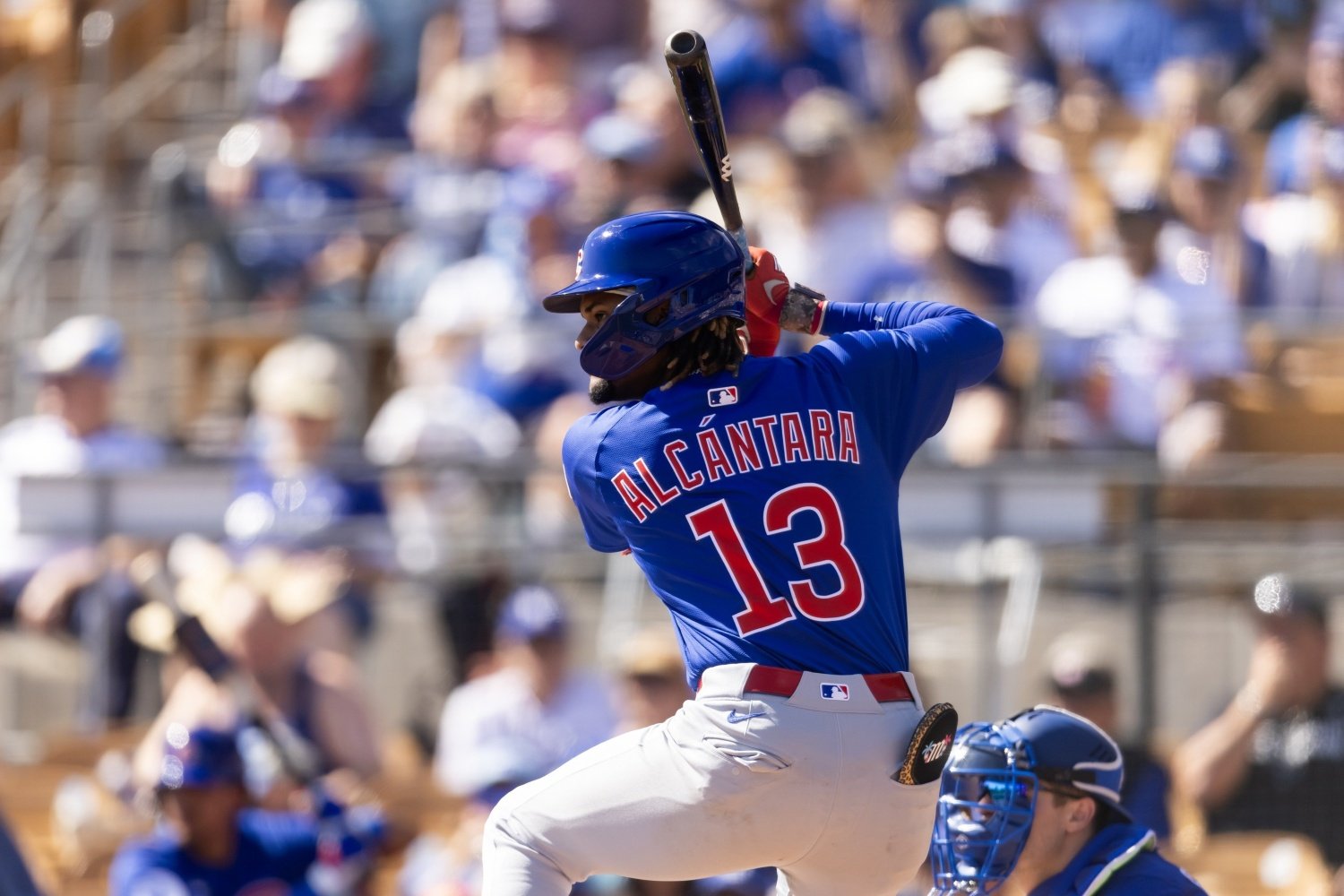 The Chicago Cubs drubbed the Los Angeles Dodgers in their season opener Thursday. If you're in a certain kind of headspace and it would be helpful, feel free to ignore the fact that it was the Cactus League opener, and that the game's biggest single blow was a three-run home run by obscure prospect Ivan Brethowr, and just savor that victory. Yes, it was just a spring training game, and an even wilder, more minor-league-flavored one than most, but there were two features of major interest in play: The first test of the automated ball-strike challenge system in an MLB game; and Statcast data flowing freely from Camelback Ranch, the spring home of the Dodgers. The first is neat, a little bit of a novelty and a preview of 2026, when we're very likely to see a debugged version of the challenge system come into play for balls and strikes in MLB games that count. The Cubs got the better side of the first challenge ever in a game featuring big-leaguers, when Reese McGuire challenged a called ball thrown by Cody Poteet and the computers overturned the call, granting Poteet a strike. Much more fun and exciting, though, is the Statcast info. Until this year, the only park in the Cactus League that had Statcast data freely available to the public was Salt River Fields at Talking Stick, where the Diamondbacks and Rockies train. Whether because of the ABS system being installed or just because that's the direction things are heading, we now know that Camelback Ranch will offer another source of data we outside observers can capture and analyze. It wouldn't be surprising if we end up with such data for a majority of spring games this year—and that would mark a big step forward in our ability to evaluate performances and the decisions teams must make based on them in the weeks ahead. I want to talk about the standout performances from the game, and we will, but first, a word of caution is in order: It seems clear to me that the Statcast system in that park was improperly calibrated. As you'll soon see, there were some velocity readings parading past viewers in this game that simply can't be right, so we need to mentally discount them just a little bit. That's ok. It's too early to be taking such readings at face value, anyway. We should allow for lots of tinkering and working on things. Nonetheless, numbers like these—numbers that measure movements and processes, rather than multivariate on-field outcomes—matter even in tiny samples, and we can glean a little bit from them even in this strange context. The Shadow Bullpen If the season began tomorrow, instead of four weeks from now, the Cubs' relief corps on Opening Day would probably include: Ryan Pressly Ryan Brasier Porter Hodge Nate Pearson Caleb Thielbar Tyson Miller Eli Morgan Julian Merryweather Of course, that assumes perfect health and roughly the expected performances by all the candidates for various jobs, which won't come to fruition. Still, that's the baseline octet slated to fill out their bullpen. So when I tell you that Cody Poteet, Brad Keller, Daniel Palencia and Jack Neely did most of the heavy lifting Thursday, you don't automatically need to care how they did. But they did very well. Poteet was the mixed bag. His secondary stuff was all over the place, and he struggled to repeat his delivery, leading to some walks and some hard contact on fat pitches. An inconsistent release point was a major source of his struggles (when he had them) in the Yankees system, so it's discouraging that he ran into that very problem in his first game as a member of the Cubs. On the other hand, Poteet's fastball averaged 94.4 miles per hour on Statcast, touching 96. Last season, his average heater was just 93.3 mph. We should assume that that 94.4 was really about 92.5, and make the 96 a 94, but that's still an exciting amount of zip from the possible long reliever, given that it's only Feb. 20. His first inning of work was strong. He ran into a mechanical or grip issue in the second that led to his heater flattening out, even as it held its velocity. At this early juncture, that type of stuff is supposed to happen. We'll see how he progresses, but it was a fine debut. Things only got better. Keller, a minor-league free agent who signed with the Cubs and who made sense as a target for them all along, was pumping gas in his 1 2/3 innings of scoreless, two-strikeout ball. His average fastball velocity last year was 93.8 miles per hour. On Thursday, Statcast registered him as high as 97.9 and had him averaging 96.2. Again, there's no way that's right, but it seems as though he was throwing at least as hard as he did during the regular season last year. Even more interesting, arguably, was an apparent adjustment to his pitch shapes. Keller's fastball had a little less cut to it, but to compensate, he was throwing a version of the hard slider he used in 2024 that plays more like a cutter: less depth, but the same amount of horizontal swerve. He might be unlocking a new arsenal, of sorts, though we need more data to tell for sure. Keller is a very long shot to make the roster right away, but he could easily end up contributing as a spot starter or long reliever by the end of May—especially if he really is on the way to sitting 95 or so this year. Palencia and Neely were the showstoppers, though. If you care to suspend your disbelief for a moment, Palencia's first pitch of the spring was 100.0 miles per hour, and he sat right around there throughout a scoreless inning, touching as high as 101.3 mph. Even if we apply a skepticism discount to this one, it's awesome. Palencia has been the easiest dark-horse reliever to dream on all winter for this team, even though holding a spot for him was never an option. He looked as good mechanically Thursday as he did at times late in 2024, and if he can keep up any semblance of that, he has a chance to become this team's relief ace over the next year or two. Neely and Palencia make a truly delightful one-two punch, and if they pan out, we need to cook up a dynamic double nickname for them. Palencia is built like a middle linebacker; Neely is built like a rim-protecting center. Palencia's pitch mix is surprisingly varied for a reliever, but he certainly lacks the command to be a starter, and his sheer, explosive power makes up for imperfect fastball shape. Neely, all neverending limbs and with pretty good command of just two pitches, gets plenty of his value from that subtle art of the vertical approach angle. He pitched the sixth after Palencia's scoreless fifth, and fanned two without allowing a baserunner. He sat 97, and if you only believe it was 94.5, who cares? He also used his slider more than his fastball, anyway, and it displayed its usual chaotic filthiness. I don't think anyone would even argue with the idea that Palencia and Neely represent the highest-upside back end of the Cubs' possible bullpens. It's just too risky to have come into this season counting on anything from either. They're a shadow bullpen, a second unit—along with Poteet, Keller, Ben Heller, Luke Little, and whoever falls through the cracks in the battle for rotation spots in Chicago and/or Iowa. That they have so much promise and are yet inessential to the team heading into the season is awfully exciting, as Thursday affirmed. They Don't Call Him Tater for Nothing At this moment, the battle for the final bench spot looks likely to come down to Vidal Bruján and Gage Workman. Bruján started in center field in this game, and he looked fine. He's a bit less selective than you'd like a player with his contact profile to be, but in a game like Thursday's, you also want to see him get his rips. He got a great jump on a stolen base; he got a less impressive jump on a probably-uncatchable-anyway fly ball, and was otherwise untested in center. If Bruján proves he can hit a little and patrol center well, that could seal the gig for him, but Workman put on a show in his Cubs organization debut. He rapped a second-inning single sharply through the infield against Yoshinobu Yamamoto, and started two slick around-the-horn double plays at third base. The big moment, though, came when he rode a Justin Wrobleski pitch out of the park to the opposite field. The homer only had a 101.5-mph exit velocity, so it wasn't a no-doubter, but his huge frame and ability to generate bat speed even deep in the hitting zone was eye-opening. He's a tremendous athlete; it would be a bummer to ship him back to Detroit. Miscellany It wasn't just Workman who lit up Statcast with some exit velocities worth monitoring. Kevin Alcántara hit a ball 107.3 miles per hour, scalding it through the left side of the infield. That he didn't life that ball mitigates the celebration a little, because as we know, that's the hurdle he most needs to clear to emerge as a productive big-league hitter. In that very vein, though, it was interesting to see him take a Yamamoto fastball off the plate away and float it into right field on a nice line-drive trajectory for a first-inning single. He's learning to make some of the adjustments that could unlock his enormous upside. Meanwhile, Moises Ballesteros swung five times in 16 pitches seen, and made contact all five times. Two of those were foul, and none of the three he put in play was especially impressive. He went 0-3, but he did draw a walk, and that plate discipline is going to be crucial to his development. With the feel for contact he boasts, there's no reason he should be swinging as often as he was late in the year with Iowa. He looked hitterish, but mature Thursday. Finally, let's applaud Michael Busch, the only true regular for the team who was tasked with playing on the first day of his strange spring season. He went 2-3, with a neat opposite-field liner single off Yamamoto (a mirror image of Alcántara's, really) and an absolute laser that (scarily) hit Dodgers hurler Bobby Miller in the head. Miller was ok, but that was a frightening moment. Busch had scalded the ball at 105.7 mph back through the box. The two overlapped for years in the Dodgers system, after both went from high schools in the Upper Midwest to the ACC for college. They know each other well, and Busch would have been especially wrecked if things hadn't turned out ok. They did, though, and Busch's first game was a success. His only out was also hit over 104 mph, but on the ground. It's just one game, that doesn't count. Still, that was a fun start to what the Cubs hope will be a fun season. It'll be fascinating to see how much of that tantalizing pitching data carries over into the next appearances for each of those arms, and how these key young hitters continue to handle their big chances in camp.
 -
The Cubs have officially set themselves up to open the season with a four-person bench composed of people who weren't in the organization at the end of last September. One of those four might not even be in the organization now. Image courtesy of © Patrick Gorski-Imagn Images To make room for new signee Justin Turner, the Cubs designated Alexander Canario for assignment Thursday morning. That was an increasingly likely possibility with each passing move to overhaul Chicago's bench this winter, and we're now up to five such moves: Carson Kelly signed on as the complementary catcher, via free agency The team selected Gage Workman in the Rule 5 Draft in December In a trade with the Marlins, the Cubs jettisoned first baseman Matt Mervis and brought in utility man Vidal Bruján Last month, the club signed infielder Jon Berti This week, they signed Turner That left no room for Canario, just as there was no room for Nick Madrigal, Mike Tauchman, Miles Mastrobuoni, and Patrick Wisdom, all of whom the team let go for free this offseason. They might yet trade Canario for a nominal return, but he's essentially gone for nothing, too. Last year's bench was atrocious, and they were exposed when injuries poked holes in an otherwise solid lineup. The front office believes the veterans they've brought in substantially raise the floor for the team by giving them much better depth. Since Canario was out of minor-league options, he would have eventually met this fate, unless he had such an outstanding spring as to force his way onto the 26-man roster. Doing this now opens more reps in center field for the likes of Bruján, Berti, and Workman throughout Cactus League play, but in truth, none of those three are likely to play a lot of center for this team, even if they look decent when given their chance in exhibition games. Should Pete Crow-Armstrong get hurt, the team will turn to Kevin Alcántara, who will otherwise wait at Triple-A Iowa. Shy of that, though, there's no one on the roster to whom Craig Counsell is likely to be comfortable falling back. Bruján is leading off and playing center field in the first game of the spring season Thursday, as the Cubs try to assess his viability as a backup to Crow-Armstrong. However, it still feels like making this move early signals that the Cubs have their eye on a final bench upgrade. They might yet nab a backup center-field option, ideally someone available either on a minor-league deal or with options left. That could be Manuel Margot, whose season with the Twins in 2024 saw him not only struggle as a pinch-hitter but play relatively little center field. He's typically a defense-first player, so that was a jarring turn in his career, but he would still have utility as a Crow-Armstrong alternative in the small center field at Wrigley Field. He's probably gettable as a non-roster invitee, at this stage. It could also mean a trade, for someone like the Guardians' Tyler Freeman or the Rays' Jake Mangum. A low-grade, optionable, center field-capable project makes a world of sense now, unless and until one of Bruján, Workman or Berti shows more feel than expected in the pasture. Now that Turner, Berti and Kelly are locked into the roster, Workman is imperiled. If he doesn't show facility in center, he's likely to be offered back to the Tigers in favor of someone who does. The squeeze at the end of the Cubs roster is on, although it won't fully tighten until the end of camp, since they can take 14 position players (or more, since it's only two games and they have many more optionable pitchers) to Tokyo for the season-opening series against the Dodgers, for which they get to use a 28-man roster. Canario is the latest casualty, but he won't be the last. View full article
-
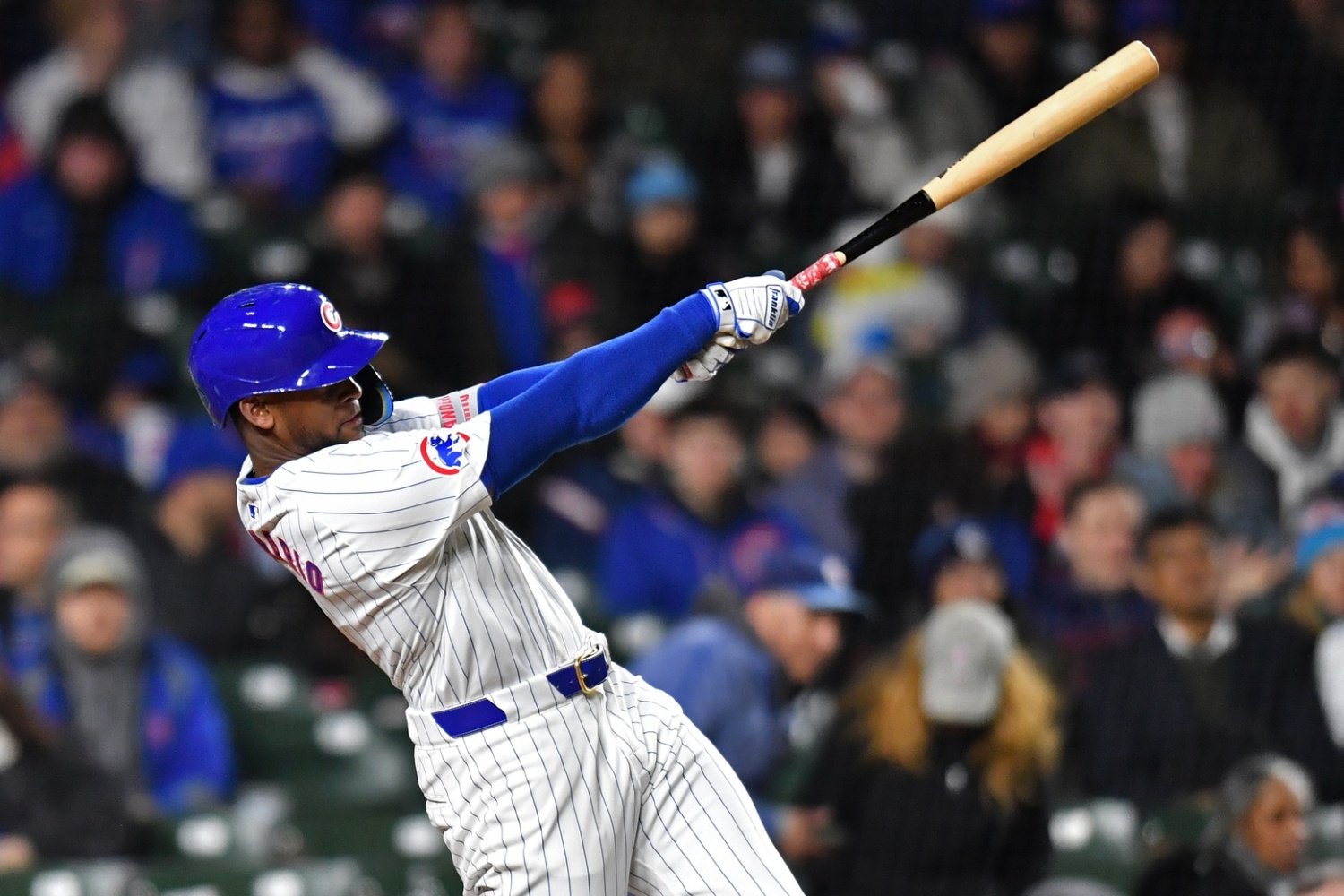 To make room for new signee Justin Turner, the Cubs designated Alexander Canario for assignment Thursday morning. That was an increasingly likely possibility with each passing move to overhaul Chicago's bench this winter, and we're now up to five such moves: Carson Kelly signed on as the complementary catcher, via free agency The team selected Gage Workman in the Rule 5 Draft in December In a trade with the Marlins, the Cubs jettisoned first baseman Matt Mervis and brought in utility man Vidal Bruján Last month, the club signed infielder Jon Berti This week, they signed Turner That left no room for Canario, just as there was no room for Nick Madrigal, Mike Tauchman, Miles Mastrobuoni, and Patrick Wisdom, all of whom the team let go for free this offseason. They might yet trade Canario for a nominal return, but he's essentially gone for nothing, too. Last year's bench was atrocious, and they were exposed when injuries poked holes in an otherwise solid lineup. The front office believes the veterans they've brought in substantially raise the floor for the team by giving them much better depth. Since Canario was out of minor-league options, he would have eventually met this fate, unless he had such an outstanding spring as to force his way onto the 26-man roster. Doing this now opens more reps in center field for the likes of Bruján, Berti, and Workman throughout Cactus League play, but in truth, none of those three are likely to play a lot of center for this team, even if they look decent when given their chance in exhibition games. Should Pete Crow-Armstrong get hurt, the team will turn to Kevin Alcántara, who will otherwise wait at Triple-A Iowa. Shy of that, though, there's no one on the roster to whom Craig Counsell is likely to be comfortable falling back. Bruján is leading off and playing center field in the first game of the spring season Thursday, as the Cubs try to assess his viability as a backup to Crow-Armstrong. However, it still feels like making this move early signals that the Cubs have their eye on a final bench upgrade. They might yet nab a backup center-field option, ideally someone available either on a minor-league deal or with options left. That could be Manuel Margot, whose season with the Twins in 2024 saw him not only struggle as a pinch-hitter but play relatively little center field. He's typically a defense-first player, so that was a jarring turn in his career, but he would still have utility as a Crow-Armstrong alternative in the small center field at Wrigley Field. He's probably gettable as a non-roster invitee, at this stage. It could also mean a trade, for someone like the Guardians' Tyler Freeman or the Rays' Jake Mangum. A low-grade, optionable, center field-capable project makes a world of sense now, unless and until one of Bruján, Workman or Berti shows more feel than expected in the pasture. Now that Turner, Berti and Kelly are locked into the roster, Workman is imperiled. If he doesn't show facility in center, he's likely to be offered back to the Tigers in favor of someone who does. The squeeze at the end of the Cubs roster is on, although it won't fully tighten until the end of camp, since they can take 14 position players (or more, since it's only two games and they have many more optionable pitchers) to Tokyo for the season-opening series against the Dodgers, for which they get to use a 28-man roster. Canario is the latest casualty, but he won't be the last.
 -
Put it this way: They had other avenues to upgrade the heart of the order this winter, and considered some, but a couple of people with a lot of pull put their foot down. They DO view Seiya's glove as radioactive, more or less. One reason why Tucker became the priority target was that they didn't view having Seiya in the outfield regularly as a viable option.
-
(True if you believe in Suzuki as an outfielder at all. Which...... Anyway. This is why I wouldn't rule out that they complete the shakeup and swap out one more position player for someone who's a better fit.)
-
The Chicago Cubs already had four or five guys for a four-man bench. Then they signed a free agent on a guaranteed deal. So: now what? Image courtesy of © Joe Nicholson-Imagn Images By acclamation, the Cubs needed one more good bench piece to complete their roster, even before considering their lingering interest in a possible blockbuster to raise the potential level of that roster. Less often discussed, though, was what became impossible to avoid Tuesday morning. If and when the team did sign a backup first baseman or center fielder, it was going to force one of the incumbent options out of the picture. With Justin Turner signing, that's exactly the scenario now. The question is: who gets the boot? At a glance, the obvious answer is Rule 5 Draft pick Gage Workman. Though it's easy to see why the Cubs were enamored of his tools, Workman, 25, has yet to play at the Triple-A level; has obvious flaws, including a lot of swing-and-miss in his offensive game; and needed a second look at Double-A pitching just to thrive there. He's a left-handed batter who could be a roving backup at shortstop, third base, and elsewhere, but Jon Berti had already made him halfway redundant. Modern benches run only four players deep. The Cubs have eight full-time regulars (Ian Happ, Pete Crow-Armstrong, Kyle Tucker, Matt Shaw, Dansby Swanson, Nico Hoerner, Michael Busch, and Seiya Suzuki) and two catchers (Miguel Amaya and Carson Kelly).locked into their places. That's 10 players of a total 13, and Berti makes 11. Turner brings it to 12, leaving just one place for Workman, Alexander Canario, Vidal Bruján, Nicky Lopez, or any others trying to stake a claim. Canario isn't an ideal fit himself, as a strikeout-prone outfielder with no real capacity to play center, but take him out of the equation, and the team doesn't have a true fourth outfielder. That roster-building foible bit the team a few years ago, when they occasionally found themselves using Trey Mancini, Patrick Wisdom, and Miles Mastrobuoni in the outfield. Kevin Alcántara figures to wait at Triple-A Iowa for his chance, but the team needs an outfielder who can at least rotate in when one of the starters is hurt or needs a day off. Canario is out of options, so if he doesn't make the club, the organization is likely to lose him on waivers. His positional value (and the fact that he's at least flashed the ability to hit at Triple A and in the bigs) sets him apart from Workman, whose flexibility on the infield is not especially important to a team that has Hoerner (capable of sliding to shortstop if Swanson is hurt), Shaw (still flexible, played all three throwing infield spots in 2024) and Berti (a true utility man with at least 100 games at each throwing spot on the dirt in his career). Does that mean Canario will make the roster? Not by a longshot. See, there's still that thorny issue of him not being a capable center fielder. We've discussed how they could work around that, but the Cubs might also be eyeing a more traditional way to solve that problem. By the time they break camp, they might elect to drop or trade Canario, if they can shake loose any more defensively adept center fielders from some other franchise. It just means that, given how short benches are in 2025 and the offseason arrivals of Kelly, Turner, and Berti, it's very unlikely that Workman will survive and stay with the team. Unless he blows the team away in early workouts this spring, expect Workman to be offered back to the Tigers. If the Cubs do pull off a trade for San Diego's Dylan Cease, it could involve more roster churn and open a place for Canario or Workman. Right now, though, the best version of the 2025 Cubs involves someone who isn't yet in the organization coming in to claim the final place on the team's bench. Turner's signing improves the offensive depth of the roster, but will soon force a tough decision on one of the players previously occupying his place. View full article
-
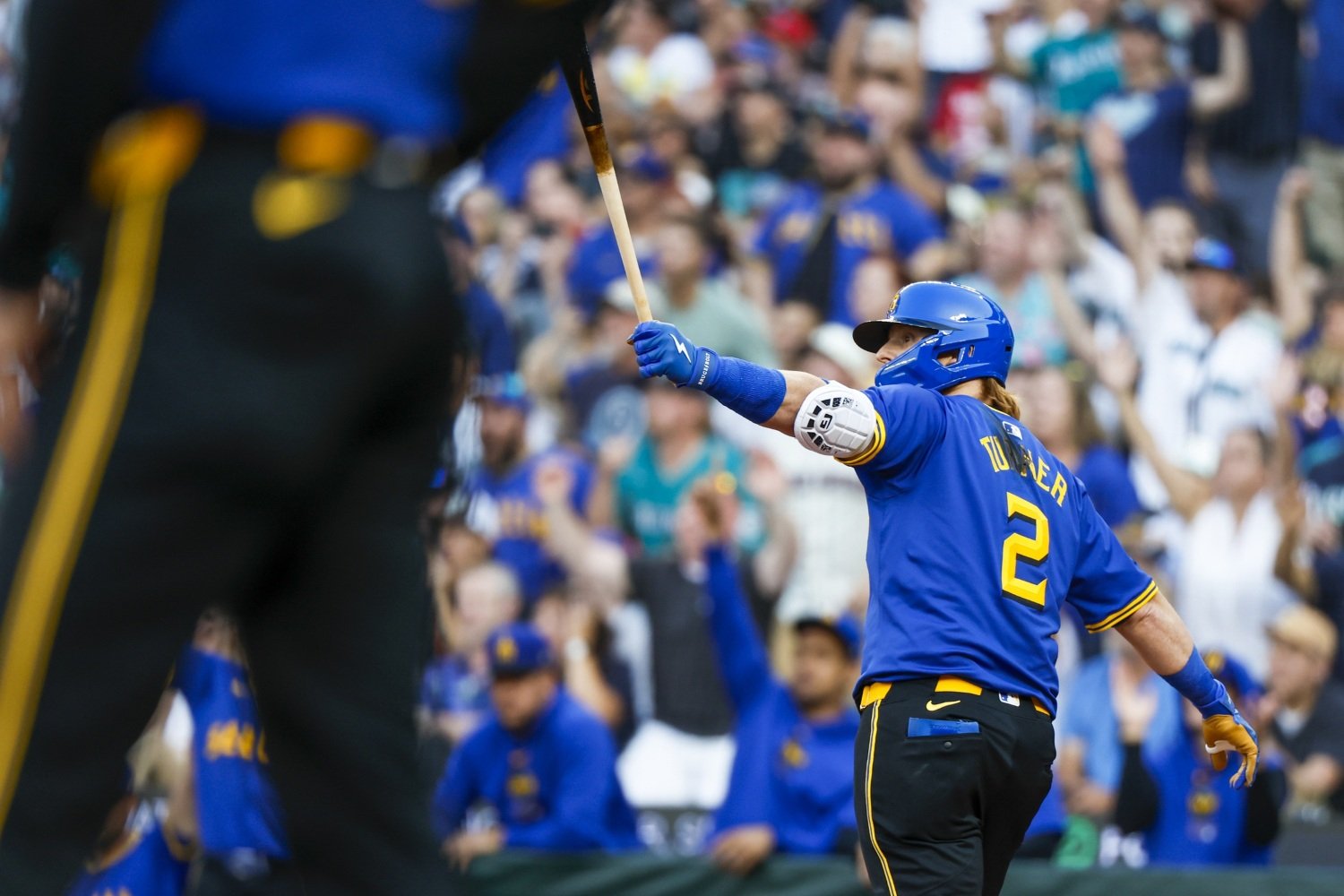 By acclamation, the Cubs needed one more good bench piece to complete their roster, even before considering their lingering interest in a possible blockbuster to raise the potential level of that roster. Less often discussed, though, was what became impossible to avoid Tuesday morning. If and when the team did sign a backup first baseman or center fielder, it was going to force one of the incumbent options out of the picture. With Justin Turner signing, that's exactly the scenario now. The question is: who gets the boot? At a glance, the obvious answer is Rule 5 Draft pick Gage Workman. Though it's easy to see why the Cubs were enamored of his tools, Workman, 25, has yet to play at the Triple-A level; has obvious flaws, including a lot of swing-and-miss in his offensive game; and needed a second look at Double-A pitching just to thrive there. He's a left-handed batter who could be a roving backup at shortstop, third base, and elsewhere, but Jon Berti had already made him halfway redundant. Modern benches run only four players deep. The Cubs have eight full-time regulars (Ian Happ, Pete Crow-Armstrong, Kyle Tucker, Matt Shaw, Dansby Swanson, Nico Hoerner, Michael Busch, and Seiya Suzuki) and two catchers (Miguel Amaya and Carson Kelly).locked into their places. That's 10 players of a total 13, and Berti makes 11. Turner brings it to 12, leaving just one place for Workman, Alexander Canario, Vidal Bruján, Nicky Lopez, or any others trying to stake a claim. Canario isn't an ideal fit himself, as a strikeout-prone outfielder with no real capacity to play center, but take him out of the equation, and the team doesn't have a true fourth outfielder. That roster-building foible bit the team a few years ago, when they occasionally found themselves using Trey Mancini, Patrick Wisdom, and Miles Mastrobuoni in the outfield. Kevin Alcántara figures to wait at Triple-A Iowa for his chance, but the team needs an outfielder who can at least rotate in when one of the starters is hurt or needs a day off. Canario is out of options, so if he doesn't make the club, the organization is likely to lose him on waivers. His positional value (and the fact that he's at least flashed the ability to hit at Triple A and in the bigs) sets him apart from Workman, whose flexibility on the infield is not especially important to a team that has Hoerner (capable of sliding to shortstop if Swanson is hurt), Shaw (still flexible, played all three throwing infield spots in 2024) and Berti (a true utility man with at least 100 games at each throwing spot on the dirt in his career). Does that mean Canario will make the roster? Not by a longshot. See, there's still that thorny issue of him not being a capable center fielder. We've discussed how they could work around that, but the Cubs might also be eyeing a more traditional way to solve that problem. By the time they break camp, they might elect to drop or trade Canario, if they can shake loose any more defensively adept center fielders from some other franchise. It just means that, given how short benches are in 2025 and the offseason arrivals of Kelly, Turner, and Berti, it's very unlikely that Workman will survive and stay with the team. Unless he blows the team away in early workouts this spring, expect Workman to be offered back to the Tigers. If the Cubs do pull off a trade for San Diego's Dylan Cease, it could involve more roster churn and open a place for Canario or Workman. Right now, though, the best version of the 2025 Cubs involves someone who isn't yet in the organization coming in to claim the final place on the team's bench. Turner's signing improves the offensive depth of the roster, but will soon force a tough decision on one of the players previously occupying his place.
 -
Checking the final absolutely necessary box on their to-do list, the Chicago Cubs snagged a beloved veteran and right-handed hitter to complement their starting, left-handed-hitting first baseman. Image courtesy of © Troy Taormina-Imagn Images The Chicago Cubs are finalizing an agreement to sign first baseman and DH Justin Turner, a source confirmed Tuesday morning. Patrick Mooney of The Athletic broke the news. Turner, 40, will be a valued bench bat and a backup to Michael Busch, the team's primary first baseman. He can also act as a platoon partner for Busch, and a fill-in DH when injuries strike the corner outfield spots and/or Seiya Suzuki heads to the outfield against certain left-handed starters. We should be very clear about what this deal isn't. Despite the many years of good work Turner did as the third baseman for the Dodgers, he's no longer capable of handling that position, even on a part-time basis. He's not the new backup third baseman; that job remains Jon Berti's. Rather, Turner (who batted .259/.354/.383 for the Blue Jays and Mariners in 2024) will help the team access better matchups, both to begin games (against southpaw starters) and within them. He suffered a huge loss of bat speed from 2023, when he slugged a robust .455 while calling Fenway Park home, but still has value because of his contact skills and solid swing decisions. While the risk that Turner will never rediscover his power is profound, he's a well-rounded hitter with a great feel for contact. He's only struck out in 17.6% of his plate appearances since the start of 2023, and he continues to draw walks at an average-plus rate. That could change this year, too, if pitchers perceive the declining degree of danger in his swing, but Turner is a former winner of the Roberto Clemente Award and a smart, highly respected hitter. He'll bring gravitas, a positive attitude, and the wisdom that came with a thoughtful redesign of his swing prior to his late-20s emergence as a star-caliber player at the hot corner, now over a decade ago. He'll round out the Cubs' positional roster by shielding Busch from some lefties and giving Craig Counsell the luxury of lifting certain hitters to get a matchup edge late in games. In 221 career plate appearances as a pinch-hitter, he has a solid .738 OPS, although it's been a long time since that was a prominent role for him. Almost no one swung a slower stick than Turner in 2024, but he retains the special capacity for meeting the ball with the fat part of the bat that helped him turn a corner and access unexpected power when he got to the Dodgers in 2014. It's an imperfect translation, because of wind and temperature effects, but this chart of Turner's line drives and fly balls since the start of 2023 overlaid on Wrigley Field shows you how he could fit gorgeously with the Cubs. His power is increasingly wall-scraper stuff, but Wrigley is a good place for the balls he hits to scrape the top and the back side of the wall in left-center, rather than landing right against it on the field of play. According to Mooney, the deal will be worth $6 million. That leaves the Cubs wiggle room to make a final addition, but Turner is the last piece they felt they truly needed. From here, their pursuits will be purely opportunistic. View full article
-
BREAKING: Cubs to Sign First Baseman/DH Justin Turner to One-Year Deal
Matthew Trueblood posted an article in Cubs
 The Chicago Cubs are finalizing an agreement to sign first baseman and DH Justin Turner, a source confirmed Tuesday morning. Patrick Mooney of The Athletic broke the news. Turner, 40, will be a valued bench bat and a backup to Michael Busch, the team's primary first baseman. He can also act as a platoon partner for Busch, and a fill-in DH when injuries strike the corner outfield spots and/or Seiya Suzuki heads to the outfield against certain left-handed starters. We should be very clear about what this deal isn't. Despite the many years of good work Turner did as the third baseman for the Dodgers, he's no longer capable of handling that position, even on a part-time basis. He's not the new backup third baseman; that job remains Jon Berti's. Rather, Turner (who batted .259/.354/.383 for the Blue Jays and Mariners in 2024) will help the team access better matchups, both to begin games (against southpaw starters) and within them. He suffered a huge loss of bat speed from 2023, when he slugged a robust .455 while calling Fenway Park home, but still has value because of his contact skills and solid swing decisions. While the risk that Turner will never rediscover his power is profound, he's a well-rounded hitter with a great feel for contact. He's only struck out in 17.6% of his plate appearances since the start of 2023, and he continues to draw walks at an average-plus rate. That could change this year, too, if pitchers perceive the declining degree of danger in his swing, but Turner is a former winner of the Roberto Clemente Award and a smart, highly respected hitter. He'll bring gravitas, a positive attitude, and the wisdom that came with a thoughtful redesign of his swing prior to his late-20s emergence as a star-caliber player at the hot corner, now over a decade ago. He'll round out the Cubs' positional roster by shielding Busch from some lefties and giving Craig Counsell the luxury of lifting certain hitters to get a matchup edge late in games. In 221 career plate appearances as a pinch-hitter, he has a solid .738 OPS, although it's been a long time since that was a prominent role for him. Almost no one swung a slower stick than Turner in 2024, but he retains the special capacity for meeting the ball with the fat part of the bat that helped him turn a corner and access unexpected power when he got to the Dodgers in 2014. It's an imperfect translation, because of wind and temperature effects, but this chart of Turner's line drives and fly balls since the start of 2023 overlaid on Wrigley Field shows you how he could fit gorgeously with the Cubs. His power is increasingly wall-scraper stuff, but Wrigley is a good place for the balls he hits to scrape the top and the back side of the wall in left-center, rather than landing right against it on the field of play. According to Mooney, the deal will be worth $6 million. That leaves the Cubs wiggle room to make a final addition, but Turner is the last piece they felt they truly needed. From here, their pursuits will be purely opportunistic.
 -
Try though he might, A.J. Preller isn’t making a convincing case that he intends to retain his ace starter. The question, now, is whether the Cubs have the balance of guts and patience to call his bluff. Image courtesy of © David Banks-Imagn Images; © Denis Poroy-Imagn Images After signing Nick Pivetta and Kyle Hart last week, San Diego Padres president of baseball operations A.J. Preller told reporters he intends to keep Dylan Cease as the leader and linchpin of the team’s starting rotation for 2025. He got extremely creative with the deals to which he signed Pivetta, Elias Díaz, and Michael King, using mutual options and heavy backloading to snap up talent at virtually no cost for this season. Meanwhile, he found an exceptionally inexpensive (if otherwise unexceptional) left field platoon, signing Jason Heyward and Connor Joe to bargain-basement deals. Here’s the thing, though: creatively or not, signing those players has dragged the team’s projected 40-man payroll for 2025 up to about $207 million, and their competitive-balance tax payroll (which can’t be gamed by the backloading or the options that slosh money from quarter to quarter and year to year) to a whopping $263 million. Trading Juan Soto last year allowed the Padres to stay below the CBT threshold for 2024, so they only lose one pick—their second-rounder—and $500,000 in spending power in next year’s international free-agent period. For a team that loves to collect and then trade high-end prospects, though, the thinness of the San Diego farm system is a huge problem. They’re set to pick 25th and 99th in July. That leaves them without the ability to infuse their system with new prospects this summer who might excite any potential trade partners, be it next winter or in summers and winters to come. San Diego's window could be closing after this year, and Preller might prefer to maximize the viability of winning in 2025. That would be out of character for him, though, and after their terrific 2024 campaign, he shouldn't feel the same job insecurity that hangs over Chicago counterpart Jed Hoyer right now. Preller likes to acquire great players, and he likes to do it when they have multiple years of team control. By contrast, he doesn't mind trading away high-octane talents when they have just one year of control left. Right now, he has three players set to hit free agency as (more or less) stars this fall: Cease, King, and Luis Arraez. If this season goes well, the Padres could hand all three qualifying offers, and they'd probably only have to worry about Arraez accepting it. In the 2026 Draft, they could begin to rebuild a farm system. That's too late, though. Few executives have shown as sharp an eye for the time value of prospects as Preller. He doesn't want draft picks and IFA spending power in exchange for all three of these guys. He might be happy to take it for two of them, since that seems to be how things are playing out, but his track record says he will trade Cease, for a premium package. For Soto, last winter, he got King, catcher Kyle Higashioka, and three touted pitching prospects—one of whom he later flipped as part of the deal that got him Cease. He'll continue to convert elite talent into good players with more team control, to amass the game's most important form of capital: on-field talent at sub-market prices. That brings us, at last, to the Cubs—the team this site is mostly about, and the one you probably expected to be reading about here. As has been true at various points throughout the second half of this offseason, Hoyer and Preller find themselves circling each other, dance partners so obvious that it becomes awkward, the dance floor too big and their eyes locked on too early, while the distance to cover is still intimidating. All winter, the Cubs have been engaged in these types of staredowns. They didn't even get to hang around as long as they wanted to in the Roki Sasaki derby, but they were a close second with robust offers for both Tanner Scott and Alex Bregman. Those free-agent sweepstakes all unfolded slowly, and (in their own ways) so did the moves the team actually has pulled off, trading for Kyle Tucker and Ryan Pressly and (even as they hammered out the Tucker deal) sending away Cody Bellinger. It's been a whole offseason of Hoyer and his staff fighting for leverage, in negotiations that favored other parties (be it because of the limitations on Hoyer's budget, the desirability of other destinations, or thorny logistics). Every move has felt like a long stalking maneuver—and so, crucially and maddeningly, have the not-quite-moves. Chicago and San Diego first touched base about the possibilities of various trades in November. They began sorting through options more seriously last month, but when the Padres got the Díaz and King deals done and the Cubs needed to shift focus to reeling in Pressly, the potential for a blockbuster trade faded into the background. It began to reemerge, with Cease at the center, two weeks ago, only to be pushed off the front burner again by the intensification of the Bregman courtship. Now, though, there's nothing left to truly draw away the attention of Hoyer or Preller. Yes, the Cubs also need a bench piece to round out their roster, with or without Cease. Whoever they add will be relatively easily signed, though—the blessedly painless kind of minor move of which they've also made a few this year, without losing sight of the bigger prizes in play. Whatever ancillary role player the team adds now would be a small enough expenditure not to interfere with a pursuit of Cease, as signing Bregman would have done. The Padres have other suitors for Cease. They could trade him to Baltimore, the Mets, or Minnesota, to name three much-discussed suitors of varying degrees of plausibility. Right now, the structures of the offers going each way—the caliber of the headline piece and the number of secondary pieces involved—are such that the Cubs and Padres can't be called close to anything. We've reached the point of the offseason wherein that could change very quickly, but again, this is one last staring contest. It's very much still in play; that doesn't mean it will happen. It certainly doesn't have to happen soon, or not at all, as became the case with the Bregman, Scott, Pressly and Tucker deals at previous stages of the hot stove. I don't believe Cease will be a Padre on Opening Day. The money says he won't. Preller's history (including, but not by any means limited to, his trade for Cease last Mar. 13; the deal that sent Chris Paddack and Emilio Pagán to Minnesota for Taylor Rogers and Brent Rooker on the eve of Opening Day 2022; and the deal that brought him Craig Kimbrel and B.J. Upton on Apr. 5, 2015) says he won't. The Cubs aren't ready to pay anywhere near the price Preller wants for Cease, and he might get that price more easily elsewhere. Still, as the season draws nearer, it's perfectly possible that one side or the other will blink. The two sides have remained in touch about it, and breaking off that contact now feels as unlikely as a trade does. Despite the Tucker deal and all those admirable moves to bolster his depth, Hoyer and the rest of the front office were crestfallen when they lost out on Sasaki, on Scott, and on Bregman. This is their last chance to put the finishing touch on the winter that they've sought for a solid month. They'll wait it out, at the very least. And the pressure on the other guy, for once, feels just as high as the pressure on them. View full article
-
.png.5017462dd01c3e407d32874b25c6f69a.png) After signing Nick Pivetta and Kyle Hart last week, San Diego Padres president of baseball operations A.J. Preller told reporters he intends to keep Dylan Cease as the leader and linchpin of the team’s starting rotation for 2025. He got extremely creative with the deals to which he signed Pivetta, Elias Díaz, and Michael King, using mutual options and heavy backloading to snap up talent at virtually no cost for this season. Meanwhile, he found an exceptionally inexpensive (if otherwise unexceptional) left field platoon, signing Jason Heyward and Connor Joe to bargain-basement deals. Here’s the thing, though: creatively or not, signing those players has dragged the team’s projected 40-man payroll for 2025 up to about $207 million, and their competitive-balance tax payroll (which can’t be gamed by the backloading or the options that slosh money from quarter to quarter and year to year) to a whopping $263 million. Trading Juan Soto last year allowed the Padres to stay below the CBT threshold for 2024, so they only lose one pick—their second-rounder—and $500,000 in spending power in next year’s international free-agent period. For a team that loves to collect and then trade high-end prospects, though, the thinness of the San Diego farm system is a huge problem. They’re set to pick 25th and 99th in July. That leaves them without the ability to infuse their system with new prospects this summer who might excite any potential trade partners, be it next winter or in summers and winters to come. San Diego's window could be closing after this year, and Preller might prefer to maximize the viability of winning in 2025. That would be out of character for him, though, and after their terrific 2024 campaign, he shouldn't feel the same job insecurity that hangs over Chicago counterpart Jed Hoyer right now. Preller likes to acquire great players, and he likes to do it when they have multiple years of team control. By contrast, he doesn't mind trading away high-octane talents when they have just one year of control left. Right now, he has three players set to hit free agency as (more or less) stars this fall: Cease, King, and Luis Arraez. If this season goes well, the Padres could hand all three qualifying offers, and they'd probably only have to worry about Arraez accepting it. In the 2026 Draft, they could begin to rebuild a farm system. That's too late, though. Few executives have shown as sharp an eye for the time value of prospects as Preller. He doesn't want draft picks and IFA spending power in exchange for all three of these guys. He might be happy to take it for two of them, since that seems to be how things are playing out, but his track record says he will trade Cease, for a premium package. For Soto, last winter, he got King, catcher Kyle Higashioka, and three touted pitching prospects—one of whom he later flipped as part of the deal that got him Cease. He'll continue to convert elite talent into good players with more team control, to amass the game's most important form of capital: on-field talent at sub-market prices. That brings us, at last, to the Cubs—the team this site is mostly about, and the one you probably expected to be reading about here. As has been true at various points throughout the second half of this offseason, Hoyer and Preller find themselves circling each other, dance partners so obvious that it becomes awkward, the dance floor too big and their eyes locked on too early, while the distance to cover is still intimidating. All winter, the Cubs have been engaged in these types of staredowns. They didn't even get to hang around as long as they wanted to in the Roki Sasaki derby, but they were a close second with robust offers for both Tanner Scott and Alex Bregman. Those free-agent sweepstakes all unfolded slowly, and (in their own ways) so did the moves the team actually has pulled off, trading for Kyle Tucker and Ryan Pressly and (even as they hammered out the Tucker deal) sending away Cody Bellinger. It's been a whole offseason of Hoyer and his staff fighting for leverage, in negotiations that favored other parties (be it because of the limitations on Hoyer's budget, the desirability of other destinations, or thorny logistics). Every move has felt like a long stalking maneuver—and so, crucially and maddeningly, have the not-quite-moves. Chicago and San Diego first touched base about the possibilities of various trades in November. They began sorting through options more seriously last month, but when the Padres got the Díaz and King deals done and the Cubs needed to shift focus to reeling in Pressly, the potential for a blockbuster trade faded into the background. It began to reemerge, with Cease at the center, two weeks ago, only to be pushed off the front burner again by the intensification of the Bregman courtship. Now, though, there's nothing left to truly draw away the attention of Hoyer or Preller. Yes, the Cubs also need a bench piece to round out their roster, with or without Cease. Whoever they add will be relatively easily signed, though—the blessedly painless kind of minor move of which they've also made a few this year, without losing sight of the bigger prizes in play. Whatever ancillary role player the team adds now would be a small enough expenditure not to interfere with a pursuit of Cease, as signing Bregman would have done. The Padres have other suitors for Cease. They could trade him to Baltimore, the Mets, or Minnesota, to name three much-discussed suitors of varying degrees of plausibility. Right now, the structures of the offers going each way—the caliber of the headline piece and the number of secondary pieces involved—are such that the Cubs and Padres can't be called close to anything. We've reached the point of the offseason wherein that could change very quickly, but again, this is one last staring contest. It's very much still in play; that doesn't mean it will happen. It certainly doesn't have to happen soon, or not at all, as became the case with the Bregman, Scott, Pressly and Tucker deals at previous stages of the hot stove. I don't believe Cease will be a Padre on Opening Day. The money says he won't. Preller's history (including, but not by any means limited to, his trade for Cease last Mar. 13; the deal that sent Chris Paddack and Emilio Pagán to Minnesota for Taylor Rogers and Brent Rooker on the eve of Opening Day 2022; and the deal that brought him Craig Kimbrel and B.J. Upton on Apr. 5, 2015) says he won't. The Cubs aren't ready to pay anywhere near the price Preller wants for Cease, and he might get that price more easily elsewhere. Still, as the season draws nearer, it's perfectly possible that one side or the other will blink. The two sides have remained in touch about it, and breaking off that contact now feels as unlikely as a trade does. Despite the Tucker deal and all those admirable moves to bolster his depth, Hoyer and the rest of the front office were crestfallen when they lost out on Sasaki, on Scott, and on Bregman. This is their last chance to put the finishing touch on the winter that they've sought for a solid month. They'll wait it out, at the very least. And the pressure on the other guy, for once, feels just as high as the pressure on them.
After signing Nick Pivetta and Kyle Hart last week, San Diego Padres president of baseball operations A.J. Preller told reporters he intends to keep Dylan Cease as the leader and linchpin of the team’s starting rotation for 2025. He got extremely creative with the deals to which he signed Pivetta, Elias Díaz, and Michael King, using mutual options and heavy backloading to snap up talent at virtually no cost for this season. Meanwhile, he found an exceptionally inexpensive (if otherwise unexceptional) left field platoon, signing Jason Heyward and Connor Joe to bargain-basement deals. Here’s the thing, though: creatively or not, signing those players has dragged the team’s projected 40-man payroll for 2025 up to about $207 million, and their competitive-balance tax payroll (which can’t be gamed by the backloading or the options that slosh money from quarter to quarter and year to year) to a whopping $263 million. Trading Juan Soto last year allowed the Padres to stay below the CBT threshold for 2024, so they only lose one pick—their second-rounder—and $500,000 in spending power in next year’s international free-agent period. For a team that loves to collect and then trade high-end prospects, though, the thinness of the San Diego farm system is a huge problem. They’re set to pick 25th and 99th in July. That leaves them without the ability to infuse their system with new prospects this summer who might excite any potential trade partners, be it next winter or in summers and winters to come. San Diego's window could be closing after this year, and Preller might prefer to maximize the viability of winning in 2025. That would be out of character for him, though, and after their terrific 2024 campaign, he shouldn't feel the same job insecurity that hangs over Chicago counterpart Jed Hoyer right now. Preller likes to acquire great players, and he likes to do it when they have multiple years of team control. By contrast, he doesn't mind trading away high-octane talents when they have just one year of control left. Right now, he has three players set to hit free agency as (more or less) stars this fall: Cease, King, and Luis Arraez. If this season goes well, the Padres could hand all three qualifying offers, and they'd probably only have to worry about Arraez accepting it. In the 2026 Draft, they could begin to rebuild a farm system. That's too late, though. Few executives have shown as sharp an eye for the time value of prospects as Preller. He doesn't want draft picks and IFA spending power in exchange for all three of these guys. He might be happy to take it for two of them, since that seems to be how things are playing out, but his track record says he will trade Cease, for a premium package. For Soto, last winter, he got King, catcher Kyle Higashioka, and three touted pitching prospects—one of whom he later flipped as part of the deal that got him Cease. He'll continue to convert elite talent into good players with more team control, to amass the game's most important form of capital: on-field talent at sub-market prices. That brings us, at last, to the Cubs—the team this site is mostly about, and the one you probably expected to be reading about here. As has been true at various points throughout the second half of this offseason, Hoyer and Preller find themselves circling each other, dance partners so obvious that it becomes awkward, the dance floor too big and their eyes locked on too early, while the distance to cover is still intimidating. All winter, the Cubs have been engaged in these types of staredowns. They didn't even get to hang around as long as they wanted to in the Roki Sasaki derby, but they were a close second with robust offers for both Tanner Scott and Alex Bregman. Those free-agent sweepstakes all unfolded slowly, and (in their own ways) so did the moves the team actually has pulled off, trading for Kyle Tucker and Ryan Pressly and (even as they hammered out the Tucker deal) sending away Cody Bellinger. It's been a whole offseason of Hoyer and his staff fighting for leverage, in negotiations that favored other parties (be it because of the limitations on Hoyer's budget, the desirability of other destinations, or thorny logistics). Every move has felt like a long stalking maneuver—and so, crucially and maddeningly, have the not-quite-moves. Chicago and San Diego first touched base about the possibilities of various trades in November. They began sorting through options more seriously last month, but when the Padres got the Díaz and King deals done and the Cubs needed to shift focus to reeling in Pressly, the potential for a blockbuster trade faded into the background. It began to reemerge, with Cease at the center, two weeks ago, only to be pushed off the front burner again by the intensification of the Bregman courtship. Now, though, there's nothing left to truly draw away the attention of Hoyer or Preller. Yes, the Cubs also need a bench piece to round out their roster, with or without Cease. Whoever they add will be relatively easily signed, though—the blessedly painless kind of minor move of which they've also made a few this year, without losing sight of the bigger prizes in play. Whatever ancillary role player the team adds now would be a small enough expenditure not to interfere with a pursuit of Cease, as signing Bregman would have done. The Padres have other suitors for Cease. They could trade him to Baltimore, the Mets, or Minnesota, to name three much-discussed suitors of varying degrees of plausibility. Right now, the structures of the offers going each way—the caliber of the headline piece and the number of secondary pieces involved—are such that the Cubs and Padres can't be called close to anything. We've reached the point of the offseason wherein that could change very quickly, but again, this is one last staring contest. It's very much still in play; that doesn't mean it will happen. It certainly doesn't have to happen soon, or not at all, as became the case with the Bregman, Scott, Pressly and Tucker deals at previous stages of the hot stove. I don't believe Cease will be a Padre on Opening Day. The money says he won't. Preller's history (including, but not by any means limited to, his trade for Cease last Mar. 13; the deal that sent Chris Paddack and Emilio Pagán to Minnesota for Taylor Rogers and Brent Rooker on the eve of Opening Day 2022; and the deal that brought him Craig Kimbrel and B.J. Upton on Apr. 5, 2015) says he won't. The Cubs aren't ready to pay anywhere near the price Preller wants for Cease, and he might get that price more easily elsewhere. Still, as the season draws nearer, it's perfectly possible that one side or the other will blink. The two sides have remained in touch about it, and breaking off that contact now feels as unlikely as a trade does. Despite the Tucker deal and all those admirable moves to bolster his depth, Hoyer and the rest of the front office were crestfallen when they lost out on Sasaki, on Scott, and on Bregman. This is their last chance to put the finishing touch on the winter that they've sought for a solid month. They'll wait it out, at the very least. And the pressure on the other guy, for once, feels just as high as the pressure on them. -
 Remember, though it's nominally worth $53 million over four years, Shota Imanaga's deal has a huge wrinkle in it. Imanaga made $10 million ($9 million in base salary, plus a $1-million signing bonus) in his first year Stateside, and will make $13 million this year. So far, so simple. After this season, though, the Cubs have to elect to exercise or decline a $57-million option covering 2026-28. If Imanaga's second season is anything like his first, of course, they'll exercise it. Should he regress heavily or get badly hurt, though, they might decline it—in which case, Imanaga would have the right to exercise or decline a $15-million option of his own for 2026. If all that happens (Cubs decline, Imanaga exercises for 2026), the Cubs would have a two-year, $42-million option for 2027-28, on which to decide at the end of 2026. For those whose head is starting to swim, yes, that $15 million and $42 million would add right back up to $57 million. The catch is, if the Cubs exercise their three-year option this fall, the money would be spread thusly: 2026: $20 million 2027: $20 million 2028: $17 million On the other hand, if the team declines, Imanaga uses his player option, and they then want to retain him for the final two years of the deal, it would be structured: 2026: $15 million 2027: $24 million 2028: $18 million By the way, too: if the Cubs turn down that two-year option at the end of 2026, Imanaga can still secure for himself a final $15 million on a player option for 2027. So, effectively, the team has an opt-out decision to negotiate each of the next two years with one of their best pitchers. That's fine; the deal is structured to give them flexibility. However, it's also structured to encourage them to play chicken with him. Each time they have a club option, they stand to save a hefty amount ($5 million in 2026; $9 million in 2027) if they turn down their side and he exercises his. Of course, in most cases, them turning down their option and him exercising his would mean that things are going badly for him, but imagine this scenario: Imanaga has a solid but unspectacular second season in Chicago. The Cubs, noting his age, lack of velocity, and injury risk, decline their three-year option. However, Imanaga (seeing more upside for himself than $30 million over two years and not trusting the Cubs to pick up their two-year option after they just declined a similar one) declines his player option, becoming a free agent. Surprise! The Cubs spring their trap, and extend Imanaga a qualifying offer. He's eligible to receive one, and while the offer is likely to be right around $22 million this fall, the Cubs could feel that to be a better bet for them than committing $57 million over three years, even if it means they pay a little more in the one year they would have him. Because of that very risk, it's unlikely that Imanaga will opt out. If the Cubs turn down a chance to keep him for $57 million over three years and then they can attach the qualifying offer to him and dampen his market even further, it's hard to see how he could make more by declining the offer. So, he'd effectively be choosing $22 million (or so) on a one-year deal over $30 million over two years, with the chance to get another $27 million and lose just one more year in the second scenario. Thus, if the Cubs want or need to create some extra payroll flexibility for 2026, they might well turn down their option on Imanaga, even if they want to keep him—and perhaps even if they want to keep him for the long haul. While I firmly believe that the risk of lost games in 2027 is being overstated by much of the industry, that risk hangs over the year of Imanaga's deal in which he would make by far the most money, should the Cubs decline their first option and pick up their second. If it gets that far, it's almost as hard to imagine Imanaga declining his second player option as it is to see him declining his first, because being a free agent in the offseason of 2026-27 is not likely to be much fun. Some of the intrigue here comes not just from Imanaga's deal itself, but the context in which it exists. Justin Steele is under team control through 2027, but he's going to be very expensive in 2026 and 2027. Obviously, a passel of newcomers to the team become free agents after 2025, headlined by Kyle Tucker and Ryan Pressly. Jameson Taillon, Ian Happ, Nico Hoerner, Matthew Boyd, and Seiya Suzuki all hit free agency after 2026 (if none are traded sooner). The various possible forms this contract could take might each be the best one for the Cubs in different circumstances, based not just on his performance but on the success of the 2025 team; the development of key prospects, both on the pitching front (can Cade Horton, Ben Brown or Brandon Birdsell claim a long-term rotation spot next year) and on the positional side (do Michael Busch and Pete Crow-Armstrong need replacing? Alternatively, are they in line for big extensions?); and on the health and play of Taillon, Steele, and Boyd. Another very good season from Imanaga could obviate this discussion. A flat $57-million commitment coming off a second campaign wherein he was 10-15 runs better than an average starter would be a no-brainer, especially because it would be priced for CBT purposes not at $19 million but (since it's attached to his 2024 and 2025 salaries, all part of one deal) at $16 million. If he struggles at all or deals with arm trouble, though, things will get very interesting—and already, the unique shape of this deal has had some influence over the progress of building the rest of the roster.
 -
The ace of the 2024 Chicago Cubs comes back for 2025 at an affordable price—but the complicated contract he signed last winter finally gets interesting this fall. Image courtesy of © Rick Scuteri-Imagn Images Remember, though it's nominally worth $53 million over four years, Shota Imanaga's deal has a huge wrinkle in it. Imanaga made $10 million ($9 million in base salary, plus a $1-million signing bonus) in his first year Stateside, and will make $13 million this year. So far, so simple. After this season, though, the Cubs have to elect to exercise or decline a $57-million option covering 2026-28. If Imanaga's second season is anything like his first, of course, they'll exercise it. Should he regress heavily or get badly hurt, though, they might decline it—in which case, Imanaga would have the right to exercise or decline a $15-million option of his own for 2026. If all that happens (Cubs decline, Imanaga exercises for 2026), the Cubs would have a two-year, $42-million option for 2027-28, on which to decide at the end of 2026. For those whose head is starting to swim, yes, that $15 million and $42 million would add right back up to $57 million. The catch is, if the Cubs exercise their three-year option this fall, the money would be spread thusly: 2026: $20 million 2027: $20 million 2028: $17 million On the other hand, if the team declines, Imanaga uses his player option, and they then want to retain him for the final two years of the deal, it would be structured: 2026: $15 million 2027: $24 million 2028: $18 million By the way, too: if the Cubs turn down that two-year option at the end of 2026, Imanaga can still secure for himself a final $15 million on a player option for 2027. So, effectively, the team has an opt-out decision to negotiate each of the next two years with one of their best pitchers. That's fine; the deal is structured to give them flexibility. However, it's also structured to encourage them to play chicken with him. Each time they have a club option, they stand to save a hefty amount ($5 million in 2026; $9 million in 2027) if they turn down their side and he exercises his. Of course, in most cases, them turning down their option and him exercising his would mean that things are going badly for him, but imagine this scenario: Imanaga has a solid but unspectacular second season in Chicago. The Cubs, noting his age, lack of velocity, and injury risk, decline their three-year option. However, Imanaga (seeing more upside for himself than $30 million over two years and not trusting the Cubs to pick up their two-year option after they just declined a similar one) declines his player option, becoming a free agent. Surprise! The Cubs spring their trap, and extend Imanaga a qualifying offer. He's eligible to receive one, and while the offer is likely to be right around $22 million this fall, the Cubs could feel that to be a better bet for them than committing $57 million over three years, even if it means they pay a little more in the one year they would have him. Because of that very risk, it's unlikely that Imanaga will opt out. If the Cubs turn down a chance to keep him for $57 million over three years and then they can attach the qualifying offer to him and dampen his market even further, it's hard to see how he could make more by declining the offer. So, he'd effectively be choosing $22 million (or so) on a one-year deal over $30 million over two years, with the chance to get another $27 million and lose just one more year in the second scenario. Thus, if the Cubs want or need to create some extra payroll flexibility for 2026, they might well turn down their option on Imanaga, even if they want to keep him—and perhaps even if they want to keep him for the long haul. While I firmly believe that the risk of lost games in 2027 is being overstated by much of the industry, that risk hangs over the year of Imanaga's deal in which he would make by far the most money, should the Cubs decline their first option and pick up their second. If it gets that far, it's almost as hard to imagine Imanaga declining his second player option as it is to see him declining his first, because being a free agent in the offseason of 2026-27 is not likely to be much fun. Some of the intrigue here comes not just from Imanaga's deal itself, but the context in which it exists. Justin Steele is under team control through 2027, but he's going to be very expensive in 2026 and 2027. Obviously, a passel of newcomers to the team become free agents after 2025, headlined by Kyle Tucker and Ryan Pressly. Jameson Taillon, Ian Happ, Nico Hoerner, Matthew Boyd, and Seiya Suzuki all hit free agency after 2026 (if none are traded sooner). The various possible forms this contract could take might each be the best one for the Cubs in different circumstances, based not just on his performance but on the success of the 2025 team; the development of key prospects, both on the pitching front (can Cade Horton, Ben Brown or Brandon Birdsell claim a long-term rotation spot next year) and on the positional side (do Michael Busch and Pete Crow-Armstrong need replacing? Alternatively, are they in line for big extensions?); and on the health and play of Taillon, Steele, and Boyd. Another very good season from Imanaga could obviate this discussion. A flat $57-million commitment coming off a second campaign wherein he was 10-15 runs better than an average starter would be a no-brainer, especially because it would be priced for CBT purposes not at $19 million but (since it's attached to his 2024 and 2025 salaries, all part of one deal) at $16 million. If he struggles at all or deals with arm trouble, though, things will get very interesting—and already, the unique shape of this deal has had some influence over the progress of building the rest of the roster. View full article
-
It's important to dispel some misconceptions about contract deferrals. Once we do, the Cubs front office's failed pursuit of an elite free agent comes into focus, and it looks very different than it has been presented so far. Image courtesy of © Kamil Krzaczynski-Imagn Images Let's get one thing clear, right off the bat: Alex Bregman didn't get $40 million per year in his new deal with the Red Sox. That that number survived, more or less, as the widely accepted annual average value (AAV) of Bregman's contract is a damning indictment of sports media's ability and dedication to educating fans well. While the nominal value of the deal is $120 million over three years, half of Bregman's salary will be deferred for a decade or more, bringing the AAV down (for competitive-balance tax (CBT) purposes) to just under $32 million and the total value of the deal to under $100 million in 2025 dollars. Those are the numbers that matter in this context. They're negotiable—there are two or three equally valid (though not quite equally important) ways to calculate the impact of the deferrals, so the AAV can range from almost exactly $30 million up to that $32 million figure—but they're not just castles in the air. It's not, for instance, equally valid to retreat to the face value of the deal because that's simplest. Just as Shohei Ohtani's 10-year deal with the Dodgers was not (in any important sense) worth $700 million, Bregman's deal with the Red Sox isn't worth $40 million per year. Let's take a hard look, first, at what all that meant to the Cubs' negotiations with Bregman. Then, we'll briefly delve into deferrals a bit more broadly, so we can all talk about and understand them better, going forward. What Really Happened in Bregman-Cubs Negotiations Grappling with the reality of deferrals and their impact on the Bregman sweepstakes compels us to look at the Cubs' efforts to land Bregman through new eyes. Were they massively outbid here? Not by any means. As I reported a week before he signed with Boston, Bregman got an offer from the Cubs that walked right up to $30 million in AAV over four years. Since it didn't involve deferrals, that offer was worth virtually the same money per year as what Bregman got from the Red Sox. As I also reported at that time, though, Bregman was looking to top the AAV for fellow third baseman (and now teammate) Rafael Devers, at $31.3 million. The league's valuation of his deal, after factoring in the deferrals, is $31.9 million. In other words, he got the AAV number he was looking for elsewhere, even if the difference between that figure and what the Cubs were offering was small. Compensating for that, though, was the fact that the Cubs offered one more year than did Boston. That has to count for something, so when (for instance) ESPN's Jeff Passan presented the Cubs as pushing the envelope neither in dollars nor in years, it was an oversimplification. Bregman didn't have any real interest in playing for the Tigers, so that six-year deal wasn't something the Cubs had to beat; they just needed to outbid Detroit's $28.58 million AAV. That was the number they knew for sure they needed to stay above, and their final offer got there. When Boston came over the top, the Cubs ran into two problems, according to sources familiar with their process: They refuse to go over the CBT threshold for 2025. Last year, we found out after the fact, Hoyer knowingly went past that line to sign Cody Bellinger. Going only a small distance beyond the threshold is nearly always the wrong approach, though, and the Ricketts family would not authorize crossing the CBT line again in 2025. Bregman wanted the right to opt out after each year of any deal shorter than six years in length. Though the Cubs were ok with giving him multiple such options, they didn't want to let him walk after 2025—not only to avoid being too all-in on one year, with Kyle Tucker and several others also set to be free agents, but because they already face another interesting and difficult opt-out situation next winter. That would be the one in Shota Imanaga's contract, from last year. I'll have a separate piece about that deal soon, but in short, a severe injury or (much less likely) performance collapse by Imanaga could leave them with $15 million in dead money on the books for 2026 and another difficult decision for 2027. The specter of Bregman walking away after a good season (with the Cubs having no ability to recoup value, since he received a qualifying offer from Houston and can't get another one) is only half of what worried them; there was also the risk of him becoming a worse, less movable contract than the Cody Bellinger one they offloaded for a small return in December. Short of utilizing heavy deferrals the same way Boston did (perhaps shrinking their offer back to three years and appealing to the vanity of Bregman and Scott Boras, by pushing the phony AAV all the way up to $44 million, where they could say that only Juan Soto and Shohei Ohtani had ever eclipsed him), then, there was just no way for the Cubs to match the Red Sox. One source briefed on Bregman's thinking believed that if Chicago had offered him some version of the deal the Tigers had on the table, he would have taken it, but the Cubs never even entertained going beyond four years for him, except in structures that would have been so team-friendly as to be non-starters. A newfound wariness of deferrals on the part of Cubs ownership (they used them with Jon Lester and Jason Heyward, but are now much more reluctant, though a team source said the hardline refusal depicted in some reports based on Hoyer's remarks was a bit overstated) and the front office's unease with a post-2025 opt-out left them stuck when Boston was willing to meet Bregman more than halfway on each point. When you heard Hoyer talk after the fact, then, what you heard in his carefully chosen words and somewhat strained tone was an effort to conceal frustration—not with Boras, who drove his usual hard bargain but gave the Cubs plenty of chances, but with his bosses and the rigidity of their budget. In his final year under contract, he went out of his way to praise ownership for being flexible and willing to spend beyond the budget they've given him if it meant landing Bregman, but the fact is that if ownership were spending what they should on this team, signing him would have been perfectly possible. Hoyer hit his head on the ceiling of his existing payroll commitments, and while some of that is his fault (he hasn't spent all of that money well), most of it is the fault of ownership. Though it doesn't look like it at a glance, they were quite close to landing him, which made not doing so all the more painful. It only would have taken a little more of the owners' unspent largesse to get this done. How Deferrals Actually Work, and Why the Dodgers Aren't Cheating By Using Them We should clarify the mechanics of deferred payments. A popular recent narrative is that they're such a boondoggle for big-market teams as to be a driver of payroll inequality and competitive imbalance throughout the sport; that's just not true. Deferrals aren't I.O.U.s scrawled on cocktail napkins. Once a team agrees to a deferred structure with a player, they're required to fully fund the eventual payments—in short, to keep that much money in a designated account—by the middle of the year after the actual season covered by the contract. The Red Sox have to have Bregman's other $20 million for 2025 in an intact, inviolate fund by Jul. 1, 2026, even though they won't pay him any of it until 2035. The benefit Boston gets from the process is not boundless, then—but it is tangible, and twofold: They can freely invest that money elsewhere until the middle of 2026; and Even once the money goes into the fund, it can (and does) earn interest. The Red Sox (in this case; all teams using deferrals) have to submit a quarterly report to prove that they still have whatever money they eventually owe in that fund, so only low-risk investments are allowed and the team has to make up whatever losses they incur on their end, but these are huge corporations, often owned by savvy financiers. They can easily make a little bit of money even without risk, using a large lump sum they have the right to hold for a decade. The Brewers used significant deferrals to ease the burden of the Christian Yelich deal they signed in 2020. This tool is not the exclusive demesne of the game's richest. Nor should the Cubs, who are run by the family that built TD Ameritrade and the man who founded an underwriter and distributor of corporate bonds, have any reason not to utilize them. So, Uh, Why Aren't the Cubs in on Deferrals? Only a fool would believe for even a moment that the Cubs or the Ricketts family have any kind of liquidity problem, and anyway, using deferrals doesn't require much liquidity. The stashed money makes money, especially for people with experience in spotting good bond investments. This is a no-brainer of a financial tool for the Cubs, just as it is for any team on the right deal. Yet, they're currently down on them. Why? The best explanation is that the Ricketts family intends to sell the team at some point in the medium-term future. A vested obligation of $20 million or even $50 million is a small line item in an asset as big as the Cubs, but stack a few of them, and the books get messy. Messy books aren't a problem for a cash cow like this franchise—but they can make the cow a bit less appealing in the marketplace. At this point, though they'd by no means be suffering without it, the Cubs (and surrounding, interwoven real estate investments they'd desperately like you to think are separate from the Cubs) make up a major portion of the Ricketts family's net worth. They bought a team for $850 million or so, have plunged perhaps $1.5 billion of their own money into it over the last decade and change, and now have an asset worth $4.5 billion. In other words, they've already made out like bandits, and bandits don't do especially well if they faff around and make small talk after raiding the vault. Although he's being half-dishonest and the other half of his pleas are just plain wrong, Tom Ricketts is sincere in his belief that the team isn't making as much money as he wants. If he's demurring on deferrals and limiting spending each year based on the team's revenues from the previous year (which he is), then Ricketts has at least one eye on the eventual sale of this team, for a massive profit. Why Both Teams and Players Like Using Deferrals One reason so many fans seem to struggle with understanding deferrals is that it's often presented as friendly to both sides in a negotiation. When (mostly thanks to Boras) opt-outs became popular about a decade ago, this same problem arose. Good messaging by agents (and the overeager repetition of what those agents say by certain key newsbreakers, especially in national baseball circles) often sells unusual contract provisions that way, because it preserves and pads the reputation of whichever agent negotiated a deal (by playing up the player's interests) and prevents owners or executives from either becoming unwilling to use a particular structure in the future or downplaying the real value of a deal in public. In reality, though, anything that goes into a contract is likely to favor one party over the other. If trust were perfect and everyone was happy, there'd be no need for a contract in the first place. Opt-outs unequivocally and significantly favor the player; deferrals unequivocally and significantly favor the team. We should be more clear about that, and not let agent-speak get us to softshoe the downsides of each type of provision so readily. It's fairly easy to see why teams are ok with opt-outs, which are just player options with good branding: allowing them saves them money or shortens the deal in question. Any time a player signs a contract, for each opt-out included, keep in mind that the contract was probably one year shorter and $2 million or so cheaper per year than it would have otherwise been. Since Bregman has two opt-outs in this deal, we could say that Boston effectively valued him as a five-year, $175-million player ($35 million AAV), but didn't want to incur that heavy of a CBT hit or risk paying him that handsomely in 2028 or 2029. Opt-outs work for the team when they materially cut down how much they have to pay, monetarily. Though you'd need to do something out of a heist movie to get at it, most teams and all major agencies have charts somewhere to help them codify the value of an opt-out. Less clear, at first, is why players would be ok with deferrals. Well, maybe that's not quite right. To many fans, for whom even the $20 million Bregman will receive during each season of this deal sounds like Monopoly money and isn't especially real, the fact that he won't get the other $20 million for each season until a decade or more later doesn't land with any sense of reality. If you are reading these words, you absolutely won't be making $20 million in 10 or 15 years, any more than you're making it now, and if someone offered you $20 million guaranteed 12 years from now, you'd gladly take it, not worrying about details like inflation or opportunity cost. The downside for a player is real, but it's mitigated in two ways: It's risk-free. The team has to pay you that money, no matter what. You forfeit the right to earn interest in the meantime, or to invest it yourself and make even more, but you'd have to pay someone to manage and monitor those investments anyway, and you might pay lower taxes by waiting to get the money later, and there's always that small risk that you'll lose in the markets or on a video-game company you decide to start. Guaranteed money, even accounting for the discount rate, is nice. Nobody on Earth needs as much money as these players are making. This is where the Monopoly money argument actually does hold up, a little bit. While there's still a difference between $20 million and $12 million, which is the projected real value of the $20 million Bregman will get much later for each year of his deal, it's the difference between your third-favorite grandkid ever having to take an entry-level job or not. It's the difference between flying first-class to your favorite vacation spot and getting a private jet there. It is, in other words, unimportant, to all but the most spoiled and jaded people—and while a few such people play professional baseball, the majority of such people own professional baseball teams, instead. The only real risk a player takes on by deferring money is that of bigger-than-expected long-term inflation. If hyperinflation takes place over the next decade, Bregman's deferred $60 million might feel a lot more like $600,000, but while (gulp) the risks of that are much higher now than at any other point in the last 40 years, they're still fairly small. They're also balanced, to some extent, by the risk of deflation over the next decade—again, not-quite-paradoxically, more possible now than it has been recently, but unlikely. I needed to lay all this out, so I can always point conversations about deferrals back to it. This is not an especially fun or interesting topic, and it's only important insofar as comprehending deferrals is crucial to understanding what a player is actually being paid and what that means for the player and his team. Once we achieve better education on this issue (if you got this far, congrats! You're done), we should all go back to ignoring them—except in that, when a contract is signed anywhere in the league, we should confine our analysis of it to the player and their new team on baseball terms, rather than pouncing on the initial, often-inaccurate reports about the financial terms of the deal. View full article
-
 Let's get one thing clear, right off the bat: Alex Bregman didn't get $40 million per year in his new deal with the Red Sox. That that number survived, more or less, as the widely accepted annual average value (AAV) of Bregman's contract is a damning indictment of sports media's ability and dedication to educating fans well. While the nominal value of the deal is $120 million over three years, half of Bregman's salary will be deferred for a decade or more, bringing the AAV down (for competitive-balance tax (CBT) purposes) to just under $32 million and the total value of the deal to under $100 million in 2025 dollars. Those are the numbers that matter in this context. They're negotiable—there are two or three equally valid (though not quite equally important) ways to calculate the impact of the deferrals, so the AAV can range from almost exactly $30 million up to that $32 million figure—but they're not just castles in the air. It's not, for instance, equally valid to retreat to the face value of the deal because that's simplest. Just as Shohei Ohtani's 10-year deal with the Dodgers was not (in any important sense) worth $700 million, Bregman's deal with the Red Sox isn't worth $40 million per year. Let's take a hard look, first, at what all that meant to the Cubs' negotiations with Bregman. Then, we'll briefly delve into deferrals a bit more broadly, so we can all talk about and understand them better, going forward. What Really Happened in Bregman-Cubs Negotiations Grappling with the reality of deferrals and their impact on the Bregman sweepstakes compels us to look at the Cubs' efforts to land Bregman through new eyes. Were they massively outbid here? Not by any means. As I reported a week before he signed with Boston, Bregman got an offer from the Cubs that walked right up to $30 million in AAV over four years. Since it didn't involve deferrals, that offer was worth virtually the same money per year as what Bregman got from the Red Sox. As I also reported at that time, though, Bregman was looking to top the AAV for fellow third baseman (and now teammate) Rafael Devers, at $31.3 million. The league's valuation of his deal, after factoring in the deferrals, is $31.9 million. In other words, he got the AAV number he was looking for elsewhere, even if the difference between that figure and what the Cubs were offering was small. Compensating for that, though, was the fact that the Cubs offered one more year than did Boston. That has to count for something, so when (for instance) ESPN's Jeff Passan presented the Cubs as pushing the envelope neither in dollars nor in years, it was an oversimplification. Bregman didn't have any real interest in playing for the Tigers, so that six-year deal wasn't something the Cubs had to beat; they just needed to outbid Detroit's $28.58 million AAV. That was the number they knew for sure they needed to stay above, and their final offer got there. When Boston came over the top, the Cubs ran into two problems, according to sources familiar with their process: They refuse to go over the CBT threshold for 2025. Last year, we found out after the fact, Hoyer knowingly went past that line to sign Cody Bellinger. Going only a small distance beyond the threshold is nearly always the wrong approach, though, and the Ricketts family would not authorize crossing the CBT line again in 2025. Bregman wanted the right to opt out after each year of any deal shorter than six years in length. Though the Cubs were ok with giving him multiple such options, they didn't want to let him walk after 2025—not only to avoid being too all-in on one year, with Kyle Tucker and several others also set to be free agents, but because they already face another interesting and difficult opt-out situation next winter. That would be the one in Shota Imanaga's contract, from last year. I'll have a separate piece about that deal soon, but in short, a severe injury or (much less likely) performance collapse by Imanaga could leave them with $15 million in dead money on the books for 2026 and another difficult decision for 2027. The specter of Bregman walking away after a good season (with the Cubs having no ability to recoup value, since he received a qualifying offer from Houston and can't get another one) is only half of what worried them; there was also the risk of him becoming a worse, less movable contract than the Cody Bellinger one they offloaded for a small return in December. Short of utilizing heavy deferrals the same way Boston did (perhaps shrinking their offer back to three years and appealing to the vanity of Bregman and Scott Boras, by pushing the phony AAV all the way up to $44 million, where they could say that only Juan Soto and Shohei Ohtani had ever eclipsed him), then, there was just no way for the Cubs to match the Red Sox. One source briefed on Bregman's thinking believed that if Chicago had offered him some version of the deal the Tigers had on the table, he would have taken it, but the Cubs never even entertained going beyond four years for him, except in structures that would have been so team-friendly as to be non-starters. A newfound wariness of deferrals on the part of Cubs ownership (they used them with Jon Lester and Jason Heyward, but are now much more reluctant, though a team source said the hardline refusal depicted in some reports based on Hoyer's remarks was a bit overstated) and the front office's unease with a post-2025 opt-out left them stuck when Boston was willing to meet Bregman more than halfway on each point. When you heard Hoyer talk after the fact, then, what you heard in his carefully chosen words and somewhat strained tone was an effort to conceal frustration—not with Boras, who drove his usual hard bargain but gave the Cubs plenty of chances, but with his bosses and the rigidity of their budget. In his final year under contract, he went out of his way to praise ownership for being flexible and willing to spend beyond the budget they've given him if it meant landing Bregman, but the fact is that if ownership were spending what they should on this team, signing him would have been perfectly possible. Hoyer hit his head on the ceiling of his existing payroll commitments, and while some of that is his fault (he hasn't spent all of that money well), most of it is the fault of ownership. Though it doesn't look like it at a glance, they were quite close to landing him, which made not doing so all the more painful. It only would have taken a little more of the owners' unspent largesse to get this done. How Deferrals Actually Work, and Why the Dodgers Aren't Cheating By Using Them We should clarify the mechanics of deferred payments. A popular recent narrative is that they're such a boondoggle for big-market teams as to be a driver of payroll inequality and competitive imbalance throughout the sport; that's just not true. Deferrals aren't I.O.U.s scrawled on cocktail napkins. Once a team agrees to a deferred structure with a player, they're required to fully fund the eventual payments—in short, to keep that much money in a designated account—by the middle of the year after the actual season covered by the contract. The Red Sox have to have Bregman's other $20 million for 2025 in an intact, inviolate fund by Jul. 1, 2026, even though they won't pay him any of it until 2035. The benefit Boston gets from the process is not boundless, then—but it is tangible, and twofold: They can freely invest that money elsewhere until the middle of 2026; and Even once the money goes into the fund, it can (and does) earn interest. The Red Sox (in this case; all teams using deferrals) have to submit a quarterly report to prove that they still have whatever money they eventually owe in that fund, so only low-risk investments are allowed and the team has to make up whatever losses they incur on their end, but these are huge corporations, often owned by savvy financiers. They can easily make a little bit of money even without risk, using a large lump sum they have the right to hold for a decade. The Brewers used significant deferrals to ease the burden of the Christian Yelich deal they signed in 2020. This tool is not the exclusive demesne of the game's richest. Nor should the Cubs, who are run by the family that built TD Ameritrade and the man who founded an underwriter and distributor of corporate bonds, have any reason not to utilize them. So, Uh, Why Aren't the Cubs in on Deferrals? Only a fool would believe for even a moment that the Cubs or the Ricketts family have any kind of liquidity problem, and anyway, using deferrals doesn't require much liquidity. The stashed money makes money, especially for people with experience in spotting good bond investments. This is a no-brainer of a financial tool for the Cubs, just as it is for any team on the right deal. Yet, they're currently down on them. Why? The best explanation is that the Ricketts family intends to sell the team at some point in the medium-term future. A vested obligation of $20 million or even $50 million is a small line item in an asset as big as the Cubs, but stack a few of them, and the books get messy. Messy books aren't a problem for a cash cow like this franchise—but they can make the cow a bit less appealing in the marketplace. At this point, though they'd by no means be suffering without it, the Cubs (and surrounding, interwoven real estate investments they'd desperately like you to think are separate from the Cubs) make up a major portion of the Ricketts family's net worth. They bought a team for $850 million or so, have plunged perhaps $1.5 billion of their own money into it over the last decade and change, and now have an asset worth $4.5 billion. In other words, they've already made out like bandits, and bandits don't do especially well if they faff around and make small talk after raiding the vault. Although he's being half-dishonest and the other half of his pleas are just plain wrong, Tom Ricketts is sincere in his belief that the team isn't making as much money as he wants. If he's demurring on deferrals and limiting spending each year based on the team's revenues from the previous year (which he is), then Ricketts has at least one eye on the eventual sale of this team, for a massive profit. Why Both Teams and Players Like Using Deferrals One reason so many fans seem to struggle with understanding deferrals is that it's often presented as friendly to both sides in a negotiation. When (mostly thanks to Boras) opt-outs became popular about a decade ago, this same problem arose. Good messaging by agents (and the overeager repetition of what those agents say by certain key newsbreakers, especially in national baseball circles) often sells unusual contract provisions that way, because it preserves and pads the reputation of whichever agent negotiated a deal (by playing up the player's interests) and prevents owners or executives from either becoming unwilling to use a particular structure in the future or downplaying the real value of a deal in public. In reality, though, anything that goes into a contract is likely to favor one party over the other. If trust were perfect and everyone was happy, there'd be no need for a contract in the first place. Opt-outs unequivocally and significantly favor the player; deferrals unequivocally and significantly favor the team. We should be more clear about that, and not let agent-speak get us to softshoe the downsides of each type of provision so readily. It's fairly easy to see why teams are ok with opt-outs, which are just player options with good branding: allowing them saves them money or shortens the deal in question. Any time a player signs a contract, for each opt-out included, keep in mind that the contract was probably one year shorter and $2 million or so cheaper per year than it would have otherwise been. Since Bregman has two opt-outs in this deal, we could say that Boston effectively valued him as a five-year, $175-million player ($35 million AAV), but didn't want to incur that heavy of a CBT hit or risk paying him that handsomely in 2028 or 2029. Opt-outs work for the team when they materially cut down how much they have to pay, monetarily. Though you'd need to do something out of a heist movie to get at it, most teams and all major agencies have charts somewhere to help them codify the value of an opt-out. Less clear, at first, is why players would be ok with deferrals. Well, maybe that's not quite right. To many fans, for whom even the $20 million Bregman will receive during each season of this deal sounds like Monopoly money and isn't especially real, the fact that he won't get the other $20 million for each season until a decade or more later doesn't land with any sense of reality. If you are reading these words, you absolutely won't be making $20 million in 10 or 15 years, any more than you're making it now, and if someone offered you $20 million guaranteed 12 years from now, you'd gladly take it, not worrying about details like inflation or opportunity cost. The downside for a player is real, but it's mitigated in two ways: It's risk-free. The team has to pay you that money, no matter what. You forfeit the right to earn interest in the meantime, or to invest it yourself and make even more, but you'd have to pay someone to manage and monitor those investments anyway, and you might pay lower taxes by waiting to get the money later, and there's always that small risk that you'll lose in the markets or on a video-game company you decide to start. Guaranteed money, even accounting for the discount rate, is nice. Nobody on Earth needs as much money as these players are making. This is where the Monopoly money argument actually does hold up, a little bit. While there's still a difference between $20 million and $12 million, which is the projected real value of the $20 million Bregman will get much later for each year of his deal, it's the difference between your third-favorite grandkid ever having to take an entry-level job or not. It's the difference between flying first-class to your favorite vacation spot and getting a private jet there. It is, in other words, unimportant, to all but the most spoiled and jaded people—and while a few such people play professional baseball, the majority of such people own professional baseball teams, instead. The only real risk a player takes on by deferring money is that of bigger-than-expected long-term inflation. If hyperinflation takes place over the next decade, Bregman's deferred $60 million might feel a lot more like $600,000, but while (gulp) the risks of that are much higher now than at any other point in the last 40 years, they're still fairly small. They're also balanced, to some extent, by the risk of deflation over the next decade—again, not-quite-paradoxically, more possible now than it has been recently, but unlikely. I needed to lay all this out, so I can always point conversations about deferrals back to it. This is not an especially fun or interesting topic, and it's only important insofar as comprehending deferrals is crucial to understanding what a player is actually being paid and what that means for the player and his team. Once we achieve better education on this issue (if you got this far, congrats! You're done), we should all go back to ignoring them—except in that, when a contract is signed anywhere in the league, we should confine our analysis of it to the player and their new team on baseball terms, rather than pouncing on the initial, often-inaccurate reports about the financial terms of the deal.


.png.5017462dd01c3e407d32874b25c6f69a.png)
