


Matthew Trueblood
-
Posts
2,479 -
Joined
-
Last visited
-
Days Won
2
Content Type
Profiles
Joomla Posts 1
Chicago Cubs Videos
Chicago Cubs Free Agent & Trade Rumors, Notes, & Tidbits
2026 Chicago Cubs Top Prospects Ranking
News
2023 Chicago Cubs Draft Picks
Guides & Resources
2024 Chicago Cubs Draft Picks
The Chicago Cubs Players Project
2025 Chicago Cubs Draft Pick Tracker
2026 Chicago Cubs Draft Tracker: Picks & Bonuses
Blogs
Events
Forums
Store
Gallery
Everything posted by Matthew Trueblood
-
The Cubs have gotten seven extra-base hits from their catchers in as many games to start this season. That's good by any standard, but it's only part of the story. Last year, they got just 37 extra-base hits from that position all year. Image courtesy of © Sergio Estrada-Imagn Images It was a fun, unexpected, special moment when Carson Kelly bounced and rolled into third base late in Monday night's blowout Cubs win over the A's. By reaching third base on a fly ball that bounced off the wall and got away from the Sacramento defenders, Kelly became the first player in over three decades to hit for the cycle while wearing a Cubs uniform. Fans of a certain age were very well aware of that fact, because for several years, now, it's been peculiar that the Cubs had gone so long without getting that specific type of massive day. For one thing, it's funny that Kelly became the first guy to do this since 1993, because he arrives just at a time when the Cubs have lots and lots of better candidates to do so. Pete Crow-Armstrong, on his best day, threatens the cycle just by showing up. Matt Shaw, Seiya Suzuki, and Kyle Tucker not only combine speed and power, but have the aggressive instincts on the bases to get to third on balls where some players with similar raw speed would hold up at second base. Nico Hoerner is built to come up a homer shy of the cycle, really, but he runs into about 10 homers a year, so it wouldn't have shocked you if he'd done so on a night when he also managed to do the other three things. In the years since 1993, the team has featured Christopher Morel and Javier Baez; Kris Bryant and Starlin Castro; Alfonso Soriano and the young (as well as the old) Sammy Sosa. If Corey Patterson, Arismendy Alcántara or Brennen Davis had panned out as the team hoped they would, they'd belong in the same conversation. At various points, they've had some of the game's most dynamic young hitters, the kinds of guys you actually expect to hit for the cycle. Yet, the last two to manage it are the slow-footed first baseman (Grace) and the middle-aged catcher (Kelly) whom you don't even expect to homer very often. Baseball is beguiling that way. It also seems, at first blush, like Sutter Health Park is going to play as very friendly to hitters, so it might be that Kelly's will be just the first in a long line of unexpected outlier offensive performances. It was just one game, and in itself, it means little. The proof of that is in the new bond between Kelly (Chicago-born, but a year after Grace achieved his cycle) and Grace, in defiance of all those players whom you might have thought could do it at some point. More saliently, though, we're starting to see clearly that the Cubs were right in their bets about the catching position this offseason. Not all of their roster construction choices look so sagacious, but in making the winning bid (a modest, two-year one) on Kelly and retaining Miguel Amaya as the primary backstop, the team looks awfully smart. Amaya already has four doubles and a torrent of hard contact on the young season. What was a black hole in the lineup last year looks like a relative strength this season. It's unlikely that Amaya and Kelly finish the season with an aggregate batting line much better than average, but average production itself would be above-average relative to catchers throughout the league. It's too early to tell for sure whether he's made a change that will allow it to stick, but Kelly's swing speed is up about 2 mph this year, relative to the early part of last year. Amaya, for whom bat speed was never the problem, seems to be increasingly comfortable with the set of big adjustments he made at the plate last summer. The biggest part of their games will continue to be defense; that's the nature of catchers. Already, though, each are reminding us all that there's a lot of value in having a backstop who can lengthen the lineup, too. View full article
-
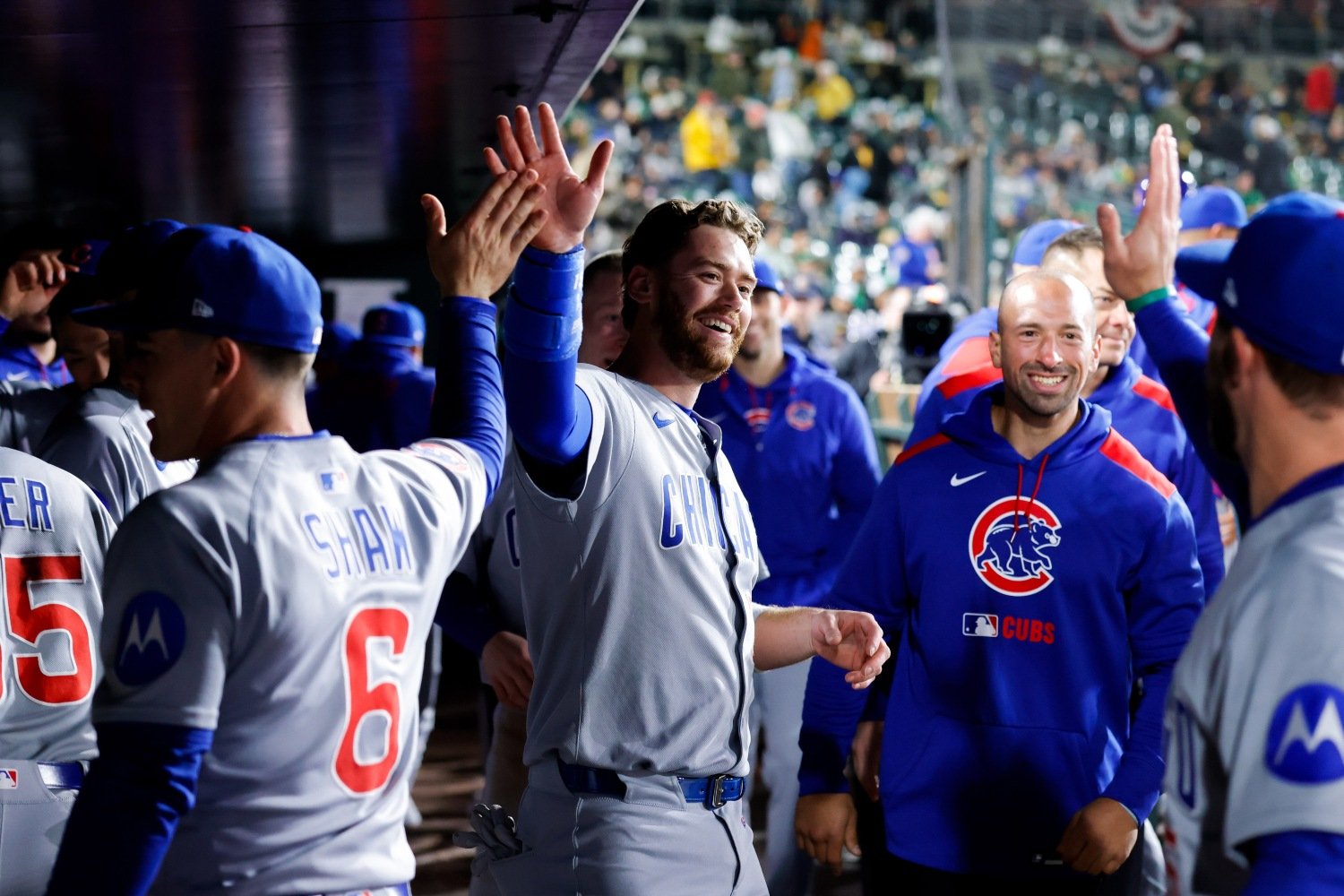 It was a fun, unexpected, special moment when Carson Kelly bounced and rolled into third base late in Monday night's blowout Cubs win over the A's. By reaching third base on a fly ball that bounced off the wall and got away from the Sacramento defenders, Kelly became the first player in over three decades to hit for the cycle while wearing a Cubs uniform. Fans of a certain age were very well aware of that fact, because for several years, now, it's been peculiar that the Cubs had gone so long without getting that specific type of massive day. For one thing, it's funny that Kelly became the first guy to do this since 1993, because he arrives just at a time when the Cubs have lots and lots of better candidates to do so. Pete Crow-Armstrong, on his best day, threatens the cycle just by showing up. Matt Shaw, Seiya Suzuki, and Kyle Tucker not only combine speed and power, but have the aggressive instincts on the bases to get to third on balls where some players with similar raw speed would hold up at second base. Nico Hoerner is built to come up a homer shy of the cycle, really, but he runs into about 10 homers a year, so it wouldn't have shocked you if he'd done so on a night when he also managed to do the other three things. In the years since 1993, the team has featured Christopher Morel and Javier Baez; Kris Bryant and Starlin Castro; Alfonso Soriano and the young (as well as the old) Sammy Sosa. If Corey Patterson, Arismendy Alcántara or Brennen Davis had panned out as the team hoped they would, they'd belong in the same conversation. At various points, they've had some of the game's most dynamic young hitters, the kinds of guys you actually expect to hit for the cycle. Yet, the last two to manage it are the slow-footed first baseman (Grace) and the middle-aged catcher (Kelly) whom you don't even expect to homer very often. Baseball is beguiling that way. It also seems, at first blush, like Sutter Health Park is going to play as very friendly to hitters, so it might be that Kelly's will be just the first in a long line of unexpected outlier offensive performances. It was just one game, and in itself, it means little. The proof of that is in the new bond between Kelly (Chicago-born, but a year after Grace achieved his cycle) and Grace, in defiance of all those players whom you might have thought could do it at some point. More saliently, though, we're starting to see clearly that the Cubs were right in their bets about the catching position this offseason. Not all of their roster construction choices look so sagacious, but in making the winning bid (a modest, two-year one) on Kelly and retaining Miguel Amaya as the primary backstop, the team looks awfully smart. Amaya already has four doubles and a torrent of hard contact on the young season. What was a black hole in the lineup last year looks like a relative strength this season. It's unlikely that Amaya and Kelly finish the season with an aggregate batting line much better than average, but average production itself would be above-average relative to catchers throughout the league. It's too early to tell for sure whether he's made a change that will allow it to stick, but Kelly's swing speed is up about 2 mph this year, relative to the early part of last year. Amaya, for whom bat speed was never the problem, seems to be increasingly comfortable with the set of big adjustments he made at the plate last summer. The biggest part of their games will continue to be defense; that's the nature of catchers. Already, though, each are reminding us all that there's a lot of value in having a backstop who can lengthen the lineup, too.
 -
Data Shows a Steady, Major Transformation in Kyle Tucker's Approach
Matthew Trueblood posted an article in Cubs
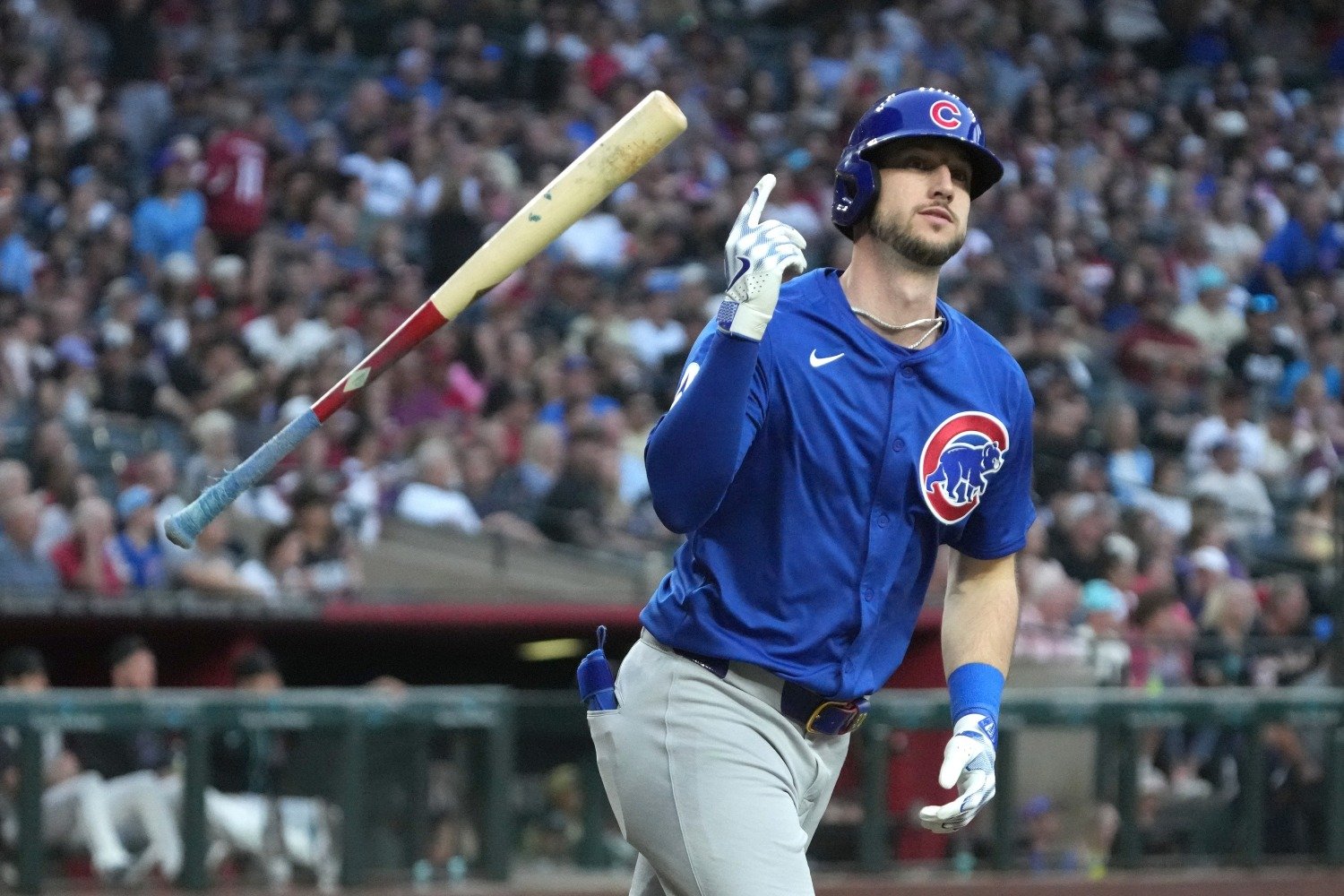 The new batter stance and contact point data that went up on Baseball Savant one week ago include several pieces of information. We don't yet have access to pitch-by-pitch data on contact point or stride length for individual events, but we do have each player's average: Depth in the batter's box (relative to the front edge of home plate) Distance from the plate (relative to the inner edge of the dish) Distance between front and back foot in their stance Angle (in degrees) of openness or closedness in stance Contact point, relative to the front edge of home plate Contact point relative to the player's center of mass Each of these tells us something in itself—in a vacuum—but some of them are much more powerful than others. Where even the less obviously valuable data can play up, though, is when we compare players not to each other, but to various versions of themselves. If a hitter changes where they set up in the box based on the handedness of the opposing pitcher, or based on the count, or if they have a very different contact point on balls they hit hard than on those they hit weakly, that can tell us as much as (or more than) how they rank on a league-wide leaderboard in that regard. Kyle Tucker is a great example. None of his numbers in terms of stance or contact point (or, for that matter, in terms of bat speed) put him at the very top or bottom of a leaderboard. When you break out the partial samples provided by these data over the last 21 months, though, you can see different versions of Tucker—including a particularly intriguing new one, just emerging. In the second half of 2023, Tucker was a hitter who set up very deep in the batter's box, maximizing the amount of time he would have to track the ball before making a swing decision. His stride was short; his swing was focused on balance. He had a deep contact point, over 4 inches behind the front edge of home plate. He stood close to the plate, where he could keep his swing short and still cover the outer third fairly well. Here's what that looks like in Baseball Savant's new graphics package for these data: And here's what it looks like, looks like: S3dib2VfWGw0TUFRPT1fVndVRUFBY0hWVkVBWEZvQVZRQUFBZ01BQUFBQkIxQUFBbE1DVVFKUUJ3UlFBd1ZT.mp4 In 2024, he made a noticeable change. He only played half the season, but the samples on things this focused on a player's process don't need to be large at all to be telling. Tucker set up slightly less deep in the box, with his feet slightly more spread out. He moved slightly off the plate, the better to get his arms extended on pitches down and in and generate power when pitchers attacked him there. His average contact point moved infinitesimally forward and slightly toward him, which fits neatly with that shift. His stride remained conservative, but he shifted his weight slightly more to put more energy into the ball. The data tells that story; so does the tape. R1pWYW9fWGw0TUFRPT1fVlFCVFYxVUZBRkVBQ0FRR1V3QUFBZ1lEQUFNSFZGSUFVVk1IQXdRQ1ZBQUJCUVpT.mp4 Now, the samples this year are so small that we do need to wait just a bit before making any asseverations about what his changing data mean. Nonetheless, the changes are stark and suggestive. Tucker is noticeably farther up in the batter's box this season, and has again shifted a bit farther from the plate. That's to facilitate a much more aggressive set of swing moves, whereby he's striding farther, opening his front hip more, and generating more torque. He's much more likely to pull the ball with authority, especially on the inner half. He's much more focused on handling that pitch, specifically. And he's going and getting it considerably farther out than he was in the past. What doesn't show up here is that Tucker is also markedly more "hitterish" in the box. He's moving a bit more in his stance, and watch the way he paws at the ground with his back foot as he prepares to attack the pitch. There's been a shift in mentality here, expressed in his physical movements. V0F3ZFpfWGw0TUFRPT1fVUFnQVZnSUNBRkVBRGdRTEJ3QUhWVkJlQUFBQVVsSUFCRlZRQndZSFV3SmNDQWRR.mp4 Tucker's average swing speed is up to 72.6 mph this spring, from 71.8 in 2023 and 72.1 in 2024. He's built a swing with more danger in it, but so far, he's not paying a big price in terms of more strikeouts or fewer walks. He's capable of generating hard contact from foul line to foul line, and he's trying to make as much of that hard contact pay off in the form of extra-base hits as possible. This might just be one of several adjustments he'll make throughout this season, but it's fascinating to see a wildly successful hitter making fairly pointed changes over the last year and a half. Tucker seems to be aiming for a big season of power production as he gears up for free agency, and that doesn't just have to be for selfish reasons. That is likely to be the most valuable version of Tucker, too—and now, we can compare it to the last couple versions in ways that go deeper than BABIP, or even exit velocity.
 -
Remarkably, the superstar right fielder has undergone a stepwise evolution into more of a lethal slugger, without losing anything major in the process. Image courtesy of © Rick Scuteri-Imagn Images The new batter stance and contact point data that went up on Baseball Savant one week ago include several pieces of information. We don't yet have access to pitch-by-pitch data on contact point or stride length for individual events, but we do have each player's average: Depth in the batter's box (relative to the front edge of home plate) Distance from the plate (relative to the inner edge of the dish) Distance between front and back foot in their stance Angle (in degrees) of openness or closedness in stance Contact point, relative to the front edge of home plate Contact point relative to the player's center of mass Each of these tells us something in itself—in a vacuum—but some of them are much more powerful than others. Where even the less obviously valuable data can play up, though, is when we compare players not to each other, but to various versions of themselves. If a hitter changes where they set up in the box based on the handedness of the opposing pitcher, or based on the count, or if they have a very different contact point on balls they hit hard than on those they hit weakly, that can tell us as much as (or more than) how they rank on a league-wide leaderboard in that regard. Kyle Tucker is a great example. None of his numbers in terms of stance or contact point (or, for that matter, in terms of bat speed) put him at the very top or bottom of a leaderboard. When you break out the partial samples provided by these data over the last 21 months, though, you can see different versions of Tucker—including a particularly intriguing new one, just emerging. In the second half of 2023, Tucker was a hitter who set up very deep in the batter's box, maximizing the amount of time he would have to track the ball before making a swing decision. His stride was short; his swing was focused on balance. He had a deep contact point, over 4 inches behind the front edge of home plate. He stood close to the plate, where he could keep his swing short and still cover the outer third fairly well. Here's what that looks like in Baseball Savant's new graphics package for these data: And here's what it looks like, looks like: S3dib2VfWGw0TUFRPT1fVndVRUFBY0hWVkVBWEZvQVZRQUFBZ01BQUFBQkIxQUFBbE1DVVFKUUJ3UlFBd1ZT.mp4 In 2024, he made a noticeable change. He only played half the season, but the samples on things this focused on a player's process don't need to be large at all to be telling. Tucker set up slightly less deep in the box, with his feet slightly more spread out. He moved slightly off the plate, the better to get his arms extended on pitches down and in and generate power when pitchers attacked him there. His average contact point moved infinitesimally forward and slightly toward him, which fits neatly with that shift. His stride remained conservative, but he shifted his weight slightly more to put more energy into the ball. The data tells that story; so does the tape. R1pWYW9fWGw0TUFRPT1fVlFCVFYxVUZBRkVBQ0FRR1V3QUFBZ1lEQUFNSFZGSUFVVk1IQXdRQ1ZBQUJCUVpT.mp4 Now, the samples this year are so small that we do need to wait just a bit before making any asseverations about what his changing data mean. Nonetheless, the changes are stark and suggestive. Tucker is noticeably farther up in the batter's box this season, and has again shifted a bit farther from the plate. That's to facilitate a much more aggressive set of swing moves, whereby he's striding farther, opening his front hip more, and generating more torque. He's much more likely to pull the ball with authority, especially on the inner half. He's much more focused on handling that pitch, specifically. And he's going and getting it considerably farther out than he was in the past. What doesn't show up here is that Tucker is also markedly more "hitterish" in the box. He's moving a bit more in his stance, and watch the way he paws at the ground with his back foot as he prepares to attack the pitch. There's been a shift in mentality here, expressed in his physical movements. V0F3ZFpfWGw0TUFRPT1fVUFnQVZnSUNBRkVBRGdRTEJ3QUhWVkJlQUFBQVVsSUFCRlZRQndZSFV3SmNDQWRR.mp4 Tucker's average swing speed is up to 72.6 mph this spring, from 71.8 in 2023 and 72.1 in 2024. He's built a swing with more danger in it, but so far, he's not paying a big price in terms of more strikeouts or fewer walks. He's capable of generating hard contact from foul line to foul line, and he's trying to make as much of that hard contact pay off in the form of extra-base hits as possible. This might just be one of several adjustments he'll make throughout this season, but it's fascinating to see a wildly successful hitter making fairly pointed changes over the last year and a half. Tucker seems to be aiming for a big season of power production as he gears up for free agency, and that doesn't just have to be for selfish reasons. That is likely to be the most valuable version of Tucker, too—and now, we can compare it to the last couple versions in ways that go deeper than BABIP, or even exit velocity. View full article
-
Through six games, the Cubs' reshuffled, reinforced bullpen hasn't looked good. For fans, the impulse is to demand immediate action, but the front office's job is to maintain perspective and be patient. Image courtesy of © Joe Camporeale-Imagn Images For some fans, the juttering destabilization and freefall of Sunday's blown lead against the Diamondbacks brought a far-too-familiar-tasting portion of their stomach up to the back of the throat. The game felt so much like late 2023, when no lead the lineup built could be enough. It felt, most of all, like the infamous game last April in San Diego, where the Padres slowly worked their way back from an 8-0 deficit and laid bare the vulnerability of the whole Chicago relief corps. In those prior cases, you could point out the potency of the offense(s) against whom Cubs hurlers proved so ineffective, but it felt thin and watery—like an excuse, not a real explanation. At the outset of an anxious season, many will feel the same way about any similar argument this time. Nor is that without merit, There are real and reasonable questions to be asked about the likes of Nate Pearson (four walks and just two strikeouts in 19 batters faced), Ryan Pressly (four walks, one strikeout), Ryan Brasier and more. Jed Hoyer and company leaned into amassing depth and embraced a lower-velocity, lower-whiff set of profiles in the wake of losing out on Tanner Scott; that comes with significant risk. At the same time, the case is a sound one—better, even, than the one you could make for not sweating the collapse against the Padres last year. There's a case to be made that the Diamondbacks have the league's most potent offense. If they don't, they're in the top three, with depth, a balance of skills and handednesses, and true superstars in the persons of Ketel Marte and Corbin Carroll. The Cubs bullpen got knocked around in a four-game series in the desert, by an elite run-production outfit for whom they're an especially poor matchup right now. If Pearson can get back on track, or if the team ends up trusting and turning to younger, harder-throwing arms Luke Little, Daniel Palencia and Jack Neely later in the season, or if the team makes further additions at (or before) the trade deadline, they'll be much better able to contain Arizona's offense. It's utterly unsatisfying, but sometimes, the most salient fact about a game or series is that you ran into a very good opponent at a very bad time. Unfortunately, though, the Cubs have another date with the Snakes at Wrigley Field in the third week of April, so they can ill afford to just wait out this stretch and have a better assemblage ready later in the year. If they have a new-look late-season bullpen, it'll never see the likes of Josh Naylor, unless the two teams meet in the postseason. Free agent David Robertson has made no announcement about his future. He's very old, and signing him would feed into the same narrative some want to build around the "Age" column of the current bullpen's stat sheet, but in fact, Robertson was not only dominant in 2024, but harder-throwing than ever. He's a former Cub, so the front office has some level of existing familiarity and comfort with him. They don't have that pre-existing intimacy with Lance Lynn, but they could circle back to him as a bullpen option; he marketed himself to some teams as a late-game reliever this winter. They're also one of the teams who has most closely monitored Brooks Raley's rehab from Tommy John surgery, and could sign him to fortify the lefty side of the pen. Each of those players has been on the team's radar already, and they might circle back to one of them if the relief unit continues to scuffle this week in West Sacramento. For now, though, the best advice is not to let a hard weekend at Chase Field plunge you too deeply into despairing reminiscences about the last two seasons. This team is better and deeper than that one; this bullpen has a higher floor and a higher ceiling. It's just not yet clear whether either thing is high enough. View full article
-
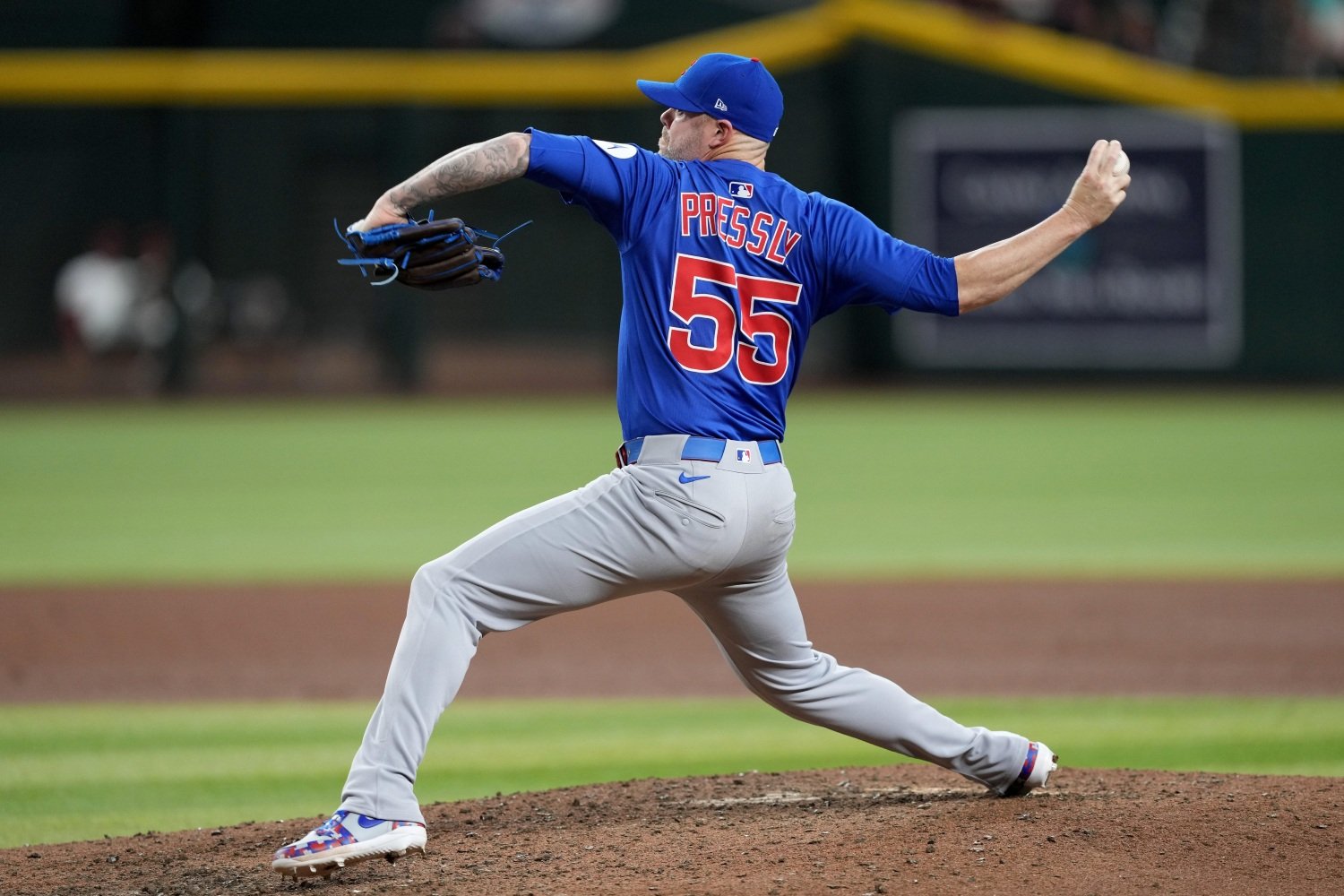 For some fans, the juttering destabilization and freefall of Sunday's blown lead against the Diamondbacks brought a far-too-familiar-tasting portion of their stomach up to the back of the throat. The game felt so much like late 2023, when no lead the lineup built could be enough. It felt, most of all, like the infamous game last April in San Diego, where the Padres slowly worked their way back from an 8-0 deficit and laid bare the vulnerability of the whole Chicago relief corps. In those prior cases, you could point out the potency of the offense(s) against whom Cubs hurlers proved so ineffective, but it felt thin and watery—like an excuse, not a real explanation. At the outset of an anxious season, many will feel the same way about any similar argument this time. Nor is that without merit, There are real and reasonable questions to be asked about the likes of Nate Pearson (four walks and just two strikeouts in 19 batters faced), Ryan Pressly (four walks, one strikeout), Ryan Brasier and more. Jed Hoyer and company leaned into amassing depth and embraced a lower-velocity, lower-whiff set of profiles in the wake of losing out on Tanner Scott; that comes with significant risk. At the same time, the case is a sound one—better, even, than the one you could make for not sweating the collapse against the Padres last year. There's a case to be made that the Diamondbacks have the league's most potent offense. If they don't, they're in the top three, with depth, a balance of skills and handednesses, and true superstars in the persons of Ketel Marte and Corbin Carroll. The Cubs bullpen got knocked around in a four-game series in the desert, by an elite run-production outfit for whom they're an especially poor matchup right now. If Pearson can get back on track, or if the team ends up trusting and turning to younger, harder-throwing arms Luke Little, Daniel Palencia and Jack Neely later in the season, or if the team makes further additions at (or before) the trade deadline, they'll be much better able to contain Arizona's offense. It's utterly unsatisfying, but sometimes, the most salient fact about a game or series is that you ran into a very good opponent at a very bad time. Unfortunately, though, the Cubs have another date with the Snakes at Wrigley Field in the third week of April, so they can ill afford to just wait out this stretch and have a better assemblage ready later in the year. If they have a new-look late-season bullpen, it'll never see the likes of Josh Naylor, unless the two teams meet in the postseason. Free agent David Robertson has made no announcement about his future. He's very old, and signing him would feed into the same narrative some want to build around the "Age" column of the current bullpen's stat sheet, but in fact, Robertson was not only dominant in 2024, but harder-throwing than ever. He's a former Cub, so the front office has some level of existing familiarity and comfort with him. They don't have that pre-existing intimacy with Lance Lynn, but they could circle back to him as a bullpen option; he marketed himself to some teams as a late-game reliever this winter. They're also one of the teams who has most closely monitored Brooks Raley's rehab from Tommy John surgery, and could sign him to fortify the lefty side of the pen. Each of those players has been on the team's radar already, and they might circle back to one of them if the relief unit continues to scuffle this week in West Sacramento. For now, though, the best advice is not to let a hard weekend at Chase Field plunge you too deeply into despairing reminiscences about the last two seasons. This team is better and deeper than that one; this bullpen has a higher floor and a higher ceiling. It's just not yet clear whether either thing is high enough.
 -
The lineup was held in check in the Tokyo Series against the Dodgers, but in their domestic opener, the Cubs made a statement: this team will be dangerous. Image courtesy of © Joe Camporeale-Imagn Images There are questions hanging over this Cubs season that can't be answered in just a few games. After a pair of disappointing showings and a week's wait for another game that counted, though, the team had to withstand a rising tide of criticism and pessimism among fans and media members. A single victory won't erase that trend, but they thumped the Diamondbacks 10-6 on Thursday night, to at least get the goose egg out of their win column and start accumulating some cause for confidence. Miguel Amaya looks every bit as good this spring as he did during his hot stretch last July and August, which is terrific news. Amaya hit two doubles that drove home half the team's runs Thursday, each jumping off his bat at over 100 miles per hour. That comes after he smoked an RBI double during the Tokyo Series, and after he batted .500 (and slugged .808) in his limited Cactus League play. His plate discipline needs to tighten up, but he's shown that skill in the past, and the hard contact he's making already is very encouraging. Ian Happ was a very suitable engine for the offense from the leadoff spot Thursday, too. He had a double and a home run, each hit at 109 miles per hour. Kyle Tucker had two more narrow misses, if you're a person jonesing for the high of that first home run by the newly acquired star. Tucker's still pulling off the ball a bit when he has leverage in the count, trying to do too much, but it hasn't been hard to see how good a hitter he is, and his one hit did bring home an important early run. Dansby Swanson saved Michael Busch from an error on a 3-6-3 double play, and ordinarily, you feel good about such plays ending up as a fielder's choice. Swanson, though, stayed on the base as he corraled a throw too far to the third-base side of the baseline, and then threw accurately back to Busch from a leaning kneel. Without that bit of defensive wizardry, it's not clear whether Justin Steele would have survived the fifth inning. Two Steele starts into the young season, it's far too early to panic, but not too early to note some concerning trends. Steele only induced four swinging strikes in 77 pitches, his fewest in a regular-season start since May 31, 2023. His velocity is down this spring. Obviously, the value of Steele's unique fastball shape is that it can work even at a lower velocity than most pitchers require. As Cubs fans know well, though, even pitchers who don't rely on speed get into some trouble once they've lost enough of it. Steele threw 92.4 mph and could top 96 when he broke out in 2022. Last year, he sat at 91.8 and barely touched 95. In his early starts this year, he's at a flat 91, and hasn't even hit 94 yet. There's time for all that to turn around, of course. As I mentioned in the wake of the Tokyo Series, there's a case to be made that Steele shouldn't have pitched in Japan, after his ramp-up was slowed down by an illness earlier in the month. If this loss of velocity is real, though, he'll have to adjust to his new reality. In fact, there's already some evidence that he's doing so. The less dominant Steele is capable of being with the heater, the more reliant he becomes on his slider, and the more he needs the trio of complementary pitches we saw him work to revive as tertiary options last year. That's the way he's trending to start 2025, too. If he's the multi-talented competitor he's always expected himself to be, Steele can survive at 90 or 91 miles per hour. As the Cubs ponder their rotation for a potential playoff series this fall (let alone in future years), however, they'll have to be cognizant of this. Arizona is a tough opponent, and the Cubs always seem to have a hard time when they play them at Chase Field. They got the better of them Thursday, though, and came away with some positives to savor—even as a new lurking area of concern came into sharper focus. View full article
-
Wide Awake This Time, Cubs Bats Secure the Team's First Win of 2025
Matthew Trueblood posted an article in Cubs
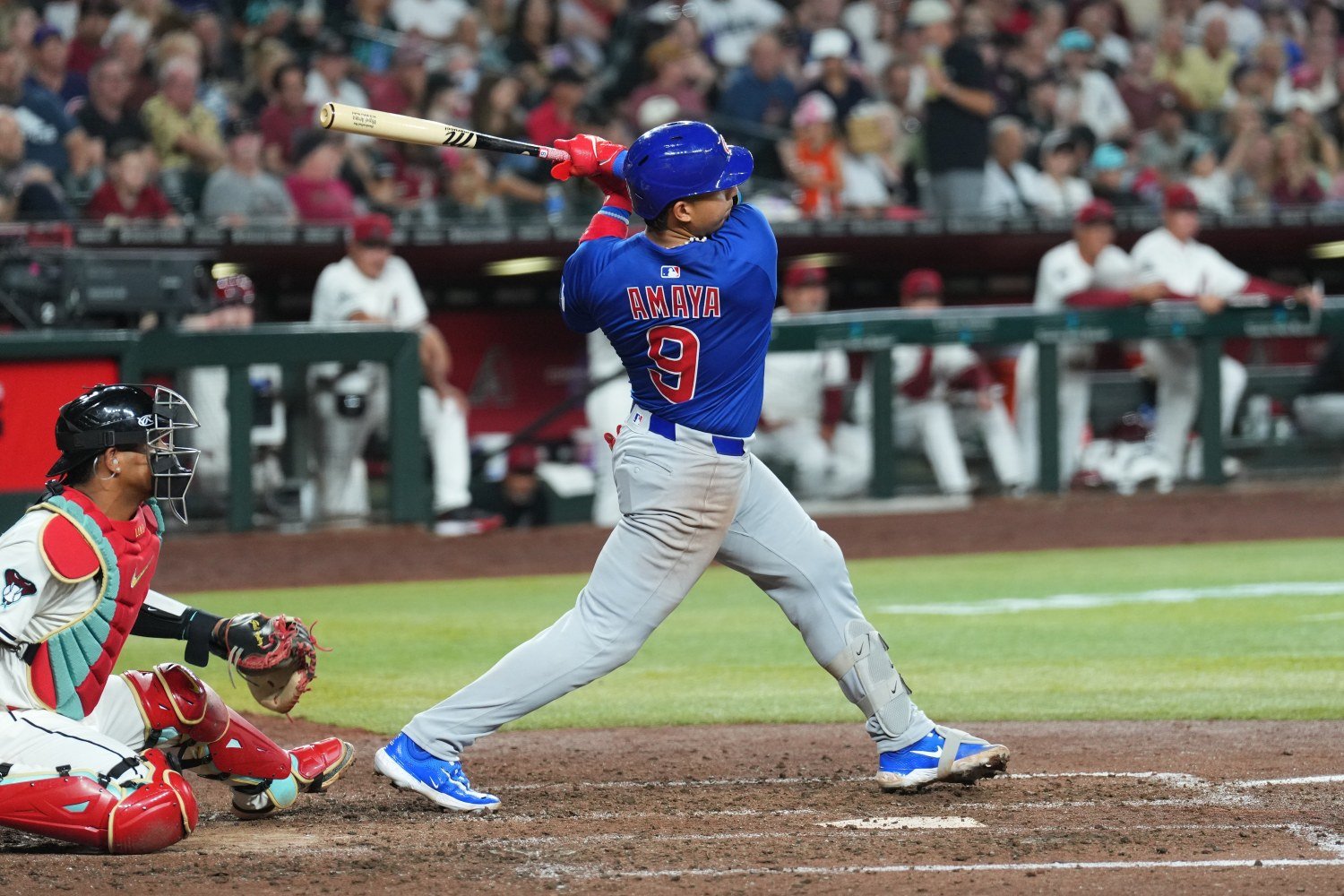 There are questions hanging over this Cubs season that can't be answered in just a few games. After a pair of disappointing showings and a week's wait for another game that counted, though, the team had to withstand a rising tide of criticism and pessimism among fans and media members. A single victory won't erase that trend, but they thumped the Diamondbacks 10-6 on Thursday night, to at least get the goose egg out of their win column and start accumulating some cause for confidence. Miguel Amaya looks every bit as good this spring as he did during his hot stretch last July and August, which is terrific news. Amaya hit two doubles that drove home half the team's runs Thursday, each jumping off his bat at over 100 miles per hour. That comes after he smoked an RBI double during the Tokyo Series, and after he batted .500 (and slugged .808) in his limited Cactus League play. His plate discipline needs to tighten up, but he's shown that skill in the past, and the hard contact he's making already is very encouraging. Ian Happ was a very suitable engine for the offense from the leadoff spot Thursday, too. He had a double and a home run, each hit at 109 miles per hour. Kyle Tucker had two more narrow misses, if you're a person jonesing for the high of that first home run by the newly acquired star. Tucker's still pulling off the ball a bit when he has leverage in the count, trying to do too much, but it hasn't been hard to see how good a hitter he is, and his one hit did bring home an important early run. Dansby Swanson saved Michael Busch from an error on a 3-6-3 double play, and ordinarily, you feel good about such plays ending up as a fielder's choice. Swanson, though, stayed on the base as he corraled a throw too far to the third-base side of the baseline, and then threw accurately back to Busch from a leaning kneel. Without that bit of defensive wizardry, it's not clear whether Justin Steele would have survived the fifth inning. Two Steele starts into the young season, it's far too early to panic, but not too early to note some concerning trends. Steele only induced four swinging strikes in 77 pitches, his fewest in a regular-season start since May 31, 2023. His velocity is down this spring. Obviously, the value of Steele's unique fastball shape is that it can work even at a lower velocity than most pitchers require. As Cubs fans know well, though, even pitchers who don't rely on speed get into some trouble once they've lost enough of it. Steele threw 92.4 mph and could top 96 when he broke out in 2022. Last year, he sat at 91.8 and barely touched 95. In his early starts this year, he's at a flat 91, and hasn't even hit 94 yet. There's time for all that to turn around, of course. As I mentioned in the wake of the Tokyo Series, there's a case to be made that Steele shouldn't have pitched in Japan, after his ramp-up was slowed down by an illness earlier in the month. If this loss of velocity is real, though, he'll have to adjust to his new reality. In fact, there's already some evidence that he's doing so. The less dominant Steele is capable of being with the heater, the more reliant he becomes on his slider, and the more he needs the trio of complementary pitches we saw him work to revive as tertiary options last year. That's the way he's trending to start 2025, too. If he's the multi-talented competitor he's always expected himself to be, Steele can survive at 90 or 91 miles per hour. As the Cubs ponder their rotation for a potential playoff series this fall (let alone in future years), however, they'll have to be cognizant of this. Arizona is a tough opponent, and the Cubs always seem to have a hard time when they play them at Chase Field. They got the better of them Thursday, though, and came away with some positives to savor—even as a new lurking area of concern came into sharper focus.
 -
As the season begins in earnest, we asked several North Side Baseball writers to offer up bold (but plausible) predictions. Here's what we came up with. Image courtesy of © Darren Yamashita-Imagn Images The 2025 Cubs will be a fascinating team, one way or another. They're at a stage of the competitive cycle wherein desperation is right at the doorstep, but they also have the talent required to win their division—and perhaps even make a deep run into October. Here are some of our writers' specific and supportable (if a bit outlandish) predictions for the season ahead. @1908_Cubs (Jason Ross): Pete Crow-Armstrong will lead the team in FanGraphs Wins Above Replacement. Bryan Jaeger: Crow-Armstrong will lead the National League in stolen bases. Matthew Trueblood: Kevin Alcántara will Wally Pipp Pete Crow-Armstrong. Look, by now, I'm well-established as the Grinch where Crow-Armstrong is concerned. He's an utterly electrifying player, when he does something good. Few players can be more fun to watch. Too often, though, he's flailing at absolutely everything, and it worries me deeply that he lacks the feel to hit and the raw power that allowed Javier Báez to survive so long with such weak plate discipline. He also plays so recklessly that a major injury feels almost inevitable. I hope I'm wrong about that part, but if Crow-Armstrong does go down for two months after a collision with a wall or a teammate in June, he might never get his job back. This is, equally, a statement of confidence in Alcántara. He's flashed terrific tools throughout his tenure in the minor leagues, but until this spring, the risk that he would never tap into his power was very real—unavoidable, even. Though he only got limited time with the big-league team in an interrupted Cactus League campaign, Alcántara showed real progress in terms of lifting the ball. He looks poised for the big developmental step that has seemed attainable all along. If he's consolidating his offensive skills just as Crow-Armstrong is sputtering, the team will eventually need to give their less-heralded young outfielder a shot. Other Predictions: @Brandon Glick: Matt Shaw will be sent back to Triple-A Iowa; Gage Workman will take over as the starting third baseman. @Seth Stohs: Cubs starters will rank among the bottom half in most important pitching categories. However, they will have a top-5 bullpen led by Ryan Pressly, who will lead the league in saves. This cluster of forecasts does a good job of capturing the exceptionally wide range of possible outcomes for the Cubs this year. Drop your own bold predictions in the comments below, and get ready for a major rollercoaster of a season. View full article
-
- 1
-

-
- pete crow armstrong
- matt shaw
- (and 2 more)
-
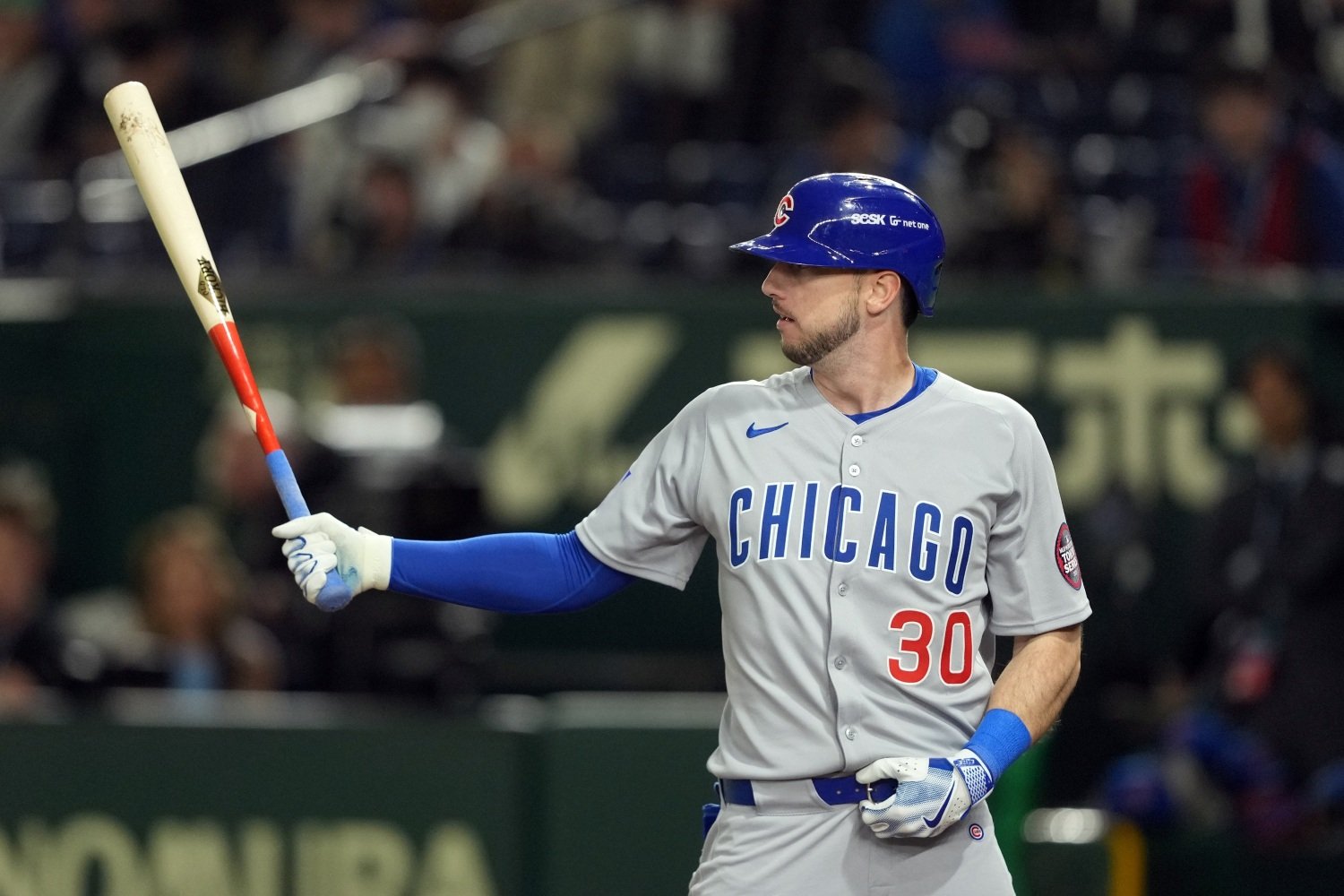
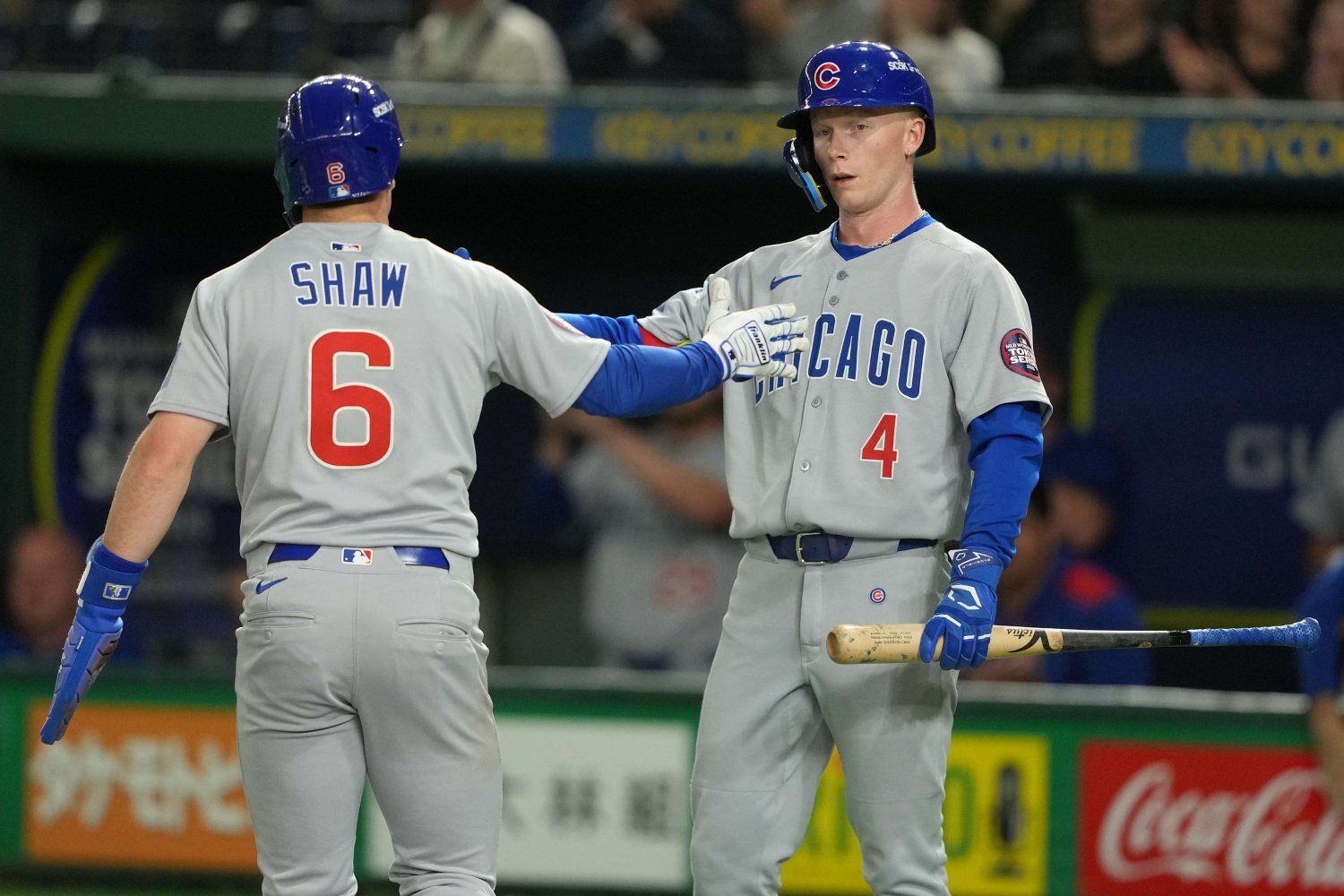 The 2025 Cubs will be a fascinating team, one way or another. They're at a stage of the competitive cycle wherein desperation is right at the doorstep, but they also have the talent required to win their division—and perhaps even make a deep run into October. Here are some of our writers' specific and supportable (if a bit outlandish) predictions for the season ahead. @1908_Cubs (Jason Ross): Pete Crow-Armstrong will lead the team in FanGraphs Wins Above Replacement. Bryan Jaeger: Crow-Armstrong will lead the National League in stolen bases. Matthew Trueblood: Kevin Alcántara will Wally Pipp Pete Crow-Armstrong. Look, by now, I'm well-established as the Grinch where Crow-Armstrong is concerned. He's an utterly electrifying player, when he does something good. Few players can be more fun to watch. Too often, though, he's flailing at absolutely everything, and it worries me deeply that he lacks the feel to hit and the raw power that allowed Javier Báez to survive so long with such weak plate discipline. He also plays so recklessly that a major injury feels almost inevitable. I hope I'm wrong about that part, but if Crow-Armstrong does go down for two months after a collision with a wall or a teammate in June, he might never get his job back. This is, equally, a statement of confidence in Alcántara. He's flashed terrific tools throughout his tenure in the minor leagues, but until this spring, the risk that he would never tap into his power was very real—unavoidable, even. Though he only got limited time with the big-league team in an interrupted Cactus League campaign, Alcántara showed real progress in terms of lifting the ball. He looks poised for the big developmental step that has seemed attainable all along. If he's consolidating his offensive skills just as Crow-Armstrong is sputtering, the team will eventually need to give their less-heralded young outfielder a shot. Other Predictions: @Brandon Glick: Matt Shaw will be sent back to Triple-A Iowa; Gage Workman will take over as the starting third baseman. @Seth Stohs: Cubs starters will rank among the bottom half in most important pitching categories. However, they will have a top-5 bullpen led by Ryan Pressly, who will lead the league in saves. This cluster of forecasts does a good job of capturing the exceptionally wide range of possible outcomes for the Cubs this year. Drop your own bold predictions in the comments below, and get ready for a major rollercoaster of a season.
-
- 1
-
-
- pete crow armstrong
- matt shaw
- (and 2 more)
-
Gather round, read it here first. The season will go like this, see. Image courtesy of © Darren Yamashita-Imagn Images Ok, soothsayers we (probably) aren't, but 33 writers across the DiamondCentric family of sites tried their hands at predicting the season to come. Here's how it shook out. The Standings AL East There's no question that the Red Sox won the winter, among the teams vying for supremacy in the league's traditional powerhouse division. They traded for Garrett Crochet to raise the ceiling on their starting rotation, then signed Walker Buehler to fortify the back end of the same group. The coup, though, came when they won a multi-team bidding war for Alex Bregman. With Bregman and Rafael Devers as the anchors of the lineup, the team is more well-rounded than it's been in the past. They also have three of the best prospects in baseball. That said, this remains an intensely competitive group. The Sox won the plurality of votes from our writers, but every team except the Rays garnered at least one vote. Even after losing the Juan Soto sweepstakes, the Yankees had an active winter. Without Gerrit Cole, they're not the favorites, but New York remains dangerous. It's the Orioles, though, whom our group collectively views as the greatest threat to the Sox. Their young hitters will have to make up for an underwhelming pitching staff, but Baltimore gets Félix Bautista back as the anchor of their bullpen. AL Central We have a lot of Twins familiars in our sample, but in this case, there's no detectable bias in the predictions. Maybe that's the result of many Minnesotans being frustrated by the team's lack of high-visibility additions and uncertainty about the sale of the club, but it's also about the shifting power dynamic throughout the division. Everyone but the White Sox has a chance to win this division, and everyone but the White Sox got some support. The Tigers got nearly as much support as Minnesota, thanks (presumably) to defending AL Cy Young Award winner Tarik Skubal and reunited partner in crime Jack Flaherty. Their offense remains high-variance (to put it mildly, and perhaps too nicely), but Detroit proved they have lots of ways to beat you. The Royals, too, have a superstar at the center of their success, but a bit less depth and a bit more risk of regression than Detroit. Undersold here, perhaps, are the defending champion Guardians. AL West Somewhat stunningly, this is the one division where all five teams earned at least one vote in the survey. I wouldn't have guessed that even the Angels' mothers love them that much, by now, but someone who works here loves them enough to believe they'll shock the world and get back to October. If they do, DIsney should make Angels in the Outfield 2, and every deadbeat dad should be required to relinquish his parental rights to a golden-hearted stranger who really loves their kid. In fairness, though, if there's been any division in the history of baseball the 2025 Angels could actually win, it might be the 2025 AL West. The Astros aren't intentionally leaning into a rebuild, but they might end up in one by the All-Star break. The Rangers seek a rebound after a disappointing defense of their first-ever World Series title. Some major offseason investments have turned the West Sacramento Athletics into a more competent version of themselves, and they're a relocated version of themselves, but they're still very much themselves. The Mariners, meanwhile, did nothing this winter to supplement their roster, but it's a good roster; there's a reason they've won 353 games over the last four years. NL East Juan Soto defines the Mets' offseason, but it's Clay Holmes who might define them as a team and a project. He was fairly expensive, by any standard this side of New York, but he's also unproven in his new role. He's indispensable to the New York starting rotation, and they're a smart and well-equipped outfit. They might very well turn him into the frontline starter they envision, even though his success to date has come as a late-game reliever. The Mets are a very high-upside, very modern, slightly strange outfit. At least that last thing reassures us that some things never change. They're not the favorites in this group, though, at least by the reckoning of our pundits. Instead, the defending champion Phillies and the Atlanta club that backed into (and then fizzled out in) the playoffs last year are more or less the co-favorites. Both of those semi-dynastic teams are getting a little harder to hold together, but each currently has enough youth coming up to reinforce their veteran cores. NL Central Nationally, the Cubs are considered obvious favorites, but it's the Brewers who have had the run of the place in recent years. That could certainly change, but it's not guaranteed to be a change in favor of the Cubs. The Reds hired Terry Francona last fall to increase the viability of their own designs on the division, and will have the benefit of dynamic infielder Matt McLain back after he missed 2024 with various injuries. Even the Pirates have support in some corners, presumably because Paul Skenes is Paul Skenes. He won't be enough to get that anemic offense over the hump this year, but the division just gets more chaotic by the year. Our group still feels the Cubs are most likely to win, but the voting reflects the unpredictability of the whole network. NL West So many of the divisions yielded fascinating vote distributions. So many of the divisions offer at least some degree of fascination. This one is the exception. I can't even bring myself to show you this chart. It's just a circle. All 33 writers voted for the Dodgers, which is really the only rational prediction. The defending World Series champions added the defending NL Cy Young Award winner, re-signed their slugging corner outfielder and brought in another. They won the non-monetary bidding war for Roki Sasaki and the very monetary bidding war for both Tanner Scott and Kirby Yates. There's no other team in the league who can match them for pure talent. That doesn't mean they'll win it all, but expecting anyone else to win—at least in the division, over 162 games—would be foolish. AL Wild Card Berths With the Rangers, the Red Sox, and the Twins as our projected division winners on the junior circuit, the competition for the other three places in the American League playoff bracket still looks intense. The AL is such a muddle that only the barely-lovable Angels and the White Sox failed to secure at least one vote as a playoff hopeful. My biggest takeaways are: Collective confidence in the Rays is surprisingly low. After not getting any votes as division champions, they also only received five tallies as a Wild Card contender. They're always easy to underrate, but this also seems fair. It's hard to argue that they're better than any of the Orioles, Red Sox, and Yankees, and once you're fourth in your division, there's zero margin for error on the path to the postseason. Our writers see the Rangers either as a boom or as a bust. Unlike the Twins (7) and Red Sox (9), Texas only got four votes as a Wild Card team. If they don't win the division, our staff seems to think, they're out altogether. NL Wild Card Berths As a group, we're much more confident about who will take the remaining spots after the division winners in the NL. New York, Philadelphia and Arizona are the kinds of teams you're used to seeing win division crowns, and although none of them are technically likely to do so this year, we still view them as having a very strong chance to make the tournament. That's bad news for our writers and fans of the Cubs and Brewers, since the lane for either of them to make it seems narrow—but by the same token, that raises the stakes of the showdown between those two teams for the NL Central title. We largely view the league as follows: Locks for October: Dodgers, Atlanta, Mets, Phillies Very Likely, But Frozen Out from Certitude by Dodgers: Diamondbacks Others in the Mix: Cubs, Brewers, Padres, Reds If it's just one playoff spot to divide between those last four teams, it'll have to be the winner of the Central, which is bad news for the Padres. Pennant Winners We asked our writers to predict who will play in the World Series, and as you'd expect, it was a true free-for-all in the wide-open American League. In the NL, by contrast, chalk prevails—although several brave souls dared pick against the Dodgers. Since the legend doesn't quite show all the teams who got support, here's how voting broke down on the AL side: Red Sox/Orioles: 9 votes each Yankees/Rangers: 5 votes each Royals/Tigers: 2 votes each Twins: 1 vote This chart is absolutely screaming for the first Mariners pennant ever, or the Guardians to sneak through somehow. It's the most logical distribution, though, based on the makeup of this weird, wild circuit. Maybe it's best to just think of the AL Central collectively as a wedge the same size as those of the Yankees and Rangers. This captures the difference between the two league dynamics nicely, doesn't it? No chaos here. The Dodgers got 25 of the 33 votes; the Phillies took half of the remainder; and the Brewers, Mets, Diamondbacks and Atlanta claimed just one vote apiece. It's the Dodgers' world. We're all just living in it. Can the Dodgers Repeat? Next, naturally, we asked who will win the Series. Given that our voting shows a lack of profound faith in any particular American League team, it's probably not a surprise that writers also showed a strong belief that (should they get that far) the Dodgers will finish the job in the Fall Classic. Of the 25 voters who said they;ll win the pennant, 19 see Los Angeles taking home the piece of metal at the end of the season. If they don't, things get more interesting. Somehow, the Phillies got more support (five votes) as Series champs than as pennant winners (4). I'd say we'll have a stern talk with the writer who chose them to do the former without the latter, but who knows? Maybe they're projecting some kind of vacated championship situation. It's that, or Google Forms is a frightfully limited piece of software. You decide. Also receiving support as predicted champions: Red Sox - 3 Orioles - 2 Yankees, Blue Jays, Mets, Brewers - 1 As was true with the Twins, I'll remark that our heavy representation of Cubs knowers didn't seem to engender undue confidence in them. No one selected Chicago to win the pennant, let alone the Series. Awards We got a wide variety of answers on who will win each MVP award, including a whopping 12 different players in the American League. Only three players got three or more votes, though, and one lapped the field: Bobby Witt Jr.: 13 votes Aaron Judge: 4 Gunnar Henderson: 3 Julio Rodríguez, Mike Trout, Corey Seager: 2 Adley Rutschman, Alex Bregman, Brent Rooker, José Ramírez, Rafael Devers, Vladimir Guerrero Jr.: 1 In the NL, the field was more limited, because it was even more dominated by the favorite: Shohei Ohtani: 19 votes Juan Soto: 4 Bryce Harper, Kyle Tucker, William Contreras: 2 Elly De La Cruz, Francisco Lindor, Ketel Marte: 1 Since Ohtani is (ostensibly) going to pitch again this year, he really is hard to pick against. That Witt gained such a commanding upper hand (in our estimation) over Judge is a mild surprise, but then, Judge will turn 33 years old in April. It might be about time for age to lend Witt the edge. Another 12 different people received votes for each Cy Young Award, and again, there was a much more even mix of opinions in the AL than in the NL. American League Garrett Crochet: 7 votes Logan Gilbert, Tarik Skubal: 6 Cole Ragans: 4 Eight others: 1 each National League Paul Skenes: 14 votes Zack Wheeler: 5 Shota Imanaga, Corbin Burnes, Spencer Strider: 2 Seven others: 1 each Crochet's status as the favorite is in keeping with our group's general confidence about the Red Sox. That Skubal and Ragans got so much support is a good reminder of how tough (if only inconsistently so) the AL Central is. Catch either of those guys, Seth Lugo, Joe Ryan, Pablo López, Bailey Ober, or Tanner Bibee, and you're in for a long 0-4 day. Skenes's phenom status is untarnished, so far. If he can stay healthy, it's not at all unfair to expect that he'll contend for this award. However, he'd be the first player to actually win it in their first full season since TIm Lincecum in 2008. The Rookie of the Year votes were equally interesting and even more varied, but there are too many names to walk through all of them. Let it suffice to say that Jackson Jobe (5 votes), Roman Anthony and Jasson Dominguez (4 each) are the co-favorites in the AL. Roki Sasaki (13 votes) is a relatively prohibitive favorite in the NL, but Matt Shaw (6) and Dylan Crews (5) are both viable candidates, too. Sasaki seems to have some important hurdles to clear en route to becoming the frontline starter the Dodgers expect him to be, but his raw stuff is too good to ignore—not least because we've already seen how well it plays against high-level pros in Japan. Alex Cora (6 votes) has the narrowest possible lead over A.J. Hinch and the Mariners' Dan Wilson (5 apiece) in the voting for the AL Manager of the Year, while Craig Counsell (8 votes) beat out Terry Francona (5) and Torey Lovullo (4) more handily in the NL. No matter what the question, our group is more certain of the answers in the National League—not because we're any less familiar with the American, but because that league is so much more balanced and (therefore) unpredictable right now. When it comes to the Manager of the Year Award, specifically, though, the right answer might be the one one writer gave to both league's questions: "Who cares?" The season ahead will be full of extraordinary performances by talented young players. and with good races in tight divisions. These predictions won't all come true, but trying to guess what's coming is part of the fun of this game. The good news is, starting Thursday, the bigger, more constant fun of the game is on tap: Games. Glorious, everyday, non-hypothetical games. Happy Opening Day. View full article
-
 Ok, soothsayers we (probably) aren't, but 33 writers across the DiamondCentric family of sites tried their hands at predicting the season to come. Here's how it shook out. The Standings AL East There's no question that the Red Sox won the winter, among the teams vying for supremacy in the league's traditional powerhouse division. They traded for Garrett Crochet to raise the ceiling on their starting rotation, then signed Walker Buehler to fortify the back end of the same group. The coup, though, came when they won a multi-team bidding war for Alex Bregman. With Bregman and Rafael Devers as the anchors of the lineup, the team is more well-rounded than it's been in the past. They also have three of the best prospects in baseball. That said, this remains an intensely competitive group. The Sox won the plurality of votes from our writers, but every team except the Rays garnered at least one vote. Even after losing the Juan Soto sweepstakes, the Yankees had an active winter. Without Gerrit Cole, they're not the favorites, but New York remains dangerous. It's the Orioles, though, whom our group collectively views as the greatest threat to the Sox. Their young hitters will have to make up for an underwhelming pitching staff, but Baltimore gets Félix Bautista back as the anchor of their bullpen. AL Central We have a lot of Twins familiars in our sample, but in this case, there's no detectable bias in the predictions. Maybe that's the result of many Minnesotans being frustrated by the team's lack of high-visibility additions and uncertainty about the sale of the club, but it's also about the shifting power dynamic throughout the division. Everyone but the White Sox has a chance to win this division, and everyone but the White Sox got some support. The Tigers got nearly as much support as Minnesota, thanks (presumably) to defending AL Cy Young Award winner Tarik Skubal and reunited partner in crime Jack Flaherty. Their offense remains high-variance (to put it mildly, and perhaps too nicely), but Detroit proved they have lots of ways to beat you. The Royals, too, have a superstar at the center of their success, but a bit less depth and a bit more risk of regression than Detroit. Undersold here, perhaps, are the defending champion Guardians. AL West Somewhat stunningly, this is the one division where all five teams earned at least one vote in the survey. I wouldn't have guessed that even the Angels' mothers love them that much, by now, but someone who works here loves them enough to believe they'll shock the world and get back to October. If they do, DIsney should make Angels in the Outfield 2, and every deadbeat dad should be required to relinquish his parental rights to a golden-hearted stranger who really loves their kid. In fairness, though, if there's been any division in the history of baseball the 2025 Angels could actually win, it might be the 2025 AL West. The Astros aren't intentionally leaning into a rebuild, but they might end up in one by the All-Star break. The Rangers seek a rebound after a disappointing defense of their first-ever World Series title. Some major offseason investments have turned the West Sacramento Athletics into a more competent version of themselves, and they're a relocated version of themselves, but they're still very much themselves. The Mariners, meanwhile, did nothing this winter to supplement their roster, but it's a good roster; there's a reason they've won 353 games over the last four years. NL East Juan Soto defines the Mets' offseason, but it's Clay Holmes who might define them as a team and a project. He was fairly expensive, by any standard this side of New York, but he's also unproven in his new role. He's indispensable to the New York starting rotation, and they're a smart and well-equipped outfit. They might very well turn him into the frontline starter they envision, even though his success to date has come as a late-game reliever. The Mets are a very high-upside, very modern, slightly strange outfit. At least that last thing reassures us that some things never change. They're not the favorites in this group, though, at least by the reckoning of our pundits. Instead, the defending champion Phillies and the Atlanta club that backed into (and then fizzled out in) the playoffs last year are more or less the co-favorites. Both of those semi-dynastic teams are getting a little harder to hold together, but each currently has enough youth coming up to reinforce their veteran cores. NL Central Nationally, the Cubs are considered obvious favorites, but it's the Brewers who have had the run of the place in recent years. That could certainly change, but it's not guaranteed to be a change in favor of the Cubs. The Reds hired Terry Francona last fall to increase the viability of their own designs on the division, and will have the benefit of dynamic infielder Matt McLain back after he missed 2024 with various injuries. Even the Pirates have support in some corners, presumably because Paul Skenes is Paul Skenes. He won't be enough to get that anemic offense over the hump this year, but the division just gets more chaotic by the year. Our group still feels the Cubs are most likely to win, but the voting reflects the unpredictability of the whole network. NL West So many of the divisions yielded fascinating vote distributions. So many of the divisions offer at least some degree of fascination. This one is the exception. I can't even bring myself to show you this chart. It's just a circle. All 33 writers voted for the Dodgers, which is really the only rational prediction. The defending World Series champions added the defending NL Cy Young Award winner, re-signed their slugging corner outfielder and brought in another. They won the non-monetary bidding war for Roki Sasaki and the very monetary bidding war for both Tanner Scott and Kirby Yates. There's no other team in the league who can match them for pure talent. That doesn't mean they'll win it all, but expecting anyone else to win—at least in the division, over 162 games—would be foolish. AL Wild Card Berths With the Rangers, the Red Sox, and the Twins as our projected division winners on the junior circuit, the competition for the other three places in the American League playoff bracket still looks intense. The AL is such a muddle that only the barely-lovable Angels and the White Sox failed to secure at least one vote as a playoff hopeful. My biggest takeaways are: Collective confidence in the Rays is surprisingly low. After not getting any votes as division champions, they also only received five tallies as a Wild Card contender. They're always easy to underrate, but this also seems fair. It's hard to argue that they're better than any of the Orioles, Red Sox, and Yankees, and once you're fourth in your division, there's zero margin for error on the path to the postseason. Our writers see the Rangers either as a boom or as a bust. Unlike the Twins (7) and Red Sox (9), Texas only got four votes as a Wild Card team. If they don't win the division, our staff seems to think, they're out altogether. NL Wild Card Berths As a group, we're much more confident about who will take the remaining spots after the division winners in the NL. New York, Philadelphia and Arizona are the kinds of teams you're used to seeing win division crowns, and although none of them are technically likely to do so this year, we still view them as having a very strong chance to make the tournament. That's bad news for our writers and fans of the Cubs and Brewers, since the lane for either of them to make it seems narrow—but by the same token, that raises the stakes of the showdown between those two teams for the NL Central title. We largely view the league as follows: Locks for October: Dodgers, Atlanta, Mets, Phillies Very Likely, But Frozen Out from Certitude by Dodgers: Diamondbacks Others in the Mix: Cubs, Brewers, Padres, Reds If it's just one playoff spot to divide between those last four teams, it'll have to be the winner of the Central, which is bad news for the Padres. Pennant Winners We asked our writers to predict who will play in the World Series, and as you'd expect, it was a true free-for-all in the wide-open American League. In the NL, by contrast, chalk prevails—although several brave souls dared pick against the Dodgers. Since the legend doesn't quite show all the teams who got support, here's how voting broke down on the AL side: Red Sox/Orioles: 9 votes each Yankees/Rangers: 5 votes each Royals/Tigers: 2 votes each Twins: 1 vote This chart is absolutely screaming for the first Mariners pennant ever, or the Guardians to sneak through somehow. It's the most logical distribution, though, based on the makeup of this weird, wild circuit. Maybe it's best to just think of the AL Central collectively as a wedge the same size as those of the Yankees and Rangers. This captures the difference between the two league dynamics nicely, doesn't it? No chaos here. The Dodgers got 25 of the 33 votes; the Phillies took half of the remainder; and the Brewers, Mets, Diamondbacks and Atlanta claimed just one vote apiece. It's the Dodgers' world. We're all just living in it. Can the Dodgers Repeat? Next, naturally, we asked who will win the Series. Given that our voting shows a lack of profound faith in any particular American League team, it's probably not a surprise that writers also showed a strong belief that (should they get that far) the Dodgers will finish the job in the Fall Classic. Of the 25 voters who said they;ll win the pennant, 19 see Los Angeles taking home the piece of metal at the end of the season. If they don't, things get more interesting. Somehow, the Phillies got more support (five votes) as Series champs than as pennant winners (4). I'd say we'll have a stern talk with the writer who chose them to do the former without the latter, but who knows? Maybe they're projecting some kind of vacated championship situation. It's that, or Google Forms is a frightfully limited piece of software. You decide. Also receiving support as predicted champions: Red Sox - 3 Orioles - 2 Yankees, Blue Jays, Mets, Brewers - 1 As was true with the Twins, I'll remark that our heavy representation of Cubs knowers didn't seem to engender undue confidence in them. No one selected Chicago to win the pennant, let alone the Series. Awards We got a wide variety of answers on who will win each MVP award, including a whopping 12 different players in the American League. Only three players got three or more votes, though, and one lapped the field: Bobby Witt Jr.: 13 votes Aaron Judge: 4 Gunnar Henderson: 3 Julio Rodríguez, Mike Trout, Corey Seager: 2 Adley Rutschman, Alex Bregman, Brent Rooker, José Ramírez, Rafael Devers, Vladimir Guerrero Jr.: 1 In the NL, the field was more limited, because it was even more dominated by the favorite: Shohei Ohtani: 19 votes Juan Soto: 4 Bryce Harper, Kyle Tucker, William Contreras: 2 Elly De La Cruz, Francisco Lindor, Ketel Marte: 1 Since Ohtani is (ostensibly) going to pitch again this year, he really is hard to pick against. That Witt gained such a commanding upper hand (in our estimation) over Judge is a mild surprise, but then, Judge will turn 33 years old in April. It might be about time for age to lend Witt the edge. Another 12 different people received votes for each Cy Young Award, and again, there was a much more even mix of opinions in the AL than in the NL. American League Garrett Crochet: 7 votes Logan Gilbert, Tarik Skubal: 6 Cole Ragans: 4 Eight others: 1 each National League Paul Skenes: 14 votes Zack Wheeler: 5 Shota Imanaga, Corbin Burnes, Spencer Strider: 2 Seven others: 1 each Crochet's status as the favorite is in keeping with our group's general confidence about the Red Sox. That Skubal and Ragans got so much support is a good reminder of how tough (if only inconsistently so) the AL Central is. Catch either of those guys, Seth Lugo, Joe Ryan, Pablo López, Bailey Ober, or Tanner Bibee, and you're in for a long 0-4 day. Skenes's phenom status is untarnished, so far. If he can stay healthy, it's not at all unfair to expect that he'll contend for this award. However, he'd be the first player to actually win it in their first full season since TIm Lincecum in 2008. The Rookie of the Year votes were equally interesting and even more varied, but there are too many names to walk through all of them. Let it suffice to say that Jackson Jobe (5 votes), Roman Anthony and Jasson Dominguez (4 each) are the co-favorites in the AL. Roki Sasaki (13 votes) is a relatively prohibitive favorite in the NL, but Matt Shaw (6) and Dylan Crews (5) are both viable candidates, too. Sasaki seems to have some important hurdles to clear en route to becoming the frontline starter the Dodgers expect him to be, but his raw stuff is too good to ignore—not least because we've already seen how well it plays against high-level pros in Japan. Alex Cora (6 votes) has the narrowest possible lead over A.J. Hinch and the Mariners' Dan Wilson (5 apiece) in the voting for the AL Manager of the Year, while Craig Counsell (8 votes) beat out Terry Francona (5) and Torey Lovullo (4) more handily in the NL. No matter what the question, our group is more certain of the answers in the National League—not because we're any less familiar with the American, but because that league is so much more balanced and (therefore) unpredictable right now. When it comes to the Manager of the Year Award, specifically, though, the right answer might be the one one writer gave to both league's questions: "Who cares?" The season ahead will be full of extraordinary performances by talented young players. and with good races in tight divisions. These predictions won't all come true, but trying to guess what's coming is part of the fun of this game. The good news is, starting Thursday, the bigger, more constant fun of the game is on tap: Games. Glorious, everyday, non-hypothetical games. Happy Opening Day.
 -
Dansby Swanson and the Importance of Being Early When You're Fast
Matthew Trueblood posted an article in Cubs
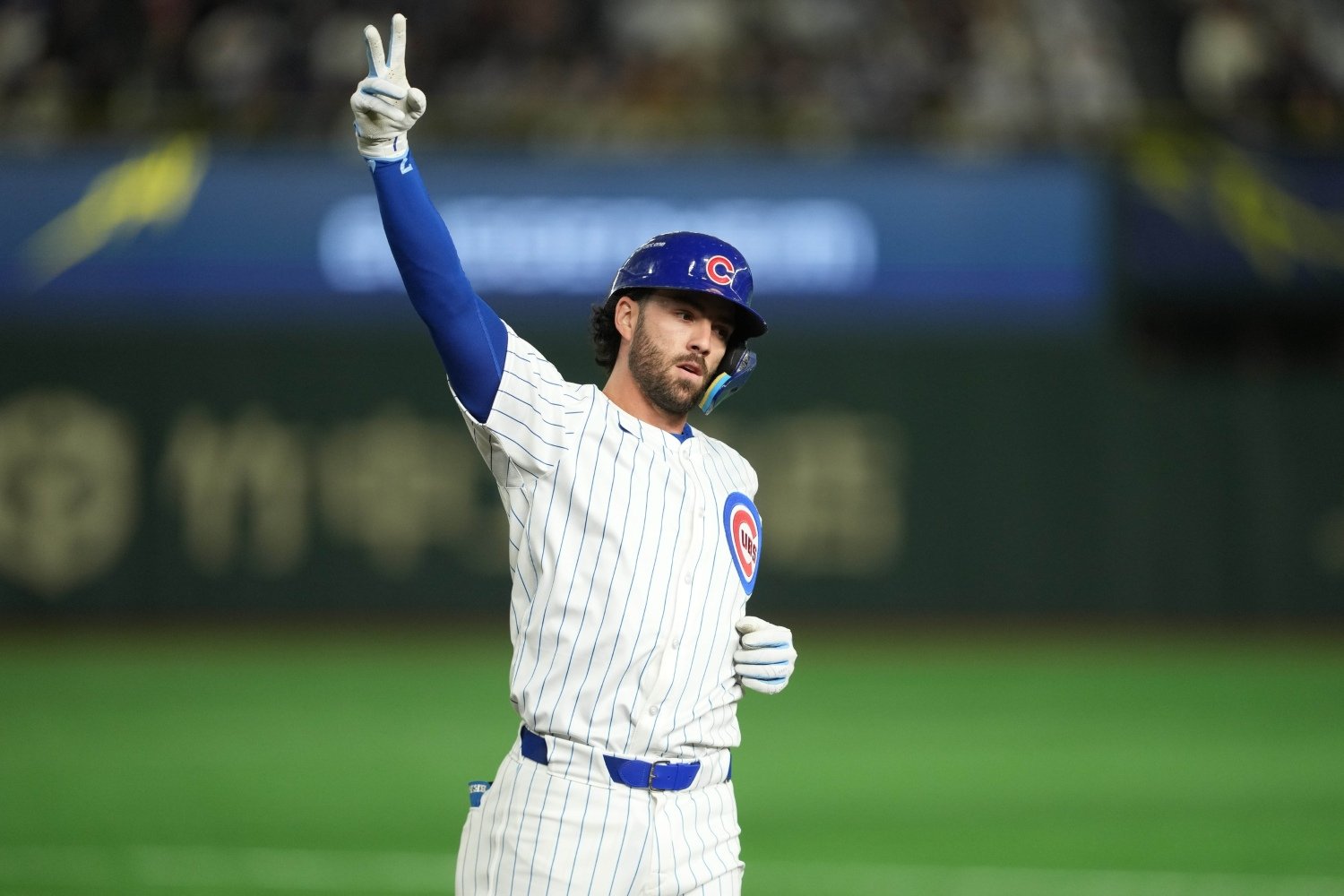 In his second season with the Cubs, Dansby Swanson had very similar strikeout and walk rates to the ones he posted in his first campaign with them. He hit the ball hard more often (42.7%, up from 39.7%), and had a virtually identical average exit velocity. Based on raw batted-ball data, he should have been close to the same hitter he was in 2023. He wasn't. After hitting .244/.328/.416 in the first year of his seven-year deal, his production dipped to .242/.312/.390 last season. Last week, I wrote about the difficulty of playing through injuries, as Swanson did for much of 2024. While he managed superficially similar contact quality, his swing didn't look quite the same, because he was compromised by the sports hernia for which he underwent surgery after the season. Now, thanks to the new data on batter's box positioning and contact points made public on Baseball Savant Sunday night, we can see what undermined his performance in more granular detail. Here's what Swanson's setup, stride and contact point looked like on pitches that resulted in hard-hit balls in play in 2023. Right away, the aggressiveness of Swanson's stride is apparent. He gains about 20 inches of ground on the ball with this attack, meeting the pitch (on average) 2 inches in front of home plate and 32.5 inches from his body. Hard contact tends to happen out front for most hitters, and that's always been true for Swanson. When he's right, he gets his power by beating the ball to its spot. His results on hard-hit balls that year were quite good—as you'd expect. He uses all fields, but when Swanson is on time (which is to say, in a way, early; the fast swings that tend to generate hard contact usually mean getting to the ball before the ball gets to you). he pulls his well-hit balls pretty often. ZFo5QjZfWGw0TUFRPT1fRDFBQVhWUURCMU1BQ1FjQVVRQUFVbEpSQUFNTlZGZ0FWRkVIVkZVSEFnVlVBZ0pl.mp4 Now, compare that graphic of his stance and movements from 2023 to this one, showing the same data for 2024. He set up deeper in the box last year, to give himself a little more time to get the bat up to speed and on plane. As we discussed last week, his stride was shorter; you can see that clearly in this visual. Pay special attention, though, to that contact point. It's much deeper, averaging 2.7 inches behind the front edge of home plate and 29.5 inches from Swanson's body. There are plenty of hitters who (even on hard contact) meet the ball deeper than Swanson did last year, but for him, this was a symptom of a physical limitation. It showed in the spray of his hard-hit balls, and the production he realized on them. Compared to the previous season, Swanson was markedly less productive on his hard-hit balls: a lower batting average, and six fewer homers in almost exactly the same sample size. The culprit (besides, perhaps, unfriendly Wrigley Field winds): too many of those hard-hit balls went to right field. Sometimes, even when he was swinging fast, he seemed to get there too late, too deep in the hitting zone, and the pitcher beat him. QnZ6RDlfWGw0TUFRPT1fVUZWVEFWQU1Vd3NBVzFkVFZRQUFVQU5VQUZnSEIxZ0FBUUFEQ0ZaUUFBWldCRlpX.mp4 Hitting is about both fast, controlled, explosive movements, and good timing. It's about being fast enough, but even being fast enough isn't good enough if one gets started too late. Swanson, playing through a fairly major injury, was not on time even on some of his best swings last year, and it ate into his production. This season, to assess his health and project his ability to rediscover consistent positive outcomes on his best contact, keep an eye on his contact point. Swanson is a guy who needs to catch the ball out front, at least a little bit, to do his best work. Last year, he couldn't do it, and although he's now healthy again, he's also 31 years old. There are no guarantees that he'll immediately reclaim his former form purely because he's gotten that sports hernia taken care of.
 -
The Cubs' leader and highest-paid player hit the ball hard more often in 2024 than in 2023—but he got much less value from those hard-hit balls. Why? Check the contact point. Image courtesy of © Darren Yamashita-Imagn Images In his second season with the Cubs, Dansby Swanson had very similar strikeout and walk rates to the ones he posted in his first campaign with them. He hit the ball hard more often (42.7%, up from 39.7%), and had a virtually identical average exit velocity. Based on raw batted-ball data, he should have been close to the same hitter he was in 2023. He wasn't. After hitting .244/.328/.416 in the first year of his seven-year deal, his production dipped to .242/.312/.390 last season. Last week, I wrote about the difficulty of playing through injuries, as Swanson did for much of 2024. While he managed superficially similar contact quality, his swing didn't look quite the same, because he was compromised by the sports hernia for which he underwent surgery after the season. Now, thanks to the new data on batter's box positioning and contact points made public on Baseball Savant Sunday night, we can see what undermined his performance in more granular detail. Here's what Swanson's setup, stride and contact point looked like on pitches that resulted in hard-hit balls in play in 2023. Right away, the aggressiveness of Swanson's stride is apparent. He gains about 20 inches of ground on the ball with this attack, meeting the pitch (on average) 2 inches in front of home plate and 32.5 inches from his body. Hard contact tends to happen out front for most hitters, and that's always been true for Swanson. When he's right, he gets his power by beating the ball to its spot. His results on hard-hit balls that year were quite good—as you'd expect. He uses all fields, but when Swanson is on time (which is to say, in a way, early; the fast swings that tend to generate hard contact usually mean getting to the ball before the ball gets to you). he pulls his well-hit balls pretty often. ZFo5QjZfWGw0TUFRPT1fRDFBQVhWUURCMU1BQ1FjQVVRQUFVbEpSQUFNTlZGZ0FWRkVIVkZVSEFnVlVBZ0pl.mp4 Now, compare that graphic of his stance and movements from 2023 to this one, showing the same data for 2024. He set up deeper in the box last year, to give himself a little more time to get the bat up to speed and on plane. As we discussed last week, his stride was shorter; you can see that clearly in this visual. Pay special attention, though, to that contact point. It's much deeper, averaging 2.7 inches behind the front edge of home plate and 29.5 inches from Swanson's body. There are plenty of hitters who (even on hard contact) meet the ball deeper than Swanson did last year, but for him, this was a symptom of a physical limitation. It showed in the spray of his hard-hit balls, and the production he realized on them. Compared to the previous season, Swanson was markedly less productive on his hard-hit balls: a lower batting average, and six fewer homers in almost exactly the same sample size. The culprit (besides, perhaps, unfriendly Wrigley Field winds): too many of those hard-hit balls went to right field. Sometimes, even when he was swinging fast, he seemed to get there too late, too deep in the hitting zone, and the pitcher beat him. QnZ6RDlfWGw0TUFRPT1fVUZWVEFWQU1Vd3NBVzFkVFZRQUFVQU5VQUZnSEIxZ0FBUUFEQ0ZaUUFBWldCRlpX.mp4 Hitting is about both fast, controlled, explosive movements, and good timing. It's about being fast enough, but even being fast enough isn't good enough if one gets started too late. Swanson, playing through a fairly major injury, was not on time even on some of his best swings last year, and it ate into his production. This season, to assess his health and project his ability to rediscover consistent positive outcomes on his best contact, keep an eye on his contact point. Swanson is a guy who needs to catch the ball out front, at least a little bit, to do his best work. Last year, he couldn't do it, and although he's now healthy again, he's also 31 years old. There are no guarantees that he'll immediately reclaim his former form purely because he's gotten that sports hernia taken care of. View full article
-
Deadlines spur action, and when the qualifying offer came into being in 2012, it made Opening Day into one—albeit to a very minor degree. Now, that clock is ticking loudly for teams interested in the Padres' ace. Image courtesy of © Geoff Burke-Imagn Images The Cubs are one of multiple teams still checking in with the Padres on Dylan Cease in the final hours before Opening Day, according to league sources. We already knew that the team had made calls to free agents Lance Lynn and Kyle Gibson this month, as they try to amass sufficient depth to survive a long season they hope will include a trip to the playoffs. Cease has never entirely fallen off their radar, though, and the Padres have not ruled out a last-minute trade of their ace righthander. Notably, the team named Michael King as their Opening Day option, a move one source with another potential suitor said was informed by the league's strong desire for teams to announce their starters for Opening Day early and stick to that plan for marketing purposes. While Cease would check every possible box on a Cubs wishlist for a last-second infusion of front-end rotation help, there are hurdles to clear. Owen Caissie, the team's slugging outfield prospect, has diminished trade value right now, as he deals with significant injuries that threaten to compromise the power element central to his game. The Cubs would need to be willing to trade one of their other top prospects in the high minors (Kevin Alcántara, James Triantos, or Moises Ballesteros) or give up as many as three valuable pieces in exchange for Cease, and they don't seem inclined to do so thus far. One possibility the team has floated, sources said, involves trading potential relief ace Porter Hodge as part of a package, perhaps alongside a high-minors arm and a further-off positional prospect. The team would backfill Hodge's role as a setup man to Ryan Pressly by moving Ben Brown to the bullpen, where his stuff might play best, anyway. San Diego has had interest in Hodge in the past, but at this late stage, a source familiar with their thinking said they would prefer to get a majors-ready starter to replace Cease directly. The situation will quickly come to a head over the next 24 to 36 hours, because under the rules about qualifying offers and free-agent draft pick compensation, Opening Day acts as a meaningful deadline. To be able to offer Cease (who becomes a free agent at season's end) the qualifying offer and get a pick when he departs via free agency, a team must acquire him before Thursday. Therefore, Cease's trade value will drop (if only incrementally) if Thursday comes and he's still a member of the Padres. Brinksmanship at exactly this stage of the offseason is nothing new for San Diego president of baseball operations A.J. Preller. He's pulled off trades on the eve of Opening Day twice in his decade-long tenure, acquiring Craig Kimbrel ahead of the 2015 season and Taylor Rogers just before the 2022 campaign. (That the Cubs and Dodgers have already technically opened the season, in Tokyo, does not affect this deadline, a league source said.) Because rosters need to be trimmed and out-of-options players often hit the waiver wire, Opening Day can also be a bit of a deadline in that it compels final decisions to be made—including momentous ones like a Cease trade would be. If Cease remains a Padre Thursday, he's not likely to be on the block again until July, at the earliest. San Diego is not a team looking to sell. They just need to manage the tricky situation of a bloated payroll, ownership uncertainty, and three stars who are impending free agents. The Cubs are not the only team to talk to the Padres recently about Cease, and there's still a very real chance he's traded very soon. The price tag, however, might end up being more than the Cubs care to stomach, for a player who would further raise the stakes of this season and thin them out for the years beyond it. The team might also be a bit reluctant to bring aboard a Scott Boras client heading to free agency, at this particular moment. While Cease won't sign an extension before testing the market anyway, there are some raw feelings within the Cubs organization toward Boras, who they believe leaked details of their offers to Alex Bregman and painted their pursuit of the star third baseman unfavorably on purpose. Boras has not been shy about suggesting (rightfully) that the Ricketts family should spend more money on payroll, but the Cubs believe the super-agent fed certain newsbreakers a biased representation of the team's offer to Bregman and the degree to which their bid was competitive with the one he eventually signed with the Red Sox. Jed Hoyer is generally very level-headed about such things, and he and Boras have worked around awkward situations in the past. This time, though frustration might simmer between the team and the agent, there's an easy circumvention available: those parties hardly need to talk. It's Preller whom Hoyer will have to woo, if he wants to land one of the leading strikeout starters in the bigs before the season gets underway in full. Whether he'll want to, once he gets a final sense of the price to do so, is still an open question. View full article
-
 The Cubs are one of multiple teams still checking in with the Padres on Dylan Cease in the final hours before Opening Day, according to league sources. We already knew that the team had made calls to free agents Lance Lynn and Kyle Gibson this month, as they try to amass sufficient depth to survive a long season they hope will include a trip to the playoffs. Cease has never entirely fallen off their radar, though, and the Padres have not ruled out a last-minute trade of their ace righthander. Notably, the team named Michael King as their Opening Day option, a move one source with another potential suitor said was informed by the league's strong desire for teams to announce their starters for Opening Day early and stick to that plan for marketing purposes. While Cease would check every possible box on a Cubs wishlist for a last-second infusion of front-end rotation help, there are hurdles to clear. Owen Caissie, the team's slugging outfield prospect, has diminished trade value right now, as he deals with significant injuries that threaten to compromise the power element central to his game. The Cubs would need to be willing to trade one of their other top prospects in the high minors (Kevin Alcántara, James Triantos, or Moises Ballesteros) or give up as many as three valuable pieces in exchange for Cease, and they don't seem inclined to do so thus far. One possibility the team has floated, sources said, involves trading potential relief ace Porter Hodge as part of a package, perhaps alongside a high-minors arm and a further-off positional prospect. The team would backfill Hodge's role as a setup man to Ryan Pressly by moving Ben Brown to the bullpen, where his stuff might play best, anyway. San Diego has had interest in Hodge in the past, but at this late stage, a source familiar with their thinking said they would prefer to get a majors-ready starter to replace Cease directly. The situation will quickly come to a head over the next 24 to 36 hours, because under the rules about qualifying offers and free-agent draft pick compensation, Opening Day acts as a meaningful deadline. To be able to offer Cease (who becomes a free agent at season's end) the qualifying offer and get a pick when he departs via free agency, a team must acquire him before Thursday. Therefore, Cease's trade value will drop (if only incrementally) if Thursday comes and he's still a member of the Padres. Brinksmanship at exactly this stage of the offseason is nothing new for San Diego president of baseball operations A.J. Preller. He's pulled off trades on the eve of Opening Day twice in his decade-long tenure, acquiring Craig Kimbrel ahead of the 2015 season and Taylor Rogers just before the 2022 campaign. (That the Cubs and Dodgers have already technically opened the season, in Tokyo, does not affect this deadline, a league source said.) Because rosters need to be trimmed and out-of-options players often hit the waiver wire, Opening Day can also be a bit of a deadline in that it compels final decisions to be made—including momentous ones like a Cease trade would be. If Cease remains a Padre Thursday, he's not likely to be on the block again until July, at the earliest. San Diego is not a team looking to sell. They just need to manage the tricky situation of a bloated payroll, ownership uncertainty, and three stars who are impending free agents. The Cubs are not the only team to talk to the Padres recently about Cease, and there's still a very real chance he's traded very soon. The price tag, however, might end up being more than the Cubs care to stomach, for a player who would further raise the stakes of this season and thin them out for the years beyond it. The team might also be a bit reluctant to bring aboard a Scott Boras client heading to free agency, at this particular moment. While Cease won't sign an extension before testing the market anyway, there are some raw feelings within the Cubs organization toward Boras, who they believe leaked details of their offers to Alex Bregman and painted their pursuit of the star third baseman unfavorably on purpose. Boras has not been shy about suggesting (rightfully) that the Ricketts family should spend more money on payroll, but the Cubs believe the super-agent fed certain newsbreakers a biased representation of the team's offer to Bregman and the degree to which their bid was competitive with the one he eventually signed with the Red Sox. Jed Hoyer is generally very level-headed about such things, and he and Boras have worked around awkward situations in the past. This time, though frustration might simmer between the team and the agent, there's an easy circumvention available: those parties hardly need to talk. It's Preller whom Hoyer will have to woo, if he wants to land one of the leading strikeout starters in the bigs before the season gets underway in full. Whether he'll want to, once he gets a final sense of the price to do so, is still an open question.
- 2 comments
-
- 1
-
-
- dylan cease
- ben brown
- (and 1 more)
-
 There are valid reasons to feel annoyed that the Cubs had to travel halfway around the world to play games that count in the standings of their domestic league, but let no one say that the league didn't make every effort to ease the burden for them. As the team gears up for a two-game exhibition series against the team from suburban Cobb County, Ga. to wrap up their preseason schedule, it's startling to realize just how many of the team's Cactus League games came at Sloan Park in Mesa—where the team routinely sells somewhere between 10,000 and 15,000 tickets per contest. In finishing with five games at home between the return from Japan and a trip to downtown Phoenix for four regular-season games against the Diamondbacks, the Cubs will go from Mar. 10 to Mar. 27 between Stateside games anywhere but Sloan—and those who didn't like the flights to and from Tokyo can take solace in not needing to board a plane all the way from Mar. 20 to Mar. 31. They'll play 26 preseason games in Arizona, with a whopping 17 of them at home. One of their few road games (a date with the White Sox all the way across the valley, in Glendale) was even banged because of rain. Available tickets for Monday's contest with the team who used to play in downtown Atlanta start at $35, for a series that is somehow even lower-stakes than most spring training action. Not counting Sunday's Cactus League finale against the West Sacramento Athletics, the Cubs have already sold over 181,000 tickets this spring. They'll make almost $7 million in ticket sales alone at Sloan Park this spring. It's another way that the league has quietly cushioned the blow of having to play the defending World Series champions 10 days before the rest of the league kicks things off, and give up two home games for the season. As we've already discussed, the Commissioner's Office will also pay the team an amount commensurate with the revenue they sacrificed by not staging those games at Wrigley Field. All of this does much more to line the pockets of ownership than it does to alleviate the frustration of fans, who still have to stare at the 0-2 next to the team's logo in the standings until at least Thursday. The team itself also benefits, though, from not having to endure even the light annoyances and inconveniences of most spring training schedules. There haven't been many bus rides, or schedules shaped by when the coaches need to depart for a game. There have been a lot of chances for the players (those who went to Japan, and those who stayed home) to get their work done, head home early, and maximize their rest. It's basically been a full slate of home games for the team this spring, despite the major interruption of that long transoceanic trip. When you take note of their ability to draw fans for exhibition games and the money they make therefrom, it's easy to see why they would have insisted upon getting all the gates they could—but harder to figure out how ownership justifies their failure to spend money the way (for instance) that team from Georgia, or the Padres or the Astros or the Red Sox do. Properly understood, these accommodations also remove any excuses the team might make down the road. They got plenty in return for being willing to play those games. Now, they need to go win the healthy majority of the 160 important ones they have left.
 -
The Cubs did spend a week in Japan, but the last time they played in anyone else's Cactus League digs was on March 10th. Image courtesy of © Allan Henry-Imagn Images There are valid reasons to feel annoyed that the Cubs had to travel halfway around the world to play games that count in the standings of their domestic league, but let no one say that the league didn't make every effort to ease the burden for them. As the team gears up for a two-game exhibition series against the team from suburban Cobb County, Ga. to wrap up their preseason schedule, it's startling to realize just how many of the team's Cactus League games came at Sloan Park in Mesa—where the team routinely sells somewhere between 10,000 and 15,000 tickets per contest. In finishing with five games at home between the return from Japan and a trip to downtown Phoenix for four regular-season games against the Diamondbacks, the Cubs will go from Mar. 10 to Mar. 27 between Stateside games anywhere but Sloan—and those who didn't like the flights to and from Tokyo can take solace in not needing to board a plane all the way from Mar. 20 to Mar. 31. They'll play 26 preseason games in Arizona, with a whopping 17 of them at home. One of their few road games (a date with the White Sox all the way across the valley, in Glendale) was even banged because of rain. Available tickets for Monday's contest with the team who used to play in downtown Atlanta start at $35, for a series that is somehow even lower-stakes than most spring training action. Not counting Sunday's Cactus League finale against the West Sacramento Athletics, the Cubs have already sold over 181,000 tickets this spring. They'll make almost $7 million in ticket sales alone at Sloan Park this spring. It's another way that the league has quietly cushioned the blow of having to play the defending World Series champions 10 days before the rest of the league kicks things off, and give up two home games for the season. As we've already discussed, the Commissioner's Office will also pay the team an amount commensurate with the revenue they sacrificed by not staging those games at Wrigley Field. All of this does much more to line the pockets of ownership than it does to alleviate the frustration of fans, who still have to stare at the 0-2 next to the team's logo in the standings until at least Thursday. The team itself also benefits, though, from not having to endure even the light annoyances and inconveniences of most spring training schedules. There haven't been many bus rides, or schedules shaped by when the coaches need to depart for a game. There have been a lot of chances for the players (those who went to Japan, and those who stayed home) to get their work done, head home early, and maximize their rest. It's basically been a full slate of home games for the team this spring, despite the major interruption of that long transoceanic trip. When you take note of their ability to draw fans for exhibition games and the money they make therefrom, it's easy to see why they would have insisted upon getting all the gates they could—but harder to figure out how ownership justifies their failure to spend money the way (for instance) that team from Georgia, or the Padres or the Astros or the Red Sox do. Properly understood, these accommodations also remove any excuses the team might make down the road. They got plenty in return for being willing to play those games. Now, they need to go win the healthy majority of the 160 important ones they have left. View full article
-
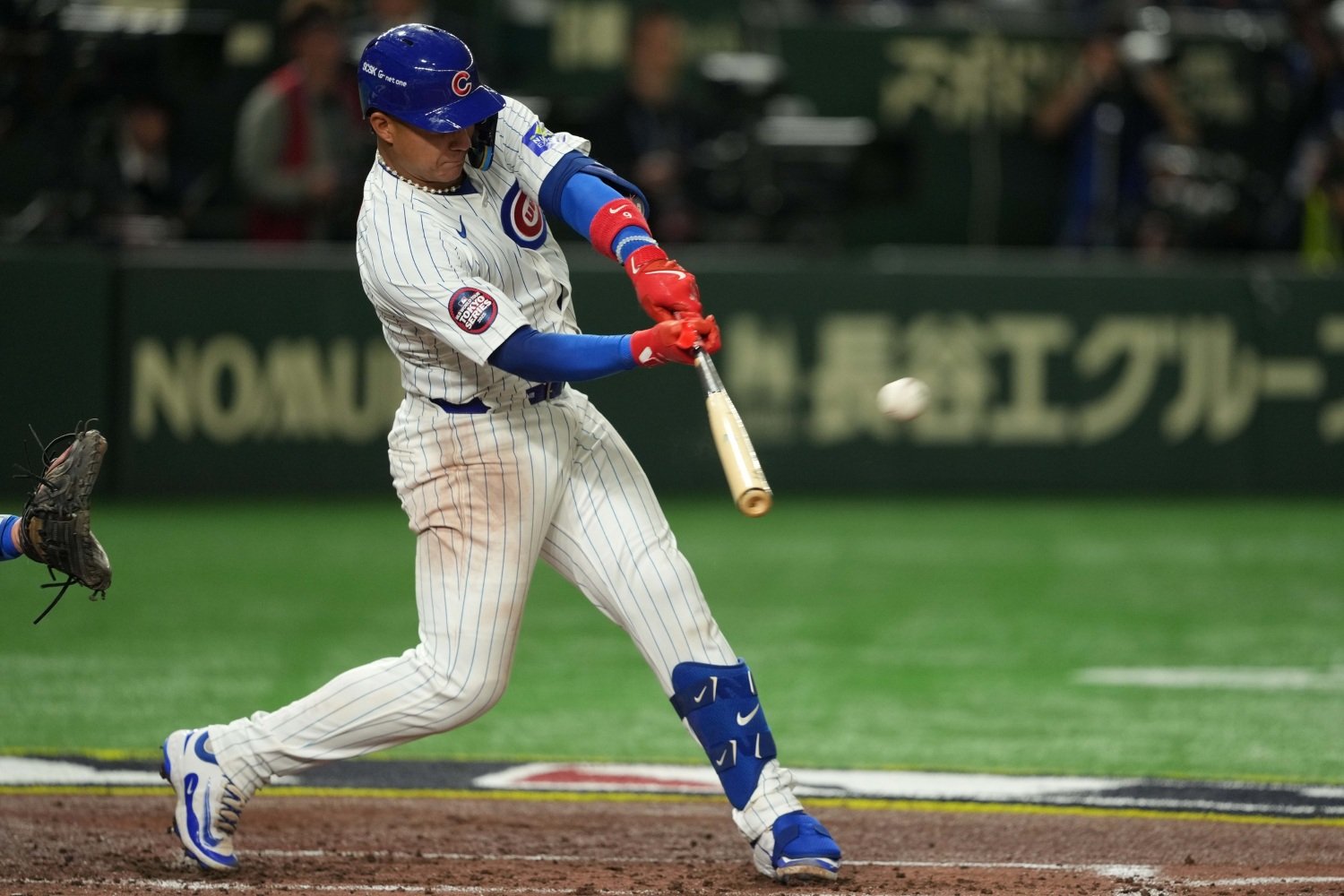 On Sunday night, Baseball Savant released their latest orgiastic set of detailed data on the game we all love. It details where batters set up in the batter's box, relative to the front of home plate and to the inside edge thereof. It also shows us how they move throughout their swings, with diagrams that mark the position of each foot and the hitter's center of mass in their initial stance; at the release of the pitch; and when the bat meets the ball. That's extremely valuable data—to all of us, but even more so to teams, who receive unfettered access to all of the numbers associated with those diagrams, and will be able to diagnose and treat (for instance) a slight and unintentional pattern of pulling off the ball or overstriding. Even more helpful to those of us on the outside, though, is the data on where the bat and the ball meet, relative both to the front edge of home plate and the player's center of mass at the time of that impact. In other words, we know what players' strides look like (in numerical, manageable form; you no longer have to rely on my rough-hewn scouting eye and the unsatisfactory evidence of looks from the center-field camera), and we know who catches the ball out front, as well as who lets it travel deep into the hitting zone. Fascinating case studies abound here, and aren't even limited to the Cubs, but let's start with one guy who also stood out when Savant released bat speed data early last season: Miguel Amaya. At the time, Amaya was showing flashes of something, but he wasn't connecting with the ball often enough to stay afloat, no matter how fast he was swinging. He had a big, aggressive leg kick and stride, and was trying to blast the ball out in front of home plate, but in practice, he was nearly flailing his way out of the league. Here's a look at Amaya's setup and swing for August 2023. Note the length of this stride, and the average contact point 9.9 inches in front of home plate. In fact, just to help you visualize it, here's the video animation of that swing, where you can see his foot move (as part of his leg kick) from his set up to the release of the pitch, then where it goes. Recording 2025-03-23 233425.mp4 That's a big move, and while it helped Amaya generate big bat speed, it also tended to result in big whiff rates. As late as the beginning of last July, he was still doing some version of that. After his well-documented summer swing fix, though, Amaya looked completely different in the box. There's not enough to show you for a video to matter, this time. Just look at the different setup, lower-body movement, and contact point he showed in August 2024. Watching from home, one could spot and articulate that Amaya was standing a bit closer to the plate, with a minimal stride. It would have been much harder, though, to confidently note that he's setting up much more spread-out—with his feet some nine inches farther apart than they were in his stance one year earlier. It also would have been almost impossible to confirm that he was making contact deeper in the hitting zone, letting the ball travel farther and squaring it up more, except by looking at his actual batted-ball data and making an educated guess. We do have that data, not just on how the ball left the bat but on how he sped his bat up again after it slowed down in the big process of his transformation. Now, though, we can marry it with hard evidence that he was generating that power deeper in the hitting zone. Why does that matter? The deeper one can make solid contact, the more time one has to identify and lock in on the incoming pitch. When a hitter is right both physically and mentally, a deeper contact point should facilitate better swing decisions. Of course, Amaya mostly made bad swing decisions last September, but we'll give him a pass for that; he had never caught such a long season before. This swing is also much simpler. Not by coincidence did Amaya's contact rate soar after the change. In addition to having longer to process the pitch and deliver the barrel to it, he had a more stable base and could use his good hand-eye coordination better. This spring, Amaya has quietly been the most consistently excellent Cubs hitter. He's batted .542 with four extra-base hits in 24 Cactus League at-bats, and he had an RBI double in his lone start against the Dodgers in Tokyo. He's scalding the ball, too. Everything is jumping off his bat. We knew about his bat speed, but if he's now capable of setting up deeper in the box, spreading out, seeing it a hair longer and mashing it to all fields, then the bat speed will finally become the genuine plus tool the team has long felt it should be.
 -
The Third Age of Sabermetrics has reached its apotheosis, with the release of data that tracks not only the swing speeds (and lengths) of batters, but their position in the batter's box and where they make contact with the ball, relative to home plate. It's especially revealing when you examine the Cubs' young, slugging catcher. Image courtesy of © Darren Yamashita-Imagn Images On Sunday night, Baseball Savant released their latest orgiastic set of detailed data on the game we all love. It details where batters set up in the batter's box, relative to the front of home plate and to the inside edge thereof. It also shows us how they move throughout their swings, with diagrams that mark the position of each foot and the hitter's center of mass in their initial stance; at the release of the pitch; and when the bat meets the ball. That's extremely valuable data—to all of us, but even more so to teams, who receive unfettered access to all of the numbers associated with those diagrams, and will be able to diagnose and treat (for instance) a slight and unintentional pattern of pulling off the ball or overstriding. Even more helpful to those of us on the outside, though, is the data on where the bat and the ball meet, relative both to the front edge of home plate and the player's center of mass at the time of that impact. In other words, we know what players' strides look like (in numerical, manageable form; you no longer have to rely on my rough-hewn scouting eye and the unsatisfactory evidence of looks from the center-field camera), and we know who catches the ball out front, as well as who lets it travel deep into the hitting zone. Fascinating case studies abound here, and aren't even limited to the Cubs, but let's start with one guy who also stood out when Savant released bat speed data early last season: Miguel Amaya. At the time, Amaya was showing flashes of something, but he wasn't connecting with the ball often enough to stay afloat, no matter how fast he was swinging. He had a big, aggressive leg kick and stride, and was trying to blast the ball out in front of home plate, but in practice, he was nearly flailing his way out of the league. Here's a look at Amaya's setup and swing for August 2023. Note the length of this stride, and the average contact point 9.9 inches in front of home plate. In fact, just to help you visualize it, here's the video animation of that swing, where you can see his foot move (as part of his leg kick) from his set up to the release of the pitch, then where it goes. Recording 2025-03-23 233425.mp4 That's a big move, and while it helped Amaya generate big bat speed, it also tended to result in big whiff rates. As late as the beginning of last July, he was still doing some version of that. After his well-documented summer swing fix, though, Amaya looked completely different in the box. There's not enough to show you for a video to matter, this time. Just look at the different setup, lower-body movement, and contact point he showed in August 2024. Watching from home, one could spot and articulate that Amaya was standing a bit closer to the plate, with a minimal stride. It would have been much harder, though, to confidently note that he's setting up much more spread-out—with his feet some nine inches farther apart than they were in his stance one year earlier. It also would have been almost impossible to confirm that he was making contact deeper in the hitting zone, letting the ball travel farther and squaring it up more, except by looking at his actual batted-ball data and making an educated guess. We do have that data, not just on how the ball left the bat but on how he sped his bat up again after it slowed down in the big process of his transformation. Now, though, we can marry it with hard evidence that he was generating that power deeper in the hitting zone. Why does that matter? The deeper one can make solid contact, the more time one has to identify and lock in on the incoming pitch. When a hitter is right both physically and mentally, a deeper contact point should facilitate better swing decisions. Of course, Amaya mostly made bad swing decisions last September, but we'll give him a pass for that; he had never caught such a long season before. This swing is also much simpler. Not by coincidence did Amaya's contact rate soar after the change. In addition to having longer to process the pitch and deliver the barrel to it, he had a more stable base and could use his good hand-eye coordination better. This spring, Amaya has quietly been the most consistently excellent Cubs hitter. He's batted .542 with four extra-base hits in 24 Cactus League at-bats, and he had an RBI double in his lone start against the Dodgers in Tokyo. He's scalding the ball, too. Everything is jumping off his bat. We knew about his bat speed, but if he's now capable of setting up deeper in the box, spreading out, seeing it a hair longer and mashing it to all fields, then the bat speed will finally become the genuine plus tool the team has long felt it should be. View full article
-
Will Matt Shaw Flick a Quicker Stick When the Regular Season Resumes?
Matthew Trueblood posted an article in Cubs
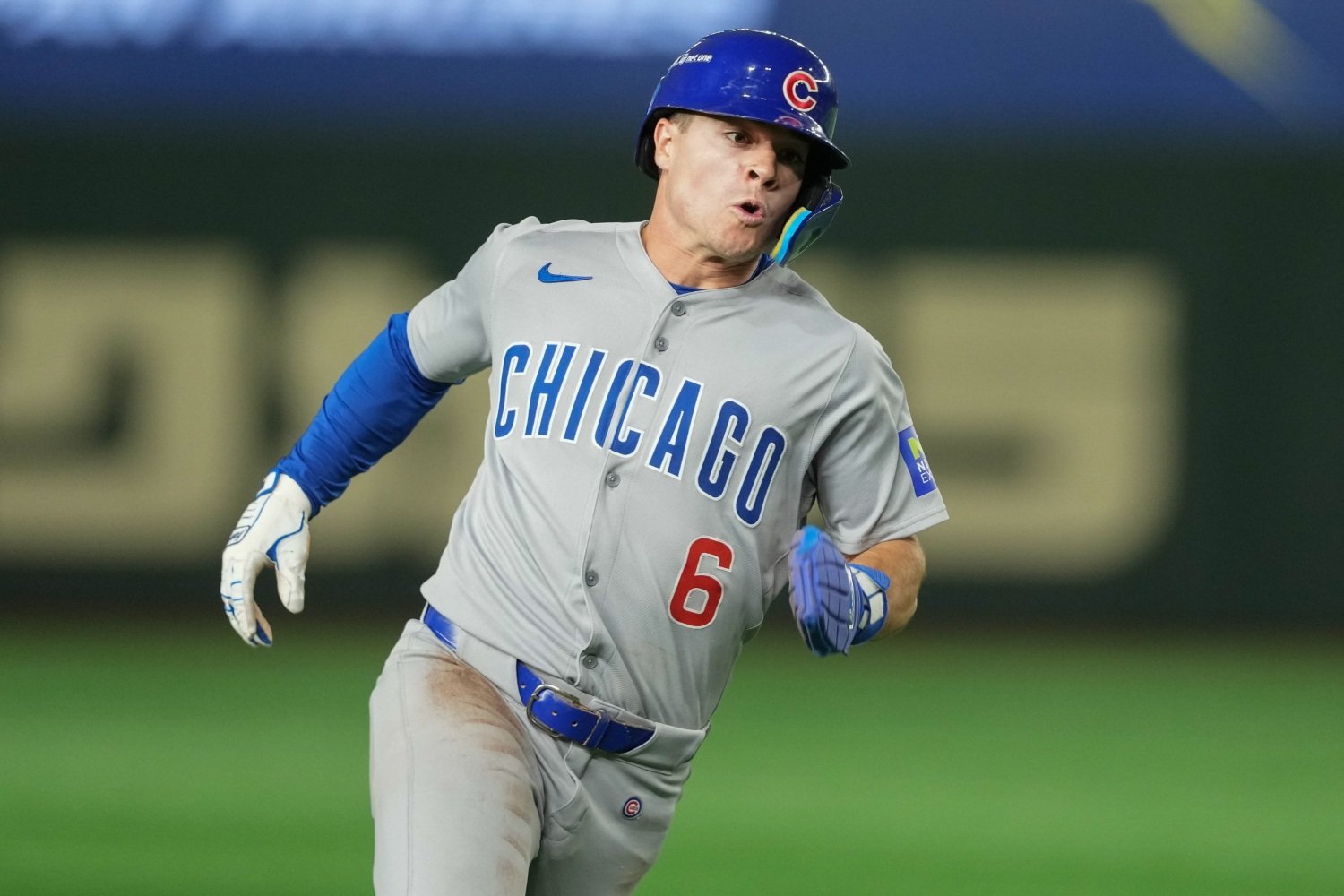 There are few injuries a ballplayer hates to deal with as much as oblique strains. The danger of recurrence, once you have one, is maddeningly high. The prescribed course of treatment (usually, rest is the main thing, and the player is barred from advancing through each stage of rehab until they can do so without pain or tightness) is the kind of thing that drives an impatient competitor berserk. Whether you're a hitter or a pitcher, the injury also affects the most fundamental and explosive element of your game: rapid rotation. Matt Shaw suffered an early oblique injury after reporting to camp in February, which put his availability for the season-opening Tokyo Series in doubt immediately. That was a frustrating development for Shaw, as much as for anyone else. He has worked hard since the middle of last season to make himself a capable third baseman and to position himself for the opportunity that opened up when the team traded Isaac Paredes in December. To his credit, he didn't allow that frustration to interfere with his work. On the contrary, he pushed hard to make himself ready for a few exhibition games in early March, before the team left for Japan on Mar. 11. He made the flight, because he set his mind to it. It's easier to set one's mind to something than to set one's muscles to it, though. Shaw looked bad in his first two major-league games, coming up only with an all-time cheapie of a first hit on a chopper to the pitcher in the second contest. His contact was weak; his bat looked slow. That might be because the Dodgers had some of the best pitchers in the world on the mound, and Shaw was genuinely overmatched. Alternatively, though, it might be because he simply wasn't physically ready for the challenge he embraced. His bat speed was poor, but it might be more an indicator of where he really was in his recovery than of where he will be once he gets going again. Since Aug. 1, 2023—in other words, going back as far as we have public bat-tracking data—there have been 23 oblique strains suffered by players who had both a baseline against which to measure and some playing time after returning, before the end of their season. (Really, there were 24, but we'll circle back to the one not included in these data at the end.) Fourteen of the 23 saw their swing speed get slower in the 10 days immediately after their return to play than in the 10 days immediately before they got hurt—although half of those reductions in bat speed were by 0.5 miles per hour or less. As you can see, there's something other than a normal distribution here. Our sample is still quite small, so we can't draw unduly confident conclusions from the data, but this is about what we'd expect to see, really: The difference is there, but small, for the most part; A few outliers on the low end indicate players who either came back too soon and were still starkly diminished; and A few on the other end indicate players who probably played through the injury a bit before landing on the shelf, or were so tired before going down that the benefited a great deal from some downtime. It might not surprise you to hear that Seiya Suzuki was one of the latter cases, when he went down with an oblique strain last Apr. 15. He seemed to suffer the injury while running to first base on a ground ball in Seattle, which is not the typical way that hitters hurt those muscles; it's the process of a swing that tends to create that strain. In all likelihood, Suzuki (who, remember, missed the 2023 World Baseball Classic with a more severe oblique strain) had nursed a not-quite-healthy oblique to that point in the spring. He seems to need a few weeks each year to get loosened up. Chalk that up to the weather, or to his body type or his training regimen, but whatever the reason, it seems to be true. Indeed, after missing just 25 days with the injury, Suzuki returned, four days faster than the median hitter over this two-season span: But he was still swinging the bat 1.7 mph faster when he returned than when he went down. There's a notable pattern here, beyond Suzuki. Brandon Lowe of the Rays suffered an oblique strain at almost the same time as Suzuki and missed two more weeks, but when he came back, he, too swung the bat notably faster. Meanwhile, two of our biggest bat-speed losers in the wake of oblique strains belonged to players who suffered their injuries during spring training, or right away in the first series of the 2024 season. Using their 2023 swing speeds as baselines, Nathaniel Lowe (-2.0) and Sean Murphy (-1.8) lost as much acceleration as just about anyone when they first got back onto the field in the first half of 2024. That gives us a hint that, as they ramp back up, hitters whose spring trainings were compromised need some time to get their bodies moving the way they'd normally be ready to move at that stage. Both the Rangers' Lowe and Murphy recovered their bat speed after a couple of weeks of sluggish swings upon being activated, which is awfully suggestive. How long a player is out with an injury like this is a tough indicator to read, because it can tell a noisy story. Did a player return quickly because he'd only been sidelined out of an abundance of caution, or did he rush back, refusing to be kept out of the lineup longer than absolutely necessary? It's probably one of the two in several cases, and the other in several cases. The data doesn't give us a clear signal in terms of the optimal time for a player with an oblique issue to return, which shouldn't surprise us. It does seem, at least, like the surest way to avoid a bad outcome is to have a hitter come back five or six weeks after getting hurt. In Shaw's case, though, that would have meant waiting until right about now to put him back into competitive action. In order to be considered for a spot on the roster in Japan, he needed to be back in the Cactus League lineup in under three weeks—so he was. If he's continued to get treatment and rest, Shaw should be back up to full strength—and speed—by the time the Cubs take on the Diamondbacks Thursday at Chase Field. It's possible he's genuinely not ready for the majors, but we probably couldn't say that for certain inside of a few weeks. It's also possible he was just not himself after sitting through a very long cross-Pacific flight with a still-nagging muscular issue, and that we'll see a much more confident, healthy, and explosive Shaw next weekend. The good news is, we'd be able to see that quite quickly. Let's talk briefly about the outlier of outliers, though. Back in the second half of 2023, Seby Zavala suffered an oblique strain. In the 10 days before that happened, he was swinging the bat at a positively turtle-like 67.2 mph. He missed a month, but when he returned to the lineup, that number was 73.5 mph. He'd jumped two grades in bat speed, by being hurt and missing time. In all likelihood, that's an indicator of some bad data; it was still early in the era of bat tracking by Statcast. Let's roll with it a minute, though, because Zavala is only somewhat alone. Jorge Soler (+1.1 mph) also saw his bat speed increase after missing a chunk of September in 2023. Near the end of last season, Christian Walker (-0.2 mph) and Wenceel Pérez (-0.2 mph) saw barely any degradation after their month-long absences due to oblique strains, and Michael Siani (+2.0) saw a marked increase. It might well be that, late in the summer, an injury that shelves you for four or five weeks is a highly beneficial chance to rest—one that outweighs whatever rust still hangs on you or whatever lingering worry about the muscles remain when you get back into the lineup. If the injury happens before the season, though, it's a different story. Shaw probably needed more time than he got to recuperate from this injury, but now, there's a good chance it's fully behind him. The Cubs certainly hope so.
 -
Do batters who suffer oblique strains have diminished swing speeds when they first get back onto the field? Image courtesy of © Darren Yamashita-Imagn Images There are few injuries a ballplayer hates to deal with as much as oblique strains. The danger of recurrence, once you have one, is maddeningly high. The prescribed course of treatment (usually, rest is the main thing, and the player is barred from advancing through each stage of rehab until they can do so without pain or tightness) is the kind of thing that drives an impatient competitor berserk. Whether you're a hitter or a pitcher, the injury also affects the most fundamental and explosive element of your game: rapid rotation. Matt Shaw suffered an early oblique injury after reporting to camp in February, which put his availability for the season-opening Tokyo Series in doubt immediately. That was a frustrating development for Shaw, as much as for anyone else. He has worked hard since the middle of last season to make himself a capable third baseman and to position himself for the opportunity that opened up when the team traded Isaac Paredes in December. To his credit, he didn't allow that frustration to interfere with his work. On the contrary, he pushed hard to make himself ready for a few exhibition games in early March, before the team left for Japan on Mar. 11. He made the flight, because he set his mind to it. It's easier to set one's mind to something than to set one's muscles to it, though. Shaw looked bad in his first two major-league games, coming up only with an all-time cheapie of a first hit on a chopper to the pitcher in the second contest. His contact was weak; his bat looked slow. That might be because the Dodgers had some of the best pitchers in the world on the mound, and Shaw was genuinely overmatched. Alternatively, though, it might be because he simply wasn't physically ready for the challenge he embraced. His bat speed was poor, but it might be more an indicator of where he really was in his recovery than of where he will be once he gets going again. Since Aug. 1, 2023—in other words, going back as far as we have public bat-tracking data—there have been 23 oblique strains suffered by players who had both a baseline against which to measure and some playing time after returning, before the end of their season. (Really, there were 24, but we'll circle back to the one not included in these data at the end.) Fourteen of the 23 saw their swing speed get slower in the 10 days immediately after their return to play than in the 10 days immediately before they got hurt—although half of those reductions in bat speed were by 0.5 miles per hour or less. As you can see, there's something other than a normal distribution here. Our sample is still quite small, so we can't draw unduly confident conclusions from the data, but this is about what we'd expect to see, really: The difference is there, but small, for the most part; A few outliers on the low end indicate players who either came back too soon and were still starkly diminished; and A few on the other end indicate players who probably played through the injury a bit before landing on the shelf, or were so tired before going down that the benefited a great deal from some downtime. It might not surprise you to hear that Seiya Suzuki was one of the latter cases, when he went down with an oblique strain last Apr. 15. He seemed to suffer the injury while running to first base on a ground ball in Seattle, which is not the typical way that hitters hurt those muscles; it's the process of a swing that tends to create that strain. In all likelihood, Suzuki (who, remember, missed the 2023 World Baseball Classic with a more severe oblique strain) had nursed a not-quite-healthy oblique to that point in the spring. He seems to need a few weeks each year to get loosened up. Chalk that up to the weather, or to his body type or his training regimen, but whatever the reason, it seems to be true. Indeed, after missing just 25 days with the injury, Suzuki returned, four days faster than the median hitter over this two-season span: But he was still swinging the bat 1.7 mph faster when he returned than when he went down. There's a notable pattern here, beyond Suzuki. Brandon Lowe of the Rays suffered an oblique strain at almost the same time as Suzuki and missed two more weeks, but when he came back, he, too swung the bat notably faster. Meanwhile, two of our biggest bat-speed losers in the wake of oblique strains belonged to players who suffered their injuries during spring training, or right away in the first series of the 2024 season. Using their 2023 swing speeds as baselines, Nathaniel Lowe (-2.0) and Sean Murphy (-1.8) lost as much acceleration as just about anyone when they first got back onto the field in the first half of 2024. That gives us a hint that, as they ramp back up, hitters whose spring trainings were compromised need some time to get their bodies moving the way they'd normally be ready to move at that stage. Both the Rangers' Lowe and Murphy recovered their bat speed after a couple of weeks of sluggish swings upon being activated, which is awfully suggestive. How long a player is out with an injury like this is a tough indicator to read, because it can tell a noisy story. Did a player return quickly because he'd only been sidelined out of an abundance of caution, or did he rush back, refusing to be kept out of the lineup longer than absolutely necessary? It's probably one of the two in several cases, and the other in several cases. The data doesn't give us a clear signal in terms of the optimal time for a player with an oblique issue to return, which shouldn't surprise us. It does seem, at least, like the surest way to avoid a bad outcome is to have a hitter come back five or six weeks after getting hurt. In Shaw's case, though, that would have meant waiting until right about now to put him back into competitive action. In order to be considered for a spot on the roster in Japan, he needed to be back in the Cactus League lineup in under three weeks—so he was. If he's continued to get treatment and rest, Shaw should be back up to full strength—and speed—by the time the Cubs take on the Diamondbacks Thursday at Chase Field. It's possible he's genuinely not ready for the majors, but we probably couldn't say that for certain inside of a few weeks. It's also possible he was just not himself after sitting through a very long cross-Pacific flight with a still-nagging muscular issue, and that we'll see a much more confident, healthy, and explosive Shaw next weekend. The good news is, we'd be able to see that quite quickly. Let's talk briefly about the outlier of outliers, though. Back in the second half of 2023, Seby Zavala suffered an oblique strain. In the 10 days before that happened, he was swinging the bat at a positively turtle-like 67.2 mph. He missed a month, but when he returned to the lineup, that number was 73.5 mph. He'd jumped two grades in bat speed, by being hurt and missing time. In all likelihood, that's an indicator of some bad data; it was still early in the era of bat tracking by Statcast. Let's roll with it a minute, though, because Zavala is only somewhat alone. Jorge Soler (+1.1 mph) also saw his bat speed increase after missing a chunk of September in 2023. Near the end of last season, Christian Walker (-0.2 mph) and Wenceel Pérez (-0.2 mph) saw barely any degradation after their month-long absences due to oblique strains, and Michael Siani (+2.0) saw a marked increase. It might well be that, late in the summer, an injury that shelves you for four or five weeks is a highly beneficial chance to rest—one that outweighs whatever rust still hangs on you or whatever lingering worry about the muscles remain when you get back into the lineup. If the injury happens before the season, though, it's a different story. Shaw probably needed more time than he got to recuperate from this injury, but now, there's a good chance it's fully behind him. The Cubs certainly hope so. View full article
-
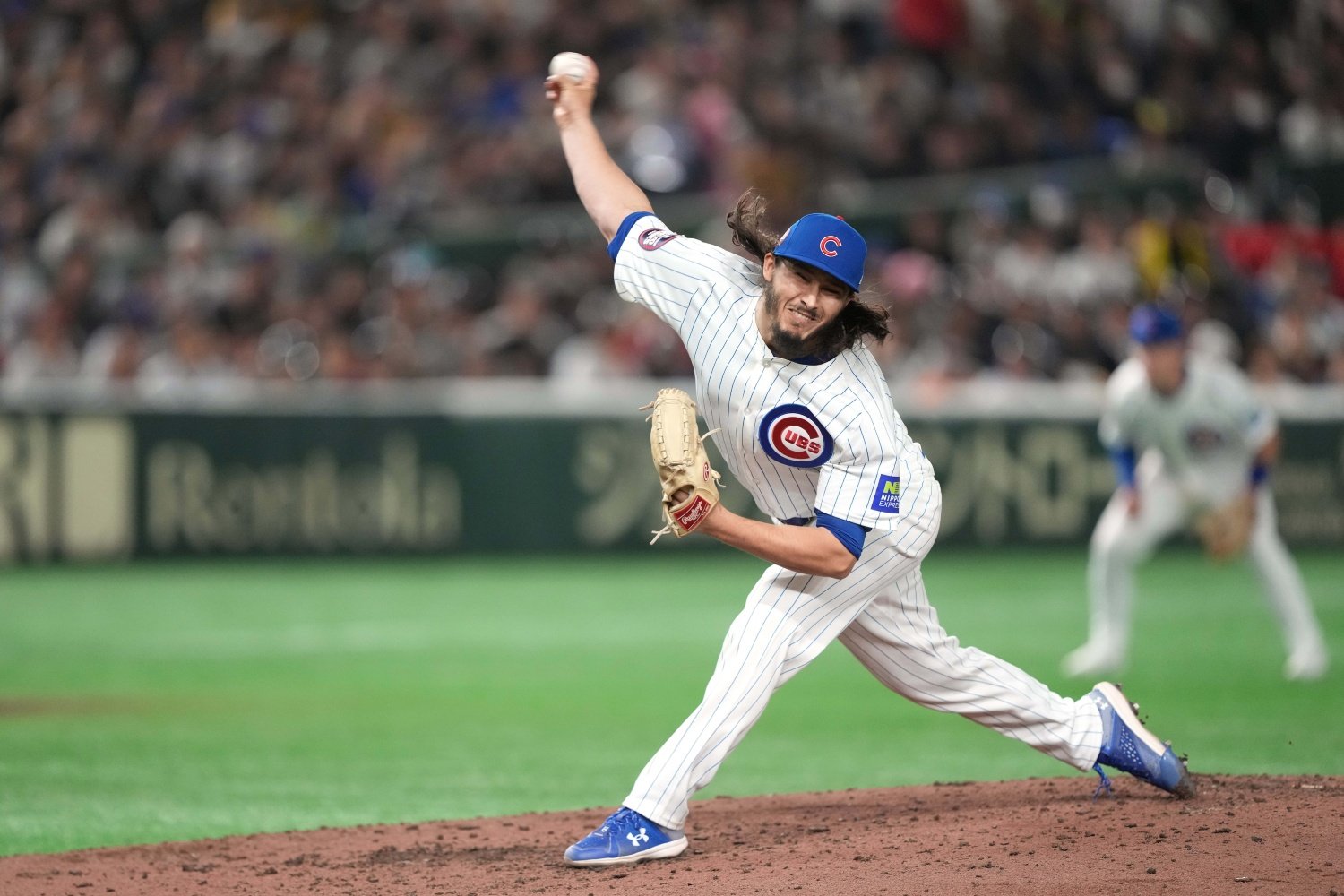 When the Cubs open the season in earnest against the Diamondbacks in Phoenix next Thursday, they'll start with a rotation of Justin Steele, Shota Imanaga, Jameson Taillon, Matthew Boyd, and Colin Rea. It's vaguely possible that Steele will land on the injured list while he ramps up more fully, after an illness earlier in camp and the trip to Tokyo slowed him down, but it's likely to be those five who comprise the starting staff. We know the identities of six of the pitchers who will come in to relieve those hurlers, too. On Thursday, the Cubs optioned Jordan Wicks and Eli Morgan to Triple-A Iowa, further clarifying who is and isn't in contention for the final spot on the active roster. It was no surprise to see Wicks sent down; it's pretty clear that he'll stay stretched out as a starter in the minors for the time being. Morgan was a bit more of an eyebrow-raiser, but ever since he was acquired, the glaring reality has been that he can be optioned to the minors, whereas veteran hurlers Tyson Miller and Julian Merryweather can't be. Since acquiring Morgan, the team has also brought in Ryan Pressly, Ryan Brasier, Caleb Thielbar, and Rea, all of whom have to stay on the active roster (barring injury). That made optioning Morgan one possibility, all along. Obviously, Porter Hodge can be sent to the minors, but just as obviously, he won't be, at least to start the campaign. The only other pitcher with options who is being treated more or less as safe is Nate Pearson—and even he now has to fend off at least one of two contenders to hang onto one of the final two spots in the Chicago pen. As good as Pearson's velocity and sheer stuff have been this spring, he's still scattering his release points and struggling with command. It's not wholly implausible that the Cubs could send him to Iowa to continue working on that, but they seem committed to getting as much from his arm as possible before it fails again. Thus, the most likely shape for the final showdown on the pitching staff is a head-to-head battle between Ben Brown and Brad Keller. Brown, of course, offers the team some length, and a greater sheen of youth and dynamism. This spring, though, it's Keller who has thrown harder. He has a deeper arsenal than Brown (admittedly, it's hard not to). He's shown the ability to compile innings without breaking. He's also the one the team will lose, if they don't add him to the 40-man roster. Brown, though tantalizing as ever this spring, still doesn't seem likely to force his way into their plans just yet. As Pearson could, in theory, Brown stands to benefit significantly from more time to work on things without the outcome pressure of big-league games that count. In extended spring training and/or Triple A, he could work on getting comfortable with a third pitch—be it the changeup that seems most natural, the slider we might have seen a recent glimpse of, or a cutter. He's never given the latter a try before, but it would seem like a perfect fit to give his arsenal a new dimension. He might also benefit from some time to make sure that he's comfortable with and able to command his existing two-pitch combination, since he seems to have slightly modified his arm slot and the relative shapes of his fastball and curve this spring. It's still not quite clear how Brown can help the Cubs, in the first half of this season. He doesn't have the pitch mix to start. He doesn't seem to have the command or the overpowering stuff to dominate in relief, at the moment. He also hasn't demonstrated the durability to do either in anything but very brief parts of seasons. Like Pearson, Daniel Palencia, Jack Neely and Cade Horton, he seems almost certain to play a big role for this team, but he needs to shore up some glaring weaknesses before he can be fully trusted by Craig Counsell—and in the meantime, it seems unlikely that the team will be willing to lose Keller when they could keep both by farming out Brown. An injury could change all of this, of course. Take Steele out of the rotation, even for one turn, and Brown becomes a more tempting addition to the roster—perhaps in lieu of Pearson, rather than Keller. If any of the team's older relief arms go through a dead-arm phase as the season gets ready to spark into life, an extra spot could open for a week or two. Ultimately, though, Thursday's moves just sharpen the focus on a battle that has been looming for over a fortnight. It's time to either give Keller the gig or give him his walking papers, so Brown might have to prove himself a bit more in the minors before getting another look in the Cubs pen.
 -
With two more cuts from their spring roster Thursday, the Cubs pared the number of healthy pitchers assigned to their big-league club to 14. There are one or two spots to be had, and two or three candidates for it. Image courtesy of © Darren Yamashita-Imagn Images When the Cubs open the season in earnest against the Diamondbacks in Phoenix next Thursday, they'll start with a rotation of Justin Steele, Shota Imanaga, Jameson Taillon, Matthew Boyd, and Colin Rea. It's vaguely possible that Steele will land on the injured list while he ramps up more fully, after an illness earlier in camp and the trip to Tokyo slowed him down, but it's likely to be those five who comprise the starting staff. We know the identities of six of the pitchers who will come in to relieve those hurlers, too. On Thursday, the Cubs optioned Jordan Wicks and Eli Morgan to Triple-A Iowa, further clarifying who is and isn't in contention for the final spot on the active roster. It was no surprise to see Wicks sent down; it's pretty clear that he'll stay stretched out as a starter in the minors for the time being. Morgan was a bit more of an eyebrow-raiser, but ever since he was acquired, the glaring reality has been that he can be optioned to the minors, whereas veteran hurlers Tyson Miller and Julian Merryweather can't be. Since acquiring Morgan, the team has also brought in Ryan Pressly, Ryan Brasier, Caleb Thielbar, and Rea, all of whom have to stay on the active roster (barring injury). That made optioning Morgan one possibility, all along. Obviously, Porter Hodge can be sent to the minors, but just as obviously, he won't be, at least to start the campaign. The only other pitcher with options who is being treated more or less as safe is Nate Pearson—and even he now has to fend off at least one of two contenders to hang onto one of the final two spots in the Chicago pen. As good as Pearson's velocity and sheer stuff have been this spring, he's still scattering his release points and struggling with command. It's not wholly implausible that the Cubs could send him to Iowa to continue working on that, but they seem committed to getting as much from his arm as possible before it fails again. Thus, the most likely shape for the final showdown on the pitching staff is a head-to-head battle between Ben Brown and Brad Keller. Brown, of course, offers the team some length, and a greater sheen of youth and dynamism. This spring, though, it's Keller who has thrown harder. He has a deeper arsenal than Brown (admittedly, it's hard not to). He's shown the ability to compile innings without breaking. He's also the one the team will lose, if they don't add him to the 40-man roster. Brown, though tantalizing as ever this spring, still doesn't seem likely to force his way into their plans just yet. As Pearson could, in theory, Brown stands to benefit significantly from more time to work on things without the outcome pressure of big-league games that count. In extended spring training and/or Triple A, he could work on getting comfortable with a third pitch—be it the changeup that seems most natural, the slider we might have seen a recent glimpse of, or a cutter. He's never given the latter a try before, but it would seem like a perfect fit to give his arsenal a new dimension. He might also benefit from some time to make sure that he's comfortable with and able to command his existing two-pitch combination, since he seems to have slightly modified his arm slot and the relative shapes of his fastball and curve this spring. It's still not quite clear how Brown can help the Cubs, in the first half of this season. He doesn't have the pitch mix to start. He doesn't seem to have the command or the overpowering stuff to dominate in relief, at the moment. He also hasn't demonstrated the durability to do either in anything but very brief parts of seasons. Like Pearson, Daniel Palencia, Jack Neely and Cade Horton, he seems almost certain to play a big role for this team, but he needs to shore up some glaring weaknesses before he can be fully trusted by Craig Counsell—and in the meantime, it seems unlikely that the team will be willing to lose Keller when they could keep both by farming out Brown. An injury could change all of this, of course. Take Steele out of the rotation, even for one turn, and Brown becomes a more tempting addition to the roster—perhaps in lieu of Pearson, rather than Keller. If any of the team's older relief arms go through a dead-arm phase as the season gets ready to spark into life, an extra spot could open for a week or two. Ultimately, though, Thursday's moves just sharpen the focus on a battle that has been looming for over a fortnight. It's time to either give Keller the gig or give him his walking papers, so Brown might have to prove himself a bit more in the minors before getting another look in the Cubs pen. View full article
-
The highly-paid shortstop looked as good as any Cub during the brief series in Tokyo this week. He's entering this season fully healthy, which makes for a stark contrast with last year. Image courtesy of © Darren Yamashita-Imagn Images Dansby Swanson has been smart enough not to let pride prevent him from getting the treatment and rest he needs to maximize his value to the Cubs, even over the first two years of a huge seven-year contract that brings considerable pressure with it. He hadn't spent any time on the injured list since 2019 when he finally landed there in July 2023, with a heel contusion. Last May, a knee sprain sidelined Swanson again, though each time, he was only out for about two weeks. He always wants to be on the field, and when he can't be, he works hard until he's able to come back. Even for the balance of 2024, though, Swanson was not actually healthy. The stint on the injured list clearly did him some good, because he batted an anemic .209/.285/.341 before that break and a more tenable .252/.321/.405 after it. but there were times when it was evident that he still wasn't swinging or playing the field at full strength. Over the offseason, he underwent surgery to repair a sports hernia—an increasingly common injury in hitters, and one the public often misunderstands because of its name. Essentially, what Swanson was dealing with was a series of torn tissues in his lower abdomen and groin. "Sports hernia" is a catch-all term, because it's often hard to tell exactly what has been damaged—layers of the abdomen wall, muscles, tendons, ligaments, or some mixture thereof—until a surgeon goes in to fix the problem. Unlike other soft-tissue injuries (strained hamstrings, groins, or obliques, for instance), sports herniae tend to require surgery, both because non-muscular tissues are often involved and because that area is tough to target with the same kinds of therapy and non-surgical treatment that work in other places. The reason why this injury is becoming pervasive—only two players missed time with it from 2016 to 2019, according to Baseball Prospectus's Recovery Dashboard tool, but seven have done so since 2021, and that number doesn't even include Swanson—is obvious, but rarely discussed: playing baseball requires more explosion, more torque, and much more sheer, shearing athletic force than most players get credit for producing. Fans tend to be much less understanding of baseball injuries than of those that happen to NBA and NFL stars. Big collisions like the ones that inflict so much damage on football players are vanishingly rare in baseball, and the sport has far less full-speed changing of direction or sudden leaping than basketball. It looks less athletic, to the casual fan, than the other major American team sports—or at least much less dangerous. Your eyes are lying to you, now more than ever. The game has never been played faster, or by bigger, stronger men. While baseball has always celebrated its embrace of all body types, all that really means is that both very tall and very short people can play it, and that the occasional, highly-skilled fatso can skate by for a moment. Walk through a big-league clubhouse, and one thing becomes immediately clear: even the small guys aren't small. They're short, maybe, but broad backs, thick forearms and sculpted physiques are as common there as in a basketball locker room. In fact, since basketball is more about sheer length, many baseball players are much more compact, explosive raw athletes than their ectomorphic counterparts on the hardwood. Baseball's biggest athletic demands just look a bit less dramatic, to the naked and untrained eye. By now, no one paying any attention is blind to the dangers of throwing very hard, especially as part of a downhill motion, with gravity applying extra momentum and pressure to everything. Dr. Neal El Attrache has a really, really nice house because throwing is as bad for your arm as blocking is for your brain. It's much easier for fans to miss the sport's other vicious moves, though. Swinging a bat at the speed required to hit modern pitching pushes the human frame past red lines as reliably as generating competitive big-league velocity does for those pitchers. An exceptionally well-conditioned and coordinated athlete can mostly avoid catastrophic injury, but there are several places in the kinetic chain where any inefficiency (and even phenomenal ballplayers are at least fractionally inefficient, especially when hitting, because hitting requires subliminal, instantaneous reactions and adjustments that can't be perfectly planned, choreographed and repeated) can cause structural failure. It's not just sports herniae that are becoming more frequent. Hitters are suffering more oblique strains, too. Cubs fans know this all too well, having seen that injury take chunks out of Seiya Suzuki's last two seasons. A fistful of hitters have broken hamates or other bones in their hands over the last five years, not when they were hit by pitches, but from the force of their swing and its follow-through. How you swing can affect which of these injuries you're susceptible to, but it's hard not to expose yourself to the risk of at least one of them, over a long career. You have to create a torrent of force, put into and then drawn from the ground and passed up through your connective tissues, then redirected and applied to the ball by a tornadic rotation of the whole body. Triston Casas of the Red Sox said last year that doctors told him the force of his swing was so great that he was putting his own torso through a "car crash" worth of strain each day; it resulted in cracked cartilage in his ribcage. Last year, while playing with torn somethings in the very region where Swanson's particular swing is geared to find and transfer its rotational force, he was clearly compromised. To see it in action, let's compare two swings, each on sliders from left-handed pitchers; each breaking in on him, but with enough of the plate to be hittable; and each when he was behind in the count. The camera angles are even fairly similar, so we have a fighting chance of seeing things that are real and not just hallucinations created by altered perspectives. The first is from last Sept. 24: TGw3M2tfWGw0TUFRPT1fVndSV1ZBSUNBQUVBWGdkWEJBQUFBbElBQUZrRlUxQUFWd0ZYVWdBSEFWWUFCd2RS.mp4 The second is from Wednesday. bmJXV2RfWGw0TUFRPT1fQXdkWkJWUUNVd0lBV2dBRkJ3QUFCZ0pSQUFNQVZGTUFVVnhVQVFGV1ZRUldWbEZW.mp4 Notice that on the one from last year, Swanson's front hip opens a hair earlier, relative to the landing of his front foot. The rotation that creates his bat speed is earlier, slower, and less explosive. He transfers his weight less aggressively from his back foot to the front one, unwilling to compromise his balance at all. On the second, he's very fast and powerful about pushing off his back side once the front foot comes down, and his hip and shoulder rotations are separated more, creating more tension and more torque. He lets his barrel stay behind his hands a hair longer, but that's just a product of the other movements in his swing—and it means that when his bat does whip through the zone, it does so much faster. Swanson's swing speed on that pitch last September was 69.2 mph. On the one on which he doubled Wednesday, it was 71.9 mph, and that was in a two-strike count—when nearly all hitters, Swanson included, tend to reduce their swing speed slightly to have a better chance to make contact. He was incapable of the kind of explosion he showed on his RBI double Wednesday for much of 2024. Indeed, he only had nine batted balls that topped the exit velocity on that ball Wednesday (106.4 mph) in the second half. Hopefully. that's compelling evidence that hitting is a subtly violent and physically demanding act, but that premise invites questions: If Swanson was hurt, and he knew it, why did he keep playing all season? Why don't more players accept proactive rest, and why do so many play through injuries? Isn't hitting at less than 100% health virtually impossible? For the answer to that, refer back to the numbers we cited at the top of this story. Damaged or not, Swanson put up a .726 OPS after coming back from that early knee issue. Though you could also spot him twisting and firing a bit less fluidly in the field, he played a solid defensive shortstop. He was, in other words, far better than anyone the Cubs could realistically have called up or acquired to replace him. That doesn't dampen the reality of the difficulty of the sport or the severity of the injury; it just illustrates how many different ways there are to compensate for such things and succeed. At first glance, it seems paradoxical to say that players are doing something hugely difficult and physically dangerous, but also that they can do it at a big-league level even while diminished by a nagging injury. Yet, it's true. That's how good these guys are, and often, it's a good reminder of the width of the gap between the very best and those who make a meager living riding buses with Triple-A teams. Swanson, like other players, learned how to recruit other muscles to make up for some of the lost strength and explosiveness when he couldn't use his typical moves. It didn't make him whole, but he had the versatility to live that way. It changed the composition of his batted balls, but it didn't render him helpless. In the field, he made more plays than most backups could, despite needing to handle the ball in the hole differently because he needed to be a bit ginger after fielding it. Players hate missing time, even though they understand it's an unavoidable part of life in the long grind of a 162-game season, especially now that the game's athletic standard has risen sharply. They'll do what they can to work around an injury, especially if (as is the case with a sports hernia) it's one that won't heal with time and rest, anyway. Whenever possible, they'll keep taking the field, receive extra treatment to manage pain and maintain flexibility, and try to solve the problems their malady poses on their own. To some fans, this will seem selfish. To others, it will seem heroic. There's no right answer, because each player (and their margin for error and adjustment, and the alternative their team has available if they go down) is different. For Swanson, it made sense to play through the pain last year. That didn't mean the pain or the inhibition was trivial. Baseball is harder and more violent than it looks, especially if it's already taken a bite out of you. Still, because it's such a full-body sport and contains so many opportunities to gain a mental edge, it's possible to play it at the elite level required in the majors while one is considerably less than fully healthy—if you're good, and versatile, and want it badly enough. View full article
