Matthew Trueblood
-
Posts
2,479 -
Joined
-
Last visited
-
Days Won
2
Content Type
Profiles
Joomla Posts 1
Chicago Cubs Videos
Chicago Cubs Free Agent & Trade Rumors, Notes, & Tidbits
2026 Chicago Cubs Top Prospects Ranking
News
2023 Chicago Cubs Draft Picks
Guides & Resources
2024 Chicago Cubs Draft Picks
The Chicago Cubs Players Project
2025 Chicago Cubs Draft Pick Tracker
2026 Chicago Cubs Draft Tracker: Picks & Bonuses
Blogs
Events
Forums
Store
Gallery
Everything posted by Matthew Trueblood
-
With one candidate for the fifth spot in the Chicago Cubs' starting rotation injured, the other will get the shot the team envisioned when they signed him. He can only thrive, though, if the team's defense performs the way the front office imagined as they constructed the team. Image courtesy of © Rick Scuteri-Imagn Images For the last two seasons, the Cubs' theory—their plan and design for getting to the postseason—has been that they would have an elite team defense. They signed Dansby Swanson and slid Nico Hoerner to second base for 2023 to create an exceptional middle infield. They extended Ian Happ on the same premise, securing one of the league's best left fielders. In neither of the last two years, however, have they met that expectation for themselves. In 2023, Chicago ranked eighth in MLB in Defensive Runs Saved (DRS) and 15th in Defensive Efficiency, a simple metric that divides outs recorded on balls in play by total balls in play. Last year, they were ninth in DRS and seventh in Defensive Efficiency. Those aren't bad numbers, of course. They've been markedly better than average. The problem is that they weren't built to be a team with an above-average defense. They were built to get a whole lot of their value from that sector. With below-average strikeout rates in each of the last two years, the Cubs allowed lots of balls in play. Being better than most teams at converting those into outs is great, but if some of them come at the expense of strikeouts (which are almost always outs), then the team doesn't come out as far ahead as it needs to—especially given that the team was built around defense, at the expense of some offensive firepower. After their offseason turnover, Chicago is a bit more prepared to win games by scoring runs in bunches than they have been in the past. To be the 90-win team they believe themselves to be, though, they'll still need to be better in the field. There's cause for optimism there, too, of course. The plan is to (mostly) take Seiya Suzuki off the field, replacing him with the much more competent Kyle Tucker in right field. Instead of two-thirds of the season, Pete Crow-Armstrong is penciled in as the everyday center fielder. Matt Shaw might not immediately contend for the Fielding Bible Award, but he's clearly superior to Christopher Morel at the hot corner. Carson Kelly should help the team control the running game better. After some growing pains, Michael Busch has become one of the best defensive first basemen in the game. Colin Rea needs that great defense to be great, in a major way. He only struck out 18.9% of opposing hitters last year. He gets his outs by pounding the strike zone, and by inducing lots of middling contact. He posted a 4.29 ERA last season, despite giving up home runs at an above-average rate and not missing many bats, because he was well-managed and well-supported by a truly elite Brewers defense. If they've built the team they hope they have, the Cubs will be able to offer Rea the same support. They amassed more bullpen depth this winter, so they have the option of pulling starters more proactively, as the Brewers did throughout 2024. They also have a defense with a real, more viable chance to be one of the two or three best in baseball. The hard part is still in front of them. They have to actually stay healthy enough and develop their young talent well enough to be an elite fielding unit. At the very least, though, they've positioned themselves to make pitchers like Rea more valuable—even if they end up needing him to make 25 starts or more. View full article
-
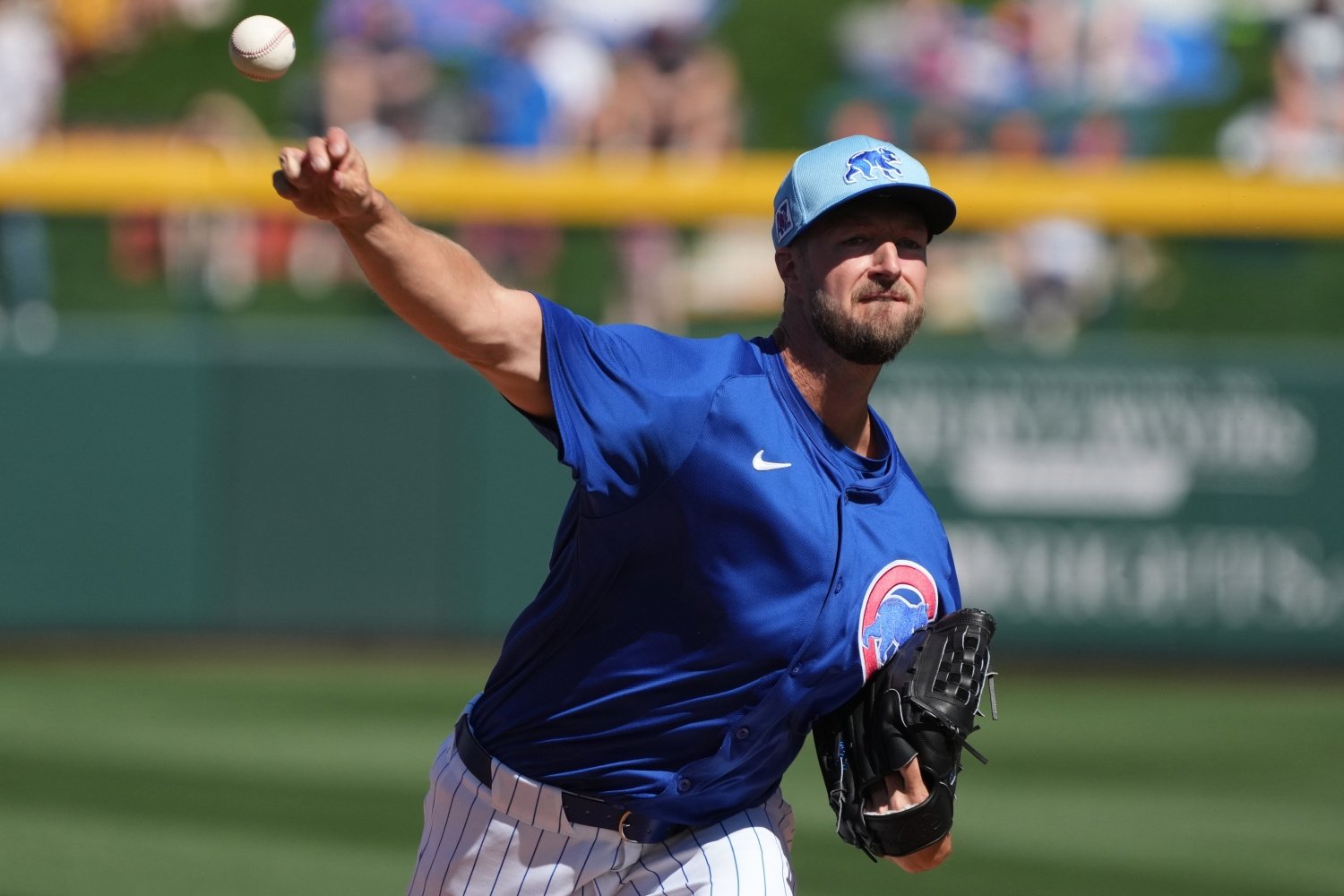 For the last two seasons, the Cubs' theory—their plan and design for getting to the postseason—has been that they would have an elite team defense. They signed Dansby Swanson and slid Nico Hoerner to second base for 2023 to create an exceptional middle infield. They extended Ian Happ on the same premise, securing one of the league's best left fielders. In neither of the last two years, however, have they met that expectation for themselves. In 2023, Chicago ranked eighth in MLB in Defensive Runs Saved (DRS) and 15th in Defensive Efficiency, a simple metric that divides outs recorded on balls in play by total balls in play. Last year, they were ninth in DRS and seventh in Defensive Efficiency. Those aren't bad numbers, of course. They've been markedly better than average. The problem is that they weren't built to be a team with an above-average defense. They were built to get a whole lot of their value from that sector. With below-average strikeout rates in each of the last two years, the Cubs allowed lots of balls in play. Being better than most teams at converting those into outs is great, but if some of them come at the expense of strikeouts (which are almost always outs), then the team doesn't come out as far ahead as it needs to—especially given that the team was built around defense, at the expense of some offensive firepower. After their offseason turnover, Chicago is a bit more prepared to win games by scoring runs in bunches than they have been in the past. To be the 90-win team they believe themselves to be, though, they'll still need to be better in the field. There's cause for optimism there, too, of course. The plan is to (mostly) take Seiya Suzuki off the field, replacing him with the much more competent Kyle Tucker in right field. Instead of two-thirds of the season, Pete Crow-Armstrong is penciled in as the everyday center fielder. Matt Shaw might not immediately contend for the Fielding Bible Award, but he's clearly superior to Christopher Morel at the hot corner. Carson Kelly should help the team control the running game better. After some growing pains, Michael Busch has become one of the best defensive first basemen in the game. Colin Rea needs that great defense to be great, in a major way. He only struck out 18.9% of opposing hitters last year. He gets his outs by pounding the strike zone, and by inducing lots of middling contact. He posted a 4.29 ERA last season, despite giving up home runs at an above-average rate and not missing many bats, because he was well-managed and well-supported by a truly elite Brewers defense. If they've built the team they hope they have, the Cubs will be able to offer Rea the same support. They amassed more bullpen depth this winter, so they have the option of pulling starters more proactively, as the Brewers did throughout 2024. They also have a defense with a real, more viable chance to be one of the two or three best in baseball. The hard part is still in front of them. They have to actually stay healthy enough and develop their young talent well enough to be an elite fielding unit. At the very least, though, they've positioned themselves to make pitchers like Rea more valuable—even if they end up needing him to make 25 starts or more.
 -
The Cubs' superstar right fielder will be fine. He'll be fine. It's just spring training, and he'll be just fine. Right? Image courtesy of © Allan Henry-Imagn Images In his first 15 plate appearances in the Cactus League, Kyle Tucker is 0-for-12, with three walks and five strikeouts. It's just a fistful of looks to start the season, and the games don't count, but Tucker hasn't hit anything especially hard, or looked especially good, even for a guy on an 0-fer. Cubs fans surely remember two years ago, when Dansby Swanson went 5-for-41 during Cactus League play (and that thanks only to a miniature hot streak at the very end of camp) and then started the regular season very hot, but Swanson had several loud outs and a whole lot of walks even before things clicked on the eve of the season. Besides, Swanson had until very nearly the end of March to figure things out. Tucker enjoys no such luxury. The Cubs play a game that counts two weeks from now, and their best player looks extremely unready. So, the question now is simple: How long can you hold out against utterly irrational panic? That's what it would be, for sure. Tucker is playing in the Cactus League for the first time, after a career of reporting to Astros camp in Florida each February. He's a legitimate and very consistent star. He'll figure this out. Nonetheless, the panic lurks there, because some guys do put too much pressure on themselves in walk years, and because Tucker has usually been quite good during spring training, and because the Cubs will be in so much trouble if he doesn't put up an OPS of .850 in 2024. It lurks, because the strikeouts have included some weak swings that leave you wondering just a little bit whether Tucker will be less decisive and less aggressive, in the wake of a vicious foul ball off his own shin that derailed his 2024 season and that was itself a result of a more aggressive swing he'd adopted just weeks earlier. It's likely that Tucker is taking this all in stride. In Cubs camp, there have been as many approaches to the unique challenge posed by the mid-March series in Tokyo as there are players. Some guys know they need to be fully ramped-up and ready when the plane leaves for Japan late next week. Others are going about their business at their usual pace, using their usual markers, and not sweating the hiccup that is two regular-season games stuffed into the middle of spring training. Tucker is the latter, not only because he doesn't need to win a job but because he knows the team will need him even more come June, September and (hopefully) October. On his list of goals for the year, "Cactus League Batting Title" doesn't even appear. He's just trying to steadily improve and prepare himself, on a normal schedule. The slump might eventually take a mental toll on him, but that doesn't seem to be the case yet. Anyway, he could snap it anytime. The biggest competitive leap in baseball is from Triple A to the majors. The biggest mental leap is from zero hits to one. Soon, Tucker will collect a hit, and then maybe another handful, and hopefully, we can all forget this rough start. He's looked genuinely bad so far this spring, though. Because of those looks, and because he's so indispensable to the Cubs and their hopes for 2025, the difficulty lies in waiting and seeing when that happens, without getting disproportionately nervous. Some nerves are warranted. They just need to be held in check. Tucker is a good player, and eventually, good players play well. Unfortunately for the Cubs, since they're likely to have just 162 games to make the most of Tucker and two of those games are a fortnight away, 'eventually' might not come soon enough. View full article
-
 In his first 15 plate appearances in the Cactus League, Kyle Tucker is 0-for-12, with three walks and five strikeouts. It's just a fistful of looks to start the season, and the games don't count, but Tucker hasn't hit anything especially hard, or looked especially good, even for a guy on an 0-fer. Cubs fans surely remember two years ago, when Dansby Swanson went 5-for-41 during Cactus League play (and that thanks only to a miniature hot streak at the very end of camp) and then started the regular season very hot, but Swanson had several loud outs and a whole lot of walks even before things clicked on the eve of the season. Besides, Swanson had until very nearly the end of March to figure things out. Tucker enjoys no such luxury. The Cubs play a game that counts two weeks from now, and their best player looks extremely unready. So, the question now is simple: How long can you hold out against utterly irrational panic? That's what it would be, for sure. Tucker is playing in the Cactus League for the first time, after a career of reporting to Astros camp in Florida each February. He's a legitimate and very consistent star. He'll figure this out. Nonetheless, the panic lurks there, because some guys do put too much pressure on themselves in walk years, and because Tucker has usually been quite good during spring training, and because the Cubs will be in so much trouble if he doesn't put up an OPS of .850 in 2024. It lurks, because the strikeouts have included some weak swings that leave you wondering just a little bit whether Tucker will be less decisive and less aggressive, in the wake of a vicious foul ball off his own shin that derailed his 2024 season and that was itself a result of a more aggressive swing he'd adopted just weeks earlier. It's likely that Tucker is taking this all in stride. In Cubs camp, there have been as many approaches to the unique challenge posed by the mid-March series in Tokyo as there are players. Some guys know they need to be fully ramped-up and ready when the plane leaves for Japan late next week. Others are going about their business at their usual pace, using their usual markers, and not sweating the hiccup that is two regular-season games stuffed into the middle of spring training. Tucker is the latter, not only because he doesn't need to win a job but because he knows the team will need him even more come June, September and (hopefully) October. On his list of goals for the year, "Cactus League Batting Title" doesn't even appear. He's just trying to steadily improve and prepare himself, on a normal schedule. The slump might eventually take a mental toll on him, but that doesn't seem to be the case yet. Anyway, he could snap it anytime. The biggest competitive leap in baseball is from Triple A to the majors. The biggest mental leap is from zero hits to one. Soon, Tucker will collect a hit, and then maybe another handful, and hopefully, we can all forget this rough start. He's looked genuinely bad so far this spring, though. Because of those looks, and because he's so indispensable to the Cubs and their hopes for 2025, the difficulty lies in waiting and seeing when that happens, without getting disproportionately nervous. Some nerves are warranted. They just need to be held in check. Tucker is a good player, and eventually, good players play well. Unfortunately for the Cubs, since they're likely to have just 162 games to make the most of Tucker and two of those games are a fortnight away, 'eventually' might not come soon enough.
 -
Monday offered the latest evidence, but there's plenty of it. The Cubs need to find a way to keep their Rule 5 Draft selection. Image courtesy of © Rick Scuteri-Imagn Images Twice in three trips to the plate Monday, Gage Workman took one of the hardest swings anyone managed all day against a good big-league pitcher—and connected fairly cleanly. In the first inning, he worked a full count against Corbin Burnes of the Diamondbacks. Then, he cracked a one-hop grounder through the infield for an RBI single. It wasn't walloped, but nor was it a seeing-eye bit of good luck; Workman met the ball solidly. In his second trip, Workman hit another ball reasonably well, but lined out. It wasn't an exceptional swing, but he still did well, handing in and hitting the ball well against tough left-handed reliever A.J. Puk. It was in his final trip, though, that he made the biggest mark. On a 1-0 pitch from hard-throwing Diamondbacks reliever Justin Martinez—a fastball at 99 mph—Workman laced a 111.4-mph double to right-center field. It wasn't his fastest swing of the day—that came on the single against Burnes—but it demonstrated his power potential. Of current Cubs, only Ian Happ and Seiya Suzuki have ever hit the ball harder than Workman did against Martinez Monday afternoon. (Yes, that includes Kyle Tucker.) The tools Workman has demonstrated this spring continue to dazzle. His glovework at third base has been very impressive, too. At 6-foot-4, it's only natural that he'd handle the move from shortstop to the hot corner easiest, given his athleticism. Still, he's opened some eyes with the smoothness of his mechanics there. We know the drawbacks and the risks. Workman needed a second tour of Double A to hit well there, and even then, his strikeout rate was quite high. He's 25 years old, and he's never taken a plate appearance above that level. His speed is good, but he's never been an efficient basestealer. Maybe Matt Talarico and Jose Javier can help Workman get the big leads and great jumps that have characterized the Yankees' minor-league affiliates the last few years, but it hasn't looked like he has the instincts for the running game thus far this spring. Can he hit enough to get to his power? It's probably a proposition on roughly the same footing as the same question posed about Patrick Wisdom the last few years. The good news is that Wisdom actually did clear that threshold, until last season. He struck out a ton and it often limited his on-base percentage, but he hit enough home runs to outrun those problems. Even better, Workman appears to be a very good defender, at the very position where the Cubs needed Wisdom most, but at which he was always slightly below average. The bad news, of course, is that Workman doesn't quite have Wisdom-caliber power. He's big, and he's a terrific athlete, and he's flashed some very impressive things this spring, but he might strike out 32% of the time and only get to power similar to that of Michael Busch, rather than that of Wisdom or Happ. He could end up being a very limited offensive contributor. On balance, though, the Cubs have to hold onto him. Third base remains the thinnest spot on their roster, and he's a plus defender there, if nothing else. His glimpses of power potential this spring are too much to ignore. Matt Shaw and Nico Hoerner continue to deal with their injury issues, leaving more time for the Cubs to make a fundamentally sound decision. They don't even have to confront the possibility of sending Workman back to Detroit for another few weeks. When they do, though, they should make the choice to keep him, even if it does come with real downside. View full article
-
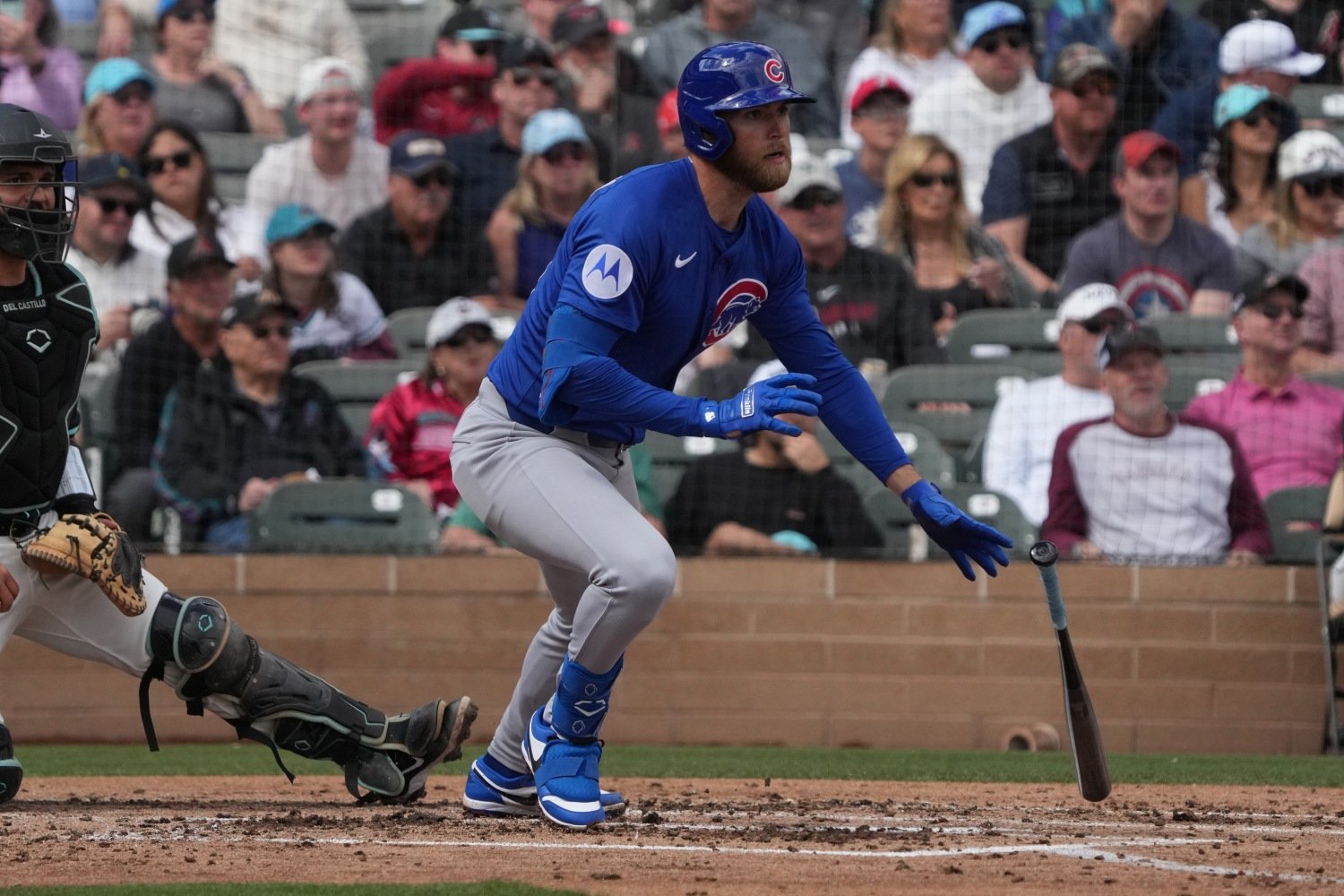 Twice in three trips to the plate Monday, Gage Workman took one of the hardest swings anyone managed all day against a good big-league pitcher—and connected fairly cleanly. In the first inning, he worked a full count against Corbin Burnes of the Diamondbacks. Then, he cracked a one-hop grounder through the infield for an RBI single. It wasn't walloped, but nor was it a seeing-eye bit of good luck; Workman met the ball solidly. In his second trip, Workman hit another ball reasonably well, but lined out. It wasn't an exceptional swing, but he still did well, handing in and hitting the ball well against tough left-handed reliever A.J. Puk. It was in his final trip, though, that he made the biggest mark. On a 1-0 pitch from hard-throwing Diamondbacks reliever Justin Martinez—a fastball at 99 mph—Workman laced a 111.4-mph double to right-center field. It wasn't his fastest swing of the day—that came on the single against Burnes—but it demonstrated his power potential. Of current Cubs, only Ian Happ and Seiya Suzuki have ever hit the ball harder than Workman did against Martinez Monday afternoon. (Yes, that includes Kyle Tucker.) The tools Workman has demonstrated this spring continue to dazzle. His glovework at third base has been very impressive, too. At 6-foot-4, it's only natural that he'd handle the move from shortstop to the hot corner easiest, given his athleticism. Still, he's opened some eyes with the smoothness of his mechanics there. We know the drawbacks and the risks. Workman needed a second tour of Double A to hit well there, and even then, his strikeout rate was quite high. He's 25 years old, and he's never taken a plate appearance above that level. His speed is good, but he's never been an efficient basestealer. Maybe Matt Talarico and Jose Javier can help Workman get the big leads and great jumps that have characterized the Yankees' minor-league affiliates the last few years, but it hasn't looked like he has the instincts for the running game thus far this spring. Can he hit enough to get to his power? It's probably a proposition on roughly the same footing as the same question posed about Patrick Wisdom the last few years. The good news is that Wisdom actually did clear that threshold, until last season. He struck out a ton and it often limited his on-base percentage, but he hit enough home runs to outrun those problems. Even better, Workman appears to be a very good defender, at the very position where the Cubs needed Wisdom most, but at which he was always slightly below average. The bad news, of course, is that Workman doesn't quite have Wisdom-caliber power. He's big, and he's a terrific athlete, and he's flashed some very impressive things this spring, but he might strike out 32% of the time and only get to power similar to that of Michael Busch, rather than that of Wisdom or Happ. He could end up being a very limited offensive contributor. On balance, though, the Cubs have to hold onto him. Third base remains the thinnest spot on their roster, and he's a plus defender there, if nothing else. His glimpses of power potential this spring are too much to ignore. Matt Shaw and Nico Hoerner continue to deal with their injury issues, leaving more time for the Cubs to make a fundamentally sound decision. They don't even have to confront the possibility of sending Workman back to Detroit for another few weeks. When they do, though, they should make the choice to keep him, even if it does come with real downside.
 -
The Cubs' starting first baseman enters his second full season in the big leagues, not merely trying to avoid a sophomore slump, but poised to take his game to the next level. Image courtesy of © Allan Henry-Imagn Images It's just spring training. The competition is extremely uneven, and everyone is tinkering with things. Michael Busch has been more eager than most to rack up early reps, but even he only has 19 plate appearances in the Cactus League so far. However, in those 19 trips to the dish, he's not only collected nine hits (with four going for extra bases) but limited his strikeouts, to two. Last year, of course, contact was the big drawback in an otherwise superb rookie campaign for Busch. He was really good, but he struck out 28.6% of the time, putting a bit of a ceiling on his overall production. He hits the ball hard consistently, but doesn't reach extremes in that regard. Last year, his maximum exit velocity was 109.3 miles per hour, even though 40% of his balls in play were at least 95 mph. Wrigley Field dampened his raw production, but so did the whiffs. Guys with a similar whiff rate to Busch's last year included Heliot Ramos, Salvador Perez, Jorge Soler, and teammate Ian Happ, but swinging and missing held them back less because they each had the ability to hit the ball much harder, at the high ends of their ranges. So far this spring, we haven't seen Busch hit any one ball harder than he did last season. at least in his tracked games. He has, however, continued to assail the ball consistently, with nine of his 11 batted balls topping 94 mph and four above 104. More importantly, perhaps, he's only swung and missed twice in 13 tracked swings. There are two ways Busch can be better in 2025 than he was in 2024: he can whiff less, or hit the ball harder when he makes contact. By showing up to camp with some good extra weight on his frame, he gave himself a chance to do the latter, and even if we don't have proof that it will work in the tiny sample so far this spring, it sure looks like he'll be able to do that. But the fact that he's not whiffing much at all so far is also encouraging. During his time in the Dodgers system, Busch moved around the field quite a bit, playing some second and some third. He needed to stay lean and athletic, and he's done so even since being traded to the Cubs. There are very few first basemen in the league who run or move as well as Busch, and he shows no signs of having really lost that this spring. However, he's taken advantage of the position change to add some strength, knowing he doesn't have as wide a range to cover as he might have at other spots. If that translates to more power, even if he does continue to swing and miss a lot, Busch has a chance to emerge as a star-caliber slugger at first base. He hit 21 home runs last year, but a bump all to 30 is well within reach. That would transform the Cubs' lineup, and it would also make Busch a more viable long-term piece of the team's puzzle. He's perfectly capable of slugging .500 this year, and not just because Wrigley Field figures to be more friendly to left-handed power than it was last season. View full article
-
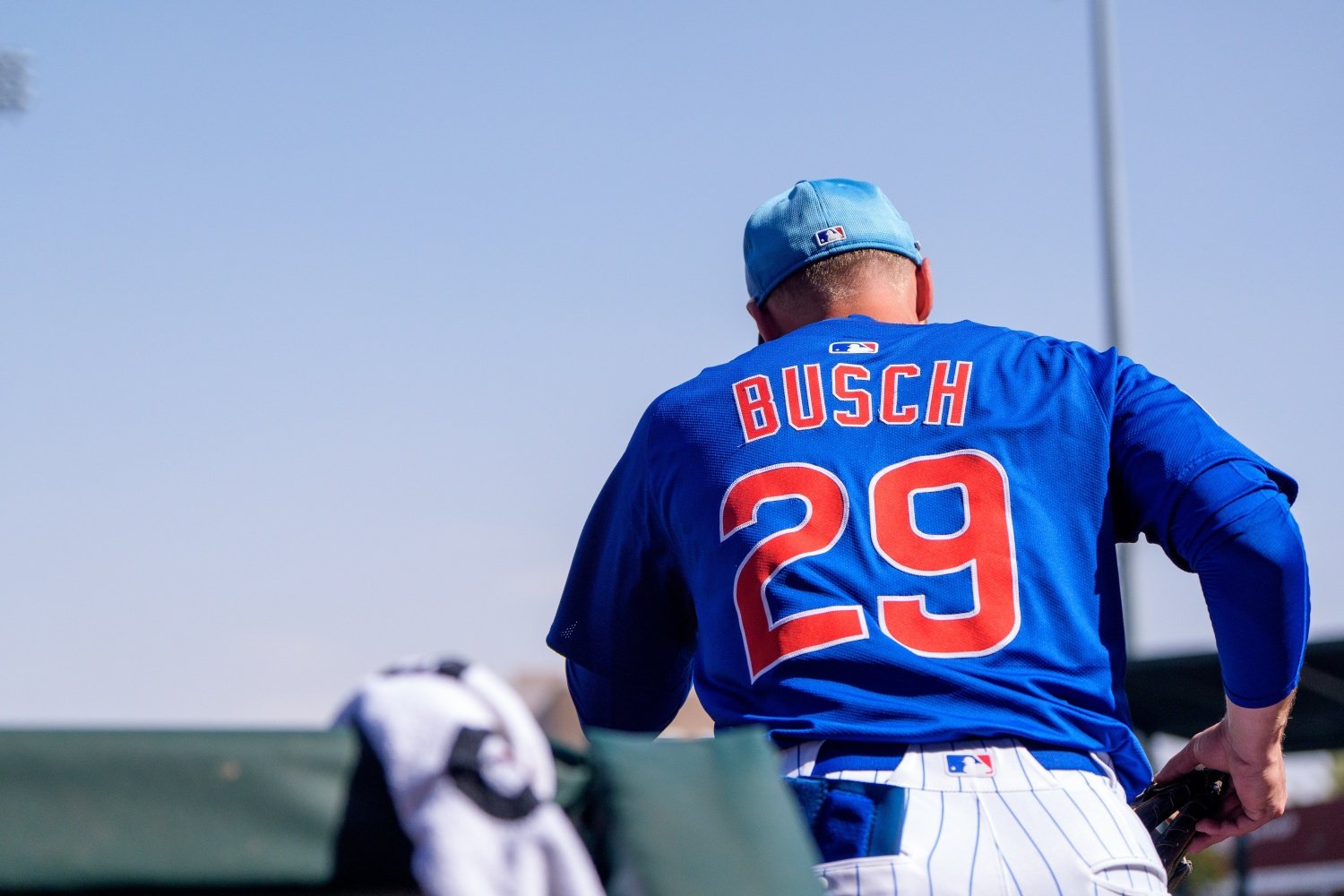 It's just spring training. The competition is extremely uneven, and everyone is tinkering with things. Michael Busch has been more eager than most to rack up early reps, but even he only has 19 plate appearances in the Cactus League so far. However, in those 19 trips to the dish, he's not only collected nine hits (with four going for extra bases) but limited his strikeouts, to two. Last year, of course, contact was the big drawback in an otherwise superb rookie campaign for Busch. He was really good, but he struck out 28.6% of the time, putting a bit of a ceiling on his overall production. He hits the ball hard consistently, but doesn't reach extremes in that regard. Last year, his maximum exit velocity was 109.3 miles per hour, even though 40% of his balls in play were at least 95 mph. Wrigley Field dampened his raw production, but so did the whiffs. Guys with a similar whiff rate to Busch's last year included Heliot Ramos, Salvador Perez, Jorge Soler, and teammate Ian Happ, but swinging and missing held them back less because they each had the ability to hit the ball much harder, at the high ends of their ranges. So far this spring, we haven't seen Busch hit any one ball harder than he did last season. at least in his tracked games. He has, however, continued to assail the ball consistently, with nine of his 11 batted balls topping 94 mph and four above 104. More importantly, perhaps, he's only swung and missed twice in 13 tracked swings. There are two ways Busch can be better in 2025 than he was in 2024: he can whiff less, or hit the ball harder when he makes contact. By showing up to camp with some good extra weight on his frame, he gave himself a chance to do the latter, and even if we don't have proof that it will work in the tiny sample so far this spring, it sure looks like he'll be able to do that. But the fact that he's not whiffing much at all so far is also encouraging. During his time in the Dodgers system, Busch moved around the field quite a bit, playing some second and some third. He needed to stay lean and athletic, and he's done so even since being traded to the Cubs. There are very few first basemen in the league who run or move as well as Busch, and he shows no signs of having really lost that this spring. However, he's taken advantage of the position change to add some strength, knowing he doesn't have as wide a range to cover as he might have at other spots. If that translates to more power, even if he does continue to swing and miss a lot, Busch has a chance to emerge as a star-caliber slugger at first base. He hit 21 home runs last year, but a bump all to 30 is well within reach. That would transform the Cubs' lineup, and it would also make Busch a more viable long-term piece of the team's puzzle. He's perfectly capable of slugging .500 this year, and not just because Wrigley Field figures to be more friendly to left-handed power than it was last season.
 -
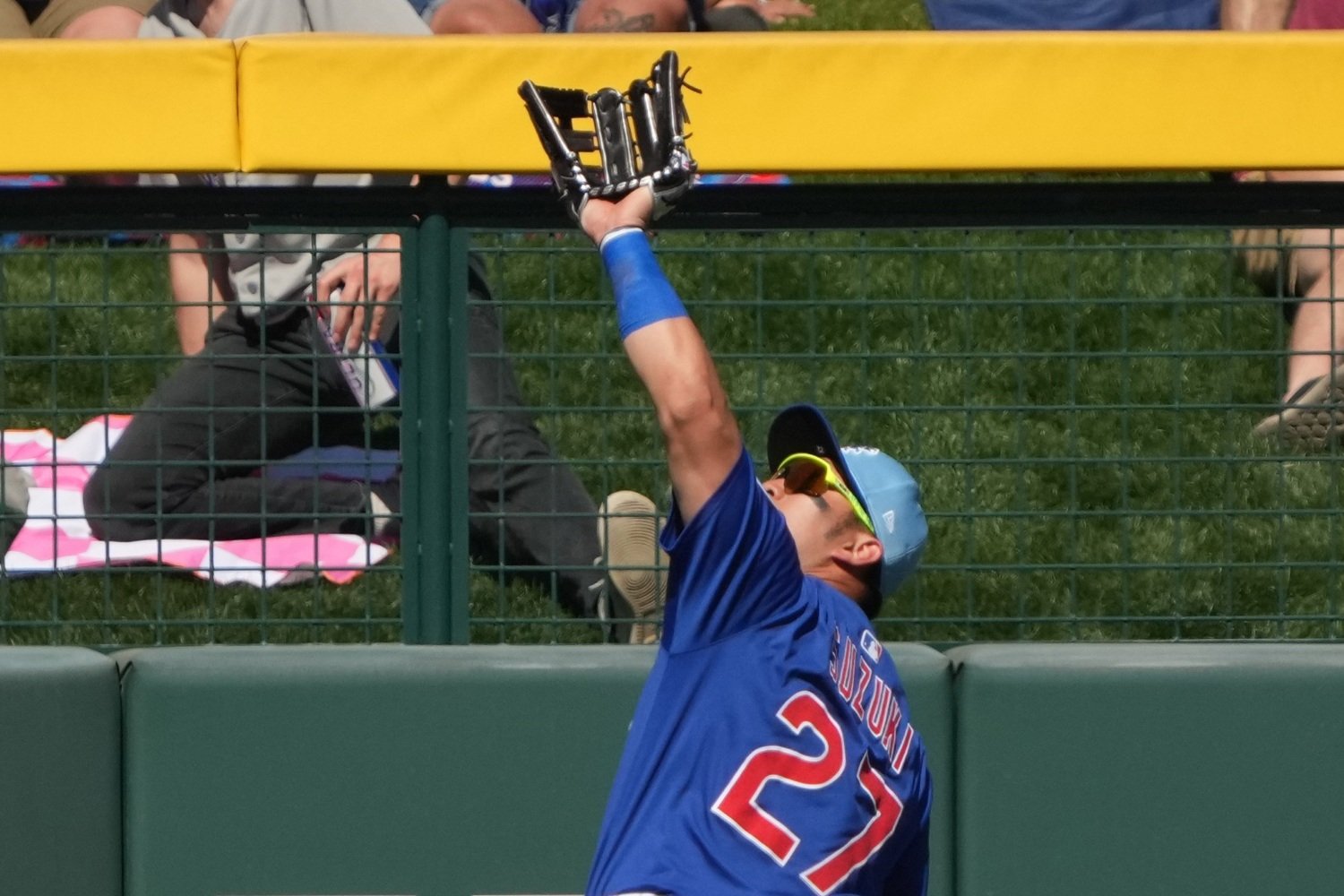 The 2025 Cubs have a whole lot of talent. At the moment, the big question about their position-player group is not the amount of talent, but how to align it in a way that makes it fully functional. Craig Counsell is the creative problem solver tasked with finding answers to that question, and he test-drove his latest idea in that vein on Saturday. Seiya Suzuki took the field at Sloan Park in Mesa as the center fielder, continuing a spring of giving him reps in the outfield but pushing it to a new extreme. In a couple of games in right field, Suzuki has not looked noticeably better than he did in his first two-plus seasons with the Cubs. Even when he did make a couple of catches, they were more adventurous than they ought to have been, with last-second adjustments befitting a much more sharply hit ball on what should have been cans of corn, easily and smoothly caught. That was probably maddeningly familiar to Cubs fans, and to Counsell, who proactively moved Suzuki out of right field last year by sliding Cody Bellinger to right field as soon as the team's health permitted it. The sky is clearer and the sun sits at different angles in March in Arizona than for much of the season in Chicago. A few wrestling matches with the ballistic baseball in one place don't automatically augur ill for one's efforts to handle flies in the other. Still, Suzuki is at a point where he has to earn back the benefit of the doubt in right. He hasn't done it this spring. All along, though, the funny thing about Suzuki has been that he clearly possesses the raw tools to handle the outfield, and that he did so well enough over his career in Japan to win five Golden Glove Awards there. He's fast enough—his 28.3 feet-per-second Statcast Sprint Speed is virtually identical to that of Bellinger (28.4), and a half-step better than Ian Happ (27.9). He's much faster than Kyle Tucker (26.0, and only 26.6 even in 2023, if we want to give him grace for last year based on the shin fracture that halved his season). He has a stronger arm than Happ or Tucker, by a wide margin. We know Suzuki was a plus defender in NPB, and he's shown flashes of some defensive ability even since coming to the Cubs. He's just had far too many misreads, often seeming to stem from miscalculations of the wind or issues with the sun or stadium lights. He's seemed a bit shy of the wall at Wrigley Field, which can be a real problem for corner outfielders there; navigating the well in the right-field corner and going into the sidewall with confidence is essential to playing that position. For decades, too, right field at Wrigley has been infamous as one of the league's toughest sun fields. Given all that, the paradoxically plausible approach with Suzuki might be to play him only in center field. That Sprint Speed is just a hair below that of the median center fielder for 2024, so despite his hulking physique, he's not short on raw athleticism. The angles of hook or slice on batted balls and the effect of the wind on them is more predictable for the balls that come to a center fielder than for those played by guys in the corners. The sun is a bit less of an issue in center than in right (and lights are less of an issue in center than in either corner) at just about every ballpark in the league. At Wrigley, at least, the dimensions limit the range demands of the center fielder and don't pose the same difficult questions that corner outfielders have to deal with. He acquitted himself nicely Saturday, not only making the two fairly routine plays that the game offered him but making them look relatively easy. The first ball pushed him back and forced him to cope with the sun and the high sky, and he looked something less than perfectly comfortable, but he made a solid read and caught the ball without the last-second glove move or lunge that characterized so much of his work in right field over the last two years. The sun and the lights are a huge portion of Suzuki's defensive problem. That's been increasingly clear of late, and with a close look at the Central League of NPB, it's not hard to see why. Two of Suzuki's main opponents there play their home games in domes. One plays in a stadium that faces more or less due south, and two play in ones that face north. The home stadium of the Hiroshima Toyo Carp, Suzuki's own NPB team, is at a latitude similar to that of Phoenix, not that of Chicago, and it faces almost due east. Right field was almost never afflicted with a tough sun during Suzuki's time in Japan. So, is he a viable center fielder? Shockingly, it's possible. He'd need to be deployed very judiciously, shielded from days when the sun might be harsh in center, and if Pete Crow-Armstrong were to get hurt and miss a substantial amount of time, the Cubs would still call up Kevin Alcántara, rather than leaning on Suzuki. As an occasional stopgap and a way to turbo-boost the lineup against left-handed pitching, though, this wacky idea isn't necessarily all that wacky. Counsell was just getting Suzuki a few reps there in case an emergency situation arises, but he might evolve into a little (if only a very little) more than an emergency option there this season. If you buy that, what an offense the Cubs can field against southpaws. They'd be able to stash Crow-Armstrong on the bench, insert Justin Turner as the DH, and start the lineup with some combination of Nico Hoerner, Turner, Tucker, Happ, Suzuki, and Dansby Swanson. Michael Busch, a better lefty at handling lefties, could stay in the lineup, but he'd bat seventh, shielding him from the lefty starter a bit and making it harder for an opposing manager to find their way through the lower half of the order by bringing on a right-handed reliever later in the contest. It's just one more path the team could build itself from the start of a game to a winning finish. Suzuki is a linchpin of the team's offense, but if he can become a viable defensive piece on a part-time basis, it would take them to a new level.
 -
Do the Cubs have a new backup option in center field? Saturday's box score would say yes! But your memories of the last two years are surely screaming no. But some of the player's fundamentals say yes! But... Image courtesy of © Rick Scuteri-Imagn Images The 2025 Cubs have a whole lot of talent. At the moment, the big question about their position-player group is not the amount of talent, but how to align it in a way that makes it fully functional. Craig Counsell is the creative problem solver tasked with finding answers to that question, and he test-drove his latest idea in that vein on Saturday. Seiya Suzuki took the field at Sloan Park in Mesa as the center fielder, continuing a spring of giving him reps in the outfield but pushing it to a new extreme. In a couple of games in right field, Suzuki has not looked noticeably better than he did in his first two-plus seasons with the Cubs. Even when he did make a couple of catches, they were more adventurous than they ought to have been, with last-second adjustments befitting a much more sharply hit ball on what should have been cans of corn, easily and smoothly caught. That was probably maddeningly familiar to Cubs fans, and to Counsell, who proactively moved Suzuki out of right field last year by sliding Cody Bellinger to right field as soon as the team's health permitted it. The sky is clearer and the sun sits at different angles in March in Arizona than for much of the season in Chicago. A few wrestling matches with the ballistic baseball in one place don't automatically augur ill for one's efforts to handle flies in the other. Still, Suzuki is at a point where he has to earn back the benefit of the doubt in right. He hasn't done it this spring. All along, though, the funny thing about Suzuki has been that he clearly possesses the raw tools to handle the outfield, and that he did so well enough over his career in Japan to win five Golden Glove Awards there. He's fast enough—his 28.3 feet-per-second Statcast Sprint Speed is virtually identical to that of Bellinger (28.4), and a half-step better than Ian Happ (27.9). He's much faster than Kyle Tucker (26.0, and only 26.6 even in 2023, if we want to give him grace for last year based on the shin fracture that halved his season). He has a stronger arm than Happ or Tucker, by a wide margin. We know Suzuki was a plus defender in NPB, and he's shown flashes of some defensive ability even since coming to the Cubs. He's just had far too many misreads, often seeming to stem from miscalculations of the wind or issues with the sun or stadium lights. He's seemed a bit shy of the wall at Wrigley Field, which can be a real problem for corner outfielders there; navigating the well in the right-field corner and going into the sidewall with confidence is essential to playing that position. For decades, too, right field at Wrigley has been infamous as one of the league's toughest sun fields. Given all that, the paradoxically plausible approach with Suzuki might be to play him only in center field. That Sprint Speed is just a hair below that of the median center fielder for 2024, so despite his hulking physique, he's not short on raw athleticism. The angles of hook or slice on batted balls and the effect of the wind on them is more predictable for the balls that come to a center fielder than for those played by guys in the corners. The sun is a bit less of an issue in center than in right (and lights are less of an issue in center than in either corner) at just about every ballpark in the league. At Wrigley, at least, the dimensions limit the range demands of the center fielder and don't pose the same difficult questions that corner outfielders have to deal with. He acquitted himself nicely Saturday, not only making the two fairly routine plays that the game offered him but making them look relatively easy. The first ball pushed him back and forced him to cope with the sun and the high sky, and he looked something less than perfectly comfortable, but he made a solid read and caught the ball without the last-second glove move or lunge that characterized so much of his work in right field over the last two years. The sun and the lights are a huge portion of Suzuki's defensive problem. That's been increasingly clear of late, and with a close look at the Central League of NPB, it's not hard to see why. Two of Suzuki's main opponents there play their home games in domes. One plays in a stadium that faces more or less due south, and two play in ones that face north. The home stadium of the Hiroshima Toyo Carp, Suzuki's own NPB team, is at a latitude similar to that of Phoenix, not that of Chicago, and it faces almost due east. Right field was almost never afflicted with a tough sun during Suzuki's time in Japan. So, is he a viable center fielder? Shockingly, it's possible. He'd need to be deployed very judiciously, shielded from days when the sun might be harsh in center, and if Pete Crow-Armstrong were to get hurt and miss a substantial amount of time, the Cubs would still call up Kevin Alcántara, rather than leaning on Suzuki. As an occasional stopgap and a way to turbo-boost the lineup against left-handed pitching, though, this wacky idea isn't necessarily all that wacky. Counsell was just getting Suzuki a few reps there in case an emergency situation arises, but he might evolve into a little (if only a very little) more than an emergency option there this season. If you buy that, what an offense the Cubs can field against southpaws. They'd be able to stash Crow-Armstrong on the bench, insert Justin Turner as the DH, and start the lineup with some combination of Nico Hoerner, Turner, Tucker, Happ, Suzuki, and Dansby Swanson. Michael Busch, a better lefty at handling lefties, could stay in the lineup, but he'd bat seventh, shielding him from the lefty starter a bit and making it harder for an opposing manager to find their way through the lower half of the order by bringing on a right-handed reliever later in the contest. It's just one more path the team could build itself from the start of a game to a winning finish. Suzuki is a linchpin of the team's offense, but if he can become a viable defensive piece on a part-time basis, it would take them to a new level. View full article
-
Though it was already evident to most people, the Cubs announced Thursday that they wouldn't have their starting second baseman when they fly to Tokyo for the season opener. That leaves the door open for Craig Counsell to use the same lineup he wrote Thursday, come Opening Day. Image courtesy of © Allan Henry-Imagn Images When the Cubs took the field against the Angels at Sloan Park on Thursday, their batting order looked like this: Ian Happ - LF Kyle Tucker - RF Seiya Suzuki - DH Michael Busch - 1B Dansby Swanson - SS Pete Crow-Armstrong - CF Carson Kelly - C Jon Berti - 2B Nicky Lopez - 3B In the wake of the news that Nico Hoerner won't make the trip to Japan for the false-start opening series against the Dodgers, and under the shadow of the seemingly obvious truth that Matt Shaw won't be there either, this is one viable option for the team's Opening Day lineup. Berti has been viewed as the main backup for Shaw at third base, and that's accurate, but with Hoerner also sidelined to open the season, the team will need two shock troops on the infield, so they might exploit Berti's versatility. Not having Hoerner in tow when they travel to Asia (and presumably not having yet called up Shaw, officially) would allow the Cubs to roster not one or two of Gage Workman, Vidal Bruján and Nicky Lopez, but all three—if that's the way they choose to go. In any case, of course, the bench will need to include one extra catcher (be that Miguel Amaya or, if Amaya starts, Kelly) and bench bat Justin Turner. If two projected starters are on the shelf, though, Berti becomes a staple in the lineup, and the question becomes who else to slot in. To be fair, Bruján and Workman have both played a lot early in the Cactus League, and a day off for each doesn't demonstrate any faltering in the team's enthusiasm or faith in them. To keep either, they have to make the roster, whereas the Cubs can buy a bit more time with Lopez before the first buyout date in his minor-league deal. Nor is Lopez the only non-roster invitee who could grab the last spot on the team without Hoerner or Shaw being available. If Workman, Bruján and Berti constitute acceptable infield depth, in the eyes of the front office, then it could be Greg Allen who gets the spot until Hoerner or Shaw is ready. Allen is a right-handed hitter, a speedster on base, and a viable (if no longer superb) center field defender. Is it, then, Lopez vs. Allen for a final roster spot, in the fortnight left before the team needs to set its roster for Japan? That's possible. Should Lopez win the gig, though, he might end up in the Opening Day lineup—unexpected and (to some fans) unwelcome as that possibility could feel. Maybe there's solace, for some of those fans, in seeing where Counsell apparently intends to use Pete Crow-Armstrong. He batted even higher in the lineup when spring training games first got underway, but sixth is a nice, realistic spot for the speedy, streaky lefty batter. If the team can avoid burying him at the bottom of the order, they can get real value when he's going well—not only in the form of hits and alternating handedness reaching all the way down to the bottom of the lineup, but because sixth is a sneakily good place to slot in a great base-stealer to maximize their utility. Much could change between now and the actual Tokyo games. For now, though, Thursday feels a bit like a preview of how those two contests might look, given the need for some of the team's valued contributors to convalesce. Fans might not like all the signals Counsell and the team sent, but they're there, alright. View full article
-
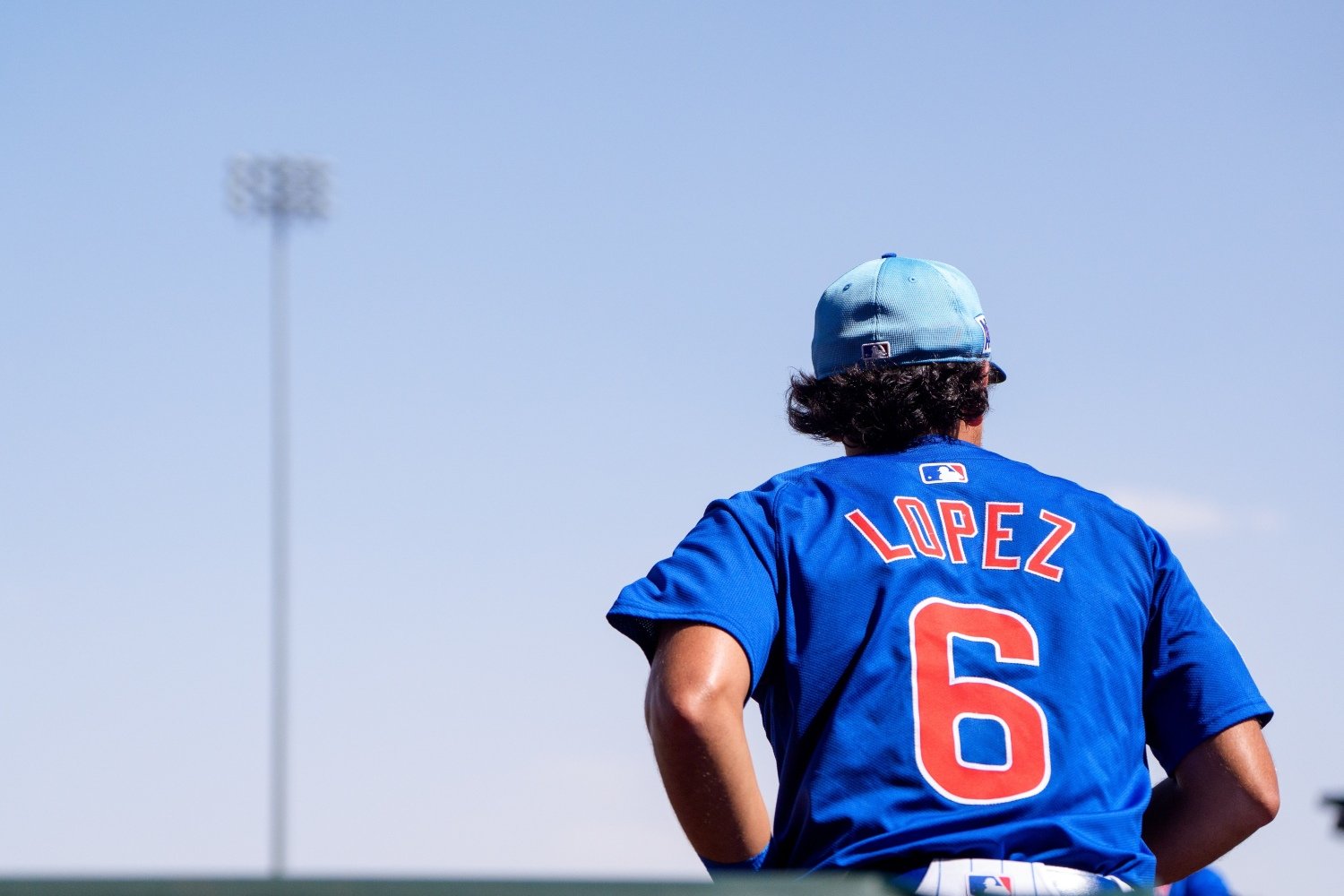 When the Cubs took the field against the Angels at Sloan Park on Thursday, their batting order looked like this: Ian Happ - LF Kyle Tucker - RF Seiya Suzuki - DH Michael Busch - 1B Dansby Swanson - SS Pete Crow-Armstrong - CF Carson Kelly - C Jon Berti - 2B Nicky Lopez - 3B In the wake of the news that Nico Hoerner won't make the trip to Japan for the false-start opening series against the Dodgers, and under the shadow of the seemingly obvious truth that Matt Shaw won't be there either, this is one viable option for the team's Opening Day lineup. Berti has been viewed as the main backup for Shaw at third base, and that's accurate, but with Hoerner also sidelined to open the season, the team will need two shock troops on the infield, so they might exploit Berti's versatility. Not having Hoerner in tow when they travel to Asia (and presumably not having yet called up Shaw, officially) would allow the Cubs to roster not one or two of Gage Workman, Vidal Bruján and Nicky Lopez, but all three—if that's the way they choose to go. In any case, of course, the bench will need to include one extra catcher (be that Miguel Amaya or, if Amaya starts, Kelly) and bench bat Justin Turner. If two projected starters are on the shelf, though, Berti becomes a staple in the lineup, and the question becomes who else to slot in. To be fair, Bruján and Workman have both played a lot early in the Cactus League, and a day off for each doesn't demonstrate any faltering in the team's enthusiasm or faith in them. To keep either, they have to make the roster, whereas the Cubs can buy a bit more time with Lopez before the first buyout date in his minor-league deal. Nor is Lopez the only non-roster invitee who could grab the last spot on the team without Hoerner or Shaw being available. If Workman, Bruján and Berti constitute acceptable infield depth, in the eyes of the front office, then it could be Greg Allen who gets the spot until Hoerner or Shaw is ready. Allen is a right-handed hitter, a speedster on base, and a viable (if no longer superb) center field defender. Is it, then, Lopez vs. Allen for a final roster spot, in the fortnight left before the team needs to set its roster for Japan? That's possible. Should Lopez win the gig, though, he might end up in the Opening Day lineup—unexpected and (to some fans) unwelcome as that possibility could feel. Maybe there's solace, for some of those fans, in seeing where Counsell apparently intends to use Pete Crow-Armstrong. He batted even higher in the lineup when spring training games first got underway, but sixth is a nice, realistic spot for the speedy, streaky lefty batter. If the team can avoid burying him at the bottom of the order, they can get real value when he's going well—not only in the form of hits and alternating handedness reaching all the way down to the bottom of the lineup, but because sixth is a sneakily good place to slot in a great base-stealer to maximize their utility. Much could change between now and the actual Tokyo games. For now, though, Thursday feels a bit like a preview of how those two contests might look, given the need for some of the team's valued contributors to convalesce. Fans might not like all the signals Counsell and the team sent, but they're there, alright.
 -
"Presumably, the front office is not consciously working to build heavily white rosters, or to make their core of highly-paid stars predominantly white. Nonetheless, they have no person of color from North America set to make more than $1 million in 2025. They've traded two Black players who were already emerging as top prospects (Zyhir Hope and Cam Smith) in successive winters. Those trades brought back excellent players who can better help the Cubs in the short term, in Michael Busch and Kyle Tucker, and no one should argue that the team was wrong to make those deals just because those players are white and the centerpieces of the packages they sent out were not." It's all there for you, man. Just gotta read it all.
-
It's something we should all want to see the team change. Alas, the Cubs are far from alone in this regard, in a game with a rich history of cultural exchange but an uncertain future. Image courtesy of © Rick Scuteri-Imagn Images When the Cubs signed Justin Turner earlier this month, they designated outfielder Alexander Canario for assignment. It was a natural choice, given that Canario was already pinched by the roster crunch the team faced after earlier moves to add Jon Berti, Gage Workman, and Vidal Bruján to their mix of bench options. Still, it was notable, because the swap of Canario—a Black native of the Dominican Republic—for Turner, who is white, reduced the number of non-white players on the Cubs' 40-man roster to seven. Of the current 40, 32 are American-born, and only one person of color from the United States (reliever Tyson Miller) is in line to make the Opening Day roster. As Black History Month draws to a close, it's jarring to note that while the Cubs are unusually white, they are far from an outlier. Baseball draws as heavily as ever on international talent, especially as the flow of talented, accomplished pros from South Korea and Japan to the United States grows more robust, but despite the annual lip service the league pays to reaching out to people of color in the domestic pool of young talent, Black participation has not rebounded from the long slump into which it fell roughly 20 years ago. In 2023, just over 6% of the players on Opening Day rosters were Black. For the purposes of that survey, Black and Latino identities seemed to be held separate, when the reality is that many players from the Caribbean identify as Black, as well as Latino. Still, the league continues to fail in whatever efforts it's made to court African-American fans and find or empower African-American players, and the Cubs are among the worst in that regard. Like the country of which it is such a proud part, MLB has a long history of structural racism, including formal and informal segregation; clubhouse cliques, often drawn along racial lines; and layers of tension, based not only on the construct of race but on colorism, language, ethnicity, and even geographic background. Untold numbers of players, including not just long-forgotten ones but several still playing right now, have shared stories of abuse, alienation, or discrimination, by clubs, fans, opponents, teammates, and others. However, beginning even before Jackie Robinson and the abolition of the color line, the game has also long been a place where racial progress was won and barriers were challenged and (sometimes) torn down. Robinson's emergence with the Brooklyn Dodgers was one of the first landmark victories and galvanizing moments of the post-World War II Civil Rights movement. That some major progress made in the 50 years after Robinson's debut has since eroded, with the game growing whiter even as it leans more heavily on international talent and needs to reach more diverse a more diverse prospective fan base, is deeply worrisome. The Cubs are becoming the face of this problem, to the limited extent to which it's being recognized and discussed. It's not just that they have few players of color, but that of those they do have, the majority are role players or likely minor-leaguers. If Workman wins the bench spot over Bruján, they could be down to just six players of color on the 40-man, and of those, Miller, Daniel Palencia, and Miguel Amaya will all be in something less than a full-time, high-volume role. The only non-white stars on the team are Seiya Suzuki and Shota Imanaga. Presumably, the front office is not consciously working to build heavily white rosters, or to make their core of highly-paid stars predominantly white. Nonetheless, they have no person of color from North America set to make more than $1 million in 2025. They've traded two Black players who were already emerging as top prospects (Zyhir Hope and Cam Smith) in successive winters. Those trades brought back excellent players who can better help the Cubs in the short term, in Michael Busch and Kyle Tucker, and no one should argue that the team was wrong to make those deals just because those players are white and the centerpieces of the packages they sent out were not. However, Smith is one of just two players of color the team has taken in the first round since 2013. The other, Ed Howard, has fizzled in the Chicago farm system. They've struggled to develop their top international free agent signees (nearly all of whom are people of color) from promising talents into genuine contributors. While there's no evidence of systemic prejudice in the Cubs operation (at least beyond that which seems to be much too powerful in the sport as a whole), they unequivocally need to do better when it comes to acquiring and developing star-caliber players who aren't white Americans. Sammy Sosa is a fascinating character to see back in Cubs camp, at a moment when this trend is emerging for the franchise. His own relationship with the media was always tinged by his race and nationality, and while he's responsible for many of his own choices over the years, he left the sport feeling so exposed to the friction and frustration of racism that he underwent treatments designed to lighten his own skin tone. Sosa wore No. 21 during his time with the Cubs in honor of Roberto Clemente, the Black Puerto Rican hero of so many mid-century players and fans of all races. Clemente, too, felt deeply mistreated and disrespected by local and national baseball media, and by many fans, even at the peak of his great fame and widespread adulation. Racism has always been a part of baseball, even as Black players and the cultures of the sport in the Caribbean, Mexico, and the Pacific Rim have been vital to its growth and survival. The Cubs can't instantly fix this troubling trend toward whiteness, even within their own clubhouse—let alone throughout the league. Nonetheless, the team photo this spring will be a good opportunity for everyone to reflect on the need for both local and widespread change, to make the game more accessible and appealing to a broader swath of a very diverse, global fan base. View full article
-
The Cubs Are Overwhelmingly White—But Sadly, Not All That Unusually So
Matthew Trueblood posted an article in Cubs
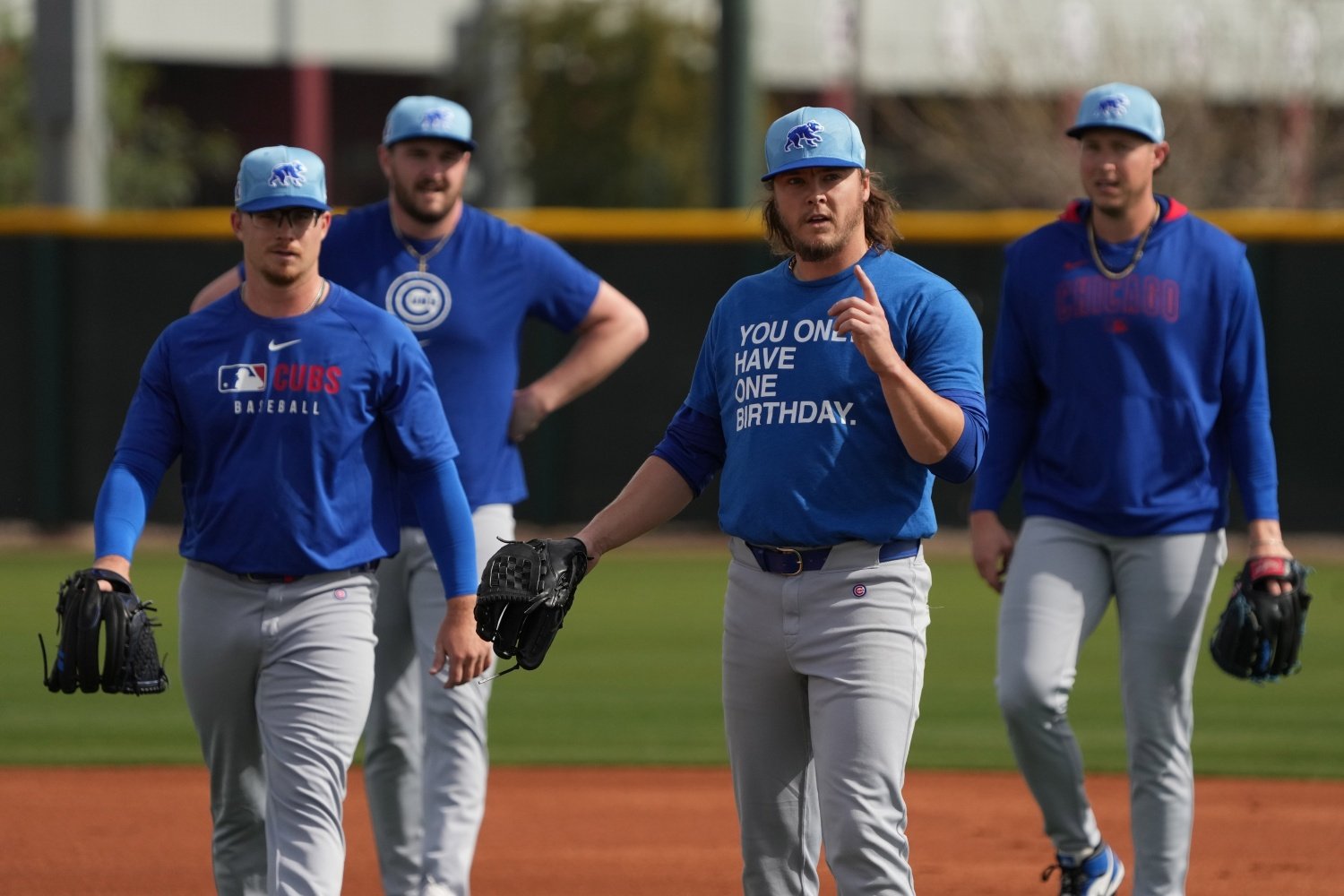 When the Cubs signed Justin Turner earlier this month, they designated outfielder Alexander Canario for assignment. It was a natural choice, given that Canario was already pinched by the roster crunch the team faced after earlier moves to add Jon Berti, Gage Workman, and Vidal Bruján to their mix of bench options. Still, it was notable, because the swap of Canario—a Black native of the Dominican Republic—for Turner, who is white, reduced the number of non-white players on the Cubs' 40-man roster to seven. Of the current 40, 32 are American-born, and only one person of color from the United States (reliever Tyson Miller) is in line to make the Opening Day roster. As Black History Month draws to a close, it's jarring to note that while the Cubs are unusually white, they are far from an outlier. Baseball draws as heavily as ever on international talent, especially as the flow of talented, accomplished pros from South Korea and Japan to the United States grows more robust, but despite the annual lip service the league pays to reaching out to people of color in the domestic pool of young talent, Black participation has not rebounded from the long slump into which it fell roughly 20 years ago. In 2023, just over 6% of the players on Opening Day rosters were Black. For the purposes of that survey, Black and Latino identities seemed to be held separate, when the reality is that many players from the Caribbean identify as Black, as well as Latino. Still, the league continues to fail in whatever efforts it's made to court African-American fans and find or empower African-American players, and the Cubs are among the worst in that regard. Like the country of which it is such a proud part, MLB has a long history of structural racism, including formal and informal segregation; clubhouse cliques, often drawn along racial lines; and layers of tension, based not only on the construct of race but on colorism, language, ethnicity, and even geographic background. Untold numbers of players, including not just long-forgotten ones but several still playing right now, have shared stories of abuse, alienation, or discrimination, by clubs, fans, opponents, teammates, and others. However, beginning even before Jackie Robinson and the abolition of the color line, the game has also long been a place where racial progress was won and barriers were challenged and (sometimes) torn down. Robinson's emergence with the Brooklyn Dodgers was one of the first landmark victories and galvanizing moments of the post-World War II Civil Rights movement. That some major progress made in the 50 years after Robinson's debut has since eroded, with the game growing whiter even as it leans more heavily on international talent and needs to reach more diverse a more diverse prospective fan base, is deeply worrisome. The Cubs are becoming the face of this problem, to the limited extent to which it's being recognized and discussed. It's not just that they have few players of color, but that of those they do have, the majority are role players or likely minor-leaguers. If Workman wins the bench spot over Bruján, they could be down to just six players of color on the 40-man, and of those, Miller, Daniel Palencia, and Miguel Amaya will all be in something less than a full-time, high-volume role. The only non-white stars on the team are Seiya Suzuki and Shota Imanaga. Presumably, the front office is not consciously working to build heavily white rosters, or to make their core of highly-paid stars predominantly white. Nonetheless, they have no person of color from North America set to make more than $1 million in 2025. They've traded two Black players who were already emerging as top prospects (Zyhir Hope and Cam Smith) in successive winters. Those trades brought back excellent players who can better help the Cubs in the short term, in Michael Busch and Kyle Tucker, and no one should argue that the team was wrong to make those deals just because those players are white and the centerpieces of the packages they sent out were not. However, Smith is one of just two players of color the team has taken in the first round since 2013. The other, Ed Howard, has fizzled in the Chicago farm system. They've struggled to develop their top international free agent signees (nearly all of whom are people of color) from promising talents into genuine contributors. While there's no evidence of systemic prejudice in the Cubs operation (at least beyond that which seems to be much too powerful in the sport as a whole), they unequivocally need to do better when it comes to acquiring and developing star-caliber players who aren't white Americans. Sammy Sosa is a fascinating character to see back in Cubs camp, at a moment when this trend is emerging for the franchise. His own relationship with the media was always tinged by his race and nationality, and while he's responsible for many of his own choices over the years, he left the sport feeling so exposed to the friction and frustration of racism that he underwent treatments designed to lighten his own skin tone. Sosa wore No. 21 during his time with the Cubs in honor of Roberto Clemente, the Black Puerto Rican hero of so many mid-century players and fans of all races. Clemente, too, felt deeply mistreated and disrespected by local and national baseball media, and by many fans, even at the peak of his great fame and widespread adulation. Racism has always been a part of baseball, even as Black players and the cultures of the sport in the Caribbean, Mexico, and the Pacific Rim have been vital to its growth and survival. The Cubs can't instantly fix this troubling trend toward whiteness, even within their own clubhouse—let alone throughout the league. Nonetheless, the team photo this spring will be a good opportunity for everyone to reflect on the need for both local and widespread change, to make the game more accessible and appealing to a broader swath of a very diverse, global fan base.
 -
Show me a billionaire who doesn't like a tax loophole, and I'll show you a liar. Show me one who uses their windfall to spread wealth or joy, and I'll show you a con man. Image courtesy of © David Banks-Imagn Images Remember back in mid-September, when the Cubs announced an increase in season-ticket prices for 2025? It got plenty of attention at the time, because the team was then wrapping up a second straight disappointing 83-win season and because they hadn't made the playoffs (in a real way, playing more than one postseason game after a full season of games) since 2017. The team's rejoinder, though, was that they had to make up for lost revenue from the two games they won't get to host at Wrigley Field in 2025. Because they'll be the home team for both contests against the Dodgers in Tokyo next month, the Cubs will only play 79 regular-season contests at the Friendly Confines this season. That was the talking point the team used to justify the increase in per-game prices; season ticket-holders were just having their investments spread over fewer dates. No one really bought that at the time, but let's specifically debunk the idea for good, now. The Cubs aren't losing any revenue as a result of playing in these games. In fact, they come out ahead, even before they dig deeper into the pockets of customers for the balance of their games. Here's the language from the current collective bargaining agreement about how the league will handle revenue lost via games played outside the United States as parts of showcases like this one: In other words, since the Cubs are the home game for both teams, they will get a replacement check from the Commissioner's Office that matches their typical revenue for two home games—and, that (small, but not insignificant) slice of their revenue pie will not be counted toward their shareable revenue, so they get to keep it all. Normally, they'd have to pay 48% of that money into the league's revenue-sharing pool, less the amount they would stand to get back as the league redistributes its pooled funds evenly throughout the league. This is a major financial break for the Cubs, but the Ricketts family didn't pass along any of the projected increase in profits. They haven't spent nearly enough money this winter, full stop. No, this is not about Cody Bellinger, whose play and continued struggles to stay healthy made him a poor fit for the 2025 Cubs, anyway. The Cubs said they would reinvest the $25 million they saved when they dealt Bellinger to the Yankees, and they have. Since that trade, they've spent: $8.5 million on Ryan Pressly $5.75 million on Carson Kelly $6 million on Justin Turner $5 million on Colin Rea $3 million on Jon Berti $2.75 million on Caleb Thielbar That's $31 million, and it'll end up being more, as some of those guys hit certain incentives and some minor-league signees make the team and earn small but non-zero amounts of money above the league minimum. Still, right now, the team only has a projected 40-man payroll of $192.9 million and a CBT number of roughly $213 million. In their defense, they did try fairly hard to spend more than that. We know they made offers to Tanner Scott and Alex Bregman that significantly exceeded the net present value of the deals they actually signed. They had at least two trades die at the medical review stage this winter, each of which would have increased their payroll for 2025. They might yet spend a bit more, for seasons beyond this one, by extending one of their young players and securing longer-term control of them at a good price. Depending on the shape of any such spring extension, maybe we'll find their budget justifiable by Opening Day. Right now, though, the team's payroll is not bumping up at all against the competitive-balance tax threshold or sitting anywhere close to their real spending from 2024. Those two things should not be true, given not only the huge revenues they collected even during a disappointing season, but the fact that they'll get a nice little tax-free payday this year to further bolster their income for 2025. Ownership continues to privatize profits and socialize losses for their customers, the fans. View full article
-
 Remember back in mid-September, when the Cubs announced an increase in season-ticket prices for 2025? It got plenty of attention at the time, because the team was then wrapping up a second straight disappointing 83-win season and because they hadn't made the playoffs (in a real way, playing more than one postseason game after a full season of games) since 2017. The team's rejoinder, though, was that they had to make up for lost revenue from the two games they won't get to host at Wrigley Field in 2025. Because they'll be the home team for both contests against the Dodgers in Tokyo next month, the Cubs will only play 79 regular-season contests at the Friendly Confines this season. That was the talking point the team used to justify the increase in per-game prices; season ticket-holders were just having their investments spread over fewer dates. No one really bought that at the time, but let's specifically debunk the idea for good, now. The Cubs aren't losing any revenue as a result of playing in these games. In fact, they come out ahead, even before they dig deeper into the pockets of customers for the balance of their games. Here's the language from the current collective bargaining agreement about how the league will handle revenue lost via games played outside the United States as parts of showcases like this one: In other words, since the Cubs are the home game for both teams, they will get a replacement check from the Commissioner's Office that matches their typical revenue for two home games—and, that (small, but not insignificant) slice of their revenue pie will not be counted toward their shareable revenue, so they get to keep it all. Normally, they'd have to pay 48% of that money into the league's revenue-sharing pool, less the amount they would stand to get back as the league redistributes its pooled funds evenly throughout the league. This is a major financial break for the Cubs, but the Ricketts family didn't pass along any of the projected increase in profits. They haven't spent nearly enough money this winter, full stop. No, this is not about Cody Bellinger, whose play and continued struggles to stay healthy made him a poor fit for the 2025 Cubs, anyway. The Cubs said they would reinvest the $25 million they saved when they dealt Bellinger to the Yankees, and they have. Since that trade, they've spent: $8.5 million on Ryan Pressly $5.75 million on Carson Kelly $6 million on Justin Turner $5 million on Colin Rea $3 million on Jon Berti $2.75 million on Caleb Thielbar That's $31 million, and it'll end up being more, as some of those guys hit certain incentives and some minor-league signees make the team and earn small but non-zero amounts of money above the league minimum. Still, right now, the team only has a projected 40-man payroll of $192.9 million and a CBT number of roughly $213 million. In their defense, they did try fairly hard to spend more than that. We know they made offers to Tanner Scott and Alex Bregman that significantly exceeded the net present value of the deals they actually signed. They had at least two trades die at the medical review stage this winter, each of which would have increased their payroll for 2025. They might yet spend a bit more, for seasons beyond this one, by extending one of their young players and securing longer-term control of them at a good price. Depending on the shape of any such spring extension, maybe we'll find their budget justifiable by Opening Day. Right now, though, the team's payroll is not bumping up at all against the competitive-balance tax threshold or sitting anywhere close to their real spending from 2024. Those two things should not be true, given not only the huge revenues they collected even during a disappointing season, but the fact that they'll get a nice little tax-free payday this year to further bolster their income for 2025. Ownership continues to privatize profits and socialize losses for their customers, the fans.
 -
And would absolutely do so. Don't think of farming either of them out as a viable possibility; it isn't one.
-
Hodge is a lock, for me. But with Pressly and Brasier in town now, I don't think Pearson *is* in line for that same role, right away. That could change, of course, but he'll have to pitch his way into a high-leverage job by establishing consistency in command and release points.
-
Yeah, Wicks will be in the I-Cubs rotation, barring injuries (plural).
-
The roster crunch is on in Cubs camp, but it's only affecting one half of the team. Image courtesy of © Mark J. Rebilas-Imagn Images It's beginning to feel inevitable that the Cubs will lose someone they really like from the pitching staff by the end of camp. They'll do everything they can to cultivate and maintain depth, because injuries will intrude, and being able to pivot to desirable fallback plans depends on having held on to as many such hurlers as possible. Right now, though, they have 11 pitchers who look likely to start the season healthy and are locks to make the roster if they do: Starting Rotation: Justin Steele Shota Imanaga Jameson Taillon Matthew Boyd Colin Rea Bullpen Ryan Pressly Porter Hodge Ryan Brasier Caleb Thielbar Julian Merryweather Tyson Miller That only leaves two open slots, although the roster rules surrounding the team's trip to Tokyo to open the regular season will give them a few weeks to fudge it and hold onto as many as five candidates for those jobs. Even if we assume that Javier Assad will begin the year on the injured list and be handled carefully while he nurses an oblique strain, the list of pitchers trying to make a claim on those two jobs is almost 20 players long. Keegan Thompson Brad Keller Phil Bickford Ben Brown Cody Poteet Nate Pearson Eli Morgan Luke Little Daniel Palencia Jack Neely Caleb Kilian Ethan Roberts Gavin Hollowell Ben Heller Brooks Kriske Trevor Richards Brandon Hughes A few weeks ago, I would have said Pearson and Morgan were virtual locks to make the team, and neither has really done anything to hurt their stock this spring. It's just that, for instance, Keller showed up pumping 96 snd touching 98 with his fastball, and the Cubs can't keep him if they don't add him to the team right away. The same will be true for Thompson or Bickford, so the team will have to give them at least some small tiebreaker if everyone keeps pitching well—and that's mostly what's happened, over the first six games of Cactus League play. There's some chance Thompson would clear waivers, so he might be the one the team tries to sneak through if it comes to that. The Much Less Heated Competition to Be Bench Player No. 4 Tuesday was a good day for Vidal Bruján, who turned on a ball and crushed a no-doubt game-tying home run in the fifth inning. The slightly Sammy Sosa-esque hop and skip out of the batter's box is a nice touch, since Bruján was seen on camera talking to Sosa in the dugout before the long ball. It's a strange but wonderful thing, seeing Sosa in that setting already, giving tips aplenty to hitters between at-bats, and while not even he is going to turn Bruján into a true slugger, there might be something important to unlock here. In 551 swings tracked by Statcast since the middle of 2023, Bruján only has one that exceeded 76.1 miles per hour of bat speed—one, and, not really. That one seems to have been misread, because it's 6 mph faster than his max otherwise and it doesn't look anything like that on video. Having one of the lowest average swing speeds in the majors is one thing. Not even being able (or willing?) to cut it loose and get to the dangerous bands of swing speed when the situation dictates it is quite another. Compare Bruján to Sal Frelick and Brice Turang, of the Brewers—two of the game's slower swingers, on average, each slower than Bruján by a bit—and you can see the difference. Bruján might simply be short on the strength or athletic explosiveness required to swing any faster than he has, but given his former prospect sheen and his age, that feels unlikely. If (whether through a rejiggered offseason regimen, training and instruction from the Cubs, or one magical conversation with Sosa) he can tap into even that slice of Turang's and Frelick's bat speed that exists out to the right end of his current distribution, his value proposition changes in a hurry. We don't have Statcast data for the homer Tuesday, but whenever Bruján plays in Statcast-covered games, watch his bat speeds. It looks like he's found some. Gage Workman is Bruján's competition for the final bench spot, though they could both start the season on the roster now that Matt Shaw's oblique has created some uncertainty about him for the early going. He's flashed plenty of tools already, but it was a subtler skill that stood out Tuesday. Workman stayed back nicely on an offspeed 1-2 pitch and pulled a sharp grounder through the hole between the second baseman and the bag. With his frame, his recent performance record (he slugged .550 after Jul. 1 last season) and the little we've already seen this spring, it's safe to say that he'll hit for power—if he hits at all. Because he's run big, scary strikeout numbers in the minors, the big, scary question for him centers much more on the hit tool. That single was a neat demonstration of his ability to adjust and adapt. He muddied the signal a bit, shortly afterward, by getting an atrocious jump and being caught stealing, but it was just one attempt. It seems as though either Bruján or Workman would be the best defensive third baseman on the roster, should they make it, and both should be able to accumulate some steals. Workman has to prove he can make enough contact to consistently get on base. Bruján has to prove he can generate some power. In that regard, each player had a very good game Tuesday. Owen Caissie's Effect on the Cubs Offseason Shaw's injury has eased whatever degree of logjam the team faced when camp started. Even before that, another injury (or two?) had a major effect moving in the same direction. A few days ago, I wrote about the team bringing Travis Jankowski and Greg Allen to camp, and about how they were replacing Owen Caissie, more than truly vying for the backup job to Pete Crow-Armstrong. Caissie is still not close to starting competitive action, as he deals with a groin strain. Belatedly, we learned that Caissie had core surgery in the early stages of the offseason. Multiple league sources confirmed to North Side Baseball that Caissie's medicals killed "at least one" significant trade for the Cubs this winter, so the effect of that ill-timed injury has had a profound effect on the organization. Not only did the team not accomplish the trade in which they were prepared to send out Caissie, but (to whatever extent their own confidence in his ability to recover and reach his ceiling) they had a tougher decision on their hands whenever potential suitors asked about Kevin Alcántara. The 2025 Cubs would look somewhat different—and perhaps have people meaningfully more excited, even if the extra improvement came at a long-term cost—if Caissie were fully healthy, or even had a currently encouraging prognosis. His health will be worth tracking for the next few months, no matter what, but right now, it's almost inarguable that Alcántara has surpassed him as a likely long-term outfield piece for the team—for good reasons, and bad ones. View full article
-
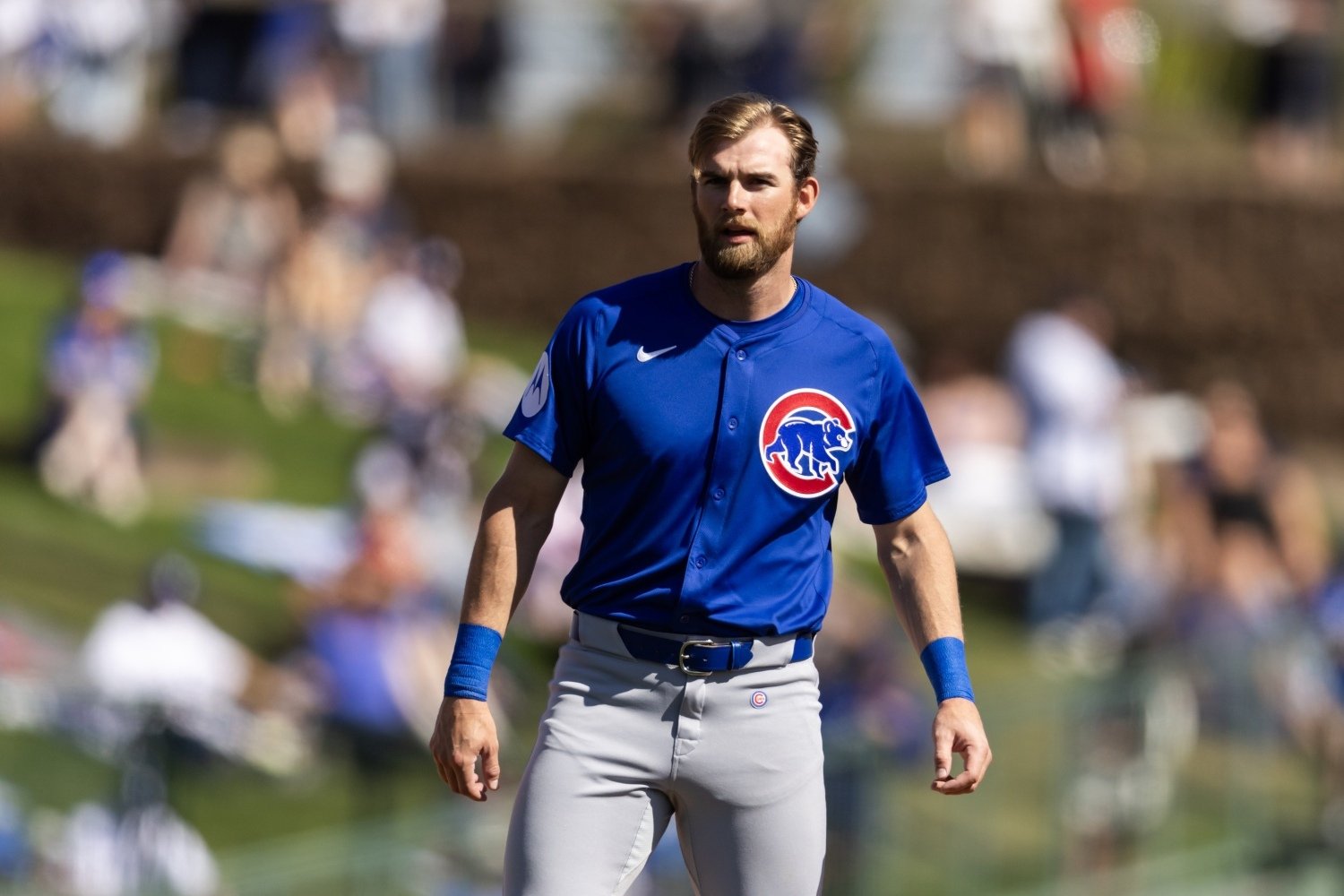 It's beginning to feel inevitable that the Cubs will lose someone they really like from the pitching staff by the end of camp. They'll do everything they can to cultivate and maintain depth, because injuries will intrude, and being able to pivot to desirable fallback plans depends on having held on to as many such hurlers as possible. Right now, though, they have 11 pitchers who look likely to start the season healthy and are locks to make the roster if they do: Starting Rotation: Justin Steele Shota Imanaga Jameson Taillon Matthew Boyd Colin Rea Bullpen Ryan Pressly Porter Hodge Ryan Brasier Caleb Thielbar Julian Merryweather Tyson Miller That only leaves two open slots, although the roster rules surrounding the team's trip to Tokyo to open the regular season will give them a few weeks to fudge it and hold onto as many as five candidates for those jobs. Even if we assume that Javier Assad will begin the year on the injured list and be handled carefully while he nurses an oblique strain, the list of pitchers trying to make a claim on those two jobs is almost 20 players long. Keegan Thompson Brad Keller Phil Bickford Ben Brown Cody Poteet Nate Pearson Eli Morgan Luke Little Daniel Palencia Jack Neely Caleb Kilian Ethan Roberts Gavin Hollowell Ben Heller Brooks Kriske Trevor Richards Brandon Hughes A few weeks ago, I would have said Pearson and Morgan were virtual locks to make the team, and neither has really done anything to hurt their stock this spring. It's just that, for instance, Keller showed up pumping 96 snd touching 98 with his fastball, and the Cubs can't keep him if they don't add him to the team right away. The same will be true for Thompson or Bickford, so the team will have to give them at least some small tiebreaker if everyone keeps pitching well—and that's mostly what's happened, over the first six games of Cactus League play. There's some chance Thompson would clear waivers, so he might be the one the team tries to sneak through if it comes to that. The Much Less Heated Competition to Be Bench Player No. 4 Tuesday was a good day for Vidal Bruján, who turned on a ball and crushed a no-doubt game-tying home run in the fifth inning. The slightly Sammy Sosa-esque hop and skip out of the batter's box is a nice touch, since Bruján was seen on camera talking to Sosa in the dugout before the long ball. It's a strange but wonderful thing, seeing Sosa in that setting already, giving tips aplenty to hitters between at-bats, and while not even he is going to turn Bruján into a true slugger, there might be something important to unlock here. In 551 swings tracked by Statcast since the middle of 2023, Bruján only has one that exceeded 76.1 miles per hour of bat speed—one, and, not really. That one seems to have been misread, because it's 6 mph faster than his max otherwise and it doesn't look anything like that on video. Having one of the lowest average swing speeds in the majors is one thing. Not even being able (or willing?) to cut it loose and get to the dangerous bands of swing speed when the situation dictates it is quite another. Compare Bruján to Sal Frelick and Brice Turang, of the Brewers—two of the game's slower swingers, on average, each slower than Bruján by a bit—and you can see the difference. Bruján might simply be short on the strength or athletic explosiveness required to swing any faster than he has, but given his former prospect sheen and his age, that feels unlikely. If (whether through a rejiggered offseason regimen, training and instruction from the Cubs, or one magical conversation with Sosa) he can tap into even that slice of Turang's and Frelick's bat speed that exists out to the right end of his current distribution, his value proposition changes in a hurry. We don't have Statcast data for the homer Tuesday, but whenever Bruján plays in Statcast-covered games, watch his bat speeds. It looks like he's found some. Gage Workman is Bruján's competition for the final bench spot, though they could both start the season on the roster now that Matt Shaw's oblique has created some uncertainty about him for the early going. He's flashed plenty of tools already, but it was a subtler skill that stood out Tuesday. Workman stayed back nicely on an offspeed 1-2 pitch and pulled a sharp grounder through the hole between the second baseman and the bag. With his frame, his recent performance record (he slugged .550 after Jul. 1 last season) and the little we've already seen this spring, it's safe to say that he'll hit for power—if he hits at all. Because he's run big, scary strikeout numbers in the minors, the big, scary question for him centers much more on the hit tool. That single was a neat demonstration of his ability to adjust and adapt. He muddied the signal a bit, shortly afterward, by getting an atrocious jump and being caught stealing, but it was just one attempt. It seems as though either Bruján or Workman would be the best defensive third baseman on the roster, should they make it, and both should be able to accumulate some steals. Workman has to prove he can make enough contact to consistently get on base. Bruján has to prove he can generate some power. In that regard, each player had a very good game Tuesday. Owen Caissie's Effect on the Cubs Offseason Shaw's injury has eased whatever degree of logjam the team faced when camp started. Even before that, another injury (or two?) had a major effect moving in the same direction. A few days ago, I wrote about the team bringing Travis Jankowski and Greg Allen to camp, and about how they were replacing Owen Caissie, more than truly vying for the backup job to Pete Crow-Armstrong. Caissie is still not close to starting competitive action, as he deals with a groin strain. Belatedly, we learned that Caissie had core surgery in the early stages of the offseason. Multiple league sources confirmed to North Side Baseball that Caissie's medicals killed "at least one" significant trade for the Cubs this winter, so the effect of that ill-timed injury has had a profound effect on the organization. Not only did the team not accomplish the trade in which they were prepared to send out Caissie, but (to whatever extent their own confidence in his ability to recover and reach his ceiling) they had a tougher decision on their hands whenever potential suitors asked about Kevin Alcántara. The 2025 Cubs would look somewhat different—and perhaps have people meaningfully more excited, even if the extra improvement came at a long-term cost—if Caissie were fully healthy, or even had a currently encouraging prognosis. His health will be worth tracking for the next few months, no matter what, but right now, it's almost inarguable that Alcántara has surpassed him as a likely long-term outfield piece for the team—for good reasons, and bad ones.
 -
At some point, the calendar math just doesn't work. We're getting very near that point for the Cubs' top prospect—if we aren't already there. Image courtesy of © Cody Scanlan/The Register / USA TODAY NETWORK Matt Shaw continues his recovery process from a mild oblique strain that sidelined him before Cactus League games could even begin. He's hitting in the cage and doing "normal" defensive drills, the team shared Tuesday. By no means is his arrival in the team's lineup for live spring training games imminent, though, and with less than three weeks left until the club leaves for Japan and their season-opening two-game series with the Dodgers in Tokyo, the writing is on the wall: Shaw won't be the Cubs' Opening Day third baseman. Bizarre, complicated roster rules govern international play at the front end of a season, so the Cubs could still plan for Shaw to be in the lineup when they play their first Stateside regular-season game, Mar. 27. Holding off on activating him will even come with multiple advantages. Shaw isn't on the 40-man roster yet, so he can be reassigned to minor-league camp without any real effect. Recalling him later (be that at the end of March, or in the middle of April) wouldn't cost them anything. In fact, because the team can still have 29 players in big-league camp when they start their season (not counting guys who begin the year on the major-league injured list, as Javier Assad is likely to do, for instance), not adding Shaw will buy them all the time they would otherwise have had to decide between Vidal Bruján and Gage Workman for the final spot on the bench. A New Dilemma At a certain point we certainly have not reached quite yet, the Cubs will have to consider just sending Shaw to Triple-A Iowa to begin the season—not to manipulate his service time, exactly, but because his untimely injury makes it so hard to tell how soon they could expect him to perform at full strength. There's still time for Shaw to avoid that fate, but the decision is more real now than it felt a few weeks ago. Under the new collective bargaining agreement, the Cubs can get a compensatory draft pick if they allow Shaw to accrue a full year of service time in 2025, and then he proceeds to win the Rookie of the Year or place highly in the voting for that award or the MVP within three years. That rule is meant to dissuade teams from cravenly stashing top prospects for the first fortnight of a season to extend their team control over the player by a year, but it's a speculative sort of incentive, and the benefit of withholding the player's debut is still very concrete. Shaw's age-29 season in 2031 has plenty of value, and the team can secure it quite easily from here. The possibility of an extra draft pick somewhere in the 2026-28 window is obviously preferable, if they believe it's coming, because that would both represent an earlier payoff for the decision and mean that Shaw had panned out nicely. Until we see him on the field and he demonstrates his restored health by handling some high-quality pitchers well, though, it's hard to feel confident that that payoff is forthcoming. Meanwhile, controlling Shaw through 2031 is guaranteed, if he's in Des Moines come Tax Day. Again, the injury is almost a blessing in disguise. The Cubs don't have to decide on this until at least Mar. 27, and really, it could be when they open their home schedule, Apr. 4 against the Padres. If he's with them by then, he'll still qualify for a prospect promotion incentive (PPI) pick, and the Cubs will have bought a bunch of time to decide between Bruján and Workman. They just didn't want to have to grapple with this particular question. View full article
-
 Matt Shaw continues his recovery process from a mild oblique strain that sidelined him before Cactus League games could even begin. He's hitting in the cage and doing "normal" defensive drills, the team shared Tuesday. By no means is his arrival in the team's lineup for live spring training games imminent, though, and with less than three weeks left until the club leaves for Japan and their season-opening two-game series with the Dodgers in Tokyo, the writing is on the wall: Shaw won't be the Cubs' Opening Day third baseman. Bizarre, complicated roster rules govern international play at the front end of a season, so the Cubs could still plan for Shaw to be in the lineup when they play their first Stateside regular-season game, Mar. 27. Holding off on activating him will even come with multiple advantages. Shaw isn't on the 40-man roster yet, so he can be reassigned to minor-league camp without any real effect. Recalling him later (be that at the end of March, or in the middle of April) wouldn't cost them anything. In fact, because the team can still have 29 players in big-league camp when they start their season (not counting guys who begin the year on the major-league injured list, as Javier Assad is likely to do, for instance), not adding Shaw will buy them all the time they would otherwise have had to decide between Vidal Bruján and Gage Workman for the final spot on the bench. A New Dilemma At a certain point we certainly have not reached quite yet, the Cubs will have to consider just sending Shaw to Triple-A Iowa to begin the season—not to manipulate his service time, exactly, but because his untimely injury makes it so hard to tell how soon they could expect him to perform at full strength. There's still time for Shaw to avoid that fate, but the decision is more real now than it felt a few weeks ago. Under the new collective bargaining agreement, the Cubs can get a compensatory draft pick if they allow Shaw to accrue a full year of service time in 2025, and then he proceeds to win the Rookie of the Year or place highly in the voting for that award or the MVP within three years. That rule is meant to dissuade teams from cravenly stashing top prospects for the first fortnight of a season to extend their team control over the player by a year, but it's a speculative sort of incentive, and the benefit of withholding the player's debut is still very concrete. Shaw's age-29 season in 2031 has plenty of value, and the team can secure it quite easily from here. The possibility of an extra draft pick somewhere in the 2026-28 window is obviously preferable, if they believe it's coming, because that would both represent an earlier payoff for the decision and mean that Shaw had panned out nicely. Until we see him on the field and he demonstrates his restored health by handling some high-quality pitchers well, though, it's hard to feel confident that that payoff is forthcoming. Meanwhile, controlling Shaw through 2031 is guaranteed, if he's in Des Moines come Tax Day. Again, the injury is almost a blessing in disguise. The Cubs don't have to decide on this until at least Mar. 27, and really, it could be when they open their home schedule, Apr. 4 against the Padres. If he's with them by then, he'll still qualify for a prospect promotion incentive (PPI) pick, and the Cubs will have bought a bunch of time to decide between Bruján and Workman. They just didn't want to have to grapple with this particular question.
 -
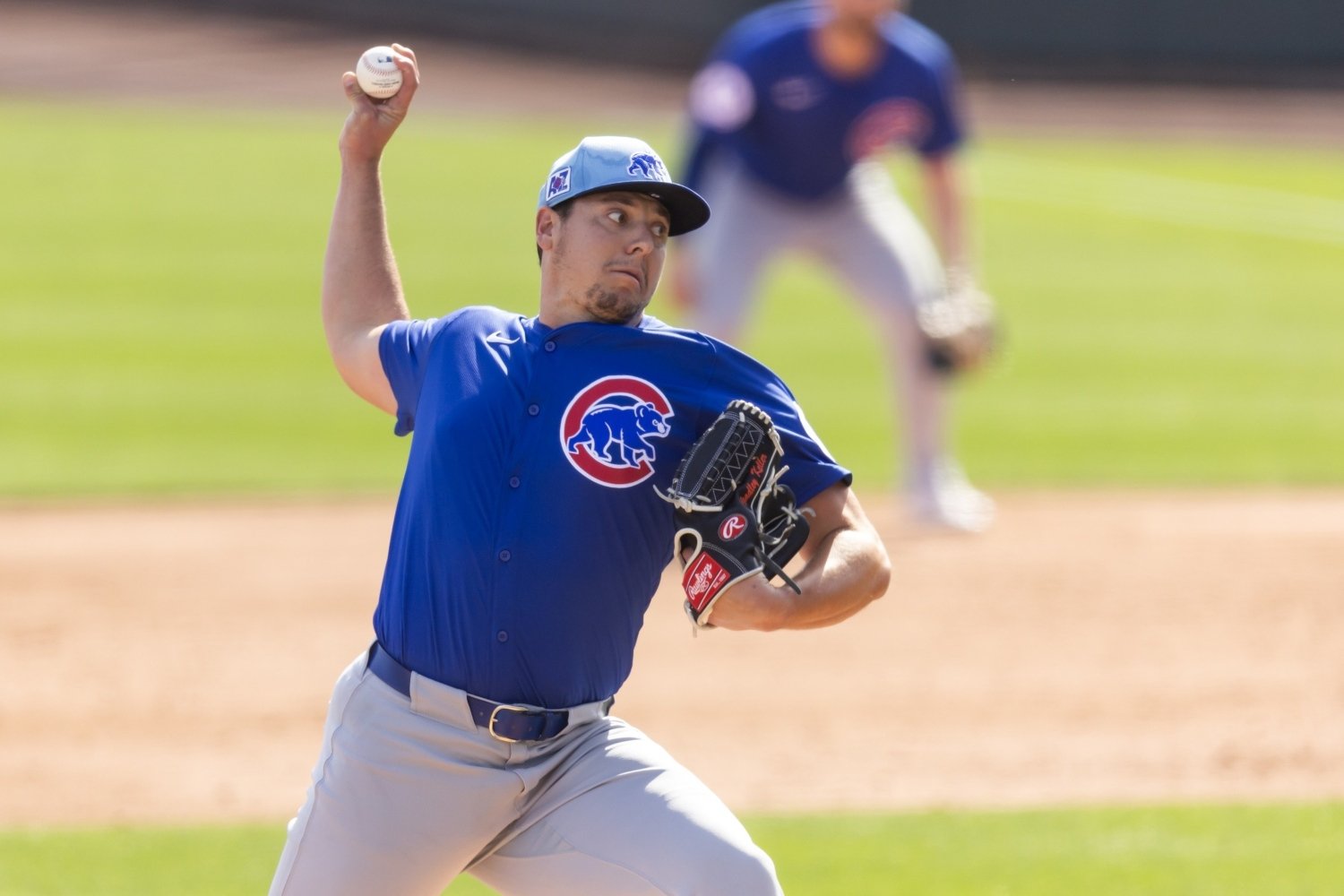 If you were disposed to skepticism, you might not have bought into the velocity readings Brad Keller put up in his first appearance of spring training, last week against the Dodgers in Glendale, Ariz. He sat at 96 miles per hour and touched 98 in a five-out appearance, which represented a bump of more than 2 mph from his average in 2024. Even knowing that he'd spent a chunk of his offseason at training and development hub Maven Baseball Lab, that was such a surge that it seemed a bit incredible. In his second outing, though, Keller did more or less the exact same thing, so now, we need to have a different conversation. He was perfect in two innings against the Padres, with one strikeout, but the most noteworthy thing was that his fastball stayed right at that same level. Two Statcast systems in a row can't be wrong. Keller is really, truly throwing harder five months shy of his 30th birthday than he ever has before: I broke things down by month, just to be sure, but Keller's velocity so far in spring camp would be the highest of any period even that long in his career, let alone a season. Since he was clearly active this winter learning how to generate this velocity, it's a safe bet that: He'll gain less velocity than other pitchers might in the time between late February and late March, let alone between February and June; and He'll either run out of steam altogether long before October, or need to be shelved for a while on the injured list, in what the modern argot terms a "de-load" phase. It's not yet popular to think that way, but we're right around the corner from it. The baseball season has stretched until it lasts from Valentine's Day to Halloween, and with the Cubs going to Tokyo to open the regular season in mid-March this year, they're getting an even earlier start than most. That means that all teams—and especially the Cubs—need to keep in mind the almost inevitable need for a shift change in their pitching staff sometime during the summer, even as they amass enough depth to be strong over the first two months of the season. Last year, they missed the playoffs largely because they got the former right, but had already fallen too far behind because of their failure to do the latter. Keller has an opt-out at the end of spring training, a team source confirmed, so if he doesn't make the team, the Cubs will lose him to free agency. They shouldn't let that happen. As I wrote back in November when I tabbed Keller as a good target for the team on this kind of deal, Keller has the unique, cutterish fastball shape the Cubs prize; that's why Brooks Baseball now codes his heater as a cutter. At 93 or 94, that pitch works reasonably well, given good location. At 96, he's throwing something very much like Porter Hodge's fastball; it's an overpowering offering. Keller already had a solid slider, and it will only play up when it's humming in at 87-88 mph, as it has so far this spring. His sinker has generally been hit hard, but the extra couple of ticks help it, too. His profile levels up with this bump, in a way not every pitcher's can. Keller should be penciled in as the long man for the Cubs' bullpen to start the season. Javier Assad is virtually sure to start the campaign on the injured list with an oblique strain, even though he seems to have come through it without much disruption. That's fine. Ben Brown, Cody Poteet, and other candidates for similar roles can all start the season at Triple-A Iowa without missing a beat. So far, Brown's velocity is down a tick from where he was last year, anyway. Again, that's only to be expected; he's coming back from an injury. Since not rostering Keller would mean losing him, though, and since there's so little to lose by managing and restricting usage for younger pitchers early on, it's a no-brainer. The hard-throwing version of Keller still doesn't have a Hodge-like breaking pitch to set everything off, but he can throw strikes and limit opponents' quality of contact more than well enough to give the Cubs great work through the cold, pitcher-friendly early segment of the season at Wrigley Field. He's not destined to be part of this team if they make a run in the postseason, but (despite and because of that) he should be in their plans for Opening Day. It's the logical way to piece together a good pitching staff for the whole of an overlong season.