


Matthew Trueblood
-
Posts
2,479 -
Joined
-
Last visited
-
Days Won
2
Content Type
Profiles
Joomla Posts 1
Chicago Cubs Videos
Chicago Cubs Free Agent & Trade Rumors, Notes, & Tidbits
2026 Chicago Cubs Top Prospects Ranking
News
2023 Chicago Cubs Draft Picks
Guides & Resources
2024 Chicago Cubs Draft Picks
The Chicago Cubs Players Project
2025 Chicago Cubs Draft Pick Tracker
2026 Chicago Cubs Draft Tracker: Picks & Bonuses
Blogs
Events
Forums
Store
Gallery
Everything posted by Matthew Trueblood
-
.png.3569742a70fcc5a57401b4b85eb047e5.png) All winter, I've exhorted readers not to get anxious or angry too soon. The Cubs have already added Kyle Tucker, Matthew Boyd, Colin Rea, Caleb Thielbar, Eli Morgan and Carson Kelly, and they fully intend to spend more money and add more talent this winter. However, the team has to come in for some mild but meaningful criticism now, after allowing the Dodgers to outbid them on Tanner Scott at four years and $72 million. As I reported early Sunday, the Cubs made an offer very much in that vein, and they have legitimate reasons for not having wanted to go any further. Still, it marks a failure of imagination and recruitment that they allowed themselves to be beaten out for Scott, who multiple members of the front office coveted. Worse, we're now reaching the stage where the number of good ways to get better is genuinely dwindling. To this point, especially after the Tucker trade, my refrain has been to exercise emotional restraint in responding to each signing or trade that sent a talented player somewhere else, because it's not possible for any team to simply bend players or other clubs to their will, and because there were still other options available to Jed Hoyer and company. That is becoming less true now, both in terms of spending the money and prospect capital they still have at the ready and in terms of meeting their highest stated priority the rest of the winter: upgrading a bullpen that lacks a true closer. Tomorrow, we'll discuss the best ways the team could spend the money "freed up" (if so we choose to think of it) by not landing Scott. For now, let's consider the relievers they could bring in to lead their bullpen, giving that unit much-needed stability and consistency. In fact, to clarify how I'm viewing their predicament, I'll rank the remaining options—by desirability, not likelihood. 1. Jhoan Durán, Twins RHP By no means is Durán unavailable. He's at a similar career stage and hits a similar balance point between value and famousness to Luis Arraez, whom the team traded just two winters ago to acquire now-ace starter Pablo López. Like Arraez (whose skill set makes him delightful and appealing to fans, but whose limitations make him less than a premium player in the eyes of most front offices), Durán is a player who will get expensive quickly via the arbitration process, and whom the team feels they can readily replace. They signed Durán to a one-year, $4.125-million deal to avoid arbitration, but that's just the first season of three for which he'll be eligible. Meanwhile, Griffin Jax (who's at the same point in his service-time progression but has not racked up as many saves, working mostly as Durán's setup man over the last two years) signed for $2.635 million and might be the better pitcher, anyway. Minnesota traded Arraez at a time when they faced no particular payroll pressure, and in fact, they signed López to a meaty four-year extension shortly after acquiring him. Now, however, they're scrambling to trim some money and/or supplement a roster that slouched to the finish in 2024 under a restrictive ownership-imposed budgetary cutback. Moving Durán wouldn't make them much cheaper, but he would command a tremendous package of talent in a trade—or, alternatively, they could look to attach the $7.25 million they owe to Chris Paddack to Durán, still getting solid young players back and clearing about $11.5 million to deploy another way. The Cubs should pounce on Durán, if at all possible. He's not perfect, with a fastball shape that favors armside run over any kind of lift, and he still needs to figure out what he wants to do, exactly, with the pitch he calls a "splinker" a splitter/sinker that hums in at 97 miles per hour but doesn't fall off the table like a splitter. Whatever issues one might take with the heater's shape, though, they mostly smooth out when you sit 100 and touch 103 with that pitch. Even better, Durán's curveball is a filthy power breaker that preys upon hitters' need to gear up for the triple-digit fastball, resulting in whiffs on well over 40% of opposing batters' swings. All told, despite occasional hiccups and the lurking worry about velocity loss or injury that comes with any high-octane reliever, Durán has a career 2.59 ERA, with a 31.9% strikeout rate and 7.5% walk rate. The Cubs would have to give up someone like Kevin Alcántara and a young arm like Jordan Wicks or Brandon Birdsell to get him, but if the Twins are open to it, that should be the first course they pursue. It would leave them money to spend on other things, and give them three years of a fearsome, varied back end of the bullpen. 2. Kyle Finnegan, Free Agent RHP I wrote at length about the path Finnegan took to being non-tendered by the Nationals, last month. He's a hard thrower, but not quite at the premium velocity level where Durán sits, and his fastball has that same lack of rise—although it, too, runs fairly well to the arm side. He hasn't been bad, but arbitration rewards saves so much that he would have been unduly expensive, in the Nationals' view. The good news is, in addition to that high-90s fastball and a splitter on which he leans heavily, he has a slider just waiting to be unlocked. He reshaped it in 2024. Now, he just needs to throw it more—much more—to make it harder for hitters to sit on either his heat or the splitter. Sources said Finnegan's asking price and skill set hit the sweet spot for the Cubs, and that he would be the most likely direction for them to pivot after losing their bid for Scott. It's likely to be a multi-year deal, but nothing close to the term or the salary Scott ultimately extracted from the Dodgers. 3. Carlos Estévez, Free Agent RHP The hulking Estévez landed with the Phillies at the trade deadline, after several years in the Rockies pen and a year and a half as the Angels' closer. He throws 97, with a good, hard slider that has major movement variation from his heater and comes in just under 90 miles per hour. Few pitchers make it harder, in terms of release point, velocity and movement, for a right-handed batter to distinguish the fastball from the slider. That's the good news. The bad news is, you can't get the guy to throw his slider as much as a modern reliever should. In almost all counts, he not only favors the fastball (that much is ok), but throws it something like two-thirds of the time. Of the 186 pitchers who threw at least 200 sliders in 2024, Estévez had the sixth-highest called strike probability (based on the location of each offering) on the pitch. He can throw the breaking ball for strikes, and if he threw it more often and the fastball less so, hitters would be consistently stumped. Yet, he's never really done so. The Cubs have already been in contact with Estévez, and figure to stay in close contact with him with Scott off the board. It's pretty clear how he can become a better version of himself. The concerns are his age, the fact that he would be changing his approach somewhat at a late juncture of his career, and the likelihood that his proven closer status pushes his price tag higher than that of Finnegan. 4. Robert Suarez, Padres RHP This one can be covered in a bit more depth tomorrow, because taking on Suarez and his complicated, player-friendly contract would be a way to both improve the bullpen and spend some of the team's available money without giving up as much young talent as someone like Durán would cost. Like all three of the above, Suarez throws very hard, averaging 99 miles per hour with his fastball. He's a natural pronator, with a sinker and changeup as the only real complements to his four-seam heat, but he stays behind the ball well and achieves good carry on it. It would be interesting to see if Tyler Zombro and the Cubs pitching development infrastructure could help Suarez find a "death ball"-like breaking ball to round out his repertoire, but even without that, his power profile can bully hitters, making him a very good back-end option in the pen. He and Porter Hodge would make a great duo, because their shapes and looks are so different that Craig Counsell could almost play matchups with them in the ninth innings, based on which pocket of an opposing order was coming up. 5. Kirby Yates, Free Agent RHP This one might be lower than many would place him, and indeed, there's a case to be made for Yates to slide ahead of anyone on this list, except Durán. However, his market is well-developed, and the price tag is not to the Cubs' liking. If Yates does settle for a one-year deal, it's likely to be for more than $15 million. He also has a chance of landing a two-year deal, which is an extraordinary risk to take on a pitcher with a checkered health history and a birthday in March 1987. (I'm no happier than you are that that birth date makes a player dangerously old, but that's where we are.) If Yates does sign a straight one-year deal with a salary south of Scott's AAV of $18 million and no escalators, the Cubs will be rightfully interested, but he might not, which has to move him down the list. 6. Tommy Kahnle, Free Agent RHP A famous changeup monster, Kahnle is that rare and fun pitcher whose change thrives not on actually changing up from the fastball (or any other pitch), but by its sheer nastiness. He throws the pitch three-quarters of the time, shamelessly spanning hitters with a pitch that dives and runs more than most pitches and to which no amount of familiarity makes hitters truly accustomed. Kahnle isn't even playing at making the changeup a ghost of the fastball. His release point on the pitch is markedly, noticeably different than on his heater or his pedestrian slider. He just teases hitters with it, inviting them to try to adjust enough and watching them fail to do so. In this graphic (from behind the pitcher, perspective-wise), look at how far his changeup (in green) deviates from his other offerings, right out of the hand. Still, batters whiffed on the pitch 39% of the time, and when they did make contact, it tended to be soft and on the ground. The downside with Kahnle is obvious, though. At 35, he's already relying largely on a trick pitch, and the difficulty of commanding it means he tends to walk over 10% of opponents. That's no recipe for sustained success. Instead, it's a recipe for a lot of late-game heartburn, even if he'll usually get himself out of any trouble he gets into. 7. Pete Fairbanks, Rays RHP Not long ago, it would have been crazy to place Fairbanks this low on a list including the other names here. Now, though, he's due $3.67 million in 2025, with easily reachable incentives that could push that past $5 million even if he isn't very good—and, much more importantly, there are some signs he's heading in that direction. Fairbanks's fastball used to sit near 100 miles per hour, but it dipped over 1.5 MPH last season. His overhand breaking ball has lost much of its deception, popping out of the hand as he struggles to keep that release point high and immediately looking different to a hitter than the fastball does. He got very little chase on that pitch in 2024, and is having a harder time elevating the fastball with each passing campaign. The Rays would be happy to move him in the right deal, but if the Rays would be happy to move someone, be somewhat suspicious of them. 8. Colin Poche, Free Agent LHP For my money, this is the floor. This is as low as the Cubs can go while defensibly expecting to have a stronger bullpen throughout 2025 than they had early in 2024. Poche throws just 91-92 MPH, but his fastball has freakish cut-ride action from an extremely high arm slot. He specializes in throwing that pitch at the top of the zone, inducing maddening, lazy fly balls from hitters and setting them up to get them out with a good-not-great slider. Shoulder trouble sidelined Poche for part of 2024, though, and it's best to be especially wary of shoulder trouble from a pitcher who comes so directly over the top. When he came back, his velocity was down a tick, and if that pattern held, he would quickly become a mediocre middle reliever. Indeed, the Rays non-tendered him, which should tell you something. He's the guy you pick up if you have big plans for the other segments of the roster, yet. It's good to have options. It's better to have solutions. The Cubs have the former, but not yet the latter, when it comes to finishing off a roster that can win the division and push the titans of the NL come October. These eight hurlers would all move them in the right direction, but Scott was a preferable option to all of them. Now, it's about staying opportunistic, so they don't miss out on any more important chances.
All winter, I've exhorted readers not to get anxious or angry too soon. The Cubs have already added Kyle Tucker, Matthew Boyd, Colin Rea, Caleb Thielbar, Eli Morgan and Carson Kelly, and they fully intend to spend more money and add more talent this winter. However, the team has to come in for some mild but meaningful criticism now, after allowing the Dodgers to outbid them on Tanner Scott at four years and $72 million. As I reported early Sunday, the Cubs made an offer very much in that vein, and they have legitimate reasons for not having wanted to go any further. Still, it marks a failure of imagination and recruitment that they allowed themselves to be beaten out for Scott, who multiple members of the front office coveted. Worse, we're now reaching the stage where the number of good ways to get better is genuinely dwindling. To this point, especially after the Tucker trade, my refrain has been to exercise emotional restraint in responding to each signing or trade that sent a talented player somewhere else, because it's not possible for any team to simply bend players or other clubs to their will, and because there were still other options available to Jed Hoyer and company. That is becoming less true now, both in terms of spending the money and prospect capital they still have at the ready and in terms of meeting their highest stated priority the rest of the winter: upgrading a bullpen that lacks a true closer. Tomorrow, we'll discuss the best ways the team could spend the money "freed up" (if so we choose to think of it) by not landing Scott. For now, let's consider the relievers they could bring in to lead their bullpen, giving that unit much-needed stability and consistency. In fact, to clarify how I'm viewing their predicament, I'll rank the remaining options—by desirability, not likelihood. 1. Jhoan Durán, Twins RHP By no means is Durán unavailable. He's at a similar career stage and hits a similar balance point between value and famousness to Luis Arraez, whom the team traded just two winters ago to acquire now-ace starter Pablo López. Like Arraez (whose skill set makes him delightful and appealing to fans, but whose limitations make him less than a premium player in the eyes of most front offices), Durán is a player who will get expensive quickly via the arbitration process, and whom the team feels they can readily replace. They signed Durán to a one-year, $4.125-million deal to avoid arbitration, but that's just the first season of three for which he'll be eligible. Meanwhile, Griffin Jax (who's at the same point in his service-time progression but has not racked up as many saves, working mostly as Durán's setup man over the last two years) signed for $2.635 million and might be the better pitcher, anyway. Minnesota traded Arraez at a time when they faced no particular payroll pressure, and in fact, they signed López to a meaty four-year extension shortly after acquiring him. Now, however, they're scrambling to trim some money and/or supplement a roster that slouched to the finish in 2024 under a restrictive ownership-imposed budgetary cutback. Moving Durán wouldn't make them much cheaper, but he would command a tremendous package of talent in a trade—or, alternatively, they could look to attach the $7.25 million they owe to Chris Paddack to Durán, still getting solid young players back and clearing about $11.5 million to deploy another way. The Cubs should pounce on Durán, if at all possible. He's not perfect, with a fastball shape that favors armside run over any kind of lift, and he still needs to figure out what he wants to do, exactly, with the pitch he calls a "splinker" a splitter/sinker that hums in at 97 miles per hour but doesn't fall off the table like a splitter. Whatever issues one might take with the heater's shape, though, they mostly smooth out when you sit 100 and touch 103 with that pitch. Even better, Durán's curveball is a filthy power breaker that preys upon hitters' need to gear up for the triple-digit fastball, resulting in whiffs on well over 40% of opposing batters' swings. All told, despite occasional hiccups and the lurking worry about velocity loss or injury that comes with any high-octane reliever, Durán has a career 2.59 ERA, with a 31.9% strikeout rate and 7.5% walk rate. The Cubs would have to give up someone like Kevin Alcántara and a young arm like Jordan Wicks or Brandon Birdsell to get him, but if the Twins are open to it, that should be the first course they pursue. It would leave them money to spend on other things, and give them three years of a fearsome, varied back end of the bullpen. 2. Kyle Finnegan, Free Agent RHP I wrote at length about the path Finnegan took to being non-tendered by the Nationals, last month. He's a hard thrower, but not quite at the premium velocity level where Durán sits, and his fastball has that same lack of rise—although it, too, runs fairly well to the arm side. He hasn't been bad, but arbitration rewards saves so much that he would have been unduly expensive, in the Nationals' view. The good news is, in addition to that high-90s fastball and a splitter on which he leans heavily, he has a slider just waiting to be unlocked. He reshaped it in 2024. Now, he just needs to throw it more—much more—to make it harder for hitters to sit on either his heat or the splitter. Sources said Finnegan's asking price and skill set hit the sweet spot for the Cubs, and that he would be the most likely direction for them to pivot after losing their bid for Scott. It's likely to be a multi-year deal, but nothing close to the term or the salary Scott ultimately extracted from the Dodgers. 3. Carlos Estévez, Free Agent RHP The hulking Estévez landed with the Phillies at the trade deadline, after several years in the Rockies pen and a year and a half as the Angels' closer. He throws 97, with a good, hard slider that has major movement variation from his heater and comes in just under 90 miles per hour. Few pitchers make it harder, in terms of release point, velocity and movement, for a right-handed batter to distinguish the fastball from the slider. That's the good news. The bad news is, you can't get the guy to throw his slider as much as a modern reliever should. In almost all counts, he not only favors the fastball (that much is ok), but throws it something like two-thirds of the time. Of the 186 pitchers who threw at least 200 sliders in 2024, Estévez had the sixth-highest called strike probability (based on the location of each offering) on the pitch. He can throw the breaking ball for strikes, and if he threw it more often and the fastball less so, hitters would be consistently stumped. Yet, he's never really done so. The Cubs have already been in contact with Estévez, and figure to stay in close contact with him with Scott off the board. It's pretty clear how he can become a better version of himself. The concerns are his age, the fact that he would be changing his approach somewhat at a late juncture of his career, and the likelihood that his proven closer status pushes his price tag higher than that of Finnegan. 4. Robert Suarez, Padres RHP This one can be covered in a bit more depth tomorrow, because taking on Suarez and his complicated, player-friendly contract would be a way to both improve the bullpen and spend some of the team's available money without giving up as much young talent as someone like Durán would cost. Like all three of the above, Suarez throws very hard, averaging 99 miles per hour with his fastball. He's a natural pronator, with a sinker and changeup as the only real complements to his four-seam heat, but he stays behind the ball well and achieves good carry on it. It would be interesting to see if Tyler Zombro and the Cubs pitching development infrastructure could help Suarez find a "death ball"-like breaking ball to round out his repertoire, but even without that, his power profile can bully hitters, making him a very good back-end option in the pen. He and Porter Hodge would make a great duo, because their shapes and looks are so different that Craig Counsell could almost play matchups with them in the ninth innings, based on which pocket of an opposing order was coming up. 5. Kirby Yates, Free Agent RHP This one might be lower than many would place him, and indeed, there's a case to be made for Yates to slide ahead of anyone on this list, except Durán. However, his market is well-developed, and the price tag is not to the Cubs' liking. If Yates does settle for a one-year deal, it's likely to be for more than $15 million. He also has a chance of landing a two-year deal, which is an extraordinary risk to take on a pitcher with a checkered health history and a birthday in March 1987. (I'm no happier than you are that that birth date makes a player dangerously old, but that's where we are.) If Yates does sign a straight one-year deal with a salary south of Scott's AAV of $18 million and no escalators, the Cubs will be rightfully interested, but he might not, which has to move him down the list. 6. Tommy Kahnle, Free Agent RHP A famous changeup monster, Kahnle is that rare and fun pitcher whose change thrives not on actually changing up from the fastball (or any other pitch), but by its sheer nastiness. He throws the pitch three-quarters of the time, shamelessly spanning hitters with a pitch that dives and runs more than most pitches and to which no amount of familiarity makes hitters truly accustomed. Kahnle isn't even playing at making the changeup a ghost of the fastball. His release point on the pitch is markedly, noticeably different than on his heater or his pedestrian slider. He just teases hitters with it, inviting them to try to adjust enough and watching them fail to do so. In this graphic (from behind the pitcher, perspective-wise), look at how far his changeup (in green) deviates from his other offerings, right out of the hand. Still, batters whiffed on the pitch 39% of the time, and when they did make contact, it tended to be soft and on the ground. The downside with Kahnle is obvious, though. At 35, he's already relying largely on a trick pitch, and the difficulty of commanding it means he tends to walk over 10% of opponents. That's no recipe for sustained success. Instead, it's a recipe for a lot of late-game heartburn, even if he'll usually get himself out of any trouble he gets into. 7. Pete Fairbanks, Rays RHP Not long ago, it would have been crazy to place Fairbanks this low on a list including the other names here. Now, though, he's due $3.67 million in 2025, with easily reachable incentives that could push that past $5 million even if he isn't very good—and, much more importantly, there are some signs he's heading in that direction. Fairbanks's fastball used to sit near 100 miles per hour, but it dipped over 1.5 MPH last season. His overhand breaking ball has lost much of its deception, popping out of the hand as he struggles to keep that release point high and immediately looking different to a hitter than the fastball does. He got very little chase on that pitch in 2024, and is having a harder time elevating the fastball with each passing campaign. The Rays would be happy to move him in the right deal, but if the Rays would be happy to move someone, be somewhat suspicious of them. 8. Colin Poche, Free Agent LHP For my money, this is the floor. This is as low as the Cubs can go while defensibly expecting to have a stronger bullpen throughout 2025 than they had early in 2024. Poche throws just 91-92 MPH, but his fastball has freakish cut-ride action from an extremely high arm slot. He specializes in throwing that pitch at the top of the zone, inducing maddening, lazy fly balls from hitters and setting them up to get them out with a good-not-great slider. Shoulder trouble sidelined Poche for part of 2024, though, and it's best to be especially wary of shoulder trouble from a pitcher who comes so directly over the top. When he came back, his velocity was down a tick, and if that pattern held, he would quickly become a mediocre middle reliever. Indeed, the Rays non-tendered him, which should tell you something. He's the guy you pick up if you have big plans for the other segments of the roster, yet. It's good to have options. It's better to have solutions. The Cubs have the former, but not yet the latter, when it comes to finishing off a roster that can win the division and push the titans of the NL come October. These eight hurlers would all move them in the right direction, but Scott was a preferable option to all of them. Now, it's about staying opportunistic, so they don't miss out on any more important chances. -
There's no avoiding the bitter disappointment of the latest free-agent news. The Cubs had a clear-cut top target on whom they were ready to extend themselves. Now that they've lost out on him, which is the best of their alternatives? Image courtesy of © Brett Davis-Imagn Images All winter, I've exhorted readers not to get anxious or angry too soon. The Cubs have already added Kyle Tucker, Matthew Boyd, Colin Rea, Caleb Thielbar, Eli Morgan and Carson Kelly, and they fully intend to spend more money and add more talent this winter. However, the team has to come in for some mild but meaningful criticism now, after allowing the Dodgers to outbid them on Tanner Scott at four years and $72 million. As I reported early Sunday, the Cubs made an offer very much in that vein, and they have legitimate reasons for not having wanted to go any further. Still, it marks a failure of imagination and recruitment that they allowed themselves to be beaten out for Scott, who multiple members of the front office coveted. Worse, we're now reaching the stage where the number of good ways to get better is genuinely dwindling. To this point, especially after the Tucker trade, my refrain has been to exercise emotional restraint in responding to each signing or trade that sent a talented player somewhere else, because it's not possible for any team to simply bend players or other clubs to their will, and because there were still other options available to Jed Hoyer and company. That is becoming less true now, both in terms of spending the money and prospect capital they still have at the ready and in terms of meeting their highest stated priority the rest of the winter: upgrading a bullpen that lacks a true closer. Tomorrow, we'll discuss the best ways the team could spend the money "freed up" (if so we choose to think of it) by not landing Scott. For now, let's consider the relievers they could bring in to lead their bullpen, giving that unit much-needed stability and consistency. In fact, to clarify how I'm viewing their predicament, I'll rank the remaining options—by desirability, not likelihood. 1. Jhoan Durán, Twins RHP By no means is Durán unavailable. He's at a similar career stage and hits a similar balance point between value and famousness to Luis Arraez, whom the team traded just two winters ago to acquire now-ace starter Pablo López. Like Arraez (whose skill set makes him delightful and appealing to fans, but whose limitations make him less than a premium player in the eyes of most front offices), Durán is a player who will get expensive quickly via the arbitration process, and whom the team feels they can readily replace. They signed Durán to a one-year, $4.125-million deal to avoid arbitration, but that's just the first season of three for which he'll be eligible. Meanwhile, Griffin Jax (who's at the same point in his service-time progression but has not racked up as many saves, working mostly as Durán's setup man over the last two years) signed for $2.635 million and might be the better pitcher, anyway. Minnesota traded Arraez at a time when they faced no particular payroll pressure, and in fact, they signed López to a meaty four-year extension shortly after acquiring him. Now, however, they're scrambling to trim some money and/or supplement a roster that slouched to the finish in 2024 under a restrictive ownership-imposed budgetary cutback. Moving Durán wouldn't make them much cheaper, but he would command a tremendous package of talent in a trade—or, alternatively, they could look to attach the $7.25 million they owe to Chris Paddack to Durán, still getting solid young players back and clearing about $11.5 million to deploy another way. The Cubs should pounce on Durán, if at all possible. He's not perfect, with a fastball shape that favors armside run over any kind of lift, and he still needs to figure out what he wants to do, exactly, with the pitch he calls a "splinker" a splitter/sinker that hums in at 97 miles per hour but doesn't fall off the table like a splitter. Whatever issues one might take with the heater's shape, though, they mostly smooth out when you sit 100 and touch 103 with that pitch. Even better, Durán's curveball is a filthy power breaker that preys upon hitters' need to gear up for the triple-digit fastball, resulting in whiffs on well over 40% of opposing batters' swings. All told, despite occasional hiccups and the lurking worry about velocity loss or injury that comes with any high-octane reliever, Durán has a career 2.59 ERA, with a 31.9% strikeout rate and 7.5% walk rate. The Cubs would have to give up someone like Kevin Alcántara and a young arm like Jordan Wicks or Brandon Birdsell to get him, but if the Twins are open to it, that should be the first course they pursue. It would leave them money to spend on other things, and give them three years of a fearsome, varied back end of the bullpen. 2. Kyle Finnegan, Free Agent RHP I wrote at length about the path Finnegan took to being non-tendered by the Nationals, last month. He's a hard thrower, but not quite at the premium velocity level where Durán sits, and his fastball has that same lack of rise—although it, too, runs fairly well to the arm side. He hasn't been bad, but arbitration rewards saves so much that he would have been unduly expensive, in the Nationals' view. The good news is, in addition to that high-90s fastball and a splitter on which he leans heavily, he has a slider just waiting to be unlocked. He reshaped it in 2024. Now, he just needs to throw it more—much more—to make it harder for hitters to sit on either his heat or the splitter. Sources said Finnegan's asking price and skill set hit the sweet spot for the Cubs, and that he would be the most likely direction for them to pivot after losing their bid for Scott. It's likely to be a multi-year deal, but nothing close to the term or the salary Scott ultimately extracted from the Dodgers. 3. Carlos Estévez, Free Agent RHP The hulking Estévez landed with the Phillies at the trade deadline, after several years in the Rockies pen and a year and a half as the Angels' closer. He throws 97, with a good, hard slider that has major movement variation from his heater and comes in just under 90 miles per hour. Few pitchers make it harder, in terms of release point, velocity and movement, for a right-handed batter to distinguish the fastball from the slider. That's the good news. The bad news is, you can't get the guy to throw his slider as much as a modern reliever should. In almost all counts, he not only favors the fastball (that much is ok), but throws it something like two-thirds of the time. Of the 186 pitchers who threw at least 200 sliders in 2024, Estévez had the sixth-highest called strike probability (based on the location of each offering) on the pitch. He can throw the breaking ball for strikes, and if he threw it more often and the fastball less so, hitters would be consistently stumped. Yet, he's never really done so. The Cubs have already been in contact with Estévez, and figure to stay in close contact with him with Scott off the board. It's pretty clear how he can become a better version of himself. The concerns are his age, the fact that he would be changing his approach somewhat at a late juncture of his career, and the likelihood that his proven closer status pushes his price tag higher than that of Finnegan. 4. Robert Suarez, Padres RHP This one can be covered in a bit more depth tomorrow, because taking on Suarez and his complicated, player-friendly contract would be a way to both improve the bullpen and spend some of the team's available money without giving up as much young talent as someone like Durán would cost. Like all three of the above, Suarez throws very hard, averaging 99 miles per hour with his fastball. He's a natural pronator, with a sinker and changeup as the only real complements to his four-seam heat, but he stays behind the ball well and achieves good carry on it. It would be interesting to see if Tyler Zombro and the Cubs pitching development infrastructure could help Suarez find a "death ball"-like breaking ball to round out his repertoire, but even without that, his power profile can bully hitters, making him a very good back-end option in the pen. He and Porter Hodge would make a great duo, because their shapes and looks are so different that Craig Counsell could almost play matchups with them in the ninth innings, based on which pocket of an opposing order was coming up. 5. Kirby Yates, Free Agent RHP This one might be lower than many would place him, and indeed, there's a case to be made for Yates to slide ahead of anyone on this list, except Durán. However, his market is well-developed, and the price tag is not to the Cubs' liking. If Yates does settle for a one-year deal, it's likely to be for more than $15 million. He also has a chance of landing a two-year deal, which is an extraordinary risk to take on a pitcher with a checkered health history and a birthday in March 1987. (I'm no happier than you are that that birth date makes a player dangerously old, but that's where we are.) If Yates does sign a straight one-year deal with a salary south of Scott's AAV of $18 million and no escalators, the Cubs will be rightfully interested, but he might not, which has to move him down the list. 6. Tommy Kahnle, Free Agent RHP A famous changeup monster, Kahnle is that rare and fun pitcher whose change thrives not on actually changing up from the fastball (or any other pitch), but by its sheer nastiness. He throws the pitch three-quarters of the time, shamelessly spanning hitters with a pitch that dives and runs more than most pitches and to which no amount of familiarity makes hitters truly accustomed. Kahnle isn't even playing at making the changeup a ghost of the fastball. His release point on the pitch is markedly, noticeably different than on his heater or his pedestrian slider. He just teases hitters with it, inviting them to try to adjust enough and watching them fail to do so. In this graphic (from behind the pitcher, perspective-wise), look at how far his changeup (in green) deviates from his other offerings, right out of the hand. Still, batters whiffed on the pitch 39% of the time, and when they did make contact, it tended to be soft and on the ground. The downside with Kahnle is obvious, though. At 35, he's already relying largely on a trick pitch, and the difficulty of commanding it means he tends to walk over 10% of opponents. That's no recipe for sustained success. Instead, it's a recipe for a lot of late-game heartburn, even if he'll usually get himself out of any trouble he gets into. 7. Pete Fairbanks, Rays RHP Not long ago, it would have been crazy to place Fairbanks this low on a list including the other names here. Now, though, he's due $3.67 million in 2025, with easily reachable incentives that could push that past $5 million even if he isn't very good—and, much more importantly, there are some signs he's heading in that direction. Fairbanks's fastball used to sit near 100 miles per hour, but it dipped over 1.5 MPH last season. His overhand breaking ball has lost much of its deception, popping out of the hand as he struggles to keep that release point high and immediately looking different to a hitter than the fastball does. He got very little chase on that pitch in 2024, and is having a harder time elevating the fastball with each passing campaign. The Rays would be happy to move him in the right deal, but if the Rays would be happy to move someone, be somewhat suspicious of them. 8. Colin Poche, Free Agent LHP For my money, this is the floor. This is as low as the Cubs can go while defensibly expecting to have a stronger bullpen throughout 2025 than they had early in 2024. Poche throws just 91-92 MPH, but his fastball has freakish cut-ride action from an extremely high arm slot. He specializes in throwing that pitch at the top of the zone, inducing maddening, lazy fly balls from hitters and setting them up to get them out with a good-not-great slider. Shoulder trouble sidelined Poche for part of 2024, though, and it's best to be especially wary of shoulder trouble from a pitcher who comes so directly over the top. When he came back, his velocity was down a tick, and if that pattern held, he would quickly become a mediocre middle reliever. Indeed, the Rays non-tendered him, which should tell you something. He's the guy you pick up if you have big plans for the other segments of the roster, yet. It's good to have options. It's better to have solutions. The Cubs have the former, but not yet the latter, when it comes to finishing off a roster that can win the division and push the titans of the NL come October. These eight hurlers would all move them in the right direction, but Scott was a preferable option to all of them. Now, it's about staying opportunistic, so they don't miss out on any more important chances. View full article
-
Welp. Hope you didn't let your hopes rise too high. Just a few hours after I reported that the Cubs had made a push to land Tanner Scott on a multi-year deal, the Dodgers did what the Dodgers do. This will not make you feel even one iota better, I imagine, but for whatever it's worth to you, the offer the Cubs made was very competitive with this one. Without any further information about opt-outs, deferrals, or other aspects, it's safe to say that Scott basically chose between the two teams based on factors other than money—though, of course, the Cubs may have stopped bidding when it became clear that the Dodgers would match or exceed whatever they offered. View full rumor
-
Welp. Hope you didn't let your hopes rise too high. Just a few hours after I reported that the Cubs had made a push to land Tanner Scott on a multi-year deal, the Dodgers did what the Dodgers do. This will not make you feel even one iota better, I imagine, but for whatever it's worth to you, the offer the Cubs made was very competitive with this one. Without any further information about opt-outs, deferrals, or other aspects, it's safe to say that Scott basically chose between the two teams based on factors other than money—though, of course, the Cubs may have stopped bidding when it became clear that the Dodgers would match or exceed whatever they offered.
-
This might be the most TomTheBombadil comment ever. Five parentheticals! FIVE! 😄
- 7 replies
-
- 3
-

-

-
- tanner scott
- kyle finnegan
- (and 1 more)
-
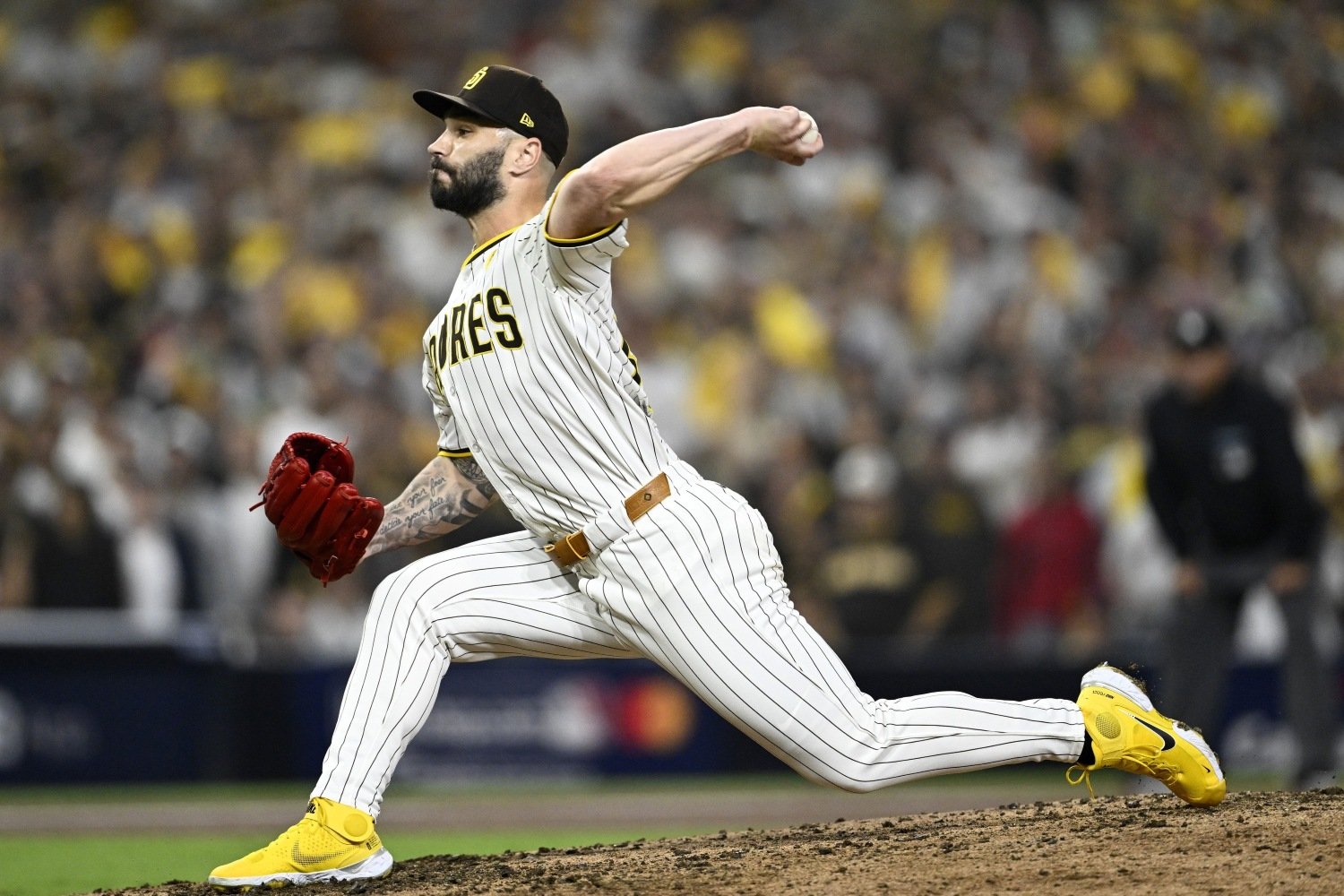 As we told you they would be last month, the Cubs are heavily involved on Tanner Scott, to the extent that they've made him an offer one source called "substantial"—meaningfully larger than the three-year, $43-million Craig Kimbrel deal that currently stands as the biggest investment the team has ever made in a reliever. At least one other team is around that level, too, though, and it's not clear how much further the Cubs are willing to go, They're already positioning themselves to break their own mold when it comes to filling out the back end of a bullpen, but Jed Hoyer's front office never totally throws caution to the wind when operating in free agency. This will not be an exception. Scott isn't quite in a position to command the five-year deals (worth over $18 million per year) that Edwin Díaz and Josh Hader have recently pulled down, so the Cubs are trying to snag him, laying claim to a pitcher they regard as clearly superior to any other reliever available. Scott, 30, has a 2.04 ERA and 34 saves in 150 innings of regular-season work since the start of 2023. Armed with a 97-MPH fastball and a viciously sharp slider, he has a 30.4% career strikeout rate, and that mark is 31.3% in the last two seasons. Opposing batters have hit just .186/.274/.254 against him in that span, as he minimizes hard contact nearly as well as he misses bats. He would become the best-projected Cubs closer to open a season since Wade Davis in 2017, and indeed, it's that kind of impact the team envisions getting from him over anywhere from three to five seasons. He's a uniquely excellent fit for what the Cubs like to do on the pitching side, and for their roster, with its lefty-loaded rotation and right-leaning bullpen. Because the Marlins traded Scott to the Padres in July, he was not eligible to receive a qualifying offer when he became a free agent in November. That has augmented the Cubs' interest; they would not have been willing to give up a draft pick to sign him at the price to which they have already gone in this bidding. A source said that, while there may end up being an opt-out in Scott's deal (depending on where he signs), that is not a major consideration in this particular case. Because he dodged the qualifying offer by being traded in the summer, Scott would be eligible for one if he exercised an opt-out clause, and the draft-pick forfeiture attached to players who receive a QO tends to put a damper on the market for relievers, as Kimbrel found out in 2018-19. MVP Sports Group, the agency founded and led by Dan Lozano, represents Scott and has worked out fruitful deals centered around options and flexible structures before, but it's believed that this deal will end up being fairly straightforward. If the Cubs can't land Scott with this offer, they may pivot next to Kyle Finnegan, whose track record is much less dominant but whose stuff could play up to a similar level. They have some interest in Kirby Yates, Paul Sewald, and others, but Scott is their focus right now, and should he sign elsewhere, it's Finnegan with whom the fit seems to make the most sense. Paying handsomely for a closer is not a novel idea for Hoyer, as he was quick to say when he appeared on the Spiegel & Holmes Show on 670 The Score Friday. "We traded for Aroldis Chapman, we traded Jorge Soler for Wade Davis. We signed Brandon Morrow. We signed Craig Kimbrel," Hoyer said. "We don't not believe in the position ... I do think it has a lot of value." This would be a larger stretch in that direction than the Cubs front office has made in many years, though, and under Hoyer, specifically, the team has leaned toward pursuing internal options and building a bullpen cheaply., Their willingness to go beyond their comfort zone with Scott reflects the way the structure of their roster has changed. With Pete Crow-Armstrong, Matt Shaw, Michael Busch, and Miguel Amaya penciled into the Opening Day lineup and high hopes for the contributions of young hurlers Javier Assad, Ben Brown, Cade Horton, Brandon Birdsell and Porter Hodge, the team has more financial flexibility with which to attack the bullpen. On the other hand, in addition to their unwillingness to bid against much freer-spending teams (most notably the Dodgers) for a player at a position as volatile as relief pitcher, the Cubs feel a pressing need to keep some resources available to address their positional depth. Scott could be a capstone to their pitching staff, with the idea being that the depth of viable options in the rotation will make up for the lack of a true ace. Even if they reel him in, though, they need to do something to upgrade their bench. Thus. if forced to, they will let Scott sign elsewhere and focus on Finnegan, making a richer push for help on the infield to compensate for the less dominant pitching. In their ideal scenario, the Cubs will bring in the highest-profile free-agent reliever they've signed since either Kimbrel or Randy Myers, and do it within the next handful of days. They've made a push they consider aggressive, and Scott is likely to decide between a small handful of teams soon.
 -
According to two sources familiar with the negotiations, the Chicago Cubs have made a multi-year offer to the top free-agent reliever left on the board. However, they're not alone in the bidding. Image courtesy of © Denis Poroy-Imagn Images As we told you they would be last month, the Cubs are heavily involved on Tanner Scott, to the extent that they've made him an offer one source called "substantial"—meaningfully larger than the three-year, $43-million Craig Kimbrel deal that currently stands as the biggest investment the team has ever made in a reliever. At least one other team is around that level, too, though, and it's not clear how much further the Cubs are willing to go, They're already positioning themselves to break their own mold when it comes to filling out the back end of a bullpen, but Jed Hoyer's front office never totally throws caution to the wind when operating in free agency. This will not be an exception. Scott isn't quite in a position to command the five-year deals (worth over $18 million per year) that Edwin Díaz and Josh Hader have recently pulled down, so the Cubs are trying to snag him, laying claim to a pitcher they regard as clearly superior to any other reliever available. Scott, 30, has a 2.04 ERA and 34 saves in 150 innings of regular-season work since the start of 2023. Armed with a 97-MPH fastball and a viciously sharp slider, he has a 30.4% career strikeout rate, and that mark is 31.3% in the last two seasons. Opposing batters have hit just .186/.274/.254 against him in that span, as he minimizes hard contact nearly as well as he misses bats. He would become the best-projected Cubs closer to open a season since Wade Davis in 2017, and indeed, it's that kind of impact the team envisions getting from him over anywhere from three to five seasons. He's a uniquely excellent fit for what the Cubs like to do on the pitching side, and for their roster, with its lefty-loaded rotation and right-leaning bullpen. Because the Marlins traded Scott to the Padres in July, he was not eligible to receive a qualifying offer when he became a free agent in November. That has augmented the Cubs' interest; they would not have been willing to give up a draft pick to sign him at the price to which they have already gone in this bidding. A source said that, while there may end up being an opt-out in Scott's deal (depending on where he signs), that is not a major consideration in this particular case. Because he dodged the qualifying offer by being traded in the summer, Scott would be eligible for one if he exercised an opt-out clause, and the draft-pick forfeiture attached to players who receive a QO tends to put a damper on the market for relievers, as Kimbrel found out in 2018-19. MVP Sports Group, the agency founded and led by Dan Lozano, represents Scott and has worked out fruitful deals centered around options and flexible structures before, but it's believed that this deal will end up being fairly straightforward. If the Cubs can't land Scott with this offer, they may pivot next to Kyle Finnegan, whose track record is much less dominant but whose stuff could play up to a similar level. They have some interest in Kirby Yates, Paul Sewald, and others, but Scott is their focus right now, and should he sign elsewhere, it's Finnegan with whom the fit seems to make the most sense. Paying handsomely for a closer is not a novel idea for Hoyer, as he was quick to say when he appeared on the Spiegel & Holmes Show on 670 The Score Friday. "We traded for Aroldis Chapman, we traded Jorge Soler for Wade Davis. We signed Brandon Morrow. We signed Craig Kimbrel," Hoyer said. "We don't not believe in the position ... I do think it has a lot of value." This would be a larger stretch in that direction than the Cubs front office has made in many years, though, and under Hoyer, specifically, the team has leaned toward pursuing internal options and building a bullpen cheaply., Their willingness to go beyond their comfort zone with Scott reflects the way the structure of their roster has changed. With Pete Crow-Armstrong, Matt Shaw, Michael Busch, and Miguel Amaya penciled into the Opening Day lineup and high hopes for the contributions of young hurlers Javier Assad, Ben Brown, Cade Horton, Brandon Birdsell and Porter Hodge, the team has more financial flexibility with which to attack the bullpen. On the other hand, in addition to their unwillingness to bid against much freer-spending teams (most notably the Dodgers) for a player at a position as volatile as relief pitcher, the Cubs feel a pressing need to keep some resources available to address their positional depth. Scott could be a capstone to their pitching staff, with the idea being that the depth of viable options in the rotation will make up for the lack of a true ace. Even if they reel him in, though, they need to do something to upgrade their bench. Thus. if forced to, they will let Scott sign elsewhere and focus on Finnegan, making a richer push for help on the infield to compensate for the less dominant pitching. In their ideal scenario, the Cubs will bring in the highest-profile free-agent reliever they've signed since either Kimbrel or Randy Myers, and do it within the next handful of days. They've made a push they consider aggressive, and Scott is likely to decide between a small handful of teams soon. View full article
-
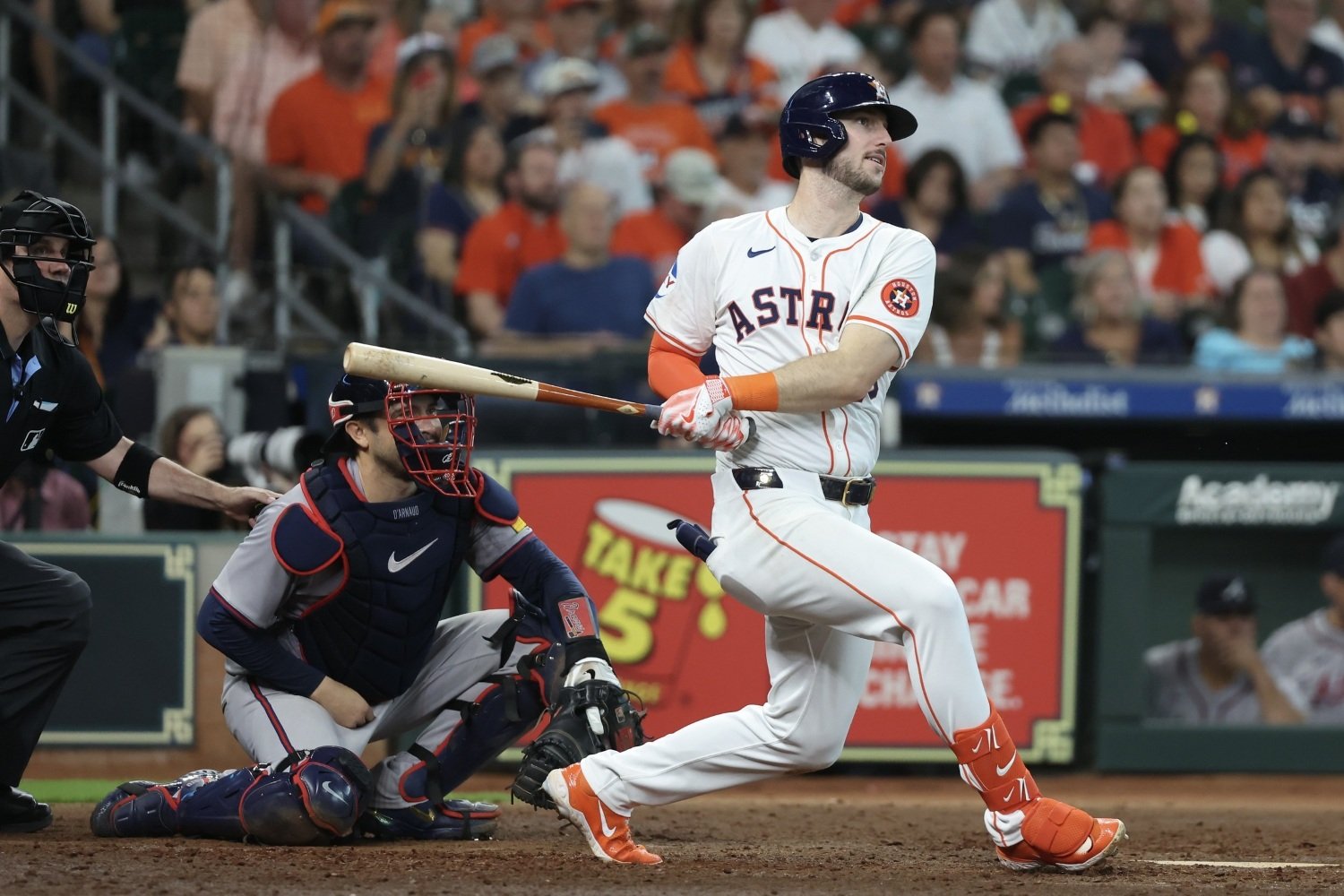 This, like the non-news that preceded it, means almost nothing. By and large, we should not care whether players make $16 million or $17 million, so we certainly need not care that the Cubs and Kyle Tucker agreed to a deal Thursday to pay him $16.5 million for 2025. That deal does obviate the need for an arbitration hearing to settle the $2.5-million gap that had existed between the two sides' submitted figures of $15 million and $17.5 million, though, and thus, the hand-wringing that went on last week when no deal was struck immediately can come to its overdue end. (Also: Hey, Jesse Rogers. We see you. Don't think we don't see you. You were hoping to catch as many people getting excited with the first handful of words of that tweet as you could, and that's fine. It's all in the game. But we see you.) There was just never anything to the idea that not reaching an immediate accord somehow poisoned whatever chances the Cubs had to extend Tucker, and now we can put those needless fears to bed. That doesn't mean an extension is imminent; the chances of that remain nonzero but small. This deal avoids any tension that might have emanated from an actual hearing, but no actual hearing was ever likely. The team was unlikely to sign him to an extension before, and they're unlikely to sign him to an extension now. That is not to be confused with saying that the chances would have gone to zero if a hearing had taken place, or that they're essentially zero now. They're just small. This is an area of estimating probability where we humans do poorly. When we try to predict whether an event will take place and we feel it's unlikely, we tend to crowd our imagined probability down toward zero, even if the real probability is (say) 12 percent. On the other hand, when we're trying to estimate the likelihood of events that we understand to be improbable but badly want to see happen, we tend to push the number higher, sometimes subconsciously. This, to me, is where so many fans fell into a trap last week. They understand that Tucker probably won't sign a long-term deal without testing free agency, and that the Cubs probably won't shell out the humongous sum that would change that. Therefore, they end up hunting for things that confirm those priors, including the failure to settle before arbitration, and the wired-in pessimism of estimating low probabilities leads them to think that the event they perceive as hurting those chances has actually pulverized them. Working against that, though, is their secret hope that this will be the time things are different, and so they still felt outrage at the organization when they were confronted with what they interpreted (albeit wrongly) as an attack on that bit of wishcasting. If that all sounds like it could be you, good news: you've survived! The Cubs did initially fail to reach a deal with Tucker, which changed their chances of reaching a long-term deal with him from about 12% to about 12%. But now, they've signed him to a handsome one-year deal with which he should be pleased, raising those odds back to 12%. The bad news, of course, is that 12% is still a small number, and that your head will now go right back to steering that 12% down toward 0, while your heart pushes it toward 25% and makes it more likely to hurt if, in the event, they don't cash in on that 12% chance. Again, this was never a story. But at least now, we can all agree on that. There's a chance the Cubs will sign Tucker to a long-term deal. It's just a small one. Now, at least, the team has cost certainty on him for this year, and they can turn their attention to building out the rest of the roster—without, of course, blocking the phone numbers of Tucker and his agents.
 -
Not to be that guy, but I was told they'd ruined their relationship with their new, much-beloved superstar forever. Image courtesy of © Thomas Shea-Imagn Images This, like the non-news that preceded it, means almost nothing. By and large, we should not care whether players make $16 million or $17 million, so we certainly need not care that the Cubs and Kyle Tucker agreed to a deal Thursday to pay him $16.5 million for 2025. That deal does obviate the need for an arbitration hearing to settle the $2.5-million gap that had existed between the two sides' submitted figures of $15 million and $17.5 million, though, and thus, the hand-wringing that went on last week when no deal was struck immediately can come to its overdue end. (Also: Hey, Jesse Rogers. We see you. Don't think we don't see you. You were hoping to catch as many people getting excited with the first handful of words of that tweet as you could, and that's fine. It's all in the game. But we see you.) There was just never anything to the idea that not reaching an immediate accord somehow poisoned whatever chances the Cubs had to extend Tucker, and now we can put those needless fears to bed. That doesn't mean an extension is imminent; the chances of that remain nonzero but small. This deal avoids any tension that might have emanated from an actual hearing, but no actual hearing was ever likely. The team was unlikely to sign him to an extension before, and they're unlikely to sign him to an extension now. That is not to be confused with saying that the chances would have gone to zero if a hearing had taken place, or that they're essentially zero now. They're just small. This is an area of estimating probability where we humans do poorly. When we try to predict whether an event will take place and we feel it's unlikely, we tend to crowd our imagined probability down toward zero, even if the real probability is (say) 12 percent. On the other hand, when we're trying to estimate the likelihood of events that we understand to be improbable but badly want to see happen, we tend to push the number higher, sometimes subconsciously. This, to me, is where so many fans fell into a trap last week. They understand that Tucker probably won't sign a long-term deal without testing free agency, and that the Cubs probably won't shell out the humongous sum that would change that. Therefore, they end up hunting for things that confirm those priors, including the failure to settle before arbitration, and the wired-in pessimism of estimating low probabilities leads them to think that the event they perceive as hurting those chances has actually pulverized them. Working against that, though, is their secret hope that this will be the time things are different, and so they still felt outrage at the organization when they were confronted with what they interpreted (albeit wrongly) as an attack on that bit of wishcasting. If that all sounds like it could be you, good news: you've survived! The Cubs did initially fail to reach a deal with Tucker, which changed their chances of reaching a long-term deal with him from about 12% to about 12%. But now, they've signed him to a handsome one-year deal with which he should be pleased, raising those odds back to 12%. The bad news, of course, is that 12% is still a small number, and that your head will now go right back to steering that 12% down toward 0, while your heart pushes it toward 25% and makes it more likely to hurt if, in the event, they don't cash in on that 12% chance. Again, this was never a story. But at least now, we can all agree on that. There's a chance the Cubs will sign Tucker to a long-term deal. It's just a small one. Now, at least, the team has cost certainty on him for this year, and they can turn their attention to building out the rest of the roster—without, of course, blocking the phone numbers of Tucker and his agents. View full article
-
Well put. And yeah, you'd like to think they'll make sure they have a true top-flight reliever secured before considering an addition like this. (BTW, though, I'm not sure I wouldn't take Joe instead of Canha. It's close.)
-
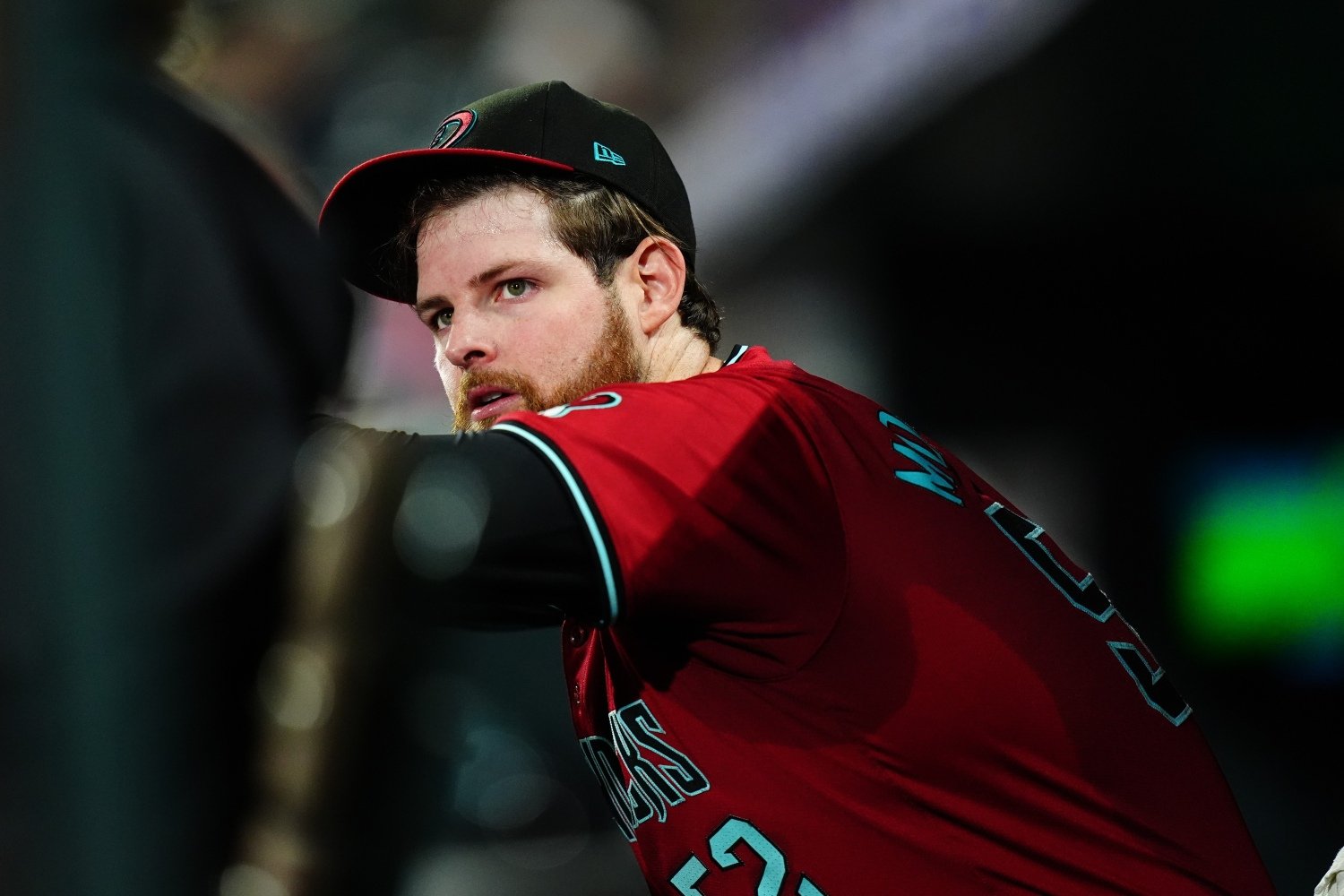 The modern baseball analytosphere demands that we have a good damn explanation for why any player who was bad in Year X should be any good in Year X+1. We have all kinds of numbers, all kinds of angles, all kinds of ways to see and to say whether or not a player was good in a given season, and if they weren't, then we expect there to be a concrete, performance-centric, highly data-fied reason why we should believe they'll turn things around. If there isn't one, any argument in support of that player will be met with skepticism—if not outright disdain. Well, admittedly, I don't have an ideal analytics-based argument for the possibility that Jordan Montgomery will turn things around after his woeful 2024. There are some such arguments, and I'll briefly deliver them, but I want to start by putting my best case forward, and I don't think the best case for a Montgomery rebound is rooted in the numbers. I also don't think the truth of his terrible campaign with Arizona last year lives in them. Scott Boras laid an egg when it came to Montgomery's free agency. He was a highly sought-after free agent last winter, but Boras priced his client out of the range of interested teams, until freezer burn overtook him so badly that he ended up signing a highly dissatisfactory deal on Opening Day. The season was a disaster, and it included several discouraging trends. Montgomery lost about 1.5 miles per hour on both of his fastballs, on average—some of which can be put down to his overlong free agency interfering with any organic ramp-up for the regular season. The Diamondbacks also asked Montgomery to make some changes that were ill-suited to his unique skill set and approach, including swapping his cutter for a slider; leaning more on his four-seamer and less on his sinker; and locating differently. As a result, Montgomery lost the strike zone somewhat, especially because he doesn't throw strikes with his four-seamer as reliably as with the sinker. Using the former more and the latter less was an error, in his case, and while it could theoretically have worked and then-pitching coach Brent Strom has a track record of success with that pitch as the backbone of pitchers' arsenals, there was neither the time nor the trust between player and organization that usually comes when someone signs as a high-profile free agent. They didn't get a spring training together, and Montgomery was never happy enough in his place there to be especially open to whatever good suggestions the team did make. Montgomery was genuinely bad in 2024, and there's no one reason to believe he'll be better in 2025, other than the simple, human, psychological one: as long as he's traded sometime this month and can get acclimated to the idea of a new team, then enjoy a normal spring training, he should enter the season as a much, much more prepared, mentally healthy pitcher. Last winter, I thought he was a marvelous fit for the Cubs, and I still think he will be. I think he'll bounce back resoundingly from the frustration and disappointment of 2024. I wouldn't be surprised if he gets that tick on the fastball back and goes right back to being the southpaw workhorse, playoff hero, and mid-rotation fixture he was when he hit the market last year. Plenty of teams would have given him a six-figure deal, if his agent hadn't demanded such a gaudy one until the last possible moment (and beyond). Now, though, Montgomery is available on a one-year deal, which the Diamondbacks would have to subsidize in order to move him. That could mean eating some of the money he's owed, or it could mean sending along a prospect to clear as much cash as possible. Either way, the Cubs would benefit by acquiring him not only because I think he'll bounce back, but because they would have such leverage in a negotiation with Diamondbacks head honcho Mike Hazen. Do the Cubs desperately need Montgomery? No. But he's the type of player who, because of the circumstances of this offseason, should cost far less to acquire than he's really worth, and he'd give the rotation the upside it's lacking right now—along with a healthy dose of stability. Landing him would also free up one or two of the Cubs' young pitchers to be dealt for a high-end trade asset, should that opportunity arise. Many teams and pundits are feeling smug about Montgomery after last season, because they feel vindicated for not having believed in him. I think that's exactly the wrong conclusion. Montgomery wasn't stranded on the market because he was secretly bad, in some way that didn't show up while he was racking up 360 innings pitched over the previous two years and dominating in the playoffs as the Rangers made a run to the World Series. He was bad in 2024 because he'd been so disruptively stranded on the market. As such, he's a good buy-low opportunity at this moment, and if the Cubs have grand plans for 2025, they should prepare themselves to pounce.
 -
If ever a player needed a change of scenery, and if ever there was a time to ignore the ugly numbers, this might be it. Image courtesy of © Ron Chenoy-Imagn Images The modern baseball analytosphere demands that we have a good damn explanation for why any player who was bad in Year X should be any good in Year X+1. We have all kinds of numbers, all kinds of angles, all kinds of ways to see and to say whether or not a player was good in a given season, and if they weren't, then we expect there to be a concrete, performance-centric, highly data-fied reason why we should believe they'll turn things around. If there isn't one, any argument in support of that player will be met with skepticism—if not outright disdain. Well, admittedly, I don't have an ideal analytics-based argument for the possibility that Jordan Montgomery will turn things around after his woeful 2024. There are some such arguments, and I'll briefly deliver them, but I want to start by putting my best case forward, and I don't think the best case for a Montgomery rebound is rooted in the numbers. I also don't think the truth of his terrible campaign with Arizona last year lives in them. Scott Boras laid an egg when it came to Montgomery's free agency. He was a highly sought-after free agent last winter, but Boras priced his client out of the range of interested teams, until freezer burn overtook him so badly that he ended up signing a highly dissatisfactory deal on Opening Day. The season was a disaster, and it included several discouraging trends. Montgomery lost about 1.5 miles per hour on both of his fastballs, on average—some of which can be put down to his overlong free agency interfering with any organic ramp-up for the regular season. The Diamondbacks also asked Montgomery to make some changes that were ill-suited to his unique skill set and approach, including swapping his cutter for a slider; leaning more on his four-seamer and less on his sinker; and locating differently. As a result, Montgomery lost the strike zone somewhat, especially because he doesn't throw strikes with his four-seamer as reliably as with the sinker. Using the former more and the latter less was an error, in his case, and while it could theoretically have worked and then-pitching coach Brent Strom has a track record of success with that pitch as the backbone of pitchers' arsenals, there was neither the time nor the trust between player and organization that usually comes when someone signs as a high-profile free agent. They didn't get a spring training together, and Montgomery was never happy enough in his place there to be especially open to whatever good suggestions the team did make. Montgomery was genuinely bad in 2024, and there's no one reason to believe he'll be better in 2025, other than the simple, human, psychological one: as long as he's traded sometime this month and can get acclimated to the idea of a new team, then enjoy a normal spring training, he should enter the season as a much, much more prepared, mentally healthy pitcher. Last winter, I thought he was a marvelous fit for the Cubs, and I still think he will be. I think he'll bounce back resoundingly from the frustration and disappointment of 2024. I wouldn't be surprised if he gets that tick on the fastball back and goes right back to being the southpaw workhorse, playoff hero, and mid-rotation fixture he was when he hit the market last year. Plenty of teams would have given him a six-figure deal, if his agent hadn't demanded such a gaudy one until the last possible moment (and beyond). Now, though, Montgomery is available on a one-year deal, which the Diamondbacks would have to subsidize in order to move him. That could mean eating some of the money he's owed, or it could mean sending along a prospect to clear as much cash as possible. Either way, the Cubs would benefit by acquiring him not only because I think he'll bounce back, but because they would have such leverage in a negotiation with Diamondbacks head honcho Mike Hazen. Do the Cubs desperately need Montgomery? No. But he's the type of player who, because of the circumstances of this offseason, should cost far less to acquire than he's really worth, and he'd give the rotation the upside it's lacking right now—along with a healthy dose of stability. Landing him would also free up one or two of the Cubs' young pitchers to be dealt for a high-end trade asset, should that opportunity arise. Many teams and pundits are feeling smug about Montgomery after last season, because they feel vindicated for not having believed in him. I think that's exactly the wrong conclusion. Montgomery wasn't stranded on the market because he was secretly bad, in some way that didn't show up while he was racking up 360 innings pitched over the previous two years and dominating in the playoffs as the Rangers made a run to the World Series. He was bad in 2024 because he'd been so disruptively stranded on the market. As such, he's a good buy-low opportunity at this moment, and if the Cubs have grand plans for 2025, they should prepare themselves to pounce. View full article
-
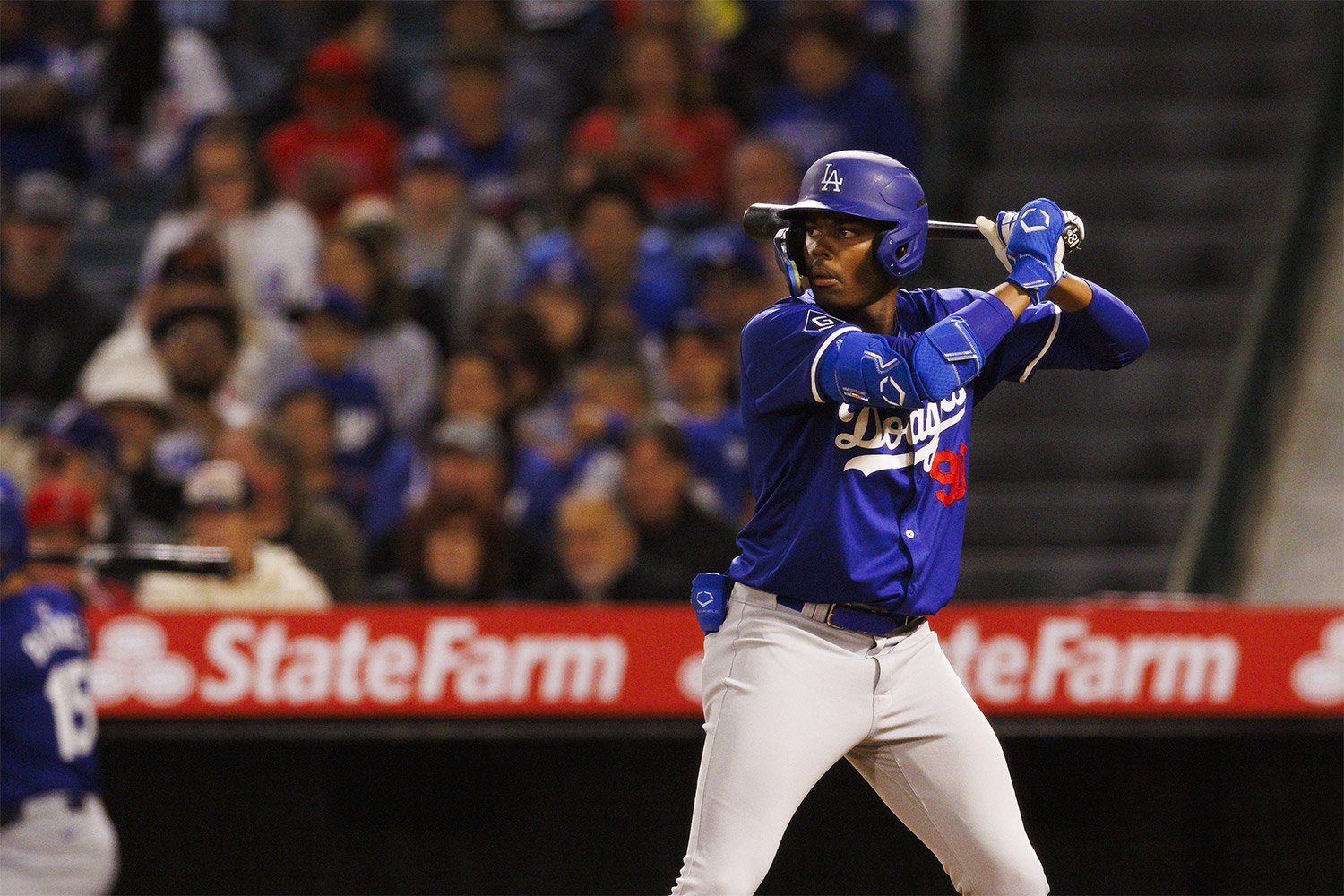 This has to go on your radar. Just don't get your hopes up too high. On the eve of the opening of the 2025 international amateur free agency period, FanGraphs lead prospect writer Eric Longenhagen shared during a radio interview that he heard a tantalizing rumor: the Dodgers might have a deal lined up to send top outfield prospect Josue De Paula to an unidentified team, in exchange for $3 million in spending power in the IFA market. That, of course, would be a major move. In Baseball Prospectus's Top 101 Prospects list released earlier this week, De Paula ranked 9th, right behind fellow Dodgers outfielder (and ex-Cubs draftee) Zyhir Hope. The two are different in profile, but similar in upside, with De Paula having less actualized power right now but (perhaps) an even higher ceiling than Hope. He's a tall, lanky, athletic outfielder with a pretty left-handed swing, and though he won't even turn 20 until late May, he's likely to start the season in High A. He could very well be in Double A for the second half of this year and knocking on the door of the majors by the start of 2026. This is noteworthy for Cubs fans, because if it turns out to be true (and if they were that mystery team), it could explain why they have yet to execute the deals to which they had agreed with several high-ranking members of this international free-agent class, as most other teams have done since it became kosher to do so Wednesday morning. The Cubs' bonus pool (roughly $6.3 million) is just large enough to allow them to trade $3 million to Los Angeles, if they so choose; you're not allowed to trade more than half your pool. The motivation for the move, of course, would be to allow the Dodgers to give more money to Roki Sasaki, and they would only want to do it if they win the bidding for Sasaki. As such, if this wild rumor is true, we won't hear more about it until Sasaki signs, and then only if he signs with LA. This bears watching, though, because De Paula is (obviously) a far better prospect than anyone the Cubs could sign with those dollars, and would immediately become the team's top prospect. Adding him (at a level of the farm at which they don't have as much quality depth) would also make it a bit easier for the team to part with one or more of their prospects much closer to the majors, in a separate deal to bolster their big-league roster.
 -
This has to go on your radar. Just don't get your hopes up too high. On the eve of the opening of the 2025 international amateur free agency period, FanGraphs lead prospect writer Eric Longenhagen shared during a radio interview that he heard a tantalizing rumor: the Dodgers might have a deal lined up to send top outfield prospect Josue De Paula to an unidentified team, in exchange for $3 million in spending power in the IFA market. That, of course, would be a major move. In Baseball Prospectus's Top 101 Prospects list released earlier this week, De Paula ranked 9th, right behind fellow Dodgers outfielder (and ex-Cubs draftee) Zyhir Hope. The two are different in profile, but similar in upside, with De Paula having less actualized power right now but (perhaps) an even higher ceiling than Hope. He's a tall, lanky, athletic outfielder with a pretty left-handed swing, and though he won't even turn 20 until late May, he's likely to start the season in High A. He could very well be in Double A for the second half of this year and knocking on the door of the majors by the start of 2026. This is noteworthy for Cubs fans, because if it turns out to be true (and if they were that mystery team), it could explain why they have yet to execute the deals to which they had agreed with several high-ranking members of this international free-agent class, as most other teams have done since it became kosher to do so Wednesday morning. The Cubs' bonus pool (roughly $6.3 million) is just large enough to allow them to trade $3 million to Los Angeles, if they so choose; you're not allowed to trade more than half your pool. The motivation for the move, of course, would be to allow the Dodgers to give more money to Roki Sasaki, and they would only want to do it if they win the bidding for Sasaki. As such, if this wild rumor is true, we won't hear more about it until Sasaki signs, and then only if he signs with LA. This bears watching, though, because De Paula is (obviously) a far better prospect than anyone the Cubs could sign with those dollars, and would immediately become the team's top prospect. Adding him (at a level of the farm at which they don't have as much quality depth) would also make it a bit easier for the team to part with one or more of their prospects much closer to the majors, in a separate deal to bolster their big-league roster. View full rumor
-
The bread crumbs are piling up on the path. We're right on top of the truth here. Image courtesy of © Darren Yamashita-Imagn Images Cubs pitching coach Tommy Hottovy appeared on the Mully and Haugh Show on 670 The Score Wednesday morning, and when the hosts asked him about who he thought might close for the team in 2025, he laughed. "I love that we're at January 15th, and it's like, 'Who's the closer?'" Hottovy said. He did then hem and haw a bit, but he finally landed on his real sentiments here: "I think if we sat here today and said our team is a finished product, we'd be doing us and everybody else a disservice. We're still very active in trying to raise our floor, especially in the bullpen." In other words, whatever fatalism you've encountered about the team standing pat and leaving their roster underpowered for the fight to reclaim the NL Central, don't give into it. Hottovy did go on to praise Porter Hodge and the job he did late in 2024, but if the team were even half-seriously considering having Hodge be their relief ace this season, that would have been at the top of Hottovy's mind when asked the question. It was, instead, an afterthought. Hottovy confidently expects the team to add a significant back-end reliever, and while he talked explicitly about the floor for the pen, the move he's hinting at would do just as much for their ceiling. Jed Hoyer did a sit-down interview with David Kaplan and Gordon Wittenmyer Wednesday, too, and when asked about their remaining designs for the offseason, he explicitly said both that the team is "not done," and that their focus is primarily on the bullpen and the bench. He mentioned being active in both the trade market and free agency, but in a sharp contrast with his remarks earlier this winter, he leaned toward the latter in his tone and his answers. Put those puzzle pieces together, and the picture you'll end up with is clear: the Cubs expect to sign one of the big remaining free-agent relievers, with Tanner Scott, Kirby Yates and Kyle Finnegan as the most obvious candidates. We've written at length about each of those hurlers, so for more details, click here, here, here, or here. In short, though, any of those three could be very strong closers, and the only real drawback to any of them is that they're likely to come with a substantial price tag. That's not as great a drawback for the Cubs as it might be for others, though, because they have money to spend and relatively few other good ways to use it. The Cubs don't believe their closer for the coming season is currently in their organization. It's hard to read that as anything but good news. If it does turn out to be a trade that fills that need, there are good players who could fit, too—guys like San Diego's Robert Suarez (more on that possibility here), Minnesota's Jhoan Durán, or Tampa's Pete Fairbanks. In the fact that they still intend to upgrade the top of their pitching depth chart, we can see evidence that they understand they sold themselves short in previous seasons. When building the team for 2023 and 2024, they didn't invest enough in contingency plans, on either side of the roster sheet. Hoyer sounds resolute about doing better this time. He promised to take a different approach to building the pen at his end-of-season press conference, and he's one relief ace from delivering on that promise. Already having added Eli Morgan and Caleb Thielbar to the big-league mix and snagging some promising non-roster invitees, he's created better depth in the relief and starting units. A closer would make good on all that work. Finally, we should attend to the fact that Hoyer sounded equally committed to improving his bench, rather than having any of their top prospects cast in bench roles in Chicago. That points in the same direction as the desire to add a closer—toward an understanding that they have to construct a deeper roster than they have in the past. It's worth watching over the next several days, because it's unlikely that this process will drag out as much as the team's courtship of Cody Bellinger last winter. In the next fortnight, we should expect to see the team add two key pieces to round out a contending roster for the coming season. View full article
-
 Cubs pitching coach Tommy Hottovy appeared on the Mully and Haugh Show on 670 The Score Wednesday morning, and when the hosts asked him about who he thought might close for the team in 2025, he laughed. "I love that we're at January 15th, and it's like, 'Who's the closer?'" Hottovy said. He did then hem and haw a bit, but he finally landed on his real sentiments here: "I think if we sat here today and said our team is a finished product, we'd be doing us and everybody else a disservice. We're still very active in trying to raise our floor, especially in the bullpen." In other words, whatever fatalism you've encountered about the team standing pat and leaving their roster underpowered for the fight to reclaim the NL Central, don't give into it. Hottovy did go on to praise Porter Hodge and the job he did late in 2024, but if the team were even half-seriously considering having Hodge be their relief ace this season, that would have been at the top of Hottovy's mind when asked the question. It was, instead, an afterthought. Hottovy confidently expects the team to add a significant back-end reliever, and while he talked explicitly about the floor for the pen, the move he's hinting at would do just as much for their ceiling. Jed Hoyer did a sit-down interview with David Kaplan and Gordon Wittenmyer Wednesday, too, and when asked about their remaining designs for the offseason, he explicitly said both that the team is "not done," and that their focus is primarily on the bullpen and the bench. He mentioned being active in both the trade market and free agency, but in a sharp contrast with his remarks earlier this winter, he leaned toward the latter in his tone and his answers. Put those puzzle pieces together, and the picture you'll end up with is clear: the Cubs expect to sign one of the big remaining free-agent relievers, with Tanner Scott, Kirby Yates and Kyle Finnegan as the most obvious candidates. We've written at length about each of those hurlers, so for more details, click here, here, here, or here. In short, though, any of those three could be very strong closers, and the only real drawback to any of them is that they're likely to come with a substantial price tag. That's not as great a drawback for the Cubs as it might be for others, though, because they have money to spend and relatively few other good ways to use it. The Cubs don't believe their closer for the coming season is currently in their organization. It's hard to read that as anything but good news. If it does turn out to be a trade that fills that need, there are good players who could fit, too—guys like San Diego's Robert Suarez (more on that possibility here), Minnesota's Jhoan Durán, or Tampa's Pete Fairbanks. In the fact that they still intend to upgrade the top of their pitching depth chart, we can see evidence that they understand they sold themselves short in previous seasons. When building the team for 2023 and 2024, they didn't invest enough in contingency plans, on either side of the roster sheet. Hoyer sounds resolute about doing better this time. He promised to take a different approach to building the pen at his end-of-season press conference, and he's one relief ace from delivering on that promise. Already having added Eli Morgan and Caleb Thielbar to the big-league mix and snagging some promising non-roster invitees, he's created better depth in the relief and starting units. A closer would make good on all that work. Finally, we should attend to the fact that Hoyer sounded equally committed to improving his bench, rather than having any of their top prospects cast in bench roles in Chicago. That points in the same direction as the desire to add a closer—toward an understanding that they have to construct a deeper roster than they have in the past. It's worth watching over the next several days, because it's unlikely that this process will drag out as much as the team's courtship of Cody Bellinger last winter. In the next fortnight, we should expect to see the team add two key pieces to round out a contending roster for the coming season.
 -
Is he as sexy as a two-time All-Star with 25-homer power? No. But he's probably a much better fit. Image courtesy of © Brad Penner-Imagn Images In a perfect world, the Cubs would sign Alex Bregman this month, as he accepts the reality that no long-term deal is forthcoming and becomes more open to a short-term one with player options attached. They'd create a few small problems for themselves, like giving up draft capital and international free-agent bonus allotments (plus needing to move another player's salary, to keep space open for further pitching investments), but that would be a fun way to finish off a promising but not yet thrilling overall offseason. Alas, this is no perfect world, and it's still more likely that Bregman lands with one of the powerhouses out east—the Mets, the Red Sox, or the Yankees, all of whom could (in various ways) fit him into their roster with one or two fewer hiccups. Meanwhile, with the money they do have left to spend, the Cubs seem more focused on bolstering their pitching staff, and with good reason. Who, then, would be the right fit on a much lower-dollar free-agent deal, to give the team the depth and versatility they still need on the bench? I'll give you a hint: Like Bregman, he owns two World Series rings. Enrique Hernández isn't an especially good player anymore. That's ok. He's also not a bad player; his utility depends more on the needs of the team who signs him than anything else. If you need a starter, or a player with dynamism and upside, Hernández is not a good fit. If, however, you need an absolute gem of a teammate who can also play plus defense at multiple positions, moonlight at even the toughest places on the diamond, and hit just a little when the lights get bright, then he's perfect. He'll turn 34 this August, and since the start of 2022, he's batted just .230/.287/.356, making him something like 20 percent worse than an average hitter. He used to be more patient and have more power, but those skills have faded. He does make contact at a solid rate, but hot streaks and grind-it-out at-bats are getting rare for him. When called upon, though, Hernández plays his very best defense at third base, where he might be most useful to the 2025 Cubs. He can still get by in center field or at shortstop, on a short-term basis, and he's solid at second base or in either outfield corner. Plus, when October comes, he lights up like a jack-o'-lantern. He has a career .874 postseason OPS, and that hasn't fallen off even as his overall performance has declined. Beloved with the Dodgers, Hernández left for a bit as a free agent, but has been back there the last year and a half, and it was widely assumed he'd like to return there again this winter. Now, though, they've added Hyeseong Kim to their infield, committed to playing Mookie Betts there, and still have Miguel Rojas, Tommy Edman, Teoscar Hernández, Michael Conforto and Andy Pages. There's no obvious place for Hernández on their projected roster; he might have to seek a new home again. The Cubs would be a perfect fit. They're an upstart team with a good mix of veterans with whom Hernández figures to have much in common and younger players on whom he might be a positive influence. They need someone who can step in if catastrophe strikes, in the form of Matt Shaw being unable to make the major adjustments left before him fast enough to succeed in MLB as a rookie, and a backup center fielder for Pete Crow-Armstrong. Hernández also brings a little bit of something else the team currently seems to lack: a good-natured red-ass intensity, coupled with some earned swagger. It's becoming a tiresome refrain, I know, but the Cubs still have a lot of options for finishing off their winter shopping well enough to enter the season as heavy favorites in the NL Central and viable competitors with at least some of the NL's Big Five. They have to spend some money or some young talent to add top-tier talent to their pitching staff, but when it comes to the position players, they can afford to prioritize fit, cost, and intangibles, unless a better opportunity presents itself. The lingering possibility that Bregman might fall into their laps has slowed the front office's move toward any commitment to that 10th regular or first bench role, but if he goes elsewhere, Hernández should get the team's first call. View full article
-
 In a perfect world, the Cubs would sign Alex Bregman this month, as he accepts the reality that no long-term deal is forthcoming and becomes more open to a short-term one with player options attached. They'd create a few small problems for themselves, like giving up draft capital and international free-agent bonus allotments (plus needing to move another player's salary, to keep space open for further pitching investments), but that would be a fun way to finish off a promising but not yet thrilling overall offseason. Alas, this is no perfect world, and it's still more likely that Bregman lands with one of the powerhouses out east—the Mets, the Red Sox, or the Yankees, all of whom could (in various ways) fit him into their roster with one or two fewer hiccups. Meanwhile, with the money they do have left to spend, the Cubs seem more focused on bolstering their pitching staff, and with good reason. Who, then, would be the right fit on a much lower-dollar free-agent deal, to give the team the depth and versatility they still need on the bench? I'll give you a hint: Like Bregman, he owns two World Series rings. Enrique Hernández isn't an especially good player anymore. That's ok. He's also not a bad player; his utility depends more on the needs of the team who signs him than anything else. If you need a starter, or a player with dynamism and upside, Hernández is not a good fit. If, however, you need an absolute gem of a teammate who can also play plus defense at multiple positions, moonlight at even the toughest places on the diamond, and hit just a little when the lights get bright, then he's perfect. He'll turn 34 this August, and since the start of 2022, he's batted just .230/.287/.356, making him something like 20 percent worse than an average hitter. He used to be more patient and have more power, but those skills have faded. He does make contact at a solid rate, but hot streaks and grind-it-out at-bats are getting rare for him. When called upon, though, Hernández plays his very best defense at third base, where he might be most useful to the 2025 Cubs. He can still get by in center field or at shortstop, on a short-term basis, and he's solid at second base or in either outfield corner. Plus, when October comes, he lights up like a jack-o'-lantern. He has a career .874 postseason OPS, and that hasn't fallen off even as his overall performance has declined. Beloved with the Dodgers, Hernández left for a bit as a free agent, but has been back there the last year and a half, and it was widely assumed he'd like to return there again this winter. Now, though, they've added Hyeseong Kim to their infield, committed to playing Mookie Betts there, and still have Miguel Rojas, Tommy Edman, Teoscar Hernández, Michael Conforto and Andy Pages. There's no obvious place for Hernández on their projected roster; he might have to seek a new home again. The Cubs would be a perfect fit. They're an upstart team with a good mix of veterans with whom Hernández figures to have much in common and younger players on whom he might be a positive influence. They need someone who can step in if catastrophe strikes, in the form of Matt Shaw being unable to make the major adjustments left before him fast enough to succeed in MLB as a rookie, and a backup center fielder for Pete Crow-Armstrong. Hernández also brings a little bit of something else the team currently seems to lack: a good-natured red-ass intensity, coupled with some earned swagger. It's becoming a tiresome refrain, I know, but the Cubs still have a lot of options for finishing off their winter shopping well enough to enter the season as heavy favorites in the NL Central and viable competitors with at least some of the NL's Big Five. They have to spend some money or some young talent to add top-tier talent to their pitching staff, but when it comes to the position players, they can afford to prioritize fit, cost, and intangibles, unless a better opportunity presents itself. The lingering possibility that Bregman might fall into their laps has slowed the front office's move toward any commitment to that 10th regular or first bench role, but if he goes elsewhere, Hernández should get the team's first call.
 -
After the Cubs hired Tread Athletic's Tyler Zombro as a pitching guru early this offseason, you had to figure they would take special interest in some of the clients of that development facility this winter. Tread is a competitor to Driveline, more or less—a place pitchers can go to revive and reinvent their careers, and Zombro played a prominent role in that endeavor before joining the Cubs front office. Sure enough, after Tread held a public Pro Day to showcase some of their pro-caliber clients, the Cubs were one of the first teams to snap up a promising arm. This kind of deal will absolutely be a minor-league one, and probably not even with an initial invite to big-league spring training. Goldmann's progress and the arsenal described above are awfully impressive, though, so he'll be a project worth monitoring as he tries to find a foothold in pro ball with the Cubs in 2025. Zombro was hired for the expertise he can directly provide, but if the organization also becomes a bit more appealing to some Tread alumni in the short term, so much the better. View full rumor
-
After the Cubs hired Tread Athletic's Tyler Zombro as a pitching guru early this offseason, you had to figure they would take special interest in some of the clients of that development facility this winter. Tread is a competitor to Driveline, more or less—a place pitchers can go to revive and reinvent their careers, and Zombro played a prominent role in that endeavor before joining the Cubs front office. Sure enough, after Tread held a public Pro Day to showcase some of their pro-caliber clients, the Cubs were one of the first teams to snap up a promising arm. This kind of deal will absolutely be a minor-league one, and probably not even with an initial invite to big-league spring training. Goldmann's progress and the arsenal described above are awfully impressive, though, so he'll be a project worth monitoring as he tries to find a foothold in pro ball with the Cubs in 2025. Zombro was hired for the expertise he can directly provide, but if the organization also becomes a bit more appealing to some Tread alumni in the short term, so much the better.
-
The potency of the 2025 Chicago Cubs' lineup hinges quite a bit on the power production they're hoping to get from their new right fielder. Can they actually count on it? Image courtesy of © Troy Taormina-Imagn Images Kyle Tucker was a very, very good hitter even before 2024. From 2021-23, he emerged as a superstar, with a .278/.353/.517 batting line and an average of 30 home runs per season. If he had merely reproduced those numbers last year, he would still have been a perfect target for the Cubs when the Astros decided to trade Tucker before he hits free agency. Instead, though, he went a little crazy—albeit in just half a season. In a campaign truncated by a broken shin, Tucker hit .289/.408/.585. He swatted 23 home runs in 78 games, putting him on pace for well over 40. It was a power breakout that, in one sense, makes a lot of sense; plenty of very good hitters have become truly great sometime around age 27. That the forward leap would come in the form of a power surge was only natural. Was that newfound pop sustainable, though? That's the only relevant question now, as the Cubs turn their attention toward 2025. If Tucker becomes the first left-handed batter to hit 40 homers while calling Wrigley Field home since Billy Williams did it in 1970, the Cubs are going places. If he hits 25 in a full season, the picture is a lot muddier. The first thing you might want to know, if you're trying to forecast Tucker's power output, is this: only free agents Anthony Santander and Enrique Hernández had a bigger difference between their raw home run total and their xHR (expected homers, based on the balls they hit that had any chance of becoming a homer, anywhere) than Tucker's. He hit 23 homers, sure, but he only had 16.7 xHR. I'm highly skeptical of data like these, but there's a threshold beyond which they become compelling, and Tucker is beyond that threshold. He missed half the season, but he pointedly did not miss the Mexico City Series between Houston and the Rockies, when the extreme elevation of that venue turned two well-struck but lazy fly balls Tucker hit into long homers. As you know, he also played in a very hitter-friendly home park, which I'll call continue to call The Juice Box until we can all agree on a non-corporate name for it, and that helped him further outperform his expected slugging production. However, you might also want to know this: According to Statcast, this batted ball would have left just one park in MLB, but that park is Wrigley Field. R1pSUG9fV0ZRVkV3dEdEUT09X0RnRlhCUUFDQkFzQVdRUlVWZ0FBQVZSZkFBTlJXbElBQ2xWWFV3UldBZ1pYQkFGUw==.mp4 And you might also care to know that the same is true of this fly ball. MVlEZDlfWGw0TUFRPT1fQjFkVlVsWldVRk1BV2xRRUJ3QUFWQU5VQUFOUVd3UUFVVk5YQlFVR0F3b0dVUU5m.mp4 This one would have left a whopping two parks: Wrigley and Shea-Under-the-Airport in New York (I'm not using corporate names for stadia today; not sure why). WGczVjNfWGw0TUFRPT1fQkZjRUFWVlZBZ3NBREFkWFVBQUFDRlVEQUZnQUJsY0FCRklHVmxaVUFWVlNWZ1pY.mp4 This one would have left both in Lakeview and in Chavez Ravine, but nowhere else. b25lS1dfWGw0TUFRPT1fVlZOU0JnVUZWUUlBWEZGUlZBQUFVbFFFQUFOUldsY0FDbE5YQ1ZZQ0J3dFZWZ0VG.mp4 Now, again, I'm a skeptic about these claims by Statcast, and I invite you to share in that skepticism. Their estimates of whether the ball would leave the park claim to incorporate the trajectory of the ball, but the other factors they name are the distance it traveled, the distance to the walls of all 30 parks to that specific angle, and the heights of those walls. I believe the last three, but am slightly dubious of the claim that trajectory is fully accounted for—and they don't even pretend to account for the weather or the exit velocity of the ball or the tendencies of the ball to carry well or poorly to various parts of the field in various venues. So, would all of these really have landed in the basket in left-center? I'm not sure. It probably depends on the weather, and we just saw a whole year of unfriendly weather for hitters at Wrigley. On the other hand, though Statcast doesn't think this ball would have left any stadium in the league, I think it probably leaves Wrigley. TndlNGtfWGw0TUFRPT1fQndNQUFsUU1BZ0FBQ2dFS1ZnQUFVQVJRQUZsWFYxUUFCd01GVkFBTkNRY0JCQUJU.mp4 You get the point. Tucker might have gotten lucky and found some power down the lines last year that he won't find when playing at home in 2025, but only half the games are at home; the other NL Central parks (especially Milwaukee and Cincinnati) seem very inviting for his power; and he has an abundance of power to left-center field, the very place where Wrigley is most hitter-friendly. In this admittedly flawed analysis, there's room for both optimism and pessimism about his dinger count for the coming year. Let's do some more robust analysis, though. Where, exactly, did Tucker find his power increase in 2024? If it was a conscious change of approach, maybe we can infer that it has some staying power. If (on the other hand) it was just a matter of getting a bit lucky and hitting in conducive environments, we should prepare for heavy regression as he joins the Cubs. Here's a pair of charts showing Tucker's average exit velocities and launch angles by pitch location for 2023. This is about what you'd expect to see. Tucker hit the ball hard when it was down the middle, and when it was either up and away or low and in. Most lefty batters' charts for exit velocity look like that. Most hitters, too, lift the ball when it's high in the zone and when it's inside, but tend to hit grounders more often on pitches low and/or away, which shows up in the average launch angle for each spot. This is a snapshot of a very good hitter with a standard-issue contact profile, based on location. Here's the same pair of charts for 2024. Aha! There's been a major change here. Tucker dedicated himself much more to lifting the ball in 2024, and in particular, look how hard he hit pitches low and in (and how successfully he lifted them). That's not normal, and it requires a conscious adjustment. Taking pitches in the lower inside corner of the zone and those outside the zone down and in as one big group, you can see a huge change in Tucker's contact profile in 2024. This approach was only undertaken for one half-season, disrupted by an injury suffered when Tucker fouled a ball hard off his own leg—a vicious swing on a misplaced Kyle Gibson cutter, down and in. He might not stick to that approach in 2025, out of self-preservation or because it wouldn't have stuck, anyway. If it does, though, then there's a full-fledged slugger here, with that very real 40-homer upside. Tucker has another level, above the one we've seen to date (at least over a full season), and Wrigley Field might help him attain it. View full article
-
 Kyle Tucker was a very, very good hitter even before 2024. From 2021-23, he emerged as a superstar, with a .278/.353/.517 batting line and an average of 30 home runs per season. If he had merely reproduced those numbers last year, he would still have been a perfect target for the Cubs when the Astros decided to trade Tucker before he hits free agency. Instead, though, he went a little crazy—albeit in just half a season. In a campaign truncated by a broken shin, Tucker hit .289/.408/.585. He swatted 23 home runs in 78 games, putting him on pace for well over 40. It was a power breakout that, in one sense, makes a lot of sense; plenty of very good hitters have become truly great sometime around age 27. That the forward leap would come in the form of a power surge was only natural. Was that newfound pop sustainable, though? That's the only relevant question now, as the Cubs turn their attention toward 2025. If Tucker becomes the first left-handed batter to hit 40 homers while calling Wrigley Field home since Billy Williams did it in 1970, the Cubs are going places. If he hits 25 in a full season, the picture is a lot muddier. The first thing you might want to know, if you're trying to forecast Tucker's power output, is this: only free agents Anthony Santander and Enrique Hernández had a bigger difference between their raw home run total and their xHR (expected homers, based on the balls they hit that had any chance of becoming a homer, anywhere) than Tucker's. He hit 23 homers, sure, but he only had 16.7 xHR. I'm highly skeptical of data like these, but there's a threshold beyond which they become compelling, and Tucker is beyond that threshold. He missed half the season, but he pointedly did not miss the Mexico City Series between Houston and the Rockies, when the extreme elevation of that venue turned two well-struck but lazy fly balls Tucker hit into long homers. As you know, he also played in a very hitter-friendly home park, which I'll call continue to call The Juice Box until we can all agree on a non-corporate name for it, and that helped him further outperform his expected slugging production. However, you might also want to know this: According to Statcast, this batted ball would have left just one park in MLB, but that park is Wrigley Field. R1pSUG9fV0ZRVkV3dEdEUT09X0RnRlhCUUFDQkFzQVdRUlVWZ0FBQVZSZkFBTlJXbElBQ2xWWFV3UldBZ1pYQkFGUw==.mp4 And you might also care to know that the same is true of this fly ball. MVlEZDlfWGw0TUFRPT1fQjFkVlVsWldVRk1BV2xRRUJ3QUFWQU5VQUFOUVd3UUFVVk5YQlFVR0F3b0dVUU5m.mp4 This one would have left a whopping two parks: Wrigley and Shea-Under-the-Airport in New York (I'm not using corporate names for stadia today; not sure why). WGczVjNfWGw0TUFRPT1fQkZjRUFWVlZBZ3NBREFkWFVBQUFDRlVEQUZnQUJsY0FCRklHVmxaVUFWVlNWZ1pY.mp4 This one would have left both in Lakeview and in Chavez Ravine, but nowhere else. b25lS1dfWGw0TUFRPT1fVlZOU0JnVUZWUUlBWEZGUlZBQUFVbFFFQUFOUldsY0FDbE5YQ1ZZQ0J3dFZWZ0VG.mp4 Now, again, I'm a skeptic about these claims by Statcast, and I invite you to share in that skepticism. Their estimates of whether the ball would leave the park claim to incorporate the trajectory of the ball, but the other factors they name are the distance it traveled, the distance to the walls of all 30 parks to that specific angle, and the heights of those walls. I believe the last three, but am slightly dubious of the claim that trajectory is fully accounted for—and they don't even pretend to account for the weather or the exit velocity of the ball or the tendencies of the ball to carry well or poorly to various parts of the field in various venues. So, would all of these really have landed in the basket in left-center? I'm not sure. It probably depends on the weather, and we just saw a whole year of unfriendly weather for hitters at Wrigley. On the other hand, though Statcast doesn't think this ball would have left any stadium in the league, I think it probably leaves Wrigley. TndlNGtfWGw0TUFRPT1fQndNQUFsUU1BZ0FBQ2dFS1ZnQUFVQVJRQUZsWFYxUUFCd01GVkFBTkNRY0JCQUJU.mp4 You get the point. Tucker might have gotten lucky and found some power down the lines last year that he won't find when playing at home in 2025, but only half the games are at home; the other NL Central parks (especially Milwaukee and Cincinnati) seem very inviting for his power; and he has an abundance of power to left-center field, the very place where Wrigley is most hitter-friendly. In this admittedly flawed analysis, there's room for both optimism and pessimism about his dinger count for the coming year. Let's do some more robust analysis, though. Where, exactly, did Tucker find his power increase in 2024? If it was a conscious change of approach, maybe we can infer that it has some staying power. If (on the other hand) it was just a matter of getting a bit lucky and hitting in conducive environments, we should prepare for heavy regression as he joins the Cubs. Here's a pair of charts showing Tucker's average exit velocities and launch angles by pitch location for 2023. This is about what you'd expect to see. Tucker hit the ball hard when it was down the middle, and when it was either up and away or low and in. Most lefty batters' charts for exit velocity look like that. Most hitters, too, lift the ball when it's high in the zone and when it's inside, but tend to hit grounders more often on pitches low and/or away, which shows up in the average launch angle for each spot. This is a snapshot of a very good hitter with a standard-issue contact profile, based on location. Here's the same pair of charts for 2024. Aha! There's been a major change here. Tucker dedicated himself much more to lifting the ball in 2024, and in particular, look how hard he hit pitches low and in (and how successfully he lifted them). That's not normal, and it requires a conscious adjustment. Taking pitches in the lower inside corner of the zone and those outside the zone down and in as one big group, you can see a huge change in Tucker's contact profile in 2024. This approach was only undertaken for one half-season, disrupted by an injury suffered when Tucker fouled a ball hard off his own leg—a vicious swing on a misplaced Kyle Gibson cutter, down and in. He might not stick to that approach in 2025, out of self-preservation or because it wouldn't have stuck, anyway. If it does, though, then there's a full-fledged slugger here, with that very real 40-homer upside. Tucker has another level, above the one we've seen to date (at least over a full season), and Wrigley Field might help him attain it.
 -
ESPN published its Sunday Night Baseball schedule for the first third of the season on Wednesday, and the Cubs show up twice on the docket. They'll visit the Dodgers on Apr. 13, and then host the Phillies under the Wrigley Field lights on Apr. 27. The Mets and Dodgers will, unsurprisingly, show up four times in this early phase of the season, as ESPN chases the ratings delivered by the likes of Juan Soto and Shohei Ohtani. The Padres and Phillies are each listed three times already, and the Cubs join the Yankees and the team from Cobb County in Georgia as clubs who will appear twice in this first segment of the season. The matchup with the Phillies is especially juicy. Depending on how the first month goes, that could well be a matchup that testa the early success of an upstart Cubs team against a team with three straight playoff appearances, and one whom they might be battling for Wild Card position by the end of the season. While I don't have ESPN, I love when the Cubs are on Sunday nights, as it affords an opportunity to tune in either to Pat Hughes or to Boog Sciambi (who calls those Sunday night games on ESPN Radio) and not to feel pressured to watch on TV. Baseball is still good on the radio, but the modern environment often tells us we missed something if we merely listened to a game. Here are two instances where I'll have no choice; I look forward to them. View full rumor
-
ESPN published its Sunday Night Baseball schedule for the first third of the season on Wednesday, and the Cubs show up twice on the docket. They'll visit the Dodgers on Apr. 13, and then host the Phillies under the Wrigley Field lights on Apr. 27. The Mets and Dodgers will, unsurprisingly, show up four times in this early phase of the season, as ESPN chases the ratings delivered by the likes of Juan Soto and Shohei Ohtani. The Padres and Phillies are each listed three times already, and the Cubs join the Yankees and the team from Cobb County in Georgia as clubs who will appear twice in this first segment of the season. The matchup with the Phillies is especially juicy. Depending on how the first month goes, that could well be a matchup that testa the early success of an upstart Cubs team against a team with three straight playoff appearances, and one whom they might be battling for Wild Card position by the end of the season. While I don't have ESPN, I love when the Cubs are on Sunday nights, as it affords an opportunity to tune in either to Pat Hughes or to Boog Sciambi (who calls those Sunday night games on ESPN Radio) and not to feel pressured to watch on TV. Baseball is still good on the radio, but the modern environment often tells us we missed something if we merely listened to a game. Here are two instances where I'll have no choice; I look forward to them.
-
 It is, on one level, incredibly simple. Don't overthink this. One of these potential lineups is much better than the other. Current Lineup # Lineup w/ Bregman Ian Happ 1 Ian Happ Seiya Suzuki 2 Seiya Suzuki Kyle Tucker 3 Kyle Tucker Dansby Swanson 4 Alex Bregman Michael Busch 5 Michael Busch Nico Hoerner 6 Dansby Swanson Matt Shaw 7 Matt Shaw Pete Crow-Armstrong 8 Pete Crow-Armstrong Miguel Amaya 9 Miguel Amaya If the Cubs were to sign Alex Bregman to a short-term, high-dollar deal, they'd achieve the formidable top half of the lineup they've been chasing for years, and they'd still have youth, athleticism, and defense throughout the team. Whatever concerns some might have about his tough first half in 2024, Bregman remains one of the most balanced hitters in baseball, capable of controlling the strike zone as well as anyone while still producing average-plus power. Even a fully healthy and functional Nico Hoerner is not as good a player as Bregman, and we don't know to what extent we can expect to see the fully healthy and functional Hoerner in 2025. Notably, though, this move would mean getting rid of Hoerner, which is a complication in and of itself. We've already discussed at length where the Cubs stand financially and why they might need to be careful as they go about spending the rest of their budget, so you already know the drill: if they sign Bregman, they're likely to trade Hoerner to make financial room for him. That wouldn't be because they can't afford both players, but rather, because they still fully intend to upgrade their pitching staff, and they can't afford Bregman, Hoerner and that missing, high-end arm on the budget the Ricketts family has imposed upon them. Even that is a slight oversimplification. Because of the positional fit, trading Hoerner is the most immediately obvious option, but the Cubs do have enough pitching depth to consider trading Jameson Taillon instead, then replacing him with a higher-octane arm using the money they free up. That's a lot of moving parts in a system that doesn't demand the changes, though. What about the possibility of trading Seiya Suzuki, after all? I'm not necessarily advocating this. Suzuki is almost as good a hitter as Bregman, and losing him would diminish the team's lineup, even after adding Kyle Tucker and Bregman. It's theoretically viable, though, if they can find the right trade partner. Moving Suzuki would resolve whatever tension exists over the fact that he's penciled in as the DH this year, and it would let the team rotate Bregman, Ian Happ, Tucker, and others through that DH spot, maintaining fluidity and positional flexibility. Hoerner and his defensive and baserunning value could stick around, and they would have much more functional infield depth. The paths to eventual playing time for Kevin Alcántara, James Triantos, Moises Ballesteros or Owen Caissie would open. Trading Suzuki to make room for Bregman would be a risky move. I'm reasonably confident that it would mark an upgrade, though, because of the options it would open up for the team. A lot of things have to fall right to make it make sense—Bregman actually being interested in joining the Cubs, on a palatable deal; a good destination being found for Suzuki; a right-priced pitcher being available to spend the budget space created by the Suzuki trade on—but it might be the way the team balances their desire to make way for their top position-player prospects with their desire to be a very good or great team in 2025, rather than a merely good one.
.png.3569742a70fcc5a57401b4b85eb047e5.png)
