


Matthew Trueblood
-
Posts
2,479 -
Joined
-
Last visited
-
Days Won
2
Content Type
Profiles
Joomla Posts 1
Chicago Cubs Videos
Chicago Cubs Free Agent & Trade Rumors, Notes, & Tidbits
2026 Chicago Cubs Top Prospects Ranking
News
2023 Chicago Cubs Draft Picks
Guides & Resources
2024 Chicago Cubs Draft Picks
The Chicago Cubs Players Project
2025 Chicago Cubs Draft Pick Tracker
2026 Chicago Cubs Draft Tracker: Picks & Bonuses
Blogs
Events
Forums
Store
Gallery
Everything posted by Matthew Trueblood
-
The Cubs made their pitch to the best free agent left on the market, and were in with a chance. At the last second, though, a bid they were never going to match came in. Now, they face a new dilemma. Image courtesy of © Denny Medley-Imagn Images Alex Bregman agreed to a monstrous deal with the Boston Red Sox Wednesday night, giving him the ability to earn $120 million over three years or opt out following either of the first two years. The money is evenly spread across the deal, in terms of base salary, although there are significant deferrals involved. As I reported last week, the Cubs had a four-year deal on the table for Bregman, worth roughly the same total amount of money. That sounds like a loser of a bid, with a $30-million annual average value (AAV) against the winning Sox's $40 million per year. As will become clear when the details of the deferrals are brought to light, the gap was actually a good bit smaller than that, because in practice, the AAV of Boston's deal will be around $35 million, but that gap remains substantial—and it was never going to be bridged. Boston increased their offer significantly Wednesday, after a long staring match between Scott Boras and three potential suitors for Bregman. His client never intended to play for the Tigers, and Boras used the six-year, $171.5-million offer he eventually extracted from Tigers head honcho Scott Harris as leverage, but the Tigers didn't mind being allowed to hang around the bidding, and ultimately, Boras's gambit worked. The Red Sox went to an AAV level the Cubs were unwilling to match, and despite Chicago being willing to use a signing bonus to frontload their deal and forego deferrals, the appeal of a precedent-shifting deal like Boston's was too great to pass up. While the Cubs probably would have traded Nico Hoerner to ensure they stayed beneath the competitive-balance tax (CBT) threshold if they had landed Bregman, one source said they never wanted to put themselves in a position to need to make such a trade. They didn't mind making the Kyle Tucker trade, then pivoting to trading Cody Bellinger in December, but with more of the rest of the league's money spent and little time left in the offseason, they were not willing to put themselves in a position to be extorted by suitors for Hoerner—and they feel Hoerner is more important to the 2025 team than Bellinger ever would have been, anyway. Since the team currently has just over $31 million in space beneath the first CBT line, that mentality meant that they couldn't go beyond a $30-million AAV to lure Bregman. They went all the way to that figure, and were willing to structure the deal very creatively, but going up to or beyond $35 million—let alone to $40 million, even if that number is mostly for vanity—was never on the table. Thus, it's time for the team to swing its gaze one or two more times, in a winter in which they've already done so multiple times. With Ryan Pressly and Ryan Brasier in place to round out the bullpen, they don't have much more room for veteran reinforcement there, but the right trade to ease their roster crunch could open the door to redirecting money to David Robertson. Even before Bregman reached his decision, the team had been in contact with Justin Turner, who would meet their need for a right-handed bench bat to back up both first baseman Michael Busch and regular DH Seiya Suzuki. Interesting trade possibilities do remain, to be sure. The Padres made a big move of their own Wednesday evening, signing Nick Pivetta to a four-year deal worth $55 million. That contract is hilariously backloaded, making it clear that San Diego still has big cash-flow issues, but it's now equally clear that A.J. Preller is maintaining leverage in negotiations about the possibility of trading Dylan Cease. With Pivetta ($3-million signing bonus, $1 million salary for 2025), Michael King and Elias Díaz all signing deals that shove much of the money owed out to the end of the year or beyond and cheap platoon mates Jason Heyward and Connor Joe locked in for left field, it's plausible (though not, in the best estimates of sources in other front offices, actually true) that the team could hold onto Cease and his $13.75-million salary as they head into the season. Cease (and King, and reliever Robert Suarez, though each of those two have faded from the radar for at least one inquiring team, believing the Padres now intend only to trade Cease) has long been a subject of Cubs trade rumors, but the asking price there remains high and the team now has to grapple with the reality that they're a bat short. I've mentioned this possibility before, and it's been unpopular, and I suspect it will remain so, but: Could the Cubs be the eventual destination for a Nolan Arenado escape from St. Louis? Consider: Arenado blocked a trade to Houston earlier this winter, but has (seemingly) since come to regret that choice. Boston looked like his best remaining hope for a trade, but getting Bregman takes them out of that mix. The Cardinals aren't even trying to win this year, and the future Hall of Fame third baseman wants out of that situation. For the Cubs, he's quickly coming to look like a perfect fit. At the front end of the offseason, he indicated a willingness to play first base, if it would help a contending team win. Smirking, many of us asked the rhetorical question: What playoff-caliber team would benefit from having Arenado at first base? Now, though, it might be time to take that question from the hands of rhetoricians and put it in those of a practitioner. Arenado would simultaneously give the Cubs the good-glove, solid-bat veteran third baseman Bregman would have been (albeit not nearly at as high a level) and fill that backup first base role. He wouldn't block Matt Shaw, but he might buy the team an extra year of control over their top prospect, manning third every day while Shaw gets some still-needed defensive work at third in Iowa and Jon Berti backs up the infield in Chicago. He'd also give the team insurance against struggles from either Shaw or Busch, and against injuries to any of the corner outfielders or Suzuki (since he'd be a capable, if unspectacular, DH option, too). For the Cardinals, the value in trading Arenado would come almost solely from clearing his salary and opening playing time for their young infielders. If you're mentally building a potential trade, cross off the first six names in the Cubs system—and then cross off five more. It would cost the team very little in terms of real talent to get Arenado, and St. Louis would eat a bit of the money owed to him, leaving Jed Hoyer flexibility to make needed upgrades at the trade deadline. Such a deal is unlikely, of course. After Bregman's surprisingly huge payday in Boston, though, the Cubs and Cardinals are both left in need of a partner for a crucial transaction. They might just fall together. Even if not, don't expect the Cubs to be truly done just yet—but nor will any addition they make from here be as likely to increase their upside as Bregman would have. View full article
-
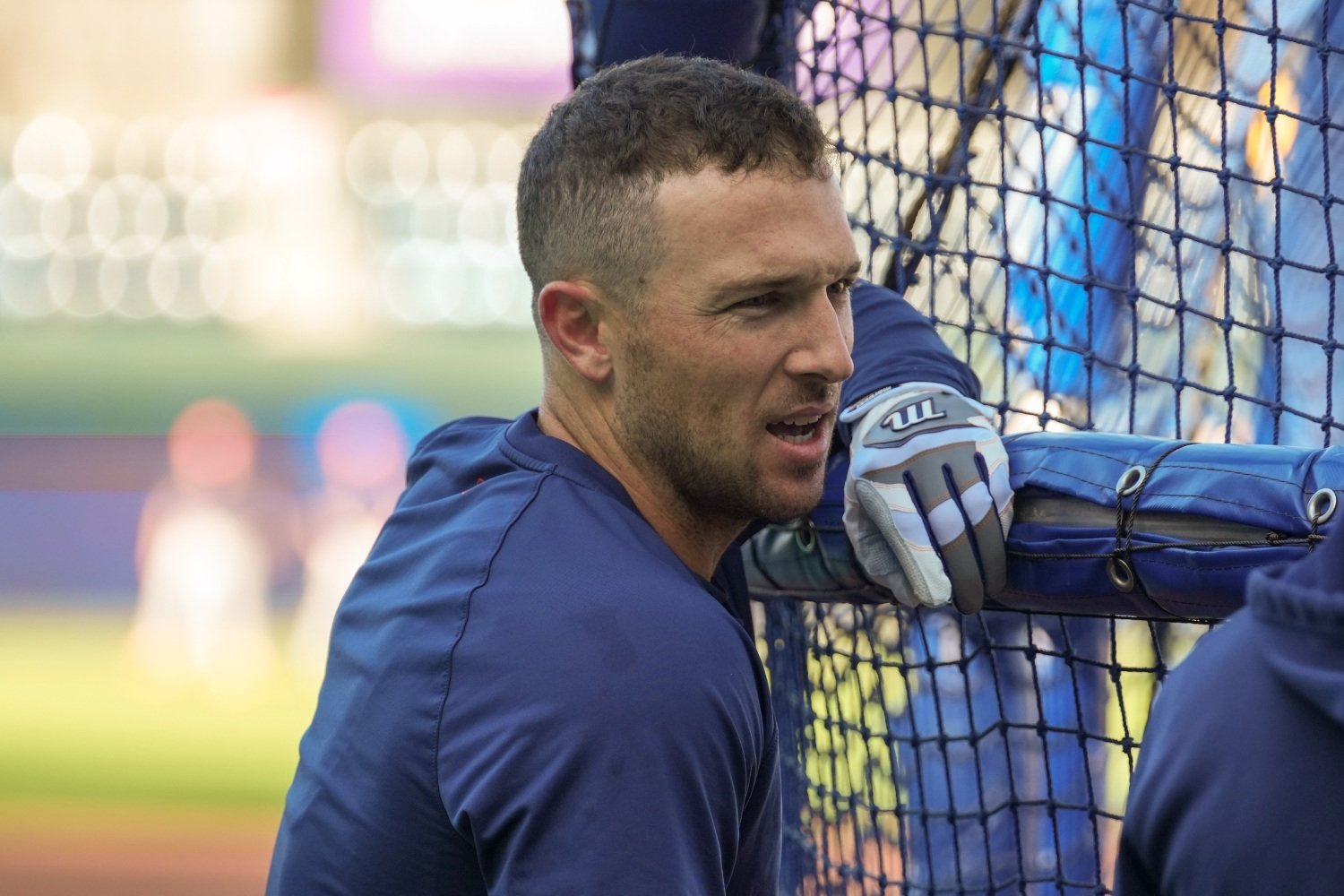 Alex Bregman agreed to a monstrous deal with the Boston Red Sox Wednesday night, giving him the ability to earn $120 million over three years or opt out following either of the first two years. The money is evenly spread across the deal, in terms of base salary, although there are significant deferrals involved. As I reported last week, the Cubs had a four-year deal on the table for Bregman, worth roughly the same total amount of money. That sounds like a loser of a bid, with a $30-million annual average value (AAV) against the winning Sox's $40 million per year. As will become clear when the details of the deferrals are brought to light, the gap was actually a good bit smaller than that, because in practice, the AAV of Boston's deal will be around $35 million, but that gap remains substantial—and it was never going to be bridged. Boston increased their offer significantly Wednesday, after a long staring match between Scott Boras and three potential suitors for Bregman. His client never intended to play for the Tigers, and Boras used the six-year, $171.5-million offer he eventually extracted from Tigers head honcho Scott Harris as leverage, but the Tigers didn't mind being allowed to hang around the bidding, and ultimately, Boras's gambit worked. The Red Sox went to an AAV level the Cubs were unwilling to match, and despite Chicago being willing to use a signing bonus to frontload their deal and forego deferrals, the appeal of a precedent-shifting deal like Boston's was too great to pass up. While the Cubs probably would have traded Nico Hoerner to ensure they stayed beneath the competitive-balance tax (CBT) threshold if they had landed Bregman, one source said they never wanted to put themselves in a position to need to make such a trade. They didn't mind making the Kyle Tucker trade, then pivoting to trading Cody Bellinger in December, but with more of the rest of the league's money spent and little time left in the offseason, they were not willing to put themselves in a position to be extorted by suitors for Hoerner—and they feel Hoerner is more important to the 2025 team than Bellinger ever would have been, anyway. Since the team currently has just over $31 million in space beneath the first CBT line, that mentality meant that they couldn't go beyond a $30-million AAV to lure Bregman. They went all the way to that figure, and were willing to structure the deal very creatively, but going up to or beyond $35 million—let alone to $40 million, even if that number is mostly for vanity—was never on the table. Thus, it's time for the team to swing its gaze one or two more times, in a winter in which they've already done so multiple times. With Ryan Pressly and Ryan Brasier in place to round out the bullpen, they don't have much more room for veteran reinforcement there, but the right trade to ease their roster crunch could open the door to redirecting money to David Robertson. Even before Bregman reached his decision, the team had been in contact with Justin Turner, who would meet their need for a right-handed bench bat to back up both first baseman Michael Busch and regular DH Seiya Suzuki. Interesting trade possibilities do remain, to be sure. The Padres made a big move of their own Wednesday evening, signing Nick Pivetta to a four-year deal worth $55 million. That contract is hilariously backloaded, making it clear that San Diego still has big cash-flow issues, but it's now equally clear that A.J. Preller is maintaining leverage in negotiations about the possibility of trading Dylan Cease. With Pivetta ($3-million signing bonus, $1 million salary for 2025), Michael King and Elias Díaz all signing deals that shove much of the money owed out to the end of the year or beyond and cheap platoon mates Jason Heyward and Connor Joe locked in for left field, it's plausible (though not, in the best estimates of sources in other front offices, actually true) that the team could hold onto Cease and his $13.75-million salary as they head into the season. Cease (and King, and reliever Robert Suarez, though each of those two have faded from the radar for at least one inquiring team, believing the Padres now intend only to trade Cease) has long been a subject of Cubs trade rumors, but the asking price there remains high and the team now has to grapple with the reality that they're a bat short. I've mentioned this possibility before, and it's been unpopular, and I suspect it will remain so, but: Could the Cubs be the eventual destination for a Nolan Arenado escape from St. Louis? Consider: Arenado blocked a trade to Houston earlier this winter, but has (seemingly) since come to regret that choice. Boston looked like his best remaining hope for a trade, but getting Bregman takes them out of that mix. The Cardinals aren't even trying to win this year, and the future Hall of Fame third baseman wants out of that situation. For the Cubs, he's quickly coming to look like a perfect fit. At the front end of the offseason, he indicated a willingness to play first base, if it would help a contending team win. Smirking, many of us asked the rhetorical question: What playoff-caliber team would benefit from having Arenado at first base? Now, though, it might be time to take that question from the hands of rhetoricians and put it in those of a practitioner. Arenado would simultaneously give the Cubs the good-glove, solid-bat veteran third baseman Bregman would have been (albeit not nearly at as high a level) and fill that backup first base role. He wouldn't block Matt Shaw, but he might buy the team an extra year of control over their top prospect, manning third every day while Shaw gets some still-needed defensive work at third in Iowa and Jon Berti backs up the infield in Chicago. He'd also give the team insurance against struggles from either Shaw or Busch, and against injuries to any of the corner outfielders or Suzuki (since he'd be a capable, if unspectacular, DH option, too). For the Cardinals, the value in trading Arenado would come almost solely from clearing his salary and opening playing time for their young infielders. If you're mentally building a potential trade, cross off the first six names in the Cubs system—and then cross off five more. It would cost the team very little in terms of real talent to get Arenado, and St. Louis would eat a bit of the money owed to him, leaving Jed Hoyer flexibility to make needed upgrades at the trade deadline. Such a deal is unlikely, of course. After Bregman's surprisingly huge payday in Boston, though, the Cubs and Cardinals are both left in need of a partner for a crucial transaction. They might just fall together. Even if not, don't expect the Cubs to be truly done just yet—but nor will any addition they make from here be as likely to increase their upside as Bregman would have.
 -
Kevin Alcántara and the Art of Making the 26-Man Roster 40 Players Deep
Matthew Trueblood posted an article in Cubs
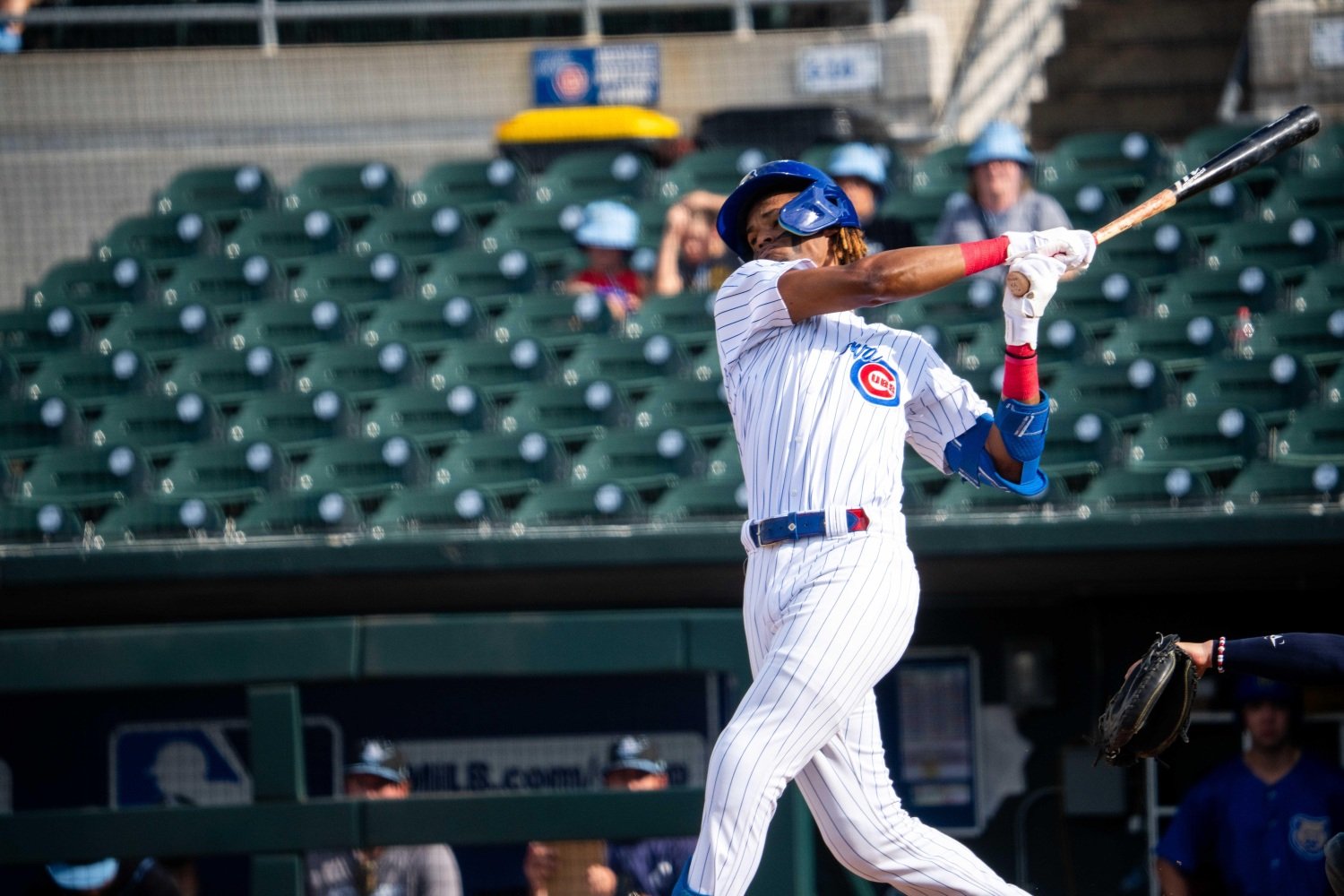 If the season started today, the Cubs' backup center fielder would unequivocally be Kevin Alcántara. In theory, the toolsy Gage Workman and the out-of-options slugger Alexander Canario could stand in center for a handful of innings at a time, but the team will need to evaluate them all spring and give them a wealth of reps to have any hope of actually relying on them in that role come the regular season. In practice, Pete Crow-Armstrong is not only the regular out there, but the everyday center fielder—no, really, the every day center fielder. That's why this next bit isn't a problem, at least right now: Alcántara, Crow-Armstrong's backup, will be with the Iowa Cubs on Opening Day. At the moment, the Cubs' roster construction is a love letter to Crow-Armstrong's glove. They have to know there's a real risk of him hitting poorly; they just don't care. They're planning to take the 15 (or so) runs he'll save them with his glove, use them to pay down the cost of winning games, and not sweat the 15 (or so) runs he will cost them at the plate. Thus, they're willing to wear it if an injury or a truly nightmarish matchup forces Crow-Armstrong out in the middle of a game. They'll use Canario (who's about 5-foot-11 and weighs 200 sturdy pounds, with below-average speed for the spot) and/or Workman (tall, lanky, fast, but with just eight pro games in the outfield, all in right) to stop those tiny gaps. If Crow-Armstrong gets hurt in a way that will keep him out even a few days, of course, things change. If we assume Workman (or Vidal Bruján, who's out of options; neither can be sent to the minors without being exposed to the rest of the league for a claim) makes the roster, it's hard to get a position player out of the way to bring up Alcántara. That's what would have to happen, though, because you can't play anyone projected to make the 26-man roster in center for more than a day or two at a time. The Cubs could find themselves needing to play a pitcher short for brief stretches. If Crow-Armstrong hits the injured list, it's easier: Alcántara is the call-up. Extending the 26-man roster to make use of everyone on the 40-man is a difficult but necessary trick, performed in a shared maneuver by the front office and the manager. It's up to Craig Counsell to be ready to get the most from Crow-Armstrong, Canario, Workman and Bruján, but that means protecting them from both overuse and bad matchups—as well as helping them materially improve their performance. In turn, the front office has to find ways to squeeze as many optionable players onto the 40-man roster as possible, so they can rotate not only their bench options but their bullpen and even the final slot in a fluid rotation, as needed. Alcántara being 350 miles away from the player to whom he will be the de facto backup is just one example of several, as the team opens camp. They need to find ways to keep a large number of players in the organization and available at a moment's notice, but they'll have to stash many of them in Des Moines on any given day. That's why the possibility of a trade continues to loom large, whether the team signs Alex Bregman or not. In all likelihood, a Bregman deal would bring them uncomfortably close to the CBT threshold, so they would probably trade Nico Hoerner in such an event—not just to clear payroll space and ensure that Bregman and Matt Shaw can both play every day, but to ease the 40-man roster crunch and recoup the long-term value they'd surrender in the form of draft picks and international free-agent spending power by signing the All-Star third baseman. If they don't sign Bregman, though, they would still benefit by consolidating two or three of their useful but slightly redundant 40-man pieces into one or two more talented, higher-volume players. Dylan Cease makes sense not only because he would be the best starter on the team, but because his durability would allow the team to worry less about keeping their roster stocked with nine or 10 viable starters. It would make juggling the roster easier, because it would mean fewer spins of the revolving door at the bottom of the pitching staff hierarchy. There's overlap in these ideas, of course. Trading Hoerner in the wake of signing Bregman could involve opening a 40-man spot, but adding a center field-capable non-roster guy—or someone much like Canario, but with options. Canario could be a trade candidate, because for a team with greater prospective need in the corner outfield positions, he would hold real promise. Manuel Margot is still a free agent, and could be in line for a minor-league deal. If the Cubs signed him and brought him to camp, they would have (most likely) until Opening Day to decide whether to add him to the roster, making him the easier, more accessible backup to Crow-Armstrong, and they could sort out the resulting roster crunch by jettisoning some of their excess arms via designation for assignment—guys like Ethan Roberts and Caleb Kilian, who will be gone soon anyway. One reason why the team has yet to resolve their backup first base role is tied into this conundrum. Letting Jonathon Long be that guy for now makes more sense than bringing anyone to camp as a locked-in 40-man roster guy, unless they're a bona fide veteran stud like Justin Turner. Trading for an optionable first baseman (like the Tigers' Spencer Torkelson or the Marlins' Deyvison De Los Santos) could become an option down the line, and could eventually be tied into moves either to offload Hoerner or to onboard Cease, but they don't have much motivation to corner themselves right now. All over this roster lie interesting possibilities. Yet, there are holes, and their crowded 40-man roster means that they have to fill those holes through creative usage or team-building. It's allowed them to remain flexible enough to engage Bregman this late in the winter, but it's also left them in a suspended state of roster tension. This is a good team, but a fascinatingly incomplete one, despite overflowing with talented players in some key places.
 -
It could still happen, but so far, the Cubs have passed this offseason without making the big trade that would offload prospects on the verge of the majors. If they hold onto all their Triple-A stars into the season, it will have to be part of a bigger plan to use the roster optimally. Image courtesy of © Cody Scanlan/The Register / USA TODAY NETWORK If the season started today, the Cubs' backup center fielder would unequivocally be Kevin Alcántara. In theory, the toolsy Gage Workman and the out-of-options slugger Alexander Canario could stand in center for a handful of innings at a time, but the team will need to evaluate them all spring and give them a wealth of reps to have any hope of actually relying on them in that role come the regular season. In practice, Pete Crow-Armstrong is not only the regular out there, but the everyday center fielder—no, really, the every day center fielder. That's why this next bit isn't a problem, at least right now: Alcántara, Crow-Armstrong's backup, will be with the Iowa Cubs on Opening Day. At the moment, the Cubs' roster construction is a love letter to Crow-Armstrong's glove. They have to know there's a real risk of him hitting poorly; they just don't care. They're planning to take the 15 (or so) runs he'll save them with his glove, use them to pay down the cost of winning games, and not sweat the 15 (or so) runs he will cost them at the plate. Thus, they're willing to wear it if an injury or a truly nightmarish matchup forces Crow-Armstrong out in the middle of a game. They'll use Canario (who's about 5-foot-11 and weighs 200 sturdy pounds, with below-average speed for the spot) and/or Workman (tall, lanky, fast, but with just eight pro games in the outfield, all in right) to stop those tiny gaps. If Crow-Armstrong gets hurt in a way that will keep him out even a few days, of course, things change. If we assume Workman (or Vidal Bruján, who's out of options; neither can be sent to the minors without being exposed to the rest of the league for a claim) makes the roster, it's hard to get a position player out of the way to bring up Alcántara. That's what would have to happen, though, because you can't play anyone projected to make the 26-man roster in center for more than a day or two at a time. The Cubs could find themselves needing to play a pitcher short for brief stretches. If Crow-Armstrong hits the injured list, it's easier: Alcántara is the call-up. Extending the 26-man roster to make use of everyone on the 40-man is a difficult but necessary trick, performed in a shared maneuver by the front office and the manager. It's up to Craig Counsell to be ready to get the most from Crow-Armstrong, Canario, Workman and Bruján, but that means protecting them from both overuse and bad matchups—as well as helping them materially improve their performance. In turn, the front office has to find ways to squeeze as many optionable players onto the 40-man roster as possible, so they can rotate not only their bench options but their bullpen and even the final slot in a fluid rotation, as needed. Alcántara being 350 miles away from the player to whom he will be the de facto backup is just one example of several, as the team opens camp. They need to find ways to keep a large number of players in the organization and available at a moment's notice, but they'll have to stash many of them in Des Moines on any given day. That's why the possibility of a trade continues to loom large, whether the team signs Alex Bregman or not. In all likelihood, a Bregman deal would bring them uncomfortably close to the CBT threshold, so they would probably trade Nico Hoerner in such an event—not just to clear payroll space and ensure that Bregman and Matt Shaw can both play every day, but to ease the 40-man roster crunch and recoup the long-term value they'd surrender in the form of draft picks and international free-agent spending power by signing the All-Star third baseman. If they don't sign Bregman, though, they would still benefit by consolidating two or three of their useful but slightly redundant 40-man pieces into one or two more talented, higher-volume players. Dylan Cease makes sense not only because he would be the best starter on the team, but because his durability would allow the team to worry less about keeping their roster stocked with nine or 10 viable starters. It would make juggling the roster easier, because it would mean fewer spins of the revolving door at the bottom of the pitching staff hierarchy. There's overlap in these ideas, of course. Trading Hoerner in the wake of signing Bregman could involve opening a 40-man spot, but adding a center field-capable non-roster guy—or someone much like Canario, but with options. Canario could be a trade candidate, because for a team with greater prospective need in the corner outfield positions, he would hold real promise. Manuel Margot is still a free agent, and could be in line for a minor-league deal. If the Cubs signed him and brought him to camp, they would have (most likely) until Opening Day to decide whether to add him to the roster, making him the easier, more accessible backup to Crow-Armstrong, and they could sort out the resulting roster crunch by jettisoning some of their excess arms via designation for assignment—guys like Ethan Roberts and Caleb Kilian, who will be gone soon anyway. One reason why the team has yet to resolve their backup first base role is tied into this conundrum. Letting Jonathon Long be that guy for now makes more sense than bringing anyone to camp as a locked-in 40-man roster guy, unless they're a bona fide veteran stud like Justin Turner. Trading for an optionable first baseman (like the Tigers' Spencer Torkelson or the Marlins' Deyvison De Los Santos) could become an option down the line, and could eventually be tied into moves either to offload Hoerner or to onboard Cease, but they don't have much motivation to corner themselves right now. All over this roster lie interesting possibilities. Yet, there are holes, and their crowded 40-man roster means that they have to fill those holes through creative usage or team-building. It's allowed them to remain flexible enough to engage Bregman this late in the winter, but it's also left them in a suspended state of roster tension. This is a good team, but a fascinatingly incomplete one, despite overflowing with talented players in some key places. View full article
-
The top remaining free agent on the market had an uneven walk year in Houston. Given that he'd just turned 30, that led some to wonder if his bat was slowing down, which could be worrisome. It's not the case, though. Image courtesy of © Ken Blaze-Imagn Images Baseball Savant is out with a new batch of data Wednesday morning, adding the swing speeds for hitters from the second half of 2023. That information was collected during a debugging phase for that aspect of player tracking, and it wasn't initially released when Statcast began to publish bat-tracking data early last season. Now, though, we have it, and while it's only half a season of extra information, it's valuable. Alex Bregman, the Cubs' top target left on the free-agent marketplace, had a peculiar season in his final year with the Astros. He didn't draw walks at anywhere near his customary rate, and he had a dreadful start to the season. Many have posited that his performance last year could indicate a steeper decline being right around the corner. Naturally, some wondered whether his bat speed was a bit down, forcing him to make earlier (and, therefore, worse) swing decisions, and whether playing in Houston's cozy Minute Maid Park had allowed him to cheat on fastballs and yank cheap home runs into the Crawford Boxes there. Let's at least partially allay those concerns, right now. Bregman's average swing speed in 2023 was 70.2 miles per hour. In 2024, it was 71.3. He was among a significant but not large number of batters whose average bat speed went up by a substantial amount in 2024, even after he turned 30. As the season went on, he recovered from an early malaise, both overall (he batted .221/.287/.351 through May 15, but .274/.326/.489 thereafter) and in terms of bat speed. Of course, bat speed (the single number captured by this kind of technology, anyway) is not a universal and unmitigated good. Sometimes, faster swings can indicate that a hitter has sacrificed considerable control over the path of their swings, which might increase power but reduce contact rate drastically. Sometimes, more swing speed can mean you're getting started too late and rushing the bat to the zone, with much the same effect as if you were consciously trading contact for power. It can point toward a problem with either pitch recognition or timing and mechanics at the start of the swing, albeit only very indirectly. In Bregman's case, though, I think the evidence suggests he simply trained over the offseason of 2023-24 to generate more bat speed, with the specific idea of getting to more power. Fellow 2024-25 free agent Willy Adames also added 1.1 miles per hour of swing speed between 2023 and 2024. So did Matt Chapman, who languished long on last winter's market but then had such a good season with the Giants that he got a six-year deal without even having to venture back into free agency. Sometimes, hitters smell the money and try to go seize it—and sometimes that works, and sometimes it doesn't, and sometimes it was worth trying, and sometimes it wasn't. Bregman did hit 26 home runs in 2024, and no, that wasn't just because he played for the Astros. Bregman's added bat speed didn't cost him much pitch-to-pitch decision value. He still chased outside the zone at one of the lowest rates in the league, made contact on one of the highest percentages of his swings of any hitter in the league, and struck out less than almost any hitter in the league. He drew fewer walks, but that feels almost like a statistical fluke, given his pitch-by-pitch data. To whatever extent it's not a fluke, it seems to have been a conscious choice. Bregman swung much more often in three-ball counts than he ever has before; that's an easy adjustment to correct if he wants to. Alex Bregman, Swing Rate and xwOBA on Swings, 3-Ball Counts, By Season In short, the evidence says Bregman has proactively worked against the likely erosion of aging by increasing his bat speed within the last year. It didn't come without some snags, and he's not guaranteed to age perfectly because of it, but no team (least of all the Cubs, who will sign him only if he accedes to a creative, shorter-term deal than the six-year pact he and Scott Boras continue to seek) should worry about a sudden collapse from him. He's one of the most well-rounded hitters in baseball, and is more likely to be better in 2025 than in 2024 than to continue an early decline. To address a natural question many might have: it doesn't seem as though having only half the seasonal data for 2023 should distort the reading of these numbers. Last season, the league's average swing speed was 71.4 miles per hour in March and April, and 71.5 miles per hour in all other months. There's a notable jump in swing speed during the postseason—suggesting that we should treat the adrenaline hitters feel in the box as more of a tangible factor than we do—but not from, for instance, the cold spring to the hot summer, or from midseason to the end of a weary year. Bregman still might well sign elsewhere, of course, so the Cubs have been cultivating some alternatives to landing him. One of those is Justin Turner, but alas, the swing speed trendline is much less friendly to the 40-year-old. He had an average swing speed of 66.4 miles per hour in 2023. Obviously, that's already far below the league average. In 2024, though, it sagged hugely, to 65.1 miles per hour. Turner, like Bregman, is still a savvy, balanced righty batter, and he did manage a .259/.354/.383 line in robust playing time last year. That slugging average looks unlikely to climb back to .400, though, given not only his age but the steepness of that trend in bat speed. Everyone in the game likes Turner, a community pillar and solid contributor. He's unsigned as spring training begins, and maybe that tells us that the league knows about that drop in bat speed and doesn't like the number that comes next in along that line. Even as they await a decision from Bregman (which they've pushed to get within the week), though, the Cubs can feel good about where they are offensively, partially thanks to the good work their hitting coaches did in 2024 to secure the power potential of their key veteran bats. As frustrating as the results sometimes were, the Cubs had several key players whose ages would not have led you to expect improved swing speed, who nonetheless saw some improvement, even if it was small: Player 2023 Swing Speed 2024 Swing Speed Ian Happ 71.8 72.4 Dansby Swanson 71.5 71.7 Seiya Suzuki 72.4 73 Mike Tauchman 68.4 69.3 The news wasn't all good. Cody Bellinger's swing speed fell from 69.9 MPH to 69.0, which helped the team decide to move on from him in December. Nico Hoerner's dropped from 68.8 to 68.2 MPH, as the fantasies some have harbored of him developing more power continue to fade. Still, on balance, Dustin Kelly and John Mallee did a good job helping players find slightly more bat speed, or hold onto what they had, just when many players begin to lose that very skill. The Cubs also traded for Kyle Tucker, whose bat speed ticked up from 71.8 to 72.1 MPH from 2023 to 2024. One way or another, this offense should get better power production in 2025. Tucker is the dominant slugger who'd been missing from their mix anyway. The weather figures to be more favorable to hitters than it was in 2024. If they add Bregman, though, the Cubs look like they'll get another 25 home runs from a veteran who knew better than to let Father Time rob him of his bat speed—and if they just put the take sign on when it's 3-1 a little more often, they might also help him reclaim his old OBP. View full article
-
- 1
-

-
- alex bregman
- justin turner
- (and 3 more)
-
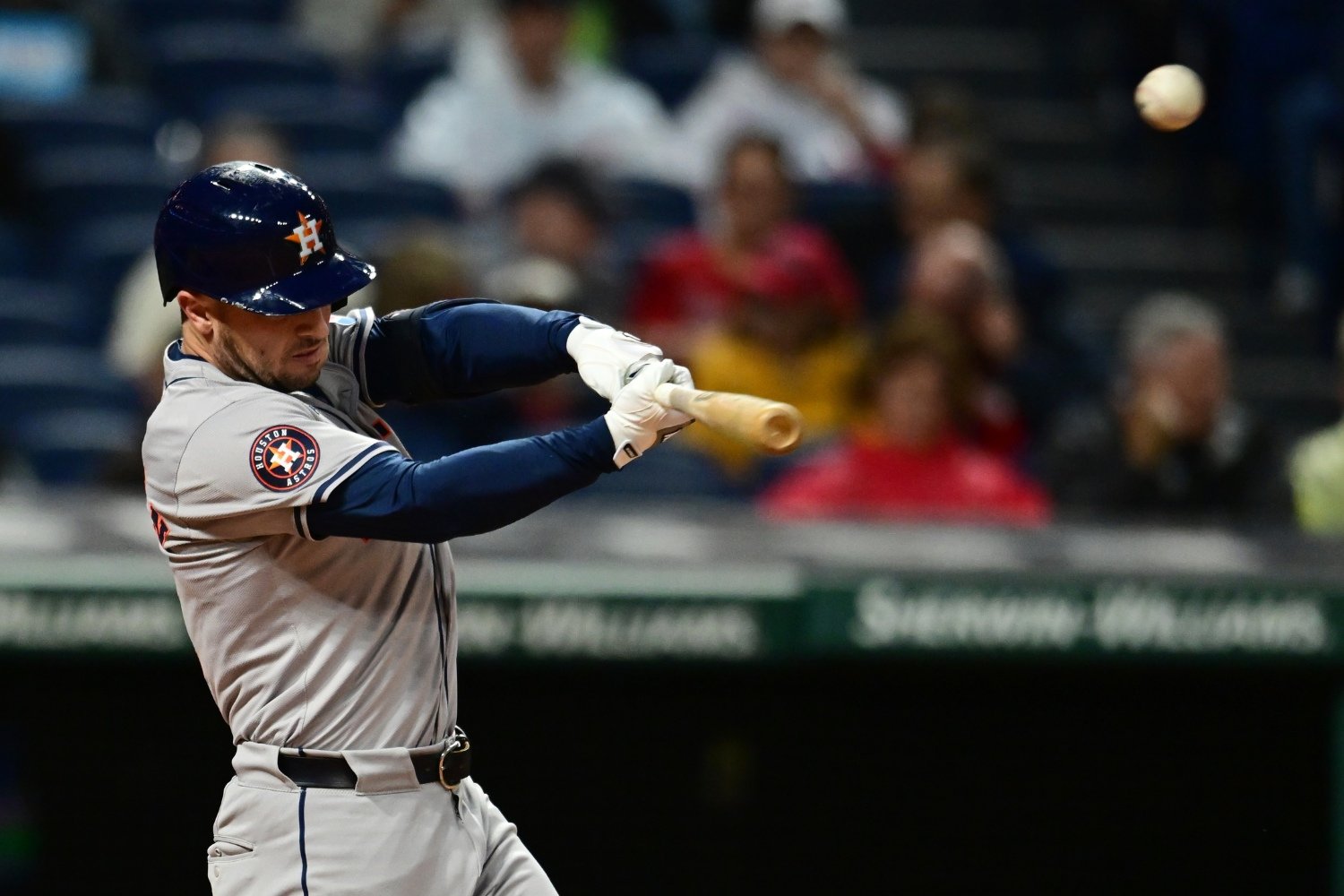 Baseball Savant is out with a new batch of data Wednesday morning, adding the swing speeds for hitters from the second half of 2023. That information was collected during a debugging phase for that aspect of player tracking, and it wasn't initially released when Statcast began to publish bat-tracking data early last season. Now, though, we have it, and while it's only half a season of extra information, it's valuable. Alex Bregman, the Cubs' top target left on the free-agent marketplace, had a peculiar season in his final year with the Astros. He didn't draw walks at anywhere near his customary rate, and he had a dreadful start to the season. Many have posited that his performance last year could indicate a steeper decline being right around the corner. Naturally, some wondered whether his bat speed was a bit down, forcing him to make earlier (and, therefore, worse) swing decisions, and whether playing in Houston's cozy Minute Maid Park had allowed him to cheat on fastballs and yank cheap home runs into the Crawford Boxes there. Let's at least partially allay those concerns, right now. Bregman's average swing speed in 2023 was 70.2 miles per hour. In 2024, it was 71.3. He was among a significant but not large number of batters whose average bat speed went up by a substantial amount in 2024, even after he turned 30. As the season went on, he recovered from an early malaise, both overall (he batted .221/.287/.351 through May 15, but .274/.326/.489 thereafter) and in terms of bat speed. Of course, bat speed (the single number captured by this kind of technology, anyway) is not a universal and unmitigated good. Sometimes, faster swings can indicate that a hitter has sacrificed considerable control over the path of their swings, which might increase power but reduce contact rate drastically. Sometimes, more swing speed can mean you're getting started too late and rushing the bat to the zone, with much the same effect as if you were consciously trading contact for power. It can point toward a problem with either pitch recognition or timing and mechanics at the start of the swing, albeit only very indirectly. In Bregman's case, though, I think the evidence suggests he simply trained over the offseason of 2023-24 to generate more bat speed, with the specific idea of getting to more power. Fellow 2024-25 free agent Willy Adames also added 1.1 miles per hour of swing speed between 2023 and 2024. So did Matt Chapman, who languished long on last winter's market but then had such a good season with the Giants that he got a six-year deal without even having to venture back into free agency. Sometimes, hitters smell the money and try to go seize it—and sometimes that works, and sometimes it doesn't, and sometimes it was worth trying, and sometimes it wasn't. Bregman did hit 26 home runs in 2024, and no, that wasn't just because he played for the Astros. Bregman's added bat speed didn't cost him much pitch-to-pitch decision value. He still chased outside the zone at one of the lowest rates in the league, made contact on one of the highest percentages of his swings of any hitter in the league, and struck out less than almost any hitter in the league. He drew fewer walks, but that feels almost like a statistical fluke, given his pitch-by-pitch data. To whatever extent it's not a fluke, it seems to have been a conscious choice. Bregman swung much more often in three-ball counts than he ever has before; that's an easy adjustment to correct if he wants to. Alex Bregman, Swing Rate and xwOBA on Swings, 3-Ball Counts, By Season In short, the evidence says Bregman has proactively worked against the likely erosion of aging by increasing his bat speed within the last year. It didn't come without some snags, and he's not guaranteed to age perfectly because of it, but no team (least of all the Cubs, who will sign him only if he accedes to a creative, shorter-term deal than the six-year pact he and Scott Boras continue to seek) should worry about a sudden collapse from him. He's one of the most well-rounded hitters in baseball, and is more likely to be better in 2025 than in 2024 than to continue an early decline. To address a natural question many might have: it doesn't seem as though having only half the seasonal data for 2023 should distort the reading of these numbers. Last season, the league's average swing speed was 71.4 miles per hour in March and April, and 71.5 miles per hour in all other months. There's a notable jump in swing speed during the postseason—suggesting that we should treat the adrenaline hitters feel in the box as more of a tangible factor than we do—but not from, for instance, the cold spring to the hot summer, or from midseason to the end of a weary year. Bregman still might well sign elsewhere, of course, so the Cubs have been cultivating some alternatives to landing him. One of those is Justin Turner, but alas, the swing speed trendline is much less friendly to the 40-year-old. He had an average swing speed of 66.4 miles per hour in 2023. Obviously, that's already far below the league average. In 2024, though, it sagged hugely, to 65.1 miles per hour. Turner, like Bregman, is still a savvy, balanced righty batter, and he did manage a .259/.354/.383 line in robust playing time last year. That slugging average looks unlikely to climb back to .400, though, given not only his age but the steepness of that trend in bat speed. Everyone in the game likes Turner, a community pillar and solid contributor. He's unsigned as spring training begins, and maybe that tells us that the league knows about that drop in bat speed and doesn't like the number that comes next in along that line. Even as they await a decision from Bregman (which they've pushed to get within the week), though, the Cubs can feel good about where they are offensively, partially thanks to the good work their hitting coaches did in 2024 to secure the power potential of their key veteran bats. As frustrating as the results sometimes were, the Cubs had several key players whose ages would not have led you to expect improved swing speed, who nonetheless saw some improvement, even if it was small: Player 2023 Swing Speed 2024 Swing Speed Ian Happ 71.8 72.4 Dansby Swanson 71.5 71.7 Seiya Suzuki 72.4 73 Mike Tauchman 68.4 69.3 The news wasn't all good. Cody Bellinger's swing speed fell from 69.9 MPH to 69.0, which helped the team decide to move on from him in December. Nico Hoerner's dropped from 68.8 to 68.2 MPH, as the fantasies some have harbored of him developing more power continue to fade. Still, on balance, Dustin Kelly and John Mallee did a good job helping players find slightly more bat speed, or hold onto what they had, just when many players begin to lose that very skill. The Cubs also traded for Kyle Tucker, whose bat speed ticked up from 71.8 to 72.1 MPH from 2023 to 2024. One way or another, this offense should get better power production in 2025. Tucker is the dominant slugger who'd been missing from their mix anyway. The weather figures to be more favorable to hitters than it was in 2024. If they add Bregman, though, the Cubs look like they'll get another 25 home runs from a veteran who knew better than to let Father Time rob him of his bat speed—and if they just put the take sign on when it's 3-1 a little more often, they might also help him reclaim his old OBP.
 -
On Wednesday, the remainder of MLB's 30 sets of pitchers and catchers officially report to camp, creating open roster spots galore. That's prompted a busy Tuesday league-wide, and the Cubs' position on the chess board is sharpening in a hurry. Image courtesy of © Rick Scuteri-Imagn Images In a flurry of moves throughout the league, several possible fits for minor roles with the Cubs—could-be backup center fielder Michael A. Taylor, could-be platoon first baseman Ty France, could-be relief reinforcement Kenley Jansen—agreed to deals Tuesday to join other clubs. Chicago has already opened their spring training camp, but the rest of baseball does so Wednesday, meaning that players poised to miss long stretches to begin the season due to injuries can be placed on the 60-day injured list. That could open anywhere from 25 to 35 spots on 40-man rosters throughout the league, which makes Tuesday an opportune time to strike deals like these. For the Cubs, that means that some of the wide array of threads they've woven into a web of possibility over the last several weeks are about to be snipped in rapid succession. As a result, sources indicate that the team is pressing for an answer from Alex Bregman on the multi-year offer they've already made to him, within the next several days. President of baseball operations Jed Hoyer and company consider Bregman a top priority, if he can be had on terms that suit their needs and preferences, but they want to either get that deal done and move on to the necessary subsequent moves or gain clarity on where they can pivot. One way or another, the team almost certainly isn't done, but signing Bregman is far from assured. At this point, the kind of deal Bregman and Scott Boras continue to prefer not only hasn't materialized, but is radically unlikely to. Unlike in 2018, the Cubs aren't willing to go to six years at the last moment, as they did to snare Yu Darvish at the end of a long and ice-cold free-agent market. Bregman will have to get his long-term deal elsewhere, if at all. In practice, though, that deal probably isn't out there, and the Cubs have reached the point of being willing to bet that Bregman will be aware of the constraints on his market at this point and take their deal, which could stretch to four years but definitely comes with a higher annual average value than any six-year offer he'll find. If Bregman and Boras elect not to go forward with them, the Cubs want time to turn their attention to free agents like Justin Turner, David Robertson, or Kyle Finnegan, the last of whom is experiencing a market slump that might bring him back into play. With or without Bregman, they might explore a trade of Nico Hoerner or a pursuit of Padres starter Dylan Cease, whom sources with other teams still expected San Diego to trade before Opening Day. How any of that would unfold, though, depends on Bregman's answer, and as Tuesday's moves attest, there's not much time left for the Cubs to wait on it. They need to make sure they can still get other things done, if that becomes urgent and necessary. Waiting out markets has worked well for the Cubs in recent offseasons. They made big moves early this winter, most notably by signing Matthew Boyd and Carson Kelly and trading for Kyle Tucker, but also with supplemental moves to shore up their pitching depth. As a result, they've been able to wait and see whether a Cody Bellinger-style deal with Bregman was possible, and it does now seem so. The time for that patience is ending, though, and the team now has to be ready to move quickly. They could go into the season with the roster they have as on-paper NL Central favorites, but their cushion there is thin (and perhaps confined to that metaphorical paper) and they remain far behind the best teams in the league. They'd like to widen the local gap and narrow the national one, and that means making at least one more helpful move. Whether that move is small (but a perfect fit) or big (but potentially unwieldy) remains to be seen, but one way or another, it's coming over the horizon. View full article
-
 In a flurry of moves throughout the league, several possible fits for minor roles with the Cubs—could-be backup center fielder Michael A. Taylor, could-be platoon first baseman Ty France, could-be relief reinforcement Kenley Jansen—agreed to deals Tuesday to join other clubs. Chicago has already opened their spring training camp, but the rest of baseball does so Wednesday, meaning that players poised to miss long stretches to begin the season due to injuries can be placed on the 60-day injured list. That could open anywhere from 25 to 35 spots on 40-man rosters throughout the league, which makes Tuesday an opportune time to strike deals like these. For the Cubs, that means that some of the wide array of threads they've woven into a web of possibility over the last several weeks are about to be snipped in rapid succession. As a result, sources indicate that the team is pressing for an answer from Alex Bregman on the multi-year offer they've already made to him, within the next several days. President of baseball operations Jed Hoyer and company consider Bregman a top priority, if he can be had on terms that suit their needs and preferences, but they want to either get that deal done and move on to the necessary subsequent moves or gain clarity on where they can pivot. One way or another, the team almost certainly isn't done, but signing Bregman is far from assured. At this point, the kind of deal Bregman and Scott Boras continue to prefer not only hasn't materialized, but is radically unlikely to. Unlike in 2018, the Cubs aren't willing to go to six years at the last moment, as they did to snare Yu Darvish at the end of a long and ice-cold free-agent market. Bregman will have to get his long-term deal elsewhere, if at all. In practice, though, that deal probably isn't out there, and the Cubs have reached the point of being willing to bet that Bregman will be aware of the constraints on his market at this point and take their deal, which could stretch to four years but definitely comes with a higher annual average value than any six-year offer he'll find. If Bregman and Boras elect not to go forward with them, the Cubs want time to turn their attention to free agents like Justin Turner, David Robertson, or Kyle Finnegan, the last of whom is experiencing a market slump that might bring him back into play. With or without Bregman, they might explore a trade of Nico Hoerner or a pursuit of Padres starter Dylan Cease, whom sources with other teams still expected San Diego to trade before Opening Day. How any of that would unfold, though, depends on Bregman's answer, and as Tuesday's moves attest, there's not much time left for the Cubs to wait on it. They need to make sure they can still get other things done, if that becomes urgent and necessary. Waiting out markets has worked well for the Cubs in recent offseasons. They made big moves early this winter, most notably by signing Matthew Boyd and Carson Kelly and trading for Kyle Tucker, but also with supplemental moves to shore up their pitching depth. As a result, they've been able to wait and see whether a Cody Bellinger-style deal with Bregman was possible, and it does now seem so. The time for that patience is ending, though, and the team now has to be ready to move quickly. They could go into the season with the roster they have as on-paper NL Central favorites, but their cushion there is thin (and perhaps confined to that metaphorical paper) and they remain far behind the best teams in the league. They'd like to widen the local gap and narrow the national one, and that means making at least one more helpful move. Whether that move is small (but a perfect fit) or big (but potentially unwieldy) remains to be seen, but one way or another, it's coming over the horizon.
 -
As the first day of camp reminded us, the Cubs' depth of good pitching options will need to be better than it was in 2024, if they hope to make good on projections that they'll win the NL Central this season. In light of that, keep an eye on these two arms with invites to big-league camp. Image courtesy of © Allan Henry-Imagn Images It's not like Antonio Santos will be asked to fill in for Javier Assad. It's not even clear that Assad would make the Opening Day roster, should his oblique muscle injury turn out to be mild and he be ready when the season begins next month. If he did have to be replaced, it would be by Colin Rea, Jordan Wicks, Keegan Thompson, or Ben Brown, depending on the health of any of those hurlers and the role you envisioned Assad holding. Eventually, though, if a few injuries or poor performances pile up, the team could find themselves turning to a player like Santos. If Alex Bregman signs elsewhere and the front office pivots to a trade for Dylan Cease that diminishes their strong pitching depth, Santos could certainly slide up the depth chart. Who is Santos? Well, back in June, the 28-year-old Dominican Republic native signed with the Cubs, out of the Mexican League. He had drifted to that circuit after reaching MLB with the Rockies in 2020 and 2021, then spending 2022 in the Mets system. A fixture in the Dominican Winter League, he nonetheless looked lightyears away from a return to the majors in the States—but now, that seems much more plausible. Santos pitched 14 times and racked up 70 innings for the Double-A Tennessee Smokies, with a 3.99 ERA and 80 strikeouts against 20 walks. He then went back to the Dominican this winter, but his numbers there were dreadful, with an ERA over 6.00. He's had a long professional journey already, and merely getting an invite to MLB camp is a win for him. By no means is he in line to pitch for the Cubs in the bigs this year, barring something unforeseen, but he's back in that arena, anyway. How he's gotten there is fascinating. Over time, he's changed his position on the mound and how he tries to disguise his release points, maximizing the utility of each of his pitches. We have 2024 data thanks to the Dominican Winter League, by the way. While only Triple-A and some Low-A affiliates of MLB teams allow their Statcast data to be shared publicly, some parks in LIDOM have tech, too, and it's easier to get it. As you can see, one adjustment Santos has made is to compress the spread of his release points. He's also working from more of a three-quarter slot; you can see that in the orientation of his distribution in release points by pitch type. With those changes have come a few alterations in his pitch mix, too. Santos has a mid-90s fastball that he has always supplemented with a changeup and a slider. This year, he added a cutter to that collection, letting the changeup and the slider lose some velocity to increase the separation between the fastball and those offerings. The cutter is a firmer pitch, sometimes pushing toward 90 miles per hour. Having four pitches he can trust (and a different four than he had in 2021) has given Santos a new lease on his professional pitching life, but so have some tweaks to how those pitches move. As was true above, the light blue lines here capture his 2024 data; 2023 is in red; and 2021 is in purple. Each point on the shapes I've drawn is the average movement coordinate of one of his pitches. Starting in the top left corner, note that Santos's fastball has more rising action than in the past; that his changeup (lower left) has more depth than ever; and that he has two comparatively close but distinct breaking-ball looks (the slider, lower right; and the cutter, upper right). This arsenal is the best setup to attack left-handed batters Santos has ever had. The difference in movement and velocity between the fastball and the changeup is larger than ever, and the release point differential has only shrunk. His cutter and slider are the kinds of pitches that neutralize opposite-handed batters relatively well. That's why lefties batted .156/.252/.271 against Santos in 2024. Righties hit him harder, though, and remember, that was in Double A. To have any kind of impact in the majors, he will need excellent command of the stuff he has, or a good way to steer that slider a bit more to the glove side, perhaps using seam-shifted wake. That's not overwhelmingly likely. However, Santos was a solid summer signing, and he's a better 20th pitcher in line than most teams can boast. Meanwhile, the Cubs also have an intriguing left-handed hurler coming to big-league camp, although he's solely a reliever. Riley Martin, a sixth-round pick from 2021 who turns 27 years old next month, is a tantalizing lefty arm. Over the last two seasons, much of which he spent at Triple-A Iowa, he's fanned 34.1% of opposing hitters. He has a fastball that can touch 95, with good carry, and throws both a slider and a curveball with big movement and big whiff rates. That's the good news. The bad news is just what you'd expect: Martin walks too many batters. He's given free passes to over 16% of opponents over the same two-year span, plunked four hitters and thrown 12 wild pitches. He has to clean that up in order to have a meaningful shot at surviving in the big leagues, even if the strike zone in MLB has a chance to be slightly more friendly than that in the International League, governed by computers. With Caleb Thielbar, Luke Little, and Brandon Hughes ahead of him in line for left-handed relief innings and Wicks theoretically available for that role if not needed as a starter, Martin has an even longer path to playing time for the Cubs than does Santos. However, both hurlers bear watching in the Cactus League, because there are always unexpected needs on a pitching staff during a long season, and a bit of positive development by either of these two could unlock something valuable in the event of such an emergency. View full article
-
Two Under-the-Radar Non-Roster Invitees to Watch in Cubs Camp
Matthew Trueblood posted an article in Cubs
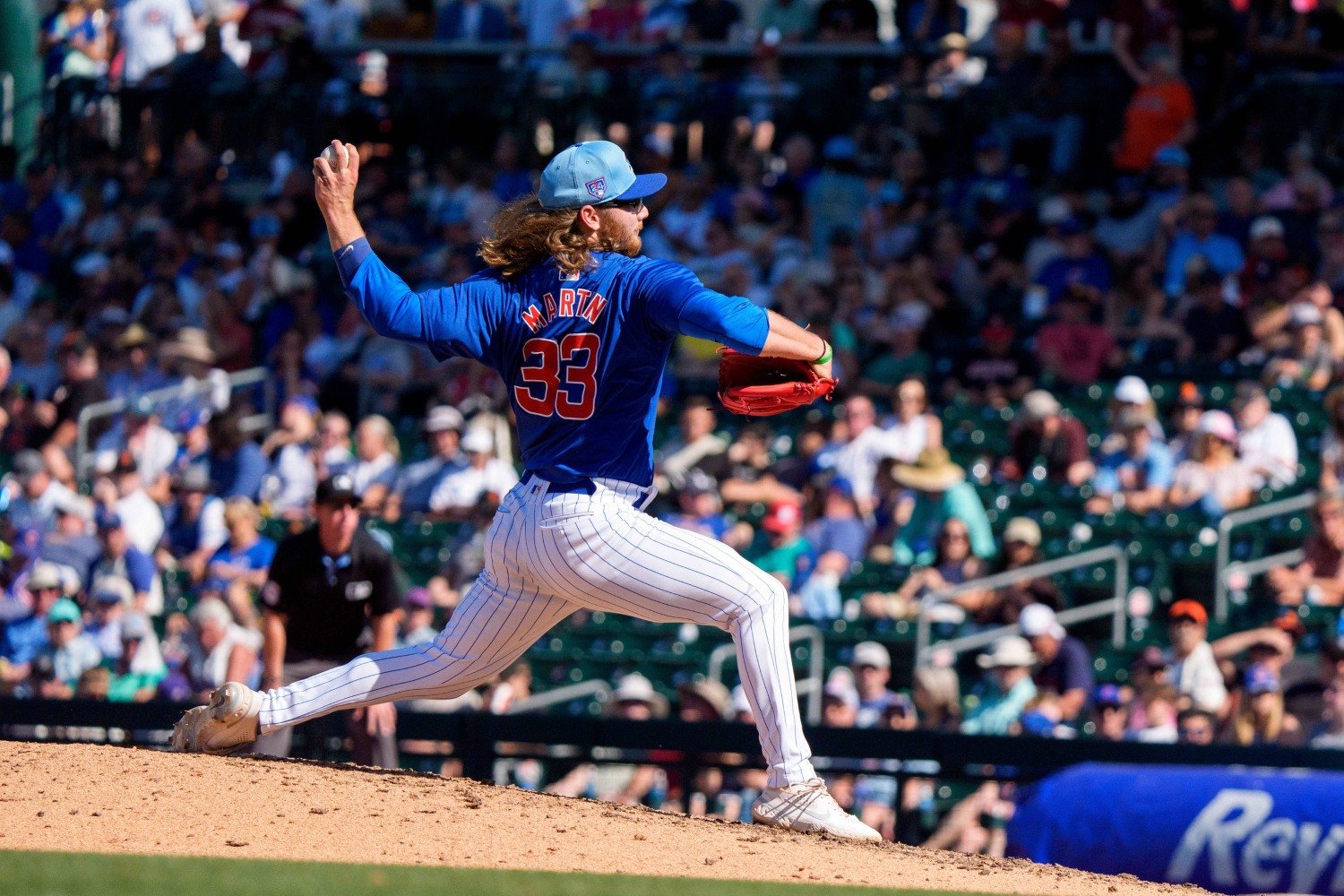 It's not like Antonio Santos will be asked to fill in for Javier Assad. It's not even clear that Assad would make the Opening Day roster, should his oblique muscle injury turn out to be mild and he be ready when the season begins next month. If he did have to be replaced, it would be by Colin Rea, Jordan Wicks, Keegan Thompson, or Ben Brown, depending on the health of any of those hurlers and the role you envisioned Assad holding. Eventually, though, if a few injuries or poor performances pile up, the team could find themselves turning to a player like Santos. If Alex Bregman signs elsewhere and the front office pivots to a trade for Dylan Cease that diminishes their strong pitching depth, Santos could certainly slide up the depth chart. Who is Santos? Well, back in June, the 28-year-old Dominican Republic native signed with the Cubs, out of the Mexican League. He had drifted to that circuit after reaching MLB with the Rockies in 2020 and 2021, then spending 2022 in the Mets system. A fixture in the Dominican Winter League, he nonetheless looked lightyears away from a return to the majors in the States—but now, that seems much more plausible. Santos pitched 14 times and racked up 70 innings for the Double-A Tennessee Smokies, with a 3.99 ERA and 80 strikeouts against 20 walks. He then went back to the Dominican this winter, but his numbers there were dreadful, with an ERA over 6.00. He's had a long professional journey already, and merely getting an invite to MLB camp is a win for him. By no means is he in line to pitch for the Cubs in the bigs this year, barring something unforeseen, but he's back in that arena, anyway. How he's gotten there is fascinating. Over time, he's changed his position on the mound and how he tries to disguise his release points, maximizing the utility of each of his pitches. We have 2024 data thanks to the Dominican Winter League, by the way. While only Triple-A and some Low-A affiliates of MLB teams allow their Statcast data to be shared publicly, some parks in LIDOM have tech, too, and it's easier to get it. As you can see, one adjustment Santos has made is to compress the spread of his release points. He's also working from more of a three-quarter slot; you can see that in the orientation of his distribution in release points by pitch type. With those changes have come a few alterations in his pitch mix, too. Santos has a mid-90s fastball that he has always supplemented with a changeup and a slider. This year, he added a cutter to that collection, letting the changeup and the slider lose some velocity to increase the separation between the fastball and those offerings. The cutter is a firmer pitch, sometimes pushing toward 90 miles per hour. Having four pitches he can trust (and a different four than he had in 2021) has given Santos a new lease on his professional pitching life, but so have some tweaks to how those pitches move. As was true above, the light blue lines here capture his 2024 data; 2023 is in red; and 2021 is in purple. Each point on the shapes I've drawn is the average movement coordinate of one of his pitches. Starting in the top left corner, note that Santos's fastball has more rising action than in the past; that his changeup (lower left) has more depth than ever; and that he has two comparatively close but distinct breaking-ball looks (the slider, lower right; and the cutter, upper right). This arsenal is the best setup to attack left-handed batters Santos has ever had. The difference in movement and velocity between the fastball and the changeup is larger than ever, and the release point differential has only shrunk. His cutter and slider are the kinds of pitches that neutralize opposite-handed batters relatively well. That's why lefties batted .156/.252/.271 against Santos in 2024. Righties hit him harder, though, and remember, that was in Double A. To have any kind of impact in the majors, he will need excellent command of the stuff he has, or a good way to steer that slider a bit more to the glove side, perhaps using seam-shifted wake. That's not overwhelmingly likely. However, Santos was a solid summer signing, and he's a better 20th pitcher in line than most teams can boast. Meanwhile, the Cubs also have an intriguing left-handed hurler coming to big-league camp, although he's solely a reliever. Riley Martin, a sixth-round pick from 2021 who turns 27 years old next month, is a tantalizing lefty arm. Over the last two seasons, much of which he spent at Triple-A Iowa, he's fanned 34.1% of opposing hitters. He has a fastball that can touch 95, with good carry, and throws both a slider and a curveball with big movement and big whiff rates. That's the good news. The bad news is just what you'd expect: Martin walks too many batters. He's given free passes to over 16% of opponents over the same two-year span, plunked four hitters and thrown 12 wild pitches. He has to clean that up in order to have a meaningful shot at surviving in the big leagues, even if the strike zone in MLB has a chance to be slightly more friendly than that in the International League, governed by computers. With Caleb Thielbar, Luke Little, and Brandon Hughes ahead of him in line for left-handed relief innings and Wicks theoretically available for that role if not needed as a starter, Martin has an even longer path to playing time for the Cubs than does Santos. However, both hurlers bear watching in the Cactus League, because there are always unexpected needs on a pitching staff during a long season, and a bit of positive development by either of these two could unlock something valuable in the event of such an emergency.
 -
It was fun to watch the veteran righthander rebound from a tough 2023 and put up a strong second season for the Cubs last year. Under the hood, though, lie enough orange flags to force us into asking some questions. Image courtesy of © Chet Strange-Imagn Images By the relatively low standards of this moment in baseball history, Jameson Taillon is a workhorse. He takes the ball, weathers early trouble when it comes, and usually gets fairly deep into games. He's been consistently available to the Cubs over his first two seasons of a four-year deal, even though he missed the start of 2024 with a back problem and a fortnight in 2023 with a groin strain. He's been eager to get back on the mound, good at staying there, and creative and smart in his approach. Last year, that paid off big-time on the top line of his stat page, as he reduced his ERA from 4.84 in 2023 to 3.27. Sixteen of his 28 outings were quality starts, and in addition to his 12 credited wins, he left in a position to get the win four times, only to see the bullpen squander the advantage. Taillon was, almost inarguably, a much better pitcher in 2024. Alas, we have to say "almost," because there are also some worrying trends of which to take note. Taillon's velocity fell off significantly, by more than a mile per hour on average, perhaps because he worked so hard to get back to the active roster after his spring training back trouble. Largely as a result of that loss of zip, Taillon also missed many fewer bats in 2024. His per-pitch and per-swing whiff rates sagged noticeably, depressing his strikeout rate to 18.4%. Over the three campaigns before that, he'd had a much more sustainable 21.7% punchout rate. Opponents' average exit velocity ticked up, even as Taillon (with the help, perhaps, of Wrigley Field and its extremely pitcher-friendly summer) allowed six fewer homers and reduced opponents' slugging average by .055. That might imply that he got somewhat lucky, based on environment and on more batted balls creating less trouble. Worse, Taillon's velocity only plunged deeper late in the season, dipping below 92 miles per hour in August and September, so it's not as though he showed signs of having shaken off the back injury and recovered his ability to dominate. On the other hand, Taillon did fill up the zone much more consistently in 2024, which is a part of the story around his lack of whiffs. The 54% of his pitches categorized by Statcast as being in the strike zone was easily a career-best mark, and while being in the zone that much can lead to more contact, it also means more strikes. Taillon pulled his walk rate back down to 4.9% last year, thanks to pounding the zone more confidently. If the weather patterns change in 2025, maybe he can simply revert to a bit of nibbling and try to get hitters to chase more bad balls. Taillon also changed up his pitch mix a bit, with beneficial effects. Against righties, he leaned hard into a sweeper-cutter combination, forcing batters to distinguish often between two pitches with very different shapes but which tended to start on similar trajectories. Against lefties, meanwhile, a small uptick in usage for four different pitches allowed Taillon to throw many fewer fastballs, which was a boon for him; his fastball tends to get hit hard by opposite-handed batters. This tweak to the arsenal was effective, because for righties, the cutter and sweeper have an unusual amount of spin mirroring. With two pitches that move partially in the same direction but end up with very different shapes, the hitter usually has a major difference in spin axis to try to pick out when seeing the ball out of the pitcher's hand. With Taillon, though, the cutter and sweeper both seem like they'll maintain largely vertical trajectories—only to be drastically affected by seam-shifted wake effects and take off to the arm side. In the visual below, the distributions on the left show each of Taillon's pitches' expected movement based on their spin axes. On the right are the actual movement distributions for the pitches. You can see how both the cutter and the sweeper veer left, relative to what their spin profiles imply. Lefties run into a different version of the problem, but an equally real one. With fewer fastballs coming in, the spin mirroring of Taillon's four-seamer and his curve becomes more potent at fooling hitters. Small things like these make hitters swing a little less often and a little more tentatively, and can help a pitcher make up for diminished stuff. On the strength of his more varied repertoire, Taillon went from 55th in the percentage of all pitches that became called strikes in 2023 (16.9%) to 21st last year (18.2%). Indeed, the Cubs were good at finding called strikes, overall, with Javier Assad (7th) and Kyle Hendricks (16th) ahead of Taillon on a list of 141 pitchers. The team replaces Hendricks with Colin Rea this year; Rea was 19th on that same list. More called strikes are good, and craftsmanlike pitch combinations are good. Taillon keeps finding ways to succeed, so far, and he's only 33 years old, so there's no reason he ought to break down or steeply decline in 2025. Yet, Cubs fans have to slightly temper their expectations for him. If he remains unable to miss bats at anything even approximating an average rate, Taillon's results will probably regress this year, so his success last season (although earned and impressive) feels fragile as spring training begins. View full article
-
What Can the Cubs Reasonably Expect from Jameson Taillon in 2025?
Matthew Trueblood posted an article in Cubs
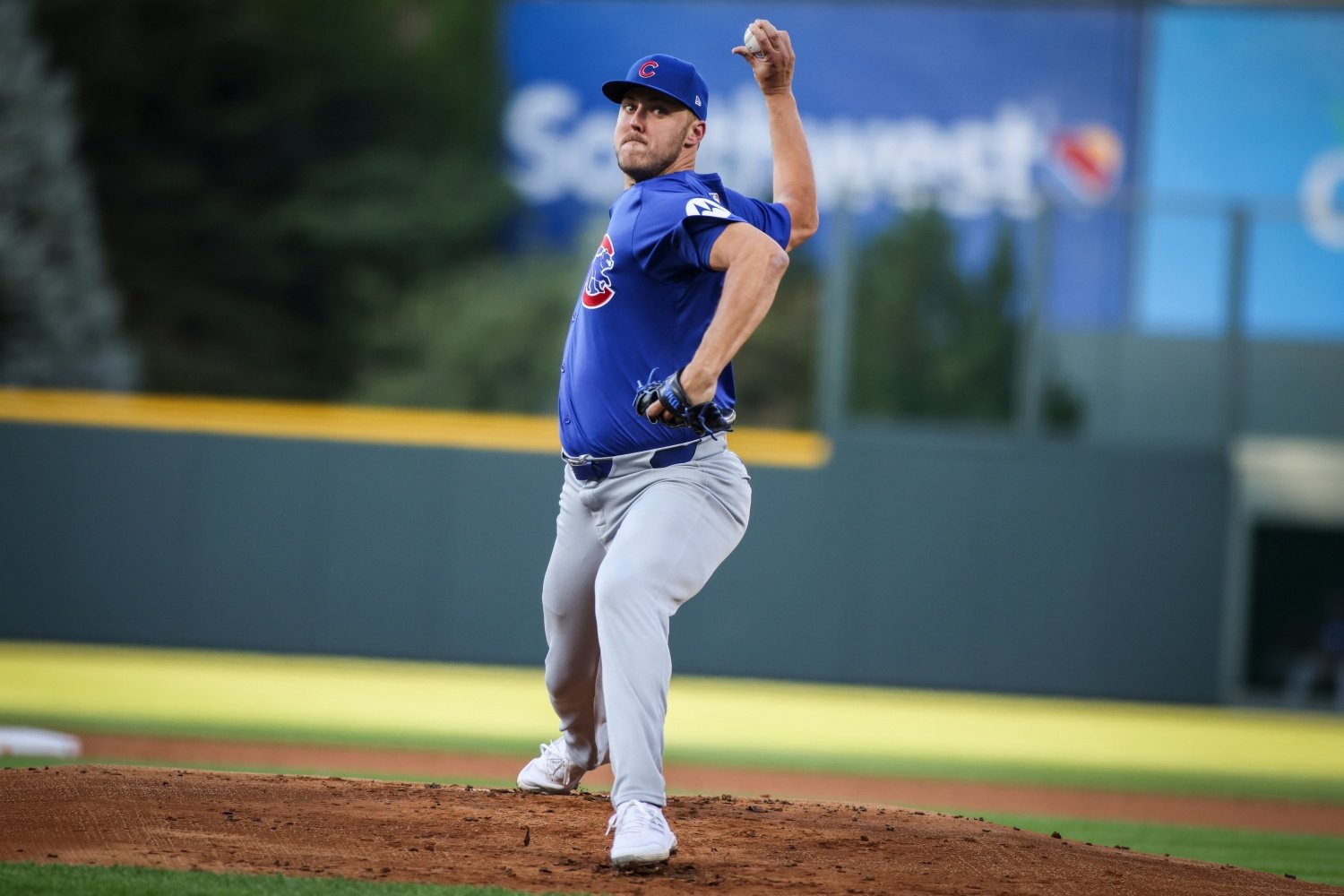 By the relatively low standards of this moment in baseball history, Jameson Taillon is a workhorse. He takes the ball, weathers early trouble when it comes, and usually gets fairly deep into games. He's been consistently available to the Cubs over his first two seasons of a four-year deal, even though he missed the start of 2024 with a back problem and a fortnight in 2023 with a groin strain. He's been eager to get back on the mound, good at staying there, and creative and smart in his approach. Last year, that paid off big-time on the top line of his stat page, as he reduced his ERA from 4.84 in 2023 to 3.27. Sixteen of his 28 outings were quality starts, and in addition to his 12 credited wins, he left in a position to get the win four times, only to see the bullpen squander the advantage. Taillon was, almost inarguably, a much better pitcher in 2024. Alas, we have to say "almost," because there are also some worrying trends of which to take note. Taillon's velocity fell off significantly, by more than a mile per hour on average, perhaps because he worked so hard to get back to the active roster after his spring training back trouble. Largely as a result of that loss of zip, Taillon also missed many fewer bats in 2024. His per-pitch and per-swing whiff rates sagged noticeably, depressing his strikeout rate to 18.4%. Over the three campaigns before that, he'd had a much more sustainable 21.7% punchout rate. Opponents' average exit velocity ticked up, even as Taillon (with the help, perhaps, of Wrigley Field and its extremely pitcher-friendly summer) allowed six fewer homers and reduced opponents' slugging average by .055. That might imply that he got somewhat lucky, based on environment and on more batted balls creating less trouble. Worse, Taillon's velocity only plunged deeper late in the season, dipping below 92 miles per hour in August and September, so it's not as though he showed signs of having shaken off the back injury and recovered his ability to dominate. On the other hand, Taillon did fill up the zone much more consistently in 2024, which is a part of the story around his lack of whiffs. The 54% of his pitches categorized by Statcast as being in the strike zone was easily a career-best mark, and while being in the zone that much can lead to more contact, it also means more strikes. Taillon pulled his walk rate back down to 4.9% last year, thanks to pounding the zone more confidently. If the weather patterns change in 2025, maybe he can simply revert to a bit of nibbling and try to get hitters to chase more bad balls. Taillon also changed up his pitch mix a bit, with beneficial effects. Against righties, he leaned hard into a sweeper-cutter combination, forcing batters to distinguish often between two pitches with very different shapes but which tended to start on similar trajectories. Against lefties, meanwhile, a small uptick in usage for four different pitches allowed Taillon to throw many fewer fastballs, which was a boon for him; his fastball tends to get hit hard by opposite-handed batters. This tweak to the arsenal was effective, because for righties, the cutter and sweeper have an unusual amount of spin mirroring. With two pitches that move partially in the same direction but end up with very different shapes, the hitter usually has a major difference in spin axis to try to pick out when seeing the ball out of the pitcher's hand. With Taillon, though, the cutter and sweeper both seem like they'll maintain largely vertical trajectories—only to be drastically affected by seam-shifted wake effects and take off to the arm side. In the visual below, the distributions on the left show each of Taillon's pitches' expected movement based on their spin axes. On the right are the actual movement distributions for the pitches. You can see how both the cutter and the sweeper veer left, relative to what their spin profiles imply. Lefties run into a different version of the problem, but an equally real one. With fewer fastballs coming in, the spin mirroring of Taillon's four-seamer and his curve becomes more potent at fooling hitters. Small things like these make hitters swing a little less often and a little more tentatively, and can help a pitcher make up for diminished stuff. On the strength of his more varied repertoire, Taillon went from 55th in the percentage of all pitches that became called strikes in 2023 (16.9%) to 21st last year (18.2%). Indeed, the Cubs were good at finding called strikes, overall, with Javier Assad (7th) and Kyle Hendricks (16th) ahead of Taillon on a list of 141 pitchers. The team replaces Hendricks with Colin Rea this year; Rea was 19th on that same list. More called strikes are good, and craftsmanlike pitch combinations are good. Taillon keeps finding ways to succeed, so far, and he's only 33 years old, so there's no reason he ought to break down or steeply decline in 2025. Yet, Cubs fans have to slightly temper their expectations for him. If he remains unable to miss bats at anything even approximating an average rate, Taillon's results will probably regress this year, so his success last season (although earned and impressive) feels fragile as spring training begins.
 -
There's certainly a chance of another big addition to the Cubs roster this spring. What are the odds of a smaller one, to round out an incomplete roster segment? Image courtesy of © Kamil Krzaczynski-Imagn Images If the season started tomorrow, the Chicago Cubs' backup first baseman would be whichever of Miguel Amaya or Carson Kelly wasn't catching on a given day. The team has also talked about being open to using infielder Jon Berti in that role, but Berti is a light-hitting speedster with experience almost everywhere else and almost none at first. In theory, the team could ask Rule 5 pick Gage Workman to take some reps at first this spring, but if they want to keep him on the roster when they break camp (and thus avoid having to return him to the Tigers), they can't take up all his time learning a mostly unimportant defensive job. Alexander Canario is a slightly more plausible candidate to learn the ropes at first in camp, because he brings the thing the Cubs most need from a prospective handcuff to starter Michael Busch: batting right-handed. That's not because Busch is unusually susceptible to platoon mismatches. In fact, he's done very well against lefties, relative to most lefty batters, in his short career. Platoon Splits, Michael Busch, Career (2023-24) I Split PA HR BB SO BA OBP SLG OPS BAbip tOPS+ vs RHP 533 22 63 158 .235 .327 .433 .760 .302 103 vs LHP 115 1 8 31 .250 .313 .365 .678 .343 83 Provided by Baseball-Reference.com: View Original Table Generated 2/10/2025. Those numbers against southpaws look lackluster, but it's only Busch's power that has disappeared when he's faced lefties. Most lefty batters suffer in an even more pronounced way against lefties. Busch hangs tough. Still, you'd love to have a stronger option against lefties, and that's before accounting for whatever risk there is of regression from Busch in his second full big-league season. The Cubs traded away Matt Mervis this winter, which was no great loss (Mervis isn't a candidate to make any kind of long-term contribution at this point, and he, too, bats lefty), but it does leave them without an obvious fallback plan for Busch, even at Triple-A Iowa. Jonathon Long had a great 2024 in the middle levels of the minors, but he has yet to take a single plate appearance at Triple A. (To be fair, Workman hasn't done so, either.) That invites the question of whether the team will go outside the organization to add a player for that job. Mark Canha, Ty France, Justin Turner and Yuli Gurriel are still available, and likely to be quite cheap. The Cubs might prefer to realign some depth and find an optionable bat, instead, but those players can be harder to find at this time of year. Spencer Torkelson has been connected to the team a few times this winter, but the team would probably make that move only if Torkelson cost virtually nothing. Another option is to wait out spring training and see who shakes loose at the end of March, when some players who signed minor-league deals elsewhere are informed they won't make their new teams and have the right to opt for free agency. At that point, the Cubs might be able to snare someone like Joey Meneses, who signed with the Mets before they brought back Pete Alonso last week. They don't need a solution to this problem tomorrow, and probably won't have one. In the long run, though, it'll be interesting to see whether and how the team addresses that apparent hole in an otherwise strong roster. View full article
-
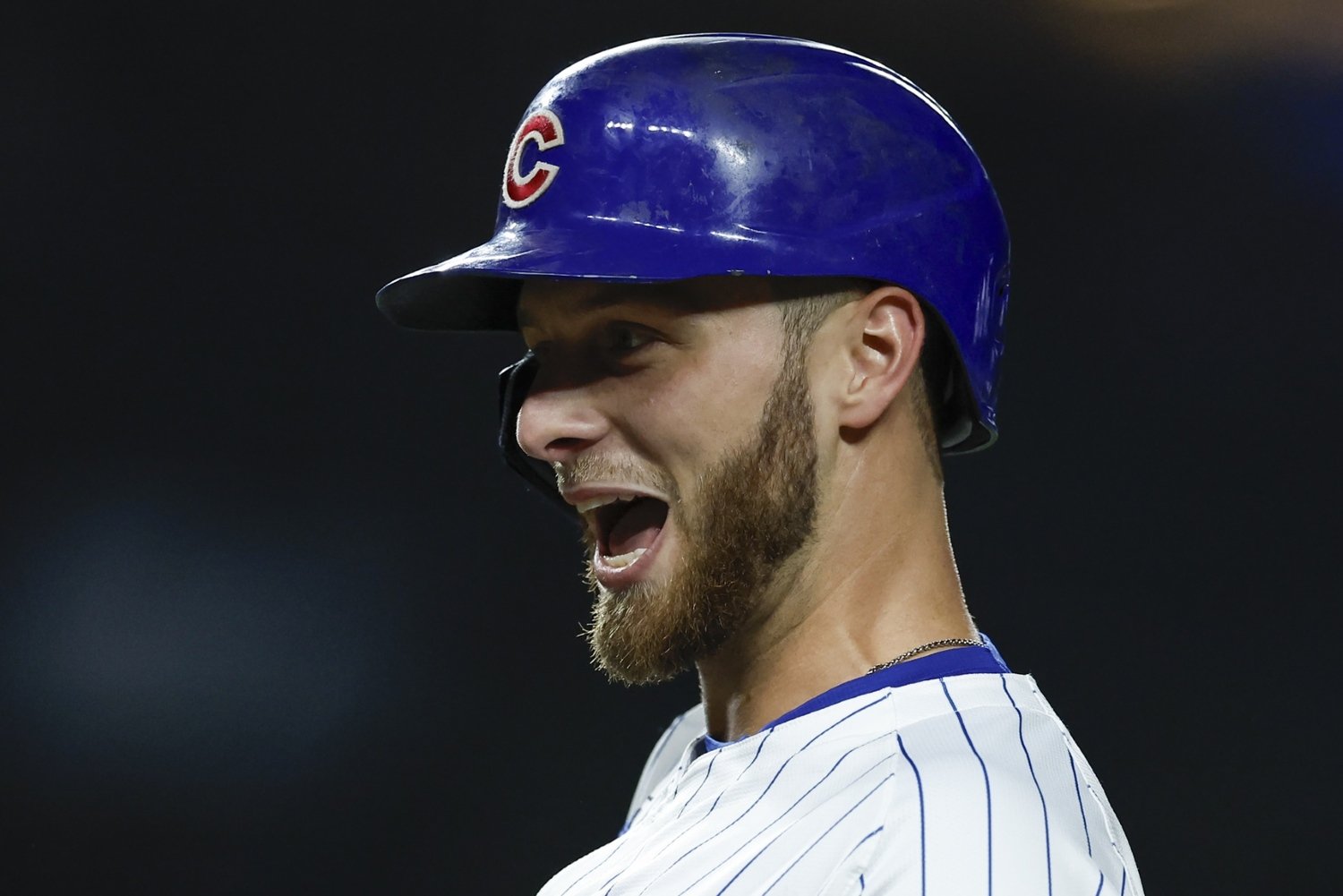 If the season started tomorrow, the Chicago Cubs' backup first baseman would be whichever of Miguel Amaya or Carson Kelly wasn't catching on a given day. The team has also talked about being open to using infielder Jon Berti in that role, but Berti is a light-hitting speedster with experience almost everywhere else and almost none at first. In theory, the team could ask Rule 5 pick Gage Workman to take some reps at first this spring, but if they want to keep him on the roster when they break camp (and thus avoid having to return him to the Tigers), they can't take up all his time learning a mostly unimportant defensive job. Alexander Canario is a slightly more plausible candidate to learn the ropes at first in camp, because he brings the thing the Cubs most need from a prospective handcuff to starter Michael Busch: batting right-handed. That's not because Busch is unusually susceptible to platoon mismatches. In fact, he's done very well against lefties, relative to most lefty batters, in his short career. Platoon Splits, Michael Busch, Career (2023-24) I Split PA HR BB SO BA OBP SLG OPS BAbip tOPS+ vs RHP 533 22 63 158 .235 .327 .433 .760 .302 103 vs LHP 115 1 8 31 .250 .313 .365 .678 .343 83 Provided by Baseball-Reference.com: View Original Table Generated 2/10/2025. Those numbers against southpaws look lackluster, but it's only Busch's power that has disappeared when he's faced lefties. Most lefty batters suffer in an even more pronounced way against lefties. Busch hangs tough. Still, you'd love to have a stronger option against lefties, and that's before accounting for whatever risk there is of regression from Busch in his second full big-league season. The Cubs traded away Matt Mervis this winter, which was no great loss (Mervis isn't a candidate to make any kind of long-term contribution at this point, and he, too, bats lefty), but it does leave them without an obvious fallback plan for Busch, even at Triple-A Iowa. Jonathon Long had a great 2024 in the middle levels of the minors, but he has yet to take a single plate appearance at Triple A. (To be fair, Workman hasn't done so, either.) That invites the question of whether the team will go outside the organization to add a player for that job. Mark Canha, Ty France, Justin Turner and Yuli Gurriel are still available, and likely to be quite cheap. The Cubs might prefer to realign some depth and find an optionable bat, instead, but those players can be harder to find at this time of year. Spencer Torkelson has been connected to the team a few times this winter, but the team would probably make that move only if Torkelson cost virtually nothing. Another option is to wait out spring training and see who shakes loose at the end of March, when some players who signed minor-league deals elsewhere are informed they won't make their new teams and have the right to opt for free agency. At that point, the Cubs might be able to snare someone like Joey Meneses, who signed with the Mets before they brought back Pete Alonso last week. They don't need a solution to this problem tomorrow, and probably won't have one. In the long run, though, it'll be interesting to see whether and how the team addresses that apparent hole in an otherwise strong roster.
 -
The erstwhile Royals starter has become a fringe journeyman in his late 20s. After the Cubs scooped him up, though, there's some reason to believe his future is brightening. Image courtesy of © Dan Hamilton-Imagn Images It will be an uphill climb for Brad Keller to make the Cubs this spring. He became a minor-league free agent after being outrighted by the Red Sox at the end of 2024, on the heels of an ugly campaign in which he had a 5.44 ERA with the White Sox and Boston—and spent just as much time at Triple A for those teams' affiliates in Charlotte and Worcester, respectively. The Cubs agreed to a minor-league deal with him on Jan. 31, including an invite to big-league spring training, but in front of him in line for potential starts with the team stand Justin Steele, Shota Imanaga, Jameson Taillon, Matthew Boyd, Colin Rea, Javier Assad, Ben Brown and Cody Poteet, all of whom are already on the 40-man roster. Keller could slide to the bullpen, where he's spent about half his time since the start of 2022, but there's no easier a path to big-league contributions for him there. In his first three MLB seasons, all with the Royals, he had a solid 3.50 ERA across 360 innings, and the latter number could well have been bigger; his third campaign was the COVID-shortened 2020. Since then, though, it's been an inexorable downward trend for him. That's why the Cubs didn't even have to guarantee him a roster spot to bring him to camp. Yet, there's undeniably something here—and specifically, something the Cubs have had lots of success working with. Keller has six pitches, and his four-seam fastball sits right around 94 miles per hour. That forms the loose framework of a big-league profile, even if a couple of those pitches aren't actually good and the league has gotten so saturated with good pitching that 94 miles per hour is just enough to get a conversation started. Once that conversation starts, the interesting details come into focus. Here's one of them. This is a list of the seven big-league pitchers whose four-seamers had the greatest release height-adjusted horizontal approach angle above average—in short, the hurlers whose fastballs created the sharpest lateral angles as they entered the hitting zone, relative to the angles hitters would tend to expect based on those pitchers' arm slots. Player HAA AA Brent Suter 1.34° Porter Hodge 0.92° Colin Poche 0.79° Tyson Miller 0.75° Andre Pallante 0.74° Brad Keller 0.73° Justin Steele 0.69° This data comes courtesy of Alex Chamberlain's invaluable Pitch Leaderboard, and as you can see, I put the Cubs on the list in italics. It's not a coincidence that the Cubs dominate the list, either. This is a direct reflection of the preferences around fastball shape that dominate the Cubs' pitching philosophy. I used the absolute value of these guys' horizontal approach angles above average, so a fastball with lots of run could look the same here as one with lots of cut, but in practice, all of these guys throw cutting heaters. In fact, some of their fastballs are even classified not as four-seamers, but as cutters, in some algorithms. The Cubs love the cut-ride fastball, even if it leans far toward cut and much of the ride is lost in the exchange. They believe it's a reliable way to limit damage on contact, so much so that it makes up for whatever value is lost by the fact that such fastballs tend to miss fewer bats than those with more velocity and vertical movement. There's no question that this is a key reason why Keller was a target for the team; it's why he was one of the minor-league free agents I touted as targets for this team nearly three full months ago. There are multiple paths back to solid performance for Keller. In relief, his fastball sometimes works up to 97 miles per hour, which tells us how much whip there really is in his arm. His unique shapes—especially the way his split-change and his gyro slider play off the fastball—made him effective against lefties last year, which is always a welcome starting point for a right-handed pitcher. Lefty batters hit just .255/.318/.370 against him, including both MLB and Triple-A time, fueled mostly by a lack of hard contact. Righties, though, hit .246/.311/.421. He had better strikeout and walk rates against same-handed batters, but they were much more able to square up that fastball, which tended to end up in areas of the zone they could get their barrels to. The good news, on that front, is that after Keller went from the White Sox to the Red Sox during the season, he swapped out a mostly ineffective curveball for a sweeper that was superb against righties. It's becoming pretty easy to envision a mix of that cutting four-seamer, the sweeper and the slider against righties, and the four-seamer, the slider, and the changeup against lefties. He hasn't yet embraced the level of usage you'd like to see for the sweeper against righties, so it might not be fair to judge his numbers against them as though they reflect his static talent level. Scaling back the sinker has been the right call; Keller just doesn't have a good one. That could change with a bit of a shift in its targeting, to attack the upper arm-side quadrant of the strike zone, but as he's used it throughout his career to this point, the sinker isn't helpful. He's already coming to the organization with some burgeoning adjustments that could get him back to the levels he attained at the start of his career; he just needs to continue leaning into those changes. Honing pitch mix will be important, but the Cubs might also have some mechanical recommendations for Keller. He's a candidate to create more deception with a bit of a crossfire element added to his delivery. He's a candidate to slide over to the third-base side of the rubber, changing some angles and making him more similar to Tyson Miller. He's also a candidate for a slightly lower arm slot, which would make it easier to leverage that sweeper and to find run on his sinker. In whatever fashion they choose, the Cubs are well-equipped to help Keller unlock the full value of the unique traits he's carried through an often mediocre big-league career. That doesn't mean Keller will or should make even 15 starts for the Cubs this year. If they like what they see from him in spring training, though, it's not impossible that he'll pair up with someone like Jordan Wicks or Boyd to give teams an impossible matchup problem to solve across the first seven innings of games every week or so during a given period in the middle of the season—or that he would come up and have an impact as a multi-inning relief option during the campaign, that long relief role being the clearest weak link in the Cubs' pitching chain right now. View full article
-
How the Cubs Could Help Brad Keller Help the Cubs in 2025
Matthew Trueblood posted an article in Cubs
 It will be an uphill climb for Brad Keller to make the Cubs this spring. He became a minor-league free agent after being outrighted by the Red Sox at the end of 2024, on the heels of an ugly campaign in which he had a 5.44 ERA with the White Sox and Boston—and spent just as much time at Triple A for those teams' affiliates in Charlotte and Worcester, respectively. The Cubs agreed to a minor-league deal with him on Jan. 31, including an invite to big-league spring training, but in front of him in line for potential starts with the team stand Justin Steele, Shota Imanaga, Jameson Taillon, Matthew Boyd, Colin Rea, Javier Assad, Ben Brown and Cody Poteet, all of whom are already on the 40-man roster. Keller could slide to the bullpen, where he's spent about half his time since the start of 2022, but there's no easier a path to big-league contributions for him there. In his first three MLB seasons, all with the Royals, he had a solid 3.50 ERA across 360 innings, and the latter number could well have been bigger; his third campaign was the COVID-shortened 2020. Since then, though, it's been an inexorable downward trend for him. That's why the Cubs didn't even have to guarantee him a roster spot to bring him to camp. Yet, there's undeniably something here—and specifically, something the Cubs have had lots of success working with. Keller has six pitches, and his four-seam fastball sits right around 94 miles per hour. That forms the loose framework of a big-league profile, even if a couple of those pitches aren't actually good and the league has gotten so saturated with good pitching that 94 miles per hour is just enough to get a conversation started. Once that conversation starts, the interesting details come into focus. Here's one of them. This is a list of the seven big-league pitchers whose four-seamers had the greatest release height-adjusted horizontal approach angle above average—in short, the hurlers whose fastballs created the sharpest lateral angles as they entered the hitting zone, relative to the angles hitters would tend to expect based on those pitchers' arm slots. Player HAA AA Brent Suter 1.34° Porter Hodge 0.92° Colin Poche 0.79° Tyson Miller 0.75° Andre Pallante 0.74° Brad Keller 0.73° Justin Steele 0.69° This data comes courtesy of Alex Chamberlain's invaluable Pitch Leaderboard, and as you can see, I put the Cubs on the list in italics. It's not a coincidence that the Cubs dominate the list, either. This is a direct reflection of the preferences around fastball shape that dominate the Cubs' pitching philosophy. I used the absolute value of these guys' horizontal approach angles above average, so a fastball with lots of run could look the same here as one with lots of cut, but in practice, all of these guys throw cutting heaters. In fact, some of their fastballs are even classified not as four-seamers, but as cutters, in some algorithms. The Cubs love the cut-ride fastball, even if it leans far toward cut and much of the ride is lost in the exchange. They believe it's a reliable way to limit damage on contact, so much so that it makes up for whatever value is lost by the fact that such fastballs tend to miss fewer bats than those with more velocity and vertical movement. There's no question that this is a key reason why Keller was a target for the team; it's why he was one of the minor-league free agents I touted as targets for this team nearly three full months ago. There are multiple paths back to solid performance for Keller. In relief, his fastball sometimes works up to 97 miles per hour, which tells us how much whip there really is in his arm. His unique shapes—especially the way his split-change and his gyro slider play off the fastball—made him effective against lefties last year, which is always a welcome starting point for a right-handed pitcher. Lefty batters hit just .255/.318/.370 against him, including both MLB and Triple-A time, fueled mostly by a lack of hard contact. Righties, though, hit .246/.311/.421. He had better strikeout and walk rates against same-handed batters, but they were much more able to square up that fastball, which tended to end up in areas of the zone they could get their barrels to. The good news, on that front, is that after Keller went from the White Sox to the Red Sox during the season, he swapped out a mostly ineffective curveball for a sweeper that was superb against righties. It's becoming pretty easy to envision a mix of that cutting four-seamer, the sweeper and the slider against righties, and the four-seamer, the slider, and the changeup against lefties. He hasn't yet embraced the level of usage you'd like to see for the sweeper against righties, so it might not be fair to judge his numbers against them as though they reflect his static talent level. Scaling back the sinker has been the right call; Keller just doesn't have a good one. That could change with a bit of a shift in its targeting, to attack the upper arm-side quadrant of the strike zone, but as he's used it throughout his career to this point, the sinker isn't helpful. He's already coming to the organization with some burgeoning adjustments that could get him back to the levels he attained at the start of his career; he just needs to continue leaning into those changes. Honing pitch mix will be important, but the Cubs might also have some mechanical recommendations for Keller. He's a candidate to create more deception with a bit of a crossfire element added to his delivery. He's a candidate to slide over to the third-base side of the rubber, changing some angles and making him more similar to Tyson Miller. He's also a candidate for a slightly lower arm slot, which would make it easier to leverage that sweeper and to find run on his sinker. In whatever fashion they choose, the Cubs are well-equipped to help Keller unlock the full value of the unique traits he's carried through an often mediocre big-league career. That doesn't mean Keller will or should make even 15 starts for the Cubs this year. If they like what they see from him in spring training, though, it's not impossible that he'll pair up with someone like Jordan Wicks or Boyd to give teams an impossible matchup problem to solve across the first seven innings of games every week or so during a given period in the middle of the season—or that he would come up and have an impact as a multi-inning relief option during the campaign, that long relief role being the clearest weak link in the Cubs' pitching chain right now.
 -
The Cubs' rookie center fielder had a very uneven season, full of both promise and problems. He seemed to figure it all out coming out of the All-Star break, but the fixes didn't last. Or did they? Image courtesy of © Jim Rassol-Imagn Images It's no secret what held back Pete Crow-Armstrong in the early stages of his MLB career. He simply swung way, way too much. One of the game's most aggressive hitters, Crow-Armstrong hacked his way right back to Iowa when he got his first chance to claim center field, and even though he played good enough defense to stick with the parent club on a second try, he still looked overanxious and overmatched until the All-Star break. By now, you know what happened next: Crow-Armstrong and the Cubs' hitting coaches implemented a new, more pronounced leg kick, helping him generate both increased power and greater rhythm at the plate. His production soared. For about a month, Crow-Armstrong was the team's most dynamic offensive threat, and you could see what a future, fully-established version of him might look like. It was glorious. After a hideous 0-for-20 start coming out of the All-Star break, he caught fire and batted .317/.368/.548 from late July through the end of August. Everything came together, and while he was still aggressive, that approach was more nuanced, more modulated, and more lethal. Alas, shortly after August gave way to September, Crow-Armstrong sagged back into bad habits. He hit .256/.299/.378 from that last flip of the calendar page to the end of the season. His swing-happy tendencies returned, and trouble ensued. We still saw Crow-Armstrong create some big plays during that phase of his season, but he couldn't do enough of the little things well to sustain above-average production. How often he expands his zone is one critical indicator of Crow-Armstrong's performance. It's not the only one, though. When you map his overall production against his chase rates and the percentage of his batted balls that were pulled, you can see the interaction between those skills and tendencies for him. 4 Early in the season, Crow-Armstrong swung far too often, and he was also trying to pull everything. As a result, he produced nothing. Before the All-Star break, his chase rate on non-strikes was 44.1%, and his weighted on-base average was an anemic .255. Late in July, though, you start to see where everything converges, in a good way. From the break through the end of August, even baking in that nasty slump after the season restarted post-All-Star Game, Crow-Armstrong's chase rate was just 35.2%, and his wOBA was a robust .328. In September, though, that reversion hit him hard. He chased 45.0% of bad balls and his wOBA dipped back to the wrong side of .300, at .296. He couldn't remain even moderately patient, and he paid the price. Notice, though, that he didn't go back to the bad habit of trying to pull everything. If he has a bright future ahead of him at the plate, that might be the key thereto. Consider this swing, from the first half. PCA Swing Thru.mp4 In the context of our current study, the good news here is that Crow-Armstrong didn't pull the ball. If he had made contact, he would have, but he didn't. With those mechanics, he jumped at the ball too much. That rhythm and the ability to be direct and compact with his swing path wasn't yet there. Here's a swing from August, against a similar offering. PCA Aug to LCF.mp4 One of the benefits of Crow-Armstrong's swing change was a bat path that got him to the ball more easily. On the season, he had 14 swings with a length (the total distance traveled by the head of the bat from the moment the swing began to the contact point) under 6.6 feet, resulting in hard-hit batted balls. Of those, 12 came after the All-Star break, and a lot of those generated batted balls to left or left-center field. That good habit stuck around even into September. When he got a pitch in the good part of the zone, he didn't waste it or mishit it. There's a cap on Crow-Armstrong's offensive value, for as long as he continues to expand his zone so often. He went through a five-week stretch during which he brought that approach under control, though, and even once that discipline cracked again, there was a valuable and more durable change in his swing, left behind. If the Cubs can help Crow-Armstrong achieve the consistent organization of mind and body that he found in August throughout a long season, he might yet tap into real stardom. View full article
-
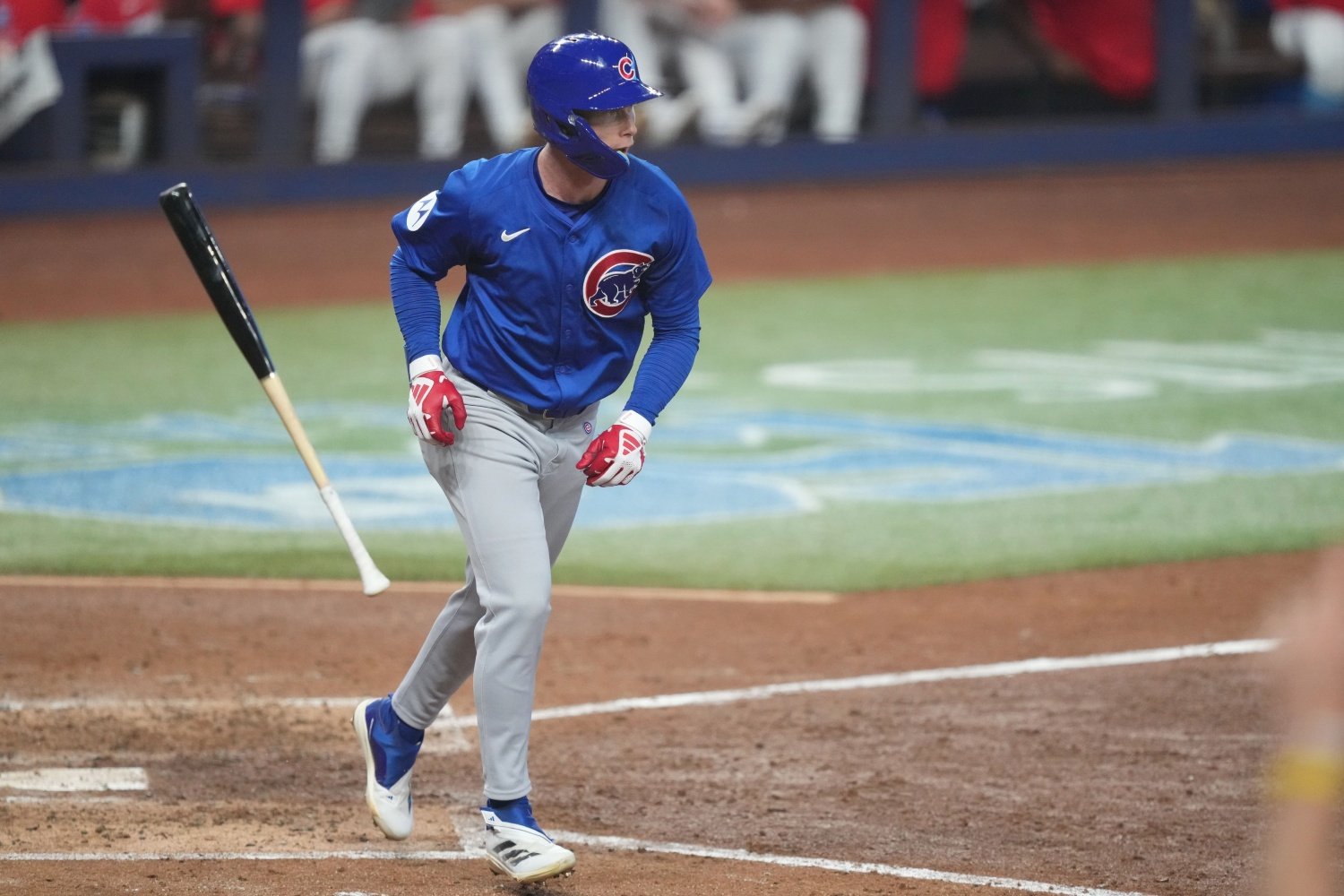 It's no secret what held back Pete Crow-Armstrong in the early stages of his MLB career. He simply swung way, way too much. One of the game's most aggressive hitters, Crow-Armstrong hacked his way right back to Iowa when he got his first chance to claim center field, and even though he played good enough defense to stick with the parent club on a second try, he still looked overanxious and overmatched until the All-Star break. By now, you know what happened next: Crow-Armstrong and the Cubs' hitting coaches implemented a new, more pronounced leg kick, helping him generate both increased power and greater rhythm at the plate. His production soared. For about a month, Crow-Armstrong was the team's most dynamic offensive threat, and you could see what a future, fully-established version of him might look like. It was glorious. After a hideous 0-for-20 start coming out of the All-Star break, he caught fire and batted .317/.368/.548 from late July through the end of August. Everything came together, and while he was still aggressive, that approach was more nuanced, more modulated, and more lethal. Alas, shortly after August gave way to September, Crow-Armstrong sagged back into bad habits. He hit .256/.299/.378 from that last flip of the calendar page to the end of the season. His swing-happy tendencies returned, and trouble ensued. We still saw Crow-Armstrong create some big plays during that phase of his season, but he couldn't do enough of the little things well to sustain above-average production. How often he expands his zone is one critical indicator of Crow-Armstrong's performance. It's not the only one, though. When you map his overall production against his chase rates and the percentage of his batted balls that were pulled, you can see the interaction between those skills and tendencies for him. 4 Early in the season, Crow-Armstrong swung far too often, and he was also trying to pull everything. As a result, he produced nothing. Before the All-Star break, his chase rate on non-strikes was 44.1%, and his weighted on-base average was an anemic .255. Late in July, though, you start to see where everything converges, in a good way. From the break through the end of August, even baking in that nasty slump after the season restarted post-All-Star Game, Crow-Armstrong's chase rate was just 35.2%, and his wOBA was a robust .328. In September, though, that reversion hit him hard. He chased 45.0% of bad balls and his wOBA dipped back to the wrong side of .300, at .296. He couldn't remain even moderately patient, and he paid the price. Notice, though, that he didn't go back to the bad habit of trying to pull everything. If he has a bright future ahead of him at the plate, that might be the key thereto. Consider this swing, from the first half. PCA Swing Thru.mp4 In the context of our current study, the good news here is that Crow-Armstrong didn't pull the ball. If he had made contact, he would have, but he didn't. With those mechanics, he jumped at the ball too much. That rhythm and the ability to be direct and compact with his swing path wasn't yet there. Here's a swing from August, against a similar offering. PCA Aug to LCF.mp4 One of the benefits of Crow-Armstrong's swing change was a bat path that got him to the ball more easily. On the season, he had 14 swings with a length (the total distance traveled by the head of the bat from the moment the swing began to the contact point) under 6.6 feet, resulting in hard-hit batted balls. Of those, 12 came after the All-Star break, and a lot of those generated batted balls to left or left-center field. That good habit stuck around even into September. When he got a pitch in the good part of the zone, he didn't waste it or mishit it. There's a cap on Crow-Armstrong's offensive value, for as long as he continues to expand his zone so often. He went through a five-week stretch during which he brought that approach under control, though, and even once that discipline cracked again, there was a valuable and more durable change in his swing, left behind. If the Cubs can help Crow-Armstrong achieve the consistent organization of mind and body that he found in August throughout a long season, he might yet tap into real stardom.
 -
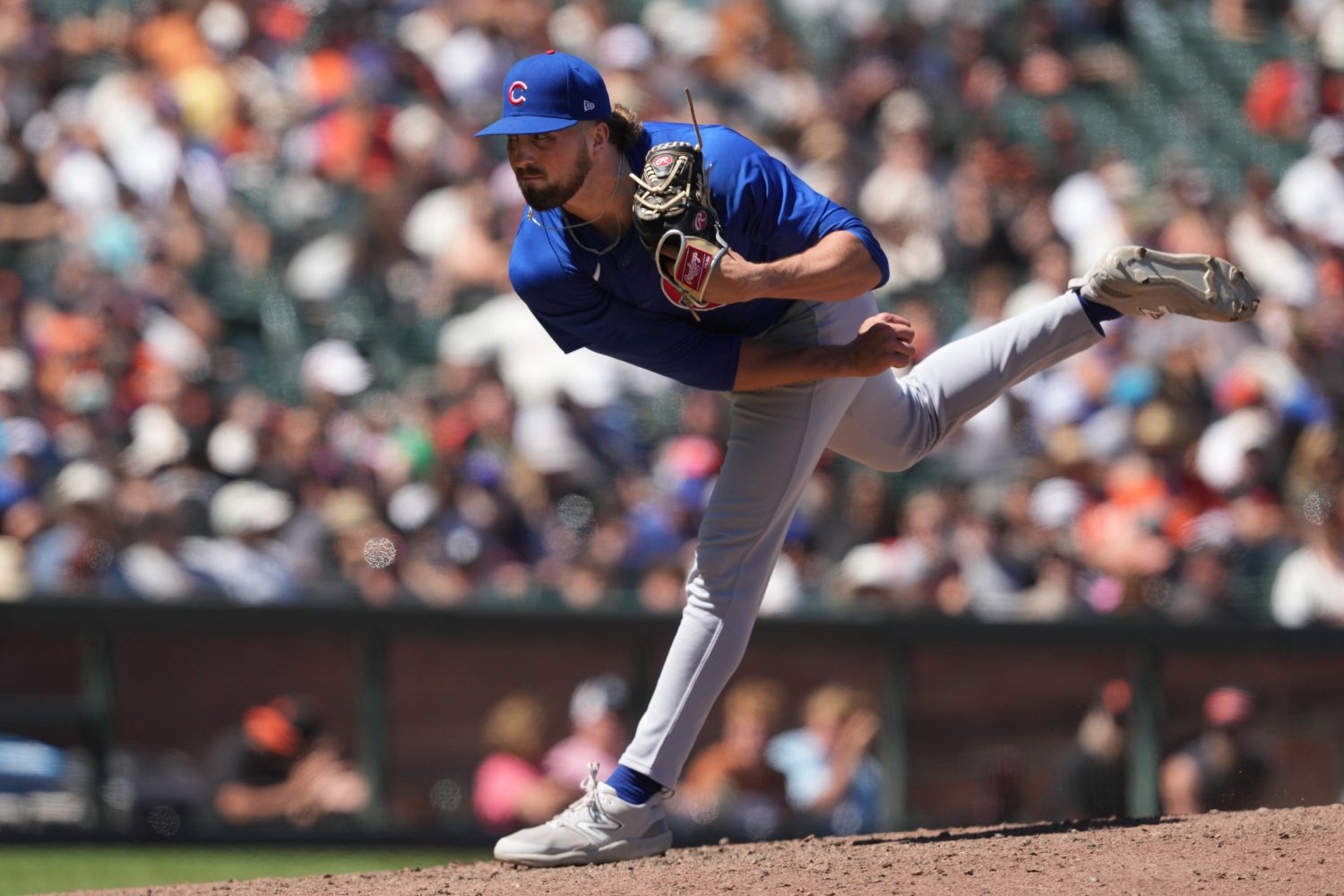 Ask your average Cubs fan, and they'll tell you that what the Cubs really needed this winter was a star. It's why everyone got overwhelmingly excited when the team traded for Kyle Tucker, and why they're so hungry for an Alex Bregman deal to cap off an active winter. THe perception, underpinned by at least some degree of hard truth, has been that the team is too satisfied to line up average players and count on them to slightly overperform, rather than acquiring players so good that they contribute above-average production even when they're going badly. In truth, though, the bigger problem for the 2024 Cubs was a shortfall of depth, especially on the pitching side. They ran into trouble almost immediately, when Justin Steele and Jameson Taillon missed a chunk of time to begin the season and Kyle Hendricks stumbled so badly he nearly needed to be cut before Memorial Day. Adbert Alzolay and Héctor Neris had disappointing seasons right from the start, but the team couldn't really replace them until May and June, when they went into scramble mode and scooped up the likes of Tyson Miller and Jorge López. Jordan Wicks, Javier Assad, and Julian Merryweather injuries virtually finished the knockout blow; the team allowed 4.44 runs per game through the end of June. Even a similarly disastrous loss of pitching wouldn't hit them as hard this season, though. If Steele and Taillon were to go down and Colin Rea proved to be in steep decline, the team would still be able to turn not only to Javier Assad and Ben Brown, but to Cade Horton and Brandon Birdsell. As Andrew Wright wrote earlier today, the team has something like 20 legitimate contenders for seven or eight active bullpen spots. More importantly, it's not just a parade of warm bodies out there. The Cubs have good alternatives if and when injuries or poor performances force them to change plans. I went through the pitchers who appear on the PECOTA Depth Charts pages for each MLB team at Baseball Prospectus, and placed them all into one of two overly broad bins: Good (a projected DRA- of 100 or lower, where 100 is average and lower is better) and Bad (a projected DRA- of 101 or higher). Only one team (you'll have no trouble guessing which one) has more Good pitchers on their Depth Charts than Chicago, at 16. The Cubs are tied with the Orioles with the second-most such pitchers, and they're tied for fourth-lowest in the number of Bad pitchers slated to get some mound time. Team Good Pitchers Bad Pitchers Team Good Pitchers Bad Pitchers ATL 12 10 BAL 16 7 MIA 7 15 BOS 11 11 NYM 15 13 NYY 13 10 PHI 12 11 TB 15 9 WAS 3 18 TOR 10 13 CHC 16 8 CWS 2 19 CIN 7 13 CLE 11 10 MIL 13 7 DET 12 12 PIT 7 15 KC 11 11 STL 6 17 MIN 14 9 ARI 8 13 ANA 4 18 COL 2 19 HOU 13 8 LA 18 7 SAC 8 16 SD 12 10 SEA 11 13 SF 7 14 TEX 13 10 Depth is, of course, a wonderful luxury. However, it also causes some good problems. Keeping all of the compelling arms in their organization won't be possible; the Cubs have to get some high-risk player evaluations right this spring. If they guess wrong about who will and won't stay healthy, or about who will and won't be good, they could lose that advantage in the blink of an eye, after spending the last nine months assiduously stockpiling to create it (not only trading for Miller and signing López, of course, but trading for Nate Pearson and Jack Neely during the summer; signing Matthew Boyd, Colin Rea, and Caleb Thielbar this winter; and trading for squeezed-out relievers Eli Morgan, Ryan Brasier, and Ryan Pressly, from three of the best bullpens in baseball this winter). The obvious alternative comes with its own risks, but it might be the right move. Rather than continuing a pursuit of Bregman, maybe the Cubs' best bet is to trade multiple pieces to the Padres in exchange for Dylan Cease. Doing that would loosen their drum-tight 40-man roster and make it easier to keep the other hurlers worth keeping. It would slightly erode their depth, but it would also not only upgrade the top end of that pitching staff, but make it less likely that the depth is needed. Cease is an innings eater who both works relatively deep within games and has never missed a start in the majors. It is less important (if only slightly so) to have superb depth if Cease is at the front end of the starting rotation. Signing Bregman and trading for Cease is still not an option. The Cubs have to choose between the two. Either would be a welcome upgrade, even though each would cost something significant. Hoyer also has to consider his depth from the position-player perspective, because despite more good depth additions on that side (Carson Kelly, Jon Berti), that group is closer to being a good player shy of being solid than is the pitching corps. Cease might be the target who offers a neater way to utilize the team's existing assets, but Bregman is the one who would address an area of greater likely need.
 -
Although PECOTA projects the Cubs to claim the NL Central by a gaudy 10 games, it might somehow be selling them short. At the moment, they enjoy an edge even the projection system doesn't quite capture. Image courtesy of © Darren Yamashita-Imagn Images Ask your average Cubs fan, and they'll tell you that what the Cubs really needed this winter was a star. It's why everyone got overwhelmingly excited when the team traded for Kyle Tucker, and why they're so hungry for an Alex Bregman deal to cap off an active winter. THe perception, underpinned by at least some degree of hard truth, has been that the team is too satisfied to line up average players and count on them to slightly overperform, rather than acquiring players so good that they contribute above-average production even when they're going badly. In truth, though, the bigger problem for the 2024 Cubs was a shortfall of depth, especially on the pitching side. They ran into trouble almost immediately, when Justin Steele and Jameson Taillon missed a chunk of time to begin the season and Kyle Hendricks stumbled so badly he nearly needed to be cut before Memorial Day. Adbert Alzolay and Héctor Neris had disappointing seasons right from the start, but the team couldn't really replace them until May and June, when they went into scramble mode and scooped up the likes of Tyson Miller and Jorge López. Jordan Wicks, Javier Assad, and Julian Merryweather injuries virtually finished the knockout blow; the team allowed 4.44 runs per game through the end of June. Even a similarly disastrous loss of pitching wouldn't hit them as hard this season, though. If Steele and Taillon were to go down and Colin Rea proved to be in steep decline, the team would still be able to turn not only to Javier Assad and Ben Brown, but to Cade Horton and Brandon Birdsell. As Andrew Wright wrote earlier today, the team has something like 20 legitimate contenders for seven or eight active bullpen spots. More importantly, it's not just a parade of warm bodies out there. The Cubs have good alternatives if and when injuries or poor performances force them to change plans. I went through the pitchers who appear on the PECOTA Depth Charts pages for each MLB team at Baseball Prospectus, and placed them all into one of two overly broad bins: Good (a projected DRA- of 100 or lower, where 100 is average and lower is better) and Bad (a projected DRA- of 101 or higher). Only one team (you'll have no trouble guessing which one) has more Good pitchers on their Depth Charts than Chicago, at 16. The Cubs are tied with the Orioles with the second-most such pitchers, and they're tied for fourth-lowest in the number of Bad pitchers slated to get some mound time. Team Good Pitchers Bad Pitchers Team Good Pitchers Bad Pitchers ATL 12 10 BAL 16 7 MIA 7 15 BOS 11 11 NYM 15 13 NYY 13 10 PHI 12 11 TB 15 9 WAS 3 18 TOR 10 13 CHC 16 8 CWS 2 19 CIN 7 13 CLE 11 10 MIL 13 7 DET 12 12 PIT 7 15 KC 11 11 STL 6 17 MIN 14 9 ARI 8 13 ANA 4 18 COL 2 19 HOU 13 8 LA 18 7 SAC 8 16 SD 12 10 SEA 11 13 SF 7 14 TEX 13 10 Depth is, of course, a wonderful luxury. However, it also causes some good problems. Keeping all of the compelling arms in their organization won't be possible; the Cubs have to get some high-risk player evaluations right this spring. If they guess wrong about who will and won't stay healthy, or about who will and won't be good, they could lose that advantage in the blink of an eye, after spending the last nine months assiduously stockpiling to create it (not only trading for Miller and signing López, of course, but trading for Nate Pearson and Jack Neely during the summer; signing Matthew Boyd, Colin Rea, and Caleb Thielbar this winter; and trading for squeezed-out relievers Eli Morgan, Ryan Brasier, and Ryan Pressly, from three of the best bullpens in baseball this winter). The obvious alternative comes with its own risks, but it might be the right move. Rather than continuing a pursuit of Bregman, maybe the Cubs' best bet is to trade multiple pieces to the Padres in exchange for Dylan Cease. Doing that would loosen their drum-tight 40-man roster and make it easier to keep the other hurlers worth keeping. It would slightly erode their depth, but it would also not only upgrade the top end of that pitching staff, but make it less likely that the depth is needed. Cease is an innings eater who both works relatively deep within games and has never missed a start in the majors. It is less important (if only slightly so) to have superb depth if Cease is at the front end of the starting rotation. Signing Bregman and trading for Cease is still not an option. The Cubs have to choose between the two. Either would be a welcome upgrade, even though each would cost something significant. Hoyer also has to consider his depth from the position-player perspective, because despite more good depth additions on that side (Carson Kelly, Jon Berti), that group is closer to being a good player shy of being solid than is the pitching corps. Cease might be the target who offers a neater way to utilize the team's existing assets, but Bregman is the one who would address an area of greater likely need. View full article
-
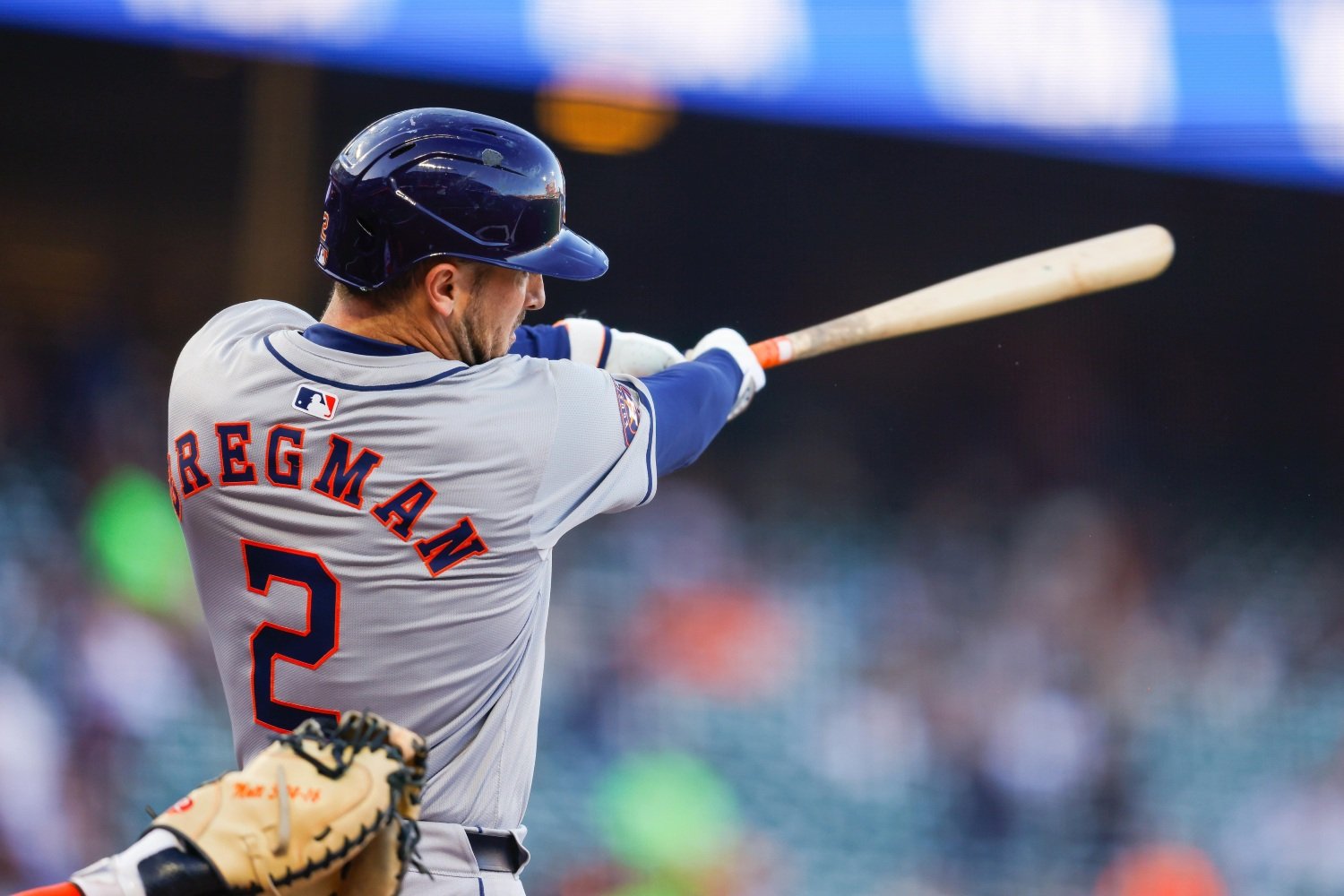 The Cubs have "optimism" about signing free-agent third baseman Alex Bregman, a source said Thursday morning. As I reported Tuesday afternoon, the team has made a multi-year offer that would give Bregman multiple chances to opt out, creatively meeting his desire to be paid at a level commensurate with his track record as an elite infielder without locking the Cubs into a six-year commitment of which they are deeply wary. One apparent snarl in that negotiation, however, turns out not to be one—or at least, not to work the way I was initially led to understand. Here's a crucial passage from Tuesday's piece, about the structure of a deal between the two sides that might allow Bregman to opt out after 2025 having made $35 million or more: After we published that piece, though, I checked in further with sources close to the situation, and heard from a source within another front office. I'm now able to confirm an important modification to that. In the scenario described above, the Cubs would, indeed, be charged the difference between Bregman's annual average value (AAV) and the actual amount he earns in his one season before opting out. However, that money would not be added to their CBT number for 2025, but for 2026. So, rather than having Bregman's CBT number for 2025 leap from (to use the number posited Tuesday) $31.35 million to $35 million as a result of the opt-out, potentially shoving the team over the lowest CBT threshold, that extra $3.65 million would be charged to their CBT ledger for 2026, instead. In fact, upon further review of the language around player options and opt-outs in the CBA, the effect would be even smaller than that. Here's that passage: If the legalese is too much for you, here's the upshot: not only is any difference between the amount actually paid to the player and the AAV of their deal assigned to the year nullified (rather than the one or ones they actually spent with the team), but if there are multiple nullified years, that difference is spread over all the years the player opts out of. So, circling back to the example above, the Cubs would be charged just over $1.2 million in added CBT responsibility per year from 2026-28, should they guarantee him four years and then see him opt out after the first. Right now, the Cubs have roughly $31.6 million in space beneath the first threshold of the luxury tax, according to Cot's Contracts. In practice, we expect that number to be slightly larger, because the Dodgers included cash in the Ryan Brasier trade Tuesday night that will be applied to his salary and reduce both the real expenses and the CBT number for the Cubs, if only by a very small amount. In other words, they could sign Bregman to a deal worth around $30 million and still stay beneath the CBT line, even if said deal is frontloaded and Bregman subsequently opts out this fall. That doesn't mean they'll do so. In fact, while the odds of a union between the two sides continue to rise, the Cubs are also exploring trades that would offload some salary in the event of a Bregman deal. That would give them the breathing room to avoid being pushed over the line if certain players hit key incentives or earn performance-related bonuses; recoup in advance the young talent they wouldn't be able to acquire due to the draft picks and international free-agent spending power they would give up in the process of signing Bregman; and clarify their loaded roster by exchanging some depth on the 40-man roster for more in the lower levels of the farm system. Nico Hoerner's name has heated up in trade talks, just as Bregman's free agency has begun to accelerate toward a resolution. Nonetheless, this clarification is important. Right now, the Cubs have a projected 40-man roster payroll around $191 million. Sources said earlier this winter that the team would likely try to settle that number around $215-225 million. That, too, suggests that there's already room for Bregman, but (for reasons I've also already written about) that they might prefer to subtract some money while adding him. That would also ensure some in-season flexibility in Jed Hoyer's budget, a failsafe the front office values highly. The fact that whatever AAV the two sides agree to will be the fixed CBT obligation of the team to Bregman for 2025 is crucial, because it makes it incrementally but measurably more likely that they can get a deal done with him on terms that fit their ownership-dictated budget and provide all the advantages available to them under the CBA.
 -
As the Cubs and the top remaining free agent circle toward one another, I need to take a moment to correct and clarify something with regard to the contract structure the team and agent Scott Boras have discussed. It could have big ramifications. Image courtesy of © Sergio Estrada-Imagn Images The Cubs have "optimism" about signing free-agent third baseman Alex Bregman, a source said Thursday morning. As I reported Tuesday afternoon, the team has made a multi-year offer that would give Bregman multiple chances to opt out, creatively meeting his desire to be paid at a level commensurate with his track record as an elite infielder without locking the Cubs into a six-year commitment of which they are deeply wary. One apparent snarl in that negotiation, however, turns out not to be one—or at least, not to work the way I was initially led to understand. Here's a crucial passage from Tuesday's piece, about the structure of a deal between the two sides that might allow Bregman to opt out after 2025 having made $35 million or more: After we published that piece, though, I checked in further with sources close to the situation, and heard from a source within another front office. I'm now able to confirm an important modification to that. In the scenario described above, the Cubs would, indeed, be charged the difference between Bregman's annual average value (AAV) and the actual amount he earns in his one season before opting out. However, that money would not be added to their CBT number for 2025, but for 2026. So, rather than having Bregman's CBT number for 2025 leap from (to use the number posited Tuesday) $31.35 million to $35 million as a result of the opt-out, potentially shoving the team over the lowest CBT threshold, that extra $3.65 million would be charged to their CBT ledger for 2026, instead. In fact, upon further review of the language around player options and opt-outs in the CBA, the effect would be even smaller than that. Here's that passage: If the legalese is too much for you, here's the upshot: not only is any difference between the amount actually paid to the player and the AAV of their deal assigned to the year nullified (rather than the one or ones they actually spent with the team), but if there are multiple nullified years, that difference is spread over all the years the player opts out of. So, circling back to the example above, the Cubs would be charged just over $1.2 million in added CBT responsibility per year from 2026-28, should they guarantee him four years and then see him opt out after the first. Right now, the Cubs have roughly $31.6 million in space beneath the first threshold of the luxury tax, according to Cot's Contracts. In practice, we expect that number to be slightly larger, because the Dodgers included cash in the Ryan Brasier trade Tuesday night that will be applied to his salary and reduce both the real expenses and the CBT number for the Cubs, if only by a very small amount. In other words, they could sign Bregman to a deal worth around $30 million and still stay beneath the CBT line, even if said deal is frontloaded and Bregman subsequently opts out this fall. That doesn't mean they'll do so. In fact, while the odds of a union between the two sides continue to rise, the Cubs are also exploring trades that would offload some salary in the event of a Bregman deal. That would give them the breathing room to avoid being pushed over the line if certain players hit key incentives or earn performance-related bonuses; recoup in advance the young talent they wouldn't be able to acquire due to the draft picks and international free-agent spending power they would give up in the process of signing Bregman; and clarify their loaded roster by exchanging some depth on the 40-man roster for more in the lower levels of the farm system. Nico Hoerner's name has heated up in trade talks, just as Bregman's free agency has begun to accelerate toward a resolution. Nonetheless, this clarification is important. Right now, the Cubs have a projected 40-man roster payroll around $191 million. Sources said earlier this winter that the team would likely try to settle that number around $215-225 million. That, too, suggests that there's already room for Bregman, but (for reasons I've also already written about) that they might prefer to subtract some money while adding him. That would also ensure some in-season flexibility in Jed Hoyer's budget, a failsafe the front office values highly. The fact that whatever AAV the two sides agree to will be the fixed CBT obligation of the team to Bregman for 2025 is crucial, because it makes it incrementally but measurably more likely that they can get a deal done with him on terms that fit their ownership-dictated budget and provide all the advantages available to them under the CBA. View full article
-
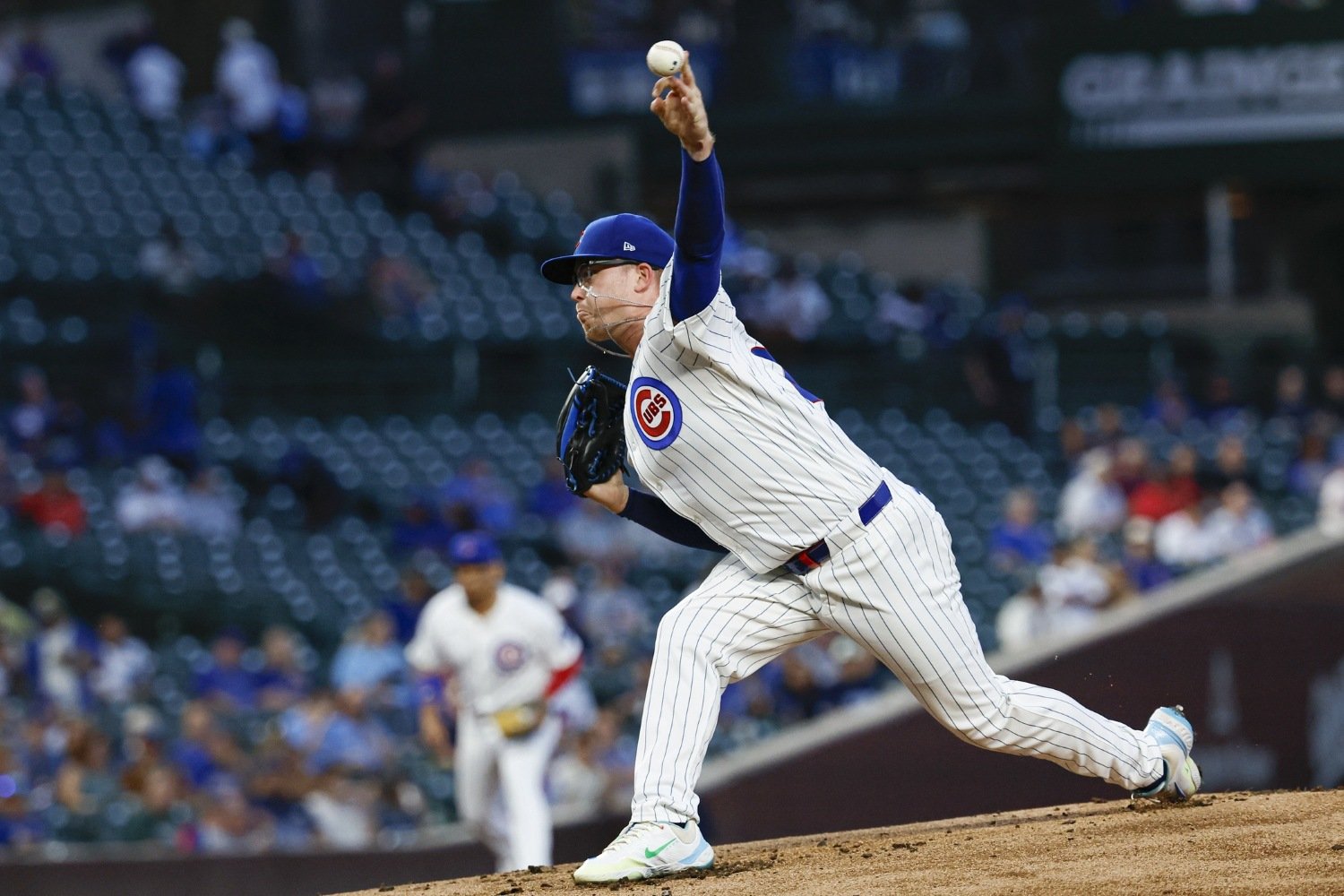 It was not a good season for Jordan Wicks in 2024. There were some encouraging signs, like a slight uptick in velocity and some sustained carry on his four-seamer, but injuries cut the center out of his season, and he spent a chunk of the time during which he was healthy at Triple-A Iowa, trying to work through the problems he created for himself when he set out to solve the problems he'd had upon first arriving in the majors in 2023. He had tried to design a new pitch mix, but had to retreat from that—and didn't find any strikeouts on the other side of his reinvention. In terms of motor preference, Wicks is a natural pronator. That means that, when his arm is free and working the way it more easily does, he turns his thumb downward and/or his palm outward through release of the ball, rather than coming out around the ball and turning his palm inward, toward his right side. Guys who naturally pronate can create good carry on the four-seamer, but the pitches in which they specialize tend to be the ones that move to the arm side—sinkers and changeups. Indeed, if you go back to when Wicks was first entering professional baseball, you'll read many scouting reports praising his change and his feel for the sinker, but concerns about whether he would ever develop a very good breaking pitch. As indicated in the video above, there are ways to make a breaking ball work from a high slot and with pronation as a motor preference, but they're somewhat limited. Wicks tried to break through that wall in 2024. He showed up in the spring with a sweeper, which was on trend for the league as a whole, but it was a strange choice for his combination of arm angle and natural arm action. It might or might not have led to his forearm trouble. We can't say that for sure, but we can observe that the flexor-pronator muscles in the forearm are more prone to injury when one works against that internal wiring, as it were. We can also say that, while the movement on the sweeper was tantalizing, Wicks showed no real command of it. Here's a now-familiar face touching up a bad miss in a pitcher-friendly count, and nearly taking a misplaced sweeper out of the park in April. Tucked Up the Sweeper.mp4 So, between whatever role throwing that breaking ball played in his injury early on and the struggles he found in actually executing it, Wicks made the decision to scrap the sweeper and go to more of a gyro slider. Here are his average movement coordinates by pitch type, with each dot representing one appearance, for 2024. Inside the green circle are the sliders (sweepers, really) he threw over the first two months. Inside the red square are the sliders to which he turned thereafter. That's a good change, and one very much in line with the organization's philosophy on this, both at the time and (especially) now, a handful of months later. Motor preference is a major point of emphasis for new Cubs special assistant/pitching guru Tyler Zombro, who also works at the increasingly famous training academy, Tread Athletics—and is seen in the video in the tweet above. Zombro will surely encourage Wicks to stick with that more vertical slider, and in fact, he might suggest even less of an emphasis on depth. With the carry he got on his fastball in 2024, there's room for Wicks to throw more of a cutterish, hard slider. Indeed, Wicks was throwing the sweepy slider around 82.5 miles per hour early on, but that ratcheted up to 85.5 or so after the shape change. He could pull that up to around 87, where he threw his few nominal cutters last year, and get a bit less drop on the pitch, and still be doing fine. In the video of Zombro, you can hear him allude to a Death Ball-style breaking ball, which is a version of the hard, overhand curve that emphasizes sharp movement and mimicry of the fastball instead of big movement or velocity differentials. With a more gyro, cutterish slider, Wicks would also create room to pivot into more of a Death Ball curve. All of those possible upsides are good news. The bad news is, the version of the tight slider to which Wicks turned in 2024 really didn't miss any bats, or fool anyone at all. We can use Baseball Prospectus's StuffPro and PitchPro to break this down a bit. StuffPro evaluates pitches not based on outcomes, but based on velocity, release, movement, count, and handedness; and PitchPro uses all of those inputs, plus location. Zero is average, and lower is better, because the numbers are represented as the number of expected runs produced against that pitch type in that split per 100 pitches thrown, relative to an average pitch. Here are all the pitch types Wicks threw at least 10 times to batters of a particular handedness in 2024. Pitch Type v. LHH v. RHH StuffPro PitchPro StuffPro PitchPro Four-Seamer -0.3 -0.8 0 -0.6 Sinker -0.1 -0.3 2.2 1.8 Changeup 0 -0.1 -0.3 -0.4 Slider -0.3 0.3 Sweeper -0.8 -0.8 Curveball -0.1 0.6 As you'd expect, Wicks's sweeper was expected to be really good against lefties. Sweepers against same-handed batters are nearly always good. If a pitcher can't consistently execute them or run into injury trouble when they try, though, the pitch doesn't have much real-world utility. Note that these data tell us Wicks has four or five usable pitches against lefties, including the four-seamer, the sinker, and the slider. He just has to execute the latter better, to make up for scrapping the sweeper. Against righties, though, Wicks is in more of a predicament. His changeup and four-seamer work gorgeously, but the current forms of the sinker and the curveball do not work at all. Reshaping the curve into a Death Ball could be a game-changer for Wicks, but he also needs to put the sinker away against righties, altogether. Given that, it would be great if he could find more confidence with the hard, cutterish slider, to set everything else off. It's a dilemma. Wicks has some impressive and valuable traits, but putting his puzzle pieces together to form a complete pitcher with mid-rotation value is surprisingly difficult. Reinventing his slider on the fly didn't quite work. As the Cubs gear up for spring training, it will be interesting to see whether Wicks has come up with a new way to attack the problems he faces in terms of pitch design and achieve more strikeouts, without giving up the good things he did unlock in 2024.
 -
The Chicago Cubs' 2021 first-round pick hoped to fully establish himself as a big-league starter in 2024. It didn't happen, thanks largely to injuries—but also to an inability to miss bats with his breaking ball, a problem he must solve in order to break through this year. Image courtesy of © Kamil Krzaczynski-Imagn Images It was not a good season for Jordan Wicks in 2024. There were some encouraging signs, like a slight uptick in velocity and some sustained carry on his four-seamer, but injuries cut the center out of his season, and he spent a chunk of the time during which he was healthy at Triple-A Iowa, trying to work through the problems he created for himself when he set out to solve the problems he'd had upon first arriving in the majors in 2023. He had tried to design a new pitch mix, but had to retreat from that—and didn't find any strikeouts on the other side of his reinvention. In terms of motor preference, Wicks is a natural pronator. That means that, when his arm is free and working the way it more easily does, he turns his thumb downward and/or his palm outward through release of the ball, rather than coming out around the ball and turning his palm inward, toward his right side. Guys who naturally pronate can create good carry on the four-seamer, but the pitches in which they specialize tend to be the ones that move to the arm side—sinkers and changeups. Indeed, if you go back to when Wicks was first entering professional baseball, you'll read many scouting reports praising his change and his feel for the sinker, but concerns about whether he would ever develop a very good breaking pitch. As indicated in the video above, there are ways to make a breaking ball work from a high slot and with pronation as a motor preference, but they're somewhat limited. Wicks tried to break through that wall in 2024. He showed up in the spring with a sweeper, which was on trend for the league as a whole, but it was a strange choice for his combination of arm angle and natural arm action. It might or might not have led to his forearm trouble. We can't say that for sure, but we can observe that the flexor-pronator muscles in the forearm are more prone to injury when one works against that internal wiring, as it were. We can also say that, while the movement on the sweeper was tantalizing, Wicks showed no real command of it. Here's a now-familiar face touching up a bad miss in a pitcher-friendly count, and nearly taking a misplaced sweeper out of the park in April. Tucked Up the Sweeper.mp4 So, between whatever role throwing that breaking ball played in his injury early on and the struggles he found in actually executing it, Wicks made the decision to scrap the sweeper and go to more of a gyro slider. Here are his average movement coordinates by pitch type, with each dot representing one appearance, for 2024. Inside the green circle are the sliders (sweepers, really) he threw over the first two months. Inside the red square are the sliders to which he turned thereafter. That's a good change, and one very much in line with the organization's philosophy on this, both at the time and (especially) now, a handful of months later. Motor preference is a major point of emphasis for new Cubs special assistant/pitching guru Tyler Zombro, who also works at the increasingly famous training academy, Tread Athletics—and is seen in the video in the tweet above. Zombro will surely encourage Wicks to stick with that more vertical slider, and in fact, he might suggest even less of an emphasis on depth. With the carry he got on his fastball in 2024, there's room for Wicks to throw more of a cutterish, hard slider. Indeed, Wicks was throwing the sweepy slider around 82.5 miles per hour early on, but that ratcheted up to 85.5 or so after the shape change. He could pull that up to around 87, where he threw his few nominal cutters last year, and get a bit less drop on the pitch, and still be doing fine. In the video of Zombro, you can hear him allude to a Death Ball-style breaking ball, which is a version of the hard, overhand curve that emphasizes sharp movement and mimicry of the fastball instead of big movement or velocity differentials. With a more gyro, cutterish slider, Wicks would also create room to pivot into more of a Death Ball curve. All of those possible upsides are good news. The bad news is, the version of the tight slider to which Wicks turned in 2024 really didn't miss any bats, or fool anyone at all. We can use Baseball Prospectus's StuffPro and PitchPro to break this down a bit. StuffPro evaluates pitches not based on outcomes, but based on velocity, release, movement, count, and handedness; and PitchPro uses all of those inputs, plus location. Zero is average, and lower is better, because the numbers are represented as the number of expected runs produced against that pitch type in that split per 100 pitches thrown, relative to an average pitch. Here are all the pitch types Wicks threw at least 10 times to batters of a particular handedness in 2024. Pitch Type v. LHH v. RHH StuffPro PitchPro StuffPro PitchPro Four-Seamer -0.3 -0.8 0 -0.6 Sinker -0.1 -0.3 2.2 1.8 Changeup 0 -0.1 -0.3 -0.4 Slider -0.3 0.3 Sweeper -0.8 -0.8 Curveball -0.1 0.6 As you'd expect, Wicks's sweeper was expected to be really good against lefties. Sweepers against same-handed batters are nearly always good. If a pitcher can't consistently execute them or run into injury trouble when they try, though, the pitch doesn't have much real-world utility. Note that these data tell us Wicks has four or five usable pitches against lefties, including the four-seamer, the sinker, and the slider. He just has to execute the latter better, to make up for scrapping the sweeper. Against righties, though, Wicks is in more of a predicament. His changeup and four-seamer work gorgeously, but the current forms of the sinker and the curveball do not work at all. Reshaping the curve into a Death Ball could be a game-changer for Wicks, but he also needs to put the sinker away against righties, altogether. Given that, it would be great if he could find more confidence with the hard, cutterish slider, to set everything else off. It's a dilemma. Wicks has some impressive and valuable traits, but putting his puzzle pieces together to form a complete pitcher with mid-rotation value is surprisingly difficult. Reinventing his slider on the fly didn't quite work. As the Cubs gear up for spring training, it will be interesting to see whether Wicks has come up with a new way to attack the problems he faces in terms of pitch design and achieve more strikeouts, without giving up the good things he did unlock in 2024. View full article
-
In what should be their final bullpen move of the offseason, the Cubs have swooped in to scoop up the Dodgers' veteran hurler, who had been designated for assignment last week. Image courtesy of © Kiyoshi Mio-Imagn Images Ever since the Dodgers were forced to cut Ryan Brasier to accommodate Kirby Yates last week, the Cubs have made sense as his landing place. Brasier, 37, is on the second year of a very affordable two-year, $9-million pact he signed with the Dodgers on this very date last year. He'll join Ryan Pressly, Caleb Thielbar and Eli Morgan as veteran newcomers in an overhauled Chicago relief corps. You can read much more about Brasier (and the implications this move could have for the balance of the Cubs' plans for this offseason) here. We'll also update this with further details, as we gather them. An erstwhile slider monster who only found very inconsistent success across a handful of seasons with the Red Sox, Brasier landed in Los Angeles at the 2023 trade deadline, just after he'd begun tinkering with a cutter. He then fully implemented that pitch, and his career took off. He only pitch 66 2/3 regular-season and 11 1/3 postseason innings for the Dodgers, but in that time, his stock skyrocketed. His fastball shapes aren't especially deceptive, given his arm slot, but he makes up for that with solid velocity that plays up because of plus extension at release. Brasier's ability to lean on the slider but keep hitters off his fastball with the cutter, effectively making it a bridge pitch that works well because he works in short bursts, has proved transformative. The really nice thing about Brasier, relative to fellow superannuated righty and free agent David Robertson, is that he only stands to make $4.5 million in 2025. That leaves the Cubs some financial wiggle room, as they now turn their attention to hunting big game (be it Alex Bregman, Dylan Cease, or some other, mystery target) in the endgame of the offseason. That's medium-term, at the moment. We have yet to suss out whom the Cubs will give up to get Brasier, but it won't be someone from their 40-man roster, which means they'll have to cut someone or make another trade, since their own 40-man was also full before this move. Plenty of balls remain in the air here. UPDATE: Maddie Lee of the Sun-Times brings the news first: Brasier begets a player to be named later, so the Cubs will trim someone inessential—there are plenty of options at the end of the pitching side of the roster, right now—and absorb the salary, without giving up a major piece. However, that doesn't mean the player eventually named won't have real value. The Cubs weren't the only team interested in Brasier and the list of players from which they and the Dodgers will pick the return at some point is likely to include at least an interesting prospect or two, albeit a lower-level one. View full article
