


Cubs Video
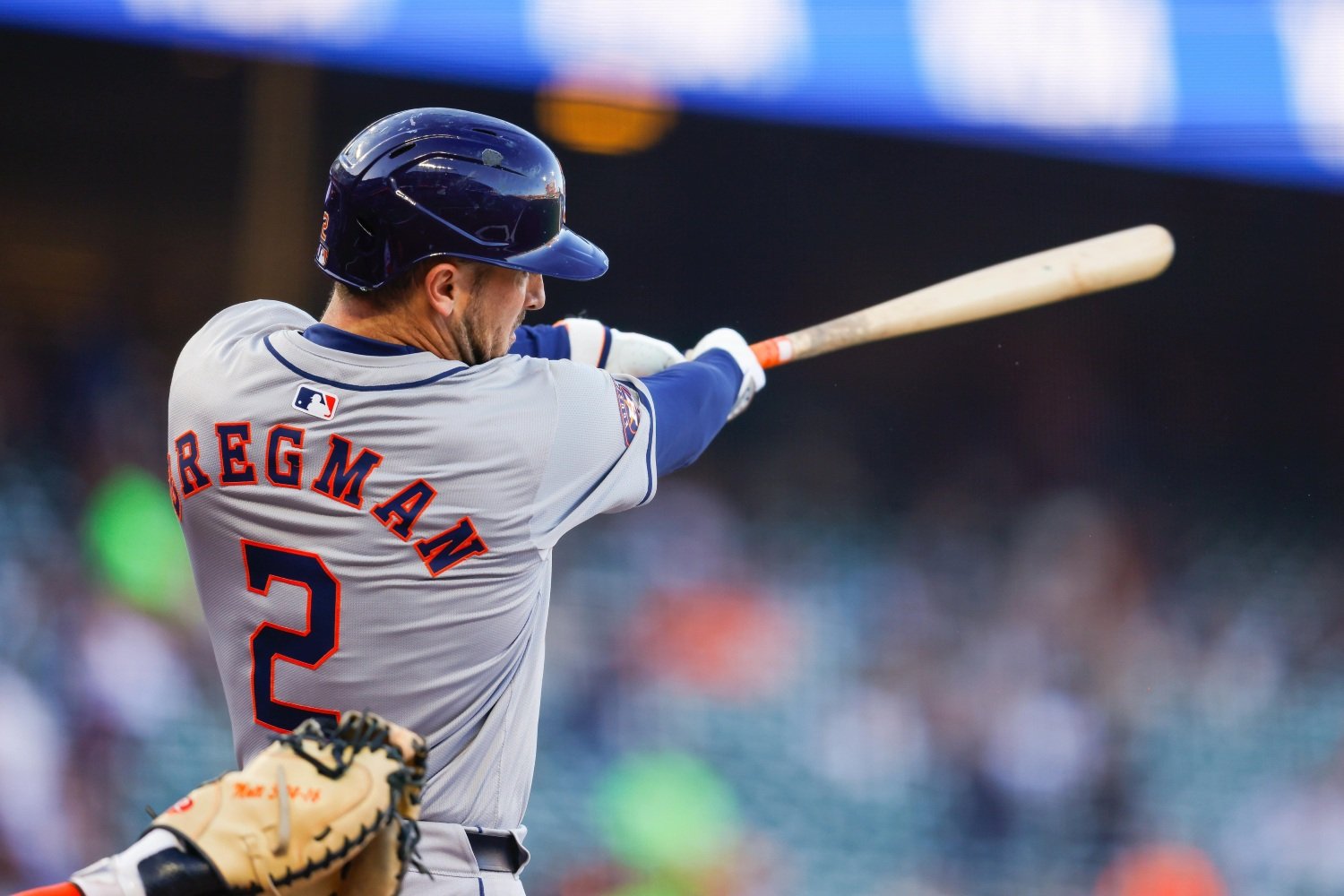
The Cubs have "optimism" about signing free-agent third baseman Alex Bregman, a source said Thursday morning. As I reported Tuesday afternoon, the team has made a multi-year offer that would give Bregman multiple chances to opt out, creatively meeting his desire to be paid at a level commensurate with his track record as an elite infielder without locking the Cubs into a six-year commitment of which they are deeply wary. One apparent snarl in that negotiation, however, turns out not to be one—or at least, not to work the way I was initially led to understand.
Here's a crucial passage from Tuesday's piece, about the structure of a deal between the two sides that might allow Bregman to opt out after 2025 having made $35 million or more:
QuoteOne way or another, there's likely to be a wrinkle. That's because, if Bregman makes (say) $34 million in 2025 and then opts out, it could push the Cubs over the luxury tax line at the last moment, by changing whatever his AAV would be over four years to that higher number.
After we published that piece, though, I checked in further with sources close to the situation, and heard from a source within another front office. I'm now able to confirm an important modification to that. In the scenario described above, the Cubs would, indeed, be charged the difference between Bregman's annual average value (AAV) and the actual amount he earns in his one season before opting out. However, that money would not be added to their CBT number for 2025, but for 2026. So, rather than having Bregman's CBT number for 2025 leap from (to use the number posited Tuesday) $31.35 million to $35 million as a result of the opt-out, potentially shoving the team over the lowest CBT threshold, that extra $3.65 million would be charged to their CBT ledger for 2026, instead.
In fact, upon further review of the language around player options and opt-outs in the CBA, the effect would be even smaller than that. Here's that passage:
QuoteIf a Player fails to exercise or chooses to nullify a Player Option Year that is deemed a Guaranteed Year pursuant to Section E(5)(a)(ii) above, the difference between the amount paid to the Player under his Contract (including any Option Buyout payment) and the amount that has been attributed to Actual Club Payroll (excluding any amounts attributed pursuant to subparagraph (ii) below) of the Club under that Contract shall be added to (or subtracted from) Actual Club Payroll in the Contract Year in which the Player Option Year falls. If a Player fails to exercise or chooses to nullify multiple Player Option Years, the difference between the amount paid to the Player and the amount allocated to Actual Club Payroll shall be applied pro rata over the Contract Years that were nullified.
If the legalese is too much for you, here's the upshot: not only is any difference between the amount actually paid to the player and the AAV of their deal assigned to the year nullified (rather than the one or ones they actually spent with the team), but if there are multiple nullified years, that difference is spread over all the years the player opts out of. So, circling back to the example above, the Cubs would be charged just over $1.2 million in added CBT responsibility per year from 2026-28, should they guarantee him four years and then see him opt out after the first.
Right now, the Cubs have roughly $31.6 million in space beneath the first threshold of the luxury tax, according to Cot's Contracts. In practice, we expect that number to be slightly larger, because the Dodgers included cash in the Ryan Brasier trade Tuesday night that will be applied to his salary and reduce both the real expenses and the CBT number for the Cubs, if only by a very small amount. In other words, they could sign Bregman to a deal worth around $30 million and still stay beneath the CBT line, even if said deal is frontloaded and Bregman subsequently opts out this fall.
That doesn't mean they'll do so. In fact, while the odds of a union between the two sides continue to rise, the Cubs are also exploring trades that would offload some salary in the event of a Bregman deal. That would give them the breathing room to avoid being pushed over the line if certain players hit key incentives or earn performance-related bonuses; recoup in advance the young talent they wouldn't be able to acquire due to the draft picks and international free-agent spending power they would give up in the process of signing Bregman; and clarify their loaded roster by exchanging some depth on the 40-man roster for more in the lower levels of the farm system. Nico Hoerner's name has heated up in trade talks, just as Bregman's free agency has begun to accelerate toward a resolution.
Nonetheless, this clarification is important. Right now, the Cubs have a projected 40-man roster payroll around $191 million. Sources said earlier this winter that the team would likely try to settle that number around $215-225 million. That, too, suggests that there's already room for Bregman, but (for reasons I've also already written about) that they might prefer to subtract some money while adding him. That would also ensure some in-season flexibility in Jed Hoyer's budget, a failsafe the front office values highly. The fact that whatever AAV the two sides agree to will be the fixed CBT obligation of the team to Bregman for 2025 is crucial, because it makes it incrementally but measurably more likely that they can get a deal done with him on terms that fit their ownership-dictated budget and provide all the advantages available to them under the CBA.





Recommended Comments
Create an account or sign in to comment
You need to be a member in order to leave a comment
Create an account
Sign up for a new account in our community. It's easy!
Register a new accountSign in
Already have an account? Sign in here.
Sign In Now