


Cubs Video
Whether Javier Báez is easy to root for, for you, depends a lot on what you want from a baseball player. No player in modern memory was more capable of taking your breath away than Báez, and at his best, few players in the last decade were better. Báez blended a bunch of unsubtle and typical baseball skills--top-of-the-scale raw power, better contact ability than you'd guess, and a throwing arm you had to see to believe--with some extremely subtle, even almost invisible skills that made him unique. That much of that has to be put in the past tense, though, makes the whole thing even more bittersweet than it might be otherwise.
His talent was obvious even before he was drafted, back in 2011, and at his peak, it was crazy loud. The combination of a dancer's feet and a heavyweight's hands made him an extraordinary power hitter and defender at shortstop. His aggressiveness--he might have been, for a few years, the most aggressive all-phases player of the game I have ever seen--made the field and the crowd buzz with electricity whenever he was around the ball. His hot streak of stolen bases, extra bases taken against sleepy or too-slow defenses, and sensational, explosive defensive plays in 2018 was a tour de force more exhilarating and more valuable than Sammy Sosa's 20-home run month in 1998. Because it was slightly harder to capture it in statistics, it's not remembered this way, but it might well be the most incandescent stretch in Cubs history. He took over baseball games that summer in a complete and imperious way, possible most of the time only for starting pitchers--but more often than starting pitchers could do it. His game gave off tidal waves of heat and light.
At times, of course, it all ran too hot. Báez's aggressiveness in the batter's box slightly ate into the utility of his hit tool, which has been drastically underrated across the years because of that fact. His fearlessness on defense led to some errors of enthusiasm, and the same on the bases (though it led to miraculously few bad outs) occasionally led to injuries, and while he played through lots of mostly unmentioned injuries over the years, he didn't always help his team by doing so. Sometimes, he was too compromised to be the version of himself that deserved to play, especially on the deeper iterations of the Cubs with whom he toiled.
That's a full paragraph of forgivable foibles. The less easily comprehensible times were the ones when the switch on that 1,000-watt bulb that is his baseball IQ seemed to have been left in the "OFF" position for the day. He lost track of the outs while on the bases more often than is remotely explicable, given how smart and tenacious he was the rest of the time. He had some indefensibly uncompetitive at-bats, on days like those, where even the reverse thrusters he usually engaged to push against the drag of his lousy plate discipline seemed not to be there.
Báez needed the crowd, the external cues to deepen his concentration. That's why he folded in 2020, much more so than the lack of available video to review in the dugout, and it's why the Cubs ultimately abandoned their efforts to keep him beyond 2021. It is part, but not the whole, of the explanation for his calamitous tenure with the Tigers.
There's so much to the person of Báez. He's a kid who lost his dad at a young age, who moved from home in Puerto Rico to gain his best possible future opportunity by playing ball in Florida. He's not well-educated, because quietly, Florida spends a lot of time manufacturing ballplayers in schools that are an insult to that word. He's also a big brother to a sister who lived with disability her whole life, and whom his family lost just as his career was about to take off. He's a family man, unstained by any accusations of ugly personal behavior. He's a smart and passionate person, but not necessarily the kind of person the baseball world demands that someone be, in order to maximize on-field success. He's not as ebullient off the field as the brilliance of his game on the field would imply, and at times, that made things hard for him--with fans, with teammates, and with the media.
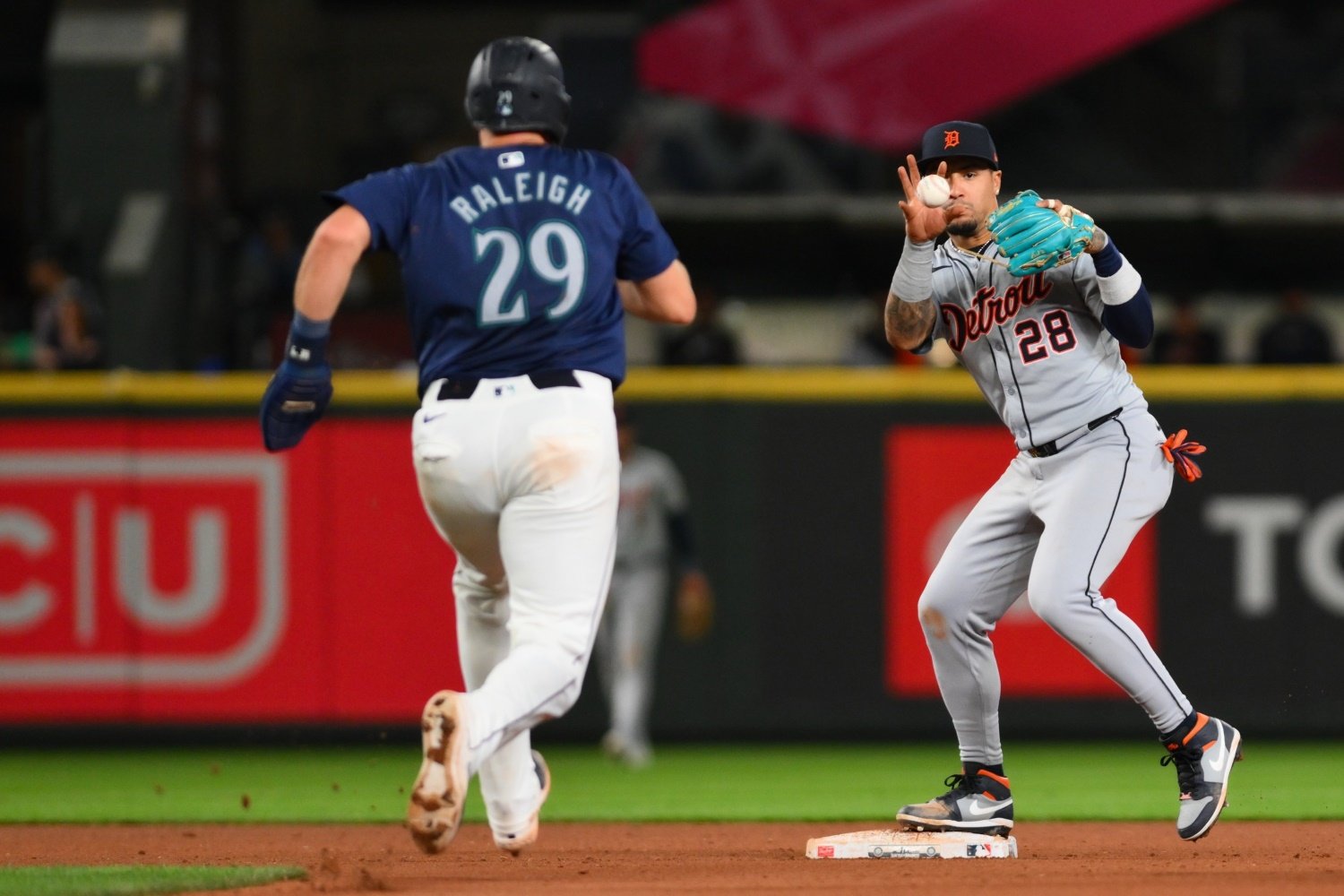
Báez worked hard to become an exceptional player. He did it. He's done little to earn real enmity or frustration from any fan base. Yet, his work hasn't always been directed to improving the right things, and the way his career has cratered is just plain sad, for anyone who considers themselves a baseball fan. The kid who caught and played center field in the two halves of doubleheaders when he was a teenager never stopped wanting to be right in the center of the action, and it visibly pains him not to be able to contribute meaningfully to the struggling Tigers now, even while playing as central a position as MLB has.
It's getting hard to remember how he reshaped the game. The way he broke down Will Craig of the Pirates on that May day in 2021 will live forever, because the internet has gotten its teeth deep into it, but that was just the most extreme example. Much more easily forgotten, especially as layers of dust and years of a sub-.500 OPS cake on top of them, are the time he let a soft liner drop to turn one out into two--during the NLCS; or the multiple times he played cat-and-mouse the almost equally brilliant Lorenzo Cain on balls that made their way out to center while Cain was there and Báez was coming around to third base--and then, suddenly, home. His showy but simple plays, like the tag he made while pointing in at Yadier Molina in the 2017 World Baseball Classic or any number of swim moves on slides into bases, remain vivid because they show up on Twitter and YouTube, but it's easier to forget the times (in a crucial late-season game in Pittsburgh in 2015, and again in NLDS Game 5 in 2017) when he picked a grounder cleanly and came home with a Statcast-breaking throw to nail a runner whom everyone had assumed would score fairly easily. The titanic home runs and the mouthing off with Amir Garrett have highlight value, but the way he waited back on an 0-2 pitch and varied his lower-half timing to hit an opposite-field, game-winning homer in 2019 receives much less remembered attention.
If you're looking for a perfect ballplayer, keep looking. The Cubs of the era to which Báez belonged had better players, overall--or at least, guys who contributed more consistent value over half a decade and change. In history, there have been some Cubs (Sosa, Ron Santo, young Ernie Banks) who were similarly great even to peak Báez. None of them set baseball on a new angle on the table before you, though, to make it possible to see it in new light and understand new facets of it. Báez did. It's one of the great tragedies of the baseball moment that that version of Báez seems to be so far gone, so soon, but it will still be good to see him at Wrigley Field again.





Recommended Comments
Create an account or sign in to comment
You need to be a member in order to leave a comment
Create an account
Sign up for a new account in our community. It's easy!
Register a new accountSign in
Already have an account? Sign in here.
Sign In Now