Matthew Trueblood
-
Posts
2,481 -
Joined
-
Last visited
-
Days Won
2
Content Type
Profiles
Joomla Posts 1
Chicago Cubs Videos
Chicago Cubs Free Agent & Trade Rumors, Notes, & Tidbits
2026 Chicago Cubs Top Prospects Ranking
News
2023 Chicago Cubs Draft Picks
Guides & Resources
2024 Chicago Cubs Draft Picks
The Chicago Cubs Players Project
2025 Chicago Cubs Draft Pick Tracker
2026 Chicago Cubs Draft Tracker: Picks & Bonuses
Blogs
Events
Forums
Store
Gallery
Everything posted by Matthew Trueblood
-
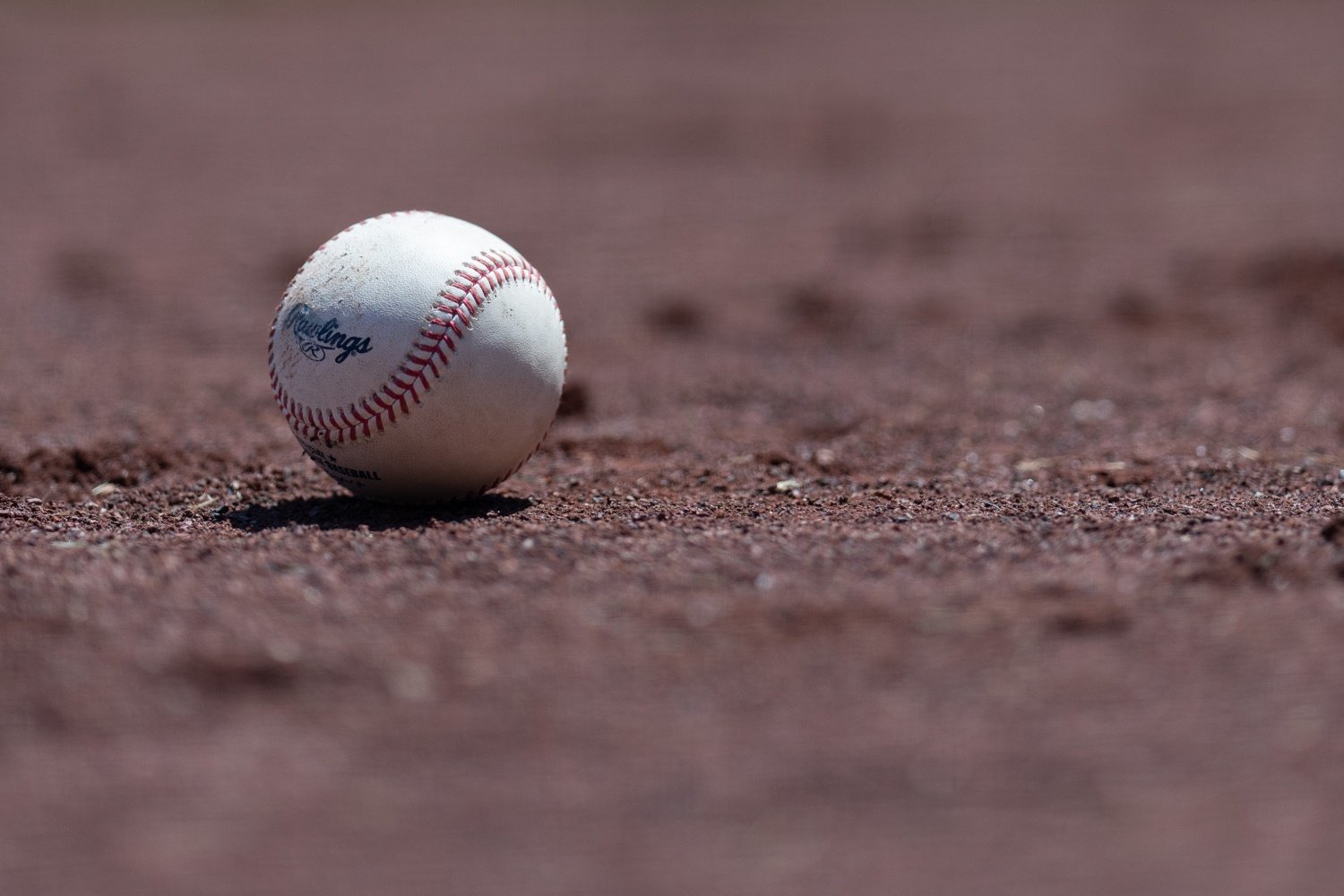 If you tuned into any Cubs games down the stretch this season, you probably heard an allusion or two by Marquee Sports Network play-by-play man Boog Sciambi to the weird weather patterns and drastic splits for the team at Wrigley Field this year. Behind the scenes, members of the Cubs themselves believe this was a real factor in their frustrating inability to consistently score runs at home this year, too. As a pivotal offseason looms, the team needs to properly evaluate its own players before deciding where to make key upgrades, and that means testing and fully comprehending those theories. The basic math backs up both the seasoned observers and the cloak-and-dagger team apologists. Only at T-Mobile Park in Seattle did teams score fewer runs per game this year than at Wrigley, and at only four full-time parks--Oakland Coliseum, Busch Stadium, Kauffman Stadium, and Oracle Park in San Francisco--did a lower percentage of plate appearances end in home runs. That's all very unusual for the century-old ballpark, the offense-friendly reputation of which has sometimes been overstated but which has always played at least fair. It's drawn plenty of concern, because it would seem to distort the real production of players like Seiya Suzuki, Cody Bellinger, and Ian Happ. It even risks leading the team to give up too soon on hitters who go through periods of deep struggle, the way Pete Crow-Armstrong, Miguel Amaya, and--gulp--Christopher Morel did. Without getting to the bottom of the issue, it's very hard to figure out what the team should do to improve a roster that fell short of the playoffs for (in all important respects) the seventh straight season. Let's try to do that, then. We've taken a surface-level measurement of the reality of the effect, but now, let's interrogate the nature of it. If the weather--temperature, air pressure, some funky interaction between new construction in the neighborhood and prevailing wind patterns or an overabundance of night games--were at fault, we would expect to see a wide gap between expected and actual results on batted balls. We would expect to see long fly balls die shorter, leading to long hits turning into loud outs. That's somewhat in evidence, but only very imperfectly. As a test sample, let's take all batted balls at 95 miles per hour or harder, within a launch-angle band of 10-35 degrees. We're not using Baseball Savant's reverse-engineered formula, here, but we can call these Barrels just as credibly. If a ball is hit at least 95 MPH and is on a medium line or is a non-lazy fly ball, it was barreled, and it fits into a bucket of batted balls worthy of study for these purposes. On such batted balls, this year, batters at Wrigley Field enjoyed the 19th-highest home-run rate, the 22nd-best BABIP, the 22nd-best OPS and the 20th-best ISO in the league. The park was, in other words, unfriendly to balls hit hard in the air, but they were closer to average than to the true bottom of the barrel. That doesn't mean it was the air quality or the wind knocking the ball down, though. The league's average exit velocity on those barreled balls at Wrigley was just the 24th-highest of the 30 parks. Using the specific speed and trajectory of each batted ball, Wrigley yielded more home runs and more triples (and fewer doubles, but by a smaller margin than the homers it added) than should have been expected. In total, 40.8% of barreled balls at Wrigley went for extra-base hits, whereas only 39.4% were expected. No, the problem with the barrels at Wrigley was, there were radically few of them. No other park in the league saw fewer hard-hit balls in the air. The median number of such batted balls at a park, league-wide, was 736. At Wrigley, there were only 661. It's hard to blame the weather for the fact that hitters never generated the kind of batted balls weather hurts, in the first place. You could make the case, if you wanted, that the frigidity of April--there were 679 plate appearances at Wrigley that month in games in which the temperature was below 50 degrees, over 300 more than at any other park in the majors all year--made it harder for hitters to access their 'A' swings and blast the ball, but it's a bit of a reach. And even in those games, the park played essentially neutral, when the ball was well-struck in the air. It just didn't happen enough. Let's consider another possibility, then. What if the Cubs themselves are driving this? This is a key thing to consider about the whole topic, by the way: If you're eager to excuse the Cubs hitters who didn't create enough home offense, you have to also reckon with the fact that the team's pitchers benefited from this phenomenon. Or else, maybe an underpowered Chicago batting order and a wily Chicago pitching staff helped create an environment that mirrored their own habits--a game with fewer truly zapped baseballs? In short: it didn't happen that way. We do still need to think about the way these park effects quietly made Justin Steele, Jameson Taillon, and Shota Imanaga look better than they were, but it's not just about the Cubs being involved. As proof: the Cubs and their opponents combined to generate a Barrel Rate 4.8% higher on the road than the Cubs and their opponents at Wrigley. By far, that is the widest differential in MLB. So, it's only fractionally weather that made Wrigley such a tough place to hit this year, and it's not the Cubs themselves, at all. What, then? We know it's not the ball. After all, the league now standardizes pre-game care for the baseballs, including providing a humidor in which the balls are stored before use. It's one safeguard put into place to blunt the differences between parks in terms of what was possible offensively. My response to that is: Maybe the humidor sucks. Maybe the clubhouse staff are bad at using it, or Craig Counsell leaned on a dial back in April while having a conversation with Yan Gomes, and no one ever noticed he had changed the settings. I would not rule out that the ball has been deadened, inadvertently, by something in the chain of custody through which they pass at Wrigley Field. Hitters aren't lifting the ball as often, or hitting it hard as often, as they should be. It's hard to name a way that the humidor-stored baseballs and the surrounding environs could combine to kill the ball's coefficient of restitution, without making it fly less well, but maybe there's something there. One way or another, though, hitters aren't generating good contact in the first place. That was the theme of this year at Wrigley Field--not good contact unrewarded, but surprisingly little good contact, period. Notably, the league is also hitting more ground balls than average at Wrigley this year--that is, the Cubs and their opponents hit more grounders there than when the team is on the road. To be safe, I lopped off all games prior to May 1, and ran the same numbers. I then tried lopping off all games with a game-time temp under 60 degrees. No material changes whatsoever. Regardless of conditions, when at Wrigley, the Cubs and their opponents hit the ball harder (and hit it hard more often), hit it on the ground less (and concentrated more of their in-air contact in the best possible cluster of launch angles), and got much better results at other parks than at Wrigley. This could be a random fluke, resolved by no remedy other than time and the slow erosion of memory. The data say, though, that there's more here than peculiar, persistent, despair-inducing weather patterns. The ball didn't do normal things at Wrigley Field this year. The team and the league should look closely at how to adjust that this winter, if possible. If not, the mystery of the extra ground balls and missing barrels will have to continue next year.
 -
The fault was not in the air of the (pitcher-)friendly confines, but in the thing flying through it. Image courtesy of © Stan Szeto - USA Today Images If you tuned into any Cubs games down the stretch this season, you probably heard an allusion or two by Marquee Sports Network play-by-play man Boog Sciambi to the weird weather patterns and drastic splits for the team at Wrigley Field this year. Behind the scenes, members of the Cubs themselves believe this was a real factor in their frustrating inability to consistently score runs at home this year, too. As a pivotal offseason looms, the team needs to properly evaluate its own players before deciding where to make key upgrades, and that means testing and fully comprehending those theories. The basic math backs up both the seasoned observers and the cloak-and-dagger team apologists. Only at T-Mobile Park in Seattle did teams score fewer runs per game this year than at Wrigley, and at only four full-time parks--Oakland Coliseum, Busch Stadium, Kauffman Stadium, and Oracle Park in San Francisco--did a lower percentage of plate appearances end in home runs. That's all very unusual for the century-old ballpark, the offense-friendly reputation of which has sometimes been overstated but which has always played at least fair. It's drawn plenty of concern, because it would seem to distort the real production of players like Seiya Suzuki, Cody Bellinger, and Ian Happ. It even risks leading the team to give up too soon on hitters who go through periods of deep struggle, the way Pete Crow-Armstrong, Miguel Amaya, and--gulp--Christopher Morel did. Without getting to the bottom of the issue, it's very hard to figure out what the team should do to improve a roster that fell short of the playoffs for (in all important respects) the seventh straight season. Let's try to do that, then. We've taken a surface-level measurement of the reality of the effect, but now, let's interrogate the nature of it. If the weather--temperature, air pressure, some funky interaction between new construction in the neighborhood and prevailing wind patterns or an overabundance of night games--were at fault, we would expect to see a wide gap between expected and actual results on batted balls. We would expect to see long fly balls die shorter, leading to long hits turning into loud outs. That's somewhat in evidence, but only very imperfectly. As a test sample, let's take all batted balls at 95 miles per hour or harder, within a launch-angle band of 10-35 degrees. We're not using Baseball Savant's reverse-engineered formula, here, but we can call these Barrels just as credibly. If a ball is hit at least 95 MPH and is on a medium line or is a non-lazy fly ball, it was barreled, and it fits into a bucket of batted balls worthy of study for these purposes. On such batted balls, this year, batters at Wrigley Field enjoyed the 19th-highest home-run rate, the 22nd-best BABIP, the 22nd-best OPS and the 20th-best ISO in the league. The park was, in other words, unfriendly to balls hit hard in the air, but they were closer to average than to the true bottom of the barrel. That doesn't mean it was the air quality or the wind knocking the ball down, though. The league's average exit velocity on those barreled balls at Wrigley was just the 24th-highest of the 30 parks. Using the specific speed and trajectory of each batted ball, Wrigley yielded more home runs and more triples (and fewer doubles, but by a smaller margin than the homers it added) than should have been expected. In total, 40.8% of barreled balls at Wrigley went for extra-base hits, whereas only 39.4% were expected. No, the problem with the barrels at Wrigley was, there were radically few of them. No other park in the league saw fewer hard-hit balls in the air. The median number of such batted balls at a park, league-wide, was 736. At Wrigley, there were only 661. It's hard to blame the weather for the fact that hitters never generated the kind of batted balls weather hurts, in the first place. You could make the case, if you wanted, that the frigidity of April--there were 679 plate appearances at Wrigley that month in games in which the temperature was below 50 degrees, over 300 more than at any other park in the majors all year--made it harder for hitters to access their 'A' swings and blast the ball, but it's a bit of a reach. And even in those games, the park played essentially neutral, when the ball was well-struck in the air. It just didn't happen enough. Let's consider another possibility, then. What if the Cubs themselves are driving this? This is a key thing to consider about the whole topic, by the way: If you're eager to excuse the Cubs hitters who didn't create enough home offense, you have to also reckon with the fact that the team's pitchers benefited from this phenomenon. Or else, maybe an underpowered Chicago batting order and a wily Chicago pitching staff helped create an environment that mirrored their own habits--a game with fewer truly zapped baseballs? In short: it didn't happen that way. We do still need to think about the way these park effects quietly made Justin Steele, Jameson Taillon, and Shota Imanaga look better than they were, but it's not just about the Cubs being involved. As proof: the Cubs and their opponents combined to generate a Barrel Rate 4.8% higher on the road than the Cubs and their opponents at Wrigley. By far, that is the widest differential in MLB. So, it's only fractionally weather that made Wrigley such a tough place to hit this year, and it's not the Cubs themselves, at all. What, then? We know it's not the ball. After all, the league now standardizes pre-game care for the baseballs, including providing a humidor in which the balls are stored before use. It's one safeguard put into place to blunt the differences between parks in terms of what was possible offensively. My response to that is: Maybe the humidor sucks. Maybe the clubhouse staff are bad at using it, or Craig Counsell leaned on a dial back in April while having a conversation with Yan Gomes, and no one ever noticed he had changed the settings. I would not rule out that the ball has been deadened, inadvertently, by something in the chain of custody through which they pass at Wrigley Field. Hitters aren't lifting the ball as often, or hitting it hard as often, as they should be. It's hard to name a way that the humidor-stored baseballs and the surrounding environs could combine to kill the ball's coefficient of restitution, without making it fly less well, but maybe there's something there. One way or another, though, hitters aren't generating good contact in the first place. That was the theme of this year at Wrigley Field--not good contact unrewarded, but surprisingly little good contact, period. Notably, the league is also hitting more ground balls than average at Wrigley this year--that is, the Cubs and their opponents hit more grounders there than when the team is on the road. To be safe, I lopped off all games prior to May 1, and ran the same numbers. I then tried lopping off all games with a game-time temp under 60 degrees. No material changes whatsoever. Regardless of conditions, when at Wrigley, the Cubs and their opponents hit the ball harder (and hit it hard more often), hit it on the ground less (and concentrated more of their in-air contact in the best possible cluster of launch angles), and got much better results at other parks than at Wrigley. This could be a random fluke, resolved by no remedy other than time and the slow erosion of memory. The data say, though, that there's more here than peculiar, persistent, despair-inducing weather patterns. The ball didn't do normal things at Wrigley Field this year. The team and the league should look closely at how to adjust that this winter, if possible. If not, the mystery of the extra ground balls and missing barrels will have to continue next year. View full article
-
Robles is 6'0" in shoes, though. Just changes the power upside, the ability to shorten the swing, all of it. I think the low-end comp is Victor Reyes or Lewis Brinson, where they'll tantalize but you know they'll never really make it, and the higher-end comp is decidedly not Judge or Judge-like for me; it's Alex Rios.
-
A Glimpse of the Jaguar: What Kevin Alcántara Offers Cubs Going Forward
Matthew Trueblood posted an article in Cubs
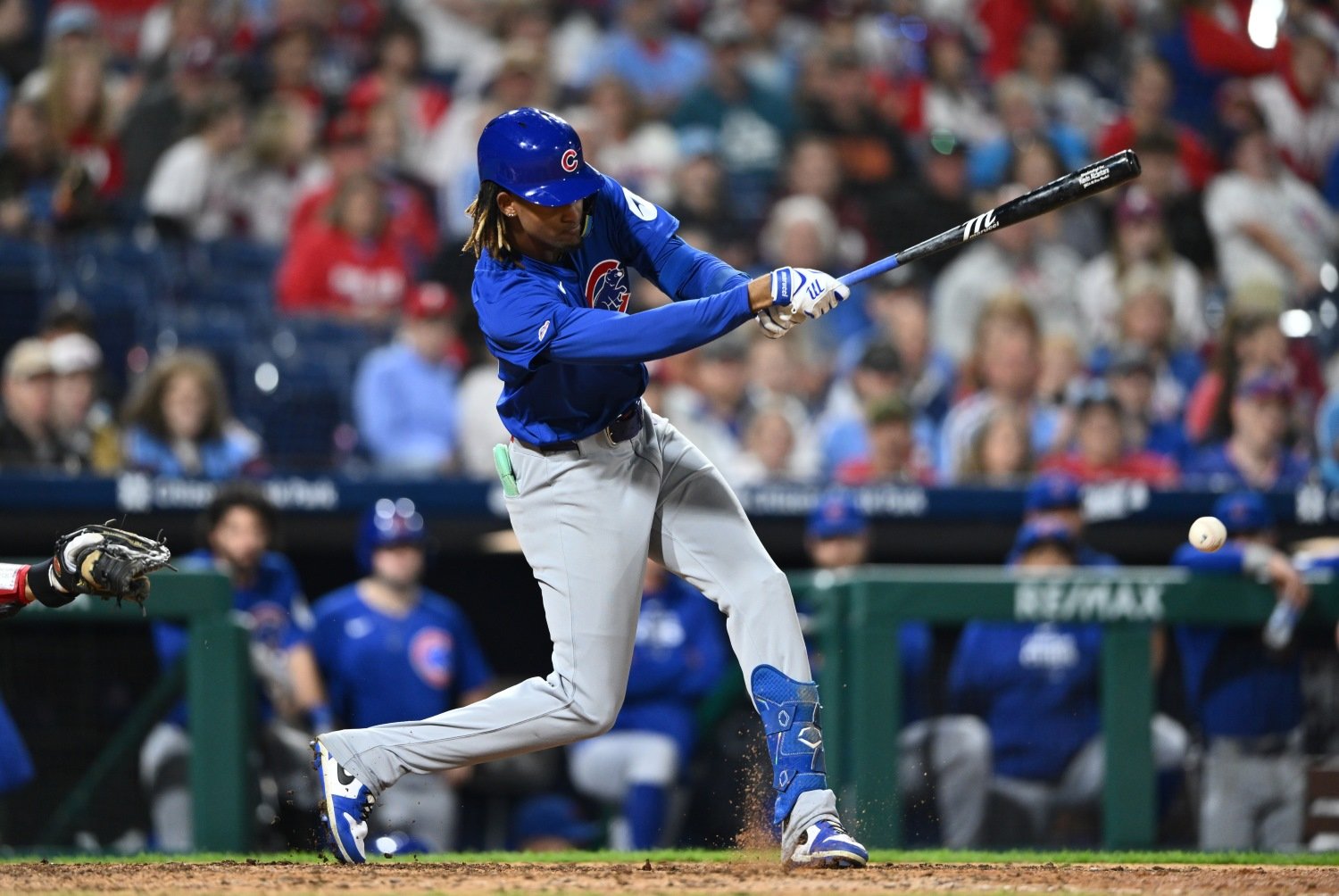 None of the traditional tools are in all that much doubt for Kevin Alcántara. He's demonstrated good speed, impressive and improving defense in center field, and a feel to hit that belies his 6-foot-6 frame. His power is still coming together, as is always the case with such long-levered, lanky hitters at his age, but it's already in evidence. For a guy who just turned 22 in July and has that length and gawkiness to manage, Alcántara's top exit velocities--he hit three balls at least 110 miles per hour in his month and a half at Triple-A Iowa--are phenomenal. Right now, however, he swings and misses so much that little else matters. He whiffed on over 30 percent of his swings during his time in Triple A this year, He struck out 43 times in 148 plate appearances there, although he balanced that--just as he has throughout his climb up the minor-league ladder--with a good walk rate and solid power output. He's not yet ready to make contact at a high enough rate for much else to matter in the majors, but he could play a role for the team by the middle of next season, if he can clean that up a bit--and if he can more consistently lift the ball in the process. That's a daunting challenge, in general. Most hitters trade a bit of contact when they try to focus on elevating the ball, because that usually means altering one's swing path to get slightly more uphill. The slight uppercut, which has to be kept distinct from the severe one, is not a flaw, and it can put a player on plane with the ball longer than a flatter swing. However, keeping that uppercut slight can be very difficult, and even when one achieves it, there are some pitches--like flat, riding fastballs at the top of the zone--that a lot of big-league pitchers can throw and that chew through that kind of swing, racking up swinging strikes against it. The good news is that a dramatic swing change isn't required here. Alcántara does have to make some adjustments, but you can see the way he can do it without overhauling everything. At his height and with those aforementioned long levers, it can take a while to learn to work uphill without getting long and loopy in the early phase of the swing. He's clearly focused, so far, on being direct to the ball. The elements of a swing that can lift the ball are there, though. KA Swing.mp4 Alas, another problem at his height is that you can end up hitting the top half of the ball just because your body wants to carry the bat higher than the pitcher is likely to throw it. Alcántara falls victim to this a lot. He doesn't just hit ground balls. He hits an extraordinary number of balls almost straight down, as he did for his first big-league hit Wednesday. KA Hit.mp4 He also grounded out earlier in the game on a ball hit just about straight down. It wasn't a fluke, or a case of nerves. Alcántara has done this throughout his pro career to this point. Because of his speed and the extent to which infielders have to respect his higher-end exit velocities, he will get a fair number of infield hits this way, but that's only a real consolation if you believe he'll hit that kind of ball reasonably rarely. If it's taking up a third of his batted balls, it's a real problem. Well, in Triple-A, it took up a lot more than that. I created a different way to divide up batted balls into buckets earlier this year, splitting them all up into three even launch-angle bins: low, medium, and high. There are some balls coded traditionally as ground balls that go in the medium range. There are some flies that go in the medium range. The idea was to get away from the narrow definition of line drives and capture the fact that higher launch angles engender better results on grounders, so the ones hit at more than 2 degrees get binned with line drives under this system. Here's a graph of Alcántara's rolling five-game Low Hit% for his time in Iowa. He hits the ball down--not even hard, long one-hoppers likely to get through the infield 40 percent of the time, but choppers--on over half his batted balls. As you can see, he made adjustments and had some success lifting the ball late in his I-Cubs run. Still, that has to be his area of greatest developmental focus going into next year: how to simultaneously whiff less and lift more. It's a solvable baseball puzzle, especially for a player with such dazzling tools. If he cracks it, he would become the top prospect in the Cubs system and should replace any of the team's current outfielders. As we watch his first few at-bats in the majors, though, we'll get lots of reminders that it's not going to be as simple as "cracking it".
 -
With injuries mounting at the end of a long season, the Cubs called up one of their top prospects to make his debut Wednesday night. It will be just a cup of coffee, but it's a good chance to discuss what he can do for them in the short and medium term. Image courtesy of © Kyle Ross-Imagn Images None of the traditional tools are in all that much doubt for Kevin Alcántara. He's demonstrated good speed, impressive and improving defense in center field, and a feel to hit that belies his 6-foot-6 frame. His power is still coming together, as is always the case with such long-levered, lanky hitters at his age, but it's already in evidence. For a guy who just turned 22 in July and has that length and gawkiness to manage, Alcántara's top exit velocities--he hit three balls at least 110 miles per hour in his month and a half at Triple-A Iowa--are phenomenal. Right now, however, he swings and misses so much that little else matters. He whiffed on over 30 percent of his swings during his time in Triple A this year, He struck out 43 times in 148 plate appearances there, although he balanced that--just as he has throughout his climb up the minor-league ladder--with a good walk rate and solid power output. He's not yet ready to make contact at a high enough rate for much else to matter in the majors, but he could play a role for the team by the middle of next season, if he can clean that up a bit--and if he can more consistently lift the ball in the process. That's a daunting challenge, in general. Most hitters trade a bit of contact when they try to focus on elevating the ball, because that usually means altering one's swing path to get slightly more uphill. The slight uppercut, which has to be kept distinct from the severe one, is not a flaw, and it can put a player on plane with the ball longer than a flatter swing. However, keeping that uppercut slight can be very difficult, and even when one achieves it, there are some pitches--like flat, riding fastballs at the top of the zone--that a lot of big-league pitchers can throw and that chew through that kind of swing, racking up swinging strikes against it. The good news is that a dramatic swing change isn't required here. Alcántara does have to make some adjustments, but you can see the way he can do it without overhauling everything. At his height and with those aforementioned long levers, it can take a while to learn to work uphill without getting long and loopy in the early phase of the swing. He's clearly focused, so far, on being direct to the ball. The elements of a swing that can lift the ball are there, though. KA Swing.mp4 Alas, another problem at his height is that you can end up hitting the top half of the ball just because your body wants to carry the bat higher than the pitcher is likely to throw it. Alcántara falls victim to this a lot. He doesn't just hit ground balls. He hits an extraordinary number of balls almost straight down, as he did for his first big-league hit Wednesday. KA Hit.mp4 He also grounded out earlier in the game on a ball hit just about straight down. It wasn't a fluke, or a case of nerves. Alcántara has done this throughout his pro career to this point. Because of his speed and the extent to which infielders have to respect his higher-end exit velocities, he will get a fair number of infield hits this way, but that's only a real consolation if you believe he'll hit that kind of ball reasonably rarely. If it's taking up a third of his batted balls, it's a real problem. Well, in Triple-A, it took up a lot more than that. I created a different way to divide up batted balls into buckets earlier this year, splitting them all up into three even launch-angle bins: low, medium, and high. There are some balls coded traditionally as ground balls that go in the medium range. There are some flies that go in the medium range. The idea was to get away from the narrow definition of line drives and capture the fact that higher launch angles engender better results on grounders, so the ones hit at more than 2 degrees get binned with line drives under this system. Here's a graph of Alcántara's rolling five-game Low Hit% for his time in Iowa. He hits the ball down--not even hard, long one-hoppers likely to get through the infield 40 percent of the time, but choppers--on over half his batted balls. As you can see, he made adjustments and had some success lifting the ball late in his I-Cubs run. Still, that has to be his area of greatest developmental focus going into next year: how to simultaneously whiff less and lift more. It's a solvable baseball puzzle, especially for a player with such dazzling tools. If he cracks it, he would become the top prospect in the Cubs system and should replace any of the team's current outfielders. As we watch his first few at-bats in the majors, though, we'll get lots of reminders that it's not going to be as simple as "cracking it". View full article
-
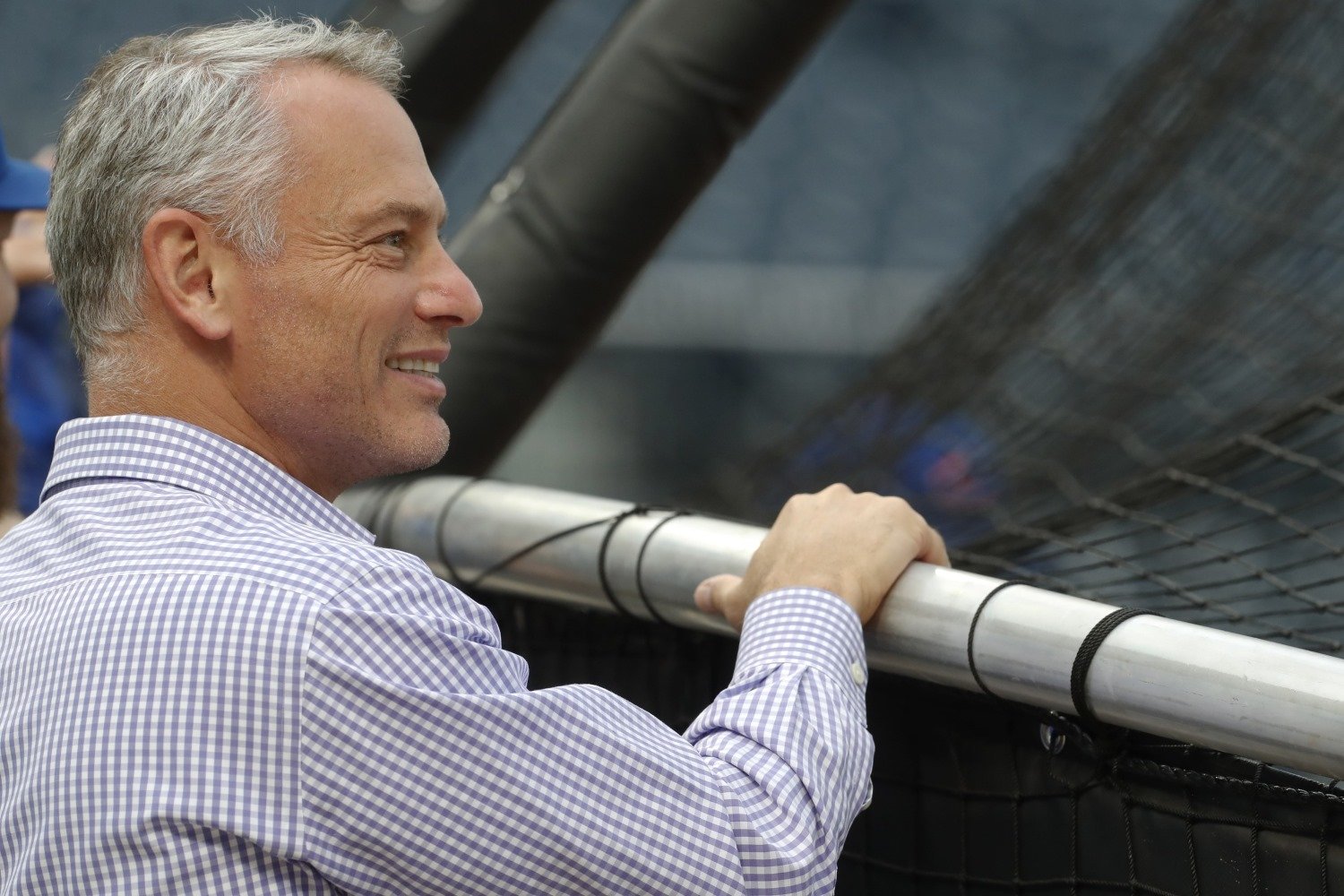 Cubs president of baseball operations Jed Hoyer discussed the state of the franchise Monday, and while he fell in line with the tone of urgency and needed improvement set by manager Craig Counsell over the weekend, he framed it more optimistically. “We talk about the gap, I think that we’ve come a long way, and I feel really good about the position we’re in, but there’s still a gap, and that last stretch, that’s what we have to make up," Hoyer told reporters. "We have a lot of room to get to those 90-win teams that we need to have." Hoyer's hurry to highlight the team's closeness to genuine contention is a little bit self-serving, but it's also not unwarranted. After all, the Cubs are going to have a second straight winning season, after two straight lousy ones. Their run differential in each season will end up suggesting they're more like a 90-win team, just underachieving. They have steadily built up their farm system. What Hoyer sees is a team with a lot of pieces in place for the medium term, a lot of young talent rising through the ranks, and a defensible case as a co-favorite in the NL Central going into 2025--even as both he and Counsell acknowledge that the gap between the Cubs and the Brewers is real and persistent. Whether the reality of the situation is more fairly described by the team's run differentials or their records, their fundamentals or their place in the standings, is up for some debate. It's an important question, too, since if you choose to focus on the Cubs' failure to keep up with Milwaukee in either of the last two divisional races and their having missed the postseason both years, you're likely to prescribe an active and fairly bold winter. If, on the other hand, you think this is a team that could as easily have won the division either of the last two years as not, you're likely to agree that the gap is closing and want to keep the train more or less on the tracks. They're kind of boxed into it, but Counsell and Hoyer seem to be walking both sides of that fence. They have to believe, with separate parts of their own brains, that they're already making major progress, but also that they have a long way to go. It's the only way they'll find both the confidence and the urgency to do what needs doing. I want to focus on one element that Hoyer seems to me to be overlooking or underrating, though: time. When Hoyer talks about closing that gap, he's talking about the last four years. He's talking about a series of trades that offloaded veterans en route to free agency and brought in youngsters. He's talking about an upward trajectory in win totals, starting around the middle of 2022 and continuing through the last two full seasons. He's seeing trend arrows pointing upward. The problem with building great baseball teams, though, is that entropy acts on the process. It exerts a huge amount of drag on the process. Hoyer sees himself as building a team that can sustain competitiveness across half a decade or more. He might be right. He's rolling the dice, though, because it might turn out what he's building is going to erode faster than he can rebuild and refuel it. Seiya Suzuki, Ian Happ, and Dansby Swanson are all 30 years old. They're key cogs of this team--arguably, its three best position players, and inarguably its three highest-paid. It's unlikely that any of them will be shipped out this winter, but it's also unlikely that any of them will be as good next year as they were this year, and they weren't good enough this year. Hoyer can, and almost must, go out and usurp that trio by acquiring a position player better than any of them, but if he's thinking in incrementalist, sustainability-focused terms, he's unlikely to do so. He's much more likely to count on a collective improvement from the younger half of his positional corps, in Miguel Amaya, Nico Hoerner, Isaac Paredes, and Pete Crow-Armstrong, plussed up by the imminent arrivals of Kevin Alcantara, Matt Shaw, Owen Caissie, James Triantos, and Moises Ballesteros. Maybe that will play out just as Hoyer expects, but there's risk in the approach. An accelerating decline by one of Swanson, Suzuki, or Happ is well within the realm of possibility. An injury or a failure to sustain linear developmental improvement from any of the younger players could also derail the plan. More importantly, keeping three guys in the lineup--including at shortstop, with Swanson--who are 31 years old means putting a certain cap on your team's defensive excellence. The Cubs need to be an elite defense to have an above-average run-prevention unit, because their pitching isn't likely to be at that level on its own. Jameson Taillon, Shota Imanaga, Javier Assad and Justin Steele gave the team about 620 innings at an aggregate ERA around 3.10. Given the ages and health histories of those four guys, they're not likely to give them that much value next year. They might get considerably more value from Ben Brown, Cade Horton, and Jordan Wicks to balance things out, but then again, they might not. None of those hurlers have proved durable or established an ability to thrive in the big leagues across a full season of work. Already, there's a story making the rounds that the Cubs will spend big on a frontline starting pitcher this winter. That's a good idea, but it will tie up resources. The team has to both score more runs and better prevent them next year, and the age, health, and performance profiles of the roster Hoyer has assembled make it hard to see how they'll do so. His methodical approach has been Hoyer's way of trying to survive the difficulty of getting better by the margin required. He knows attrition and aging will erode this core, which never got quite good enough to do anything satisfying, anyway. Building up the farm system and resisting the temptation to splurge on a superstar are supposed to give the team sufficient reinforcements when that happens, as long as Hoyer can keep finding values he likes on medium-term free-agent deals, like those he's recently handed out to Imanaga, Taillon, and Cody Bellinger. Now that he's locked into another half-decade with Swanson and two more years each with Suzuki, Happ, Bellinger, and Taillon, though, Hoyer has a bit less flexibility than he might have hoped. He's at some risk of having the core erode faster than expected, without getting the boost he hoped for from young talent. The way to make up for that is to find more of those good values he likes than usual this winter, bringing in high-impact free agents both for the pitching staff and for the positional group. The problem with that strategy is that finding those good values is hard. At some point, Hoyer probably needs to break out of that value-focused mode of thought and splurge, after all--be it in the form of money or a trade from his prospect depth, or both. He needs to push in more chips and try harder to win in 2025, not because the team is perfectly positioned to do so or in order to trade the future to make the present better, but because the present isn't going to get good enough to make anyone happy unless he does so, and in that case, the future he envisions might never come.
 -
The Cubs' chief baseball decision-maker believes his team is creeping steadily toward contention. If only that was how this worked. Image courtesy of © Charles LeClaire-USA TODAY Sports Cubs president of baseball operations Jed Hoyer discussed the state of the franchise Monday, and while he fell in line with the tone of urgency and needed improvement set by manager Craig Counsell over the weekend, he framed it more optimistically. “We talk about the gap, I think that we’ve come a long way, and I feel really good about the position we’re in, but there’s still a gap, and that last stretch, that’s what we have to make up," Hoyer told reporters. "We have a lot of room to get to those 90-win teams that we need to have." Hoyer's hurry to highlight the team's closeness to genuine contention is a little bit self-serving, but it's also not unwarranted. After all, the Cubs are going to have a second straight winning season, after two straight lousy ones. Their run differential in each season will end up suggesting they're more like a 90-win team, just underachieving. They have steadily built up their farm system. What Hoyer sees is a team with a lot of pieces in place for the medium term, a lot of young talent rising through the ranks, and a defensible case as a co-favorite in the NL Central going into 2025--even as both he and Counsell acknowledge that the gap between the Cubs and the Brewers is real and persistent. Whether the reality of the situation is more fairly described by the team's run differentials or their records, their fundamentals or their place in the standings, is up for some debate. It's an important question, too, since if you choose to focus on the Cubs' failure to keep up with Milwaukee in either of the last two divisional races and their having missed the postseason both years, you're likely to prescribe an active and fairly bold winter. If, on the other hand, you think this is a team that could as easily have won the division either of the last two years as not, you're likely to agree that the gap is closing and want to keep the train more or less on the tracks. They're kind of boxed into it, but Counsell and Hoyer seem to be walking both sides of that fence. They have to believe, with separate parts of their own brains, that they're already making major progress, but also that they have a long way to go. It's the only way they'll find both the confidence and the urgency to do what needs doing. I want to focus on one element that Hoyer seems to me to be overlooking or underrating, though: time. When Hoyer talks about closing that gap, he's talking about the last four years. He's talking about a series of trades that offloaded veterans en route to free agency and brought in youngsters. He's talking about an upward trajectory in win totals, starting around the middle of 2022 and continuing through the last two full seasons. He's seeing trend arrows pointing upward. The problem with building great baseball teams, though, is that entropy acts on the process. It exerts a huge amount of drag on the process. Hoyer sees himself as building a team that can sustain competitiveness across half a decade or more. He might be right. He's rolling the dice, though, because it might turn out what he's building is going to erode faster than he can rebuild and refuel it. Seiya Suzuki, Ian Happ, and Dansby Swanson are all 30 years old. They're key cogs of this team--arguably, its three best position players, and inarguably its three highest-paid. It's unlikely that any of them will be shipped out this winter, but it's also unlikely that any of them will be as good next year as they were this year, and they weren't good enough this year. Hoyer can, and almost must, go out and usurp that trio by acquiring a position player better than any of them, but if he's thinking in incrementalist, sustainability-focused terms, he's unlikely to do so. He's much more likely to count on a collective improvement from the younger half of his positional corps, in Miguel Amaya, Nico Hoerner, Isaac Paredes, and Pete Crow-Armstrong, plussed up by the imminent arrivals of Kevin Alcantara, Matt Shaw, Owen Caissie, James Triantos, and Moises Ballesteros. Maybe that will play out just as Hoyer expects, but there's risk in the approach. An accelerating decline by one of Swanson, Suzuki, or Happ is well within the realm of possibility. An injury or a failure to sustain linear developmental improvement from any of the younger players could also derail the plan. More importantly, keeping three guys in the lineup--including at shortstop, with Swanson--who are 31 years old means putting a certain cap on your team's defensive excellence. The Cubs need to be an elite defense to have an above-average run-prevention unit, because their pitching isn't likely to be at that level on its own. Jameson Taillon, Shota Imanaga, Javier Assad and Justin Steele gave the team about 620 innings at an aggregate ERA around 3.10. Given the ages and health histories of those four guys, they're not likely to give them that much value next year. They might get considerably more value from Ben Brown, Cade Horton, and Jordan Wicks to balance things out, but then again, they might not. None of those hurlers have proved durable or established an ability to thrive in the big leagues across a full season of work. Already, there's a story making the rounds that the Cubs will spend big on a frontline starting pitcher this winter. That's a good idea, but it will tie up resources. The team has to both score more runs and better prevent them next year, and the age, health, and performance profiles of the roster Hoyer has assembled make it hard to see how they'll do so. His methodical approach has been Hoyer's way of trying to survive the difficulty of getting better by the margin required. He knows attrition and aging will erode this core, which never got quite good enough to do anything satisfying, anyway. Building up the farm system and resisting the temptation to splurge on a superstar are supposed to give the team sufficient reinforcements when that happens, as long as Hoyer can keep finding values he likes on medium-term free-agent deals, like those he's recently handed out to Imanaga, Taillon, and Cody Bellinger. Now that he's locked into another half-decade with Swanson and two more years each with Suzuki, Happ, Bellinger, and Taillon, though, Hoyer has a bit less flexibility than he might have hoped. He's at some risk of having the core erode faster than expected, without getting the boost he hoped for from young talent. The way to make up for that is to find more of those good values he likes than usual this winter, bringing in high-impact free agents both for the pitching staff and for the positional group. The problem with that strategy is that finding those good values is hard. At some point, Hoyer probably needs to break out of that value-focused mode of thought and splurge, after all--be it in the form of money or a trade from his prospect depth, or both. He needs to push in more chips and try harder to win in 2025, not because the team is perfectly positioned to do so or in order to trade the future to make the present better, but because the present isn't going to get good enough to make anyone happy unless he does so, and in that case, the future he envisions might never come. View full article
-
 As another season winds down under new rules that have traded in Game 163s for tiebreakers that can determine division championships and playoff spots, there's a small but real risk that all-important postseason entries could come down to some silly things. The first tiebreaker between any two teams at season's end is the head-to-head record between the two clubs, but after that comes intradivisional record. That's a profoundly strange way to determine playoff seeding or qualification, given that many of the spots up for grabs are Wild Card spots, designed to degrade the importance of divisions. Since many teams fighting for Wild Card berths play six games against each other each year, going forward, we might often see that tiebreaker coming into play. That's one problem the game is facing these days. Here's another: everyone is tired of position players pitching. What was once a fun bit of novelty to break the tension in blowout games has now become much too common, and it's started to make a mockery of the sport. And here's a third problem: almost everyone seems to hate the automatic runner rule in extra innings. Personally, I don't find it as odious as others, but public opinion has been very unfriendly to the rule. People don't like to see the hard work of scoring runs cheapened, be it at the end of a game long decided or precisely when the drama is highest in one that nine innings couldn't settle. I rise to offer a solution all three problems at once: Eliminate extra innings. If two teams finish nine innings tied, call the game a draw, and establish a points-based standings system akin to that of the NHL or any soccer league. A win is worth three points. A tie is worth one. A loss is worth zero. And here's the kicker, also drawn from soccer: Should two teams finish the season equal on standings points, let the first tiebreaker be run differential. Game 163 was a fun way to settle season-long ties. Those games were rare, beautiful, utterly exhilarating spectacles, and I would love to have them back. Realistically, though, given the playoff expansion they've already done and the further steps in that direction to which they aspire, the league is never going to reestablish those games. Given that fact, we should switch to a system that makes such ties more remote possibilities. In a standings points system, two teams who finish 88-74 under the current way of doing things probably wouldn't end up tied. One would go 82-68, with 12 ties, amounting to 258 points. Another would go 84-70 with just eight ties, good for 260 points. A points total that can easily range from roughly 150 to 300 isn't likely to include many ties between any two teams of 30, in a given season. When it does happen, though, just use run differential as the tiebreaker. That way, every run scored or allowed in a game is of real importance. Teams would have to build better depth to avoid letting ugly run differentials happen, or understand that they were risking embarrassment and costly loss by letting the other team run up a score. We'd see more tautly contested games. Changes like these would have been unthinkable even a few years ago, but MLB has a pitch timer now. The extra-inning runner exists. Infielders don't have the freedom to wander to the other side of second base or set up in the outfield grass. Winning the division has become functionally meaningless, to all but those of us who hold the division title in sacred memory from an earlier form of the game, and it's only going to get less relevant in the next decade. A lot of the things we thought were beyond discussion have come to pass in the game recently. Maybe one more big shift is in order. Eventually, shortening the season should be part of the plan, too. Given the way the league has neutered the regular season, it doesn't make sense for it to stretch 162 games anymore. Again, I take the side of George F. Will, who wrote when the league first introduced the Wild Card in the early 1990s that baseball should be above such things--that the season should be "a long gathering of summer heat, culminating in a single clap of October thunder; the World Series" and that second place should remain not-quite-good-enough. Will and his cohort got drubbed in that debate, though. Progress happened, and then backed up like a truck over a not-quite-dead bit of roadkill and happened again and again. There are three Wild Cards in each league now, and we'll never get rid of them. Playing 162 baseball games to decide who gets them is a ludicrously wasteful self-indulgence. The league should explore starting in mid-April and playing just 144 games, but they absolutely have to collapse it back down to 154, at least, to make the whole season more manageable for all parties. A shorter season in which there are no extra innings played until the playoffs come would be a better labor environment for players, and a better fan experience than the current formula. Small incentives at the margins to make everyone care more about keeping a one- or two-run game close, whether to go for the tie or just to manage run differential, would make individual games spark with more friction and energy. To make the best of the game in the future, we have to let go of some things that belong to its past, even if the goal in doing so is to bring some of the overheated and/or undirected progress happening under control and slow it down a bit.
 -
What if every run counted, for a change? Image courtesy of © Jeff Curry-Imagn Images As another season winds down under new rules that have traded in Game 163s for tiebreakers that can determine division championships and playoff spots, there's a small but real risk that all-important postseason entries could come down to some silly things. The first tiebreaker between any two teams at season's end is the head-to-head record between the two clubs, but after that comes intradivisional record. That's a profoundly strange way to determine playoff seeding or qualification, given that many of the spots up for grabs are Wild Card spots, designed to degrade the importance of divisions. Since many teams fighting for Wild Card berths play six games against each other each year, going forward, we might often see that tiebreaker coming into play. That's one problem the game is facing these days. Here's another: everyone is tired of position players pitching. What was once a fun bit of novelty to break the tension in blowout games has now become much too common, and it's started to make a mockery of the sport. And here's a third problem: almost everyone seems to hate the automatic runner rule in extra innings. Personally, I don't find it as odious as others, but public opinion has been very unfriendly to the rule. People don't like to see the hard work of scoring runs cheapened, be it at the end of a game long decided or precisely when the drama is highest in one that nine innings couldn't settle. I rise to offer a solution all three problems at once: Eliminate extra innings. If two teams finish nine innings tied, call the game a draw, and establish a points-based standings system akin to that of the NHL or any soccer league. A win is worth three points. A tie is worth one. A loss is worth zero. And here's the kicker, also drawn from soccer: Should two teams finish the season equal on standings points, let the first tiebreaker be run differential. Game 163 was a fun way to settle season-long ties. Those games were rare, beautiful, utterly exhilarating spectacles, and I would love to have them back. Realistically, though, given the playoff expansion they've already done and the further steps in that direction to which they aspire, the league is never going to reestablish those games. Given that fact, we should switch to a system that makes such ties more remote possibilities. In a standings points system, two teams who finish 88-74 under the current way of doing things probably wouldn't end up tied. One would go 82-68, with 12 ties, amounting to 258 points. Another would go 84-70 with just eight ties, good for 260 points. A points total that can easily range from roughly 150 to 300 isn't likely to include many ties between any two teams of 30, in a given season. When it does happen, though, just use run differential as the tiebreaker. That way, every run scored or allowed in a game is of real importance. Teams would have to build better depth to avoid letting ugly run differentials happen, or understand that they were risking embarrassment and costly loss by letting the other team run up a score. We'd see more tautly contested games. Changes like these would have been unthinkable even a few years ago, but MLB has a pitch timer now. The extra-inning runner exists. Infielders don't have the freedom to wander to the other side of second base or set up in the outfield grass. Winning the division has become functionally meaningless, to all but those of us who hold the division title in sacred memory from an earlier form of the game, and it's only going to get less relevant in the next decade. A lot of the things we thought were beyond discussion have come to pass in the game recently. Maybe one more big shift is in order. Eventually, shortening the season should be part of the plan, too. Given the way the league has neutered the regular season, it doesn't make sense for it to stretch 162 games anymore. Again, I take the side of George F. Will, who wrote when the league first introduced the Wild Card in the early 1990s that baseball should be above such things--that the season should be "a long gathering of summer heat, culminating in a single clap of October thunder; the World Series" and that second place should remain not-quite-good-enough. Will and his cohort got drubbed in that debate, though. Progress happened, and then backed up like a truck over a not-quite-dead bit of roadkill and happened again and again. There are three Wild Cards in each league now, and we'll never get rid of them. Playing 162 baseball games to decide who gets them is a ludicrously wasteful self-indulgence. The league should explore starting in mid-April and playing just 144 games, but they absolutely have to collapse it back down to 154, at least, to make the whole season more manageable for all parties. A shorter season in which there are no extra innings played until the playoffs come would be a better labor environment for players, and a better fan experience than the current formula. Small incentives at the margins to make everyone care more about keeping a one- or two-run game close, whether to go for the tie or just to manage run differential, would make individual games spark with more friction and energy. To make the best of the game in the future, we have to let go of some things that belong to its past, even if the goal in doing so is to bring some of the overheated and/or undirected progress happening under control and slow it down a bit. View full article
-
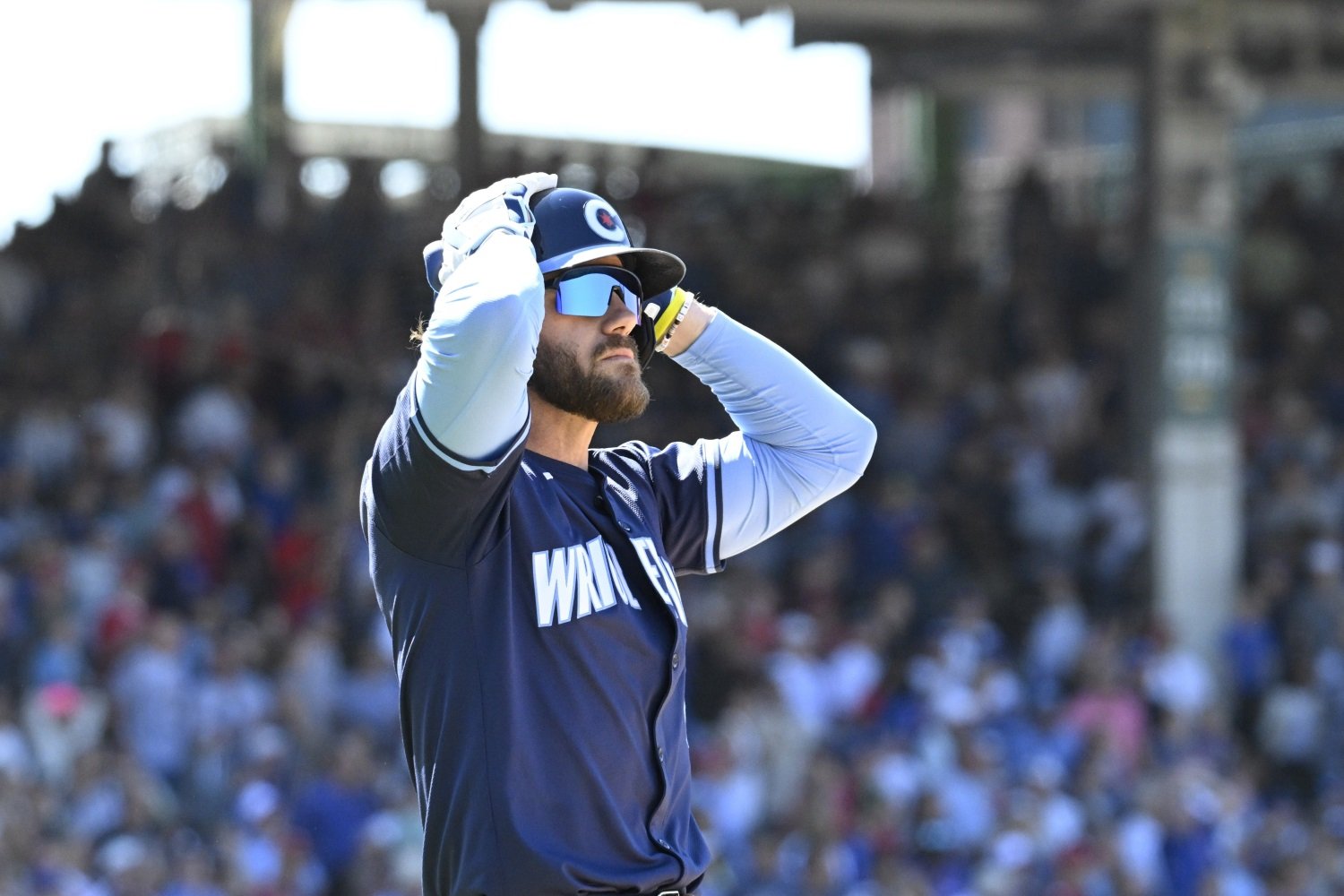 Offense has been way, way down at Wrigley Field this season--for the Cubs, and for opponents, too. It's a strange phenomenon, but it seems as though the fickle winds, temperature patterns, and air pressure have buffeted fly balls and held up line drives, leading to a remarkably lousy year for hitters at the Friendly Confines. That's remarkable, sure, but it's not necessarily that important. Be sure not to give up on a Cubs hitter due solely to a lack of power generated this season, because there seems to be extra gravity pulling down their numbers in half their games. Next year, though, things are more likely to go back to normal than to persist this way, on a macro level. It's a one-year blip, as best we can discern or guess, even if it's an extreme and enigmatic one. Go down a rabbit hole, though, and sometimes you end up in Wonderland. Thus, I find myself asking this question about a three-year park factor for Wrigley, and perhaps one with more staying power: Do lefty hurlers have a systematic advantage at the Cubs' home park? Let me offer a disclaimer, right up front: There is a Justin Steele effect acting upon these numbers. Add Shota Imanaga to the mix this year, and yes, a couple of very talented lefty hurlers are oversampled in any comparison of the park's statistics based on handedness. Nonetheless, I believe what we're about to discuss is legitimate. Here's a chart showing the weighted on-base average achieved by all batters against all left-handed pitchers at each MLB park, dating to the start of the 2022 season. If you don't see Wrigley Field right away, don't panic. You might just need to scroll down more. Now, here's the same chart for right-handed pitchers. Overall hitter- or pitcher-friendliness--most often, fence distances, but also things like elevation and weather--shape these lists as much as anything else. The pitchers who call a given park home can also have an influence. Don't try to use Steele or Imanaga to fully explain away this disparity, though. Facing a right-handed pitcher at Wrigley the last three years has led to exactly average production. Facing a left-handed one has led to the worst production in the league. Flip this to view it from a hitter's perspective, and we can see something truly vexing going on. Only Camden Yards yields a bigger platoon differential for left-handed batters than does Wrigley Field. In other words, only that park has seen a bigger difference between the production by lefties against right-handed hurlers and that against southpaws. On the other hand, right-handed batters have actually been better against right-handed pitchers than against lefties over the last three years, making Wrigley the park that yields the smallest platoon differential for those hitters. The effects run deeper than raw results. There's a significant gap in the chase and whiff rates lefties induce against lefty batters at Wrigley and the ones right-handed pitchers induce against those same lefty batters. Here's all 30 parks charted on those two stats in left-on-left matchups: And here's the same chart for righty pitchers facing lefty batters: Though it's an easy-to-pick-out outlier in the first chart, Wrigley is tough to see in the second, so for those struggling, it's part of the inoffensive thicket on the left, just above the average line for whiff rate on swings. Let's look at the same chart for left-handed pitchers facing righty batters: And then for right-on-right showdowns: This is weird, right? Except, isn't it also kind of understandable? For decades--but especially for the last 30 years, since the team planted juniper bushes where there used to be unoccupied bleachers and then replaced the bushes with the batter's eye lounge--Wrigley has had an off-center batter's eye. The whole field is, in ways so subtle that some people miss it, quite asymmetrical. The wells in each outfield corner and the matching 368 signs in right- and left-center invite casual viewers to think of the place as symmetrical, but the well in left is longer and flatter, and the wall slopes away to a deeper gap in right-center, and the 368s are not at identical distances from the foul lines. The 400 sign is not in dead center field, but a bit to the right. The second tier of the bleachers and the manual scoreboard are slightly offset toward right-center. The cumulative effect of all this is a subliminal parallax that fools plenty of people, from fans to commentators--to hitters themselves. It also means that some left-handed pitchers' ball seems to come out of the crowd just off the edge of the batter's eye. That's not really the case, even to the extent that Jered Weaver's ball did appear to come out of the rockpile at Angel Stadium during that stellar righthander's heyday. It's just that the slight misalignments and not-quite-symmetries invite a hitter to experience a slight visual distraction. As a hitter, you want to keyhole a pitcher. You want a tight focal point with plenty of visual contrast. Some lefties can refuse a hitter that at Wrigley. Photo By User Thechitowncubs on en.wikipedia Again, unless a pitcher is about 11 feet tall and uses a crossfire delivery from a three-quarter slot, they're not actually throwing the ball from a place where the hitter is likely to lose it in a light-colored shirt in the crowd. It's more insidious than that. Still, the effect appears to be real. This has been mentioned by some hitters visiting Wrigley over the years, but it doesn't always show up in the numbers. Maybe it's another fluke, like the shifting weather patterns--albeit one that has had an impact across multiple seasons. Maybe it's a function of the league as a whole working harder by the day to create tough release points for hitters, and it's just been magnified a bit by the presence of Steele and Imanaga on the Cubs roster recently. The effect isn't completely illusory, though, just like the park's symmetry isn't completely real. Camden Yards's huge platoon differential for left-handed batters is there because of its cavernous left field, with the deep, high fences. PNC Park also has a big platoon differential for lefties, because of its very deep left-center alley. Minute Maid Park (Crawford Boxes) and Tropicana Field (that very shallow left-field corner, with the cutout in the wall, where Isaac Paredes became famous) have the smallest platoon differentials for lefties. The takeaway there is that much of the variance can be explained by the ability to hit opposite-field home runs, or not. The biggest platoon differential for right-handed batters, unsurprisingly, is at Fenway Park, where righties can't count on hitting homers to right and right-center. The smallest one, other than Wrigley, is Yankee Stadium, because Aaron Judge could hit a ball out to right-center there with his bare hand if he really had to. These are all explained by park dimensions, and the extremes all correspond with parks that are highly asymmetrical. That Wrigley is at one end of the spectrum for lefty batters and the other end for righties, with fairly symmetrical dimensions, tells us something else is going on. The differences in the way batters see the ball, resulting in more bad swings against lefty pitchers than against righty ones, tells us something else is going on. One way or another, a visibility issue has crept into the equation at Wrigley. Maybe hitters don't want to mention it, or even admit it to themselves, because of the psychological games pitchers might play in the wake of such an admission. Maybe they're not even fully aware of it. But right-handed batters are doing better against right-handed pitchers than against lefties, and left-handed batters are experiencing a huge platoon effect going in the normal direction. That's despite dimensions and wind patterns that, if anything, slightly favor lefties hitting against lefties, not righties hitting against righties. In the short term, the Cubs should keep stockpiling left-handed hurlers. It's almost certain that they're aware of this phenomenon, whether they set any store by it or not, and it might be part of why they elected to retain Drew Smyly on a surprisingly rich deal two winters ago. It might be why they made themselves the high bidders on Imanaga last offseason. They can seize a bit of an edge, while whatever conditions have led to this trend perdure, by having more southpaws on the mound than their opponents at home. Beyond that, though, it's less clear what they should do. This feels like an unmanageable enigma, especially from the offensive side. Whether this is a component of or a mere coincidence with the broader offensive depression that settled over Wrigley this year, it's going to be hard to find a reliable plan for dealing with this effect when setting a lineup or building a roster. If we accept that this is just about the way the ball is carrying, the implication would be that it's not carrying at all to left field, turning Wrigley into a version of Walltimore or Pittsburgh, but that it is carrying exceptionally well to right, just like it does at Yankee Stadium and at Truist Park in Cobb County, Georgia. The data doesn't back that up, and neither does the historic pattern of play at Wrigley. The solution is just to build a great roster that wins with or without the help of small environmental factors, but since the Cubs haven't shown the financial gumption to do that lately, they face a daunting challenge in the coming months: construct a roster that can compete with the Brewers and Dodgers and Phillies and Atlanta, while dealing with a couple of inscrutable park factors that will complicate their player evaluation and their projections for 2025 and beyond.
 -
There's been a lot of talk about Wrigley Field playing differently this season, due to pitcher-friendly weather patterns. That appears to be real, but it won't repeat itself. Another key park factor, however, isn't changing any time soon. Image courtesy of © Matt Marton-Imagn Images Offense has been way, way down at Wrigley Field this season--for the Cubs, and for opponents, too. It's a strange phenomenon, but it seems as though the fickle winds, temperature patterns, and air pressure have buffeted fly balls and held up line drives, leading to a remarkably lousy year for hitters at the Friendly Confines. That's remarkable, sure, but it's not necessarily that important. Be sure not to give up on a Cubs hitter due solely to a lack of power generated this season, because there seems to be extra gravity pulling down their numbers in half their games. Next year, though, things are more likely to go back to normal than to persist this way, on a macro level. It's a one-year blip, as best we can discern or guess, even if it's an extreme and enigmatic one. Go down a rabbit hole, though, and sometimes you end up in Wonderland. Thus, I find myself asking this question about a three-year park factor for Wrigley, and perhaps one with more staying power: Do lefty hurlers have a systematic advantage at the Cubs' home park? Let me offer a disclaimer, right up front: There is a Justin Steele effect acting upon these numbers. Add Shota Imanaga to the mix this year, and yes, a couple of very talented lefty hurlers are oversampled in any comparison of the park's statistics based on handedness. Nonetheless, I believe what we're about to discuss is legitimate. Here's a chart showing the weighted on-base average achieved by all batters against all left-handed pitchers at each MLB park, dating to the start of the 2022 season. If you don't see Wrigley Field right away, don't panic. You might just need to scroll down more. Now, here's the same chart for right-handed pitchers. Overall hitter- or pitcher-friendliness--most often, fence distances, but also things like elevation and weather--shape these lists as much as anything else. The pitchers who call a given park home can also have an influence. Don't try to use Steele or Imanaga to fully explain away this disparity, though. Facing a right-handed pitcher at Wrigley the last three years has led to exactly average production. Facing a left-handed one has led to the worst production in the league. Flip this to view it from a hitter's perspective, and we can see something truly vexing going on. Only Camden Yards yields a bigger platoon differential for left-handed batters than does Wrigley Field. In other words, only that park has seen a bigger difference between the production by lefties against right-handed hurlers and that against southpaws. On the other hand, right-handed batters have actually been better against right-handed pitchers than against lefties over the last three years, making Wrigley the park that yields the smallest platoon differential for those hitters. The effects run deeper than raw results. There's a significant gap in the chase and whiff rates lefties induce against lefty batters at Wrigley and the ones right-handed pitchers induce against those same lefty batters. Here's all 30 parks charted on those two stats in left-on-left matchups: And here's the same chart for righty pitchers facing lefty batters: Though it's an easy-to-pick-out outlier in the first chart, Wrigley is tough to see in the second, so for those struggling, it's part of the inoffensive thicket on the left, just above the average line for whiff rate on swings. Let's look at the same chart for left-handed pitchers facing righty batters: And then for right-on-right showdowns: This is weird, right? Except, isn't it also kind of understandable? For decades--but especially for the last 30 years, since the team planted juniper bushes where there used to be unoccupied bleachers and then replaced the bushes with the batter's eye lounge--Wrigley has had an off-center batter's eye. The whole field is, in ways so subtle that some people miss it, quite asymmetrical. The wells in each outfield corner and the matching 368 signs in right- and left-center invite casual viewers to think of the place as symmetrical, but the well in left is longer and flatter, and the wall slopes away to a deeper gap in right-center, and the 368s are not at identical distances from the foul lines. The 400 sign is not in dead center field, but a bit to the right. The second tier of the bleachers and the manual scoreboard are slightly offset toward right-center. The cumulative effect of all this is a subliminal parallax that fools plenty of people, from fans to commentators--to hitters themselves. It also means that some left-handed pitchers' ball seems to come out of the crowd just off the edge of the batter's eye. That's not really the case, even to the extent that Jered Weaver's ball did appear to come out of the rockpile at Angel Stadium during that stellar righthander's heyday. It's just that the slight misalignments and not-quite-symmetries invite a hitter to experience a slight visual distraction. As a hitter, you want to keyhole a pitcher. You want a tight focal point with plenty of visual contrast. Some lefties can refuse a hitter that at Wrigley. Photo By User Thechitowncubs on en.wikipedia Again, unless a pitcher is about 11 feet tall and uses a crossfire delivery from a three-quarter slot, they're not actually throwing the ball from a place where the hitter is likely to lose it in a light-colored shirt in the crowd. It's more insidious than that. Still, the effect appears to be real. This has been mentioned by some hitters visiting Wrigley over the years, but it doesn't always show up in the numbers. Maybe it's another fluke, like the shifting weather patterns--albeit one that has had an impact across multiple seasons. Maybe it's a function of the league as a whole working harder by the day to create tough release points for hitters, and it's just been magnified a bit by the presence of Steele and Imanaga on the Cubs roster recently. The effect isn't completely illusory, though, just like the park's symmetry isn't completely real. Camden Yards's huge platoon differential for left-handed batters is there because of its cavernous left field, with the deep, high fences. PNC Park also has a big platoon differential for lefties, because of its very deep left-center alley. Minute Maid Park (Crawford Boxes) and Tropicana Field (that very shallow left-field corner, with the cutout in the wall, where Isaac Paredes became famous) have the smallest platoon differentials for lefties. The takeaway there is that much of the variance can be explained by the ability to hit opposite-field home runs, or not. The biggest platoon differential for right-handed batters, unsurprisingly, is at Fenway Park, where righties can't count on hitting homers to right and right-center. The smallest one, other than Wrigley, is Yankee Stadium, because Aaron Judge could hit a ball out to right-center there with his bare hand if he really had to. These are all explained by park dimensions, and the extremes all correspond with parks that are highly asymmetrical. That Wrigley is at one end of the spectrum for lefty batters and the other end for righties, with fairly symmetrical dimensions, tells us something else is going on. The differences in the way batters see the ball, resulting in more bad swings against lefty pitchers than against righty ones, tells us something else is going on. One way or another, a visibility issue has crept into the equation at Wrigley. Maybe hitters don't want to mention it, or even admit it to themselves, because of the psychological games pitchers might play in the wake of such an admission. Maybe they're not even fully aware of it. But right-handed batters are doing better against right-handed pitchers than against lefties, and left-handed batters are experiencing a huge platoon effect going in the normal direction. That's despite dimensions and wind patterns that, if anything, slightly favor lefties hitting against lefties, not righties hitting against righties. In the short term, the Cubs should keep stockpiling left-handed hurlers. It's almost certain that they're aware of this phenomenon, whether they set any store by it or not, and it might be part of why they elected to retain Drew Smyly on a surprisingly rich deal two winters ago. It might be why they made themselves the high bidders on Imanaga last offseason. They can seize a bit of an edge, while whatever conditions have led to this trend perdure, by having more southpaws on the mound than their opponents at home. Beyond that, though, it's less clear what they should do. This feels like an unmanageable enigma, especially from the offensive side. Whether this is a component of or a mere coincidence with the broader offensive depression that settled over Wrigley this year, it's going to be hard to find a reliable plan for dealing with this effect when setting a lineup or building a roster. If we accept that this is just about the way the ball is carrying, the implication would be that it's not carrying at all to left field, turning Wrigley into a version of Walltimore or Pittsburgh, but that it is carrying exceptionally well to right, just like it does at Yankee Stadium and at Truist Park in Cobb County, Georgia. The data doesn't back that up, and neither does the historic pattern of play at Wrigley. The solution is just to build a great roster that wins with or without the help of small environmental factors, but since the Cubs haven't shown the financial gumption to do that lately, they face a daunting challenge in the coming months: construct a roster that can compete with the Brewers and Dodgers and Phillies and Atlanta, while dealing with a couple of inscrutable park factors that will complicate their player evaluation and their projections for 2025 and beyond. View full article
-
Seiya Suzuki's Well-Roundedness Actually Makes Him a Very Rare Hitter
Matthew Trueblood posted an article in Cubs
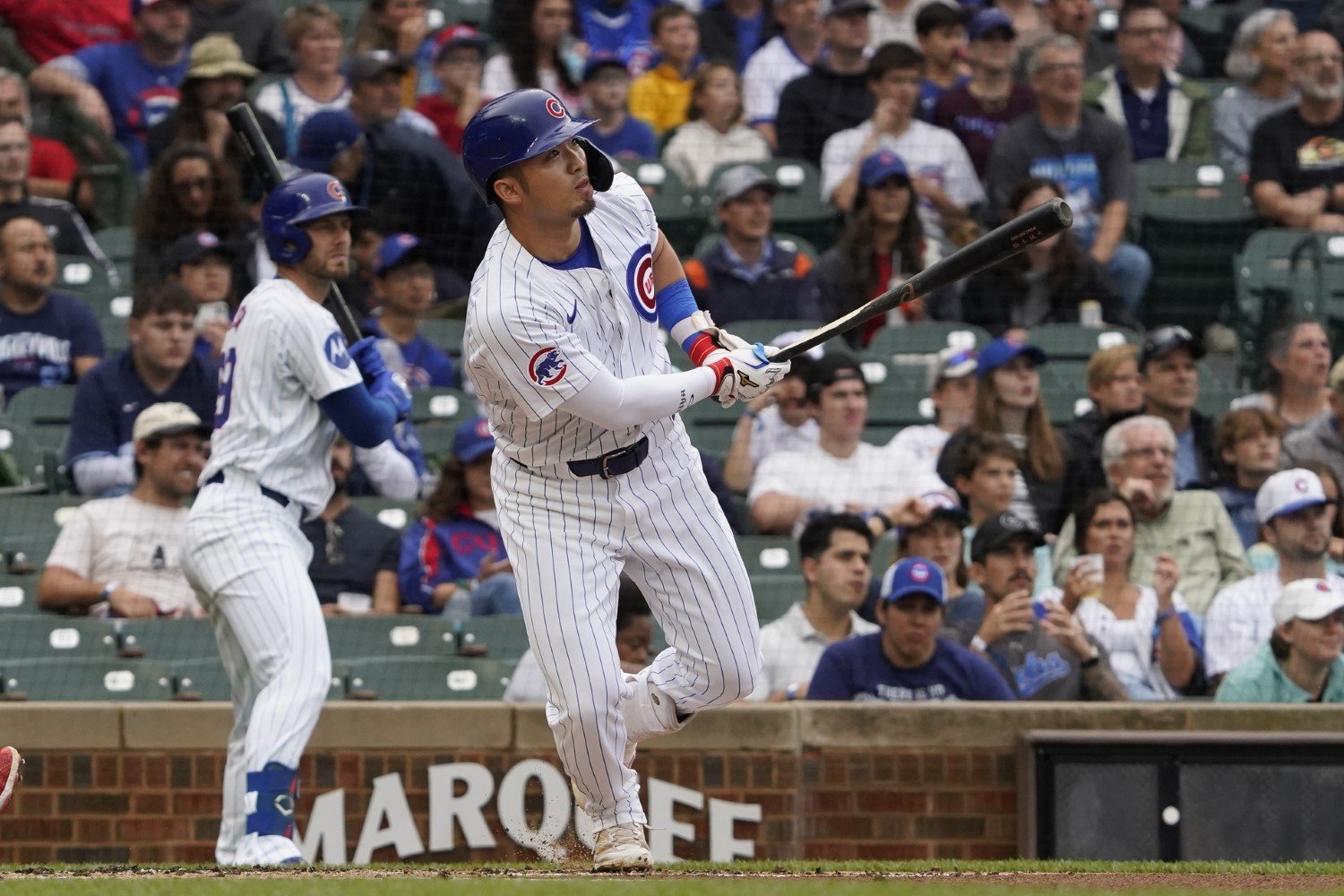 The thing about Seiya Suzuki is, he does almost everything well on offense. His baserunning is inconsistent, but when he's healthy, he balances the key skills of a batter--making contact, controlling the strike zone, generating power and using the whole field--as well as almost any hitter in MLB. He's been worth somewhere between 20 and 25 more runs than an average hitter, according to both Baseball Reference and FanGraphs. That's a few runs better than he was in almost identical playing time last season, and it makes him a valuable hitter. Part of the frustration some fans feel with Suzuki is rooted not in anything he does wrong, but in the fact that the team lacks any hitters better than he is. Shohei Ohtani has been worth 67 runs more than an average hitter in 2024, according to Baseball Reference. Juan Soto has been worth 61. Each has played considerably more than Suzuki, but even if we even out those differences, those guys are worth an extra 25 or 30 runs per year, relative to the Cubs' top slugger. For a lot of fans, though, there's something else that nags about Suzuki--a sense that his overall numbers oversell his real production. It feels like he's not creating as many runs as he should, given how good he really is. Does that vague notion carry any validity? To take the question from abstract to concrete, we can turn to an invaluable tool provided by FanGraphs--the + stats suite. On their leaderboards page, the site allows one to select a time period and get the numbers for all players within it set on an indexed scale, where 100 is average, higher is better, and everything is anchored to the league average and adjusted for park factors. It's a way to see how a player compares to the rest of the league in which they play, not just on an overall production basis, but within specific component stats. Suzuki is, as you can probably sense just from watching him or holding a passing familiarity with his raw numbers, better than average at almost everything. Looking at the last two seasons as a pair, to maximize the robustness of these comparisons and wash out fluky weather, park, or ball effects, he's about 20 percent better than a typical hitter in terms of walk rate, batting average on balls in play, and isolated power. In other words, he takes a very disciplined approach, has a plus knack for generating extra-base hits, and can line the ball all over the diamond, making him hard to defend. He does strike out about 10 percent more than average. That's his tradeoff. This year, alone, it's even a bit higher than that, but he's gotten the ball off the ground more often and is hitting for a higher average on balls in play as a result, so the swap has worked. Swinging at the first pitch only about 13 percent of the time and remaining patient throughout the at-bat, Suzuki sets himself up to strike out sometimes, but that's part of how he finds success. The fun thing about the + stats, really, is that it makes it easy to find comparable players, both within and beyond a player's specific context. Suzuki's particular flavor of balance, though, turns out to be a fairly unique one. I did my best to find some comps. Let's see what we make of them. For this exercise, I used 2023-24, then searched for similar hitters in 2008-09, 1991-92, and 1983-84, to figure out how what a player like Suzuki looks like has changed over time. Here are the best comps I could rough out. Player Seasons BBr+ Kr+ ISO+ BABIP+ AVG+ OBP+ SLG+ Seiya Suzuki 2023-24 121 111 124 119 114 112 118 William Contreras 2023-24 126 91 112 115 115 115 114 David Wright 2008-09 135 110 120 117 114 115 116 Matt Holliday 2008-09 125 92 131 116 119 119 123 Ray Lankford 1991-92 101 138 132 114 105 104 114 Jeff Bagwell 1991-92 137 109 126 111 110 116 115 José Cruz 1983-84 115 85 120 118 120 116 120 Kent Hrbek 1983-84 122 100 150 112 115 115 127 The hardest thing to find, it turned out, was a hitter who could make a similar impact on the ball and showed similar plate discipline to Suzuki, who nonetheless struck out more than an average hitter. The closest comp of the lot, here, is David Wright from 2008 and 2009. Those were the peak seasons of a near-Hall of Fame player. Alas, that one comes with a major caveat. The Mets moved from the defunct Shea Stadium to Citi Field between those two seasons, and in the first year in his new home, Wright's production crashed. His strikeout rate shot up, and his power cratered. He was a much better hitter than these adjusted numbers imply in 2008--and, maddeningly, worth just a few runs fewer than Suzuki has been this year in that second campaign. Jeff Bagwell is the next-closest comp, but before you get too excited, those were Bagwell's first two seasons in the majors. At ages 23 and 24, he hadn't yet refined his zone to the extent he eventually would, and his power was evident but nascent. He only managed 103 extra-base hits in almost 1,400 plate appearances between the two seasons, and only 33 of those were homers--although those unimpressive numbers can be partially explained by the fact that Bagwell played his home games at the pitcher-friendly Astrodome. Suzuki turned 30 last month. There's no next level coming for him. José Cruz is the only player on this list who was also in his 30s when he put together such similar production, and his comes with the warning that he didn't strike out nearly as much as Suzuki, even adjusting for their respective eras. Cruz was very good in those seasons--better than Suzuki would be even if we gave him an extra 100 plate appearances of the same level of production this year--but got a substantial share of that value from putting the ball in play at a solid rate. Coincidentally, Cruz also had exactly 103 extra-base hits in something approaching 1,400 trips to the plate across the two seasons we're talking about here. Only 26 of those were homers. Kent Hrbek had 123 in his 1,217 plate appearances in the same years, and 43 of those were homers. For Suzuki, in just 1,151 trips, it's already a total of 109 extra-base hits, of which 41 are dingers. Yet, look how much greater Hrbek's adjusted isolated power is. Cruz had a similar ISO+ to Suzuki's, with six fewer extra-base hits in 200 more plate appearances. That tells us one important thing about the players themselves, and the context that sets production on a value scale. The league-wide power inflation has made it harder to stand out as a power hitter, and even a player with obvious and impressive power like Suzuki's doesn't derive as much relative value from it as a player like early-career Hrbek did. We know, too, what pressure the global rise in strikeout rate applies to hitters. With that patient approach that will lead to some strikeouts anyway, Suzuki has to fight hard to create positive value, because the confluence of that approach and the league's out pitches forces him to get a lot of hits on balls in play, draw ample walks, and find a lot of power just to be above-average. Just as importantly, but far more subtly, notice what all the above means for the value of a player with a Suzuki-shaped skill set. Because the league's baseline for batting average and OBP has sagged over the last several years, there's been some leakage in the value teams used to be able to create by chaining together good hitters in their lineup. It would be hyperbole to say that all offense is short-sequence offense at this stage of the evolution of MLB, but it comes nearer the truth than would be optimal for a player like Suzuki to have the most possible value. His skill set is built around both keeping the line moving and bringing around runners when they're on base, without truly excelling in either regard. Remember Derrek Lee's 2007 and 2008 campaigns, when his power was still semi-dormant after a broken wrist in 2006 but he was healthy enough to be a very good overall hitter? He's a pretty excellent comp to Suzuki. What's missing from the current Cubs are threats as dynamic as Alfonso Soriano (159 ISO+, even though it came at the cost of any meaningful walks and with a lot of strikeouts) or Aramis Ramírez (146 ISO+, plus great bat-to-ball skills), but it's also very hard to be that caliber of power hitter these days. There were 32 qualifying hitters with an ISO+ over 140 in MLB in 2007-08. In 2023-24, that number is 21. When the baseline rises, it gets harder to be exceptional, and in a zero-sum game, exceptionalism is a key aspect of value, because all value is relative. This doesn't mean Suzuki isn't a good hitter. On the contrary, it seems very safe to say that he's worth about 20 runs per year more than an average hitter going forward, with the understanding that it will require the team to replace him for a handful of weeks each year and baking in the aging curve that will gain gravitational force as he moves into his 30s. However, his balanced skill set won't lead to any kind of breakout from here, and his value as a complementary piece is slightly diminished by broader changes to the way the game works. The Cubs can't plan to win with a Suzuki-style player as the linchpin of their lineup. They need a player who's clearly better, making him a partner to Ian Happ, Michael Busch, and perhaps Dansby Swanson and Isaac Paredes as complementary weapons. They need one of the 10-15 players worth over 30 runs at the plate in each of the last few seasons, and that player needs to fit one of the positions they're capable of opening up in the everyday lineup. Unfortunately, such players are extremely difficult to acquire, and it's not clear whether this front office is up to the task.
 -
For two years, many Cubs fans have struggled with the inarticulable feeling that Seiya Suzuki's whole is less than the sum of his parts, offensively. That might not be true, but at last, I think I can help clarify where the feeling comes from. Image courtesy of © David Banks-Imagn Images The thing about Seiya Suzuki is, he does almost everything well on offense. His baserunning is inconsistent, but when he's healthy, he balances the key skills of a batter--making contact, controlling the strike zone, generating power and using the whole field--as well as almost any hitter in MLB. He's been worth somewhere between 20 and 25 more runs than an average hitter, according to both Baseball Reference and FanGraphs. That's a few runs better than he was in almost identical playing time last season, and it makes him a valuable hitter. Part of the frustration some fans feel with Suzuki is rooted not in anything he does wrong, but in the fact that the team lacks any hitters better than he is. Shohei Ohtani has been worth 67 runs more than an average hitter in 2024, according to Baseball Reference. Juan Soto has been worth 61. Each has played considerably more than Suzuki, but even if we even out those differences, those guys are worth an extra 25 or 30 runs per year, relative to the Cubs' top slugger. For a lot of fans, though, there's something else that nags about Suzuki--a sense that his overall numbers oversell his real production. It feels like he's not creating as many runs as he should, given how good he really is. Does that vague notion carry any validity? To take the question from abstract to concrete, we can turn to an invaluable tool provided by FanGraphs--the + stats suite. On their leaderboards page, the site allows one to select a time period and get the numbers for all players within it set on an indexed scale, where 100 is average, higher is better, and everything is anchored to the league average and adjusted for park factors. It's a way to see how a player compares to the rest of the league in which they play, not just on an overall production basis, but within specific component stats. Suzuki is, as you can probably sense just from watching him or holding a passing familiarity with his raw numbers, better than average at almost everything. Looking at the last two seasons as a pair, to maximize the robustness of these comparisons and wash out fluky weather, park, or ball effects, he's about 20 percent better than a typical hitter in terms of walk rate, batting average on balls in play, and isolated power. In other words, he takes a very disciplined approach, has a plus knack for generating extra-base hits, and can line the ball all over the diamond, making him hard to defend. He does strike out about 10 percent more than average. That's his tradeoff. This year, alone, it's even a bit higher than that, but he's gotten the ball off the ground more often and is hitting for a higher average on balls in play as a result, so the swap has worked. Swinging at the first pitch only about 13 percent of the time and remaining patient throughout the at-bat, Suzuki sets himself up to strike out sometimes, but that's part of how he finds success. The fun thing about the + stats, really, is that it makes it easy to find comparable players, both within and beyond a player's specific context. Suzuki's particular flavor of balance, though, turns out to be a fairly unique one. I did my best to find some comps. Let's see what we make of them. For this exercise, I used 2023-24, then searched for similar hitters in 2008-09, 1991-92, and 1983-84, to figure out how what a player like Suzuki looks like has changed over time. Here are the best comps I could rough out. Player Seasons BBr+ Kr+ ISO+ BABIP+ AVG+ OBP+ SLG+ Seiya Suzuki 2023-24 121 111 124 119 114 112 118 William Contreras 2023-24 126 91 112 115 115 115 114 David Wright 2008-09 135 110 120 117 114 115 116 Matt Holliday 2008-09 125 92 131 116 119 119 123 Ray Lankford 1991-92 101 138 132 114 105 104 114 Jeff Bagwell 1991-92 137 109 126 111 110 116 115 José Cruz 1983-84 115 85 120 118 120 116 120 Kent Hrbek 1983-84 122 100 150 112 115 115 127 The hardest thing to find, it turned out, was a hitter who could make a similar impact on the ball and showed similar plate discipline to Suzuki, who nonetheless struck out more than an average hitter. The closest comp of the lot, here, is David Wright from 2008 and 2009. Those were the peak seasons of a near-Hall of Fame player. Alas, that one comes with a major caveat. The Mets moved from the defunct Shea Stadium to Citi Field between those two seasons, and in the first year in his new home, Wright's production crashed. His strikeout rate shot up, and his power cratered. He was a much better hitter than these adjusted numbers imply in 2008--and, maddeningly, worth just a few runs fewer than Suzuki has been this year in that second campaign. Jeff Bagwell is the next-closest comp, but before you get too excited, those were Bagwell's first two seasons in the majors. At ages 23 and 24, he hadn't yet refined his zone to the extent he eventually would, and his power was evident but nascent. He only managed 103 extra-base hits in almost 1,400 plate appearances between the two seasons, and only 33 of those were homers--although those unimpressive numbers can be partially explained by the fact that Bagwell played his home games at the pitcher-friendly Astrodome. Suzuki turned 30 last month. There's no next level coming for him. José Cruz is the only player on this list who was also in his 30s when he put together such similar production, and his comes with the warning that he didn't strike out nearly as much as Suzuki, even adjusting for their respective eras. Cruz was very good in those seasons--better than Suzuki would be even if we gave him an extra 100 plate appearances of the same level of production this year--but got a substantial share of that value from putting the ball in play at a solid rate. Coincidentally, Cruz also had exactly 103 extra-base hits in something approaching 1,400 trips to the plate across the two seasons we're talking about here. Only 26 of those were homers. Kent Hrbek had 123 in his 1,217 plate appearances in the same years, and 43 of those were homers. For Suzuki, in just 1,151 trips, it's already a total of 109 extra-base hits, of which 41 are dingers. Yet, look how much greater Hrbek's adjusted isolated power is. Cruz had a similar ISO+ to Suzuki's, with six fewer extra-base hits in 200 more plate appearances. That tells us one important thing about the players themselves, and the context that sets production on a value scale. The league-wide power inflation has made it harder to stand out as a power hitter, and even a player with obvious and impressive power like Suzuki's doesn't derive as much relative value from it as a player like early-career Hrbek did. We know, too, what pressure the global rise in strikeout rate applies to hitters. With that patient approach that will lead to some strikeouts anyway, Suzuki has to fight hard to create positive value, because the confluence of that approach and the league's out pitches forces him to get a lot of hits on balls in play, draw ample walks, and find a lot of power just to be above-average. Just as importantly, but far more subtly, notice what all the above means for the value of a player with a Suzuki-shaped skill set. Because the league's baseline for batting average and OBP has sagged over the last several years, there's been some leakage in the value teams used to be able to create by chaining together good hitters in their lineup. It would be hyperbole to say that all offense is short-sequence offense at this stage of the evolution of MLB, but it comes nearer the truth than would be optimal for a player like Suzuki to have the most possible value. His skill set is built around both keeping the line moving and bringing around runners when they're on base, without truly excelling in either regard. Remember Derrek Lee's 2007 and 2008 campaigns, when his power was still semi-dormant after a broken wrist in 2006 but he was healthy enough to be a very good overall hitter? He's a pretty excellent comp to Suzuki. What's missing from the current Cubs are threats as dynamic as Alfonso Soriano (159 ISO+, even though it came at the cost of any meaningful walks and with a lot of strikeouts) or Aramis Ramírez (146 ISO+, plus great bat-to-ball skills), but it's also very hard to be that caliber of power hitter these days. There were 32 qualifying hitters with an ISO+ over 140 in MLB in 2007-08. In 2023-24, that number is 21. When the baseline rises, it gets harder to be exceptional, and in a zero-sum game, exceptionalism is a key aspect of value, because all value is relative. This doesn't mean Suzuki isn't a good hitter. On the contrary, it seems very safe to say that he's worth about 20 runs per year more than an average hitter going forward, with the understanding that it will require the team to replace him for a handful of weeks each year and baking in the aging curve that will gain gravitational force as he moves into his 30s. However, his balanced skill set won't lead to any kind of breakout from here, and his value as a complementary piece is slightly diminished by broader changes to the way the game works. The Cubs can't plan to win with a Suzuki-style player as the linchpin of their lineup. They need a player who's clearly better, making him a partner to Ian Happ, Michael Busch, and perhaps Dansby Swanson and Isaac Paredes as complementary weapons. They need one of the 10-15 players worth over 30 runs at the plate in each of the last few seasons, and that player needs to fit one of the positions they're capable of opening up in the everyday lineup. Unfortunately, such players are extremely difficult to acquire, and it's not clear whether this front office is up to the task. View full article
-
 Earlier this month, I wrote about the Cubs' unique usage of a pair of pitches that rarely go together: cut-ride fastballs and power changeups with ample arm=side run. That's just one crystallizing way to understand a broader organizational philosophy, though. The Cubs believe that the league, as a whole, is too fixated on velocity, and they've set themselves on a different course. For the eighth straight season, this year will find them at the bottom of the league in terms of average fastball velocity from starters. That's intentional. They've identified other traits they prefer to prioritize. Cade Horton, Justin Steele, and Jordan Wicks all possess the Cubs' favorite characteristic: a cut-ride fastball shape. In other words, their heaters have more glove-side movement than a hitter's eyes expect, given the speed and carry on the pitch--or, flipping the axis of expectation mentally, more carry than the hitter thinks it will have, given the cut spin they see out of the hand. Fastball shape has become a very popular buzzword in pitching analysis, because the release point and movement of a pitch can be every bit as important as the velocity or location. As pitching gurus will readily tell you, fastball shape is also an important concept to understand because it's rarely changeable. Most organizations think of fastball shape as being akin to a fingerprint; you can't easily change what a pitcher's fastball naturally does. Mechanical overhauls can alter fastball shape, but those usually involve a complete rebuild of a hurler's approach and arsenal. Such breakdowns and rebuilds are extremely and increasingly rare in the modern game. Therein lies the rub for the Cubs. More than perhaps any other team in baseball, they value that cut-ride shape. They value a different look, and believe that the league tends to undervalue it. They even believe that pitchers can survive at lower velocities with that shape (generally true), and thus that they can get the same value from hurlers at lower velocities and reduce their overall injury risk (much less clear, though plausible). To some extent, they're right about those things. Right now, however, they've overly committed to that concept. It's good to have principles and predilections within an organization; that's a sign of firmly understanding the job at hand. Trouble lurks, however, when a team crosses the line from predilections to obsessions, or from principles to dogmatic beliefs. At that point, you start making overly extreme decisions. Your tendencies become too strong, and you foreclose helpful possibilities to yourself. For instance, when you select too strongly for a relatively rare fastball shape, you have to narrow the pool of pitchers you consider--and you might do so too much. Picking from just a segment of the population if talented pitchers in a draft class or on a free-agent market (minor- or major-league) often means accepting lower velocity, not primarily because it might mean a slightly lower injury risk, but because the really hard-throwing hurlers don't meet your stringent criteria. In this specific case, focusing on an uncommon fastball shape also means getting locked into the idea that fastballs must come first. No team in baseball has thrown fewer sliders than the Cubs this year. That's not unusual, recently, but it is a problem. Sliders miss bats. Even good cut-ride fastballs often don't. Why doesn't the team just throw more sliders with the hurlers they've selected? It's not always that simple. One key variable in the effectiveness of a slider is the average velocity of the fastball off of which it works. Breaking ball shapes are more like signatures than fingerprints. They can be fiddled with, altered, and molded. Velocity, meanwhile, is like body weight, if we're sticking to things that identify a person: It's affected by biology and habits, but it can also be optimized, to some extent. Thus, a couple years after his fastball shape had many people worried and his prospect stock fell precipitously, Kumar Rocker emerged again as a top prospect this summer for the Rangers, culminating in a debut this month. Rocker throws very hard, which helps offset the suboptimal shape of his heater. He also has a devastating, top-of-the-scale slider, a pitch he and the team have worked together to reengineer. It would work well no matter what, but it has the potential to vault him into the middle or front of a rotation in the near future because it plays off a fastball that sits 96-97. The Cubs need not abandon their project of collecting guys who have an appealing, unusual fastball shape. It's part of how they became top bidders on Shota Imanaga. It's how they locked in on Horton and Wicks, and while they each had semi-lost seasons in 2024, they both look like reasonably sound picks. Broadly, though, they need to loosen their commitment to any one set of criteria for selecting pitchers. Occasionally scooping up a hurler like Brandon Birdsell on Day Two of the Draft is highly valuable, but they could do that while still taking more standard-issue, harder-throwing pitchers with top picks. There's something to be said for seeking a less velocity-oriented solution to the problem of getting outs in the big leagues. It might be the future of baseball; emphasizing everything but velocity might be positioning the Cubs to benefit significantly from an ongoing rise in injuries related to pursuing too much velocity. It might make them especially well-suited to a league that tweaks its rules to favor pitchers who can pace themselves and turn over lineup cards. Neither the actual benefits of throwing less hard nor the chances of structural changes to the game are clear enough to justify strongly committing to a strategy that sacrifices so much of the most fluid currency in pitching, though. For that matter, too, consider Wicks, who worked hard to add velocity this past offseason and had injuries (which felt closely related to that work) derail his 2024. Selecting pitchers for traits other than velocity might not prevent some of them from chasing more velocity, offsetting whatever health benefits would come from throwing less hard. A fine line exists between being too rigid in an organizational approach and not having a clear enough idea of what you're looking for. Either thing is problematic, but the good organizations manage to avoid both traps. They have preferences, even idiosyncratic and proprietary ones, but they don't overcommit to them. The Cubs need to establish themselves in that happy, medium space a bit better going forward, because while their approach to pitching acquisition and development is creative, it's not returning enough value to justify the risks it poses. The team is missing out on some easier developmental projects and some more lucrative ones, because they believe a bit too fanatically in the virtues of their own approach.
-
- 1
-

-
- justin steele
- cade horton
- (and 2 more)
-
Exploiting market inefficiencies is not a substitute for a personality. Image courtesy of © Darren Yamashita-Imagn Images Earlier this month, I wrote about the Cubs' unique usage of a pair of pitches that rarely go together: cut-ride fastballs and power changeups with ample arm=side run. That's just one crystallizing way to understand a broader organizational philosophy, though. The Cubs believe that the league, as a whole, is too fixated on velocity, and they've set themselves on a different course. For the eighth straight season, this year will find them at the bottom of the league in terms of average fastball velocity from starters. That's intentional. They've identified other traits they prefer to prioritize. Cade Horton, Justin Steele, and Jordan Wicks all possess the Cubs' favorite characteristic: a cut-ride fastball shape. In other words, their heaters have more glove-side movement than a hitter's eyes expect, given the speed and carry on the pitch--or, flipping the axis of expectation mentally, more carry than the hitter thinks it will have, given the cut spin they see out of the hand. Fastball shape has become a very popular buzzword in pitching analysis, because the release point and movement of a pitch can be every bit as important as the velocity or location. As pitching gurus will readily tell you, fastball shape is also an important concept to understand because it's rarely changeable. Most organizations think of fastball shape as being akin to a fingerprint; you can't easily change what a pitcher's fastball naturally does. Mechanical overhauls can alter fastball shape, but those usually involve a complete rebuild of a hurler's approach and arsenal. Such breakdowns and rebuilds are extremely and increasingly rare in the modern game. Therein lies the rub for the Cubs. More than perhaps any other team in baseball, they value that cut-ride shape. They value a different look, and believe that the league tends to undervalue it. They even believe that pitchers can survive at lower velocities with that shape (generally true), and thus that they can get the same value from hurlers at lower velocities and reduce their overall injury risk (much less clear, though plausible). To some extent, they're right about those things. Right now, however, they've overly committed to that concept. It's good to have principles and predilections within an organization; that's a sign of firmly understanding the job at hand. Trouble lurks, however, when a team crosses the line from predilections to obsessions, or from principles to dogmatic beliefs. At that point, you start making overly extreme decisions. Your tendencies become too strong, and you foreclose helpful possibilities to yourself. For instance, when you select too strongly for a relatively rare fastball shape, you have to narrow the pool of pitchers you consider--and you might do so too much. Picking from just a segment of the population if talented pitchers in a draft class or on a free-agent market (minor- or major-league) often means accepting lower velocity, not primarily because it might mean a slightly lower injury risk, but because the really hard-throwing hurlers don't meet your stringent criteria. In this specific case, focusing on an uncommon fastball shape also means getting locked into the idea that fastballs must come first. No team in baseball has thrown fewer sliders than the Cubs this year. That's not unusual, recently, but it is a problem. Sliders miss bats. Even good cut-ride fastballs often don't. Why doesn't the team just throw more sliders with the hurlers they've selected? It's not always that simple. One key variable in the effectiveness of a slider is the average velocity of the fastball off of which it works. Breaking ball shapes are more like signatures than fingerprints. They can be fiddled with, altered, and molded. Velocity, meanwhile, is like body weight, if we're sticking to things that identify a person: It's affected by biology and habits, but it can also be optimized, to some extent. Thus, a couple years after his fastball shape had many people worried and his prospect stock fell precipitously, Kumar Rocker emerged again as a top prospect this summer for the Rangers, culminating in a debut this month. Rocker throws very hard, which helps offset the suboptimal shape of his heater. He also has a devastating, top-of-the-scale slider, a pitch he and the team have worked together to reengineer. It would work well no matter what, but it has the potential to vault him into the middle or front of a rotation in the near future because it plays off a fastball that sits 96-97. The Cubs need not abandon their project of collecting guys who have an appealing, unusual fastball shape. It's part of how they became top bidders on Shota Imanaga. It's how they locked in on Horton and Wicks, and while they each had semi-lost seasons in 2024, they both look like reasonably sound picks. Broadly, though, they need to loosen their commitment to any one set of criteria for selecting pitchers. Occasionally scooping up a hurler like Brandon Birdsell on Day Two of the Draft is highly valuable, but they could do that while still taking more standard-issue, harder-throwing pitchers with top picks. There's something to be said for seeking a less velocity-oriented solution to the problem of getting outs in the big leagues. It might be the future of baseball; emphasizing everything but velocity might be positioning the Cubs to benefit significantly from an ongoing rise in injuries related to pursuing too much velocity. It might make them especially well-suited to a league that tweaks its rules to favor pitchers who can pace themselves and turn over lineup cards. Neither the actual benefits of throwing less hard nor the chances of structural changes to the game are clear enough to justify strongly committing to a strategy that sacrifices so much of the most fluid currency in pitching, though. For that matter, too, consider Wicks, who worked hard to add velocity this past offseason and had injuries (which felt closely related to that work) derail his 2024. Selecting pitchers for traits other than velocity might not prevent some of them from chasing more velocity, offsetting whatever health benefits would come from throwing less hard. A fine line exists between being too rigid in an organizational approach and not having a clear enough idea of what you're looking for. Either thing is problematic, but the good organizations manage to avoid both traps. They have preferences, even idiosyncratic and proprietary ones, but they don't overcommit to them. The Cubs need to establish themselves in that happy, medium space a bit better going forward, because while their approach to pitching acquisition and development is creative, it's not returning enough value to justify the risks it poses. The team is missing out on some easier developmental projects and some more lucrative ones, because they believe a bit too fanatically in the virtues of their own approach. View full article
-
 On Tuesday, the Cubs announced that Justin Steele will return from the injured list and start the final game of their series against the Oakland Athletics Wednesday afternoon. After being sidelined with elbow soreness for the last fortnight, Steele comes back with a chance to make as many as three more starts before the end of the season. From many quarters, a cry has risen in response to this news: "Why?" Fans and commentators have remarked on the fact that the Cubs are essentially out of playoff contention, and wrung their hands about the risks associated with having a player who just reported a balky elbow pitch in games that they regard as meaningless. There's a real pushback against this decision, rooted in the idea that there's no good reason to roll Steele out there. There's a very good, important reason to have him pitch, though. Get your pencils and scorecards ready. Here it is: Because he can. There are no truly meaningless baseball games, unless you believe that baseball itself is meaningless. In that case, tune out altogether. In reality, the Cubs have been out of the race for the postseason since around the end of June. That hasn't rendered the entire second half of their season meaningless, and it doesn't make finishing in the best form they can manage unimportant. Steele, especially, has much to prove. He's never gotten through a full season without injury issues or a loss of effectiveness down the stretch, and rebounding from this not only establishes his good health, but acts as a proof of concept to both himself and his team: Steele can be counted upon. He'll post whenever he can do so. His elbow might go sproing on Wednesday, or next week. So be it. The team will be no worse off if that happens than if it happens next February. The team ordered an MRI when Steele first missed a start at the beginning of this month, and it showed no structural damage. He's healthy enough to take the ball, and when a qualified big-league hurler is healthy enough to take the ball and it's their turn, they should do it. It's to Steele's credit that, rather than jealously guard his own earnings in a second round of arbitration by minimizing his own risk heading into the offseason, he wants to fulfill that duty. It's important to remember, as baseball fans, that we're just baseball fans. If we were team-employed physicians, we'd have a valuable perspective on whether or not a player should take the field, but most of us have nowhere near the requisite information to form an educated opinion on that subject--so we shouldn't. If a team and player confer, with far better, more detailed information, and make a consensus determination about the player's status, we should generally assume they're weighing risks and rewards. Some teams clearly err too far on the side of caution, in certain cases, and sometimes, there are public rifts between a team and a player about the best course of action with regard to an injury, Those are valid subjects for debate and discussion in a public forum. This case, though, is nothing like that. Steele's elbow is intact, if not quite fresh as a daisy. He wants to pitch. The Cubs agree with that wish, even understanding that he can't save their season. This is good news. It's unobjectionable. And it's arrogant of any fan to believe they know better. None of this is to say that Steele won't get hurt, now or in the near or medium-term future. That's all perfectly possible. Again, he hasn't been especially durable during his short big-league career, anyway. If pitching Wednesday posed a new or substantial risk to his arm health, though, he wouldn't be doing it. We all want, badly, to control the world, and especially to shelter ourselves and those we care about from its vicissitudes. Unfortunately, that's not how life or baseball work. Steele can't live in bubble wrap and be of any value to the Cubs. They're right to send him to the post, if that's what he wants, and it's encouraging that he feels good enough to give this a go. Hopefully, it will lead to better vibes about the team's rotation heading into the offseason. If not, it won't be for lack of trying.
 -
Don't overthink this. Image courtesy of © Patrick Gorski-Imagn Images On Tuesday, the Cubs announced that Justin Steele will return from the injured list and start the final game of their series against the Oakland Athletics Wednesday afternoon. After being sidelined with elbow soreness for the last fortnight, Steele comes back with a chance to make as many as three more starts before the end of the season. From many quarters, a cry has risen in response to this news: "Why?" Fans and commentators have remarked on the fact that the Cubs are essentially out of playoff contention, and wrung their hands about the risks associated with having a player who just reported a balky elbow pitch in games that they regard as meaningless. There's a real pushback against this decision, rooted in the idea that there's no good reason to roll Steele out there. There's a very good, important reason to have him pitch, though. Get your pencils and scorecards ready. Here it is: Because he can. There are no truly meaningless baseball games, unless you believe that baseball itself is meaningless. In that case, tune out altogether. In reality, the Cubs have been out of the race for the postseason since around the end of June. That hasn't rendered the entire second half of their season meaningless, and it doesn't make finishing in the best form they can manage unimportant. Steele, especially, has much to prove. He's never gotten through a full season without injury issues or a loss of effectiveness down the stretch, and rebounding from this not only establishes his good health, but acts as a proof of concept to both himself and his team: Steele can be counted upon. He'll post whenever he can do so. His elbow might go sproing on Wednesday, or next week. So be it. The team will be no worse off if that happens than if it happens next February. The team ordered an MRI when Steele first missed a start at the beginning of this month, and it showed no structural damage. He's healthy enough to take the ball, and when a qualified big-league hurler is healthy enough to take the ball and it's their turn, they should do it. It's to Steele's credit that, rather than jealously guard his own earnings in a second round of arbitration by minimizing his own risk heading into the offseason, he wants to fulfill that duty. It's important to remember, as baseball fans, that we're just baseball fans. If we were team-employed physicians, we'd have a valuable perspective on whether or not a player should take the field, but most of us have nowhere near the requisite information to form an educated opinion on that subject--so we shouldn't. If a team and player confer, with far better, more detailed information, and make a consensus determination about the player's status, we should generally assume they're weighing risks and rewards. Some teams clearly err too far on the side of caution, in certain cases, and sometimes, there are public rifts between a team and a player about the best course of action with regard to an injury, Those are valid subjects for debate and discussion in a public forum. This case, though, is nothing like that. Steele's elbow is intact, if not quite fresh as a daisy. He wants to pitch. The Cubs agree with that wish, even understanding that he can't save their season. This is good news. It's unobjectionable. And it's arrogant of any fan to believe they know better. None of this is to say that Steele won't get hurt, now or in the near or medium-term future. That's all perfectly possible. Again, he hasn't been especially durable during his short big-league career, anyway. If pitching Wednesday posed a new or substantial risk to his arm health, though, he wouldn't be doing it. We all want, badly, to control the world, and especially to shelter ourselves and those we care about from its vicissitudes. Unfortunately, that's not how life or baseball work. Steele can't live in bubble wrap and be of any value to the Cubs. They're right to send him to the post, if that's what he wants, and it's encouraging that he feels good enough to give this a go. Hopefully, it will lead to better vibes about the team's rotation heading into the offseason. If not, it won't be for lack of trying. View full article
-
How Undaunted Learner Shota Imanaga Morphed Into a Five-Pitch Monster
Matthew Trueblood posted an article in Cubs
 Given the enormity of the cultural and linguistic barriers Japanese players often face when they arrive in the United States for the first time, it can be very hard for them to adjust at the speed required by the modern game. The league starts working to figure you out the moment you show up for spring training, and because it's often hard to talk as freely with teammates and coaches when one is living in a new country and learning a new language, sometimes, the league does figure you out, and you struggle to adjust back. That's the first thing that made Shota Imanaga special, when he became a Cub. It's not his marvelous splitter or the vertical approach angle on his fastball; it's his personality. It takes a certain level of competitive intensity and risk appetite to cross an ocean to play against the best competition in the world, but that doesn't always pair with the fearless extroversion required to cross a room or a ball field to talk to someone from whom there's something valuable to be learned--especially when doing so means bringing along an interpreter. In Imanaga's case, though, both sets of traits are present. He wanted to prove himself in the United States, and he wasn't afraid of the logistical hurdles he had to clear in order to do so. He came over with a unique pairing of fastball shape and release point, with a splitter that made him unusual and briefly unsolvable even for MLB batters. Those two pitches carried him through the first two months of the season; the competitive intensity and his sheer talent got him that far with gaudily impressive numbers. Since then, though, the league has figured out his initial tricks, and that's where the fearlessness and extroversion have factored in. At almost every stop the Cubs have made over the second half of the season, cameras have caught Imanaga in pre-game conversations with prominent members of the other team. Paul Skenes of the Pirates is one very visible example, but far from the only one. Although he's developed solid English skills, it's not really that aptitude that has allowed Imanaga to soak up new information from all kinds of sources throughout the league. Rather, it's been his willingness to have in-depth conversations, even when they have to be mediated. He's picked up things from opponents, from teammates, and from coaches, and as the season winds down, he's implementing all that learning in remarkable fashion. In his 11-strikeout gem Monday night against the Athletics, Imanaga threw eight sinkers, tying for a second time his season high in that regard. He also threw a season-high 19 changeups, though--that's 19 of his Vulcan-grip changeups, not to be confused with the 23 splitters he also threw. At this point, he's not only not reliant on the four-seamer and splitter, but has widened and reshaped his arsenal to include five different offerings: four-seamer, splitter, changeup, sweeper, and sinker. He uses all five regularly, right now, even though he's largely shelved the curveball and cutter with which he tinkered earlier in the year. Look at the way his approach to batters of each handedness has changed, from month to month. Against fellow lefties, he's become a thing one could hardly have imagined of him early in the season: a sweeper-first guy. Part of the growth of his sweeper and its utility against lefties has been introducing that sinker more often, because the latter pitch runs in on the hands of lefty batters more and forces them to cover the inner edge, setting them up for the sweeper away. Just as eye-opening, though, is the way Imanaga has varied and updated his arsenal against righties. Most notably, it's against them that he's become a two-changeup hurler, with both the splitter and his Vulcan change. Crucially, it's not as though Imanaga is carving his Vulcan change usage out of the bloc previously dedicated to the splitter. Rather, he's paring down his fastball usage, to accommodate both changeups. Nor is the difference between the two purely about matching one offering's movement to an opponent's bat path. He's stumping hitters more by giving them both looks within the same game, and sometimes within the same at-bat. Here he is throwing a splitter to Enrique Hernández in the third inning of his start against the Dodgers last week: Shota Splitter to EH.mp4 And here he is victimizing him for a strikeout with the changeup, two innings later. Shota Change to EH.mp4 This isn't a classification fluke. If you watch the videos above carefully, especially slowed down, you can see the difference in his grip on the two pitches. There are also characteristic differences. The Vulcan change is about 1.3 miles per hour slower, on average, with a bit more armside run but considerably less downward movement. His splitter involves more deadening of the spin out of his hand, which makes it a more variable offering with greater depth and more deceptive movement. It's the pitch that will get more whiffs and more ground balls, but having the Vulcan change in the mix makes both pitches play up. If a hitter has to try to handle both, in addition to the fastball and whatever other pitches he's playing with in a given outing, they're much less likely to time up the splitter or the four-seamer, which reduces his vulnerability both to power hitting and to the times-through-the-order penalty. These improvements and new pitches haven't made Imanaga an untouchable ace. Whatever he and Skenes talked about a few weeks ago, the younger rookie wasn't able to convey to the elder one the ability to throw 100 miles per hour. Imanaga still gives up home runs, and will still have to work around that weakness going into next season. So be it. The thrilling thing about the recent changes Imanaga has made is that they affirm that fearlessness and adaptability. He will keep exploring new paths to success and absorbing new information, because he has a joyful and tenacious approach to the competitive act of pitching. That both makes him more likely to succeed in his sophomore MLB campaign and beyond, and increases his watchability. He's a delightful player to watch, and the brightest spot in a largely disappointing Cubs season. Seeing him transform from a two-pitch pitcher to a five-pitch master manipulator has been a pleasure, and there are more in store from him.
 -
The Cubs' best starter began this season as a two-pitch specialist, playing with other offerings only at the margins. Now, he seems to add a new pitch every other outing. Image courtesy of © Charles LeClaire-Imagn Images Given the enormity of the cultural and linguistic barriers Japanese players often face when they arrive in the United States for the first time, it can be very hard for them to adjust at the speed required by the modern game. The league starts working to figure you out the moment you show up for spring training, and because it's often hard to talk as freely with teammates and coaches when one is living in a new country and learning a new language, sometimes, the league does figure you out, and you struggle to adjust back. That's the first thing that made Shota Imanaga special, when he became a Cub. It's not his marvelous splitter or the vertical approach angle on his fastball; it's his personality. It takes a certain level of competitive intensity and risk appetite to cross an ocean to play against the best competition in the world, but that doesn't always pair with the fearless extroversion required to cross a room or a ball field to talk to someone from whom there's something valuable to be learned--especially when doing so means bringing along an interpreter. In Imanaga's case, though, both sets of traits are present. He wanted to prove himself in the United States, and he wasn't afraid of the logistical hurdles he had to clear in order to do so. He came over with a unique pairing of fastball shape and release point, with a splitter that made him unusual and briefly unsolvable even for MLB batters. Those two pitches carried him through the first two months of the season; the competitive intensity and his sheer talent got him that far with gaudily impressive numbers. Since then, though, the league has figured out his initial tricks, and that's where the fearlessness and extroversion have factored in. At almost every stop the Cubs have made over the second half of the season, cameras have caught Imanaga in pre-game conversations with prominent members of the other team. Paul Skenes of the Pirates is one very visible example, but far from the only one. Although he's developed solid English skills, it's not really that aptitude that has allowed Imanaga to soak up new information from all kinds of sources throughout the league. Rather, it's been his willingness to have in-depth conversations, even when they have to be mediated. He's picked up things from opponents, from teammates, and from coaches, and as the season winds down, he's implementing all that learning in remarkable fashion. In his 11-strikeout gem Monday night against the Athletics, Imanaga threw eight sinkers, tying for a second time his season high in that regard. He also threw a season-high 19 changeups, though--that's 19 of his Vulcan-grip changeups, not to be confused with the 23 splitters he also threw. At this point, he's not only not reliant on the four-seamer and splitter, but has widened and reshaped his arsenal to include five different offerings: four-seamer, splitter, changeup, sweeper, and sinker. He uses all five regularly, right now, even though he's largely shelved the curveball and cutter with which he tinkered earlier in the year. Look at the way his approach to batters of each handedness has changed, from month to month. Against fellow lefties, he's become a thing one could hardly have imagined of him early in the season: a sweeper-first guy. Part of the growth of his sweeper and its utility against lefties has been introducing that sinker more often, because the latter pitch runs in on the hands of lefty batters more and forces them to cover the inner edge, setting them up for the sweeper away. Just as eye-opening, though, is the way Imanaga has varied and updated his arsenal against righties. Most notably, it's against them that he's become a two-changeup hurler, with both the splitter and his Vulcan change. Crucially, it's not as though Imanaga is carving his Vulcan change usage out of the bloc previously dedicated to the splitter. Rather, he's paring down his fastball usage, to accommodate both changeups. Nor is the difference between the two purely about matching one offering's movement to an opponent's bat path. He's stumping hitters more by giving them both looks within the same game, and sometimes within the same at-bat. Here he is throwing a splitter to Enrique Hernández in the third inning of his start against the Dodgers last week: Shota Splitter to EH.mp4 And here he is victimizing him for a strikeout with the changeup, two innings later. Shota Change to EH.mp4 This isn't a classification fluke. If you watch the videos above carefully, especially slowed down, you can see the difference in his grip on the two pitches. There are also characteristic differences. The Vulcan change is about 1.3 miles per hour slower, on average, with a bit more armside run but considerably less downward movement. His splitter involves more deadening of the spin out of his hand, which makes it a more variable offering with greater depth and more deceptive movement. It's the pitch that will get more whiffs and more ground balls, but having the Vulcan change in the mix makes both pitches play up. If a hitter has to try to handle both, in addition to the fastball and whatever other pitches he's playing with in a given outing, they're much less likely to time up the splitter or the four-seamer, which reduces his vulnerability both to power hitting and to the times-through-the-order penalty. These improvements and new pitches haven't made Imanaga an untouchable ace. Whatever he and Skenes talked about a few weeks ago, the younger rookie wasn't able to convey to the elder one the ability to throw 100 miles per hour. Imanaga still gives up home runs, and will still have to work around that weakness going into next season. So be it. The thrilling thing about the recent changes Imanaga has made is that they affirm that fearlessness and adaptability. He will keep exploring new paths to success and absorbing new information, because he has a joyful and tenacious approach to the competitive act of pitching. That both makes him more likely to succeed in his sophomore MLB campaign and beyond, and increases his watchability. He's a delightful player to watch, and the brightest spot in a largely disappointing Cubs season. Seeing him transform from a two-pitch pitcher to a five-pitch master manipulator has been a pleasure, and there are more in store from him. View full article
-
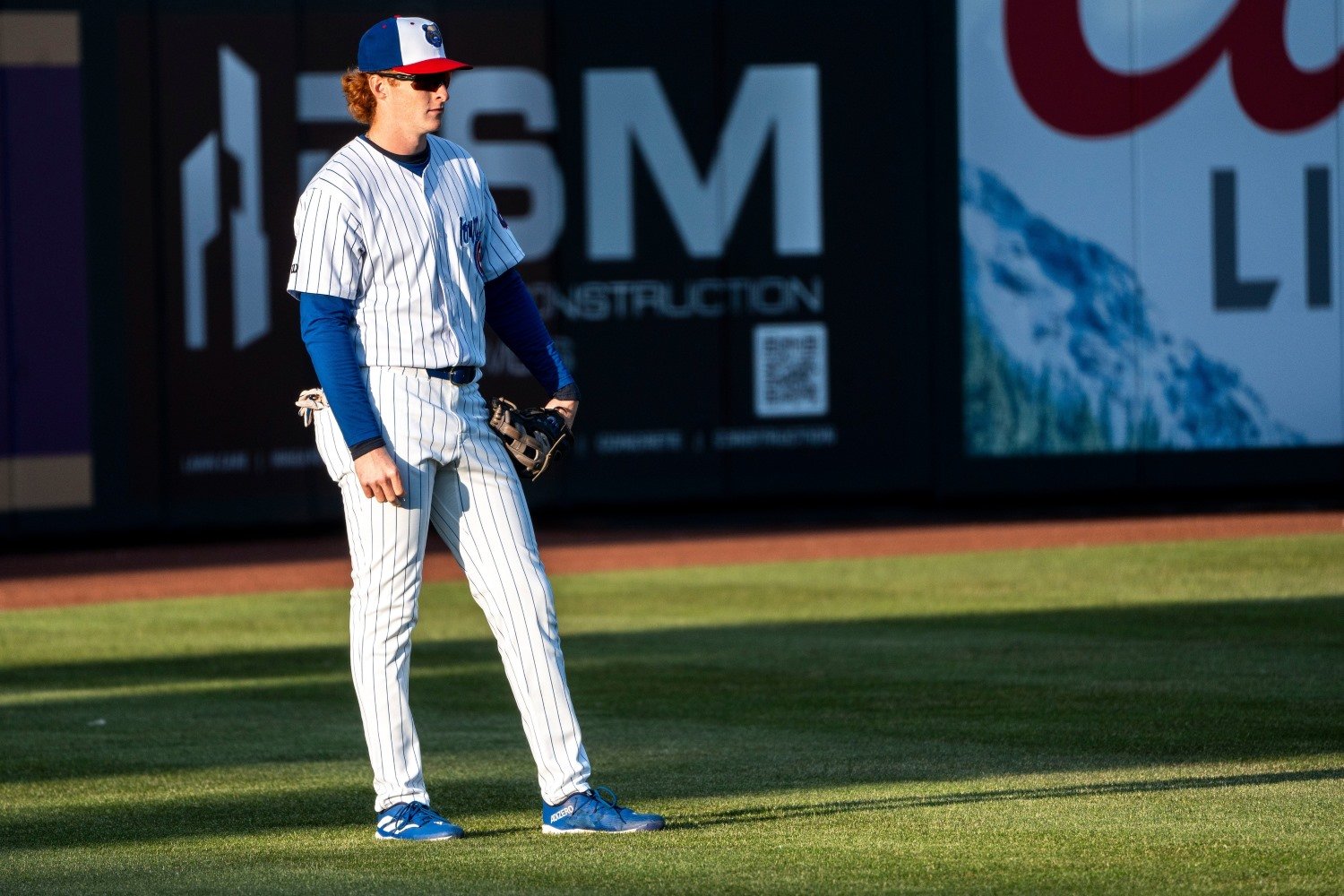 It's been an eventful season for Owen Caissie, and ultimately, it's also been a successful one. He's been a steady producer for the Iowa Cubs, though he's never forced the issue and looks unlikely to get a taste of the big leagues before the campaign is over. In 514 plate appearances at Iowa, he's batted .271/.372/.471, with 18 home runs, nine stolen bases, 68 walks and 143 strikeouts. The big, left-handed power hitter hasn't tapped into the tool that will make or break his big-league future, but his year has had an air of skill consolidation. He's held serve. Ordinarily, holding serve isn't what you want from a top prospect who started the season at Triple A, but Caissie is a special case. He just turned 22 in July. He's not yet on the 40-man roster, so there were logistical roadblocks to him contributing to the big-league team this season. On balance, it's not at all discouraging to see him steadily produce at an average-plus level against high-level pitchers. Still, you want to see a corner turned at some point within any season. The good news is, we might be seeing just that from Caissie, right at the end of his season. Since the calendar flipped to September, Caissie's swing rate is down to the lowest it has been in any month of the season. Specifically, he's laying off pitches down and away, or off the outside edge. He's cut the plate in half a bit, to focus on driving the ball more consistently. That's led to great raw results; Caissie is batting .275/.408/.575 since the start of the month. He's maintaining an excellent walk rate and a manageable strikeout rate by keeping his zone drum-tight, with a 16.3% chase rate on pitches outside the zone during the month. More importantly, though, perhaps, Caissie is finding more consistently authoritative contact by becoming more selective. For the first time all year, 10% of his swings in September have resulted in batted balls with an exit velocity of at least 100 miles per hour. That's an important threshold, because it's very hard to be a power hitter of any serious value in the big leagues without having at least that high a rate of triple-digit exit velocities per swing. Of the 267 batters with at least 300 plate appearances in the majors this year, 86--almost exactly one-third--have a rate of at least 10%. The league leaders are Vladimir Guerrero Jr. and Juan Soto, who are each over 17%. It's not impossible to be a productive hitter, even one who leans on power somewhat, with a rate below 10%, but it puts a lot of pressure on other skills. Most players who successfully do it get there by having better-than-average strikeout rates, superb walk rates, or some other special talent. Caissie is a relatively standard-issue left-handed power guy. He's a better athlete than his frame might imply, but not a true speedster, and while he can drive the ball to all fields, any version of his approach likely to work in the majors will probably depend a great deal on pulling the ball with authority. He's still whiffed on over 30% of his swings this year. He'll struggle to be productive at the next level even with that whiff rate, and we should expect him to whiff more against big-league hurlers than against Triple-A ones, anyway. Given the very high strikeout rate he's likely to run, he really does have to generate high-end power, which means that crossing that 10% barrier is vital. Again, though, we should expect him to have a lower 100+/Sw% in MLB than in the minors. The progress he's made this month is commendable and crucial, but going into the offseason, the Cubs can't count on anything from him next year. Instead, much like Matt Shaw and Kevin Alcántara, he'll spend the winter as a frequently-named trade candidate. Any or all of the three could be back next year. Any or all of the three could compete for and even claim roster spots. The team needs to have a lineup that works without contributions from any of them, though, and they have to count what they can get from each as a bonus. Caissie undeniably has power potential--the kind that could translate to 30 or more home runs in a season someday. This month has been an exciting step in the direction of turning that potential into reality. Yet, once we account for the huge level jump in difficulty ahead for him, we have to acknowledge that he's not yet ready to cross that bridge. By next April, he might be. This season has brought positive signs, especially at the end. It just hasn't brought the breakout for which the Cubs might have hoped.
 -
As the team hurtles toward an offseason that will need to include a lot of changes, one big bat has turned a subtle corner in Triple A. Can it translate to the next level? Image courtesy of © Lily Smith/The Register / USA TODAY NETWORK It's been an eventful season for Owen Caissie, and ultimately, it's also been a successful one. He's been a steady producer for the Iowa Cubs, though he's never forced the issue and looks unlikely to get a taste of the big leagues before the campaign is over. In 514 plate appearances at Iowa, he's batted .271/.372/.471, with 18 home runs, nine stolen bases, 68 walks and 143 strikeouts. The big, left-handed power hitter hasn't tapped into the tool that will make or break his big-league future, but his year has had an air of skill consolidation. He's held serve. Ordinarily, holding serve isn't what you want from a top prospect who started the season at Triple A, but Caissie is a special case. He just turned 22 in July. He's not yet on the 40-man roster, so there were logistical roadblocks to him contributing to the big-league team this season. On balance, it's not at all discouraging to see him steadily produce at an average-plus level against high-level pitchers. Still, you want to see a corner turned at some point within any season. The good news is, we might be seeing just that from Caissie, right at the end of his season. Since the calendar flipped to September, Caissie's swing rate is down to the lowest it has been in any month of the season. Specifically, he's laying off pitches down and away, or off the outside edge. He's cut the plate in half a bit, to focus on driving the ball more consistently. That's led to great raw results; Caissie is batting .275/.408/.575 since the start of the month. He's maintaining an excellent walk rate and a manageable strikeout rate by keeping his zone drum-tight, with a 16.3% chase rate on pitches outside the zone during the month. More importantly, though, perhaps, Caissie is finding more consistently authoritative contact by becoming more selective. For the first time all year, 10% of his swings in September have resulted in batted balls with an exit velocity of at least 100 miles per hour. That's an important threshold, because it's very hard to be a power hitter of any serious value in the big leagues without having at least that high a rate of triple-digit exit velocities per swing. Of the 267 batters with at least 300 plate appearances in the majors this year, 86--almost exactly one-third--have a rate of at least 10%. The league leaders are Vladimir Guerrero Jr. and Juan Soto, who are each over 17%. It's not impossible to be a productive hitter, even one who leans on power somewhat, with a rate below 10%, but it puts a lot of pressure on other skills. Most players who successfully do it get there by having better-than-average strikeout rates, superb walk rates, or some other special talent. Caissie is a relatively standard-issue left-handed power guy. He's a better athlete than his frame might imply, but not a true speedster, and while he can drive the ball to all fields, any version of his approach likely to work in the majors will probably depend a great deal on pulling the ball with authority. He's still whiffed on over 30% of his swings this year. He'll struggle to be productive at the next level even with that whiff rate, and we should expect him to whiff more against big-league hurlers than against Triple-A ones, anyway. Given the very high strikeout rate he's likely to run, he really does have to generate high-end power, which means that crossing that 10% barrier is vital. Again, though, we should expect him to have a lower 100+/Sw% in MLB than in the minors. The progress he's made this month is commendable and crucial, but going into the offseason, the Cubs can't count on anything from him next year. Instead, much like Matt Shaw and Kevin Alcántara, he'll spend the winter as a frequently-named trade candidate. Any or all of the three could be back next year. Any or all of the three could compete for and even claim roster spots. The team needs to have a lineup that works without contributions from any of them, though, and they have to count what they can get from each as a bonus. Caissie undeniably has power potential--the kind that could translate to 30 or more home runs in a season someday. This month has been an exciting step in the direction of turning that potential into reality. Yet, once we account for the huge level jump in difficulty ahead for him, we have to acknowledge that he's not yet ready to cross that bridge. By next April, he might be. This season has brought positive signs, especially at the end. It just hasn't brought the breakout for which the Cubs might have hoped. View full article
-
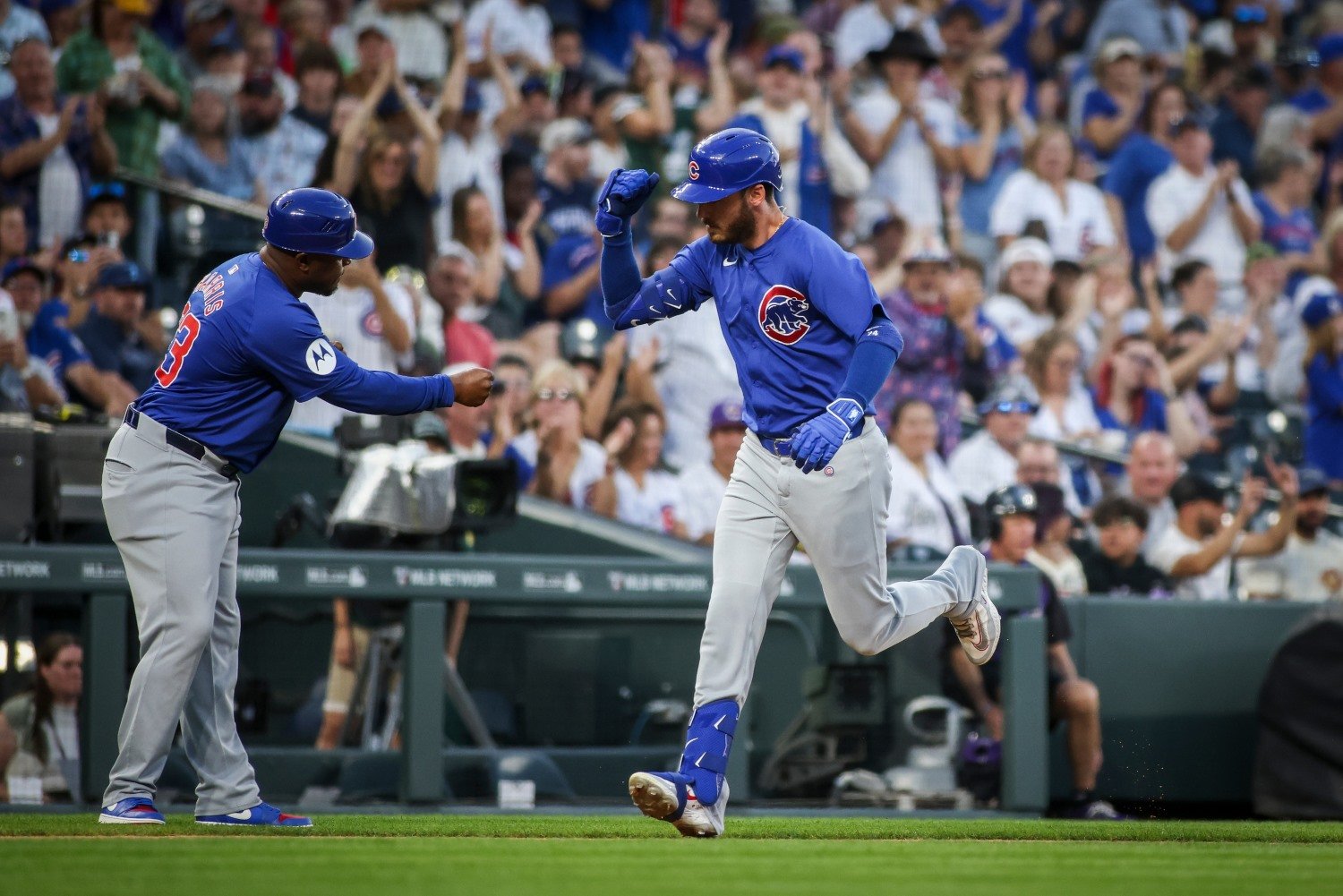 So far in September, Cody Bellinger is hitting .304/.396/.587, with four home runs. Those bombs came on hot nights at Wrigley Field, at Dodger Stadium, and in Coors Field, and the real power behind his power binge is a bit suspect, but it's still of interest. Bellinger has spent much of this season playing banged-up, and it's often shown up in his stat line. Aided by weather and more than his raw batted-ball data might support or not, a string of long hits at the end of the season is making Bellinger a more plausible free agent. Since fully recovering from the finger injury that sidelined him in July, Bellinger is swinging better. He's generating more bat speed, after a massive dip in August that coincided with terrible production for most of that month. Come the end of the season, Bellinger can elect free agency, or opt in to a $30-million salary for 2025, while retaining an option for $20 million more in 2026. For most of the last two months, it's been nigh unfathomable--whatever national pundits examining the situation from a great remove and without sufficient specific information--that Bellinger would be better served by opting in. There was always some chance that he and agent Scott Boras would make a massive mistake, but it was clear that the correct choice for them was to opt in. That's probably still true, really. Bellinger will turn 30 next summer, and September sizzle be damned, his power is faltering a bit. He has just 42 extra-base hits, in 518 plate appearances. Four injuries and declining stats suggest that he's not a center fielder, and his inability to play at an elite level when he's not fully healthy suggests he's not a star worth $30 million per year. The same quirky batted-ball data that kept his market cool last winter will probably keep it cool this winter, and the league's increasing problems with regional TV revenue figure to be bad for it, too. Still, Bellinger has come around nicely, and if he can continue to slug over the final fortnight of the campaign, his surface-level numbers will look fairly good. If he and Boras remain overconfident, they really might take a leap of faith this winter, figuring that there will be either a similar deal to the one he'd be leaving behind waiting for them--or else, a longer one, albeit at a considerably lower annual average value. It would be good news for the Cubs if Bellinger did pursue that path. They could use more financial flexibility, and if they ended up retaining Bellinger on the other side of an opt-out, it would have to be at a lower price. It remains more likely that Bellinger sticks around, and that wouldn't be so bad, either. He's still a productive player, and the short-term deal to which he's signed isn't onerous. He's showing the ability to meet the ball squarely, at a level that he didn't for much of the season. Barreling the ball helps make up for the fact that he doesn't swing as fast as most other players who hit for plus power, and while it hasn't resulted in actual plus power consistently this year, Bellinger is making big progress there of late. The team has plenty of money coming off its books this winter. The only big hurdle Bellinger opting in would create would be a clogged lineup spot. The Cubs need more power. They need to add a big bat or two to their lineup. Bellinger doesn't really count as such a player, and if he returns, they'll need to get more creative to make the needed upgrades. That's why, if Bellinger does stay hot for the balance of September and opt out this fall, it will make the Cubs' life easier.
 -
The Cubs' right fielder is on a torrid September run, and while it's been fueled by some friendly weather and park factors, it just might take him out to free agency again. Image courtesy of © Chet Strange-Imagn Images So far in September, Cody Bellinger is hitting .304/.396/.587, with four home runs. Those bombs came on hot nights at Wrigley Field, at Dodger Stadium, and in Coors Field, and the real power behind his power binge is a bit suspect, but it's still of interest. Bellinger has spent much of this season playing banged-up, and it's often shown up in his stat line. Aided by weather and more than his raw batted-ball data might support or not, a string of long hits at the end of the season is making Bellinger a more plausible free agent. Since fully recovering from the finger injury that sidelined him in July, Bellinger is swinging better. He's generating more bat speed, after a massive dip in August that coincided with terrible production for most of that month. Come the end of the season, Bellinger can elect free agency, or opt in to a $30-million salary for 2025, while retaining an option for $20 million more in 2026. For most of the last two months, it's been nigh unfathomable--whatever national pundits examining the situation from a great remove and without sufficient specific information--that Bellinger would be better served by opting in. There was always some chance that he and agent Scott Boras would make a massive mistake, but it was clear that the correct choice for them was to opt in. That's probably still true, really. Bellinger will turn 30 next summer, and September sizzle be damned, his power is faltering a bit. He has just 42 extra-base hits, in 518 plate appearances. Four injuries and declining stats suggest that he's not a center fielder, and his inability to play at an elite level when he's not fully healthy suggests he's not a star worth $30 million per year. The same quirky batted-ball data that kept his market cool last winter will probably keep it cool this winter, and the league's increasing problems with regional TV revenue figure to be bad for it, too. Still, Bellinger has come around nicely, and if he can continue to slug over the final fortnight of the campaign, his surface-level numbers will look fairly good. If he and Boras remain overconfident, they really might take a leap of faith this winter, figuring that there will be either a similar deal to the one he'd be leaving behind waiting for them--or else, a longer one, albeit at a considerably lower annual average value. It would be good news for the Cubs if Bellinger did pursue that path. They could use more financial flexibility, and if they ended up retaining Bellinger on the other side of an opt-out, it would have to be at a lower price. It remains more likely that Bellinger sticks around, and that wouldn't be so bad, either. He's still a productive player, and the short-term deal to which he's signed isn't onerous. He's showing the ability to meet the ball squarely, at a level that he didn't for much of the season. Barreling the ball helps make up for the fact that he doesn't swing as fast as most other players who hit for plus power, and while it hasn't resulted in actual plus power consistently this year, Bellinger is making big progress there of late. The team has plenty of money coming off its books this winter. The only big hurdle Bellinger opting in would create would be a clogged lineup spot. The Cubs need more power. They need to add a big bat or two to their lineup. Bellinger doesn't really count as such a player, and if he returns, they'll need to get more creative to make the needed upgrades. That's why, if Bellinger does stay hot for the balance of September and opt out this fall, it will make the Cubs' life easier. View full article
-
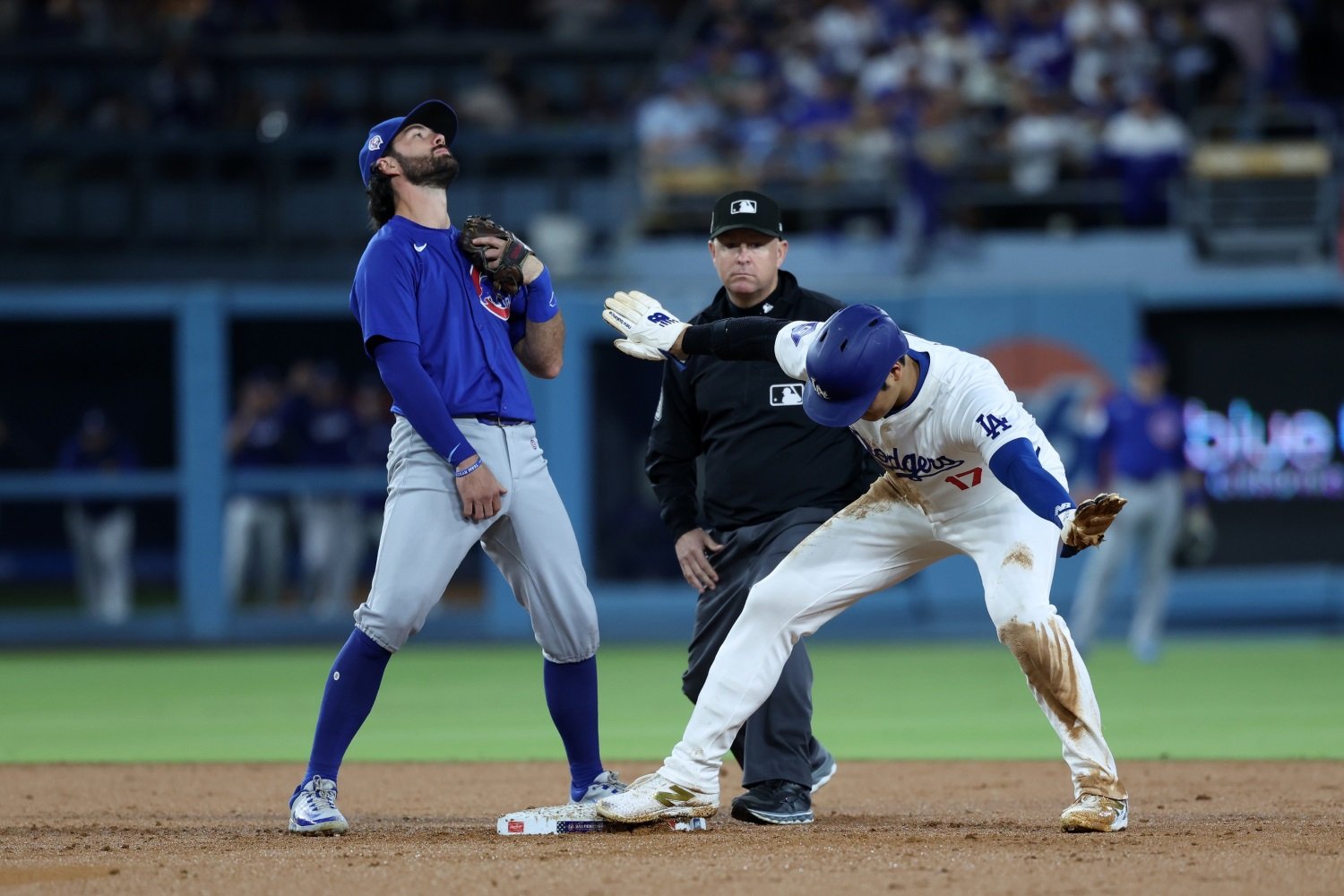 As of Thursday morning, the Cubs have a 3.8% chance of reaching the playoffs, according to Baseball Prospectus and its PECOTA projection system. If that sounds too optimistic, it's because it almost certainly is, but that's what the model says. The Cubs haven't quite seized their moment lately, with a bad series loss to the Pirates last week and a game that slipped away from them at Dodger Stadium Wednesday night, but their competition has been kind enough to falter, too, keeping some theoretical possibility alive. Funnily enough, that 3.8% mark is almost identical to the chances that the Cubs will sneak into the MLB Draft Lottery and pick within the top six picks in 2025. They're currently the team with the second-best record, among those who stand to be left out of the playoffs--the 17th-worst in baseball. According to the odds the league uses for its lottery, the team slotted to pick 17th in theory has a 94.6% chance of picking in exactly that position, and a 2.1% chance of picking 18th. The rest of their probability is scattered among those top six picks, since they could be selected for any of them via the lottery. In practice, the Cubs' chances of being in the lottery are a little higher than the numbers suggest, because the White Sox and A's are both ineligible to pick inside the lottery next year--but the effect of those disqualifications on the Cubs' hopes, given their position, is quite small. So, each of these two things are possible, and about equally so. It's close to 25-to-1 that the Cubs make the playoffs, and close to the same number that they get to pick higher than they have since 2014 in next year's first round. That's it, though. If neither of those longshots comes in, the Cubs will have muddled through another season of being stuck in the middle, without substantial change or progress and without a high pick to try to ameliorate that next summer. The reality of their lousy odds and high stakes is starting to get more stark. The team is unlikely to move on from their group of baseball decision-makers this fall, but without that turnover, from where will the changes they really need come? If they do make the playoffs, that would go a short but meaningful distance toward validating Jed Hoyer's project as the architect of the team. If they do eventually win the lottery, at this year's Winter Meetings in early December, it would give them a chance to make a sudden and unexpected infusion of high-end talent. In all the most likely cases, though, they head into the winter with another not-good-enough season behind them, facing the formidable task of dramatically upgrading a roster that was built around the idea that it was good enough without such an overhaul. To believe the team can turn the corner without the confidence and revenue infusion of a playoff berth or the talent boon of a lottery pick, you have to believe this front office is ready to change the way they do business. They've already shown a shrewd eye for talent, with recent draft picks and sound trades and signings, but that's not enough. They have to show an appetite for big-picture, grand-scale upgrades, and a greater mixture of flexibility and urgency than they've shown over the nearly half-decade of Hoyer's administration. For now, the cards are still coming down. Maybe the team will hit the big flush they've been drawing to, on the fourth or fifth card. It's much more likely, though, that they're about to walk away from the table with empty hands and pockets again. They had better bring a wholly different, more robust strategy to next year's main event.