


Matthew Trueblood
-
Posts
2,481 -
Joined
-
Last visited
-
Days Won
2
Content Type
Profiles
Joomla Posts 1
Chicago Cubs Videos
Chicago Cubs Free Agent & Trade Rumors, Notes, & Tidbits
2026 Chicago Cubs Top Prospects Ranking
News
2023 Chicago Cubs Draft Picks
Guides & Resources
2024 Chicago Cubs Draft Picks
The Chicago Cubs Players Project
2025 Chicago Cubs Draft Pick Tracker
2026 Chicago Cubs Draft Tracker: Picks & Bonuses
Blogs
Events
Forums
Store
Gallery
Everything posted by Matthew Trueblood
-
The first trade of deadline day for the Cubs is as much about ensuring that they aren't shut out as anything, but they picked up two players with plausible big-league futures for one who's already nearing the end of his career. Image courtesy of Nathan Ray Seebeck - USA Today Sports Mark Leiter Jr. is a Cub no more. For the most consistently available and dominant reliever on the team over the last season and a half, the Cubs acquire righty reliever Jack Neely and infield prospect Ben Cowles from the Yankees. It's an underwhelming return, although for a reliever already in his mid-30s and without high-end velocity, it would be unfair to expect a huge haul. Neely is a gargantuan 24-year-old righthander, with a pretty standard-issue fastball-slider combination that plays up slightly because of his size and extension. Cowles is a performance prospect who has hit well this season in the Double-A Eastern League, but who is also 24 years old and was not one of even the top 20 or 25 prospects within the Yankees farm system. While Cubs fans know how lights-out Leiter can be when he has good feel for his devastating splitter, the reality is that his profile--nothing special about the fastball, no reliable breaking ball, occasional bouts of utter ineptitude when that splitter abandoned him--is not one most organizations particularly like or value. Though he still has two years of team control in theory, the odds are that he'll be waived or non-tendered before he hits free agency, and he's hurtling toward 35 years of age. All of those industry-wide reservations are reflected in this underwhelming return, but the Cubs are trusting their scouting and player-development groups with a couple of players who do possess notable strengths. For Neely, that strength is a wicked slider, which plays off his fastball for lots of swings and misses. He's thrown enough strikes to climb the minor-league ladder and is not letting his walk rate get crazy even with the smallish technology-assisted zones in Triple-A. Those are good signs. Still, with a pretty ordinary fastball for a short-burst reliever, he'll have to demonstrate excellent command to get over the hump and be a contributor on par with Leiter eventually. Cowles is more of a well-rounded gamer than a toolshed, though he has a modicum of both power and speed. He was a college draftee in 2021, but didn't make it onto anyone's real prospect radar until a strong Arizona Fall League campaign last year. He's carried that over nicely into 2024, though again, neither his numbers nor his physical play jump off the screen at you. He'll add to the team's formidable infield depth at the upper levels of the minors, unless and until some trade in the near future depletes those very stores. All told, this is about the deal we should have expected for Leiter, very much a non-premium trade asset but a decent little chip. It would be a surprise if either player had a substantial impact on the organization, but a disappointment if at least one didn't see at least half a season of time on the big-league roster. View full article
-
Cubs Trade Mark Leiter Jr., Acquire Two Prospects from Yankees
Matthew Trueblood posted an article in Cubs
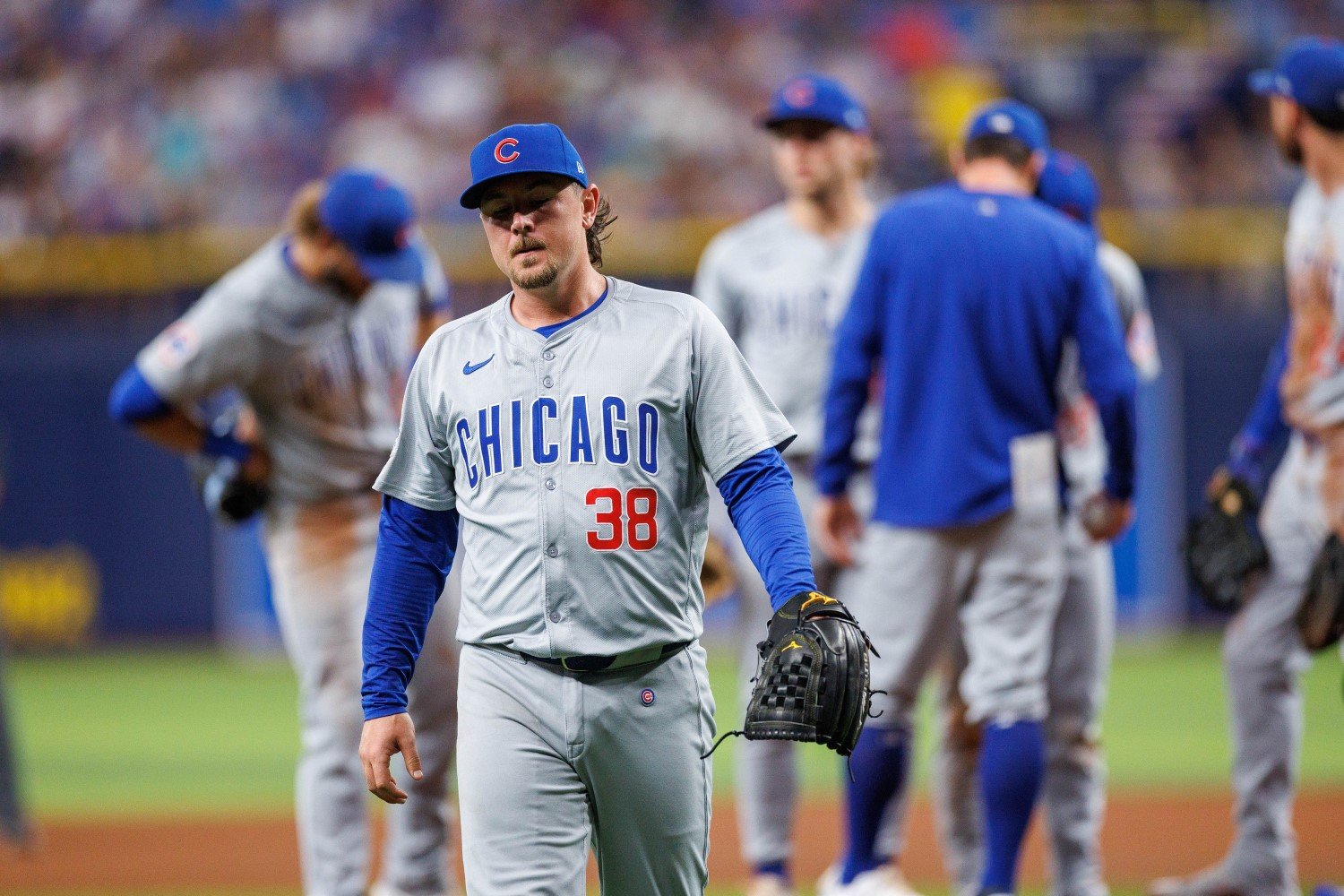 Mark Leiter Jr. is a Cub no more. For the most consistently available and dominant reliever on the team over the last season and a half, the Cubs acquire righty reliever Jack Neely and infield prospect Ben Cowles from the Yankees. It's an underwhelming return, although for a reliever already in his mid-30s and without high-end velocity, it would be unfair to expect a huge haul. Neely is a gargantuan 24-year-old righthander, with a pretty standard-issue fastball-slider combination that plays up slightly because of his size and extension. Cowles is a performance prospect who has hit well this season in the Double-A Eastern League, but who is also 24 years old and was not one of even the top 20 or 25 prospects within the Yankees farm system. While Cubs fans know how lights-out Leiter can be when he has good feel for his devastating splitter, the reality is that his profile--nothing special about the fastball, no reliable breaking ball, occasional bouts of utter ineptitude when that splitter abandoned him--is not one most organizations particularly like or value. Though he still has two years of team control in theory, the odds are that he'll be waived or non-tendered before he hits free agency, and he's hurtling toward 35 years of age. All of those industry-wide reservations are reflected in this underwhelming return, but the Cubs are trusting their scouting and player-development groups with a couple of players who do possess notable strengths. For Neely, that strength is a wicked slider, which plays off his fastball for lots of swings and misses. He's thrown enough strikes to climb the minor-league ladder and is not letting his walk rate get crazy even with the smallish technology-assisted zones in Triple-A. Those are good signs. Still, with a pretty ordinary fastball for a short-burst reliever, he'll have to demonstrate excellent command to get over the hump and be a contributor on par with Leiter eventually. Cowles is more of a well-rounded gamer than a toolshed, though he has a modicum of both power and speed. He was a college draftee in 2021, but didn't make it onto anyone's real prospect radar until a strong Arizona Fall League campaign last year. He's carried that over nicely into 2024, though again, neither his numbers nor his physical play jump off the screen at you. He'll add to the team's formidable infield depth at the upper levels of the minors, unless and until some trade in the near future depletes those very stores. All told, this is about the deal we should have expected for Leiter, very much a non-premium trade asset but a decent little chip. It would be a surprise if either player had a substantial impact on the organization, but a disappointment if at least one didn't see at least half a season of time on the big-league roster.
 -
There's less than five hours left before the 2024 MLB trade deadline, and the Chicago Cubs need to make more moves to set themselves up for a fruitful future. They're constrained by multiple factors, of course, but one will almost surely be the need to stay under the competitive-balance tax threshold. Image courtesy of © Lucas Peltier-USA TODAY Sports It's almost negligible, but keep an eye on it. When the Cubs traded for Isaac Paredes and gave up Christopher Morel, their salary obligations for the balance of the season rose by just under $1 million. That's not an important amount of money to the Ricketts family, of course, but it's important, because the Cubs were only a few million below the first threshold for the luxury tax under the CBA this year. With Paredes on board, the team owes roughly $234 million for the season, whiskers beneath the cap of $237 million. This season will not end with a playoff berth. Much though they wished and expected it to be, this year is not part of a winning window for the Cubs. Therefore, they're not going to go into the territory of luxury tax payers. That comes with too many penalties and problems, especially if they end up going over that figure in 2025 and beyond--as they should be planning to do. Triggering the tax penalties over a million bucks or so in a largely lost season would be foolish, and the front office won't do it. That means that, whoever the Cubs trade for over the next few hours, they're not going to add more than about $2 million in new obligations. That's sufficient flexibility, because they're trying to trade away some players to whom they owe significant sums, anyway. A Jameson Taillon, Nico Hoerner, Drew Smyly, or Héctor Neris trade would take them safely far from the threshold. They might elect to send cash along with one of those players, if they deal them, to goose the return in young talent that they receive in the process, but they should still get some salary relief. Then, too, they can acquire anyone who's making a seven-figure salary, as long as they dump something else somewhere. They'll only owe that theoretical incoming player about a third of their full-year salary, because that's all that's left of this campaign. Their hands aren't fully tied, or anything. They can make plenty of different moves. Still, it's important to keep this in mind. Whatever moves the team makes (or eschews), their proximity to the tax threshold will certainly have informed their choices, if only at the margins. Understand that, and you'll have a clearer idea of what they do whatever they do this afternoon and evening--and a better sense of the priorities of this front office now and in the future. View full article
-
 It's almost negligible, but keep an eye on it. When the Cubs traded for Isaac Paredes and gave up Christopher Morel, their salary obligations for the balance of the season rose by just under $1 million. That's not an important amount of money to the Ricketts family, of course, but it's important, because the Cubs were only a few million below the first threshold for the luxury tax under the CBA this year. With Paredes on board, the team owes roughly $234 million for the season, whiskers beneath the cap of $237 million. This season will not end with a playoff berth. Much though they wished and expected it to be, this year is not part of a winning window for the Cubs. Therefore, they're not going to go into the territory of luxury tax payers. That comes with too many penalties and problems, especially if they end up going over that figure in 2025 and beyond--as they should be planning to do. Triggering the tax penalties over a million bucks or so in a largely lost season would be foolish, and the front office won't do it. That means that, whoever the Cubs trade for over the next few hours, they're not going to add more than about $2 million in new obligations. That's sufficient flexibility, because they're trying to trade away some players to whom they owe significant sums, anyway. A Jameson Taillon, Nico Hoerner, Drew Smyly, or Héctor Neris trade would take them safely far from the threshold. They might elect to send cash along with one of those players, if they deal them, to goose the return in young talent that they receive in the process, but they should still get some salary relief. Then, too, they can acquire anyone who's making a seven-figure salary, as long as they dump something else somewhere. They'll only owe that theoretical incoming player about a third of their full-year salary, because that's all that's left of this campaign. Their hands aren't fully tied, or anything. They can make plenty of different moves. Still, it's important to keep this in mind. Whatever moves the team makes (or eschews), their proximity to the tax threshold will certainly have informed their choices, if only at the margins. Understand that, and you'll have a clearer idea of what they do whatever they do this afternoon and evening--and a better sense of the priorities of this front office now and in the future.
 -
By taking an enigmatic, often frustrating hitter without a defensive position out of the picture and replacing him with a reliable one who will play a set spot every day, the Cubs brought their medium-term needs into focus. Now, they need to make a bold deadline day move. Image courtesy of © Jeff Curry-USA TODAY Sports Conversations have swirled and eddied, surged and slowed in the 40 hours or so since the Cubs made the most surprising trade of the deadline period Sunday, sending Christopher Morel and two pitchers to the Rays in exchange for Isaac Paredes. A very strong gravity has pulled those conversations back to the same place over and over, though, and in that place, there's a clarity available to the perspicacious Cubs observer. With Morel out the door, there is room on the roster in the medium term for all three of Ian Happ, Seiya Suzuki, and Cody Bellinger. Bellinger should slot in as the everyday right fielder next season, if and when he opts in to the $30 million to which he's entitled after an unremarkable second campaign with the Cubs. That project can even begin over the next two months, and run parallel to the equally important position switch that is moving Suzuki to designated hitter. As disappointing as the conclusion is, it's equally inescapable: Suzuki is not a credible right fielder. It will be a difficult transition, but the team needs to get him reps as an everyday DH, so he can acclimate to the mental rigors of that role. No-trade clauses and a contract that is tantamount to one figure to lock Happ, Bellinger, and Suzuki in at the two corner outfield spots and DH for the next two and a half years. That struck me as an urgent problem about a month ago, but after the trade that both jettisoned the positionless Morel and added the sturdy Paredes as an everyday, above-average bat and third baseman, it's perfectly fine to have the three expensive veterans arrayed in the lineup every day. That's a sustainable plan, thanks to the Paredes deal. Assuming he can stay a bit healthier and enjoy the consistency that has eluded him (sometimes because of those injuries, and other times partly because of the strain caused by his own defensive ineptitude), Suzuki can even be one of the true anchors every lineup needs. Here's the wrinkle: a playoff-caliber lineup really needs two such anchors. Suzuki being one is great news, but he'll do so while taking up the easiest position at which to find one. Meanwhile, the team is committed (and again, this is good, not bad; it's just drawing certain lines around things and carving out the shape of their remaining need, piece by piece) to Michael Busch at first base and Paredes at third. Those two on the infield corners and Happ and Bellinger on the outfield corners form a fine supporting cast in any lineup, but none are that primary or secondary anchor for the lineup. What's left? Shortstop, second base, center field, and catcher. Somewhere up the middle of the diamond, where defense is supposed to steer most decisions, the Cubs have to find a stellar bat. It won't be Dansby Swanson. At best, he'll recover to something like his form over the two seasons prior to signing with the Cubs, and be an average contributor from the bottom third of the batting order. Yet, he's very much locked into the position for the next few years, because of the team's financial obligations to him. One more slot in the order and spot on the diamond spoken for, and in a perfectly tenable way--but not the spectacular one the team needs. A moment's pause: Paredes is a Super Two guy this year, and will get expensive in arbitration after being an All-Star in his first arb-eligible campaign. Suzuki, Happ, Bellinger, and Swanson all have competitive-balance tax salaries of at least $18 million per year. They're taking up money. We're really cutting a specific shape for the missing puzzle piece. It'll need to be a second baseman, a catcher, or a center fielder, and it'll have to be someone under a certain amount of team and cost control. We come, then, to the incumbents at those positions: Miguel Amaya, Pete Crow-Armstrong, and Nico Hoerner. I think most people would agree that Hoerner is the best player in that mix and the one in which the team should have the most confidence; then Crow-Armstrong; then Amaya. On the other hand, Hoerner is by far the most expensive and least controllable of the trio. Paradoxically, though, because we've seen the warts of each of the others on such vivid display this year, Hoerner also has by far the highest trade value. For that matter, he's also the most replaceable, because it's so hard to find cromulent catchers and because the team is stacked with promising infielders in the minors, like Matt Shaw, James Triantos and Jefferson Rojas. That's it. By reading this far, you've stepped all the way into the net. You're caught. We're in agreement. The Cubs need to trade Hoerner today. His value will not be higher this winter. There are plenty of teams in need of low-grade offensive help and stability on the middle infield right now, and another hot finishing kick to the year won't fool teams into thinking he's a star leadoff hitter, anyway, because he did that last season and then came back merely average in 2024. Hoerner could fetch a really interesting collection of young talent, which could include a player who might rapidly blossom into the missing piece--the second lineup anchor--or could merely help the team acquire that player today, or over the winter. It's not at all likely that the Cubs will find that missing piece in their 2025 lineup on Tuesday. They can make big progress toward that goal, though, by moving an eight-figure salary and/or stockpiling more high-upside talent. They can clear a path to playing time for players who need to be evaluated. They can chart their course toward Opening Day next year. It will feel like a deflating step back to trade away their most successful homegrown player since Happ, but moving Hoerner is the key intermediate step to finding and snatching up the unidentified player who will help anchor the lineup of the next great Cubs team, starting next spring. View full article
-
Did the Isaac Paredes Deal Seal Nico Hoerner's Trade Fate?
Matthew Trueblood posted an article in Cubs
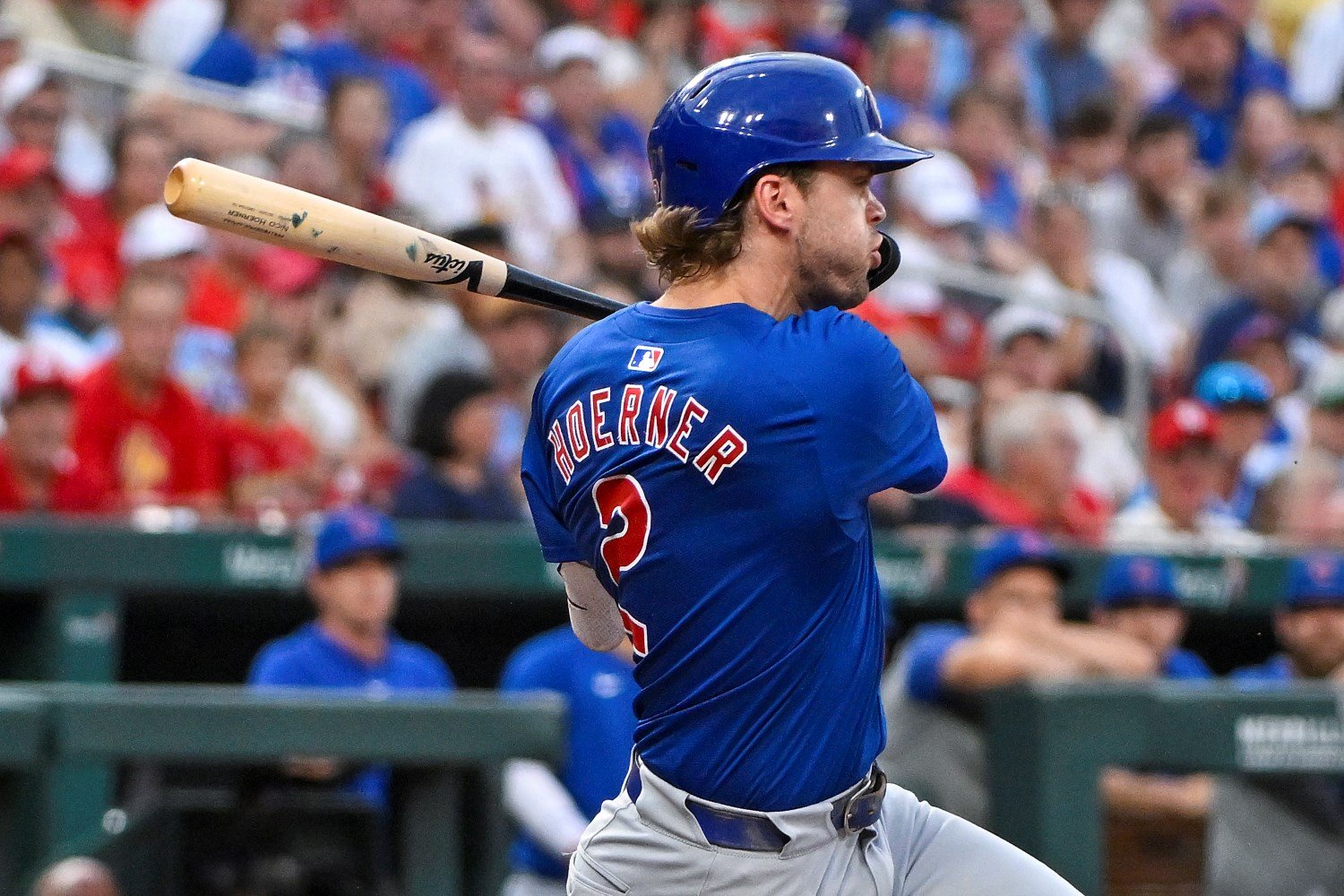 Conversations have swirled and eddied, surged and slowed in the 40 hours or so since the Cubs made the most surprising trade of the deadline period Sunday, sending Christopher Morel and two pitchers to the Rays in exchange for Isaac Paredes. A very strong gravity has pulled those conversations back to the same place over and over, though, and in that place, there's a clarity available to the perspicacious Cubs observer. With Morel out the door, there is room on the roster in the medium term for all three of Ian Happ, Seiya Suzuki, and Cody Bellinger. Bellinger should slot in as the everyday right fielder next season, if and when he opts in to the $30 million to which he's entitled after an unremarkable second campaign with the Cubs. That project can even begin over the next two months, and run parallel to the equally important position switch that is moving Suzuki to designated hitter. As disappointing as the conclusion is, it's equally inescapable: Suzuki is not a credible right fielder. It will be a difficult transition, but the team needs to get him reps as an everyday DH, so he can acclimate to the mental rigors of that role. No-trade clauses and a contract that is tantamount to one figure to lock Happ, Bellinger, and Suzuki in at the two corner outfield spots and DH for the next two and a half years. That struck me as an urgent problem about a month ago, but after the trade that both jettisoned the positionless Morel and added the sturdy Paredes as an everyday, above-average bat and third baseman, it's perfectly fine to have the three expensive veterans arrayed in the lineup every day. That's a sustainable plan, thanks to the Paredes deal. Assuming he can stay a bit healthier and enjoy the consistency that has eluded him (sometimes because of those injuries, and other times partly because of the strain caused by his own defensive ineptitude), Suzuki can even be one of the true anchors every lineup needs. Here's the wrinkle: a playoff-caliber lineup really needs two such anchors. Suzuki being one is great news, but he'll do so while taking up the easiest position at which to find one. Meanwhile, the team is committed (and again, this is good, not bad; it's just drawing certain lines around things and carving out the shape of their remaining need, piece by piece) to Michael Busch at first base and Paredes at third. Those two on the infield corners and Happ and Bellinger on the outfield corners form a fine supporting cast in any lineup, but none are that primary or secondary anchor for the lineup. What's left? Shortstop, second base, center field, and catcher. Somewhere up the middle of the diamond, where defense is supposed to steer most decisions, the Cubs have to find a stellar bat. It won't be Dansby Swanson. At best, he'll recover to something like his form over the two seasons prior to signing with the Cubs, and be an average contributor from the bottom third of the batting order. Yet, he's very much locked into the position for the next few years, because of the team's financial obligations to him. One more slot in the order and spot on the diamond spoken for, and in a perfectly tenable way--but not the spectacular one the team needs. A moment's pause: Paredes is a Super Two guy this year, and will get expensive in arbitration after being an All-Star in his first arb-eligible campaign. Suzuki, Happ, Bellinger, and Swanson all have competitive-balance tax salaries of at least $18 million per year. They're taking up money. We're really cutting a specific shape for the missing puzzle piece. It'll need to be a second baseman, a catcher, or a center fielder, and it'll have to be someone under a certain amount of team and cost control. We come, then, to the incumbents at those positions: Miguel Amaya, Pete Crow-Armstrong, and Nico Hoerner. I think most people would agree that Hoerner is the best player in that mix and the one in which the team should have the most confidence; then Crow-Armstrong; then Amaya. On the other hand, Hoerner is by far the most expensive and least controllable of the trio. Paradoxically, though, because we've seen the warts of each of the others on such vivid display this year, Hoerner also has by far the highest trade value. For that matter, he's also the most replaceable, because it's so hard to find cromulent catchers and because the team is stacked with promising infielders in the minors, like Matt Shaw, James Triantos and Jefferson Rojas. That's it. By reading this far, you've stepped all the way into the net. You're caught. We're in agreement. The Cubs need to trade Hoerner today. His value will not be higher this winter. There are plenty of teams in need of low-grade offensive help and stability on the middle infield right now, and another hot finishing kick to the year won't fool teams into thinking he's a star leadoff hitter, anyway, because he did that last season and then came back merely average in 2024. Hoerner could fetch a really interesting collection of young talent, which could include a player who might rapidly blossom into the missing piece--the second lineup anchor--or could merely help the team acquire that player today, or over the winter. It's not at all likely that the Cubs will find that missing piece in their 2025 lineup on Tuesday. They can make big progress toward that goal, though, by moving an eight-figure salary and/or stockpiling more high-upside talent. They can clear a path to playing time for players who need to be evaluated. They can chart their course toward Opening Day next year. It will feel like a deflating step back to trade away their most successful homegrown player since Happ, but moving Hoerner is the key intermediate step to finding and snatching up the unidentified player who will help anchor the lineup of the next great Cubs team, starting next spring.
 -
The Cubs traded for a hard-throwing reliever over the weekend, and they gave up real (albeit modest) value for him. Why? It's not the fact that Nate Pearson throws hard that attracted the Cubs to him. There are plenty of relievers who throw hard, and many of them have much more success doing so than Pearson does. His fastball command stinks. His injury history stinks. His track record, as a whole, stinks. They didn't proactively trade for the controllable righty reliever, at the expense of two low-wattage but usable prospects, because he can touch 102 with his fastball--although perhaps that didn't hurt. No, the Cubs liked Pearson for two reasons, each exemplified by other recent moves they've made in exactly the same vein. They are: The untapped potential value of emphasizing his better breaking ball; and The fact that he's under team control through 2026, and was available at a price commensurate with a rental reliever with a more robust résumé. In that way, Pearson is a nice next piece in a set that includes Julian Merryweather, Tyson Miller, and the now-departed José Cuas. The Cubs believe in the process they use to target and acquire relievers and extract value from them, enough to keep repeating that process. Merryweather is a case study in how the Cubs will try to increase Pearson's effectiveness. When they acquired him prior to 2023, he was a four-pitch pitcher, with both a slider and a sweeper taking up a chunk of his non-fastball pitch usage. They went to work to fix that, because he didn't really need the sweeper; the slider was good enough to dominate with. He quickly emerged as a slider monster in the Chicago bullpen, and only injury has interrupted his run of dominance since. Pearson needs to undergo the same transformation, because his curveball is like Merryweather's now-defunct sweeper: in the way of more important things. It's Pearson's slider, like Merryweather's, that can be devastating. The especially good news, this time, is that the change is already underway. If Pearson does pan out as a dominant, strikeout-happy high-leverage arm, the Cubs will enjoy control of his services for two more seasons after this. That's how he also echoes the acquisitions (last summer, and then early this season) of Cuas and Miller. All three of these moves have been proactive trades in which the Cubs gave up useful farm system depth--the kind of prospect they've had a hard time developing into a real contributor, but whom other teams like--to get a reliever with substantial team control left, rather than trying to patch the same hole with lower-caliber waiver claims or players who will become free agents shortly thereafter. Every team wants to have a good bullpen, but no team wants to spend very much on it. The Cubs' approach to that effort is becoming more clear. In addition to fliers on players like Merryweather, Mark Leiter Jr., and Colten Brewer, they want to grab players like Cuas, Miller, Pearson, and Yency Almonte--those squeezed but not quite bumped by the roster crunches of other teams, and on whom they can realize multiple years of benefit if they successfully mill them into valuable bullpen arms. Pearson will get a long audition as a setup man over the final two months, but the Cubs figure to hold onto him almost no matter what--not because of the players they gave up for him, but because he reflects a set of process priorities that aren't temporary. The Cubs want to streamline the arsenals of high-octane relievers, and they want to find ones who can solve problems and answer questions in their pen for multiple seasons, at a low cost. Pearson nicely epitomizes that point of emphasis. View full article
-
.png.4bdf1c44c6a792bafc301035af2acdf3.png) It's not the fact that Nate Pearson throws hard that attracted the Cubs to him. There are plenty of relievers who throw hard, and many of them have much more success doing so than Pearson does. His fastball command stinks. His injury history stinks. His track record, as a whole, stinks. They didn't proactively trade for the controllable righty reliever, at the expense of two low-wattage but usable prospects, because he can touch 102 with his fastball--although perhaps that didn't hurt. No, the Cubs liked Pearson for two reasons, each exemplified by other recent moves they've made in exactly the same vein. They are: The untapped potential value of emphasizing his better breaking ball; and The fact that he's under team control through 2026, and was available at a price commensurate with a rental reliever with a more robust résumé. In that way, Pearson is a nice next piece in a set that includes Julian Merryweather, Tyson Miller, and the now-departed José Cuas. The Cubs believe in the process they use to target and acquire relievers and extract value from them, enough to keep repeating that process. Merryweather is a case study in how the Cubs will try to increase Pearson's effectiveness. When they acquired him prior to 2023, he was a four-pitch pitcher, with both a slider and a sweeper taking up a chunk of his non-fastball pitch usage. They went to work to fix that, because he didn't really need the sweeper; the slider was good enough to dominate with. He quickly emerged as a slider monster in the Chicago bullpen, and only injury has interrupted his run of dominance since. Pearson needs to undergo the same transformation, because his curveball is like Merryweather's now-defunct sweeper: in the way of more important things. It's Pearson's slider, like Merryweather's, that can be devastating. The especially good news, this time, is that the change is already underway. If Pearson does pan out as a dominant, strikeout-happy high-leverage arm, the Cubs will enjoy control of his services for two more seasons after this. That's how he also echoes the acquisitions (last summer, and then early this season) of Cuas and Miller. All three of these moves have been proactive trades in which the Cubs gave up useful farm system depth--the kind of prospect they've had a hard time developing into a real contributor, but whom other teams like--to get a reliever with substantial team control left, rather than trying to patch the same hole with lower-caliber waiver claims or players who will become free agents shortly thereafter. Every team wants to have a good bullpen, but no team wants to spend very much on it. The Cubs' approach to that effort is becoming more clear. In addition to fliers on players like Merryweather, Mark Leiter Jr., and Colten Brewer, they want to grab players like Cuas, Miller, Pearson, and Yency Almonte--those squeezed but not quite bumped by the roster crunches of other teams, and on whom they can realize multiple years of benefit if they successfully mill them into valuable bullpen arms. Pearson will get a long audition as a setup man over the final two months, but the Cubs figure to hold onto him almost no matter what--not because of the players they gave up for him, but because he reflects a set of process priorities that aren't temporary. The Cubs want to streamline the arsenals of high-octane relievers, and they want to find ones who can solve problems and answer questions in their pen for multiple seasons, at a low cost. Pearson nicely epitomizes that point of emphasis.
It's not the fact that Nate Pearson throws hard that attracted the Cubs to him. There are plenty of relievers who throw hard, and many of them have much more success doing so than Pearson does. His fastball command stinks. His injury history stinks. His track record, as a whole, stinks. They didn't proactively trade for the controllable righty reliever, at the expense of two low-wattage but usable prospects, because he can touch 102 with his fastball--although perhaps that didn't hurt. No, the Cubs liked Pearson for two reasons, each exemplified by other recent moves they've made in exactly the same vein. They are: The untapped potential value of emphasizing his better breaking ball; and The fact that he's under team control through 2026, and was available at a price commensurate with a rental reliever with a more robust résumé. In that way, Pearson is a nice next piece in a set that includes Julian Merryweather, Tyson Miller, and the now-departed José Cuas. The Cubs believe in the process they use to target and acquire relievers and extract value from them, enough to keep repeating that process. Merryweather is a case study in how the Cubs will try to increase Pearson's effectiveness. When they acquired him prior to 2023, he was a four-pitch pitcher, with both a slider and a sweeper taking up a chunk of his non-fastball pitch usage. They went to work to fix that, because he didn't really need the sweeper; the slider was good enough to dominate with. He quickly emerged as a slider monster in the Chicago bullpen, and only injury has interrupted his run of dominance since. Pearson needs to undergo the same transformation, because his curveball is like Merryweather's now-defunct sweeper: in the way of more important things. It's Pearson's slider, like Merryweather's, that can be devastating. The especially good news, this time, is that the change is already underway. If Pearson does pan out as a dominant, strikeout-happy high-leverage arm, the Cubs will enjoy control of his services for two more seasons after this. That's how he also echoes the acquisitions (last summer, and then early this season) of Cuas and Miller. All three of these moves have been proactive trades in which the Cubs gave up useful farm system depth--the kind of prospect they've had a hard time developing into a real contributor, but whom other teams like--to get a reliever with substantial team control left, rather than trying to patch the same hole with lower-caliber waiver claims or players who will become free agents shortly thereafter. Every team wants to have a good bullpen, but no team wants to spend very much on it. The Cubs' approach to that effort is becoming more clear. In addition to fliers on players like Merryweather, Mark Leiter Jr., and Colten Brewer, they want to grab players like Cuas, Miller, Pearson, and Yency Almonte--those squeezed but not quite bumped by the roster crunches of other teams, and on whom they can realize multiple years of benefit if they successfully mill them into valuable bullpen arms. Pearson will get a long audition as a setup man over the final two months, but the Cubs figure to hold onto him almost no matter what--not because of the players they gave up for him, but because he reflects a set of process priorities that aren't temporary. The Cubs want to streamline the arsenals of high-octane relievers, and they want to find ones who can solve problems and answer questions in their pen for multiple seasons, at a low cost. Pearson nicely epitomizes that point of emphasis. -
While he's been reluctant to use the heaviest, most blunt instrument in the modern baseball executive's bag, the Cubs' top decision-maker is showing that he feels a building urgency to win, even amid this lost 2024 campaign. Image courtesy of © Nathan Ray Seebeck-USA TODAY Sports One of Jed Hoyer's consistently stated goals since taking over the leadership of the Cubs' baseball operations department has been to emphasize drafting and player development. Hiring Dan Kantrovitz was an investment in starting to get the Draft right, after years of not truly doing so. The Cubs don't want to win with high-priced stars, except as complementary additions and capstones for great rosters. Their plan is to win with young players whose value exceeds their pay, and generally, that means drafting well, being aggressive and intelligent in the international free-agent space, and trading for prospects whom they can bring along well. That's the most obvious way to build a streamlined organization capable of winning consistently across a number of years. It's also excruciatingly slow. For an executive who takes over knowing a rebuild is a foot, that's no problem. Time is a commodity they hold in abundance. They can trade, for instance, an incumbent ace for a passel of teenage prospects. They can spin off an entire semi-contending team's core for prospects who can come along at an unhurried pace. It starts out that way, at least. Eventually, though, even fairly patient (disinterested, a cynic might say) owners demand that a commitment to acquiring and developing young talent leads to wins on the field, and it's not that easy. Anyone can, with their resources all pointed in that direction, accumulate young, cost-controlled players on whom the prospect ranking apparatus looks favorably. The challenge lies both in developing those talented people into the caliber of productive players they're capable of being, and aligning your talent well enough to convert potential and production into wins. It's this final challenge that has, so far, frustrated Hoyer's regime. Whether he feels that the clock is ticking on his tenure because of impatience for better results from the Ricketts family, or whether he just intrinsically craves the success that has eluded him, Hoyer is now overseeing a change in front-office tactics that carries major implications. Over the last two years, we've seen a sudden shift, away from the mere collecting of talented players (as at the 2022 trade deadline, for instance, when he traded valued bullpen contributor Scott Effross to land Hayden Wesneski) and toward the creation of a window of contention. Specifically, look what he's doing with his 2022 and 2023 Draft classes. Over the winter, Hoyer traded Jackson Ferris and Zyhir Hope to the Dodgers, in exchange for Michael Busch and Yency Almonte. Ferris was the high-dollar second-round pick for whom the Cubs spent a bonus amount commensurate with a first-rounder in 2022, while Hope was one of the team's more intriguing late-round selections in 2023. Then, on Saturday, Hoyer traded Yohendrick Pinango and Josh Rivera for Nate Pearson, of the Blue Jays. Rivera was last year's third-round pick. On Sunday, Hoyer moved Ty Johnson, in the Christopher Morel-for-Isaac Paredes swap. Johnson was a blossoming 15th-round pick from 2023, himself. In almost exactly a year, Hoyer has traded three members of last year's class, and in none of those cases was it because the organization has soured on them. On the contrary, all three players' stock was right around the same place it was on draft day. This isn't a new gambit. In fact, it's gaining in popularity. The Minnesota Twins rapidly set about trading from the top of their 2021 draft class. They've now dealt away all of their first five picks, and many of those were gone within a year of being taken. The Milwaukee Brewers got ahold of Bryan Hudson over the winter, by giving the Dodgers their 20th-round pick from last year's draft. Being willing to quickly flip prospects is a good way to pry away certain players a team might be reluctant to deal, because that very team might have had interest in the player you took in the draft, and you're now offering them to the club having already paid the signing bonus. Novelty isn't what makes this notable. Rather, it's what Hoyer is communicating. By trading so freely from a pool of players acquired so recently, he's showing that he understands the timeline at hand to have changed. The Cubs aren't meant to be in the business of building up to something, anymore, and certain pieces who previously would have been retained so as to wait and see how they came along are now being quickly changed into trade chips. The appeal of Ferris, Hope, Johnson and (to a lesser extent) Rivera is not subtle, but the value each might have had in talks with the teams to whom they were sent is a bit more so. For logistical reasons, the Dodgers needed to move on from Busch, because they couldn't give him the big-league playing time he was ready for. For emotional reasons, the Blue Jays were willing to give up on Pearson, because he'd been in the organization a long time and there had been so many setbacks and sidetracks. For financial reasons, the Rays felt they needed to trade Paredes, who will be modestly expensive in arbitration over the next several years. Pearson is the oldest of that group, though, and still hasn't turned 28. He throws 100 miles per hour. Paredes is an All-Star. Busch was a highly touted prospect and is now having a season that would ordinarily make him a Rookie of the Year candidate. Those teams were willing to give up those players, in part, because recent draftees are priority targets for many organizations. The Cubs were willing to expend those players to get these, with varying degrees of team control but all very much positioned to make immediate contributions, because they feel they need to win as soon as possible. That doesn't mean "as soon as possible, given the vagaries and delays inherent to creating a homegrown juggernaut." It means as soon as possible. Will that urgency follow Hoyer and guide him over the next day and a half? Probably so, but not necessarily in the obvious way. The Cubs still must (and probably will) sell off some parts and look beyond this lost season. It's just that whatever moves they make will almost certainly be aimed at helping them in 2025-2027, rather than in the seasons beyond that. Will the same urgency compel the franchise to be more aggressive in free agency this winter? That feels much more doubtful. If they're nimble and dedicated enough, though, maybe they really can build a young, sustainable winner under Hoyer--by getting him to more consistently step away from his hyperopic approach and use some of his long-term pieces to align talent better for the medium-term future and the present. In the meantime, don't get too attached to any recent draftees, save Cade Horton and Matt Shaw. View full article
-
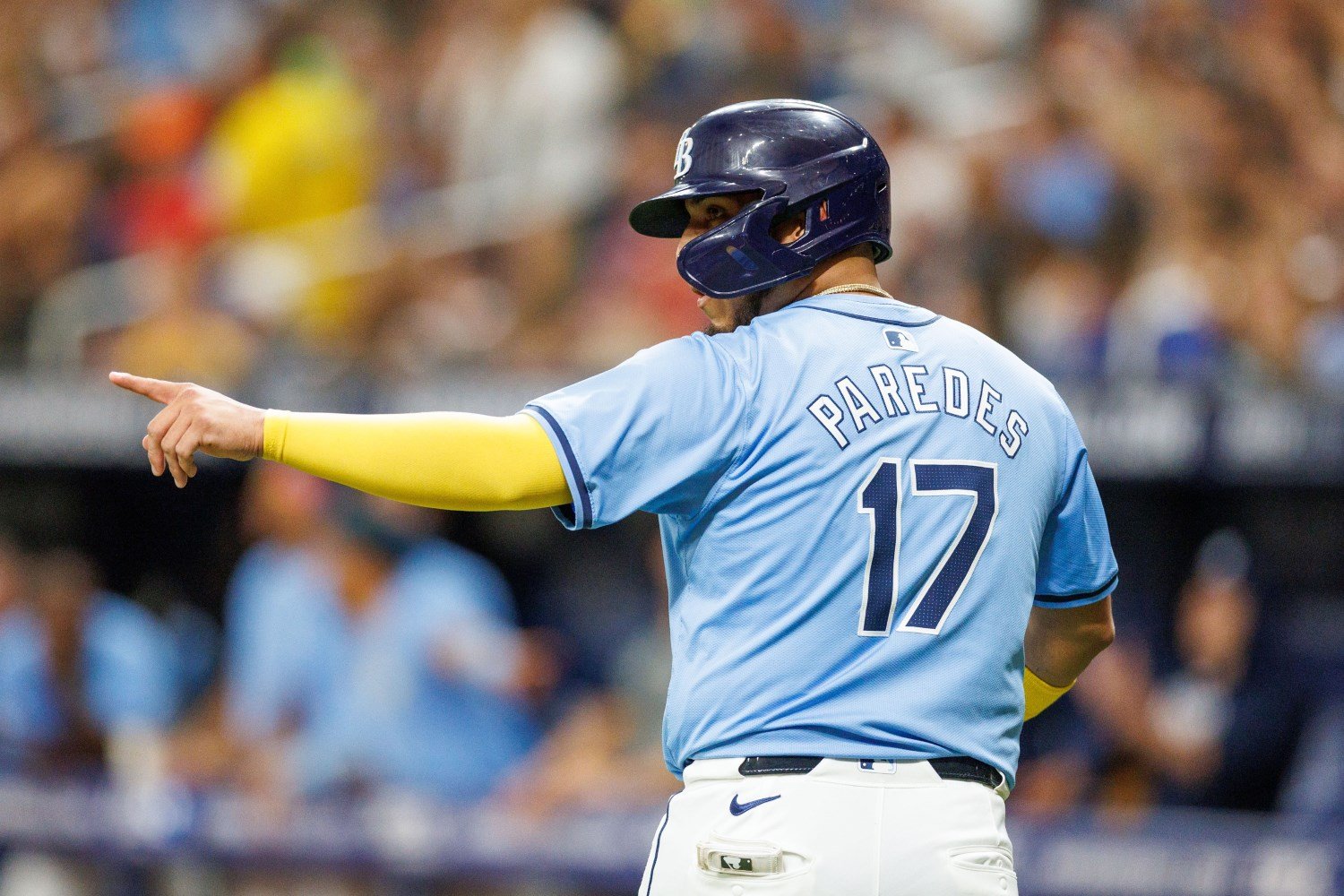 One of Jed Hoyer's consistently stated goals since taking over the leadership of the Cubs' baseball operations department has been to emphasize drafting and player development. Hiring Dan Kantrovitz was an investment in starting to get the Draft right, after years of not truly doing so. The Cubs don't want to win with high-priced stars, except as complementary additions and capstones for great rosters. Their plan is to win with young players whose value exceeds their pay, and generally, that means drafting well, being aggressive and intelligent in the international free-agent space, and trading for prospects whom they can bring along well. That's the most obvious way to build a streamlined organization capable of winning consistently across a number of years. It's also excruciatingly slow. For an executive who takes over knowing a rebuild is a foot, that's no problem. Time is a commodity they hold in abundance. They can trade, for instance, an incumbent ace for a passel of teenage prospects. They can spin off an entire semi-contending team's core for prospects who can come along at an unhurried pace. It starts out that way, at least. Eventually, though, even fairly patient (disinterested, a cynic might say) owners demand that a commitment to acquiring and developing young talent leads to wins on the field, and it's not that easy. Anyone can, with their resources all pointed in that direction, accumulate young, cost-controlled players on whom the prospect ranking apparatus looks favorably. The challenge lies both in developing those talented people into the caliber of productive players they're capable of being, and aligning your talent well enough to convert potential and production into wins. It's this final challenge that has, so far, frustrated Hoyer's regime. Whether he feels that the clock is ticking on his tenure because of impatience for better results from the Ricketts family, or whether he just intrinsically craves the success that has eluded him, Hoyer is now overseeing a change in front-office tactics that carries major implications. Over the last two years, we've seen a sudden shift, away from the mere collecting of talented players (as at the 2022 trade deadline, for instance, when he traded valued bullpen contributor Scott Effross to land Hayden Wesneski) and toward the creation of a window of contention. Specifically, look what he's doing with his 2022 and 2023 Draft classes. Over the winter, Hoyer traded Jackson Ferris and Zyhir Hope to the Dodgers, in exchange for Michael Busch and Yency Almonte. Ferris was the high-dollar second-round pick for whom the Cubs spent a bonus amount commensurate with a first-rounder in 2022, while Hope was one of the team's more intriguing late-round selections in 2023. Then, on Saturday, Hoyer traded Yohendrick Pinango and Josh Rivera for Nate Pearson, of the Blue Jays. Rivera was last year's third-round pick. On Sunday, Hoyer moved Ty Johnson, in the Christopher Morel-for-Isaac Paredes swap. Johnson was a blossoming 15th-round pick from 2023, himself. In almost exactly a year, Hoyer has traded three members of last year's class, and in none of those cases was it because the organization has soured on them. On the contrary, all three players' stock was right around the same place it was on draft day. This isn't a new gambit. In fact, it's gaining in popularity. The Minnesota Twins rapidly set about trading from the top of their 2021 draft class. They've now dealt away all of their first five picks, and many of those were gone within a year of being taken. The Milwaukee Brewers got ahold of Bryan Hudson over the winter, by giving the Dodgers their 20th-round pick from last year's draft. Being willing to quickly flip prospects is a good way to pry away certain players a team might be reluctant to deal, because that very team might have had interest in the player you took in the draft, and you're now offering them to the club having already paid the signing bonus. Novelty isn't what makes this notable. Rather, it's what Hoyer is communicating. By trading so freely from a pool of players acquired so recently, he's showing that he understands the timeline at hand to have changed. The Cubs aren't meant to be in the business of building up to something, anymore, and certain pieces who previously would have been retained so as to wait and see how they came along are now being quickly changed into trade chips. The appeal of Ferris, Hope, Johnson and (to a lesser extent) Rivera is not subtle, but the value each might have had in talks with the teams to whom they were sent is a bit more so. For logistical reasons, the Dodgers needed to move on from Busch, because they couldn't give him the big-league playing time he was ready for. For emotional reasons, the Blue Jays were willing to give up on Pearson, because he'd been in the organization a long time and there had been so many setbacks and sidetracks. For financial reasons, the Rays felt they needed to trade Paredes, who will be modestly expensive in arbitration over the next several years. Pearson is the oldest of that group, though, and still hasn't turned 28. He throws 100 miles per hour. Paredes is an All-Star. Busch was a highly touted prospect and is now having a season that would ordinarily make him a Rookie of the Year candidate. Those teams were willing to give up those players, in part, because recent draftees are priority targets for many organizations. The Cubs were willing to expend those players to get these, with varying degrees of team control but all very much positioned to make immediate contributions, because they feel they need to win as soon as possible. That doesn't mean "as soon as possible, given the vagaries and delays inherent to creating a homegrown juggernaut." It means as soon as possible. Will that urgency follow Hoyer and guide him over the next day and a half? Probably so, but not necessarily in the obvious way. The Cubs still must (and probably will) sell off some parts and look beyond this lost season. It's just that whatever moves they make will almost certainly be aimed at helping them in 2025-2027, rather than in the seasons beyond that. Will the same urgency compel the franchise to be more aggressive in free agency this winter? That feels much more doubtful. If they're nimble and dedicated enough, though, maybe they really can build a young, sustainable winner under Hoyer--by getting him to more consistently step away from his hyperopic approach and use some of his long-term pieces to align talent better for the medium-term future and the present. In the meantime, don't get too attached to any recent draftees, save Cade Horton and Matt Shaw.
 -
In a move that signals the franchise's seriousness about a change of tenor and direction, the Cubs have made the biggest splash of the trade deadline season. This is a huge one, and while it comes a bit out of left field, it couldn't make more sense, or have more bread crumbs forming a trail right up to it. The implications are massive, for this year and far beyond. Christopher Morel will be the centerpiece of a move that brings in his own replacement at the hot corner. In Isaac Paredes, they bring back a player whom they dealt away years ago and who has thrived the last two seasons in Tampa. Much more to come, but the gist here is: the Cubs are done doing the same old, same old. This is a huge pivot toward a new kind of team, and Paredes will be one of the keys to their attempt to become a contender again right away in 2025. UPDATE 1: The Full Deal In addition to Morel, the Cubs will send Hunter Bigge and prospect Ty Johnson to Tampa Bay in exchange for Paredes. Morel, of course, has four more years of team control after 2024, and Bigge just made his debut earlier this summer. Johnson was a 15th-round pick last summer for the Cubs, but is off to a strong start in his pro career and had a bit of helium heading into this deadline. Bigge is strictly a reliever, of course, and thus, he's fairly fungible, but he very much belongs to a class of pitcher with which the Rays can do some interesting things. It's not a shock to see any of Morel, Bigge, or Johnson moved right now, but each does have some value, so the takeaway here is that the Cubs value Paredes quite highly. And well they should. I wrote in support of this acquisition a full eight months ago, on the eve of the Winter Meetings, and this is precisely the kind of deal that made sense. The Cubs consolidate some of their farm depth (and let go the fading dream of Morel figuring it all out for them) while adding a player with stellar numbers over the last two seasons in Tampa. Even amid an ugly recent slump, Paredes entered today batting ..249/.353/.467 since the start of last season, with 47 home runs, 43 doubles and a triple. He's the quintessential hitter of the modern era, pulling the ball in the air with sufficient authority at sufficient frequency to make up for a lack of superb raw power. He is, in many ways, the anti-Christopher Morel. Paredes controls the strike zone brilliantly, including making ample contact. He plays a solid (if unspectacular) third base. And he's under team control through 2027, in his own right. He would have gotten too expensive for the Rays, starting this winter, so they cashed him in for three players with real promise, headlined by Morel. For the Cubs, though, this is a significant immediate upgrade and a long-term fix for a lineup that lacked power. UPDATE 2: Tax Implications and a Quick Word on Paredes's Spray Chart Notably, Paredes qualified for arbitration as a Super Two player this past winter, and his salary for 2024 is $3.4 million. The Cubs will, of course, absorb just about a third of that, but doing so still puts them within a whisker of the competitive-balance tax threshold, since Morel is still pre-arbitration. It's a virtual lock that the team will trade one or more players making a similar amount of money in the next 50 hours or so, but in the event that they didn't, this could nudge them into taxpayer status. Again, the organization isn't going to let that happen, by so little and with the team looking unlikely to make the postseason. This just underscores that they haven't decided (it would be a bizarre decision, indeed) to become buyers; they're just making a long-term investment in Paredes instead of in Morel. On that point, we should take a moment to discuss the hand-wringing already going strong on Twitter about how Paredes comes by his homers, and whether or not it will work at Wrigley Field. Because he hits a lot of his shots close to the left-field line, where Wrigley is the deepest park in the league, Statcast will tell you he'd have lost a dozen or so home runs if he played all his games on the North Side. That is freaking out some of Statcast's more slavish devotees, for a couple of reasons, but it shouldn't make you worry the same way. Firstly, Statcast's expected versus actual home runs are a fun little toy, but not a serious analytical tool. They not only don't account for wind or elevation or temperature, but don't even incorporate exit velocity or launch angle, as you might very naturally assume they do. When you see those graphics about how many parks a fly ball would have been a home run in, you are seeing the computer take the observed distance of the fly ball in situ, the spray angle of the ball when it reaches the wall, and the height of the wall in each park in question, and spit out the number of times the distance exceeds the one required. That comes with all kinds of problems. There are plenty of days when the wind is blowing in at Wrigley, of course, but plenty, too, when it's blowing out or from right to left, and on those days, a fly ball down the line will carry the 355 feet to that corner every bit as easily as it carries the 330 feet required to leave Tropicana Field. Then, there's the elevation difference, and wide variations in temperature. None of that is accounted for in the facile numbers people are allowing to to scare them about Paredes. It's all important information, and teams have much better models than the public. The Cubs would not have acquired Paredes if they thought all his homers might fall into outfielders' gloves on the warning track in the well. Nor is that all of Paredes's game. His strikeout and walk numbers deserve more credit than they get, and unlike Morel, he's a playable third baseman. None of this is to say that he comes without risk; all players carry significant performance risks. The Cubs also need to prove they're better at player development and coaching than they have looked the last couple of years, to ensure they get the most from this unique profile. On the other hand, they've gotten quite a bit from a mirrored version of it, in Cody Bellinger, over the last year and a half. I would caution against panicking over a dataset meant to entertain, rather than to rigorously inform. View full article
-
.png.4fdbe493dc8cec1d5fa1c0ad8574106d.png) This is a huge one, and while it comes a bit out of left field, it couldn't make more sense, or have more bread crumbs forming a trail right up to it. The implications are massive, for this year and far beyond. Christopher Morel will be the centerpiece of a move that brings in his own replacement at the hot corner. In Isaac Paredes, they bring back a player whom they dealt away years ago and who has thrived the last two seasons in Tampa. Much more to come, but the gist here is: the Cubs are done doing the same old, same old. This is a huge pivot toward a new kind of team, and Paredes will be one of the keys to their attempt to become a contender again right away in 2025. UPDATE 1: The Full Deal In addition to Morel, the Cubs will send Hunter Bigge and prospect Ty Johnson to Tampa Bay in exchange for Paredes. Morel, of course, has four more years of team control after 2024, and Bigge just made his debut earlier this summer. Johnson was a 15th-round pick last summer for the Cubs, but is off to a strong start in his pro career and had a bit of helium heading into this deadline. Bigge is strictly a reliever, of course, and thus, he's fairly fungible, but he very much belongs to a class of pitcher with which the Rays can do some interesting things. It's not a shock to see any of Morel, Bigge, or Johnson moved right now, but each does have some value, so the takeaway here is that the Cubs value Paredes quite highly. And well they should. I wrote in support of this acquisition a full eight months ago, on the eve of the Winter Meetings, and this is precisely the kind of deal that made sense. The Cubs consolidate some of their farm depth (and let go the fading dream of Morel figuring it all out for them) while adding a player with stellar numbers over the last two seasons in Tampa. Even amid an ugly recent slump, Paredes entered today batting ..249/.353/.467 since the start of last season, with 47 home runs, 43 doubles and a triple. He's the quintessential hitter of the modern era, pulling the ball in the air with sufficient authority at sufficient frequency to make up for a lack of superb raw power. He is, in many ways, the anti-Christopher Morel. Paredes controls the strike zone brilliantly, including making ample contact. He plays a solid (if unspectacular) third base. And he's under team control through 2027, in his own right. He would have gotten too expensive for the Rays, starting this winter, so they cashed him in for three players with real promise, headlined by Morel. For the Cubs, though, this is a significant immediate upgrade and a long-term fix for a lineup that lacked power. UPDATE 2: Tax Implications and a Quick Word on Paredes's Spray Chart Notably, Paredes qualified for arbitration as a Super Two player this past winter, and his salary for 2024 is $3.4 million. The Cubs will, of course, absorb just about a third of that, but doing so still puts them within a whisker of the competitive-balance tax threshold, since Morel is still pre-arbitration. It's a virtual lock that the team will trade one or more players making a similar amount of money in the next 50 hours or so, but in the event that they didn't, this could nudge them into taxpayer status. Again, the organization isn't going to let that happen, by so little and with the team looking unlikely to make the postseason. This just underscores that they haven't decided (it would be a bizarre decision, indeed) to become buyers; they're just making a long-term investment in Paredes instead of in Morel. On that point, we should take a moment to discuss the hand-wringing already going strong on Twitter about how Paredes comes by his homers, and whether or not it will work at Wrigley Field. Because he hits a lot of his shots close to the left-field line, where Wrigley is the deepest park in the league, Statcast will tell you he'd have lost a dozen or so home runs if he played all his games on the North Side. That is freaking out some of Statcast's more slavish devotees, for a couple of reasons, but it shouldn't make you worry the same way. Firstly, Statcast's expected versus actual home runs are a fun little toy, but not a serious analytical tool. They not only don't account for wind or elevation or temperature, but don't even incorporate exit velocity or launch angle, as you might very naturally assume they do. When you see those graphics about how many parks a fly ball would have been a home run in, you are seeing the computer take the observed distance of the fly ball in situ, the spray angle of the ball when it reaches the wall, and the height of the wall in each park in question, and spit out the number of times the distance exceeds the one required. That comes with all kinds of problems. There are plenty of days when the wind is blowing in at Wrigley, of course, but plenty, too, when it's blowing out or from right to left, and on those days, a fly ball down the line will carry the 355 feet to that corner every bit as easily as it carries the 330 feet required to leave Tropicana Field. Then, there's the elevation difference, and wide variations in temperature. None of that is accounted for in the facile numbers people are allowing to to scare them about Paredes. It's all important information, and teams have much better models than the public. The Cubs would not have acquired Paredes if they thought all his homers might fall into outfielders' gloves on the warning track in the well. Nor is that all of Paredes's game. His strikeout and walk numbers deserve more credit than they get, and unlike Morel, he's a playable third baseman. None of this is to say that he comes without risk; all players carry significant performance risks. The Cubs also need to prove they're better at player development and coaching than they have looked the last couple of years, to ensure they get the most from this unique profile. On the other hand, they've gotten quite a bit from a mirrored version of it, in Cody Bellinger, over the last year and a half. I would caution against panicking over a dataset meant to entertain, rather than to rigorously inform.
This is a huge one, and while it comes a bit out of left field, it couldn't make more sense, or have more bread crumbs forming a trail right up to it. The implications are massive, for this year and far beyond. Christopher Morel will be the centerpiece of a move that brings in his own replacement at the hot corner. In Isaac Paredes, they bring back a player whom they dealt away years ago and who has thrived the last two seasons in Tampa. Much more to come, but the gist here is: the Cubs are done doing the same old, same old. This is a huge pivot toward a new kind of team, and Paredes will be one of the keys to their attempt to become a contender again right away in 2025. UPDATE 1: The Full Deal In addition to Morel, the Cubs will send Hunter Bigge and prospect Ty Johnson to Tampa Bay in exchange for Paredes. Morel, of course, has four more years of team control after 2024, and Bigge just made his debut earlier this summer. Johnson was a 15th-round pick last summer for the Cubs, but is off to a strong start in his pro career and had a bit of helium heading into this deadline. Bigge is strictly a reliever, of course, and thus, he's fairly fungible, but he very much belongs to a class of pitcher with which the Rays can do some interesting things. It's not a shock to see any of Morel, Bigge, or Johnson moved right now, but each does have some value, so the takeaway here is that the Cubs value Paredes quite highly. And well they should. I wrote in support of this acquisition a full eight months ago, on the eve of the Winter Meetings, and this is precisely the kind of deal that made sense. The Cubs consolidate some of their farm depth (and let go the fading dream of Morel figuring it all out for them) while adding a player with stellar numbers over the last two seasons in Tampa. Even amid an ugly recent slump, Paredes entered today batting ..249/.353/.467 since the start of last season, with 47 home runs, 43 doubles and a triple. He's the quintessential hitter of the modern era, pulling the ball in the air with sufficient authority at sufficient frequency to make up for a lack of superb raw power. He is, in many ways, the anti-Christopher Morel. Paredes controls the strike zone brilliantly, including making ample contact. He plays a solid (if unspectacular) third base. And he's under team control through 2027, in his own right. He would have gotten too expensive for the Rays, starting this winter, so they cashed him in for three players with real promise, headlined by Morel. For the Cubs, though, this is a significant immediate upgrade and a long-term fix for a lineup that lacked power. UPDATE 2: Tax Implications and a Quick Word on Paredes's Spray Chart Notably, Paredes qualified for arbitration as a Super Two player this past winter, and his salary for 2024 is $3.4 million. The Cubs will, of course, absorb just about a third of that, but doing so still puts them within a whisker of the competitive-balance tax threshold, since Morel is still pre-arbitration. It's a virtual lock that the team will trade one or more players making a similar amount of money in the next 50 hours or so, but in the event that they didn't, this could nudge them into taxpayer status. Again, the organization isn't going to let that happen, by so little and with the team looking unlikely to make the postseason. This just underscores that they haven't decided (it would be a bizarre decision, indeed) to become buyers; they're just making a long-term investment in Paredes instead of in Morel. On that point, we should take a moment to discuss the hand-wringing already going strong on Twitter about how Paredes comes by his homers, and whether or not it will work at Wrigley Field. Because he hits a lot of his shots close to the left-field line, where Wrigley is the deepest park in the league, Statcast will tell you he'd have lost a dozen or so home runs if he played all his games on the North Side. That is freaking out some of Statcast's more slavish devotees, for a couple of reasons, but it shouldn't make you worry the same way. Firstly, Statcast's expected versus actual home runs are a fun little toy, but not a serious analytical tool. They not only don't account for wind or elevation or temperature, but don't even incorporate exit velocity or launch angle, as you might very naturally assume they do. When you see those graphics about how many parks a fly ball would have been a home run in, you are seeing the computer take the observed distance of the fly ball in situ, the spray angle of the ball when it reaches the wall, and the height of the wall in each park in question, and spit out the number of times the distance exceeds the one required. That comes with all kinds of problems. There are plenty of days when the wind is blowing in at Wrigley, of course, but plenty, too, when it's blowing out or from right to left, and on those days, a fly ball down the line will carry the 355 feet to that corner every bit as easily as it carries the 330 feet required to leave Tropicana Field. Then, there's the elevation difference, and wide variations in temperature. None of that is accounted for in the facile numbers people are allowing to to scare them about Paredes. It's all important information, and teams have much better models than the public. The Cubs would not have acquired Paredes if they thought all his homers might fall into outfielders' gloves on the warning track in the well. Nor is that all of Paredes's game. His strikeout and walk numbers deserve more credit than they get, and unlike Morel, he's a playable third baseman. None of this is to say that he comes without risk; all players carry significant performance risks. The Cubs also need to prove they're better at player development and coaching than they have looked the last couple of years, to ensure they get the most from this unique profile. On the other hand, they've gotten quite a bit from a mirrored version of it, in Cody Bellinger, over the last year and a half. I would caution against panicking over a dataset meant to entertain, rather than to rigorously inform. -
Mmm. Always nebulous and hard to know for sure, but from the folks I have talked to about Melendez for years, he NEVER had a glove-first reputation. The people who liked him a lot liked him for the upside in the stick, and gave him some bonus points for being more athletic than an average catcher. The real catching skills and competencies only briefly showed up, kind of in the middle of his MiLB journey, and never in MLB. Again, teachable if the player is coachable, but I wouldn't say most teams think of him as someone the Royals have derailed or anything.
-
Trading Mike Tauchman's age-34 and -35 seasons is the equivalent of paying $1.50 in free agency on a guy. Who cares what the specific vehicle of acquisition is? I'm a long-time booster of Melendez, but it was as a Brewers target. Only if Counsell successfully pulls some of those catching coaches over to him this fall do I trust that the team will do with a catcher as bad as MJ what needs to be done to make him playable back there. (Really will be interesting to see if he can raid his old coaching staff. I know he wanted to.)
-
Am *I* mad? You think the Phillies are going to trade their still-optionable third catcher, when they just had a prolonged absence for their star starter? 🤣 That team's trying to win a World Series. And Yan Gomes's age when he signed with the Cubs was higher than Haase's right now. Didn't stop him from being a valuable and valued member of the catching corps for two years, before he fell apart this year. 🤷♂️
-
.png.1ce231257f44d00a1f6ad1064c2c1658.png) An injury to Christian Yelich has left the division-leading Brewers short a left-handed bat as they head into the trade deadline. The team doesn't want to pour a lot of resources into that breach, because they're in the process of reinforcing their injury-ravaged pitching staff, and that needs to be their primary focus. Still, it's a problem. Leadoff hitter Brice Turang has given Milwaukee a .305 OBP in his last 249 plate appearances, dating to mid-May. The Cubs, as it happens, have a trade candidate who bats left-handed and gets on base. Mike Tauchman had two hits Saturday night, doubling his total since returning from the injured list a week ago. It's been an ugly stretch in terms of results, but he continues to work counts and make contact. He's only struck out once in 29 plate appearances since coming back from the groin strain that sidelined him in mid-June. On the year, he's batting .247/.344/.356. The dearth of power deeply dents his trade value, but it's not zero, because his on-base skills are so good and he's a fine extra outfielder, to boot. Meanwhile, the Brewers have a player on their 26-man roster whom they're unlikely to be able to carry for long. They signed Eric Haase to a bargain-basement deal back in December, then effectively relegated him to Triple-A depth status by signing Gary Sánchez in the endgame of the offseason. Haase, 31, has spent over a decade in professional baseball, but more of it has been in the minors than in the majors. Like Tauchman, 33, he's a journeyman and a veteran, but not an impending free agent. In fact, both players are under team control (if any one team wants them for that long) through the 2026 season. Two of my Cubs Twitter favorites, Cooper Rushing and Brett Taylor, casually mentioned something in the wake of Saturday's trade bringing fireballer Nate Pearson into the organization: it would be nice to make a similar move for a catcher before the trade deadline. The parallel is superficially imperfect, because Haase is half a decade Pearson's senior, but this is what a Pearson-like catching addition could look like. His success in the big leagues has only been intermittent, but Haase is widely respected for his professionalism and preparation, and he improved dramatically as a framer last season, even as his offense cratered. This year, while waiting for his chance to return to the majors, he posted an .870 OPS at Triple-A Nashville. That's not especially impressive, on its own, but Haase also raked throughout the spring, and he's mashed three home runs among 10 hits in 25 plate appearances for the parent club this month. Ordinarily, intradivisional rivals--especially those whose fan bases attach extra significance to every encounter with one another--don't transact together, especially with players under control beyond a given season as the pieces. In this case, though, it's hard to imagine either team feeling especially worried about being burned. Neither Tauchman nor Haase is going to alter the future of this rivalry in a meaningful way. What could happen, though? Tauchman, an adept leadoff man, could spark the Milwaukee batting order down the stretch, sliding Turang to the bottom of the lineup, where his bat really belongs. The Crew could make a deep October run, even if it's with Yelich restored to the lineup and Tauchman available mostly as a pinch-hit option. The Cubs, in the meantime, could get the next version of Yan Gomes: a journeyman backstop with a late-blooming bat and the perfect combination of utility and expendability They might decide to keep him for the next two or three years, or not, but he'd be the perfect post-hype guy to grab and take a chance on, with an eye toward figuring out the 2025 catching corps. Both teams could benefit substantially, without much downside. Each player could end up cut before season's end, but the Cubs are almost sure to trade Tauchman, anyway, and they're not going to get a prospect with any real ceiling. Milwaukee, meanwhile, figures to let Haase go within a few days, too. Had it not been for Yelich's injury, they would have had to designate Haase for assignment when Sánchez returned from the injured list this week. There might be no better realistic use for either player in their current organization than to be swapped into the other. There might also not be any better way for the front offices to spend their limited time and energy on these two than by swapping them, to keep themselves flexible and focused on bigger moves.
An injury to Christian Yelich has left the division-leading Brewers short a left-handed bat as they head into the trade deadline. The team doesn't want to pour a lot of resources into that breach, because they're in the process of reinforcing their injury-ravaged pitching staff, and that needs to be their primary focus. Still, it's a problem. Leadoff hitter Brice Turang has given Milwaukee a .305 OBP in his last 249 plate appearances, dating to mid-May. The Cubs, as it happens, have a trade candidate who bats left-handed and gets on base. Mike Tauchman had two hits Saturday night, doubling his total since returning from the injured list a week ago. It's been an ugly stretch in terms of results, but he continues to work counts and make contact. He's only struck out once in 29 plate appearances since coming back from the groin strain that sidelined him in mid-June. On the year, he's batting .247/.344/.356. The dearth of power deeply dents his trade value, but it's not zero, because his on-base skills are so good and he's a fine extra outfielder, to boot. Meanwhile, the Brewers have a player on their 26-man roster whom they're unlikely to be able to carry for long. They signed Eric Haase to a bargain-basement deal back in December, then effectively relegated him to Triple-A depth status by signing Gary Sánchez in the endgame of the offseason. Haase, 31, has spent over a decade in professional baseball, but more of it has been in the minors than in the majors. Like Tauchman, 33, he's a journeyman and a veteran, but not an impending free agent. In fact, both players are under team control (if any one team wants them for that long) through the 2026 season. Two of my Cubs Twitter favorites, Cooper Rushing and Brett Taylor, casually mentioned something in the wake of Saturday's trade bringing fireballer Nate Pearson into the organization: it would be nice to make a similar move for a catcher before the trade deadline. The parallel is superficially imperfect, because Haase is half a decade Pearson's senior, but this is what a Pearson-like catching addition could look like. His success in the big leagues has only been intermittent, but Haase is widely respected for his professionalism and preparation, and he improved dramatically as a framer last season, even as his offense cratered. This year, while waiting for his chance to return to the majors, he posted an .870 OPS at Triple-A Nashville. That's not especially impressive, on its own, but Haase also raked throughout the spring, and he's mashed three home runs among 10 hits in 25 plate appearances for the parent club this month. Ordinarily, intradivisional rivals--especially those whose fan bases attach extra significance to every encounter with one another--don't transact together, especially with players under control beyond a given season as the pieces. In this case, though, it's hard to imagine either team feeling especially worried about being burned. Neither Tauchman nor Haase is going to alter the future of this rivalry in a meaningful way. What could happen, though? Tauchman, an adept leadoff man, could spark the Milwaukee batting order down the stretch, sliding Turang to the bottom of the lineup, where his bat really belongs. The Crew could make a deep October run, even if it's with Yelich restored to the lineup and Tauchman available mostly as a pinch-hit option. The Cubs, in the meantime, could get the next version of Yan Gomes: a journeyman backstop with a late-blooming bat and the perfect combination of utility and expendability They might decide to keep him for the next two or three years, or not, but he'd be the perfect post-hype guy to grab and take a chance on, with an eye toward figuring out the 2025 catching corps. Both teams could benefit substantially, without much downside. Each player could end up cut before season's end, but the Cubs are almost sure to trade Tauchman, anyway, and they're not going to get a prospect with any real ceiling. Milwaukee, meanwhile, figures to let Haase go within a few days, too. Had it not been for Yelich's injury, they would have had to designate Haase for assignment when Sánchez returned from the injured list this week. There might be no better realistic use for either player in their current organization than to be swapped into the other. There might also not be any better way for the front offices to spend their limited time and energy on these two than by swapping them, to keep themselves flexible and focused on bigger moves. -
Given their proximity, their division rival status, and what happened last November, there might not be any two teams less likely to strike a deal than the Cubs and their northern neighbors. But there might be a trade fit between them too perfect to be ignored. Image courtesy of Matt Blewett, Brian Flaherty - USA Today Sports An injury to Christian Yelich has left the division-leading Brewers short a left-handed bat as they head into the trade deadline. The team doesn't want to pour a lot of resources into that breach, because they're in the process of reinforcing their injury-ravaged pitching staff, and that needs to be their primary focus. Still, it's a problem. Leadoff hitter Brice Turang has given Milwaukee a .305 OBP in his last 249 plate appearances, dating to mid-May. The Cubs, as it happens, have a trade candidate who bats left-handed and gets on base. Mike Tauchman had two hits Saturday night, doubling his total since returning from the injured list a week ago. It's been an ugly stretch in terms of results, but he continues to work counts and make contact. He's only struck out once in 29 plate appearances since coming back from the groin strain that sidelined him in mid-June. On the year, he's batting .247/.344/.356. The dearth of power deeply dents his trade value, but it's not zero, because his on-base skills are so good and he's a fine extra outfielder, to boot. Meanwhile, the Brewers have a player on their 26-man roster whom they're unlikely to be able to carry for long. They signed Eric Haase to a bargain-basement deal back in December, then effectively relegated him to Triple-A depth status by signing Gary Sánchez in the endgame of the offseason. Haase, 31, has spent over a decade in professional baseball, but more of it has been in the minors than in the majors. Like Tauchman, 33, he's a journeyman and a veteran, but not an impending free agent. In fact, both players are under team control (if any one team wants them for that long) through the 2026 season. Two of my Cubs Twitter favorites, Cooper Rushing and Brett Taylor, casually mentioned something in the wake of Saturday's trade bringing fireballer Nate Pearson into the organization: it would be nice to make a similar move for a catcher before the trade deadline. The parallel is superficially imperfect, because Haase is half a decade Pearson's senior, but this is what a Pearson-like catching addition could look like. His success in the big leagues has only been intermittent, but Haase is widely respected for his professionalism and preparation, and he improved dramatically as a framer last season, even as his offense cratered. This year, while waiting for his chance to return to the majors, he posted an .870 OPS at Triple-A Nashville. That's not especially impressive, on its own, but Haase also raked throughout the spring, and he's mashed three home runs among 10 hits in 25 plate appearances for the parent club this month. Ordinarily, intradivisional rivals--especially those whose fan bases attach extra significance to every encounter with one another--don't transact together, especially with players under control beyond a given season as the pieces. In this case, though, it's hard to imagine either team feeling especially worried about being burned. Neither Tauchman nor Haase is going to alter the future of this rivalry in a meaningful way. What could happen, though? Tauchman, an adept leadoff man, could spark the Milwaukee batting order down the stretch, sliding Turang to the bottom of the lineup, where his bat really belongs. The Crew could make a deep October run, even if it's with Yelich restored to the lineup and Tauchman available mostly as a pinch-hit option. The Cubs, in the meantime, could get the next version of Yan Gomes: a journeyman backstop with a late-blooming bat and the perfect combination of utility and expendability They might decide to keep him for the next two or three years, or not, but he'd be the perfect post-hype guy to grab and take a chance on, with an eye toward figuring out the 2025 catching corps. Both teams could benefit substantially, without much downside. Each player could end up cut before season's end, but the Cubs are almost sure to trade Tauchman, anyway, and they're not going to get a prospect with any real ceiling. Milwaukee, meanwhile, figures to let Haase go within a few days, too. Had it not been for Yelich's injury, they would have had to designate Haase for assignment when Sánchez returned from the injured list this week. There might be no better realistic use for either player in their current organization than to be swapped into the other. There might also not be any better way for the front offices to spend their limited time and energy on these two than by swapping them, to keep themselves flexible and focused on bigger moves. View full article
-
Amid a season derailed by injuries to the hard-throwing, high-leverage relievers they were hoping to count on, the Cubs acquired a hard-throwing reliever with team control--but also a long history of injuries, and some questions about his ability to pitch in high leverage. Image courtesy of © David Richard-USA TODAY Sports The numbers on Nate Pearson tell a pretty fair story. He's capable of racking up strikeouts, but control and command are major problems. The Cubs are taking a chance on him as a change-of-scenery guy, landing him from the Blue Jays with two and a half years left before the righty hits free agency. Pearson's fastball sits 98 and touches 102. He's always had that ability, but staying healthy and finding a secondary pitch to complement that fastball have been persistent problems. As a result, even in what is his best MLB season to date, he has a 5.63 ERA. He's struck out 28% of opposing batters this season, but is also walking over 9% and giving up too many home runs. We'll see what they gave up, and there will be more updates here, but for now, this move feels like an acho of last season's José Cuas deal. The team brought in an underachieving right-handed reliever with some obvious features of interest and some team control remaining. The question will be whether they're the right group to bring everything together for the talented arm. UPDATE: A Bit More About Pearson, and Now We Know the Return Every pitcher is unique in some ways, but if you looked at the picture accompanying this article and thought that the Cubs had Luke Little and Porter Hodge and were hoping to complete the set, you would be in the right ballpark. Pearson was a first-round pick by the Blue Jays in 2017, one pick after the Cubs took fellow Florida junior-college arm Brendon Little (not to be confused with Luke), and after a strong start in pro ball, he became a perennial top-100 prospect. That label is a bit of a backhanded compliment, though, because if your career goes to plan, you escape prospect list eligibility before you can be on as many of them (five times for Baseball America) as Pearson was. He battled injuries and never got over the hump to really last as a big-league starter. Now, he's about to turn 28 years old and has only once pitched more than 50 innings in a season, across all levels. Worse, Pearson's sheer stuff hasn't always translated into great outcomes. His fastball is a little bit straight, although it does have a flat vertical approach angle from a low three-quarter slot. Control is the problem. He doesn't throw the heater for strikes consistently enough, and it gets him into trouble. His slider is missing more bats on a per-swing basis this year, but it's not getting enough swings, period. For the right to try to help Pearson find what's eluded him, the Cubs gave up Yohendrick Pinango, who briefly had low-grade prospect hype but no longer looked likely to figure into the team's plans. He would have needed to be added to the 40-man roster this winter, so the Cubs just elected to commit that same spot to the imminent relief ace upside of Pearson. They lose no flexibility, either, because they can always non-tender Pearson this winter and get that roster spot back if things don't work out. As with Cuas last season, this move is about shoring up the bullpen right now, but much, much more so about trying to find medium-term relief help at a very low cost, relative to (for instance) spending on that segment of the roster in free agency. It's a sound way to build a bullpen and a good way to manage risk and scarce assets. Because these are relief pitchers, though, there are no guarantees that it will work, as Cuas should remind us. Pinango, like Nelson Velázquez, isn't worth missing much, so while this is far from a transformational move, it's an intriguing and perfectly solid one. Much hinges on the team's ability to help Pearson throw some strikes with his fastball and force hitters to fish for his slider. UPDATE 2: It's a 2-for-1. It did feel a bit like Pinango was too little to get for Pearson, from Toronto's perspective, and now we can see why. The Cubs also threw in Josh Rivera, the University of Florida alumnus and third-round pick from last year's Draft. Rivera is very much a future utility infielder or organizational depth piece, rather than any kind of budding star, but he might have a better chance of playing 200 games in the big leagues than Pinango does. This feels, then, like the Cubs consolidating some of their impressive farm system depth, knowing they're likely to replenish it in the next few days, anyway. They give up two players who had little chance to be more than fill-ins for them, and while they only get up to three years of an erratic reliever in return, it's pretty obvious what the upside is for Pearson. He could be their closer next year. He could, by reducing even one of his homer or walk rates, be a solid setup man. That has more value, in the modern game, than a fourth outfielder or a fifth infielder, so the team is rolling the dice on the chance at a quick turnaround for Pearson, knowing what they're losing is the very thing of which they already have plenty. View full article
-
TRADE: Cubs Land Flamethrowing Reliever Nate Pearson from Blue Jays
Matthew Trueblood posted an article in Cubs
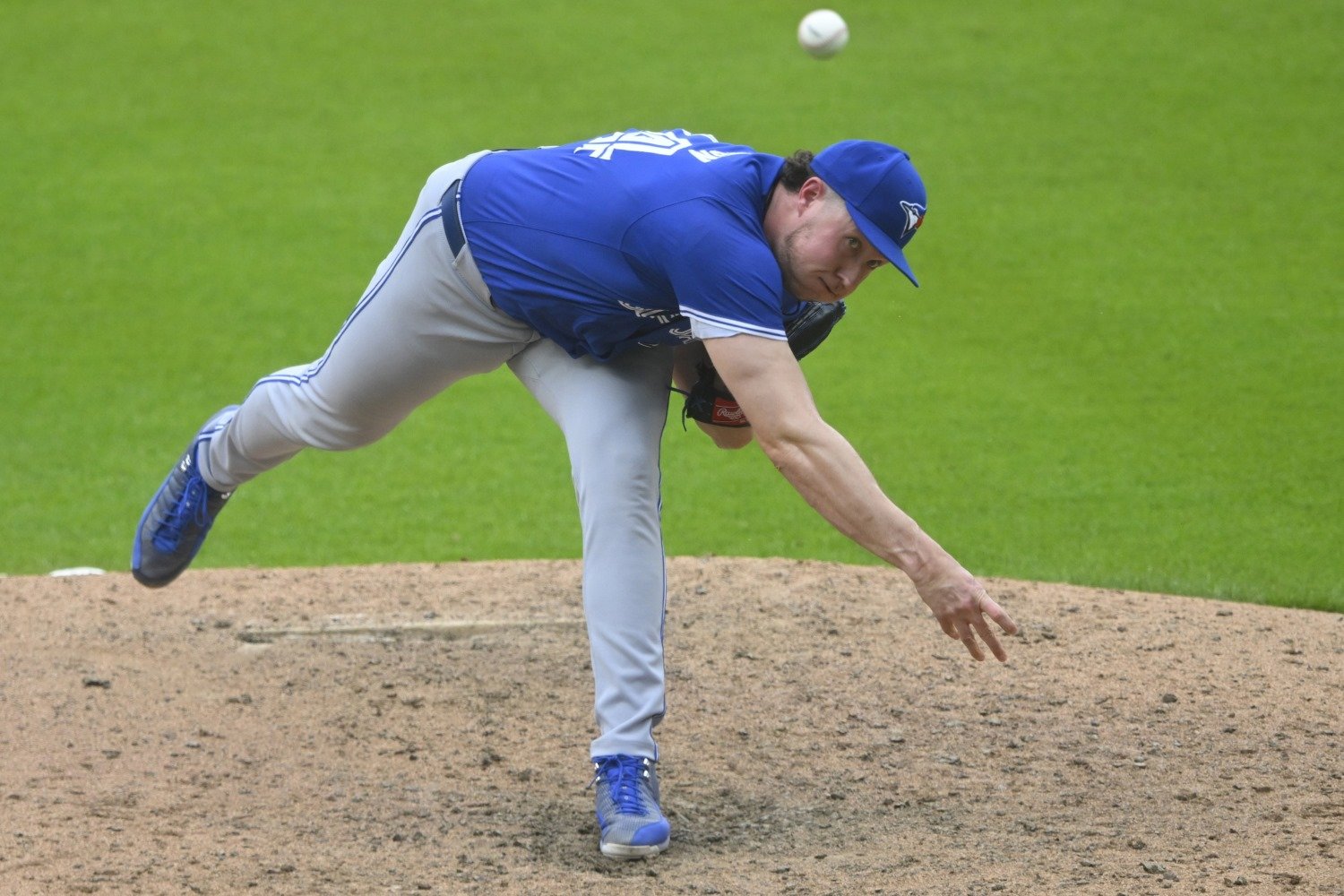 The numbers on Nate Pearson tell a pretty fair story. He's capable of racking up strikeouts, but control and command are major problems. The Cubs are taking a chance on him as a change-of-scenery guy, landing him from the Blue Jays with two and a half years left before the righty hits free agency. Pearson's fastball sits 98 and touches 102. He's always had that ability, but staying healthy and finding a secondary pitch to complement that fastball have been persistent problems. As a result, even in what is his best MLB season to date, he has a 5.63 ERA. He's struck out 28% of opposing batters this season, but is also walking over 9% and giving up too many home runs. We'll see what they gave up, and there will be more updates here, but for now, this move feels like an acho of last season's José Cuas deal. The team brought in an underachieving right-handed reliever with some obvious features of interest and some team control remaining. The question will be whether they're the right group to bring everything together for the talented arm. UPDATE: A Bit More About Pearson, and Now We Know the Return Every pitcher is unique in some ways, but if you looked at the picture accompanying this article and thought that the Cubs had Luke Little and Porter Hodge and were hoping to complete the set, you would be in the right ballpark. Pearson was a first-round pick by the Blue Jays in 2017, one pick after the Cubs took fellow Florida junior-college arm Brendon Little (not to be confused with Luke), and after a strong start in pro ball, he became a perennial top-100 prospect. That label is a bit of a backhanded compliment, though, because if your career goes to plan, you escape prospect list eligibility before you can be on as many of them (five times for Baseball America) as Pearson was. He battled injuries and never got over the hump to really last as a big-league starter. Now, he's about to turn 28 years old and has only once pitched more than 50 innings in a season, across all levels. Worse, Pearson's sheer stuff hasn't always translated into great outcomes. His fastball is a little bit straight, although it does have a flat vertical approach angle from a low three-quarter slot. Control is the problem. He doesn't throw the heater for strikes consistently enough, and it gets him into trouble. His slider is missing more bats on a per-swing basis this year, but it's not getting enough swings, period. For the right to try to help Pearson find what's eluded him, the Cubs gave up Yohendrick Pinango, who briefly had low-grade prospect hype but no longer looked likely to figure into the team's plans. He would have needed to be added to the 40-man roster this winter, so the Cubs just elected to commit that same spot to the imminent relief ace upside of Pearson. They lose no flexibility, either, because they can always non-tender Pearson this winter and get that roster spot back if things don't work out. As with Cuas last season, this move is about shoring up the bullpen right now, but much, much more so about trying to find medium-term relief help at a very low cost, relative to (for instance) spending on that segment of the roster in free agency. It's a sound way to build a bullpen and a good way to manage risk and scarce assets. Because these are relief pitchers, though, there are no guarantees that it will work, as Cuas should remind us. Pinango, like Nelson Velázquez, isn't worth missing much, so while this is far from a transformational move, it's an intriguing and perfectly solid one. Much hinges on the team's ability to help Pearson throw some strikes with his fastball and force hitters to fish for his slider. UPDATE 2: It's a 2-for-1. It did feel a bit like Pinango was too little to get for Pearson, from Toronto's perspective, and now we can see why. The Cubs also threw in Josh Rivera, the University of Florida alumnus and third-round pick from last year's Draft. Rivera is very much a future utility infielder or organizational depth piece, rather than any kind of budding star, but he might have a better chance of playing 200 games in the big leagues than Pinango does. This feels, then, like the Cubs consolidating some of their impressive farm system depth, knowing they're likely to replenish it in the next few days, anyway. They give up two players who had little chance to be more than fill-ins for them, and while they only get up to three years of an erratic reliever in return, it's pretty obvious what the upside is for Pearson. He could be their closer next year. He could, by reducing even one of his homer or walk rates, be a solid setup man. That has more value, in the modern game, than a fourth outfielder or a fifth infielder, so the team is rolling the dice on the chance at a quick turnaround for Pearson, knowing what they're losing is the very thing of which they already have plenty.
 -
It's hard to survey the number and specific identity of the teams who have reportedly shown interest in the Cubs' veteran righthander without coming to the conclusion that the wheels of a deal are in motion. Image courtesy of © Matt Marton-USA TODAY Sports This week has seen an absolute torrent of Jameson Taillon trade rumors. It might be easier to name teams who haven't been linked to him, but for the sake of clarity, let's just list those who have: the Houston Astros, New York Yankees, Boston Red Sox, and Baltimore Orioles. When I wrote about Taillon's trade value earlier this month, I mentioned the Mets and Guardians, who haven't yet appeared as rumored destinations, but they, too, remain solid fits. All these teams make sense as fits for Taillon, for various reasons. The Orioles just need some depth and reinforcement in their rotation, as they navigate a season in which they've lost two starters to Tommy John surgery but still look like locks to reach the postseason. The Yankees have a history with Taillon, and as Cubs fans know by now, he's an agreeable, fine presence for any clubhouse, so it's no shock that a former employer would be interested in having him back. We can safely assume that Taillon is familiar to (and well-liked by) Red Sox chief executive Craig Breslow, since he was heading up the Cubs' pitching department when the team signed Taillon two offseasons ago. Houston, like Baltimore, needs healthy and reliable arms. Of course, those teams all also share an important characteristic: they have big budgets and room to spend, this year and next. That makes them interesting trade partners for a Taillon deal, because if the Cubs do move him, they could look to absorb a portion of his remaining salary (roughly $6 million for the balance of 2024, and $18 million in each of the next two campaigns) to improve the talent they get in return for him. Doing so would not help them replace Taillon this winter via free agency, as they'd surely need to do, but they should have plenty of room in their own budget to do that, anyway. A trade with a rich team ready to take on Taillon's full freight would mean one with a less exciting young player or two coming back. Then again, each of these clubs has some reason to let the Cubs help them financially and give up a little bit of extra talent, in exchange. The Astros are very close to crossing the second luxury-tax threshold for this season, and they face some tough decisions about Alex Bregman, Framber Valdez, and Kyle Tucker in the coming months and years. Boston, Baltimore, and New York all have ownership groups whose willingness to spend seems to fluctuate unpredictably, but with the Yankee payroll well over $300 million for this year as it is, they'll pay heavy taxes on any further money added, and that's going to be true for several years to come. Taillon still has two and a half years left on his contract, but the way he's pitched over the last calendar year (32 starts, 178 innings pitched, a 3.34 ERA, a .666 opponent OPS), he has tremendous excess value, anyway. The Cubs should only trade him if they can get both some salary flexibility and significant young talent in the deal, but that suddenly looks very plausible. It would be a mild surprise, at this point, if he's not dealt by Tuesday evening. He can help some new team in as many as three pushes to the postseason, but hopefully, a trade can also net the Cubs something that helps them in just as many, down the road a year or two. View full article
-
A Jameson Taillon Trade Feels Almost Inevitable, in a Good Way
Matthew Trueblood posted an article in Cubs
 This week has seen an absolute torrent of Jameson Taillon trade rumors. It might be easier to name teams who haven't been linked to him, but for the sake of clarity, let's just list those who have: the Houston Astros, New York Yankees, Boston Red Sox, and Baltimore Orioles. When I wrote about Taillon's trade value earlier this month, I mentioned the Mets and Guardians, who haven't yet appeared as rumored destinations, but they, too, remain solid fits. All these teams make sense as fits for Taillon, for various reasons. The Orioles just need some depth and reinforcement in their rotation, as they navigate a season in which they've lost two starters to Tommy John surgery but still look like locks to reach the postseason. The Yankees have a history with Taillon, and as Cubs fans know by now, he's an agreeable, fine presence for any clubhouse, so it's no shock that a former employer would be interested in having him back. We can safely assume that Taillon is familiar to (and well-liked by) Red Sox chief executive Craig Breslow, since he was heading up the Cubs' pitching department when the team signed Taillon two offseasons ago. Houston, like Baltimore, needs healthy and reliable arms. Of course, those teams all also share an important characteristic: they have big budgets and room to spend, this year and next. That makes them interesting trade partners for a Taillon deal, because if the Cubs do move him, they could look to absorb a portion of his remaining salary (roughly $6 million for the balance of 2024, and $18 million in each of the next two campaigns) to improve the talent they get in return for him. Doing so would not help them replace Taillon this winter via free agency, as they'd surely need to do, but they should have plenty of room in their own budget to do that, anyway. A trade with a rich team ready to take on Taillon's full freight would mean one with a less exciting young player or two coming back. Then again, each of these clubs has some reason to let the Cubs help them financially and give up a little bit of extra talent, in exchange. The Astros are very close to crossing the second luxury-tax threshold for this season, and they face some tough decisions about Alex Bregman, Framber Valdez, and Kyle Tucker in the coming months and years. Boston, Baltimore, and New York all have ownership groups whose willingness to spend seems to fluctuate unpredictably, but with the Yankee payroll well over $300 million for this year as it is, they'll pay heavy taxes on any further money added, and that's going to be true for several years to come. Taillon still has two and a half years left on his contract, but the way he's pitched over the last calendar year (32 starts, 178 innings pitched, a 3.34 ERA, a .666 opponent OPS), he has tremendous excess value, anyway. The Cubs should only trade him if they can get both some salary flexibility and significant young talent in the deal, but that suddenly looks very plausible. It would be a mild surprise, at this point, if he's not dealt by Tuesday evening. He can help some new team in as many as three pushes to the postseason, but hopefully, a trade can also net the Cubs something that helps them in just as many, down the road a year or two.
 -
The Cubs have a solid, veteran outfielder who doesn't fit into their long-term plans, at least as a regular starter. Should they trade him, though, or is the value he'd command outstripped by what he means to the existing team? Image courtesy of © Matt Marton-USA TODAY Sports For the second straight season, Mike Tauchman has been a pleasant surprise amid a roster full of disappointment. He's roughly a league-average hitter, with on-base skills making up the huge majority of his value. He's a fine outfielder, a bit below average in center field but a bit better than average in either corner. He's also a stolid, respectable presence in the clubhouse and on the team, and his approach is a great example to young players, even if they're not all able to emulate him. If things were better on the North Side, it would be a no-brainer to keep Tauchman. Craig Counsell was quick to promise him a roster spot this spring, because he identified him as a valuable piece of a winning club. Tauchman is batting .246/.343/.358, even amid a 2-for-20 struggle since returning from the groin strain that sidelined him for a month. He's a local product, and the fans appreciate the way he goes about his business. After this season, the Cubs will still have two years of team control on him. Even for a team with nothing to play for in August and September, Tauchman isn't without value. On the other hand, the playing time Tauchman soaks up is necessarily at the expense of someone (be it Pete Crow-Armstrong, Christopher Morel, Michael Busch, or a young player for whom there's not even room on the roster while he's around) whom the team would like to evaluate and develop down the stretch. There's also an opportunity cost to keeping him. Though a late bloomer without the power that teams value above all else in the modern game, Tauchman has some trade value. His team control might not be priced in the way one would like, but that's because he might also not be a player the team wants to retain for the long haul, anyway. He'll turn 34 years old this winter. Given all that, maybe the best and noblest course is to trade Tauchman this week. He won't fetch much, but even a far-off project or a depth piece could be a nice addition to the organization, and it's hard to envision him being an especially helpful piece beyond this season. The Cubs traded Joc Pederson to Atlanta in July 2021, getting only forgettable first base prospect Bryce Ball in return, and they wouldn't get much more than that type of player for Tauchman. However, they could also further burnish their reputation as an organization that does right by players, by giving Tauchman a chance to play meaningful baseball and (perhaps) earn both some extra money and some well-deserved glory by contributing to a team chasing a championship. It's a dilemma. It's a reflection of how frustrating and sad this season has been, because neither keeping nor trading Tauchman feels very good under these circumstances. Then again, there's some reason to feel good, too. Tauchman has had a solid year and a half playing in front of hometown fans, coming up with big hits and making big plays in the outfield. There will be pleasant memories of him even if his Cubs career is nearly over, and if they do retain him, he'll make the team more respectable and more watchable down the stretch. Tauchman is a good story, even nestled into a rather sad one. Whichever way the organization decides to go in the coming days, they've gotten good value from a minor-league signing, and there's upside in either course of action. View full article
-
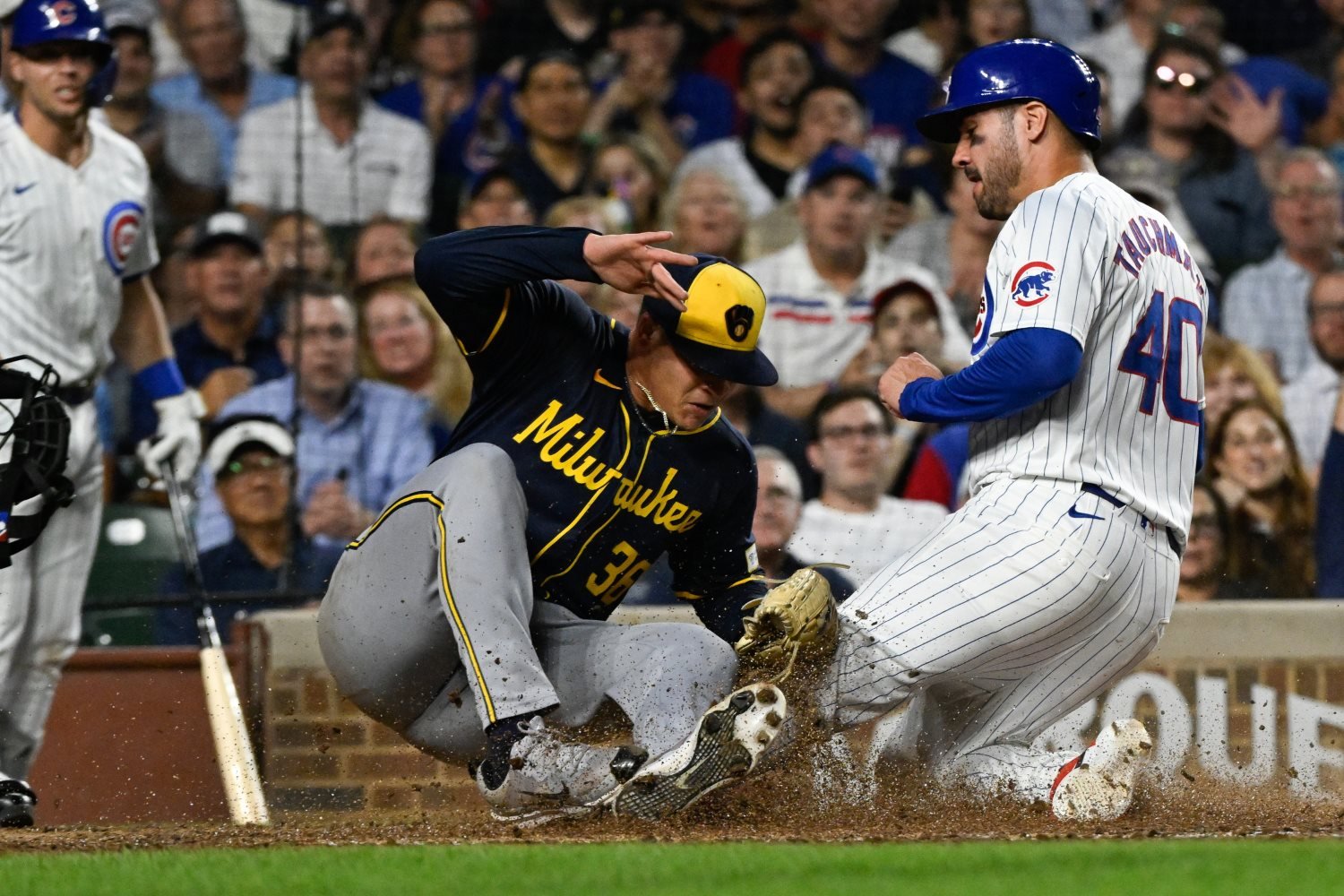 For the second straight season, Mike Tauchman has been a pleasant surprise amid a roster full of disappointment. He's roughly a league-average hitter, with on-base skills making up the huge majority of his value. He's a fine outfielder, a bit below average in center field but a bit better than average in either corner. He's also a stolid, respectable presence in the clubhouse and on the team, and his approach is a great example to young players, even if they're not all able to emulate him. If things were better on the North Side, it would be a no-brainer to keep Tauchman. Craig Counsell was quick to promise him a roster spot this spring, because he identified him as a valuable piece of a winning club. Tauchman is batting .246/.343/.358, even amid a 2-for-20 struggle since returning from the groin strain that sidelined him for a month. He's a local product, and the fans appreciate the way he goes about his business. After this season, the Cubs will still have two years of team control on him. Even for a team with nothing to play for in August and September, Tauchman isn't without value. On the other hand, the playing time Tauchman soaks up is necessarily at the expense of someone (be it Pete Crow-Armstrong, Christopher Morel, Michael Busch, or a young player for whom there's not even room on the roster while he's around) whom the team would like to evaluate and develop down the stretch. There's also an opportunity cost to keeping him. Though a late bloomer without the power that teams value above all else in the modern game, Tauchman has some trade value. His team control might not be priced in the way one would like, but that's because he might also not be a player the team wants to retain for the long haul, anyway. He'll turn 34 years old this winter. Given all that, maybe the best and noblest course is to trade Tauchman this week. He won't fetch much, but even a far-off project or a depth piece could be a nice addition to the organization, and it's hard to envision him being an especially helpful piece beyond this season. The Cubs traded Joc Pederson to Atlanta in July 2021, getting only forgettable first base prospect Bryce Ball in return, and they wouldn't get much more than that type of player for Tauchman. However, they could also further burnish their reputation as an organization that does right by players, by giving Tauchman a chance to play meaningful baseball and (perhaps) earn both some extra money and some well-deserved glory by contributing to a team chasing a championship. It's a dilemma. It's a reflection of how frustrating and sad this season has been, because neither keeping nor trading Tauchman feels very good under these circumstances. Then again, there's some reason to feel good, too. Tauchman has had a solid year and a half playing in front of hometown fans, coming up with big hits and making big plays in the outfield. There will be pleasant memories of him even if his Cubs career is nearly over, and if they do retain him, he'll make the team more respectable and more watchable down the stretch. Tauchman is a good story, even nestled into a rather sad one. Whichever way the organization decides to go in the coming days, they've gotten good value from a minor-league signing, and there's upside in either course of action.
 -
With just a fistful of days left before the MLB trade deadline, the direction and a few constraints are clear. The 2024 Cubs aren't good, and Jed Hoyer has helpfully acknowledged that he won't trade for players who only help this season's team. With a robust farm system and a pressing need to be better next year, though, could they pry loose a star-caliber contributor with significant team control? Image courtesy of © Andrew Dieb-USA TODAY Sports That Hoyer and company understand their situation better than to try to make short-term upgrades is encouraging. The next logical question they face, though, is an equally important one: how do you go about acquiring players who represent long-term upgrades, and who can help you avoid the grisly fate of being this forgettable again in 2025? The obvious answer is to be patient, develop what is one of the league's stronger farm systems, and make a splash or two in free agency this winter. But what if the right opportunity is out there right now, rather than later? The Cubs aren't the only disappointed club looking to build for the future this month, and they're much closer to contention than a few of the others, like the Athletics, Angels, White Sox, and Rockies. (Hey, that almost sounded like a carefully chosen list!) Some of those other teams have great players under team control beyond 2025, who could be part of the Cubs' next winning window--but they also have significant motivation to move those guys now. Waiting until this winter (let alone next summer) might not be an option. So, which guys are good enough to justify paying a high price in young talent right now (even though it includes the cost of their contributions for the balance of 2024, which won't matter), to position the Cubs as a championship-caliber team for the next half-decade? Luis Robert Jr. Robert isn't as young as he might feel. He'll turn 27 just after the trade deadline. He's also vulnerable to lots of whiffs, and as he's tried to tone down his aggressiveness and accept some walks this season, he's seen his strikeout rate spike to the north side of 33%. There are also major durability questions, given that last year was the only one of his career in which he's played anything like a full season. Those are the downsides, and they're familiar refrains to most Cubs fans, because Robert plays right across town and the mounting frustration for Sox fans is well-known. The upsides make up for all that. Robert doesn't hit for power as consistently as you might like or expect, given his tools, but last year was the breakthrough in that regard, as he hit 38 homers and 75 total extra-base hits. When he's been on the field this year, it's been the same story. Built like a strong safety, Robert is going to keep popping plenty of homers, and his speed translates to plenty of stolen bases and some strong defense in center field. He's under contract through 2027, if whichever team controls that contract exercises each of their options, and will only cost $55 million in total over the next three seasons. Trading with a team with whom you share a city is tough, but we know the Cubs and Sox are capable of it. Hoyer has a farm system strong enough to put together a leading offer for Robert, and few players with any degree of availability are capable of transforming the Cubs lineup the way Robert could. Garrett Crochet Speaking of the White Sox, of course, Crochet is making huge headlines. If he weren't on an innings limit for this season, he'd be a very legitimate AL Cy Young Award contender, with power stuff that has translated surprisingly smoothly to starting after an early career spent in the bullpen. The caveat in that sentence looms large for contenders who are interested, though, because his usage limitations will cap his impact on anyone's World Series aspirations for 224. Though four years Justin Steele's junior, Crochet is actually a year closer to free agency. His fast track to the big leagues and subsequent injury troubles have shaped one of the strangest career arcs in recent memory. He's under team control for just two more seasons after this one, but an acquiring team would be in a decent position to negotiate an extension with him. Even without one, he'd be such a high-impact addition that it's tantalizing. Brent Rooker Injuries and the pandemic distorted the early career of Rooker, too, making a player whose profile made him a good candidate to bloom late all along guaranteed to do so. He's bloomed in extraordinary fashion since the start of last season, though, with 30 homers in 2023 and 23 already this year, all playing his home games in Oakland. A take-and-rake pull-side slugger, Rooker could hit 35 or 40 homers in a good year at Wrigley Field. He strikes out a ton, but also draws plenty of walks, and would be the traditional cleanup man the team has needed for at least three years. Rooker will turn 30 this November, but still has three seasons of team control remaining after this year. He's not likely to be good much longer than that, but the Cubs wouldn't need him to be. They could pay the price to get him, and slot him into their lineup right away, with increased confidence that 2025 will find him anchoring a more powerful offense. He'll get expensive in arbitration after that, but not prohibitively so, and for a team desperately needing pop, he's an obvious target. Logan O'Hoppe This is a bit of an out-there idea. O'Hoppe, 24, is under team control four more years after this one, and he's a career .262/.321/.472 hitter. He's a slightly below-average pitch framer but a strong controller of the running game, and his reputation as a game manager and handler of pitching staffs is strong. He's a budding star behind the plate. Here's the thing: catchers all have short shelf lives, and the Angels aren't very close to contention. Nearly every day brings new evidence that that front office doesn't really know what it's doing. Swooping in and simply stealing a player as good as O'Hoppe isn't possible, but prying him loose from them might be easier than it would be from another organization that was a bit less of a mess. The prospect package it would take to bring in O'Hoppe would be truly staggering, but the Cubs don't have to pay for him solely with prospects. It's possible they could get involved in a three-way trade in which Justin Steele goes to a high-level contender, and both the Cubs and the team acquiring Steele send prospect talent to the Angels in a huge package. Steele's value to a contender right now might be higher than O'Hoppe's, despite the latter being five years younger and under team and cost control longer. Therefore, the Cubs might get some small secondary piece in the deal, too, without giving up much more than Steele. The Angels have some interesting arms under long-term control, but whom they haven't had success developing yet. Ryan McMahon The Rockies sound a bit more like a rational organization, lately, which means they might be more open to trading a player like McMahon than they have tended to be in the past. According to one report, they've told McMahon he's not going anywhere, and he did sign a long-term extension with them in 2022, but if they're realistic and ready to be proactive, they have to see that keeping him would be foolish. Left far behind by the rest of their division, they're just now getting better at scouting and player development, in ways that might pay off in half a decade. McMahon is only under control through 2027, and will cost $44 million over the final three years of the deal. His timeline doesn't match theirs, and he's not the same face-of-the-franchise star that Troy Tulowitzki, Carlos González, or even Trevor Story were, anyway. However, McMahon should appeal quite a bit to the Cubs. He's a left-handed hitter with ample power (though more in the form of doubles than over the fence, much of the time), and he's taking walks at an excellent rate this year. He's also one of the best defensive third basemen in baseball. He'd answer a lot of questions about the long-term alignment of the Cubs infield, just as they're pondering creating more such questions by trading Nico Hoerner. Farm depth like the Cubs' is valuable in two ways. It can yield huge on-field value, directly, by having those players develop into homegrown stars. However, it can also return value by turning into trade value, and bringing back players like these. If the Cubs can consolidate some of their organizational depth this week, create more flexibility, and start to put cornerstones in place for a winning window they hoped would open this year, they'll be in much better position next July than they're in right now. View full article
-
5 Controllable Stars Cubs Could Target This Week in Blockbuster Trades
Matthew Trueblood posted an article in Cubs
 That Hoyer and company understand their situation better than to try to make short-term upgrades is encouraging. The next logical question they face, though, is an equally important one: how do you go about acquiring players who represent long-term upgrades, and who can help you avoid the grisly fate of being this forgettable again in 2025? The obvious answer is to be patient, develop what is one of the league's stronger farm systems, and make a splash or two in free agency this winter. But what if the right opportunity is out there right now, rather than later? The Cubs aren't the only disappointed club looking to build for the future this month, and they're much closer to contention than a few of the others, like the Athletics, Angels, White Sox, and Rockies. (Hey, that almost sounded like a carefully chosen list!) Some of those other teams have great players under team control beyond 2025, who could be part of the Cubs' next winning window--but they also have significant motivation to move those guys now. Waiting until this winter (let alone next summer) might not be an option. So, which guys are good enough to justify paying a high price in young talent right now (even though it includes the cost of their contributions for the balance of 2024, which won't matter), to position the Cubs as a championship-caliber team for the next half-decade? Luis Robert Jr. Robert isn't as young as he might feel. He'll turn 27 just after the trade deadline. He's also vulnerable to lots of whiffs, and as he's tried to tone down his aggressiveness and accept some walks this season, he's seen his strikeout rate spike to the north side of 33%. There are also major durability questions, given that last year was the only one of his career in which he's played anything like a full season. Those are the downsides, and they're familiar refrains to most Cubs fans, because Robert plays right across town and the mounting frustration for Sox fans is well-known. The upsides make up for all that. Robert doesn't hit for power as consistently as you might like or expect, given his tools, but last year was the breakthrough in that regard, as he hit 38 homers and 75 total extra-base hits. When he's been on the field this year, it's been the same story. Built like a strong safety, Robert is going to keep popping plenty of homers, and his speed translates to plenty of stolen bases and some strong defense in center field. He's under contract through 2027, if whichever team controls that contract exercises each of their options, and will only cost $55 million in total over the next three seasons. Trading with a team with whom you share a city is tough, but we know the Cubs and Sox are capable of it. Hoyer has a farm system strong enough to put together a leading offer for Robert, and few players with any degree of availability are capable of transforming the Cubs lineup the way Robert could. Garrett Crochet Speaking of the White Sox, of course, Crochet is making huge headlines. If he weren't on an innings limit for this season, he'd be a very legitimate AL Cy Young Award contender, with power stuff that has translated surprisingly smoothly to starting after an early career spent in the bullpen. The caveat in that sentence looms large for contenders who are interested, though, because his usage limitations will cap his impact on anyone's World Series aspirations for 224. Though four years Justin Steele's junior, Crochet is actually a year closer to free agency. His fast track to the big leagues and subsequent injury troubles have shaped one of the strangest career arcs in recent memory. He's under team control for just two more seasons after this one, but an acquiring team would be in a decent position to negotiate an extension with him. Even without one, he'd be such a high-impact addition that it's tantalizing. Brent Rooker Injuries and the pandemic distorted the early career of Rooker, too, making a player whose profile made him a good candidate to bloom late all along guaranteed to do so. He's bloomed in extraordinary fashion since the start of last season, though, with 30 homers in 2023 and 23 already this year, all playing his home games in Oakland. A take-and-rake pull-side slugger, Rooker could hit 35 or 40 homers in a good year at Wrigley Field. He strikes out a ton, but also draws plenty of walks, and would be the traditional cleanup man the team has needed for at least three years. Rooker will turn 30 this November, but still has three seasons of team control remaining after this year. He's not likely to be good much longer than that, but the Cubs wouldn't need him to be. They could pay the price to get him, and slot him into their lineup right away, with increased confidence that 2025 will find him anchoring a more powerful offense. He'll get expensive in arbitration after that, but not prohibitively so, and for a team desperately needing pop, he's an obvious target. Logan O'Hoppe This is a bit of an out-there idea. O'Hoppe, 24, is under team control four more years after this one, and he's a career .262/.321/.472 hitter. He's a slightly below-average pitch framer but a strong controller of the running game, and his reputation as a game manager and handler of pitching staffs is strong. He's a budding star behind the plate. Here's the thing: catchers all have short shelf lives, and the Angels aren't very close to contention. Nearly every day brings new evidence that that front office doesn't really know what it's doing. Swooping in and simply stealing a player as good as O'Hoppe isn't possible, but prying him loose from them might be easier than it would be from another organization that was a bit less of a mess. The prospect package it would take to bring in O'Hoppe would be truly staggering, but the Cubs don't have to pay for him solely with prospects. It's possible they could get involved in a three-way trade in which Justin Steele goes to a high-level contender, and both the Cubs and the team acquiring Steele send prospect talent to the Angels in a huge package. Steele's value to a contender right now might be higher than O'Hoppe's, despite the latter being five years younger and under team and cost control longer. Therefore, the Cubs might get some small secondary piece in the deal, too, without giving up much more than Steele. The Angels have some interesting arms under long-term control, but whom they haven't had success developing yet. Ryan McMahon The Rockies sound a bit more like a rational organization, lately, which means they might be more open to trading a player like McMahon than they have tended to be in the past. According to one report, they've told McMahon he's not going anywhere, and he did sign a long-term extension with them in 2022, but if they're realistic and ready to be proactive, they have to see that keeping him would be foolish. Left far behind by the rest of their division, they're just now getting better at scouting and player development, in ways that might pay off in half a decade. McMahon is only under control through 2027, and will cost $44 million over the final three years of the deal. His timeline doesn't match theirs, and he's not the same face-of-the-franchise star that Troy Tulowitzki, Carlos González, or even Trevor Story were, anyway. However, McMahon should appeal quite a bit to the Cubs. He's a left-handed hitter with ample power (though more in the form of doubles than over the fence, much of the time), and he's taking walks at an excellent rate this year. He's also one of the best defensive third basemen in baseball. He'd answer a lot of questions about the long-term alignment of the Cubs infield, just as they're pondering creating more such questions by trading Nico Hoerner. Farm depth like the Cubs' is valuable in two ways. It can yield huge on-field value, directly, by having those players develop into homegrown stars. However, it can also return value by turning into trade value, and bringing back players like these. If the Cubs can consolidate some of their organizational depth this week, create more flexibility, and start to put cornerstones in place for a winning window they hoped would open this year, they'll be in much better position next July than they're in right now.
.png.4bdf1c44c6a792bafc301035af2acdf3.png)
.png.4fdbe493dc8cec1d5fa1c0ad8574106d.png)

.png.1ce231257f44d00a1f6ad1064c2c1658.png)

