Matthew Trueblood
-
Posts
2,481 -
Joined
-
Last visited
-
Days Won
2
Content Type
Profiles
Joomla Posts 1
Chicago Cubs Videos
Chicago Cubs Free Agent & Trade Rumors, Notes, & Tidbits
2026 Chicago Cubs Top Prospects Ranking
News
2023 Chicago Cubs Draft Picks
Guides & Resources
2024 Chicago Cubs Draft Picks
The Chicago Cubs Players Project
2025 Chicago Cubs Draft Pick Tracker
2026 Chicago Cubs Draft Tracker: Picks & Bonuses
Blogs
Events
Forums
Store
Gallery
Everything posted by Matthew Trueblood
-
 It's been a few weeks since our last episode, but all the important facts of Cubdom remain unchanged. Jed Hoyer is ready to acknowledge that this team can't be a trade-deadline buyer, but it's not yet clear whether he understands that they need to be sellers. More importantly, it's hard to figure out how this team can best be a seller, given how they're built. We parse takes from outsiders about the egregiousness of the Cubs ever being sellers; weigh the team's options with Justin Steele and Jameson Taillon; try to convince ourselves to feel encouraged about the recent developments in the bullpen; and nerd out a little bit on the subject of close plays requiring a tag at home plate, and how a catcher should set up for one. Speaking of catchers, we also try to guess how and on what timeline the Cubs will heal the scar that has been that position this season. It's going to be a slow process, at this point, but Moises Ballesteros makes it a fairly promising project--if his tiny, round self can stick at the spot. We close with some musings about whether it would be a good prank to tell a solid, respectable veteran player they were traded to the White Sox this week. Enjoy. Apple Podcasts: Spotify: We'll be back next week, with a comprehensive review of the team's activity at the trade deadline. Tune in then!
 -
In a de facto trade deadline preview episode of This is Not a Rebuild, four Cubs heads try to figure out what this team thinks it should be, and how they'll get from where they are to that destination. Image courtesy of Matt Trueblood via Spotify for Podcasters It's been a few weeks since our last episode, but all the important facts of Cubdom remain unchanged. Jed Hoyer is ready to acknowledge that this team can't be a trade-deadline buyer, but it's not yet clear whether he understands that they need to be sellers. More importantly, it's hard to figure out how this team can best be a seller, given how they're built. We parse takes from outsiders about the egregiousness of the Cubs ever being sellers; weigh the team's options with Justin Steele and Jameson Taillon; try to convince ourselves to feel encouraged about the recent developments in the bullpen; and nerd out a little bit on the subject of close plays requiring a tag at home plate, and how a catcher should set up for one. Speaking of catchers, we also try to guess how and on what timeline the Cubs will heal the scar that has been that position this season. It's going to be a slow process, at this point, but Moises Ballesteros makes it a fairly promising project--if his tiny, round self can stick at the spot. We close with some musings about whether it would be a good prank to tell a solid, respectable veteran player they were traded to the White Sox this week. Enjoy. Apple Podcasts: Spotify: We'll be back next week, with a comprehensive review of the team's activity at the trade deadline. Tune in then! View full article
-
Cubs' Bullpen Convalescence is a Huge Trade Deadline Opportunity
Matthew Trueblood posted an article in Cubs
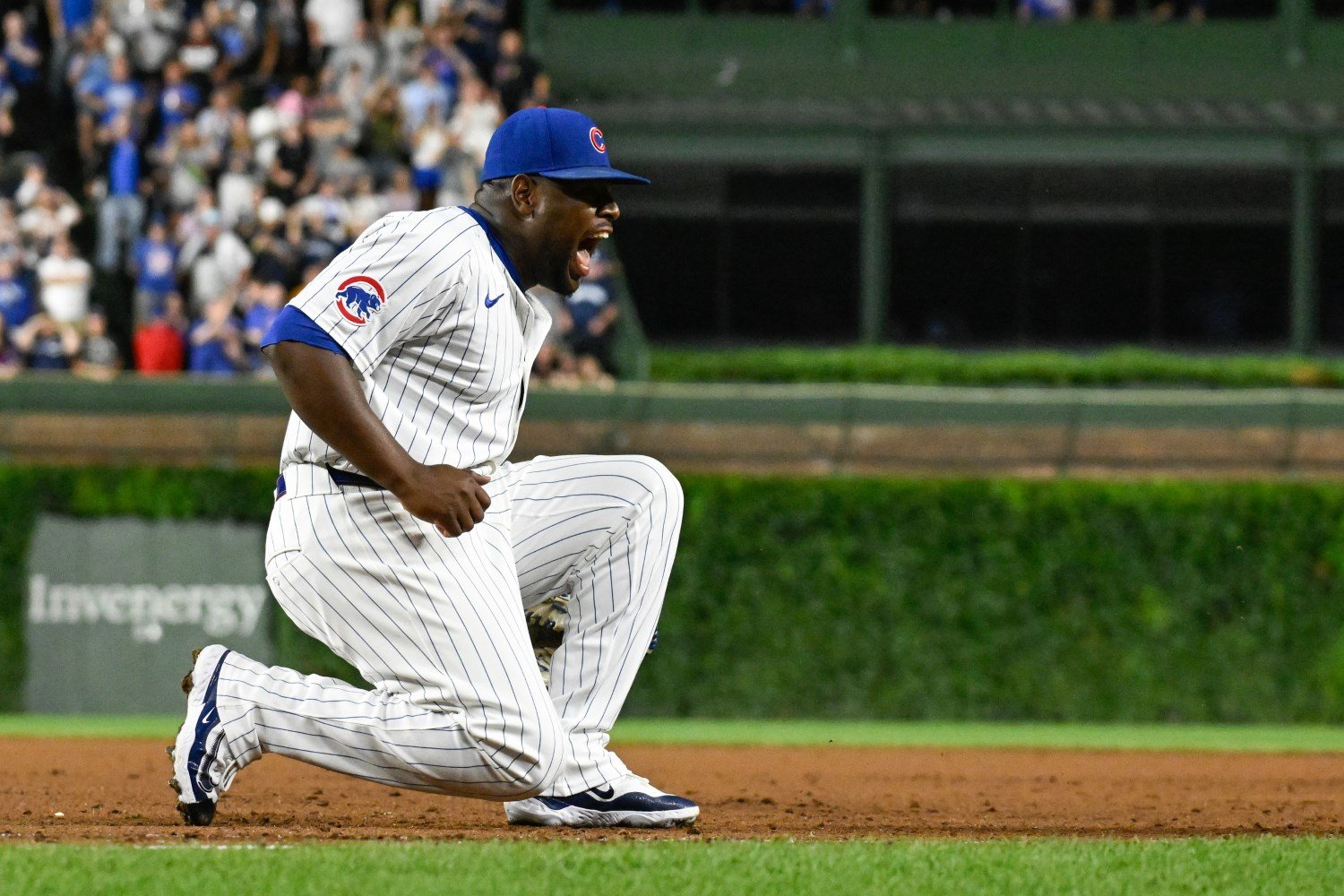 For a while there, Craig Counsell was trying to hold together a bullpen on a team aimed at contention without the services of any of the four best pitchers in that bullpen, as of a year ago: Julian Merryweather, Adbert Alzolay, Mark Leiter Jr., and Drew Smyly. The team had to make do, for long stretches, without at least two or three of those four, plus lesser contributors for whom hopes had been high, like Daniel Palencia. Injuries to the starting rotation, too, weakened the pen, pulling pitchers like Javier Assad, Ben Brown, and Hayden Wesneski away from potential roles as key relievers. Not all of those problems have been resolved, and sadly, they've become irrelevant. The 2024 Cubs aren't good enough to win anything worthwhile, and even a fully healthy and overachieving bullpen the rest of the way wouldn't change that. There's very good news, though, and here it is: the return of Merryweather, a couple of encouraging outings from Leiter, the expected rebound from Héctor Neris and the sustained excellence of Tyson Miller has created an opportunity for the team to get a bit aggressive at this trade deadline, even if they lack the self-awareness or risk appetite to trade players slotted into larger roles for multiple seasons. First, let's establish the key premise here: Almost no relief pitcher has any value beyond the season in which they're having success. This is why, even when the season looked salvageable, the Cubs would have been foolish to trade the haul of talent Oakland will demand if they move Mason Miller this summer. It's also why the team happily traded Scott Effross for Wesneski two years ago. Service time is only a remote, secondary consideration for relievers, whose overall value has a low ceiling and who can experience huge variance from year to year in that value, even if they stay healthy--which is far from a sure thing, of course. Therefore, it doesn't make any sense for the Cubs to hold onto Neris, Smyly, Merryweather, Leiter, or Miller. It's impractical and out of the question for all five of them to be traded in the next week, but the team should shop them all, and trade as many of them as have any trade value. It will be ancillary pieces. It might amount to nothing. Then again, they've gotten Wesneski, Brown, and Palencia in the last three years by being willing to trade lots of relievers when they were of no real use to them. It's possible none of those three are ever meaningful contributors to a good Cubs team, because of Wesneski's insufficient stuff, Palencia's insufficient control, and Brown's dubious health, but it's still possible one of them is a long-term helper. Brown, especially, has had a tantalizing 2024. Ultimately, the Cubs won't escape their cycle of mediocrity until they make bigger changes, but the positive trends in their bullpen make it possible that they could add some valuable pieces to their organization even if they don't yet have the guts to do so--or if Tom Ricketts doesn't want Jed Hoyer to be the one to clean up the mess he's made. Trading any or all of these relievers is the kind of work Hoyer has proved very trustworthy on, and there's little to gain by holding onto them. This is an opportunity the team should seize with both hands.
 -
If their best relievers had stayed healthier throughout this season, the Cubs might be in position to act as buyers at the upcoming MLB trade deadline. That dream is long dead, but the way they're getting healthy just days before the deadline could still be a boon to the team's ongoing rebuild. Image courtesy of © Matt Marton-USA TODAY Sports For a while there, Craig Counsell was trying to hold together a bullpen on a team aimed at contention without the services of any of the four best pitchers in that bullpen, as of a year ago: Julian Merryweather, Adbert Alzolay, Mark Leiter Jr., and Drew Smyly. The team had to make do, for long stretches, without at least two or three of those four, plus lesser contributors for whom hopes had been high, like Daniel Palencia. Injuries to the starting rotation, too, weakened the pen, pulling pitchers like Javier Assad, Ben Brown, and Hayden Wesneski away from potential roles as key relievers. Not all of those problems have been resolved, and sadly, they've become irrelevant. The 2024 Cubs aren't good enough to win anything worthwhile, and even a fully healthy and overachieving bullpen the rest of the way wouldn't change that. There's very good news, though, and here it is: the return of Merryweather, a couple of encouraging outings from Leiter, the expected rebound from Héctor Neris and the sustained excellence of Tyson Miller has created an opportunity for the team to get a bit aggressive at this trade deadline, even if they lack the self-awareness or risk appetite to trade players slotted into larger roles for multiple seasons. First, let's establish the key premise here: Almost no relief pitcher has any value beyond the season in which they're having success. This is why, even when the season looked salvageable, the Cubs would have been foolish to trade the haul of talent Oakland will demand if they move Mason Miller this summer. It's also why the team happily traded Scott Effross for Wesneski two years ago. Service time is only a remote, secondary consideration for relievers, whose overall value has a low ceiling and who can experience huge variance from year to year in that value, even if they stay healthy--which is far from a sure thing, of course. Therefore, it doesn't make any sense for the Cubs to hold onto Neris, Smyly, Merryweather, Leiter, or Miller. It's impractical and out of the question for all five of them to be traded in the next week, but the team should shop them all, and trade as many of them as have any trade value. It will be ancillary pieces. It might amount to nothing. Then again, they've gotten Wesneski, Brown, and Palencia in the last three years by being willing to trade lots of relievers when they were of no real use to them. It's possible none of those three are ever meaningful contributors to a good Cubs team, because of Wesneski's insufficient stuff, Palencia's insufficient control, and Brown's dubious health, but it's still possible one of them is a long-term helper. Brown, especially, has had a tantalizing 2024. Ultimately, the Cubs won't escape their cycle of mediocrity until they make bigger changes, but the positive trends in their bullpen make it possible that they could add some valuable pieces to their organization even if they don't yet have the guts to do so--or if Tom Ricketts doesn't want Jed Hoyer to be the one to clean up the mess he's made. Trading any or all of these relievers is the kind of work Hoyer has proved very trustworthy on, and there's little to gain by holding onto them. This is an opportunity the team should seize with both hands. View full article
-
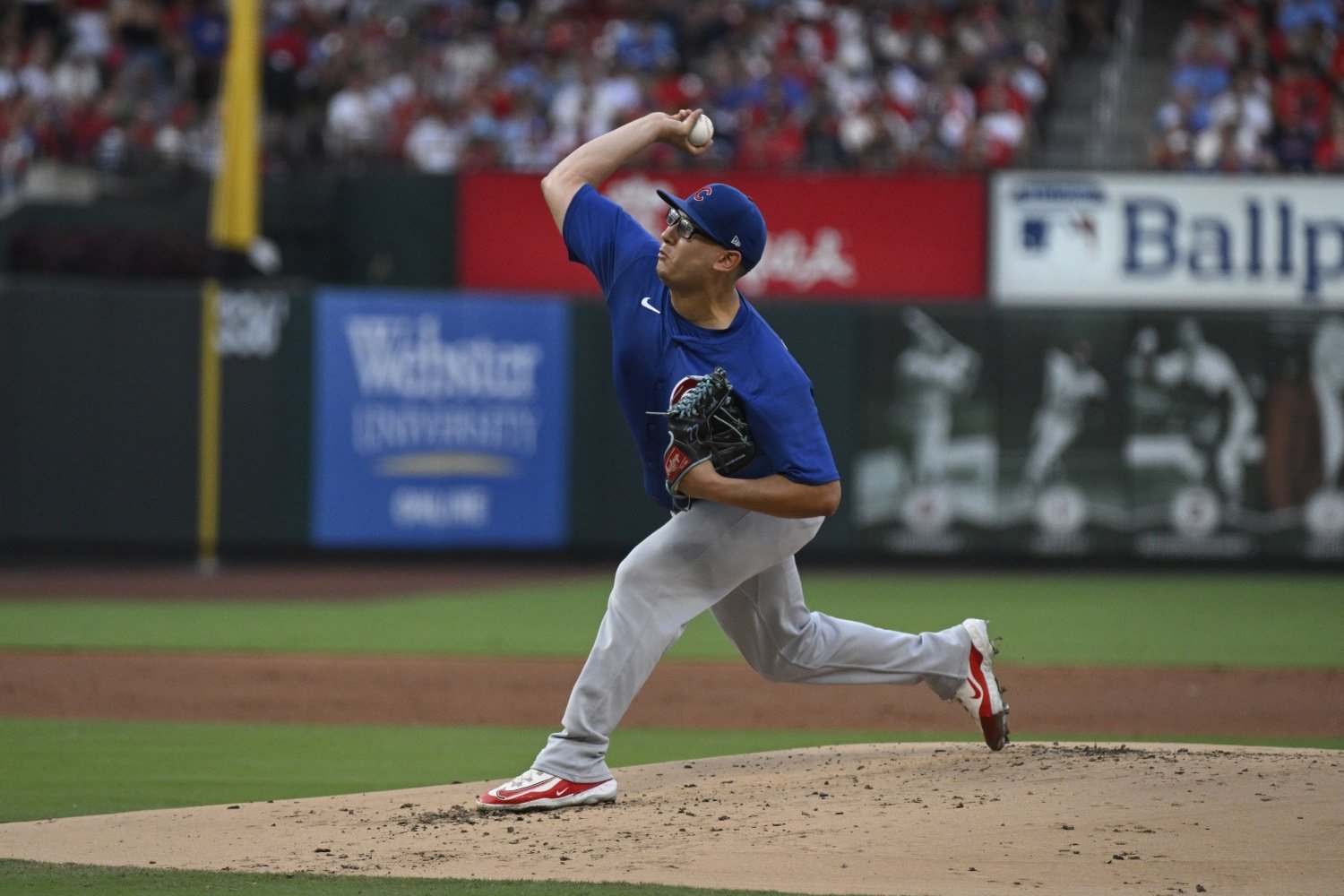 It's profoundly unlikely that Javier Assad will be traded in the next week, because of all 30 MLB organizations, the one who is likely to value him most highly is the one for which he already toils. He's been shuttled to the bullpen more than once in his young career, and nearly got the same treatment again this spring, but every time, he ends up being needed in the rotation again--and he keeps producing competitive, even impressive starts. As fans well know, though, Assad doesn't throw hard or miss many bats, by modern standards. He's hard to trust as a durable ace, though increasingly trustworthy as anywhere from the fourth- to the sixth-best starter on a playoff-hopeful team. He's a kitchen sink guy, using a fastball, cutter, sinker, changeup, curveball, and slider to make up for his lack of raw stuff or any one killer offering. In the last few starts before he hit the injured list, and in the one abbreviated one before the break, we saw him make a change to one of those pitches. It's not the out pitch he's been missing, but could it be the next way he discovers to stay just ahead of hitters' adjustment curves? Nominally, Assad has never thrown a sweeper. He's gone through a few versions of his breaking stuff, but the one on which he settled early this season was a sweepy offering. It wasn't a sweeper, but that was roughly the shape it took. Here's his overall pitch movement chart for this season. Notice, though, that there are two slider clusters here. That's because, starting in mid-June, Assad switched to a different type of slider. It's a harder, tighter offering, with less sweep and less velocity variation from his array of fastballs. Here, you can see the difference on a zoomed-in basis, with the color of the points indicating velocity to illustrate that aspect of the change. You can certainly see the change in the data. Let's compare a couple of offerings on video, to get a physical sense of it. Here's Assad throwing a sweepier slider to the back foot of Jack Suwinski, in May. Assad in May.mp4 Here's a firmer, tighter, much more vertical slider to Matt Chapman, on Jun. 17. Assad on Jun 17.mp4 Aesthetically, functionally, statistically, these are distinct pitches, and he switched pretty neatly from one to the other in mid-June. Assad is doing something different with his slider now. So, we should ask the natural question: is this slider better than the old one? So far, the answer is clear: no. It's not. Despite not having the pitch sweep off the plate with horizontal movement as much, Assad isn't throwing more strikes with the new shape on that pitch. He's not getting more chases or more whiffs. When batters connect, they're hitting it hard. No measurement you would use to evaluate the two versions of the slider says the new one is superior. Yet, it could eventually be better, either on its own or as part of that deep and varied arsenal. If he sets it up right, this version of the slider should eventually get more swings, and if he can command it, it should get more ground balls. If he can throw the slider for strikes, it should increase the effectiveness of all three of his harder pitches, as hitters are forced to become a bit more defensive. Pinned down and forced to choose, I would say the new version of the slider is the better one, or at least that it has a much higher ceiling in terms of impact on his overall approach. It just isn't achieving those things yet. Going forward, this is just one of many things to watch closely whenever Assad pitches. Maybe, in a huge surprise, some team will step forward and make the Cubs an offer they can't refuse for the stability and impressive results Assad has provided for much of the last two years. It's more likely, though, that they'll trade another starting pitcher before the deadline and that Assad's role will only become more important down the stretch, with an eye toward 2025. He won't even be arbitration-eligible this winter; the team has all kinds of time with him. If he can really find something with this slider, maybe he can become a true mid-rotation starter, even for a team with high hopes for the near future. In any case, it's an interesting thing to watch. The Cubs need more of those, amid a season in which they have too often been unappealing or lifeless. Assad is a competitor, a FIP-beater, and a feather in the cap of a pitching development infrastructure still trying to prove itself good enough. This change to his mix is a fun wrinkle and further evidence that he and the team are still trying to find creative solutions to some of their problems.
 -
Just before the All-Star break, the Cubs got their erstwhile utility pitcher back from the injured list, where he'd been shelved with a forearm strain in late June. He pitches again Monday night, and is one of the North Siders most worth watching for the balance of this season. Image courtesy of © Jeff Le-USA TODAY Sports It's profoundly unlikely that Javier Assad will be traded in the next week, because of all 30 MLB organizations, the one who is likely to value him most highly is the one for which he already toils. He's been shuttled to the bullpen more than once in his young career, and nearly got the same treatment again this spring, but every time, he ends up being needed in the rotation again--and he keeps producing competitive, even impressive starts. As fans well know, though, Assad doesn't throw hard or miss many bats, by modern standards. He's hard to trust as a durable ace, though increasingly trustworthy as anywhere from the fourth- to the sixth-best starter on a playoff-hopeful team. He's a kitchen sink guy, using a fastball, cutter, sinker, changeup, curveball, and slider to make up for his lack of raw stuff or any one killer offering. In the last few starts before he hit the injured list, and in the one abbreviated one before the break, we saw him make a change to one of those pitches. It's not the out pitch he's been missing, but could it be the next way he discovers to stay just ahead of hitters' adjustment curves? Nominally, Assad has never thrown a sweeper. He's gone through a few versions of his breaking stuff, but the one on which he settled early this season was a sweepy offering. It wasn't a sweeper, but that was roughly the shape it took. Here's his overall pitch movement chart for this season. Notice, though, that there are two slider clusters here. That's because, starting in mid-June, Assad switched to a different type of slider. It's a harder, tighter offering, with less sweep and less velocity variation from his array of fastballs. Here, you can see the difference on a zoomed-in basis, with the color of the points indicating velocity to illustrate that aspect of the change. You can certainly see the change in the data. Let's compare a couple of offerings on video, to get a physical sense of it. Here's Assad throwing a sweepier slider to the back foot of Jack Suwinski, in May. Assad in May.mp4 Here's a firmer, tighter, much more vertical slider to Matt Chapman, on Jun. 17. Assad on Jun 17.mp4 Aesthetically, functionally, statistically, these are distinct pitches, and he switched pretty neatly from one to the other in mid-June. Assad is doing something different with his slider now. So, we should ask the natural question: is this slider better than the old one? So far, the answer is clear: no. It's not. Despite not having the pitch sweep off the plate with horizontal movement as much, Assad isn't throwing more strikes with the new shape on that pitch. He's not getting more chases or more whiffs. When batters connect, they're hitting it hard. No measurement you would use to evaluate the two versions of the slider says the new one is superior. Yet, it could eventually be better, either on its own or as part of that deep and varied arsenal. If he sets it up right, this version of the slider should eventually get more swings, and if he can command it, it should get more ground balls. If he can throw the slider for strikes, it should increase the effectiveness of all three of his harder pitches, as hitters are forced to become a bit more defensive. Pinned down and forced to choose, I would say the new version of the slider is the better one, or at least that it has a much higher ceiling in terms of impact on his overall approach. It just isn't achieving those things yet. Going forward, this is just one of many things to watch closely whenever Assad pitches. Maybe, in a huge surprise, some team will step forward and make the Cubs an offer they can't refuse for the stability and impressive results Assad has provided for much of the last two years. It's more likely, though, that they'll trade another starting pitcher before the deadline and that Assad's role will only become more important down the stretch, with an eye toward 2025. He won't even be arbitration-eligible this winter; the team has all kinds of time with him. If he can really find something with this slider, maybe he can become a true mid-rotation starter, even for a team with high hopes for the near future. In any case, it's an interesting thing to watch. The Cubs need more of those, amid a season in which they have too often been unappealing or lifeless. Assad is a competitor, a FIP-beater, and a feather in the cap of a pitching development infrastructure still trying to prove itself good enough. This change to his mix is a fun wrinkle and further evidence that he and the team are still trying to find creative solutions to some of their problems. View full article
-
 Any clear-eyed decision-maker came to the conclusion that the Cubs need to be sellers at this trade deadline three weeks ago. Some of the world's most hopeless optimists (equal emphasis for each word in the phrase) root on the North Side Nine, though, so even entering the All-Star break, there were those who thought this team might reprise the success they had in the second half of last July, saving their season and forcing the front office to become trade-deadline buyers. That was an indefensible position, but we all hold some of those. Hopefully, even those folks had the scales fall from their eyes this weekend. The Cubs eked out one more win than they deserved in a three-game home series against a solid but unspectacular Diamondbacks team, which is to say, they won one game. In the three contests, they scored four total runs, two of them after the first of their two losses was essentially decided. Too little, too late has been this team's secret motto since roughly the 2018 All-Star break, so it would be unreasonable to feel surprised about it, but eventually, this pattern has to spur action designed to interrupt it. Right? We can all picture an early, almost throwaway scene in one of those romantic comedies from the peak years of that genre (around the turn of the century), where a frustrated girlfriend stomps out the door and shouts over her shoulder something like, "Give me a call when you grow up!" It's a wake-up call, lobbed rudely but righteously at a 20-something man who truly does need to make huge changes in his life, but who isn't yet ready to see it that way. He comes around over the next 90-100 minutes, of course, and the couple often reunites, but the point is what the line establishes: there's an immaturity at work here. It's a waste of the departing girlfriend's time, and even of the audience's, to watch this reasonably handsome, vaguely promising dude do nothing worthwhile with himself. That's how I feel about the Cubs at this point. It's not clear to me what they're doing that is worth anyone's time, or why anyone should pay attention to them until they demonstrate not only an openness to change, but the real beginnings of it, and a good-faith intention to do more of it. Shota Imanaga had another stellar start Sunday. Nico Hoerner continues to heat up in July, and Seiya Suzuki came up with a big hit. This team is vaguely promising, for a list of reasons much longer than those three players. They're also not going anywhere, until they grasp the magnitude of the change required here. They're going on six years as a dysfunctional offense, with two different cores of key contributors and plenty of money being spent on those six years' worth of lineups. Do they need to totally overhaul their organizational hitting development? Do they need to fire their hitting coaches (yet again)? Do they need a major overhaul of the player personnel, because something is wrong with the chemistry of this group? Maybe the answer to all of those is no, and they need to find yet another explanation. More likely, the answer to all of them is yes, but incompletely so, and they need to figure out how much weight to give each problem and potential solution. At any rate, the uninspiring series loss this weekend was just the latest in a long line of them, and the only remarkable thing about it is the number of fans and organization members who persist in the expectation that something else will happen, without some pain. The Cubs have seven more games before the trade deadline, but not one of them matters. Nor did these three. If they don't undertake some form of serious and significant change, nothing they do on the field for the final two months will matter, either. The team is so far behind so many teams relevant to their short- and long-term prospects that they can't reassert themselves as an entity worthy of our attention until they decide to become that kind of relevant team. Yes, that does mean seriously considering trading Justin Steele, despite his multiple remaining seasons of team control. Yes, it means listening open-minded and open-eared on Hoerner, and yes, it means trading Ian Happ if you can find somewhere he's willing to go. It means a lot of uncomfortable change, because while even Jed Hoyer now understands that his team is not a playoff-caliber one, there's a more important truth that doesn't seem to have settled into the minds of either Hoyer or many Cubs fans: the team isn't even close to being a serious contender for anything worth winning. Thus, they need to be thinking the same way they were at the 2021 and 2022 trade deadlines, even though (or specifically because) they don't want to end up on as long and dispiriting a competitive timeline going forward as they were on in 2021 and 2022. This roster wasn't built to sell, and isn't well-positioned to do it, but that's because the front office was drastically wrong about the quality of the team it had assembled and developed. They're in a tough position from which to sell, but an even worse one from which to do anything else. They need to grow up and face some tough realities about their own unseriousness.
 -
It's not that they suck. It's that they don't seem to understand that they suck. Image courtesy of © Jeff Curry-USA TODAY Sports Any clear-eyed decision-maker came to the conclusion that the Cubs need to be sellers at this trade deadline three weeks ago. Some of the world's most hopeless optimists (equal emphasis for each word in the phrase) root on the North Side Nine, though, so even entering the All-Star break, there were those who thought this team might reprise the success they had in the second half of last July, saving their season and forcing the front office to become trade-deadline buyers. That was an indefensible position, but we all hold some of those. Hopefully, even those folks had the scales fall from their eyes this weekend. The Cubs eked out one more win than they deserved in a three-game home series against a solid but unspectacular Diamondbacks team, which is to say, they won one game. In the three contests, they scored four total runs, two of them after the first of their two losses was essentially decided. Too little, too late has been this team's secret motto since roughly the 2018 All-Star break, so it would be unreasonable to feel surprised about it, but eventually, this pattern has to spur action designed to interrupt it. Right? We can all picture an early, almost throwaway scene in one of those romantic comedies from the peak years of that genre (around the turn of the century), where a frustrated girlfriend stomps out the door and shouts over her shoulder something like, "Give me a call when you grow up!" It's a wake-up call, lobbed rudely but righteously at a 20-something man who truly does need to make huge changes in his life, but who isn't yet ready to see it that way. He comes around over the next 90-100 minutes, of course, and the couple often reunites, but the point is what the line establishes: there's an immaturity at work here. It's a waste of the departing girlfriend's time, and even of the audience's, to watch this reasonably handsome, vaguely promising dude do nothing worthwhile with himself. That's how I feel about the Cubs at this point. It's not clear to me what they're doing that is worth anyone's time, or why anyone should pay attention to them until they demonstrate not only an openness to change, but the real beginnings of it, and a good-faith intention to do more of it. Shota Imanaga had another stellar start Sunday. Nico Hoerner continues to heat up in July, and Seiya Suzuki came up with a big hit. This team is vaguely promising, for a list of reasons much longer than those three players. They're also not going anywhere, until they grasp the magnitude of the change required here. They're going on six years as a dysfunctional offense, with two different cores of key contributors and plenty of money being spent on those six years' worth of lineups. Do they need to totally overhaul their organizational hitting development? Do they need to fire their hitting coaches (yet again)? Do they need a major overhaul of the player personnel, because something is wrong with the chemistry of this group? Maybe the answer to all of those is no, and they need to find yet another explanation. More likely, the answer to all of them is yes, but incompletely so, and they need to figure out how much weight to give each problem and potential solution. At any rate, the uninspiring series loss this weekend was just the latest in a long line of them, and the only remarkable thing about it is the number of fans and organization members who persist in the expectation that something else will happen, without some pain. The Cubs have seven more games before the trade deadline, but not one of them matters. Nor did these three. If they don't undertake some form of serious and significant change, nothing they do on the field for the final two months will matter, either. The team is so far behind so many teams relevant to their short- and long-term prospects that they can't reassert themselves as an entity worthy of our attention until they decide to become that kind of relevant team. Yes, that does mean seriously considering trading Justin Steele, despite his multiple remaining seasons of team control. Yes, it means listening open-minded and open-eared on Hoerner, and yes, it means trading Ian Happ if you can find somewhere he's willing to go. It means a lot of uncomfortable change, because while even Jed Hoyer now understands that his team is not a playoff-caliber one, there's a more important truth that doesn't seem to have settled into the minds of either Hoyer or many Cubs fans: the team isn't even close to being a serious contender for anything worth winning. Thus, they need to be thinking the same way they were at the 2021 and 2022 trade deadlines, even though (or specifically because) they don't want to end up on as long and dispiriting a competitive timeline going forward as they were on in 2021 and 2022. This roster wasn't built to sell, and isn't well-positioned to do it, but that's because the front office was drastically wrong about the quality of the team it had assembled and developed. They're in a tough position from which to sell, but an even worse one from which to do anything else. They need to grow up and face some tough realities about their own unseriousness. View full article
-
I like that thought too. Catcher feels like an area of need, dunnit? Mo Baller probably isn't a true backstop.
-
Yeah, second is the only place where Morel has looked comfortable, right? I would slot him there and see whether the reduced pressure and increased comfort got him back in touch with his offensive talent. In the meantime, I'd probably prep Shaw as a third baseman, understanding that his overall athletic profile would probably make second a natural fit if and when that turned out to be the best place for him.
-
Though a fan favorite and a player under team and cost control for two and a half more seasons, the Cubs' second baseman might be the best realistic trade chip for the team this month. Four contenders, especially, stand out as potential partners. Image courtesy of © Jeff Le-USA TODAY Sports It's been without power, but in the first half of July, Nico Hoerner has appeared to come around a bit at the plate. He's not ever likely to blossom into a powerful hitter, and he seems to be at his best when he understands and embraces that reality, using the whole field and keeping a sound plan at the plate. When pitchers work him away and he can stroke a line drive toward right-center field, he's the best form of himself. This month, Hoerner is batting .296/.344/.352, and if you go back 30 days, it's .282/.345/.379. That's not as valuable as the .375ish OBP he ran for the last three months of 2023, but it's a dramatic improvement from how he played for much of May and early June, when he seemed hampered by injuries he was electing to play through. Hoerner will be the Cub most worthy of careful watching coming out of the break, because if he's rested and healthy and maintains the approach we've seen lately, he might really take off. Should that happen, Jed Hoyer will find his phone ringing fairly often over the next 10 days, as he and his staff plot their course toward the trade deadline. Hoerner is a great defender and baserunner. He's 27 years old. Under the terms of the contract to which he and the Cubs agreed last spring, he'll make $23.5 million over the course of 2025 and 2026. He's a valuable middle infielder, though not quite the star the Cubs hoped they could help him become. There are three playoff-hopeful teams in desperate straits when it comes to second base, and one more who badly needs a shortstop. If they come calling about Hoerner, there might be a fit worth exploring. Seattle Mariners This one is already in the streets, as it were, though it got there by way of a fairly speculative report from Jon Morosi. The Mariners have a broad-spectrum need for more offense, but they're also not getting the defensive work they hoped for from offseason import Jorge Polanco. The switch-hitting veteran is a good cautionary tale for lovers of Hoerner, in that he had every tool but true power at his peak, but has not aged gracefully. Like Hoerner, Polanco is a former shortstop whose dearth of arm strength and the loss of half a step has forced him to move to second. This year, as he's turned 31 years old, he's hitting just .206/.302/.326, and he's struggling to stay on the field. Polanco is on a contract almost exactly as rich as Hoerner's, with a team option attached for 2025. Presumably, the Mariners want out from under those obligations. The Cubs and Seattle could swap the two players, keeping the cash essentially neutral and ensuring the best possible return for Chicago. The Mariners have a roughly average farm system, weighted toward players who are young and far from the big leagues, but they and the Cubs could still match up nicely on a trade. Colt Emerson, whom the M's took 22nd overall last summer, is one name worth watching in such a move, but so is Brody Hopkins, whom they took much later and who converted from the outfield to the mound after transferring during college. Hopkins is a high-ceiling arm who could move quickly through the farm system, and would have to appeal to a Cubs organization still building up its pitching depth. Boston Red Sox If possible, the Sox are even more destitute at second than Seattle, with a mélange of bad options through which they've shuffled hopelessly this season. They're in the unique spot of being weak on both sides of the keystone right now, and while their farm system holds hope for those positions in the medium term, new Boston boss Craig Breslow (the erstwhile Cubs guru) didn't acquire those guys, and might not be enamored of those possibilities. Either way, in the meantime, the Sox have possession of a Wild Card berth at the moment, and would surely be willing to swap a little bit of the last front office's farm system for the chance to secure that spot, even as they build toward a more robustly competitive future. Kansas City Royals You can't deny it: Hoerner just feels like a Royal. The biggest surprise contender of the season to date, Kansas City has tried a large number of players at second base, but none of them (not Michael Massey, not Nick Loftin, not (unsurprisingly) Adam Frazier) has brought both the caliber of defense they demand and any level of offensive competence. Hoerner could be a salve for that problem. He'd be a nice medium-term double play partner for the more explosive Bobby Witt Jr., and the kind of buttress they need in the lower portion of their lineup. He'd also thrive in the big spaces of Kauffman Stadium, on a team that loves to steal bases. The Royals' farm system is weaker than most, but it's trended in the right direction this season. Carter Jensen, whom they drafted out of high school in 2021 and have brought along slowly to ensure he sticks at catcher, is hitting .271/.384/.436 in the Midwest League, and should be promoted to Double-A roughly any minute (be it by the Royals, or some acquiring team). Atlanta Finally, there's the preseason NL East favorites, who suddenly find themselves lagging well behind the Phillies and who have a hole at shortstop. They're getting a very rude reminder of why Orlando Arcia was so willing to sign a very team-friendly contract extension, as he's hitting .211/.244/.333 this year. Arcia's not going to recover or improve. The team isn't much invested in him, but nor do they have another viable option at the moment. Hoerner would be a huge upgrade for them, and he would essentially be a time-release replacement for the man who bumped him off shortstop a year and a half ago. Atlanta's farm system is better than it has any right to be, given how consistently excellent and aggressive they have been under Alex Anthoupolos. The question is whether they would view Hoerner as a sufficient step up to justify depleting their depth at the top. The Cubs shouldn't trade Hoerner to Atlanta without getting one of Nacho Alvarez, AJ Smith-Shawver, Spencer Schwellenbach, or Hurston Waldrep, but those four are all either in Triple-A or the majors already. Alvarez is a shortstop, but really only profiles at third base in MLB, and would be an OBP machine but one without power. He's blocked by Austin Riley. Atlanta might be open to moving him, but whether they'd do so for Hoerner probably depends on what they think they could get out of him, above and beyond what the Cubs have. The other three are potential mid-rotation starters, and are all very close to being so in the big leagues. It's hard to let such players go, when you're in the middle of a long winning window and intend to win another World Series soon. Trading Hoerner, like trading Justin Steele, would be part of a multi-faceted maneuver aimed at restructuring and reloading an organization that can't currently compete with the likes of the Brewers--let alone the titans on each coast. Sending him out would allow them to plan for Matt Shaw or Christopher Morel at second base in the next year or two, and perhaps for much longer. Getting a great arm for him might make it easier to trade Steele for the kind of major offensive force missing from the system, and having such a player under cost control (while getting out from under their eight-figure annual obligations to Hoerner) would make it easier to go replace Steele or land a lineup anchor via free agency. Things would have to come together nicely, but the Cubs have already taken some calls on Hoerner, and those won't stop until the deadline comes--unless they move him first. View full article
-
If Cubs Trade Nico Hoerner, It Should Be to One of These Teams
Matthew Trueblood posted an article in Cubs
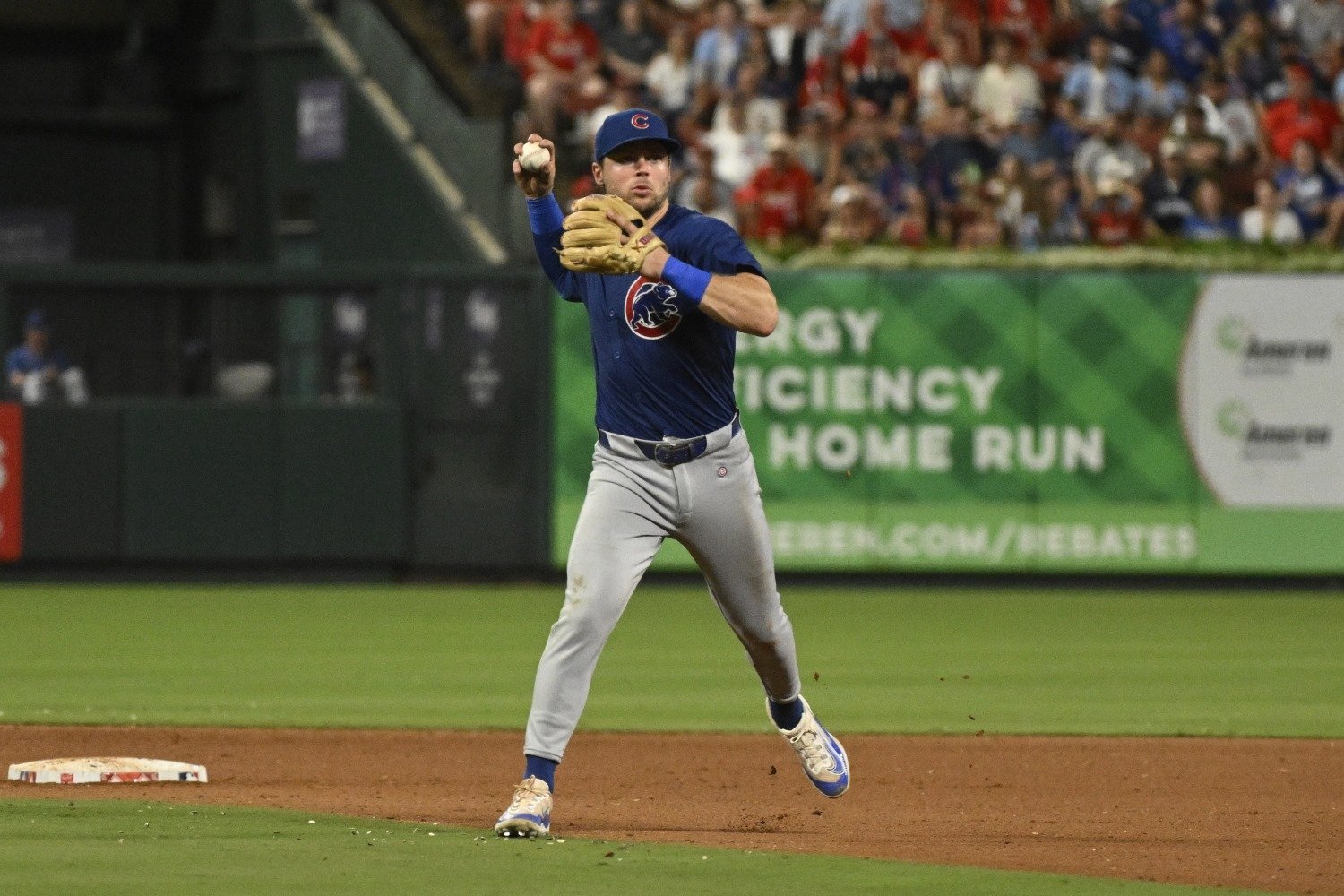 It's been without power, but in the first half of July, Nico Hoerner has appeared to come around a bit at the plate. He's not ever likely to blossom into a powerful hitter, and he seems to be at his best when he understands and embraces that reality, using the whole field and keeping a sound plan at the plate. When pitchers work him away and he can stroke a line drive toward right-center field, he's the best form of himself. This month, Hoerner is batting .296/.344/.352, and if you go back 30 days, it's .282/.345/.379. That's not as valuable as the .375ish OBP he ran for the last three months of 2023, but it's a dramatic improvement from how he played for much of May and early June, when he seemed hampered by injuries he was electing to play through. Hoerner will be the Cub most worthy of careful watching coming out of the break, because if he's rested and healthy and maintains the approach we've seen lately, he might really take off. Should that happen, Jed Hoyer will find his phone ringing fairly often over the next 10 days, as he and his staff plot their course toward the trade deadline. Hoerner is a great defender and baserunner. He's 27 years old. Under the terms of the contract to which he and the Cubs agreed last spring, he'll make $23.5 million over the course of 2025 and 2026. He's a valuable middle infielder, though not quite the star the Cubs hoped they could help him become. There are three playoff-hopeful teams in desperate straits when it comes to second base, and one more who badly needs a shortstop. If they come calling about Hoerner, there might be a fit worth exploring. Seattle Mariners This one is already in the streets, as it were, though it got there by way of a fairly speculative report from Jon Morosi. The Mariners have a broad-spectrum need for more offense, but they're also not getting the defensive work they hoped for from offseason import Jorge Polanco. The switch-hitting veteran is a good cautionary tale for lovers of Hoerner, in that he had every tool but true power at his peak, but has not aged gracefully. Like Hoerner, Polanco is a former shortstop whose dearth of arm strength and the loss of half a step has forced him to move to second. This year, as he's turned 31 years old, he's hitting just .206/.302/.326, and he's struggling to stay on the field. Polanco is on a contract almost exactly as rich as Hoerner's, with a team option attached for 2025. Presumably, the Mariners want out from under those obligations. The Cubs and Seattle could swap the two players, keeping the cash essentially neutral and ensuring the best possible return for Chicago. The Mariners have a roughly average farm system, weighted toward players who are young and far from the big leagues, but they and the Cubs could still match up nicely on a trade. Colt Emerson, whom the M's took 22nd overall last summer, is one name worth watching in such a move, but so is Brody Hopkins, whom they took much later and who converted from the outfield to the mound after transferring during college. Hopkins is a high-ceiling arm who could move quickly through the farm system, and would have to appeal to a Cubs organization still building up its pitching depth. Boston Red Sox If possible, the Sox are even more destitute at second than Seattle, with a mélange of bad options through which they've shuffled hopelessly this season. They're in the unique spot of being weak on both sides of the keystone right now, and while their farm system holds hope for those positions in the medium term, new Boston boss Craig Breslow (the erstwhile Cubs guru) didn't acquire those guys, and might not be enamored of those possibilities. Either way, in the meantime, the Sox have possession of a Wild Card berth at the moment, and would surely be willing to swap a little bit of the last front office's farm system for the chance to secure that spot, even as they build toward a more robustly competitive future. Kansas City Royals You can't deny it: Hoerner just feels like a Royal. The biggest surprise contender of the season to date, Kansas City has tried a large number of players at second base, but none of them (not Michael Massey, not Nick Loftin, not (unsurprisingly) Adam Frazier) has brought both the caliber of defense they demand and any level of offensive competence. Hoerner could be a salve for that problem. He'd be a nice medium-term double play partner for the more explosive Bobby Witt Jr., and the kind of buttress they need in the lower portion of their lineup. He'd also thrive in the big spaces of Kauffman Stadium, on a team that loves to steal bases. The Royals' farm system is weaker than most, but it's trended in the right direction this season. Carter Jensen, whom they drafted out of high school in 2021 and have brought along slowly to ensure he sticks at catcher, is hitting .271/.384/.436 in the Midwest League, and should be promoted to Double-A roughly any minute (be it by the Royals, or some acquiring team). Atlanta Finally, there's the preseason NL East favorites, who suddenly find themselves lagging well behind the Phillies and who have a hole at shortstop. They're getting a very rude reminder of why Orlando Arcia was so willing to sign a very team-friendly contract extension, as he's hitting .211/.244/.333 this year. Arcia's not going to recover or improve. The team isn't much invested in him, but nor do they have another viable option at the moment. Hoerner would be a huge upgrade for them, and he would essentially be a time-release replacement for the man who bumped him off shortstop a year and a half ago. Atlanta's farm system is better than it has any right to be, given how consistently excellent and aggressive they have been under Alex Anthoupolos. The question is whether they would view Hoerner as a sufficient step up to justify depleting their depth at the top. The Cubs shouldn't trade Hoerner to Atlanta without getting one of Nacho Alvarez, AJ Smith-Shawver, Spencer Schwellenbach, or Hurston Waldrep, but those four are all either in Triple-A or the majors already. Alvarez is a shortstop, but really only profiles at third base in MLB, and would be an OBP machine but one without power. He's blocked by Austin Riley. Atlanta might be open to moving him, but whether they'd do so for Hoerner probably depends on what they think they could get out of him, above and beyond what the Cubs have. The other three are potential mid-rotation starters, and are all very close to being so in the big leagues. It's hard to let such players go, when you're in the middle of a long winning window and intend to win another World Series soon. Trading Hoerner, like trading Justin Steele, would be part of a multi-faceted maneuver aimed at restructuring and reloading an organization that can't currently compete with the likes of the Brewers--let alone the titans on each coast. Sending him out would allow them to plan for Matt Shaw or Christopher Morel at second base in the next year or two, and perhaps for much longer. Getting a great arm for him might make it easier to trade Steele for the kind of major offensive force missing from the system, and having such a player under cost control (while getting out from under their eight-figure annual obligations to Hoerner) would make it easier to go replace Steele or land a lineup anchor via free agency. Things would have to come together nicely, but the Cubs have already taken some calls on Hoerner, and those won't stop until the deadline comes--unless they move him first.
 -
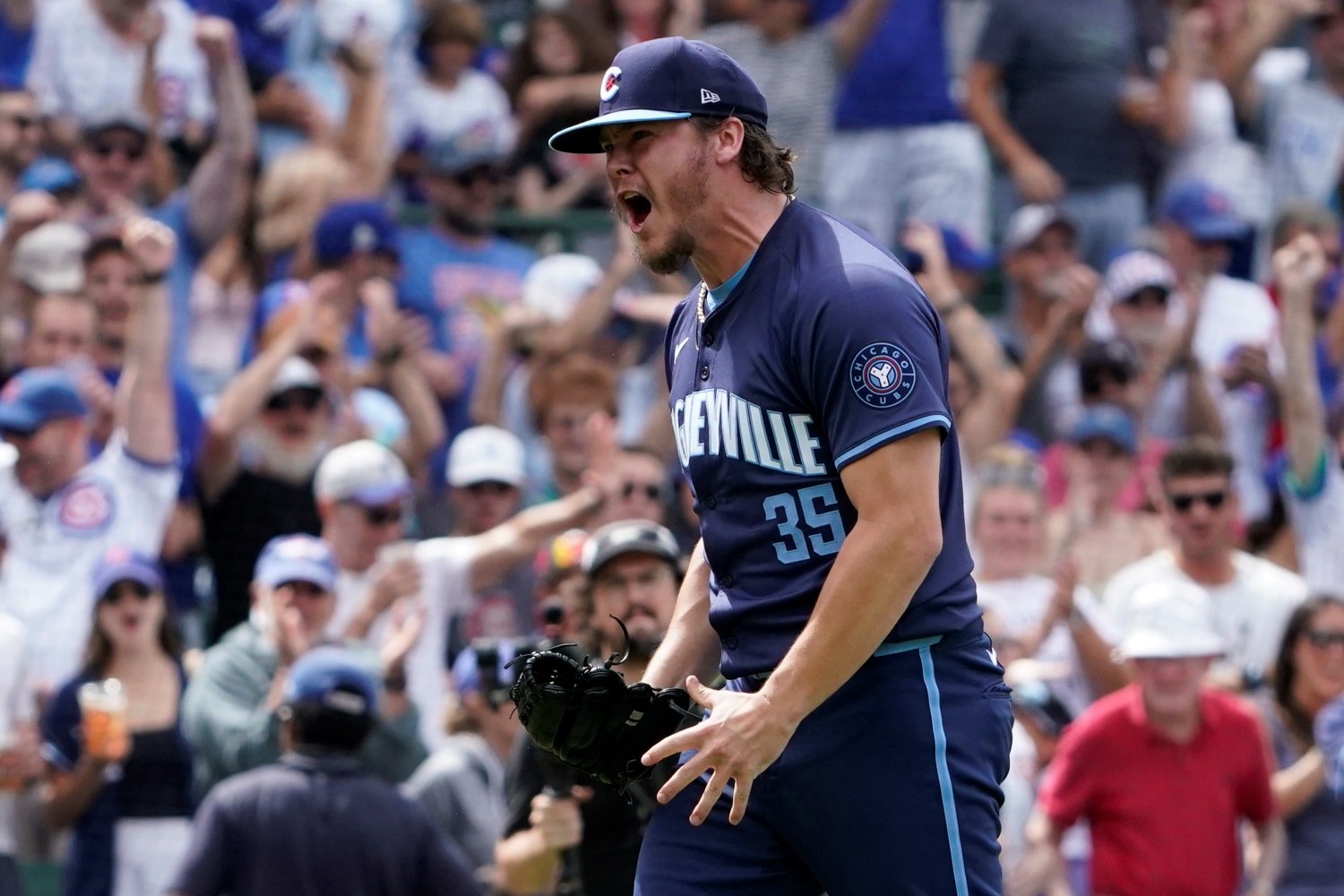 After this season, the Cubs will still control the rights of Justin Steele for three more years, assuming they don't trade him first. Steele reached arbitration as a Super Two player last winter, and is making $4 million this season. He's going to get expensive over the next few years, but everything about his performance over the last two calendar years suggests he'll be worth it. Since Jul. 19, 2022, only one pitcher with at least 250 innings pitched has a lower ERA than Steele's 2.70 is impending free agent southpaw Max Fried--and he's at 2.68, in about 45 fewer innings than Steele has thrown. As discussed yesterday, though, Fried is one of a small but exciting cadre of pitchers set to hit free agency this winter, and since Steele won't be cheap over the course of his arbitration years anyway, maybe it makes more sense to invest in one of those guys--if you can get a player who alters the future of your franchise on the positional side, in the process. It's very rare that any team will let go of such a player in this cost-conscious, youth-oriented sport, but Steele is the kind of player who compels teams to do so. Three and a half years of team control is a lot, and we're talking about one of the game's best starters. In the heat of a pennant race and having made an unfortunate habit of battling injuries in their starting rotations, three teams stand out as having both the young talent and the motivation to make a big move. Baltimore Orioles It's no secret that Baltimore has the deepest, scariest collection of young hitters in baseball. The trick is getting prospect-hugging executive Mike Elias to let go of any of them. He's right to cleave to these types of players, whose value doesn't diminish much until you have a truly embarrassing surfeit, and the Orioles are trying to establish themselves as perennial powers in the AL East, just like the Yankees. The team is inching toward that spot where they do need to move a young hitter or two, though, if it means capitalizing on the opportunity in front of them and leavening long-term fan engagement by making a deep run in October. They traded from their depth to add Corbin Burnes this winter, but Burnes will be a free agent at season's end, and he's not going to give Baltimore any kind of discount to stay put. A longer-term answer and a complement to Burnes atop the rotation would secure the Orioles' place as the favorites for the junior circuit's pennant, this year and into the future. Jackson Holliday is probably out of reach, even for a player with long-term control, like Steele. His rude introduction to the big leagues notwithstanding, Holliday is still one of the five or six best prospects in baseball. Not far behind him, though, are slightly less balanced sluggers Coby Mayo and Heston Kjerstad. Mayo is a Christopher Morel-esque third baseman, which is to say that his future is probably in right field or at DH, but unlike Morel, he seems to have an optimized approach and the ability to lift the ball consistently to left field. He could be a perennial 30-homer threat (with 40-bomb upside) in the middle of the Chicago batting order, with an above-average OBP to boot. Kjerstad is a bit more likely to work as an outfielder in the long run, though he'd be harder to pry away, too, since (unlike Mayo) he has already shown the ability to hammer big-league pitching and is on their big-league roster. He and Mayo are good echoes of the Michael Busch situation from this winter, though: extremely talented players blocked within a great organization, to whom the Cubs might provide the crucial opportunity. The Cubs could only get one of them for Steele, of course, and they'd have to be right about which one, but they'd also land some secondary piece in the trade. Los Angeles Dodgers Hey, speaking of the Busch trade, maybe the Cubs could revisit that very well. It's not clear when Yoshinobu Yamamoto will be ready to take the mound again for the Dodgers. Dustin May just had his annual season-ending surgery. Walker Buehler isn't himself anymore, and whenever Clayton Kershaw returns from his own offseason surgery, it might be to make his last ride with the team of whose excellence he's been the biggest symbol for the last 15 years. There are holes in this rotation, and there's a deep hunger in this fan base for a championship in a season that counts. They still haven't won one since 1988. After signing Will Smith to a 10-year deal (even if it's not really a 10-year deal) this spring, the Dodgers have another prospect with plenty of pedigree who doesn't have a clear path to playing time. Dalton Rushing is batting .266/.377/.459 in the Double-A Texas League, as the team brings him along slowly in the system. Rushing, 23, is a lefty batter and a no-doubt catcher who's not going to have to move to first base or DH. He'd almost certainly be in Triple-A for any other organization, and in many, he'd already be starting at catcher. Rushing isn't the only enticing player the Dodgers have, either. Josue de Paula is an outfielder who's not even 20 yet, and who has real star potential. As Kevin Alcántara's prospect star dims, de Paula is a player with the same kind of upside that excites so many about Alcántara. The comp illustrates the risk with such a player, but don't lose sight of the reward that comes with that, if the player pans out. The Dodgers also have such an impressive pitching pipeline that rounding out a trade package would be easy and fun. Maybe the Cubs could get Jackson Ferris back. Minnesota Twins One of these things is not like the others, right? The Twins are neither a financial behemoth nor a lauded producer of superstar prospects. Yet, they're marching toward what would be their fourth division title in six years (although one was in that season that doesn't count), and quietly, they've become one of the deepest organizations in baseball. They have three different players who could headline various versions of a very intriguing Steele deal. Walker Jenkins would probably be the toughest to peel away, and he's also the furthest from the majors. For those reasons, maybe he's the least likely or important of the trio. He might also have the highest ceiling, though, with a chance to be a plus-hit, plus-power, plus-glove outfielder who goes to multiple All-Star Games. The funny thing is, Emmanuel Rodriguez has that potential, too. Though just 21 years old, Rodriguez already has 167 plate appearances at Double-A Wichita, and he's batting .298/.479/.621 there. That OBP is not a typo. Rodriguez has 42 walks in that short time, which is typical of him: he's one of the most patient hitters in professional baseball. He also has speed and power, and will stick in center field until he's 30 if he doesn't end up on a team that also has Pete Crow-Armstrong. Rodriguez is on a rehab assignment in the Complex League right now; injuries have been the only thing capable of slowing his ascent to the majors. He'd be a marvelous headliner in a trade, though. So would Brooks Lee, whom the Cubs could have taken instead of Cade Horton in 2022--but who signed for about $1.2 million more than Horton did, when the Twins took him right after Horton. He's now with the Twins' parent club, and looks like a star-caliber second or third baseman who would be able to plug and play at either spot for the Cubs. The Twins would be loathe to let him go, of course, but with Willi Castro, Carlos Correa, Royce Lewis, José Miranda, and Edouard Julien, they have so much depth across the positions Lee plays that they might surrender Lee for the affordable control and playoff upside of Steele. Mayo, Kjerstad, Rushing and Rodriguez stand out, especially, as prospects who match proximity, impact potential and attainability, and who could anchor a trade package for Steele that would have to at least get Jed Hoyer talking. As the Cubs make what Hoyer has termed "tough decisions" over the next 12 days, they have to think about whether keeping Steele and paying him handsomely for the next three years is the most sensible course--or whether it would be wiser to add a potentially elite position player with more team control to their mix.
 -
Before swallowing the bitter pill of trading a beloved left-handed starter with a bulldog mindset and an ever-improving track record, the Cubs would have to be convinced that doing so was netting them a transformational talent. There might be a perfect storm brewing, though. Image courtesy of © David Banks-USA TODAY Sports After this season, the Cubs will still control the rights of Justin Steele for three more years, assuming they don't trade him first. Steele reached arbitration as a Super Two player last winter, and is making $4 million this season. He's going to get expensive over the next few years, but everything about his performance over the last two calendar years suggests he'll be worth it. Since Jul. 19, 2022, only one pitcher with at least 250 innings pitched has a lower ERA than Steele's 2.70 is impending free agent southpaw Max Fried--and he's at 2.68, in about 45 fewer innings than Steele has thrown. As discussed yesterday, though, Fried is one of a small but exciting cadre of pitchers set to hit free agency this winter, and since Steele won't be cheap over the course of his arbitration years anyway, maybe it makes more sense to invest in one of those guys--if you can get a player who alters the future of your franchise on the positional side, in the process. It's very rare that any team will let go of such a player in this cost-conscious, youth-oriented sport, but Steele is the kind of player who compels teams to do so. Three and a half years of team control is a lot, and we're talking about one of the game's best starters. In the heat of a pennant race and having made an unfortunate habit of battling injuries in their starting rotations, three teams stand out as having both the young talent and the motivation to make a big move. Baltimore Orioles It's no secret that Baltimore has the deepest, scariest collection of young hitters in baseball. The trick is getting prospect-hugging executive Mike Elias to let go of any of them. He's right to cleave to these types of players, whose value doesn't diminish much until you have a truly embarrassing surfeit, and the Orioles are trying to establish themselves as perennial powers in the AL East, just like the Yankees. The team is inching toward that spot where they do need to move a young hitter or two, though, if it means capitalizing on the opportunity in front of them and leavening long-term fan engagement by making a deep run in October. They traded from their depth to add Corbin Burnes this winter, but Burnes will be a free agent at season's end, and he's not going to give Baltimore any kind of discount to stay put. A longer-term answer and a complement to Burnes atop the rotation would secure the Orioles' place as the favorites for the junior circuit's pennant, this year and into the future. Jackson Holliday is probably out of reach, even for a player with long-term control, like Steele. His rude introduction to the big leagues notwithstanding, Holliday is still one of the five or six best prospects in baseball. Not far behind him, though, are slightly less balanced sluggers Coby Mayo and Heston Kjerstad. Mayo is a Christopher Morel-esque third baseman, which is to say that his future is probably in right field or at DH, but unlike Morel, he seems to have an optimized approach and the ability to lift the ball consistently to left field. He could be a perennial 30-homer threat (with 40-bomb upside) in the middle of the Chicago batting order, with an above-average OBP to boot. Kjerstad is a bit more likely to work as an outfielder in the long run, though he'd be harder to pry away, too, since (unlike Mayo) he has already shown the ability to hammer big-league pitching and is on their big-league roster. He and Mayo are good echoes of the Michael Busch situation from this winter, though: extremely talented players blocked within a great organization, to whom the Cubs might provide the crucial opportunity. The Cubs could only get one of them for Steele, of course, and they'd have to be right about which one, but they'd also land some secondary piece in the trade. Los Angeles Dodgers Hey, speaking of the Busch trade, maybe the Cubs could revisit that very well. It's not clear when Yoshinobu Yamamoto will be ready to take the mound again for the Dodgers. Dustin May just had his annual season-ending surgery. Walker Buehler isn't himself anymore, and whenever Clayton Kershaw returns from his own offseason surgery, it might be to make his last ride with the team of whose excellence he's been the biggest symbol for the last 15 years. There are holes in this rotation, and there's a deep hunger in this fan base for a championship in a season that counts. They still haven't won one since 1988. After signing Will Smith to a 10-year deal (even if it's not really a 10-year deal) this spring, the Dodgers have another prospect with plenty of pedigree who doesn't have a clear path to playing time. Dalton Rushing is batting .266/.377/.459 in the Double-A Texas League, as the team brings him along slowly in the system. Rushing, 23, is a lefty batter and a no-doubt catcher who's not going to have to move to first base or DH. He'd almost certainly be in Triple-A for any other organization, and in many, he'd already be starting at catcher. Rushing isn't the only enticing player the Dodgers have, either. Josue de Paula is an outfielder who's not even 20 yet, and who has real star potential. As Kevin Alcántara's prospect star dims, de Paula is a player with the same kind of upside that excites so many about Alcántara. The comp illustrates the risk with such a player, but don't lose sight of the reward that comes with that, if the player pans out. The Dodgers also have such an impressive pitching pipeline that rounding out a trade package would be easy and fun. Maybe the Cubs could get Jackson Ferris back. Minnesota Twins One of these things is not like the others, right? The Twins are neither a financial behemoth nor a lauded producer of superstar prospects. Yet, they're marching toward what would be their fourth division title in six years (although one was in that season that doesn't count), and quietly, they've become one of the deepest organizations in baseball. They have three different players who could headline various versions of a very intriguing Steele deal. Walker Jenkins would probably be the toughest to peel away, and he's also the furthest from the majors. For those reasons, maybe he's the least likely or important of the trio. He might also have the highest ceiling, though, with a chance to be a plus-hit, plus-power, plus-glove outfielder who goes to multiple All-Star Games. The funny thing is, Emmanuel Rodriguez has that potential, too. Though just 21 years old, Rodriguez already has 167 plate appearances at Double-A Wichita, and he's batting .298/.479/.621 there. That OBP is not a typo. Rodriguez has 42 walks in that short time, which is typical of him: he's one of the most patient hitters in professional baseball. He also has speed and power, and will stick in center field until he's 30 if he doesn't end up on a team that also has Pete Crow-Armstrong. Rodriguez is on a rehab assignment in the Complex League right now; injuries have been the only thing capable of slowing his ascent to the majors. He'd be a marvelous headliner in a trade, though. So would Brooks Lee, whom the Cubs could have taken instead of Cade Horton in 2022--but who signed for about $1.2 million more than Horton did, when the Twins took him right after Horton. He's now with the Twins' parent club, and looks like a star-caliber second or third baseman who would be able to plug and play at either spot for the Cubs. The Twins would be loathe to let him go, of course, but with Willi Castro, Carlos Correa, Royce Lewis, José Miranda, and Edouard Julien, they have so much depth across the positions Lee plays that they might surrender Lee for the affordable control and playoff upside of Steele. Mayo, Kjerstad, Rushing and Rodriguez stand out, especially, as prospects who match proximity, impact potential and attainability, and who could anchor a trade package for Steele that would have to at least get Jed Hoyer talking. As the Cubs make what Hoyer has termed "tough decisions" over the next 12 days, they have to think about whether keeping Steele and paying him handsomely for the next three years is the most sensible course--or whether it would be wiser to add a potentially elite position player with more team control to their mix. View full article
-
We're inside two weeks until the 2024 MLB trade deadline, and the Chicago Cubs need to be sellers during that time. They have a variety of options, though, and choosing which to pursue is a matter of sifting through both internal and external talents with an eye on 2025 and beyond. Image courtesy of © Thomas Shea-USA TODAY Sports The particular shape of the Cubs' frustrating first half has closed some doors for Jed Hoyer and company. At the outset of the season, names like Pete Alonso (a free agent at season's end) and Vladimir Guerrero Jr.(a costly potential trade target) were high on the wish lists of many Cubs fans. Now, they should almost be completely eliminated from those fans' thoughts. Michael Busch has been one of the best stories of the team's season, and the team needs to save either first base or DH for him for the foreseeable future. Since it also doesn't look like Seiya Suzuki is a viable big-league outfielder, defensively; or like Cody Bellinger will be opting out and heading back to free agency; or like Christopher Morel can play third base, it doesn't make sense to wedge an extremely expensive Alonso or Guerrero into the team's plans for the second half of this decade--let alone to give up major young talent, as they would have to do to acquire Guerrero. Let's talk, then, about the five high-profile players hitting free agency this fall who should occupy fans'minds, and whose impending availability should inform the front office's strategy over the next fortnight. Juan Soto, RF While he's only a slightly better positional fit than Alonso or Guerrero (in that he's only marginally better in the field than is Suzuki, and might not be any better, were he tasked with playing the tough sun in right field at Wrigley Field on a regular basis), Soto is a special category. He's one of the four or five best overall hitters in baseball, with those skills heavily weighted toward things (power and plate discipline) that will age exceptionally well and port across a change in environment. He's very nearly as good as Aaron Judge, but is hitting the market a half-decade younger than Judge did. For all those reasons, Soto is likely to sign for more than half a billion dollars, and therefore, he's overwhelmingly likely to sign somewhere other than the North Side. Still, he belongs to an echelon of talent the Cubs need to start pursuing. They don't develop players of this caliber. They don't draft high enough to get ahold of players this talented through pure scouting. They have to at least take a serious look and make a good-faith offer every time someone like Soto hits free agency. It only happens a few times per decade, anyway. In the short term, that means clearing a path. With Bellinger likely to be back next year, it becomes more urgent than ever to trade one of Ian Happ and Suzuki, clearing some space in both the payroll and the positional picture for the next few years. Though it already looks like the Cubs are just below the first luxury-tax threshold, it's also crucial to ensure that they stay that way, because their taxpayer status will affect the penalty they pay if they sign a player of Soto's caliber this winter, and signing him would mean being a taxpayer for the next few seasons, at least. You want to be starting from the non-payer level, going into such a deal. Alex Bregman, 3B It's clear that Morel isn't the third baseman of the future. Maybe Cam Smith is, but that's a little ways off. Matt Shaw is a fine player with a bright future, but it's more likely to be at second base than at third. His bat might not profile well at the hot corner, and even if it does, his defensive skillset might better align with the demands of the keystone. Counting either Shaw or Smith as a hatched chicken would, in any case, be the kind of foolish error the Cubs have made too often over the last several years. They have to stop thinking of themselves as an elite player development organization, unless and until they actually become one, so they can operate in a clear-eyed, non-delusional way. One thing that means is ardently pursuing a player like Bregman, who is batting .256/.316/.414 in his age-30 season but will surely finish the season with his metronomic .800+ OPS. Since the start of 2022, his OPS before the All-Star break is under .750, but after the break, it's just a hair shy of .900. Bregman is an exceptionally tough out, and would be the consistent, high-floor hitter missing from this lineup full of streaky sluggers. He's going to be expensive too, but age and a less obviously elite profile will reduce his asking price a little bit. The Cubs should be in heavily on him, and the move to set that up is obvious: trading Nico Hoerner for the solid young talent he should command, to clear second base for Shaw or Morel, making it possible to land Bregman and slot him into the everyday lineup. Corbin Burnes, RHP Illustrating how much work the Cubs have to do, it still feels like the Brewers won the trade they made with the Orioles this winter, even after Burnes started the All-Star Game Tuesday for the American League. Milwaukee got budding star infielder Joey Ortiz, potential long-term bullpen weapon DL Hall, and the 34th overall pick in this week's Draft, with which they selected college bat Blake Burke and were able to further goose a generous bonus pool. They're going to win the 2024 NL Central, and they look very nicely set for 2025 and beyond, too. That said, Burnes's season is important, because it reaffirms his status as one of the game's best and most durable aces. Craig Counsell knows him, and has gotten the best out of him. His approach mirrors what the Cubs like their pitchers to do, and as the manager gets more chances to shape his staff and filter his preferred messages out to players, that figures to hold true. Burnes will be a candidate to get $300 million on a single deal, as only two other pitchers ever have, but no matter the exact price tag he eventually commands, he's going to be the top pitcher on the market this winter. Starting pitching has been the strength of this year's Cubs, but maybe it's a strength from which they need to trade, in order to build the best possible club in 2025. With Soto and Bregman the only positional free agents with any meaningful profile who will move the needle for next year's team, maybe the move is to swap Justin Steele, Jameson Taillon, Shota Imanaga, or Javier Assad (whichever turns out to yield the most value in return, based on what the Cubs project each to actually do in the next few years) for a position player-centric package, akin to what the Brewers just did with Burnes--and then splash money around this winter in the deeper pitching market, be that on Burnes himself or on someone like... Max Fried, LHP Whereas Burnes is as good a bet to take the ball and work deep into the game every fifth day as any starter in baseball, Fried is a health risk. He doesn't strike out as many hitters as Burnes does, either, and is more vulnerable to the odd blowup start. When he's right, though, he's even more dominant than Burnes. With a deep arsenal and a diverse skill set, he induces ground balls at one of the best rates in the league; limits walks; and keeps the ball in the park. He could be a very simple 1-for-1 replacement for Steele or Imanaga, although a more expensive one. This is one of the ways the Cubs could (by being less risk-averse and more willing to spend like the big-market behemoth they ought to be) attempt a lateral move on the pitching side and get more young positional talent in the process. Jack Flaherty, RHP Fried, Burnes, Soto, and Bregman are all going to be given a qualifying offer on their way into the free-agent pool. That means each will cost the Cubs a draft pick, should they manage to sign them. Flaherty, Fried's high-school teammate, is an exception. The Tigers will trade him before the end of this month, and once they do, he'll be ineligible to receive a qualifying offer. Whichever team signs him this winter, all they'll have to give up for him is cash. It'll be a lot of cash, because Flaherty has made some overdue and vital adjustments this season. In the wake of them, he's striking out over 32% of opposing batters, and walking fewer than 5% of them. If he can sustain the slider command he's shown this season, Flaherty is going to remain an ace, and he has good enough control to pitch deep into games, too. The Cubs front office needs to think like a chess player over the coming weeks and months. Each move they make (or don't make) will have short- and long-term ramifications. As they choose from their menu of possible pursuits at the deadline, they have to think about how each would set up another move this fall or winter. It's important that they make some moves, but the risk of making the wrong one is clear and present. These five players should loom over each course they choose, because of the way each could change the organization and reshape their needs. View full article
-
5 Impending Free Agents Who Should Shape Cubs' Trade Deadline Plans
Matthew Trueblood posted an article in Cubs
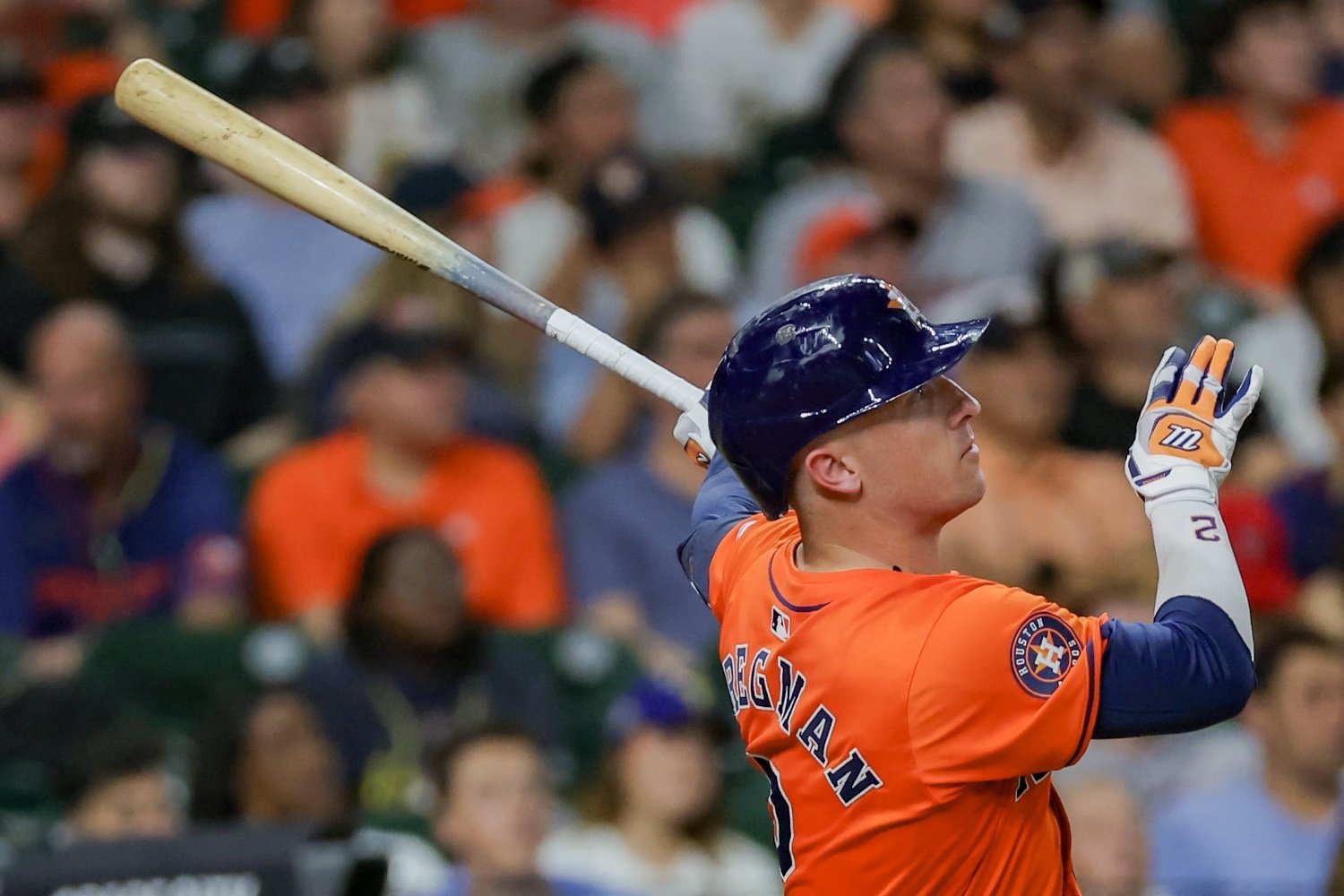 The particular shape of the Cubs' frustrating first half has closed some doors for Jed Hoyer and company. At the outset of the season, names like Pete Alonso (a free agent at season's end) and Vladimir Guerrero Jr.(a costly potential trade target) were high on the wish lists of many Cubs fans. Now, they should almost be completely eliminated from those fans' thoughts. Michael Busch has been one of the best stories of the team's season, and the team needs to save either first base or DH for him for the foreseeable future. Since it also doesn't look like Seiya Suzuki is a viable big-league outfielder, defensively; or like Cody Bellinger will be opting out and heading back to free agency; or like Christopher Morel can play third base, it doesn't make sense to wedge an extremely expensive Alonso or Guerrero into the team's plans for the second half of this decade--let alone to give up major young talent, as they would have to do to acquire Guerrero. Let's talk, then, about the five high-profile players hitting free agency this fall who should occupy fans'minds, and whose impending availability should inform the front office's strategy over the next fortnight. Juan Soto, RF While he's only a slightly better positional fit than Alonso or Guerrero (in that he's only marginally better in the field than is Suzuki, and might not be any better, were he tasked with playing the tough sun in right field at Wrigley Field on a regular basis), Soto is a special category. He's one of the four or five best overall hitters in baseball, with those skills heavily weighted toward things (power and plate discipline) that will age exceptionally well and port across a change in environment. He's very nearly as good as Aaron Judge, but is hitting the market a half-decade younger than Judge did. For all those reasons, Soto is likely to sign for more than half a billion dollars, and therefore, he's overwhelmingly likely to sign somewhere other than the North Side. Still, he belongs to an echelon of talent the Cubs need to start pursuing. They don't develop players of this caliber. They don't draft high enough to get ahold of players this talented through pure scouting. They have to at least take a serious look and make a good-faith offer every time someone like Soto hits free agency. It only happens a few times per decade, anyway. In the short term, that means clearing a path. With Bellinger likely to be back next year, it becomes more urgent than ever to trade one of Ian Happ and Suzuki, clearing some space in both the payroll and the positional picture for the next few years. Though it already looks like the Cubs are just below the first luxury-tax threshold, it's also crucial to ensure that they stay that way, because their taxpayer status will affect the penalty they pay if they sign a player of Soto's caliber this winter, and signing him would mean being a taxpayer for the next few seasons, at least. You want to be starting from the non-payer level, going into such a deal. Alex Bregman, 3B It's clear that Morel isn't the third baseman of the future. Maybe Cam Smith is, but that's a little ways off. Matt Shaw is a fine player with a bright future, but it's more likely to be at second base than at third. His bat might not profile well at the hot corner, and even if it does, his defensive skillset might better align with the demands of the keystone. Counting either Shaw or Smith as a hatched chicken would, in any case, be the kind of foolish error the Cubs have made too often over the last several years. They have to stop thinking of themselves as an elite player development organization, unless and until they actually become one, so they can operate in a clear-eyed, non-delusional way. One thing that means is ardently pursuing a player like Bregman, who is batting .256/.316/.414 in his age-30 season but will surely finish the season with his metronomic .800+ OPS. Since the start of 2022, his OPS before the All-Star break is under .750, but after the break, it's just a hair shy of .900. Bregman is an exceptionally tough out, and would be the consistent, high-floor hitter missing from this lineup full of streaky sluggers. He's going to be expensive too, but age and a less obviously elite profile will reduce his asking price a little bit. The Cubs should be in heavily on him, and the move to set that up is obvious: trading Nico Hoerner for the solid young talent he should command, to clear second base for Shaw or Morel, making it possible to land Bregman and slot him into the everyday lineup. Corbin Burnes, RHP Illustrating how much work the Cubs have to do, it still feels like the Brewers won the trade they made with the Orioles this winter, even after Burnes started the All-Star Game Tuesday for the American League. Milwaukee got budding star infielder Joey Ortiz, potential long-term bullpen weapon DL Hall, and the 34th overall pick in this week's Draft, with which they selected college bat Blake Burke and were able to further goose a generous bonus pool. They're going to win the 2024 NL Central, and they look very nicely set for 2025 and beyond, too. That said, Burnes's season is important, because it reaffirms his status as one of the game's best and most durable aces. Craig Counsell knows him, and has gotten the best out of him. His approach mirrors what the Cubs like their pitchers to do, and as the manager gets more chances to shape his staff and filter his preferred messages out to players, that figures to hold true. Burnes will be a candidate to get $300 million on a single deal, as only two other pitchers ever have, but no matter the exact price tag he eventually commands, he's going to be the top pitcher on the market this winter. Starting pitching has been the strength of this year's Cubs, but maybe it's a strength from which they need to trade, in order to build the best possible club in 2025. With Soto and Bregman the only positional free agents with any meaningful profile who will move the needle for next year's team, maybe the move is to swap Justin Steele, Jameson Taillon, Shota Imanaga, or Javier Assad (whichever turns out to yield the most value in return, based on what the Cubs project each to actually do in the next few years) for a position player-centric package, akin to what the Brewers just did with Burnes--and then splash money around this winter in the deeper pitching market, be that on Burnes himself or on someone like... Max Fried, LHP Whereas Burnes is as good a bet to take the ball and work deep into the game every fifth day as any starter in baseball, Fried is a health risk. He doesn't strike out as many hitters as Burnes does, either, and is more vulnerable to the odd blowup start. When he's right, though, he's even more dominant than Burnes. With a deep arsenal and a diverse skill set, he induces ground balls at one of the best rates in the league; limits walks; and keeps the ball in the park. He could be a very simple 1-for-1 replacement for Steele or Imanaga, although a more expensive one. This is one of the ways the Cubs could (by being less risk-averse and more willing to spend like the big-market behemoth they ought to be) attempt a lateral move on the pitching side and get more young positional talent in the process. Jack Flaherty, RHP Fried, Burnes, Soto, and Bregman are all going to be given a qualifying offer on their way into the free-agent pool. That means each will cost the Cubs a draft pick, should they manage to sign them. Flaherty, Fried's high-school teammate, is an exception. The Tigers will trade him before the end of this month, and once they do, he'll be ineligible to receive a qualifying offer. Whichever team signs him this winter, all they'll have to give up for him is cash. It'll be a lot of cash, because Flaherty has made some overdue and vital adjustments this season. In the wake of them, he's striking out over 32% of opposing batters, and walking fewer than 5% of them. If he can sustain the slider command he's shown this season, Flaherty is going to remain an ace, and he has good enough control to pitch deep into games, too. The Cubs front office needs to think like a chess player over the coming weeks and months. Each move they make (or don't make) will have short- and long-term ramifications. As they choose from their menu of possible pursuits at the deadline, they have to think about how each would set up another move this fall or winter. It's important that they make some moves, but the risk of making the wrong one is clear and present. These five players should loom over each course they choose, because of the way each could change the organization and reshape their needs.
 -
 It's not just that Kyle Hendricks throws two distinct versions of his changeup. It's also extremely unusual that he throws one of them the way he does. Changeups come in all shapes and velocities, and some cut toward the glove side, in an absolute sense, while others have a crazy amount of arm-side run. By and large, it depends on the overall movement profile of the pitcher--how his arm works, what kind of spin he imparts, and which grip he employs for the change. The harder, faster rule, though, is that you can safely make a directional prediction about changeup movement based on fastball movement. Some pitchers have a high-rise changeup with virtually no vertical separation from the fastball, whereas others have diving, downhill splitter-style pitches. Some have huge run to the arm side, and some stay in the same lane as the fastball, depending on a slight fade and a significant velocity differential. What hardly any of them have is cutting movement, relative to that pitcher's fastball. The changeup Hendricks throws to right-handed batters is an exception. (In this image, I removed Hendricks's curveballs, which are not relevant to this particular study.) As you can see, Hendricks leans heavily on his sinker against righties, and his changeup moves more to the glove side (away from a righty batter) than the sinker does. It also moves more in that direction than his seldom-used four-seamer, on average. It even resists gravity a bit more than the sinker, and thus appears to rise relative to it. How rare is that? Well, 80 right-handed pitchers have thrown at least 25 changeups to right-handed batters this season, and of them, only four share this characteristic. No one quite matches Hendricks, but to say just how unusual his cut-change action is, let's dig in a little bit on each of the other three who have a significant amount of cut-change, themselves. Logan Webb Like Hendricks, Webb is a sinker-and-changeup star, and throwing a sinker does make it slightly easier to achieve a cut-change effect. If your sinker has considerable run, and your change is more about velocity separation than movement, you can have that pitch stay over the heart of the plate to induce chase below the zone, whereas you want the sinker to run to the inside edge and generate weak contact. Plainly, though, that's nothing like Hendricks's six-inch difference in average movement, and unlike Hendricks's, his change dips lower than his fastball, the way you'd expect it to. All that heavy action is what makes Webb one of the league's premier ground-ball guys, and it's what's missing from Hendricks's these days, as he becomes more homer-prone. Pedro Avila Though a little-know long reliever, Avila (whom the Guardians snatched up from San Diego in April amid a desperate need for healthy arms) has been valuable this season, with a 3.51 ERA in 41 innings of work. He uses both a four-seamer and a two-seamer against righty batters, but the changeup has cut action relative to each--as well as a huge vertical movement disparity. The combination of offerings flummoxes hitters, and while right-on-right changeups are rarely standout pitches in terms of results, Avila's is an exception. He gets chases on 44 percent of the changeups he throws to righties outside the zone, and the whiff rate on the pitch is just under 33%. The only (understandable) bad news is that he finds the zone with that pitch just 46 percent of the time. Tayler Scott In what has been an up-and-down season in Houston, Scott has been a much-needed bullpen stabilizer. He's primarily a sweeper artist, eating right-handed batters up with the breaking ball that runs far away from them. He sets that pitch up with two different fastball looks, though, and when hitters sit on those primary offerings, he drops a vertically-oriented changeup in under their reaching hands. Yes, then, there are a few pitchers who have a cut-change, so Hendricks isn't totally alone in having one... but in a very real sense, he's alone. Not even the small group of other pitchers who have a pitch that technically fits into the same category do things the same way Hendricks does. His balloon-ball changeup, floating away from a righty against a sinker that seems to veer down and toward them at the last moment, is a whole different thing than the league's other cut-changeups. There's one more person we might compare him to, though: his past self. Over time, Hendricks's vertical movement on the sinker against righties has gotten heavier, as he tries to tilt the pitch for more horizontal wiggle. As he's undergone that change and accentuated his cut-change, though, he's just now found a major cut-change interaction between the heater and the cambio over the last two years. Obviously, it was a wildly successful adjustment in 2023, but so far in 2024, the results have been ugly. It might be that hitters have adjusted and compensated for this innovation, and that to stay viable in the big leagues, he has to find the next one. Maybe his ramped-up curveball usage is that very innovation. Maybe there's still a trick or two in his bag. Even if he doesn't figure it out from here, though, and if The Professor's tenure is winding down, it's fun to note that he truly has been unique--not only in what he does, but in how he adjusts and alters what he does when the feedback from his opponents demands it.
 -
The erstwhile Cubs starter has one of baseball's most interesting pitch mixes. He throws one changeup to left-handed batters, and another to righties. The latter is an especially fascinating, almost unique flavor of the cambio. Image courtesy of © Jeff Curry-USA TODAY Sports It's not just that Kyle Hendricks throws two distinct versions of his changeup. It's also extremely unusual that he throws one of them the way he does. Changeups come in all shapes and velocities, and some cut toward the glove side, in an absolute sense, while others have a crazy amount of arm-side run. By and large, it depends on the overall movement profile of the pitcher--how his arm works, what kind of spin he imparts, and which grip he employs for the change. The harder, faster rule, though, is that you can safely make a directional prediction about changeup movement based on fastball movement. Some pitchers have a high-rise changeup with virtually no vertical separation from the fastball, whereas others have diving, downhill splitter-style pitches. Some have huge run to the arm side, and some stay in the same lane as the fastball, depending on a slight fade and a significant velocity differential. What hardly any of them have is cutting movement, relative to that pitcher's fastball. The changeup Hendricks throws to right-handed batters is an exception. (In this image, I removed Hendricks's curveballs, which are not relevant to this particular study.) As you can see, Hendricks leans heavily on his sinker against righties, and his changeup moves more to the glove side (away from a righty batter) than the sinker does. It also moves more in that direction than his seldom-used four-seamer, on average. It even resists gravity a bit more than the sinker, and thus appears to rise relative to it. How rare is that? Well, 80 right-handed pitchers have thrown at least 25 changeups to right-handed batters this season, and of them, only four share this characteristic. No one quite matches Hendricks, but to say just how unusual his cut-change action is, let's dig in a little bit on each of the other three who have a significant amount of cut-change, themselves. Logan Webb Like Hendricks, Webb is a sinker-and-changeup star, and throwing a sinker does make it slightly easier to achieve a cut-change effect. If your sinker has considerable run, and your change is more about velocity separation than movement, you can have that pitch stay over the heart of the plate to induce chase below the zone, whereas you want the sinker to run to the inside edge and generate weak contact. Plainly, though, that's nothing like Hendricks's six-inch difference in average movement, and unlike Hendricks's, his change dips lower than his fastball, the way you'd expect it to. All that heavy action is what makes Webb one of the league's premier ground-ball guys, and it's what's missing from Hendricks's these days, as he becomes more homer-prone. Pedro Avila Though a little-know long reliever, Avila (whom the Guardians snatched up from San Diego in April amid a desperate need for healthy arms) has been valuable this season, with a 3.51 ERA in 41 innings of work. He uses both a four-seamer and a two-seamer against righty batters, but the changeup has cut action relative to each--as well as a huge vertical movement disparity. The combination of offerings flummoxes hitters, and while right-on-right changeups are rarely standout pitches in terms of results, Avila's is an exception. He gets chases on 44 percent of the changeups he throws to righties outside the zone, and the whiff rate on the pitch is just under 33%. The only (understandable) bad news is that he finds the zone with that pitch just 46 percent of the time. Tayler Scott In what has been an up-and-down season in Houston, Scott has been a much-needed bullpen stabilizer. He's primarily a sweeper artist, eating right-handed batters up with the breaking ball that runs far away from them. He sets that pitch up with two different fastball looks, though, and when hitters sit on those primary offerings, he drops a vertically-oriented changeup in under their reaching hands. Yes, then, there are a few pitchers who have a cut-change, so Hendricks isn't totally alone in having one... but in a very real sense, he's alone. Not even the small group of other pitchers who have a pitch that technically fits into the same category do things the same way Hendricks does. His balloon-ball changeup, floating away from a righty against a sinker that seems to veer down and toward them at the last moment, is a whole different thing than the league's other cut-changeups. There's one more person we might compare him to, though: his past self. Over time, Hendricks's vertical movement on the sinker against righties has gotten heavier, as he tries to tilt the pitch for more horizontal wiggle. As he's undergone that change and accentuated his cut-change, though, he's just now found a major cut-change interaction between the heater and the cambio over the last two years. Obviously, it was a wildly successful adjustment in 2023, but so far in 2024, the results have been ugly. It might be that hitters have adjusted and compensated for this innovation, and that to stay viable in the big leagues, he has to find the next one. Maybe his ramped-up curveball usage is that very innovation. Maybe there's still a trick or two in his bag. Even if he doesn't figure it out from here, though, and if The Professor's tenure is winding down, it's fun to note that he truly has been unique--not only in what he does, but in how he adjusts and alters what he does when the feedback from his opponents demands it. View full article
-
Jed Hoyer recently lamented, in public comments, the way his teams have made it difficult for him to focus on a trade deadline strategy in successive seasons. Maybe he needs to be reminded whose job setting that direction is. Image courtesy of © David Banks-USA TODAY Sports There is an infamous quotation ascribed to the French revolutionary leader (not that French Revolution; no, not that one, either; the Revolution of 1848) Alexandre Auguste Ledru-Rollin. Although briefly the chief champion of the proletariat during that mid-century uprising, he failed to provide decisive leadership at the crucial moment of that would-be bloodless coup, and when the working class was thwarted, Ledru-Rollin became largely unwelcome both among that constituency and among the empowered nobility from which he had emerged and with which he clumsily sided, late in the going. "There go my people," Ledru-Rollin is purported to have said when the action began to percolate. "I must find out where they are going, so I can lead them." It's almost certainly an apocryphal quote. In the latter decades of Romanticism in Europe, hard facts weren't as important as finding just the right way to capture the soul of a moment. The reason we still hear this not-quite-factual quasi-aphorism, though, is that its inventors nailed it. They nicely encapsulated the odious thing about Ledru-Rollin, in the view of the general public, in two pithy sentences. He was meant to be a leader, and he let a whole lot of people down because he turned out not to understand what it was he was meant to be leading, or to have the courage and competence to lead it successfully. There are 15 days left before the 2024 MLB trade deadline. That's all the time Jed Hoyer has to separate himself from Alexandre Auguste Ledru-Rollin. Right now, he's right on the precipice of being buffeted right into a corner by his own "people," the team of which he is the president of baseball operations, for the second year in a row. You can't adequately substitute any other trait for decisive leadership, and you can't fake it, either. Hoyer was dealt a tough hand last season, when the Cubs scuffled badly until the All-Star break, only to go on such a torrid streak that he had virtually no choice but to make buyer-like moves at the trade deadline. Yet, those moves didn't make the team clear favorites for anything, and indeed, they missed the playoffs altogether. Nor did Hoyer elect to let that season's momentum build by making big splashes on the player talent market over the past offseason. Nor did he use their September stagger as pretext to seriously reorganize the roster. A year later, he's overseen a team with a new manager but most of the same old faces, and a combination of insufficient star power, insufficient depth, and plain old bad luck put his club behind the 8-ball entering July. Then, over their final week and a half before the All-Star break, they got pretty hot again. They won eight of their final 11 before this four-day summer interstice. "It's not the road you want to travel," Hoyer said about the way the season has gone, during an appearance on the Marquee Network game broadcast last Saturday. "Last year, we almost felt like we were going day to day, which you never want to do, but we were sort of day to day thinking about which direction we were going to go in." He admitted that that's basically what the team is doing this season, too. That is, on its face, a recipe for persistent failure, not just on a single-season basis but in the great project that should be building the Cubs into a dynastic force in the NL Central. If Hoyer wanted either the 2023 or the 2024 teams to be genuinely good, he should have invested more in them before Opening Day and been more proactive in his problem-solving once their flaws became glaringly obvious in the early going. He's missed those chances. There's every chance that, left to their own devices, the Cubs will come out of the break by winning five of their first nine. That would put them at 52-56, and it would probably have them within three games of the third Wild Card berth in the National League. With two days before the deadline, at that point, would Hoyer shift into buy mode? Could he possibly rebuild the entire lousy bullpen, make up for the faltering depth of the rotation, and add the missing dynamism to the lineup in those two days? No chance. If Hoyer is just trying to preserve leverage in trade conversations by playing up the possibility of a surge, or if he's playing a public-relations game and actually intends to sell aggressively, we'll know it soon. Right now, though, he sounds like Ledru-Rollin. He got this job because his longtime boss and mentor had enough of a halo around his head to handpick his successor as he walked out the door, and that halo was made from a reputation for clear-eyed, aggressive leadership. Hoyer's letting that halo clatter to the ground, a tarnished and ungrasped brass ring. Standing pat looks like the most likely scenario for the Cubs over the next fortnight. It would be a calamitous one. They are a team paralyzed by its own okayness, with a core not good enough to do what this franchise ought to be dead-set on doing, lurching toward old age and immovable contract status. They have a strong farm system, but not a generational or transformational one. They should be tenacious in their pursuit of young talent, even if it costs them young talent. The best thing Hoyer has done since taking over the team was the Michael Busch trade, and while that was an opportunity not entirely of his own creation, the lesson from it should be to try more things like it. The Cubs aren't a playoff team this season--at least not in any valuable sense of that term. They're not especially close to being one in 2025. Their leader needs to lead them, rather than waiting to see in which direction his collection of people confusedly run over the next two weeks. If he does that, he might still not get the pleasure of seeing the fruits of the seeds of change he plants. (He can ask a handful of other leaders, from other French revolutions, all about that.) But he would, at least, be planting seeds the fruit of which will be worth seeing, instead of preciously tending a garden that will never yield more than a few stew-grade tomatoes. View full article
-
 There is an infamous quotation ascribed to the French revolutionary leader (not that French Revolution; no, not that one, either; the Revolution of 1848) Alexandre Auguste Ledru-Rollin. Although briefly the chief champion of the proletariat during that mid-century uprising, he failed to provide decisive leadership at the crucial moment of that would-be bloodless coup, and when the working class was thwarted, Ledru-Rollin became largely unwelcome both among that constituency and among the empowered nobility from which he had emerged and with which he clumsily sided, late in the going. "There go my people," Ledru-Rollin is purported to have said when the action began to percolate. "I must find out where they are going, so I can lead them." It's almost certainly an apocryphal quote. In the latter decades of Romanticism in Europe, hard facts weren't as important as finding just the right way to capture the soul of a moment. The reason we still hear this not-quite-factual quasi-aphorism, though, is that its inventors nailed it. They nicely encapsulated the odious thing about Ledru-Rollin, in the view of the general public, in two pithy sentences. He was meant to be a leader, and he let a whole lot of people down because he turned out not to understand what it was he was meant to be leading, or to have the courage and competence to lead it successfully. There are 15 days left before the 2024 MLB trade deadline. That's all the time Jed Hoyer has to separate himself from Alexandre Auguste Ledru-Rollin. Right now, he's right on the precipice of being buffeted right into a corner by his own "people," the team of which he is the president of baseball operations, for the second year in a row. You can't adequately substitute any other trait for decisive leadership, and you can't fake it, either. Hoyer was dealt a tough hand last season, when the Cubs scuffled badly until the All-Star break, only to go on such a torrid streak that he had virtually no choice but to make buyer-like moves at the trade deadline. Yet, those moves didn't make the team clear favorites for anything, and indeed, they missed the playoffs altogether. Nor did Hoyer elect to let that season's momentum build by making big splashes on the player talent market over the past offseason. Nor did he use their September stagger as pretext to seriously reorganize the roster. A year later, he's overseen a team with a new manager but most of the same old faces, and a combination of insufficient star power, insufficient depth, and plain old bad luck put his club behind the 8-ball entering July. Then, over their final week and a half before the All-Star break, they got pretty hot again. They won eight of their final 11 before this four-day summer interstice. "It's not the road you want to travel," Hoyer said about the way the season has gone, during an appearance on the Marquee Network game broadcast last Saturday. "Last year, we almost felt like we were going day to day, which you never want to do, but we were sort of day to day thinking about which direction we were going to go in." He admitted that that's basically what the team is doing this season, too. That is, on its face, a recipe for persistent failure, not just on a single-season basis but in the great project that should be building the Cubs into a dynastic force in the NL Central. If Hoyer wanted either the 2023 or the 2024 teams to be genuinely good, he should have invested more in them before Opening Day and been more proactive in his problem-solving once their flaws became glaringly obvious in the early going. He's missed those chances. There's every chance that, left to their own devices, the Cubs will come out of the break by winning five of their first nine. That would put them at 52-56, and it would probably have them within three games of the third Wild Card berth in the National League. With two days before the deadline, at that point, would Hoyer shift into buy mode? Could he possibly rebuild the entire lousy bullpen, make up for the faltering depth of the rotation, and add the missing dynamism to the lineup in those two days? No chance. If Hoyer is just trying to preserve leverage in trade conversations by playing up the possibility of a surge, or if he's playing a public-relations game and actually intends to sell aggressively, we'll know it soon. Right now, though, he sounds like Ledru-Rollin. He got this job because his longtime boss and mentor had enough of a halo around his head to handpick his successor as he walked out the door, and that halo was made from a reputation for clear-eyed, aggressive leadership. Hoyer's letting that halo clatter to the ground, a tarnished and ungrasped brass ring. Standing pat looks like the most likely scenario for the Cubs over the next fortnight. It would be a calamitous one. They are a team paralyzed by its own okayness, with a core not good enough to do what this franchise ought to be dead-set on doing, lurching toward old age and immovable contract status. They have a strong farm system, but not a generational or transformational one. They should be tenacious in their pursuit of young talent, even if it costs them young talent. The best thing Hoyer has done since taking over the team was the Michael Busch trade, and while that was an opportunity not entirely of his own creation, the lesson from it should be to try more things like it. The Cubs aren't a playoff team this season--at least not in any valuable sense of that term. They're not especially close to being one in 2025. Their leader needs to lead them, rather than waiting to see in which direction his collection of people confusedly run over the next two weeks. If he does that, he might still not get the pleasure of seeing the fruits of the seeds of change he plants. (He can ask a handful of other leaders, from other French revolutions, all about that.) But he would, at least, be planting seeds the fruit of which will be worth seeing, instead of preciously tending a garden that will never yield more than a few stew-grade tomatoes.
 -
The Cubs are hot, but after a pitch hit Cody Bellinger in the hand Wednesday night, they have to adjust to being without their highest-paid player for the second time this year. It's a change with short- and long-term ramifications. Image courtesy of © Mitch Stringer-USA TODAY Sports Earlier this month, I wrote that nothing should dissuade the Cubs from behaving as sellers this month, ahead of the MLB trade deadline. Even as they've heated up (with five wins in their last six games), that has remained true, but losing Cody Bellinger until what figures to be early August seals the deal. The only thing material impact it should have is making it impossible (rather than merely difficult and unlikely) that the team will trade Bellinger this month. It also all but ensures that Bellinger will opt into his $30-million salary for 2025. He hasn't played well enough to this point to come back from an injury like this one and put up numbers that will give him or Scott Boras any confidence about testing the market again this winter. For all intents and purposes, this injury locks Bellinger in as part of the team's medium-term lineup. That should only increase the team's urgency in trying to find a trade partner palatable to one of their two valuable corner outfielders, each of whom have no-trade clauses around which they have to work. Ian Happ and Seiya Suzuki have real trade value, and although it might be hard to move them because of those clauses, it becomes even more important now, since Bellinger should be their plan for right field going into next season. While Bellinger is gone, of course, the Cubs lineup will be diminished. He hasn't been the same star-caliber slugger he was in 2023 in his second go-around with the North Siders, but he's still been an essential cog. Without him, Christopher Morel is back in the top five of the batting order, which signifies an offense with insufficient depth. On the other hand, Bellinger's absence creates some opportunities for this team, too. Morel is slated to be the DH Thursday night, with Miles Mastrobuoni getting another start at third base. His glove makes his bat worth a little bit longer an audition, and the same goes for Pete Crow-Armstrong. The next few weeks will be a valuable audition period for Alexander Canario, allowing the team to assess whether he should be one of the players prioritized if and when Happ or Suzuki are dealt. Canario got the call to replace Bellinger on the roster. Morel can and should still occasionally start at third, so the team can get looks at Crow-Armstrong and Canario side-by-side in the outfield, with either Happ or Suzuki at DH. The team has had to patch holes and shift resources all season, so this won't be an unfamiliar feeling. It is, however, the latest uncomfortable reminder that Bellinger's durability is part of his long-term outlook. It was a pair of injuries (one to his shoulder, one to his knee) that derailed him after an MVP-caliber start to his career in Los Angeles, and injuries will have cost him at least a month of total time in each of his first two seasons with the Cubs, by the time he returns from this one. It's probably a bigger part of the reason why teams were reluctant to meet the Cubs' fairly conservative offers to him this winter than it was a part of the conversations about him, and now, it looms as a factor that mitigates any optimism about his future over what remains a player-friendly contract. If the Cubs were five games better, this injury would hurt worse. As it is, they weren't going anywhere, anyway. They still lose some value because of this development, but they also gain some chances to better understand and evaluate young players, so while Bellinger will be missed, the organization can benefit from his brief absence, in a couple of ways. Hopefully, his recovery time will be on the short end of the spectrum of possibilities, and the actual playing time lost will be minimized by the upcoming All-Star break. View full article
-
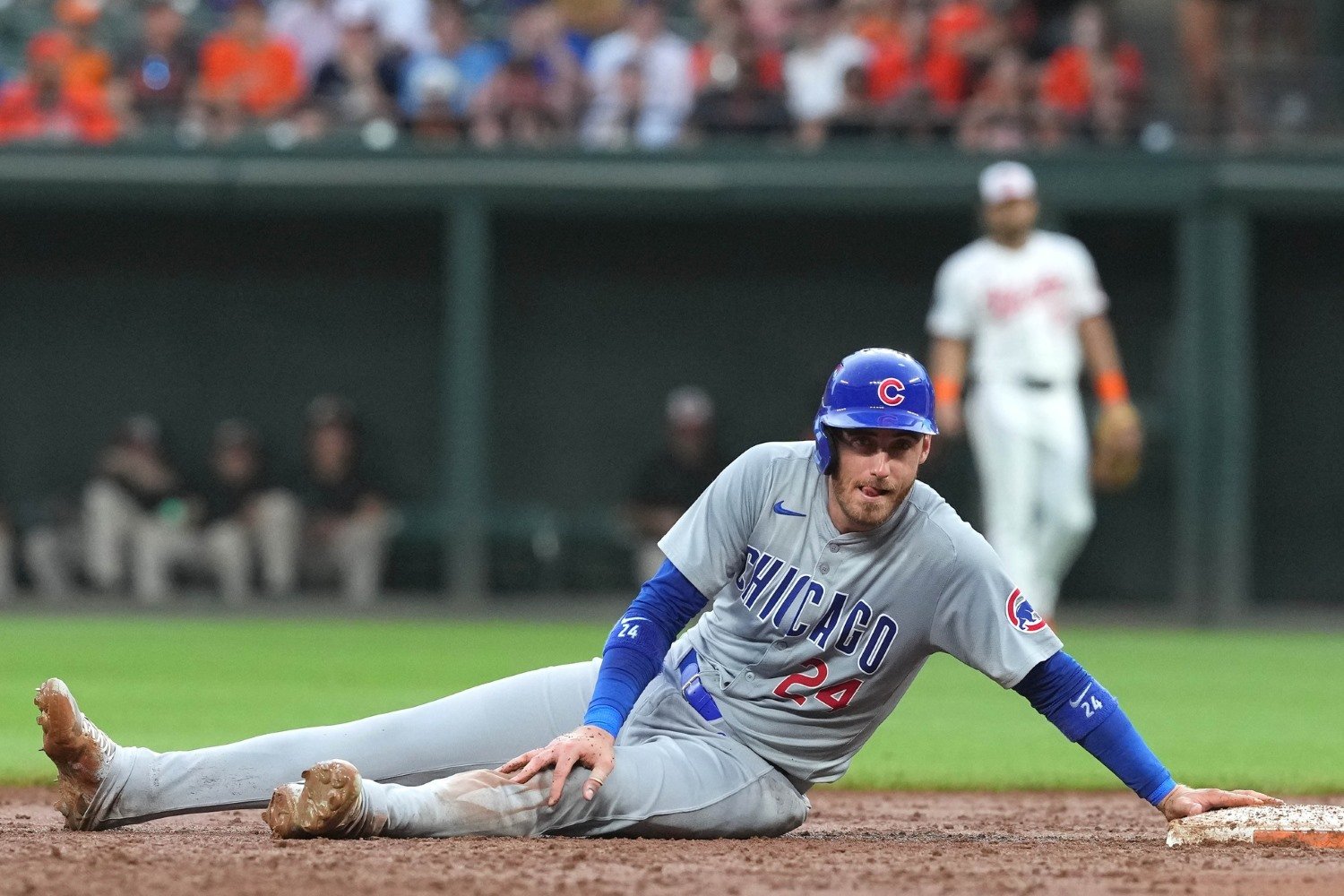 Earlier this month, I wrote that nothing should dissuade the Cubs from behaving as sellers this month, ahead of the MLB trade deadline. Even as they've heated up (with five wins in their last six games), that has remained true, but losing Cody Bellinger until what figures to be early August seals the deal. The only thing material impact it should have is making it impossible (rather than merely difficult and unlikely) that the team will trade Bellinger this month. It also all but ensures that Bellinger will opt into his $30-million salary for 2025. He hasn't played well enough to this point to come back from an injury like this one and put up numbers that will give him or Scott Boras any confidence about testing the market again this winter. For all intents and purposes, this injury locks Bellinger in as part of the team's medium-term lineup. That should only increase the team's urgency in trying to find a trade partner palatable to one of their two valuable corner outfielders, each of whom have no-trade clauses around which they have to work. Ian Happ and Seiya Suzuki have real trade value, and although it might be hard to move them because of those clauses, it becomes even more important now, since Bellinger should be their plan for right field going into next season. While Bellinger is gone, of course, the Cubs lineup will be diminished. He hasn't been the same star-caliber slugger he was in 2023 in his second go-around with the North Siders, but he's still been an essential cog. Without him, Christopher Morel is back in the top five of the batting order, which signifies an offense with insufficient depth. On the other hand, Bellinger's absence creates some opportunities for this team, too. Morel is slated to be the DH Thursday night, with Miles Mastrobuoni getting another start at third base. His glove makes his bat worth a little bit longer an audition, and the same goes for Pete Crow-Armstrong. The next few weeks will be a valuable audition period for Alexander Canario, allowing the team to assess whether he should be one of the players prioritized if and when Happ or Suzuki are dealt. Canario got the call to replace Bellinger on the roster. Morel can and should still occasionally start at third, so the team can get looks at Crow-Armstrong and Canario side-by-side in the outfield, with either Happ or Suzuki at DH. The team has had to patch holes and shift resources all season, so this won't be an unfamiliar feeling. It is, however, the latest uncomfortable reminder that Bellinger's durability is part of his long-term outlook. It was a pair of injuries (one to his shoulder, one to his knee) that derailed him after an MVP-caliber start to his career in Los Angeles, and injuries will have cost him at least a month of total time in each of his first two seasons with the Cubs, by the time he returns from this one. It's probably a bigger part of the reason why teams were reluctant to meet the Cubs' fairly conservative offers to him this winter than it was a part of the conversations about him, and now, it looms as a factor that mitigates any optimism about his future over what remains a player-friendly contract. If the Cubs were five games better, this injury would hurt worse. As it is, they weren't going anywhere, anyway. They still lose some value because of this development, but they also gain some chances to better understand and evaluate young players, so while Bellinger will be missed, the organization can benefit from his brief absence, in a couple of ways. Hopefully, his recovery time will be on the short end of the spectrum of possibilities, and the actual playing time lost will be minimized by the upcoming All-Star break.
 -
Well, even considering what a top-25 prospect is these days (less than it used to be!), there is NO WAY the Cubs are getting such a player for Jameson Taillon. So by your criteria, you can basically dismiss this idea and just hope it doesn't happen. I don't think it WILL happen, either. It's the kind of move I would only make if I were a new front office, taking over and clearing chaff, with the job security that comes with being new. It'd be the kind of thing the Mets did last year, resetting for that season and for 2024 and looking toward 2025 a year and a half ahead of time. With the same owner and execs doing the decision-making, I doubt we'll see the Cubs do the same thing. Now, if Hoyer is fired, either imminently or in the fall, Taillon immediately climbs four or five spots on my list of guys most likely to get traded. But I wouldn't hold my breath on that, anymore than on them getting a high-level prospect for him.
-
Although he started the season on the injured list, the man on whom the Cubs risked nearly $70 million for four years is having a strong second campaign with the team. As the front office ponders ways to restructure the roster, though, could he be on the move? Image courtesy of © Kamil Krzaczynski-USA TODAY Sports In his first 14 starts of the season, Jameson Taillon has thrown 81 innings and notched a 2.99 ERA. The latter figure would be the best of his big-league career, and there are some reasons to wonder how legitimate his success has been, but you can go all the way back to Jul. 1 of last year and find much the same narrative unfolding. Taillon has 177 innings pitched over that span and a 3.31 ERA, albeit with a FIP a fair bit higher than that. In the second season of a four-year deal worth $68 million, Taillon is coming as advertised--much more so than he did early last season, when the deal looked like an albatross. He's made some adjustments to his pitch mix to induce more weak contact, and it's worked beautifully. While he's not missing bats the way you want a front-of-the-rotation starter to, he's allowing hard-hit balls on a lower percentage of all balls in play than he has in any of his previous big-league seasons. Obviously, though, Taillon hasn't been able to save the Cubs' season. At 42-49, they're very likely to be sellers this month, and they need to reshape their roster in order to avoid being in the same place next year. They owe the burly righty about $8 million for the balance of this season, and $18 million for each of the next two seasons. A year ago, that contract looked like a nightmare. Now, could it be a movable one? Firstly, let's tackle the logistical hurdle to trading Taillon. He got limited no-trade protection in the deal, and can block trades to 10 teams of his choice each year. That narrows the market a bit, if Taillon is firm in his stance on certain clubs, and even if he's not, the Cubs might have to give him a concrete incentive or reward of some kind to work around that clause if they want to move him to a team on his list. No one I have yet spoken to knows who's on his list for 2024, so that's a huge variable. Next, we have to establish what an $18 million-per-year pitcher looks like in the current marketplace. Taillon only counts for $17 million against the competitive-balance tax threshold, because that's the annual average value of his deal, but last season was the cheap one. In real dollars, he'll cost $18 million in each of the next two seasons, and that's his total salary for this year, too. The Cubs signed Taillon during a lucrative offseason for free-agent starters. Taijuan Walker (to whom Taillon has been far superior, for the last calendar year) signed for $72 million over the same number of years. This past winter was much more spare, though, with several hurlers settling for less than they'd hoped to get. Blake Snell and Jordan Montgomery were thought, at least, to be in a class above that of Taillon, but they had to settle for short-term deals. So did Jack Flaherty, Marcus Stroman, and others. The best comp for the Taillon deal signed this winter might be the four-year, $80-million contract Eduardo Rodríguez signed with the Diamondbacks, which is going very poorly so far. On balance, Taillon's salary is reasonable, for a pitcher with his skills and durability. The final questions are how sustainable the success he's had this year really is, and what teams might believe in it enough to give the Cubs young talent in exchange for him. To answer those, let's consider some numbers. Taillon's strikeout rate (19.2%, entering his start Tuesday night) is well below the league average, and would be the lowest of his career over anything like a full season. He's made up for it not only with his typical, superb control (a 5% walk rate that is one of the best in baseball), but by keeping the ball in the park. He averaged 26 home runs allowed per season over the last three, but is on pace to allow just 20 this year. Home-run prevention is tricky, though. It's not as easy a skill to sustain as strikeouts or walks, and giving up fly balls is still a dangerous way to live. He seems to have ironed out some of the issues created when he tried to change his arsenal upon joining the Cubs last spring. It's probably very safe to estimate his ERA for the rest of this season (and next year, too) around 4.00, which is very respectable. He's not at his true talent level right now, but there might be teams inclined to buy into him a bit based on the results, and the floor for him feels much higher than it did a year ago. Two teams stand out as potential suitors for Taillon's services, should the Cubs decide to pursue that opportunity. The Mets are a surprise contender (or semi-contender, but in New York, there's greater pressure to make the most of such moments), but their rotation started out thin and has gotten even thinner as they've battled injury issues. They could use an infusion of veteran stability, and Taillon's game would fit nicely in Citi Field, where long fly balls always seem to run out of steam shy of the wall. The Cubs could kick in some money to alleviate the painful tax burden of adding more salary for the $350-million 2024 Mets, but New York would then be able to bear the rest of the load, freeing up all the money owed to Taillon in 2025 and beyond. Because of the money and the team's position to leverage adding him, it's unlikely New York would give up all that much for Taillon. The primary benefit of trading him there would be the increased flexibility for the coming offseasons, with a vacated rotation spot for young hurlers and a mid-level prospect or two as nice kickers. The other interesting destination, though, would be a very different one: Cleveland. Taillon could help the AL Central-leading Guardians very much, as they've dealt with a barrage of injuries and will feel pressure from the Twins (and perhaps even the Royals) the rest of the way. That team isn't taking on anywhere close to $40 million in obligations to him, though. The Cubs would need to pay down half of the deal or more to facilitate a trade. In exchange, though, they'd get a better prospect return from Cleveland. Eating some money would force the Cubs to (at least partially) replace Taillon and deal with the specter of paying some luxury taxes themselves in the next year or two, but it would give them the kind of young talent that actually makes a difference. The Guardians' level of need and opportunity should make them reasonably motivated buyers, so while Taillon won't net elite talent anywhere, he could get the team something interesting in a trade to a team with whom he'd be virtually guaranteed to start playoff games. The likelihood of a Taillon trade this month is relatively low, but it's certainly not zero. For the first time in recent memory, the Cubs seem to have enough homegrown pitching depth to consider trading a productive veteran, and given their medium-term needs, that might be the wisest course. It's all about managing the situation, managing expectations, and pouncing if the right opportunity arises. View full article
-
What's Jameson Taillon's Trade Value, and Who Might Want Him?
Matthew Trueblood posted an article in Cubs
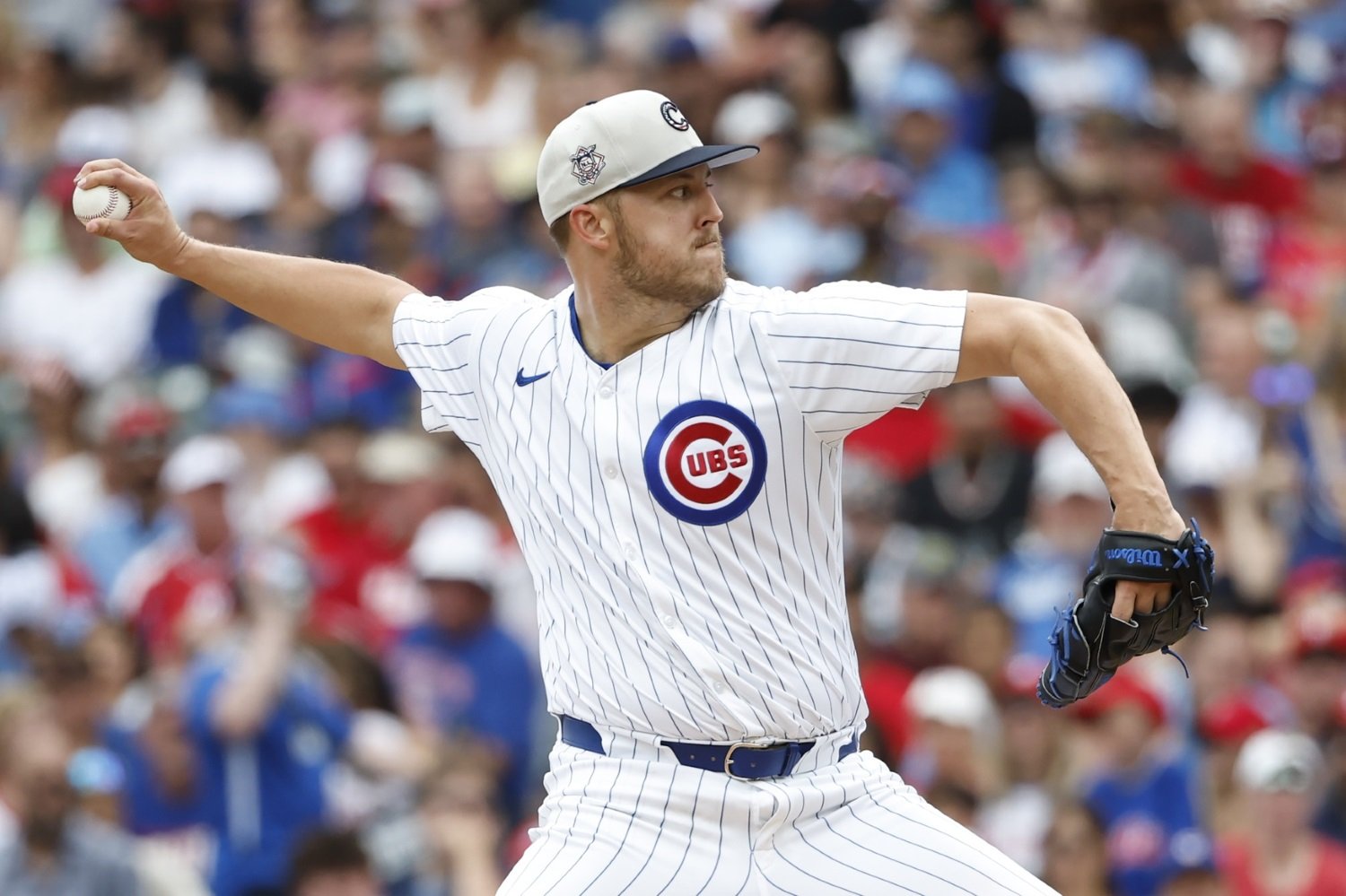 In his first 14 starts of the season, Jameson Taillon has thrown 81 innings and notched a 2.99 ERA. The latter figure would be the best of his big-league career, and there are some reasons to wonder how legitimate his success has been, but you can go all the way back to Jul. 1 of last year and find much the same narrative unfolding. Taillon has 177 innings pitched over that span and a 3.31 ERA, albeit with a FIP a fair bit higher than that. In the second season of a four-year deal worth $68 million, Taillon is coming as advertised--much more so than he did early last season, when the deal looked like an albatross. He's made some adjustments to his pitch mix to induce more weak contact, and it's worked beautifully. While he's not missing bats the way you want a front-of-the-rotation starter to, he's allowing hard-hit balls on a lower percentage of all balls in play than he has in any of his previous big-league seasons. Obviously, though, Taillon hasn't been able to save the Cubs' season. At 42-49, they're very likely to be sellers this month, and they need to reshape their roster in order to avoid being in the same place next year. They owe the burly righty about $8 million for the balance of this season, and $18 million for each of the next two seasons. A year ago, that contract looked like a nightmare. Now, could it be a movable one? Firstly, let's tackle the logistical hurdle to trading Taillon. He got limited no-trade protection in the deal, and can block trades to 10 teams of his choice each year. That narrows the market a bit, if Taillon is firm in his stance on certain clubs, and even if he's not, the Cubs might have to give him a concrete incentive or reward of some kind to work around that clause if they want to move him to a team on his list. No one I have yet spoken to knows who's on his list for 2024, so that's a huge variable. Next, we have to establish what an $18 million-per-year pitcher looks like in the current marketplace. Taillon only counts for $17 million against the competitive-balance tax threshold, because that's the annual average value of his deal, but last season was the cheap one. In real dollars, he'll cost $18 million in each of the next two seasons, and that's his total salary for this year, too. The Cubs signed Taillon during a lucrative offseason for free-agent starters. Taijuan Walker (to whom Taillon has been far superior, for the last calendar year) signed for $72 million over the same number of years. This past winter was much more spare, though, with several hurlers settling for less than they'd hoped to get. Blake Snell and Jordan Montgomery were thought, at least, to be in a class above that of Taillon, but they had to settle for short-term deals. So did Jack Flaherty, Marcus Stroman, and others. The best comp for the Taillon deal signed this winter might be the four-year, $80-million contract Eduardo Rodríguez signed with the Diamondbacks, which is going very poorly so far. On balance, Taillon's salary is reasonable, for a pitcher with his skills and durability. The final questions are how sustainable the success he's had this year really is, and what teams might believe in it enough to give the Cubs young talent in exchange for him. To answer those, let's consider some numbers. Taillon's strikeout rate (19.2%, entering his start Tuesday night) is well below the league average, and would be the lowest of his career over anything like a full season. He's made up for it not only with his typical, superb control (a 5% walk rate that is one of the best in baseball), but by keeping the ball in the park. He averaged 26 home runs allowed per season over the last three, but is on pace to allow just 20 this year. Home-run prevention is tricky, though. It's not as easy a skill to sustain as strikeouts or walks, and giving up fly balls is still a dangerous way to live. He seems to have ironed out some of the issues created when he tried to change his arsenal upon joining the Cubs last spring. It's probably very safe to estimate his ERA for the rest of this season (and next year, too) around 4.00, which is very respectable. He's not at his true talent level right now, but there might be teams inclined to buy into him a bit based on the results, and the floor for him feels much higher than it did a year ago. Two teams stand out as potential suitors for Taillon's services, should the Cubs decide to pursue that opportunity. The Mets are a surprise contender (or semi-contender, but in New York, there's greater pressure to make the most of such moments), but their rotation started out thin and has gotten even thinner as they've battled injury issues. They could use an infusion of veteran stability, and Taillon's game would fit nicely in Citi Field, where long fly balls always seem to run out of steam shy of the wall. The Cubs could kick in some money to alleviate the painful tax burden of adding more salary for the $350-million 2024 Mets, but New York would then be able to bear the rest of the load, freeing up all the money owed to Taillon in 2025 and beyond. Because of the money and the team's position to leverage adding him, it's unlikely New York would give up all that much for Taillon. The primary benefit of trading him there would be the increased flexibility for the coming offseasons, with a vacated rotation spot for young hurlers and a mid-level prospect or two as nice kickers. The other interesting destination, though, would be a very different one: Cleveland. Taillon could help the AL Central-leading Guardians very much, as they've dealt with a barrage of injuries and will feel pressure from the Twins (and perhaps even the Royals) the rest of the way. That team isn't taking on anywhere close to $40 million in obligations to him, though. The Cubs would need to pay down half of the deal or more to facilitate a trade. In exchange, though, they'd get a better prospect return from Cleveland. Eating some money would force the Cubs to (at least partially) replace Taillon and deal with the specter of paying some luxury taxes themselves in the next year or two, but it would give them the kind of young talent that actually makes a difference. The Guardians' level of need and opportunity should make them reasonably motivated buyers, so while Taillon won't net elite talent anywhere, he could get the team something interesting in a trade to a team with whom he'd be virtually guaranteed to start playoff games. The likelihood of a Taillon trade this month is relatively low, but it's certainly not zero. For the first time in recent memory, the Cubs seem to have enough homegrown pitching depth to consider trading a productive veteran, and given their medium-term needs, that might be the wisest course. It's all about managing the situation, managing expectations, and pouncing if the right opportunity arises.