


Matthew Trueblood
-
Posts
2,481 -
Joined
-
Last visited
-
Days Won
2
Content Type
Profiles
Joomla Posts 1
Chicago Cubs Videos
Chicago Cubs Free Agent & Trade Rumors, Notes, & Tidbits
2026 Chicago Cubs Top Prospects Ranking
News
2023 Chicago Cubs Draft Picks
Guides & Resources
2024 Chicago Cubs Draft Picks
The Chicago Cubs Players Project
2025 Chicago Cubs Draft Pick Tracker
2026 Chicago Cubs Draft Tracker: Picks & Bonuses
Blogs
Events
Forums
Store
Gallery
Everything posted by Matthew Trueblood
-
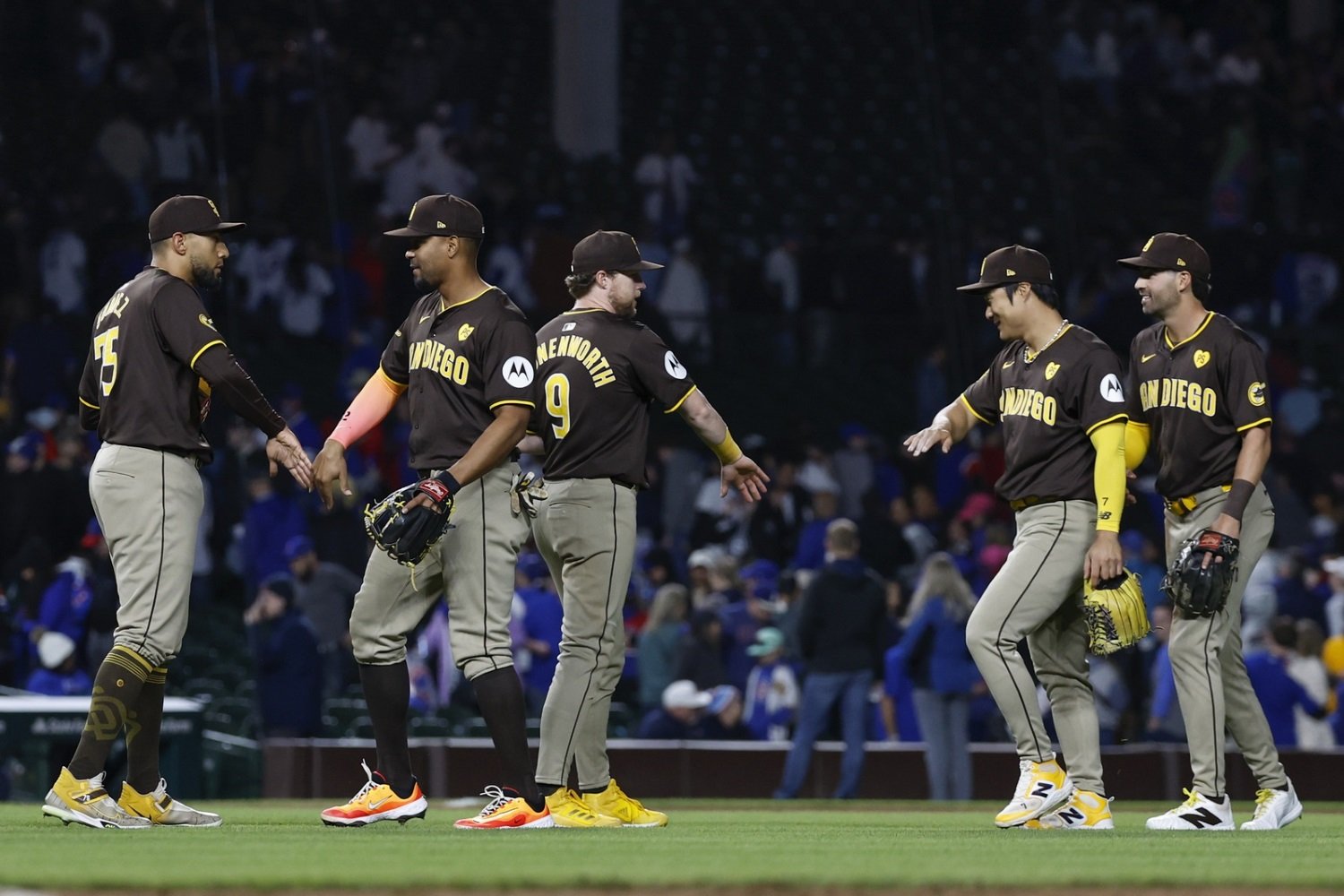 Some fans have sharply criticized Craig Counsell's deployment of his new team's relief corps this season, even as they have acknowledged that the talent with which he's been asked to work might be insufficient, and even with the understanding that the ultimate responsibility for massive failures to perform falls on the shoulders of those who have thus failed--in other words, on Adbert Alzolay, Jose Cuas, and the other hurlers who have done the actual work of letting games get away. There's been a thread of conversation drawn out from the premise that Counsell, who built and burnished his reputation in Milwaukee partially on bullpen management, was supposed to prevent these kinds of things from happening. By and large, I find that line of thinking misguided, though it's understandable. Counsell does bear responsibility for the utilization of the pen, but a front office that overestimated its own pitching depth and a series of injuries that would have been hard to forecast (and which feel a bit like karmic recompense for the team's hubris) have conspired to put him in a tough position. The line already bordering on cliché from such heavy use is true: It's impressive that the Cubs are 21-15, even if they've gotten there in sometimes frustrating fashion. Let's turn our attention specifically to Monday night, though, because I think there's some interesting stuff to say about that contest. It was Justin Steele's first start since Opening Day, and he looked great, but Counsell lifted him with two outs in the fifth inning, after the star southpaw had thrown 68 pitches and faced 18 batters. Richard Lovelady came on in Steele's stead, to face left-hitting Luis Arraez, but he also stayed in to start the San Diego sixth, in a scoreless tie. In my opinion, three important things are true about the series of decisions Counsell made in this game, and about the way Cubs fans have interacted with them (and will, until Tuesday night's game begets a new narrative). Here they are. 1. It was the right night to let a game get away. Every now and then, it is a manager's job to demand that their team earns a win themselves. Not every tie game in the sixth can compel a skipper to flip open the case over the activation switch and fire up their 'A' bullpen. Trying to will burn out the guys whom a team needs to trust to hold leads late in a season. Sometimes, even when a returning co-ace gives the evening a sense of extra import and potential momentum, you have to shrug and let Richard Lovelady and Daniel Palencia try to hold things together. If the Cubs had a 2-0 lead going into the sixth, I might sing a different tune, but at 0-0, it was proper to ask Lovelady to wade even through a right-leaning, dangerous heart of the Padres order. This is my extremely rational side talking. Analytically and objectively, this game called for a bit of a reset, especially because the offense did nothing for the first half of the game against Yu Darvish. I'm not sure how removing Lovelady and bringing on Palencia without forcing the former to wear it a bit and soak up another few outs jived with that rationale, but it did seem like Counsell was willing to let the game go if the offense couldn't assert itself and prove the contest winnable. They didn't, so he was doing his duty by protecting both Steele and his top bullpen arms. 2. Counsell might not fully understand how hard the universe pushes against the Cubs, sometimes. Alright, time to lean all the way the other direction, and embrace some irrationality. I admit that this sounds like unhinged paranoia, but I mean it in a more serious and less panicked way than others might, especially when the stakes are higher than they are right now. Here's my take: be it the culture of the team, the physical properties of Wrigley Field, the higher average attendance and fan investment (including palpable fan anxiety), or some metaphysical aspect I don't quite believe in but can't rule out, the Cubs work a little bit uphill late in games, compared to other teams. I've held this opinion for two decades, first in a far more meatball, teenaged form, but even as I've become a nationally-focused baseball writer and spent time closely covering other teams in addition to the Cubs, I feel this. There's a tightness to games that shouldn't be tight, when the Cubs are involved. There's a sense of near-despair that sets in (not in me, but, seemingly, in the team or the gathered fans) when it shouldn't--when games are tied, or even when the Cubs have the lead but issue a seemingly innocuous one-out walk in the seventh. Some people felt this, and then believed it entirely dissolved back into whatever evil crevice first disgorged it once the team broke its many curses and won the 2016 World Series. I've never felt it changed much at all. Sometimes, they do win the wrestling match, but this team seems to have to wrestle with the baseball gods in a way others don't, whenever being genuinely good (especially in a lasting way) seems within reach. A manager coming into the team from outside always has a learning curve where this is concerned. Deep down, baseball men don't believe in forces beyond their ken, and they think they can control any situation. In Milwaukee, Counsell believed that, and he was right. In Tampa Bay, Joe Maddon believed it, and he was right. In San Francisco, Dusty Baker believed it, and he was right. At several stops, Lou Piniella believed it, and he was right just about every time. Leo Durocher, Dallas Green, and Jim Frey believed they could control the previously chaotic, too. They were all accomplished and respected baseball men. They all had to be roughly disabused of that belief in their control over things, once they took over the Cubs. I happened to be in a hyper-rational period of my life when Maddon took over the Cubs, and I heavily criticized a lot of the decisions he made as he took his lumps from whatever unique form of gravity pulls the Cubs downward. Ultimately, though, I give him a lot of credit. To a greater extent than most of his predecessors (and to a much greater extent than his successor, prior to Counsell), Maddon proved nimble enough to adjust and come up with a new plan when he encountered The Wrigley Whatever. I don't think Counsell yet understands what he's up against. I don't think the Cubs' demons are exorcised (although I also don't actually believe they're demons; I'm using a mystical shorthand for an intangible but non-magical Whatever); I don't think the 2016 championship solved anything. Counsell's remit, like Jed Hoyer's, should be to finish the work of the previous regime and make the Cubs a normal big-market, cornerstone franchise in this sport, capable of the decade- or decades-long stretches of sustained success enjoyed by every other such franchise in existence (the Dodgers, Giants, Yankees, Red Sox, and Cardinals), but never by the Cubs. To do so, eventually, he has to grapple with The Whatever. I suspect that will have to mean leaving starters who are pitching well in games a bit longer than he did in Milwaukee, where relief pitchers just don't suffer the same cosmic deflection when they try to throw a 2-2 slider. I suspect it will have to mean occasionally bearing hideous blowouts and having to designate usable hurlers for assignment, to better shield some of the guys with a bit more upside from overwork. I tend to think it also means letting fewer close games get lopsided out of a concern for the following week; Maddon got good at snatching up any win that wandered across his path. That was how he briefly became the cat and made The Whatever a mouse. I also suspect it will take another few months before Counsell even really groks the need for those kinds of changes. I think he's still thinking rationally right now. Generally, I applaud that. Generalities just don't stick very well at the corner of Clark and Addison. 3. Most importantly: this was the kind of boring loss everyone has been begging for. The only thing interfering with the enjoyment Cubs fans should be deriving from a strong start to a strange season has been the unpleasantly plunging shape of several of their losses. Openly, in some cases, fans have been asking for a boilerplate, 6-2 loss that would leave everyone feeling flat but not live inside anyone's head for more than one night. Despite a fun little fake rally and some frustrating missed opportunities to finish the comeback, this was that kind of game. You're not supposed to win, or even be in, many games in which you are held scoreless over the first five innings. The late runs (and even the stranded runners) really don't matter much. This was a standard-issue loss, and was probably likely to be a loss from about the fourth inning onward. The Cubs can use it to reset a bit, and fans should do the same thingl. I've already spent too many words on a couple of squishy notions and a couple of questionable (but probably correct) managerial choices. Again, this game, on its own, doesn't demand to be remembered. It just spurred me to trot out a few thoughts that have swirled in my head over the course of the first 20 percent of this season. As the Cubs get healthy and their schedule opens up a bit, they should be able to lean into an improving talent base and overcome The Whatever a bit more easily.
 -
The Chicago Cubs' offense remains inconsistent, and its failure to fire at all over the first five innings of Monday's loss to the San Diego Padres was a key factor in that defeat. Another, though, was the latest in a chain of bullpen meltdowns that has to stop. What's the secret? Image courtesy of © Kamil Krzaczynski-USA TODAY Sports Some fans have sharply criticized Craig Counsell's deployment of his new team's relief corps this season, even as they have acknowledged that the talent with which he's been asked to work might be insufficient, and even with the understanding that the ultimate responsibility for massive failures to perform falls on the shoulders of those who have thus failed--in other words, on Adbert Alzolay, Jose Cuas, and the other hurlers who have done the actual work of letting games get away. There's been a thread of conversation drawn out from the premise that Counsell, who built and burnished his reputation in Milwaukee partially on bullpen management, was supposed to prevent these kinds of things from happening. By and large, I find that line of thinking misguided, though it's understandable. Counsell does bear responsibility for the utilization of the pen, but a front office that overestimated its own pitching depth and a series of injuries that would have been hard to forecast (and which feel a bit like karmic recompense for the team's hubris) have conspired to put him in a tough position. The line already bordering on cliché from such heavy use is true: It's impressive that the Cubs are 21-15, even if they've gotten there in sometimes frustrating fashion. Let's turn our attention specifically to Monday night, though, because I think there's some interesting stuff to say about that contest. It was Justin Steele's first start since Opening Day, and he looked great, but Counsell lifted him with two outs in the fifth inning, after the star southpaw had thrown 68 pitches and faced 18 batters. Richard Lovelady came on in Steele's stead, to face left-hitting Luis Arraez, but he also stayed in to start the San Diego sixth, in a scoreless tie. In my opinion, three important things are true about the series of decisions Counsell made in this game, and about the way Cubs fans have interacted with them (and will, until Tuesday night's game begets a new narrative). Here they are. 1. It was the right night to let a game get away. Every now and then, it is a manager's job to demand that their team earns a win themselves. Not every tie game in the sixth can compel a skipper to flip open the case over the activation switch and fire up their 'A' bullpen. Trying to will burn out the guys whom a team needs to trust to hold leads late in a season. Sometimes, even when a returning co-ace gives the evening a sense of extra import and potential momentum, you have to shrug and let Richard Lovelady and Daniel Palencia try to hold things together. If the Cubs had a 2-0 lead going into the sixth, I might sing a different tune, but at 0-0, it was proper to ask Lovelady to wade even through a right-leaning, dangerous heart of the Padres order. This is my extremely rational side talking. Analytically and objectively, this game called for a bit of a reset, especially because the offense did nothing for the first half of the game against Yu Darvish. I'm not sure how removing Lovelady and bringing on Palencia without forcing the former to wear it a bit and soak up another few outs jived with that rationale, but it did seem like Counsell was willing to let the game go if the offense couldn't assert itself and prove the contest winnable. They didn't, so he was doing his duty by protecting both Steele and his top bullpen arms. 2. Counsell might not fully understand how hard the universe pushes against the Cubs, sometimes. Alright, time to lean all the way the other direction, and embrace some irrationality. I admit that this sounds like unhinged paranoia, but I mean it in a more serious and less panicked way than others might, especially when the stakes are higher than they are right now. Here's my take: be it the culture of the team, the physical properties of Wrigley Field, the higher average attendance and fan investment (including palpable fan anxiety), or some metaphysical aspect I don't quite believe in but can't rule out, the Cubs work a little bit uphill late in games, compared to other teams. I've held this opinion for two decades, first in a far more meatball, teenaged form, but even as I've become a nationally-focused baseball writer and spent time closely covering other teams in addition to the Cubs, I feel this. There's a tightness to games that shouldn't be tight, when the Cubs are involved. There's a sense of near-despair that sets in (not in me, but, seemingly, in the team or the gathered fans) when it shouldn't--when games are tied, or even when the Cubs have the lead but issue a seemingly innocuous one-out walk in the seventh. Some people felt this, and then believed it entirely dissolved back into whatever evil crevice first disgorged it once the team broke its many curses and won the 2016 World Series. I've never felt it changed much at all. Sometimes, they do win the wrestling match, but this team seems to have to wrestle with the baseball gods in a way others don't, whenever being genuinely good (especially in a lasting way) seems within reach. A manager coming into the team from outside always has a learning curve where this is concerned. Deep down, baseball men don't believe in forces beyond their ken, and they think they can control any situation. In Milwaukee, Counsell believed that, and he was right. In Tampa Bay, Joe Maddon believed it, and he was right. In San Francisco, Dusty Baker believed it, and he was right. At several stops, Lou Piniella believed it, and he was right just about every time. Leo Durocher, Dallas Green, and Jim Frey believed they could control the previously chaotic, too. They were all accomplished and respected baseball men. They all had to be roughly disabused of that belief in their control over things, once they took over the Cubs. I happened to be in a hyper-rational period of my life when Maddon took over the Cubs, and I heavily criticized a lot of the decisions he made as he took his lumps from whatever unique form of gravity pulls the Cubs downward. Ultimately, though, I give him a lot of credit. To a greater extent than most of his predecessors (and to a much greater extent than his successor, prior to Counsell), Maddon proved nimble enough to adjust and come up with a new plan when he encountered The Wrigley Whatever. I don't think Counsell yet understands what he's up against. I don't think the Cubs' demons are exorcised (although I also don't actually believe they're demons; I'm using a mystical shorthand for an intangible but non-magical Whatever); I don't think the 2016 championship solved anything. Counsell's remit, like Jed Hoyer's, should be to finish the work of the previous regime and make the Cubs a normal big-market, cornerstone franchise in this sport, capable of the decade- or decades-long stretches of sustained success enjoyed by every other such franchise in existence (the Dodgers, Giants, Yankees, Red Sox, and Cardinals), but never by the Cubs. To do so, eventually, he has to grapple with The Whatever. I suspect that will have to mean leaving starters who are pitching well in games a bit longer than he did in Milwaukee, where relief pitchers just don't suffer the same cosmic deflection when they try to throw a 2-2 slider. I suspect it will have to mean occasionally bearing hideous blowouts and having to designate usable hurlers for assignment, to better shield some of the guys with a bit more upside from overwork. I tend to think it also means letting fewer close games get lopsided out of a concern for the following week; Maddon got good at snatching up any win that wandered across his path. That was how he briefly became the cat and made The Whatever a mouse. I also suspect it will take another few months before Counsell even really groks the need for those kinds of changes. I think he's still thinking rationally right now. Generally, I applaud that. Generalities just don't stick very well at the corner of Clark and Addison. 3. Most importantly: this was the kind of boring loss everyone has been begging for. The only thing interfering with the enjoyment Cubs fans should be deriving from a strong start to a strange season has been the unpleasantly plunging shape of several of their losses. Openly, in some cases, fans have been asking for a boilerplate, 6-2 loss that would leave everyone feeling flat but not live inside anyone's head for more than one night. Despite a fun little fake rally and some frustrating missed opportunities to finish the comeback, this was that kind of game. You're not supposed to win, or even be in, many games in which you are held scoreless over the first five innings. The late runs (and even the stranded runners) really don't matter much. This was a standard-issue loss, and was probably likely to be a loss from about the fourth inning onward. The Cubs can use it to reset a bit, and fans should do the same thingl. I've already spent too many words on a couple of squishy notions and a couple of questionable (but probably correct) managerial choices. Again, this game, on its own, doesn't demand to be remembered. It just spurred me to trot out a few thoughts that have swirled in my head over the course of the first 20 percent of this season. As the Cubs get healthy and their schedule opens up a bit, they should be able to lean into an improving talent base and overcome The Whatever a bit more easily. View full article
-
How Much of a Two-Pitch Pitcher Is Justin Steele, Exactly?
Matthew Trueblood posted an article in Cubs
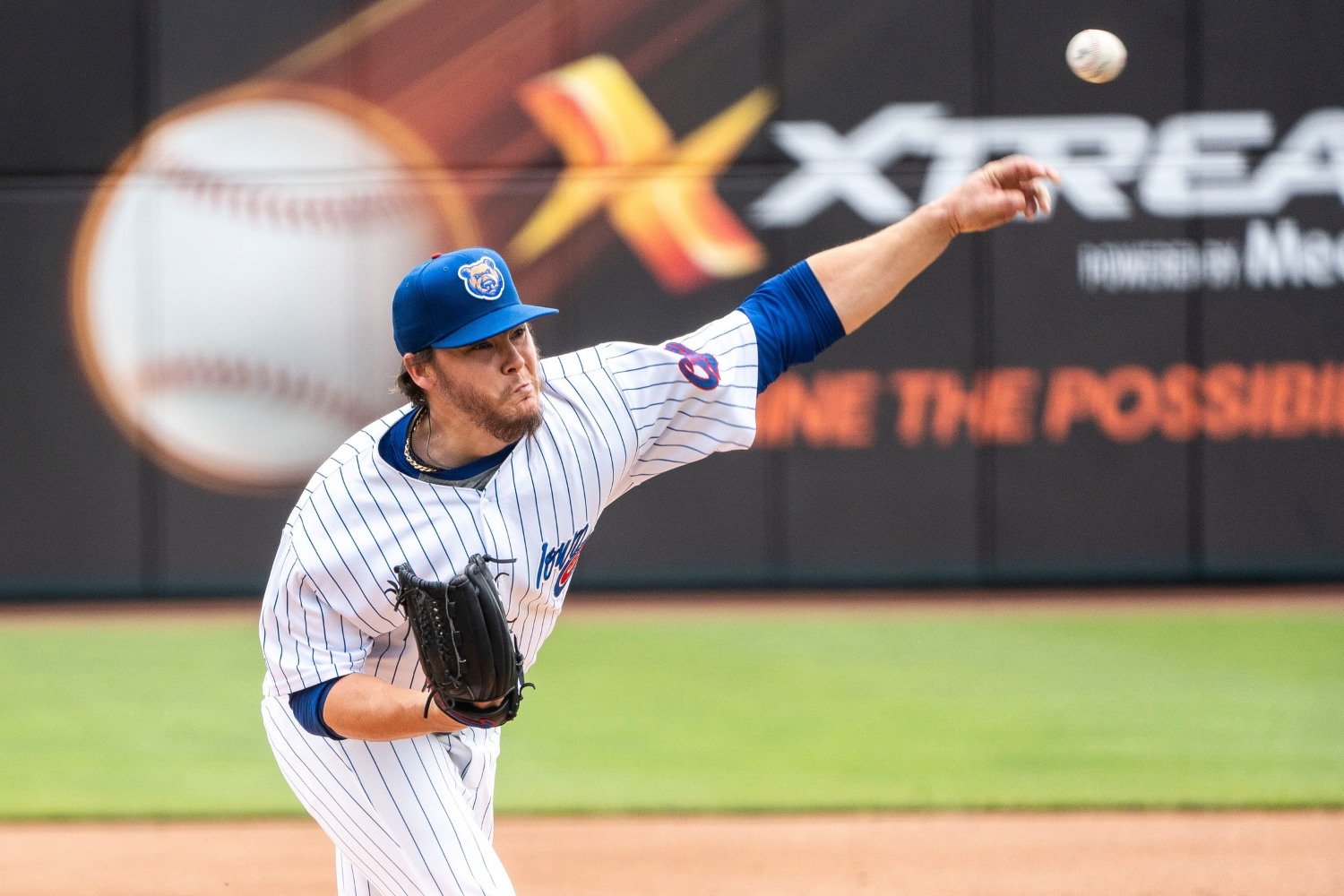 By and large, Justin Steele is a two-pitch pitcher. He has a fastball (a cutter, really, but some sources label it as a four-seamer), and he has a slider, and those two offerings account for nearly 97 percent of all the pitches he throws. The tendency, when analyzing pitchers who lean so heavily on a set of offerings, is to dismiss the remainders as inconsequential. In some senses, it's a reasonable stance. In his rehab outing at Triple-A Iowa Wednesday, though, Steele threw three sinkers and five changeups. That would have qualified as heavy usage of those pitches in any start for him last year. Maybe we should pause for a moment and take a harder look at how he uses those two pitches, to figure out when, why, and whether they matter more than we think. We're still setting aside Steele's curveball, here. He only threw that pitch 18 times last year, and it's not a good one. Nor does it have any clear utility. As it turns out, though, the same can't be said of the sinker and change. Though those appear rarely, when they do, it's clear what Steele is trying to do with them--and they work pretty well, all things considered. In total, Steele threw 48 sinkers and 28 changeups last season. Of the changeups, he threw three to each of the following: Nolan Arenado, Paul Goldschmidt, and Bryan Reynolds. Of the sinkers, he threw two to Bryce Harper, three to Luis Arraez, four to Christian Yelich, and five to Corbin Carroll. Those are cherrypicked names, but not the only examples. Steele disproportionately throws these two pitches to good hitters. All three of the sinkers Arraez saw were in Steele's start against the Marlins last May 5, the second straight turn in which he faced that team. Later in the season, when he also faced the Diamondbacks on a second consecutive turn, he threw a total of seven sinkers and changeups. We can start to articulate a theory of usage for these ancillary offerings, based on the above. Steele almost never shows an average or worse hitter either of these pitches; he feels he can beat them with the cutter and the slider. Occasionally, if he thinks they've picked up on something or they've just had a lot of looks at him in a short period, he'll slip those pitches in against such a hitter, but he mostly reserves them for very good hitters whom he needs to catch by surprise, or whose bat paths spell danger for his main offerings. Twenty-four of the 28 changeups he threw came the second, third, or fourth time through the lineup. The sinker usage was more balanced in this regard. Unlike the changeup, which is all about just forcing the hitter to see and adjust to something new, the sinker is also about getting inside, where Steele is more comfortable pitching. As you'd expect of offerings that are designed to catch hitters by surprise (but in which Steele doesn't actually have very much confidence), he uses them mostly early in counts, although late in games. Over two-thirds of the sinkers and changes he threw were in 0-0, 0-1, or 1-1 counts. Steele was rarely trying to put anyone away with the sinker or the change. What he wanted was either weak, early contact or a stolen strike, plus the small but nonzero value of putting another pitch in the hitter's mind. He doesn't throw these enough to have hitters thinking about them in most situations, and they aren't good enough offerings to dominate in a vacuum, but they can create some situation-specific uncertainty. Given these parameters--he mostly threw the offerings against good hitters, the second and third time through the order or when they'd seen him less than a week before, in neutral counts--the results against them are pretty respectable. Batters hit .294/.333/.353 against his changeup and sinker, when plate appearances ended on them. Overall, he got 24 strikes that weren't balls in play, threw 37 balls, and allowed 15 batted balls. The average launch angle on those 15 batted balls was -7 degrees, and only five of the 15 were hit at least 95 miles per hour. In context, that counts as success. I think it's fair to say that, while Steele still relies on two pitches, there's more to his repertoire than that. In tough situations, when the circumstances make it unlikely that he can continue dominating with the cutter and the slider, he does turn to those marginal extras, and it works well enough to get some key outs. It might be more important than we realized to have the odd trick in one's back pocket, for such moments, even if the pitches aren't good enough to be bigger parts of a hurler's mix. As Steele returns to the Cubs rotation, keep an eye out for his third and fourth pitches as contests unfold.
 -
The ace of the 2023 Chicago Cubs makes just his second start of 2024 (and, hopefully, his first full one) Monday night. Will we see him use his full arsenal? And what, exactly, does answering that question entail? Image courtesy of © Lily Smith/The Register / USA TODAY NETWORK By and large, Justin Steele is a two-pitch pitcher. He has a fastball (a cutter, really, but some sources label it as a four-seamer), and he has a slider, and those two offerings account for nearly 97 percent of all the pitches he throws. The tendency, when analyzing pitchers who lean so heavily on a set of offerings, is to dismiss the remainders as inconsequential. In some senses, it's a reasonable stance. In his rehab outing at Triple-A Iowa Wednesday, though, Steele threw three sinkers and five changeups. That would have qualified as heavy usage of those pitches in any start for him last year. Maybe we should pause for a moment and take a harder look at how he uses those two pitches, to figure out when, why, and whether they matter more than we think. We're still setting aside Steele's curveball, here. He only threw that pitch 18 times last year, and it's not a good one. Nor does it have any clear utility. As it turns out, though, the same can't be said of the sinker and change. Though those appear rarely, when they do, it's clear what Steele is trying to do with them--and they work pretty well, all things considered. In total, Steele threw 48 sinkers and 28 changeups last season. Of the changeups, he threw three to each of the following: Nolan Arenado, Paul Goldschmidt, and Bryan Reynolds. Of the sinkers, he threw two to Bryce Harper, three to Luis Arraez, four to Christian Yelich, and five to Corbin Carroll. Those are cherrypicked names, but not the only examples. Steele disproportionately throws these two pitches to good hitters. All three of the sinkers Arraez saw were in Steele's start against the Marlins last May 5, the second straight turn in which he faced that team. Later in the season, when he also faced the Diamondbacks on a second consecutive turn, he threw a total of seven sinkers and changeups. We can start to articulate a theory of usage for these ancillary offerings, based on the above. Steele almost never shows an average or worse hitter either of these pitches; he feels he can beat them with the cutter and the slider. Occasionally, if he thinks they've picked up on something or they've just had a lot of looks at him in a short period, he'll slip those pitches in against such a hitter, but he mostly reserves them for very good hitters whom he needs to catch by surprise, or whose bat paths spell danger for his main offerings. Twenty-four of the 28 changeups he threw came the second, third, or fourth time through the lineup. The sinker usage was more balanced in this regard. Unlike the changeup, which is all about just forcing the hitter to see and adjust to something new, the sinker is also about getting inside, where Steele is more comfortable pitching. As you'd expect of offerings that are designed to catch hitters by surprise (but in which Steele doesn't actually have very much confidence), he uses them mostly early in counts, although late in games. Over two-thirds of the sinkers and changes he threw were in 0-0, 0-1, or 1-1 counts. Steele was rarely trying to put anyone away with the sinker or the change. What he wanted was either weak, early contact or a stolen strike, plus the small but nonzero value of putting another pitch in the hitter's mind. He doesn't throw these enough to have hitters thinking about them in most situations, and they aren't good enough offerings to dominate in a vacuum, but they can create some situation-specific uncertainty. Given these parameters--he mostly threw the offerings against good hitters, the second and third time through the order or when they'd seen him less than a week before, in neutral counts--the results against them are pretty respectable. Batters hit .294/.333/.353 against his changeup and sinker, when plate appearances ended on them. Overall, he got 24 strikes that weren't balls in play, threw 37 balls, and allowed 15 batted balls. The average launch angle on those 15 batted balls was -7 degrees, and only five of the 15 were hit at least 95 miles per hour. In context, that counts as success. I think it's fair to say that, while Steele still relies on two pitches, there's more to his repertoire than that. In tough situations, when the circumstances make it unlikely that he can continue dominating with the cutter and the slider, he does turn to those marginal extras, and it works well enough to get some key outs. It might be more important than we realized to have the odd trick in one's back pocket, for such moments, even if the pitches aren't good enough to be bigger parts of a hurler's mix. As Steele returns to the Cubs rotation, keep an eye out for his third and fourth pitches as contests unfold. View full article
-
The top pitching prospect in the Cubs organization made his Triple-A debut Saturday, giving us a first glimpse at hard data on his pitch mix. As it turns out, it looks a lot (and maybe more than you'd have guessed) like the team's incumbent ace. Image courtesy of © MATTIE NERETIN / USA TODAY NETWORK The results were mixed in Cade Horton's first start with the Iowa Cubs. There were also some things to monitor, though not outright causes for concern. Most of all, though, there were indications of what kind of pitcher Horton is, rather than just how good he is. The similarities to Cubs ace Justin Steele are significant--more so than I would have guessed, at the very least. If you're reading this, you probably understand that Steele is far from being the prototype of the modern top-line starter. He really only throws two pitches (although, more on that coming tomorrow, right here at NSBB). He doesn't throw especially hard. His fastball doesn't have the carry that is the signature trait of many elite heaters. In fact, it's more of a cutter than a true four-seamer, despite continuing to be labeled as the latter in most circles. Here's Steele's pitch movement chart for last season, from the catcher's (or batter's) perspective. Steele's success comes from making it so hard for hitters to distinguish that cutterish fastball from his slider. A fastball that already has some of the movement characteristics of a slider interferes with the batter's efforts to pick out one offering and attack it. The absolute movement difference between his fastball and slider is smaller than for most great pitchers, which is why his strikeout rate tends to be lower than other aces', but he induces lots of weak and harmless contact, thanks to that same trait. Now, here's Horton's pitch movement chart, but from the pitcher's perspective, so that we're looking at his movement more or less the same way we were looking at Steele's. It's hard to compare this to Steele's, because of the massive difference in volume. The pitch classification algorithm also needs some time to learn his arsenal better. Because of how hard he throws his curveball, a handful of them got classified as a slider, mucking with the movement average for the pitch. Because of how much cut the fastball has, it mistook a few of his heaters for sliders, too. Still, you can see the gist, right? Horton has a four-seamer that actually cuts a bit toward his glove side, more often than not, whereas most guys' run a good five or six inches to their arm side. That pitch pairs nicely with his slider, just like Steele's does. These are radically unusual movement profiles. This chart shows the horizontal and vertical movement of four-seamers by lefties throughout the league last year. I've highlighted Steele, Shota Imanaga, and Luke Little, to demonstrate how much the team seems to like unusual fastball movement profiles. Steele is, if it's possible, even more of an outlier than this suggests. Many of the guys similarly far from the pack are relievers with weird arm angles; Steele is a high-volume starter with an essentially ordinary delivery. It's freaky to have this kind of movement from that slot, just as it's freaky for Imanaga to get so much ride on his heater from a low release point. As unusual as Steele is, though, a righty like Horton having the same profile would be even stranger. The only northpaw to whom we can reasonably compare Horton is Sonny Gray. That's an encouraging comp, but it's lonely out on that island. Other things distinguish Horton from Steele. That changeup looks like a major separator, despite its lack of vertical movement relative to the heater. Its huge horizontal movement differential should make it a pitch he can throw for weak contact against lefties, and it augurs well for his potential to develop a sinker down the road, should he need or want to. The curveball also looks like more of a weapon than Steele's. Gray, like Steele, has success with his fastball because of its unusual shape, and despite its pedestrian velocity. Somewhat surprisingly, looking at just this one game's data, Horton faces a similar constraint. He only averaged 93.7 miles per hour, even with the algorithm reading some of his more cutter-like and slower fastballs as sliders, and his fastest pitch of the game was 94.9 MPH. His scouting report (and previous readings even this year) have him sitting 94-96 and touching 98, so it could be that he was just a little bit tight or trying to mitigate the risk of overthrowing in his Triple-A debut. It could also be that, as he stretches out toward what would be a traditional big-league starter's workload, he's giving up some of his hottest heat (and the carry that came with it) for more of that cutting action. Either can work, and he can still be an elite starter either way, but the risks attached to each possibility and the shape of his eventual performance could vary widely, depending on which thing is happening. There's only one truly negative indicator here, and it's more something to watch than something over which to wring our hands at this early juncture. Horton has some of the very worst release extension you'll see, at an average of 5.8 feet. In other words, he covers just 5.8 of the 60.5 feet between the rubber and home plate. The league average is right about where Gray is, at 6.5 feet. Steele averages 6.4. Since the start of last season, 179 pitchers have thrown at least 400 four-seam fastballs. Horton's extension on his would rank 170th in that group. Effectively, that little extension takes a tick off the fastball, which is why most of the guys in that range (Kyle Hendricks, Lucas Sims, Luke Weaver, José Urquidy, Alex Faedo, and more) have fastballs that play down, relative to their raw velocity. Horton's delivery might not yet be a finished product. For that matter, his pitch mix probably isn't, either. He's close to big-league readiness, but not quite there. Over the next few starts, the movement profile of his fastball, the confidence he shows in his curveball and changeup, and the three-dimensional readings on his release point will be important things to watch. We're getting close to seeing him in the majors, and when we do, it might look an awful lot like the mirror image of Steele. By then, though, he needs to have command as good as Steele's, or have made an adjustment or two that make him materially more complete. View full article
-
Cade Horton Might Very Well Be a Right-Handed Justin Steele
Matthew Trueblood posted an article in Cubs
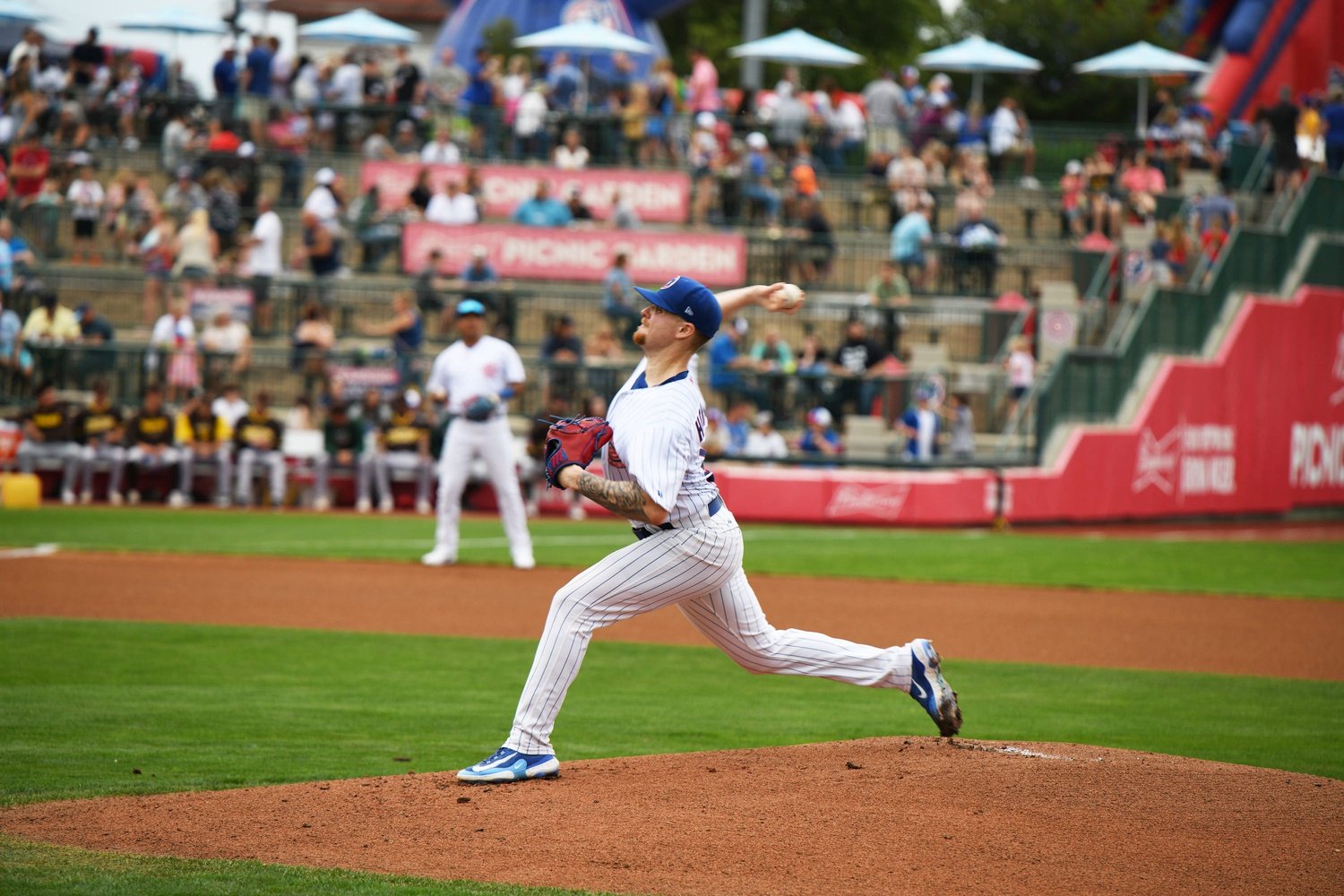 The results were mixed in Cade Horton's first start with the Iowa Cubs. There were also some things to monitor, though not outright causes for concern. Most of all, though, there were indications of what kind of pitcher Horton is, rather than just how good he is. The similarities to Cubs ace Justin Steele are significant--more so than I would have guessed, at the very least. If you're reading this, you probably understand that Steele is far from being the prototype of the modern top-line starter. He really only throws two pitches (although, more on that coming tomorrow, right here at NSBB). He doesn't throw especially hard. His fastball doesn't have the carry that is the signature trait of many elite heaters. In fact, it's more of a cutter than a true four-seamer, despite continuing to be labeled as the latter in most circles. Here's Steele's pitch movement chart for last season, from the catcher's (or batter's) perspective. Steele's success comes from making it so hard for hitters to distinguish that cutterish fastball from his slider. A fastball that already has some of the movement characteristics of a slider interferes with the batter's efforts to pick out one offering and attack it. The absolute movement difference between his fastball and slider is smaller than for most great pitchers, which is why his strikeout rate tends to be lower than other aces', but he induces lots of weak and harmless contact, thanks to that same trait. Now, here's Horton's pitch movement chart, but from the pitcher's perspective, so that we're looking at his movement more or less the same way we were looking at Steele's. It's hard to compare this to Steele's, because of the massive difference in volume. The pitch classification algorithm also needs some time to learn his arsenal better. Because of how hard he throws his curveball, a handful of them got classified as a slider, mucking with the movement average for the pitch. Because of how much cut the fastball has, it mistook a few of his heaters for sliders, too. Still, you can see the gist, right? Horton has a four-seamer that actually cuts a bit toward his glove side, more often than not, whereas most guys' run a good five or six inches to their arm side. That pitch pairs nicely with his slider, just like Steele's does. These are radically unusual movement profiles. This chart shows the horizontal and vertical movement of four-seamers by lefties throughout the league last year. I've highlighted Steele, Shota Imanaga, and Luke Little, to demonstrate how much the team seems to like unusual fastball movement profiles. Steele is, if it's possible, even more of an outlier than this suggests. Many of the guys similarly far from the pack are relievers with weird arm angles; Steele is a high-volume starter with an essentially ordinary delivery. It's freaky to have this kind of movement from that slot, just as it's freaky for Imanaga to get so much ride on his heater from a low release point. As unusual as Steele is, though, a righty like Horton having the same profile would be even stranger. The only northpaw to whom we can reasonably compare Horton is Sonny Gray. That's an encouraging comp, but it's lonely out on that island. Other things distinguish Horton from Steele. That changeup looks like a major separator, despite its lack of vertical movement relative to the heater. Its huge horizontal movement differential should make it a pitch he can throw for weak contact against lefties, and it augurs well for his potential to develop a sinker down the road, should he need or want to. The curveball also looks like more of a weapon than Steele's. Gray, like Steele, has success with his fastball because of its unusual shape, and despite its pedestrian velocity. Somewhat surprisingly, looking at just this one game's data, Horton faces a similar constraint. He only averaged 93.7 miles per hour, even with the algorithm reading some of his more cutter-like and slower fastballs as sliders, and his fastest pitch of the game was 94.9 MPH. His scouting report (and previous readings even this year) have him sitting 94-96 and touching 98, so it could be that he was just a little bit tight or trying to mitigate the risk of overthrowing in his Triple-A debut. It could also be that, as he stretches out toward what would be a traditional big-league starter's workload, he's giving up some of his hottest heat (and the carry that came with it) for more of that cutting action. Either can work, and he can still be an elite starter either way, but the risks attached to each possibility and the shape of his eventual performance could vary widely, depending on which thing is happening. There's only one truly negative indicator here, and it's more something to watch than something over which to wring our hands at this early juncture. Horton has some of the very worst release extension you'll see, at an average of 5.8 feet. In other words, he covers just 5.8 of the 60.5 feet between the rubber and home plate. The league average is right about where Gray is, at 6.5 feet. Steele averages 6.4. Since the start of last season, 179 pitchers have thrown at least 400 four-seam fastballs. Horton's extension on his would rank 170th in that group. Effectively, that little extension takes a tick off the fastball, which is why most of the guys in that range (Kyle Hendricks, Lucas Sims, Luke Weaver, José Urquidy, Alex Faedo, and more) have fastballs that play down, relative to their raw velocity. Horton's delivery might not yet be a finished product. For that matter, his pitch mix probably isn't, either. He's close to big-league readiness, but not quite there. Over the next few starts, the movement profile of his fastball, the confidence he shows in his curveball and changeup, and the three-dimensional readings on his release point will be important things to watch. We're getting close to seeing him in the majors, and when we do, it might look an awful lot like the mirror image of Steele. By then, though, he needs to have command as good as Steele's, or have made an adjustment or two that make him materially more complete.
 -
Threading the Needle at 99 Miles Per Hour, With Ben Brown
Matthew Trueblood posted an article in Cubs
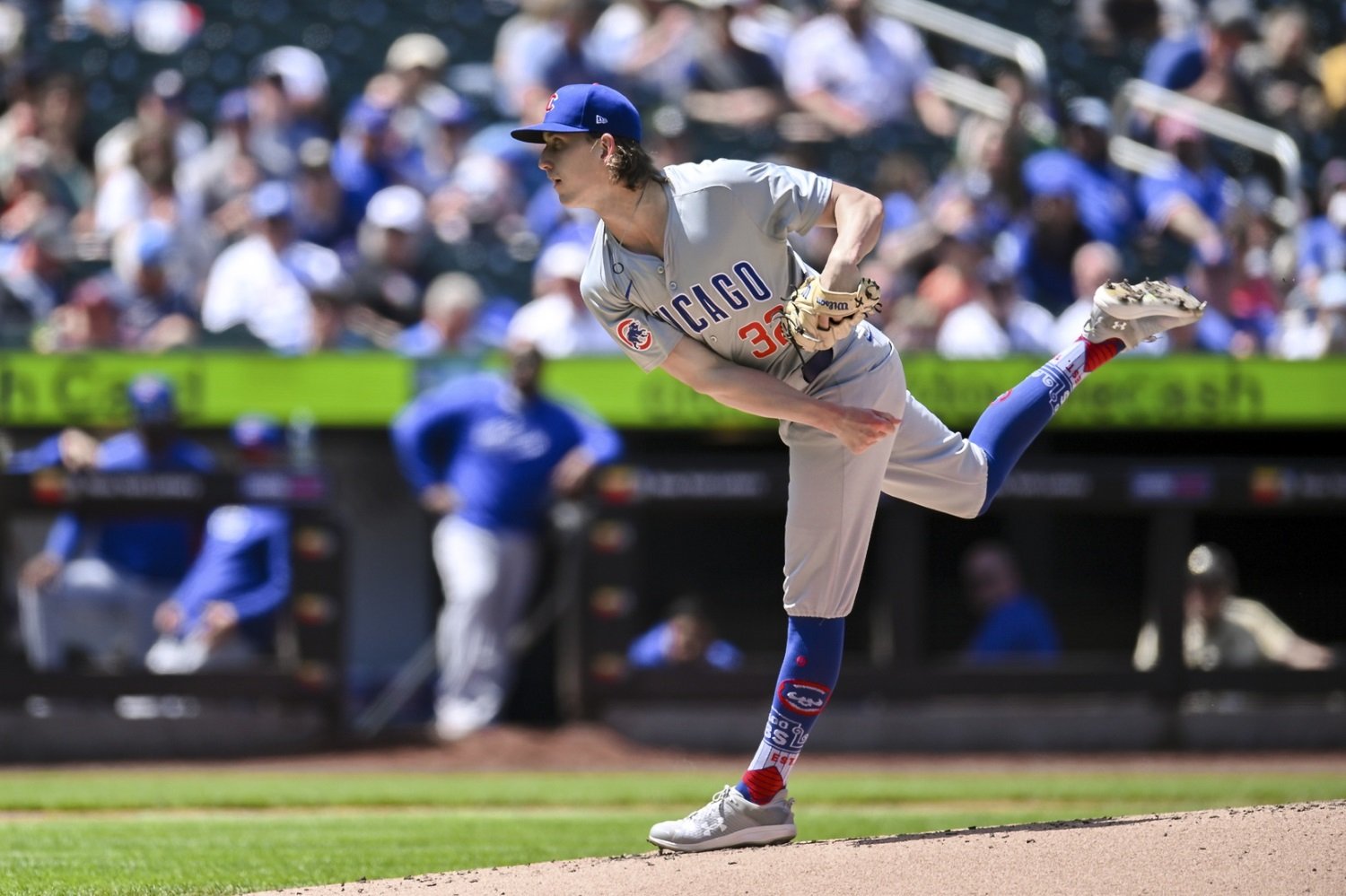 About two-thirds of the way through his second pass through the Mets batting order, Ben Brown hit a speed bump. The fireballing Cubs starter had looked excellent through the first two innings, without fine control but with plenty of sheer stuff to make up for it. He was cruising, until he reached the fifth frame. When the wheels came off, though, all four came off at once, and he couldn't even finish the inning. His inability to do so led directly to the team giving up the lead and (eventually) losing the game, though that's a different thing than saying that he's at fault for the loss itself. Brown's flashes of brilliance have been less flashes than sustained but interrupted periods of sunlight between sliding ships of cloud. He doesn't just look good for an inning; he looks good for 12 or 13 batters at a time. Unfortunately, the talent to shut a lineup down for three or four innings at a time hasn't yet matured into the skill of pitching well enough to maximize the team's chances to win over a full-length start. There's an obvious reason for this, and a couple of more subtle ones. Let's discuss them all, and then tackle the interesting aspect of this discussion that sets Brown apart from most pitchers in similar (but importantly distinct) circumstances. Having only two pitches one trusts enough to throw against a big-league hitter is a major hindrance, if one intends to face that hitter more than once in a game. If one hopes to face the best hitters on an opposing team three times, it verges on crippling. Brown has tinkered with as many as five or six pitches, as recently as last season and this spring, but once games start, he's effectively limited to his fastball and his curveball. I've already written about the unique power of each of those pitches and the way they interact with one another. His fastball combines raw velocity, movement, and extension impressively. His curveball is unique and vicious. As two-pitch mixes go, his is special. It can flummox hitters more than one time through the order, which immediately distinguishes him from any number of pure relievers whose stuff doesn't hold up that way. Still, having two pitches is a limitation within which Brown is always working, and it's no easy problem to work around. It gets difficult to be unpredictable when your opponent is playing true-or-false baseball, instead of taking a full-bodied multiple-choice test. For just that reason, Brown tends to start finding trouble about 15 batters into outings. It doesn't even quite take two trips through the order, because although he holds his stuff well, he hasn't yet shown the ability to rein in command when he's not hitting spots with one of his pitches to one of his desired locations. That lets opponents learn more quickly, and they can communicate some things to one another, rather than just waiting for their own turn to come around again after their at-bat ends. On Thursday, Brown was very fastball-heavy through the first four innings. He was trying to hold the curveball in reserve, to some extent, and to keep his pitch count under control. As far as those goals went, he was having success. Unfortunately, he didn't have good command of his fastball to the glove side, and it cost him--if only in small, seemingly inconsequential ways, at first. Brown walked Brett Baty in one inning, because his curveballs were all coming inside on him and his fastballs were all out over the plate. Baty was able to distinguish them easily, and waited out 2-2 and 3-2 curves that weren't especially close. The next frame, Brown walked Brandon Nimmo, throwing him seven fastballs out of eight pitches. The one after that, he walked DJ Stewart on five pitches, with four of those being heaters, too. By trying unsuccessfully to beat those hitters with his fastball, he ensured that he would end up having to face the top of their lineup a third time just to get through five innings. Times Through Order Fastballs Curveballs Total 1 23 11 34 2 30 14 44 3 7 4 11 If his execution had been a bit better, the strategy might still have worked, but Brown wasn't able to hit the inside corner to lefties with the fastball--at least not to the satisfaction of home-plate umpire Chad Fairchild. He went in there repeatedly, often clearly trying to get a called third strike, and missed his spot by a little too much to manage it. Commanding the fastball to the glove side from an arm slot like Brown's is a rare and invaluable skill. That, as much as his velocity, is what makes ex-Mets ace Jacob deGrom so good. Since Brown hasn't yet found the feel to do it, though, he has to work around that shortcoming. It means extra pitches, and fewer strikeouts than the quality of his stuff might imply. It's a problem. In this case, though, the problem was exacerbated by another. Having only those two offerings, and throwing so many pitches the second time through the order, Brown was out of ways to fool them when he had to face New York hitters a third time. They didn't start obliterating everything he threw, at that point. Brown isn't like Kyle Hendricks, or even Justin Steele or Jameson Taillon, where it starts to feel like batting practice once hitters figure out what to sit on. Still sitting 97-98 80 pitches into his outing, Brown kept the Mets from swatting it out of the park. He just couldn't stop them from outguessing him, spitting on non-strikes, and poking singles. Here's the result (color) of every pitch he threw to a batter he was seeing the third time, plus the pitch type (shape) of those pitches. He might as well have thrown the top of New York's order squares and circles that third time, in real life. They knew what to look for, and where, too well. As evidenced by the fact that his trouble really began the second time through the lineup, what Brown needs is a third pitch. In the absence of it, he's not going to be a great, traditional starter, capable of frequently going six or more innings. It's fair, too, to wonder whether (after one more start, perhaps, to help the team weather a schedule short on days off until the end of this month) Brown could be ticketed for the bullpen, where this deficiency is much less important. For the moment, though, let's not assume that's the plan. It might end up being the right choice, but Brown can pitch more innings and have more value to the team if he can stick in their rotation, even with his two-pitch mix. Let's further assume that, while he's surely not done looking for a third pitch that will work, he's going to need to make do with the two he has for the balance of this year. How can he avoid things like what happened Thursday? How can he better finish his outings and give his team an easier path to wins on his days? FIrstly, he has to show opponents the curveball more, sooner. The key shift in mindset ought to be from having even a theoretical goal of facing 27 batters to knowing he's only going to be asked for 21 or so. Once he makes that adjustment in intent, adjustments in approach can follow. Being less predictable--going something more like 55-45 with his fastball and curve, rather than 67-33, as he was Thursday--will net more whiffs and get him through the lower half of the order cleaner each time. It will reveal the curve to the other team more and sooner, and make it harder for him to get outs with it later in the contest, but in theory, he should be able to pitch five innings of clean baseball on his good days and five innings with a couple of earned runs on his more ordinary ones. Then, it's up to Counsell to get him out of there before the other team can do a lot of damage. The manager has a needle to thread, but so does Brown. Such is the nature of pitching with just two offerings in a starting role. You have to understand that you'll be out sooner than a four-pitch guy might be, but you can't transition into a pure relief mindset. You have to sequence and set up hitters, rather than reserve the curve for later, but you don't want to overexpose yourself or end up at 85 pitches in the fourth inning, either. There's a trust transaction that has to happen, between Brown, his catchers, his coaches, and Counsell. It's not easy, but it's essential, given Brown's current skill set and the Cubs' current needs. More curves and fewer fastballs will slow the opponents' learning curve. It will make it less costly when Brown does come up against good hitters a third time, after they've drawn a bead on him, because the bases will be empty and they might have just one or two outs to play with, rather than three. Then, it all comes down to execution. Can he begin to hold the fastball on that gloveside edge of the plate? If so, the whole mix works better, and he can be a dominant (if not deep-working) starter. If not, he'll still be viable, but he might help the team more in the bullpen, where the second and third looks at him don't exist and the opponents' learning curve doesn't matter. Thursday's loss was disappointing, but not devastating. It was a missed opportunity for another step forward for Brown, but it might also have given him a learning roadmap for the next phase of his season and his career. If he did learn something actionable from it, then it was ultimately a good start. Even on a day he couldn't finish the way he needs to, he showed a lot of what makes him the most exciting pitcher on the active roster.
 -
A very good start went suddenly and (eventually) fatally bad for Ben Brown Thursday. It's a pattern we've seen from his before, and a reminder that he's still more clay than sculpture. Image courtesy of © John Jones-USA TODAY Sports About two-thirds of the way through his second pass through the Mets batting order, Ben Brown hit a speed bump. The fireballing Cubs starter had looked excellent through the first two innings, without fine control but with plenty of sheer stuff to make up for it. He was cruising, until he reached the fifth frame. When the wheels came off, though, all four came off at once, and he couldn't even finish the inning. His inability to do so led directly to the team giving up the lead and (eventually) losing the game, though that's a different thing than saying that he's at fault for the loss itself. Brown's flashes of brilliance have been less flashes than sustained but interrupted periods of sunlight between sliding ships of cloud. He doesn't just look good for an inning; he looks good for 12 or 13 batters at a time. Unfortunately, the talent to shut a lineup down for three or four innings at a time hasn't yet matured into the skill of pitching well enough to maximize the team's chances to win over a full-length start. There's an obvious reason for this, and a couple of more subtle ones. Let's discuss them all, and then tackle the interesting aspect of this discussion that sets Brown apart from most pitchers in similar (but importantly distinct) circumstances. Having only two pitches one trusts enough to throw against a big-league hitter is a major hindrance, if one intends to face that hitter more than once in a game. If one hopes to face the best hitters on an opposing team three times, it verges on crippling. Brown has tinkered with as many as five or six pitches, as recently as last season and this spring, but once games start, he's effectively limited to his fastball and his curveball. I've already written about the unique power of each of those pitches and the way they interact with one another. His fastball combines raw velocity, movement, and extension impressively. His curveball is unique and vicious. As two-pitch mixes go, his is special. It can flummox hitters more than one time through the order, which immediately distinguishes him from any number of pure relievers whose stuff doesn't hold up that way. Still, having two pitches is a limitation within which Brown is always working, and it's no easy problem to work around. It gets difficult to be unpredictable when your opponent is playing true-or-false baseball, instead of taking a full-bodied multiple-choice test. For just that reason, Brown tends to start finding trouble about 15 batters into outings. It doesn't even quite take two trips through the order, because although he holds his stuff well, he hasn't yet shown the ability to rein in command when he's not hitting spots with one of his pitches to one of his desired locations. That lets opponents learn more quickly, and they can communicate some things to one another, rather than just waiting for their own turn to come around again after their at-bat ends. On Thursday, Brown was very fastball-heavy through the first four innings. He was trying to hold the curveball in reserve, to some extent, and to keep his pitch count under control. As far as those goals went, he was having success. Unfortunately, he didn't have good command of his fastball to the glove side, and it cost him--if only in small, seemingly inconsequential ways, at first. Brown walked Brett Baty in one inning, because his curveballs were all coming inside on him and his fastballs were all out over the plate. Baty was able to distinguish them easily, and waited out 2-2 and 3-2 curves that weren't especially close. The next frame, Brown walked Brandon Nimmo, throwing him seven fastballs out of eight pitches. The one after that, he walked DJ Stewart on five pitches, with four of those being heaters, too. By trying unsuccessfully to beat those hitters with his fastball, he ensured that he would end up having to face the top of their lineup a third time just to get through five innings. Times Through Order Fastballs Curveballs Total 1 23 11 34 2 30 14 44 3 7 4 11 If his execution had been a bit better, the strategy might still have worked, but Brown wasn't able to hit the inside corner to lefties with the fastball--at least not to the satisfaction of home-plate umpire Chad Fairchild. He went in there repeatedly, often clearly trying to get a called third strike, and missed his spot by a little too much to manage it. Commanding the fastball to the glove side from an arm slot like Brown's is a rare and invaluable skill. That, as much as his velocity, is what makes ex-Mets ace Jacob deGrom so good. Since Brown hasn't yet found the feel to do it, though, he has to work around that shortcoming. It means extra pitches, and fewer strikeouts than the quality of his stuff might imply. It's a problem. In this case, though, the problem was exacerbated by another. Having only those two offerings, and throwing so many pitches the second time through the order, Brown was out of ways to fool them when he had to face New York hitters a third time. They didn't start obliterating everything he threw, at that point. Brown isn't like Kyle Hendricks, or even Justin Steele or Jameson Taillon, where it starts to feel like batting practice once hitters figure out what to sit on. Still sitting 97-98 80 pitches into his outing, Brown kept the Mets from swatting it out of the park. He just couldn't stop them from outguessing him, spitting on non-strikes, and poking singles. Here's the result (color) of every pitch he threw to a batter he was seeing the third time, plus the pitch type (shape) of those pitches. He might as well have thrown the top of New York's order squares and circles that third time, in real life. They knew what to look for, and where, too well. As evidenced by the fact that his trouble really began the second time through the lineup, what Brown needs is a third pitch. In the absence of it, he's not going to be a great, traditional starter, capable of frequently going six or more innings. It's fair, too, to wonder whether (after one more start, perhaps, to help the team weather a schedule short on days off until the end of this month) Brown could be ticketed for the bullpen, where this deficiency is much less important. For the moment, though, let's not assume that's the plan. It might end up being the right choice, but Brown can pitch more innings and have more value to the team if he can stick in their rotation, even with his two-pitch mix. Let's further assume that, while he's surely not done looking for a third pitch that will work, he's going to need to make do with the two he has for the balance of this year. How can he avoid things like what happened Thursday? How can he better finish his outings and give his team an easier path to wins on his days? FIrstly, he has to show opponents the curveball more, sooner. The key shift in mindset ought to be from having even a theoretical goal of facing 27 batters to knowing he's only going to be asked for 21 or so. Once he makes that adjustment in intent, adjustments in approach can follow. Being less predictable--going something more like 55-45 with his fastball and curve, rather than 67-33, as he was Thursday--will net more whiffs and get him through the lower half of the order cleaner each time. It will reveal the curve to the other team more and sooner, and make it harder for him to get outs with it later in the contest, but in theory, he should be able to pitch five innings of clean baseball on his good days and five innings with a couple of earned runs on his more ordinary ones. Then, it's up to Counsell to get him out of there before the other team can do a lot of damage. The manager has a needle to thread, but so does Brown. Such is the nature of pitching with just two offerings in a starting role. You have to understand that you'll be out sooner than a four-pitch guy might be, but you can't transition into a pure relief mindset. You have to sequence and set up hitters, rather than reserve the curve for later, but you don't want to overexpose yourself or end up at 85 pitches in the fourth inning, either. There's a trust transaction that has to happen, between Brown, his catchers, his coaches, and Counsell. It's not easy, but it's essential, given Brown's current skill set and the Cubs' current needs. More curves and fewer fastballs will slow the opponents' learning curve. It will make it less costly when Brown does come up against good hitters a third time, after they've drawn a bead on him, because the bases will be empty and they might have just one or two outs to play with, rather than three. Then, it all comes down to execution. Can he begin to hold the fastball on that gloveside edge of the plate? If so, the whole mix works better, and he can be a dominant (if not deep-working) starter. If not, he'll still be viable, but he might help the team more in the bullpen, where the second and third looks at him don't exist and the opponents' learning curve doesn't matter. Thursday's loss was disappointing, but not devastating. It was a missed opportunity for another step forward for Brown, but it might also have given him a learning roadmap for the next phase of his season and his career. If he did learn something actionable from it, then it was ultimately a good start. Even on a day he couldn't finish the way he needs to, he showed a lot of what makes him the most exciting pitcher on the active roster. View full article
-
After the offense had to scratch and claw to score a lone run in nine innings against the Mets Wednesday night, it fell to the Chicago Cubs' defense to save a narrow win. They rose to the challenge nicely. That's baseball at its very best. The game itself is never better than when a team executes a great relay, whether they get the runner or not. In this case, there was extra beauty in it, not only because of the high stakes and the closeness of the play, but because this play was quite original, too. When most Cubs fans saw this play, they probably flashed back to last summer, when Happ threw out two Brewers runners at home plate to (first) preserve an extra-inning tie and (one inning later) lock up the win for the Cubs on the 4th of July. Happ Nails Turang.mp4 As a baseball history geek, when I saw the ball leading Happ toward the line as much as it did, I thought of the most iconic such play of the last half-century: the fly ball on which George Foster threw out a would-be winning run in the legendary Game 6 of the 1975 World Series. Realistically, though, McNeil's fly ball posed a different, greater challenge to the Cubs than those plays. Statcast estimates the distance of the fly ball on which Happ killed the tying run against the Brewers last July at 242 feet. We don't have such fancy tools for Foster's great play, but it's in the same neighborhood. It might even have been less than that. McNeil's would-be sacrifice fly went an estimated 272 feet, and Happ had to go far enough to get it that he also couldn't load up behind the ball the way he did for the throw above. There were two things he had going for him, in opposition to the distance and the inability to get off his strongest possible throw. One is that Alonso was running. Alonso is big and slow. The other thing is Madrigal. It's hard to overstate how impressive a play Madrigal made to get this out. Firstly, he's not a native to third base, and although he's proved himself an elite defender at that position already and taken ample reps out there, he's objectively less versed in the nuances of that kind of play than an average third baseman. Second, to the extent that players practice this kind of throw, the responsibility of an infielder making the cut is nearly always to redirect the ball to trap a trailing runner, or to remove the risk of the throw getting away. True relays to nail runners on potential sacrifice flies are exceedingly rare. The relays on which an infielder makes the cut and then tries to throw out the lead runner nearly always come on long hits into the corners or the gaps. That means more time to set up for the throw from the outfielder, and more time to make sure of one's angle to home plate. Madrigal found himself taking a throw in a whole different rhythm than is typical for a third baseman executing a relay. How rare are such plays? Since 2015, there's only been one other double play (a catch in the air and then a kill of the advancing runner, rather than a relay on a hit or error) on which an infielder made a simple cut and throw through to the catcher, rather than a throw behind the runner or some other effort to create a rundown. Here it is: Villanueva Cuts a DP.mp4 This play comes from April 2018, and it bears some significant differences from Happ's and Madrigal's. The ball Andrew McCutchen hit was a liner that caught everyone a little bit flat-footed. Christian Villanueva did well to collect and fire the ball, but it was a weird play. This wasn't that kind of situation. It's truly unique, in the last decade. I found evidence (but not video) of similar plays by Dustin Pedroia in 2014 and James Loney in 2011, but within the last 20 years, that's about it. It's extremely rare for an infielder to make a relay and successfully oust a runner for a fly-ball double play. That brings us to the next point: Happ's throw was wonderfully accurate, and so was Madrigal's. The latter created a little space between himself and the baseline, anticipating Happ's throw and making sure Dansby Swanson didn't block his sightlines. Thus, Madrigal caught the ball in a perfect throwing position, and he was lightning-quick with his exchange and release. Finally, he delivered a perfect peg of his own. With Amaya slightly favoring fair territory to accommodate Alonso's slide, Madrigal's throw was perfect. It took him into Alonso's path and led him right down to the sliding runner. Amaya made a great catch and a quick tag, to complete the burst of baseball genius and eke out a victory. In very little time and with no chance of getting Alonso unless all three were perfect, these three threaded the needle. The Cubs won yet another game they had no business winning, and Madrigal, especially, deserves credit for making that possible. While he's overextended in almost any full-time role, he remains an indispensable asset defensively. The quickness, fluidity, and precision of his actions on the double play were worth perhaps 20 percent of a win by themselves Wednesday. That was a thrilling way to end a game; the Cubs keep finding good ones. View full article
- 3 replies
-
- 3
-

-
- ian happ
- nick madrigal
- (and 2 more)
-
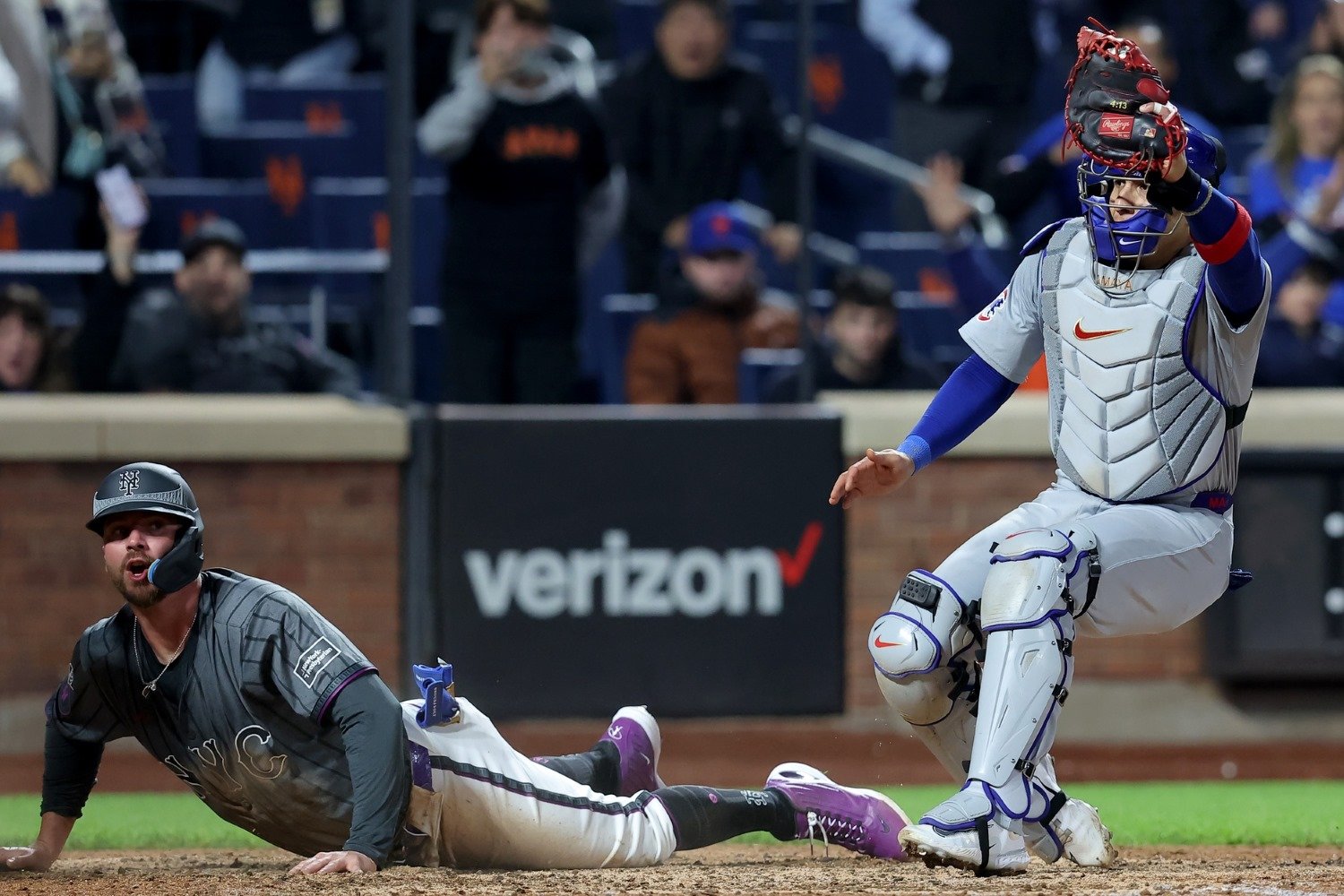 Some fans will quibble with Craig Counsell's choice to remove Shota Imanaga after seven innings of work Wednesday night. There were good reasons for his decision, though, and really, the ensuing stress over the final six outs of the game was the fault of the sputtering, injury-depleted offense, not of Counsell, Imanaga, or anyone else. Because the team was only able to nudge across one meager run, there was no margin for error for any Chicago hurler. Héctor Neris is not in a place right now where he can pitch effectively without any margin for error. When he took over with the top of the Mets' lineup due in the bottom of the ninth, it felt nothing like a sure thing that the Cubs would survive and ensure at least a split in their series in Flushing. After he hit Pete Alonso with a pitch and allowed a double to J.D. Martinez to put the tying run 90 feet away, things looked bleak. Then, in a blaze of heroism that is becoming intimately familiar for Cubs fans, Ian Happ, Nick Madrigal, and Miguel Amaya saved the day. With one out, Jeff McNeil hit a high fly ball down the left-field line, and Alonso tried to tie the game by racing home. That's baseball at its very best. The game itself is never better than when a team executes a great relay, whether they get the runner or not. In this case, there was extra beauty in it, not only because of the high stakes and the closeness of the play, but because this play was quite original, too. When most Cubs fans saw this play, they probably flashed back to last summer, when Happ threw out two Brewers runners at home plate to (first) preserve an extra-inning tie and (one inning later) lock up the win for the Cubs on the 4th of July. Happ Nails Turang.mp4 As a baseball history geek, when I saw the ball leading Happ toward the line as much as it did, I thought of the most iconic such play of the last half-century: the fly ball on which George Foster threw out a would-be winning run in the legendary Game 6 of the 1975 World Series. Realistically, though, McNeil's fly ball posed a different, greater challenge to the Cubs than those plays. Statcast estimates the distance of the fly ball on which Happ killed the tying run against the Brewers last July at 242 feet. We don't have such fancy tools for Foster's great play, but it's in the same neighborhood. It might even have been less than that. McNeil's would-be sacrifice fly went an estimated 272 feet, and Happ had to go far enough to get it that he also couldn't load up behind the ball the way he did for the throw above. There were two things he had going for him, in opposition to the distance and the inability to get off his strongest possible throw. One is that Alonso was running. Alonso is big and slow. The other thing is Madrigal. It's hard to overstate how impressive a play Madrigal made to get this out. Firstly, he's not a native to third base, and although he's proved himself an elite defender at that position already and taken ample reps out there, he's objectively less versed in the nuances of that kind of play than an average third baseman. Second, to the extent that players practice this kind of throw, the responsibility of an infielder making the cut is nearly always to redirect the ball to trap a trailing runner, or to remove the risk of the throw getting away. True relays to nail runners on potential sacrifice flies are exceedingly rare. The relays on which an infielder makes the cut and then tries to throw out the lead runner nearly always come on long hits into the corners or the gaps. That means more time to set up for the throw from the outfielder, and more time to make sure of one's angle to home plate. Madrigal found himself taking a throw in a whole different rhythm than is typical for a third baseman executing a relay. How rare are such plays? Since 2015, there's only been one other double play (a catch in the air and then a kill of the advancing runner, rather than a relay on a hit or error) on which an infielder made a simple cut and throw through to the catcher, rather than a throw behind the runner or some other effort to create a rundown. Here it is: Villanueva Cuts a DP.mp4 This play comes from April 2018, and it bears some significant differences from Happ's and Madrigal's. The ball Andrew McCutchen hit was a liner that caught everyone a little bit flat-footed. Christian Villanueva did well to collect and fire the ball, but it was a weird play. This wasn't that kind of situation. It's truly unique, in the last decade. I found evidence (but not video) of similar plays by Dustin Pedroia in 2014 and James Loney in 2011, but within the last 20 years, that's about it. It's extremely rare for an infielder to make a relay and successfully oust a runner for a fly-ball double play. That brings us to the next point: Happ's throw was wonderfully accurate, and so was Madrigal's. The latter created a little space between himself and the baseline, anticipating Happ's throw and making sure Dansby Swanson didn't block his sightlines. Thus, Madrigal caught the ball in a perfect throwing position, and he was lightning-quick with his exchange and release. Finally, he delivered a perfect peg of his own. With Amaya slightly favoring fair territory to accommodate Alonso's slide, Madrigal's throw was perfect. It took him into Alonso's path and led him right down to the sliding runner. Amaya made a great catch and a quick tag, to complete the burst of baseball genius and eke out a victory. In very little time and with no chance of getting Alonso unless all three were perfect, these three threaded the needle. The Cubs won yet another game they had no business winning, and Madrigal, especially, deserves credit for making that possible. While he's overextended in almost any full-time role, he remains an indispensable asset defensively. The quickness, fluidity, and precision of his actions on the double play were worth perhaps 20 percent of a win by themselves Wednesday. That was a thrilling way to end a game; the Cubs keep finding good ones.
 -
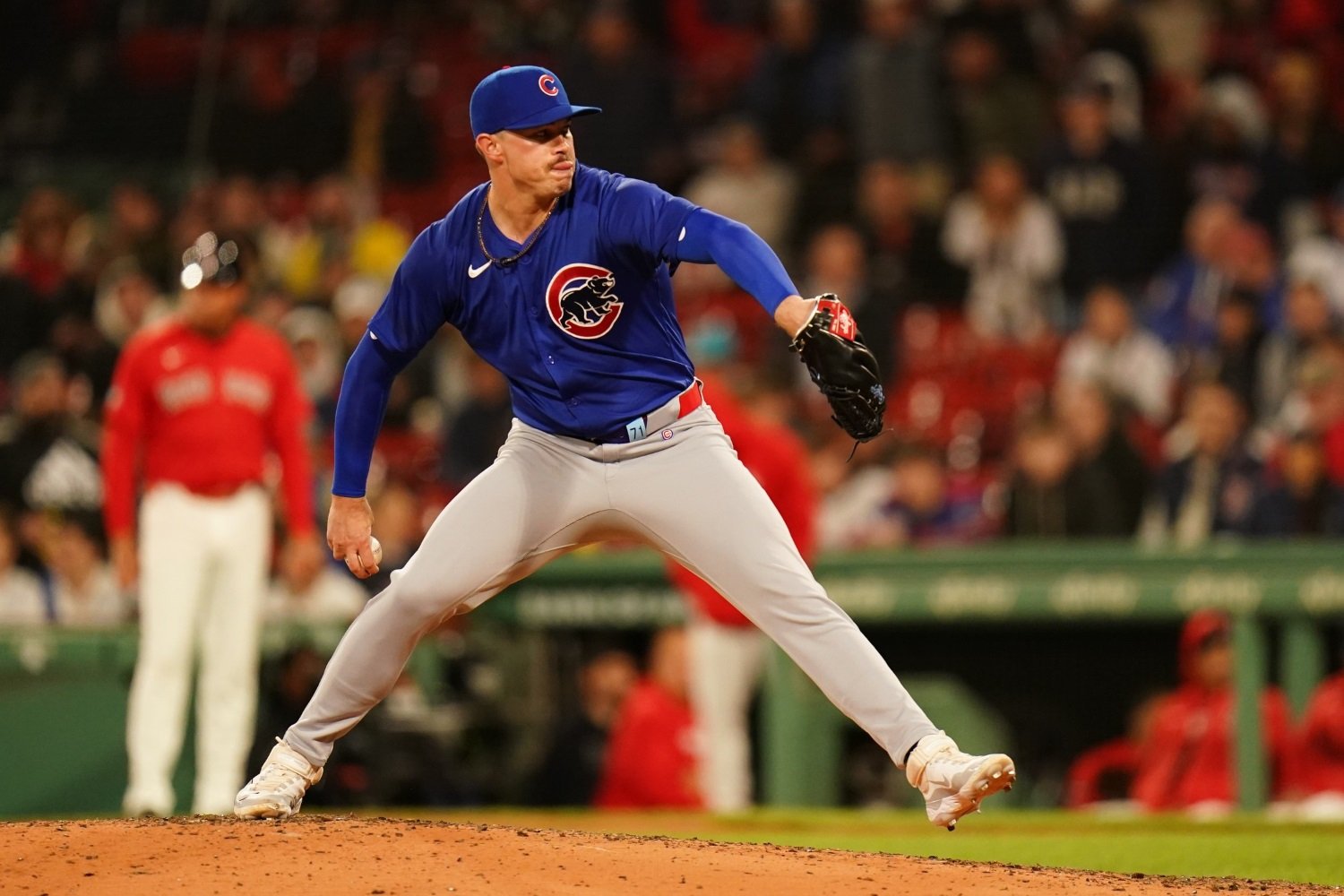 It's hard to fathom the leap in stuff Keegan Thompson has effected since he re-joined the Cubs' active roster amid injuries that have taxed the bullpen in April. Maybe Thompson was dealing with a nagging, undisclosed injury when he started this season in Triple-A, not looking like he belonged on a big-league roster. Maybe he was experimenting with ways to pitch that would protect him from such an injury, and that just meant throwing less hard (among other things). Maybe he and the Cubs' big-league coaching staff discovered a mechanical tweak that was available to him, which his instructors in Iowa hadn't caught. Whatever the case, Thompson is a radically different pitcher right now than he was three weeks ago, when he was a minor leaguer and looked like he might never be much else again. We're not talking about a slight uptick or a tradeoff that got him more velocity at the cost of some other characteristic. Thompson's heater has transmogrified since he put the big-league jersey on for the first time. Level P Vel 10thVel 90thVel MxVel HorzBrk IndVertBrk Spin RelX RelZ Extension EffectVel HorzRelAngle VertRelAngle VertApprAngle AAA 38 91 90.3 91.8 92 2.1 14.9 2287.5 -30.4 72.2 6.04 90.4 -2.8 -2.01 -5.44 MLB 64 93.6 92.6 94.6 95.1 3.3 16.4 2483.7 -31.1 70.1 6.16 93.4 -2.66 -1.64 -4.46 He's yet to throw a fastball in MLB as slow as his fastest one in Triple-A this year. His spin rate is back up to where it was when he was going well. He has more riding action on the pitch, from a lower release point, which is giving him a flatter vertical approach angle. He's even getting slightly better extension toward the plate at release, making his fastball play a full three ticks faster than it did in the minors. Thompson's whole arsenal has changed, in fact. He's reintroduced his slider, and the relationship between his four-seamer, cutter, and sweeper is restored to what it needs to be for him to succeed. Here's how his pitches were moving with Iowa. And here's what they've done since he joined the parent club. Thanks partially to more consistently achieving the spin he wants and throwing it with more conviction, Thompson is also commanding the fastball much better. It's the pitch with which he attacks the top of the zone, and off of that tunnel, everything else in his arsenal plays up. The locations at which he threw heaters in Iowa betray a lack of a cohesive plan. But we've seen him much better utilize the upper half of the zone and attack hitters with the deception that creates, while he's been in MLB. If I had to guess, I would hazard that the team and Thompson did make a slight alteration to his arm slot. He's always had the kind of arm action that depends on great proprioception to permit command, because of the way he tilts his spine and lets himself lean toward the first-base line as he delivers. It's unlikely that he made a sudden and massive leap in functional core strength, which is one way to improve command and power in such a delivery, but if he and the coaches found a cue that lets him more confidently execute his motion and repeat his release point and hand position, it would explain a lot of what we've seen since he made it back. This version of Thompson, with bilateral command of the heater across the top of the zone; the curveball working off it against lefties; the sweeper doing the same against righties; and the cutter he can manipulate a bit to use against either type of hitter, is a very good pitcher. It's miles different from the guy we saw most of last season, and from the one who was throwing such tepid, scattershot stuff early this month. It would be foolish of the Cubs to rest on their laurels after reviving their erstwhile bullpen stud. He's still more solid than spectacular. The relief corps will still need further reinforcement, and Thompson shouldn't be treated as a relief ace. He's earned a shot to be a medium- to high-leverage option, though, by getting back the sizzle on his fastball and reminding the organization of what made him such a versatile weapon for their pitching staff in 2022. If he can keep throwing this hard and show this kind of command with such a deep arsenal, he's even a candidate to make some starts (or longer relief appearances) as the marathon that is the regular season unfolds.
 -
Around the time the Chicago Cubs brought sidetracked reliever Keegan Thompson back from his exile in Iowa earlier this month, we wrote about how badly diminished Thompson looked there. That was true. It just hasn't been true since then. Image courtesy of © David Butler II-USA TODAY Sports It's hard to fathom the leap in stuff Keegan Thompson has effected since he re-joined the Cubs' active roster amid injuries that have taxed the bullpen in April. Maybe Thompson was dealing with a nagging, undisclosed injury when he started this season in Triple-A, not looking like he belonged on a big-league roster. Maybe he was experimenting with ways to pitch that would protect him from such an injury, and that just meant throwing less hard (among other things). Maybe he and the Cubs' big-league coaching staff discovered a mechanical tweak that was available to him, which his instructors in Iowa hadn't caught. Whatever the case, Thompson is a radically different pitcher right now than he was three weeks ago, when he was a minor leaguer and looked like he might never be much else again. We're not talking about a slight uptick or a tradeoff that got him more velocity at the cost of some other characteristic. Thompson's heater has transmogrified since he put the big-league jersey on for the first time. Level P Vel 10thVel 90thVel MxVel HorzBrk IndVertBrk Spin RelX RelZ Extension EffectVel HorzRelAngle VertRelAngle VertApprAngle AAA 38 91 90.3 91.8 92 2.1 14.9 2287.5 -30.4 72.2 6.04 90.4 -2.8 -2.01 -5.44 MLB 64 93.6 92.6 94.6 95.1 3.3 16.4 2483.7 -31.1 70.1 6.16 93.4 -2.66 -1.64 -4.46 He's yet to throw a fastball in MLB as slow as his fastest one in Triple-A this year. His spin rate is back up to where it was when he was going well. He has more riding action on the pitch, from a lower release point, which is giving him a flatter vertical approach angle. He's even getting slightly better extension toward the plate at release, making his fastball play a full three ticks faster than it did in the minors. Thompson's whole arsenal has changed, in fact. He's reintroduced his slider, and the relationship between his four-seamer, cutter, and sweeper is restored to what it needs to be for him to succeed. Here's how his pitches were moving with Iowa. And here's what they've done since he joined the parent club. Thanks partially to more consistently achieving the spin he wants and throwing it with more conviction, Thompson is also commanding the fastball much better. It's the pitch with which he attacks the top of the zone, and off of that tunnel, everything else in his arsenal plays up. The locations at which he threw heaters in Iowa betray a lack of a cohesive plan. But we've seen him much better utilize the upper half of the zone and attack hitters with the deception that creates, while he's been in MLB. If I had to guess, I would hazard that the team and Thompson did make a slight alteration to his arm slot. He's always had the kind of arm action that depends on great proprioception to permit command, because of the way he tilts his spine and lets himself lean toward the first-base line as he delivers. It's unlikely that he made a sudden and massive leap in functional core strength, which is one way to improve command and power in such a delivery, but if he and the coaches found a cue that lets him more confidently execute his motion and repeat his release point and hand position, it would explain a lot of what we've seen since he made it back. This version of Thompson, with bilateral command of the heater across the top of the zone; the curveball working off it against lefties; the sweeper doing the same against righties; and the cutter he can manipulate a bit to use against either type of hitter, is a very good pitcher. It's miles different from the guy we saw most of last season, and from the one who was throwing such tepid, scattershot stuff early this month. It would be foolish of the Cubs to rest on their laurels after reviving their erstwhile bullpen stud. He's still more solid than spectacular. The relief corps will still need further reinforcement, and Thompson shouldn't be treated as a relief ace. He's earned a shot to be a medium- to high-leverage option, though, by getting back the sizzle on his fastball and reminding the organization of what made him such a versatile weapon for their pitching staff in 2022. If he can keep throwing this hard and show this kind of command with such a deep arsenal, he's even a candidate to make some starts (or longer relief appearances) as the marathon that is the regular season unfolds. View full article
-
This is the Most Grueling Stretch of the Cubs' 2024 Schedule
Matthew Trueblood posted an article in Cubs
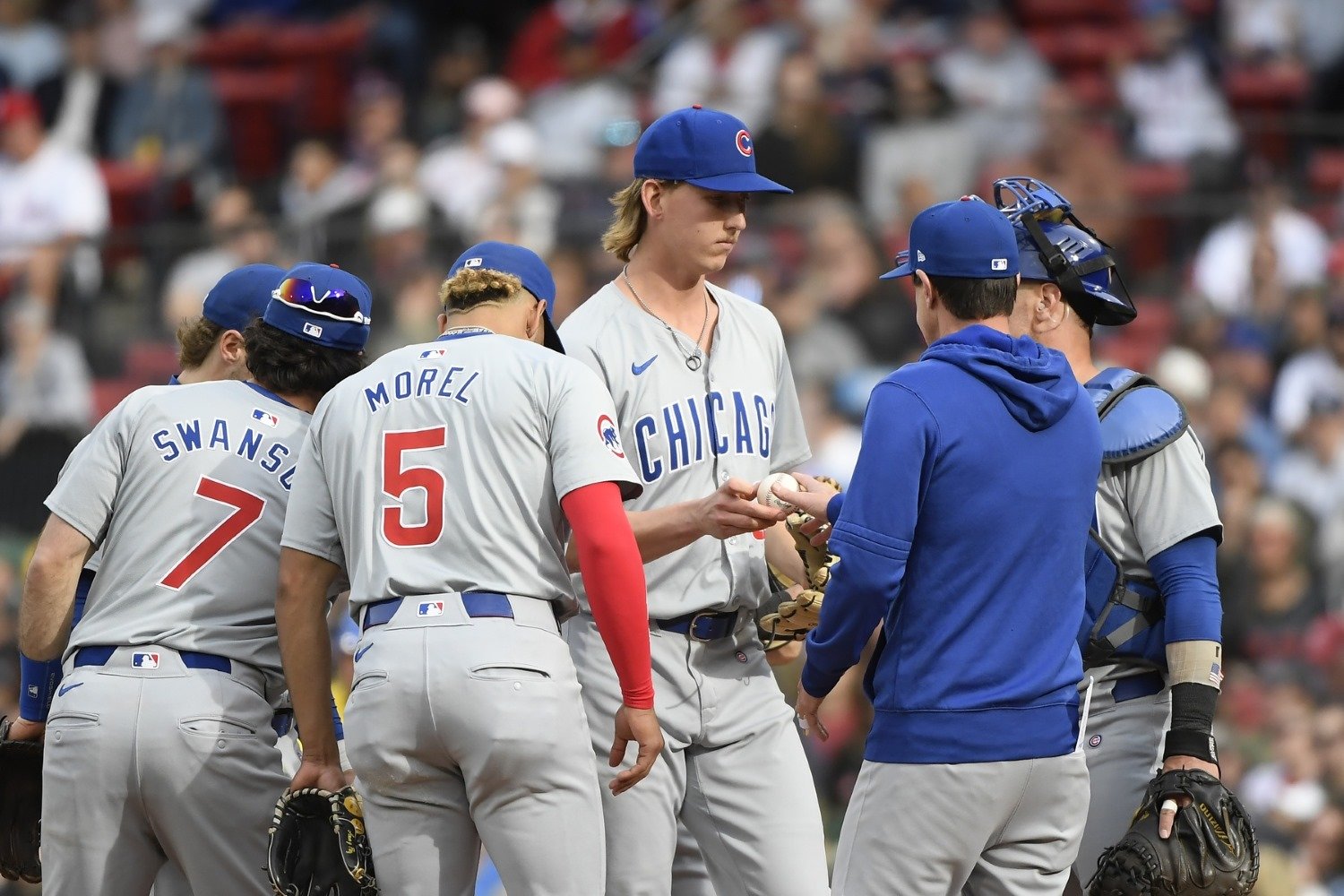 There are no guarantees in baseball, and certainly, there is no guarantee that the Cubs' injury problems won't get worse. They have Justin Steele, Julian Merryweather, Seiya Suzuki, Cody Bellinger, and Jordan Wicks on the injured list already, but that doesn't exhaust the risk of such issues on this roster. Thus, rather than even try to look ahead to the uncertain times (very soon, perhaps, for Steele and Bellinger; longer for the rest) when that crew will return, the team and its fans need to focus on cobbling together wins and sustaining health for the next several weeks. From April 12 through May 19, the Cubs only have two off days. That's five and a half weeks in which they must come to the park 36 times in 38 days, and it's not as though that stretch is light on travel. (They started it amid their West Coast swing two weeks ago. This East Coast road trip to Boston and New York only takes them to the halfway point.) However, after it ends, things really open up for them. While weather could always effect changes, the Cubs currently have a couple off days in the back half of May; three of them in June; three more (plus the four-day All-Star break) in July; a staggering five open dates in August; and three in September. In a sense, the dog days have come early for this team. If they make it through this gauntlet in good shape, they'll have ample opportunity to maneuver and convalesce over the final two-thirds of the season. Easier said than done, as this weekend forcefully reminded them. Taking a blowout loss on the chin, then feeling the sharp blow to the funny bone that was Wicks's trip to the injured list, the team got a glimpse of how they could suffer a May swoon very similar to last year's, even with what they've tried to convince themselves is a deeper team and what everyone agrees is a better manager. If the team doesn't find ways to stretch its rotation to six men for at least some portions of the next three weeks, they're going to pay a price for it. Maybe they already have, with Wicks going down, but Shota Imanaga could easily end up in the same boat if not given a better chance to steadily acculturate to the tighter turnaround between starts in MLB. They also need to suss out who will be able to provide them some competent offense at third base, DH, or in the outfield, to improve the rotations Craig Counsell has already been trying to use to avoid suffering team-wide burnout in a difficult early schedule patch. There might be players (like Richard Lovelady, who was called up to fill the recently vacated 40-man roster spot and give the team emergency depth from the left side in the bullpen) whom the team is more willing to burn in April or May than they would have been in the past. If this is the segment of the schedule with fewer chances for rest than any other, then now is as good a time as any to pull the trigger on a player without the ability to be sent back down, once called upon. We've already seen Garrett Cooper lose his place in the organization to the needed injury replacements and desirable roster rejiggering this April docket has impelled. We could see Lovelady, Carl Edwards Jr., Colten Brewer, and/or Julio Teherán depart via DFA by Memorial Day. If they help the team get to June fresher and healthier than they are right now, though, those expenditures will have been well worth it. In the second half, the Cubs can turn to prospects who are still forging themselves and wouldn't be ready even if called upon this week, like Cade Horton and Matt Shaw. A 17-11 start is a pretty good sign, and given the strength of the Cubs' schedule and the fact that they weren't full strength for any of it, that generality holds up to these specifics. The next 20 or so games will tell us much, though, and it's hard to discern what they'll tell us at this juncture.
 -
Whatever swagger the Chicago Cubs took into Fenway Park this weekend fractured Saturday, in a laugher of a loss. Then, the team sustained a gut punch of a loss in the rubber match there Sunday night. No matter. This is a time for mere survival. Image courtesy of © Bob DeChiara-USA TODAY Sports There are no guarantees in baseball, and certainly, there is no guarantee that the Cubs' injury problems won't get worse. They have Justin Steele, Julian Merryweather, Seiya Suzuki, Cody Bellinger, and Jordan Wicks on the injured list already, but that doesn't exhaust the risk of such issues on this roster. Thus, rather than even try to look ahead to the uncertain times (very soon, perhaps, for Steele and Bellinger; longer for the rest) when that crew will return, the team and its fans need to focus on cobbling together wins and sustaining health for the next several weeks. From April 12 through May 19, the Cubs only have two off days. That's five and a half weeks in which they must come to the park 36 times in 38 days, and it's not as though that stretch is light on travel. (They started it amid their West Coast swing two weeks ago. This East Coast road trip to Boston and New York only takes them to the halfway point.) However, after it ends, things really open up for them. While weather could always effect changes, the Cubs currently have a couple off days in the back half of May; three of them in June; three more (plus the four-day All-Star break) in July; a staggering five open dates in August; and three in September. In a sense, the dog days have come early for this team. If they make it through this gauntlet in good shape, they'll have ample opportunity to maneuver and convalesce over the final two-thirds of the season. Easier said than done, as this weekend forcefully reminded them. Taking a blowout loss on the chin, then feeling the sharp blow to the funny bone that was Wicks's trip to the injured list, the team got a glimpse of how they could suffer a May swoon very similar to last year's, even with what they've tried to convince themselves is a deeper team and what everyone agrees is a better manager. If the team doesn't find ways to stretch its rotation to six men for at least some portions of the next three weeks, they're going to pay a price for it. Maybe they already have, with Wicks going down, but Shota Imanaga could easily end up in the same boat if not given a better chance to steadily acculturate to the tighter turnaround between starts in MLB. They also need to suss out who will be able to provide them some competent offense at third base, DH, or in the outfield, to improve the rotations Craig Counsell has already been trying to use to avoid suffering team-wide burnout in a difficult early schedule patch. There might be players (like Richard Lovelady, who was called up to fill the recently vacated 40-man roster spot and give the team emergency depth from the left side in the bullpen) whom the team is more willing to burn in April or May than they would have been in the past. If this is the segment of the schedule with fewer chances for rest than any other, then now is as good a time as any to pull the trigger on a player without the ability to be sent back down, once called upon. We've already seen Garrett Cooper lose his place in the organization to the needed injury replacements and desirable roster rejiggering this April docket has impelled. We could see Lovelady, Carl Edwards Jr., Colten Brewer, and/or Julio Teherán depart via DFA by Memorial Day. If they help the team get to June fresher and healthier than they are right now, though, those expenditures will have been well worth it. In the second half, the Cubs can turn to prospects who are still forging themselves and wouldn't be ready even if called upon this week, like Cade Horton and Matt Shaw. A 17-11 start is a pretty good sign, and given the strength of the Cubs' schedule and the fact that they weren't full strength for any of it, that generality holds up to these specifics. The next 20 or so games will tell us much, though, and it's hard to discern what they'll tell us at this juncture. View full article
-
For far too many pitchers on MLB staffs in recent months, "forearm strain" has become as much euphemism as real diagnosis. That terminology often comes about a week before "Tommy John surgery" in the discussion of an ailing hurler. The Chicago Cubs have been an exception, and hope to remain so. By no means is Wicks out of the woods yet. Importantly, he will get an MRI on his elbow soon, and that could reveal much more damage than he believes is there. We also have to thread a needle here, by saying two seemingly dissonant things at once: The team deserves plenty of credit, for the way they've managed the arms of Steele, Alzolay, Wicks, and others, keeping their young hurlers healthy and amassing good organizational pitching depth. Their pitching development infrastructure, medical training staff, and sports science department (under Dr. Mike Sonne, who made huge inroads in the area of pitcher injury prediction and prevention even with deeply imperfect data during his time as a public analyst) seem to be communicating and cooperating effectively. The team was also negligent and culpable in not anticipating continued injury trouble, especially as they bring in more hard-throwing pitchers and try to boost the velocity of the guys they already have, and thus doing more to bolster their pitching depth this winter. Wicks going on the injured list hurts more because the team let Jordan Montgomery sign a shockingly team-friendly deal with a rival for the NL Wild Card, for instance. Ultimately, Item No. 1 is more important than Item No. 2, right now. It doesn't mean that they're safe; they could still suffer some major and devastating injuries almost at any moment. Right now, however, they've done right both by themselves and by Wicks. "The Tommy John ligament matures at about age 26," Dr. James Andrews said recently, on the occasion of his retirement after decades as one of baseball's foremost arm surgeons. "In high school, the red line where the forces go beyond the tensile properties of the [ulnar collateral] ligament is about 80 miles per hour." Jordan Wicks has been throwing harder than that since high school, and although his arm is now strong enough to withstand more force than that, he's still only 24 years old. Sitting 93 and touching 95 or 96 is almost certainly more than his arm could handle, without having some kind of reaction. That reaction has come, and the Cubs are doing their best to make sure it doesn't go from a reaction to an outright failure. Rest is the key. A pitcher whose arm begins to balk at the force they're using to throw can, by giving all the relevant tissues some time to recover, avoid disaster and build up their strength, so that their arm can better handle the same force in the future. That's the goal here. It's not a guaranteed outcome, but the Cubs have some recent successes to give them confidence in this approach, and it's the right way to attempt to solve the problem in front of them. Now, they just have to hope their pitching depth can withstand this stern April test. View full article
-
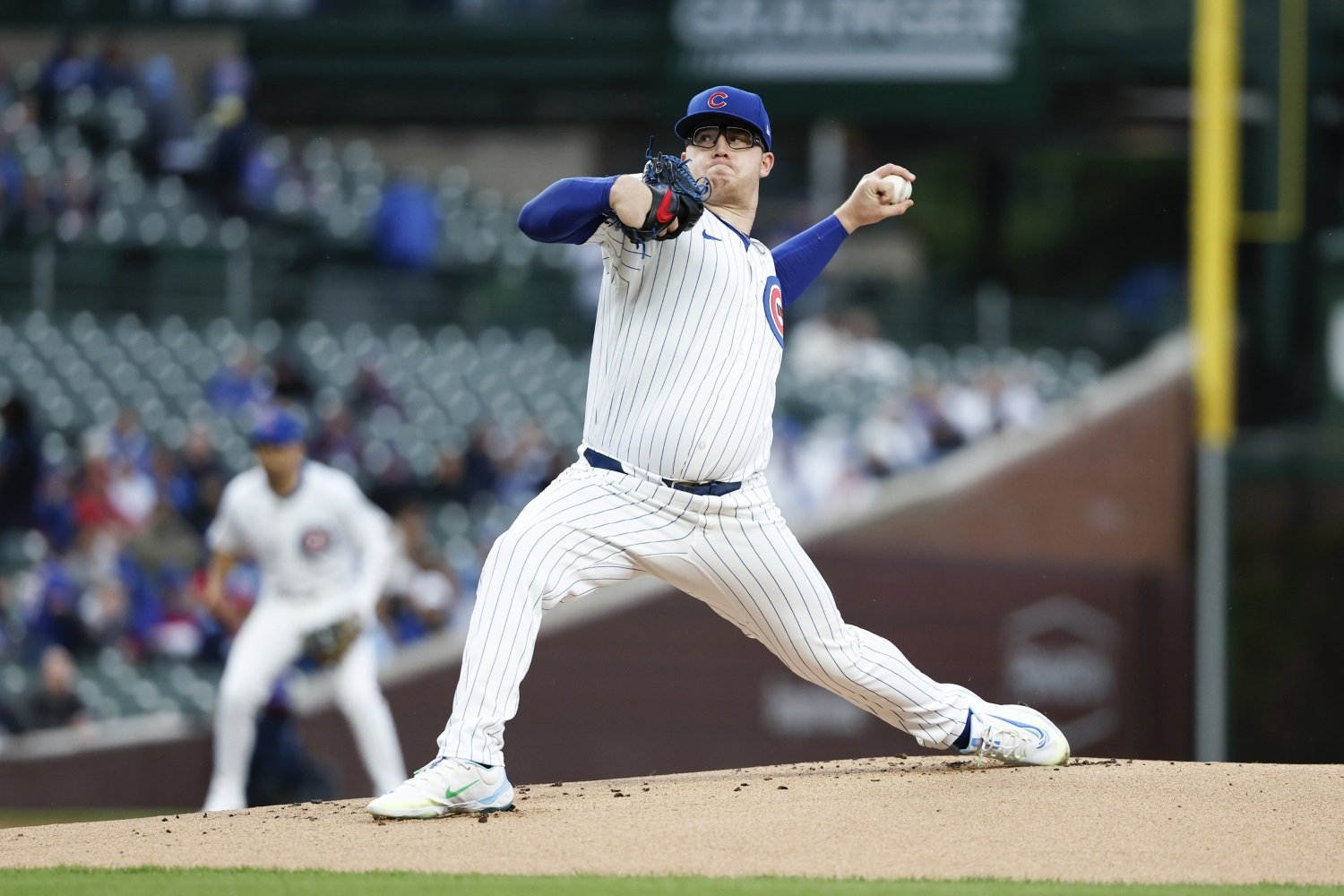 It's been a bad spring for forearms, and that usually means a bad spring, period. Forearm strains are one potential indicator (an imperfect but significant one) of an elbow issue, and in the modern game, most elbow issues are torn UCLs, which require some version of reconstructive surgery and anywhere from 10 to 18 months on the injured list. We're ahead of the pace of forearm injuries, league-wide, for any of the last four full seasons, and that's not even counting Jordan Wicks, whom the Cubs placed on the injured list with that designation Sunday. This isn't a Cubs problem; it's an MLB problem. That the problem isn't confined to the desperately thin Cubs rotation probably won't be much comfort to Cubs fans, though. Nor will the facts about how long pitchers tend to spend on the shelf with this injury, even when they avoid the scalpel. There have been 49 trips to the injured list with either a strain or tightness in the forearm in MLB over the last three years, and it's usually more than a month. Often, it's at least two. That's the bad news. The good news is, in some small but important ways, the Cubs might be the exception to that rule. They account for seven of the 49 data points in that sample over the previous three years, but they've returned their hurlers from this problem--especially their young hurlers--much, much sooner than the average. In 2021, they placed Trevor Megill on the injured list with forearm trouble, but they got him back in under five weeks. More importantly, last year, both Justin Steele (June) and Adbert Alzolay (September) landed on the shelf with that problem, but they returned in 15 and 19 days, respectively. Neither has needed surgery since, which is obviously the biggest victory and the best argument for proactive handling of such cases. Michael Fulmer (who ended up needing Tommy John surgery after the season) and Brad Boxberger are much less encouraging instances, of course, but in those cases, the Cubs were working with tired, veteran arms whom they knew had suffered major previous injuries before they acquired them. When they saw evidence or got a report from an important young pitcher that their arm wasn't responding the way they'd have liked, the team was quick to take them out of action and protect them from more severe injury, until they had a chance to recover and reset. It's hard to overstate the importance of doing this, and it's rare to see a team get it right--as evidenced not only by the much longer lines for most of the other similar injuries above, but by the rising surgery rates throughout the league. It's not easy to protect a pitcher from themselves, especially in this day and age, when pitching is so much about velocity. Wicks added some heat to his fastball this spring, which tends to come with an increased risk of injury, so it was very important that the team be cautious if any sign of that risk becoming reality emerged. It sounds like that's more or less what's happening here. Wicks sure seems optimistic, although pitchers have certainly felt misplaced confidence in this area in the past. By no means is Wicks out of the woods yet. Importantly, he will get an MRI on his elbow soon, and that could reveal much more damage than he believes is there. We also have to thread a needle here, by saying two seemingly dissonant things at once: The team deserves plenty of credit, for the way they've managed the arms of Steele, Alzolay, Wicks, and others, keeping their young hurlers healthy and amassing good organizational pitching depth. Their pitching development infrastructure, medical training staff, and sports science department (under Dr. Mike Sonne, who made huge inroads in the area of pitcher injury prediction and prevention even with deeply imperfect data during his time as a public analyst) seem to be communicating and cooperating effectively. The team was also negligent and culpable in not anticipating continued injury trouble, especially as they bring in more hard-throwing pitchers and try to boost the velocity of the guys they already have, and thus doing more to bolster their pitching depth this winter. Wicks going on the injured list hurts more because the team let Jordan Montgomery sign a shockingly team-friendly deal with a rival for the NL Wild Card, for instance. Ultimately, Item No. 1 is more important than Item No. 2, right now. It doesn't mean that they're safe; they could still suffer some major and devastating injuries almost at any moment. Right now, however, they've done right both by themselves and by Wicks. "The Tommy John ligament matures at about age 26," Dr. James Andrews said recently, on the occasion of his retirement after decades as one of baseball's foremost arm surgeons. "In high school, the red line where the forces go beyond the tensile properties of the [ulnar collateral] ligament is about 80 miles per hour." Jordan Wicks has been throwing harder than that since high school, and although his arm is now strong enough to withstand more force than that, he's still only 24 years old. Sitting 93 and touching 95 or 96 is almost certainly more than his arm could handle, without having some kind of reaction. That reaction has come, and the Cubs are doing their best to make sure it doesn't go from a reaction to an outright failure. Rest is the key. A pitcher whose arm begins to balk at the force they're using to throw can, by giving all the relevant tissues some time to recover, avoid disaster and build up their strength, so that their arm can better handle the same force in the future. That's the goal here. It's not a guaranteed outcome, but the Cubs have some recent successes to give them confidence in this approach, and it's the right way to attempt to solve the problem in front of them. Now, they just have to hope their pitching depth can withstand this stern April test.
 -
At a moment of dire need for a team battling mounting injuries, the big righthander has looked good and pitched well through two starts. His limitations remain, but so do his strengths. Image courtesy of © Kamil Krzaczynski-USA TODAY Sports No longer a spring chicken, the 32-year-old Jameson Taillon returned to the Chicago Cubs a bit less dynamic a pitcher than the team hoped they signed in late 2022. It's only been two starts, but Taillon seems not to have the same velocity with which he pitched most of last year. It's possible the back injury that delayed the start of his season is still having lingering effects, but it's also possible that the big righty will just continue to throw slower than he has for most of his career. That's not the end of the world. Taillon has pitched admirably around it, allowing just three runs in 10 2/3 innings so far. It helped that his re-introductory outing was against the lowly Marlins, but still, he's looked good. For one thing, though he's given up a tick in terms of velocity, he's gained a bit of rising action on that four-seamer, allowing him to stretch the zone vertically and give hitters a tough time in a different way. That's been an important development, as Taillon has sought to better neutralize left-handed batters this year. Last season, lefties hammered him, especially by piling up big power numbers. This year, the only home run he's allowed through two starts was to a right-handed batter (and even it was a bit of a cheapie). Lefties have still squared him up fairly often, but he's doing a better job of slowing down their bats. As we discussed multiple times last year, Taillon's pitch mix is always evolving, and he tried to do a lot of new things last year. This season, he seems to have found more of a comfort zone, and it's the mix that makes the most sense, given his movement patterns and velocity. Against righties, he mixes his four-seamer, his sweeper, and his cutter almost exactly evenly, and rarely throws anything else. Against lefties, it's mostly four-seamer and curveball, with a half-ration of cutters and a few other pitches that are just for show. Finding command of the sweeper and the right usage niche for the cutter took a while for Taillon, but he seems to be getting there. His cutter isn't one of those that stays close to the same plane as his fastball. He tried to use it like such a pitch last year, aiming it high and inside on left-handed batters, but neither the movement of the pitch itself nor his command of it made that workable. This year, he seems to have a better understanding of the fact that the pitch operates like a hard slider for him, and he's using it to change lanes against lefties and to keep righties from feeling confident in a read of either fastball or sweeper. Let's talk a little bit about spin direction, and seam-shifted wake. Taillon has always been pretty good at imparting and manipulating spin, and he's utilized that ability well in 2024. Out of his hand, his four-seamer and cutter have fairly close spin direction. So do his curveball and sweeper. Crucially, too, those spin directions mirror each other reasonably well, making it hard for the hitter to spot spin differences right out of the hand. By changing the seam orientation in his grips, though, Taillon can also create movement that isn't implied by the spin the batter sees out of the hand. This is just a new name for an old principle; it's the way sinkers and spitters, for instance, have always worked. Seam-shifted wake lets his cutter peel away from his four-seamer by much more than the spin direction would tell us, and separates the curveball (more influence from gravity) from the sweeper (less of that, and thus, more movement away from a right-handed batter). These are things Taillon worked toward throughout 2023, and he seems to have a firmer handle on them in 2024. That doesn't mean he's going to continue cruising, but his arsenal is taking a clearer shape and his early results look good. Pitching well as velocity abandons you is a tall order. Taillon has made some sound adjustments, though, and seems set to deliver the kind of stability and volume the Cubs' rotation needed so badly while he was absent from it. View full article
-
Despite Diminished Velocity, Jameson Taillon Showing Good Stuff So Far
Matthew Trueblood posted an article in Cubs
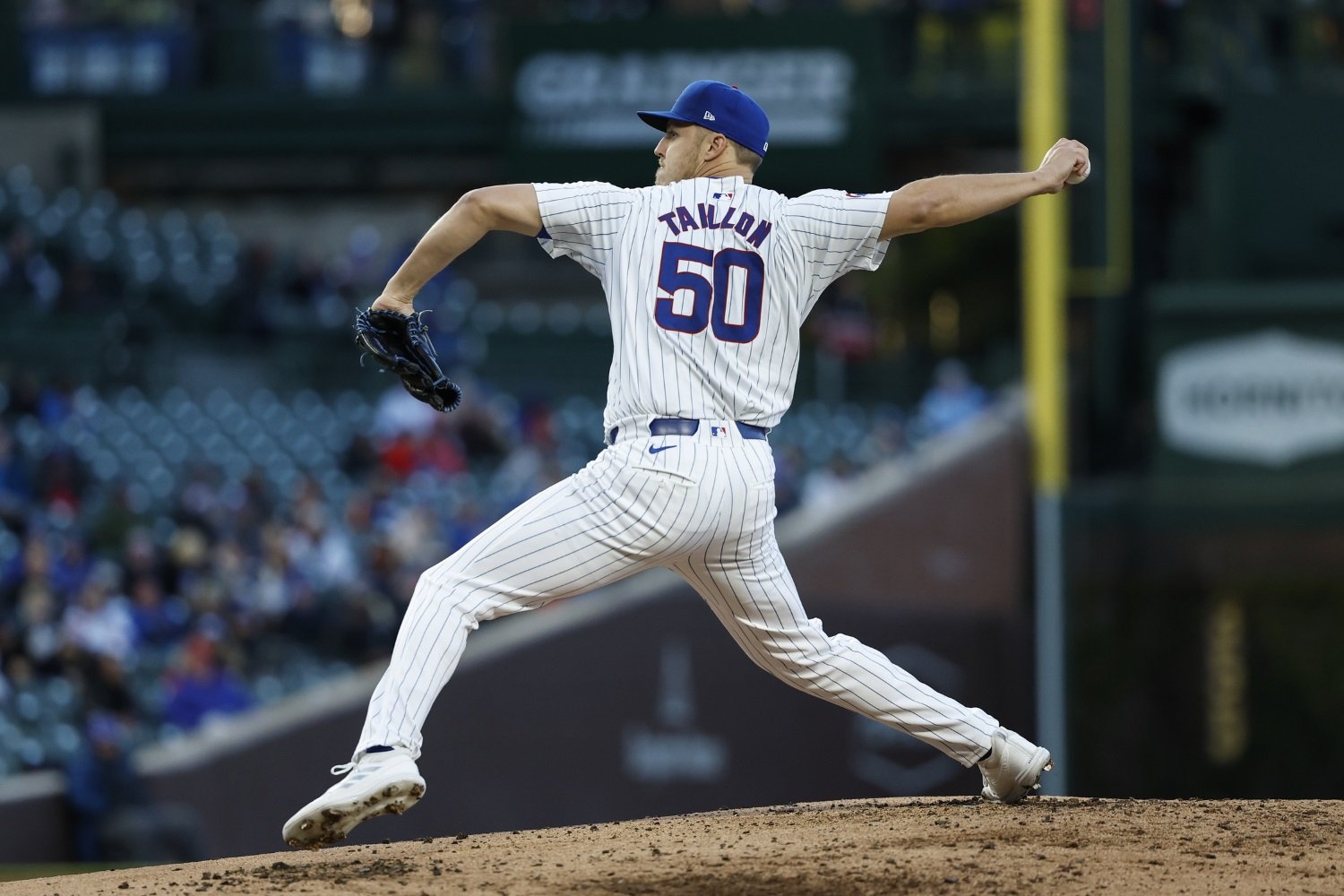 No longer a spring chicken, the 32-year-old Jameson Taillon returned to the Chicago Cubs a bit less dynamic a pitcher than the team hoped they signed in late 2022. It's only been two starts, but Taillon seems not to have the same velocity with which he pitched most of last year. It's possible the back injury that delayed the start of his season is still having lingering effects, but it's also possible that the big righty will just continue to throw slower than he has for most of his career. That's not the end of the world. Taillon has pitched admirably around it, allowing just three runs in 10 2/3 innings so far. It helped that his re-introductory outing was against the lowly Marlins, but still, he's looked good. For one thing, though he's given up a tick in terms of velocity, he's gained a bit of rising action on that four-seamer, allowing him to stretch the zone vertically and give hitters a tough time in a different way. That's been an important development, as Taillon has sought to better neutralize left-handed batters this year. Last season, lefties hammered him, especially by piling up big power numbers. This year, the only home run he's allowed through two starts was to a right-handed batter (and even it was a bit of a cheapie). Lefties have still squared him up fairly often, but he's doing a better job of slowing down their bats. As we discussed multiple times last year, Taillon's pitch mix is always evolving, and he tried to do a lot of new things last year. This season, he seems to have found more of a comfort zone, and it's the mix that makes the most sense, given his movement patterns and velocity. Against righties, he mixes his four-seamer, his sweeper, and his cutter almost exactly evenly, and rarely throws anything else. Against lefties, it's mostly four-seamer and curveball, with a half-ration of cutters and a few other pitches that are just for show. Finding command of the sweeper and the right usage niche for the cutter took a while for Taillon, but he seems to be getting there. His cutter isn't one of those that stays close to the same plane as his fastball. He tried to use it like such a pitch last year, aiming it high and inside on left-handed batters, but neither the movement of the pitch itself nor his command of it made that workable. This year, he seems to have a better understanding of the fact that the pitch operates like a hard slider for him, and he's using it to change lanes against lefties and to keep righties from feeling confident in a read of either fastball or sweeper. Let's talk a little bit about spin direction, and seam-shifted wake. Taillon has always been pretty good at imparting and manipulating spin, and he's utilized that ability well in 2024. Out of his hand, his four-seamer and cutter have fairly close spin direction. So do his curveball and sweeper. Crucially, too, those spin directions mirror each other reasonably well, making it hard for the hitter to spot spin differences right out of the hand. By changing the seam orientation in his grips, though, Taillon can also create movement that isn't implied by the spin the batter sees out of the hand. This is just a new name for an old principle; it's the way sinkers and spitters, for instance, have always worked. Seam-shifted wake lets his cutter peel away from his four-seamer by much more than the spin direction would tell us, and separates the curveball (more influence from gravity) from the sweeper (less of that, and thus, more movement away from a right-handed batter). These are things Taillon worked toward throughout 2023, and he seems to have a firmer handle on them in 2024. That doesn't mean he's going to continue cruising, but his arsenal is taking a clearer shape and his early results look good. Pitching well as velocity abandons you is a tall order. Taillon has made some sound adjustments, though, and seems set to deliver the kind of stability and volume the Cubs' rotation needed so badly while he was absent from it.
 -
The Chicago Cubs placed outfielder Cody Bellinger on the 10-day injured list Wednesday, after imaging revealed a fracture in his right ribcage. They're recalling top prospect Pete Crow-Armstrong, who will join the team in Chicago. Image courtesy of © Kamil Krzaczynski-USA TODAY Sports This is not the news any Cubs fan was hoping for. It didn't look like Cody Bellinger took the full force of his collision with the wall in left-center field Tuesday night, but he displayed visible discomfort for the rest of the evening and left the Cubs' 7-2 win early. After a CT scan Wednesday morning, the team confirmed a diagnosis of a fractured rib, according to manager Craig Counsell in his weekly segment on 670 The Score with Matt Spiegel and Danny Parkins. In Bellinger's stead, the team will get another look at top outfield prospect Pete Crow-Armstrong, but this is not the circumstance under which anyone wanted that to happen, and this probably isn't the right time for it, either. Crow-Armstrong is hitting just .203/.241/.392 at Triple-A Iowa this spring, striking out nearly 30 percent of the time and taking a swing-mode approach that shows none of the refinement the team hoped he would add to his offensive game over the past offseason. Defensively, of course, Crow-Armstrong remains a highly valuable potential asset, but it's unlikely that he's ready to hit at a competent level against the best pitchers in the world right now. Counsell said the team will continue to post the best possible lineup every day, and that Crow-Armstrong will be included when he's part of that. It's hard to imagine that he'll be in there often at all, given that premise, so this only further slows his seemingly stunted development. Losing Bellinger is a crisis much more urgent than the stalled progress of a prospect, though. With Seiya Suzuki already sidelined, the Cubs' lineup has gone from formidable to fangless in a hurry. They now need Christopher Morel to rapidly rediscover his lost form, and/or for Michael Busch and Dansby Swanson to step up and hit the way they were previously expecting Bellinger to. It's a lot to ask; probably too much. Crow-Armstrong was the easiest, most obvious substitute for Bellinger in the short term, but after yesterday's flurry of roster moves opened a 40-man spot, it wouldn't be a surprise if the team soon turns to David Peralta, instead. Peralta can opt out of his minor-league deal on May 1 if not called up sooner, and he's a more qualified hitter than Crow-Armstrong at this juncture. Carrying him would strain the team defensively, forcing Mike Tauchman to be the everyday center fielder and Alexander Canario to be ready to sub in defensively in either center or right almost every night, but it might be necessary, barring big and sudden strides from someone named above, or from Matt Mervis. There are ample opportunities for a hero to emerge, here. Miguel Amaya has flashed the ability to produce like a fifth or sixth hitter. He might need to start batting there. Ian Happ hasn't yet hit his stride this April; he might need to do so. Failing any of that, though, this could be the cinderblock that breaks the back of the camel that is the Cubs' offense. They're in the danger zone, unless and until they prove otherwise. Crow-Armstrong is a wild card, but not the good kind. This team just became very dependent on its pitching and defense, and not in a good way. View full article
-
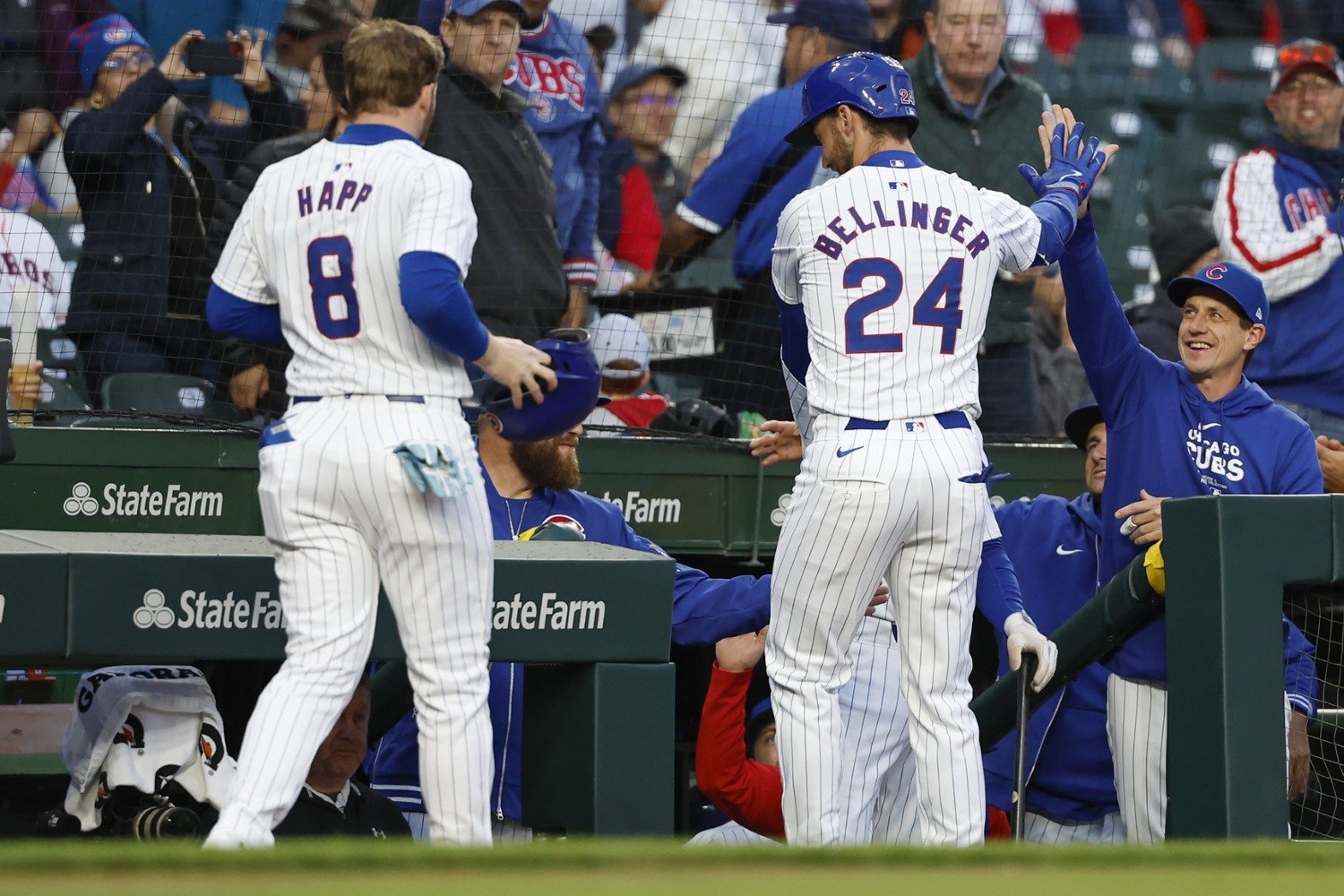 This is not the news any Cubs fan was hoping for. It didn't look like Cody Bellinger took the full force of his collision with the wall in left-center field Tuesday night, but he displayed visible discomfort for the rest of the evening and left the Cubs' 7-2 win early. After a CT scan Wednesday morning, the team confirmed a diagnosis of a fractured rib, according to manager Craig Counsell in his weekly segment on 670 The Score with Matt Spiegel and Danny Parkins. In Bellinger's stead, the team will get another look at top outfield prospect Pete Crow-Armstrong, but this is not the circumstance under which anyone wanted that to happen, and this probably isn't the right time for it, either. Crow-Armstrong is hitting just .203/.241/.392 at Triple-A Iowa this spring, striking out nearly 30 percent of the time and taking a swing-mode approach that shows none of the refinement the team hoped he would add to his offensive game over the past offseason. Defensively, of course, Crow-Armstrong remains a highly valuable potential asset, but it's unlikely that he's ready to hit at a competent level against the best pitchers in the world right now. Counsell said the team will continue to post the best possible lineup every day, and that Crow-Armstrong will be included when he's part of that. It's hard to imagine that he'll be in there often at all, given that premise, so this only further slows his seemingly stunted development. Losing Bellinger is a crisis much more urgent than the stalled progress of a prospect, though. With Seiya Suzuki already sidelined, the Cubs' lineup has gone from formidable to fangless in a hurry. They now need Christopher Morel to rapidly rediscover his lost form, and/or for Michael Busch and Dansby Swanson to step up and hit the way they were previously expecting Bellinger to. It's a lot to ask; probably too much. Crow-Armstrong was the easiest, most obvious substitute for Bellinger in the short term, but after yesterday's flurry of roster moves opened a 40-man spot, it wouldn't be a surprise if the team soon turns to David Peralta, instead. Peralta can opt out of his minor-league deal on May 1 if not called up sooner, and he's a more qualified hitter than Crow-Armstrong at this juncture. Carrying him would strain the team defensively, forcing Mike Tauchman to be the everyday center fielder and Alexander Canario to be ready to sub in defensively in either center or right almost every night, but it might be necessary, barring big and sudden strides from someone named above, or from Matt Mervis. There are ample opportunities for a hero to emerge, here. Miguel Amaya has flashed the ability to produce like a fifth or sixth hitter. He might need to start batting there. Ian Happ hasn't yet hit his stride this April; he might need to do so. Failing any of that, though, this could be the cinderblock that breaks the back of the camel that is the Cubs' offense. They're in the danger zone, unless and until they prove otherwise. Crow-Armstrong is a wild card, but not the good kind. This team just became very dependent on its pitching and defense, and not in a good way.
 -
Two pitchers landed on the 15-day injured list for the Chicago Cubs Tuesday, but rather than feeling like a further strain for a roster that has already sustained some major blows this spring, this feels like a chance for the team to establish some stability on the pitching staff. Image courtesy of © Matt Kartozian-USA TODAY Sports It's bittersweet to see Kyle Hendricks land on the injured list for the Cubs, and just bitter to see Drew Smyly accompany him there. Hendricks was overdue to be taken out of the rotation based on the way he's pitched so far in 2024, but probably does have some real physical issues with which to deal. His injury designation is "lower back", which could provide a partial explanation for his poor command. Smyly has a hip impingement, according to the team. With those two shelved, though, the team gets to bring back Hayden Wesneski, who impressed all observers with his showing in Arizona to close out their road trip last week. As our Brandon Glick documented today, there's real hope yet for Wesneski, albeit most likely in a relief role. Luke Little also gains a firmer foothold than he's yet enjoyed in his big-league tenure, going back to last season. That's a mixed blessing, because Little hasn't yet shown the consistency required of a high-leverage reliever, but he might now see more regular chances to prove himself in that kind of role. One way or another, the pitching staff gets to settle in a bit, after a tumultuous first 22 games. Jameson Taillon's delayed start was relatively easy to handle, but Justin Steele's Opening Day injury was a nasty shock to the system that is the staff, and Julian Merryweather's literal stress fractures created some severe metaphorical ones for a team already a bit shy on depth. Add to that the early struggles of would-be relief ace Adbert Alzolay and Hendricks's mortifying ineptitude, and the snowball just seemed to keep rolling up bigger. Steele is, perhaps, 10 days to two weeks from a return to the rotation. In the meantime, Taillon and Shota Imanaga have the leadership of the rotation, and the spots of both Jordan Wicks and Javier Assad are safe. The slot vacated by Hendricks could be filled, not by either Ben Brown or Wesneski, but by both, since the Cubs have 16 games to play before their next day off. A six-man rotation was almost certainly part of the plan for this stretch when the team looked ahead at it from the safety and calm of spring training, and although it will now be tougher to use one, that's still the best bet. Steele should return near the end of that window, and before he does, both Wesneski and Brown figure to get starts, with someone else (perhaps Julio Teherán) called up along the way, to stretch things out and give Imanaga (among others) the rest needed to get him to the end of the season in one piece. Meanwhile, the bullpen will see a bit more stability, because there are fewer options with which to play. Alzolay, Héctor Neris, and Mark Leiter Jr. figure to remain the high-leverage options, with Little and Yency Almonte in roving roles in front of them. The rest will depend on how Craig Counsell deploys Brown, Wesneski, and whomever else the team turns to. It sounds highly fluid, and it is, but after the tempest of a fortnight the staff has just undergone, it will feel placid by comparison. View full article
-
Cubs' Pitching Staff Loses Two Veterans, Gains Much-Needed Clarity
Matthew Trueblood posted an article in Cubs
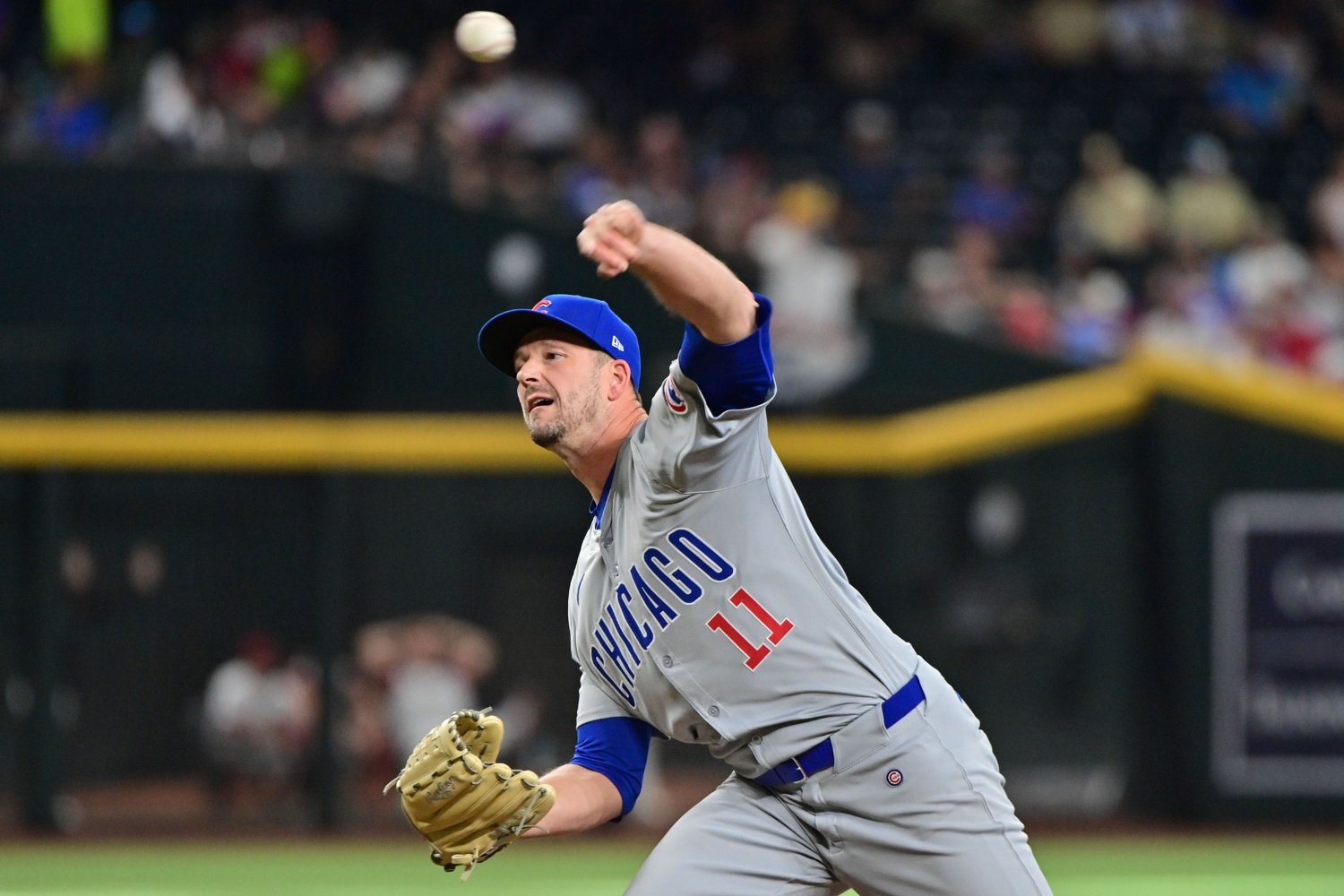 It's bittersweet to see Kyle Hendricks land on the injured list for the Cubs, and just bitter to see Drew Smyly accompany him there. Hendricks was overdue to be taken out of the rotation based on the way he's pitched so far in 2024, but probably does have some real physical issues with which to deal. His injury designation is "lower back", which could provide a partial explanation for his poor command. Smyly has a hip impingement, according to the team. With those two shelved, though, the team gets to bring back Hayden Wesneski, who impressed all observers with his showing in Arizona to close out their road trip last week. As our Brandon Glick documented today, there's real hope yet for Wesneski, albeit most likely in a relief role. Luke Little also gains a firmer foothold than he's yet enjoyed in his big-league tenure, going back to last season. That's a mixed blessing, because Little hasn't yet shown the consistency required of a high-leverage reliever, but he might now see more regular chances to prove himself in that kind of role. One way or another, the pitching staff gets to settle in a bit, after a tumultuous first 22 games. Jameson Taillon's delayed start was relatively easy to handle, but Justin Steele's Opening Day injury was a nasty shock to the system that is the staff, and Julian Merryweather's literal stress fractures created some severe metaphorical ones for a team already a bit shy on depth. Add to that the early struggles of would-be relief ace Adbert Alzolay and Hendricks's mortifying ineptitude, and the snowball just seemed to keep rolling up bigger. Steele is, perhaps, 10 days to two weeks from a return to the rotation. In the meantime, Taillon and Shota Imanaga have the leadership of the rotation, and the spots of both Jordan Wicks and Javier Assad are safe. The slot vacated by Hendricks could be filled, not by either Ben Brown or Wesneski, but by both, since the Cubs have 16 games to play before their next day off. A six-man rotation was almost certainly part of the plan for this stretch when the team looked ahead at it from the safety and calm of spring training, and although it will now be tougher to use one, that's still the best bet. Steele should return near the end of that window, and before he does, both Wesneski and Brown figure to get starts, with someone else (perhaps Julio Teherán) called up along the way, to stretch things out and give Imanaga (among others) the rest needed to get him to the end of the season in one piece. Meanwhile, the bullpen will see a bit more stability, because there are fewer options with which to play. Alzolay, Héctor Neris, and Mark Leiter Jr. figure to remain the high-leverage options, with Little and Yency Almonte in roving roles in front of them. The rest will depend on how Craig Counsell deploys Brown, Wesneski, and whomever else the team turns to. It sounds highly fluid, and it is, but after the tempest of a fortnight the staff has just undergone, it will feel placid by comparison.
-
- 1
-
-
- kyle hendricks
- drew smyly
- (and 2 more)
-
Where the Chicago Cubs are going, Garrett Cooper cannot follow. The former All-Star was designated for assignment Tuesday afternoon, as the team shakes up its roster. Image courtesy of © Patrick Gorski-USA TODAY Sports This was not akin to the abortive Luis Torrens stint last April, or to the Cubs' doomed effort to resurrect the hype around Clint Frazier in 2022. Garrett Cooper didn't blow any doors off, but in 41 plate appearances distributed raggedly across the first 22 games of the season, he batted a respectable .270/.341/.432. There were even a few big hits mixed in there. With his strikeout rate obdurately high and nothing new or exciting happening with his batted-ball data, though, the Cubs elected to move on. Even after Seiya Suzuki went down with an oblique strain during the team's West Coast swing, Cooper and the returning Patrick Wisdom made an awkward pair on the team's bench. Of Cooper, Wisdom, and Alexander Canario, the only credible outfielder in the bunch is the rookie Canario, so the Cubs had to make a decision between Cooper and Wisdom when they elected to call up Matt Mervis for a portion of their schedule chock-full of right-handed pitching. Calling up Mervis at all was a proactive decision, of course, but it's an understandable one. The offense needs another infusion of competence from the left side. Cutting Cooper instead of Wisdom is, if nothing else, a good reminder that Wisdom is a valued and valuable clubhouse presence. It's also an acknowledgment that, even if he's best confined to the infield corners and to DH as much as possible, he offers more versatility and defensive value than does Cooper. Unlike most in-season DFA fodder, Cooper could have a bit of a trade market. Look for the Cubs to shop him around a bit in the coming couple of days, before waiving and/or releasing him. We'll have more right here in this post as we learn more about the team's roster moves today. (UPDATE: Since there was an extra move involved and the newsworthiness added up, we instead break down the pitching side of today's roster maneuvering here. Check it out.) View full article
- 3 replies
-
- 1
-
-
- garrett cooper
- patrick wisdom
- (and 1 more)
-
 This was not akin to the abortive Luis Torrens stint last April, or to the Cubs' doomed effort to resurrect the hype around Clint Frazier in 2022. Garrett Cooper didn't blow any doors off, but in 41 plate appearances distributed raggedly across the first 22 games of the season, he batted a respectable .270/.341/.432. There were even a few big hits mixed in there. With his strikeout rate obdurately high and nothing new or exciting happening with his batted-ball data, though, the Cubs elected to move on. Even after Seiya Suzuki went down with an oblique strain during the team's West Coast swing, Cooper and the returning Patrick Wisdom made an awkward pair on the team's bench. Of Cooper, Wisdom, and Alexander Canario, the only credible outfielder in the bunch is the rookie Canario, so the Cubs had to make a decision between Cooper and Wisdom when they elected to call up Matt Mervis for a portion of their schedule chock-full of right-handed pitching. Calling up Mervis at all was a proactive decision, of course, but it's an understandable one. The offense needs another infusion of competence from the left side. Cutting Cooper instead of Wisdom is, if nothing else, a good reminder that Wisdom is a valued and valuable clubhouse presence. It's also an acknowledgment that, even if he's best confined to the infield corners and to DH as much as possible, he offers more versatility and defensive value than does Cooper. Unlike most in-season DFA fodder, Cooper could have a bit of a trade market. Look for the Cubs to shop him around a bit in the coming couple of days, before waiving and/or releasing him. We'll have more right here in this post as we learn more about the team's roster moves today. (UPDATE: Since there was an extra move involved and the newsworthiness added up, we instead break down the pitching side of today's roster maneuvering here. Check it out.)
 -
If I could distill the genius of Craig Counsell's managerial style into a single insight, it would be this: Though the season is long, each win--and only each win--shortens it a bit. Counsell's Chicago Cubs still have a long season left. Image courtesy of © David Banks-USA TODAY Sports Just as a prison bid only lasts two days, a baseball season only lasts 90. The problem is, you have to earn the right to cross off each of those 90 days. Every win draws a contending team more than 1% closer to its goal, but every loss is a day lost, without progress. A hot start is a wonderful blessing; it makes the rest of the season feel easy and slow. A poor first half, like the 2023 Cubs had, makes the final two months feel like finals week for an overwhelmed freshman, and it fries pretty much everyone. The 2024 edition of the Cubs has a lot of season left before them. They're only 13 games into their 90-game journey, and that's a bit frustrating, because it's easy to point to days where they missed promising chances to make progress. Counsell, a master of chasing each win with a keen understanding of its value without losing sight of the fact that 90 of them are needed, has had a secondary remit during this first stage of the campaign, and he's doing it brilliantly. The manager, who is the leader of the season expedition and is tasked with setting its pace, direction, and strategies, has gained the most valuable resource he has in that job: information. While not all the news is good, the Cubs have a lot of new insight into their team--especially their pitching staff. Entering the season, there was unavoidable and considerable uncertainty about the best ways to use a large number of arms in the organization. Counsell and company have resolved some of that uncertainty already, sometimes by being willing to learn the truth about a guy the hard way. Let's quickly break down what they know. Traditional Starters: Justin Steele, Shota Imanaga, and Jameson Taillon Though Steele got hurt early and Taillon is just now returning from being hurt, the coaching staff and front office knew they would need to rely on each to give them 150-plus innings, before the team even arrived for spring training. It was impossible to be sure what Imanaga would be capable of, though, before seeing how he responded to the different ball in MLB, the elements at Wrigley Field in April, and the thump in American lineups. He's passed that test with flying colors. These three can and must be used as full-fledged starters, with the goal of pitching six innings or more every time they take the mound. Twice Through the Order: Jordan Wicks, Javier Assad, Ben Brown As I wrote two weeks ago, it caused Counsell obvious consternation to try to stretch Assad past 15 outs in the team's loss to open their series in San Diego. He was trying not to lose a day, but he also wanted to know whether he could steal an out or two in such situations by keeping Assad in games even when the expected performance was less than optimal. Counsell seemed a bit more ok with trying to get an extra out from Assad Saturday against Miami, and had it not been for another Adbert Alzolay blowup, he'd have gotten away with that one. What he's learned now, though, is that even if Alzolay appears to be cruising, he can't be trusted to try the opposing lineup a third time. The same is true of Wicks, so far. His evolving pitch mix gives him upside, but there are growing pains happening right now. It's clear that those two are going to need to be removed after 18 batters (if not sooner) in all but blowout situations, for as long as either has a spot in the rotation. That's fine. Counsell can work with that. He just needed to give them each an audition or two to be sure of their capacity. Brown is a wholly different story. Although the team has twice turned to him for full-length starts and sought to get innings from him (within the limits of his preparation during spring), they never envisioned having him pitching as a traditional starter for a sustained period in 2024. That he's shown the ability to turn over the lineup card and keep rolling is a delightful surprise, and a sustainable one. He's suddenly an arm you could picture giving the team 110 or so innings, and the gaps into which he can be plugged on this staff make that kind of bulk especially tantalizing. Versatile Bullpen Arms and Once-Through Piggybacks: Kyle Hendricks, Drew Smyly, Hayden Wesneski The limitations of Assad and Wicks (and the reality that the team will sometimes want to protect Steele, Taillon, and Imanaga by lifting them an inning earlier than absolutely necessary) mean that the Cubs will need relievers capable of multi-inning appearances and half-starts, wherein they face as many as nine batters in a game. Entering the season, we knew they had one such pitcher, in Smyly. Unfortunately, it's now clear that that's all Hendricks can be, although he'll probably be asked to do it on a scheduled basis from the front ends of games, for however long he remains on the active roster. On the other hand, Wesneski has stepped forward and announced himself as more than playable in this type of role. His competition for the rotation in spring training always seemed doomed, and it was still an open question whether he would be a usable reliever against both left- and right-handed batters, in more than single-inning bursts. That's now a bit less in doubt, though as the third guy in line for those kinds of innings, he might be up and down a few more times this year. High-Leverage Single-Inning Arms: Héctor Neris, Adbert Alzolay, Mark Leiter Jr., Yency Almonte Yes, Alzolay still counts as a trusted high-leverage guy, although his role will have to be modified to reflect the reality of his home-run problem until he proves he's fixed it. Neris and Leiter look more likely to close games in the near future, though, and while the former has made a lot of fans nervous, he's the type of pitcher (long track record, varied repertoire, rubber arm) who only inspires confidence in a manager. Counsell has learned the texture of a Neris inning, and now knows how best to deploy him. Leiter comes with a bit thinner a manual than Neris, but he and Counsell already seem to have developed trust. Ditto for Almonte, who needs to be used in a more limited way (on multiple fronts) than does Leiter but will dominate in the right matchups and situations. Counsell probably has quite a bit more confidence in this group than the fan base does, even if (as the responsible party when any of them fail) he will always look dyspeptic when talking about it and be quicker on the trigger to make changes than he would be with others. Extras, to Be Used as Needed: Keegan Thompson, Luke Little, Daniel Palencia, José Cuas, Colten Brewer, Julio Teherán Counsell already knows Teherán, after having him in his rotation with Milwaukee in 2023. The rest of these have been thrust upon him, and they're neither consistent nor excellent, but he's figured out where each one's strengths and weaknesses lie. Thompson, Little, and Palencia have upward mobility from this group, given the stuff the latter two have shown and the way the former has pitched since being called up from Iowa. For now, though, Counsell has found niches for each where they can help him, but can't hurt him. Similar things are happening on the positional side. Counsell has started to lean toward Miguel Amaya at catcher, and he's gotten a long look at Christopher Morel at third base. Injuries to Seiya Suzuki and Ian Happ have helped him clarify his own thinking about the best hitters on the team. There's still much intel left to gather on both sides of the roster list, but Counsell already knows more about the team he's running than he did three and a half weeks ago. Learning it all might have cost the team a game, but most of the missed opportunities to shorten the season have been the players' fault. Counsell has made a couple of necessary sacrifices, but he's also trying to stay ahead of the calendar, and so far, the team is doing that well. Given all the self-knowledge they've gained in the process, still having 77 days left in this season--rather than 74 or 75--is an acceptable outcome. View full article
- 14 replies
-
- 1
-
-
- craig counsell
- jordan wicks
- (and 5 more)
