


Cubs Video
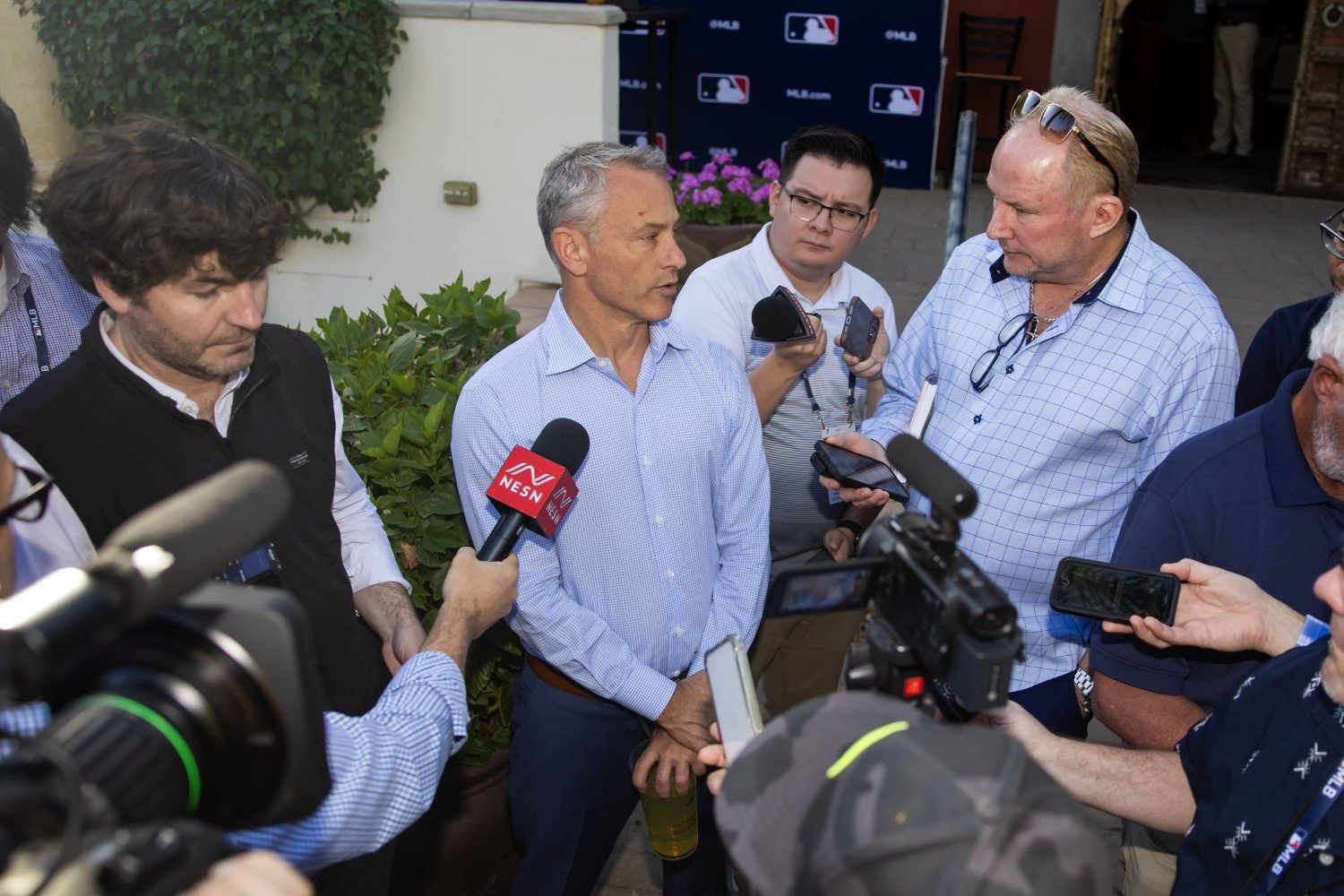
It's a dispositional thing, with Jed Hoyer. He spent almost a decade as Theo Epstein's top lieutenant and an occasional public mouthpiece, and he's been the man in charge for the Cubs since late 2020, and it's time to stop thinking he's been hiding the ball that whole time. Hoyer doesn't have the iron stomach needed to win bidding wars at the top end of the free-agent market. Heck, he doesn't even have an interest in trying it.
By Hoyer's reckoning, superstars don't win championships. He prefers the steady, serious, tireless work of building a great organization from top to bottom, with depth on the roster and excellent processes throughout baseball operations. It's an axiom for him. Even though he can recognize the need for high-end talent and will pursue it when the opportunity comes, he insists upon it being on terms friendly to his paradigm.
No one who thinks that way is ever going to end up with a Shohei Ohtani-caliber player again, except by the extraordinary and unforeseeable good luck of developing such a player. If we didn't understand that clearly enough when the Cubs bowed out of the negotiations for Ohtani himself, Sahadev Sharma of The Athletic underscored it on MLB Network by reporting that the Cubs have largely fallen out of the mix for Yoshinobu Yamamoto, too.
"I think both sides would love a reunion."@sahadevsharma speaks on the likelihood Cody Bellinger re-signs with the Cubs and which areas the organization will look to address this offseason. pic.twitter.com/KxciJtt2QA
— MLB Network (@MLBNetwork) December 13, 2023
Ohtani's contract was one thing. Whatever number you prefer to assign to it, its practical impact exceeds half a billion dollars, and although Ohtani has been one of the greatest players in baseball history for the last three years, there's risk the size of Lake Michigan in throwing that much money at him just as he begins the process of rehabbing from what amounts to a second Tommy John surgery on his elbow. He's also almost 30 years old, so even though he didn't elect a contract as long as those signed by Trea Turner and Xander Bogaerts last winter, he'll be nearly 40 when the deal wraps up.
None of that is true of Yamamoto. He's not a unicorn, and he's racked up heavier workloads than any MLB team would allow a pitcher to incur by the age of 25, but then again, he's only 25. He's one of the world's most accomplished starting pitchers, and signing him will come at a purely financial cost--no draft picks will be taken away. nor international free-agent spending ability curtailed, for whichever team signs him. If the Cubs won't venture past $300 million for him, for whom will they do so?
The answer should be obvious by now: it's no one. That's just not going to happen under Hoyer's leadership. Maybe that's ok. Epstein and Hoyer's second half-decade at the helm of the organization saw too much slippage in the good foundations they had laid during the first few years. They were betrayed and undermined by ownership, but they also failed. They were supposed to come to Chicago and turn an inconsistent franchise into a perennial contender, for the first time since before World War II. They didn't do it. Hoyer is trying to get that heavy lift right this time, and perhaps that's laudable.
It's possible to win without high-priced superstars. It might even be the wiser course in many cases, and especially so for the Cubs. They face the same stiff penalties other big-market teams do when they exceed the luxury tax thresholds, and they don't receive any of the little benefits that help small-market teams compete, but unlike every other big-market team in baseball (unless you count the White Sox as one), the Cubs are competing exclusively against small-market teams. They would take on a lot of risk by building around superstars, given the head start on sustainability the current rules give to the Reds, Brewers, Pirates, and even Cardinals.
Still, Cubs fans are within their rights to be frustrated by this way of doing things. Hoyer hasn't yet proved good enough at his more conservative way of building a team to be one of those teams who wins without stars, and it's not fun to root for a team who has such an overabundance of resources--many of them extracted directly from fans, via high prices on absolutely everything--and harbors them so jealously, when they don't even offer the solace of consistent playoff appearances.
The essential question is this: Is Hoyer's conservatism the only thing stopping the team from playing for Yamamoto-like boondoggles? If so, then fans can console themselves with the knowledge that they'll soon see either a turn in the team's fortunes or a change of its course. If it's just that Hoyer doesn't like putting too many eggs in one basket, then (if the team doesn't win something big, and soon) he'll be replaced by an executive who's more disposed to do so. Eventually, if it's just Hoyer between the Cubs and a Yamamoto, an Ohtani, or a Juan Soto, then either his plan will work, or it won't, and the next person will land the team's first true megadeal.
Alas, that's just one possibility, and the other is more pernicious. Hoyer probably isn't even asking Tom Ricketts for the right to truly swing with the Dodgers, Yankees, Mets, Phillies, and Padres on contracts like the ones the highest-profile free agents have signed over the last few winters. The nightmare scenario is one in which the Cubs can't get over the hump (without star power) in 2024 or 2025, Hoyer is dismissed, and a new executive tries to bring in the kind of generational player Hoyer neglected--only to be told that the owner was never going to permit that kind of major move, anyway.
The biggest drawback to Hoyer's conservatism is that it prevents us from updating our information on Ricketts's willingness to do what it takes to win. If the team keeps making good progress in its scouting and player development, maybe it will never matter that much. If the team turns Pete Crow-Armstrong and Cade Horton into the next Corbin Carroll and Gerrit Cole, they won't need to shell out $300 million to keep them. They'll have a chance to get aggressive and sign them long-term for half that much, or less. If not, though, we need to know whether Ricketts is even open to paying the irrational price the market sets on elite talent. We can't get that answer while Hoyer stands in the way.




.thumb.JPG.19c99ddd60a76edf810c77d321439828.JPG)


Recommended Comments
Create an account or sign in to comment
You need to be a member in order to leave a comment
Create an account
Sign up for a new account in our community. It's easy!
Register a new accountSign in
Already have an account? Sign in here.
Sign In Now