


Cubs Video
Conversations have swirled and eddied, surged and slowed in the 40 hours or so since the Cubs made the most surprising trade of the deadline period Sunday, sending Christopher Morel and two pitchers to the Rays in exchange for Isaac Paredes. A very strong gravity has pulled those conversations back to the same place over and over, though, and in that place, there's a clarity available to the perspicacious Cubs observer.
With Morel out the door, there is room on the roster in the medium term for all three of Ian Happ, Seiya Suzuki, and Cody Bellinger. Bellinger should slot in as the everyday right fielder next season, if and when he opts in to the $30 million to which he's entitled after an unremarkable second campaign with the Cubs. That project can even begin over the next two months, and run parallel to the equally important position switch that is moving Suzuki to designated hitter. As disappointing as the conclusion is, it's equally inescapable: Suzuki is not a credible right fielder. It will be a difficult transition, but the team needs to get him reps as an everyday DH, so he can acclimate to the mental rigors of that role.
No-trade clauses and a contract that is tantamount to one figure to lock Happ, Bellinger, and Suzuki in at the two corner outfield spots and DH for the next two and a half years. That struck me as an urgent problem about a month ago, but after the trade that both jettisoned the positionless Morel and added the sturdy Paredes as an everyday, above-average bat and third baseman, it's perfectly fine to have the three expensive veterans arrayed in the lineup every day. That's a sustainable plan, thanks to the Paredes deal.
Assuming he can stay a bit healthier and enjoy the consistency that has eluded him (sometimes because of those injuries, and other times partly because of the strain caused by his own defensive ineptitude), Suzuki can even be one of the true anchors every lineup needs. Here's the wrinkle: a playoff-caliber lineup really needs two such anchors. Suzuki being one is great news, but he'll do so while taking up the easiest position at which to find one.
Meanwhile, the team is committed (and again, this is good, not bad; it's just drawing certain lines around things and carving out the shape of their remaining need, piece by piece) to Michael Busch at first base and Paredes at third. Those two on the infield corners and Happ and Bellinger on the outfield corners form a fine supporting cast in any lineup, but none are that primary or secondary anchor for the lineup. What's left? Shortstop, second base, center field, and catcher. Somewhere up the middle of the diamond, where defense is supposed to steer most decisions, the Cubs have to find a stellar bat.
It won't be Dansby Swanson. At best, he'll recover to something like his form over the two seasons prior to signing with the Cubs, and be an average contributor from the bottom third of the batting order. Yet, he's very much locked into the position for the next few years, because of the team's financial obligations to him. One more slot in the order and spot on the diamond spoken for, and in a perfectly tenable way--but not the spectacular one the team needs.
A moment's pause: Paredes is a Super Two guy this year, and will get expensive in arbitration after being an All-Star in his first arb-eligible campaign. Suzuki, Happ, Bellinger, and Swanson all have competitive-balance tax salaries of at least $18 million per year. They're taking up money. We're really cutting a specific shape for the missing puzzle piece. It'll need to be a second baseman, a catcher, or a center fielder, and it'll have to be someone under a certain amount of team and cost control.
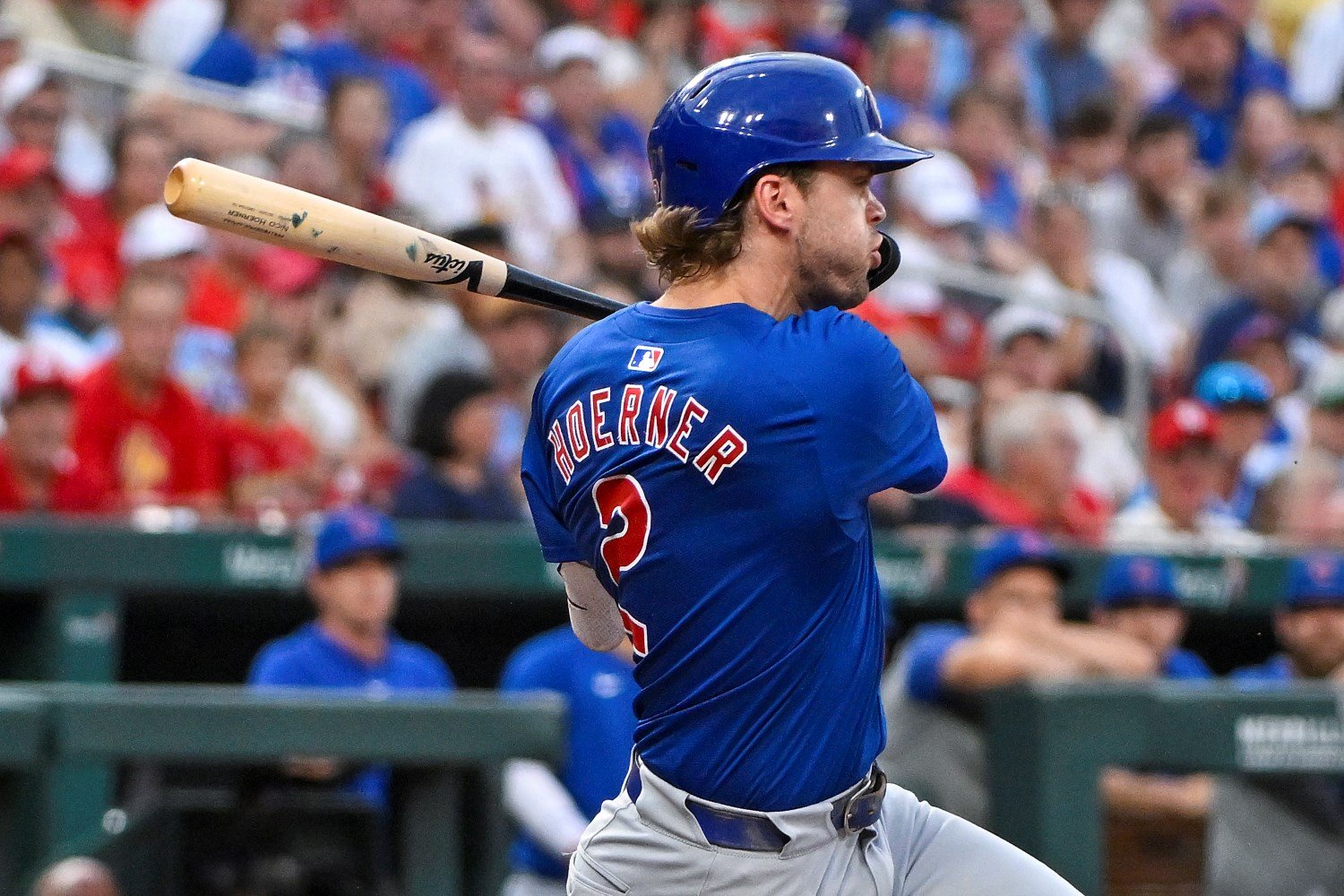
We come, then, to the incumbents at those positions: Miguel Amaya, Pete Crow-Armstrong, and Nico Hoerner. I think most people would agree that Hoerner is the best player in that mix and the one in which the team should have the most confidence; then Crow-Armstrong; then Amaya. On the other hand, Hoerner is by far the most expensive and least controllable of the trio. Paradoxically, though, because we've seen the warts of each of the others on such vivid display this year, Hoerner also has by far the highest trade value. For that matter, he's also the most replaceable, because it's so hard to find cromulent catchers and because the team is stacked with promising infielders in the minors, like Matt Shaw, James Triantos and Jefferson Rojas.
That's it. By reading this far, you've stepped all the way into the net. You're caught. We're in agreement. The Cubs need to trade Hoerner today.
His value will not be higher this winter. There are plenty of teams in need of low-grade offensive help and stability on the middle infield right now, and another hot finishing kick to the year won't fool teams into thinking he's a star leadoff hitter, anyway, because he did that last season and then came back merely average in 2024. Hoerner could fetch a really interesting collection of young talent, which could include a player who might rapidly blossom into the missing piece--the second lineup anchor--or could merely help the team acquire that player today, or over the winter.
It's not at all likely that the Cubs will find that missing piece in their 2025 lineup on Tuesday. They can make big progress toward that goal, though, by moving an eight-figure salary and/or stockpiling more high-upside talent. They can clear a path to playing time for players who need to be evaluated. They can chart their course toward Opening Day next year. It will feel like a deflating step back to trade away their most successful homegrown player since Happ, but moving Hoerner is the key intermediate step to finding and snatching up the unidentified player who will help anchor the lineup of the next great Cubs team, starting next spring.




.thumb.JPG.19c99ddd60a76edf810c77d321439828.JPG)


Recommended Comments
Create an account or sign in to comment
You need to be a member in order to leave a comment
Create an account
Sign up for a new account in our community. It's easy!
Register a new accountSign in
Already have an account? Sign in here.
Sign In Now