


Cubs Video
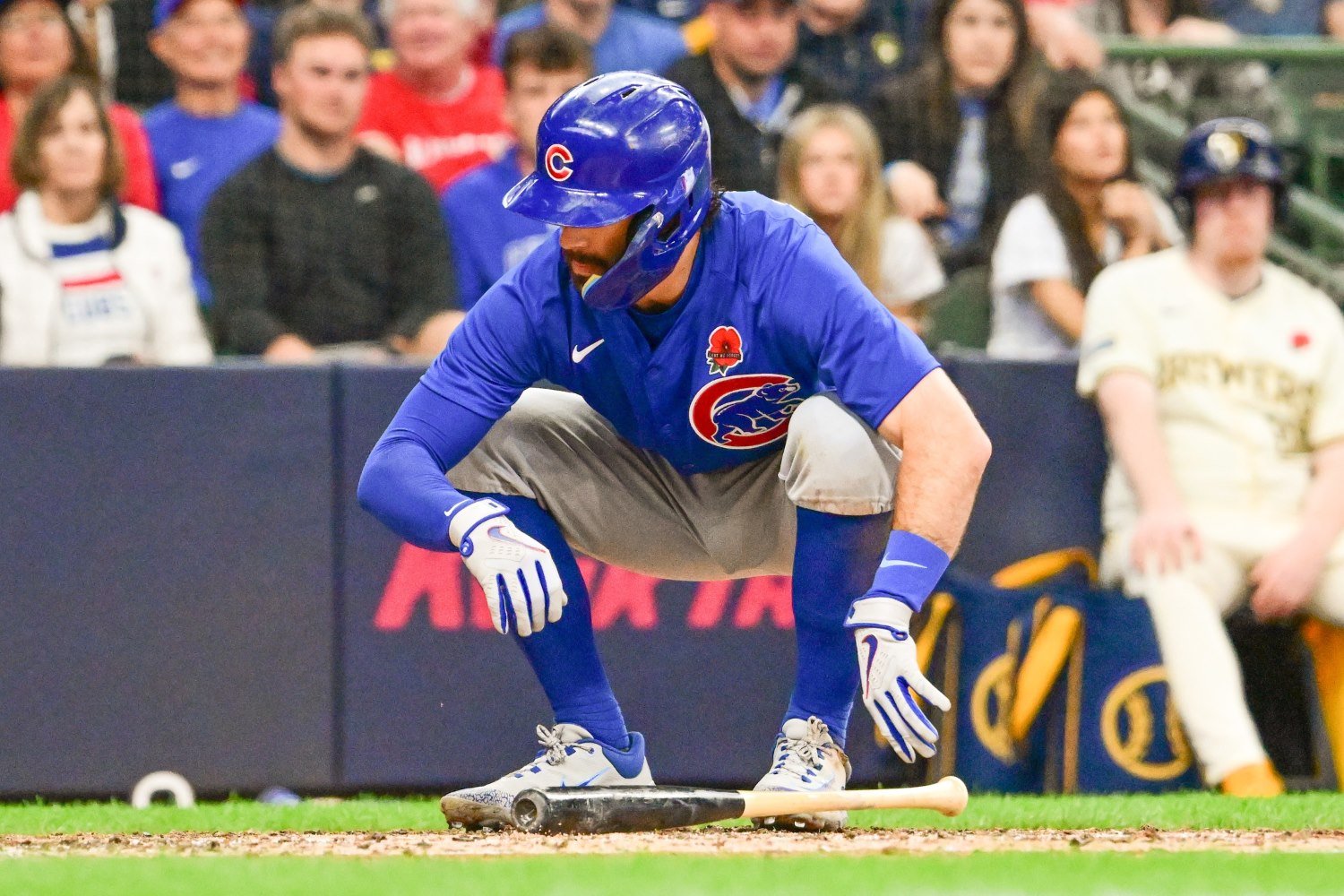
The Chicago Cubs signed Dansby Swanson for seven years and $177 million prior to the 2023 season. By that time, they had already watched Xander Bogaerts, Carlos Correa, and Trea Turner sign elsewhere, all for at least $100 million more than that. They targeted and courted Swanson, both because of his superb, fundamentally sound defense, and because they believed there was more in the tank for him at bat. While everyone understood that he wouldn't be as dynamic a player as the other elite shortstops in that free-agent class, the hope was that he was equal to them as a leader, a defender, and a brace for an overall contender.
It looks like they were wrong about Swanson, but more importantly, it looks like they were in the wrong mindset altogether when they chose to focus on him. Swanson turned 30 in February, and his defense--the linchpin of the argument for his value being commensurate with his salary, even in a vacuum--has taken a marked step back since roughly Aug. 1 of last year. He committed multiple key errors down the stretch last season, and that trend has continued this year, but just as telling are the tough plays he's only almost made over that span.
We can also use Aug. 1 as a dividing line when it comes to Swanson's bat. Since that date, in 399 plate appearances, Swanson is hitting .212/.288/.369. Even if he were playing elite defense at short, that would be underwhelming, but since he isn't, it's downright damaging. This team is reliant on Swanson, and he's not giving them anywhere near what they need. To get hurt by Swanson, right now, you have to make a glaring and easily avoidable mistake: throw him something on the inner half, above the thigh.

Swanson had 405 plate appearances through the end of last July, so if we take his 2023 season to that point and compare it to his performance in August, September, and the first two months of this year, we have his Cubs tenure cut almost perfectly in half. He's gotten just slightly worse in terms of strikeout and walk rates in the second timeframe, and his overall average exit velocity and launch angles look similar. However, through the end of last July, his exit velocity on batted balls between 10 and 35 degrees off the bat was 96.7 miles per hour. Since then, it's 93.4. He's lost the ability to drive the ball in the launch-angle band where hits happen, and as a result, both his power and his BABIP have cratered.
To be sure, what Swanson is giving the Cubs is preferable to what Javier Báez is giving the Tigers right now. He's been bad at the plate, but not nearly as bad as Báez, or as the Cubs' own catching corps. It's more underachievement than outright disaster, taken at face value.
When you widen the lens, though, you see the greater problem. The Cubs signed Swanson instead of one of the shortstops whom everyone knew would provide greater offensive punch. The only premise that made that a viable strategy was that they would surround him with better hitters than other teams would surround their more dangerous two-way shortstops with. Then, the team simply failed to do that. We know they had various levels of interest in high-end hitters over this past winter, but they didn't act boldly enough to land any of them.
Instead, they came into this season leaning on the hope of a repeat performance from Cody Bellinger; linear, positive development from Nico Hoerner, Christopher Morel, and Ian Happ; and nailing the instruction and matriculation of one or more rookie bats. Either that, or they needed Swanson to be a whole lot better at the plate than he was during the most important months of their 2023 season. Even if he were consistently hitting like the player he was early last year, the team wouldn't be a good offense. They'd just be less bad.
He hasn't been, and it was never fair to expect him to be. It's more fair to wonder why his defense is suddenly more average than awesome, and again, it looks like the franchise might have been overconfident in their assessment of his potential to age well at the most demanding defensive position outside of catcher, but that problem pales in comparison to the fact that they need Swanson to hit like a good team's fifth or sixth hitter, when he's only rarely demonstrated the ability to do that at any point in his career. The Cubs organization believes, persistently, that it can turn straw into gold when it comes to hitters. There is absolutely no empirical support for that self-belief.
Paying Swanson what they did only made sense as part of a broader plan to spend a whole lot of money in 2024, and throughout the second half of this decade. It now looks like they never had such a plan. Given that seeming reality, signing Swanson was a mistake, but also a grievous error. They set themselves and their $177-million man up for failure, and unless they're about to hire the Dodgers' hitting infrastructure away or pay very handsomely for the likes of Juan Soto and/or Pete Alonso this winter, failure is going to continue to come their way.





Recommended Comments
Create an account or sign in to comment
You need to be a member in order to leave a comment
Create an account
Sign up for a new account in our community. It's easy!
Register a new accountSign in
Already have an account? Sign in here.
Sign In Now