


Cubs Video
This MLB offseason has been marked by mixed signals. The owners want you to believe that the cliff they've reached with regard to traditional regional broadcasting is a crisis meriting major payroll reductions, but they have still spent lavishly--just not in traditional ways, or on traditional skill sets. It was inescapable that Shohei Ohtani would sign a record-setting megadeal, and he did, but it was curiously structured.
The other monster contracts of the winter went to Yoshinobu Yamamoto and Tyler Glasnow. Meanwhile, Blake Snell and Jordan Montgomery remain unsigned, and players like Cody Bellinger, Matt Chapman, and Shota Imanaga signed relatively modest contracts--at least relative to the expectations of the marketplace at the beginning of the offseason. Ohtani, Yamamoto, and Glasnow have one very obvious thing in common: their new team, the Los Angeles Dodgers. That the Dodgers are paying Glasnow upward of $35 million per year and guaranteed Ohtani and Yamamoto a total north of $1 billion on longer-term deals, though, reflects the fact that there was robust demand for all of them.
By contrast, Teoscar Hernández signed just a one-year deal with the Dodgers. There's something strange happening here. Teams are willing to spend big, but only on certain player types, and it's not just pitchers, because Snell and Montgomery are two of the best pitchers on the market, but they look poised to come in below expectations, whereas Yamamoto and Glasnow blew by even the most grandiose visions of their earning power.
Here's the best way I can figure it: in the modern game, over 25 years past the last round of expansion and with the league awash in pitchers with excellent stuff, teams are happy to pay for excellence from their hurlers, rather than mere durability. The replacement level has risen so far that no one wants to overpay for a guy just because he might give them 180 or 200 innings. Instead, they prefer to buy their frames in small batches, with high dominance quotients.
Snell is a tough nut to crack for multiple reasons, some having nothing to do with the broader market conditions. He's a unique starting pitcher in a unique situation. Montgomery really makes clear the state of affairs, though. He's not going to fan 30 percent of opposing batters, or run a 2.50 ERA, but he's almost automatic in terms of taking the ball when it's his turn and working deep into games, with average or better results. Eventually, he'll sign a robust deal of his own, but it won't come anywhere close to those signed by Yamamoto (in terms of total commitment) or Glasnow (in terms of annual average value). He's not as much in demand as a pitcher exactly like him would have been a decade ago.
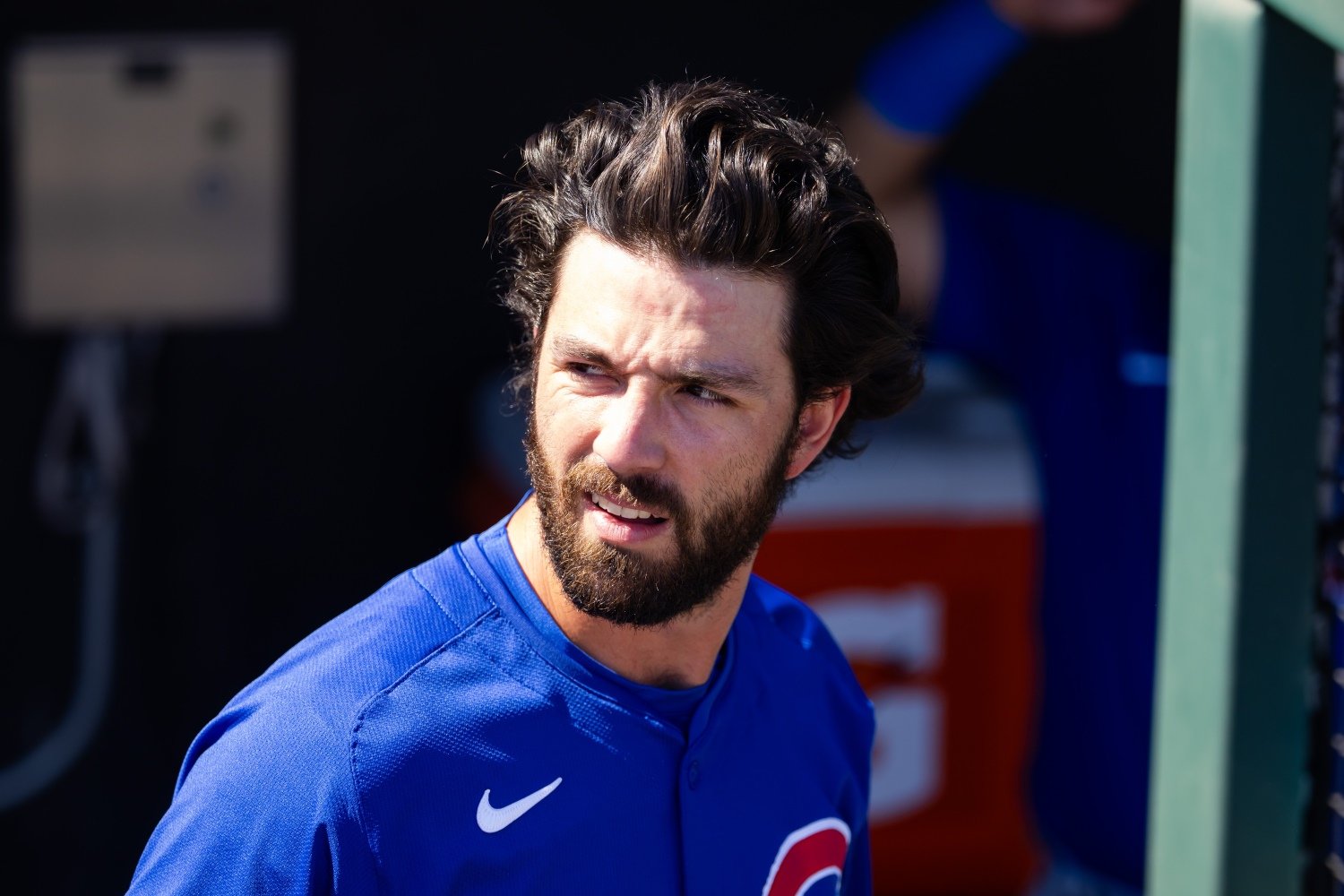
On the other hand, at the plate, teams are willing to pay a greater premium for durability than they used to. You can see that in the Cubs' pact with Dansby Swanson last winter, worth $177 million over seven years. Swanson is not a superstar, but he got paid at nearly a superstar rate because he routinely plays 160 games a year. As pitching staffs have expanded, benches have necessarily shrunk. Teams feel comfortable shuttling pitchers between Triple-A and MLB, because they can make decisions about who should go down or come up based on availability, but they get much more uneasy when it comes to trying the same juggling act with position players. After all, theoretically, a position player is available just about every day. How do you know when to option one and recall another?
It's not just about who's on the roster, though, but about how a player can be used within it. Swanson, with his stellar defense and steady offensive production, can be written into the lineup whenever he's healthy. Maybe he'll carry the team for a fortnight and then slump for a month, but he solves one position on an everyday basis and will reliably be one of the best nine options for the manager without regard to matchups or circumstances.
Platoons are hard to maintain in the modern game. Players who only post 130 times a year put pressure on the organization, by forcing them to play roster roulette on both sides of the runs ledger. It's not just Ohtani's unique duality of value that made him so desirable, but that he fits what teams want on both sides of the coin. He's a high-intensity, low-durability starting pitcher, and he's also an exceptionally durable designated hitter. He's averaged 635 plate appearances per year since the start of 2021, and he's looking likely to be in the lineup on Opening Day even after undergoing elbow surgery last fall.
In the past, teams valued hitters based on their brilliance and pitchers based on their capacity. Now, it seems like that wisdom has been inverted. Unless and until the league expands again, we should expect it to stay that way. That means that some market inefficiencies might exist, and perhaps the Cubs should be trying to exploit them. Montgomery, I would argue, is being systematically undervalued by a league gone mad for per-batter dominance on the mound. Mitch Garver, who signed a very modest two-year deal with the Mariners just before Christmas, is an example of a position player being undervalued because he's not capable of racking up 550 plate appearances.
There's a fundamental logic to the trends of the player market over the last few years, but it's not absolute, and if the Cubs are unwilling to match the Dodgers' huge offers to highly durable star hitters like Freddie Freeman or to overpowering but injury-vulnerable pitchers like Glasnow, they should zag against the league's zig and grab players like Montgomery, J.D. Martinez, and Brandon Belt. It's not too late to do that this very spring.
Do you approve of the job Craig Counsell is doing as Cubs manager?

Follow North Side Baseball For Chicago Cubs News & Analysis



-
 1
1


Recommended Comments
There are no comments to display.
Create an account or sign in to comment
You need to be a member in order to leave a comment
Create an account
Sign up for a new account in our community. It's easy!
Register a new accountSign in
Already have an account? Sign in here.
Sign In Now