


Matthew Trueblood
-
Posts
2,481 -
Joined
-
Last visited
-
Days Won
2
Content Type
Profiles
Joomla Posts 1
Chicago Cubs Videos
Chicago Cubs Free Agent & Trade Rumors, Notes, & Tidbits
2026 Chicago Cubs Top Prospects Ranking
News
2023 Chicago Cubs Draft Picks
Guides & Resources
2024 Chicago Cubs Draft Picks
The Chicago Cubs Players Project
2025 Chicago Cubs Draft Pick Tracker
2026 Chicago Cubs Draft Tracker: Picks & Bonuses
Blogs
Events
Forums
Store
Gallery
Everything posted by Matthew Trueblood
-
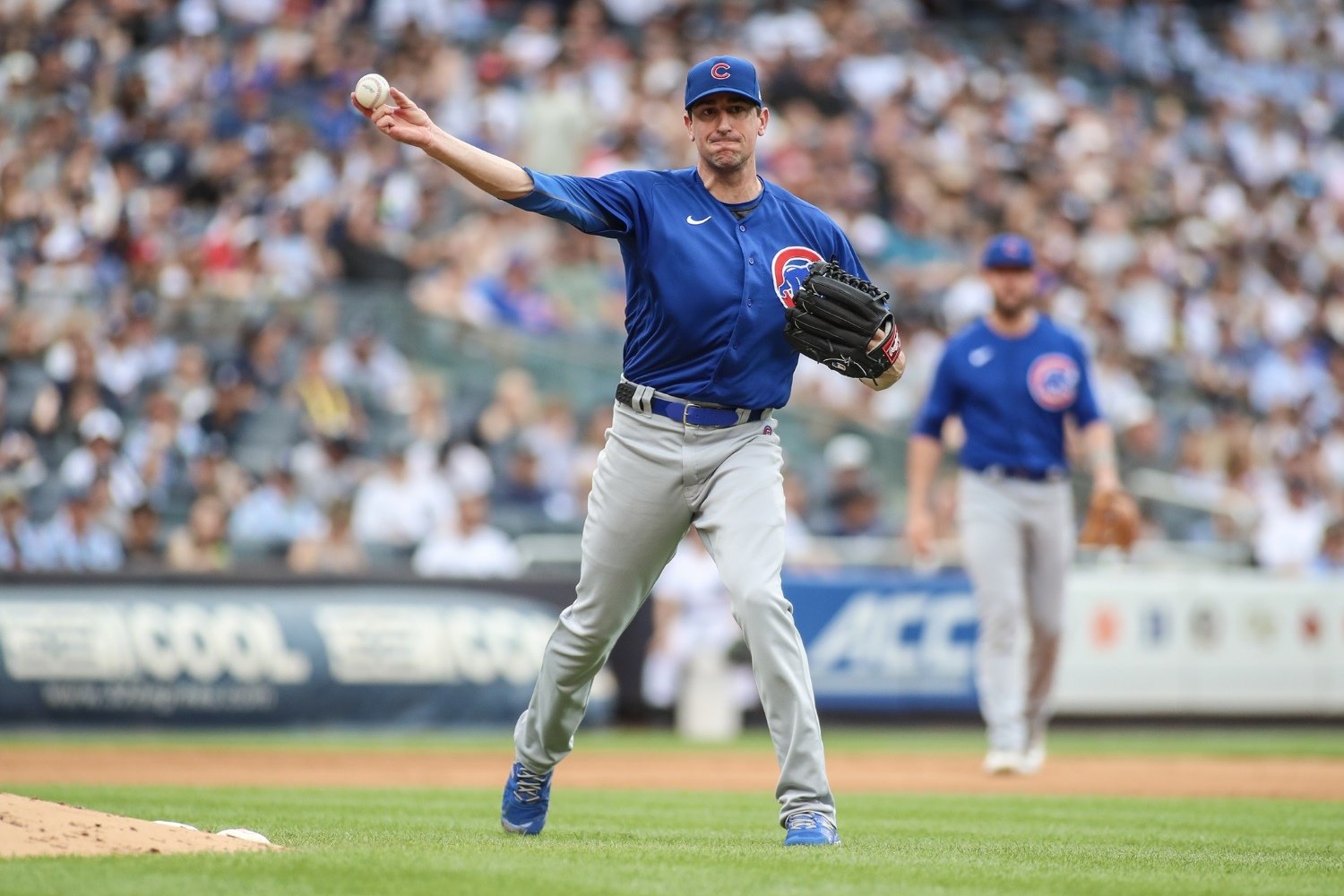 After Marcus Stroman opted out of his deal Saturday, the Cubs had an easy call on Kyle Hendricks's $16-million club option Sunday. It's still possible for the team to sign him to an extension that would lower his annual average salary and make it easier for the team to stay below whichever threshold of the competitive-balance tax they deem important, but that's no longer necessary, thanks to the $23.7 million the team saves thanks to Stroman leaving town. The Cubs also picked up a $6-million option on Yan Gomes Sunday, securing the services of the man who projects to be their starting catcher again in 2024. That decision was even easier than the Hendricks one, and didn't depend on Stroman, but it underscores the fact that the team is already gaining some clarity on the offseason ahead. In Hendricks, they lock up a third veteran starter, along with Justin Steele and Jameson Taillon. Add Jordan Wicks, Javier Assad, Hayden Wesneski, Ben Brown, and Cade Horton to that mix, and there's ample depth in the team's projected rotation. They now have more money to spend, and the fact that what they need is a genuine top-of-the-rotation arm is nearly inarguable. Gomes's return, too, further settles a fairly settled group. He joins Nico Hoerner, Dansby Swanson, Ian Happ, and Seiya Suzuki as fully locked-in members of the 2024 lineup. That still leaves four spots open, but both outfield corners and both middle-infield positions (plus catcher) are set. It's clear that the team needs two more good hitters, at least. It's clear at what positions those players need to show up: center field, the infield corners, and designated hitter. Gomes also acts as a stabilizing force and a buttress for the pitching staff, which figures to be more in transition this winter than the lineup. During the long, slow decline that followed the 2016 championship run, the Cubs' biggest problem was an inability to gain clarity on what they needed to do. Their core was too versatile, in one way of looking at it. They had too many good options, combined with too strict a mandate to win now. It compromised Joe Maddon and the rest of the coaching staff in their efforts to develop talent at the big-league level, and it made it harder for the front office to build the best possible team from one season to the next. Those were good problems to have, compared to a shortfall of talent, which is why the 2017-20 Cubs were all better (by winning percentage) than the 2023 team. However, this team now has a foundation on which to build, and they know what they need and how to execute the plan in a way they didn't half a decade ago. Bringing back Hendricks and Gomes helps set the stage for an offseason that will reshape this roster for the long term, and it highlights the good position they're in to do that well. It's important, now, that ownership invest heavily and the front office act aggressively over the next few months.
 -
NEWS: Marcus Stroman Opts Out, Shaking Up Cubs Rotation Etch-a-Sketch
Matthew Trueblood posted an article in Cubs
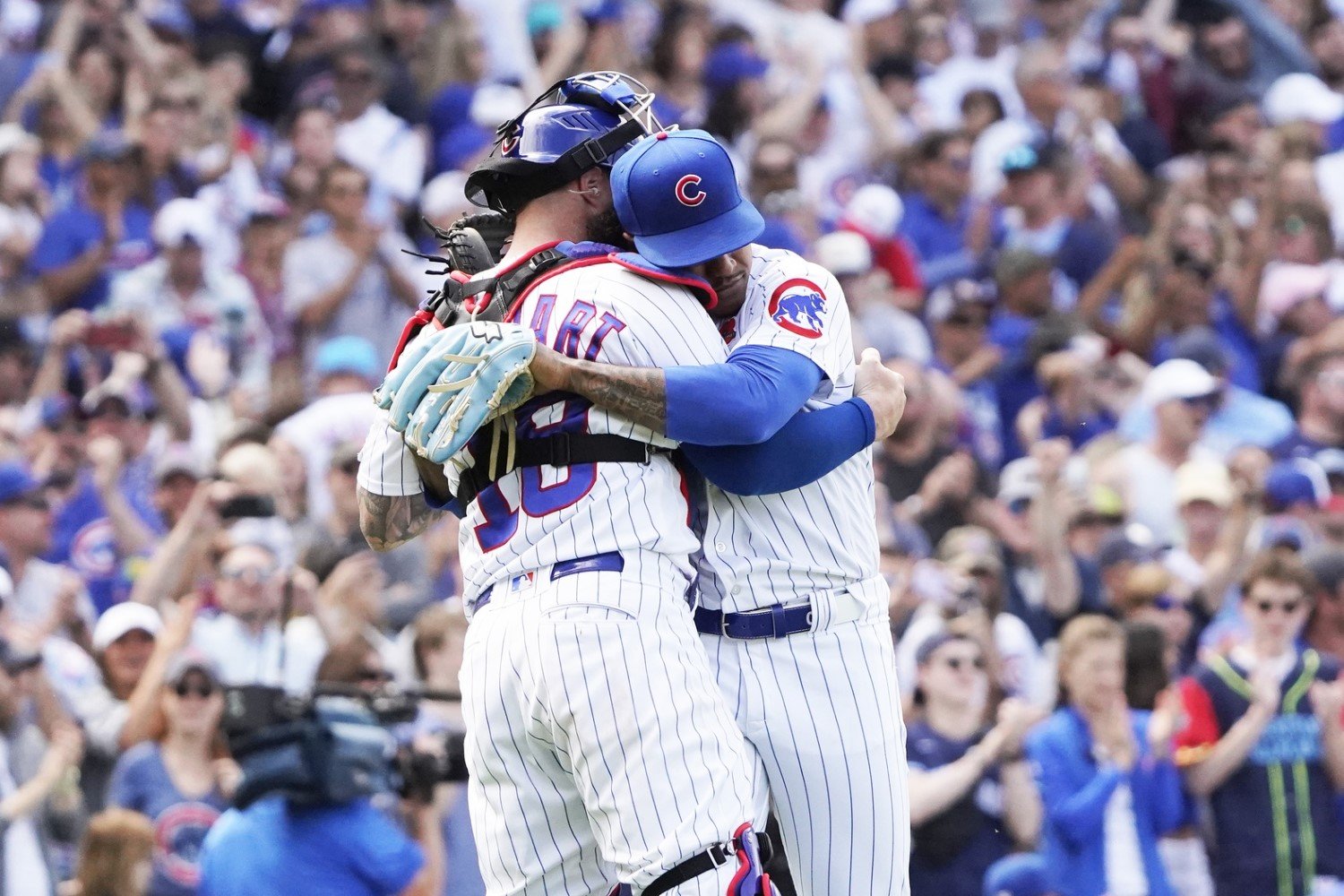 By the end of the 2023 regular season, several reports had suggested that Marcus Stroman would eschew the opt-out in his three-year deal with the Cubs and return to the team for 2024, at a $21-million salary. That made sense, given the brutal July and injury-stunted August and September that ruined a sterling half-season by the diminutive righthander. Now, however, Jon Heyman tweets that Stroman has exercised that option and become a free agent, after all. Because of the volume of whispers we heard indicating the opposite, this is hitting the web as surprising news today, but it was never clear why there was such certainty about it. Stroman will turn 33 next May. He's already received a qualifying offer, so he can't have that restrictor plate attached to him this time around. This is a chance to get a multiyear contract, and it could very well be his last one. Stroman probably won't find $21 million per year for his services on the open market, but he could make more guaranteed money this way than he would by taking the $21 million in 2024 and then hitting the market yet again next winter. In reality, he's never been a true ace, and his age, size, and stuff suggest that he doesn't have many years left as even a mid-rotation starter. His market this winter will reflect that fairly. Next winter, it might have done so cruelly. From the Cubs' perspective, this is bittersweet. Stroman had a frustrating 2022, but that was going to be a lost year, anyway. With a team trying to contend in 2023, he was the stopper throughout the first half. He had some dazzling outings, and seemed to rise to the occasion when the team needed him most. Later in the season, he tried to pitch through an injury (to the detriment of all), then spent a long time on the injured list and became the object of some heavy speculation during that period. On balance, though, he had the kind of campaign that should encourage Stroman watchers going forward. On the other hand, the Cubs need a true front-of-the-rotation starter, and Stroman isn't it. They wanted to retain Kyle Hendricks, but with $23.7 million spoken-for in their competitive balance tax payroll number in Stroman, that would have been tough to do. Now, they have some new openings, and some new flexibility. Justin Steele is still slotted into one of the top two spots in next year's starting rotation. It now seems overwhelmingly likely that Hendricks will (either on his club option, or on some short-term extension that replaces it) also be in the mix. Jameson Taillon figures to be the team's third or fourth starter, just ahead of Hendricks in the rotation hierarchy. With Stroman removed from the equation, there's more money to be spent to fill the front end. That has to mean that the Cubs will be more aggressive in their pursuit of the best available starters this winter: Yoshinobu Yamamoto, Blake Snell, Aaron Nola, Sonny Gray, and Jordan Montgomery. They still might not sign any of them, but the chances that they'll land one just rose. It also means that signing any of them would still leave the team some room to spend money upgrading their offense. It means that signing a free-agent starter of note is more likely, which makes trading for a controllable starter less so, which slightly increases the chances that they spend significant talent capital to acquire a big bat in trade--yes, perhaps even Juan Soto. Yamamoto would be the huge prize. He's the ace who would transform the Cubs' rotation, and taking over $20 million out of their projected rotation expenditure sheet makes landing him more plausible. That one is still a longshot, because the contract he's in position to command is gargantuan, but this unexpected development moves it into the realm of real possibility. This is a fun way to start the offseason, even if it comes with a frisson of grief over the unrealized promise of Stroman's often-thrilling Cubs tenure.
 -
Marcus Stroman opted out of the final year of his contract with the Chicago Cubs Saturday, creating some interesting new opportunities--but a bunch of new uncertainty--about the team's 2024 starting rotation. Because of the volume of whispers we heard indicating the opposite, this is hitting the web as surprising news today, but it was never clear why there was such certainty about it. Stroman will turn 33 next May. He's already received a qualifying offer, so he can't have that restrictor plate attached to him this time around. This is a chance to get a multiyear contract, and it could very well be his last one. Stroman probably won't find $21 million per year for his services on the open market, but he could make more guaranteed money this way than he would by taking the $21 million in 2024 and then hitting the market yet again next winter. In reality, he's never been a true ace, and his age, size, and stuff suggest that he doesn't have many years left as even a mid-rotation starter. His market this winter will reflect that fairly. Next winter, it might have done so cruelly. From the Cubs' perspective, this is bittersweet. Stroman had a frustrating 2022, but that was going to be a lost year, anyway. With a team trying to contend in 2023, he was the stopper throughout the first half. He had some dazzling outings, and seemed to rise to the occasion when the team needed him most. Later in the season, he tried to pitch through an injury (to the detriment of all), then spent a long time on the injured list and became the object of some heavy speculation during that period. On balance, though, he had the kind of campaign that should encourage Stroman watchers going forward. On the other hand, the Cubs need a true front-of-the-rotation starter, and Stroman isn't it. They wanted to retain Kyle Hendricks, but with $23.7 million spoken-for in their competitive balance tax payroll number in Stroman, that would have been tough to do. Now, they have some new openings, and some new flexibility. Justin Steele is still slotted into one of the top two spots in next year's starting rotation. It now seems overwhelmingly likely that Hendricks will (either on his club option, or on some short-term extension that replaces it) also be in the mix. Jameson Taillon figures to be the team's third or fourth starter, just ahead of Hendricks in the rotation hierarchy. With Stroman removed from the equation, there's more money to be spent to fill the front end. That has to mean that the Cubs will be more aggressive in their pursuit of the best available starters this winter: Yoshinobu Yamamoto, Blake Snell, Aaron Nola, Sonny Gray, and Jordan Montgomery. They still might not sign any of them, but the chances that they'll land one just rose. It also means that signing any of them would still leave the team some room to spend money upgrading their offense. It means that signing a free-agent starter of note is more likely, which makes trading for a controllable starter less so, which slightly increases the chances that they spend significant talent capital to acquire a big bat in trade--yes, perhaps even Juan Soto. Yamamoto would be the huge prize. He's the ace who would transform the Cubs' rotation, and taking over $20 million out of their projected rotation expenditure sheet makes landing him more plausible. That one is still a longshot, because the contract he's in position to command is gargantuan, but this unexpected development moves it into the realm of real possibility. This is a fun way to start the offseason, even if it comes with a frisson of grief over the unrealized promise of Stroman's often-thrilling Cubs tenure. View full article
-
You and @Transmogrified Tiger definitely hit the key note that I elected not to: it’s gotta be either him or Madrigal, hard to envision having both. Which I’d prefer comes down to who else occupies the bottom of the lineup and the bench. They’re such different pieces.
-
As they do around this time each year, MLB Trade Rumors recently published a (highly unofficial) list of players who could be non-tendered in November. One player on it could be a great fit for the Cubs' bench. Image courtesy of © Mitch Stringer-USA TODAY Sports A list of players who might be non-tendered is, inherently, full of guys with obvious and important flaws. After all, to be non-tendered is to have a team proactively elect to cut ties with you, even though they hold the right to keep you for less than the market price. Occasionally, a player becomes available through these means mostly because of the inflexibility of the arbitration system. Cody Bellinger was non-tendered last winter, because the Dodgers would have had to pay him roughly $20 million had they kept him. Those cases are rare, though, and there's no one like Bellinger on this year's version of the MLBTR list. Still, this is one of those times when one team's trash can easily become another's treasure. Many players get non-tendered because their projected arbitration salary doesn't fit with the role they would fill on that club, or with the club's budgetary constraints, rather than because they have nothing at all to contribute. To wit: Jorge Mateo of the Orioles is included. According to MLBTR, Mateo is in line to make just under $3 million in 2024. At that price, he's unlikely to stick around in Baltimore, where middle infielders suffuse the roster and they have plenty of other needs to which to allocate that money. Mateo's performance this past season put him in this position, as he hit just .217/.267/.340. That's his second year in a row with that hideous OBP in the middle of his slash line, which puts a hard ceiling on his value. He needs to be strictly a bench player for a serious contender. Yet, his batted-ball data points toward some regression (the good kind) for Mateo going forward. He's not a good hitter, but nor is he as bad as he looked this year. He chased outside the zone less often and made contact within it more often than ever in 2023, and he's capable of putting a charge into the ball now and then. Certainly, his gap power from the right side would play much better in Wrigley Field than at Camden Yards, where the recent changes to the dimensions in left field just kill hitters without elite power when they hit the ball in that direction. We've buried the lede here, though. Mateo isn't primarily useful for his bat, but for his glove and his legs. The winner of the 2022 Fielding Bible Award at shortstop, he was above-average there again this season, even as the team phased him out as the starter at the position. He has elite speed, which also makes him a passable center fielder. Coming off the bench, he might have his greatest value on the bases. Since the start of 2022, he's stolen 67 bases in 81 tries. Despite having his playing time slashed this year, he stole just three fewer bases than the year before (32, versus 35) and improved his success rate under the new rules. If any team can afford not to worry about middle infield defense, it's the Cubs. Dansby Swanson just became the successor to Mateo as the Fielding Bible Award winner at shortstop, and Nico Hoerner was a competent shortstop the year before that. He could slide over to short in case of an injury to Swanson. That's what they did last year, and backfilling second base with Christopher Morel didn't ding either the offense or the defense in an undue manner. On the other hand, let's look ahead to 2024 and consider how the team is likely to change. For one thing, Morel's name is hot on the hot stove, already. If he's not part of a blockbuster Juan Soto package, he could still be the headliner in a trade for a less dazzling but equally important player, like a controllable starting pitcher. If he does stay on the roster, it's likely to be because the team sees him as a viable third baseman and intends to try him as the regular at that spot. Either way, he's likely to be less available to slide to the keystone in moments of need in 2024. For that matter, Hoerner doesn't have a spotless health track record. There's no guarantee that he and Swanson wouldn't both be hurt at the same time. More importantly, Mateo's defensive utility isn't confined to short. While he's not a polished center fielder, he'd be able to make up for any mistakes with his speed in the small center fields of the NL Central's home parks, including Wrigley. For all the certainty Chicago has on the middle infield, center field is not nearly as confidence-inspiring. Barring injury, we know who will play the most innings in center for the 2024 Cubs: Pete Crow-Armstrong. What we don't know, and won't be able to ascertain until at least mid-March, is whether Crow-Armstrong is ready for the big leagues; how much he can be counted on even at the bottom of the order; or how long he might need to spend in Iowa to complete his development. As a stopgap for Crow-Armstrong and a platoon partner to both Mike Tauchman and Crow-Armstrong, Mateo could be a highly valuable piece at the edge of the roster. All of this depends on his offense bouncing back a bit, but he doesn't need to be a star. When he started, he'd bat eighth or ninth. He just needs to acquit himself at bat and excel in the field. Again, the speed is the main attraction here. The Cubs were eighth in MLB in steals last year, but as one of the older offenses in the league, they're in instant danger of backsliding in that department in 2024. They can't afford that. The new rules had a massive effect, and the future of offense in MLB is more speed-oriented than we could have predicted even a year or two ago. Having Mateo, even if he's confined to leveraged pinch-running appearances at times and doesn't contribute a high volume of steals, would make the offense more dynamic. As is true whenever a player is in danger of being non-tendered, the acquisition cost would be minimal here. It would have to be, in order for the deal to make sense, since Mateo isn't likely to crack the starting lineup. Still, it could be the kind of move that gives the front office greater flexibility on other, much larger moves, and it could give David Ross more interesting options in managing close games next year. What do you think? Is Mateo a good fit for the Cubs? Is speed part of your thought process as you look ahead to the 2024 team? Let's discuss. View full article
-
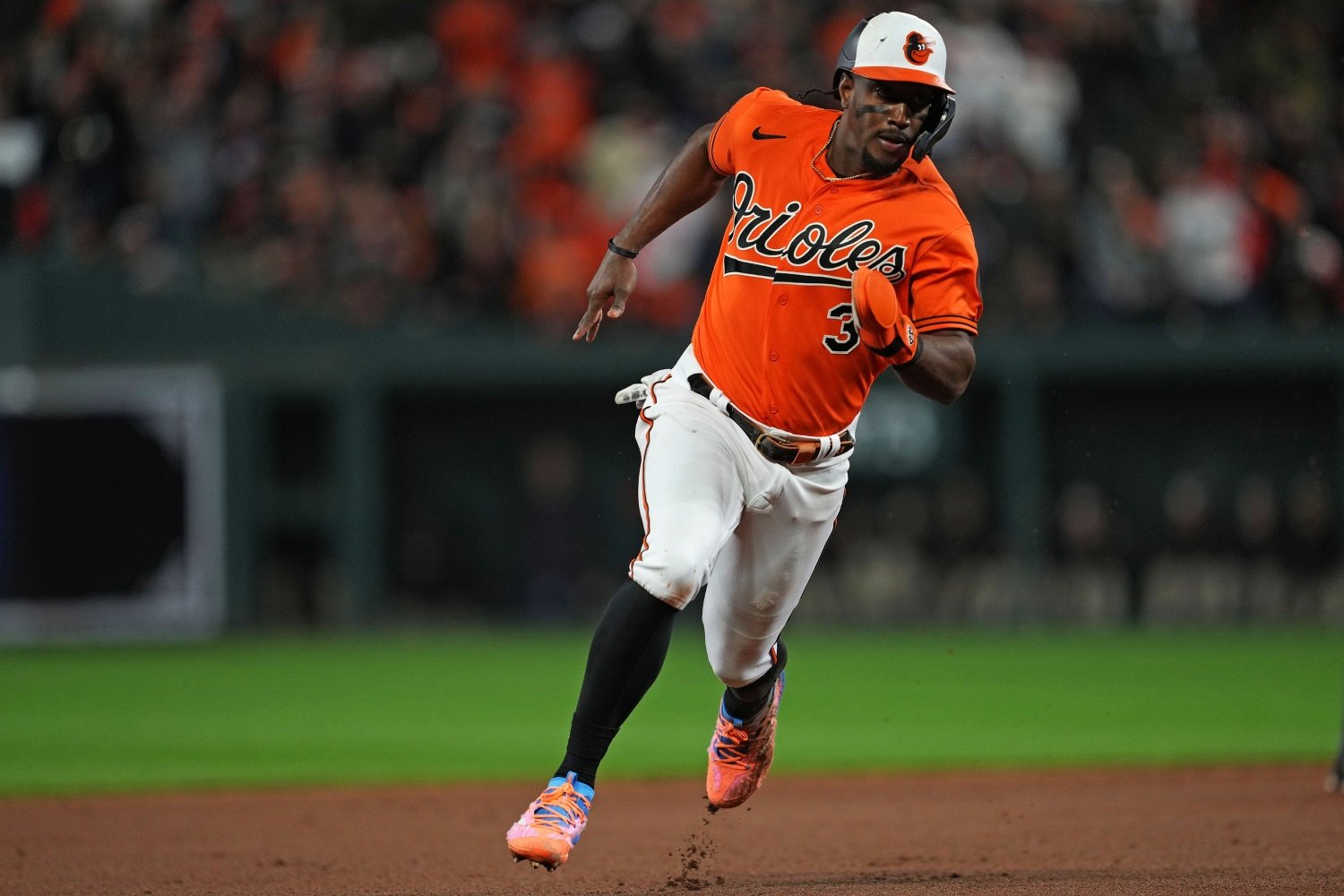 A list of players who might be non-tendered is, inherently, full of guys with obvious and important flaws. After all, to be non-tendered is to have a team proactively elect to cut ties with you, even though they hold the right to keep you for less than the market price. Occasionally, a player becomes available through these means mostly because of the inflexibility of the arbitration system. Cody Bellinger was non-tendered last winter, because the Dodgers would have had to pay him roughly $20 million had they kept him. Those cases are rare, though, and there's no one like Bellinger on this year's version of the MLBTR list. Still, this is one of those times when one team's trash can easily become another's treasure. Many players get non-tendered because their projected arbitration salary doesn't fit with the role they would fill on that club, or with the club's budgetary constraints, rather than because they have nothing at all to contribute. To wit: Jorge Mateo of the Orioles is included. According to MLBTR, Mateo is in line to make just under $3 million in 2024. At that price, he's unlikely to stick around in Baltimore, where middle infielders suffuse the roster and they have plenty of other needs to which to allocate that money. Mateo's performance this past season put him in this position, as he hit just .217/.267/.340. That's his second year in a row with that hideous OBP in the middle of his slash line, which puts a hard ceiling on his value. He needs to be strictly a bench player for a serious contender. Yet, his batted-ball data points toward some regression (the good kind) for Mateo going forward. He's not a good hitter, but nor is he as bad as he looked this year. He chased outside the zone less often and made contact within it more often than ever in 2023, and he's capable of putting a charge into the ball now and then. Certainly, his gap power from the right side would play much better in Wrigley Field than at Camden Yards, where the recent changes to the dimensions in left field just kill hitters without elite power when they hit the ball in that direction. We've buried the lede here, though. Mateo isn't primarily useful for his bat, but for his glove and his legs. The winner of the 2022 Fielding Bible Award at shortstop, he was above-average there again this season, even as the team phased him out as the starter at the position. He has elite speed, which also makes him a passable center fielder. Coming off the bench, he might have his greatest value on the bases. Since the start of 2022, he's stolen 67 bases in 81 tries. Despite having his playing time slashed this year, he stole just three fewer bases than the year before (32, versus 35) and improved his success rate under the new rules. If any team can afford not to worry about middle infield defense, it's the Cubs. Dansby Swanson just became the successor to Mateo as the Fielding Bible Award winner at shortstop, and Nico Hoerner was a competent shortstop the year before that. He could slide over to short in case of an injury to Swanson. That's what they did last year, and backfilling second base with Christopher Morel didn't ding either the offense or the defense in an undue manner. On the other hand, let's look ahead to 2024 and consider how the team is likely to change. For one thing, Morel's name is hot on the hot stove, already. If he's not part of a blockbuster Juan Soto package, he could still be the headliner in a trade for a less dazzling but equally important player, like a controllable starting pitcher. If he does stay on the roster, it's likely to be because the team sees him as a viable third baseman and intends to try him as the regular at that spot. Either way, he's likely to be less available to slide to the keystone in moments of need in 2024. For that matter, Hoerner doesn't have a spotless health track record. There's no guarantee that he and Swanson wouldn't both be hurt at the same time. More importantly, Mateo's defensive utility isn't confined to short. While he's not a polished center fielder, he'd be able to make up for any mistakes with his speed in the small center fields of the NL Central's home parks, including Wrigley. For all the certainty Chicago has on the middle infield, center field is not nearly as confidence-inspiring. Barring injury, we know who will play the most innings in center for the 2024 Cubs: Pete Crow-Armstrong. What we don't know, and won't be able to ascertain until at least mid-March, is whether Crow-Armstrong is ready for the big leagues; how much he can be counted on even at the bottom of the order; or how long he might need to spend in Iowa to complete his development. As a stopgap for Crow-Armstrong and a platoon partner to both Mike Tauchman and Crow-Armstrong, Mateo could be a highly valuable piece at the edge of the roster. All of this depends on his offense bouncing back a bit, but he doesn't need to be a star. When he started, he'd bat eighth or ninth. He just needs to acquit himself at bat and excel in the field. Again, the speed is the main attraction here. The Cubs were eighth in MLB in steals last year, but as one of the older offenses in the league, they're in instant danger of backsliding in that department in 2024. They can't afford that. The new rules had a massive effect, and the future of offense in MLB is more speed-oriented than we could have predicted even a year or two ago. Having Mateo, even if he's confined to leveraged pinch-running appearances at times and doesn't contribute a high volume of steals, would make the offense more dynamic. As is true whenever a player is in danger of being non-tendered, the acquisition cost would be minimal here. It would have to be, in order for the deal to make sense, since Mateo isn't likely to crack the starting lineup. Still, it could be the kind of move that gives the front office greater flexibility on other, much larger moves, and it could give David Ross more interesting options in managing close games next year. What do you think? Is Mateo a good fit for the Cubs? Is speed part of your thought process as you look ahead to the 2024 team? Let's discuss.
 -
There's no escaping the discussions right now on Cubs Twitter, or even on sports-talk radio in Chicago. A rumor this juicy only gains momentum, until it's either realized or obliterated. But does this one even make sense? We should be clear: Juan Soto is a phenomenal baseball player, and getting excited about the possibility of him becoming available in trades next month is only natural. There's no question that the Cubs' interest in the superstar is legitimate, because anyone who isn't at least interested in Soto doesn't understand baseball. Given the expectation that Jed Hoyer and his staff will be active this winter, any whiff of a fit between the Cubs and Padres on Soto has to be taken seriously, and once you start that kind of thing rolling, it only goes in one direction. No one is going to stop and go, "On second thought, let's just wait and see." That said, taking Soto-to-the-Cubs rumors seriously means engaging with some difficult questions. Here are the big ones. How great would the acquisition cost be? For any trade target, the most important variable is the talent the other team would demand in order to give up that player. Soto is, obviously, one of the dozen best hitters in baseball, and that caliber of player should net a lot of trade value. Just as obviously, though, players this good are only traded when some exigent circumstance exists, and those circumstances tend to tamp down the real trade value of that player. In this case, as in most recent precedents, the mitigating factor is that Soto is entering his final season of pre-free agency team control. He's going to make over $30 million via arbitration next year, which is why the suddenly penurious Padres have any interest in dealing him. That will eat into the trade value they can realize for him, not only because of the actual limit on value applied by the brevity of his remaining control but because of the perception that A.J. Preller has little choice but to take the best offer he can wangle. The recent precedents to which I just alluded are Mookie Betts and Francisco Lindor, and while they're illustrative, the thing they most clearly teach us is that this is an unpredictable process. Betts netted the Red Sox almost nothing useful. Alex Verdugo was the headliner of the return. He's since settled in as a sometimes maddening, occasionally exciting, broadly average player. The rest of the young talent they acquired was considered underwhelming at the time, and they've undershot even the projected outcomes since then. Lindor, by contrast, got Cleveland a haul that included both Andres Gimenez and Amed Rosario--the middle infield with which they won the AL Central in 2022. Rosario is now gone, but Gimenez is a long-term fixture in the Guardians lineup. He just won the Fielding Bible Award at second base. In each of these cases, the superstar on the block commanded an impressive young player in return, and in each case, the team trading that star away also got some solid but non-premium prospect talent to round out the transaction. You can credit Cleveland for better scouting than the Red Sox did in that process, but they also had the advantage of being a team who consistently behaves that way. Their front office has institutional memory and well-polished skills when it comes to trading expensive players as they near free agency. Two years before making the move, they knew they would be making it, and they laid groundwork and did long-term planning around that. The Red Sox were a team in chaos when they hurriedly cast off their franchise player. The Padres are certainly more like the latter than the former, at the moment, so mark a box in favor of them being in weak bargaining position. Don't lose sight of another important fact, though. Both the Dodgers (David Price) and the Mets (Carlos Carrasco) took on a second, semi-onerous contract in the deals that put Betts and Lindor in new places. If the Padres deal Soto without attaching someone like Jake Cronenworth (starting a seven-year, $80-million extension next year, at age 30, coming off his first below-average season with the bat) or Yu Darvish (who just posted a 4.56 ERA in the first season of an extension that will pay him $108 million over six years), they'll want more back than either Betts or Lindor cost. What does that mean for the Cubs? It must start with Christopher Morel, since his name keeps coming up so relentlessly in this process, but it's insane to think it could stop there. Even if Cronenworth or Darvish were included, Morel would be the equivalent to Verdugo in the Betts deal: a good first piece, but hardly the last. In any clean Soto-only trade, Morel is a co-headliner, along with someone like James Triantos, Jackson Ferris, or Ben Brown. There would be a third piece of some substance in such a package, too. That's a livable price, if Soto is the final piece of a championship puzzle. Is that the case here? What would a Cubs lineup that included Soto look like? No, it isn't. The Cubs are not Juan Soto away from becoming a dynasty again, even if they use their one year of team control to impress him so thoroughly that he signs an extension worth half a billion dollars to stay there for the rest of his career. It was pretty clear, by the disappointing end of this past campaign, that the team needs more than one more bat, and a couple of potent arms, too. To illustrate that, let's ponder a Soto-infused 2024 Cubs lineup: Nico Hoerner - 2b Juan Soto - dh Seiya Suzuki - rf Ian Happ - lf Dansby Swanson - ss Matt Mervis - 1b Yan Gomes - c Pete Crow-Armstrong - cf Nick Madrigal - 3b That's not a markedly better lineup than the team fielded for much of last season. It includes an upgrade from Cody Bellinger to Soto, but that comes at the cost of the downgrade from Morel to Mervis. To whatever extent this lineup would outscore the 2023 version, it would be mostly because Suzuki sustains his improvement from the final two months of this year. You're saying, "Matt, they wouldn't stop with acquiring Soto. And landing him would only redouble their urgency to re-sign Bellinger." You're probably right. Go ahead and swap Bellinger into Mervis's place, and swap him with Happ in the batting order. Now, that's a handsome lineup. It can hit, too. To do that, though, you plunged a bunch of long-term resources into what figure to be two very short-term improvements. Soto will be a free agent after just one year, and Bellinger suddenly takes up $25 million per annum on the payroll, guaranteed until the 21st century is in its 30s. Meanwhile, as Crow-Armstrong takes the requisite time to adjust to big-league pitching, the team is getting minimal production from the bottom of the order. Still, we do have a productive lineup here. We can even imagine it as a better one, if Cronenworth does come along for the ride with Soto. (Just don't expect the savings in acquisition cost to be as great, if he does, as they were for the Dodgers when they took on Price. Cronenworth's deal is a problem for San Diego, given their roster and their finances. It would be closer to asset than liability for the Cubs, and the magnitude of any change in price would reflect that fact.) It's awfully expensive, though, and the team is probably out of money already, with some major changes still needed on the pitching side. So, let's make the next logical maneuver: trade Ian Happ for young talent, balancing the ledgers somewhat in terms of both talent and money. Maybe Happ gets you a starter who can slot into the middle of the rotation. If not, dealing him creates monetary wiggle room. You could go sign a helpful arm with the savings from not paying him. That leaves us with: Hoerner - 2b Soto - lf Suzuki - rf Bellinger - 1b Swanson - ss Cronenworth - 3b Patrick Wisdom - dh Gomes - c Crow-Armstrong - cf Once you account for the opportunity to platoon Wisdom with Mike Tauchman, rotate Tauchman and Alexander Canario through the outfield spots to keep people fresh, and slide Bellinger or Hoerner up the defensive spectrum in case of injury, this is an exciting and dynamic lineup. Kevin Alcantara and Matt Shaw are probably still in the organization. Maybe Owen Caissie is, too. By the stretch run, this could be an elite offense, with star defenders up the middle (including, perhaps, Miguel Amaya, unseating Gomes as the regular backstop). We still have the problem of being very expensive, and spending so lavishly on Bellinger probably precludes you from dreaming much on retaining Soto at the astronomical number we all know he'll find next winter. This is a championship-caliber club, though, if things break right--especially since we can assume the pitching staff got a bit better in the process. Is all of this feasible? My final analysis, then, is that a Soto pursuit makes ample sense for this team. It's just that, at least at this early stage, the excitement has far outrun rational expectations. I just laid out a path to making a Soto deal truly helpful that includes not only winning the lively sweepstakes for him, but re-signing a player to a deal worth more than $150 million, and trading a fan favorite who just signed a contract extension six months ago. To call it a long shot would be a nigh criminal understatement. If you're especially bullish on Happ, Hoerner, Crow-Armstrong, and Gomes, and if you believe the Ricketts' budget for 2024 is going to approach $275 million, then you don't need to dream on this complicated, gilded trifecta of moves--although, potentially, we're also talking about a fourth move, offscreen for now, in which the team lands a top-flight pitcher. If you think Bellinger can repeat what he just did in 2023, then re-signing him is so desirable as to feel almost necessary, and doesn't feel like a complication in a scheme to land Soto--but rather, like a bonus. All of that is fair and valid. Still, the needle the Cubs would be attempting to thread by pegging their winter strategy to a Soto trade has an eye smaller than Madrigal's pinky toenail. It would require an improbably risky trade by a risk-averse front office; a big investment by an ownership group that has been unpredictable and often stingy; and better player development and roster management at the big-league level than they've gotten at any time since 2016. Soto is a historic talent, and it's an absolute requirement that the Cubs explore landing him if that's even a remote possibility. For the moment, though, 'remote' should get more emphasis than 'possibility' when you ponder these rumors. View full article
-
What Would a Juan Soto-Centered Cubs Offseason Look Like?
Matthew Trueblood posted an article in Cubs
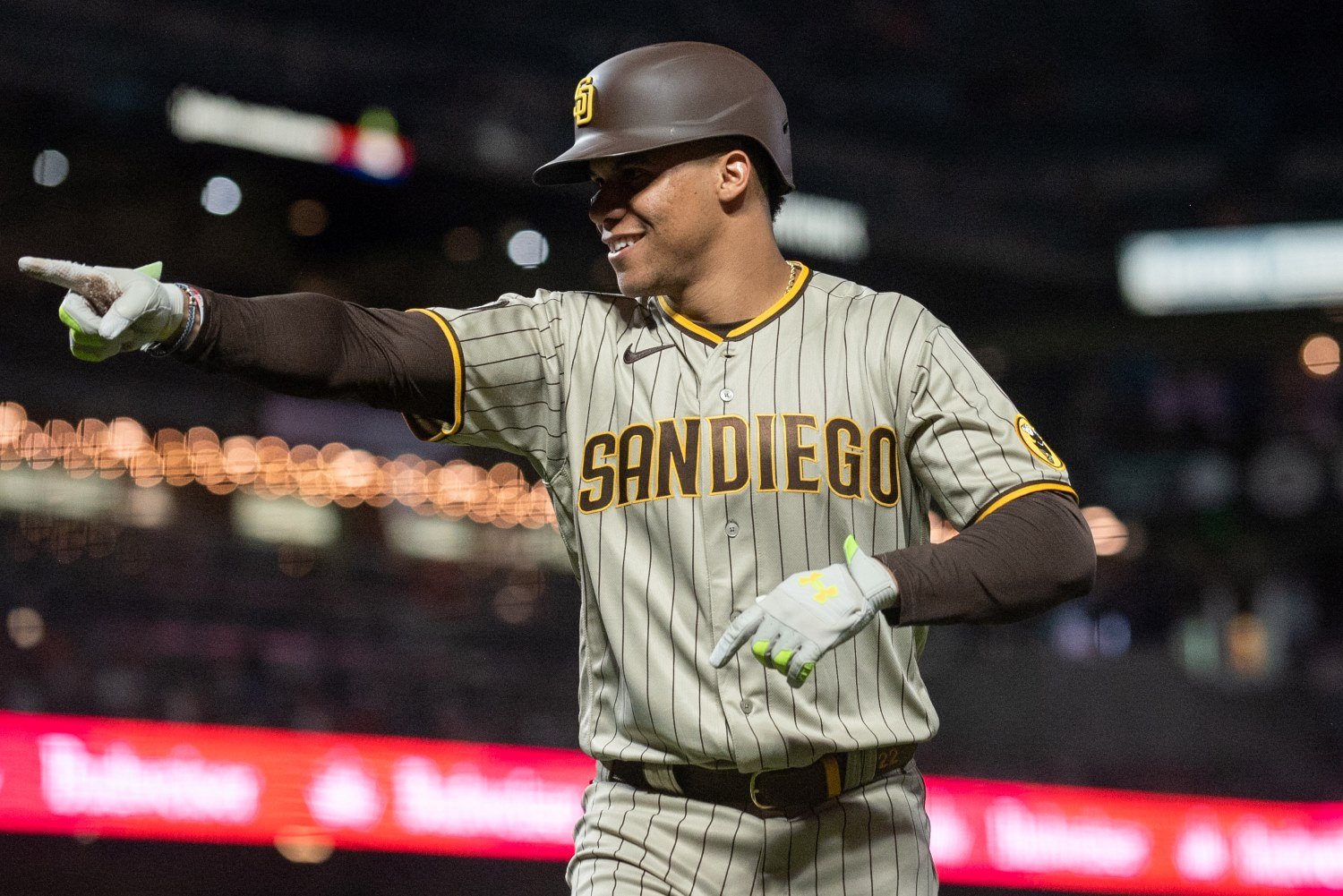 We should be clear: Juan Soto is a phenomenal baseball player, and getting excited about the possibility of him becoming available in trades next month is only natural. There's no question that the Cubs' interest in the superstar is legitimate, because anyone who isn't at least interested in Soto doesn't understand baseball. Given the expectation that Jed Hoyer and his staff will be active this winter, any whiff of a fit between the Cubs and Padres on Soto has to be taken seriously, and once you start that kind of thing rolling, it only goes in one direction. No one is going to stop and go, "On second thought, let's just wait and see." That said, taking Soto-to-the-Cubs rumors seriously means engaging with some difficult questions. Here are the big ones. How great would the acquisition cost be? For any trade target, the most important variable is the talent the other team would demand in order to give up that player. Soto is, obviously, one of the dozen best hitters in baseball, and that caliber of player should net a lot of trade value. Just as obviously, though, players this good are only traded when some exigent circumstance exists, and those circumstances tend to tamp down the real trade value of that player. In this case, as in most recent precedents, the mitigating factor is that Soto is entering his final season of pre-free agency team control. He's going to make over $30 million via arbitration next year, which is why the suddenly penurious Padres have any interest in dealing him. That will eat into the trade value they can realize for him, not only because of the actual limit on value applied by the brevity of his remaining control but because of the perception that A.J. Preller has little choice but to take the best offer he can wangle. The recent precedents to which I just alluded are Mookie Betts and Francisco Lindor, and while they're illustrative, the thing they most clearly teach us is that this is an unpredictable process. Betts netted the Red Sox almost nothing useful. Alex Verdugo was the headliner of the return. He's since settled in as a sometimes maddening, occasionally exciting, broadly average player. The rest of the young talent they acquired was considered underwhelming at the time, and they've undershot even the projected outcomes since then. Lindor, by contrast, got Cleveland a haul that included both Andres Gimenez and Amed Rosario--the middle infield with which they won the AL Central in 2022. Rosario is now gone, but Gimenez is a long-term fixture in the Guardians lineup. He just won the Fielding Bible Award at second base. In each of these cases, the superstar on the block commanded an impressive young player in return, and in each case, the team trading that star away also got some solid but non-premium prospect talent to round out the transaction. You can credit Cleveland for better scouting than the Red Sox did in that process, but they also had the advantage of being a team who consistently behaves that way. Their front office has institutional memory and well-polished skills when it comes to trading expensive players as they near free agency. Two years before making the move, they knew they would be making it, and they laid groundwork and did long-term planning around that. The Red Sox were a team in chaos when they hurriedly cast off their franchise player. The Padres are certainly more like the latter than the former, at the moment, so mark a box in favor of them being in weak bargaining position. Don't lose sight of another important fact, though. Both the Dodgers (David Price) and the Mets (Carlos Carrasco) took on a second, semi-onerous contract in the deals that put Betts and Lindor in new places. If the Padres deal Soto without attaching someone like Jake Cronenworth (starting a seven-year, $80-million extension next year, at age 30, coming off his first below-average season with the bat) or Yu Darvish (who just posted a 4.56 ERA in the first season of an extension that will pay him $108 million over six years), they'll want more back than either Betts or Lindor cost. What does that mean for the Cubs? It must start with Christopher Morel, since his name keeps coming up so relentlessly in this process, but it's insane to think it could stop there. Even if Cronenworth or Darvish were included, Morel would be the equivalent to Verdugo in the Betts deal: a good first piece, but hardly the last. In any clean Soto-only trade, Morel is a co-headliner, along with someone like James Triantos, Jackson Ferris, or Ben Brown. There would be a third piece of some substance in such a package, too. That's a livable price, if Soto is the final piece of a championship puzzle. Is that the case here? What would a Cubs lineup that included Soto look like? No, it isn't. The Cubs are not Juan Soto away from becoming a dynasty again, even if they use their one year of team control to impress him so thoroughly that he signs an extension worth half a billion dollars to stay there for the rest of his career. It was pretty clear, by the disappointing end of this past campaign, that the team needs more than one more bat, and a couple of potent arms, too. To illustrate that, let's ponder a Soto-infused 2024 Cubs lineup: Nico Hoerner - 2b Juan Soto - dh Seiya Suzuki - rf Ian Happ - lf Dansby Swanson - ss Matt Mervis - 1b Yan Gomes - c Pete Crow-Armstrong - cf Nick Madrigal - 3b That's not a markedly better lineup than the team fielded for much of last season. It includes an upgrade from Cody Bellinger to Soto, but that comes at the cost of the downgrade from Morel to Mervis. To whatever extent this lineup would outscore the 2023 version, it would be mostly because Suzuki sustains his improvement from the final two months of this year. You're saying, "Matt, they wouldn't stop with acquiring Soto. And landing him would only redouble their urgency to re-sign Bellinger." You're probably right. Go ahead and swap Bellinger into Mervis's place, and swap him with Happ in the batting order. Now, that's a handsome lineup. It can hit, too. To do that, though, you plunged a bunch of long-term resources into what figure to be two very short-term improvements. Soto will be a free agent after just one year, and Bellinger suddenly takes up $25 million per annum on the payroll, guaranteed until the 21st century is in its 30s. Meanwhile, as Crow-Armstrong takes the requisite time to adjust to big-league pitching, the team is getting minimal production from the bottom of the order. Still, we do have a productive lineup here. We can even imagine it as a better one, if Cronenworth does come along for the ride with Soto. (Just don't expect the savings in acquisition cost to be as great, if he does, as they were for the Dodgers when they took on Price. Cronenworth's deal is a problem for San Diego, given their roster and their finances. It would be closer to asset than liability for the Cubs, and the magnitude of any change in price would reflect that fact.) It's awfully expensive, though, and the team is probably out of money already, with some major changes still needed on the pitching side. So, let's make the next logical maneuver: trade Ian Happ for young talent, balancing the ledgers somewhat in terms of both talent and money. Maybe Happ gets you a starter who can slot into the middle of the rotation. If not, dealing him creates monetary wiggle room. You could go sign a helpful arm with the savings from not paying him. That leaves us with: Hoerner - 2b Soto - lf Suzuki - rf Bellinger - 1b Swanson - ss Cronenworth - 3b Patrick Wisdom - dh Gomes - c Crow-Armstrong - cf Once you account for the opportunity to platoon Wisdom with Mike Tauchman, rotate Tauchman and Alexander Canario through the outfield spots to keep people fresh, and slide Bellinger or Hoerner up the defensive spectrum in case of injury, this is an exciting and dynamic lineup. Kevin Alcantara and Matt Shaw are probably still in the organization. Maybe Owen Caissie is, too. By the stretch run, this could be an elite offense, with star defenders up the middle (including, perhaps, Miguel Amaya, unseating Gomes as the regular backstop). We still have the problem of being very expensive, and spending so lavishly on Bellinger probably precludes you from dreaming much on retaining Soto at the astronomical number we all know he'll find next winter. This is a championship-caliber club, though, if things break right--especially since we can assume the pitching staff got a bit better in the process. Is all of this feasible? My final analysis, then, is that a Soto pursuit makes ample sense for this team. It's just that, at least at this early stage, the excitement has far outrun rational expectations. I just laid out a path to making a Soto deal truly helpful that includes not only winning the lively sweepstakes for him, but re-signing a player to a deal worth more than $150 million, and trading a fan favorite who just signed a contract extension six months ago. To call it a long shot would be a nigh criminal understatement. If you're especially bullish on Happ, Hoerner, Crow-Armstrong, and Gomes, and if you believe the Ricketts' budget for 2024 is going to approach $275 million, then you don't need to dream on this complicated, gilded trifecta of moves--although, potentially, we're also talking about a fourth move, offscreen for now, in which the team lands a top-flight pitcher. If you think Bellinger can repeat what he just did in 2023, then re-signing him is so desirable as to feel almost necessary, and doesn't feel like a complication in a scheme to land Soto--but rather, like a bonus. All of that is fair and valid. Still, the needle the Cubs would be attempting to thread by pegging their winter strategy to a Soto trade has an eye smaller than Madrigal's pinky toenail. It would require an improbably risky trade by a risk-averse front office; a big investment by an ownership group that has been unpredictable and often stingy; and better player development and roster management at the big-league level than they've gotten at any time since 2016. Soto is a historic talent, and it's an absolute requirement that the Cubs explore landing him if that's even a remote possibility. For the moment, though, 'remote' should get more emphasis than 'possibility' when you ponder these rumors.
 -
Unless and until the Cubs re-sign Cody Bellinger, they will have at least two distinct (but overlapping) needs on the position-player side of their roster: a left-handed slugger, and a first baseman. One potentially available player could fill both. Image courtesy of © Ken Blaze-USA TODAY Sports There really shouldn't be any particular urgency for the Cleveland Guardians to jettison Josh Naylor. He's a livewire personality. His brother is their catcher of the present and future. He's even under team control for another two years. Alas, where the Guardians are concerned, "shouldn't" doesn't often go far enough. According to MLB Trade Rumors, Naylor is in line to make roughly $7.2 million in 2024, via arbitration. That's a team-friendly price for a hitter of his caliber. Although a bit light on raw power, Naylor has emerged as a very good overall hitter since the start of 2022. He's hit .282/.336/.471 during that span, and was much better than that in 2023. With above-average contact skills and the ability to plug the gaps even when he doesn't clear the fence, Naylor is the kind of slashing presence that lengthens a lineup and cashes in rallies started by good tablesetters like Nico Hoerner and Ian Happ. Naylor won't turn 27 until next June. There's no reason to think he'll decline any time soon. In fact, on the contrary, there's still room for him to improve, given the talent he's already demonstrated. A team should jump at the chance to retain him for a salary that won't even crack eight digits, but the Guardians have never operated that way. This offseason, they're even more likely than usual to behave penuriously, because their cash flow has been (and will, in all likelihood, continue to be) disrupted by the fallout of the Diamond Sports Group bankruptcy. Between a genuine pinch on revenue, the retirement of Terry Francona, and the fact that the Twins asserted what could be a long-term primacy in the AL Central, this winter looms as something more like a rebuild than a lean-in on the shores of Lake Erie. That could shake Naylor loose. If all that wouldn't do it, though, the trade the Guardians made with the Rays this summer might. In exchange for right-handed starter Aaron Civale, Cleveland acquired first baseman Kyle Manzardo, a prospect on the cusp of MLB readiness. He's five years younger, but in all other respects, he's close to being a carbon copy of Naylor. The Cubs have what it would take to acquire Naylor. It might be an uncomfortable deal, in which they give up either high-upside prospects some distance from the big leagues or some of their prized pitching depth at the highest level--guys like Javier Assad, Hayden Wesneski, or Ben Brown. Those are the hurlers who can help Cleveland recover some of what they've lost over the last year or two--thanks to the ravages of both injury and ineffectiveness. None of those guys are stars, but they all have considerably more team control left--at a lower cost--than Naylor has. This is a good moment to remember, too, that Cubs GM Carter Hawkins is a former Cleveland employee. These teams have some common DNA. Surely, Cleveland would think they could do something interesting with each of those guys, and that they could continue the good things the Cubs have already done with them. Alternatively, of course, there's the possibility of a deal involving a young outfielder. The Cubs wouldn't give up Kevin Alcantara for anything less than a star, and Naylor (for all his gifts) is not that. Alexander Canario could be a fine piece in this kind of deal, though. The Guardians are always short on power in the outfield. One way or another, a fit is there for these two teams, if they want it. The obvious alternative to all of this is the first one I mentioned: the Cubs could re-sign Cody Bellinger. Certainly, after the year he just had, that would be just about everyone's first choice. There's a lot to consider, though. Bellinger was a joy to watch in 2023, but there are all sorts of reasons to think him unlikely to repeat that performance in 2024--or, perhaps, ever again. He hits the ball much less hard than does Naylor (although hr does get it in the air with authority a hair more often). They walk at roughly even rates, and Naylor struck out even less than Bellinger did last year. Sure, Bellinger has greater defensive value, but that's more than canceled out by the fact that he'll sign for something like four times Naylor's 2024 salary, with guarantees of making that much into his mid-30s. If watching another long MLB postseason unfold without the Cubs has yielded any irrefutable lessons, one is this: the Cubs need more than one more good hitter. They're far short of being a World Series contender. Naylor can't fix all that ails them, but he could be a very, very good complementary piece, at a bargain price. View full article
-
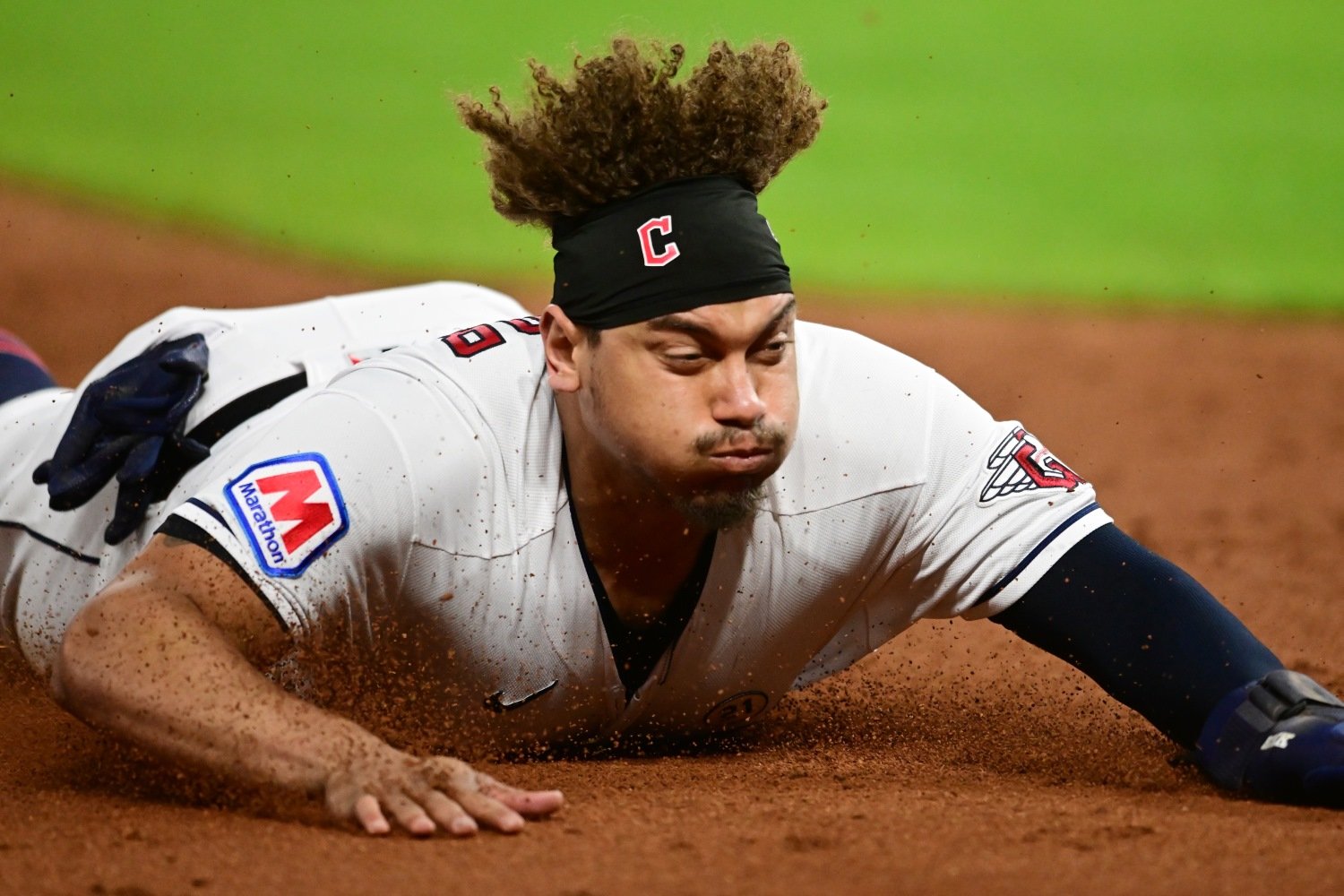 There really shouldn't be any particular urgency for the Cleveland Guardians to jettison Josh Naylor. He's a livewire personality. His brother is their catcher of the present and future. He's even under team control for another two years. Alas, where the Guardians are concerned, "shouldn't" doesn't often go far enough. According to MLB Trade Rumors, Naylor is in line to make roughly $7.2 million in 2024, via arbitration. That's a team-friendly price for a hitter of his caliber. Although a bit light on raw power, Naylor has emerged as a very good overall hitter since the start of 2022. He's hit .282/.336/.471 during that span, and was much better than that in 2023. With above-average contact skills and the ability to plug the gaps even when he doesn't clear the fence, Naylor is the kind of slashing presence that lengthens a lineup and cashes in rallies started by good tablesetters like Nico Hoerner and Ian Happ. Naylor won't turn 27 until next June. There's no reason to think he'll decline any time soon. In fact, on the contrary, there's still room for him to improve, given the talent he's already demonstrated. A team should jump at the chance to retain him for a salary that won't even crack eight digits, but the Guardians have never operated that way. This offseason, they're even more likely than usual to behave penuriously, because their cash flow has been (and will, in all likelihood, continue to be) disrupted by the fallout of the Diamond Sports Group bankruptcy. Between a genuine pinch on revenue, the retirement of Terry Francona, and the fact that the Twins asserted what could be a long-term primacy in the AL Central, this winter looms as something more like a rebuild than a lean-in on the shores of Lake Erie. That could shake Naylor loose. If all that wouldn't do it, though, the trade the Guardians made with the Rays this summer might. In exchange for right-handed starter Aaron Civale, Cleveland acquired first baseman Kyle Manzardo, a prospect on the cusp of MLB readiness. He's five years younger, but in all other respects, he's close to being a carbon copy of Naylor. The Cubs have what it would take to acquire Naylor. It might be an uncomfortable deal, in which they give up either high-upside prospects some distance from the big leagues or some of their prized pitching depth at the highest level--guys like Javier Assad, Hayden Wesneski, or Ben Brown. Those are the hurlers who can help Cleveland recover some of what they've lost over the last year or two--thanks to the ravages of both injury and ineffectiveness. None of those guys are stars, but they all have considerably more team control left--at a lower cost--than Naylor has. This is a good moment to remember, too, that Cubs GM Carter Hawkins is a former Cleveland employee. These teams have some common DNA. Surely, Cleveland would think they could do something interesting with each of those guys, and that they could continue the good things the Cubs have already done with them. Alternatively, of course, there's the possibility of a deal involving a young outfielder. The Cubs wouldn't give up Kevin Alcantara for anything less than a star, and Naylor (for all his gifts) is not that. Alexander Canario could be a fine piece in this kind of deal, though. The Guardians are always short on power in the outfield. One way or another, a fit is there for these two teams, if they want it. The obvious alternative to all of this is the first one I mentioned: the Cubs could re-sign Cody Bellinger. Certainly, after the year he just had, that would be just about everyone's first choice. There's a lot to consider, though. Bellinger was a joy to watch in 2023, but there are all sorts of reasons to think him unlikely to repeat that performance in 2024--or, perhaps, ever again. He hits the ball much less hard than does Naylor (although hr does get it in the air with authority a hair more often). They walk at roughly even rates, and Naylor struck out even less than Bellinger did last year. Sure, Bellinger has greater defensive value, but that's more than canceled out by the fact that he'll sign for something like four times Naylor's 2024 salary, with guarantees of making that much into his mid-30s. If watching another long MLB postseason unfold without the Cubs has yielded any irrefutable lessons, one is this: the Cubs need more than one more good hitter. They're far short of being a World Series contender. Naylor can't fix all that ails them, but he could be a very, very good complementary piece, at a bargain price.
 -
Thursday saw the announcement of the Fielding Bible Awards, from Sports Info Solutions. They're the rightful gold standard of baseball defensive honors, and the Cubs' defensive centerpiece earned a unanimous nod. Image courtesy of © Brett Davis-USA TODAY Sports The Gold Gloves are overpoweringly lame. They're a worthless farce, made only slightly more preposterous by the fact that the league now foists fake "finalist" discourse on us each fall in conjunction with them. Rafael Palmeiro, famously, won a Gold Glove at first base in a year in which he primarily played designated hitter, but the more scathing and serious indictment of the awards as a whole is the fact that that's not the worst one ever handed out. An award worth your attention in the field of sports is one voted on by unbiased subject matter experts with incentive to take that voting seriously. That's why, for instance, the MVP and Cy Young Award are voted on by two writers in each of the 15 cities represented by the league of which they're selecting the honoree. Are beat writers always the best possible arbiters and interpreters of the game? Of course not. Yet, they all have to know at least one team inside and out; pay close attention to the rest of the circuit; take a relatively dispassionate approach; and stand behind their vote. The Gold Gloves work nothing like that. They're partially driven by a statistical amalgam, but the bulk of the outcome depends on voting by coaches throughout the league. That's a terrible process. Coaches are unavoidably biased. They have every reason to focus on their own players, to the exclusion of close study of the rest of the league. Even to whatever extent they do perform that close outside study, it has to center on tendencies their team can exploit--not on evaluation, which should be the backbone of award voting. Sports Info Solutions's Fielding Bible Awards step into the gap left by the lousy construction of the Gold Glove process, and they might be even more robust than the MVP or Cy Young processes are. At each position, 15 different experts submit a 10-player ballot. Established in the 21st century, the Fielding Bibles dispense with the 20th-century conceit of separate leagues, and only one award is handed out per position. These are people who know their ballots will be published. They're people with explicit commitments to attune themselves to the entire league, and with avowed affection for both an analytical approach to this kind of evaluation and the craft of fielding itself. They're better, more credible voters than the ones who give us the Gold Gloves. We also don't have to stomach a catchpenny two-phase rollout for them, where we all pretend it matters who the "finalists" are for the awards. The Gold Gloves don't actually have finalists. That would imply that there was a second round of voting, including only the three highest vote-getters from the first round. Nor, once the dust settles, will anyone care who finished second or third in the voting, so telling us in advance of the actual award announcements who the top three finishers were is just factious pot-stirring. Sorry; that's a lot of preamble. I'm just very passionate in my belief that everyone--every single baseball fan--should stop caring about the Gold Gloves and start caring more about the Fielding Bible Awards. If you're a Cubs fan (and I bet you are, because you're reading this), there's good news there: Dansby Swanson just won the Fielding Bible Award at shortstop for 2023. In fact, he was the only unanimous award winner this year. Everyone in the voter pool made Swanson their top choice. The older I get, the less I care about individual awards, except in cases where they might define a player's career or legacy in an important way. The FBAs aren't yet taken seriously enough that they can do that at all, so I don't mean to exhort anyone to get overly enthused about this win. Still, it's a nice bit of validation for Swanson. It's the first time he's taken home this award, though he does have fifth-, fourth-, and second-place finishes in past years. At age 29, Swanson was the best defender at a position that leans extremely young in the modern game. Only five of the 20 guys who played at least 1,000 innings at shortstop this year were 30 or older--most of them exactly 30, and some of those due to lose their job or move to a less demanding spot next year. It was disappointing to see Swanson falter in the field, just as he did at the plate, during the final month of this season. Even so, over the broad sweep of the season, his glovework as the anchor of a strong infield was a joy to witness. Cubs fans have been, if anything, spoiled in recent years. Javier Baez won a Fielding Bible Award at shortstop in the cursed 2020 pandemic season, and won three straight Multi-Position FBAs from 2016-18. Addison Russell didn't ever win the award, but he was as good a defensive middle infielder as anyone in baseball in 2015 and 2016. Nico Hoerner was a revelation in 2022 and got even better after moving to his more natural position this year. Still, Swanson was qualitatively different than those guys. He made some dazzling plays, but the arresting thing about him was the way he turned the almost dazzling into the almost mundane. He didn't have the extraordinary smoothness and quickness of Russell, the cannon arm of Baez, or the churning explosiveness of Hoerner. Instead, he was relentlessly accurate. That's not a word we often use to describe brilliant fielding, but that's what Swanson seems to do best. It seems as though, on every ball hit toward the left side, Swanson has perfect footwork. He fields the ball cleanly, not only scooping the ball but getting it on the hop he wants, in the pocket of his glove. His arm is a bit below-average, but he makes up for it by having an exceptionally accurate internal clock. Whether that means taking a crow hop to get behind the ball on something hit hard, or releasing it almost instantaneously when there's no time for anything else, Swanson uses time well out there. He's also accurate in the traditional way, in that the ball always seems to hit the first baseman without demanding an ungainly stretch or scoop. The fact that he won this year's version of the most prestigious award for shortstops doesn't imply that Swanson is immune to aging. It's unlikely that he'll be as good next year, in that regard, so the Cubs need to give him more proactive rest, and then hope that he's a better hitter in the clutch and a fresher fielder in the late stages of the season, to offset that decline. For today, though, it's ok to take time to be excited and appreciative of the way the Cubs' biggest free-agent signee in almost a decade paid back that expression of faith in the first year of his deal. View full article
-
Dansby Swanson Won the Only Defensive Award You Should Care About
Matthew Trueblood posted an article in Cubs
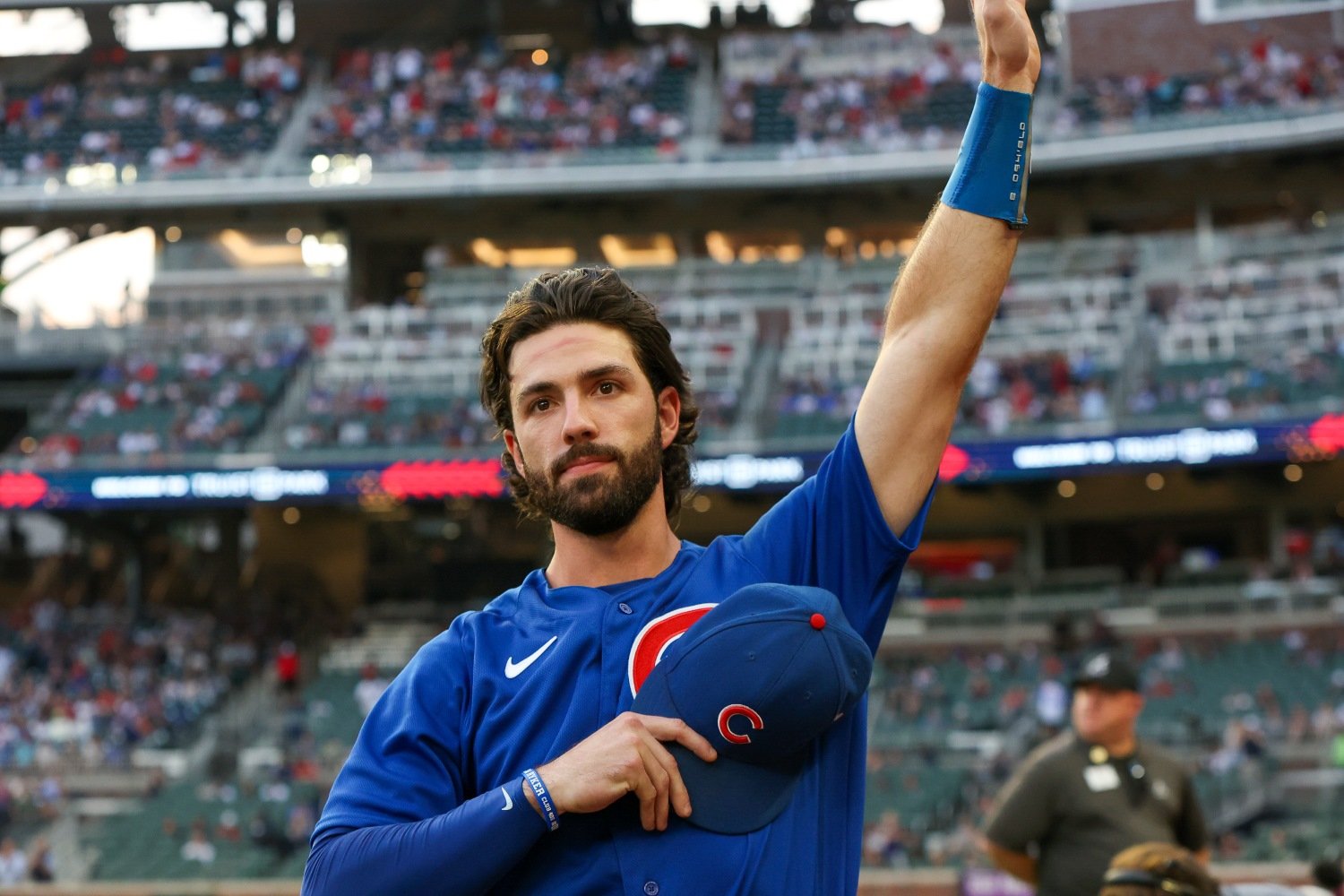 The Gold Gloves are overpoweringly lame. They're a worthless farce, made only slightly more preposterous by the fact that the league now foists fake "finalist" discourse on us each fall in conjunction with them. Rafael Palmeiro, famously, won a Gold Glove at first base in a year in which he primarily played designated hitter, but the more scathing and serious indictment of the awards as a whole is the fact that that's not the worst one ever handed out. An award worth your attention in the field of sports is one voted on by unbiased subject matter experts with incentive to take that voting seriously. That's why, for instance, the MVP and Cy Young Award are voted on by two writers in each of the 15 cities represented by the league of which they're selecting the honoree. Are beat writers always the best possible arbiters and interpreters of the game? Of course not. Yet, they all have to know at least one team inside and out; pay close attention to the rest of the circuit; take a relatively dispassionate approach; and stand behind their vote. The Gold Gloves work nothing like that. They're partially driven by a statistical amalgam, but the bulk of the outcome depends on voting by coaches throughout the league. That's a terrible process. Coaches are unavoidably biased. They have every reason to focus on their own players, to the exclusion of close study of the rest of the league. Even to whatever extent they do perform that close outside study, it has to center on tendencies their team can exploit--not on evaluation, which should be the backbone of award voting. Sports Info Solutions's Fielding Bible Awards step into the gap left by the lousy construction of the Gold Glove process, and they might be even more robust than the MVP or Cy Young processes are. At each position, 15 different experts submit a 10-player ballot. Established in the 21st century, the Fielding Bibles dispense with the 20th-century conceit of separate leagues, and only one award is handed out per position. These are people who know their ballots will be published. They're people with explicit commitments to attune themselves to the entire league, and with avowed affection for both an analytical approach to this kind of evaluation and the craft of fielding itself. They're better, more credible voters than the ones who give us the Gold Gloves. We also don't have to stomach a catchpenny two-phase rollout for them, where we all pretend it matters who the "finalists" are for the awards. The Gold Gloves don't actually have finalists. That would imply that there was a second round of voting, including only the three highest vote-getters from the first round. Nor, once the dust settles, will anyone care who finished second or third in the voting, so telling us in advance of the actual award announcements who the top three finishers were is just factious pot-stirring. Sorry; that's a lot of preamble. I'm just very passionate in my belief that everyone--every single baseball fan--should stop caring about the Gold Gloves and start caring more about the Fielding Bible Awards. If you're a Cubs fan (and I bet you are, because you're reading this), there's good news there: Dansby Swanson just won the Fielding Bible Award at shortstop for 2023. In fact, he was the only unanimous award winner this year. Everyone in the voter pool made Swanson their top choice. The older I get, the less I care about individual awards, except in cases where they might define a player's career or legacy in an important way. The FBAs aren't yet taken seriously enough that they can do that at all, so I don't mean to exhort anyone to get overly enthused about this win. Still, it's a nice bit of validation for Swanson. It's the first time he's taken home this award, though he does have fifth-, fourth-, and second-place finishes in past years. At age 29, Swanson was the best defender at a position that leans extremely young in the modern game. Only five of the 20 guys who played at least 1,000 innings at shortstop this year were 30 or older--most of them exactly 30, and some of those due to lose their job or move to a less demanding spot next year. It was disappointing to see Swanson falter in the field, just as he did at the plate, during the final month of this season. Even so, over the broad sweep of the season, his glovework as the anchor of a strong infield was a joy to witness. Cubs fans have been, if anything, spoiled in recent years. Javier Baez won a Fielding Bible Award at shortstop in the cursed 2020 pandemic season, and won three straight Multi-Position FBAs from 2016-18. Addison Russell didn't ever win the award, but he was as good a defensive middle infielder as anyone in baseball in 2015 and 2016. Nico Hoerner was a revelation in 2022 and got even better after moving to his more natural position this year. Still, Swanson was qualitatively different than those guys. He made some dazzling plays, but the arresting thing about him was the way he turned the almost dazzling into the almost mundane. He didn't have the extraordinary smoothness and quickness of Russell, the cannon arm of Baez, or the churning explosiveness of Hoerner. Instead, he was relentlessly accurate. That's not a word we often use to describe brilliant fielding, but that's what Swanson seems to do best. It seems as though, on every ball hit toward the left side, Swanson has perfect footwork. He fields the ball cleanly, not only scooping the ball but getting it on the hop he wants, in the pocket of his glove. His arm is a bit below-average, but he makes up for it by having an exceptionally accurate internal clock. Whether that means taking a crow hop to get behind the ball on something hit hard, or releasing it almost instantaneously when there's no time for anything else, Swanson uses time well out there. He's also accurate in the traditional way, in that the ball always seems to hit the first baseman without demanding an ungainly stretch or scoop. The fact that he won this year's version of the most prestigious award for shortstops doesn't imply that Swanson is immune to aging. It's unlikely that he'll be as good next year, in that regard, so the Cubs need to give him more proactive rest, and then hope that he's a better hitter in the clutch and a fresher fielder in the late stages of the season, to offset that decline. For today, though, it's ok to take time to be excited and appreciative of the way the Cubs' biggest free-agent signee in almost a decade paid back that expression of faith in the first year of his deal.
 -
On Wednesday, the Red Sox announced the hiring of Craig Breslow as their new chief baseball officer. Breslow is a huge loss for the Cubs, for whom he was an assistant GM and the director of pitching. He might not be the last one. Image courtesy of © Matt Kartozian-USA TODAY Sports When a team achieves a major success, they can count on being raided by other teams for the smart people who built the roster and got the most out of them. The Cubs lost plenty of front office personnel in the wake of their 2016 World Series title, and coaches Brandon Hyde and Dave Martinez got managerial gigs elsewhere. After a few deep October runs, you can stomach that kind of attrition. Sometimes, though, that same process begins much sooner--maybe even soon enough to disrupt a dynasty before it can begin. Breslow's departure will put pressure on the Cubs. They've finally built a pitching development infrastructure that works, after being unable to do so during the decade-long regime of Theo Epstein and Jed Hoyer. Breslow was its chief architect. He's never been the only person involved, and the team long ago made implementation of their system the responsibility of several people, but this is a material loss. The bleeding might not stop with Breslow, though. Andy Green is interviewing for the open managerial job in Cleveland. If he doesn't get it, he might interview in other places, too. Mike Napoli could also draw interest, including from the Angels. One of the dangers of a rebuild is that the other 29 teams don't stop and wait to see how your project progresses. They continue to behave opportunistically. While the Cubs try to spend this winter shoring up the weak spots on their roster, they now face the added perils and time crunch of vultures from elsewhere in the league trying to swoop in and pull away some of their most valuable off-field resources. That Tommy Hottovy remains as the pitching coach softens the blow of Breslow skipping town. That the team has both Hoyer and Carter Hawkins to run the front office from the top and Dan Kantrovitz directing their scouting efforts can inspire some confidence that the team will keep going in the right direction. Still, these little dents can eventually misshape an entire operation. The Cubs have to work hard, now, not only to replace the departing players, coaches and executives, but to continuously upgrade. If they're lucky, Breslow will be the only major loss from the Cubs front office this offseason. Even if that's true, though, they need to make an acquisition on a similar scale. Lots of dust is left to settle, in the coming fortnight. Many jobs still need to be filled, throughout the league. That might mean that the Cubs can get ahold of some talent they didn't expect to find available. It won't win them games as directly or as obviously as adding players, which they certainly need to do, but having a well-staffed front office redounds to the team's benefit, too. It will be interesting to see how this biggest move changes the Cubs' pitching philosophy. Breslow specialized in giving pitchers without elite stuff the ability to thrive despite that shortcoming, The Cubs have found creative ways to change movement characteristics and shift pitch mixes to improve pitchers' performance. Their next step is to integrate those subtle aspects of the science of pitching with an increased focus on finding and landing pitchers with good raw stuff--especially velocity. Of course, that integration isn't the sole (or even primary) demesne of a pitching director. It's not Hottovy's job, and wasn't Breslow's. Much of it comes down to the jobs of Kantrovitz, Hoyer, and Hawkins--using scarce resources to acquire more talented pitchers in the first place. Whoever populates the lower levels of the front office, the team needs to populate its pitching staff with more durable and powerful arms. View full article
-
A Brain Drain Could Be the Unexpected Danger of the Cubs' Offseason
Matthew Trueblood posted an article in Cubs
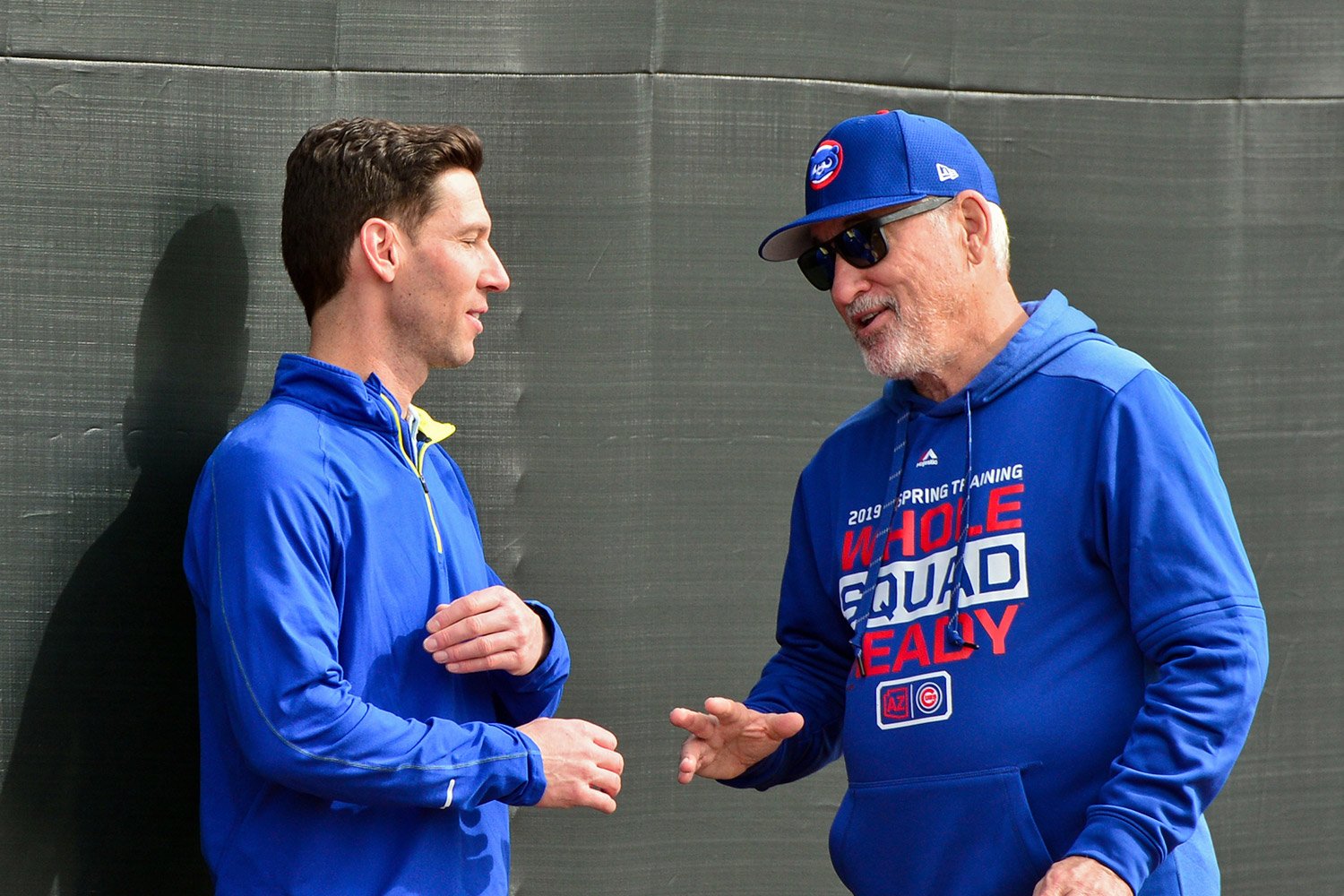 When a team achieves a major success, they can count on being raided by other teams for the smart people who built the roster and got the most out of them. The Cubs lost plenty of front office personnel in the wake of their 2016 World Series title, and coaches Brandon Hyde and Dave Martinez got managerial gigs elsewhere. After a few deep October runs, you can stomach that kind of attrition. Sometimes, though, that same process begins much sooner--maybe even soon enough to disrupt a dynasty before it can begin. Breslow's departure will put pressure on the Cubs. They've finally built a pitching development infrastructure that works, after being unable to do so during the decade-long regime of Theo Epstein and Jed Hoyer. Breslow was its chief architect. He's never been the only person involved, and the team long ago made implementation of their system the responsibility of several people, but this is a material loss. The bleeding might not stop with Breslow, though. Andy Green is interviewing for the open managerial job in Cleveland. If he doesn't get it, he might interview in other places, too. Mike Napoli could also draw interest, including from the Angels. One of the dangers of a rebuild is that the other 29 teams don't stop and wait to see how your project progresses. They continue to behave opportunistically. While the Cubs try to spend this winter shoring up the weak spots on their roster, they now face the added perils and time crunch of vultures from elsewhere in the league trying to swoop in and pull away some of their most valuable off-field resources. That Tommy Hottovy remains as the pitching coach softens the blow of Breslow skipping town. That the team has both Hoyer and Carter Hawkins to run the front office from the top and Dan Kantrovitz directing their scouting efforts can inspire some confidence that the team will keep going in the right direction. Still, these little dents can eventually misshape an entire operation. The Cubs have to work hard, now, not only to replace the departing players, coaches and executives, but to continuously upgrade. If they're lucky, Breslow will be the only major loss from the Cubs front office this offseason. Even if that's true, though, they need to make an acquisition on a similar scale. Lots of dust is left to settle, in the coming fortnight. Many jobs still need to be filled, throughout the league. That might mean that the Cubs can get ahold of some talent they didn't expect to find available. It won't win them games as directly or as obviously as adding players, which they certainly need to do, but having a well-staffed front office redounds to the team's benefit, too. It will be interesting to see how this biggest move changes the Cubs' pitching philosophy. Breslow specialized in giving pitchers without elite stuff the ability to thrive despite that shortcoming, The Cubs have found creative ways to change movement characteristics and shift pitch mixes to improve pitchers' performance. Their next step is to integrate those subtle aspects of the science of pitching with an increased focus on finding and landing pitchers with good raw stuff--especially velocity. Of course, that integration isn't the sole (or even primary) demesne of a pitching director. It's not Hottovy's job, and wasn't Breslow's. Much of it comes down to the jobs of Kantrovitz, Hoyer, and Hawkins--using scarce resources to acquire more talented pitchers in the first place. Whoever populates the lower levels of the front office, the team needs to populate its pitching staff with more durable and powerful arms.
 -
There's radical uncertainty ahead for the Cubs bullpen this winter. Their relief corps will see a ton of turnover during the coming offseason, and it will require considerable investment. Let's figure out where those changes and investments might be. Image courtesy of © Charles LeClaire-USA TODAY Sports Right off the bat, we can identify a few absolute locks for the 2024 Chicago Cubs bullpen. Adbert Alzolay comes with some lingering health questions, but to whatever extent he can stay available, he'll enter next season as one of the team's high-leverage arms. MLB Trade Rumors projects a $2.5-million arbitration award for Alzolay, but the team won't bat an eye at that cost. Equally certain to come back is Julian Merryweather, who will be eligible for arbitration for the first time this winter, too. The MLB Trade Rumors estimate for Merryweather is just $1.3 million, and although he occasionally issued too many walks, he'd be a bargain at twice that price. What the Cubs need is more strikeout stuff throughout their pitching staff, and Merryweather might be the best strikeout artist they have. You can count on Jose Cuas, Daniel Palencia, and Luke Little to be prominent parts of the bullpen mix going into the season, too. Each is still dirt-cheap, by baseball standards, and none of them is eligible for arbitration yet. They all have minor-league options remaining, and none is guaranteed to spend all of next season in the big-league bullpen, but they're all good enough to stay on the 40-man roster even during a winter of tumult. Their upside is terrific. After that, though, some tough decisions loom. Michael Fulmer won't be back, after he underwent elbow surgery that will sideline him all season. Brad Boxberger's mutual option will not be picked up. Mark Leiter, Jr. is a much less obvious case. As late as early September, it was a sure thing that the Cubs would want him back, even as he reaches arbitration eligibility. Alas, he collapsed over the final month. His splitter abandoned him, and without that pitch, he's useless. His projected salary of $1.6 million is perfectly affordable, but because it's impossible to count on him in any real way after the way his season ended, even that modest payout might not be palatable to a team facing a roster crunch and the need to economize around the edges as they make bigger expenditures elsewhere. There's a cluster of relievers not due to make any real money, but whose places on the roster are tenuous until further notice. Keegan Thompson's disasterpiece of a 2023 puts his future with the club in grave doubt, but he belongs in the category of hurlers with whom the team will be slow to cut ties. So do Jeremiah Estrada and Brandon Hughes. These are the types of arms who often end up turning into gems eventually, the way Merryweather did last season with Chicago. The challenge is to try to be the team with whom it happens, rather than let them make a circuit ride of the waiver wire before unlocking their talent. Nick Burdi, Tyler Duffey and Michael Rucker are low-upside fringe relievers. They're unlikely to stick on the 40-man roster beyond the end of November, but if one does so, they'll have a decent chance to win a low-leverage role in the big-league pen come spring. Ethan Roberts and Codi Heuer have an even narrower path through the winter, because their injured status doesn't protect them from the 40-man crunch during the winter. That exhausts the pure relievers on the current 40-man roster, and the only slots affirmatively claimed are those of Alzolay, Merryweather, Cuas, Palencia, and Little. The two guys who still need our attention are Hayden Wesneski and Drew Smyly. As much as fans might have loved the idea of Wesneski as a starter even seven months ago, it feels increasingly like he belongs in the bullpen. In fact, late in the campaign, he seemed to take nicely to the short relief role into which he was pushed because of the team's mounting injury trouble. I like Wesneski a lot as a power arm in a pure, one-inning slot, hitting 98 or 99 miles per hour with his fastball and facing few left-handed batters. Smyly, of course, will act as depth for the starting rotation. He's likely to be needed in that role at least occasionally, although very unlikely to be used that way as much next year as in 2023. He was even more of a revelation than Wesneski when he converted to short relief in September. His curveball plays up magnificently in short bursts, thanks in part to the extra few ticks he finds on his fastball. Smyly is going to cost the team $10 million next year, which is a steep price for a swingman. That makes him a trade candidate, but if the team keeps him, they'll have a reliable lefty in relief--even if Hughes isn't able to bounce back from his lost 2023. This list neglects a few more complicated cases: Javier Assad, Ben Brown, and Caleb Kilian. Assad has made such a strong case for himself as a starter that it feels cruel to throw him in with this crowd. Brown has all the explosive upside of, say, Wesneski a year ago, but we now know how mixed a benediction that is. Kilian must be out of chances to emerge as a starter by now, but could he (like Wesneski) turn into a beast by moving to short relief and tightening up his repertoire? There's an avalanche of change coming to this unit. That's necessary, even in the wake of a season that seemed to further prove the organization's prowess at discovering and developing credible relievers. This piece isn't mean to answer all the looming questions. It's just meant to clarify them. Where do you come down on Cuas, Palencia, and Little? Would you tender Leiter a contract? Can Wesneski take over a high-leverage role if he completes the conversion to full-fledged reliever? Let's fire up the hot stove and start the conversation. View full article
-
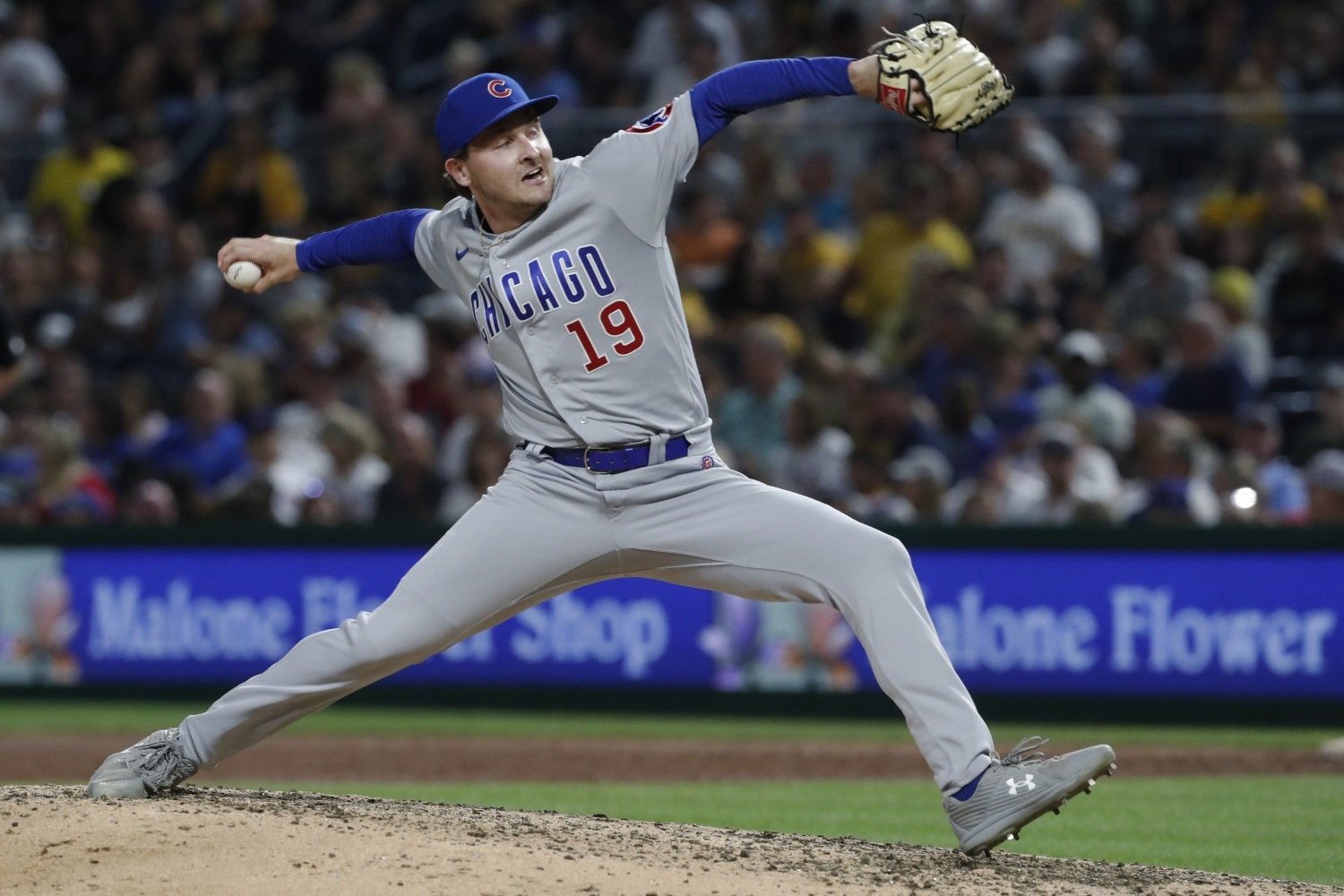 Right off the bat, we can identify a few absolute locks for the 2024 Chicago Cubs bullpen. Adbert Alzolay comes with some lingering health questions, but to whatever extent he can stay available, he'll enter next season as one of the team's high-leverage arms. MLB Trade Rumors projects a $2.5-million arbitration award for Alzolay, but the team won't bat an eye at that cost. Equally certain to come back is Julian Merryweather, who will be eligible for arbitration for the first time this winter, too. The MLB Trade Rumors estimate for Merryweather is just $1.3 million, and although he occasionally issued too many walks, he'd be a bargain at twice that price. What the Cubs need is more strikeout stuff throughout their pitching staff, and Merryweather might be the best strikeout artist they have. You can count on Jose Cuas, Daniel Palencia, and Luke Little to be prominent parts of the bullpen mix going into the season, too. Each is still dirt-cheap, by baseball standards, and none of them is eligible for arbitration yet. They all have minor-league options remaining, and none is guaranteed to spend all of next season in the big-league bullpen, but they're all good enough to stay on the 40-man roster even during a winter of tumult. Their upside is terrific. After that, though, some tough decisions loom. Michael Fulmer won't be back, after he underwent elbow surgery that will sideline him all season. Brad Boxberger's mutual option will not be picked up. Mark Leiter, Jr. is a much less obvious case. As late as early September, it was a sure thing that the Cubs would want him back, even as he reaches arbitration eligibility. Alas, he collapsed over the final month. His splitter abandoned him, and without that pitch, he's useless. His projected salary of $1.6 million is perfectly affordable, but because it's impossible to count on him in any real way after the way his season ended, even that modest payout might not be palatable to a team facing a roster crunch and the need to economize around the edges as they make bigger expenditures elsewhere. There's a cluster of relievers not due to make any real money, but whose places on the roster are tenuous until further notice. Keegan Thompson's disasterpiece of a 2023 puts his future with the club in grave doubt, but he belongs in the category of hurlers with whom the team will be slow to cut ties. So do Jeremiah Estrada and Brandon Hughes. These are the types of arms who often end up turning into gems eventually, the way Merryweather did last season with Chicago. The challenge is to try to be the team with whom it happens, rather than let them make a circuit ride of the waiver wire before unlocking their talent. Nick Burdi, Tyler Duffey and Michael Rucker are low-upside fringe relievers. They're unlikely to stick on the 40-man roster beyond the end of November, but if one does so, they'll have a decent chance to win a low-leverage role in the big-league pen come spring. Ethan Roberts and Codi Heuer have an even narrower path through the winter, because their injured status doesn't protect them from the 40-man crunch during the winter. That exhausts the pure relievers on the current 40-man roster, and the only slots affirmatively claimed are those of Alzolay, Merryweather, Cuas, Palencia, and Little. The two guys who still need our attention are Hayden Wesneski and Drew Smyly. As much as fans might have loved the idea of Wesneski as a starter even seven months ago, it feels increasingly like he belongs in the bullpen. In fact, late in the campaign, he seemed to take nicely to the short relief role into which he was pushed because of the team's mounting injury trouble. I like Wesneski a lot as a power arm in a pure, one-inning slot, hitting 98 or 99 miles per hour with his fastball and facing few left-handed batters. Smyly, of course, will act as depth for the starting rotation. He's likely to be needed in that role at least occasionally, although very unlikely to be used that way as much next year as in 2023. He was even more of a revelation than Wesneski when he converted to short relief in September. His curveball plays up magnificently in short bursts, thanks in part to the extra few ticks he finds on his fastball. Smyly is going to cost the team $10 million next year, which is a steep price for a swingman. That makes him a trade candidate, but if the team keeps him, they'll have a reliable lefty in relief--even if Hughes isn't able to bounce back from his lost 2023. This list neglects a few more complicated cases: Javier Assad, Ben Brown, and Caleb Kilian. Assad has made such a strong case for himself as a starter that it feels cruel to throw him in with this crowd. Brown has all the explosive upside of, say, Wesneski a year ago, but we now know how mixed a benediction that is. Kilian must be out of chances to emerge as a starter by now, but could he (like Wesneski) turn into a beast by moving to short relief and tightening up his repertoire? There's an avalanche of change coming to this unit. That's necessary, even in the wake of a season that seemed to further prove the organization's prowess at discovering and developing credible relievers. This piece isn't mean to answer all the looming questions. It's just meant to clarify them. Where do you come down on Cuas, Palencia, and Little? Would you tender Leiter a contract? Can Wesneski take over a high-leverage role if he completes the conversion to full-fledged reliever? Let's fire up the hot stove and start the conversation.
 -
For half of last season, the Cubs had two aces atop their rotation. In the second half, they had just one. Much of their 2024 hope hinges on the extent to which Marcus Stroman bounces back from his injury-marred stretch run. Image courtesy of © Matt Marton-USA TODAY Sports As tempting as it is to chalk up all of Marcus Stroman's struggles from July through the end of the season to the hip injury that sidelined him for so much of that time, that would be an oversimplification. That's both good and bad news. Stroman wasn't necessarily likely to sustain the improvements he'd made and the success he'd had in the first half, even if he'd stayed healthy. On the other hand, the extent to which he was compromised by that injury has been a bit overstated. In reality, Stroman got pretty unlucky during his period of ineffectiveness, before landing on the injured list and in the short time after he returned from it. He wasn't able to locate his stuff well, but much of the trouble he got himself into was the result of fairly fragile sequencing effects. Here are Stroman's zone rates on each of his six pitch types over the last three years, subdivided into two groups: 2021-22, and 2023. As you can see, he didn't throw as many strikes with any of his offerings last year as he did over the two prior campaigns. However, the effect was most pronounced on his slider and splitter, and those are his two least-used pitches. It's hard to use this raw data, then, to explain the fact that Stroman's walk rate shot up from 6 percent in 2021 and 2022 to 9 percent in 2023. That rise in free passes only partially canceled out the benefits of a bit more nibbling, such as a much lower homer rate, but it was a huge contributor to the derailment of his season. When Stroman ran a 9.11 ERA in six July starts, an 11.6-percent walk rate was a major part of the problem. Invariably, it seemed, Stroman would walk a batter or two, creating some traffic on the bases, and then a hit would fall in and the snowball would roll downhill on him. The strange thing is that Stroman's walk problems weren't born of an overall inability to throw strikes. Rather, it was often the case that he would get into good or neutral counts, only to let them turn into bad outcomes--especially walks. In 2021, 8.3 percent of the plate appearances involving Stroman that reached a 1-1 count ended in a walk. In 2022, it was 7.8 percent. In 2023, though, that number skyrocketed to an excruciating 12.9 percent. He wouldn't immediately fall behind. The problems arose when he got into deep counts, thanks to the pitch mix he used in them. A lot of those 0-2 and 1-2 sliders just got him closer to walks. His heavy usage of the splitter in 1-1 counts tipped the balance the wrong direction, too. Stroman had a fairly minor weakness that became a severe handicap when he couldn't locate his sinker and slurve as well anymore, and therefore couldn't lean on them as heavily. Here's a peculiar thing: Stroman is far from alone in having neutral counts go sour for him in 2023. As a whole, the league issued free passes in 9.7 percent of the plate appearances that reached 1-1 this year. That's the highest rate for any full season since the advent of pitch-by-pitch information for all games, back in 1988. That's jarring, because the league's overall walk rate this season was not especially high. Of the last 36 campaigns, MLB's average walk rate in 2023 (8.6 percent) ranked 17th. This isn't a fluke confined to 1-1 counts, either. A historically unusual percentage of the league's walks came after a pitcher had gotten ahead of the opposing batter this year. At this point, it feels clear that Stroman will opt in for 2024, forgoing the chance to hit free agency and taking a $21-million salary. In practice, he'll take up $23.7 million on the Cubs' payroll, because that's the annual average value of the three-year deal of which the option for next year is a part. Given that, the Cubs need him to perform like the front-of-the-rotation starter he was for the first half of 2023. Because he doesn't miss bats at a rate that will allow him to run any more than an average strikeout rate, that requires him to cut his walk rate substantially from its elevated 2023 level. Variance will take care of some of that. He wandered into some bad luck on a pitch-to-pitch basis, just as pitchers often do on a batter-to-batter, inning-to-inning, or game-to-game one. Stroman also has to either land some of his less-used pitches in the strike zone or eliminate them altogether, though, so that he can throw more strikes and force hitters to get a little more aggressive. For their part, the Cubs have to assume he won't be able to do so so easily, and go find a pitcher who pushes Stroman down their starting rotation depth chart. View full article
-
Marcus Stroman's Walk Rate, Walk Year, and Unique Bad Luck
Matthew Trueblood posted an article in Cubs
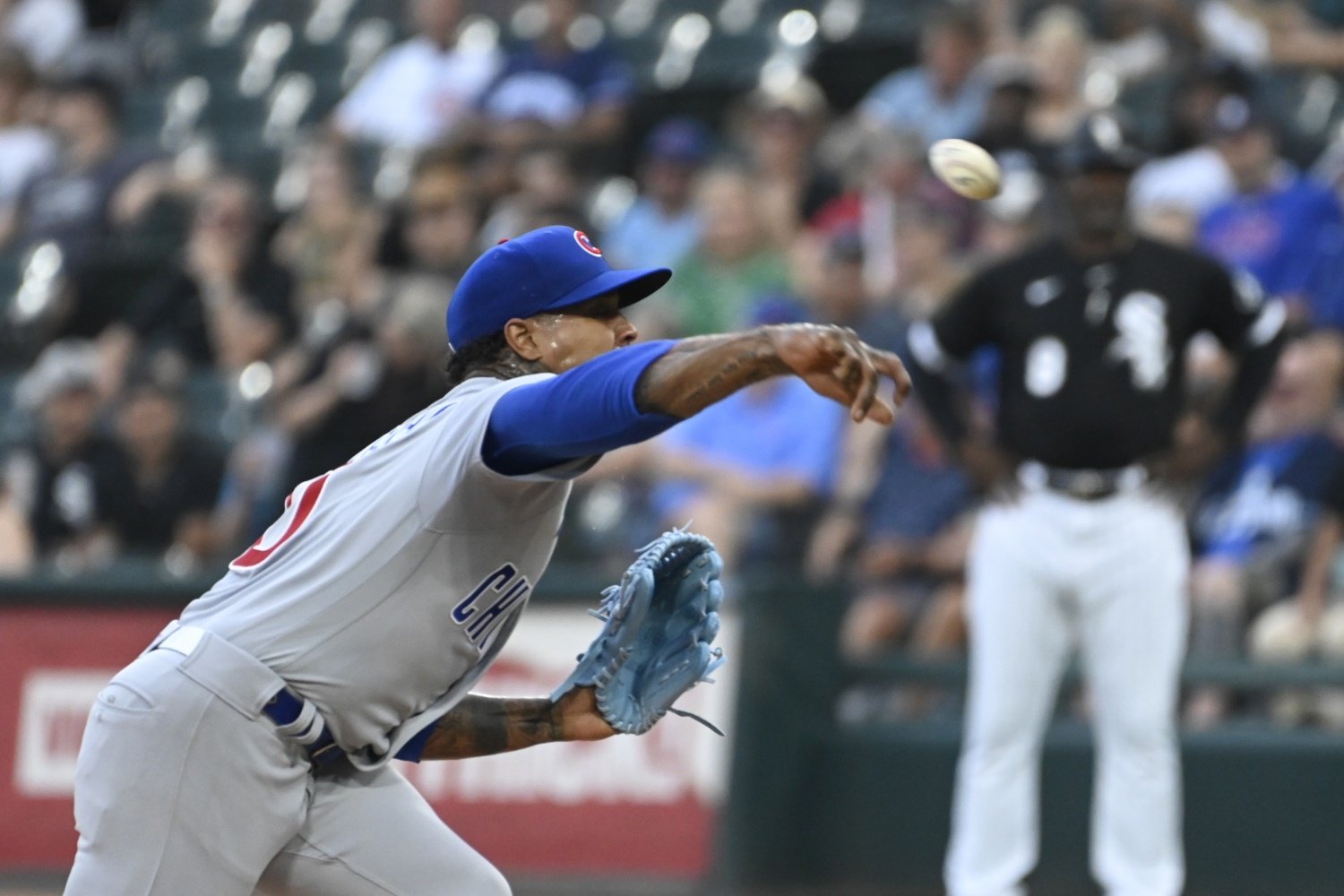 As tempting as it is to chalk up all of Marcus Stroman's struggles from July through the end of the season to the hip injury that sidelined him for so much of that time, that would be an oversimplification. That's both good and bad news. Stroman wasn't necessarily likely to sustain the improvements he'd made and the success he'd had in the first half, even if he'd stayed healthy. On the other hand, the extent to which he was compromised by that injury has been a bit overstated. In reality, Stroman got pretty unlucky during his period of ineffectiveness, before landing on the injured list and in the short time after he returned from it. He wasn't able to locate his stuff well, but much of the trouble he got himself into was the result of fairly fragile sequencing effects. Here are Stroman's zone rates on each of his six pitch types over the last three years, subdivided into two groups: 2021-22, and 2023. As you can see, he didn't throw as many strikes with any of his offerings last year as he did over the two prior campaigns. However, the effect was most pronounced on his slider and splitter, and those are his two least-used pitches. It's hard to use this raw data, then, to explain the fact that Stroman's walk rate shot up from 6 percent in 2021 and 2022 to 9 percent in 2023. That rise in free passes only partially canceled out the benefits of a bit more nibbling, such as a much lower homer rate, but it was a huge contributor to the derailment of his season. When Stroman ran a 9.11 ERA in six July starts, an 11.6-percent walk rate was a major part of the problem. Invariably, it seemed, Stroman would walk a batter or two, creating some traffic on the bases, and then a hit would fall in and the snowball would roll downhill on him. The strange thing is that Stroman's walk problems weren't born of an overall inability to throw strikes. Rather, it was often the case that he would get into good or neutral counts, only to let them turn into bad outcomes--especially walks. In 2021, 8.3 percent of the plate appearances involving Stroman that reached a 1-1 count ended in a walk. In 2022, it was 7.8 percent. In 2023, though, that number skyrocketed to an excruciating 12.9 percent. He wouldn't immediately fall behind. The problems arose when he got into deep counts, thanks to the pitch mix he used in them. A lot of those 0-2 and 1-2 sliders just got him closer to walks. His heavy usage of the splitter in 1-1 counts tipped the balance the wrong direction, too. Stroman had a fairly minor weakness that became a severe handicap when he couldn't locate his sinker and slurve as well anymore, and therefore couldn't lean on them as heavily. Here's a peculiar thing: Stroman is far from alone in having neutral counts go sour for him in 2023. As a whole, the league issued free passes in 9.7 percent of the plate appearances that reached 1-1 this year. That's the highest rate for any full season since the advent of pitch-by-pitch information for all games, back in 1988. That's jarring, because the league's overall walk rate this season was not especially high. Of the last 36 campaigns, MLB's average walk rate in 2023 (8.6 percent) ranked 17th. This isn't a fluke confined to 1-1 counts, either. A historically unusual percentage of the league's walks came after a pitcher had gotten ahead of the opposing batter this year. At this point, it feels clear that Stroman will opt in for 2024, forgoing the chance to hit free agency and taking a $21-million salary. In practice, he'll take up $23.7 million on the Cubs' payroll, because that's the annual average value of the three-year deal of which the option for next year is a part. Given that, the Cubs need him to perform like the front-of-the-rotation starter he was for the first half of 2023. Because he doesn't miss bats at a rate that will allow him to run any more than an average strikeout rate, that requires him to cut his walk rate substantially from its elevated 2023 level. Variance will take care of some of that. He wandered into some bad luck on a pitch-to-pitch basis, just as pitchers often do on a batter-to-batter, inning-to-inning, or game-to-game one. Stroman also has to either land some of his less-used pitches in the strike zone or eliminate them altogether, though, so that he can throw more strikes and force hitters to get a little more aggressive. For their part, the Cubs have to assume he won't be able to do so so easily, and go find a pitcher who pushes Stroman down their starting rotation depth chart.
 -
Good point, TT. If we account for the fact that the buyout would still have to be paid next year, we can think of it as somewhere between the two figures, but certainly the CBT numbers are the most important ones in the conversation. I agree. If you bring him and Stroman back, it has to be in the context of a VERY aggressive winter.
-
The offseason won't kick off in earnest for another three weeks, but the Cubs have all the information they're going to get in order to make some important decisions. First on that list is the choice of whether to retain their longest-tenured player. Image courtesy of © John Jones-USA TODAY Sports Under the terms of the long-term contract to which the Cubs signed Kyle Hendricks in March 2019, they hold a $16-million option on his services for 2024. A year ago, that looked unlikely to be picked up, but he had a solid 2023. That changes the calculus quite a bit, because $16 million doesn't buy what it used to. Besides, thanks to a buyout worth $1.5 million, it's really a $14.5-million decision for them. The Chicago rotation already has Justin Steele and Jameson Taillon firmly in place for 2024. Marcus Stroman is the one with a decision to make about his future, rather than the Cubs having one. Drew Smyly is under contract for 2024, though the team surely hopes they can relegate him to the bullpen, given what we saw in 2023. Jordan Wicks and Javier Assad, on the other hand, have earned the right to vie for places in the rotation to begin the season. That gives the team a fairly crowded rotation depth chart, which would tend to nudge you toward cutting Hendricks loose. On the other hand, in 2023, he pitched more innings (137) than all but Steele, Taillon, and Smyly, and had a lower ERA (3.74) than all but Steele and Assad. He not only returned from a career-endangering shoulder injury, but looked as good as he has since 2020. His walk rate was a minuscule 4.7 percent, and he induced weak contact at one of the best rates in baseball. Those are both fragile skills, though--at least at this stage of Hendricks's career. He will always run better-than-average walk and hard-hit rates, because of the nature of his approach, but to repeat (or even approximate) the numbers he put up in 2023, he'd need to remain nearly elite in those categories. That's hard to do, for a few reasons. First, limiting hard contact isn't a very sticky skill. Pitchers' rates don't correlate well year-to-year, even if one confines the sample to hurlers who had at least 250 batted balls against them in each of two consecutive seasons. Second, Hendricks's low walk rate comes despite the fact that he doesn't throw very many strikes. Of 100 qualifying pitchers, Hendricks had the seventh-lowest Zone% in 2023. He relies on batters expanding the zone a little bit in order to keep that walk rate down, and while his stuff and command do encourage that, it's a hard thing to do on a long-term basis. Hendricks also faces a major hurdle, in that he really doesn't miss bats. Between nibbling so much (of necessity) and getting whiffs on just over 21 percent of swings, Hendricks's strikeout rate fell to 16.1 percent last year--his lowest clip since his rookie campaign of 2014. According to Baseball Prospectus's Deserved Run Average, which accounts for park factors, opponent quality, handedness matchups and other factors on a granular basis, Hendricks was actually a below-average pitcher last year. His batted-ball data and that low walk rate made some of his other peripheral statistics look good, but DRA debits him quite a bit for the lack of strikeouts. It even accounts for the above: Hendricks is only credited with 88 deserved strikeouts (against 93 actual ones) and he's saddled with 32 deserved walks (against 27 actual free passes). If we accept the fact that Hendricks's hard-hit rate, walk rate, and strikeout rate are all likely to regress somewhat, it gets much less clear that he should come back in 2024--at least for $16 million. To those facts, add this one: shoulder capsular injuries like the one that sidelined Hendricks for the second half of 2022 and the first month and a half of 2023 have a tendency to recur. He survived that brush with pitching oblivion, but history suggests that he might get hurt again soon. However, Hendricks is important to the organization. He's the link to the championship team. He's also a valued mentor and exemplar for the team's younger hurlers. The Cubs can't afford to keep him at the price set by his option terms. If possible, though, they should explore an extension to replace that deal. Last winter, Smyly signed a two-year deal worth $19 million, with incentives that could (and did) push the value higher and a team option for the third year. Hendricks is in a strikingly similar position right now. His superior track record and the relationship between team and player probably means he would command $11 million per year on a similar contract, instead of $9.5 million, but even that number represents a meaningful discount from the price tag on the option. As I wrote last week, the Cubs need to build a deep rotation for 2024. They should be ready to use six starters at a time, which means having eight or nine viable arms lined up going into spring training. Hendricks can be a valuable part of that. It just isn't going to work without a bit of maneuvering to get his price down, thereby creating more space for them to operate beneath whatever ceiling ownership puts on their winter spending. View full article
-
Let's Talk About the Cubs' Options With Regard to Kyle Hendricks
Matthew Trueblood posted an article in Cubs
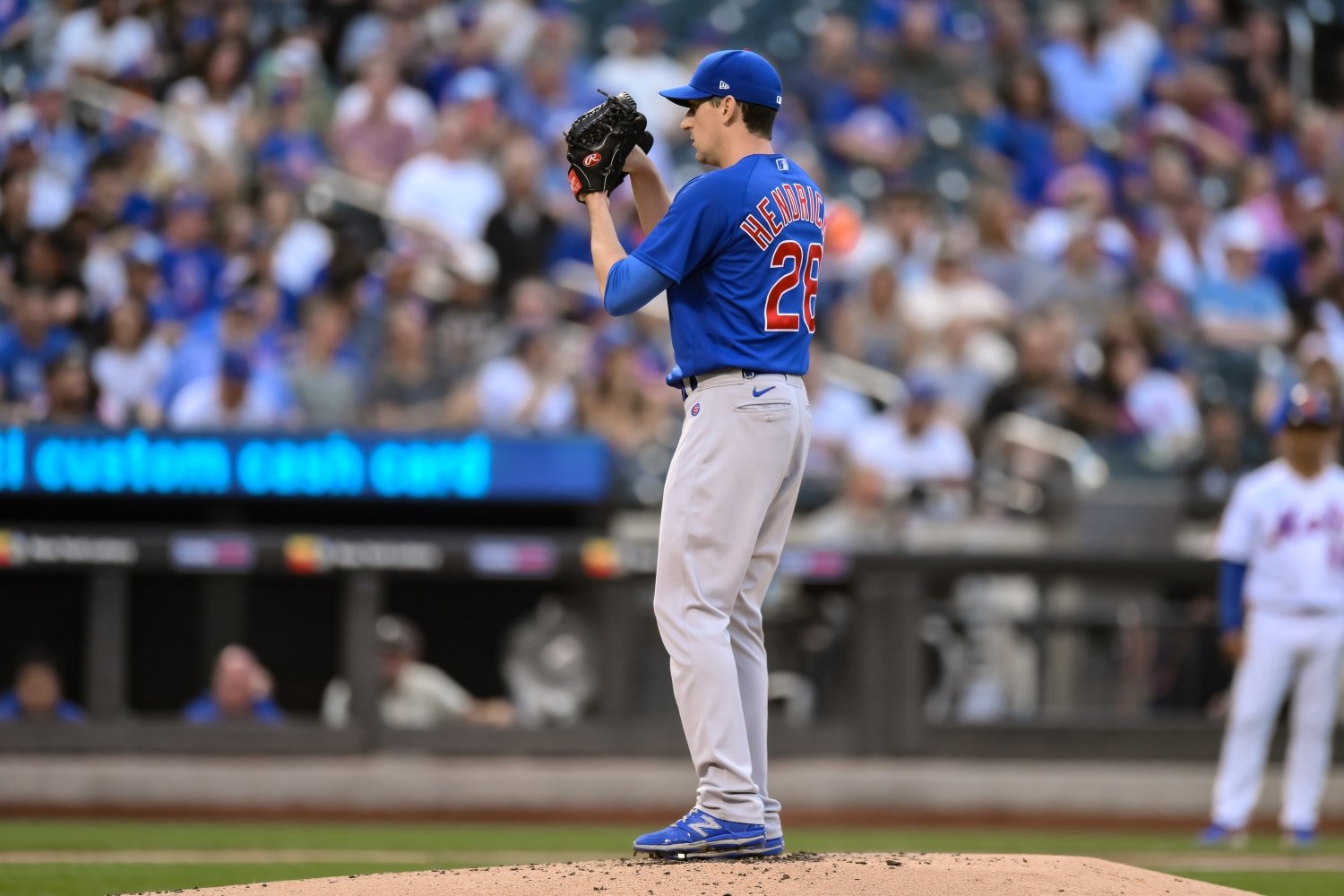 Under the terms of the long-term contract to which the Cubs signed Kyle Hendricks in March 2019, they hold a $16-million option on his services for 2024. A year ago, that looked unlikely to be picked up, but he had a solid 2023. That changes the calculus quite a bit, because $16 million doesn't buy what it used to. Besides, thanks to a buyout worth $1.5 million, it's really a $14.5-million decision for them. The Chicago rotation already has Justin Steele and Jameson Taillon firmly in place for 2024. Marcus Stroman is the one with a decision to make about his future, rather than the Cubs having one. Drew Smyly is under contract for 2024, though the team surely hopes they can relegate him to the bullpen, given what we saw in 2023. Jordan Wicks and Javier Assad, on the other hand, have earned the right to vie for places in the rotation to begin the season. That gives the team a fairly crowded rotation depth chart, which would tend to nudge you toward cutting Hendricks loose. On the other hand, in 2023, he pitched more innings (137) than all but Steele, Taillon, and Smyly, and had a lower ERA (3.74) than all but Steele and Assad. He not only returned from a career-endangering shoulder injury, but looked as good as he has since 2020. His walk rate was a minuscule 4.7 percent, and he induced weak contact at one of the best rates in baseball. Those are both fragile skills, though--at least at this stage of Hendricks's career. He will always run better-than-average walk and hard-hit rates, because of the nature of his approach, but to repeat (or even approximate) the numbers he put up in 2023, he'd need to remain nearly elite in those categories. That's hard to do, for a few reasons. First, limiting hard contact isn't a very sticky skill. Pitchers' rates don't correlate well year-to-year, even if one confines the sample to hurlers who had at least 250 batted balls against them in each of two consecutive seasons. Second, Hendricks's low walk rate comes despite the fact that he doesn't throw very many strikes. Of 100 qualifying pitchers, Hendricks had the seventh-lowest Zone% in 2023. He relies on batters expanding the zone a little bit in order to keep that walk rate down, and while his stuff and command do encourage that, it's a hard thing to do on a long-term basis. Hendricks also faces a major hurdle, in that he really doesn't miss bats. Between nibbling so much (of necessity) and getting whiffs on just over 21 percent of swings, Hendricks's strikeout rate fell to 16.1 percent last year--his lowest clip since his rookie campaign of 2014. According to Baseball Prospectus's Deserved Run Average, which accounts for park factors, opponent quality, handedness matchups and other factors on a granular basis, Hendricks was actually a below-average pitcher last year. His batted-ball data and that low walk rate made some of his other peripheral statistics look good, but DRA debits him quite a bit for the lack of strikeouts. It even accounts for the above: Hendricks is only credited with 88 deserved strikeouts (against 93 actual ones) and he's saddled with 32 deserved walks (against 27 actual free passes). If we accept the fact that Hendricks's hard-hit rate, walk rate, and strikeout rate are all likely to regress somewhat, it gets much less clear that he should come back in 2024--at least for $16 million. To those facts, add this one: shoulder capsular injuries like the one that sidelined Hendricks for the second half of 2022 and the first month and a half of 2023 have a tendency to recur. He survived that brush with pitching oblivion, but history suggests that he might get hurt again soon. However, Hendricks is important to the organization. He's the link to the championship team. He's also a valued mentor and exemplar for the team's younger hurlers. The Cubs can't afford to keep him at the price set by his option terms. If possible, though, they should explore an extension to replace that deal. Last winter, Smyly signed a two-year deal worth $19 million, with incentives that could (and did) push the value higher and a team option for the third year. Hendricks is in a strikingly similar position right now. His superior track record and the relationship between team and player probably means he would command $11 million per year on a similar contract, instead of $9.5 million, but even that number represents a meaningful discount from the price tag on the option. As I wrote last week, the Cubs need to build a deep rotation for 2024. They should be ready to use six starters at a time, which means having eight or nine viable arms lined up going into spring training. Hendricks can be a valuable part of that. It just isn't going to work without a bit of maneuvering to get his price down, thereby creating more space for them to operate beneath whatever ceiling ownership puts on their winter spending.
 -
Exactly. Probably can’t be an everyday plan, probably doesn’t need to be one in the Cubs’ roster context. Also, fwiw, a good clubhouse guy.
- 4 replies
-
- 1
-

-
- mitch garver
- patrick wisdom
- (and 3 more)
-
When the ALCS begins Sunday night, keep an eye on the man who often slots in as the Texas Rangers' designated hitter. Next year, he could be a perfect fit for the Cubs' lineup. Image courtesy of © Mitch Stringer-USA TODAY Sports It's possible that Mitch Garver will use his long-awaited free agency this winter to seek out a team who views him as a full-time catcher. That's always been his primary position, and he takes pride in the improvements he's made as a defensive catcher over the years. It's likely that he finds the most interest and money by marketing himself as a more versatile player, though, and if so, the Cubs could be the perfect suitor for the right-handed slugger. Garver, who will turn 33 this January, has been limited by injuries in each of the last four seasons. At times, he's played through injuries and failed to produce much, but when truly healthy, he's been consistently excellent at the plate. In 2023, he batted .270/.370/.500 in 344 plate appearances in the regular season, with 19 home runs. In the ALDS, he added four more hits, eight total bases, and seven RBIs. He appeared in 28 games at catcher this season, and spent the bulk of his time as the DH. He's also played first base sporadically throughout his career. There will be more important, more alluring, higher-profile free agents on the market this winter, but Garver could fit gorgeously into a retooled Cubs roster. If Christopher Morel can grasp the rudiments of third base, there will be plenty of available playing time at DH in 2024. If not, signing a veteran like Garver could give the Cubs greater flexibility (and, therefore, greater leverage) to trade Morel to bolster their starting rotation. Meanwhile, behind the plate, Garver would help address what feels like a lack of depth at the position for the big-league team. I wrote two weeks ago about the somewhat turbid catching picture for 2024, based on the age and track record of Yan Gomes and on the uneven rookie campaign of Miguel Amaya. Garver would clarify it, not by unseating Gomes or sentencing Amaya to another few months in Iowa, but by lightening each of their catching loads a bit and better balancing the various defensive skill sets required of catchers under the new rules. It's likely that Garver will be able to command something akin to what Trey Mancini got in his turn as a free agent last year. That name might have spiked your blood pressure a bit, but at the time, signing Mancini for two years and $14 million made a world of sense. Garver would be an even higher-upside play than Mancini, thanks to the value of his more demanding defensive home, and to his sturdier recent numbers. On the other hand, he does get hurt often, and (because his approach is extremely predicated on hitting the fastball) he can fall into ugly slumps when trying to play through his bumps and bruises. Behind the plate, Garver is roughly average as both a pitch framer and a thrower. He's an experienced and well-liked receiver, though not a savant of game-calling or an especially good handler of the ball in the dirt. At bat, he's as concertedly focused a pull-field, fly-ball hitter as there is in baseball, and it's an approach he's polished to a shine. His refusal to chase outside the zone and his ability to spoil junk until he gets the fastball he's really hunting makes him lethal, when he's going well. His batted-ball profile would be a dead solid perfect fit for Wrigley Field. What do you think about Garver as a free agent target for the Cubs, beginning next month? What's your level of confidence in their current catching corps, and do they have the capacity to add a third catcher and DH to this roster without the positional group becoming dysfunctional in some way? Let's discuss. View full article
- 4 replies
-
- 1
-
-
- mitch garver
- patrick wisdom
- (and 3 more)
-
 It's possible that Mitch Garver will use his long-awaited free agency this winter to seek out a team who views him as a full-time catcher. That's always been his primary position, and he takes pride in the improvements he's made as a defensive catcher over the years. It's likely that he finds the most interest and money by marketing himself as a more versatile player, though, and if so, the Cubs could be the perfect suitor for the right-handed slugger. Garver, who will turn 33 this January, has been limited by injuries in each of the last four seasons. At times, he's played through injuries and failed to produce much, but when truly healthy, he's been consistently excellent at the plate. In 2023, he batted .270/.370/.500 in 344 plate appearances in the regular season, with 19 home runs. In the ALDS, he added four more hits, eight total bases, and seven RBIs. He appeared in 28 games at catcher this season, and spent the bulk of his time as the DH. He's also played first base sporadically throughout his career. There will be more important, more alluring, higher-profile free agents on the market this winter, but Garver could fit gorgeously into a retooled Cubs roster. If Christopher Morel can grasp the rudiments of third base, there will be plenty of available playing time at DH in 2024. If not, signing a veteran like Garver could give the Cubs greater flexibility (and, therefore, greater leverage) to trade Morel to bolster their starting rotation. Meanwhile, behind the plate, Garver would help address what feels like a lack of depth at the position for the big-league team. I wrote two weeks ago about the somewhat turbid catching picture for 2024, based on the age and track record of Yan Gomes and on the uneven rookie campaign of Miguel Amaya. Garver would clarify it, not by unseating Gomes or sentencing Amaya to another few months in Iowa, but by lightening each of their catching loads a bit and better balancing the various defensive skill sets required of catchers under the new rules. It's likely that Garver will be able to command something akin to what Trey Mancini got in his turn as a free agent last year. That name might have spiked your blood pressure a bit, but at the time, signing Mancini for two years and $14 million made a world of sense. Garver would be an even higher-upside play than Mancini, thanks to the value of his more demanding defensive home, and to his sturdier recent numbers. On the other hand, he does get hurt often, and (because his approach is extremely predicated on hitting the fastball) he can fall into ugly slumps when trying to play through his bumps and bruises. Behind the plate, Garver is roughly average as both a pitch framer and a thrower. He's an experienced and well-liked receiver, though not a savant of game-calling or an especially good handler of the ball in the dirt. At bat, he's as concertedly focused a pull-field, fly-ball hitter as there is in baseball, and it's an approach he's polished to a shine. His refusal to chase outside the zone and his ability to spoil junk until he gets the fastball he's really hunting makes him lethal, when he's going well. His batted-ball profile would be a dead solid perfect fit for Wrigley Field. What do you think about Garver as a free agent target for the Cubs, beginning next month? What's your level of confidence in their current catching corps, and do they have the capacity to add a third catcher and DH to this roster without the positional group becoming dysfunctional in some way? Let's discuss.
 -
No *official* confirmation, but I’ve gotten it from someone I trust, and AZ Phil has it that way at TCR, too.
- 2 replies
-
- 1
-
-
- kevin alcantara
- alexander canario
- (and 2 more)
