


Matthew Trueblood
-
Posts
2,481 -
Joined
-
Last visited
-
Days Won
2
Content Type
Profiles
Joomla Posts 1
Chicago Cubs Videos
Chicago Cubs Free Agent & Trade Rumors, Notes, & Tidbits
2026 Chicago Cubs Top Prospects Ranking
News
2023 Chicago Cubs Draft Picks
Guides & Resources
2024 Chicago Cubs Draft Picks
The Chicago Cubs Players Project
2025 Chicago Cubs Draft Pick Tracker
2026 Chicago Cubs Draft Tracker: Picks & Bonuses
Blogs
Events
Forums
Store
Gallery
Everything posted by Matthew Trueblood
-
The Cubs' starting rotation has been anchored by veterans all season. It's clear that they want those guys to carry them. With a rookie staking his claim to a potential playoff start, though, they might not have that option. Image courtesy of © Matt Marton-USA TODAY Sports Monday will mark the next big test for Jordan Wicks. The slate of opponents over his first three starts in MLB (Pirates, injury-depleted Reds, Giants) has mixed in various ingredients of difficulty, but ultimately, it's been fairly soft. Wicks has mowed down all three lineups he's faced, but the Giants made a lot of early contact and had frequent traffic on the bases Wednesday. Now, WIcks has to survive at Coors Field, where rookie pitchers can get into all sorts of trouble. As far as these things go, Wicks is fairly well-positioned to find success even in the thin air in Colorado. The Rockies, after all, might be worse than any of the other three teams he's faced since being promoted to the majors. His arsenal also figures to work well against the notable effects of pitching at elevation, as he leans heavily on the changeup (a pitch whose action isn't as much diminished as that of breaking balls) and gets a lot of ground balls. He's also shown plenty of poise already, upon coming up and being asked to contribute to a contending rotation. We're now at a point where, beyond just stopping a gap and getting the team to October, Wicks has many fans hoping to see him starting games once the team arrives there. How likely is that? At first glance, I was dubious. When sketching a potential playoff pitching staff this weekend on Twitter, I left Wicks off altogether, imagining that the team might elect to shut Wicks down and go forward with their more experienced arms--including Marcus Stroman and Michael Fulmer, should they return from their injuries and join the team soon, as seems increasingly likely. The more I looked at Wicks's amateur and professional career arc, though, the more plausible I began to think it was that he might stick around in the rotation until the whole team's season is over. Innings pitched is the most familiar unit by which to measure year-over-year workload for pitchers. I prefer batters faced, because it more neatly estimates both the pitch count and the amount of real work the pitcher had to do. To cover our bases, though, let's look at both figures for Wicks, going all the way back to 2019. Here are his last five seasonal workloads, along with his age that year. 2019 (Age 19, Kansas State): 84 2/3 innings pitched, 369 batters faced 2020 (Age 20, K-St. and the Northwoods League, both seasons truncated by COVID): 46 IP, 168 BF 2021 (Age 21, K-St. and High A): 99 1/3 IP, 426 BF 2022 (Age 22, High A and Double A): 94 2/3 IP, 402 BF 2023 (Age 23, Double A, Triple A, and MLB): 108 IP, 441 BF Wicks is just now venturing past his previous career high in workload. I'm not a huge believer that year-over-year workload should dictate decision-making for most pitchers, but even granting that teams do let that color their thinking, Wicks doesn't look like a guy anyone ought to worry about very much. He's been very carefully used and prepared for this kind of opportunity. He probably could have pitched more the last two seasons to set a higher platform, but the team skipped a couple of starts this summer to ensure that if they needed him on the parent club, they'd be able to use him through the end of their season. If some indicator within his pitching data changes in a concerning way, or if he falls apart and struggles over the next two starts, we can reconsider. Right now, however, I'm inclined to say that the Cubs should be planning on Wicks as a valued member of the playoff roster, whether it be as a starter or not. Presumably, Justin Steele and Kyle Hendricks will be the first two starters in a playoff series for the team, unless they're both needed in some frantic push just to get in at the finish line of the regular season. To have any need of a fourth starter, the Cubs would need to win the Wild Card Series, which is going to be tough. That means that, at least for that first series, there's just one possible start to be doled out to Jameson Taillon, Javier Assad, and Wicks. Overall, it's Assad who has done the most to earn that shot, with his stellar work and slightly longer track record. Ross loves to demonstrate trust in veterans, though, so Taillon might have a leg up, if he pitches well the rest of the way. In all likelihood, Wicks's role on the playoff roster (at least right away) would be as a long man, getting ready almost the moment the game starts when Taillon takes the mound and coming in at the first sign of trouble. That would still be a huge moment, though, and it's an exciting victory for the team that Wicks is in position to earn it. Now. he and the team just have to finish the job, and it's Wicks who can fully restore their momentum with a strong showing Monday night. View full article
-
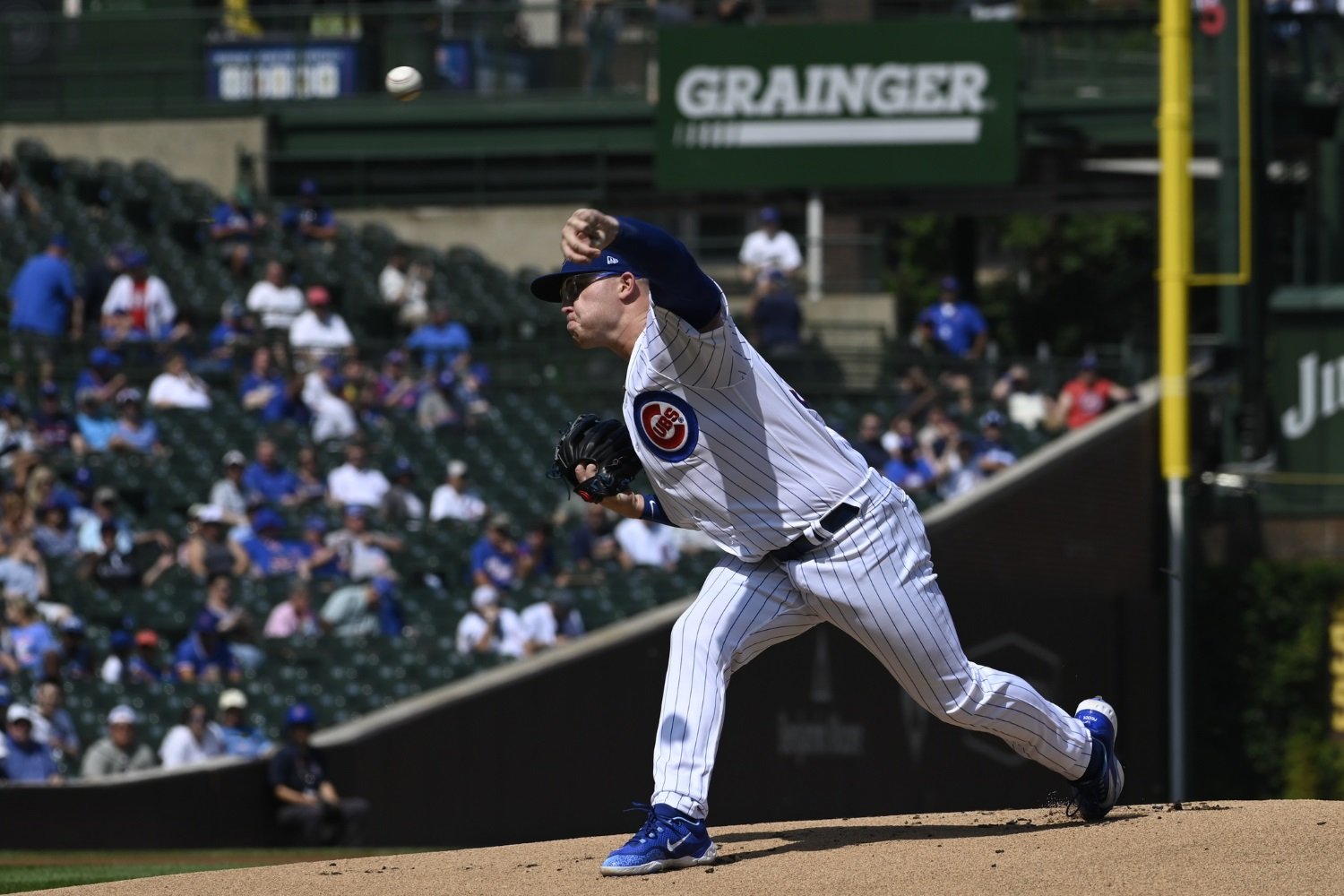 Monday will mark the next big test for Jordan Wicks. The slate of opponents over his first three starts in MLB (Pirates, injury-depleted Reds, Giants) has mixed in various ingredients of difficulty, but ultimately, it's been fairly soft. Wicks has mowed down all three lineups he's faced, but the Giants made a lot of early contact and had frequent traffic on the bases Wednesday. Now, WIcks has to survive at Coors Field, where rookie pitchers can get into all sorts of trouble. As far as these things go, Wicks is fairly well-positioned to find success even in the thin air in Colorado. The Rockies, after all, might be worse than any of the other three teams he's faced since being promoted to the majors. His arsenal also figures to work well against the notable effects of pitching at elevation, as he leans heavily on the changeup (a pitch whose action isn't as much diminished as that of breaking balls) and gets a lot of ground balls. He's also shown plenty of poise already, upon coming up and being asked to contribute to a contending rotation. We're now at a point where, beyond just stopping a gap and getting the team to October, Wicks has many fans hoping to see him starting games once the team arrives there. How likely is that? At first glance, I was dubious. When sketching a potential playoff pitching staff this weekend on Twitter, I left Wicks off altogether, imagining that the team might elect to shut Wicks down and go forward with their more experienced arms--including Marcus Stroman and Michael Fulmer, should they return from their injuries and join the team soon, as seems increasingly likely. The more I looked at Wicks's amateur and professional career arc, though, the more plausible I began to think it was that he might stick around in the rotation until the whole team's season is over. Innings pitched is the most familiar unit by which to measure year-over-year workload for pitchers. I prefer batters faced, because it more neatly estimates both the pitch count and the amount of real work the pitcher had to do. To cover our bases, though, let's look at both figures for Wicks, going all the way back to 2019. Here are his last five seasonal workloads, along with his age that year. 2019 (Age 19, Kansas State): 84 2/3 innings pitched, 369 batters faced 2020 (Age 20, K-St. and the Northwoods League, both seasons truncated by COVID): 46 IP, 168 BF 2021 (Age 21, K-St. and High A): 99 1/3 IP, 426 BF 2022 (Age 22, High A and Double A): 94 2/3 IP, 402 BF 2023 (Age 23, Double A, Triple A, and MLB): 108 IP, 441 BF Wicks is just now venturing past his previous career high in workload. I'm not a huge believer that year-over-year workload should dictate decision-making for most pitchers, but even granting that teams do let that color their thinking, Wicks doesn't look like a guy anyone ought to worry about very much. He's been very carefully used and prepared for this kind of opportunity. He probably could have pitched more the last two seasons to set a higher platform, but the team skipped a couple of starts this summer to ensure that if they needed him on the parent club, they'd be able to use him through the end of their season. If some indicator within his pitching data changes in a concerning way, or if he falls apart and struggles over the next two starts, we can reconsider. Right now, however, I'm inclined to say that the Cubs should be planning on Wicks as a valued member of the playoff roster, whether it be as a starter or not. Presumably, Justin Steele and Kyle Hendricks will be the first two starters in a playoff series for the team, unless they're both needed in some frantic push just to get in at the finish line of the regular season. To have any need of a fourth starter, the Cubs would need to win the Wild Card Series, which is going to be tough. That means that, at least for that first series, there's just one possible start to be doled out to Jameson Taillon, Javier Assad, and Wicks. Overall, it's Assad who has done the most to earn that shot, with his stellar work and slightly longer track record. Ross loves to demonstrate trust in veterans, though, so Taillon might have a leg up, if he pitches well the rest of the way. In all likelihood, Wicks's role on the playoff roster (at least right away) would be as a long man, getting ready almost the moment the game starts when Taillon takes the mound and coming in at the first sign of trouble. That would still be a huge moment, though, and it's an exciting victory for the team that Wicks is in position to earn it. Now. he and the team just have to finish the job, and it's Wicks who can fully restore their momentum with a strong showing Monday night.
 -
Yep, that’s the big question. I suspect he’ll play more than most are fearing but less than most hope. Haha.
-
I don’t think they called PCA up to sit. This is different from the Canario situation, as I noted—not least because, really, Canario didn’t have a clear role with this team. PCA does.
-
Correct. The restrictions on that have always been mostly a matter of minimizing shenanigans involving other teams dropping or swapping someone to you. Anyone who’s in the organization by 8/31 is playoff-eligible, and that’s not even really because of “loopholes”: the league was never trying to stop that from happening. They just wanted to stop a player acquired through some bizarre backdoor transaction in September from being eligible, and the best tool for that was the 40-man roster rule. It’s a really tangled web of rule breaking and rule changing because of weird moves over many decades, but that’s the short version.
-
That sound you heard was the gauntlet hitting the floor. The Cubs aren't going to coast toward the second or third Wild Card spot, and they're not going to wait and see how some struggling veterans rebound. Their future just became their present. Image courtesy of © Lily Smith/The Register / USA TODAY NETWORK Jeff Passan dropped the bomb on Twitter. Pete Crow-Armstrong is really, truly being added to the Cubs roster, right in the thick of a playoff race. Presumably, the move will happen Tuesday because the Cubs face lefty Kyle Freeland Monday night. That underscores a key difference between this move and, say, the promotion of Alexander Canario back on Sept. 1. Crow-Armstrong is here to play. It might not be every day, and it might disappoint some Cubs fans to find him near the bottom of the batting order to start, but he's not getting a peek or a perk here. He's part of their plan to reach October, and to be dangerous once they get there. The obvious, immediate impact here is on the team's defense. Cody Bellinger and Mike Tauchman have been admirable, satisfying center fielders this year. Each has made a few highlight-reel plays, and they've cobbled together average defense at a position where poor fielding cost the team two full wins in 2022. That said, both are playing at their absolute maximum when they manage average defense in center. Crow-Armstrong takes things to another level. He'll steal extra outs for Cubs pitchers and stop runners 90 feet sooner at times down the stretch, even relative to Tauchman and Bellinger--though those two figure to play plenty out there, too. It will be interesting to see what the corresponding roster move is. One possibility (the cleanest and most encouraging) is that Canario will be sent back to Iowa, having gotten a taste of big-league life and a fortnight of big-league paychecks before finishing out his season in Triple A and setting himself up for the Arizona Fall League. After Jeimer Candelario left Sunday's game with back tightness, though, it's very conceivable that he could be headed for the injured list. Even if that's not the case, Candelario might need to be used more sparingly in the coming days, which would create the perfect opening for Crow-Armstrong. Nick Madrigal would, in that case, become the full-time third baseman, and Bellinger the everyday first baseman again, except perhaps against certain left-handed starters. That would open center field for Crow-Armstrong, without taking Tauchman out of the lineup; the latter could be the DH. Even if Candelario is regularly available, expect an arrangement much like that described above, with the wrinkle being that Tauchman's playing time would be constricted somewhat. The Summer of Mike Tauchman is over, it being after Labor Day and all, and while he's stayed afloat recently, a walk feels like the best possible outcome when he comes to bat of late. Crow-Armstrong can take a chunk of his playing time without the team losing much of anything offensively, even if there's an adjustment period ahead for the dynamic rookie, and as we've already said, the defensive gains will be huge. Crow-Armstrong probably won't start every day, even against righties, but he'll be out there a lot. David Ross likes his veterans, but he will also immediately spot the tactical value of this skill set on this roster. On days when Crow-Armstrong doesn't start, he'll get in often as a defensive replacement and/or a pinch-runner. His speed and his glove can both have an outsize impact, especially during this trip to the expansive outfields of Colorado and Arizona. If and when the Cubs reach the postseason, that leveraged value is redoubled. If this move doesn't get you excited, check your baseball pulse. It's not enough, on its own, to give the Cubs a majority chance of catching either the Phillies (for the top Wild Card spot) or the Brewers, but it bumps their chances, and it expresses the sense of urgency this team ought to feel--not because they won't be back next year, but precisely because they will be. View full article
-
NEWS: Pete Crow-Armstrong is Joining the Chicago Cubs Tuesday
Matthew Trueblood posted an article in Cubs
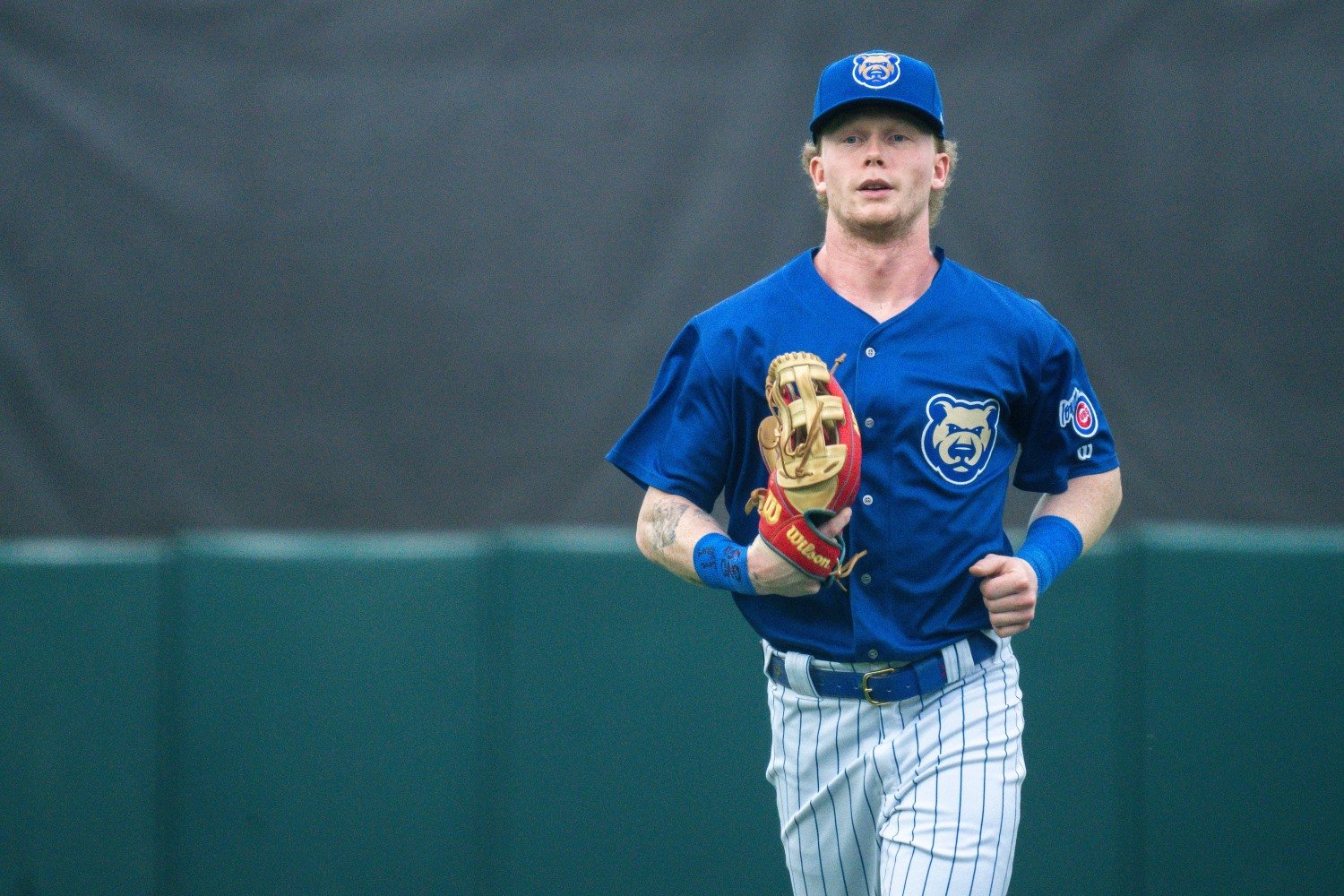 Jeff Passan dropped the bomb on Twitter. Pete Crow-Armstrong is really, truly being added to the Cubs roster, right in the thick of a playoff race. Presumably, the move will happen Tuesday because the Cubs face lefty Kyle Freeland Monday night. That underscores a key difference between this move and, say, the promotion of Alexander Canario back on Sept. 1. Crow-Armstrong is here to play. It might not be every day, and it might disappoint some Cubs fans to find him near the bottom of the batting order to start, but he's not getting a peek or a perk here. He's part of their plan to reach October, and to be dangerous once they get there. The obvious, immediate impact here is on the team's defense. Cody Bellinger and Mike Tauchman have been admirable, satisfying center fielders this year. Each has made a few highlight-reel plays, and they've cobbled together average defense at a position where poor fielding cost the team two full wins in 2022. That said, both are playing at their absolute maximum when they manage average defense in center. Crow-Armstrong takes things to another level. He'll steal extra outs for Cubs pitchers and stop runners 90 feet sooner at times down the stretch, even relative to Tauchman and Bellinger--though those two figure to play plenty out there, too. It will be interesting to see what the corresponding roster move is. One possibility (the cleanest and most encouraging) is that Canario will be sent back to Iowa, having gotten a taste of big-league life and a fortnight of big-league paychecks before finishing out his season in Triple A and setting himself up for the Arizona Fall League. After Jeimer Candelario left Sunday's game with back tightness, though, it's very conceivable that he could be headed for the injured list. Even if that's not the case, Candelario might need to be used more sparingly in the coming days, which would create the perfect opening for Crow-Armstrong. Nick Madrigal would, in that case, become the full-time third baseman, and Bellinger the everyday first baseman again, except perhaps against certain left-handed starters. That would open center field for Crow-Armstrong, without taking Tauchman out of the lineup; the latter could be the DH. Even if Candelario is regularly available, expect an arrangement much like that described above, with the wrinkle being that Tauchman's playing time would be constricted somewhat. The Summer of Mike Tauchman is over, it being after Labor Day and all, and while he's stayed afloat recently, a walk feels like the best possible outcome when he comes to bat of late. Crow-Armstrong can take a chunk of his playing time without the team losing much of anything offensively, even if there's an adjustment period ahead for the dynamic rookie, and as we've already said, the defensive gains will be huge. Crow-Armstrong probably won't start every day, even against righties, but he'll be out there a lot. David Ross likes his veterans, but he will also immediately spot the tactical value of this skill set on this roster. On days when Crow-Armstrong doesn't start, he'll get in often as a defensive replacement and/or a pinch-runner. His speed and his glove can both have an outsize impact, especially during this trip to the expansive outfields of Colorado and Arizona. If and when the Cubs reach the postseason, that leveraged value is redoubled. If this move doesn't get you excited, check your baseball pulse. It's not enough, on its own, to give the Cubs a majority chance of catching either the Phillies (for the top Wild Card spot) or the Brewers, but it bumps their chances, and it expresses the sense of urgency this team ought to feel--not because they won't be back next year, but precisely because they will be.
 -
Ehhh. I mean I agree completely about his potential (assuming, and this is a big and generous assumption, that they have some idea of how to shore up his command, rather than just his stuff). But I don't really agree about caring solely about bottom-line numbers. And I would argue his surface stats are especially misleading, such that trusting him with any moment that could cause them to miss the playoffs or be evicted from them would be malpractice. There might be times when there's no other choice. We saw that kind of thing happen in the 2017 playoffs. But Friday, they had other avenues, and they actively chose Cuas with virtually no safety net. I'm just arguing that that demonstrates faith he doesn't yet merit.
-
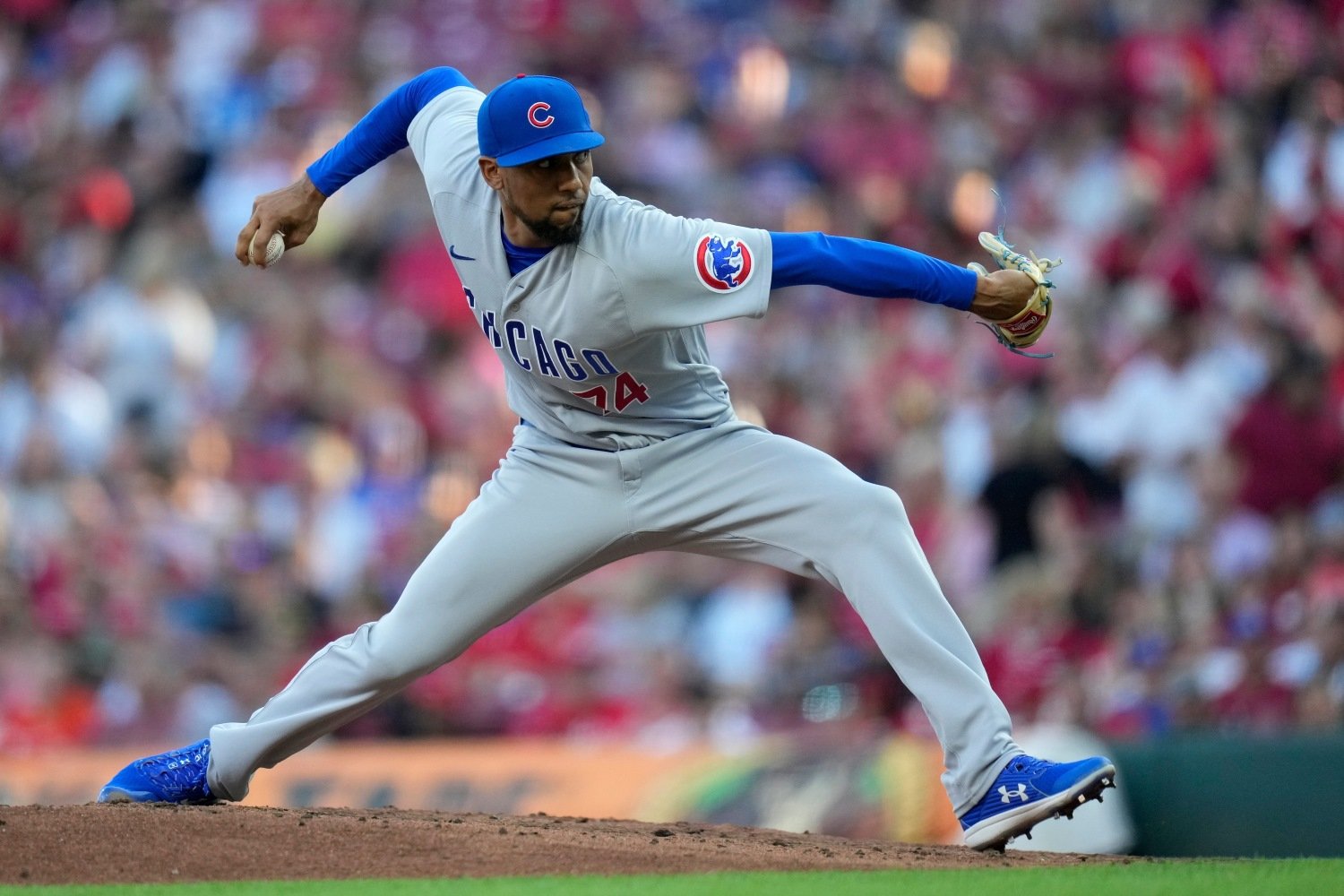 When the Cubs acquired José Cuas, many were quick to notice and discuss what the team saw in him. Cuas not only brought an extreme release point and valuable movement characteristics on his fastball to the table, but had the potential to tweak his breaking ball and unlock something he never quite accessed while pitching for the Royals. The hope was that the Cubs could bring him in and get immediate help based on careful usage, but also that they could develop him into a more prominent weapon in the longer term. They've mostly managed the first objective, and they've taken some of the most important steps toward the second. Cuas has a 1.20 ERA in 15 innings as a Cub, thanks to a much higher ground-ball rate than he had with the Royals. He's only allowed one of eight inherited runners to score, though he's also bequeathed eight baserunners to other relievers, and only one of those has come home, so his ERA is somewhat deceptive. Cuas only has 10 strikeouts in 63 batters faced, though, and has walked 12 opponents. Both of those rates are miserable, and would augur big trouble ahead, absent any other information. Some fans and analysts have been excited (rather than worried), though, because they've noticed that Cuas rebuilt his slider about three weeks ago. Here's a scatterplot of his pitch movement this season, before the Cubs went to Detroit on August 20: That's when he altered his slider. Here's the plot showing his movement since that time. As you can see, there's a whole lot more movement on his revamped breaking ball. It contrasts especially nicely with his sinker. That pitch, coming from the most extreme lateral release point in baseball (no one throws from further toward third base than does Cuas), could be a nasty, bat-missing breaking ball. Between when he unveiled that new offering and when he entered Friday's game in the eighth inning, he had pitched eight innings and allowed just one run, on two hits. He earned enough of David Ross's trust, especially against right-handed batters, that Ross turned to him in that eighth inning of a tie game. In truth, though, that trust isn't yet earned. Cuas's more compelling movement is nice, but unless and until it's paired with better control and command, it's not nearly enough to make him trustworthy in that kind of situation. In those aforementioned eight innings, Cuas had only allowed the two hits, but he'd also walked four, against just four strikeouts. The limiting factor, or at least the first of them, is his inability to land that sweeping breaking ball in the strike zone. Here's where those sliders, with all that movement, have ended up since he made the adjustment. Considering just how much it moves, that pitch might occasionally draw a chase from a right-handed batter, if it's been set up by the sinker. It's not a pitch Cuas can throw at all early in counts, though. Hitters don't even have to respect the possibility of it until they see at least one strike with the fastball, or at any time when they're ahead in the count. He was actually better able to use the slider he had before. It didn't have the same extreme movement, but he could put it in and around the strike zone with reasonable frequency. An even greater problem is Cuas's utter inability to command the sinker right now. That's too many misses off the armside edge of the plate, but it also means hitters can sit on the version of the pitch that wanders too much over the white of the plate and hit it authoritatively. On Friday, that's just what happened to Cuas. On the first pitch of his outing, he threw something of a meatball to Lourdes Gurriel, Jr., who singled sharply on it. Then, to Gabriel Moreno, he showed that inability to find the strike zone that has led to so much traffic on the bases. The slider, however nasty it might be in theory, is irrelevant to Cuas's profile right now. Until he demonstrates the ability to throw strikes with the fastball, the pitch might as well not exist. Cuas still has the potential to emerge as a worthy high-leverage reliever, but that potential has not been tapped yet. Ross erred in going to Cuas with so little margin for error on Friday, and it will continue to be an error to use him in any similar spot, until they fix the command deficiency that has rendered his good raw stuff only halfway useful. Meanwhile, when faced with the temptation to get excited about a player having made an adjustment that shows up in their advanced data, we all ought to be careful not to ignore the feedback of actual results. Valuable changes are those that generate real value--not just hypothetical improvements.
 -
These days, we have great tools for noticing when a pitcher makes an interesting change. Sometimes, though, we're too quick to get excited about them. Image courtesy of © Sam Greene/The Enquirer / USA TODAY NETWORK When the Cubs acquired José Cuas, many were quick to notice and discuss what the team saw in him. Cuas not only brought an extreme release point and valuable movement characteristics on his fastball to the table, but had the potential to tweak his breaking ball and unlock something he never quite accessed while pitching for the Royals. The hope was that the Cubs could bring him in and get immediate help based on careful usage, but also that they could develop him into a more prominent weapon in the longer term. They've mostly managed the first objective, and they've taken some of the most important steps toward the second. Cuas has a 1.20 ERA in 15 innings as a Cub, thanks to a much higher ground-ball rate than he had with the Royals. He's only allowed one of eight inherited runners to score, though he's also bequeathed eight baserunners to other relievers, and only one of those has come home, so his ERA is somewhat deceptive. Cuas only has 10 strikeouts in 63 batters faced, though, and has walked 12 opponents. Both of those rates are miserable, and would augur big trouble ahead, absent any other information. Some fans and analysts have been excited (rather than worried), though, because they've noticed that Cuas rebuilt his slider about three weeks ago. Here's a scatterplot of his pitch movement this season, before the Cubs went to Detroit on August 20: That's when he altered his slider. Here's the plot showing his movement since that time. As you can see, there's a whole lot more movement on his revamped breaking ball. It contrasts especially nicely with his sinker. That pitch, coming from the most extreme lateral release point in baseball (no one throws from further toward third base than does Cuas), could be a nasty, bat-missing breaking ball. Between when he unveiled that new offering and when he entered Friday's game in the eighth inning, he had pitched eight innings and allowed just one run, on two hits. He earned enough of David Ross's trust, especially against right-handed batters, that Ross turned to him in that eighth inning of a tie game. In truth, though, that trust isn't yet earned. Cuas's more compelling movement is nice, but unless and until it's paired with better control and command, it's not nearly enough to make him trustworthy in that kind of situation. In those aforementioned eight innings, Cuas had only allowed the two hits, but he'd also walked four, against just four strikeouts. The limiting factor, or at least the first of them, is his inability to land that sweeping breaking ball in the strike zone. Here's where those sliders, with all that movement, have ended up since he made the adjustment. Considering just how much it moves, that pitch might occasionally draw a chase from a right-handed batter, if it's been set up by the sinker. It's not a pitch Cuas can throw at all early in counts, though. Hitters don't even have to respect the possibility of it until they see at least one strike with the fastball, or at any time when they're ahead in the count. He was actually better able to use the slider he had before. It didn't have the same extreme movement, but he could put it in and around the strike zone with reasonable frequency. An even greater problem is Cuas's utter inability to command the sinker right now. That's too many misses off the armside edge of the plate, but it also means hitters can sit on the version of the pitch that wanders too much over the white of the plate and hit it authoritatively. On Friday, that's just what happened to Cuas. On the first pitch of his outing, he threw something of a meatball to Lourdes Gurriel, Jr., who singled sharply on it. Then, to Gabriel Moreno, he showed that inability to find the strike zone that has led to so much traffic on the bases. The slider, however nasty it might be in theory, is irrelevant to Cuas's profile right now. Until he demonstrates the ability to throw strikes with the fastball, the pitch might as well not exist. Cuas still has the potential to emerge as a worthy high-leverage reliever, but that potential has not been tapped yet. Ross erred in going to Cuas with so little margin for error on Friday, and it will continue to be an error to use him in any similar spot, until they fix the command deficiency that has rendered his good raw stuff only halfway useful. Meanwhile, when faced with the temptation to get excited about a player having made an adjustment that shows up in their advanced data, we all ought to be careful not to ignore the feedback of actual results. Valuable changes are those that generate real value--not just hypothetical improvements. View full article
-
However You Slice It, David Ross Mismanaged His Pitchers Friday
Matthew Trueblood posted an article in Cubs
 As I've documented recently, David Ross doesn't run a bullpen quite the way most other managers do in MLB in 2023. He seems to have a flatter hierarchy and less bifurcated mentality about his relief corps, and it can be difficult to tell (from the outside) in whom he truly has faith at a given time, and how much. Recently, injuries and fatigue have made it even harder to suss out who he likes, and when he likes to use them. Exigency has dominated his decisions of late. On Friday, though, there were some rapid revelations about where he has everyone lined up, and not all of them flatter the skipper. Before we delve too deeply into that, though, let's pause to set the scene. After six innings Friday, the Cubs and Diamondbacks were tied 0-0. Zac Gallen and Jameson Taillon, half-improbably, put on perhaps the best pitchers' duel of the season to date, and neither ever truly blinked. Rather, Ross lifted Taillon, who had thrown 77 pitches in six innings, with a season-high nine strikeouts and just two baserunners allowed. He'd worked under slightly more stress than those simple facts relate, because both times that a runner had reached base, it was Corbin Carroll, and he then matriculated to third via a stolen base and a throwing error each time. Still, removing Taillon at that stage was an extremely proactive move. It's not radical, by the standards of the modern game, but it was certainly surprising. If anything, Ross has recently erred on the side of letting his starters go deeper than expected. He let Javier Assad and Justin Steele each complete eight innings within the last week, and he pushed Jordan Wicks to his failure point in Wednesday's win over the Giants. With Wicks and Steele, though, Ross had ample margin for error. With Assad, he was managing around an exhausted bullpen. This time around, he was walking a tightrope, with no runs on the board from his offense, and he had a fresh and healthy pen. (That last fact is pivotal here, and we'll soon revisit it.) He probably also remembered Taillon's outing in Detroit last month, when he had a no-hitter through five innings, and then was knocked out of the game before escaping the sixth, having allowed a grand slam to pulverize a four-run lead. In light of all that, I find no fault with the decision to turn to the bullpen early, even though I think it was a close call and am sympathetic to those who balk at that choice itself. In Taillon's stead, Julian Merryweather took the mound for the seventh, and he immediately redeemed Ross's dubious decision, punching out all three Arizona batters. It was an exciting performance--the kind of thing that first reclaims the crowd (who had been slightly confused and enervated, at first, by Taillon's disappearance), then jolts them. Merryweather was the right man for the job, if Taillon wasn't. The Cubs couldn't do anything with Gallen in the seventh, though, so the game remained tied going into the top of the eighth. When the bullpen door opened this time, it was Jose Cuas who emerged. That's when everything got fairly confused. Prior to Friday, Adbert Alzolay hadn't appeared in a game since blowing the save in the second game of last Friday's doubleheader with the Reds. That was the end of a turbulent week for the Cubs' formerly untouchable closer, and during the ensuing week of inactivity, Ross let it slip that he was dealing with something. It's become clear that the issue is as benign as that ostensibly euphemistic description would have you believe. It's only natural, and delightfully normal, for Alzolay to be dealing with some fatigue, soreness, or even tightness at this stage of a season in which he's been relied upon pretty heavily. Last year, he pitched only a small handful of innings, after a long injury rehabilitation. We don't think about reliever innings the same way we count them for starters, but they count, too. When Cuas entered the game to begin the eighth, though, a minor panic swept Cubs Twitter, and not without foundation. If Alzolay were down again Friday, with such an obvious and high-leverage slot available, it would be a full week of inactivity, and there would be no hedging or explaining it away. Just as urgently, though, if Alzolay was unavailable, it made the decision to send Taillon to the showers so soon much less defensible. As it turned out, Alzolay was available. He'd come in, in fact, to pitch the ninth. By then, alas, the Cubs trailed by a run, so it was a bit of a waste, other than as an occasion to restore his confidence and prove to everyone that he's healthy. That's because, upon entering the contest, Cuas made a mess, and Mark Leiter, Jr. was unable to clean it up. After the fact, and even in the moment, much was made of the short recent run of success Cuas has had, since tweaking his slider under the guidance of the Cubs' pitching development team. I'll have a separate piece about that tomorrow, but for now, know that the adjustment is real, but the story is much more complicated. It was also mentioned that, with three right-handed batters due to start the inning, Cuas made more sense than Leiter, who runs reverse platoon splits when his splitter is working well. Leiter's splitter was back in the arsenal Friday, but it wasn't enough to get out the pesky Carroll. Cuas had left with two runners on base and one out, and after getting one strikeout, Leiter almost got an inning-ending lineout from Carroll. The ball fell inches in front of the sliding Seiya Suzuki, though, and the lone run of the game came home. Charged with facing Geraldo Perdomo, Carroll, and Ketel Marte, Leiter got two of them, and he came excruciatingly close to getting the other. Ross was managing his bullpen in the new mold, which dictates that skippers seek out specific matchups based on handedness, pitch type, and swing paths. The argot en vogue is a "pocket"--a section of the opponent's lineup suited to that particular hurler. There's nothing wrong with using pockets as one tool for managing bullpens, especially given how many innings teams typically ask of their relievers these days. It's a valid paradigm. However, it can also be a trap. It's a product of one of the more pernicious traits of modern sport, and of modern society, which is that everything has to be justified by a sheen of optimization, and that once that sheen is in place, the elected course of action becomes unassailable. By and large, fans on Twitter shrugged at Ross's failed strategy for the late stages of the game, pointing to the pockets he picked as ones that made sense. I'm all for process over outcome, but the ability to explain a line of thinking does not perfectly justify it. Pockets aren't the only valid way to conceptualize bullpen usage, and they're not well-suited to games like Friday's, when the starter went deep (and might have gone deeper) and the full strength of the bullpen is at the manager's command. To be clear, my objection isn't particularly to saving Leiter for that pocket of the Arizona lineup. It's in entrusting to Cuas such a delicate situation, even against Lourdes Gurriel, Jr., Gabriel Moreno, and Jordan Lawlor. If Ross was deeply committed to using Leiter against the set of lefties and switch-hitters at the ends of the Diamondbacks' lineup card, he needed to be willing to use Alzolay early, and go to him to work the eighth instead of the ninth. If that sounds outlandish, because it breaks from the traditional role Alzolay has carved out in the bullpen, so be it. Pocket thinking is inconsistent with the rigidity of the closer's role. Ross could have left Taillon in for the seventh, facing Tommy Pham, Christian Walker, and Alec Thomas. That would have saved Merryweather for the righties who began the eighth, while keeping Leiter available for the lefties if needed, and then Alzolay could have worked the ninth. He could also have elected to trust Leiter against the relatively non-lethal righties, starting with a clean inning, in the eighth. The path he chose was, by any reckoning other than the hyper-modern one that seeks an objectivist refuge from criticism at the expense of better, nuanced decisions that embrace the risk of rebuke, the worst possible one. Clearly, because a data-driven adjustment has altered Cuas's profile, he's been convinced that he should trust him quite a bit. That's an error. Because the Cubs weren't able to touch Gallen, anyway, it looks like a relatively bootless transgression, but those taut, challenging games are the ones they need to win--not only to knock back rivals like Arizona and Cincinnati and keep pace with the Brewers and Phillies, but to learn how to win them if they get an opportunity to do so in October. If nothing else, there was an open lane to extending that game to extra innings, where Gallen surely would have been lifted and the Cubs might have broken through. Hopefully, Ross learned from this defeat, because the Cubs can't afford any more avoidable ones for the balance of the campaign.
 -
The Cubs are developing the terrible habit of wasting very good pitching performances. Last weekend in Cincinnati, there was little David Ross could have done to prevent that. Friday at Wrigley Field, he was the biggest culprit. Image courtesy of © Kamil Krzaczynski-USA TODAY Sports As I've documented recently, David Ross doesn't run a bullpen quite the way most other managers do in MLB in 2023. He seems to have a flatter hierarchy and less bifurcated mentality about his relief corps, and it can be difficult to tell (from the outside) in whom he truly has faith at a given time, and how much. Recently, injuries and fatigue have made it even harder to suss out who he likes, and when he likes to use them. Exigency has dominated his decisions of late. On Friday, though, there were some rapid revelations about where he has everyone lined up, and not all of them flatter the skipper. Before we delve too deeply into that, though, let's pause to set the scene. After six innings Friday, the Cubs and Diamondbacks were tied 0-0. Zac Gallen and Jameson Taillon, half-improbably, put on perhaps the best pitchers' duel of the season to date, and neither ever truly blinked. Rather, Ross lifted Taillon, who had thrown 77 pitches in six innings, with a season-high nine strikeouts and just two baserunners allowed. He'd worked under slightly more stress than those simple facts relate, because both times that a runner had reached base, it was Corbin Carroll, and he then matriculated to third via a stolen base and a throwing error each time. Still, removing Taillon at that stage was an extremely proactive move. It's not radical, by the standards of the modern game, but it was certainly surprising. If anything, Ross has recently erred on the side of letting his starters go deeper than expected. He let Javier Assad and Justin Steele each complete eight innings within the last week, and he pushed Jordan Wicks to his failure point in Wednesday's win over the Giants. With Wicks and Steele, though, Ross had ample margin for error. With Assad, he was managing around an exhausted bullpen. This time around, he was walking a tightrope, with no runs on the board from his offense, and he had a fresh and healthy pen. (That last fact is pivotal here, and we'll soon revisit it.) He probably also remembered Taillon's outing in Detroit last month, when he had a no-hitter through five innings, and then was knocked out of the game before escaping the sixth, having allowed a grand slam to pulverize a four-run lead. In light of all that, I find no fault with the decision to turn to the bullpen early, even though I think it was a close call and am sympathetic to those who balk at that choice itself. In Taillon's stead, Julian Merryweather took the mound for the seventh, and he immediately redeemed Ross's dubious decision, punching out all three Arizona batters. It was an exciting performance--the kind of thing that first reclaims the crowd (who had been slightly confused and enervated, at first, by Taillon's disappearance), then jolts them. Merryweather was the right man for the job, if Taillon wasn't. The Cubs couldn't do anything with Gallen in the seventh, though, so the game remained tied going into the top of the eighth. When the bullpen door opened this time, it was Jose Cuas who emerged. That's when everything got fairly confused. Prior to Friday, Adbert Alzolay hadn't appeared in a game since blowing the save in the second game of last Friday's doubleheader with the Reds. That was the end of a turbulent week for the Cubs' formerly untouchable closer, and during the ensuing week of inactivity, Ross let it slip that he was dealing with something. It's become clear that the issue is as benign as that ostensibly euphemistic description would have you believe. It's only natural, and delightfully normal, for Alzolay to be dealing with some fatigue, soreness, or even tightness at this stage of a season in which he's been relied upon pretty heavily. Last year, he pitched only a small handful of innings, after a long injury rehabilitation. We don't think about reliever innings the same way we count them for starters, but they count, too. When Cuas entered the game to begin the eighth, though, a minor panic swept Cubs Twitter, and not without foundation. If Alzolay were down again Friday, with such an obvious and high-leverage slot available, it would be a full week of inactivity, and there would be no hedging or explaining it away. Just as urgently, though, if Alzolay was unavailable, it made the decision to send Taillon to the showers so soon much less defensible. As it turned out, Alzolay was available. He'd come in, in fact, to pitch the ninth. By then, alas, the Cubs trailed by a run, so it was a bit of a waste, other than as an occasion to restore his confidence and prove to everyone that he's healthy. That's because, upon entering the contest, Cuas made a mess, and Mark Leiter, Jr. was unable to clean it up. After the fact, and even in the moment, much was made of the short recent run of success Cuas has had, since tweaking his slider under the guidance of the Cubs' pitching development team. I'll have a separate piece about that tomorrow, but for now, know that the adjustment is real, but the story is much more complicated. It was also mentioned that, with three right-handed batters due to start the inning, Cuas made more sense than Leiter, who runs reverse platoon splits when his splitter is working well. Leiter's splitter was back in the arsenal Friday, but it wasn't enough to get out the pesky Carroll. Cuas had left with two runners on base and one out, and after getting one strikeout, Leiter almost got an inning-ending lineout from Carroll. The ball fell inches in front of the sliding Seiya Suzuki, though, and the lone run of the game came home. Charged with facing Geraldo Perdomo, Carroll, and Ketel Marte, Leiter got two of them, and he came excruciatingly close to getting the other. Ross was managing his bullpen in the new mold, which dictates that skippers seek out specific matchups based on handedness, pitch type, and swing paths. The argot en vogue is a "pocket"--a section of the opponent's lineup suited to that particular hurler. There's nothing wrong with using pockets as one tool for managing bullpens, especially given how many innings teams typically ask of their relievers these days. It's a valid paradigm. However, it can also be a trap. It's a product of one of the more pernicious traits of modern sport, and of modern society, which is that everything has to be justified by a sheen of optimization, and that once that sheen is in place, the elected course of action becomes unassailable. By and large, fans on Twitter shrugged at Ross's failed strategy for the late stages of the game, pointing to the pockets he picked as ones that made sense. I'm all for process over outcome, but the ability to explain a line of thinking does not perfectly justify it. Pockets aren't the only valid way to conceptualize bullpen usage, and they're not well-suited to games like Friday's, when the starter went deep (and might have gone deeper) and the full strength of the bullpen is at the manager's command. To be clear, my objection isn't particularly to saving Leiter for that pocket of the Arizona lineup. It's in entrusting to Cuas such a delicate situation, even against Lourdes Gurriel, Jr., Gabriel Moreno, and Jordan Lawlor. If Ross was deeply committed to using Leiter against the set of lefties and switch-hitters at the ends of the Diamondbacks' lineup card, he needed to be willing to use Alzolay early, and go to him to work the eighth instead of the ninth. If that sounds outlandish, because it breaks from the traditional role Alzolay has carved out in the bullpen, so be it. Pocket thinking is inconsistent with the rigidity of the closer's role. Ross could have left Taillon in for the seventh, facing Tommy Pham, Christian Walker, and Alec Thomas. That would have saved Merryweather for the righties who began the eighth, while keeping Leiter available for the lefties if needed, and then Alzolay could have worked the ninth. He could also have elected to trust Leiter against the relatively non-lethal righties, starting with a clean inning, in the eighth. The path he chose was, by any reckoning other than the hyper-modern one that seeks an objectivist refuge from criticism at the expense of better, nuanced decisions that embrace the risk of rebuke, the worst possible one. Clearly, because a data-driven adjustment has altered Cuas's profile, he's been convinced that he should trust him quite a bit. That's an error. Because the Cubs weren't able to touch Gallen, anyway, it looks like a relatively bootless transgression, but those taut, challenging games are the ones they need to win--not only to knock back rivals like Arizona and Cincinnati and keep pace with the Brewers and Phillies, but to learn how to win them if they get an opportunity to do so in October. If nothing else, there was an open lane to extending that game to extra innings, where Gallen surely would have been lifted and the Cubs might have broken through. Hopefully, Ross learned from this defeat, because the Cubs can't afford any more avoidable ones for the balance of the campaign. View full article
-
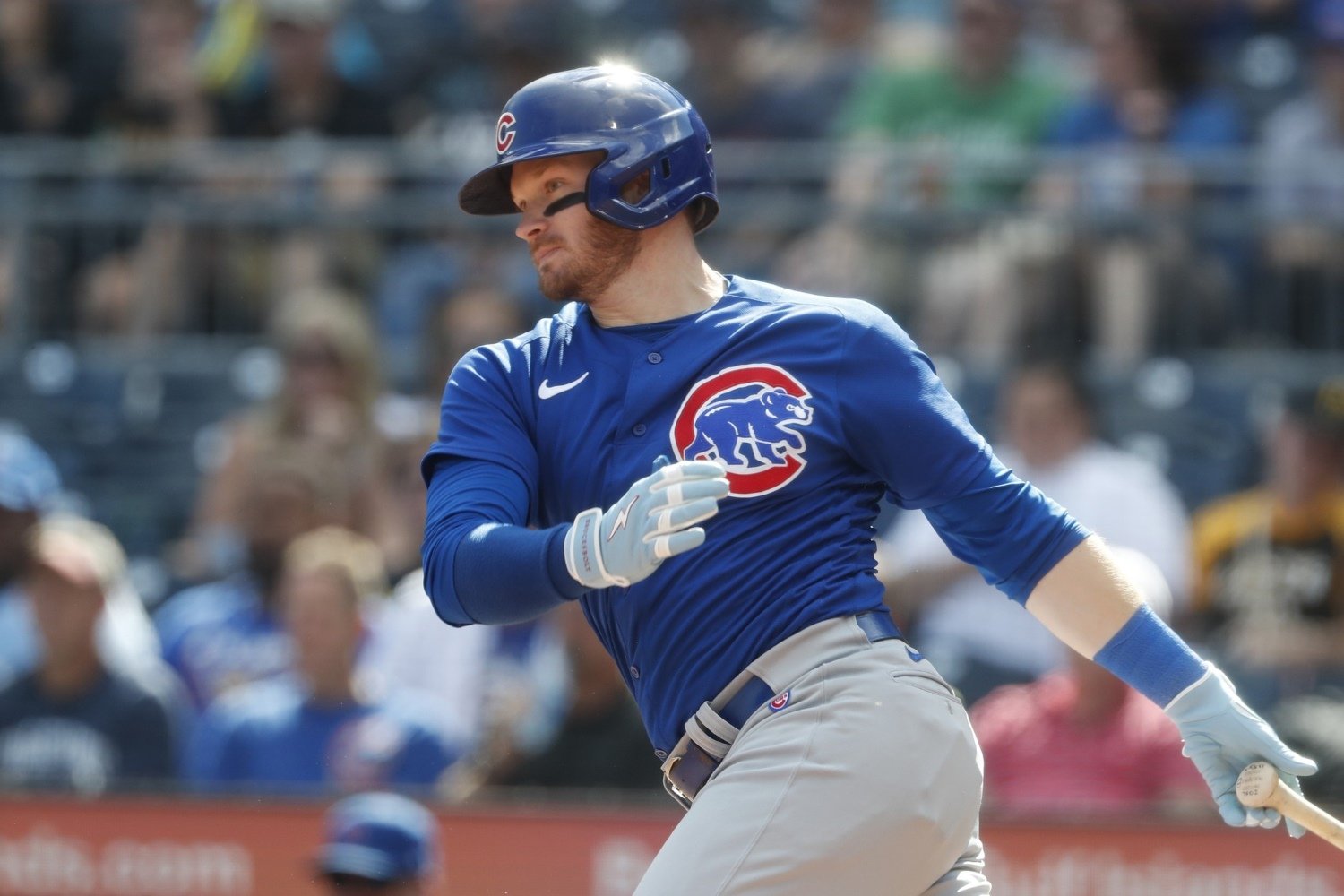 The Cubs signed Ian Happ to a contract extension in April partly on the strength of the good season he had from the right side of the plate in 2022. He has always been a patient, powerful hitter from the left side, but last year, he was a more complete switch-hitter than he had ever previously showed. He hit .305/.350/.438 against southpaws last season, which was easily his strongest showing against them since his rookie season of 2017. It was certainly not the primary reason why the Cubs wanted to keep him around, but that improvement was a crucial part of the overall success that did lead the team to retain him. Here's the thing: that year was a lie. Happ himself would probably tell you so. He struck out 39 times in 137 plate appearances from the right side, and he drew just seven walks in those trips. He ran a .425 batted average on balls in play, not because he scorched the ball or took advantage of overshifted defenses, but because a .425 BABIP can happen pretty easily over the course of about 90 balls in play. Even a handful of his 12 extra-base hits weren't really him hammering a ball and finding a gap, but rather, ground balls that happened to stay fair and scoot past the third baseman. By and large, Happ has lacked power and plate discipline from the right side throughout his career. He's not a total zero, but he's the guy you slot in at the very bottom of your batting order against a lefty, not a middle-of-the-order hitter, which is what he can legitimately be as a lefty swinger. He got off to an atrocious start in this regard in 2023, too, and it looked like last year might be a welcome but ultimately meaningless blip in a career of ineptitude against lefties. He was batting .158/.256/.211 against them through May 15. Notice, though, the gap between that batting average and the OBP. That came about because Happ started taking a much more patient tack in his trips against lefties, almost right away. Certainly, that was his plan by the middle of May. Since May 16, he's hitting .243/.330/.430 off of lefties. In 125 plate appearances, he's drawn 15 walks, and he's only struck out 25 times. He's socked four home runs off of them in that time, too--twice as many as he managed in all of 2022. The secret to his newfound success isn't in what he started doing; it's in what he discontinued. Happ is just not swinging as much against lefties as he's done in the past. In his career, the only season in which he had a lower swing rate against southpaws than the 46.3 percent he's putting up this year was the shortened 2020 campaign. Very often, he's been well over 50 percent. We rarely talk about it this way, but every swing is a tiny statement of faith in oneself. On any given pitch, a swing guarantees a strike, whereas a take can get you closer to a walk and/or better able to sit on a pitch you can hit with some leverage in the count. You should only swing when you think the probabilities and payoffs of that decision make the cost worthwhile, and the worse or less often you hit the ball, the less frequently that decision makes sense. Happ has (probably not in so many words) noticed that he can’t hit right-handed, and he’s adjusted accordingly. Here's his swing rate by pitch location as a right-handed batter in 2022. Here, by contrast, is the same chart for 2023. Look at the way he's cut the plate in half. Pitchers can still get him out away, if they can locate on the outer edge. Happ will simply bet on them missing that target. He's ready to hit the ball hard if it's over the heart of the plate, and he's going to take it for a ball if it's a miss away. If they hit the corner, Happ tips his cap, because he's come to understand that his right-handed swing just can't produce anything valuable by chasing out there. Knowing what he can and can't hit hasn't led Happ to start mercilessly crushing left-handed pitching. He doesn't have that in him. His strikeout rate has plunged, though, and with a few walks to keep the line moving and a small improvement in power, he's become a competent hitter in any matchup. His expected weighted on-base average (xwOBA), based on batted-ball quality and strikeout and walk proclivities, has never been higher than .291 against lefties. That's a miserable number. An average xwOBA hovers just a little above .320. This season, though, Happ's is at .314. If he keeps this up, he'll be a perfectly cromulent third hitter in David Ross's batting orders, even in October. Speaking of matchups and of the postseason, though, that's another dimension of Happ's game that deserves a quick touch. Historically, he's been a jumpy and lousy hitter in clutch moments. In 2021 and 2022, especially, he seemed to get overanxious when he had the opportunity to come through with a big hit. This season, he's learned the value of continuing to press the rally, even if it be by leaving the big blow to the next guy. It's made him much better. Here are his swing rates and wOBA by season, when batting with the tying or go-ahead run either at bat or on base in the sixth inning or later. Ian Happ in the Clutch Season Swing % wOBA 2017 52.5 0.292 2018 44.4 0.365 2019 45.8 0.494 2020 46.4 0.254 2021 47.5 0.332 2022 49.3 0.242 2023 42.1 0.436 Obviously, Happ sometimes comes up in moments like that as a left-handed batter, facing a righty. Even in those cases, though, he's learned to be more patient than might be his wont, because it's going to help the team in the long run if he gets on base in front of Cody Bellinger and Seiya Suzuki. It's also instructive to see that, good hitter or bad, it sometimes pays to take a more calm approach in a moment that feels anything but calm. Often, it's the pitch you lay off that earns you the mistake you turn into the killing blow. Happ has always shown an awareness of that, in general. It has tended to get away from him when the moment gets big, but this year, that's changed. Swinging dramatically less often would be a decent prescription for what ails several hitters through the league. Only certain guys are capable of it, though, and among those who have some impressive power seasons on their resume, it's understandable if ego interferes with that kind of adaptation. Happ hasn't allowed it to do so. He knows what he does well, and where he's weak, and he's doing his best to make his strengths stronger and his weaknesses less exploitable. It sounds easy not to swing, but Happ is proof that it can be both difficult and devastatingly effective.
 -
Sometimes, the most valuable thing in the world is a bit of self-knowledge. Knowing one's limitations is valuable everywhere, but especially in the batter's box. Image courtesy of © Charles LeClaire-USA TODAY Sports The Cubs signed Ian Happ to a contract extension in April partly on the strength of the good season he had from the right side of the plate in 2022. He has always been a patient, powerful hitter from the left side, but last year, he was a more complete switch-hitter than he had ever previously showed. He hit .305/.350/.438 against southpaws last season, which was easily his strongest showing against them since his rookie season of 2017. It was certainly not the primary reason why the Cubs wanted to keep him around, but that improvement was a crucial part of the overall success that did lead the team to retain him. Here's the thing: that year was a lie. Happ himself would probably tell you so. He struck out 39 times in 137 plate appearances from the right side, and he drew just seven walks in those trips. He ran a .425 batted average on balls in play, not because he scorched the ball or took advantage of overshifted defenses, but because a .425 BABIP can happen pretty easily over the course of about 90 balls in play. Even a handful of his 12 extra-base hits weren't really him hammering a ball and finding a gap, but rather, ground balls that happened to stay fair and scoot past the third baseman. By and large, Happ has lacked power and plate discipline from the right side throughout his career. He's not a total zero, but he's the guy you slot in at the very bottom of your batting order against a lefty, not a middle-of-the-order hitter, which is what he can legitimately be as a lefty swinger. He got off to an atrocious start in this regard in 2023, too, and it looked like last year might be a welcome but ultimately meaningless blip in a career of ineptitude against lefties. He was batting .158/.256/.211 against them through May 15. Notice, though, the gap between that batting average and the OBP. That came about because Happ started taking a much more patient tack in his trips against lefties, almost right away. Certainly, that was his plan by the middle of May. Since May 16, he's hitting .243/.330/.430 off of lefties. In 125 plate appearances, he's drawn 15 walks, and he's only struck out 25 times. He's socked four home runs off of them in that time, too--twice as many as he managed in all of 2022. The secret to his newfound success isn't in what he started doing; it's in what he discontinued. Happ is just not swinging as much against lefties as he's done in the past. In his career, the only season in which he had a lower swing rate against southpaws than the 46.3 percent he's putting up this year was the shortened 2020 campaign. Very often, he's been well over 50 percent. We rarely talk about it this way, but every swing is a tiny statement of faith in oneself. On any given pitch, a swing guarantees a strike, whereas a take can get you closer to a walk and/or better able to sit on a pitch you can hit with some leverage in the count. You should only swing when you think the probabilities and payoffs of that decision make the cost worthwhile, and the worse or less often you hit the ball, the less frequently that decision makes sense. Happ has (probably not in so many words) noticed that he can’t hit right-handed, and he’s adjusted accordingly. Here's his swing rate by pitch location as a right-handed batter in 2022. Here, by contrast, is the same chart for 2023. Look at the way he's cut the plate in half. Pitchers can still get him out away, if they can locate on the outer edge. Happ will simply bet on them missing that target. He's ready to hit the ball hard if it's over the heart of the plate, and he's going to take it for a ball if it's a miss away. If they hit the corner, Happ tips his cap, because he's come to understand that his right-handed swing just can't produce anything valuable by chasing out there. Knowing what he can and can't hit hasn't led Happ to start mercilessly crushing left-handed pitching. He doesn't have that in him. His strikeout rate has plunged, though, and with a few walks to keep the line moving and a small improvement in power, he's become a competent hitter in any matchup. His expected weighted on-base average (xwOBA), based on batted-ball quality and strikeout and walk proclivities, has never been higher than .291 against lefties. That's a miserable number. An average xwOBA hovers just a little above .320. This season, though, Happ's is at .314. If he keeps this up, he'll be a perfectly cromulent third hitter in David Ross's batting orders, even in October. Speaking of matchups and of the postseason, though, that's another dimension of Happ's game that deserves a quick touch. Historically, he's been a jumpy and lousy hitter in clutch moments. In 2021 and 2022, especially, he seemed to get overanxious when he had the opportunity to come through with a big hit. This season, he's learned the value of continuing to press the rally, even if it be by leaving the big blow to the next guy. It's made him much better. Here are his swing rates and wOBA by season, when batting with the tying or go-ahead run either at bat or on base in the sixth inning or later. Ian Happ in the Clutch Season Swing % wOBA 2017 52.5 0.292 2018 44.4 0.365 2019 45.8 0.494 2020 46.4 0.254 2021 47.5 0.332 2022 49.3 0.242 2023 42.1 0.436 Obviously, Happ sometimes comes up in moments like that as a left-handed batter, facing a righty. Even in those cases, though, he's learned to be more patient than might be his wont, because it's going to help the team in the long run if he gets on base in front of Cody Bellinger and Seiya Suzuki. It's also instructive to see that, good hitter or bad, it sometimes pays to take a more calm approach in a moment that feels anything but calm. Often, it's the pitch you lay off that earns you the mistake you turn into the killing blow. Happ has always shown an awareness of that, in general. It has tended to get away from him when the moment gets big, but this year, that's changed. Swinging dramatically less often would be a decent prescription for what ails several hitters through the league. Only certain guys are capable of it, though, and among those who have some impressive power seasons on their resume, it's understandable if ego interferes with that kind of adaptation. Happ hasn't allowed it to do so. He knows what he does well, and where he's weak, and he's doing his best to make his strengths stronger and his weaknesses less exploitable. It sounds easy not to swing, but Happ is proof that it can be both difficult and devastatingly effective. View full article
-
- 1
-

-
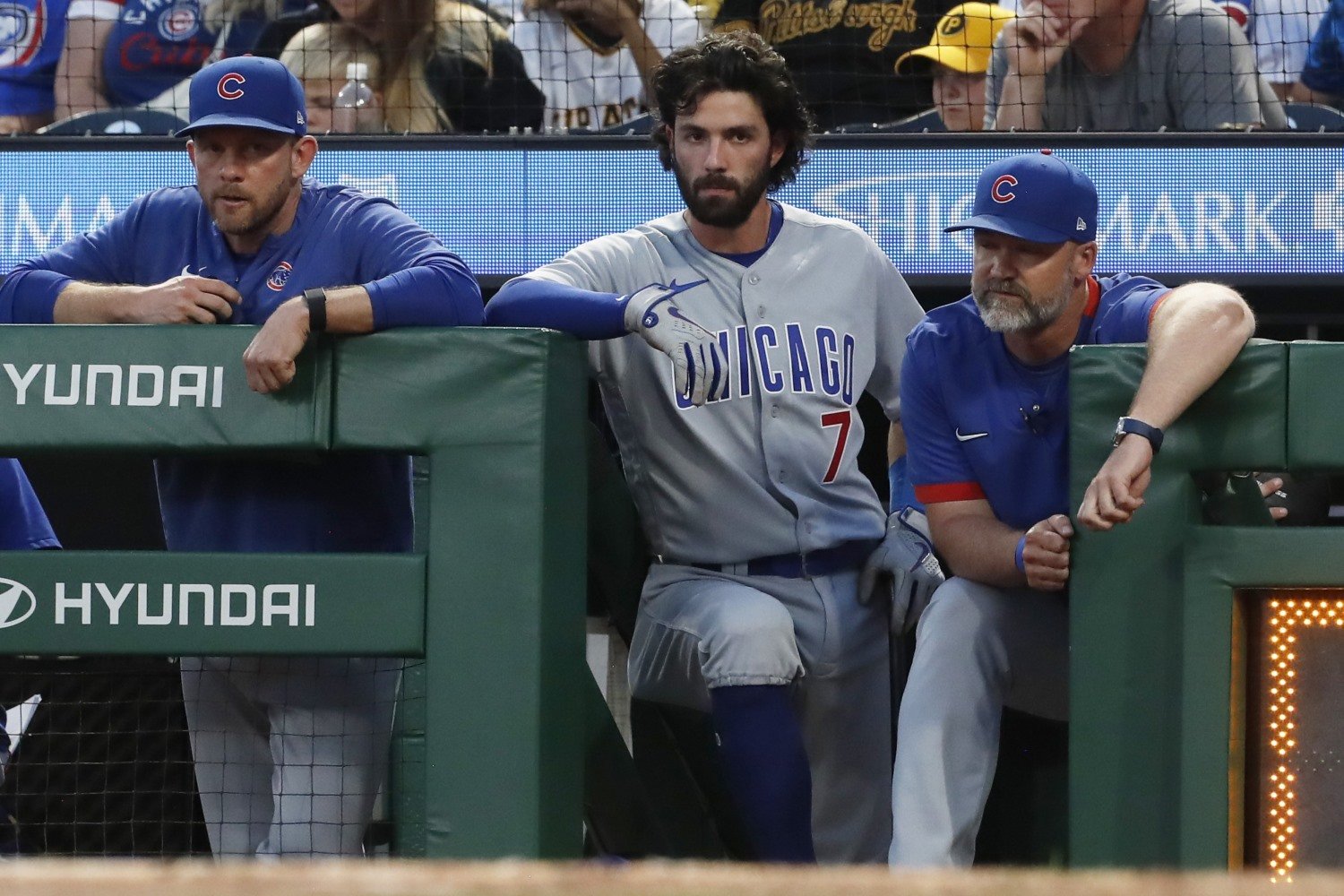 It's no surprise, really, that Dansby Swanson has gone through some prolonged slumps this year. Throughout his strong, decorated career, he's been a streaky hitter. In 2021, he batted .189/.267/.316 in April; .278/.312/.557 from May 1 through June 7; .206/.277/.363 from June 8 through July 6; .318/.372/.593 from July 7 through September 1; and then .172/.272/.241 the rest of the regular season. Last year, he had a .432 OPS through April 20; a .950 one from April 21 through July 4; and a .691 mark from there through the end of the regular season. Readers will note the blatantly arbitrary nature of those endpoints, and I freely admit the fact. Within each of those longer slumps and streaks, too, there were warmer and colder spots. Moreover, every hitter (every ballplayer, really, but especially every hitter) is less consistent than you think, anyway. Still, even seasoned and serious baseball people (and certainly fans in Atlanta, where he was a fixture for several years and there's more granular familiarity with him than there could possibly be after 140 games here in Chicago) will tell you that Swanson runs hotter and colder for longer than most hitters with his overall talent do. This campaign has been, by Swanson's standards, a relatively gentle rollercoaster. He's had a couple of true cold snaps, with an OPS around .560 from Memorial Day weekend through mid-June. but he's kept them shorter than in the past. He also had an OPS north of 1.000 from July 3 through the first week of August, though that span was interrupted by his stint on the injured list with a bruised heel. That burst of torridity helped save the Cubs' season, and bought the team time for Ian Happ and Seiya Suzuki to escape long funks at the plate. It got them over the hump and helped bring Jeimer Candelario to town. It compounded the value of Cody Bellinger's even hotter July. It's important not to overlook the value of that well-timed streak, from a player who cares much more about winning than about his own statistics. Now, however, we're getting the other side of the Full Dansby, at long last. Since August 7, Swanson is now batting .179/.273/.264, in 121 plate appearances. He's still fighting up there, but he's going very badly, and has been for quite a while. It's nice to be able to point to his ability to draw walks during these slumps, but as the numbers from 2021 help to show, he always does that. In fact, by and large, Swanson's walk rate is a reverse indicator of how well he's going at the plate. When he's hot, he's aggressive, and he doesn't miss his pitch or foul it off, so he rarely gets deep enough into counts to walk. When he's cold, he grinds out walks because he can do little else to help the team. The following might sound antithetical to that, but it's true: Swanson's pull rate is also a pretty good reverse indicator of his performance. While his aggressive swing would seem conducive to pulling the ball with authority (and can be), the more often he's pulling it, the less well he's usually doing, overall. Swanson's issues, when he gets going wrong, seem to relate powerfully to timing, and that jibes with this data. When he's on, Swanson squares the ball up and uses the whole field, especially the middle portion. If he's systematically pulling the ball, he's probably systematically mistiming his swings somewhat, and that's when his rates of strikeouts and groundouts rise sharply. Thus, it was encouraging to see Swanson drive a ball deep to right-center field on Tuesday night, even though it found a glove for a harmless flyout. That's the kind of batted ball that indicates Swanson is doing well. His single in the ninth inning was, technically, a ground ball to the left side, but it was scalded, and more to center than to left. Swanson has six hits since Sunday, and just completed two straight games without a strikeout for the first time since mid-August. It's a stirring testament (as if we needed more of them) to the Cubs' depth and diligence that they've been a mostly functional offense during Swanson's protracted struggles. He's batted second or fifth every day, and taken only a small handful of late innings off in blowouts, since coming off the injured list on July 22. He's getting a lot of important plate appearances, and he's been very unproductive for just over a month. David Ross waited out Happ, though, and has been rewarded by a resurgent August and early September. He'll wait out Swanson, too, and keep writing him into important spots in the lineup. As much as that might anger fans, it's the right way to handle Swanson, especially after it just worked for Happ. Even while he scuffles at the plate, Swanson has huge value, because he works his way on base often enough not to be an automatic out, and because of his superb defense at shortstop. His particular brand of leadership has also suited this team perfectly. Imagine the impact, though, if Swanson can get hot down the stretch, with this lineup otherwise operating at a high and finely pitched hum. A hot Swanson is the difference between the Cubs being Wild Card contenders and the Cubs being World Series contenders.
 -
Ever since the All-Star break, but especially since acquiring Jeimer Candelario, the Cubs offense has been hugely productive. They just need one more key cog to find traction again. Image courtesy of © Charles LeClaire-USA TODAY Sports It's no surprise, really, that Dansby Swanson has gone through some prolonged slumps this year. Throughout his strong, decorated career, he's been a streaky hitter. In 2021, he batted .189/.267/.316 in April; .278/.312/.557 from May 1 through June 7; .206/.277/.363 from June 8 through July 6; .318/.372/.593 from July 7 through September 1; and then .172/.272/.241 the rest of the regular season. Last year, he had a .432 OPS through April 20; a .950 one from April 21 through July 4; and a .691 mark from there through the end of the regular season. Readers will note the blatantly arbitrary nature of those endpoints, and I freely admit the fact. Within each of those longer slumps and streaks, too, there were warmer and colder spots. Moreover, every hitter (every ballplayer, really, but especially every hitter) is less consistent than you think, anyway. Still, even seasoned and serious baseball people (and certainly fans in Atlanta, where he was a fixture for several years and there's more granular familiarity with him than there could possibly be after 140 games here in Chicago) will tell you that Swanson runs hotter and colder for longer than most hitters with his overall talent do. This campaign has been, by Swanson's standards, a relatively gentle rollercoaster. He's had a couple of true cold snaps, with an OPS around .560 from Memorial Day weekend through mid-June. but he's kept them shorter than in the past. He also had an OPS north of 1.000 from July 3 through the first week of August, though that span was interrupted by his stint on the injured list with a bruised heel. That burst of torridity helped save the Cubs' season, and bought the team time for Ian Happ and Seiya Suzuki to escape long funks at the plate. It got them over the hump and helped bring Jeimer Candelario to town. It compounded the value of Cody Bellinger's even hotter July. It's important not to overlook the value of that well-timed streak, from a player who cares much more about winning than about his own statistics. Now, however, we're getting the other side of the Full Dansby, at long last. Since August 7, Swanson is now batting .179/.273/.264, in 121 plate appearances. He's still fighting up there, but he's going very badly, and has been for quite a while. It's nice to be able to point to his ability to draw walks during these slumps, but as the numbers from 2021 help to show, he always does that. In fact, by and large, Swanson's walk rate is a reverse indicator of how well he's going at the plate. When he's hot, he's aggressive, and he doesn't miss his pitch or foul it off, so he rarely gets deep enough into counts to walk. When he's cold, he grinds out walks because he can do little else to help the team. The following might sound antithetical to that, but it's true: Swanson's pull rate is also a pretty good reverse indicator of his performance. While his aggressive swing would seem conducive to pulling the ball with authority (and can be), the more often he's pulling it, the less well he's usually doing, overall. Swanson's issues, when he gets going wrong, seem to relate powerfully to timing, and that jibes with this data. When he's on, Swanson squares the ball up and uses the whole field, especially the middle portion. If he's systematically pulling the ball, he's probably systematically mistiming his swings somewhat, and that's when his rates of strikeouts and groundouts rise sharply. Thus, it was encouraging to see Swanson drive a ball deep to right-center field on Tuesday night, even though it found a glove for a harmless flyout. That's the kind of batted ball that indicates Swanson is doing well. His single in the ninth inning was, technically, a ground ball to the left side, but it was scalded, and more to center than to left. Swanson has six hits since Sunday, and just completed two straight games without a strikeout for the first time since mid-August. It's a stirring testament (as if we needed more of them) to the Cubs' depth and diligence that they've been a mostly functional offense during Swanson's protracted struggles. He's batted second or fifth every day, and taken only a small handful of late innings off in blowouts, since coming off the injured list on July 22. He's getting a lot of important plate appearances, and he's been very unproductive for just over a month. David Ross waited out Happ, though, and has been rewarded by a resurgent August and early September. He'll wait out Swanson, too, and keep writing him into important spots in the lineup. As much as that might anger fans, it's the right way to handle Swanson, especially after it just worked for Happ. Even while he scuffles at the plate, Swanson has huge value, because he works his way on base often enough not to be an automatic out, and because of his superb defense at shortstop. His particular brand of leadership has also suited this team perfectly. Imagine the impact, though, if Swanson can get hot down the stretch, with this lineup otherwise operating at a high and finely pitched hum. A hot Swanson is the difference between the Cubs being Wild Card contenders and the Cubs being World Series contenders. View full article
-
The Cubs are hot, the weather is cooling, and This is Not a Rebuild now sounds like a much less ludicrous statement than it did a year ago. In fact, it's sort of an understatement. Image courtesy of Matt Trueblood via Spotify for Podcasters With the Cubs having turned a corner and become contenders for more than just a Wild Card berth and quick exit, the gang is a little giddy. Discussion topics include, but are not limited to: Jordan Wicks's excellent season, thrilling first few starts in MLB, and place in a potential playoff rotation The remaking of the Cubs lineup into one about as fearsome as those of Atlanta or the Dodgers Justin Steele's extraordinary transformation How very, very wrong three of the four of us were about Nick Madrigal What the team is doing with the end of its roster during the expanded roster phase of the season, and whether it makes sense Then, stick around at the end, as we feature the first two special guests in TINAR history: Sorkin and Lincoln Trueblood. We're tri-generational now, baby. View full article
-
This is Not a Rebuild, Season 2, Episode 5: ... It's a Pennant Race
Matthew Trueblood posted an article in Cubs
 With the Cubs having turned a corner and become contenders for more than just a Wild Card berth and quick exit, the gang is a little giddy. Discussion topics include, but are not limited to: Jordan Wicks's excellent season, thrilling first few starts in MLB, and place in a potential playoff rotation The remaking of the Cubs lineup into one about as fearsome as those of Atlanta or the Dodgers Justin Steele's extraordinary transformation How very, very wrong three of the four of us were about Nick Madrigal What the team is doing with the end of its roster during the expanded roster phase of the season, and whether it makes sense Then, stick around at the end, as we feature the first two special guests in TINAR history: Sorkin and Lincoln Trueblood. We're tri-generational now, baby.
 -
As I said in the piece, though, it’s that very macro trend that I want to decry, and to highlight for others to better notice. Owners are intentionally setting higher prices and shrinking the capacity of their parks with the aim of *lowering* attendance but increasing revenue. The Rickettses are just the latest to wade deeper into those waters.
-
Yep. It’s also why most renovations you see lately shrink the capacity of the park. They want to artificially constrict supply, and they’d rather create 500 high-value, high-priced seats than leave 1,000 (or even 1,500 or 2,000!) more traditional seats. The Guardians have decreased the capacity of What Used to Be The Jake by like 5,000 over the last several years.
-
 Firstly, let's be clear: I don't wish to question or impugn the authenticity or enthusiasm of anyone who has attended Cubs games at Wrigley Field recently. The crowds have been lively, and the team has given them ample opportunities to stand, roar, and sing. They've done it with all the gusto the playoff race demands of them. The fans are doing their jobs. That said, we need to reconcile the lacuna that exists between the encomiums lavished on the fans by announcers, players, coaches, and each other, and the pesky number at the bottom of every box score. Here are the official attendance figures for the Cubs' last five home games--last week's series against the Brewers, and the first two games of their current set with the Giants: Monday, Aug. 28: 35,097 Tuesday, Aug. 29: 33,294 Wednesday, Aug. 30: 31,769 Monday, Sep. 4: 39,452 Tuesday, Sep. 5: 28,684 Those are highly respectable numbers, compared to how most teams draw for weekday contests just before and after most students' school terms begin. Obviously, the penultimate one is much inflated by the fact that it was Labor Day, but it's still a great number, and the others are fine. Compare them, though, to a very similar set of contests in 2007: Tuesday, Aug. 28: 40,884 Wednesday, Aug. 29: 40,512 Thursday, Aug. 30: 40,790 Monday, Sep. 3: 41,070 Tuesday, Sep. 4: 37,834 That was a weeknight series against the Brewers, and the first two of a set starting Labor Day against the Dodgers. Obviously, that year, that meant the team's chief rival in the division, and then a big, well-traveled West Coast fan base coming in on a holiday. It's as close to apples-to-apples as such comparisons can be, although the apples aren't exactly the same variety. The attendance drop is huge, and it's not a lie. It's not fake. The crowds recently at Wrigley have been plenty enthusiastic, and the new lights there certainly bring them into clearer focus for both players and cameras than they were in the past, but it's an irrefutable fact that they are also markedly smaller. (For what it's worth, by my less scientific reckoning, they're also less loud, despite the many players who have talked about how loud they are. I suspect the ambient ballpark noise, including much louder stadium sound over improved speakers, is being baked into that discussion in a way that doesn't really reflect fan engagement.) Over the decade and a half between this season and that one, the Ricketts family has bought the team, and they have massively overhauled the fan experience at Wrigley Field, to the detriment of all but the richest and most powerful. That's by design. The attendance figures are lower, not because fans are less excited about the team, but because the owners have consciously remade their park to let fewer of them in, and to ensure that whoever does get in has already paid so much that they'll gladly fork over the exorbitant secondary costs associated with the experience. Were the 2007 Cubs, fresh off a winter spending spree and with a new manager at the helm, a bit better-marketed than this year's team? Sure. Are Cubs fans now, inevitably, a bit less hungry for a champion (and thus less deliriously devoted to a team with some chance of becoming one)? Yes. Still, I don't think the fact that there are fewer fans in the stands reflects those realities, or that it mirrors broader trends in baseball's overall attendance or in America's economy. I don't think there's a whole lot more to this story than the bleakest and most infuriating facts: The owners of this team want the ballpark experience to be reserved for those who will pay an astronomical sum for it. They've succeeded in crafting the most profitable version of a good team, at the expense of the version that would be the most fun or best serve the community of which a good team should be such a delightful part. They stand to gain handsomely, though, by continuing to sell the fans on the idea that Wrigley is every bit the communal experience between players and fans that it has ever been, so count on continuing to hear the crowds trumpeted on Marquee as mind-blowing and special. I don't want to bicker about whether the players are imagining things when they say the atmosphere at Clark and Addison is electric. I think many of them, having only been in professional baseball since about 2015 or later, simply don't have a frame of reference for what big baseball crowds used to look like. The Ricketts' model is not their own. Most of the league is doing this. Few owners care to invite or encourage a broad swath of their fan base into their parks anymore. Having made all of their expenditures back before the first click of a turnstile (thanks to real estate investments, TV rights deals, and the appreciation of their franchise), they don't court in-person fan experiences as a way to build their brand and engender generational loyalty. They just maximize the supply-and-demand equation in their own favor. Thus, there are vanishingly few places and few occasions where a large crowd that looks like the community of which it is ostensibly a part can really gather--and most of the time, even when they do, it's at a modern park that ensures a certain remove from the players. It's great that Justin Steele and Nico Hoerner find Wrigley Field to be a thrilling place to play in 2023. I think Carlos Zambrano and Ryan Theriot would find it a bit less exhilarating. You can choose whether to believe that Wrigley Field's renovations under its new stewards have diminished it or not. You can choose whether to believe that the fans who regularly attend are, in some measure, fundamentally changed, because they're selected and cultivated differently. I wish to cleave only to the assertion that Wrigley Field is as it is--whatever it is--solely because the Ricketts family wants it that way. In some measure, that has always been the privilege of team owners. Now, though, it feels much more like their place, and less like a place the fans have made and defined for themselves.
 -
There are good vibes all over Cubdom right now. In particular, the players can be heard praising the fans at Wrigley Field after every fresh new victory. Alas, there's a bit of tension between perception and reality, there. Image courtesy of © David Banks-USA TODAY Sports Firstly, let's be clear: I don't wish to question or impugn the authenticity or enthusiasm of anyone who has attended Cubs games at Wrigley Field recently. The crowds have been lively, and the team has given them ample opportunities to stand, roar, and sing. They've done it with all the gusto the playoff race demands of them. The fans are doing their jobs. That said, we need to reconcile the lacuna that exists between the encomiums lavished on the fans by announcers, players, coaches, and each other, and the pesky number at the bottom of every box score. Here are the official attendance figures for the Cubs' last five home games--last week's series against the Brewers, and the first two games of their current set with the Giants: Monday, Aug. 28: 35,097 Tuesday, Aug. 29: 33,294 Wednesday, Aug. 30: 31,769 Monday, Sep. 4: 39,452 Tuesday, Sep. 5: 28,684 Those are highly respectable numbers, compared to how most teams draw for weekday contests just before and after most students' school terms begin. Obviously, the penultimate one is much inflated by the fact that it was Labor Day, but it's still a great number, and the others are fine. Compare them, though, to a very similar set of contests in 2007: Tuesday, Aug. 28: 40,884 Wednesday, Aug. 29: 40,512 Thursday, Aug. 30: 40,790 Monday, Sep. 3: 41,070 Tuesday, Sep. 4: 37,834 That was a weeknight series against the Brewers, and the first two of a set starting Labor Day against the Dodgers. Obviously, that year, that meant the team's chief rival in the division, and then a big, well-traveled West Coast fan base coming in on a holiday. It's as close to apples-to-apples as such comparisons can be, although the apples aren't exactly the same variety. The attendance drop is huge, and it's not a lie. It's not fake. The crowds recently at Wrigley have been plenty enthusiastic, and the new lights there certainly bring them into clearer focus for both players and cameras than they were in the past, but it's an irrefutable fact that they are also markedly smaller. (For what it's worth, by my less scientific reckoning, they're also less loud, despite the many players who have talked about how loud they are. I suspect the ambient ballpark noise, including much louder stadium sound over improved speakers, is being baked into that discussion in a way that doesn't really reflect fan engagement.) Over the decade and a half between this season and that one, the Ricketts family has bought the team, and they have massively overhauled the fan experience at Wrigley Field, to the detriment of all but the richest and most powerful. That's by design. The attendance figures are lower, not because fans are less excited about the team, but because the owners have consciously remade their park to let fewer of them in, and to ensure that whoever does get in has already paid so much that they'll gladly fork over the exorbitant secondary costs associated with the experience. Were the 2007 Cubs, fresh off a winter spending spree and with a new manager at the helm, a bit better-marketed than this year's team? Sure. Are Cubs fans now, inevitably, a bit less hungry for a champion (and thus less deliriously devoted to a team with some chance of becoming one)? Yes. Still, I don't think the fact that there are fewer fans in the stands reflects those realities, or that it mirrors broader trends in baseball's overall attendance or in America's economy. I don't think there's a whole lot more to this story than the bleakest and most infuriating facts: The owners of this team want the ballpark experience to be reserved for those who will pay an astronomical sum for it. They've succeeded in crafting the most profitable version of a good team, at the expense of the version that would be the most fun or best serve the community of which a good team should be such a delightful part. They stand to gain handsomely, though, by continuing to sell the fans on the idea that Wrigley is every bit the communal experience between players and fans that it has ever been, so count on continuing to hear the crowds trumpeted on Marquee as mind-blowing and special. I don't want to bicker about whether the players are imagining things when they say the atmosphere at Clark and Addison is electric. I think many of them, having only been in professional baseball since about 2015 or later, simply don't have a frame of reference for what big baseball crowds used to look like. The Ricketts' model is not their own. Most of the league is doing this. Few owners care to invite or encourage a broad swath of their fan base into their parks anymore. Having made all of their expenditures back before the first click of a turnstile (thanks to real estate investments, TV rights deals, and the appreciation of their franchise), they don't court in-person fan experiences as a way to build their brand and engender generational loyalty. They just maximize the supply-and-demand equation in their own favor. Thus, there are vanishingly few places and few occasions where a large crowd that looks like the community of which it is ostensibly a part can really gather--and most of the time, even when they do, it's at a modern park that ensures a certain remove from the players. It's great that Justin Steele and Nico Hoerner find Wrigley Field to be a thrilling place to play in 2023. I think Carlos Zambrano and Ryan Theriot would find it a bit less exhilarating. You can choose whether to believe that Wrigley Field's renovations under its new stewards have diminished it or not. You can choose whether to believe that the fans who regularly attend are, in some measure, fundamentally changed, because they're selected and cultivated differently. I wish to cleave only to the assertion that Wrigley Field is as it is--whatever it is--solely because the Ricketts family wants it that way. In some measure, that has always been the privilege of team owners. Now, though, it feels much more like their place, and less like a place the fans have made and defined for themselves. View full article
-
 In sports, it's common to see perfectly good teams (who everyone knew to be good all along) talk incessantly about how no one ever believed in them. Unearned indignation is the one performance-enhancing drug no one has banned yet. If and when the 2023 Chicago Cubs achieve something significant enough to elicit those champagne-soaked "I told you so"s, though, they'll have come by them more honestly. I've lost count of the number of times I've considered this team to be on the ropes, or even struggling to climb up off the very canvas. At the bare minimum, they reached that kind of crisis point: On May 17, when they lost their fifth straight game by blowing a 6-1 lead in the final two innings in Houston. They'd lost by a combined score of 27-4 in their last two games in Minnesota, and the finale of a sweep at the hands of the defending champions seemed to confirm Chicago's unreadiness for serious contention. On May 28, when the surging young Reds swept them at Wrigley Field on Memorial Day weekend. The Cubs fell to a new low-water mark of eight games below .500, and into last place in the NL Central. On June 8, when the Angels completed yet another sweep of the drain-circling Cubs. That pushed Chicago to 10 games below .500, and seven games into their 10-game West Coast road trip, they had scored a total of 16 runs. On July 3, when the Cubs went to Miller Park needing to at least split a four-game series with the Brewers and lost the first contest 8-6, thanks to a five-run bullpen implosion over Milwaukee's final two turns at bat. That widened the Crew's division lead to seven games, and the Cubs fell to 38-45. More than halfway through the season, they were slogging toward a win total in the high 70s. On July 17, when the Nationals won the first game of a three-game set at Wrigley. That made three losses in four games coming out of the All-Star break, for a Cubs team that needed to turn a corner immediately or be disassembled at the trade deadline a fortnight later. Drew Smyly was well into his blue period, and that game was an especially maddening, typical loss. They fell behind, tried to come back, and were insufficient, multiple times. It felt, at that moment, like a microcosm of the season. Had any of these turned out to be the final blow they all had the potential to be, the front office would have ended up selling off impending free agents (and maybe others) at the end of July. David Ross's future with the team would be highly uncertain--and even that might be a euphemism. Some subset of the players who make up this roster are locked in for the long run, and would have been even if things had turned sour, but much of the surrounding picture might have changed, and the team might have faced another year or more of rebuilding. At the very least, those are five points at which the risk of 2023 falling irretrievably through the cracks was very real. Every time, though, the team met that challenge. On each of the first three occasions, Marcus Stroman took the ball the next day and did something dazzling. He wasn't just a stopper; he was a momentum-changer. The game immediately following the collapse in Houston was a Friday night in Philadelphia, and Stroman allowed only one run in six innings. On Memorial Day, after that ominous Cincinnati sweep, he one-hit the formidable Rays before a roaring Wrigley crowd. Deep in that desperate road trip, after the Anaheim debacle, he went 6 2/3 innings and allowed just two runs in a bounceback win against the Giants. At some point, Stroman went from being a one-man solution to one of the team's problems, as he lost the supernal command of his sinker and slurve he showed early on and tried to pitch through mounting discomfort in his hip. That only underscores another way in which the team has been astoundingly resilient, though. When Cody Bellinger went down for a month, it cleared the path that Mike Tauchman followed back to the big leagues, and Tauchman became an invaluable role player. In answer to Stroman's Memorial Day gem and subsequent injury, Justin Steele was every bit as good on Labor Day. The day after that miserable loss in Milwaukee, on the holiday that subdivides the unofficial summer of which Memorial and Labor Days are the bookends, the Cubs blew another four-run lead. That time, though, they miraculously froze the Brewers there, and then Ian Happ and Miguel Amaya made a pair of extraordinary defensive plays to win the game in extra innings. The day after they slipped to the very brink of irrelevance with that loss to the Nationals, they trailed again, as late as the sixth inning. but Seiya Suzuki struck a game-tying two-run homer, and then the Cubs scored 14 more times before the end of the night. The team hasn't just responded to every threat; they've done it with a tenacity and on a scale that seemed unthinkable a moment before it happened. They've looked ill-prepared, or overmatched, and then within an inning or two, they've flipped that script. Suddenly, the other team mishandles a ground ball, or throws a hair wildly. Suddenly, it's the Cubs batters who can't miss when someone hangs a slider. Since they escaped the last of the crises enumerated above, the Cubs have been the best team in baseball. Since the All-Star break, only the Dodgers (33-15) and Orioles (33-16) have better records than Chicago's 33-17, and both of those teams came right out of the break streaking. Once that kind of corner is turned, a team acquires the privilege of defining a crisis differently. They haven't been in serious danger of coming undone at any point in the last seven weeks, but there have been moments... August 16 at Wrigley, when the White Sox (having won the previous night) threatened to hand the Cubs a third straight loss at the front end of what they'd hoped would be a soft spot in their schedule. That was the night when an improbable escape by Michael Fulmer set up even more improbable home-run heroics from Nick Madrigal and Christopher Morel. Back-to-back walkoff losses this past weekend in Cincinnati, when the bullpen was understandably tired but the offense was less understandably bootless. Not only did the seemingly invincible Adbert Alzolay take a tough loss, but the team wasted truly brilliant pitching performances by Hayden Wesneski, Javier Assad, and even Smyly, and they then trailed three different times Sunday, when a loss would have meant limping out of town with only a one-game lead on the Reds--a lead rendered imaginary by the Reds owning the tiebreaker between them. Instead, they scored 10 runs in the final two innings to make a nailbiter into a laugher. Tuesday night. Apparently, this is going to be a regular thing now. The Cubs had to come back from down 3-0 and 6-4, but they not only did so, but made the game nigh comfortable in the end. Suzuki had another two-run game-tying smash. Morel had another crowd-detonating three-run homer. The Cubs are 10-4 in their last 14 games, and three of those four losses were one-run games on the road that came within a few inches of being wins. They're 13-5 in their last 18. They're 22-11 since the start of August, and 32-14 since that outburst against the Nationals that turned out to be the final time they really faced failure. The Brewers have played stellar ball themselves, with a 28-19 record since the break that has stymied the Cubs' designs on the division lead so far. No matter. The sheer relentlessness of this team won't necessarily push them past Milwaukee, or deep into October, but it's already made this the most resilient team in Cubs history. They've overcome greater adversity than did any team helmed by Joe Maddon, Lou Piniella, or Dusty Baker, so even if they don't go as far as a couple of those teams did, they have proved themselves in a way none of those groups did. The brutal length and intensity of a big-league season sometimes demands that both players and fans stop defining success or failure based on what anyone else does. The Cubs keep winning series, and winning games they look like they're about to lose. Whatever else other clubs do, they're having the best kind of success August and September can offer, and August and September sometimes offer a purer, more lasting memory of success than October can, anyway. This is far from the best Cubs team in recent memory, and rooting for them hasn't always been fun, by traditional definitions. Yet, they've written a phenomenal story already, and Tuesday night was further evidence that it's not nearly over.
 -
It's becoming irresistible. No matter how rational one tries to remain, this Cubs team has begun to insist upon its excellence. Get on board, or get run over. Image courtesy of © David Banks-USA TODAY Sports In sports, it's common to see perfectly good teams (who everyone knew to be good all along) talk incessantly about how no one ever believed in them. Unearned indignation is the one performance-enhancing drug no one has banned yet. If and when the 2023 Chicago Cubs achieve something significant enough to elicit those champagne-soaked "I told you so"s, though, they'll have come by them more honestly. I've lost count of the number of times I've considered this team to be on the ropes, or even struggling to climb up off the very canvas. At the bare minimum, they reached that kind of crisis point: On May 17, when they lost their fifth straight game by blowing a 6-1 lead in the final two innings in Houston. They'd lost by a combined score of 27-4 in their last two games in Minnesota, and the finale of a sweep at the hands of the defending champions seemed to confirm Chicago's unreadiness for serious contention. On May 28, when the surging young Reds swept them at Wrigley Field on Memorial Day weekend. The Cubs fell to a new low-water mark of eight games below .500, and into last place in the NL Central. On June 8, when the Angels completed yet another sweep of the drain-circling Cubs. That pushed Chicago to 10 games below .500, and seven games into their 10-game West Coast road trip, they had scored a total of 16 runs. On July 3, when the Cubs went to Miller Park needing to at least split a four-game series with the Brewers and lost the first contest 8-6, thanks to a five-run bullpen implosion over Milwaukee's final two turns at bat. That widened the Crew's division lead to seven games, and the Cubs fell to 38-45. More than halfway through the season, they were slogging toward a win total in the high 70s. On July 17, when the Nationals won the first game of a three-game set at Wrigley. That made three losses in four games coming out of the All-Star break, for a Cubs team that needed to turn a corner immediately or be disassembled at the trade deadline a fortnight later. Drew Smyly was well into his blue period, and that game was an especially maddening, typical loss. They fell behind, tried to come back, and were insufficient, multiple times. It felt, at that moment, like a microcosm of the season. Had any of these turned out to be the final blow they all had the potential to be, the front office would have ended up selling off impending free agents (and maybe others) at the end of July. David Ross's future with the team would be highly uncertain--and even that might be a euphemism. Some subset of the players who make up this roster are locked in for the long run, and would have been even if things had turned sour, but much of the surrounding picture might have changed, and the team might have faced another year or more of rebuilding. At the very least, those are five points at which the risk of 2023 falling irretrievably through the cracks was very real. Every time, though, the team met that challenge. On each of the first three occasions, Marcus Stroman took the ball the next day and did something dazzling. He wasn't just a stopper; he was a momentum-changer. The game immediately following the collapse in Houston was a Friday night in Philadelphia, and Stroman allowed only one run in six innings. On Memorial Day, after that ominous Cincinnati sweep, he one-hit the formidable Rays before a roaring Wrigley crowd. Deep in that desperate road trip, after the Anaheim debacle, he went 6 2/3 innings and allowed just two runs in a bounceback win against the Giants. At some point, Stroman went from being a one-man solution to one of the team's problems, as he lost the supernal command of his sinker and slurve he showed early on and tried to pitch through mounting discomfort in his hip. That only underscores another way in which the team has been astoundingly resilient, though. When Cody Bellinger went down for a month, it cleared the path that Mike Tauchman followed back to the big leagues, and Tauchman became an invaluable role player. In answer to Stroman's Memorial Day gem and subsequent injury, Justin Steele was every bit as good on Labor Day. The day after that miserable loss in Milwaukee, on the holiday that subdivides the unofficial summer of which Memorial and Labor Days are the bookends, the Cubs blew another four-run lead. That time, though, they miraculously froze the Brewers there, and then Ian Happ and Miguel Amaya made a pair of extraordinary defensive plays to win the game in extra innings. The day after they slipped to the very brink of irrelevance with that loss to the Nationals, they trailed again, as late as the sixth inning. but Seiya Suzuki struck a game-tying two-run homer, and then the Cubs scored 14 more times before the end of the night. The team hasn't just responded to every threat; they've done it with a tenacity and on a scale that seemed unthinkable a moment before it happened. They've looked ill-prepared, or overmatched, and then within an inning or two, they've flipped that script. Suddenly, the other team mishandles a ground ball, or throws a hair wildly. Suddenly, it's the Cubs batters who can't miss when someone hangs a slider. Since they escaped the last of the crises enumerated above, the Cubs have been the best team in baseball. Since the All-Star break, only the Dodgers (33-15) and Orioles (33-16) have better records than Chicago's 33-17, and both of those teams came right out of the break streaking. Once that kind of corner is turned, a team acquires the privilege of defining a crisis differently. They haven't been in serious danger of coming undone at any point in the last seven weeks, but there have been moments... August 16 at Wrigley, when the White Sox (having won the previous night) threatened to hand the Cubs a third straight loss at the front end of what they'd hoped would be a soft spot in their schedule. That was the night when an improbable escape by Michael Fulmer set up even more improbable home-run heroics from Nick Madrigal and Christopher Morel. Back-to-back walkoff losses this past weekend in Cincinnati, when the bullpen was understandably tired but the offense was less understandably bootless. Not only did the seemingly invincible Adbert Alzolay take a tough loss, but the team wasted truly brilliant pitching performances by Hayden Wesneski, Javier Assad, and even Smyly, and they then trailed three different times Sunday, when a loss would have meant limping out of town with only a one-game lead on the Reds--a lead rendered imaginary by the Reds owning the tiebreaker between them. Instead, they scored 10 runs in the final two innings to make a nailbiter into a laugher. Tuesday night. Apparently, this is going to be a regular thing now. The Cubs had to come back from down 3-0 and 6-4, but they not only did so, but made the game nigh comfortable in the end. Suzuki had another two-run game-tying smash. Morel had another crowd-detonating three-run homer. The Cubs are 10-4 in their last 14 games, and three of those four losses were one-run games on the road that came within a few inches of being wins. They're 13-5 in their last 18. They're 22-11 since the start of August, and 32-14 since that outburst against the Nationals that turned out to be the final time they really faced failure. The Brewers have played stellar ball themselves, with a 28-19 record since the break that has stymied the Cubs' designs on the division lead so far. No matter. The sheer relentlessness of this team won't necessarily push them past Milwaukee, or deep into October, but it's already made this the most resilient team in Cubs history. They've overcome greater adversity than did any team helmed by Joe Maddon, Lou Piniella, or Dusty Baker, so even if they don't go as far as a couple of those teams did, they have proved themselves in a way none of those groups did. The brutal length and intensity of a big-league season sometimes demands that both players and fans stop defining success or failure based on what anyone else does. The Cubs keep winning series, and winning games they look like they're about to lose. Whatever else other clubs do, they're having the best kind of success August and September can offer, and August and September sometimes offer a purer, more lasting memory of success than October can, anyway. This is far from the best Cubs team in recent memory, and rooting for them hasn't always been fun, by traditional definitions. Yet, they've written a phenomenal story already, and Tuesday night was further evidence that it's not nearly over. View full article
-
Tonight, Watch Whether Kyle Hendricks Finds the Fastball's Edge Early
Matthew Trueblood posted an article in Cubs
 It's not as though Kyle Hendricks has ever had as wide a margin for error as most pitchers enjoy. With his relatively simple pitch mix and lack of velocity, he needs to have good movement and location to get opponents out consistently. He's more dependent on the former (and less so on the latter) than most fans believe, but everyone understands that when Hendricks lacks command of either his sinker or his changeup, he's in for a long day. For the most part, Hendricks has thrived this season, and his mistakes have been within that narrow margin. Since the All-Star break, though, he's struggled significantly with commanding his fastball to its desired location on the third-base side of home plate, and it's put the team in early holes that could be avoided. They could be, that is, if Hendricks can by some means break the pattern. First, a clarifying note: As I've written often, Hendricks's changeup has long since become (basically) two different pitches, and the difference between them has never been more stark. He's also been increasingly reliant on that pitch (well, those pitches) to both lefties and righties this year. That has increased the importance of distinguishing his four-seam fastball from his sinker. He throws the former in conjunction with his fading changeup, to left-handed batters, and the latter as a pair with the cut-change he uses against righties. For the purposes of this quick study and presentation, though, I'm lumping the two fastballs together. There's a good and simple reason for this. I want to talk specifically about location, and while he pairs his pitches differently, Hendricks is pretty consistent in aiming for that outside edge to lefthanders (and the inside one to righties) with his heat. That's where both pitches set up their partner changeup varietal best. Thus, we can safely examine them as a group, without breaking things out by specific fastball type or handedness. Here's where Hendricks's four-seamers and sinkers have gone in Innings 3 and 4 of his starts this year. You can see him missing on some occasions; coming over the plate to fool hitters or steal a strike on others; and teasing the corners to induce chases at still others, but it's pretty clear that Hendricks is trying to paint that corner most of the time, right? Look how well he does it late in his starts, from the fifth frame onward. That's why they call him Professor. He's clinical. He's careful. He's precise. Alas, early in games, that same refinement is not at all in evidence. Here are his locations in Innings 1 and 2 of starts this season. These heat maps are made of objective data, but they can invite some subjective readings. To lend greater clarity to the problem, then, consider these less negotiable facts: Hitters have a .395 weighted on-base average (wOBA) against Hendricks's fastballs in the first two innings, and a .350 mark thereafter; and They're batting .293/.341/.440 against Hendricks in his first 25 pitches of outings in 2023, but for the rest of his appearances, they run an OPS just south of .600. Simply put, for whatever reason, Hendricks has trouble locking in the command of his fastballs prior to his starts this year. He's only walked 20 batters for the campaign, but half of those have come within the first two innings, and nine of them within that first 25-pitch window. Wildness, even if it be comparatively mild, is a problem for Hendricks, because any batter who reaches base might wreak havoc on the bases and augment the opponents' hope of another hit. Hendricks once controlled the running game well, but no longer, and he has had to yield to more pulled contact in order to get more weak contact on the ground this year. The Cubs offense has, by and large, provided sufficient margin for error to make up for the fact that Hendricks has gotten into an unusual number of jams and given up a few too many early runs. Like any success Hendricks finds without command of the fastball, though, that state of affairs feels fragile. He's been good, but needs to be even better in order to sustain anywhere near the results he and the team have enjoyed recently. That might mean a new approach to the pre-game bullpen work, if Hendricks is idiosyncratic that way. It might mean leaning more on his changeups early. He's used the fastballs about 62 percent of the time through two innings, then 58 percent of the time in the third and fourth, and it's come all the way down to 51 percent thereafter. If Hendricks is going to scuffle with finding that edge, he might need to swap a few of those early fastballs in for sharper changeups--even if it means that he's less effective later. At this time of year, surely, David Ross will be proactive with his starting pitchers, anyway. Hendricks is a savvy veteran, more than capable of this type of adjustment. The Cubs must be aware of the problem: it shows up in even a relatively cursory watch of the early portions of Hendricks's outings. The question is whether this is an unchangeable aspect of aging, and of his body turning ever so slightly and slowly away from his craft, or whether it's something more easily identified and corrected.
