Matthew Trueblood
-
Posts
2,481 -
Joined
-
Last visited
-
Days Won
2
Content Type
Profiles
Joomla Posts 1
Chicago Cubs Videos
Chicago Cubs Free Agent & Trade Rumors, Notes, & Tidbits
2026 Chicago Cubs Top Prospects Ranking
News
2023 Chicago Cubs Draft Picks
Guides & Resources
2024 Chicago Cubs Draft Picks
The Chicago Cubs Players Project
2025 Chicago Cubs Draft Pick Tracker
2026 Chicago Cubs Draft Tracker: Picks & Bonuses
Blogs
Events
Forums
Store
Gallery
Everything posted by Matthew Trueblood
-
The Cubs didn't get greedy. They went to Detroit aiming only to win the series, not to sweep it. Having managed that, they head to Pittsburgh a bit fresher. Image courtesy of © Rick Osentoski-USA TODAY Sports It felt almost like David Ross quietly decided to make this week's pit stop in the Motor City a breather for a team breathlessly racing toward the finish in the race for the NL Central. Joe Maddon used to declare American Legion Week at roughly this time of year, with enforced late arrivals for the players and minimal pregame work. Neither Ross's personality nor that of the team he's leading this year quite jibes with that gimmick, but this was something close. We've already discussed the decision to start Drew Smyly, at length. Just as much as sending him out there to open things, though, Ross's decision to let Smyly take the mound again for the fourth inning after the Cubs came back early on Tuesday night signaled that he was willing to lose that game in exchange for resting his bullpen a bit. He demonstrated the same thing Wednesday, when he brought Michael Rucker into a tie game in the sixth and let him face five batters, going into the seventh. Using Rucker in such a pivotal situation drew some raised eyebrows, and rightfully so. Of the 175 pitchers who have made at least 31 relief appearances this year, Rucker has the lowest average Leverage Index (LI, a stat capturing the importance of various game situations, where 1.0 is average and higher means more important), at 0.343. We can safely say that Ross would not have called upon Rucker in such an important moment if he weren't operating somewhat outside his usual paradigm. This is a good time to talk about the way Ross uses his bullpen again, because it's one of the places where he departs most strikingly from other managers--and one of the interesting ways that his tendencies interact with the roster the front office has given him this season. I wrote quite a bit about Ross and his relief corps in April and May, including pieces on how the team seemed to love multi-inning firemen; Ross's penchant for chasing wins by inserting high-leverage guys into games in which the team trails; and the unusual depth of Cubs relievers' pitch mixes. Much has changed since then. Read those pieces from the spring, and Keegan Thompson and Brad Boxberger pop up often. Everyone was waiting for the return of Brandon Hughes (or the full-strength version of him, at least). Adbert Alzolay was not yet seen as a pitcher with a defined role, let alone the top job in the bullpen. Some of the decisions Ross has made with this unit, to be sure, have merely been responses to exigencies like injury and poor performance. Nonetheless, we can say some things with confidence, now. One of them is this: Ross runs a flatter, less hierarchical bullpen than almost any other manager in baseball. Consider a quick comparison between the Cubs and their two rivals for the NL Central crown, the Brewers and Reds. In Milwaukee, Craig Counsell uses Devin Williams in every make-or-break situation, but reserves him in anything that doesn't quite rise to that level. Williams has the highest average Leverage Index in MLB. Joel Payamps and Elvis Peguero had to work their way from peripheral roles to their current high-leverage jobs, but even so, they rank 64th and 71st on the LI leaderboard. (Remember, there are 175 pitchers on the list, overall.) David Bell and the Reds have been, if anything, even more aggressive. Alexis Diaz ranks third in LI, with Lucas Sims 20th, Ian Gibaut 56th, Buck Farmer 85th, and Alex Young 112th. That's five relievers with an average LI of at least 1.098. (If it seems odd to you to see an above-average LI at a below-average position on this list of 175, remember that it's only including guys who have made at least 31 appearances. For the most part, pitchers who can't be trusted in at least medium-leverage situations won't accrue that much playing time. They spend much of their season on shuttles to Triple A.) Ross's Cubs make a sharp contrast with those two teams. Alzolay ranks 48th in LI for the year, and even if you eliminate the time before he became the closer, he'd still have an average that would fit around 20th on the list. Mark Leiter Jr. is 87th. Michael Fulmer is 98th. Julian Merryweather ranks 142nd, with an LI of 0.897. Part of that equation is that, on average, the Cubs have faced slightly lower-leverage relief situations than have the Reds or Brewers, but another part is that Ross simply doesn't have the same partitions between trusted and untrusted relievers that most of his brethren do. He still has a group in which he is most confident, and right now, it's the four named above. With Ross, though, those guys are going to get turns coming in even when the Cubs have a narrow deficit, rather than a narrow lead. He tries to keep close games close, in a way most modern managers eschew, even though it can mean that less talented, less trusted pitchers have to cobble together the innings to win a game every now and then. Rucker is as low-leverage a reliever as they come, but only if he's compared solely to other pitchers who have stuck in their club's bullpen for most of the season. This isn't going to change, in all likelihood, over the final six weeks of the season. It's just going to gently evolve. Smyly might return to the bullpen, having been soundly thwacked in his bid to re-join the rotation. Some of the injured guys whom the team has badly missed are poised to return. There could be more help coming from Iowa. Ross will fit the new pieces in, but he'll still seek matchups he likes, and he'll still ask the relievers he likes best to do some things they wouldn't be asked to do on other teams. If they meet the challenge, though, there could be considerable payoff for that gambit. View full article
-
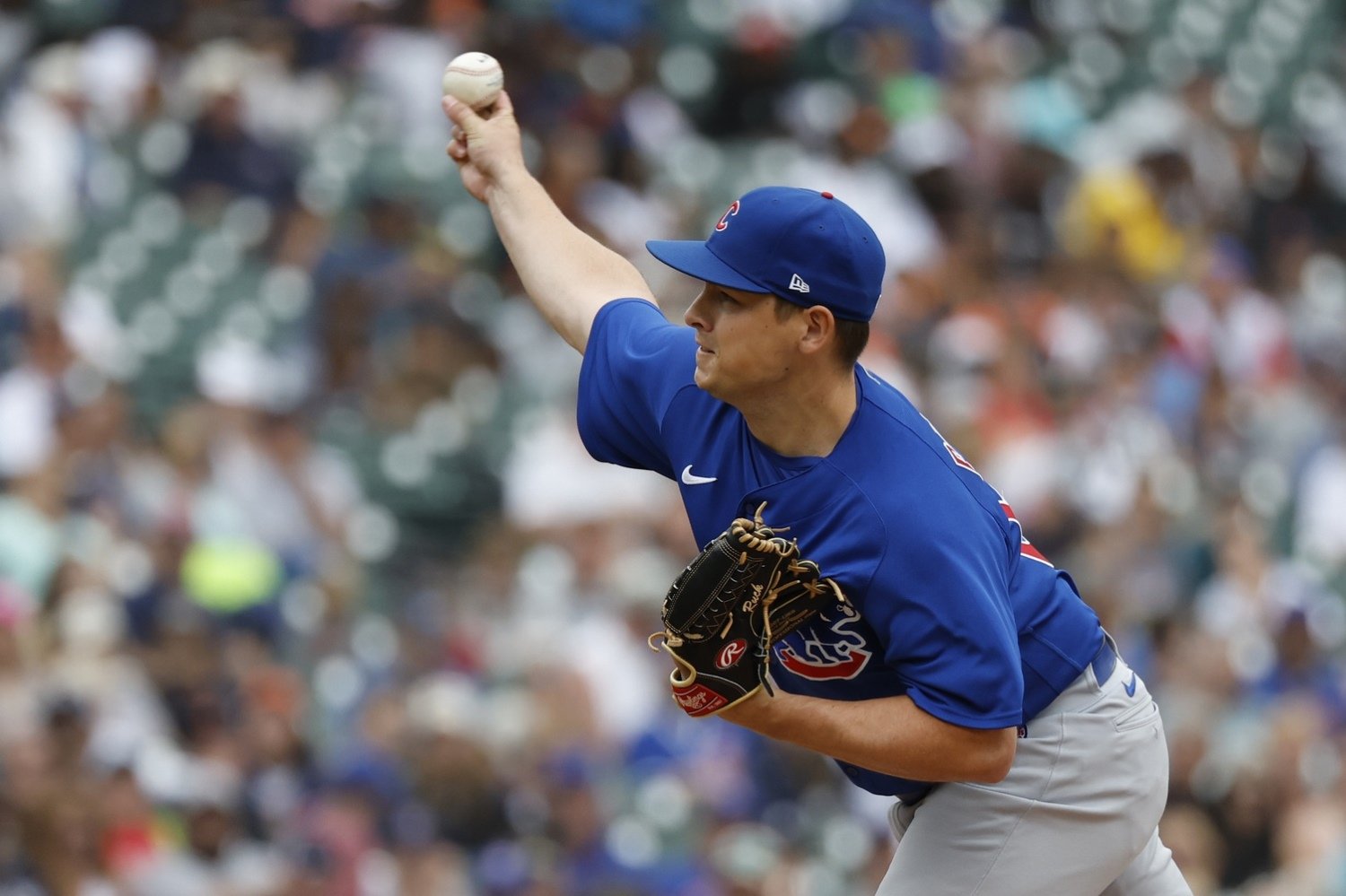 It felt almost like David Ross quietly decided to make this week's pit stop in the Motor City a breather for a team breathlessly racing toward the finish in the race for the NL Central. Joe Maddon used to declare American Legion Week at roughly this time of year, with enforced late arrivals for the players and minimal pregame work. Neither Ross's personality nor that of the team he's leading this year quite jibes with that gimmick, but this was something close. We've already discussed the decision to start Drew Smyly, at length. Just as much as sending him out there to open things, though, Ross's decision to let Smyly take the mound again for the fourth inning after the Cubs came back early on Tuesday night signaled that he was willing to lose that game in exchange for resting his bullpen a bit. He demonstrated the same thing Wednesday, when he brought Michael Rucker into a tie game in the sixth and let him face five batters, going into the seventh. Using Rucker in such a pivotal situation drew some raised eyebrows, and rightfully so. Of the 175 pitchers who have made at least 31 relief appearances this year, Rucker has the lowest average Leverage Index (LI, a stat capturing the importance of various game situations, where 1.0 is average and higher means more important), at 0.343. We can safely say that Ross would not have called upon Rucker in such an important moment if he weren't operating somewhat outside his usual paradigm. This is a good time to talk about the way Ross uses his bullpen again, because it's one of the places where he departs most strikingly from other managers--and one of the interesting ways that his tendencies interact with the roster the front office has given him this season. I wrote quite a bit about Ross and his relief corps in April and May, including pieces on how the team seemed to love multi-inning firemen; Ross's penchant for chasing wins by inserting high-leverage guys into games in which the team trails; and the unusual depth of Cubs relievers' pitch mixes. Much has changed since then. Read those pieces from the spring, and Keegan Thompson and Brad Boxberger pop up often. Everyone was waiting for the return of Brandon Hughes (or the full-strength version of him, at least). Adbert Alzolay was not yet seen as a pitcher with a defined role, let alone the top job in the bullpen. Some of the decisions Ross has made with this unit, to be sure, have merely been responses to exigencies like injury and poor performance. Nonetheless, we can say some things with confidence, now. One of them is this: Ross runs a flatter, less hierarchical bullpen than almost any other manager in baseball. Consider a quick comparison between the Cubs and their two rivals for the NL Central crown, the Brewers and Reds. In Milwaukee, Craig Counsell uses Devin Williams in every make-or-break situation, but reserves him in anything that doesn't quite rise to that level. Williams has the highest average Leverage Index in MLB. Joel Payamps and Elvis Peguero had to work their way from peripheral roles to their current high-leverage jobs, but even so, they rank 64th and 71st on the LI leaderboard. (Remember, there are 175 pitchers on the list, overall.) David Bell and the Reds have been, if anything, even more aggressive. Alexis Diaz ranks third in LI, with Lucas Sims 20th, Ian Gibaut 56th, Buck Farmer 85th, and Alex Young 112th. That's five relievers with an average LI of at least 1.098. (If it seems odd to you to see an above-average LI at a below-average position on this list of 175, remember that it's only including guys who have made at least 31 appearances. For the most part, pitchers who can't be trusted in at least medium-leverage situations won't accrue that much playing time. They spend much of their season on shuttles to Triple A.) Ross's Cubs make a sharp contrast with those two teams. Alzolay ranks 48th in LI for the year, and even if you eliminate the time before he became the closer, he'd still have an average that would fit around 20th on the list. Mark Leiter Jr. is 87th. Michael Fulmer is 98th. Julian Merryweather ranks 142nd, with an LI of 0.897. Part of that equation is that, on average, the Cubs have faced slightly lower-leverage relief situations than have the Reds or Brewers, but another part is that Ross simply doesn't have the same partitions between trusted and untrusted relievers that most of his brethren do. He still has a group in which he is most confident, and right now, it's the four named above. With Ross, though, those guys are going to get turns coming in even when the Cubs have a narrow deficit, rather than a narrow lead. He tries to keep close games close, in a way most modern managers eschew, even though it can mean that less talented, less trusted pitchers have to cobble together the innings to win a game every now and then. Rucker is as low-leverage a reliever as they come, but only if he's compared solely to other pitchers who have stuck in their club's bullpen for most of the season. This isn't going to change, in all likelihood, over the final six weeks of the season. It's just going to gently evolve. Smyly might return to the bullpen, having been soundly thwacked in his bid to re-join the rotation. Some of the injured guys whom the team has badly missed are poised to return. There could be more help coming from Iowa. Ross will fit the new pieces in, but he'll still seek matchups he likes, and he'll still ask the relievers he likes best to do some things they wouldn't be asked to do on other teams. If they meet the challenge, though, there could be considerable payoff for that gambit.
 -
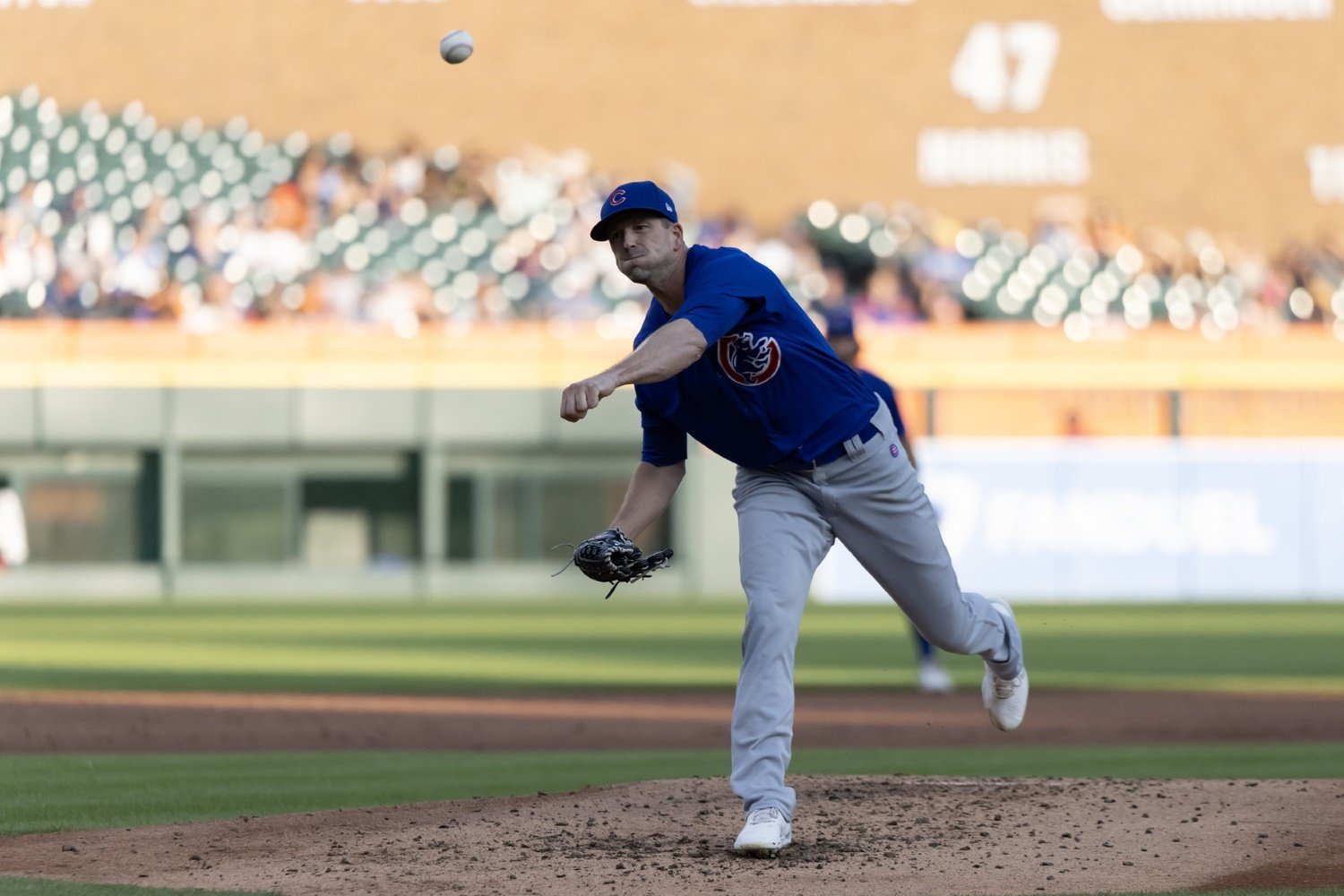 To be fair to Jed Hoyer, it wasn't he who said that every opportunity to win is sacred. That was his former boss, Theo Epstein, at his introductory press conference in October 2011. Ultimately, Epstein wasn't able to uphold his own purpose statement, and it's never been clear that Hoyer holds winning as dear as Epstein does, anyway. Still, sending Drew Smyly out there to give away Tuesday night's game was a galling betrayal of the principle that should underlie every baseball team's enduring endeavor. Every opportunity really is sacred, and the Cubs desecrated a pretty big one. Thankfully, every cloud has a silver lining. It's really just the sun shining, back there, and sunlight can be harsh, but it's a welcome respite from the storm the clouds brought. This sunlight is going to hit Hoyer and David Ross in the eyes like it hits the brutally hungover (fitting, since Tuesday night's choice suggested a certain measure of baseball inebriation), but they ought to see everything clearly in it. Smyly has demonstrated his inutility as a starter beyond any refutation or excuse. He's done in the rotation for the rest of this season, and if Tuesday night's calamity was what it took to finally effect that, then we can count it as a tiny win. The Cubs have only deeply imperfect options behind Smyly. They'll need to ask for more innings from Hayden Wesneski, even though he's made strikingly little progress in his struggles with left-handed batters this year. They'll need to recall Jordan Wicks, whose performance at Iowa suggests that he's ready but who will be limited both by their willingness to let him pile up innings and by the rough edges he has not had time to sand off his game in the minors. In all likelihood, they'll call upon erstwhile Tigers and Atlanta reliever Shane Greene, too, but as something closer to a starter than to his old single-inning, high-leverage role. I wrote about what Cubs fans should (and shouldn't) expect from Wicks in my piece Monday morning, excoriating the choice of Smyly to toe the slab Tuesday night. He'll be a competent fifth starter, though probably not (immediately) any more than that. Let's discuss, briefly, what Greene brings to the table. About seven months older than Smyly and without any meaningful success in MLB since 2020, Greene is an unlikely candidate to show up and pitch at a three- or four-inning stretch in a playoff race in 2023. Yet, he's posted a 2.84 ERA in four appearances with Triple-A Iowa this month, including five scoreless innings as a starter Tuesday night. His fastball velocity (unsurprisingly) faded badly late in that outing, and it would be surprising and ill-advised if the Cubs asked him to do that much in any single game if and when he gets the call. That, however, doesn't mean he can't contribute in a multi-inning role of some description. Greene has tweaked a couple of things in his work since signing a minor-league deal with the Cubs in late June. He's now sporting a sinker that actually has heavier downward movement than his cutter and slider, the secondary pitches he uses most against lefties and righties, respectively. Here are his pitches charted by horizontal and vertical movement by year, with this month's Triple-A work in the blue boxes. Greene has also become an increasingly furious slider slinger, against righties. He's developed a second variation of the pitch (not pictured here, but obvious in parsing his data) that looks more like a sweeper, too. Greene hasn't recovered the mid-90s velocity he had when he was a successful closer in Detroit, and he's unlikely to overwhelm big-league hitters at this stage. His sinker and four-seamer consistently get hit hard, and his only future in the majors is as a junkballer. With his command of the slider and cutter, though, he might well be able to give the Cubs 15 or 20 good innings down the stretch. At this point, the worst-case scenario for him is just that he produces exactly the way Smyly has for over two months. There are bad days, even in good seasons. The Cubs fought valiantly to try to pull out Tuesday night's game, but the front office and the manager cornered them. When the front office and coaching staff chose to send Smyly to the mound, and then when Ross chose to let him take the mound again for the fourth inning with a one-run lead, the rest of the team was compelled to be perfect. They nearly managed it, but it wasn't fair to ask it of them. Compounding the misery of that game itself, the Reds, Brewers, Marlins, Phillies, and Diamondbacks all won. There's no truly good news here. All that's left is to flush the day, secure a series win Wednesday afternoon, and turn all eyes forward. There's a risk, right now, that this team will vitrify and shatter in the August shelter, the same way they did in 2001. Smyly's start had all the overconfident front-office overtones of the Brian Matusz Game in 2016, but this team shares much more in common with those 2001 Cubs than with the essentially bulletproof eventual champions. To thwart that risk, they need to take action. Thankfully, even while it damaged their playoff odds, Tuesday probably gave team management the wake-up call it needs to increase those odds by making more serious choices the rest of the way.
- 6 comments
-
- 1
-

-
- drew smyly
- jordan wicks
- (and 1 more)
-
After throwing away one of their 38 precious remaining opportunities to win a game, the Cubs wake up Wednesday hurting. Now, at least, there's no more confusion here. Image courtesy of © David Reginek-USA TODAY Sports To be fair to Jed Hoyer, it wasn't he who said that every opportunity to win is sacred. That was his former boss, Theo Epstein, at his introductory press conference in October 2011. Ultimately, Epstein wasn't able to uphold his own purpose statement, and it's never been clear that Hoyer holds winning as dear as Epstein does, anyway. Still, sending Drew Smyly out there to give away Tuesday night's game was a galling betrayal of the principle that should underlie every baseball team's enduring endeavor. Every opportunity really is sacred, and the Cubs desecrated a pretty big one. Thankfully, every cloud has a silver lining. It's really just the sun shining, back there, and sunlight can be harsh, but it's a welcome respite from the storm the clouds brought. This sunlight is going to hit Hoyer and David Ross in the eyes like it hits the brutally hungover (fitting, since Tuesday night's choice suggested a certain measure of baseball inebriation), but they ought to see everything clearly in it. Smyly has demonstrated his inutility as a starter beyond any refutation or excuse. He's done in the rotation for the rest of this season, and if Tuesday night's calamity was what it took to finally effect that, then we can count it as a tiny win. The Cubs have only deeply imperfect options behind Smyly. They'll need to ask for more innings from Hayden Wesneski, even though he's made strikingly little progress in his struggles with left-handed batters this year. They'll need to recall Jordan Wicks, whose performance at Iowa suggests that he's ready but who will be limited both by their willingness to let him pile up innings and by the rough edges he has not had time to sand off his game in the minors. In all likelihood, they'll call upon erstwhile Tigers and Atlanta reliever Shane Greene, too, but as something closer to a starter than to his old single-inning, high-leverage role. I wrote about what Cubs fans should (and shouldn't) expect from Wicks in my piece Monday morning, excoriating the choice of Smyly to toe the slab Tuesday night. He'll be a competent fifth starter, though probably not (immediately) any more than that. Let's discuss, briefly, what Greene brings to the table. About seven months older than Smyly and without any meaningful success in MLB since 2020, Greene is an unlikely candidate to show up and pitch at a three- or four-inning stretch in a playoff race in 2023. Yet, he's posted a 2.84 ERA in four appearances with Triple-A Iowa this month, including five scoreless innings as a starter Tuesday night. His fastball velocity (unsurprisingly) faded badly late in that outing, and it would be surprising and ill-advised if the Cubs asked him to do that much in any single game if and when he gets the call. That, however, doesn't mean he can't contribute in a multi-inning role of some description. Greene has tweaked a couple of things in his work since signing a minor-league deal with the Cubs in late June. He's now sporting a sinker that actually has heavier downward movement than his cutter and slider, the secondary pitches he uses most against lefties and righties, respectively. Here are his pitches charted by horizontal and vertical movement by year, with this month's Triple-A work in the blue boxes. Greene has also become an increasingly furious slider slinger, against righties. He's developed a second variation of the pitch (not pictured here, but obvious in parsing his data) that looks more like a sweeper, too. Greene hasn't recovered the mid-90s velocity he had when he was a successful closer in Detroit, and he's unlikely to overwhelm big-league hitters at this stage. His sinker and four-seamer consistently get hit hard, and his only future in the majors is as a junkballer. With his command of the slider and cutter, though, he might well be able to give the Cubs 15 or 20 good innings down the stretch. At this point, the worst-case scenario for him is just that he produces exactly the way Smyly has for over two months. There are bad days, even in good seasons. The Cubs fought valiantly to try to pull out Tuesday night's game, but the front office and the manager cornered them. When the front office and coaching staff chose to send Smyly to the mound, and then when Ross chose to let him take the mound again for the fourth inning with a one-run lead, the rest of the team was compelled to be perfect. They nearly managed it, but it wasn't fair to ask it of them. Compounding the misery of that game itself, the Reds, Brewers, Marlins, Phillies, and Diamondbacks all won. There's no truly good news here. All that's left is to flush the day, secure a series win Wednesday afternoon, and turn all eyes forward. There's a risk, right now, that this team will vitrify and shatter in the August shelter, the same way they did in 2001. Smyly's start had all the overconfident front-office overtones of the Brian Matusz Game in 2016, but this team shares much more in common with those 2001 Cubs than with the essentially bulletproof eventual champions. To thwart that risk, they need to take action. Thankfully, even while it damaged their playoff odds, Tuesday probably gave team management the wake-up call it needs to increase those odds by making more serious choices the rest of the way. View full article
-
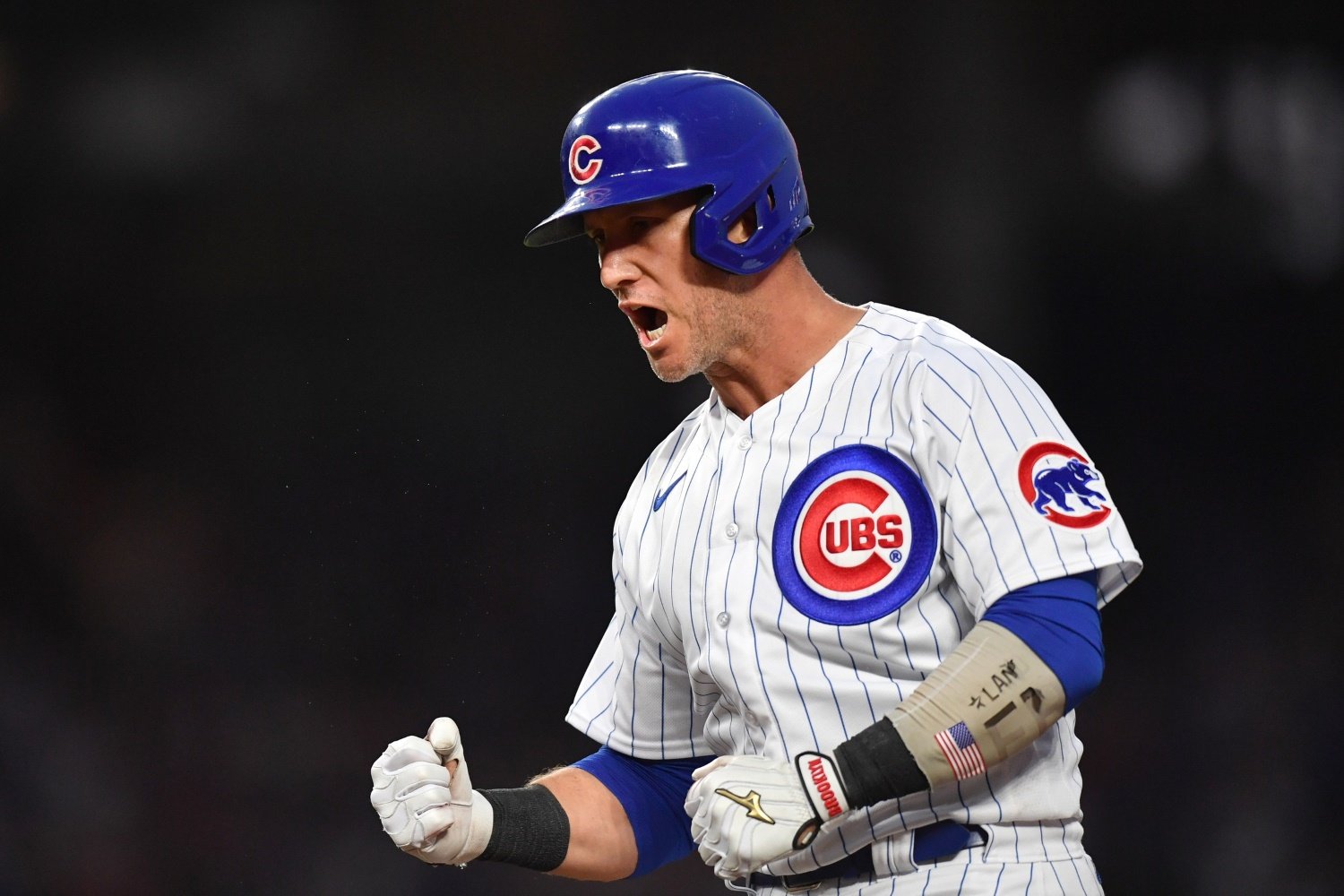 On a first-pitch fastball over the inside edge of the plate, Yan Gomes got his hips through in time and lofted an untouchable line drive down the left field line for a leadoff double. It was the kind of heroic at-bat to which Cubs fans have quickly become accustomed this season, a resurgent and pivotal one for the aging Gomes. In big situations in which the Cubs need a hit, Gomes has been shockingly high on the list of people you want coming to the plate. His overall hitting has been fine, and his situational hitting has been excellent. If the season ended today, Gomes would have the best Win Probability Added (as a hitter) of his career. For the first time since his younger days (2014, with Cleveland), he's been above-average in runs and wins added based on the base-out state in each of his plate appearances. On the year, he's hitting .270/.312/.433, a sturdy line for a catcher and an excellent one for a player who occupies one of the bottom three spots in the batting order. He's come to the plate with a runner on third and fewer than two outs 15 times, and gotten that runner home 12 times. He's come to bat with a runner on second and nobody out 13 times, and at least advanced them to third 10 times. Those success rates are half again the league-average ones. All of this production partially explains the team's recent decision to cut ties with Tucker Barnhart, whom they had signed not only to back up Gomes in 2023 but as a bridge to 2024. Coming into this year, it was hard to imagine the team wanting to exercise Gomes's club option for next season, but now, it's impossible to imagine them not doing so. Miguel Amaya's emergence as another, longer-term option at the position also contributed to Barnhart's redundancy, but it's Gomes who has changed the team's thinking. He's just as likely to take a step back next year as he was unlikely to take this step forward, because the quality of his contact has only marginally improved from his disastrous 2022, but given his leadership and the goodwill he's earned with his clutch hitting, it's a no-brainer to bring him back as Amaya's mentor. In the meantime, Amaya should get more playing time, now that Barnhart is gone. Gomes will still be in there often, though, because the Cubs clearly trust him more as a receiver and game caller than they trust Amaya. Interestingly, Amaya rates better as a pitch framer, and thus better defensively overall, but he's had a hard time with some of the pitchers one might expect him to help most. No Cubs pitcher uses the edges of the strike zone more than Kyle Hendricks and Jameson Taillon do (they're 36th and 40th, respectively, in Edge%, of the 274 pitchers who have faced at least 200 batters), but while Amaya and Hendricks have been a very good match, Taillon has a 6.28 ERA with Amaya catching. Both Hendricks and Taillon rely heavily on called strikes, since neither induces many whiffs. Notably, Hendricks calls his own game now, thanks to PitchCom. Maybe there's still more for Amaya to learn about calling a game and reading opponents than has been generally understood. Gomes seems to do a masterful job of working with pitchers to get their arsenal in line with the approach required for each opposing hitter. It might be that, at least between these two at their particular career stages, Gomes's edge in game calling is wider and more valuable than Amaya's in pitch framing. Down the stretch, then, expect to continue to see Gomes as the regular catcher, with Amaya slotted in based on matchups and the need to rest Gomes but not gaining greater purchase than that. Gomes has had an awesome season, and even if his clutchness is not a skill, it's produced huge value for this team as they vie for the playoffs.
 -
When the Cubs surrendered a three-run lead in the bottom of the eighth inning Monday night, it looked like another frustrating loss to a bad team was in the offing. One batter into the top of the ninth, the vibes had turned around gorgeously. Image courtesy of © Patrick Gorski-USA TODAY Sports On a first-pitch fastball over the inside edge of the plate, Yan Gomes got his hips through in time and lofted an untouchable line drive down the left field line for a leadoff double. It was the kind of heroic at-bat to which Cubs fans have quickly become accustomed this season, a resurgent and pivotal one for the aging Gomes. In big situations in which the Cubs need a hit, Gomes has been shockingly high on the list of people you want coming to the plate. His overall hitting has been fine, and his situational hitting has been excellent. If the season ended today, Gomes would have the best Win Probability Added (as a hitter) of his career. For the first time since his younger days (2014, with Cleveland), he's been above-average in runs and wins added based on the base-out state in each of his plate appearances. On the year, he's hitting .270/.312/.433, a sturdy line for a catcher and an excellent one for a player who occupies one of the bottom three spots in the batting order. He's come to the plate with a runner on third and fewer than two outs 15 times, and gotten that runner home 12 times. He's come to bat with a runner on second and nobody out 13 times, and at least advanced them to third 10 times. Those success rates are half again the league-average ones. All of this production partially explains the team's recent decision to cut ties with Tucker Barnhart, whom they had signed not only to back up Gomes in 2023 but as a bridge to 2024. Coming into this year, it was hard to imagine the team wanting to exercise Gomes's club option for next season, but now, it's impossible to imagine them not doing so. Miguel Amaya's emergence as another, longer-term option at the position also contributed to Barnhart's redundancy, but it's Gomes who has changed the team's thinking. He's just as likely to take a step back next year as he was unlikely to take this step forward, because the quality of his contact has only marginally improved from his disastrous 2022, but given his leadership and the goodwill he's earned with his clutch hitting, it's a no-brainer to bring him back as Amaya's mentor. In the meantime, Amaya should get more playing time, now that Barnhart is gone. Gomes will still be in there often, though, because the Cubs clearly trust him more as a receiver and game caller than they trust Amaya. Interestingly, Amaya rates better as a pitch framer, and thus better defensively overall, but he's had a hard time with some of the pitchers one might expect him to help most. No Cubs pitcher uses the edges of the strike zone more than Kyle Hendricks and Jameson Taillon do (they're 36th and 40th, respectively, in Edge%, of the 274 pitchers who have faced at least 200 batters), but while Amaya and Hendricks have been a very good match, Taillon has a 6.28 ERA with Amaya catching. Both Hendricks and Taillon rely heavily on called strikes, since neither induces many whiffs. Notably, Hendricks calls his own game now, thanks to PitchCom. Maybe there's still more for Amaya to learn about calling a game and reading opponents than has been generally understood. Gomes seems to do a masterful job of working with pitchers to get their arsenal in line with the approach required for each opposing hitter. It might be that, at least between these two at their particular career stages, Gomes's edge in game calling is wider and more valuable than Amaya's in pitch framing. Down the stretch, then, expect to continue to see Gomes as the regular catcher, with Amaya slotted in based on matchups and the need to rest Gomes but not gaining greater purchase than that. Gomes has had an awesome season, and even if his clutchness is not a skill, it's produced huge value for this team as they vie for the playoffs. View full article
-
You're not wrong, and I'm guilty of some moving of the goalposts, too. We'd all have been happy with the idea of any playoff games a month ago, and now I'm insisting on them at home. Part of it is that (while there's always that chance) I don't exactly expect this team to go on a deep October run, so the sheer pleasure of a series at home would be greater than if they go on the road and there's a big risk they never come home to be feted by the fans or experience the reward of this surge. But another part is me remembering what playing in San Francisco and Philadelphia in October is like, not for the Cubs specifically but for anyone, and not wanting winning two of three in either of those places to be the only way forward for them. (Most of all, and I didn't really dive into this in the piece to the extent I thought I would when I started typing, but I still value the division title. A lot. Even winning that FIRST Wild Card, which is a bit of a different thing than winning the lesser two, wouldn't be as satisfying as winning the Central. Even to whatever extent the actual privilege and value of winning it has been eroded, I still find it more appealing and rewarding a thing to win. We haven't quite NBAed away the meaning of those titles, yet.
-
The Cubs Suddenly Have a Shot at the First Wild Card Spot
Matthew Trueblood posted an article in Cubs
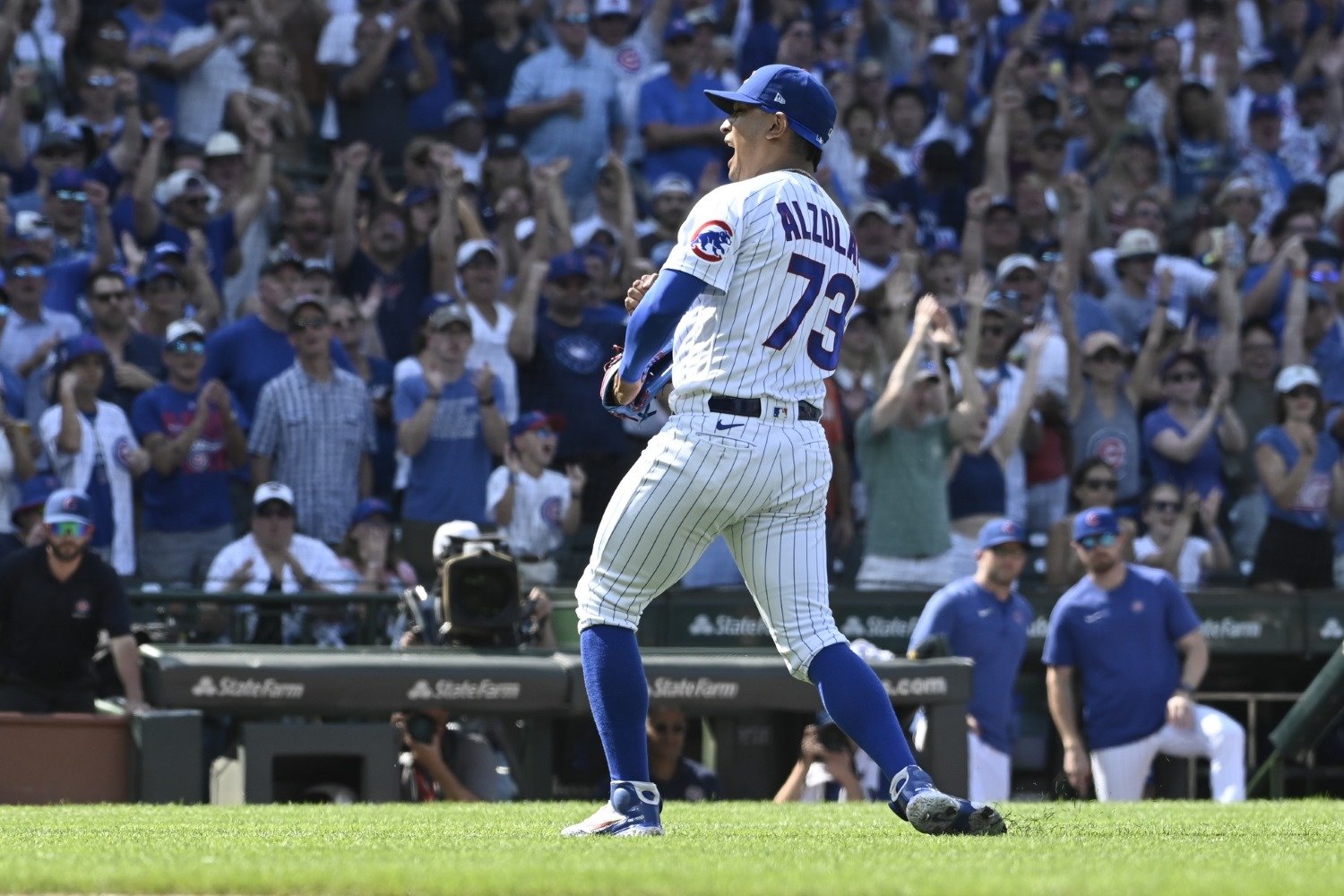 The Cubs still have two series left against the NL Central-leading Brewers, and winning two out of three games in both would not only pull them within a game of Milwaukee, but assure them of the tiebreaker over the Crew if the two teams finished with the same record. Thus, they have some meaningful measure of control over their destiny even within the division, but the odds are stacked against them. According to FanGraphs, it's Milwaukee who owns almost a three-in-four chance of winning the division flag. Chicago really doesn't need to worry about that as much as they did a month ago, though. Whereas, in June, it looked like division title or bust for everyone in the Central, the Wild Card pack has fallen back so badly that the Cubs are now closer (2.5 games back) to the first Wild Card position than they are to first place in the Central. The Diamondbacks and Marlins look, if not like frauds, then like the not-quite-ready upstarts most observers projected them to be before the season began. The Phillies and Giants have both come back to Earth after stretches during which they looked like they might sew up the top two spots easily, and in fact, they play one another in Philadelphia this week, giving the Cubs a chance to gain ground on at least one of them with each win they manage in Detroit. As a result of all that, the team's Playoff Odds have roughly doubled this month, despite only a nominal change in their underdog status within the division. Whereas they were given 11.5 percent hopes to claim a Wild Card spot three weeks ago, they're now pegged at 33 percent. That's pushed them to the right side of a coin flip to reach the postseason somehow, and it doesn't even account for the fact that they're no longer in the running only for the second and third Wild Card berths, which would line them up to be visitors in a Wild Card Series. In effect, the top Wild Card spot is as valuable as winning the division. It's harder to claim, because there will be more teams in the running for it, but the Cubs would host a Wild Card Series at Wrigley Field whether they were the division champions or that top Wild Card winner. They still have head-to-head games left with the Giants, too, so they will have an opportunity to seize that position, rather than merely scoreboard watching. It's the Phillies who pose a problem. Partially thanks to bad timing, the Cubs were dominated by Philadelphia in head-to-head play this year, so they own the tiebreaker between those two teams. The difference between playing them in Chicago or in Philadelphia in October, too, could be decisive. It would almost be better for the Cubs, if they couldn't surpass the Brewers or the Phillies, to finish with the third Wild Card, thereby playing Milwaukee in Milwaukee for that playoff showdown. We're getting ahead of ourselves, of course. As has been the case for the last month, the Cubs just need to focus on winning the games on their own schedule. If they take care of business, they have an excellent chance to reach the postseason, as the projections are beginning to reflect. Still, it's nice to keep an eye on the standings and the odds, to gain a better sense of perspective on this race. The avenues to success are getting wider and more welcoming. The division race might not be as make-or-break as we first believed, and the most important objective of this sprint to the finish--earning home games in front of a rabid Wrigley crowd when the playoffs begin--seems to be more achievable than we might have imagined.
 -
As we make a Monday check-in on the Cubs' playoff odds, what jumps out is that they've surged upward--but not primarily because of the division standings. Image courtesy of © Matt Marton-USA TODAY Sports The Cubs still have two series left against the NL Central-leading Brewers, and winning two out of three games in both would not only pull them within a game of Milwaukee, but assure them of the tiebreaker over the Crew if the two teams finished with the same record. Thus, they have some meaningful measure of control over their destiny even within the division, but the odds are stacked against them. According to FanGraphs, it's Milwaukee who owns almost a three-in-four chance of winning the division flag. Chicago really doesn't need to worry about that as much as they did a month ago, though. Whereas, in June, it looked like division title or bust for everyone in the Central, the Wild Card pack has fallen back so badly that the Cubs are now closer (2.5 games back) to the first Wild Card position than they are to first place in the Central. The Diamondbacks and Marlins look, if not like frauds, then like the not-quite-ready upstarts most observers projected them to be before the season began. The Phillies and Giants have both come back to Earth after stretches during which they looked like they might sew up the top two spots easily, and in fact, they play one another in Philadelphia this week, giving the Cubs a chance to gain ground on at least one of them with each win they manage in Detroit. As a result of all that, the team's Playoff Odds have roughly doubled this month, despite only a nominal change in their underdog status within the division. Whereas they were given 11.5 percent hopes to claim a Wild Card spot three weeks ago, they're now pegged at 33 percent. That's pushed them to the right side of a coin flip to reach the postseason somehow, and it doesn't even account for the fact that they're no longer in the running only for the second and third Wild Card berths, which would line them up to be visitors in a Wild Card Series. In effect, the top Wild Card spot is as valuable as winning the division. It's harder to claim, because there will be more teams in the running for it, but the Cubs would host a Wild Card Series at Wrigley Field whether they were the division champions or that top Wild Card winner. They still have head-to-head games left with the Giants, too, so they will have an opportunity to seize that position, rather than merely scoreboard watching. It's the Phillies who pose a problem. Partially thanks to bad timing, the Cubs were dominated by Philadelphia in head-to-head play this year, so they own the tiebreaker between those two teams. The difference between playing them in Chicago or in Philadelphia in October, too, could be decisive. It would almost be better for the Cubs, if they couldn't surpass the Brewers or the Phillies, to finish with the third Wild Card, thereby playing Milwaukee in Milwaukee for that playoff showdown. We're getting ahead of ourselves, of course. As has been the case for the last month, the Cubs just need to focus on winning the games on their own schedule. If they take care of business, they have an excellent chance to reach the postseason, as the projections are beginning to reflect. Still, it's nice to keep an eye on the standings and the odds, to gain a better sense of perspective on this race. The avenues to success are getting wider and more welcoming. The division race might not be as make-or-break as we first believed, and the most important objective of this sprint to the finish--earning home games in front of a rabid Wrigley crowd when the playoffs begin--seems to be more achievable than we might have imagined. View full article
-
Choosing Drew Smyly Over Jordan Wicks for Tuesday Night is Stupid
Matthew Trueblood posted an article in Cubs
 With the fifth spot in the Cubs' rotation coming up for the first time in a week and a half, a decision was due at the end of the team's series against the Royals at Wrigley Field Sunday. During their three-game set in Detroit to open a weeklong road trip, the Cubs will send Javier Assad to the mound Monday night, then let Drew Smyly return to the rotation Tuesday. In doing so, they'll eschew the opportunity to call up lefty prospect Jordan Wicks for that start. That's a glaring error, and one that should surprise and disappoint Cubs fans. Over the last month, David Ross and Jed Hoyer have given both voice and action to the notion of a sterner meritocracy governing the construction and usage of their roster. They traded for Jeimer Candelario to bolster the lineup, and in so doing, they said goodbye to the underachieving Trey Mancini. They also used that acquisition to (temporarily) disenfranchise Seiya Suzuki, giving more playing time to Mike Tauchman, despite the massive difference in the level of organizational investment in those two players. Earlier this weekend, they parted ways with Tucker Barnhart, another player to whom they were financially committed for 2024, because he was no longer able to help the team win. A fortnight ago, they had the same clarity about Smyly. He was demoted to the bullpen, amid a tailspin that has lasted considerably longer than did his impressive start to the season. He's looked better in short relief work, and given that he's a two-pitch pitcher anyway, it seemed like a tidy fit for him. Even so, when it became clear on Tuesday that Marcus Stroman would not be returning to claim this fifth slot in the starting rotation, Ross nodded in Smyly's direction from the beginning. That was fine, insofar as it was a gesture of organizational loyalty and commitment to a veteran player who will probably return next year in some capacity. Now that it seems to have been an earnest declaration, though, it looks like an unwelcome departure from the new mode the team adopted after its season-saving winning jag in July. In his last 13 starts (and start-like appearances, when Smyly worked behind openers Hayden Wesneski and Michael Fulmer), the aging southpaw had a 7.22 ERA, and there was not one iota of bad luck involved. He allowed 17 home runs in those 13 outings, and opponents batted .312/.380/.592. Pitchers who looked even more cooked than this have come back from the brink of unusability, but the odds are against Smyly being a successful starter again anytime in 2023. By not trading for reinforcements for the rotation at the trade deadline, the front office voluntarily left themselves open to the possibility of needing stop this particular gap. That was probably a miscalculation, but it did make some sense, given where they were when the deadline came and what it would have cost to add more than a backend starter on an expiring contract. The wall into which any justification of using Smyly this week runs is not about a player who might theoretically have been available three weeks ago; it's about one whom the team should have called up from its top minor-league affiliate. Jordan Wicks was the Cubs' first-round pick in 2021, which means that he hasn't yet been added to the 40-man roster. In fact, he doesn't even need to be added to that list this winter, which means that bringing him up to the parent club this year would be a proactive profession of faith in him. It wouldn't have to cost them anyone on the current 40-man roster, because they currently have two open spots, but it would force some early and difficult decisions this winter. That does have to be accounted for. Surely, the Cubs wish that Ben Brown were healthy right now, or that Caleb Kilian had figured things out to the extent they hoped when they recalled him earlier this month. Sometimes, though, it's the front office's job to embrace future headaches in exchange for making a playoff-capable team better in the short term. This is one of those times. Wicks saw an uptick in his fastball velocity in his most recent start with the Iowa Cubs, and with even that small bump, he profiles as a starter who can effectively go through an MLB lineup twice. In that same start, he also debuted a reengineered slider, with a combination of firm velocity and tilt that he hadn't previously shown in Triple A. In fact, Wicks's whole movement profile made more sense in this latest outing than in any of his previous ones at Triple A. He's getting more run on his sinker, so he can lose some of the depth and sweep on his slider without losing the effectiveness of that movement. It becomes easier to command, and easier to land for strikes, but not materially more likely to be hit hard. Those two pitches--the sinker and the slider--will be his bread and butter against lefties initially. Against righties, Wicks is a four-seamer and changeup guy, and he uses the curveball to change eye levels. That pitch had more depth on it than ever in his last appearance, and the extra velocity on the fastball only accentuated the contrast there. He's not yet a fully-formed mid-rotation starter, but he's taken major steps in that direction. The Cubs could and should have called him up to pitch Tuesday night with confidence, especially since the date beyond which his rookie status will be intact for 2024 has now passed. Maybe Smyly is a glorified opener, himself. If the Cubs intend to start him Tuesday night, but then swap him out for Wesneski after an inning or two, that's a fine stratagem. If they make it a bullpen game, sandwiched between what they surely hope will be long outings by Assad and Jameson Taillon against a weak Tigers lineup, that's acceptable, but it risks tiring out that relief corps at the front end of a long and crucial stretch during which they'll play 27 games in the same number of days. (Their only off day between last Thursday and Sept. 14 comes on Aug. 31, and it's immediately canceled out by a doubleheader in Cincinnati the next day.) At some point during the next month, the Cubs will need Wicks. As their upper-level pitching depth has been thinned by injuries and some truly nightmarish implosions, they've gotten steadily closer to being truly desperate. It would make more sense to work Wicks in now than to blindly hope that Smyly figured something out during a side session that he can bring back with him from short relief to the starting staff. Instead, the team is back to betting on a questionable veteran, rather than trusting and trying it with a younger and more talented player. Normally, this would be the kind of small thing at which we could shrug and grumble, but over which no serious worry would be warranted. Unfortunately, the Cubs haven't put themselves in a normal position. This is a contending team, with every bit of the talent possessed by any of the teams with whom they're vying for playoff spots, but they still bear the standings scars of their long period of mismanagement and underperformance in May and June. They also haven't fully availed themselves of opportunities to create a little more margin for error. They went 3-2 this week, but 3-2 at home (with plenty of chances gone by the wayside in the losses) at home against the Royals and White Sox only constitutes holding serve. All of that means that the Cubs need to treat every game as winnable and important. Starting Smyly sends the message that they still think they can afford to go easy now and then. It would be great if that were true, especially with the grueling schedule ahead. Alas, it ain't so. Wicks might make a start in Pittsburgh, or next week in Cincinnati, but if the team doesn't leave with at least a series win in Detroit, the pressure eventually placed on the young hurler will only increase.
 -
The Cubs will send Drew Smyly to the mound to start Tuesday night's game in Detroit. That's a mistake, and a bizarre one, given their other recent choices. With the fifth spot in the Cubs' rotation coming up for the first time in a week and a half, a decision was due at the end of the team's series against the Royals at Wrigley Field Sunday. During their three-game set in Detroit to open a weeklong road trip, the Cubs will send Javier Assad to the mound Monday night, then let Drew Smyly return to the rotation Tuesday. In doing so, they'll eschew the opportunity to call up lefty prospect Jordan Wicks for that start. That's a glaring error, and one that should surprise and disappoint Cubs fans. Over the last month, David Ross and Jed Hoyer have given both voice and action to the notion of a sterner meritocracy governing the construction and usage of their roster. They traded for Jeimer Candelario to bolster the lineup, and in so doing, they said goodbye to the underachieving Trey Mancini. They also used that acquisition to (temporarily) disenfranchise Seiya Suzuki, giving more playing time to Mike Tauchman, despite the massive difference in the level of organizational investment in those two players. Earlier this weekend, they parted ways with Tucker Barnhart, another player to whom they were financially committed for 2024, because he was no longer able to help the team win. A fortnight ago, they had the same clarity about Smyly. He was demoted to the bullpen, amid a tailspin that has lasted considerably longer than did his impressive start to the season. He's looked better in short relief work, and given that he's a two-pitch pitcher anyway, it seemed like a tidy fit for him. Even so, when it became clear on Tuesday that Marcus Stroman would not be returning to claim this fifth slot in the starting rotation, Ross nodded in Smyly's direction from the beginning. That was fine, insofar as it was a gesture of organizational loyalty and commitment to a veteran player who will probably return next year in some capacity. Now that it seems to have been an earnest declaration, though, it looks like an unwelcome departure from the new mode the team adopted after its season-saving winning jag in July. In his last 13 starts (and start-like appearances, when Smyly worked behind openers Hayden Wesneski and Michael Fulmer), the aging southpaw had a 7.22 ERA, and there was not one iota of bad luck involved. He allowed 17 home runs in those 13 outings, and opponents batted .312/.380/.592. Pitchers who looked even more cooked than this have come back from the brink of unusability, but the odds are against Smyly being a successful starter again anytime in 2023. By not trading for reinforcements for the rotation at the trade deadline, the front office voluntarily left themselves open to the possibility of needing stop this particular gap. That was probably a miscalculation, but it did make some sense, given where they were when the deadline came and what it would have cost to add more than a backend starter on an expiring contract. The wall into which any justification of using Smyly this week runs is not about a player who might theoretically have been available three weeks ago; it's about one whom the team should have called up from its top minor-league affiliate. Jordan Wicks was the Cubs' first-round pick in 2021, which means that he hasn't yet been added to the 40-man roster. In fact, he doesn't even need to be added to that list this winter, which means that bringing him up to the parent club this year would be a proactive profession of faith in him. It wouldn't have to cost them anyone on the current 40-man roster, because they currently have two open spots, but it would force some early and difficult decisions this winter. That does have to be accounted for. Surely, the Cubs wish that Ben Brown were healthy right now, or that Caleb Kilian had figured things out to the extent they hoped when they recalled him earlier this month. Sometimes, though, it's the front office's job to embrace future headaches in exchange for making a playoff-capable team better in the short term. This is one of those times. Wicks saw an uptick in his fastball velocity in his most recent start with the Iowa Cubs, and with even that small bump, he profiles as a starter who can effectively go through an MLB lineup twice. In that same start, he also debuted a reengineered slider, with a combination of firm velocity and tilt that he hadn't previously shown in Triple A. In fact, Wicks's whole movement profile made more sense in this latest outing than in any of his previous ones at Triple A. He's getting more run on his sinker, so he can lose some of the depth and sweep on his slider without losing the effectiveness of that movement. It becomes easier to command, and easier to land for strikes, but not materially more likely to be hit hard. Those two pitches--the sinker and the slider--will be his bread and butter against lefties initially. Against righties, Wicks is a four-seamer and changeup guy, and he uses the curveball to change eye levels. That pitch had more depth on it than ever in his last appearance, and the extra velocity on the fastball only accentuated the contrast there. He's not yet a fully-formed mid-rotation starter, but he's taken major steps in that direction. The Cubs could and should have called him up to pitch Tuesday night with confidence, especially since the date beyond which his rookie status will be intact for 2024 has now passed. Maybe Smyly is a glorified opener, himself. If the Cubs intend to start him Tuesday night, but then swap him out for Wesneski after an inning or two, that's a fine stratagem. If they make it a bullpen game, sandwiched between what they surely hope will be long outings by Assad and Jameson Taillon against a weak Tigers lineup, that's acceptable, but it risks tiring out that relief corps at the front end of a long and crucial stretch during which they'll play 27 games in the same number of days. (Their only off day between last Thursday and Sept. 14 comes on Aug. 31, and it's immediately canceled out by a doubleheader in Cincinnati the next day.) At some point during the next month, the Cubs will need Wicks. As their upper-level pitching depth has been thinned by injuries and some truly nightmarish implosions, they've gotten steadily closer to being truly desperate. It would make more sense to work Wicks in now than to blindly hope that Smyly figured something out during a side session that he can bring back with him from short relief to the starting staff. Instead, the team is back to betting on a questionable veteran, rather than trusting and trying it with a younger and more talented player. Normally, this would be the kind of small thing at which we could shrug and grumble, but over which no serious worry would be warranted. Unfortunately, the Cubs haven't put themselves in a normal position. This is a contending team, with every bit of the talent possessed by any of the teams with whom they're vying for playoff spots, but they still bear the standings scars of their long period of mismanagement and underperformance in May and June. They also haven't fully availed themselves of opportunities to create a little more margin for error. They went 3-2 this week, but 3-2 at home (with plenty of chances gone by the wayside in the losses) at home against the Royals and White Sox only constitutes holding serve. All of that means that the Cubs need to treat every game as winnable and important. Starting Smyly sends the message that they still think they can afford to go easy now and then. It would be great if that were true, especially with the grueling schedule ahead. Alas, it ain't so. Wicks might make a start in Pittsburgh, or next week in Cincinnati, but if the team doesn't leave with at least a series win in Detroit, the pressure eventually placed on the young hurler will only increase. View full article
-
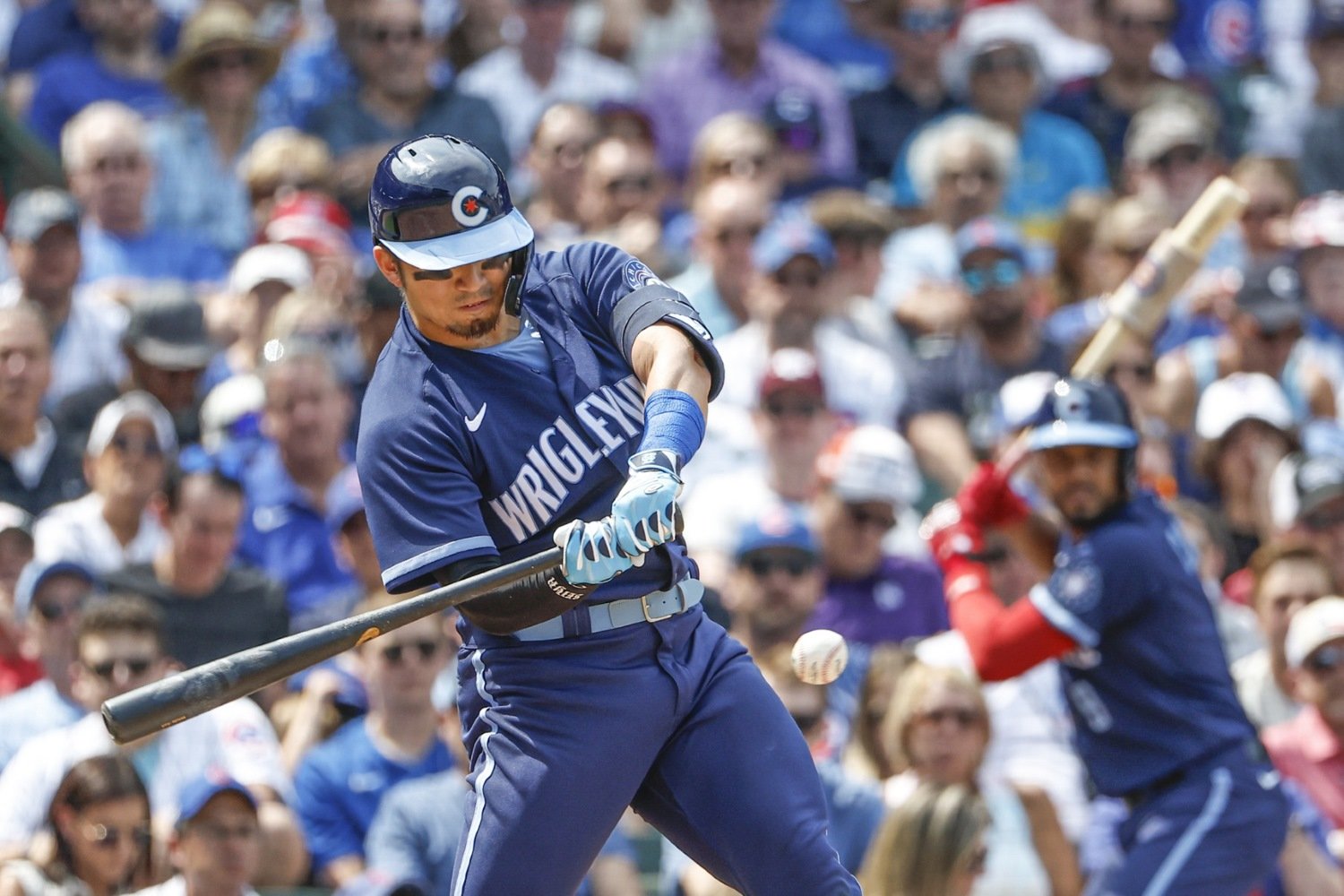 Let us look to the Atlanta Braves. After all, they're currently the class of the National League, and arguably the best team in baseball. They're also very unusual in the way they deploy their position players, by modern standards. Last year, Guillermo Heredia spent almost the entire season on Atlanta's active roster, and he appeared in 74 games, but he totaled just 82 plate appearances. This season, Charlie Culberson spent two months on the club, but he only made a single appearance, collecting a hit in the only time he was sent to bat. These days, that's very strange. Thirty years ago (and certainly before then), teams prioritized their starting position players to this extent. They often carried 15 position players, but two or three of them would go unused (or very, very lightly used) for weeks at a time. Some managers innovated and made better use of their entire roster, through mechanisms like platooning and creative defensive substitutions. Mostly, though, they trotted out static lineups filled with the best nine players they had--or at least, the best nine they had available. Now, however, teams conceptualize player usage very differently. Some specific sabermetric findings, especially about the value of rest for catchers and about the aforementioned platoon dynamic, have encouraged this, but it seems much more deeply rooted. The new breed of baseball executives come from elite management programs and financial backgrounds. They've been relentlessly trained to maximize every asset at their disposal. Letting three or four roster spots become afterthoughts is anathema to them. Jed Hoyer is very much one of those executives. He's always been this way, as a team-builder: more interested in fingertip strength than in building glamor muscles. He's a depth guy, and David Ross (the career backup catcher) is an equally ardent believer in that principle. The Cubs actively seek platoon guys, and matchups in which they can make liberal use of their bench. They don't have a set lineup. Even since they acquired Jeimer Candelario, they've rotated Nick Madrigal and Patrick Wisdom into the lineup. Since Seiya Suzuki's brief and successful reset, both he and Mike Tauchman are getting regular playing time. It's not a nine-man lineup; it's a 12-man rotation. After Friday's frustrating loss, maybe it's time the team ditches that line of thinking, in favor of what's been working so well for Atlanta. Even against left-handed starters, the team should slot Tauchman in as their center fielder every day, with Suzuki in right, Cody Bellinger at first base, and Candelario at third. When September comes, they could call up Pete Crow-Armstrong to play often in center field, or just to come in as a defensive replacement. They can still tweak the batting order based on matchups, but they'll get better, more consistent defense (and probably no worse offensive production) by sticking to a regular lineup. That's not to suggest that they'll transform into the Atlanta lineup overnight. There's no Matt Olson or Ronald Acuna Jr. in this group, and even Atlanta's lesser hitters have some pop. The Cubs will continue to make do with a more OBP-centric approach, because they have no choice. Still, if they want to claim the NL Central title or win a Wild Card berth, they'll need to play extremely well the rest of the way. Tightening up their rotation of position players could be the best means of doing so.
- 1 comment
-
- 1
-
-
- mike tauchman
- patrick wisdom
- (and 2 more)
-
Losing a series-opening contest against the Royals Friday was the latest reminder that the Cubs' newfound status as credible contenders doesn't mean they have it made. They remain flawed, and overcoming those flaws might mean shifting their approach to their own roster. Image courtesy of © Kamil Krzaczynski-USA TODAY Sports Let us look to the Atlanta Braves. After all, they're currently the class of the National League, and arguably the best team in baseball. They're also very unusual in the way they deploy their position players, by modern standards. Last year, Guillermo Heredia spent almost the entire season on Atlanta's active roster, and he appeared in 74 games, but he totaled just 82 plate appearances. This season, Charlie Culberson spent two months on the club, but he only made a single appearance, collecting a hit in the only time he was sent to bat. These days, that's very strange. Thirty years ago (and certainly before then), teams prioritized their starting position players to this extent. They often carried 15 position players, but two or three of them would go unused (or very, very lightly used) for weeks at a time. Some managers innovated and made better use of their entire roster, through mechanisms like platooning and creative defensive substitutions. Mostly, though, they trotted out static lineups filled with the best nine players they had--or at least, the best nine they had available. Now, however, teams conceptualize player usage very differently. Some specific sabermetric findings, especially about the value of rest for catchers and about the aforementioned platoon dynamic, have encouraged this, but it seems much more deeply rooted. The new breed of baseball executives come from elite management programs and financial backgrounds. They've been relentlessly trained to maximize every asset at their disposal. Letting three or four roster spots become afterthoughts is anathema to them. Jed Hoyer is very much one of those executives. He's always been this way, as a team-builder: more interested in fingertip strength than in building glamor muscles. He's a depth guy, and David Ross (the career backup catcher) is an equally ardent believer in that principle. The Cubs actively seek platoon guys, and matchups in which they can make liberal use of their bench. They don't have a set lineup. Even since they acquired Jeimer Candelario, they've rotated Nick Madrigal and Patrick Wisdom into the lineup. Since Seiya Suzuki's brief and successful reset, both he and Mike Tauchman are getting regular playing time. It's not a nine-man lineup; it's a 12-man rotation. After Friday's frustrating loss, maybe it's time the team ditches that line of thinking, in favor of what's been working so well for Atlanta. Even against left-handed starters, the team should slot Tauchman in as their center fielder every day, with Suzuki in right, Cody Bellinger at first base, and Candelario at third. When September comes, they could call up Pete Crow-Armstrong to play often in center field, or just to come in as a defensive replacement. They can still tweak the batting order based on matchups, but they'll get better, more consistent defense (and probably no worse offensive production) by sticking to a regular lineup. That's not to suggest that they'll transform into the Atlanta lineup overnight. There's no Matt Olson or Ronald Acuna Jr. in this group, and even Atlanta's lesser hitters have some pop. The Cubs will continue to make do with a more OBP-centric approach, because they have no choice. Still, if they want to claim the NL Central title or win a Wild Card berth, they'll need to play extremely well the rest of the way. Tightening up their rotation of position players could be the best means of doing so. View full article
-
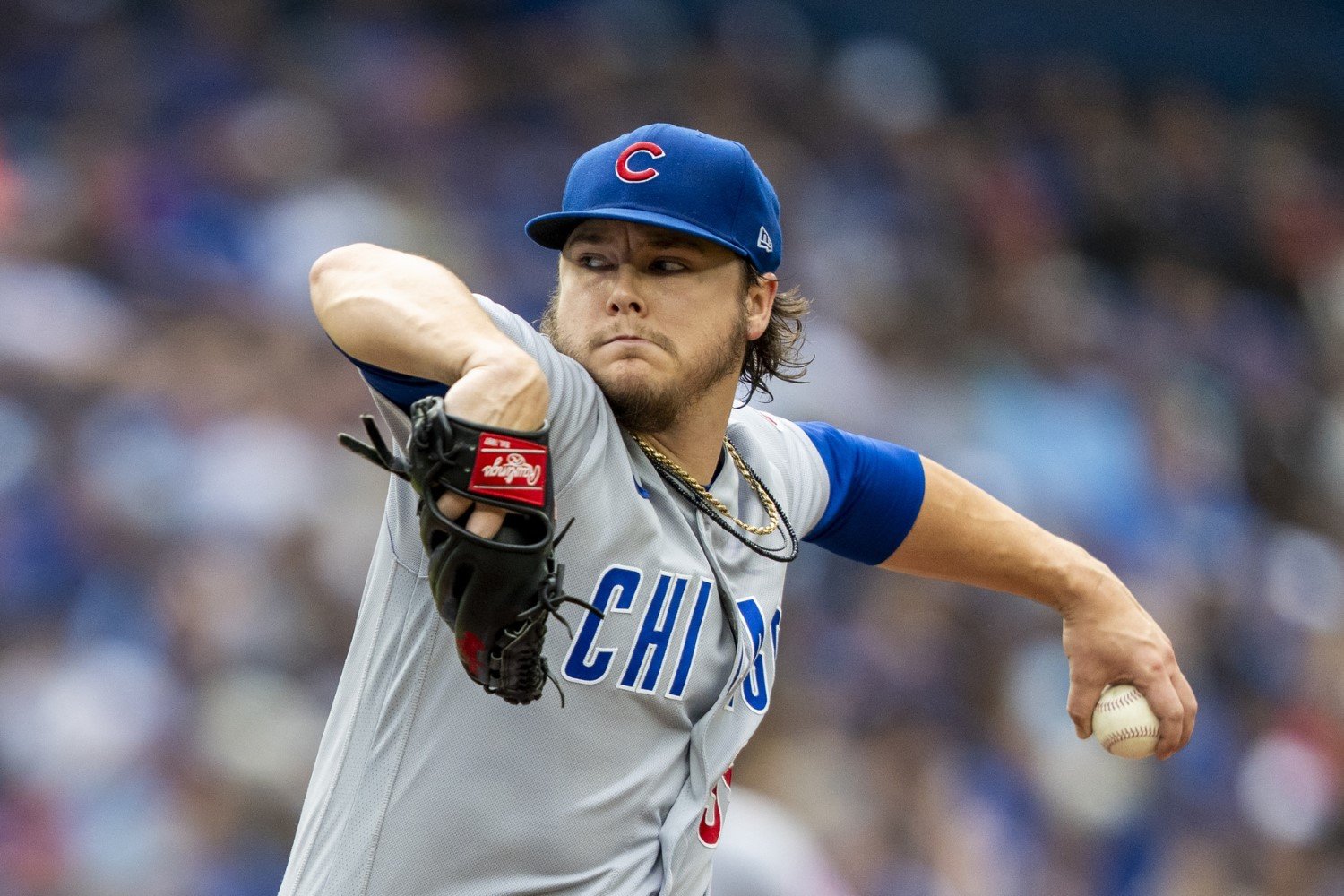 After his start Saturday in Toronto, Justin Steele has 126 innings pitched this season. That's seven more than his previous career high, which he attained last season--before being shut down for the year with an injury after his start on Aug. 26. That was at the end of a lost campaign, though. This time around, the Cubs need their All-Star southpaw to be available and fully functioning all the way into October. That will require the occasional concession. This isn't (or at least, it ought not be) about keeping Steele's total seasonal workload below a certain number in order to protect him for the future. The famous Verducci Effect, named after baseball columnist Tom Verducci, is the alleged increase in the likelihood of injury if a pitcher logs more than 30 more innings in a season than he did the previous year. It became very famous in the early 2000s, as teams rapidly embraced the relatively new concept of shielding young hurlers from injury. The problem with it is that it's complete bunk. Never worry about the Verducci Effect. It was a junk finding by a reporter far out of his depth. Even the misguided Verducci was focused mostly on pitchers in their early and mid-20s, and Steele turned 28 last month. Again, then, raw innings total should not be a category about which the Cubs or their fans worry much. They're still going to be careful, though, because of Steele's specific history and his skill set. Last season was the first time he ever got to 100 innings pitched in a professional campaign. He wasn't shut down out of sheer proactivity then, either. A strained lower back shelved him, and made the decision easy. He's had hamstring issues. He missed time earlier this year with a forearm strain, an unwelcome reminder of the Tommy John surgery he underwent back in 2017. Durability has always been a major question for Steele, and because of his unique two-pitch attack, the Cubs have to do everything in their power not only to keep him healthy, but to ensure that he pitches at something close to full strength every time he takes the mound. The lack of a third pitch or overpowering velocity leaves him thin margins for error, compared to most similarly good pitchers. That's why, even though Steele last started Saturday and Jameson Taillon went Sunday, it'll be Taillon Friday afternoon at Wrigley Field, with Steele coming back Saturday on a full six days' rest. Despite the bad Marcus Stroman news, the organization has decided to make the most of the schedule quirk that left them with two off days this week, after the one they had last week between their road series against the Mets and Blue Jays. Steele is the beneficiary. Taillon will go on regular rest. The decision probably isn't solely about getting him extra rest, either. From here, one can vaguely map out the rest of the season for Steele, and it's likely to look like this: Saturday against the Royals Next Thursday in Pittsburgh Aug. 29 against the Brewers Sep. 3 in Cincinnati Sep. 8 against the Diamondbacks Sep. 15 in Arizona Sep. 20 or 21 against the Pirates Sep. 26 in Atlanta Oct. 1 in Milwaukee This way of aligning things sets Steele up to pitch in all but one of the Cubs' remaining pivotal series: both of the ones against the Brewers, the one against the Reds, both against the Diamondbacks, and the one in Atlanta during the final week. It only requires them to use a sixth starter once, and that on a getaway day in Colorado on Sep. 13. They also have the flexibility, this way, to decide against using Steele the second time they see Arizona, and to send him to the mound in that last game against Colorado, after all. The nicest thing about it might be that Steele sets up to start the first of their games in Atlanta, and thus to be on regular rest for the season finale. If that game turns out not to be important (either because the Cubs are eliminated by then, or because they've sewn up a playoff berth), they can scratch Steele, but this gives them the option to use him if the season is on the line. The first priority, at this point in this season, is getting as much good work out of Steele as possible, in order to increase this team's playoff chances. It will sound cold and calculating, but Steele is due to begin getting paid better via arbitration this winter. He's 28. The Cubs should protect him from overuse, but only insofar as it aids him in being ready to win the most important games of this season. This is no time to be coddling pitchers. This is no Stephen Strasburg 2012 situation, and the Nationals were just plain wrong to baby Strasburg that year, anyway. If things go as hoped, Steele has nine more starts left in this regular season, and the chance of another four or five in October. The goal should be, as safely as possible, to get him over 200 innings when all is said and done.
 -
With Marcus Stroman sidelined indefinitely, the Cubs have rearranged their starting rotation for this weekend's series against the Royals. It makes clearer how the team intends to manage their ace's workload, but it raises other questions, too. Image courtesy of © Kevin Sousa-USA TODAY Sports After his start Saturday in Toronto, Justin Steele has 126 innings pitched this season. That's seven more than his previous career high, which he attained last season--before being shut down for the year with an injury after his start on Aug. 26. That was at the end of a lost campaign, though. This time around, the Cubs need their All-Star southpaw to be available and fully functioning all the way into October. That will require the occasional concession. This isn't (or at least, it ought not be) about keeping Steele's total seasonal workload below a certain number in order to protect him for the future. The famous Verducci Effect, named after baseball columnist Tom Verducci, is the alleged increase in the likelihood of injury if a pitcher logs more than 30 more innings in a season than he did the previous year. It became very famous in the early 2000s, as teams rapidly embraced the relatively new concept of shielding young hurlers from injury. The problem with it is that it's complete bunk. Never worry about the Verducci Effect. It was a junk finding by a reporter far out of his depth. Even the misguided Verducci was focused mostly on pitchers in their early and mid-20s, and Steele turned 28 last month. Again, then, raw innings total should not be a category about which the Cubs or their fans worry much. They're still going to be careful, though, because of Steele's specific history and his skill set. Last season was the first time he ever got to 100 innings pitched in a professional campaign. He wasn't shut down out of sheer proactivity then, either. A strained lower back shelved him, and made the decision easy. He's had hamstring issues. He missed time earlier this year with a forearm strain, an unwelcome reminder of the Tommy John surgery he underwent back in 2017. Durability has always been a major question for Steele, and because of his unique two-pitch attack, the Cubs have to do everything in their power not only to keep him healthy, but to ensure that he pitches at something close to full strength every time he takes the mound. The lack of a third pitch or overpowering velocity leaves him thin margins for error, compared to most similarly good pitchers. That's why, even though Steele last started Saturday and Jameson Taillon went Sunday, it'll be Taillon Friday afternoon at Wrigley Field, with Steele coming back Saturday on a full six days' rest. Despite the bad Marcus Stroman news, the organization has decided to make the most of the schedule quirk that left them with two off days this week, after the one they had last week between their road series against the Mets and Blue Jays. Steele is the beneficiary. Taillon will go on regular rest. The decision probably isn't solely about getting him extra rest, either. From here, one can vaguely map out the rest of the season for Steele, and it's likely to look like this: Saturday against the Royals Next Thursday in Pittsburgh Aug. 29 against the Brewers Sep. 3 in Cincinnati Sep. 8 against the Diamondbacks Sep. 15 in Arizona Sep. 20 or 21 against the Pirates Sep. 26 in Atlanta Oct. 1 in Milwaukee This way of aligning things sets Steele up to pitch in all but one of the Cubs' remaining pivotal series: both of the ones against the Brewers, the one against the Reds, both against the Diamondbacks, and the one in Atlanta during the final week. It only requires them to use a sixth starter once, and that on a getaway day in Colorado on Sep. 13. They also have the flexibility, this way, to decide against using Steele the second time they see Arizona, and to send him to the mound in that last game against Colorado, after all. The nicest thing about it might be that Steele sets up to start the first of their games in Atlanta, and thus to be on regular rest for the season finale. If that game turns out not to be important (either because the Cubs are eliminated by then, or because they've sewn up a playoff berth), they can scratch Steele, but this gives them the option to use him if the season is on the line. The first priority, at this point in this season, is getting as much good work out of Steele as possible, in order to increase this team's playoff chances. It will sound cold and calculating, but Steele is due to begin getting paid better via arbitration this winter. He's 28. The Cubs should protect him from overuse, but only insofar as it aids him in being ready to win the most important games of this season. This is no time to be coddling pitchers. This is no Stephen Strasburg 2012 situation, and the Nationals were just plain wrong to baby Strasburg that year, anyway. If things go as hoped, Steele has nine more starts left in this regular season, and the chance of another four or five in October. The goal should be, as safely as possible, to get him over 200 innings when all is said and done. View full article
-
Christopher Morel Saves the Present and Raises Questions for the Future
Matthew Trueblood posted an article in Cubs
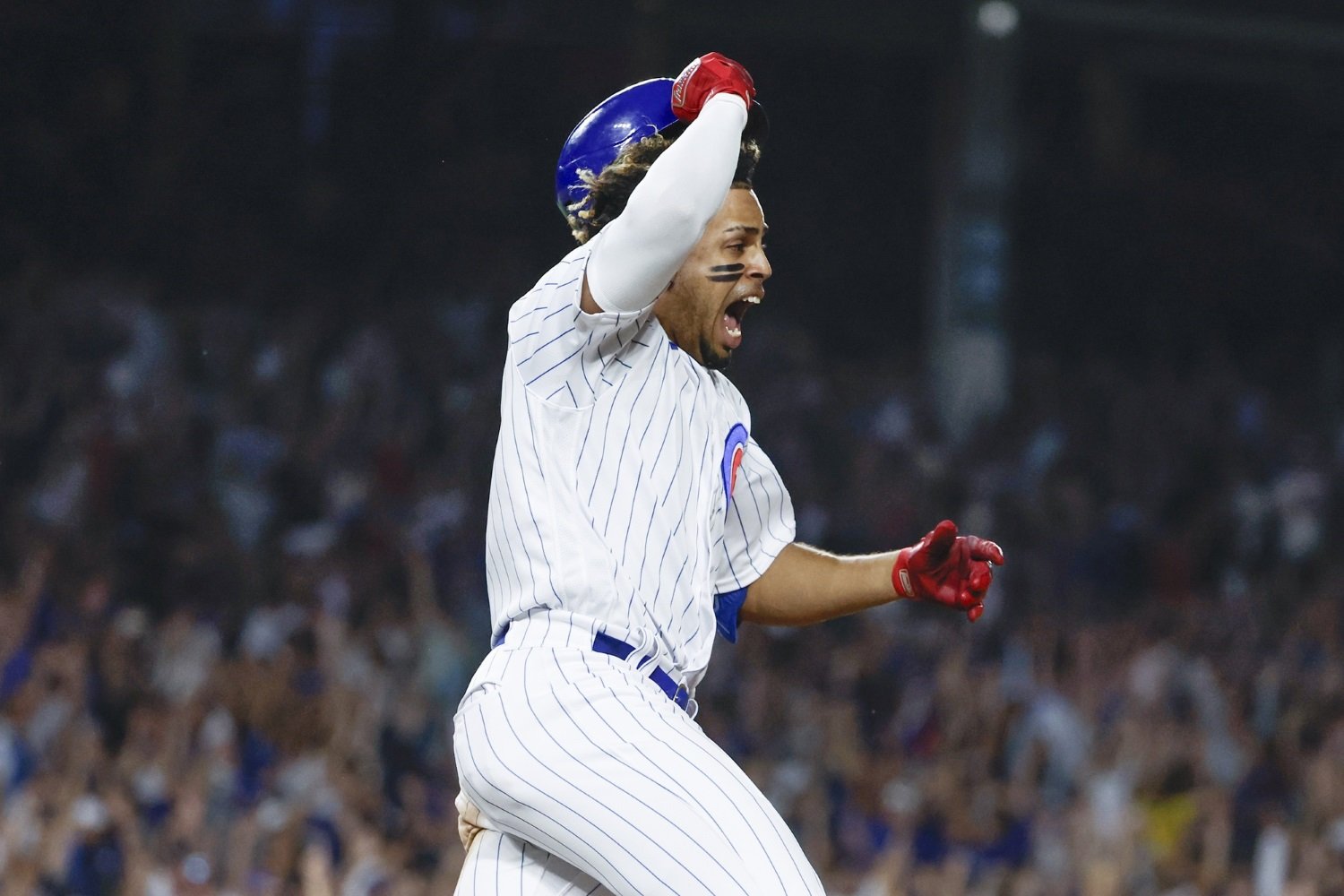 At this stage of Christopher Morel's career, it's still hard to tell what kind of long-term role would best suit him. He hasn't found a defensive position at which he's truly good, and the one at which he comes closest to meeting that standard (second base) is filled for the Cubs through at least 2026. The electricity of his bat and his personality, though, make it even harder to imagine this team without him than it is to imagine him in any particular spot. Morel was in the middle of a prolonged slump when he stepped into the batter's box in the ninth inning Wednesday night. He's prone to those, and when they happen, they're especially ugly, because he strikes out at such a high rate even when things are going well. However, he's now delivered the game-winning extra-base hit in the team's final at-bat twice in the last four games, at a time when he's otherwise cold. At other times, when he's hot, his bat can carry the team almost on its own. He's now hitting .260/.327/.516, and for his career, he's hit 35 home runs and 72 total extra-base hits in 738 plate appearances. Morel's pivotal walkoff homer came at a moment when it was starting to be tempting to sketch out lineups that exclude him down the stretch--wherein Mike Tauchman is pushed to designated hitter by the arrival of Pete Crow-Armstrong and the reemergence of Seiya Suzuki. Every time that temptation even begins to burgeon, though, Morel seems to do something to dispel and discredit it. Morel commands such love and enthusiasm from his teammates, too, that it's hard to justify demoting him into what would be a vanishingly small role. This winter, the Cubs will have to send Morel to Hot Corner University. Maybe he'll never be a credible third baseman in MLB, but if there remains a chance of that, the team needs to maximize it. In the meantime, the rest of the way, Morel has to be the regular DH, pending any injury that might open up second base. David Ross can tactically shield him from bad matchups, especially if and when the Cubs add another solid bat to the mix come September, but the lineup is incomplete without Morel. He has the power they need--the dimension their offense otherwise lacks. That he's also as upbeat and energetic a player as anyone in the clubhouse is just a neat bonus. Whether the Cubs can carry the momentum of Morel's massive hit into their weekend series against the Royals remains to be seen. With another day off Thursday, though, fans can spend today just being grateful. Had the Cubs been swept by the wimpy White Sox, they'd still be 3.5 games behind the Brewers, and the frustration level would be sky-high. Instead, and in defiance of those who might have wondered if the team could sustain the run that brought them this far in the face of some ineffective starting pitchers and some injuries to others, the team pulled a game closer to the division lead and proved that they have some serious spunk.
 -
Being swept by the White Sox would have been a huge blow to the Cubs' playoff hopes, and to the fan base's morale. On Wednesday night, the North Siders needed a hero. They got one. Image courtesy of © Kamil Krzaczynski-USA TODAY Sports At this stage of Christopher Morel's career, it's still hard to tell what kind of long-term role would best suit him. He hasn't found a defensive position at which he's truly good, and the one at which he comes closest to meeting that standard (second base) is filled for the Cubs through at least 2026. The electricity of his bat and his personality, though, make it even harder to imagine this team without him than it is to imagine him in any particular spot. Morel was in the middle of a prolonged slump when he stepped into the batter's box in the ninth inning Wednesday night. He's prone to those, and when they happen, they're especially ugly, because he strikes out at such a high rate even when things are going well. However, he's now delivered the game-winning extra-base hit in the team's final at-bat twice in the last four games, at a time when he's otherwise cold. At other times, when he's hot, his bat can carry the team almost on its own. He's now hitting .260/.327/.516, and for his career, he's hit 35 home runs and 72 total extra-base hits in 738 plate appearances. Morel's pivotal walkoff homer came at a moment when it was starting to be tempting to sketch out lineups that exclude him down the stretch--wherein Mike Tauchman is pushed to designated hitter by the arrival of Pete Crow-Armstrong and the reemergence of Seiya Suzuki. Every time that temptation even begins to burgeon, though, Morel seems to do something to dispel and discredit it. Morel commands such love and enthusiasm from his teammates, too, that it's hard to justify demoting him into what would be a vanishingly small role. This winter, the Cubs will have to send Morel to Hot Corner University. Maybe he'll never be a credible third baseman in MLB, but if there remains a chance of that, the team needs to maximize it. In the meantime, the rest of the way, Morel has to be the regular DH, pending any injury that might open up second base. David Ross can tactically shield him from bad matchups, especially if and when the Cubs add another solid bat to the mix come September, but the lineup is incomplete without Morel. He has the power they need--the dimension their offense otherwise lacks. That he's also as upbeat and energetic a player as anyone in the clubhouse is just a neat bonus. Whether the Cubs can carry the momentum of Morel's massive hit into their weekend series against the Royals remains to be seen. With another day off Thursday, though, fans can spend today just being grateful. Had the Cubs been swept by the wimpy White Sox, they'd still be 3.5 games behind the Brewers, and the frustration level would be sky-high. Instead, and in defiance of those who might have wondered if the team could sustain the run that brought them this far in the face of some ineffective starting pitchers and some injuries to others, the team pulled a game closer to the division lead and proved that they have some serious spunk. View full article
-
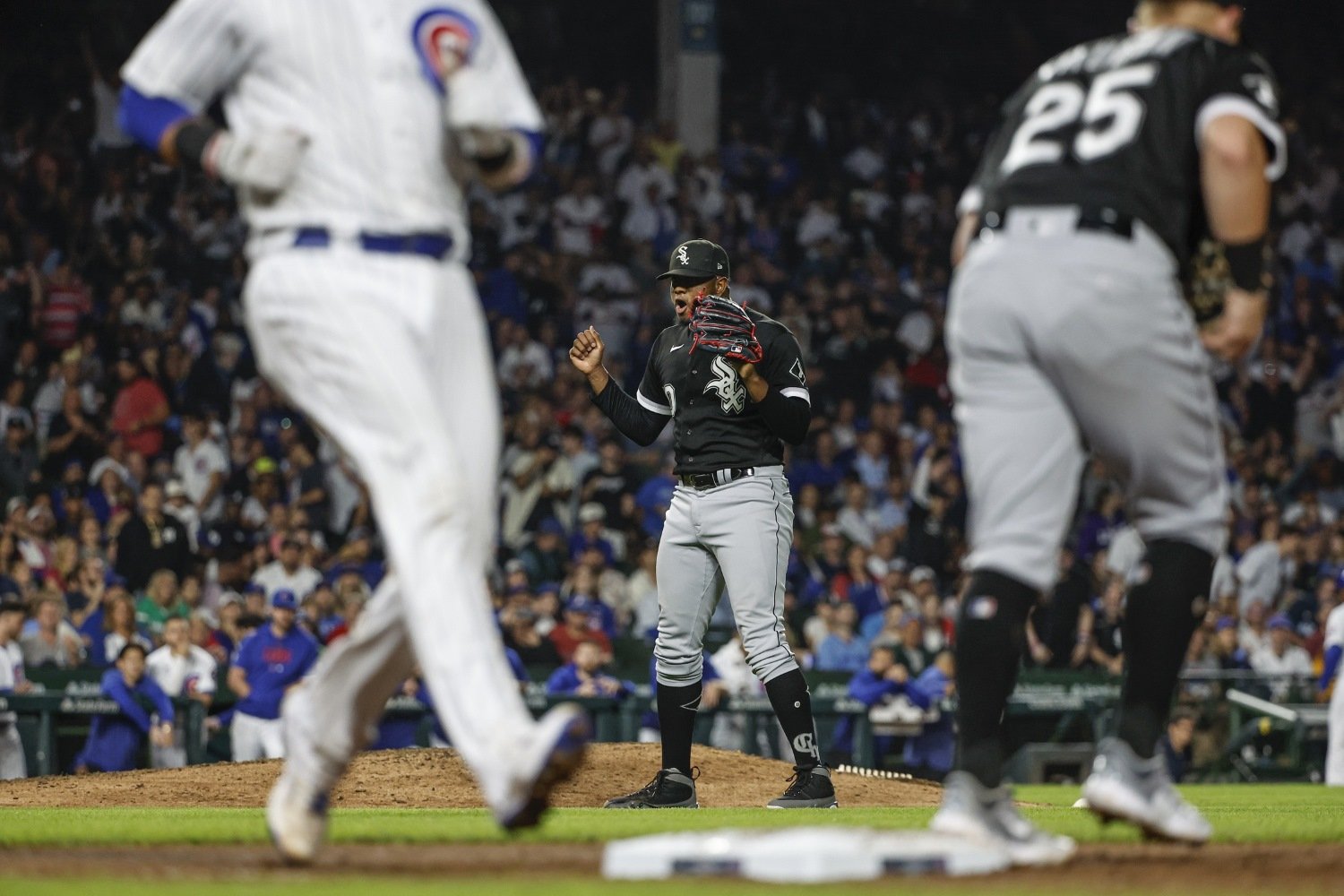 When players, coaches, broadcasters, and fans spend April reciting the old saw about every game counting the same in the standings, it seems forced. It feels like manufactured urgency. In April, we are all young, and life is long, and there is time to kill. Under the aegis of the promise of a long summer ahead, teams fritter and waste the occasional spring battle. Eric Hosmer can play for a while. The front office's confected bullpen can take time to settle and cure. Now, though, the truth that made those cliches so popular is falling hard on this Cubs team. On Tuesday night at Wrigley Field, they lost a game they could have won, but not necessarily one they should have won. The White Sox scored a few runs on an assortment of modestly struck hits against Kyle Hendricks, and Luis Robert landed the decisive blow when Julian Merryweather hung a seventh-inning slider. Hendricks's stuff is permanently diminished, and his arm-side command of the sinker is inconsistent. He didn't have it early on Tuesday, and it got him into trouble. Merryweather has been, by and large, excellent this year, but he seems to have an unfortunate knack for giving up long hits when the leverage index is highest. The Cubs lost the game on the bases, too. Steals set up two White Sox runs, and a deadeye's dart by Yasmani Grandal cut down Nico Hoerner to take the tying run off the paths in the home seventh. It was just a tough night. They happen. These are the contests that even 100-win teams lose--the ones where the luck and the lean of things just seem to go against you. Therein lies the rub. The problem is that, after starting 26-36 and 43-50, the Cubs have so little margin for error that even these losses hurt. The Brewers lead the division by 3.5 games, and the Reds are tied with Chicago. The Marlins have a one-game lead on them for the final Wild Card spot, and they also own the tiebreaker. There are only 43 games left in the regular season. Six of those are against the Brewers, and four are against the Reds. Seven are against the Diamondbacks, who lurk just 1.5 games behind them in the Wild Card chase. Three are against the Giants, who are two games ahead. Time is running short. The Cubs find themselves running and running to catch up to the sun, but it's sinking--racing around to come up behind them again. They're the ones who gave themselves so little time to close their deficits, so they have no one but themselves to blame. Still, it's a wrenching feeling, because there's no reason why Tuesday night's loss ought to feel lousy--except that it's a loss, and this has to be winning time. This team now has to play like something better than a 100-win team, and that might not be possible.
 -
There wasn't any real harm in the Cubs' 5-3 loss Tuesday night against the White Sox. It was just one of those inevitable losses that happens, during a long season. Unfortunately, the Cubs can't necessarily afford the inevitable losses. Image courtesy of © Kamil Krzaczynski-USA TODAY Sports When players, coaches, broadcasters, and fans spend April reciting the old saw about every game counting the same in the standings, it seems forced. It feels like manufactured urgency. In April, we are all young, and life is long, and there is time to kill. Under the aegis of the promise of a long summer ahead, teams fritter and waste the occasional spring battle. Eric Hosmer can play for a while. The front office's confected bullpen can take time to settle and cure. Now, though, the truth that made those cliches so popular is falling hard on this Cubs team. On Tuesday night at Wrigley Field, they lost a game they could have won, but not necessarily one they should have won. The White Sox scored a few runs on an assortment of modestly struck hits against Kyle Hendricks, and Luis Robert landed the decisive blow when Julian Merryweather hung a seventh-inning slider. Hendricks's stuff is permanently diminished, and his arm-side command of the sinker is inconsistent. He didn't have it early on Tuesday, and it got him into trouble. Merryweather has been, by and large, excellent this year, but he seems to have an unfortunate knack for giving up long hits when the leverage index is highest. The Cubs lost the game on the bases, too. Steals set up two White Sox runs, and a deadeye's dart by Yasmani Grandal cut down Nico Hoerner to take the tying run off the paths in the home seventh. It was just a tough night. They happen. These are the contests that even 100-win teams lose--the ones where the luck and the lean of things just seem to go against you. Therein lies the rub. The problem is that, after starting 26-36 and 43-50, the Cubs have so little margin for error that even these losses hurt. The Brewers lead the division by 3.5 games, and the Reds are tied with Chicago. The Marlins have a one-game lead on them for the final Wild Card spot, and they also own the tiebreaker. There are only 43 games left in the regular season. Six of those are against the Brewers, and four are against the Reds. Seven are against the Diamondbacks, who lurk just 1.5 games behind them in the Wild Card chase. Three are against the Giants, who are two games ahead. Time is running short. The Cubs find themselves running and running to catch up to the sun, but it's sinking--racing around to come up behind them again. They're the ones who gave themselves so little time to close their deficits, so they have no one but themselves to blame. Still, it's a wrenching feeling, because there's no reason why Tuesday night's loss ought to feel lousy--except that it's a loss, and this has to be winning time. This team now has to play like something better than a 100-win team, and that might not be possible. View full article
-
In Saturday's game between the Cubs and Blue Jays, there were 18 fastballs that topped 99 miles per hour, and 13 batted balls that topped 98 in exit velocity. Suddenly, the Cubs can win games like that. Image courtesy of © Kevin Sousa-USA TODAY Sports At the crest of the huge prospect wave that became the core of their World Series-winning team, the organization was right on the cutting edge of everything. In 2015, they were an elite pitch-framing team, at a time when that craft was as well-understood, valuable, and easily quantified as ever. They were also one of the first teams to noticeably flip a switch and start getting the ball in the air, launching what has become the launch angle revolution of the Statcast Era. In the bullpen, they had (in Hector Rondon and Pedro Strop) a flame-throwing duo as formidable as any in baseball. Their starters missed bats, too--even without overwhelming velocity. That all held true through the title run of 2016, thanks partially to the infusion of velocity from Aroldis Chapman when Rondon began to fade. Immediately thereafter, though, it started to come apart a bit. You can see the reasons by studying the team's choices. They swapped Starlin Castro (who hit the ball as hard as anyone late in 2015 and throughout their playoff run) out for Ben Zobrist, a sturdy, versatile veteran who produced most of his value without demonstrating elite athleticism. They signed John Lackey to round out the rotation, and Lackey was very good, but he didn't throw hard or miss many bats at that stage of his career. They traded Jorge Soler for Wade Davis, and Eloy Jimenez and Dylan Cease for Jose Quintana. At every turn, they were acquiring older players whose value came from skill, rather than sheer force. That was fine, for a moment, when the team was stocked to the gills with skilled players and still had the dynamism of Javier Baez, Kris Bryant, Kyle Schwarber, Anthony Rizzo, Willson Contreras, and Addison Russell on which to fall back. Pretty quickly. though, they simply fell behind. The rest of the league kept increasing its launch angle and prizing high exit velocities. The rest of the league's average fastball velocity and slider usage steadily rose, ratcheting up whiff rates. The Cubs, locked into some choices and too stubborn or cheap to pursue others, stood still, and the world passed them by. That was still true, even into 2023. When the team was playing Eris Hosmer and Trey Mancini at the expense of Christopher Morel, they struggled to keep up with the power hitting of some of the more talented teams they encountered. They signed Jameson Taillon, in part, because he throws considerably harder than the back-end starters they've had over the last four or five years, but they also brought back Drew Smyly and Kyle Hendricks, and their top two starters are (by the standards of pitchers this good, in 2023) soft-tossers. Things are changing, though. In Julian Merryweather, they've found a reliever who (while less than perfectly reliable) can not only throw 100 miles per hour, but miss bats and hit the strike zone with it--as compared to Dillon Maples, James Norwood, and other recent relievers the team seemed to carry just to shield themselves from criticism for not having hard throwers. Part of their reason for investing in Dansby Swanson was his power. Cody Bellinger is hammering the ball, and had three of the 12 hardest-hit balls by either team Saturday. Homegrown compadres Justin Steele and Adbert Alzolay are slider-slinging bat-missers, and they showed out Saturday, too. The Cubs induced 20 whiffs by Blue Jays hitters; Blue Jays pitchers only got 14 swings and misses from Cubs batters. The Cubs had 10 hard-hit balls; the Blue Jays only managed seven. In a game that showcased modern baseball's intensity of speed and power, the Cubs outclassed (if narrowly) a formidable American League East club. They've spent over half a decade trying to win mostly on wiles and guile, and it's done little for them. Now, with a clean slate from which to work, they seem to have built (once again) a team that can keep up with the heat of the league's best competition. As they sit in the third Wild Card spot and eye a potential playoff run, that's an exciting development. View full article
-
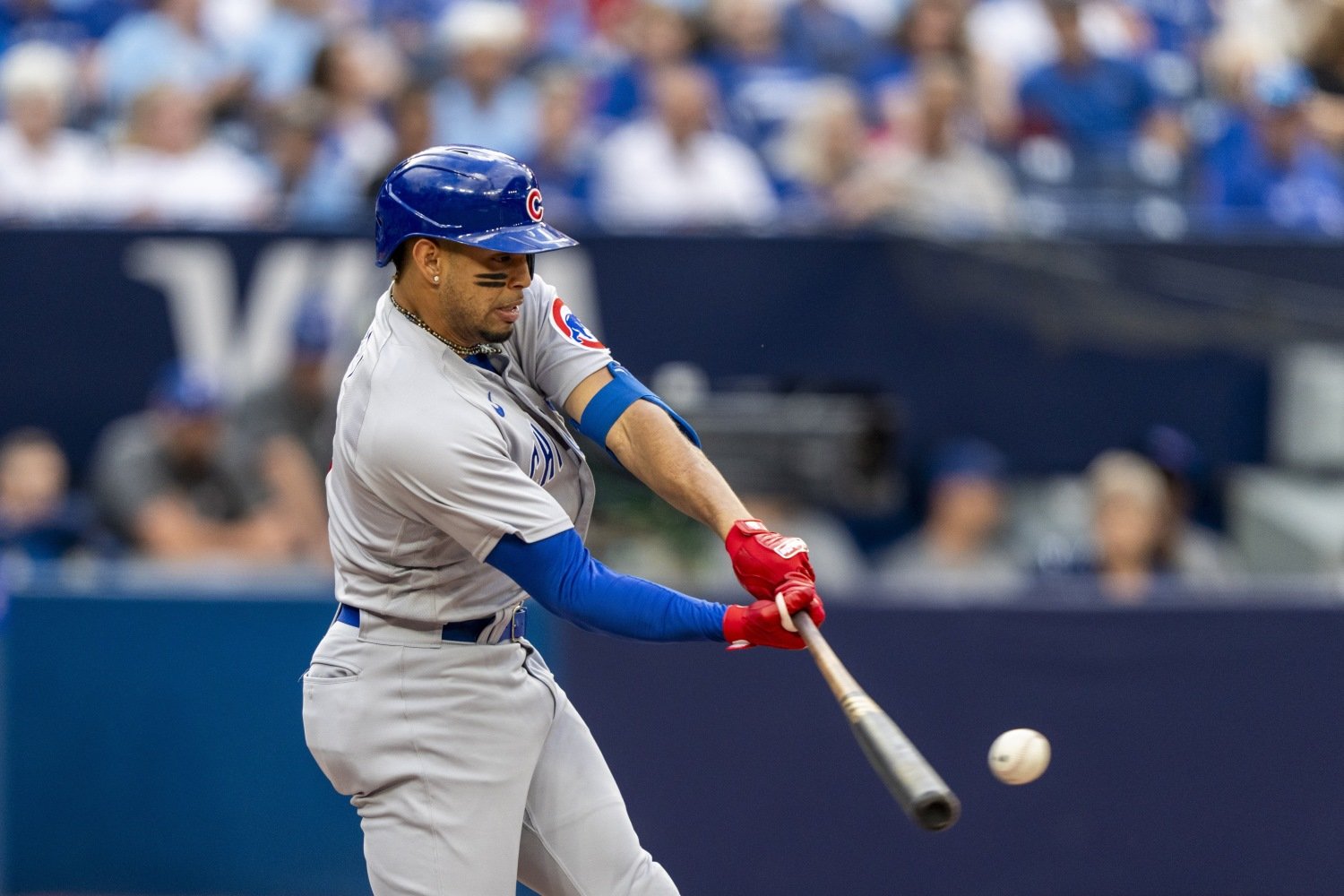 At the crest of the huge prospect wave that became the core of their World Series-winning team, the organization was right on the cutting edge of everything. In 2015, they were an elite pitch-framing team, at a time when that craft was as well-understood, valuable, and easily quantified as ever. They were also one of the first teams to noticeably flip a switch and start getting the ball in the air, launching what has become the launch angle revolution of the Statcast Era. In the bullpen, they had (in Hector Rondon and Pedro Strop) a flame-throwing duo as formidable as any in baseball. Their starters missed bats, too--even without overwhelming velocity. That all held true through the title run of 2016, thanks partially to the infusion of velocity from Aroldis Chapman when Rondon began to fade. Immediately thereafter, though, it started to come apart a bit. You can see the reasons by studying the team's choices. They swapped Starlin Castro (who hit the ball as hard as anyone late in 2015 and throughout their playoff run) out for Ben Zobrist, a sturdy, versatile veteran who produced most of his value without demonstrating elite athleticism. They signed John Lackey to round out the rotation, and Lackey was very good, but he didn't throw hard or miss many bats at that stage of his career. They traded Jorge Soler for Wade Davis, and Eloy Jimenez and Dylan Cease for Jose Quintana. At every turn, they were acquiring older players whose value came from skill, rather than sheer force. That was fine, for a moment, when the team was stocked to the gills with skilled players and still had the dynamism of Javier Baez, Kris Bryant, Kyle Schwarber, Anthony Rizzo, Willson Contreras, and Addison Russell on which to fall back. Pretty quickly. though, they simply fell behind. The rest of the league kept increasing its launch angle and prizing high exit velocities. The rest of the league's average fastball velocity and slider usage steadily rose, ratcheting up whiff rates. The Cubs, locked into some choices and too stubborn or cheap to pursue others, stood still, and the world passed them by. That was still true, even into 2023. When the team was playing Eris Hosmer and Trey Mancini at the expense of Christopher Morel, they struggled to keep up with the power hitting of some of the more talented teams they encountered. They signed Jameson Taillon, in part, because he throws considerably harder than the back-end starters they've had over the last four or five years, but they also brought back Drew Smyly and Kyle Hendricks, and their top two starters are (by the standards of pitchers this good, in 2023) soft-tossers. Things are changing, though. In Julian Merryweather, they've found a reliever who (while less than perfectly reliable) can not only throw 100 miles per hour, but miss bats and hit the strike zone with it--as compared to Dillon Maples, James Norwood, and other recent relievers the team seemed to carry just to shield themselves from criticism for not having hard throwers. Part of their reason for investing in Dansby Swanson was his power. Cody Bellinger is hammering the ball, and had three of the 12 hardest-hit balls by either team Saturday. Homegrown compadres Justin Steele and Adbert Alzolay are slider-slinging bat-missers, and they showed out Saturday, too. The Cubs induced 20 whiffs by Blue Jays hitters; Blue Jays pitchers only got 14 swings and misses from Cubs batters. The Cubs had 10 hard-hit balls; the Blue Jays only managed seven. In a game that showcased modern baseball's intensity of speed and power, the Cubs outclassed (if narrowly) a formidable American League East club. They've spent over half a decade trying to win mostly on wiles and guile, and it's done little for them. Now, with a clean slate from which to work, they seem to have built (once again) a team that can keep up with the heat of the league's best competition. As they sit in the third Wild Card spot and eye a potential playoff run, that's an exciting development.
 -
I Am Begging David Ross to Just Steal the Bases Next Time
Matthew Trueblood posted an article in Cubs
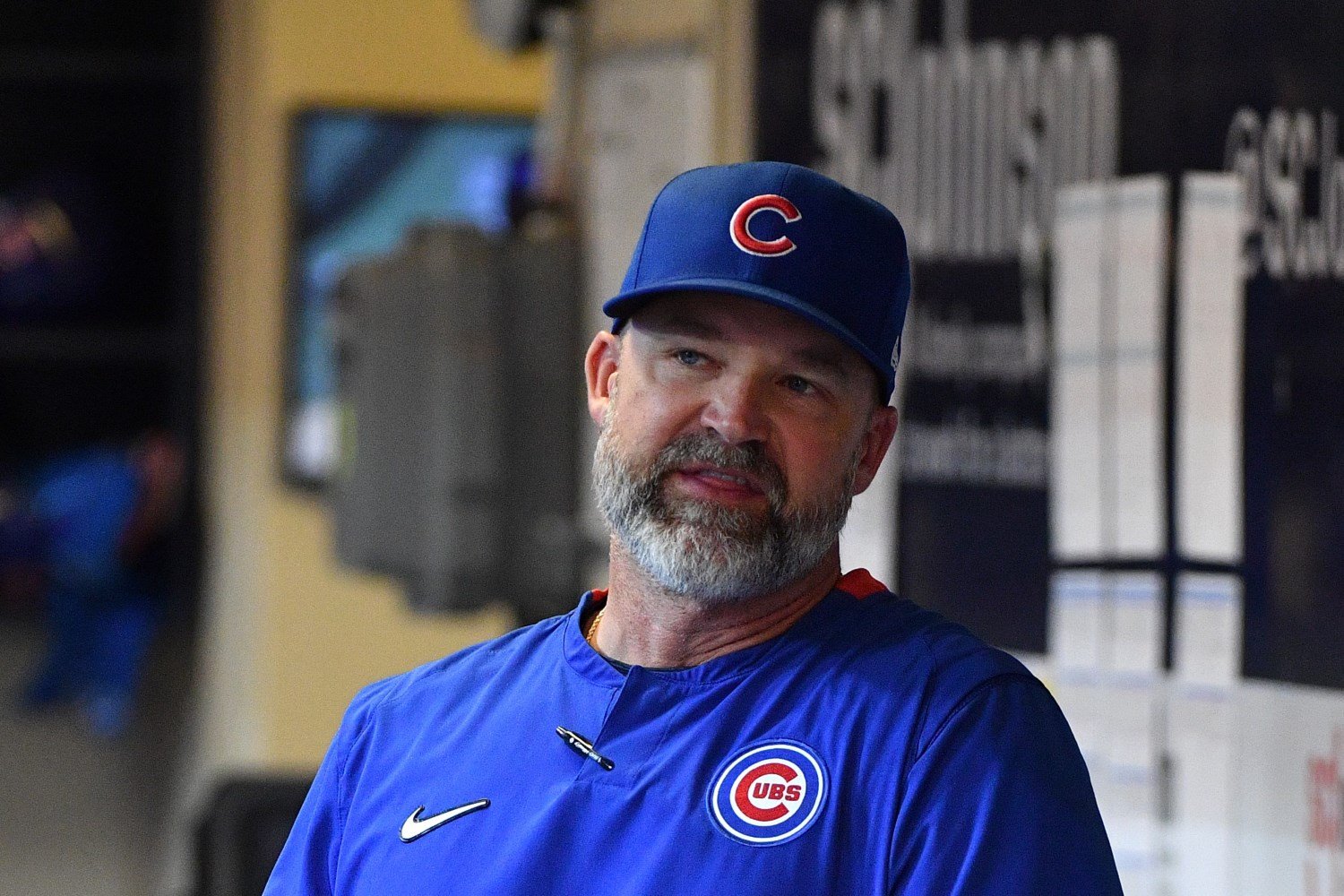 It would have been unreasonable to hope for the Cubs to win every series for the rest of this season. Losing a set to a strip-mined, understaffed, half-interested Mets team stings, though, and the final frame of Wednesday's loss was especially frustrating. Trailing by two runs to start the ninth, the Cubs quickly chased would-be closer Adam Ottavino out of the game. Seiya Suzuki homered, Jeimer Candelario singled, and Mike Tauchman walked, and suddenly, the tying and go-ahead runs were on base. With Nick Madrigal due up, Mets manager Buck Showalter removed Ottavino in favor of Phil Bickford, whom the Mets got in a cash transaction with the Dodgers just before the trade deadline--an empty gesture in the direction of credibility, as they unloaded much of their pitching staff. Bickford was a gift to the Cubs. He was pitching on a second consecutive night. He's also one of the easiest relievers in baseball on whom to run. In 77 opportunities (plate appearances in which a runner was on first or second base and the next base was open), opponents have attempted 12 steals against Bickford this year, and they've been safe on all 12. Candelario, the lead runner for the Cubs in that moment, is 7-for-8 stealing bases this year. The league's overall success rate on steal attempts this year is scraping 80 percent, which is not only the highest in history, but scale-breaking in its departure from all previous global success rates. Mets catcher Francisco Alvarez has a fine arm, but Candelario should have been able to mark off a good-sized lead and steal third base in that situation, against the slow-delivering Bickford. Tauchman could have cruised in as the trailing runner, killing any chance of a double play. David Ross went another way. Madrigal laid down a sacrifice bunt, which did move both Candelario and Tauchman into scoring position, but it came at the cost of a crucial out. Christopher Morel was the next hitter, and Bickford struck him out. That was disappointing, but it can hardly be counted as surprising. Despite running strong overall numbers since the All-Star break, Morel has struck out 40 percent of the time during that span. He's whiffed on 38.3 percent of his swings this season. Bunting runners into position to score on a productive out by Morel was a sucker's bet. One can spend all night making excuses and rationalizing the move. Defenses, unhappily, shade Madrigal to hit the other way on the infield, which meant that Francisco Lindor could stay close to second base and keep Candelario relatively close. Candelario is an alert runner with average speed, but he's not a true base stealer most of the time. Attempting a double steal there would have been risky. Easier to overlook, though, is the considerable cost and risk of the tactic Ross and Madrigal chose, instead. The bunt left the Cubs with just two more outs with which to work, and Morel was a poor candidate to cash in on the advancement Madrigal earned for the team. To his credit, Ross thought through most of this. He was doing the same calculus with regard to Morel's contact ability; that of Nico Hoerner (batting behind Morel); and Madrigal's skills. He just seems to have overlooked the option of taking those bases, or trying to, by force instead of trade. At some point, understanding that they don't have elite power in their lineup, the Cubs need to more earnestly embrace the benefits of the new world that rules and dimensions changes have wrought this season, with regard to the stolen base. The team's success rate on steal attempts this year is 82.5 percent. That's too high. It means they're not being aggressive enough, and the choice to bunt to stay out of the double play and pray for contact from Morel (even assuming the bunt worked, which at least it did, this time) was a symptom of that syndrome. As every game and every opportunity to score in close contests becomes more precious, Ross needs to take better calculated risks.
 -
An extremely promising ninth-inning Cubs rally died a tragic, avoidable death Wednesday night. Instead of falling back on the sacrifice bunt so often, David Ross needs to roll the dice and get his runners moving. At some point, understanding that they don't have elite power in their lineup, the Cubs need to more earnestly embrace the benefits of the new world that rules and dimensions changes have wrought this season, with regard to the stolen base. The team's success rate on steal attempts this year is 82.5 percent. That's too high. It means they're not being aggressive enough, and the choice to bunt to stay out of the double play and pray for contact from Morel (even assuming the bunt worked, which at least it did, this time) was a symptom of that syndrome. As every game and every opportunity to score in close contests becomes more precious, Ross needs to take better calculated risks. View full article