


Matthew Trueblood
-
Posts
2,481 -
Joined
-
Last visited
-
Days Won
2
Content Type
Profiles
Joomla Posts 1
Chicago Cubs Videos
Chicago Cubs Free Agent & Trade Rumors, Notes, & Tidbits
2026 Chicago Cubs Top Prospects Ranking
News
2023 Chicago Cubs Draft Picks
Guides & Resources
2024 Chicago Cubs Draft Picks
The Chicago Cubs Players Project
2025 Chicago Cubs Draft Pick Tracker
2026 Chicago Cubs Draft Tracker: Picks & Bonuses
Blogs
Events
Forums
Store
Gallery
Everything posted by Matthew Trueblood
-
As the Cubs look ahead to what will need to be an active and change-filled winter, they have sent a few prospects out to the Arizona Fall League and the Caribbean winter leagues for some unusually high-stakes exposure. Image courtesy of © David Banks-USA TODAY Sports For Kevin Alcantara, the big roster clock in the sky is already ticking. The fact that he needed to be placed on the 40-man roster last November is one reason why he was available to the Cubs in the Anthony Rizzo trade the previous July. Teams always have one eye on the countdown to when a player needs to go on the 40-man, and once they're there, that attention shifts to the number of years left in which a player can be optioned to the minors. Alcantara spent most of his first season on the 40-man in High A, where he could be of no help to the parent club, and that also took up one of his option years. At least Alcantara has two of those remaining. Alexander Canario is due to be out of them altogether, having used up all three of his option years already. Again, one reason for the Giants' willingness to surrender him in the Kris Bryant trade in 2021 was that Canario was already on the 40-man but still playing in High A--essentially, that he was Alcantara, two years before Alcantara was. The good news for the Cubs is that, because of the injury Canario suffered last fall that cost him a good chunk of 2023, he's eligible for a fourth option, so he can still be stashed in Iowa in 2024. In practice, though, these two can't be almost dead 40-man spots in 2024, as they were in 2023. We saw the team get cornered in terms of roster moves more than once in the second half, and much of it was because they had players like these two--too good to try to remove from the roster, but not in position to contribute to the team of which they were theoretically a part. Besides, the Cubs have to make an aggressive trade or two this winter, and they'll need to add at least a couple players to their 40-man again next month, to protect them from the Rule 5 Draft. They need to know what they have in Alcantara and Canario, so they can plan their next moves. For those reasons, Alcantara's current stint in the Arizona Fall League has unusually high stakes. He only got a brief taste of Double A in 2023. He's seen very little advanced pitching, for a guy the team could remotely hope to use next year. The AFL is not a great place to check that box, especially this year, but it's still a step up from day-to-day competition in the Midwest League--at least in terms of the polish and command of the pitchers. Alcantara has responded well to the much-needed challenge so far, but it's also clear that he needs time and reps to figure things out. In 30 plate appearances so far, Alcantara is hitting just .185/.267/.407. He's hit two home runs and drawn three walks, but fanned nine times. That's a sufficiently encouraging start, but obviously, the hope will be that he can get some more hits and put the ball in play more often the rest of the way. Strikeouts are the big concern about his game, but he trimmed his strikeout rate during the regular season--not only from the previous season, but as this one went along. From July 1 onward, including his stint in Tennessee, Alcantara batted .336/.416/.552, walked 12 percent of the time, and only fanned at a 22,3 percent clip. The Cubs will want to see him adjust and attack the same way against AFL pitching. Canario, meanwhile, canceled his initial plans to join Alcantara in Arizona. Instead, he'll be playing in the Dominican Winter League. The Cubs had to sign off on that alternative arrangement, and the fact that they did so is somewhat telling. Think a bit about the offseason calendar, and how it matches up with that of fall and winter ball. The AFL is almost a fortnight old already. It will wrap up in less than a month, just before teams need to make decisions about whom to add to their 40-man and whom to leave exposed to the Rule 5. Traditionally, that window--mid-November, through Thanksgiving--is the first active trade window of the offseason. It's in that stretch, for instance, that the Braves traded Jason Heyward to St. Louis in 2014, and that Jeff Samardzija was traded to the White Sox by Oakland the same year. Meanwhile, the Dominican league (LIDOM) doesn't even start for another week. Teams could play well into January. That the Cubs are ok with Canario going to that league to make up the time he lost due to injury in 2023 signals that they're in less of a hurry to establish his value for 2024--be that to themselves or on the trade market. To put it another way: they're more concerned about scouts for other teams seeing Alcantara right away than about getting the same eyes on Canario. Though he's a very exciting prospect, perhaps with the best sheer upside in the entire system, Alcantara is going to come up in trade rumors a lot this winter. It makes sense, if the Cubs find themselves engaged with a trade partner who isn't in a 40-man crunch, for them to at least listen on him. The presence of Pete Crow-Armstrong ensures that most of Alcantara's playing time in the big leagues would have to come in the corner outfield spots, where Ian Happ and Seiya Suzuki are each under contract for the next three years. Crow-Armstrong's disappointing September audition notwithstanding, he's very likely to be the Cubs' primary center fielder in 2024. Alcantara won't be able to push him off that position unless Crow-Armstrong totally collapses at the plate, which few people expect. In theory, of course, there's an open role there. Alcantara could spend much of 2024 in the minors, anyway, and in 2025, he might platoon with Crow-Armstrong in center or with Happ in left, while frequently spelling Suzuki (who could DH instead on those days) in right. That's a tough thing to ask a toolsy 22-year-old to do, though, and holding onto a player for an entire year when it's not clear that they'll have a more steady gig than that the following year is a tough ask for a contending team. The role just described fits Canario perfectly, though, and the team doesn't have to wait a year for him to be ready for it. He's likely to be available in trades, too, but since his value to acquiring teams would be much lower and his value to the 2024 Cubs is much higher, he's less likely to be dealt. It feels like the Cubs sent him to LIDOM because he can best prepare for helping them in the big leagues next year by going there. It feels like they sent Alcantara to Arizona not only because it's the next natural step in his prospect progression, but to showcase him as a potential centerpiece in a big deal. The sledding is not going to get easier in 2024, within the NL Central or the National League as a whole. The Cubs have to improve significantly in order to get over the hump and into the postseason next year. Canario and Alcantara can each make big contributions to that endeavor, but those contributions are likely to be very different from one another. It made sense, then, to give them these very different offseason assignments. View full article
-
Two Cubs Outfield Prospects Are Still Playing Very Important Baseball
Matthew Trueblood posted an article in Cubs
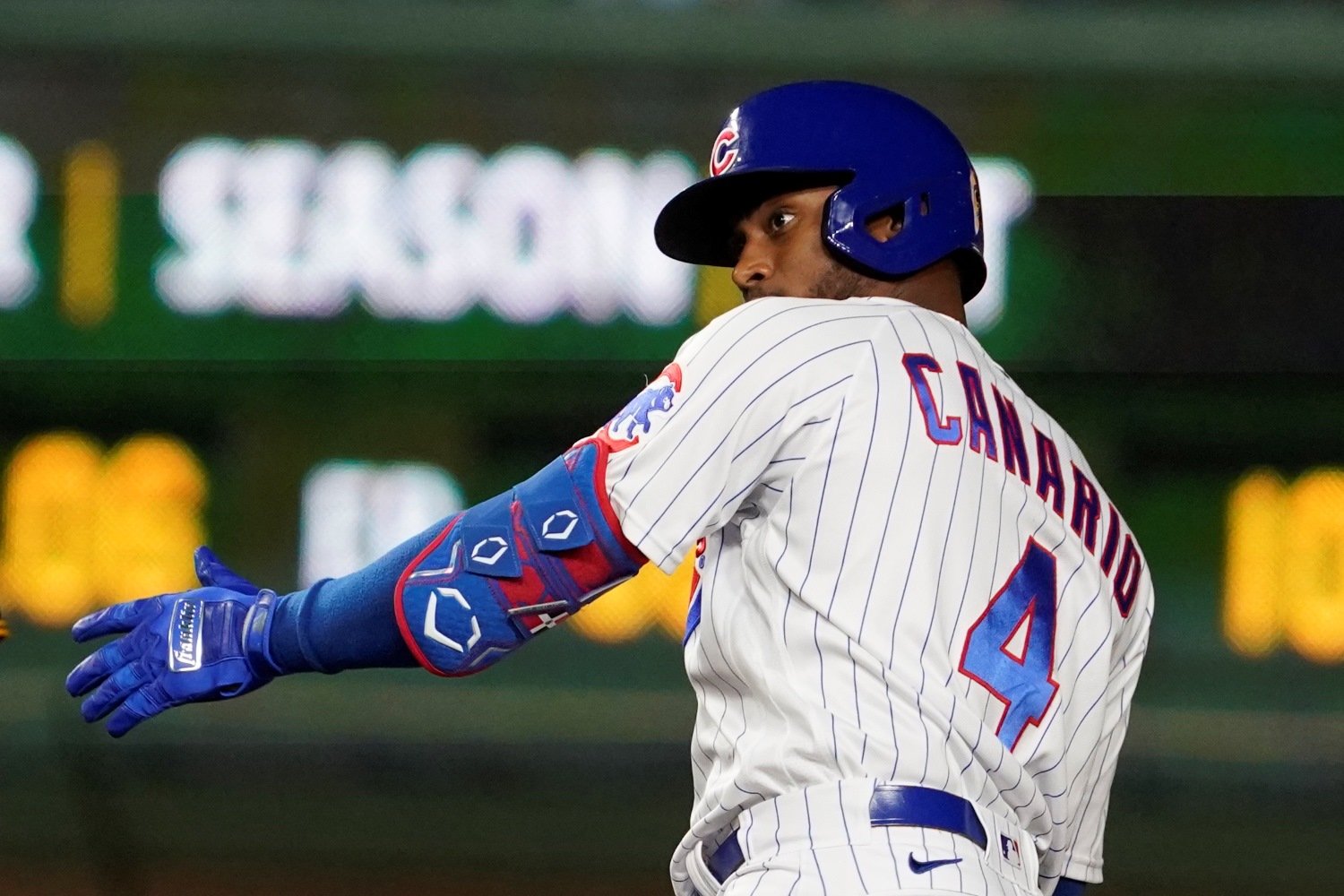 For Kevin Alcantara, the big roster clock in the sky is already ticking. The fact that he needed to be placed on the 40-man roster last November is one reason why he was available to the Cubs in the Anthony Rizzo trade the previous July. Teams always have one eye on the countdown to when a player needs to go on the 40-man, and once they're there, that attention shifts to the number of years left in which a player can be optioned to the minors. Alcantara spent most of his first season on the 40-man in High A, where he could be of no help to the parent club, and that also took up one of his option years. At least Alcantara has two of those remaining. Alexander Canario is due to be out of them altogether, having used up all three of his option years already. Again, one reason for the Giants' willingness to surrender him in the Kris Bryant trade in 2021 was that Canario was already on the 40-man but still playing in High A--essentially, that he was Alcantara, two years before Alcantara was. The good news for the Cubs is that, because of the injury Canario suffered last fall that cost him a good chunk of 2023, he's eligible for a fourth option, so he can still be stashed in Iowa in 2024. In practice, though, these two can't be almost dead 40-man spots in 2024, as they were in 2023. We saw the team get cornered in terms of roster moves more than once in the second half, and much of it was because they had players like these two--too good to try to remove from the roster, but not in position to contribute to the team of which they were theoretically a part. Besides, the Cubs have to make an aggressive trade or two this winter, and they'll need to add at least a couple players to their 40-man again next month, to protect them from the Rule 5 Draft. They need to know what they have in Alcantara and Canario, so they can plan their next moves. For those reasons, Alcantara's current stint in the Arizona Fall League has unusually high stakes. He only got a brief taste of Double A in 2023. He's seen very little advanced pitching, for a guy the team could remotely hope to use next year. The AFL is not a great place to check that box, especially this year, but it's still a step up from day-to-day competition in the Midwest League--at least in terms of the polish and command of the pitchers. Alcantara has responded well to the much-needed challenge so far, but it's also clear that he needs time and reps to figure things out. In 30 plate appearances so far, Alcantara is hitting just .185/.267/.407. He's hit two home runs and drawn three walks, but fanned nine times. That's a sufficiently encouraging start, but obviously, the hope will be that he can get some more hits and put the ball in play more often the rest of the way. Strikeouts are the big concern about his game, but he trimmed his strikeout rate during the regular season--not only from the previous season, but as this one went along. From July 1 onward, including his stint in Tennessee, Alcantara batted .336/.416/.552, walked 12 percent of the time, and only fanned at a 22,3 percent clip. The Cubs will want to see him adjust and attack the same way against AFL pitching. Canario, meanwhile, canceled his initial plans to join Alcantara in Arizona. Instead, he'll be playing in the Dominican Winter League. The Cubs had to sign off on that alternative arrangement, and the fact that they did so is somewhat telling. Think a bit about the offseason calendar, and how it matches up with that of fall and winter ball. The AFL is almost a fortnight old already. It will wrap up in less than a month, just before teams need to make decisions about whom to add to their 40-man and whom to leave exposed to the Rule 5. Traditionally, that window--mid-November, through Thanksgiving--is the first active trade window of the offseason. It's in that stretch, for instance, that the Braves traded Jason Heyward to St. Louis in 2014, and that Jeff Samardzija was traded to the White Sox by Oakland the same year. Meanwhile, the Dominican league (LIDOM) doesn't even start for another week. Teams could play well into January. That the Cubs are ok with Canario going to that league to make up the time he lost due to injury in 2023 signals that they're in less of a hurry to establish his value for 2024--be that to themselves or on the trade market. To put it another way: they're more concerned about scouts for other teams seeing Alcantara right away than about getting the same eyes on Canario. Though he's a very exciting prospect, perhaps with the best sheer upside in the entire system, Alcantara is going to come up in trade rumors a lot this winter. It makes sense, if the Cubs find themselves engaged with a trade partner who isn't in a 40-man crunch, for them to at least listen on him. The presence of Pete Crow-Armstrong ensures that most of Alcantara's playing time in the big leagues would have to come in the corner outfield spots, where Ian Happ and Seiya Suzuki are each under contract for the next three years. Crow-Armstrong's disappointing September audition notwithstanding, he's very likely to be the Cubs' primary center fielder in 2024. Alcantara won't be able to push him off that position unless Crow-Armstrong totally collapses at the plate, which few people expect. In theory, of course, there's an open role there. Alcantara could spend much of 2024 in the minors, anyway, and in 2025, he might platoon with Crow-Armstrong in center or with Happ in left, while frequently spelling Suzuki (who could DH instead on those days) in right. That's a tough thing to ask a toolsy 22-year-old to do, though, and holding onto a player for an entire year when it's not clear that they'll have a more steady gig than that the following year is a tough ask for a contending team. The role just described fits Canario perfectly, though, and the team doesn't have to wait a year for him to be ready for it. He's likely to be available in trades, too, but since his value to acquiring teams would be much lower and his value to the 2024 Cubs is much higher, he's less likely to be dealt. It feels like the Cubs sent him to LIDOM because he can best prepare for helping them in the big leagues next year by going there. It feels like they sent Alcantara to Arizona not only because it's the next natural step in his prospect progression, but to showcase him as a potential centerpiece in a big deal. The sledding is not going to get easier in 2024, within the NL Central or the National League as a whole. The Cubs have to improve significantly in order to get over the hump and into the postseason next year. Canario and Alcantara can each make big contributions to that endeavor, but those contributions are likely to be very different from one another. It made sense, then, to give them these very different offseason assignments.
 -
Whether you've noticed or not, you've been living in the time of the six-man rotation for a few years. In 2023, we saw an inflection point that has to shape the Cubs' offseason plans. Image courtesy of © David Banks-USA TODAY Sports When MLB expanded to 30 teams in 1998, just over 42 percent of all starts were made with five or more days of rest. By then, the four-man starting rotations that prevailed in the 1960s and 1970s were receding rapidly into memory, but every team was doing their utmost to field a consistent five-man rotation. At right around that same time, though, modern standards for protecting pitchers from overuse took root, and a gradual trend toward more rest prevailed. Still, it was 2011 before as many as half the league's starts happened on extended rest. Four days remained the most common interval between outings--no longer the majority, but the plurality, and that by a wide margin--until 2018 or so. At that point, though, an upsurge in starts on five days of rest occurred. It hasn't abated. In fact, coming out of the pandemic, it's only become more pronounced. There have been a few subtle changes to the seasonal schedule, adding an extra day off or two for each team. A few teams (most notably, perhaps, the Angels, who needed to accommodate Shohei Ohtani's two-way play) have converted to an outright six-man rotation, and a few others used it extensively in 2021, to work around the disruption to their pitcher's seasonal workloads due to the COVID-induced shortening of the 2020 season. Even among the teams still ostensibly using a five-man rotation, though, there's been a shift. Teams use off days to shorten their rotation and skip a struggling fifth starter much less often. When the schedule doesn't give them a break for more than 10 days or so, they often sneak in a bullpen game, or call someone up from Triple A to make a spot start. Even when teams get a couple of clustered off days, they often opt to let the rotation stretch out to a week, rather than prioritize keeping their ace on a five-day schedule. Until 2015, the league had never seen even 900 starts made on six or more days of rest. Since 2018, every full season has seen at least 1,000 such starts. In 2023, the median teams (the Marlins and Rangers) used starters on what would traditionally be counted as long rest (at least five days) 102 times. The Cubs only had 73 starts on at least that much rest. The only team who had fewer was the Giants, who survived much of the second half by keeping Alex Cobb and Logan Webb on a regular rotation and filling the other three days with piggyback starters, openers, and Johnny Wholestaff. By the end of the year, it was pretty clear that the Cubs' bucking of the global trend wasn't going to be a triumph of old-school thinking. On the contrary, their starters all seemed to break or wear down, contributing significantly to their September collapse. For 2024, this team needs not only to amass depth beyond their established rotation, but to consider making that rotation itself longer. If both Marcus Stroman and Kyle Hendricks return, they'll slot right into the group, alongside Justin Steele, Jameson Taillon, and Jordan Wicks. That's five, already, but it doesn't need to (and, in fact, shouldn't) be the end of the team's plan. They still ought to pursue a front-of-the-rotation starter, and not at the expense of any of the guys listed here. Nor do they need to be looking to trade Javier Assad, Cade Horton, Hayden Wesneski, Ben Brown, or Drew Smyly, who would not fit into the Opening Day rotation picture if an established star were added to the crew of Steele, Stroman, Hendricks, Taillon and Wicks. Some of the Cubs' rotation depth pieces will be perfectly set up to open 2024 in Iowa. Some will be well-suited to relief work, while staying ready to work into the rotation if and when needed. Injuries will crop up, so having at least 10 viable starters is the smart way to line things up if the goal is to reach the postseason. They can make trades from whatever surplus they establish. Even before those things happen, though, the Cubs should be looking to make use of six starters. It's become the modern standard, and they're not set up to defy it. Obviously, this will be an expensive spot to fill. That's why the discussion we began Wednesday, about how high the front office will be able and willing to steer the overall payroll, is so important. Who do you want to see the team add to the starting corps for 2024? Who's expendable? Can you stomach the six-man rotation, which would have seemed so radical just a few years ago? View full article
-
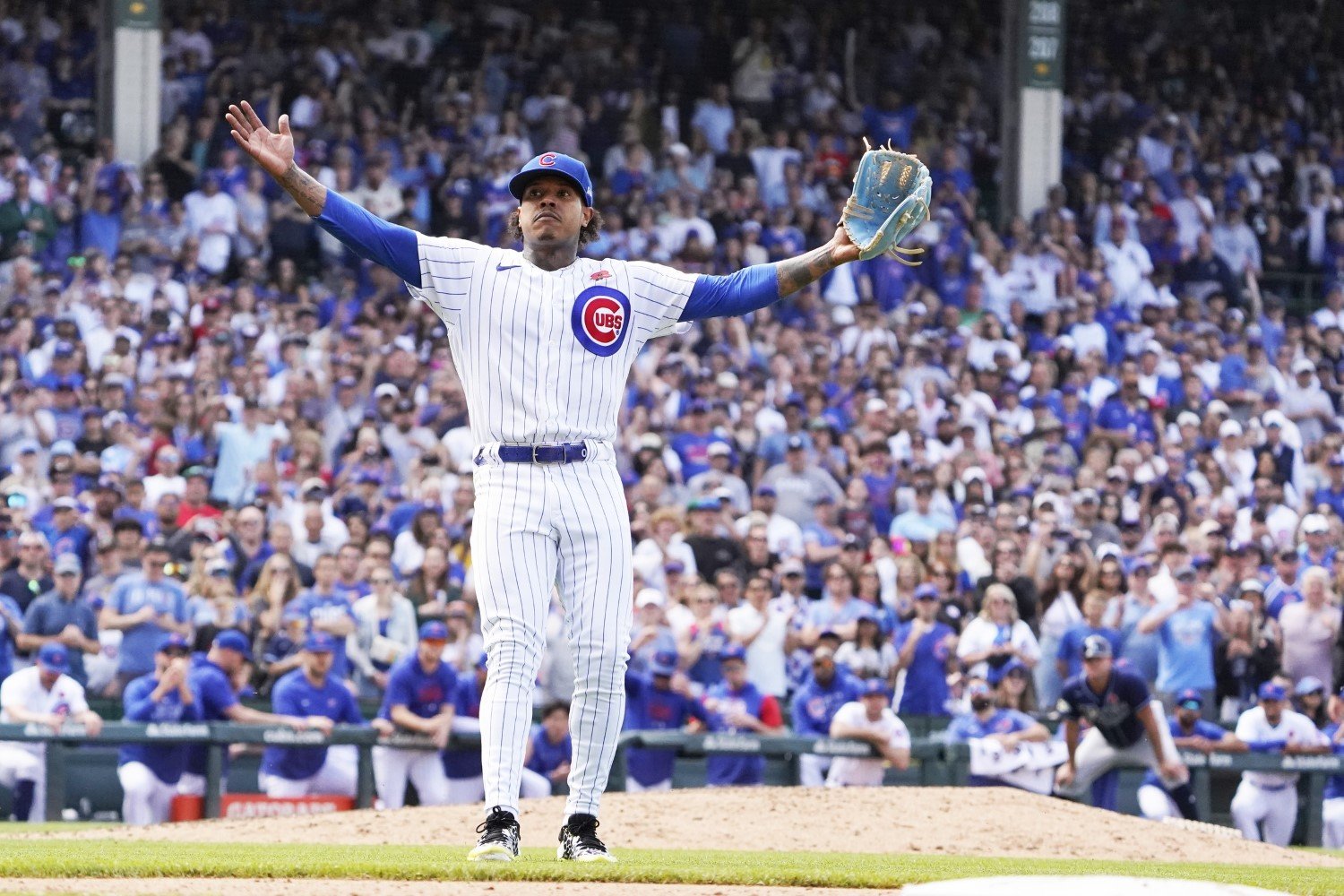 When MLB expanded to 30 teams in 1998, just over 42 percent of all starts were made with five or more days of rest. By then, the four-man starting rotations that prevailed in the 1960s and 1970s were receding rapidly into memory, but every team was doing their utmost to field a consistent five-man rotation. At right around that same time, though, modern standards for protecting pitchers from overuse took root, and a gradual trend toward more rest prevailed. Still, it was 2011 before as many as half the league's starts happened on extended rest. Four days remained the most common interval between outings--no longer the majority, but the plurality, and that by a wide margin--until 2018 or so. At that point, though, an upsurge in starts on five days of rest occurred. It hasn't abated. In fact, coming out of the pandemic, it's only become more pronounced. There have been a few subtle changes to the seasonal schedule, adding an extra day off or two for each team. A few teams (most notably, perhaps, the Angels, who needed to accommodate Shohei Ohtani's two-way play) have converted to an outright six-man rotation, and a few others used it extensively in 2021, to work around the disruption to their pitcher's seasonal workloads due to the COVID-induced shortening of the 2020 season. Even among the teams still ostensibly using a five-man rotation, though, there's been a shift. Teams use off days to shorten their rotation and skip a struggling fifth starter much less often. When the schedule doesn't give them a break for more than 10 days or so, they often sneak in a bullpen game, or call someone up from Triple A to make a spot start. Even when teams get a couple of clustered off days, they often opt to let the rotation stretch out to a week, rather than prioritize keeping their ace on a five-day schedule. Until 2015, the league had never seen even 900 starts made on six or more days of rest. Since 2018, every full season has seen at least 1,000 such starts. In 2023, the median teams (the Marlins and Rangers) used starters on what would traditionally be counted as long rest (at least five days) 102 times. The Cubs only had 73 starts on at least that much rest. The only team who had fewer was the Giants, who survived much of the second half by keeping Alex Cobb and Logan Webb on a regular rotation and filling the other three days with piggyback starters, openers, and Johnny Wholestaff. By the end of the year, it was pretty clear that the Cubs' bucking of the global trend wasn't going to be a triumph of old-school thinking. On the contrary, their starters all seemed to break or wear down, contributing significantly to their September collapse. For 2024, this team needs not only to amass depth beyond their established rotation, but to consider making that rotation itself longer. If both Marcus Stroman and Kyle Hendricks return, they'll slot right into the group, alongside Justin Steele, Jameson Taillon, and Jordan Wicks. That's five, already, but it doesn't need to (and, in fact, shouldn't) be the end of the team's plan. They still ought to pursue a front-of-the-rotation starter, and not at the expense of any of the guys listed here. Nor do they need to be looking to trade Javier Assad, Cade Horton, Hayden Wesneski, Ben Brown, or Drew Smyly, who would not fit into the Opening Day rotation picture if an established star were added to the crew of Steele, Stroman, Hendricks, Taillon and Wicks. Some of the Cubs' rotation depth pieces will be perfectly set up to open 2024 in Iowa. Some will be well-suited to relief work, while staying ready to work into the rotation if and when needed. Injuries will crop up, so having at least 10 viable starters is the smart way to line things up if the goal is to reach the postseason. They can make trades from whatever surplus they establish. Even before those things happen, though, the Cubs should be looking to make use of six starters. It's become the modern standard, and they're not set up to defy it. Obviously, this will be an expensive spot to fill. That's why the discussion we began Wednesday, about how high the front office will be able and willing to steer the overall payroll, is so important. Who do you want to see the team add to the starting corps for 2024? Who's expendable? Can you stomach the six-man rotation, which would have seemed so radical just a few years ago?
 -
Money doesn't buy championships. It must be spent wisely, but even if it is, it can't replace good scouting, player development, instruction, and execution. No amount of spending can guarantee the Cubs a playoff spot in 2024, but how much do they have to spend to even have a good shot? Image courtesy of © Charles LeClaire-USA TODAY Sports In 2023, the Cubs assiduously navigated the season in such a way as to avoid exceeding even the first threshold above which they would have had to pay the luxury tax. Their full-season payroll figure, by the reckoning of the Competitive Balance Tax (which takes the annual average value of every contract for which the team is responsible), was abut $230.8 million, according to Cot's Contracts. That was about $2 million below the aforesaid threshold, which stood at $233 million for this season. Next year, that threshold rises to $237 million. The Cubs will have to surpass it even to match their work from 2023, let alone to build upon it. Right now, they have just under $160 million on their books for 2024 (again, sticking with the average value of each contract, since that's the relevant number here). That includes Marcus Stroman's $23.67 million, because he's entitled to it unless and until he opts out of the $21 million he'll get if he elects to finish out his three-year deal. At this point, the broad expectation is that he'll stick around, so keeping him listed here is the right way to think about it. However, that estimate excludes a lot of money that really won't be optional for the Cubs. They have a genuine choice about whether or not to retain Kyle Hendricks, but given the important place he holds in the organization at this point and how well he pitched in 2023, it would be awfully difficult to see him walk away. Rather than simply picking up the option, the team and the pitcher could come to a multi-year agreement that would slightly lower the CBT number associated with Hendricks's contract--say, from $16 million to somewhere around $12 million. Add that much, and the payroll bloats to $170 million. You can add another $7 million, while you're at it, because Yan Gomes is certain to come back on the option the team holds on him. Now, we have to account for the important players who will get significant raises via free agency this winter. That list contains (but isn't limited to) Justin Steele, Adbert Alzolay, Julian Merryweather, and Patrick Wisdom. The team might non-tender one or two of the players theoretically eligible for a raise their performance won't have earned, but all told, they're going to owe $190 million or more to their in-house talent--not the full crew we just saw win 83 games and fall just shy of the postseason, but that group, less the guys with the right to depart as free agents. There's $45 million and change left for the team to spend below the first tax threshold, and they have to replace the production of Cody Bellinger (even if it be by re-signing him), Michael Fulmer, and more. I probably don't have to tell you this, by now, but $237 million is not the relevant number. That's not the target. The second threshold of the tax bracket, as it were, kicks in relatively gentle surcharges on the tax a team pays for overrunning the threshold. That comes at $20 million above the first threshold, so $257 million for 2024. The much harder cap, and one I don't expect the Cubs to exceed at any point within the life of this collective bargaining agreement, is at $40 million beyond the threshold--a cool $277 million. A team at the Cubs' point in the competitive cycle needs to be careful not to overspend and get stuck a tier or two above the bottom threshold for multiple years. That can make some of the penalties built into the CBA truly hurt. While there's no short-term financial or competitive reason why they couldn't spend as much as $275 million on next year's team, neither the free-agent market that looms this winter nor their current roster scream for that kind of brinksmanship. What's important is that the front office recognizes the need to spend something--to get well above $237 million. It has to be that way, because the Cubs are good enough to win in 2024, and should treat that opportunity as the valuable and sacred entity it is. At the same time, they haven't been good enough at developing or positioning their young players over the last few years to lean on that group to take them anywhere any time soon. As highly-regarded as their farm system is, they haven't yet proved that they can translate a promising prospect into a valuable contributor with the smoothness or the speed necessary to get themselves over the hump. Nor is this farm blessed with the kind of superstar upside that some other, thinner systems possess. The core of the Cubs, for the medium term, consists of Steele, Nico Hoerner, Dansby Swanson, Ian Happ, and Seiya Suzuki. Those are the guys the team controls for at least three more seasons, and who project to be above-average players throughout that period. That's not a bad group, but (unless second-half Suzuki was the real deal, which seems doubtful) there's at least one true star missing from it. It's also a pretty expensive core, really. The quartet of position players account for about $75 million of luxury-tax payroll by themselves. In a vacuum, that's not a bad cumulative price for those players. In the context of this roster, it's imperfect. If both Stroman and Hendricks come back, they'll cost something like $35 million. The team will also have to budget about $38 million for the group of free agents from last winter (Jameson Taillon, Drew Smyly, Trey Mancini, and Tucker Barnhart) to whom they guaranteed multiple years--even though Mancini and Barnhart are gone, and Smyly seems certain to be relegated to a relief role. Just as it did when the team was working around a $23-million annual salary for Jason Heyward, the money spends quickly. The leash gets short once the tax threshold even comes into sight, especially given how inefficiently the front office has spent the Ricketts family's money recently. Eyeballing this roster and using the roughest of projections, they need to add about 14 wins above replacement to position themselves well for 2024. You can't do that with average returns on investment in free agency. It will require Jed Hoyer and his gang to hit big on a signing or two, and to make an aggressive trade or two, and to improve at player development, including finding a way to make their big-league coaching staff better at getting the most from young players. Even if they do all that, though, they do need to spend more money. I'm here to say that if the Cubs don't spend at least $250 million next season, in terms of their CBT figure, Hoyer has missed the boat and been insufficiently proactive. I don't see how the Cubs can credibly expect to take their next step toward winning the NL Central and putting up a better fight against the best teams in the rest of the league, except by spending money to deepen their roster and supplement the infusion of young talent they expect. The X factor, as ever, is Shohei Ohtani. It's wildly unlikely that the Cubs will land him. I waited this long to talk about him for a reason. The kind of contract he should get (even after his injury last month) figures to be outside the comfort zone of Hoyer and company, but just as importantly, it's a big marketplace. Fans (and even some analysts) can easily lose sight of this, but a team has very little real control over whether it wins a free-agent sweepstakes. Yes, players usually sign with the team who gives them the most money, but in reality, there are plenty of cases in which a player's agent merely got the team the player most preferred to pony up whatever difference existed between their bid and that of a less wanted team. Ohtani probably won't sign with the Cubs, because they probably aren't his first or second choice, and one of the teams above them on his wish list seems likely to do what it takes to secure his services. If, however, the Cubs sign Ohtani, it should be as part of an exceptionally aggressive winter, overall. It should come with calls to the Cleveland Guardians about Jose Ramirez. It should come with authorization to spend up to $270 million, to ensure the team's immediate competitiveness as they onboard some of the young players who would look to Ohtani as their leader. Failing that, though, the Cubs probably have around $60 million to play with this winter, if they're serious about 2024. That won't feel like much, once they either re-sign or replace Bellinger, because that could take nearly half of their available capital, but it's the most they're likely to get--and it's the least they can do, if Tom Ricketts's tough talk about not counting non-playoff seasons as successes is to carry any weight. What payroll figure are you expecting for the 2024 Cubs? What's the least they can spend, and how would you resolve dilemmas on guys like Hendricks and Wisdom? Let us know in the comments. View full article
-
How Much Money Do the Cubs Have to Spend to Win in 2024?
Matthew Trueblood posted an article in Cubs
 In 2023, the Cubs assiduously navigated the season in such a way as to avoid exceeding even the first threshold above which they would have had to pay the luxury tax. Their full-season payroll figure, by the reckoning of the Competitive Balance Tax (which takes the annual average value of every contract for which the team is responsible), was abut $230.8 million, according to Cot's Contracts. That was about $2 million below the aforesaid threshold, which stood at $233 million for this season. Next year, that threshold rises to $237 million. The Cubs will have to surpass it even to match their work from 2023, let alone to build upon it. Right now, they have just under $160 million on their books for 2024 (again, sticking with the average value of each contract, since that's the relevant number here). That includes Marcus Stroman's $23.67 million, because he's entitled to it unless and until he opts out of the $21 million he'll get if he elects to finish out his three-year deal. At this point, the broad expectation is that he'll stick around, so keeping him listed here is the right way to think about it. However, that estimate excludes a lot of money that really won't be optional for the Cubs. They have a genuine choice about whether or not to retain Kyle Hendricks, but given the important place he holds in the organization at this point and how well he pitched in 2023, it would be awfully difficult to see him walk away. Rather than simply picking up the option, the team and the pitcher could come to a multi-year agreement that would slightly lower the CBT number associated with Hendricks's contract--say, from $16 million to somewhere around $12 million. Add that much, and the payroll bloats to $170 million. You can add another $7 million, while you're at it, because Yan Gomes is certain to come back on the option the team holds on him. Now, we have to account for the important players who will get significant raises via free agency this winter. That list contains (but isn't limited to) Justin Steele, Adbert Alzolay, Julian Merryweather, and Patrick Wisdom. The team might non-tender one or two of the players theoretically eligible for a raise their performance won't have earned, but all told, they're going to owe $190 million or more to their in-house talent--not the full crew we just saw win 83 games and fall just shy of the postseason, but that group, less the guys with the right to depart as free agents. There's $45 million and change left for the team to spend below the first tax threshold, and they have to replace the production of Cody Bellinger (even if it be by re-signing him), Michael Fulmer, and more. I probably don't have to tell you this, by now, but $237 million is not the relevant number. That's not the target. The second threshold of the tax bracket, as it were, kicks in relatively gentle surcharges on the tax a team pays for overrunning the threshold. That comes at $20 million above the first threshold, so $257 million for 2024. The much harder cap, and one I don't expect the Cubs to exceed at any point within the life of this collective bargaining agreement, is at $40 million beyond the threshold--a cool $277 million. A team at the Cubs' point in the competitive cycle needs to be careful not to overspend and get stuck a tier or two above the bottom threshold for multiple years. That can make some of the penalties built into the CBA truly hurt. While there's no short-term financial or competitive reason why they couldn't spend as much as $275 million on next year's team, neither the free-agent market that looms this winter nor their current roster scream for that kind of brinksmanship. What's important is that the front office recognizes the need to spend something--to get well above $237 million. It has to be that way, because the Cubs are good enough to win in 2024, and should treat that opportunity as the valuable and sacred entity it is. At the same time, they haven't been good enough at developing or positioning their young players over the last few years to lean on that group to take them anywhere any time soon. As highly-regarded as their farm system is, they haven't yet proved that they can translate a promising prospect into a valuable contributor with the smoothness or the speed necessary to get themselves over the hump. Nor is this farm blessed with the kind of superstar upside that some other, thinner systems possess. The core of the Cubs, for the medium term, consists of Steele, Nico Hoerner, Dansby Swanson, Ian Happ, and Seiya Suzuki. Those are the guys the team controls for at least three more seasons, and who project to be above-average players throughout that period. That's not a bad group, but (unless second-half Suzuki was the real deal, which seems doubtful) there's at least one true star missing from it. It's also a pretty expensive core, really. The quartet of position players account for about $75 million of luxury-tax payroll by themselves. In a vacuum, that's not a bad cumulative price for those players. In the context of this roster, it's imperfect. If both Stroman and Hendricks come back, they'll cost something like $35 million. The team will also have to budget about $38 million for the group of free agents from last winter (Jameson Taillon, Drew Smyly, Trey Mancini, and Tucker Barnhart) to whom they guaranteed multiple years--even though Mancini and Barnhart are gone, and Smyly seems certain to be relegated to a relief role. Just as it did when the team was working around a $23-million annual salary for Jason Heyward, the money spends quickly. The leash gets short once the tax threshold even comes into sight, especially given how inefficiently the front office has spent the Ricketts family's money recently. Eyeballing this roster and using the roughest of projections, they need to add about 14 wins above replacement to position themselves well for 2024. You can't do that with average returns on investment in free agency. It will require Jed Hoyer and his gang to hit big on a signing or two, and to make an aggressive trade or two, and to improve at player development, including finding a way to make their big-league coaching staff better at getting the most from young players. Even if they do all that, though, they do need to spend more money. I'm here to say that if the Cubs don't spend at least $250 million next season, in terms of their CBT figure, Hoyer has missed the boat and been insufficiently proactive. I don't see how the Cubs can credibly expect to take their next step toward winning the NL Central and putting up a better fight against the best teams in the rest of the league, except by spending money to deepen their roster and supplement the infusion of young talent they expect. The X factor, as ever, is Shohei Ohtani. It's wildly unlikely that the Cubs will land him. I waited this long to talk about him for a reason. The kind of contract he should get (even after his injury last month) figures to be outside the comfort zone of Hoyer and company, but just as importantly, it's a big marketplace. Fans (and even some analysts) can easily lose sight of this, but a team has very little real control over whether it wins a free-agent sweepstakes. Yes, players usually sign with the team who gives them the most money, but in reality, there are plenty of cases in which a player's agent merely got the team the player most preferred to pony up whatever difference existed between their bid and that of a less wanted team. Ohtani probably won't sign with the Cubs, because they probably aren't his first or second choice, and one of the teams above them on his wish list seems likely to do what it takes to secure his services. If, however, the Cubs sign Ohtani, it should be as part of an exceptionally aggressive winter, overall. It should come with calls to the Cleveland Guardians about Jose Ramirez. It should come with authorization to spend up to $270 million, to ensure the team's immediate competitiveness as they onboard some of the young players who would look to Ohtani as their leader. Failing that, though, the Cubs probably have around $60 million to play with this winter, if they're serious about 2024. That won't feel like much, once they either re-sign or replace Bellinger, because that could take nearly half of their available capital, but it's the most they're likely to get--and it's the least they can do, if Tom Ricketts's tough talk about not counting non-playoff seasons as successes is to carry any weight. What payroll figure are you expecting for the 2024 Cubs? What's the least they can spend, and how would you resolve dilemmas on guys like Hendricks and Wisdom? Let us know in the comments.
 -
As we turn our attention toward an offseason chock-full of tough decisions, let's do a little exercise to clarify the areas of need and uncertainty for the 2024 Chicago Cubs. Image courtesy of © Benny Sieu-USA TODAY Sports It's tempting to try to skip ahead, at this time of year. After the bitter disappointment of the Cubs' late-season collapse, the fan's impulse is to chase big names and start vicariously spending Tom Ricketts's ill-gotten money. That's a natural and sufficiently noble exercise, but it won't take you anywhere until you gain some clarity on what the Cubs have for 2024. Once we can say that with some confidence, we can better assess what they still need. Here's the most plausible Opening Day lineup I can cobble together for next year's Cubs, making as few assumptions and adopting as few bold positions as possible. These are the incumbents at each of these positions, and in each of these lineup spots. Pete Crow-Armstrong - CF Nico Hoerner - 2B Ian Happ - LF Seiya Suzuki - RF Dansby Swanson - SS Christopher Morel - DH Matt Mervis - 1B Yan Gomes - C Nick Madrigal - 3B Again, there are a thousand ways to quibble with this, and it's not meant as a concrete projection of anything. It just gets us started. For instance: Can the Cubs possibly entrust Crow-Armstrong with a big-league job next spring, after he looked so overmatched and overwhelmed in his unhelpful September audition with the big-league team? It seems unfathomable that he would be batting first, at least. That, immediately, means that the team needs a hitter who slots comfortably into the top four of their lineup, pushing Crow-Armstrong down to ninth, where his defense can carry the rest of his profile. Once you slide Crow-Armstrong down there, you can see how thin the rest of the bottom half of the unit is. Gomes is extremely likely to take a major step backward at the plate next season, given his age, his track record, and the inescapable vicissitudes of the catcher position. Madrigal's full-season batting line (.263/.311/.352) probably undersells his true talent a bit, and his contact skills and speed are valuable at the very bottom of the lineup, but you can't afford to prioritize defense at the expense of offense at this many spots, even to round out the batting order. Some teams who have enjoyed a great deal of success recently (like the 2022 Astros and Yankees, or the 2023 Diamondbacks and Brewers) have had top-heavy lineups and glove-only guys to complete an excellent overall defense. Those teams each had at least one or two elite hitters in the heart of their order, though, and that caliber of bat is missing from the Cubs' right now. The X factor, in that regard, is Seiya Suzuki, who hit .350/.406/.667 over the final two months of the campaign. He can't be that good over a full season. If he can be anything akin to that, though, it does slightly change the equation. At the moment, the bench would figure to consist of: Miguel Amaya Miles Mastrobuoni Patrick Wisdom Alexander Canario This group answers a couple of the questions about the projected lineup, but urges forward a couple of the lurking ones there, too. It sure doesn't seem like bringing back both Mastrobuoni and Madrigal for 2024 will make sense. Madrigal got hotter for longer in the middle of the season, but it's Mastrobuoni who owns the handedness edge in a potential utility role. If anything, he's shown slightly better versatility, though Madrigal's defensive chops at third base and Mastrobuoni's misadventures in limited opportunities in the outfield have closed that gap. Most importantly, Mastrobuoni has demonstrated a durability that continues to elude Madrigal. Amaya seems to have a safe place on the 2024 roster, and could even usurp Gomes as the starter relatively quickly. Down the stretch, it was clear that David Ross didn't really trust his rookie backstop, but they have the whole offseason and next year's convocation in Arizona to polish and instruct Amaya as a full-fledged catcher of the kind this organization prefers. The problem is that, the more Amaya plays, the more the Cubs will be deploying an all-or-nothing, strikeout-prone right-handed bat in the lower third of their order. That, at the very least, is a big problem for the staying power of Wisdom and Canario. The former will be arbitration-eligible this winter, with 76 home runs over the last three seasons bloating his projected earnings and an utter lack of defensive reliability narrowing the options for Ross to use him well. In Amaya, Wisdom, Canario, Mastrobuoni, and Madrigal, the Cubs have a bunch of guys with exceptional skills in one or two areas and equally obvious shortcomings in others. That doesn't fit the construction of very many modern benches, and while our first inclination might be to shrug that off, there are a few factors militating against a specialist approach to building a supporting cast in this day and age. The shallowness of benches. If there's a player you trust to get a hit in a big spot, but not in the field or even on the bases, you have to burn two of just four available bench options to get any utility out of that player. It was much easier to make those kinds of maneuvers in the days of seven- and eight-man benches. Those days are long gone. Fewer position players play 160 (or even 155) games with each passing year. As a result, you want bench guys to have the capacity to step into a regular, starting role for a couple weeks or more at a time. That's much harder if those players have just one or two real strengths, and it can add an extra complication: the guy who needs a day off or a trip to the injured list might not match up with the positional competencies of the players available to replace him. The slow, inexorable squeeze on offense continues. The new rules that add an occasional hit on a ground ball and which have resuscitated the running game throughout the league are a nice counterbalance, but that's all they are. Strikeouts remain at an all-time high. Because of that high baseline of swing-and-miss, and because the overlong time since the last round of expansion has flooded rosters with talented pitchers who can throw strikes even with their good breaking ball, the ever-increasing athleticism of ballplayers has done more for team defense than for offense. You just can't be very valuable as even a semi-regular if you lack power, but you also can't sustain much value if you have holes in your swing, because pitchers will find them and your strikeout rate will skyrocket. The current shape of the game favors generalists, not specialists, especially among role players. The Cubs will probably need to jettison at least one of Wisdom, Canario and Mervis this winter, just as they'll need to choose between Madrigal and Mastrobuoni. More dauntingly, they will have to replace those fungible role players with stars, or they'll continue to have an overall talent shortfall in their positional corps next season. Which of these fringe options would you most like to see them keep? Who do you think needs to be let go? Who else already inside the organization should figure into the lineup, barring external additions? Let us know what you're thinking, as we set the stage for the big conversations about this roster over the coming weeks and months. View full article
- 27 replies
-
- 1
-

-
- pete crow armstrong
- yan gomes
- (and 3 more)
-
How Would the 2024 Chicago Cubs Line Up if the Season Started Monday?
Matthew Trueblood posted an article in Cubs
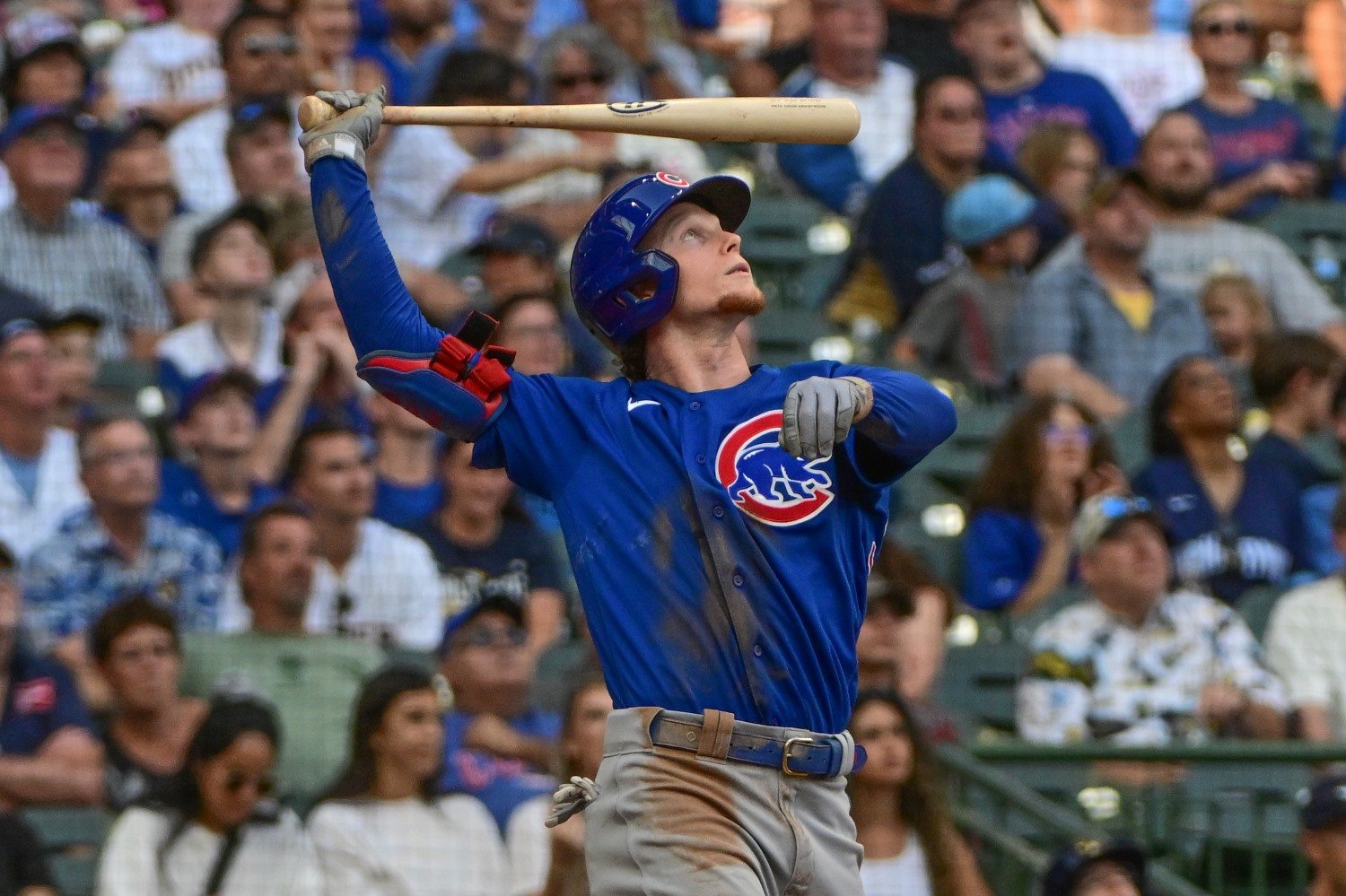 It's tempting to try to skip ahead, at this time of year. After the bitter disappointment of the Cubs' late-season collapse, the fan's impulse is to chase big names and start vicariously spending Tom Ricketts's ill-gotten money. That's a natural and sufficiently noble exercise, but it won't take you anywhere until you gain some clarity on what the Cubs have for 2024. Once we can say that with some confidence, we can better assess what they still need. Here's the most plausible Opening Day lineup I can cobble together for next year's Cubs, making as few assumptions and adopting as few bold positions as possible. These are the incumbents at each of these positions, and in each of these lineup spots. Pete Crow-Armstrong - CF Nico Hoerner - 2B Ian Happ - LF Seiya Suzuki - RF Dansby Swanson - SS Christopher Morel - DH Matt Mervis - 1B Yan Gomes - C Nick Madrigal - 3B Again, there are a thousand ways to quibble with this, and it's not meant as a concrete projection of anything. It just gets us started. For instance: Can the Cubs possibly entrust Crow-Armstrong with a big-league job next spring, after he looked so overmatched and overwhelmed in his unhelpful September audition with the big-league team? It seems unfathomable that he would be batting first, at least. That, immediately, means that the team needs a hitter who slots comfortably into the top four of their lineup, pushing Crow-Armstrong down to ninth, where his defense can carry the rest of his profile. Once you slide Crow-Armstrong down there, you can see how thin the rest of the bottom half of the unit is. Gomes is extremely likely to take a major step backward at the plate next season, given his age, his track record, and the inescapable vicissitudes of the catcher position. Madrigal's full-season batting line (.263/.311/.352) probably undersells his true talent a bit, and his contact skills and speed are valuable at the very bottom of the lineup, but you can't afford to prioritize defense at the expense of offense at this many spots, even to round out the batting order. Some teams who have enjoyed a great deal of success recently (like the 2022 Astros and Yankees, or the 2023 Diamondbacks and Brewers) have had top-heavy lineups and glove-only guys to complete an excellent overall defense. Those teams each had at least one or two elite hitters in the heart of their order, though, and that caliber of bat is missing from the Cubs' right now. The X factor, in that regard, is Seiya Suzuki, who hit .350/.406/.667 over the final two months of the campaign. He can't be that good over a full season. If he can be anything akin to that, though, it does slightly change the equation. At the moment, the bench would figure to consist of: Miguel Amaya Miles Mastrobuoni Patrick Wisdom Alexander Canario This group answers a couple of the questions about the projected lineup, but urges forward a couple of the lurking ones there, too. It sure doesn't seem like bringing back both Mastrobuoni and Madrigal for 2024 will make sense. Madrigal got hotter for longer in the middle of the season, but it's Mastrobuoni who owns the handedness edge in a potential utility role. If anything, he's shown slightly better versatility, though Madrigal's defensive chops at third base and Mastrobuoni's misadventures in limited opportunities in the outfield have closed that gap. Most importantly, Mastrobuoni has demonstrated a durability that continues to elude Madrigal. Amaya seems to have a safe place on the 2024 roster, and could even usurp Gomes as the starter relatively quickly. Down the stretch, it was clear that David Ross didn't really trust his rookie backstop, but they have the whole offseason and next year's convocation in Arizona to polish and instruct Amaya as a full-fledged catcher of the kind this organization prefers. The problem is that, the more Amaya plays, the more the Cubs will be deploying an all-or-nothing, strikeout-prone right-handed bat in the lower third of their order. That, at the very least, is a big problem for the staying power of Wisdom and Canario. The former will be arbitration-eligible this winter, with 76 home runs over the last three seasons bloating his projected earnings and an utter lack of defensive reliability narrowing the options for Ross to use him well. In Amaya, Wisdom, Canario, Mastrobuoni, and Madrigal, the Cubs have a bunch of guys with exceptional skills in one or two areas and equally obvious shortcomings in others. That doesn't fit the construction of very many modern benches, and while our first inclination might be to shrug that off, there are a few factors militating against a specialist approach to building a supporting cast in this day and age. The shallowness of benches. If there's a player you trust to get a hit in a big spot, but not in the field or even on the bases, you have to burn two of just four available bench options to get any utility out of that player. It was much easier to make those kinds of maneuvers in the days of seven- and eight-man benches. Those days are long gone. Fewer position players play 160 (or even 155) games with each passing year. As a result, you want bench guys to have the capacity to step into a regular, starting role for a couple weeks or more at a time. That's much harder if those players have just one or two real strengths, and it can add an extra complication: the guy who needs a day off or a trip to the injured list might not match up with the positional competencies of the players available to replace him. The slow, inexorable squeeze on offense continues. The new rules that add an occasional hit on a ground ball and which have resuscitated the running game throughout the league are a nice counterbalance, but that's all they are. Strikeouts remain at an all-time high. Because of that high baseline of swing-and-miss, and because the overlong time since the last round of expansion has flooded rosters with talented pitchers who can throw strikes even with their good breaking ball, the ever-increasing athleticism of ballplayers has done more for team defense than for offense. You just can't be very valuable as even a semi-regular if you lack power, but you also can't sustain much value if you have holes in your swing, because pitchers will find them and your strikeout rate will skyrocket. The current shape of the game favors generalists, not specialists, especially among role players. The Cubs will probably need to jettison at least one of Wisdom, Canario and Mervis this winter, just as they'll need to choose between Madrigal and Mastrobuoni. More dauntingly, they will have to replace those fungible role players with stars, or they'll continue to have an overall talent shortfall in their positional corps next season. Which of these fringe options would you most like to see them keep? Who do you think needs to be let go? Who else already inside the organization should figure into the lineup, barring external additions? Let us know what you're thinking, as we set the stage for the big conversations about this roster over the coming weeks and months.
 -
Cade HortonPete Crow-ArmstrongMatt ShawOwen CaissieJordan WicksKevin AlcantaraMoises BallesterosBen BrownJefferson RojasJames TriantosJackson FerrisAlexander CanarioMichael AriasDaniel PalenciaLuke LittleBJ Murray JrJaxon WigginsJosh RiveraCristian HernandezHaydn McGeary
-
Cade HortonPete Crow-ArmstrongMatt ShawOwen CaissieJordan WicksKevin AlcantaraMoises BallesterosBen BrownJefferson RojasJames TriantosJackson FerrisAlexander CanarioMichael AriasDaniel PalenciaLuke LittleBJ Murray JrJaxon WigginsJosh RiveraCristian HernandezHaydn McGeary
-
One of the 2023 Cubs’ most unassuming heroes was the man who spent the majority of the season behind the catcher’s mask. Looking ahead to 2024, though, we have some big questions to consider about where that position is going and how the Cubs ought to handle it. Image courtesy of © Charles LeClaire-USA TODAY Sports Without doubt, Yan Gomes was one of the most valuable members of the 2023 Cubs. Entering the season, it seemed vaguely unlikely that the Cubs would exercise their $6-million option for his services in 2024, given his age and what he’d done as (in large part) Willson Contreras’s backup in 2022. Here at the end of the season, that seems laughable. Gomes not only delivered several big hits over the course of the season and outhit the average catcher by some 30 points of OPS, but became the anchor of the run prevention unit–a trusted receiver and beloved leader behind the dish. Here’s the problem: Gomes, like brief backup Tucker Barnhart, is a below-average thrower. He’s also a below-average pitch framer. Barnhart was actually slightly above-average in that regard, in 2023, but his bat was so bootless that he couldn’t stick, anyway. Until this season, framing was considered the much more important skill, but with the explosion of the running game after the implementation of new rules, that’s far less true. (It will be still less so if, as seems increasingly likely, the league goes to some form of automated strike zone within the next few years, but the shift is already underway.) Gomes is so good at the softer sciences of catching that it’s hard to envision the Cubs moving on from him at any point in 2024, unless his health forces them to do so. That’s a real possibility, though. Gomes hadn’t taken as many plate appearances or caught as many innings as he did this year since 2018. He’s 36 years old, which is something like 72 in catcher years. Let’s say Gomes does stay healthy next year, though. Can the Cubs afford to keep giving him the bulk of the starts? Even if he calls a great game and uses that extraordinary square-jawed handsomeness to bring calm and confidence to the hearts of his pitchers, can that make up for his deficiencies in the more quantifiable areas of catching? Happily, Miguel Amaya will make that a tough decision, in a good way. He had good framing numbers in his rookie campaign. Alas, he wasn’t good in the throwing department. That was part of why he didn’t seem to earn David Ross’s confidence, at any point. Of course, another part might be that Ross simply sees more of himself in Gomes than in Amaya, or that he seems to instinctively mistrust young players, but in any case, it’s true. It’s not even clear whether they can bring back Amaya (presumably, in a larger role) as the second catcher next year, or whether Ross will prefer that they bring in another external option and keep Amaya in Iowa to open the season. In Amaya, Moises Ballesteros, and Pablo Aliendo, the team does have three young backstops in the upper levels of their system. Only Aliendo has a plus arm, though, and only Amaya seems likely to be a serviceable framer. It’s going to be fascinating to see how the team responds to the winds of change in terms of what catchers do and what catching is. That question hangs heavy over teams other than the Cubs, to be sure, but it feels urgent in their case. For however long framing continues to be a skill that matters, it matters a lot to the Cubs, because their pitching staff relies more on called strikes than most teams’ do. They don’t have overpowering, swing-and-miss stuff. If they get a small zone on a given day, they get into trouble in a hurry. That’s one thing Jed Hoyer and Carter Hawkins will try to change this winter, but it figures to take some time. While the transformation is ongoing, the Cubs really need good framing, and they need to slow down the running game better than they did in 2023. Neither Gomes nor Amaya seems capable of doing both for them, so it will be a challenge to mix and match well enough to get the offense and defense needed from that spot to get over the hump and into the 2024 postseason. View full article
-
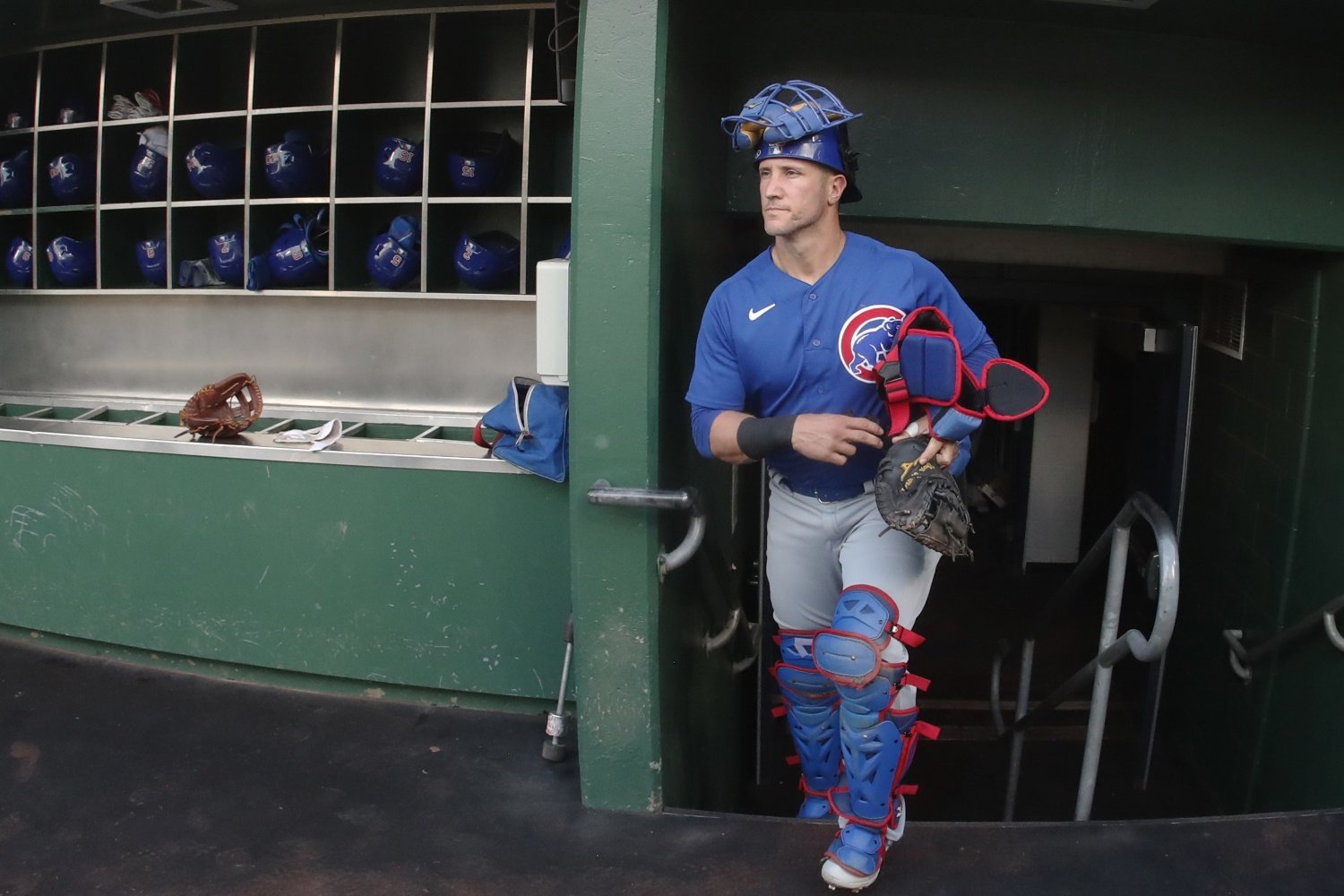 Without doubt, Yan Gomes was one of the most valuable members of the 2023 Cubs. Entering the season, it seemed vaguely unlikely that the Cubs would exercise their $6-million option for his services in 2024, given his age and what he’d done as (in large part) Willson Contreras’s backup in 2022. Here at the end of the season, that seems laughable. Gomes not only delivered several big hits over the course of the season and outhit the average catcher by some 30 points of OPS, but became the anchor of the run prevention unit–a trusted receiver and beloved leader behind the dish. Here’s the problem: Gomes, like brief backup Tucker Barnhart, is a below-average thrower. He’s also a below-average pitch framer. Barnhart was actually slightly above-average in that regard, in 2023, but his bat was so bootless that he couldn’t stick, anyway. Until this season, framing was considered the much more important skill, but with the explosion of the running game after the implementation of new rules, that’s far less true. (It will be still less so if, as seems increasingly likely, the league goes to some form of automated strike zone within the next few years, but the shift is already underway.) Gomes is so good at the softer sciences of catching that it’s hard to envision the Cubs moving on from him at any point in 2024, unless his health forces them to do so. That’s a real possibility, though. Gomes hadn’t taken as many plate appearances or caught as many innings as he did this year since 2018. He’s 36 years old, which is something like 72 in catcher years. Let’s say Gomes does stay healthy next year, though. Can the Cubs afford to keep giving him the bulk of the starts? Even if he calls a great game and uses that extraordinary square-jawed handsomeness to bring calm and confidence to the hearts of his pitchers, can that make up for his deficiencies in the more quantifiable areas of catching? Happily, Miguel Amaya will make that a tough decision, in a good way. He had good framing numbers in his rookie campaign. Alas, he wasn’t good in the throwing department. That was part of why he didn’t seem to earn David Ross’s confidence, at any point. Of course, another part might be that Ross simply sees more of himself in Gomes than in Amaya, or that he seems to instinctively mistrust young players, but in any case, it’s true. It’s not even clear whether they can bring back Amaya (presumably, in a larger role) as the second catcher next year, or whether Ross will prefer that they bring in another external option and keep Amaya in Iowa to open the season. In Amaya, Moises Ballesteros, and Pablo Aliendo, the team does have three young backstops in the upper levels of their system. Only Aliendo has a plus arm, though, and only Amaya seems likely to be a serviceable framer. It’s going to be fascinating to see how the team responds to the winds of change in terms of what catchers do and what catching is. That question hangs heavy over teams other than the Cubs, to be sure, but it feels urgent in their case. For however long framing continues to be a skill that matters, it matters a lot to the Cubs, because their pitching staff relies more on called strikes than most teams’ do. They don’t have overpowering, swing-and-miss stuff. If they get a small zone on a given day, they get into trouble in a hurry. That’s one thing Jed Hoyer and Carter Hawkins will try to change this winter, but it figures to take some time. While the transformation is ongoing, the Cubs really need good framing, and they need to slow down the running game better than they did in 2023. Neither Gomes nor Amaya seems capable of doing both for them, so it will be a challenge to mix and match well enough to get the offense and defense needed from that spot to get over the hump and into the 2024 postseason.
 -
Sunday marks the end of an exciting and enjoyable season of Cubs baseball. With one of the players who did the most to make it so heading for free agency, let's take a moment to savor his campaign. Image courtesy of © Brett Davis-USA TODAY Sports For most Cubs fans, it will be a massive disappointment if Cody Bellinger's Cubs career comes to a close Sunday. He's been too good, and too perfect a fit for their needs, for the team not to make every effort to retain him. Non-tendered by the Dodgers last winter, he signed with Chicago for $17 million, and he's been worth half again that much. Re-signing him won't be easy, and might not even be possible. Still, at this moment, it looks likely to be Jed Hoyer's first priority when the offseason comes. Before then, though, let's pause and consider just how good and fun Bellinger was in 2023. If he doesn't play Sunday, he'll finish the season with a .307/.356/.525 batting line. He's hit 26 home runs, driven in 97, and stolen 20 bases. That's an impressive collection of numbers. In Cubs history, the only other players to have 20/20 seasons in which they also hit at least .300 are Leon Durham, Ryne Sandberg, and Sammy Sosa. Obviously, of those three, Bellinger most resembles Durham. He hasn't blown past 30 in either power-speed category, as Sosa and Sandberg each did at least once during their years of filling up box scores. He's also been aided in reaching 20 steals by the rules changes that led to an explosion of steals throughout the league this year. Still, it's an impressive fun fact. Yet, it doesn't even fully capture the aesthetic pleasure of watching Bellinger play this year. With that lithe build, upright stance, and leaning, stretching swing, Bellinger is simply fun to watch, even in the batter's box--where some great hitters can also be a bit boring. He's unorthodox in delightful ways. He doesn't put up especially impressive batted-ball data, which certainly has to be accounted for when the team considers how much they'll be willing to pay to keep him around, but the way he moves in the box is oddly reassuring on that score. He seems so adaptable that you can shrug off the absence of 115-mile-per-hour screamers, to some extent. He hits it hard enough to find gaps and clear fences when he gets a little count leverage, and the rest of the time, he's just trying to hit it. That's the other dazzling thing about Bellinger: he's shown a remarkable ability to cut down his strikeout rate, and not just in favor of more groundouts. Durham isn't really the erstwhile Cubs first baseman to whom I would compare him most readily. Very often this year, when he's locked out his legs and leaned forward at the waist to sweep a pitch on the outside corner into left field, I've been powerfully reminded of Mark Grace. He's not nearly as extreme a contact hitter as Grace was at his peak, but Bellinger's 15.8-percent strikeout rate is good for a 71 K%+, according to FanGraphs. In other words (since 100 is average), when adjusting for league and other contexts, Bellinger's strikeout rate has been almost 30 percent lower than the average hitter's. Doing that while hitting for power and average, even if it comes as the cost of some walks, is impressive. In terms of K%+, BB%+, ISO+, and BABIP+, his season most resembles a couple of Aramis Ramirez's peak years. Sammy Sosa. Ryne Sandberg. Mark Grace. Aramis Ramirez. If Bellinger has put himself so neatly into the companu of those four players, it's hard to imagine how the Cubs can feel anything but thrilled with his season, or how they can let him walk this winter without putting up a fierce fight to keep him. In addition to that offensive production, he was a fine, capable center fielder (especially before his knee injury in May), and he's graceful and sure-handed at first base. That versatility makes him even more valuable, and while it will also make him harder to re-sign, the Cubs seem especially well-positioned to benefit from it. If Bellinger is willing to be an everyday first baseman, but to continue to make occasional appearances in the outfield, he'll fit perfectly into the team's long-term plans. Failing all that, though, he's been a joy to watch in 2023. If this was his only season in a Cubs uniform, it will go down as one of the best one-and-done years in the team's history. View full article
-
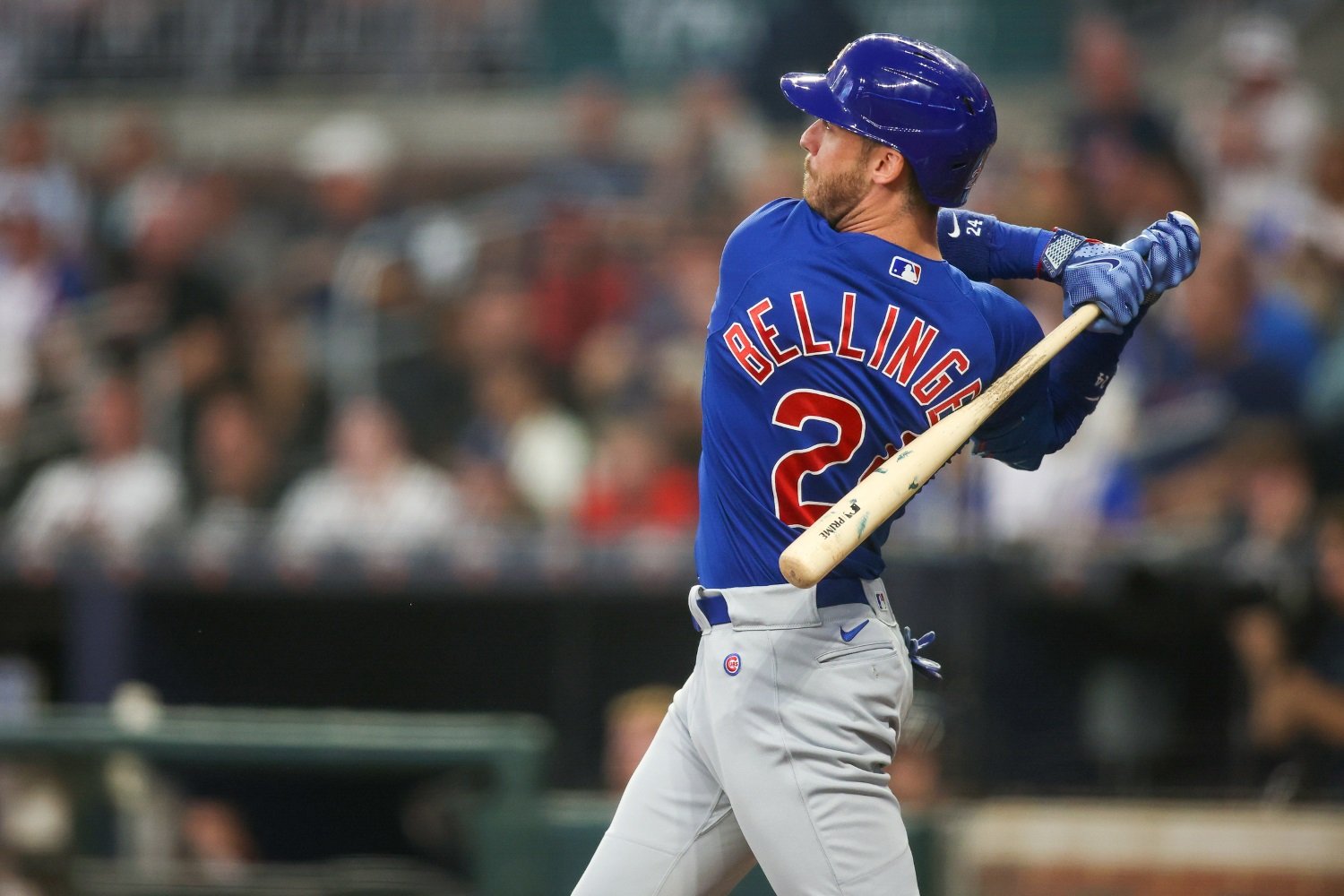 For most Cubs fans, it will be a massive disappointment if Cody Bellinger's Cubs career comes to a close Sunday. He's been too good, and too perfect a fit for their needs, for the team not to make every effort to retain him. Non-tendered by the Dodgers last winter, he signed with Chicago for $17 million, and he's been worth half again that much. Re-signing him won't be easy, and might not even be possible. Still, at this moment, it looks likely to be Jed Hoyer's first priority when the offseason comes. Before then, though, let's pause and consider just how good and fun Bellinger was in 2023. If he doesn't play Sunday, he'll finish the season with a .307/.356/.525 batting line. He's hit 26 home runs, driven in 97, and stolen 20 bases. That's an impressive collection of numbers. In Cubs history, the only other players to have 20/20 seasons in which they also hit at least .300 are Leon Durham, Ryne Sandberg, and Sammy Sosa. Obviously, of those three, Bellinger most resembles Durham. He hasn't blown past 30 in either power-speed category, as Sosa and Sandberg each did at least once during their years of filling up box scores. He's also been aided in reaching 20 steals by the rules changes that led to an explosion of steals throughout the league this year. Still, it's an impressive fun fact. Yet, it doesn't even fully capture the aesthetic pleasure of watching Bellinger play this year. With that lithe build, upright stance, and leaning, stretching swing, Bellinger is simply fun to watch, even in the batter's box--where some great hitters can also be a bit boring. He's unorthodox in delightful ways. He doesn't put up especially impressive batted-ball data, which certainly has to be accounted for when the team considers how much they'll be willing to pay to keep him around, but the way he moves in the box is oddly reassuring on that score. He seems so adaptable that you can shrug off the absence of 115-mile-per-hour screamers, to some extent. He hits it hard enough to find gaps and clear fences when he gets a little count leverage, and the rest of the time, he's just trying to hit it. That's the other dazzling thing about Bellinger: he's shown a remarkable ability to cut down his strikeout rate, and not just in favor of more groundouts. Durham isn't really the erstwhile Cubs first baseman to whom I would compare him most readily. Very often this year, when he's locked out his legs and leaned forward at the waist to sweep a pitch on the outside corner into left field, I've been powerfully reminded of Mark Grace. He's not nearly as extreme a contact hitter as Grace was at his peak, but Bellinger's 15.8-percent strikeout rate is good for a 71 K%+, according to FanGraphs. In other words (since 100 is average), when adjusting for league and other contexts, Bellinger's strikeout rate has been almost 30 percent lower than the average hitter's. Doing that while hitting for power and average, even if it comes as the cost of some walks, is impressive. In terms of K%+, BB%+, ISO+, and BABIP+, his season most resembles a couple of Aramis Ramirez's peak years. Sammy Sosa. Ryne Sandberg. Mark Grace. Aramis Ramirez. If Bellinger has put himself so neatly into the companu of those four players, it's hard to imagine how the Cubs can feel anything but thrilled with his season, or how they can let him walk this winter without putting up a fierce fight to keep him. In addition to that offensive production, he was a fine, capable center fielder (especially before his knee injury in May), and he's graceful and sure-handed at first base. That versatility makes him even more valuable, and while it will also make him harder to re-sign, the Cubs seem especially well-positioned to benefit from it. If Bellinger is willing to be an everyday first baseman, but to continue to make occasional appearances in the outfield, he'll fit perfectly into the team's long-term plans. Failing all that, though, he's been a joy to watch in 2023. If this was his only season in a Cubs uniform, it will go down as one of the best one-and-done years in the team's history.
 -
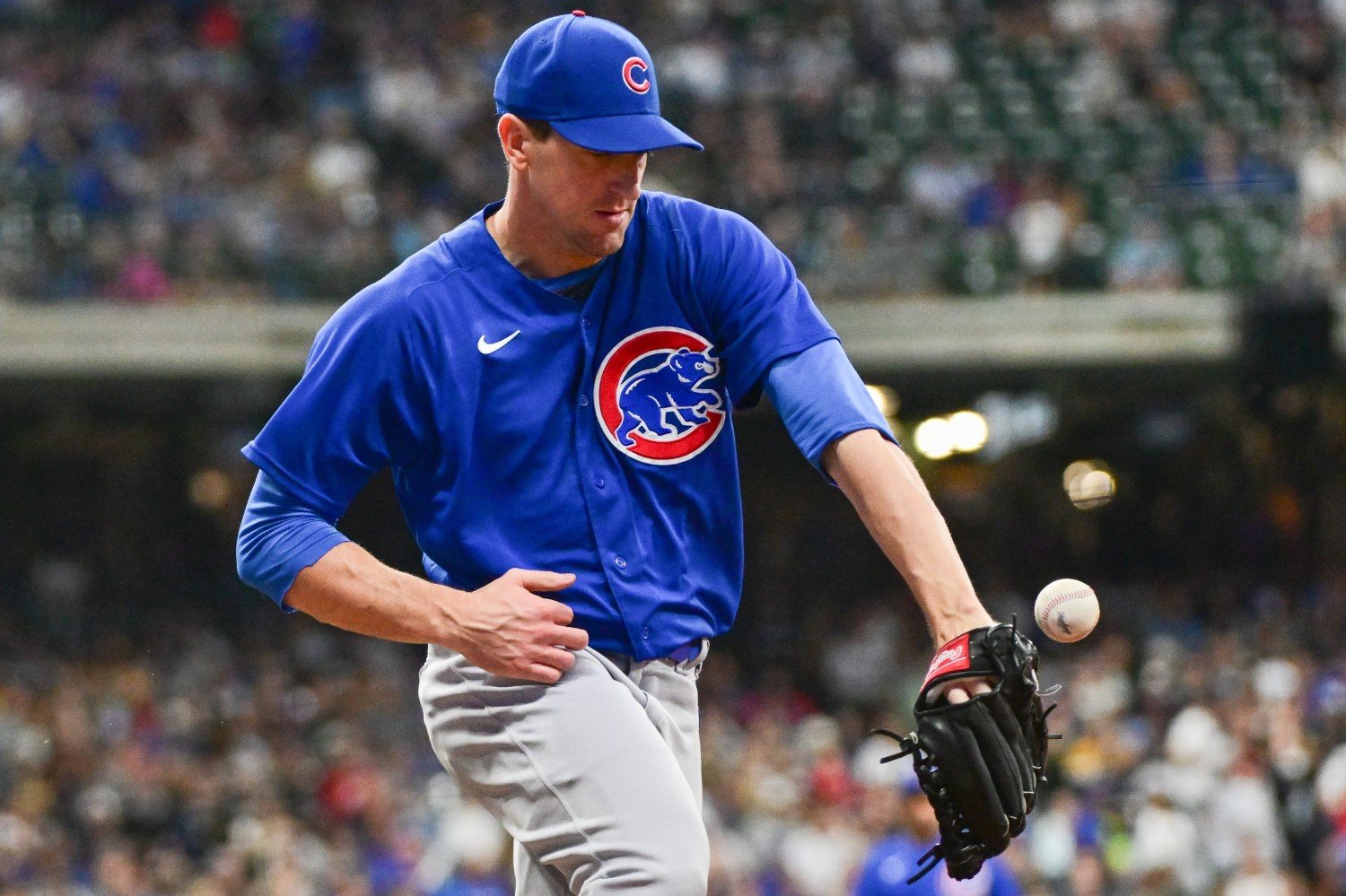 In a fitting capstone to a three-week edifice of misery, the Cubs lost a game even their opponents seemed to want them to win Friday. They were pushed to the brink of playoff elimination (and really, past it) by a collective and evenly distributed ineptitude, neither softened nor sharpened by the fact that it wasn't a failure of effort or desire. This team simply has nothing left--not enough talent, not enough mental energy, and not enough physical strength. That fact can evoke plenty of emotions from plenty of people, but in itself, it's a cold and objective reality. It couldn't have been laid more bare than it was Friday night. Making what might be his final start in a Chicago Cubs uniform, Kyle Hendricks was superb through four scoreless innings. Even in those, though, he did show a lack of the fine command to his arm side that can still make him a dominant starter, but which seems to be there for him less often with each passing week. In the fifth inning, he finally ran into real trouble, and that trouble was exacerbated by a non-error miscue on a should-have-been double play. Hendricks didn't even escape that frame, and the Brewers took a 3-0 lead that felt commanding, given the Cubs' inability to do anything with Milwaukee starter Colin Rea. If that was the end for Hendricks and the Cubs, it was an excruciating reminder of one of nature's surest axioms: Nothing ends well, because it wouldn't end if it were still working. Hendricks's very sound surface-level numbers have been one of this season's treasured surprises, and he's pitched beautifully--but the signs of his decline and imminent inutility are everywhere. That inability to find the outside corner to lefties (and inside to righties) with his sinker is murderous for him. His strikeout rate sagged all the way to 16.1 percent for the year, almost 33 percent lower than the league's average clip. Watching him manipulate his changeup and call his own games this year was a pure source of joy for baseball purists, but projecting him to be successful in 2024 is tough. He might have been better able to survive that inning, and ultimately to win the game, but for the sputter and spasm of the offense at the end of this inconsistent season. They just haven't been able to find the clutch hit for much of this month. After a spring of uncertainty and a summer of explosive triumph, the fall has been saturated with frustration. The Brewers skipped both Brandon Woodruff and Freddy Peralta in their rotation for this weekend, opting for the spare arm of Rea. When he departed, none of the Brewers' four best relievers marched in in his stead. Milwaukee wanted the Cubs to win this game, so that they could force whichever team they end up playing next week (be it the Marlins, the Diamondbacks, the Reds, or the Cubs) to use up their pitching and exhaust themselves throughout this weekend. They had a rest regimen in place, and Craig Counsell didn't compromise it. That's why the Cubs were able to claw back and force extra innings, with the score 3-3. It's why they ended up with a wide-open look at breaking the game open in the 10th, with runners on the corners and only one out. The top of their order was due. Of course, by then, Nico Hoerner had been forced out of the game by a bruised knee. That meant that the team's hopes rested on Patrick Wisdom. Those hopes were frustrated, as they were likely to be, even accounting for the low-wattage arm to whom Counsell entrusted the entirety of the ninth and 10th, after he'd come on to get the final out of the eighth. Wisdom just isn't the hitter you want up when a single would mean two runs, but an out would mean a near-certain loss. It's Hoerner you want in that spot, but he wasn't there. The whole thing was a maddening microcosm of the Cubs' season. They had a window, but they couldn't p-ush through it. They didn't have the manpower to finish the job. We should regard this stretch, in some ways, as a gift. After all, while they've come up desperately short of their goals, this team has been playing what is effectively playoff baseball for the last month. The meaning we seek in sports lies in the clearly defined stakes. So many of us are stuck in existences wherein the stakes never seem to rise very high, and wherein even high stakes come with so many convolutions and contradictions that we can't be sure where our loyalties lie, much less take any action to advance our interests. Sports give us the chance to see, based on the simple arithmetic of the scoreboard and the standings, how important any given moment is, and our loyalties (since they're completely arbitrary) are never in doubt. What we crave is the moment of adrenaline, when the string is out and there can be no excuses or escape if failure befalls us. That's when successes are most sweet. The Cubs reached that point long ago, and they held fans there with them for a long time. That suspended state of peril made Nico Hoerner's grand slam against the Nationals and the frantic comeback against the White Sox on the South Side meaningful. It made Mike Tauchman's catch in St. Louis and Adbert Alzolay's string of magnificent fist pumps more vivid. It made Michael Fulmer's daring escape, Christopher Morel's walkoff striptease, and Justin Steele's Labor Day masterwork much more exhilarating than the same moments would have been, stretched out over one of those happy but languid summers in which a team wins 93 games and claims a playoff spot without a real sweat. Once a season reaches its climax and conclusion, of course, a lot of that clarity evaporates. On the other side of the dust cloud we're currently in, it might be hard to say whether this season was a resounding success. The Cubs did better than most fans and analysts expected, and got some very encouraging performances on the way. On the other hand, they didn't survive their quasi-playoff test, and they didn't have a moment of pure catharsis and relieved exultation--not even a junior version, like the one the Marlins will savor sometime this weekend. The future is not at all clear. Did the Cubs make progress toward lasting contention in 2023? I think good arguments could be made in favor of that thesis, or against it. They clearly need a bit more star power at the front of their rotation and in the heart of their lineup, and that's a tough spot to be in, because they have a lot of money tied up in guys who fit more in the middle of the rotation and the non-premium parts of the batting order. The great revelation of this campaign was Steele, but he's 28 years old, faded down the stretch, and has some injury markers that will require careful watching. The next-best performance might have been that of Cody Bellinger, but he now embarks on free agency again, and even if he comes back, it will be at a considerably higher cost and with a long commitment attached. While it's easy to feel good about some aspects of the Cubs' organization, it's clear that they will need to stay aggressive in both the free-agent and the trade markets to try to regain supremacy even in the NL Central. The league as a whole, as the Braves painfully reminded them just this week, is another beast altogether. There's a tall mountain to climb, and while the just-completed attempt might have taught the team some valuable lessons, they still get rolled back to the bottom and have to climb all the way back up next year. They're not guaranteed to have better equipment on hand. "[Baseball] begins in the spring, when everything else begins again, and it blossoms in the summer, filling the afternoons and evenings, and then as soon as the chill rains come, it stops, and leaves you to face the fall alone," wrote A. Bartlett Giamatti, some years before he became the Commissioner. "You count on it, rely on it to buffer the passage of time, to keep the memory of sunshine and high skies alive, and then just when the days are all twilight--when you need it most--it stops." Giamatti was a philosopher-poet. His Stoicism can only be envied, from our point 40 years in his future. He could meditate on the close loss of a pennant race, and understand its broader lesson, even if it was a hard one. He knew it was his own mortality, the whisper slosh of his blood and the onrush of time that meant he had one fewer summer of baseball left, that made those losses hurt. We can know that, but not take the same solace he did from it. We're stuck on the internet. We can log off, but we still know it's there. We've been turned into slightly feral creatures, defensive and full of fake bravado, trying not to let anyone put in the virtual papers that we were mad. We are. The Cubs' thud of a finish embitters the whole experience of this season a bit, the way a bad sunflower seed will leave its taste in your mouth for an hour when a good one's is gone in a minute. Still, the Cubs played a good season. It was good, because it wasn't without meaning, and because there were enough good moments when the meaning and moment were well-established to leave streaks of sunlight across the tableau of the year left in our minds, now that the chill rains have fallen and Mutability has "turned the seasons and translated hope to memory, once again." Giamatti called baseball "our greatest invention to stay change," but observed that it often ends up bringing change on--or at least bringing our attention to the time and the need for change. The Cubs will change, between now and next spring. Some of the changes will be needed and welcome. Some will be painful. Some will balance those flavors. One way or another, though, all those changes will come. The Cubs have run out of ways to forestall them, and fans have run out of meaningful games for another year.
 -
When the Milwaukee Brewers came to Wrigley Field at the end of August, the Chicago Cubs had earned the privilege of counting it as a playoff series. They've been playing games with the stakes ratcheted that high ever since. Alas, they've lost most of those games. Image courtesy of © Benny Sieu-USA TODAY Sports In a fitting capstone to a three-week edifice of misery, the Cubs lost a game even their opponents seemed to want them to win Friday. They were pushed to the brink of playoff elimination (and really, past it) by a collective and evenly distributed ineptitude, neither softened nor sharpened by the fact that it wasn't a failure of effort or desire. This team simply has nothing left--not enough talent, not enough mental energy, and not enough physical strength. That fact can evoke plenty of emotions from plenty of people, but in itself, it's a cold and objective reality. It couldn't have been laid more bare than it was Friday night. Making what might be his final start in a Chicago Cubs uniform, Kyle Hendricks was superb through four scoreless innings. Even in those, though, he did show a lack of the fine command to his arm side that can still make him a dominant starter, but which seems to be there for him less often with each passing week. In the fifth inning, he finally ran into real trouble, and that trouble was exacerbated by a non-error miscue on a should-have-been double play. Hendricks didn't even escape that frame, and the Brewers took a 3-0 lead that felt commanding, given the Cubs' inability to do anything with Milwaukee starter Colin Rea. If that was the end for Hendricks and the Cubs, it was an excruciating reminder of one of nature's surest axioms: Nothing ends well, because it wouldn't end if it were still working. Hendricks's very sound surface-level numbers have been one of this season's treasured surprises, and he's pitched beautifully--but the signs of his decline and imminent inutility are everywhere. That inability to find the outside corner to lefties (and inside to righties) with his sinker is murderous for him. His strikeout rate sagged all the way to 16.1 percent for the year, almost 33 percent lower than the league's average clip. Watching him manipulate his changeup and call his own games this year was a pure source of joy for baseball purists, but projecting him to be successful in 2024 is tough. He might have been better able to survive that inning, and ultimately to win the game, but for the sputter and spasm of the offense at the end of this inconsistent season. They just haven't been able to find the clutch hit for much of this month. After a spring of uncertainty and a summer of explosive triumph, the fall has been saturated with frustration. The Brewers skipped both Brandon Woodruff and Freddy Peralta in their rotation for this weekend, opting for the spare arm of Rea. When he departed, none of the Brewers' four best relievers marched in in his stead. Milwaukee wanted the Cubs to win this game, so that they could force whichever team they end up playing next week (be it the Marlins, the Diamondbacks, the Reds, or the Cubs) to use up their pitching and exhaust themselves throughout this weekend. They had a rest regimen in place, and Craig Counsell didn't compromise it. That's why the Cubs were able to claw back and force extra innings, with the score 3-3. It's why they ended up with a wide-open look at breaking the game open in the 10th, with runners on the corners and only one out. The top of their order was due. Of course, by then, Nico Hoerner had been forced out of the game by a bruised knee. That meant that the team's hopes rested on Patrick Wisdom. Those hopes were frustrated, as they were likely to be, even accounting for the low-wattage arm to whom Counsell entrusted the entirety of the ninth and 10th, after he'd come on to get the final out of the eighth. Wisdom just isn't the hitter you want up when a single would mean two runs, but an out would mean a near-certain loss. It's Hoerner you want in that spot, but he wasn't there. The whole thing was a maddening microcosm of the Cubs' season. They had a window, but they couldn't p-ush through it. They didn't have the manpower to finish the job. We should regard this stretch, in some ways, as a gift. After all, while they've come up desperately short of their goals, this team has been playing what is effectively playoff baseball for the last month. The meaning we seek in sports lies in the clearly defined stakes. So many of us are stuck in existences wherein the stakes never seem to rise very high, and wherein even high stakes come with so many convolutions and contradictions that we can't be sure where our loyalties lie, much less take any action to advance our interests. Sports give us the chance to see, based on the simple arithmetic of the scoreboard and the standings, how important any given moment is, and our loyalties (since they're completely arbitrary) are never in doubt. What we crave is the moment of adrenaline, when the string is out and there can be no excuses or escape if failure befalls us. That's when successes are most sweet. The Cubs reached that point long ago, and they held fans there with them for a long time. That suspended state of peril made Nico Hoerner's grand slam against the Nationals and the frantic comeback against the White Sox on the South Side meaningful. It made Mike Tauchman's catch in St. Louis and Adbert Alzolay's string of magnificent fist pumps more vivid. It made Michael Fulmer's daring escape, Christopher Morel's walkoff striptease, and Justin Steele's Labor Day masterwork much more exhilarating than the same moments would have been, stretched out over one of those happy but languid summers in which a team wins 93 games and claims a playoff spot without a real sweat. Once a season reaches its climax and conclusion, of course, a lot of that clarity evaporates. On the other side of the dust cloud we're currently in, it might be hard to say whether this season was a resounding success. The Cubs did better than most fans and analysts expected, and got some very encouraging performances on the way. On the other hand, they didn't survive their quasi-playoff test, and they didn't have a moment of pure catharsis and relieved exultation--not even a junior version, like the one the Marlins will savor sometime this weekend. The future is not at all clear. Did the Cubs make progress toward lasting contention in 2023? I think good arguments could be made in favor of that thesis, or against it. They clearly need a bit more star power at the front of their rotation and in the heart of their lineup, and that's a tough spot to be in, because they have a lot of money tied up in guys who fit more in the middle of the rotation and the non-premium parts of the batting order. The great revelation of this campaign was Steele, but he's 28 years old, faded down the stretch, and has some injury markers that will require careful watching. The next-best performance might have been that of Cody Bellinger, but he now embarks on free agency again, and even if he comes back, it will be at a considerably higher cost and with a long commitment attached. While it's easy to feel good about some aspects of the Cubs' organization, it's clear that they will need to stay aggressive in both the free-agent and the trade markets to try to regain supremacy even in the NL Central. The league as a whole, as the Braves painfully reminded them just this week, is another beast altogether. There's a tall mountain to climb, and while the just-completed attempt might have taught the team some valuable lessons, they still get rolled back to the bottom and have to climb all the way back up next year. They're not guaranteed to have better equipment on hand. "[Baseball] begins in the spring, when everything else begins again, and it blossoms in the summer, filling the afternoons and evenings, and then as soon as the chill rains come, it stops, and leaves you to face the fall alone," wrote A. Bartlett Giamatti, some years before he became the Commissioner. "You count on it, rely on it to buffer the passage of time, to keep the memory of sunshine and high skies alive, and then just when the days are all twilight--when you need it most--it stops." Giamatti was a philosopher-poet. His Stoicism can only be envied, from our point 40 years in his future. He could meditate on the close loss of a pennant race, and understand its broader lesson, even if it was a hard one. He knew it was his own mortality, the whisper slosh of his blood and the onrush of time that meant he had one fewer summer of baseball left, that made those losses hurt. We can know that, but not take the same solace he did from it. We're stuck on the internet. We can log off, but we still know it's there. We've been turned into slightly feral creatures, defensive and full of fake bravado, trying not to let anyone put in the virtual papers that we were mad. We are. The Cubs' thud of a finish embitters the whole experience of this season a bit, the way a bad sunflower seed will leave its taste in your mouth for an hour when a good one's is gone in a minute. Still, the Cubs played a good season. It was good, because it wasn't without meaning, and because there were enough good moments when the meaning and moment were well-established to leave streaks of sunlight across the tableau of the year left in our minds, now that the chill rains have fallen and Mutability has "turned the seasons and translated hope to memory, once again." Giamatti called baseball "our greatest invention to stay change," but observed that it often ends up bringing change on--or at least bringing our attention to the time and the need for change. The Cubs will change, between now and next spring. Some of the changes will be needed and welcome. Some will be painful. Some will balance those flavors. One way or another, though, all those changes will come. The Cubs have run out of ways to forestall them, and fans have run out of meaningful games for another year. View full article
-
Almost by accident, the Cubs spent the offseason building a team whose fortunes would depend on the strength of their defense. They got to the final month of the season with that as a winning formula, but the gloves have gone cold. Image courtesy of © Brett Davis-USA TODAY Sports The old baseball truism that defense and speed don't slump is wrong. It's just wrong. Players go on defensive hot and cold streaks, the same way they do at bat or on the mound. The chances are just so much more sparse, and most measurements of each individual play in the field so much more crude, that it's harder to spot them. For the Cubs, though, several key defenders have had bad Septembers, and it's added up to their downfall. Dansby Swanson has, infamously, made a handful of errors since late August, roughly doubling his total for the whole season over the final six weeks. He's also been a step slow on a couple of ground balls to his left recently, and while those don't get counted against his fielding percentage, they're potential chances he missed. Nico Hoerner, who paired with Swanson to make such an impenetrable and dynamic middle infield for most of this season, has been a bit slow, too, and specifically, there have been three plays over the last two weeks on which it was clear he was trying to do too much. On one ground ball up the middle during Justin Steele's disappointing start against the Pirates, Hoerner was thinking double play on a ball on which he only had a chance to get one out. As a result, he didn't even keep the ball on the infield, let alone get any outs, and two runners got an unearned 90 feet. Ian Happ's struggles in left field have been well-documented. In Thursday night's backbreaking loss, it was another ball that Happ got to but could not catch that opened the door for Atlanta to widen their lead and knock Marcus Stroman out of the game early. Seiya Suzuki has been great for much of the season, but at the moment, his error in right field Tuesday night is the defining moment of his Cubs tenure and the most vivid symbol of this Cubs season. He's had a couple other catchable balls that eluded him recently, too, often costing the team extra bases and forcing the pitchers to get extra outs. We could keep going. Mike Tauchman, never a defensive whiz in center field, looks heavy-legged out there, and isn't getting to anything. He failed to charge a line drive early on Thursday night and (while he had no chance to catch the single in the air) cost himself any chance of throwing out a runner at the plate. These little things add up. Let's widen the lens, though, and talk about the team's results. Here are the Cubs' opponents' average exit velocity, launch angle, and batting average on balls in play by month: Month EV LA BABIP April 87.4 12.9 0.282 May 88.4 13 0.313 June 88.7 14.7 0.264 July 88.4 10 0.291 August 88.7 12.8 0.288 September 88.5 10 0.307 There might be teams who can win while allowing a BABIP north of .305 over a long stretch. Those teams would need to have a very high team strikeout rate for their pitchers, or be an especially thunderous club offensively. The Cubs aren't that style of team, and when their defense cracks, their whole team gives way, as if a dam burst. As you can see, it's not as though the pitchers suddenly began giving up rockets. The defense just hasn't caught the ball and made the crucial play often enough. It's no coincidence that the Cubs' two losing months this year (so far) are May and September. This does not excuse all other areas and aspects of the team. The club's situational hitting has also abandoned them, and the pitching staff's weariness is showing up in the form of some extra walks at bad times. A narratively satisfying team collapse usually involves one part of a club letting down the others; this is more of a soft decline by the whole team at once. The defense stands out, but only because it was so good for so much of the season, and because the organization's hopes for a playoff berth leaned so heavily on that unit. View full article
-
Defense Slumps, and the Cubs' Has Gone Into a Bad One at a Worse Time
Matthew Trueblood posted an article in Cubs
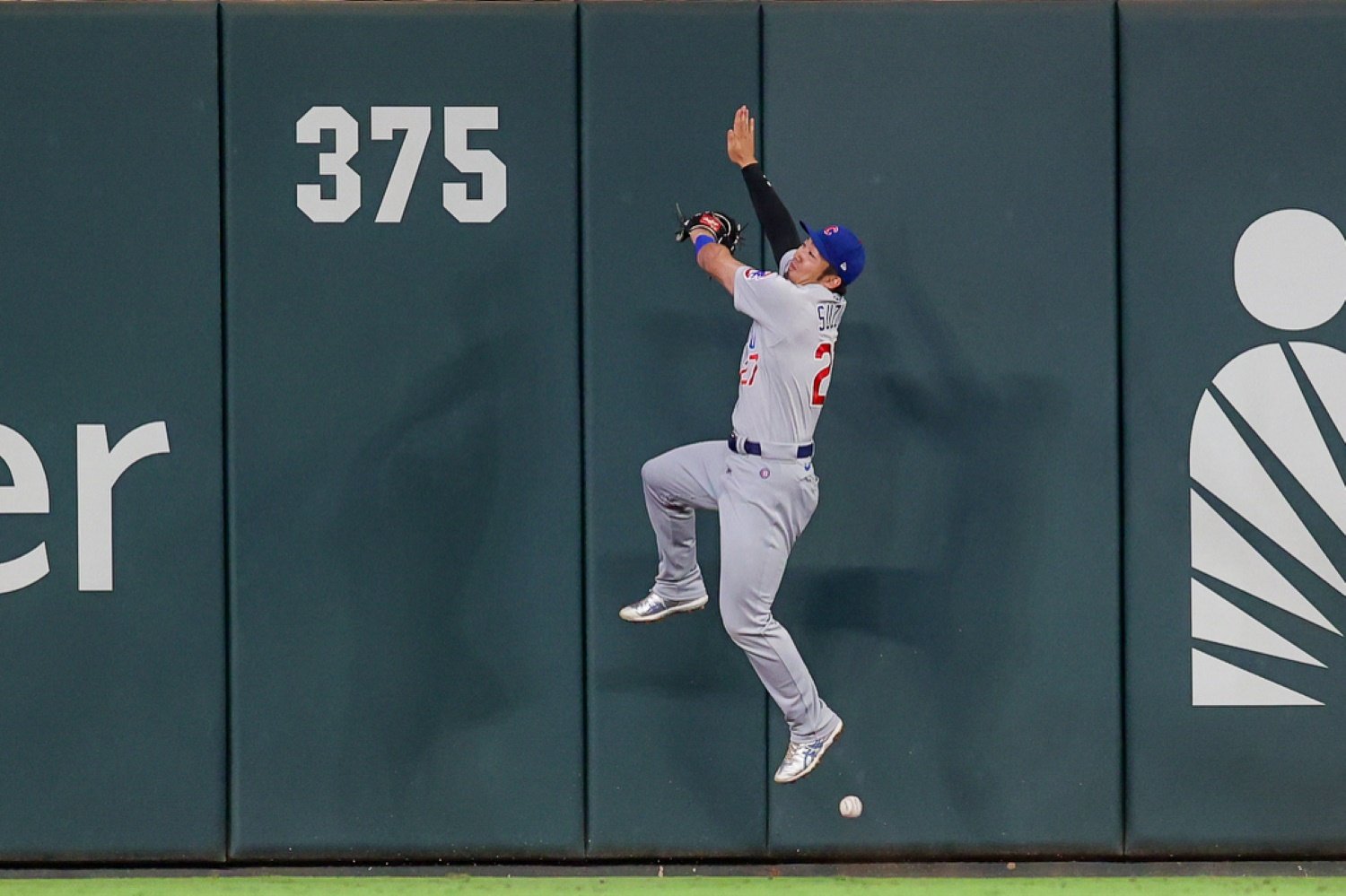 The old baseball truism that defense and speed don't slump is wrong. It's just wrong. Players go on defensive hot and cold streaks, the same way they do at bat or on the mound. The chances are just so much more sparse, and most measurements of each individual play in the field so much more crude, that it's harder to spot them. For the Cubs, though, several key defenders have had bad Septembers, and it's added up to their downfall. Dansby Swanson has, infamously, made a handful of errors since late August, roughly doubling his total for the whole season over the final six weeks. He's also been a step slow on a couple of ground balls to his left recently, and while those don't get counted against his fielding percentage, they're potential chances he missed. Nico Hoerner, who paired with Swanson to make such an impenetrable and dynamic middle infield for most of this season, has been a bit slow, too, and specifically, there have been three plays over the last two weeks on which it was clear he was trying to do too much. On one ground ball up the middle during Justin Steele's disappointing start against the Pirates, Hoerner was thinking double play on a ball on which he only had a chance to get one out. As a result, he didn't even keep the ball on the infield, let alone get any outs, and two runners got an unearned 90 feet. Ian Happ's struggles in left field have been well-documented. In Thursday night's backbreaking loss, it was another ball that Happ got to but could not catch that opened the door for Atlanta to widen their lead and knock Marcus Stroman out of the game early. Seiya Suzuki has been great for much of the season, but at the moment, his error in right field Tuesday night is the defining moment of his Cubs tenure and the most vivid symbol of this Cubs season. He's had a couple other catchable balls that eluded him recently, too, often costing the team extra bases and forcing the pitchers to get extra outs. We could keep going. Mike Tauchman, never a defensive whiz in center field, looks heavy-legged out there, and isn't getting to anything. He failed to charge a line drive early on Thursday night and (while he had no chance to catch the single in the air) cost himself any chance of throwing out a runner at the plate. These little things add up. Let's widen the lens, though, and talk about the team's results. Here are the Cubs' opponents' average exit velocity, launch angle, and batting average on balls in play by month: Month EV LA BABIP April 87.4 12.9 0.282 May 88.4 13 0.313 June 88.7 14.7 0.264 July 88.4 10 0.291 August 88.7 12.8 0.288 September 88.5 10 0.307 There might be teams who can win while allowing a BABIP north of .305 over a long stretch. Those teams would need to have a very high team strikeout rate for their pitchers, or be an especially thunderous club offensively. The Cubs aren't that style of team, and when their defense cracks, their whole team gives way, as if a dam burst. As you can see, it's not as though the pitchers suddenly began giving up rockets. The defense just hasn't caught the ball and made the crucial play often enough. It's no coincidence that the Cubs' two losing months this year (so far) are May and September. This does not excuse all other areas and aspects of the team. The club's situational hitting has also abandoned them, and the pitching staff's weariness is showing up in the form of some extra walks at bad times. A narratively satisfying team collapse usually involves one part of a club letting down the others; this is more of a soft decline by the whole team at once. The defense stands out, but only because it was so good for so much of the season, and because the organization's hopes for a playoff berth leaned so heavily on that unit.
- 1 comment
-
- 1
-
-
- dansby swanson
- ian happ
- (and 1 more)
-
It's hard to believe it, but the last two nights' worth of painfully close losses against the best team in MLB haven't eliminated the Cubs from playoff contention. On the contrary, they have an open path, yet, to that goal. Let's peek at it. Image courtesy of © Dale Zanine-USA TODAY Sports The Chicago Cubs still have, according to FanGraphs, a 29.6-percent chance to claim a place in the Wild Card Series. That's just me being pessimistic, too. Baseball Prospectus has them at 42.2 percent, because they're a bit more bearish on the Marlins than is FanGraphs. As weary as the Cubs look, and as tough as their remaining opponents are, and as devastating as the pile of winnable games that have gone as losses feels, they only need to outplay Miami by one game over the next four days to crawl across the finish line and earn the right to play in the postseason. I think we have clarity, in several ways, about where things stand now. This team is not going to make some miraculous charge to the World Series, from here. That's off the table. Given that, though, they have the freedom to consider the next four days their World Series. They've been playing playoff games since as far back as late July, and non-stop since the Brewers came to Wrigley Field in late August. Though they're out of steam and have failed to do what they had a chance to do, they still have a chance to meet a new, lower standard for success. If they win the third Wild Card berth, from here, I expect and hope that the champagne clubhouse celebration will be as exuberant as if they had won the division. We also have clarity in terms of scoreboard watching. The Diamondbacks are out of reach, but in any scenario in which the Cubs could make the playoffs anyway, the Reds are also out of the running. The Cubs need to try to scratch out two or three wins over these final four games, because they stand tied with the Marlins, who possess the tiebreaker between the teams. They have to outplay the Fish by a game, which means they need a slight falter from that team, too. Like the Reds and the Cubs, and even somewhat like Arizona, Miami seems exhausted. Like every team but Arizona, they're trying to survive despite some significant injuries that have them playing at less than full strength. There's still a good chance of the Fish finishing 2-2, or even 1-3. The strength of schedule difference between these groups seems huge, but over a small handful of games and with the Brewers having nothing for which to play, it doesn't matter as much as whether and to what extent both the Cubs and the Marlins can play with energy and find enough pitching to get 108 more outs without imploding. That's what this season has come down to. At the beginning of the season, this would have seemed a perfectly acceptable outcome. In early July, it was an impossible dream, far out of reach. Compared to where they were on Sept. 1, this seems a disaster. All of those realities can coexist, because they're all perceptions. They're all distorted by our emotions and our reference points. They're all subjective. There's only one objective reality to this, and it's that number: 108. Pick up a baseball, and count the stitches. There are 108 of them, of course, but those are double-sided stitches. That's where things stand. The Cubs have 108 outs left to rack up some runs with their hitters (108, for sure, because the games are all on the road), and 108 outs left to earn with their beleaguered pitchers. Each moment of the rest of this season is one fingernail scrape down the red thread ladder of the ball. It's easy to imagine how things might have been better than this, and easier still to imagine how they could be worse. It doesn't matter. All that does, for four more days, is that ball, and that vivid red countdown clock. View full article
-
The Cubs Still Have a 30-Percent Chance to Make the Playoffs
Matthew Trueblood posted an article in Cubs
 The Chicago Cubs still have, according to FanGraphs, a 29.6-percent chance to claim a place in the Wild Card Series. That's just me being pessimistic, too. Baseball Prospectus has them at 42.2 percent, because they're a bit more bearish on the Marlins than is FanGraphs. As weary as the Cubs look, and as tough as their remaining opponents are, and as devastating as the pile of winnable games that have gone as losses feels, they only need to outplay Miami by one game over the next four days to crawl across the finish line and earn the right to play in the postseason. I think we have clarity, in several ways, about where things stand now. This team is not going to make some miraculous charge to the World Series, from here. That's off the table. Given that, though, they have the freedom to consider the next four days their World Series. They've been playing playoff games since as far back as late July, and non-stop since the Brewers came to Wrigley Field in late August. Though they're out of steam and have failed to do what they had a chance to do, they still have a chance to meet a new, lower standard for success. If they win the third Wild Card berth, from here, I expect and hope that the champagne clubhouse celebration will be as exuberant as if they had won the division. We also have clarity in terms of scoreboard watching. The Diamondbacks are out of reach, but in any scenario in which the Cubs could make the playoffs anyway, the Reds are also out of the running. The Cubs need to try to scratch out two or three wins over these final four games, because they stand tied with the Marlins, who possess the tiebreaker between the teams. They have to outplay the Fish by a game, which means they need a slight falter from that team, too. Like the Reds and the Cubs, and even somewhat like Arizona, Miami seems exhausted. Like every team but Arizona, they're trying to survive despite some significant injuries that have them playing at less than full strength. There's still a good chance of the Fish finishing 2-2, or even 1-3. The strength of schedule difference between these groups seems huge, but over a small handful of games and with the Brewers having nothing for which to play, it doesn't matter as much as whether and to what extent both the Cubs and the Marlins can play with energy and find enough pitching to get 108 more outs without imploding. That's what this season has come down to. At the beginning of the season, this would have seemed a perfectly acceptable outcome. In early July, it was an impossible dream, far out of reach. Compared to where they were on Sept. 1, this seems a disaster. All of those realities can coexist, because they're all perceptions. They're all distorted by our emotions and our reference points. They're all subjective. There's only one objective reality to this, and it's that number: 108. Pick up a baseball, and count the stitches. There are 108 of them, of course, but those are double-sided stitches. That's where things stand. The Cubs have 108 outs left to rack up some runs with their hitters (108, for sure, because the games are all on the road), and 108 outs left to earn with their beleaguered pitchers. Each moment of the rest of this season is one fingernail scrape down the red thread ladder of the ball. It's easy to imagine how things might have been better than this, and easier still to imagine how they could be worse. It doesn't matter. All that does, for four more days, is that ball, and that vivid red countdown clock.
 -
Let's save the eulogies for the actual funeral, and the encomiums for the actual celebrations. While we're still here in this fraught week of baseball, let's marinate on a decision together. Image courtesy of © Brett Davis-USA TODAY Sports The magnificently spunky 2023 Chicago Cubs will get one last, scintillating, unwelcome opportunity to prove how special they are when it comes to bouncing back. With five games left in their season, they're on the canvas again, having taken a gut punch that leaves them searingly vulnerable and with almost no time to recover. They got no help from out of town Tuesday night, but that should have been fine. That should, even, have been another bracing moment of grim determination-building. Fine, snarls our hero, I'll do it myself. That was the mien of this team along about the middle of Tuesday night's game, when they led 6-0 over the mighty Braves and seemed poised for their fourth straight win. They'd gotten less help than that for which they might have hoped over the weekend, too, but no matter. They'd taken care of business against the lowly Rockies, and ho! There they were, doing so with an even fiercer force in the house of the team who will be the National League's top seed when the playoffs start next week. It was a good moment. Several things went wrong between there and the fly ball that eluded the glove of Seiya Suzuki in the bottom of the eighth inning, giving us all flashbacks to Brant Brown and Ron Santo. No individual one did them in--not even the Suzuki error. Still, one other error made earlier on did contribute to that moment, and it's what I want to talk about today. We can save myriad bigger, deeper thoughts for later, after we see where this game fits into the grand scheme of the incredible story of this Cubs team. In the top of the eighth inning, with the Cubs leading 6-5, Yan Gomes led off with a single. Due next were Miles Mastrobuoni and Pete Crow-Armstrong, and since both of them bat left-handed, Atlanta manager Brian Snitker chose that moment to go to left-handed reliever Brad Hand. David Ross did not immediately counterpunch, though. He let Mastrobuoni go up and lay down an unsuccessful sacrifice bunt. Then, rather than let Crow-Armstrong bat for himself against a lefty, he used pinch-hitter Patrick Wisdom to try to get Mastrobuoni (who had replaced Gomes at first on a fielder's choice, then quickly stole second himself) home. Mike Tauchman had started the game in center field. Crow-Armstrong came in to run for him in the middle innings, when the Cubs had a seemingly comfortable lead and Ross felt the defensive upside of his rookie center fielder outweighed any offensive downgrade in the move to Tauchman. In hindsight, that was obviously premature, because the Braves engineered most of a six-run comeback without testing the center field defense at all. At the time, though, one could make a strong case for the move--especially before Crow-Armstrong got himself thrown out on the bases like a nincompoop, a short time later. By contrast, though, Ross's eighth-inning sequence is indefensible. First of all, even given the special circumstances of this game (a contest the Cubs absolutely had to win, a thin bullpen, a uniquely lethal opposing offense), it is never correct to put down a sacrifice bunt with nobody out in the late innings of a game you already lead. The insurance run just isn't valuable enough, in terms of changing the likelihood of your holding that lead, to justify giving up an out. You play for the bigger inning in that situation. That goes double when you're on the road, and trebles when you consider that the Cubs were about to roll things back over to the top of their batting order, too. The right sequence of moves there was to pinch-hit Wisdom for Mastrobuoni, not Crow-Armstrong. Then, if Wisdom couldn't hit a dinger or split a gap or something, Ross could have had his young center fielder lay down the bunt, instead. Nico Hoerner still would have batted with a runner in scoring position, but the Cubs would still have had the elite defense of Crow-Armstrong in center field if the rally didn't become a run. Wisdom's limited playing time has unsteadied his already spotty defense at third base lately. It might be that he has none of the coaching staff's trust as a third baseman, and that they were only willing to have him replace someone if they could move Cody Bellinger out to center field and put Wisdom at first. It doesn't matter. If they were that unsure of him defensively, he shouldn't have gotten the pinch-hit at-bat all. Using Wisdom in Mastrobuoni's place might have made the inning more likely to result in a run, because even if a bunt did happen, it would at least come with one out, not zero. More importantly, though, if that's the substitution they make, then Crow-Armstrong is still in center field when Sean Murphy lifts a low fly ball to right-center in the bottom of the frame. If Crow-Armstrong is out there, he calls off Suzuki, and that fly ball is caught. The Cubs would still have had a tough job in holding the lead for one last inning, but it would have been a perfectly manageable one. Crow-Armstrong claims that ball. Bellinger couldn't, and Suzuki made the decisive mistake. A few players had brutal games, and have made bad mistakes at just the wrong moment during this team's accursed September struggles. Ross made at least two other dubious choices, and the front office could plausibly come in for its own scolding. After all, this roster has gotten miserably thin and beatable down the stretch, and it's the executive suite's job to precent that from happening. Still, this one felt like the truly awful mistake. Ross has been far too adamant about preserving the status of veterans this year. One of a manager's jobs--and especially, in the modern game, one of the most important ones--is to empower and profitably use rookies. Even teams much better than the Cubs need help from young players who haven't yet proved themselves, or who make some bad gaffes as they adjust to the big leagues. All season, Ross has largely failed in that regard. He's botched the development of Miguel Amaya, and not from some abstract, long-term perspective, but in that Amaya came up as a productive backup catcher and has become an afterthought who looks overmatched and confused at the plate. Ross waited too long to move Drew Smyly to the bullpen and call up Jordan Wicks. He has gotten nothing of any real value out of Crow-Armstrong and Alexander Canario, two players with sufficient talent to make a positive difference even in MLB over these final few weeks. He was similarly unwilling to give Matt Mervis sufficient runway to lift off. Not all of that falls on Ross, of course. Those types of moves and even some daily usage choices are collaborative efforts between the field staff and the front office. Still, this has been blown. Balls like the one that might have thwarted the Cubs' playoff hopes are why Crow-Armstrong is on the team. In a ham-fisted pursuit of a run that didn't need to matter, Ross only succeeded in planting the seeds of his own undoing. There are five games left in the season. Ross can't afford to screw up even one more of them. View full article
-
 The magnificently spunky 2023 Chicago Cubs will get one last, scintillating, unwelcome opportunity to prove how special they are when it comes to bouncing back. With five games left in their season, they're on the canvas again, having taken a gut punch that leaves them searingly vulnerable and with almost no time to recover. They got no help from out of town Tuesday night, but that should have been fine. That should, even, have been another bracing moment of grim determination-building. Fine, snarls our hero, I'll do it myself. That was the mien of this team along about the middle of Tuesday night's game, when they led 6-0 over the mighty Braves and seemed poised for their fourth straight win. They'd gotten less help than that for which they might have hoped over the weekend, too, but no matter. They'd taken care of business against the lowly Rockies, and ho! There they were, doing so with an even fiercer force in the house of the team who will be the National League's top seed when the playoffs start next week. It was a good moment. Several things went wrong between there and the fly ball that eluded the glove of Seiya Suzuki in the bottom of the eighth inning, giving us all flashbacks to Brant Brown and Ron Santo. No individual one did them in--not even the Suzuki error. Still, one other error made earlier on did contribute to that moment, and it's what I want to talk about today. We can save myriad bigger, deeper thoughts for later, after we see where this game fits into the grand scheme of the incredible story of this Cubs team. In the top of the eighth inning, with the Cubs leading 6-5, Yan Gomes led off with a single. Due next were Miles Mastrobuoni and Pete Crow-Armstrong, and since both of them bat left-handed, Atlanta manager Brian Snitker chose that moment to go to left-handed reliever Brad Hand. David Ross did not immediately counterpunch, though. He let Mastrobuoni go up and lay down an unsuccessful sacrifice bunt. Then, rather than let Crow-Armstrong bat for himself against a lefty, he used pinch-hitter Patrick Wisdom to try to get Mastrobuoni (who had replaced Gomes at first on a fielder's choice, then quickly stole second himself) home. Mike Tauchman had started the game in center field. Crow-Armstrong came in to run for him in the middle innings, when the Cubs had a seemingly comfortable lead and Ross felt the defensive upside of his rookie center fielder outweighed any offensive downgrade in the move to Tauchman. In hindsight, that was obviously premature, because the Braves engineered most of a six-run comeback without testing the center field defense at all. At the time, though, one could make a strong case for the move--especially before Crow-Armstrong got himself thrown out on the bases like a nincompoop, a short time later. By contrast, though, Ross's eighth-inning sequence is indefensible. First of all, even given the special circumstances of this game (a contest the Cubs absolutely had to win, a thin bullpen, a uniquely lethal opposing offense), it is never correct to put down a sacrifice bunt with nobody out in the late innings of a game you already lead. The insurance run just isn't valuable enough, in terms of changing the likelihood of your holding that lead, to justify giving up an out. You play for the bigger inning in that situation. That goes double when you're on the road, and trebles when you consider that the Cubs were about to roll things back over to the top of their batting order, too. The right sequence of moves there was to pinch-hit Wisdom for Mastrobuoni, not Crow-Armstrong. Then, if Wisdom couldn't hit a dinger or split a gap or something, Ross could have had his young center fielder lay down the bunt, instead. Nico Hoerner still would have batted with a runner in scoring position, but the Cubs would still have had the elite defense of Crow-Armstrong in center field if the rally didn't become a run. Wisdom's limited playing time has unsteadied his already spotty defense at third base lately. It might be that he has none of the coaching staff's trust as a third baseman, and that they were only willing to have him replace someone if they could move Cody Bellinger out to center field and put Wisdom at first. It doesn't matter. If they were that unsure of him defensively, he shouldn't have gotten the pinch-hit at-bat all. Using Wisdom in Mastrobuoni's place might have made the inning more likely to result in a run, because even if a bunt did happen, it would at least come with one out, not zero. More importantly, though, if that's the substitution they make, then Crow-Armstrong is still in center field when Sean Murphy lifts a low fly ball to right-center in the bottom of the frame. If Crow-Armstrong is out there, he calls off Suzuki, and that fly ball is caught. The Cubs would still have had a tough job in holding the lead for one last inning, but it would have been a perfectly manageable one. Crow-Armstrong claims that ball. Bellinger couldn't, and Suzuki made the decisive mistake. A few players had brutal games, and have made bad mistakes at just the wrong moment during this team's accursed September struggles. Ross made at least two other dubious choices, and the front office could plausibly come in for its own scolding. After all, this roster has gotten miserably thin and beatable down the stretch, and it's the executive suite's job to precent that from happening. Still, this one felt like the truly awful mistake. Ross has been far too adamant about preserving the status of veterans this year. One of a manager's jobs--and especially, in the modern game, one of the most important ones--is to empower and profitably use rookies. Even teams much better than the Cubs need help from young players who haven't yet proved themselves, or who make some bad gaffes as they adjust to the big leagues. All season, Ross has largely failed in that regard. He's botched the development of Miguel Amaya, and not from some abstract, long-term perspective, but in that Amaya came up as a productive backup catcher and has become an afterthought who looks overmatched and confused at the plate. Ross waited too long to move Drew Smyly to the bullpen and call up Jordan Wicks. He has gotten nothing of any real value out of Crow-Armstrong and Alexander Canario, two players with sufficient talent to make a positive difference even in MLB over these final few weeks. He was similarly unwilling to give Matt Mervis sufficient runway to lift off. Not all of that falls on Ross, of course. Those types of moves and even some daily usage choices are collaborative efforts between the field staff and the front office. Still, this has been blown. Balls like the one that might have thwarted the Cubs' playoff hopes are why Crow-Armstrong is on the team. In a ham-fisted pursuit of a run that didn't need to matter, Ross only succeeded in planting the seeds of his own undoing. There are five games left in the season. Ross can't afford to screw up even one more of them.
 -
When the Cubs announced their probable starters for the penultimate series of their regular season on Sunday, there was a mild surprise in the sequence. It lends us clarity on their thinking over the next week, but raises as many questions as it answers. Image courtesy of © Isaiah J. Downing-USA TODAY Sports As everyone expected, Justin Steele will start Tuesday night in Atlanta, to open the Cubs' series against the top team in the National League. Once we saw him make a moderately surprising return to the starting rotation Saturday, it also seemed clear that we would get a Marcus Stroman start on Thursday or Friday, so it's no shock that he'll pitch in the finale of the series. Sandwiched between those two, though, was Kyle Hendricks's typical place in the rotation. Instead of him, Jameson Taillon will take the ball on Wednesday. Hendricks is pushed back to the season-ending series in Milwaukee, after the club's southern sojourn. That was an unexpected move. Yet, it makes plenty of sense, in a couple of ways. Firstly, Taillon might be a somewhat better matchup for the Braves than Hendricks is, and a somewhat worse matchup for the Brewers. Hendricks has faced Atlanta four times since the start of 2021. In those games, he's pitched 16 innings, allowed 27 runs, and watched 11 balls sail over the fence. Fans who remember any of these encounters know that few of those homers were wall-scrapers. By the numbers, the Braves actually aren't exceptional against changeups or low-velocity fastballs from right-handed pitchers. They are, by contrast, the very best team in baseball against right-handed fastballs at 93 miles per hour or harder, whereas the Brewers are dead last against such pitches. The Cubs know these numbers, too, but have chosen to make Taillon unavailable for the Milwaukee series in order to bring him forward for this series and avoid another matchup of Hendricks against that lineup. It's hard to blame David Ross for getting queasy at the thought of watching one of those implosive starts happen again with the Cubs' season on the line. Besides, Taillon probably won't be throwing Atlanta many fastballs. Increasingly, over his last several starts, he's become a cutter-slider guy against right-handed batters. It's the formula he felt for in vain for much of the season, but he's locked it in of late and had better starts than the team got from him throughout the first half. In his last seven outings, Taillon has pitched over 40 innings, with a strikeout rate north of 25 percent, a walk rate south of 5 percent, and a 3.35 ERA. This is the pitcher for whom the front office paid $68 million over the winter. Belatedly, he has earned this chance to pitch with the stakes as high as they can go. Still, Ross will need to be ready to pull the plug quickly on Taillon if things just aren't working. Against lefty batters, he's highly dependent on feel for his curveball, and if he doesn't have it, he and (hopefully) Yan Gomes will need to recognize that and pitch around the likes of Ozzie Albies and Matt Olson. In that event, though, Taillon should be on a short leash. That brings us to the central truth that underlies all these decisions, and the interest they provoke: the Cubs' pitching staff is thinning and tired. That goes double in the bullpen, relative to the rotation, so Ross will face a real challenge in trying to get to the end of one or two of these games if the Cubs grab a lead. One part of the logic in starting Taillon instead of Hendricks is the fact that Taillon is much more likely to give the team five or six innings. If things don't turn out that way, however, Ross will have to figure out who can give him length out of the bullpen, without leaving him shorthanded for what could be another truncated start by Stroman (still stretching back out, and not yet at full effectiveness again himself) the following day. Facing Atlanta and Milwaukee on the road to end this hard grind of a season, still needing at least two or three wins to give themselves any hope of making the playoffs, is a harsh demand. Ross and the front office are thinking more along the lines of triage than of triumph. Yet, with a one-game cushion on the also-depleted Marlins and Reds, the Cubs are in reasonably good position. They have done most of a very difficult job. They just have to finish it. View full article
-
Why the Cubs Are Turning to Jameson Taillon This Week in Atlanta
Matthew Trueblood posted an article in Cubs
 As everyone expected, Justin Steele will start Tuesday night in Atlanta, to open the Cubs' series against the top team in the National League. Once we saw him make a moderately surprising return to the starting rotation Saturday, it also seemed clear that we would get a Marcus Stroman start on Thursday or Friday, so it's no shock that he'll pitch in the finale of the series. Sandwiched between those two, though, was Kyle Hendricks's typical place in the rotation. Instead of him, Jameson Taillon will take the ball on Wednesday. Hendricks is pushed back to the season-ending series in Milwaukee, after the club's southern sojourn. That was an unexpected move. Yet, it makes plenty of sense, in a couple of ways. Firstly, Taillon might be a somewhat better matchup for the Braves than Hendricks is, and a somewhat worse matchup for the Brewers. Hendricks has faced Atlanta four times since the start of 2021. In those games, he's pitched 16 innings, allowed 27 runs, and watched 11 balls sail over the fence. Fans who remember any of these encounters know that few of those homers were wall-scrapers. By the numbers, the Braves actually aren't exceptional against changeups or low-velocity fastballs from right-handed pitchers. They are, by contrast, the very best team in baseball against right-handed fastballs at 93 miles per hour or harder, whereas the Brewers are dead last against such pitches. The Cubs know these numbers, too, but have chosen to make Taillon unavailable for the Milwaukee series in order to bring him forward for this series and avoid another matchup of Hendricks against that lineup. It's hard to blame David Ross for getting queasy at the thought of watching one of those implosive starts happen again with the Cubs' season on the line. Besides, Taillon probably won't be throwing Atlanta many fastballs. Increasingly, over his last several starts, he's become a cutter-slider guy against right-handed batters. It's the formula he felt for in vain for much of the season, but he's locked it in of late and had better starts than the team got from him throughout the first half. In his last seven outings, Taillon has pitched over 40 innings, with a strikeout rate north of 25 percent, a walk rate south of 5 percent, and a 3.35 ERA. This is the pitcher for whom the front office paid $68 million over the winter. Belatedly, he has earned this chance to pitch with the stakes as high as they can go. Still, Ross will need to be ready to pull the plug quickly on Taillon if things just aren't working. Against lefty batters, he's highly dependent on feel for his curveball, and if he doesn't have it, he and (hopefully) Yan Gomes will need to recognize that and pitch around the likes of Ozzie Albies and Matt Olson. In that event, though, Taillon should be on a short leash. That brings us to the central truth that underlies all these decisions, and the interest they provoke: the Cubs' pitching staff is thinning and tired. That goes double in the bullpen, relative to the rotation, so Ross will face a real challenge in trying to get to the end of one or two of these games if the Cubs grab a lead. One part of the logic in starting Taillon instead of Hendricks is the fact that Taillon is much more likely to give the team five or six innings. If things don't turn out that way, however, Ross will have to figure out who can give him length out of the bullpen, without leaving him shorthanded for what could be another truncated start by Stroman (still stretching back out, and not yet at full effectiveness again himself) the following day. Facing Atlanta and Milwaukee on the road to end this hard grind of a season, still needing at least two or three wins to give themselves any hope of making the playoffs, is a harsh demand. Ross and the front office are thinking more along the lines of triage than of triumph. Yet, with a one-game cushion on the also-depleted Marlins and Reds, the Cubs are in reasonably good position. They have done most of a very difficult job. They just have to finish it.
 -
The numbers aren't unanimous, but by and large, they say that the Cubs' reigning Gold Glove left fielder is still above-average out there. Reading that, didn't you feel just a little bit of third-party impostor syndrome? Image courtesy of © Matt Marton-USA TODAY Sports Remarkably, I do think the numbers (Defensive Runs Saved, from Sports Info Solutions, says Ian Happ is 3 runs better than an average left fielder; Defensive Runs Prevented, from Baseball Prospectus, has him 6.5 runs to the good) are telling us the truth. Somehow, someway, Ian Happ is getting more outs than he's costing the Cubs. His arm has been in fine form this year. Despite not throwing unusually hard, he's been efficient, because he's gotten rid of the ball exceptionally quickly on a few plays and has been deadly accurate. He's not letting everything fall in, either. Happ has been an average left fielder this year, with a bit of added value because teams keep testing his arm. That's a fact. This next bit is not quite a fact, but I defy anyone to tell me they honestly feel differently: Watching Happ in left field this year has been painful. If you're a Harry Potter fan, Happ's reaction to fly balls (and even a fair number of grounders and line drives that reach him on a hop or two) probably looks familiar. If not, consult the above, but you can still get the rough idea without watching. Happ isn't slower this year, and he isn't battling some highly technical mechanical flaw in his jumps or anything. The man is in a wrestling match with the baseball almost every time, even while it's still in the air. His legs don't look right. He lurches at the last second. About twice a week, I briefly think he's about to pull a Gregory Polanco. About once a week, he actually does. Happ has had to slide for balls he shouldn't have had to slide for, including when cutting off hits in the gap. On the Cubs' final home stand of the year this past week, he developed an extremely weird habit of not only deferring to the center fielder on balls hit to left-center field, but turning away from the ball entirely, as if suddenly very interested in the ivy or the goings-on in the Cubs bullpen. He and Pete Crow-Armstrong nearly collided on a ball toward the gap in the ninth inning Sunday, and while it was perfectly catchable for either party and there was ultimately no trouble, it looked wrong. None of this is a criticism of Happ. On the contrary, he's done incredibly well to remain at least average at his position, given the severe, mysterious affliction with which he's battling. At the end of a long season in which he's played all but three games and has already come to the plate 668 times, it's possible he's just dead tired. It's possible that the visual training he's so famous for doing to make himself a better hitter has created some unforeseen issue with the different ballistic tracking required to chase fly balls. It's possible Happ is playing through an injury of some kind. Whatever the case, that he's out there every day and hasn't cost the Cubs more dearly in left field is to be lauded, not derided. Still, the team should consider some alternatives. As hard as Happ is playing, he has hurt the team in multiple recent losses with bad defensive play. If they trust Christopher Morel in left field at all, letting him patrol that area might make sense, with Happ switching to the DH spot Morel often occupies in the lineup. Happ has been terrific at the plate this year, in ways that are being too much overlooked. In 27 more plate appearances than he had last year, Happ has the same number of strikeouts (149), 40 more walks (98 vs. 58), and only four fewer extra-base hits, with two more home runs. He's posted an .864 OPS over the last four weeks, with the team's playoff hopes in the balance every day. He deserves to be in the lineup every day. He just might need a little time off from left field. It's either that, or they're going to have to give him a second glove to wrestle more of these midair bad hops into submission. View full article
