


Matthew Trueblood
-
Posts
2,481 -
Joined
-
Last visited
-
Days Won
2
Content Type
Profiles
Joomla Posts 1
Chicago Cubs Videos
Chicago Cubs Free Agent & Trade Rumors, Notes, & Tidbits
2026 Chicago Cubs Top Prospects Ranking
News
2023 Chicago Cubs Draft Picks
Guides & Resources
2024 Chicago Cubs Draft Picks
The Chicago Cubs Players Project
2025 Chicago Cubs Draft Pick Tracker
2026 Chicago Cubs Draft Tracker: Picks & Bonuses
Blogs
Events
Forums
Store
Gallery
Everything posted by Matthew Trueblood
-
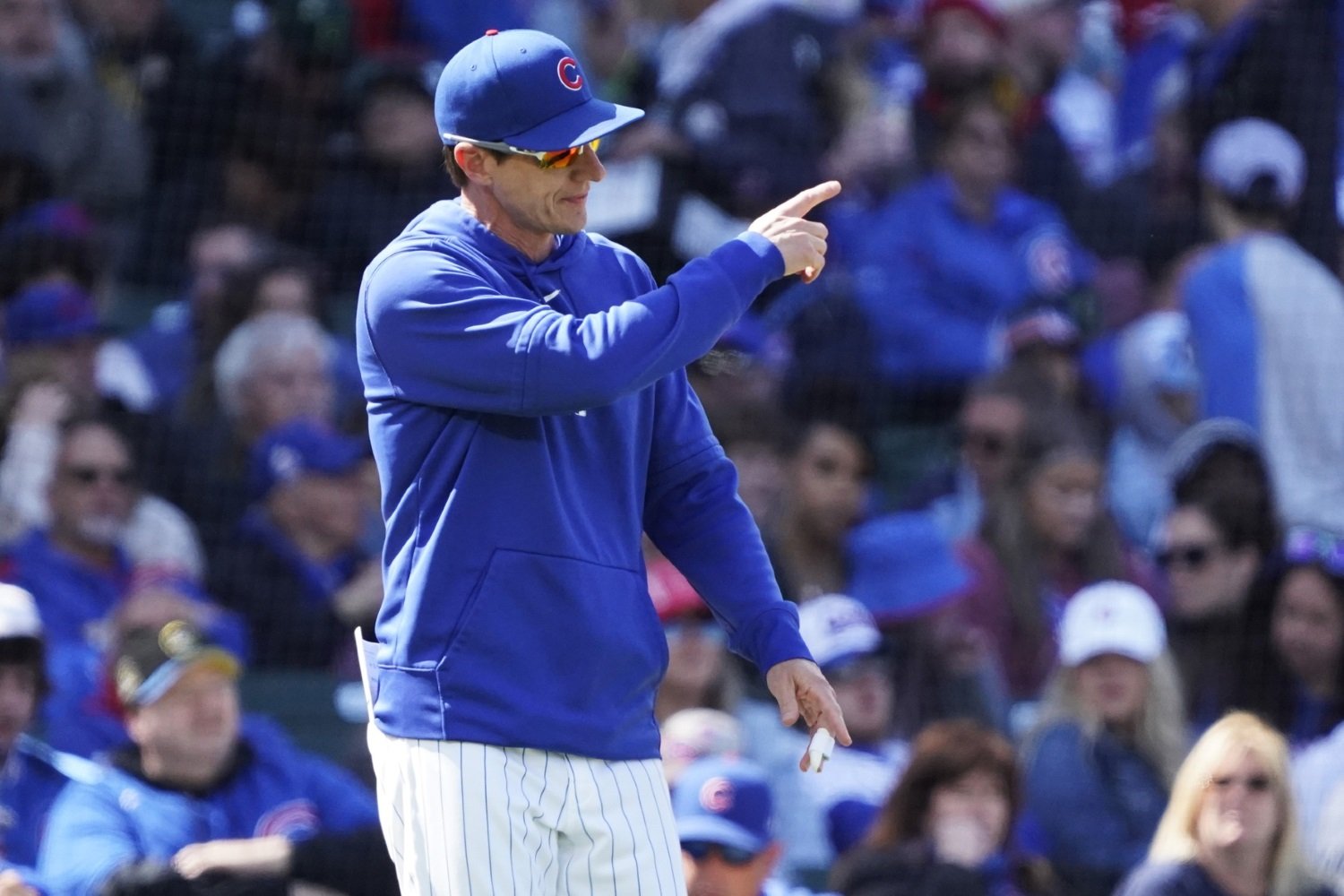 Just as a prison bid only lasts two days, a baseball season only lasts 90. The problem is, you have to earn the right to cross off each of those 90 days. Every win draws a contending team more than 1% closer to its goal, but every loss is a day lost, without progress. A hot start is a wonderful blessing; it makes the rest of the season feel easy and slow. A poor first half, like the 2023 Cubs had, makes the final two months feel like finals week for an overwhelmed freshman, and it fries pretty much everyone. The 2024 edition of the Cubs has a lot of season left before them. They're only 13 games into their 90-game journey, and that's a bit frustrating, because it's easy to point to days where they missed promising chances to make progress. Counsell, a master of chasing each win with a keen understanding of its value without losing sight of the fact that 90 of them are needed, has had a secondary remit during this first stage of the campaign, and he's doing it brilliantly. The manager, who is the leader of the season expedition and is tasked with setting its pace, direction, and strategies, has gained the most valuable resource he has in that job: information. While not all the news is good, the Cubs have a lot of new insight into their team--especially their pitching staff. Entering the season, there was unavoidable and considerable uncertainty about the best ways to use a large number of arms in the organization. Counsell and company have resolved some of that uncertainty already, sometimes by being willing to learn the truth about a guy the hard way. Let's quickly break down what they know. Traditional Starters: Justin Steele, Shota Imanaga, and Jameson Taillon Though Steele got hurt early and Taillon is just now returning from being hurt, the coaching staff and front office knew they would need to rely on each to give them 150-plus innings, before the team even arrived for spring training. It was impossible to be sure what Imanaga would be capable of, though, before seeing how he responded to the different ball in MLB, the elements at Wrigley Field in April, and the thump in American lineups. He's passed that test with flying colors. These three can and must be used as full-fledged starters, with the goal of pitching six innings or more every time they take the mound. Twice Through the Order: Jordan Wicks, Javier Assad, Ben Brown As I wrote two weeks ago, it caused Counsell obvious consternation to try to stretch Assad past 15 outs in the team's loss to open their series in San Diego. He was trying not to lose a day, but he also wanted to know whether he could steal an out or two in such situations by keeping Assad in games even when the expected performance was less than optimal. Counsell seemed a bit more ok with trying to get an extra out from Assad Saturday against Miami, and had it not been for another Adbert Alzolay blowup, he'd have gotten away with that one. What he's learned now, though, is that even if Alzolay appears to be cruising, he can't be trusted to try the opposing lineup a third time. The same is true of Wicks, so far. His evolving pitch mix gives him upside, but there are growing pains happening right now. It's clear that those two are going to need to be removed after 18 batters (if not sooner) in all but blowout situations, for as long as either has a spot in the rotation. That's fine. Counsell can work with that. He just needed to give them each an audition or two to be sure of their capacity. Brown is a wholly different story. Although the team has twice turned to him for full-length starts and sought to get innings from him (within the limits of his preparation during spring), they never envisioned having him pitching as a traditional starter for a sustained period in 2024. That he's shown the ability to turn over the lineup card and keep rolling is a delightful surprise, and a sustainable one. He's suddenly an arm you could picture giving the team 110 or so innings, and the gaps into which he can be plugged on this staff make that kind of bulk especially tantalizing. Versatile Bullpen Arms and Once-Through Piggybacks: Kyle Hendricks, Drew Smyly, Hayden Wesneski The limitations of Assad and Wicks (and the reality that the team will sometimes want to protect Steele, Taillon, and Imanaga by lifting them an inning earlier than absolutely necessary) mean that the Cubs will need relievers capable of multi-inning appearances and half-starts, wherein they face as many as nine batters in a game. Entering the season, we knew they had one such pitcher, in Smyly. Unfortunately, it's now clear that that's all Hendricks can be, although he'll probably be asked to do it on a scheduled basis from the front ends of games, for however long he remains on the active roster. On the other hand, Wesneski has stepped forward and announced himself as more than playable in this type of role. His competition for the rotation in spring training always seemed doomed, and it was still an open question whether he would be a usable reliever against both left- and right-handed batters, in more than single-inning bursts. That's now a bit less in doubt, though as the third guy in line for those kinds of innings, he might be up and down a few more times this year. High-Leverage Single-Inning Arms: Héctor Neris, Adbert Alzolay, Mark Leiter Jr., Yency Almonte Yes, Alzolay still counts as a trusted high-leverage guy, although his role will have to be modified to reflect the reality of his home-run problem until he proves he's fixed it. Neris and Leiter look more likely to close games in the near future, though, and while the former has made a lot of fans nervous, he's the type of pitcher (long track record, varied repertoire, rubber arm) who only inspires confidence in a manager. Counsell has learned the texture of a Neris inning, and now knows how best to deploy him. Leiter comes with a bit thinner a manual than Neris, but he and Counsell already seem to have developed trust. Ditto for Almonte, who needs to be used in a more limited way (on multiple fronts) than does Leiter but will dominate in the right matchups and situations. Counsell probably has quite a bit more confidence in this group than the fan base does, even if (as the responsible party when any of them fail) he will always look dyspeptic when talking about it and be quicker on the trigger to make changes than he would be with others. Extras, to Be Used as Needed: Keegan Thompson, Luke Little, Daniel Palencia, José Cuas, Colten Brewer, Julio Teherán Counsell already knows Teherán, after having him in his rotation with Milwaukee in 2023. The rest of these have been thrust upon him, and they're neither consistent nor excellent, but he's figured out where each one's strengths and weaknesses lie. Thompson, Little, and Palencia have upward mobility from this group, given the stuff the latter two have shown and the way the former has pitched since being called up from Iowa. For now, though, Counsell has found niches for each where they can help him, but can't hurt him. Similar things are happening on the positional side. Counsell has started to lean toward Miguel Amaya at catcher, and he's gotten a long look at Christopher Morel at third base. Injuries to Seiya Suzuki and Ian Happ have helped him clarify his own thinking about the best hitters on the team. There's still much intel left to gather on both sides of the roster list, but Counsell already knows more about the team he's running than he did three and a half weeks ago. Learning it all might have cost the team a game, but most of the missed opportunities to shorten the season have been the players' fault. Counsell has made a couple of necessary sacrifices, but he's also trying to stay ahead of the calendar, and so far, the team is doing that well. Given all the self-knowledge they've gained in the process, still having 77 days left in this season--rather than 74 or 75--is an acceptable outcome.
- 14 comments
-
- 1
-

-
- craig counsell
- jordan wicks
- (and 5 more)
-
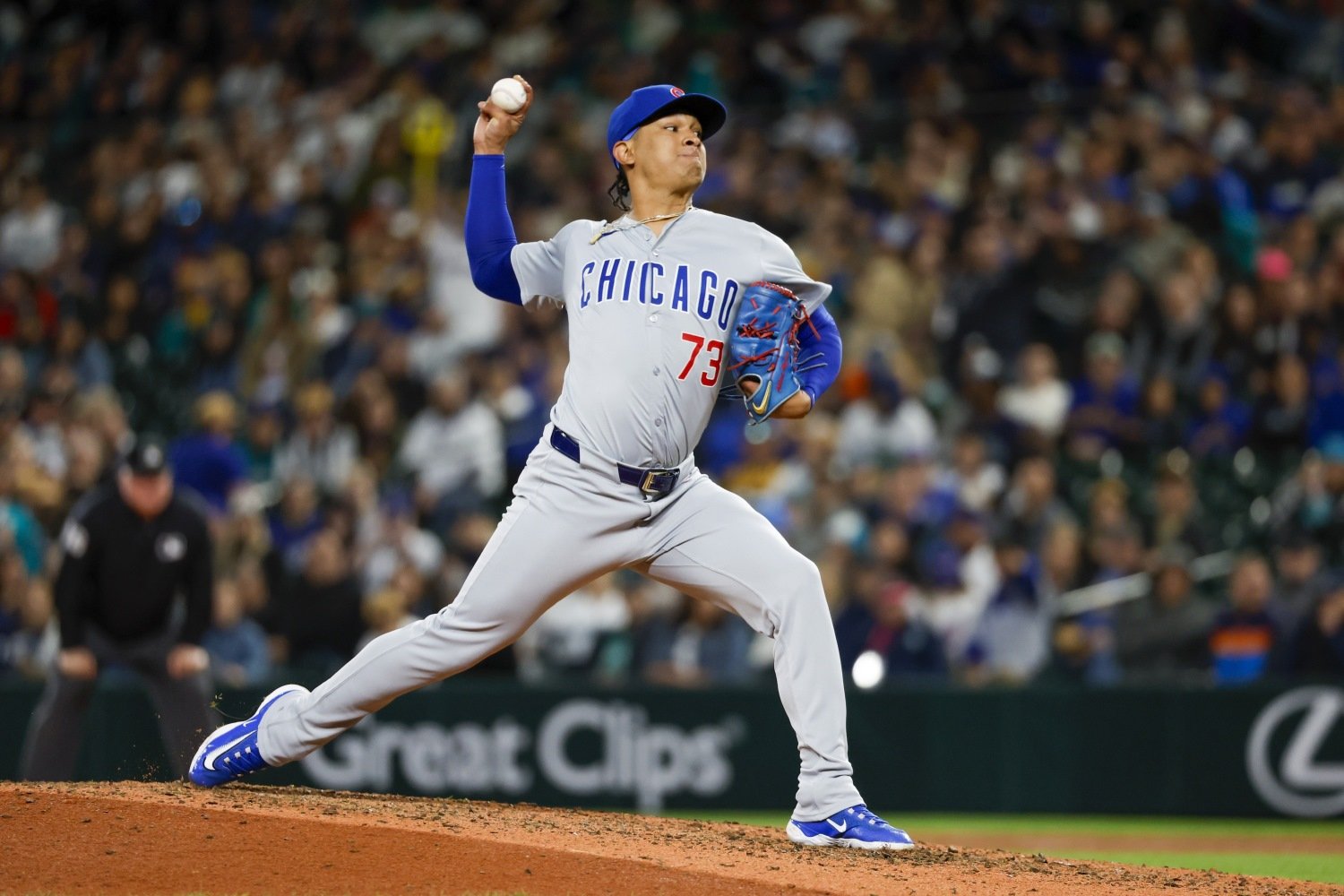 Although they had a winning road trip, the Cubs had their hearts broken twice in nine games. Adbert Alzolay was called upon to hold thin, late leads on Apr. 9 in San Diego, and again this Monday in Arizona, and each time, he gave up a game-changing home run. Alzolay is off to a very uneven start in 2024, and many fans are already wondering whether he can truly be trusted as the team's closer. Those concerns aren't unfounded, but they're not framed quite right. There's no lack of fortitude, intensity, or talent with Alzolay. He doesn't throw as hard as most of the game's elite closers, but his fastball sits 95 and noses above 97 frequently, and his slider and cutter can be devastating when he's right. He had a 21.4 K%-BB% last year, which is plenty impressive, especially for a guy who has two fastball looks and can (generally) avoid giving up the long ball. It's only a cruel taunt to say he 'should' be able to avoid that, though, because Alzolay has had much worse trouble with homers than you want from a closer. In addition to the telling blows each of the last two Mondays, he gave up the team's one-run lead by letting Travis Jankowski take him deep on Opening Day. Last year, he only gave up five homers all season, but three of them came after the All-Star break--a stretch during which, thanks to a forearm strain that sidelined him for much of September, he only made 25 appearances. In there, too, was the would-be home run robbed by Mike Tauchman in St. Louis in late July. Crucially, at his best, Alzolay really can stop opponents from hitting the ball over the fence, and he's a strike-throwing machine with sufficient bat-missing ability to be a dominant reliever. The question is how often he can be at his best, and to answer that question, we have to go a bit further than simple splits. Look up a player's splits on Baseball-Reference, and you can find out how he's pitched on various numbers of days of rest. That's about as far as easily queried public data takes us, though, and it's not nearly far enough. It doesn't just matter whether a pitcher worked the previous day, or two days ago, or three. It matters, at the very least, whether he's appeared on two of the last three days. It probably matters whether he's appeared on three of the last five, or four of the last seven. It also matters how many pitches a hurler threw in those games. Counting the days between throws off a game mound is grossly insufficient to tell us whether a reliever is fresh and operating at full capacity on a given day. I took one small step toward changing that. For each of Alzolay's 67 appearances since the start of 2023, I calculated a Comprehensive Rest Adjustment. I kept this very simple; I'm quite sure we'll work our way to something more robust in time. For now, though, the formula goes: (Pitches thrown over previous three days) * (Number of appearances over previous three days). Then, I added 15 to the score if Alzolay had pitched the previous day, and was therefore working back-to-back. This leads to plenty of outings where the CRA is zero; I think that's fine. If a pitcher hasn't worked in the previous three days (assuming it was anything short of a traditional start), he should be ready and fully rested for that day's game. Pitching in multiple contests in a three-day span is taxing, by contrast, and that should be reflected in any effort to capture the effects of reliever workload on reliever performance. We know, too, that working on back-to-back days is especially impactful. Once I had a CRA for each game, I divided them into three categories: Level I: Any appearance with a CRA of 15 or lower Level II: Any appearance with a CRA between 16 and 30 Level III: Any appearance with a CRA of 31 or higher The idea here was just to make sure that any game pitched on a second consecutive day would be distinct from one with multiple days of rest, but that it wouldn't automatically vault to Level III unless the previous day's appearance was a long one, or Alzolay had also pitched another contest within the three-day window. Unintentionally, though, this also distributed his outings about the way I'd have wanted them to be, if I'd been trying to create an artificially smooth breakdown. He had exactly 26 Level I and 26 Level II appearances, and 15 Level III ones. I didn't even check his ERAs or WHIPs for those games. Those numbers are too noisy for my liking, in samples of this size, and it's not results I wanted to know about, really. Instead, I pulled Alzolay's average fastball velocity (sinkers and four-seamers), his slider usage, the percentage of his pitches thrown inside the strike zone, opposing batters' chase rate, and their whiff rate on swings. In a nod toward results, though, I did also pull his strikeout and walk numbers. Here's what I found. Category FB Vel. Slider % Zone % Chase % Whiff % K % BB % Level I 95.4 45.7 50.9 31.8 29.5 25.7 7.1 Level II 95 41.8 49.7 32.5 26.3 28 4.2 Level III 95.6 55.9 56.6 29.4 26.9 23.5 3.9 I had various and (in some cases) contradictory hypotheses for this exploration, so the results didn't shock me, but there are surprises here. Some relievers get very wild when they've recently been overworked, but Alzolay actually throws more strikes. That might not shock you, and I bet the drastically higher slider usage doesn't, either. It was the slider on which Alzolay got burned against Ketel Marte Monday, and the slider on which Nick Martini took him deep in a crushing blown save last Sept. 1. Both of those games were Level III appearances. That problem isn't exclusive to Level III days, of course. It was a two-strike slider with too much of the plate on which Jankowski erased a Cubs lead on Opening Day, and obviously, that was a Level I game. When Fernando Tatis Jr. pummeled a slider to give the Padres the lead last week, it was in a Level II appearance, although one just shy of the barrier between that and Level III. Still, Level III comes with some special dangers, as we would guess. They just aren't the particular dangers we might guess. Alzolay doesn't lose any juice on the fastball when working on Level III days. On the contrary, he throws even harder. Perhaps trying to protect his tired arm in a different way, though, he gets so slider-heavy that hitters start looking for it and don't chase or whiff as often as they otherwise would. Anecdotally, it has also often seemed like he was trying too hard to economize on Level III days, refusing to stretch or nibble at the zone out of fear of a long outing. More sliders in the zone necessarily means a greater risk of home runs and other hard contact, and naturally, it also means fewer strikeouts. That version of Alzolay is still an effective pitcher. He's just a different one than when he's more rested. The Cubs could still stand to find a closer who misses a few more bats or is a bit less susceptible to the long ball, but Alzolay is a superb relief pitcher. What the team needs, really, is more protection for him--protection from heavy usage, and from situations in which his tendencies on days when he's recently been heavily used are most damaging. That's why Julian Merryweather was such a painful loss for the bullpen. This analysis doesn't capture the rising injury risk from one level to the next. It doesn't capture a lot of nuances of usage that teams build into their decisions about when to have a pitcher down and when to limit them to a shorter outing. It's just meant to illuminate Alzolay's problems a bit, by reminding us all that the difference between one reliever and another can often be smaller than that between one individual at full freshness and the same guy running on fumes. Alzolay and his catchers might need to adjust their approach on Level III days. That's a tough thing to do, though, because again, some of it might be about shielding himself from injury, and you don't want him careening from undue carefulness to recklessness. Nor is it easy to remember and execute a change in plans when tired, and a high-leverage reliever working for a third day in four or on the second of two consecutive days is mentally tired, as well as physically so. The most important takeaway here might be that Alzolay is clearly at his best in Level II outings. He gets fewer whiffs in those than in Level I appearances, but still racks up more strikeouts. He pounds the zone, but not to such an extent as to expose himself to too much risk of hard contact. I haven't yet run the numbers for others, but I suspect most relievers are best when their CRA is in a Level II range. Teams really might want to consider a relief rotation. In the meantime, the Cubs should avoid letting Alzolay get rusty, even (or especially) if it sometimes means letting others collect saves in games when Alzolay would otherwise be at Level III. He's not someone who wears down badly in such contests, but his margin for error thins out on him.
 -
We talk too much about relievers' talent and skill sets, which we have a hard time pinning down, anyway. We talk too little, by contrast, about relievers' usage, and the fact that their rest (or lack thereof) drives much of the performance we see. Image courtesy of © Joe Nicholson-USA TODAY Sports Although they had a winning road trip, the Cubs had their hearts broken twice in nine games. Adbert Alzolay was called upon to hold thin, late leads on Apr. 9 in San Diego, and again this Monday in Arizona, and each time, he gave up a game-changing home run. Alzolay is off to a very uneven start in 2024, and many fans are already wondering whether he can truly be trusted as the team's closer. Those concerns aren't unfounded, but they're not framed quite right. There's no lack of fortitude, intensity, or talent with Alzolay. He doesn't throw as hard as most of the game's elite closers, but his fastball sits 95 and noses above 97 frequently, and his slider and cutter can be devastating when he's right. He had a 21.4 K%-BB% last year, which is plenty impressive, especially for a guy who has two fastball looks and can (generally) avoid giving up the long ball. It's only a cruel taunt to say he 'should' be able to avoid that, though, because Alzolay has had much worse trouble with homers than you want from a closer. In addition to the telling blows each of the last two Mondays, he gave up the team's one-run lead by letting Travis Jankowski take him deep on Opening Day. Last year, he only gave up five homers all season, but three of them came after the All-Star break--a stretch during which, thanks to a forearm strain that sidelined him for much of September, he only made 25 appearances. In there, too, was the would-be home run robbed by Mike Tauchman in St. Louis in late July. Crucially, at his best, Alzolay really can stop opponents from hitting the ball over the fence, and he's a strike-throwing machine with sufficient bat-missing ability to be a dominant reliever. The question is how often he can be at his best, and to answer that question, we have to go a bit further than simple splits. Look up a player's splits on Baseball-Reference, and you can find out how he's pitched on various numbers of days of rest. That's about as far as easily queried public data takes us, though, and it's not nearly far enough. It doesn't just matter whether a pitcher worked the previous day, or two days ago, or three. It matters, at the very least, whether he's appeared on two of the last three days. It probably matters whether he's appeared on three of the last five, or four of the last seven. It also matters how many pitches a hurler threw in those games. Counting the days between throws off a game mound is grossly insufficient to tell us whether a reliever is fresh and operating at full capacity on a given day. I took one small step toward changing that. For each of Alzolay's 67 appearances since the start of 2023, I calculated a Comprehensive Rest Adjustment. I kept this very simple; I'm quite sure we'll work our way to something more robust in time. For now, though, the formula goes: (Pitches thrown over previous three days) * (Number of appearances over previous three days). Then, I added 15 to the score if Alzolay had pitched the previous day, and was therefore working back-to-back. This leads to plenty of outings where the CRA is zero; I think that's fine. If a pitcher hasn't worked in the previous three days (assuming it was anything short of a traditional start), he should be ready and fully rested for that day's game. Pitching in multiple contests in a three-day span is taxing, by contrast, and that should be reflected in any effort to capture the effects of reliever workload on reliever performance. We know, too, that working on back-to-back days is especially impactful. Once I had a CRA for each game, I divided them into three categories: Level I: Any appearance with a CRA of 15 or lower Level II: Any appearance with a CRA between 16 and 30 Level III: Any appearance with a CRA of 31 or higher The idea here was just to make sure that any game pitched on a second consecutive day would be distinct from one with multiple days of rest, but that it wouldn't automatically vault to Level III unless the previous day's appearance was a long one, or Alzolay had also pitched another contest within the three-day window. Unintentionally, though, this also distributed his outings about the way I'd have wanted them to be, if I'd been trying to create an artificially smooth breakdown. He had exactly 26 Level I and 26 Level II appearances, and 15 Level III ones. I didn't even check his ERAs or WHIPs for those games. Those numbers are too noisy for my liking, in samples of this size, and it's not results I wanted to know about, really. Instead, I pulled Alzolay's average fastball velocity (sinkers and four-seamers), his slider usage, the percentage of his pitches thrown inside the strike zone, opposing batters' chase rate, and their whiff rate on swings. In a nod toward results, though, I did also pull his strikeout and walk numbers. Here's what I found. Category FB Vel. Slider % Zone % Chase % Whiff % K % BB % Level I 95.4 45.7 50.9 31.8 29.5 25.7 7.1 Level II 95 41.8 49.7 32.5 26.3 28 4.2 Level III 95.6 55.9 56.6 29.4 26.9 23.5 3.9 I had various and (in some cases) contradictory hypotheses for this exploration, so the results didn't shock me, but there are surprises here. Some relievers get very wild when they've recently been overworked, but Alzolay actually throws more strikes. That might not shock you, and I bet the drastically higher slider usage doesn't, either. It was the slider on which Alzolay got burned against Ketel Marte Monday, and the slider on which Nick Martini took him deep in a crushing blown save last Sept. 1. Both of those games were Level III appearances. That problem isn't exclusive to Level III days, of course. It was a two-strike slider with too much of the plate on which Jankowski erased a Cubs lead on Opening Day, and obviously, that was a Level I game. When Fernando Tatis Jr. pummeled a slider to give the Padres the lead last week, it was in a Level II appearance, although one just shy of the barrier between that and Level III. Still, Level III comes with some special dangers, as we would guess. They just aren't the particular dangers we might guess. Alzolay doesn't lose any juice on the fastball when working on Level III days. On the contrary, he throws even harder. Perhaps trying to protect his tired arm in a different way, though, he gets so slider-heavy that hitters start looking for it and don't chase or whiff as often as they otherwise would. Anecdotally, it has also often seemed like he was trying too hard to economize on Level III days, refusing to stretch or nibble at the zone out of fear of a long outing. More sliders in the zone necessarily means a greater risk of home runs and other hard contact, and naturally, it also means fewer strikeouts. That version of Alzolay is still an effective pitcher. He's just a different one than when he's more rested. The Cubs could still stand to find a closer who misses a few more bats or is a bit less susceptible to the long ball, but Alzolay is a superb relief pitcher. What the team needs, really, is more protection for him--protection from heavy usage, and from situations in which his tendencies on days when he's recently been heavily used are most damaging. That's why Julian Merryweather was such a painful loss for the bullpen. This analysis doesn't capture the rising injury risk from one level to the next. It doesn't capture a lot of nuances of usage that teams build into their decisions about when to have a pitcher down and when to limit them to a shorter outing. It's just meant to illuminate Alzolay's problems a bit, by reminding us all that the difference between one reliever and another can often be smaller than that between one individual at full freshness and the same guy running on fumes. Alzolay and his catchers might need to adjust their approach on Level III days. That's a tough thing to do, though, because again, some of it might be about shielding himself from injury, and you don't want him careening from undue carefulness to recklessness. Nor is it easy to remember and execute a change in plans when tired, and a high-leverage reliever working for a third day in four or on the second of two consecutive days is mentally tired, as well as physically so. The most important takeaway here might be that Alzolay is clearly at his best in Level II outings. He gets fewer whiffs in those than in Level I appearances, but still racks up more strikeouts. He pounds the zone, but not to such an extent as to expose himself to too much risk of hard contact. I haven't yet run the numbers for others, but I suspect most relievers are best when their CRA is in a Level II range. Teams really might want to consider a relief rotation. In the meantime, the Cubs should avoid letting Alzolay get rusty, even (or especially) if it sometimes means letting others collect saves in games when Alzolay would otherwise be at Level III. He's not someone who wears down badly in such contests, but his margin for error thins out on him. View full article
-
Nothing ends pretty. As long as it stays pretty, it doesn't end. As long as it doesn't end, it stays at least partly pretty. Everything is all the way ugly for Kyle Hendricks right now. If this isn't the very end, it's pretty close, and Hendricks has to be shelved for a while. Image courtesy of © Matt Kartozian-USA TODAY Sports I'm not telling you anything you don't already know, or anything the Chicago Cubs front office or Craig Counsell or Tommy Hottovy or Kyle Hendricks himself doesn't already know. I'm also not suggesting anything radical. It's just this side of a fact. Sometime very soon (perhaps Thursday, when Jameson Taillon is activated and room needs to be made both on the active roster and in the starting rotation; perhaps sooner, like in time for Wednesday's game, since Hendricks is one culprit in the ruthless overworking of the team's bullpen that has taken place early this year), Hendricks is headed to the injured list. All the smart money says it won't even be a phantom IL stint--not really. Knowing Hendricks, who has done this before; who is a consummate teammate; who knew his team needed innings and stability here in the early going, he's probably been pitching through a legitimate injury, anyway. Four starts into his 11th season with the Cubs, though, it's safe to say that if that be the case, gutting it out isn't turning out to be helpful. If he's fully healthy, of course, that's even worse, but he's pitched long enough that someone will be able to find something to justify a sitdown for him. Either way, it has to happen. The string is out. Hendricks has been obliterated to start this season, and the only things he's doing differently or worse this year are minuscule or subtle--but that, like his hypothetically being fully healthy right now, is even worse than the alternative. There's no quick fix here. He's not pulling out of this, at least in the short term. I don't offer this diagnosis lightly. Hendricks has earned the respect of baseball fans everywhere, and deserves the love and loyalty of Cubs fans everywhere. There are some fans who have waited five years for Hendricks's low-velocity, low-strikeout approach to stop working, and who will snidely conclude that they were finally right, or that he merely ran out of smoke and mirrors. We're not here to do that. Let's run through a few of the many places I checked for something Hendricks could do differently, to make clear what's wrong (in case he's eventually able to correct it). Firstly, Hendricks has been especially nightmarish with runners on base this year. You remember Barry Bonds, from 2001-04? In none of those seasons was Bonds as good as hitters have been against Hendricks with anyone on base in 2024. He's been very bad with the bases empty, too, but it's gone to another level when anyone reaches. It wasn't like this in 2023. Split wOBA G BF P Swing% Whiff% InZone% Chase% CompLoc% Empty, 2023 0.295 29 385 1427 45.80% 20.20% 48.90% 32.40% 86.90% Men On, 2023 0.31 29 278 1019 48.30% 23.20% 43.70% 34.10% 86.30% Empty, 2024 0.423 4 47 164 52.40% 16.30% 49.40% 34.90% 87.20% Men On, 2024 0.571 4 41 152 42.10% 12.50% 40.80% 24.40% 87.50% Note that hitters aren't chasing at anywhere near the same rate when Hendricks isn't in the zone with runners on this year. That's not normal. Normalcy looks like that 2023 disparity: hitters get a little more aggressive, and a little more susceptible to manipulation, when there are ducks on the pond. Of course, look, too, at the in-zone rates for the two seasons. It's normal to nibble more and throw fewer strikes with men on base. It's not normal to see as steep a decline as Hendricks has this year. The rightmost column there is telling us something, too. "Competitive pitches" are all those within 18 inches of the center of the strike zone, be they inside or outside the zone. Hendricks hasn't been more erratic, in terms of wide misses. Rather, he's been just missing the edges, and hitters aren't biting at the bait. The reason why the share of competitive pitches hasn't really fallen, though, is just that Hendricks doesn't have stuff intense enough to generate very many non-competitive ones. The magnitude of his movement is too small. That's also why hitters aren't expanding their zones for him. Hendricks knows that. He's not trying to pitch outside the zone more. He's aiming for those edges; he just isn't hitting them. I'll propose one reason for that. I think Hendricks, who calls his own pitches using the hip-mounted version of PitchCom, has struggled to get a call in to his catchers, comfortably set himself on the rubber, and attend to the baserunner(s), then deliver the ball with any rhythm. That's not a complaint about the clock, which has been tightened from 20 seconds to 18 when runners are on this year. In fact, I was in favor of that constriction. It's also not an indictment of Hendricks for wanting to call his own game; he thrived doing things that way last year. It's a purely anecdotal bit of speculative observation. He looks a little rushed, this season, between getting the ball back, dialing in his selection, and getting it off in time. Let's dispense with speculative observation and examine some hard data, though. Here are Hendricks's pitch locations on sinkers to left-handed batters, last year and this year. Here is an indisputable failure of execution, where he was previously lethal in his accuracy. Sinkers don't work very well to opposite-handed batters. Sinkers that sit 88 and scrape 90 only when the sun shines on Tuesday afternoons in July almost never work to them at all. Hendricks, though, possessed deadeye precision with the pitch for years. Up and in, low and away, and he could reliably induce either jam-shots or end-of-the-bat squibbers. He's not that precise this year, and he's paid a heavy price--not only in not getting outs with the pitch, but in not even being able to use it as often, forcing him to turn to his four-seamer more and show lefties the changeup earlier in counts and games. He's not commanding the sinker as well to righties, either, though because he uses that pitch differently against them, it looks very different. Over the winter, I wrote about how Hendricks succeeded last year by almost never working inside. Away, away, away was his motto in 2023. This is the one place where I see a strategic misstep at play, because obviously, he's gone back to trying to get inside on righties with the sinker, but I also think a fair number of those inner-third sinkers were meant to be outer-third ones. That's how far from on-target he is, with a pitch that drives the rest of his arsenal. If you were hoping it would even be this neat with everything, though, I can't help you. Hendricks is locating his cut-change to righties just about as well as he did last year. He's not quite as fine on the outer third with four-seamers to lefties, but the difference doesn't come anywhere close to explaining the gap in results. I can squint my way through these and other, similar charts, slicing and dicing in several ways, and tell you that I see a pattern of missing to his arm side, with everything in his arsenal, and that it's slightly exaggerated with runners on, and that that is consistent with him rushing himself against the shortened clock, but the spin profile, movement, velocity, and release points of all of his pitches are virtually identical to last year. He's less fine, but not materially different in a way he'll be able to fix in a single side session. He might have an injury that is making it harder to manipulate the ball or perfectly time his release, or he might not, but there's no easy tweak to make. Hendricks got pretty lucky last year. He was genuinely good, much of the time, and it was delightful to watch him work with such fine control, but he still needed a lot of luck, because he doesn't miss enough bats to provide himself with a healthy margin for error and he's too vulnerable to the home run. His luck has run out this year, and his control has faltered, and his stuff is exactly the same as it was. A certain kind of statistically-inclined fan could look at Hendricks's data and take an optimistic tack. If not much has physically changed, maybe this is all a mirage, give or take. He's faced three lineups (Rangers, Dodgers, Padres) who have thunderous power, and one (Diamondbacks) who hardly ever swing and miss. All four were rough matchups for him. I want to muster that much hope. I just can't. Sometimes, when there's no explanation for something, its unbearably heavy reality just sits on your chest and crushes you, anyway. It's ugly, but it's also inescapable. Barring news that he's dealing with an injury that has limited him this year, I'm most inclined to think that Hendricks is simply cooked. It's a sad state to reach, especially so soon. It's enough to make one wish, a little bit, that Marcus Stroman hadn't opted out last winter, so that fans could remember Hendricks by a much better final season in a Cubs uniform. As it is, this isn't going to end pretty, unless Hottovy has a truly extreme makeover in store for Hendricks during his coming stint on the IL. From a team perspective, the news is much better. Hendricks has been blasted out of the rotation by opponents, but he's also being crowded out of it by talented hurlers. Steele, Shota Imanaga, Taillon, Ben Brown, and Javier Assad could yet turn out to be a strong rotation. Swap Brown out for Cade Horton, and perhaps it gets even better. The organization's pitching pipeline is more robust than it has been in years. This team might well be fine without Hendricks. In the short term, it will certainly be better off without him. On balance, though, that's a sad sentence. Cubs fans have to hope it's a poignant part of a story with a happier denouement. View full article
-
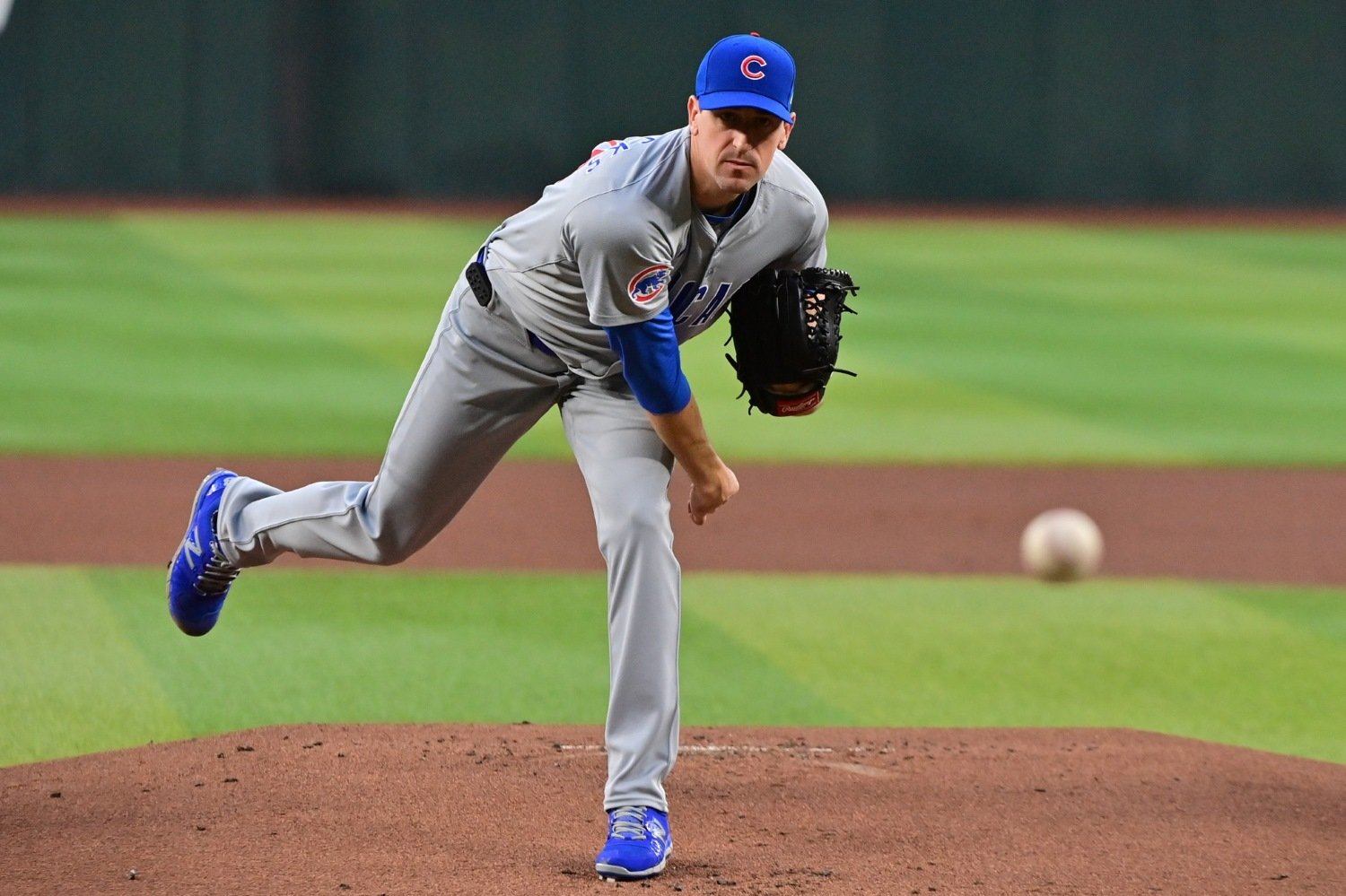 I'm not telling you anything you don't already know, or anything the Chicago Cubs front office or Craig Counsell or Tommy Hottovy or Kyle Hendricks himself doesn't already know. I'm also not suggesting anything radical. It's just this side of a fact. Sometime very soon (perhaps Thursday, when Jameson Taillon is activated and room needs to be made both on the active roster and in the starting rotation; perhaps sooner, like in time for Wednesday's game, since Hendricks is one culprit in the ruthless overworking of the team's bullpen that has taken place early this year), Hendricks is headed to the injured list. All the smart money says it won't even be a phantom IL stint--not really. Knowing Hendricks, who has done this before; who is a consummate teammate; who knew his team needed innings and stability here in the early going, he's probably been pitching through a legitimate injury, anyway. Four starts into his 11th season with the Cubs, though, it's safe to say that if that be the case, gutting it out isn't turning out to be helpful. If he's fully healthy, of course, that's even worse, but he's pitched long enough that someone will be able to find something to justify a sitdown for him. Either way, it has to happen. The string is out. Hendricks has been obliterated to start this season, and the only things he's doing differently or worse this year are minuscule or subtle--but that, like his hypothetically being fully healthy right now, is even worse than the alternative. There's no quick fix here. He's not pulling out of this, at least in the short term. I don't offer this diagnosis lightly. Hendricks has earned the respect of baseball fans everywhere, and deserves the love and loyalty of Cubs fans everywhere. There are some fans who have waited five years for Hendricks's low-velocity, low-strikeout approach to stop working, and who will snidely conclude that they were finally right, or that he merely ran out of smoke and mirrors. We're not here to do that. Let's run through a few of the many places I checked for something Hendricks could do differently, to make clear what's wrong (in case he's eventually able to correct it). Firstly, Hendricks has been especially nightmarish with runners on base this year. You remember Barry Bonds, from 2001-04? In none of those seasons was Bonds as good as hitters have been against Hendricks with anyone on base in 2024. He's been very bad with the bases empty, too, but it's gone to another level when anyone reaches. It wasn't like this in 2023. Split wOBA G BF P Swing% Whiff% InZone% Chase% CompLoc% Empty, 2023 0.295 29 385 1427 45.80% 20.20% 48.90% 32.40% 86.90% Men On, 2023 0.31 29 278 1019 48.30% 23.20% 43.70% 34.10% 86.30% Empty, 2024 0.423 4 47 164 52.40% 16.30% 49.40% 34.90% 87.20% Men On, 2024 0.571 4 41 152 42.10% 12.50% 40.80% 24.40% 87.50% Note that hitters aren't chasing at anywhere near the same rate when Hendricks isn't in the zone with runners on this year. That's not normal. Normalcy looks like that 2023 disparity: hitters get a little more aggressive, and a little more susceptible to manipulation, when there are ducks on the pond. Of course, look, too, at the in-zone rates for the two seasons. It's normal to nibble more and throw fewer strikes with men on base. It's not normal to see as steep a decline as Hendricks has this year. The rightmost column there is telling us something, too. "Competitive pitches" are all those within 18 inches of the center of the strike zone, be they inside or outside the zone. Hendricks hasn't been more erratic, in terms of wide misses. Rather, he's been just missing the edges, and hitters aren't biting at the bait. The reason why the share of competitive pitches hasn't really fallen, though, is just that Hendricks doesn't have stuff intense enough to generate very many non-competitive ones. The magnitude of his movement is too small. That's also why hitters aren't expanding their zones for him. Hendricks knows that. He's not trying to pitch outside the zone more. He's aiming for those edges; he just isn't hitting them. I'll propose one reason for that. I think Hendricks, who calls his own pitches using the hip-mounted version of PitchCom, has struggled to get a call in to his catchers, comfortably set himself on the rubber, and attend to the baserunner(s), then deliver the ball with any rhythm. That's not a complaint about the clock, which has been tightened from 20 seconds to 18 when runners are on this year. In fact, I was in favor of that constriction. It's also not an indictment of Hendricks for wanting to call his own game; he thrived doing things that way last year. It's a purely anecdotal bit of speculative observation. He looks a little rushed, this season, between getting the ball back, dialing in his selection, and getting it off in time. Let's dispense with speculative observation and examine some hard data, though. Here are Hendricks's pitch locations on sinkers to left-handed batters, last year and this year. Here is an indisputable failure of execution, where he was previously lethal in his accuracy. Sinkers don't work very well to opposite-handed batters. Sinkers that sit 88 and scrape 90 only when the sun shines on Tuesday afternoons in July almost never work to them at all. Hendricks, though, possessed deadeye precision with the pitch for years. Up and in, low and away, and he could reliably induce either jam-shots or end-of-the-bat squibbers. He's not that precise this year, and he's paid a heavy price--not only in not getting outs with the pitch, but in not even being able to use it as often, forcing him to turn to his four-seamer more and show lefties the changeup earlier in counts and games. He's not commanding the sinker as well to righties, either, though because he uses that pitch differently against them, it looks very different. Over the winter, I wrote about how Hendricks succeeded last year by almost never working inside. Away, away, away was his motto in 2023. This is the one place where I see a strategic misstep at play, because obviously, he's gone back to trying to get inside on righties with the sinker, but I also think a fair number of those inner-third sinkers were meant to be outer-third ones. That's how far from on-target he is, with a pitch that drives the rest of his arsenal. If you were hoping it would even be this neat with everything, though, I can't help you. Hendricks is locating his cut-change to righties just about as well as he did last year. He's not quite as fine on the outer third with four-seamers to lefties, but the difference doesn't come anywhere close to explaining the gap in results. I can squint my way through these and other, similar charts, slicing and dicing in several ways, and tell you that I see a pattern of missing to his arm side, with everything in his arsenal, and that it's slightly exaggerated with runners on, and that that is consistent with him rushing himself against the shortened clock, but the spin profile, movement, velocity, and release points of all of his pitches are virtually identical to last year. He's less fine, but not materially different in a way he'll be able to fix in a single side session. He might have an injury that is making it harder to manipulate the ball or perfectly time his release, or he might not, but there's no easy tweak to make. Hendricks got pretty lucky last year. He was genuinely good, much of the time, and it was delightful to watch him work with such fine control, but he still needed a lot of luck, because he doesn't miss enough bats to provide himself with a healthy margin for error and he's too vulnerable to the home run. His luck has run out this year, and his control has faltered, and his stuff is exactly the same as it was. A certain kind of statistically-inclined fan could look at Hendricks's data and take an optimistic tack. If not much has physically changed, maybe this is all a mirage, give or take. He's faced three lineups (Rangers, Dodgers, Padres) who have thunderous power, and one (Diamondbacks) who hardly ever swing and miss. All four were rough matchups for him. I want to muster that much hope. I just can't. Sometimes, when there's no explanation for something, its unbearably heavy reality just sits on your chest and crushes you, anyway. It's ugly, but it's also inescapable. Barring news that he's dealing with an injury that has limited him this year, I'm most inclined to think that Hendricks is simply cooked. It's a sad state to reach, especially so soon. It's enough to make one wish, a little bit, that Marcus Stroman hadn't opted out last winter, so that fans could remember Hendricks by a much better final season in a Cubs uniform. As it is, this isn't going to end pretty, unless Hottovy has a truly extreme makeover in store for Hendricks during his coming stint on the IL. From a team perspective, the news is much better. Hendricks has been blasted out of the rotation by opponents, but he's also being crowded out of it by talented hurlers. Steele, Shota Imanaga, Taillon, Ben Brown, and Javier Assad could yet turn out to be a strong rotation. Swap Brown out for Cade Horton, and perhaps it gets even better. The organization's pitching pipeline is more robust than it has been in years. This team might well be fine without Hendricks. In the short term, it will certainly be better off without him. On balance, though, that's a sad sentence. Cubs fans have to hope it's a poignant part of a story with a happier denouement.
- 9 comments
-
- 1
-
-
- kyle hendricks
- jameson taillon
- (and 1 more)
-
As the Chicago Cubs get ready to welcome one veteran starter back from the injured list, they face some interesting questions about their rotation. Hopefully, we're not far at all from seeing another key hurler, and even more difficult dilemmas. Image courtesy of © Jerome Miron-USA TODAY Sports Justin Steele went down with a hamstring strain on Opening Day, Mar. 28. Last week, on the debut episode of his new podcast (strictly speaking, I don't recommend listening to that show--it's not good--but there are some nuggets within), Steele talked about the quick thinking he did while making the play that resulted in the strain, and about his confidence that the injury isn't as bad as the similar one he suffered a few years ago. That's good news. Obviously, though, he's still dealing with the problem. He's kept his arm moving throughout this down time, but that won't matter until the injury itself is healed. Let's turn to Baseball Prospectus's Return to Play Dashboard to estimate how long it will be before that's the case. I searched for all instances of a pitcher (as opposed to a position player, who would face a different set of hurdles in rehabbing and taking such an injury back into game action) suffering an upper leg injury in either March or April, going back to 2021. Here's the snapshot of the data. There's good news here. The median number of days missed by pitchers who suffer this type of injury at this time of year is 22, a milestone Steele will reach Friday. The average time is probably more telling, though, because of the caution the team is likely to exercise with an early-season injury and the variables involved here. Steele will need a rehab outing, if only because his ramp-up to a full starter-level workload had been disrupted even in his final preparatory outing in March when he was struck in the knee by that comebacker. By all accounts, though, he's been able to do some work to stay ready while waiting for the injury to settle, and it's on the more mild end of what it might have been. It would be great if the Cubs could bring Steele back for the getaway day matinee against the Astros at Wrigley Field on Apr. 25, so he could pitch in front of the home crowd. It's probably more realistic, though, that he will return during their road trip to Boston and New York at the very end of the month, or at the start of May. That Houston series begins a stretch of 15 games without a scheduled off day for the Cubs, so bringing Steele back in the middle of that would be huge. Surely, the team is trying to manage the innings of (at least) Jordan Wicks and Ben Brown, and they'll be looking for times when they can give Shota Imanaga an extra day, as well, while he acclimates to the United States's customary starter schedule. Steele's return would make all of that easier, though it would also force the team into some tough choices about whom to demote, and in what way. Setbacks are always possible, but based on the type of injury he sustained and the scraps of news we've heard from him and the team about it, we should expect Steele back in roughly a fortnight. Until then, the team needs to stay afloat, but they've done so admirably to this point. View full article
-
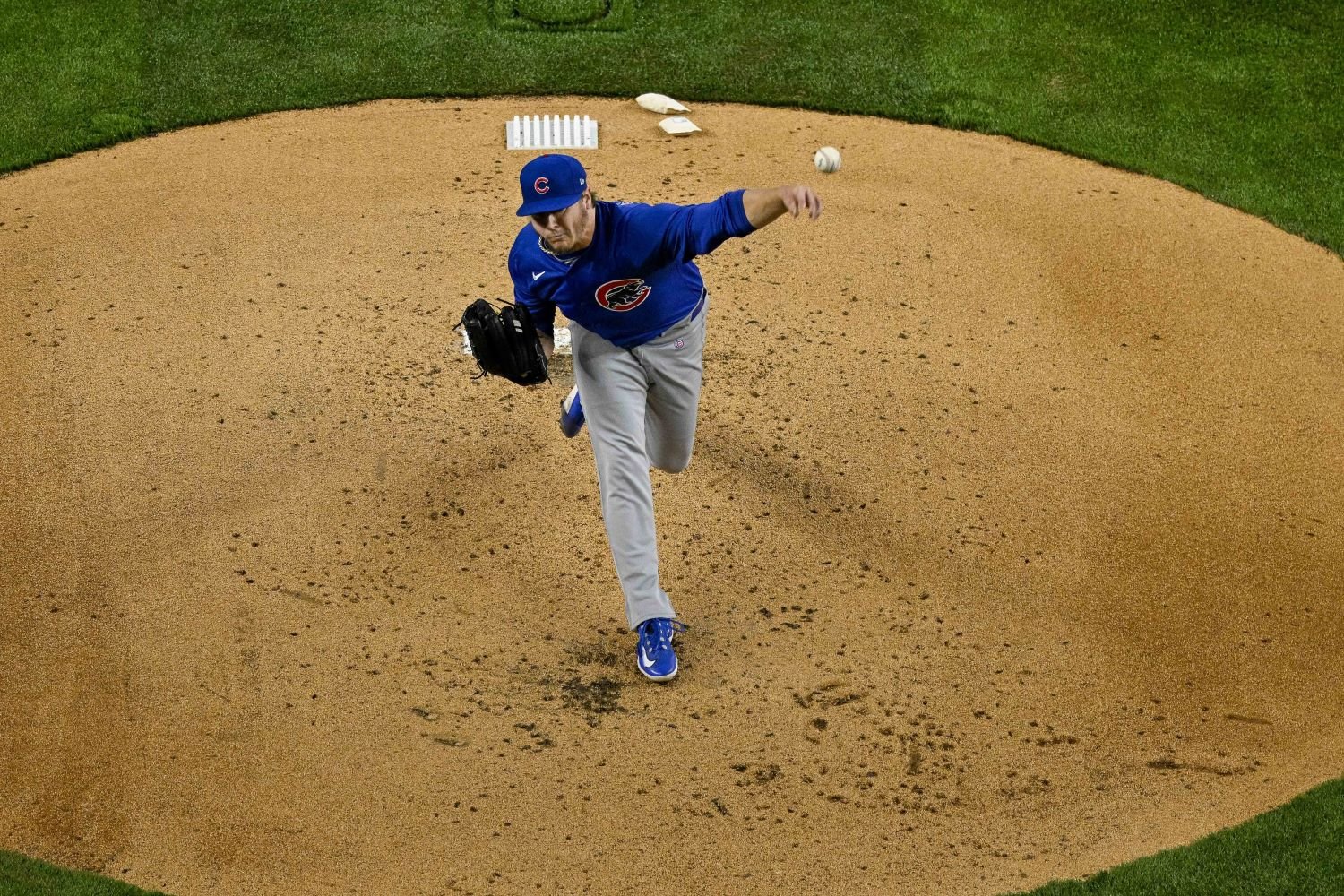 Justin Steele went down with a hamstring strain on Opening Day, Mar. 28. Last week, on the debut episode of his new podcast (strictly speaking, I don't recommend listening to that show--it's not good--but there are some nuggets within), Steele talked about the quick thinking he did while making the play that resulted in the strain, and about his confidence that the injury isn't as bad as the similar one he suffered a few years ago. That's good news. Obviously, though, he's still dealing with the problem. He's kept his arm moving throughout this down time, but that won't matter until the injury itself is healed. Let's turn to Baseball Prospectus's Return to Play Dashboard to estimate how long it will be before that's the case. I searched for all instances of a pitcher (as opposed to a position player, who would face a different set of hurdles in rehabbing and taking such an injury back into game action) suffering an upper leg injury in either March or April, going back to 2021. Here's the snapshot of the data. There's good news here. The median number of days missed by pitchers who suffer this type of injury at this time of year is 22, a milestone Steele will reach Friday. The average time is probably more telling, though, because of the caution the team is likely to exercise with an early-season injury and the variables involved here. Steele will need a rehab outing, if only because his ramp-up to a full starter-level workload had been disrupted even in his final preparatory outing in March when he was struck in the knee by that comebacker. By all accounts, though, he's been able to do some work to stay ready while waiting for the injury to settle, and it's on the more mild end of what it might have been. It would be great if the Cubs could bring Steele back for the getaway day matinee against the Astros at Wrigley Field on Apr. 25, so he could pitch in front of the home crowd. It's probably more realistic, though, that he will return during their road trip to Boston and New York at the very end of the month, or at the start of May. That Houston series begins a stretch of 15 games without a scheduled off day for the Cubs, so bringing Steele back in the middle of that would be huge. Surely, the team is trying to manage the innings of (at least) Jordan Wicks and Ben Brown, and they'll be looking for times when they can give Shota Imanaga an extra day, as well, while he acclimates to the United States's customary starter schedule. Steele's return would make all of that easier, though it would also force the team into some tough choices about whom to demote, and in what way. Setbacks are always possible, but based on the type of injury he sustained and the scraps of news we've heard from him and the team about it, we should expect Steele back in roughly a fortnight. Until then, the team needs to stay afloat, but they've done so admirably to this point.
 -
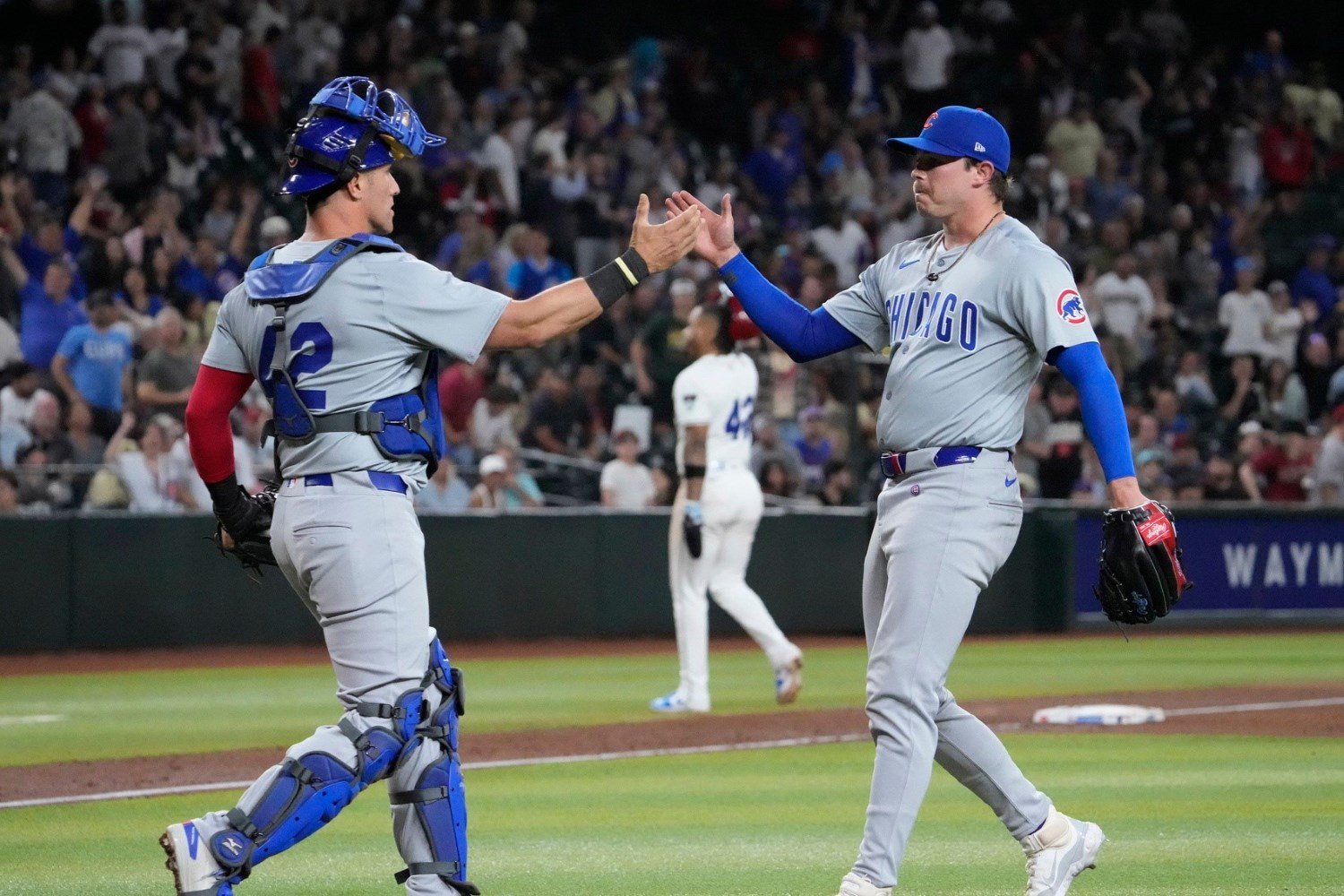
In an exciting comeback win Monday night, the Chicago Cubs did just about everything right. They still required some good luck along the way, but at the end of the game, they sewed up the victory with savvy work by a veteran catcher and a pitcher on the brink. Image courtesy of © Michael Chow/The Republic / USA TODAY NETWORK As we discussed over the weekend, Keegan Thompson didn't go down to Iowa this spring and magically ameliorate all the problems that plagued him in 2023. On the contrary, his performance data suggests that he's further from regaining high-end big-league stuff than ever. His first two appearances since being called up have been mightily encouraging, though, and whereas the first was easy to dismiss (low leverage, low stress, bad opposing offense), Monday night's win was much more difficult a test. The Diamondbacks are a tough team to get out, especially when there's a runner in scoring position whom you can't afford to allow to score. They don't swing and miss much, and have enough patience to force you into the strike zone. When Thompson entered the game in the bottom of the 10th Monday, that was the task he faced: keep a would-be comeback alive, with zero margin for error. Fortunately for him, there is a secret antidote to teams with good contact skills and patience, in extra innings: half of that skill set evaporates. Maybe it's the bizarreness of the artificial baserunner who starts each inning on base. Maybe it's just anxiety and an undue rush to finish off an opponent. One way or another, though, when the game goes past its usual stopping point, everyone's strike zone gets bigger. Though listed as "10," the rightmost entry above actually represents all extra frames. Hitters get antsy and chase bad pitches at a significantly higher rate under the pressure of an extra-inning game. As Bleacher Nation noted on Twitter Tuesday morning, Thompson and Yan Gomes seized upon that vulnerability and induced some bad swings from the Diamondbacks, helping the team hold onto the one-run lead they scratched out in the top of the 11th. I'm not sure that, had the situation demanded hammering away within the zone, Thompson could have done so successfully. He was, delightfully and somewhat stunningly, back up to 94 miles per hour last night, after sitting 90-91 in his appearances in Iowa. Maybe his stuff has been unlocked again, through some mechanical tweak or some major mental breakthrough. For now, though, it's healthy to maintain some skepticism of Thompson. The genius in his appearance Monday night, especially in his second inning of work, was in not trying to dominate within the zone. The credit for that call can be divided evenly between Thompson and Gomes, perhaps, but the credit for executing it so well goes mostly to Thompson. This is a road map to success for other middle relievers thrust into dangerous extra-inning situations: take advantage of a global hyper-aggressiveness that sets in when the Manfred Man takes his lead off second. Looking forward, too, we'll want to watch Thompson's velocity closely. Throwing in the mid-90s is essential to his effectiveness. When he dipped down to barely bumping 92 late last season and opened his Triple-A campaign the same way in 2024, there was cause for major concern. Perhaps he was sandbagging a little, rather than risk injury in the minor leagues. Perhaps he and Tommy Hottovy found something in a side session upon his return to the team last week. Either way, if he starts throwing 94 on a regular basis again, Thompson has a chance to resurrect his career. If he can take advantage of hitters' aggressiveness as well as he did Monday night, that goes double. The pitching-thin Cubs could benefit hugely from a Thompson revival. View full article
-
 As we discussed over the weekend, Keegan Thompson didn't go down to Iowa this spring and magically ameliorate all the problems that plagued him in 2023. On the contrary, his performance data suggests that he's further from regaining high-end big-league stuff than ever. His first two appearances since being called up have been mightily encouraging, though, and whereas the first was easy to dismiss (low leverage, low stress, bad opposing offense), Monday night's win was much more difficult a test. The Diamondbacks are a tough team to get out, especially when there's a runner in scoring position whom you can't afford to allow to score. They don't swing and miss much, and have enough patience to force you into the strike zone. When Thompson entered the game in the bottom of the 10th Monday, that was the task he faced: keep a would-be comeback alive, with zero margin for error. Fortunately for him, there is a secret antidote to teams with good contact skills and patience, in extra innings: half of that skill set evaporates. Maybe it's the bizarreness of the artificial baserunner who starts each inning on base. Maybe it's just anxiety and an undue rush to finish off an opponent. One way or another, though, when the game goes past its usual stopping point, everyone's strike zone gets bigger. Though listed as "10," the rightmost entry above actually represents all extra frames. Hitters get antsy and chase bad pitches at a significantly higher rate under the pressure of an extra-inning game. As Bleacher Nation noted on Twitter Tuesday morning, Thompson and Yan Gomes seized upon that vulnerability and induced some bad swings from the Diamondbacks, helping the team hold onto the one-run lead they scratched out in the top of the 11th. I'm not sure that, had the situation demanded hammering away within the zone, Thompson could have done so successfully. He was, delightfully and somewhat stunningly, back up to 94 miles per hour last night, after sitting 90-91 in his appearances in Iowa. Maybe his stuff has been unlocked again, through some mechanical tweak or some major mental breakthrough. For now, though, it's healthy to maintain some skepticism of Thompson. The genius in his appearance Monday night, especially in his second inning of work, was in not trying to dominate within the zone. The credit for that call can be divided evenly between Thompson and Gomes, perhaps, but the credit for executing it so well goes mostly to Thompson. This is a road map to success for other middle relievers thrust into dangerous extra-inning situations: take advantage of a global hyper-aggressiveness that sets in when the Manfred Man takes his lead off second. Looking forward, too, we'll want to watch Thompson's velocity closely. Throwing in the mid-90s is essential to his effectiveness. When he dipped down to barely bumping 92 late last season and opened his Triple-A campaign the same way in 2024, there was cause for major concern. Perhaps he was sandbagging a little, rather than risk injury in the minor leagues. Perhaps he and Tommy Hottovy found something in a side session upon his return to the team last week. Either way, if he starts throwing 94 on a regular basis again, Thompson has a chance to resurrect his career. If he can take advantage of hitters' aggressiveness as well as he did Monday night, that goes double. The pitching-thin Cubs could benefit hugely from a Thompson revival.
 -
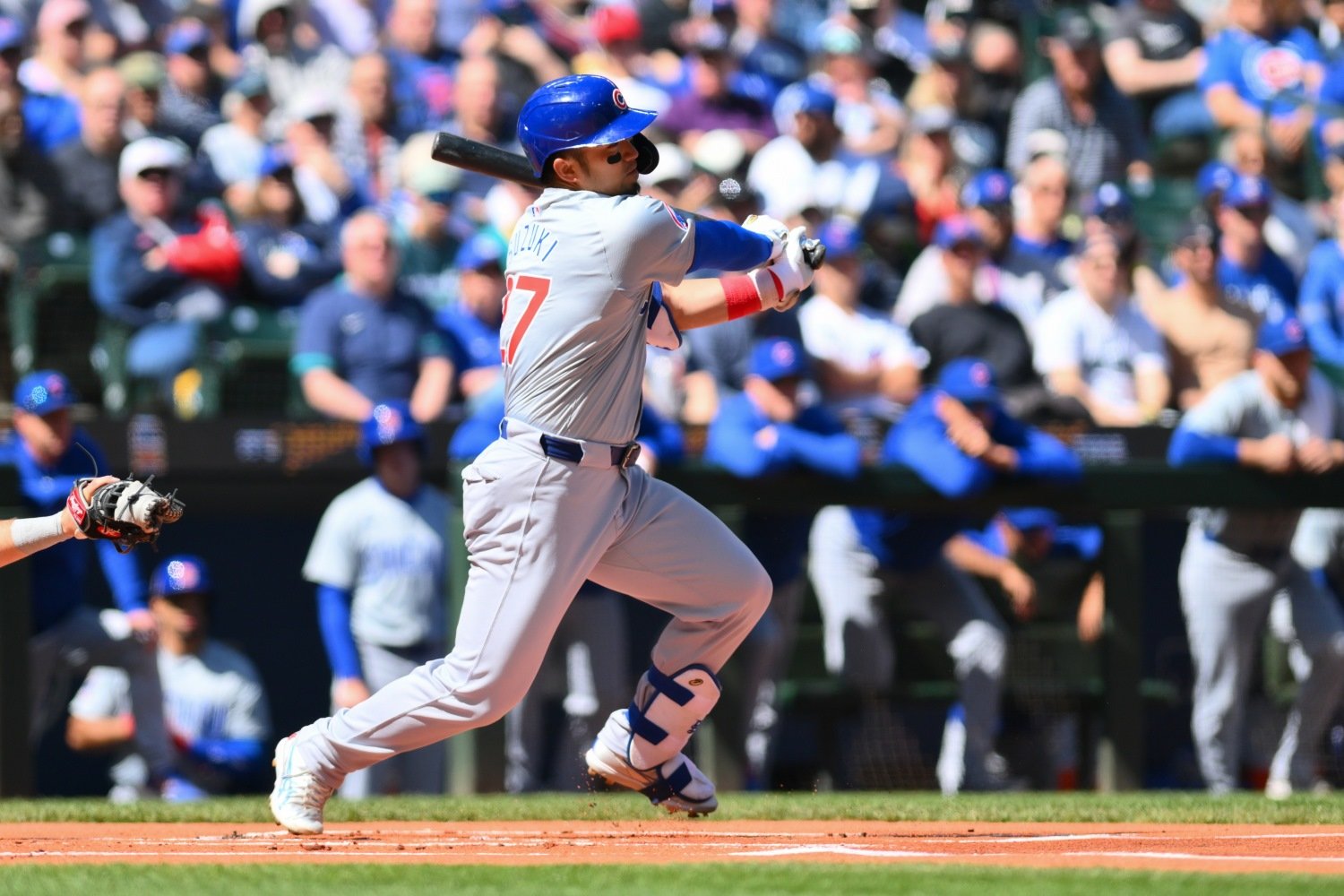 It felt ominous, early Monday morning, when Jesse Rogers reported that the Cubs were calling up outfielder Alexander Canario to meet the team in Arizona. Canario is off to a decent start with the Triple-A Iowa Cubs, but he wasn't first in line for a promotion based purely on performance. If the team only wanted to lengthen or reshape its bench, rehabbing veteran Patrick Wisdom would have been reinstated from his assignment to the I-Cubs. That's still coming, but it will wait a day or two. This can't. Seiya Suzuki suffered a strained right oblique, and has been placed on the 10-day injured list. Canario was the call-up, then, because the Cubs specifically need an outfielder to stop the gap left by Suzuki's absence. The good news is that, in Canario, they have what they hope will be a viable big-league corner outfielder, and that (unlike last year, when David Ross tried to patch similar holes by starting Wisdom, Miles Mastrobuoni, and Trey Mancini in right field) Craig Counsell recognized the need for a legitimate replacement for Suzuki. The very, very bad news, of course, is that Canario isn't nearly an adequate replacement for the Japanese star, who was the everyday No. 2 hitter and most well-rounded offensive threat the team had. Last year, a similar injury to his other side shelved Suzuki for nearly six weeks, but that was early in spring training, when teams are likely to slow-play treatment of such maladies a bit more. Over the last four years, the average time missed for oblique strains is about a week less than that, around 34 days. That could put Suzuki back in the lineup in time for a crucial stretch in mid- and late May, when the Cubs welcome in Atlanta and then go on a Memorial Day road trip to St. Louis and Milwaukee. Still, it's an excruciating loss, for however long it lasts. The team will be much more dependent, now, on Ian Happ, Cody Bellinger, Christopher Morel, and Michael Busch, the latter of whom is one candidate to slide up in the batting order by more than one spot in response to this shift. Canario figures to platoon with Mike Tauchman in right field for the time being. You have to think the Cubs would have liked to be in a position to call up Pete Crow-Armstrong on this occasion, sliding Bellinger over to right field. Crow-Armstrong is off to a manically aggressive start at the plate, though, and doesn't look like a credible big-league hitter right now. Given the offense the Cubs need from anyone tasked with replacing Suzuki, that made Crow-Armstrong a non-option here. It does remain possible, of course, that he'll make a couple of key adjustments and be ready to step into the void before Suzuki is ready to return. In the meantime, this is Canario's chance to shine. How hopeful are you that the Cubs can survive this loss? What do you want to see Counsell do to manage the situation? Join the discusssion with a comment below.
- 2 comments
-
- 1
-
-
- seiya suzuki
- cody bellinger
- (and 3 more)
-
Halfway through a successful but fragile-feeling April, the Chicago Cubs have to weather a major shakeup in their lineup. Their star right fielder (and perhaps their best overall hitter) will be gone for a while. Image courtesy of © Steven Bisig-USA TODAY Sports It felt ominous, early Monday morning, when Jesse Rogers reported that the Cubs were calling up outfielder Alexander Canario to meet the team in Arizona. Canario is off to a decent start with the Triple-A Iowa Cubs, but he wasn't first in line for a promotion based purely on performance. If the team only wanted to lengthen or reshape its bench, rehabbing veteran Patrick Wisdom would have been reinstated from his assignment to the I-Cubs. That's still coming, but it will wait a day or two. This can't. Seiya Suzuki suffered a strained right oblique, and has been placed on the 10-day injured list. Canario was the call-up, then, because the Cubs specifically need an outfielder to stop the gap left by Suzuki's absence. The good news is that, in Canario, they have what they hope will be a viable big-league corner outfielder, and that (unlike last year, when David Ross tried to patch similar holes by starting Wisdom, Miles Mastrobuoni, and Trey Mancini in right field) Craig Counsell recognized the need for a legitimate replacement for Suzuki. The very, very bad news, of course, is that Canario isn't nearly an adequate replacement for the Japanese star, who was the everyday No. 2 hitter and most well-rounded offensive threat the team had. Last year, a similar injury to his other side shelved Suzuki for nearly six weeks, but that was early in spring training, when teams are likely to slow-play treatment of such maladies a bit more. Over the last four years, the average time missed for oblique strains is about a week less than that, around 34 days. That could put Suzuki back in the lineup in time for a crucial stretch in mid- and late May, when the Cubs welcome in Atlanta and then go on a Memorial Day road trip to St. Louis and Milwaukee. Still, it's an excruciating loss, for however long it lasts. The team will be much more dependent, now, on Ian Happ, Cody Bellinger, Christopher Morel, and Michael Busch, the latter of whom is one candidate to slide up in the batting order by more than one spot in response to this shift. Canario figures to platoon with Mike Tauchman in right field for the time being. You have to think the Cubs would have liked to be in a position to call up Pete Crow-Armstrong on this occasion, sliding Bellinger over to right field. Crow-Armstrong is off to a manically aggressive start at the plate, though, and doesn't look like a credible big-league hitter right now. Given the offense the Cubs need from anyone tasked with replacing Suzuki, that made Crow-Armstrong a non-option here. It does remain possible, of course, that he'll make a couple of key adjustments and be ready to step into the void before Suzuki is ready to return. In the meantime, this is Canario's chance to shine. How hopeful are you that the Cubs can survive this loss? What do you want to see Counsell do to manage the situation? Join the discusssion with a comment below. View full article
-
The Chicago Cubs announced Sunday that Ben Brown will make his second career start Monday night in Arizona. Brown has been a revelation for the starter-needy Cubs this April, but can he hold up? That delays any answer as to whether Brown will stay in the rotation after Taillon is reinstated on a full-time basis. The Cubs could go to a six-man rotation, to maximize the likelihood of keeping their mix of veterans without premium arm strength and youngsters in need of some protection healthy. Alternatively, they could slide Javier Assad to the bullpen, given the versatility he's shown during his brief career and his capacity to give them multiple innings in a contest in relief. Brown is the other candidate for demotion, either to the pen or back to Triple-A Iowa. After what he showed Tuesday, though, another strong start Monday would make that an awfully tough call. In a start confined to just 77 total offerings by the team's knowledge that Brown wasn't fully stretched out to pitch in a traditional version of that role, Brown threw 37 pitches in excess of 96 miles per hour, and 27 north of 97 MPH. He's also a pitcher who achieves above-average extension, covering just under 7 feet of the 60 feet, six inches between mound and plate before releasing the ball, on average. That's a rare and dazzling combination of sheer power and the ability to sustain it throughout an appearance. How rare? Over the last six-plus seasons (the ones for which we have reliable data on exactly where a hurler released the ball), only 32 pitchers have met one of the thresholds set by those velocity standards: 35 or more heaters at 96+, or 20 or more at 97+, all with at least 6.7 feet of extension. It's a list populated densely by stars and award winners. The four pitchers who have done it most often during that period are Zack Wheeler, Spencer Strider, Jacob deGrom, and Tyler Glasnow. That indicates the level of intensity of stuff we're talking about, and the astronomical contracts each of them have signed reflect the value the game places on this kind of skill set. As I wrote last week, too, Brown's curveball is no minor secondary weapon. His upside is impossible to ignore. I bet you also can't bring yourself to ignore something else, though--something all four of the names above have in common, and many more members of that fraternity of 32, besides. Strider had Tommy John surgery late last week, leaving a second scar on his elbow after he got the same procedure in college in 2019. He's one of 17 on this list of 32 who have had that procedure--including Brown, who had it in 2019, too, after he'd already signed with the Phillies and turned pro. Pitcher TJS Year TJS Age Zack Wheeler 2015 24 Spencer Strider 2019 20* Jacob deGrom 2011 23 Tyler Glasnow 2021 27 Bobby Miller - - Grayson Rodriguez - - Logan Gilbert - - Shohei Ohtani 2018 24* Blake Snell - - Eury Pérez 2024 20 MacKenzie Gore - - Johan Oviedo 2024 25 Gavin Williams - - Shane McClanahan 2015 18* Michael Kopech 2018 22 Carlos Hernández - - Gerrit Cole - - Alex Meyer - - Garrett Crochet 2022 23 Luis L. Ortiz - - Mason Miller - - Brandon Woodruff - - Luis Gil 2022 24 Drew Rasmussen 2016 20* Nathan Eovaldi 2007 17* Jared Jones - - Joe Boyle - - Jordan Hicks 2019 22 Tylor Megill - - Dustin May 2021 23* Noah Syndergaard 2020 27 Ben Brown 2019 19 Over the last few years, the share of all MLB pitchers who have undergone Tommy John surgery at least once has crept from just under one-third to just over that mark. That's alarming enough, but the rate in this subset of power arms is north of 50 percent. More concerning, still, is the fact that it's easy to imagine the number rising from here. Brandon Woodruff, Gerrit Cole, and Blake Snell head a group of veterans who appear to have come through this much flamethrowing intact, and who are relatively unlikely to succumb now, but there are a number of young hurlers here who are still very much in the injury nexus: they're throwing hard, they've done it a large number of times even within individual games, and their elbow ligaments are (in all likelihood, based on everything we know about the anatomy of that part of the body) not yet fully developed. This list could be pushing twice the global injury rate, within a year. One more piece of bad news, before we take a step back to examine this through less alarmist lenses: Six of the 17 players listed here who have had the surgery once needed it again, later in their careers. Brown, who (like Strider, Drew Rasmussen, Nathan Eovaldi, Shane McClanahan, and Eury Perez) had the surgery at a very young age, is hardly out of the woods. Of the other five guys who throw this hard and had surgery at or before age 20, the only ones who haven't required a revision are Pérez (the inclusion of whom is almost black humor, because he just had the surgery this month) and Brown. Ok, now for that promised wider angle. Obviously, throwing the way Brown does--with all that extension, straining his limbs to their utmost, and with such explosive (both in performance terms and, alas, in terms of health risk) speed--comes with enormous risk. At the same time, it's almost a surefire way to be successful in the modern game, and there's almost no other surefire way. The Cubs have, for much of the last decade, been less exposed to the Tommy John epidemic than most of the rest of the league, but that's been largely because they don't throw hard, don't miss bats, and lean on amalgamating traits to prevent enough runs to win. They've needed great defense, great depth, and great pitch framing to win games ever since Theo Epstein and Jed Hoyer pulled into town. For the first time, there are some signs that that might not be true anymore. Brown is the tip of the spear, but they've also had some very hard throwers in the bullpen recently, and they're developing a pipeline of pitchers who look more like Brown than (for instance) Kyle Hendricks, who has had some injury issues of his own but was never in much danger of shredding his UCL, including top prospect Cade Horton. They've tried to resist the pull toward dangerous velocity for years, while still assembling competitive pitching staffs. It's proved impossible, or at least prohibitively difficult, and they're now embracing a bit more risk. Where do they now draw the line? Can they coach the likes of Brown, Horton, and other electric arms up so well that they can dominate opponents without tendon-shearing violence? Can they balance investment in that kind of pitcher with commitment to the kind of touch of which Hendricks, Jon Lester, Justin Steele and others have proved some efficacy? Or do they have no choice, if they want to get back over the hump and into World Series consideration, but to risk running through pitchers with the cold purposefulness of a surgeon's scalpel, the way the Astros and Dodgers (among others) have been doing for a decade? If there were easy answers to these questions, we'd already have them. These types of conversations are happening in dugouts, front offices, and agents' offices throughout the baseball world right now, but the right answer for each team is not a destination at which to arrive; it's just a checkpoint. By the time you slide into one base, safe and sure enough of your approach to dust yourself off and look around, the ball is in play again, and you have to be running. The Marlins tried desperately to shield Pérez from the buzzsaw inside his own arm, with radical limitations on his workload. It didn't work. The A's have moved Mason Miller to the bullpen, where they hope all that velocity won't have the same cumulative impact. Soon, that will become a viable choice for the Cubs, though it'd be a tough one to make. The Cubs face a dilemma with Brown, because his elbow is a bomb that has gone off once before, and it could well explode again. They have a responsibility to him, to protect his arm as best they can as he nears the point where he can make real money in the game, but they have one to themselves and their fans, too. It's an agonizing set of discussions, but one we can no longer avoid, even between surgery announcements. View full article
-
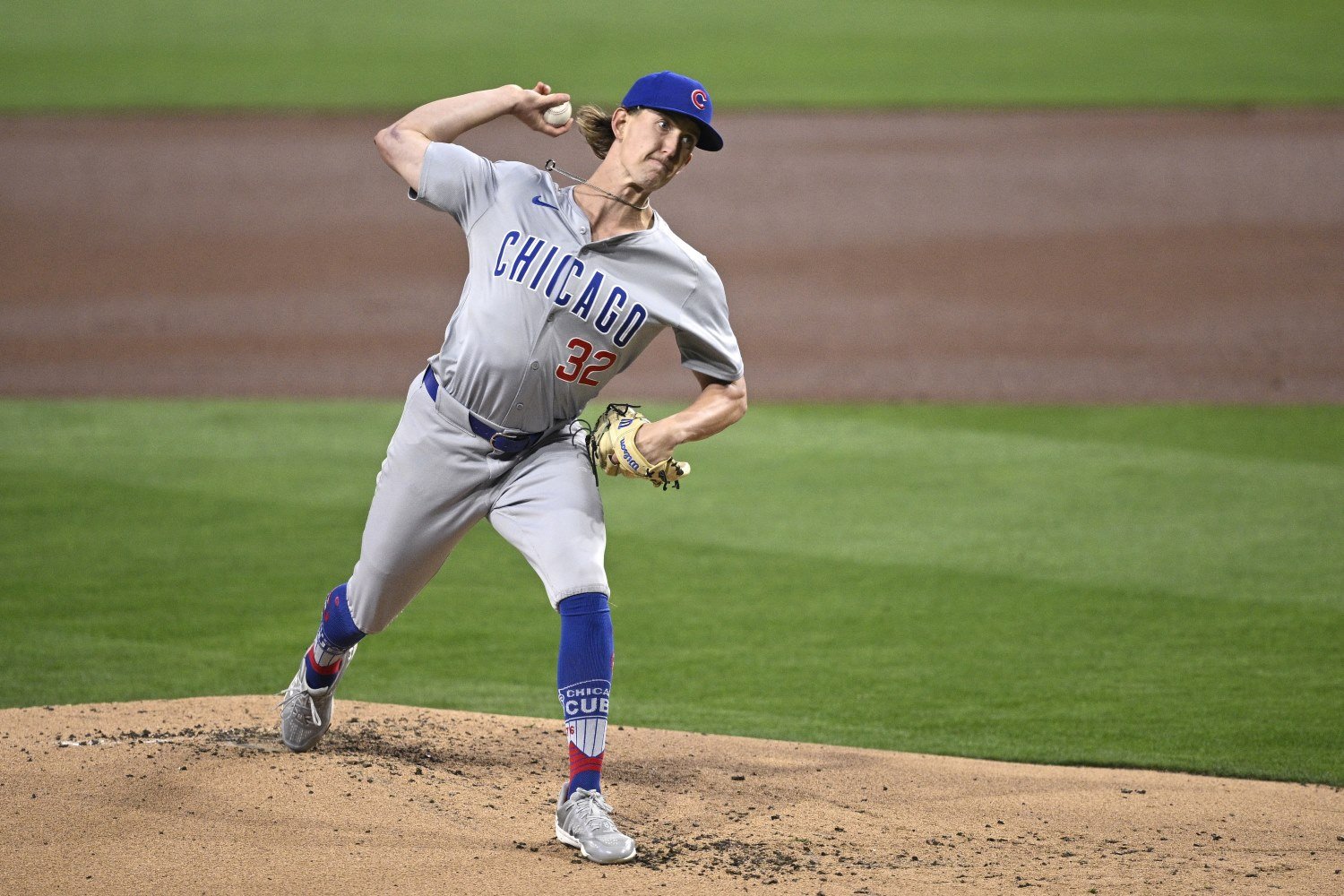 Although Jameson Taillon is right on the cusp of a return to the Cubs' starting rotation, the team won't turn to their veteran workhorse during their visit to the Arizona Diamondbacks to close out a nine-game road trip. Instead, they'll maintain the rotation established at the start of the West Coast swing, with Ben Brown, Kyle Hendricks, and Jordan Wicks working in the same sequence in which they appeared in San Diego and (in Wicks's case) Seattle last week. That delays any answer as to whether Brown will stay in the rotation after Taillon is reinstated on a full-time basis. The Cubs could go to a six-man rotation, to maximize the likelihood of keeping their mix of veterans without premium arm strength and youngsters in need of some protection healthy. Alternatively, they could slide Javier Assad to the bullpen, given the versatility he's shown during his brief career and his capacity to give them multiple innings in a contest in relief. Brown is the other candidate for demotion, either to the pen or back to Triple-A Iowa. After what he showed Tuesday, though, another strong start Monday would make that an awfully tough call. In a start confined to just 77 total offerings by the team's knowledge that Brown wasn't fully stretched out to pitch in a traditional version of that role, Brown threw 37 pitches in excess of 96 miles per hour, and 27 north of 97 MPH. He's also a pitcher who achieves above-average extension, covering just under 7 feet of the 60 feet, six inches between mound and plate before releasing the ball, on average. That's a rare and dazzling combination of sheer power and the ability to sustain it throughout an appearance. How rare? Over the last six-plus seasons (the ones for which we have reliable data on exactly where a hurler released the ball), only 32 pitchers have met one of the thresholds set by those velocity standards: 35 or more heaters at 96+, or 20 or more at 97+, all with at least 6.7 feet of extension. It's a list populated densely by stars and award winners. The four pitchers who have done it most often during that period are Zack Wheeler, Spencer Strider, Jacob deGrom, and Tyler Glasnow. That indicates the level of intensity of stuff we're talking about, and the astronomical contracts each of them have signed reflect the value the game places on this kind of skill set. As I wrote last week, too, Brown's curveball is no minor secondary weapon. His upside is impossible to ignore. I bet you also can't bring yourself to ignore something else, though--something all four of the names above have in common, and many more members of that fraternity of 32, besides. Strider had Tommy John surgery late last week, leaving a second scar on his elbow after he got the same procedure in college in 2019. He's one of 17 on this list of 32 who have had that procedure--including Brown, who had it in 2019, too, after he'd already signed with the Phillies and turned pro. Pitcher TJS Year TJS Age Zack Wheeler 2015 24 Spencer Strider 2019 20* Jacob deGrom 2011 23 Tyler Glasnow 2021 27 Bobby Miller - - Grayson Rodriguez - - Logan Gilbert - - Shohei Ohtani 2018 24* Blake Snell - - Eury Pérez 2024 20 MacKenzie Gore - - Johan Oviedo 2024 25 Gavin Williams - - Shane McClanahan 2015 18* Michael Kopech 2018 22 Carlos Hernández - - Gerrit Cole - - Alex Meyer - - Garrett Crochet 2022 23 Luis L. Ortiz - - Mason Miller - - Brandon Woodruff - - Luis Gil 2022 24 Drew Rasmussen 2016 20* Nathan Eovaldi 2007 17* Jared Jones - - Joe Boyle - - Jordan Hicks 2019 22 Tylor Megill - - Dustin May 2021 23* Noah Syndergaard 2020 27 Ben Brown 2019 19 Over the last few years, the share of all MLB pitchers who have undergone Tommy John surgery at least once has crept from just under one-third to just over that mark. That's alarming enough, but the rate in this subset of power arms is north of 50 percent. More concerning, still, is the fact that it's easy to imagine the number rising from here. Brandon Woodruff, Gerrit Cole, and Blake Snell head a group of veterans who appear to have come through this much flamethrowing intact, and who are relatively unlikely to succumb now, but there are a number of young hurlers here who are still very much in the injury nexus: they're throwing hard, they've done it a large number of times even within individual games, and their elbow ligaments are (in all likelihood, based on everything we know about the anatomy of that part of the body) not yet fully developed. This list could be pushing twice the global injury rate, within a year. One more piece of bad news, before we take a step back to examine this through less alarmist lenses: Six of the 17 players listed here who have had the surgery once needed it again, later in their careers. Brown, who (like Strider, Drew Rasmussen, Nathan Eovaldi, Shane McClanahan, and Eury Perez) had the surgery at a very young age, is hardly out of the woods. Of the other five guys who throw this hard and had surgery at or before age 20, the only ones who haven't required a revision are Pérez (the inclusion of whom is almost black humor, because he just had the surgery this month) and Brown. Ok, now for that promised wider angle. Obviously, throwing the way Brown does--with all that extension, straining his limbs to their utmost, and with such explosive (both in performance terms and, alas, in terms of health risk) speed--comes with enormous risk. At the same time, it's almost a surefire way to be successful in the modern game, and there's almost no other surefire way. The Cubs have, for much of the last decade, been less exposed to the Tommy John epidemic than most of the rest of the league, but that's been largely because they don't throw hard, don't miss bats, and lean on amalgamating traits to prevent enough runs to win. They've needed great defense, great depth, and great pitch framing to win games ever since Theo Epstein and Jed Hoyer pulled into town. For the first time, there are some signs that that might not be true anymore. Brown is the tip of the spear, but they've also had some very hard throwers in the bullpen recently, and they're developing a pipeline of pitchers who look more like Brown than (for instance) Kyle Hendricks, who has had some injury issues of his own but was never in much danger of shredding his UCL, including top prospect Cade Horton. They've tried to resist the pull toward dangerous velocity for years, while still assembling competitive pitching staffs. It's proved impossible, or at least prohibitively difficult, and they're now embracing a bit more risk. Where do they now draw the line? Can they coach the likes of Brown, Horton, and other electric arms up so well that they can dominate opponents without tendon-shearing violence? Can they balance investment in that kind of pitcher with commitment to the kind of touch of which Hendricks, Jon Lester, Justin Steele and others have proved some efficacy? Or do they have no choice, if they want to get back over the hump and into World Series consideration, but to risk running through pitchers with the cold purposefulness of a surgeon's scalpel, the way the Astros and Dodgers (among others) have been doing for a decade? If there were easy answers to these questions, we'd already have them. These types of conversations are happening in dugouts, front offices, and agents' offices throughout the baseball world right now, but the right answer for each team is not a destination at which to arrive; it's just a checkpoint. By the time you slide into one base, safe and sure enough of your approach to dust yourself off and look around, the ball is in play again, and you have to be running. The Marlins tried desperately to shield Pérez from the buzzsaw inside his own arm, with radical limitations on his workload. It didn't work. The A's have moved Mason Miller to the bullpen, where they hope all that velocity won't have the same cumulative impact. Soon, that will become a viable choice for the Cubs, though it'd be a tough one to make. The Cubs face a dilemma with Brown, because his elbow is a bomb that has gone off once before, and it could well explode again. They have a responsibility to him, to protect his arm as best they can as he nears the point where he can make real money in the game, but they have one to themselves and their fans, too. It's an agonizing set of discussions, but one we can no longer avoid, even between surgery announcements.
 -
The Chicago Cubs retained the best hitter from their 2023 team, but didn't bring in the supplementary slugger for whom fans pined throughout the winter. As it turns out, they might have a budding monster who justifies that inaction. Image courtesy of © Orlando Ramirez-USA TODAY Sports The more we come to understand hitting, the more clearly we come to see that it's not just about timing, the way the first guardians of the craft told us it was. It is, as the iconoclastic but utterly brilliant Ted Williams started telling people 75 years ago, about getting on plane with the incoming pitch. That's why pitchers, in the modern game, don't just focus on disrupting timing. They're also trying to force a hitter to attack on the wrong plane. Teams know this, too. Famously, the 2021 San Francisco Giants ran platoons based as much on their hitters' swing planes and the repertoire of the opposing starter as on handedness. Less famously, plenty of other teams do similar matchup work. Some swings are well-built to attack the high fastball. Others are great at handling the plunging breaking ball. The best swings are at least somewhat adaptable, of course. A great hitter knows how to manipulate his barrel without giving up all of his bat speed, especially when he can anticipate a given pitch and/or location based on count or scouting report. Most hitters have a bat path wired into their muscle memory, though, and pitchers' focus now is on exploiting that wiring. In his first two seasons in MLB, Christopher Morel had an exploitable swing, because while he generated plenty of bat speed to be dangerous when he met the ball just right, he often entered the hitting zone with the bat too flat or even angled downward. That led to a surfeit of hard-hit but misaligned batted balls: he was in the league's 16th percentile for Sweet Spot % (the share of batted balls clustered in the most valuable band of launch angles) in 2022 and the 8th percentile in 2023. His average launch angle across those two seasons was 10.8 degrees, which isn't bad, but it reflects that tendency toward topping and/or tapping the ball when he was caught off-balance. In this way, his plane problem did become a timing problem. With a swing as flat as the one he was cutting loose, he had to time the pitch just right to make the kind of thunderous contact of which he's capable. Here's Morel last May, swinging at a slider with a good piece of the plate, but which was swerving away from him. Morel Whiff May 23.mp4 Last season, he did a lot of that. Morel tries to drop the barrel below his hands and find the ball, here, but his actual swing path just doesn't get beneath the flight path of the ball and up into its plane until far too close to the theoretical contact point. Therefore, absent perfect timing, he was doomed to whiff, and that's just what he did. A daunting, dragging 43.9 percent of his swings against breaking stuff last year ended in nothing but a whoosh and the thud of ball into catcher's mitt. Now, consider this pitch from last week against the Rockies, when Morel saw a similar slider on the outer third of the plate. Morel Fly Ball April 24.mp4 The choice of a flyout here was a conscious one. We're not trying to evaluate Morel's perfect swings, here. This is about what happens when he's imperfect, It's about the extra margin for error he's creating for himself. Watch the barrel of his bat as he starts each swing. In 2023, the stick took a steep downward angle into the back end of the hitting zone, and then he was able to correct it upward only slightly as he flashed it through that space. This season, his barrel drops and moves backward, taking up more space behind the zone and entering it at a positive angle, working up toward the incoming pitch. The change looks very subtle, especially from the center-field camera, but it's an important one. That the barrel of one's bat can or should move backward at the initiation of a swing is still highly controversial in hitting circles. Some coaches swear by it, and others swear it's a recipe for being disastrously rushed, late, or loopy. In truth, of course, much depends on the person swinging the lumber. Aaron Judge is a disciple of one iconoclastic coach who avers carrying the barrel backward, and it's worked out ok for him. Morel, like Judge, belongs to the special brotherhood of players who are strong and twitchy enough to generate sufficient bat speed to get away with going backward before moving forward. Watch both clips again, and notice that that move (while seemingly forcing him to hurry to get the barrel to the zone on time) creates strength and tension throughout the rest of the swing, speeding up his moves without compromising his control of them. By whatever mechanical means a batter chooses, getting on plane early this way is hugely valuable. The hitters who give you that tingle on the back of your neck when you see them--Mike Trout is the best example of his generation--specialize in getting the bat moving so neatly in line with the incoming baseball that the collision feels almost pristine. Anyone who has played the game knows the unmatchable feeling of perfect contact. Just watching Trout square up a ball can give one a frisson of that, and Morel's swing tweak has made him a bit more that way, too. Though the full suite of tools isn't yet available, Baseball Savant will soon make bat tracking data available on a much bigger scale. In the meantime, we have a few peeks into what it looks like and what it can tell us, because the MLB App has been generating data visualizations with swing-tracking technology on some home runs since last season. Let's use snapshots of these to further clarify what Morel is doing differently. Here's his bat path from a home run at the very end of last season, along with some of the data on it. Morel crashed into this ball with tremendous force, and happened to catch it above the center of the barrel by the perfect fraction to lift it out of the park. That bat path is very flat, though, all the way from its entry into the zone through contact. Here's the same tracking data for the homer he hit in Texas on Easter Sunday this year. You can see just from the single-number summary that his attack angle is slightly steeper, but go even further. Note the sweep of his bat from the back side of the hitting zone through the contact point. Morel was on plane early. That meant less need to manipulate the barrel and more bat speed at the time of the collision between wood and leather. His margin for error--the window within which he might have slightly missed, but hit a single or a double or a higher home run--is much wider here than on the ball he launched last September. Throughout baseball history, pitchers have tried to frustrate hitters who showed a knack for getting on plane. Sandy Koufax was great, more than anything else, because he paired a fastball that rode high and hard at the top of the strike zone with a plunging, high-spin curveball that entered the zone at a viciously steep angle. His spiritual ancestor, Clayton Kershaw, has built his own Hall of Fame career on the same foundation, with a filthy slider as his answer to the great sophistication and athleticism of the hitters he's had to face, relative to those Koufax saw. Unique, very flat and/or very steep vertical approach angles are the best way to frustrate hitters trying to square the ball up and lift it consistently, which is why VAA has become all the rage among pitching nerds. Indeed, batters had the most success last year on pitches in the middle range of VAA--those that, whether because their primary movement vector was horizontal or because the pitcher couldn't execute either a hard, flat fastball or a steeper offspeed pitch, entered the zone right around the angle at which most bats come through it. Last year, Morel had most of his success in that league-wide sweet spot, because his swing happened to have that same flat, unremarkable plane. On fairly steep or very flat pitches, though, he was helpless. The samples for 2024 are too small to set too much store by the differences, but the differences are exactly what you'd think they would be--only even more stark. VAA 2023 wOBA 2023 Swing% 2023 Miss% 2024 wOBA 2024 Swing% 2024 Miss% Under -10 degrees 0.234 41.30% 50.00% 0.311 58.30% 57.10% -10 to <-9 degrees 0.226 42.00% 60.30% 1.569 25.00% 0.00% -9 to <-8 degrees 0.178 47.10% 51.70% 0.353 37.50% 0.00% -8 to <-7 degrees 0.431 55.00% 36.80% 0.357 57.90% 22.70% -7 to <-6 degrees 0.421 53.90% 25.60% 0.398 50.00% 21.40% -6 to <-5 degrees 0.343 53.00% 18.20% 0.147 50.00% 0.00% -5 to <-4 degrees 0.437 57.70% 36.30% 0.754 71.40% 20.00% -4 to <-3 degrees 0.282 32.10% 79.40% 0.696 75.00% 33.30% -3 to <-2 degrees 0.232 14.30% 100.00% - - - -2 to <-1 degrees - 0.00% - - - - -1 to <0 degrees - - - - - - Hitters who get on plane early don't just hit the ball in the air more often (though Morel has, with a 16.4-degree launch angle and his Sweet Spot % up to the 42nd percentile on the young season). They don't just hit the ball harder, thanks to not having to significantly change the direction of their swing on the fly. They also make a lot more contact, and Morel's dramatically reduced whiff rate (across the VAA spectrum) and stellar strikeout rate affirm that. The league will counter-adjust. While Morel has better than halved his whiff rate on breaking pitches this year (to 20%), he still misses plenty often against offspeed stuff, because he's taking such a pull-focused, aggressive overall approach. He's also slightly more vulnerable to the high, flat fastball after making this change to his swing path. Pitchers haven't caught onto that yet. He's seeing fewer fastballs this year, as the league tries to pick on a guy who whiffed so often on breaking balls last year, but they'll eventually force him to cover the top third of the zone more often against heaters, and that will force him to adjust, too. Still, this change is a small thing with big implications. Morel isn't just on a hot streak, seeing the ball well. He's made a concrete change in his swing path and the approach it informs, and he's ahead of the adjustment curve by plenty. Research assistance provided by TruMedia. View full article
- 1 reply
-
- 1
-
-
- christopher morel
- aaron judge
- (and 1 more)
-
How Christopher Morel Has Gotten On Plane and Achieved Liftoff
Matthew Trueblood posted an article in Cubs
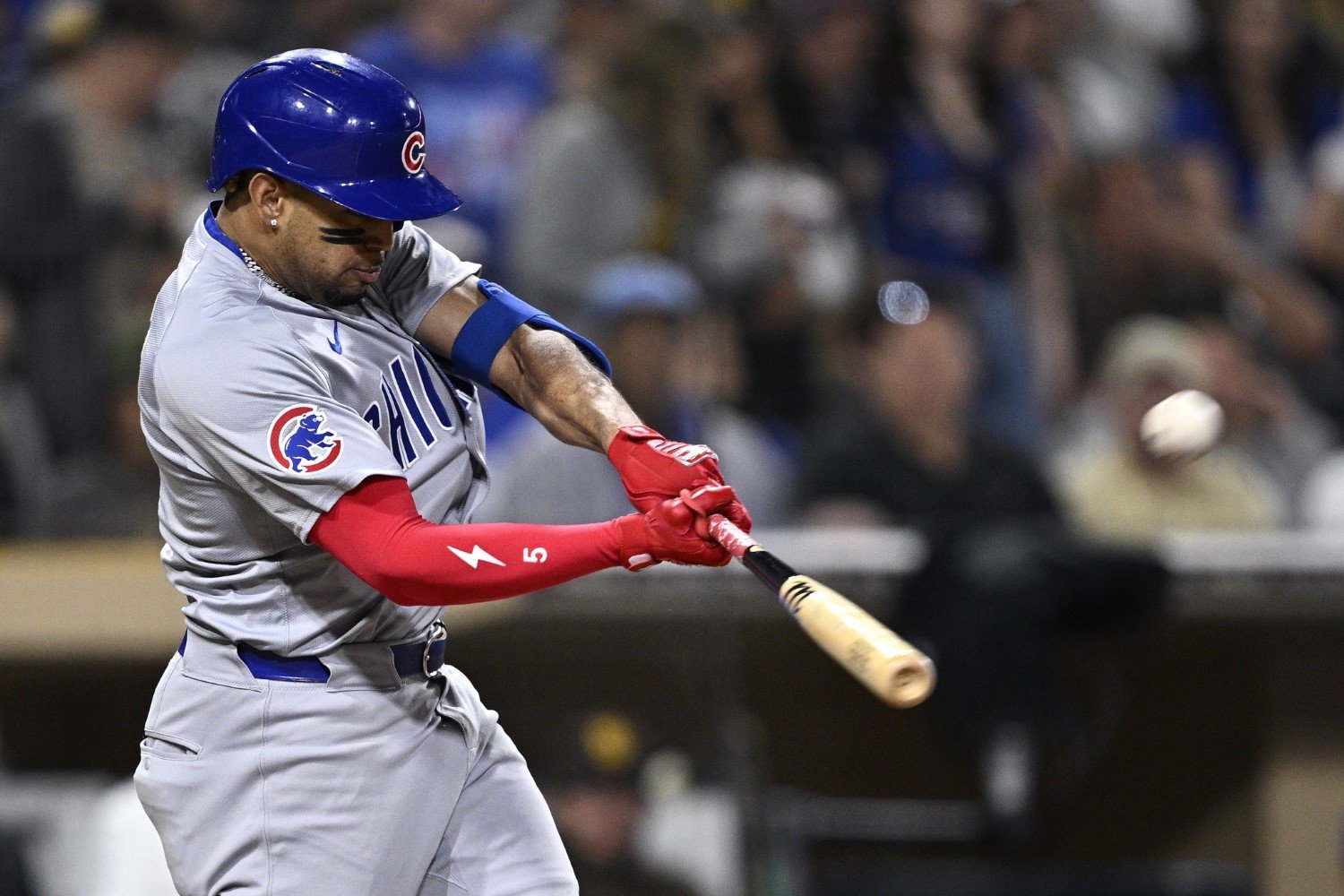 The more we come to understand hitting, the more clearly we come to see that it's not just about timing, the way the first guardians of the craft told us it was. It is, as the iconoclastic but utterly brilliant Ted Williams started telling people 75 years ago, about getting on plane with the incoming pitch. That's why pitchers, in the modern game, don't just focus on disrupting timing. They're also trying to force a hitter to attack on the wrong plane. Teams know this, too. Famously, the 2021 San Francisco Giants ran platoons based as much on their hitters' swing planes and the repertoire of the opposing starter as on handedness. Less famously, plenty of other teams do similar matchup work. Some swings are well-built to attack the high fastball. Others are great at handling the plunging breaking ball. The best swings are at least somewhat adaptable, of course. A great hitter knows how to manipulate his barrel without giving up all of his bat speed, especially when he can anticipate a given pitch and/or location based on count or scouting report. Most hitters have a bat path wired into their muscle memory, though, and pitchers' focus now is on exploiting that wiring. In his first two seasons in MLB, Christopher Morel had an exploitable swing, because while he generated plenty of bat speed to be dangerous when he met the ball just right, he often entered the hitting zone with the bat too flat or even angled downward. That led to a surfeit of hard-hit but misaligned batted balls: he was in the league's 16th percentile for Sweet Spot % (the share of batted balls clustered in the most valuable band of launch angles) in 2022 and the 8th percentile in 2023. His average launch angle across those two seasons was 10.8 degrees, which isn't bad, but it reflects that tendency toward topping and/or tapping the ball when he was caught off-balance. In this way, his plane problem did become a timing problem. With a swing as flat as the one he was cutting loose, he had to time the pitch just right to make the kind of thunderous contact of which he's capable. Here's Morel last May, swinging at a slider with a good piece of the plate, but which was swerving away from him. Morel Whiff May 23.mp4 Last season, he did a lot of that. Morel tries to drop the barrel below his hands and find the ball, here, but his actual swing path just doesn't get beneath the flight path of the ball and up into its plane until far too close to the theoretical contact point. Therefore, absent perfect timing, he was doomed to whiff, and that's just what he did. A daunting, dragging 43.9 percent of his swings against breaking stuff last year ended in nothing but a whoosh and the thud of ball into catcher's mitt. Now, consider this pitch from last week against the Rockies, when Morel saw a similar slider on the outer third of the plate. Morel Fly Ball April 24.mp4 The choice of a flyout here was a conscious one. We're not trying to evaluate Morel's perfect swings, here. This is about what happens when he's imperfect, It's about the extra margin for error he's creating for himself. Watch the barrel of his bat as he starts each swing. In 2023, the stick took a steep downward angle into the back end of the hitting zone, and then he was able to correct it upward only slightly as he flashed it through that space. This season, his barrel drops and moves backward, taking up more space behind the zone and entering it at a positive angle, working up toward the incoming pitch. The change looks very subtle, especially from the center-field camera, but it's an important one. That the barrel of one's bat can or should move backward at the initiation of a swing is still highly controversial in hitting circles. Some coaches swear by it, and others swear it's a recipe for being disastrously rushed, late, or loopy. In truth, of course, much depends on the person swinging the lumber. Aaron Judge is a disciple of one iconoclastic coach who avers carrying the barrel backward, and it's worked out ok for him. Morel, like Judge, belongs to the special brotherhood of players who are strong and twitchy enough to generate sufficient bat speed to get away with going backward before moving forward. Watch both clips again, and notice that that move (while seemingly forcing him to hurry to get the barrel to the zone on time) creates strength and tension throughout the rest of the swing, speeding up his moves without compromising his control of them. By whatever mechanical means a batter chooses, getting on plane early this way is hugely valuable. The hitters who give you that tingle on the back of your neck when you see them--Mike Trout is the best example of his generation--specialize in getting the bat moving so neatly in line with the incoming baseball that the collision feels almost pristine. Anyone who has played the game knows the unmatchable feeling of perfect contact. Just watching Trout square up a ball can give one a frisson of that, and Morel's swing tweak has made him a bit more that way, too. Though the full suite of tools isn't yet available, Baseball Savant will soon make bat tracking data available on a much bigger scale. In the meantime, we have a few peeks into what it looks like and what it can tell us, because the MLB App has been generating data visualizations with swing-tracking technology on some home runs since last season. Let's use snapshots of these to further clarify what Morel is doing differently. Here's his bat path from a home run at the very end of last season, along with some of the data on it. Morel crashed into this ball with tremendous force, and happened to catch it above the center of the barrel by the perfect fraction to lift it out of the park. That bat path is very flat, though, all the way from its entry into the zone through contact. Here's the same tracking data for the homer he hit in Texas on Easter Sunday this year. You can see just from the single-number summary that his attack angle is slightly steeper, but go even further. Note the sweep of his bat from the back side of the hitting zone through the contact point. Morel was on plane early. That meant less need to manipulate the barrel and more bat speed at the time of the collision between wood and leather. His margin for error--the window within which he might have slightly missed, but hit a single or a double or a higher home run--is much wider here than on the ball he launched last September. Throughout baseball history, pitchers have tried to frustrate hitters who showed a knack for getting on plane. Sandy Koufax was great, more than anything else, because he paired a fastball that rode high and hard at the top of the strike zone with a plunging, high-spin curveball that entered the zone at a viciously steep angle. His spiritual ancestor, Clayton Kershaw, has built his own Hall of Fame career on the same foundation, with a filthy slider as his answer to the great sophistication and athleticism of the hitters he's had to face, relative to those Koufax saw. Unique, very flat and/or very steep vertical approach angles are the best way to frustrate hitters trying to square the ball up and lift it consistently, which is why VAA has become all the rage among pitching nerds. Indeed, batters had the most success last year on pitches in the middle range of VAA--those that, whether because their primary movement vector was horizontal or because the pitcher couldn't execute either a hard, flat fastball or a steeper offspeed pitch, entered the zone right around the angle at which most bats come through it. Last year, Morel had most of his success in that league-wide sweet spot, because his swing happened to have that same flat, unremarkable plane. On fairly steep or very flat pitches, though, he was helpless. The samples for 2024 are too small to set too much store by the differences, but the differences are exactly what you'd think they would be--only even more stark. VAA 2023 wOBA 2023 Swing% 2023 Miss% 2024 wOBA 2024 Swing% 2024 Miss% Under -10 degrees 0.234 41.30% 50.00% 0.311 58.30% 57.10% -10 to <-9 degrees 0.226 42.00% 60.30% 1.569 25.00% 0.00% -9 to <-8 degrees 0.178 47.10% 51.70% 0.353 37.50% 0.00% -8 to <-7 degrees 0.431 55.00% 36.80% 0.357 57.90% 22.70% -7 to <-6 degrees 0.421 53.90% 25.60% 0.398 50.00% 21.40% -6 to <-5 degrees 0.343 53.00% 18.20% 0.147 50.00% 0.00% -5 to <-4 degrees 0.437 57.70% 36.30% 0.754 71.40% 20.00% -4 to <-3 degrees 0.282 32.10% 79.40% 0.696 75.00% 33.30% -3 to <-2 degrees 0.232 14.30% 100.00% - - - -2 to <-1 degrees - 0.00% - - - - -1 to <0 degrees - - - - - - Hitters who get on plane early don't just hit the ball in the air more often (though Morel has, with a 16.4-degree launch angle and his Sweet Spot % up to the 42nd percentile on the young season). They don't just hit the ball harder, thanks to not having to significantly change the direction of their swing on the fly. They also make a lot more contact, and Morel's dramatically reduced whiff rate (across the VAA spectrum) and stellar strikeout rate affirm that. The league will counter-adjust. While Morel has better than halved his whiff rate on breaking pitches this year (to 20%), he still misses plenty often against offspeed stuff, because he's taking such a pull-focused, aggressive overall approach. He's also slightly more vulnerable to the high, flat fastball after making this change to his swing path. Pitchers haven't caught onto that yet. He's seeing fewer fastballs this year, as the league tries to pick on a guy who whiffed so often on breaking balls last year, but they'll eventually force him to cover the top third of the zone more often against heaters, and that will force him to adjust, too. Still, this change is a small thing with big implications. Morel isn't just on a hot streak, seeing the ball well. He's made a concrete change in his swing path and the approach it informs, and he's ahead of the adjustment curve by plenty. Research assistance provided by TruMedia.
- 1 comment
-
- 1
-
-
- christopher morel
- aaron judge
- (and 1 more)
-
With two of the veterans on whom they were relying heavily to bear the innings load in the starting rotation shelved, the Chicago Cubs turn to a rookie Tuesday night in need of something great. With a lively fastball and a newfangled Death Ball, he's ready to answer that call. Image courtesy of © David Banks-USA TODAY Sports In his first big-league appearance, Ben Brown wasn't quite ready for the robustness of the Texas Rangers, and to spare the rest of the Cubs' bullpen, Craig Counsell had to let his rookie wear it. Brown got his revenge in his sensational stint against the Rockies Wednesday night, though, and now, he'll be asked to take a full-fledged start against the San Diego Padres. That offense is closer to being the Rangers than it is to being the Rockies, and he'll be pitching in front of a hostile crowd again, but Brown's stuff is good enough to give Cubs fans some reason for optimism, anyway. Let's talk about it a little bit. Firstly, Brown throws hard, and he uses his tall, lanky frame well. His heater sits 96 and touches 98, and his extension lets both those figures play up a tick when he's going well. His delivery is more downhill than the low-release, flat-vertical approach angle (VAA) mixture that makes (for instance) Shota Imanaga's heater special, but he still gets good enough carry and a bit of armside run on it to make it more than a mere exercise in arm strength. It's Brown's curveball, though, that makes him fascinating, and that gives him upside as either a mid-rotation starter or a downright dominant reliever this season. Almost no one in baseball throws a harder curveball than Brown, but he doesn't have exceptional raw movement or a high spin rate on the pitch. How, then, did he get 10 whiffs on 18 swings and five more called strikes on 35 total curves thrown in his first two big-league games? Fastballs are, in part, about VAA. Curveballs, more often, are about VRA: vertical release angle. Brown's is special, and it's what makes his curve work. If you've heard anything this spring about the Death Ball (a definitely not new but somewhat reimagined short, overhand curve becoming popular among high-arm slot pitchers who don't supinate well enough for more traditional breaking balls to work well), what you've been hearing about is what Brown is throwing. Vertical release angle is what it sounds like. When the ball comes off a pitcher's fingertips, is it rising, falling, or going straight? Much of this is a function of pitch type, because how you release the ball depends on which pitch you're throwing: how you've gripped it, how you're turning your fingers, wrist, and/or forearm as you reach the release point, and where you want it to end up. Perhaps counterintuitively, most curveballs have a positive (that is, upward) VRA, because when most pitchers throw a curve, they're getting around the ball and trying to create topspin. To do that, they often hump it up a little, rolling it over their fingers. This is why you hear batters talk about looking for the hump of a curve. They can recognize it, sometimes, by noticing when the ball goes up slightly out of the hand, more so than it does when a pitcher throws a fastball (wherein the fingers stay behind the ball to create backspin). Last month at Brewer Fanatic, I wrote about Trevor Megill, a one-time Cub who has found success after landing in the Milwaukee bullpen. Part of what makes him special is that his curveball has a negative VRA. In other words, he gets over the top of it and steers the ball downhill, without creating that hump out of the hand. It adds to the deception of that pitch, and Megill (like Brown) doesn't need much more than that, because he throws so hard that he compresses the time the batter might otherwise have to recognize the pitch and make a decision about whether and/or how to swing at it. The key statistical takeaway is a simple one: VRA correlates pretty strongly (and negatively) with whiff rate on the curveball. If you want batters to whiff on your hook, make it go downward right out of your hand. No one in baseball--no one--does that better than Brown. I've highlighted Brown here, but also three other pitchers, because comparing him to each of them will help us better understand his curveball--and perhaps, curves in general. To do so, let's take a look at them one at a time. Using Statcast data from Baseball Savant, we can look at the flight path of all of a hurler's pitches from any given outing, from a variety of angles. For ease of comparison and power of illustration, I've chosen the third-base side view, and I've selected the option to show estimated "recognition" and "commitment" points for the batter. Those are the positions the ball reaches in flight at which the batter can first easily recognize a pitch and at which he has to have committed to his swing, respectively. First, let's look at Jordan Montgomery, whom the Cubs should have signed this winter, but who instead signed a bargain-basement deal with the Diamondbacks on the eve of Opening Day. He's the face you see blown up nearest to Montgomery; he throws the trendy new Death Ball. This is his start against those same Arizona batters, in the World Series last fall. There are mild complications here, because Montgomery (like each of the other pitchers to whom we'll compare Brown, but unlike Brown himself, at this stage of his development) has more than two pitches that are essential to his arsenal, but we can safely paint in broad strokes here. The single green cluster is, of course, Montgomery's release points. The white clusters a bit to their right are the positions of those pitches at the batter's recognition point. As you'd intuit, the fastballs are the ones closer to the plate. His changeup is the lower portion of the cluster closer to the mound. The pitch is on plane with his fastball at that stage, but behind it, because it's moving slower. The commitment points are the looser pink clusters nearer to home, and here, you have to think backward. The decision point is calculated not in time since release by the pitcher, but in time until the ball reaches the plate, so the fastballs are now the cluster farthest from home and the curves are the ones closest to it. His changeups are the strip in the middle of the two. Positionally, the fastball and curve still aren't consistently distinct, and the batter has only been able to tell one from another if he's spotted a difference in either spin or angle. Montgomery's curve works because of that deception. Neither its movement nor its spin are exceptional; it just looks a lot like the fastball. Ok, let's study someone who uses their curve to great effect, but gets there very differently. Here's Yoshinobu Yamamoto's start against the Cubs this weekend. There's considerably more separation, in terms of vertical position, between Yamamoto's fastball and his curveball when they reach the recognition point. It persists even through the commitment point. That's a key part of his curve's effectiveness, though, because unlike those of Montgomery and Brown, he has a curve with sub-80 MPH velocity and a ton of spin, generating downward movement. By the time it reaches the plate, the curve bends below the path of most of his fastballs, but that movement comes late. It's the way it forces the batter to adjust to such a steep entry to the zone (and the attendant velocity separation) that makes his curve work. Alec Marsh, of the Royals, has a curveball that doesn't really work, and that's because it doesn't possess either exceptional spin and movement or especially good deception. Here's his latest outing, against the White Sox. The tight clustering at each measurement point might seem like it would generate deception, but there's not enough of a separation there for the deception to matter. Marsh doesn't throw as hard as Yamamoto (let alone Brown), and his fastball doesn't have as much carry as Brown's does. Also, though we can't read well it from this angle, there's a huge horizontal differential between his fastball and his hook. His curve is a two-plane operation, which is sometimes good, but which works better if it's either thrown harder than his is or has that match of VRA to the fastball. At that point, it's more slider than curve. The Death Ball and the Yamamoto big breaker work by achieving extremes. Marsh's is in the unhappy medium. Ok, enough faffing around. Here's Brown himself, on the night when he flummoxed the Rockies. The downward angle of the curve out of his hand makes it look like it's on the same plane as the fastball, even though most of his curves are still a bit higher than his fastballs when they reach that recognition point and enter the decision zone. By the point when a batter has to commit, they have virtually no hints based on location, as you can see by the way those pink clusters align with each other. They have no hints based on spin or tilt, either. Again, it's hidden from us, but the verticality of Brown's curve makes it much harder to see a difference from the fastball. He mirrors the spin of the fastball with the curve--that is, one pitch spins almost exactly the opposite way as the other, on the same axis, and hitters see the seams form the same blur pattern in either case. This is Montgomery, but at 96+, rather than 93. He doesn't generate the same depth with the curve or have great spin on it like Yamamoto. He has a slider-like gap between fastball velocity and curveball velocity, without the slider's horizontal sweep. Yet, the pitch is devastating. It's all about deception, just as it is for Montgomery, but this helping of deception comes with extra spice. Now, Brown has yet to show command commensurate to Montgomery's. He doesn't have the third and fourth pitch that let Montgomery utilize his stuff so well. He's not as good as Montgomery is, at this moment. With electric heat and a Death Ball every bit as devastating as Montgomery's, though, he has major upside in any role, in the short term. Starting Tuesday night, Cubs fans will get to find out whether he can make it work as a starter, continuing to fool hitters with the fastball and the Death Ball as he goes a second and third time through the order. Research assistance provided by TruMedia. View full article
- 3 replies
-
- 3
-
-
- ben brown
- jordan montgomery
- (and 1 more)
-
Tonight, Ben Brown Brings His Death Ball to the Starting Rotation
Matthew Trueblood posted an article in Cubs
 In his first big-league appearance, Ben Brown wasn't quite ready for the robustness of the Texas Rangers, and to spare the rest of the Cubs' bullpen, Craig Counsell had to let his rookie wear it. Brown got his revenge in his sensational stint against the Rockies Wednesday night, though, and now, he'll be asked to take a full-fledged start against the San Diego Padres. That offense is closer to being the Rangers than it is to being the Rockies, and he'll be pitching in front of a hostile crowd again, but Brown's stuff is good enough to give Cubs fans some reason for optimism, anyway. Let's talk about it a little bit. Firstly, Brown throws hard, and he uses his tall, lanky frame well. His heater sits 96 and touches 98, and his extension lets both those figures play up a tick when he's going well. His delivery is more downhill than the low-release, flat-vertical approach angle (VAA) mixture that makes (for instance) Shota Imanaga's heater special, but he still gets good enough carry and a bit of armside run on it to make it more than a mere exercise in arm strength. It's Brown's curveball, though, that makes him fascinating, and that gives him upside as either a mid-rotation starter or a downright dominant reliever this season. Almost no one in baseball throws a harder curveball than Brown, but he doesn't have exceptional raw movement or a high spin rate on the pitch. How, then, did he get 10 whiffs on 18 swings and five more called strikes on 35 total curves thrown in his first two big-league games? Fastballs are, in part, about VAA. Curveballs, more often, are about VRA: vertical release angle. Brown's is special, and it's what makes his curve work. If you've heard anything this spring about the Death Ball (a definitely not new but somewhat reimagined short, overhand curve becoming popular among high-arm slot pitchers who don't supinate well enough for more traditional breaking balls to work well), what you've been hearing about is what Brown is throwing. Vertical release angle is what it sounds like. When the ball comes off a pitcher's fingertips, is it rising, falling, or going straight? Much of this is a function of pitch type, because how you release the ball depends on which pitch you're throwing: how you've gripped it, how you're turning your fingers, wrist, and/or forearm as you reach the release point, and where you want it to end up. Perhaps counterintuitively, most curveballs have a positive (that is, upward) VRA, because when most pitchers throw a curve, they're getting around the ball and trying to create topspin. To do that, they often hump it up a little, rolling it over their fingers. This is why you hear batters talk about looking for the hump of a curve. They can recognize it, sometimes, by noticing when the ball goes up slightly out of the hand, more so than it does when a pitcher throws a fastball (wherein the fingers stay behind the ball to create backspin). Last month at Brewer Fanatic, I wrote about Trevor Megill, a one-time Cub who has found success after landing in the Milwaukee bullpen. Part of what makes him special is that his curveball has a negative VRA. In other words, he gets over the top of it and steers the ball downhill, without creating that hump out of the hand. It adds to the deception of that pitch, and Megill (like Brown) doesn't need much more than that, because he throws so hard that he compresses the time the batter might otherwise have to recognize the pitch and make a decision about whether and/or how to swing at it. The key statistical takeaway is a simple one: VRA correlates pretty strongly (and negatively) with whiff rate on the curveball. If you want batters to whiff on your hook, make it go downward right out of your hand. No one in baseball--no one--does that better than Brown. I've highlighted Brown here, but also three other pitchers, because comparing him to each of them will help us better understand his curveball--and perhaps, curves in general. To do so, let's take a look at them one at a time. Using Statcast data from Baseball Savant, we can look at the flight path of all of a hurler's pitches from any given outing, from a variety of angles. For ease of comparison and power of illustration, I've chosen the third-base side view, and I've selected the option to show estimated "recognition" and "commitment" points for the batter. Those are the positions the ball reaches in flight at which the batter can first easily recognize a pitch and at which he has to have committed to his swing, respectively. First, let's look at Jordan Montgomery, whom the Cubs should have signed this winter, but who instead signed a bargain-basement deal with the Diamondbacks on the eve of Opening Day. He's the face you see blown up nearest to Montgomery; he throws the trendy new Death Ball. This is his start against those same Arizona batters, in the World Series last fall. There are mild complications here, because Montgomery (like each of the other pitchers to whom we'll compare Brown, but unlike Brown himself, at this stage of his development) has more than two pitches that are essential to his arsenal, but we can safely paint in broad strokes here. The single green cluster is, of course, Montgomery's release points. The white clusters a bit to their right are the positions of those pitches at the batter's recognition point. As you'd intuit, the fastballs are the ones closer to the plate. His changeup is the lower portion of the cluster closer to the mound. The pitch is on plane with his fastball at that stage, but behind it, because it's moving slower. The commitment points are the looser pink clusters nearer to home, and here, you have to think backward. The decision point is calculated not in time since release by the pitcher, but in time until the ball reaches the plate, so the fastballs are now the cluster farthest from home and the curves are the ones closest to it. His changeups are the strip in the middle of the two. Positionally, the fastball and curve still aren't consistently distinct, and the batter has only been able to tell one from another if he's spotted a difference in either spin or angle. Montgomery's curve works because of that deception. Neither its movement nor its spin are exceptional; it just looks a lot like the fastball. Ok, let's study someone who uses their curve to great effect, but gets there very differently. Here's Yoshinobu Yamamoto's start against the Cubs this weekend. There's considerably more separation, in terms of vertical position, between Yamamoto's fastball and his curveball when they reach the recognition point. It persists even through the commitment point. That's a key part of his curve's effectiveness, though, because unlike those of Montgomery and Brown, he has a curve with sub-80 MPH velocity and a ton of spin, generating downward movement. By the time it reaches the plate, the curve bends below the path of most of his fastballs, but that movement comes late. It's the way it forces the batter to adjust to such a steep entry to the zone (and the attendant velocity separation) that makes his curve work. Alec Marsh, of the Royals, has a curveball that doesn't really work, and that's because it doesn't possess either exceptional spin and movement or especially good deception. Here's his latest outing, against the White Sox. The tight clustering at each measurement point might seem like it would generate deception, but there's not enough of a separation there for the deception to matter. Marsh doesn't throw as hard as Yamamoto (let alone Brown), and his fastball doesn't have as much carry as Brown's does. Also, though we can't read well it from this angle, there's a huge horizontal differential between his fastball and his hook. His curve is a two-plane operation, which is sometimes good, but which works better if it's either thrown harder than his is or has that match of VRA to the fastball. At that point, it's more slider than curve. The Death Ball and the Yamamoto big breaker work by achieving extremes. Marsh's is in the unhappy medium. Ok, enough faffing around. Here's Brown himself, on the night when he flummoxed the Rockies. The downward angle of the curve out of his hand makes it look like it's on the same plane as the fastball, even though most of his curves are still a bit higher than his fastballs when they reach that recognition point and enter the decision zone. By the point when a batter has to commit, they have virtually no hints based on location, as you can see by the way those pink clusters align with each other. They have no hints based on spin or tilt, either. Again, it's hidden from us, but the verticality of Brown's curve makes it much harder to see a difference from the fastball. He mirrors the spin of the fastball with the curve--that is, one pitch spins almost exactly the opposite way as the other, on the same axis, and hitters see the seams form the same blur pattern in either case. This is Montgomery, but at 96+, rather than 93. He doesn't generate the same depth with the curve or have great spin on it like Yamamoto. He has a slider-like gap between fastball velocity and curveball velocity, without the slider's horizontal sweep. Yet, the pitch is devastating. It's all about deception, just as it is for Montgomery, but this helping of deception comes with extra spice. Now, Brown has yet to show command commensurate to Montgomery's. He doesn't have the third and fourth pitch that let Montgomery utilize his stuff so well. He's not as good as Montgomery is, at this moment. With electric heat and a Death Ball every bit as devastating as Montgomery's, though, he has major upside in any role, in the short term. Starting Tuesday night, Cubs fans will get to find out whether he can make it work as a starter, continuing to fool hitters with the fastball and the Death Ball as he goes a second and third time through the order. Research assistance provided by TruMedia.
 -
Thanks. It's one of those early-season that both is and isn't a huge deal, and it's weirdly important that we capture both, I think.
- 5 replies
-
- 1
-
-
- julian merryweather
- craig counsell
- (and 3 more)
-
 You could see it in Craig Counsell's body language. Oddly, that's sort of comforting. Amid a first week and a half that saw the Cubs win six of nine, score runs by the fistful, and establish some real optimism in a half-wary fan base, Counsell always knew Monday night was coming, and that's a testament to his managerial and tactical nous. As the bottom of the sixth began Monday, Javier Assad took the mound with an 8-0 lead, but Counsell looked restless and worried. Never the type to cut a stern and immovable figure atop the dugout step, Counsell gave in to the opposite end of the spectrum in the sixth. He was pacing like a caged animal, but the emotion he was trying to contain by clenching his way and rolling his neck to look skyward wasn't fury or ferocity; it was worry. It was a set of movements unique to a man who knows he's in good position, but that it might not be good enough. The Cubs have been hurtling toward a pitching implosion--the genuine article, even bigger than the one that almost cost them the last game of the Rockies series Wednesday night--almost since the moment the season began. They have several pitchers about whom there's ample reason for optimism, but they also have an extreme dearth of depth, particularly in light of Yency Almonte and José Cuas being unreliable and Jameson Taillon, Justin Steele, and Julian Merryweather being unavailable. This was a failure of the front office; they should have done more to reinforce the pitching staff this winter. It was Counsell on whom the problem landed like an anvil, though. Merryweather's loss feels especially glaring, and the pit in Cubs fans' stomachs surely only deepened when the team provided a dim-sounding update on his status Monday. As gutty and exciting and talented as Adbert Alzolay is, it's Merryweather who held real elite upside for the team in the bullpen. He's their flamethrower and their bat-misser. It's Merryweather's absence, in the present and as far into the future as any manager can really afford to look, that gave Counsell that dyspeptic look even while his team led 8-0. He not only knew that he was (bizarrely) in trouble in that game, but knows that there might be a lot more nights like that one ahead. It's not all that helpful to neatly apportion blame for what happened next. Certainly, Counsell himself can come in for some. Bringing in Nick Madrigal to shore up the defense once the contest tightened, while understandable (in light of the bullpen failing to miss bats for most of the season so far), seemed like a desperation move this time. It was likely, by the time Madrigal entered, that the Cubs would need to score again in order to win. As it turned out, Garrett Cooper had to come in and pinch-hit for Madrigal with the Cubs down to their last out in the ninth, and had that button never been pressed, Christopher Morel would have been up as the tying run. Bringing in Alzolay for a five-out save was the act of a desperate man, too, and it's the kind of aggressive relief-ace usage that should be reserved for relief aces a tier better than Alzolay is. I'll admit that this is a wild theory, but I think the psychological barrier--the enormity of the task in the pitcher's head--involved in asking a closer to go five or six outs with almost no margin for error tightens them up so much that they become disastrously mistake-prone, and therefore, that teams should only do it in the most urgent circumstances, with the most bulletproof star relievers. Neither Game 10 of the regular season nor Alzolay meet those criteria for me. Again, though, Counsell was put into a no-win situation, first by a neglectful front office, then by buzzard's luck--to wit, Shota Imanaga's stellar start Sunday being cut short by a rain delay, forcing him to ask an extra inning or two of an already tired bullpen--and finally by players who failed in their most essential responsibilities, even with huge margins for error. While Counsell was apace in the dugout, Assad and Miguel Amaya were miles too cute with Fernando Tatis Jr. to lead off the sixth, going to a second straight slider low and away on 3-2. In that situation (leading off an inning, up by eight), asking a player to chase a breaking ball outside the zone is not only a low-percentage play, but a rude declaration that you don't believe that player has any feel for the game at all. Tatis has that feel. The situation called for a fastball, to whatever sector of the zone Assad was most confident about locating that pitch by that stage in the game. Instead, two young players made an error in game planning, and a floodgate was opened. Perhaps the free pass frustrated Assad. Perhaps he was shaken by the near-homer Jake Cronenworth hit almost as soon as he stepped into the batter's box as the next batter, just foul down the right-field line. Perhaps he was just gassed, as he reached 100 pitches. In all likelihood, (Counsell didn't really want Assad out there, but he was down behind the stairs in the dugout, pacing and trying to figure out who the hell might get him 12 more outs, when he had three guys (Mark Leiter Jr., Almonte, and Daniel Palencia) down for the night based on their usage Saturday and Sunday. He was trying to steal an extra out or two with his starter, even if it cost him a run or two.) Whatever the reason, though, Assad's body language got utterly atrocious in the blink of an eye. He got antsy about Tatis at first, suddenly seemed to be rushed by the 18-second pitch clock, and showed visible frustration with the umpire when a pitch outside the zone wasn't called a strike. He was already pitching like it was 8-7, not 8-0. Cuas is a different problem. Counsell clearly hoped that the Cronenworth homer that chased Assad would pop the tiny tension bubble that had bloomed on the field before it, and that Cuas could come in and be breezy, with a clean inning and a six-run lead. Alas, right now, Cuas is beyond even that kind of ease. It would be a surprise if he isn't optioned to the minors Tuesday, as the Cubs try to patch together a pitching staff that can survive the rest of this West Coast trip. Luke Little and Héctor Neris were little better, though. It was just a night filled with chickens coming home to roost. In a way, it's good. Each of those pitchers are going to have nights like that; none of them are good enough to be trusted the way you can trust a Josh Hader or a Devin Williams. Crowding a clunker from each into a single game led to a nightmare of a loss, but it's only one loss. Had each of them had a similar implosion in sequence over a week or two, the Cubs could be under .500 right now, or they could lose an extra game or two on the balance of this trip. As it is, while the ugliness of that defeat will linger a while, and while it laid bare some very real issues the team needs to address, it's just one loss. Ben Brown will start Tuesday, and while you'd rather have a player with more experience and a greater chance of going six or seven innings pitching after that kind of game, Brown looked terrific last time he pitched. Leiter, Almonte, and Drew Smyly will probably be the first three out of the pen behind him, in some order, each freshened by a much-needed day of rest. The team will make at least one roster move, too, to shake up the bullpen. The team can leave that game behind. It's just important to remember that that failure didn't come out of nowhere.
- 5 comments
-
- 1
-
-
- julian merryweather
- craig counsell
- (and 3 more)
-
The near-immaculate vibes of the Chicago Cubs season went up in smoke Monday night, with one of the worst early-season losses imaginable. All is not lost, but their utter collapse in that game reflects real and worrisome vulnerabilities by which the team will be plagued for a while. Image courtesy of © Orlando Ramirez-USA TODAY Sports You could see it in Craig Counsell's body language. Oddly, that's sort of comforting. Amid a first week and a half that saw the Cubs win six of nine, score runs by the fistful, and establish some real optimism in a half-wary fan base, Counsell always knew Monday night was coming, and that's a testament to his managerial and tactical nous. As the bottom of the sixth began Monday, Javier Assad took the mound with an 8-0 lead, but Counsell looked restless and worried. Never the type to cut a stern and immovable figure atop the dugout step, Counsell gave in to the opposite end of the spectrum in the sixth. He was pacing like a caged animal, but the emotion he was trying to contain by clenching his way and rolling his neck to look skyward wasn't fury or ferocity; it was worry. It was a set of movements unique to a man who knows he's in good position, but that it might not be good enough. The Cubs have been hurtling toward a pitching implosion--the genuine article, even bigger than the one that almost cost them the last game of the Rockies series Wednesday night--almost since the moment the season began. They have several pitchers about whom there's ample reason for optimism, but they also have an extreme dearth of depth, particularly in light of Yency Almonte and José Cuas being unreliable and Jameson Taillon, Justin Steele, and Julian Merryweather being unavailable. This was a failure of the front office; they should have done more to reinforce the pitching staff this winter. It was Counsell on whom the problem landed like an anvil, though. Merryweather's loss feels especially glaring, and the pit in Cubs fans' stomachs surely only deepened when the team provided a dim-sounding update on his status Monday. As gutty and exciting and talented as Adbert Alzolay is, it's Merryweather who held real elite upside for the team in the bullpen. He's their flamethrower and their bat-misser. It's Merryweather's absence, in the present and as far into the future as any manager can really afford to look, that gave Counsell that dyspeptic look even while his team led 8-0. He not only knew that he was (bizarrely) in trouble in that game, but knows that there might be a lot more nights like that one ahead. It's not all that helpful to neatly apportion blame for what happened next. Certainly, Counsell himself can come in for some. Bringing in Nick Madrigal to shore up the defense once the contest tightened, while understandable (in light of the bullpen failing to miss bats for most of the season so far), seemed like a desperation move this time. It was likely, by the time Madrigal entered, that the Cubs would need to score again in order to win. As it turned out, Garrett Cooper had to come in and pinch-hit for Madrigal with the Cubs down to their last out in the ninth, and had that button never been pressed, Christopher Morel would have been up as the tying run. Bringing in Alzolay for a five-out save was the act of a desperate man, too, and it's the kind of aggressive relief-ace usage that should be reserved for relief aces a tier better than Alzolay is. I'll admit that this is a wild theory, but I think the psychological barrier--the enormity of the task in the pitcher's head--involved in asking a closer to go five or six outs with almost no margin for error tightens them up so much that they become disastrously mistake-prone, and therefore, that teams should only do it in the most urgent circumstances, with the most bulletproof star relievers. Neither Game 10 of the regular season nor Alzolay meet those criteria for me. Again, though, Counsell was put into a no-win situation, first by a neglectful front office, then by buzzard's luck--to wit, Shota Imanaga's stellar start Sunday being cut short by a rain delay, forcing him to ask an extra inning or two of an already tired bullpen--and finally by players who failed in their most essential responsibilities, even with huge margins for error. While Counsell was apace in the dugout, Assad and Miguel Amaya were miles too cute with Fernando Tatis Jr. to lead off the sixth, going to a second straight slider low and away on 3-2. In that situation (leading off an inning, up by eight), asking a player to chase a breaking ball outside the zone is not only a low-percentage play, but a rude declaration that you don't believe that player has any feel for the game at all. Tatis has that feel. The situation called for a fastball, to whatever sector of the zone Assad was most confident about locating that pitch by that stage in the game. Instead, two young players made an error in game planning, and a floodgate was opened. Perhaps the free pass frustrated Assad. Perhaps he was shaken by the near-homer Jake Cronenworth hit almost as soon as he stepped into the batter's box as the next batter, just foul down the right-field line. Perhaps he was just gassed, as he reached 100 pitches. In all likelihood, (Counsell didn't really want Assad out there, but he was down behind the stairs in the dugout, pacing and trying to figure out who the hell might get him 12 more outs, when he had three guys (Mark Leiter Jr., Almonte, and Daniel Palencia) down for the night based on their usage Saturday and Sunday. He was trying to steal an extra out or two with his starter, even if it cost him a run or two.) Whatever the reason, though, Assad's body language got utterly atrocious in the blink of an eye. He got antsy about Tatis at first, suddenly seemed to be rushed by the 18-second pitch clock, and showed visible frustration with the umpire when a pitch outside the zone wasn't called a strike. He was already pitching like it was 8-7, not 8-0. Cuas is a different problem. Counsell clearly hoped that the Cronenworth homer that chased Assad would pop the tiny tension bubble that had bloomed on the field before it, and that Cuas could come in and be breezy, with a clean inning and a six-run lead. Alas, right now, Cuas is beyond even that kind of ease. It would be a surprise if he isn't optioned to the minors Tuesday, as the Cubs try to patch together a pitching staff that can survive the rest of this West Coast trip. Luke Little and Héctor Neris were little better, though. It was just a night filled with chickens coming home to roost. In a way, it's good. Each of those pitchers are going to have nights like that; none of them are good enough to be trusted the way you can trust a Josh Hader or a Devin Williams. Crowding a clunker from each into a single game led to a nightmare of a loss, but it's only one loss. Had each of them had a similar implosion in sequence over a week or two, the Cubs could be under .500 right now, or they could lose an extra game or two on the balance of this trip. As it is, while the ugliness of that defeat will linger a while, and while it laid bare some very real issues the team needs to address, it's just one loss. Ben Brown will start Tuesday, and while you'd rather have a player with more experience and a greater chance of going six or seven innings pitching after that kind of game, Brown looked terrific last time he pitched. Leiter, Almonte, and Drew Smyly will probably be the first three out of the pen behind him, in some order, each freshened by a much-needed day of rest. The team will make at least one roster move, too, to shake up the bullpen. The team can leave that game behind. It's just important to remember that that failure didn't come out of nowhere. View full article
-
 It was an awfully tall order, asking Jordan Wicks to go after the lineups of the Texas Rangers and Los Angeles Dodgers in the first two outings of his 2024 season. They were two of the top three teams in baseball in runs last year, and two of the top four in wRC+. That was before the Dodgers added Shohei Ohtani, and before the Rangers fully installed elite prospects Evan Carter and Wyatt Langford in their lineup. It shouldn't come as any kind of shock that he only made it through 8 2/3 total innings, or that he allowed seven runs. We don't have to make excuses or apologies (like pointing out that three of the runs he's surrendered were technically unearned) for Wicks, though, because despite the surface-level numbers, he's been profoundly impressive. Against two of the toughest offenses in the game, he rarely looked endangered and occasionally looked dominant, striking out 13 and walking just four of the 43 batters he's faced. He's not getting the ball on the ground or minimizing hard contact the way he'll need to do in the future, but that's because he was facing some of the best hitters on Earth. During spring training, I wrote about the understandable but untenable mess that was Wicks's pitch mix in 2023. His arsenal featured three fastball looks, a changeup, and two breaking pitches, but at least one of the fastballs was redundant, and the slider and curveball seemed to interfere with each other, in terms of execution. At the time, I suggested cutting way back on the sinker and cutter and ditching his curveball. That's not quite what Wicks has done, but he's certainly made big adjustments. We can confidently distill those changes down to three concepts, each of which responds in some way to what I wrote during camp. The Four-Seamer is Rising Wicks already had a bit of the cut-ride (that is, with more movement toward an opposite-handed batter than a typical fastball has and an above-average amount of carry) action that the Cubs prize in their starting pitchers. This year, though, he has more than a bit of it. His heater is both cutting and rising an extra couple of inches, relative to its 2023 averages, which is why you've seen him able to miss bats up in the zone with it in a way that he couldn't last year. Wicks has worked to the glove side (in on right-handed batters) and up in the zone with his four-seamer often over two starts, setting up the rest of his arsenal beautifully and overpowering hitters, despite less-than-overpowering sheer stuff. It helps that, despite it being early in April and the cold weather in one of his two starts, his velocity itself is also incrementally higher than last year. The Cutter Is Gone As I wrote in February, the utility of Wicks's cutter in the context of an arsenal centered around a fastball that already had some cut-ride action on it was limited. It wasn't a hard enough, sharp enough, or distinct enough pitch to do anything for him except make it harder to command the rest of his stuff, and through two starts, he's thrown it exactly once. It feels like he's elected to focus on getting more cut and ride on the four-seamer, and to eschew the cutter itself for the sake of simplicity. That's the right call, made easier by the change in the fastball's movement. Wicks has an arsenal that can assail right-handed batters at multiple angles without the cutter, with good command of the changeup at the bottom of the zone and the fastball at the top, plus the curve coming in from a different angle to steal called strikes. Here's a chart I originally showed you in February, of Wicks's movement by pitch type in 2023: Here's the same chart of his pitches so far in 2024. With the cutter out of the way. his slider has taken on a much more consistent shape, and he's added more sweep to that pitch in some instances. There's a clear set of pitch pairings he can use with this arsenal, much more so than with the six-pitch muddle of 2023. Two More Distinct Breaking Ball Shapes More conviction in the four-seamer and sinker, as situation and platoon circumstance dictate, has meant more clarity about which breaking ball to throw when, and eliminating the cutter seems to have eased his effort to keep his hook and slider separate from one another. Let's break him down into two pitchers. Against righties, he's heavily reliant on the four-seamer and changeup, with a few sinkers to stretch the outer edge and set up the high, inside fastball, and a few fairly big, fairly vertical curves. Against lefties, though, it's a more power-focused array, with the sinker and four-seamer playing off each other differently (the sinker running in on the hitter sets up the slider away; the four-seamer is meant as a surprise attack when the hitter gets used to the heavier action of the sinker) and the slider widening the outside corner. There's little reason for Wicks to throw his changeup or his curve to lefties, nor his slider to righties. He's clearer on that, now, thanks to a slimmer but more robust repertoire that slots each pitch into a specific role. Wicks's next two starts figure to be against the Mariners and Diamondbacks. Those two are no picnic, themselves, but they might feel like one, after the Dodgers and Rangers. Wicks will put up better numbers in future starts, if he sticks to the tweaks that made him good enough to fight both of those championship-caliber lineups to a draw.
 -
Though his final lines have looked underwhelming in each start, the Cubs have an impressive, homegrown mid-rotation rookie at the heart of their rotation. This is the story of how he got there. Image courtesy of © Matt Marton-USA TODAY Sports It was an awfully tall order, asking Jordan Wicks to go after the lineups of the Texas Rangers and Los Angeles Dodgers in the first two outings of his 2024 season. They were two of the top three teams in baseball in runs last year, and two of the top four in wRC+. That was before the Dodgers added Shohei Ohtani, and before the Rangers fully installed elite prospects Evan Carter and Wyatt Langford in their lineup. It shouldn't come as any kind of shock that he only made it through 8 2/3 total innings, or that he allowed seven runs. We don't have to make excuses or apologies (like pointing out that three of the runs he's surrendered were technically unearned) for Wicks, though, because despite the surface-level numbers, he's been profoundly impressive. Against two of the toughest offenses in the game, he rarely looked endangered and occasionally looked dominant, striking out 13 and walking just four of the 43 batters he's faced. He's not getting the ball on the ground or minimizing hard contact the way he'll need to do in the future, but that's because he was facing some of the best hitters on Earth. During spring training, I wrote about the understandable but untenable mess that was Wicks's pitch mix in 2023. His arsenal featured three fastball looks, a changeup, and two breaking pitches, but at least one of the fastballs was redundant, and the slider and curveball seemed to interfere with each other, in terms of execution. At the time, I suggested cutting way back on the sinker and cutter and ditching his curveball. That's not quite what Wicks has done, but he's certainly made big adjustments. We can confidently distill those changes down to three concepts, each of which responds in some way to what I wrote during camp. The Four-Seamer is Rising Wicks already had a bit of the cut-ride (that is, with more movement toward an opposite-handed batter than a typical fastball has and an above-average amount of carry) action that the Cubs prize in their starting pitchers. This year, though, he has more than a bit of it. His heater is both cutting and rising an extra couple of inches, relative to its 2023 averages, which is why you've seen him able to miss bats up in the zone with it in a way that he couldn't last year. Wicks has worked to the glove side (in on right-handed batters) and up in the zone with his four-seamer often over two starts, setting up the rest of his arsenal beautifully and overpowering hitters, despite less-than-overpowering sheer stuff. It helps that, despite it being early in April and the cold weather in one of his two starts, his velocity itself is also incrementally higher than last year. The Cutter Is Gone As I wrote in February, the utility of Wicks's cutter in the context of an arsenal centered around a fastball that already had some cut-ride action on it was limited. It wasn't a hard enough, sharp enough, or distinct enough pitch to do anything for him except make it harder to command the rest of his stuff, and through two starts, he's thrown it exactly once. It feels like he's elected to focus on getting more cut and ride on the four-seamer, and to eschew the cutter itself for the sake of simplicity. That's the right call, made easier by the change in the fastball's movement. Wicks has an arsenal that can assail right-handed batters at multiple angles without the cutter, with good command of the changeup at the bottom of the zone and the fastball at the top, plus the curve coming in from a different angle to steal called strikes. Here's a chart I originally showed you in February, of Wicks's movement by pitch type in 2023: Here's the same chart of his pitches so far in 2024. With the cutter out of the way. his slider has taken on a much more consistent shape, and he's added more sweep to that pitch in some instances. There's a clear set of pitch pairings he can use with this arsenal, much more so than with the six-pitch muddle of 2023. Two More Distinct Breaking Ball Shapes More conviction in the four-seamer and sinker, as situation and platoon circumstance dictate, has meant more clarity about which breaking ball to throw when, and eliminating the cutter seems to have eased his effort to keep his hook and slider separate from one another. Let's break him down into two pitchers. Against righties, he's heavily reliant on the four-seamer and changeup, with a few sinkers to stretch the outer edge and set up the high, inside fastball, and a few fairly big, fairly vertical curves. Against lefties, though, it's a more power-focused array, with the sinker and four-seamer playing off each other differently (the sinker running in on the hitter sets up the slider away; the four-seamer is meant as a surprise attack when the hitter gets used to the heavier action of the sinker) and the slider widening the outside corner. There's little reason for Wicks to throw his changeup or his curve to lefties, nor his slider to righties. He's clearer on that, now, thanks to a slimmer but more robust repertoire that slots each pitch into a specific role. Wicks's next two starts figure to be against the Mariners and Diamondbacks. Those two are no picnic, themselves, but they might feel like one, after the Dodgers and Rangers. Wicks will put up better numbers in future starts, if he sticks to the tweaks that made him good enough to fight both of those championship-caliber lineups to a draw. View full article
-
In the frigid cold of this week's series between the Colorado Rockies and the Chicago Cubs, the North Siders' young catcher got back-to-back starts. It protected their aged backstop from the cold, but it might also be the first glow of a star on the rise. Image courtesy of © Jerome Miron-USA TODAY Sports Miguel Amaya hasn't put all the pieces of his offensive profile together yet. He's still figuring out how to consistently deliver the barrel of the bat to the ball, on an upward swing plane. He's hitting the ball much harder in 2024 than he did as a rookie last year, with seven of his first 10 batted balls harder than 95 miles per hour and an extra few miles per hour on his 90th-percentile exit velocity. He's only struck out twice, and has greatly reduced his whiff rate on a per-swing basis. Still, because most of his contact has been on the ground so far, he's a step or two away from becoming a hitter Craig Counsell can slot in any higher than eighth in his lineup. Defensively, though, Amaya has already made his most important strides. Last season, he was the Cubs' best pitch framer, but he was far from a finished product. Without losing anything but the very top of the zone, Amaya slightly underachieved, because he also didn't gain his pitchers anything extra, save along the bottom edge of the strike zone. Until August, he was still using the old-fashioned catcher's squat, rather than the newly popular setup with one knee down. It allowed him to sturdily steer the ball upward when it had the plate but was dipping below the knees, but it limited his ability to claim the lateral edges of the plate. As you can see, things have changed this year. Amaya ranks sixth among the 35 catchers who have been behind the plate for at least 100 plate appearances on the young season in Adjusted Strikes Looking (SL+), the proprietary metric TruMedia uses to evaluate catcher framing. According to Baseball Prospectus, among the 39 catchers who have caught at least 20 innings, Amaya ranks first. Although the large samples (pretty much every pitch a batter doesn't swing at) help pitch framing become a telling statistic much sooner than most others, it's too early to say with any certitude that this will stick. Amaya is off to a great start, but you can see the noise in the data at a mere glance above. There have only been two opposing lineups and a couple of umpires in the mix. Even if it turns out that Amaya is maturing into one of the game's best framers, it will look different than it has in the first week of the season. There's something material to see here, though, and that reinforces the reality of the improvement. Here's Amaya, last June, not quite able to earn a strike call on a glove-side sinker trying to come back to the edge of the plate. Amaya Squat and Loss 6 23.mp4 Notice how, because of the two-footed crouch, Amaya has to turn his trunk and reach across for the ball. He still extends his arm through the ball at the catch point, but he doesn't smoothly restore it to the middle of the zone. There's a jab to it, because he has to twist his upper body in addition to carrying his mitt up and to the left. Now, here's the new, improved Amaya, earning Javier Assad a strike that wasn't his on Tuesday night. Amaya Stealing Inside Corner 4 2 24.mp4 There's much in the setup change here. His splayed legs let him shift more fluidly in multiple directions. He's lower, so he doesn't have to reach down as much for a ball at the same height, easing the steering motion after ball hits mitt. Subtly, as many catchers do in this stance, he also sets his shoulders slightly at an angle, with the left one forward. That lets him get his arm out to the ball without an apparent movement of the torso, so the umpire doesn't think he's reaching more than he is. The real magic, though, is in the catch itself. Watch slowly, a few times, the moment when he goes and gets the pitch. All the best framers of the last handful of seasons have excelled in precisely this motion. Anticipating the location and getting a pitch close enough to that prescription to make life easy, Amaya doesn't catch and freeze with the mitt. Nor does he catch it and then carry the ball across. Rather, catching the ball is a snatching motion that unavoidably entails that leftward move. Between the timing of the extension and the preset of his shoulders, Amaya doesn't show the umpire how he's moving the ball a foot toward the center of the zone. It just looks like he's reaching forward. Nailing detail work like this is how the Brewers have become reliably excellent at pitch framing. From 2018 through 2023, under Counsell, they were 78 runs better than average, the best in baseball. The Cubs, meanwhile, were 11 runs worse than average. Counsell himself doesn't carry the wisdom and genius of the Milwaukee catching cabal with him, but he hired old baseball acquaintance Mark Strittmatter away from the Rockies to be the new catching coach, perhaps hoping to bring his new team up to date in this vital sector. Amaya is still young enough, and has varied enough talents, that he could yet blossom into a star-caliber catcher--even a fixture behind the plate, for years to come. It didn't seem likely even a year ago, and there are things left to shore up to make it come to fruition, but the progress he's already made is both encouraging and massively valuable. View full article
-
 Miguel Amaya hasn't put all the pieces of his offensive profile together yet. He's still figuring out how to consistently deliver the barrel of the bat to the ball, on an upward swing plane. He's hitting the ball much harder in 2024 than he did as a rookie last year, with seven of his first 10 batted balls harder than 95 miles per hour and an extra few miles per hour on his 90th-percentile exit velocity. He's only struck out twice, and has greatly reduced his whiff rate on a per-swing basis. Still, because most of his contact has been on the ground so far, he's a step or two away from becoming a hitter Craig Counsell can slot in any higher than eighth in his lineup. Defensively, though, Amaya has already made his most important strides. Last season, he was the Cubs' best pitch framer, but he was far from a finished product. Without losing anything but the very top of the zone, Amaya slightly underachieved, because he also didn't gain his pitchers anything extra, save along the bottom edge of the strike zone. Until August, he was still using the old-fashioned catcher's squat, rather than the newly popular setup with one knee down. It allowed him to sturdily steer the ball upward when it had the plate but was dipping below the knees, but it limited his ability to claim the lateral edges of the plate. As you can see, things have changed this year. Amaya ranks sixth among the 35 catchers who have been behind the plate for at least 100 plate appearances on the young season in Adjusted Strikes Looking (SL+), the proprietary metric TruMedia uses to evaluate catcher framing. According to Baseball Prospectus, among the 39 catchers who have caught at least 20 innings, Amaya ranks first. Although the large samples (pretty much every pitch a batter doesn't swing at) help pitch framing become a telling statistic much sooner than most others, it's too early to say with any certitude that this will stick. Amaya is off to a great start, but you can see the noise in the data at a mere glance above. There have only been two opposing lineups and a couple of umpires in the mix. Even if it turns out that Amaya is maturing into one of the game's best framers, it will look different than it has in the first week of the season. There's something material to see here, though, and that reinforces the reality of the improvement. Here's Amaya, last June, not quite able to earn a strike call on a glove-side sinker trying to come back to the edge of the plate. Amaya Squat and Loss 6 23.mp4 Notice how, because of the two-footed crouch, Amaya has to turn his trunk and reach across for the ball. He still extends his arm through the ball at the catch point, but he doesn't smoothly restore it to the middle of the zone. There's a jab to it, because he has to twist his upper body in addition to carrying his mitt up and to the left. Now, here's the new, improved Amaya, earning Javier Assad a strike that wasn't his on Tuesday night. Amaya Stealing Inside Corner 4 2 24.mp4 There's much in the setup change here. His splayed legs let him shift more fluidly in multiple directions. He's lower, so he doesn't have to reach down as much for a ball at the same height, easing the steering motion after ball hits mitt. Subtly, as many catchers do in this stance, he also sets his shoulders slightly at an angle, with the left one forward. That lets him get his arm out to the ball without an apparent movement of the torso, so the umpire doesn't think he's reaching more than he is. The real magic, though, is in the catch itself. Watch slowly, a few times, the moment when he goes and gets the pitch. All the best framers of the last handful of seasons have excelled in precisely this motion. Anticipating the location and getting a pitch close enough to that prescription to make life easy, Amaya doesn't catch and freeze with the mitt. Nor does he catch it and then carry the ball across. Rather, catching the ball is a snatching motion that unavoidably entails that leftward move. Between the timing of the extension and the preset of his shoulders, Amaya doesn't show the umpire how he's moving the ball a foot toward the center of the zone. It just looks like he's reaching forward. Nailing detail work like this is how the Brewers have become reliably excellent at pitch framing. From 2018 through 2023, under Counsell, they were 78 runs better than average, the best in baseball. The Cubs, meanwhile, were 11 runs worse than average. Counsell himself doesn't carry the wisdom and genius of the Milwaukee catching cabal with him, but he hired old baseball acquaintance Mark Strittmatter away from the Rockies to be the new catching coach, perhaps hoping to bring his new team up to date in this vital sector. Amaya is still young enough, and has varied enough talents, that he could yet blossom into a star-caliber catcher--even a fixture behind the plate, for years to come. It didn't seem likely even a year ago, and there are things left to shore up to make it come to fruition, but the progress he's already made is both encouraging and massively valuable.
 -
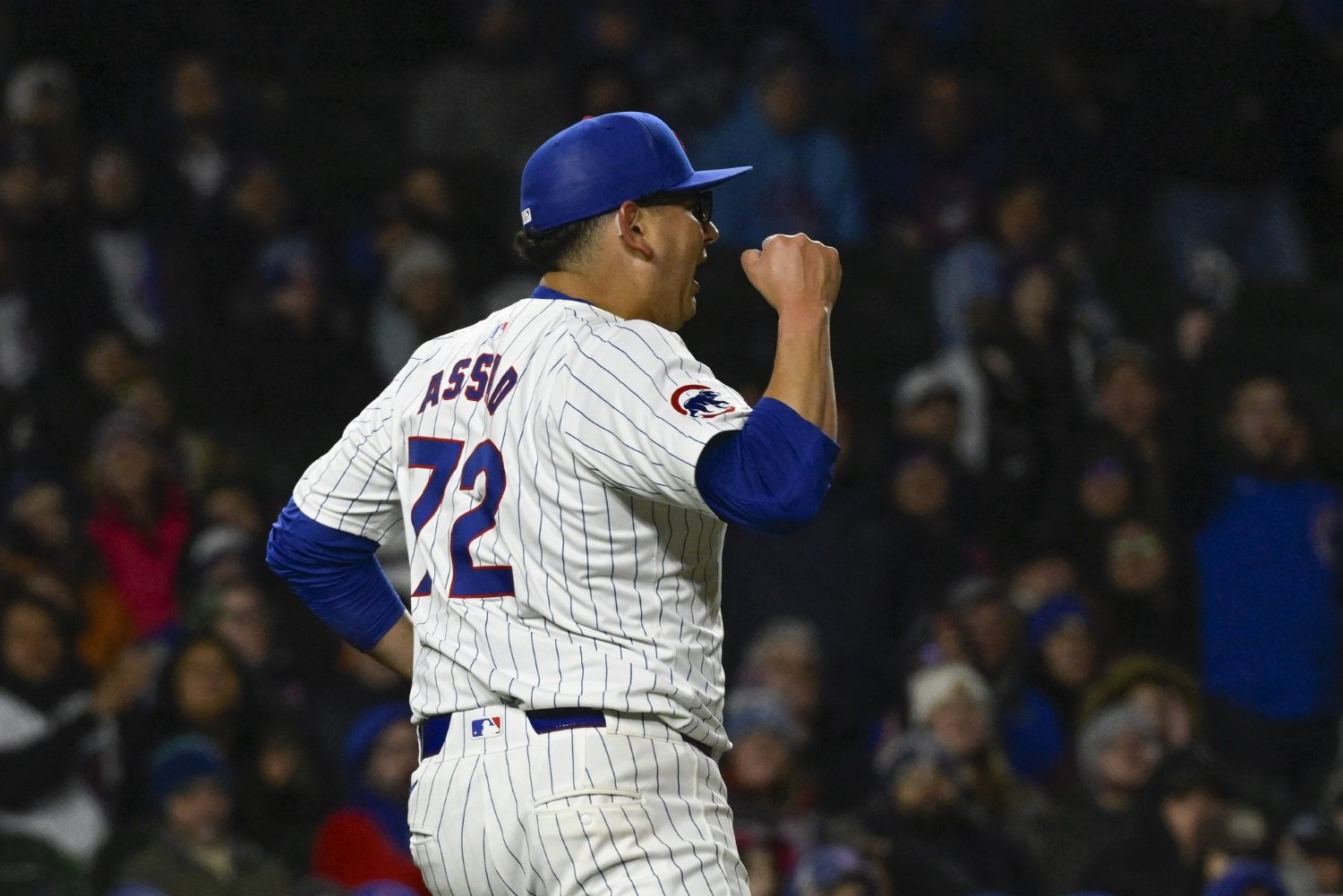 One year ago Wednesday, I wrote about Javier Assad's pitch mix, as he tried to establish himself as a multi-inning (but fairly high-leverage) relief weapon for the Cubs. Specifically, I recommended that he lean considerably harder on his sinker and slider against right-handed batters, and on his four-seamer and changeup against left-handed ones. He was, at the time, a kitchen-sink guy, and it didn't seem likely to be a sustainably successful approach. In one sense, I was demonstrably wrong. For the second year in a row, Assad was effective, despite less-than-dominant peripheral numbers. He entered 2024 with nearly 150 innings of big-league work under his belt, and a 3.06 ERA, despite a more pedestrian 4.34 FIP. His six-pitch mix--four-seamer, sinker, changeup, cutter, slider, curve--doesn't include any superior weapons, but he found ways to defy the regression monster all the way through his first full season. To really keep that monster at bay, though, a player has to be proactive about adjustments. If you wait until the league figures you out to start making changes, you'll fall behind in the constant battle for an advantage. Thus, although we have to be careful not to extrapolate too much from a single (frigid) game's worth of data compiled against the execrable Rockies, it's worth taking note of some big changes Assad made in his 2024 debut Tuesday night. Firstly, his pitch mix was drastically different. Here's how Assad's pitch usage broke down by handedness in 2023. Batter Hand BF P 4Seam% Sink2Seam% Cutter% Slider% Curve% Change% Righty 274 1012 11.40% 40.40% 22.50% 25.00% 0.70% 0.00% Lefty 239 948 30.00% 17.90% 32.00% 0.60% 10.80% 8.80% Here's the same breakdown for Tuesday's 89-pitch effort. Batter Hand BF P 4Seam% Sink2Seam% Cutter% Slider% Curve% Change% Righty 12 45 4.40% 42.20% 8.90% 42.20% 2.20% 0.00% Lefty 10 44 50.00% 13.60% 18.20% 2.30% 4.50% 11.40% This version of Assad is essentially the one I proposed last year, but as a starter. He went pretty much right after lefties with his fastball, and he dramatically increased his slider usage against righties, each at the expense of the cutter. It led to six scoreless innings in which he allowed just six baserunners and struck out five. Again, this is the Rockies, and it was a miserable night for baseball--especially if you were a hitter. We can't assume that what worked Tuesday will work going forward. Still, this is a significant development. Going away from a kitchen-sink approach doesn't have to mean giving up the advantages Assad gleaned from his previous style. He can pitch with touch and feel even within this framework. To wit, if you cut his four-seamer samples for each of his three big-league seasons in half based on their horizontal movement, and then examine the movement patterns, he was getting more rising action on the half of his heaters that cut more (i,e., effectively creating a cut-ride look) last night than he had in either previous campaign: 17.5 inches of induced vertical break, compared to 16.0 inches in 2022 and 2023. He got a couple of called strikes in the up-and-away quadrant of the zone to lefties Tuesday, with the pitch virtually acting as a harder backdoor cutter, with less chance of a mistake in the heart of the zone. Assad also seems to have tweaked his slider, in addition to throwing it more often. The sample is too small to assume this will hold, but the slider had two more inches of sweep and a bit more depth Tuesday night than it had in 2022 and 2023. When you consider that it was also playing off more sinkers (as opposed to the cutter), that adjustment means hitters really have to feel like they're covering a plate about two feet wide. Miguel Amaya did well to steal Assad a couple of called strikes at the low, outside corner of the zone, making things even tougher on the helpless Colorado hitters. I don't believe Assad can pitch to an ERA just over 3.00 again this year. If he's able to persist with these changes in pitch mix and movement using his excellent pitchability, though, I do think he can stay on the low side of 4.00. That would be a huge development for the Cubs, since they need him more acutely than expected in the early going. We're going to see at least another handful of Assad starts, and perhaps several more than that. We'll have plenty of chances to suss out how real his transformation is, but given what we've seen so far, it's fair to be a bit more optimistic than we expected to be.
