


matto1233
-
Posts
321 -
Joined
-
Last visited
Content Type
Profiles
Joomla Posts 1
Chicago Cubs Videos
Chicago Cubs Free Agent & Trade Rumors, Notes, & Tidbits
2026 Chicago Cubs Top Prospects Ranking
News
2023 Chicago Cubs Draft Picks
Guides & Resources
2024 Chicago Cubs Draft Picks
The Chicago Cubs Players Project
2025 Chicago Cubs Draft Pick Tracker
2026 Chicago Cubs Draft Tracker: Picks & Bonuses
Blogs
Events
Forums
Store
Gallery
Everything posted by matto1233
-
Today, we continue our offseason series highlighting and reminiscing about some favorite Cubs of yesteryear. This installment is about one of the most charismatic, versatile, and (it can't be ignored) handsome members of two division-winning Cubs clubs. Image courtesy of Brock Beauchamp In many ways, Mark DeRosa was always the versatile athlete that he would come to be known for in his professional baseball playing career. He was both a baseball and football star while growing up in New Jersey–so much so that he would go on to start at both quarterback and shortstop for the University of Pennsylvania. Drafted by the Atlanta Braves in the seventh round of the 1996 MLB Draft, DeRosa made his MLB debut in 1998. He was mostly a utility player for the Braves until 2004, when he was given the starting third base job out of spring training. After watching him hit just .239/.293/.320 and tear his ACL in September, the Braves declined to offer DeRosa a contract, making him a free agent. DeRosa played as a stopgap for the Texas Rangers in 2005, and finally had his breakout in 2006, becoming a full-time player and hitting .296/.357/.456. This led to the Cubs signing him to a three-year, $13-million contract as a part of their spending spree in the offseason between 2006 and 2007. Thus began the legend of Mark DeRosa in Chicago. He played an integral role on Cubs teams that won back-to-back division titles in 2007 and 2008. In those two campaigns, he hit .289/.373/.451, with 31 total home runs. DeRosa started most often at second base for those Cubs teams, but in a lot of ways, he was Ben Zobrist before Ben Zobrist. In addition to the keystone, DeRosa appeared in games at third base, right field, left field, first base, and even shortstop. I have a confession to make: Because I was an impressionable middle-school kid at the time, those Cubs teams hold a very special place in my heart. Sure, I have memories of 2003, and of Sammy Sosa blasting home runs onto Waveland Avenue, but 2007 and 2008 was the first time the Cubs were good at a point when I was also old enough to appreciate and absorb them. In retrospect, I recall DeRosa being both a fan favorite, and the heart and soul of those Cubs teams. It seemed he was almost everybody’s favorite player–my grandma included. I am not ashamed to admit that my online video game username, that I still use to this day, includes the number ‘7’ because of DeRosa. But was he actually good? Or did the much younger version of me simply appreciate the way he played baseball and latch onto him for different, unknown reasons that only kids can understand? Across the 2007 and 2008 seasons, DeRosa was fourth on the Cubs in overall WAR, according to FanGraphs. His 6.6 WAR trailed only Alfonso Soriano, Aramis Ramirez, and Ted Lilly. He produced more WAR than both Derrek Lee and Carlos Zambrano, who were rightly viewed as cornerstone players of that era. He was a vital piece of those teams. However, after those two seasons, that would be it for DeRosa in a Cubs uniform. He was traded to Cleveland that offseason for a package that included Chris Archer, and things just weren’t quite the same in Chicago. The Cubs disappointed in 2009, as they failed to make the playoffs, leaving many wondering if DeRosa was the glue that held everything together. But things weren’t quite the same for DeRosa, either. He still proved himself a valuable player in 2009, but after being traded to the Cardinals at the trade deadline, he hit just .228/.291/.405. While he would go on to play four more seasons for the Giants, Nationals, and Blue Jays, he racked up just 538 plate appearances in those seasons, and hit .227 with eight home runs in that time. Now, you’ll find DeRosa as a studio analyst with MLB Network. He was the manager for Team USA in the 2023 World Baseball Classic, leaving many to wonder if managing a big-league team might be in his future. DeRosa was the perfect player for the Cubs, at the perfect time. He contributed two-thirds of his 10.1 career FanGraphs WAR in just two seasons with the Cubs, and the Cubs won the division in both of those seasons. We’ll never know what would have happened had the Cubs kept him around for the 2009 season. Here is something that we do know: Chris Archer, who was the headline piece coming back to the Cubs in the trade that sent him away, was eventually traded to Tampa Bay for Matt Garza. Garza was eventually traded to the Texas Rangers for Mike Olt, Justin Grimm, and Carl Edwards Jr. Grimm and Edwards would both go on to record very important outs out of the bullpen in the 2016 playoffs for the Cubs. So in a roundabout way, DeRosa was still contributing to the Cubs and helping them win a World Series in 2016. That, alone, should make us remember him even more fondly, and makes me feel validated in my childhood appreciation of him. View full article
-
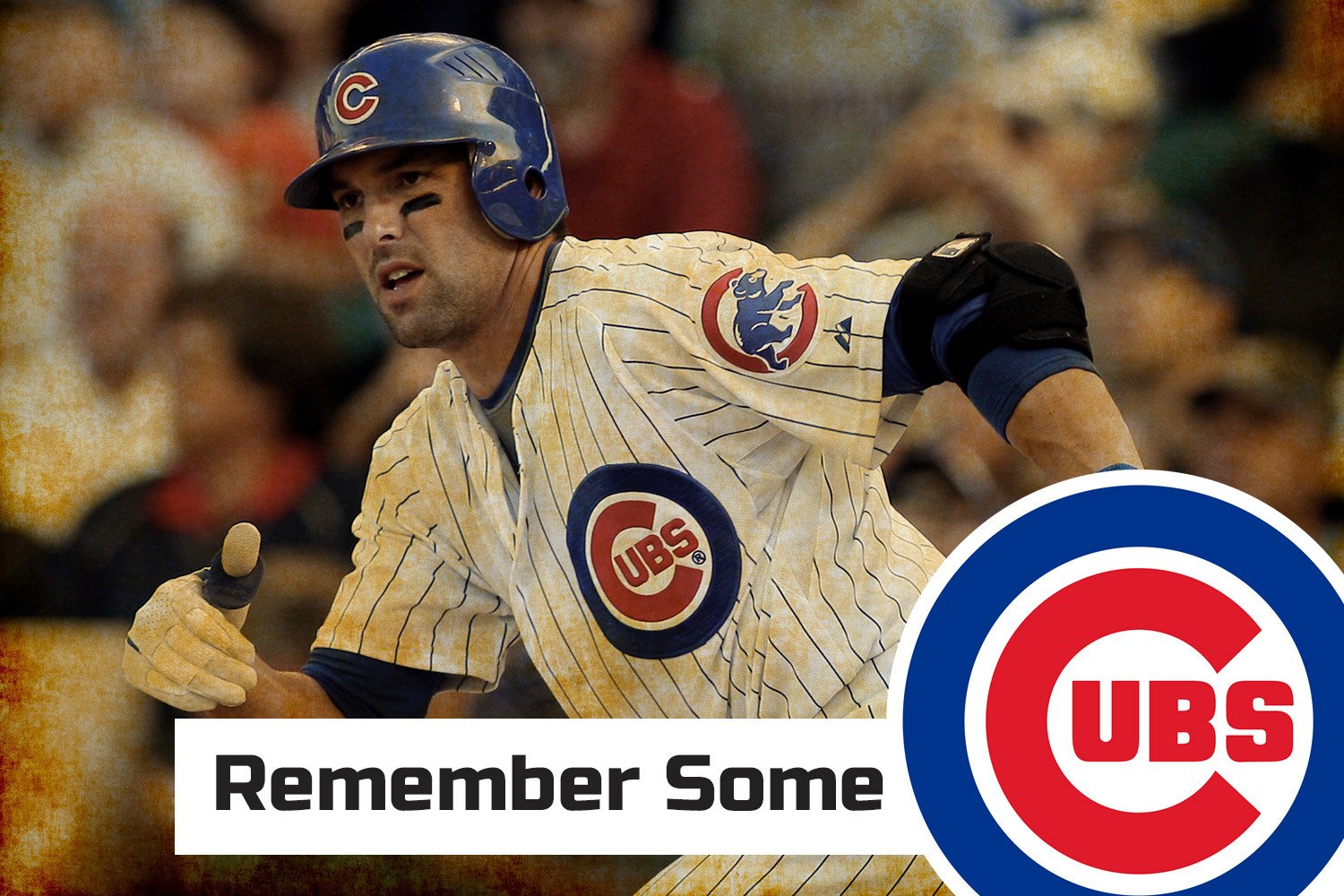 In many ways, Mark DeRosa was always the versatile athlete that he would come to be known for in his professional baseball playing career. He was both a baseball and football star while growing up in New Jersey–so much so that he would go on to start at both quarterback and shortstop for the University of Pennsylvania. Drafted by the Atlanta Braves in the seventh round of the 1996 MLB Draft, DeRosa made his MLB debut in 1998. He was mostly a utility player for the Braves until 2004, when he was given the starting third base job out of spring training. After watching him hit just .239/.293/.320 and tear his ACL in September, the Braves declined to offer DeRosa a contract, making him a free agent. DeRosa played as a stopgap for the Texas Rangers in 2005, and finally had his breakout in 2006, becoming a full-time player and hitting .296/.357/.456. This led to the Cubs signing him to a three-year, $13-million contract as a part of their spending spree in the offseason between 2006 and 2007. Thus began the legend of Mark DeRosa in Chicago. He played an integral role on Cubs teams that won back-to-back division titles in 2007 and 2008. In those two campaigns, he hit .289/.373/.451, with 31 total home runs. DeRosa started most often at second base for those Cubs teams, but in a lot of ways, he was Ben Zobrist before Ben Zobrist. In addition to the keystone, DeRosa appeared in games at third base, right field, left field, first base, and even shortstop. I have a confession to make: Because I was an impressionable middle-school kid at the time, those Cubs teams hold a very special place in my heart. Sure, I have memories of 2003, and of Sammy Sosa blasting home runs onto Waveland Avenue, but 2007 and 2008 was the first time the Cubs were good at a point when I was also old enough to appreciate and absorb them. In retrospect, I recall DeRosa being both a fan favorite, and the heart and soul of those Cubs teams. It seemed he was almost everybody’s favorite player–my grandma included. I am not ashamed to admit that my online video game username, that I still use to this day, includes the number ‘7’ because of DeRosa. But was he actually good? Or did the much younger version of me simply appreciate the way he played baseball and latch onto him for different, unknown reasons that only kids can understand? Across the 2007 and 2008 seasons, DeRosa was fourth on the Cubs in overall WAR, according to FanGraphs. His 6.6 WAR trailed only Alfonso Soriano, Aramis Ramirez, and Ted Lilly. He produced more WAR than both Derrek Lee and Carlos Zambrano, who were rightly viewed as cornerstone players of that era. He was a vital piece of those teams. However, after those two seasons, that would be it for DeRosa in a Cubs uniform. He was traded to Cleveland that offseason for a package that included Chris Archer, and things just weren’t quite the same in Chicago. The Cubs disappointed in 2009, as they failed to make the playoffs, leaving many wondering if DeRosa was the glue that held everything together. But things weren’t quite the same for DeRosa, either. He still proved himself a valuable player in 2009, but after being traded to the Cardinals at the trade deadline, he hit just .228/.291/.405. While he would go on to play four more seasons for the Giants, Nationals, and Blue Jays, he racked up just 538 plate appearances in those seasons, and hit .227 with eight home runs in that time. Now, you’ll find DeRosa as a studio analyst with MLB Network. He was the manager for Team USA in the 2023 World Baseball Classic, leaving many to wonder if managing a big-league team might be in his future. DeRosa was the perfect player for the Cubs, at the perfect time. He contributed two-thirds of his 10.1 career FanGraphs WAR in just two seasons with the Cubs, and the Cubs won the division in both of those seasons. We’ll never know what would have happened had the Cubs kept him around for the 2009 season. Here is something that we do know: Chris Archer, who was the headline piece coming back to the Cubs in the trade that sent him away, was eventually traded to Tampa Bay for Matt Garza. Garza was eventually traded to the Texas Rangers for Mike Olt, Justin Grimm, and Carl Edwards Jr. Grimm and Edwards would both go on to record very important outs out of the bullpen in the 2016 playoffs for the Cubs. So in a roundabout way, DeRosa was still contributing to the Cubs and helping them win a World Series in 2016. That, alone, should make us remember him even more fondly, and makes me feel validated in my childhood appreciation of him.
 -
As we wait for the dam to break and some free agents to start finding new homes, let's stop to consider what retaining one who has already been a Cub--twice--would look like. Image courtesy of © David Kohl-USA TODAY Sports When the Chicago Cubs made their big trade-deadline move by acquiring Jeimer Candelario from the Washington Nationals for a couple of prospects, I thought it would be a great opportunity for Candelario to have an early audition with the team before his impending free agency. By bringing him into the fold a few months early, you can reap the rewards of having his bat in the lineup down the stretch, and get a feel for how he would mesh in the clubhouse. Of course, to this point, the results have not been quite as expected. While Candelario’s overall wRC+ with the Cubs was above-average at 106, this was skewed by a very hot first week. His absence from the lineup was felt in early September, as he spent time on the injured list with a back injury. He posted just 0.2 WAR for the Cubs in 41 games. From August 7 to the end of the season, his batting line was a meager .172/.258/.362. So what happened? Prior to becoming a Cub, Candelario was in the midst of a career year. His .258/.342/.481 line was only bested by the one he posted in the abbreviated 2020 season. He was hitting for power, taking his walks, and laying off of pitches outside of the strike zone–the thing he failed to do in his rough 2022 season, which ultimately led to his release by the Tigers. The thing about Candelario as a hitter is that there isn’t really one skill that he has consistently done at an elite level. He can hit the ball hard, but he doesn’t do it consistently or spectacularly enough to be an exit-velocity darling. He gets on base, but not quite like Juan Soto. He strikes out a bit more than most would prefer, but not as often as Christopher Morel or Patrick Wisdom. Put all of that into a pot, mix it up a bit, and the result is a hitter with a career 102 wRC+. His batted-ball profile doesn’t jump off the page, either. For his career, 26.2 percent of his batted balls have been line drives, 41.1 percent have been ground balls, and 32.6 percent have been fly balls. In 2023, 20 percent of batted balls in baseball were line drives, 42.5 percent were ground balls, and 37.5 percent were fly balls. As with most other things, he is right about average. Reasonably, we can split Candelario’s time with the Cubs into three phases: the honeymoon (August 1-6), the pre-injury (August 7-September 10), and the post-injury (September 27-October 1). The honeymoon phase did the heavy lifting as far as his batting line was concerned (314 wRC+), the pre-injury phase brought that batting line back down to earth (62 wRC+), and the post-injury maintained his roughly league-average production (91 wRC+). Given that the pre-injury phase is the biggest sample size we have, it’s the one most likely to leave a sour taste in the mouth of Cubs fans. And it has. If the Cubs were to bring Candelario back, how much should that period factor into his contract? Who is the real Jeimer Candelario? Going back up a few paragraphs, recall that Candelario has put 41.1 percent of his balls in play on the ground for his career. During his pre-injury phase with the Cubs, he hit 54.4 percent of his balls on the ground, according to FanGraphs. The league as a whole recorded a 35 wRC+ on ground balls in 2023–hence, his drop in production. I think that this has two possible explanations: Candelario was hurt for much of that period of time, resulting in him pulling off of the baseball and pounding it into the ground much more often. The Cubs thought they could tap into more of Candelario’s power by having him pull more fly balls, and it backfired. In his pre-injury phase, 41.7 percent of Candelario’s fly balls were pulled. He has only pulled more than 30 percent of his fly balls once in his career, and that was way back in 2018, when he did it 30.8 percent of the time, per FanGraphs. To put a bow on all of this, while Candelario’s reunion with the Cubs didn’t go quite as either side had hoped, the numbers tell us that there is a likely explanation for it. He has enough of a history of being an average hitter with upside that I feel confident in saying that if he can get healthy over the offseason and return to the approach he has had his whole career, he will return to being that guy in 2024. I am a bit surprised that there has been so little chatter around Candelario and the Cubs this offseason. When the trade was made, we heard so much about how happy he was to be a Cub again, and how happy the Cubs were to have him back. He probably won’t consistently be the three-win player he has been in the past, but to me, he is a pretty good bet to be a league-average hitter (or better) going forward–not to mention, he has defensive value at two positions the Cubs need to fill. He certainly isn’t going to completely change anyone’s lineup, but he can add quality depth, and he would be a nice consolation prize for anyone who misses out on the big targets this offseason. View full article
-
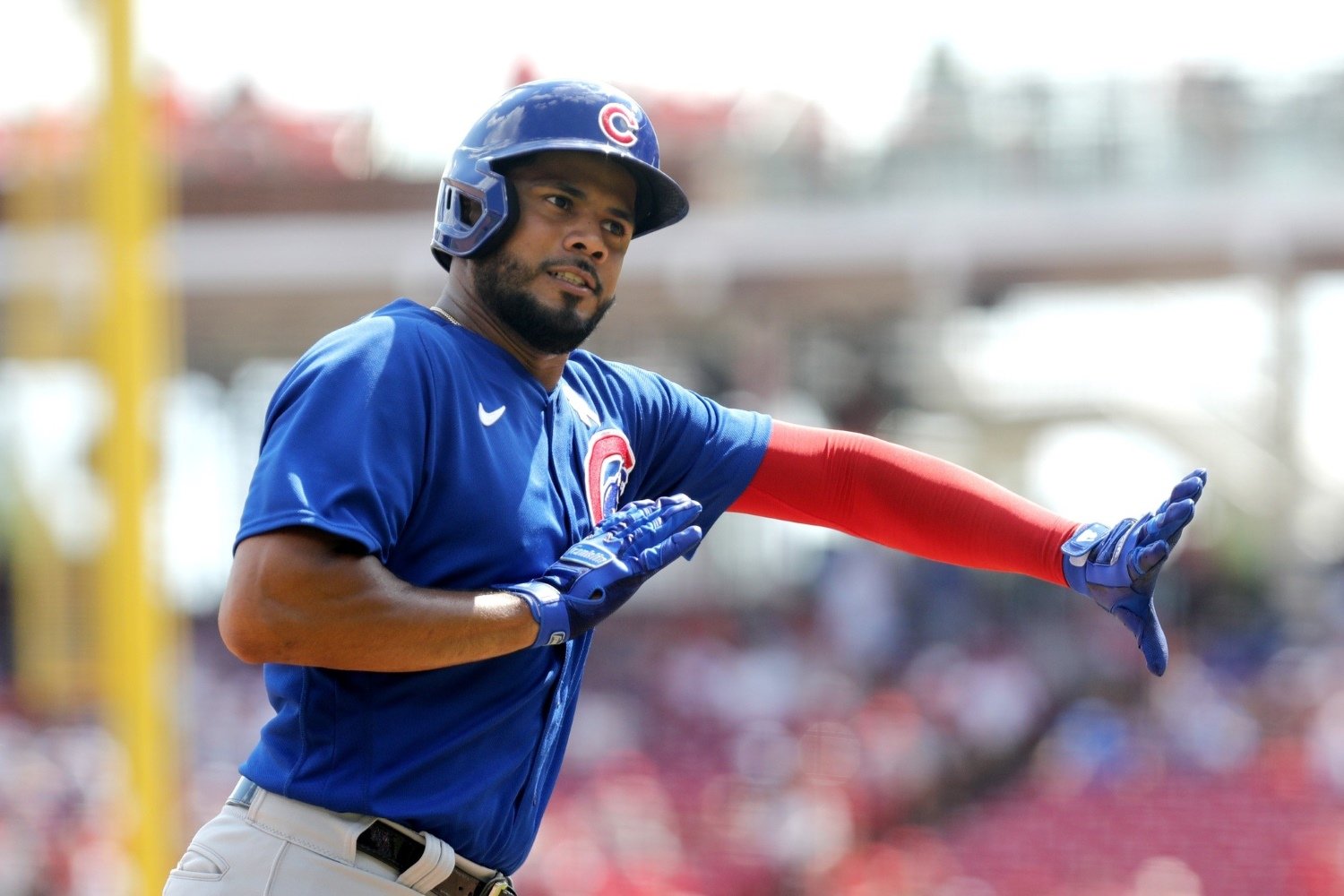 When the Chicago Cubs made their big trade-deadline move by acquiring Jeimer Candelario from the Washington Nationals for a couple of prospects, I thought it would be a great opportunity for Candelario to have an early audition with the team before his impending free agency. By bringing him into the fold a few months early, you can reap the rewards of having his bat in the lineup down the stretch, and get a feel for how he would mesh in the clubhouse. Of course, to this point, the results have not been quite as expected. While Candelario’s overall wRC+ with the Cubs was above-average at 106, this was skewed by a very hot first week. His absence from the lineup was felt in early September, as he spent time on the injured list with a back injury. He posted just 0.2 WAR for the Cubs in 41 games. From August 7 to the end of the season, his batting line was a meager .172/.258/.362. So what happened? Prior to becoming a Cub, Candelario was in the midst of a career year. His .258/.342/.481 line was only bested by the one he posted in the abbreviated 2020 season. He was hitting for power, taking his walks, and laying off of pitches outside of the strike zone–the thing he failed to do in his rough 2022 season, which ultimately led to his release by the Tigers. The thing about Candelario as a hitter is that there isn’t really one skill that he has consistently done at an elite level. He can hit the ball hard, but he doesn’t do it consistently or spectacularly enough to be an exit-velocity darling. He gets on base, but not quite like Juan Soto. He strikes out a bit more than most would prefer, but not as often as Christopher Morel or Patrick Wisdom. Put all of that into a pot, mix it up a bit, and the result is a hitter with a career 102 wRC+. His batted-ball profile doesn’t jump off the page, either. For his career, 26.2 percent of his batted balls have been line drives, 41.1 percent have been ground balls, and 32.6 percent have been fly balls. In 2023, 20 percent of batted balls in baseball were line drives, 42.5 percent were ground balls, and 37.5 percent were fly balls. As with most other things, he is right about average. Reasonably, we can split Candelario’s time with the Cubs into three phases: the honeymoon (August 1-6), the pre-injury (August 7-September 10), and the post-injury (September 27-October 1). The honeymoon phase did the heavy lifting as far as his batting line was concerned (314 wRC+), the pre-injury phase brought that batting line back down to earth (62 wRC+), and the post-injury maintained his roughly league-average production (91 wRC+). Given that the pre-injury phase is the biggest sample size we have, it’s the one most likely to leave a sour taste in the mouth of Cubs fans. And it has. If the Cubs were to bring Candelario back, how much should that period factor into his contract? Who is the real Jeimer Candelario? Going back up a few paragraphs, recall that Candelario has put 41.1 percent of his balls in play on the ground for his career. During his pre-injury phase with the Cubs, he hit 54.4 percent of his balls on the ground, according to FanGraphs. The league as a whole recorded a 35 wRC+ on ground balls in 2023–hence, his drop in production. I think that this has two possible explanations: Candelario was hurt for much of that period of time, resulting in him pulling off of the baseball and pounding it into the ground much more often. The Cubs thought they could tap into more of Candelario’s power by having him pull more fly balls, and it backfired. In his pre-injury phase, 41.7 percent of Candelario’s fly balls were pulled. He has only pulled more than 30 percent of his fly balls once in his career, and that was way back in 2018, when he did it 30.8 percent of the time, per FanGraphs. To put a bow on all of this, while Candelario’s reunion with the Cubs didn’t go quite as either side had hoped, the numbers tell us that there is a likely explanation for it. He has enough of a history of being an average hitter with upside that I feel confident in saying that if he can get healthy over the offseason and return to the approach he has had his whole career, he will return to being that guy in 2024. I am a bit surprised that there has been so little chatter around Candelario and the Cubs this offseason. When the trade was made, we heard so much about how happy he was to be a Cub again, and how happy the Cubs were to have him back. He probably won’t consistently be the three-win player he has been in the past, but to me, he is a pretty good bet to be a league-average hitter (or better) going forward–not to mention, he has defensive value at two positions the Cubs need to fill. He certainly isn’t going to completely change anyone’s lineup, but he can add quality depth, and he would be a nice consolation prize for anyone who misses out on the big targets this offseason.
 -
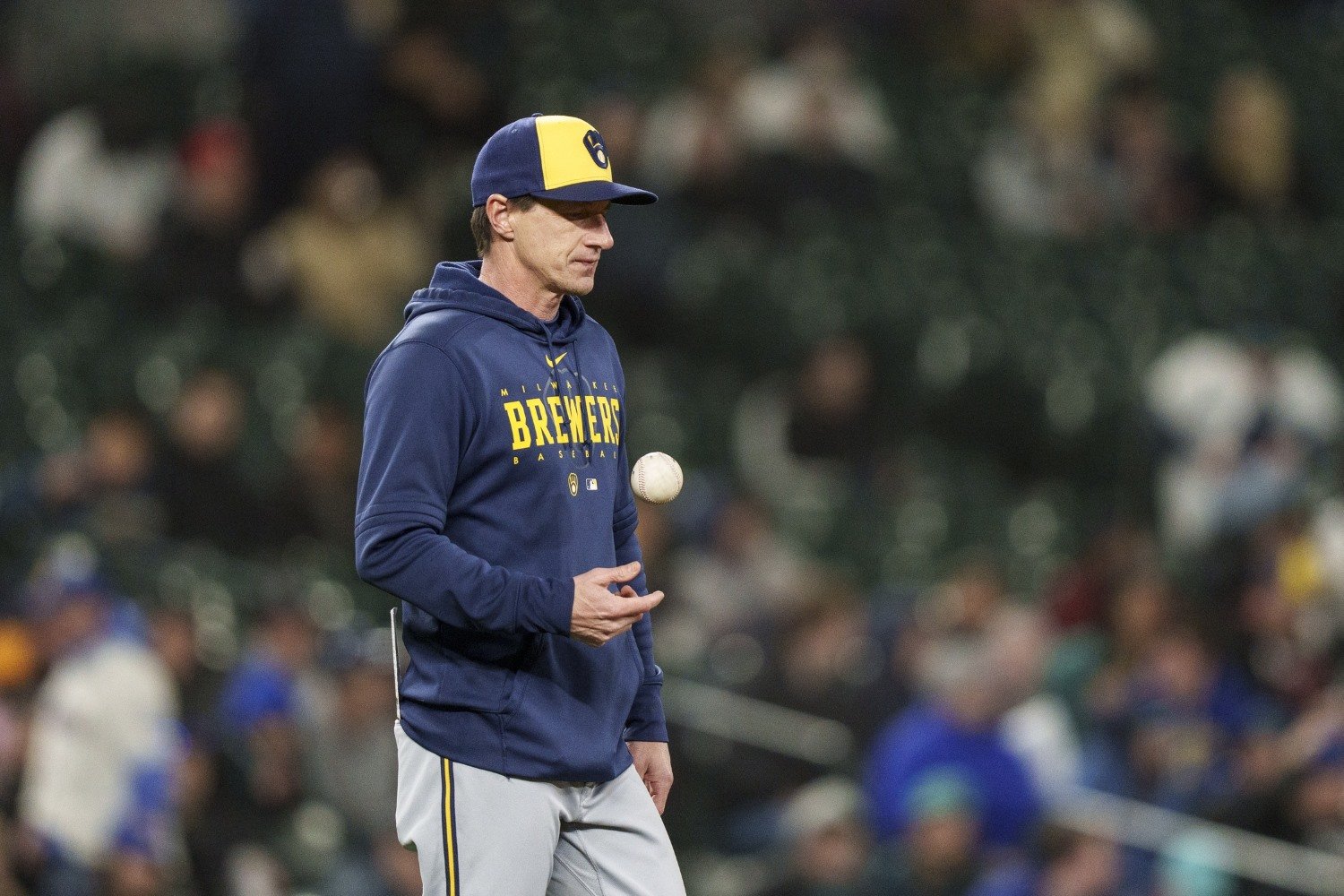 In the wake of the news that the Chicago Cubs have fired David Ross and are bringing in Craig Counsell as their manager, I have a confession to make: I have always been skeptical of the overall value that a manager brings to a baseball team. Don’t get me wrong, there are definitely times where I strongly disagree with a managerial move, and it gets me upset. However, I just don’t think that the decision-making ability of the perceived top manager in baseball is all that much better than the perceived worst manager in baseball--even if that's what Ross was, which is doubtful. Not to mention, managers also have to manage egos, personalities, and maintain a good vibe in the clubhouse. None of this can be measured in any concrete way, with any concrete numbers. Maybe, in a best case scenario, it adds a win or two. Funny enough, had the Chicago Cubs won a game or two more, they would have been playing playoff baseball, and we probably wouldn’t even be having this conversation! So maybe they are onto something here. Besides, if there’s one guy in baseball that I am confident will bring more value to the table than Ross did, it’s Counsell. A lot has already been said about Counsell’s ability to win one-run baseball games, and to overperform the run differential of the Brewers teams that he managed. Some might consider that to be luck, though I would counter that he has done this for long enough that it does warrant some sort of examination of what he was doing in Milwaukee. In a 2016 article at FiveThirtyEight, Rob Arthur found that there is a correlation between winning one-run games, and the quality of your bullpen. The better the bullpen a team has, the higher a likelihood there is that they will win a one-run contest. On the surface, this makes sense. With better pitchers pitching late in games, you’re more likely to hold on to that precious, minuscule lead. So, how much of the Brewers success can we attribute to Counsell, and how much should we attribute it to having a lights-out bullpen? It turns out, having Josh Hader, Corey Knebel, and Devin Williams helps in winning close games. A lot. Even then, since Counsell took over full-time in 2016, the Brewers have the seventh-best bullpen WAR in baseball, according to FanGraphs. Admittedly, this was lower than I would have thought. The Chicago White Sox are one spot ahead of them, yet are 28th in baseball in winning percentage in one-run games during that time. And despite the positive relationship between bullpen performance and winning one-run games, the relationship is still a fairly weak one. So maybe there is something to Counsell’s magic, after all. Given all of this, and given his time in Milwaukee, if there is one thing we know Counsell excels at, it is being able to manage a bullpen. In order to maximize his known strengths, it is imperative that the Cubs give him a similar arsenal of pitchers to work with to the one he had in Milwaukee. I am not saying that they need to replicate Williams and Hader (though Hader is a free agent), but rather that they need to invest real money in the bullpen, while continuing to churn out young pitchers in the minor leagues. Craig Breslow came into the Cubs organization almost five years ago, and was eventually asked to overhaul the pitching development. The new pitching infrastructure that we had been hearing so much about finally started showing some major-league results over the past couple of seasons, with Justin Steele, Javier Assad, and Jordan Wicks all having a major impact. Breslow is gone now, but there is no reason the Cubs can’t continue to build off of what he put in place. While the credit is not all his, the Brewers developed several shutdown relievers at the big-league level while Counsell was in charge. That, in my opinion, is absolutely worth something. It is a great sign to see the Cubs flex their big-market muscles and go get a manager like Counsell, who is now the highest-paid manager in baseball. Clearly, they think he is worth a lot. But the work doesn’t stop there. We’ve seen what Counsell can do with a good bullpen. If they want this move to pay off, the Cubs absolutely have to keep investing money into reliable big-league relief arms and the pitching infrastructure throughout the organization.
 -
The arrival of the Cubs' new manager has us all trying to read tea leaves about their plans for the winter. One way in which the change in leadership materially matters, though, is that it might increase the importance of the relief corps to a new high. Image courtesy of © Stephen Brashear-USA TODAY Sports In the wake of the news that the Chicago Cubs have fired David Ross and are bringing in Craig Counsell as their manager, I have a confession to make: I have always been skeptical of the overall value that a manager brings to a baseball team. Don’t get me wrong, there are definitely times where I strongly disagree with a managerial move, and it gets me upset. However, I just don’t think that the decision-making ability of the perceived top manager in baseball is all that much better than the perceived worst manager in baseball--even if that's what Ross was, which is doubtful. Not to mention, managers also have to manage egos, personalities, and maintain a good vibe in the clubhouse. None of this can be measured in any concrete way, with any concrete numbers. Maybe, in a best case scenario, it adds a win or two. Funny enough, had the Chicago Cubs won a game or two more, they would have been playing playoff baseball, and we probably wouldn’t even be having this conversation! So maybe they are onto something here. Besides, if there’s one guy in baseball that I am confident will bring more value to the table than Ross did, it’s Counsell. A lot has already been said about Counsell’s ability to win one-run baseball games, and to overperform the run differential of the Brewers teams that he managed. Some might consider that to be luck, though I would counter that he has done this for long enough that it does warrant some sort of examination of what he was doing in Milwaukee. In a 2016 article at FiveThirtyEight, Rob Arthur found that there is a correlation between winning one-run games, and the quality of your bullpen. The better the bullpen a team has, the higher a likelihood there is that they will win a one-run contest. On the surface, this makes sense. With better pitchers pitching late in games, you’re more likely to hold on to that precious, minuscule lead. So, how much of the Brewers success can we attribute to Counsell, and how much should we attribute it to having a lights-out bullpen? It turns out, having Josh Hader, Corey Knebel, and Devin Williams helps in winning close games. A lot. Even then, since Counsell took over full-time in 2016, the Brewers have the seventh-best bullpen WAR in baseball, according to FanGraphs. Admittedly, this was lower than I would have thought. The Chicago White Sox are one spot ahead of them, yet are 28th in baseball in winning percentage in one-run games during that time. And despite the positive relationship between bullpen performance and winning one-run games, the relationship is still a fairly weak one. So maybe there is something to Counsell’s magic, after all. Given all of this, and given his time in Milwaukee, if there is one thing we know Counsell excels at, it is being able to manage a bullpen. In order to maximize his known strengths, it is imperative that the Cubs give him a similar arsenal of pitchers to work with to the one he had in Milwaukee. I am not saying that they need to replicate Williams and Hader (though Hader is a free agent), but rather that they need to invest real money in the bullpen, while continuing to churn out young pitchers in the minor leagues. Craig Breslow came into the Cubs organization almost five years ago, and was eventually asked to overhaul the pitching development. The new pitching infrastructure that we had been hearing so much about finally started showing some major-league results over the past couple of seasons, with Justin Steele, Javier Assad, and Jordan Wicks all having a major impact. Breslow is gone now, but there is no reason the Cubs can’t continue to build off of what he put in place. While the credit is not all his, the Brewers developed several shutdown relievers at the big-league level while Counsell was in charge. That, in my opinion, is absolutely worth something. It is a great sign to see the Cubs flex their big-market muscles and go get a manager like Counsell, who is now the highest-paid manager in baseball. Clearly, they think he is worth a lot. But the work doesn’t stop there. We’ve seen what Counsell can do with a good bullpen. If they want this move to pay off, the Cubs absolutely have to keep investing money into reliable big-league relief arms and the pitching infrastructure throughout the organization. View full article
-
That’s a good one! I did consider him for candy corn, but ultimately Happ won out since we’ve all seen Suzuki be really good now, it’s just a matter of if he can always be good. So, I like the Sour Patch Kids comparison!
-
It's no longer Cubs baseball season, but it's spooky season. Let's celebrate it by finding the candy that best matches some of the key players from this year's Cubs. Image courtesy of © Benny Sieu-USA TODAY Sports If there’s one positive to the Chicago Cubs not making a deep playoff run this season, it’s the fact that I can enjoy my Halloween without having to fret through nine innings of a World Series game. I’ll certainly still tune in to watch the Rangers and Diamondbacks battle each other, but seeing that I don’t have a rooting interest, I don’t have to worry about the combination of Halloween candy and Cubs playoff baseball giving me an ulcer. To officially get us all in the Halloween mood, I thought I would do something a little bit fun and different: if we had to compare Cubs players to Halloween candy, what Halloween candy would each be? Obviously, I can’t do every player–that would take way too long. But here are some that I thought had the perfect Halloween candy counterpart. Let us know what you think in the comments! Kyle Hendricks - Hershey’s Bar Here’s the thing about Hersey’s bars: nobody is overly excited to get them, yet if you’re just looking for some chocolate on Halloween night, it will always get the job done. Who fits that description better than Kyle Hendricks? Seeing that he is the longest-tenured Cub, I shouldn’t have to go into much detail. But I am still not sure people outside of Chicago know how good Hendricks really is. He doesn’t wow you with a high-velocity fastball, or a nasty breaking ball. He just gets the job done, day-by-day and year-by-year. Exactly like a Hersehy’s bar. Dansby Swanson - Twix The whole is greater than the sum of its parts. You can get chocolate, caramel, or even cookies (my mom still hands out miniature Keebler cookies, I believe) from a lot of other options on Halloween night. But when you combine all of those things into a Twix bar, you have what makes an elite Halloween candy. Swanson combines roughly average hitting, elite defense, and very good baserunning to create what was the 18th-best player in baseball per Fangraphs WAR. None of his skills necessarily jump off the page at you, but when you put them all together, he is one of the better players in baseball. Christopher Morel - Sour Skittles I know some people who really love Sour Skittles. Personally, I have never been able to get over the sourness of them. But similar to a Warhead, once you get through the sourness, you find that the candy itself is actually pretty good. I can’t imagine any other Chicago Cub brings both the sweet and the sour like Morel. He brought the sweet, with what turned out to be the most memorable moment of the 2023 season, for me: his walkoff home run against the White Sox in August. He also hit that homer in the middle of a month in which he hit .149 and struck out 37 percent of the time. He’ll look completely lost one at-bat, and then in the next one, he’ll hit a 450-foot bomb. You just gotta get through the sour to get to the sweet. Ian Happ - Candy Corn Ah, the most controversial of Halloween candy. Ask one person their opinion of candy corn, and they’ll tell you it’s their favorite candy. Ask another person, and they will tell you it is absolutely disgusting. I happen to fall in the latter group. There is a reason it’s only sold during one season of the year. Ian Happ feels like the type of player that is most polarizing among Cubs fans. Ask one Cubs fan what they think of him, and they might think he’s terrible. Ask another, and they might think he is very good. I think he is a well above-average player whom I will happily continue to see play left field for the Cubs for what they are paying him. So he’s not quite my candy corn, but he certainly might be someone else’s. Nico Hoerner - Baby Ruth I’ll admit, I struggled the most with this one, but after thinking about it for a pathetic amount of time (given how silly this exercise is), I am certain Baby Ruth is the best option here. Baby Ruth has all sorts of ties to the past. The name of the candy bar itself is (according to some) tied to baseball legend Babe Ruth. A Baby Ruth bar played a pivotal role in Chunk getting Sloth to help him rescue his friends in the 1980s classic The Goonies. On top of that, it doesn’t seem to me that Baby Ruths are as prominent now as they used to be. In the case of Nico Hoerner, he plays baseball like they used to, and there aren’t as many players that play the game like he does in MLB anymore. He steals bases. He rarely strikes out. He doesn’t hit for much power. In many ways, he is a blast from the past–just like a Baby Ruth. Justin Steele - Reese’s Peanut Butter Cup Finally, the exemplar of Halloween candy is reserved for Justin Steele. You can’t have Halloween without Reese’s Peanut Butter Cups. Every year, I find myself falling over myself to make sure I get my hands on whatever version of Reese’s they are making this time. Will they be shaped like a ghost? A pumpkin? Made with white chocolate? Why do they all taste so different anyway? Love them or hate them, you don’t have Halloween without Reese’s. You also don’t have the Chicago Cubs without Justin Steele. Yes, he broke down toward the end of the season, but the Cubs would have found themselves nowhere near a playoff spot had Steele not been so dominant for the first 90 percent of the campaign. The Cubs relied on him every five days to go out and win them a baseball game, and he did that far more often than not. And every time, I found myself falling over myself to make sure I tuned in. View full article
- 2 replies
-
- 1
-

-
- nico hoerner
- dansby swanson
- (and 3 more)
-
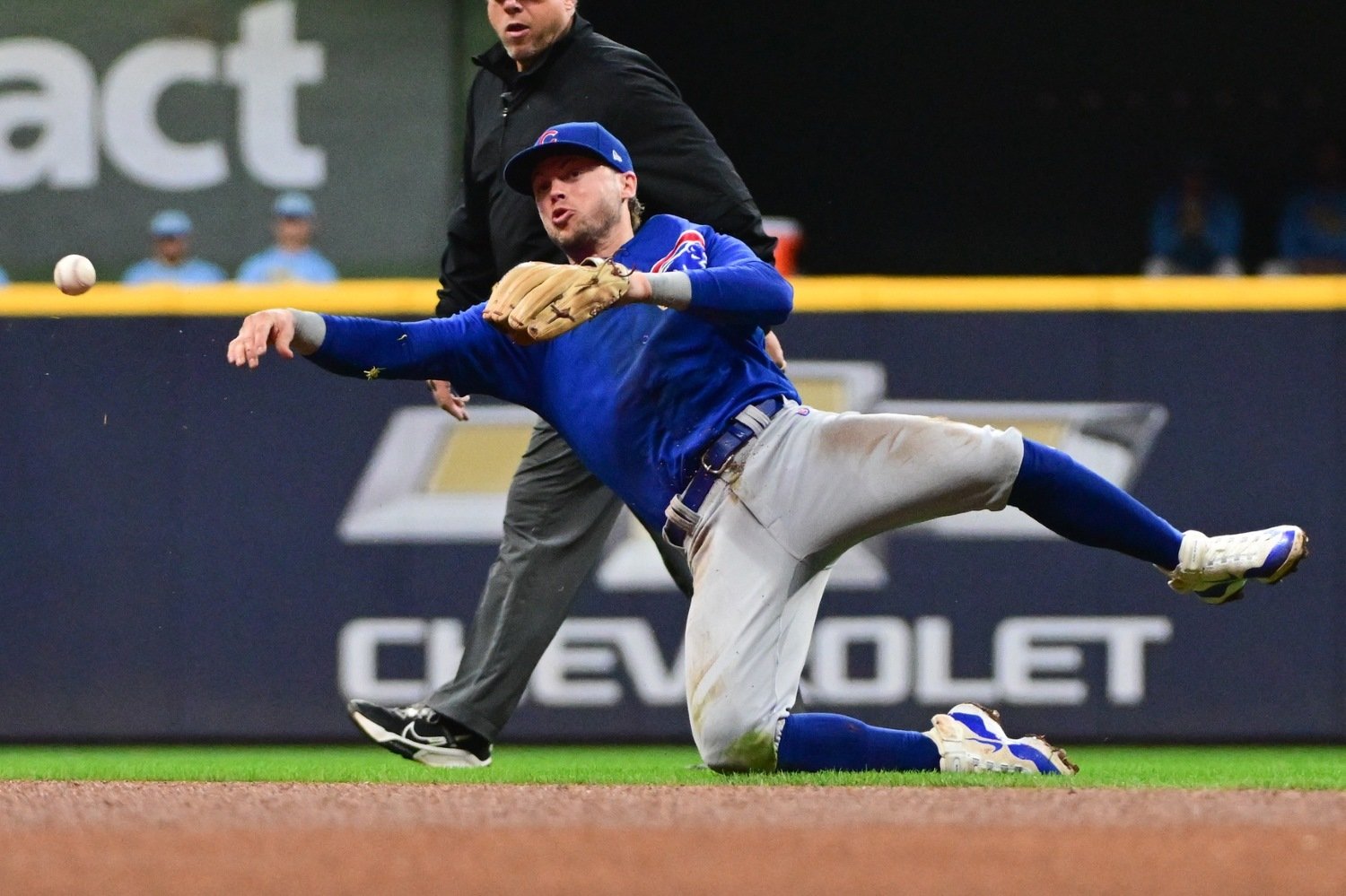 If there’s one positive to the Chicago Cubs not making a deep playoff run this season, it’s the fact that I can enjoy my Halloween without having to fret through nine innings of a World Series game. I’ll certainly still tune in to watch the Rangers and Diamondbacks battle each other, but seeing that I don’t have a rooting interest, I don’t have to worry about the combination of Halloween candy and Cubs playoff baseball giving me an ulcer. To officially get us all in the Halloween mood, I thought I would do something a little bit fun and different: if we had to compare Cubs players to Halloween candy, what Halloween candy would each be? Obviously, I can’t do every player–that would take way too long. But here are some that I thought had the perfect Halloween candy counterpart. Let us know what you think in the comments! Kyle Hendricks - Hershey’s Bar Here’s the thing about Hersey’s bars: nobody is overly excited to get them, yet if you’re just looking for some chocolate on Halloween night, it will always get the job done. Who fits that description better than Kyle Hendricks? Seeing that he is the longest-tenured Cub, I shouldn’t have to go into much detail. But I am still not sure people outside of Chicago know how good Hendricks really is. He doesn’t wow you with a high-velocity fastball, or a nasty breaking ball. He just gets the job done, day-by-day and year-by-year. Exactly like a Hersehy’s bar. Dansby Swanson - Twix The whole is greater than the sum of its parts. You can get chocolate, caramel, or even cookies (my mom still hands out miniature Keebler cookies, I believe) from a lot of other options on Halloween night. But when you combine all of those things into a Twix bar, you have what makes an elite Halloween candy. Swanson combines roughly average hitting, elite defense, and very good baserunning to create what was the 18th-best player in baseball per Fangraphs WAR. None of his skills necessarily jump off the page at you, but when you put them all together, he is one of the better players in baseball. Christopher Morel - Sour Skittles I know some people who really love Sour Skittles. Personally, I have never been able to get over the sourness of them. But similar to a Warhead, once you get through the sourness, you find that the candy itself is actually pretty good. I can’t imagine any other Chicago Cub brings both the sweet and the sour like Morel. He brought the sweet, with what turned out to be the most memorable moment of the 2023 season, for me: his walkoff home run against the White Sox in August. He also hit that homer in the middle of a month in which he hit .149 and struck out 37 percent of the time. He’ll look completely lost one at-bat, and then in the next one, he’ll hit a 450-foot bomb. You just gotta get through the sour to get to the sweet. Ian Happ - Candy Corn Ah, the most controversial of Halloween candy. Ask one person their opinion of candy corn, and they’ll tell you it’s their favorite candy. Ask another person, and they will tell you it is absolutely disgusting. I happen to fall in the latter group. There is a reason it’s only sold during one season of the year. Ian Happ feels like the type of player that is most polarizing among Cubs fans. Ask one Cubs fan what they think of him, and they might think he’s terrible. Ask another, and they might think he is very good. I think he is a well above-average player whom I will happily continue to see play left field for the Cubs for what they are paying him. So he’s not quite my candy corn, but he certainly might be someone else’s. Nico Hoerner - Baby Ruth I’ll admit, I struggled the most with this one, but after thinking about it for a pathetic amount of time (given how silly this exercise is), I am certain Baby Ruth is the best option here. Baby Ruth has all sorts of ties to the past. The name of the candy bar itself is (according to some) tied to baseball legend Babe Ruth. A Baby Ruth bar played a pivotal role in Chunk getting Sloth to help him rescue his friends in the 1980s classic The Goonies. On top of that, it doesn’t seem to me that Baby Ruths are as prominent now as they used to be. In the case of Nico Hoerner, he plays baseball like they used to, and there aren’t as many players that play the game like he does in MLB anymore. He steals bases. He rarely strikes out. He doesn’t hit for much power. In many ways, he is a blast from the past–just like a Baby Ruth. Justin Steele - Reese’s Peanut Butter Cup Finally, the exemplar of Halloween candy is reserved for Justin Steele. You can’t have Halloween without Reese’s Peanut Butter Cups. Every year, I find myself falling over myself to make sure I get my hands on whatever version of Reese’s they are making this time. Will they be shaped like a ghost? A pumpkin? Made with white chocolate? Why do they all taste so different anyway? Love them or hate them, you don’t have Halloween without Reese’s. You also don’t have the Chicago Cubs without Justin Steele. Yes, he broke down toward the end of the season, but the Cubs would have found themselves nowhere near a playoff spot had Steele not been so dominant for the first 90 percent of the campaign. The Cubs relied on him every five days to go out and win them a baseball game, and he did that far more often than not. And every time, I found myself falling over myself to make sure I tuned in.
- 2 comments
-
- 1
-

-
- nico hoerner
- dansby swanson
- (and 3 more)
-
Defense aside, WAR itself is an imperfect stat. It’s certainly one of the best ways we have to measure a player’s overall contributions, but Fangraphs has Schwarber as having been twice as valuable this year as Baseball Reference does. To clarify, I’m certainly not saying Schwarber is some underrated by WAR superstar, just that there are some error bars there, and that the Cubs could use the skill set.
-
I agree that he probably is not a Cub still, even if they tendered him a contract in 2020. Though I think the pain level is slightly different had they received actual value in return for getting rid of him (ie Canario, Alcantara, or PCA). Regarding WAR, it is interesting to think about, and I’ve always wondered if Schwarber was the most popular player that has provided the smallest amount of WAR. I’ve got not idea how to measure something like that. I think in his case, he suffers from the fact that we still don’t really know how to accurately measure defense, and that he brings two skills to the table, drawing walks and hitting home runs. Theoretically, he would be more valuable to a team more lacking in those skills, like the Cubs, than he would be on, say, the Braves.
-
When the Cubs disassembled their championship core, they did the fans the kindness of getting something good back, for almost everyone. Alas, the one guy for whom they got absolutely nothing looks like the most valuable of the bunch. Image courtesy of © Rob Schumacher/The Republic / USA TODAY NETWORK When Kyle Schwarber launched his 19th career postseason home run into the Arizona night on Friday, he made some history. With the 403-foot blast, Schwarber passed Reggie Jackson and became MLB’s all-time leader in playoff home runs for a left-handed hitter. He added another dong Saturday, to continue his ascent. Hearing that, frankly, made me feel all sorts of emotions. Happiness, for one. I, along with many other Cubs fans, find Schwarber to be an easy player to root for. Not only does he seem like a likable person, but very few players are more fun to watch with the majestic home runs that he so consistently hits. Nostalgia, for another. I think we all feel it, with basically any player who appeared in any bit of game action for the 2016 World Series champion Chicago Cubs. I think we all feel it a bit more with certain players. Maybe even more so with Schwarber, who we all watched miraculously return to game action in that World Series after early-season knee surgery. The fact that he topped his return off with a 7-17 performance, including the hit that kickstarted the 10th-inning rally that would eventually lead to the Cubs scoring the game-winning run, was icing on the cake of an already-storybook return. Lastly, I felt a little bit of sadness and anger, over the fact that the Cubs basically let Schwarber go to save $9-10 million. We can examine all of the reasons why they may have felt the need to do that, but it’s hard not to continue to be a bit upset by it after watching him go on to launch huge playoff home runs for two other teams after the fact. That frustration is magnified when we remember that the dictate that led to his non-tender was effectively reversed a month or two later, leading to the signing of Joc Pederson for nearly identical money. Look, Schwarber is far from a perfect player. He provides negative value defensively. He strikes out far too often, and he didn’t get the bump in batting average this year that many expected with the new shift restrictions. Despite all of that, his 129 wRC+ is 27th in baseball since the Cubs jettisoned him. He has been worth 6.9 WAR, per Fangraphs, and has hit 125 home runs in that same time frame. Would you believe that each one of those numbers is better than those of Kris Bryant, Anthony Rizzo, and Javier Baez in the same span? Willson Contreras, the other core member of the 2016 Cubs now playing for another team, does edge him slightly in WAR at 7.8, but we are at a point now where Kyle Schwarber is arguably the most relevant 2016 Cub, and that is something I am not sure many people saw coming. What makes this even harder for me is that the Cubs were 25th in baseball in overall production, by wRC+, from the designated hitter position. They sorely lacked a big home-run hitter in the middle of their order. Schwarber would fit with this current group very well. I believe that time has shown that the Cubs made the correct decision on trading Bryant, Rizzo, and Baez when they did–even if the fact that those three have had such disappointing second or third acts in their careers is partially an indictment of the team’s player-development infrastructures. I may even cover that more in depth later this offseason. But when it comes to Schwarber, I just can’t believe they let him walk for nothing. They swung and missed here. The guy with the big home run in the 2015 Wild Card game–the guy who launched a dagger into the Cardinals’ hearts, all the way to the top of the Wrigley Field scoreboard; the guy who is now the all-time postseason leader for home runs by a left-handed hitter–departed for free, simply because the Cubs didn’t want to pay him anymore. View full article
-
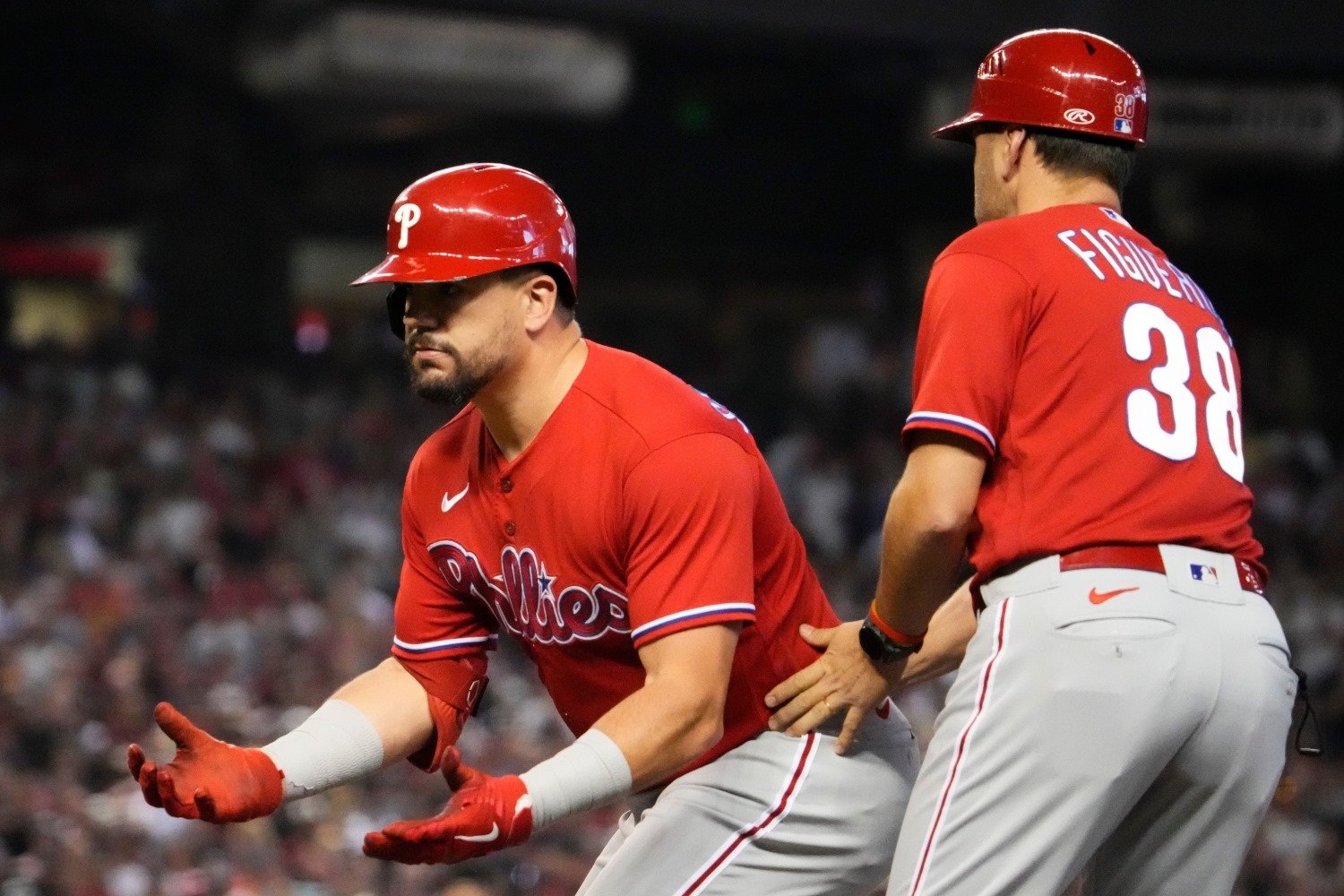 When Kyle Schwarber launched his 19th career postseason home run into the Arizona night on Friday, he made some history. With the 403-foot blast, Schwarber passed Reggie Jackson and became MLB’s all-time leader in playoff home runs for a left-handed hitter. He added another dong Saturday, to continue his ascent. Hearing that, frankly, made me feel all sorts of emotions. Happiness, for one. I, along with many other Cubs fans, find Schwarber to be an easy player to root for. Not only does he seem like a likable person, but very few players are more fun to watch with the majestic home runs that he so consistently hits. Nostalgia, for another. I think we all feel it, with basically any player who appeared in any bit of game action for the 2016 World Series champion Chicago Cubs. I think we all feel it a bit more with certain players. Maybe even more so with Schwarber, who we all watched miraculously return to game action in that World Series after early-season knee surgery. The fact that he topped his return off with a 7-17 performance, including the hit that kickstarted the 10th-inning rally that would eventually lead to the Cubs scoring the game-winning run, was icing on the cake of an already-storybook return. Lastly, I felt a little bit of sadness and anger, over the fact that the Cubs basically let Schwarber go to save $9-10 million. We can examine all of the reasons why they may have felt the need to do that, but it’s hard not to continue to be a bit upset by it after watching him go on to launch huge playoff home runs for two other teams after the fact. That frustration is magnified when we remember that the dictate that led to his non-tender was effectively reversed a month or two later, leading to the signing of Joc Pederson for nearly identical money. Look, Schwarber is far from a perfect player. He provides negative value defensively. He strikes out far too often, and he didn’t get the bump in batting average this year that many expected with the new shift restrictions. Despite all of that, his 129 wRC+ is 27th in baseball since the Cubs jettisoned him. He has been worth 6.9 WAR, per Fangraphs, and has hit 125 home runs in that same time frame. Would you believe that each one of those numbers is better than those of Kris Bryant, Anthony Rizzo, and Javier Baez in the same span? Willson Contreras, the other core member of the 2016 Cubs now playing for another team, does edge him slightly in WAR at 7.8, but we are at a point now where Kyle Schwarber is arguably the most relevant 2016 Cub, and that is something I am not sure many people saw coming. What makes this even harder for me is that the Cubs were 25th in baseball in overall production, by wRC+, from the designated hitter position. They sorely lacked a big home-run hitter in the middle of their order. Schwarber would fit with this current group very well. I believe that time has shown that the Cubs made the correct decision on trading Bryant, Rizzo, and Baez when they did–even if the fact that those three have had such disappointing second or third acts in their careers is partially an indictment of the team’s player-development infrastructures. I may even cover that more in depth later this offseason. But when it comes to Schwarber, I just can’t believe they let him walk for nothing. They swung and missed here. The guy with the big home run in the 2015 Wild Card game–the guy who launched a dagger into the Cardinals’ hearts, all the way to the top of the Wrigley Field scoreboard; the guy who is now the all-time postseason leader for home runs by a left-handed hitter–departed for free, simply because the Cubs didn’t want to pay him anymore.
 -
Addressing the guys you listed there: Alzolay and Fulmer combined for 121 innings this year. Given the injury histories there, I don’t think it’s fair to say the Cubs couldn’t have anticipated there’d be periods where they weren’t available, and 121 innings is a fair chunk IMO Did Thompson regress or was he misevaluated? FIP, xERA, etc. did not love his 2022 performance. Hughes (who you are correct, I completely forgot about) had a better 2022 by those metrics than Thompson did, but the advanced numbers still predicted some regression there. Fair to expect he could have eaten many more innings than he did, though. Estrada is an intriguing piece, but if you’re relying on him entering a season as a major piece of your bullpen, and not a “it’d be great if this guy performs” type, I think that’s a problem. Boxberger is definitely fair to think he would have been able to give the team much more than he did. That felt like a very safe, high floor signing. I think we’re mostly on the same page with it, and you articulated it a bit better than I did. Did they have some poor performance and injury bad luck? Absolutely. I’m not disagreeing there. But everyone has that stuff happen, and to your point at the end, if they had invested in the bullpen just a LITTLE BIT more, they would have had more options to cover those innings rather than watching Jose Cuas develop a love/hate relationship with his slider in a must win September game. The Phillies had that investment. The Cubs did not.
-
I won’t speak for anyone else, but when I ponder the collapse of the 2023 Chicago Cubs, I picture the three-game sweep at the hands of the Atlanta Braves during the last week of the season. What is there to learn from it? Image courtesy of © David Banks-USA TODAY Sports Going into that series, the Cubs had a one-game lead over the Miami Marlins for the final Wild Card spot. Three games and three losses later, combined with the Marlins taking two of three from the New York Mets, the Cubs’ playoff chances were all but gone, entering the final series of the season in Milwaukee. One thing I won’t forget from that series is how, no matter how many runs the Cubs scored or how big their lead was, it never felt like it was safe. They were a pitching staff that was completely running on fumes, facing a historicly good offense. Of course, as we all know, that is exactly how things played out. In game one of that series, the Cubs failed to win after leading 6-0. Their lead in game two was a much less comfortable 3-1, however, they still managed to blow three saves in just that one game. If the Cubs hold those leads and win those games, they would have been playing in the playoffs. Sure, there was the Seiya Suzuki play, though I am not sure it would have mattered. The Cubs still would have been facing the top of Atlanta’s order in the ninth inning, with likely only a one run lead. The fact is that the Cubs had absolutely no reliable options to get outs out of the bullpen down the stretch. After watching the Philadelphia Phillies eliminate the Braves in four games in the NLDS, I couldn’t help but think about the gap between the bullpen with which the Cubs ended the season and the one that the Phillies have now. Whereas the Cubs couldn’t hold leads of 6-0 and 3-1 over the Braves in must-win games, the Phillies preserved leads of 3-0 and 3-1. In Game One of the NLDS, the Phillies used seven different pitchers to shut the Braves out at home for the first time all season. In Game Four, they used six pitchers to hold the Braves to just one run and advance to the NLCS. Overall, the Phillies used 11 pitchers to cover 35 innings in the series. They gave up just seven runs in those 35 innings. In their late-season series with the Braves, the Cubs also used 11 pitchers, but gave up 18 runs. One could point to bad luck as the reason why the Cubs struggled with their bullpen so much down the stretch. Adbert Alzolay was hurt. So was Michael Fulmer. Brad Boxberger was either injured or ineffective for essentially the entire season. Keegan Thompson was expected to be a big part of this bullpen, but he struggled to get outs any time he took the mound. My gripe with that line of thinking is that bullpens are volatile. Everyone knows this. The Phillies came into 2023 thinking that Andrew Bellatti and Connor Brogdon were going to be major parts of their bullpen, yet neither was with the major-league team by the end of the season, much less recording outs in the playoffs. The Phillies gave themselves room for error by going out and acquiring power arms over the offseason. They added Craig Kimbrel, Matt Strahm, and Gregory Soto–all high-strikeout arms, who typically have a higher floor than pitch-to-contact bullpen types. They developed Jeff Hoffman into a swing-and-miss guy by having him double his slider usage. They developed Orion Kerkering into someone whom they trust in the eighth inning of a playoff game, despite only having three career major-league innings. Maybe if Boxberger and Fulmer are healthy all year, we’re having a different conversation. Maybe it really is that simple. After all, the Cubs did steal Julian Merryweather from the Blue Jays, and he was fantastic for them at times. But even his 3.52 FIP is worse than four guys that the Phillies have coming out of their playoff bullpen. While Javier Assad gave the team more than anyone could have hoped, he isn’t exactly a power arm, by modernity’s preposterously high standards. So, while some may chalk it up to poor injury luck, I say the Cubs didn’t give themselves enough room for error, either by bringing in more reliable arms or by finding more guys on the fringes of rosters or in the minors who could get outs for the big-league team. So much has been written about the new pitching infrastructure of this organization, and we finally started seeing some of that at the major league level this season. Yet, it wasn’t enough, and for this team to make the playoffs next season, it will have to continue to improve. View full article
-
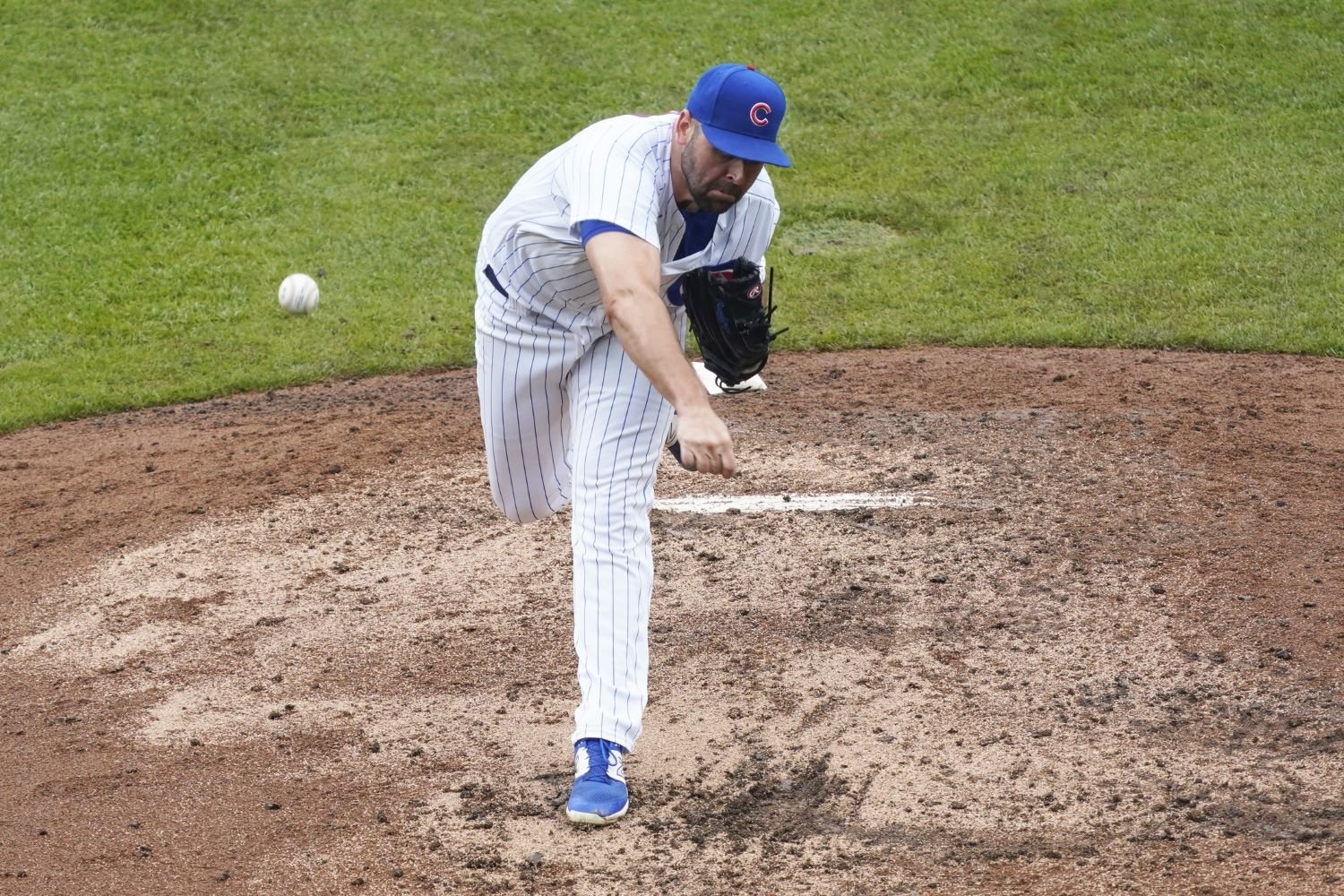 Going into that series, the Cubs had a one-game lead over the Miami Marlins for the final Wild Card spot. Three games and three losses later, combined with the Marlins taking two of three from the New York Mets, the Cubs’ playoff chances were all but gone, entering the final series of the season in Milwaukee. One thing I won’t forget from that series is how, no matter how many runs the Cubs scored or how big their lead was, it never felt like it was safe. They were a pitching staff that was completely running on fumes, facing a historicly good offense. Of course, as we all know, that is exactly how things played out. In game one of that series, the Cubs failed to win after leading 6-0. Their lead in game two was a much less comfortable 3-1, however, they still managed to blow three saves in just that one game. If the Cubs hold those leads and win those games, they would have been playing in the playoffs. Sure, there was the Seiya Suzuki play, though I am not sure it would have mattered. The Cubs still would have been facing the top of Atlanta’s order in the ninth inning, with likely only a one run lead. The fact is that the Cubs had absolutely no reliable options to get outs out of the bullpen down the stretch. After watching the Philadelphia Phillies eliminate the Braves in four games in the NLDS, I couldn’t help but think about the gap between the bullpen with which the Cubs ended the season and the one that the Phillies have now. Whereas the Cubs couldn’t hold leads of 6-0 and 3-1 over the Braves in must-win games, the Phillies preserved leads of 3-0 and 3-1. In Game One of the NLDS, the Phillies used seven different pitchers to shut the Braves out at home for the first time all season. In Game Four, they used six pitchers to hold the Braves to just one run and advance to the NLCS. Overall, the Phillies used 11 pitchers to cover 35 innings in the series. They gave up just seven runs in those 35 innings. In their late-season series with the Braves, the Cubs also used 11 pitchers, but gave up 18 runs. One could point to bad luck as the reason why the Cubs struggled with their bullpen so much down the stretch. Adbert Alzolay was hurt. So was Michael Fulmer. Brad Boxberger was either injured or ineffective for essentially the entire season. Keegan Thompson was expected to be a big part of this bullpen, but he struggled to get outs any time he took the mound. My gripe with that line of thinking is that bullpens are volatile. Everyone knows this. The Phillies came into 2023 thinking that Andrew Bellatti and Connor Brogdon were going to be major parts of their bullpen, yet neither was with the major-league team by the end of the season, much less recording outs in the playoffs. The Phillies gave themselves room for error by going out and acquiring power arms over the offseason. They added Craig Kimbrel, Matt Strahm, and Gregory Soto–all high-strikeout arms, who typically have a higher floor than pitch-to-contact bullpen types. They developed Jeff Hoffman into a swing-and-miss guy by having him double his slider usage. They developed Orion Kerkering into someone whom they trust in the eighth inning of a playoff game, despite only having three career major-league innings. Maybe if Boxberger and Fulmer are healthy all year, we’re having a different conversation. Maybe it really is that simple. After all, the Cubs did steal Julian Merryweather from the Blue Jays, and he was fantastic for them at times. But even his 3.52 FIP is worse than four guys that the Phillies have coming out of their playoff bullpen. While Javier Assad gave the team more than anyone could have hoped, he isn’t exactly a power arm, by modernity’s preposterously high standards. So, while some may chalk it up to poor injury luck, I say the Cubs didn’t give themselves enough room for error, either by bringing in more reliable arms or by finding more guys on the fringes of rosters or in the minors who could get outs for the big-league team. So much has been written about the new pitching infrastructure of this organization, and we finally started seeing some of that at the major league level this season. Yet, it wasn’t enough, and for this team to make the playoffs next season, it will have to continue to improve.
 -
While the season ended on a sour note, the Chicago Cubs had plenty of standout performances in 2023. Several players exceeded expectations, and the unhappy ending didn’t unwrite those stories. Let’s crown the MVP of this year’s team. Image courtesy of Thieres Rabalo & North Side Baseball Here are the voting results for the MVP of the 2023 Chicago Cubs, as voted on by Northside Baseball contributors: Honorable Mention Ian Happ, LF Stats: .248/.360/.431 After an up-and-down first five years of his career, Happ seems finally to have found some stability and consistency in his performance. While his batting average dropped from .271 last year to .248, his walk rate jumped from 9 percent to 14.3 percent to make up the difference. His 118 wRC+ and 3.5 WAR just about mirrored last year’s totals of 120 and 3.6, according to FanGraphs. He continues to leave a bit to be desired in the power department, but at this point, this just might be the player that Happ is going forward, and that is still plenty valuable. Yan Gomes, C Stats: .267/.315/.408 So much of the veteran catcher’s value goes beyond his batting line, or his 0.9 WAR. “He’s just an unbelievable human being, he’s an unbelievable leader in the clubhouse,” Justin Steele said earlier this season. A .462 batting average in high-leverage situations, per FanGraphs, certainly helps his case here, as well. It seemed like every time the Cubs needed a big hit, Gomes cashed in. Others receiving votes: Adbert Alzolay, Kyle Hendricks, Javier Assad, Christopher Morel The Top Five 5. Seiya Suzuki, RF Stats: .285/.357/.485 Suzuki was almost certainly the most valuable player for the Cubs from the beginning of August through the end of the season, as he hit .350/.406/.667 and finally showed an ability to consistently elevate his hard contact. Unfortunately for him, this is a season-long award, and he hit .212/.282/.292 from the beginning of June through the end of July, resulting in a benching prior to his breakout. Hopefully, the Cubs get the late-season version of Suzuki for next season. 4. Dansby Swanson, SS Stats: .244/.328/.416 It feels a bit misleading to post Swanson’s batting line, as he is a player whp contributes in every facet of the game. His production at the plate was only four percent above league-average, but his 20 Outs Above Average afield led all of baseball, according to FanGraphs. His 20.3 Defensive Runs Above Average on Fangraphs, which adjusts for position, peg him as the fifth-most valuable defender in baseball this year. He was also 4.6 runs above average on the bases, which was 21st in baseball. While I am not a huge believer in “intangibles,” I think that there is also something to be said for Swanson’s attitude and work ethic. He openly advocated to Jed Hoyer that they should not be selling at the trade deadline. He has made it clear that he doesn’t settle for losing, and the Cubs couldn’t have hoped for much more from Swanson on and off the field in year one of his contract. 3. Nico Hoerner, 2B Stats: .283/.346/.383 Similar to Swanson, so much of Hoerner’s value comes beyond what he brings with the bat, where he was roughly a league-average hitter. After performing better than most thought he could at shortstop last season, Hoerner shifted to second base, where he (like Swanson) was one of the most valuable defenders in baseball. He ranked eighth in outs above average, and 20th in defensive runs above average. Hoerner also proved himself to be one of the most valuable baserunners in baseball, stealing 43 bases, more than double his previous career high. According to the Baserunning Runs Above Average stat at FanGraphs, he added about one win of value on the bases, which was second only to Corbin Carroll. It should also be noted that Hoerner was able to stay (mostly) healthy for the second season in a row, something that was a concern for him after his first few seasons of professional baseball. The Cubs have to feel good penciling Hoerner and Swanson in up the middle for the next handful of seasons. 2. Justin Steele, LHSP Stats: 16-5, 3.06 ERA, 9.14 K/9 While he will come up short in the final voting, in part thanks to a rough last few starts, Steele is worthy of all of the Cy Young Award attention that is coming his way. He followed up his breakout last year by basically continuing apace: throwing the cutter in on the hands of righties, and then utilizing his slider off of that. Steele’s 171 ⅓ innings pitched were a professional career high by quite a bit, and given the way he broke down during the stretch run, that is certainly something to monitor going forward. But his 4.9 WAR was seventh in all of baseball. These types of pitchers don’t grow on trees. Steele performed like a legitimate ace this season. 1. Cody Bellinger, CF/1B Stats: .307/.356/.525 Even the most optimistic Bellinger fan could not have foreseen his performance this season. After two straight seasons of being a significantly below-average hitter, the reasonable hope was that he could bounce back to a league-average hitter while providing defensive value and versatility. Instead, he was the 13th-best hitter in all of baseball, according to FanGraphs. What is even more fascinating about Bellinger is that he has completely reinvented himself as a hitter, posting the highest contact rates (and thus the lowest strikeout rate) of his career by a decent margin. His defensive versatility proved to be extremely valuable to the Cubs, too. With Mike Tauchman’s emergence, Bellinger being able to shift over to first base gave them the ability to play both guys at once and shore up a weak spot in the lineup and on the infield. The question, of course, is what jersey Bellinger will be wearing next season. Based on this season’s results, Bellinger deserves a huge payday. For now, we’re just appreciating the season he had for the Cubs, the one that resulted in us voting him their most valuable player. View full article
-
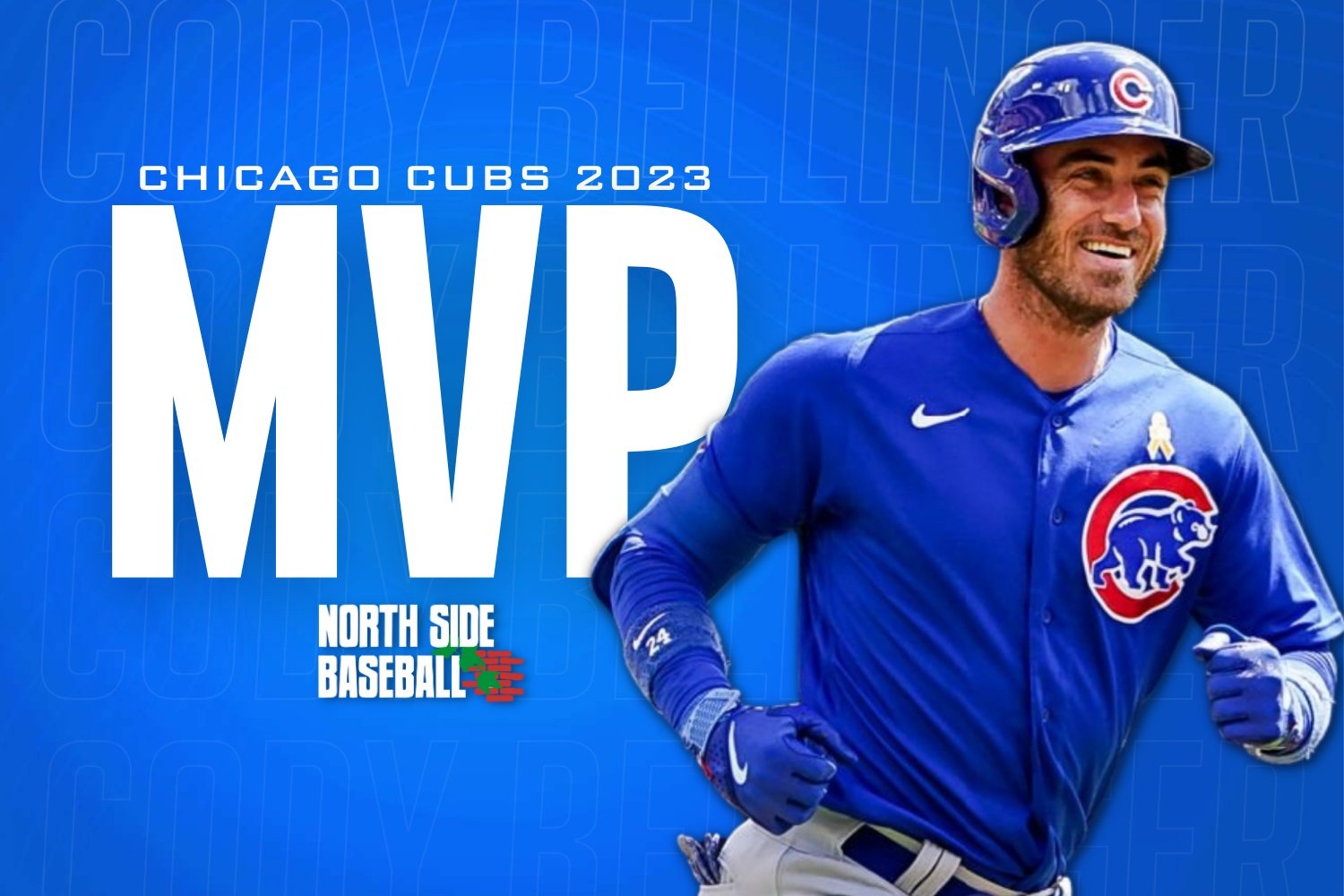 Here are the voting results for the MVP of the 2023 Chicago Cubs, as voted on by Northside Baseball contributors: Honorable Mention Ian Happ, LF Stats: .248/.360/.431 After an up-and-down first five years of his career, Happ seems finally to have found some stability and consistency in his performance. While his batting average dropped from .271 last year to .248, his walk rate jumped from 9 percent to 14.3 percent to make up the difference. His 118 wRC+ and 3.5 WAR just about mirrored last year’s totals of 120 and 3.6, according to FanGraphs. He continues to leave a bit to be desired in the power department, but at this point, this just might be the player that Happ is going forward, and that is still plenty valuable. Yan Gomes, C Stats: .267/.315/.408 So much of the veteran catcher’s value goes beyond his batting line, or his 0.9 WAR. “He’s just an unbelievable human being, he’s an unbelievable leader in the clubhouse,” Justin Steele said earlier this season. A .462 batting average in high-leverage situations, per FanGraphs, certainly helps his case here, as well. It seemed like every time the Cubs needed a big hit, Gomes cashed in. Others receiving votes: Adbert Alzolay, Kyle Hendricks, Javier Assad, Christopher Morel The Top Five 5. Seiya Suzuki, RF Stats: .285/.357/.485 Suzuki was almost certainly the most valuable player for the Cubs from the beginning of August through the end of the season, as he hit .350/.406/.667 and finally showed an ability to consistently elevate his hard contact. Unfortunately for him, this is a season-long award, and he hit .212/.282/.292 from the beginning of June through the end of July, resulting in a benching prior to his breakout. Hopefully, the Cubs get the late-season version of Suzuki for next season. 4. Dansby Swanson, SS Stats: .244/.328/.416 It feels a bit misleading to post Swanson’s batting line, as he is a player whp contributes in every facet of the game. His production at the plate was only four percent above league-average, but his 20 Outs Above Average afield led all of baseball, according to FanGraphs. His 20.3 Defensive Runs Above Average on Fangraphs, which adjusts for position, peg him as the fifth-most valuable defender in baseball this year. He was also 4.6 runs above average on the bases, which was 21st in baseball. While I am not a huge believer in “intangibles,” I think that there is also something to be said for Swanson’s attitude and work ethic. He openly advocated to Jed Hoyer that they should not be selling at the trade deadline. He has made it clear that he doesn’t settle for losing, and the Cubs couldn’t have hoped for much more from Swanson on and off the field in year one of his contract. 3. Nico Hoerner, 2B Stats: .283/.346/.383 Similar to Swanson, so much of Hoerner’s value comes beyond what he brings with the bat, where he was roughly a league-average hitter. After performing better than most thought he could at shortstop last season, Hoerner shifted to second base, where he (like Swanson) was one of the most valuable defenders in baseball. He ranked eighth in outs above average, and 20th in defensive runs above average. Hoerner also proved himself to be one of the most valuable baserunners in baseball, stealing 43 bases, more than double his previous career high. According to the Baserunning Runs Above Average stat at FanGraphs, he added about one win of value on the bases, which was second only to Corbin Carroll. It should also be noted that Hoerner was able to stay (mostly) healthy for the second season in a row, something that was a concern for him after his first few seasons of professional baseball. The Cubs have to feel good penciling Hoerner and Swanson in up the middle for the next handful of seasons. 2. Justin Steele, LHSP Stats: 16-5, 3.06 ERA, 9.14 K/9 While he will come up short in the final voting, in part thanks to a rough last few starts, Steele is worthy of all of the Cy Young Award attention that is coming his way. He followed up his breakout last year by basically continuing apace: throwing the cutter in on the hands of righties, and then utilizing his slider off of that. Steele’s 171 ⅓ innings pitched were a professional career high by quite a bit, and given the way he broke down during the stretch run, that is certainly something to monitor going forward. But his 4.9 WAR was seventh in all of baseball. These types of pitchers don’t grow on trees. Steele performed like a legitimate ace this season. 1. Cody Bellinger, CF/1B Stats: .307/.356/.525 Even the most optimistic Bellinger fan could not have foreseen his performance this season. After two straight seasons of being a significantly below-average hitter, the reasonable hope was that he could bounce back to a league-average hitter while providing defensive value and versatility. Instead, he was the 13th-best hitter in all of baseball, according to FanGraphs. What is even more fascinating about Bellinger is that he has completely reinvented himself as a hitter, posting the highest contact rates (and thus the lowest strikeout rate) of his career by a decent margin. His defensive versatility proved to be extremely valuable to the Cubs, too. With Mike Tauchman’s emergence, Bellinger being able to shift over to first base gave them the ability to play both guys at once and shore up a weak spot in the lineup and on the infield. The question, of course, is what jersey Bellinger will be wearing next season. Based on this season’s results, Bellinger deserves a huge payday. For now, we’re just appreciating the season he had for the Cubs, the one that resulted in us voting him their most valuable player.
 -
Back in April, the Cubs were fresh off of a three-game sweep of the Oakland Athletics, and had started the season 11-6. I was on vacation with my family in Florida, and specifically recall remarking to my brother while sitting on the beach that I only wanted to see the Cubs play meaningful games in September again. That, alone, would make me happy. Image courtesy of © Benny Sieu-USA TODAY Sports He simply laughed and told me that he would remind me of this when the Cubs lose some crushing games while in the middle of a playoff race in September. Fortunately for me, he has either forgotten that this conversation happened, or just decided to be nice about it. By my early April expectations, it would be very easy to shrug our shoulders, tell ourselves that while the past few weeks of baseball stunk, the Cubs exceeded expectations anyway, and that it was still a good season. It might even make us all feel better. The issue with that is that it completely ignores the context under which the Cubs were playing baseball in September. At the time of my comment, Eric Hosmer was their starting first baseman, which should be enough to lower anyone’s expectations. Consider each of the following: Nico Hoerner and Dansby Swanson are both among the top 30 position players in baseball, according to FanGraphs’s WAR. Cody Bellinger has a 134 wRC+. Ian Happ is continuing to perform as he did in his career-best 2022 campaign. Seiya Suzuki, while he did struggle at times, has a 126 wRC+, and has shown the ability to be one of the best hitters in baseball. Mike Tauchman came up and played his way into an everyday role and is a valuable contributor. Christopher Morel took a step forward, for the second year in a row. Nick Madrigal proved to be a capable everyday third baseman. Miguel Amaya proved he is, at least, a valuable backup catcher at the big-league level. They added the best available rental bat at the trade deadline, in Jeimer Candelario. Justin Steele will get Cy Young votes. Kyle Hendricks got healthy and posted almost a three-win season, by FanGraphs WAR. Javier Assad and Jordan Wicks contributed in very meaningful ways. The Cubs have the fourth-best run differential in the National League. Entering play on September 7, the Cubs had an 89.8-percent chance of making the playoffs, and had a 3.5-game cushion in the Wild Card standings. Had I known each and every one of those things in April, do you think that I still would have said meaningful baseball in September would have been enough? Probably not. Did some other things go wrong? Of course. Marcus Stroman was either injured or completely ineffective for the entire second half of the season. Jameson Taillon did not have a great first season with the Cubs. The team got almost no contributions from Keegan Thompson, Brad Boxberger, or Brandon Hughes, who all figured to be valuable contributors out of the bullpen. Oh, the bullpen. Sure, the bullpen was running on absolute fumes for the final month, without Adbert Alzolay and Michael Fulmer. However, the Marlins played a good chunk of September without Eury Perez and Sandy Alcantara, two of their best pitchers. Everyone is tired and deals with injuries at this point in the season. Besides, the bullpen was the one area this front office could hang their hat on, after the way it performed the past few seasons. This year, it completely failed them. But that is a conversation for another time. The bottom line is that way more went right than wrong, and it’s so important to take advantage of that. What if any one of Swanson, Happ, Hoerner, or Steele gets injured for a good chunk of next season? What if they can’t replace Bellinger’s production, or they bring him back and he isn’t as productive? The Cubs got favorable, healthy outcomes from a majority of their most important players, and they failed to capitalize on that and make the playoffs. Regardless of preseason expectations, what their run differential was, or what their record was in one-run games, that makes the season a failure. View full article
-
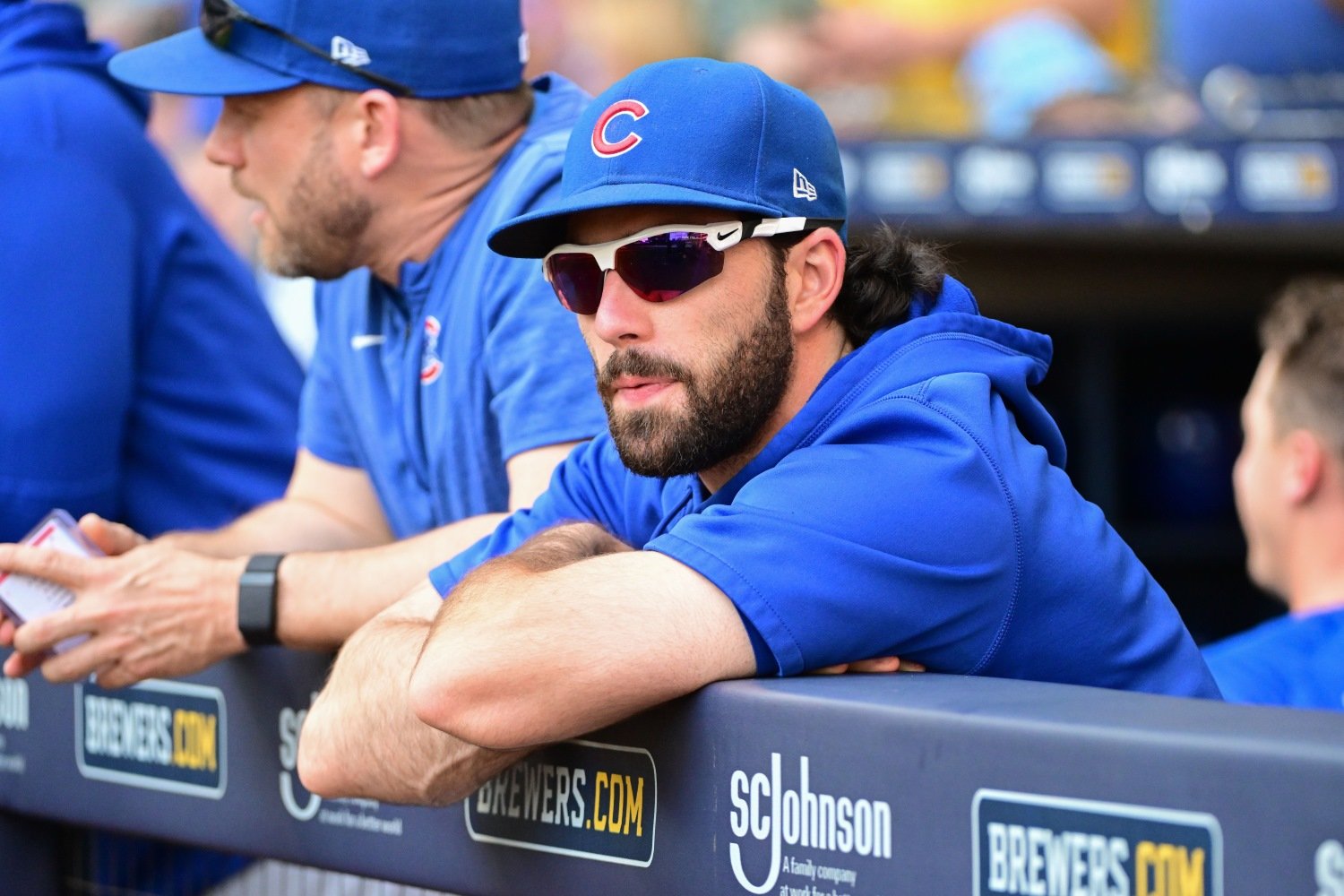 He simply laughed and told me that he would remind me of this when the Cubs lose some crushing games while in the middle of a playoff race in September. Fortunately for me, he has either forgotten that this conversation happened, or just decided to be nice about it. By my early April expectations, it would be very easy to shrug our shoulders, tell ourselves that while the past few weeks of baseball stunk, the Cubs exceeded expectations anyway, and that it was still a good season. It might even make us all feel better. The issue with that is that it completely ignores the context under which the Cubs were playing baseball in September. At the time of my comment, Eric Hosmer was their starting first baseman, which should be enough to lower anyone’s expectations. Consider each of the following: Nico Hoerner and Dansby Swanson are both among the top 30 position players in baseball, according to FanGraphs’s WAR. Cody Bellinger has a 134 wRC+. Ian Happ is continuing to perform as he did in his career-best 2022 campaign. Seiya Suzuki, while he did struggle at times, has a 126 wRC+, and has shown the ability to be one of the best hitters in baseball. Mike Tauchman came up and played his way into an everyday role and is a valuable contributor. Christopher Morel took a step forward, for the second year in a row. Nick Madrigal proved to be a capable everyday third baseman. Miguel Amaya proved he is, at least, a valuable backup catcher at the big-league level. They added the best available rental bat at the trade deadline, in Jeimer Candelario. Justin Steele will get Cy Young votes. Kyle Hendricks got healthy and posted almost a three-win season, by FanGraphs WAR. Javier Assad and Jordan Wicks contributed in very meaningful ways. The Cubs have the fourth-best run differential in the National League. Entering play on September 7, the Cubs had an 89.8-percent chance of making the playoffs, and had a 3.5-game cushion in the Wild Card standings. Had I known each and every one of those things in April, do you think that I still would have said meaningful baseball in September would have been enough? Probably not. Did some other things go wrong? Of course. Marcus Stroman was either injured or completely ineffective for the entire second half of the season. Jameson Taillon did not have a great first season with the Cubs. The team got almost no contributions from Keegan Thompson, Brad Boxberger, or Brandon Hughes, who all figured to be valuable contributors out of the bullpen. Oh, the bullpen. Sure, the bullpen was running on absolute fumes for the final month, without Adbert Alzolay and Michael Fulmer. However, the Marlins played a good chunk of September without Eury Perez and Sandy Alcantara, two of their best pitchers. Everyone is tired and deals with injuries at this point in the season. Besides, the bullpen was the one area this front office could hang their hat on, after the way it performed the past few seasons. This year, it completely failed them. But that is a conversation for another time. The bottom line is that way more went right than wrong, and it’s so important to take advantage of that. What if any one of Swanson, Happ, Hoerner, or Steele gets injured for a good chunk of next season? What if they can’t replace Bellinger’s production, or they bring him back and he isn’t as productive? The Cubs got favorable, healthy outcomes from a majority of their most important players, and they failed to capitalize on that and make the playoffs. Regardless of preseason expectations, what their run differential was, or what their record was in one-run games, that makes the season a failure.
 -
The Cubs' offensive sparkplug and most fiery leader has been very good this season, especially in the second half. Still, there's room for improvement on what he delivers at the plate. Image courtesy of © Matt Marton-USA TODAY Sports Nico Hoerner has, undeniably, had a fantastic year for the Chicago Cubs. His .285/.349/.388 batting line is slightly better than league-average, and when you combine that with his elite defense and baserunning, you have a player who is worth 4.7 WAR, according to FanGraphs, which ranks 19th in baseball. The fact that Hoerner rates that highly by WAR already makes him unique. It is exceedingly rare for a player who provides so little slug to be so valuable in baseball in 2023. Hoerner has hit nine home runs this year. Nobody else in the top 30 has hit fewer than 17. After watching Hoerner play almost every day for the Cubs for two seasons in a row, it’s safe to say most of us have a pretty good idea of who he is at the plate by now. He manages a higher batting average thanks to a strategy that basically boils down to “slap the ball somewhere on the field and then run fast.” He has recorded a Barrel, by Baseball Savant’s definition, in only 1.5 percent of his plate appearances, which is seventh-worst in MLB this season. Aaron Judge, he is not. However, if Hoerner does have one great skill as a hitter, it is his ability to put the bat on the baseball. He makes contact on 88.8 percent of swings, third-highest in baseball, according to FanGraphs. Put the ball in play, and sometimes, even the weakest contact ends up going for a hit. Perhaps because he is always putting the ball in play and he strikes out so infrequently, I always thought of Hoerner as an aggressive hitter. Thus, I was a bit surprised when I found him down at 94th of 135 players in swing rate this season on Fangraphs. For context, Ian Happ, who is generally thought of as one of the more patient hitters on the team, is only right behind him at 100th. The issue here is that Hoerner isn’t swinging at any of the pitches he should be swinging at. He has only swung at 61 percent of pitches in the strike zone this season, according to FanGraphs, 14th-lowest in all of baseball. He is near some of the most patient players in baseball–guys like Juan Soto, Kyle Schwarber, and Max Muncy. Now, I don’t think I need to explain to you the difference between Hoerner and those three guys, but just in case: those guys are going to combine for about 120 home runs this year. Hoerner probably won’t hit that number for his career. The other thing is that those three players, along with everyone else that swings at strikes as infrequently as Hoerner does, swing at fewer pitches outside of the strike zone. Hoerner’s 33.1 percent swing rate at pitches outside of the strike zone is 50th in baseball. I also don’t think I need to explain this to you, but here goes again: swinging at pitches in the strike zone is generally a good thing. Swinging at pitches outside of the strike zone is generally a bad thing! And the numbers back this up. According to Baseball Savant, Hoerner is hitting .324 and slugging .451 on pitches in the strike zone. He is only hitting .185 with a .226 slugging percentage on pitches outside of the strike zone. Of course, it’s not quite as easy as “swing at fewer balls and more strikes.” If it was, I’d guess Hoerner would be doing so already. To his credit, the decreased aggression in the strike zone has potentially led to some deeper counts. He has an almost league-average walk rate of 7.2 percent and a .349 on base percentage this year, both improvements on last season. At the same time, it just feels like there is a better balance to be struck. He makes contact with 80.5 percent of pitches outside of the strike zone. That’s the third-highest mark in baseball. For a player that is going to put the ball in play so often, it is imperative that they swing at pitches that they can actually do damage on. Nico Hoerner will never be a big slugger or a feared hitter. He has been a slightly above-average hitter for over two seasons now. That’s a great baseline for a player who brings so many other skills to the table. I think there still might be a little bit more potential in that bat, however. He just needs to make better swing decisions. View full article
-
 Nico Hoerner has, undeniably, had a fantastic year for the Chicago Cubs. His .285/.349/.388 batting line is slightly better than league-average, and when you combine that with his elite defense and baserunning, you have a player who is worth 4.7 WAR, according to FanGraphs, which ranks 19th in baseball. The fact that Hoerner rates that highly by WAR already makes him unique. It is exceedingly rare for a player who provides so little slug to be so valuable in baseball in 2023. Hoerner has hit nine home runs this year. Nobody else in the top 30 has hit fewer than 17. After watching Hoerner play almost every day for the Cubs for two seasons in a row, it’s safe to say most of us have a pretty good idea of who he is at the plate by now. He manages a higher batting average thanks to a strategy that basically boils down to “slap the ball somewhere on the field and then run fast.” He has recorded a Barrel, by Baseball Savant’s definition, in only 1.5 percent of his plate appearances, which is seventh-worst in MLB this season. Aaron Judge, he is not. However, if Hoerner does have one great skill as a hitter, it is his ability to put the bat on the baseball. He makes contact on 88.8 percent of swings, third-highest in baseball, according to FanGraphs. Put the ball in play, and sometimes, even the weakest contact ends up going for a hit. Perhaps because he is always putting the ball in play and he strikes out so infrequently, I always thought of Hoerner as an aggressive hitter. Thus, I was a bit surprised when I found him down at 94th of 135 players in swing rate this season on Fangraphs. For context, Ian Happ, who is generally thought of as one of the more patient hitters on the team, is only right behind him at 100th. The issue here is that Hoerner isn’t swinging at any of the pitches he should be swinging at. He has only swung at 61 percent of pitches in the strike zone this season, according to FanGraphs, 14th-lowest in all of baseball. He is near some of the most patient players in baseball–guys like Juan Soto, Kyle Schwarber, and Max Muncy. Now, I don’t think I need to explain to you the difference between Hoerner and those three guys, but just in case: those guys are going to combine for about 120 home runs this year. Hoerner probably won’t hit that number for his career. The other thing is that those three players, along with everyone else that swings at strikes as infrequently as Hoerner does, swing at fewer pitches outside of the strike zone. Hoerner’s 33.1 percent swing rate at pitches outside of the strike zone is 50th in baseball. I also don’t think I need to explain this to you, but here goes again: swinging at pitches in the strike zone is generally a good thing. Swinging at pitches outside of the strike zone is generally a bad thing! And the numbers back this up. According to Baseball Savant, Hoerner is hitting .324 and slugging .451 on pitches in the strike zone. He is only hitting .185 with a .226 slugging percentage on pitches outside of the strike zone. Of course, it’s not quite as easy as “swing at fewer balls and more strikes.” If it was, I’d guess Hoerner would be doing so already. To his credit, the decreased aggression in the strike zone has potentially led to some deeper counts. He has an almost league-average walk rate of 7.2 percent and a .349 on base percentage this year, both improvements on last season. At the same time, it just feels like there is a better balance to be struck. He makes contact with 80.5 percent of pitches outside of the strike zone. That’s the third-highest mark in baseball. For a player that is going to put the ball in play so often, it is imperative that they swing at pitches that they can actually do damage on. Nico Hoerner will never be a big slugger or a feared hitter. He has been a slightly above-average hitter for over two seasons now. That’s a great baseline for a player who brings so many other skills to the table. I think there still might be a little bit more potential in that bat, however. He just needs to make better swing decisions.
 -
There's hardly any good news in Cubdom right now, but (despite some ghastly mistakes that contributed to their brutal road trip) it's good to remind ourselves that good, aggressive baserunning has been a critical component of the Cubs' success this season. Image courtesy of © Matt Marton-USA TODAY Sports The frustration was palpable for the Chicago Cubs this week as they lost two of three to the lowly Colorado Rockies. Despite pounding out 33 hits, the Cubs scored just 12 runs, in part because of all of the outs that were made on the bases. Seiya Suzuki was thrown out at home plate. Pete Crow-Armstrong and Nico Hoerner were thrown out stealing. Nick Madrigal was thrown out trying to turn a double into a triple. Cody Bellinger was thrown out trying to turn a single into a double. None of those events, in a vacuum, is a big deal. They happen. But when they all happen during a series loss to one of the worst teams in baseball while in the middle of a playoff race, those mistakes are suddenly viewed under a microscope and talked about for much longer than usual. FanGraphs measures baserunning value through their BsR stat. This stat takes all base running plays–stolen bases, caught stealing, taking extra bases, et cetera–and rolls them into one handy number to tell you how many runs above (or below) average a team or player has been worth on the bases. The thing is, by that one metric, the Cubs have actually been the best baserunning team in baseball this season. BsR currently has them as having been worth 15.5 runs above average, which is 0.9 runs above second-place Tampa Bay. Using the calculation that roughly every 10 or so runs is worth one win, the Cubs have added well over one win to their total this year with their performance on the bases. Funnily enough, this week’s opponent, the Colorado Rockies, rank last here, as they have been 18 runs below average on the bases, costing them almost two wins. The team’s high standing in BsR is thanks to having a few elite baserunners, without any major minuses on the basepaths. Nico Hoerner himself has been worth almost an entire win on the bases alone. He has been worth 8.6 runs above average; that is fifth in all of baseball. Dansby Swanson is 22nd with four runs above average, and Cody Bellinger is right behind him with 3.8 runs above average. Ian Happ also finds himself on the fringes of the top 30. He’s 35th in baseball with 2.9 runs above average. As a side note, since these two are inextricably linked in my mind thanks to both being a part of the 2022 free agent shortstop class: Carlos Correa has been worth 9.2 runs below average, according to BsR, and that is last in all of baseball. So in addition to performing better than Correa in the field and at the plate, Dansby Swanson has been well over one win better than Correa on the bases. On the flip side, the Cubs’ worst baserunner has been Seiya Suzuki. He has been 2.1 runs below average this year. Yan Gomes has been 1.6 runs below average, but that is (mostly) to be expected from a catcher. The only other players that are still on the team that have been below-average base runners are Nick Madrigal and Patrick Wisdom, but neither has been worse than one run below average. Pete Crow-Armstrong has actually been worth 0.4 runs below average already, but due to small sample size and the fact that most are confident he will add value in this area, I am willing to excuse that one. To be clear, this shouldn’t make any of the losses this past week any less frustrating. Simply put, you have to take care of business when you’re playing one of the worst teams in baseball in the middle of a playoff race. However, maybe it makes the baserunning mistakes a bit more palatable, to understand that the team might not have come this far at all if not for good baserunning throughout the season. The Cubs probably should have been less aggressive on the basepaths in Colorado. On the other hand, they were aggressive on the bases, as they have been all year, and it just didn’t work out. Clearly, over a larger sample size, it has worked out. Sometimes, that is just how baseball works. View full article
-
 The frustration was palpable for the Chicago Cubs this week as they lost two of three to the lowly Colorado Rockies. Despite pounding out 33 hits, the Cubs scored just 12 runs, in part because of all of the outs that were made on the bases. Seiya Suzuki was thrown out at home plate. Pete Crow-Armstrong and Nico Hoerner were thrown out stealing. Nick Madrigal was thrown out trying to turn a double into a triple. Cody Bellinger was thrown out trying to turn a single into a double. None of those events, in a vacuum, is a big deal. They happen. But when they all happen during a series loss to one of the worst teams in baseball while in the middle of a playoff race, those mistakes are suddenly viewed under a microscope and talked about for much longer than usual. FanGraphs measures baserunning value through their BsR stat. This stat takes all base running plays–stolen bases, caught stealing, taking extra bases, et cetera–and rolls them into one handy number to tell you how many runs above (or below) average a team or player has been worth on the bases. The thing is, by that one metric, the Cubs have actually been the best baserunning team in baseball this season. BsR currently has them as having been worth 15.5 runs above average, which is 0.9 runs above second-place Tampa Bay. Using the calculation that roughly every 10 or so runs is worth one win, the Cubs have added well over one win to their total this year with their performance on the bases. Funnily enough, this week’s opponent, the Colorado Rockies, rank last here, as they have been 18 runs below average on the bases, costing them almost two wins. The team’s high standing in BsR is thanks to having a few elite baserunners, without any major minuses on the basepaths. Nico Hoerner himself has been worth almost an entire win on the bases alone. He has been worth 8.6 runs above average; that is fifth in all of baseball. Dansby Swanson is 22nd with four runs above average, and Cody Bellinger is right behind him with 3.8 runs above average. Ian Happ also finds himself on the fringes of the top 30. He’s 35th in baseball with 2.9 runs above average. As a side note, since these two are inextricably linked in my mind thanks to both being a part of the 2022 free agent shortstop class: Carlos Correa has been worth 9.2 runs below average, according to BsR, and that is last in all of baseball. So in addition to performing better than Correa in the field and at the plate, Dansby Swanson has been well over one win better than Correa on the bases. On the flip side, the Cubs’ worst baserunner has been Seiya Suzuki. He has been 2.1 runs below average this year. Yan Gomes has been 1.6 runs below average, but that is (mostly) to be expected from a catcher. The only other players that are still on the team that have been below-average base runners are Nick Madrigal and Patrick Wisdom, but neither has been worse than one run below average. Pete Crow-Armstrong has actually been worth 0.4 runs below average already, but due to small sample size and the fact that most are confident he will add value in this area, I am willing to excuse that one. To be clear, this shouldn’t make any of the losses this past week any less frustrating. Simply put, you have to take care of business when you’re playing one of the worst teams in baseball in the middle of a playoff race. However, maybe it makes the baserunning mistakes a bit more palatable, to understand that the team might not have come this far at all if not for good baserunning throughout the season. The Cubs probably should have been less aggressive on the basepaths in Colorado. On the other hand, they were aggressive on the bases, as they have been all year, and it just didn’t work out. Clearly, over a larger sample size, it has worked out. Sometimes, that is just how baseball works.
 -
I considered getting into this but ultimately decided not to. Fangraphs does measure this. Steele is the only starting pitcher in the positive with a positive 1 run gained. . Hendricks is the worst offender, they estimate he’s cost the Cubs -3 runs with his inability to hold runners on. Which is kinda crazy to think about because he used to have such a good pickoff move. Everyone else slots between those two.
