


matto1233
-
Posts
313 -
Joined
-
Last visited
Content Type
Profiles
Joomla Posts 1
Chicago Cubs Videos
Chicago Cubs Free Agent & Trade Rumors, Notes, & Tidbits
2026 Chicago Cubs Top Prospects Ranking
News
2023 Chicago Cubs Draft Picks
Guides & Resources
2024 Chicago Cubs Draft Picks
The Chicago Cubs Players Project
2025 Chicago Cubs Draft Pick Tracker
2026 Chicago Cubs Draft Pick Tracker
Blogs
Events
Forums
Store
Gallery
Everything posted by matto1233
-
Christopher Morel led off the bottom of the second inning for the Chicago Cubs in their game last Wednesday against the Colorado Rockies with an infield single. This was the spark plug in a big inning for the Cubs. Morel came around to score on a Michael Busch sacrifice fly, and the Cubs would score three more times later in the inning. Image courtesy of © Rick Scuteri-USA TODAY Sports Four innings later, in the top of the sixth, Morel fielded a routine ground ball with two outs and runners on first and second and, of course, airmailed the ball over Michael Busch’s head at first base, allowing the Rockies to score a run and prolonging the inning. This has been the Christopher Morel at third base experience in a nutshell: he gives, and he takes away. Last week, I was watching the Dodgers game as I drifted off to sleep, and they were talking about Mookie Betts’ shift to playing shortstop this season. Betts had mentioned to the broadcast crew that he thinks his new challenge on the defensive side of the ball has helped him be more successful at the plate. It’s easier not to be laid back on offense when so much of your attention is on the defensive end. Even if this is only anecdotal, it does make sense to me. After all, the phrase “a watched pot never boils” was coined for a reason. One week and change into the season, I wonder if Morel is experiencing something similar. Through Friday’s games, he has a 157 wRC+. We’re still dealing with a small sample size, but there are reasons to think it might be sustainable. His strikeout rate is way down, and he is making much better swing decisions: fewer pitches out of the zone and more pitches in the zone. The issue? As alluded to earlier, the Cubs’ young slugger has struggled defensively. He has struggled so much that he rates as the worst defensive player in baseball by almost any publicly available metric. Fangraphs uses its Defensive Runs Above Average metric to measure defense across positions. They estimate that Morel has cost the Cubs 2.7 runs in the field this season. The next closest player in baseball is Nick Castellanos, a notably poor defensive player at -2.4. Baseball Savant uses Fielding Run Value to measure defense. Morel is the only player to be worth -3 runs of Fielding Run Value. If Outs Above Average is more your preference to measure defense, he is one of seven players worth -3 Outs Above Average, according to Fangraphs. The impressive, or perhaps very unfortunate, thing about this is that Morel has accrued that much negative defensive value in just 28 innings in the field. The six other players who have been worth -3 Outs Above Average have all played at least 37 innings in the field, and five of them have played at least 50 innings in the field. Of course, as with everything this early in the season, sample size deserves to be mentioned. Dansby Swanson is currently rated as a poor defensive shortstop at this point in the season, and I don’t think anyone is concerned about him. However, while one week of defensive data shouldn’t be enough to conclude someone, it can be enough to start tracking a potential trend. Swanson has an entire career of being a superb defender to point to. While Morel wasn’t quite this bad in his 2022 sample size at third, he has no record of defensive success to rely on, and he isn’t exactly passing the eye test, either. So much has been made about the decision to play Morel at third base this season, and it appears that Craig Counsell is sticking by that decision, at least based on any postgame quotes he has given. The Cubs’ manager keeps saying that getting Morel out there every day will be the key to him improving. For the record, I agree. I believe Nick Madrigal is best deployed as a part-time player, so the Cubs don’t have a better option at the hot corner right now. Not to mention, with the way Morel is swinging the bat, he has to be in the lineup daily. My concern is whether the bat regresses from elite to above league average. How long can the Cubs, who will likely be fighting for a playoff spot all year, trot out one of the worst defensive players in baseball at third base? If it doesn’t start to improve, that noise will continue to get louder, and it will put Craig Counsell’s decision-making to the test early on in his tenure with the Cubs. View full article
-
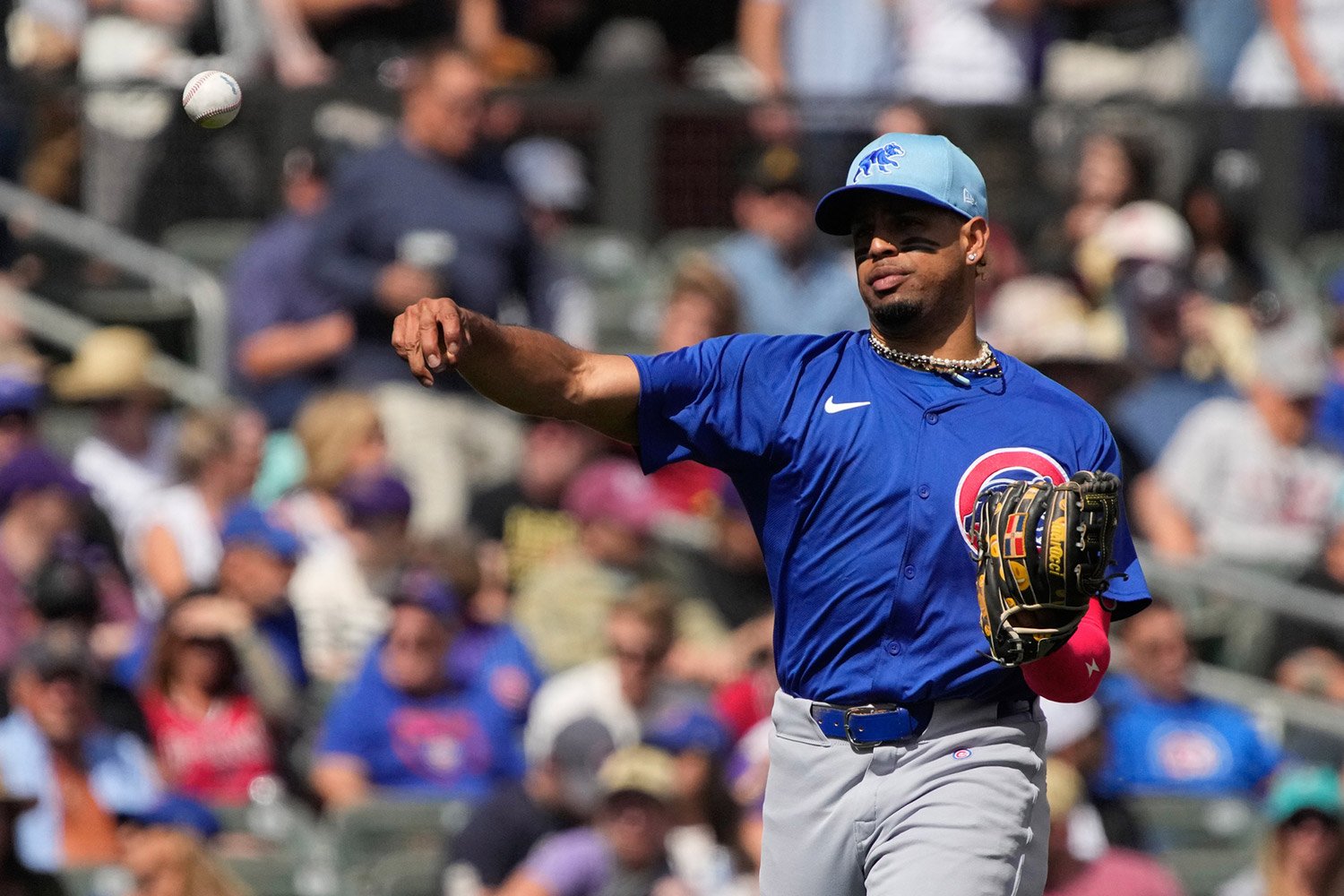 Four innings later, in the top of the sixth, Morel fielded a routine ground ball with two outs and runners on first and second and, of course, airmailed the ball over Michael Busch’s head at first base, allowing the Rockies to score a run and prolonging the inning. This has been the Christopher Morel at third base experience in a nutshell: he gives, and he takes away. Last week, I was watching the Dodgers game as I drifted off to sleep, and they were talking about Mookie Betts’ shift to playing shortstop this season. Betts had mentioned to the broadcast crew that he thinks his new challenge on the defensive side of the ball has helped him be more successful at the plate. It’s easier not to be laid back on offense when so much of your attention is on the defensive end. Even if this is only anecdotal, it does make sense to me. After all, the phrase “a watched pot never boils” was coined for a reason. One week and change into the season, I wonder if Morel is experiencing something similar. Through Friday’s games, he has a 157 wRC+. We’re still dealing with a small sample size, but there are reasons to think it might be sustainable. His strikeout rate is way down, and he is making much better swing decisions: fewer pitches out of the zone and more pitches in the zone. The issue? As alluded to earlier, the Cubs’ young slugger has struggled defensively. He has struggled so much that he rates as the worst defensive player in baseball by almost any publicly available metric. Fangraphs uses its Defensive Runs Above Average metric to measure defense across positions. They estimate that Morel has cost the Cubs 2.7 runs in the field this season. The next closest player in baseball is Nick Castellanos, a notably poor defensive player at -2.4. Baseball Savant uses Fielding Run Value to measure defense. Morel is the only player to be worth -3 runs of Fielding Run Value. If Outs Above Average is more your preference to measure defense, he is one of seven players worth -3 Outs Above Average, according to Fangraphs. The impressive, or perhaps very unfortunate, thing about this is that Morel has accrued that much negative defensive value in just 28 innings in the field. The six other players who have been worth -3 Outs Above Average have all played at least 37 innings in the field, and five of them have played at least 50 innings in the field. Of course, as with everything this early in the season, sample size deserves to be mentioned. Dansby Swanson is currently rated as a poor defensive shortstop at this point in the season, and I don’t think anyone is concerned about him. However, while one week of defensive data shouldn’t be enough to conclude someone, it can be enough to start tracking a potential trend. Swanson has an entire career of being a superb defender to point to. While Morel wasn’t quite this bad in his 2022 sample size at third, he has no record of defensive success to rely on, and he isn’t exactly passing the eye test, either. So much has been made about the decision to play Morel at third base this season, and it appears that Craig Counsell is sticking by that decision, at least based on any postgame quotes he has given. The Cubs’ manager keeps saying that getting Morel out there every day will be the key to him improving. For the record, I agree. I believe Nick Madrigal is best deployed as a part-time player, so the Cubs don’t have a better option at the hot corner right now. Not to mention, with the way Morel is swinging the bat, he has to be in the lineup daily. My concern is whether the bat regresses from elite to above league average. How long can the Cubs, who will likely be fighting for a playoff spot all year, trot out one of the worst defensive players in baseball at third base? If it doesn’t start to improve, that noise will continue to get louder, and it will put Craig Counsell’s decision-making to the test early on in his tenure with the Cubs.
 -
Nice to know someone else has been watching Morel’s strikeout and chase rates as closely as I have to start the year! Would be a great sign if it continues.
-
Somehow, the second Cubs pitching start of the season almost brought more discouraging returns than the first. Let's mine it a bit, anyway, though, because the news isn't all bad. Image courtesy of © Kevin Jairaj-USA TODAY Sports Desperately looking for something to feel good about after a frustrating loss on Thursday, compounded with the news of Justin Steele’s placement on the injured list, I'm sure the Chicago Cubs were looking for a vintage Kyle Hendricks performance on Saturday night. Unfortunately, it didn’t go the way they had hoped: Hendricks was pulled in the fourth inning after giving up five runs (all earned) on nine hits and two home runs. The Cubs eventually lost the game, 11-2. Plainly, Hendricks was not good enough. He walked 9.5 percent of the hitters he faced, and struck out the same number. This after a 2023 season in which he struck out 16.1 percent of the hitters he faced and walked just 4.7 percent. The .467 BABIP that he allowed will come down, but it was justified: he allowed a 41.2 percent hard-hit rate. Again, for context, that figure was 24.9 percent for the veteran righthander just last season. But, since we are all desperate for something to feel good about, I am going to attempt to provide it. According to Pitch Info data at FanGraphs, the soft-tossing Hendricks averaged 88.2 mph on his four-seam fastball, and 88.6 mph on his sinker. He’s never averaged 88 mph for a season with both pitches since 2016, when he led all of baseball in ERA and finished third in the National League Cy Young voting. Hendricks’s velocity actually ticked up a bit to end last season. He averaged 88 mph with his sinker and his four-seamer in seven of his final 10 starts. His ERA in those seven starts was 3.29. Sure, the control was not there in his season debut, but it is a really good sign for the rest of the season that the velocity was there. Now 34, Hendricks is at an age when a lot of pitchers start to lose velocity quickly. For someone who has always been one of the slowest-throwing pitchers in baseball, a decline in velocity is a much greater concern than it would be for, say, Max Scherzer, who has very slowly been losing velocity for about five years now, but maintains effectiveness since he can still sit at about 94 mph. (And because he is Max Scherzer, but the point remains.) Control, on the other hand, tends to age much more gracefully. Using Location+, which measures a pitcher’s ability to put a pitch in the right place, we can see that Hendricks has been hovering in the 102 to 110 range for the past four seasons. In this case, 100 is average, so I have full faith that Hendricks can right the ship and return to form in this department. One other small note on Hendricks from Saturday night. Sahadev Sharma reported in the preseason that Hendricks had been playing around with a new grip on his curveball. According to Sharma, Hendricks had very good reactions to his curveball this spring, and was considering using it more often this year. His curveball usage had fallen from a career-high 16.6 percent in the pandemic-shortened 2020 season, all the way to a career-low 3.5 percent last season. He didn’t throw any curveballs the first time through the order, and I got really excited when his first pitch to Marcus Semien to begin his second time through the order was a curveball, but he only ended up throwing one more, and both ended up breaking outside for balls. A two-pitch sample size is not nearly enough to go on, so I won’t bother getting into the pitch shape of the curveball and if it was really different. This is just something else to watch for, in addition to the velocity, going forward. Yes, Hendricks was bad on Saturday night. But there were still some good signs that he can right the ship and be an effective pitcher. Hopefully that happens very soon, because with the pitching staff starting the season as banged up as it is, the Cubs really need Hendricks to be good right now. View full article
-
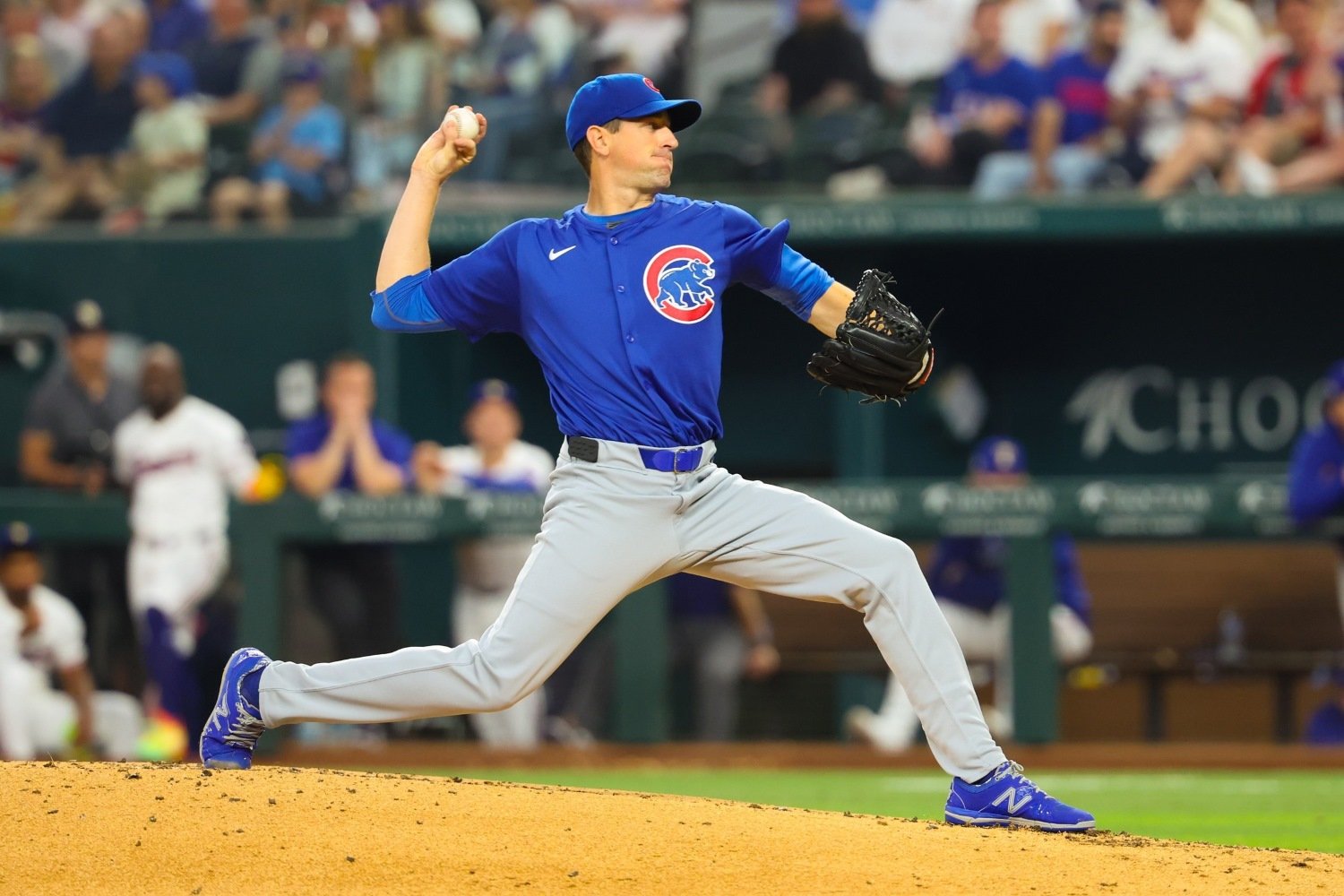 Desperately looking for something to feel good about after a frustrating loss on Thursday, compounded with the news of Justin Steele’s placement on the injured list, I'm sure the Chicago Cubs were looking for a vintage Kyle Hendricks performance on Saturday night. Unfortunately, it didn’t go the way they had hoped: Hendricks was pulled in the fourth inning after giving up five runs (all earned) on nine hits and two home runs. The Cubs eventually lost the game, 11-2. Plainly, Hendricks was not good enough. He walked 9.5 percent of the hitters he faced, and struck out the same number. This after a 2023 season in which he struck out 16.1 percent of the hitters he faced and walked just 4.7 percent. The .467 BABIP that he allowed will come down, but it was justified: he allowed a 41.2 percent hard-hit rate. Again, for context, that figure was 24.9 percent for the veteran righthander just last season. But, since we are all desperate for something to feel good about, I am going to attempt to provide it. According to Pitch Info data at FanGraphs, the soft-tossing Hendricks averaged 88.2 mph on his four-seam fastball, and 88.6 mph on his sinker. He’s never averaged 88 mph for a season with both pitches since 2016, when he led all of baseball in ERA and finished third in the National League Cy Young voting. Hendricks’s velocity actually ticked up a bit to end last season. He averaged 88 mph with his sinker and his four-seamer in seven of his final 10 starts. His ERA in those seven starts was 3.29. Sure, the control was not there in his season debut, but it is a really good sign for the rest of the season that the velocity was there. Now 34, Hendricks is at an age when a lot of pitchers start to lose velocity quickly. For someone who has always been one of the slowest-throwing pitchers in baseball, a decline in velocity is a much greater concern than it would be for, say, Max Scherzer, who has very slowly been losing velocity for about five years now, but maintains effectiveness since he can still sit at about 94 mph. (And because he is Max Scherzer, but the point remains.) Control, on the other hand, tends to age much more gracefully. Using Location+, which measures a pitcher’s ability to put a pitch in the right place, we can see that Hendricks has been hovering in the 102 to 110 range for the past four seasons. In this case, 100 is average, so I have full faith that Hendricks can right the ship and return to form in this department. One other small note on Hendricks from Saturday night. Sahadev Sharma reported in the preseason that Hendricks had been playing around with a new grip on his curveball. According to Sharma, Hendricks had very good reactions to his curveball this spring, and was considering using it more often this year. His curveball usage had fallen from a career-high 16.6 percent in the pandemic-shortened 2020 season, all the way to a career-low 3.5 percent last season. He didn’t throw any curveballs the first time through the order, and I got really excited when his first pitch to Marcus Semien to begin his second time through the order was a curveball, but he only ended up throwing one more, and both ended up breaking outside for balls. A two-pitch sample size is not nearly enough to go on, so I won’t bother getting into the pitch shape of the curveball and if it was really different. This is just something else to watch for, in addition to the velocity, going forward. Yes, Hendricks was bad on Saturday night. But there were still some good signs that he can right the ship and be an effective pitcher. Hopefully that happens very soon, because with the pitching staff starting the season as banged up as it is, the Cubs really need Hendricks to be good right now.
 -
In the spring, everyone believes they have pitching depth. The Chicago Cubs, though, can point to an objective framework that keeps the whole league in view, which says that they have better depth than most. Image courtesy of © Allan Henry-USA TODAY Sports We’ve all likely heard this news by now: Jameson Taillon’s back acted up on him just prior to his first scheduled spring training appearance, and as of this writing, he has still yet to throw a Cactus League inning. According to Bruce Levine, the veteran righthander’s back has responded well to his rest and treatment, and he is planning on throwing off of a mound later this week. Given that we’re a little more than a week away from Opening Day, though, it is unlikely he will be ready to go for the start of the season. Caleb Kilian, who looked good in his three preseason appearances, will also be out (in his case, for several months) after an MRI revealed a strain of the teres major in his right shoulder. This all sounds really bad for the Chicago Cubs, and it is, but frankly, they should be glad that these are the only injuries that have struck their pitching staff to this point in spring training. Kyle Bradish was diagnosed with a sprained UCL and will miss the start of the season. Lucas Giolito is out for the year after undergoing elbow surgery. Justin Verlander will miss the start of the season with a shoulder injury. Most importantly, the once invulnerable Gerrit Cole has been shut down after experiencing elbow pain and likely won’t resume throwing again for several weeks. This all underscores a larger point: Throughout the history of baseball, pitchers have never been as fragile as they are right now. According to The Athletic, injured list placement for pitchers rose from 241 in 2010 to 552 in 2021. Use of the IL has dropped slightly in the years since then, but according to CBS Sports, the number of days lost to the injured list this past season rose 6.1 percent. That implies that, while the number of injuries might be tailing off, the severity of those injuries continues to worsen. Some blame the pitch clock for this. Pitchers now have less time to recuperate between pitches, and some think this is an issue that compounds over the course of the season. Others blame the increased focus on velocity and spin rate. With pitchers throwing at maximum effort every single pitch, more arm injuries are bound to happen. I’d tend to lean toward the latter being the reason, but I am not a doctor, nor am I remotely smart enough to be one. But enough self-deprecation! Since the Cole injury, specifically, I have been thinking a lot about pitching depth in baseball. I assume everyone reading this has had the importance of pitching depth drilled into them by Jed Hoyer by now. It is unfathomable to me that the 2016 Chicago Cubs had five pitchers combine for 152 starts. It’s even more unfathomable to me that that was only eight years ago. Hoyer is likely correct when he says that that is not something that will repeat itself any time soon. The Cubs don’t have a bona fide ace. Justin Steele is very good, but most projection systems are bearish on him and consider him a good, but not elite, starting pitcher. ZiPS projects him to be the 35th best pitcher in baseball in 2024. Shota Imanaga might be really good, but he is way too much of a question mark at this point for anyone to consider him an ace. So, sure, the Cubs lack an elite ace. But are we sure that is all that much of an issue? I co-own a fantasy baseball team with my brother, and we have a philosophy on pitching. I know, nobody cares about my fantasy baseball team, but bear with me. It’s an auction league, and our strategy is to (almost) never bid on a pitcher that will cost us more than $10 or $15. Pitchers are way too fragile, and we’d much rather bank on six out of 10 decent pitchers staying healthy and giving us bulk counting stats while reinvesting that money on hitters, where performance and health are just a bit more reliable. If you drop $35 on Spencer Strider and he gets hurt, or has an unlucky year and posts a 3.86 ERA like he did last year, you end up with a lot of money that could have been better spent elsewhere. What the Cubs do have is depth. Take the Cole injury as an example. Last season, the Yankees (as a team) posted 13.4 pitching WAR, according to FanGraphs. Cole himself was responsible for 38.8 percent of that total. The Cubs posted 16.9 WAR, and their best pitcher, Justin Steele, was responsible for 29 percent of it. The Cubs have less of their value tied up in any one specific player, which in theory, would make it easier for them to withstand any sort of injury. In the era of injuries to pitchers being so frequent, this feels important to me. Ben Clemens wrote brilliantly about this at FanGraphs recently. The Cliffs Notes version is that they reran season simulations after removing the best player from a team. Then, they did it with the top two players removed, then the top three, and so on. You should check out his articles on it, but what struck me as interesting is where the Cubs fell on these lists. As it currently stands, the Cubs project to be an exactly average team: 15th in all of baseball with a .501 winning percentage. If you remove their best player (Dansby Swanson), they project to have a .500 winning percentage. I won’t walk you through the entire table, but notice that once you get down to removing the top eight, nine, or 10 best players, the Cubs vault into having one of the three best winning percentages in that scenario. This is for all players, not just pitchers, but it still goes to show that the Cubs are one of the deepest teams in baseball. Does this mean that the Cubs shouldn’t invest in superstar-level players? Of course not. Those types of players raise a team’s ceiling immensely. But in an era where players (and, more specifically, pitchers) seem to be dropping like flies, I have found myself wondering if building your team this way can be a legitimate strategy. With Taillon missing the start of the season, the Cubs have Javier Assad available to fill in and hold his own. If that doesn’t work out, they can give Drew Smyly a try. If that doesn’t work out, maybe Ben Brown or Cade Horton can get a shot. The old saying goes “you can never have too much depth,” and that has never applied more than right here and right now. I can’t wait to see how it works out for this iteration of the Cubs. View full article
-
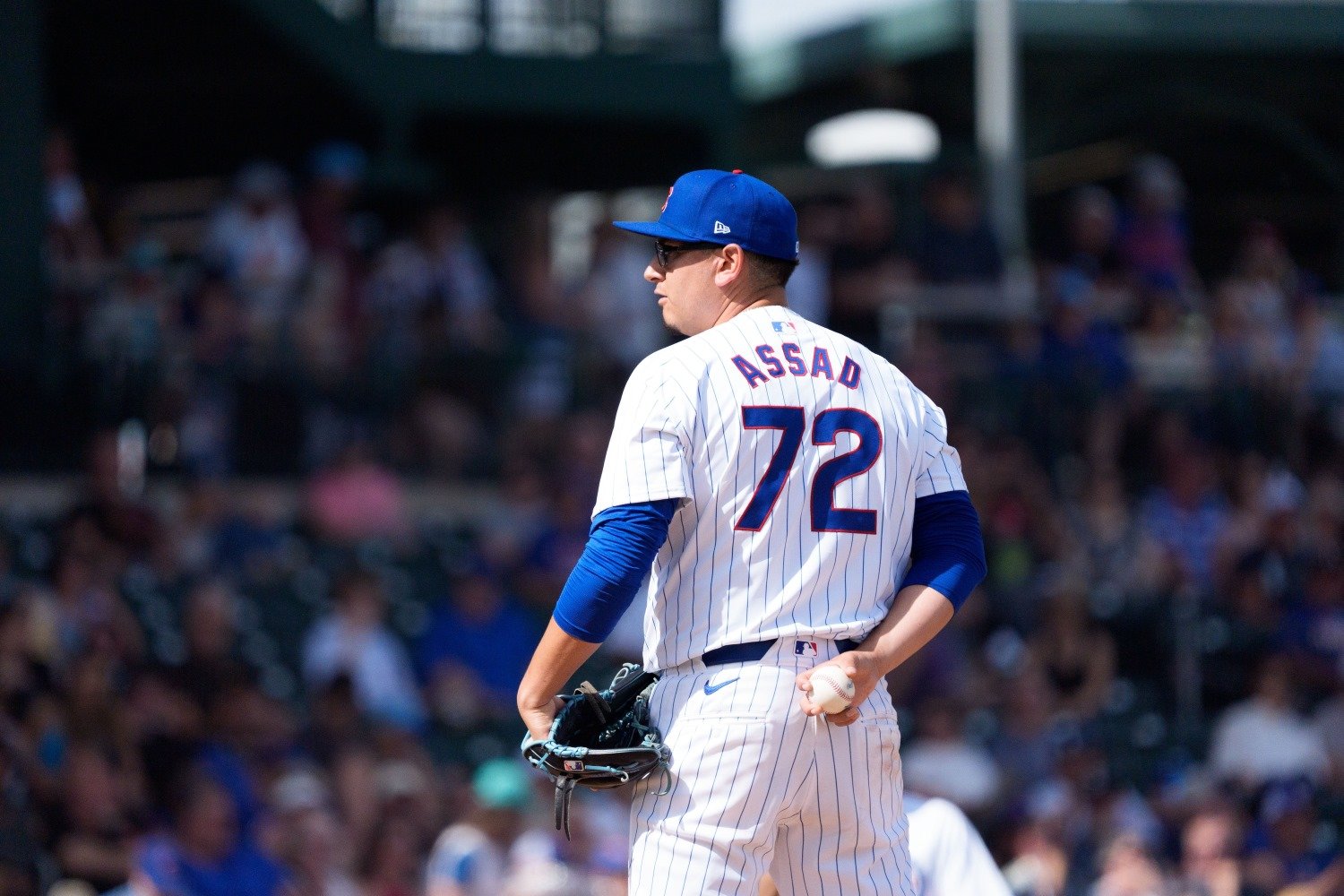 We’ve all likely heard this news by now: Jameson Taillon’s back acted up on him just prior to his first scheduled spring training appearance, and as of this writing, he has still yet to throw a Cactus League inning. According to Bruce Levine, the veteran righthander’s back has responded well to his rest and treatment, and he is planning on throwing off of a mound later this week. Given that we’re a little more than a week away from Opening Day, though, it is unlikely he will be ready to go for the start of the season. Caleb Kilian, who looked good in his three preseason appearances, will also be out (in his case, for several months) after an MRI revealed a strain of the teres major in his right shoulder. This all sounds really bad for the Chicago Cubs, and it is, but frankly, they should be glad that these are the only injuries that have struck their pitching staff to this point in spring training. Kyle Bradish was diagnosed with a sprained UCL and will miss the start of the season. Lucas Giolito is out for the year after undergoing elbow surgery. Justin Verlander will miss the start of the season with a shoulder injury. Most importantly, the once invulnerable Gerrit Cole has been shut down after experiencing elbow pain and likely won’t resume throwing again for several weeks. This all underscores a larger point: Throughout the history of baseball, pitchers have never been as fragile as they are right now. According to The Athletic, injured list placement for pitchers rose from 241 in 2010 to 552 in 2021. Use of the IL has dropped slightly in the years since then, but according to CBS Sports, the number of days lost to the injured list this past season rose 6.1 percent. That implies that, while the number of injuries might be tailing off, the severity of those injuries continues to worsen. Some blame the pitch clock for this. Pitchers now have less time to recuperate between pitches, and some think this is an issue that compounds over the course of the season. Others blame the increased focus on velocity and spin rate. With pitchers throwing at maximum effort every single pitch, more arm injuries are bound to happen. I’d tend to lean toward the latter being the reason, but I am not a doctor, nor am I remotely smart enough to be one. But enough self-deprecation! Since the Cole injury, specifically, I have been thinking a lot about pitching depth in baseball. I assume everyone reading this has had the importance of pitching depth drilled into them by Jed Hoyer by now. It is unfathomable to me that the 2016 Chicago Cubs had five pitchers combine for 152 starts. It’s even more unfathomable to me that that was only eight years ago. Hoyer is likely correct when he says that that is not something that will repeat itself any time soon. The Cubs don’t have a bona fide ace. Justin Steele is very good, but most projection systems are bearish on him and consider him a good, but not elite, starting pitcher. ZiPS projects him to be the 35th best pitcher in baseball in 2024. Shota Imanaga might be really good, but he is way too much of a question mark at this point for anyone to consider him an ace. So, sure, the Cubs lack an elite ace. But are we sure that is all that much of an issue? I co-own a fantasy baseball team with my brother, and we have a philosophy on pitching. I know, nobody cares about my fantasy baseball team, but bear with me. It’s an auction league, and our strategy is to (almost) never bid on a pitcher that will cost us more than $10 or $15. Pitchers are way too fragile, and we’d much rather bank on six out of 10 decent pitchers staying healthy and giving us bulk counting stats while reinvesting that money on hitters, where performance and health are just a bit more reliable. If you drop $35 on Spencer Strider and he gets hurt, or has an unlucky year and posts a 3.86 ERA like he did last year, you end up with a lot of money that could have been better spent elsewhere. What the Cubs do have is depth. Take the Cole injury as an example. Last season, the Yankees (as a team) posted 13.4 pitching WAR, according to FanGraphs. Cole himself was responsible for 38.8 percent of that total. The Cubs posted 16.9 WAR, and their best pitcher, Justin Steele, was responsible for 29 percent of it. The Cubs have less of their value tied up in any one specific player, which in theory, would make it easier for them to withstand any sort of injury. In the era of injuries to pitchers being so frequent, this feels important to me. Ben Clemens wrote brilliantly about this at FanGraphs recently. The Cliffs Notes version is that they reran season simulations after removing the best player from a team. Then, they did it with the top two players removed, then the top three, and so on. You should check out his articles on it, but what struck me as interesting is where the Cubs fell on these lists. As it currently stands, the Cubs project to be an exactly average team: 15th in all of baseball with a .501 winning percentage. If you remove their best player (Dansby Swanson), they project to have a .500 winning percentage. I won’t walk you through the entire table, but notice that once you get down to removing the top eight, nine, or 10 best players, the Cubs vault into having one of the three best winning percentages in that scenario. This is for all players, not just pitchers, but it still goes to show that the Cubs are one of the deepest teams in baseball. Does this mean that the Cubs shouldn’t invest in superstar-level players? Of course not. Those types of players raise a team’s ceiling immensely. But in an era where players (and, more specifically, pitchers) seem to be dropping like flies, I have found myself wondering if building your team this way can be a legitimate strategy. With Taillon missing the start of the season, the Cubs have Javier Assad available to fill in and hold his own. If that doesn’t work out, they can give Drew Smyly a try. If that doesn’t work out, maybe Ben Brown or Cade Horton can get a shot. The old saying goes “you can never have too much depth,” and that has never applied more than right here and right now. I can’t wait to see how it works out for this iteration of the Cubs.
 -
I just don’t see it with Cooper. Wisdom has been better at the plate over the past two seasons, projection systems see him as better in 2024, and he has positional versatility. I also think Wisdom’s ability to flip a game with one swing of the bat is slightly more valuable to a team that was average in the power department last season, and likely will be again this year.
-
Not 100% certain the sample size is there, but this is definitely still worth a mention and something that I completely missed. Wisdom has a 141 wRC+ in 52 PAs as a pinch hitter for his career. Had no idea it was that good!
-
The Chicago Cubs have one great defensive third baseman, one great offensive third baseman, and one very handsome, very nice Irish fella who doesn't deserve this level of marginalization. Let's find a better way to use him. Image courtesy of © Allan Henry-USA TODAY Sports It might be hard to believe, but Patrick Wisdom is one of the longest-tenured Chicago Cubs. The only current players who had appeared in a game for the Cubs before Wisdom’s two-plate-appearance cup of coffee in the shortened 2020 season were Ian Happ, Nico Hoerner, Adbert Alzolay, and, of course, Kyle Hendricks. If we want to get technical, David Bote, Brad Wieck, and (somehow) Carl Edwards Jr. are still around (or have come back around), but none of them have been big-league mainstays like Wisdom has, and I wouldn’t bank on any of them breaking camp with the big-league roster this year. My thoughts on this are twofold: it’s crazy how quickly big-league rosters turn over, and that Wisdom is becoming something of a forgotten man on the 2024 iteration of the Chicago Cubs. This is a guy who posted 2.3 FanGraphs WAR in 106 games in what was his first full big-league season just three years ago. In so many ways, it’s easy to see why he’s forgotten. Since that 2021 season, Wisdom has struck out 36.9 percent of the time. That is second-worst in all of baseball in that timeframe, with only Joey Gallo posting a higher strikeout rate. Wisdom is absolutely a flawed player. On the other hand, his strengths are just as clear: When he does hit the ball, he hits the absolute snot out of it. In that same timeframe, his 16.1 percent Barrel rate is eighth in baseball, and his hard-hit rate of 40.1 percent is 11th. His isolated power is eighth-best in MLB. Wisdom has a special ability to hit the ball hard and out of the ballpark. All of this brings us to the 2024 season, which is the furthest down the depth chart Wisdom has found himself since he’s been a Cub. Michael Busch is here to cover first base. The noise around Christopher Morel playing third base every day seems to be real. Nick Madrigal is still here, and I am sure Cody Bellinger will be seeing some playing time at first, as well. It’s possible that Wisdom is now the team’s third-best option at first and third base, his two primary positions. With so many other options, is there a way that the Cubs can deploy him to best suit his skills? The obvious solution for a right-handed hitter would be to only put him into the lineup against left-handed pitchers. The issue with that would be that, last year, he actually hit righties better than lefties: he posted a 104 wRC+ against southpaws, and a 114 wRC+ against right-handed pitching. For his career, he has hit lefties better (a 119 wRC+ vs. a 102), but that still isn’t a massive gap, and he has actually struck out more against lefties than righties for his career. That doesn’t really give me confidence that he can be a guy who would crush left-handed pitching this season. Interestingly, Wisdom saw more fastballs in the 2023 season than in any other season with the Cubs. According to Baseball Savant, 39 percent of the pitches he saw were four-seam fastballs, which was up from 32.2 percent in 2022. He slugged just .269 on the pitch, and was worth -13 runs when facing four-seamers--by far his worst figure against any individual offering. Looking at his wOBA on fastballs by zone from 2021-2023, it’s clear to see the hole in his swing: If a pitcher can spot his fastball on the upper part of the zone, Wisdom basically becomes Jon Lester. Based on the number of four-seamers he saw last year, it would seem pitchers have caught on to this. Could Wisdom be deployed exclusively against pitchers who either don’t live up in the zone with their fastballs, or don’t throw their fastballs often? Looking at a list of pitchers against whom Wisdom has hit well in the past, I’d say the answer is yes! Let’s look at three pitchers whom he’s hit well in his career, and whom the Cubs are likely to see this season. Wade Miley throws his four-seamer just 21 percent of the time against righties. Wisdom has hit .250/.357/.583 off of him in 14 plate appearances. Miles Mikolas throws his four-seamer 24.6 percent of the time against righties. Wisdom has hit .273/.357/.545 in 14 plate appearances off of the veteran. Graham Ashcraft doesn’t even throw anything that classifies as a four-seam fastball on Baseball Savant. Of course, Wisdom also hit him well, to the tune of a .273/.333/.818 line in 12 plate appearances. Are these cherry-picked numbers? Maybe! Wisdom has faced Corbin Burnes 15 times, who famously throws a lot of cutters and not a lot of four-seam fastballs, and only has one hit to show for it. To that, I would say, nobody hits Corbin Burnes well, and hey, that one hit was a home run! Also, this is not a perfect science. We are still dealing with very small sample sizes if we’re looking at his numbers vs. individual pitchers. Regardless, the hole in his swing against four-seamers up in the zone is clear to see. There was some talk of the Cubs doing this with Wisdom last season, but I don’t think they executed it very well, and with Nick Madrigal in and out of the lineup with hamstring issues, Wisdom was probably pressed into more playing time than the team had initially anticipated. This season, though, with Busch in the fold, Morel playing third, Madrigal returning, and even Matt Shaw looking ready, I think the Cubs might finally have the depth to pull this off. If they can deploy Patrick Wisdom against pitchers who either aren’t comfortable working up in the zone with their fastball or don’t throw a four-seamer very often, I think he can become a very valuable part-time player. View full article
-
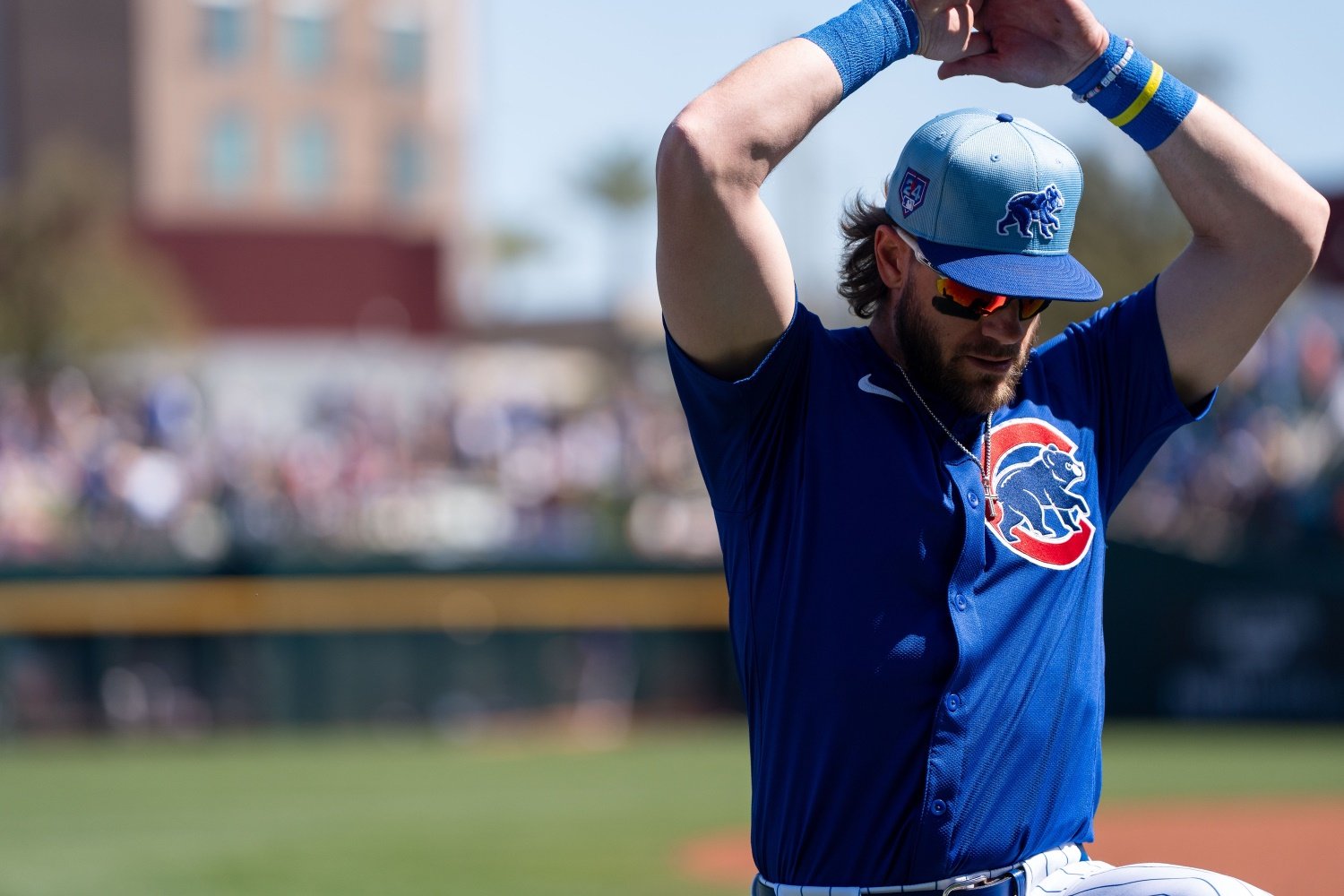 It might be hard to believe, but Patrick Wisdom is one of the longest-tenured Chicago Cubs. The only current players who had appeared in a game for the Cubs before Wisdom’s two-plate-appearance cup of coffee in the shortened 2020 season were Ian Happ, Nico Hoerner, Adbert Alzolay, and, of course, Kyle Hendricks. If we want to get technical, David Bote, Brad Wieck, and (somehow) Carl Edwards Jr. are still around (or have come back around), but none of them have been big-league mainstays like Wisdom has, and I wouldn’t bank on any of them breaking camp with the big-league roster this year. My thoughts on this are twofold: it’s crazy how quickly big-league rosters turn over, and that Wisdom is becoming something of a forgotten man on the 2024 iteration of the Chicago Cubs. This is a guy who posted 2.3 FanGraphs WAR in 106 games in what was his first full big-league season just three years ago. In so many ways, it’s easy to see why he’s forgotten. Since that 2021 season, Wisdom has struck out 36.9 percent of the time. That is second-worst in all of baseball in that timeframe, with only Joey Gallo posting a higher strikeout rate. Wisdom is absolutely a flawed player. On the other hand, his strengths are just as clear: When he does hit the ball, he hits the absolute snot out of it. In that same timeframe, his 16.1 percent Barrel rate is eighth in baseball, and his hard-hit rate of 40.1 percent is 11th. His isolated power is eighth-best in MLB. Wisdom has a special ability to hit the ball hard and out of the ballpark. All of this brings us to the 2024 season, which is the furthest down the depth chart Wisdom has found himself since he’s been a Cub. Michael Busch is here to cover first base. The noise around Christopher Morel playing third base every day seems to be real. Nick Madrigal is still here, and I am sure Cody Bellinger will be seeing some playing time at first, as well. It’s possible that Wisdom is now the team’s third-best option at first and third base, his two primary positions. With so many other options, is there a way that the Cubs can deploy him to best suit his skills? The obvious solution for a right-handed hitter would be to only put him into the lineup against left-handed pitchers. The issue with that would be that, last year, he actually hit righties better than lefties: he posted a 104 wRC+ against southpaws, and a 114 wRC+ against right-handed pitching. For his career, he has hit lefties better (a 119 wRC+ vs. a 102), but that still isn’t a massive gap, and he has actually struck out more against lefties than righties for his career. That doesn’t really give me confidence that he can be a guy who would crush left-handed pitching this season. Interestingly, Wisdom saw more fastballs in the 2023 season than in any other season with the Cubs. According to Baseball Savant, 39 percent of the pitches he saw were four-seam fastballs, which was up from 32.2 percent in 2022. He slugged just .269 on the pitch, and was worth -13 runs when facing four-seamers--by far his worst figure against any individual offering. Looking at his wOBA on fastballs by zone from 2021-2023, it’s clear to see the hole in his swing: If a pitcher can spot his fastball on the upper part of the zone, Wisdom basically becomes Jon Lester. Based on the number of four-seamers he saw last year, it would seem pitchers have caught on to this. Could Wisdom be deployed exclusively against pitchers who either don’t live up in the zone with their fastballs, or don’t throw their fastballs often? Looking at a list of pitchers against whom Wisdom has hit well in the past, I’d say the answer is yes! Let’s look at three pitchers whom he’s hit well in his career, and whom the Cubs are likely to see this season. Wade Miley throws his four-seamer just 21 percent of the time against righties. Wisdom has hit .250/.357/.583 off of him in 14 plate appearances. Miles Mikolas throws his four-seamer 24.6 percent of the time against righties. Wisdom has hit .273/.357/.545 in 14 plate appearances off of the veteran. Graham Ashcraft doesn’t even throw anything that classifies as a four-seam fastball on Baseball Savant. Of course, Wisdom also hit him well, to the tune of a .273/.333/.818 line in 12 plate appearances. Are these cherry-picked numbers? Maybe! Wisdom has faced Corbin Burnes 15 times, who famously throws a lot of cutters and not a lot of four-seam fastballs, and only has one hit to show for it. To that, I would say, nobody hits Corbin Burnes well, and hey, that one hit was a home run! Also, this is not a perfect science. We are still dealing with very small sample sizes if we’re looking at his numbers vs. individual pitchers. Regardless, the hole in his swing against four-seamers up in the zone is clear to see. There was some talk of the Cubs doing this with Wisdom last season, but I don’t think they executed it very well, and with Nick Madrigal in and out of the lineup with hamstring issues, Wisdom was probably pressed into more playing time than the team had initially anticipated. This season, though, with Busch in the fold, Morel playing third, Madrigal returning, and even Matt Shaw looking ready, I think the Cubs might finally have the depth to pull this off. If they can deploy Patrick Wisdom against pitchers who either aren’t comfortable working up in the zone with their fastball or don’t throw a four-seamer very often, I think he can become a very valuable part-time player.
- 14 comments
-
- 1
-

-
- patrick wisdom
- christopher morel
- (and 1 more)
-
As we hurdle toward Opening Day, today begins a series of pieces in which we'll preview the 2024 Chicago Cubs, position-by-position. Firstly, let's tackle the men behind the masks. Image courtesy of © Charles LeClaire-USA TODAY Sports The 2023 season was a transitional year at the catcher position for the Chicago Cubs in so many ways. After penciling Willson Contreras in as the primary starter at the position for the previous seven seasons, the team was finally forced to go in a different direction, emphasizing things like defense, framing, game-calling, and the ability to work with pitchers over the offensive production that someone like Contreras offers. Not only were they moving on from a franchise icon who helped them win a World Series, but the shape of the production from that position was also going to look very different. While Conteras initially had some road bumps in adjusting to catching the pitchers with his new team, the St. Louis Cardinals, he still produced from a raw numbers standpoint. As a catcher, the former Cub had a 139 wRC+ and produced 2.5 WAR in just 90 games at the position, according to FanGraphs. Cubs catchers for the whole season produced an 82 wRC+ and 1.4 WAR. Where does that leave the North Siders behind the plate for 2024? The Starter: Yan Gomes 2023 Stats: 116 G, 419 PA, .267/.315/.408, 10 HR, 5.0% BB%, 19.3% K%, 1.0 fWAR, 1.7 bWAR, 0.8 WARP 2024 Projections: ZiPS: 96 G, 347 PA, .250/.297/.388, 9 HR, 4.9% BB%, 20.2% K%, 1.0 fWAR Scouting Report: If it felt like Gomes had roughly a million big hits for the Cubs last year, well, it’s because he did. Per FanGraphs, the Cubs’ catcher hit .462 in high-leverage situations. That was third in all of baseball. He hit .287 in medium-leverage situations, and .215 in low-leverage spots. If clutch hitting were a skill, this would be a very impressive bit of sequencing on Gomes’s part, though I am inclined to believe this is simply a funny bit of small sample size theater. Regardless, it all counts, and when you put his performance in high-, medium-, and low-leverage situations into a blender, it came out to a roughly league-average batting line. Before last season, had you asked any Cubs fan or executive, if they would take a league-average line from Gomes in 2023, they likely would have signed up in a heartbeat. Where Gomes (unfortunately) took a step back was in those defensive skills, which the Cubs seemed to be emphasizing. In 2022, Gomes was a net neutral in framing, as he was worth exactly zero framing runs, according to FanGraphs. In 2023, however, he dropped all the way to -8.2 framing runs, one of the worst figures in baseball. That took him from being worth 8.0 Defensive Runs Above Average in 2022 to just 0.8 in 2023. Now, there are a ton of other little factors at play when evaluating the defense of a catcher, a lot of which still aren’t quantifiable. Cubs pitchers still all have nothing but tremendous things to say about Gomes and how much they like to work with him, and when you compare that to the Cardinals throwing Contreras under the bus just a month into the season, it’s easier to feel good about the change. With all of that being said, how Gomes rates as a pitch framer is certainly something to watch for in 2024. Other options: This is where the Cubs can, hopefully, take a big step forward this year. With Gomes no longer under contract after this season, it’s time to get a good look at Miguel Amaya, to see if he can take over the full-time role in 2025. The rookie hit .284/.395/.433 in his first 82 plate appearances last year, but finished the year on a down note, slashing .141/.257/.281 in his last 74 plate appearances. It’s important to note that in 2020, Amaya was a highly regarded prospect, with FanGraphs rating him third in the Cubs system and 65th in all of baseball. In the three seasons that followed, the former top prospect amassed just 304 professional plate appearances due to the pandemic and injury, all of which significantly dulled his shine. Now, with a full professional season and some time with the big league club under his belt, hopefully Amaya can recapture some of that potential this coming season. The Cubs have no other catchers on an already cramped 40-man roster, so I would be shocked to see them break camp with more than just Gomes and Amaya on the team. They have Jorge Alfaro, Pablo Aliendo, Joe Hudson, and Bryce Windham in Arizona as non-roster invitees, and will probably be able to stash at least one of those four at Iowa for depth. The Big Question: This, to me, is actually two big questions: can Gomes rebound defensively? His 2023 season is probably the best we can expect from his bat at this point. If Gomes can find some value with the glove again, his ability to produce at the plate becomes much less important. Will the Cubs be comfortable handing Miguel Amaya the keys? Gomes will be 37 this season, and as previously mentioned, is a free agent next offseason. Amaya should have plenty of runway to show what he can do this year. If he acclimates well and produces something like league-average offense and above-average defense, the Cubs should be comfortable handing him the full-time job going forward. If Amaya performs poorly, catcher becomes a huge question mark for this organization again, even as a couple more catcher prospects follow in his wake. View full article
-
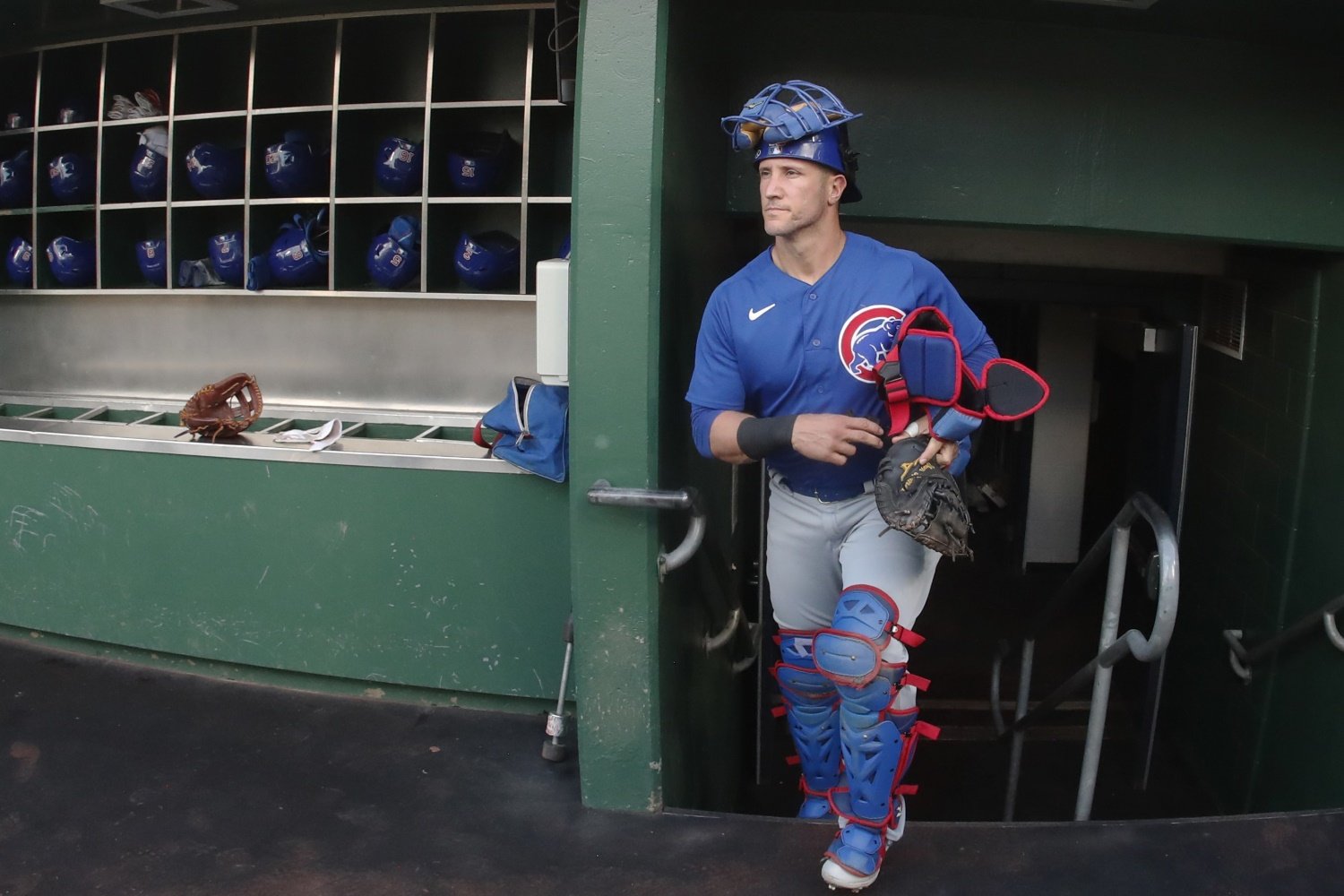 The 2023 season was a transitional year at the catcher position for the Chicago Cubs in so many ways. After penciling Willson Contreras in as the primary starter at the position for the previous seven seasons, the team was finally forced to go in a different direction, emphasizing things like defense, framing, game-calling, and the ability to work with pitchers over the offensive production that someone like Contreras offers. Not only were they moving on from a franchise icon who helped them win a World Series, but the shape of the production from that position was also going to look very different. While Conteras initially had some road bumps in adjusting to catching the pitchers with his new team, the St. Louis Cardinals, he still produced from a raw numbers standpoint. As a catcher, the former Cub had a 139 wRC+ and produced 2.5 WAR in just 90 games at the position, according to FanGraphs. Cubs catchers for the whole season produced an 82 wRC+ and 1.4 WAR. Where does that leave the North Siders behind the plate for 2024? The Starter: Yan Gomes 2023 Stats: 116 G, 419 PA, .267/.315/.408, 10 HR, 5.0% BB%, 19.3% K%, 1.0 fWAR, 1.7 bWAR, 0.8 WARP 2024 Projections: ZiPS: 96 G, 347 PA, .250/.297/.388, 9 HR, 4.9% BB%, 20.2% K%, 1.0 fWAR Scouting Report: If it felt like Gomes had roughly a million big hits for the Cubs last year, well, it’s because he did. Per FanGraphs, the Cubs’ catcher hit .462 in high-leverage situations. That was third in all of baseball. He hit .287 in medium-leverage situations, and .215 in low-leverage spots. If clutch hitting were a skill, this would be a very impressive bit of sequencing on Gomes’s part, though I am inclined to believe this is simply a funny bit of small sample size theater. Regardless, it all counts, and when you put his performance in high-, medium-, and low-leverage situations into a blender, it came out to a roughly league-average batting line. Before last season, had you asked any Cubs fan or executive, if they would take a league-average line from Gomes in 2023, they likely would have signed up in a heartbeat. Where Gomes (unfortunately) took a step back was in those defensive skills, which the Cubs seemed to be emphasizing. In 2022, Gomes was a net neutral in framing, as he was worth exactly zero framing runs, according to FanGraphs. In 2023, however, he dropped all the way to -8.2 framing runs, one of the worst figures in baseball. That took him from being worth 8.0 Defensive Runs Above Average in 2022 to just 0.8 in 2023. Now, there are a ton of other little factors at play when evaluating the defense of a catcher, a lot of which still aren’t quantifiable. Cubs pitchers still all have nothing but tremendous things to say about Gomes and how much they like to work with him, and when you compare that to the Cardinals throwing Contreras under the bus just a month into the season, it’s easier to feel good about the change. With all of that being said, how Gomes rates as a pitch framer is certainly something to watch for in 2024. Other options: This is where the Cubs can, hopefully, take a big step forward this year. With Gomes no longer under contract after this season, it’s time to get a good look at Miguel Amaya, to see if he can take over the full-time role in 2025. The rookie hit .284/.395/.433 in his first 82 plate appearances last year, but finished the year on a down note, slashing .141/.257/.281 in his last 74 plate appearances. It’s important to note that in 2020, Amaya was a highly regarded prospect, with FanGraphs rating him third in the Cubs system and 65th in all of baseball. In the three seasons that followed, the former top prospect amassed just 304 professional plate appearances due to the pandemic and injury, all of which significantly dulled his shine. Now, with a full professional season and some time with the big league club under his belt, hopefully Amaya can recapture some of that potential this coming season. The Cubs have no other catchers on an already cramped 40-man roster, so I would be shocked to see them break camp with more than just Gomes and Amaya on the team. They have Jorge Alfaro, Pablo Aliendo, Joe Hudson, and Bryce Windham in Arizona as non-roster invitees, and will probably be able to stash at least one of those four at Iowa for depth. The Big Question: This, to me, is actually two big questions: can Gomes rebound defensively? His 2023 season is probably the best we can expect from his bat at this point. If Gomes can find some value with the glove again, his ability to produce at the plate becomes much less important. Will the Cubs be comfortable handing Miguel Amaya the keys? Gomes will be 37 this season, and as previously mentioned, is a free agent next offseason. Amaya should have plenty of runway to show what he can do this year. If he acclimates well and produces something like league-average offense and above-average defense, the Cubs should be comfortable handing him the full-time job going forward. If Amaya performs poorly, catcher becomes a huge question mark for this organization again, even as a couple more catcher prospects follow in his wake.
 -
Oh, what a relief it is. Image courtesy of © David Banks-USA TODAY Sports What happens when an unstoppable force meets an immovable object? Or, in this particular case, what happens when Scott Boras--known for getting large, long-term deals for his clients-- ends up negotiating with Jed Hoyer, who seems to have a strong disdain for handing out the exactly that kind of contract? As most of us discovered upon waking up on Sunday morning, the immovable object won. Cody Bellinger will be back with the Chicago Cubs for the 2024 season, and maybe more, as he agreed to a three-year, $80-million deal. He can make $30 million in 2024 and 2025, and $20m in 2026. He will also have the right to opt out after each of the first two seasons. Only a few hours have passed since I learned of the deal, but the more I reflect on it, there is no doubt in my mind that Hoyer got exactly what he wanted here. Regardless of whether you believe that Bellinger’s 2023 production is repeatable, he projects to be a valuable player. Most projection systems peg him as a two- to three-win player in 2024. Retaining that guy is absolutely a good thing in the short term. There were never any questions over that. The Cubs are a better team now than they were before pulling the trigger on it. The concern with Bellinger, as I have covered previously here at North Side Baseball, is both the fear of giving a huge contract to a guy who might have overperformed in 2023, and also that the Cubs have two major-league-ready prospects in Pete Crow-Armstrong and Michael Busch at the positions that Bellinger plays. With both of those things in mind, would the Cubs have been better off investing the potential Bellinger money elsewhere--like third base, for example? This contract is the best of both worlds. Not only do the Cubs get another useful player for this coming season, but this also takes a lot of pressure off of both Crow-Armstrong and Busch, who previously figured to be in the mix for the Opening Day start in center field and at first base, respectively. Now, if one or both of those guys struggle, Bellinger can easily pick up the slack at either position. If they both end up being awesome in their rookie years, the Cubs have the ability to pivot from Bellinger and reinvest that money elsewhere, given the short-term nature of this contract. With this move, we’re probably looking at the finished Opening Day roster for this year’s Cubs, save small moves at the edges. Factoring in Bellinger’s $26.7-million annual average value, the estimated tax payroll is $230.7 million, according to Spotrac. The competitive balance tax threshold is $237 million, and if Bellinger opts out of his contract after this year (which I suspect will likely happen, unless he has a completely disastrous season), his salary for tax purposes would bump up to $30 million, bringing the Cubs about $3m short of the tax threshold. I would be shocked if the Cubs decide to pay the tax for this season. We can debate whether they should, or shouldn’t, but it’s just not happening. Coming up a few million dollars short gives the Cubs the flexibility to take on some additional salary midseason, as well. Should the Cubs decide to surprise us all, the second threshold is at $257 million, which would give the Cubs about another $20 million to play with. But I digress. I am fairly certain this is it for the North Siders, and given the financial constraints that Tom Ricketts has put on this organization, I think Jed Hoyer deserves some credit here. Clearly, he wanted Bellinger back, but only on his terms. He knew that Chicago was the best fit for Bellinger, and was more than willing to wait it out and get a little bit uncomfortable. Bellinger, on the other hand, now has the ability to prove that his 2023 was not a fluke and hit the market again next winter, without the potential loss of a draft pick attached to him--similar to what fellow Boras client Carlos Correa did with the Minnesota Twins. With all of that said, the real winners here might be the fans. We can all now shift our focus to the actual season, rather than having the Bellinger negotiations at the forefront of any legitimate discussion. Reading any Cubs coverage from spring training was getting old, with the redundant mentions of one more potential free agent signing. Now, the focus can turn to on-field stuff. How will the Cubs deploy Bellinger and utilize his versatility? Does this mean Crow-Armstrong or Busch starts the season at Iowa? With Matt Chapman likely not joining the team, will Christopher Morel get a legitimate chance to play third base? Stay tuned. View full article
-
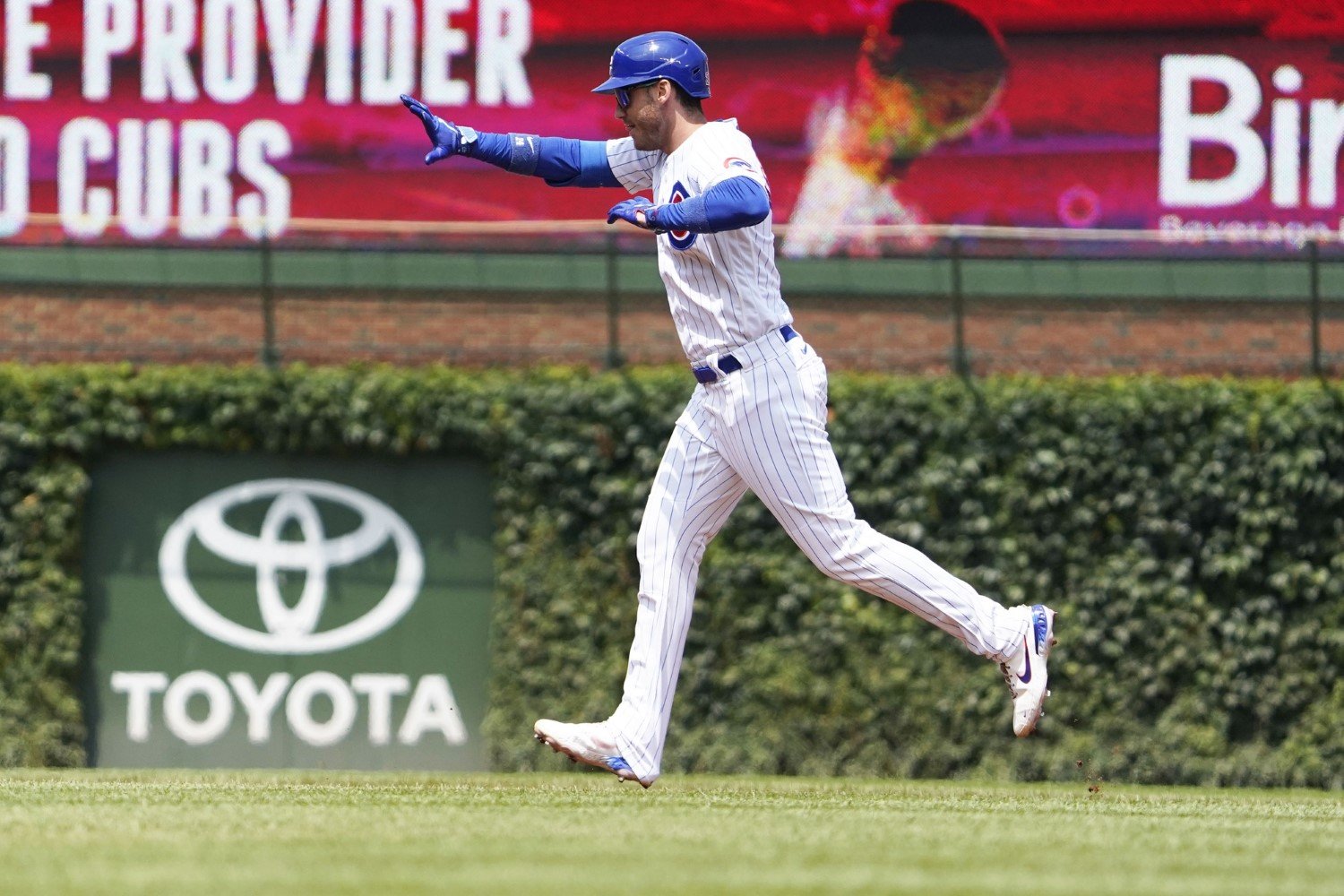 What happens when an unstoppable force meets an immovable object? Or, in this particular case, what happens when Scott Boras--known for getting large, long-term deals for his clients-- ends up negotiating with Jed Hoyer, who seems to have a strong disdain for handing out the exactly that kind of contract? As most of us discovered upon waking up on Sunday morning, the immovable object won. Cody Bellinger will be back with the Chicago Cubs for the 2024 season, and maybe more, as he agreed to a three-year, $80-million deal. He can make $30 million in 2024 and 2025, and $20m in 2026. He will also have the right to opt out after each of the first two seasons. Only a few hours have passed since I learned of the deal, but the more I reflect on it, there is no doubt in my mind that Hoyer got exactly what he wanted here. Regardless of whether you believe that Bellinger’s 2023 production is repeatable, he projects to be a valuable player. Most projection systems peg him as a two- to three-win player in 2024. Retaining that guy is absolutely a good thing in the short term. There were never any questions over that. The Cubs are a better team now than they were before pulling the trigger on it. The concern with Bellinger, as I have covered previously here at North Side Baseball, is both the fear of giving a huge contract to a guy who might have overperformed in 2023, and also that the Cubs have two major-league-ready prospects in Pete Crow-Armstrong and Michael Busch at the positions that Bellinger plays. With both of those things in mind, would the Cubs have been better off investing the potential Bellinger money elsewhere--like third base, for example? This contract is the best of both worlds. Not only do the Cubs get another useful player for this coming season, but this also takes a lot of pressure off of both Crow-Armstrong and Busch, who previously figured to be in the mix for the Opening Day start in center field and at first base, respectively. Now, if one or both of those guys struggle, Bellinger can easily pick up the slack at either position. If they both end up being awesome in their rookie years, the Cubs have the ability to pivot from Bellinger and reinvest that money elsewhere, given the short-term nature of this contract. With this move, we’re probably looking at the finished Opening Day roster for this year’s Cubs, save small moves at the edges. Factoring in Bellinger’s $26.7-million annual average value, the estimated tax payroll is $230.7 million, according to Spotrac. The competitive balance tax threshold is $237 million, and if Bellinger opts out of his contract after this year (which I suspect will likely happen, unless he has a completely disastrous season), his salary for tax purposes would bump up to $30 million, bringing the Cubs about $3m short of the tax threshold. I would be shocked if the Cubs decide to pay the tax for this season. We can debate whether they should, or shouldn’t, but it’s just not happening. Coming up a few million dollars short gives the Cubs the flexibility to take on some additional salary midseason, as well. Should the Cubs decide to surprise us all, the second threshold is at $257 million, which would give the Cubs about another $20 million to play with. But I digress. I am fairly certain this is it for the North Siders, and given the financial constraints that Tom Ricketts has put on this organization, I think Jed Hoyer deserves some credit here. Clearly, he wanted Bellinger back, but only on his terms. He knew that Chicago was the best fit for Bellinger, and was more than willing to wait it out and get a little bit uncomfortable. Bellinger, on the other hand, now has the ability to prove that his 2023 was not a fluke and hit the market again next winter, without the potential loss of a draft pick attached to him--similar to what fellow Boras client Carlos Correa did with the Minnesota Twins. With all of that said, the real winners here might be the fans. We can all now shift our focus to the actual season, rather than having the Bellinger negotiations at the forefront of any legitimate discussion. Reading any Cubs coverage from spring training was getting old, with the redundant mentions of one more potential free agent signing. Now, the focus can turn to on-field stuff. How will the Cubs deploy Bellinger and utilize his versatility? Does this mean Crow-Armstrong or Busch starts the season at Iowa? With Matt Chapman likely not joining the team, will Christopher Morel get a legitimate chance to play third base? Stay tuned.
 -
A lot of people seem to have much higher expectations for Almonte than I do. I hope I am wrong there. From a development standpoint, Iowa might be the best starting point. Though I also think that even last year’s version of Wesneski, particularly if deployed intelligently, is one of the 13-14 best pitchers on the Cubs. And for a team that should be serious about making the playoffs, he’ll have to be on the roster.
-
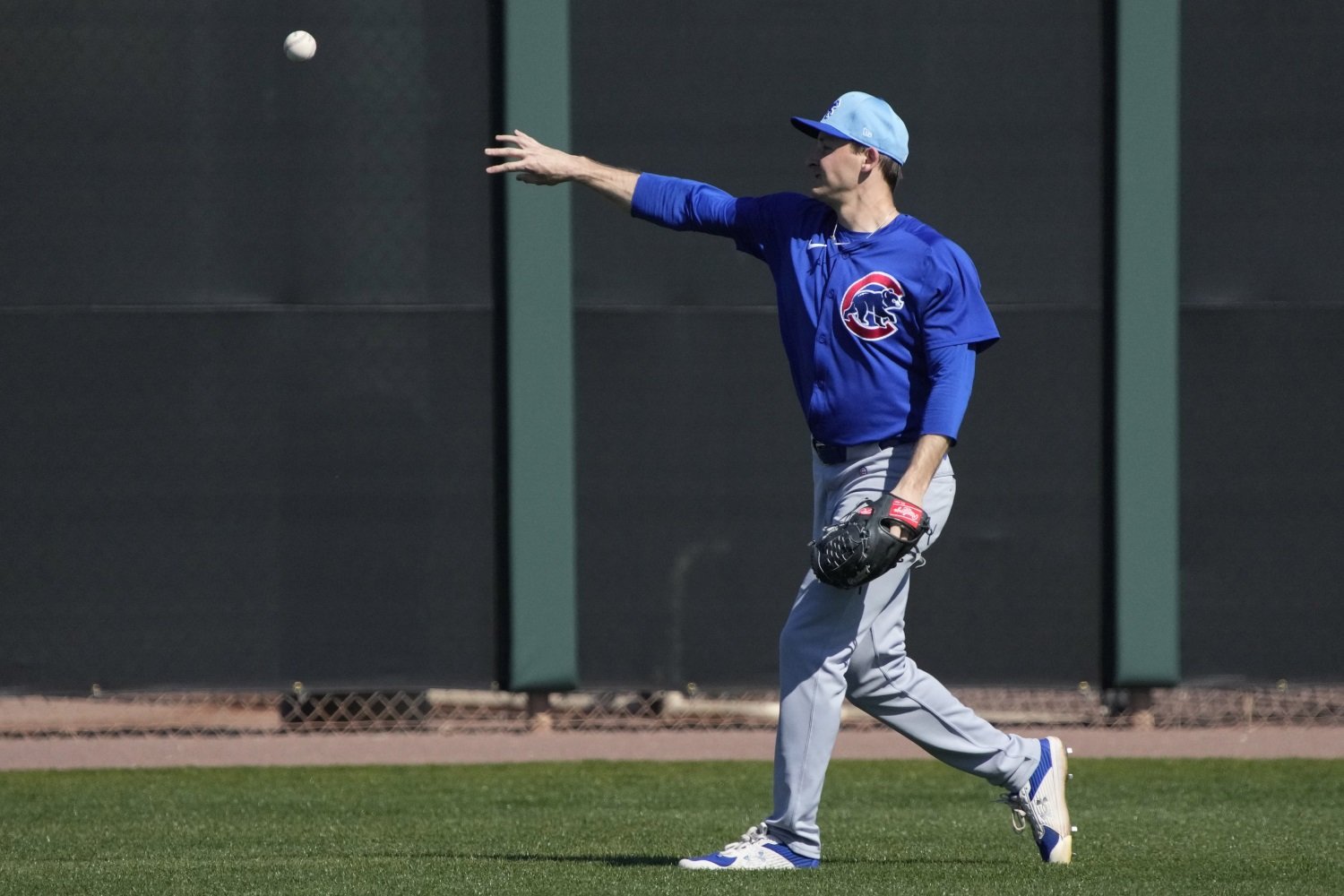 Following a 2022 debut in which he threw 33 innings, accumulated 0.7 FanGraphs WAR, and posted a 2.18 ERA, expectations were always going to be far too high for Hayden Wesneski coming into 2023. Then, the young right-hander struck out 22 hitters in just 17 spring training innings last year to earn the fifth rotation spot for the Cubs, and the sky, it seemed, was the limit. Since you’re reading this article on a Chicago Cubs-focused website, you probably know how that went. Wesneski was mostly bad in 11 appearances and 10 starts prior to losing his rotation spot. He allowed 13 home runs in 50 ⅔ innings, and put up a 5.33 ERA during that time. Wesneski spent the remainder of the season shuttling between the bullpen and Triple-A Iowa, to fine (but certainly not great) results. He struck out 43 in 38 ⅔ innings after losing his spot in the rotation. That’s good! He also walked 19 hitters. That’s bad! His 3.72 ERA was decent enough, but his 4.86 FIP suggests some overperformance there, and a 3.72 ERA is just not that great for a guy coming out of the bullpen anymore, anyway. Heading into 2024, the Cubs have several additional options in the rotation that they didn’t at the start of last season. Justin Steele, Jameson Taillon, and Kyle Hendricks are all back, and figure to take up three rotation spots. Shota Imanaga was brought in to bolster the rotation behind Steele. That means Javier Assad, Jordan Wicks, Drew Smyly, and Wesneski are all left to battle for that fifth spot. And that doesn’t even include Ben Brown, who is knocking on the door. Caleb Kilian is also still on the team, and might get another shot at some point. Luckily for all of those guys, as Jed Hoyer always says, it takes far more than five starting pitchers to get through a season. So, what might the role in 2024 look like for Wesneski? This entire conversation starts, and ends, with Wesneski developing a pitch that he can use to get lefties out. Recently, I took a look at Jameson Taillon and his struggles with getting left-handed hitters out in 2023. They hit for a .420 wOBA against Taillon in the first half of the season. Wesneski was almost that bad for the entire season, with lefties slashing .298/.369/.617, good for a .411 wOBA. That was 12th worst in all of baseball, according to FanGraphs. So what gives? Wesneski has an elite slider that he relies on to get right-handed hitters out. And it works very well for him! Right-handed hitters slashed just .202/.269/.348 against the Houston native, and struck out 25.9 percent of the time. Per Baseball Savant, hitters slugged just .231 against his slider, and it was worth eight runs on its own. The issue here is that Wesneski doesn’t have another reliable pitch to get outs. At least not yet. As a matter of fact, he didn’t have a single other pitch that had a positive run value last season. And as most are aware, sliders are one of the least effective pitches to throw to a hitter with the platoon advantage, since it breaks toward the hitter, not away from them. So you can see where his issue with getting lefties out stems from. While the slider did hold up pretty well against lefties from a results standpoint, he clearly wasn’t all that comfortable throwing it. He went to that offering 42.6 percent of the time against righties, by far his most-used pitch. His slider usage dropped all the way to 27 percent against lefties. Instead, he used his four-seam fastball most often, and it got crushed to the tune of a .488 wOBA. For me, Wesneski’s role in 2024 starts in the bullpen, until he proves he can get lefties out, or at least not allow them all to turn into prime Hank Aaron. If deployed correctly, which I have faith in Craig Counsell to do, he absolutely has value there. He’ll almost certainly have opportunities to show a refined approach against hitters with the platoon advantage. I am sure teams would throw left-handed pinch hitters at him often. Hopefully Wesneski worked on both his changeup and cutter this offseason, either of which would give him a much better chance at retiring lefties. It will be most important to watch those two pitches this spring in Cactus League action. If he proves he has developed something in his arsenal beyond the slider, or is successful with a new approach to lefties, he should be right in line to make a start as soon as one is available. But until that happens, I think Wesneski’s 2024 role remains out of the bullpen, deployed exclusively against right-handed hitters as often as possible. What will you watch most closely as Wesneski and the Cubs ramp up over the next month? Join the conversation right here.
 -
As spring training reaches full steam with the start of Cactus League play this weekend, the Chicago Cubs have several key storylines to watch. One vital one will be the development and role assignment of one of their most intriguing young arms. Image courtesy of © Rick Scuteri-USA TODAY Sports Following a 2022 debut in which he threw 33 innings, accumulated 0.7 FanGraphs WAR, and posted a 2.18 ERA, expectations were always going to be far too high for Hayden Wesneski coming into 2023. Then, the young right-hander struck out 22 hitters in just 17 spring training innings last year to earn the fifth rotation spot for the Cubs, and the sky, it seemed, was the limit. Since you’re reading this article on a Chicago Cubs-focused website, you probably know how that went. Wesneski was mostly bad in 11 appearances and 10 starts prior to losing his rotation spot. He allowed 13 home runs in 50 ⅔ innings, and put up a 5.33 ERA during that time. Wesneski spent the remainder of the season shuttling between the bullpen and Triple-A Iowa, to fine (but certainly not great) results. He struck out 43 in 38 ⅔ innings after losing his spot in the rotation. That’s good! He also walked 19 hitters. That’s bad! His 3.72 ERA was decent enough, but his 4.86 FIP suggests some overperformance there, and a 3.72 ERA is just not that great for a guy coming out of the bullpen anymore, anyway. Heading into 2024, the Cubs have several additional options in the rotation that they didn’t at the start of last season. Justin Steele, Jameson Taillon, and Kyle Hendricks are all back, and figure to take up three rotation spots. Shota Imanaga was brought in to bolster the rotation behind Steele. That means Javier Assad, Jordan Wicks, Drew Smyly, and Wesneski are all left to battle for that fifth spot. And that doesn’t even include Ben Brown, who is knocking on the door. Caleb Kilian is also still on the team, and might get another shot at some point. Luckily for all of those guys, as Jed Hoyer always says, it takes far more than five starting pitchers to get through a season. So, what might the role in 2024 look like for Wesneski? This entire conversation starts, and ends, with Wesneski developing a pitch that he can use to get lefties out. Recently, I took a look at Jameson Taillon and his struggles with getting left-handed hitters out in 2023. They hit for a .420 wOBA against Taillon in the first half of the season. Wesneski was almost that bad for the entire season, with lefties slashing .298/.369/.617, good for a .411 wOBA. That was 12th worst in all of baseball, according to FanGraphs. So what gives? Wesneski has an elite slider that he relies on to get right-handed hitters out. And it works very well for him! Right-handed hitters slashed just .202/.269/.348 against the Houston native, and struck out 25.9 percent of the time. Per Baseball Savant, hitters slugged just .231 against his slider, and it was worth eight runs on its own. The issue here is that Wesneski doesn’t have another reliable pitch to get outs. At least not yet. As a matter of fact, he didn’t have a single other pitch that had a positive run value last season. And as most are aware, sliders are one of the least effective pitches to throw to a hitter with the platoon advantage, since it breaks toward the hitter, not away from them. So you can see where his issue with getting lefties out stems from. While the slider did hold up pretty well against lefties from a results standpoint, he clearly wasn’t all that comfortable throwing it. He went to that offering 42.6 percent of the time against righties, by far his most-used pitch. His slider usage dropped all the way to 27 percent against lefties. Instead, he used his four-seam fastball most often, and it got crushed to the tune of a .488 wOBA. For me, Wesneski’s role in 2024 starts in the bullpen, until he proves he can get lefties out, or at least not allow them all to turn into prime Hank Aaron. If deployed correctly, which I have faith in Craig Counsell to do, he absolutely has value there. He’ll almost certainly have opportunities to show a refined approach against hitters with the platoon advantage. I am sure teams would throw left-handed pinch hitters at him often. Hopefully Wesneski worked on both his changeup and cutter this offseason, either of which would give him a much better chance at retiring lefties. It will be most important to watch those two pitches this spring in Cactus League action. If he proves he has developed something in his arsenal beyond the slider, or is successful with a new approach to lefties, he should be right in line to make a start as soon as one is available. But until that happens, I think Wesneski’s 2024 role remains out of the bullpen, deployed exclusively against right-handed hitters as often as possible. What will you watch most closely as Wesneski and the Cubs ramp up over the next month? Join the conversation right here. View full article
-
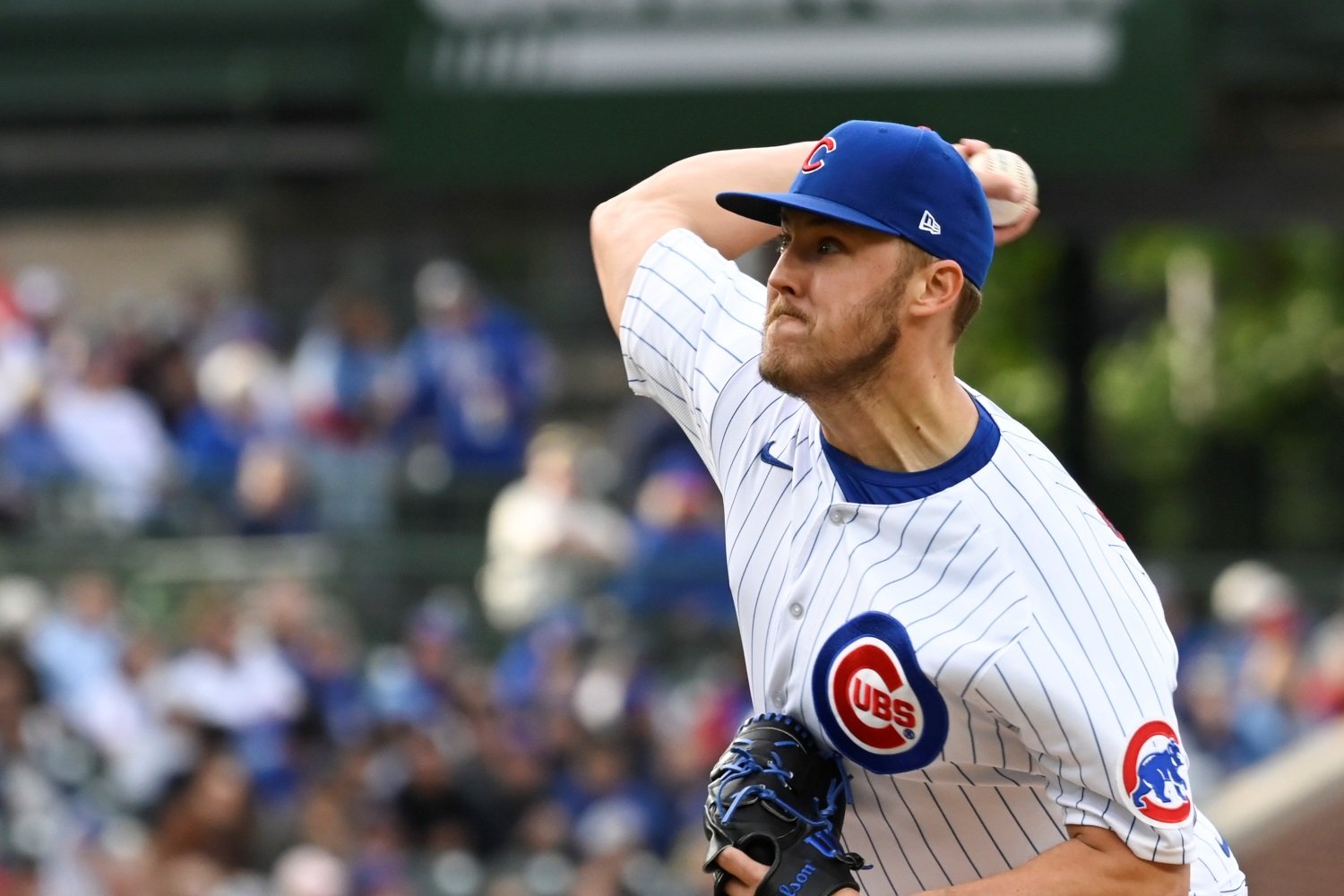 In retrospect, Jameson Taillon’s first season in a Chicago Cubs uniform almost went exactly as expected. His 4.84 ERA is a pretty big jump from his 4.00 mark for his career, but the gap isn’t yawning, at least given the fickle nature of pitchers. He still managed to throw 154 ⅓ innings, a good total in the current era wherein pitchers are much more often deployed in shorter bursts. Sure, his 1.6 FanGraphs WAR is his lowest total in any season in which he has thrown at least 100 innings. Yet, he averaged just 2.1 Fangraphs WAR over his two seasons with the Yankees. So while Taillon sure didn’t impress many in Chicago in his first year with the team, he proved himself to be a reliable back-end starter, even in a down year. What can we expect from him going forward? The veteran righthander’s poor performance in 2023 can be chalked up to one thing: his results against left-handed hitters. Lefties hammered out a .363 wOBA against Taillon in 2023, according to FanGraphs. For reference, a .320 wOBA is considered average, and Austin Riley posted a .363 wOBA last year. Essentially, every left-handed hitter that stepped into the box against Taillon last year was as productive as Riley. That was a surprising problem, because Taillon was roughly split-neutral in his two seasons prior to joining the Cubs. In 2021, lefties had a .316 wOBA against him, while righties were at .304. In 2022, lefties were at .309 and righties .307. In no way was this a predictable issue for a typically steady starting pitcher. Taillon’s season was also a tale of two halves. His first half was disastrous, as he had a 6.15 ERA heading into the All-Star break. His second half was miles better, as he posted a 3.70 ERA to close the season. Again, this change in performance can be attributed to how he pitched against left-handed hitters: In the first half, they had a .420 wOBA (equivalent to Corey Seager) against him. In the second half, it was a much more playable .308 wOBA (approximately Miguel Amaya). What was different? To understand this, let’s go back to the 2022 season, when Taillon posted a career-best .309 wOBA against lefties. That season, he started throwing a cutter. He threw it 13.3 percent of the time against opposite-handed hitters, with great results: a .303 wOBA against, with only a 76.8 MPH exit velocity on balls in play to back that up, according to Baseball Savant. He attacked lefties with fastballs up and in, cutters in on the hands, curveballs down in the zone, and changeups away. In 2023, Taillon doubled down on the cutter usage, throwing it 21.8 percent of the time against lefties. The changeup was almost completely scrapped, as he threw it only 5.9 percent of the time, down from 17.3 percent of the time in 2022. Cliffs notes: he went from throwing four pitches against lefties in 2022, to only three pitches in 2023. And it turns out his cutter got absolutely crushed: left-handed hitters put up a .450 wOBA against his cutter in 2023. Coming back to Taillon’s Jekyll-and-Hyde first and second half performances this past season, and remembering what we now know about how he attacked lefties in his successful 2022 campaign (fastball up and in, cutter in, curveball down), here were his fastball locations to lefties in the first half of 2023: That is all over the place, to put it nicely. And here are the locations of his cutters before the break: Interesting! This looks to me like Taillon was throwing his cutter exactly where he wanted to. It was the fastball over which he had no control. What makes a cutter good, and split-neutral, is how it plays off of a fastball. It looks like a fastball just long enough, until it breaks a little bit down and to the pitcher’s glove side. In this case, because he wasn’t controlling the fastball, they likely never looked similar enough, causing the cutter to get hit as hard as it did. Now, let’s see how his fastball location changed in his much more successful second half: Much more consistent! Though at the same time, he wasn’t throwing it up and in like he did in 2022. What about his cutter location in the second half? Oh! So Taillon completely changed his approach with his cutter from the first half of the season to the second half. Instead of attacking hitters inside with both pitches, he started trying to attack them away and off of the plate. While he did perform significantly better against lefties as a result, what is interesting is that he still gave up a .393 wOBA against lefties on fastballs and cutters in the second half. That was down from .468 in the first half, but the exit velocities and launch angles of the balls that were put in play suggest that the batted-ball results were roughly the same. It was actually Taillon’s curveball that carried him in the second-half against players with the platoon advantage: they hit for just a .186 wOBA and had a 31-percent strikeout rate against the pitch. Those numbers were significantly better than the .344 wOBA and 24.4-percent strikeout rate that lefties had against the curveball in the first half. A curveball coming in from a right-handed pitcher is going to start up and away to a lefty, so my theory on this is that hitters found the curveball much harder to identify when it was paired with both the fastball and the cutter on the outside half of the plate. I also think it’s possible there’s some sample-size theater going on here: Taillon’s first-half FIP of 4.90 is not too far off of his second-half mark of 4.36, suggesting that the performance gap between the two halves was not as wide as the ERA would indicate. What does this all mean for Taillon in 2024? I’d wager that his approach to lefties was a big focus for him during this offseason. When he takes the mound, pay close attention to it. Will he bring his changeup back? Where is he going to try to locate his cutter and his fastball? It all very well may determine if the remainder of his contract is looked at as a bust, or a solid investment.
 -
The Cubs' $68-million starter had a rough time last year, and if the team wants him to bounce back to his previous overall level, something might need to change. Image courtesy of © Matt Marton-USA TODAY Sports In retrospect, Jameson Taillon’s first season in a Chicago Cubs uniform almost went exactly as expected. His 4.84 ERA is a pretty big jump from his 4.00 mark for his career, but the gap isn’t yawning, at least given the fickle nature of pitchers. He still managed to throw 154 ⅓ innings, a good total in the current era wherein pitchers are much more often deployed in shorter bursts. Sure, his 1.6 FanGraphs WAR is his lowest total in any season in which he has thrown at least 100 innings. Yet, he averaged just 2.1 Fangraphs WAR over his two seasons with the Yankees. So while Taillon sure didn’t impress many in Chicago in his first year with the team, he proved himself to be a reliable back-end starter, even in a down year. What can we expect from him going forward? The veteran righthander’s poor performance in 2023 can be chalked up to one thing: his results against left-handed hitters. Lefties hammered out a .363 wOBA against Taillon in 2023, according to FanGraphs. For reference, a .320 wOBA is considered average, and Austin Riley posted a .363 wOBA last year. Essentially, every left-handed hitter that stepped into the box against Taillon last year was as productive as Riley. That was a surprising problem, because Taillon was roughly split-neutral in his two seasons prior to joining the Cubs. In 2021, lefties had a .316 wOBA against him, while righties were at .304. In 2022, lefties were at .309 and righties .307. In no way was this a predictable issue for a typically steady starting pitcher. Taillon’s season was also a tale of two halves. His first half was disastrous, as he had a 6.15 ERA heading into the All-Star break. His second half was miles better, as he posted a 3.70 ERA to close the season. Again, this change in performance can be attributed to how he pitched against left-handed hitters: In the first half, they had a .420 wOBA (equivalent to Corey Seager) against him. In the second half, it was a much more playable .308 wOBA (approximately Miguel Amaya). What was different? To understand this, let’s go back to the 2022 season, when Taillon posted a career-best .309 wOBA against lefties. That season, he started throwing a cutter. He threw it 13.3 percent of the time against opposite-handed hitters, with great results: a .303 wOBA against, with only a 76.8 MPH exit velocity on balls in play to back that up, according to Baseball Savant. He attacked lefties with fastballs up and in, cutters in on the hands, curveballs down in the zone, and changeups away. In 2023, Taillon doubled down on the cutter usage, throwing it 21.8 percent of the time against lefties. The changeup was almost completely scrapped, as he threw it only 5.9 percent of the time, down from 17.3 percent of the time in 2022. Cliffs notes: he went from throwing four pitches against lefties in 2022, to only three pitches in 2023. And it turns out his cutter got absolutely crushed: left-handed hitters put up a .450 wOBA against his cutter in 2023. Coming back to Taillon’s Jekyll-and-Hyde first and second half performances this past season, and remembering what we now know about how he attacked lefties in his successful 2022 campaign (fastball up and in, cutter in, curveball down), here were his fastball locations to lefties in the first half of 2023: That is all over the place, to put it nicely. And here are the locations of his cutters before the break: Interesting! This looks to me like Taillon was throwing his cutter exactly where he wanted to. It was the fastball over which he had no control. What makes a cutter good, and split-neutral, is how it plays off of a fastball. It looks like a fastball just long enough, until it breaks a little bit down and to the pitcher’s glove side. In this case, because he wasn’t controlling the fastball, they likely never looked similar enough, causing the cutter to get hit as hard as it did. Now, let’s see how his fastball location changed in his much more successful second half: Much more consistent! Though at the same time, he wasn’t throwing it up and in like he did in 2022. What about his cutter location in the second half? Oh! So Taillon completely changed his approach with his cutter from the first half of the season to the second half. Instead of attacking hitters inside with both pitches, he started trying to attack them away and off of the plate. While he did perform significantly better against lefties as a result, what is interesting is that he still gave up a .393 wOBA against lefties on fastballs and cutters in the second half. That was down from .468 in the first half, but the exit velocities and launch angles of the balls that were put in play suggest that the batted-ball results were roughly the same. It was actually Taillon’s curveball that carried him in the second-half against players with the platoon advantage: they hit for just a .186 wOBA and had a 31-percent strikeout rate against the pitch. Those numbers were significantly better than the .344 wOBA and 24.4-percent strikeout rate that lefties had against the curveball in the first half. A curveball coming in from a right-handed pitcher is going to start up and away to a lefty, so my theory on this is that hitters found the curveball much harder to identify when it was paired with both the fastball and the cutter on the outside half of the plate. I also think it’s possible there’s some sample-size theater going on here: Taillon’s first-half FIP of 4.90 is not too far off of his second-half mark of 4.36, suggesting that the performance gap between the two halves was not as wide as the ERA would indicate. What does this all mean for Taillon in 2024? I’d wager that his approach to lefties was a big focus for him during this offseason. When he takes the mound, pay close attention to it. Will he bring his changeup back? Where is he going to try to locate his cutter and his fastball? It all very well may determine if the remainder of his contract is looked at as a bust, or a solid investment. View full article
-
Thanks for sharing! Love hearing stories like this about players.
-
 To that point in the season, Marmol had a 6.00 ERA, and had just given up four runs to the Arizona Diamondbacks in a disastrous outing a few days prior. After walking the first two hitters he faced, Marmol then struck out the next three in a row, putting out the fire that he had started. This was the essence of Carlos Marmol: enter a game, walk a bunch of guys, then strike a bunch of guys out. Rinse and repeat. His appearances were never smooth, and while I don’t think anybody ever felt like the game was securely in hand when he took the mound, he almost always got the job done at the end of the day. I feel like, due to the rocky nature of his outings, Marmol has become forgotten in Cubs history. However, he just may be one of the greatest relievers that this franchise has ever seen. Marmol signed with the Cubs as a 16-year-old catcher and outfielder in July, 1999. After hitting only one home run and posting a .559 OPS in the minor leagues in the 2002 season, Marmol officially converted to become a pitcher that offseason. Following a steady rise through the minors as a starting pitcher, Marmol made his major-league debut in 2006, at age 23. He ended the year with 19 mostly unsuccessful appearances (13 starts and six out of the bullpen), as he had a 6.08 ERA and an even 1.00 strikeout-to-walk ratio. The right-handed pitcher made his 2007 debut on May 19, with a scoreless inning of relief, and thus began his reign of chaotic dominance. He would finish the season with a 1.43 ERA, third among all relievers, and his strikeout rate of 33.7% was second. His walk rate, while bad (12.3%), was 18th-worst. (Remember Some Cubs bonus: future Cub Brandon Morrow had the worst walk rate among relievers that year, at 17.3%.) I would be remiss to discuss Marmol’s strikeouts and walks without mentioning the culprit for his effective wildness: his slider. Nobody, Marmol included, had any idea where that thing was going to end up when he threw it, but man, was it nasty. Batters hit only .167 against him in 2007, which was fourth-lowest in MLB. If he was capable of getting the slider anywhere near the plate, hitters were either swinging and missing, or hitting very soft contact somewhere. The wild relief pitcher followed up his 2007 season with an equally good 2008 season. Then, he really started to lose control of where he was throwing the baseball. The 2009 season saw his strikeout rate drop to a still-good 27.8%, but coupled with a rise in walk rate (to a major league-leading 19.4%), the slippage made him (for that one season) a good, but not great, pitcher. Which brings us to 2010. That strikeout rate jumped right back up, and Marmol led all qualified relief pitchers with 2.7 WAR. He set the all-time record for the best K/9 ratio for a pitcher (minimum 50 innings) with 15.99 strikeouts per nine frames. (Another Remember Some Cubs bonus: In our current era of strikeout mania, this has since been broken several times, with Aroldis Chapman currently holding the record at 17.67 K/9 in his 2014 season. Marmol’s 2010 season remains a Cubs record, though.) Marmol’s 6.7 WAR from 2007 to 2010 was eighth among all relievers in baseball. His 33.9% strikeout rate led all relievers, and his 14.9% walk rate was fifth-worst. He hit 30 batters, which also led all relief pitchers and further compounded the issue. But still: to underscore just how unhittable he was, and to add to the list of things he led relievers in, hitters hit only .152 against him. His slider was worth 53 runs above average, according to Statcast, which made it the third-most valuable pitch for a reliever across those four seasons. For those curious: Heath Bell’s fastball was worth 55.6 runs above average, and, of course, Mariano Rivera’s cutter was worth 54 runs above average. Make no mistake about it: Despite the walks, during his four-year peak, Marmol was elite. Then started a downward trend: he continued walking and striking everybody out in the 2011 and 2012 seasons, but his slider went from completely unhittable to somewhat hittable, which inflated his ERA to 3.76 across those two campaigns. He was designated for assignment by the Cubs in June of 2013, in the wake of a really rough start to the season. He would go on to throw 21 ⅓ innings for the Dodgers to finish 2013, and then 13 ⅓ innings for the Marlins the following season, and would never appear in a major-league game again after that. For his Cubs career, Marmol ended up with 6.8 WAR, per FanGraphs. That’s third all-time for Cubs relievers. Bruce Sutter and Lee Smith are well ahead of him, with 16.1 and 14.9 WAR, respectively. Passing two Hall of Famers is tough to do, though, so coming third on this list is nothing to sneeze at. He was far from perfect as a pitcher, but that is also what made him so fun to watch. Watching him walk the bases loaded was never fun in real time, but it only made it so much more fun when he’d strike out the side immediately after that.
 -
Desperate for a win, and to generate some positive momentum for their season, the 2009 Chicago Cubs turned to Carlos Marmol in the eighth inning of a game against the then-Florida Marlins. It was May 1, and the Northsiders, up 8-5, needed their best reliever to start performing as such. Image courtesy of Brock Beauchamp To that point in the season, Marmol had a 6.00 ERA, and had just given up four runs to the Arizona Diamondbacks in a disastrous outing a few days prior. After walking the first two hitters he faced, Marmol then struck out the next three in a row, putting out the fire that he had started. This was the essence of Carlos Marmol: enter a game, walk a bunch of guys, then strike a bunch of guys out. Rinse and repeat. His appearances were never smooth, and while I don’t think anybody ever felt like the game was securely in hand when he took the mound, he almost always got the job done at the end of the day. I feel like, due to the rocky nature of his outings, Marmol has become forgotten in Cubs history. However, he just may be one of the greatest relievers that this franchise has ever seen. Marmol signed with the Cubs as a 16-year-old catcher and outfielder in July, 1999. After hitting only one home run and posting a .559 OPS in the minor leagues in the 2002 season, Marmol officially converted to become a pitcher that offseason. Following a steady rise through the minors as a starting pitcher, Marmol made his major-league debut in 2006, at age 23. He ended the year with 19 mostly unsuccessful appearances (13 starts and six out of the bullpen), as he had a 6.08 ERA and an even 1.00 strikeout-to-walk ratio. The right-handed pitcher made his 2007 debut on May 19, with a scoreless inning of relief, and thus began his reign of chaotic dominance. He would finish the season with a 1.43 ERA, third among all relievers, and his strikeout rate of 33.7% was second. His walk rate, while bad (12.3%), was 18th-worst. (Remember Some Cubs bonus: future Cub Brandon Morrow had the worst walk rate among relievers that year, at 17.3%.) I would be remiss to discuss Marmol’s strikeouts and walks without mentioning the culprit for his effective wildness: his slider. Nobody, Marmol included, had any idea where that thing was going to end up when he threw it, but man, was it nasty. Batters hit only .167 against him in 2007, which was fourth-lowest in MLB. If he was capable of getting the slider anywhere near the plate, hitters were either swinging and missing, or hitting very soft contact somewhere. The wild relief pitcher followed up his 2007 season with an equally good 2008 season. Then, he really started to lose control of where he was throwing the baseball. The 2009 season saw his strikeout rate drop to a still-good 27.8%, but coupled with a rise in walk rate (to a major league-leading 19.4%), the slippage made him (for that one season) a good, but not great, pitcher. Which brings us to 2010. That strikeout rate jumped right back up, and Marmol led all qualified relief pitchers with 2.7 WAR. He set the all-time record for the best K/9 ratio for a pitcher (minimum 50 innings) with 15.99 strikeouts per nine frames. (Another Remember Some Cubs bonus: In our current era of strikeout mania, this has since been broken several times, with Aroldis Chapman currently holding the record at 17.67 K/9 in his 2014 season. Marmol’s 2010 season remains a Cubs record, though.) Marmol’s 6.7 WAR from 2007 to 2010 was eighth among all relievers in baseball. His 33.9% strikeout rate led all relievers, and his 14.9% walk rate was fifth-worst. He hit 30 batters, which also led all relief pitchers and further compounded the issue. But still: to underscore just how unhittable he was, and to add to the list of things he led relievers in, hitters hit only .152 against him. His slider was worth 53 runs above average, according to Statcast, which made it the third-most valuable pitch for a reliever across those four seasons. For those curious: Heath Bell’s fastball was worth 55.6 runs above average, and, of course, Mariano Rivera’s cutter was worth 54 runs above average. Make no mistake about it: Despite the walks, during his four-year peak, Marmol was elite. Then started a downward trend: he continued walking and striking everybody out in the 2011 and 2012 seasons, but his slider went from completely unhittable to somewhat hittable, which inflated his ERA to 3.76 across those two campaigns. He was designated for assignment by the Cubs in June of 2013, in the wake of a really rough start to the season. He would go on to throw 21 ⅓ innings for the Dodgers to finish 2013, and then 13 ⅓ innings for the Marlins the following season, and would never appear in a major-league game again after that. For his Cubs career, Marmol ended up with 6.8 WAR, per FanGraphs. That’s third all-time for Cubs relievers. Bruce Sutter and Lee Smith are well ahead of him, with 16.1 and 14.9 WAR, respectively. Passing two Hall of Famers is tough to do, though, so coming third on this list is nothing to sneeze at. He was far from perfect as a pitcher, but that is also what made him so fun to watch. Watching him walk the bases loaded was never fun in real time, but it only made it so much more fun when he’d strike out the side immediately after that. View full article
-
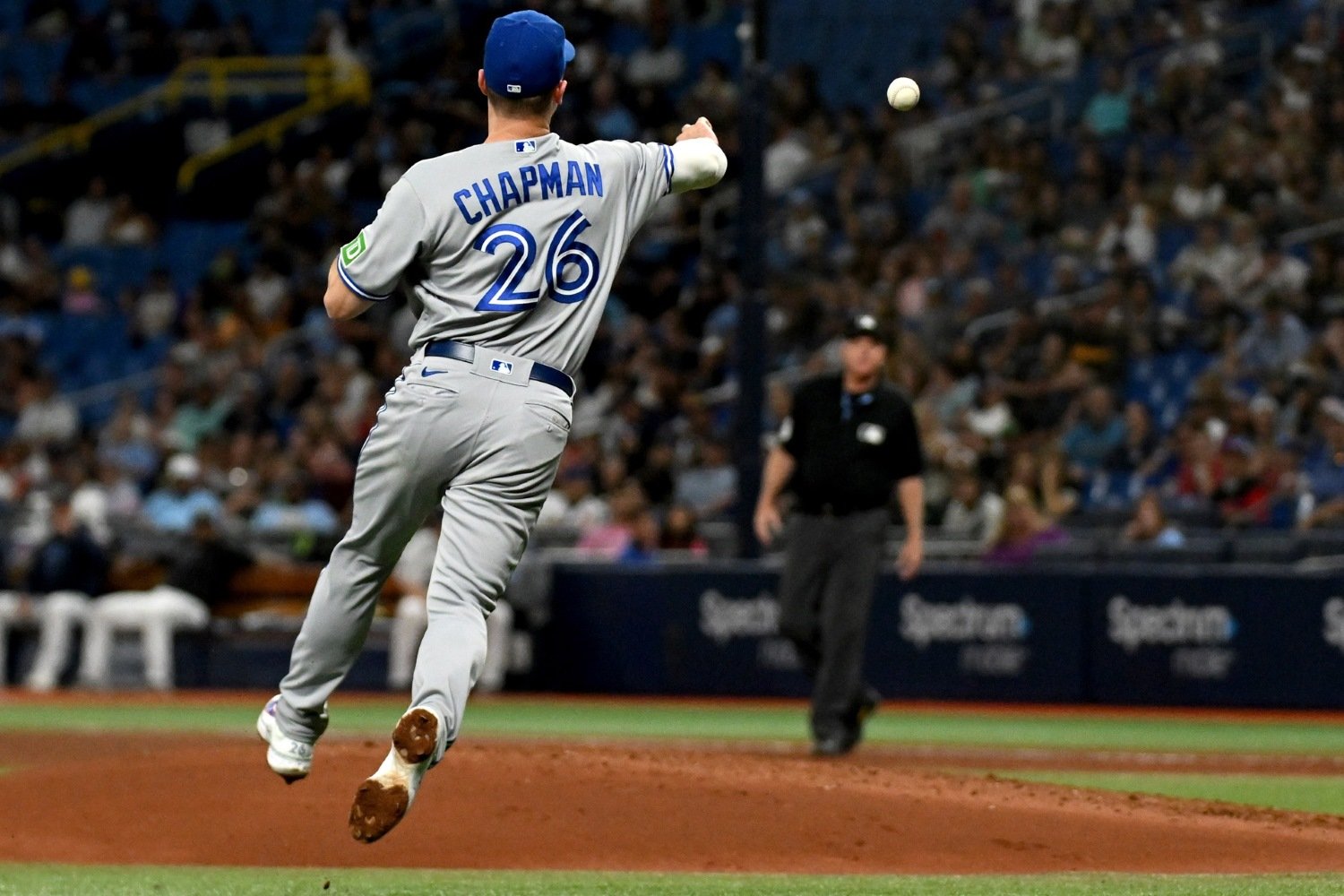 Last week, we took a look at the ZiPS projections for the 2024 Chicago Cubs. Within that article, I had openly wondered if, based off of those projections and the current roster, Cody Bellinger was the best investment for the Cubs to be making with their remaining money this offseason. Matt Chapman is also available, and while he had a worse 2023 season by most metrics, his expected statistics were better; he’s likely to cost less money than Bellinger; and ZiPS projected him to outperform Bellinger in 2024. With both players still on the board, and both linked to the Cubs, I thought that this comparison deserved a much deeper look. As previously mentioned, if we look purely at what was actually produced in 2023, Bellinger would by far be the better investment, especially considering he is two years younger than Chapman. Player AVG OBP SLG HR wOBA WAR Matt Chapman .240 .330 .424 17 .328 3.5 Cody Bellinger .307 .356 .525 26 .370 4.1 However, if we were to look at each player’s expected stats and batted-ball metrics, courtesy of Baseball Savant, we see a completely different story: Player Barrel % Launch Angle Exit Velocity xBA xSLG xwOBA Matt Chapman 16.8% 18.3 93.4 .229 .454 .336 Cody Bellinger 6.1% 17.2 87.9 .268 .434 .327 Chapman hit the ball significantly harder and at roughly the same launch angle for the entirety of a season in which he slugged more than 100 points lower than Bellinger and hit nine fewer home runs. Does this automatically make Bellinger a bad investment, and Chapman a good one? Sorry, but no. If things were that easy, then there’d be a whole lot less intrigue in baseball. As Cubs fans, we all know the story with Bellinger in 2023, but in case you need a refresher: Bellinger posted a career-low strikeout rate by making a whole lot more contact and shortening up with two strikes. This led to him hitting .281 with two strikes, second to only contact machine Luis Arráez. The bad news? That .281 batting average came along with an unsustainable .387 BABIP. Did Bellinger find a new way to succeed as a hitter, or did he dink and dunk his way to a batting average that will be difficult to repeat? The other area where Bellinger far outperformed his expected statistics is on fly balls. According to Baseball Savant, Bellinger posted a .497 wOBA on fly balls in 2023. His xwOBA, though, was just .344. That difference of .153 was the 12th-highest in all of baseball. One way a hitter can outperform his expected stats like this is by pulling a lot of his fly balls. Not only are fences shorter in the corners (and thus, you do not have to hit the ball as far), but almost any hitter’s power is going to be out in front of the plate, after they have generated more bat speed. All of that aside, even if you only account for hard-hit baseballs, hitters still perform better when they hit the ball in the air to the pull side. MLB hitters as a whole posted a 827 wRC+ in 2023 when they hit a hard fly ball (95 mph or more) to the pull side, per FanGraphs. That drops to a 271 wRC+ on hard-hit fly balls to center field, and a 337 wRC+ on hard-hit fly balls to the opposite field. Well, 45.5 percent of Bellinger’s hard hit fly balls were to the pull side. That was 15th in MLB among players who had at least 50 of those batted ball events. He was very good at hitting the ball in the air, hard, and to the pull side. Which brings me back to Chapman and those Baseball Savant expected stats. On fly balls in 2023, Chapman posted a .381 wOBA. His xwOBA? .547. That difference of .166 points was sixth-worst in all of baseball. If you have been following to this point, I have a feeling you know what is coming next. The Blue Jays’ third baseman did not pull a lot of his hard-hit fly balls. In fact, he only pulled 9.5 percent of them. Not a typo: 9.5 percent! That was the worst mark in baseball, and if you’re thinking that that sounds really bad, well that is because it is! The worst mark in 2022 was Alec Bohm at 17.3 percent. I had suspected, with this knowledge, that if we looked at a spray chart of all of the outs that Chapman made in 2023, that we would see a whole lot of long fly outs to center and right field. You be the judge: I’d say we found the reason for the underperformance, or at least one of them. Has this always been an issue for Chapman? While he hasn’t ever excelled at pulling fly balls, it was never this bad: in 2022, he pulled 37 percent of his hard-hit fly balls, and in 2021 he pulled 33.3 percent of them. This parallel is just absolutely fascinating to me. Two players, both linked to the Cubs, and both would slot in perfectly at positions of need, with Bellinger taking over center field or Chapman taking over third base. One far overperformed his expected stats, in no small part due to pulling a lot of his fly balls. The other far underperformed them, in no small part due to pulling, somehow, almost none of his fly balls. Which would be the better investment for the Cubs? I know the actual production from Chapman was not great for the last two months of the season, but I would tend to think his propensity to hit his fly balls the other way is easily fixable. Matt Trueblood wrote about this back in early December. He would also cost less, and figures to be elite defensively at third base for a few more years. On the flip side, while I do think Bellinger could continue to overperform on his fly balls, I don’t think his two-strike results are sustainable, and I have less faith in him sustaining his good defense in center field as he ages. Who's your guy? Is there another big-name free agent the Cubs should consider instead of either one? Lay it on us in the comments.
 -
The endgame of free agency is just about upon us. The Cubs still need a bat for the heart of their order, and the options are dwindling. Image courtesy of © Jonathan Dyer - USA Today Sports Last week, we took a look at the ZiPS projections for the 2024 Chicago Cubs. Within that article, I had openly wondered if, based off of those projections and the current roster, Cody Bellinger was the best investment for the Cubs to be making with their remaining money this offseason. Matt Chapman is also available, and while he had a worse 2023 season by most metrics, his expected statistics were better; he’s likely to cost less money than Bellinger; and ZiPS projected him to outperform Bellinger in 2024. With both players still on the board, and both linked to the Cubs, I thought that this comparison deserved a much deeper look. As previously mentioned, if we look purely at what was actually produced in 2023, Bellinger would by far be the better investment, especially considering he is two years younger than Chapman. Player AVG OBP SLG HR wOBA WAR Matt Chapman .240 .330 .424 17 .328 3.5 Cody Bellinger .307 .356 .525 26 .370 4.1 However, if we were to look at each player’s expected stats and batted-ball metrics, courtesy of Baseball Savant, we see a completely different story: Player Barrel % Launch Angle Exit Velocity xBA xSLG xwOBA Matt Chapman 16.8% 18.3 93.4 .229 .454 .336 Cody Bellinger 6.1% 17.2 87.9 .268 .434 .327 Chapman hit the ball significantly harder and at roughly the same launch angle for the entirety of a season in which he slugged more than 100 points lower than Bellinger and hit nine fewer home runs. Does this automatically make Bellinger a bad investment, and Chapman a good one? Sorry, but no. If things were that easy, then there’d be a whole lot less intrigue in baseball. As Cubs fans, we all know the story with Bellinger in 2023, but in case you need a refresher: Bellinger posted a career-low strikeout rate by making a whole lot more contact and shortening up with two strikes. This led to him hitting .281 with two strikes, second to only contact machine Luis Arráez. The bad news? That .281 batting average came along with an unsustainable .387 BABIP. Did Bellinger find a new way to succeed as a hitter, or did he dink and dunk his way to a batting average that will be difficult to repeat? The other area where Bellinger far outperformed his expected statistics is on fly balls. According to Baseball Savant, Bellinger posted a .497 wOBA on fly balls in 2023. His xwOBA, though, was just .344. That difference of .153 was the 12th-highest in all of baseball. One way a hitter can outperform his expected stats like this is by pulling a lot of his fly balls. Not only are fences shorter in the corners (and thus, you do not have to hit the ball as far), but almost any hitter’s power is going to be out in front of the plate, after they have generated more bat speed. All of that aside, even if you only account for hard-hit baseballs, hitters still perform better when they hit the ball in the air to the pull side. MLB hitters as a whole posted a 827 wRC+ in 2023 when they hit a hard fly ball (95 mph or more) to the pull side, per FanGraphs. That drops to a 271 wRC+ on hard-hit fly balls to center field, and a 337 wRC+ on hard-hit fly balls to the opposite field. Well, 45.5 percent of Bellinger’s hard hit fly balls were to the pull side. That was 15th in MLB among players who had at least 50 of those batted ball events. He was very good at hitting the ball in the air, hard, and to the pull side. Which brings me back to Chapman and those Baseball Savant expected stats. On fly balls in 2023, Chapman posted a .381 wOBA. His xwOBA? .547. That difference of .166 points was sixth-worst in all of baseball. If you have been following to this point, I have a feeling you know what is coming next. The Blue Jays’ third baseman did not pull a lot of his hard-hit fly balls. In fact, he only pulled 9.5 percent of them. Not a typo: 9.5 percent! That was the worst mark in baseball, and if you’re thinking that that sounds really bad, well that is because it is! The worst mark in 2022 was Alec Bohm at 17.3 percent. I had suspected, with this knowledge, that if we looked at a spray chart of all of the outs that Chapman made in 2023, that we would see a whole lot of long fly outs to center and right field. You be the judge: I’d say we found the reason for the underperformance, or at least one of them. Has this always been an issue for Chapman? While he hasn’t ever excelled at pulling fly balls, it was never this bad: in 2022, he pulled 37 percent of his hard-hit fly balls, and in 2021 he pulled 33.3 percent of them. This parallel is just absolutely fascinating to me. Two players, both linked to the Cubs, and both would slot in perfectly at positions of need, with Bellinger taking over center field or Chapman taking over third base. One far overperformed his expected stats, in no small part due to pulling a lot of his fly balls. The other far underperformed them, in no small part due to pulling, somehow, almost none of his fly balls. Which would be the better investment for the Cubs? I know the actual production from Chapman was not great for the last two months of the season, but I would tend to think his propensity to hit his fly balls the other way is easily fixable. Matt Trueblood wrote about this back in early December. He would also cost less, and figures to be elite defensively at third base for a few more years. On the flip side, while I do think Bellinger could continue to overperform on his fly balls, I don’t think his two-strike results are sustainable, and I have less faith in him sustaining his good defense in center field as he ages. Who's your guy? Is there another big-name free agent the Cubs should consider instead of either one? Lay it on us in the comments. View full article
