


matto1233
-
Posts
325 -
Joined
-
Last visited
Content Type
Profiles
Joomla Posts 1
Chicago Cubs Videos
Chicago Cubs Free Agent & Trade Rumors, Notes, & Tidbits
2026 Chicago Cubs Top Prospects Ranking
News
2023 Chicago Cubs Draft Picks
Guides & Resources
2024 Chicago Cubs Draft Picks
The Chicago Cubs Players Project
2025 Chicago Cubs Draft Pick Tracker
2026 Chicago Cubs Draft Tracker: Picks & Bonuses
Blogs
Events
Forums
Store
Gallery
Everything posted by matto1233
-
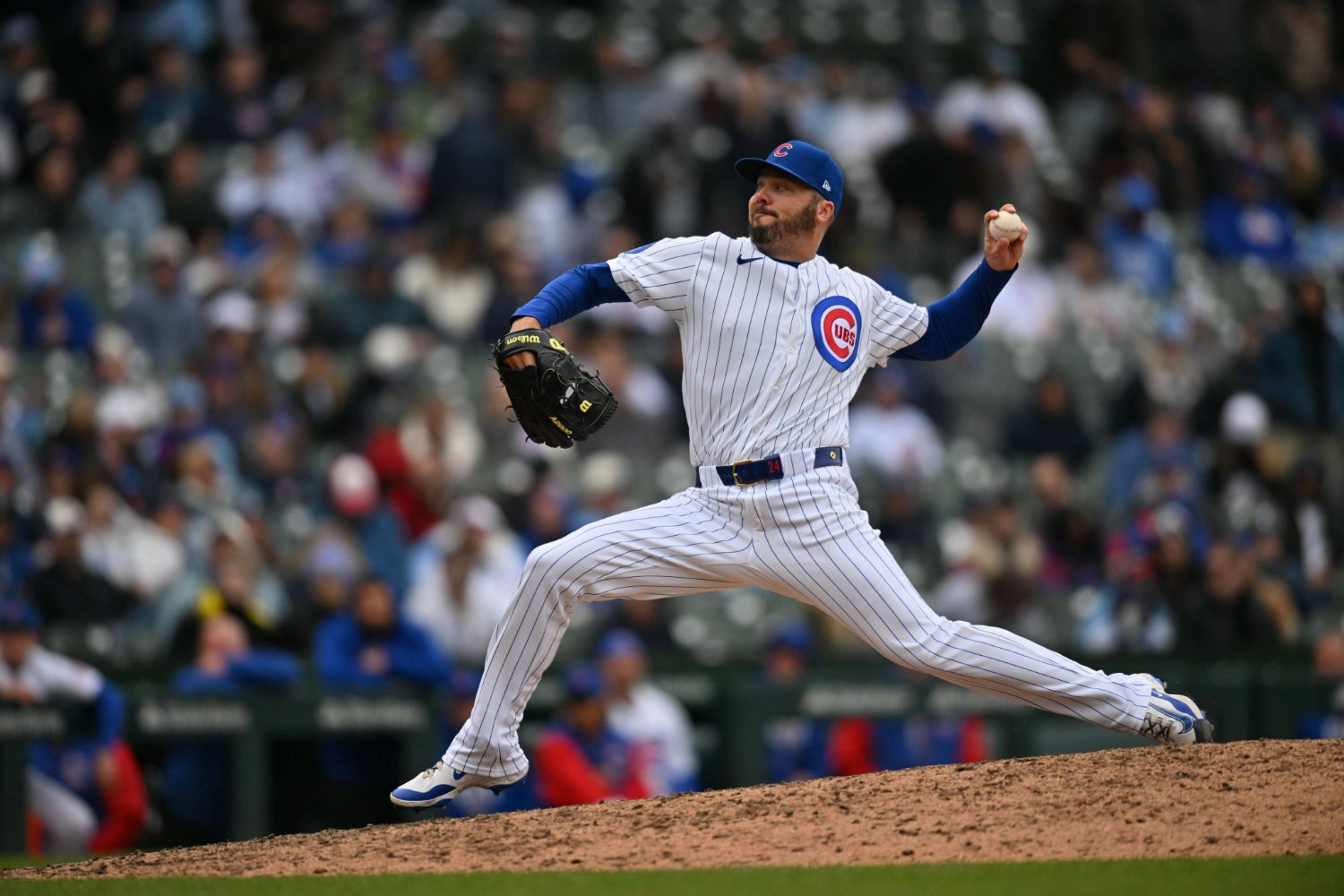
Image courtesy of © Patrick Gorski-Imagn Images After seven strong innings from the new, nominal ace of the Chicago Cubs, Kevin Gausman, Craig Counsell turned to Caleb Thielbar in the eighth inning of Friday night’s game to protect a 6-2 lead. Four hitters later, the score was 6-3, and the Kansas City Royals had runners on second and third with just one out. Thankfully, Trent Thornton then entered the game and put out the fire, allowing just one more run to score in a game that the Cubs would go on to win 6-4. No harm, no foul, right? Friday was the third straight game that Thielbar worked out of the bullpen. Clearly, Counsell thought the veteran could handle it after throwing 19 pitches on Wednesday, and just 12 on Thursday. After all, this is a taxed bullpen that was working their 15th game in 15 days. The flip side of the coin, though, is that Thielbar gave up four runs to the Dodgers in his outing on Wednesday. Frankly, the left-hander has been outright bad since returning from an injury on May 19: he has a 6.00 ERA in 27 innings since then. Was he really the best option for the Cubs on Friday night? The easiest place to start with Thielbar’s struggles is with his performance against left-handed hitters. As a left-handed relief pitcher, getting lefty hitters out is a must. Thielbar has made a career out of this. Until, basically, now. All stats courtesy of FanGraphs: Year Split Batting Average Against On-Base Percentage Against Slugging Percentage Against 2026 vs. LHH .281 .317 .526 2026 vs. RHH .229 .312 .482 2025 vs. LHH .161 .211 .276 2025 vs. RHH .205 .248 .342 By almost any measure, Thielbar has actually performed worse against lefties this season than righties, which is bad when, again, retiring left-handed hitters is his primary job as a southpaw out of the bullpen. Thielbar attacks lefties with four pitches: his four-seam fastball, a slider, a sweeper, and a curveball. When a pitcher shows signs of decline, particularly a 39-year-old pitcher, my first assumption is that he is losing velocity. That’s not the case here: he is actually throwing his fastball and curveball a tad bit harder, while his slider and sweeper are down about a tick or so, according to Baseball Savant. Let’s take a look at his results on his three primary pitches, the four-seamer, sweeper, and slider, against lefty hitters. All stats courtesy of Baseball Savant: Pitch Batting Average Against Slugging Percentage Against Four Seamer .182 .455 Sweeper .182 .727 Slider .471 .529 Despite the slugging percentage against the sweeper, it’s the slider that I really want to hone in on. He’s upped his usage of it against lefties, throwing it 27.6 percent of the time compared to 17.5 percent last season. One look at his pitch locations, and it’s easy to see what the issue is: That red zone just off the plate and away from the left-handed batter that occupies so much of the 2025 graphic is all but gone on the 2026 version. In 2025, 56.1 percent of the southpaw’s sliders to lefties were in that shadow or chase zone away from lefties. In 2026, that has plummeted to 27.9 percent. That means a whole lot less of this: Thielbar 1.mp4 And a whole lot more of this: THielbar 2.mp4 With baseball, and pitchers in particular, it is hardly ever just one thing. All four home runs Thielbar has allowed against lefties have come against the fastball and the sweeper. Still, it’s easier to sit on those pitches when the slider is either an easy take way off of the plate, or a meatball right down broadway. This doesn’t even get us into his struggles against righties, either. The more I think about it, the more I wonder if Thielbar being used three days in a row was a bit of a last gasp. A chance for him to show that he still belongs, and an opportunity for the Cubs to get as many innings out of him as they can while he is here. Hoby Milner and Daniel Palencia are both due back soon and will need roster spots. Tyler Ferguson has at least shown that he deserves some more chances. A roster crunch is coming soon, and if Caleb Thielbar can’t even get lefties out, he just might find himself on the outside looking in. View full article
-
 After seven strong innings from the new, nominal ace of the Chicago Cubs, Kevin Gausman, Craig Counsell turned to Caleb Thielbar in the eighth inning of Friday night’s game to protect a 6-2 lead. Four hitters later, the score was 6-3, and the Kansas City Royals had runners on second and third with just one out. Thankfully, Trent Thornton then entered the game and put out the fire, allowing just one more run to score in a game that the Cubs would go on to win 6-4. No harm, no foul, right? Friday was the third straight game that Thielbar worked out of the bullpen. Clearly, Counsell thought the veteran could handle it after throwing 19 pitches on Wednesday, and just 12 on Thursday. After all, this is a taxed bullpen that was working their 15th game in 15 days. The flip side of the coin, though, is that Thielbar gave up four runs to the Dodgers in his outing on Wednesday. Frankly, the left-hander has been outright bad since returning from an injury on May 19: he has a 6.00 ERA in 27 innings since then. Was he really the best option for the Cubs on Friday night? The easiest place to start with Thielbar’s struggles is with his performance against left-handed hitters. As a left-handed relief pitcher, getting lefty hitters out is a must. Thielbar has made a career out of this. Until, basically, now. All stats courtesy of FanGraphs: Year Split Batting Average Against On-Base Percentage Against Slugging Percentage Against 2026 vs. LHH .281 .317 .526 2026 vs. RHH .229 .312 .482 2025 vs. LHH .161 .211 .276 2025 vs. RHH .205 .248 .342 By almost any measure, Thielbar has actually performed worse against lefties this season than righties, which is bad when, again, retiring left-handed hitters is his primary job as a southpaw out of the bullpen. Thielbar attacks lefties with four pitches: his four-seam fastball, a slider, a sweeper, and a curveball. When a pitcher shows signs of decline, particularly a 39-year-old pitcher, my first assumption is that he is losing velocity. That’s not the case here: he is actually throwing his fastball and curveball a tad bit harder, while his slider and sweeper are down about a tick or so, according to Baseball Savant. Let’s take a look at his results on his three primary pitches, the four-seamer, sweeper, and slider, against lefty hitters. All stats courtesy of Baseball Savant: Pitch Batting Average Against Slugging Percentage Against Four Seamer .182 .455 Sweeper .182 .727 Slider .471 .529 Despite the slugging percentage against the sweeper, it’s the slider that I really want to hone in on. He’s upped his usage of it against lefties, throwing it 27.6 percent of the time compared to 17.5 percent last season. One look at his pitch locations, and it’s easy to see what the issue is: That red zone just off the plate and away from the left-handed batter that occupies so much of the 2025 graphic is all but gone on the 2026 version. In 2025, 56.1 percent of the southpaw’s sliders to lefties were in that shadow or chase zone away from lefties. In 2026, that has plummeted to 27.9 percent. That means a whole lot less of this: Thielbar 1.mp4 And a whole lot more of this: THielbar 2.mp4 With baseball, and pitchers in particular, it is hardly ever just one thing. All four home runs Thielbar has allowed against lefties have come against the fastball and the sweeper. Still, it’s easier to sit on those pitches when the slider is either an easy take way off of the plate, or a meatball right down broadway. This doesn’t even get us into his struggles against righties, either. The more I think about it, the more I wonder if Thielbar being used three days in a row was a bit of a last gasp. A chance for him to show that he still belongs, and an opportunity for the Cubs to get as many innings out of him as they can while he is here. Hoby Milner and Daniel Palencia are both due back soon and will need roster spots. Tyler Ferguson has at least shown that he deserves some more chances. A roster crunch is coming soon, and if Caleb Thielbar can’t even get lefties out, he just might find himself on the outside looking in.
 -
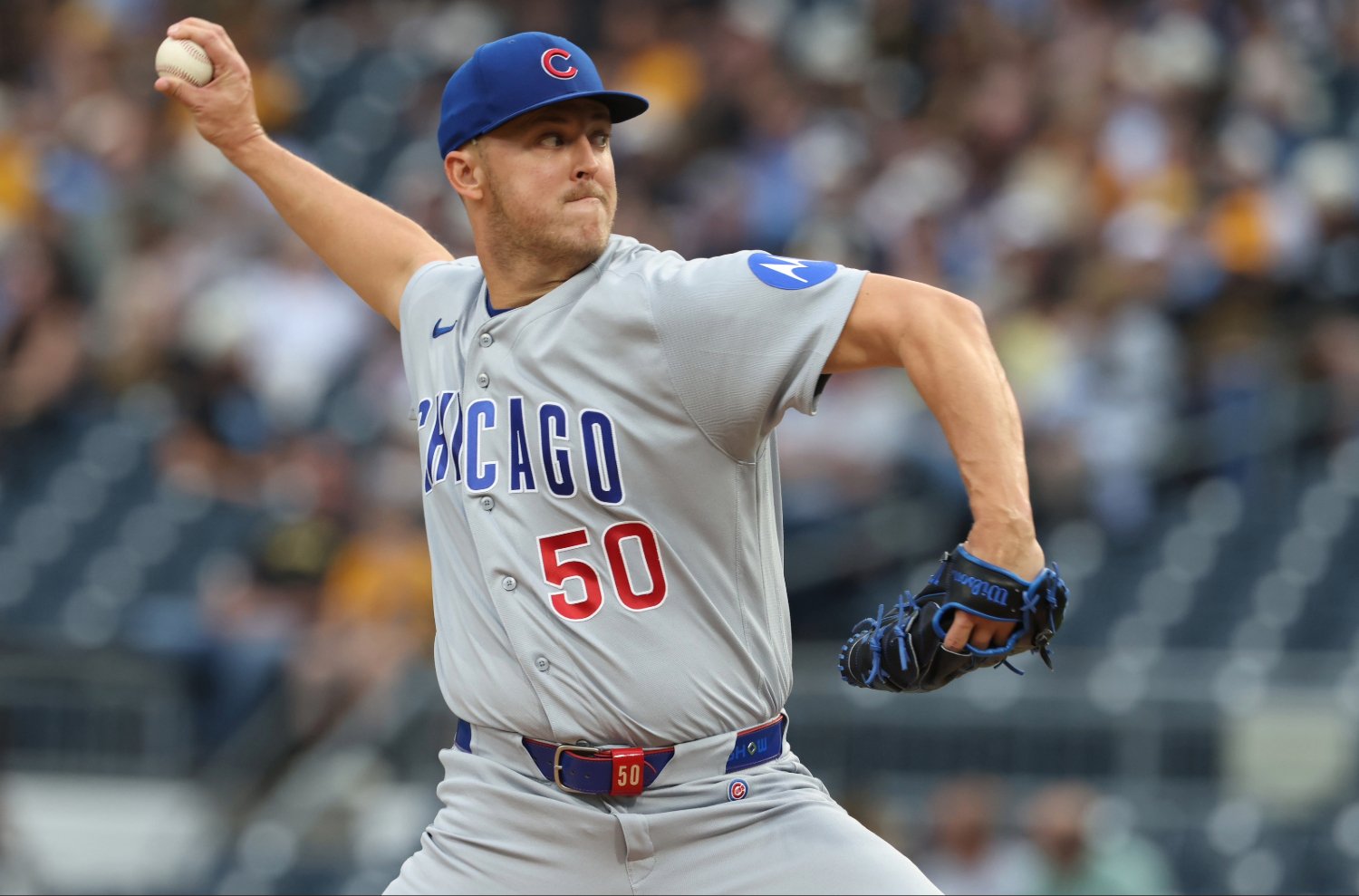
Image courtesy of © Charles LeClaire-Imagn Images Four years and $68 million. That is what it took for the Chicago Cubs to sign Jameson Taillon prior to the 2023 season. After more than 3.5 seasons with the club, he has now been designated for assignment. In all likelihood, he has pitched his last game for the North Siders. How did it end up like this? Taillon signed with the Cubs during an offseason that had a healthy middle tier of starting pitching options: Kodai Senga was coming over to MLB from NPB, and Taijuan Walker, Chris Bassitt, Zach Eflin, and Tyler Anderson all also switched teams via free agency. If we compare the results of each of those guys, who all received somewhat similar contracts, since then, it seems that Taillon’s output was about right on the mark. Player Innings Pitched K% ERA FIP FanGraphs WAR Contract Bassitt 597 2/3 21.6% 4.02 4.19 7.6 3yr/$63m Eflin 418 22.0% 3.94 3.77 7.5 3yr/$40m Senga 325 2/3 26.5% 3.73 4.21 4.3 5yr/$75m Taillon 525 1/3 19.8% 4.21 4.71 3.9 4yr/$68m Anderson 456 2/3 18.3% 4.53 5.02 2.7 3yr/$39m Walker 402 2/3 16.9% 5.13 5.38 1.3 4yr/$72m Taillon ranks fourth out of six on this list in ERA, FIP, and fWAR, while coming in second in innings pitched. His 525 ⅓ innings pitched by far led the Cubs during this timeframe, and his 3.9 fWAR ranked fifth. The Cubs needed a reliable innings eater, and they got a reliable innings eater. Accidentally, I have stated the actual problem at hand here. Make no mistake, the Jameson Taillon contract wasn’t ideal. It never was. But the contract itself wasn’t the issue. The issue was that the Cubs needed to make that deal. The issue was that they needed a reliable innings eater via free agency because they have done such a lackluster job at developing pitching themselves. This has been a known issue for the Cubs for some time now. From 2023-2026, 15 pitchers have started at least five games for the Cubs. Only five of them did so on arbitration or pre-arbitration salaries: Player Innings Pitched K% ERA FIP FanGraphs WAR Justin Steele 330 2/3 24.4% 3.18 3.24 7.9 Javier Assad 277 1/3 18.3% 3.60 4.74 1.8 Ben Brown 157 25.1% 4.30 3.66 3.0 Cade Horton 121 1/3 19.8% 2.52 3.61 2.2 Jordan Wicks 83 2/3 18.4% 5.92 5.08 0.2 Consider what Justin Wrobleski is giving the Dodgers this season. Or what Emmet Sheehan gave them last season. Or what Shane Drohan is giving the Brewers right now. Each of those guys has offered extremely reliable innings at pre-arbitration salaries. The Cubs have failed to consistently produce that. Hopes are still high for four of the five guys on the list above; the list simply needs to be longer than four names. In my opinion, the real issue with the pitching development in the organization hasn’t been the lack of top-tier pitching prospects. Those guys are few and far between, and the Cubs have so rarely taken pitching in the first round of the draft over the past decade anyway. Rather, it’s been the complete lack of consistently developing guys that can piece together Jameson Taillon level production at those inexpensive, early-career salaries. This allows you to avoid these types of contracts for mid-tier free agent starting pitchers. The past four seasons, the Cubs needed Jameson Taillon to do exactly what he did: prevent runs at a league-average rate, and do so over a lot of innings. If they can start producing more pitchers that are capable of doing that themselves, then hopefully we can stop watching contracts reach unsatisfying conclusions like this one did. View full article
-
 Four years and $68 million. That is what it took for the Chicago Cubs to sign Jameson Taillon prior to the 2023 season. After more than 3.5 seasons with the club, he has now been designated for assignment. In all likelihood, he has pitched his last game for the North Siders. How did it end up like this? Taillon signed with the Cubs during an offseason that had a healthy middle tier of starting pitching options: Kodai Senga was coming over to MLB from NPB, and Taijuan Walker, Chris Bassitt, Zach Eflin, and Tyler Anderson all also switched teams via free agency. If we compare the results of each of those guys, who all received somewhat similar contracts, since then, it seems that Taillon’s output was about right on the mark. Player Innings Pitched K% ERA FIP FanGraphs WAR Contract Bassitt 597 2/3 21.6% 4.02 4.19 7.6 3yr/$63m Eflin 418 22.0% 3.94 3.77 7.5 3yr/$40m Senga 325 2/3 26.5% 3.73 4.21 4.3 5yr/$75m Taillon 525 1/3 19.8% 4.21 4.71 3.9 4yr/$68m Anderson 456 2/3 18.3% 4.53 5.02 2.7 3yr/$39m Walker 402 2/3 16.9% 5.13 5.38 1.3 4yr/$72m Taillon ranks fourth out of six on this list in ERA, FIP, and fWAR, while coming in second in innings pitched. His 525 ⅓ innings pitched by far led the Cubs during this timeframe, and his 3.9 fWAR ranked fifth. The Cubs needed a reliable innings eater, and they got a reliable innings eater. Accidentally, I have stated the actual problem at hand here. Make no mistake, the Jameson Taillon contract wasn’t ideal. It never was. But the contract itself wasn’t the issue. The issue was that the Cubs needed to make that deal. The issue was that they needed a reliable innings eater via free agency because they have done such a lackluster job at developing pitching themselves. This has been a known issue for the Cubs for some time now. From 2023-2026, 15 pitchers have started at least five games for the Cubs. Only five of them did so on arbitration or pre-arbitration salaries: Player Innings Pitched K% ERA FIP FanGraphs WAR Justin Steele 330 2/3 24.4% 3.18 3.24 7.9 Javier Assad 277 1/3 18.3% 3.60 4.74 1.8 Ben Brown 157 25.1% 4.30 3.66 3.0 Cade Horton 121 1/3 19.8% 2.52 3.61 2.2 Jordan Wicks 83 2/3 18.4% 5.92 5.08 0.2 Consider what Justin Wrobleski is giving the Dodgers this season. Or what Emmet Sheehan gave them last season. Or what Shane Drohan is giving the Brewers right now. Each of those guys has offered extremely reliable innings at pre-arbitration salaries. The Cubs have failed to consistently produce that. Hopes are still high for four of the five guys on the list above; the list simply needs to be longer than four names. In my opinion, the real issue with the pitching development in the organization hasn’t been the lack of top-tier pitching prospects. Those guys are few and far between, and the Cubs have so rarely taken pitching in the first round of the draft over the past decade anyway. Rather, it’s been the complete lack of consistently developing guys that can piece together Jameson Taillon level production at those inexpensive, early-career salaries. This allows you to avoid these types of contracts for mid-tier free agent starting pitchers. The past four seasons, the Cubs needed Jameson Taillon to do exactly what he did: prevent runs at a league-average rate, and do so over a lot of innings. If they can start producing more pitchers that are capable of doing that themselves, then hopefully we can stop watching contracts reach unsatisfying conclusions like this one did.
 -
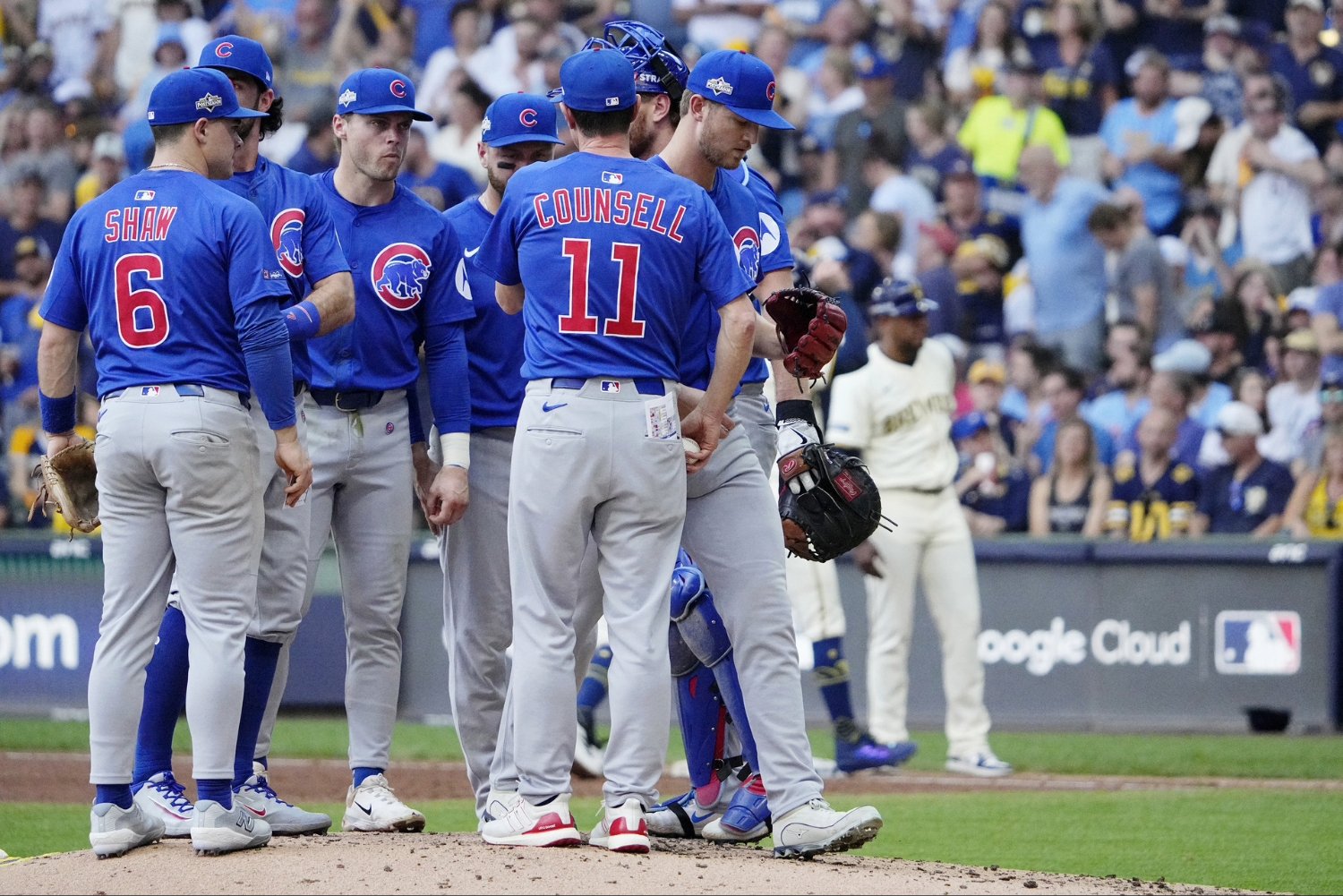
Image courtesy of © Michael McLoone-Imagn Images Let’s take ourselves back to October of 2025. The Chicago Cubs, facing a winner-take-all Game 5 against the Milwaukee Brewers, sent Drew Pomeranz to the mound to open the game. One swing from William Contreras later, and the Brewers led 1-0 before the first inning had even ended. Unfortunately, despite the poor result, Pomeranz was probably the best option that they had. Matthew Boyd couldn't be trusted after he failed to complete the first inning in a Game 1 loss. They couldn’t trust Shota Imanaga after he gave up four runs in less than three innings in Game 2. The cupboard was bare. So after Pomeranz, they turned to Colin Rea. While he maintains his status as a decent and useful arm, Rea is not someone any team should be turning to in a tie game in the playoffs. He performed admirably before eventually giving up a home run to Andrew Vaughn to make it 2-1 Brewers, who went on to win the game 3-1. Running out of pitching in the final game of the NLDS is a precarious place to be, especially when you consider that the Los Angeles Dodgers were waiting on the other side of that Game 5. The root of the issue is traced all the way back to the trade deadline, when Jed Hoyer knew his team needed pitching, and all he came away with was Michael Soroka, Taylor Rogers, and Andrew Kittredge. Our @Jeremy Tecktiel recently revisited the 2025 deadline here, so we won’t get too in-depth in this piece. In case you’ve forgotten, though, let me jog your memory: the Cubs sorely needed pitchers to help out an offense that was one of the best in baseball. The Cubs then acquired the three guys above, and none of those guys made a huge impact. Soroka got hurt in his first start as a Cub, returning in time to give up three runs in one inning of postseason work. Rogers made little impact and threw just one, low-leverage postseason inning. And while Kittredge was key to beating the San Diego Padres in the Wild Card round, he only threw 2.2 innings. One impactful bullpen arm was not enough. You might argue that it’s hard to pin the Game 5 loss on the pitching, given that the offense only came through with one run that game. That’s fair, though I am here to say that Jed Hoyer never even gave the offense a chance. After Michael Busch got the Cubs off to an early 1-0 lead with a lead-off home run in Game 1, Boyd promptly surrendered six runs in the bottom half of the first. After Seiya Suzuki spotted the Cubs to a 3-0 lead in Game 2, Shota Imanaga immediately gave that lead back by allowing a three-run home run to Andrew Vaughn. The offense failed to come through, sure, but that offense was good enough to do damage in the playoffs. The fact of the matter is that they never had a chance to win the World Series, or even the Division Series, because of the pitching. And that is because Jed Hoyer failed to appropriately supplement his team at the trade deadline. Now here the Cubs sit in 2026 in the exact same situation. They have a top five offense by almost any measure. Their pitching, on the other hand, sports a 4.19 ERA, which is 15th in baseball. Frankly, that number is propped up by an elite defense. FIP, which is a stat that attempts to isolate what a pitcher can truly control, rates this Cubs staff as 25th in baseball. FanGraphs WAR rates them at 27th. Their strikeout rate, despite Hoyer constantly saying they were going to work hard to increase that in the offseason, is 22nd. The 2025 trade deadline was a failure. The 2026 trade deadline has to be better. I am not saying that the Cubs need to go get Tarik Skubal. Even two mid-tier starting pitchers would help this team immensely, because right now, the North Siders probably only have two starters that should even be sniffing a postseason mound. Boyd is a good pitcher, but should probably be starting Game 3 or 4 of a playoff series, not the opener, as he likely would for the Cubs right now. Ditto for Imanaga, who gives up way too many home runs to be trusted in October (as we saw last year). The options after that get bleak fast. Jameson Taillon has been worth -0.8 fWAR, one of the lowest figures in baseball. Colin Rea should not be on a postseason mound. David Peterson has been good in three of his four starts in a Cubs uniform, but in the other one, he gave up 10 runs. I wouldn’t guarantee that Edward Cabrera or Ben Brown will be making a huge impact here, either. What about the bullpen? Some guys have had some flashes, sure, but in July so far they have posted an unsightly 4.69 ERA. Who are we supposed to trust out of that group? With this cobbled-together pitching staff, the Cubs still have an 87.1 percent chance to make the playoffs, and a 4.2 percent chance of winning the World Series, per FanGraphs’ playoff odds. Just imagine what they could do with a couple of extra competent pitchers on the staff? Last season, Hoyer failed to go out and get those pitchers. Reportedly, the lockout scared him away, and those fears will be heightened this year. But this team won't go further than they did last year if fear controls the front office's thinking over the next week. View full article
-
 Let’s take ourselves back to October of 2025. The Chicago Cubs, facing a winner-take-all Game 5 against the Milwaukee Brewers, sent Drew Pomeranz to the mound to open the game. One swing from William Contreras later, and the Brewers led 1-0 before the first inning had even ended. Unfortunately, despite the poor result, Pomeranz was probably the best option that they had. Matthew Boyd couldn't be trusted after he failed to complete the first inning in a Game 1 loss. They couldn’t trust Shota Imanaga after he gave up four runs in less than three innings in Game 2. The cupboard was bare. So after Pomeranz, they turned to Colin Rea. While he maintains his status as a decent and useful arm, Rea is not someone any team should be turning to in a tie game in the playoffs. He performed admirably before eventually giving up a home run to Andrew Vaughn to make it 2-1 Brewers, who went on to win the game 3-1. Running out of pitching in the final game of the NLDS is a precarious place to be, especially when you consider that the Los Angeles Dodgers were waiting on the other side of that Game 5. The root of the issue is traced all the way back to the trade deadline, when Jed Hoyer knew his team needed pitching, and all he came away with was Michael Soroka, Taylor Rogers, and Andrew Kittredge. Our @Jeremy Tecktiel recently revisited the 2025 deadline here, so we won’t get too in-depth in this piece. In case you’ve forgotten, though, let me jog your memory: the Cubs sorely needed pitchers to help out an offense that was one of the best in baseball. The Cubs then acquired the three guys above, and none of those guys made a huge impact. Soroka got hurt in his first start as a Cub, returning in time to give up three runs in one inning of postseason work. Rogers made little impact and threw just one, low-leverage postseason inning. And while Kittredge was key to beating the San Diego Padres in the Wild Card round, he only threw 2.2 innings. One impactful bullpen arm was not enough. You might argue that it’s hard to pin the Game 5 loss on the pitching, given that the offense only came through with one run that game. That’s fair, though I am here to say that Jed Hoyer never even gave the offense a chance. After Michael Busch got the Cubs off to an early 1-0 lead with a lead-off home run in Game 1, Boyd promptly surrendered six runs in the bottom half of the first. After Seiya Suzuki spotted the Cubs to a 3-0 lead in Game 2, Shota Imanaga immediately gave that lead back by allowing a three-run home run to Andrew Vaughn. The offense failed to come through, sure, but that offense was good enough to do damage in the playoffs. The fact of the matter is that they never had a chance to win the World Series, or even the Division Series, because of the pitching. And that is because Jed Hoyer failed to appropriately supplement his team at the trade deadline. Now here the Cubs sit in 2026 in the exact same situation. They have a top five offense by almost any measure. Their pitching, on the other hand, sports a 4.19 ERA, which is 15th in baseball. Frankly, that number is propped up by an elite defense. FIP, which is a stat that attempts to isolate what a pitcher can truly control, rates this Cubs staff as 25th in baseball. FanGraphs WAR rates them at 27th. Their strikeout rate, despite Hoyer constantly saying they were going to work hard to increase that in the offseason, is 22nd. The 2025 trade deadline was a failure. The 2026 trade deadline has to be better. I am not saying that the Cubs need to go get Tarik Skubal. Even two mid-tier starting pitchers would help this team immensely, because right now, the North Siders probably only have two starters that should even be sniffing a postseason mound. Boyd is a good pitcher, but should probably be starting Game 3 or 4 of a playoff series, not the opener, as he likely would for the Cubs right now. Ditto for Imanaga, who gives up way too many home runs to be trusted in October (as we saw last year). The options after that get bleak fast. Jameson Taillon has been worth -0.8 fWAR, one of the lowest figures in baseball. Colin Rea should not be on a postseason mound. David Peterson has been good in three of his four starts in a Cubs uniform, but in the other one, he gave up 10 runs. I wouldn’t guarantee that Edward Cabrera or Ben Brown will be making a huge impact here, either. What about the bullpen? Some guys have had some flashes, sure, but in July so far they have posted an unsightly 4.69 ERA. Who are we supposed to trust out of that group? With this cobbled-together pitching staff, the Cubs still have an 87.1 percent chance to make the playoffs, and a 4.2 percent chance of winning the World Series, per FanGraphs’ playoff odds. Just imagine what they could do with a couple of extra competent pitchers on the staff? Last season, Hoyer failed to go out and get those pitchers. Reportedly, the lockout scared him away, and those fears will be heightened this year. But this team won't go further than they did last year if fear controls the front office's thinking over the next week.
 -
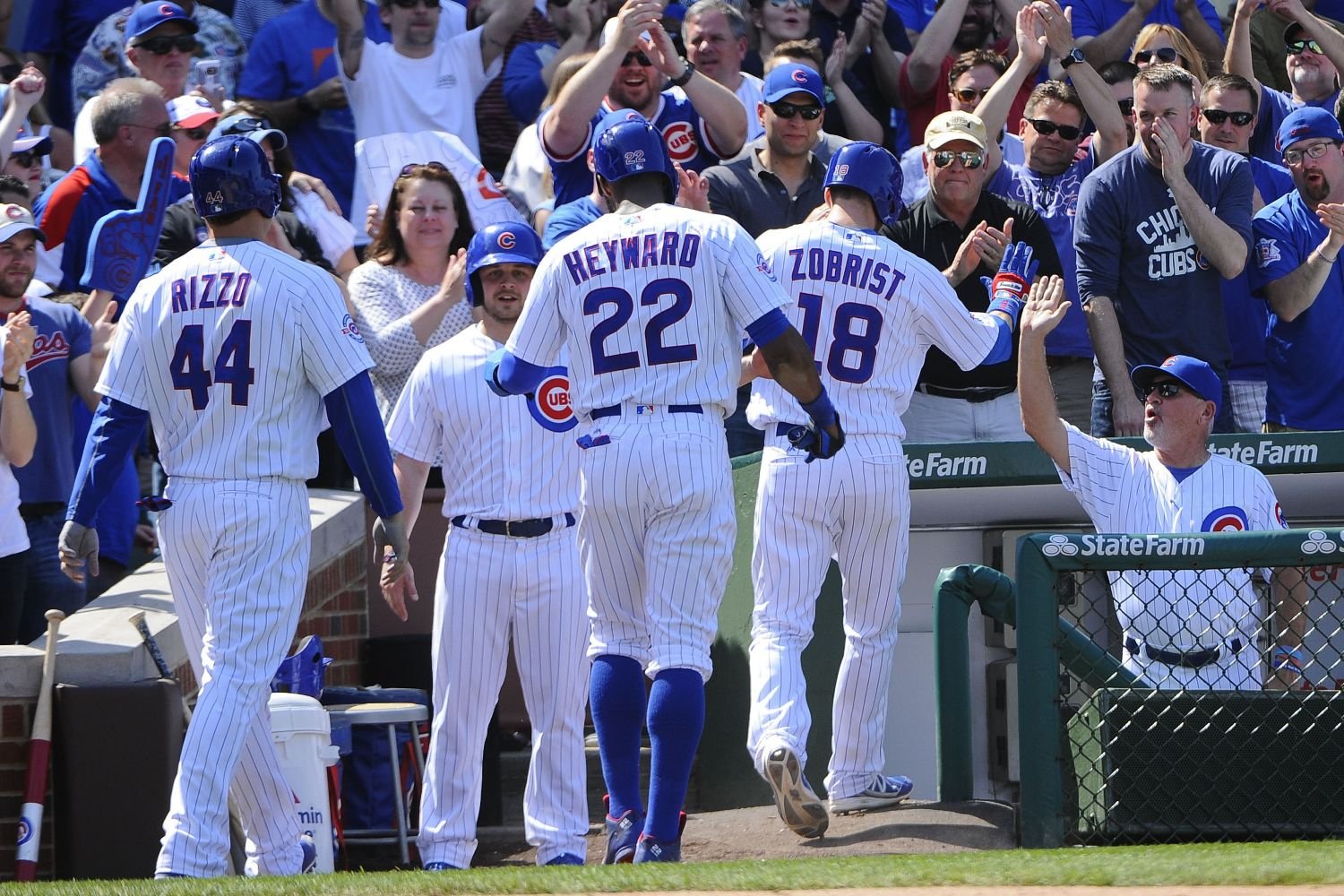
Image courtesy of © Matt Marton-Imagn Images Something that has struck me, as I have listened to David Ross and Anthony Rizzo’s podcast, The Lovable Reunion (where they reminisce with those that were a part of that team), is how inevitable that 2016 Cubs group felt. I feel like I live and die with every pitch of the 2026 Cubs, because I have to. If they lose three or four in a row, that could easily be devastating to their playoff chances. The 2016 team, though, was different. With 103 wins, they finished with the best record in the National League by a full eight wins. They won the division by 17.5 games, and were never less than 6.5 games up on second place during the second half of the season. They started 25-6, for crying out loud—and they didn't follow it up with some 10-game losing skein. All of this is to say, the 2026 Cubs are probably a good baseball team, but the 2016 Cubs were an elite baseball team. How would the 2026 Cubs fare if they faced the 2016 Cubs? With the new baseball simulation tool at FanGraphs, we can figure this out! First, we have to decide on our lineups. I thought we’d simulate one game with lefties on the mound for both teams, and then another with righties on the mound. We’re going to use the Marcel projection system, since it is one of the only systems that will project back in time, which is necessary for the 2016 team. I’ve also disabled home-field advantage. These games are played at Wrigley Field, in theory, where fans are cheering for both teams. Game 1 Lineups 2026 Cubs Pete Crow-Armstrong Seiya Suzuki Alex Bregman Carson Kelly Michael Busch Ian Happ Nico Hoerner Matt Shaw Dansby Swanson Pitchers - Matthew Boyd, Ryan Rolison, Hoby Milner, Jacob Webb, Daniel Palencia 2016 Cubs Dexter Fowler Kris Bryant Anthony Rizzo Ben Zobrist Addison Russell Willson Contreras Jorge Soler Javier Báez Kyle Schwarber Pitchers - Jon Lester, Carl Edwards Jr., Héctor Rondón, Pedro Strop, Aroldis Chapman Here's how it went down. The 2016 Cubs, of course, win this matchup much more often than the 2026 Cubs. However, I was shocked to discover that they win the matchup 65.3% of the time. On any given day in MLB, it’s hard to find any team that has almost a two-in-three chance of winning. Some of this is probably accounted for by the fact that the league-average hitter in 2016 was better than the league-average hitter in 2026. That was just a better offensive environment, and that might make this slightly unfair—although the difference should be counterbalanced by the easier pitching environment, right? Indeed, the lion's share of the difference, in my opinion—and this won’t shock you—is in the pitching. Cubs hitters this year have a 109 wRC+. The 2016 Cubs had a 106 wRC+. Cubs pitchers in 2016 had an ERA- of 76. That figure is at 104 this year. ERA- is basically wRC+ for pitchers. It’s adjusted for league average and park factors, and 100 is average. Unlike wRC+ (and more like ERA), you want this number to be below 100. In other terms, Cubs pitchers were 24 percent better than league average in 2016. In 2026, they are 4 percent worse than average. The simulation bears this out. The 2016 Cubs crush to the tune of a .274/.353/.465 slash line, while the 2026 Cubs manage a line of just .233/.300/.384. This gives the 2016 Cubs 5.35 average runs scored, and the 2026 Cubs just an average of 3.92. Fun fact: when I first tried this simulation with Shota Imanaga pitching instead of Boyd, I noticed that Kris Bryant projects to hit a home run off of Imanaga in 7.3 percent of plate appearances. That didn’t seem very fair, but it also does bring back a smile, doesn't it? Bryant, especially against a pitcher prone to fly balls anyway, was that kind of lethal in his MVP-winning season. Will the 2026 squad fare any better with right-handed starters? Game 2 Lineups 2026 Cubs Crow-Armstrong Bregman Busch Suzuki Happ Michael Conforto Kelly Hoerner Swanson Pitchers - Ben Brown, Rolison, Milner, Webb, Palencia 2016 Cubs Fowler Schwarber Bryant Rizzo Zobrist Russell Contreras Jason Heyward Báez Pitchers - Kyle Hendricks, Edwards Jr., Rondón, Strop, Chapman It, uh, didn't get any better for the current Men in Blue. Having Brown on the mound instead of Boyd certainly helps the present day iteration of the Cubs. (Alas: we might even be giving the 2026 squad an unfair advantage here. Brown might be out for the year.) The 2016 group hits for a slash line of .266/.346/.443 and scores 4.99 runs per game in this one, over a third of a run less. Having Hendricks on the mound instead of Lester, though, is of no help. The 2026 Cubs hit a paltry .228/.296/.375 and score only 3.77 runs per game. It turns out, the 2016 team still wins this 64.4 percent of the time. Crow-Armstrong does what he can for the 2026 Cubs: he pops a home run in 17 percent of the games in this simulation. That pales in comparison to the middle of the 2016 lineup, though: Schwarber homers in 20 percent of the games, Bryant 21 percent, and Rizzo 19 percent. This brings me all the way back to my original point: the 2016 Cubs were inevitable. The 2026 team has been fun, at times, and frustrating at others. The 2016 team was an unstoppable force. And if these projections are any indication, they would demolish the Cubs that we see playing baseball just 10 years later. If that seems to augur ill for the current club's playoff chances, well, yeah. It does. But it also highlights the historic thunder of that drought-snapping team. View full article
-
 Something that has struck me, as I have listened to David Ross and Anthony Rizzo’s podcast, The Lovable Reunion (where they reminisce with those that were a part of that team), is how inevitable that 2016 Cubs group felt. I feel like I live and die with every pitch of the 2026 Cubs, because I have to. If they lose three or four in a row, that could easily be devastating to their playoff chances. The 2016 team, though, was different. With 103 wins, they finished with the best record in the National League by a full eight wins. They won the division by 17.5 games, and were never less than 6.5 games up on second place during the second half of the season. They started 25-6, for crying out loud—and they didn't follow it up with some 10-game losing skein. All of this is to say, the 2026 Cubs are probably a good baseball team, but the 2016 Cubs were an elite baseball team. How would the 2026 Cubs fare if they faced the 2016 Cubs? With the new baseball simulation tool at FanGraphs, we can figure this out! First, we have to decide on our lineups. I thought we’d simulate one game with lefties on the mound for both teams, and then another with righties on the mound. We’re going to use the Marcel projection system, since it is one of the only systems that will project back in time, which is necessary for the 2016 team. I’ve also disabled home-field advantage. These games are played at Wrigley Field, in theory, where fans are cheering for both teams. Game 1 Lineups 2026 Cubs Pete Crow-Armstrong Seiya Suzuki Alex Bregman Carson Kelly Michael Busch Ian Happ Nico Hoerner Matt Shaw Dansby Swanson Pitchers - Matthew Boyd, Ryan Rolison, Hoby Milner, Jacob Webb, Daniel Palencia 2016 Cubs Dexter Fowler Kris Bryant Anthony Rizzo Ben Zobrist Addison Russell Willson Contreras Jorge Soler Javier Báez Kyle Schwarber Pitchers - Jon Lester, Carl Edwards Jr., Héctor Rondón, Pedro Strop, Aroldis Chapman Here's how it went down. The 2016 Cubs, of course, win this matchup much more often than the 2026 Cubs. However, I was shocked to discover that they win the matchup 65.3% of the time. On any given day in MLB, it’s hard to find any team that has almost a two-in-three chance of winning. Some of this is probably accounted for by the fact that the league-average hitter in 2016 was better than the league-average hitter in 2026. That was just a better offensive environment, and that might make this slightly unfair—although the difference should be counterbalanced by the easier pitching environment, right? Indeed, the lion's share of the difference, in my opinion—and this won’t shock you—is in the pitching. Cubs hitters this year have a 109 wRC+. The 2016 Cubs had a 106 wRC+. Cubs pitchers in 2016 had an ERA- of 76. That figure is at 104 this year. ERA- is basically wRC+ for pitchers. It’s adjusted for league average and park factors, and 100 is average. Unlike wRC+ (and more like ERA), you want this number to be below 100. In other terms, Cubs pitchers were 24 percent better than league average in 2016. In 2026, they are 4 percent worse than average. The simulation bears this out. The 2016 Cubs crush to the tune of a .274/.353/.465 slash line, while the 2026 Cubs manage a line of just .233/.300/.384. This gives the 2016 Cubs 5.35 average runs scored, and the 2026 Cubs just an average of 3.92. Fun fact: when I first tried this simulation with Shota Imanaga pitching instead of Boyd, I noticed that Kris Bryant projects to hit a home run off of Imanaga in 7.3 percent of plate appearances. That didn’t seem very fair, but it also does bring back a smile, doesn't it? Bryant, especially against a pitcher prone to fly balls anyway, was that kind of lethal in his MVP-winning season. Will the 2026 squad fare any better with right-handed starters? Game 2 Lineups 2026 Cubs Crow-Armstrong Bregman Busch Suzuki Happ Michael Conforto Kelly Hoerner Swanson Pitchers - Ben Brown, Rolison, Milner, Webb, Palencia 2016 Cubs Fowler Schwarber Bryant Rizzo Zobrist Russell Contreras Jason Heyward Báez Pitchers - Kyle Hendricks, Edwards Jr., Rondón, Strop, Chapman It, uh, didn't get any better for the current Men in Blue. Having Brown on the mound instead of Boyd certainly helps the present day iteration of the Cubs. (Alas: we might even be giving the 2026 squad an unfair advantage here. Brown might be out for the year.) The 2016 group hits for a slash line of .266/.346/.443 and scores 4.99 runs per game in this one, over a third of a run less. Having Hendricks on the mound instead of Lester, though, is of no help. The 2026 Cubs hit a paltry .228/.296/.375 and score only 3.77 runs per game. It turns out, the 2016 team still wins this 64.4 percent of the time. Crow-Armstrong does what he can for the 2026 Cubs: he pops a home run in 17 percent of the games in this simulation. That pales in comparison to the middle of the 2016 lineup, though: Schwarber homers in 20 percent of the games, Bryant 21 percent, and Rizzo 19 percent. This brings me all the way back to my original point: the 2016 Cubs were inevitable. The 2026 team has been fun, at times, and frustrating at others. The 2016 team was an unstoppable force. And if these projections are any indication, they would demolish the Cubs that we see playing baseball just 10 years later. If that seems to augur ill for the current club's playoff chances, well, yeah. It does. But it also highlights the historic thunder of that drought-snapping team.
 -
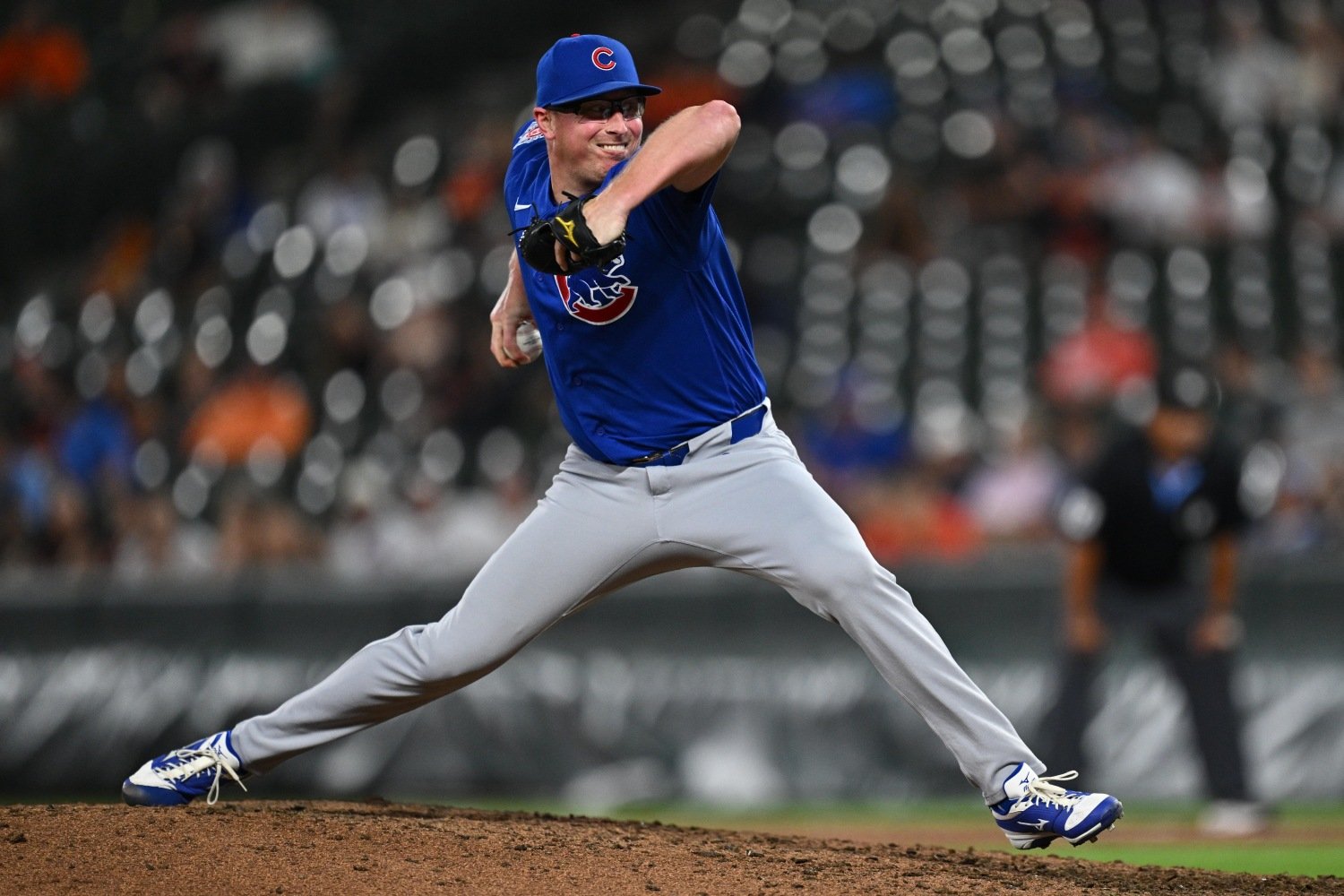 If Tuesday night’s victory over the Baltimore Orioles was any indication, the Cubs might start looking to Trent Thornton to pitch in higher-leverage opportunities going forward. The right-hander notched his second save of the season with a scoreless ninth inning. This was in a game that was after an off day, which is to say that the bullpen was rested. Craig Counsell had his pick of the litter, and he picked Thornton. That is quite the leap for a guy who started the season in Iowa and wasn’t called up to the big-league club until early May. It’s also quite the leap for me, because I have a small bias: I have a really hard time believing in relievers who don’t rack up big strikeout numbers. This makes Thornton and his minuscule 12.5% strikeout rate hard for me to embrace. No qualified pitcher has a lower strikeout rate. Combine that with a walk rate a tick above league average, and you have what looks to be a frustrating bullpen arm. But should I trust Thornton more? Counsell is certainly starting to, and he knows way more than I do. The thing is, Thornton has gotten results. His 2.63 ERA out of the bullpen is one of the best on the team. However, any advanced metric would suggest that is entirely smoke and mirrors. He has a 5.03 xERA and a 5.28 FIP. His .171 BABIP (batting average on balls in play) is the sixth-lowest among pitchers with at least 20 innings pitched, according to FanGraphs. For context, league-average BABIP is .288 so far this season. So, he doesn’t strike a lot of people, but he gets them out when they put the ball in play. What’s the big deal? Maintaining a BABIP that low isn’t usually a product of any particular skill; it’s luck. Put enough balls in play and eventually some of them will find a hole. That being said, there’s still a scale to BABIP. Some pitchers run higher ones, and others lower ones. Can’t Thornton just be one of the guys that runs a low one? The answer is yes, though probably not as low as .171. Here's what Thornton has going for him: entering Wednesday’s action, he is posting a 50.6% ground ball rate and just a 13.9% line drive rate. By giving up a lot of ground balls, Thornton avoids giving up extra-base hits, and by allowing so few line drives, he avoids the type of contact that generally leads to a high batting average. So why does his FIP think he is getting so lucky? Even though he is keeping the ball on the ground, the former Tar Heel is still getting lucky when you consider how few of those ground balls manage find the outfield grass: Batted Ball Type Batting Average Expected Batting Average BA-xBA Ground Ball .125 .271 -.146 Line Drive .500 .529 -.029 Fly Ball .263 .295 -.032 He’s getting better results on line drives and fly balls than expected, though not egregiously so. It’s the ground balls that really stick out. In fact, among 411 pitchers who have recorded at least 25 ground balls this year, only one has a more significant gap between his batting average allowed and his expected batting average than Thornton, per Baseball Savant. If you sort through all of Thornton’s outs recorded on the ground, you’ll definitely see some web gems: M3k2QTFfWGw0TUFRPT1fVjFJQUJRY01Yd01BQ3daVVhnQUhCRlVIQUFNSFZWQUFBUUZRQWxJR0JBdFFDVlpm.mp4 Because of the high number of ground balls he has been able to induce, Thornton is uniquely positioned to take advantage of an infield defense that is arguably the best in baseball. The Cubs as a team have allowed a .224 batting average on ground balls this year, second-lowest in baseball. Their -.027 gap between that batting average and their expected batting average is also the second-lowest. Is Trent Thornton getting lucky? Almost certainly. With the highest ground ball rate among the pitchers on the active roster, though, he should be expected to be getting a little bit lucky, given the infield defense behind him. You create your own luck. Rather, Alex Bregman, Dansby Swanson, Nico Hoerner and Michael Busch create it, for Thornton. He's not a relief ace. Still, I have almost talked myself into him being a serviceable bullpen arm for the Cubs for the remainder of the season. That alone has a lot of value to the team right now.
 -
Image courtesy of © Jamie Sabau-Imagn Images If Tuesday night’s victory over the Baltimore Orioles was any indication, the Cubs might start looking to Trent Thornton to pitch in higher-leverage opportunities going forward. The right-hander notched his second save of the season with a scoreless ninth inning. This was in a game that was after an off day, which is to say that the bullpen was rested. Craig Counsell had his pick of the litter, and he picked Thornton. That is quite the leap for a guy who started the season in Iowa and wasn’t called up to the big-league club until early May. It’s also quite the leap for me, because I have a small bias: I have a really hard time believing in relievers who don’t rack up big strikeout numbers. This makes Thornton and his minuscule 12.5% strikeout rate hard for me to embrace. No qualified pitcher has a lower strikeout rate. Combine that with a walk rate a tick above league average, and you have what looks to be a frustrating bullpen arm. But should I trust Thornton more? Counsell is certainly starting to, and he knows way more than I do. The thing is, Thornton has gotten results. His 2.63 ERA out of the bullpen is one of the best on the team. However, any advanced metric would suggest that is entirely smoke and mirrors. He has a 5.03 xERA and a 5.28 FIP. His .171 BABIP (batting average on balls in play) is the sixth-lowest among pitchers with at least 20 innings pitched, according to FanGraphs. For context, league-average BABIP is .288 so far this season. So, he doesn’t strike a lot of people, but he gets them out when they put the ball in play. What’s the big deal? Maintaining a BABIP that low isn’t usually a product of any particular skill; it’s luck. Put enough balls in play and eventually some of them will find a hole. That being said, there’s still a scale to BABIP. Some pitchers run higher ones, and others lower ones. Can’t Thornton just be one of the guys that runs a low one? The answer is yes, though probably not as low as .171. Here's what Thornton has going for him: entering Wednesday’s action, he is posting a 50.6% ground ball rate and just a 13.9% line drive rate. By giving up a lot of ground balls, Thornton avoids giving up extra-base hits, and by allowing so few line drives, he avoids the type of contact that generally leads to a high batting average. So why does his FIP think he is getting so lucky? Even though he is keeping the ball on the ground, the former Tar Heel is still getting lucky when you consider how few of those ground balls manage find the outfield grass: Batted Ball Type Batting Average Expected Batting Average BA-xBA Ground Ball .125 .271 -.146 Line Drive .500 .529 -.029 Fly Ball .263 .295 -.032 He’s getting better results on line drives and fly balls than expected, though not egregiously so. It’s the ground balls that really stick out. In fact, among 411 pitchers who have recorded at least 25 ground balls this year, only one has a more significant gap between his batting average allowed and his expected batting average than Thornton, per Baseball Savant. If you sort through all of Thornton’s outs recorded on the ground, you’ll definitely see some web gems: M3k2QTFfWGw0TUFRPT1fVjFJQUJRY01Yd01BQ3daVVhnQUhCRlVIQUFNSFZWQUFBUUZRQWxJR0JBdFFDVlpm.mp4 Because of the high number of ground balls he has been able to induce, Thornton is uniquely positioned to take advantage of an infield defense that is arguably the best in baseball. The Cubs as a team have allowed a .224 batting average on ground balls this year, second-lowest in baseball. Their -.027 gap between that batting average and their expected batting average is also the second-lowest. Is Trent Thornton getting lucky? Almost certainly. With the highest ground ball rate among the pitchers on the active roster, though, he should be expected to be getting a little bit lucky, given the infield defense behind him. You create your own luck. Rather, Alex Bregman, Dansby Swanson, Nico Hoerner and Michael Busch create it, for Thornton. He's not a relief ace. Still, I have almost talked myself into him being a serviceable bullpen arm for the Cubs for the remainder of the season. That alone has a lot of value to the team right now. View full article
-
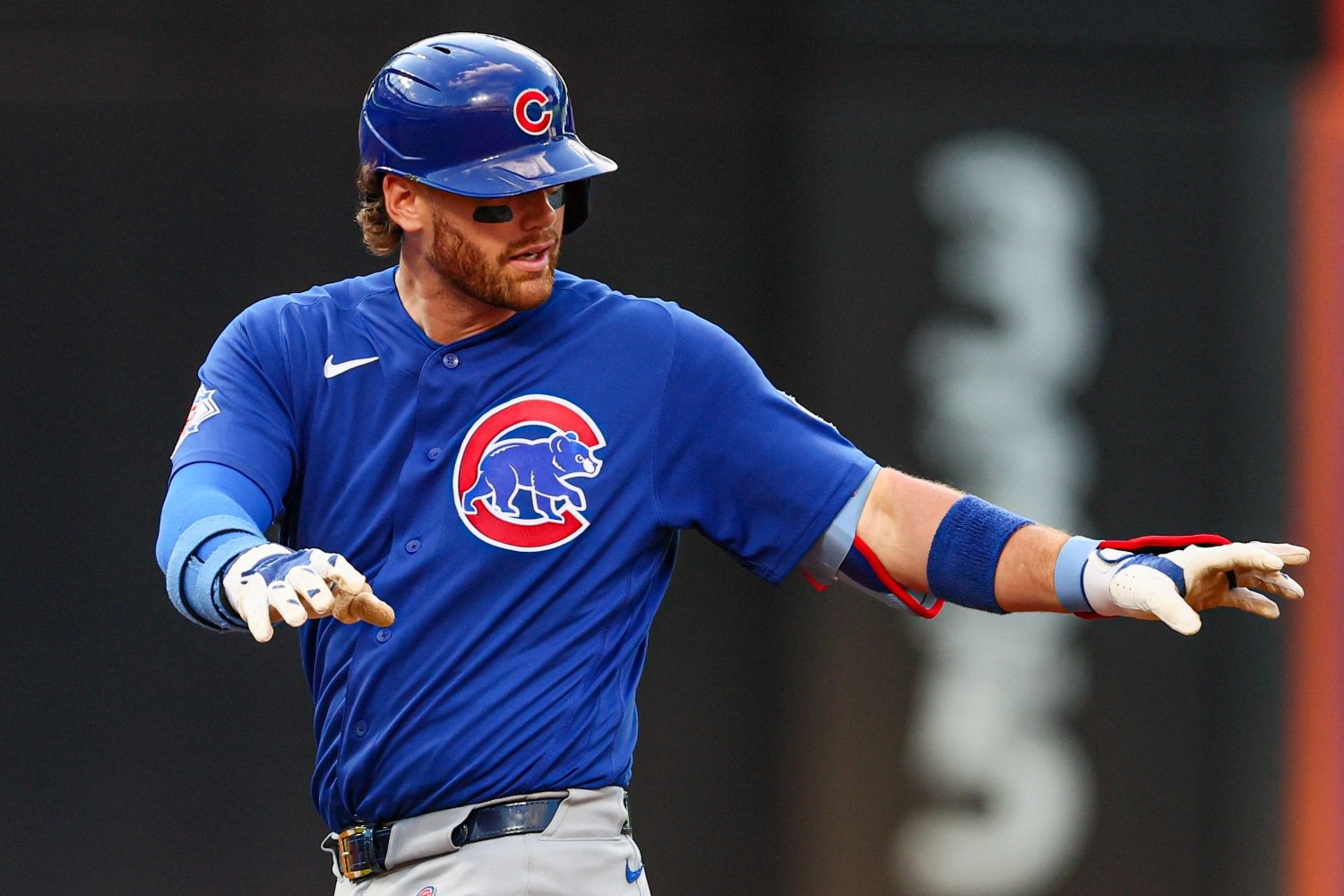 Catching is rapidly becoming a position that is very difficult to project. In addition to all of the other modern responsibilities that a catcher has in terms of managing a pitching staff, the physical toll the position takes on the body makes it tough to post quality numbers year in and year out. In fact, this was the subject of a recent article at FanGraphs, by Ben Clemens. Within the article, which you should read, Clemens notes that every year, there are new players who pop up to be considered the best catcher in baseball. Yet, every year, one of them immediately falls off to be replaced by someone else. “It’s hard to stand out all the way at catcher, and it’s also hard to stay near the top for long,” he concluded. Over the past two seasons, the Cubs have artfully straddled a line at catcher. Carson Kelly and Miguel Amaya certainly aren’t big-name players like Cal Raleigh or Adley Rutschman, but they are both decent big-league backstops. Since the start of 2025, the Cubs are fifth in baseball in FanGraphs WAR from the catcher position, and they're 13th so far in 2026 alone. The Cubs have gotten some production from Reese McGuire and Moises Ballesteros behind the dish, too. However, given that Kelly and Amaya have received the super-majority of the playing time this season, we’ll focus on those guys. Neither is spectacular defensively, though they both manage to do pretty much everything well enough that it doesn’t significantly hamper their value. Catcher Catcher Blocking Runs Catcher Framing Runs Catcher Stealing Runs Carson Kelly 1 0 -3 Miguel Amaya -1 0 1 The three metrics above, all of which come via Baseball Savant and are from 2026 only, convert a catcher’s ability to block pitches, frame pitches, and control the running game into runs. So, for example, Kelly’s pitch blocking has contributed one run to the Cubs this season, while Amaya’s has cost the Cubs one run. The only number up there that isn’t hanging right around average is Kelly’s -3 stealing runs. That's the third worst figure in baseball. He's caught just 11% of attempted basestealers this season, despite Baseball Savant estimating he should have caught 24% of them. Where both guys stand out a little bit more is at the plate. The team’s 107 wRC+ over the past two seasons is sixth in baseball. Their 104 wRC+ this season is ninth. Interestingly, both guys have maintained a similar level of offensive production between 2025 and 2026, but in completely different ways. Last season, Kelly rode a 23.9% pulled air rate to a .249/.333/.428 batting line, 115 wRC+, and 17 home runs. This season, his pulled air rate is down to 15.2%, which has resulted in significantly less power; he has just four home runs roughly halfway through the season. Yet, he's maintained a 116 wRC+, thanks to an elevated batting average of .280 and an on-base percentage of .366. Instead of the pulled balls in the air, the catcher’s ground ball rate has gone from 38.2% last season to 46.3% this year. He's seeing significantly better results on those ground balls this year, which unfortunately suggests to me that his current batting line might not be sustainable: Year Batting Average on Ground Balls 2025 .214 2026 .342 As for Amaya, he hit a robust .281/.314/.500 last season, good for a 124 wRC+. This year, his slugging average is down to .347, but like Kelly, his on-base percentage has increased—to .352, which is managing to keep his batting line above average with a 104 wRC+. In 2024, Amaya had just a 6.3% walk rate, and last year, it was just 3.9%. This year, it’s all the way up to 11.6%. That's because he has completely cut his swing rate on all pitches. Last season, he swung at 54% of the pitches he saw. This year, it’s just 43.7%. This has its drawbacks since Amaya is neglecting to swing at hittable pitches in the heart of the zone, too. Though, it all might be intentional: Amaya’s swing speed is down over two miles per hour, from 72.2 mph last season to 70 mph this year. He missed a large chunk of last season with an oblique injury. Perhaps he doesn’t feel like he can swing as hard coming off of that injury, and this is his way of compensating. Regardless, the Cubs’ catching duo has been a hallmark of stability over the past two seasons. Catcher is a position that is hard to remain consistently good at, yet the Cubs have managed to do just that with a couple of mostly unheralded guys. They'll need both players to remain productive if they want to stay afloat in the playoff race down the stretch.
 -
Image courtesy of © Vincent Carchietta-Imagn Images Catching is rapidly becoming a position that is very difficult to project. In addition to all of the other modern responsibilities that a catcher has in terms of managing a pitching staff, the physical toll the position takes on the body makes it tough to post quality numbers year in and year out. In fact, this was the subject of a recent article at FanGraphs, by Ben Clemens. Within the article, which you should read, Clemens notes that every year, there are new players who pop up to be considered the best catcher in baseball. Yet, every year, one of them immediately falls off to be replaced by someone else. “It’s hard to stand out all the way at catcher, and it’s also hard to stay near the top for long,” he concluded. Over the past two seasons, the Cubs have artfully straddled a line at catcher. Carson Kelly and Miguel Amaya certainly aren’t big-name players like Cal Raleigh or Adley Rutschman, but they are both decent big-league backstops. Since the start of 2025, the Cubs are fifth in baseball in FanGraphs WAR from the catcher position, and they're 13th so far in 2026 alone. The Cubs have gotten some production from Reese McGuire and Moises Ballesteros behind the dish, too. However, given that Kelly and Amaya have received the super-majority of the playing time this season, we’ll focus on those guys. Neither is spectacular defensively, though they both manage to do pretty much everything well enough that it doesn’t significantly hamper their value. Catcher Catcher Blocking Runs Catcher Framing Runs Catcher Stealing Runs Carson Kelly 1 0 -3 Miguel Amaya -1 0 1 The three metrics above, all of which come via Baseball Savant and are from 2026 only, convert a catcher’s ability to block pitches, frame pitches, and control the running game into runs. So, for example, Kelly’s pitch blocking has contributed one run to the Cubs this season, while Amaya’s has cost the Cubs one run. The only number up there that isn’t hanging right around average is Kelly’s -3 stealing runs. That's the third worst figure in baseball. He's caught just 11% of attempted basestealers this season, despite Baseball Savant estimating he should have caught 24% of them. Where both guys stand out a little bit more is at the plate. The team’s 107 wRC+ over the past two seasons is sixth in baseball. Their 104 wRC+ this season is ninth. Interestingly, both guys have maintained a similar level of offensive production between 2025 and 2026, but in completely different ways. Last season, Kelly rode a 23.9% pulled air rate to a .249/.333/.428 batting line, 115 wRC+, and 17 home runs. This season, his pulled air rate is down to 15.2%, which has resulted in significantly less power; he has just four home runs roughly halfway through the season. Yet, he's maintained a 116 wRC+, thanks to an elevated batting average of .280 and an on-base percentage of .366. Instead of the pulled balls in the air, the catcher’s ground ball rate has gone from 38.2% last season to 46.3% this year. He's seeing significantly better results on those ground balls this year, which unfortunately suggests to me that his current batting line might not be sustainable: Year Batting Average on Ground Balls 2025 .214 2026 .342 As for Amaya, he hit a robust .281/.314/.500 last season, good for a 124 wRC+. This year, his slugging average is down to .347, but like Kelly, his on-base percentage has increased—to .352, which is managing to keep his batting line above average with a 104 wRC+. In 2024, Amaya had just a 6.3% walk rate, and last year, it was just 3.9%. This year, it’s all the way up to 11.6%. That's because he has completely cut his swing rate on all pitches. Last season, he swung at 54% of the pitches he saw. This year, it’s just 43.7%. This has its drawbacks since Amaya is neglecting to swing at hittable pitches in the heart of the zone, too. Though, it all might be intentional: Amaya’s swing speed is down over two miles per hour, from 72.2 mph last season to 70 mph this year. He missed a large chunk of last season with an oblique injury. Perhaps he doesn’t feel like he can swing as hard coming off of that injury, and this is his way of compensating. Regardless, the Cubs’ catching duo has been a hallmark of stability over the past two seasons. Catcher is a position that is hard to remain consistently good at, yet the Cubs have managed to do just that with a couple of mostly unheralded guys. They'll need both players to remain productive if they want to stay afloat in the playoff race down the stretch. View full article
-
Image courtesy of © David Banks-Imagn Images There’s been a lot of consternation about Dansby Swanson this year, and rightfully so. He has been really bad at the plate, after all. Heading into their late-June series against the New York Mets, his wRC+, which is an all-encompassing offensive statistic where 100 is average, sits at just 77, according to FanGraphs. Not only does this mean that he is 23 percent worse than the league-average hitter, but this ranks him as the 16th-worst qualified hitter in baseball. Like I said, he's been really bad at the plate. The thing with Swanson is that offense has never been his calling card. Even at his absolute best, the Chicago Cubs’ shortstop has never been any more more than a slightly above-average hitter. His ability to play exceptional defense at a premium position like shortstop is what has made him one of the most valuable players in baseball throughout the course of the 2020s. Until last year, that is. Per Baseball Savant, Swanson was worth two runs above average in the field last season. That was his worst defensive season since 2019. What was different? Swanson went from being elite to merely good at coming in on the ball, while also falling from above average to below average at moving laterally: Year Coming In (OAA) Lateral toward 3B (OAA) Lateral toward 1B (OAA) Going Back (OAA) 2024 14 2 2 -1 2025 9 -1 -2 -1 The values in the table represent the outs above average on each respective play type. At his defensive peak from 2022 to 2023, Swanson was not only elite at coming in on the ball, but also at moving towards third base: he was worth 12 outs above average moving towards third in 2022, and eight in 2023. This declined significantly in 2024, and all but disappeared in 2025. This year, though, he has been worth four outs above average moving toward third base and we’re only halfway through the season. To put this in simpler terms: he is making more plays in the hole between him and third base than he was last year: TDZObzlfWGw0TUFRPT1fQWdVRkFsTlJWd0FBV2dZQ1VnQUhCZ0JlQUFCUkFBTUFVRllEVmdaV0IxZGRWUUlG.mp4 The former Atlanta Brave has also been worth 0 outs above average on plays towards first base, an improvement over his below-average output in 2025. He’s also maintained a steady performance coming in on the ball, worth five outs above average in that regard. Cobble all of that together and Swanson has been worth seven runs above average and nine outs above average in the field so far this year, both of which are seventh in baseball. This is after being worth two runs above average and four outs above average just last season. Despite being one of the worst qualified hitters in baseball, he has still posted 1.5 fWAR, fifth among the Cubs’ position players and more than Alex Bregman, Nico Hoerner, and Carson Kelly. He is on pace for 3.2 fWAR after posting 3.3 last season. Is this all a glass half full view of Dansby Swanson? Of course it is! But we all need that right now while we stress about the bat. He might never be more than a shell of his former self at the plate again. However, at the age of 32, he might also be as good as ever in the field. This alone will continue to make him a plug-and-play option for Craig Counsell moving forward. View full article
-
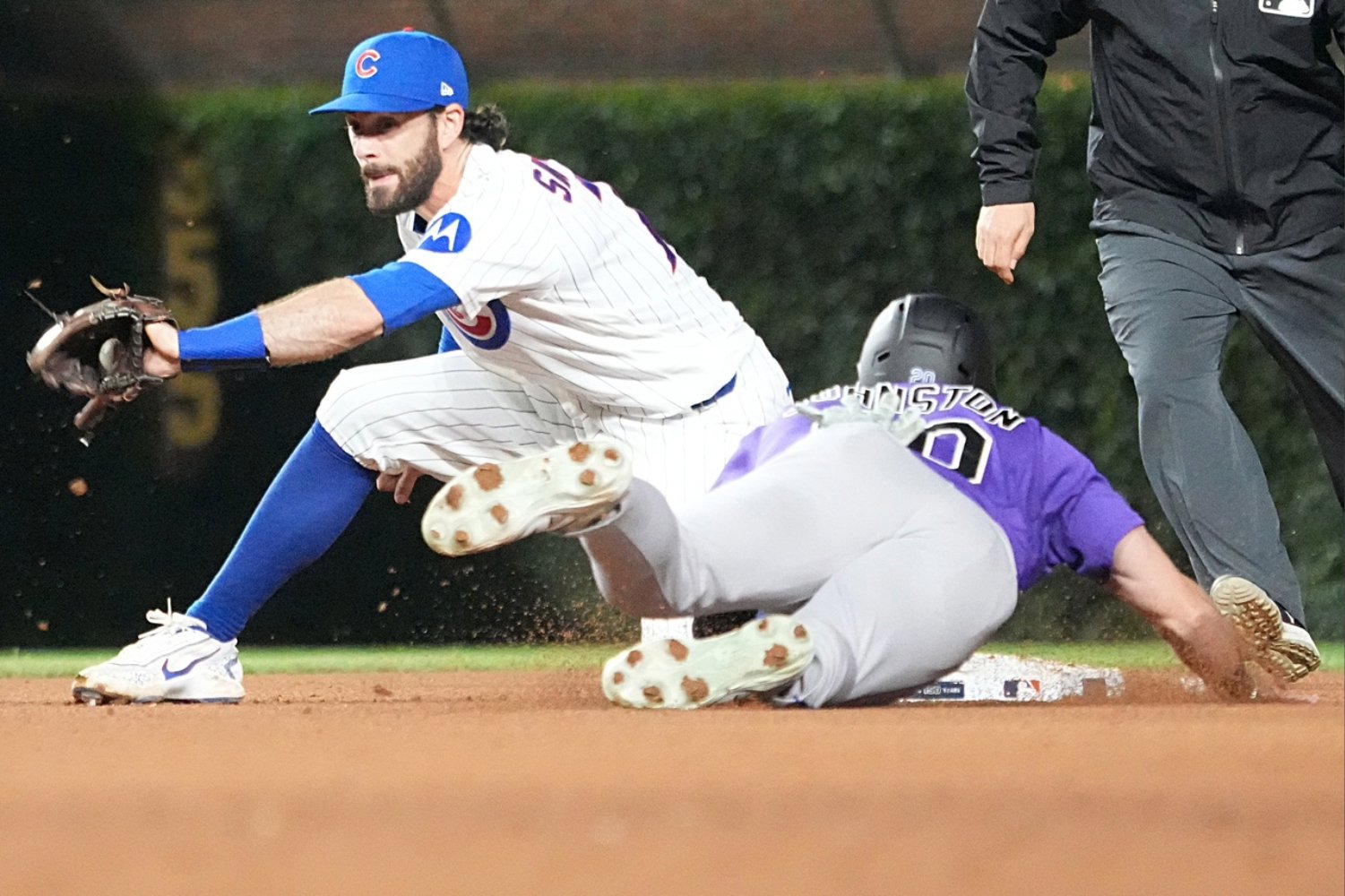 There’s been a lot of consternation about Dansby Swanson this year, and rightfully so. He has been really bad at the plate, after all. Heading into their late-June series against the New York Mets, his wRC+, which is an all-encompassing offensive statistic where 100 is average, sits at just 77, according to FanGraphs. Not only does this mean that he is 23 percent worse than the league-average hitter, but this ranks him as the 16th-worst qualified hitter in baseball. Like I said, he's been really bad at the plate. The thing with Swanson is that offense has never been his calling card. Even at his absolute best, the Chicago Cubs’ shortstop has never been any more more than a slightly above-average hitter. His ability to play exceptional defense at a premium position like shortstop is what has made him one of the most valuable players in baseball throughout the course of the 2020s. Until last year, that is. Per Baseball Savant, Swanson was worth two runs above average in the field last season. That was his worst defensive season since 2019. What was different? Swanson went from being elite to merely good at coming in on the ball, while also falling from above average to below average at moving laterally: Year Coming In (OAA) Lateral toward 3B (OAA) Lateral toward 1B (OAA) Going Back (OAA) 2024 14 2 2 -1 2025 9 -1 -2 -1 The values in the table represent the outs above average on each respective play type. At his defensive peak from 2022 to 2023, Swanson was not only elite at coming in on the ball, but also at moving towards third base: he was worth 12 outs above average moving towards third in 2022, and eight in 2023. This declined significantly in 2024, and all but disappeared in 2025. This year, though, he has been worth four outs above average moving toward third base and we’re only halfway through the season. To put this in simpler terms: he is making more plays in the hole between him and third base than he was last year: TDZObzlfWGw0TUFRPT1fQWdVRkFsTlJWd0FBV2dZQ1VnQUhCZ0JlQUFCUkFBTUFVRllEVmdaV0IxZGRWUUlG.mp4 The former Atlanta Brave has also been worth 0 outs above average on plays towards first base, an improvement over his below-average output in 2025. He’s also maintained a steady performance coming in on the ball, worth five outs above average in that regard. Cobble all of that together and Swanson has been worth seven runs above average and nine outs above average in the field so far this year, both of which are seventh in baseball. This is after being worth two runs above average and four outs above average just last season. Despite being one of the worst qualified hitters in baseball, he has still posted 1.5 fWAR, fifth among the Cubs’ position players and more than Alex Bregman, Nico Hoerner, and Carson Kelly. He is on pace for 3.2 fWAR after posting 3.3 last season. Is this all a glass half full view of Dansby Swanson? Of course it is! But we all need that right now while we stress about the bat. He might never be more than a shell of his former self at the plate again. However, at the age of 32, he might also be as good as ever in the field. This alone will continue to make him a plug-and-play option for Craig Counsell moving forward.
 -
Image courtesy of © Ron Chenoy-Imagn Images I have written about this phenomenon before. Our brains are built to recognize patterns. Close your eyes and picture Nico Hoerner swinging at a pitch. In all likelihood, he is making contact with that pitch in your head, because almost every time he swings, he is making contact with that pitch. Except for when he doesn’t, and it leaves me very confused. I had another one of these moments this past week while watching Chicago Cubs highlights. I didn’t get to watch any of Thursday’s win over the Rockies live because of my full-time job, however, I did get to watch the condensed game. I was happy to see that Alex Bregman hit a home run, even if something about the highlight seemed odd to me: Breggy.mp4 Bregman has found success over his career with a very flat bat path, or as it is known on Baseball Savant, swing path tilt. He typically hits home runs on pitches middle up. With a flat bat path and short swing, Bregman has an easier time getting to those pitches and driving them in the air to the pull side of the field for home runs. It’s incredibly rare to see him go down and get a ball that is that low and power it over the fence. That is usually reserved for hitters with a steeper bat path, like Mike Trout, for example. In fact, according to Baseball Savant, that pitch was the fourth-lowest pitch he has ever hit for a home run, and two of the three examples that were lower were from 2017. That long ball was very much something we haven’t seen very often, and certainly not in more recent memory. We can see that on this chart showing every home run of Bregman’s career. That tiny little bottom right-most blue hex is where the home run against the Rockies was: So, what does this mean going forward? The former Astro has been served a steady diet of breaking balls to this point in the season: 40.2 percent of his pitches seen have been some form of breaking ball. That is the highest mark of his career, and is up from 31.3 percent last season. This has come at the expense of fastballs. Only 50.4 percent of the pitches he has seen have been fastballs, which is down from 57.1 percent last season, and is also the lowest mark of his career. I assume you already know this, since you’re willingly reading an article about baseball, but just in case: When a pitcher throws a breaking ball, they typically want it to end up down in the zone. More breaking balls means more pitches down in the zone, and less pitches up and out over the plate where Bregman prefers them. Pitchers have profited from this strategy, as Bregman is slugging just .281 on breaking balls. Using the new swing timing data at Baseball Savant, we can see that he is way early on breaking balls more often than he was in 2024, when he slugged .479 on those pitches: In 2024, which is in orange, he was on time much more often, which is that big peak in the middle. In 2026, which is in blue, we can see a large blue section that peaks out from behind the orange on the far right. That is bad. Those are the swings where Bregman is disastrously early. This is what that looks like: Breggy 2.mp4 The new Cub said as much himself, telling Patrick Mooney “I am out in front on soft and late on fastballs.” This would certainly back that up. Last week, our own Randy Holt did a deep dive on Bregman, and ultimately concluded he was being way too patient and needed to try to jump at pitches out over the plate more often. That, most certainly, is a solution to this problem. On Thursday, he simply decided to just go down and get the pitch that was thrown to him. If he wants to start doing that instead, that could also work. View full article
-
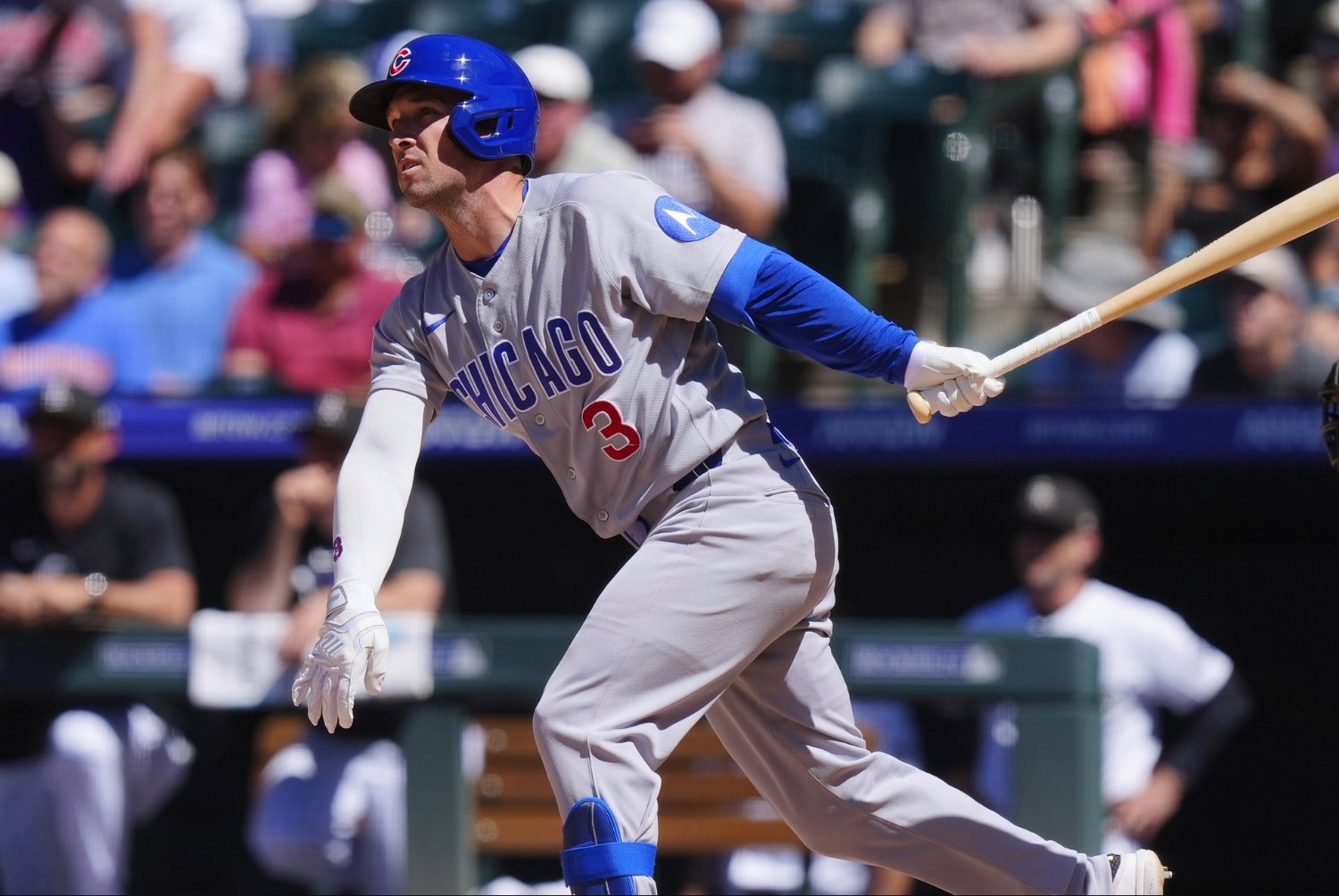 I have written about this phenomenon before. Our brains are built to recognize patterns. Close your eyes and picture Nico Hoerner swinging at a pitch. In all likelihood, he is making contact with that pitch in your head, because almost every time he swings, he is making contact with that pitch. Except for when he doesn’t, and it leaves me very confused. I had another one of these moments this past week while watching Chicago Cubs highlights. I didn’t get to watch any of Thursday’s win over the Rockies live because of my full-time job, however, I did get to watch the condensed game. I was happy to see that Alex Bregman hit a home run, even if something about the highlight seemed odd to me: Breggy.mp4 Bregman has found success over his career with a very flat bat path, or as it is known on Baseball Savant, swing path tilt. He typically hits home runs on pitches middle up. With a flat bat path and short swing, Bregman has an easier time getting to those pitches and driving them in the air to the pull side of the field for home runs. It’s incredibly rare to see him go down and get a ball that is that low and power it over the fence. That is usually reserved for hitters with a steeper bat path, like Mike Trout, for example. In fact, according to Baseball Savant, that pitch was the fourth-lowest pitch he has ever hit for a home run, and two of the three examples that were lower were from 2017. That long ball was very much something we haven’t seen very often, and certainly not in more recent memory. We can see that on this chart showing every home run of Bregman’s career. That tiny little bottom right-most blue hex is where the home run against the Rockies was: So, what does this mean going forward? The former Astro has been served a steady diet of breaking balls to this point in the season: 40.2 percent of his pitches seen have been some form of breaking ball. That is the highest mark of his career, and is up from 31.3 percent last season. This has come at the expense of fastballs. Only 50.4 percent of the pitches he has seen have been fastballs, which is down from 57.1 percent last season, and is also the lowest mark of his career. I assume you already know this, since you’re willingly reading an article about baseball, but just in case: When a pitcher throws a breaking ball, they typically want it to end up down in the zone. More breaking balls means more pitches down in the zone, and less pitches up and out over the plate where Bregman prefers them. Pitchers have profited from this strategy, as Bregman is slugging just .281 on breaking balls. Using the new swing timing data at Baseball Savant, we can see that he is way early on breaking balls more often than he was in 2024, when he slugged .479 on those pitches: In 2024, which is in orange, he was on time much more often, which is that big peak in the middle. In 2026, which is in blue, we can see a large blue section that peaks out from behind the orange on the far right. That is bad. Those are the swings where Bregman is disastrously early. This is what that looks like: Breggy 2.mp4 The new Cub said as much himself, telling Patrick Mooney “I am out in front on soft and late on fastballs.” This would certainly back that up. Last week, our own Randy Holt did a deep dive on Bregman, and ultimately concluded he was being way too patient and needed to try to jump at pitches out over the plate more often. That, most certainly, is a solution to this problem. On Thursday, he simply decided to just go down and get the pitch that was thrown to him. If he wants to start doing that instead, that could also work.
 -
Image courtesy of © Matt Marton-Imagn Images I don’t know about you, but I woke up on Friday with a new sense of vigor around the Chicago Cubs. I am not really a believer in momentum when it comes to sports. At the same time, Thursday was a massive come-from-behind win for the struggling club. Edward Cabrera was set to return on Friday to fortify a starting rotation badly in need of reinforcements. Plus, the Giants, one of the worst teams in baseball, were coming in to play three games at Wrigley Field. This was the perfect storm to right the ship. It didn’t take long for that vigor to disappear. A rain delay, coupled with the Giants immediately taking a 2-0 lead, put a small dent in my psyche. Then, a Matt Chapman grand slam in the fourth inning completely obliterated my excitement, and suddenly, I found myself watching college baseball instead. Cabrera, who was returning from a stint on the injured list with a blister, ended up with his worst line as a Cub: 3.2 innings pitched and eight earned runs given up on eight hits and three home runs. I am not going to sit here and tell you that Cabrera was actually good in this game. What I will do is give you a “the glass is one percent full” spin on the matter. The right hander’s strikeout rate on the day was 30 percent, and that is his single highest strikeout rate in any game this season. Where did those extra strikeouts come from? Well, for one, his velocity was up considerably from where it has been all season. All stats via FanGraphs: Fastball Velocity Sinker Velocity Slider Velocity Curveball Velocity Changeup Velocity Season Average (Before IL stint) 95.7 mph 95.9 mph 88.5 mph 84.5 mph 92.6 mph 6/5 vs. Giants 97.3 mph 96.9 mph 90.4 mph 86.5 mph 93.8 mph That is a full one or two ticks on every pitch that Cabrera throws. His Stuff+ ratings, which measure the physical characteristics of a pitch, increased accordingly. For this start, his Stuff+ rating of 99 was bested only by his April 28 start earlier this season. This is what makes Cabrera so tantalizing. When he is on, he is getting Matt Chapman to swing through a beautifully executed slider: cabrera.mp4 And following that up with a changeup that breaks the opposite direction from the slider: cabrera 1.mp4 So, what was Cabrera’s issue on Friday? According to FanGraphs, he threw first pitch strikes on just 35 percent of his plate appearances. That’s his lowest rate this season by over 10 percentage points. Prior to Friday’s start, hitters were slugging .493 on pitches from Cabrera in the strike zone, per Baseball Savant. Over 14 percent of those balls in play were barreled, i.e. balls that were hit with an ideal combination of exit velocity and launch angle. On Friday? Hitters slugged 1.286 on pitches in the zone and 27.3 percent of those balls in play were barreled. Cabrera simply was falling behind way too many hitters, and when he came into the zone, they were ready for it. If we’re looking for a bright side, and we all know that we desperately need it, I’d say that it’s clear Cabrera is healthy. The increased velocity says to me that he is feeling no ill effects from his blister. Still, he was acquired to be better than this. Whether it’s because he was falling behind hitters or not, he has to get better results when he pitches in the strike zone. The stuff is there. The results, like everything else for the Cubs right now, really lagged behind on Friday. View full article
-
 I don’t know about you, but I woke up on Friday with a new sense of vigor around the Chicago Cubs. I am not really a believer in momentum when it comes to sports. At the same time, Thursday was a massive come-from-behind win for the struggling club. Edward Cabrera was set to return on Friday to fortify a starting rotation badly in need of reinforcements. Plus, the Giants, one of the worst teams in baseball, were coming in to play three games at Wrigley Field. This was the perfect storm to right the ship. It didn’t take long for that vigor to disappear. A rain delay, coupled with the Giants immediately taking a 2-0 lead, put a small dent in my psyche. Then, a Matt Chapman grand slam in the fourth inning completely obliterated my excitement, and suddenly, I found myself watching college baseball instead. Cabrera, who was returning from a stint on the injured list with a blister, ended up with his worst line as a Cub: 3.2 innings pitched and eight earned runs given up on eight hits and three home runs. I am not going to sit here and tell you that Cabrera was actually good in this game. What I will do is give you a “the glass is one percent full” spin on the matter. The right hander’s strikeout rate on the day was 30 percent, and that is his single highest strikeout rate in any game this season. Where did those extra strikeouts come from? Well, for one, his velocity was up considerably from where it has been all season. All stats via FanGraphs: Fastball Velocity Sinker Velocity Slider Velocity Curveball Velocity Changeup Velocity Season Average (Before IL stint) 95.7 mph 95.9 mph 88.5 mph 84.5 mph 92.6 mph 6/5 vs. Giants 97.3 mph 96.9 mph 90.4 mph 86.5 mph 93.8 mph That is a full one or two ticks on every pitch that Cabrera throws. His Stuff+ ratings, which measure the physical characteristics of a pitch, increased accordingly. For this start, his Stuff+ rating of 99 was bested only by his April 28 start earlier this season. This is what makes Cabrera so tantalizing. When he is on, he is getting Matt Chapman to swing through a beautifully executed slider: cabrera.mp4 And following that up with a changeup that breaks the opposite direction from the slider: cabrera 1.mp4 So, what was Cabrera’s issue on Friday? According to FanGraphs, he threw first pitch strikes on just 35 percent of his plate appearances. That’s his lowest rate this season by over 10 percentage points. Prior to Friday’s start, hitters were slugging .493 on pitches from Cabrera in the strike zone, per Baseball Savant. Over 14 percent of those balls in play were barreled, i.e. balls that were hit with an ideal combination of exit velocity and launch angle. On Friday? Hitters slugged 1.286 on pitches in the zone and 27.3 percent of those balls in play were barreled. Cabrera simply was falling behind way too many hitters, and when he came into the zone, they were ready for it. If we’re looking for a bright side, and we all know that we desperately need it, I’d say that it’s clear Cabrera is healthy. The increased velocity says to me that he is feeling no ill effects from his blister. Still, he was acquired to be better than this. Whether it’s because he was falling behind hitters or not, he has to get better results when he pitches in the strike zone. The stuff is there. The results, like everything else for the Cubs right now, really lagged behind on Friday.
 -
Image courtesy of © Jeff Le-Imagn Images Believe it or not, there were some bright spots in what was a really ugly month of May for the Chicago Cubs. A 13-16 record yielded a lot of questions about the offense, and it was that offensive underperformance that perhaps allowed the pitching to slip under the radar a little bit. To be clear, the offense wasn’t great, but a 4.42 ERA for the team sure didn’t help matters either. With that out of the way, though, let’s revel in those aforementioned bright spots for a bit and take a look at the pitchers of the month for May of 2026. 3. Ethan Roberts: 9 G, 2.03 ERA, 13.1 IP, 7 BB, 10 K I love any baseball player that is a little bit different. At 5-foot-10 and 180 pounds, Roberts doesn't look like a typical professional pitcher. The 19.6% strikeout rate in the month of May would support that he simply is not the typical professional pitcher. Roberts has always walked a tightrope from atop the rubber. Not striking a lot of guys out means that you have to manage contact really well. After having been a fly ball pitcher for most of his first few brief seasons in the majors, Roberts has suddenly turned into a ground-ball machine, with a ground-ball rate of 64.7% in May, according to FanGraphs. This is after never posting a ground-ball rate above 36.4% in any full season in his career. He won’t maintain a .235 batting average on balls in play. Nobody does. We already saw some of that come back to earth in his outing Sunday against the Cardinals, when a bloop double found grass and denied him what could have been a big escape from a jam. But if the ground-ball rate remains that high, he just might be able to remain a viable option in the bullpen. The Cubs really need it. 2. Jacob Webb: 12 G, 0.64 ERA, 14 IP, 3 BB, 19 K Matthew Trueblood wrote about Webb here at Northside Baseball just last week. He concluded that Webb has dialed in the location on his changeup, which has unlocked him as a relief ace for the Cubs. Webb’s numbers in May certainly support this. According to Baseball Savant, hitters slugged .611 against his changeup in March and April. They had a 30% hard hit rate (a ball hit with an exit velocity of 95 mph or higher), and they whiffed on 42.9% of their swings. In May, hitters slugged just .167 to go along with a hard hit rate of 15.4%, and a whiff rate of 52.7%. That’ll certainly contribute to a month where a pitcher strikes out 19 guys and walks only three. 1. Ben Brown: 7 G, 1.86 ERA, 29 IP, 8 BB, 31 K A lot has been written about Brown at Northside Baseball as well, and for good reason: he is one of the only good things going for the Cubs at the moment. He was inserted into the rotation out of necessity on May 8, and has responded by being the team’s best starting pitcher for the month ,by a mile. Jeremy Tecktiel recently wrote about how Brown’s new sinker has turned him into a ground ball pitcher. Similar to Roberts, that is a huge development for Brown, especially given he has managed to continue to strike hitters out at an above average rate. Since we’ve written about the sinker, I would like to take a moment to acknowledge Brown’s changeup, which was thrown 4% of the time in March and April, and increased to 8.8% in May, per Baseball Savant. Hitters hit just .111 and slugged .222 against the pitch in May, while whiffing on 46.7% of swings. It’s been more than just a “third time through the order pitch,” too. Here he is fooling Brandon Nimmo with a perfect changeup on just the second pitch of a start in Texas: NXk5Z1BfWGw0TUFRPT1fQUFaVlVsTlNWd2NBWGxNQUJ3QUhCZzlYQUZrQ1ZBQUFBbFVHVWxWUkIxVUVWQWRU.mp4 It’s been a long time coming for Brown, and it finally seems to be coming together. With all of the injuries the pitching staff has dealt with so far this year, the timing couldn’t have been better for the Cubs. Congrats to Ben Brown on being the Cubs’ pitcher of the month for May. They might need him to win this quasi-award again in June. View full article
-
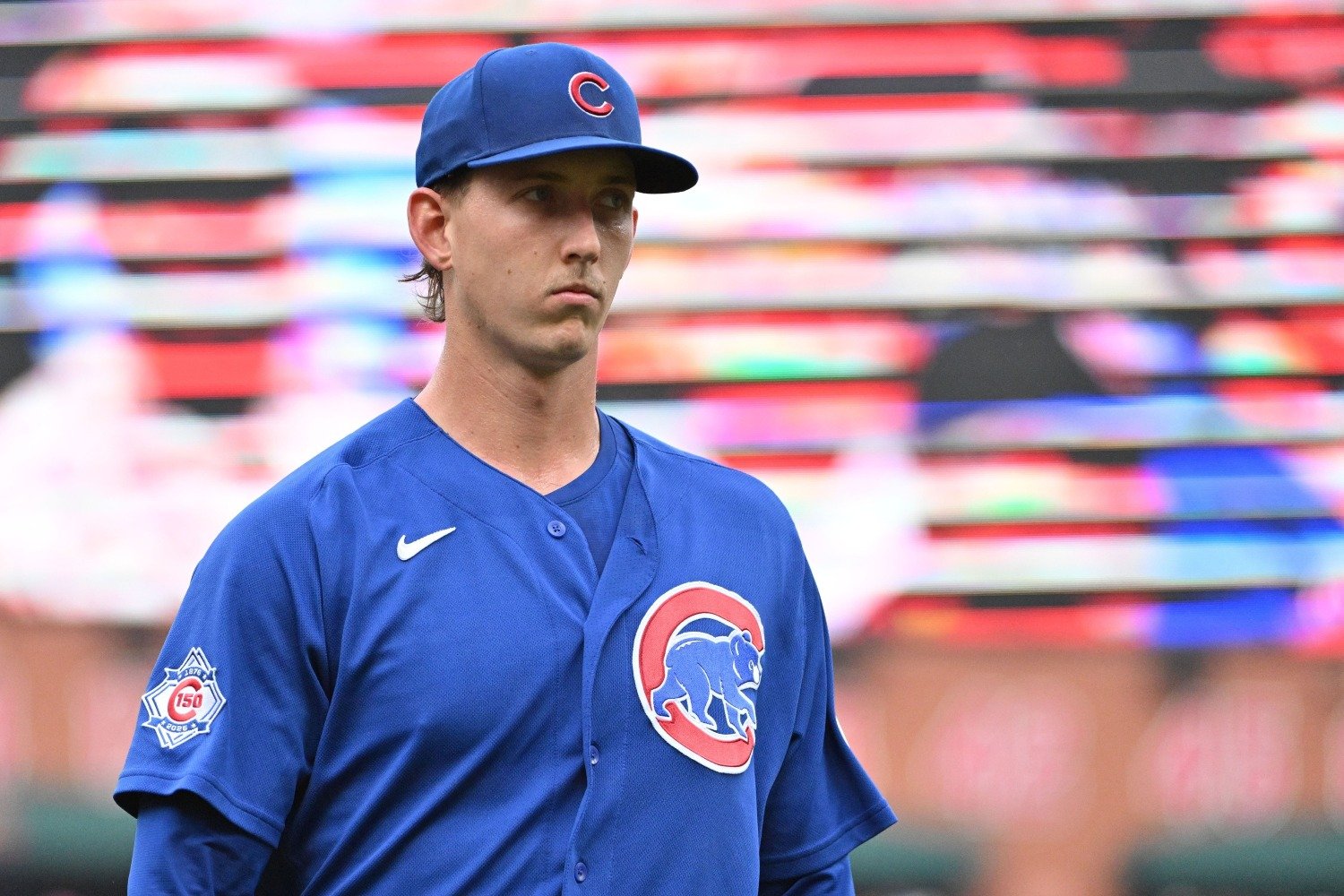 Believe it or not, there were some bright spots in what was a really ugly month of May for the Chicago Cubs. A 13-16 record yielded a lot of questions about the offense, and it was that offensive underperformance that perhaps allowed the pitching to slip under the radar a little bit. To be clear, the offense wasn’t great, but a 4.42 ERA for the team sure didn’t help matters either. With that out of the way, though, let’s revel in those aforementioned bright spots for a bit and take a look at the pitchers of the month for May of 2026. 3. Ethan Roberts: 9 G, 2.03 ERA, 13.1 IP, 7 BB, 10 K I love any baseball player that is a little bit different. At 5-foot-10 and 180 pounds, Roberts doesn't look like a typical professional pitcher. The 19.6% strikeout rate in the month of May would support that he simply is not the typical professional pitcher. Roberts has always walked a tightrope from atop the rubber. Not striking a lot of guys out means that you have to manage contact really well. After having been a fly ball pitcher for most of his first few brief seasons in the majors, Roberts has suddenly turned into a ground-ball machine, with a ground-ball rate of 64.7% in May, according to FanGraphs. This is after never posting a ground-ball rate above 36.4% in any full season in his career. He won’t maintain a .235 batting average on balls in play. Nobody does. We already saw some of that come back to earth in his outing Sunday against the Cardinals, when a bloop double found grass and denied him what could have been a big escape from a jam. But if the ground-ball rate remains that high, he just might be able to remain a viable option in the bullpen. The Cubs really need it. 2. Jacob Webb: 12 G, 0.64 ERA, 14 IP, 3 BB, 19 K Matthew Trueblood wrote about Webb here at Northside Baseball just last week. He concluded that Webb has dialed in the location on his changeup, which has unlocked him as a relief ace for the Cubs. Webb’s numbers in May certainly support this. According to Baseball Savant, hitters slugged .611 against his changeup in March and April. They had a 30% hard hit rate (a ball hit with an exit velocity of 95 mph or higher), and they whiffed on 42.9% of their swings. In May, hitters slugged just .167 to go along with a hard hit rate of 15.4%, and a whiff rate of 52.7%. That’ll certainly contribute to a month where a pitcher strikes out 19 guys and walks only three. 1. Ben Brown: 7 G, 1.86 ERA, 29 IP, 8 BB, 31 K A lot has been written about Brown at Northside Baseball as well, and for good reason: he is one of the only good things going for the Cubs at the moment. He was inserted into the rotation out of necessity on May 8, and has responded by being the team’s best starting pitcher for the month ,by a mile. Jeremy Tecktiel recently wrote about how Brown’s new sinker has turned him into a ground ball pitcher. Similar to Roberts, that is a huge development for Brown, especially given he has managed to continue to strike hitters out at an above average rate. Since we’ve written about the sinker, I would like to take a moment to acknowledge Brown’s changeup, which was thrown 4% of the time in March and April, and increased to 8.8% in May, per Baseball Savant. Hitters hit just .111 and slugged .222 against the pitch in May, while whiffing on 46.7% of swings. It’s been more than just a “third time through the order pitch,” too. Here he is fooling Brandon Nimmo with a perfect changeup on just the second pitch of a start in Texas: NXk5Z1BfWGw0TUFRPT1fQUFaVlVsTlNWd2NBWGxNQUJ3QUhCZzlYQUZrQ1ZBQUFBbFVHVWxWUkIxVUVWQWRU.mp4 It’s been a long time coming for Brown, and it finally seems to be coming together. With all of the injuries the pitching staff has dealt with so far this year, the timing couldn’t have been better for the Cubs. Congrats to Ben Brown on being the Cubs’ pitcher of the month for May. They might need him to win this quasi-award again in June.
 -
Image courtesy of © David Banks-Imagn Images To put it mildly, the Chicago Cubs are struggling right now. A losing streak is never a good thing, and it feels so much worse when three of those losses come at the hands of the Milwaukee Brewers. The very same Brewers that have won the division in each of the past three seasons. The very same Brewers that the Cubs have been trying to chase down for most of the last eight seasons, despite the Cubs having significantly more financial resources. Let’s not kid ourselves, the Cubs made moves this past offseason with the specific intent to finally unseat Milwaukee in the National League Central. That is what makes this all so painful, as our own Matthew Trueblood wrote earlier this week: the Cubs are all in on this season. The Brewers are not. Yet they still completely outclassed the Cubs in their first meeting of the season. One of those offseason moves that the Cubs made was trading for Edward Cabrera. While he has been fine in his first 10 starts for the Cubs, he has been far from spectacular, and even pretty far from the pitcher he was just last season. The Brewers, on the other hand, traded for Kyle Harrison, who matched up against Cabrera and the Cubs on Wednesday night. As you’re likely aware, Harrison earned the win after he threw seven shutout innings, allowed only two hits and one walk, and struck out 11 Cubs. Cabrera, oppositely, was removed from the game in the fourth inning with a blister after allowing four runs (one earned) over three innings. Something about those two, specifically, going up against each other, and Harrison emphatically besting Cabrera, felt significant. There’s beating your opponent. Then there’s running up the score. Unfortunately, if you zoom out and compare the full-season stats for these two starters, Wednesday night’s result shouldn’t be all that surprising: Player Innings Pitched ERA FIP K% fWAR Edward Cabrera 54 4.00 4.44 20.7% 0.4 Kyle Harrison 45.2 1.77 2.48 32.3% 1.5 The Brewers acquired Harrison for a package centered around third-baseman Caleb Durbin. It feels like the Cubs absolutely could have offered something similar, centered around Matt Shaw. However, I am not nearly naive enough to suggest that Harrison would be this effective if he were on the Cubs. This isn’t about Harrison vs. Cabrera. It’s about the Cubs vs. the Brewers. If these two pitchers switched teams, I have no doubt that Cabrera would be better off for it, and Harrison would be worse off. That is what really hurts. This is the case of two teams identifying pitchers that they liked and that had potential that they thought they could maximize. Sahadev Sharma of The Athletic reported that the Cubs had been “enamored” with Cabrera’s potential for a while. So far, that fascination is looking a bit misplaced. There’s still plenty of time for these wrongs to be righted. Cabrera is under team control through the 2028 season. Harrison is under team control through the 2030 season. It’s plenty early in either player’s tenure with his new team. Still, Wednesday night just felt like the Brewers were running victory laps around the Cubs. Not only have they resumed their rightful place atop the National League Central, but they’re doing it partially on the back of a pitcher that they targeted and is now one of the best pitchers in baseball. The guy that the Cubs targeted and went out and got has a 5.79 ERA in May. The Cubs continue to try to catch the Brewers. The Brewers continue to prove that they are simply light years ahead of the Cubs. Is anyone even remotely surprised? View full article
-
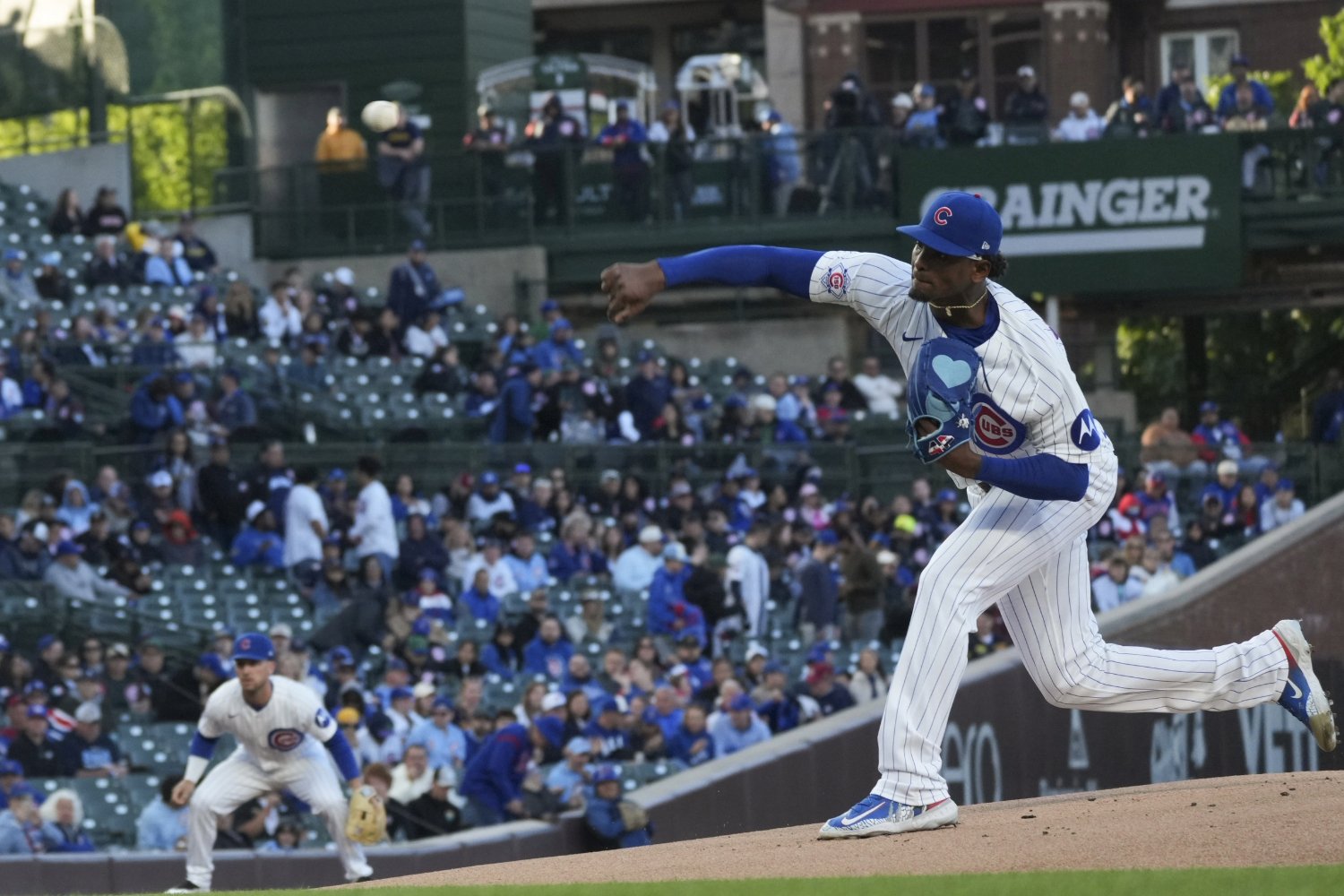 To put it mildly, the Chicago Cubs are struggling right now. A losing streak is never a good thing, and it feels so much worse when three of those losses come at the hands of the Milwaukee Brewers. The very same Brewers that have won the division in each of the past three seasons. The very same Brewers that the Cubs have been trying to chase down for most of the last eight seasons, despite the Cubs having significantly more financial resources. Let’s not kid ourselves, the Cubs made moves this past offseason with the specific intent to finally unseat Milwaukee in the National League Central. That is what makes this all so painful, as our own Matthew Trueblood wrote earlier this week: the Cubs are all in on this season. The Brewers are not. Yet they still completely outclassed the Cubs in their first meeting of the season. One of those offseason moves that the Cubs made was trading for Edward Cabrera. While he has been fine in his first 10 starts for the Cubs, he has been far from spectacular, and even pretty far from the pitcher he was just last season. The Brewers, on the other hand, traded for Kyle Harrison, who matched up against Cabrera and the Cubs on Wednesday night. As you’re likely aware, Harrison earned the win after he threw seven shutout innings, allowed only two hits and one walk, and struck out 11 Cubs. Cabrera, oppositely, was removed from the game in the fourth inning with a blister after allowing four runs (one earned) over three innings. Something about those two, specifically, going up against each other, and Harrison emphatically besting Cabrera, felt significant. There’s beating your opponent. Then there’s running up the score. Unfortunately, if you zoom out and compare the full-season stats for these two starters, Wednesday night’s result shouldn’t be all that surprising: Player Innings Pitched ERA FIP K% fWAR Edward Cabrera 54 4.00 4.44 20.7% 0.4 Kyle Harrison 45.2 1.77 2.48 32.3% 1.5 The Brewers acquired Harrison for a package centered around third-baseman Caleb Durbin. It feels like the Cubs absolutely could have offered something similar, centered around Matt Shaw. However, I am not nearly naive enough to suggest that Harrison would be this effective if he were on the Cubs. This isn’t about Harrison vs. Cabrera. It’s about the Cubs vs. the Brewers. If these two pitchers switched teams, I have no doubt that Cabrera would be better off for it, and Harrison would be worse off. That is what really hurts. This is the case of two teams identifying pitchers that they liked and that had potential that they thought they could maximize. Sahadev Sharma of The Athletic reported that the Cubs had been “enamored” with Cabrera’s potential for a while. So far, that fascination is looking a bit misplaced. There’s still plenty of time for these wrongs to be righted. Cabrera is under team control through the 2028 season. Harrison is under team control through the 2030 season. It’s plenty early in either player’s tenure with his new team. Still, Wednesday night just felt like the Brewers were running victory laps around the Cubs. Not only have they resumed their rightful place atop the National League Central, but they’re doing it partially on the back of a pitcher that they targeted and is now one of the best pitchers in baseball. The guy that the Cubs targeted and went out and got has a 5.79 ERA in May. The Cubs continue to try to catch the Brewers. The Brewers continue to prove that they are simply light years ahead of the Cubs. Is anyone even remotely surprised?
 -
Image courtesy of © David Banks-Imagn Images Much was said over the offseason about the Chicago Cubs adding more strikeouts to their pitching staff. A lot of this even came from president of baseball operations Jed Hoyer himself: “I felt like we had a very contact oriented pitching staff. Our defense helps that, but, you know, we don’t have that kind of stuff in our rotation other than Cade Horton,” Hoyer said on The Show podcast about the acquisition of Edward Cabrera. We’re now officially about one month into the season, and I hate to tell you this, but the pitching staff is the same as it ever was. Year ERA FIP K% 2025 3.81 4.16 21.4% 2026 3.79 4.16 21.8% I promise, I quadruple-checked those numbers to make sure I wasn’t mixing my years up when creating that table, because having the same FIP seems like an astronomically crazy coincidence. What’s the difference between those two pitching staffs? Nothing. As Pam Beesly says in The Office, they’re the same picture. Or, in our case, they’re the same pitchers. The thing is, they’re not the same pitchers. Matthew Boyd and Shota Imanaga are both, suddenly, strikeout machines. Some of that is probably offset by the loss of Cade Horton, Daniel Palencia, Hunter Harvey, and Phil Maton to injury, though the latter three will be back eventually. The team’s biggest addition, Cabrera, has certainly contributed to the respectable ERA and FIP that the pitching staff is posting. Despite this, his strikeout numbers are down, and they are down considerably. After striking out 25.8 percent of hitters last year, the righty is now striking out just 18.5 percent of hitters. He has gone from the 74th percentile to the 28th. Last season, Cabrera struck out 24.4 percent of left-handed hitters, and 27.5 percent of right-handed hitters. This season, he is still striking out righties at an elite rate of 28.6 percent. It’s his strikeout rate against lefties that has really plummeted, all the way down to a paltry 11.4 percent. The Dominican pitcher attacks lefties with, primarily, his changeup, while also sprinkling in a healthy bit of his four-seam fastball, sinker, and curveball. He likes to get outs with the curve, and typically, he is very successful in doing so. Per Baseball Savant, 90 pitchers threw at least 100 curveballs to left-handed hitters last season. Hitters swung and missed with 48.5 percent of their swings against Cabrera’s curveball, which was seventh among that group of pitchers. This year, though, the story is different. In 2026, 74 pitchers have thrown at least 25 curveballs to lefties. Cabrera now has the third-lowest whiff rate on those pitchers at 11.8 percent. To begin to understand what is wrong with the curveball, let’s take a look at where Cabrera is throwing the pitch. The chart on the left is a heat map for all of his curveballs thrown to lefties last year, while the one on the right is all of them thrown to lefties this season. Charts are courtesy of FanGraphs Labs: Cabrera is suddenly burying a whole lot of curveballs down near the back foot of left-handed hitters. In fact, he has thrown 22 two-strike curveballs to lefties in 2026. Six of them have been thrown to the back foot of the hitter. He only did that 10 times all of last season. For better context: Last season, 8.8 percent of his two-strike curves to lefties were thrown that far low and in. In 2026, he is doing it 27.3 percent of the time, or about three times more often. That is a really difficult place to get swings and misses. Perhaps one reason for the struggle in commanding the curveball; the former Marlin is seeing a pretty significant change in movement on a lot of his pitches to this point in 2026, namely his four-seam fastball and his curve. Between those two pitches, though, the breaking ball really stands out considering its drop in performance. Year Curveball Vertical Drop Curveball Horizontal Break 2025 50.0” 10.9” to the glove-side 2026 45.9” 7.1” to the glove-side This might not seem like a big difference, however, it is the difference between this pitch to Nolan Schanuel from a month ago that started at his knees and inside and only broke further down and more inside: Cabrera 1.mp4 ... and this pitch to Yoan Moncada last May in a game in which he struck out 10 Angels and allowed no runs in 5.2 innings: Cabrera 2.mp4 By starting the pitch that much higher and that much more over the plate, it looks like a strike for longer, and thus, Cabrera is much more likely to get those whiffs that Jed Hoyer so covets. Also note where the pitch to Moncada finishes relative to where the pitch to Schanuel finished. The pitch to Moncada, while very much out of the strike zone, was at least in the same zip code. The pitch to Schanuel almost hit him in the foot, and you don’t often induce swings that way, no matter how nasty the pitch is. It’s important to note that the sky is not falling here. Cabrera has a 2.73 ERA and a 3.66 FIP to this point. He’s just getting there in a radically different way than we all imagined, and if it continues, we’re probably about a month or so away from teams stacking their lineup with left-handed hitters when he takes the bump. View full article
-
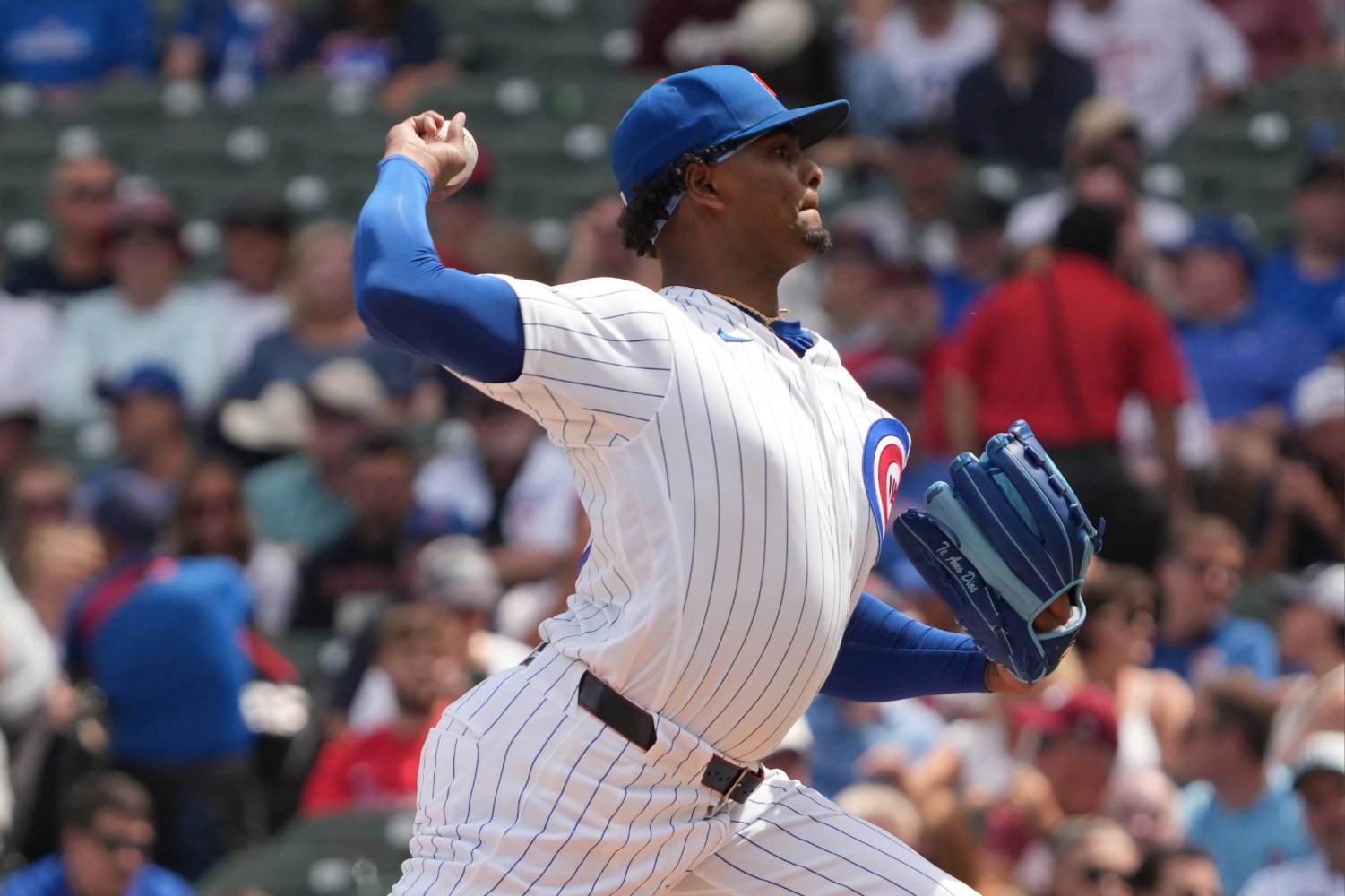 Much was said over the offseason about the Chicago Cubs adding more strikeouts to their pitching staff. A lot of this even came from president of baseball operations Jed Hoyer himself: “I felt like we had a very contact oriented pitching staff. Our defense helps that, but, you know, we don’t have that kind of stuff in our rotation other than Cade Horton,” Hoyer said on The Show podcast about the acquisition of Edward Cabrera. We’re now officially about one month into the season, and I hate to tell you this, but the pitching staff is the same as it ever was. Year ERA FIP K% 2025 3.81 4.16 21.4% 2026 3.79 4.16 21.8% I promise, I quadruple-checked those numbers to make sure I wasn’t mixing my years up when creating that table, because having the same FIP seems like an astronomically crazy coincidence. What’s the difference between those two pitching staffs? Nothing. As Pam Beesly says in The Office, they’re the same picture. Or, in our case, they’re the same pitchers. The thing is, they’re not the same pitchers. Matthew Boyd and Shota Imanaga are both, suddenly, strikeout machines. Some of that is probably offset by the loss of Cade Horton, Daniel Palencia, Hunter Harvey, and Phil Maton to injury, though the latter three will be back eventually. The team’s biggest addition, Cabrera, has certainly contributed to the respectable ERA and FIP that the pitching staff is posting. Despite this, his strikeout numbers are down, and they are down considerably. After striking out 25.8 percent of hitters last year, the righty is now striking out just 18.5 percent of hitters. He has gone from the 74th percentile to the 28th. Last season, Cabrera struck out 24.4 percent of left-handed hitters, and 27.5 percent of right-handed hitters. This season, he is still striking out righties at an elite rate of 28.6 percent. It’s his strikeout rate against lefties that has really plummeted, all the way down to a paltry 11.4 percent. The Dominican pitcher attacks lefties with, primarily, his changeup, while also sprinkling in a healthy bit of his four-seam fastball, sinker, and curveball. He likes to get outs with the curve, and typically, he is very successful in doing so. Per Baseball Savant, 90 pitchers threw at least 100 curveballs to left-handed hitters last season. Hitters swung and missed with 48.5 percent of their swings against Cabrera’s curveball, which was seventh among that group of pitchers. This year, though, the story is different. In 2026, 74 pitchers have thrown at least 25 curveballs to lefties. Cabrera now has the third-lowest whiff rate on those pitchers at 11.8 percent. To begin to understand what is wrong with the curveball, let’s take a look at where Cabrera is throwing the pitch. The chart on the left is a heat map for all of his curveballs thrown to lefties last year, while the one on the right is all of them thrown to lefties this season. Charts are courtesy of FanGraphs Labs: Cabrera is suddenly burying a whole lot of curveballs down near the back foot of left-handed hitters. In fact, he has thrown 22 two-strike curveballs to lefties in 2026. Six of them have been thrown to the back foot of the hitter. He only did that 10 times all of last season. For better context: Last season, 8.8 percent of his two-strike curves to lefties were thrown that far low and in. In 2026, he is doing it 27.3 percent of the time, or about three times more often. That is a really difficult place to get swings and misses. Perhaps one reason for the struggle in commanding the curveball; the former Marlin is seeing a pretty significant change in movement on a lot of his pitches to this point in 2026, namely his four-seam fastball and his curve. Between those two pitches, though, the breaking ball really stands out considering its drop in performance. Year Curveball Vertical Drop Curveball Horizontal Break 2025 50.0” 10.9” to the glove-side 2026 45.9” 7.1” to the glove-side This might not seem like a big difference, however, it is the difference between this pitch to Nolan Schanuel from a month ago that started at his knees and inside and only broke further down and more inside: Cabrera 1.mp4 ... and this pitch to Yoan Moncada last May in a game in which he struck out 10 Angels and allowed no runs in 5.2 innings: Cabrera 2.mp4 By starting the pitch that much higher and that much more over the plate, it looks like a strike for longer, and thus, Cabrera is much more likely to get those whiffs that Jed Hoyer so covets. Also note where the pitch to Moncada finishes relative to where the pitch to Schanuel finished. The pitch to Moncada, while very much out of the strike zone, was at least in the same zip code. The pitch to Schanuel almost hit him in the foot, and you don’t often induce swings that way, no matter how nasty the pitch is. It’s important to note that the sky is not falling here. Cabrera has a 2.73 ERA and a 3.66 FIP to this point. He’s just getting there in a radically different way than we all imagined, and if it continues, we’re probably about a month or so away from teams stacking their lineup with left-handed hitters when he takes the bump.
 -
Image courtesy of © Matt Marton-Imagn Images Since Seiya Suzuki’s return from injury on April 10, the Chicago Cubs’ offense has started to figure things out. Heading into action on that day, the North Siders had a 95 wRC+, according to FanGraphs, meaning that the offense was five percent worse than the league average. Since then, they've hit to the tune of a 136 wRC+. Of course, both the 'before' and the 'after' here are small samples, and this jump is not entirely (indeed, not even mostly) due to Suzuki’s presence. The Japanese outfielder has logged just one extra-base hit since returning, though he's still cobbled together a respectable 94 wRC+. That extra-base hit was this double from the game against the Mets on Friday: WERaNVhfWGw0TUFRPT1fQlZWVVZnQUhVMU1BQ1ZWVFVnQUhBZ0ZYQUZoUUJsVUFCMU5YVlFJREExY0RDRllB.mp4 We’ll all take that result—Suzuki included. Doubles don’t grow on trees. However, a double into the right-field corner is not the Seiya Suzuki we’re all used to seeing. Last season, he managed just six extra-base hits to the opposite field, according to Baseball Savant. None of them looked like that thing. Four of them were to right-center, really. One was a fly ball in West Sacramento last March that just kept carrying over a short wall in the corner. The other was this... thing. NXkyNDFfWGw0TUFRPT1fRDFjRFhRVUVVRlFBRGdSV1ZnQUhVZ0pmQUZnR1dnQUFDMXhYQmxaWENWRlZDQW9G.mp4 Hitting the ball hard has never been an issue for Suzuki. His average exit velocity has been in the top half of baseball every season since he came over from Japan, and in the top quarter for each of the past three seasons. While it's down so far this year, I'm not concerned about that rebounding some time soon. Suzuki broke out two seasons ago, and turned in a career high in home runs last season—when he started hitting more of those hard-hit balls in the air to the pull side of the field instead of on the ground, or to straightaway center field: Year Ground Ball % Fly Ball % Pull Air % Straight Air % 2022 40.7% 25.5% 9.7% 22.8% 2023 43.6% 24.0% 14.8% 24.2% 2024 33.7% 34.0% 15.2% 32.0% 2025 31.8% 34.7% 24.3% 24.8% The one extra-base hit that Suzuki has managed isn’t overwhelmingly concerning by itself, even if it is to the opposite field. Again, any extra-base hit is a good one. It's concerning that it is the only one, though, and it's indicative of the overall issue for the slugger so far this season: he has only pulled one ball in the air so far. That, alone, explains the complete lack of slug. Last season, hitters slugged 1.338 on fly balls to the pull side, and just .284 on fly balls to the opposite field. So how has he managed not to be an abject disaster at the plate? A 14.6% walk rate has yielded a .366 on-base percentage, which will do the trick. He still rarely chases, which is good. His approach doesn’t appear to have changed much. He did admit to Craig Counsell that the strike zone is a little "fuzzy" to him, though, according to the Cubs' broadcast team, and his swing reflects that struggle to see it well. When you have a guy who can’t pull the ball, that usually means there is a timing issue. This makes sense for a guy who had the start of his season derailed by an injury. Suzuki is playing like a guy who's still preparing for Opening Day. Let’s hope he starts to warm up soon. View full article
